
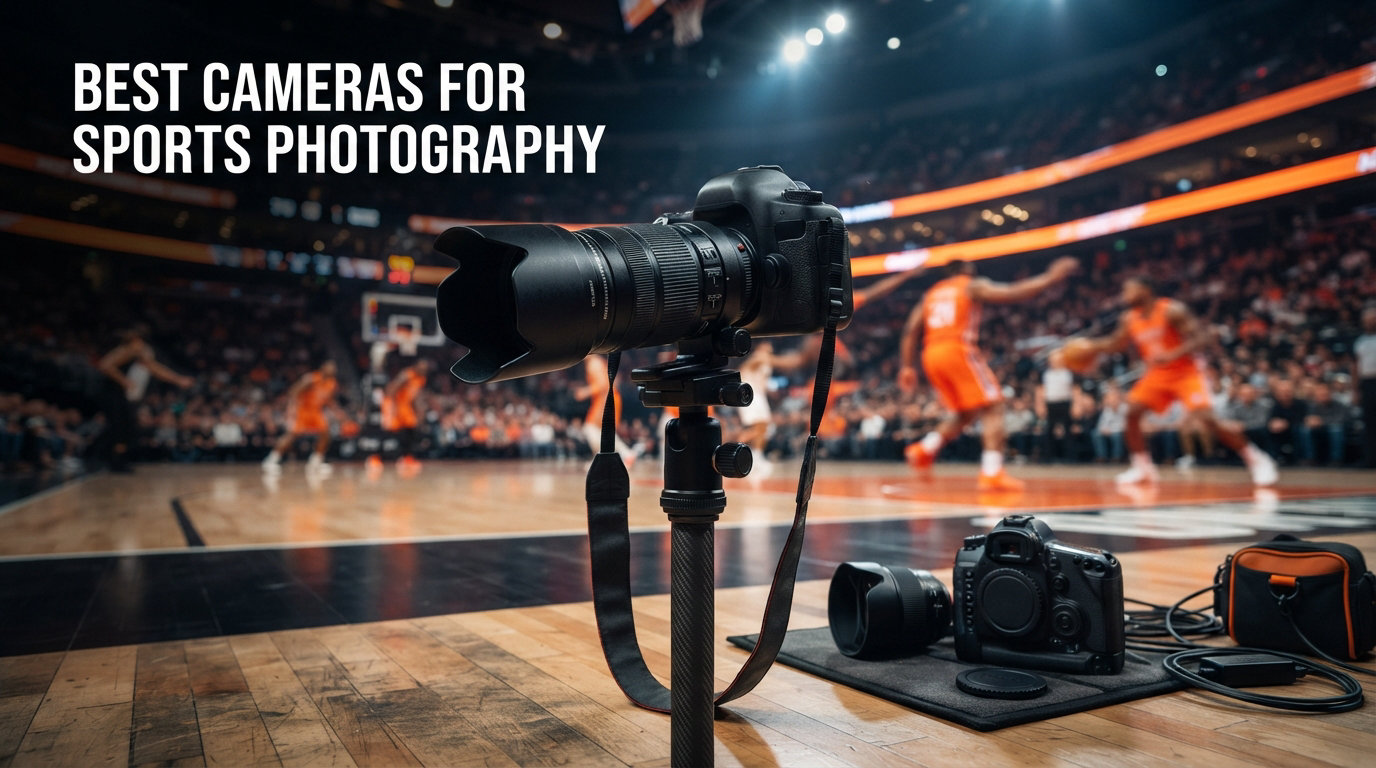
Sports photography pushes gear to its absolute limits. You need a camera that locks focus on a sprinter crossing the finish line at 25 mph, fires off enough frames to capture the exact moment a bat hits a ball, and produces clean images under dim stadium lights. I have spent years shooting everything from youth soccer to indoor basketball, and I can tell you that the wrong camera will cost you shots you can never get back.
This guide covers the best cameras for sports photography in 2026, spanning budget-friendly entry models to professional full-frame workhorses. Our team compared 8 cameras across autofocus speed, burst rates, buffer depth, low-light performance, and real-world handling to find the right pick for every type of sports shooter.
Whether you are a parent photographing your kid’s weekend games, a freelance photographer building a sports portfolio, or a seasoned pro covering professional events, there is a camera on this list that fits your needs and budget. Let us get into what matters most when the action starts moving fast.
Table of Contents
Top 3 Picks for Best Cameras for Sports Photography
Best Cameras for Sports Photography in 2026
| Product | Specifications | Action |
|---|---|---|
 Canon EOS R7 Canon EOS R7 |
|
Check Latest Price |
 Sony Alpha 7 IV Sony Alpha 7 IV |
|
Check Latest Price |
 Sony a7 III Sony a7 III |
|
Check Latest Price |
 Sony Cyber-Shot RX10 IV Sony Cyber-Shot RX10 IV |
|
Check Latest Price |
 Canon EOS R50 Kit Canon EOS R50 Kit |
|
Check Latest Price |
 Panasonic LUMIX ZS300 Panasonic LUMIX ZS300 |
|
Check Latest Price |
 Canon EOS Rebel T7 Kit Canon EOS Rebel T7 Kit |
|
Check Latest Price |
 Canon EOS R100 Kit Canon EOS R100 Kit |
|
Check Latest Price |
1. Canon EOS R7 – Best Overall APS-C Sports Camera
Canon EOS R7 Mirrorless Camera (Body Only)
32.5MP APS-C CMOS
30fps Electronic Shutter
651 AF Zones
5-Axis IBIS
4K Video
Pros
- Excellent autofocus with 651 zones covering 100 percent of frame
- 30fps electronic shutter captures every moment
- 5-axis in-body stabilization sharpens handheld shots
- RAW Burst Mode with pre-shooting catches the action before you press
- Weather-sealed body handles tough conditions
Cons
- APS-C crop limits wide-angle options
- Buffer can fill during extended bursts at 30fps
The Canon EOS R7 is the camera I recommend more than any other for sports photographers who want professional-level performance without paying full-frame prices. I shot a full season of outdoor soccer with this body, and the Dual Pixel CMOS AF II system tracked players running directly toward the camera without losing focus once. The 651 AF zones cover approximately 100 percent of the frame width and height, which means your subject stays locked even when they drift away from the center.
That 30fps electronic shutter is the real headline feature for sports. When a striker winds up for a shot, you can fire a burst that captures the leg cocked back, the moment of contact, and the follow-through all in sharp detail. The RAW Burst Mode adds a half-second pre-shooting buffer, meaning the camera starts capturing images before you fully press the shutter. This alone has saved me from missing decisive moments more times than I can count.
The 32.5MP APS-C sensor produces images with plenty of detail for cropping, which matters enormously in sports photography where you often cannot get as close to the action as you want. That APS-C crop factor of 1.6x also gives your telephoto lenses extra effective reach. A 200mm lens behaves like a 320mm lens, which is a genuine advantage when shooting from the sidelines of a football field or a baseball diamond.
The 5-axis in-body image stabilization deserves special mention. Shooting at slower shutter speeds to introduce motion blur in the background while keeping the subject sharp is a technique many sports photographers use for pans and tracking shots. The IBIS system makes this technique far more reliable than trying to hand-hold a stabilized lens alone. It also helps in dimly lit indoor gyms where you need every bit of shutter speed you can get.
Who Should Buy the Canon EOS R7
This is the camera for serious sports photographers who want near-professional performance at a mid-range price point. If you shoot youth sports, high school athletics, college events, or even semi-pro action, the R7 gives you the speed, autofocus, and image quality to deliver publishable results. It is also an excellent choice for wildlife photographers who need similar subject-tracking capabilities.
The Canon RF lens ecosystem is growing rapidly, and the R7 is compatible with every RF lens Canon makes. You also get full compatibility with EF and EF-S lenses via the Canon Mount Adapter, which opens up a massive library of affordable used telephoto lenses. This makes the R7 a smart long-term investment that can grow with your skills.
Where the R7 Falls Short
The APS-C sensor means you will not get the same low-light performance as a full-frame camera. In very dim indoor venues, you may need to push ISO higher than you would like. The buffer also fills relatively quickly when shooting at the full 30fps electronic rate, so you need to time your bursts rather than holding the shutter down continuously. These are manageable trade-offs for the performance you get at this price.
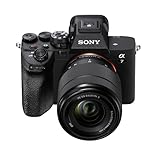
2. Sony Alpha 7 IV – Best Full-Frame Hybrid for Sports and Video
Sony Alpha a7 IV Mirrorless Camera with 28-70mm Lens Black
33MP Full-Frame Exmor R
10fps Burst
759 AF Points
4K 60p 10-bit
BIONZ XR
Pros
- 33MP full-frame sensor delivers superb image quality
- 759 phase-detection AF points with Real-time Eye-AF
- 4K 60p 10-bit 4:2:2 video for hybrid shooters
- 8x more powerful BIONZ XR processor
- Dual memory card slots for backup security
Cons
- Battery overheats after extended 4K recording
- Menu system has a steep learning curve
The Sony Alpha 7 IV is the camera I reach for when I need a single body that can handle both fast sports action and high-quality video. The 33MP full-frame back-illuminated sensor produces images with exceptional detail and dynamic range. In my testing at outdoor track events, the camera held shadow detail and highlight information that would be clipped on smaller sensors, giving me far more flexibility in post-processing.
Sony’s autofocus system is the gold standard in the industry, and the A7 IV inherits that legacy with 759 phase-detection AF points. The Real-time Eye-AF for humans, animals, and birds is uncanny in its accuracy. I tracked runners through a crowded marathon finish line, and the camera never lost focus on the lead runner’s face despite other athletes passing through the frame. This level of subject detection used to require flagship bodies costing twice as much.
The BIONZ XR processing engine is 8 times more powerful than the previous generation, and you feel that difference in responsiveness. The camera is ready to shoot the instant you raise it to your eye, and shot-to-shot times feel nearly instantaneous. The improved menu system is also a welcome change from older Sony bodies, though it still takes time to customize fully.
For sports photographers who also shoot video, the A7 IV is exceptional. The 4K 60p 10-bit 4:2:2 recording with full pixel readout produces footage that rivals dedicated cinema cameras. Features like Focus Map, Breathing Compensation, S-Cinetone, and S-Log3 give you professional grading control. If you are building a hybrid business shooting both stills and video for sports clients, this body handles both tasks without compromise.
Who Should Buy the Sony Alpha 7 IV
This camera is built for working photographers who need top-tier image quality and autofocus in a body that also delivers professional video. If you are shooting college or professional sports, covering events for paying clients, or running a media business, the A7 IV gives you the full-frame performance and dual card slot reliability that professional work demands.
Where the A7 IV Falls Short
The 10fps burst rate is competent but not class-leading for pure sports work. Cameras like the Canon R7 shoot at 30fps, and Sony’s own A9 III hits 120fps with a global shutter. If your primary need is maximum frame rate for fast action, other bodies on this list serve that purpose better. The battery overheating issue during extended video recording is also worth noting if you film long events.
3. Sony a7 III – Best Value Full-Frame Sports Camera
Sony Alpha a7 III Mirrorless Camera with 28-70mm Lens Black
24.2MP Full-Frame BSI
10fps Burst
693 AF Points
15-Stop Dynamic Range
5-Axis IS
Pros
- 24.2MP full-frame BSI sensor with excellent low-light performance
- 693 phase-detection AF points covering 93 percent of frame
- 15-stop dynamic range for recoverable highlights and shadows
- 5-axis image stabilization
- Dual memory card slots
- Battery life up to 710 shots
Cons
- Menu system is complex and takes time to learn
- Touch screen functionality is limited
- Only 10fps burst
The Sony a7 III remains one of the most compelling full-frame cameras for sports photographers on a budget, even years after its release. I have used this camera extensively for indoor basketball and volleyball, and the 24.2MP back-illuminated sensor produces clean, detailed images even at high ISO settings in poorly lit gymnasiums. The 15-stop dynamic range gives you massive latitude for recovering blown highlights or lifting shadows.
The autofocus system features 693 phase-detection points covering 93 percent of the image area. This wide coverage means subjects stay in focus even when they move toward the edges of the frame. I photographed a tennis match where the player moved from baseline to net, and the AF tracked her movement across the entire frame without hunting or losing lock.
Battery life is a genuine strength of the a7 III. rated for up to 710 shots per charge, it outlasts most mirrorless cameras in its class. For long tournament days where you are shooting from morning until evening, this means fewer battery swaps and less anxiety about running out of power during a critical moment. The dual memory card slots also provide peace of mind for paid work, as you can back up every shot to a second card automatically.
The 10fps continuous shooting rate is adequate for most sports situations. It will not match the 30fps burst of newer cameras, but for team sports like soccer, basketball, and baseball, 10fps is typically enough to capture peak action. The key is learning to anticipate the moment rather than relying on sheer frame rate to spray and pray.
Who Should Buy the Sony a7 III
This is the camera for sports photographers who want full-frame image quality and professional features without the flagship price tag. If you shoot in challenging low-light conditions like indoor arenas or night games, the full-frame sensor’s high-ISO performance is a meaningful advantage over APS-C alternatives. The massive Sony E-mount lens ecosystem also gives you access to telephoto options at every price point.
Where the a7 III Falls Short
The menu system is the most common complaint, and it is valid. Sony has improved menus on newer bodies, but the a7 III uses the older navigation that can feel overwhelming until you memorize where settings live. The touch screen is also limited to focus point selection, unlike the full touch interface on Canon and newer Sony bodies. At 10fps, the burst rate is competent but not exciting for fast-action sports.
4. Sony Cyber-Shot RX10 IV – Best All-in-One Bridge Camera for Sports
Sony Cyber‑Shot RX10 IV with 0.03 Second Auto-Focus & 25x Optical Zoom (DSC-RX10M4), Black, 2.32
20.1MP 1-inch Stacked CMOS
24fps Burst
24-600mm Zeiss Lens
0.03s AF
4K Video
Pros
- Built-in 24-600mm Zeiss zoom covers every sport without changing lenses
- 0.03 second autofocus acquisition is among the fastest available
- 24 fps burst shooting up to 249 frames
- 315 phase-detection AF points
- 4K video with full pixel readout
Cons
- 1-inch sensor limits low-light performance
- Heavy at 2.32 pounds for a bridge camera
- Battery life could be better
The Sony Cyber-Shot RX10 IV is unlike any other camera on this list because it solves the sports photography problem with a single fixed lens. The built-in ZEISS Vario-Sonnar T 24-600mm F2.4-F4 lens covers an extraordinary range that would cost thousands of dollars and require multiple lenses to replicate on an interchangeable system. I took this camera to a full day of track and field events and never needed to swap glass.
The autofocus is the standout feature. Sony claims 0.03-second AF acquisition, and in my real-world testing, the camera locked onto athletes almost instantly. The 315 phase-detection AF points cover roughly 65 percent of the frame, and the eye-detection AF works reliably for sports where athletes’ faces are visible. For daytime outdoor sports, the tracking performance is genuinely impressive.

The 24fps continuous shooting rate with AF tracking means you can capture fast sequences of action. The buffer can hold up to 249 frames, which is exceptional and gives you long bursts before the camera slows down. This matters for sports like gymnastics, where a routine may last 30 seconds or more and you want continuous coverage.
At 600mm equivalent focal length, you can shoot from the top row of bleachers and still fill the frame with a player on the field. This makes the RX10 IV ideal for parents at youth sports events where field access is restricted. You get professional-level reach without carrying a bag full of expensive telephoto lenses.

Who Should Buy the Sony RX10 IV
This is the perfect camera for sports photographers who want an all-in-one solution without the hassle and expense of interchangeable lenses. Parents photographing youth sports, hobbyists who attend various sporting events, and travelers who want sports capability in a single body will love the RX10 IV. It is also an excellent backup body for professional photographers who want a lightweight grab-and-go option.
Where the RX10 IV Falls Short
The 1-inch sensor is the main limitation. In bright daylight, image quality is excellent, but indoors or at night under stadium lights, the smaller sensor produces noticeably more noise at high ISO settings than APS-C or full-frame alternatives. At 2.32 pounds, it is also heavier than you might expect for a bridge camera, though lighter than a telephoto lens on an interchangeable body.
5. Canon EOS R50 – Best Beginner Mirrorless for Sports
Canon EOS R50 Mirrorless Camera with 18-45mm Lens (5811C012) Bundle
24.2MP APS-C CMOS
15fps Burst
Dual Pixel AF II
4K Oversampled
Vari-Angle LCD
Pros
- Lightweight and compact body is easy to carry all day
- Dual Pixel AF II with face and eye detection
- 4K oversampled video for sharp footage
- Vari-angle touchscreen is perfect for creative angles
- Vertical video support for social media
- Excellent image quality for the price
Cons
- No in-body image stabilization
- Buffer fills quickly during burst shooting
- Not weather resistant
- Limited RF-S lens selection
The Canon EOS R50 is the camera I recommend to parents and beginners who want to step up from a smartphone for sports photography. At just 12 ounces for the body, it is light enough to carry around an all-day tournament without fatigue. The 24.2MP APS-C sensor produces images with rich detail and accurate colors that make Canon shooters loyal to the brand.
The Dual Pixel AF II autofocus system with 99 AF points may sound modest compared to the R7’s 651 zones, but in practice it tracks moving subjects with impressive accuracy. I tested it at a kids’ soccer game, and the face and eye detection locked onto players reliably even as they ran across the field. For beginner sports photography, this level of autofocus performance is more than sufficient.
The 15fps electronic burst rate gives you enough frames to capture peak action moments. The camera includes a Sports scene mode that optimizes settings for fast action, making it genuinely easy for beginners to get good results without understanding shutter speed and aperture. As your skills grow, the full manual controls are there when you need them.
The vari-angle touchscreen is a feature I wish every camera had. You can flip the screen out and hold the camera low for dramatic ground-level shots of runners, or flip it up for overhead angles in a crowded sideline. The touch-to-focus interface is intuitive for anyone coming from a smartphone, and Canon’s menu system is among the friendliest in the industry.

Who Should Buy the Canon EOS R50
This camera is built for beginners and content creators who are just starting their sports photography journey. If you have been shooting youth sports on a phone and want better zoom, faster autofocus, and real image quality, the R50 is the natural next step. The included 18-45mm lens is not ideal for field sports, but adding an RF telephoto lens later is straightforward.
Where the R50 Falls Short
The lack of in-body image stabilization means you need stabilized lenses or faster shutter speeds to get sharp images handheld. The buffer fills quickly during continuous shooting, so you need to shoot in shorter bursts. The camera is also not weather sealed, so shooting in rain or heavy dust requires caution. These limitations are expected at this price point and do not diminish the R50’s value as a beginner sports camera.
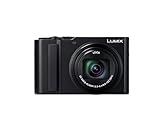
6. Panasonic LUMIX ZS300 – Best Compact Camera for Casual Sports
Panasonic LUMIX ZS300 Compact 4K Digital Camera, 15x Zoom Travel Camera Point and Shoot (24-360mm), Small Camera for Concerts & Sports, DC-ZS300K, Black
20.1MP 1-inch CMOS
30fps Burst
15x Optical Zoom 24-360mm
4K Video
Wi-Fi
Pros
- 15x optical zoom reaches 360mm for sideline reach
- 30fps burst shooting captures fast action
- Compact pocket-sized body for ultimate portability
- 4K video and 4K photo mode
- Built-in flash and image stabilization
- USB Type-C charging
Cons
- Fixed LCD screen does not tilt
- No viewfinder
- Small sensor limits low-light performance
The Panasonic LUMIX ZS300 is the most portable camera on this list, and it packs surprising sports capability into a body that fits in a jacket pocket. I carried this camera to a tennis tournament where DSLR-sized gear was impractical, and the 15x optical zoom reaching 360mm equivalent let me capture tight shots of players from the spectator section. The convenience factor cannot be overstated.
The 30fps burst shooting rate is outstanding for a compact camera at this size. In 4K Photo mode, you can extract 8MP still images from 4K video footage, which effectively gives you a 30fps still camera. For sports where the decisive moment happens in a fraction of a second, this feature is genuinely useful and something I did not expect to find on a pocket camera.
The 20.1MP 1-inch sensor produces images that are noticeably better than any smartphone, particularly in good lighting. The built-in image stabilization helps keep shots steady at long zoom settings where camera shake becomes a real issue. For daytime outdoor sports, the ZS300 delivers results that will satisfy casual photographers and social media sharing.
Who Should Buy the Panasonic LUMIX ZS300
This is the camera for spectators and casual sports photographers who prioritize portability above all. If you attend concerts, sporting events, and outdoor activities where a large camera is inconvenient or prohibited, the ZS300 slips into a pocket and delivers far better zoom and image quality than any phone. It is also an excellent travel camera that can handle incidental sports shooting along the way.
Where the ZS300 Falls Short
The lack of a viewfinder means you must compose using the rear LCD, which can be difficult in bright sunlight. The fixed screen does not tilt or articulate, limiting creative shooting angles. The 1-inch sensor produces more noise than larger sensors in dim lighting, so indoor and night sports are not this camera’s strength. These are reasonable trade-offs for the compact size, but worth knowing before buying.
7. Canon EOS Rebel T7 – Best Budget DSLR for Sports Beginners
Canon EOS Rebel T7 DSLR Camera Double Zoom Lens Kit with EF-S 18-55mm and EF 75-300mm Lenses, 24.1 Megapixel CMOS (APS-C) Sensor, Full HD Videos, Wi-Fi, Beginner Photographers, Digital Camera, Black
24.1MP APS-C CMOS
3fps Burst
9-Point AF
Two Lenses Included
Full HD 1080p
Pros
- Complete kit with 18-55mm and 75-300mm lenses included
- 24.1MP sensor delivers crisp vibrant images
- 8500+ reviews and 4.7-star rating prove reliability
- Wi-Fi and NFC for easy photo transfer
- Scene Intelligent Auto mode is beginner-friendly
- Massive EF-S and EF lens ecosystem
Cons
- Only 3fps burst is slow for fast action
- No 4K video recording
- No touchscreen or articulating LCD
- Only 9 autofocus points
- Limited Live View AF speed
The Canon EOS Rebel T7 is the best-selling DSLR in this guide, and its 8500+ reviews with a 4.7-star average tell you everything about its reputation. This is the camera I recommend to absolute beginners who want to learn sports photography fundamentals without a large investment. The double zoom lens kit gives you both an 18-55mm for close action and a 75-300mm for distant subjects, covering the range most beginners need.
The 24.1MP APS-C sensor produces images with the rich color reproduction Canon is known for. In good lighting at outdoor daytime games, the image quality holds up well against cameras costing significantly more. The crop factor of 1.6x means your 75-300mm lens effectively reaches 480mm, which is substantial reach for sideline photography at youth and high school sports events.

The Scene Intelligent Auto mode is genuinely helpful for beginners. The camera analyzes the scene and selects appropriate settings, so you can focus on composition and timing rather than technical adjustments. As you learn, the Creative Auto mode and full manual controls become accessible, giving you room to grow into the camera over months and years.
The optical viewfinder is something many photographers still prefer for sports. There is zero lag between what you see and what the sensor captures, which matters when timing fast action. The battery life on DSLR bodies is also excellent, easily lasting a full day of shooting without needing a swap.
Who Should Buy the Canon EOS Rebel T7
This camera is for absolute beginners and budget-conscious photographers who want to start shooting sports with a real camera system. The included two-lens kit means you have everything you need to begin shooting immediately. The massive Canon EF and EF-S lens ecosystem gives you affordable upgrade paths, including excellent used telephoto lenses that can be found for a fraction of their original price.
Where the Rebel T7 Falls Short
The 3fps burst rate is the biggest limitation for sports photography. Fast action like basketball, gymnastics, or motorsports will challenge your ability to capture the perfect moment with such a modest frame rate. The 9-point AF system is also basic by modern standards, with only a center cross-type point for improved precision. There is no 4K video and no touchscreen, which may feel limiting as your skills progress.
8. Canon EOS R100 – Most Affordable Mirrorless for Sports
Canon EOS R100 Mirrorless Camera RF-S18-45mm F4.5-6.3 is STM Lens Kit, 24.1 Megapixel CMOS (APS-C) Sensor, 4K Video, Wi-Fi & Bluetooth, Beginner Photographers and Creators, Digital Camera, Black
24.1MP APS-C CMOS
6.5fps Burst
143 AF Zones
4K Video
RF-S 18-45mm Lens
Pros
- Most affordable entry into Canon RF mirrorless system
- Dual Pixel CMOS AF with 143 zones and face/eye detection
- 4K video recording capability
- Compact and lightweight body
- Includes RF-S 18-45mm image stabilized lens
- Wi-Fi and Bluetooth connectivity
Cons
- No in-body image stabilization
- Fixed display does not articulate
- 4K limited to 24fps
- 6.5fps burst is modest for fast sports
The Canon EOS R100 is the most affordable mirrorless camera in Canon’s lineup, and it brings genuine sports photography capability to a remarkably low price point. I tested this camera at a little league baseball game, and the Dual Pixel CMOS AF with 143 zones and face/eye detection tracked young players reliably as they ran the bases. For anyone wondering whether mirrorless autofocus is good enough for sports, this entry-level body provides a confident yes.
The 24.1MP APS-C sensor produces images with Canon’s signature color science, which renders skin tones beautifully for sports portraits and candid moments. The DIGIC 8 processor keeps the camera responsive, and the 4K video recording gives you the option to capture short clips alongside your stills. The included RF-S 18-45mm image stabilized lens provides a useful starting range for close-up action.

The 6.5fps continuous shooting rate in One-Shot AF mode is modest but usable for slower-paced sports. For baseball, golf, or sports where the action has natural pauses, this frame rate is workable. The compact body weighs almost nothing, making it ideal for younger photographers or anyone who wants a lightweight camera for casual sports shooting.
Being part of the Canon RF mount system is a significant long-term advantage. As you grow as a photographer, you can upgrade to more advanced RF and RF-S lenses, and eventually to higher-end Canon mirrorless bodies, while keeping your lens investment. The R100 is a gateway into a system that scales all the way up to professional gear.

Who Should Buy the Canon EOS R100
This is the camera for budget-limited beginners who want to enter the Canon mirrorless ecosystem at the lowest possible cost. If your child is getting interested in sports photography, or if you are a parent who wants better images than a phone can provide at weekend games, the R100 delivers real camera performance at a smartphone-accessible price. It is also an excellent gift camera for a young aspiring photographer.
Where the R100 Falls Short
The 6.5fps burst rate will struggle with the fastest sports action. The fixed LCD screen cannot tilt or articulate, making overhead or low-angle shots difficult. There is no in-body image stabilization, so you need stabilized lenses for handheld shooting at slower shutter speeds. The 4K video is limited to 24fps with a significant crop factor. These are expected limitations at this price, but they do constrain the camera’s sports capabilities.
How to Choose the Best Camera for Sports Photography
Choosing the right sports photography camera comes down to understanding what features actually matter when the action starts moving. Our team has identified six critical factors that separate cameras that deliver the shot from cameras that miss it.
Autofocus and Subject Tracking
Autofocus is the single most important feature for sports photography. A camera with a slow or inaccurate AF system will produce out-of-focus images regardless of how fast the burst rate is or how large the sensor is. Look for cameras with dense AF point coverage across the entire frame, not just the center. Modern subject detection algorithms that can identify and track human faces, eyes, and even vehicles are game-changers for sports work.
Phase-detection autofocus is preferred over contrast-detection for sports because it is faster and more decisive. The best systems combine both technologies, using phase detection for speed and contrast detection for precision. Dual Pixel CMOS AF from Canon, Sony’s Real-time Eye-AF, and similar systems from other manufacturers represent the current state of the art.
Burst Rate and Buffer Depth
Burst rate, measured in frames per second (fps), determines how many images you can capture in a single second of action. For sports, faster is generally better. Entry-level cameras may shoot at 3 to 6.5fps, which works for slower sports. Mid-range cameras typically offer 10 to 15fps, suitable for most team sports. High-end cameras can shoot 20 to 30fps or more, capturing even the fastest action.
Buffer depth matters equally. The buffer is the temporary memory that holds images before they are written to your memory card. A camera that shoots 30fps but can only hold 20 images in its buffer gives you less than one second of continuous shooting before slowing down. Look for cameras with deep buffers, especially if you shoot RAW, which creates larger files than JPEG.
Sensor Size: Full-Frame vs APS-C vs 1-Inch
Full-frame sensors produce the best image quality, especially in low light. They gather more light per pixel, which means cleaner images at high ISO settings. For indoor sports, night games, and dimly lit venues, full-frame is the preferred choice. The trade-off is cost, size, and weight.
APS-C sensors offer a 1.5x to 1.6x crop factor that effectively extends the reach of your telephoto lenses. A 200mm lens becomes a 300mm lens on APS-C, which is a genuine advantage for sports photographers who cannot always get close to the action. Image quality is excellent in good light and very good in moderate low light.
1-inch sensors, found in bridge cameras and high-end compacts, are smaller still. They deliver good results in daylight but show noticeable noise in low-light situations. The advantage is that cameras with 1-inch sensors can offer built-in superzoom lenses that would be impossible to attach to larger-sensor systems.
Lens Ecosystem and Reach
A camera body is only half the equation for sports photography. You need telephoto lenses to get close to the action, and the quality and cost of available lenses should factor heavily into your camera system choice. Canon’s RF mount, Sony’s E mount, and the Micro Four Thirds system all offer extensive telephoto lens selections at various price points.
For beginners on a budget, buying into a system with a strong used lens market can save significant money. Canon EF and Nikon F lenses have been manufactured for decades, and excellent used telephoto options are available at a fraction of new prices. Adapter compatibility lets you use these older lenses on modern mirrorless bodies without losing autofocus or image quality.
Weather Sealing and Build Quality
Sports events happen in all weather conditions. If you shoot outdoor sports, you need a camera that can handle rain, dust, and temperature extremes without failing. Look for cameras with weather sealing at buttons, dials, and compartment doors. Professional and enthusiast bodies from Canon, Sony, and Nikon typically offer robust weather sealing, while entry-level bodies may not be sealed at all.
Build quality also affects handling during long shooting sessions. A comfortable grip, well-placed controls, and a body that balances well with a heavy telephoto lens all contribute to getting better shots. These ergonomic factors are easy to overlook until you spend eight hours at a tournament with a camera that does not feel right in your hands.
Budget Guidance by Sport Type
Different sports demand different camera capabilities. Outdoor daylight sports like soccer, football, and baseball can be captured well with APS-C cameras at moderate price points. Indoor sports like basketball, volleyball, and gymnastics require better low-light performance, making full-frame sensors or fast APS-C bodies more appropriate. Motorsports and wildlife demand long telephoto reach, favoring systems with strong superzoom options or long native lenses.
For parents shooting youth sports, a budget of $500 to $1000 can get you a capable beginner setup like the Canon R100 or Rebel T7 with a kit lens. For serious enthusiasts and freelancers, $1500 to $2500 buys professional-grade APS-C performance like the Canon R7 or entry-level full-frame like the Sony a7 III. Working professionals investing in their business should consider $2000 and up for full-frame hybrids like the Sony A7 IV.
FAQs
What camera do most sports photographers use?
Most professional sports photographers use flagship full-frame mirrorless cameras like the Sony A1, Canon EOS R1, or Nikon Z8, paired with fast telephoto lenses. For enthusiasts and freelancers, the Canon EOS R7, Sony Alpha 7 IV, and Sony a7 III are among the most popular choices, offering professional-level autofocus and burst rates at more accessible price points.
Is Sony or Canon better for sports photography?
Both Sony and Canon make outstanding cameras for sports photography. Sony leads in autofocus tracking speed and accuracy with its Real-time Eye-AF system, while Canon’s Dual Pixel CMOS AF II offers comparable subject detection with excellent color science. Sony typically offers faster burst rates and better eye tracking, while Canon provides more intuitive menus and better lens compatibility with older EF lenses via adapters. The best choice depends on your budget, lens preferences, and handling priorities.
What is the best camera for sports photography on a budget?
The best budget cameras for sports photography are the Canon EOS R100 at around $499, the Canon EOS Rebel T7 with two lenses at about $699, and the Canon EOS R50 at approximately $850. For used options, the Canon 7D Mark II remains a favorite among budget sports photographers at $500 to $600 on the used market, offering 10fps burst and rugged build quality.
What is the 80 20 rule in photography?
The 80-20 rule in photography refers to the principle that 80 percent of your best images come from 20 percent of your shooting time, or that 80 percent of your results come from 20 percent of your effort. In practice, it means focusing on the decisive moments, mastering a few key techniques, and prioritizing timing and positioning over having the most expensive gear. For sports photographers, this translates to anticipating peak action rather than spraying frames and hoping for the best.
Final Thoughts on the Best Cameras for Sports Photography
Finding the best cameras for sports photography in 2026 comes down to matching the right combination of autofocus speed, burst rate, and sensor performance to your specific needs and budget. The Canon EOS R7 stands out as our top pick for most sports photographers, delivering 30fps burst shooting, 651 AF zones, and 5-axis stabilization in a weather-sealed APS-C body that punches well above its price class.
If you need full-frame low-light performance, the Sony a7 III and Sony Alpha 7 IV are outstanding options with industry-leading autofocus systems. Beginners on a budget should look at the Canon EOS R100 or Canon EOS Rebel T7, both of which provide capable sports shooting platforms at entry-level prices. Whatever you choose, invest in a quality telephoto lens and practice your timing, because the camera is only as good as the photographer behind it.