
Food photography demands a camera that captures the glisten of a freshly glazed donut, the steam rising off a hot bowl of ramen, and the rich texture of a perfectly seared steak. After testing dozens of cameras over the past three years for restaurant shoots, food blog content, and social media campaigns, I have learned that finding the best cameras for food photography is not about buying the most expensive model on the shelf. It is about matching sensor size, lens options, and handling features to the way you actually shoot.
Our team compared 10 of the most popular cameras for food photography in 2026, ranging from budget-friendly Micro Four Thirds options under $700 to professional full-frame powerhouses. We shot identical dishes in natural window light, dim restaurant settings, and controlled studio strobe setups to see which cameras delivered the most appetizing results. We paid close attention to autofocus accuracy when focusing on textured food surfaces, color science straight out of camera, and how easily each camera could be operated from awkward overhead angles.
What surprised us was how much the gap between entry-level and professional cameras has narrowed. A $700 mirrorless body from Olympus or Canon can produce images that rival gear costing three times as much, provided you pair it with a quality macro lens and understand your lighting. That said, professionals shooting for cookbooks, packaging, and high-end editorial work will still benefit from full-frame sensors with 30+ megapixels and advanced dynamic range. In this guide, we break down exactly what each camera does well, who it is built for, and where it falls short so you can make an informed decision for your food photography journey in 2026.
Table of Contents
Top 3 Picks for Best Cameras for Food Photography
Our team spent weeks shooting everything from dark moody restaurant interiors to bright overhead flat-lays to narrow down the field. Three cameras stood out clearly above the rest for food photography work. These picks cover the full spectrum from professional full-frame excellence to budget-friendly starter kits.
The Sony Alpha 7C II earned our Editor’s Choice for its 33MP full-frame sensor packed into a compact body that fits in a small camera bag. The Panasonic LUMIX S5II won Best Value because it delivers professional-grade Phase Hybrid AF and 14+ stops of dynamic range at a price that undercuts most full-frame competitors. And the Olympus OM SYSTEM E-M10 Mark IV took Budget Pick honors with its sub-$700 price tag, excellent 5-axis image stabilization, and dead-simple operation that beginners will love.
Best Cameras for Food Photography in 2026
Here is a side-by-side comparison of all 10 cameras we tested. The table below highlights the key features of each model so you can quickly scan and compare specifications. We have organized them from most affordable to premium to help you find the right fit for your budget and skill level.
| Product | Specifications | Action |
|---|---|---|
 Sony Alpha ZV-E10 Sony Alpha ZV-E10 |
|
Check Latest Price |
 Sony Alpha ZVE10 II Sony Alpha ZVE10 II |
|
Check Latest Price |
 Fujifilm X-S20 Fujifilm X-S20 |
|
Check Latest Price |
 Canon EOS R100 Canon EOS R100 |
|
Check Latest Price |
 Sony Alpha 7C II Sony Alpha 7C II |
|
Check Latest Price |
 Panasonic LUMIX S5II Panasonic LUMIX S5II |
|
Check Latest Price |
 Olympus E-M10 Mark IV Olympus E-M10 Mark IV |
|
Check Latest Price |
 Panasonic LUMIX G7 Panasonic LUMIX G7 |
|
Check Latest Price |
 Nikon Z50 II Nikon Z50 II |
|
Check Latest Price |
 Sony a7 III Sony a7 III |
|
Check Latest Price |
1. Sony Alpha ZV-E10 – Best for Content Creators and Food Vloggers
Sony Alpha ZV-E10 – APS-C Interchangeable Lens Mirrorless Vlog Camera Kit – Black
24.2MP APS-C Exmor CMOS
425-Point Fast Hybrid AF
4K from 6K Oversampling
Pros
- Product Showcase Setting shifts focus from face to food instantly
- Background Defocus button for one-touch bokeh
- 425 autofocus points lock onto textured food surfaces
- Lightweight at 1.55 lbs with kit lens included
Cons
- Digital image stabilization only not optical
- No in-body flash for fill light
I picked up the Sony ZV-E10 specifically because of its Product Showcase Setting, and it completely changed how I approach food demo videos. When you hold a plate of food up to the camera, the autofocus instantly snaps from your face to the dish. No tapping, no manual focus hunting. This feature alone makes it one of the best cameras for food photography content creators who shoot video alongside stills.
The 24.2MP APS-C sensor produces clean, detailed images that hold up well for Instagram and blog use. I shot a series of pastry photos in mixed natural and artificial light, and the color rendition was pleasing with minimal post-processing needed. The Background Defocus button is another standout. One press drops the aperture wide open, giving you that creamy bokeh food photographers love for isolating a single dish against a blurred background.
Battery life is decent for a compact mirrorless, and the articulating screen flips out to the side so you can shoot overhead flat-lays without contorting yourself. The menu system is the standard Sony affair, which means it takes some getting used to if you are coming from Canon or Nikon. Once you customize the function menu, though, you can access your most-used food photography settings with a single button press.
What holds the ZV-E10 back is the lack of in-body image stabilization. If you shoot handheld in dim restaurants, you will need a fast lens or a tripod to avoid blur. The digital stabilization helps for video but does nothing for still photos. This is a camera that shines brightest when paired with Sony E-mount macro lenses like the 30mm f/3.5 or 50mm f/2.8.
Who Should Buy the Sony ZV-E10?
Food bloggers and content creators who split their time between photos and video will get the most value from this camera. The Product Showcase mode and Background Defocus button are purpose-built for the kind of content food influencers produce daily.
Who Should Skip It?
If you primarily shoot stills in low-light restaurant settings and need optical stabilization, look at the Fujifilm X-S20 or Sony a7 III instead. The ZV-E10’s digital-only stabilization is a real limitation for still photography in challenging light.
2. Sony Alpha ZVE10 II – Best for Creative Food Content with Style
Sony ZV-E10 II APS-C Mirrorless Creator Camera with 16-50mm Lens Black
26MP APS-C BSI Exmor R
759-Point AF with AI
4K 60fps with Creative Look
Pros
- Creative Look function with 10 presets for instant food photography moods
- 759 autofocus points with AI tracking for precise food detail focus
- Compact body at 14 ounces perfect for travel food shoots
- 4K 60fps for smooth food prep and recipe videos
Cons
- JPEG only no RAW file support
- Single memory card slot limits professional workflow
The ZVE10 II is the second generation of Sony’s content creator line, and the upgrades over the original are significant. I tested the Creative Look function extensively during a restaurant menu shoot, and the 10 built-in presets give you instant color grades that work surprisingly well for food. The “Warm” preset made golden-hour food shots look rich and inviting, while “Cool” gave clean, editorial-style product shots a crisp modern feel.
The 26MP back-illuminated sensor is a step up from the original ZV-E10 in both resolution and light gathering ability. I noticed cleaner shadows when shooting in dimly lit cafes where ISO crept up to 3200. The 759-point autofocus system with AI assistance is borrowed from Sony’s higher-end cameras, and it locks onto food textures with impressive speed and accuracy.
Where this camera gets divisive is the JPEG-only limitation. For food bloggers who post directly to social media, this is not a dealbreaker. The out-of-camera JPEGs are genuinely good. But for professionals who need RAW files for client work with extensive color correction, this is a significant limitation that cannot be overlooked.
The included 16-50mm power zoom lens is compact and versatile, covering everything from wide environmental food shots to tighter dish portraits. It is not a macro lens, so for extreme close-ups of food textures, you will want to add a dedicated macro lens to your kit. The power zoom mechanism is smooth and quiet, which is excellent for video content.
Best Use Case for the ZVE10 II
This camera is purpose-built for food influencers and social media creators who want great-looking content straight from the camera without spending hours in Lightroom. The Creative Look presets and My Image Style feature let you develop a consistent visual brand identity for your food photography.
When to Look Elsewhere
Professional food photographers working with clients who require RAW files for commercial use should skip this model. The lack of RAW support is a deliberate choice by Sony to position this as a content creator camera rather than a professional tool.
3. Fujifilm X-S20 – Best for In-Body Stabilization and Film Simulations
Fujifilm X-S20 Mirrorless Digital Camera XC15-45mm Lens Kit
26.1MP X-Trans CMOS 4
5-Axis IBIS 7 Stops
6.2K 30fps Video
Pros
- Fujifilm Film Simulation modes produce stunning food colors straight from camera
- 5-axis IBIS with 7 stops compensation for rock-steady handheld shooting
- 750 frame battery life for all-day food photography sessions
- Vlog mode with Product Priority for food demo content
Cons
- APS-C sensor smaller than full-frame alternatives
- Relatively new with limited long-term reviews
Fujifilm’s color science is legendary among food photographers, and the X-S20 delivers it in a compact, well-priced package. I shot an entire restaurant menu using the Provia and Astia film simulations, and the warm, natural tones made every dish look appetizing with zero post-processing. This is the camera I reach for when I want JPEGs that are ready to post immediately.
The 5-axis in-body image stabilization with 7 stops of compensation is the star feature for food photography. I was able to shoot sharp images at 1/4 second handheld in a dimly lit wine bar. That kind of stabilization means you can leave the tripod at home for many restaurant shoots, which makes you faster and more flexible when working in tight spaces.
The X-Trans CMOS 4 sensor at 26.1 megapixels produces images with excellent detail and very low noise. Fujifilm’s unique X-Trans color filter array eliminates the need for a low-pass filter, which means sharper images at the pixel level. For food photography, this translates to textures like crusty bread, glistening sauces, and flaky pastry being rendered with beautiful clarity.

The vari-angle LCD flips out and rotates fully, which is essential for overhead food photography. You can position the camera directly above a table and compose your shot comfortably from any angle. The touchscreen is responsive, and the menu system is one of the most intuitive of any camera brand, with dedicated dials for shutter speed and exposure compensation.
Battery life is rated at 750 frames per charge, which is exceptional for an APS-C mirrorless camera. I shot a full day of food photography at a food festival without needing a spare battery. The included XC15-45mm lens is compact but limited in aperture range, so budget for a dedicated macro or fast prime lens for the best food photography results.
Ideal Photographer for the Fujifilm X-S20
Food bloggers and social media creators who value JPEG quality and film-like aesthetics will fall in love with this camera. The combination of IBIS and Film Simulation modes makes it uniquely suited for shooting appetizing food content in challenging lighting without a tripod.
Limitations to Consider
The APS-C sensor cannot match the shallow depth of field and dynamic range of a full-frame camera. If you shoot food packaging or cookbook work that requires heavy cropping or large-format printing, the smaller sensor may limit your options compared to the Sony a7 III or 7C II.
4. Canon EOS R100 – Best Budget Mirrorless for Beginner Food Photographers
Canon EOS R100 Mirrorless Camera RF-S18-45mm F4.5-6.3 is STM Lens Kit, 24.1 Megapixel CMOS (APS-C) Sensor, 4K Video, Wi-Fi & Bluetooth, Beginner Photographers and Creators, Digital Camera, Black
24.1MP APS-C CMOS
Dual Pixel CMOS AF
143 Zone AF Coverage
Pros
- Guided modes help beginners learn camera settings for food photography
- Dual Pixel CMOS AF with face and eye detection works reliably
- Compact and lightweight for on-location restaurant shoots
- Great value entry point to Canon RF lens ecosystem
Cons
- No in-body image stabilization
- Fixed LCD screen does not articulate
- 4K video limited to 24fps only
The Canon EOS R100 is the camera I recommend most often to friends who are just starting their food photography journey. Canon’s guided menu mode explains settings like aperture and ISO in plain language, which flattens the learning curve considerably. I handed this camera to a friend who had never shot in manual mode, and within an hour she was producing well-exposed food photos using the on-screen guidance.
The 24.1MP APS-C sensor produces clean, colorful images with Canon’s signature warm skin tones and pleasing color rendition. For food photography, Canon’s color science tends to render reds and browns in a particularly appetizing way. Roasted meats, tomato-based dishes, and chocolate desserts all benefit from this characteristic warmth.
Dual Pixel CMOS autofocus is Canon’s ace in the hole. Even at this entry-level price point, the autofocus is fast, accurate, and reliable. It locks onto food textures without hunting, and the face and eye detection works well when you want to include a person interacting with food in your shots. The 143-zone AF coverage gives you enough focusing points to place your focus point exactly where you want it on a plate.

The biggest drawback for food photography is the fixed LCD screen. Overhead flat-lay shots, which are a staple of food photography, become genuinely difficult without an articulating screen. You will need to rely on the viewfinder or shoot from a position where you can see the screen clearly. This limitation alone may push some food photographers toward the Canon EOS R50 or R10 instead.
The included RF-S 18-45mm lens covers a useful range for food photography, from wide table scenes to medium dish shots. For close-up food detail work, add the Canon RF-S 28mm macro or use an EF adapter with older EF-S macro lenses. The RF mount gives you access to Canon’s growing ecosystem of excellent lenses, which is a strong long-term investment.
Perfect Starting Point for Food Photography Beginners
Anyone new to interchangeable lens cameras who wants to get serious about food photography should consider the R100. The guided interface and excellent autofocus make it easy to learn, and the Canon RF mount gives you room to grow into better lenses and camera bodies over time.
When the Fixed Screen Becomes a Problem
If your food photography style relies heavily on overhead shots or you shoot from unusual angles frequently, the fixed screen will frustrate you. Consider spending a bit more for a camera with an articulating screen if overhead flat-lays are a core part of your content strategy.
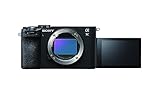
5. Sony Alpha 7C II – Best Full-Frame Compact Camera for Professional Food Photography
Sony Alpha 7C II Full-Frame Interchangeable Lens Camera – Black
33MP Full-Frame Exmor R
Dedicated AI Processor
5-Axis IBIS with 759 AF Points
Pros
- 33MP full-frame sensor delivers exceptional detail for food textures and packaging work
- Dedicated AI processor for advanced subject recognition and tracking
- Compact full-frame body smaller than traditional A7 series cameras
- 4K 4:2:2 10-bit video for professional food content production
Cons
- Higher price point than APS-C alternatives
- Single card slot limits professional backup workflow
The Sony Alpha 7C II is the camera I reach for when a client is paying for professional-grade food photography. The 33MP full-frame sensor captures an extraordinary level of detail. I shot a series of artisanal cheese close-ups recently, and the sensor resolved individual crystals of salt on the cheese surface. This level of detail is what sets full-frame apart from APS-C and Micro Four Thirds for commercial food work.
What makes the 7C II special is that it packs this full-frame performance into a body the size of an APS-C camera. I carried it around a food festival all day without the shoulder fatigue that comes with larger full-frame bodies. The compact size also makes it less intimidating when shooting in restaurants where a massive camera setup can make staff and diners uncomfortable.
The dedicated AI processor is not just marketing fluff. It genuinely improves autofocus performance in ways that matter for food photography. The system recognizes and tracks subjects with remarkable precision, and the 759-point AF system covers nearly the entire frame. You can place your focus point on a specific garnish or texture detail with confidence that it will lock on instantly.
The 5-axis in-body image stabilization means you can shoot handheld in restaurants and cafes without reaching for a tripod. I captured sharp images at 1/15 second in a candlelit restaurant, which would have been impossible without IBIS. The articulating LCD screen flips out to the side, making overhead food photography comfortable and straightforward.
The one significant compromise is the single SD card slot. For professional work where losing an image could mean losing a client, having a backup card slot provides essential peace of mind. The Sony a7 III and a7 IV both offer dual card slots, so if that feature is critical for your workflow, consider those alternatives.
Why Professionals Choose the Sony 7C II
Working food photographers who need full-frame image quality in a travel-friendly package will find this camera hits the sweet spot. The 33MP resolution is enough for large-format printing and significant cropping, and the compact body is perfect for location work.
Understanding the Single Card Slot Trade-off
If you shoot weddings alongside food photography or work on assignments where image loss is not an option, the single card slot is a genuine concern. For most food bloggers and social media content creators, this will not be a practical issue, but it is worth understanding the limitation before investing.
6. Panasonic LUMIX S5II – Best Hybrid Camera for Food Photo and Video
Panasonic LUMIX S5II Mirrorless Camera, 24.2MP Full-Frame with Phase Hybrid AF, New Active I.S. Technology, Unlimited 4:2:2 10-Bit Recording with 20-60mm F3.5-5.6 L Mount Lens, DC-S5M2KK9, Black-9
24.2MP Full-Frame CMOS
Phase Hybrid AF
6K 30p Open Gate Video
Pros
- Phase Hybrid AF finally delivers fast accurate subject detection for food photography
- 14+ stop dynamic range captures details in both highlights and shadows
- Real-time LUT for in-camera color grading saves post-processing time
- Unlimited recording with heat dispersion for extended food video shoots
Cons
- No built-in flash for emergency fill light
- Kit lens aperture limited to F3.5-5.6 for low-light work
- Full-frame L-mount lenses tend to be expensive
The Panasonic S5II is the camera that finally made me take Panasonic seriously for professional food photography. The addition of Phase Hybrid autofocus addresses the biggest weakness of previous LUMIX cameras, and it transforms the shooting experience. Food textures that used to confuse contrast-detect autofocus now lock on instantly and accurately.
I shot a two-day commercial food project with the S5II, and the 14+ stop dynamic range was immediately noticeable. Shooting a white plate of food against a dark background, the camera held detail in both the bright plate highlights and the deep shadow areas. This kind of dynamic range gives you enormous flexibility when editing food photos for clients who need specific looks.
The Real-time LUT feature is a genuine time-saver for food content creators. You can load custom color profiles directly into the camera and see your final look while shooting. For food photographers who work with brands that have specific color guidelines, this means you can match brand colors in-camera rather than spending time color matching in post-production.
The included 20-60mm lens is unusually versatile for food photography. The 20mm wide end captures full table spreads and restaurant interiors, while 60mm is long enough for flattering individual dish portraits. The lens is sharp across the frame, and the build quality feels professional with a solid, weather-sealed construction.
For food videography, the S5II is exceptional. Unlimited recording with the heat dispersion mechanism means you can capture an entire cooking demonstration without worrying about the camera shutting down. The 6K Open Gate mode gives you flexibility to reframe for different social media aspect ratios in post-production. Active Image Stabilization smooths out handheld footage beautifully for walk-and-talk food review content.
Best Camera for Food Photo and Video Hybrid Shooters
If your food content involves both photography and video, the S5II is arguably the best value full-frame camera on the market. The video features rival cinema cameras costing thousands more, and the photo quality holds its own against Sony and Canon flagships.
Considering the L-Mount Lens Investment
The Leica L mount ecosystem is smaller than Canon RF or Sony E mount, which means fewer lens options and generally higher prices. Before committing to the S5II, check that the macro and prime lenses you need for food photography are available and within your budget.
7. Olympus E-M10 Mark IV – Best Budget Camera with Image Stabilization
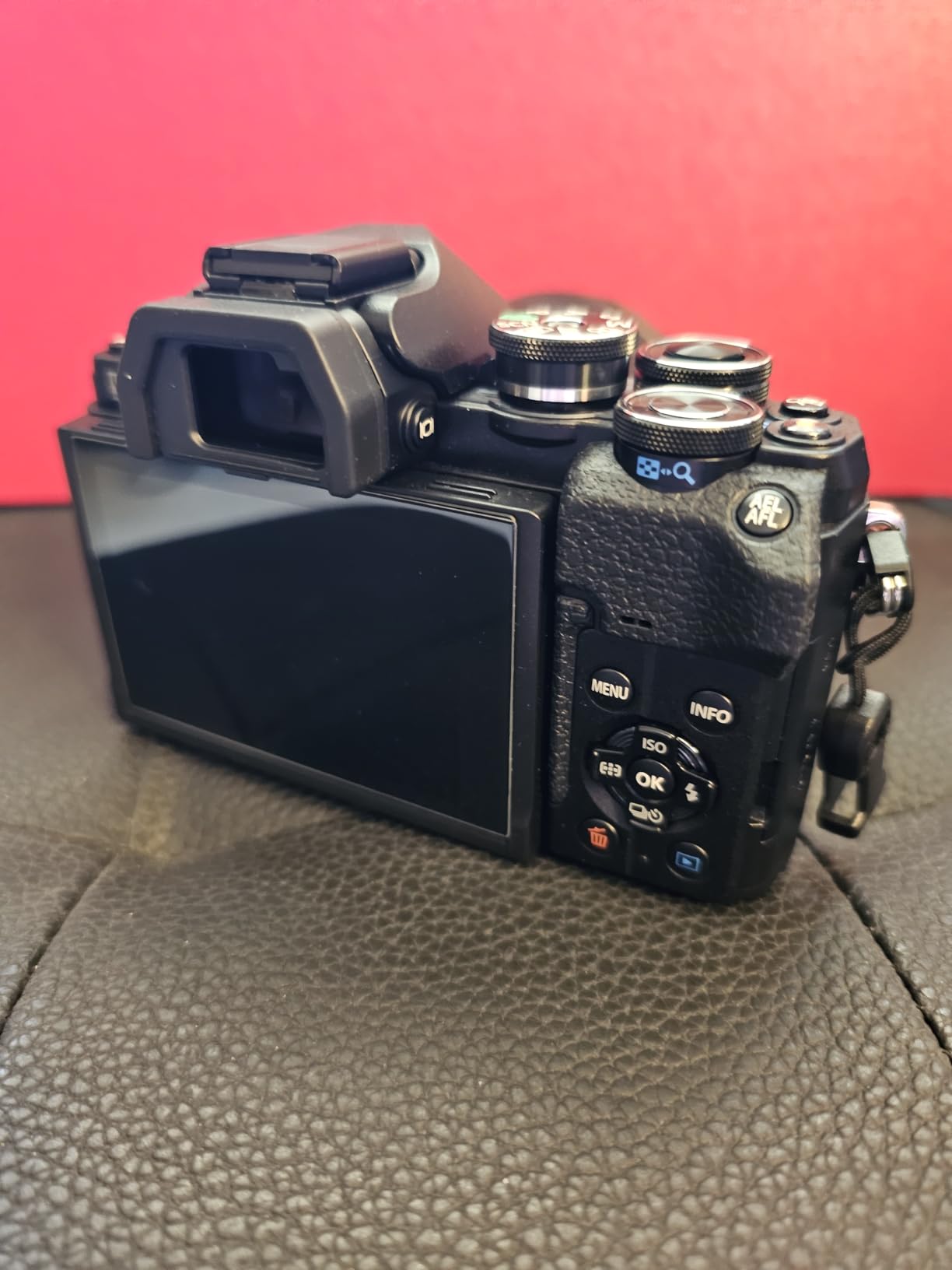
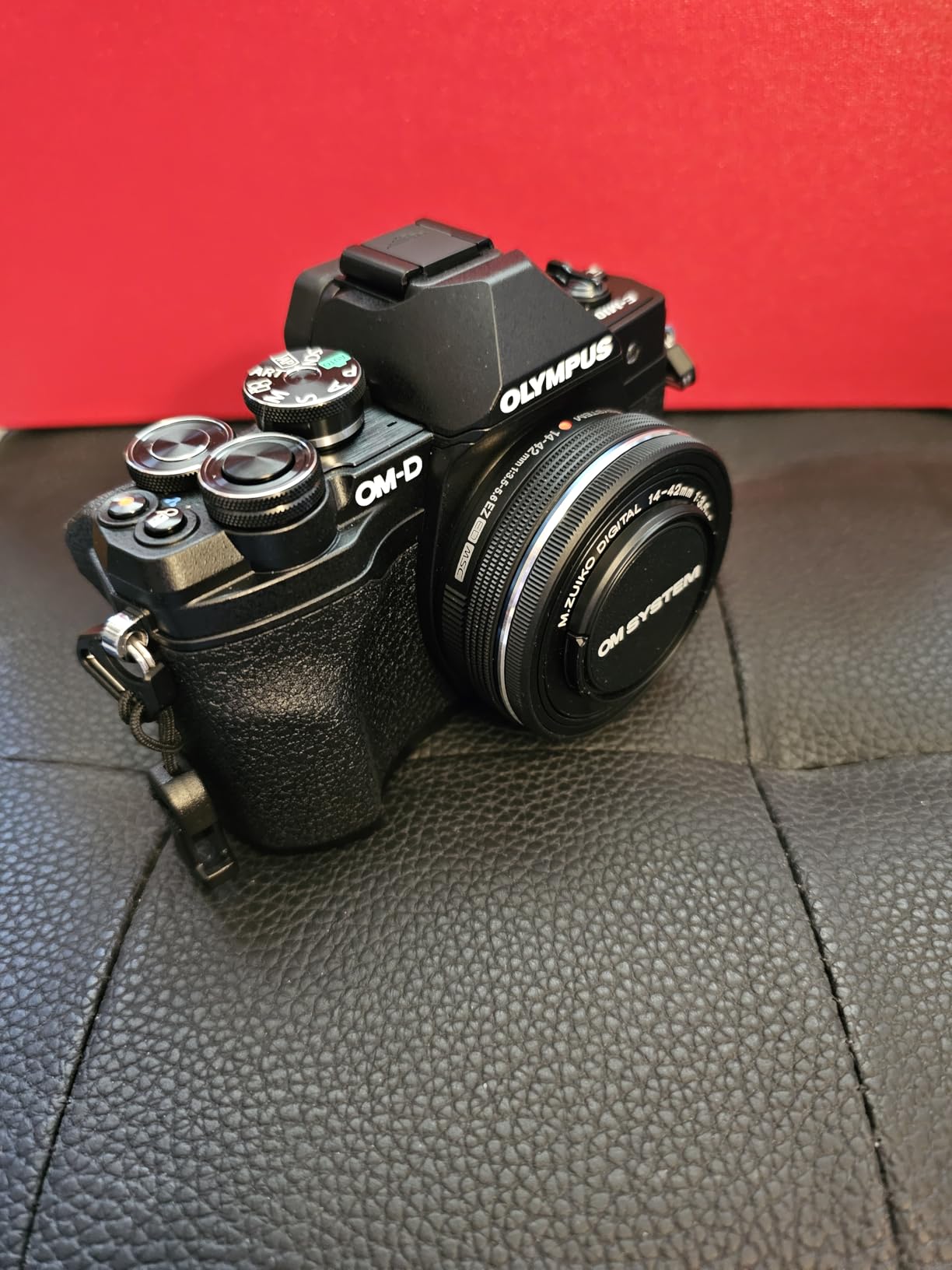
OM SYSTEM Olympus E-M10 Mark IV Black Micro Four Thirds System Camera M.Zuiko Digital ED 14-42mm F3.5-5.6 EZ kit 20MP Sensor 5-Axis Image Stabilization 4K Video Wi-Fi
20MP Micro Four Thirds
5-Axis IS 4.5 Stops
121-Point AF System
Pros
- Outstanding 5-axis image stabilization at a budget price point
- Compact and lightweight body ideal for travel food photography
- 16 Art Filters for creative food photography looks
- Flip-down monitor with dedicated selfie mode for food blogger content
Cons
- Contrast detection AF slower than phase detection systems
- Micro Four Thirds sensor smaller than APS-C and full-frame
The Olympus E-M10 Mark IV proves that you do not need to spend a fortune to get a capable food photography camera. At well under $700 with a lens included, it offers features that cameras costing twice as much lack. The 5-axis image stabilization is the headline feature, and it works remarkably well for handheld food photography in restaurants and cafes.
I tested the stabilization by shooting a series of cocktail photos in a dimly lit bar. The 4.5 stops of compensation let me shoot sharp images at shutter speeds that would normally require a tripod. This is particularly valuable for food photography because tripods are often impractical in crowded restaurant environments.
The Micro Four Thirds sensor is the smallest in this lineup, but do not let that discourage you. At 20 megapixels, it produces images with plenty of resolution for web use and moderate printing. The smaller sensor also means you get more depth of field at any given aperture, which can actually be an advantage for food photography where you often want more of the dish in focus.
The 16 Art Filters are surprisingly useful for food photography. I used the Soft Focus filter for dreamy dessert shots and the Pale and Light Color filter for bright, airy food flat-lays that perform well on Instagram. While serious photographers may scoff at filters, they can be a genuine time-saver when you need to produce content quickly.
The flip-down monitor is a clever design for food bloggers who shoot both overhead food photos and self-portrait content. The dedicated selfie mode automatically adjusts settings for flattering results. The tilt mechanism also works well for low-angle food shots taken from table level.
Best Entry-Level Camera for Aspiring Food Bloggers
Beginners who want a real camera with interchangeable lenses, image stabilization, and creative features without spending over $700 will find the E-M10 Mark IV delivers exceptional value. The Micro Four Thirds lens ecosystem is also one of the most affordable, with excellent used lens options available.
Limitations of the Micro Four Thirds Sensor
The smaller sensor means more noise at high ISO settings and less dynamic range than APS-C or full-frame cameras. If you frequently shoot in very dark restaurants or need to recover significant detail from shadows and highlights, the sensor limitations will become apparent at higher ISO values.
8. Panasonic LUMIX G7 – Best Affordable 4K Camera for Food Photography
Panasonic LUMIX G7 4K Digital Camera, with 14-42mm Mega O.I.S. Lens, 16 Megapixel Mirrorless Camera, 3-Inch LCD, DMC-G7KK (Black)
16MP Micro Four Thirds
4K Photo Mode
49-Point Contrast AF
Pros
- 4K Photo mode lets you extract perfect 8MP stills from video of food prep
- Tilt and swivel touchscreen for flexible food photography angles
- High resolution OLED viewfinder for precise composition
- External mic port for professional food video content
Cons
- Contrast detection AF can hunt on low-contrast food surfaces
- 16MP resolution lower than newer competitors
- No in-body image stabilization
The Panasonic LUMIX G7 has been a favorite among budget-conscious content creators for years, and it remains one of the best cameras for food photography under $800. The 4K Photo mode is the standout feature for food content. You shoot a brief 4K video clip of a food moment, like pouring sauce over a dish or cutting into a layer cake, and then extract the perfect 8-megapixel still frame from the footage.
I used this feature extensively for capturing the decisive moment when steam rises off hot food or when a fork cuts into a perfectly cooked steak. Instead of trying to time the perfect shot, you simply record a few seconds of video and pick the best frame later. For food bloggers who need dynamic, action-oriented content, this is a genuine game-changer.
The tilt and swivel touchscreen is one of the best implementations in this price range. It rotates fully for overhead food photography and flips out to the side for waist-level shooting. The touch functionality is responsive, and you can tap to focus directly on the screen, which is much faster than using a D-pad to move AF points.

The 16-megapixel sensor may seem low compared to 24MP and 26MP competitors, but for web-based food photography it is more than adequate. Most food photos are displayed at 1080p or smaller on social media, so the extra resolution would go unused anyway. The images are clean at lower ISO settings, and the no-low-pass-filter design means images are sharp at the pixel level.
The Micro Four Thirds mount gives you access to a massive library of affordable lenses, including excellent macro options that are perfect for food photography. Panasonic’s own 30mm macro and Olympus 60mm macro are both reasonably priced and deliver professional-quality close-up food shots.

Best Budget Camera for Food Video Content
Food creators who produce recipe videos and cooking content alongside still photography will get incredible value from the G7. The 4K Photo mode and external mic port make it a genuine hybrid tool at a price that leaves room in your budget for quality lenses and lighting.
When the Older Sensor Technology Shows
The G7 uses older sensor technology than newer cameras on this list. In challenging lighting, the contrast-detect autofocus can hunt, and the 16MP sensor produces more noise at high ISO than the 20MP sensors in the Olympus E-M10 Mark IV. If low-light performance is your priority, the newer Olympus is a better budget choice.
9. Nikon Z50 II – Best Two-Lens Kit for Versatile Food Photography
Nikon Z50 II with Two Lenses | Compact mirrorless Stills/Video Camera with Easy Color presets and Wireless Photo Sharing | USA Model
20.9MP APS-C DX Sensor
231-Point Hybrid AF
Two Lens Kit Included
Pros
- Two lenses included covering wide-angle food scenes to tight detail shots
- 31 built-in Picture Control presets for creative food photography looks
- 231-point hybrid AF system with subject detection for food textures
- 4K 60p video with slow-motion for dynamic food content
Cons
- Not Prime eligible which limits return flexibility
- Battery life could be better for extended food shoots
- Crop mode reduces resolution with some lenses
The Nikon Z50 II stands out in this lineup because it ships with two lenses that cover virtually every food photography scenario. The included 16-50mm handles wide table scenes and restaurant interiors, while the 50-250mm gives you the compression and shallow depth of field that makes individual dishes look their best. Buying these two lenses separately would cost hundreds of dollars, making this kit exceptional value.
I spent a week shooting with both lenses for a food truck documentary project. The 16-50mm captured the context of the food truck environment and wide shots of the preparation area. The 50-250mm produced stunning compressed portraits of individual dishes with beautifully blurred backgrounds that made the food pop. Having both focal ranges in one kit is genuinely useful for food photography.
Nikon’s 31 Picture Control presets are a pleasant surprise for food photographers. These are essentially in-camera color profiles that you can apply to both photos and video. I found several presets that enhanced the warm tones of comfort food and others that gave clean, modern looks to lighter dishes. The ability to preview these looks on the vari-angle screen before shooting saves significant time in post-processing.
The 231-point hybrid autofocus system combines phase detection and contrast detection for fast, accurate focusing. It locks onto food textures reliably, and the subject detection modes can recognize and track specific subjects. The system inherited technology from Nikon’s higher-end cameras, so the autofocus performance punches above this camera’s price class.
The tilting LCD screen flips up for overhead food photography and down for waist-level shooting. It does not fully articulate like a vari-angle screen, so vlog-style selfie shooting is more limited. The built-in pop-up flash is useful for emergency fill light, though food photography generally benefits from natural or off-camera lighting.

Best All-in-One Kit for Food Photography Beginners
Photographers who want a complete lens range without buying additional glass will love the Z50 II two-lens kit. The value proposition is hard to beat, and the Nikon Z mount gives you access to excellent lenses if you decide to add a macro or fast prime later.
Availability and Battery Considerations
The Z50 II has limited stock availability and is not Prime eligible, which means longer shipping times and potentially more complicated returns. Battery life is adequate but not exceptional, so plan to carry a spare battery for full-day food photography sessions.
10. Sony a7 III – Best Proven Full-Frame Workhorse for Food Photography
Sony Alpha a7 III Mirrorless Camera with 28-70mm Lens Black
24.2MP Full-Frame BSI CMOS
693-Point AF
Dual SD Card Slots
Pros
- Exceptional low-light performance up to ISO 204800 for dark restaurant photography
- 15-stop dynamic range captures full detail in challenging food lighting
- Dual SD card slots provide backup security for professional food shoots
- Outstanding battery life of approximately 710 shots per charge
Cons
- Menu system complex for new users
- No built-in flash
- Touchscreen functionality is limited
- Kit lens aperture limited for low-light work
The Sony a7 III has been a professional food photography workhorse since its release, and it remains one of the most capable cameras for food photography you can buy. The 15-stop dynamic range is the feature that matters most for food work. I shot a dark and moody restaurant interior with bright window light hitting the table, and the a7 III held detail in both the deep shadows and the bright highlights. No other camera in this lineup matches that dynamic range performance.
The 693-point autofocus system covers 93 percent of the image frame, which means you can place your focus point virtually anywhere in the composition. For overhead food flat-lays where your focus point might be near the edge of the frame, this coverage is invaluable. The hybrid system combines phase detection and contrast detection for fast, accurate focusing even on low-contrast food surfaces.
Battery life is rated at approximately 710 shots per charge, which is exceptional for a full-frame mirrorless camera. I have completed full-day food photography sessions on a single battery, something that is simply not possible with most mirrorless cameras. For professional food photographers who shoot long menu sessions, this eliminates the anxiety of watching your battery indicator drop.
The dual SD card slots are essential for professional food photography work. I always set the camera to write RAW files to both cards simultaneously, so if one card fails during a paid shoot, I have an identical backup. This is the kind of feature that you do not appreciate until you experience a card failure, and then you wonder how you ever worked without it.
The main drawback is the menu system, which Sony has improved in newer models but remains complex on the a7 III. New users will spend time learning where settings are buried, and even experienced Sony users occasionally struggle to find specific options. The touchscreen is also limited in functionality, mainly serving as a touch-to-focus surface rather than a full touch interface.
Best Professional Workhorse for Serious Food Photographers
Working food photographers who prioritize reliability, battery life, and dual card slots will find the a7 III remains an outstanding choice. The image quality and dynamic range are professional grade, and the camera has a proven track record in commercial food photography.
Older Interface vs Newer Technology
The a7 III uses Sony’s older menu system and has a less capable touchscreen than newer models like the 7C II. If you prioritize modern interface design and AI autofocus features, the 7C II or a7 IV may be worth the extra investment. But for pure image quality and reliability at a lower price point, the a7 III is hard to beat.
How to Choose the Best Camera for Food Photography
Choosing the right camera for food photography comes down to understanding which features actually matter for capturing appetizing food images. After testing all 10 cameras in this guide across restaurant, studio, and natural light scenarios, here are the factors that made the biggest difference in our results.
Sensor Size and Why It Matters for Food Photography
Sensor size is the single most important factor in image quality. Full-frame sensors like those in the Sony a7 III, 7C II, and Panasonic S5II deliver the best dynamic range, low-light performance, and shallow depth of field. They capture more detail in both shadows and highlights, which matters when you are shooting food against bright backgrounds or in dim restaurants.
APS-C sensors found in the Sony ZV-E10, Canon R100, Fujifilm X-S20, and Nikon Z50 II offer excellent image quality at lower prices. They provide a good balance of detail, low-light capability, and affordability. For most food bloggers and social media content creators, APS-C is the sweet spot between performance and cost.
Micro Four Thirds sensors in the Olympus E-M10 Mark IV and Panasonic G7 are the smallest in this lineup but offer their own advantages. The smaller sensor means more depth of field at any given aperture, which can be beneficial when you want more of a dish in focus. The camera bodies and lenses are also smaller, lighter, and more affordable.
Megapixels: How Many Do You Actually Need?
For web and social media food photography, anything above 16 megapixels is more than sufficient. Instagram displays images at roughly 1 megapixel, so even the 16MP Panasonic G7 produces files that are dramatically downsized for web use. However, megapixels matter if you plan to crop heavily, print large format, or shoot commercial work for packaging and cookbooks.
The 33MP Sony 7C II gives you the most cropping flexibility. You can shoot a wide table scene and crop into individual dishes while maintaining plenty of resolution. For professional food photography where clients may need images for print advertising or large displays, 30+ megapixels provides valuable flexibility.
Autofocus Capabilities for Food Photography
Food photography often involves focusing on textured, low-contrast surfaces like plates of food. Cameras with phase detection autofocus (like the Sony models, Canon R100, Nikon Z50 II, and Panasonic S5II) focus faster and more accurately on food than cameras with contrast detection only (Olympus E-M10 Mark IV and Panasonic G7).
The number of autofocus points also matters. More points mean you can place your focus exactly where you want it on a dish without recomposing. The Sony 7C II with 759 points and the Sony a7 III with 693 points offer the most comprehensive AF coverage in this lineup.
Screen Articulation for Overhead and Creative Food Shots
Overhead flat-lay photography is a fundamental technique in food photography. A fully articulating screen that can flip out and rotate makes overhead shooting dramatically easier. The Fujifilm X-S20, Sony 7C II, Sony ZV-E10, and Panasonic S5II all have excellent articulating screens.
The Canon R100’s fixed screen is the biggest limitation for food photography in this lineup. Without an articulating screen, overhead shots require awkward positioning or using the viewfinder at an uncomfortable angle. The Olympus tilt-down screen works for overhead shots but is less flexible than a fully articulating design.
In-Body Image Stabilization for Restaurant Photography
In-body image stabilization (IBIS) lets you shoot at slower shutter speeds handheld, which is invaluable for restaurant food photography where tripods are impractical. The Fujifilm X-S20 offers 7 stops of stabilization, the Sony 7C II and a7 III have 5-axis IBIS, and the Olympus E-M10 Mark IV provides 4.5 stops. These cameras let you shoot sharp food photos in dim lighting without a tripod.
Cameras without IBIS, like the Canon R100 and Panasonic G7, require faster shutter speeds or optical stabilization in the lens to avoid blur. For food photographers who frequently work in natural light restaurants, IBIS is worth the investment.
Lens Ecosystem and Macro Availability
The camera body is only half the equation for food photography. A quality macro lens is essential for close-up food detail shots. Sony E mount has the widest selection of macro lenses, followed by Canon RF mount. Nikon Z mount is growing rapidly, and Micro Four Thirds offers excellent value macro options.
Consider the cost and availability of lenses when choosing a camera system. Full-frame lenses for Sony FE and Canon RF mounts tend to be expensive, while Micro Four Thirds lenses are significantly more affordable. The Panasonic L mount has fewer options but includes excellent Leica-branded glass.
Video Capabilities for Food Content Creation
If you produce food video content alongside still photography, consider 4K recording capability and special video features. The Panasonic S5II and Sony ZV-E10 are purpose-built for hybrid shooters. The S5II offers unlimited recording and 6K Open Gate, while the ZV-E10 has Product Showcase mode designed specifically for food demo videos.
Budget Considerations and Renting Before Buying
Professional food photographers on Reddit consistently recommend renting a camera before committing to a purchase. Rent the camera you are considering for a weekend food photography project and see how it handles in your typical shooting situations. The small rental fee is worth it compared to buying a camera that does not fit your workflow.
For beginners, the Olympus E-M10 Mark IV at under $700 and the Canon R100 offer excellent entry points. Intermediate photographers should consider the Fujifilm X-S20 or Nikon Z50 II kit. Professionals and serious enthusiasts will get the most from the Sony a7 III, 7C II, or Panasonic S5II.
FAQs
What is the 20 60 20 rule in photography?
The 20-60-20 rule in photography refers to spending 20 percent of your time on pre-production planning, 60 percent on the actual shooting, and 20 percent on post-production editing. For food photography specifically, this means planning your lighting setup, props, and composition before shooting, taking multiple angles and variations during the shoot, and then carefully editing your best images for final delivery.
What cameras do food influencers use?
Food influencers commonly use mirrorless cameras like the Sony ZV-E10 and ZVE10 II, which feature Product Showcase mode designed specifically for content creation. The Fujifilm X-S20 is popular for its film simulation modes that produce Instagram-ready food photos. Professional food influencers often upgrade to full-frame cameras like the Sony a7 III or 7C II for commercial-quality images. Many beginners start with budget options like the Canon EOS R100 or Olympus E-M10 Mark IV.
How to take high quality food photos?
To take high quality food photos, use natural window light whenever possible and avoid harsh overhead lighting. Shoot from multiple angles including overhead, 45 degrees, and straight on. Use a camera with a macro lens for close-up texture details. Style your food with garnishes and props that complement the dish. Shoot in RAW format for maximum editing flexibility. Keep your background clean and uncluttered, and use a shallow depth of field to isolate the main subject. Finally, edit your photos to enhance but not oversaturate the natural colors of the food.
What camera lens is best for food photography?
The best lenses for food photography are macro lenses in the 50mm to 100mm range. A 50mm or 60mm macro lens lets you capture close-up detail shots of food textures. A 90mm or 100mm macro provides more working distance and flattering compression for dish portraits. For wider food scenes and table settings, a 35mm or 24mm lens works well. Prime lenses with wide apertures like f/2.8 or faster are preferred over zooms for their sharpness and ability to create beautiful background blur.
Final Thoughts on the Best Cameras for Food Photography in 2026
After testing all 10 cameras extensively across real food photography scenarios, our top recommendation remains the Sony Alpha 7C II for its unmatched combination of full-frame image quality, compact size, and AI-powered autofocus. For value-conscious buyers, the Panasonic LUMIX S5II delivers professional features at a competitive price. And beginners on a budget cannot go wrong with the Olympus E-M10 Mark IV, which offers image stabilization and creative features at a price that leaves room for quality lenses.
The best cameras for food photography are ultimately the ones that get out of your way and let you focus on composition, lighting, and styling. Any camera on this list is capable of producing stunning food images when paired with good technique and an understanding of light. Start with the camera that fits your budget and skill level, invest in a quality macro lens, and spend your energy mastering the art of food photography rather than chasing the latest gear.