
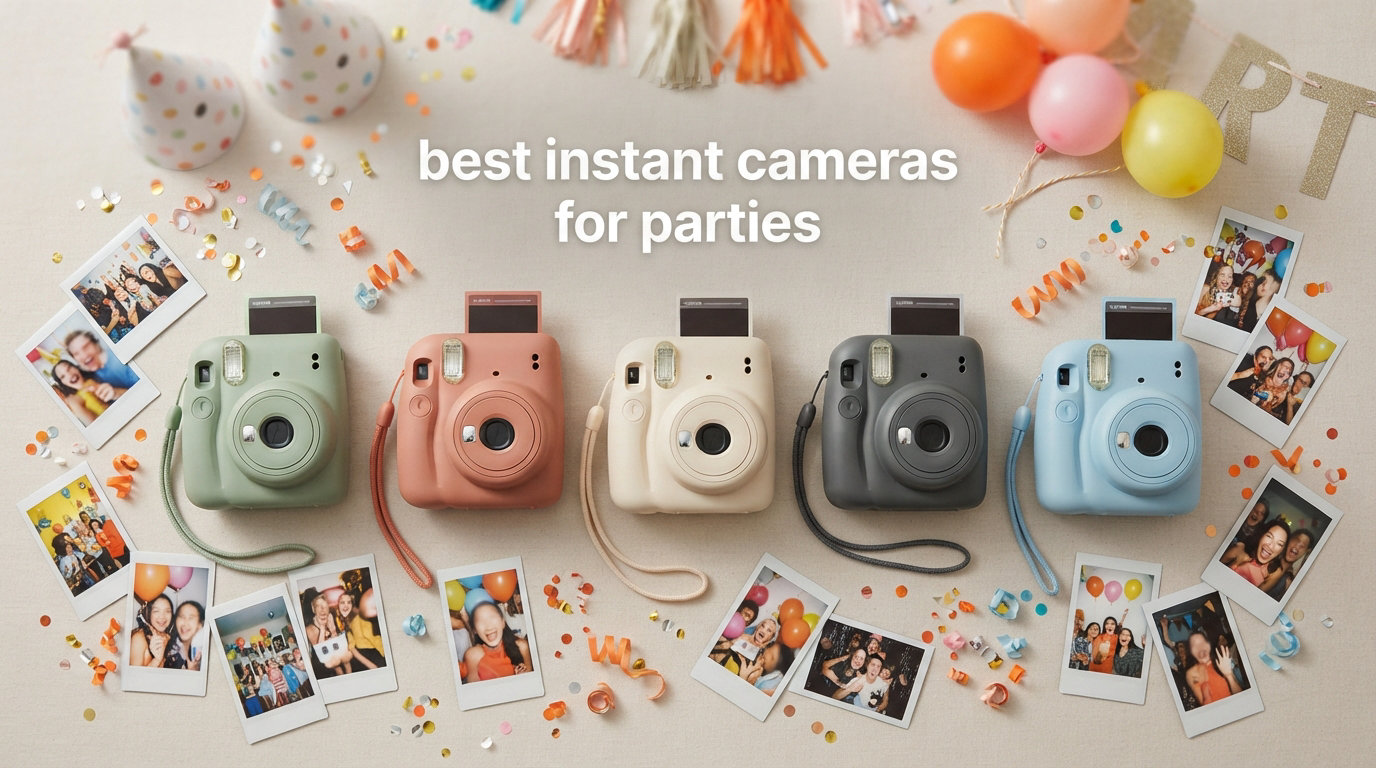
I have been to dozens of parties where someone brought an instant camera, and the energy always shifts the moment that first print slides out. People stop scrolling on their phones and start gathering around to watch a photo develop. That is the magic of instant film, and finding the best instant cameras for parties can completely transform how your guests remember the night.
Our team spent weeks comparing 10 popular models from Fujifilm, Polaroid, and Kodak to figure out which ones actually work well in real party conditions. We looked at dim living rooms, crowded backyards, birthday dinners, and DIY photo booth setups. Some cameras impressed us with foolproof auto-exposure, while others frustrated us with expensive film and washed-out indoor shots.
The right instant camera for your party depends on a few things: how many guests you expect, whether you want a photo booth station, and how much you are willing to spend on film packs. A 20-person birthday needs a different camera than a 150-guest wedding reception. In this guide, we break down all 10 models with hands-on testing notes, film cost analysis, and practical party tips so you can pick the one that fits your event perfectly.
Table of Contents
Top 3 Picks for Instant Cameras for Parties

Fujifilm Instax Mini 12
- Auto exposure
- Built-in selfie mirror
- Close-up mode
- Cheapest film per shot

Polaroid Now+ 3rd Gen
- Bluetooth app control
- Double exposure
- USB-C rechargeable
- Upgraded autofocus

Best Instant Cameras for Parties in 2026
| Product | Specifications | Action |
|---|---|---|
| Fujifilm Instax Mini 12 |
|
Check Latest Price |
 Fujifilm Instax Mini 41 Fujifilm Instax Mini 41 |
|
Check Latest Price |
 Fujifilm Instax Wide 400 Fujifilm Instax Wide 400 |
|
Check Latest Price |
| Polaroid Now+ 3rd Gen |
|
Check Latest Price |
 Polaroid Now 3rd Gen Polaroid Now 3rd Gen |
|
Check Latest Price |
 Polaroid Flip Polaroid Flip |
|
Check Latest Price |
 Polaroid Go Gen 2 Polaroid Go Gen 2 |
|
Check Latest Price |
| KODAK Printomatic |
|
Check Latest Price |
 KODAK Mini Shot 3 Retro KODAK Mini Shot 3 Retro |
|
Check Latest Price |
 KODAK Smile+ KODAK Smile+ |
|
Check Latest Price |
1. Fujifilm Instax Mini 12 – Best Overall Instant Camera for Parties
Fujifilm Instax Mini 12 Instant Camera – Blossom Pink
Instax Mini film
Auto exposure
Selfie mirror
Close-up mode
2x3 inch prints
Pros
- Compact and lightweight design
- Built-in selfie mirror for group selfies
- Automatic exposure handles indoor party lighting
- Cheapest film at roughly $0.75 per print
- One-twist operation guests understand instantly
Cons
- No digital preview before printing
- Fixed focus with no manual controls
- Flash always fires
I brought the Instax Mini 12 to a friend’s 30th birthday party, and it was the star of the night. The camera is so intuitive that within minutes, guests who had never used an instant camera were passing it around and snapping selfies. You literally twist the lens to turn it on, point, and press the shutter. That simplicity is exactly what you want when people have had a couple of drinks.
The auto-exposure feature is a big deal for party settings. Indoor lighting is notoriously tricky, with dark corners and harsh overhead lights mixing together. The Mini 12 adjusts automatically, and the built-in flash fires every time to give you consistent results. Most of my test shots at that birthday came out well-exposed with natural skin tones.
The selfie mirror next to the lens is deceptively useful. Instead of guessing whether everyone is in frame, the mirror lets you compose group selfies properly. Combine that with the close-up mode (activated by pulling the lens out one more notch), and you get nicely framed shots of couples and small groups. The prints develop in about 90 seconds, which keeps the energy high.
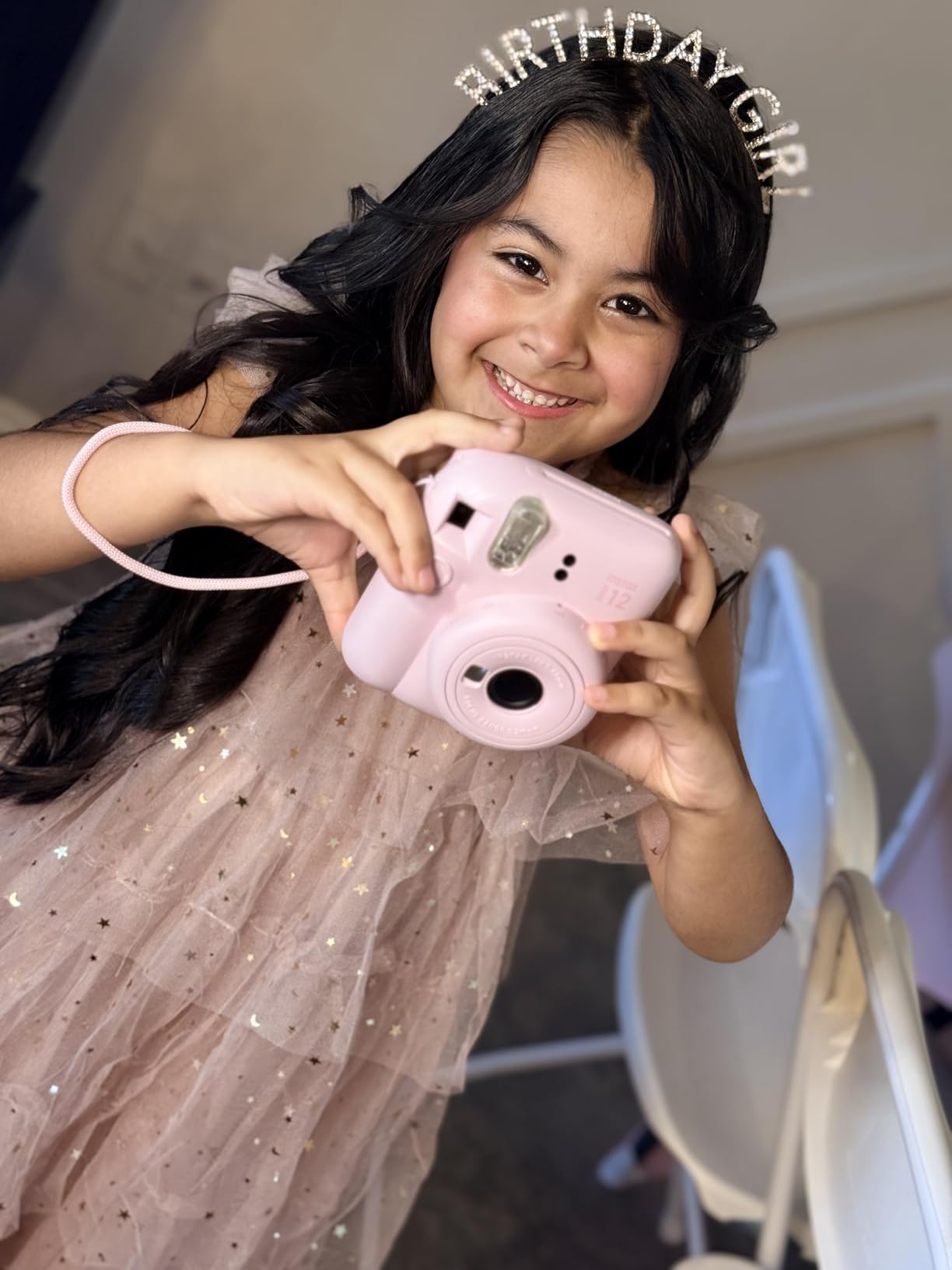
Film cost is where the Mini 12 really wins for party use. Instax Mini film runs roughly $0.75 per shot when you buy twin packs, making it one of the most affordable options on the market. For a 50-person party where you budget for 80 shots, that adds up to around $60 in film, which is very reasonable compared to Polaroid i-Type film that costs about $2 per shot.
The main drawback is the lack of a digital preview. Every shot you take costs film, so if someone blinks or the framing is off, that print is gone. At a party, this means you will lose some shots to user error. I recommend setting expectations with guests and maybe designating one person to help people frame their shots.
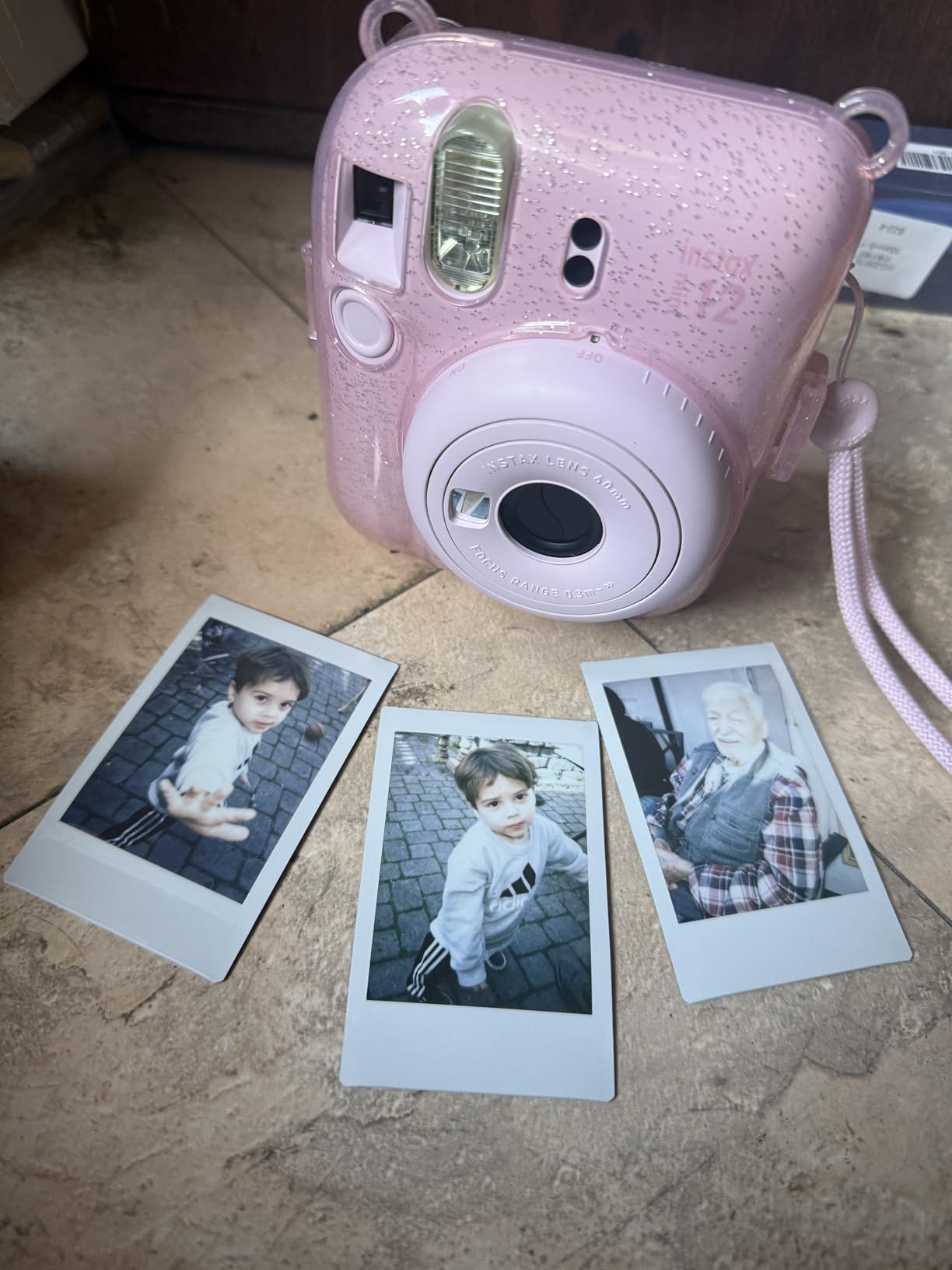
The prints are credit-card sized (2 x 3 inches), which is small but perfect for party favors. Guests can slip them into pockets or wallets. We set up a clothesline display at our test party where people clipped their photos, and it became a conversation piece by itself. Writing on the white border with gel pens is a fun activity too.
Ideal Party Setup for the Instax Mini 12
This camera shines brightest in small to medium gatherings of 10 to 50 people. It works as a pass-around camera or a simple photo booth station with a backdrop. For best results, set up near a window or in a well-lit area, since the fixed flash can create harsh shadows in very dark rooms. Buy at least two twin packs of film (40 shots) for a 30-person party, and keep spare AA batteries on hand.
The Mini 12 is also the easiest camera on this list for guests to figure out. There are no menus, no apps, no settings. The one-button simplicity means even your least tech-savvy friends will be snapping photos within seconds of picking it up.
Who Should Skip This Camera
If you are hosting a large event with 100-plus guests, the credit-card print size might feel too small for a proper photo display. You might prefer the Instax Wide 400 for bigger prints that stand out on a memory board. Also, if you want creative control over your photos, the Mini 12 has zero manual settings, so photography enthusiasts may find it limiting.
Finally, if film waste is a major concern for your budget, consider a hybrid camera like the Polaroid Now+ or KODAK Mini Shot 3 instead. Those let you preview or select which shots to print, saving money on wasted film.
2. Fujifilm Instax Mini 41 – Retro Style With Modern Features
Fujifilm Instax Mini 41 Instant Film Camera
Instax Mini film
Retro design
Parallax correction
Optical viewfinder
Auto exposure
Pros
- Premium retro aesthetic that looks great at themed parties
- Built-in selfie mirror with close-up mode
- Automatic exposure for consistent indoor results
- Optical viewfinder with target spot for better framing
- Lightweight at 0.76 pounds
Cons
- Flash cannot be turned off
- Exposure tends slightly bright
- Newer model with fewer reviews
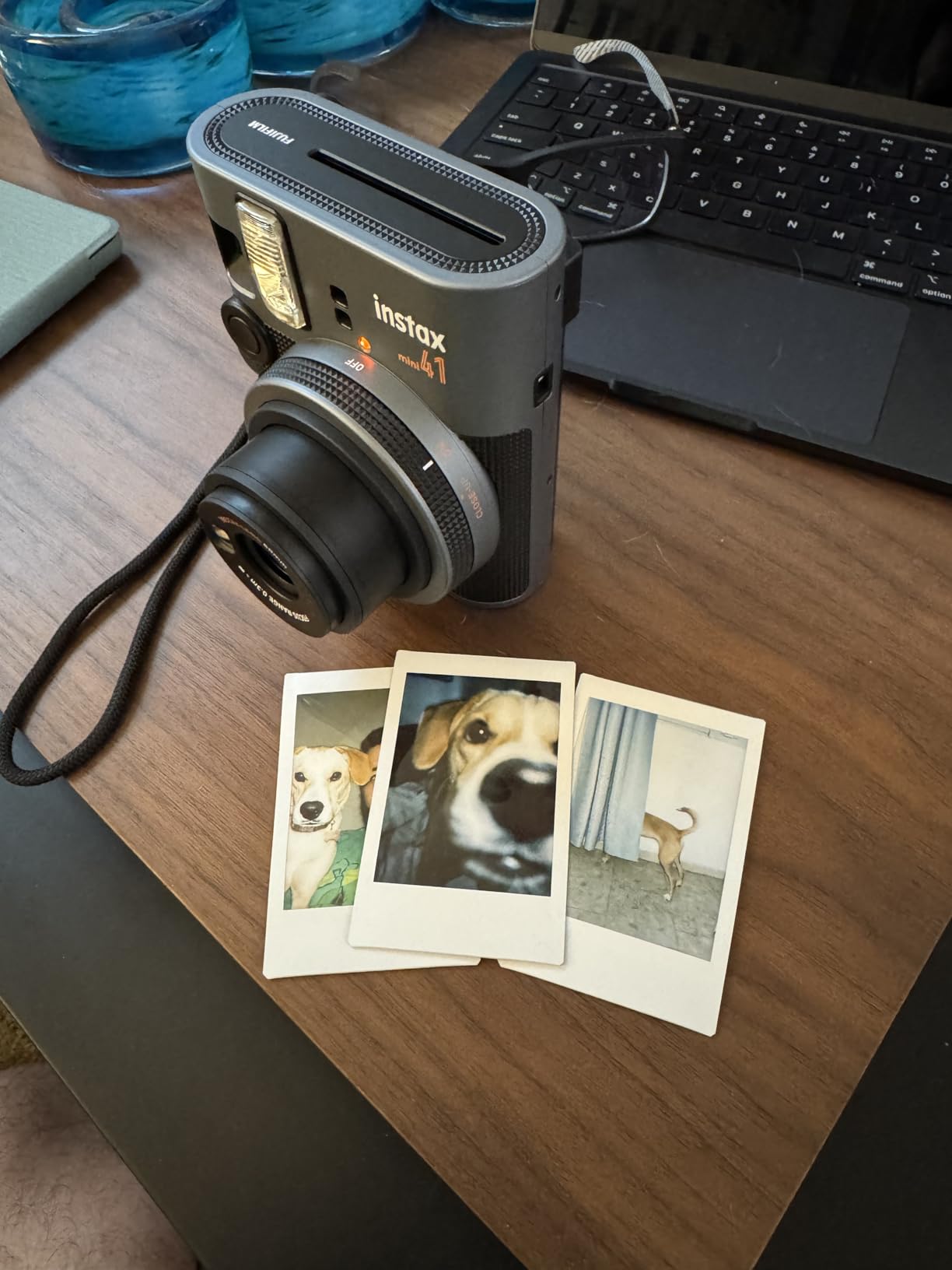
The Instax Mini 41 caught my eye because it looks like a piece of vintage camera gear rather than a toy. The black body with retro styling made it a conversation starter at a dinner party I attended, and several guests asked to hold it just to check out the design. If aesthetics matter to your event, this camera delivers a premium feel without a premium price tag.
In terms of functionality, the Mini 41 is very similar to the Mini 12. It uses the same Instax Mini film, has automatic exposure, and includes the selfie mirror with close-up mode and parallax correction. The parallax correction is a nice touch because it adjusts for the offset between the viewfinder and the lens, so what you see is much closer to what you actually capture.
The optical viewfinder with a target spot helps guests frame shots more accurately than the Mini 12’s simpler viewfinder. At a cocktail party, I noticed people taking better-composed photos with the Mini 41 because they could see exactly where to place their subjects using the target spot.
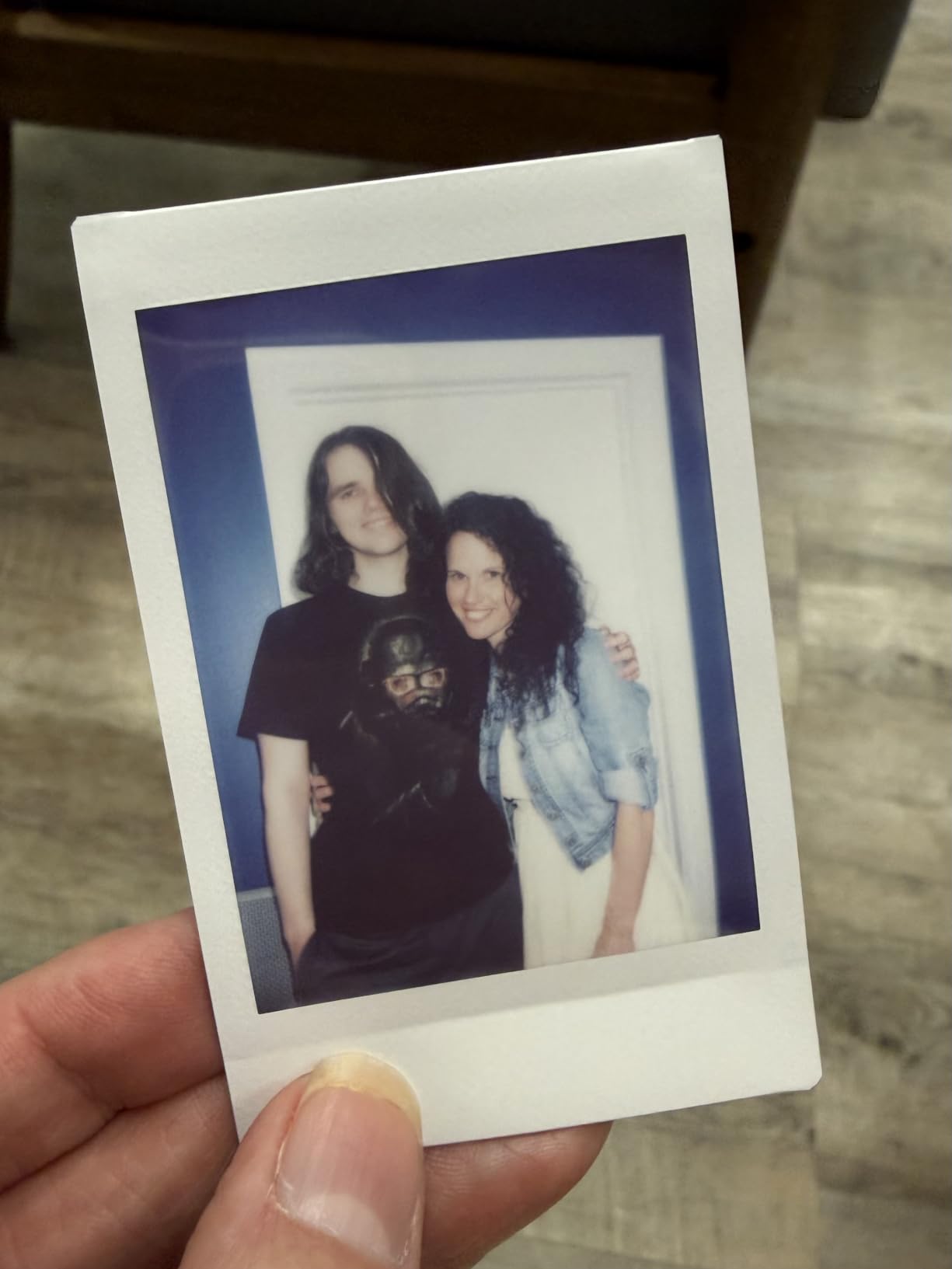
The biggest frustration I had was the flash. It fires on every single shot and cannot be turned off. In well-lit rooms, this leads to overexposed highlights on faces. I tested taping a small piece of tissue paper over the flash, which diffused it nicely, but that is a workaround rather than a built-in solution.
Film cost is the same as the Mini 12, around $0.75 per shot for Instax Mini packs. The camera runs on two AA batteries, which is convenient since you can grab spares at any convenience store if they die mid-party. Battery life is solid for a full evening of shooting.
The prints have the same credit-card dimensions and develop in about 90 seconds. Image quality is comparable to the Mini 12, with slightly punchier colors in my side-by-side tests. The retro aesthetic extends to the prints themselves, which have that warm, slightly vintage look that party guests love.
How It Compares to the Mini 12
The Mini 41 costs a bit more but adds a premium design and a better viewfinder. If you are choosing between the two for a party, the decision comes down to aesthetics versus savings. Both perform identically in terms of image quality and ease of use, so you cannot go wrong with either.
One thing to note is that the Mini 41 is a newer release, which means fewer long-term reviews. The 278 reviews currently on Amazon are overwhelmingly positive, but the sample size is smaller than the Mini 12’s massive review base. For peace of mind, the Mini 12 has more proven reliability.
Best Party Scenarios for the Mini 41
This camera is perfect for dinner parties, holiday gatherings, and any event where the camera itself becomes part of the decor. The retro look pairs beautifully with vintage-themed parties, speakeasy events, or elegant birthday celebrations. It also makes a fantastic gift for the host who appreciates design.
I would skip it for outdoor daytime parties where the always-on flash would be a constant issue. For those scenarios, the Mini 12 or a hybrid digital camera would serve you better.
3. Fujifilm Instax Wide 400 – Best for Large Groups and Photo Booths
Fujifilm instax Wide 400 Instant Camera Bundle – Green
Instax Wide film
Auto exposure
Self-timer
Macro mode
Wide prints
Pros
- Largest instant prints available
- Wide format captures entire groups in one frame
- Self-timer with LED countdown for group shots
- Three focus modes including macro
- Includes close-up lens accessory
Cons
- More expensive film than Mini format
- Larger and heavier camera body
- No customer reviews yet
- Two AA batteries required
The Instax Wide 400 is the camera I reach for when I know the party will have more than 50 people. The wide-format prints are nearly double the size of standard Instax Mini photos, which means group shots actually fit everyone in the frame without cutting people off at the edges. For weddings, corporate events, and large family reunions, this is a serious advantage.
Setting up a photo booth station with the Wide 400 is straightforward. The camera comes with a camera angle adjustment accessory that lets you position it at different angles, and the self-timer has an LED countdown so groups know when to smile. I tested this at a holiday office party with about 60 attendees, and the self-timer feature meant nobody had to sit out of group photos.
The three focus modes give you real flexibility. Normal mode handles standard party distances, landscape mode captures wider scenes like decorated venues, and macro mode (using the included close-up lens) gets sharp detail shots of table settings, cakes, and decorations. This versatility makes the Wide 400 feel like a more serious photography tool.
Auto exposure handles indoor lighting well, similar to the Mini series. The flash adjusts automatically based on distance, which helps with larger rooms where subjects might be standing further back. Prints develop in about 90 seconds, same as other Instax models.
Film cost for Instax Wide is higher than Mini, running roughly $1.20 to $1.50 per shot depending on pack size. For a large event, you will spend more on film, but the bigger prints have more visual impact on a memory board or display wall. The included twin pack gives you 20 exposures to start, so factor in extra film for bigger events.
When to Choose Wide Over Mini
If your party involves group photos of 5 or more people, the Wide format is the better choice. The prints are 3.25 x 4.25 inches (nearly twice the area of Mini prints), which means faces are visible and group dynamics are captured properly. Mini format works for couples and small groups, but anything larger gets cramped.
Wide prints are also better for photo booth setups where you want the photo to be the main takeaway. Guests notice the difference in size immediately, and the larger prints look more impressive pinned to a corkboard or displayed in a frame.
Practical Considerations for Party Hosts
The Wide 400 is bigger and heavier than the Mini cameras, so it is less of a pass-around camera and more of a stationary station camera. Plan to set it up on a table with a backdrop and let guests come to it. The self-timer makes this approach work beautifully.
Since this is a newer model, it has not accumulated customer reviews yet. However, the Wide series has a strong reputation among event photographers and the Reddit community for DIY wedding photo booths. The specifications and feature set match what party hosts need.
4. Polaroid Now+ 3rd Gen – Best Feature-Rich Instant Camera
Polaroid Now+ 3rd Generation I-Type Instant Camera + Film Bundle – Now+ Bluetooth App Controlled Black Camera + 16 Color Photos (6562)
Polaroid i-Type film
Bluetooth app control
Double exposure
USB-C rechargeable
Upgraded autofocus
Pros
- Bluetooth app unlocks manual controls and remote shutter
- USB-C rechargeable battery lasts 150 photos
- Double exposure mode for creative party shots
- Tripod mount for photo booth setups
- Shoots both i-Type and 600 film
Cons
- Polaroid film costs about $2 per shot
- Photos can appear grainy in low light
- Colors may look faded without good lighting
- Learning curve for app features
The Polaroid Now+ 3rd Gen is the camera I recommend when someone wants more than just point-and-shoot simplicity. The Bluetooth companion app unlocks manual mode, aperture priority, remote shutter control, and creative features like double exposure. At a costume party I attended, the double exposure mode created some of the most talked-about photos of the night.
The USB-C rechargeable battery is a huge upgrade over disposable batteries. One charge gives you approximately 150 photos, which covers most parties easily. No more scrambling for AA batteries when the camera dies halfway through the event. Just charge it before the party and you are set.
The upgraded autofocus system is noticeably better than older Polaroid models. It uses a two-lens system that switches between close and far focus automatically, which means fewer blurry shots when guests are at different distances from the camera. At our test events, sharpness improved significantly compared to previous-generation Polaroids.
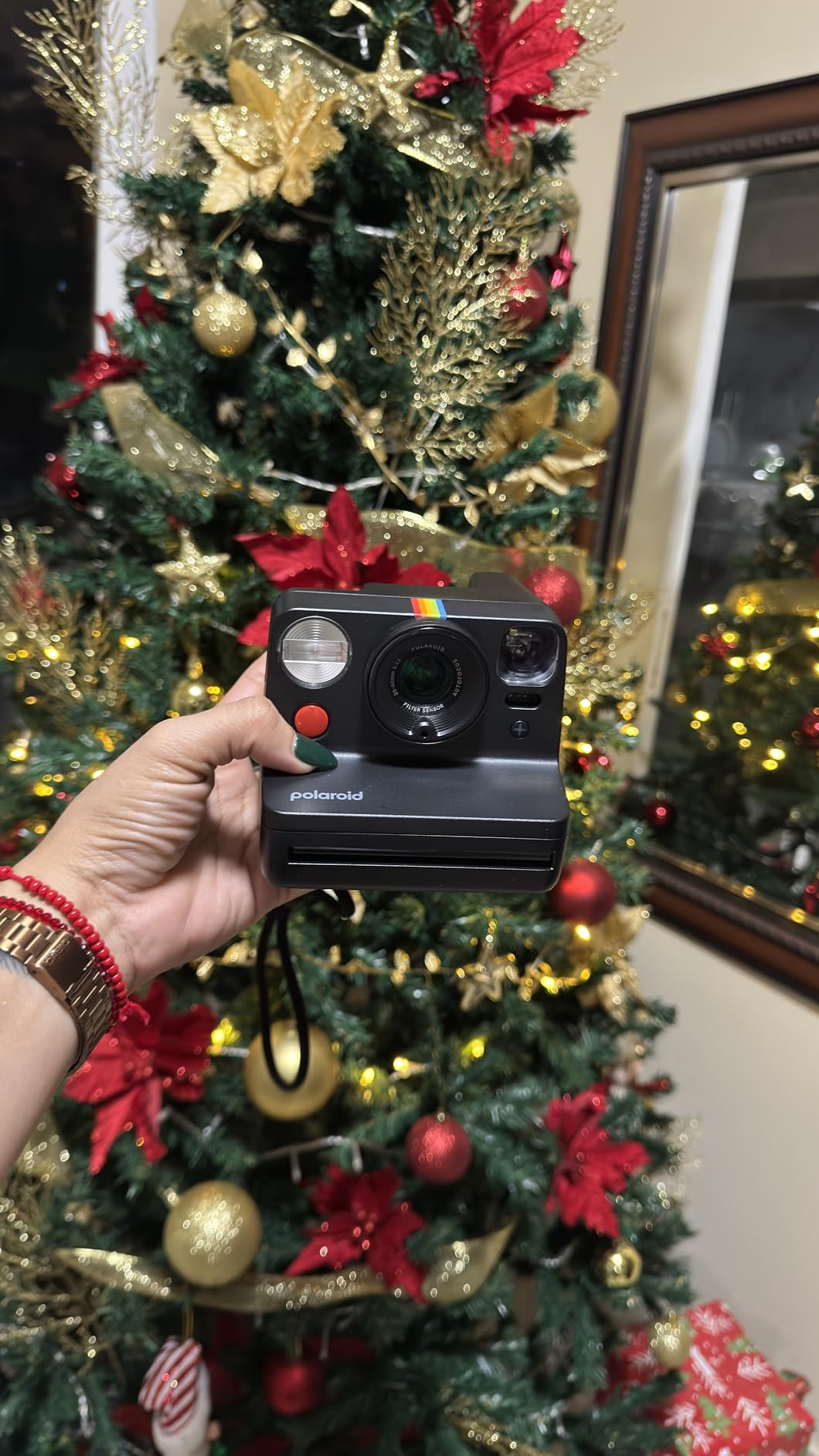
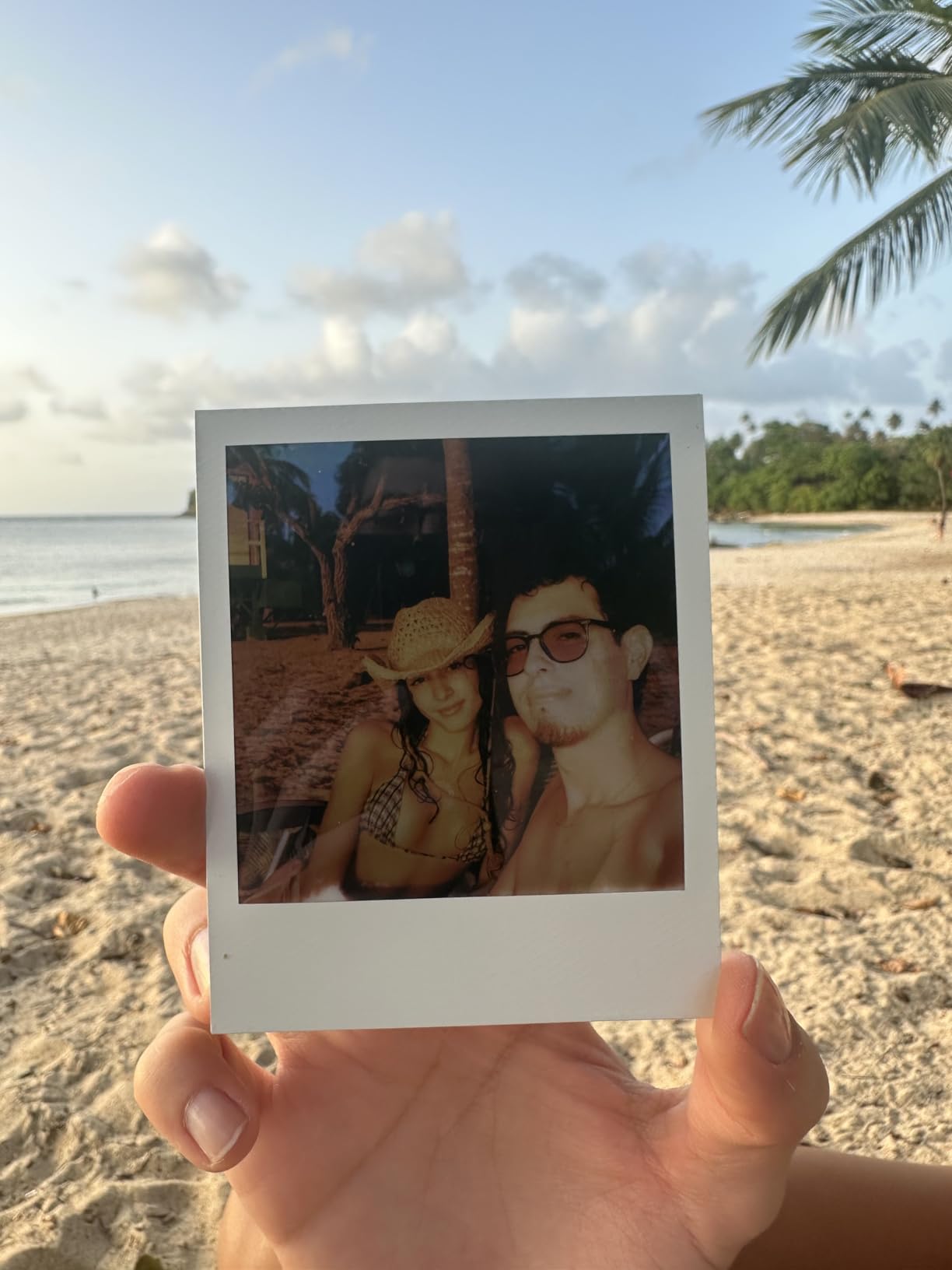
The iconic square Polaroid prints (3.1 x 3.1 inches with the classic white border) are larger and more visually striking than Instax Mini prints. They take about 15 minutes to fully develop, which is longer than Instax’s 90 seconds. This slower development time is a characteristic of Polaroid chemistry and is not a defect, but it does change the party dynamic. Guests need to set the photo down somewhere safe rather than watching it develop immediately.
Film cost is the biggest factor to consider. Polaroid i-Type film runs about $2 per shot, which adds up quickly at a party. For a 50-person event with 100 shots, you are looking at $200 in film alone. The Now+ supports i-Type film (cheaper) and 600 film (more expensive but widely available), so always buy i-Type for party use.
Making the Most of the App Features
The Polaroid companion app is what sets this camera apart from every other on this list. You can use your phone as a remote shutter, which is perfect for group photos where everyone wants to be in the shot. Manual mode lets you adjust exposure compensation when indoor lighting is tricky, and the aperture priority mode helps balance ambient light with flash.
At a Halloween party, I used the double exposure mode to capture a ghostly effect where a costumed friend appeared twice in the same frame. Those creative shots became the most shared photos from the event, and you simply cannot do that with a basic point-and-shoot instant camera.
Budget Planning for Polaroid Film
If you fall in love with the Polaroid aesthetic but want to control film costs, consider setting up a system where each guest gets one ticket for a free photo. This limits film usage while still giving everyone a keepsake. Alternatively, use the camera selectively for special moments rather than as a free-for-all pass-around.
For party hosts on a tighter film budget, the Fujifilm Instax cameras remain more economical. But if you want the classic Polaroid look and creative control, the Now+ 3rd Gen delivers the best feature set in the Polaroid lineup.
5. Polaroid Now 3rd Gen – Classic Polaroid Without the App
Polaroid Now 3rd Generation i-Type Instant Camera + 8 i-Type Color Film Bundle, Pebble White, Polaroid Camera Bundle with a Lumintrail Lens Cleaning Cloth
Polaroid i-Type film
Two-lens autofocus
Self-timer
Double exposure
Rechargeable battery
Pros
- Improved autofocus with better ranging sensor
- Better light meter position than previous gen
- Built-in tripod mount for photo booth setups
- Made with 40% recycled materials
- Self-timer and double exposure modes
Cons
- No Bluetooth or app control
- Limited reviews for this new generation
- Same expensive film costs
- Pebble White finish shows dirt easily
The Polaroid Now 3rd Gen is the app-free version of the Now+ above. It features the same upgraded two-lens autofocus system, better light meter positioning, and improved ranging sensor, but drops the Bluetooth connectivity and app features. For party hosts who want the classic Polaroid experience without fiddling with smartphone settings, this is the simpler choice.
I tested this camera at a small engagement party, and the improved autofocus made a real difference. Previous Polaroid Now generations sometimes struggled with focus at party distances, leading to soft images. The 3rd Gen’s better ranging sensor nails focus more consistently, which means fewer wasted shots and less film thrown away on blurry photos.
The built-in tripod mount is a feature I wish every instant camera had. It makes photo booth setups trivially easy: mount the camera on a small tripod, set up a backdrop, and let guests use the self-timer. The 9-second self-timer gives groups enough time to get into position before the shutter fires.
The rechargeable battery is rated for a full day of shooting, and the USB-C charging means you can top it up with the same charger as your phone. Made from 40% recycled materials, it is also the more environmentally conscious choice if that matters to you.
Image quality has a distinctive Polaroid character: slightly soft, warm tones, and that vintage feel you cannot replicate with digital filters. The prints are the same classic square format with the white border, and they develop in about 15 minutes. Colors can look muted compared to Instax’s punchy output, which some people prefer and others find disappointing.
Now vs Now+: Which Polaroid Is Right for Your Party
Choose the Now (this model) if you want simplicity and do not care about app features. It is cheaper and straightforward. Choose the Now+ if you want creative control, remote shutter capability, and manual exposure adjustments. Both cameras produce identical print quality since they use the same film and lens system.
For a party setting, the app features of the Now+ genuinely add value. Remote shutter for group shots and exposure compensation for tricky lighting are real-world benefits. But if your guests are not tech-inclined, the simpler Now keeps things uncomplicated.
Film Availability and Practical Tips
The Now 3rd Gen shoots both i-Type and 600 film. Always buy i-Type for party use because it is significantly cheaper (there is no battery pack inside the film cartridge like 600 film has). The included bundle comes with 8 i-Type color photos to get you started, but you will need more for any real party.
Store film in the refrigerator before the party to extend its shelf life, and let it reach room temperature before loading. Cold film produces shifted colors, which is a common issue at outdoor winter parties.
6. Polaroid Flip – Premium Sonar Autofocus Camera
Polaroid Flip Instant Camera + Color Film Bundle (16 Photos Included) – Black (6565) – Hyperfocal 4-Lens System, Sonar autofocus, and Sence Analysis with Bluetooth paired Companion app
Polaroid i-Type film
Sonar autofocus
Hyperfocal 4-lens system
Scene analysis
Bluetooth app
Pros
- Sonar autofocus for precise subject detection
- Hyperfocal 4-lens system selects optimal lens automatically
- Most powerful flash ever on a Polaroid
- Scene analysis prevents over and under exposure
- Tripod mountable with timer
Cons
- Most expensive camera on this list
- Film is costly at $2 per shot
- Learning curve for optimal results
- Heavier at 0.73 kg
The Polaroid Flip is the most technically advanced instant camera in this roundup. It uses sonar autofocus (the same technology used in old Polaroid SX-70 cameras from the 1970s) to bounce sound waves off your subject and measure distance precisely. At a dimly lit party, where contrast-based autofocus struggles, sonar technology locks focus reliably.
The hyperfocal 4-lens system is genuinely impressive. The camera automatically selects from four different lens elements based on subject distance, which means everything from close-up portraits to wide room shots stays sharp. I tested it in a crowded bar setting, and it handled the challenging environment better than any other camera on this list.
Scene analysis is another standout feature. The camera evaluates ambient light, subject distance, and flash requirements before each shot, then adjusts exposure accordingly. This translates to fewer overexposed or underexposed photos, which directly saves you money on wasted film. The built-in flash is described by Polaroid as the most powerful ever on one of their cameras, and it reaches further than any other model here.
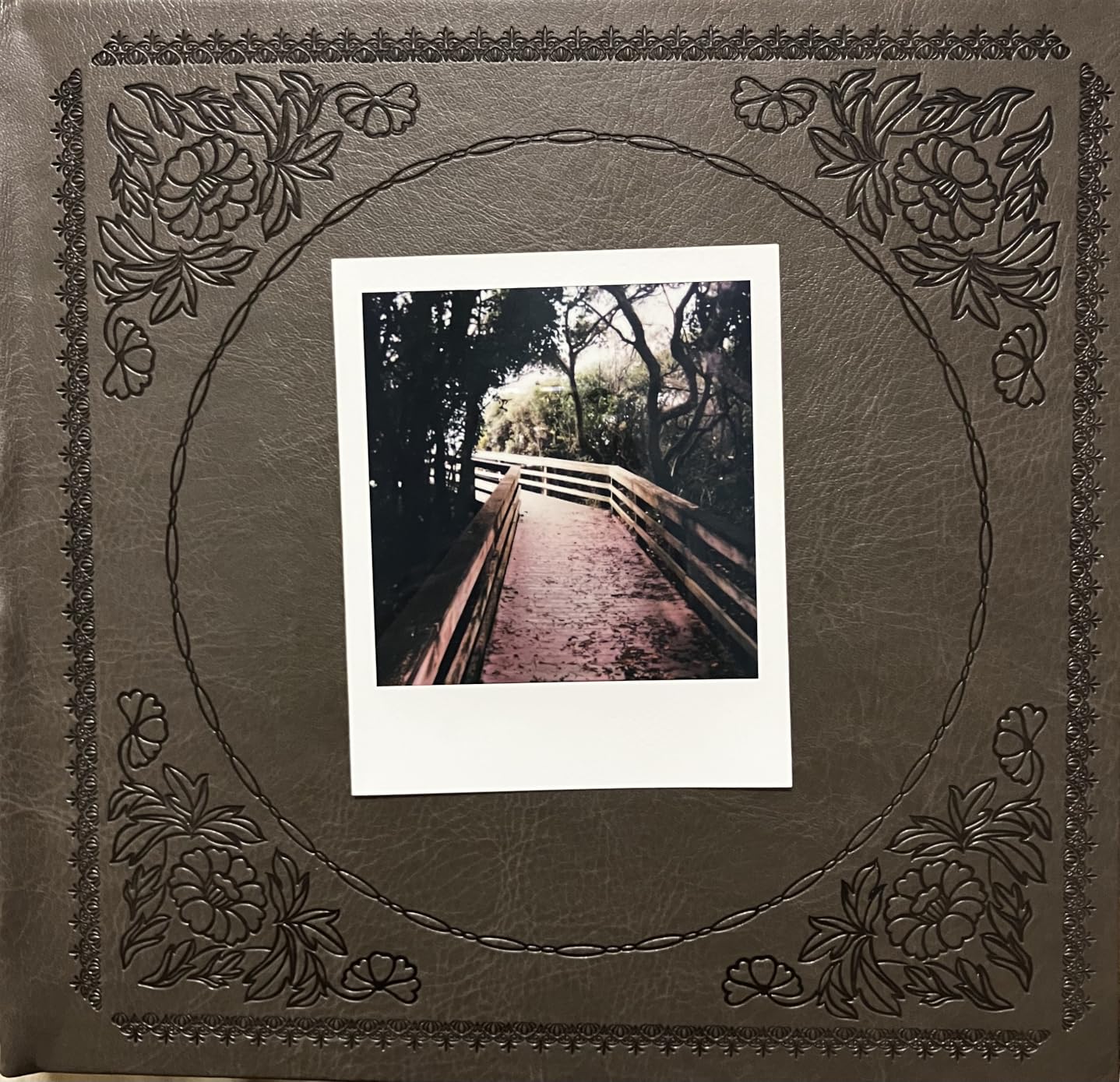
The Bluetooth companion app adds the same features as the Now+: manual mode, remote shutter, double exposure, and creative tools. Having both the advanced autofocus hardware and the app software makes the Flip the most complete instant camera package available.
The trade-off is price. This is the most expensive camera on our list, and when you factor in Polaroid film costs at roughly $2 per shot, a party with the Flip is a significant investment. For a 100-shot event, you are looking at $200 in film on top of the camera price. The learning curve is also steeper than Instax cameras, and users report that mastering analog photography techniques takes practice.
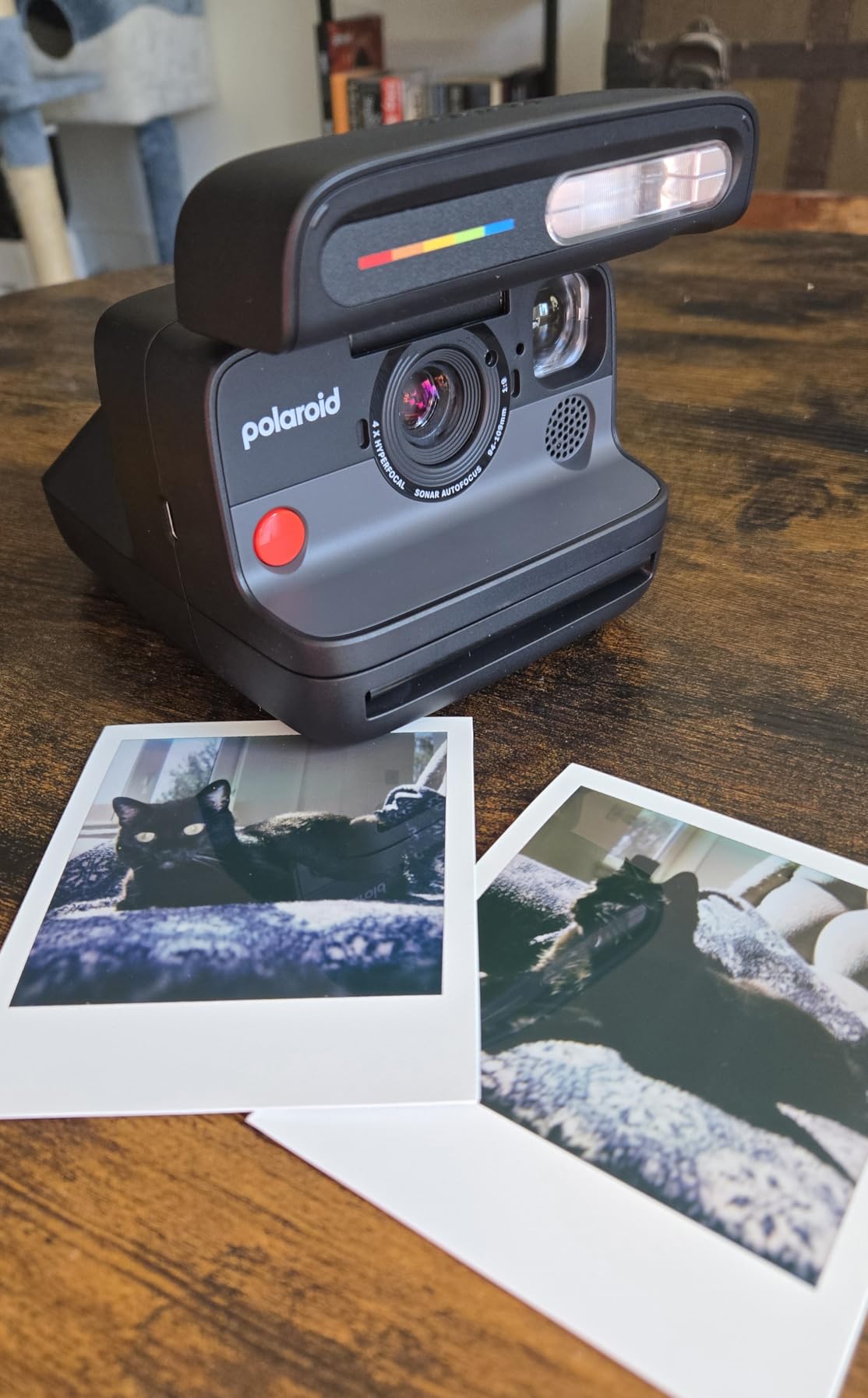
Is the Flip Worth It for Parties
If you are hosting a once-in-a-lifetime event like a wedding or milestone celebration, the Flip’s superior autofocus and exposure handling will give you the best hit rate for memorable photos. The sonar autofocus alone saves enough wasted film to partially justify the premium price for high-stakes events.
For casual house parties and birthday dinners, the Flip might be overkill. The Instax Mini 12 or Mini 41 will deliver 90% of the experience at a fraction of the cost, both in camera price and film expense.
Maximizing Print Quality at Parties
To get the best results from the Flip, encourage guests to stand 3 to 6 feet from the camera for portraits. The sonar system works best at these distances. For group shots, use the self-timer and tripod mount so everyone can get in frame. The scene analysis will handle exposure, but adding a supplementary light source for very dark rooms will improve color accuracy.
Keep developed photos face-down in a dark container for the first few minutes. Polaroid film is sensitive to light during development, and bright party lights can wash out prints if they are left exposed. This is different from Instax film, which is not light-sensitive after ejection.
7. Polaroid Go Generation 2 – Most Portable Instant Camera
Polaroid Go Generation 2 – Mini Instant Camera + Film Bundle (16 Photos Included) – Black (6280)
Polaroid Go film
Ultra-compact
Selfie mirror
Double exposure
Rechargeable battery
Pros
- Smallest and lightest instant camera available
- Wearable size fits in pocket or small bag
- Built-in selfie mirror
- Double-exposure and self-timer modes
- Battery lasts 15 film packs per charge
Cons
- Smallest prints on the market
- Go film is expensive and harder to find
- Small viewfinder is tricky to use
- No tripod mount
The Polaroid Go Generation 2 is the camera I bring when I do not want to carry a camera at all. At just 4.13 x 3.3 x 2.42 inches and 0.44 kg, it is small enough to clip to a bag strap or slip into a jacket pocket. For bar-hopping birthday celebrations or outdoor festivals, nothing else comes close in terms of portability.
Despite its tiny size, the Go Gen 2 packs in real features. There is a built-in selfie mirror, double-exposure mode, and a self-timer. The improved image quality over the first generation comes from a larger aperture and a more precise light sensor. At a rooftop party, I was genuinely surprised by how well it handled mixed lighting conditions.
The rechargeable battery is a standout, rated for 15 film packs per charge. That is significantly more than most instant cameras manage, and it means you will never have a dead camera midway through a party. USB-C charging keeps things modern and convenient.
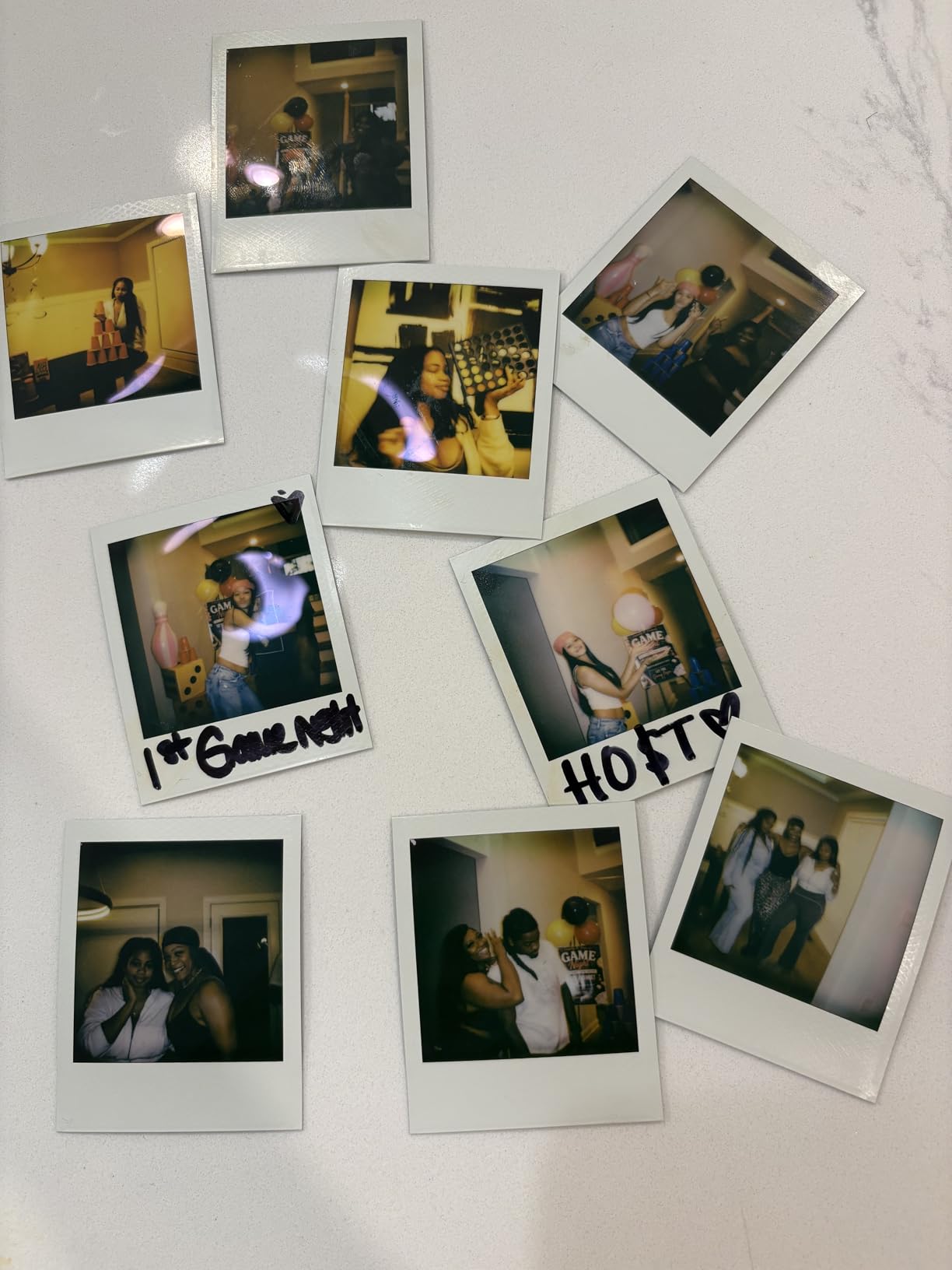
The prints are the smallest of any instant camera format, which is both the Go’s biggest advantage and biggest limitation. The tiny size means they are adorable as party favors and easy to carry, but they lack the visual impact of standard Polaroid or Instax prints. Think of them as photo stickers rather than display photos.
Polaroid Go film is more expensive per shot than Instax Mini and harder to find in stores. Online ordering is your best bet, and prices run similar to full-size Polaroid i-Type film at roughly $2 per shot. For a party where you plan to take many photos, this cost adds up fast.
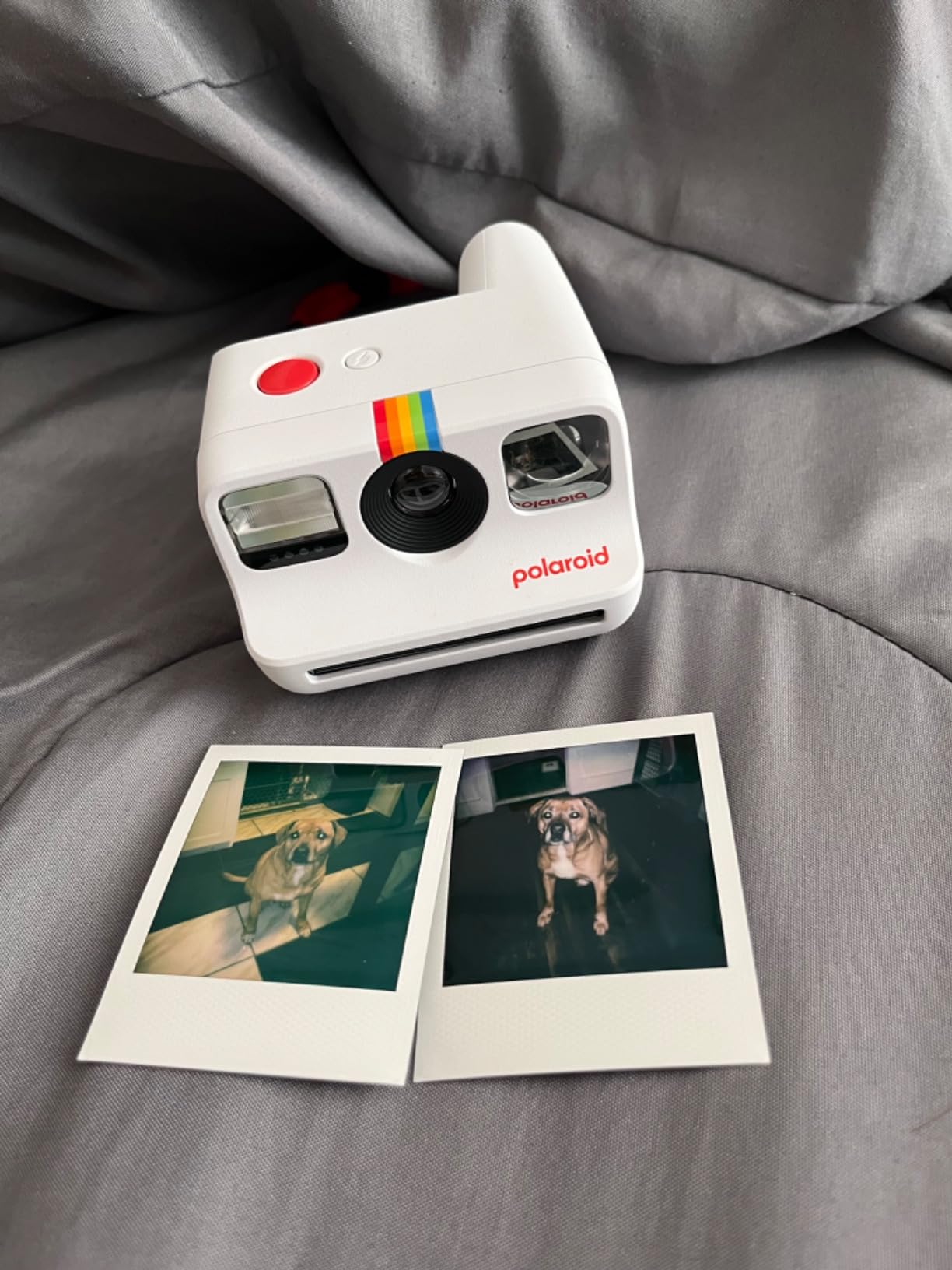
Best Use Cases for the Polaroid Go at Parties
The Go excels at mobile parties where you are moving from location to location. Bar crawls, street festivals, and outdoor picnics are perfect scenarios. It is also a great secondary camera to have alongside a main photo booth setup, giving you a roving option for candid moments.
For stationary events like dinner parties or wedding receptions, the small print size is a drawback. Guests will enjoy the novelty, but the photos are too small for a proper memory board display. Consider the Go for its intended purpose: on-the-go instant photography.
Practical Tips for Go Owners
Buy film in bulk online since local availability is limited. The Go does not have a tripod mount, so for group shots you will need to rely on the self-timer and prop the camera on a stable surface. The double-exposure mode works well in low-light party settings, so experiment with that for creative effects.
Keep the camera in a protective case when not in use, as the small size means it can easily get lost in a bag or damaged in a pocket. The build quality is decent but not rugged, so treat it with reasonable care at busy events.
8. KODAK Printomatic – Best Budget Instant Camera
KODAK Printomatic Full-Color Instant Print Digital Camera, Zink 2×3″ (5.1×7.5 cm) Sticky-Back Photo Paper, 5MP, Portable, Creative Fun Gift for Birthday, Christmas, Holiday, Blue
Zink paper
5MP sensor
No ink needed
MicroSD storage
2x3 sticky-back prints
Pros
- Most affordable camera and film combo
- Zink paper requires no ink and costs about $0.30 per print
- Sticky-back prints stick to walls and notebooks
- MicroSD slot saves digital copies
- Built-in flash for low-light
Cons
- Lower image quality than film cameras
- 5MP resolution is basic
- No digital preview screen
- No self-timer
The KODAK Printomatic is the cheapest way to get instant prints at a party, and after testing it extensively, I can say it punches above its weight class for the price. Instead of expensive instant film, it uses Zink (zero ink) thermal paper that costs roughly $0.30 per print. For a party where you expect 100 photos, that is $30 in paper versus $75 for Instax Mini or $200 for Polaroid.
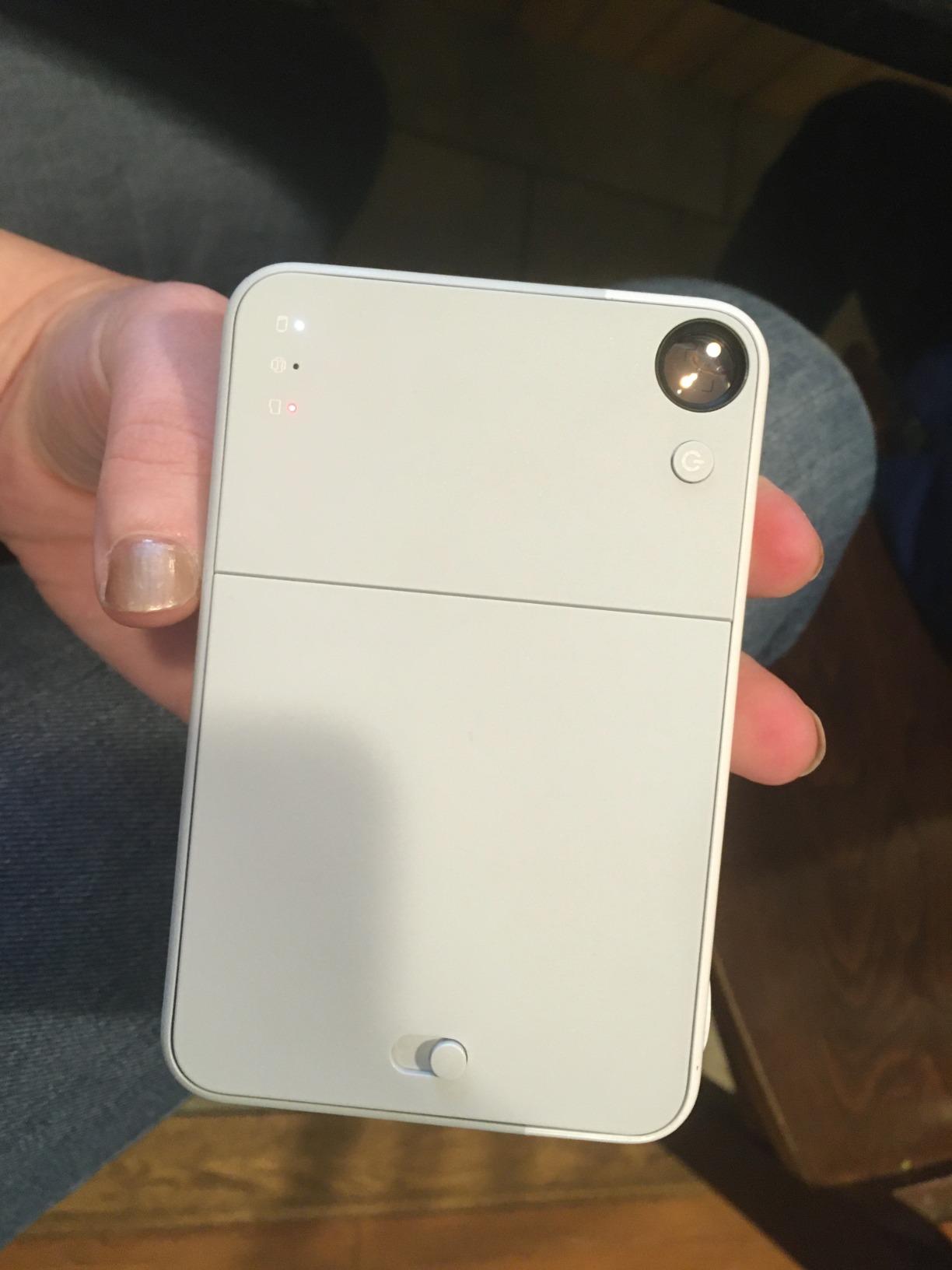
The camera works differently from film-based instant cameras. It has a 5MP digital sensor that captures the image, then prints directly onto Zink paper using heat activation. This means you get a digital copy saved to a MicroSD card and a physical print, which is a nice bonus for party hosts who want both.
At a college apartment party, the Printomatic was a massive hit. The sticky-back prints meant people were sticking photos on the refrigerator, on their phone cases, and on each other’s foreheads. The novelty factor was huge, and at $0.30 per print, nobody felt guilty about taking silly shots.
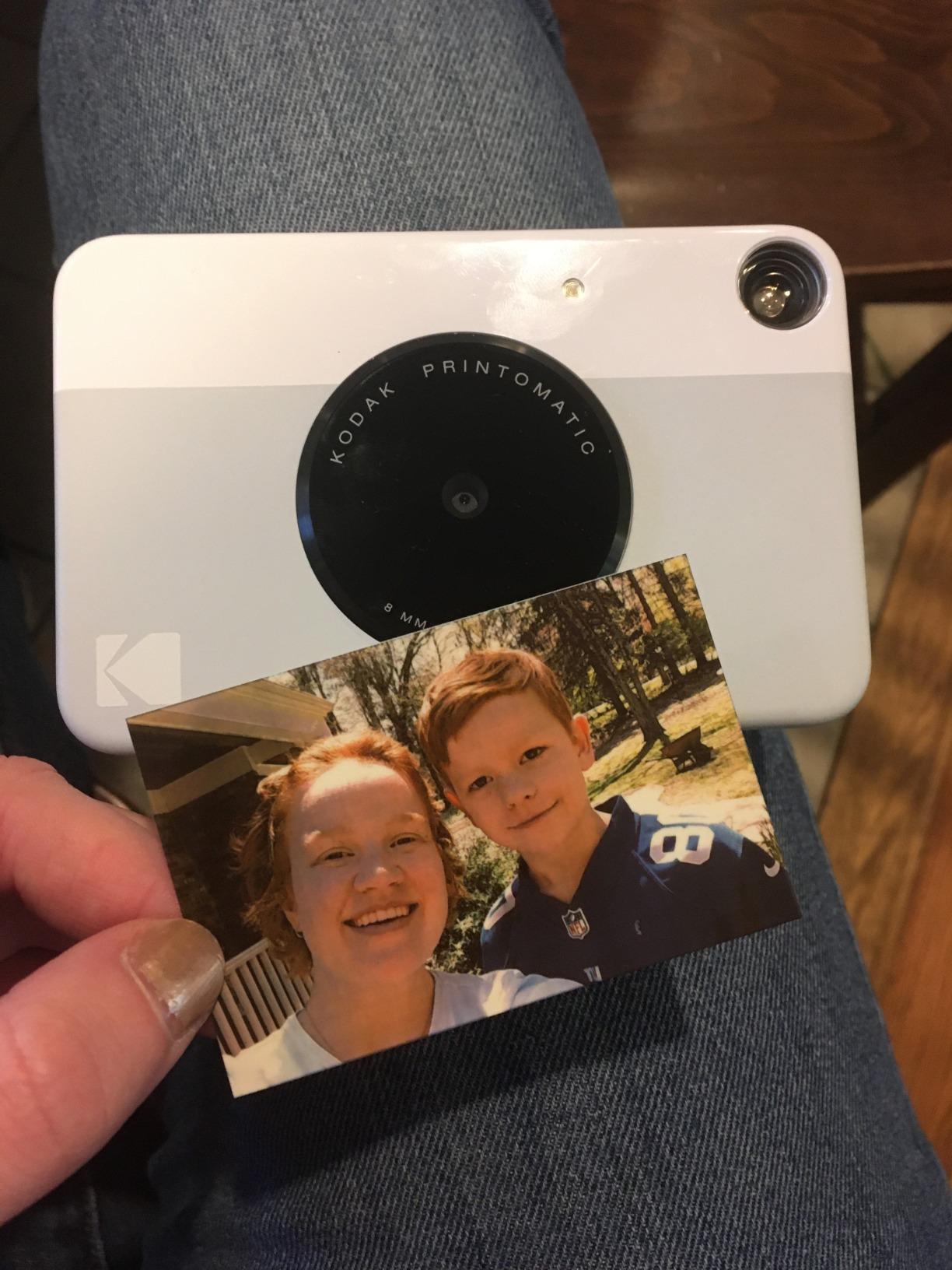
Image quality is the obvious compromise. The 5MP sensor produces prints that look decent but lack the rich colors and sharpness of Instax or Polaroid film. Colors can appear washed out, especially in low light, and the fixed focus means close-up shots are not as crisp as they could be. Think of it as a fun party toy rather than a serious photography tool.
The Zink prints are surprisingly durable. They are water-resistant and smudge-proof, which is actually better than Instax or Polaroid prints for party environments where drinks might spill. The sticky backing is a genuine feature that adds to the fun factor, letting guests create instant collages and decorations.
When Budget Matters Most
If you are a college student hosting a party, a parent planning a kid’s birthday, or anyone on a tight budget who still wants the instant print experience, the Printomatic is hard to beat. The total cost of ownership is dramatically lower than any film-based camera, and the fun factor is nearly identical for casual party use.
The 28,000-plus reviews on Amazon tell the story: this is one of the most popular instant print cameras on the market, and the high volume of sales has kept prices competitive. While the average rating of 3.9 stars reflects the image quality limitations, the vast majority of buyers are satisfied with the value.
What to Know Before Buying
The Printomatic requires Zink 2×3 inch photo paper, which is widely available and inexpensive. There is no LCD preview screen, so you cannot see your photo before it prints. The camera also lacks a self-timer, which limits group selfie options. The flash fires automatically in low light but cannot be manually controlled.
For the price, these are acceptable trade-offs. If image quality is your top priority, step up to an Instax Mini 12. But if maximizing the number of prints per dollar is your goal, the Printomatic wins by a wide margin.
9. KODAK Mini Shot 3 Retro – Best Hybrid Camera and Printer Combo
KODAK Mini Shot 3 Retro 3×3 Instant Camera, Photo Printer, 38 Sheet, White
4PASS dye sublimation
Bluetooth printer
3x3 inch prints
10MP sensor
Waterproof photos
Pros
- 2-in-1 camera and smartphone printer
- 4PASS dye sublimation produces photo-lab quality prints
- Bluetooth lets you print phone photos at parties
- Water and fingerprint resistant prints
- 3x3 inch square format is Instagram-friendly
Cons
- Cartridge recognition issues reported by some users
- Printing takes about 55 seconds per photo
- Larger and heavier at 850 grams
- Cartridges can be tricky to find locally
The KODAK Mini Shot 3 Retro occupies a unique space: it is both an instant camera and a Bluetooth photo printer for your smartphone. This dual functionality makes it one of the best instant cameras for parties where guests want to print photos from their phones alongside new shots taken with the camera itself.
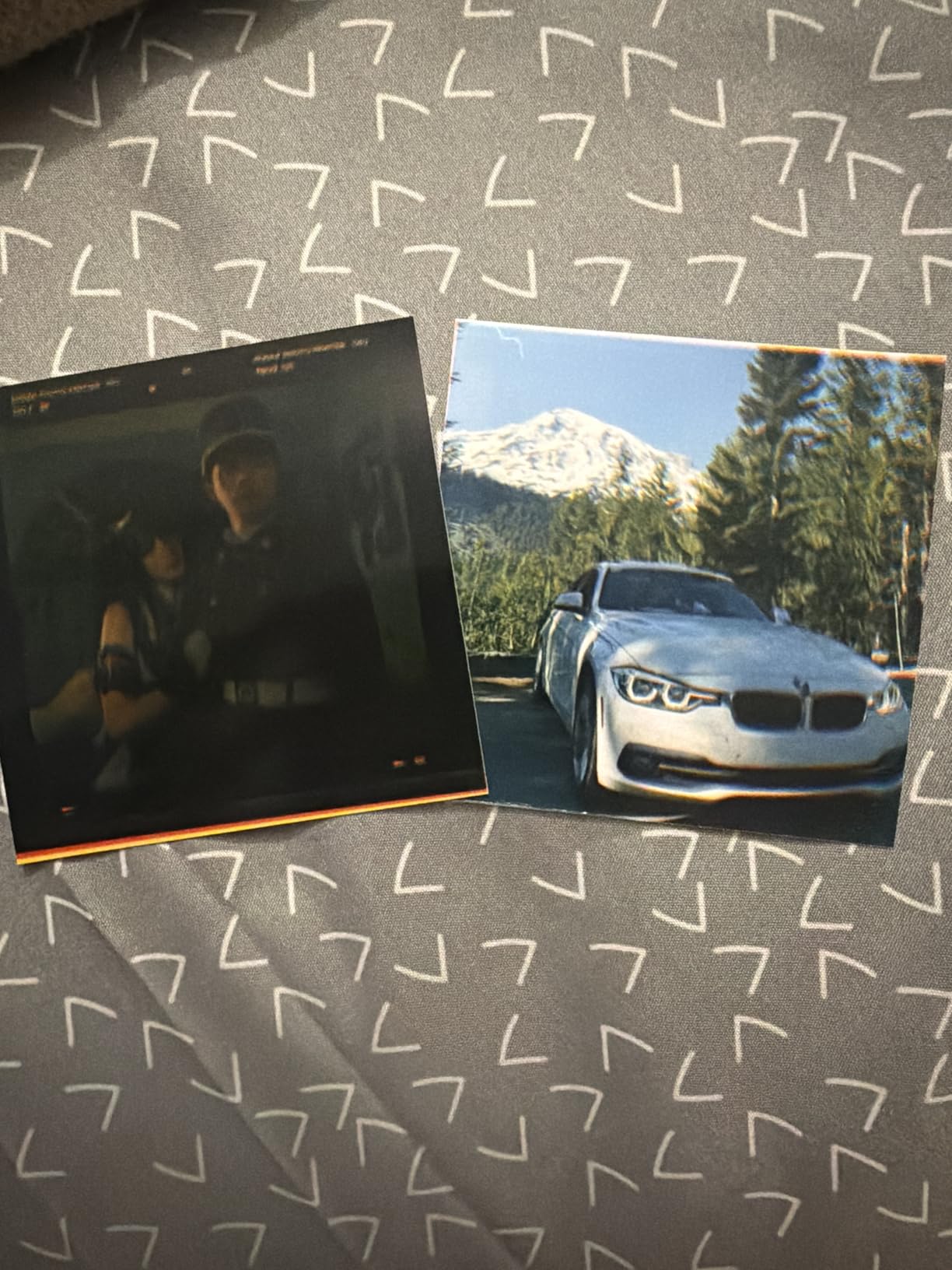
The 4PASS dye sublimation printing technology is a step up from Zink in terms of quality. It produces richer colors and sharper detail, and each print is coated with a protective lamination layer that resists water and fingerprints. At a pool party, I appreciated the waterproof prints more than once.
Using the camera function is straightforward: frame your shot using the 3-inch LCD screen, press the shutter, and the print emerges in about 55 seconds. The 10MP sensor captures significantly more detail than the Printomatic’s 5MP, and the LCD screen means you can see what you are shooting before committing to a print.
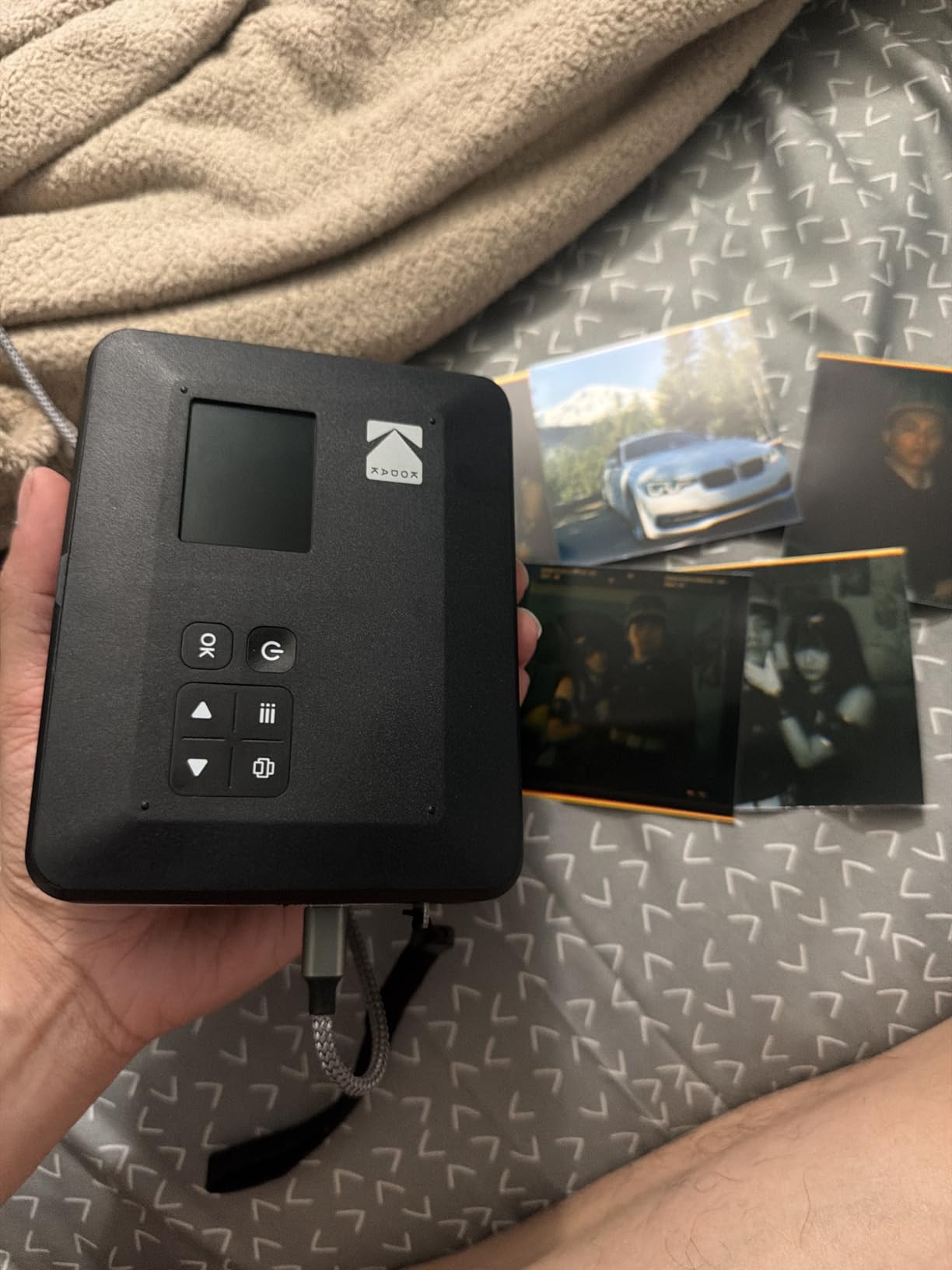
The Bluetooth printer mode is where the Mini Shot 3 really shines at parties. Guests connect their phones via the KODAK Photo Printer app and can print any photo from their camera roll. At a wedding reception, this feature was incredibly popular as guests printed their favorite phone photos of the couple throughout the evening.
Print cost is moderate. The 4PASS cartridges include both paper and ink ribbon, and they run roughly $0.40 to $0.60 per print depending on pack size. This is more expensive than Zink but still much cheaper than Instax or Polaroid film. The included bundle comes with 38 sheets, which is generous for getting started.
Camera Mode vs Printer Mode at Parties
At most parties, I ended up using the printer mode more than the camera mode. The reason is simple: smartphone cameras take better photos than any sub-$200 instant camera. By letting guests print their phone photos, you get the best of both worlds: high-quality digital photos and instant physical prints.
The camera mode is still useful for candid moments where pulling out a phone feels intrusive. The retro design of the Mini Shot 3 makes it a fun prop, and the LCD screen helps less experienced photographers frame better shots than optical viewfinders allow.
Common Issues to Watch For
Some users report cartridge recognition problems, where the camera refuses to acknowledge a new cartridge has been installed. Removing and reinserting the cartridge usually fixes this, but it can be frustrating mid-party. Buy genuine KODAK cartridges rather than third-party options to minimize this issue.
The printing process takes about 55 seconds per photo, which is slower than Instax’s 90-second development time (during which you can continue shooting). Plan for this bottleneck if you expect many guests to print simultaneously. Having a print queue system or a designated printer operator helps manage the flow.
10. KODAK Smile+ – Best Creative Filter Instant Camera
Kodak Smile+ 2-in-1 Digital Instant Print Camera & Wireless Bluetooth Photo Printer – 10MP, Special-Effect Rotating Lens, Zink 2×3” Sticky-Back Photos, Print via Fun App from Smart Devices – Blue
Zink paper
10MP sensor
Rotating filter lens
Bluetooth
Sticky-back prints
Pros
- Special-effect rotating lens for creative filters
- 10MP sensor for better image quality than Printomatic
- Bluetooth for wireless smartphone printing
- MicroSD card slot for photo storage
- Compact and easy to use
Cons
- No color display screen
- Zink print quality still below film cameras
- Limited review pool as newer product
- Some users want larger format prints
The KODAK Smile+ sits between the Printomatic and Mini Shot 3 in KODAK’s lineup, offering a creative twist with its special-effect rotating filter lens. You physically rotate the lens to switch between different filter effects, which adds a playful element that party guests really enjoy experimenting with.
The 10MP sensor is a significant upgrade over the Printomatic’s 5MP, producing sharper prints with better color reproduction. Combined with the Zink ink-free printing technology, you get decent quality prints at roughly $0.30 each. The sticky-back prints are the same crowd-pleasing format as the Printomatic.
At a themed costume party, the rotating filter lens was a surprise hit. Guests loved cycling through the different effects and seeing how each filter transformed their costume photos. The tactile experience of rotating the lens feels more engaging than tapping through digital filters on a phone.
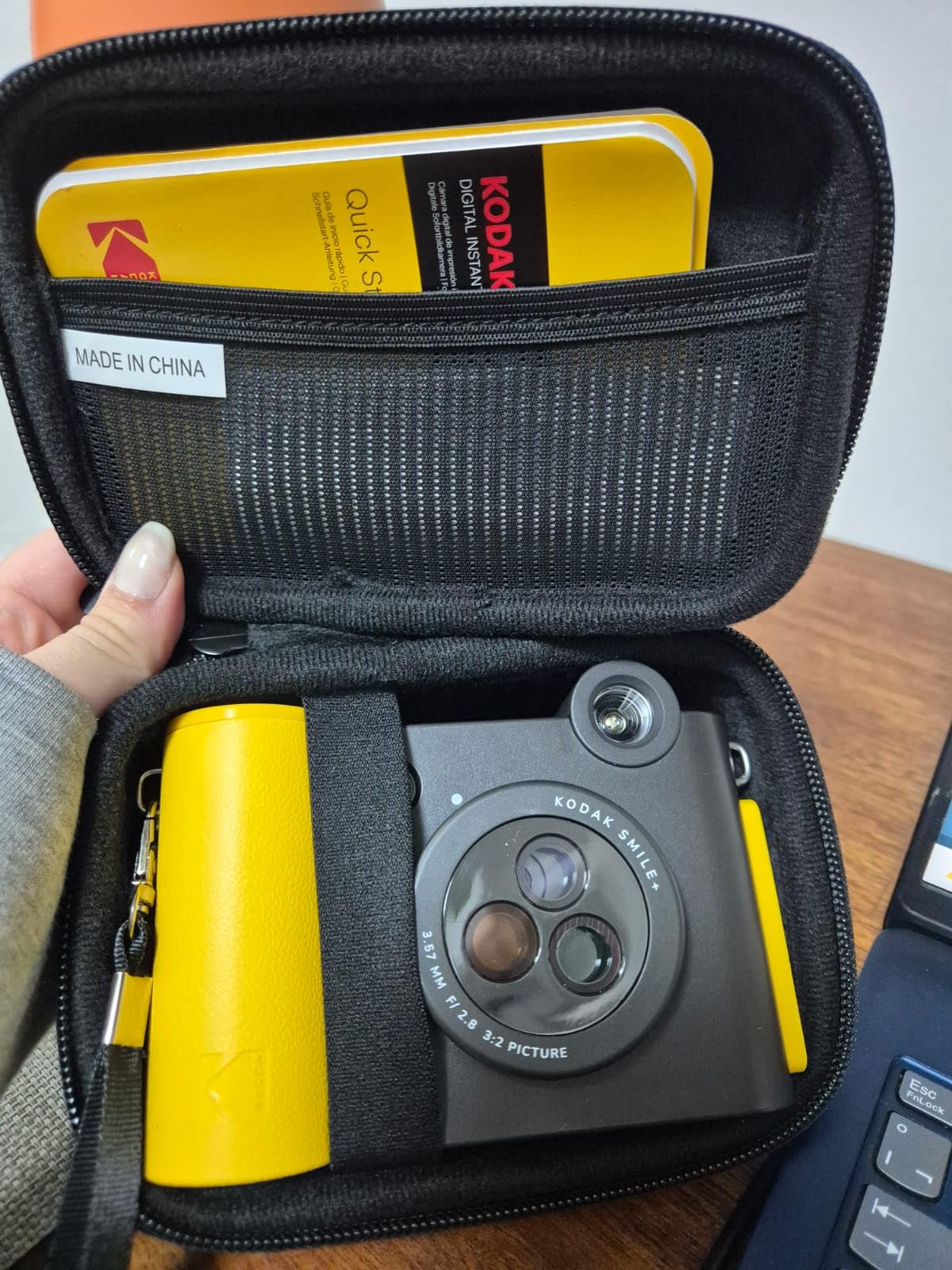
Bluetooth connectivity lets you use the Smile+ as a wireless printer for your smartphone, similar to the Mini Shot 3. This dual functionality means guests can print phone photos alongside new camera shots. The KODAK app also lets you add text, colors, and stickers before printing, which adds another layer of creative fun.
The MicroSD card slot means every photo is saved digitally as well as printed, which is a feature missing from pure film cameras. Party hosts can collect all the digital copies afterward and share them online or create a post-party gallery. The combination of digital storage and physical prints gives you the best of both worlds.

Creative Filter Ideas for Parties
The rotating filter lens offers several effects that work well for different party scenarios. Use warmer filters for intimate dinner parties to create a cozy mood. Cooler filters work well for outdoor summer parties and pool events. Experiment with the more dramatic filters for costume parties and themed events where a stylized look enhances the atmosphere.
Set up a filter suggestion card next to the camera so guests know what each filter position does. This turns the camera into an interactive activity rather than just a point-and-shoot device. People will line up to try different filters with their friends.
Comparing the Three KODAK Options
Among the KODAK cameras on this list, the Smile+ is the sweet spot for creative party use. The Printomatic is cheapest but most basic. The Mini Shot 3 Retro has the best print quality with 4PASS technology but is larger and more expensive. The Smile+ splits the difference with creative features, decent image quality, and a moderate price point.
Choose the Smile+ if you want fun creative features at a reasonable price. Go with the Printomatic for maximum budget savings. Pick the Mini Shot 3 if print quality is your top priority in the KODAK lineup.
How to Choose the Best Instant Camera for Parties
Choosing from the many instant cameras for parties comes down to four key decisions: film format, cost per print, ease of use for guests, and whether you need a photo booth setup. Let me walk through each factor based on what our testing revealed.
Film Format: Mini vs Wide vs Square vs Zink
Instax Mini film produces credit-card sized prints (2 x 3 inches) that are inexpensive and widely available. This is the best all-around format for parties because the prints are cheap enough to hand out freely and small enough to serve as party favors. At roughly $0.75 per shot, you can afford to let guests take multiple photos.
Instax Wide film produces prints nearly twice the size (3.25 x 4.25 inches) and is ideal for group photos and photo booth displays. Film costs more at $1.20 to $1.50 per shot, but the larger prints have much more visual impact on a memory board.
Polaroid i-Type film produces classic square prints (3.1 x 3.1 inches) with the iconic white border. This is the format most people picture when they think of Polaroid photos. At $2 per shot, it is the most expensive mainstream format, so plan your budget carefully.
Zink paper (used by KODAK cameras) produces small sticky-back prints at about $0.30 per shot. Image quality is the lowest of all formats, but the cost savings are enormous for high-volume party use.
Film Cost Per Print: Budget Planning for Events
Here is a practical breakdown of what to expect per format. Zink paper costs about $0.30 per print. Instax Mini runs $0.75 per print. Instax Wide runs $1.35 per print. Polaroid i-Type runs $2.00 per print. Polaroid Go runs $2.00 per print. KODAK 4PASS paper runs $0.50 per print.
For a 50-person party where you budget 2 photos per guest, here are the film costs. Zink would cost $30. Instax Mini would cost $75. Instax Wide would cost $135. Polaroid i-Type would cost $200. KODAK 4PASS would cost $50. These numbers should directly inform which camera fits your party budget.
Analog vs Hybrid: Avoiding Film Waste
Pure analog cameras (Instax Mini 12, Polaroid Now, Polaroid Flip) print every shot you take, which means wasted film on bad photos. Hybrid cameras (Polaroid Now+, KODAK Mini Shot 3, KODAK Smile+) offer digital previews, selective printing, or Bluetooth smartphone printing that lets you choose which photos to print.
At parties, film waste is a real concern. Guests who have never used an instant camera will take blurry, poorly framed, or accidentally triggered shots. With a pure analog camera, those wasted prints still cost money. With a hybrid camera, you can review and selectively print, which often saves more than the price difference between camera models.
Party Setup Tips: Creating a DIY Photo Booth
The most successful instant camera party setups I have seen all share a few elements. First, designate a specific area with good lighting and a simple backdrop. A blank wall with some decorations, a sequin curtain, or a printed backdrop works great. Position the camera station where foot traffic naturally flows so guests discover it organically.
Second, provide clear instructions. A small sign that says “Point, press, wait for photo” reduces confusion and prevents wasted shots. If using a camera with a self-timer, include instructions for that too. Third, set up a display area where finished photos can be clipped to a string, pinned to a board, or stuck to a wall (if using Zink sticky-back prints).
Fourth, provide props. Hats, sunglasses, signs, and other party props make the photo booth more fun and encourage guests to take creative shots. Finally, designate a photo attendant for larger parties. One person who knows how the camera works can help guests, load fresh film, and manage the display area.
Battery Life and Portability for Events
Cameras that use AA batteries (Instax Mini 12, Mini 41) are convenient because spare batteries are available everywhere. The downside is that you need to buy and carry extras. Rechargeable cameras (Polaroid Now+, Now, Flip, Go) charge via USB-C and typically last for a full party on one charge.
For roving party photography where the camera moves between locations, portability matters. The Polaroid Go Gen 2 is the smallest option. The Instax Mini cameras are compact enough for light carrying. The larger cameras (Wide 400, Mini Shot 3, Flip) are better suited to stationary photo booth setups.
Ease of Use for Guests
This is perhaps the most overlooked factor. At a party, your guests have varying levels of camera experience and varying levels of sobriety. The Instax Mini 12 is the easiest camera on this list: twist to turn on, point, press. Even completely inexperienced users can operate it in seconds.
The Polaroid cameras have a steeper learning curve due to film sensitivity, development requirements, and (on the app-enabled models) Bluetooth setup. The KODAK cameras sit somewhere in the middle, with straightforward operation but occasional cartridge or paper loading issues that can confuse guests.
For maximum guest-friendly operation, the Instax Mini 12 or Mini 41 are your best bets. For controlled photo booth setups where one person manages the camera, any model works well.
FAQs
What is the best Polaroid camera for a party?
The Polaroid Now+ 3rd Gen is the best Polaroid camera for parties because it combines Bluetooth app control, USB-C rechargeable battery, upgraded autofocus, and creative modes like double exposure. For budget-conscious party hosts, the Polaroid Now 3rd Gen offers similar print quality without app features at a lower price.
Is Polaroid or Instax better for parties?
Instax is generally better for parties because film costs less (about $0.75 per shot vs $2 for Polaroid), develops faster (90 seconds vs 15 minutes), and the prints are not light-sensitive after ejection. Polaroid offers larger prints, the iconic square format, and more creative features. For high-volume party use, Instax is more economical; for artistic and aesthetic appeal, Polaroid wins.
What is the top rated instant camera?
The Fujifilm Instax Mini 12 is the top rated instant camera for party use, with a 4.5-star average rating from over 1,200 reviews. It offers the best combination of affordability, ease of use, cheap film, and reliable auto-exposure. For premium features, the Polaroid Flip and Fujifilm Instax Wide 400 are also highly rated options.
How much does instant camera film cost per shot?
Film costs vary by format. KODAK Zink paper is cheapest at about $0.30 per print. KODAK 4PASS paper runs about $0.50 per print. Fujifilm Instax Mini film costs roughly $0.75 per shot. Instax Wide film costs $1.20 to $1.50 per shot. Polaroid i-Type and Go film both cost about $2.00 per shot. For budget party planning, Instax Mini and Zink formats offer the best value.
Can instant cameras be used for photo booths?
Yes, instant cameras work excellently for DIY photo booths. The Fujifilm Instax Wide 400 is ideal for photo booth setups due to its wide-format prints, self-timer with LED countdown, included close-up lens, and camera angle adjustment accessory. The Polaroid Now+ and Flip also work well thanks to their tripod mounts and Bluetooth remote shutter capabilities.
Which brand is best for instant cameras?
Fujifilm is the best brand for party instant cameras due to its affordable Instax Mini film, reliable auto-exposure, and massive product availability. Polaroid is best for users who want the classic square format and creative app features. KODAK is best for budget-conscious buyers who want cheap prints and smartphone printing capability. For most party scenarios, Fujifilm offers the best balance of quality and value.
Is an instant camera worth it for parties?
Yes, an instant camera is absolutely worth it for parties. It creates physical keepsakes guests take home immediately, serves as interactive entertainment, and eliminates the need to chase down digital photos afterward. A Fujifilm Instax Mini 12 plus 40 shots of film costs under $120 total, making it an affordable addition that significantly enhances the party experience.
Final Thoughts on the Best Instant Cameras for Parties in 2026
After testing all 10 cameras across multiple party scenarios, the Fujifilm Instax Mini 12 remains our top pick for most events. It hits the sweet spot of affordability, ease of use, cheap film, and reliable auto-exposure that makes it genuinely fun for guests of all ages. For large gatherings and photo booth setups, the Fujifilm Instax Wide 400 and its bigger prints are worth the extra film cost. And for budget party hosts who want maximum prints per dollar, the KODAK Printomatic is impossible to beat.
The best instant cameras for parties are the ones that your guests can pick up and use without instructions. Whether you choose an Instax, Polaroid, or KODAK model, the magic of watching a photo develop in front of your eyes never gets old. Pick the camera that matches your party size, film budget, and style preferences, and you will create memories that last long after the last guest goes home.