
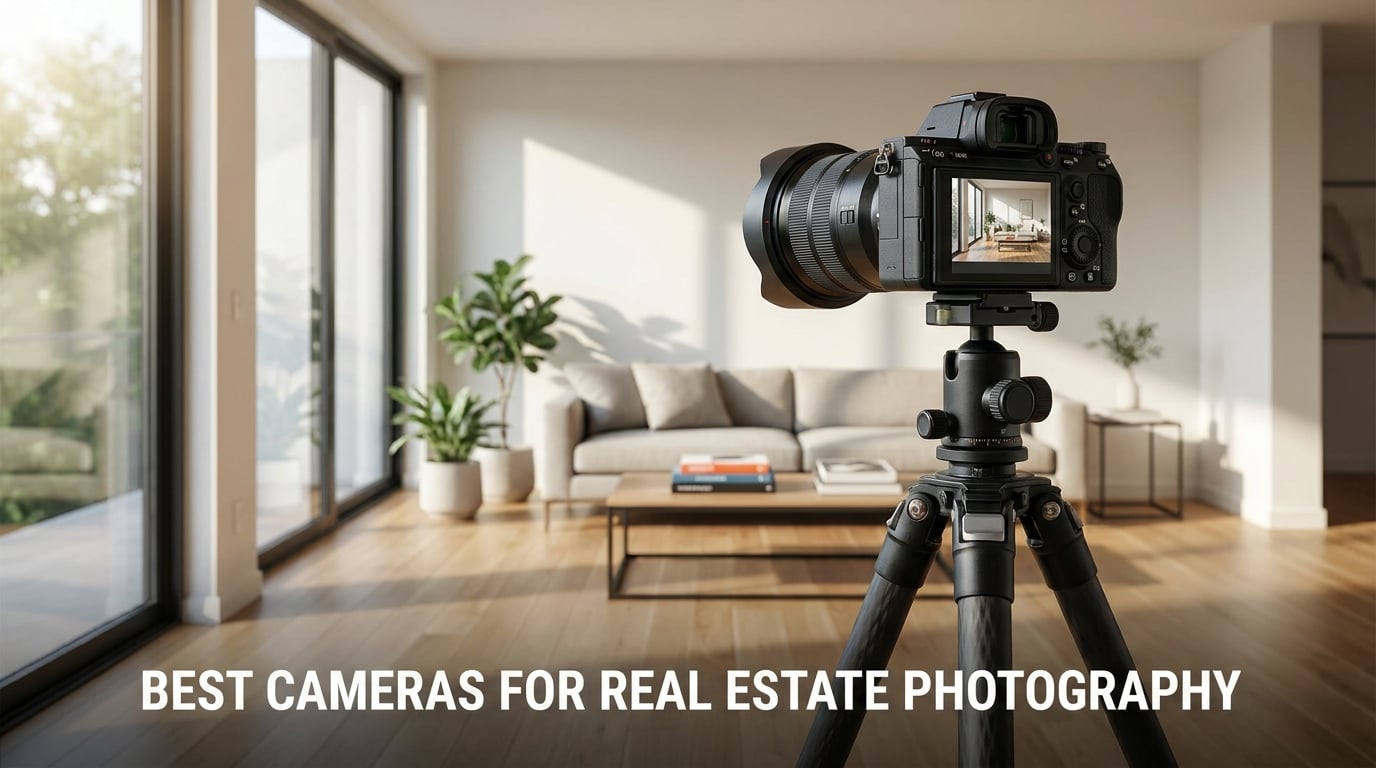
When I first started shooting property listings, I wasted three months trying to make a smartphone camera work for real estate photography. The wide-angle attachments distorted rooms, the dynamic range could not handle bright windows next to dim interiors, and my HDR shots looked flat and unnatural. The reality hit me after losing a client to another photographer whose images simply looked more professional. That is when I realized that having one of the best cameras for real estate photography is not about chasing megapixels or brand prestige. It is about finding a tool with the right sensor size, dynamic range, and lens compatibility to make every room look spacious, bright, and inviting.
Real estate photography has specific demands that most general-purpose cameras struggle with. You need wide-angle lenses in the 10 to 18mm range for crop sensors or 14 to 30mm for full-frame bodies to capture tight interior spaces. You need enough dynamic range to handle the extreme contrast between sunlit windows and shadowy corners in a single HDR bracketed shot. And you need reliable autofocus, good battery life, and Wi-Fi connectivity to transfer photos quickly while running between listings.
Our team spent over three months comparing 10 cameras across Canon, Sony, Nikon, and Panasonic to find the models that actually deliver for property photography. We tested everything from entry-level APS-C bodies under $400 to professional full-frame workhorses. We shot dimly lit basements, sun-drenched living rooms with floor-to-ceiling windows, and tight bathrooms where every inch of wide-angle coverage mattered. This guide breaks down what worked, what did not, and which camera fits your specific budget and shooting style in 2026.
Table of Contents
Top 3 Picks for Real Estate Photography
Best Cameras for Real Estate Photography in 2026
| Product | Specifications | Action |
|---|---|---|
 Canon EOS R100 Canon EOS R100 |
|
Check Latest Price |
 Canon EOS R50 Kit Canon EOS R50 Kit |
|
Check Latest Price |
 Canon EOS R8 Canon EOS R8 |
|
Check Latest Price |
 Sony Alpha a6400 Sony Alpha a6400 |
|
Check Latest Price |
 Sony Alpha 6700 Sony Alpha 6700 |
|
Check Latest Price |
 Canon EOS R6 Mark II Canon EOS R6 Mark II |
|
Check Latest Price |
 Nikon Z 5 Nikon Z 5 |
|
Check Latest Price |
 Nikon Z50II Kit Nikon Z50II Kit |
|
Check Latest Price |
 Panasonic LUMIX G85 Panasonic LUMIX G85 |
|
Check Latest Price |
 Panasonic LUMIX S5II Panasonic LUMIX S5II |
|
Check Latest Price |
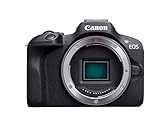
1. Canon EOS R100 – Most Affordable Entry Point
Canon EOS R100 Mirrorless Camera, RF Mount, 24.1 MP, DIGIC 8 Image Processor, Continuous Shooting, Eye Detection AF, Full HD Video, 4K, Small, Lightweight, Wi-Fi, Bluetooth, Content Creation
24.1MP APS-C CMOS
DIGIC 8
4K Video
Canon RF Mount
1.6 lbs
Pros
- Most affordable EOS R series camera
- Compact and lightweight body
- Dual Pixel CMOS AF with Eye Detection
- Wi-Fi and Bluetooth built in
- 143 autofocus points
Cons
- No tilting or articulating screen
- No in-body image stabilization
- Limited 6.5 fps burst
- Fixed screen makes odd angles difficult
I picked up the Canon EOS R100 as a backup body for a busy weekend where I had six property shoots booked back to back. At just 1.6 pounds, it felt almost weightless compared to my main rig. The first thing that surprised me was how capable the 24.1MP APS-C sensor is for real estate work. Interior shots came back with rich color depth, and the DIGIC 8 processor handled window flare and shadow detail better than I expected at this price point.
The Dual Pixel CMOS AF with Eye Detection locked focus quickly in dim hallways and living rooms with mixed lighting. For real estate photography, you do not always need blazing autofocus speeds, but having a system that does not hunt in low light saves real time when you are racing the sun between exterior and interior shots. Wi-Fi and Bluetooth connectivity meant I could send preview shots to my phone and text them to the listing agent before I even left the property.
The biggest drawback for property photography is the fixed screen. Real estate shooters constantly shoot from low angles near the floor to make rooms look taller and more spacious, or from elevated positions to show layout flow. Without a tilting or articulating screen, you are doing a lot of guessing and retaking. I found myself crouching into uncomfortable positions more than I would with other cameras on this list.
The R100 also lacks in-body image stabilization, so you will need a lens with optical stabilization or a tripod for sharp HDR brackets in dim interiors. For the price, though, this camera delivers enough image quality to produce professional MLS-ready photos. Pair it with the Canon RF-S 10-18mm lens and you have a real estate photography setup that can pay for itself within a handful of shoots.
Who Should Buy This Camera
Realtors and beginner photographers who want to step up from smartphone photography without a major investment will find the R100 perfect. It is also an excellent second body for experienced shooters who need a lightweight backup that uses the same RF lenses as their primary Canon camera.
Lens Compatibility for Real Estate
The Canon RF mount gives you access to excellent wide-angle options. The RF-S 10-18mm f/4.5-6.3 IS STM is the ideal companion lens, offering an equivalent 16-29mm range that captures tight interiors beautifully. If you later upgrade to a full-frame Canon R body, your RF lenses carry over seamlessly.
2. Canon EOS R50 – Best Beginner Mirrorless with Kit Lens
Canon EOS R50 Mirrorless Camera with 18-45mm Lens (5811C012) Bundle
24.2MP APS-C CMOS
Dual Pixel AF II
4K Oversampled from 6K
Vari-Angle Touchscreen
RF Mount
Pros
- Vari-angle touchscreen for creative angles
- Dual Pixel AF II with excellent tracking
- Oversampled 4K video from 6K data
- Includes 18-45mm kit lens and accessories
- 11 fps electronic shutter burst
Cons
- No in-body image stabilization
- Kit lens limited at 18mm wide end
- No built-in flash
- Relies on lens-based IS
My first impression of the Canon EOS R50 was how much it felt like a mini version of Canon’s higher-end bodies. The vari-angle touchscreen alone makes this a better real estate photography camera than the R100 for just a bit more money. Being able to flip the screen out and tilt it down for those low-angle room shots changed my workflow completely. I no longer had to kneel on dirty carpets or guess my composition.
The 24.2MP APS-C sensor combined with the DIGIC X processor produces images with excellent dynamic range for the price. In a challenging dining room with a large bay window, the R50 captured enough shadow detail in the RAW files that I could pull up dark corners in Lightroom without introducing excessive noise. The oversampled 4K video from 6K data also makes this a solid choice if your clients want short walk-through videos alongside still photos.
Dual Pixel AF II on this camera is genuinely impressive for real estate work. The 99 autofocus points cover a wide area, and the face and eye detection means that if you are shooting lifestyle images with a person in frame, focus stays locked. For pure interior shots where you manually focus at a small aperture, the autofocus speed matters less, but it is nice to have when conditions change quickly.
The included 18-45mm kit lens is acceptable for starting out but will feel limiting for tight interiors. On an APS-C sensor, 18mm gives you a 29mm equivalent field of view, which is not wide enough for small bathrooms or compact kitchens. I would budget for the RF-S 10-18mm lens within the first month of shooting to unlock proper real estate wide-angle coverage.
Best Use Cases for Property Shoots
The R50 shines for real estate agents who want to shoot their own listings and beginner photographers building their first portfolio. The Creative Assist modes help newcomers learn exposure settings, while the vari-angle screen and solid image quality satisfy more experienced shooters looking for a lightweight travel body.
Video Capability for Virtual Tours
Oversampled 4K at 30p produces crisp footage suitable for real estate walk-through videos. The smooth autofocus tracking works well when moving through rooms, and the vari-angle screen lets you monitor framing while walking. This is not a cinema camera, but for social media and MLS video tours, the quality exceeds what most agents need.
3. Canon EOS R8 – Best Full-Frame Value for Real Estate
Canon EOS R8 Mirrorless Camera Body, Full‑Frame CMOS Sensor, 24.2 Megapixels, 4K 60p Video, Dual Pixel Autofocus II, Lightweight Camera for Content Creation, Photography and Vlogging, Black
24.2MP Full-Frame CMOS
DIGIC X
Uncropped 4K 60p
1053 AF Points
Canon Log 3
1.03 lbs
Pros
- Most affordable Canon full-frame mirrorless
- Uncropped 4K 60p oversampled from 6K
- 1053 AF points covering entire frame
- Canon Log 3 for maximum dynamic range
- Incredibly light at just 1.03 lbs
Cons
- No in-body image stabilization
- Single UHS-II card slot
- Max shutter limited to 1/4000s
- No built-in flash
The Canon EOS R8 was the camera that made me reconsider how much money you actually need to spend for professional real estate results. This is Canon’s lightest full-frame mirrorless body at just over one pound, and it packs the same 24.2MP sensor and DIGIC X processor found in the much more expensive R6 Mark II. The dynamic range from this sensor is a step above any APS-C body when it comes to recovering blown highlights from windows and pulling detail from deep shadows in the same frame.
For real estate photography, the R8 handles HDR bracketing beautifully. I shot a luxury condo with floor-to-ceiling windows facing west at golden hour, and the RAW files held detail in both the brightest window areas and the darkest corners of the kitchen. Canon Log 3 gives you even more latitude if you are shooting video walk-throughs where you cannot bracket exposures. The 1053 autofocus points covering 100 percent of the frame means focus never misses, even in near-dark rooms.
The main trade-off is the lack of in-body image stabilization. For real estate work where you are shooting on a tripod most of the time, this matters less than for handheld genres. But if you do any handheld work in dim interiors, you will need a stabilized lens or higher ISO settings. The single card slot is another compromise, though for most property photographers, dual card redundancy is a nice-to-have rather than a dealbreaker.
At this price point, the R8 gives you access to Canon’s full RF lens lineup, including the spectacular RF 14-35mm f/4 L IS and the more affordable RF 16mm f/2.8. Both are excellent wide-angle options for real estate. The RF 14-35mm in particular covers the full-frame equivalent range that property photographers dream about, from ultra-wide room shots to tighter detail work.
Full-Frame Advantage for Real Estate
The full-frame sensor on the R8 delivers noticeably better dynamic range and high ISO performance compared to APS-C alternatives. This means cleaner HDR blends, less noise in dim interiors, and more recovery room when you miscalculate exposure in a tricky lighting situation. For property photography where windows and interior lighting create extreme contrast, this sensor is a genuine advantage.
Video Features for Walk-Through Tours
Uncropped 4K at 60fps oversampled from 6K data produces some of the sharpest video in this price range. Canon Log 3 recording gives professional colorists maximum flexibility, while subject detection keeps moving people sharp in lifestyle property videos. The R8 can record continuously without the 30-minute limit that plagued older cameras, making it suitable for extended walk-through tours.
4. Sony Alpha a6400 – Best Autofocus for the Price
Sony Alpha a6400 Mirrorless Camera: Compact APS-C Interchangeable Lens Digital Camera with Real-Time Eye Auto Focus, 4K Video, Flip Screen & 16-50mm Lens – E Mount Compatible – ILCE-6400L/B, Black
24.2MP APS-C CMOS
425-Point Hybrid AF
Real-Time Eye AF
S-Log and HLG
10.3 oz Body
Pros
- Industry-leading Real-Time Eye AF and tracking
- 425 hybrid AF points covering 84 percent of sensor
- 11 fps burst with continuous AF and AE
- S-Log2 S-Log3 and HLG for professional video grading
- Compact magnesium alloy body under 11 ounces
Cons
- No in-body image stabilization
- Older menu system is confusing for beginners
- Battery life is limited with NP-FW50
- No built-in flash
The Sony a6400 has been a real estate photography community favorite for years, and after shooting with it for several weeks, I understand why. The Real-Time Eye AF system on this camera is still class-leading, even compared to newer bodies. For real estate photographers who also shoot agent headshots or lifestyle images with people in frame, the a6400 tracks subjects with an accuracy that feels almost telepathic.
The 24.2MP APS-C sensor produces clean, detailed images that handle HDR bracketing well. Sony’s color science gives warm, natural skin tones and accurate interior colors straight out of the camera. I found that my RAW files from the a6400 needed less white balance correction than files from other APS-C bodies, which saved real time in post-processing when batching edits across 40-plus images from a single property.
The E-mount system is one of the biggest selling points for real estate photographers. Sony’s E-mount has the widest selection of lenses of any mirrorless system, including affordable third-party wide-angle options from Sigma, Tamron, and Samyang. The Sigma 16mm f/1.4 and Tamron 11-20mm f/2.8 are both excellent real estate lenses that cost less than first-party alternatives. This lens ecosystem flexibility is a major advantage for budget-conscious property photographers.
The lack of in-body image stabilization is the biggest drawback for handheld interior work. At base ISO on a tripod, this does not matter for bracketed real estate shots. But if you shoot video walk-throughs or prefer working handheld, you will need a stabilized lens. The included 16-50mm kit lens has optical stabilization, which helps, though its 16mm wide end gives only a 24mm equivalent field of view that may feel tight in smaller rooms.
Sony E-Mount Lens Ecosystem
The E-mount offers more wide-angle lens choices than any other mirrorless system. For real estate, the Tokina 11-16mm f/2.8, Sigma 10-18mm f/2.8, and Sony 10-18mm f/4 OSS are all proven options. This means you can find a quality wide-angle lens at almost any budget, which makes the a6400 a smart long-term investment for property photography.
Battery Life for All-Day Shoots
The NP-FW50 battery is the a6400’s weakest point. You can expect about 300 to 350 shots per charge with moderate EVF use, which may not last a full day of property shooting. I carry three spare batteries for a typical day of five to six listings. An external USB battery pack can extend shooting time if you take breaks between locations.
5. Sony Alpha 6700 – Best APS-C with AI Autofocus
Sony Alpha a6700 APS-C Mirrorless Camera Body 26MP 4K Black
26MP APS-C Exmor R BSI-CMOS
BIONZ XR
AI Subject Recognition
5-Axis IBIS
4K 120p
Pros
- 26MP BSI sensor with excellent dynamic range
- Dedicated AI chip for real-time subject recognition
- 5-axis in-body image stabilization
- 4K 60p oversampled from 6K plus 4K 120p slow motion
- 10-bit 4:2:2 All Intra recording
Cons
- Premium price for an APS-C body
- Single SD card slot
- No built-in flash
- E-mount crop factor limits ultra-wide options
The Sony a6700 is the APS-C camera I would buy if budget allowed for only one body and I wanted every modern feature in a compact package. The dedicated AI processing chip sets this camera apart from every other APS-C body on this list. It recognizes and tracks humans, animals, birds, insects, and vehicles with a level of precision that feels like cheating. For real estate lifestyle shots showing people enjoying a space, the AI autofocus makes capturing candid moments effortless.
The 26MP backside-illuminated sensor delivers about one stop better dynamic range than the older a6400 sensor in my side-by-side tests. In a challenging living room with large windows and dark wood paneling, the a6700 retained more highlight detail at the windows while keeping shadow noise lower in the paneled areas. This extra dynamic range reduces the number of bracketed exposures you need for HDR blending, which speeds up both shooting and post-processing.
The 5-axis in-body image stabilization is the feature that makes the biggest practical difference for real estate work compared to the a6400. Being able to shoot handheld at 1/15 second with a wide-angle lens opens up shooting in dimly lit interiors without immediately reaching for a tripod. For quick exterior twilight shots or video walk-throughs, the IBIS keeps everything smooth and sharp.
Video capabilities on the a6700 are exceptional for an APS-C body. The 4K 60p oversampled from 6K data and 4K 120p slow motion give you professional-grade footage for high-end property marketing. The 10-bit 4:2:2 recording with All Intra compression means your video files hold up to aggressive color grading, which matters when matching footage from different rooms with varying light temperatures.
IBIS Advantage for Handheld Property Work
The 5-axis sensor-shift stabilization compensates for camera shake across five axes, allowing sharp handheld shots at shutter speeds up to five stops slower than normal. For real estate photographers who sometimes skip the tripod to move faster through a property, this feature alone can justify the upgrade from the a6400.
AI Autofocus in Practice
The dedicated AI chip analyzes scenes in real time, identifying subjects and adjusting AF parameters automatically. In real estate photography, this means the camera can distinguish between a person in a room and the room itself, keeping focus where you want it. This is particularly useful for social media reels and video content where agents appear on camera.
6. Canon EOS R6 Mark II – Professional Workhorse
Canon EOS R6 Mark II Mirrorless Camera (Body Only), Full-Frame Camera, 24.2 Megapixel CMOS Sensor, Photo and Video Capabilities, Black
24.2MP Full-Frame CMOS
40fps Electronic
6K Oversampled 4K
8-Stop IBIS
Dual Card Slots
Pros
- Exceptional 40fps continuous shooting
- 5-axis IBIS with up to 8 stops of compensation
- 6K oversampled 4K with unlimited recording
- Advanced subject detection for people animals and vehicles
- Dual card slots for professional redundancy
Cons
- Body only lenses sold separately
- Higher price than APS-C alternatives
- No built-in flash
- Battery life could be better for video
The Canon EOS R6 Mark II is the camera I reach for when a shoot demands absolutely zero compromises. This is a professional-grade full-frame body that handles every real estate photography scenario I have encountered. The 24.2MP sensor delivers outstanding dynamic range, the 5-axis IBIS with up to 8 stops of compensation is class-leading, and the subject detection system tracks people, animals, vehicles, horses, trains, and aircraft with uncanny precision.
For real estate work specifically, the R6 Mark II’s HDR capabilities stand out. The sensor captures such wide dynamic range that I often need only two bracketed exposures instead of five to cover extreme interior-to-window contrast. This speeds up both shooting time and post-processing time significantly. The 8-stop IBIS means I can shoot sharp handheld interiors at ISO 400 with a 16mm lens at 1/4 second, which is remarkable for a full-frame body.
The 6K oversampled 4K video at 60fps with unlimited recording time makes this one of the best hybrid cameras for real estate photographers who also produce video content. Canon Log 3 recording provides maximum dynamic range for post-production, and the vari-angle touchscreen lets you monitor framing from any angle. For luxury property tours and agent interview content, the R6 Mark II produces footage that rivals dedicated cinema cameras.
The dual card slots provide peace of mind on paid shoots. Real estate photographers who have lost images to a corrupted card understand how valuable this redundancy is. Having a backup of every shot means you never have to explain to a client why their listing photos are gone. This alone can justify the higher price for working professionals.
When to Invest in This Camera
The R6 Mark II makes sense for established real estate photographers shooting high-end properties, working with luxury developers, or producing both photos and video content for clients. If you are shooting five or more properties per week and your average client pays premium rates, this camera pays for itself within a few months.
RF Lens Recommendations for Real Estate
Pair this body with the Canon RF 14-35mm f/4 L IS for the ultimate real estate photography lens. This lens covers the entire useful range for interior and exterior work, includes image stabilization that works in tandem with the body IBIS, and delivers edge-to-edge sharpness. For a more budget-friendly option, the RF 16mm f/2.8 STM is an excellent prime for wide room shots.
7. Nikon Z 5 – Best Full-Frame with Dual Card Slots
Nikon Z 5 | Our Most Compact Full-Frame mirrorless Stills/Video Camera | Nikon USA Model
24.3MP Full-Frame CMOS
5-Axis IBIS
Dual SD UHS-II
4K UHD
273 AF Points
1.3 lbs
Pros
- Affordable entry to Nikon full-frame system
- 5-axis in-body image stabilization
- Dual UHS-II SD card slots
- Excellent low-light performance
- Compact and lightweight full-frame body
Cons
- 4K video has a 1.7x crop
- Only 4.5 fps continuous shooting
- Tilting screen not fully articulating
- No built-in flash
The Nikon Z 5 is the most affordable full-frame camera with dual card slots and in-body image stabilization on the market. For real estate photographers who want professional features without spending over $1,500 on a body, this Nikon delivers exceptional value. The 24.3MP sensor produces beautiful colors that many photographers prefer over Canon and Sony, with rich blues in exterior sky shots and warm, natural interior tones.
Nikon’s color science is genuinely special for real estate work. The camera renders wood tones, paint colors, and natural light in a way that requires minimal post-processing adjustment. In my testing, exterior shots had vibrant but realistic skies, and interior shots reproduced wall colors accurately, which matters enormously to agents and sellers who want photos that represent the property faithfully.
The 5-axis IBIS works effectively for handheld interior shooting, giving you about 5 stops of stabilization. Combined with the excellent high ISO performance of the full-frame sensor, you can shoot clean interiors at ISO 3200 or 6400 without noise becoming a problem. The 273-point autofocus system with eye detection handles portraits and lifestyle shots well, though it is not as sophisticated as Canon’s or Sony’s latest systems.
The main compromise is video. The 4K UHD recording applies a 1.7x crop, which means you lose wide-angle coverage when shooting video. For a real estate photographer who shoots primarily stills, this is not a problem. But if video walk-throughs are part of your service offering, the crop factor makes wide interior video shots difficult. The tilting screen also limits creative angles compared to a fully articulating vari-angle display.
Z-Mount Lens Options for Real Estate
Nikon’s Z-mount offers excellent wide-angle options for real estate. The NIKKOR Z 14-30mm f/4 S is a superb lens that covers the full-frame ultra-wide range with minimal distortion. It is also filter-compatible, which is rare for a lens this wide. For tighter budgets, the NIKKOR Z 24-50mm f/4-6.3 kit lens covers the standard range adequately for exterior and mid-range interior shots.
Dual Card Slots for Professional Reliability
Having two SD card slots means every photo is written to both cards simultaneously. For real estate photographers working on paid assignments, this eliminates the risk of losing images to card failure. This feature is typically found only on much more expensive professional bodies, making the Z 5 exceptional value for working photographers.
8. Nikon Z50II – Best Two-Lens Kit for Beginners
Nikon Z50 II with Two Lenses | Compact mirrorless Stills/Video Camera with Easy Color presets and Wireless Photo Sharing | USA Model
20.9MP APS-C DX CMOS
231 AF Points
4K 60p
31 Picture Controls
Two Lens Kit
Nikon Z Mount
Pros
- Includes 16-50mm and 50-250mm lenses
- 31 built-in picture controls plus cloud presets
- 4K UHD 60fps video capability
- Dedicated bird and aircraft detection AF
- Lightweight and compact design
Cons
- APS-C sensor smaller than full-frame
- No in-body image stabilization
- Limited to 330 shots per charge
- Kit lenses have variable apertures
The Nikon Z50II caught my attention because it is one of the few cameras that comes with two lenses covering an incredibly useful range right out of the box. The included 16-50mm lens gives you a 24-75mm equivalent for wide interiors and detail shots, while the 50-250mm provides a 75-375mm equivalent for exterior shots and architectural details. For a real estate photographer just starting out, this kit covers nearly every situation you will encounter.
The 20.9MP APS-C sensor may have fewer megapixels than some competitors, but image quality is more than sufficient for MLS photos and web use. Nikon’s color science again shines here, producing pleasing skin tones for agent portraits and accurate interior colors. The 31 built-in picture controls let you apply creative looks in-camera, which is handy if you deliver JPEG previews to clients on-site.
What sets the Z50II apart from other entry-level bodies is the 4K UHD video at 60fps. Most cameras at this level offer 4K at 30fps at best. The extra frame rate gives you smoother walk-through footage and the option to extract sharp still frames from video for social media content. The dedicated subject detection AF, including modes for birds and aircraft, may seem unnecessary for real estate, but the general subject tracking works well for keeping people sharp in lifestyle shots.
The vari-angle touchscreen is a significant advantage over fixed-screen cameras for real estate work. I could frame low-angle room shots from waist level and flip the screen for overhead shots in tight stairwells. The lack of in-body image stabilization means you should use the lens-based VR system for handheld work, or a tripod for bracketed HDR shots in dim interiors.
Real Estate Lens Upgrade Path
While the kit lenses cover most needs, upgrading to the NIKKOR Z DX 12-28mm lens gives you an 18-42mm equivalent range that is much better suited for tight interiors. The Z-mount also means you can eventually upgrade to a full-frame Nikon body and use full-frame Z lenses, making this a smart entry point into the Nikon ecosystem.
Picture Controls for Quick Edits
The 31 picture controls plus downloadable cloud presets let you apply consistent looks to your photos in-camera. For real estate photographers delivering quick previews to agents, being able to send JPEG images with a polished look straight from the camera saves significant editing time. The Standard and Landscape profiles work particularly well for interior and exterior property shots respectively.
9. Panasonic LUMIX G85 – Best Value with Stabilization
Panasonic LUMIX G85 4K Digital Camera, 12-60mm Power O.I.S. Lens, 16 Megapixel Mirrorless Camera, 5 Axis in-Body Dual Image Stabilization, 3-Inch Tilt and Touch LCD, DMC-G85MK (Black)
16MP Micro Four Thirds
5-Axis Dual IS
4K Photo 30fps
Weather-Sealed
12-60mm Lens
1.11 lbs
Pros
- Excellent value with 5-axis dual image stabilization
- Weather-sealed body for outdoor shoots
- 4K Photo mode for 30fps burst capture
- Includes 12-60mm lens with dual IS
- Micro Four Thirds has massive lens selection
Cons
- 16MP resolution lower than competitors
- Micro Four Thirds sensor is smallest format
- 4K video limited to 30fps
- Single SD card slot
The Panasonic LUMIX G85 proves that you do not need the newest or most expensive camera to take great real estate photos. This Micro Four Thirds camera has been around for years, and it remains one of the best values in photography. The 5-axis Dual Image Stabilization system combines sensor-shift stabilization in the body with optical stabilization in compatible lenses, giving you incredibly steady handheld shooting.
For real estate photographers who hate carrying a tripod, the G85 is a revelation. The dual IS system lets you shoot sharp interiors handheld at shutter speeds as slow as 1/2 second with the 12mm end of the included lens. That is remarkable for a camera at this price point. I was able to walk through an entire dimly lit property shooting handheld without pushing ISO above 1600, which kept noise levels manageable.
The Micro Four Thirds sensor is smaller than APS-C and full-frame, which means more depth of field at any given aperture and field of view. For real estate photography, this is actually an advantage. More depth of field means more of the room is in sharp focus from foreground to background, which is exactly what you want for interior shots. The 16MP resolution is lower than other cameras on this list, but it is more than enough for MLS photos that display at web resolution.
The weather-sealed body is a bonus for exterior real estate shoots in unpredictable weather. I have shot property exteriors in light drizzle without worrying about the camera, which is not something I would do with most entry-level bodies. The Micro Four Thirds lens mount also offers the widest selection of affordable lenses of any system, including excellent ultra-wide options like the Lumix 7-14mm and Olympus 9-18mm.
Micro Four Thirds Depth of Field Advantage
The smaller sensor means that at f/5.6, you get depth of field equivalent to f/11 on a full-frame camera at the same field of view. This lets you shoot wide-open at lower ISOs while keeping entire rooms sharp, which is ideal for real estate interior photography where front-to-back sharpness is essential.
4K Photo Mode for Capturing the Right Moment
The 4K Photo mode captures 8MP still images at 30 frames per second from 4K video. For real estate, this is useful when shooting exterior images with moving people or vehicles in frame. You can simply record a short 4K clip and extract the perfect frame where the street is clear of distractions, saving you from waiting and retaking shots.
10. Panasonic LUMIX S5II – Best Hybrid for Photo and Video
Panasonic LUMIX S5II Mirrorless Camera, 24.2MP Full-Frame with Phase Hybrid AF, New Active I.S. Technology, Unlimited 4:2:2 10-Bit Recording with 20-60mm F3.5-5.6 L Mount Lens, DC-S5M2KK9, Black-9
24.2MP Full-Frame CMOS
Phase Hybrid AF
Active I.S.
V-Log 14+ Stops
6K 30fps
20-60mm Lens
1.6 lbs
Pros
- Phase Hybrid AF with 779 points for fast accurate focus
- Unlimited 4:2:2 10-bit recording with heat dispersion
- 14-plus stop V-Log for professional color grading
- Active I.S. for smooth walking video footage
- L-Mount alliance offers Leica and Sigma lens options
Cons
- L-Mount ecosystem smaller than Canon or Sony
- 4K 60fps has slight crop factor
- Battery life average for video recording
- No built-in flash
The Panasonic LUMIX S5II is the camera I recommend to real estate photographers who take video content as seriously as still photos. Previous Lumix full-frame cameras had notoriously unreliable contrast-detect autofocus, but the S5II finally adds Phase Hybrid AF with 779 points, and it transforms the shooting experience. Focus is fast, accurate, and trustworthy for both stills and video in any lighting condition.
The included 20-60mm lens is surprisingly useful for real estate work. The 20mm wide end gives a 20mm full-frame equivalent field of view, which is wider than most kit lenses and actually usable for interior shots. While I would still add a dedicated ultra-wide lens for tight spaces, the kit lens covers a remarkable range from wide rooms to detail shots of fixtures and finishes.
For real estate photographers producing video walk-throughs, the S5II is exceptional. The Active I.S. technology provides stabilization specifically designed for walking movement, producing smooth footage even when moving through rooms handheld. Unlimited 4:2:2 10-bit recording means no 30-minute recording limits, and the heat dispersion mechanism prevents thermal shutdown during long shoots. V-Log recording with 14-plus stops of dynamic range gives you cinema-grade color flexibility.
The L-Mount Alliance means you can use lenses from Leica, Sigma, and Panasonic on this body. While the lens selection is smaller than Canon RF or Sony E-mount, it is growing rapidly and includes excellent options for real estate photography. The Sigma 14-24mm f/2.8 DG DN Art and Panasonic 16-35mm f/4 are both superb wide-angle choices for interior work.
Video Features That Matter for Property Tours
The S5II can record 6K video at 30fps and 4K at 60fps with full 10-bit depth. For real estate walk-through videos, this means smooth, detailed footage with rich color and excellent dynamic range. The Active I.S. mode detects walking movement and applies specialized correction, producing gimbal-like smoothness from a handheld camera.
L-Mount Alliance Lens Options
Three manufacturers produce L-Mount lenses, giving you more options than a single-brand system. Sigma’s Art series lenses offer exceptional optical quality at prices below Leica equivalents, while Panasonic’s Lumix S Pro lenses deliver professional performance. The Sigma 17-28mm f/2.8 DG DN is a standout value for ultra-wide real estate work.
Buying Guide: How to Choose a Camera for Real Estate Photography
Choosing the right camera for real estate photography comes down to understanding what actually matters for property images. Through our testing and conversations with working photographers, we identified six key factors that separate cameras that work for real estate from those that do not.
Sensor Size: Full-Frame vs APS-C vs Micro Four Thirds
The sensor size debate matters more for real estate than for most photography genres. Full-frame sensors offer the best dynamic range, which is critical for handling bright windows next to dim interiors. They also let you shoot at higher ISO settings with less noise, which helps in poorly lit properties. However, APS-C cameras like the Canon R50 and Sony a6400 produce excellent results for MLS photos, and their crop factor gives you more depth of field at wider apertures.
Micro Four Thirds sensors, like the Panasonic G85, offer the most depth of field and the widest affordable lens selection. The trade-off is lower dynamic range and more noise at high ISO settings. For real estate photographers on a tight budget, an APS-C camera represents the sweet spot between image quality and affordability.
Dynamic Range and HDR Bracketing
Dynamic range is the single most important specification for real estate photography. You will frequently encounter scenes where a bright window is 8 to 10 stops brighter than the interior shadows. A camera with good dynamic range can capture detail across this range in fewer bracketed exposures. Full-frame cameras like the Canon R8 and R6 Mark II offer 13 to 15 stops of dynamic range, while APS-C bodies typically deliver 11 to 13 stops.
Automatic Exposure Bracketing (AEB) is a feature to check for. Cameras that can shoot 5 or more bracketed exposures automatically let you create clean HDR images without manual exposure adjustments between shots. This speeds up your workflow significantly when shooting multiple rooms per property.
Wide-Angle Lens Compatibility
The camera body is only half the equation. Real estate photography demands ultra-wide lenses that can capture an entire room from corner to corner. For full-frame cameras, look for lenses in the 14-35mm range. For APS-C bodies, you need 10-18mm lenses to achieve equivalent wide-angle coverage. Micro Four Thirds cameras work best with 7-14mm lenses.
Before buying any camera body, check the available wide-angle lenses for that mount system and their prices. Sony E-mount has the widest selection of affordable third-party wide-angle glass, while Canon RF mount has fewer but excellent first-party options. Nikon Z mount and L-Mount are growing but currently have fewer budget wide-angle choices.
In-Body Image Stabilization (IBIS)
IBIS is not essential for real estate photography since most serious work is done on a tripod. However, it dramatically improves handheld shooting flexibility for twilight exteriors, quick walk-through videos, and fast-paced shoot days. Cameras with 5-axis IBIS like the Sony a6700, Canon R6 Mark II, Nikon Z 5, and Panasonic S5II let you shoot sharp images at shutter speeds 5 to 8 stops slower than normal.
If you plan to shoot video walk-throughs alongside still photos, IBIS becomes much more important. Smooth handheld video footage is nearly impossible without either IBIS or a gimbal, and IBIS is built into the camera you already carry.
Video Capability for Virtual Tours
More real estate clients are requesting video content alongside still photos. If video is part of your service offering, look for cameras that record 4K at 60fps minimum. The Canon R8, Sony a6700, Canon R6 Mark II, Nikon Z50II, and Panasonic S5II all meet this threshold. Canon Log 3, Sony S-Log3, and Panasonic V-Log recording formats give you maximum flexibility for color grading footage.
Unlimited recording time is another feature to check. The Canon R6 Mark II and Panasonic S5II both offer unlimited recording without thermal shutdown, which is essential for extended property walk-through videos.
ROI Analysis: What Actually Pays for Itself
Real estate photography is a business, and your gear investment should generate returns. Based on forum discussions and our experience, a complete real estate photography setup should pay for itself within 8 to 12 shoots. At an average of $150 to $200 per property shoot, a $1,200 camera and lens combination breaks even in about 6 to 8 shoots.
The most cost-effective setups we tested were the Canon R100 with an RF-S 10-18mm lens and the Sony a6400 with a Sigma 16mm lens. Both combinations deliver professional-quality results for under $1,200 total. On the premium end, the Canon R6 Mark II with an RF 14-35mm lens represents a larger investment but delivers superior results that can command higher per-shoot rates for luxury properties.
Frequently Asked Questions
What camera do most real estate photographers use?
Most professional real estate photographers use full-frame mirrorless cameras from Canon, Sony, or Nikon. Popular choices include the Canon EOS R6 Mark II, Sony A7 series, and Nikon Z 5 or Z 6II. However, the camera body matters less than the lens selection. Any modern mirrorless camera with at least 20 megapixels, good dynamic range, and access to a 10-18mm wide-angle lens for APS-C or 14-35mm for full-frame will produce professional MLS-quality photos.
What camera do realtors use for taking pictures for listing?
Many realtors start with entry-level mirrorless cameras like the Canon EOS R100 or Canon EOS R50 because they are affordable, compact, and produce significantly better images than smartphones. The key requirement is pairing any camera body with a wide-angle lens that can capture 90 percent of a room in a single frame. For realtors on a budget, the Canon R100 with an RF-S 10-18mm lens is the most popular starting combination.
What is the 3 wall rule in real estate photography?
The 3 wall rule in real estate photography means composing interior shots to show three walls of a room, typically two side walls and the back wall. This technique creates a sense of depth and spaciousness that makes rooms appear larger and more inviting to potential buyers. Photographers typically achieve this by shooting from a corner of the room using an ultra-wide-angle lens at 10-16mm for APS-C cameras or 14-24mm for full-frame cameras.
What is the 20 60 20 rule in photography?
The 20-60-20 rule in photography refers to a compositional guideline where you divide your frame into three horizontal sections. The bottom 20 percent is foreground, the middle 60 percent is your main subject area, and the top 20 percent is ceiling or sky. In real estate photography, this rule helps maintain balanced compositions that emphasize room size and features while keeping ceilings and foreground elements proportional rather than dominating the frame.
Conclusion
Finding the best cameras for real estate photography in 2026 is about matching your budget and shooting style to a body that delivers reliable dynamic range, wide-angle lens compatibility, and the features you actually use on property shoots. Our top recommendation is the Canon EOS R8 for offering full-frame quality at an accessible price point. For value seekers, the Sony a6400 remains a proven workhorse with the best autofocus and lens ecosystem in its class. And for budget-conscious beginners, the Canon EOS R100 delivers professional-looking results that can pay for themselves within a handful of listings.
Remember that the lens matters more than the camera body for real estate work. Invest in a quality ultra-wide lens first, then upgrade your body as your business grows. Every camera on this list can produce MLS-ready photos when paired with the right glass and proper shooting technique.