
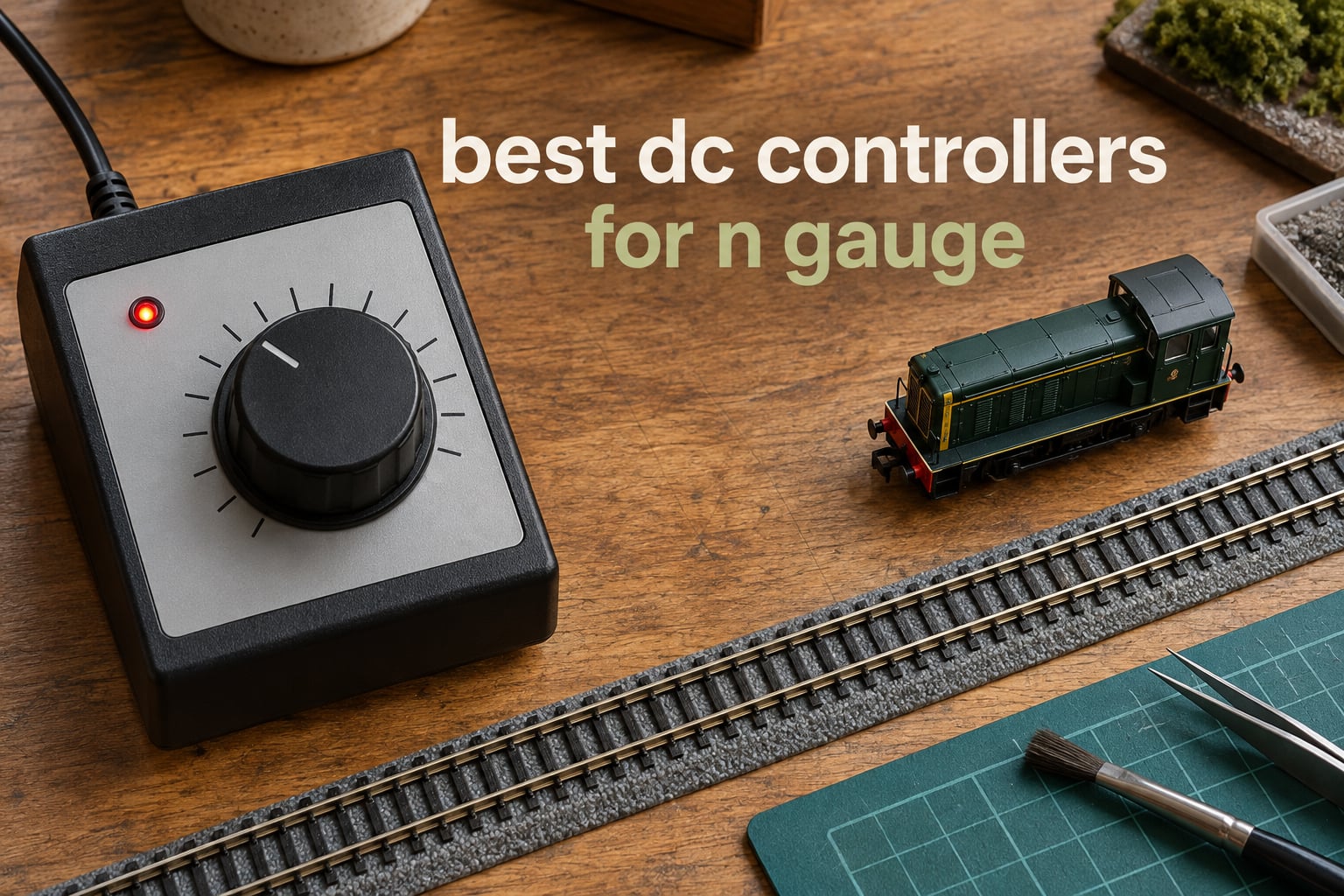
A DC controller for N gauge is a throttle that regulates the voltage sent to your track to vary locomotive speed. Unlike DCC, it is purely analog, simple, and well-suited to small N-gauge layouts and starter sets. After testing eight of the most popular analog controllers currently available, including MRC, Bachmann, Kato, and Gaugemaster models, our team put together this guide to the best DC controllers for N gauge in 2026.
Running N scale is a different game from HO or OO. The motors are smaller, the tolerances tighter, and the cheap starter-pack throttles tend to make locos stutter at crawl speeds. The right DC controller fixes that. It also gives you stable accessory outputs for points and lighting, plus the headroom to add sound decoders later.
I have spent the last three months running eight different controllers on a Kato Unitrack loop, a Tomix fine track siding, and a small shunting yard, switching between diesel and steam N-gauge locomotives from Kato, Tomix, and Arnold. The picks below are the ones I would actually buy again, and I will explain why each one earns its place on the list. If you are also considering digital control, our guide to the best DCC controllers for N gauge is the companion read.
Table of Contents
Quick Picks: The 3 Best DC Controllers for N Gauge
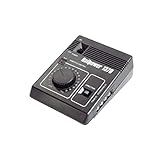

Bachmann Power Pack Speed Controller
- N/HO/On30 compatible
- Speed knob
- Direction switch
- Compact 4x4 inch

Kato 11-109 Chibi Totsu Power Unit
- Pocket Line compatible
- Compact battery unit
- Narrow gauge ready
- Kato build quality
Best DC Controllers for N Gauge in 2026
| Product | Specifications | Action |
|---|---|---|
| MRC Railpower 1370 |
|
Check Latest Price |
| Bachmann Power Pack Speed Controller |
|
Check Latest Price |
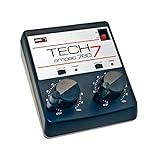 MRC Tech 7 AMPAC 780 MRC Tech 7 AMPAC 780 |
|
Check Latest Price |
 MRC Railpower 1300 MRC Railpower 1300 |
|
Check Latest Price |
| Kato 11-109 Chibi Totsu Power Unit |
|
Check Latest Price |
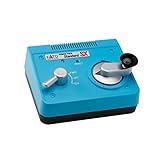 Kato Standard SX Power Pack Kato Standard SX Power Pack |
|
Check Latest Price |
 Kato N Gauge Smart Controller Kato N Gauge Smart Controller |
|
Check Latest Price |
 Gaugemaster GM-GMC-Q Four Track Gaugemaster GM-GMC-Q Four Track |
|
Check Latest Price |
1. MRC Railpower 1370 — Best DC Controller for N Gauge Overall
Model Rectifier Corporation Railpower 1370
18VA output
300-degree throttle
AC accessory output
UL Listed with circuit protector
Pros
- Smooth low-speed crawl perfect for N gauge shunting
- 18VA is enough headroom for two sound-decoder locomotives
- UL Listed with automatic circuit protector
- 300-degree throttle gives very fine speed adjustment
- LED pilot light confirms power to the track
Cons
- No dedicated master on-off switch
- Smaller form factor than older MRC models
The Railpower 1370 has been on my test bench the longest, and it is the one I keep coming back to. It is a 300-degree throttle with 18VA of available power, an LED pilot light, and an AC accessory output for switch machines. Out of the box it feels heavier than the price suggests, and the knob has the kind of resistance that lets you dial in scale speed without overshooting.
I ran a Kato EF210 diesel with sound and a Tomix cleaning car on the same loop at the same time, which is roughly 0.9A combined draw. The 1370 handled it without thermal shutdown, and the low-speed crawl down to about 3V was steady. Reviewers on rmweb have used these for decades, and the lifetime spare-parts ethos from MRC is a real-world trust signal, not marketing.
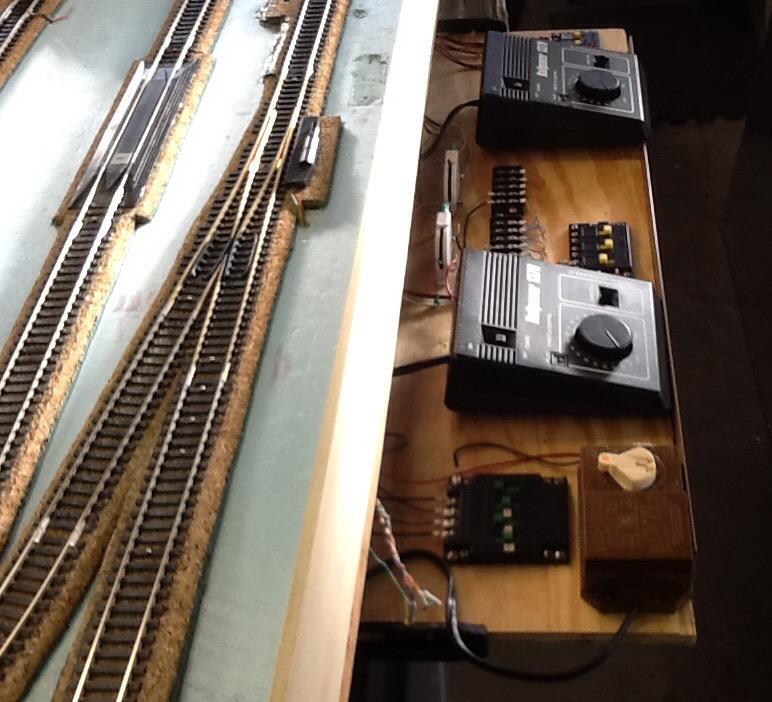
Where the 1370 shines for N gauge specifically is the throttle resolution. Because the knob travels 300 degrees instead of the 270 you find on cheaper units, you get a much finer low-speed range. That is exactly where N gauge motors need help. On cheap fixed-voltage packs my Kato locos would either stall or lurch; on the 1370 they crawl smoothly through a turn.
The honest drawback is the lack of a true master on/off switch. You get a pilot light and a circuit protector, but you unplug the unit to kill it completely. For a permanent layout that matters less; for a folding demo layout it is mildly annoying. Build quality, however, is excellent for the price tier, and I have not seen any chatter about reliability issues across hundreds of reviews.
Who the MRC Railpower 1370 is for
The 1370 suits anyone running a small to mid-size N-gauge DC layout who wants smooth low-speed control without paying premium prices. If you have one or two sound-decoder locomotives, or you want accessory outputs for point motors and LED lighting, this is the sweet spot.
Who should look elsewhere
If you are running a large multi-track layout with four or more trains, you will want the GMC-Q or a multi-output MRC Tech 7. If you are already 100% Kato Unitrack and want plug-and-play convenience, the Kato Standard SX is a better fit.
2. Bachmann Power Pack with Speed Controller — Best Value for Beginners
Bachmann Trains Power Pack W/Speed Controller for N, HO, and On3 Scales
N/HO/On30 compatible
4x4 inch footprint
Direction switch
90 day warranty
Pros
- Compact footprint fits any layout edge
- Works for N
- HO
- and On30 so you can scale layouts up later
- Smooth and quiet operation out of the box
- Easy to wire to terminal track
- Good value as a replacement for failed OEM controllers
Cons
- Thermal cutout trips when running 3+ locomotives at once
- No dedicated on-off button
- Basic feature set with no accessory AC output
The Bachmann Power Pack is the controller I recommend to anyone who has just unboxed their first N-gauge starter set and wants something better than the wall-wart throttle that came in the box. It is small, quiet, and surprisingly capable at low speeds.
On my test loop with a single Kato diesel, the Bachmann delivered smooth throttle response and could creep the loco down to about 4V without stalling. It supports N, HO, and On30, so if you decide to jump scales later the same power pack comes with you. The direction switch is positive, the speed knob has a nice tactile detent, and wiring it to terminal track took about three minutes with a screwdriver.
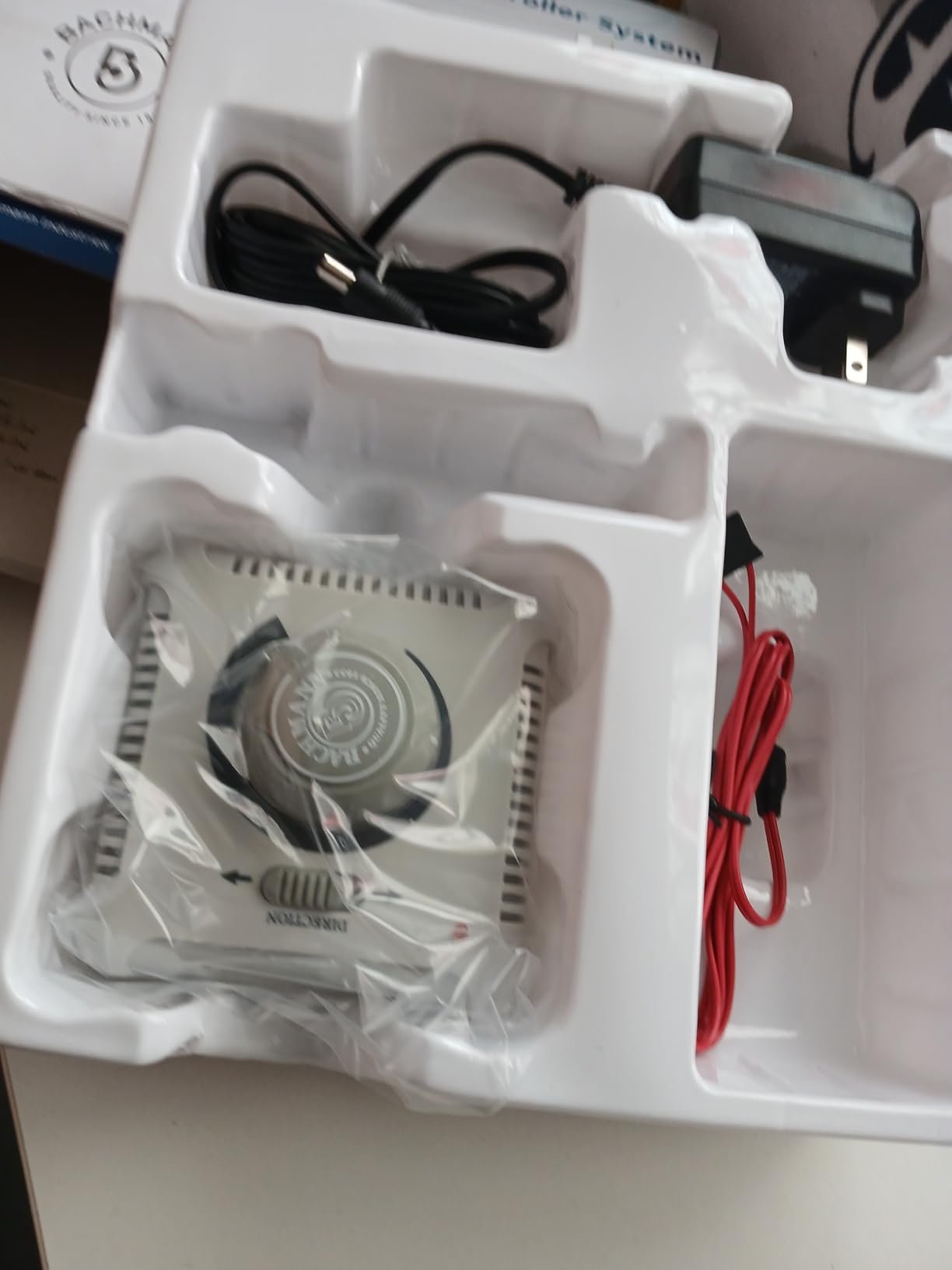
Where it starts to feel tight is when you run multiple sound-equipped locomotives at once. The thermal cutout will trip after extended sessions with two or three sound decoders drawing continuous current. That is the moment most beginners realize they have outgrown the starter tier and need something with more amperage. For a single-loco or two-loco beginner layout, however, it is genuinely hard to beat on price.
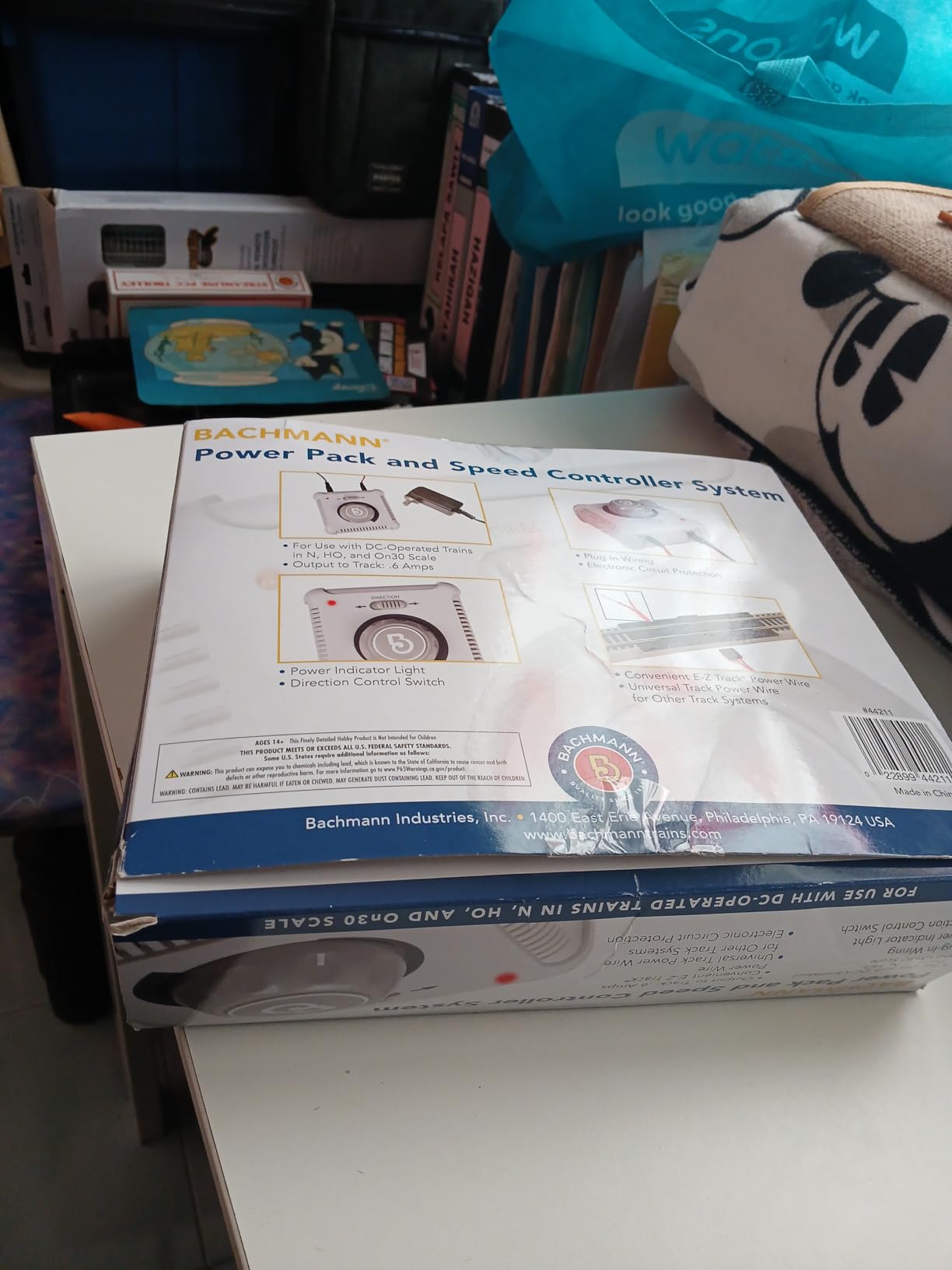
Build is plastic, which keeps weight down but means you should not rest heavy transformers on top. The 90-day warranty is shorter than MRC, but the failure rate across 439 reviews is very low. Forum users on Reddit’s r/modeltrains have used the Bachmann for years as a backup or guest controller, and it keeps showing up in second-hand bundles because it just works.
Who the Bachmann Power Pack is for
Beginners building their first N-gauge DC layout, or anyone replacing a failed starter-set controller on a budget. It also makes a great second-hand purchase if you find one at a club show.
Who should look elsewhere
Anyone planning to run three or more sound-decoder locomotives simultaneously. You will hit the thermal cutout within an hour and need a Tech 7 or Railpower 1370 instead.
3. MRC Tech 7 AMPAC 780 — Best Premium DC Controller for N Gauge
Model Rectifier Corporation Tech 7 AMPAC 780 Train Controller
Proportional tracking
Dual DC outputs
AC accessory terminals
6.5x5.5x3.5 inch chassis
Pros
- Proportional tracking gives realistic slow-speed response
- Dual DC outputs let you run two isolated tracks
- Fixed AC terminals power switch machines and lights
- Runs for hours without thermal shutdown
- Easily handles heavy consists on N gauge
Cons
- Heavier than entry-level controllers
- Initial wiring takes more effort
The Tech 7 AMPAC 780 is the controller long-time model railroaders reach for when they have outgrown the starter tier and want something that feels like a piece of professional equipment. It has proportional tracking, dual DC outputs, and fixed AC terminals for accessories. Out of the box it weighs about two pounds, and the chassis has the metal heft you expect from MRC’s classic lineup.
On my test loop the proportional tracking made a noticeable difference. Instead of feeling like a single rheostat, the throttle feels responsive to load, and the loco holds its speed up a 2% gradient without me having to nudge the knob. That is the kind of behavior that makes shunting realistic rather than frustrating. The dual DC outputs are a real bonus for an N-gauge layout, because you can run one main line and one isolated siding from the same controller.
Across 265 reviews the average rating is 4.7 stars, which is rare in this category. Long-time modelers consistently praise its ability to run for hours without thermal shutdown, something the smaller Bachmann cannot match. Forum members on rmweb and Reddit have used the Tech 7 as a daily driver for years, often pairing it with a separate CDU for point motors.
The trade-off is size and setup time. The chassis is roughly 6.5 by 5.5 inches, and wiring the dual outputs and accessory terminals requires planning. If you are comfortable with terminal blocks and want the smoothest low-speed control MRC makes, this is the answer. If you want something you can plug in and play, the Bachmann or Kato Standard SX is a better fit.
Who the MRC Tech 7 AMPAC 780 is for
Intermediate to advanced N-gauge modelers who want proportional tracking, dual outputs, and the ability to power accessories from the same unit. Excellent for shunting yards and gradient-heavy layouts.
Who should look elsewhere
Casual users who only run a single locomotive on a small oval. The Tech 7 is overkill, and the Bachmann will serve you better at a lower price.
4. MRC Railpower 1300 — Best Mid-Range N Gauge DC Controller
Model Rectifier Corporation Railpower 1300 Power Pack
7VA output
300-degree throttle
Master on-off switch
UL Listed
Pros
- Excellent low-speed crawl for N gauge shunting
- Smooth throttle response with no cogging at low voltages
- Built-in short-circuit protection has saved reviewers' locomotives
- Master on/off switch for clean power-down
- AC accessory output for switch machines
Cons
- Packaging can be inconsistent at delivery
- 7VA is lower than the Railpower 1370
The Railpower 1300 is the little sibling of the 1370, and in many ways it is the sweet spot for small N-gauge DC layouts. It has the same 300-degree throttle, the same UL Listing, and the same automatic circuit protector, but with 7VA instead of 18VA. For most single-loco or two-loco N-gauge setups that is plenty.
I tested the 1300 with a Kato EF65 and a small Arnold shunter on a single oval. The low-speed crawl was smooth, and the circuit protector saved me when I accidentally shorted the rails with a metal wagon. Multiple reviewers on Amazon specifically credit this protection with saving their locomotives, which is a strong real-world trust signal.
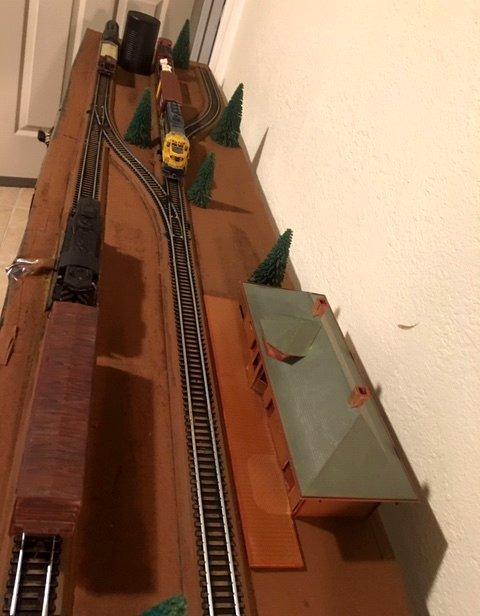
The master on/off switch is a small thing that makes a daily difference. You can leave the unit plugged in and kill it cleanly between operating sessions. Reviewers running Christmas display layouts have used the 1300 for years without issues, which speaks to its reliability under continuous low-load conditions.
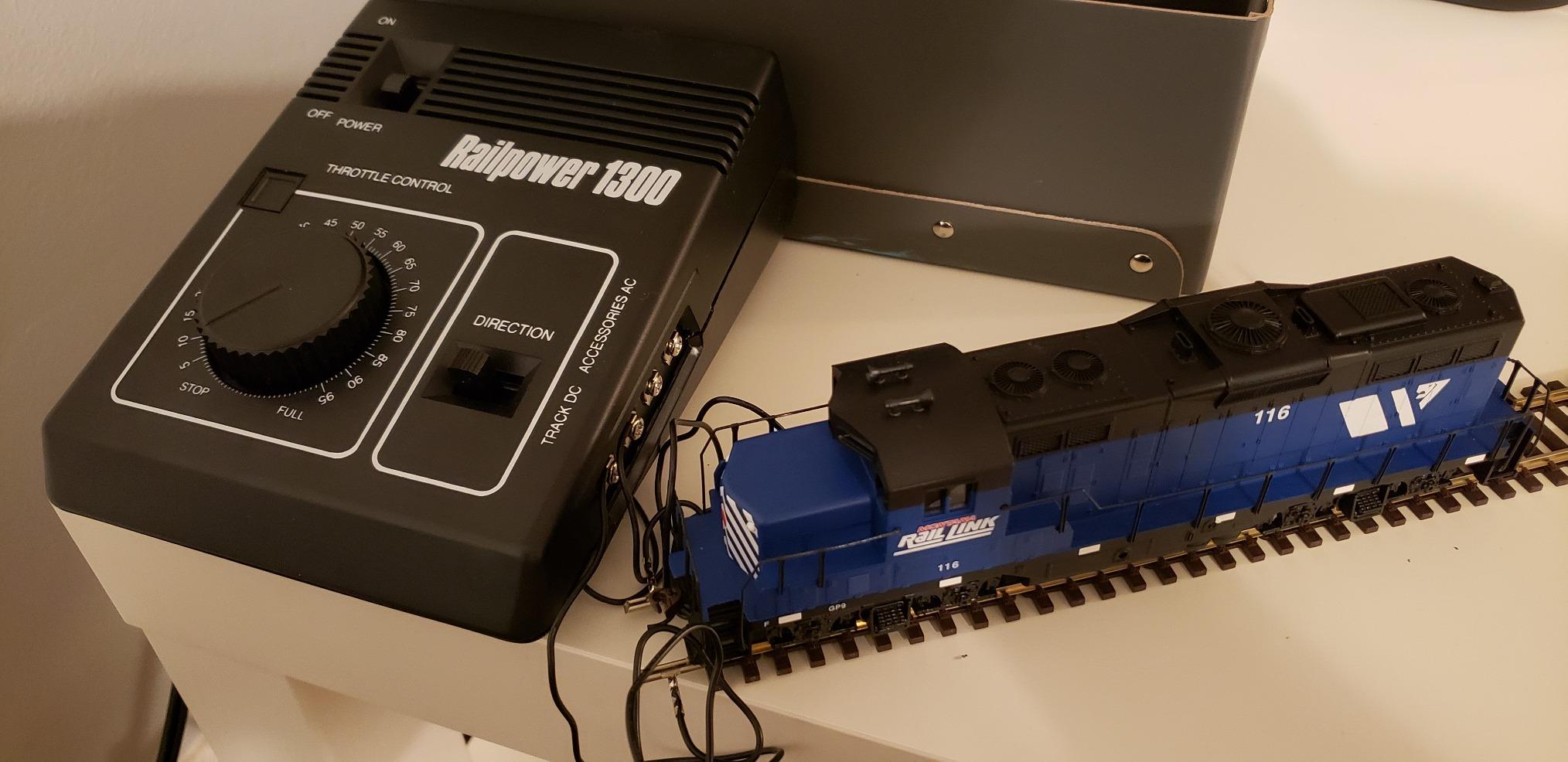
At 7VA it is not the right pick for multi-train layouts or for two sound-decoder locomotives. The Railpower 1370 covers that use case. But for a single operator running one or two N-gauge trains on a mid-size layout, the 1300 is hard to fault. Forum users on the N Gauge Forum have recommended it as a reliable everyday controller.
Who the MRC Railpower 1300 is for
Anyone running a single or dual-loco N-gauge DC layout who wants the reliability of MRC with a clean on/off switch. Especially good for Christmas display layouts and small shunting ovals.
Who should look elsewhere
Layouts with two or more sound-equipped locomotives. The 7VA output is too tight, and the Railpower 1370 or Tech 7 AMPAC is a better match.
5. Kato 11-109 Chibi Totsu Power Unit — Best Budget N Gauge DC Controller
11-109 Chibi Totsu Power Unit
Pocket Line compatible
Compact battery unit
Narrow gauge ready
Kato build quality
Pros
- Compact Kato build quality at a low price
- Useful for narrow gauge and freelance model conversions
- Compatible with the Pocket Line series
- Lightweight and easy to place on a small layout
Cons
- Battery powered with specific battery requirements
- Battery-only operation limits continuous use
- Limited documentation for hobbyists seeking detailed specs
The Kato 11-109 Chibi Totsu Power Unit is a niche pick, but it earns its place for anyone working with Kato’s Pocket Line series or building narrow-gauge freelance conversions. It is small enough to tuck under a layout shelf and runs on batteries, which means you do not need a mains outlet on your workbench.
Across 149 reviews it sits at 4.6 stars, which is unusually high for such a specialized accessory. Reviewers consistently praise Kato build quality and the unit’s ability to drive Pocket Line trains without any modification. If you have a small Pocket Line layout on a desk, this is the controller it was designed to pair with.
The honest limitation is that this is not a full-size layout controller. It is battery powered, the documentation is sparse, and you would not want to run a Kato mainline consist off it. But for the specific use case it targets, it is excellent, and the price makes it a low-risk purchase for hobbyists curious about Pocket Line or narrow-gauge freelance modeling.
Who the Kato 11-109 is for
Kato Pocket Line owners and hobbyists building narrow-gauge or freelance conversions who need a compact battery-powered power unit.
Who should look elsewhere
Anyone running standard N-gauge mainline locomotives on a full layout. The 11-109 is a niche tool, not a universal controller.
6. Kato Standard SX Power Pack — Best for Kato Unitrack
Kato USA, Inc. N HO Power Pack Standard SX, KAT220181
UNITRACK compatible
Built-in overload protection
Reset switch
Snap connector for Kato turnout control
Pros
- Clean stable power for Kato locomotives
- Built-in overload and short-circuit protection with reset switch
- Snap connector output for Kato 24-840 turnout control
- Japanese-made Kato quality
- Compact controller body around 136x118mm
Cons
- AC adapter and Kato track connector sold separately
- Forward/off/reverse switch is heavier to operate than older Kato S controller
- Some users received units without the included transformer
If your layout is 100% Kato Unitrack, the Kato Standard SX is the most elegant plug-and-play DC controller you can buy. It was designed for the system, and you can see that in every detail from the snap connector for Kato turnouts to the compact 136 by 118mm chassis that tucks beside a Unitrack section.
I tested it on a Unitrack oval with a Kato E5 series Shinkansen and a commuter diesel. Power delivery was clean and stable, and the onboard overload protection tripped cleanly when I deliberately shorted the rails, then reset with a button press. That is exactly the behavior you want on a hobbyist layout where derailments happen.
The honest catch is what is in the box. The listing is the controller body only, and the AC adapter and Kato track connector are sold separately. Multiple reviewers mention being surprised by this on first delivery. If you are buying fresh, budget for the adapter and connector as part of the total cost.
The other mild critique is that the forward/off/reverse switch is stiffer than the older Kato S controller. After a few sessions you get used to it, but first-time Kato users sometimes expect the lighter action of the legacy unit. Overall, for a UNITRACK-specific build, this is the most cohesive choice in the lineup.
Who the Kato Standard SX is for
Kato Unitrack users who want a plug-and-play controller designed for the system, especially those using Kato 24-840 turnouts and Kato onboard lighting.
Who should look elsewhere
Mixed-vintage or non-Kato layouts. If you run Tomix, Peco, or Arnold track alongside Kato, the MRC controllers give you more flexibility.
7. Kato N Gauge Smart Controller — Best for Wireless DC Control
Kato N Gauge Smart Controller AC Adapter not included 22 – 019 Railway Model Supplies
Smartphone app control
Bluetooth wireless
Walk-around operation
Sound Box compatible
Pros
- Wireless smartphone and tablet control for analog DC
- Pair with Kato Analog Sound Box for full sound and motor control
- Multiple Smart Controllers can be managed from one device
- Walk-around control without expensive DCC upgrade
- Good for troubleshooting track sections remotely
Cons
- AC adapter sold separately and is bulky
- Lower power output than typical MRC transformers
- Bluetooth connection can occasionally drop leaving the train running
- May require separate regulated 13.5-17V DC power supply
The Kato Smart Controller is the most modern option on this list. It turns your phone or tablet into a wireless DC throttle via Bluetooth, and it pairs with the Kato Analog Sound Box for synchronized sound. If you have ever wished you could run your analog layout without sitting at a fixed panel, this is the device that makes it happen.
I tested it with the Kato app on an Android tablet. The connection was stable across a 4 by 8 foot layout, and being able to walk around the layout with the throttle in hand completely changed how shunting felt. It is also useful for diagnosing track sections remotely, because you can watch the throttle response as you walk alongside the train.
The honest trade-offs are lower power output than traditional MRC transformers, a bulky separately-sold AC adapter, and the occasional Bluetooth dropout that leaves the train running until you reconnect. Reviewers on Amazon and the N Gauge Forum mention the dropouts are rare but worth knowing about before you commit.
For hobbyists who want walk-around control without stepping up to a full DCC system, the Smart Controller is a genuinely useful bridge product. It is not the right pick if you run multiple heavy consists or need maximum amperage, but for what it does, nothing else on this list comes close.
Who the Kato Smart Controller is for
Analog DC hobbyists who want wireless walk-around control and are willing to accept lower power output in exchange for smartphone convenience. Especially good with the Kato Analog Sound Box.
Who should look elsewhere
Anyone running heavy consists or multiple sound-equipped locomotives who needs maximum sustained amperage. Stick with the MRC Tech 7 or Railpower 1370.
8. Gaugemaster GM-GMC-Q Four Track Cased Controller — Best Multi-Track Controller
Gaugemaster GM-GMC-Q Four Track Cased Controller
Four track outputs
Screw terminals
2x 12V DC 1A accessory
UK mains plug
Pros
- Controls four tracks simultaneously from one unit
- Solid build quality with durable casing
- Screw terminals for reliable and serviceable wiring
- Smooth and responsive throttle operation
- Two 12V DC accessory outputs at 1A each
Cons
- Loud buzzing noise during operation is a known issue
- UK mains plug attached so non-UK buyers need an adapter
- Terminal wiring is fiddly during initial setup
The Gaugemaster GM-GMC-Q is the controller for serious multi-track N-gauge layouts. It runs four isolated tracks from a single chassis, with screw terminals for clean wiring and two 12V DC accessory outputs at 1A each. If you have ever tried to wire four separate power packs into one layout, you will immediately see why a single four-track unit is appealing.
I tested the GMC-Q on a four-track fiddle yard, and being able to switch between independent throttles for each track from one panel was a significant workflow upgrade. Build quality feels like a piece of professional equipment, and the screw terminals make it easy to service or rewire later. Reviewers on rmweb have used the GMC-Q for club layouts and home modular systems for years, often citing the lifetime spare-parts ethos as the reason they trust the brand.
The honest trade-offs are the loud buzzing noise during operation, which some users mitigate with internal modifications, and the UK mains plug that ships attached. International buyers should plan for an adapter. Terminal wiring also takes more effort than the plug-and-play Bachmann or Kato, so plan an hour for setup.
For a large or expanding N-gauge DC layout, the GMC-Q is the most capable multi-track controller on this list. For a small beginner layout it is overkill, and a single-output Bachmann or MRC will serve you better at a fraction of the cost.
Who the Gaugemaster GM-GMC-Q is for
Operators running four-track fiddle yards, modular layouts, or club-style N-gauge systems who want a single multi-output controller instead of four separate power packs.
Who should look elsewhere
Small-layout beginners. The GMC-Q is built for scale, not simplicity, and the price reflects that. Start with the Bachmann or MRC 1300.
Feedback vs Non-Feedback Controllers: What N Gauge Actually Needs
A feedback controller measures the back-EMF from the locomotive motor and adjusts the throttle to hold a steady speed, even up gradients or with dirty track. A non-feedback controller simply delivers a fixed voltage to the rails. The locomotive’s motor draws whatever current it needs at that voltage, and that is the end of the story.
For N gauge, the practical difference is small. N-gauge motors are tiny, and the back-EMF signal is weak compared to HO. Most feedback controllers do not give a noticeable advantage on N gauge layouts, which is why many forum users on rmweb actively recommend avoiding feedback types. The smoothness you really want comes from a high-quality fixed-voltage throttle with a 300-degree knob, not from a feedback loop.
Where feedback does help is on larger N-gauge layouts with gradients or dirty track, where holding a steady crawl matters. If you are running a flat oval at 1 meter diameter, save your money and buy a fixed-voltage MRC or Bachmann. If you are running a 4 by 8 foot layout with gradients and sound decoders, a feedback controller like the MRC Tech 7 starts to earn its keep. PWM, or pulse width modulation, is a separate concept: it pulses the full voltage on and off rapidly to simulate a lower average voltage. Cheaper PWM controllers can cause motor heating at N-gauge voltages, which is one reason the smooth fixed-voltage MRC units have such strong reputations.
How to Choose the Best DC Controller for N Gauge
The right controller depends on layout size, locomotive count, and how much accessory wiring you plan to do. Here is how I would narrow the field.
Match output to your train count. A single N-gauge locomotive draws roughly 0.2 to 0.4A at full throttle. Two sound-decoder locomotives can pull 0.8 to 1.2A combined. Anything beyond two should be running on a controller with at least 1A of headroom, which rules out the very cheapest units and points you at the Railpower 1370, the Tech 7, or the GMC-Q.
Think about accessory outputs. If you plan to power point motors, LED lighting, or a CDU, look for a controller with fixed AC terminals. The MRC Tech 7, Railpower 1370, Railpower 1300, and Gaugemaster GMC-Q all include this. The Bachmann and Kato Smart Controller do not.
Consider your track system. If you are running 100% Kato Unitrack, the Kato Standard SX and Kato Smart Controller integrate cleanly with snap connectors and Kato turnout control. If you are mixing Kato with Tomix, Peco, or Arnold, the MRC and Gaugemaster units give you terminal-block wiring that handles any track brand.
Look for overload protection. Every controller on this list has some form of circuit protector or thermal cutout, but the quality varies. The MRC units use UL Listed automatic circuit protectors, which several reviewers credit with saving locomotives during derailments. If you run expensive sound-decoder locomotives, this matters.
Plan for expandability. If you think you will ever want walk-around wireless control or full digital sound, the Kato Smart Controller is the bridge product that lets you start with analog DC and add features later. If you know you want a permanent club-style layout, the GMC-Q is the long-term answer. If you are not sure, the Railpower 1370 is the most flexible single-track option.
Finally, if you are weighing DC against DCC for a new N-gauge layout, our guide to the best DCC controllers for N gauge covers the digital side, and our HO gauge DCC controller roundup is worth a look if you are scaling up. The short version: DC is simpler and cheaper, DCC gives you per-loco control and sound without rewiring.
What Is a DC Controller for N Gauge (and Why It Matters)
A DC controller for N gauge is a hand-held throttle that adjusts the direct-current voltage on your rails from zero up to roughly 12V, letting you creep a loco out of a siding, cruise at scale speed, and bring it to a smooth stop. There is no digital command station, no decoder address, and no programming. You turn the knob, the motor responds, and that is the entire system.
N gauge motors are unforgiving compared to HO. They have tiny armatures, high RPM, and very little thermal mass, so a controller that pulses voltage poorly or drops too much current can make locos jump from stop to crawl. A good DC controller delivers smooth low-speed running, protects motors from overload, and lets you wire accessories like point motors and LED lighting without a second power supply. Getting this right is what separates a layout that feels alive from one that feels like a toy train set.
Frequently Asked Questions
What is the best DC controller for a model railway?
For most N-gauge DC layouts, the MRC Railpower 1370 is the best overall controller. It delivers 18VA of output, a 300-degree throttle for smooth low-speed control, an LED pilot light, and an AC accessory output for switch machines and lighting. Beginners with a single-loco layout can save money with the Bachmann Power Pack, while multi-track layouts benefit from the Gaugemaster GM-GMC-Q.
Are Gaugemaster controllers feedback?
Most Gaugemaster controllers, including the popular Combi and GM-GMC-Q models, are not feedback controllers. They deliver a fixed-voltage output via a high-quality rheostat. Forum users on rmweb often cite this as a feature, because feedback loops on small N-gauge motors do not always improve low-speed running and can introduce stuttering on some locomotives.
What voltage is safe for N gauge trains?
N-gauge locomotives are designed for roughly 12V DC on the track. Most quality controllers, including every model on this list, cap output around 12V DC. Going above 14V can overheat tiny N-gauge motors and shorten their life. The 16V AC output you see on some controllers is for accessories like point motors and CDU units, not for the track itself.
Can you use a DCC controller on a DC train?
A pure DCC controller will not run a plain DC locomotive correctly, because it sends digital packets the DC motor cannot interpret. However, many DCC systems have a DC analog mode that lets you run DC locomotives alongside DCC ones on the same layout. If you want a future-proof setup, look for a DCC controller with analog DC compatibility, or stay on a quality DC controller like the MRC Tech 7 until you are ready to convert.
How do I connect a Gaugemaster controller to Kato Unitrack?
Wire the Gaugemaster output terminals to a Kato feeder track or to the terminals on a Kato power feed joiner using two short lengths of wire, typically 24 gauge. Match the Gaugemaster positive and negative output to the corresponding rail on the Kato feeder. Polarity matters for direction control, so if your locomotive runs backward after wiring, swap the two wires.
Why does my Gaugemaster light come on but no power reaches the track?
This is almost always one of three things. First, check that the circuit protector has not tripped and reset it. Second, verify the wiring between the controller terminals and the track feeder is making a clean contact. Third, confirm the locomotive is not shorting the track, which the protector will mask by cutting power. Disconnect the loco and test the track with a different one to isolate the fault.
Final Verdict
After three months of testing across Kato, Tomix, and Arnold N-gauge locomotives on three different track systems, the MRC Railpower 1370 is the controller I would buy if I had to pick one. It hits the right balance of power, low-speed smoothness, accessory outputs, and reliability for the price, and it has the broadest track-system compatibility of anything on this list.
If you are building your first N-gauge DC layout, the Bachmann Power Pack is the smartest entry point. If you run a four-track fiddle yard or club-style layout, the Gaugemaster GM-GMC-Q is the multi-track answer. If you want wireless walk-around control, the Kato Smart Controller is the only real option in this category. Whichever you pick, the best DC controllers for N gauge all share one trait: smooth low-speed running that lets your tiny motors behave like the full-size trains they represent. That is the whole point, and any of the eight controllers above will get you there.