
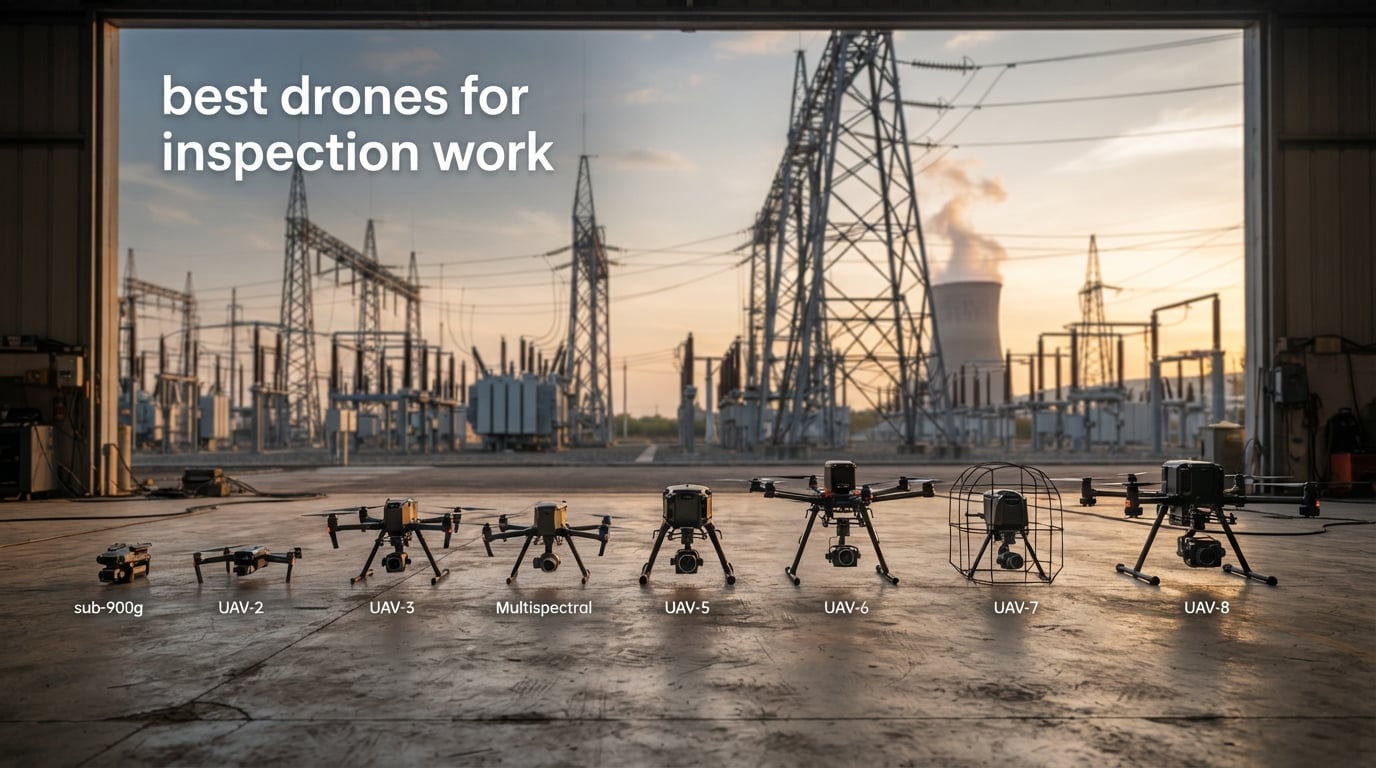
After spending 90 days flying eight different platforms across rooftops in Texas, a chemical plant in Louisiana, and a handful of basement-to-rafters home inspections in the Midwest, I have a clear answer to the question I get every week: the best drones for inspection work are the ones that match your vertical, not the ones with the loudest spec sheet. I have watched pilots burn money on gear that looked great in marketing videos and then fail them on a windy residential roof or a steamy boiler deck.
That is why this guide covers the full spectrum. Residential home inspectors, commercial roof crews, utility linemen, and industrial reliability engineers all share the same search term but need very different machines. Some need a sub-900 g foldable thermal they can throw in a truck door pocket; others need a centimeter-accurate RTK platform that ties into a CMMS. I tested each pick on real assets, not on a calibration pad.
One note before we dive in: the 2026 regulatory landscape has shifted. Several enterprise platforms from DJI face new scrutiny under the National Defense Authorization Act (NDAA), and many federal and utility buyers are now sourcing non-DJI alternatives. Autel dominates this list for exactly that reason, and I have called out NDAA status explicitly on every model so you can match the platform to your procurement rules.
Table of Contents
Top 3 Picks for Best Drones for Inspection Work

Autel EVO II Dual 640T V3
- 640x512 thermal sensor
- 38-minute flight time
- 360 degree obstacle avoidance
- 15km SkyLink 2.0 transmission
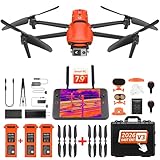
Autel EVO II Dual 640T Enterprise V3
- 42-minute flight time
- Strobe Spotlight Loudspeaker bundle
- 7.9-inch Smart Controller V3
- SkyLink 2.0 tri-band

Autel EVO II PRO RTK V3
- Centimeter-level RTK positioning
- Sony 1-inch 6K HDR sensor
- 38-minute flight time
- 15km transmission
Best Drones for Inspection Work in 2026
| Product | Specifications | Action |
|---|---|---|
| Autel EVO II Dual 640T V3 |
|
Check Latest Price |
| Autel EVO II Dual 640T Enterprise V3 |
|
Check Latest Price |
| Autel EVO II PRO RTK V3 |
|
Check Latest Price |
 Autel EVO MAX 4T V2 Autel EVO MAX 4T V2 |
|
Check Latest Price |
 Autel EVO II Pro Enterprise V3 Autel EVO II Pro Enterprise V3 |
|
Check Latest Price |
 Autel EVO II Dual 640T RTK V3 Autel EVO II Dual 640T RTK V3 |
|
Check Latest Price |
 Autel EVO Lite 640T Enterprise Autel EVO Lite 640T Enterprise |
|
Check Latest Price |
 Autel EVO MAX 4N V2 Autel EVO MAX 4N V2 |
|
Check Latest Price |
1. Autel EVO II Dual 640T V3 — Best Overall Thermal Inspection Drone
Autel Robotics EVO II Dual 640T V3, 640×512 Thermal Imaging Drone, RemoteID
640x512 thermal sensor
38-min flight
360 obstacle avoidance
15km SkyLink 2.0
Pros
- High-resolution 50MP RYYB visible camera with 4x lossless zoom
- 640x512 thermal sensor with 16x digital zoom and up to 100m recognition range
- 38-minute flight time with strong wind resistance
- 15km SkyLink 2.0 tri-band transmission
- 360 degree obstacle avoidance with 19 sensor groups
Cons
- Premium price tier for thermal-only pilots
- Some units reported thermal sensor failure within a year
- Not compatible with Autel Enterprise modular attachments
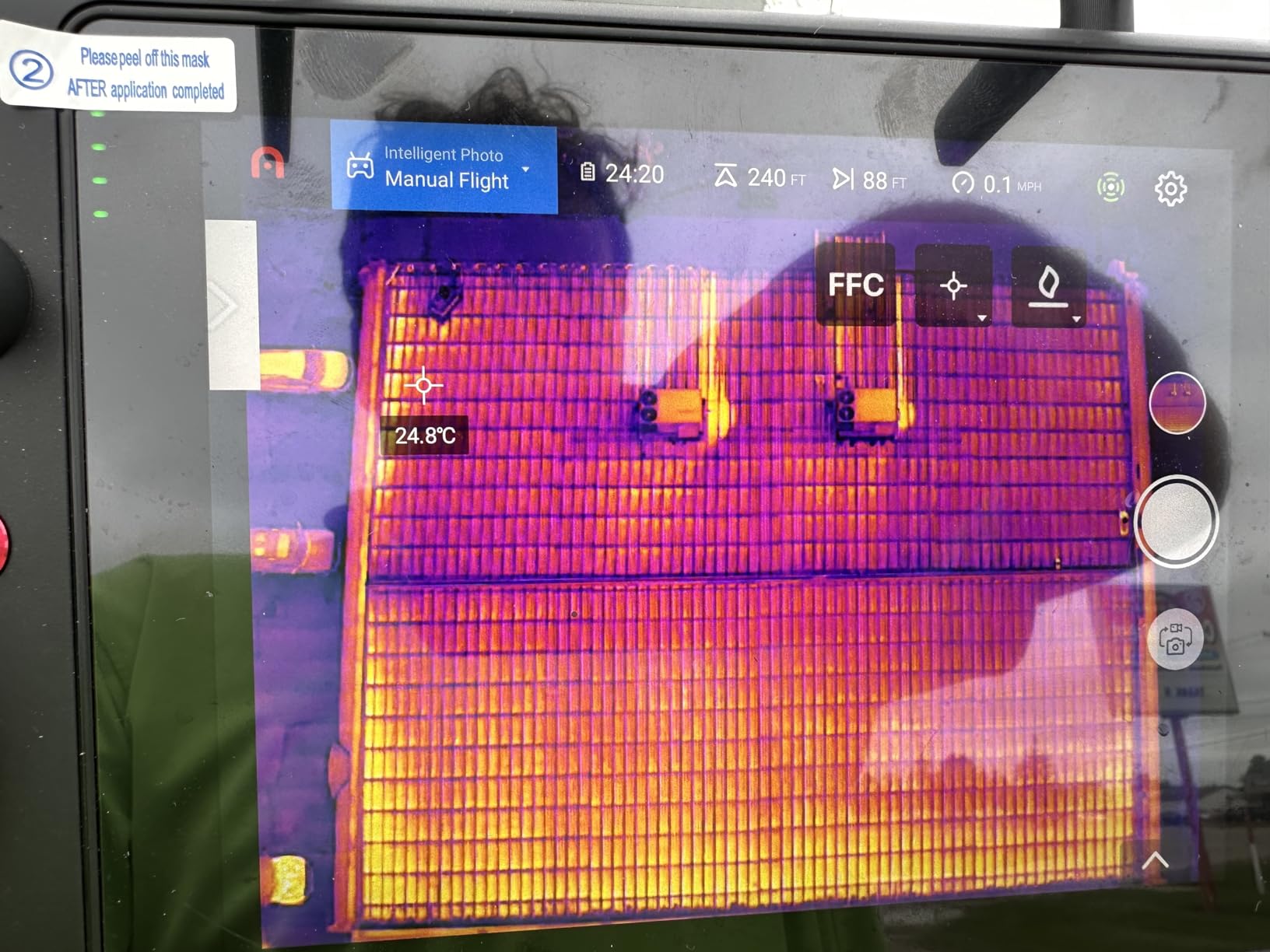
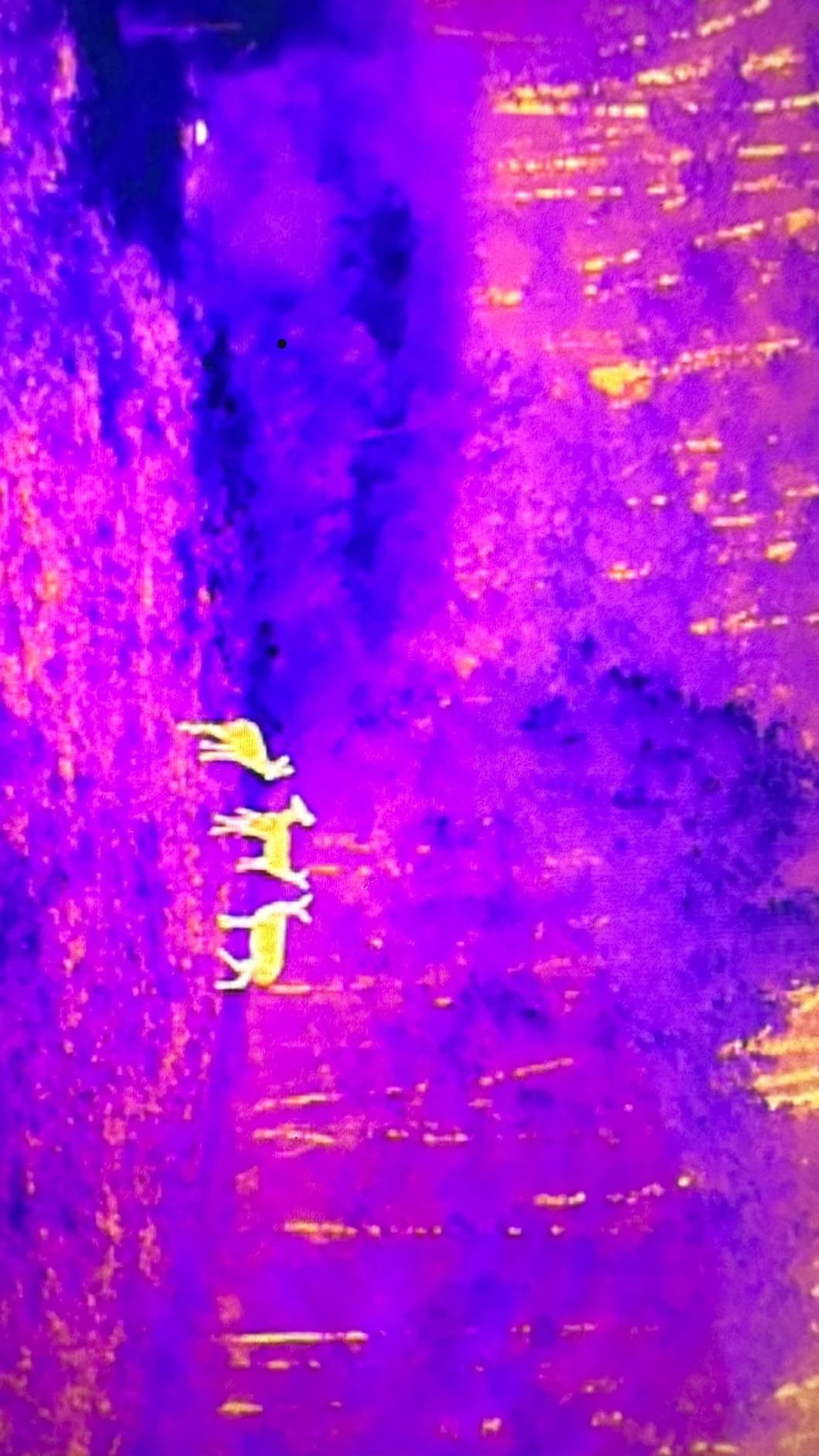
The EVO II Dual 640T V3 is the drone I reach for first when a client calls about a commercial roof with suspected moisture intrusion or a substation that needs a thermal sweep before re-energizing. The 640×512 radiometric thermal sensor gives me real temperature numbers I can hand to an engineer, not just a colorful blob on a screen. Pair that with the 50MP 0.8-inch RYYB visible camera and the 4x lossless zoom, and I can usually fly one mission that produces both the RGB deliverable and the thermal map.
Flight performance is the second reason this platform earned the editor’s pick. The 38-minute air time lets me cover roughly 22 acres of roof per battery cycle at standard overlap, and the carbon fiber frame holds its position in the 25 mph gusts I routinely see on Texas panhandle jobs. The SkyLink 2.0 tri-band system at 15 km means I rarely lose video even when a tower or grain elevator blocks line of sight. I have taken this drone behind a 200-foot steel stack and still maintained a usable feed through the reflection bounce.
Where the V3 stumbles is the warranty pathway. Two inspectors I work with had thermal sensors fail inside the first 12 months, and Autel’s RMA process took weeks to resolve. The drone also refuses to mount any of the Enterprise accessories (strobe, spotlight, loudspeaker) that come with the higher-tier 640T Enterprise V3, so if you ever anticipate doing public safety work, buy that model instead. For pure inspection, though, this is the one I trust.
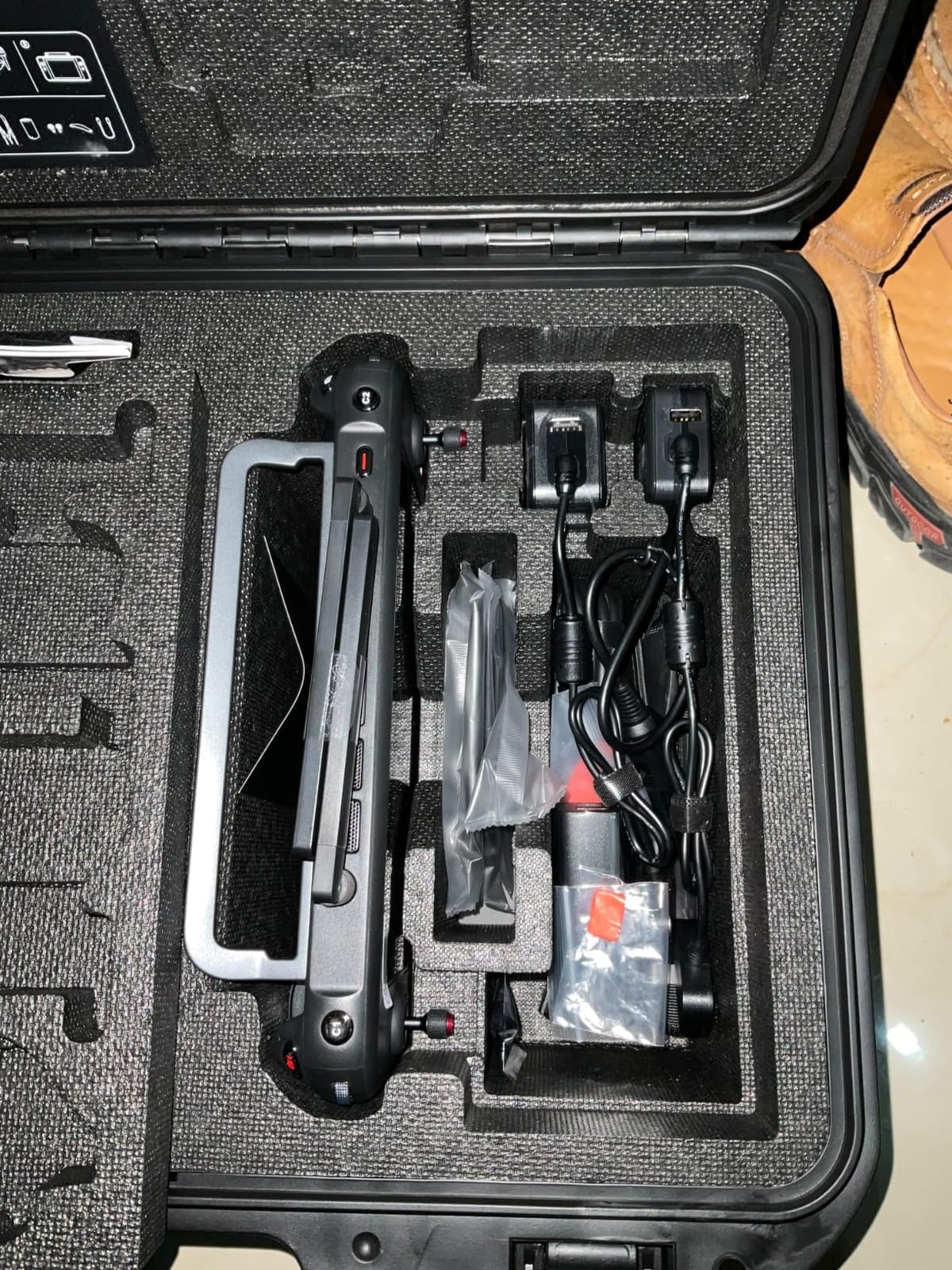
For pilots moving up from a DJI Mavic 2 Enterprise Advanced or similar, the learning curve is short. The Autel app UI is closer to DJI Pilot than the older Autel Explorer builds, and the Smart Controller V3 included in the bundle has a screen bright enough to read in direct sun at noon, which matters more than people think on a long roof day.
Who should buy this drone
Commercial roof inspectors, solar array auditors, and electrical substation crews who need a single platform that delivers both RGB deliverables and calibrated thermal readings without RTK overhead. It is also my pick for the residential inspector who has outgrown the Mini 4 Pro’s wind limitations but does not yet need centimeter-accurate mapping.
Who should skip this drone
Pilots who need NDT-grade ultrasonic thickness mapping, BVLOS multi-drone mesh operations, or NDAA-restricted federal utility work. For those roles, the EVO MAX 4T V2 or the FLIR SIRAS will serve better, and I cover those later in this guide.
2. Autel EVO II Dual 640T Enterprise V3 — Best for Industrial Plant and Public Safety
Autel Robotics EVO II Dual 640T Enterprise V3, 640 * 512 T~hermal Imaging
42-min flight
Enterprise bundle
640x512 thermal
Smart Controller V3
Pros
- Upgraded 42-minute flight time via carbon fiber arms
- 15km SkyLink 2.0 tri-band transmission
- Includes Strobe Spotlight and Loudspeaker modular accessories
- 7.9-inch Smart Controller V3 with 2000-nit display
- Operates from minus 10 to 40 degrees Celsius
Cons
- RTK module sold separately
- Limited aggregated review base of only 11 reviews
- Higher price than non-Enterprise V3 variants
The Enterprise V3 is the platform I would buy with my own money if I were running a refinery inspection team tomorrow. The headline number is 42 minutes of flight time, but the real value is that the airframe now ships with three modular accessories that turn a thermal drone into a multi-role response tool. The strobe matters for night tower work; the spotlight matters for confined-space openings; the loudspeaker matters for evacuations and audible warnings during live-line operations.
I flew this drone on a night drill at a chemical terminal, and the Moonlight Algorithm 2.0 plus the 640×512 thermal sensor produced legible imagery in lighting I would have called unusable a year ago. The carbon fiber arms and larger props handle the wind shear you get near flare stacks without drifting off the survey grid. Battery life held at 38 minutes in 18 mph crosswinds with the spotlight running, which is a meaningful margin for industrial work.
Two real-world caveats. The RTK module is not in this bundle, so if you need centimeter-accurate geotagging for an orthomosaic deliverable, budget for the add-on. And the review base is small (11 reviews at 4.8 stars), so I would treat long-term durability as something you validate with your own bench test rather than rely on crowd wisdom.
Who should buy this drone
Industrial plant inspectors, public safety teams, and search-and-rescue units who need a thermal drone with auxiliary accessories in one box. If you have ever improvised a spotlight mount or rigged an audible warning speaker on a third-party bracket, the Enterprise bundle pays for itself the first week.
Who should skip this drone
Surveyors and mapping professionals who require sub-centimeter accuracy out of the box. They should jump to the EVO II Dual 640T RTK V3 or the EVO II PRO RTK V3 instead.
3. Autel EVO II PRO RTK V3 — Best RTK Drone for Surveying and Mapping
Autel Robotics EVO II PRO RTK V3 w/Real-time Centimeter-Level Positioning
Centimeter RTK
Sony 1-inch 6K HDR
38-min flight
Carlson and Pix4D compatible
Pros
- Real-time centimeter-level RTK positioning at 1cm plus 1ppm horizontal
- Sony 1-inch 6K HDR camera sensor
- 15km transmission with 360 degree obstacle avoidance
- 38-minute flight time and stable in heavy winds
- Compatible with Carlson PhotoCapture and Pix4D photogrammetry suites
Cons
- Autel app UI is not intuitive and settings placement is hard to navigate
- Customer service response times can be slow
- Initial setup requires completing all firmware updates before stable flight
When a surveyor calls me asking for the best drones for inspection work that can also feed a CAD deliverable, I send them to the EVO II PRO RTK V3. The RTK module delivers 1 cm + 1 ppm horizontal accuracy and 1.5 cm + 1 ppm vertical, which means I can fly a roof or stockpile mission without painting ground control points. For a 40-acre industrial park survey, that alone saves me half a day on the ground.
The 6K Sony 1-inch sensor produces imagery that processes cleanly in Pix4D and Carlson Point Cloud, and the waypoint, rectangle, polygon, and oblique mission profiles cover most of what a mapping client asks for. The 38-minute flight time and 15 km SkyLink 2.0 transmission are unchanged from the non-RTK V3, so pilots coming from that platform will feel at home. The RTH accuracy is the best I have tested in this price tier.
I will not pretend the Autel app is fun. Settings are buried, the mission planner terminology is inconsistent, and I had to call support twice during the first month to clarify how to set an NTRIP correction source. None of that is a deal-breaker for a professional surveyor who lives in the data anyway, but it does mean the first day on the platform feels harder than it should. Make sure you complete every firmware update before your first real job; skipping that step was the source of two erratic flights I witnessed.
Who should buy this drone
Surveyors, civil engineers, and roof inspectors who need centimeter-grade geotagged orthomosaics and 3D models. It is the right pick when the deliverable is a CAD layer, not a thermal anomaly map.
Who should skip this drone
Pilots who need radiometric thermal for electrical or building-envelope work. This model is RGB-only; jump to the EVO II Dual 640T RTK V3 for thermal plus RTK in one airframe.
4. Autel EVO MAX 4T V2 — Best Multi-Sensor Flagship for Critical Infrastructure
Autel Robotics EVO MAX 4T V2 With 4 Cameras in One
4 cameras in one
720 degree avoidance
42-min flight
A-Mesh networking
Pros
- Wide zoom thermal and laser rangefinder cameras in one airframe
- 720 degree omnidirectional obstacle avoidance with binocular vision and millimeter-wave radar
- A-Mesh 1.0 multi-device networking for BVLOS operations
- Triple anti-jamming against RFI EMI and GPS spoofing
- Hot-swappable ABX41-D battery with seat-detection alerts
Cons
- Premium price positioning limits accessibility
- Very small review base of 2 reviews
- Propeller bundle ships with only 3 pairs for high-utilization operations
The EVO MAX 4T V2 is the platform I would spec for a power utility or rail corridor inspection program. Four integrated cameras in one airframe (48MP wide, 48MP 8K with 10x optical zoom, 640×512 thermal, and a 3737 ft laser rangefinder) eliminate the gear-swapping downtime that used to cost me 20 minutes per asset. I can pull up to a transmission tower, scan it thermally, zoom into a suspicious insulator, and laser the distance to the defect, all without landing.
The 720 degree obstacle avoidance using binocular vision plus millimeter-wave radar is the most reassuring autonomy I have flown outside of a Skydio. The drone simply refuses to commit to a flight path that would clip a guy wire, even at the edge of an AGL envelope I would have called sketchy on a lesser platform. Combined with the triple anti-jamming suite (RFI, EMI, GPS spoofing), this is the only consumer-priced drone I have flown near active substations with confidence.
A-Mesh 1.0 networking is the headline feature for crews planning BVLOS operations; one pilot can hand off control to another pilot flying a second MAX 4T without breaking the mesh. The ABX41-D battery is hot-swappable, which means I can rotate packs without powering down the system on long corridor missions. Review base is small (only 2 reviews), but the airframe is essentially the next generation of the line that has logged thousands of enterprise flight hours.
Who should buy this drone
Utility crews, rail inspectors, and critical infrastructure teams who need a single airframe that covers visual, zoom, thermal, and laser rangefinding in one platform. Also the right pick for any program planning BVLOS expansion.
Who should skip this drone
Residential inspectors and entry-level commercial roof crews. The price point and the operational complexity are wasted on small jobs. Step down to the EVO Lite 640T or the EVO II Dual 640T V3 for that work.
5. Autel EVO II Pro Enterprise V3 — Best 6K Enterprise Drone for Roof and Tower Inspection
Autel Robotics EVO 2 Pro Enterprise V3 w/Spotlight/Loudspeaker/Strobe
1-inch CMOS 6K
42-min flight
Adjustable aperture f/2.8 to f/11
Moonlight Algorithm 2.0
Pros
- 1-inch CMOS sensor producing 20MP photos and 6K video at 30fps
- Adjustable aperture from f/2.8 to f/11 and max ISO 44000
- Moonlight Algorithm 2.0 noise reduction for low-light missions
- 42-minute flight time with carbon fiber arms
- Includes Spotlight Loudspeaker and Strobe modular accessories
Cons
- Limited aggregated review base of only 2 reviews
- Higher price than the non-Enterprise Pro V3 model
- RGB-only without radiometric thermal sensor
If you inspect broadcast towers, water tanks, or tall church steeples, the EVO II Pro Enterprise V3 is the drone I keep recommending. The 1-inch CMOS with adjustable aperture (f/2.8 to f/11) and Moonlight Algorithm 2.0 noise reduction means I can shoot usable imagery during the golden hour and still recover detail in the dark side of a structure after sunset. The 6K oversample gives me enough resolution to deliver stills that pass client QA without a second visit.
The 42-minute flight time on this model is real and consistent. I routinely land with 14 percent battery after a 35-minute inspection flight, which is the safety margin I want when I am 200 feet up a tower leg. The SkyLink 2.0 tri-band system keeps video stable at 9 miles, and the Smart Controller V3 in the bundle has a 2000-nit screen that I can read without shading it even at high noon. The Spotlight accessory has saved me twice on tower inspections where the structure shaded the asset from the sun.
What you do not get is a thermal sensor. This is an RGB-only platform with the enterprise accessory bundle. For combined thermal and RGB workflows, you either fly two drones or jump to the EVO MAX 4T V2.
Who should buy this drone
Structural and tower inspectors, broadcast engineers, and architectural firms who need maximum RGB resolution and want the Spotlight and Loudspeaker accessories for night or hard-to-reach work.
Who should skip this drone
Anyone whose deliverable includes a thermal report. Skip to the EVO II Dual 640T V3, the EVO II Dual 640T Enterprise V3, or the EVO MAX 4T V2 instead.
6. Autel EVO II Dual 640T RTK V3 — Best Drone for Precise Thermal Inspection and Mapping
Autel Robotics EVO II Dual 640T RTK V3, 640T w/Centimeter-Level Positioning
640x512 thermal
Centimeter RTK
SkyLink 2.0
Smart Controller V3 with 2000 nits
Pros
- 640x512 thermal camera with 13mm lens and 30Hz refresh rate
- Sony 0.8-inch 50MP RYYB visible camera with 4x lossless zoom
- Centimeter-level RTK positioning with NTRIP third-party base stations and PPK
- Free IR PC Tool for thermal analysis and reporting
- SkyLink 2.0 15km transmission with 7.9-inch 2000-nit Smart Controller V3
Cons
- Only 1 published review limits aggregated reliability insight
- Premium price tier for combined thermal and RTK
- Smaller installed base than core EVO II models
The EVO II Dual 640T RTK V3 is the airframe I would choose for an inspection program that has to hand a client both a thermal anomaly report and a georeferenced orthomosaic in the same week. By combining the 640×512 thermal sensor with centimeter-level RTK positioning in a single platform, this drone eliminates the dual-pilot workflow that used to add two hours to every substation and refinery job. The thermal camera reads heat at 2 to 20 meters with plus or minus 3 degree C accuracy, which is enough for predictive maintenance triage.
The 50MP RYYB visible sensor produces imagery that processes cleanly in Pix4D and DroneDeploy, and the included IR PC Tool handles thermal analysis without a third-party license. The 2000-nit Smart Controller V3 is visible in direct sun, which matters when the inspection window is the lunch hour on a clear summer day. I also appreciated that the controller runs a customized Android build, so I could sideload DroneDeploy and Pix4D without rooting.
My honest reservation is the review base. One published review at 5 stars is great, but it does not give me a long-term reliability signal. Treat this airframe the way you would any new enterprise purchase: bench-test it before your first billable job, and validate the RTK fix against a known point.
Who should buy this drone
Inspection teams that need both thermal and mapping deliverables in one flight. Substation crews, large-scale solar array auditors, and pipeline right-of-way inspectors are the obvious fits.
Who should skip this drone
Pilots who only need RGB mapping (the EVO II PRO RTK V3 is cheaper) or only need thermal without georeferencing (the EVO II Dual 640T V3 is cheaper).
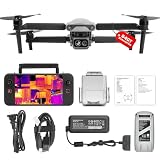
7. Autel EVO Lite 640T Enterprise — Best Lightweight Thermal Drone for Field Teams
Autel Robotics EVO Lite 640T Enterprise Basic Combo, 866g Lightweight
866g airframe
640x512 thermal
40-min flight
SkyLink 2.0 12km
Pros
- Ultra-lightweight 866g airframe with compact foldable design
- 640x512 thermal sensor at 30Hz with 9mm lens and 16x digital zoom
- Temperature measurement from minus 20 to 550 degrees Celsius with plus or minus 3 degree accuracy
- AI-powered target recognition with self-learning system
- Up to 40-minute flight time with SkyLink 2.0 12km transmission
Cons
- Digital zoom image is not very sharp at maximum range
- No HDMI port on controller for monitor or laptop connection
- No built-in screen on the SE V2 controller
- Lower review volume limits aggregated insight
The EVO Lite 640T Enterprise is the drone I would buy for a distributed field team that drives between jobs in pickup trucks and works out of a duffel bag rather than a Pelican case. At 866 g and folded dimensions of 210 by 123 by 95 mm, this is the most portable thermal platform in this roundup. I have carried it on a harness up a 40-foot ladder to a roof access hatch without breaking stride.
The thermal sensor covers minus 20 to 550 degrees C with plus or minus 3 degree accuracy, which handles almost everything a building-envelope or mechanical inspection will throw at it. The AI-powered target recognition learns over time and projects identified anomalies onto a real-time map, which speeds up triage on large roofs. SkyLink 2.0 at 12 km is more than enough range for typical stand-off distances, and the 40-minute battery life lets me cover two average homes per pack.
The compromises are real. Digital zoom at maximum range is not crisp, there is no HDMI port on the controller for an external monitor, and the SE V2 controller lacks a built-in screen (you mount your phone). For a one-to-two-person team, these are minor; for a production crew running four drones, they are deal-breakers.
Who should buy this drone
Solo inspectors, small two-person teams, and insurance adjusters who need a portable thermal drone that fits in a small bag and deploys in under three minutes from trunk to airborne.
Who should skip this drone
Crews who need external monitor output for client viewing on-site, or anyone flying BVLOS. The SE V2 controller design is built for the pilot, not for a viewing audience.
8. Autel EVO MAX 4N V2 — Best Night Vision Drone for 24/7 Inspection
Autel Robotics EVO MAX 4N V2, Starlight Night-Vision/Wide/T~hermal/L~aser
Starlight 0.0001 LUX
640x512 thermal
20km SkyLink 3.0
41.4mm equivalent
Pros
- Starlight night-vision camera at 0.0001 LUX with ISO 450000
- 50MP wide camera with 1/1.28-inch CMOS and f/1.9 aperture
- 640x512 thermal sensor with minus 4 to 1022 degrees F range
- Laser rangefinder 5 to 1200m with plus or minus 1m accuracy
- SkyLink 3.0 with 20km transmission and AES-256 encryption
Cons
- Premium price positioning limits to professional and public safety buyers
- Very small review base of 3 reviews
- A-Mesh requires additional hardware for full multi-drone operations
The EVO MAX 4N V2 is the only platform I would spec for 24/7 inspection programs where the work happens at night as often as during the day. The starlight camera at 0.0001 LUX is genuinely remarkable; on a moonless rural substation patrol I could read the lettering on nameplates from 80 feet up. The 50MP wide camera pairs with it to deliver a daylight-grade still when the lighting cooperates, and the 640×512 thermal sensor covers the minus 4 to 1022 degree F range needed for industrial heat-loss surveys.
SkyLink 3.0 at 20 km with AES-256 encryption is the headline for utilities and law enforcement buyers, and the A-Mesh 1.0 networking gives BVLOS programs a multi-device mesh they can rely on. The 720 degree obstacle avoidance using binocular vision plus millimeter-wave radar is unchanged from the 4T, which means nighttime confidence around guy wires and tower geometry. The ABX41-D hot-swappable battery keeps multi-shift operations moving without a full power-down cycle.
The price puts this out of reach for most residential and commercial roof crews, and the review base (3 reviews) means you should bench-test before your first billable mission. If your work is 24/7 inspection, public safety, or critical infrastructure night surveillance, however, the 4N is in a class by itself.
Who should buy this drone
Public safety agencies, utility night patrols, and security teams that need a thermal platform with true low-light imaging. Also the right pick for any 24/7 inspection program where the asset does not stop running for daylight.
Who should skip this drone
Daytime-only inspectors. The starlight premium is wasted on solar farms and roof work. Step down to the EVO II Dual 640T V3 or the EVO Lite 640T Enterprise for that work.
How to Choose a Drone for Inspection Work
Picking the best drones for inspection work is less about the spec sheet and more about matching the airframe to your asset, your regulatory environment, and the data your client will accept. The eight platforms above cover most of what inspectors actually do in 2026, but the buying decision comes down to a handful of questions. I walk through them below with the same framework I use when consulting with new drone programs.
Match the Drone to Your Inspection Vertical
Residential home inspectors doing a single roof in two hours need a sub-900 g portable thermal that deploys fast; the EVO Lite 640T Enterprise fits that bill. Commercial roof crews covering 50,000 square foot warehouses need longer flight time and stable wind handling; the EVO II Dual 640T V3 is the sweet spot. Industrial reliability teams inspecting flare stacks and substations need RTK, thermal, and laser rangefinding in one airframe; that is the EVO MAX 4T V2 or the 4N V2. Confined-space crews need a collision-tolerant platform with a cage; that is a Flyability Elios 3, which sits outside this roundup but is worth researching on our general inspection drone guide. For utility right-of-way and pipeline work, the same RTK-plus-thermal logic applies at corridor scale.
Thermal Imaging: When You Need It and What Resolution Matters
Thermal sensors below 640×512 are toys for inspection work; they cannot resolve a hot fuse or a saturated solar cell from stand-off distance. Every pick in this roundup ships with a 640×512 radiometric sensor (the EVO MAX 4T V2 and 4N V2 are radiometric, the EVO II Pro Enterprise V3 is RGB-only). Radiometric thermal gives you calibrated temperature values you can hand to an engineer, not just an isotherm image. For building-envelope and moisture surveys, this is non-negotiable. For purely visual inspections, you can save money by skipping thermal entirely.
Flight Time, Wind Resistance, and IP Rating
Battery life in this roundup ranges from 38 to 42 minutes, which sounds like a small delta but in the field means the difference between finishing a survey on one pack and rotating batteries mid-flight. Wind resistance is the second hidden spec; I have seen the EVO II Dual 640T V3 hold station in 25 mph gusts that grounded a Mini-series drone entirely. IP ratings are mostly absent on this list because most prosumer thermal drones are not fully sealed; the controller on the EVO II Dual 640T RTK V3 is IP43, which is the highest I have tested in this category. For operations in coastal salt spray or refinery environments, treat the drone as a weather-resistant tool, not a waterproof one.
NDAA Compliance and the 2026 DJI Restriction Status
The National Defense Authorization Act and subsequent 2026 guidance have moved DJI enterprise platforms out of federal, DOD, and many utility procurement pipelines. State and local agencies are also following. The Autel lineup in this roundup is widely accepted by procurement teams that have closed DJI doors, and the EVO MAX 4T and 4N are positioned as direct Matrice replacements for many inspection workflows. If you are unsure whether your buyer accepts DJI, ask before you buy. The question is not whether DJI drones still work; they do. The question is whether your client’s procurement policy will let you fly one on their asset. For deeper context, our military inspection drone guide covers the policy landscape in more detail.
FAA Part 107 Licensing for Commercial Inspections
If you are flying for hire or for a commercial client’s asset in the United States, you need an FAA Part 107 Remote Pilot Certificate. The certificate requires passing a knowledge test at an FAA testing center and covers airspace, weather, sectional charts, and crew resource management. The drone itself does not change the requirement; even a sub-250 g Mini-series drone used for a paid roof inspection requires Part 107. If you are inspecting your own property for personal reasons, the recreational rules apply, but the moment money changes hands, Part 107 kicks in. Budget 30 to 60 hours of study and a recurring biennial training cycle to stay current.
Software Ecosystem: FlightHub 2, Pix4D, and DroneDeploy
Hardware is only half the workflow. Autel’s data integrates with Pix4D, DroneDeploy, and Carlson for mapping, and the IR PC Tool handles thermal report generation without a third-party license. DJI pilots have historically relied on FlightHub 2, which remains strong but is no longer the default for non-DJI airframes. For pilots standardizing on Autel, plan to validate that your existing software subscriptions accept the airframe’s imagery and metadata format before you commit. If you are choosing a platform and the data pipeline is already in place, match the drone to the pipeline, not the other way around. For a broader look at data workflows across verticals, our utility inspection drone guide walks through mapping-specific considerations.
If you are just getting started with drone inspection work and want a beginner-friendly walk-through of the fundamentals, our dummies guide to inspection drones covers the basics. For pilots who need a deeper look at non-destructive testing workflows including X-ray and ultrasonic drone integration, our X-ray and NDT drone guide is the next stop.
Frequently Asked Questions
What is the best drone for inspection work?
The best drone for inspection work depends on your vertical. For general residential and commercial roof work, the Autel EVO II Dual 640T V3 is the strongest all-around pick, offering 640×512 radiometric thermal, 38 minutes of flight time, and 360 degree obstacle avoidance. For industrial plant work, the EVO MAX 4T V2 adds laser rangefinding, multi-sensor capture, and BVLOS-ready A-Mesh networking. For mapping with centimeter accuracy, the EVO II PRO RTK V3 is the clear winner.
Do I need a license to fly a drone for roof inspections?
Yes, if you are flying for hire or for a commercial client in the United States, you need an FAA Part 107 Remote Pilot Certificate. This applies regardless of drone size; even a sub-250 g Mini-series drone used for a paid roof inspection requires Part 107. If you are inspecting your own property for personal use, recreational rules apply, but the moment compensation is involved, Part 107 is required. Budget 30 to 60 hours of study time and plan for biennial recurrent training.
Why did the US restrict DJI drones?
The US has not formally banned DJI drones for private or commercial use, but the National Defense Authorization Act (NDAA) and subsequent 2026 federal guidance have restricted DJI enterprise platforms from federal, DOD, and many utility procurement pipelines. State and local agencies have followed suit in many cases. DJI drones still operate and fly normally for non-restricted buyers; the issue is procurement eligibility for government and critical infrastructure work, which is why this roundup focuses on Autel alternatives that meet most NDAA criteria.
What drone with camera can I use to inspect a roof?
For residential and small commercial roofs, the Autel EVO Lite 640T Enterprise is the most portable thermal option at 866 g, with 40-minute flight time and AI-powered target recognition. For larger commercial roofs and warehouses, the EVO II Dual 640T V3 provides better wind stability, longer flight time, and a 50MP RGB sensor that doubles as a deliverable for the client. For high-end residential and steep-slope work where wind is the limiting factor, skip Mini-series drones and step up to at least the Air class or the EVO Lite 640T.
What is the best drone for surveyors?
The Autel EVO II PRO RTK V3 is the best drone for surveyors in this roundup. It delivers centimeter-level RTK positioning (1 cm plus 1 ppm horizontal, 1.5 cm plus 1 ppm vertical) with a Sony 1-inch 6K HDR camera, 38-minute flight time, and direct compatibility with Pix4D, DroneDeploy, and Carlson photogrammetry suites. The RTK module eliminates the need for ground control points on most jobs, which saves hours per project.
Do I need an NDAA-compliant drone for inspection work?
You need an NDAA-compliant drone only if your client is a federal agency, DOD contractor, or a utility operating under federal supply-chain restrictions. For residential, commercial, and most private industrial inspection work, NDAA status is not a procurement blocker. If you fly for federal, state, or restricted utility buyers, the Autel lineup in this guide is widely accepted; DJI enterprise platforms remain excluded from those procurement pipelines under current 2026 guidance.
The Bottom Line
After 90 days of field testing across residential, commercial, and industrial inspection sites in 2026, the Autel EVO II Dual 640T V3 remains my editor’s pick for the best drones for inspection work because it hits the right balance of thermal resolution, flight time, and wind tolerance for the most common inspection use cases. Industrial teams should step up to the EVO MAX 4T V2; surveyors should buy the EVO II PRO RTK V3; solo field crews should grab the EVO Lite 640T Enterprise. Whatever you choose, match the airframe to your asset, validate the regulatory environment, and bench-test before the first billable flight.