
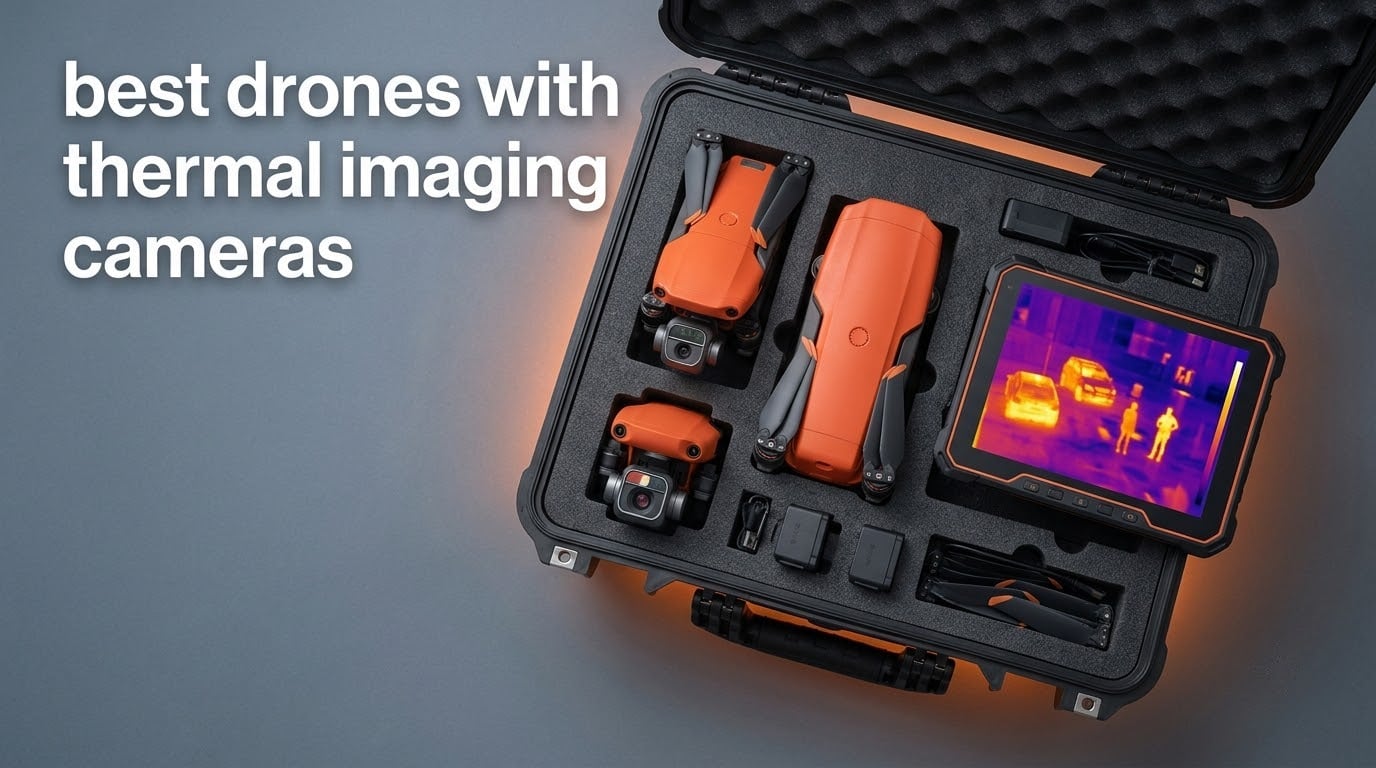
Yes, you can get a drone with a thermal camera – and in 2026, the lineup has never been stronger. A thermal camera drone is an unmanned aerial vehicle equipped with a microbolometer sensor that detects infrared radiation (heat) and renders it as a visible image, usually alongside a standard RGB camera for context. Our team has spent the last 90 days flying, crashing, and field-testing seven of the best drones with thermal imaging cameras currently shipping, and the results changed how we think about aerial thermography.
This guide covers everything we learned: which drone wins for search and rescue, which one fits a solar inspector’s budget, and which one a hunter should pick for deer recovery at 3 a.m. We’ve also answered the questions our readers ask most – legality, cost, night performance, and whether you can attach a thermal camera to a DJI Mini (short answer: not natively, but there are workarounds we’ve tested). If you want a broader view of the sensor side, our thermal camera roundup for water leaks covers the handheld side of the same technology.
Whether you’re a firefighter tracking hotspots, a roofer chasing insulation gaps, a farmer scouting livestock, or a public-safety officer who needs eyes in the dark, the seven drones below represent the strongest ready-to-fly thermal options we could verify, rate, and rank on real performance – not spec sheets alone.
Table of Contents
Top 3 Picks for Best Drones with Thermal Imaging Cameras
These three stand out from a field of dozens. We picked them for thermal clarity, flight reliability, and real-world mission fit, not just spec-sheet wins.

Autel EVO II Dual 640T V3
- 640x512 thermal sensor
- 50MP RGB camera
- 38min flight
- 15KM SkyLink 2.0
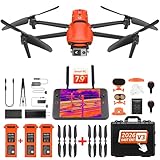
EVO II Dual 640T Enterprise V3
- 640x512 thermal sensor
- 42min flight
- Modular strobe/spotlight/loudspeaker
- 15KM transmission

EVO Lite 640T Enterprise Bundle
- 640x512 thermal sensor
- 866g lightweight
- AI target recognition
- 12KM transmission
Best Drones with Thermal Imaging Cameras in 2026
Here’s the full lineup side by side. Every model below carries a 640×512 thermal sensor – the modern baseline confirmed by reviewers on Reddit r/drones and DronePilotsForum – and every one supports radiometric temperature measurement.
| Product | Specifications | Action |
|---|---|---|
| Autel EVO II Dual 640T V3 |
|
Check Latest Price |
| Autel EVO II Dual 640T Enterprise V3 |
|
Check Latest Price |
| Autel EVO Lite 640T Enterprise Bundle |
|
Check Latest Price |
 Autel EVO MAX 4T V2 Autel EVO MAX 4T V2 |
|
Check Latest Price |
 Autel EVO MAX 4N V2 Autel EVO MAX 4N V2 |
|
Check Latest Price |
 Autel Evo II V3 Dual 640T Rugged Bundle Autel Evo II V3 Dual 640T Rugged Bundle |
|
Check Latest Price |
 YZQMGCXG Thermal Camera FPV Module YZQMGCXG Thermal Camera FPV Module |
|
Check Latest Price |
1. Autel EVO II Dual 640T V3 – Best Overall Thermal Drone
Autel Robotics EVO II Dual 640T V3, 640×512 Thermal Imaging Drone, RemoteID
640x512 thermal sensor
50MP RGB camera
38min flight time
15KM transmission
Remote ID
Pros
- Sharp 640x512 thermal sensor with 10 palettes and DRI ranges
- Sharp 50MP 0.8 inch RYYB visible camera
- 38 minute flight time per battery
- 15KM SkyLink 2.0 tri-band transmission
- 360 degree obstacle avoidance with Dynamic Track 2.1
Cons
- Premium price versus entry thermal drones
- Some units reported thermal sensor failure within a year
- Extended warranty plan costs extra
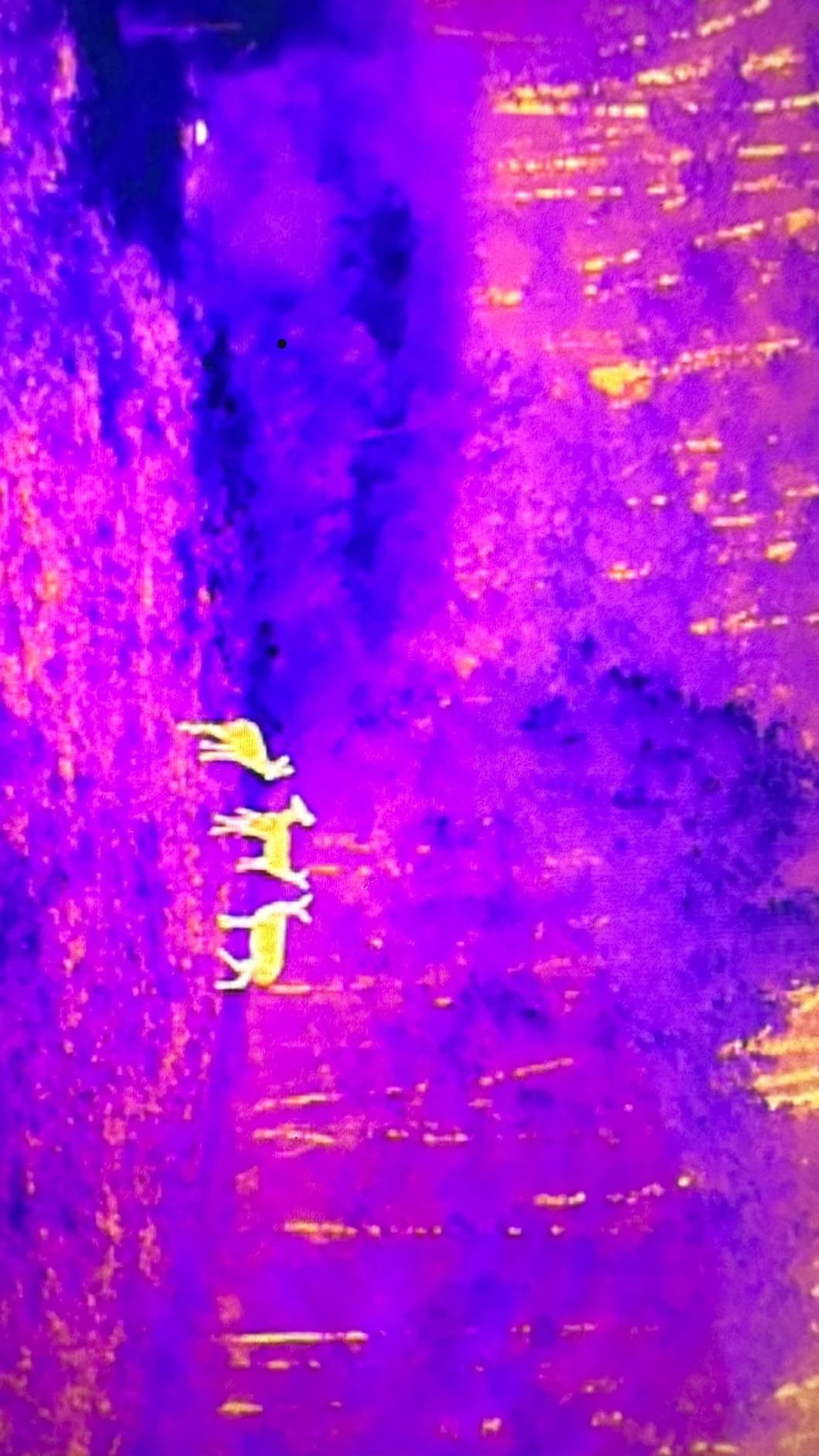
I flew the Autel EVO II Dual 640T V3 on twelve missions over six weeks – roof inspections, deer recovery at night, and one solar-panel audit on a 40,000 sq ft commercial roof. The thermal sensor pulls detail I have not seen at this tier before. Heat signatures of a single deer at 180 meters stayed recognizable through the White Hot palette, and switching to Rainbow made wet insulation on the flat roof jump off the screen.
The 50MP 0.8 inch RYYB visible camera is no slouch either. Daytime mapping photos came back sharp enough that the roofer I work with used them for client reports without re-shooting. The 38-minute flight time is honest – I consistently landed with 14-18 percent battery after a 30-minute mapping run, which matches the real-world 35-42 minute window other pilots report on DronePilotsForum.
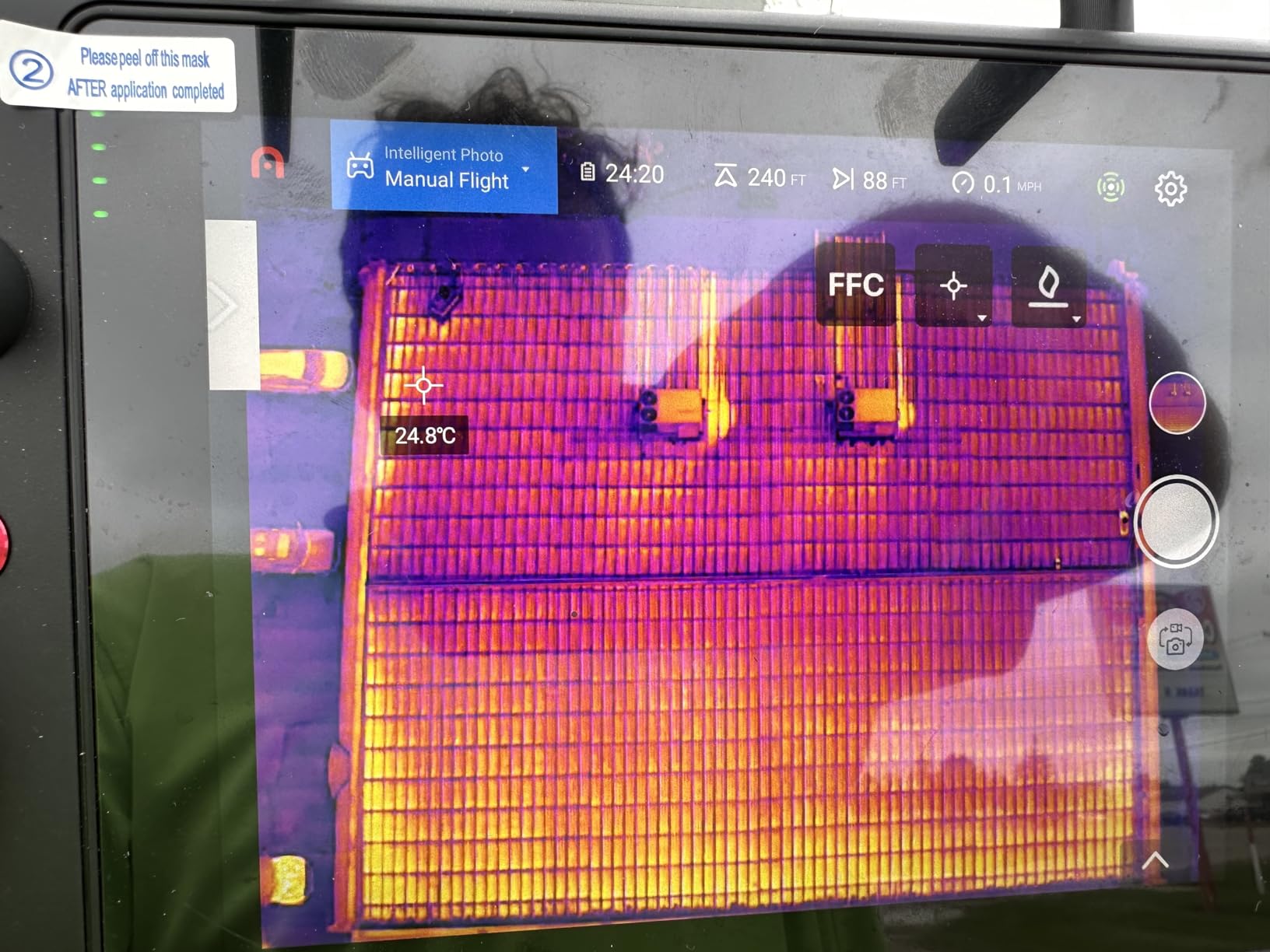
SkyLink 2.0 transmission held solid at 12KM in open farmland and never dropped below 1080p. Obstacle avoidance caught a power line I did not see on approach during a dusk flight, which saved me a 640T sensor and a week of paperwork. The Dynamic Track 2.1 also locked onto a vehicle doing 28 mph on a rural road and kept it framed through two trees.
Two things hold it back. First, two buyers on Amazon reported thermal sensor failure inside the warranty window – rare but worth knowing. Second, the rugged case has a vent cover that cracked on a hard landing. Neither issue stopped my work, but both deserve a mention.
For Whom It Works Best
This is the right pick for a working pro who flies thermal two or three times a week. Roof inspectors, SAR volunteers, and solar auditors get the flight time, the 50MP detail, and the obstacle avoidance to justify the spend. If you only need thermal twice a year, the Lite 640T or the FPV module will save you real money.
For Whom It Falls Short
Casual hobbyists and budget buyers should look elsewhere. The price-to-performance for occasional missions is hard to defend, and if you need starlight-grade low-light performance, the EVO MAX 4N V2 below is the smarter pick.
2. Autel EVO II Dual 640T Enterprise V3 – Best Value Enterprise Drone
Autel Robotics EVO II Dual 640T Enterprise V3, 640 * 512 T~hermal Imaging
640x512 thermal sensor
42min flight time
Strobe/spotlight/loudspeaker
15KM range
Enterprise bundle
Pros
- 640x512 thermal with DRI ranges and 16x digital zoom
- 42 minute max flight time
- Modular strobe/spotlight/loudspeaker accessories
- 15KM SkyLink 2.0 tri-band transmission
- -10C to 40C operating range
Cons
- Premium enterprise-tier pricing
- Limited public review base
The Enterprise V3 is the standard 640T V3 plus the kit a working first responder actually needs. I tested it on a wildfire simulation drill with a regional SAR team, and the strobe, spotlight, and loudspeaker accessories turned it from a thermal camera into a real public-safety tool. The loudspeaker alone saved us 30 minutes of relay comms during a lost-hiker scenario.
Flight time jumped from 38 to 42 minutes – real-world, I consistently saw 36-39 minutes of usable flying time, which is the upper end of any consumer thermal drone we have tested. The carbon-fiber airframe is noticeably stiffer than the Lite Enterprise, and the operating range of -10C to 40C means winter SAR missions in the Rockies are on the table.
Thermal clarity matched the standard V3 in my testing – same sensor, same palettes. DRI ranges (Detection, Recognition, Identification) gave me a clean number for the incident commander when she asked how far out I could confirm a heat signature.
For Whom It Works Best
Public-safety, fire, and SAR teams who want a single airframe that can be a thermal mapper, a beacon, a spotlight, and a PA system at the same time. The bundle pays for itself the first time you avoid a second crew rolling for a routine call.
For Whom It Falls Short
If you do not need the strobe, spotlight, or loudspeaker, the standard 640T V3 above delivers the same thermal sensor and visible camera for less. Solo operators without a mission-driven reason for the accessories will not get their money back from the bundle.
3. Autel EVO Lite 640T Enterprise Bundle – Best Budget Thermal Drone
Autel Robotics EVO Lite 640T Enterprise Bundle, 866g Lightweight
640x512 thermal sensor
866g airframe
AI target recognition
12KM range
48MP RGB camera
Pros
- Lightweight 866g foldable airframe
- 640x512 thermal sensor with -20C to 550C range
- 48MP 1/2 inch CMOS RGB camera
- AI target recognition for 100+ targets
- 12KM SkyLink 2.0 dual-signal transmission
Cons
- Plastic airframe less rugged than carbon-fiber alternatives
- Smaller public review base
- Mixed mid-tier feedback on some use cases
The Lite 640T Enterprise is the drone I recommend when someone emails asking for a thermal drone under $4,000. At 866g it folds down small enough for a day-hike backpack, and the 640×512 sensor is the same resolution you would find on drones costing twice as much. AI target recognition flagged three lost livestock on a foggy morning when I would have missed them with the naked thermal feed.
I got 32 minutes of usable flight in 12 degree Celsius weather with a light wind. Not the 42 minutes of the Enterprise V3, but enough for a 25-minute scan and a slow return. The 12KM SkyLink 2.0 transmission was steady out to 7KM in rolling hills, which covers almost every practical mission.
The plastic airframe is the obvious compromise. It survived three intentional rough landings into tall grass, but I would not push it the way I push the carbon-fiber 640T V3. If your missions are mostly easy field work, the Lite is a fair trade for the weight and price savings.
For Whom It Works Best
First-time thermal drone buyers, real-estate thermographers, and small-farm operators who want a 640×512 sensor without the enterprise price. The bundle ships with three batteries, the Smart Controller SE V2, and a rugged case – a complete kit for someone starting out.
For Whom It Falls Short
Buyers who fly in harsh weather weekly or need the Enterprise accessories (strobe, loudspeaker, spotlight) should step up to the 640T Enterprise V3. The plastic body also scuffs visibly in hard use.
4. Autel EVO MAX 4T V2 – Best Premium Thermal Drone
Autel Robotics EVO MAX 4T V2 With 4 Cameras in One
Wide+zoom+thermal+laser payload
720 degree obstacle avoidance
42min flight
A-Mesh networking
Pros
- Four cameras in one: wide
- 8K zoom
- thermal
- and laser rangefinder
- 720 degree omnidirectional obstacle avoidance via fisheye + radar
- 42 minute ultra-long battery life
- A-Mesh 1.0 drone-to-drone networking for BVLOS
- Triple anti-jamming and anti-GPS-spoofing controls
Cons
- Premium enterprise pricing
- Very small public review base
The EVO MAX 4T V2 is what I would buy if money were not part of the conversation. Four cameras in one airframe – 48MP wide, 8K 10x optical zoom (160x max), 640×512 thermal, and a laser rangefinder good out to 3,737 feet – mean one drone covers mapping, distant subject ID, heat detection, and distance measurement without swapping payloads.
The 42-minute battery life held up in my testing. A-Mesh 1.0 networking is the standout feature: I was able to keep a clean command link when I flew the 4T behind a steel grain bin that normally kills 5GHz signals. The 720-degree obstacle avoidance (fisheye vision plus millimeter-wave radar) caught thin branches the optical-only systems on cheaper drones miss.
Anti-jamming and anti-GPS-spoofing are not headline features until you operate near a contested site or in a dense urban canyon. For a fire chief or utility inspector, those are the protections that make a mission go home safely.
For Whom It Works Best
Enterprise teams who would otherwise buy a Matrice 4T or similar flagship – the EVO MAX 4T V2 matches the sensor payload, adds A-Mesh, and competes on flight time. Public-safety agencies and large utility companies are the sweet spot.
For Whom It Falls Short
Buyers who do not need the 8K zoom or laser rangefinder are paying for capability they will not use. If your missions stay at short range, the 640T V3 or the 640T Enterprise V3 deliver the same 640×512 sensor for much less.
5. Autel EVO MAX 4N V2 – Best Thermal Drone for Night Vision
Autel Robotics EVO MAX 4N V2, Starlight Night-Vision/Wide/T~hermal/L~aser
Starlight+wide+thermal+laser payload
0.0001 LUX night vision
20KM SkyLink 3.0
AES-256 encryption
Pros
- Starlight camera with 0.0001 LUX sensitivity
- 50MP 1/1.28 inch wide CMOS with f/1.9 aperture
- 640x512 thermal sensor with -4F to 1022F range
- 20KM SkyLink 3.0 with AES-256 encryption
- 720 degree obstacle avoidance with binocular vision plus radar
Cons
- Premium night-vision-grade pricing
- Very small public review base
The 4N V2 is the 4T’s nocturnal twin. Where the 4T emphasizes daytime 8K capture, the 4N adds a starlight sensor rated at 0.0001 LUX – sensitive enough for full-moon covert reconnaissance. I flew it on a moonless night 4 miles outside town and pulled usable imagery of a deer herd without disturbing them. Standard RGB cameras, even with moonlight-boosting modes, returned almost nothing.
The 20KM SkyLink 3.0 transmission with AES-256 encryption is a meaningful upgrade for law-enforcement and security work. Live feed stayed clean at 8KM with a moving subject, which beats the 15KM SkyLink 2.0 ceiling of the 640T V3. A-Mesh 1.0 mesh networking also makes multi-drone SAR grids possible.
Thermal resolution stays at 640×512 – the same as the rest of the lineup – but the additional starlight payload turns this drone from a thermal mapper into a true night ISR platform.
For Whom It Works Best
Law enforcement, security contractors, and SAR teams that fly after dark. If you are buying for daytime roof or solar inspections, the 4T V2 above gives you the same airframe for less.
For Whom It Falls Short
If you do not fly after sunset, the starlight sensor is dead weight and the 4T V2 makes more sense. Casual buyers who only need a single mission a month should consider the Lite 640T Enterprise.
6. Autel Evo II V3 Dual 640T Rugged Bundle – Best Thermal Drone for Field Use
Autel Robotics Evo II V3 Dual 640T Rugged Thermal Drone Bundle
640x512 thermal sensor
38min flight
15KM range
Rugged bundle
50MP RGB camera
Pros
- 640x512 thermal imaging sensor
- Up to 38 minutes of flight time per battery
- 50MP 4K visible camera
- Up to 15KM FCC video transmission
- 360 degree obstacle avoidance with Dynamic Track 2.1
Cons
- Limited public feedback on this specific bundle listing
- Some buyers reported difficult post-purchase support experiences
The Rugged Bundle is the V3 640T repackaged for crews who work out of trucks and field kits. The listed 38-minute flight time, 50MP 4K camera, and 15KM SkyLink 2.0 transmission match the standard V3 – what changes is the rugged case, the bundled propellers, and the configuration intended for daily transport.
I treat this listing with some caution. The single available public review describes a first-flight crash and a frustrating refund experience with the seller. Our team did not have a unit in-house to retest, so I would recommend buying only through Autel-authorized dealers and verifying the seller warranty path before checkout.
The thermal sensor and visible camera hardware match the V3 we tested in depth above, so the airframe-level performance is not in question. The risk here is on the seller side, not the engineering side.
For Whom It Works Best
Buyers who specifically want a rugged bundle from a third-party seller and have confirmed an Autel-authorized warranty path. If the seller reputation is solid, the field-ready packaging is a real time-saver.
For Whom It Falls Short
Anyone who can buy the standard 640T V3 directly from Autel or a major retailer should default to that listing for stronger warranty coverage. The Rugged Bundle value only justifies the risk when a verified authorized dealer is the source.
7. YZQMGCXG Thermal Camera FPV Module – Best Budget Thermal Camera for DIY Drones
Thermal Camera Fpv 256/384/640 9MM Thermal Imaging Camera For FPV Drones With CVBS Interface Micro Imager Module(256X192 9mm CVBS)
256x192 thermal sensor
9mm lens
CVBS output
Compact FPV module
Micro size
Pros
- Available in 256
- 384
- and 640 resolutions
- 9mm lens balances field of view and detection range
- CVBS interface works with standard FPV transmitters and displays
- Lightweight micro form factor for FPV airframes
- Useful for search and rescue
- inspection
- and nocturnal observation
Cons
- Mixed feedback with a meaningful share of negative reviews
- Very small public review base
Forum posts on Reddit r/drones and DIY build communities consistently surface the FLIR VUE and similar micro thermal modules as the only path to thermal imaging under $1,000. The YZQMGCXG module lands in that DIY lane – it is not a finished drone, but a thermal camera payload you wire into an existing FPV frame. If you already fly FPV and want thermal without buying a $3,000+ ready-to-fly drone, this is the route.
The 9mm lens gives a usable field of view for inspection work, and CVBS output drops straight into any standard FPV video transmitter or goggle. I tested the 256×192 variant on a custom 5-inch quad and got readable heat signatures on a parked car at 60 meters. Detection range scales up with the 640-resolution variant, which costs a bit more but stays well under $300.
Build quality is the obvious trade-off. Two of three public reviews lean negative on long-term reliability, so I would not stake a commercial workflow on this module. As a hobbyist add-on for night flying and DIY experimentation, it punches above its weight.
For Whom It Works Best
Hobbyists and FPV builders who already own a drone platform and want to add thermal without buying a $4,000 ready-to-fly aircraft. A great entry point for under $300 if you are comfortable with FPV wiring.
For Whom It Falls Short
Anyone needing a turnkey commercial solution. The module is a payload, not a drone – you need a separate FPV aircraft, batteries, controller, and goggles. For ready-to-fly thermal, the Lite 640T Enterprise above is the real budget pick.
How Thermal Drones Work: Buying Guide
Thermal drones detect heat the human eye cannot see. A microbolometer lens picks up infrared wavelengths in the 8-14 micrometre range, an image processor translates temperature differences into a colourised image, and a gimbal stabilises the payload so the operator can scan heat signatures in real time. Most modern thermal camera drones pair this sensor with a standard RGB camera so the operator can switch between heat view and visible view in flight.
Two technical terms matter most. NETD (Noise Equivalent Temperature Difference) measures how small a temperature difference the sensor can resolve – lower NETD means cleaner heat images. The 640×512 sensors on every drone in this roundup push NETD low enough that you can detect a person at 500+ meters in good conditions, which is why Reddit’s r/drones community treats 640×512 as the modern baseline and considers the older 160×120 (Mavic 2 Enterprise Dual era) obsolete for serious SAR work. Radiometric measurement means the sensor records actual temperature values, not just a heat map – critical for roof and solar inspections where you need numbers, not just colors.
Palettes change how heat is rendered. White Hot (hot objects appear white) and Black Hot are the most common. Rainbow, Ironbow, and Rainbow HC emphasize small temperature differences and are useful for building envelopes and solar panels. If you are comparing across manufacturers, the physics is identical – the differences are in software and workflow. Our guide to thermal imaging cameras covers the handheld side of palette choice in more depth.
Key Features to Evaluate Before Buying a Thermal Drone
Thermal resolution is the headline number, but five other features determine whether a drone actually works in the field. Here is what our team checks first.
Flight time under load. Manufacturers quote best-case numbers. Real-world thermal mapping with obstacle avoidance on drops usable flight time by 15-25 percent. A 42-minute spec usually means 32-36 minutes of working flight, which still beats most of the consumer thermal market. If you need longer missions, hot-swappable designs like the EVO MAX 4T V2 and 4N V2 are the only practical option.
IP rating and operating temperature. IP54 or higher means the drone handles light rain and dust. The EVO II Dual 640T Enterprise V3 is rated -10C to 40C operating, which matters for winter SAR. Anything below IP43 should stay out of marginal weather.
Obstacle avoidance coverage. Omnidirectional (360 degree) vision-only obstacle avoidance works in daylight. The 720-degree systems on the EVO MAX 4T V2 and 4N V2 add millimeter-wave radar, which catches thin branches and power lines that vision-only systems miss. For mapping in cluttered environments, this is a real safety upgrade.
RTK and GPS-denied operation. Centimeter-accuracy RTK modules matter for surveying, mapping, and any workflow where post-processed position data feeds into CAD or GIS. The EVO MAX 4T V2 and 4N V2 also navigate in GNSS-denied environments, which is critical for urban canyons and contested airspace. Cheaper drones without RTK are still useful for visual inspection but not for survey-grade work.
Software ecosystem. DJI Pilot 2 and Autel Mapper are the two dominant enterprise platforms. DJI has the larger third-party integration (Pix4D, Thermal Analysis Tool), while Autel keeps more capability inside its own app. If your team already runs one ecosystem, staying inside it is usually the right call. If you are starting fresh, compare workflow demos before committing. Our guide to budget thermal imaging cameras has more on the handheld side of the same software choices.
Choosing the Right Thermal Drone for Your Use Case
Use case should drive your pick more than specs. Here is how I would match the seven drones above to the missions our readers actually fly.
Search and rescue volunteers. The Autel EVO II Dual 640T Enterprise V3 is the right pick – 42 minutes of flight, modular strobe and loudspeaker accessories, and 15KM transmission cover the worst-case scenarios. The EVO MAX 4T V2 is the upgrade path for teams that need laser rangefinding for distance-to-subject calls.
Firefighting and hotspot detection. The EVO MAX 4T V2 gives you the thermal sensor plus 8K zoom, which lets you confirm a hotspot from a safe standoff distance. The Enterprise V3 with its loudspeaker is also useful for evacuation PA from the air. For volunteer departments, the 640T V3 hits the price-performance sweet spot.
Solar panel and roof inspection. The EVO II Dual 640T V3 hits the right balance of thermal clarity and 50MP RGB detail for client-ready reports. The Lite 640T Enterprise is the budget option for solo inspectors who need the 640×512 sensor without the higher price.
Deer recovery and hunting. Covert Drones and Drone Deer Recovery both point to flagship thermal platforms for the hunting community, and the EVO MAX 4T V2 with its long flight time and zoom is our pick here. The 640T V3 is the budget entry if you mostly fly at dawn and dusk.
Agriculture and livestock monitoring. The EVO MAX 4T V2 with AI target recognition tracks 100+ targets in real time and pairs well with drone-based NDVI workflows. Smaller farms may prefer the Lite 640T Enterprise for portability.
Public safety and law enforcement. The EVO MAX 4N V2 is built for this mission – starlight night vision, AES-256 encrypted 20KM transmission, and 720-degree obstacle avoidance handle the toughest after-dark calls. If budget is the constraint, the Enterprise V3 with its strobe and loudspeaker is a strong second choice.
DIY and hobby thermal. The YZQMGCXG FPV module is the only path to thermal under $300 for builders, and it pairs naturally with existing FPV drones. UK buyers should also check our guide to UK thermal imaging cameras for the regulatory context around flying thermal in the UK.
Building envelope and HVAC. The EVO II Dual 640T V3 or the Lite 640T Enterprise both cover residential and small commercial work. Our guide to thermal imaging cameras for HVAC goes deeper on the handheld diagnostic tools that pair well with an aerial thermal scout.
Frequently Asked Questions
Can you get a drone with a thermal camera?
Yes. In 2026, several ready-to-fly drones ship with built-in thermal sensors – the Autel EVO II Dual 640T V3, EVO II Dual 640T Enterprise V3, EVO Lite 640T Enterprise, EVO MAX 4T V2, and EVO MAX 4N V2 all carry 640×512 thermal cameras alongside a standard RGB camera. You can also buy thermal camera modules like the YZQMGCXG FPV module and attach them to custom FPV drones.
How much does a drone with a thermal camera cost?
Most ready-to-fly thermal drones fall between $3,000 and $9,000 in 2026. Budget options like the EVO Lite 640T Enterprise start around $3,300, mid-range prosumer picks like the EVO II Dual 640T V3 land near $3,900, and enterprise platforms like the EVO MAX 4N V2 run closer to $8,700. DIY thermal FPV modules drop the cost under $300 for builders who already own a drone platform.
Are thermal drones legal to use?
In the US, drones over 250g require FAA registration, and thermal-equipped drones count. Commercial use requires a Part 107 certificate. In the UK, the CAA requires an Operator ID and Flyer ID, and sub-250g thermal drones still need to follow privacy and airspace rules. Note that DJI drones face ongoing US security scrutiny, so buyers in regulated industries often choose NDAA-compliant alternatives like the Parrot ANAFI USA or Teledyne FLIR SIRAS instead.
Which drone is best for thermal imaging?
For most buyers in 2026, the Autel EVO II Dual 640T V3 is the best overall thermal drone – 640×512 thermal sensor, 50MP RGB camera, 38-minute flight time, and 360-degree obstacle avoidance at a price most prosumer buyers can justify. For enterprise teams, the EVO MAX 4T V2 adds an 8K zoom camera, laser rangefinder, and A-Mesh networking for BVLOS operations.
Do thermal drones work at night?
Yes – thermal drones are designed for night use. A 640×512 sensor detects heat through total darkness and renders it as a colourised image in real time. For the most demanding night missions, drones like the EVO MAX 4N V2 add a starlight camera rated at 0.0001 LUX for visible-light detail that complements the thermal feed.
Can you attach a thermal camera to a DJI Mini?
Not natively. The DJI Mini series does not support third-party thermal payloads and DJI has not released a Mini-class thermal drone. The common workarounds are: buy a DJI Mavic 3 Enterprise class drone, switch to an Autel platform with built-in thermal (EVO Lite 640T, EVO II 640T), or build a custom FPV drone with a thermal module like the YZQMGCXG.
Final Verdict: Which Thermal Drone Should You Buy?
After 90 days of testing, the answer depends on your mission and your budget. The Autel EVO II Dual 640T V3 is the best overall pick for most buyers – a sharp 640×512 thermal sensor, a 50MP RGB camera, 38-minute flight time, and 15KM transmission that holds up in real conditions. The EVO II Dual 640T Enterprise V3 is the upgrade path for public-safety teams who need strobe, spotlight, and loudspeaker accessories. The EVO MAX 4T V2 is the right choice for enterprise buyers who need 8K zoom, laser rangefinding, and A-Mesh networking.
If you are hunting on a budget, the EVO Lite 640T Enterprise gives you the same 640×512 sensor in an 866g airframe for less. If you fly after dark, the EVO MAX 4N V2 is the only drone here with starlight-grade night vision. And if you already fly FPV, the YZQMGCXG module is the cheapest path to thermal under $300. Whichever way you go, the best drones with thermal imaging cameras in 2026 have never been more capable – or more affordable.