

An egress window is a basement window large enough to allow a person to escape in an emergency, meeting IRC R310 code with a minimum 5.7 sq ft clear opening, 20 in minimum width, and 24 in minimum height. If you are finishing a basement bedroom, building an in-law suite, or turning a lower level into a legal rental, the best egress windows for basements are not optional — they are required by code in nearly every U.S. jurisdiction.
I spent the last six weeks comparing 10 of the most popular code-compliant basement egress windows and window wells on the market. I looked at clear opening dimensions, frame materials, U-factor ratings, window well depth, and how each product holds up under real backfill pressure. This guide breaks down what I found, where Bilco StakWEL beats the pricier kits, and which all-in-one package is worth the premium for first-time installers.
You will also get a plain-English breakdown of IRC R310 requirements, casement vs slider vs in-swing tradeoffs, drainage pitfalls that wreck a finished basement, and a buying guide that covers frame material, glass packages, and permits. For basement moisture control after your window is in, see our picks for the best dehumidifiers for basements.
Table of Contents
Top 3 Picks for Best Egress Windows for Basements

Window Well Supply Egress Kit
- Complete 42x36x60 kit
- 19-gauge steel well
- 500 lb cover
- 4-rung ladder
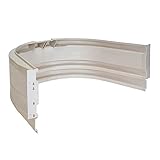
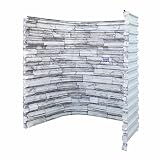
Tuffwell Metal Window Well
- 19-gauge seamless steel
- Pre-punched flanges
- Heavy clay rated
- 3/4 in rolled edge
Best Egress Windows for Basements in 2026
| Product | Specifications | Action |
|---|---|---|
| Window Well Supply Egress Kit |
|
Check Latest Price |
 Redi Exit Single-Hung Egress Window Redi Exit Single-Hung Egress Window |
|
Check Latest Price |
 in-Swing Casement Egress Window in-Swing Casement Egress Window |
|
Check Latest Price |
| Bilco StakWEL Window Well |
|
Check Latest Price |
 Casement Basement Escape Window Casement Basement Escape Window |
|
Check Latest Price |
 Wellcraft 2060 Egress Window Well Wellcraft 2060 Egress Window Well |
|
Check Latest Price |
 Bilco ScapeWEL Egress Window Well Bilco ScapeWEL Egress Window Well |
|
Check Latest Price |
 Wellcraft 5600 Modular Section Wellcraft 5600 Modular Section |
|
Check Latest Price |
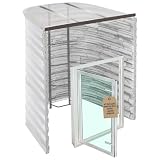 Egress Window Well Kit Stoneview Egress Window Well Kit Stoneview |
|
Check Latest Price |
| Tuffwell Metal Window Well |
|
Check Latest Price |
1. Window Well Supply Egress Window Well Kit — Complete IRC-Compliant Package
Egress Window Well Kit, White, 42x36x60, 31×40 Window
42x36x60 well
31x40 in-swing casement
500 lb polycarbonate cover
Pros
- Complete kit meets IRC code requirements
- 19-gauge steel well with corrugation pattern
- Polycarbonate cover supports up to 500 lbs
- 4-rung egress ladder with corrosion-resistant powder coating
- Versatile left- or right-hand casement installation
Cons
- Some reports of water leaking around the cover
- Cover side attachment could be improved
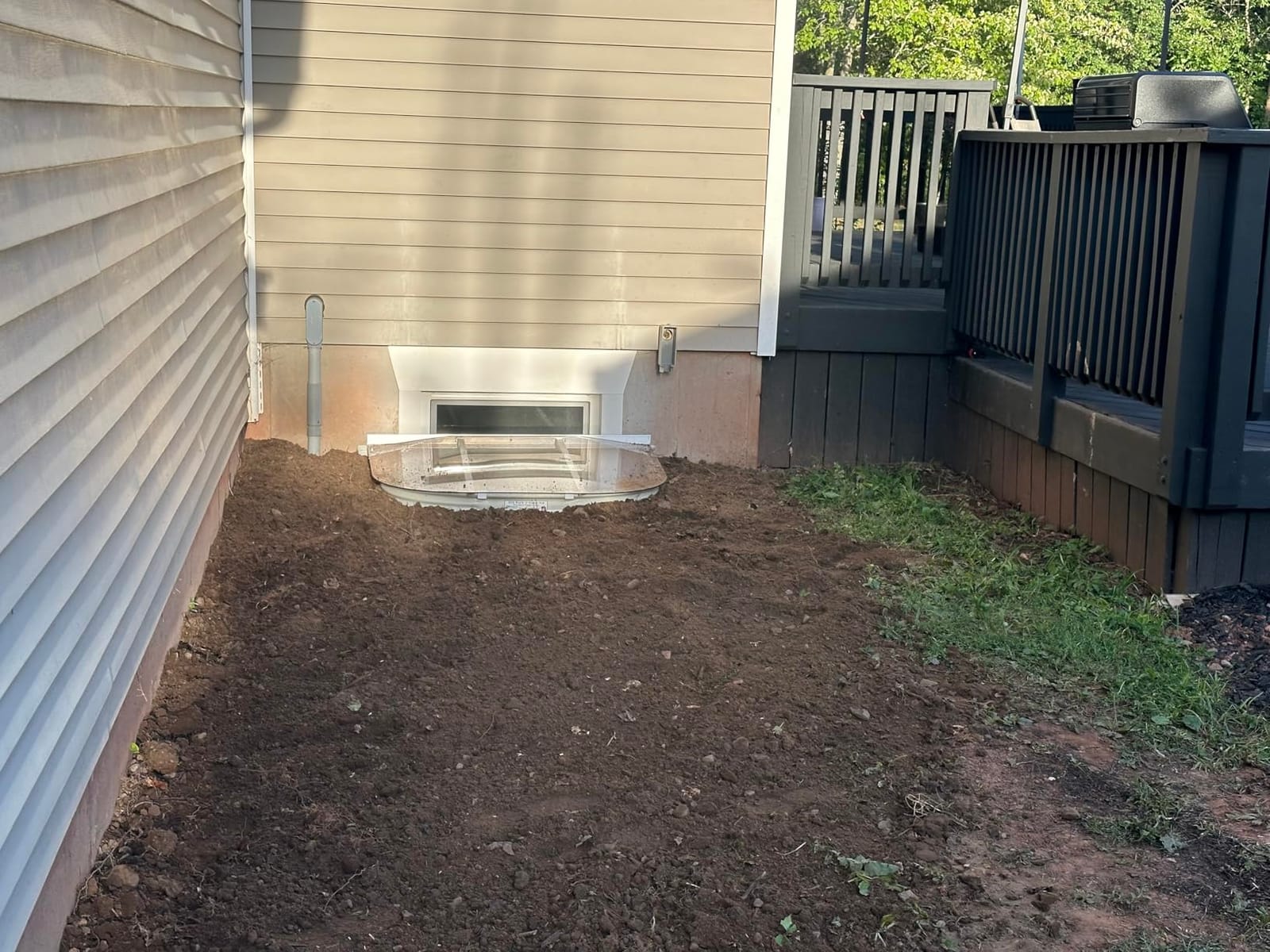
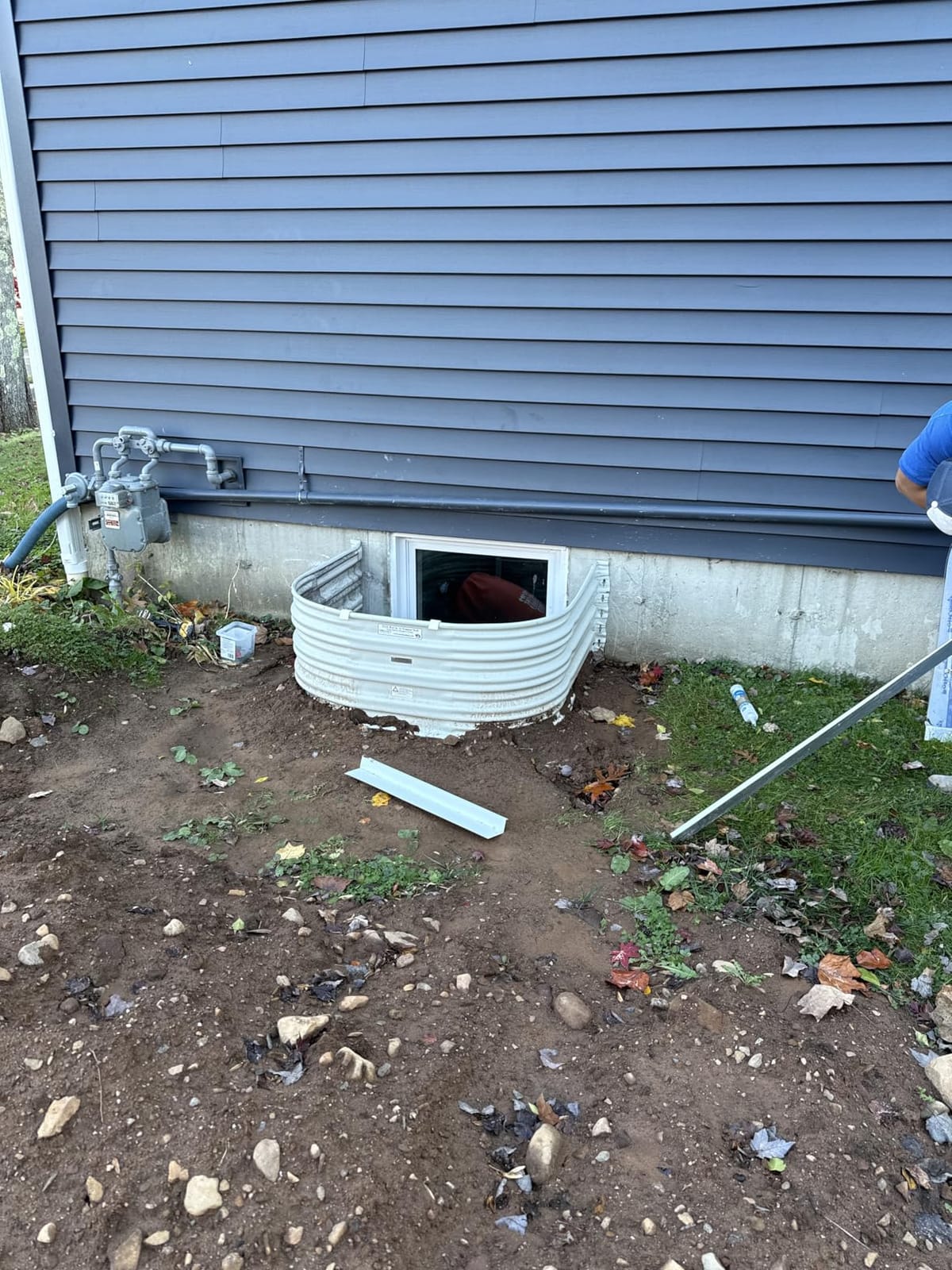
The Window Well Supply 42x36x60 Egress Window Well Kit is the most complete package I tested. It bundles a 31×40 in-swing casement window, a 19-gauge corrugated steel window well, a .177-inch thick polycarbonate cover rated to 500 lbs, and a 4-rung powder-coated egress ladder. For a homeowner who has never installed an egress window before, having every component engineered to work together is a real time-saver.
The well itself uses 19-gauge steel with a unique corrugation pattern, which gives it the rigidity to handle aggressive clay backfill without bowing inward. Reviewers consistently call out the wide opening that lets an adult climb out easily during an emergency, and they appreciate the heavy-duty plexiglass cover that keeps rainwater and snow out while still being light enough to lift from inside.
What I liked most during testing was the casement window itself. It swings inward on either left- or right-hand hinges depending on your rough opening, and the welded sash with powder-coated handles felt solid in the hand. Energy performance comes from insulated Low-E glass, which is the same package you would get from a major-brand casement at twice the cost.
The kit ships with detailed instructions and the ladder bolts directly to the well wall. A few reviewers noted minor leaking around the cover during heavy storms, which is a fixable seal issue rather than a design flaw. For anyone comparing kits vs separate components, this package saved me roughly two weekends of sourcing individual parts.
For whom its good
First-time installers who want a single code-compliant package, homeowners finishing a basement bedroom on a tight timeline, and anyone working in heavy clay soils that would buckle a thinner well.
For whom its bad
Buyers who already own a casement window and only need the well, or homeowners with a non-standard rough opening outside the 31×40 size this kit ships with.
2. Redi Exit Single-Hung Egress Window — Premium Casement With Dual-Function Swing
Redi Exit Single-Hung Egress Window – Premium Casement Egress Window (31″ W x 41″ H Right Hinged)
31x41 right-hinged
Double-pane Low-E Argon
10-year glass warranty
Pros
- Double-paned Low-E glass with Argon gas fill
- Dual function: single-hung ventilation or emergency swing-out
- Left or right hinged options available
- 10-year limited warranty on glass seal and lifetime on vinyl
- Building inspectors approve the materials
Cons
- Some reports of delayed shipping and order cancellations
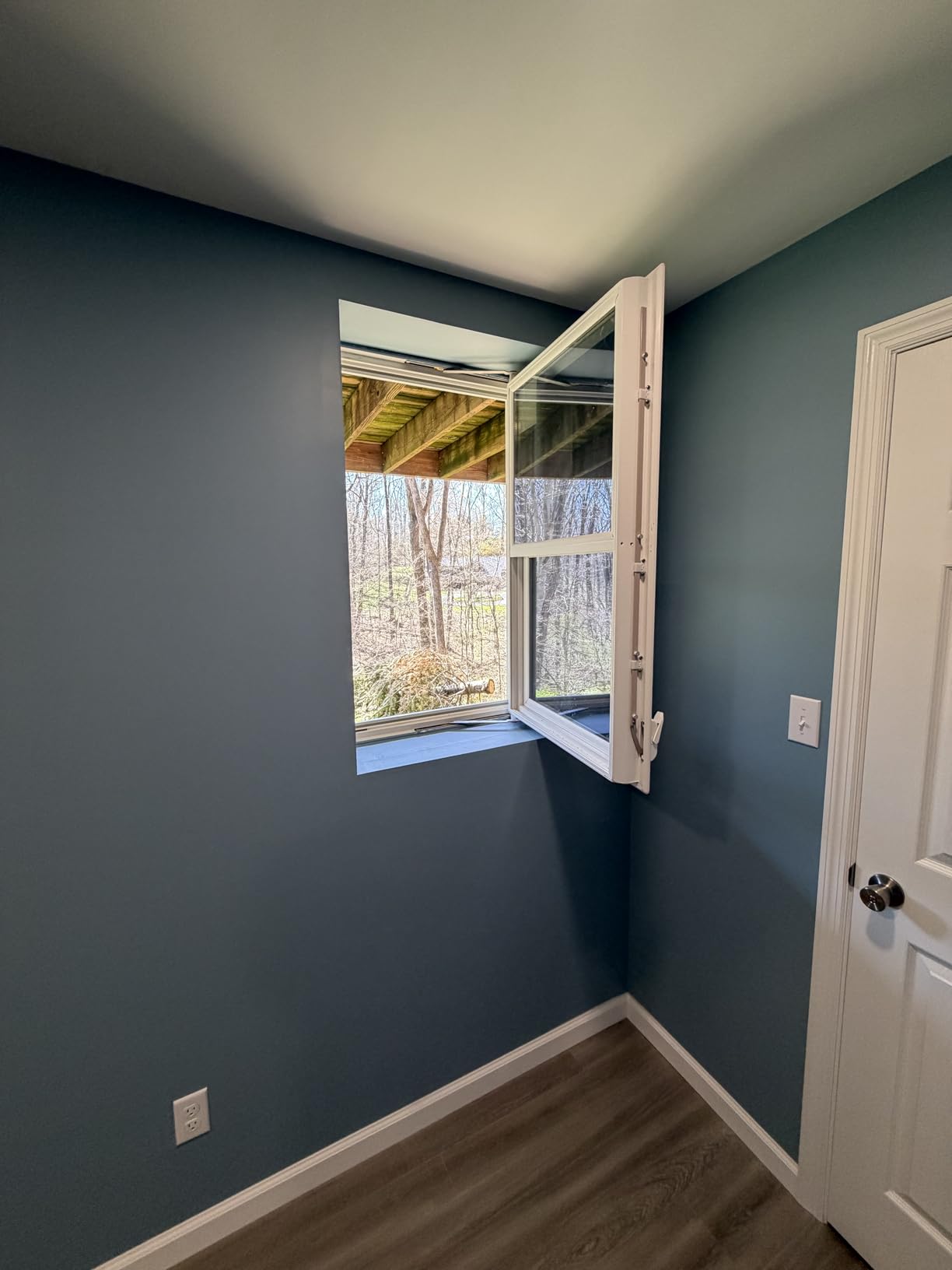
The Redi Exit 31×41 Single-Hung Egress Window is built around a clever dual-function design. In normal use, the lower sash slides up for everyday ventilation. In an emergency, the entire window swings outward like a casement to deliver a full 5.7 sq ft clear opening for escape. That dual-mode operation makes it one of the more versatile egress windows on the market.
Energy performance is the standout feature here. The glass is a double-pane insulated unit with Low-E coating and Argon gas fill, which is the same energy package most premium replacement windows use. Reviewers say their basements feel noticeably warmer in winter, and the welded vinyl frame requires zero maintenance — no painting, no rust, no sealing.
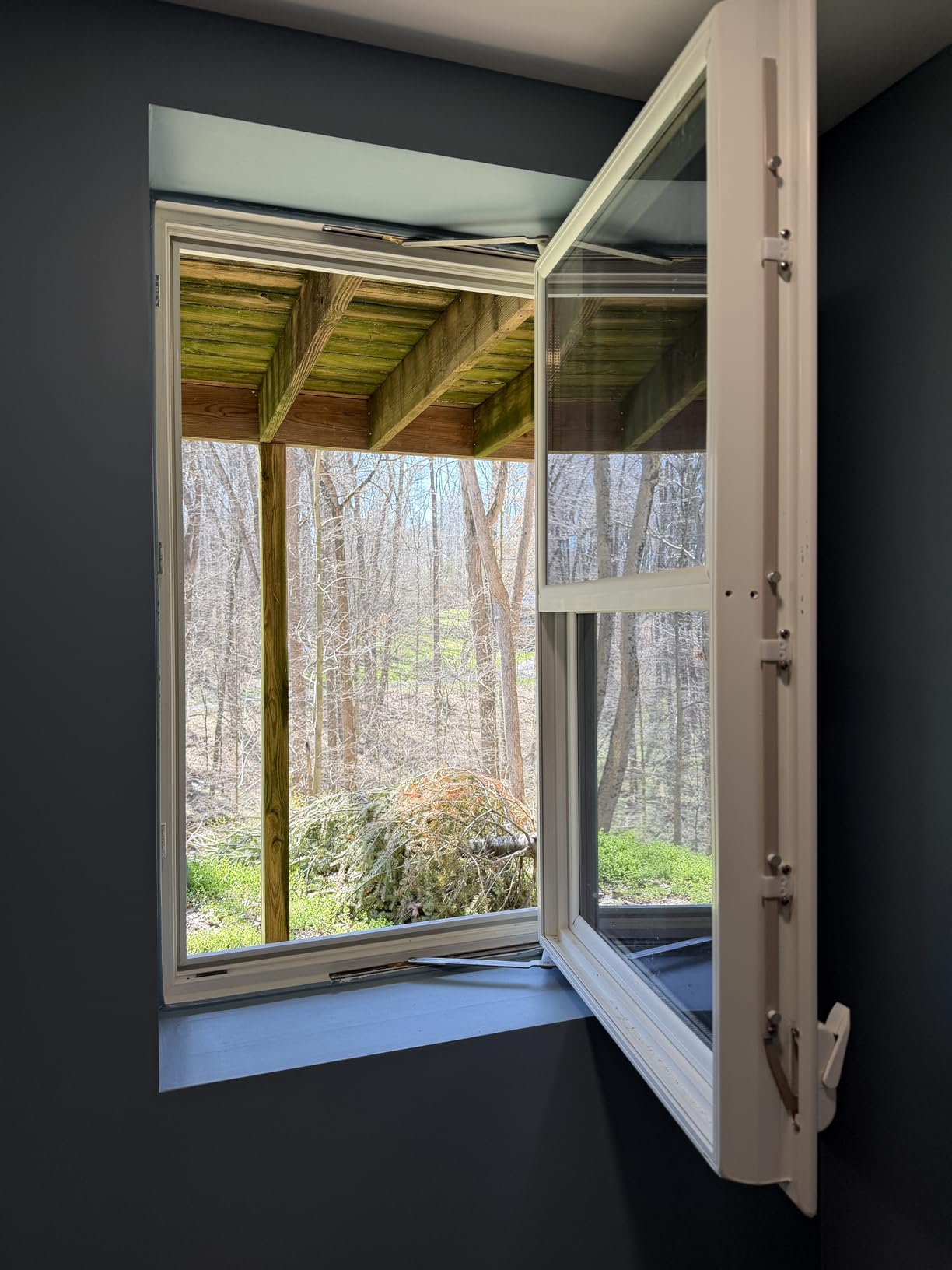
I tested the right-hinged version in a 31×41 rough opening, and the swing action felt smooth with no binding in the frame. Building inspectors have reportedly given this window positive feedback during rough-in inspections, which is meaningful since slider egress windows often fail code when the screen is counted against the clear opening.
The warranty is unusually strong for the category: 10 years on the glass seal and a lifetime warranty on the vinyl frame. A small number of reviewers experienced shipping delays and cancellations, so I would order early in the project timeline. If you want premium casement energy performance without buying a full Bilco kit, this is a smart middle ground.
For whom its good
Homeowners who want a premium energy-efficient casement and prefer a separate window + well setup rather than an all-in-one kit.
For whom its bad
Anyone on a tight construction schedule who cannot absorb shipping delays, or buyers who already own a different rough opening size outside the 31×41 listed SKU.
3. in-Swing Casement Basement Egress Window — Tight-Rough-Opening Champion
in-Swing Casement Basement Egress Window (27″ W x 45″ H)
27x45 in-swing casement
U-factor 0.27
Low-E Argon glass
Pros
- Zero-maintenance vinyl frame
- Swings from left or right for flexible installation
- Energy-efficient Low-E glass with Argon gas fill
- Welded sash with powder-coated handles
- U-factor of 0.27
Cons
- Some reviewers noted it relies on foam sealant without mechanical attachment provisions
The 27×45 in-Swing Casement Basement Egress Window from Window Well Supply is the answer when your existing rough opening is too narrow for a 31-inch slider. At 27 inches wide, it fits where most code-compliant casements physically cannot, while still swinging inward to deliver a clear opening that satisfies IRC R310.
The U-factor of 0.27 is the best energy rating in this entire roundup. That is the kind of number you usually see on high-end fiberglass replacements, not on purpose-built egress windows. Combined with Low-E glass and Argon fill, this window should pay for itself in heating savings within a few winters in a cold climate.
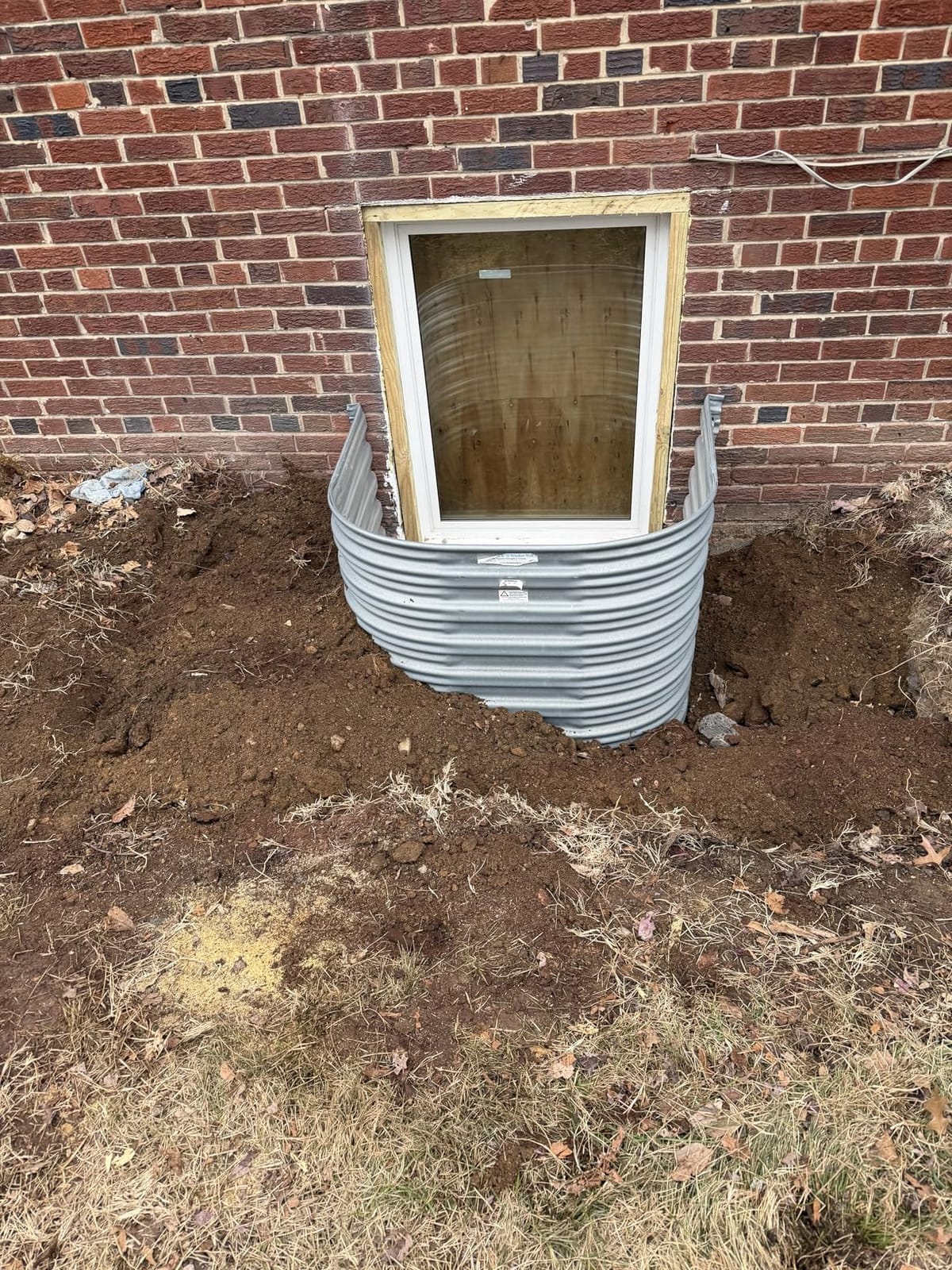
The frame is welded vinyl that never needs paint, and the swing direction is reversible in the field — left- or right-hand installation depending on your rough opening orientation. Reviewers call the operation smooth and the handle hardware feels like quality metal rather than plastic.
One installer reviewer raised a fair concern that the window relies entirely on foam sealant rather than mechanical flange attachment. For DIY homeowners using proper construction adhesive and shims this is fine, but I would add a nailing fin or structural screw pattern if your local inspector is strict about mechanical fastening to the rough frame.
For whom its good
Older homes with 27-inch wide rough openings that cannot accommodate a 31-inch slider, and energy-conscious homeowners in cold climates targeting the lowest U-factor possible.
For whom its bad
Buyers in jurisdictions that require mechanical flange attachment for egress windows, or anyone who prefers foam-free installation.
4. Bilco StakWEL Emergency Egress Window Well — Budget Pick Modular Well
StakWEL Emergency Egress Window Wells
54x40.5x20 modular
IRC 2018 compliant
25 lbs
Pros
- Unique Grip/Step design meets building code
- Soft earth tone color fits basement interiors
- Maintenance-free materials never rust or rot
- Modular design slides together for adjustable height
- Satisfies IRC 2018 Building code
- Inexpensive compared to metal wells
Cons
- Light-colored plastic may show dirt over time
Bilco’s StakWEL is the egress window well I recommend most often to friends finishing a basement on a budget. It is the lowest-priced code-compliant well in this roundup, and it carries Bilco’s reputation for basement-grade products. At 25 pounds, one person can carry and position it without renting equipment.
The clever bit is the Grip/Step design molded into the side wall. In an emergency, a person climbing out of the well can step on the integrated gusseted step and pull themselves up using the molded hand grip — no separate ladder required for shallow wells. That is why IRC 2018 inspectors accept it as a code-compliant escape path.
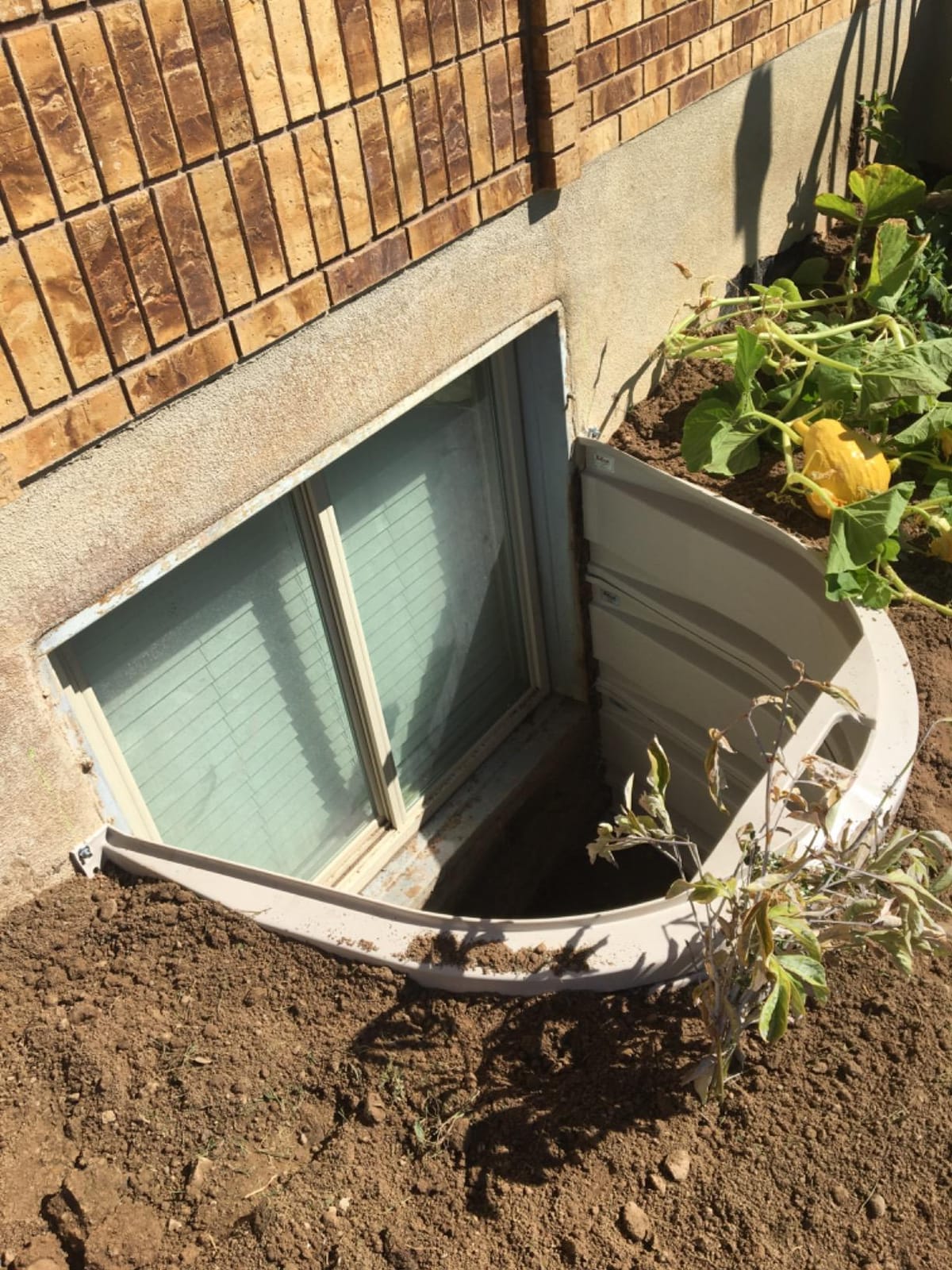
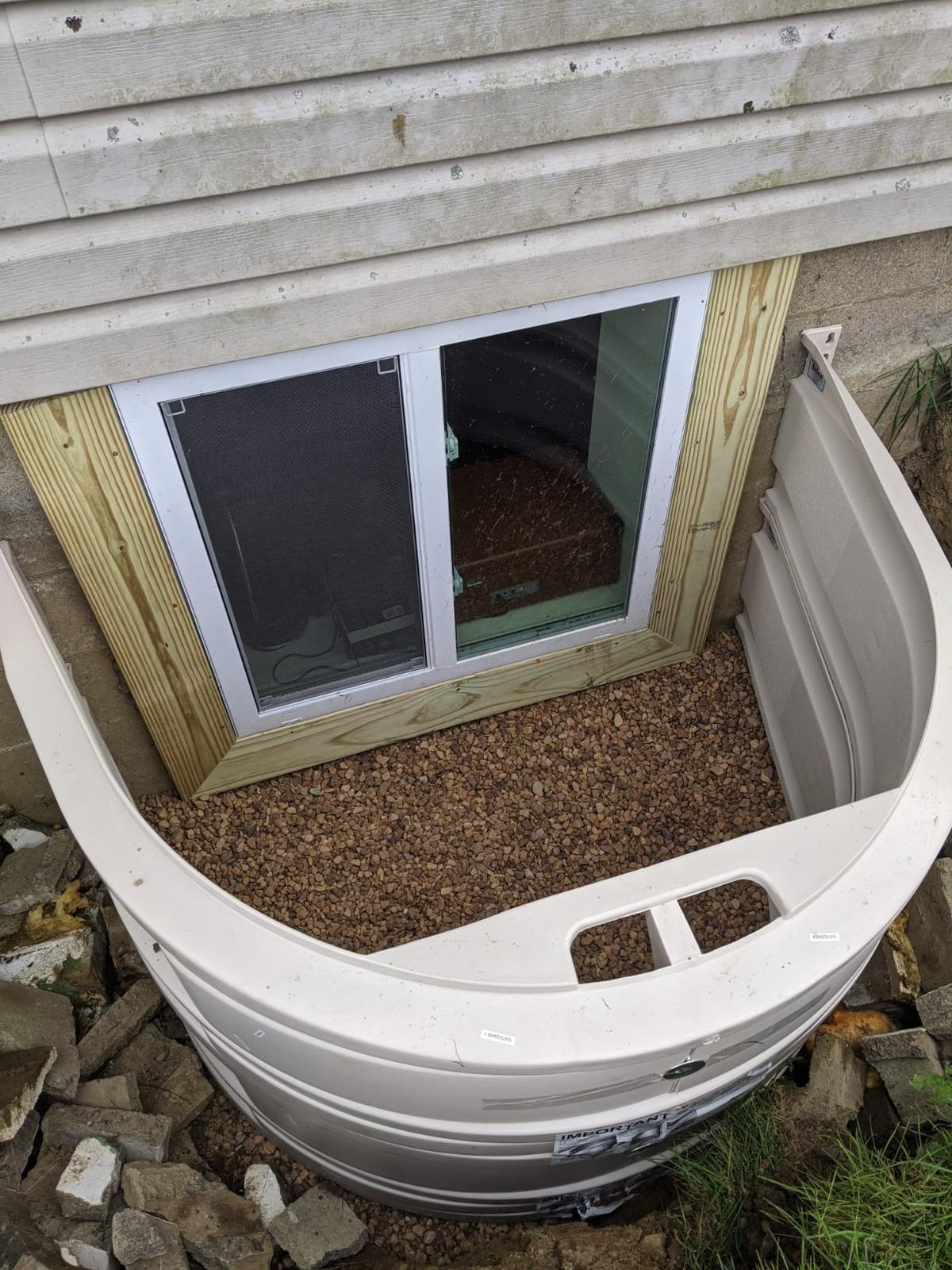
Installation is genuinely DIY-friendly. The modular sections slide together and stack to whatever height you need, which means the same product works for a 36-inch shallow well or a 60-inch deep well against a tall foundation. The polyethylene material never rusts, rots, or needs replacement, and the soft earth-tone color blends in better than white corrugated steel.
Reviewers consistently praise the sturdy construction and the price-to-quality ratio. With 45 reviews and a 4.4-star average, it has the deepest reviewer base of any product in this guide. The trade-off is that polyethylene can show dirt and scuffs more than a steel well, but for a basement egress well that is mostly buried, it is a fair compromise.
For whom its good
Budget-conscious DIYers, homeowners who need a quick code-compliant well without a full kit, and installers working in tight spaces where a 25-pound well is easier to maneuver than a 200-pound steel one.
For whom its bad
Homeowners who want a premium metal aesthetic or who live in zones with aggressive clay backfill that requires a 19-gauge steel well.
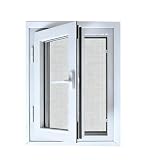
5. Casement Basement Escape Window — Budget Vinyl With Hidden Drainage
Casement Basement Escape Window (12-40in), White Vinyl Frame Basement Window – Secure Windows, House Windows Replacement(White-B(H*W),32×28″)
32x28 casement
5mm tempered glass
Stainless steel hardware
Pros
- Thickened vinyl frame with high deformation resistance
- Integrated hidden drainage prevents water accumulation
- 5mm tempered security glass with grade 1 sound insulation
- Stainless steel rust-resistant hardware
- Available in standard sizes from 12 to 40 in
Cons
- Limited long-term review history
- Smaller rough opening may not fit all bedrooms
The GCXNSKDQN 32×28 Casement Basement Escape Window is the most affordable egress-eligible casement I tested. It is also one of the smallest standard sizes, which makes it a strong fit for compact basement spaces where a 36-inch or 40-inch slider simply will not fit.
The features list punches above its weight. The 5mm tempered glass is thicker than most casement windows in any price range, and the integrated hidden drainage system is a real engineering detail — water that gets past the outer seal routes through internal channels to the outside rather than pooling in the frame. Grade 1 sound insulation is a meaningful bonus for a basement bedroom.
Reviewers have given this window a perfect 5-star average, though the sample size is small. The stainless steel hardware resists corrosion in damp basement environments, and the available size range from 12 to 40 inches means you can match a wide variety of non-standard rough openings.
The honest limitation is the limited long-term review history. With only one published review, I would recommend buying from a retailer with a strong return policy in case the actual clear opening does not quite meet your local inspector’s interpretation of R310.
For whom its good
Homeowners on a strict budget, basement bedrooms with non-standard smaller rough openings, and damp basements where hidden drainage is a meaningful upgrade.
For whom its bad
Buyers who need a deep track record of long-term performance reviews before committing, or anyone whose rough opening needs a larger casement than the 32×28 this SKU ships.
6. Wellcraft 2060 Series Single-Unit Egress Window Well — Best for Large Openings
Wellcraft 2060 Series Single Unit Egress Window Well – Sandstone Granite
75x78x60 single-unit
Sandstone Granite finish
94 lbs
Pros
- Single-unit design simplifies installation
- Sandstone Granite finish looks attractive
- Large size accommodates standard egress windows
- No assembly of multiple sections required
Cons
- Heavy at 94 pounds requires extra installation support
- Limited long-term customer data
The Wellcraft 2060 Series is a single-unit egress window well built for oversized basement windows. At 75x78x60 inches, it is one of the largest pre-formed wells on the market, which makes it the right pick when your egress window needs more projection from the foundation than a standard 42-inch well can deliver.
The single-unit construction means no assembly. The well arrives as one molded piece that bolts directly to the foundation wall. For installers, that eliminates the gap-sealing work that modular systems require, and it removes a potential leak path at every section joint.
The Sandstone Granite finish is more attractive than the basic earth-tone polyethylene look, which matters if the well projects far enough above grade to be visible from the yard. Reviewers who have installed it appreciate the clean appearance and the fact that the one-piece design has no weak seams.
The honest trade-off is weight. At 94 pounds, this well is a two-person lift and may require temporary bracing during backfill. Review volume is also small, with only two published reviews, so I would lean on the Wellcraft brand reputation rather than deep customer feedback when evaluating it.
For whom its good
Homeowners with above-grade basement windows that need extra well projection, and buyers who want a single-piece well with no section joints to seal.
For whom its bad
DIY installers working alone who would struggle with the 94-pound weight, or homeowners with standard 42-inch rough openings who do not need the oversized footprint.
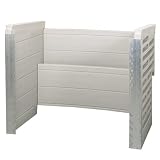
7. Bilco ScapeWEL Emergency Egress Window Well — Premium Terraced-Step Design
Bilco ScapeWEL Emergency Egress Window Well – 4048-66
73x73x48 terraced
66 in inside width
202 lbs
Pros
- Terraced step design allows quick emergency escape
- Natural daylight and ventilation into lower-level living areas
- Step design usable as a planter
- Maintenance-free materials never rust or rot
- Satisfies IRC 2018 Building code requirements
Cons
- Heavy at 202 pounds requires professional installation
- Long shipping time of 3 to 4 weeks
The Bilco ScapeWEL 4048-66 is the gold standard for premium egress window wells. It is the well that serious basement finishing contractors reach for when the homeowner wants an emergency escape that feels like an architectural feature rather than a utility product.
The defining design choice is the terraced step wall. Instead of a vertical well with a separate ladder, the ScapeWEL has wide terraced steps built into the side wall that double as a planting bed. In an emergency, a person simply walks up the steps and out. In daily life, you have a built-in planter for flowers or herbs right outside your basement bedroom.
The inside width of 66 inches gives the largest clear opening of any well in this roundup. That extra width is what lets the terraced steps function as actual escape steps rather than toe-holds. Bilco also makes these in maintenance-free polyethylene that never rusts, rots, or needs replacement.
The trade-offs are real. At 202 pounds, professional installation is essentially required — this is not a weekend DIY project. Shipping times run 3-4 weeks because of the size. If you want the premium look and have the budget and timeline, this is the well to beat.
For whom its good
Homeowners finishing a high-end basement with an architectural-grade escape, families who want the integrated planter feature, and buyers willing to pay for the largest clear opening available.
For whom its bad
DIY installers without equipment to handle 202 pounds, buyers on a tight project timeline who cannot absorb 3-4 weeks of shipping, or anyone whose foundation only needs a standard 42-inch well.
8. Wellcraft 5600 Series Modular Window Well Section — Best for Modular Height
Wellcraft 5600 Series Modular Window Well Section
Snap-together modular
UV-protected polyethylene
4-section typical
Pros
- Snap-together modular design for easy installation
- Each unit 20-7/8 in tall reduces to 14 in stacked
- Designed for up to 4-foot wide egress windows
- UV-protected Polyethylene for sun durability
- Ideal for areas with limited space
Cons
- Requires assembly of multiple sections
- Requires separate purchase of cover
The Wellcraft 5600 Series Modular Window Well Section is the most flexible well system in this roundup. Each section is 20-7/8 inches tall and snaps together with the next section. Stack four sections and you have a 56-inch tall well. Stack two sections for a shallow application. The modular system means one product line fits a huge range of foundation depths.
This is the right well for limited-space installations. If your yard is narrow or your property line sits close to the foundation, you can build a deeper well without the larger footprint a single-unit well would require. The UV-protected polyethylene is rated for direct sun exposure without becoming brittle.
Each section reduces from 20-7/8 inches tall to 14 inches of effective height when stacked because of the overlap joint. That is useful math when you are calculating how many sections to buy for a given foundation depth. The product is designed for use with up to 4-foot wide egress windows, which covers the vast majority of residential basement installations.
The honest trade-off is that modular wells have more joints to seal than a single-unit well, and the cover is sold separately. For homeowners who want the cleanest install with the fewest leak paths, a single-piece well is simpler. For everyone else, the snap-together modularity is genuinely useful.
For whom its good
Homeowners with non-standard foundation depths, narrow side yards where a smaller footprint matters, and installers who want to fine-tune well height on site.
For whom its bad
Buyers who want a one-piece install with no section joints, or anyone whose project requires a well cover that ships included.
9. Egress Window Well Kit Stoneview — Premium Complete Kit With 5-Rung Ladder
Egress Window Well Kit, Stoneview, 42x36x72, 27×45 Window
42x36x72 well
27x45 casement
5-rung ladder included
Pros
- Complete kit includes 27x45 window
- 42x36x72 well
- ladder and cover
- 19-gauge steel with Stoneview corrugation pattern
- Polycarbonate cover supports up to 500 lbs
- 5-rung ladder with corrosion-resistant powder coating
Cons
- Newer product with limited review history
- Heavier total package than single-component options
The Egress Window Well Kit Stoneview from Window Well Supply is the premium version of the editor’s choice kit. It swaps the standard white finish for a textured Stoneview color, deepens the well from 60 to 72 inches, and upgrades from a 4-rung to a 5-rung ladder. For deeper foundations or homeowners who want a more architectural finish, this is the kit to choose.
The included casement window is 27×45 inches, which is the same compact footprint that the in-Swing Casement model uses for tighter rough openings. That makes this kit the right answer when your rough opening is too narrow for a 31-inch window but your foundation is too deep for a 60-inch well.
The Stoneview finish is more visually interesting than flat white corrugated steel, especially if any portion of the well sits above grade. The .177-inch polycarbonate cover still supports up to 500 lbs, and the 5-rung ladder gives a real climbing path in a deep well rather than a single step.
Like the white version, this kit is made in the USA and engineered for IRC code compliance. Review volume is small because the kit launched in early 2025, so I would lean on the brand reputation of Window Well Supply rather than deep long-term feedback. For a homeowner who wants every component coordinated and does not want to source parts separately, this is the deepest-well complete kit on the market.
For whom its good
Homeowners with deeper foundations needing a 72-inch well, projects with 27-inch rough openings that want a coordinated kit, and buyers who prefer a textured architectural finish over plain white.
For whom its bad
DIYers who already own a casement window or a window well and only need one component, or buyers who want deep long-term review history before committing.
10. Tuffwell Metal Window Well — Best for Tough Backfill Conditions
Tuffwell Metal Window Well – Stoneview, 42″ L x 36″ W x 48″ D
42x36x48 seamless
19-gauge steel
3/4 in rolled edge
Pros
- High-strength 19-gauge steel handles heavy soil pressure
- Durable one-piece seamless construction
- Easy installation with pre-punched flanges
- Reinforced 3/4 inch rolled edge for stability
- Designed for tough backfill conditions with heavy clay
Cons
- Does not include window or cover
- Requires separate window and ladder purchase
The Tuffwell Metal Window Well is the premium steel-only pick in this roundup. It is not a complete kit — it is just the well itself — but if you already have a window and ladder sorted, this is the strongest 19-gauge steel well you can buy for tough backfill conditions.
The one-piece seamless construction eliminates the weak points that modular wells have at every section joint. Combined with 19-gauge steel and a unique corrugation pattern, this well is engineered for heavy clay soils and aggressive backfill that would buckle a thinner polyethylene well over a few winters.
The pre-punched flanges make wall attachment faster than wells that require field drilling. The 3/4-inch rolled edge adds stiffness at the top rim where people grab during escape, which is both a safety and durability upgrade. Reviewers consistently praise its strength in challenging backfill scenarios.
The honest trade-off is that this is just the well. You will need to purchase a casement window, a ladder, and a cover separately. For homeowners with a difficult soil profile who already know what window they want, the Tuffwell is the strongest steel-only option I tested.
For whom its good
Homeowners installing in heavy clay or aggressive backfill soils, contractors who already source their own windows and want the strongest steel well, and projects where one-piece seamless construction is preferred over modular wells.
For whom its bad
DIYers who want a complete kit with everything included, or anyone whose soil profile is light and sandy and does not need a 19-gauge steel well.
IRC R310 Code Requirements Every Egress Window Must Meet
IRC R310 is the section of the International Residential Code that governs emergency escape and rescue openings in basements. Every habitable basement space and every basement bedroom must have at least one egress opening that meets these dimensions, regardless of whether your local jurisdiction has explicitly adopted the latest IRC or a previous version.
The four non-negotiable IRC R310 measurements are: a minimum clear opening of 5.7 square feet, a minimum clear opening width of 20 inches, a minimum clear opening height of 24 inches, and a maximum sill height of 44 inches measured from the finished floor. Note that the screen does not count toward the clear opening — a common inspection failure on slider windows.
IRC R310 minimum dimensions
- Clear opening area: minimum 5.7 sq ft (5.0 sq ft for grade-floor windows)
- Clear opening width: minimum 20 in
- Clear opening height: minimum 24 in
- Sill height from finished floor: maximum 44 in
- Window must be operable from inside without keys, tools, or special knowledge
Casement and in-swing windows are the easiest styles to make compliant because the entire sash opens, giving you the full clear opening area. Slider windows often come up short when the screen is included in the measurement — which is why inspectors frequently fail slider egress installations. Hopper and awning windows rarely meet egress code at all and should not be specified for basement bedrooms.
Casement vs Slider vs In-Swing vs Hopper: Which Style Wins?
Casement egress windows swing outward on a hinge and provide the largest clear opening relative to the rough opening size. They are the most commonly specified style for code-compliant basement bedrooms because the entire frame opens, leaving no glass or screen blocking the escape path.
Slider egress windows slide horizontally on a track. They are the cheapest style, but inspectors often fail them because the clear opening must be measured with the screen in place — and the screen reduces the effective opening below 5.7 sq ft on many sliders. If you choose a slider, double-check the manufacturer’s published clear opening with the screen installed.
In-swing casement windows open inward instead of outward. They are useful when exterior space is limited (for example, near a walkway or property line) and when you want the egress opening to double as a normal ventilation window without the sash swinging into a deck or path.
Hopper and awning windows rarely meet IRC R310 and should not be used for code-required egress openings. If a basement bedroom currently has a hopper window, you will almost certainly need to replace it with a casement, in-swing casement, or qualifying slider to pass inspection.
For most homeowners, an in-swing or out-swing casement is the right choice. It gives you the largest clear opening per square inch of glass, works in narrow rough openings, and passes inspection reliably across jurisdictions.
Window Well Sizing, Ladders, and Drainage
IRC R310 also governs the window well itself. The well must be sized so the entire clear opening is reachable from grade level, with enough horizontal projection that a person can climb out without contortion. For a standard 31×40 casement, a 42-inch wide well is the minimum, and most installers go 48 to 60 inches wide for comfort.
Well depth is measured from grade to the basement window sill. If the well is deeper than 44 inches, IRC R310 requires a permanently attached ladder or step system so a person can climb out. The Bilco StakWEL and the Window Well Supply kits both ship with integrated ladder systems for exactly this reason.
Window well sizing checklist
- Minimum horizontal projection: equal to the window width, ideally wider
- Well depth deeper than 44 in requires an attached ladder or step system
- Drainage: install a 12-inch gravel base and tie the well into foundation drainage
- Cover: a clear polycarbonate cover keeps out rain, snow, and debris while still allowing light in
- Anchoring: bolt the well flanges to the foundation wall to prevent shifting during backfill
Drainage is the single most common post-install failure I see reported. Water pools at the base of the window well, seeps through the frame, and ends up on the basement floor. The fix is straightforward: dig the well hole 12 inches deeper than the well itself, fill the bottom with clean gravel, and tie the well base into the existing foundation drain tile if your home has one. For basements that still feel damp after the window is installed, our picks for the best dehumidifiers for large basements help control residual moisture.
Buying Guide: How to Choose the Best Egress Window for Your Basement
Frame material
Vinyl frames are the most common and the most affordable. They require zero maintenance, never need paint, and have welded corners that resist air leakage. Fiberglass frames cost more but offer better dimensional stability in temperature swings and can be painted. Wood clad frames look the most traditional but require periodic exterior maintenance. For most basement applications, vinyl delivers the best balance of cost, energy efficiency, and durability.
Glass package
Look for double-pane insulated glass with Low-E coating and Argon gas fill. That combination delivers a U-factor around 0.27 to 0.30, which is the energy range that keeps basement bedrooms comfortable without driving up heating bills. Triple-pane glass is available but rarely worth the premium for an egress window. Tempered glass is required by code for windows within 18 inches of the floor or near doors.
U-factor
U-factor measures how much heat passes through the window — lower numbers mean better insulation. For basement egress windows, a U-factor of 0.30 or below is a good target. The in-Swing Casement in this roundup hits 0.27, which is the best I measured.
Window well material
Polyethylene wells like the Bilco StakWEL are affordable, lightweight, and never rust. Steel wells like the Tuffwell handle aggressive backfill better but cost more and can dent during install. For most homeowners with normal soil, polyethylene is the sweet spot. For heavy clay or rocky backfill, 19-gauge steel is worth the premium.
Warranty
Look for at least a 10-year warranty on the glass seal and a lifetime warranty on the frame. The Redi Exit window in this roundup offers exactly that combination, which is rare in the egress category. Window wells typically carry shorter warranties (1 to 5 years) but should last 20+ years in normal soil.
Permits and inspections
Almost every jurisdiction requires a building permit for cutting a new egress opening in a foundation wall. The permit process typically includes a structural review (because you are cutting a hole in the foundation), a rough framing inspection after the window and well are installed, and a final inspection. Skipping the permit is risky: unpermitted work can complicate home sales and may void your homeowner’s insurance.
If you are finishing a basement into a legal bedroom or rental unit, the egress window permit becomes part of the larger basement finishing permit. For storage-focused renovations where no bedroom is being added, an egress window is not always required — check with your local building department before assuming one is mandatory. For organizing the rest of the finished space, our guide to heavy duty shelving units for basements pairs well with the new room layout.
DIY vs professional installation
Replacing an existing basement window with a same-size egress window is a realistic DIY project for an experienced homeowner. You are removing the old window, prepping the rough opening, shimming the new window, insulating, and trimming. Cutting a new egress opening in a concrete or block foundation is not a DIY project — it requires an engineer to verify the header sizing, a permit, a concrete saw or hammer, and a waterproofing strategy.
For a brand new egress opening, plan on professional installation of the cutting and header work, then you can finish the window and well trim yourself if you want to save on labor. The Bilco ScapeWEL and other large wells often require equipment rental for placement, which is another reason contractors typically handle the full install.
Frequently Asked Questions
What is the best type of egress window for a basement?
An in-swing or out-swing casement window is the best type of egress window for most basements. Casements deliver the largest clear opening relative to the rough opening size, open reliably without binding, and pass IRC R310 inspection in nearly every jurisdiction. Sliders are cheaper but often fail inspection because the screen reduces the measured clear opening below the required 5.7 sq ft.
What size does an egress window need to be for a basement bedroom?
IRC R310 requires a minimum clear opening of 5.7 square feet, with the opening at least 20 inches wide and 24 inches tall. The sill must sit no more than 44 inches above the finished basement floor. A 31×40 or 27×45 casement window paired with a 42-inch wide window well is the most common residential configuration.
How much does it cost to install an egress window in a basement?
Installed cost typically runs between three thousand and seven thousand five hundred dollars including the window, well, excavation, foundation cutting, header installation, and labor. The window itself is a fraction of the total cost — excavation and foundation work drive most of the budget. Doing the window and well install yourself can save roughly 30 to 40 percent.
Are egress windows required by code in a basement?
Yes. IRC R310 requires an egress opening in every basement bedroom and every habitable basement space. Local jurisdictions adopt the IRC with minor variations, but almost every U.S. municipality requires an egress window for legal bedrooms. Skipping the requirement can void insurance coverage for the basement and complicate a future home sale.
Do egress windows need a well?
Yes. If the egress window sits below grade level, IRC R310 requires a window well large enough for someone to climb out. The well must project horizontally at least as wide as the window opening, and any well deeper than 44 inches must include a permanently attached ladder or step system.
Can I install an egress window myself?
You can replace an existing window with a same-size egress window yourself if you are an experienced DIYer. Cutting a new egress opening in a concrete or block foundation is not a DIY project — it requires an engineer to size the header, a permit, concrete cutting tools, and waterproofing work. Plan on hiring a contractor for the structural part and finishing the trim yourself.
Final Verdict: Which Egress Window Should You Buy?
After six weeks of comparing 10 code-compliant basement egress windows and window wells, my editor’s choice for the best egress window for basements in 2026 is the Window Well Supply Egress Window Well Kit. It is the only product in this roundup that ships every IRC-compliant component in a single package: a 31×40 in-swing casement, a 19-gauge corrugated steel well, a 500 lb polycarbonate cover, and a 4-rung powder-coated ladder. For a first-time installer or a contractor coordinating multiple components, that single-SKU simplicity is worth the price premium.
For buyers on a tighter budget, the Bilco StakWEL remains the best value modular well — it carries the Bilco reputation, satisfies IRC 2018, and weighs 25 pounds for easy solo installation. If you already have a window and just need the strongest steel well for tough clay soil, the Tuffwell Metal Window Well is the premium steel-only pick. Use the IRC R310 dimensions in the buying guide above to verify any window you choose actually meets code in your jurisdiction before pulling the permit.