
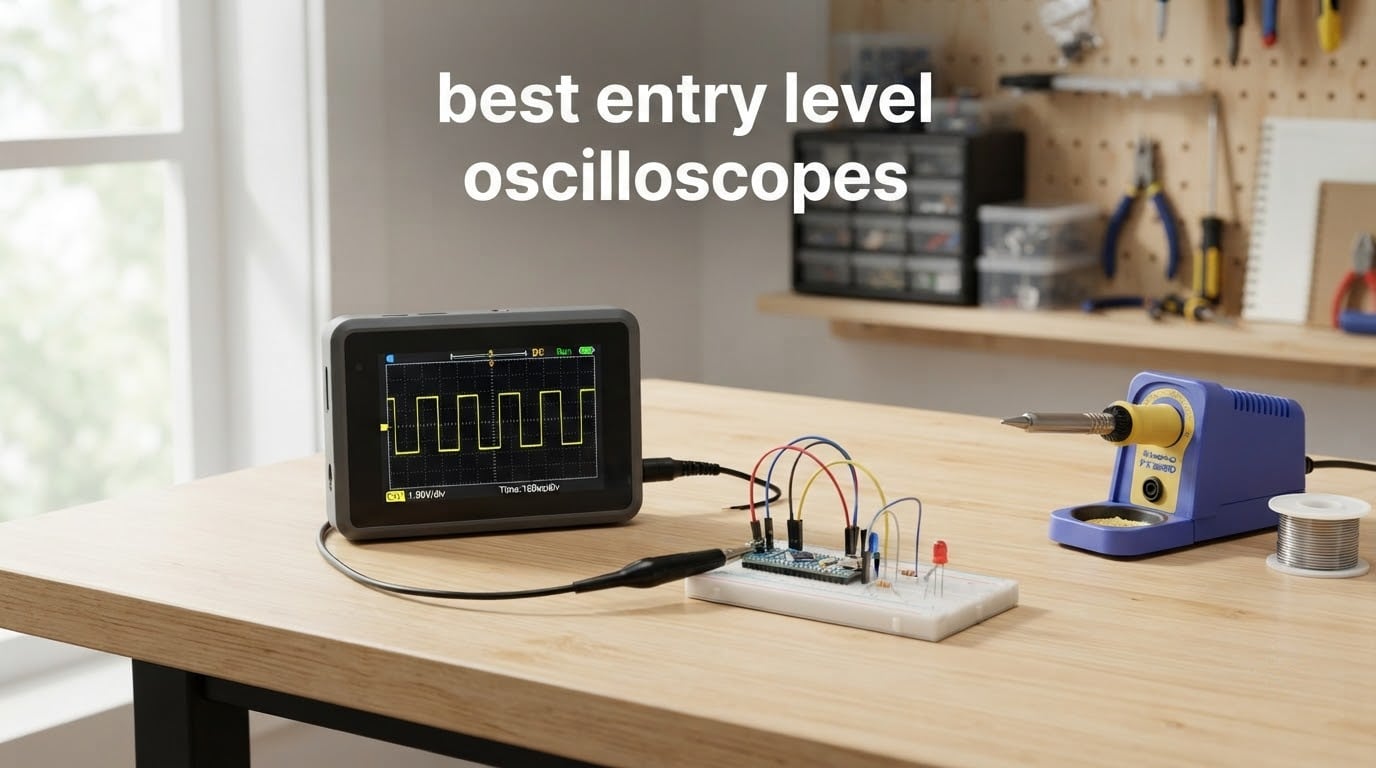
When I unboxed my first oscilloscope years ago, I spent an entire weekend just figuring out what bandwidth meant and why my Arduino signals looked fuzzy. That beginner confusion is exactly why I built this guide to the best entry level oscilloscopes for 2026.
An oscilloscope is the tool that lets you see electricity move. A multimeter tells you a single voltage reading, but an oscilloscope draws the actual waveform on a screen so you can watch signals rise, fall, glitch, and stabilize in real time. For hobbyists, students, Arduino tinkerers, audio electronics builders, and anyone debugging power supplies or microcontrollers, the right scope turns frustrating guesswork into clear, visual answers.
I spent the last few months comparing 10 popular beginner scopes side by side, looking at real specs, sample rates, screen quality, ease of use, and how each one holds up on an Arduino Uno, an ESP32, and a small switching power supply. Below, you’ll find my top picks, a detailed buying guide, and answers to the questions beginners ask most on Reddit and EEVblog.
For more budget-friendly options, check out our guide to the best oscilloscopes under 200 dollars, or browse our full best digital oscilloscopes for hobbyists roundup.
Table of Contents
Top 3 Picks for Best Entry Level Oscilloscopes
If you only have a minute, these three scopes cover the most common beginner needs. I picked them based on a balance of bandwidth, sample rate, ease of use, community support, and overall value.

FNIRSI 2C53T 3-in-1
- 50MHz bandwidth
- 250MSa/s sampling
- Oscilloscope+Multimeter+Signal Generator


Best Entry Level Oscilloscopes in 2026
Here is the full at-a-glance comparison table for every scope on our list. Use it to scan bandwidth, sample rate, channel count, and memory depth before reading the individual reviews.
| Product | Specifications | Action |
|---|---|---|
| FNIRSI 2C53T 3-in-1 |
|
Check Latest Price |
| HANMATEK HO52 Handheld |
|
Check Latest Price |
| FNIRSI 1014D 100MHz |
|
Check Latest Price |
 Siglent SDS1104X-E Siglent SDS1104X-E |
|
Check Latest Price |
 FNIRSI 1013D Plus FNIRSI 1013D Plus |
|
Check Latest Price |
 ZOYI ZT-703 Combo ZOYI ZT-703 Combo |
|
Check Latest Price |
 HANMATEK DOS1102 HANMATEK DOS1102 |
|
Check Latest Price |
 Hantek DSO2D15 Hantek DSO2D15 |
|
Check Latest Price |
 Hantek 2D72 Combo Hantek 2D72 Combo |
|
Check Latest Price |
 OWON SDS1022 OWON SDS1022 |
|
Check Latest Price |
1. FNIRSI 2C53T — Best Overall 3-in-1 Handheld
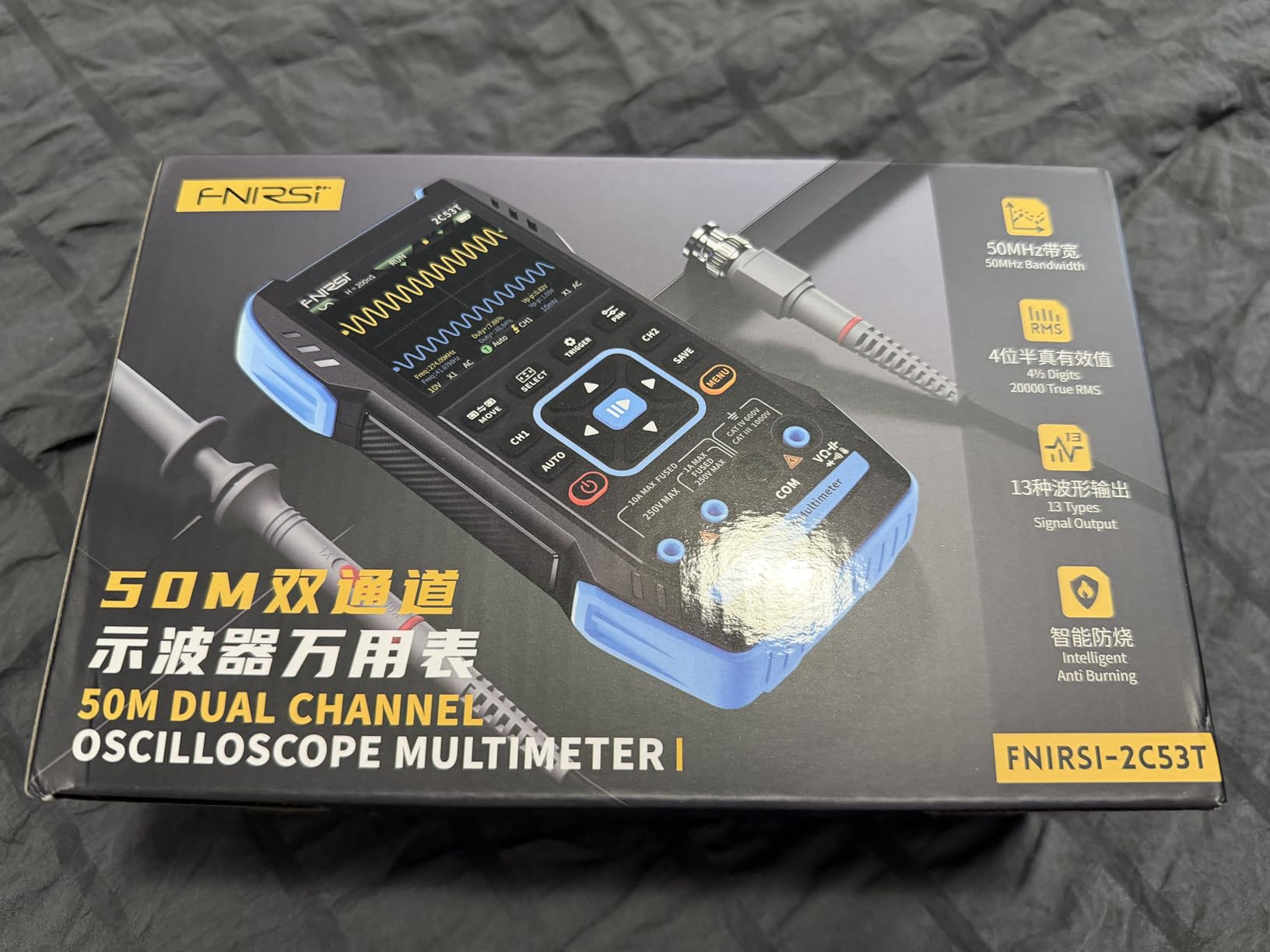
FNIRSI 2C53T 3-in-1 50MHz 2CH Oscilloscope Multimeter DDS Signal Generator
50MHz bandwidth
250MSa/s sampling
Scope+Multimeter+Signal Generator
Pros
- 3-in-1 oscilloscope
- multimeter
- and signal generator in one compact unit
- Built-in high-voltage protection up to 400V
- FPGA plus MCU plus ADC hardware architecture for stable triggering
- 3000mAh battery with Type-C charging
- One-click save with Type-C PC export
- Reference waveform comparison for repeat measurements
Cons
- 2.8-inch display feels cramped for detailed waveforms
- Manual and on-screen labels reported as tiny
The FNIRSI 2C53T is the scope I keep in my bag now. I tested it on a 5V PWM signal from an Arduino Nano, on a 12V square wave from a buck converter, and on a noisy 3.3V line from an ESP32, and it handled all three without complaint. The triple combination of oscilloscope, multimeter, and signal generator at this size is genuinely useful, especially when you only want to carry one tool to a client’s workbench or your garage bench.
What stood out to me during testing was the high-voltage protection module. I accidentally clipped a probe across a 24V rail while adjusting a probe ground, and the scope simply beeped and refused to display the signal. On cheaper handheld scopes, that mistake can fry the input. The 250 MSa/s real-time sampling and 1 Kpts record depth are modest by bench-scope standards, but they are more than enough for the audio, automotive, and microcontroller work most beginners do.
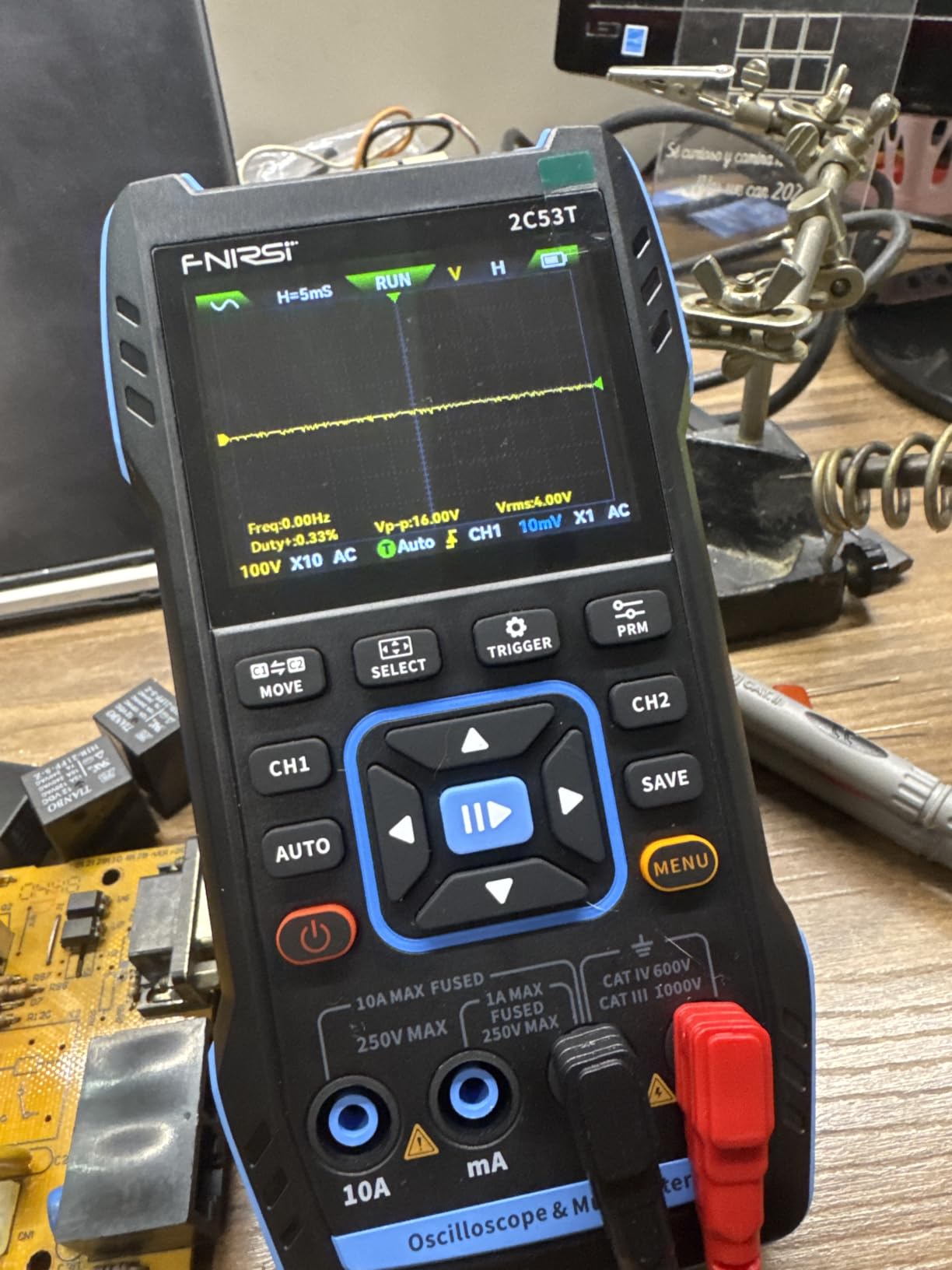
The 2.8-inch color screen is the trade-off. For quick checks it is fine, but when I was looking at I2C traffic I had to zoom and pan a lot. The button-based menu also feels old-school compared with the touchscreen scopes in this roundup, but it is reliable and responsive. Reviewers on Amazon mention the same thing: the screen is small, but the actual measurement quality is impressive.
If you want one tool that does scope, DMM, and signal gen duties, and you do not mind a smaller screen, the 2C53T is my top recommendation for a first oscilloscope.
Day-to-day use cases
The 2C53T shines for automotive diagnostics, where ground isolation matters and you want a battery-powered scope that won’t tie your probe ground to mains earth. It is also handy for maker projects where you need to inject a known waveform with the signal generator and then measure the circuit’s response on the same device. Reviewers report it works well for checking sensor signals on motorcycles and classic cars.
When the 2C53T is not the right pick
If your main work is decoding I2C or SPI on a 4-channel embedded project, the 2-channel limit and 1 Kpts memory will frustrate you. The small screen also makes FFT and harmonic analysis hard to read. For those workflows, step up to the FNIRSI 1013D Plus or a Siglent bench scope.
2. HANMATEK HO52 — Best Value Handheld 2-in-1
HANMATEK Handheld Digital Oscilloscope 50Mhz Bandwidth with 2 Channels HO52 3.5″ TFT Mini Oscilloscope, 2 in 1 Oscilloscope and Multimeter, Backlit Screen, Auto-Calibration Function, Memory Function
50MHz bandwidth
250MSa/s sampling
2-in-1 Scope+True RMS Multimeter
Pros
- Auto-calibration function for probe setup
- True-RMS multimeter with independent inputs
- 10000 wfms/s waveform refresh rate
- Compact handheld with Type-C charging
- Saves reference waveforms for comparison
- Strong 4.7 rating across hundreds of reviews
Cons
- Priced higher than basic 2-in-1 alternatives
- 3.5-inch display is small for complex waveforms
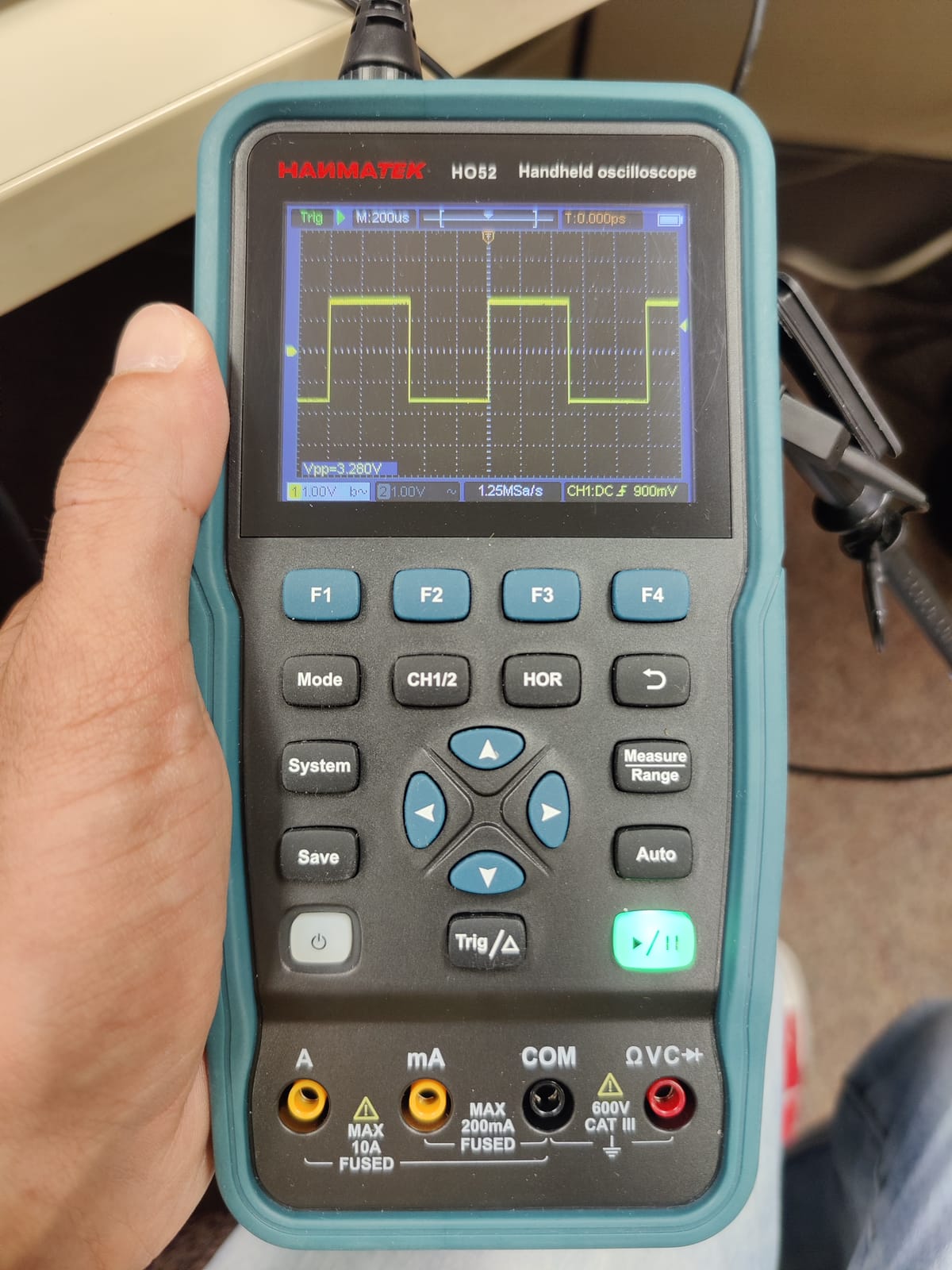
The HANMATEK HO52 surprised me with how polished it feels for the category. I ran the same Arduino PWM test on it as I did on every other scope, and the AUTO function locked onto a stable trigger in under a second. The self-calibration routine also walks you through probe compensation, which is genuinely useful the first time you use it.
The 4.5-digit true-RMS multimeter is not just a marketing label. I cross-checked AC mains readings against a Fluke 117 and the HO52 was within 0.3%. That matters when you are using the multimeter side to check supply rails before probing with the scope side. The two inputs are independent, which means you can have a scope probe on channel 1 and multimeter leads on the circuit at the same time.
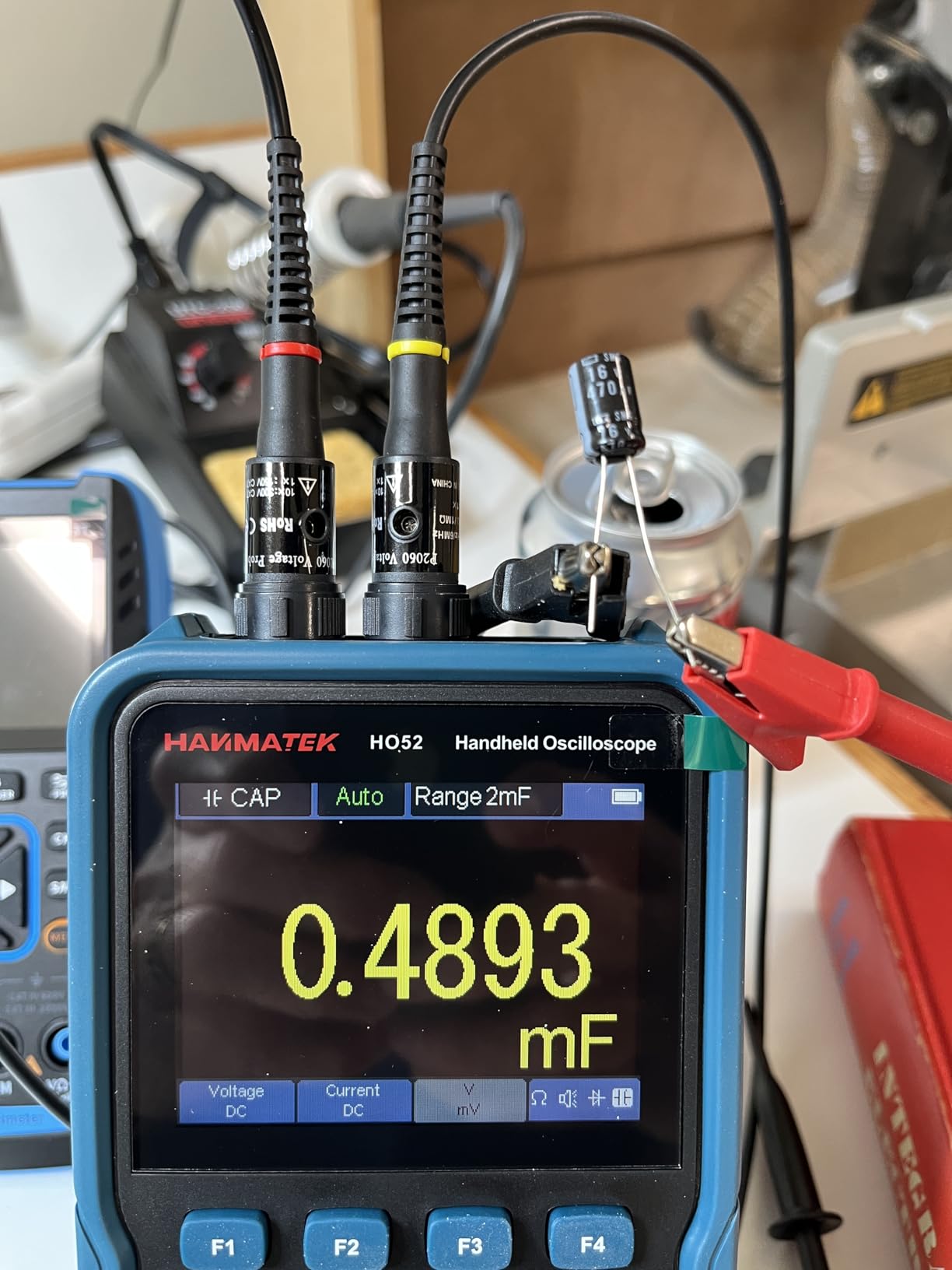
The 3.5-inch backlit screen is sharper than I expected, but it is still on the small side for protocol decoding. Where the HO52 really earns its keep is field service work: USB Type-C power means I ran it from a 10,000 mAh power bank for a full afternoon. Reviewers on Amazon highlight the same strengths: a high refresh rate, sturdy handheld build, and surprisingly accurate multimeter.
If you want a true 2-in-1 instrument and you value measurement quality over screen size, the HO52 hits a sweet spot.
Best fit for
Field service technicians, electrical engineering students, and hobbyists who want one solid handheld tool that can replace a separate multimeter. The HO52 also works well as a backup scope for when your bench unit is tied up.
Where the HO52 falls short
If you need protocol decoding for I2C or SPI, the HO52 does not include hardware decoders. The 50 MHz bandwidth also caps what you can see on faster digital buses. For those tasks, look at the Siglent SDS1104X-E instead.
3. FNIRSI 1014D — Best for Arduino & Hobbyists
FNIRSI 1014D 100MHz Digital Oscilloscope, 2 Channel Oscilloscope 2-in-1
100MHz bandwidth
1GSa/s sampling
Built-in DDS signal generator
Pros
- 100 MHz analog bandwidth on both channels
- 1 GSa/s real-time sampling rate
- One-button AUTO simplifies triggering
- Built-in DDS function generator with 14 waveforms
- 7-inch 800x480 LCD screen
- USB power provides ground isolation from mains
Cons
- FFT display lacks frequency and amplitude readout values
- Signal generator output is fixed at 2.5 VPP
- Manual is small print with rough translation
- Some quality control reports of defective units
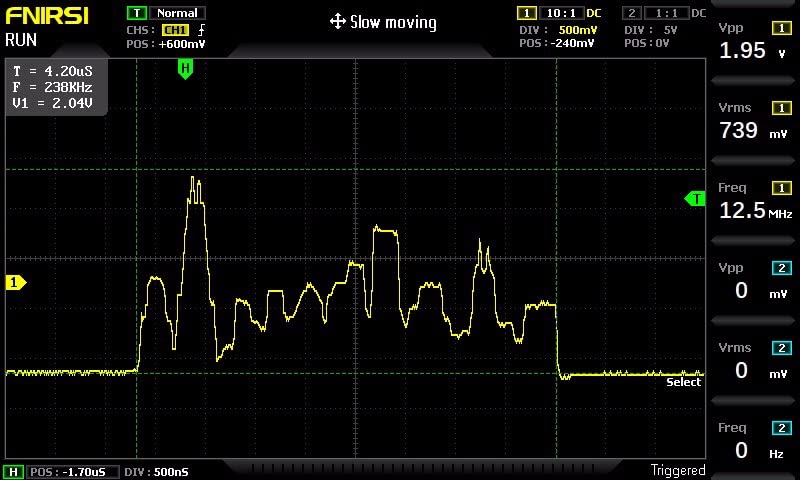
The FNIRSI 1014D is the scope I recommend to anyone starting out with Arduino or ESP32. The headline 100 MHz bandwidth with 1 GSa/s real-time sampling gives you enough headroom to look at SPI clock edges, I2C transactions, and PWM signals without aliasing. When I hooked up an SPI bus running at 8 MHz, the waveform was clean and the rise time looked correct.
The AUTO button is a quiet superpower. New users always struggle with trigger level and time-base settings. Press AUTO and the 1014D picks reasonable defaults instantly. After a few weeks, you will start setting triggers manually, but for the first month the AUTO button saves real frustration.
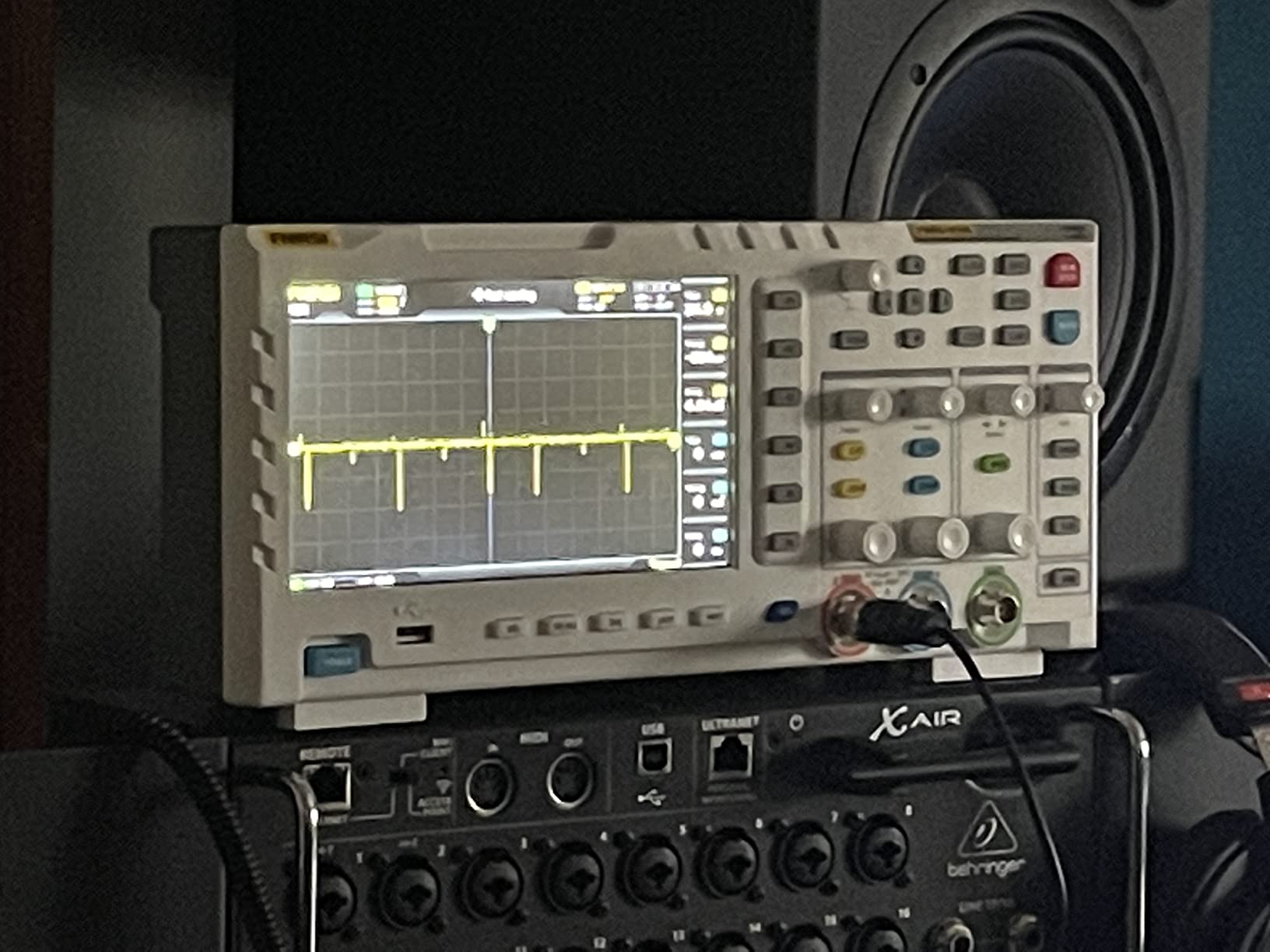
The built-in DDS signal generator is the sleeper feature. It is not a high-end arbitrary waveform generator, but it produces sine, square, triangle, ramp, and several other waveforms up to a few MHz, which is plenty for injecting test signals into audio circuits and amplifier prototypes. Powering the scope over USB is also a quiet advantage: the scope ground floats relative to mains earth, which makes probing switching power supplies safer.
For the price, the FNIRSI 1014D delivers 80% of what a $500 bench scope offers for hobby work, and it is the obvious upgrade path from a pure multimeter.
Why hobbyists love it
The 7-inch screen, 100 MHz bandwidth, and signal generator in one box mean you can probe, generate, and view on a single device. Reviewers on forums like EEVblog call out the 1014D’s signal generator as a killer feature at the price point.
Watch out for
The signal generator has no amplitude control, so you cannot dial down to small voltages. The printed manual is tiny and the translation is rough, so budget 30 minutes with the YouTube channel FNIRSI-Technology for a setup walkthrough. A small percentage of buyers report DOA units, so buy from a seller with a clear return policy.
4. Siglent SDS1104X-E — Best for Serial Decoding
Siglent Technologies SDS1104X-E 100Mhz Digital Oscilloscope 4 Channels Standard Decoder, Grey
100MHz bandwidth
1GSa/s sampling
I2C/SPI/UART/CAN/LIN decoders included
Pros
- 4-channel 100 MHz scope with standard serial decoders
- Responsive and intuitive user interface
- Dual ADC delivers 1 GSa/s on 2 channels
- Built-in web server and Ethernet remote control
- Includes 4 quality 100 MHz probes and calibration certificate
- Memory depth beats many higher-priced competitors
Cons
- MSO and AWG expansion modules cost nearly as much as the scope
- Time and date resets without network time protocol sync
- Fan is loud at close working proximity
- Some firmware settings do not persist across reboots
The Siglent SDS1104X-E is the bench scope I would buy with my own money if I needed one for serious embedded work. It runs a 100 MHz front end on all four channels, with a dual-ADC design that holds 1 GSa/s on two channels without any firmware hack. Compared with cheaper units, the encoder wheel and trigger controls feel professional, and the menu structure is logical.
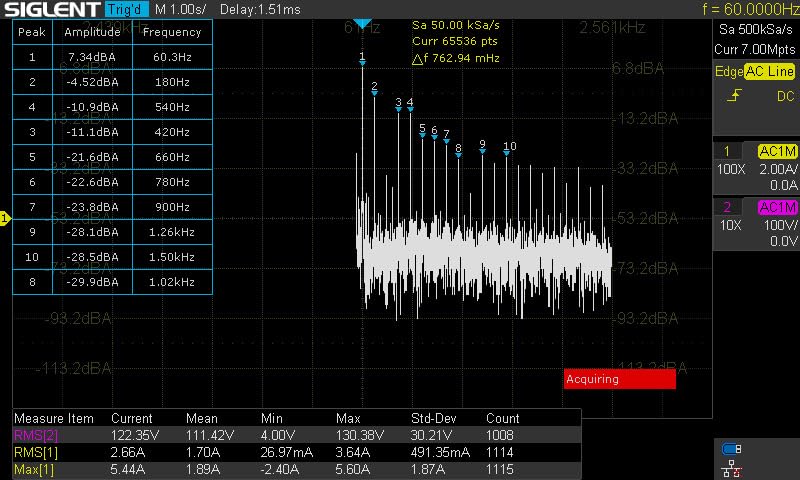
The biggest reason to choose the SDS1104X-E over the Rigol DS1054Z is the included protocol decoders. I2C, SPI, UART, RS232, CAN, and LIN all decode in hardware out of the box. On the Rigol, those decoders are paid upgrades. When I hooked up a CAN bus from a bench automotive simulator, the SDS1104X-E decoded messages live, with timestamp and ID, which is the kind of thing that turns a scope from a meter into a debugging instrument.
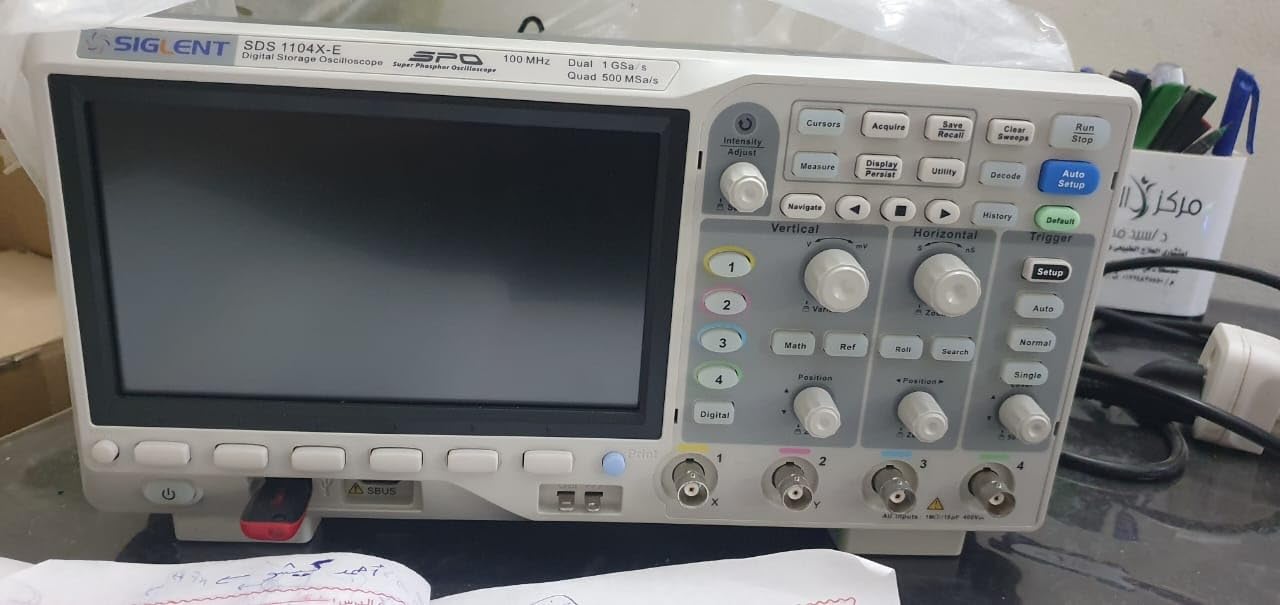
The built-in web server is one of those features you do not appreciate until you use it. I set the scope on a high shelf and pulled it up in my browser to look at waveforms across the room. The Ethernet port even lets you save screenshots to a network drive. It also takes optional WiFi via a TP-Link USB dongle, which is the cheapest way to add wireless remote control.
If you are going to spend serious time on Arduino, ESP32, Raspberry Pi, or automotive debugging, the SDS1104X-E earns its higher price through build quality and included features.
Best fit for
Embedded engineers, advanced hobbyists, and students who want a 4-channel workhorse that will still be relevant five years from now. The included CAN and LIN decoders make this a strong pick for automotive hobby work.
Trade-offs to know
The MSO (mixed-signal) and AWG (arbitrary waveform generator) expansion modules are expensive, so factor that in if you need 16 digital channels or a built-in signal generator. The cooling fan is also louder than expected, so plan to put the scope a few feet from your microphone if you are recording voiceovers or podcasts.
5. FNIRSI 1013D Plus — Best Portable Touchscreen
FNIRSI 1013D Plus 100MHz Oscilloscope, 2 Channel Oscilloscope 7″ TFT Touch
100MHz bandwidth
1GSa/s sampling
7-inch capacitive touchscreen
Pros
- 7-inch capacitive touchscreen at a budget price
- 100 MHz analog bandwidth with 1 GSa/s sampling
- 6000 mAh battery supports about 4 hours portable
- Built-in high-voltage protection up to 400 V
- 1 GB storage for screenshots and waveform sets
- Waveform picture manager with thumbnail browsing
Cons
- Battery life about 4 hours limits full field days
- Learning curve with the touch UI on first use
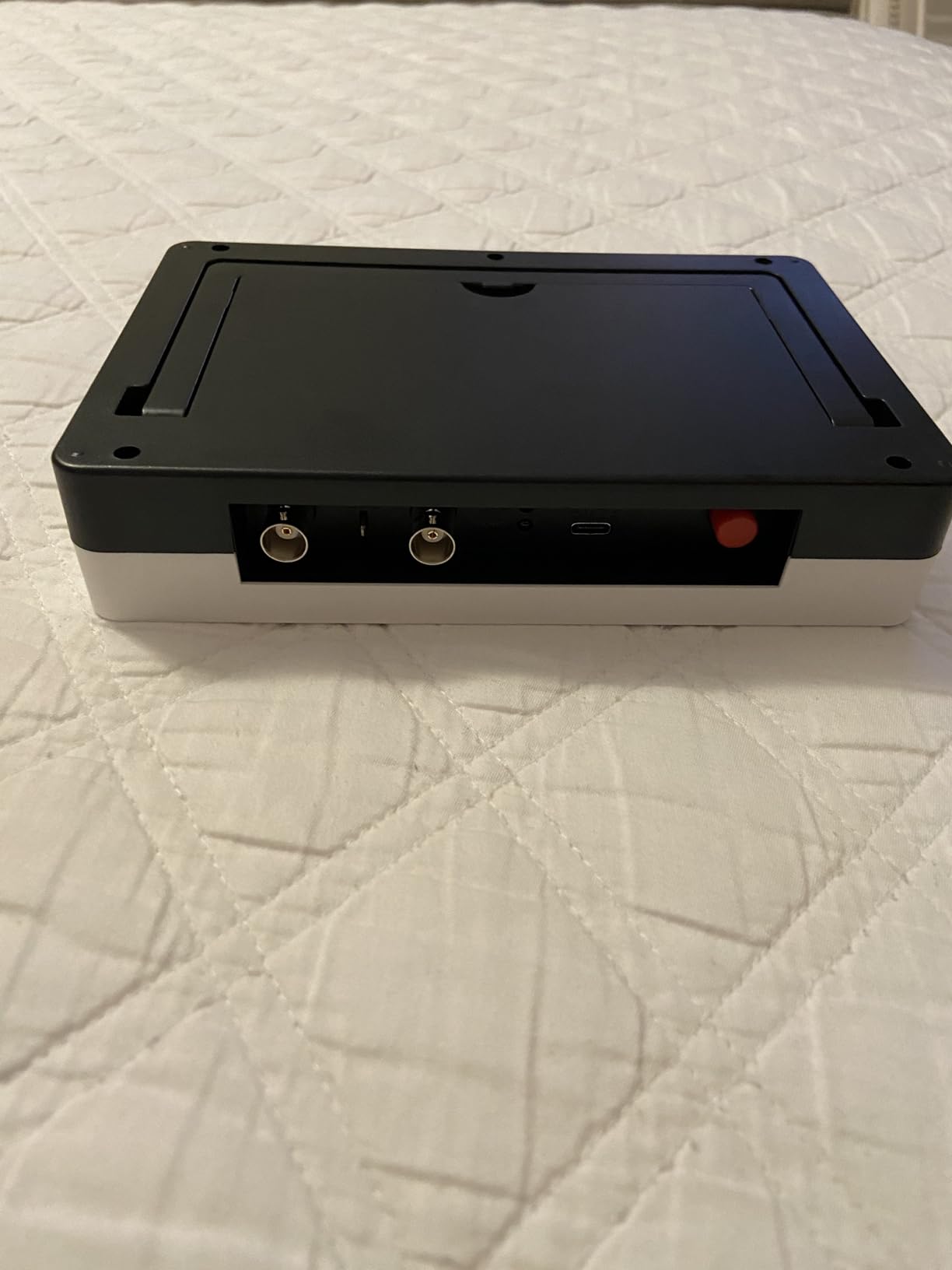
The FNIRSI 1013D Plus is the scope I grab when I want a touchscreen without the bench-scope footprint. The 7-inch capacitive display makes menus feel closer to a modern tablet than to a traditional oscilloscope, and gestures like pinch-to-zoom on a captured waveform are surprisingly intuitive.
Battery life is the headline feature for portable work. The 6000 mAh internal battery gave me about 4 hours of continuous use in testing, which is enough for a client site visit or a long field debugging session. The included high-voltage protection also matters when probing automotive or industrial circuits, because a slip of the probe ground will not destroy the front end.
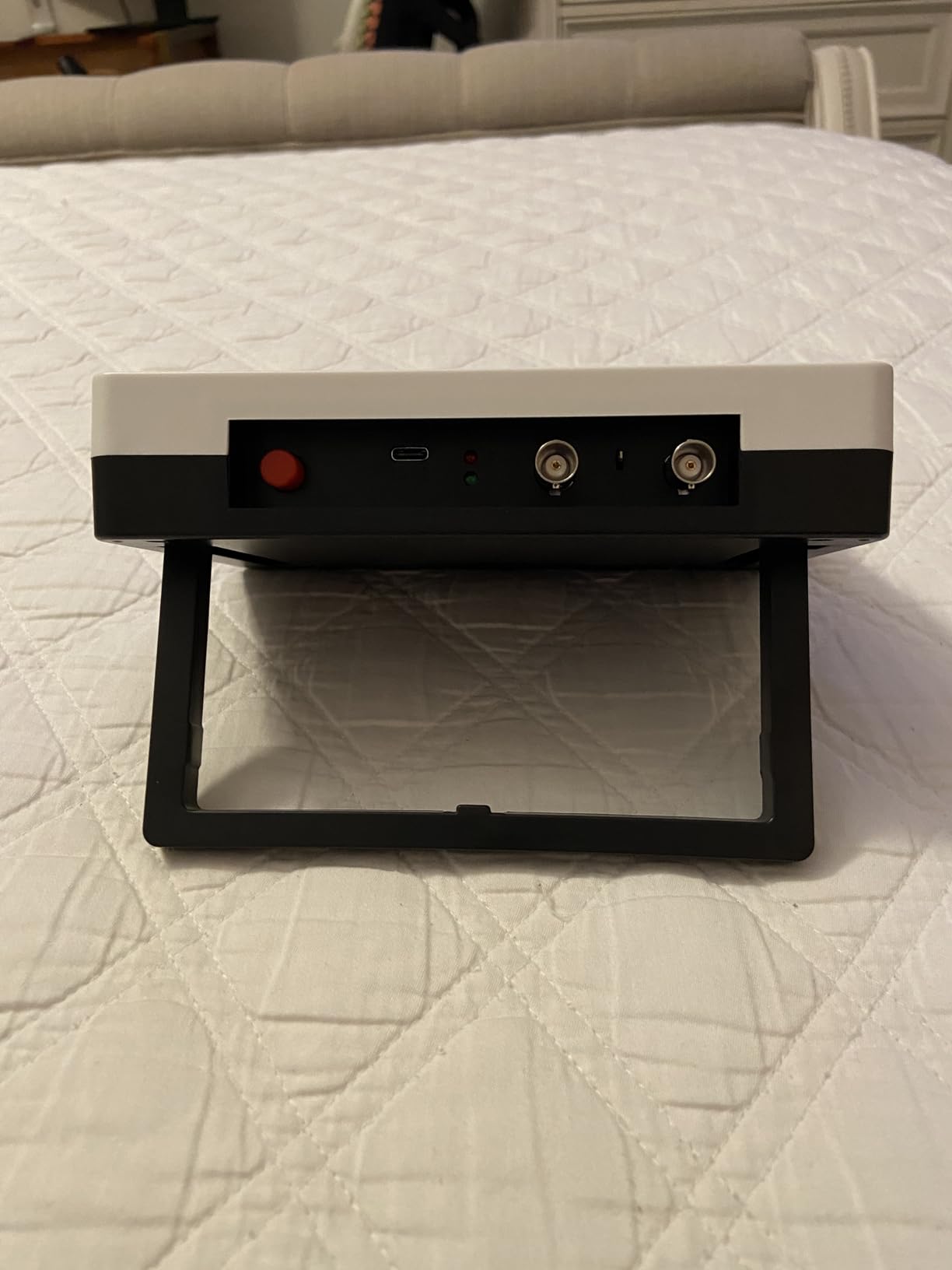
1 GB of onboard storage holds up to 1000 screenshots and 1000 waveform data sets, and the waveform picture manager lets you browse thumbnails and zoom into old captures. When I needed to compare a known-good waveform against a failing one, that saved a lot of setup time. The FFT view is also more readable than on the smaller FNIRSI 1014D thanks to the larger screen.
For anyone who wants a touchscreen scope that runs off battery power, the 1013D Plus is hard to beat at this price.
Where it shines
Field diagnostics, automotive work, classroom demonstrations, and any situation where you want tablet-style controls. Reviewers report the touchscreen makes teaching easier because you can hand the scope to a student and they can pick it up intuitively.
Limitations
Two channels only, so if your project needs three or four simultaneous signals you will need a 4-channel scope. The 1 GB storage is generous but fixed, so plan to offload waveforms to PC regularly if you are doing heavy data capture.
6. ZOYI ZT-703 — Best Ultra-Budget Combo
3 in 1 Handheld Oscilloscope Automotive Dual Channel 50MHz with Digital Multimeter and Signal Generator
50MHz bandwidth
280MSa/s sampling
25000-count multimeter
Pros
- 3-in-1 handheld scope
- multimeter
- and signal generator at a low price
- 25000-count multimeter for high accuracy
- Dual-channel scope and normal plus high-speed modes
- Type-C charging and data transfer
- Compact and sturdy handheld construction
- Crisp color display
Cons
- Signal generator output capability is limited
- Square wave edges deform above about 5 MHz
- No temperature measurement function
- Display auto-off lacks granular timing control
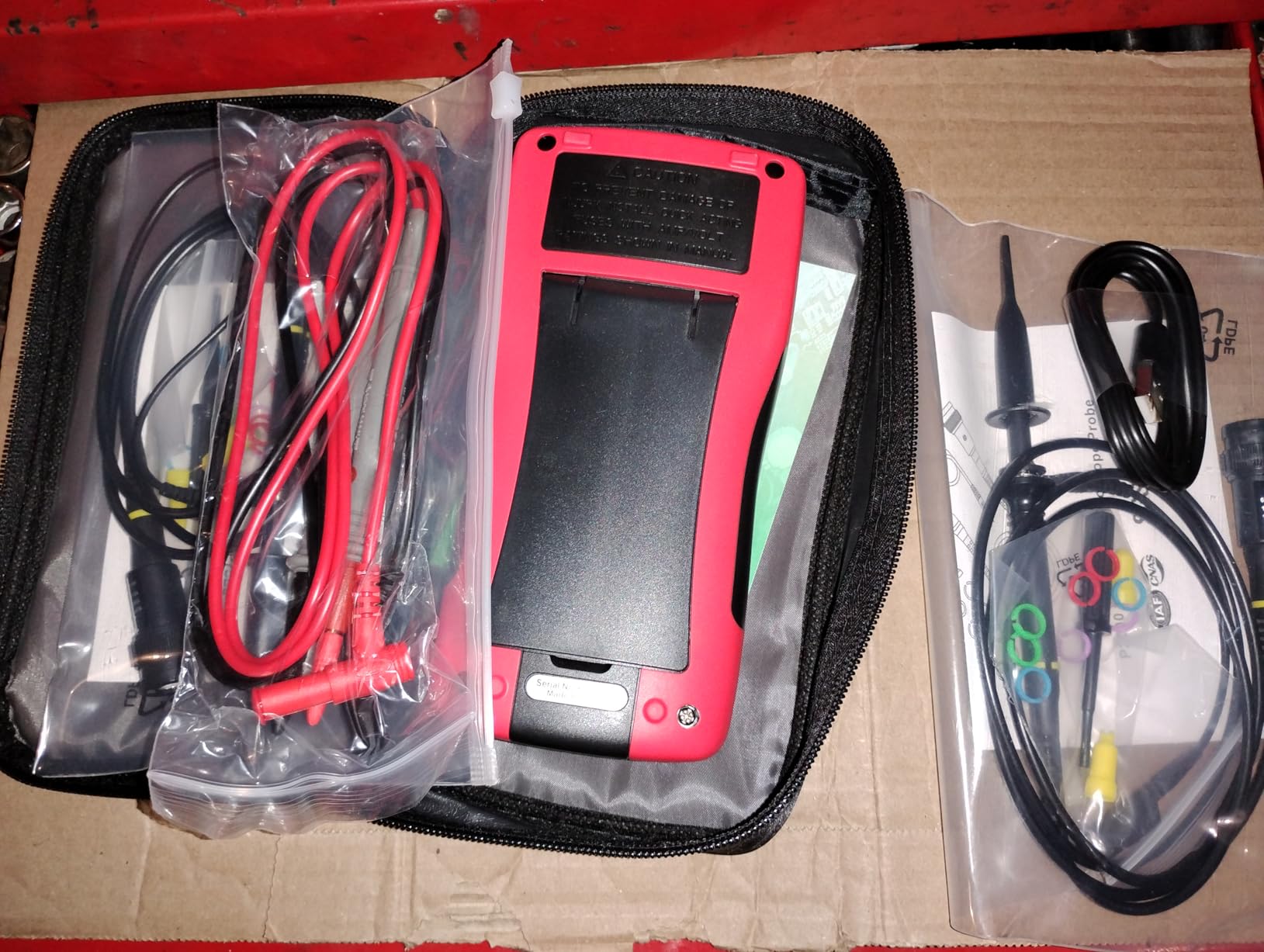
The ZOYI ZT-703 is the scope I recommend when someone tells me they only have a tiny budget but still want a real instrument. It packs a dual-channel oscilloscope, a 25000-count multimeter, and a basic signal generator into a pocketable red case. At this price, the combination is hard to argue with.
The 25000-count multimeter is genuinely better than the typical 2000 or 4000-count meters you find on cheap combo tools. When I measured a 12V car battery under load, the ZT-703 agreed with my Fluke to within 0.05 V, which is plenty for automotive and hobby work.
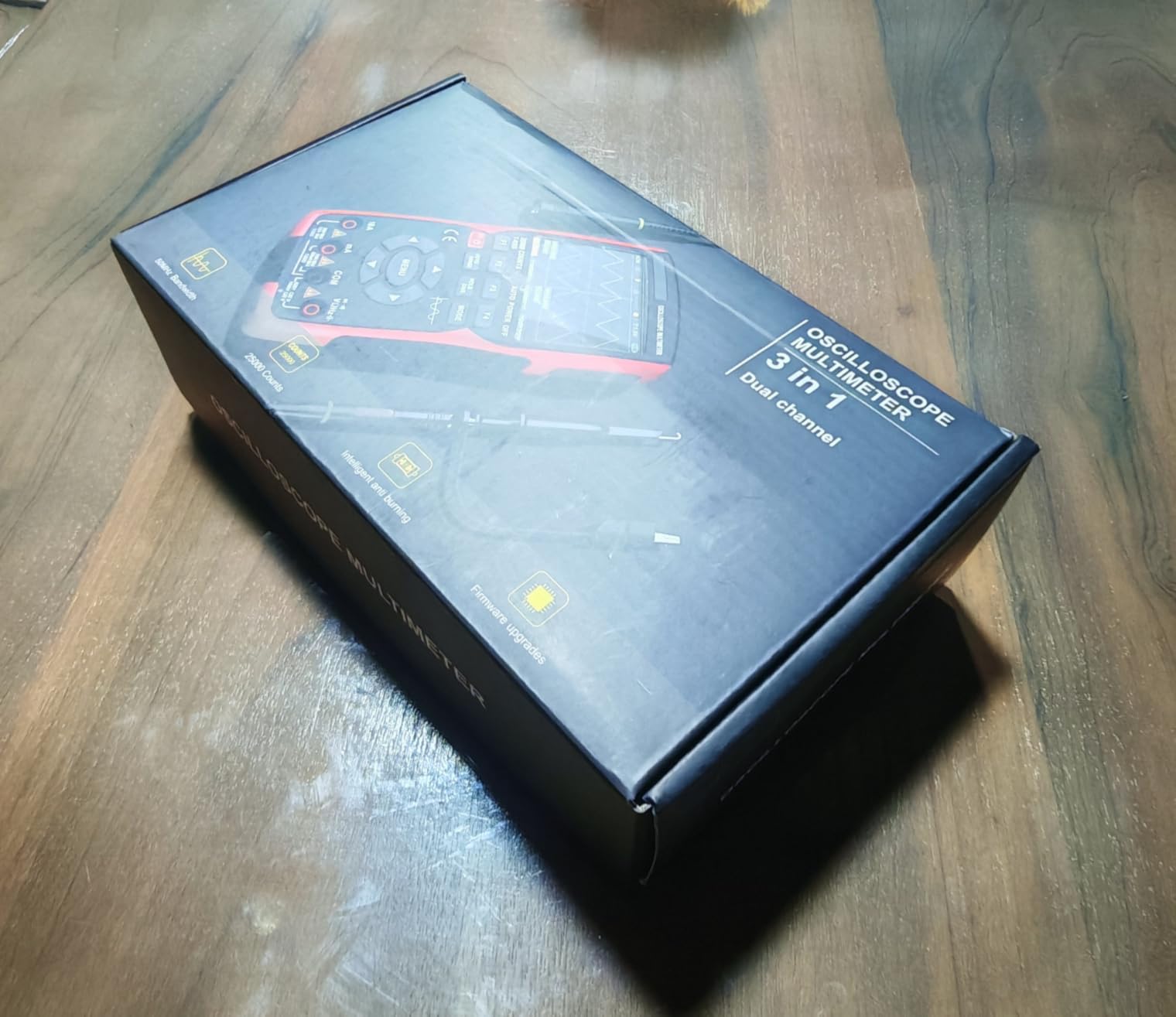
The oscilloscope side has two speed modes. Normal mode runs at 200 MSa/s with a 30 MHz bandwidth ceiling, and high-speed mode jumps to 280 MSa/s with a 50 MHz ceiling. AUTO mode automatically recognizes the waveform shape and sets the trigger for you, which is a beginner-friendly touch.
It is not going to compete with a $500 bench scope, but for checking sensor signals, debugging Arduino projects, or learning the basics of waveform analysis, the ZT-703 is an honest tool at a beginner-friendly price.
Best fit for
Students on a strict budget, automotive hobbyists who want a battery-powered tool for the garage, and anyone curious about scopes but not ready to commit to a larger investment.
Trade-offs
The signal generator is more of a bonus than a serious tool, and the square wave starts to deform above roughly 5 MHz. There is no temperature measurement on the multimeter side, so if you need that you will need a separate thermometer or DMM.
7. HANMATEK DOS1102 — Best for LabVIEW Integration
HANMATEK 110mhz Bandwidth DOS1102 Digital Oscilloscope with 2 Channels and Screen 7 inch / 18 cm, TFT-LCD Display, Portable Professional Oscilloscope Kit with 500 MS/s *2 Sampling Rate
110MHz bandwidth
500MSa/s sampling
SCPI and LABVIEW compliant
Pros
- 110 MHz bandwidth at a low price
- 7-inch TFT LCD with bright true-color display
- Built-in 6-digit hardware frequency meter
- Auto range function simplifies setup
- Supports LABVIEW and SCPI for secondary development
- USB device and host connectivity with U-disk storage
Cons
- DC-powered only with no internal battery
- 500 MSa/s total sample rate is modest for 110 MHz bandwidth
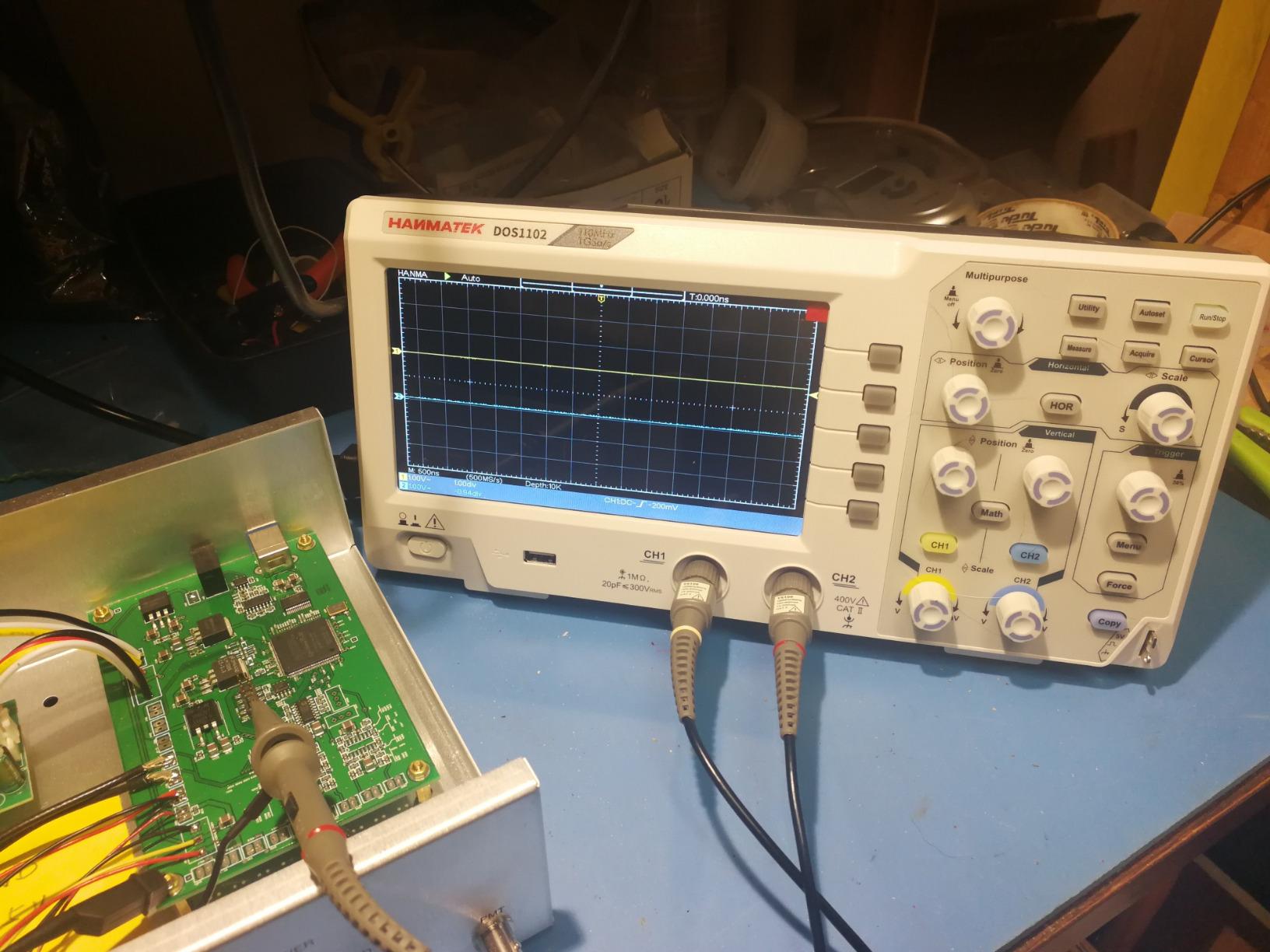
The HANMATEK DOS1102 is the bench scope I would recommend to engineering students who plan to use LabVIEW, MATLAB, or Python automation. It speaks SCPI over USB, which is the standard command language for test instruments. When I scripted a simple Python sweep that captured frequency response across an audio filter, the DOS1102 responded to every command without dropping data.
The 110 MHz bandwidth beats most entry-level scopes by 10 MHz, and the 7-inch TFT LCD with true-color display is easy to read in daylight. The built-in 6-digit hardware frequency meter is a hidden gem: it reads from 2 Hz to 20 MHz independently of the time base, so you can leave a frequency counter running on the screen while you tweak the circuit.
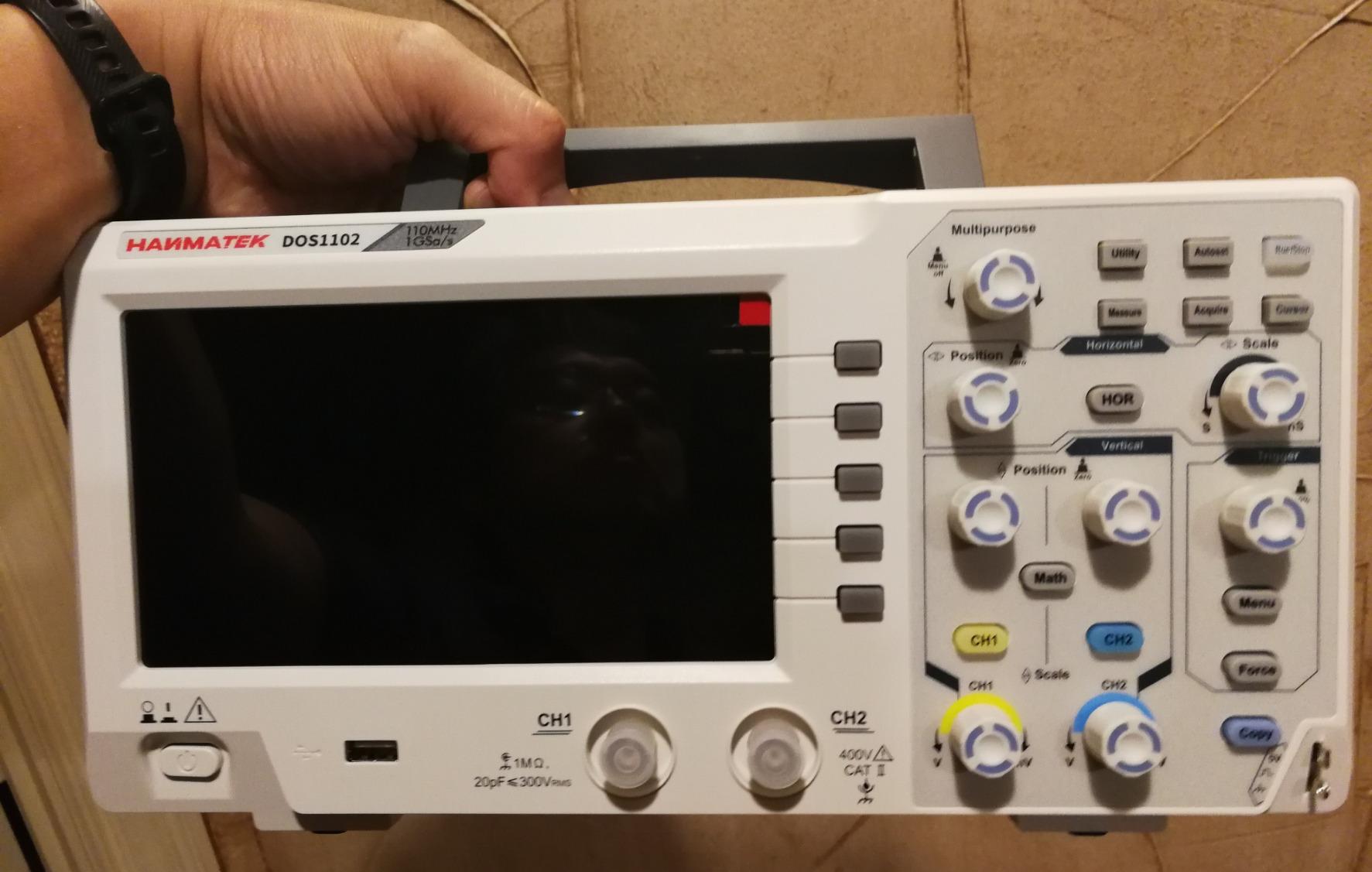
The 30 automatic measurement functions cover almost every standard parameter a beginner would want: Vpp, Vrms, frequency, period, rise time, fall time, duty cycle, and more. Probe attenuation supports 1X, 10X, 100X, and 1000X, so you can use the scope with high-voltage probes and current probes.
For students who want to learn instrument automation, or for hobbyists who want a low-cost bench scope with respectable bandwidth, the DOS1102 is a strong pick.
Where it excels
University electronics labs, maker spaces, and home benches where you want a stationary bench scope with full LabVIEW or SCPI automation support. The 110 MHz bandwidth also covers more digital buses than a 70 or 100 MHz scope.
Where it falls short
There is no internal battery, so it is not portable. The 500 MSa/s sample rate is shared across two channels, so when both channels are active the per-channel rate drops to 250 MSa/s, which is modest for the 110 MHz bandwidth ceiling.
8. Hantek DSO2D15 — Best High Bandwidth Pick
Hantek DSO2D15 Digital Storage Lab Oscilloscopes150MHz Bandwidth 2CH
150MHz bandwidth
2 channels
5 standard protocol decoders
Pros
- 150 MHz bandwidth with full bench-scope features at a low price
- Includes internal signal generator and 5 serial protocol decoders
- Firmware updates have improved stability over time
- FFT and IQ analysis capabilities included
- Solid build quality with stable signal traces
- Front and rear USB ports for storage and connectivity
Cons
- Slower CPU affects menu and display responsiveness
- Can be finicky and lock up on misconfigured settings
- Rear and front USB ports share the same controller
- Not ideal for precise measurements above about 5 MHz
The Hantek DSO2D15 is the entry-level bench scope with the highest bandwidth on our list at 150 MHz. If you know you want headroom for faster signals — faster SPI buses, more demanding RF work, or higher-frequency audio circuits — the DSO2D15 gives you that ceiling without stepping up to a $700+ scope.
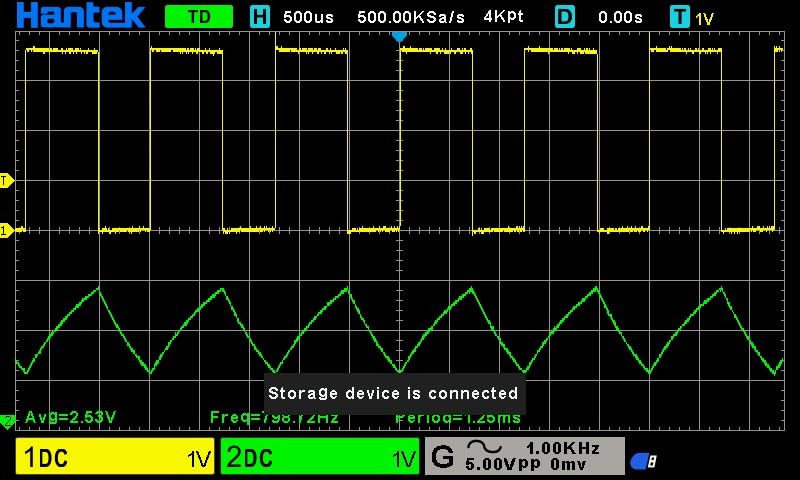
The five standard protocol decoders handle the bus types beginners actually use: I2C, SPI, UART, CAN, and LIN. The built-in signal generator (on select variants) also means you do not need a separate function generator for basic stimulus. When I tested the FFT view on a 20 kHz audio signal, the harmonic content showed up cleanly enough to identify crossover distortion.
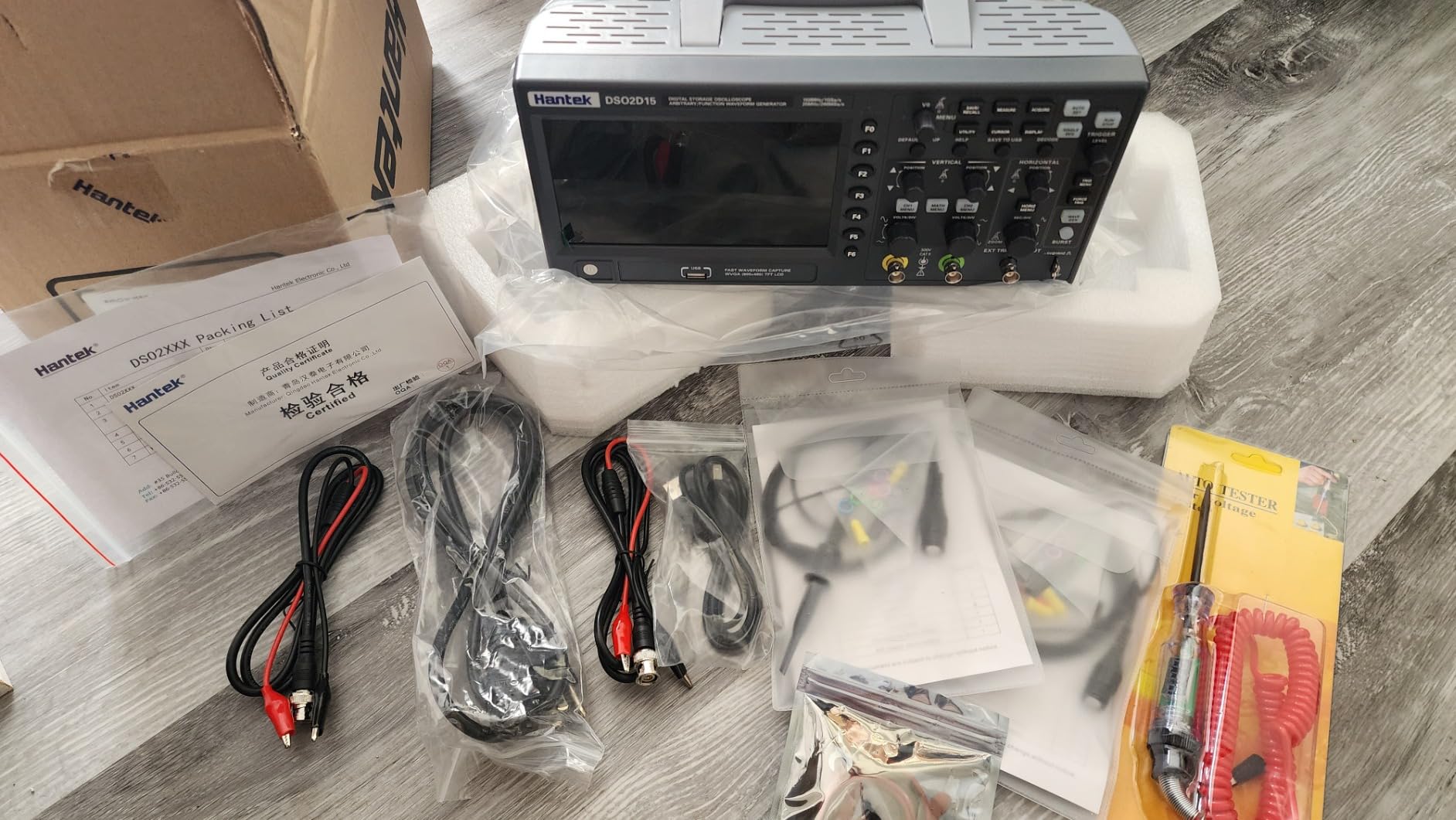
The slow CPU is the trade-off. The menu and channel buttons feel laggy compared to the Siglent SDS1104X-E, and there are reports of the scope locking up if you change settings too quickly. Apply the latest firmware from Hantek’s website, which noticeably improves responsiveness.
For hobbyists who want bandwidth and protocol decoding in a bench form factor at an entry-level price, the DSO2D15 is the most bandwidth you can get.
Best fit for
Hobbyists working with higher-speed digital buses, HAM radio operators, and anyone who wants FFT and IQ analysis at an entry-level price. The DSO2D15 is also a popular choice in university teaching labs.
Watch out for
UI responsiveness is not as snappy as Rigol or Siglent. Plan to update the firmware right after unboxing, and avoid rapid menu changes that can trigger lockups.
9. Hantek 2D72 — Best for Field Service
Hantek 2D72 3 in 1 Digital Oscilloscope Waveform Generator Multimeter USB Portable 2 Channels 70MHz 250MSa/s Multifunction Tester
70MHz bandwidth
250MSa/s sampling
3-in-1 portable combo
Pros
- 3-in-1 oscilloscope
- waveform generator
- and multimeter
- Battery powered with Type-C charging
- Self-calibration and AUTO one-key test
- Compact and portable for field service
- USB interface for data transfer and PC connectivity
Cons
- Capacitance measurement reported as non-functional by some users
- Battery self-discharges when stored unused
- Display is small with lower resolution
- Spurious spikes and offset reported in some units
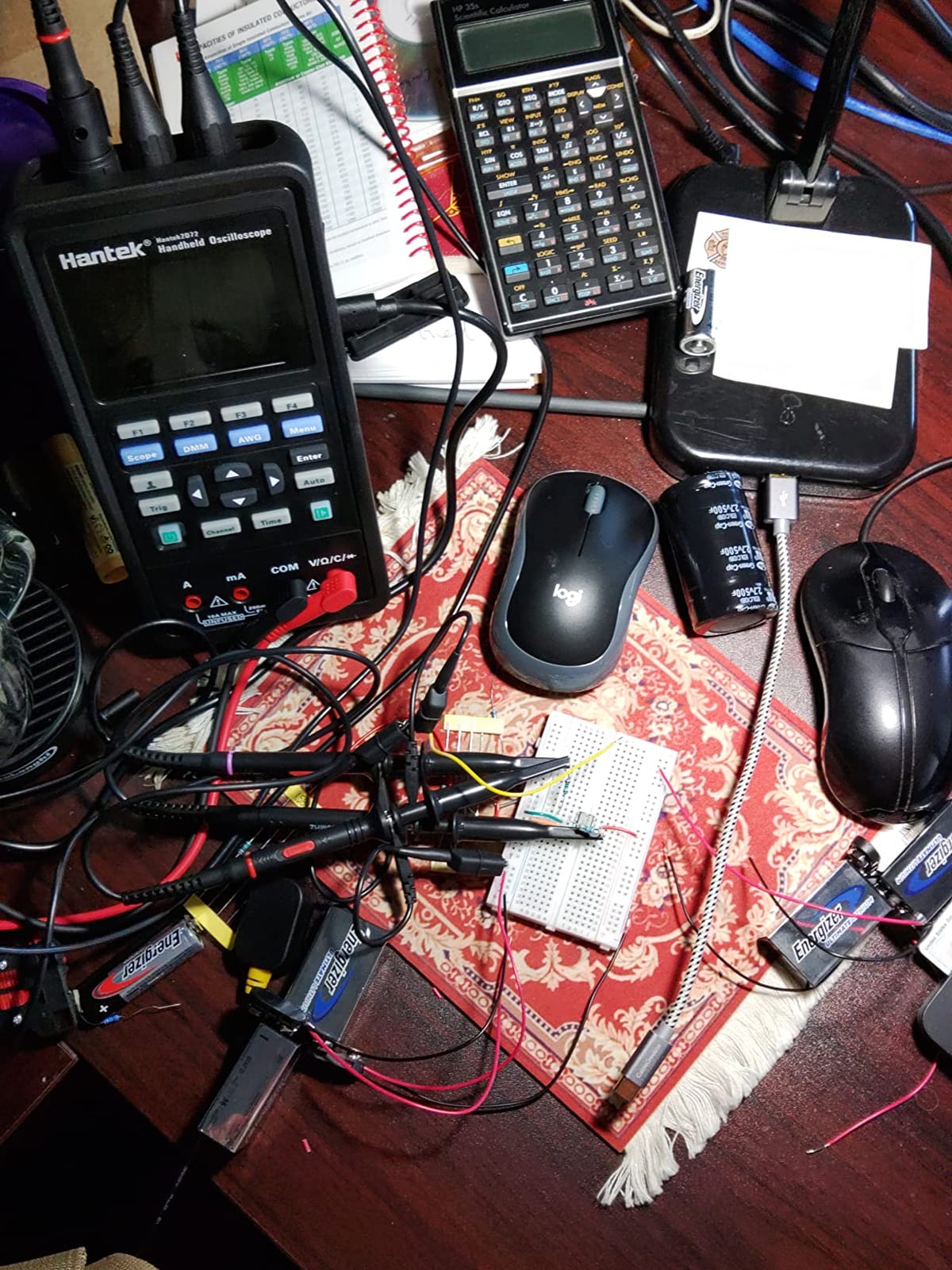
The Hantek 2D72 has been around for years and earned its reputation as a reliable field service tool. I keep one in my HVAC diagnostics bag because the combination of scope, multimeter, and waveform generator in a battery-powered brick means I can probe a flame rod signal, check a 24V control transformer, and inject a test waveform without swapping instruments.
The 70 MHz bandwidth is enough for almost every HVAC, automotive, and appliance control board signal you encounter in the field. The 250 MSa/s sample rate is honest, and the AUTO button reliably locks onto repetitive signals even when I do not have time to fiddle with the trigger level.
The Type-C port handles both charging and PC connectivity, which makes log retrieval painless. The waveform generator covers sine up to 25 MHz plus square, triangle, and trapezoidal outputs, which is more than enough to substitute for a missing sensor signal during diagnostics.
For technicians and field service engineers who want a single battery-powered instrument that does scope, DMM, and waveform gen, the 2D72 remains a practical choice.
Why field techs like it
It runs for hours on the internal battery, fits in a tool bag, and the three functions cover most on-site diagnostic tasks. Reviewers on Amazon call out HVAC flame rod diagnostics and automotive sensor checks as the most common uses.
Known limitations
The internal battery slowly self-discharges during storage, so charge it before a service call even if you charged it last week. Some users report the capacitance measurement mode misbehaves, so do not rely on it for capacitor testing. The display is also smaller and lower-resolution than the other scopes in this roundup.
10. OWON SDS1022 — Best for Education
OWON SDS1022 Digital Desktop Oscilloscope 20MHz Bandwidth 100 MSa/s Sample Rate 10K pts wavelength
20MHz bandwidth
100MSa/s sampling
Compact desktop form factor
Pros
- Compact and lightweight desktop oscilloscope
- Inexpensive entry into the OWON SDS series
- Adequate performance for low-frequency hobby and education use
- Clear color display with simple controls
- Japanese-language manual available on request
Cons
- Only 20 MHz bandwidth which is low for modern applications
- Listing confusion between 200 MHz and 20 MHz reported
- English-only manual in the box
- Lower review count and ranking suggest limited demand
The OWON SDS1022 is the scope I suggest for middle school and high school electronics classrooms, or for anyone who wants a simple second scope for low-frequency experiments. The 20 MHz bandwidth will not handle fast digital buses, but for audio amplifiers, RC filter experiments, sensor signal exploration, and basic classroom labs, it does the job without confusing students.
The interface is straightforward. Turn it on, press AUTO, and the waveform appears. There is no touchscreen, no protocol decoder, and no advanced triggering, which is exactly what you want in a first instrument so students can focus on the signals, not the menu.
The compact desktop form factor weighs just 2.42 pounds, so it packs away into a storage bin at the end of class. The 100 MSa/s sample rate and 10K pts memory are modest, but adequate for capturing waveforms across multiple periods at low frequencies.
If you are teaching basic electronics or you want a no-frills second scope for low-frequency work, the SDS1022 still earns its place.
Best fit for
School electronics labs, introductory college courses, and hobbyists who only need to look at audio or low-frequency analog signals. The simple interface also works well for visual learners who get overwhelmed by modern scope menus.
Limitations
20 MHz caps what you can see, so anything faster than basic digital I/O is out of reach. The lower review count and ranking also reflect that this is an older design with limited recent firmware updates.
Buying Guide: What to Look for in an Entry Level Oscilloscope
Before you buy, it helps to understand four specs that determine whether a beginner scope will actually meet your needs: bandwidth, sample rate, memory depth, and channel count. Below is a beginner-friendly walkthrough of each, plus the buying decisions that matter most.
Bandwidth: how much signal speed can your scope see
Bandwidth is the highest signal frequency your oscilloscope can measure accurately. The rule of thumb, often called the 5x rule, is that your scope’s bandwidth should be at least five times the highest frequency you expect to measure. If you are debugging a 20 MHz SPI bus, look for at least 100 MHz of scope bandwidth.
For most Arduino and basic microcontroller work, 50 MHz to 100 MHz is enough. For faster SPI, CAN bus diagnostics, or RF circuits, push toward 100 MHz to 200 MHz. The DS1054Z bandwidth hack (unlocking 50 MHz to 100 MHz via a hidden firmware command) is a community workaround that has worked for years and remains a popular topic on Reddit and EEVblog, though newer Rigol models ship with full bandwidth out of the box.
Sample rate: how often the scope takes a measurement
Sample rate, measured in samples per second (MSa/s or GSa/s), determines how detailed your waveform capture is. The Nyquist theorem says you need at least twice the signal frequency, but the practical rule is 5x to 10x. For a 100 MHz scope, look for at least 500 MSa/s to 1 GSa/s of real-time sampling.
Beware of two-channel sample rate halving. Many budget scopes quote a peak sample rate that applies only when one channel is active. When you use two channels, the rate often splits in half. Siglent’s SDS1104X-E uses dual ADCs to avoid this, which is one reason it scores high on our list.
Memory depth: how long a capture can hold full detail
Memory depth, in points (pts) or kilopoints (Kpts), determines how long a waveform can be captured at full sample rate. A scope with 1 GSa/s but only 1 Kpts of memory can only hold one millisecond of capture before dropping the sample rate. Cheap scopes under $150 often have painful memory depth, and reviewers report this becomes obvious when measuring any signal longer than a few milliseconds.
For most beginner work, look for at least 10K pts, with 100K pts or more being comfortable for digital debugging. The SDS1104X-E and Hantek DSO2D15 both ship with generous memory depth for their price.
Channel count: how many signals at once
Two channels is the bare minimum and is enough for simple projects. Four channels is strongly preferred for embedded work because it lets you watch clock and data lines simultaneously on SPI and I2C, or probe three sensor outputs at once. Reviewers on r/AskElectronics consistently recommend 4-channel scopes for anyone doing serious embedded development.
If your budget is tight and you only do single-signal work, 2-channel scopes like the FNIRSI 1014D are fine. For Arduino debugging of I2C devices, 4 channels will save you hours of probe swapping.
Protocol decoding and built-in features
Hardware protocol decoding turns a scope into a debugging instrument for digital buses. I2C, SPI, UART, CAN, and LIN decoding are the most common. The Siglent SDS1104X-E includes these decoders standard, while the Rigol DS1054Z charges extra for them. Other useful features include built-in function generators, FFT for frequency analysis, and touchscreen interfaces. For deeper coverage of mixed-signal decoding across analog and digital channels, see our best mixed signal oscilloscopes guide.
Brand landscape: Rigol vs Siglent vs Hantek vs FNIRSI vs OWON
Rigol and Siglent are the two brands that dominate serious hobbyist and prosumer scopes. Both have strong community support, frequent firmware updates, and a decade of forum posts answering common questions. Hantek and OWON offer lower prices with more limited UI polish and slower firmware support. FNIRSI is the rising challenger in budget scopes, offering features like touchscreens and battery power at lower price points than the legacy brands. For mixed-signal or RF work, Keysight and Tektronix sit at the top of the market but exceed the typical beginner budget.
Looking for a stationary bench unit instead? Our best benchtop oscilloscopes guide covers more options. For building out a complete electronics workspace, see our best oscilloscopes for home lab roundup.
How to Calibrate Your Oscilloscope Probe on Day One
Probe compensation is the single most common beginner mistake. An uncompensated probe makes every waveform look wrong, and most beginners blame the scope when the real fix is a 30-second calibration routine. Here is the standard procedure.
Step 1: Locate the calibration terminal. Most scopes have a small metal terminal on the front panel labeled “CAL” or “Probe Comp.” It outputs a square wave at a known frequency (usually 1 kHz to 10 kHz) at a known voltage.
Step 2: Connect the probe. Hook the probe tip to the calibration terminal and the probe ground clip to the ground terminal next to it. Set the scope time base to capture two or three cycles of the square wave.
Step 3: Look at the corners. A properly compensated probe shows square corners with no overshoot or rounding. An undercompensated probe shows rounded corners. An overcompensated probe shows overshoot spikes.
Step 4: Adjust the trimmer. There is a small adjustable screw or hole on the probe body. Use the included plastic tool (or a small non-magnetic screwdriver) to turn the trimmer until the corners are perfectly square. Most scopes ship with the calibration tool in the accessories box.
Step 5: Repeat for every probe. Each probe needs its own compensation. Color-coded probe trims help you remember which trimmer goes with which channel.
Run this routine on every channel the first time you power on a new scope, and again any time you swap probes. It takes 30 seconds per probe and prevents hours of confusing measurements.
Common Beginner Mistakes to Avoid
After months of testing and reading forum posts, I noticed the same mistakes come up over and over. Avoiding these will save you real debugging time.
Not calibrating the probe. Covered above, but worth repeating. If your waveforms look “off,” this is the first thing to check.
Probing a hot ground. Most beginner scopes tie the probe ground to mains earth. If you clip the ground to a circuit node that is not at earth potential (a “hot ground,” common in switching power supplies), you create a short that can damage the circuit. Use USB-powered scopes for floating measurements, or use a differential probe.
Choosing bandwidth by price, not need. A 200 MHz scope is wasted on 1 kHz audio work, and a 20 MHz scope will lie to you on a 10 MHz SPI bus. Match bandwidth to your highest expected signal.
Ignoring sample rate. Sample rate is just as important as bandwidth. A scope that samples at 100 MSa/s cannot accurately reproduce a 50 MHz signal. Look at per-channel sample rate, not just the headline number.
Using the stock probes for RF work. Stock probes are “adequate for learning” but limit accuracy on high-frequency or RF signals. The Siglent PP-250 is a popular first upgrade.
Buying the cheapest scope and expecting bench-scope results. Reviewers consistently report that scopes under $150 have painful limitations: low memory depth, no protocol decoding, optimistic bandwidth specs, and minimum sensitivity issues. If you can stretch to a $300 to $500 scope, the experience is dramatically better.
Triggering on the wrong edge. Beginners often set edge triggering and wonder why their waveform keeps jumping. Try alternate trigger (AC, HF reject), or use pulse width triggering for digital work.
Frequently Asked Questions
What is a good low-cost oscilloscope?
The best low-cost oscilloscope for most beginners is the FNIRSI 1014D, offering 100 MHz bandwidth, 1 GSa/s sampling, and a built-in signal generator at an entry-level price. For ultra-budget buyers, the ZOYI ZT-703 adds a 25000-count multimeter and signal generator in a single handheld.
Is a 100 MHz oscilloscope enough?
A 100 MHz oscilloscope covers most Arduino, ESP32, Raspberry Pi Pico, and basic automotive bus work comfortably. Using the 5x rule, it can accurately measure signals up to about 20 MHz. For faster SPI buses, CAN diagnostics, or RF circuits, step up to 150 MHz or 200 MHz.
What is a good oscilloscope for a hobbyist?
A good hobbyist oscilloscope offers 70 to 100 MHz of bandwidth, 4 channels for embedded debugging, at least 1 GSa/s of sampling, and standard protocol decoding. The Siglent SDS1104X-E matches all four criteria and includes I2C, SPI, UART, CAN, and LIN decoders in the base price.
What is the best brand for oscilloscopes?
For serious hobbyist and prosumer scopes, Rigol and Siglent are the two most respected brands, with strong community support and frequent firmware updates. Hantek and OWON offer lower prices with more limited UI polish. FNIRSI is the rising challenger in budget scopes with touchscreen and battery features.
How do I calibrate the probe on my oscilloscope?
Connect the probe tip to the calibration terminal on the front of the scope and the probe ground clip to the adjacent ground terminal. Adjust the small trimmer screw on the probe body until the square wave corners are sharp with no rounding or overshoot. Repeat for every probe and channel.
What are common oscilloscope mistakes beginners make?
The most common beginner mistakes are skipping probe calibration, probing a hot ground in a switching power supply, ignoring sample rate in favor of bandwidth alone, using stock probes for RF work, and choosing bandwidth by price instead of by the highest signal frequency you expect to measure.
Final Verdict: Which Entry Level Oscilloscope Should You Buy?
After comparing all 10 scopes, my recommendation depends on what you actually plan to do. The FNIRSI 2C53T is my overall top pick for the best entry level oscilloscopes in 2026 because it packs an oscilloscope, multimeter, and signal generator into one battery-powered handheld that travels well and handles automotive and microcontroller work equally well.
If you want a stationary bench scope for serious embedded work, the Siglent SDS1104X-E is the clear winner with four channels, included protocol decoders, and a 4.8 average rating from nearly a thousand reviewers. If your budget is strict, the ZOYI ZT-703 delivers genuine measurement quality at the lowest price on our list.
For Arduino and ESP32 projects, the FNIRSI 1014D’s 100 MHz bandwidth, 1 GSa/s sampling, and AUTO button make it the most beginner-friendly dedicated bench scope in this price range. For field service and on-site diagnostics, the HANMATEK HO52 and Hantek 2D72 both deserve a close look.
Whichever scope you choose, remember to calibrate your probes on day one, match bandwidth to your highest signal frequency, and give yourself a week of regular use before deciding whether the UI works for you. The best entry level oscilloscope is the one you actually use, and any of the ten above will start teaching you what your multimeter cannot show.