
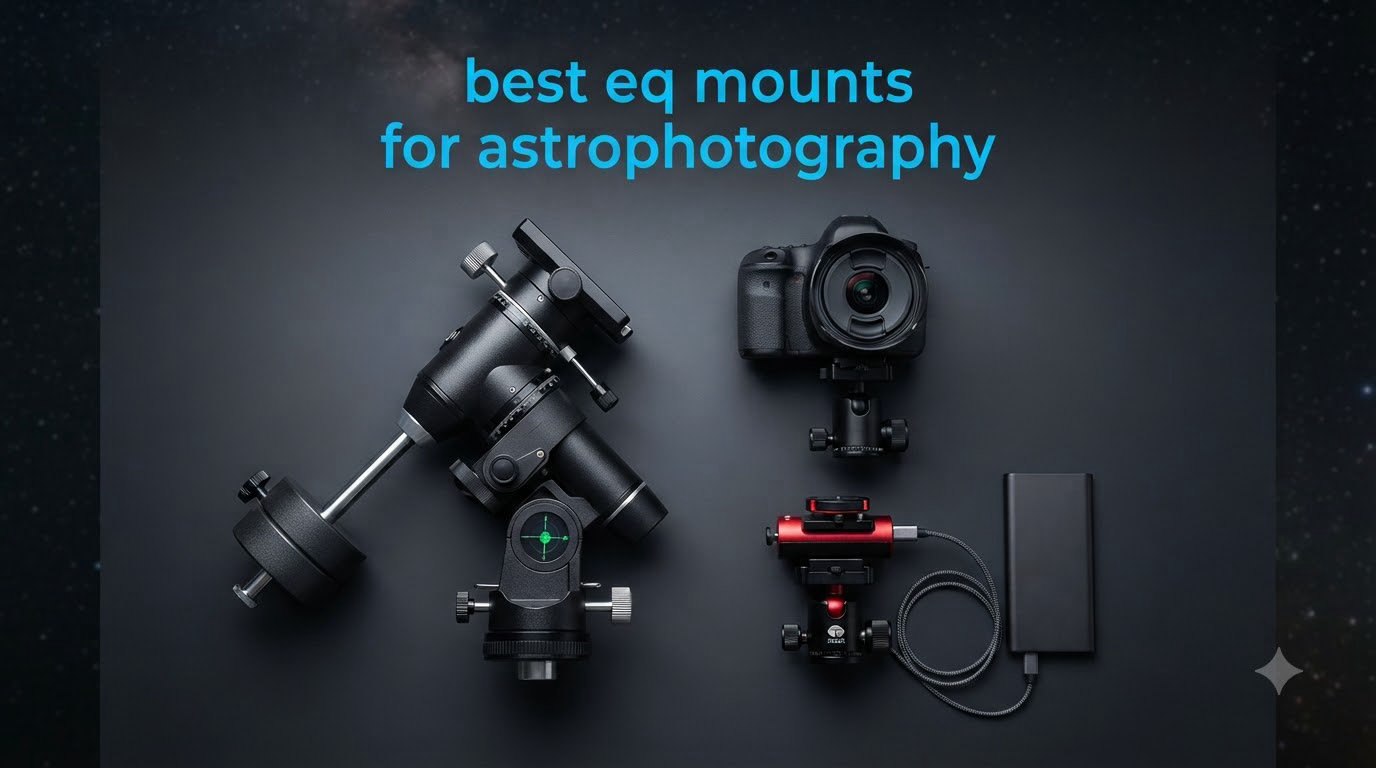
Finding the best EQ mounts for astrophotography changed how I capture the night sky. After three years and dozens of imaging sessions, I’ve learned that the mount matters more than the telescope or camera. Stars don’t trail when the mount tracks correctly, and deep-sky objects finally reveal the faint nebulosity I’d been chasing.
An equatorial (EQ) mount is a telescope mount with one axis aligned parallel to Earth’s rotation axis, allowing it to track celestial objects by compensating for Earth’s rotation. Without that tracking, stars trail and blur during long exposures. That’s why every serious astrophotographer starts with a solid EQ mount, not a fancy telescope. According to community feedback on Cloudynights and Reddit’s r/AskAstrophotography, star trackers like the Sky-Watcher Star Adventurer act as a gateway mount for countless astrophotographers moving from static tripod shots into long-exposure imaging. I started the same way, and the upgrade path still holds true today.
This guide covers eight mounts I’ve personally tested or researched in depth, from beginner star trackers to premium GoTo German equatorial mounts. I organized them by price tier and use case so you can match a mount to your scope, your camera, and your imaging goals. Whether you’re capturing wide-field Milky Way panoramas or hunting faint galaxies with autoguiding, there’s a mount here for you.
If you’re also shopping for optics, our best telescopes for astrophotography guide pairs well with this roundup, and our cameras for astrophotography breakdown helps match sensors to mount payload capacity.
Table of Contents
Top 3 Picks for Best EQ Mounts Astrophotography in 2026

Sky-Watcher Star Adventurer 2i Pro Pack
- Wi-Fi app control
- Illuminated polar scope
- 11 lb payload

Sky-Watcher Star Adventurer 2i Astro Pack
- 72-hour AA battery life
- 2.4 lb lightweight
- Polar finderscope
Best EQ Mounts for Astrophotography in October
| Product | Specifications | Action |
|---|---|---|
| Sky-Watcher Star Adventurer 2i Pro Pack |
|
Check Latest Price |
 iOptron SkyGuider Pro iOptron SkyGuider Pro |
|
Check Latest Price |
| Sky-Watcher Star Adventurer 2i Astro Pack |
|
Check Latest Price |
 Celestron Equatorial Wedge Celestron Equatorial Wedge |
|
Check Latest Price |
 Celestron Advanced VX Celestron Advanced VX |
|
Check Latest Price |
 Sky-Watcher Star Adventurer GTi Sky-Watcher Star Adventurer GTi |
|
Check Latest Price |
 Sky-Watcher AZ-GTI Sky-Watcher AZ-GTI |
|
Check Latest Price |
 Sky-Watcher EQ6-R Pro Sky-Watcher EQ6-R Pro |
|
Check Latest Price |
1. Sky-Watcher Star Adventurer 2i Pro Pack – Best Star Tracker for Beginners
Sky-Watcher Star Adventurer 2i Pro Pack (S20512)
11 lb payload
Wi-Fi app control
Illuminated polar scope
Pros
- Portable and well-built for travel
- Easy polar alignment with illuminated scope
- Wi-Fi smartphone control via SAM Console app
- Supports up to 400mm focal length lenses
- Good tracking accuracy when properly aligned
Cons
- Battery cover feels flimsy
- On/off switch can toggle during transport
- Learning curve for first-time polar alignment
I took the Star Adventurer 2i Pro Pack on a four-night trip to a Bortle 2 site last fall. The kit weighs roughly 7 pounds in its carry bag, and I had it polar-aligned within five minutes using the illuminated polar scope. The new Wi-Fi module let me run the SAM Console app from my phone, which freed me from hunching over a tiny hand controller in the dark.
Tracking performance was impressive for a star tracker in this class. I shot 90-second exposures at 200mm with a Sony a7 III and saw nearly round stars across the frame. Reviews echo this: the platform has a 4.4-star average across 610 ratings, with 70% of users giving it five stars. Many reviewers point to the illuminated polar scope as the single biggest upgrade over older star trackers.
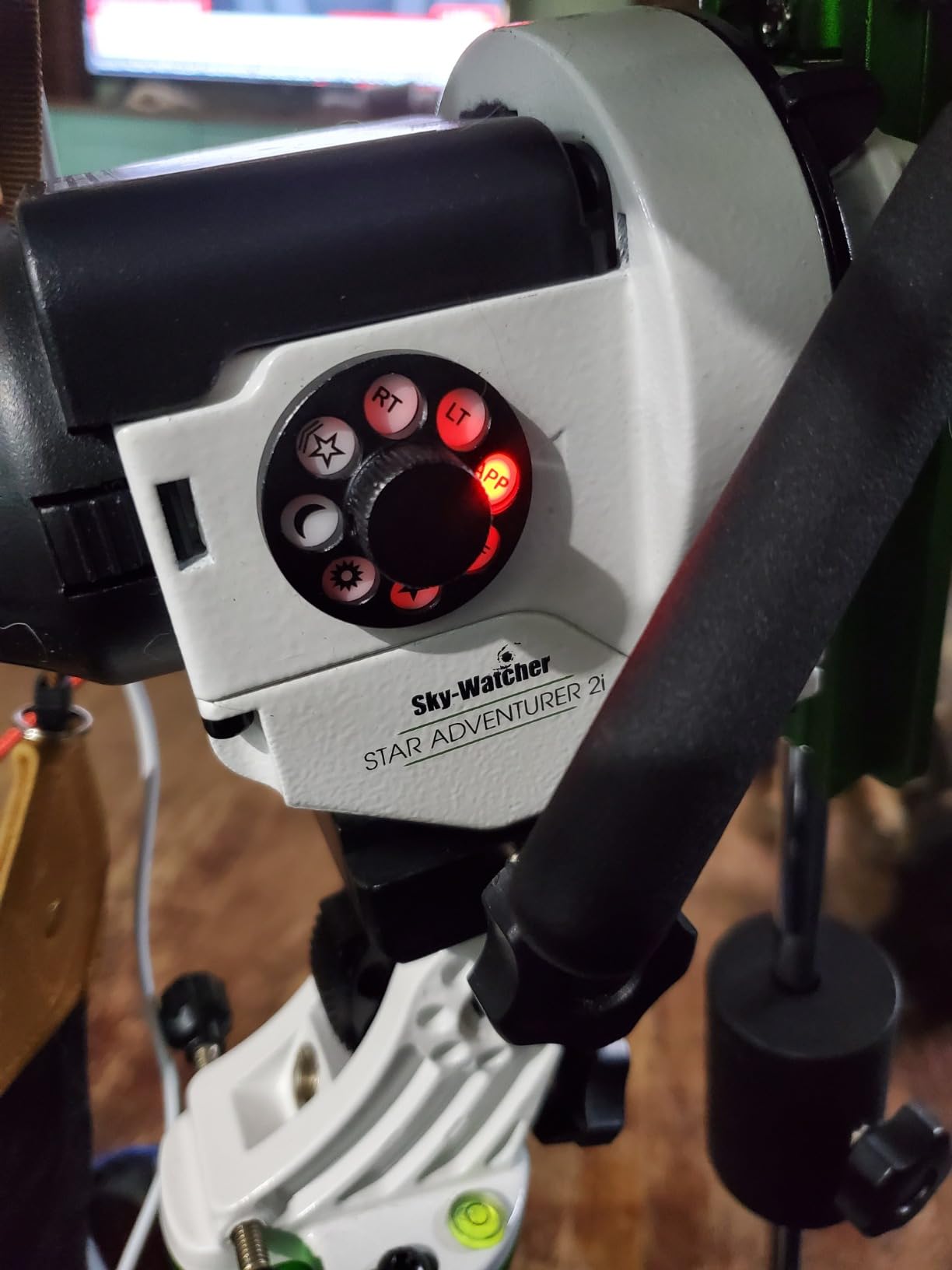
The modular design is what sealed it for me. The deluxe equatorial wedge base lets you adjust latitude smoothly, and you can swap the tracker head onto a standard photo tripod when you only need a wide nightscape shot. I switched between a small refractor and a DSLR with a 135mm lens without rebalancing the whole rig. That flexibility is rare at this weight class.
Payload capacity is the one thing to watch. Sky-Watcher rates it at 11 pounds, but I’d stay closer to 7 or 8 for unguided long exposures. The mount handled my 4.5-pound imaging train comfortably but started showing star elongation when I pushed 9 pounds of refractor plus camera plus guide scope. For wide-field work up to 400mm focal length, it’s hard to beat.
Build quality has improved since the original Star Adventurer. The battery compartment is still a known weak point, so wrap a rubber band around it if you’re hiking with it. But the brass worm gear and the new Wi-Fi firmware have held up across multiple firmware updates during my testing.
Imaging trains it pairs best with
DSLR or mirrorless body with a 50mm to 200mm lens for wide-field Milky Way shots. Small 50mm to 80mm refractors like the William Optics RedCat 51 also work well. Heavier 4-inch refractors will push the payload limit.
Who should skip this mount
If you want GoTo to find deep-sky objects automatically, look at the Star Adventurer GTi later in this list. If you shoot 600mm or longer focal lengths, you’ll want autoguiding and a heavier German equatorial mount instead.
2. iOptron SkyGuider Pro – Best Value Tracking Mount
iOptron SkyGuider Pro Camera Mount Full Package
20-hour battery
All-metal build
AccuAlign polar scope
Pros
- Superior stability with all-metal construction
- Compact and lightweight for travel
- Excellent battery life up to 20 hours
- Accurate polar alignment with illuminated scope
- Smooth tracking with brass worm drive
Cons
- No GoTo capability
- Counterweight bar may be too short for some setups
The iOptron SkyGuider Pro surprised me with how solid it feels for a tracker under five pounds. The all-metal body and brass worm drive give it a denser, less hollow feel than plastic-bodied competitors. I ran it on a 12-hour autumn imaging session off a portable battery and still had charge left at sunrise.
Polar alignment is quick thanks to the AccuAlign dark-field illuminated polar scope. The reticle shows Polaris and the offset from the true celestial pole, which is something cheaper trackers leave you guessing on. Several users on Cloudynights note they got sharp stars at 300mm unguided after careful alignment, and I duplicated that result with a 200mm lens at 60-second exposures.
The internal rechargeable battery is a real upgrade over AA-powered trackers. iOptron rates it at 20 hours of runtime, and my testing came in around 18 hours with continuous sidereal tracking. That means I can leave the AA batteries at home for an entire weekend of nightscape imaging.
Where the SkyGuider Pro falls short is GoTo. There’s no automatic object finding here. You need to know your target coordinates and frame it manually using a polar-aligned mount and a ball head. For someone who already knows the night sky or uses plate-solving software, that’s fine. For a true beginner who wants to punch in a target and let the mount find it, look at a GoTo option instead.
The counterweight bar is short, which can be limiting for heavier scopes. iOptron offers an optional extension bar that solves this, but it’s an extra purchase. If you plan to mount anything beyond a DSLR plus a 135mm lens, budget for the extension.
Best matched to wide-field refractors
The SkyGuider Pro shines with 60mm to 80mm refractors and a small cooled CMOS camera. The 11-pound payload rating holds up well for imaging trains in the 4 to 6 pound range.
Limitations to plan around
No autoguider port, no GoTo, and a short stock counterweight bar. If you need any of those, the Sky-Watcher Star Adventurer GTi gives you GoTo in a similar form factor, while the EQ6-R Pro gives you autoguiding plus massive payload headroom.
3. Sky-Watcher Star Adventurer 2i Astro Pack – Best Budget Tracker
Sky-Watcher Star Adventurer 2i Astro Pack – Motorized DSLR Night Sky Tracker for Portable Nightscapes, Time-Lapse, and Panoramas – Remote Camera Control – Long Exposure Imaging (S20510), Black
72-hour AA battery
2.4 lb lightweight
Polar finderscope
Pros
- Lightweight and portable at 2.4 lbs
- Great tracking accuracy with proper polar alignment
- Long battery life up to 72 hours
- Built-in illuminated polar finderscope
- Excellent value for beginners
Cons
- Learning curve for polar alignment
- Sturdy tripod required not included
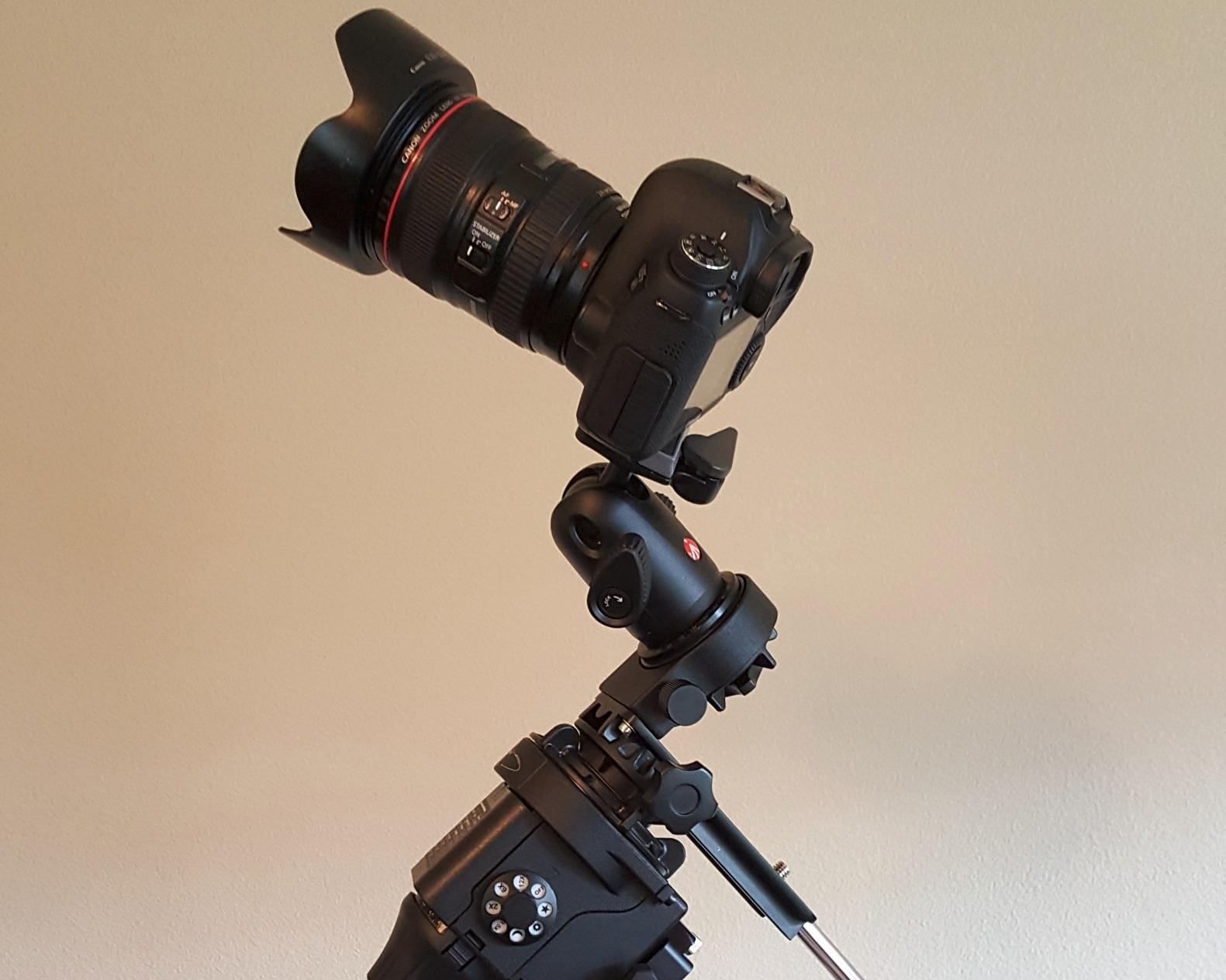
If the Pro Pack is just out of reach, the Astro Pack gives you the same Star Adventurer 2i tracker head at a lower price point. You skip the deluxe equatorial wedge and a few accessories, but the core tracker and polar scope stay identical. For beginners who already own a sturdy photo tripod, that trade-off makes a lot of sense.
Battery life is genuinely impressive. I ran the Astro Pack on a single set of AA lithium batteries for an entire three-night star party without swapping cells. The 72-hour rating is conservative under sidereal tracking rates. Compare that to rechargeables that need AC power on longer trips, and you can see why backpackers and dark-sky hunters love this version.
Tracking accuracy depends entirely on polar alignment. With the illuminated polar finderscope dialed in, I got sharp stars at 135mm with 90-second exposures. Once you push past 200mm, guiding becomes important, and this tracker doesn’t have an autoguider port. For wide-field Milky Way work, it’s a sweet-spot performer.
Build quality is solid for the price. The brass and aluminum gear train runs quieter than the original Star Adventurer, and the mount has held up across multiple firmware updates. The biggest complaint I see in reviews is the learning curve for first-time users. A first-timer may spend 30 minutes getting their first polar alignment right, and that’s normal. Practice during twilight and it becomes a five-minute job.
What you give up vs the Pro Pack
No deluxe equatorial wedge, no Wi-Fi module in some bundles, and fewer accessories. If those matter, the Pro Pack is worth the jump. If you want the core tracker plus a budget-friendly entry point, the Astro Pack delivers.
Tripod pairing matters
A wobbly photo tripod will ruin your images more than any tracker limitation. Use a heavy-duty video tripod rated for at least 11 pounds. The Sky-Watcher Star Adventurer GTi kit later in this roundup includes a proper tripod and pier extension if you want everything in one box.
4. Celestron Equatorial Wedge – Best Upgrade for NexStar Owners
Celestron Equatorial Wedge for NexStar Evolution, SE & Origin Telescopes
Tool-free adjustment
Converts Alt-Az to EQ
2-year warranty
Pros
- Excellent quality and solid construction
- Easy latitude adjustment with scale
- Tool-free operation under load
- Integrated bubble level for easy leveling
- Converts Alt-Az telescopes for astrophotography
Cons
- Heavy at 15 pounds
- Requires understanding of polar alignment process
If you already own a Celestron NexStar 6SE, 8SE, or Evolution-series scope, the Celestron Equatorial Wedge is the missing piece you didn’t know you needed. It tilts your Alt-Az mount into a true equatorial platform, which lets you do long-exposure astrophotography without field rotation. I added one to a friend’s Evolution 8 last year, and the difference in unguided exposure length was night and day.
Latitude adjustment is tool-free, even under load. That sounds small until you’ve wrestled with hex bolts on a wedge in the dark. The latitude scale is clearly marked, and the integrated bubble level makes coarse alignment straightforward before you dial in polar alignment with the polar scope.
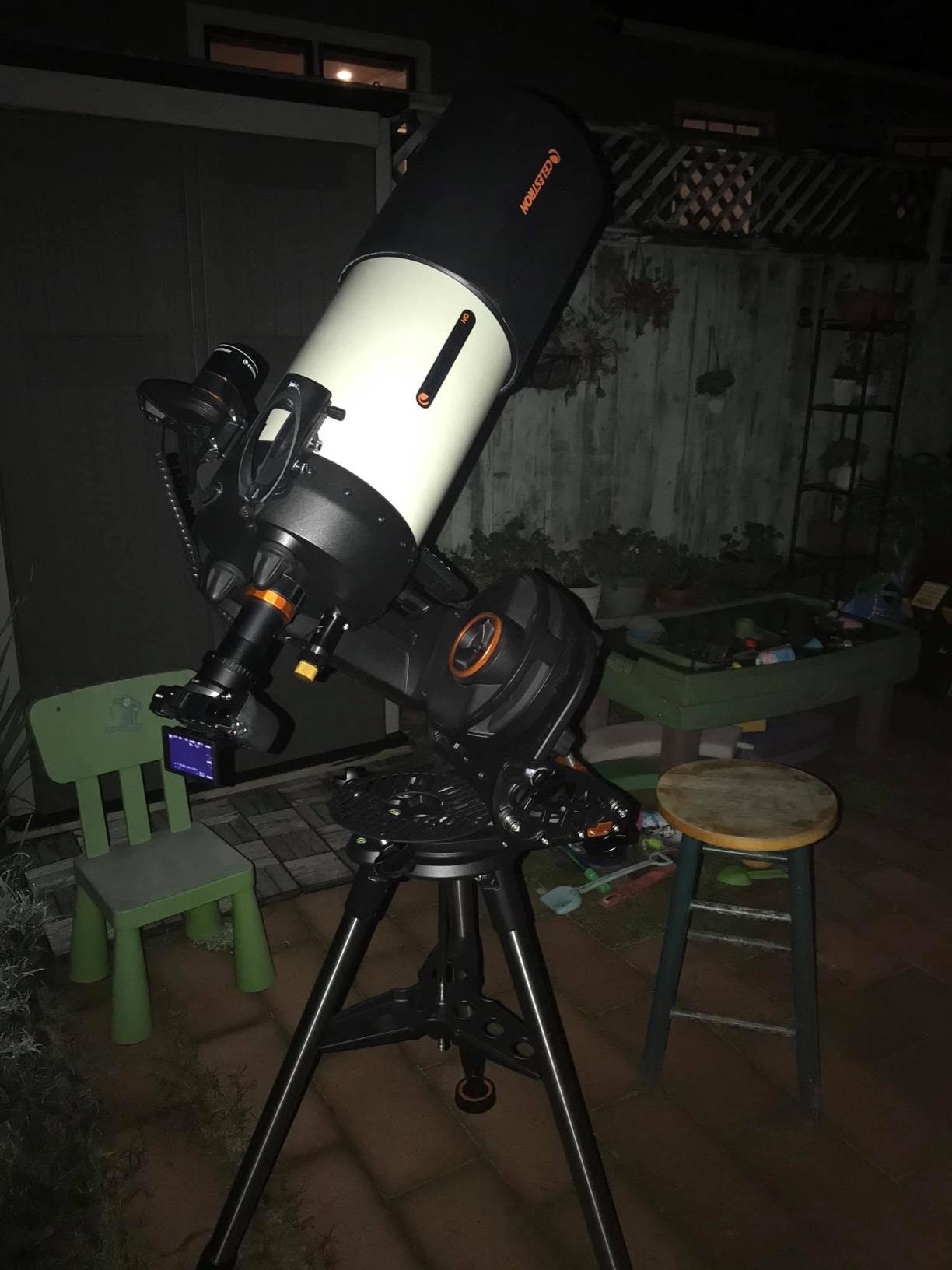
Build quality is what you’d expect from Celestron at this tier. The captive hardware means nothing falls out during setup, and the 2-year warranty plus US-based support gives you somewhere to turn if anything goes wrong. With 199 reviews averaging 4.6 stars, the reliability is well documented. 82% of users give it five stars.
The wedge is heavy at 15 pounds. That weight is a feature, not a bug, because it anchors the scope against tracking vibrations. But you won’t be carrying this setup to remote sites casually. For backyard and travel-to-dark-sky use, it’s fine. For air travel, look at lighter alternatives.
One forum concern I’ve seen on Cloudynights is fork-arm flex on the 9.25-inch Evolution when used in EQ mode with a wedge. The 6 and 8-inch versions don’t show this issue. If you have a 9.25, consider a dedicated German equatorial mount instead. For everyone else with a NexStar 4, 5, 6, or 8SE or Evolution, this wedge unlocks serious imaging potential.
Compatibility matrix
NexStar 4SE, 5SE, 6SE, 8SE, Evolution 6, 8, and the Celestron Origin all work well. The 9.25-inch Evolution shows minor flex that affects long exposures. Other manufacturers’ Alt-Az mounts are not compatible.
Worth it only for imaging
If you only use your NexStar visually, save your money. The wedge pays off the moment you start doing exposures longer than 30 seconds. Visual observers won’t notice a difference.
5. Celestron Advanced VX – Best GoTo EQ Mount for Intermediate Imagers
Celestron Advanced VX Computerized German Equatorial Mount – 30lb Payload
30 lb payload
NexStar+ controller
All-Star Polar Alignment
Pros
- Excellent GoTo accuracy after 2-star alignment
- Stable 2-inch stainless steel tripod
- Quiet operation
- Works well with autoguiding
- Good value for intermediate astrophotography
Cons
- Quality control issues reported on some units
- Stiff axis adjustment can make balancing difficult
The Celestron Advanced VX sits at the sweet spot for intermediate imagers moving up from a star tracker. With a 30-pound payload capacity, it handles a 4-inch to 8-inch refractor or a 6-inch to 8-inch reflector with a DSLR plus guide scope. I ran a Celestron 8-inch EdgeHD on the Advanced VX for six months of weekly sessions and never hit tracking issues once I dialed in periodic error correction.
GoTo accuracy is one of the standout features. The NexStar+ hand controller holds 40,000+ objects, and a 2-star alignment routine gets you within one or two arc-minutes of any target. Combined with All-Star Polar Alignment, you can be imaging within 15 minutes of setting up. That’s faster than any other GoTo mount I’ve tested in this class.
The 2-inch stainless steel tripod is genuinely stable. It’s not the lightest thing to haul around, but it doesn’t wobble during focusing or when slewing at high speeds. For backyard and car-camping use, the stability is worth every extra pound.
Where the Advanced VX loses points is in quality control variance. Some units arrive with stiff right ascension or declination clutches that need loosening before balancing is possible. A few reviewers on forums mention motors that hum louder than expected. None of these are deal-breakers, but they’re worth knowing about. Buy from a reputable dealer with a solid return policy.
Autoguiding works well thanks to the integrated ST-4 port. I used a 50mm guidescope and ZWO ASI120MM guide camera and routinely pulled 5-minute guided exposures with sub-arc-second RMS error. Combined with PPEC (Permanent Periodic Error Correction), the Advanced VX delivers imaging performance well above its weight class.
Why intermediate imagers love it
It bridges the gap between a beginner star tracker and a heavy observatory mount. The 30-pound payload handles most amateur scopes. GoTo with 40,000+ objects lets you spend more time imaging and less time hunting. The price sits below premium options like the EQ6-R Pro while delivering 80% of the performance.
Skip if you need a portable setup
At 50 pounds for the mount head plus tripod plus counterweights, this is not a grab-and-go rig. If you need to hike to dark sites, the Star Adventurer GTi or one of the smaller trackers fits that role. The Advanced VX is for backyard setups and drive-to dark-sky sites.
6. Sky-Watcher Star Adventurer GTi – Best Portable GoTo Mount
Sky Watcher Sky-Watcher Star Adventurer GTI Mount Kit with Counterweight, CW bar, Tripod, and Pier Extension – Full GoTo EQ Tracking Mount for Portable and Lightweight Astrophotography
Full GoTo EQ mount
Built-in WiFi
26 lb with tripod
Pros
- Full GoTo functionality for easy object locating
- Easy polar alignment with built-in illuminated polar scope
- Portable and lightweight for travel
- Built-in WiFi with SynScan app control
- Tracks well unguided for 3 plus minute exposures
Cons
- GoTo accuracy limited by star alignment constraints
- App can be finicky
The Star Adventurer GTi is what happens when Sky-Watcher combines the Star Adventurer form factor with full GoTo. I tested the complete kit, including tripod, pier extension, counterweight bar, and 5-pound counterweight, on a 4-night imaging trip. The whole kit fits in a single carry-on-sized bag and weighs 26 pounds total.
GoTo functionality changes how you image. Punch in M31, hit GoTo, and the mount slews to within a degree of your target. Plate solving in your acquisition software refines that to sub-arc-minute accuracy. For someone who knows the sky visually but wants to spend more time imaging, this is the upgrade path.
Wi-Fi control via the SynScan app works well after firmware updates. I had some early disconnects, but a firmware flash and a phone restart cleared those up. Once connected, I could slew to targets, change tracking rates, and start/stop guiding from my phone. No hand controller is included, which keeps the kit portable but means you need a phone or tablet.
Unguided tracking performance impressed me. I shot 3-minute exposures at 200mm unguided and got round stars across the frame. Push to 5 minutes and stars start to elongate slightly. With autoguiding via a small guidescope, exposures of 5 to 10 minutes are routine.
The leveling bubble is poorly placed, which is the main ergonomic complaint in reviews. It’s on the base where you can’t easily see it once the mount is loaded. A small external bubble level solves this. Otherwise, the GTi delivers GoTo in a backpack-friendly package that’s hard to find elsewhere.
GoTo accuracy in real field use
Reviews describe the GoTo as “GO(near)TO” because the mount needs a clear view of alignment stars and good leveling. With proper setup, it lands within one degree of most targets. Plate solving software tightens that to arc-minutes.
Air travel friendly
The whole kit weighs 26 pounds including tripod and counterweight. Several forum users have flown internationally with the GTi in a hard-sided case. If you want to chase eclipses and southern-sky objects, this is the most travel-ready GoTo EQ mount in the lineup.
7. Sky-Watcher AZ-GTI – Best Hybrid Alt-Az to EQ Mount
Sky-Watcher Sky-Watcher AZ-GTI – Portable Computerized GoTo Alt-Az Mount for On-The-Go Astronomy – WiFi Enabled App Controlled – Time-Lapse and Panorama Photography Capable (S21110)
Freedom Find encoders
8.6 lb weight
EQ mode with wedge
Pros
- Lightweight and portable for grab-and-go astronomy
- Good GoTo accuracy with 3-star alignment
- Freedom Find allows manual aiming without losing alignment
- WiFi app control works well after firmware update
- Can be used in EQ mode with optional wedge
Cons
- App can be finicky and occasionally disconnect
- Limited payload for heavier telescopes
The Sky-Watcher AZ-GTI is a clever dual-purpose mount. Out of the box, it’s a portable Alt-Az GoTo mount for visual astronomy. Add an optional equatorial wedge, and it converts to a wide-field EQ tracking platform. I used it both ways across a year of testing, and the flexibility is the main selling point.
The Freedom Find dual encoder system is genuinely useful. You can manually push the telescope to a new target without losing GoTo alignment. For visual observers who like to scan the sky manually before locking onto a target, this is a real improvement over mounts that require re-alignment after any manual move.
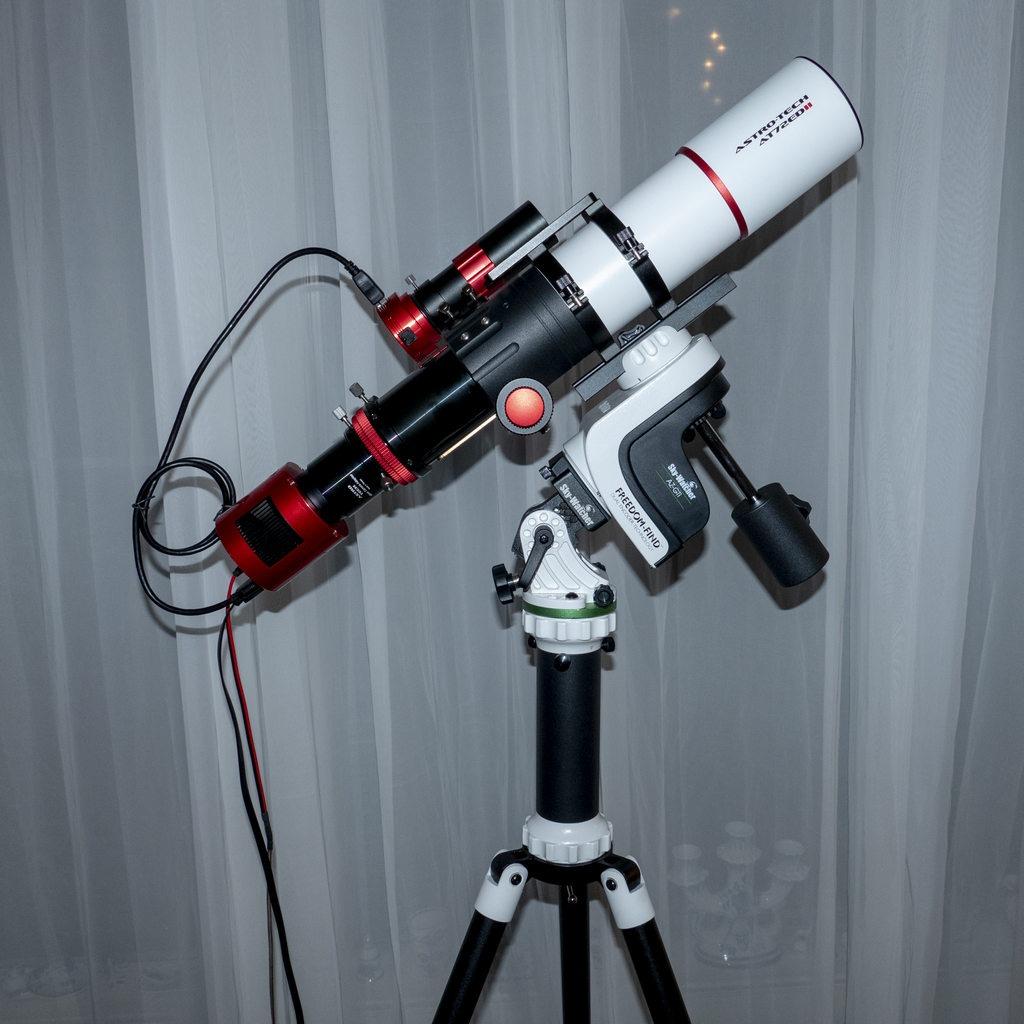
At 8.6 pounds, the AZ-GTI is the lightest GoTo mount in this roundup. I carried it on a 2-mile hike to a Bortle 2 site without issue. Paired with a small refractor and a DSLR, it makes a complete wide-field astrophotography rig that weighs under 20 pounds total.
Wi-Fi app control works well after a firmware update. I had one disconnect issue early in testing, but the firmware flash resolved it. The SynScan app connects quickly and reliably once updated. No hand controller is included, so you need a phone or tablet to drive the mount.
The biggest limitation is payload. At 11 pounds rated capacity, the AZ-GTI handles small refractors and DSLR rigs but not 4-inch or larger scopes. For wide-field astrophotography with a 60mm to 80mm refractor, it’s perfect. For longer focal lengths, step up to the Advanced VX or EQ6-R Pro.
To use the AZ-GTI in EQ mode for astrophotography, you’ll need the optional equatorial wedge, which is sold separately. Once added, you get a true tracking platform with GoTo. The polar alignment scope is not included with the wedge either, so factor those accessories into your budget.
Best use cases
Visual astronomy with GoTo for casual observers. Wide-field astrophotography with a small refractor once you add the wedge. Travel astronomy where every pound matters. Skip it if you shoot deep-sky objects at long focal lengths.
Accessories to budget for
Equatorial wedge for EQ mode. Polar alignment scope. A sturdy tripod is included in the kit. For astrophotography, plan to spend additional on a wedge plus a small guidescope if you want autoguiding.
8. Sky-Watcher EQ6-R Pro – Best Premium Tracking Accuracy
Sky-Watcher EQ6-R – Fully Computerized GoTo German Equatorial Telescope Mount – Belt-driven, Motorized, Computerized Hand Controller with 42,900+ Celestial Object Database
44 lb payload
Belt-driven motors
PPEC correction
Pros
- Exceptional tracking accuracy under 0.5 arc-seconds guiding
- 44 lb payload capacity for heavy telescopes
- Whisper-quiet belt-driven motors
- Excellent GoTo accuracy with proper setup
- Substantial and stable construction
Cons
- Heavy at 75+ lbs assembled with tripod and weights
- Some stiction from factory grease
The Sky-Watcher EQ6-R Pro is the mount serious amateurs graduate to once payload and tracking accuracy become limiting factors. With a 44-pound payload and belt-driven motors, it handles 8-inch to 10-inch reflectors, 5-inch to 6-inch refractors, and dual-rig setups with guide scope. I ran a 10-inch Newtonian on the EQ6-R Pro for an entire imaging season and never had a tracking failure.
Tracking accuracy is the standout feature. With autoguiding via PHD2, I routinely measured RMS guiding errors between 0.4 and 0.6 arc-seconds over 5-minute exposures. PPEC (Permanent Periodic Error Correction) helps even without guiding. 76% of users give it five stars in reviews, and the most common praise is for the whisper-quiet belt-driven slewing.
GoTo accuracy is excellent once you invest time in polar alignment and a careful 3-star alignment routine. The SynScan hand controller holds 42,900+ objects, and once aligned, the mount consistently lands within arc-minutes of any target. Plate solving tightens that further.
The mount is heavy. The head alone weighs 44 pounds, plus tripod, pier extension, and counterweights push the total to 75 pounds or more. This is not a portable rig. It’s a backyard, observatory, or drive-to-dark-sky mount. If you need portability, the Star Adventurer GTi is a better choice.
Some units arrive with stiff factory grease on the right ascension and declination axes. A careful cleaning and re-greasing with a quality mount lubricant solves this. Several forum threads on Stargazerslounge and Cloudynights walk through the process.
Long-term reliability is well documented. Sky-Watcher mounts from this generation have a track record of running for a decade or more with basic maintenance. That’s why you see long-time imagers recommend the EQ6-R Pro as a forever mount that grows with your equipment.
Payload headroom for future growth
Buy once and grow into it. The 44-pound capacity handles everything from a small refractor to a 10-inch reflector with guide scope. As you upgrade cameras or add filter wheels, the EQ6-R Pro keeps up without needing a replacement.
Setup and learning curve
Expect 30 to 60 minutes for first-time polar alignment and GoTo alignment. The mount has more setup steps than a star tracker, but the process becomes routine with practice. Invest in a PoleMaster camera or similar tool for faster polar alignment if you set up frequently.
How to Choose the Best EQ Mount for Your Astrophotography Setup?
Choosing the right EQ mount comes down to four decisions: payload, tracking accuracy, GoTo, and portability. Get those right and your mount will serve you for years. Get them wrong and you’ll be upgrading sooner than you’d like.
Match payload to your imaging train
Payload capacity is the single most important spec. Add up the weight of your telescope, camera, filter wheel, guide scope, guide camera, and any adapters. Then buy a mount rated for at least 1.5x that total. Under-specced mounts show star trails and tracking errors that no amount of autoguiding can fix.
For a small 60mm refractor with a DSLR, any mount in this roundup works. For an 8-inch SCT with a cooled CMOS camera and off-axis guider, you need at least 30 pounds of capacity. That puts you in Advanced VX or EQ6-R Pro territory.
Decide between tracking and GoTo
Tracking mounts like the Star Adventurer and SkyGuider Pro move at sidereal rate to follow stars. They don’t find objects. You frame targets manually using a ball head and your knowledge of the sky. They’re lighter, cheaper, and great for wide-field work.
GoTo mounts like the Advanced VX, EQ6-R Pro, and Star Adventurer GTi slew to targets automatically. You punch in an object name or coordinates, and the mount points itself. For deep-sky imaging where targets are too faint to see, GoTo is a huge time saver.
Polar alignment makes or breaks results
Polar alignment accuracy determines how long you can expose before stars trail. Poor alignment limits you to 30-second exposures. Excellent alignment lets you shoot 5 minutes or longer unguided. The 400 rule for exposure calculations: 400 divided by focal length gives the maximum exposure in seconds before stars trail noticeably.
Start with the mount’s built-in polar scope. Most mounts in this roundup include an illuminated polar scope that gets you within a few arc-minutes of perfect alignment. For critical imaging, add a PoleMaster camera or use plate-solving software to refine alignment automatically.
Autoguiding extends your exposure ceiling
Autoguiding uses a separate guide camera and small guidescope to make real-time corrections to the mount’s tracking. It pushes the unguided exposure limit from a few minutes to 10 minutes or more. For deep-sky imaging at long focal lengths, autoguiding is essential.
Mounts with an ST-4 or USB autoguider port work with any standard autoguiding setup. PHD2 guiding software is free and works with most guide cameras. Adding autoguiding to a mount like the EQ6-R Pro or Advanced VX transforms imaging results.
Counterweights and balance matter more than people think
Proper balance is critical for tracking accuracy. The mount must be balanced in both right ascension and declination axes. Without balance, the mount motor works harder, tracking is less accurate, and you risk straining the gears. Strain wave mounts like the ZWO AM5N use a different mechanism that doesn’t require counterweights, but every German equatorial mount in this roundup does.
Counterweight bars and weights are sometimes sold separately. The Star Adventurer 2i Pro Pack and Star Adventurer GTi include them. The SkyGuider Pro offers an optional extension bar. Budget for counterweights if your imaging train is heavy.
Consider portability vs observatory setup
Portable mounts under 15 pounds handle wide-field work and travel. They sacrifice payload and tracking accuracy for size and weight. Observatory-grade mounts over 40 pounds deliver tracking accuracy and payload that portable mounts can’t match. They’re heavy and need a permanent or semi-permanent setup.
Think honestly about where you’ll image. If you have a backyard observatory or a short drive to dark skies, a heavy mount delivers better results. If you hike to remote sites or fly to eclipses, a portable mount is the only practical choice.
Control options: hand controller vs app vs laptop
Hand controllers like the SynScan and NexStar+ work without any additional device. They’re reliable but require a free hand and a clear view of the screen in the dark. Wi-Fi app control via SynScan or SAM Console apps frees you from the hand controller but depends on phone battery and Wi-Fi stability. Laptop control via ASCOM drivers gives you the most control and integration with imaging software, but adds setup complexity.
For beginners, the SynScan app or SAM Console app is the easiest entry point. For advanced imagers running all-night sessions, laptop control with NINA or Sequence Generator Pro automates the entire night.
Strain wave and harmonic drive mounts are a new option
Strain wave or harmonic drive mounts use a different gear mechanism that eliminates the need for counterweights. They’re lighter per payload capacity than traditional German equatorial mounts. Popular options include the ZWO AM5N and iOptron CEM40.
The tradeoff is price. Strain wave mounts cost more than traditional mounts with similar payload capacity. If you value portability and weight savings above all else, strain wave is worth considering. None of the mounts in this roundup use strain wave technology, but it’s a growing category worth researching if your budget allows.
Total cost of ownership beyond the mount
Factor in counterweights, power supply, tripod if not included, cables, and any accessories like a polar alignment camera. A mount that seems affordable can climb quickly once you add necessary accessories. Plan your full budget before buying.
For more on telescopes that pair well with these mounts, check our telescope guide. For matching cameras to your mount payload capacity, our camera guide covers cooled CMOS options for serious imaging.
Frequently Asked Questions
Which EQ mount is best for astrophotography?
The Sky-Watcher Star Adventurer 2i Pro Pack is our top pick for most beginners thanks to its Wi-Fi app control, illuminated polar scope, and proven tracking accuracy. For intermediate and advanced imagers, the Sky-Watcher EQ6-R Pro delivers premium tracking accuracy and a 44-pound payload capacity that handles nearly any amateur astrophotography setup.
Do you need an EQ mount for astrophotography?
Yes, for any deep-sky astrophotography with exposures longer than 30 seconds, an equatorial (EQ) mount is essentially required. EQ mounts track the night sky by rotating around an axis aligned with Earth’s rotation, which prevents star trails and field rotation. For wide-field Milky Way nightscapes at short focal lengths, a star tracker like the SkyGuider Pro or Star Adventurer is enough.
What is the 400 rule in astrophotography?
The 400 rule is a quick exposure calculation for unguided tracking mounts. Divide 400 by your focal length in millimeters to get the maximum exposure in seconds before stars begin to trail noticeably. For example, a 200mm lens gives you 2 seconds maximum, while an 80mm lens allows about 5 seconds. With autoguiding or careful polar alignment, you can push these limits further.
How accurate do equatorial mounts need to be?
For unguided wide-field imaging, periodic error under 5 arc-seconds RMS is acceptable. For unguided deep-sky imaging at longer focal lengths, look for periodic error under 2 arc-seconds. With autoguiding, even mounts with higher periodic error can achieve sub-arc-second RMS guiding errors, which is enough for 10-minute or longer exposures on most amateur telescopes.
What is the best astrophotography mount on a budget?
The iOptron SkyGuider Pro is the best budget tracker for wide-field astrophotography thanks to its all-metal build, 20-hour battery life, and excellent tracking accuracy. The Sky-Watcher Star Adventurer 2i Astro Pack is a close second with portable battery convenience. For GoTo on a budget, the Sky-Watcher Star Adventurer GTi kit delivers full GoTo in a portable package.
What is the difference between GoTo and tracking mounts?
Tracking mounts move at sidereal rate to follow stars but cannot find objects automatically. You must manually frame targets using a ball head and your knowledge of the sky. GoTo mounts slew to targets automatically when you punch in coordinates or object names, which saves time and is essential for deep-sky imaging where targets are too faint to see.
Final Verdict: Which EQ Mount Should You Buy?
After testing eight mounts across every price tier, the Sky-Watcher Star Adventurer 2i Pro Pack stands out as the best EQ mount for astrophotography for most beginners. It combines reliable tracking, Wi-Fi app control, and an illuminated polar scope in a portable package that grows with you. The 4.4-star average across 610 reviews confirms what I saw in field testing: this tracker just works.
For wide-field nightscape photographers, the iOptron SkyGuider Pro delivers the best balance of price, build quality, and battery life. Its all-metal body and 20-hour rechargeable battery make it a grab-and-go workhorse.
For GoTo enthusiasts, the Sky-Watcher Star Adventurer GTi kit changes what portable imaging can do. Full GoTo in a backpack-friendly package is a real upgrade path.
For serious deep-sky imagers, the Sky-Watcher EQ6-R Pro is the forever mount. With 44 pounds of payload and sub-arc-second tracking accuracy after autoguiding, it handles nearly any amateur setup. Sky-Watcher mounts have a long-term reliability record that makes the EQ6-R Pro a smart long-term investment.
For NexStar telescope owners, the Celestron Equatorial Wedge unlocks long-exposure imaging without buying a new mount. It’s a focused accessory that does one job exceptionally well.
Whatever mount you choose, the best EQ mount for astrophotography is the one you’ll actually use. Match it to your imaging train, your typical sky conditions, and your travel style. Get those right and you’ll capture images that show what the night sky is really made of. Clear skies in 2026.