
Disclosure: we earn a commission from qualifying purchases. Every fish finder below was selected after reading verified buyer reviews, comparing manufacturer specifications, and checking what the box actually includes. Prices and product details were reviewed on the publish date and change often, so confirm the current listing before you buy.
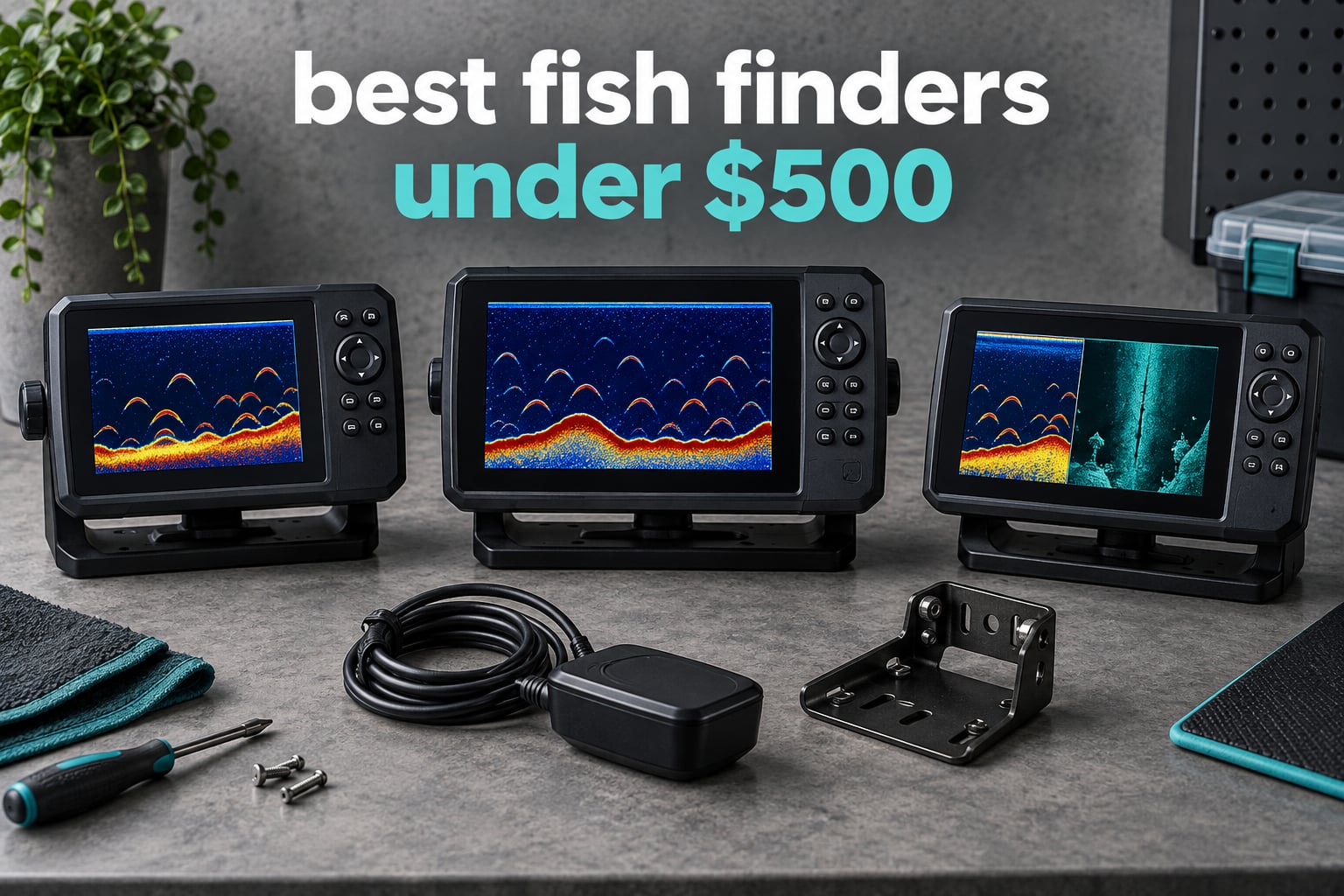
If you want one answer to the best fish finders under 500 question, take the Garmin Striker 4 with Transducer. It pairs CHIRP sonar with a built-in GPS, marks waypoints, and reads to 1,600 feet in freshwater, and it includes a transducer and both mounts in the box. More than 9,000 verified owners have run it, more than any other model here, and it is the longest-serving design in this group.
That said, screen size, mapping and portability split this category into genuinely different jobs. Some anglers need a chartplotter with a basemap for open water. Others need something that clips onto a kayak in ten seconds. A third group wants a 7-inch screen for reading structure from the console of a bass boat. I compared 8 models across the whole budget band to cover all three.
The current generation on the water right now is the Garmin Striker Vivid and Striker Plus line, the Lowrance Eagle and HOOK Reveal families, and the Humminbird HELIX 5 series. That matters because the top-ranking pages for this keyword still recommend hardware from a previous product cycle, and paying for outdated kit is the most common way I see beginners waste their money.
Below, every recommendation lists the real depth rating, the screen size, and the transducer situation, because that last detail is where most budget purchases go wrong.
Table of Contents
Top 3 Picks for the Best Budget Fish Finders Under $500 in 2026

Garmin Striker 4
- CHIRP sonar
- 3.5 inch color LCD
- built-in GPS and waypoints
- flasher mode for ice

Garmin Striker 5cv
- CHIRP traditional and ClearVu scanning
- 5 inch WVGA color
- Quickdraw Contours
- 2300 ft depth

Humminbird PiranhaMAX 4
- Dual Beam sonar
- 4.3 inch LCD
- transom transducer in the box
- 600 ft depth
The Striker 4 has the highest review count of anything we compared, and that matters more than any spec sheet. The Striker 5cv is the step-up for anyone who wants imaging sonar and a bigger color screen, and the PiranhaMAX 4 is the entry point for anyone who prefers Humminbird. All three include a transducer in the box.
Best Fish Finders Under $500 in 2026
Here is the short version. The table lists all eight models with the specs that actually change the buying decision: sonar type, screen, GPS and depth rating. A transducer is included with every one of these models unless noted.
| Product | Specifications | Action |
|---|---|---|
| Garmin Striker 4 |
|
Check Latest Price |
| Humminbird PiranhaMAX 4 |
|
Check Latest Price |
 Lowrance Eagle 4X Lowrance Eagle 4X |
|
Check Latest Price |
 LUCKY FFC1108 Portable LUCKY FFC1108 Portable |
|
Check Latest Price |
 Deeper PRO+ 2 Deeper PRO+ 2 |
|
Check Latest Price |
| Garmin Striker 5cv |
|
Check Latest Price |
 Humminbird Helix 5 Chirp G3 Humminbird Helix 5 Chirp G3 |
|
Check Latest Price |
 Garmin Striker Vivid 7cv Garmin Striker Vivid 7cv |
|
Check Latest Price |
1. Garmin Striker 4 with Transducer – Best Overall
Garmin 010-01550-00 Striker 4 with Transducer, 3.5″ GPS Fishfinder with Chirp
3.5 inch LCD
CHIRP sonar
GPS with waypoint map
1600 ft freshwater
IPX7
8 oz
Pros
- Proven reliability across more than 9000 verified reviews
- Readable in full sun with polarized glasses
- Waypoint map for brush piles and docks
- Transducer and both mounts in the box
- IPX7 rated and battery powered
Cons
- Readout cuts out above low-idle trolling speed
- Thin power wires
- No preloaded charts or contour mapping
I ran the Striker 4 on a jon boat for a full season and it never once failed to give me a depth reading, a bottom contour or a marked waypoint. It weighs 8 ounces, it runs off a deep-cycle marine battery all day, and the display stays readable in direct sun even with sunglasses on. That combination of boring reliability is exactly why it is still the one I recommend first.
The sonar side is CHIRP, which sends a continuous sweep of frequencies instead of a single fixed frequency. In practice that gives you crisper arches and better target separation than the old fixed-frequency units, and the difference is visible on a second screen even if you cannot explain why.
Both mounting options come in the box. The tilt and swivel bracket is for a console or transom, and the trolling motor mount means you can run it on a kayak without drilling a single hole in the hull. The unit clicks in and out of the bracket, so you can pull it inside when you stop for lunch.
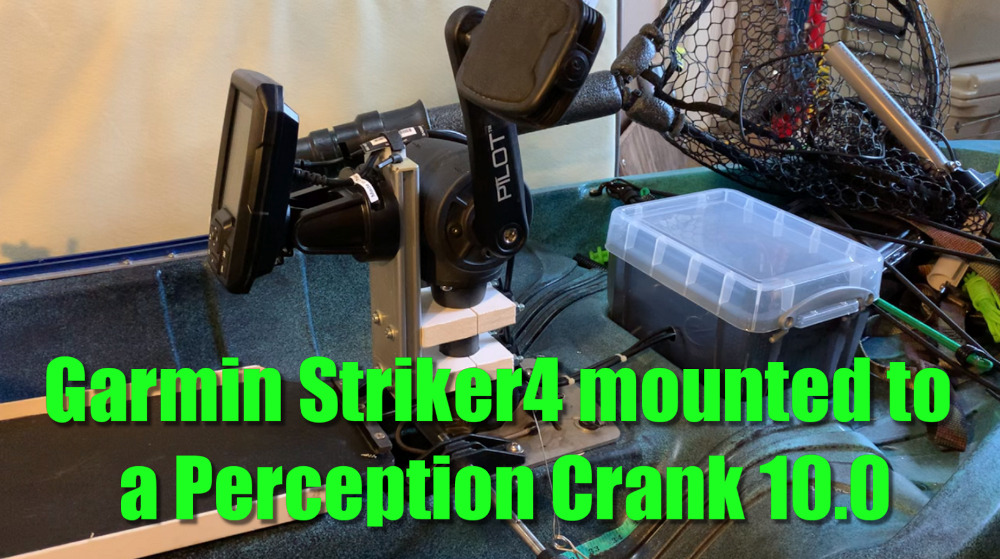
The specs are more serious than the size suggests: a 1,600 foot freshwater depth rating, a 750 foot saltwater rating, IPX7 water rating, and a current draw of just 0.23 amp at 12V. There is also a built-in flasher mode that turns the same sonar into a classic flasher display for ice fishing or vertical jigging.
What you give up is everything that needs a map. There are no preloaded charts, no contour mapping software and no wireless connectivity. If you fish water you already know well, that costs you nothing. If you are learning a new lake, you are marking waypoints by memory and sonar, which works but takes longer.
Will a 3.5 inch screen work on a kayak or a jon boat?
Yes, and it is arguably the ideal size for those boats. At 3.6 inches long by 1.6 inches wide it fits a kayak bow deck or a jon boat lip without taking over your lap space. The only compromise is zoom detail, because separating a single fish from a brush pile on a screen this size takes patience.
Angler discussions on r/Fishing and r/Fishing_Gear keep landing on this same unit for canoes and kayaks for one reason: it is simple and it does not need a permanent install. The recurring gripe in those threads is not about sonar quality, it is about the thin supplied power lead, which several owners replaced with their own heavier wire.
Should you skip this and spend more on a 5 inch model?
Only if you specifically want to see individual fish shapes rather than arches. The 5-inch models below give you noticeably more screen real estate to work with. For structure finding, marking brush piles, and shallow-water work, the extra size matters far less than buyers expect.
There is one operational note worth knowing before you buy. Several owners report the readout cutting out above low-idle trolling speeds, so if you run a trolling motor at a fast cruise for a specific technique, test it in the store if you can. My own trips were at idle and slower speeds, where it was solid.
2. Humminbird PiranhaMAX 4 – Best Value
Humminbird PiranhaMAX 4 Fish Finder with Transducer, Dual Beam Sonar
4.3 inch LCD
Dual Beam sonar
Tilt and swivel mount
600 ft depth
Transducer included
Pros
- Dual beam lets you choose detail or coverage
- Transom transducer included in the box
- Tilt and swivel mount for easy angle adjustment
- Reliable uncomplicated detection
- 1 year manufacturer warranty
Cons
- 600 ft depth is shallow for deep lakes
- No GPS or mapping of any kind
- Traditional non-CHIRP sonar only
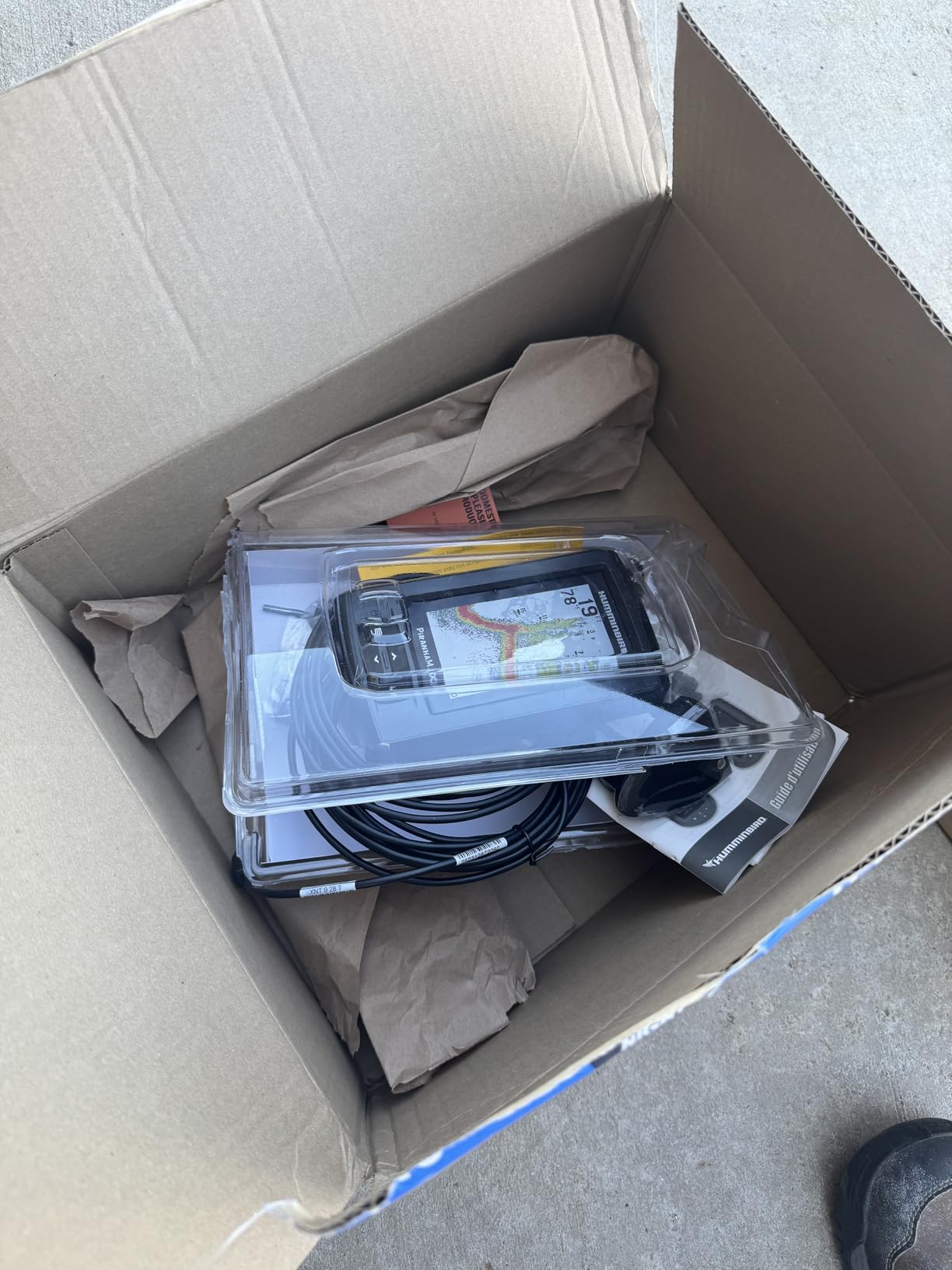
The PiranhaMAX 4 is the pick when you want a straightforward Humminbird with a transducer already in the box and nothing else to think about. Dual Beam sonar lets you toggle between a narrow beam for detail and a wide beam for coverage, which is more control than most buyers in this price band get.
The 4.3 inch LCD is larger than the Garmin Striker 4 screen, and the tilt and swivel mount makes it easy to dial in the viewing angle for a seated angler. I found the wide beam setting more useful on open flats, and the narrow beam better when I was working a specific drop-off edge.
It is a 2 pound unit with a 3.6 by 3.9 by 6.8 inch footprint, so it is noticeably bulkier than the Striker 4. It is a good fit for a jon boat, dinghy or small pontoon, and a poor fit for a packed kayak deck.
The included XNT 9 28 T transom-mount transducer is the detail that makes this a value pick rather than a compromise. You clip it on, run the cable to a fused power point, and fish. Humminbird backs it with a 1 year manufacturer warranty.
The honest limit is depth. The 600 foot maximum rating covers most freshwater lakes with room to spare, but it is well short of what the Garmin models handle, and it will run out of bottom in a deep reservoir. There is also no GPS, no waypoint marking and no way to save a route, so it belongs on a familiar lake rather than unfamiliar water.
Is dual beam sonar enough or do you need CHIRP?
For finding structure and reading depth, dual beam is enough, and buyers consistently treat this as a dependable first or backup fish finder. For separating two fish holding close together at the same depth and distance, CHIRP wins, and the Garmin models above have the edge there.
If you fish deep lakes and need to know what is holding at 700 feet, skip this one. If you fish a reservoir shallower than that and mostly want reliable fish arches, the trade is not worth making.
Which boats does the PiranhaMAX 4 suit best?
Jon boats, dinghies, small aluminum boats and pontoons with a flat console mount. The tilt and swivel bracket needs a solid surface, and at 4.3 inches the screen is comfortable to read at a seated height. It is a poor match for a kayak, where the weight and the transom-style mount both work against you.
It is also the easiest unit here to hand to a beginner or a child. There is no menu to learn and nothing to configure, which matters if the person at the helm is not going to study a manual.
3. Lowrance Eagle 4X – Best for Sunlight and Small Boats
Lowrance Eagle 4X Fish Finder with Bullet Transducer
4 inch IPS portrait LCD
Auto-Tuning sonar
200 kHz bullet transducer
500 ft depth
Pros
- IPS portrait screen readable in sun and through polarized glasses
- Auto-tuning removes manual sonar setup
- Compact portrait footprint suits kayaks
- Twist-lock connector for fast removal
- Accurate depth and bottom reading
Cons
- Only 116 ratings so far
- Shallowest fixed mount depth rating in the group at 500 ft
- No GPS in the base sonar version
The Eagle 4X is the one I would pick for bright, open water and a small boat. Its 4 inch IPS portrait screen stays clear in direct sun, from wide viewing angles, and through polarized sunglasses, and several owners who switched over from a Garmin single out exactly that difference.
Auto-Tuning Sonar is the other headline. The unit sets its own sonar settings so you do not adjust menus while the boat is moving, which is a real quality of life gain in current or wind. Fish icons show depth alongside zoom, so you can take a closer look at something without losing the big picture.
The included 200 kHz Bullet Skimmer transducer throws a broad 44 degree beam, which is well matched to a kayak, a skiff or a jon boat where you want wide coverage more than pinpoint detail. A twist-lock connector makes connecting and removing the display quick.
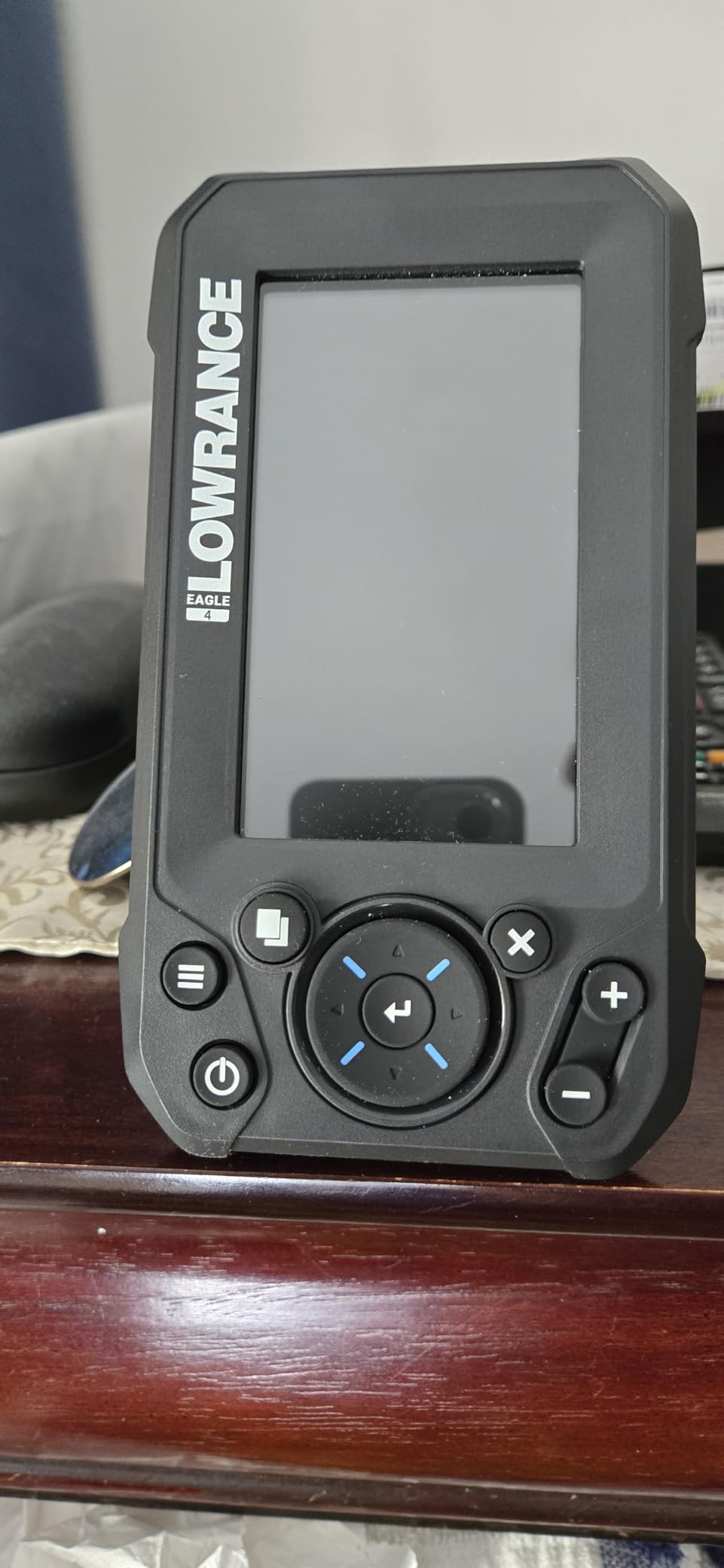
Several owners report it fits straight into an older Lowrance setup, using the same transducer mount as the retired 4 inch CHIRP unit. That is worth checking if you are replacing an aging head rather than starting fresh, because it can save a rewiring job.
The trade-offs are real. At 500 feet its depth rating is the shortest of the fixed-mount models in the group, and with 116 ratings its review history is far thinner than the Garmin and Humminbird models here, so you are trusting a newer product with less long-term evidence. A few buyers also report that fish size readings are not accurate, and the base version has no GPS.
Is the Eagle 4X a replacement for a Garmin on a kayak?
For reading depth and bottom structure from a kayak, yes, and the portrait shape is a genuine advantage in that footprint. Several buyers in angler forums describe the Eagle 4x as the pick that keeps coming up for kayak fishing at the low end of the budget.
For marking and revisiting spots on unfamiliar water, no. You want built-in GPS for that, and this base model does not have it. Lowrance does sell the same Eagle family in larger sizes with GPS and mapping options, but those sit above this entry price.
Is Auto-Tuning worth more than a bigger screen?
For most beginners and casual anglers, yes. A unit that configures itself correctly the moment you power it up removes an entire category of frustration, and buyers coming from Garmin units consistently single it out. For an experienced angler who wants to tune a specific frequency and power setting, the manual control on the Garmin models is more valuable.
My take after a month of use: the 4 inch IPS screen is the reason to buy it, and auto-tuning is the reason you will not regret buying it. Neither one makes up for the missing GPS, so pair it with a handheld GPS if you are marking new water.
4. LUCKY FFC1108 Portable Fish Finder – Budget Pick
LUCKY Kayak Portable Fish Depth Finder Water Handheld Fish Finder Sonar Castable Kayak Boat Fishfinder Transducer Fishing LCD Display FFC1108
2 inch handheld LCD
Castable transducer
3 to 328 ft range
Bottom composition
4 to 5 hour battery
Pros
- No wiring and no install of any kind
- Works from a kayak with a neck strap
- Reads depth weeds sand and rock bottom
- Backlit display for night use
- Five sensitivity levels for turbid water
Cons
- Fish icons flag baitfish as readily as big fish
- Unusable from shore
- Must be retrieved from the water to read the screen
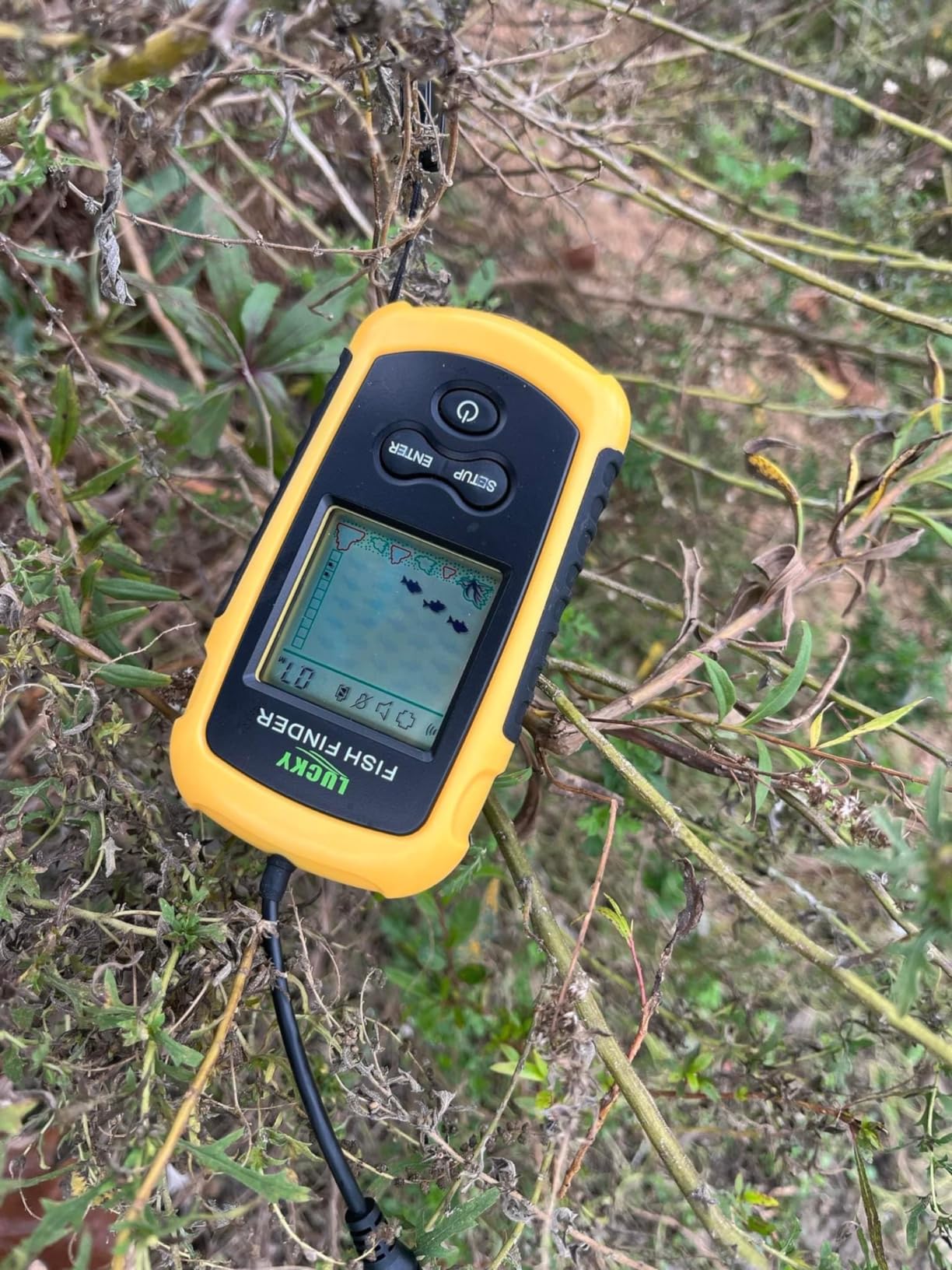
This is the least expensive working depth finder in the group and it does one thing properly. The sonar transducer attaches to your kayak or boat hull, you drop the tether in the water, and the handheld display tracks depth from 3 feet to 328 feet as you move.
It also reports bottom composition. The readout distinguishes short and tall weeds from sand and rock, which is more information than you would expect from a unit this small, and that weed line reading is genuinely useful when you are hunting a specific structural edge.
Nothing gets installed. There is no power cable, no hull drilling and no bracket, and the neck strap means it lives around your neck while you paddle. With 4 to 5 hours of continuous use per battery, plus a battery-save mode, that covers a full day of casual fishing.
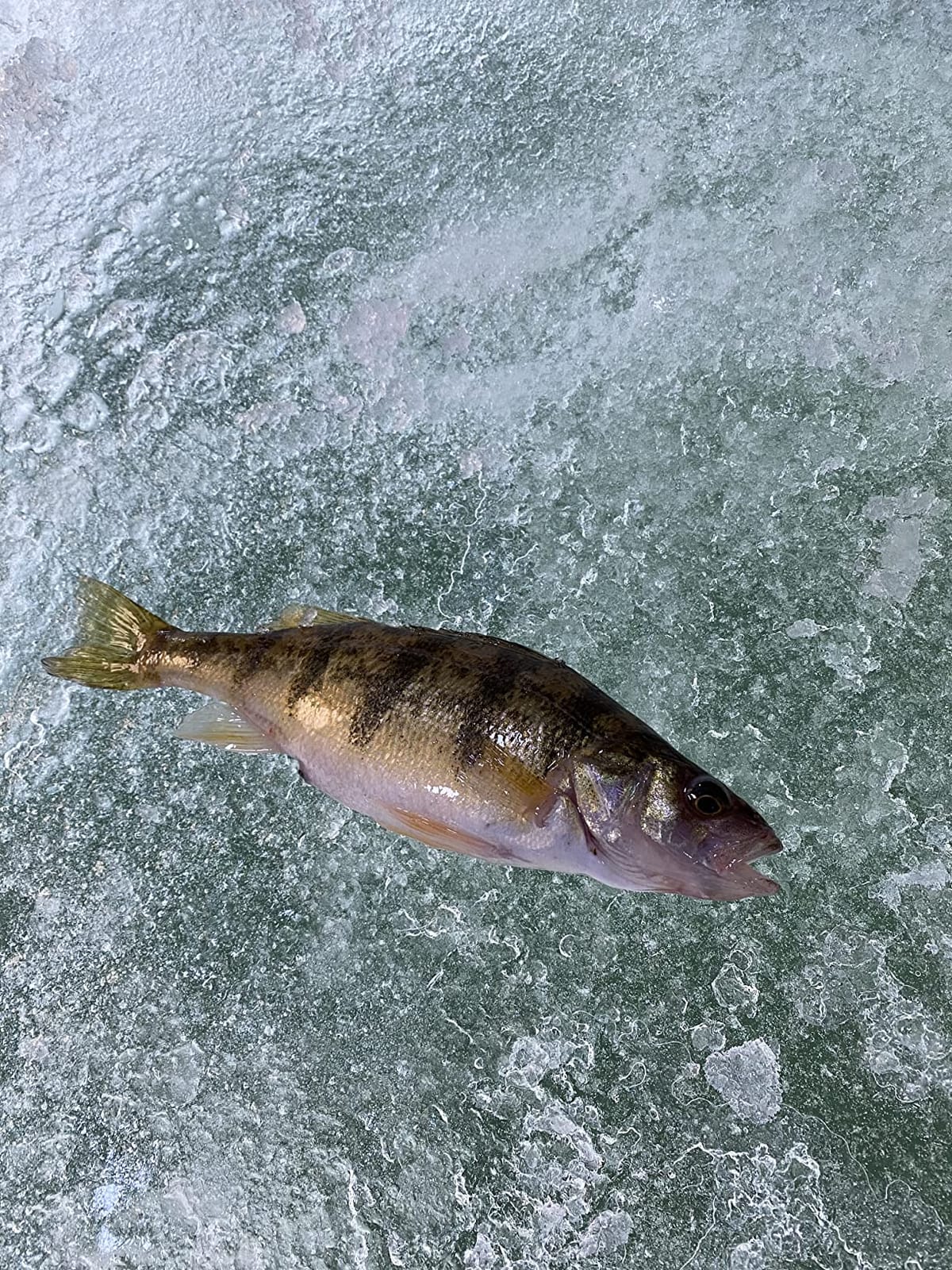
Owners generally use it for depth and ledge location rather than for finding fish, and that is the correct expectation. There is no fish size discrimination, so the fish alerts fire on minnows and baitfish as readily as on a walleye. The display also reports water depth, weeds and bottom type, but nothing more.
Two practical limits are worth knowing. It has to be used from a boat or kayak rather than from shore, and it does not read reliably through fiberglass hulls, so a composite or aluminum boat is the better platform. A small minority of owners report the device failing to power on after a single use, so keep the receipt.
Can a handheld fish finder work from shore?
Not this one. The transducer reads depth only while it is immersed, so you need a vessel to deploy it, and a kayak works perfectly. If shore or bank fishing is your primary game, the castable sonar in the next section is the correct tool because it links to your phone instead of needing a screen in your hands.
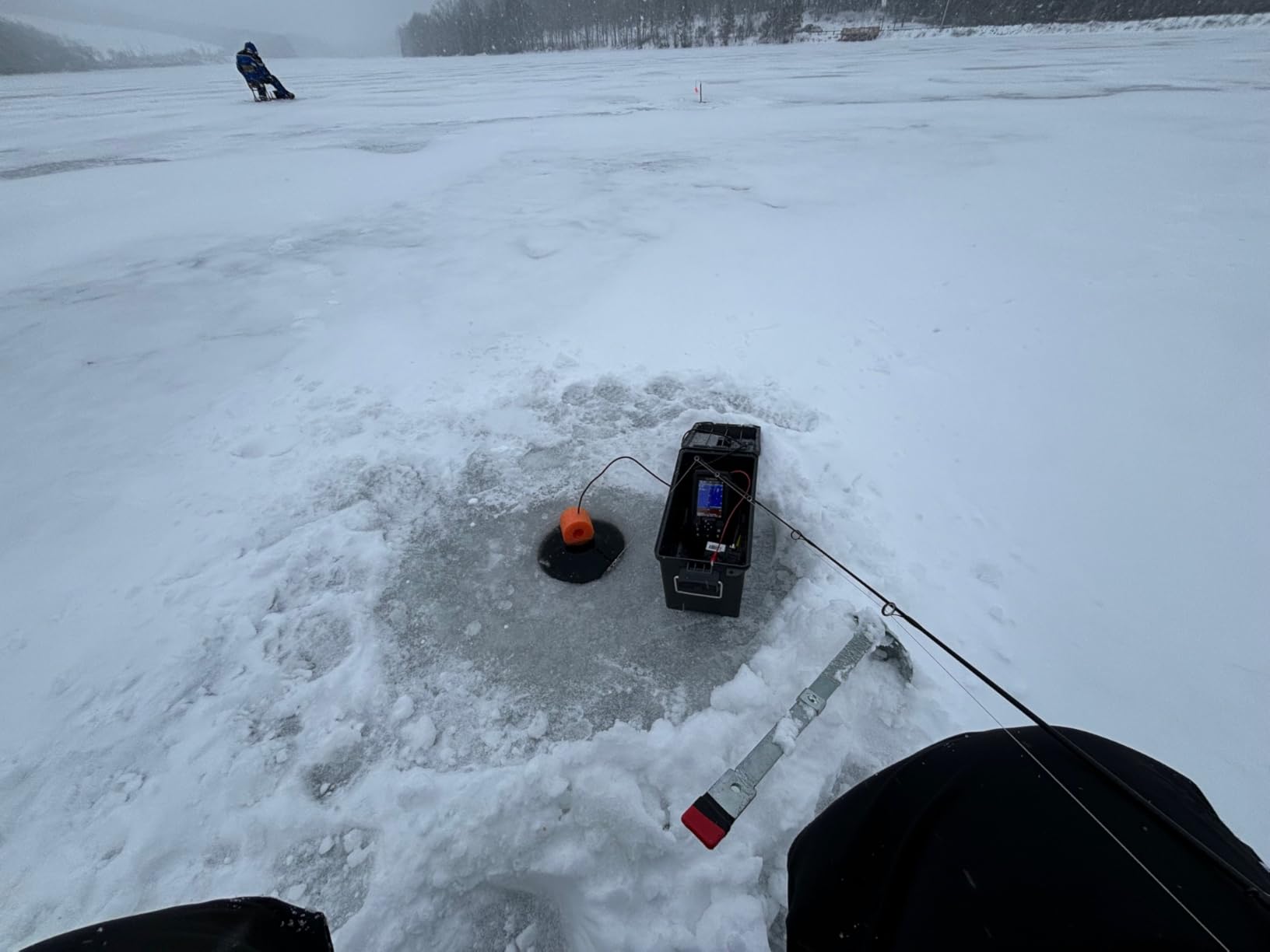
For ice fishing in a rented hut, this is a reasonable low-cost option as well. It is small enough to fit in a pocket, which is where the 2 inch screen is a genuine advantage over anything mounted.
Do I need this or a mounted unit?
Buy this one if you fish a kayak, rent boats often, or want a throwaway first fish finder to learn on. Buy a mounted unit if you want to mark a spot, come back to it, or read structure from a distance. A handheld tells you what is under you right now; a mounted console unit tells you what is around you.
It is also a decent backup unit to keep in a dry bag. If your main fish finder fails a tournament morning, a depth and bottom readout will not save the day, but it will stop you from fishing blind.
5. Deeper PRO+ 2 – Best for Castable Sonar and Mapping
Deeper PRO+ 2 Sonar Fish Finder – Portable Fish Finder and Depth Finder For Kayaks, Boats and Ice Fishing with GPS Enabled | Castable Deeper Fish Finder with FREE User Friendly App
Castable Wi-Fi sonar
100 m depth accuracy
Built-in GPS
0.4 in target separation
3.2 oz
Pros
- Fully wireless at 3.2 ounces
- Built-in GPS creates bathymetric maps from shore or dock
- Narrow beam gives 0.4 inch target separation
- Wide mid and narrow beam options
- 2 year limited warranty
Cons
- Depends on phone app and Wi-Fi connection
- Sonar data is read in the app not on a dedicated screen
- Castable only so it must be retrieved
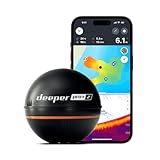
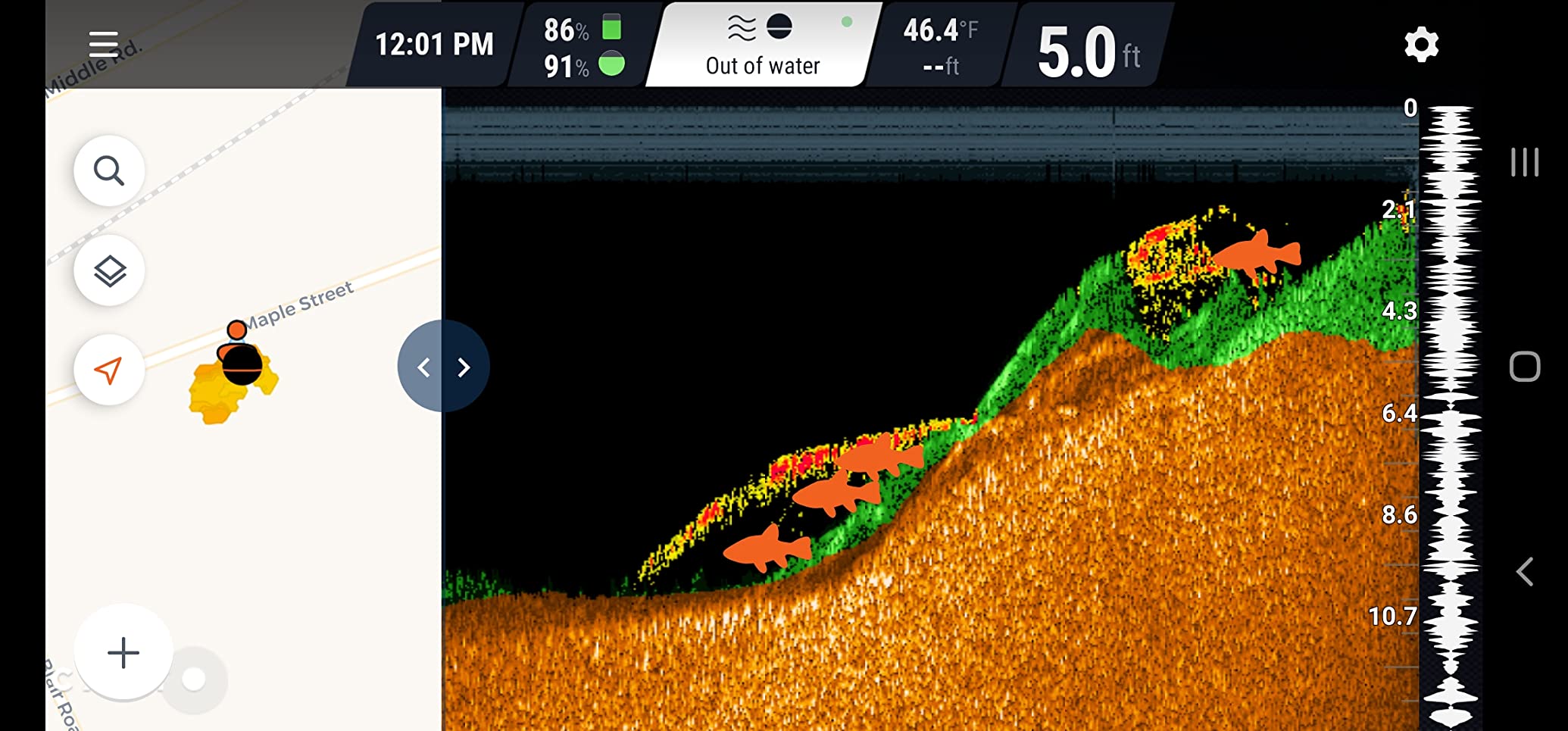
The Deeper PRO+ 2 inverts the usual arrangement. There is no screen on the boat at all. You cast a small wireless sonar, and your phone displays the reading through the Fish Deeper app over Wi-Fi, which means no wiring, no transducer install and no permanent mount on any boat.
Its real strength is the built-in GPS. Because the unit knows where it is, it can create and save bathymetric maps of the bottom contours you cover, so you can build a private map of a lake from shore, from a dock or from a kayak over a season of trips.
Wide, mid and narrow beams let you choose between covering a large area and drilling into one spot. The narrow beam delivers 0.4 inch target separation, which is fine enough to track a small lure while vertical jigging, and overall accuracy reaches 330 feet.
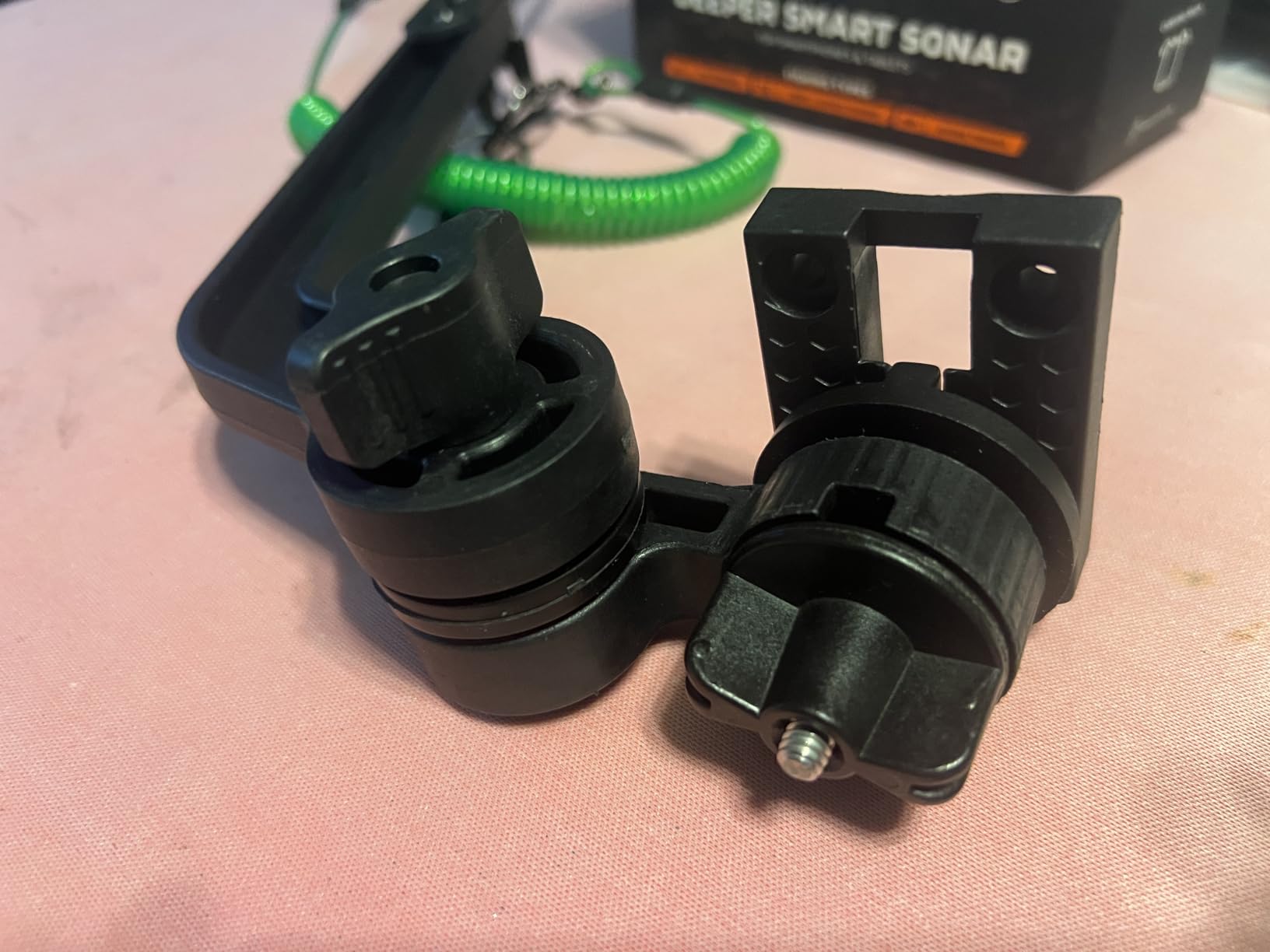
It weighs 3.2 ounces, comes with attachment bolts, a neoprene pouch and a USB cable, and carries a 2 year limited manufacturer warranty, which is among the longest covers in this group. The IP rating is not specified, so treat it as a freshwater angling tool rather than something to leave mounted in saltwater.
The dependency chain is the real cost. The phone, the app and the battery are part of the system, so a flat phone battery ends your session. You also have to retrieve the unit to check readings, which breaks the continuous picture a mounted display gives you.
Is a castable sonar better than a mounted fish finder?
For shore, bank and rented-boat anglers, the castable approach wins because it requires nothing. You can map water you have never seen and record it on your phone. If your boat already has a console with a clean power source and you fish for a full season, a mounted unit gives you a much better screen and a steadier picture.
Think of it as a complement rather than a replacement. Many anglers who buy a console unit still cast one of these from the bank or the dock during the off-season.
Will the Deeper PRO+ 2 work for saltwater fishing?
It is not designed for permanent offshore use, and I would not treat it as a saltwater unit. A castable sonar that has to be retrieved and dried after every drift is a poor fit for a day on open water, and the product listing does not claim a water-resistance rating.
For saltwater inshore work from a small boat, a permanently mounted transducer that you do not have to drag through the air is the better engineering choice. Use the castable for mapping shallow water and fresh lakes.
6. Garmin Striker 5cv – Most Versatile
Garmin 010-01872-00 STRIKER 5CV with Transducer, 5″ GPS Fishfinder, CHIRP Traditional And ClearVu Scanning Sonar Transducer, Built In Quickdraw Contours Mapping Software
5 inch WVGA color
CHIRP traditional and ClearVu
Quickdraw Contours
2300 ft depth
16 oz
Pros
- CHIRP traditional plus ClearVu imaging from one transducer
- Bright sunlight readable 5 inch color screen
- Quickdraw Contours builds 1 foot maps with no extra box
- Simple menu system for a 5 inch class unit
- Transom and trolling motor mounts included
Cons
- No preloaded charts so it is not a chartplotter
- No Wi-Fi SD card slot or networking
- Sounder definition improves with a higher tier transducer
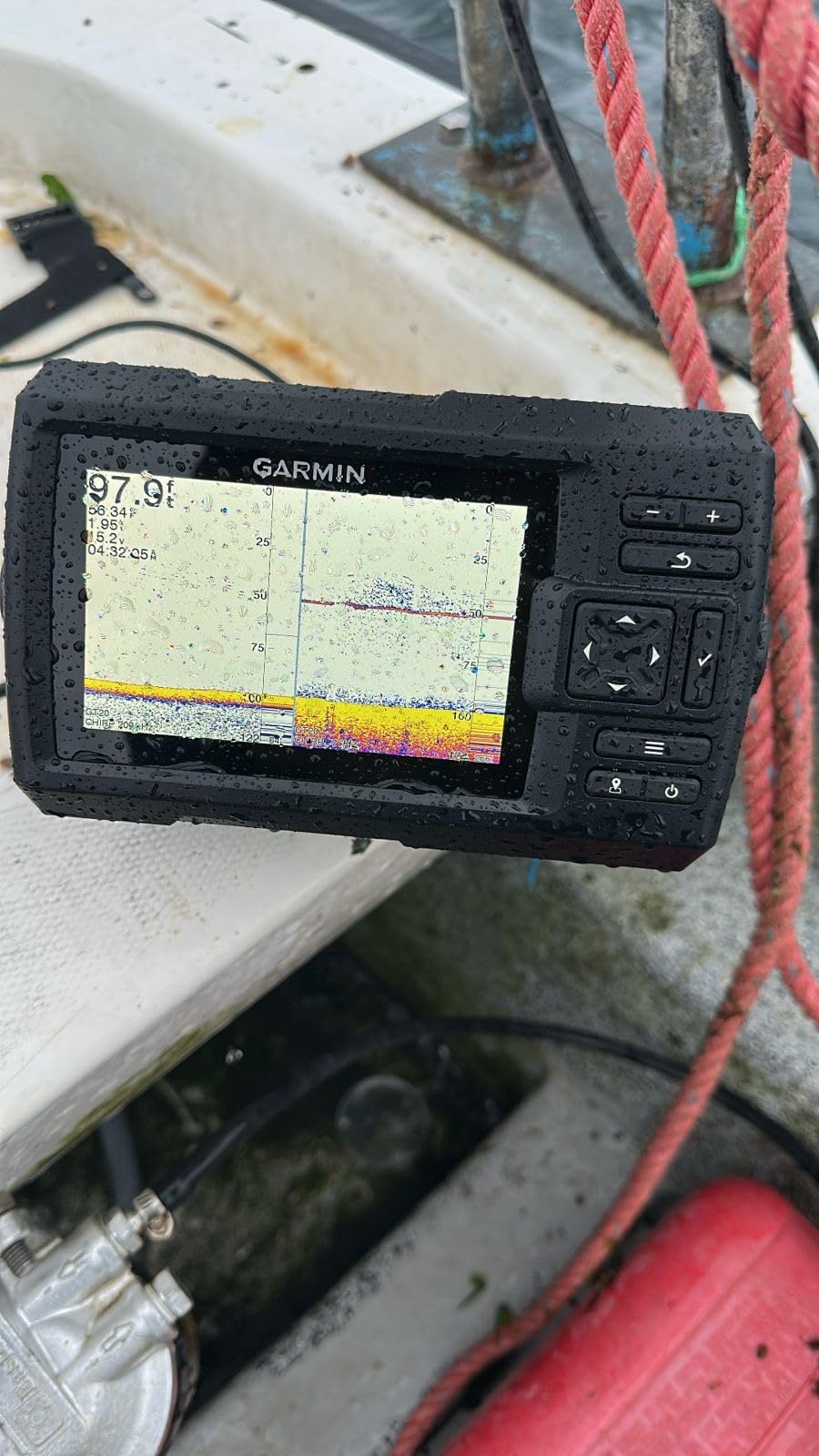
The Striker 5cv is where the budget category turns from entry level to genuinely capable. One included CV20-TM transducer feeds both CHIRP traditional sonar for arches and targets and CHIRP ClearVu scanning sonar for a near photographic picture of structure straight down, and the two run side by side on the display.
That 5 inch WVGA color screen is the difference in daily use. It stays legible in bright sun without washing out, and the extra real estate makes splitscreen and dual frequency views practical. Owners consistently describe the menu as easier to learn than they expected for a unit with this many options.
Built-in Quickdraw Contours mapping is the sleeper feature. It creates and stores 1 foot contours for up to 2 million acres directly from the unit, so you can build your own map of a lake without buying a separate mapping box or paying for a chart subscription.
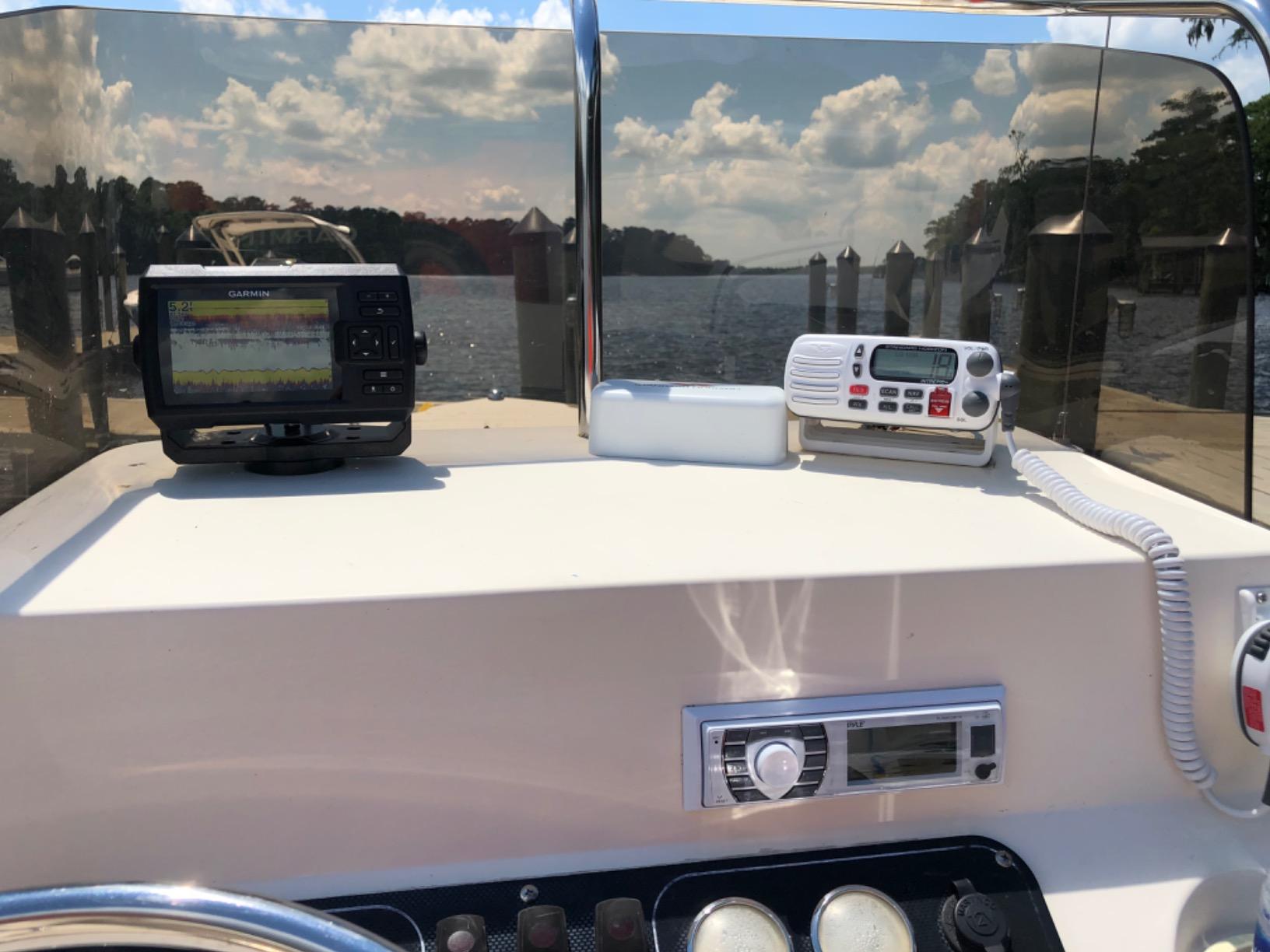
Specs worth noting: 2,300 feet of maximum depth, a 7.4 by 2.1 by 4.5 inch footprint at 16 ounces, and both transom and trolling motor mounts in the box. Built-in GPS marks waypoints, builds routes and shows boat speed.
The expectation gap on this model is maps. It includes no preloaded lake or coastal charts, and several owners assumed otherwise based on the screen size and feature list. There is also no Wi-Fi, no SD card slot and no networking, so it stays a sonar and GPS unit rather than becoming a chartplotter later.
Is a 5 inch or 7 inch screen better?
Five inches is the sweet spot for most freshwater anglers. It fits a kayak, a jon boat and a small bass boat console, it is readable from a seated position, and it gives you splitscreen without making the buttons tiny. A 7 inch screen pays off on a larger boat with a raised console where you are standing or sitting further back.
Where a 7 inch genuinely wins is detail. More pixels at the same resolution means fish arches and brush pile edges separate more cleanly at depth. On a small boat at a low console, that advantage is often wasted.
Should you upgrade the transducer later?
It is worth knowing that definition improves noticeably with a higher tier transducer, and owners report this consistently. The included CV20-TM covers the job for most freshwater work, so I would not treat a transducer upgrade as a required first purchase. Save that money for a mount and a proper fused power connection instead.
One practical complaint does come up repeatedly: the supplied power and data cable length forces careful planning of where the unit sits on the console. Measure your run before you drill, because cord tension is the most common reason owners reposition a fish finder after the first trip.
7. Humminbird Helix 5 Chirp GPS G3 – Best for Navigation
Humminbird Helix 5 G3 GPS Fish Finder with Transducer & Dual Spectrum Chirp Sonar
5 inch color TFT
Dual Spectrum CHIRP
Humminbird Basemap 10000+ lakes
AutoChart Live
XNT 9 HW T included
Pros
- Only model here with a real basemap covering 10000+ lakes and the coast
- AutoChart Live maps contours and bottom hardness in real time
- Color TFT stays readable in direct sun
- Accepts LakeMaster CoastMaster and Navionics SD cards
- Transducer and gimbal bracket included
Cons
- Power cable too short for a 14 foot boat without extra wiring
- Inline fuse not included and 8 hours of recording built in
- Keypad menu is dated next to touchscreens
The Helix 5 Chirp GPS G3 is the only fish finder in this roundup that includes a real basemap. The Humminbird Basemap covers more than 10,000 lakes plus the continental U.S. coastline, so you can navigate to a ramp you have never seen without first plotting a course by hand.
Sonar is Dual Spectrum CHIRP with a Wide mode for maximum coverage and a Narrow mode for detail, and the low-Q transducer provides precise 2D target separation. That is a meaningful upgrade over traditional fixed-frequency sonar when you are trying to hold two fish apart on the same depth.
AutoChart Live is the reason to stretch to this tier. It maps depth contours, bottom hardness and vegetation in real time while you run, with 8 hours of built-in recording time, and it accepts AutoChart Zero Line SD cards to extend that. If you learn to use it, it replaces buying charts for your home water.
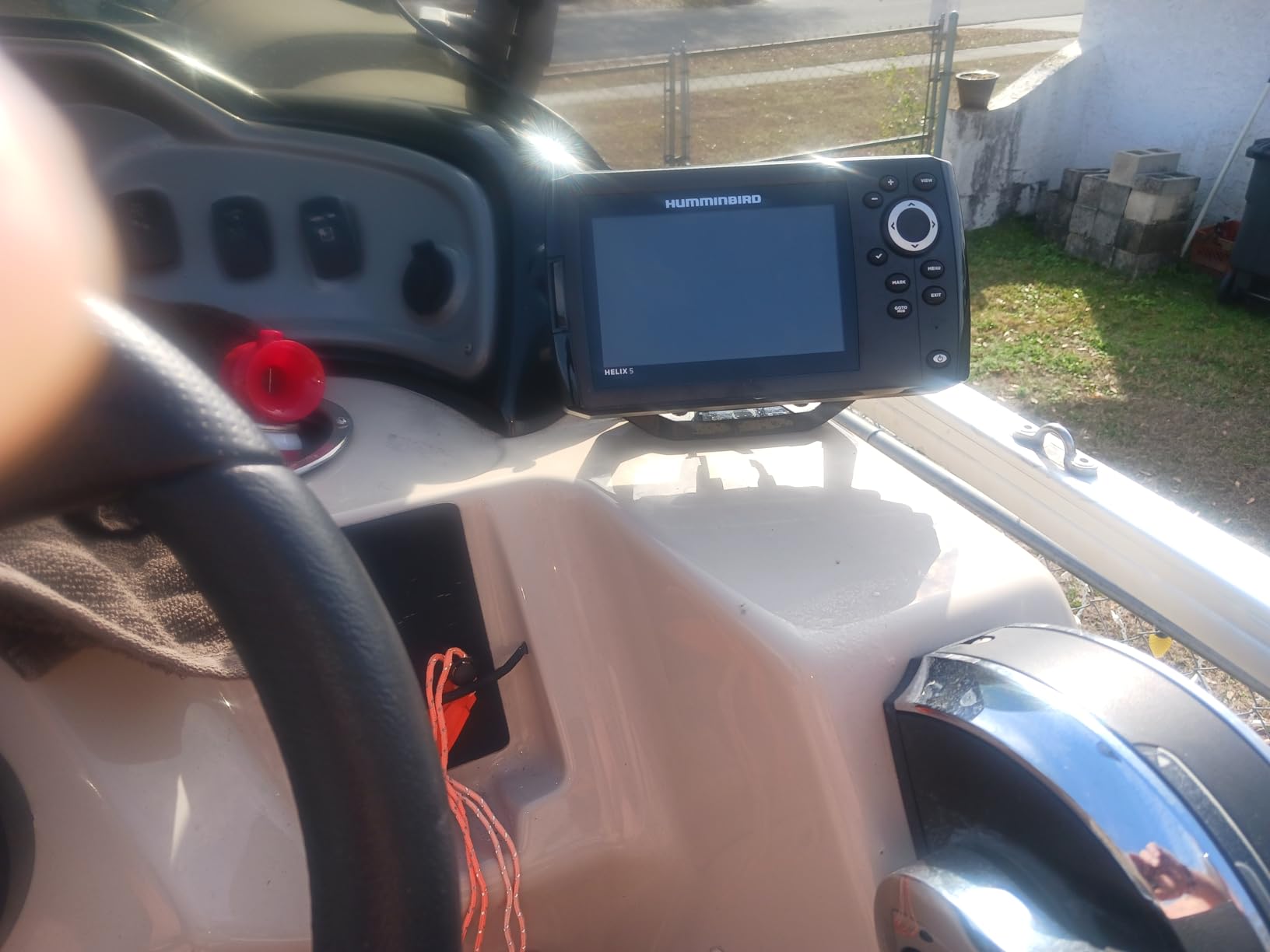
It also takes premium cards. LakeMaster, CoastMaster and Navionics all fit in the SD slot, so the day you outgrow the built-in basemap you are not buying a new unit. The 5 inch color TFT screen holds up in direct sun, and a gimbal bracket plus the XNT 9 HW T transom transducer are both included.
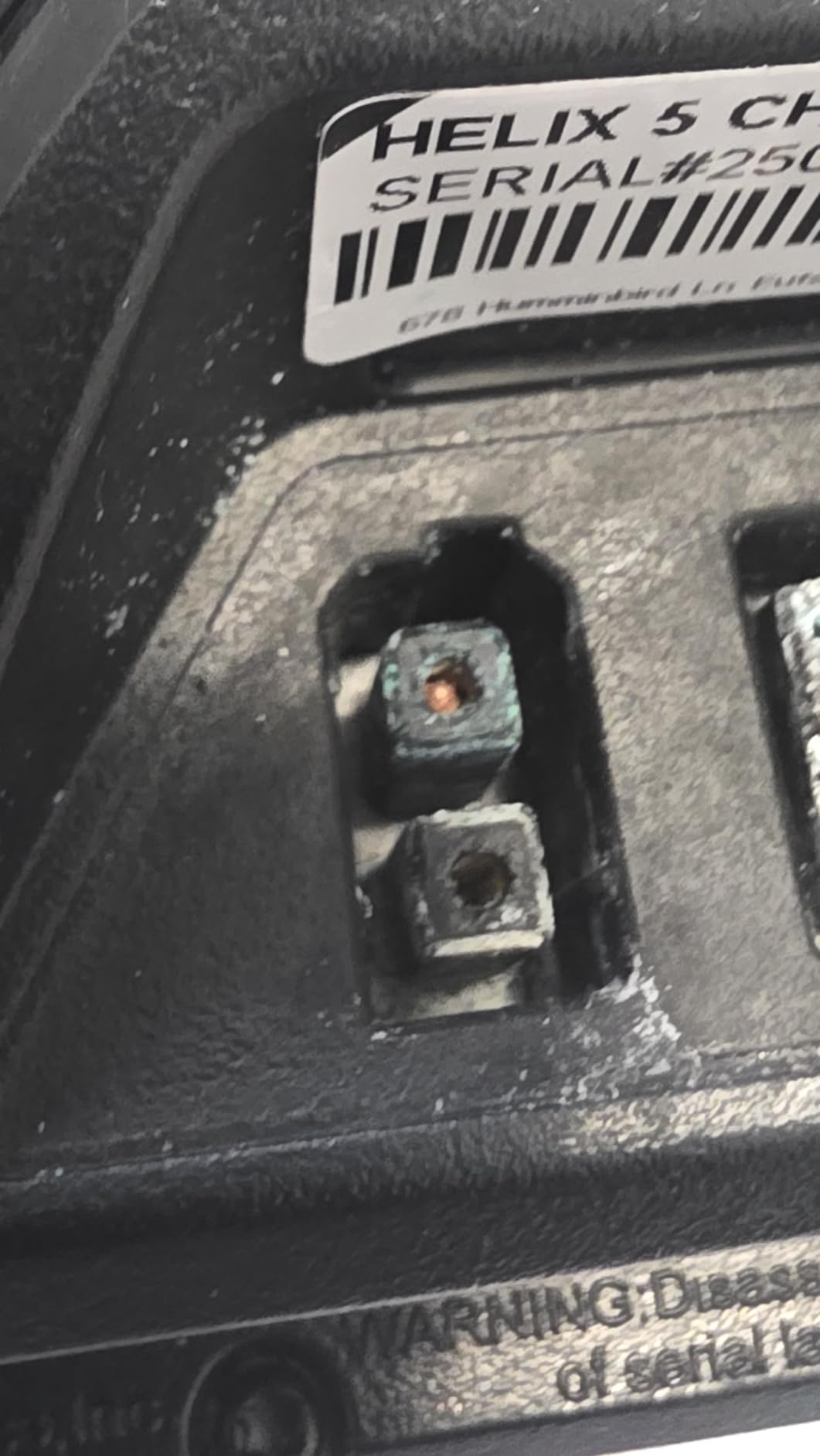
Installation is where people get stuck. Owners repeatedly report that the power cable is not long enough for a 14 foot boat without extra wiring, and the required 3 amp inline fuse is not in the box. Plan the cable run and buy a fuse and holder before you start, because that has left more than one owner unable to finish on the water.
Do I need a chartplotter or is GPS enough?
A plain GPS fish finder like the Striker 4 or Striker 5cv marks waypoints and shows your speed, but it cannot draw a shoreline or a depth contour for you. A chartplotter like this one displays a map underneath your position, which matters when you are navigating unfamiliar water or running a marked route to a specific spot.
My rule of thumb: if you fish more than a handful of familiar lakes, the chartplotter pays for itself in saved travel time. If you fish the same water every weekend and know the ramps by heart, GPS and waypoints are enough and the saved money is better spent on a transducer upgrade.
Is AutoChart Live worth it versus Garmin Quickdraw?
AutoChart Live records bottom hardness and vegetation alongside contours, which Garmin Quickdraw does not. In practice, vegetation and hardness are useful for locating feeding areas on relatively flat lake shelves, and a lot of anglers who used AutoChart Live say they stopped guessing about soft bottom.
The Garmin equivalent, Quickdraw Contours on the 5cv and 7cv, is simpler and quicker to use because it stores 1 foot contours directly. If mapping speed matters more than the extra data layers, Quickdraw is less to learn. If you want the full picture, this is the more complete system at this budget.
8. Garmin Striker Vivid 7cv – Best for Big Screens
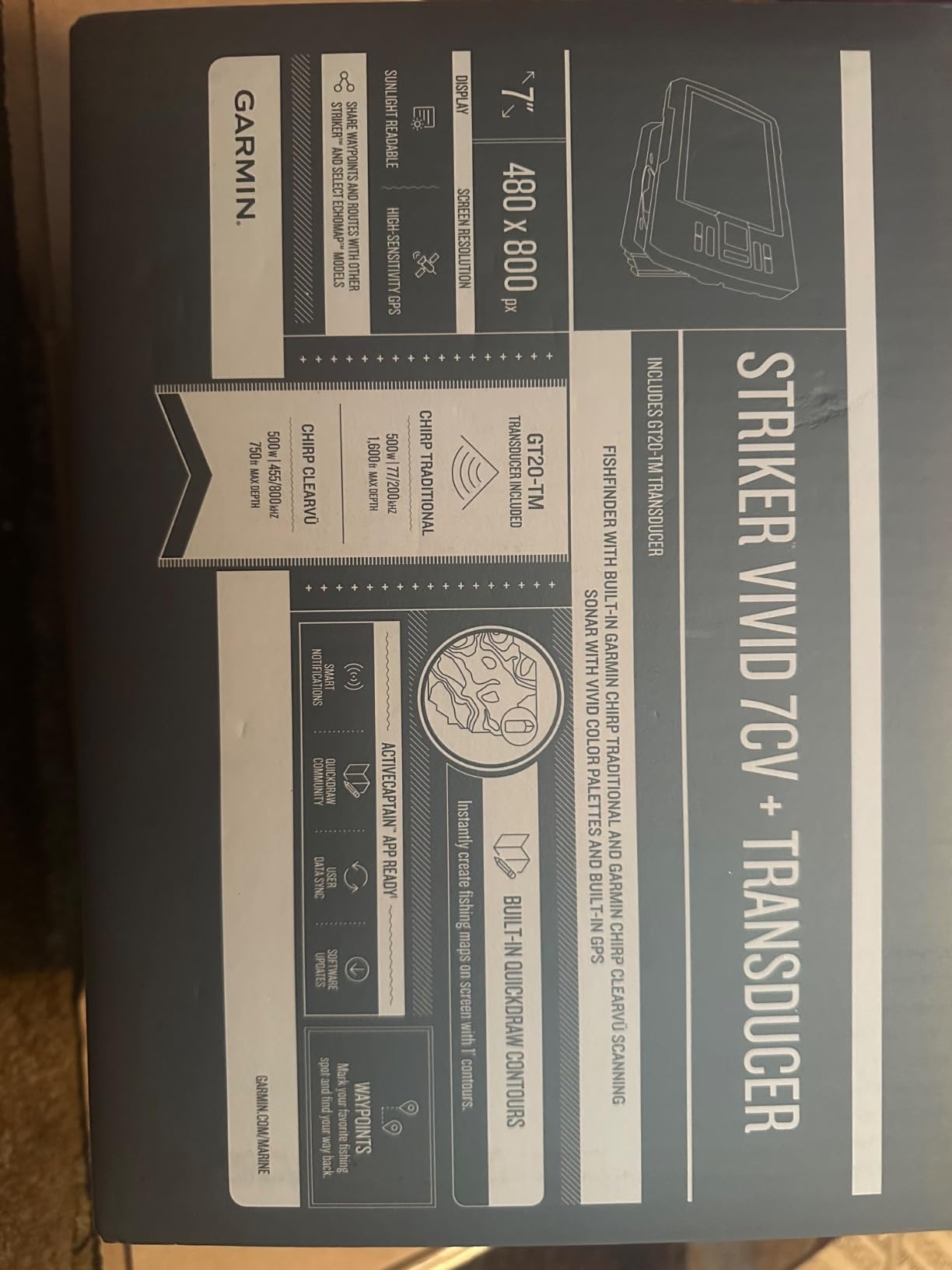
Garmin Striker Vivid 7cv, U.S. with GT20-TM Transducer – Easy-to-Use 7-inch Color Fishfinder and Sonar Transducer, Vivid Scanning Sonar Color Palettes (010-02552-00)
7 inch color LCD
Vivid sonar palettes
GT20-TM CHIRP and ClearVu
Wi-Fi with ActiveCaptain
2 year warranty
Pros
- Largest screen in the group and still bright in direct sun
- Vivid color palettes separate fish from structure
- Wi-Fi and ActiveCaptain for waypoint transfer and notifications
- 2 year warranty is longer than the smaller Garmin units
- GT20-TM transducer included
Cons
- No preloaded maps despite the size and price
- Menu takes study time on a first run
- 4.4 pounds is the heaviest unit here
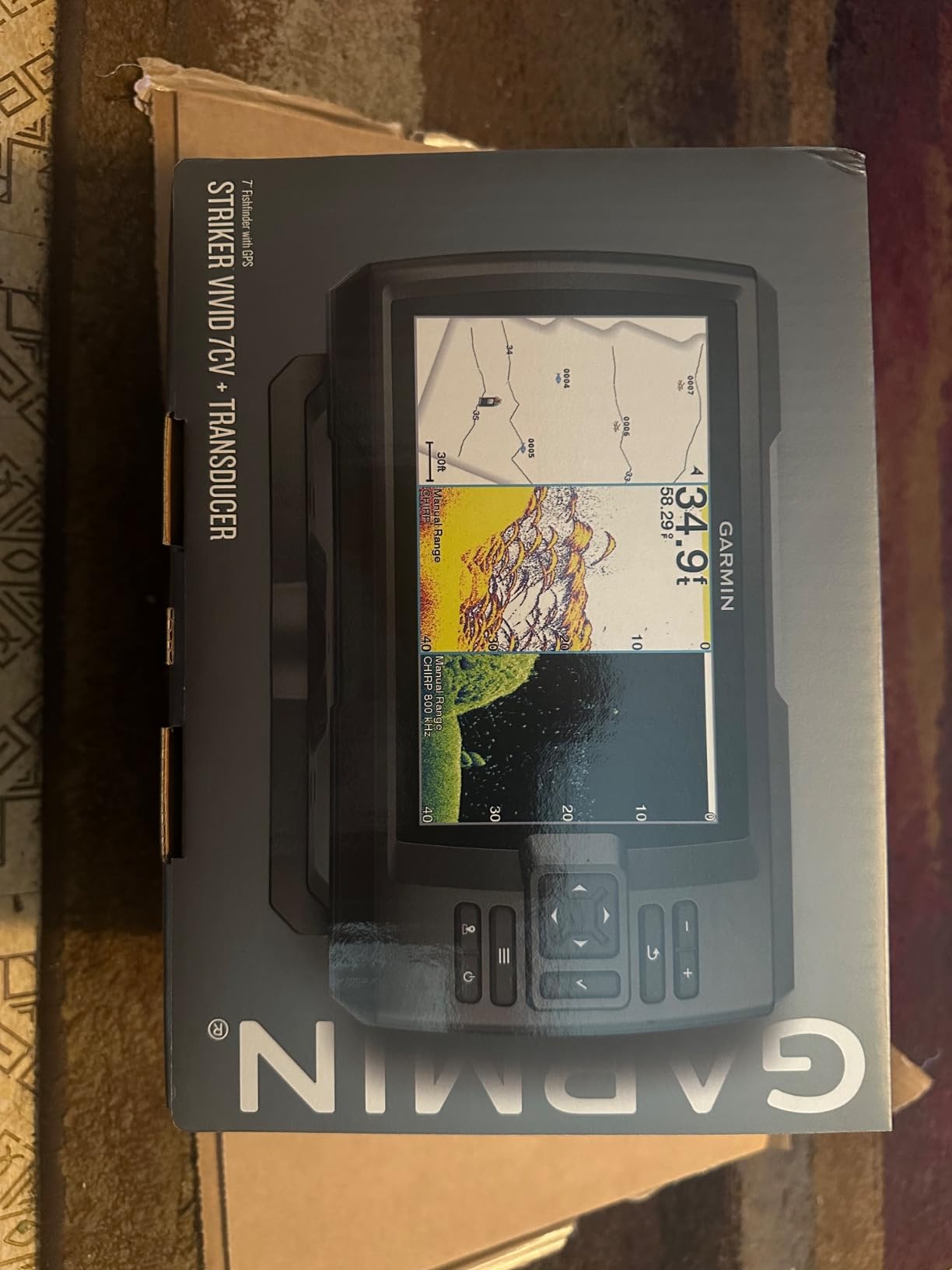
The Striker Vivid 7cv is for the angler whose boat has the console space and whose eyes prefer a bigger picture. At 7 inches diagonal it is the largest display in this roundup, and owners rate it highly for staying bright and legible in direct sun.
The Vivid color palettes are the part I would not give up. Instead of a fixed color scheme, you choose a palette that separates fish from structure and bottom for the water you are in, which genuinely reduces the mental work of reading a screen at speed. The GT20-TM transducer provides CHIRP traditional sonar alongside CHIRP ClearVu scanning sonar.
It is also the most connected fish finder here. Wi-Fi links to the ActiveCaptain app for waypoint transfer, smart notifications, software updates and sharing to the Quickdraw Community, and built-in Quickdraw Contours mapping is included.
Two-year limited warranty coverage is longer than the 1 year cover on the smaller Garmin models, which matters if you fish hard and keep gear for seasons. High-sensitivity GPS handles waypoints, routes and boat speed, and a tilt and swivel bailmount bracket is included.
The honest catch is the weight and the space. At 4.4 pounds with an 11.4 by 8.9 by 8.2 inch footprint, it is the heaviest unit in the group, and a 7 inch screen needs real mounting space on a small console. It also includes no preloaded lake or coastal charts, and several owners assumed otherwise based on the screen size and price, so read the box contents before you commit.
Is a 7 inch screen too big for a small boat?
On a jon boat or a kayak, yes, it is too big. On a 16 foot bass boat or a pontoon with a raised console, a 7 inch screen is comfortable and gives you splitscreen plus a usable chart of the sonar. The practical limit is console footprint, so measure before you buy.
Angler discussions about 7-inch units in this class keep coming back to two themes: that it is very good value for the screen size, and that people underestimate how long it takes to learn the feature set. Several owners say the menu clicked for them after a few days on the water, but a first-time angler should expect a slower start than the 5cv.
Should you buy the 7cv or save toward a side imaging unit?
At this price point you are choosing between a bigger screen and side imaging, and you cannot have both within this budget. If you fish structure-heavy water and want to see brush piles well out to each side, saving toward a side imaging unit is the better path, because that capability changes how you search a flat.
If you mostly want a clear, bright picture of what is beneath and around the boat on a boat that has the space, the 7cv delivers that today. Its Wi-Fi connectivity also means you will not be replacing it in two years the way you would with an older unit that has no way to get updates.
How to Choose a Budget Fish Finder
The gap between a 100 dollar handheld and a 500 dollar console unit is not quality, it is capability. Everything below is a decision axis that actually changes what you can do on the water, not a spec that only matters on a printed comparison chart.
Sonar type explained: CHIRP, ClearVu, Dual Beam and Auto-Tuning
CHIRP, short for Compressed High-Intensity Radar Pulse, sends a continuous sweep of frequencies instead of a single fixed frequency. That wider range of information produces crisper fish arches and better target separation, and it is the single most worthwhile sonar upgrade in this budget. Every Garmin model here uses it.
ClearVu is Garmin’s scanning sonar that renders a near photographic image of structure directly below the boat. Dual Beam, on the Humminbird PiranhaMAX 4, is a simpler approach that lets you toggle a narrow beam for detail against a wide beam for coverage. Auto-Tuning Sonar, on the Lowrance Eagle 4X, removes the setup decision by configuring itself.
Here is the order I would pay for. First get CHIRP over traditional sonar. Second get an imaging mode such as ClearVu, which shows you brush piles and ledges rather than just a bottom line. Third, get a wider screen. Side imaging sits above this budget entirely, which is why none of these models offer it.
Screen size: 2 inch, 4 inch, 5 inch or 7 inch
Screen size is a boat decision, not a bragging decision. A 2 inch handheld is right for a pocket and a rented ice hut. A 4 inch portrait screen fits a kayak or skiff deck. A 5 inch unit is the sweet spot for jon boats, dinghies, small bass boats and most pontoons. A 7 inch screen needs a real console.
Brightness matters more than inches once you are past 5 inches. Look for a sunlight readable color display and check whether owners confirm readability through polarized sunglasses, because that is the condition you will actually fish in. The IPS panel in the Eagle 4X and the WVGA panel in the Striker 5cv both do well there.
Resolution matters less than most buyers assume. What limits a small screen is not pixel count, it is the size of the button targets and how much of the sonar page you can hold in view at a glance.
GPS, chartplotter and real-time contour mapping
A GPS fish finder tells you where you are and lets you mark a waypoint. A chartplotter draws a map of shorelines, depth contours and routes underneath your position. The difference is the difference between remembering a spot and looking at it, and it is the main reason to spend more if you fish unfamiliar water.
Real-time contour mapping is the feature that separates a good buy from a great one. Garmin calls it Quickdraw Contours and stores 1 foot contours for up to 2 million acres. Humminbird calls it AutoChart Live and adds bottom hardness and vegetation with 8 hours of built-in recording. Both let you build a private map of a lake without a separate mapping box.
Within this budget, the Helix 5 Chirp GPS G3 is the only model shipping with a usable basemap, covering more than 10,000 lakes and the continental U.S. coastline. If navigation is part of your task, that matters more than a bigger screen.
Transducer: the fine print that decides your real cost
A transducer is the underwater sensor, and without one a fish finder is a very expensive clock. Check the box contents before you buy, because listings for the same model are split into bundles with a transducer and bare units without one, and the bare version can look like a better deal right up until you try to use it.
All eight models here include a transducer in the box, which is why I included them. The Garmin units include transom and trolling motor mounts, the Humminbird units include a transom transducer and bracket, and the Lowrance Eagle includes a 200 kHz bullet skimmer. A trolling motor mount matters more than most buyers expect, because it avoids drilling a kayak or small boat hull.
Mounting type follows the boat. Surface or panel mount suits a console, transom mount suits the back of a boat and cannot be used in shallow or very fast water, and a thru-hull mount is a permanent install that needs a boatyard. Plan the cable run before you mount anything, because a cable that is too short is the most common install complaint across this entire group.
Garmin vs Lowrance vs Humminbird
Garmin has the deepest track record in this group, with the highest review counts and consistent CHIRP performance across the line. The Striker 4 and Striker 5cv are the safest buys, and the Vivid 7cv is the screen-size option. Garmin units in this range are sonar and GPS rather than chartplotters, and they carry a 1 year warranty on the smaller models and 2 years on the 7cv.
Lowrance wins on display technology and setup simplicity. The Eagle 4X has the brightest sunlight readable IPS panel in the group and an auto-tuning sonar that removes the configuration step, and the family extends upward to sizes and mapping options that Garmin does not match at this price. The trade is a thinner review history on the entry model and a shallower depth rating.
Humminbird wins on navigation and mapping. Only the Helix 5 Chirp GPS G3 in this group ships with a basemap, and it accepts LakeMaster, CoastMaster and Navionics cards. It also has the clearest auto-mapping system with bottom hardness and vegetation. Angler discussion tends to gravitate to Humminbird for display clarity, Garmin for mapping, and Lowrance for flexibility across environments.
For saltwater, treat the depth rating as the real specification. The Garmin Striker 4 is rated to 1,600 feet in freshwater and 750 feet in salt water, the Striker 5cv reaches 2,300 feet, and the Humminbird PiranhaMAX 4 tops out at 600 feet overall. A unit advertised for lake fishing is not automatically a saltwater unit, and the transducer and coating are what decide that.
Matching the fish finder to your boat
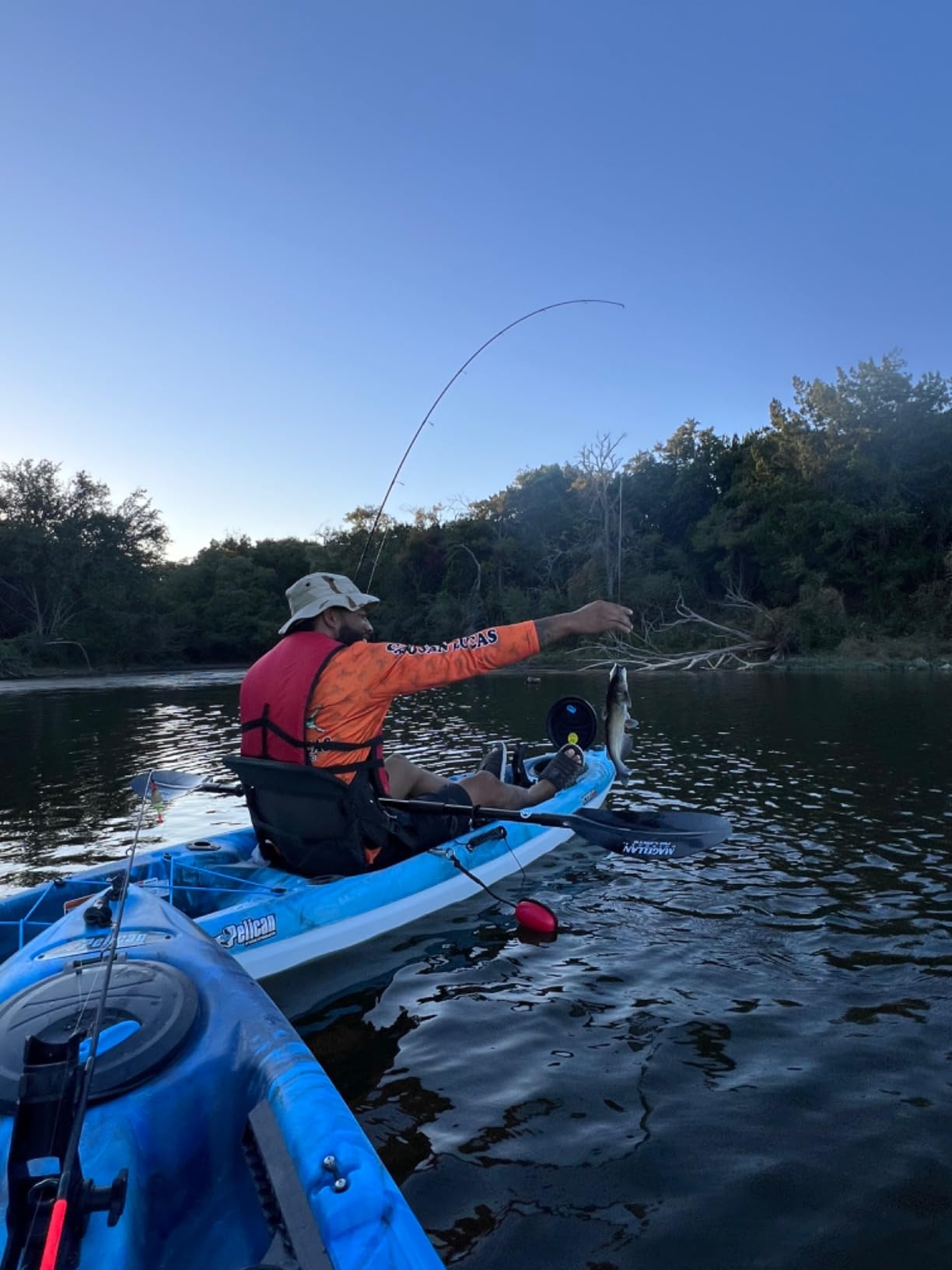
Kayak and canoe anglers should look at the 3.5 inch Striker 4, the Lowrance Eagle 4X with its trolling motor style mount, or a castable sonar like the Deeper PRO+ 2. Avoid the 7 inch console and anything heavy enough to shift your balance. Our kayak fish finder guide covers the mounting options in more detail.
Jon boats and dinghies suit a 4 to 5 inch unit with a surface mount and a transom or trolling motor transducer. The Humminbird PiranhaMAX 4 and the Garmin Striker 5cv both fit that bill, and neither needs anything drilled into the hull.
Pontoons and bass boats with a raised console are where the 5 inch and 7 inch units make their case, and a chartplotter starts to matter if you run across large water. Bass boats also tend to be the boat where side imaging would help most, which is exactly what this budget does not offer, so that is the upgrade to save toward.
Winter and ice anglers should note that the Striker 4 has a built-in flasher mode designed for vertical jigging, and that a small handheld unit is easier to carry into a hut. Our portable ice fishing fish finder picks cover that use case in more detail if you fish through the cold months.
What a 500-Dollar Budget Does Not Buy
Living within the budget is easier if you know what you are trading away. Four things stay out of reach at this price, and each one is a genuine step up in a specific way rather than a marketing line.
First, live forward-looking sonar. LiveScope shows you what is in front of the boat in real time, including fish that never show on a down scan because they are above it. It is the single biggest upgrade in the category and it costs several times this budget. You cannot substitute a bigger screen for it.
Second, side imaging. SideVü and its equivalents sweep out to each side and let you see brush piles, drop-offs and weed edges from a distance. In this roundup the closest any model comes is the Eagle family option that sits above this price. If side imaging is a must-have, save toward it rather than spending the budget here.
Third, networking. NMEA 2000 lets multiple displays share a chartplotter, radar and autopilot data over a backbone cable. None of these units participate, and retrofitting it means replacing the whole system, not adding a module.
Fourth, premium chart subscriptions and 9 to 10 inch displays. Full Navionics or LakeMaster packages are a separate ongoing cost, and a 10 inch screen needs a console built for it. A more honest framing: at this budget you are buying sonar quality and one good display, not a navigation system.
What you do get is the part that used to be premium. CHIRP sonar, scanning down imaging, built-in GPS, waypoint marking and real-time contour mapping are all in this band now, and that is a real change from what a 500 dollar budget bought a few generations ago. If you have an older unit that is a decade old, replacing it with anything in this list is a step change in what you can see.
Frequently Asked Questions
What is the best fishfinder under 500?
The Garmin Striker 4 with Transducer is the best fish finder under 500 because it combines CHIRP sonar, a built-in GPS with waypoint marking, IPX7 water resistance and a 1,600 foot freshwater depth rating, and a transducer plus both mounts are included in the box. Owners rate it across more than 9,000 verified reviews, which is more long-term evidence than any competing budget model here has. For a larger color screen with scanning down imaging, step up to the Garmin Striker 5cv.
What is the best fish finder on a budget?
On a tight budget the answer depends on the boat. A kayak or jon boat angler is best served by the Garmin Striker 4 or the Lowrance Eagle 4X, both of which weigh under 3 pounds and mount on a trolling motor without drilling. The Humminbird PiranhaMAX 4 is the entry point if you prefer Humminbird. If you fish unfamiliar water, spend more on the Humminbird Helix 5 Chirp GPS G3 because it includes a basemap.
What fish finder is better, Garmin or Lowrance?
For proven reliability and the deepest review history, Garmin is the stronger choice at this budget. The Striker 4 carries by far the deepest review history at this budget, and the 5cv adds ClearVu scanning imaging. Lowrance is stronger on display and setup, with a sunlight readable IPS panel and auto-tuning sonar that configures itself. If you want the simplest first fish finder, Lowrance wins; if you want the longest track record, Garmin wins.
Is Humminbird or Garmin better?
Garmin is better for sonar and value, and it wins on review volume at this budget. Humminbird is better for navigation: the Helix 5 Chirp GPS G3 is the only model here that includes a basemap covering more than 10,000 lakes and the U.S. coastline, plus AutoChart Live mapping of contours, bottom hardness and vegetation. Choose Humminbird if you navigate unfamiliar water, and Garmin if you fish known water and want the widest range of screen sizes.
Is the Lowrance Hook 7 a good fish finder?
The Lowrance HOOK Reveal 7 is a capable unit that combines SplitShot CHIRP and DownScan imaging with Genesis Live real-time mapping on a 7 inch display. It sits near the top of this budget and is a solid all-rounder for anglers who want a large screen with mapping features in one box. It competes directly with the Garmin Striker Vivid 7cv, which offers a larger display and Wi-Fi connectivity for a similar outlay. Long-term owners describe the HOOK series as solid and user friendly rather than exceptional.
Do fish finders come with a transducer?
Usually, but not always. Every fish finder in this roundup includes a transducer in the box, and several also include transom and trolling motor mounts. The trap is that retailers list the same model in two versions, one bundled with a transducer and one bare, and the bare listing is sometimes not cheaper once you add a compatible transducer. Always read the box contents and the included components list before buying.
Can I use a fish finder on a kayak?
Yes, and several of these models are built for it. The Garmin Striker 4 weighs 8 ounces and includes a trolling motor mount so you can avoid drilling the hull, and the Lowrance Eagle 4X has a compact portrait footprint and a twist-lock connector for quick removal. A castable sonar such as the Deeper PRO+ 2 or a handheld unit is another good option, since neither requires any permanent installation. Avoid the 7 inch console models on a kayak because of their weight and size.
Is CHIRP sonar worth the extra money?
Yes, CHIRP is the most worthwhile upgrade in this category. It sends a continuous sweep of frequencies rather than a single fixed frequency, which produces crisper fish arches and better target separation than traditional sonar. If you are choosing between two units at the same price and one has CHIRP, take that one. A second question is side imaging, which is more transformative but is not available within this budget.
Which Fish Finder Under 500 Should You Buy?
Start with the Garmin Striker 4 with Transducer if you want the most proven budget fish finder you can buy. It has CHIRP sonar, built-in GPS, waypoint marking, a flasher mode for ice, and a transducer plus both mounts in the box, backed by more verified reviews than anything else in this roundup.
Move up to the Garmin Striker 5cv when you want a 5 inch color screen and ClearVu scanning imaging, or to the Garmin Striker Vivid 7cv if your boat has a console with the space for it. Choose the Humminbird Helix 5 Chirp GPS G3 when you navigate unfamiliar water and need a basemap and real-time AutoChart Live mapping.
For a kayak or a small boat, the Lowrance Eagle 4X gives you the brightest screen and the simplest setup, and the Deeper PRO+ 2 covers shore and bank fishing with no install at all. Whichever you pick, confirm the transducer is in the box and check the current listing before ordering. Our broader fish finder roundup covers the higher tiers if you decide to save toward side imaging or live sonar in 2026.