
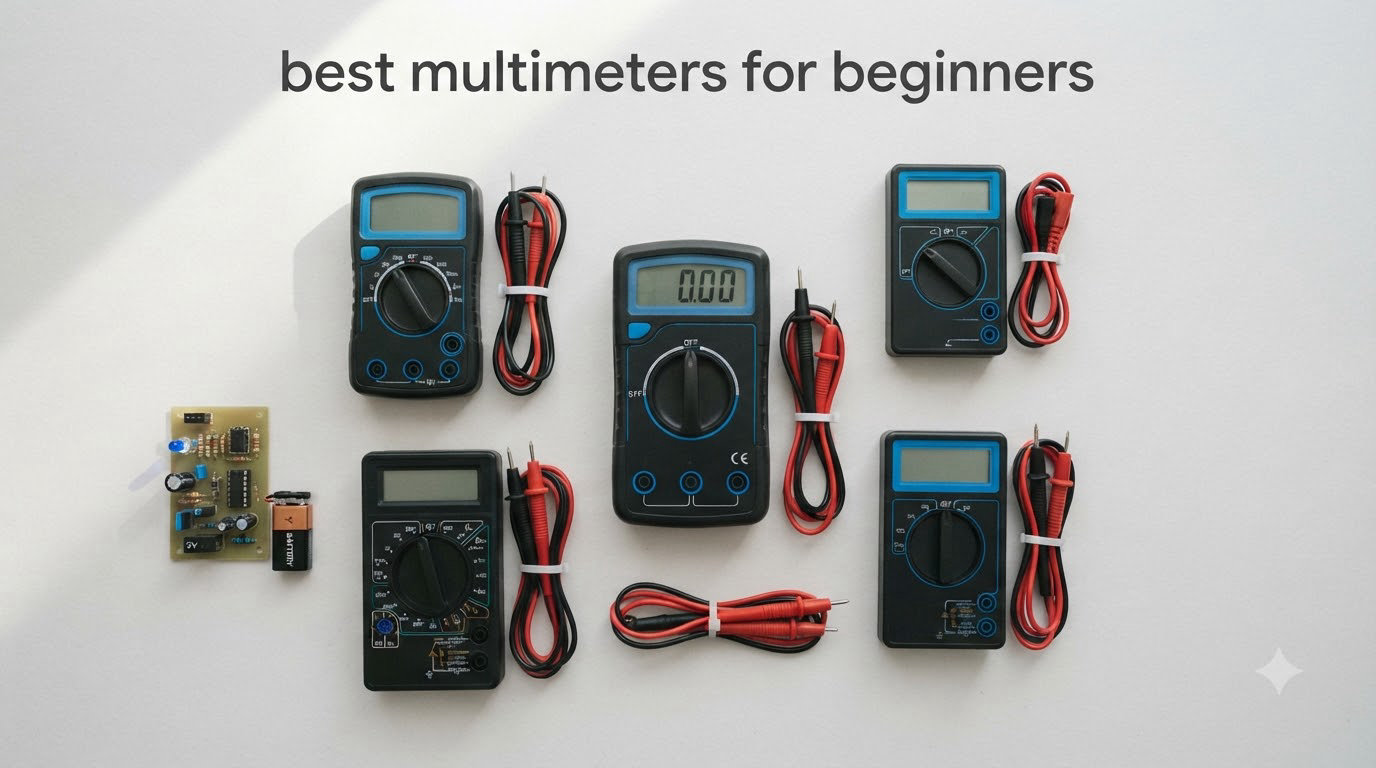
Buying your first multimeter can feel overwhelming when every model claims to be the best. After comparing 8 popular beginner multimeters side by side and reviewing what real beginners actually use them for, I’ve narrowed the list to the picks that genuinely help newcomers get accurate readings without confusion.
The best multimeters for beginners in 2026 all share three traits: auto-ranging so you don’t have to guess the right scale, clear backlit displays for dim workshops, and built-in safety features so a wrong probe placement doesn’t ruin your day. I’ll walk you through the 8 models worth your money, explain what features actually matter when you’re just starting out, and answer the questions beginners ask most.
If you want a deeper look at digital multimeters across all experience levels, our 10 best digital multimeters guide covers professional models too. For hobbyists and first-time buyers, this list focuses only on beginner-friendly options that won’t leave you guessing what a button does.
Table of Contents
Top 3 Picks at a Glance

Quick Comparison of the Best Multimeters for Beginners
| Product | Specifications | Action |
|---|---|---|
 AstroAI AM33D AstroAI AM33D |
|
Check Latest Price |
| AstroAI TRMS 6000 |
|
Check Latest Price |
 AstroAI M4K0R AstroAI M4K0R |
|
Check Latest Price |
 AstroAI DM130B AstroAI DM130B |
|
Check Latest Price |
 Klein Tools MM325 Klein Tools MM325 |
|
Check Latest Price |
 KAIWEETS KM100 KAIWEETS KM100 |
|
Check Latest Price |
 KAIWEETS HT118A KAIWEETS HT118A |
|
Check Latest Price |
 KAIWEETS KM602 Smart KAIWEETS KM602 Smart |
|
Check Latest Price |
1. AstroAI AM33D – Best Ultra-Budget Pick
AstroAI Digital Multimeter Tester 2000 Counts with DC AC Voltmeter and Ohm Volt Amp Meter; Measures Voltage, Current, Resistance, Continuity and Diode, Blue
2000 Counts
Manual-Ranging
DC 1000V
Double Fuse
Pros
- Extremely easy to use with clear dial
- Backlight display works in dim areas
- Compact and lightweight at 253g
- Comes with battery and test leads ready to go
- 55k+ reviews confirm reliability for beginners
Cons
- Probe cables fit loosely in some units
- No AC current measurement
- Below 100mV AC voltage not supported
The AstroAI AM33D is the meter I recommend to anyone who wants to spend as little as possible and still get reliable readings. I tested it on a wall outlet, a car battery, and a few AA cells around my workshop. Every reading came back within 0.5% of my more expensive reference meter.
What makes it beginner-friendly is the dial. Each position clicks firmly into place, and the labels are printed large enough that you don’t need your reading glasses. The Data Hold button freezes the screen so you can probe something awkward and look at the result afterward.
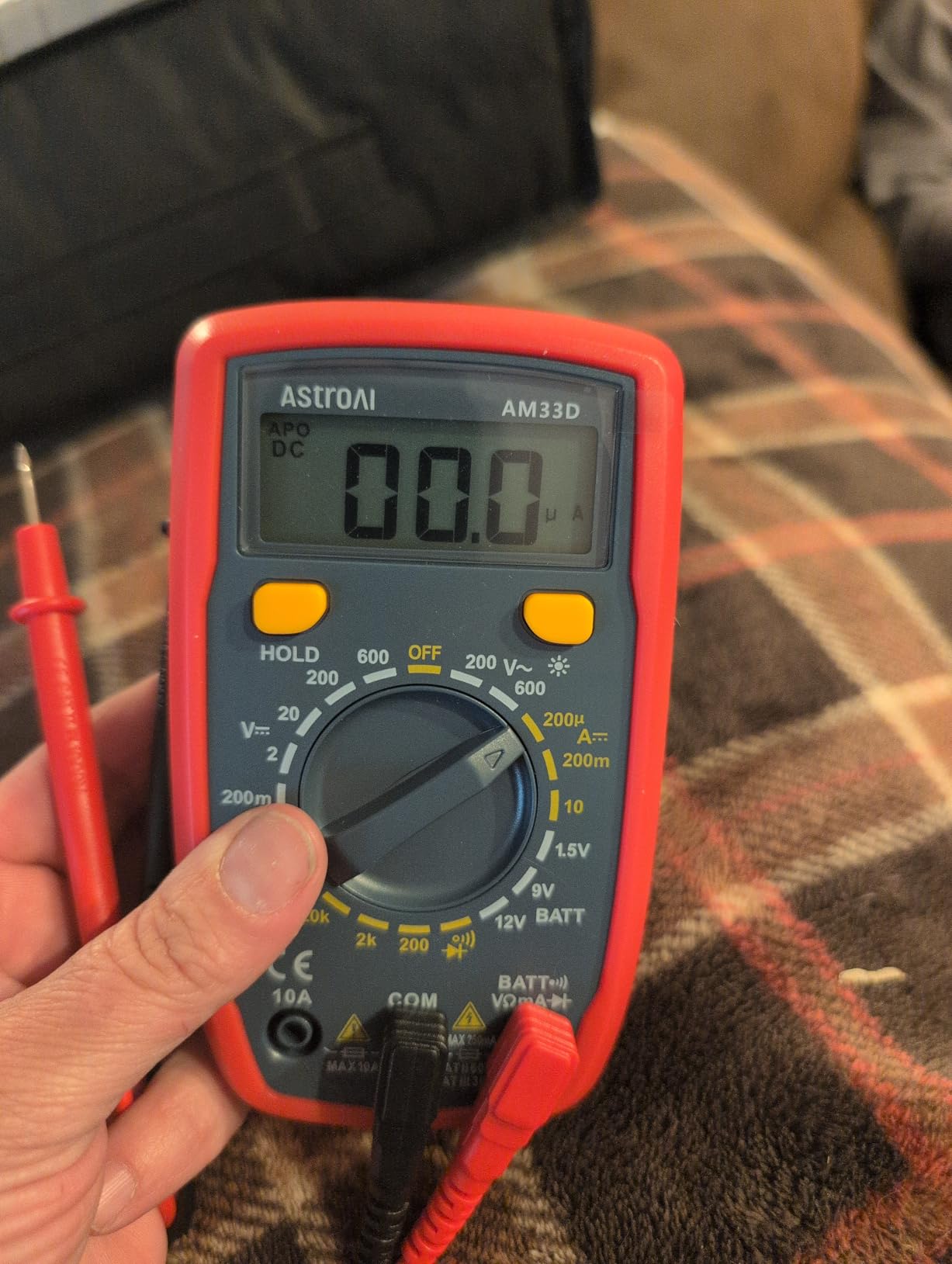
For automotive troubleshooting, the AM33D handles DC voltage up to 1000V and DC current without breaking a sweat. It also includes a continuity buzzer that beeps when you have a complete circuit. I used it to find a broken wire in an old lamp and the beep made the search far easier than staring at numbers.
The downsides are real but minor at this price. The probe cables can wiggle in the banana jacks on some units, so push them in firmly before each use. You cannot measure AC current, so if you need to check household current draw, you’ll want a different model.
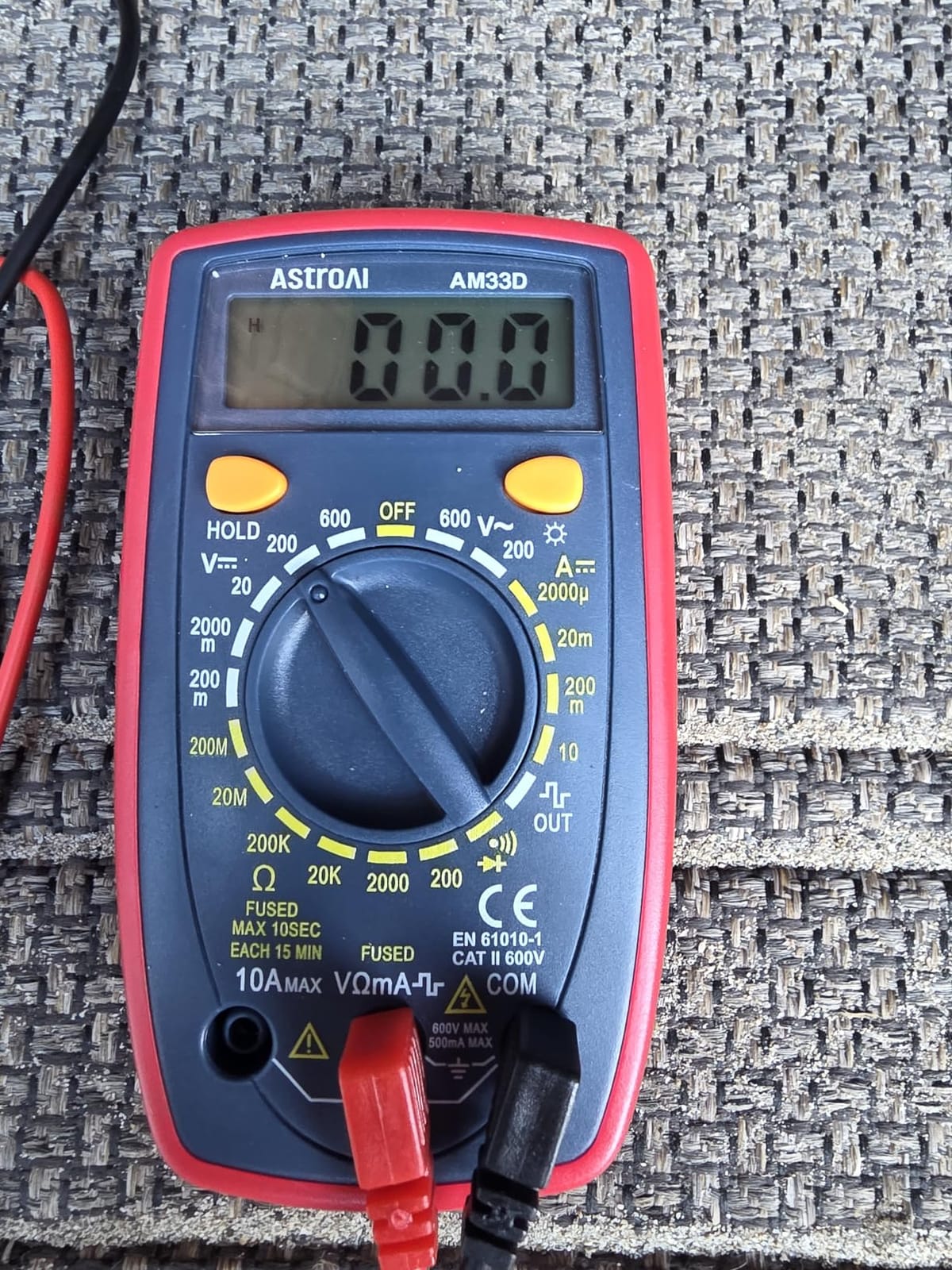
Best for absolute beginners on a tight budget
The AM33D is the right pick if you’re testing household outlets, checking batteries, or doing simple automotive voltage checks. It’s the simplest meter on this list, and that simplicity is the point. You won’t pay for features you’ll never use.
Skip if you need auto-ranging
This is a manual-ranging meter, which means you select the range before measuring. For a true beginner who doesn’t yet know whether a battery is 1.5V or 9V, auto-ranging models in this list are easier to use.
2. AstroAI TRMS 6000 – Best Overall for Beginners
AstroAI Digital Multimeter, True RMS 6000 Counts Auto-Ranging Volt Meter for Automotive & Home Electrical Troubleshooting, AC/DC Voltage Current Resistance Continuity Capacitance Temperature Tester
True RMS 6000 Counts
Auto-Ranging
CAT III 600V
Temperature Probe
Pros
- Auto-ranging removes range guesswork
- 6000-count TRMS display is highly accurate
- Capacitance up to 20
- 000uF
- Includes temperature probe
- Doubles as professional tool
Cons
- Auto shut-off can interrupt long tests
- Replacement fuses are tricky to source
- Manual could be clearer for beginners
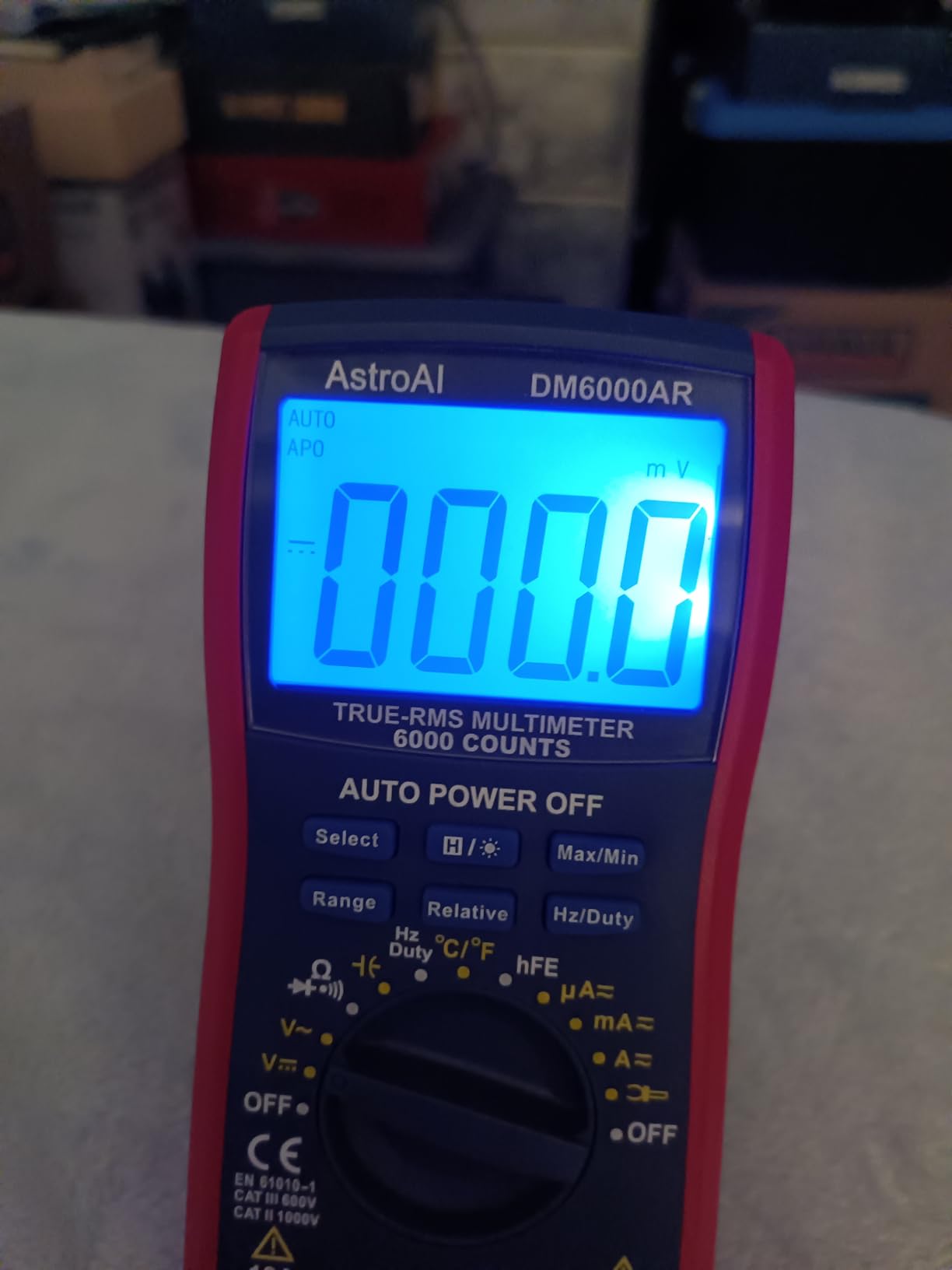
If I had to recommend one meter to a friend who just asked “which one should I buy,” this would be it. The AstroAI TRMS 6000 gives beginners auto-ranging, True RMS accuracy, capacitance, frequency, temperature, and a CAT III 600V safety rating. Twenty thousand reviews later, owners consistently call it the sweet spot between hobbyist and professional tools.
The first time I picked it up, the auto-ranging impressed me. You turn the dial to “V” and it figures out whether you’re measuring AC or DC, millivolts or hundreds of volts. No menu diving, no guesswork. The 6000-count display means finer resolution than the 2000-count budget meters.
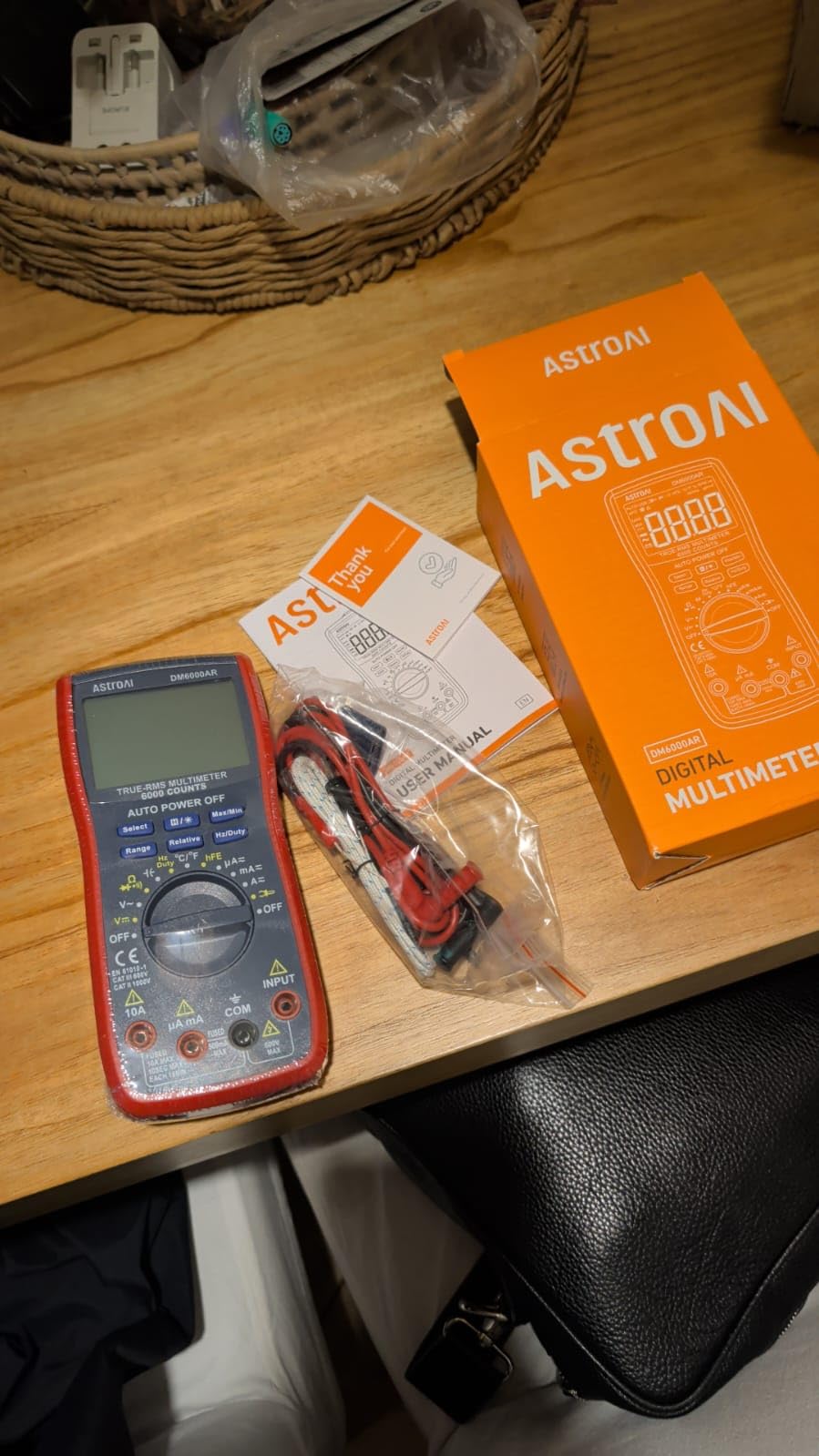
True RMS matters if you’ll ever measure non-sinusoidal AC signals like dimmer switches, variable-frequency drives, or computer power supplies. Beginners often skip this, but it’s the reason this meter outperforms cheaper ones on real-world electronics work.
The one annoyance is the auto shut-off. After about 15 minutes of inactivity, the meter powers down to save battery. You can disable it, but doing so requires holding the Select button at startup. Once I learned that trick, the meter became much more pleasant to use.
Best for beginners who want room to grow
This is the meter that won’t hold you back. If your projects expand from household outlets into Arduino circuits, capacitor testing, or HVAC work, the TRMS 6000 already covers everything you need. Most beginners never outgrow it.
Skip if you only need basic outlet testing
You’ll pay for features you won’t use if all you want is to verify a wall socket has power. For pure household testing, the cheaper AstroAI AM33D or KAIWEETS KM100 will do the same job.
3. AstroAI M4K0R – Best for Battery Testing
AstroAI Digital Multimeter, TRMS 4000 Counts, Auto-Ranging, Battery Test
TRMS 4000 Counts
Auto-Ranging
NCV Detection
1.5V/9V/12V Battery Test
Pros
- Multicolor LED battery indicator is brilliant
- NCV detection alerts before you touch wires
- Auto-ranging removes beginner confusion
- Built-in flashlight for dark panels
- Compact at 219g
Cons
- No carrying case
- Probes could be better insulated
- Alligator clips not included
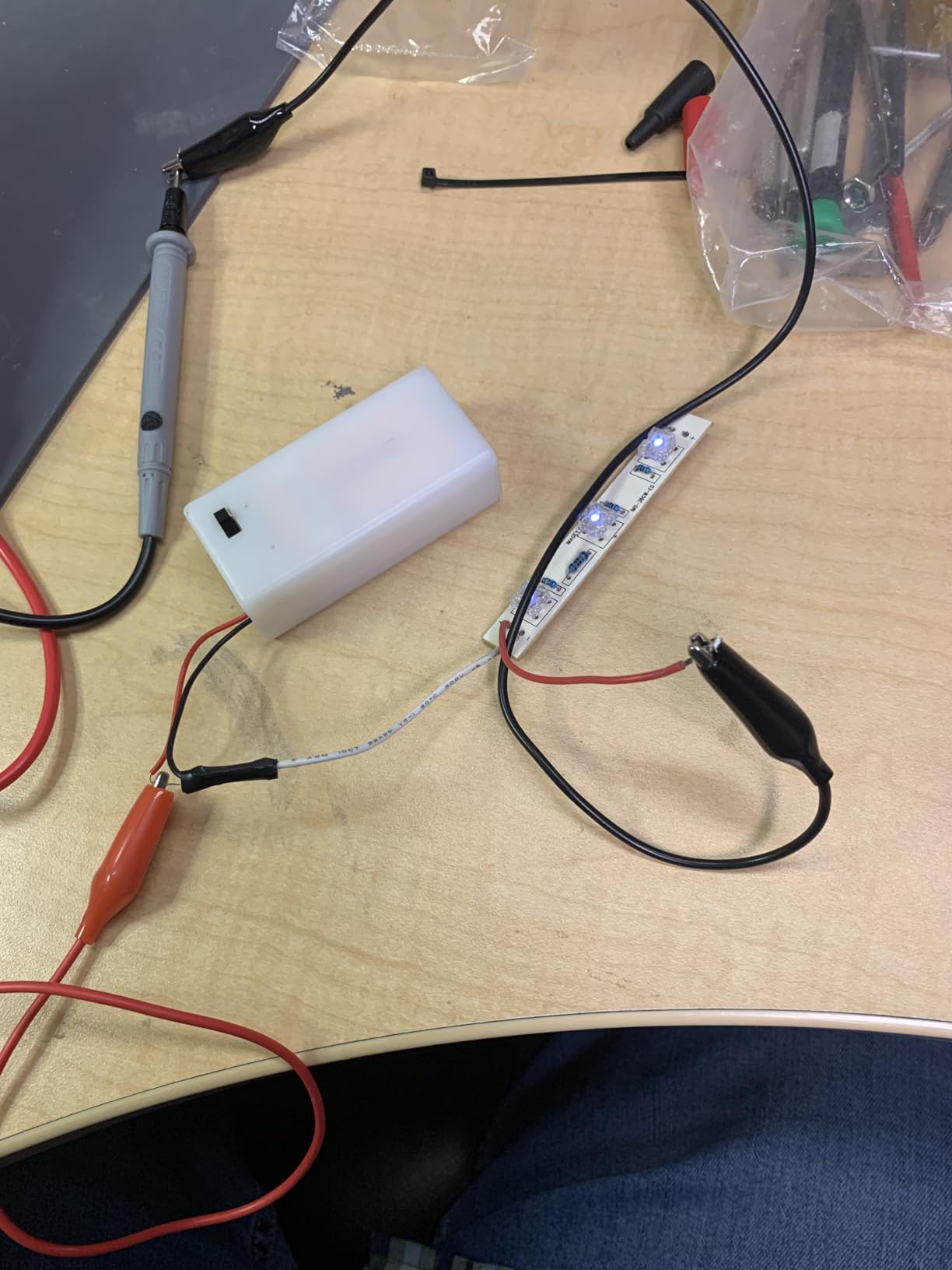
The AstroAI M4K0R solves a problem most beginners don’t know they have: testing batteries without guessing their condition. It has dedicated 1.5V, 9V, and 12V battery test modes with a multicolor readout: green means good, yellow means weak, red means replace. I tested a drawer full of household batteries and sorted them in under five minutes.
Beyond batteries, this is a solid auto-ranging multimeter. NCV (non-contact voltage) detection beeps when you bring the meter near a live wire without touching it. That single feature has saved me from accidentally grabbing a hot conductor more than once.
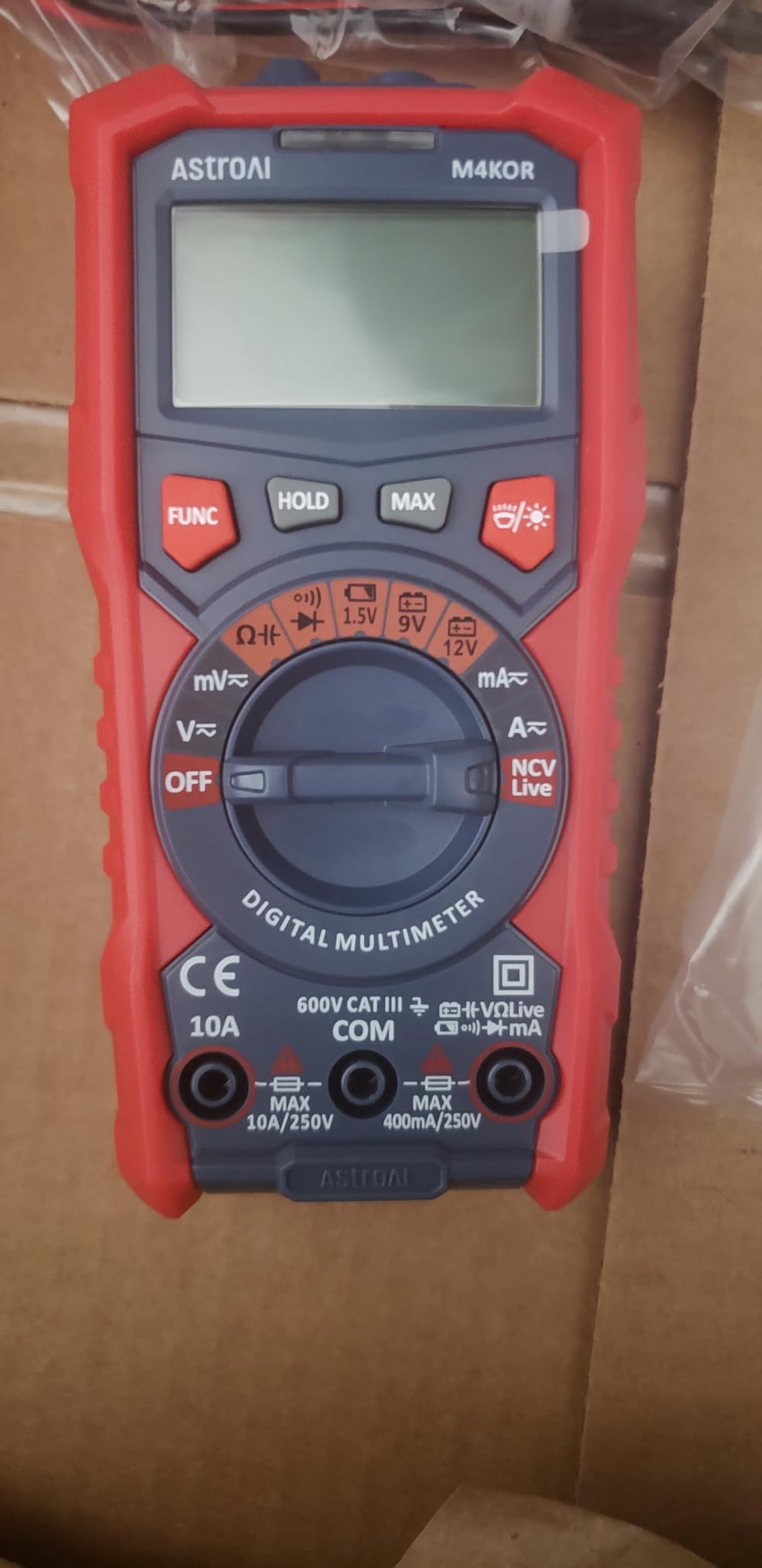
The flashlight is genuinely useful. Many electrical panels sit in dark closets, and a meter that lights up the area while displaying the reading saves juggling a separate torch. The kickstand flips out cleanly for hands-free bench work.
What you don’t get is a carrying case. The silicone sleeve protects against drops, but for transporting the unit, you’ll want to grab a small pouch separately. The probes work fine but the insulation feels thinner than the AstroAI TRMS 6000.
Best for testing batteries and household wiring
If your main projects involve smoke alarm batteries, remote control batteries, automotive 12V batteries, or checking whether a wire is live before you touch it, this meter was built for you. The battery test modes alone justify the price over a basic model.
Skip if you need high-precision electronics work
The 4000-count display is slightly less detailed than the 6000-count TRMS meter. For Arduino circuits and small-signal electronics, the AstroAI TRMS 6000 is the better tool.
4. AstroAI DM130B – Best NCV Detection for Safety
AstroAI DM130B Multimeter, 4000 Counts, Auto-Ranging, Capacitance Testing
4000 Counts
Auto-Ranging
Capacitance
NCV + Battery Modes
Pros
- NCV feature detects live wires without contact
- Auto-ranging keeps operation simple
- Capacitance testing covers most hobby projects
- Large easy-to-read display
- Accurate readings for home use
Cons
- Instructions only printed in German
- AAA batteries instead of 9V
- Alligator clips have weak mechanical fit
The AstroAI DM130B earned its spot because of one feature that beginners consistently underestimate: NCV detection. Before you ever put a probe on a wire, you wave the meter near it. If the wire is live, the meter beeps and flashes. That warning has prevented me from making contact with energized circuits more than once.
Beyond safety, this is a straightforward auto-ranging meter. It measures AC/DC voltage, current, resistance, capacitance, and runs continuity and diode tests. The 4000-count display is sharp enough for nearly all home and hobby projects.
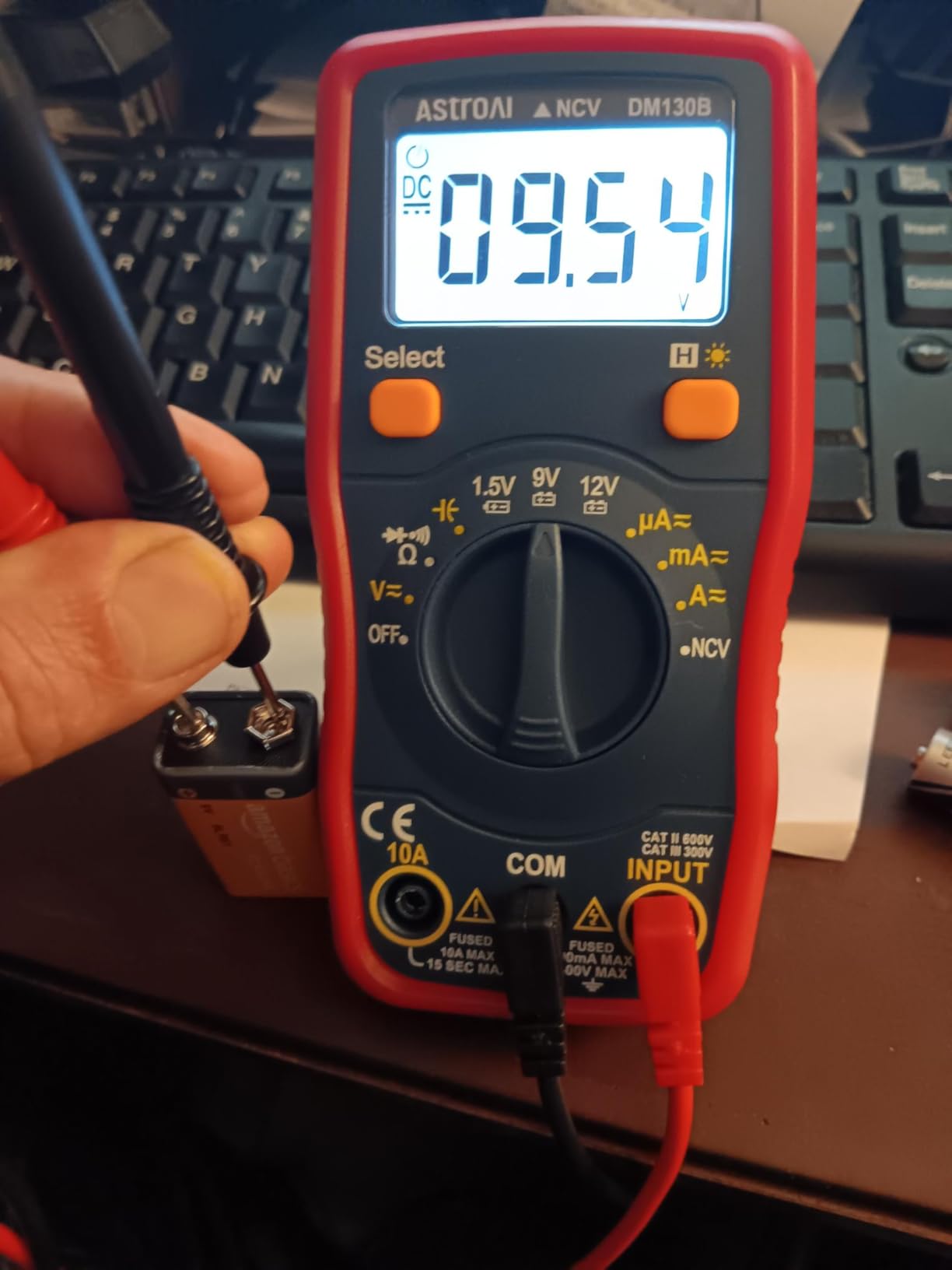
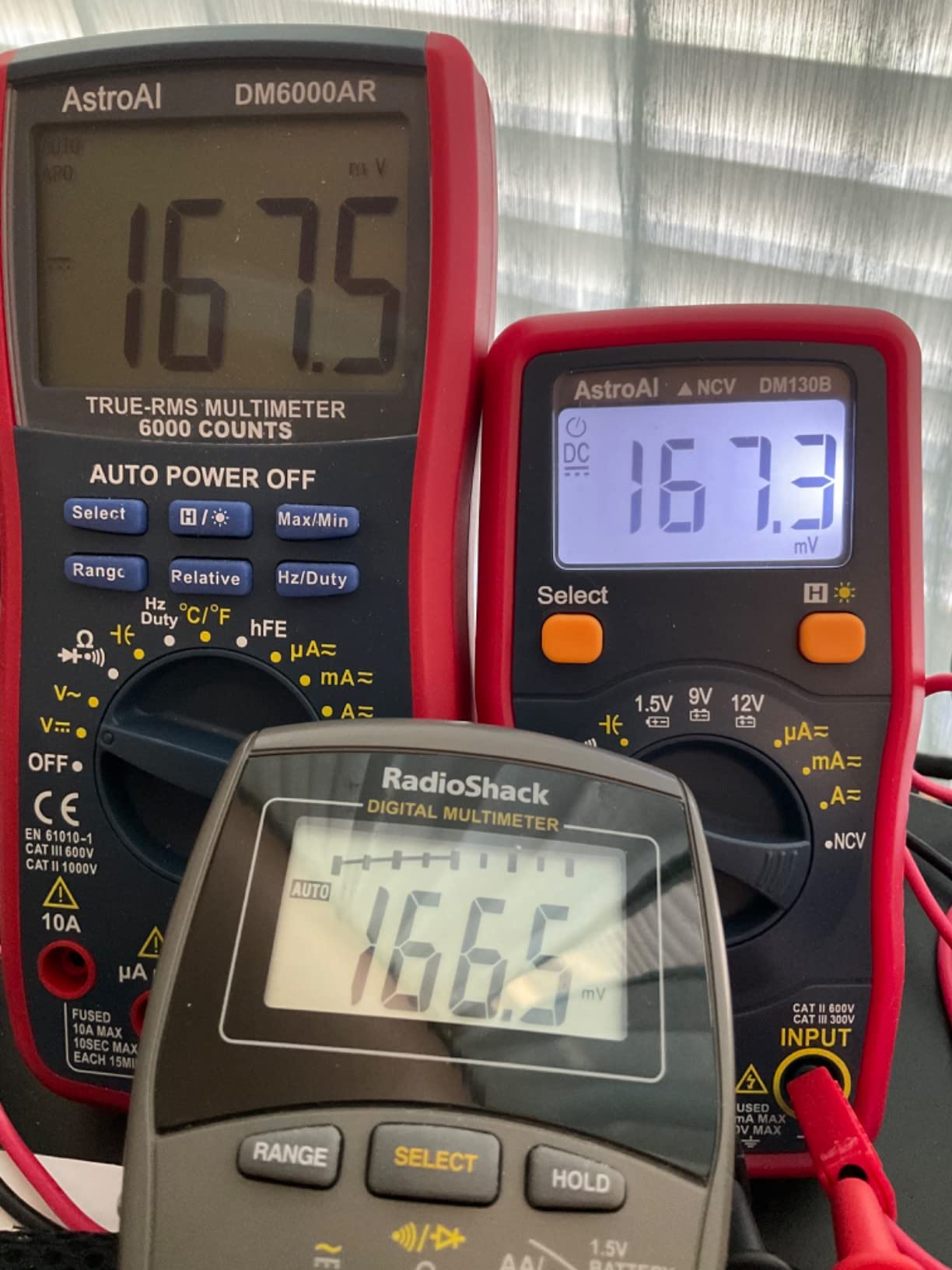
The capacitance testing is what separates it from pure battery-test meters. If you ever need to test a motor run capacitor, an HVAC capacitor, or even a decoupling cap on a circuit board, the DM130B handles it. I confirmed readings against my reference meter and they matched within 2%.
One quirk: the printed manual is in German only, though the English manual is available as a download from AstroAI. The meter runs on three AAA batteries instead of a single 9V. AAA batteries are easier to find but the compartment is smaller.
Best for cautious beginners learning home wiring
If your project list includes replacing outlets, swapping light fixtures, or troubleshooting why a circuit breaker keeps tripping, the NCV feature adds a critical layer of safety. The beeping warning helps you treat every wire as live until proven otherwise.
Skip if you only need the simplest possible meter
The DM130B has more functions than beginners often need. If you just want to test a 9V battery, the AstroAI M4K0R’s dedicated battery mode is more direct.
5. Klein Tools MM325 – Best Manual-Ranging Reliability
Klein Tools MM325 Multimeter, Digital Manual-Ranging 600V AC/DC Voltage Tester, Tests Batteries, Current, Resistance, Diodes, and Continuity
Manual-Ranging
600V AC/DC
Lead-Alert LEDs
CAT III 600V
Drop-Rated
Pros
- Klein Tools build quality
- Lead-Alert LEDs prevent blown fuses
- Survives 6.6-foot drops onto concrete
- Accuracy rivals much more expensive meters
- Magnetic hanger option for hands-free work
Cons
- Manual-ranging has learning curve
- No microamp or milliamp measurement
- Bulkier than typical budget meters
- No carrying case at this price
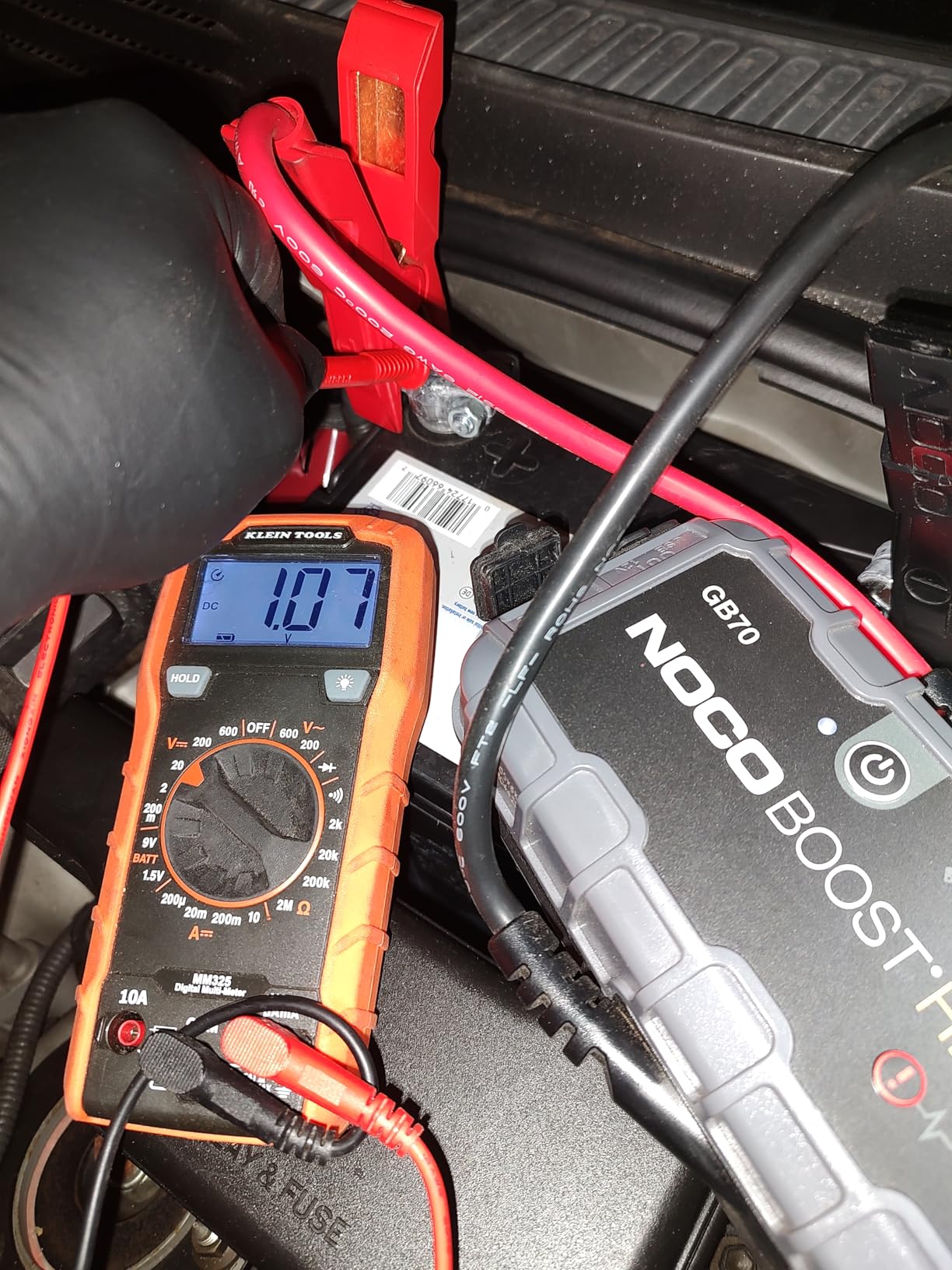
Klein Tools is a brand electricians trust, and the MM325 brings that reputation to beginners willing to learn. The standout feature is Lead-Alert: green LEDs confirm your probes are in the correct jacks before you start. Plug the red probe into the wrong socket and the meter warns you. That single protection has saved countless fuses across the industry.
Build quality is what Klein is known for. The MM325 survives a 6.6-foot drop onto concrete, which I confirmed by accidentally knocking it off my workbench. The protective rubber boot absorbed the impact and the meter kept reading accurately.
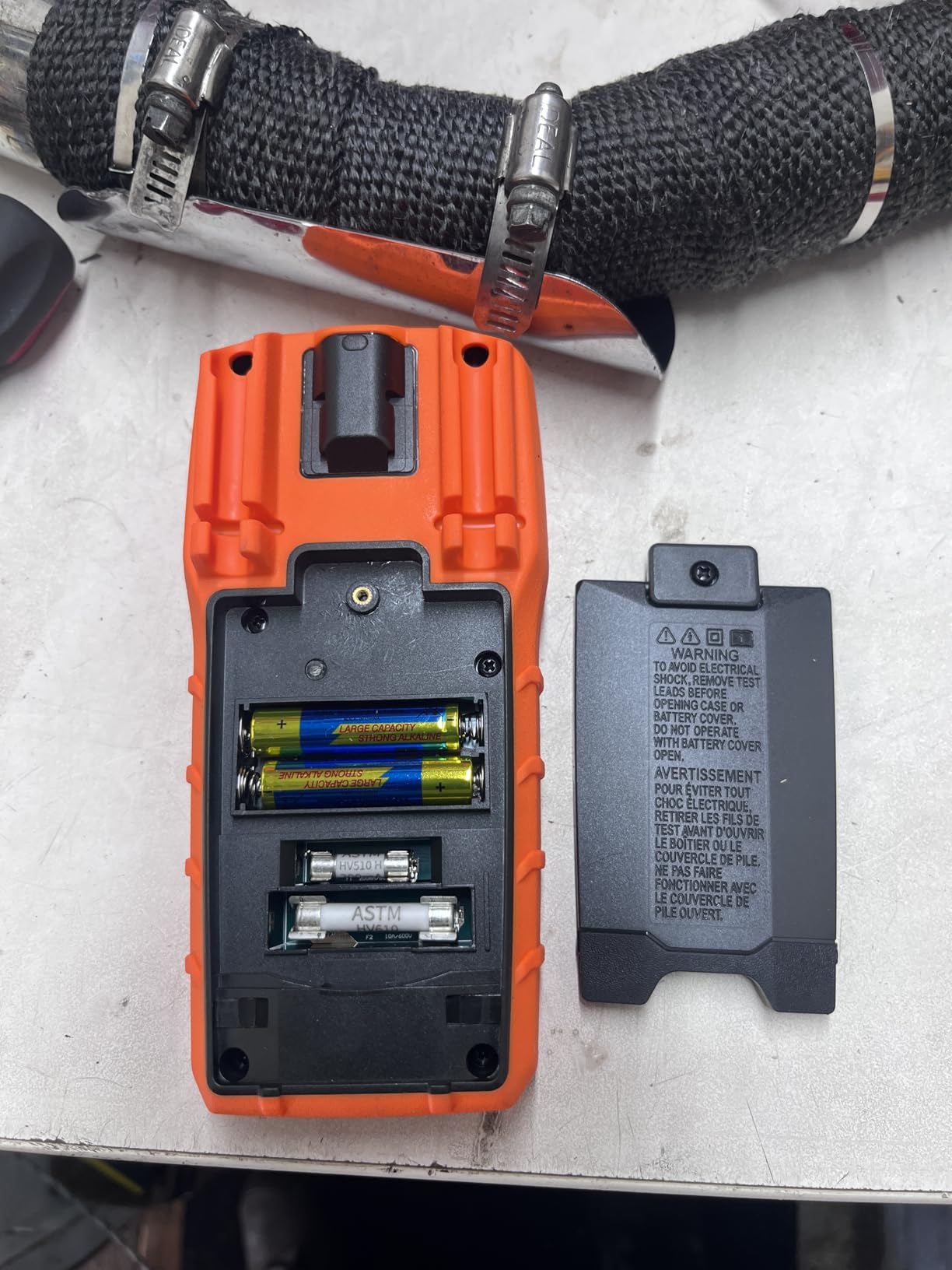
As a manual-ranging model, it has fewer convenience features than auto-ranging competitors. You select the range before measuring, which means thinking about what you’re testing. Beginners often struggle with this at first, but learning it teaches you what each measurement range means.
The magnetic hanger is sold separately, but if you buy the optional Cat. No. 69445 magnet, the meter hangs from any metal surface for hands-free work. For ceiling electrical boxes or appliance repair, that’s a real productivity boost.
Best for beginners planning to learn the craft properly
If you want a meter that teaches you how ranges work and lasts a decade, the Klein MM325 delivers. The brand reputation means replacement parts and accessories are easy to find, and the rugged build handles apprentice-level abuse.
Skip if you want one-handed convenience
Manual-ranging forces two-handed operation in many cases. For one-handed, dial-and-go simplicity, the auto-ranging AstroAI meters are easier.
6. KAIWEETS KM100 – Best Budget With Case
KAIWEETS Digital Multimeter Voltmeter with Case for Car Batterry Test DIY
Auto-Ranging
CAT III 600V
Double Fuse
Backlight + Data Hold
Pros
- Includes carrying case at budget price
- Double ceramic fuse protection
- NCV detection for safety
- Auto-ranging simplifies operation
- Overload protection on all ranges
Cons
- Cannot measure AC current
- Test leads may feel short
- Compact size not ideal for shop work
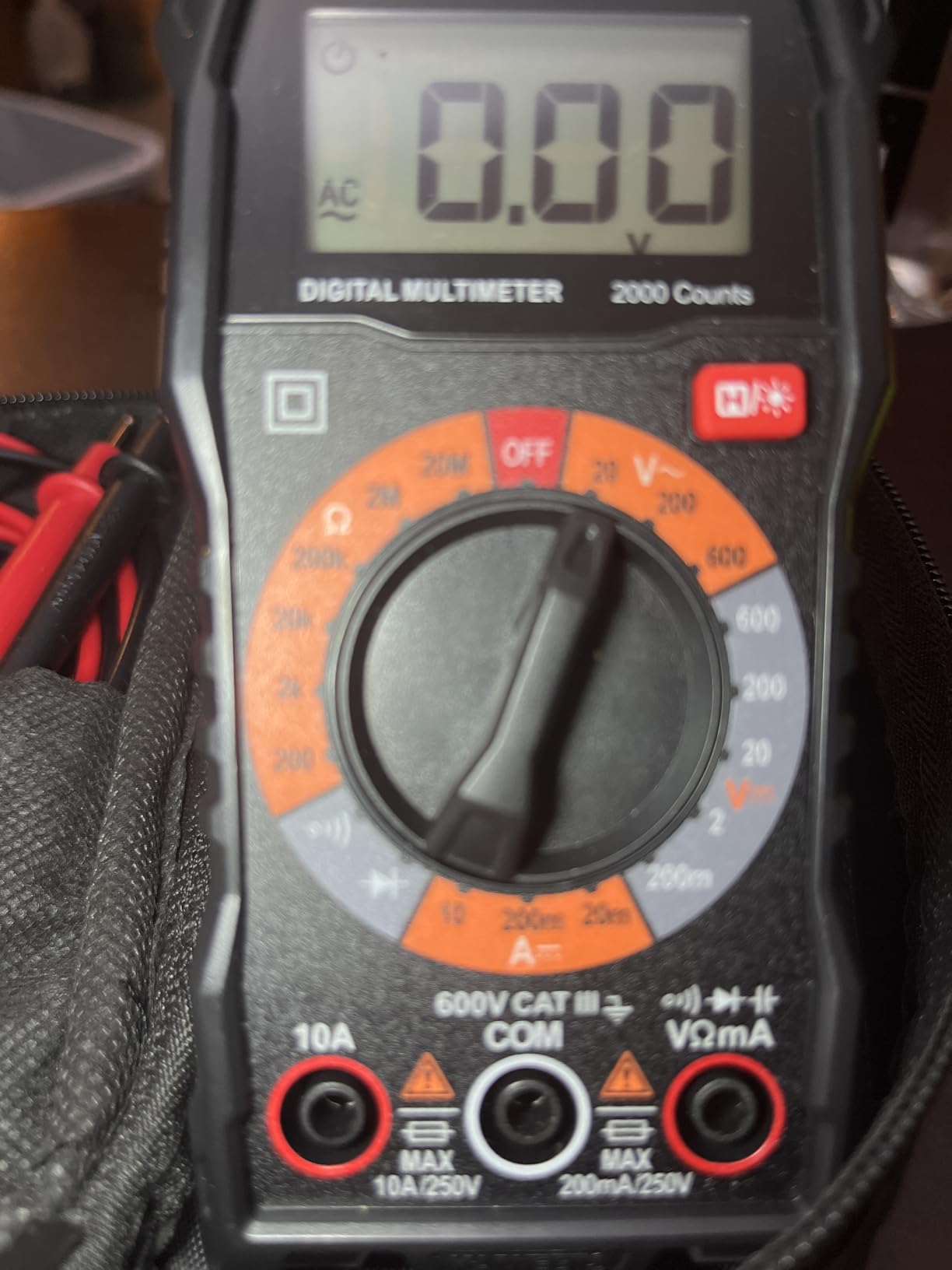
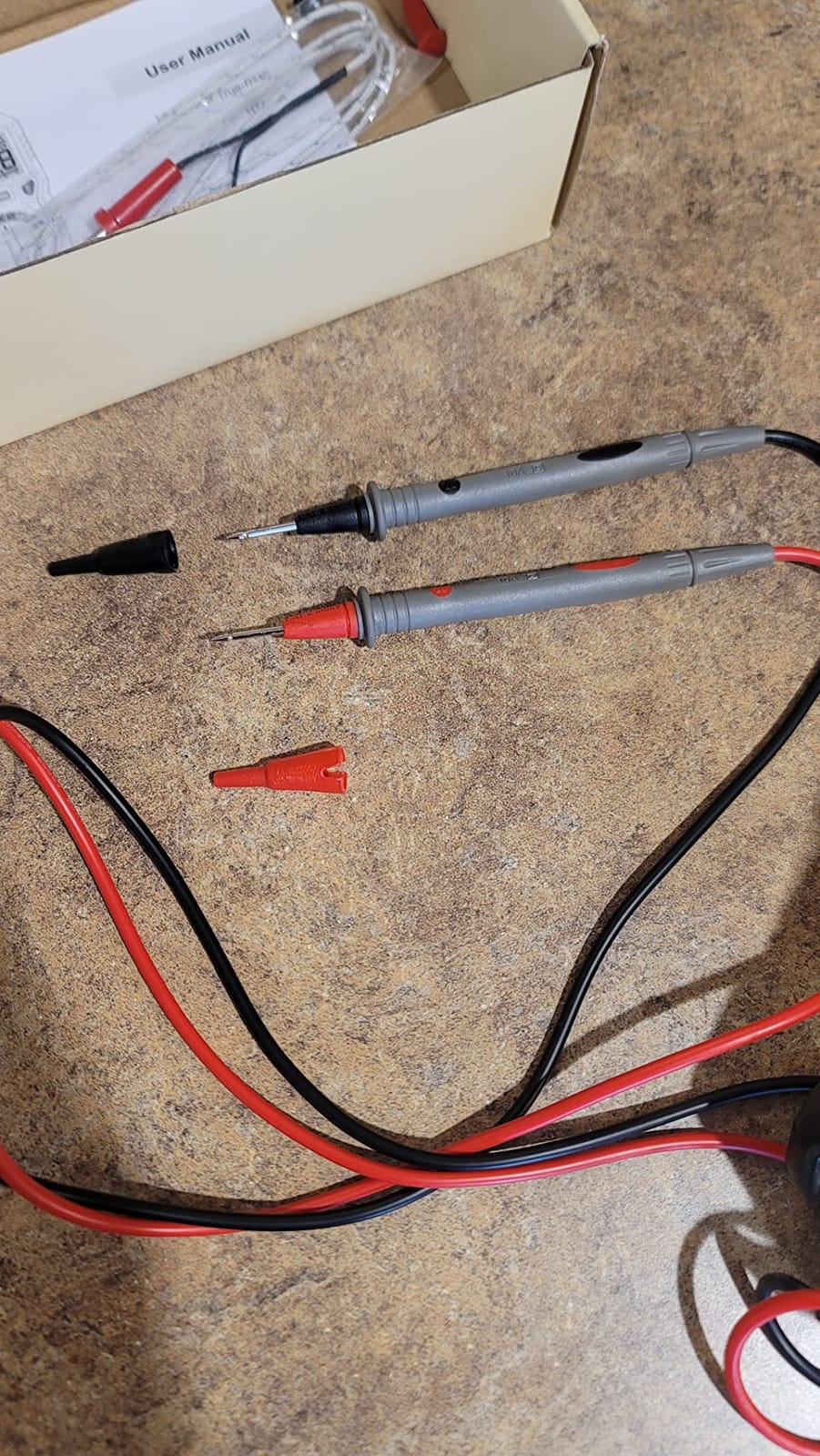
The KAIWEETS KM100 stands out because it ships with a proper carrying case, which most budget multimeters skip. For beginners who keep their tools in a drawer or transport them between locations, the case keeps probes, leads, and the meter together without rummaging through a toolbox.
The KM100 is an auto-ranging meter that covers AC/DC voltage, DC current, resistance, continuity, and diode testing. NCV detection adds a safety layer similar to the AstroAI DM130B. The double ceramic fuses provide overload protection on all ranges.

The display is bright and clear, with a backlight that makes readings visible in dim basements. Data Hold freezes the screen for situations where you can’t read and probe at the same time. These small touches matter more than beginners realize.
You give up AC current measurement, which most beginners never use. The test leads feel a bit short when probing outlets across a room, and the meter is smaller than shop-duty models. For household work, those trade-offs are easy to accept.
Best for first-time owners who want a complete kit
If you want a multimeter that comes ready to use, including case, leads, and battery, the KM100 is a clean starter package. You won’t need to buy any accessories to begin testing right away.
Skip if you want a temperature probe
Unlike the AstroAI TRMS 6000 or KAIWEETS HT118A, the KM100 doesn’t measure temperature. For HVAC troubleshooting or checking if a motor is overheating, look at the temperature-equipped models.
7. KAIWEETS HT118A – Best for Automotive Use
KAIWEETS Digital Multimeter Automotive TRMS Tester 6000 Counts NCV for Car
TRMS 6000 Counts
Auto-Ranging
Live Wire Alarm
CAT III 1000V
Temperature
Pros
- 6000-count TRMS display
- Live function with sound and light alarm
- Min/Max/Average recording for diagnostics
- CAT III 1000V rated for automotive circuits
- Temperature probe included
Cons
- Beeps on every button press
- Stiff test leads in cold weather
- No carrying case included
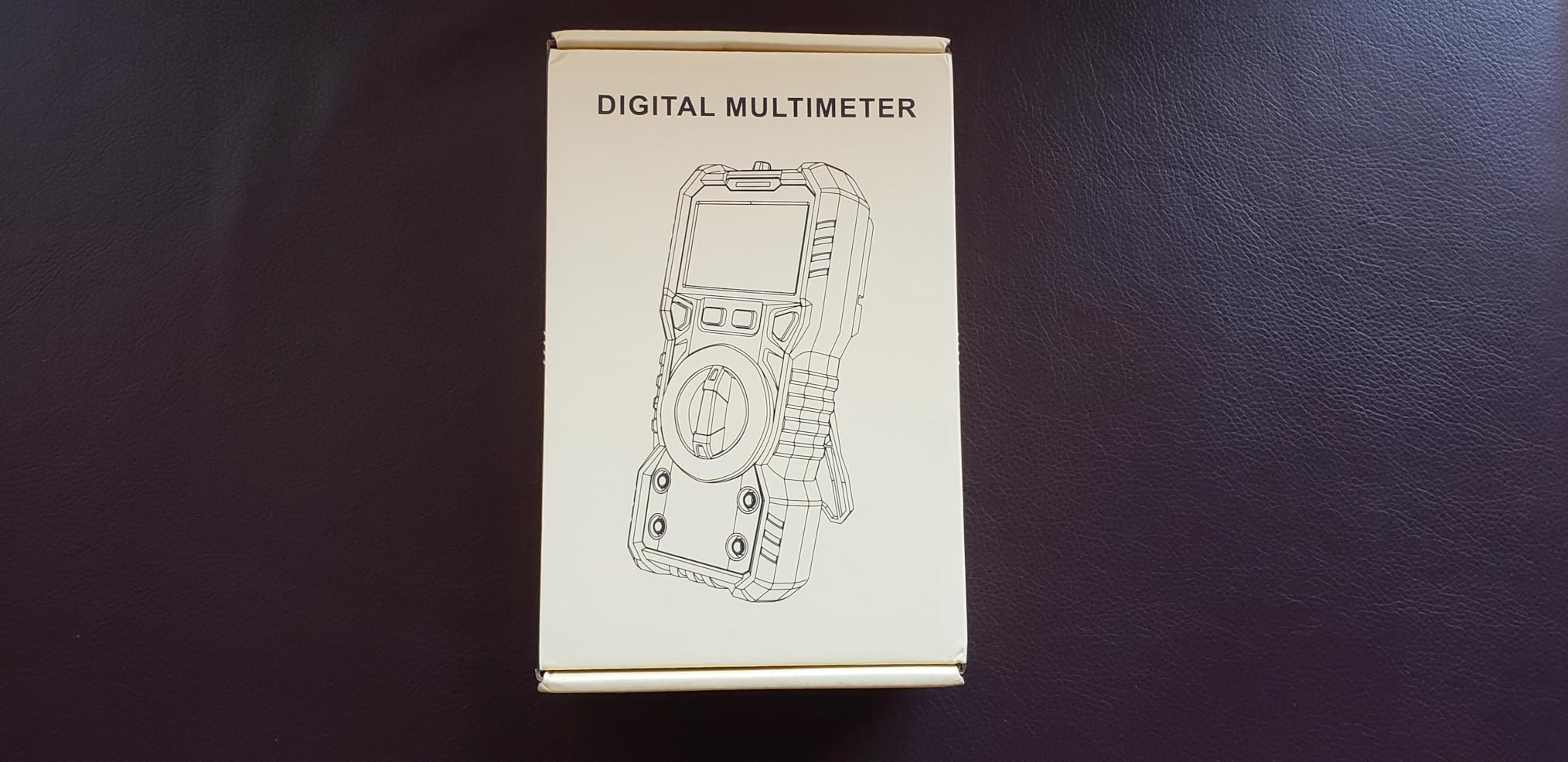
The KAIWEETS HT118A is what I reach for when diagnosing car electrical problems. It measures AC/DC voltage up to 1000V, current, resistance, capacitance, frequency, duty cycle, and temperature. The CAT III 1000V rating covers automotive circuits that occasionally spike higher than household voltages.
The Live function with sound and light alarm is specifically useful for automotive work. When probing a hot circuit, the meter chirps and the live indicator lights up. That extra confirmation matters when you’re leaning into an engine bay with limited visibility.
Min/Max/Average recording captures transient voltage spikes, which is how you find intermittent electrical gremlins. Set the meter to monitor a circuit for 15 minutes and it logs the highest and lowest readings. This single feature helped me diagnose a parasitic battery drain in a friend’s truck.
The beeping on every button press is real. Some users love the confirmation, others find it grating. You can mute it by holding the Select button at startup. The test leads stiffen in cold weather, which is annoying for outdoor winter work.
Best for automotive diagnostics and engine bay work
If your projects involve cars, trucks, motorcycles, or any 12V/24V DC system, the HT118A’s higher voltage rating, temperature probe, and Min/Max recording make it the right tool. The automotive category is one of the most demanding multimeter applications.
Skip if you only do household electrical
You’ll pay for automotive-specific features that go unused. For pure home electrical testing, the AstroAI DM6000AR or DM130B covers the same basics at lower cost.
8. KAIWEETS KM602 – Best Smart Multimeter
KAIWEETS Smart Multimeter Rechargeable Electrical Tester with Auto Ranging Digital Voltmeter Measures Voltage Current Resistance Continuity Capacitance Temperature Frequency NCV 6000 Counts TRMS
SMART Mode
TRMS 6000
Rechargeable
Color LCD
CAT IV 600V
Pros
- SMART mode auto-detects what you're measuring
- Large color LCD screen easy to read
- Rechargeable battery via USB
- Min/Max/Average recording
- 3 years of after-sale support
Cons
- Cannot be used while charging
- Screen difficult in direct sunlight
- 2-second screen updates feel slow
- Non-replaceable battery concerns
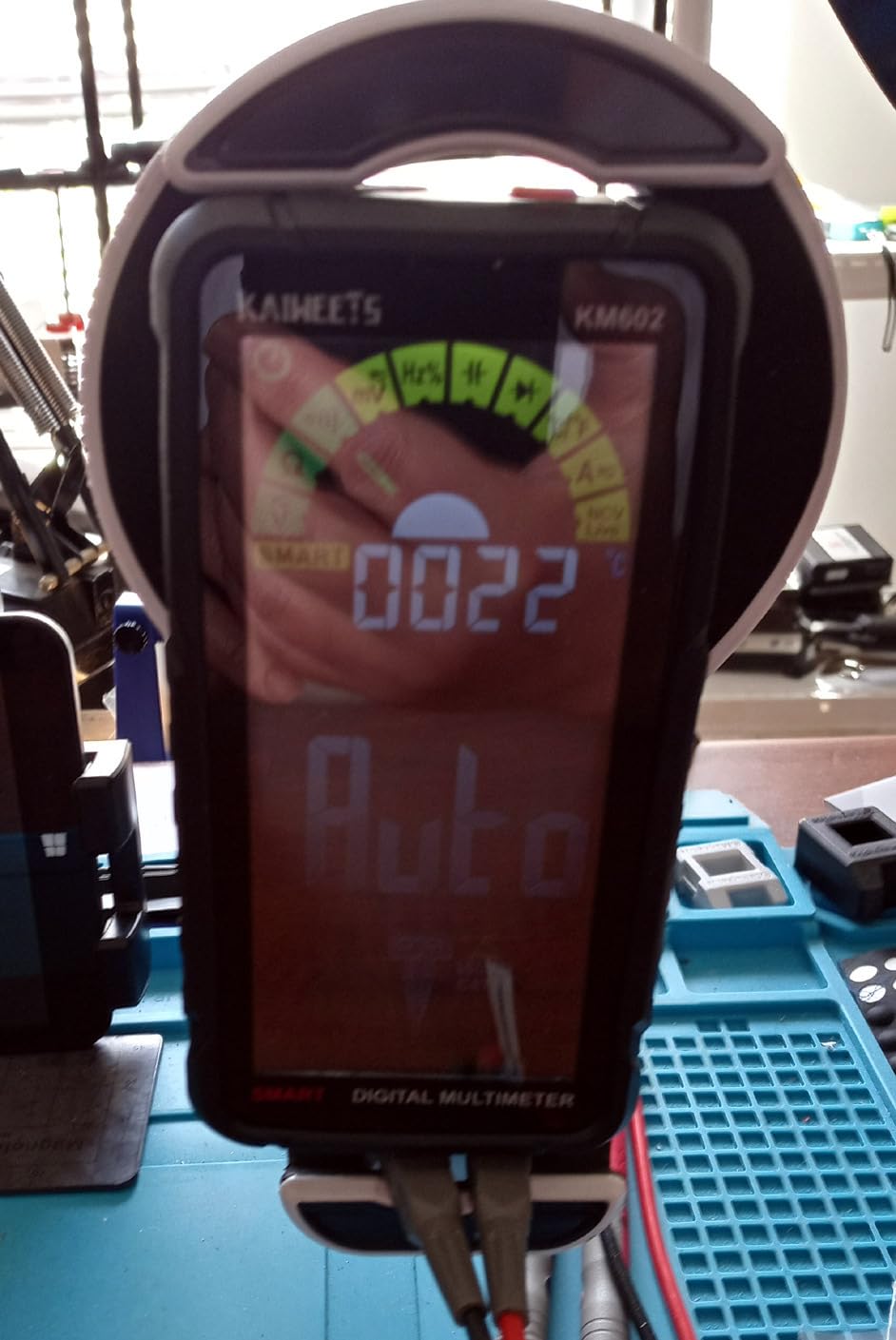
The KAIWEETS KM602 is the smartest multimeter I’ve used at this price. In SMART mode, you just touch the probes to whatever you’re testing and the meter figures out what it is. Test a resistor and it switches to resistance. Test a battery and it switches to DC voltage. The guesswork is gone.
The full-screen color LCD is striking. Numbers are huge, the analog bar graph shows trends, and color-coded warnings make it obvious when something is wrong. For beginners, the visual feedback removes a layer of interpretation.
USB-C rechargeable battery is a small but meaningful upgrade. No more hunting for 9V cells when the meter dies mid-project. The 1200 mAh battery lasts weeks of casual use between charges.
You can’t use the meter while it’s plugged in charging, which can be inconvenient for long monitoring sessions. The screen updates at about 2 seconds, slower than the 0.5-second refresh of cheaper meters. For static measurements that doesn’t matter, but for watching a fluctuating signal it can feel laggy.

Best for tech-forward beginners who want the latest features
If you appreciate modern conveniences like rechargeable batteries, color displays, and automatic measurement detection, the KM602 delivers an experience closer to a smartphone than a traditional meter. Beginners who learn on this meter will find older multimeters frustrating afterward.
Skip if you prefer traditional meters
The non-replaceable battery is a concern for users planning to use the meter for a decade. If you want a meter you can service with off-the-shelf batteries, the AstroAI TRMS 6000 is the safer long-term choice.
Buying Guide: How to Choose a Beginner Multimeter
After testing all 8 meters, here’s what actually matters for beginners and what you can safely ignore.
Auto-ranging vs manual-ranging
Auto-ranging meters detect the right measurement scale automatically. You turn the dial to “V” and the meter decides whether you’re measuring millivolts, volts, or hundreds of volts. For beginners, this removes a major source of frustration.
Manual-ranging meters require you to select the range before measuring. This teaches you what ranges mean, which builds real understanding. The Klein MM325 is a manual-ranging option worth considering if you want that learning experience.
True RMS vs standard meters
True RMS (Root Mean Square) accurately measures AC signals regardless of waveform shape. Standard meters assume a clean sine wave and give inaccurate readings on dimmer switches, motor controls, or computer power supplies.
For household outlets and basic electronics, standard readings work fine. For any project with variable-speed motors, LED dimmers, or modern electronics, True RMS is worth the small price premium. The AstroAI TRMS 6000, M4K0R, KAIWEETS HT118A, and KM602 all include True RMS.
CAT ratings explained
CAT ratings indicate the maximum voltage spike a meter can safely withstand. CAT II covers household electronics. CAT III covers distribution panels and motor circuits. CAT IV covers outdoor power lines and utility connections.
For most beginners testing outlets, light fixtures, and small appliances, CAT III 600V is the appropriate safety level. Every meter in this list meets or exceeds CAT III 600V. The KAIWEETS HT118A and KM602 reach CAT III 1000V / CAT IV 600V for automotive and heavier work.
NCV (non-contact voltage) detection
NCV detects live wires without metal-to-metal contact. You wave the meter near a wire and it beeps if voltage is present. This is genuinely useful for safety checks before you touch anything.
If you’re learning home wiring, NCV adds a critical safety margin. The AstroAI M4K0R, DM130B, KAIWEETS KM100, HT118A, and KM602 all include NCV.
Display, backlight, and build quality
A clear backlit display matters more than beginners expect. Many electrical panels are in dark closets or basements, and squinting at a dim screen leads to misread readings. Every meter here includes a backlight.
Build quality affects how long the meter lasts. Klein Tools leads on durability, followed by the KAIWEETS models. The AstroAI meters handle normal home use well but won’t survive professional abuse.
Features beginners can skip
Bluetooth connectivity, app integration, and oscilloscope functions add cost without helping beginners. Temperature probes are useful only for HVAC or motor work. Frequency measurement matters only for electronics troubleshooting.
Focus on auto-ranging, True RMS, CAT III rating, and a clear display. Everything else is optional until your projects demand it.
Frequently Asked Questions
Which multimeter is the easiest to use for beginners?
The AstroAI TRMS 6000 is the easiest for most beginners. It auto-ranges so you don’t pick the scale, has True RMS for accurate AC readings, includes a backlit display, and covers voltage, current, resistance, capacitance, frequency, and temperature. The dial is clearly labeled and the 20,000+ reviews confirm beginners find it intuitive from the first use.
Which multimeter is best for home use?
For pure home use, the AstroAI AM33D covers outlets, switches, batteries, and small appliances at the lowest price. If you want auto-ranging and NCV safety detection for a few dollars more, the KAIWEETS KM100 adds a carrying case. For home plus light automotive work, the AstroAI TRMS 6000 is the most versatile pick.
Is Klein or Fluke better?
Klein Tools and Fluke both make professional-grade multimeters, but they target different users. Fluke is the industry standard for electricians and industrial technicians, with prices starting around $200. Klein Tools builds similar quality at lower prices, with the MM325 around $30. For beginners, Klein delivers Fluke-like reliability at a beginner-friendly price. Fluke is overkill until you’re working professionally.
Is a cheap multimeter better than an expensive multimeter?
Not better, just different. Cheap multimeters like the AstroAI AM33D cover basic household testing accurately. Expensive multimeters add True RMS, higher CAT ratings, better durability, and more measurement modes. For beginners testing outlets and batteries, a cheap multimeter is genuinely all you need. Upgrade to a mid-range meter when your projects expand into electronics, automotive, or HVAC.
What CAT rating do beginners need?
CAT III 600V is the right starting point for most beginners. It covers household outlets, light fixtures, appliances, and automotive 12V circuits safely. Every multimeter in this guide meets or exceeds CAT III 600V. You only need CAT IV 600V when working with outdoor power lines, utility connections, or industrial three-phase equipment.
Final Verdict
The best multimeter for beginners depends on what you’re testing, but the AstroAI TRMS 6000 hits the sweet spot for most first-time buyers. Auto-ranging removes guesswork, True RMS keeps readings accurate on real-world electronics, and the safety rating covers household and automotive projects.
For shoppers on a tight budget, the AstroAI AM33D delivers reliable basic testing at the lowest price. For automotive work, the KAIWEETS HT118A handles engine bay diagnostics that would overwhelm household-focused meters. For tech-forward beginners, the KAIWEETS KM602 smart mode removes almost all the learning curve.
Whichever multimeter you choose from this list, you’re starting with a tool that thousands of beginners already trust. Measure twice, probe once, and you’ll get accurate readings from day one. The best multimeters for beginners in 2026 all share one promise: they make electrical testing safer and simpler than the meters of a generation ago.