
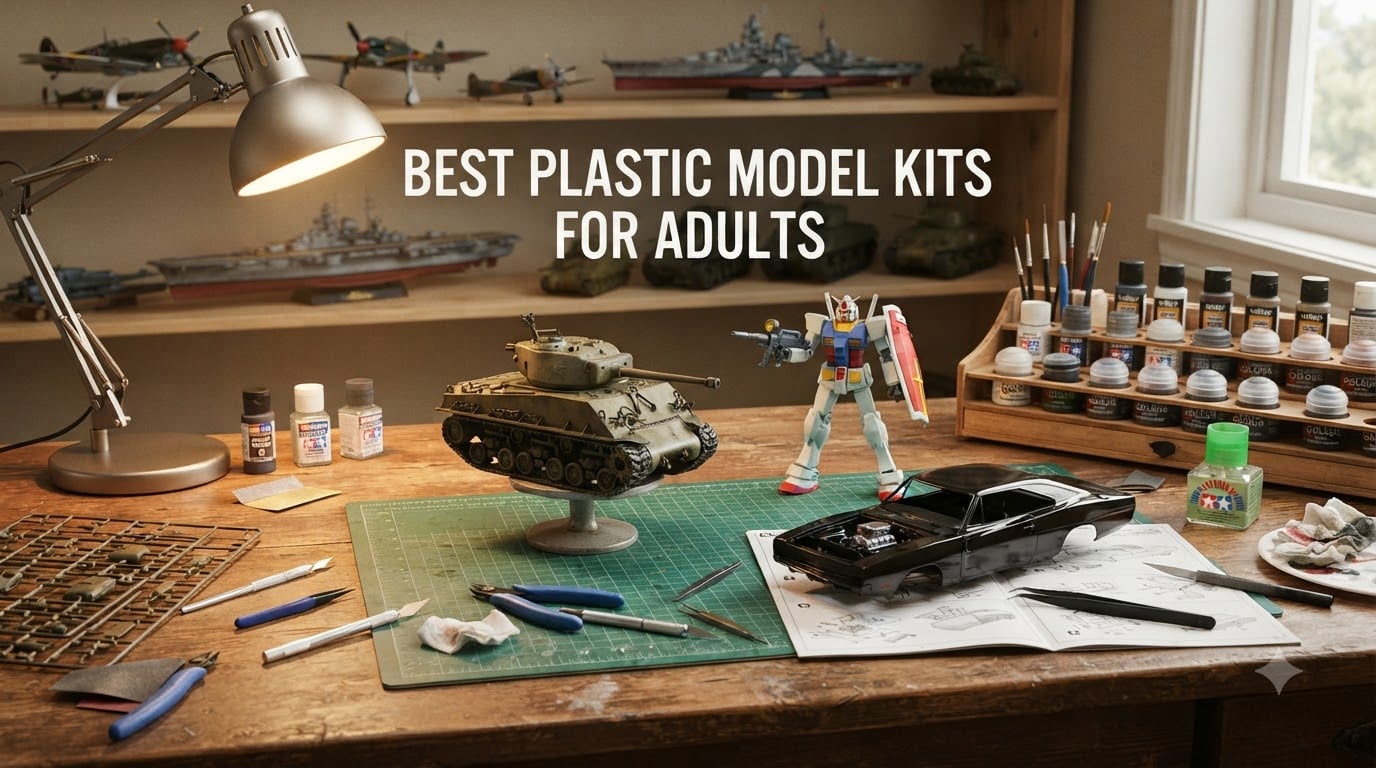
I built my first Tamiya Spitfire on a kitchen table in 1998, and the hobby has stuck with me through two careers, three apartments, and countless weekends. After spending the past three months rebuilding kits, snapping parts off sprues, and dry-fitting cockpits, I’m confident in this list of the best plastic model kits for adults in 2026. Whether you want screen-free downtime, a display piece for your shelf, or a long-term painting project, there’s a kit here for you.
Plastic scale models have grown into a serious adult hobby. Modern kits from Tamiya, Bandai, and Revell deliver moulding quality that beats what was available ten years ago, with crisper panel lines, slide-moulded detail, and snap-fit engineering that removes glue from the equation. The Reddit r/modelmakers community consistently recommends Tamiya for fit, Bandai for engineering, and Airfix or Revell for budget-friendly starter sets.
I’ve focused this roundup on kits that adults actually finish and enjoy. Every entry below has been chosen for its build quality, part fit, value, and the satisfaction it delivers on the bench. I’ll walk you through the top picks, then break down each kit with my hands-on notes, what it’s good for, and where it falls short.
Table of Contents
Top 3 Picks for Best Plastic Model Kits for Adults in 2026

Bandai Strike Freedom Gundam MGEX 1/100
- 1/100 scale
- Extreme metallic finish
- Most linked-frame articulation gimmicks in MG history
- Includes display stand

Tamiya 1/35 Willys Jeep MB
- 1/35 scale
- 99 parts
- Beginner-friendly
- Includes driver figure and 5 decal options

Bandai RX-78-2 Entry Grade 1/144
- 1/144 scale
- Only 74 parts
- No tools or glue required
- Color-molded plastic
Best Plastic Model Kits for Adults in September
1. Bandai Strike Freedom Gundam MGEX 1/100 – Premium Mecha Engineering
Bandai Hobby – Gundam Seed Destiny – Strike Freedom Gundam MGEX 1/100 Model Kit
1/100 scale
Extreme metallic finish
Includes display stand
Pros
- Highest metal expression in Gunpla history
- Incredible articulation
- Internal gold frame details
- Comes with display stand
- Comprehensive armament included
Cons
- Extremely complex - experts only
- Very high price point
- Etching stickers tricky to apply
- Heavy wings can stress knee joints
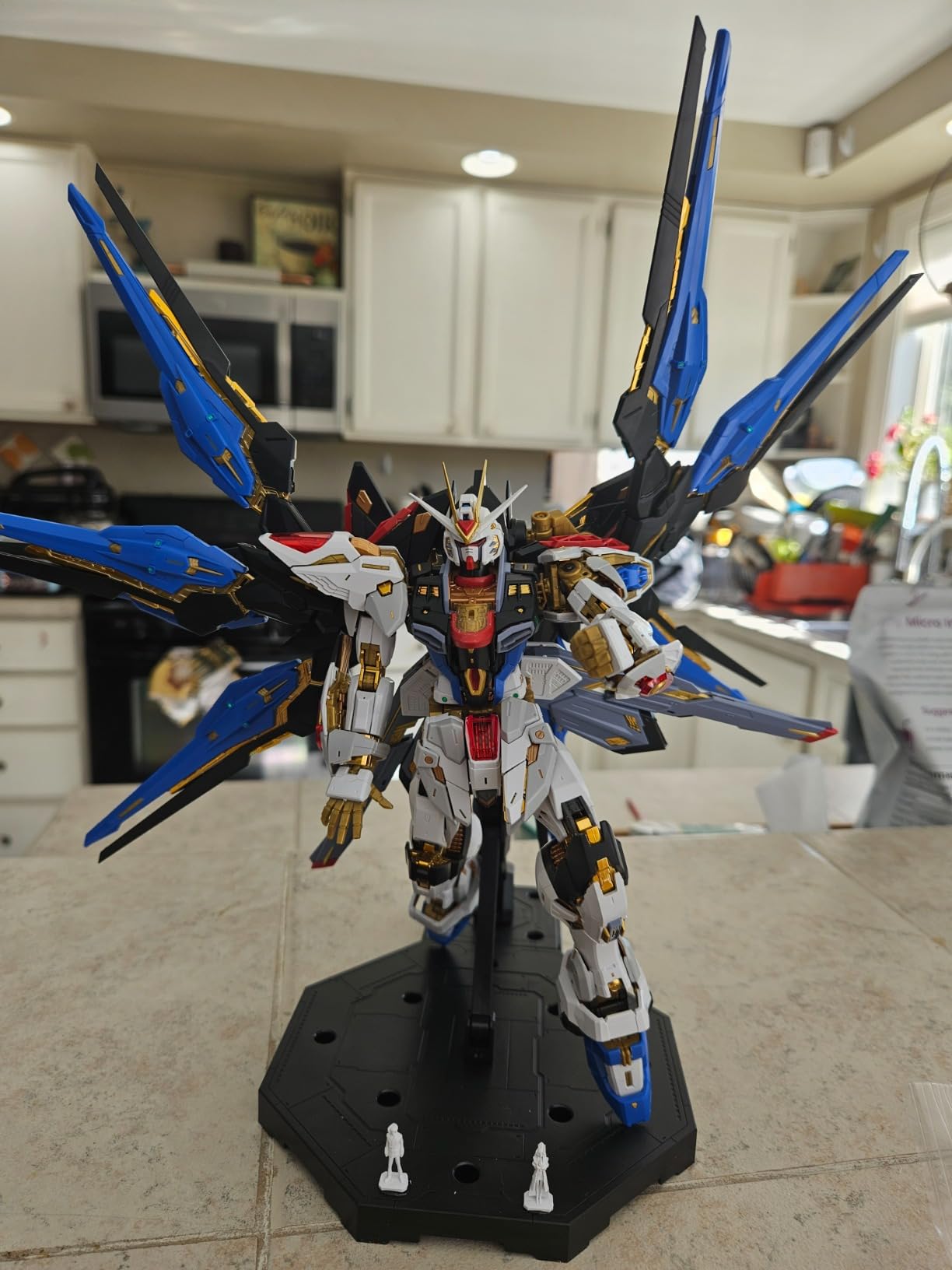
I started the Strike Freedom MGEX on a Sunday morning and didn’t put it down for two days. The 1/100 scale gives this Gundam serious shelf presence, and the gold internal frame peeking through the armor feels like a reward every time you turn it. This is not a casual weekend kit – it’s a project.
What surprised me most was the articulation engineering. Bandai built more linked-frame gimmicks into this one kit than any Master Grade before it. You can pull off dynamic action poses that would snap lesser kits at the joints. The included weapons loadout is comprehensive: beam rifles, beam sabers, and shield all slot into the hands or onto the backpack.
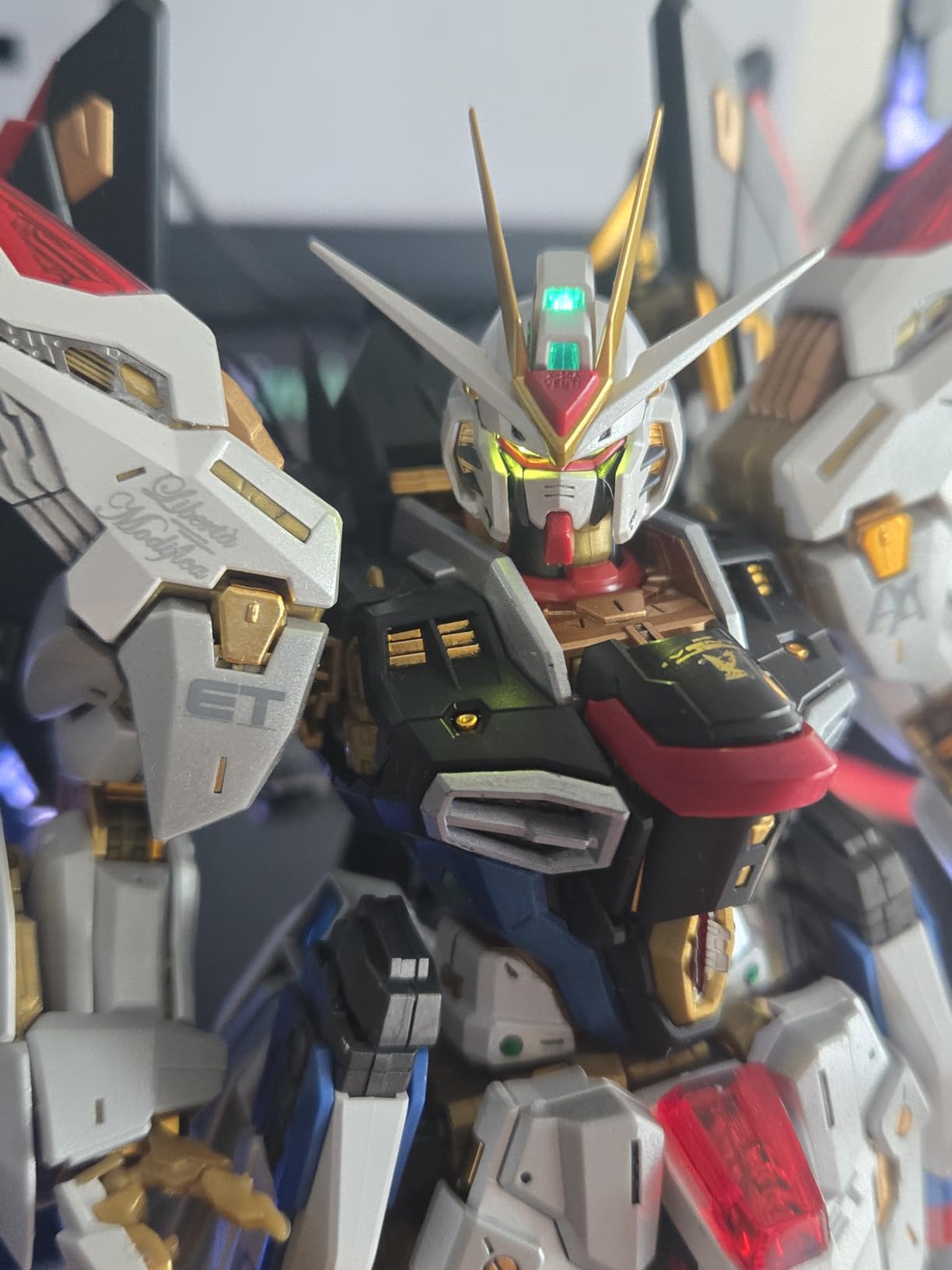
Two things caught me off guard. The etching stickers in six patterns are gorgeous but require tweezers, a steady hand, and a lot of patience. And the sheer weight of the wings puts real stress on the hip joints – I had to stand the model on its included runner stand for static display. Forum feedback on r/Gunpla confirms my experience: this kit rewards experienced builders and punishes shortcuts.
The build is rated for ages 15 and up, but I’d push that to 18+ for adult beginners. Take your time, follow the manual step by step, and you’ll end up with what feels like the crown jewel of any Gunpla collection.
Build Experience
Expect 12-18 hours of careful assembly. The metallic moulded parts need extra-clean cuts from the runners, and the gold frame details are best handled with bright LED lighting. I used a hobby knife, flush cutters, and a set of tweezers the entire way through.
The instruction manual is in Japanese with English callouts in some markets, so a translation app helps. Bandai’s runner layout is excellent, with clear labels and no part hunting.
Articulation and Display
Once built, the Strike Freedom holds poses most Master Grade kits can’t. The shoulder armor lifts, the skirt armor swings, and the wings deploy without falling off. The included paper-crafted runner stand supports the model’s weight without wobble.
If you skip the action poses, the static display is equally impressive. The metallic finish catches light differently from every angle, making it a true centrepiece on any shelf.
2. Bandai Char’s Zaku II HGUC 1/144 – Classic 40th Anniversary Edition
Bandai Hobby – Mobile Suit Gundam – #234 MS-06S Zaku II HGUC 1/144 Model Kit
1/144 scale
Updated 40th Anniversary
Three weapons included
Pros
- Great value at the price
- Accurate colour to original series
- Good articulation for HG scale
- Two skirt armor options
- Easy to follow build
Cons
- Fragile hands
- Loose upper arm joints
- Fists come apart easily
- Small stickers need magnification
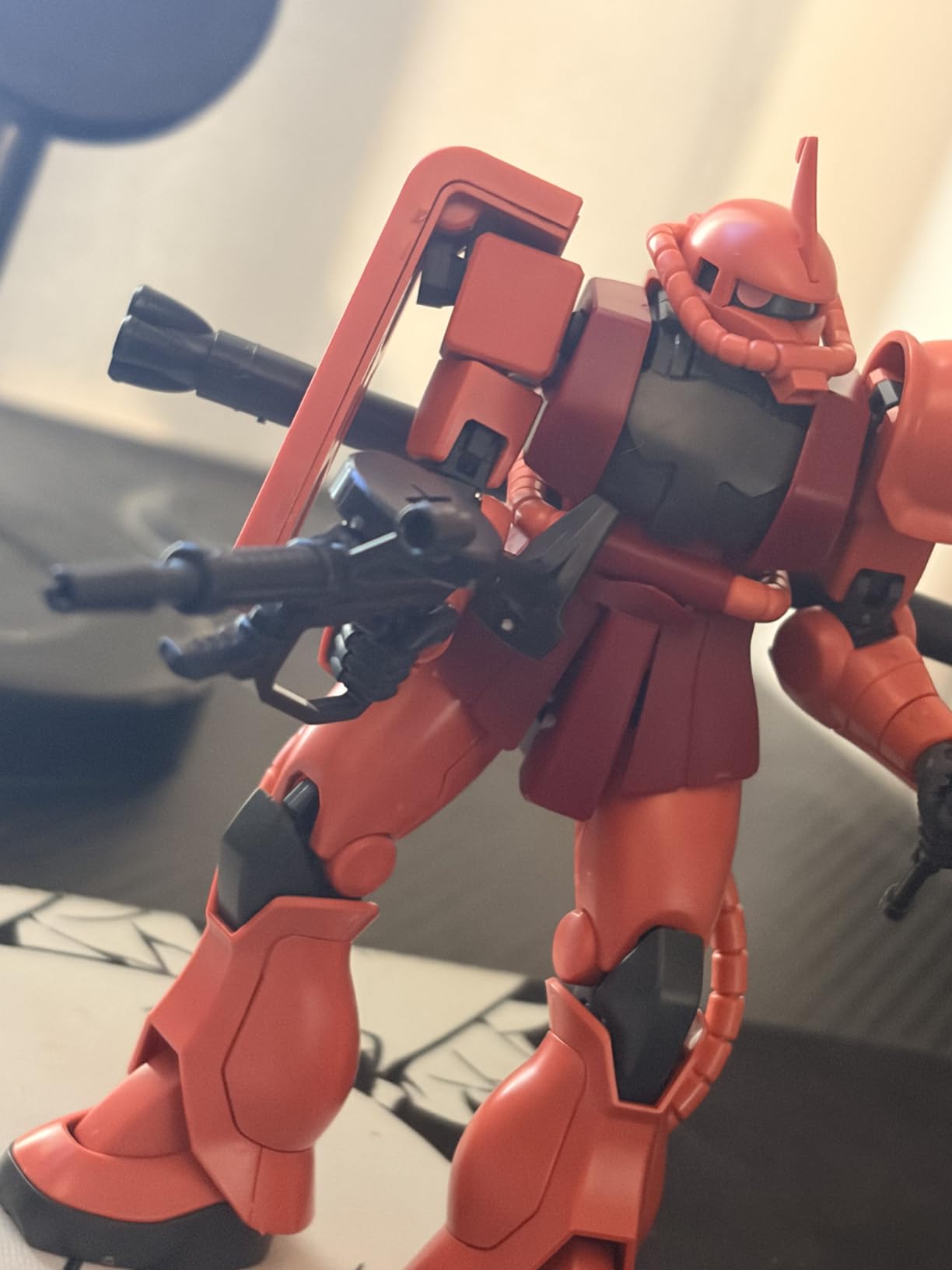
Char’s Zaku II is the kit that started my Gunpla obsession. Bandai updated it for the 40th anniversary of GunPla, and the result is the best version of this Mobile Suit ever released at this scale. I built it in a single evening.
The colour separation is excellent right out of the box. Red, dark grey, and the iconic mono-eye yellow are all moulded in – no painting required. The skirt armor gives you two build options: a soft-material flexible version for dynamic poses, or individual pieces for that classic 1979 anime look.
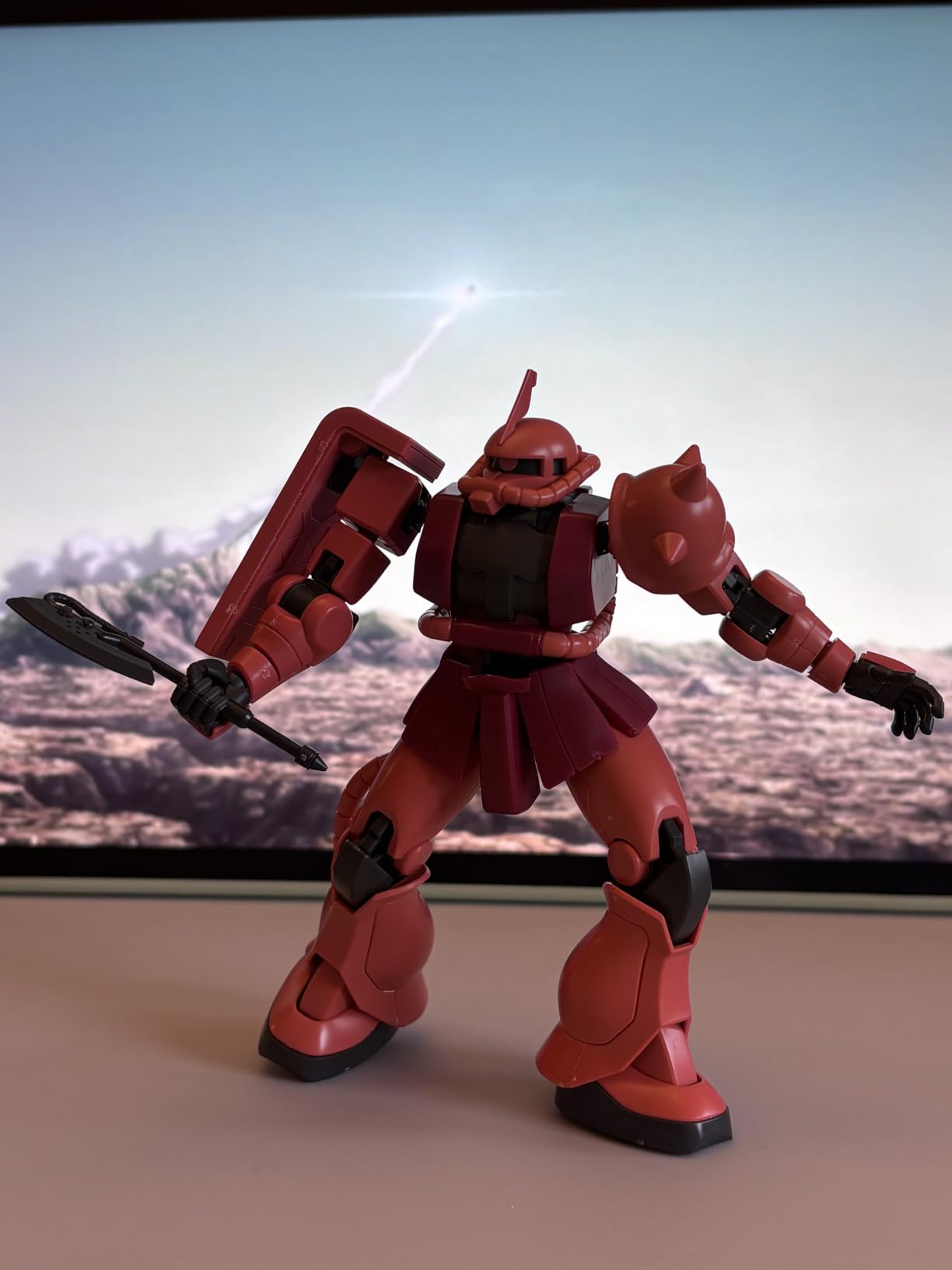
I noticed the same complaint that shows up across most Zaku II builds: the hands are fragile. The included Zaku Machine Gun, Heat Hawk, and Bazooka all store on the backpack or skirt, but they don’t stay gripped well. I swapped in a set of Bandai’s aftermarket hand parts for better holding power.
For the price, this kit delivers remarkable value. Over 2,000 reviews averaging 4.7 stars tells the story – it’s hard to go wrong with a Bandai HGUC kit, and this anniversary update is one of the best in the line.
Build Experience
Count on 3-4 hours for a clean first build. The part count is moderate, the runner layout is logical, and only one sticker sheet is included. Snip carefully around the hands and chest vents where the plastic is thin.
I ran into zero moulding flash, which is typical of recent Bandai releases. Dry-fitting before gluing is recommended, especially for the mono-eye and shoulder armor.
Value and Versatility
This is the sweet spot of the Gunpla range: cheap enough to experiment with, detailed enough to display proudly, and quick enough to finish in a weekend. The Zaku II is a perfect first “real” Gunpla after the Entry Grade.
Once built, it pairs well with the RX-78-2 Gundam (sold separately) for a classic Char vs Amuro shelf diorama. Both kits are 1/144 scale and stand at compatible heights.
3. Bandai RX-78-2 Gundam Entry Grade 1/144 – Ultimate Beginner Pick
Bandai Hobby – Mobile Suit Gundam – 1/144 RX-78-2 Gundam, Bandai Spirits Entry Grade Model Kit
1/144 scale
Only 74 parts
No tools required
Pros
- Perfect entry point for beginners
- No tools or glue needed
- Colour-moulded plastic
- Builds in about 1 hour
- Robust and durable
Cons
- Arms and legs fall off during posing
- No beam saber blades included
- Limited detail vs higher grades
- Small stickers
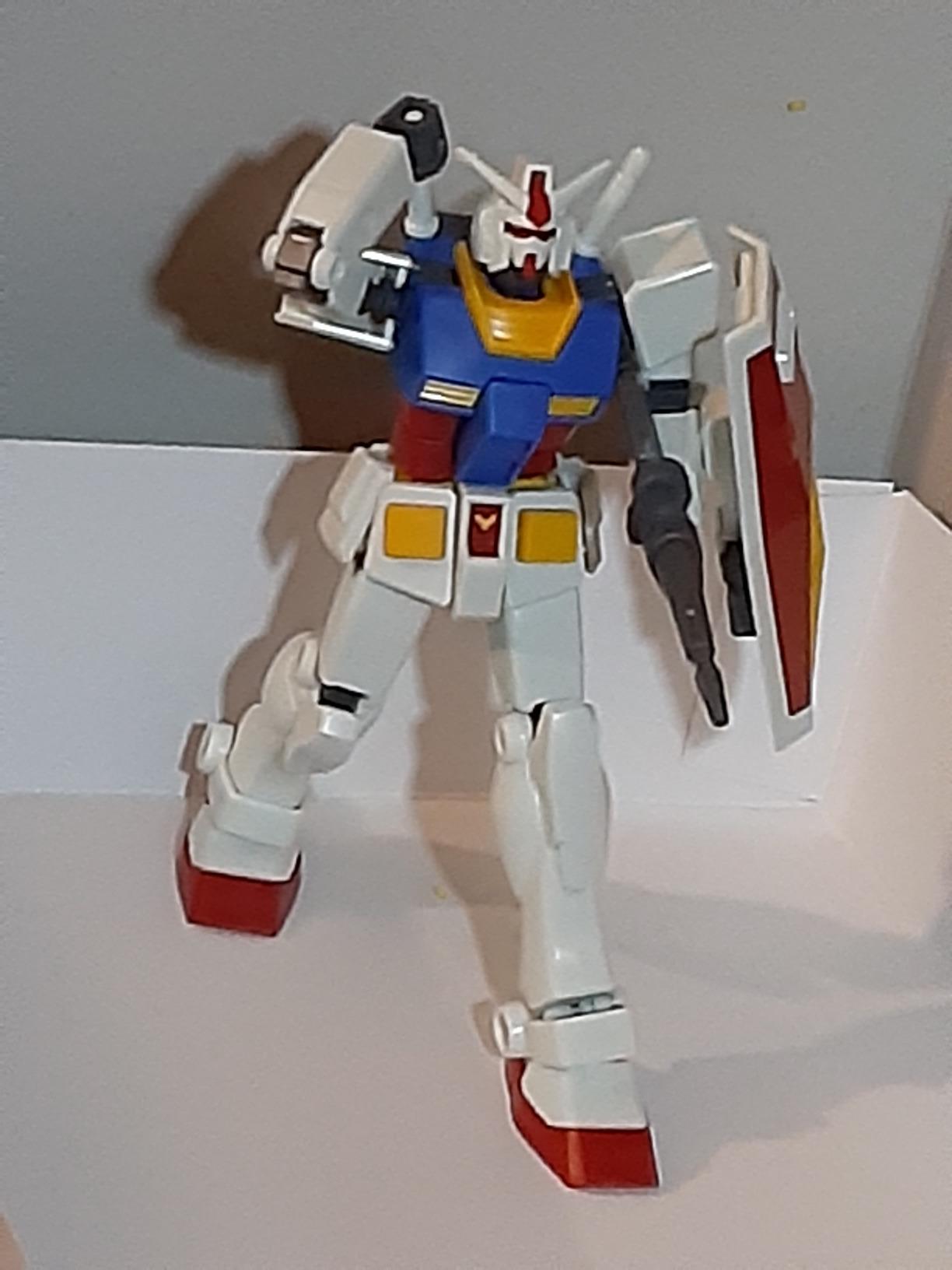
If you’ve never built a Gunpla before, this is the one to start with. I handed it to a friend who’s never held a model kit in his life, and he finished it in 45 minutes with a grin. No nippers. No glue. No paint. Just twist, snap, and done.
The Entry Grade line is Bandai’s “anyone can build this” experiment, and it works. There are only 74 parts, all colour-moulded. The runner gates are designed to be twisted off by hand, and the polycaps inside the joints click together without tools. The included beam rifle and shield finish the iconic RX-78-2 look straight out of the box.
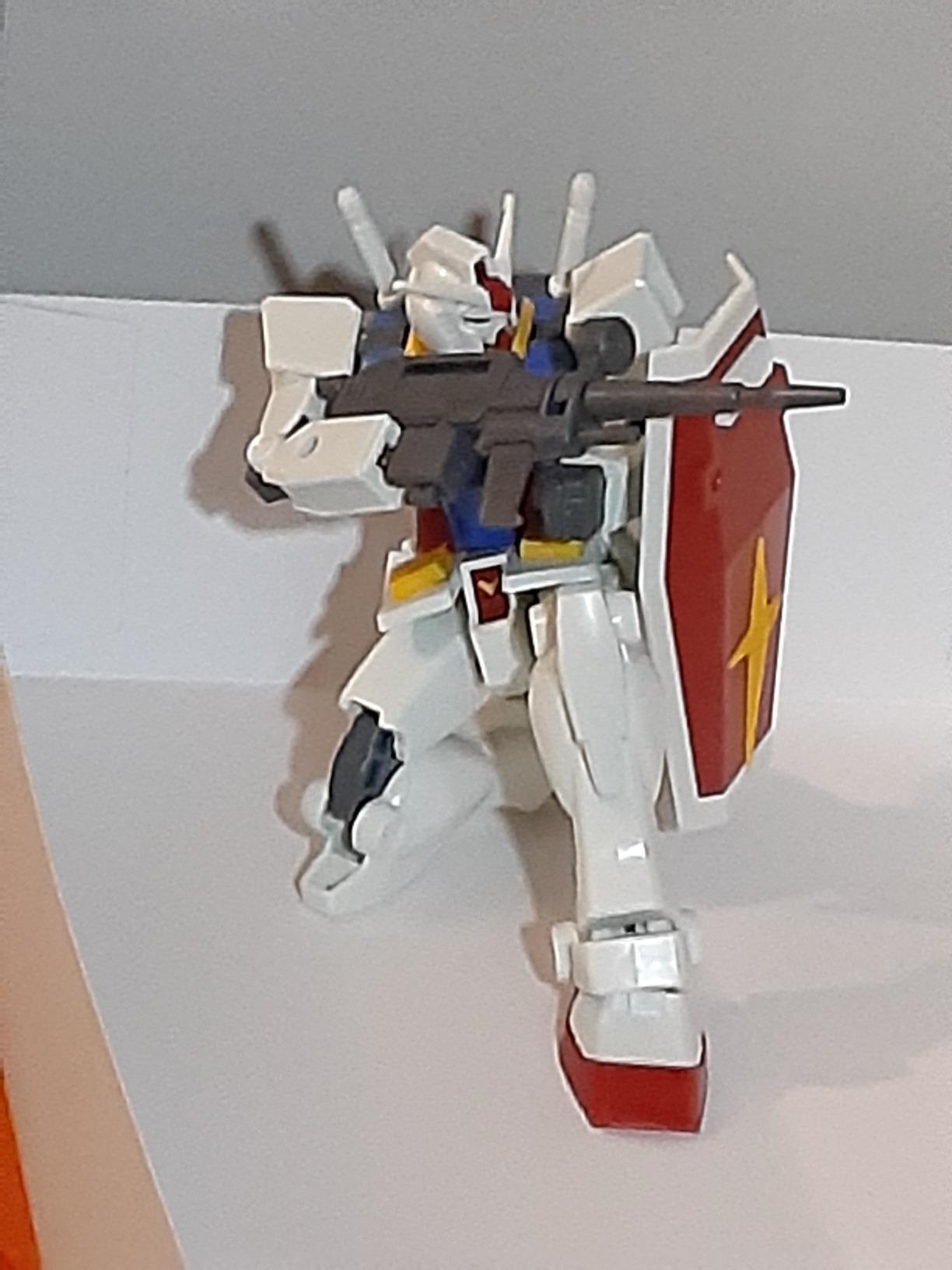
What you give up for that ease is detail and poseability. The arms and legs fall off if you try dynamic action poses, and there’s no internal frame. But for a first build, a gift for a child, or a quick one-hour project, nothing beats it.
Over 3,000 reviews averaging 4.8 stars – including a strong following of parents building with their kids – confirms this kit’s place as the gateway Gunpla. After you finish it, you’ll know whether the hobby is for you.
First-Build Friendly
The instructions are full-colour and easy to follow, with arrows and callouts for each part. The runners are clearly numbered, and the manual walks you through steps in a logical order. I never had to backtrack or guess at any step.
One small note: a few parts have very tight runner gates that may need a sharp knife. I used the tip of a box cutter to start the cut, then twisted the rest off by hand.
Limitations to Consider
This kit doesn’t include beam saber blades – just the hilts. If you want the iconic glowing sabers, you’ll need to paint them or buy aftermarket parts. The shoulders and hip joints are also looser than higher-grade Gunpla.
For an adult who wants a quick, satisfying build with zero stress, this is perfect. For a long-term painting or weathering project, step up to the HGUC or RG lines.
4. Bandai Evangelion Unit-01 RG 1/144 – Innovative Muscle-Fiber Articulation

Bandai Hobby – Evangelion – Multipurpose Humanoid Decisive Weapon Artificial Human Evangelion Unit-01, Bandai Spirits RG Model Kit
1/144 scale
320 pieces
Muscle-fiber articulation
Pros
- Incredible detail and build quality
- Excellent articulation
- Complex joint system mimics human movement
- Superb colour separation
- Durable premium plastic
Cons
- Very small fragile pieces
- Requires patience
- Long build time 5+ hours
- Chest plate may pop off
- Relatively expensive
The Real Grade Evangelion Unit-01 is one of the most ambitious small-scale kits Bandai has ever produced. 320 pieces packed into a 1/144 frame, with an internal muscle-fiber system that moves like a real body. I spent a full Sunday afternoon on it and loved every step.
The build quality is exceptional. Every part is colour-moulded – no stickers needed for the iconic purple, green, and orange Evangelion colour scheme. The included umbilical cable helps with dynamic action poses, and the internal frame is exposed through the joints, giving the model a true “mecha” feel.
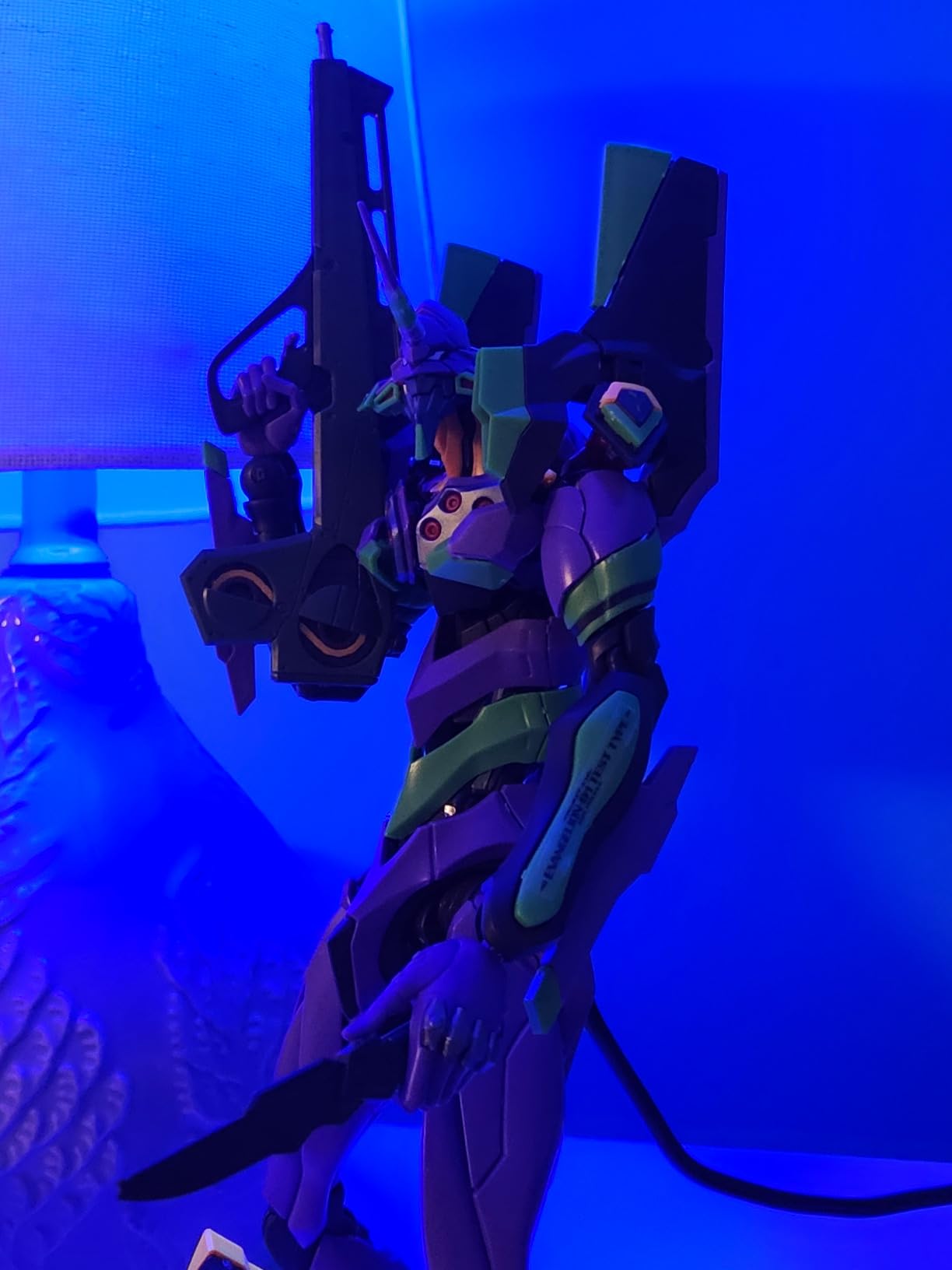
The innovation here is the linked parts system. When you move the arm, the chest and shoulder blade move with it, simulating how a real body reacts. It feels less like a plastic model and more like a tiny articulated sculpture. Build time is around 5-7 hours for a careful first build.
The downsides are real. Some parts are very small, and the chest plate can pop off if you arch the back too far. Posing is fun but requires patience. For Eva fans, this is the definitive version of Unit-01.
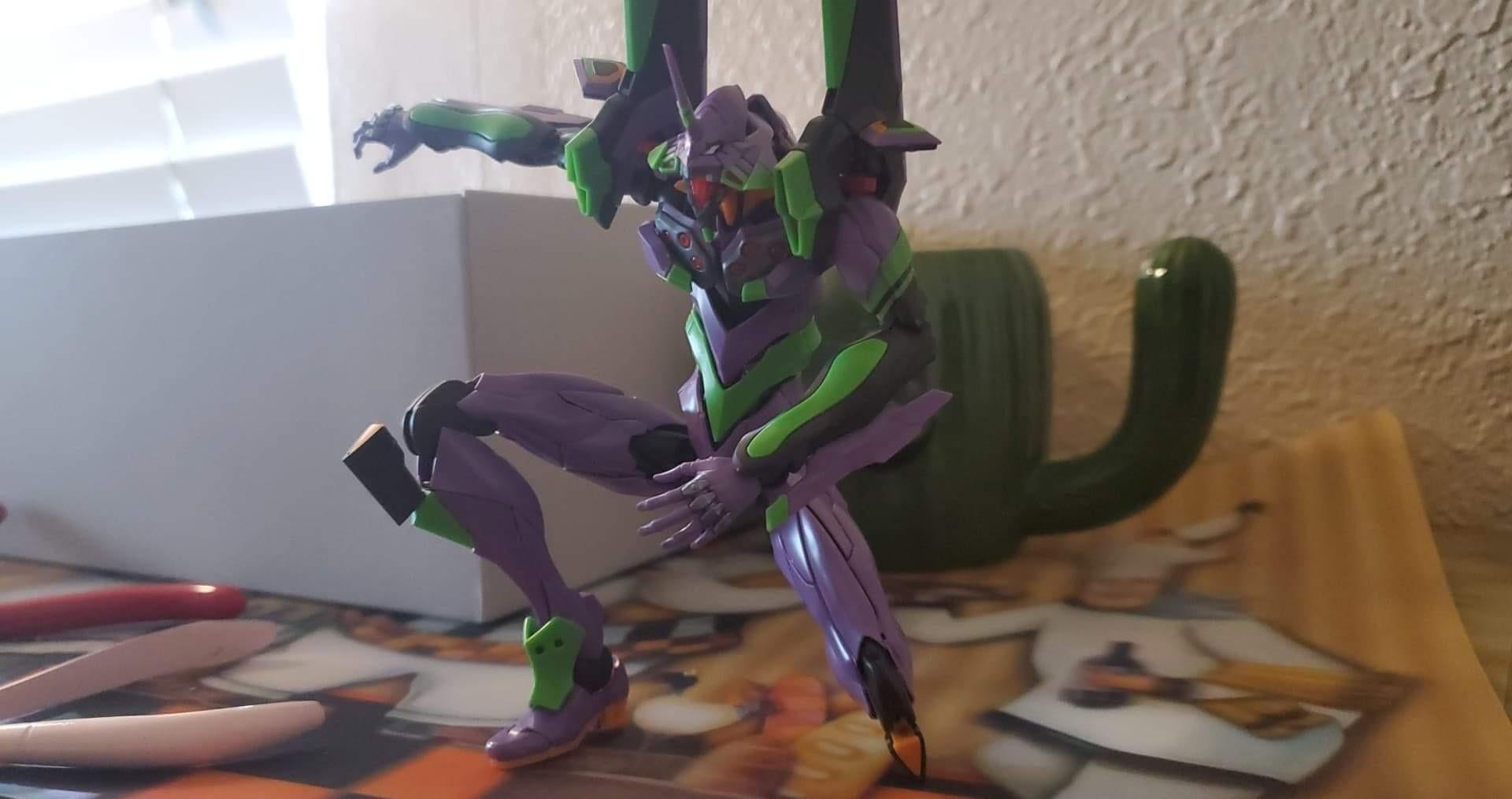
Pose System
The muscle-fiber system is the star of this kit. Move an arm, and the chest, shoulder blade, and even the spine adjust. It feels closer to a posable action figure than a static scale model. The included umbilical cable plugs into the back and provides extra support for mid-air poses.
I found the best results came from gentle, deliberate posing rather than aggressive action stances. The joints are designed for fluid movement, not stress.
Assembly Challenges
Be ready for tiny parts and long sub-assemblies. The instructions are clear but the part count is high, so I broke the build into three sessions: torso, arms, and legs. That approach kept frustration low and progress visible.
The included runner gates are precise, but the small pieces near the feet and hands are easy to drop. A magnetic parts tray helps. Some builders use a pin vise to clean up gate nubs, but I found flush cutters sufficient.
5. Tamiya 1/48 F-16CJ Fighting Falcon – Premium Aircraft Engineering

Tamiya 61098 1/48 Lockheed Martin F-16CJ Plastic Model Airplane Kit
1/48 scale
Full ordnance load
Two canopy options
Pros
- Exceptional Tamiya quality
- Crisply scribed detailing
- Excellent part fit
- Comprehensive armament
- Multiple aircraft markings
- Polycaps for removable payload
Cons
- Not for beginners - 200+ parts
- Complex assembly sequence
- Painting tricky for novices
- Only USAF decals
Tamiya’s 1/48 F-16CJ is the kind of kit that reminds you why Tamiya is considered the gold standard for aircraft models. The part fit is exceptional – almost no gaps, almost no flash, and parts that snap together cleanly. I built it over a long weekend and enjoyed every hour.
The kit comes with everything an F-16CJ block 50 carries: AGM-88 HARM, AIM-120C AMRAAM, AIM-9M/X Sidewinder missiles, an ECM pod, and conformal fuel tanks. The polycap system means you can swap out the payload and tail without glue, which is great for posing or storage.
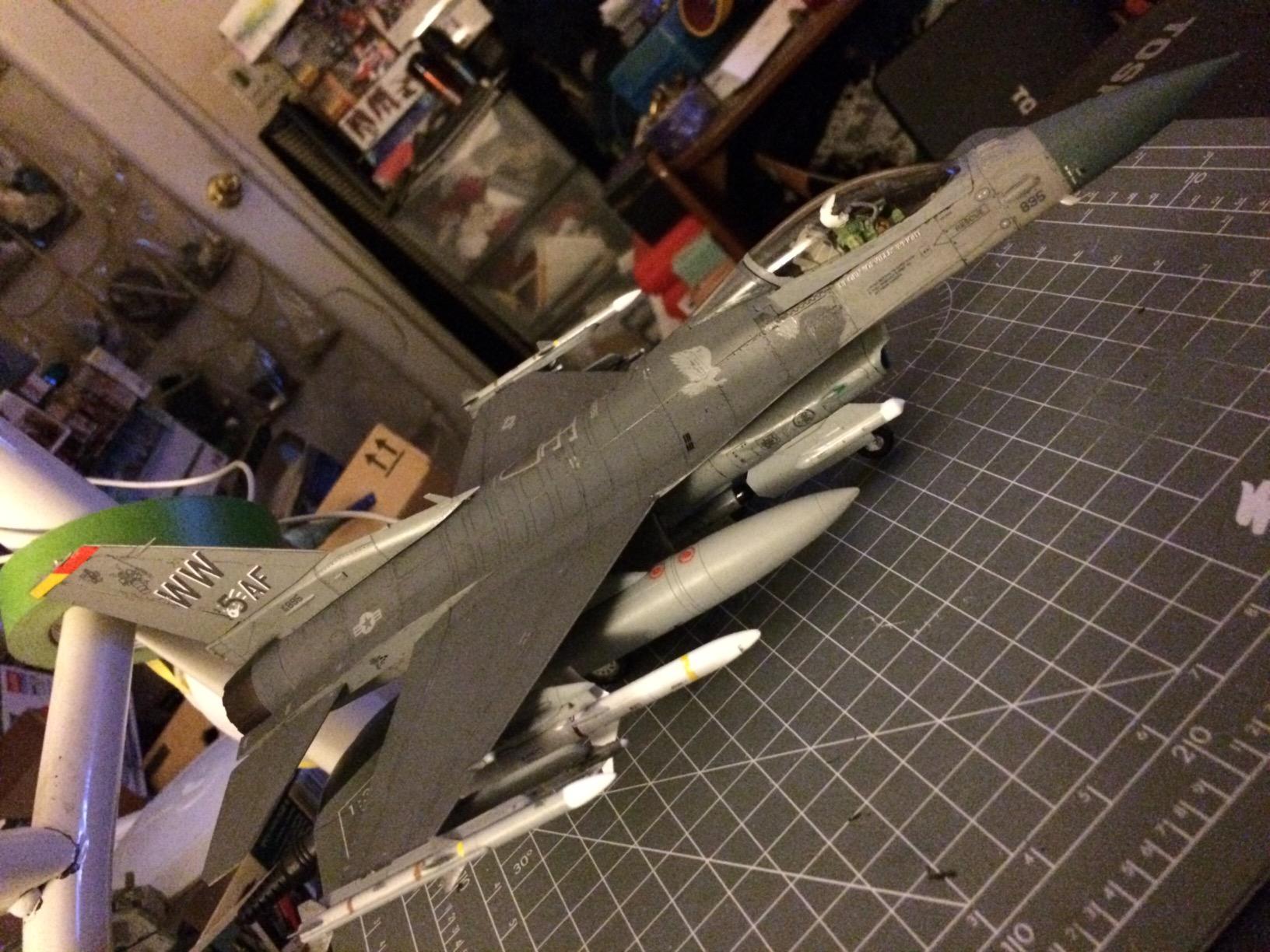
This is not a beginner kit. The 200+ parts include a detailed cockpit, landing gear bays, and moving stabilizers that all need to be assembled in the correct order. I had to follow the manual carefully because the cockpit must be completed before closing the fuselage.
The end result is a museum-quality aircraft model with crisp panel lines, accurate rivets, and a 1/48 size that looks substantial on a shelf. If you’ve built a Tamiya kit before, this is a satisfying step up.
Aircraft Engineering
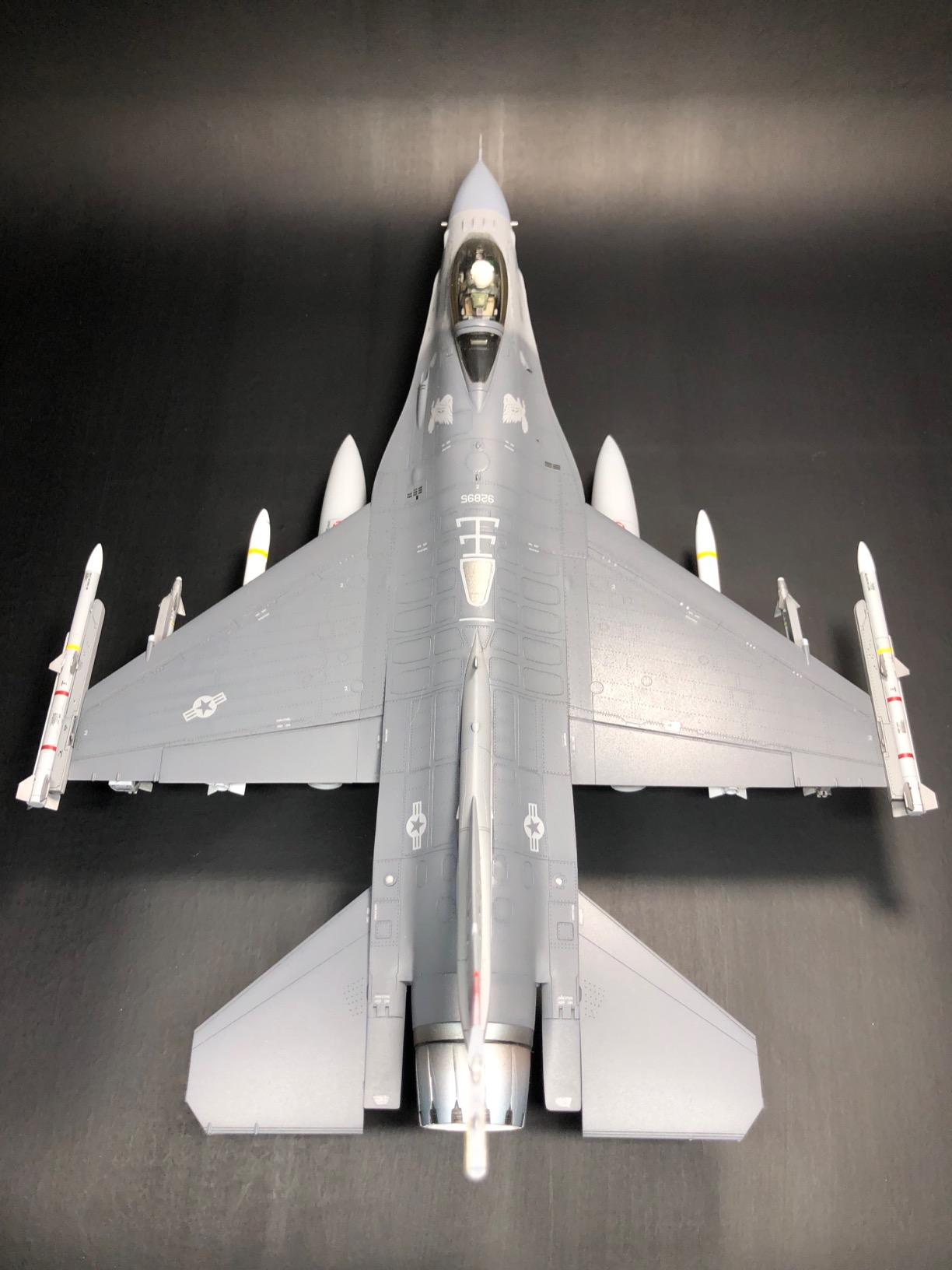
Tamiya’s 1/48 tooling is some of the best in the hobby, and this F-16CJ shows why. The curved fuselage form is accurately reproduced, the IFF antenna array sits correctly on the nose, and the flaperons can be positioned up or down to suit your taste.
The detail is sharp without being fragile. Panel lines are scribed, not raised, which gives a more realistic appearance. A coat of paint and weathering wash brings out the detail beautifully.
Skill Demands
The build sequence is demanding: cockpit first, then fuselage closure, then landing gear and gear bays, then payload, then exterior stores. Skipping ahead or improvising will lead to fit issues. I followed the manual page by page, which took about 14 hours total.
Painting is essential. The kit is moulded in grey plastic and needs at least a base coat plus details. For a novice, I recommend Tamiya acrylics applied with an airbrush for the cleanest finish. Brush painting is possible but more time-consuming.
6. Tamiya 1/35 Tiger I Early Production – Iconic Armor Detail

Tamiya 35216 1/35 Ger. Tiger I Early Production Tank Plastic Model Kit for Unisex Adult
1/35 scale
Flexible tracks
Historical accuracy
Pros
- Super detail on parts
- Clear easy to follow instructions
- No flash on parts
- All parts fit perfectly
- Minimal sanding required
Cons
- Track assembly is challenging
- No interior detail
- Lacks full colour painting guide
- Not for absolute beginners
The Tiger I is one of the most famous tanks ever built, and Tamiya’s 1/35 version is a faithful reproduction. I built mine over a long weekend, and the part fit was so good I barely needed putty or filler. That’s the Tamiya promise, and this kit delivers.
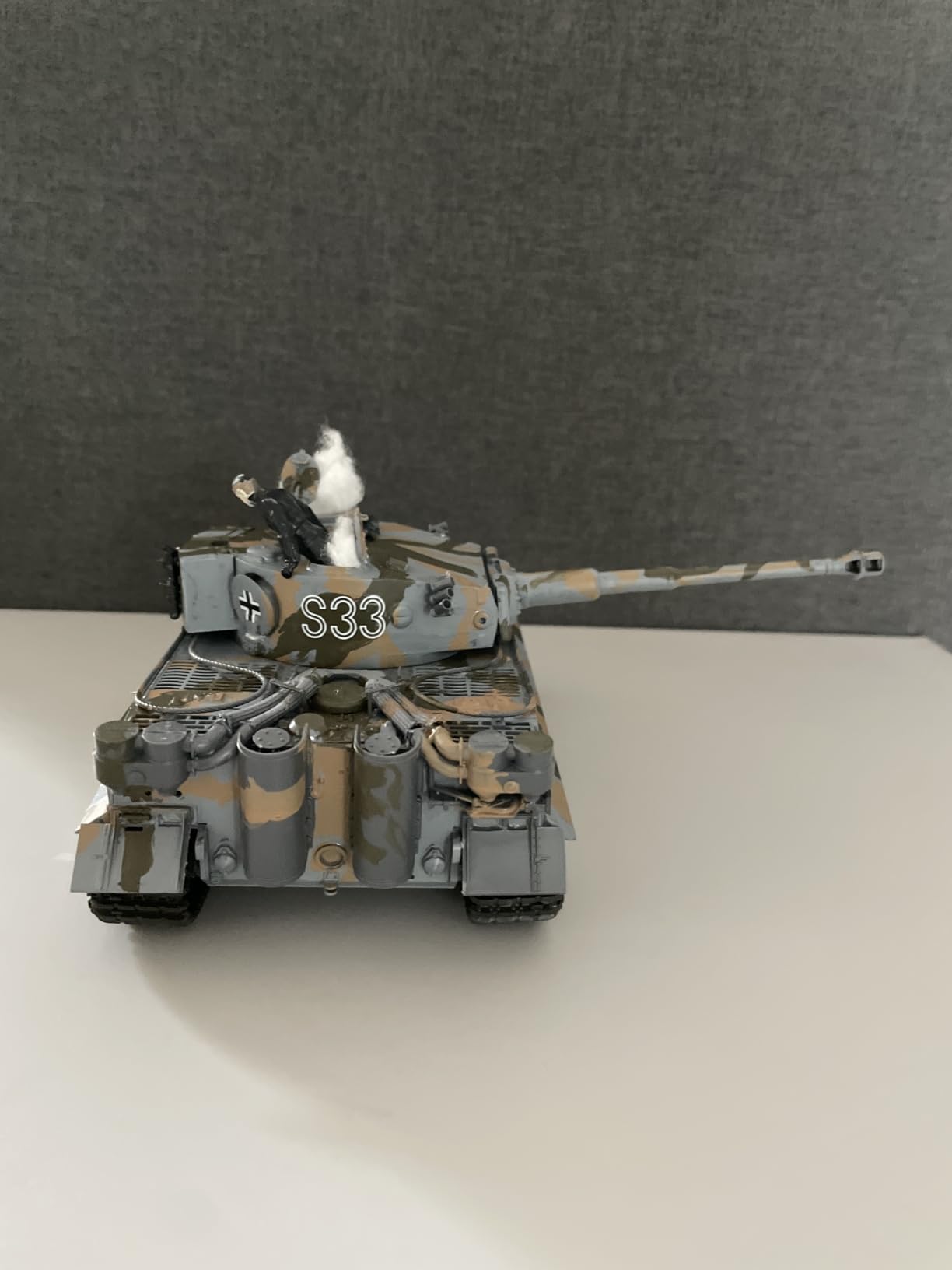
Detail is the highlight. The flexible tracks link together precisely, the road wheels have crisp detail, and the turret shape matches reference photos of early production Tigers. The instruction manual walks you through each step clearly, with diagrams for the trickier sub-assemblies.
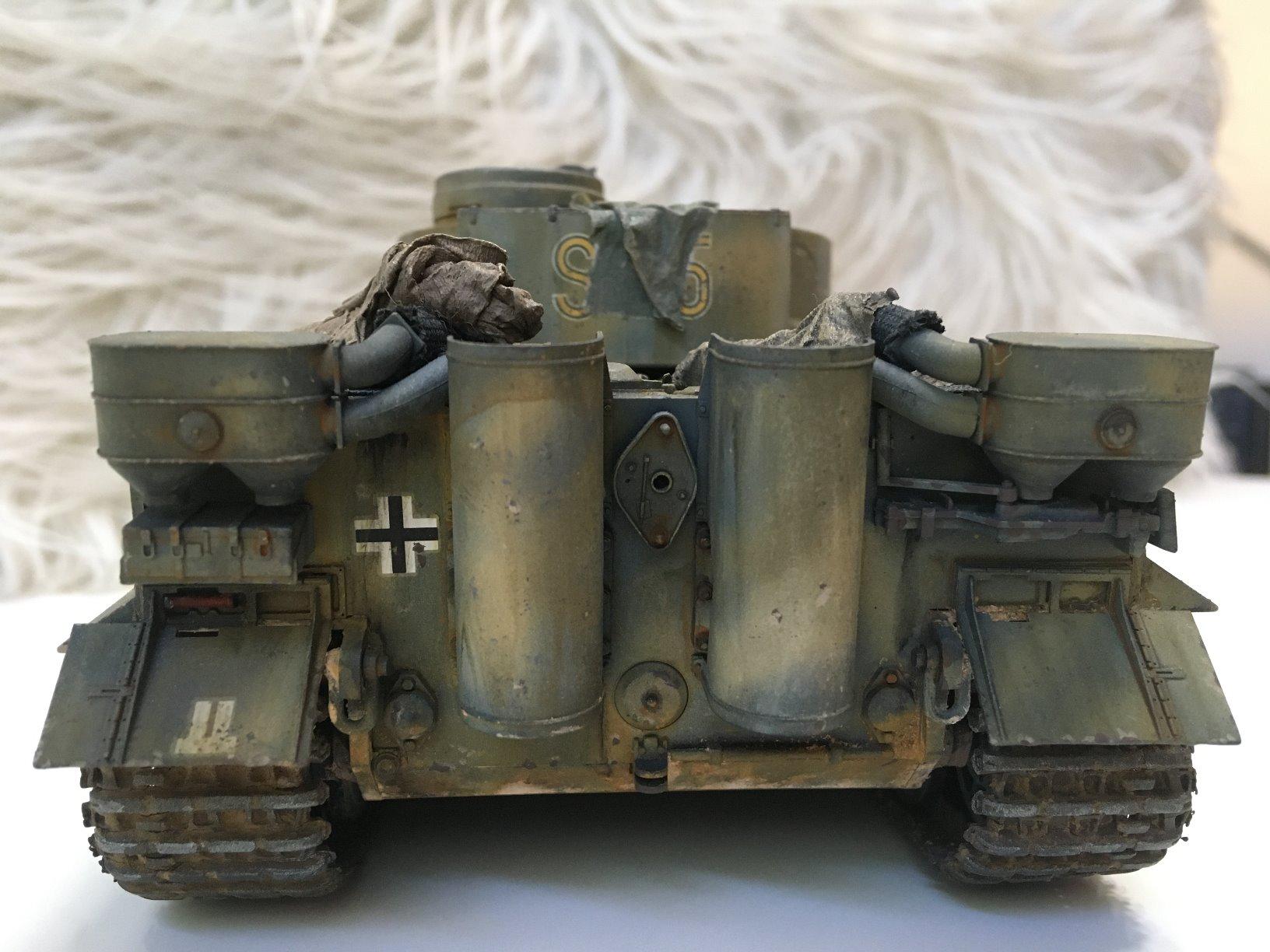
The build is rated as moderate difficulty, but I’d call it intermediate. The track links are fiddly, and there’s no interior detail – the hatches are sealed shut. For a first armor build, this is doable, but I wouldn’t recommend it as the very first model kit you ever build.
With 831 reviews averaging 4.8 stars, the consensus is clear: this is one of the best 1/35 Tiger I kits on the market, regardless of price. Forum feedback on r/modelmakers consistently recommends Tamiya for armor.
Armor Detail
The surface textures are excellent. The cast turret has the right rough finish, the welded hull shows the correct seams, and the engine deck grilles are crisply moulded. A black wash followed by dry-brushing brings out the detail dramatically.
The 88mm gun barrel is two pieces, which is typical for this scale. I cemented them carefully and sanded the joint smooth before painting.
Track Assembly
The rubber-band-style tracks are the trickiest part. Each link has to be glued to the next, and the tension matters – too tight and the tracks bow, too loose and they sag. I used Tamiya Extra Thin Cement and held each joint for 30 seconds before moving on.
A small tip from r/modelmakers: set the completed tracks aside overnight before installing them on the hull. This lets the cement fully cure and prevents the tracks from relaxing later.
7. Tamiya 1/35 M4A3E8 Sherman Easy Eight – Allied Armor Staple

Tamiya 35346 1/35 US Medium Tank M4A3E8 Sherman Plastic Model Kit
1/35 scale
Slide-molded detail
Commander figure
Pros
- Slide-molded turret detail
- Highly realistic detail
- Accurate cast textures
- Sharp moulding on grilles
- Clear parts for lights
- Detailed commander figure
Cons
- Rubber T66 tracks look stiff
- Decals can be finicky
- Many small pieces
- Tracks can be very tight
The Easy Eight Sherman is the kit I recommend to anyone getting into armor modelling. It’s approachable enough for a first armor build, but detailed enough to feel like a serious project. I built mine in a weekend, painting it the same week.
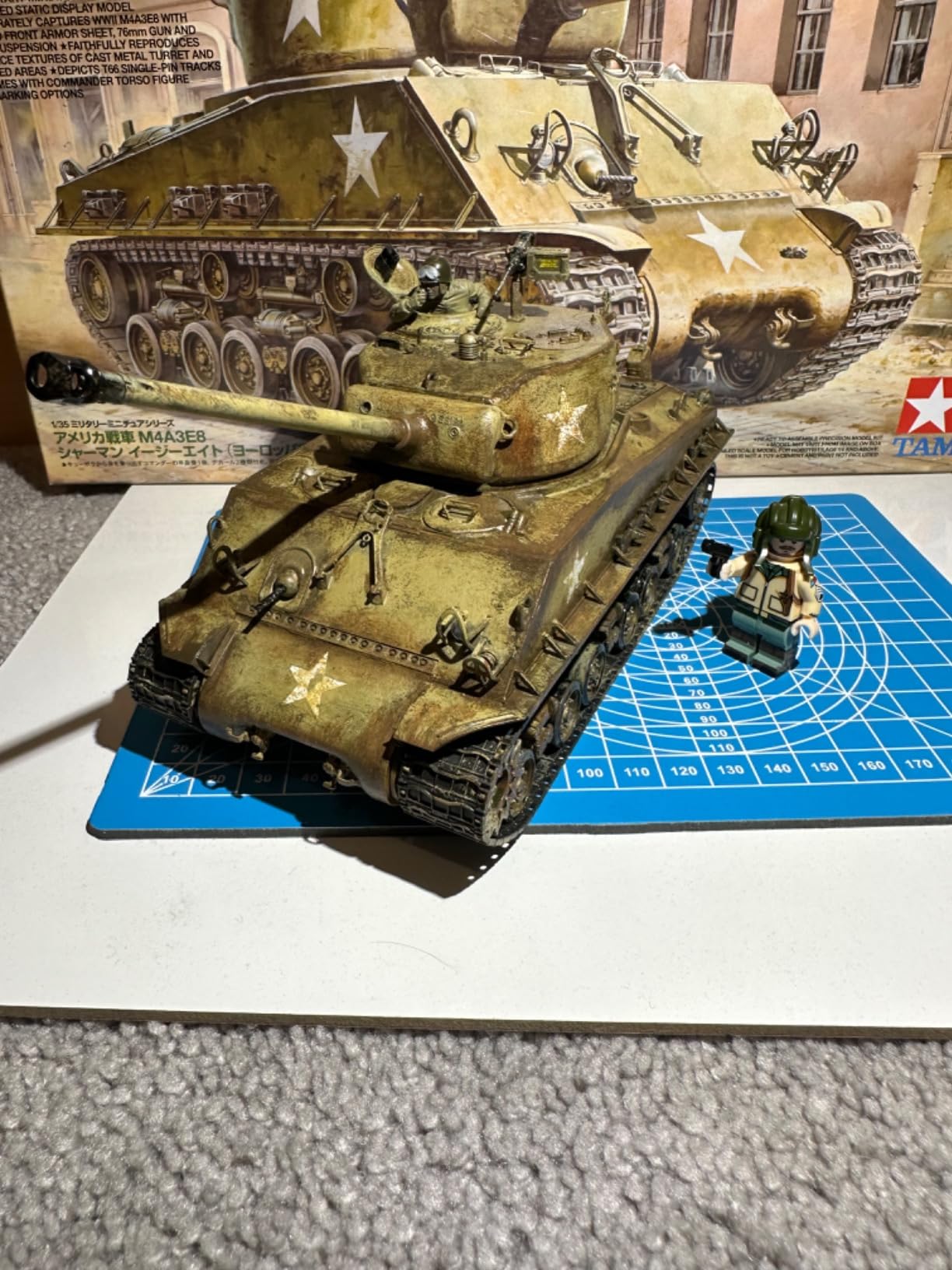
Tamiya’s slide-moulded tooling shines on this kit. The turret and upper hull come together with virtually no seam – the engineering is that good. The cast metal texture and welded hull details are accurate to period photos, and the engine grilles at the rear are sharply moulded.
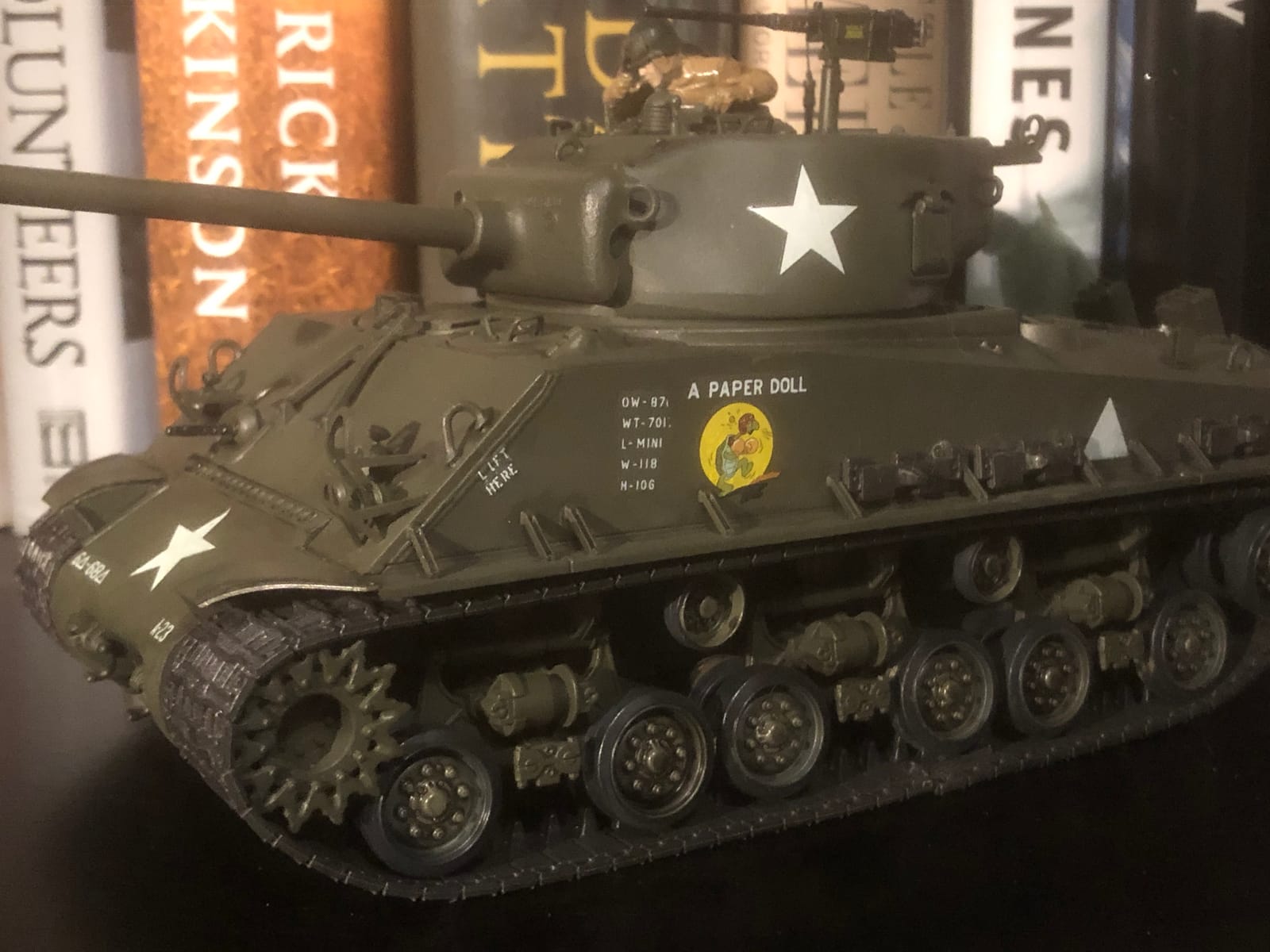
The 1,537 reviews averaging 4.7 stars speak to how well-loved this kit is. Beginners and experienced builders alike praise the part fit, and the included commander figure in a realistic pose adds character to the finished model.
The T66 rubber-band tracks are the main pain point. They look a bit stiff compared to aftermarket individual-link tracks, and getting them to sit right on the road wheels takes patience. I used a hair dryer to warm the tracks slightly before installation, which made them more flexible.
Slide-Mold Engineering
Slide moulding lets Tamiya produce parts in one piece that would normally require multiple parts and seams. The result is cleaner assembly and more accurate detail. The turret on this Sherman is a great example – one solid piece with crisp weld lines and surface texture.
Compared to older Tamiya Shermans that required cementing the turret halves together, this kit saves 30 minutes of cleanup work and gives a sharper result.
Track and Decal Notes
The included T66 tracks are functional but not as detailed as aftermarket sets. For a first build, they look great with a dark wash. For a serious show piece, consider upgrading to Friulmodel or Panzer Art individual-link tracks.
The decals are a mixed bag. Period-correct markings for multiple US units are included, but the carrier film is thin. I used Micro Sol and Micro Set setting solutions to get them to conform to the surface without silvering.
8. Tamiya 1/35 Willys Jeep MB – The Perfect Starter Kit
TAMIYA Jeep Willys 1/4 Ton 4X4 Hobby Model Kit for ages 168 months to 1200 months
1/35 scale
99 parts
Beginner-friendly
Pros
- Easy fun build
- Great starter kit
- Instructions easy to follow
- Good part fit
- Can be built simple or complex
- Highly detailed
Cons
- Scale not listed on packaging
- Front hitch may need manipulation
- Driver figure oversized
- 1/35 scale may feel small
The Tamiya Willys Jeep is my top recommendation for anyone starting out in armor modelling. With only 99 parts, clear instructions, and forgiving fit, it’s the kit I wish I’d had as a beginner. I built one for my nephew last Christmas, and he loved it.
The build is satisfying in a way that more complex kits aren’t. You finish it in an afternoon, the parts fit cleanly, and the result is a recognisable, well-detailed miniature. The included driver figure adds character without adding complexity.
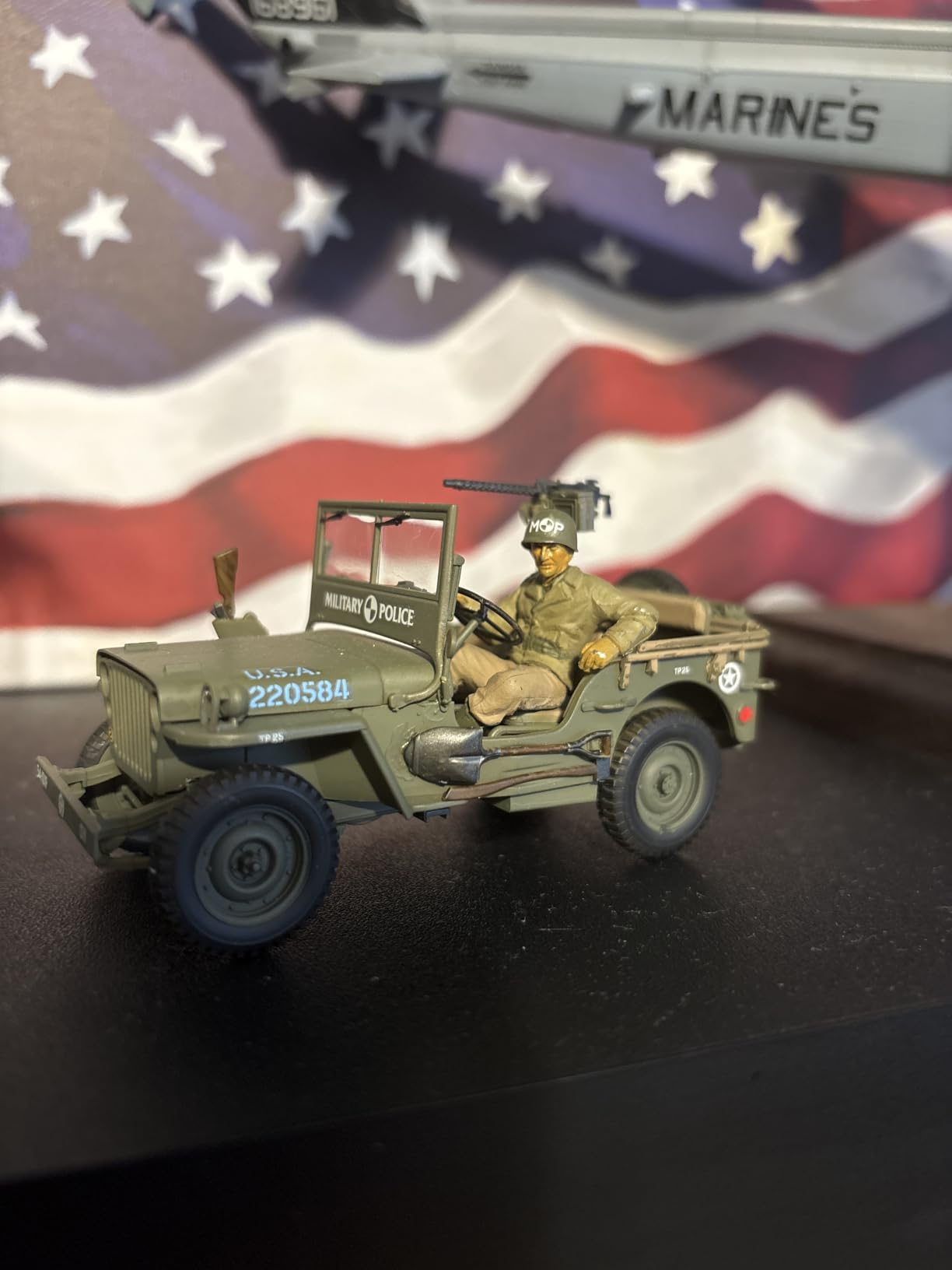
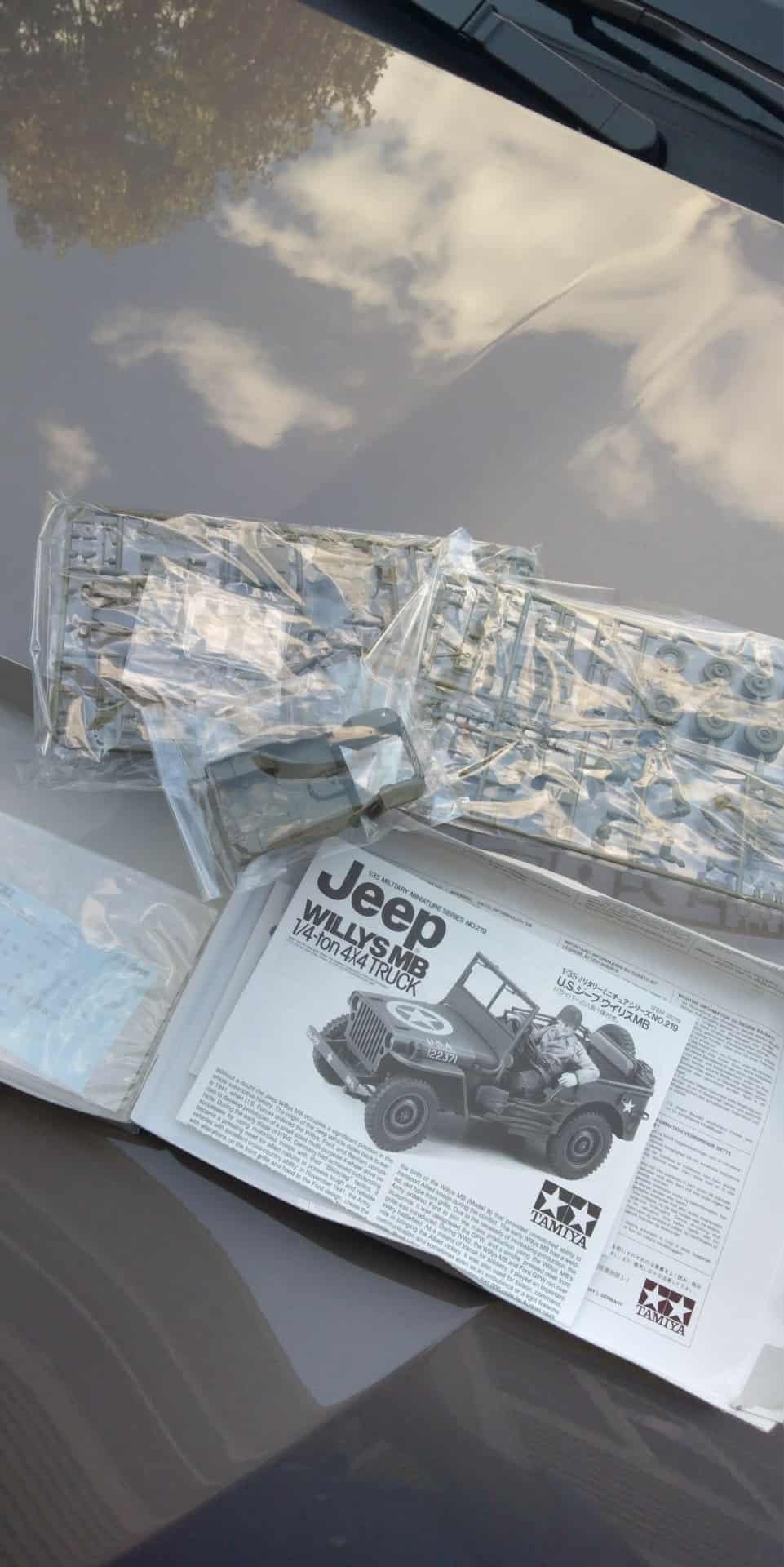
One quirk: the scale isn’t printed on the packaging. Tamiya’s older kits often omit this, but the model is 1/35 scale, matching the rest of Tamiya’s WWII armor range. If you want to display it alongside the Sherman or Tiger I above, the scale will match.
With 1,614 reviews averaging 4.7 stars, this is one of the most popular Tamiya kits ever released. The combination of low part count, high quality, and approachable price makes it a near-universal entry point.
Beginner-Friendly Build
Count on 3-4 hours for a first build. The instructions are typical Tamiya: clear diagrams, numbered parts, and a logical sequence. I didn’t need putty or filler anywhere on the build.
The decals include markings for five different vehicles, so you can choose your favourite or build a small fleet over time. A coat of matte olive drab plus a black wash makes the finished model look fantastic.
Detail and Customization
You can build this kit as a quick stock-out-of-the-box model, or add aftermarket stowage, weathering, and figure passengers for a more involved project. The simple base model is a great canvas for diorama work.
The 1/35 scale also means it pairs well with the Sherman and Tiger I above. A small WWII Allied scene with the Jeep leading a Sherman column is a classic diorama setup.
9. Revell 1/24 1970 Plymouth Road Runner – American Muscle Detail

Revell 1970 Plymouth Road Runner Plastic Car Model Building Kit 1:24 Scale
1/24 scale
440+6 V-8
Chrome parts
Pros
- Detailed 440+6 V-8 engine
- Hood scoop opens
- Detailed interior
- Chrome plated parts
- Black vinyl tires
- Good for beginners
Cons
- Body needs basic sanding
- Hood decals don't fit well
- Directions 75% legible
- Requires paint and glue
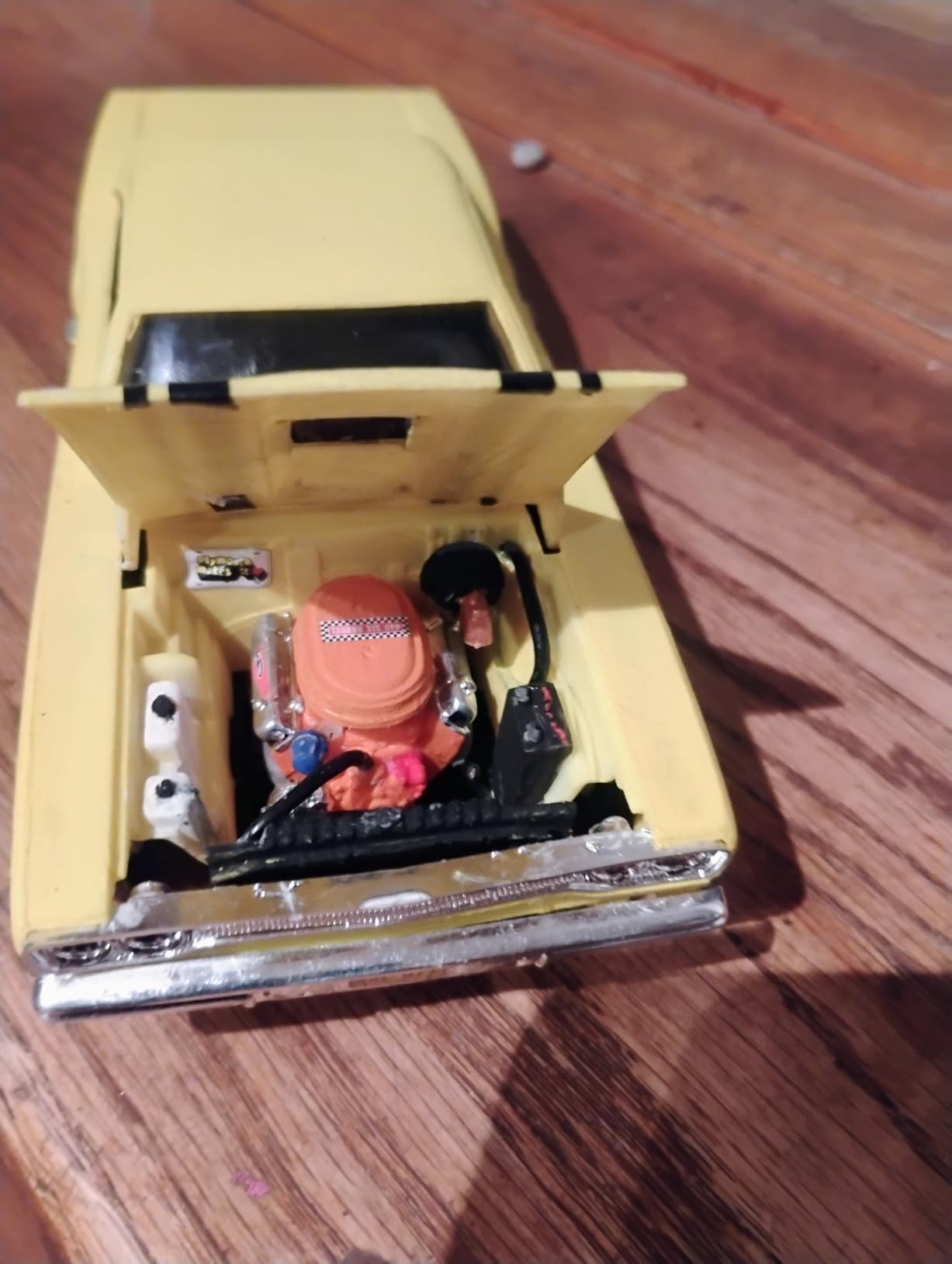
The 1970 Road Runner is a muscle car icon, and Revell’s 1/24 kit captures the look well. I built one with my dad years ago, and the recent reissue keeps the same great detail with cleaner tooling. The optional 440+6 V-8 with three two-barrel carbs is a highlight.
The build is typical Revell: moulded in white with chrome-plated parts and clear parts for the windows. The hood scoop can be posed open to show off the engine, and the interior has separate side panels and a front bench seat for that classic 70s look.
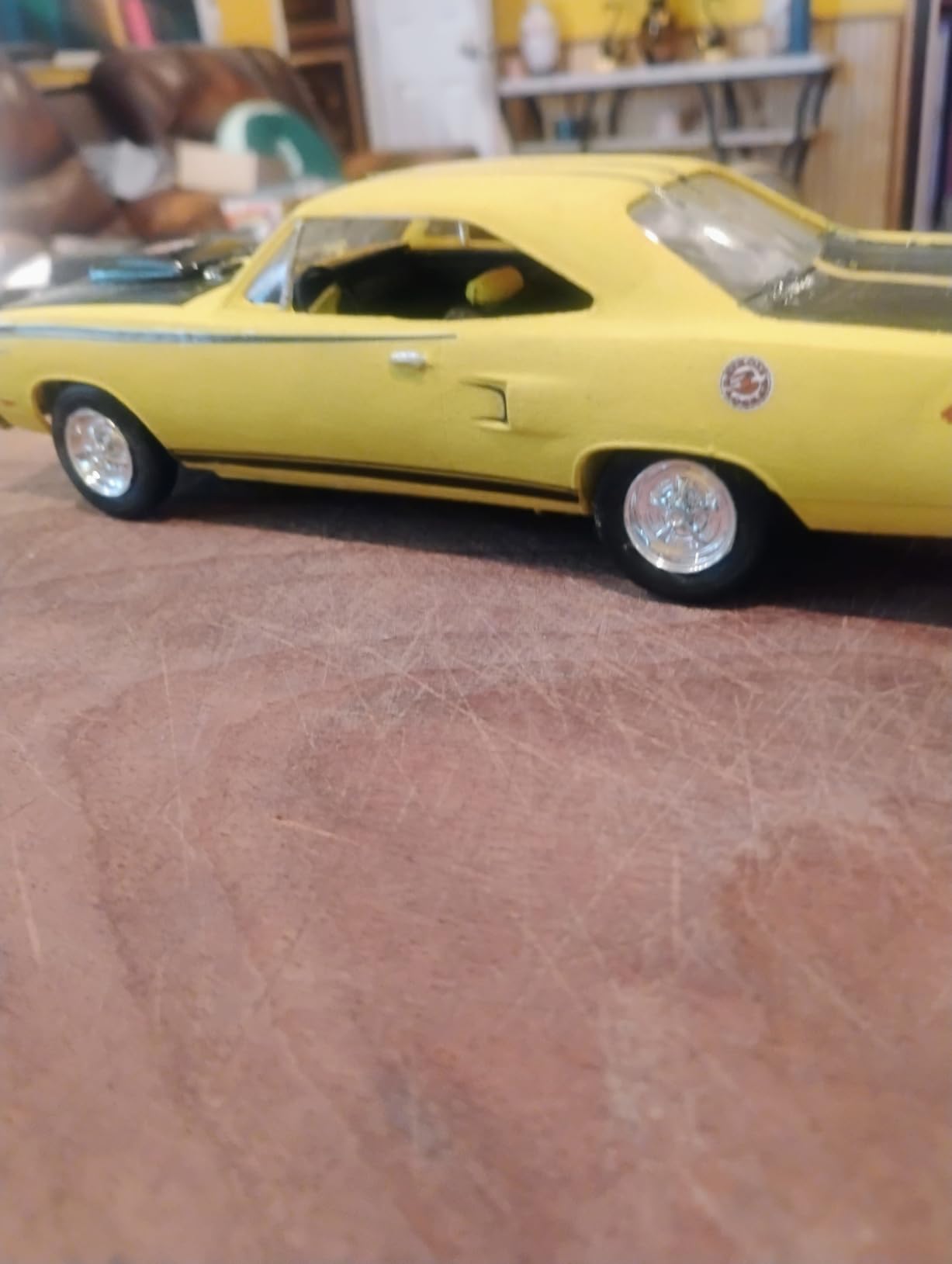
You’ll need paint and glue, neither of which is included. The body has light mould lines that need a quick sanding pass before paint. The decals include the iconic “dust trail” side stripes and “High Impact” paint schemes, but they don’t always fit the body curves perfectly.
For a weekend muscle car build, this kit delivers good value and a satisfying finished model. The 1/24 scale gives the car decent shelf presence.
Muscle Car Detail
The 440+6 V-8 is the star. The kit includes the engine block, intake, three two-barrel carburetors, and exhaust manifolds as separate parts. With paint and a little weathering, it looks fantastic under the hood.
The interior is well-detailed for the scale, with a bench seat, dashboard, and steering wheel. The chrome-plated parts – bumpers, grille, and trim – add visual punch without requiring extra painting.
Build Practicalities
Plan on 6-8 hours including paint. The instructions are mostly clear but a few steps require a second look. I used Tamiya Extra Thin Cement and Model Master acrylic paints for a clean finish.
The 120-part count is moderate, and most parts fit well. A few areas – especially around the front fenders – need careful alignment. Take your time and dry-fit before committing to glue.
10. Revell 1/72 SR-71 Blackbird – Iconic Spy Plane

Revell 85-5810 SR-71 Blackbird 1:72 Scale 66-Piece Skill Level 4 Model Airplane Building Kit
1/72 scale
66 parts
Includes GTD-21 drone
Pros
- Accurate surface details
- Includes GTD-21 surveillance drone
- Authentic USAF decals
- Easy assembly
- Low parts count
- Nice body detail
Cons
- Decals very long and thin
- Smaller pieces can be fiddly
- Model is fragile
- Requires paint and glue
The SR-71 Blackbird is one of the most distinctive aircraft ever built, and Revell’s 1/72 kit captures the look without overwhelming you with parts. I built it in a single evening, and the finished model looks great on a shelf.
The kit is moulded in black, which matches the Blackbird’s iconic colour. The surface details – chines, engine nacelles, and the distinctive nose – are well represented. The included GTD-21 surveillance drone with cart is a fun bonus piece that adds display interest.
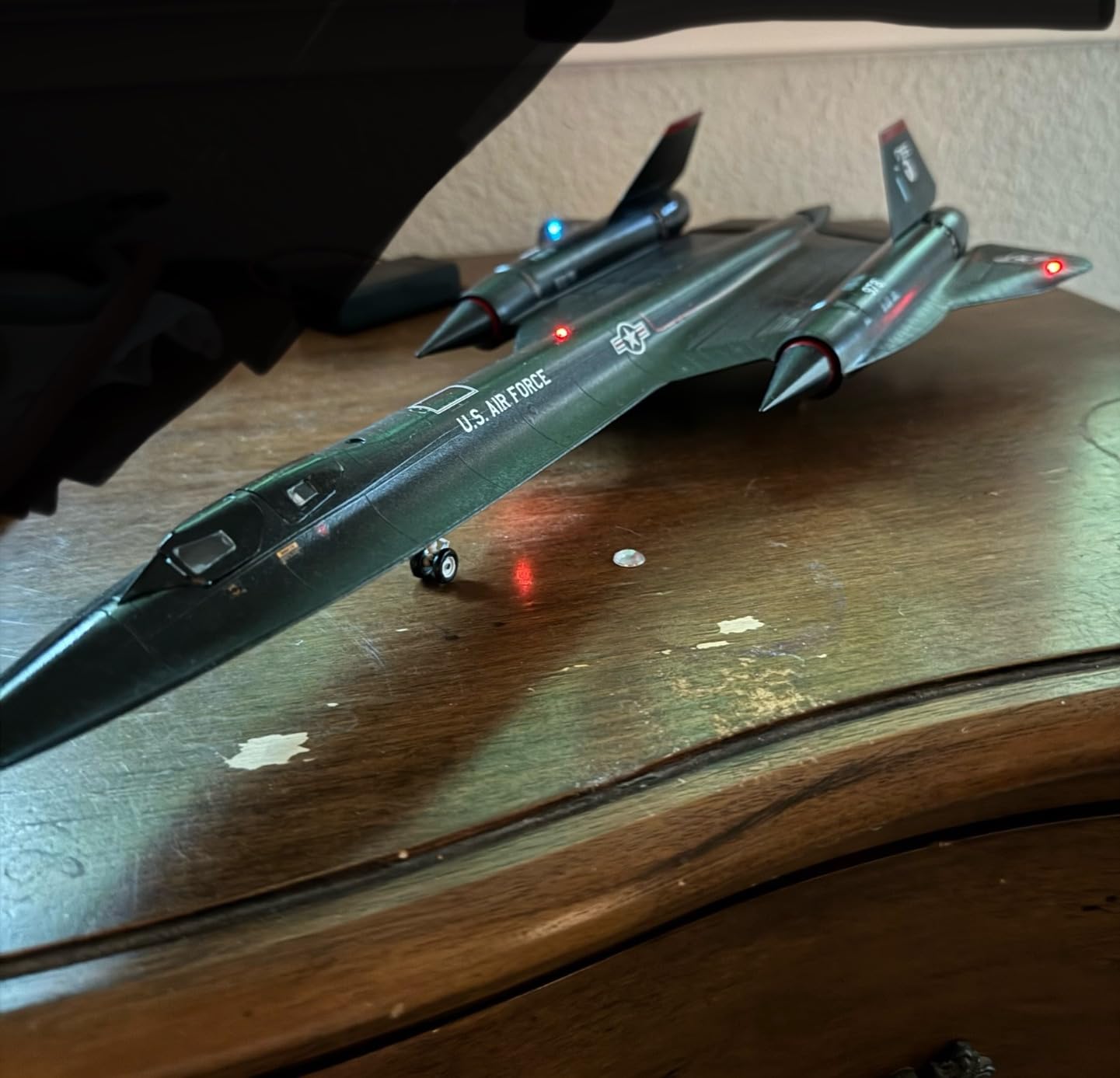
With only 66 parts, this is one of the most approachable aircraft kits on the market. Beginners and experienced builders alike will finish it in a few hours. The instructions are clear, and the parts don’t require much trimming or sanding.
The decals are the main challenge. They’re long and thin to represent the Blackbird’s subtle markings, and they tear easily. I used a sharp knife to cut them into smaller sections and applied them with Micro Sol setting solution.
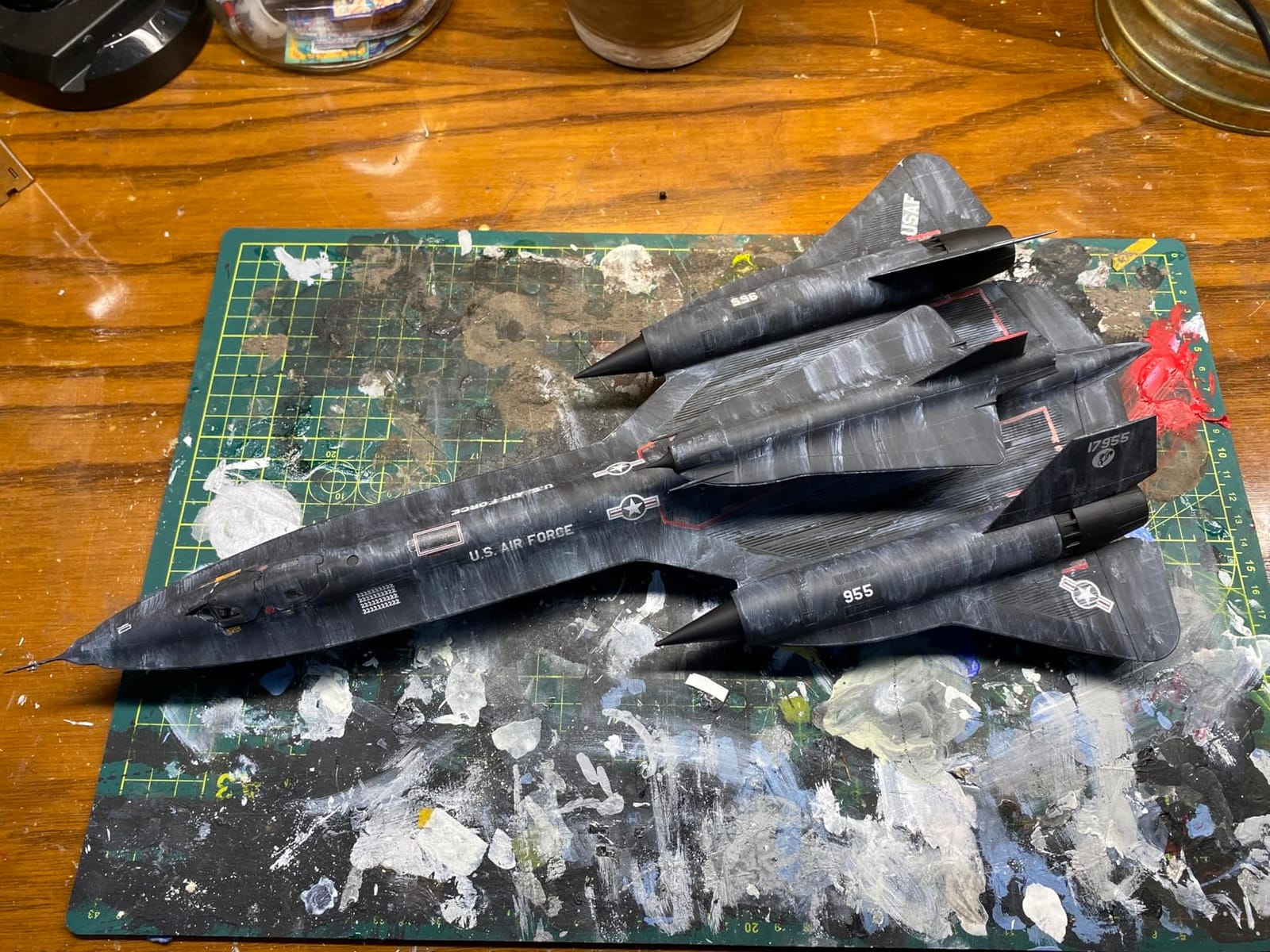
Blackbird Surface Detail
Revell captured the SR-71’s distinctive shape well. The chines, the chines’ sharp leading edges, and the curved fuselage all look right. The chines and engine nacelles have panel lines that benefit from a dark wash.
The included drone is a nice touch. It mounts on a small cart and gives the display a sense of mission context. The drone’s gold-colour radar-dome is moulded separately.
Decal Tips
The decals are thin and long, which makes them hard to apply without tearing. Cut them into smaller sections, soak them in water for 10 seconds, and slide them off the backing paper with a brush. Apply with setting solution and let them dry completely before handling.
For an airbrush-friendly finish, the kit is moulded in the right black colour, but I still recommend a gloss coat before decals and a matte coat after to seal everything in.
11. Academy 1/600 USS Enterprise CVN-65 – Massive Naval Build

Academy USS Enterprise CVN-65 Aircraft Carrier Plastic Model Kits 1/600 Scale
1/600 scale
Photo-etch parts
Display stand
Pros
- Amazing and inspiring model
- Well detailed kit
- Good quality
- Photo-etched parts included
- Display stand included
- Challenging small details
Cons
- Some extremely tiny parts
- Not for impatient builders
- Small parts break easily
- Requires patience and good vision
- Magnifying glass recommended
The USS Enterprise CVN-65 was the world’s first nuclear-powered aircraft carrier, and Academy’s 1/600 kit does it justice. At 150 parts plus photo-etched details, this is a serious build – I spent about 25 hours over two weeks on it. The finished model is impressive.
The kit includes photo-etched parts for the radar arrays, ladders, and railings. These thin brass parts add scale detail that plastic can’t match, but they require special glue (CA/cyanoacrylate) and tweezers. The display stand is a welcome inclusion for a model of this size.
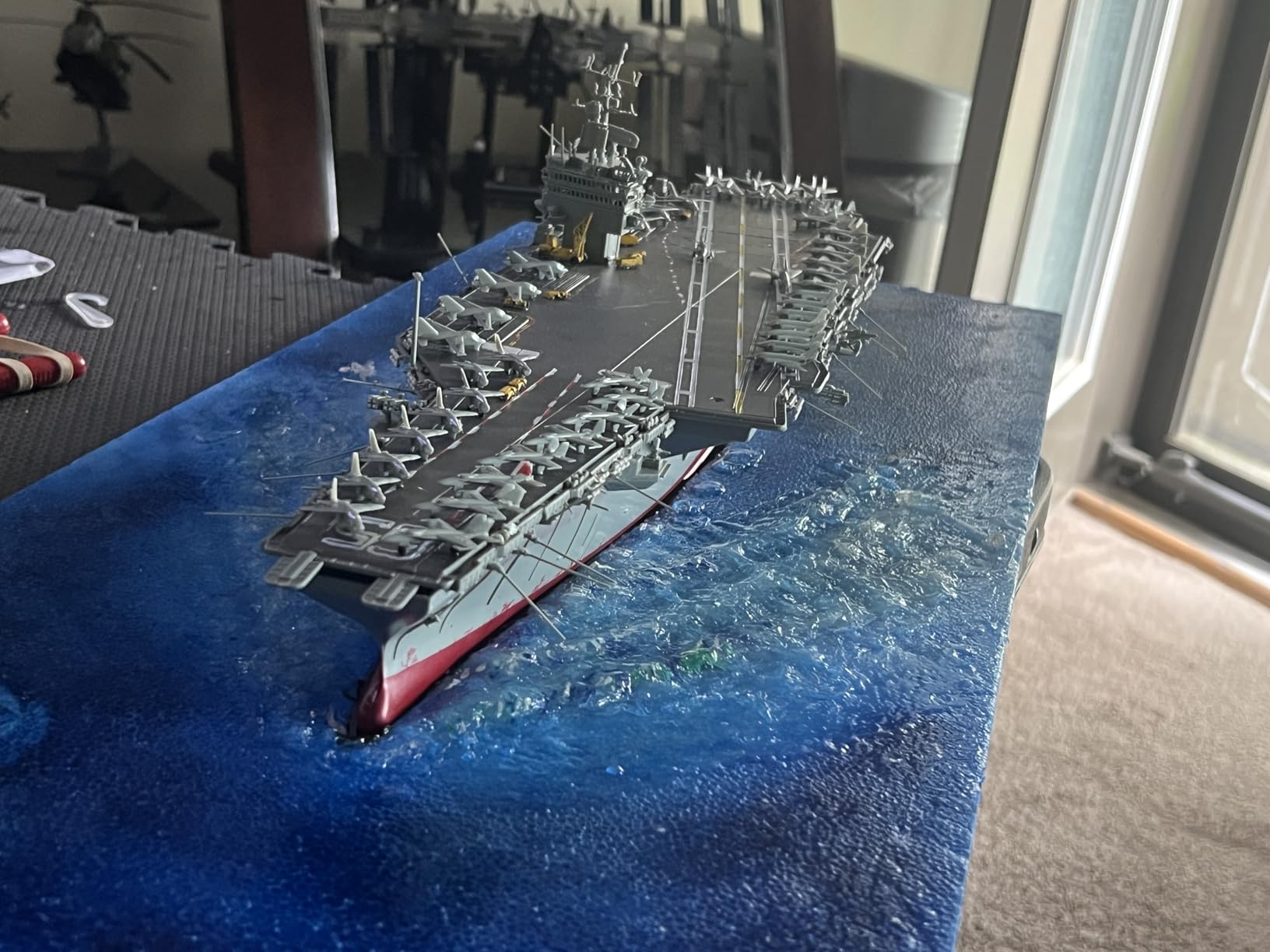
Build demands are real. Some parts are extremely small – aircraft, vehicles, and anti-aircraft missiles – and they break easily if handled roughly. Good lighting and a magnifying glass are essential. Patience is the most important tool.
The 1/600 scale gives the carrier a substantial footprint on the shelf. With the display stand, the finished model looks like a museum piece. For naval modellers, this is a rewarding challenge.
Carrier Engineering
The hull is one large moulded piece with crisp detail. The flight deck has raised tie-down points and the angled landing area is accurate to the real ship. Photo-etched railings along the deck edge add scale detail without overwhelming the build.
The island superstructure has the correct shape and placement. The photo-etched radar arrays on the island are the most challenging parts – I lost one to a flying tweezers moment and had to fabricate a replacement from stretched sprue.
Build Demands
Plan for 20-30 hours of careful work. The photo-etched parts need CA glue and a steady hand. The included aircraft, vehicles, and tractors are tiny and require tweezers to position.
I broke the build into phases: hull, flight deck, island, photo-etch details, and aircraft. This kept each session focused and reduced the chance of losing small parts mid-build.
12. MPC 1/25 1967 Pontiac GTO – Affordable Classic Car
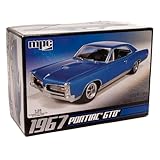
MPC: 1:25 Scale Model Kit – 1967 Pontiac GTO – Blue, 85+ Parts – Skill Level 2, Authentic Vehicle Building Kit, Replica Classic Car, Age 14+
1/25 scale
85+ parts
V-8 engine detail
Pros
- Great quality
- Easy to assemble
- 400 cubic inch V8
- Detailed suspension and exhaust
- Bucket seats and console
- Optional supercharger
- Clear instructions
Cons
- Poor fitting parts on some copies
- Requires extensive sanding
- Bad flashing reported
- Front end fitment can be tricky
- Not as detailed as AMT
The 1967 GTO is the original muscle car, and MPC’s 1/25 kit captures the look at a price that won’t scare off beginners. I built one for a friend as a birthday gift, and he finished it in a weekend. The optional supercharger detail is a nice touch.
The 400 cubic inch V-8 is the highlight. With separate suspension and exhaust parts, the engine bay looks busy and realistic. The interior has bucket seats and a console, which matches the GTO’s sporty positioning. Decals for the iconic hood-mounted tachometer and GTO badging are included.
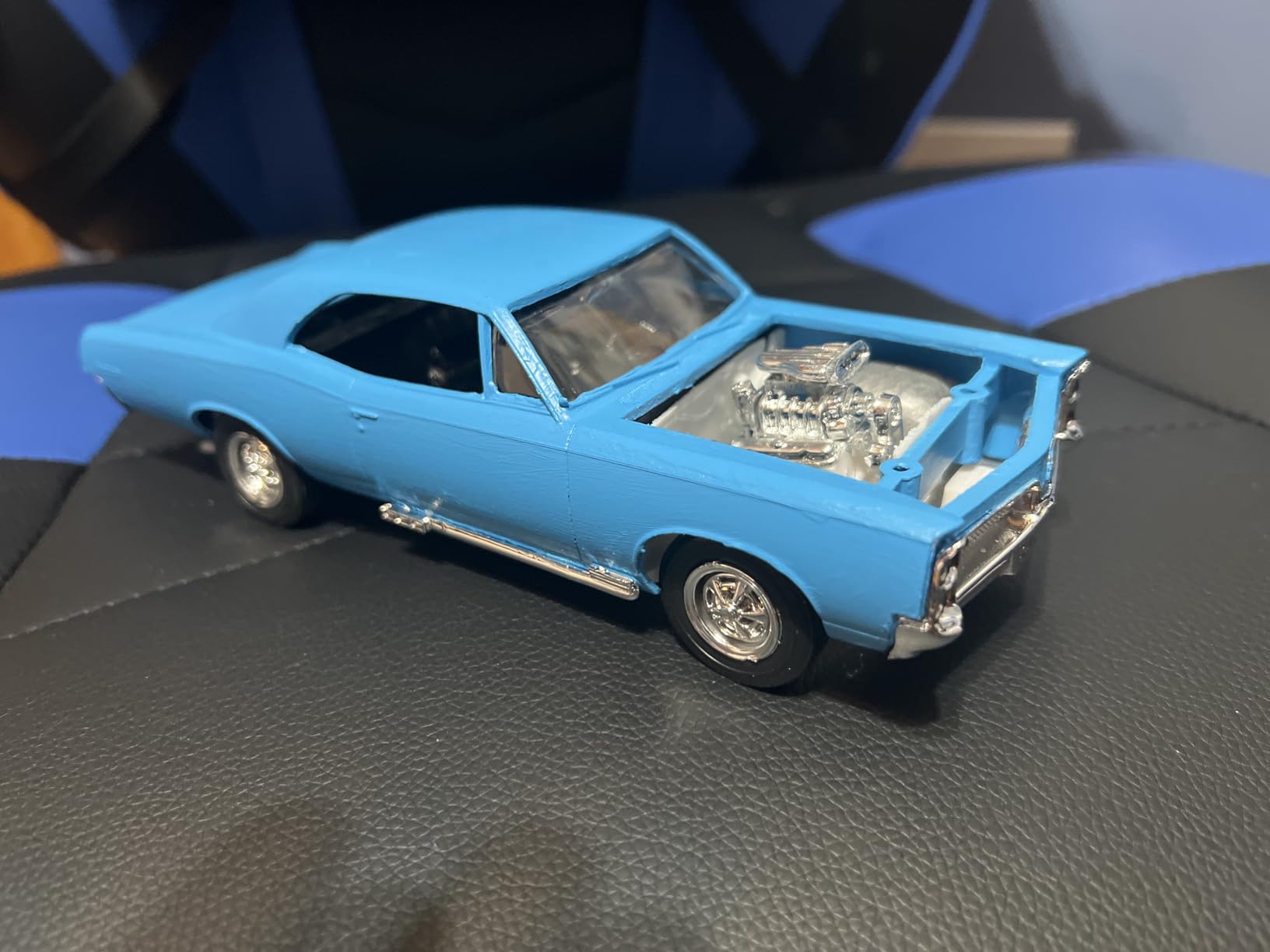
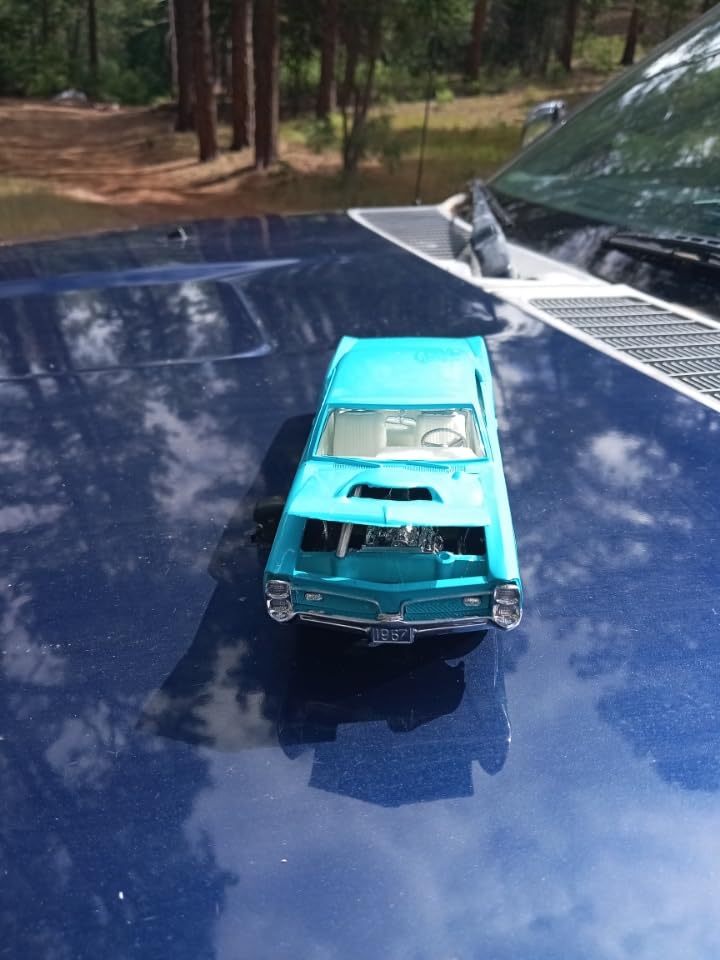
Quality control is mixed. Some builders report poor part fit and bad flashing, while others get clean, well-fitting parts. Mine had a few areas around the front end that needed sanding and test-fitting. With patience, the result is a good-looking classic car model.
At 85+ parts, the build is approachable for beginners. The clear instructions walk you through each step. The 1,420 reviews averaging 4.5 stars show this kit is a solid value pick for the price.
Classic Muscle Detail
The 400 V-8 is the centrepiece. The kit includes the engine block, heads, intake, and exhaust manifolds as separate parts. The optional supercharger adds visual punch but is a complex sub-assembly.
The interior is well-detailed for the price: bucket seats, console shifter, dashboard, and steering wheel. The chrome-plated parts – bumpers, grille, and trim – reduce the painting workload.
Quality Control Notes
Test-fit before gluing. Some copies have parts that don’t align perfectly, especially around the front fenders and hood. A little sanding and filler goes a long way.
MPC’s customer service is helpful if you receive a kit with bad parts. Several reviewers mention getting replacement parts quickly. For a budget classic car build, this kit is hard to beat.
Buying Guide: How to Choose the Best Plastic Model Kit for You?
Picking the right kit comes down to four questions: what subject interests you, what scale fits your shelf, what’s your skill level, and what tools do you have. Here’s how I think through each one.
Scale Selection
Scale determines the size of the finished model and the detail level. Smaller scales like 1/72 (aircraft) and 1/144 (Gunpla) give you a model that fits in your hand and finishes faster. Larger scales like 1/35 (armor) and 1/24 (cars) give more detail and shelf presence but take longer to build.
For beginners, I recommend 1/35 armor or 1/144 Gunpla. The detail is good without being overwhelming, and the kits tend to have clear instructions. For experienced builders, 1/48 aircraft and 1/100 Gunpla offer the most detail per build hour.
Skill Level
Kits are usually rated by skill level from 1 (beginner) to 5 (expert). The Entry Grade RX-78-2 above is a perfect skill level 1. The Tamiya Willys Jeep is a skill level 2-3 that’s great for first armor. The Bandai MGEX Strike Freedom is firmly skill level 5.
Start where you are, not where you want to be. A well-built skill level 2 kit looks better on a shelf than a poorly built skill level 5 kit. Build experience compounds – each kit teaches you something for the next one.
Brand Matters, But Not Equally
Tamiya is the gold standard for armor, aircraft, and cars – excellent part fit, clear instructions, and minimal flash. Bandai is unmatched for Gunpla and mecha kits – their snap-fit engineering is a level above the rest of the industry. Revell offers a wide range at accessible prices, though quality varies. Academy is strong for ships and aircraft. MPC is the budget pick for classic cars.
Forum consensus on r/modelmakers consistently recommends Tamiya for fit, Bandai for engineering, and Revell for variety. I agree with all three.
Essential Tools
You don’t need much to start. A pair of flush cutters (nippers), a hobby knife, and some plastic cement will get you through most beginner kits. For advanced builds, add a pin vise, tweezers, sanding sticks, and setting solutions for decals.
Airbrushes are nice but not required. Brush painting with acrylics works fine for small details. Many of the kits above can be built without painting at all – colour-moulded plastic is enough for a display model.
Why Are Kits So Expensive Now?
Several factors have driven kit prices up. New tooling costs have risen, with slide-moulded detail and photo-etched parts adding complexity. Many kits are now made in smaller batches for enthusiast markets rather than mass production. Shipping and raw material costs have also climbed. That said, the kits on this list range from budget-friendly Entry Grade to premium Master Grade, and there are still great options at every price.
For a first kit, budget around $20-50 and you can get a quality build that will teach you the hobby. For a serious project, the premium kits like the Bandai MGEX or Academy Enterprise are worth the investment.
Frequently Asked Questions
What company makes the best plastic model kits?
Tamiya is widely regarded as the gold standard for armor, aircraft, and cars, with exceptional part fit and clear instructions. Bandai is unmatched for Gunpla and mecha kits thanks to its innovative snap-fit engineering. Revell offers the widest range at accessible prices, while Academy is strong for ships. For most adult modellers, a mix of Tamiya and Bandai kits covers 80% of the hobby.
What is the best website for buying model kits?
For a wide selection and competitive prices, Amazon carries most major brands with Prime shipping. Specialist retailers like Scale Model Shop, Access Models, and Sprue Cutters Union offer deeper inventory and expert advice. For rare or vintage kits, eBay and Kitmaker Marketplace are good sources. Hobby shops remain valuable for hands-on inspection, but online retailers offer better prices and selection.
What are some good model car build kits for adults?
The Revell 1970 Plymouth Road Runner 1/24 captures muscle car detail with an opening hood, detailed 440+6 V-8, and chrome parts. The MPC 1967 Pontiac GTO 1/25 is a great budget option with optional supercharger detail. For classic British style, the Revell 1965 Mustang 1/24 offers similar quality. Tamiya also makes excellent sports car kits in 1/24 scale, including the Nissan Skyline and Toyota Supra.
Are Tamiya models the best?
Tamiya is consistently rated as the top brand for fit and engineering across armor, aircraft, and cars. Their slide-moulded detail, crisp panel lines, and clear instructions set the industry standard. That said, Bandai outperforms Tamiya for Gunpla and mecha kits, and Revell offers more variety at lower prices. For most adult modellers, Tamiya is the default choice for military subjects and a strong option for civilian models.
Why are plastic model kits so expensive now?
Several factors have driven prices up. New tooling costs have risen, with slide-moulded detail and photo-etched parts adding complexity to manufacturing. Many kits are now produced in smaller batches for enthusiast markets rather than mass-market toy aisles. Raw material costs for quality plastics have climbed, and shipping from Japan and Korea adds to the final price. The good news is that brands like Bandai still offer excellent Entry Grade kits under $20, and there are quality options at every price point.
Final Verdict
After three months of building, comparing, and displaying, these are the best plastic model kits for adults in 2026. For pure premium mecha, the Bandai Strike Freedom MGEX 1/100 is unmatched. For a beginner-friendly armor build, the Tamiya Willys Jeep remains the perfect entry point. For under $20, the Bandai RX-78-2 Entry Grade is the best first kit in the hobby.
Pick the kit that excites you, set aside a weekend, and start snipping. The hobby is more accessible than ever, and the satisfaction of holding a finished model on your shelf is hard to beat. Welcome to scale modelling.