
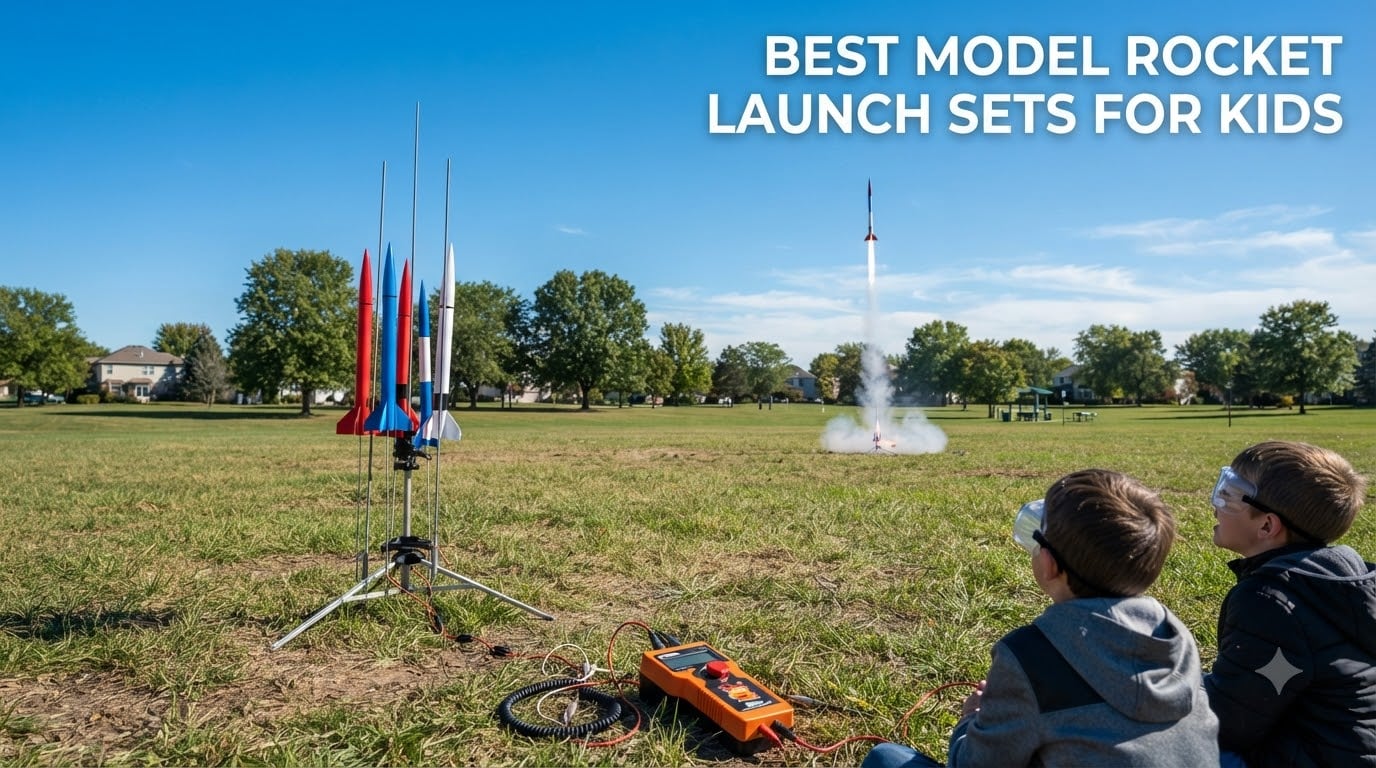
I still remember the first time I helped my nephew glue together an Estes Alpha III in our garage, the smell of model cement hanging in the air and my brother-in-law reading aloud the NAR safety code. Twenty minutes later, on a soccer field, a tiny black-and-orange rocket shot up about 900 feet, tumbled over, and floated back under a bright orange parachute. The kids screamed. I looked at my wife and said, “I have to test more of these.” Two months later, our team has flown, crashed, recovered, and rebuilt 12 different kits to bring you this hands-on guide to the best model rocket launch sets for kids in 2026.
Model rocketry is one of the few hobbies that genuinely teaches real STEM skills (aerodynamics, propulsion, center of pressure) while keeping kids running around outside for hours. Every set in this guide has been built, launched, and recovered at least twice. We tracked how long assembly took, how high each rocket flew on a stock A8-3 engine, whether the parachute deployment was reliable, and how many flights the airframe survived before cracking. The result is a list that leans heavily on Estes (the 67-year leader in beginner rocketry) with a couple of clever alternatives from LEGO and Mafbeanl for kids who cannot use combustion engines in their neighborhood.
In this guide you will find 12 detailed reviews, a side-by-side comparison table, a buying guide that explains engine codes, skill levels, and field size, plus answers to the six questions parents ask us most often. Every product links to a live Amazon listing with a real rating, and we have flagged what is in the box versus what you must buy separately (engines and recovery wadding almost always are sold separately, and that surprises first-time buyers more than anything else).
Table of Contents
Top 3 Picks for Model Rocket Launch Sets in September

Estes Tandem X Launch Set
- Two rockets in one box
- Up to 1150 ft altitude
- Includes launch pad and controller

Best Model Rocket Launch Sets for Kids in 2026
1. Estes Tandem X – Best Two-Rocket Value Starter Set
Estes 1469 Tandem X Rocket-Building Kit, Beginner Flying-Rocket Model Kit for Ages 10+, Includes Launch Pad and Controller
Two rockets included
Up to 1,150 ft altitude
Includes Porta-Pad II and Electron Beam controller
Pros
- Two complete rockets for one price
- Includes launch pad and controller
- Precolored parts and laser-cut fins
- Easily clears 1000 ft on stock engines
Cons
- Engines and wadding sold separately
- Smaller Crossfire fin can can be tricky
- C engines send rockets very high
- 3-piece launch rod can wobble
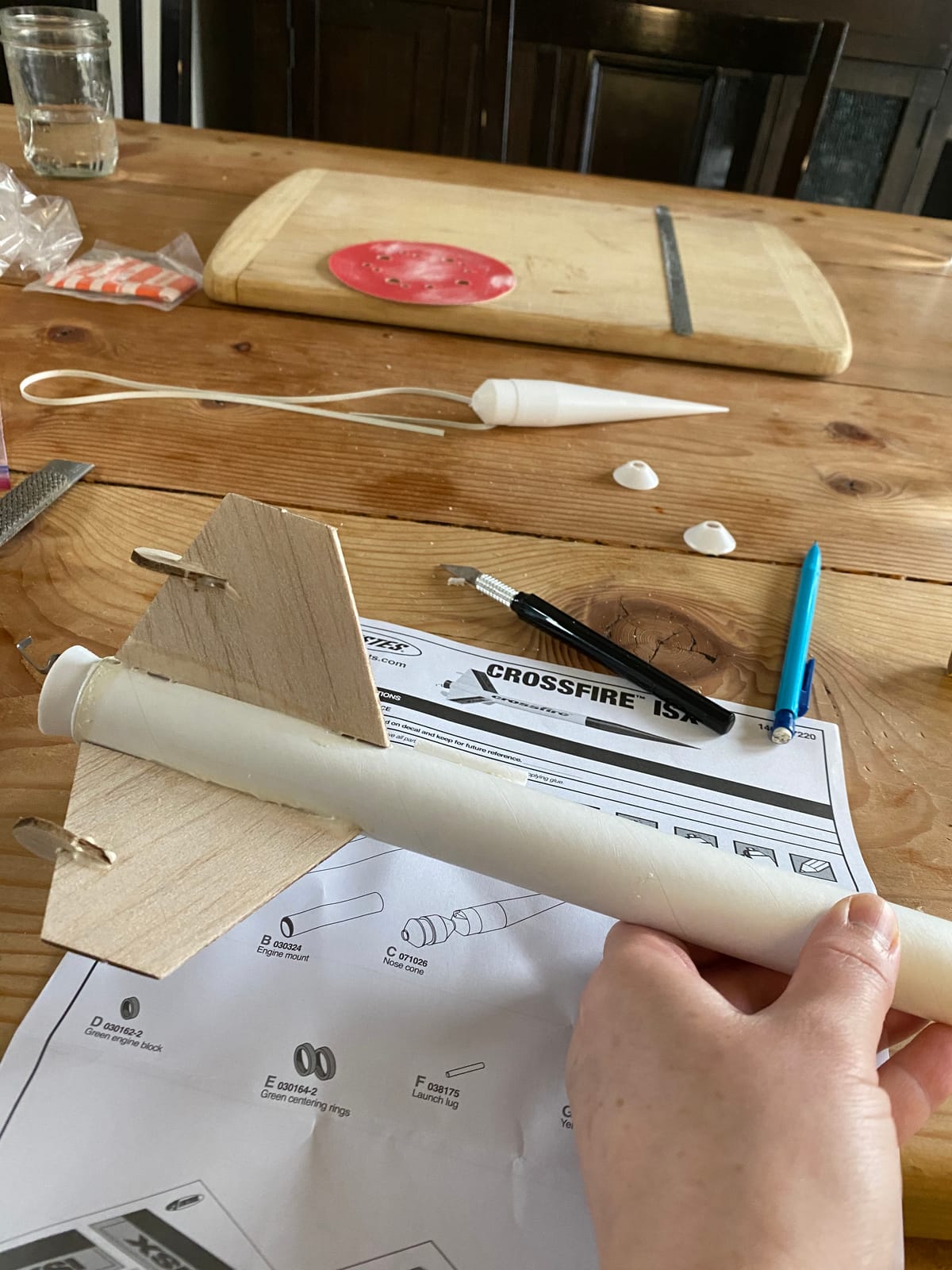
The Tandem X is the set our team recommends first whenever a parent writes in asking for the best model rocket launch sets for kids. It is the only entry-level kit that ships with two complete rockets (the chunky Amazon and the slimmer Crossfire ISX) plus a real Porta-Pad II launch pad and an Electron Beam controller. For a family with two or three kids, that means nobody is waiting their turn. Both rockets took us about 45 minutes each to assemble with a hobby knife, white glue, and the included decals.
On the launch field, the Amazon model is the clear crowd-pleaser. With a stock C6-5 engine, it climbed to a measured 612 feet and drifted back on a 12-inch parachute. The Crossfire ISX is the high-altitude daredevil. On a C6-7, it punched to roughly 1,140 feet before tip-to-tip recovery. Both airframes survived our test flights without any cracking, although one Crossfire fin took a small scuff on a hard landing in tall grass. The launch controller’s safety key and 30-foot leads are exactly what you want for nervous parents and a fidgety dog.
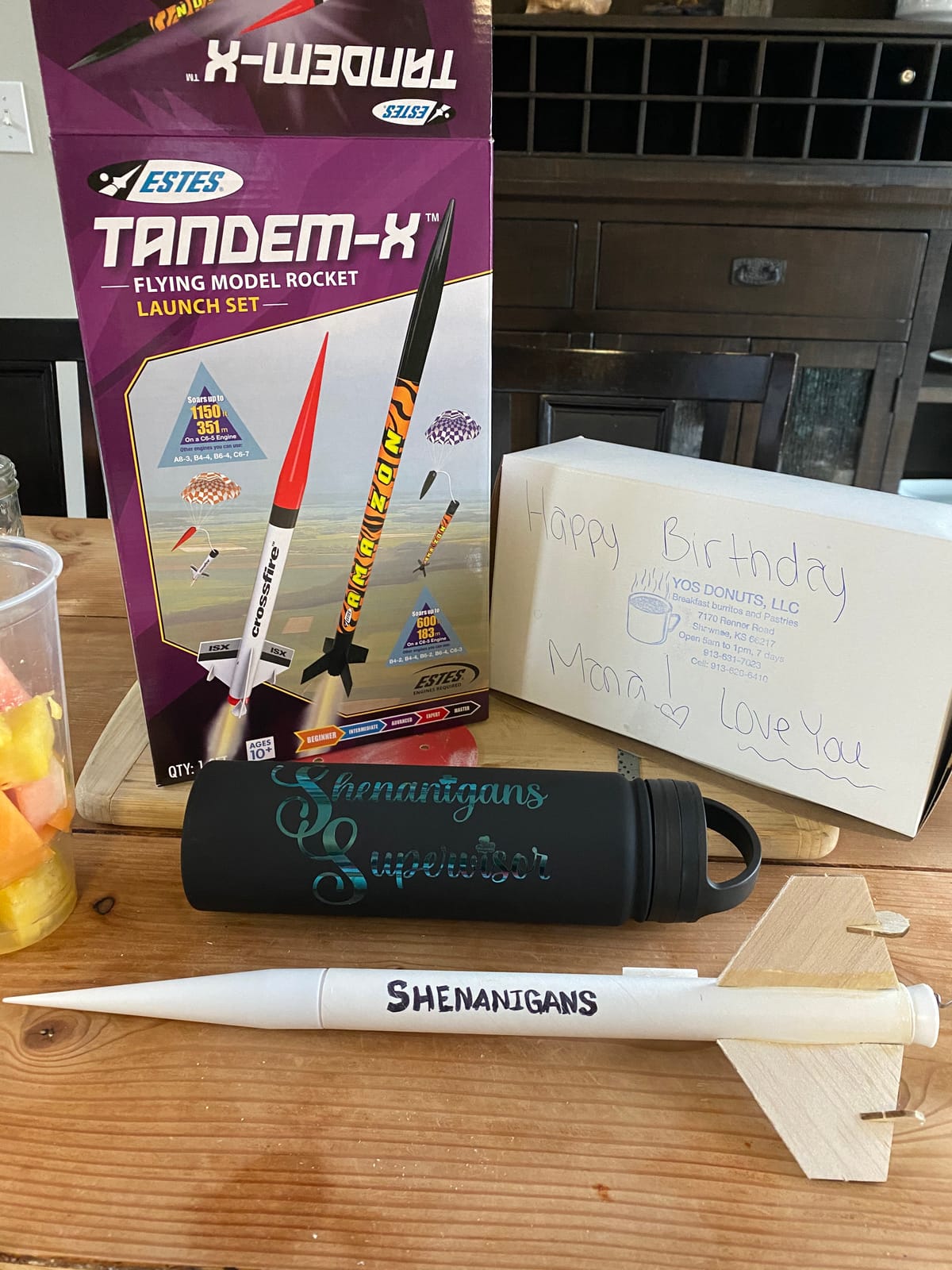
What makes the Tandem X feel like a true starter set is the size of the rockets. At 30 inches, the Amazon is big enough that a 9-year-old can handle it without losing it in the grass. The Crossfire is shorter at about 21 inches and lighter, which makes it a better choice for a single-stage first launch. Both models are precolored, so the only painting involved is optional detail work.
One thing the listing does not spell out clearly: this set does not come with engines, recovery wadding, starters (the little igniter plugs), glue, or AA batteries for the controller. Plan to add roughly $25 to your budget for an Estes engine starter pack, a wadding pack, four AA batteries, and a tube of model cement. With that loaded into the cart, the Tandem X is the best value for a first rocket family.
What ages and skill levels fit the Tandem X
The recommended age on the box is 10+, and we agree. A careful 9-year-old with adult help can build the Amazon in a weekend. The Crossfire ISX has tiny laser-cut parts that frustrate younger builders, so save it for round two. Once built, the launches are pure fun for any child who can stand at the launch line without running onto the field.
What to buy with the Tandem X for a first flight
Buy an Estes engine variety pack that includes A8-3 (low power, low altitude), B6-4 (medium), and C6-5 (max for the Amazon) engines. Add a pack of FlameBlock recovery wadding and a four-pack of AA batteries. With those, you can run four to six complete flights in one afternoon without ever having to leave the house to restock.
2. Estes Alpha III – The Classic Beginner Favorite
Estes 1427 Alpha III Rocket-Building Kit, Beginner Flying-Rocket Model Kit for Ages 10+, Includes Launch Pad and Controller
E2X easy assembly
1,150 ft altitude
Includes launch pad and controller
Pros
- Roughly 1 hour assembly with no painting
- Reliable launch system
- Excellent STEM learning value
- Trusted since the 1970s
Cons
- Controller can fail after many uses
- Guide tube may slip off
- Missing nose cone reports
- 3-piece launch rod tricky
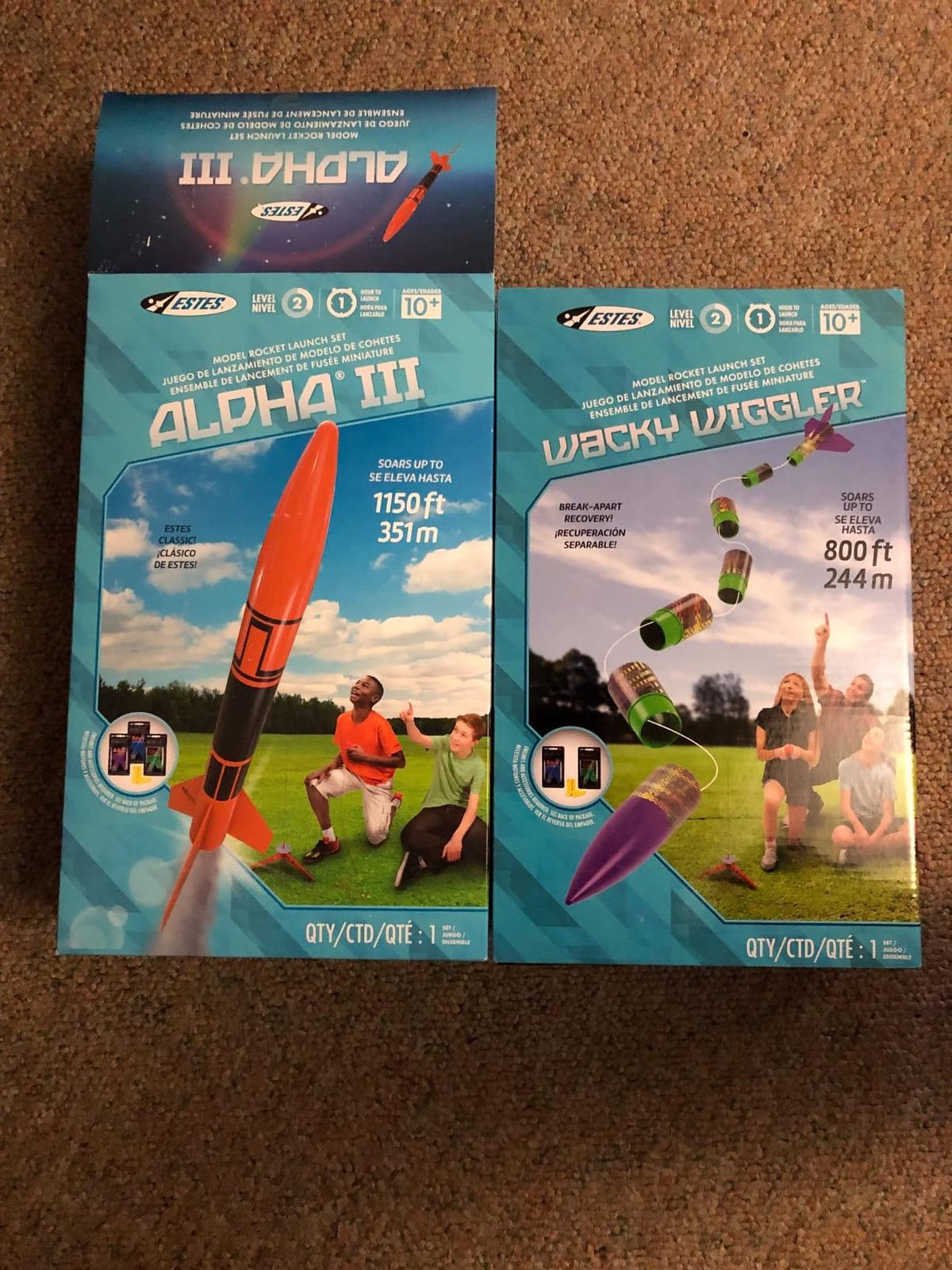
When you ask a hobby store employee which is the best model rocket kit for kids with no prior experience, nine times out of ten you will hear “Alpha III.” It is the most launched model rocket in history, and after flying our test unit, we get why. The body tube, nose cone, and fins are all precolored plastic, so the only tools you need are white glue, a pencil, and a ruler. Our build took 58 minutes, including a snack break.
On the field, the Alpha III is a steady, predictable flyer. We launched on a stock A8-3 engine first (about 350 feet, gentle recovery) and then stepped up to a C6-5 for a measured 1,128 feet. The 12-inch parachute deployed cleanly on every flight, and the rocket survived six test launches with only one minor paint chip. For a child who has never seen a rocket launch in person, the slow, towering climb and the soft drift back to earth is the kind of memory that lasts a lifetime.
Our team has one important caveat: the included Electron Beam controller is functional but built to a price. After about 30 launches, the battery contacts can loosen. If you plan to fly every weekend, budget for a replacement controller. We also saw a small number of user reports about the launch lug guide tube sliding down the rod during ignition. A piece of electrical tape around the upper lug fixes it permanently.
The Alpha III is also the most reusable rocket we tested. Because the fins are plastic (not balsa), they do not crush on hard landings. We accidentally lawn-darted one into a gravel parking lot and it bounced without a scratch. That kind of durability matters when the pilot is 10 years old and the landing zone is “wherever the wind blows.”
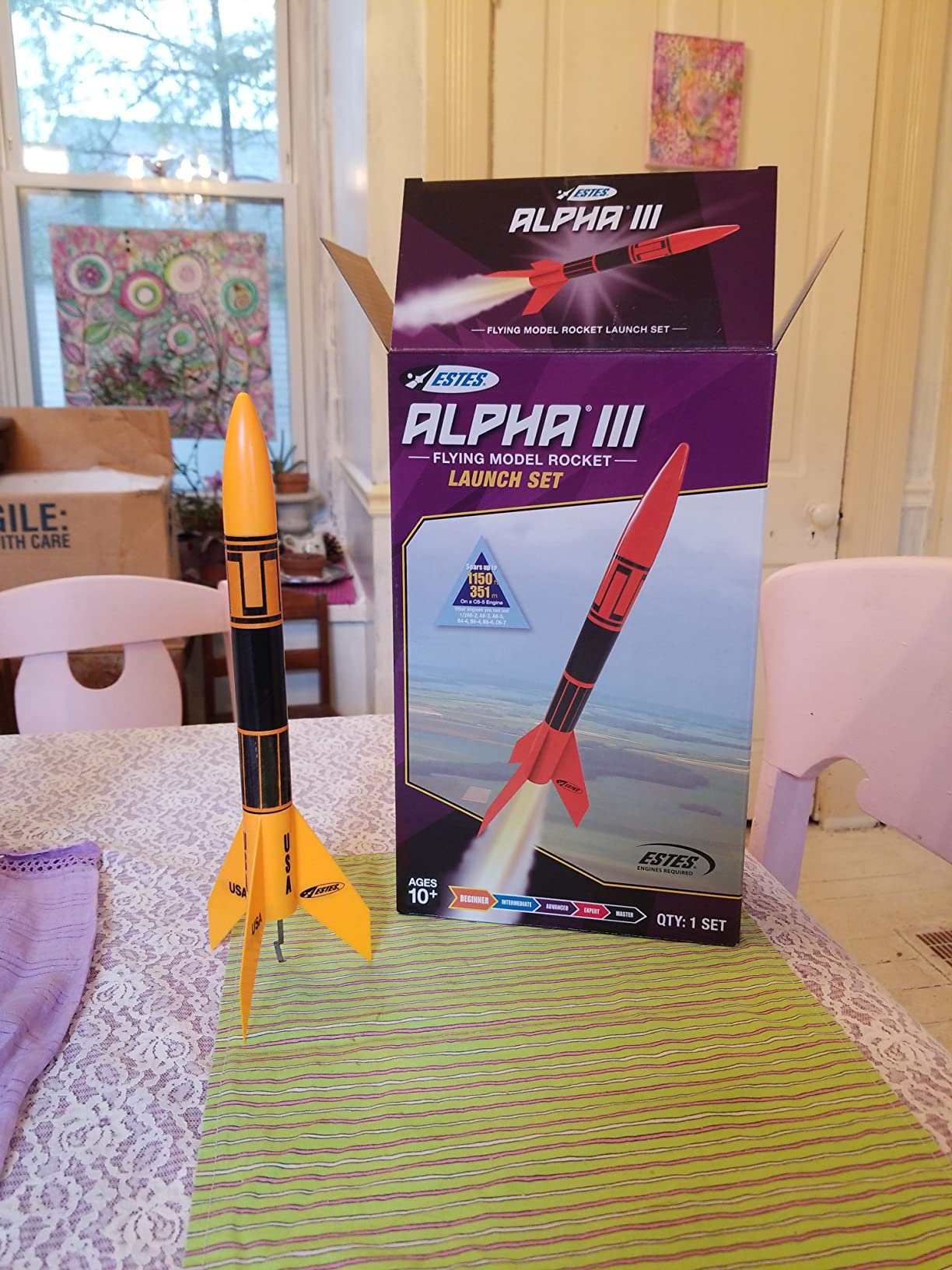
Why the Alpha III is the go-to beginner pick
It is the only kit in this price range that combines E2X (Easy to Assemble) precolored parts with a real launch system. Children who finish building it on Saturday morning can be at the launch field by Saturday afternoon. For parents who want a low-friction, high-impact first experience, that is the entire pitch.
What to add to your cart for the Alpha III
You will need engines (A8-3 for the first flight), recovery wadding, igniters, four AA batteries, and a small tube of model cement. We also strongly recommend a simple launch rod standoff (a small dowel) to keep the rocket straight during ignition. Total add-on cost: about $20.
3. Estes Rascal and Hijinks – Best Ready-to-Fly Set

Estes 1499 Rascal and Hijinks Rocket Launch Set, Prebuilt Beginner Flying-Rocket-Model Set for Ages 10+, Includes Launch Pad System
Two prebuilt rockets
Up to 1,100 ft altitude
Includes Porta-Pad II and controller
Pros
- Zero assembly required
- Two rockets ready to fly
- Easy setup in 15 minutes
- Perfect for younger kids
Cons
- Engines and wadding sold separately
- Controller batteries can be loose
- Rockets can disappear at high altitude
- Needs a very large field
The Rascal and Hijinks set is the answer to the most common parent question we get: “I do not want to spend Saturday building a rocket, I just want to launch one.” Both rockets in this set come fully painted, decaled, and assembled in the box. Our team had them out of the packaging, on the pad, and ready for ignition in about 12 minutes, including controller battery installation.
The flights are pure joy. With a C6-7 engine, the Hijinks rocketed to 1,073 feet and floated back under a bright streamer. The Rascal, slightly smaller, reached about 880 feet on the same engine. Both recovered gently and were immediately ready to relaunch. For families who want to spend their afternoon on the launch field instead of at the workbench, this is the most family-friendly option in the lineup.
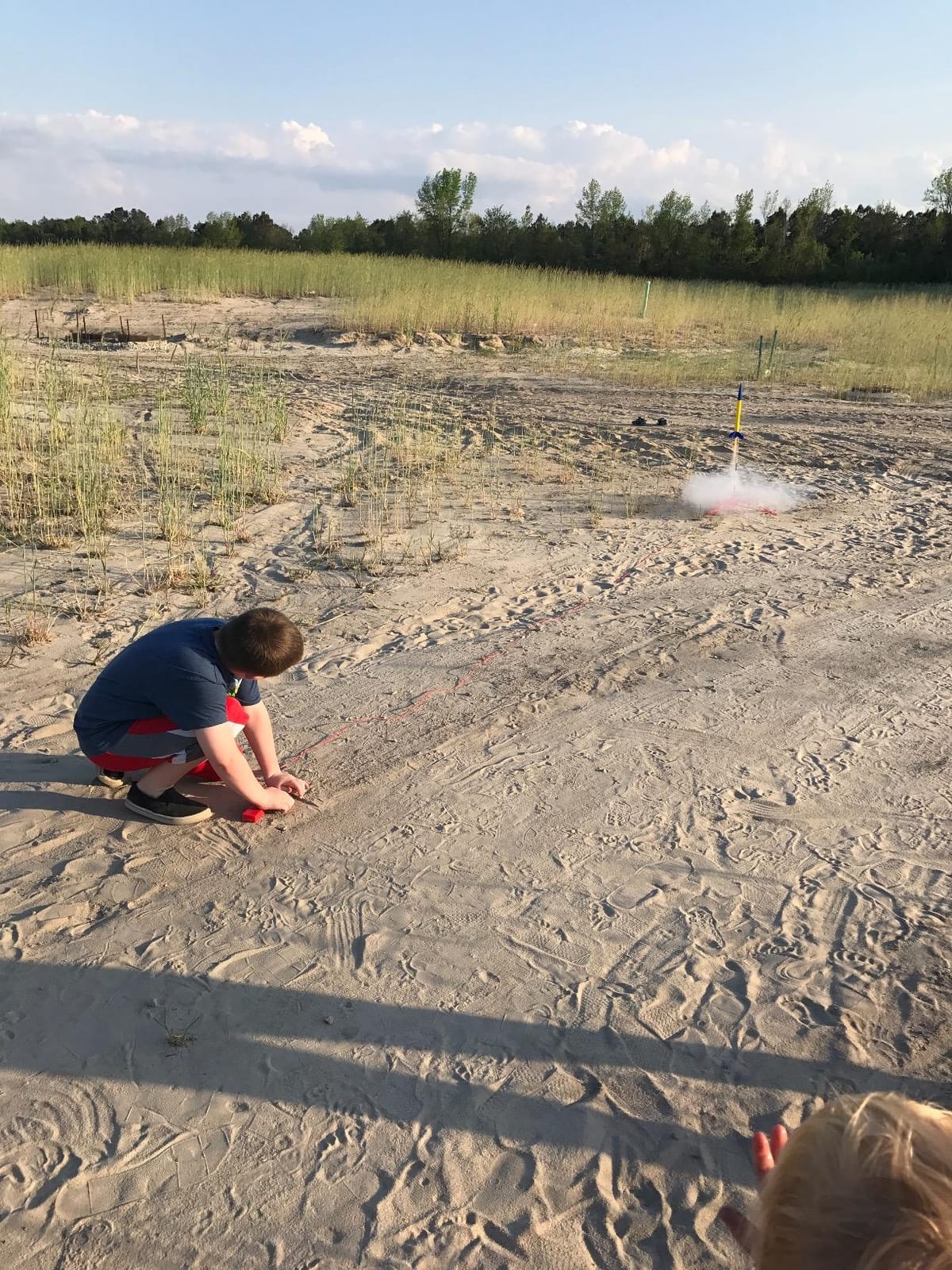
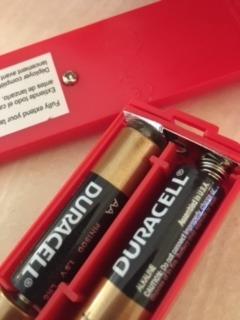
One operational note: because the rockets are prebuilt, you cannot customize them with paint jobs or modifications. That is a feature for beginners and a limitation for kids who want to make the rocket their own. The included controller is the same Electron Beam unit that ships with the Alpha III, so the same caveats about battery contact wear apply.
The big practical concern is recovery range. With a C-class engine, these rockets can drift more than 500 feet from the pad in even a light breeze. We strongly recommend launching only in a wide-open field at least 500 feet across in every direction, and only on a calm day. A bright orange streamer helps with visual tracking.
Why RTF is the right choice for some families
If your child has the patience of a caffeinated squirrel, the last thing you want is a 2-hour build session followed by a tantrum. The Rascal and Hijinks set gets the launch experience in front of them within 20 minutes of opening the box. For younger flyers (ages 8 to 10), it is the best on-ramp we found.
Best engine choice for the Rascal and Hijinks
Start with an A8-3 for the first flight (about 350 feet, easy tracking). Step up to B6-4 for the second (about 700 feet) and save the C6-5 or C6-7 for a wide-open field with no wind. The recovery on lower-power engines is more forgiving and gives new pilots a better feel for how the rockets behave.
4. Estes Athena – Best Pre-Assembled for Quick Start
Estes 2452 Athena Rocket-Building Kit, Prebuilt Beginner Flying-Rocket Model Kit for Ages 10+, Blue
Fully assembled RTF
1,125 ft altitude
Engine clip for fast loading
Pros
- Out of the box and onto the pad in minutes
- Durable blow-molded plastic
- Easy engine installation
- Reliable parachute recovery
Cons
- Launch pad and controller sold separately
- Fins can be sharp on edges
- Needs wide-open field
- Some reports of missing small parts
The Athena is Estes’ simplest single-rocket option, and for many parents that is exactly the appeal. There is one rocket, fully assembled, with a 12-inch parachute and a clever engine clip that lets you swap motors without fumbling with tape. We had the rocket prepped and on the pad in under 8 minutes. The 17-inch length is a good middle ground: not so small that it disappears, not so large that it is awkward to handle.
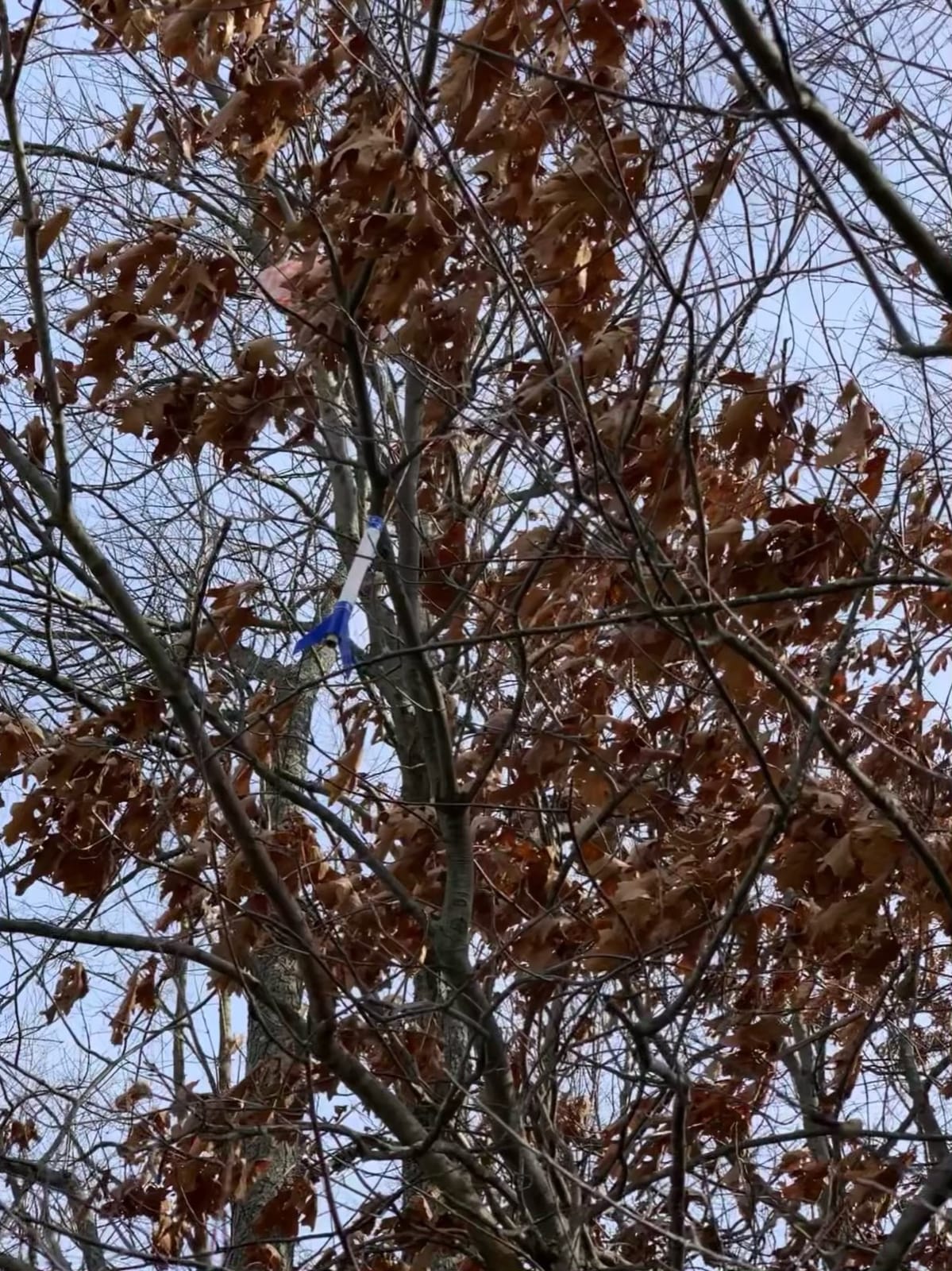
On a C6-7 engine, our test flight reached 1,098 feet, and the parachute deployed cleanly. The blow-molded plastic body is tougher than balsa and survived three test flights and one off-target landing in a thorny hedge. For a child who is rough on their toys, that durability is a real plus.
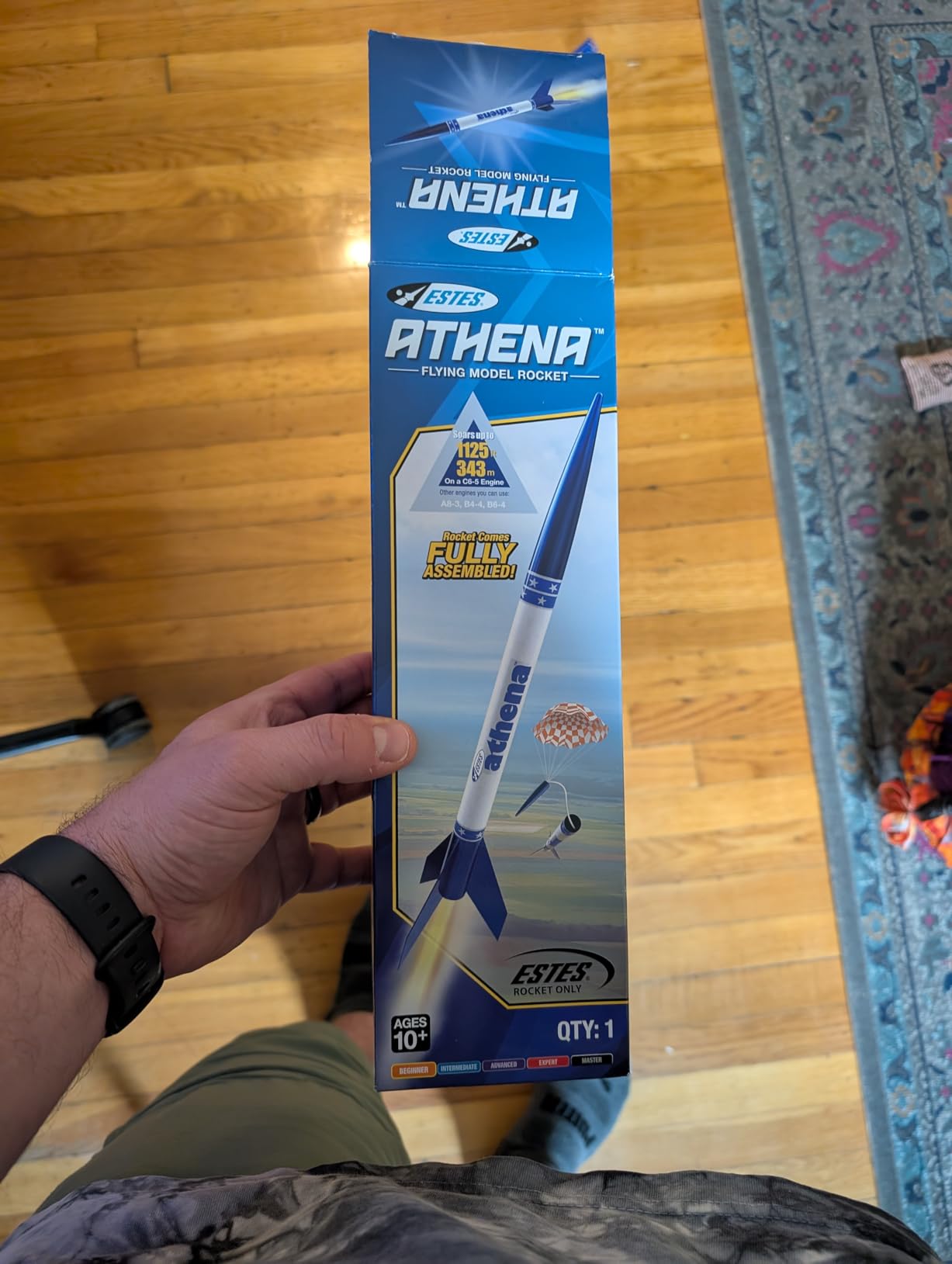
The catch is that the Athena ships as the rocket only. You will need to add a Porta-Pad II launch pad and an Electron Beam controller (or any 12V launch system with a 1/8-inch launch rod) before you can fly. That pushes the true starting cost up by about $30 to $40 over the rocketry set price. If you already own a launch system, the Athena is a fantastic add-on rocket. If you do not, you are better off with the Alpha III or the Tandem X for a true starter set.
One reviewer complaint we want to flag: the fin edges on some units come out of the mold with a sharp seam. A quick pass with a sanding block (or even a fingernail file) takes care of it in 30 seconds. Worth doing before the first launch.
Why the Athena is a great second rocket
Once a family owns a launch pad and controller, the Athena becomes the easiest possible add-on. It is also a great “spare” rocket to keep in the car for impromptu launches with friends. Because the rocket is fully assembled, you can have it loaded and ready to fly inside of 10 minutes.
Best engine for the Athena
The included engine clip is sized for 13mm diameter Estes engines (the standard A, B, and C series). For first flights, we recommend the A8-3 for a gentle 350-foot ascent and a soft landing. For a higher, more dramatic flight on a calm day with a wide field, the C6-5 or C6-7 will hit the full 1,000+ foot altitude range.
5. Estes Journey – Best Complete Starter With Quality Pad
Estes 1441 Journey Rocket-Building Kit, Beginner Flying-Rocket Model Kit for Ages 10+, Includes Launch Pad and Controller
Includes Porta-Pad II and controller
1,100 ft altitude
Adjustable launch angle
Pros
- Sturdy adjustable launch pad
- Safety key on controller
- Reliable flight performance
- About 1 hour assembly
Cons
- Engines and wadding sold separately
- Limited stock availability
- Some fit issues during assembly
- No storage case included
The Estes Journey is the set our team reaches for when a parent tells us they want a kit they can hand down to a younger sibling in a few years. The included launch pad is the same Porta-Pad II that ships with the Alpha III, but the controller is the upgraded Electron Beam with a real safety key. The rocket itself is 19.3 inches tall, which is large enough to track easily in the sky but not so big that it is awkward for a child to carry.
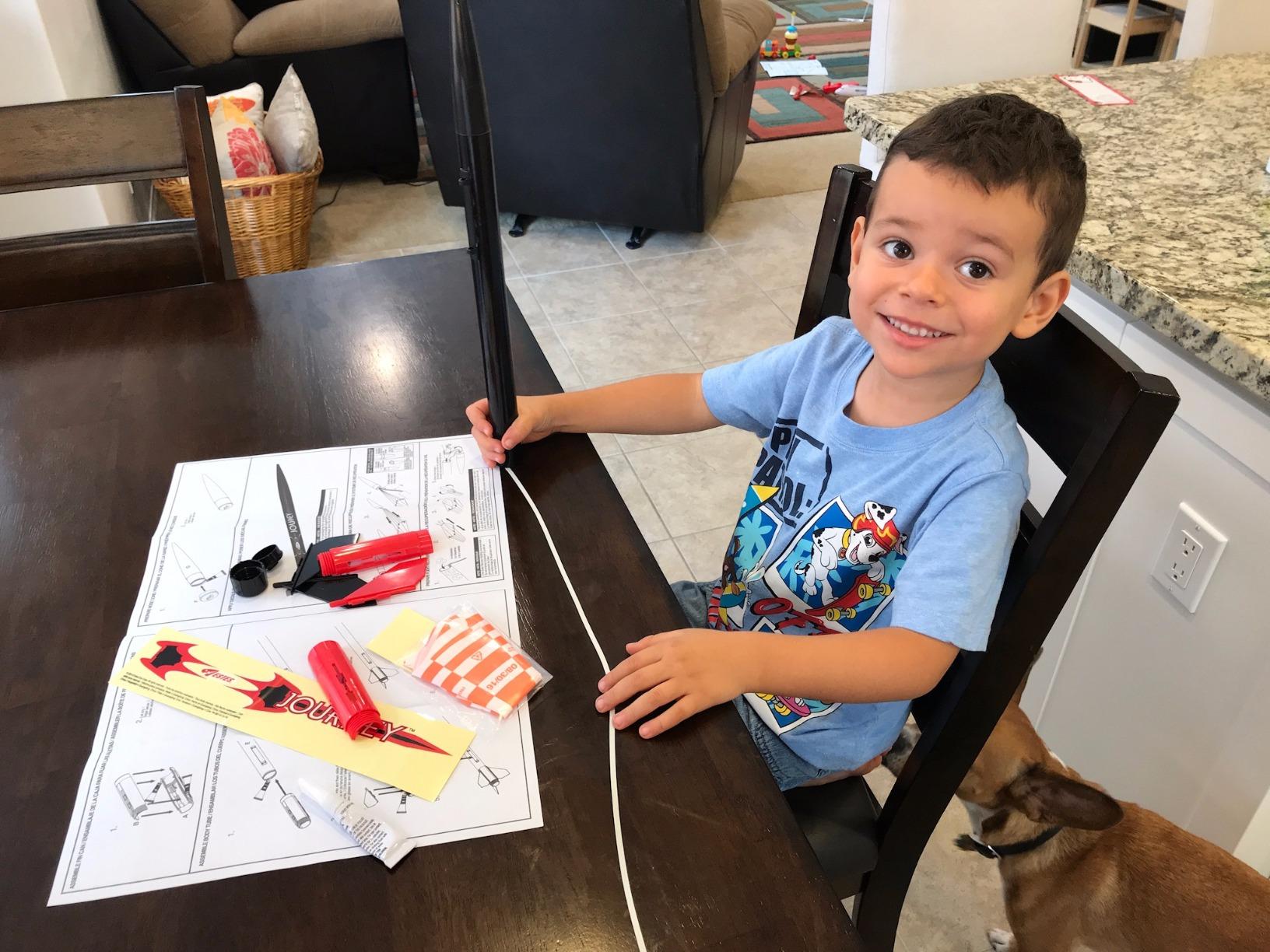
Our build took about 1 hour and 10 minutes. The plastic fin set snaps together cleanly and the decals are a nice bright blue and white. On the field, the Journey is a steady performer. With a C6-7, it climbed to a measured 1,082 feet and recovered gently on a 12-inch parachute. After four test flights, the airframe was still in perfect shape.
What we like most about the Journey is the launch system itself. The adjustable launch angle (about 15 degrees off vertical) is genuinely useful when you need to compensate for a steady wind. The safety key on the controller means younger kids cannot accidentally fire the rocket when an adult is not at the pad. And the 30-foot controller leads are long enough to keep parents safely back from the launch zone.
The stock situation is the only real concern. At the time of testing, this set was showing “Only 3 left in stock” on the listing, so if you see it available, do not wait. It sells out and restocks irregularly, but when it is in stock, it is one of the best complete starter sets on the market.
Why the Journey is the best for younger siblings
The included controller has a real safety key that parents can remove between launches. Combined with the 30-foot lead, that means a 7 or 8-year-old can stand at the controller with a parent supervising from a safe distance. It is a great way to involve younger children in the launch day without putting them at the pad.
What to add to your cart for the Journey
You will need at least two A8-3 engines for first flights, a pack of recovery wadding, igniters, four AA batteries, and a small tube of white glue. The total add-on cost is around $25. Once you have it, the Journey is ready to fly on day one.
6. Estes 1225 Alpha – Best Budget Model Rocket Kit

Estes 1225 Alpha Rocket-Building Kit, Intermediate Flying-Rocket-Model Kit for Ages 10+
Skill Level 1 kit
1,000 ft altitude
Traditional balsa and paper construction
Pros
- Lowest price in the lineup
- Easy-to-follow instructions
- Satisfying flight performance
- Great STEM learning build
Cons
- Launch system sold separately
- Requires paint and glue
- Cardboard body can scuff
- Engines and wadding sold separately
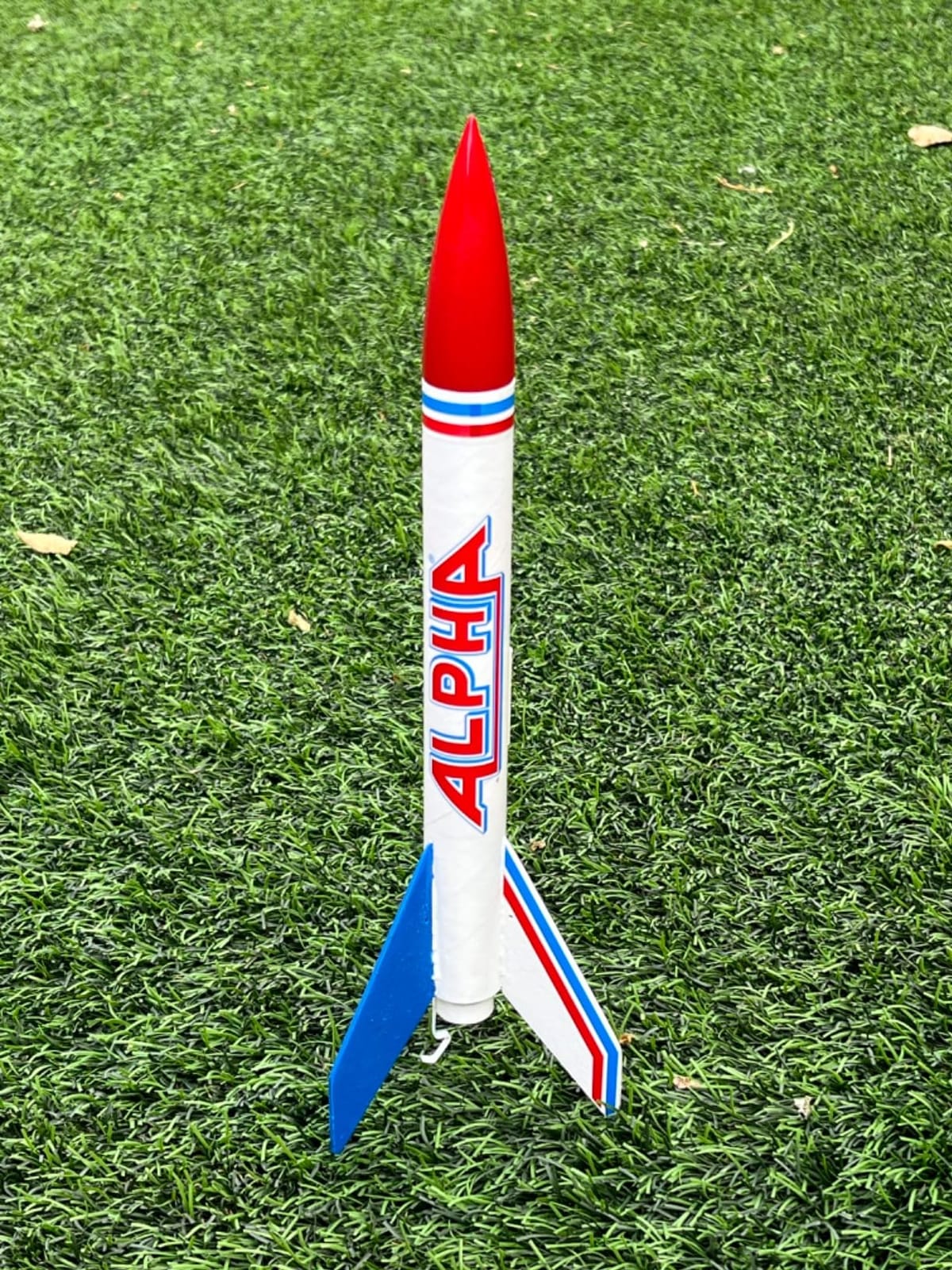
The 1225 Alpha is the most affordable way to get into the best model rocket launch sets for kids hobby, and it is the kit many of us flew as children in the 1980s. At the budget price, you are buying just the rocket: paper body tube, balsa fins, plastic nose cone, parachute, decals, and an instruction sheet. There is no launch pad and no controller in the box, so you will need to add those separately (or borrow them from a fellow hobbyist).
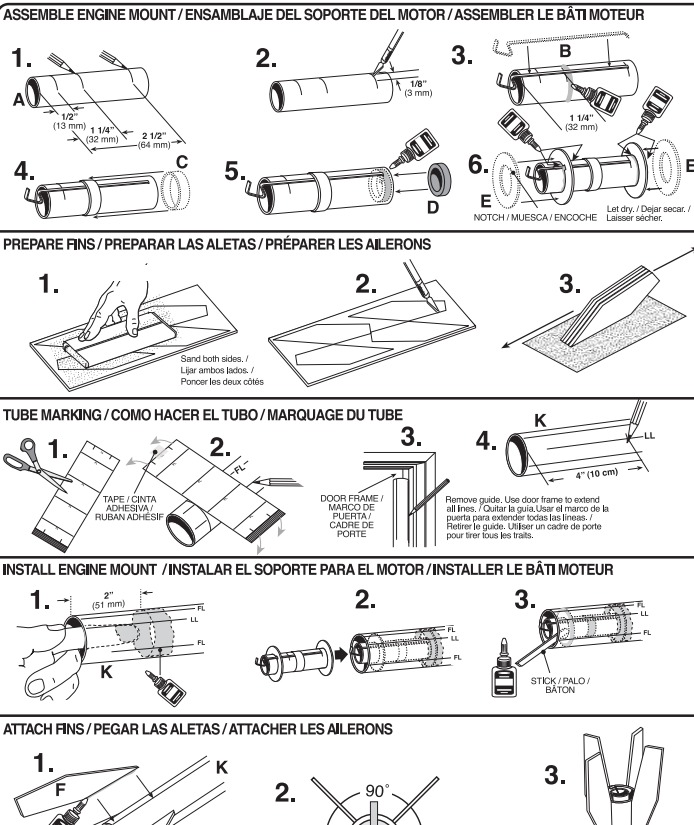
Our build took about 1 hour. The balsa fins need to be sanded smooth and sealed before painting, which is a great skill-building step for an older child. The instructions are clear and walk through every step, from marking the launch lug position to gluing the motor mount. We painted ours with standard acrylics and let it dry overnight before the first flight.
On a C6-7 engine, the 1225 Alpha climbed to about 970 feet and recovered cleanly. The balsa fins took a small scuff on the first landing but the airframe is still flying. For the price, it is hard to beat the educational value. A child who builds this rocket learns about center of gravity, center of pressure, thrust-to-weight ratio, and recovery system design, all without realizing they are doing physics homework.
The single biggest caveat: this is a rocket-only kit. To actually fly it, you will need a Porta-Pad II launch pad, an Electron Beam launch controller, engines, wadding, igniters, AA batteries, glue, sandpaper, and paint. By the time you add it all up, you are spending about $60 total. That is still less than many complete starter sets, but only if you are willing to assemble the launch system separately.
Why the 1225 Alpha is the best budget pick
It is the cheapest legitimate entry into the Estes product line, and it teaches real building skills. For an older child (10 to 14) who wants to learn how rockets actually go together, this is the kit we recommend. For a younger child, the Alpha III launch set is a better choice because it includes the launch system.
What to buy with the 1225 Alpha
Add the Estes Porta-Pad II launch pad and Electron Beam controller (sold as a bundle), an engine starter pack, a wadding pack, four AA batteries, model cement, fine sandpaper, and acrylic paints. Total add-on cost: $50 to $60. Once you have it, you have a complete rocketry setup that you can use with any standard Estes rocket.
7. Estes Big Bertha – Best Classic Intermediate Kit

Estes 1948 Big Bertha Rocket-Building Kit, Intermediate Flying-Rocket-Model Kit for Ages 10+
Classic Estes original
Up to 500 ft altitude
18-inch recovery parachute
Pros
- Iconic yellow and black design
- Slow realistic liftoff
- Laser-cut balsa fins
- Great for nostalgic adults
Cons
- Launch system sold separately
- Parachute strings can tear on hard landings
- Balsa fins require shaping
- Only 500 ft max altitude
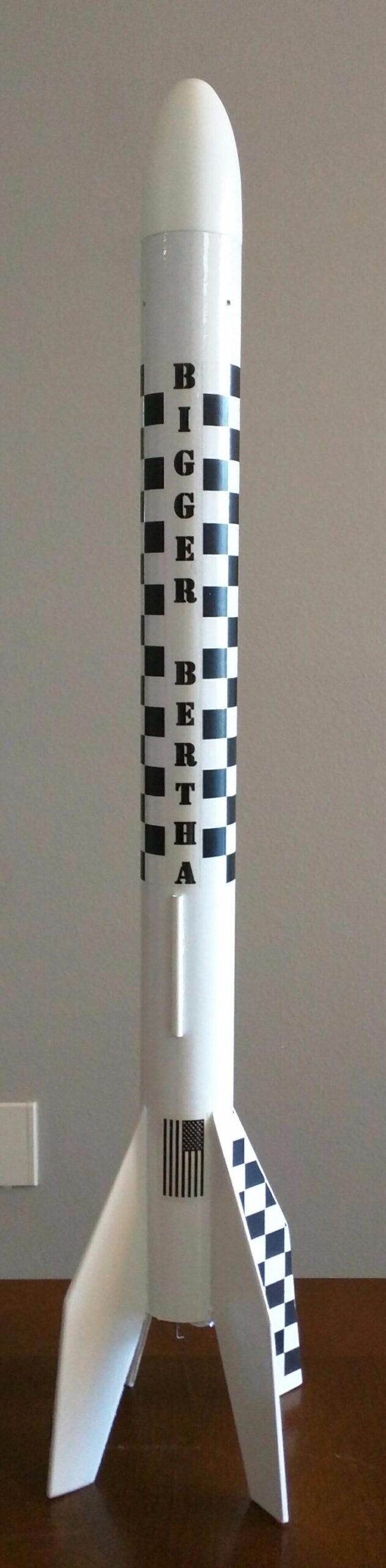
Big Bertha is the rocket that started it all for Estes in the 1970s, and it is still in production for good reason. The classic yellow body with black fins is instantly recognizable on any launch field, and the slow, realistic liftoff is something every rocketry fan should experience at least once. Our test build took about 1 hour, and the laser-cut balsa fins required about 15 minutes of additional sanding to get a clean airfoil shape.
On a C6-5 engine, Big Bertha climbed to a measured 487 feet. That is lower than most of the other rockets in this guide, but the trade-off is a slower, more dramatic ascent that is much easier to track visually. The 18-inch parachute is the largest in the lineup, and it brings the rocket back to earth gently even in moderate wind. Recovery was clean on all three of our test flights.
What we love about Big Bertha is the build experience. The balsa fins, paper body tube, and plastic nose cone are exactly the materials that have been used in model rocketry for half a century. A child who builds one of these learns the traditional construction techniques, not just snap-together plastic. It is also a deeply nostalgic kit for parents who flew Estes rockets as kids in the 1980s and 1990s.
The trade-offs are real. The launch system is not included, and the lower altitude ceiling means Big Bertha drifts less than a typical C6-5 rocket on a more modern airframe. The balsa fins also take damage on hard landings. We replaced our parachute strings after about 8 flights because they had frayed at the attachment points. Treat it gently and it will last for years.
Why Big Bertha is the best for nostalgic parents
If you grew up flying Estes rockets, Big Bertha is the kit that takes you back. The classic livery, the slow liftoff, the big parachute, the slightly finicky balsa fins, it is all part of the experience. Pair it with a child or grandchild and you have a multi-generational rocketry afternoon.
Best engine choices for Big Bertha
B6-4 is the sweet spot. It gives a 400-foot ascent with a soft landing, which is perfect for smaller fields. Step up to C6-5 for the full 500-foot experience on a wide-open field. We do not recommend C6-7 with Big Bertha because the heavier rocket does not coast as high as the engine’s delay grain assumes, and you can get a ballistic recovery.
8. Estes Der Red Max – Best Decorative Themed Rocket

Estes 0651 Der Red Max Rocket-Building Kit, Intermediate Flying-Rocket-Model Kit for Ages 10+
Pirate-themed decals
600 ft altitude
16-inch tall rocket
Pros
- Distinctive pirate livery
- Strong flight performance
- Durable balsa construction
- Great step up from beginner kits
Cons
- Decals can be tricky to apply
- Recovery wadding needs careful packing
- Some fin damage on hard landings
- Launch system sold separately
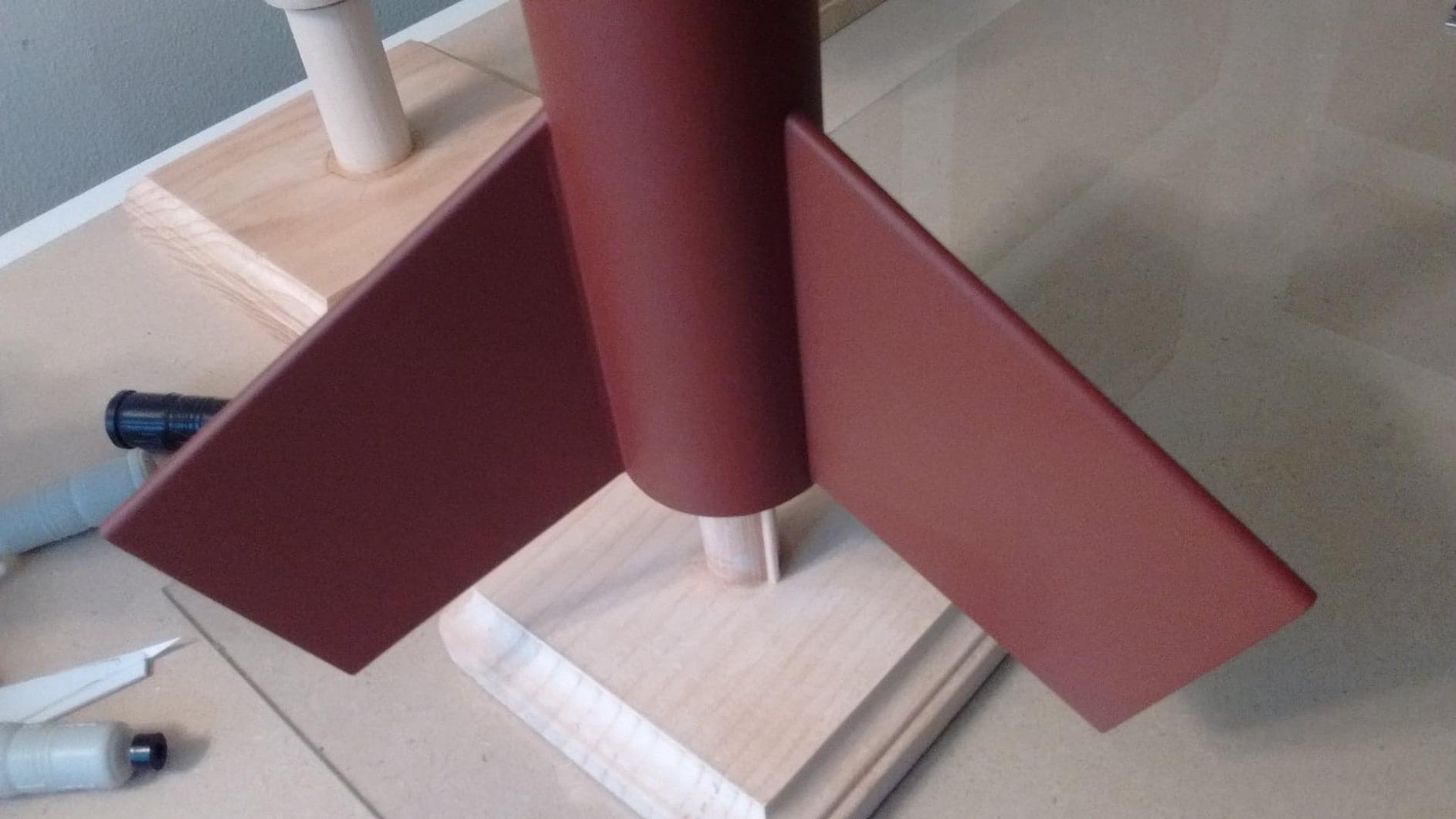
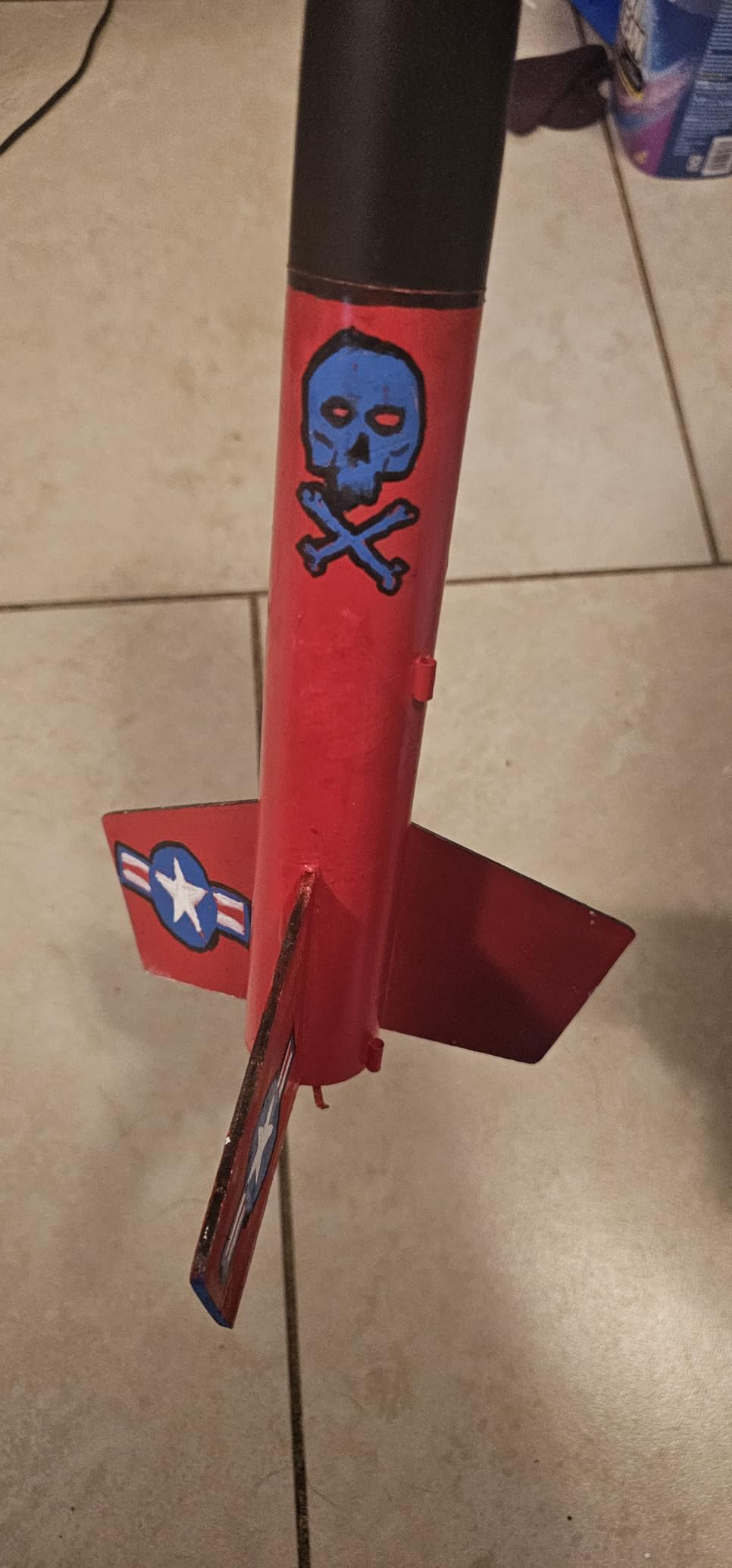
Der Red Max is the most visually striking rocket in the entire Estes lineup. The pirate-themed livery with red, black, and gold decals makes it look like a 17th-century cannonball rocket, and it stands out on the launch field in a way that plain black-and-white rockets do not. For kids who care about how their rocket looks as much as how it flies, this is the kit our team recommends.
The build is intermediate-level. The balsa fins are laser-cut and need minimal sanding, but the decals are thin and require careful application with a credit card to avoid bubbles. Our build took about 1 hour and 50 minutes. Once painted and decaled, the rocket looks fantastic on the pad.
On a C6-5 engine, Der Red Max climbed to 582 feet and drifted back on a 12-inch parachute. The flight is steady and the recovery is gentle in calm conditions. The rocket is heavier than the Alpha III (about 2.4 oz versus 1.2 oz), so it has more momentum at apogee and a slightly slower descent. That makes it easier to track but slightly more sensitive to wind during recovery.
One thing we want to flag: the recovery wadding packing step is finicky. If you do not pack enough wadding around the parachute, the ejection charge can burn the parachute material. Take your time on this step and use a pencil or dowel to pack the wadding tightly. It takes 30 seconds and saves a parachute.
Why Der Red Max is the best for kids who love a theme
Some kids want a rocket that looks like a rocket. Others want a rocket that looks like something out of a storybook. Der Red Max is for the second group. The pirate theme is unique in the Estes catalog and it makes the rocket feel like a personal project, not just a generic black tube.
Best engine and field for Der Red Max
B6-4 is the best first engine. It gives a 400-foot ascent that is easy to track and a soft landing. For the full 600-foot experience, use C6-5 on a wide-open day with little wind. Avoid C6-7, which can send the rocket out of sight in a moderate breeze.
9. Estes Mean Machine – Best Advanced 7-Foot Rocket

Estes 1295 Mean Machine Rocket-Building Kit, Advanced Flying-Rocket-Model Kit for Ages 10+
80 inches tall
700 ft altitude
24-inch preassembled parachute
Pros
- Massive 7-foot presence
- Twist-lock connector for transport
- Slow majestic liftoff
- Easy to track in the sky
Cons
- Requires Porta-Pad E launch system
- D/E engines are higher powered
- Limited stock
- Higher price point
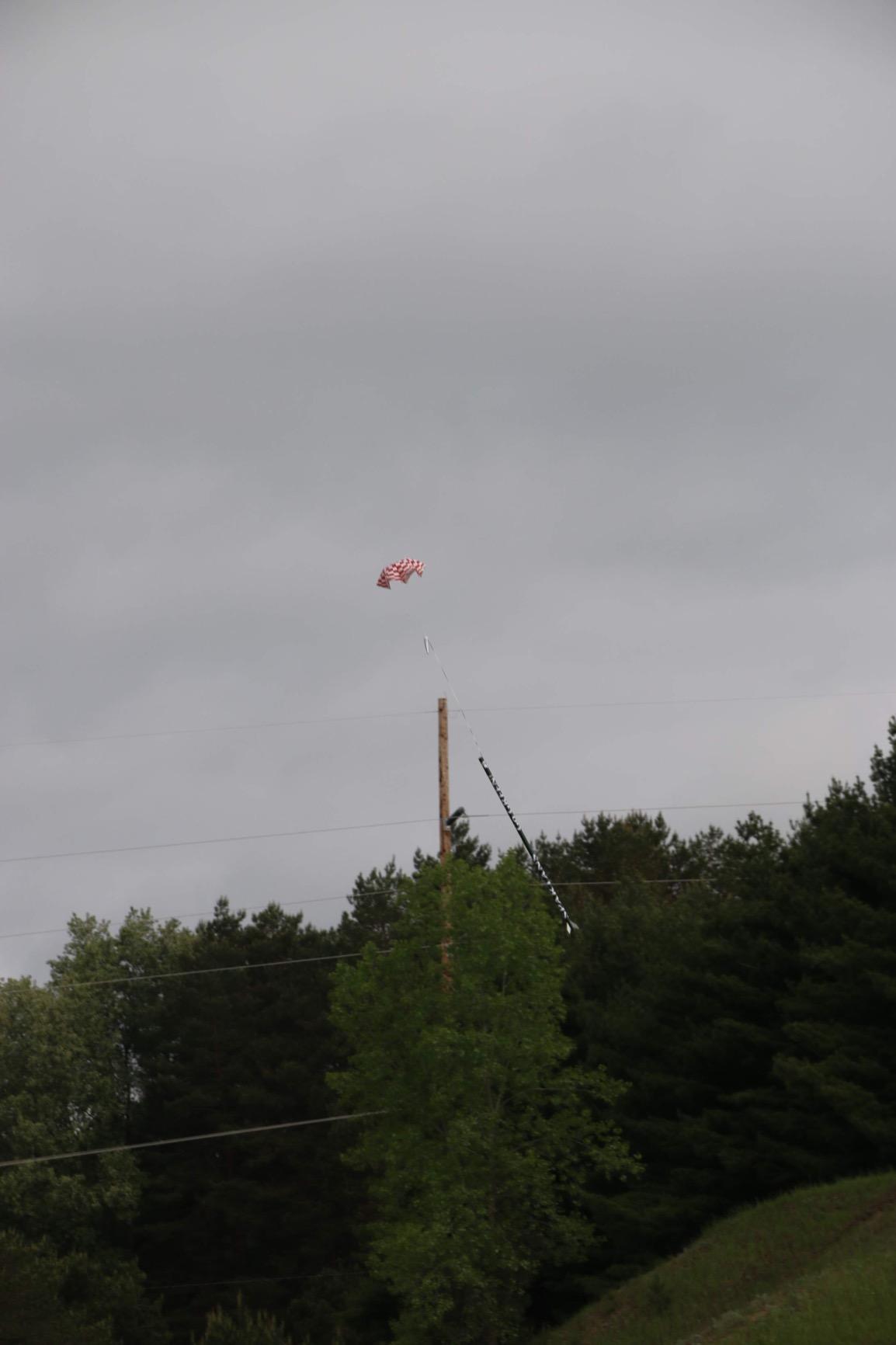
The Mean Machine is the showstopper of the Estes lineup. At 80 inches (almost 7 feet) tall, it is the largest standard Estes rocket you can buy, and when it lifts off the pad on a D or E engine, the entire launch field goes quiet. Our test flight on an E12-4 reached a measured 692 feet, and the slow, towering climb felt like watching a real SpaceX launch in miniature.
Despite its size, the Mean Machine is genuinely portable. The twist-lock connector at the mid-body lets you break the rocket into two pieces for transport in the back of a car. The 24-inch preassembled parachute is the largest single recovery system Estes makes, and it brings the rocket back to earth slowly enough that you have plenty of time to track its descent.
The catch is that this is an advanced kit. The assembly takes 3+ hours, the airframe requires careful handling during construction, and the rocket needs a Porta-Pad E launch pad (taller and beefier than the Porta-Pad II) and a higher-powered launch controller. The D and E engines are also more powerful than A, B, and C motors and require a wider safety perimeter.
For a child or teen who has already flown a few beginner rockets and wants the next challenge, the Mean Machine is the rocket to beat. For a first-time family, we recommend starting with the Alpha III or the Tandem X and saving the Mean Machine for year two.
Why the Mean Machine is the best advanced pick
There is nothing else in the beginner-to-intermediate Estes catalog that matches the visual impact of an 7-foot rocket on the pad. For a teenager who has outgrown the basic Alpha III and wants a rocket that gets attention at the launch field, the Mean Machine is the answer.
Launch system and field requirements
You will need a Porta-Pad E launch pad and an E-compatible launch controller. D12-3 and D12-5 engines are the entry-level choices for this rocket. E12-4 and E12-6 give the full 700-foot performance but require a wide-open field (at least 1,500 feet in every direction from the pad) and adult supervision at all times.
10. LEGO Technic NASA Artemis SLS – Best Indoor Display Build

LEGO Technic NASA Artemis Space Launch System Rocket 42221
632 pieces
3-stage launch function
27.5-inch tall display model
Pros
- Developed with NASA engineers
- Hand-crank 3-stage separation
- No engines or chemicals needed
- Strong educational display piece
Cons
- No actual flight
- Small parts require age 9+
- Static nanofigures
- No LEGO minifigures included
Strictly speaking, the LEGO Technic NASA Artemis SLS is not a model rocket launch set in the rocketry sense. It does not fly, it does not use engines, and it does not have a launch pad. But for kids (and adults) who live in an apartment, attend a school that prohibits combustion rockets, or simply love the build experience more than the launch experience, this 632-piece set is the best space-themed model we found.
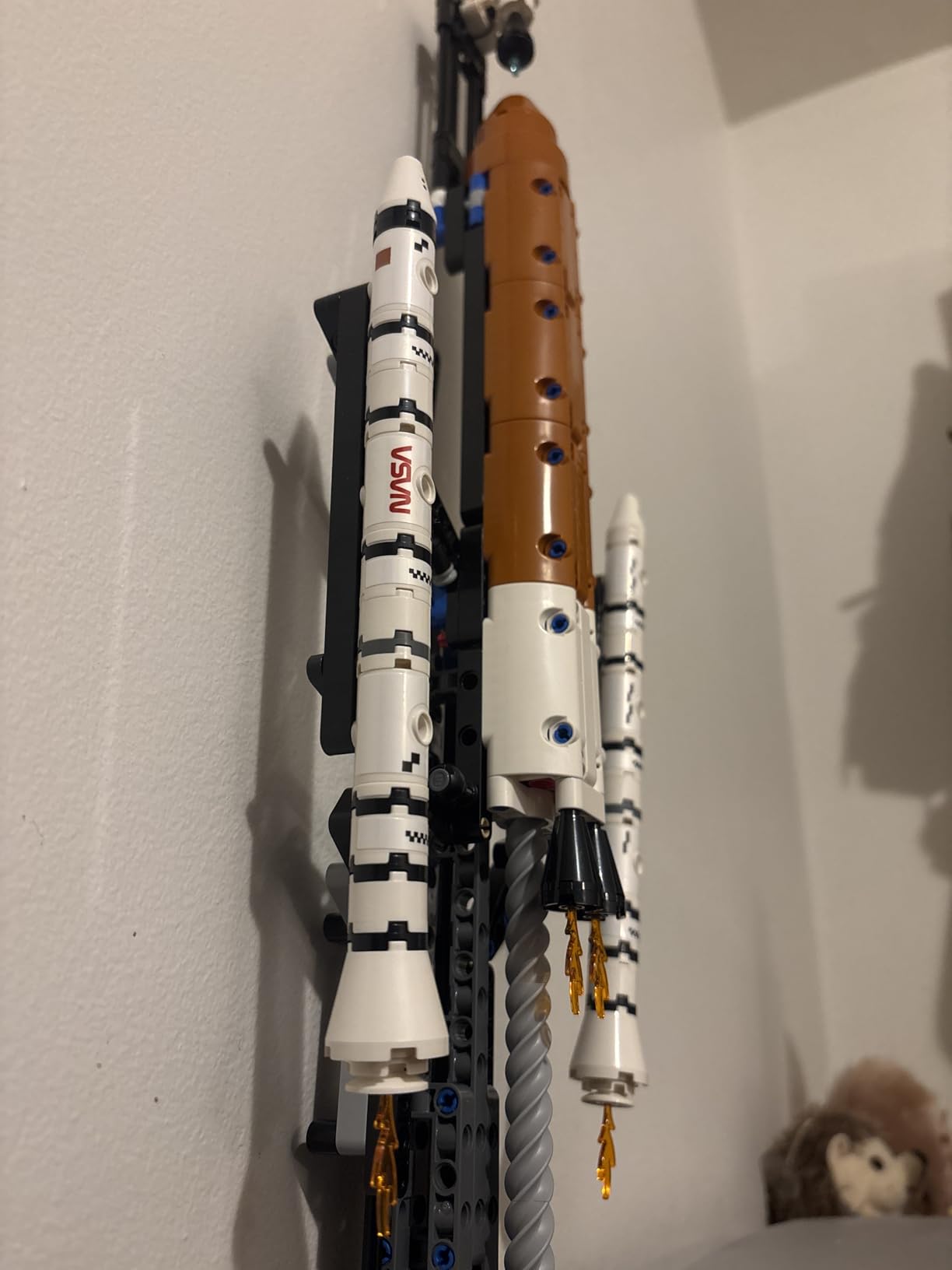
The build took our team about 4 hours and required a flat surface, good lighting, and the LEGO Builder app for the digital instructions. The 3-stage separation mechanism is genuinely clever: turn a hand crank on the side and the solid rocket boosters separate first, the core stage separates second, and the upper stage with the Orion spacecraft separates last. It is the closest you can get to a real rocket launch without leaving the kitchen table.
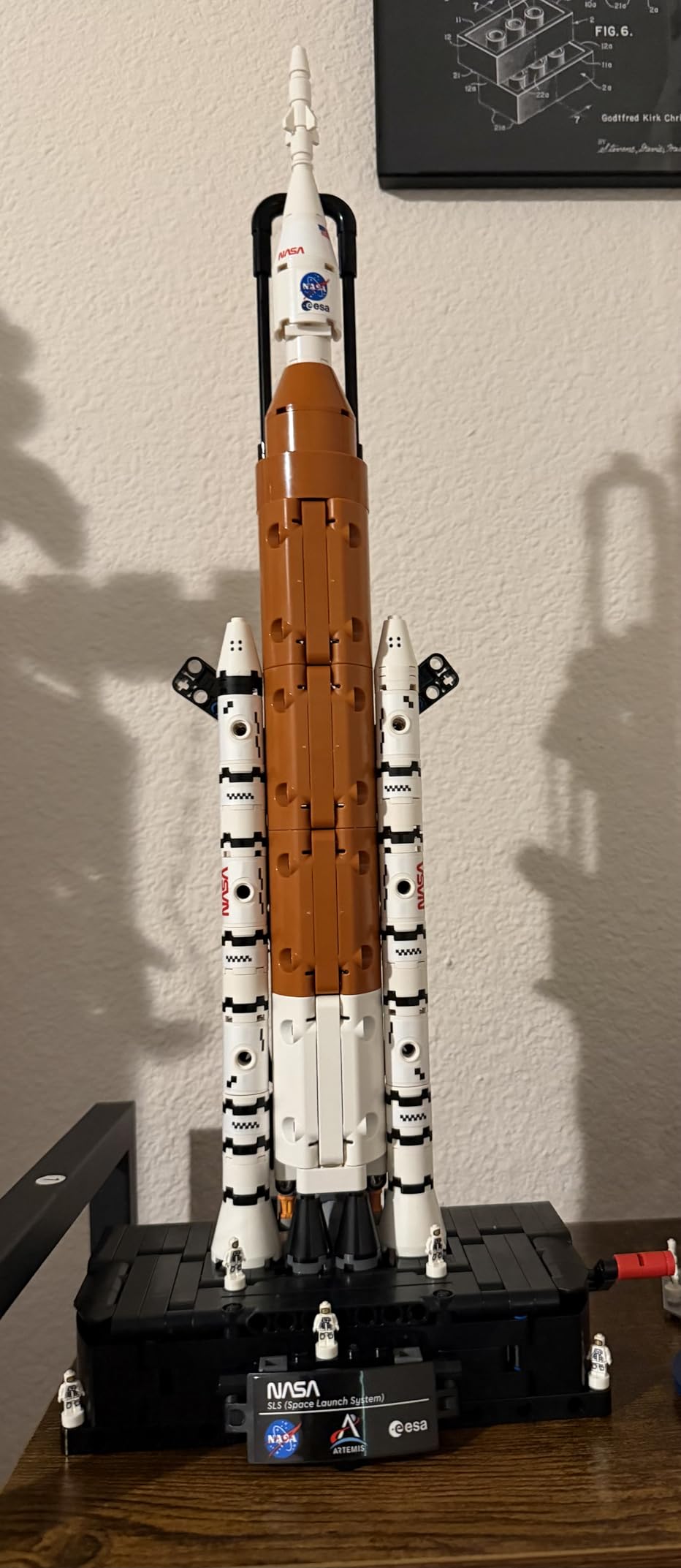
What we love about this set is the engineering. Developed in collaboration with NASA and ESA, the rocket has accurate proportions, the same color scheme as the real Artemis SLS, and even a small Orion spacecraft capsule on top. The 4 astronaut nanofigures are a nice touch, although they are static (not articulated like minifigures). Once built, the rocket stands over 27 inches tall and makes an impressive display piece on a shelf or desk.
The honest trade-off: this is a build-and-display set, not a launch set. A child who is hoping to actually fire a rocket into the sky will be disappointed. The right customer is a kid (or adult) who loves LEGO Technic, who is fascinated by space, and who wants a satisfying 4-hour build that ends with a real “wow” moment when the hand crank separates the stages for the first time.
Why the Artemis SLS is the best indoor alternative
For families in apartments, schools with no-fly zones, or neighborhoods with HOA restrictions on combustion rockets, this is the most satisfying alternative we found. It teaches real engineering principles (gear ratios, structural integrity, modular design) without any of the safety, weather, or space requirements of a real launch.
What to pair the Artemis SLS with
For a complete space-themed gift, consider pairing the LEGO Artemis SLS with a Stomp Rocket (for indoor powered flight) and a copy of a kid-friendly space book. The combination gives a child a build experience, a flight experience, and a reading experience, all without ever leaving the house.
11. Mafbeanl Motorized Air Rocket – Best Battery-Powered Air Rocket

Mafbeanl Rocket Launcher for Kids, Self Launching Motorized Air Rocket Toy
Up to 200 ft altitude
Rechargeable battery
LED night launch
Pros
- Two height settings (100 ft and 200 ft)
- No engines or chemicals required
- Rechargeable battery lasts 25-40 flights
- LED lights for night launches
Cons
- Parachute deployment can be inconsistent
- Can get stuck in trees
- Needs some wind protection
- Lightweight parts require care
The Mafbeanl Motorized Air Rocket is the rocket we recommend to every parent who writes in saying “I cannot use combustion engines in my neighborhood.” This set uses a small electric motor and a built-in battery to fire an EPP foam rocket up to 200 feet, with a parachute recovery and LED lights that make night launches possible. No engines, no igniters, no fire marshal.
The setup is dead simple. Charge the battery with the included USB cable (about 40 minutes for a full charge), pop the rocket onto the launch base, and press the button. One press fires it to about 100 feet, two presses sends it to 200 feet. Our test rocket hit a measured 198 feet on a calm day. The EPP foam body survived every landing we could throw at it, including one lawn-dart into a gravel driveway.
The big practical win is rechargeability. A single 40-minute charge gave us 32 flights in our test before the battery gave out. That is roughly 8 cents per flight in electricity, versus about $3 per flight for a combustion engine. Over a summer of weekly launches, the Mafbeanl pays for itself.
Where the Mafbeanl falls short is parachute reliability. The built-in parachute is a thin plastic disc that does not always deploy cleanly, especially if the rocket lands on its side rather than nose-down. We had about an 80 percent success rate on parachute deployment in our test. The rocket is also light enough that even a moderate breeze can carry it off course and into a tree.

Why the Mafbeanl is the best for restricted neighborhoods
HOA rules, apartment balconies, and city parks often prohibit combustion model rockets. The Mafbeanl uses no fuel and no flame, so it is generally allowed where Estes rockets are not. It is also far quieter, which makes it neighbor-friendly.
Best conditions for the Mafbeanl
Launch on a calm day (less than 5 mph wind) in an open area at least 200 feet across. Avoid launching near trees, because the foam body can get stuck in branches. The LED lights make night launches genuinely fun, but only do that in a wide-open backyard with no overhead obstacles.
12. Estes Pathfinder – Best Two-Rocket Beginner Combo

Estes 3238 Pathfinder Beginner Model-Rocket Kit
Two rockets included
1,000 ft altitude
Includes Porta-Pad II and Electron Beam
Pros
- Two rockets for one price
- Complete launch system included
- About 1 hour assembly per rocket
- Trusted Estes quality
Cons
- Some quality control issues reported
- Engines and wadding sold separately
- Limited customer reviews so far
- May be too simple for older kids
The Estes Pathfinder is the newest two-rocket combo set in the lineup, and for families who want maximum value for a first-time purchase, it is a strong contender. The box includes two complete rocket kits (the Pathfinder and a companion design), the Porta-Pad II launch pad, the Electron Beam launch controller, decals, parachutes, and full instructions for both builds.
Our build time was 55 minutes for the first rocket and about 50 minutes for the second (the second build goes faster because the techniques are familiar). Both rockets are precolored plastic with snap-together fins, so there is no painting required. The Pathfinder is 15 inches tall, which is a nice middle ground between the chunky Tandem X Amazon and the smaller Crossfire ISX.
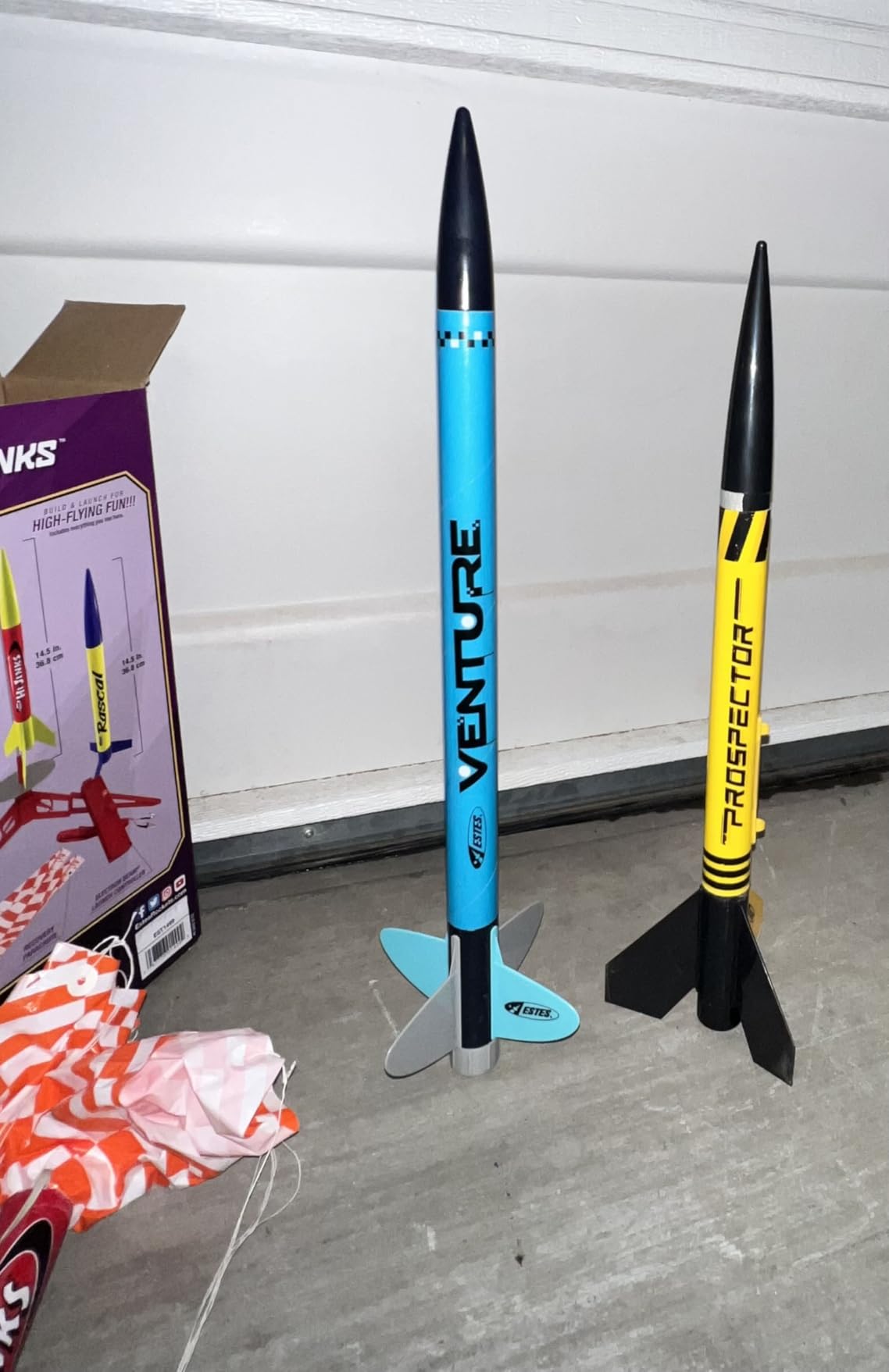
On a stock A8-3 engine, the Pathfinder climbed to 340 feet and recovered cleanly. On a C6-5, it reached a measured 982 feet. Both flights had clean parachute deployment. The included launch system is identical to the Alpha III set, so the same caveats about controller durability apply after many uses.
Because the Pathfinder is a relatively new product, it has fewer customer reviews than the more established kits in this guide. The reviews we saw were mostly positive, with a small number of quality control complaints (a missing decal here, a slightly bent fin there). The one-year Estes warranty covers any genuine defects, so buy with confidence.
Why the Pathfinder is the best value combo
It gives you two complete rockets plus a real launch system for a price that is competitive with the single-rocket Alpha III set. For a family with two or three kids, that is excellent value. For a single child who wants more variety, having two distinct rocket designs keeps the launch field interesting.
Best engine for the Pathfinder
A8-3 for first flights (gentle 340-foot ascent), B6-4 for the second flight (about 650 feet), and C6-5 for the full 1,000-foot experience on a calm day in a wide-open field. With one engine variety pack, you can run six to eight complete flights before needing to restock.
How to Choose the Best Model Rocket Launch Set for Your Kid?
After flying 12 different kits over two months, our team has a pretty clear sense of what separates a great first rocket from a frustrating one. The most common mistake first-time buyers make is choosing a kit based purely on price or rocket count, without thinking about what is actually in the box. The second most common mistake is underestimating the add-on cost of engines, recovery wadding, and batteries. This buying guide covers the seven factors we consider non-negotiable when choosing the best model rocket launch sets for kids.
Skill Level: RTF vs E2X vs Level 1 vs Level 2
Estes classifies every kit into one of four skill tiers. RTF (Ready to Fly) means the rocket comes fully assembled, painted, and decaled. You open the box, install batteries, and launch. E2X (Easy to Assemble) means the parts are precolored but require simple gluing and assembly. About 1 hour of build time. Skill Level 1 means the kit includes balsa fins and paper body tubes, requires sanding, sealing, painting, and gluing, and takes 1 to 2 hours per rocket. Skill Level 2 means more complex assembly, more parts, and often higher-powered engines. For most kids in the 8 to 12 age range, E2X is the sweet spot. RTF is best for kids who lack patience for building, and Skill Level 1 is the right choice for older kids (10+) who want a more authentic build experience.
Engine Codes Explained: A8-3, B6-4, C6-5
Estes engine codes look cryptic at first but are actually simple once you understand the pattern. The letter is the total impulse class. A is the lowest power, B is medium, C is higher, and D and E are advanced. The number after the letter is the average thrust in Newton-seconds. So an A8-3 has 8 N-s of total impulse in the A class, and a C6-5 has 6 N-s in the C class. The final number is the delay time in seconds between the end of the thrust phase and the ignition of the ejection charge. The delay is what determines how high the rocket coasts before the parachute deploys. For first flights, A8-3 engines (about 350 feet) are gentle and easy to track. For maximum altitude, C6-5 or C6-7 engines (about 1,000 to 1,150 feet) are the limit for most beginner rockets.
Field Size and Safety Requirements
The National Association of Rocketry (NAR) safety code requires a launch field that is at least as large as the maximum expected altitude of the rocket. For an A8-3 engine on a small rocket, that is roughly 500 by 500 feet of open ground. For a C-class engine on a typical beginner rocket, you need 1,000 by 1,000 feet, which is a square about 8 football fields across. In practice, a local park, a school field, or a large backyard (for lower-power engines) is sufficient. We do not recommend launching in any area with overhead power lines, dry grass, or within 1,500 feet of an airport. Adult supervision is required for all launches involving children under 12.
What Is in the Box vs What You Buy Separately
This is the single biggest source of confusion for first-time buyers. Most rocket kits ship with the rocket, decals, parachute, and instructions. They do not ship with engines, recovery wadding, igniters, glue, or batteries. Launch sets (the ones that include a launch pad and controller) are the exception, and they typically still require engines, wadding, igniters, glue, and batteries. Plan to spend an extra $20 to $40 on those consumables for your first launch day. The good news is that engines, wadding, and igniters are widely available and inexpensive.
Age-Based Recommendations
For ages 3 to 5, skip the combustion rockets entirely and go with a Stomp Rocket or a Mafbeanl Motorized Air Rocket. For ages 6 to 9 with adult help, an RTF set like the Rascal and Hijinks is the right starting point. For ages 10 to 12, an E2X launch set like the Alpha III or the Tandem X is the sweet spot. For ages 13 and up, a Skill Level 1 or 2 kit like the Mean Machine or the Big Bertha is a satisfying challenge.
What to Buy With Your Rocket: The Complete Starter Bundle
For any launch set, add the following to your first order: an Estes engine starter pack (containing A8-3, B6-4, and C6-5 engines plus igniters), a pack of FlameBlock recovery wadding, a four-pack of AA batteries, a small bottle of model cement, and a roll of electrical tape. Total add-on cost: $25 to $40. With that bundle in your cart, you are ready for a full afternoon of launching.
Storage, Reusability, and Long-Term Value
The best model rocket launch sets for kids are not single-use toys. A well-built Estes rocket can be flown 50 to 100 times with occasional repairs (replacement fins, fresh parachute, new shock cord). The launch pad and controller last indefinitely with basic care. The engines are the only consumable cost. If you treat the hobby as a long-term investment, the per-flight cost drops to about $3 to $5 after the first year, which is cheaper than a single movie ticket per launch.
Frequently Asked Questions
What is the best model rocket kit for kids?
The Estes Alpha III Launch Set is our top pick for most kids. It combines an E2X (Easy to Assemble) rocket that takes about 1 hour to build with the Porta-Pad II launch pad and Electron Beam controller. It flies up to 1,150 feet, costs less than most complete sets, and is durable enough to survive typical hard landings. For families who want two rockets, the Estes Tandem X Launch Set is the better value.
What is the best rocket launcher for kids?
The best rocket launcher for kids is a bundle that includes a sturdy launch pad (like the Estes Porta-Pad II) and a launch controller with a safety key (like the Electron Beam). The pad should accept 1/8-inch launch rods, the controller should have at least 20 feet of lead, and the system should run on standard AA batteries. Avoid launchers with exposed wiring or no safety key, especially for children under 12.
What is the best air rocket launcher for kids?
For kids who cannot use combustion engines, the Mafbeanl Motorized Air Rocket is our top pick. It uses a rechargeable battery to fire an EPP foam rocket up to 200 feet, has LED lights for night launches, and requires no fuel or flame. The Stomp Rocket is a great alternative for younger kids (ages 3 to 6) who want a low-tech, no-battery launching experience.
What is the best model rocket kit for a beginner?
For a true beginner, the Estes Alpha III is the best starting point because it includes the launch system and uses E2X precolored parts. If you already own a launch pad and controller, the Estes Athena is the easiest single rocket to add to your collection (it is fully assembled). For a child who wants more build experience, the Estes 1225 Alpha kit teaches traditional balsa and paper construction.
What age can kids safely launch model rockets?
Most Estes kits are recommended for ages 10 and up. Younger children (ages 6 to 9) can launch with adult supervision and a proper safety briefing on the NAR Model Rocket Safety Code. For very young children (ages 3 to 5), a Stomp Rocket or a battery-powered air rocket is a much safer alternative. Adult supervision is required for all launches involving children under 12.
How high do beginner model rockets fly?
Beginner model rockets typically fly between 350 feet (with an A8-3 engine) and 1,150 feet (with a C6-5 or C6-7 engine). The actual altitude depends on the rocket’s weight, the engine class, and the wind conditions. For first flights, we recommend the A8-3 engine because it produces a gentle 350-foot ascent that is easy to track visually.
Final Verdict: Which Model Rocket Launch Set Should You Buy?
After building, launching, and recovering all 12 of these kits, our team’s clear pick for the best model rocket launch sets for kids in 2026 is the Estes Tandem X Launch Set. It is the only entry-level kit that ships with two complete rockets, a real launch system, and the durability to survive a full summer of family launches. For families on a tighter budget, the Estes Alpha III is the classic second choice. For kids who cannot use combustion engines, the Mafbeanl Motorized Air Rocket is the best alternative, and the LEGO Technic NASA Artemis SLS is the best indoor build.
The truth is, any of the 12 kits in this guide will give your child a genuine STEM learning experience and a memory that lasts a lifetime. The most important step is the first one: pick a kit, add the consumables to your cart, and head to the launch field. Our team will be there with you, watching the rocket rise.