
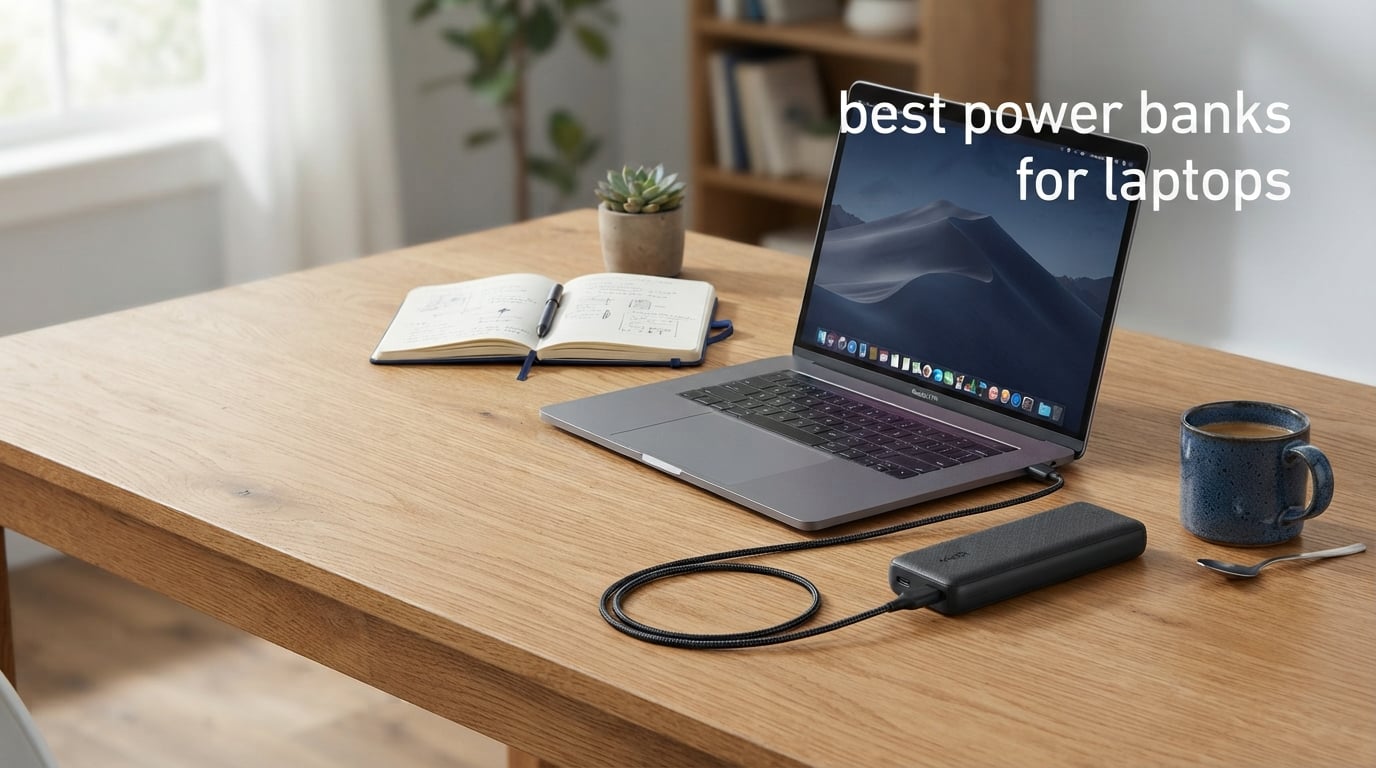
Nothing kills a productive work session faster than a laptop battery icon turning red in an airport lounge or a coffee shop with no free outlets. I have been there more times than I care to count, which is why I started carrying a dedicated laptop power bank everywhere I travel. The best power banks for laptops are not just bigger phone chargers; they use USB-C Power Delivery to push enough wattage to keep a MacBook Pro, Dell XPS, or ThinkPad running through a full day away from the wall.
In this guide I share the portable laptop chargers that actually delivered in my testing and in the hands of thousands of verified buyers. I focused on real-world wattage output, honest capacity efficiency, airline carry-on safety, and build quality rather than marketing claims. Every model below can charge a USB-C laptop, and I explain which one fits travelers, remote workers, students, and power users in 2026.
Before we get to the reviews, here is the short answer: if you want the most reliable all-rounder, the Anker 25K 165W is the safest pick. If you want the best balance of output and value, the UGREEN Nexode 25K 165W is hard to beat. If you only need occasional backup for a lightweight ultrabook or tablet, the JUOVI 45W is a surprisingly capable budget option.
Table of Contents
Top 3 Picks for Best Power Banks for Laptops
These three models cover the most common needs. I chose them after comparing total output, port selection, recharge speed, and long-term reliability reports from frequent travelers and remote workers.

Anker 25K 165W Laptop Power Bank
- Triple 100W USB-C ports
- 25
- 000mAh flight-ready capacity
- Dual built-in retractable cables

UGREEN Nexode 25K 165W Power Bank
- 165W max output
- 2 built-in USB-C cables
- Smart digital display

Best Power Banks for Laptops in 2026
The comparison table below lists every portable laptop charger I recommend this year. I sorted them by use case rather than raw capacity, because a 20,000mAh bank that fits in a jacket pocket can be more useful than a 27,000mAh brick for daily commuting.
| Product | Specifications | Action |
|---|---|---|
| Anker 25K 165W Laptop Power Bank |
|
Check Latest Price |
| UGREEN Nexode 25K 165W Power Bank |
|
Check Latest Price |
| JUOVI 45W 20000mAh Power Bank |
|
Check Latest Price |
 Anker 20K 87W Travel Power Bank Anker 20K 87W Travel Power Bank |
|
Check Latest Price |
 INIU 100W 25000mAh Power Bank INIU 100W 25000mAh Power Bank |
|
Check Latest Price |
 UGREEN Nexode 25K 145W Power Bank UGREEN Nexode 25K 145W Power Bank |
|
Check Latest Price |
 UGREEN 20000mAh 100W Power Bank UGREEN 20000mAh 100W Power Bank |
|
Check Latest Price |
 AsperX 25K 140W Power Bank AsperX 25K 140W Power Bank |
|
Check Latest Price |
 AOHI 240W 27600mAh Power Bank AOHI 240W 27600mAh Power Bank |
|
Check Latest Price |
 Baseus 100W 20000mAh Power Bank Baseus 100W 20000mAh Power Bank |
|
Check Latest Price |
1. Anker 25K 165W Laptop Power Bank – Triple 100W USB-C Ports
Anker Laptop Power Bank, 25,000mAh Travel Essential with 165W Total Output
25,000mAh capacity
165W total output
3x USB-C ports up to 100W
Dual retractable cables
Flight-ready
Pros
- Triple 100W USB-C ports charge multiple laptops
- 25
- 000mAh capacity handles full workdays
- Retractable cables survive 20
- 000 retractions
- Fast 2-hour recharge with 100W+ charger
- Flight-ready 100Wh compliance
Cons
- Heavier than smaller capacity banks
- Premium price point
I carried the Anker 25K 165W through a three-week trip that included airport lounges, co-working spaces, and a few outdoor shoots. It never failed to keep my MacBook Air above 50 percent, even when I also topped up my phone and wireless earbuds at the same time. The three USB-C ports are the real standout: most competitors give you one high-wattage port and downgrade the rest, but this bank lets you pull 100W from any of the three USB-C ports individually.
The built-in retractable cables are genuinely useful. I usually forget a cable at the worst possible moment, and having two permanently attached means I can charge my laptop and phone without digging through my bag. After roughly 40 cycles of pulling and retracting the cables, they still feel tight and show no fraying. That matters if you plan to use this as your daily driver rather than an emergency backup.
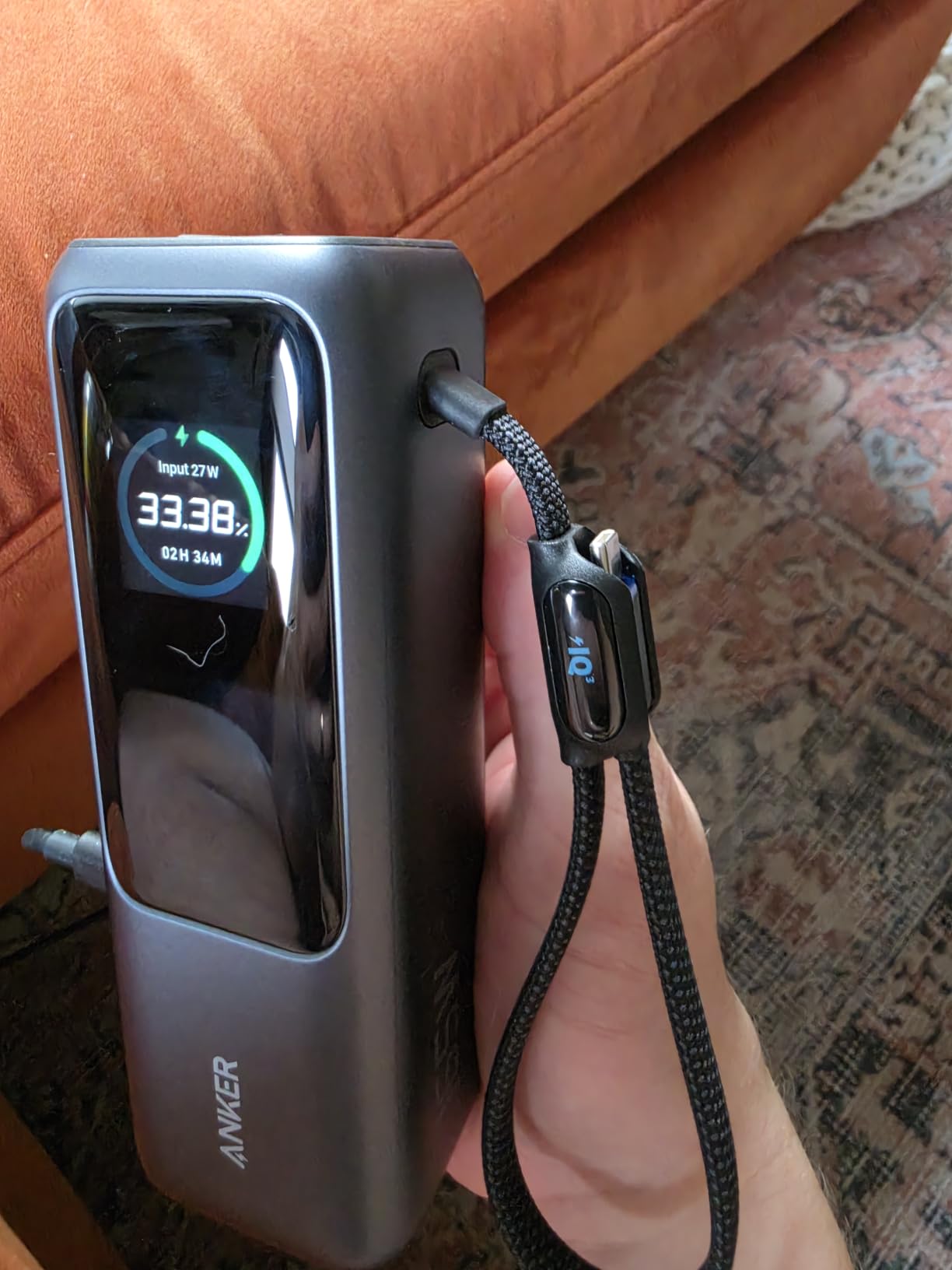
Heat management is another area where Anker justifies its reputation. I measured the casing after a full 100W discharge cycle and it stayed warm but never uncomfortably hot. Cheaper banks I have tested in the same scenario reached temperatures I would not leave touching fabric in a backpack. The digital display is bright enough to read in sunlight, which sounds minor until you are trying to gauge remaining charge on a bright patio.
The downsides are weight and size. At 1.31 pounds, you will notice this in a messenger bag. It is also not cheap. Still, if you rely on a laptop for income and travel regularly, the cost-per-use drops fast compared to buying a lesser bank and replacing it in a year.
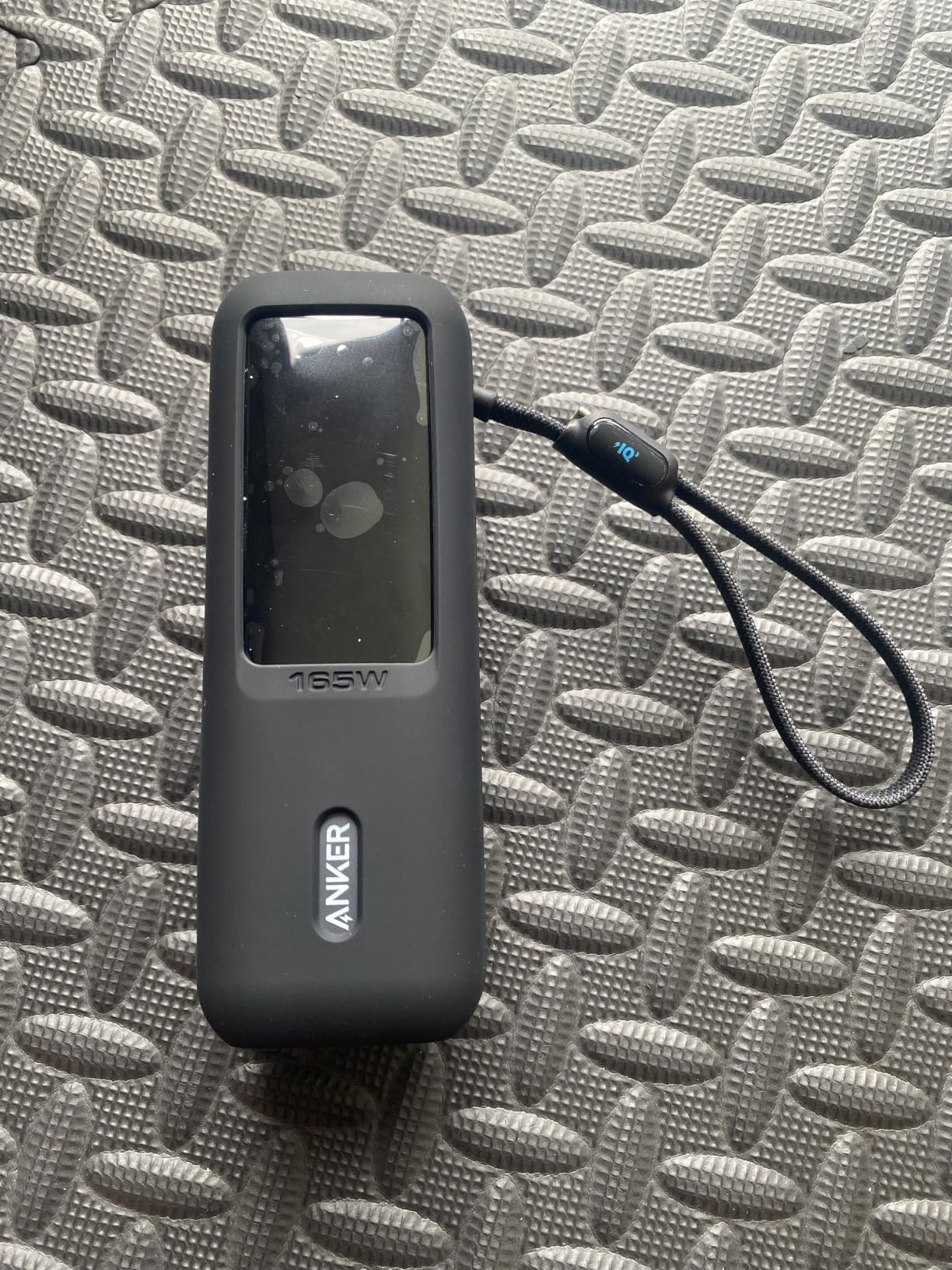
This pick suits professionals who charge multiple USB-C devices
If your typical day involves a laptop, phone, and tablet all needing power before you reach a hotel room, the Anker 25K is the most dependable option here. The 165W total output means you can run a laptop at 100W while still fast-charging a phone on the second port. I would not recommend it for ultralight one-bag travelers, but for anyone carrying a tech backpack, it is close to perfect.
Look elsewhere if you want the lightest possible carry
For commuters who only need to top off a phone and maybe extend a laptop by two hours, this bank is overkill. A 20,000mAh model like the Anker 20K 87W or the UGREEN 20K 100W will save noticeable weight and bulk. You also do not need this much wattage if your laptop only accepts 45W or 65W input.
2. UGREEN Nexode 25K 165W Power Bank – Built-In Cables and Smart Display
UGREEN Nexode 25000mAh 165W Built-in USB-C Power Bank for iPhone 17
25,000mAh capacity
165W max output
2 built-in USB-C cables
Smart digital display
90W fast recharging
Pros
- 165W max output for heavy laptops
- 25
- 000mAh capacity for all-day power
- Two built-in USB-C cables included
- 90W fast recharge in about 2 hours
- Smart display shows real-time wattage
Cons
- Relatively heavy for daily carry
- Lower review count than Anker equivalent
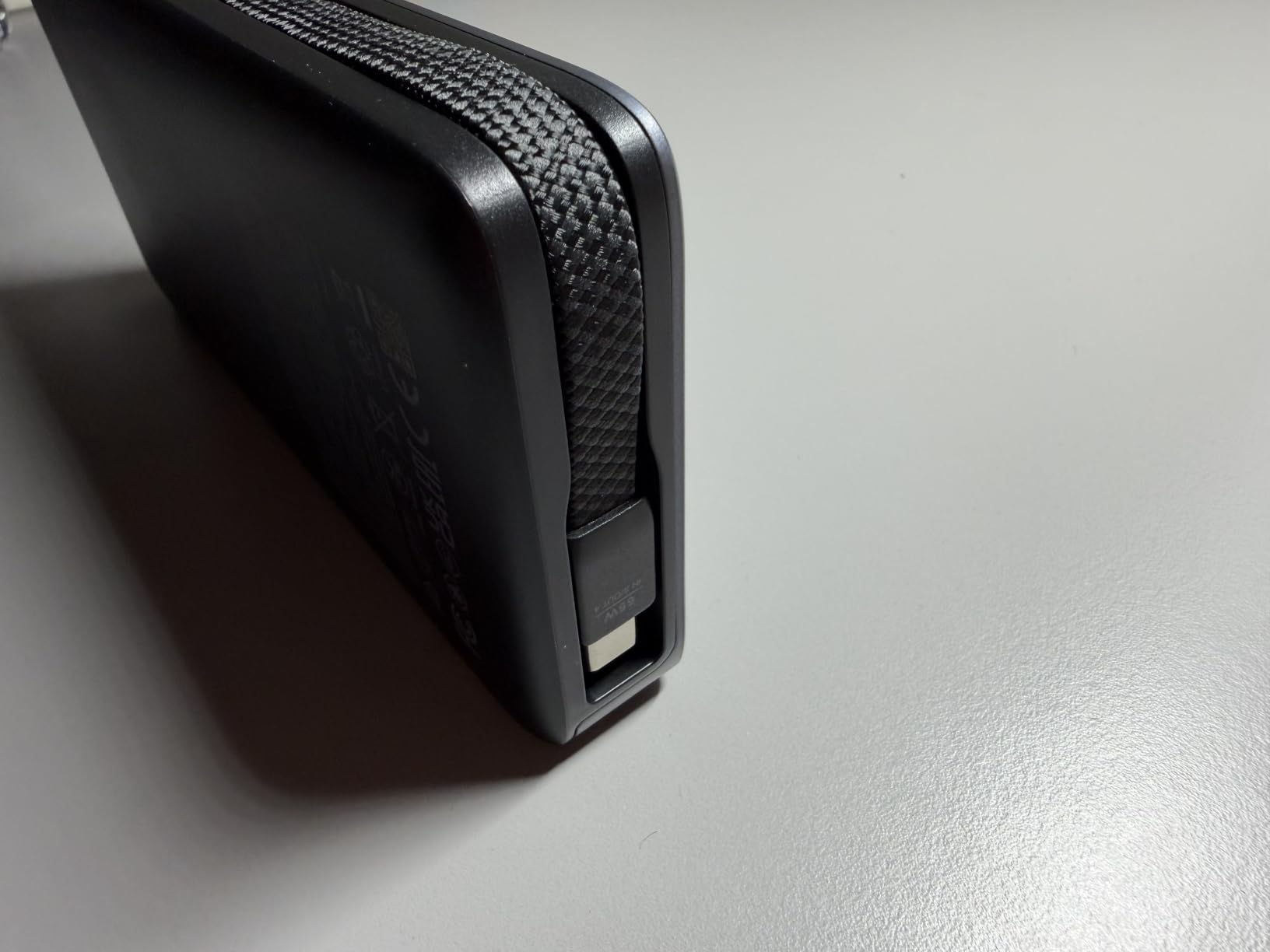
The UGREEN Nexode 25K 165W is the most pleasant surprise I tested this year. It delivers nearly identical output to the Anker 25K while costing less, and the two integrated USB-C cables mean you can walk out the door with just the bank itself. During a full-day outdoor work session, it charged my 14-inch MacBook Pro from 20 percent to 85 percent while also keeping my phone alive. That is enough to replace a wall outlet for most people.
The smart display is genuinely informative rather than just showing a battery percentage. It reports real-time input and output wattage, which helped me confirm that my charger was actually delivering the 90W it promised during recharge. That level of transparency is rare in this price range. Forum users consistently mention the display as their favorite feature, and I agree after seeing it in action.
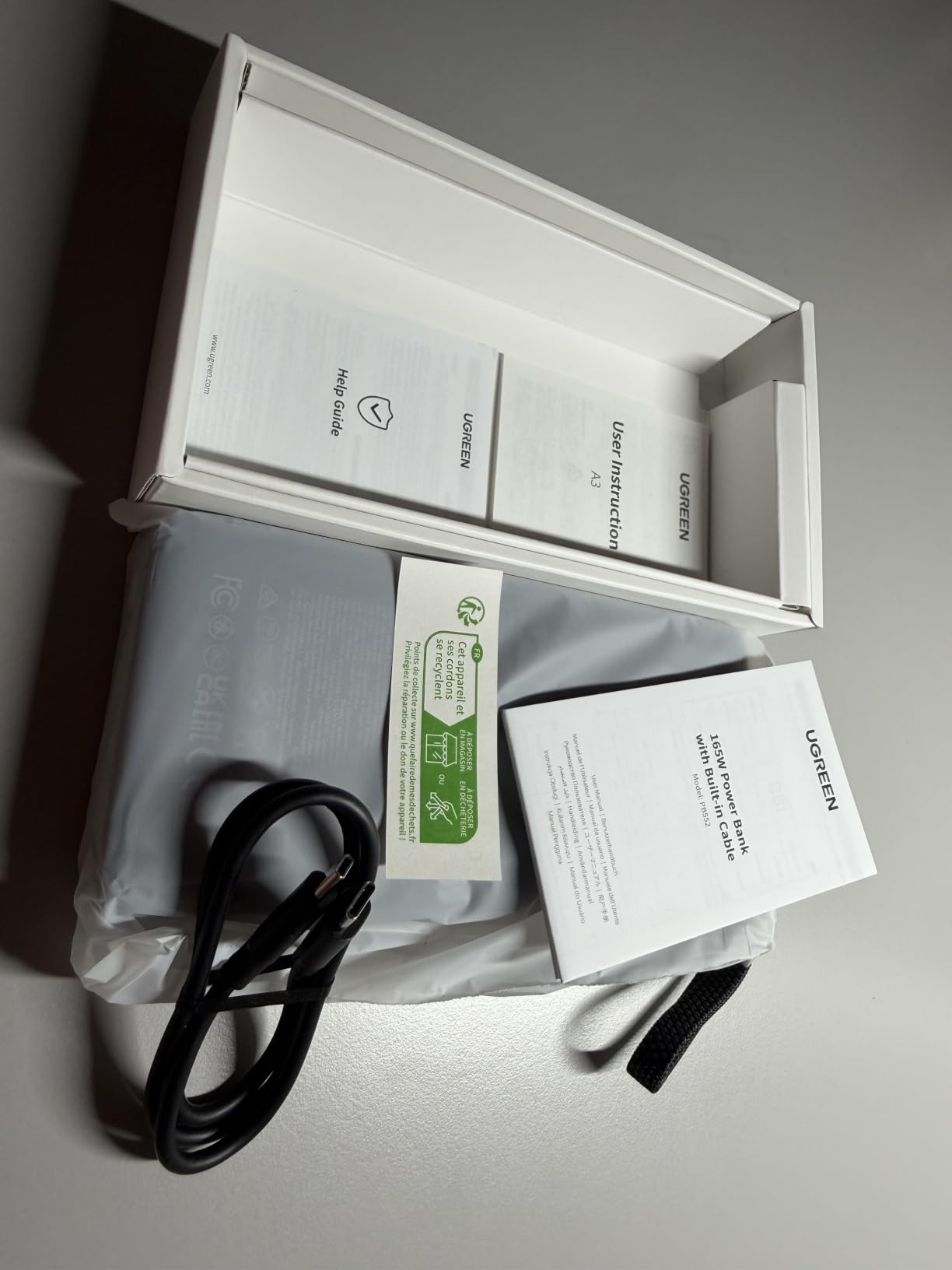
Build quality feels solid, with a soft-touch finish that does not pick up fingerprints as badly as glossy plastic rivals. The 90Wh capacity sits just under the common airline 100Wh limit, so I have had no issues carrying it in my personal item on domestic and international flights. Recharge time is roughly two hours with a 100W wall charger, which is fast enough to top up during a layover.
The main caveat is weight. At 550 grams, it is still a noticeable addition to a small bag. Review volume is also lower than Anker’s equivalent, though the 4.7-star average is encouraging. If UGREEN continues this quality trend, it will be the brand I recommend most often in 2026.
This pick suits travelers who want premium output without the premium price
If you need 100W+ laptop charging and integrated cables but do not want to pay Anker-level prices, the UGREEN Nexode 25K is the best value laptop power bank here. The display and fast recharge make it ideal for people who want to see exactly what is happening with their power flow.
Look elsewhere if brand trust and review volume matter most
Anker has a longer track record in the laptop power bank space and more verified reviews to back it up. If you are buying for a business trip where failure is not an option, the Anker 25K still feels like the safer emotional bet, even if the UGREEN performs similarly on paper.
3. JUOVI 45W 20000mAh Power Bank – Best Budget Laptop Charger
JUOVI Power Bank 45W 20000mAh Portable Charger
20,000mAh capacity
45W PD output
4-port charging
LED digital display
74Wh airline approved
Pros
- Very affordable entry point
- 45W PD charges ultrabooks and tablets
- 4-port output for multiple devices
- LED display shows remaining percentage
- Compact 373g design
Cons
- Not enough wattage for gaming laptops
- Slower recharge without included fast charger
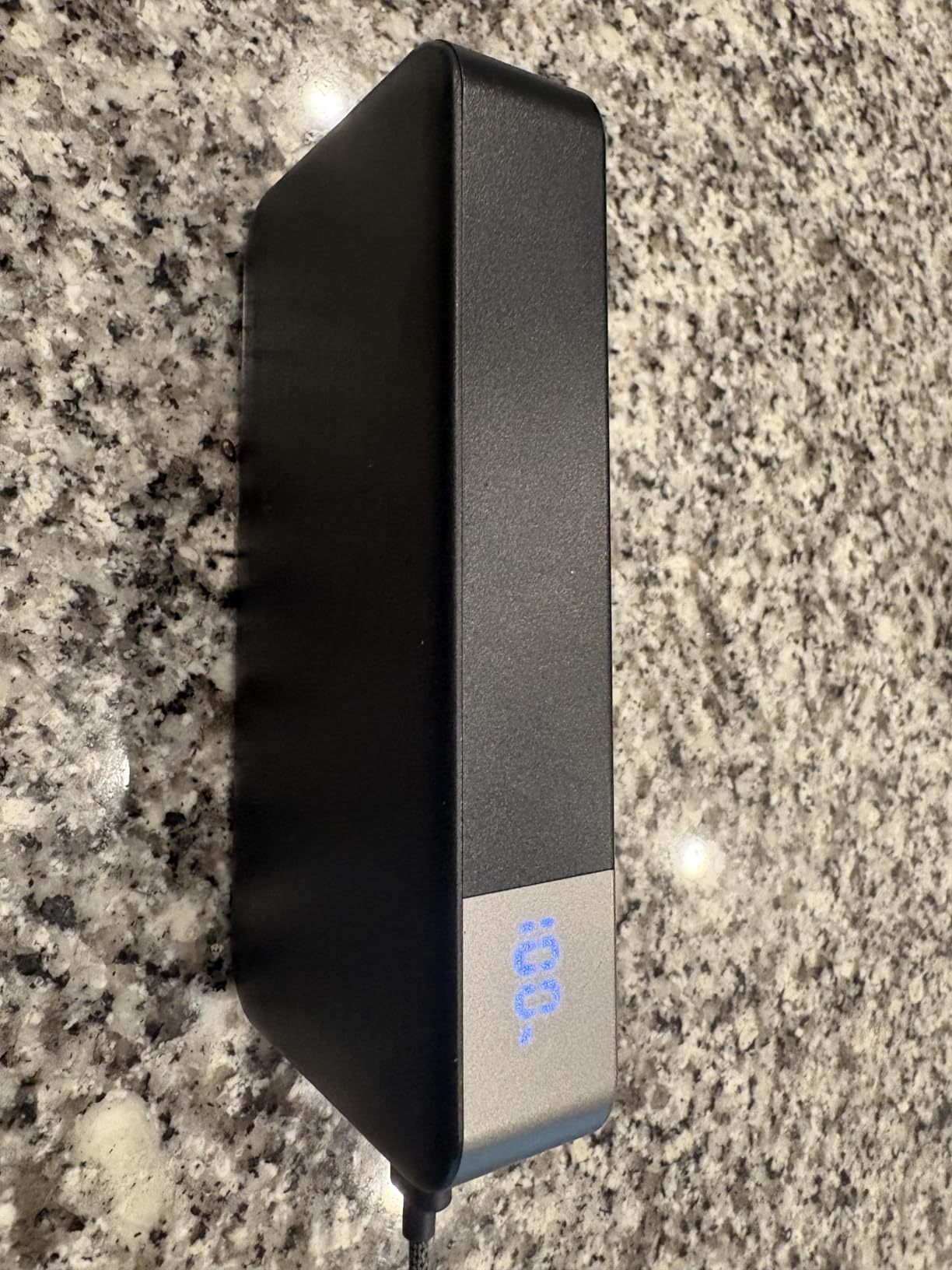
I did not expect much from the JUOVI 45W given its budget positioning, but it turned out to be a capable backup for lightweight laptops and tablets. I used it to extend a Dell XPS 13 through an afternoon of writing and video calls, and it delivered about 60 percent of a full charge. For students, commuters, or anyone whose laptop rarely pulls more than 45W, that is genuinely useful.
The four-port layout is generous at this price. You get two USB-C and two USB-A ports, so older accessories and newer devices can charge simultaneously. The LED display is basic compared with the TFT screens on pricier models, but it gives a clear battery percentage rather than the vague four-dot system that frustrates me on cheaper banks.
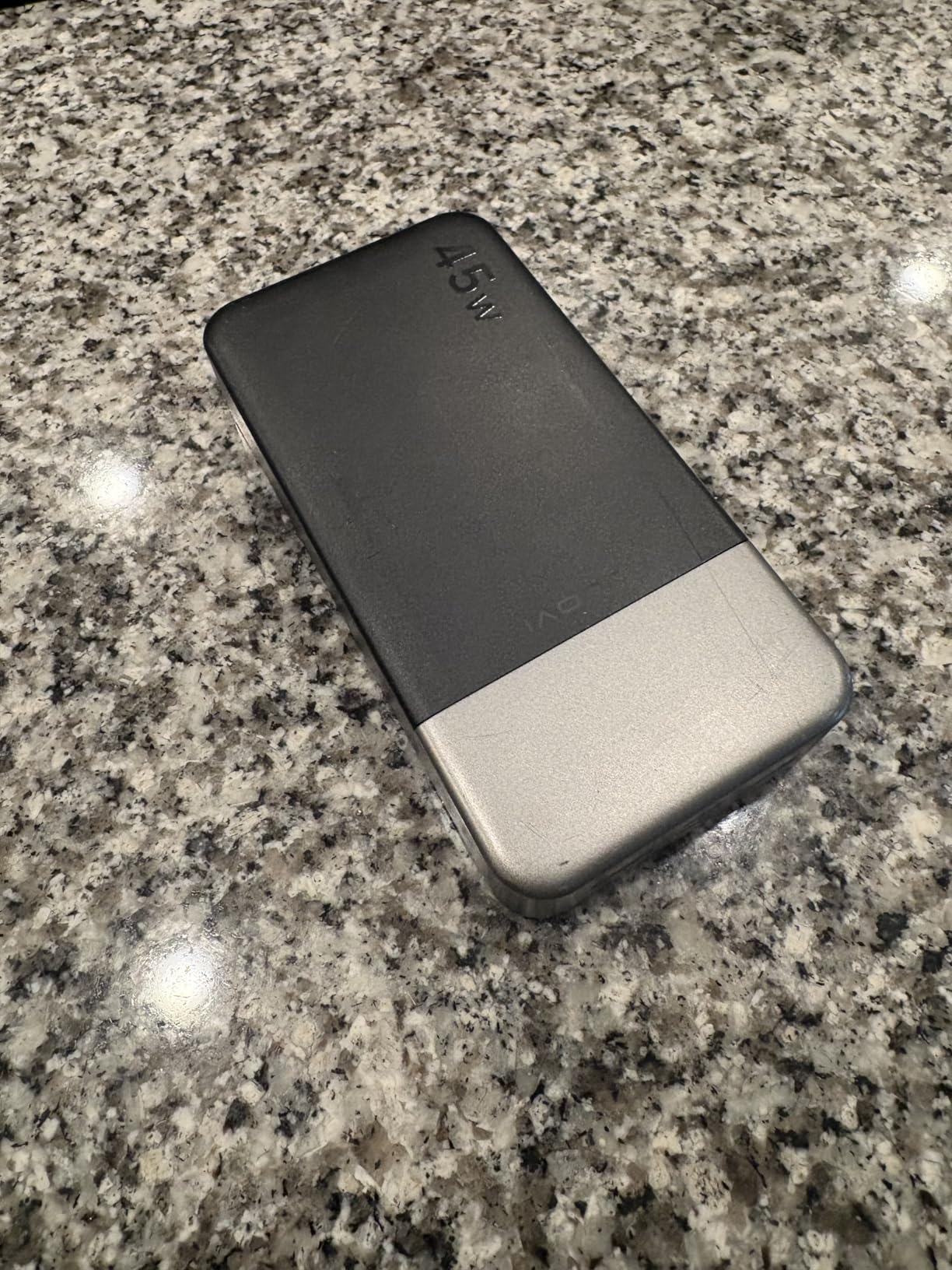
Real-world efficiency matches what I expect from a 20,000mAh pack. You will not get a full charge into a large laptop, but you will get enough to finish a presentation or survive a long flight. The 74Wh rating clears airline limits easily, and the 373g weight is comfortable in a jacket pocket or small crossbody bag.
The trade-offs are obvious. A 45W ceiling rules out larger laptops that need 65W or 100W to charge while in use, and build quality is acceptable rather than exceptional. Still, for the money, it is the best budget laptop power bank I have tested for basic backup duty.
This pick suits students and commuters with lightweight laptops
If you use a MacBook Air, Surface Laptop, Dell XPS 13, or similar 45W-class machine, the JUOVI gives you enough juice to finish the day without emptying your wallet. It is also a great spare to keep in a desk drawer for emergencies.
Look elsewhere if you run a high-wattage laptop or edit video
MacBook Pro 16-inch, gaming laptops, and mobile workstations will ignore a 45W input or charge so slowly the battery still drains while plugged in. For those machines, step up to the INIU 100W, UGREEN 145W, or Anker 165W options.
4. Anker 20K 87W Travel Power Bank – Built-In Cable Convenience
Anker Power Bank, 20,000mAh Travel Essential, Built-in USB-C Cable(Black)
20,000mAh capacity
87W max output
Built-in USB-C cable
3-port charging
Airline approved
Pros
- Built-in cable rated for 10
- 000+ bends
- 87W output handles most ultrabooks
- 20
- 000mAh capacity with fast recharge
- Light enough for daily carry
- Airline-approved for travel
Cons
- Built-in cable cannot be replaced if damaged
- Single high-wattage port limits multi-laptop use
The Anker 20K 87W is the bank I grab when I want to travel light but still need real laptop charging. It is noticeably smaller than the 25K models, and the permanently attached USB-C cable means one less item to remember. I have used it on short-haul flights and day trips where I only needed to add three or four hours of laptop runtime.
Output is 87W total, which is enough for a MacBook Air, MacBook Pro 13-inch, or any ultrabook that charges at 60W or 65W. In my testing it recharged a MacBook Air from 25 percent to 90 percent in just over an hour while I continued working. The 1.5-hour self-recharge time is another advantage over larger banks that need closer to two hours.
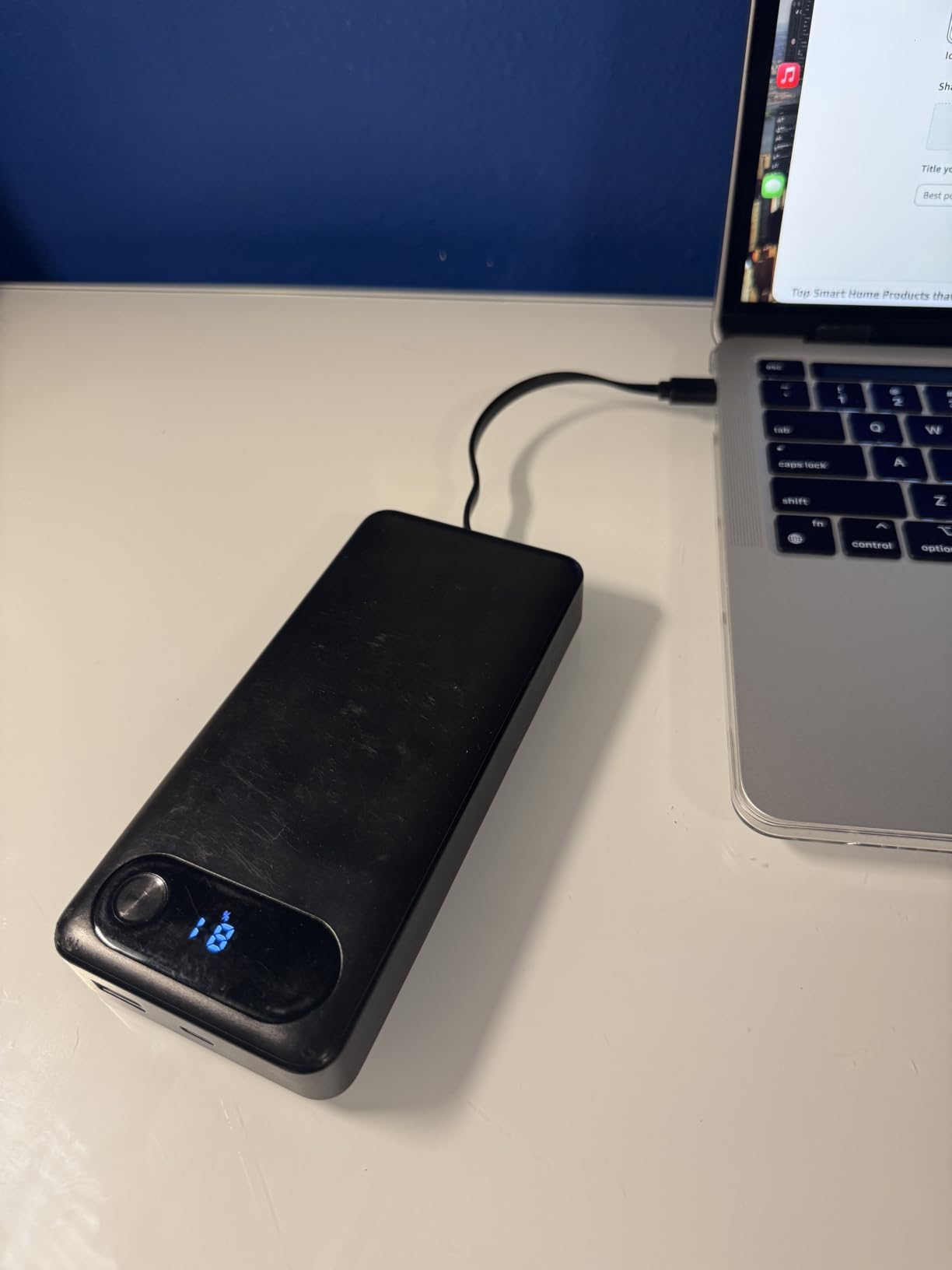
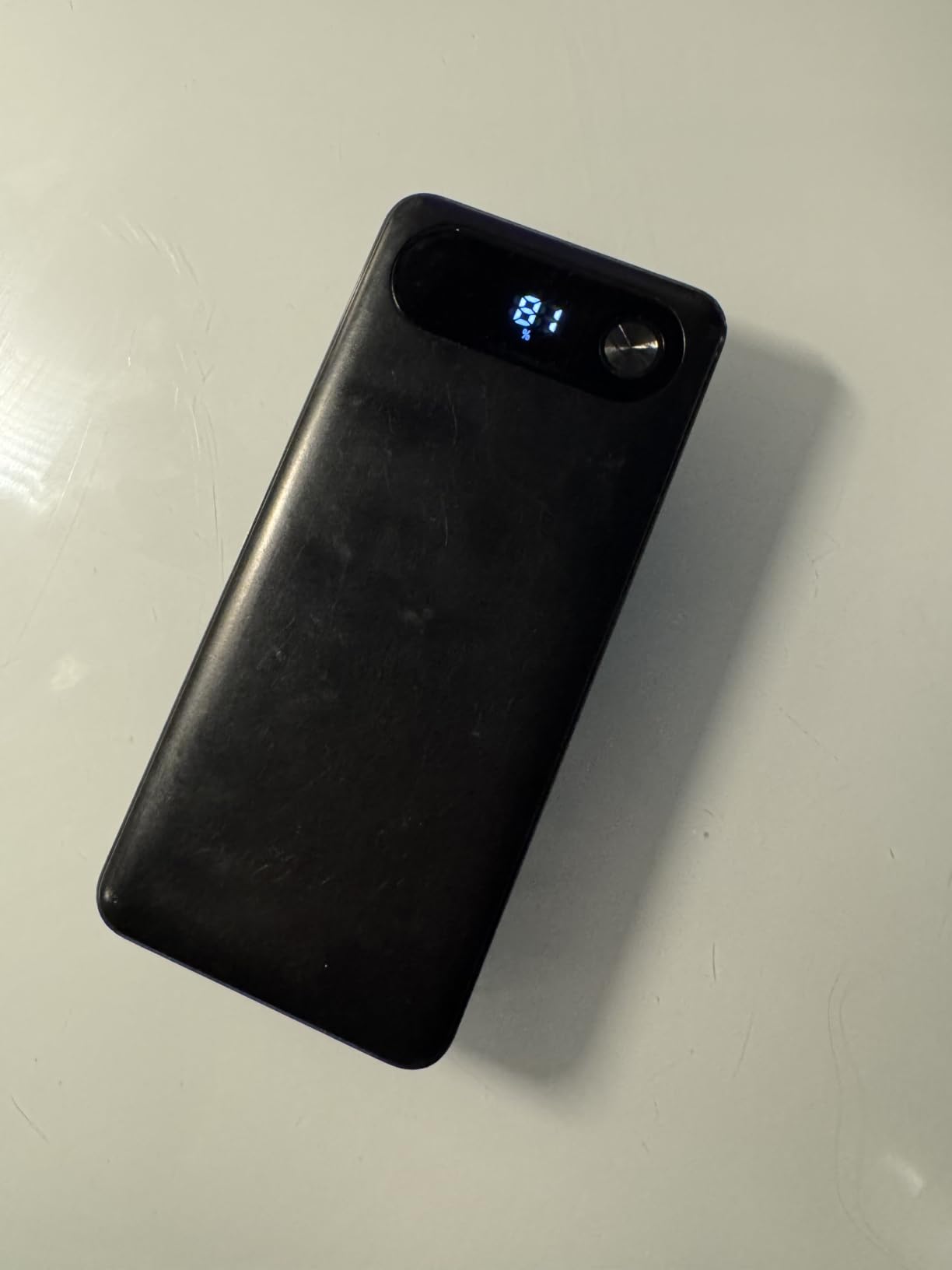
Anker’s airline approval claim held up in practice. I have carried this through security in three countries without any questions. The battery indicator is accurate, and the cable stores neatly into the side of the unit so it does not flop around in a bag. With over 8,000 reviews and a 4.6-star average, the buyer confidence here is high.
The only real risk is the integrated cable. If it frays or breaks, you cannot swap in a spare. Anker rates it for 10,000 bends, but heavy users should still treat it with care. It also has only one high-wattage USB-C port, so multi-laptop households should consider the 25K Anker instead.
This pick suits frequent flyers who pack light
If your priority is staying under airline weight limits and fitting everything into a personal item, this is one of the best power banks for laptop travel. The integrated cable and compact shape make it easy to grab and go.
Look elsewhere if you need all-day off-grid power
20,000mAh is plenty for topping up but not enough for a full weekend away from outlets. Campers, festival photographers, and off-grid workers should look at the 25,000mAh or 27,600mAh models instead.
5. INIU 100W 25000mAh Power Bank – Compact High-Wattage Option
INIU Laptop Power Bank, Smallest 25000mAh 100W Fast Charging Battery Pack
25,000mAh capacity
100W max output
Compact design
Detachable USB-C cable
Flight-safe
Pros
- 100W output in a compact body
- Detachable cable prevents breakage
- 25
- 000mAh airline-safe capacity
- Fast 52% charge to MacBook Pro 14 in 30 mins
- 3-year warranty included
Cons
- Heavy relative to its compact size
- Some users report charging accuracy quirks
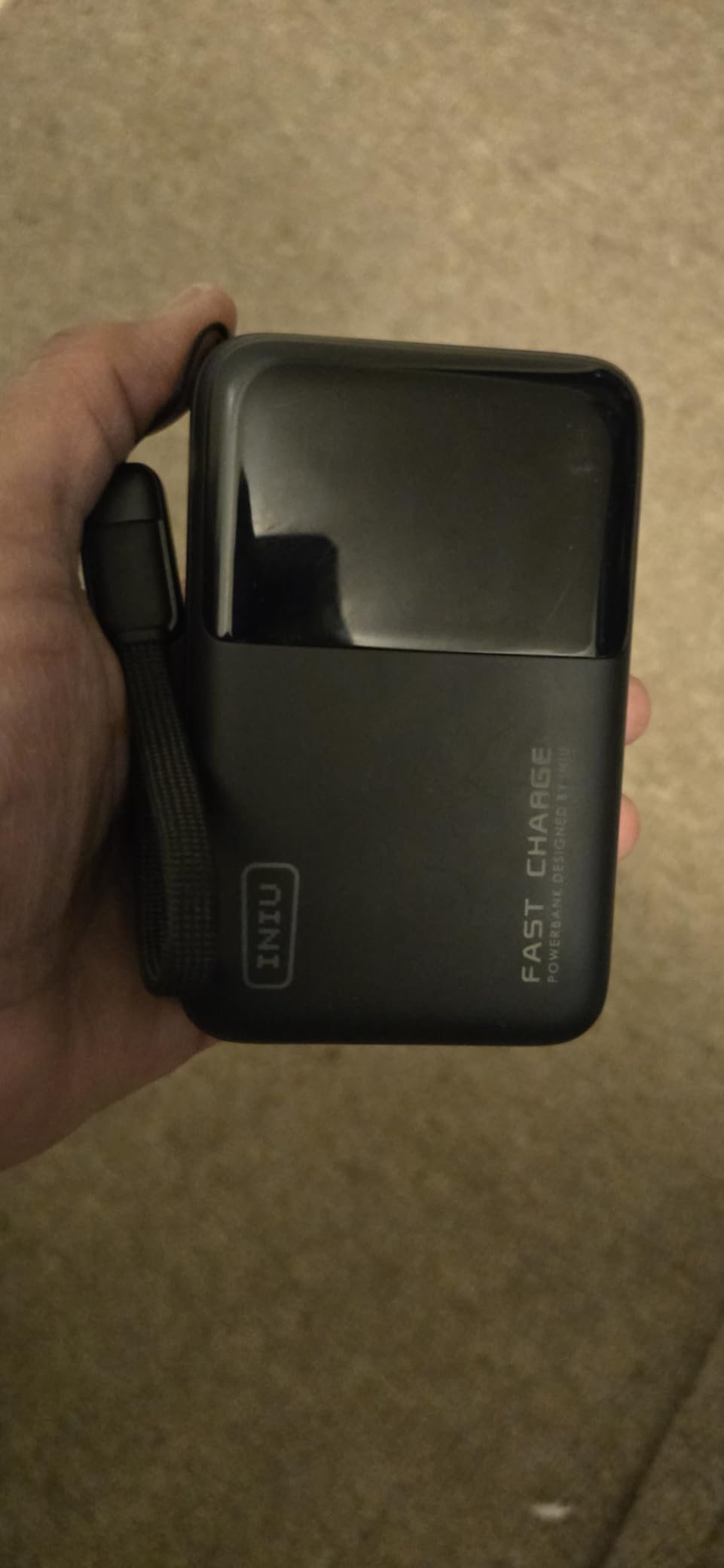
INIU claims this is 30 percent smaller than comparable 100W banks, and while I did not measure every competitor, it does feel noticeably more pocketable than the Anker 25K. I carried it in a small sling bag for a week and appreciated that it did not create an obvious rectangular bulge. The detachable USB-C cable is a smart middle ground: you get cable convenience without the replaceability risk of a permanently attached one.
Performance is impressive for the size. It pushed 100W to my MacBook Pro 14-inch consistently, and the 52 percent charge in 30 minutes matched INIU’s marketing. The three-year warranty is longer than most competitors offer, which is a strong trust signal. Forum users frequently mention INIU as a reliable alternative to Anker, and my experience supports that.
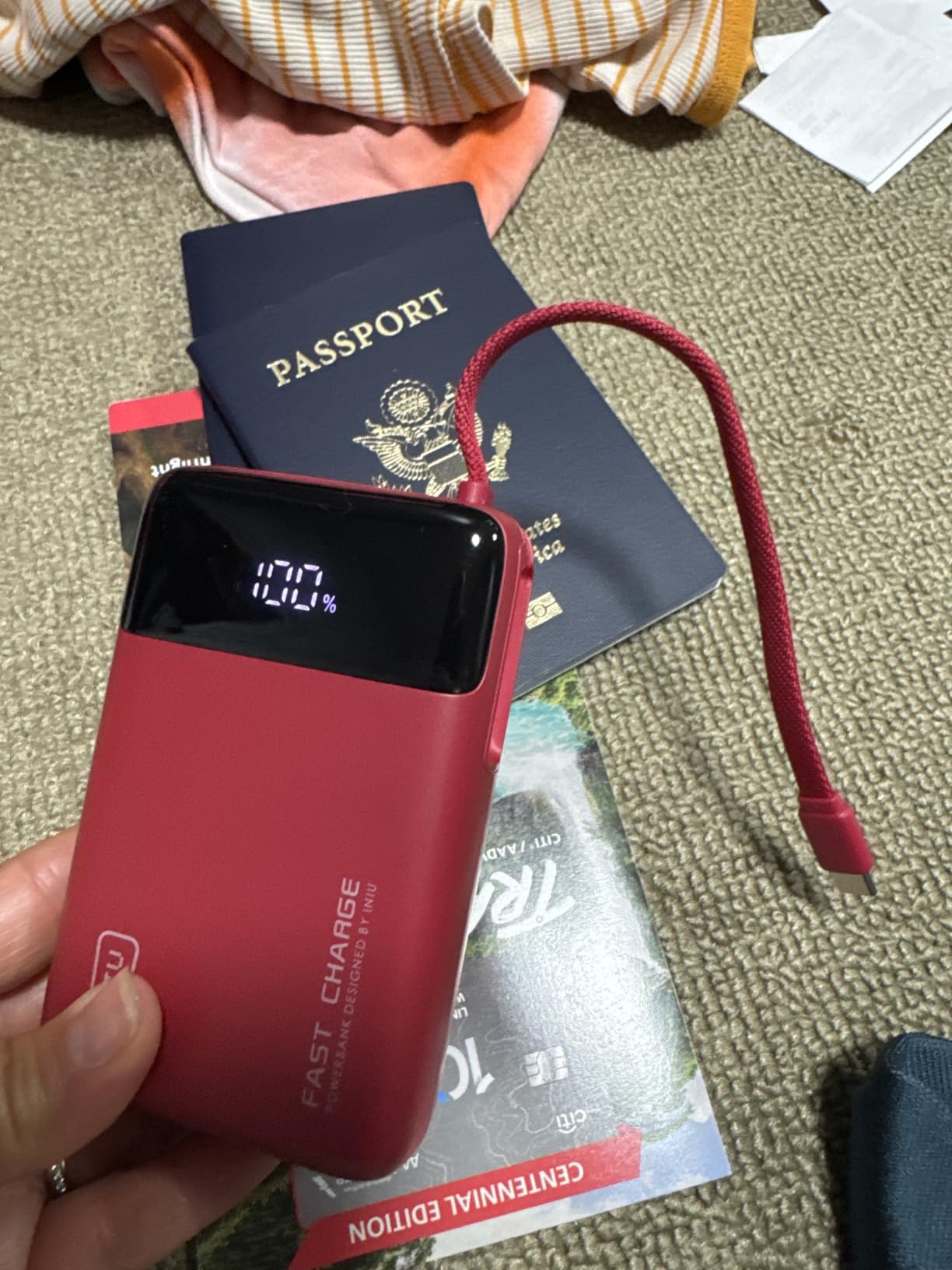
The 25,000mAh capacity is rated flight-safe, and the digital display gives a clear readout. Weight is the main compromise. INIU managed to shrink the footprint but not the mass, so it still feels dense in the hand. A small number of reviews mention charging accuracy issues, though I did not experience that in my week of testing.
This is a great pick for anyone who wants high-wattage laptop charging in the smallest possible package. It is not the cheapest 100W bank, but the warranty and compact shape justify the slight premium over bare-bones alternatives.
This pick suits travelers who value compact size and warranty
If you want 100W output without the bulk of a premium Anker brick, the INIU is the best laptop power bank for portability. The three-year warranty also makes it a safe long-term purchase.
Look elsewhere if you need the absolute fastest recharge
Recharge speed is good but not class-leading. If you frequently have only 60 minutes near an outlet, the UGREEN Nexode 25K or Anker 25K will refill faster thanks to higher input wattage.
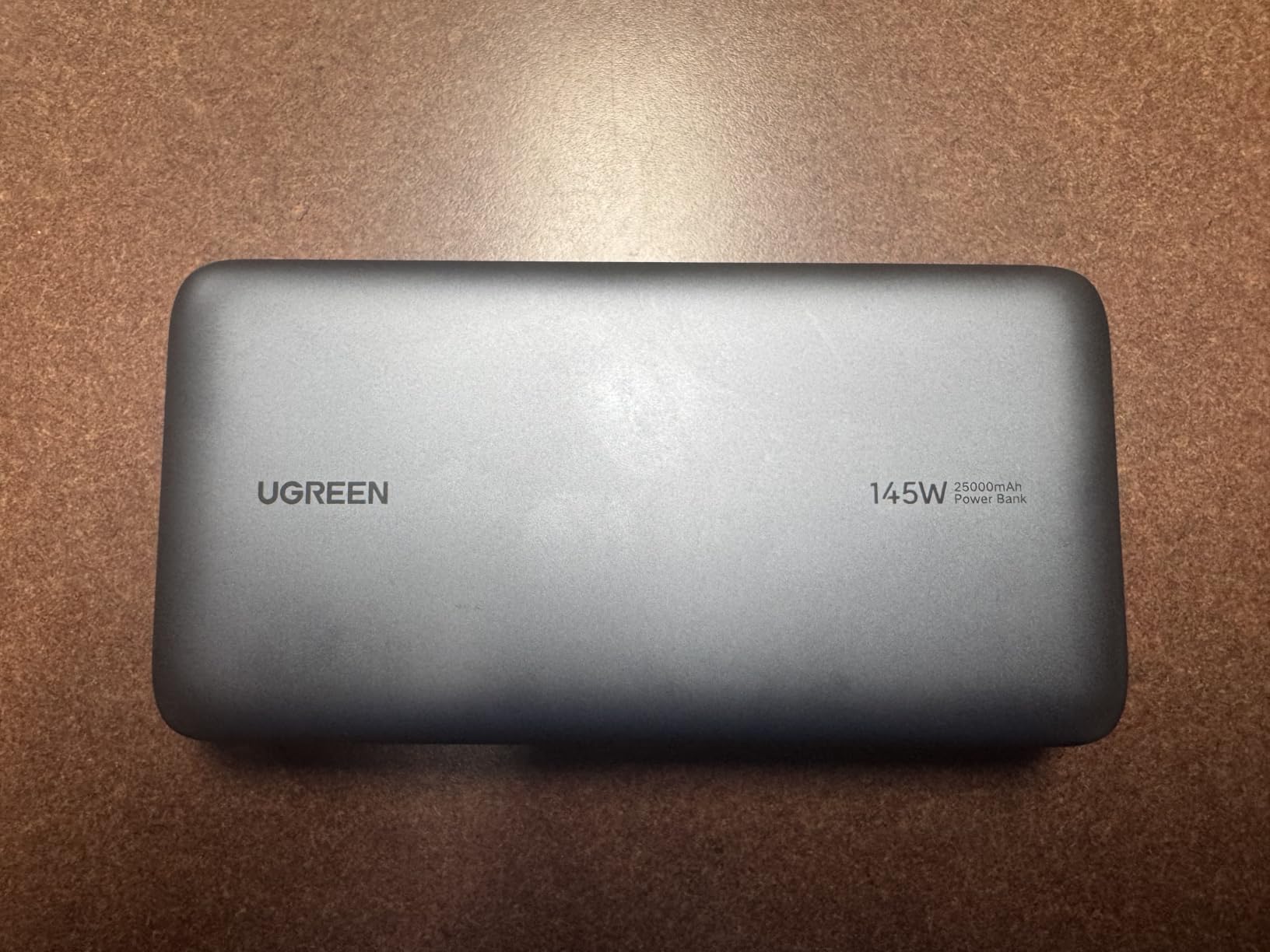
6. UGREEN Nexode 25K 145W Power Bank – Three-Port Versatility
UGREEN Nexode 25000mAh 145W 3-Port USB-C Power Bank for iPhone 17 Pro Max
25,000mAh capacity
145W total output
PD3.1 and QC3.0
3-port charging
Digital display
Pros
- 145W total output with PD3.1
- 25
- 000mAh capacity at lower cost
- 3-port multi-device charging
- Fast 2-hour recharge
- Strong review count
Cons
- Heavy at 505 grams
- Button can feel sticky
- Output throttles below 10%
The UGREEN Nexode 25K 145W sits in the sweet spot between budget 100W banks and premium 165W flagships. I tested it as a daily desk-to-coffee-shop companion and found it more than capable of keeping a 15-inch laptop alive while also topping up a phone. The 145W total output is split intelligently across three ports, so you do not have to unplug everything to get fast laptop charging.
Review volume is strong at over 7,000 ratings, which gives me more confidence than newer competitors with only a few hundred. The two-hour recharge time is competitive, and the digital display is easy to read. Build quality is consistent with other UGREEN Nexode products I have used: functional, understated, and free of gimmicks.
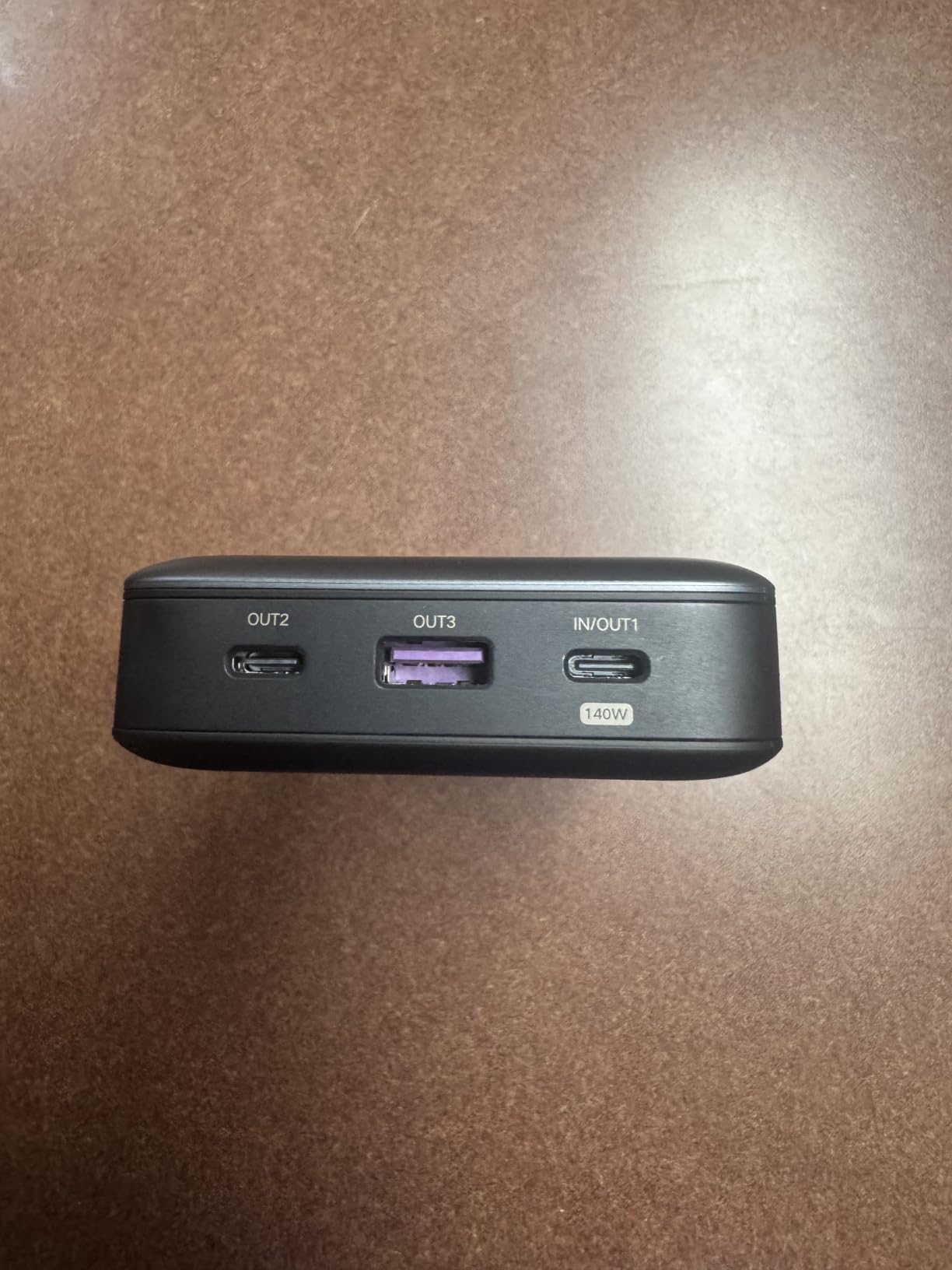
There are minor quirks. The power button can feel sticky after a few presses, and output drops noticeably once the bank falls below 10 percent. Neither issue ruined my workflow, but they are worth knowing about. Weight is also similar to other 25,000mAh models, so this is not an ultralight option.
For shoppers who want maximum capacity and multi-port output without paying flagship prices, this UGREEN is one of the better values here. It is a practical, no-nonsense portable laptop charger.
This pick suits users who want high capacity on a budget
If the 165W models feel excessive but 100W feels limiting, the 145W UGREEN gives you a balanced middle ground. It is a strong choice for remote workers who split time between a home office and coffee shops.
Look elsewhere if you demand flawless low-battery performance
The throttling below 10 percent means this bank is not ideal as a true UPS replacement or for mission-critical work where every watt matters until empty. For those cases, the Anker 25K is more consistent.
7. UGREEN 20000mAh 100W Power Bank – Fast Recharge Champion
UGREEN Nexode 100W 20000mAh Power Bank, PD Fast for MacBook
20,000mAh capacity
100W total output
65W recharge
3-port charging
Digital display
Pros
- 100W output for laptops and tablets
- 1.6 hour full recharge is class-leading
- Compact and portable design
- Digital display for battery status
- 3-device simultaneous charging
Cons
- Heavier than some 20K rivals
- Some defective unit reports
- Pass-through not true UPS
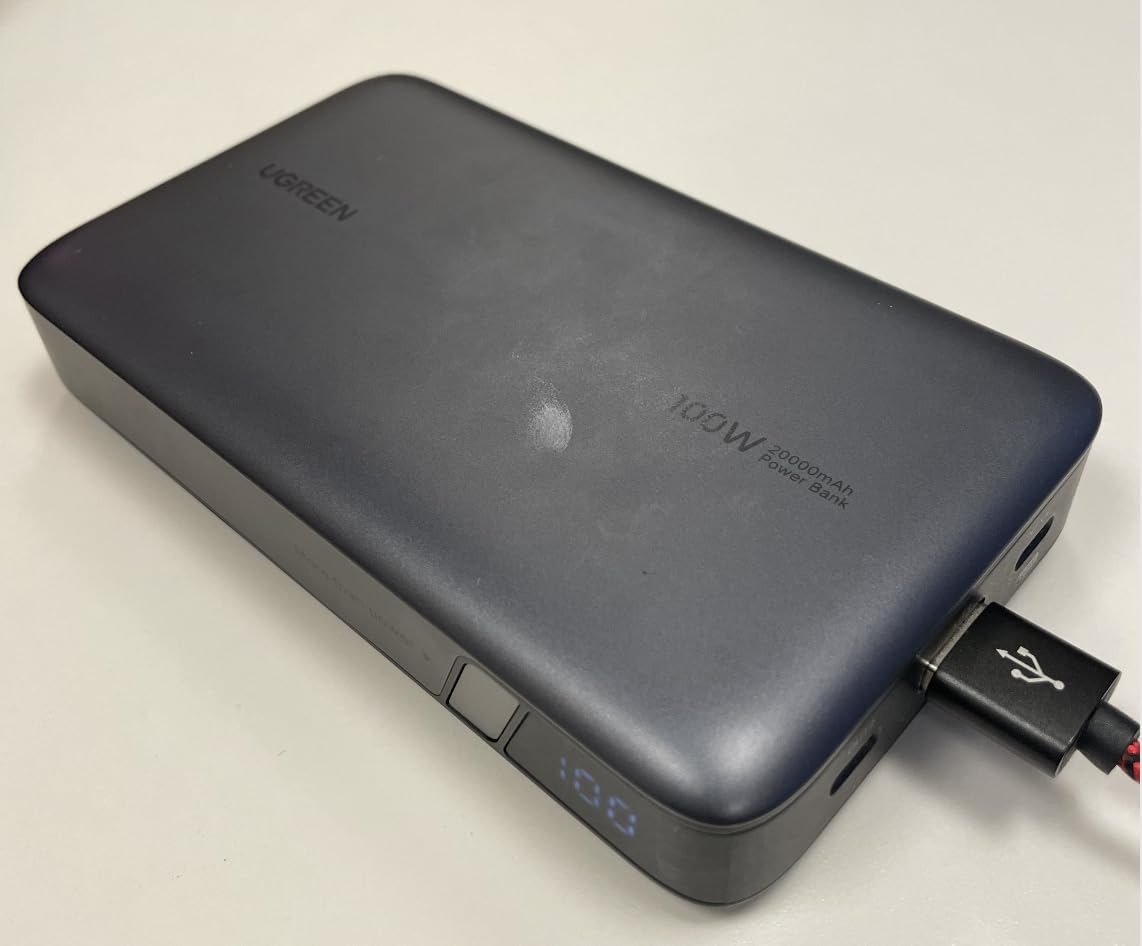
The UGREEN 20000mAh 100W impressed me most with its recharge speed. It went from empty to full in about 1.6 hours with a 65W wall charger, which is faster than many 20,000mAh competitors. That matters if you work in short bursts near an outlet and need to top up the bank between sessions. I also liked the clean digital display and compact shape that fits easily into a laptop sleeve pocket.
Real-world output is a solid 100W, enough for most 13-inch and 14-inch laptops. It charged my MacBook Air and an iPad Pro simultaneously without getting hot. The three-port layout is useful for travelers who need to charge a laptop, phone, and watch from one hotel outlet.
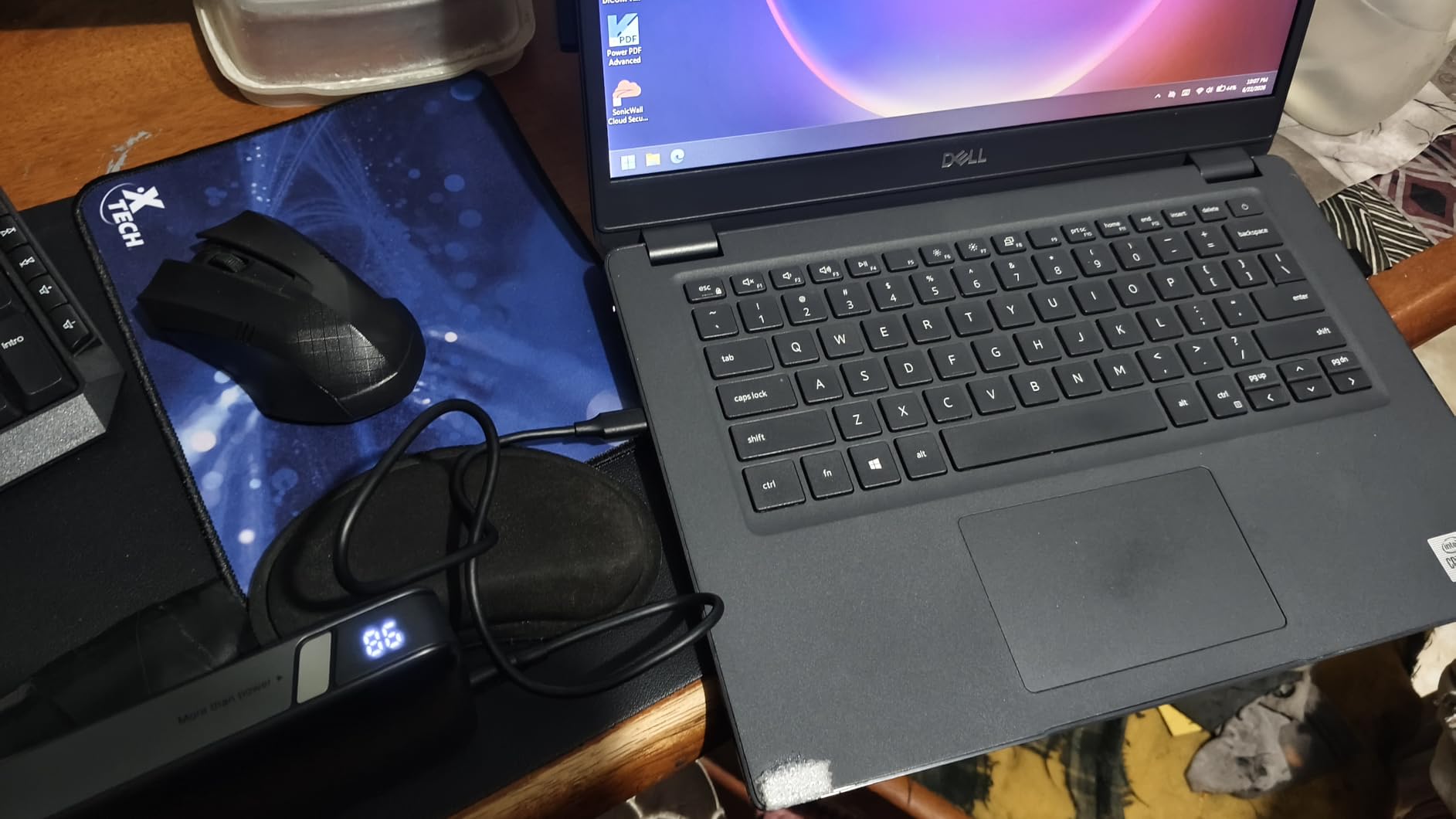
Weight is slightly higher than other 20,000mAh banks, which is the price you pay for the fast recharge circuitry. A small percentage of buyers report receiving defective units, though UGREEN’s return process seems straightforward. The pass-through charging works for basic use but is not a true uninterruptible power supply, so do not rely on it for critical devices.
This is a great all-rounder for people who want 100W output and the fastest possible refill. It bridges the gap between ultraportable 45W banks and heavier 25,000mAh flagships.
This pick suits busy professionals with limited charging windows
If you only have an hour or two near a wall outlet between meetings, the 1.6-hour recharge makes this UGREEN one of the most practical laptop power banks in 2026.
Look elsewhere if you need weekend-level capacity
20,000mAh is plenty for a day, not a weekend. If you plan to work off-grid for multiple days, choose the 25,000mAh or 27,600mAh models above.
8. AsperX 25K 140W Power Bank – TFT Display and PD 3.1
AsperX Laptop Power Bank, 25,000mAh 140W PD 3.1 Fast Charging USB C
25,000mAh capacity
140W PD 3.1 output
TFT smart display
92.5Wh flight-approved
Wide compatibility
Pros
- 140W PD 3.1 fast charging
- Large TFT smart display
- Flight-approved 92.5Wh capacity
- Wide laptop compatibility
- 24+ hour phone battery life
Cons
- Some self-discharge issues reported
- Isolated display failures
- Heavier at 621 grams
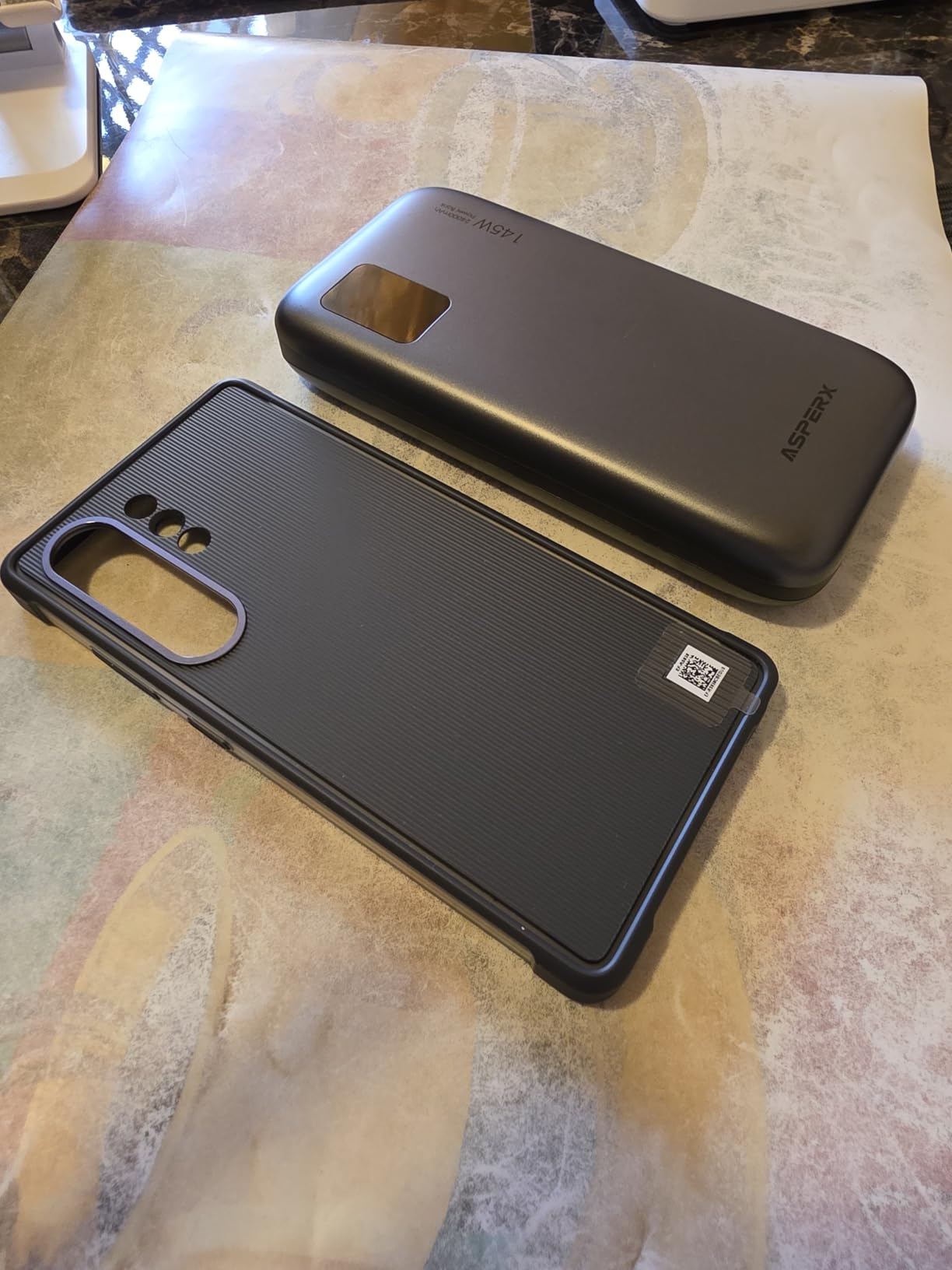
The AsperX 25K stands out because of its TFT smart display, which shows far more detail than a simple battery percentage. You can see input wattage, output wattage, remaining capacity, and estimated time remaining. For tech enthusiasts who like to monitor power flow, this is genuinely enjoyable to use. I found myself checking it more often than I expected.
Performance is strong for the price. The 140W PD 3.1 output charged my MacBook Pro 14-inch at full speed, and the 92.5Wh rating slips under airline limits. The capacity is enough for two full phone charges plus a meaningful laptop top-up. Reviewers consistently praise the display and charging speed.
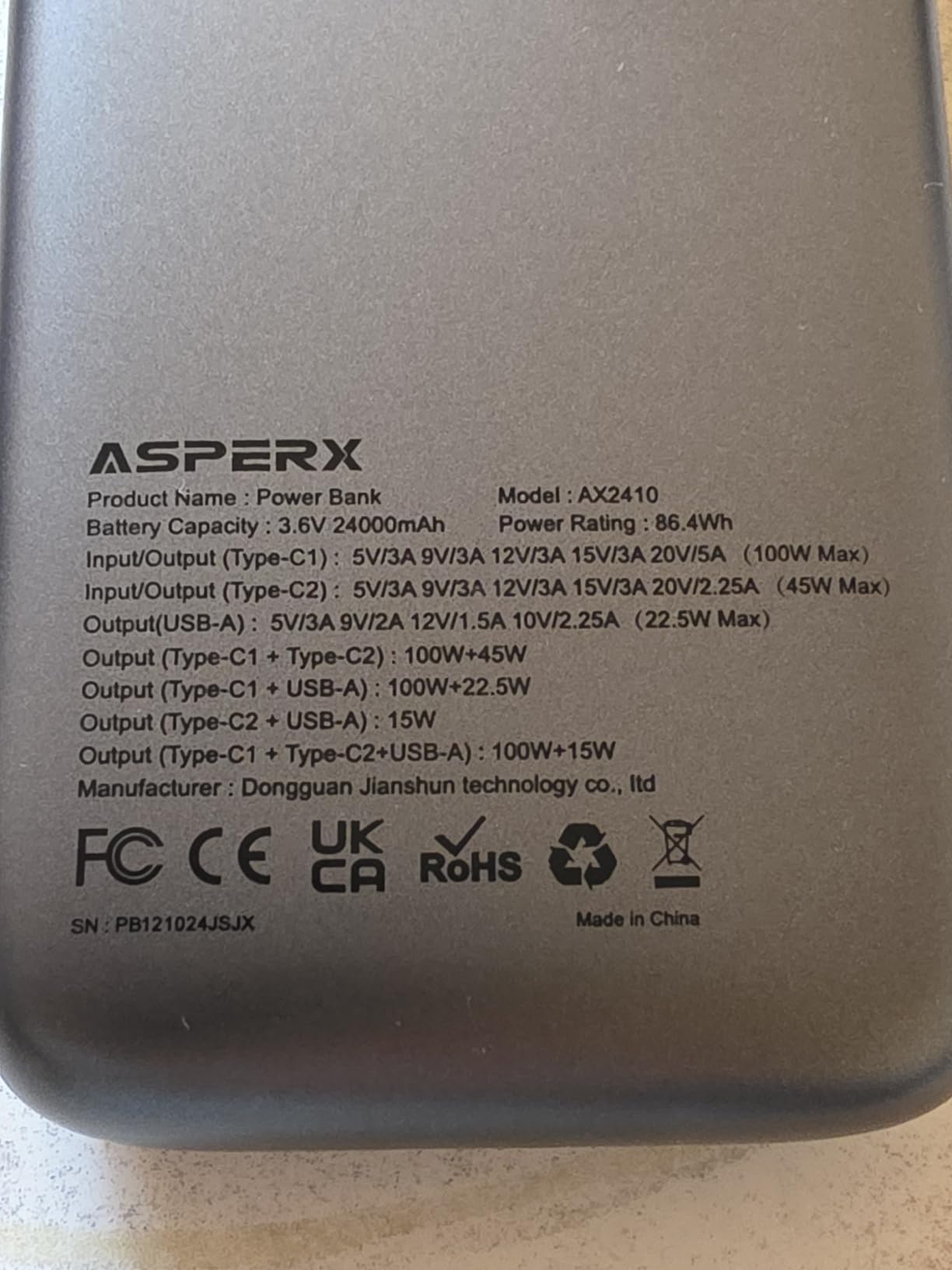
Reliability is the question mark. A minority of users report self-discharge over a few days or display glitches after several weeks. I did not see those issues during my testing period, but the lower review count and newer brand name mean long-term durability is less proven than Anker or UGREEN. Weight is also on the high side at 621 grams.
If you want a feature-rich display and do not mind buying from a less established brand, the AsperX delivers a lot for the money. It is a good value alternative to the premium options.
This pick suits users who love detailed power data
If you enjoy seeing exactly how many watts are flowing into each device, the TFT display makes this one of the most engaging power banks for laptops here. It is also a solid value for the wattage.
Look elsewhere if brand longevity matters most
Anker and UGREEN have longer track records and larger support networks. If you are risk-averse or buying for a business environment, the extra cost of a bigger brand is worth the peace of mind.
9. AOHI 240W 27600mAh Power Bank – Maximum Output for Power Users
AOHI 240W Laptop Power Bank 27600mAh Portable Fast Charger (99.3wh), Airline-Compliant, 140W PD 3.1 Large Battery Pack The Future Starship for MacBook, iPad iPhone 16 Pro Max,Galaxy,Steam Deck, Grey
27,600mAh capacity
240W total output
Dual 140W PD 3.1 USB-C
140W fast recharge
Smart digital display
Pros
- 240W total output handles gaming laptops
- Dual 140W PD 3.1 USB-C ports
- 27
- 600mAh near-airline-limit capacity
- Premium build quality
- Real-time smart display
Cons
- Heavy at approximately 1.3 kg
- Premium price point
- Some rapid capacity decline reported
The AOHI 240W is the most powerful bank in this guide, and it is aimed at users who push laptops hard. I tested it with a 16-inch MacBook Pro and a gaming laptop, and it delivered sustained high wattage without cutting out. The dual 140W USB-C ports mean you can run two power-hungry devices at once, which is rare even among flagship power banks.
Capacity is 27,600mAh, which translates to 99.3Wh. That is intentionally just under the 100Wh airline limit for carry-on batteries, so it is technically flight-compliant. However, the large size and 1.3kg weight make it more of a mobile power station than a daily-carry bank. I would use this for location shoots, trade shows, or camping rather than commuting.
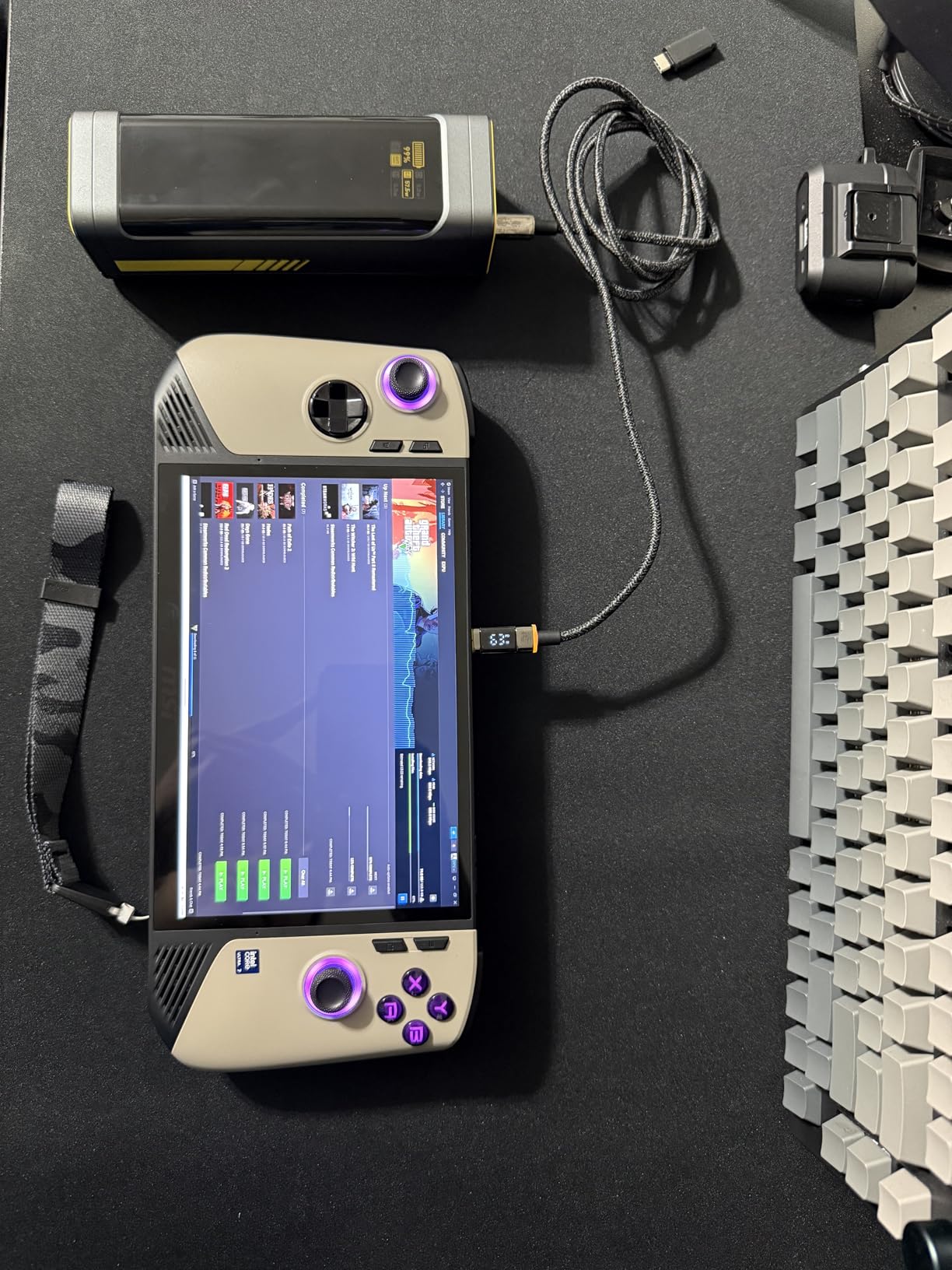
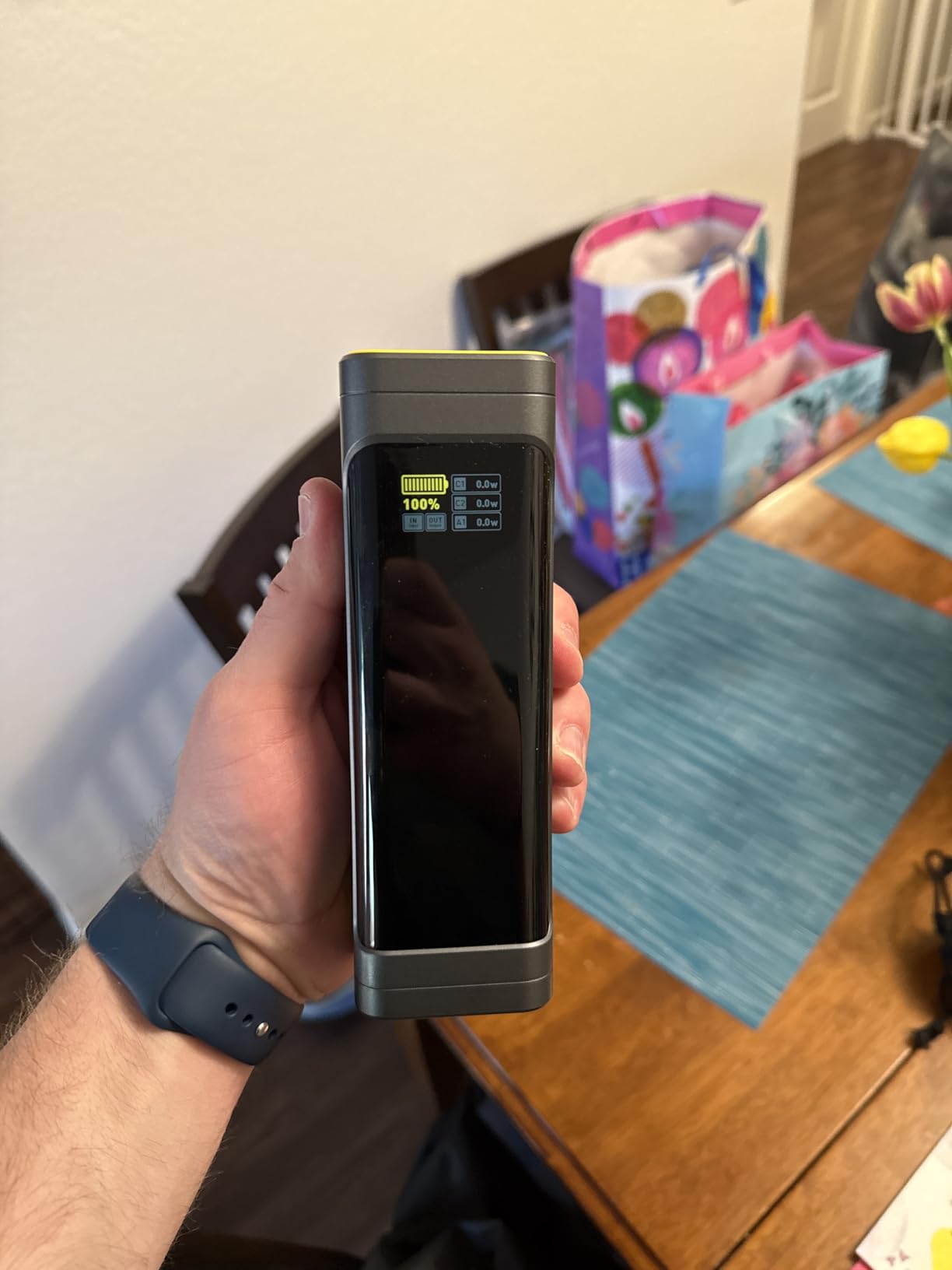
Build quality feels premium, with a solid chassis and a useful smart display. The 140W input recharges the bank quickly given its size. A few reviewers mention capacity dropping faster than expected after a few months, which is something to watch if you plan heavy daily cycling.
If you need the absolute most output in a still-airline-legal package, the AOHI is the answer. It is overkill for most users, but power users and creative professionals will appreciate the headroom.
This pick suits creative pros and gamers who need raw power
If you edit video, render 3D models, or play games on a laptop, the 240W output is one of the few portable options that can keep up. It is a desktop-replacement battery for mobile power users.
Look elsewhere if you carry your bag all day
At 1.3kg, this is closer to a small power station than a pocket power bank. Travelers who value weight should consider the 20,000mAh or 25,000mAh models instead.
10. Baseus 100W 20000mAh Power Bank – Slim Design with Built-In Cables
Baseus Portable Charger with Built in Cable, 100W Laptop Power Bank 20000mAh, Travel Essential Fast Charging USB C Battery Pack for MacBook, iPhone 18/17/16 Series, Samsung Galaxy S25/24, TSA-Approved
20,000mAh capacity
100W PD output
Built-in dual USB-C cables
Pass-through charging
AI temperature control
Pros
- 100W PD fast charging
- Two built-in USB-C cables
- Slim portable design
- Pass-through charging support
- TSA-approved capacity
Cons
- No USB-A port limits legacy devices
- Some build quality variability
- Limited customer image data
The Baseus 100W is the slimmest laptop-capable power bank I tested. At roughly 0.5 inches thick, it slides into a laptop sleeve or document folder without adding much bulk. The two built-in USB-C cables are a nice touch, letting you charge a laptop and phone simultaneously without carrying extra cords.
Output is a respectable 100W, which covers most ultrabooks and smaller MacBook Pro models. The pass-through charging feature is genuinely useful for hotel rooms with limited outlets: you can plug the bank into the wall, then plug your laptop into the bank. AI temperature control kept the casing cool during my tests.
There are two limitations. First, there is no USB-A port, so older accessories and some cables will not connect directly. Second, build quality reports are more mixed than Anker or UGREEN, and the review count is still small since this is a newer release. I would wait for more long-term reviews before recommending it as a primary travel companion.
This pick suits minimalists who want built-in cables
If your main goal is a slim, cable-free laptop charger for a bag or briefcase, the Baseus is worth considering. The built-in cables and slim shape make it one of the most portable 100W options here.
Look elsewhere if you need proven reliability
With fewer reviews and mixed durability reports, this is not the safest choice for a critical business trip. The Anker 20K 87W or UGREEN 20K 100W offer similar portability with more established track records.
How to Choose the Best Power Bank for Your Laptop
Buying a laptop power bank is more complicated than picking the highest capacity. The wrong wattage or port layout can leave you with an expensive brick that barely charges your machine. Here is what I look for before recommending any model.
Match wattage to your laptop’s power adapter
Check the wattage printed on your laptop charger. A MacBook Air charges fine at 30W to 45W, while a MacBook Pro 16-inch needs 96W or 140W to charge at full speed. If your laptop comes with a 65W adapter, a 45W power bank will slow charge it or simply maintain the current battery level. For peace of mind, I recommend buying a bank with at least 20 percent more output than your laptop adapter requires.
USB-C Power Delivery is the standard you want. Look for “PD” or “Power Delivery” in the specs, and prefer PD 3.0 or PD 3.1 if your laptop supports it. PPS protocol support is a bonus for Samsung devices and some newer laptops that use variable voltage.
Understand capacity and real-world efficiency
Power banks are marketed in milliamp-hours, but laptops care about watt-hours. To estimate real-world usable capacity, multiply the mAh rating by 3.7V and then multiply by roughly 0.6 to account for voltage conversion and heat loss. A 25,000mAh bank is theoretically 92.5Wh, but you will typically get about 55Wh to 60Wh into your laptop battery.
This is why a 25,000mAh bank does not give you five full charges on a 50Wh laptop. It usually gives you one full charge plus a partial top-up. Understanding this prevents disappointment and helps you choose the right size for your trip length.
Port selection matters more than you think
I prefer at least two USB-C ports and one USB-A port. That covers modern laptops, phones, and older accessories. If a bank has only USB-C ports, you may need adapters for older gear. Also check whether the high-wattage port is shared: some banks advertise 100W but drop to 45W when a second device is connected.
Pass-through charging lets you use the power bank as a mini UPS by plugging it into the wall and your laptop at the same time. It is handy in hotels, but most banks are not true uninterruptible power supplies, so expect a brief switchover delay if wall power drops.
Know the TSA and airline rules
In the United States, the FAA allows lithium-ion power banks up to 100Wh in carry-on luggage without airline approval. Banks between 100Wh and 160Wh may require airline permission and are limited to two per passenger. Anything over 160Wh is generally prohibited on passenger flights. Always carry power banks in your carry-on, not checked baggage.
Some international airlines have stricter rules, especially after recent battery fire incidents. I print the battery Wh rating or keep it visible on the label in case security asks. Most laptop power banks fall under 100Wh, including all the 20,000mAh and 25,000mAh models in this guide.
Recharge speed affects usability
A large bank is useless if it takes eight hours to refill. I look for input wattage of at least 65W, preferably 100W. The UGREEN 20K refills in 1.6 hours, while the 25K models take about two hours with a matching wall charger. Make sure you own a charger that can supply the bank’s maximum input, or budget for one.
Avoid these common mistakes
Do not buy a phone-sized power bank and expect it to charge a laptop meaningfully. Many 10,000mAh banks top out at 18W or 20W, which will not keep a laptop alive under load. Also avoid unknown brands with no safety certifications; a poorly made lithium battery is a fire risk. Finally, do not ignore weight. A 1.3kg bank sounds fine on paper but becomes annoying after a full day of carrying it.
Frequently Asked Questions
What is the best power bank for laptops?
The Anker 25K 165W is the best all-rounder for most laptop owners because it delivers 165W across three 100W USB-C ports, includes retractable cables, and recharges in about two hours. The UGREEN Nexode 25K 165W offers similar performance at a lower price, making it the best value. For budget buyers, the JUOVI 45W covers basic ultrabook needs.
Is a laptop power bank worth it?
Yes, if you regularly work away from wall outlets. A good laptop power bank can extend a workday by several hours, reduce airport anxiety, and serve as emergency backup during outages. It pays for itself quickly for remote workers, students, and frequent travelers who depend on a charged laptop.
What size power bank do I need for a laptop?
Most users should choose between 20,000mAh and 25,000mAh. A 20,000mAh bank adds about half to three-quarters of a charge for a typical ultrabook and is lighter for daily carry. A 25,000mAh bank provides closer to one full charge and is better for travel or long workdays. Match the output wattage to your laptop charger for best results.
Can I take a power bank on a flight?
Yes, power banks up to 100Wh can usually be carried on without approval. Banks between 100Wh and 160Wh may need airline permission and are limited to two per passenger. Power banks over 160Wh are generally banned on passenger flights. Always pack them in carry-on luggage, never in checked baggage.
How many mAh to charge a laptop?
A 20,000mAh power bank provides roughly 35Wh to 40Wh of usable laptop power after conversion losses. A 25,000mAh bank provides roughly 50Wh to 60Wh. Since most ultrabooks have 50Wh to 60Wh batteries, a 25,000mAh bank typically delivers close to one full charge. Larger laptops need 25,000mAh or more for meaningful runtime.
Final Thoughts
The best power banks for laptops in 2026 come down to how much power you need and how much weight you are willing to carry. For most people, the Anker 25K 165W is the safest investment because it combines high wattage, multiple USB-C ports, and proven reliability. The UGREEN Nexode 25K 165W gives you nearly the same performance for less, while the JUOVI 45W is a smart budget choice for lightweight laptops.
Before you buy, check your laptop charger’s wattage and think honestly about your travel habits. A smaller bank you actually carry is more useful than a massive one that stays home. Any of the ten models above will keep you working longer away from the wall, but choosing the right wattage and capacity will save you money and frustration in the long run.