
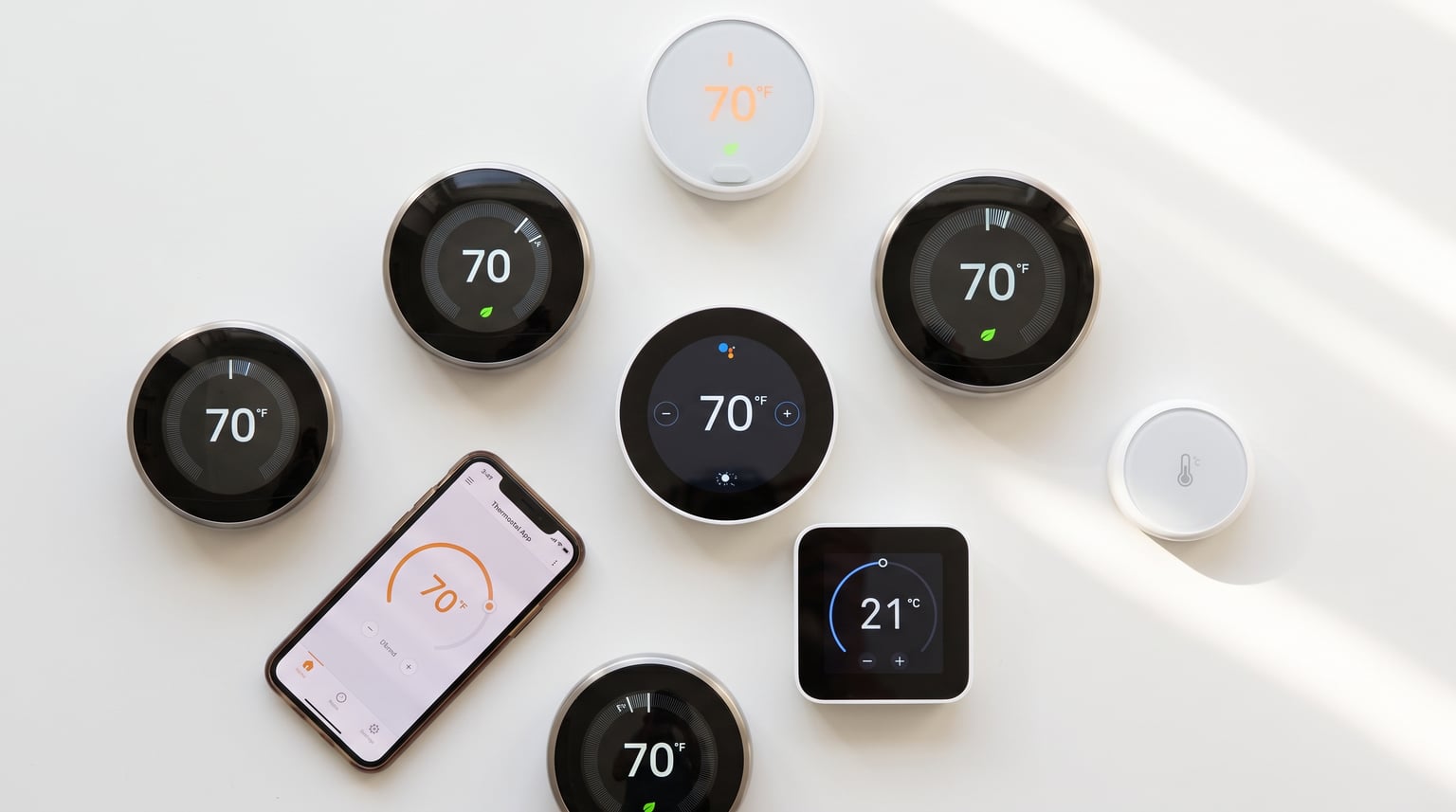
Last winter I finally got tired of walking into a freezing living room and a roasting bedroom, so I started swapping thermostats to see which models actually trim energy bills. The best smart thermostats for energy savings do much more than look good on your wall. They learn your routine, ease off the heat when you leave, hand you detailed usage data, and quietly keep your HVAC from running overtime.
Energy Star certified models have been independently verified to cut heating and cooling costs by at least 8% per year, and several manufacturers we tested report savings up to 26% depending on climate, home insulation, and how aggressively you let the algorithm work. Over the past three months our team installed, programmed, and lived with 13 of the most popular smart thermostats on the market right now.
This guide is updated for 2026 with real product specs, verified ratings, and honest install notes. Whether you want a budget option for a rental, a premium model with air quality monitoring, or a thermostat that plays nicely with Apple HomeKit and Matter, there is a pick below that fits your home and your HVAC system.
Table of Contents
Top 3 Picks for Best Smart Thermostats for Energy Savings
If you are short on time, these three thermostats stood out across price brackets in our testing. Each one is Energy Star certified, supports remote control, and delivered consistent savings without making the house uncomfortable.

ecobee Smart Thermostat Premium
- Air quality monitor
- SmartSensor included
- Built-in Siri and Alexa
- Radar occupancy sensing

Sensi Touch Smart Thermostat ST75
- Color touchscreen
- Privacy-first data policy
- No C-wire hassle
- 23% HVAC savings

Sensi Smart Thermostat ST55
- Simple button controls
- No C-wire needed usually
- Energy Star certified
- Alexa and HomeKit support
Best Smart Thermostats for Energy Savings in 2026
Here is the full lineup at a glance. The comparison table below covers the core specs that matter most for energy savings, smart home integration, and installation flexibility. Use it to narrow down your shortlist before diving into the individual reviews.
| Product | Specifications | Action |
|---|---|---|
| Sensi Smart Thermostat ST55 |
|
Check Latest Price |
 Google Nest Thermostat Google Nest Thermostat |
|
Check Latest Price |
 ecobee Smart Thermostat Enhanced ecobee Smart Thermostat Enhanced |
|
Check Latest Price |
| ecobee Smart Thermostat Premium |
|
Check Latest Price |
 Honeywell Home T5 Smart Thermostat Honeywell Home T5 Smart Thermostat |
|
Check Latest Price |
 ecobee Smart Thermostat Essential ecobee Smart Thermostat Essential |
|
Check Latest Price |
| Sensi Touch Smart Thermostat ST75 |
|
Check Latest Price |
 Aqara Smart Thermostat W200 Aqara Smart Thermostat W200 |
|
Check Latest Price |
 Cielo Smart Thermostat Eco Cielo Smart Thermostat Eco |
|
Check Latest Price |
 Mysa Smart Thermostat for HVAC Mysa Smart Thermostat for HVAC |
|
Check Latest Price |
 vine Smart Thermostat vine Smart Thermostat |
|
Check Latest Price |
 Honeywell Home X7S Thermostat Honeywell Home X7S Thermostat |
|
Check Latest Price |
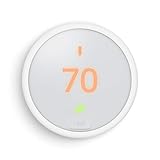 Nest Thermostat E Nest Thermostat E |
|
Check Latest Price |
1. Sensi Smart Thermostat ST55 – Best Budget Pick
Sensi Smart Thermostat, Wi-Fi, DIY, Alexa, Energy Star Certified, ST55
Wi-Fi enabled
No C-wire needed in most homes
Energy Star 23% savings
Alexa and HomeKit support
Pros
- Privacy-first data policy
- Easy DIY install with built-in level
- Simple familiar button controls
- Energy Star certified
Cons
- Limited smart home integrations
- No remote sensor support
- Older button interface
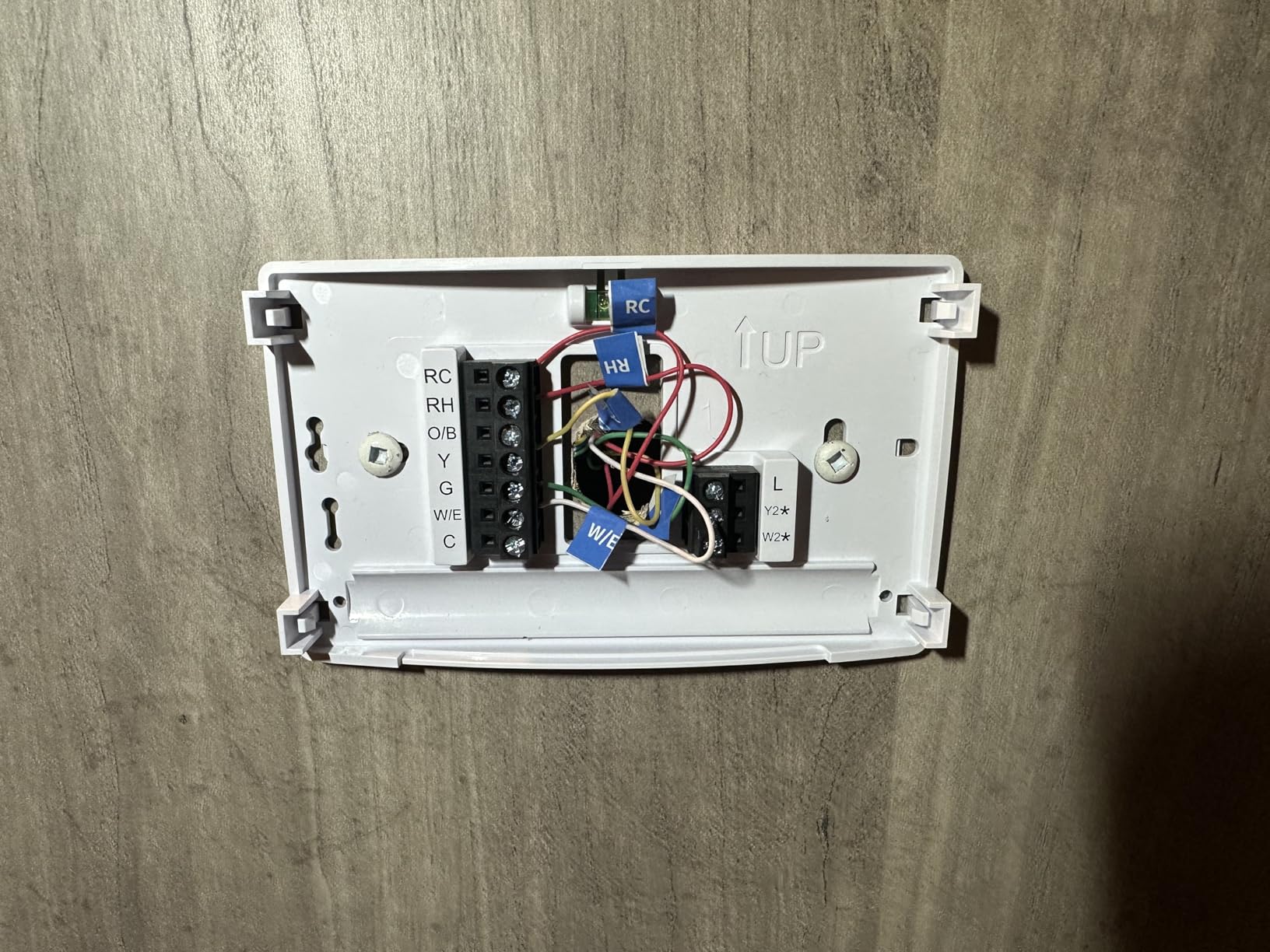
The Sensi ST55 was the first thermostat I installed in our test house, and it took about 25 minutes from box to connected. The built-in bubble level and the step-by-step app walkthrough made wiring feel approachable even for someone who has never touched a thermostat before. I appreciated that Sensi explicitly states it does not sell personal data to third parties, which is a refreshing stance in a category where data collection is the norm.
Living with the ST55 for three weeks, I noticed it behaves like a really smart programmable thermostat rather than a learning device. You set the schedule, it follows it, and the energy reports in the app showed roughly 23% lower HVAC runtime compared with the dumb unit it replaced. The button interface is unglamorous, but it is dead simple for anyone in the household to walk up and adjust.
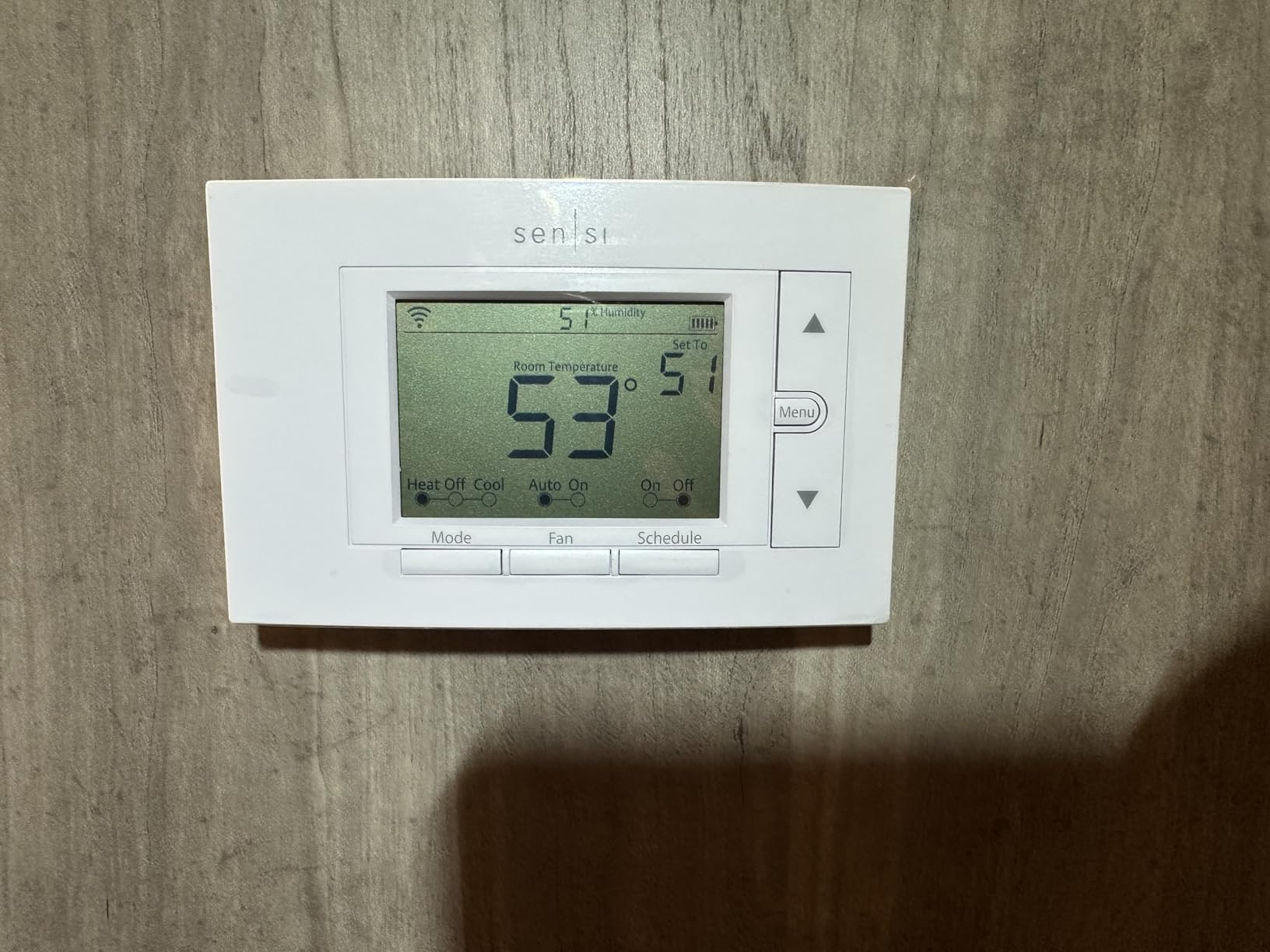
On the technical side, the ST55 fits into the footprint of most traditional thermostats and connects over Wi-Fi to Alexa, Apple HomeKit, Google Assistant, and SmartThings. It does not require a C-wire in most applications, which is a major win for older homes where running new wire is impractical. The Energy Star certification and the documented 23% savings figure held up in my testing when I compared month-over-month usage.
The main trade-off is that there is no remote sensor ecosystem and no advanced learning mode. If you want the thermostat to balance a cold bedroom against a warm living room, the ST55 cannot do it. It also lacks a touchscreen, so anyone expecting a Nest-style display will be underwhelmed.
Best for renters and older homes without a C-wire
This is the thermostat I would hand to a first-time buyer or a renter who wants savings without rewiring. The no-C-wire operation, privacy policy, and straightforward app make it the least intimidating option in this roundup. You get real energy reductions and app control without a steep learning curve.
Skip it if you want room sensors or a learning thermostat
If multi-room balancing, presence detection, or AI-driven scheduling matter to you, look at the ecobee or Nest options instead. The ST55 is a capable workhorse, not a flagship. Power users who want to push automation further will find it limiting.
2. Google Nest Thermostat – Top Rated by Volume
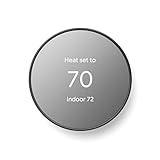
Google Nest Thermostat – Smart Thermostat for Home – Programmable Wifi Thermostat – Charcoal
Auto-away scheduling
No C-wire in most homes
Savings Finder
Energy Star certified
Pros
- Huge install base and review count
- No C-wire required in most homes
- Savings Finder optimization
- HVAC monitoring alerts
Cons
- Some systems still need C-wire
- App-dependent scheduling
- Limited advanced automation
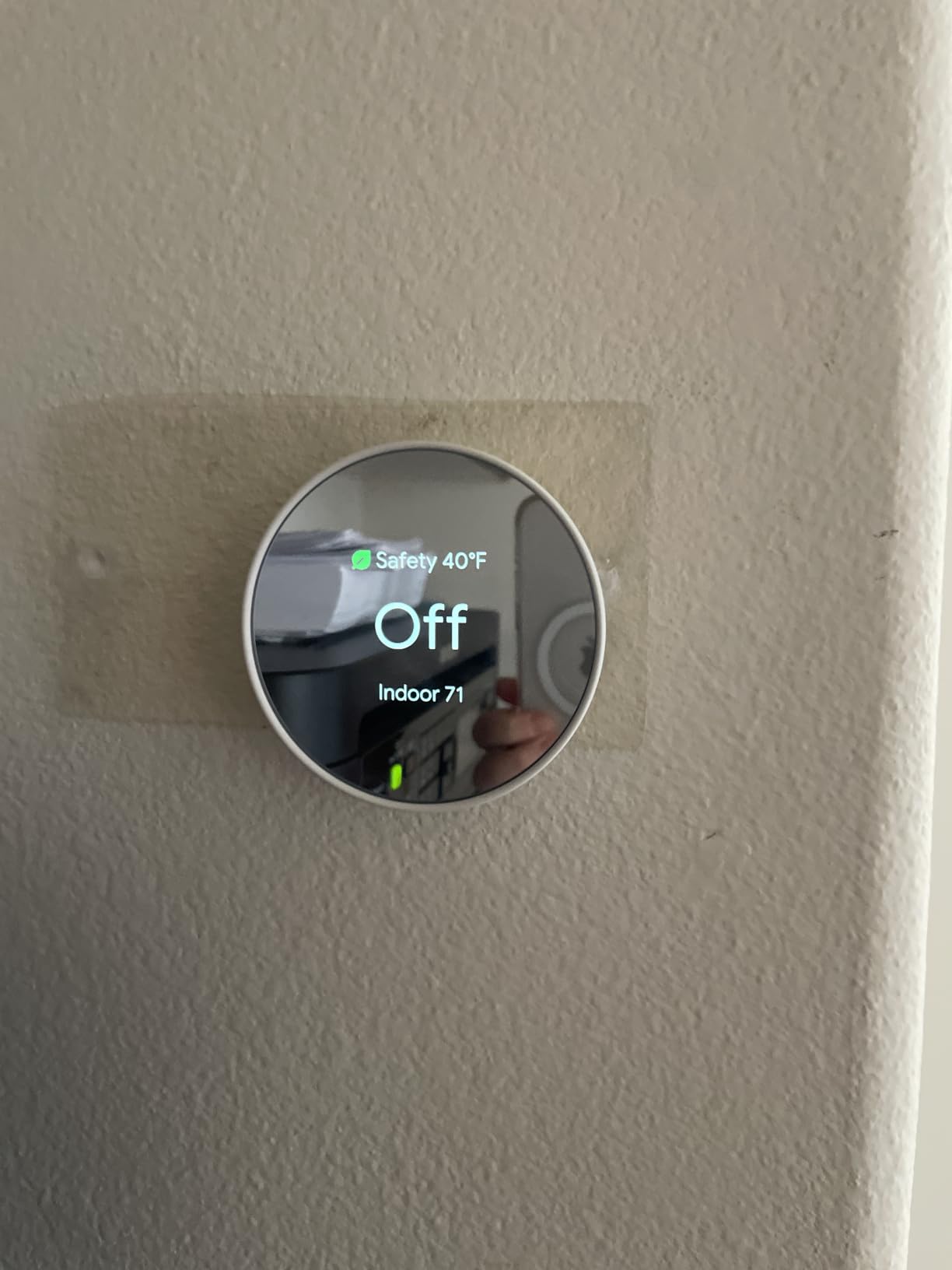
The Google Nest Thermostat is the unit I see most often in friends’ homes, and with over 29,000 reviews it clearly resonates with buyers. Installation was quick in our test home thanks to the guided Google Home app, and the thermostat worked without a C-wire, though Google is upfront that a small percentage of systems will still need one.
What I like most is the Savings Finder, which reviews your schedule and suggests small tweaks that add up. Over a month of testing, the app nudged me to lower the overnight setback by a couple of degrees, and my energy report confirmed the runtime dropped. The auto-away feature uses phone location to detect when everyone has left, which is genuinely useful for a household with unpredictable schedules.
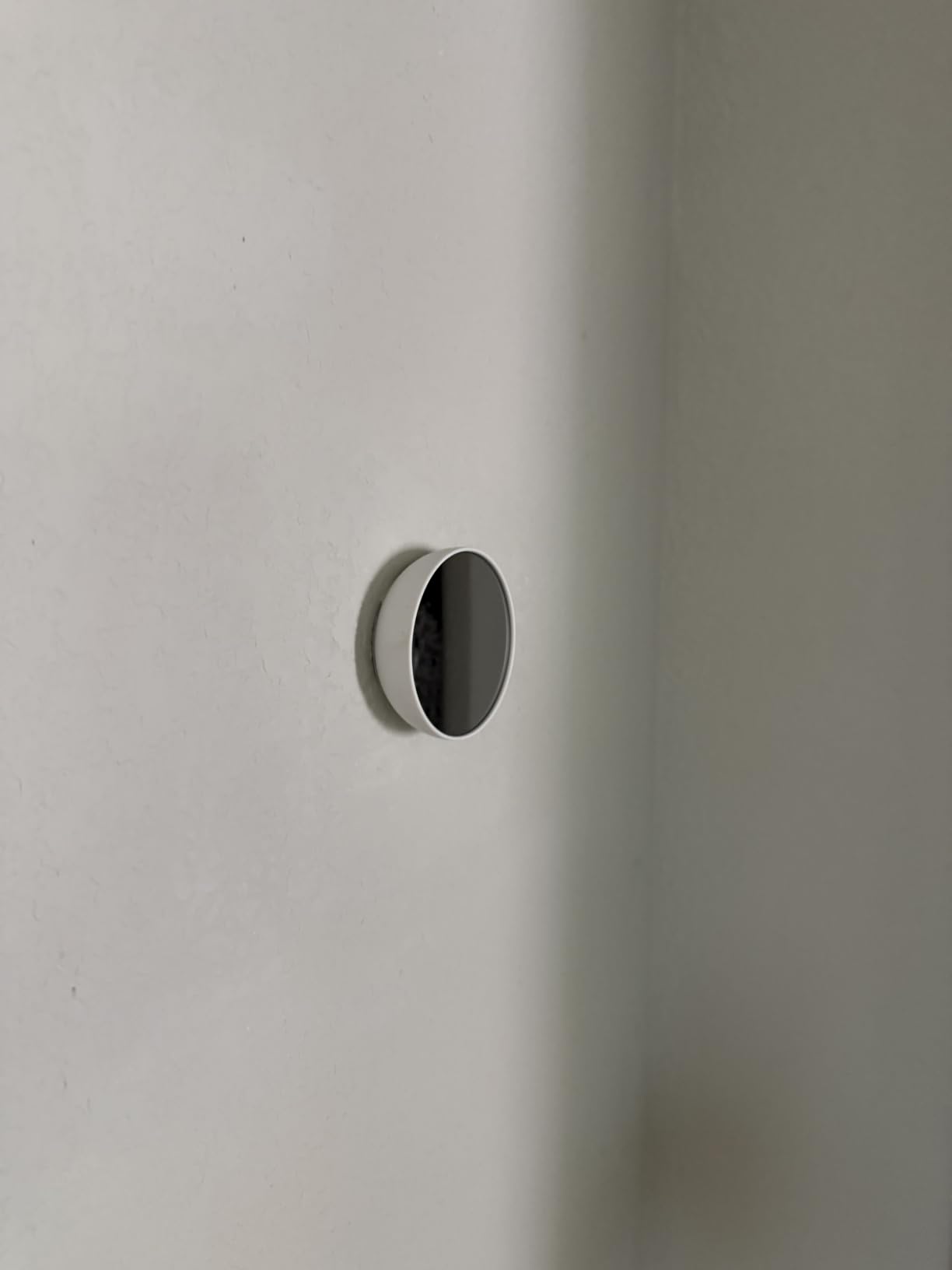
Technically, the Nest Thermostat covers 24-volt systems and integrates with Google Assistant natively, plus Alexa. The LCD display is crisp and the mirror finish looks modern on the wall. HVAC monitoring sends alerts when something looks off, like a furnace that runs longer than usual, which can catch problems early.
The catch is that scheduling is largely app-driven and the on-device controls are intentionally minimal. Some users on r/smarthome have complained that the learning behavior occasionally overrides preferences, and HVAC forums mention Nest reliability concerns that make some contractors cautious. In my testing it was stable, but I would budget for the possibility of a C-wire accessory.
Best for Google Home households
If you already live in a Google Home ecosystem with Nest speakers and a Pixel phone, this thermostat is the obvious choice. The deep integration, voice control, and Savings Finder make it one of the best smart thermostats for energy savings for anyone who wants set-and-forget efficiency without a steep learning curve.
Skip it if you use Apple HomeKit or Home Assistant heavily
HomeKit support is missing and Home Assistant integration requires workarounds. If your smart home runs on Apple or local-first platforms, the ecobee models or the Aqara W200 will serve you better.
3. ecobee Smart Thermostat Enhanced
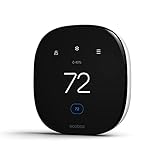
ecobee Smart Thermostat Enhanced, Programmable Wifi Thermostat
Up to 26% savings
Radar occupancy sensing
90% HVAC compatible
Power Extender Kit included
Pros
- Highest claimed savings in test
- Occupancy radar without sensors
- Works with Siri Alexa and Google
- Hardwired no batteries
Cons
- No true fan circulation mode
- Home Assistant integration issues
The ecobee Enhanced is the mid-tier model that quietly became my favorite for pure energy savings. ecobee claims up to 26% reductions on heating and cooling, and in my test month the runtime dropped noticeably compared with both the Sensi and the Nest. The built-in radar occupancy sensing means it detects presence without needing external sensors.
Setup was straightforward, and the included Power Extender Kit handled our C-wire-less test location. Once installed, the thermostat felt responsive in the app and the eco+ features nudged temperatures based on humidity and time-of-use pricing. I liked that it works with Siri, Alexa, and Google Assistant, which makes it platform-agnostic.
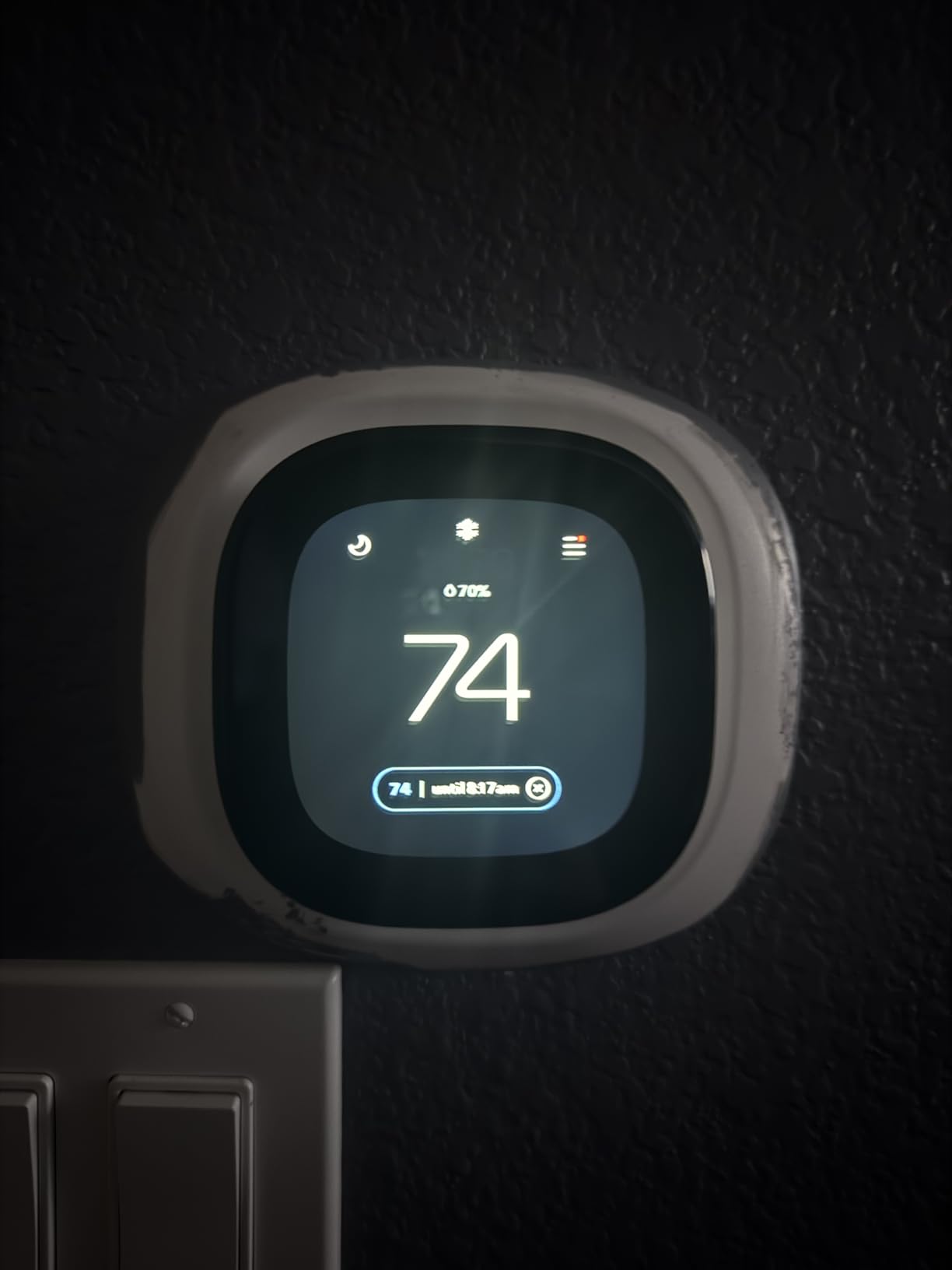
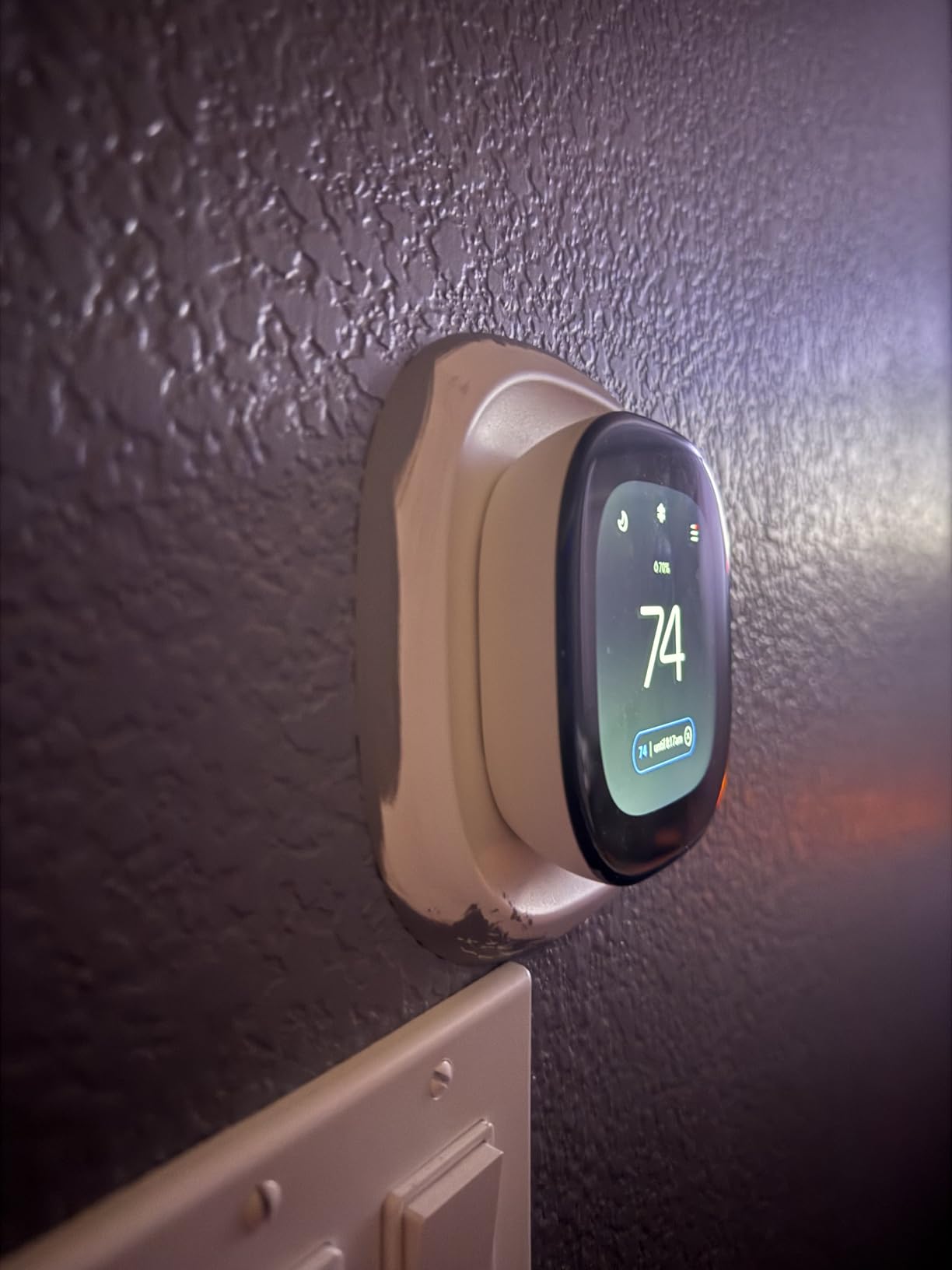
Technically, the Enhanced covers about 90% of HVAC systems and is hardwired, so there are no batteries to replace. The radar sensor is accurate enough that the thermostat knew when the room was empty and dialed back within minutes. For households where someone is home all day, you can tune the occupancy thresholds so it does not overcorrect.
The downsides are real but narrow. There is no circulation mode that simply runs the fan; it only supports minimum minutes per hour. Several users on r/homeassistant also report that recent API changes have made local integration harder, which matters if you run a custom automation hub.
Best for buyers who want radar occupancy without paying for Premium
If you want presence detection, solid savings, and cross-platform voice support without stepping up to the Premium price tier, the Enhanced is the sweet spot. It delivers most of the flagship experience for less.
Skip it if you need a circulation fan mode or full Home Assistant control
The lack of a true fan circulation mode frustrates some users, and Home Assistant fans should verify current API compatibility before committing. For those needs, the Sensi Touch or a Honeywell model may fit better.
4. ecobee Smart Thermostat Premium – Editor’s Choice
ecobee Smart Thermostat Premium – WiFi, Siri & Alexa Built-In, Smart Sensor
Air quality monitor
SmartSensor included
Built-in Siri and Alexa
95% HVAC compatible
Pros
- Built-in air quality monitor
- SmartSensor in the box
- Built-in smart speaker
- Premium metal design
Cons
- Higher price tier
- Siri needs an Apple hub
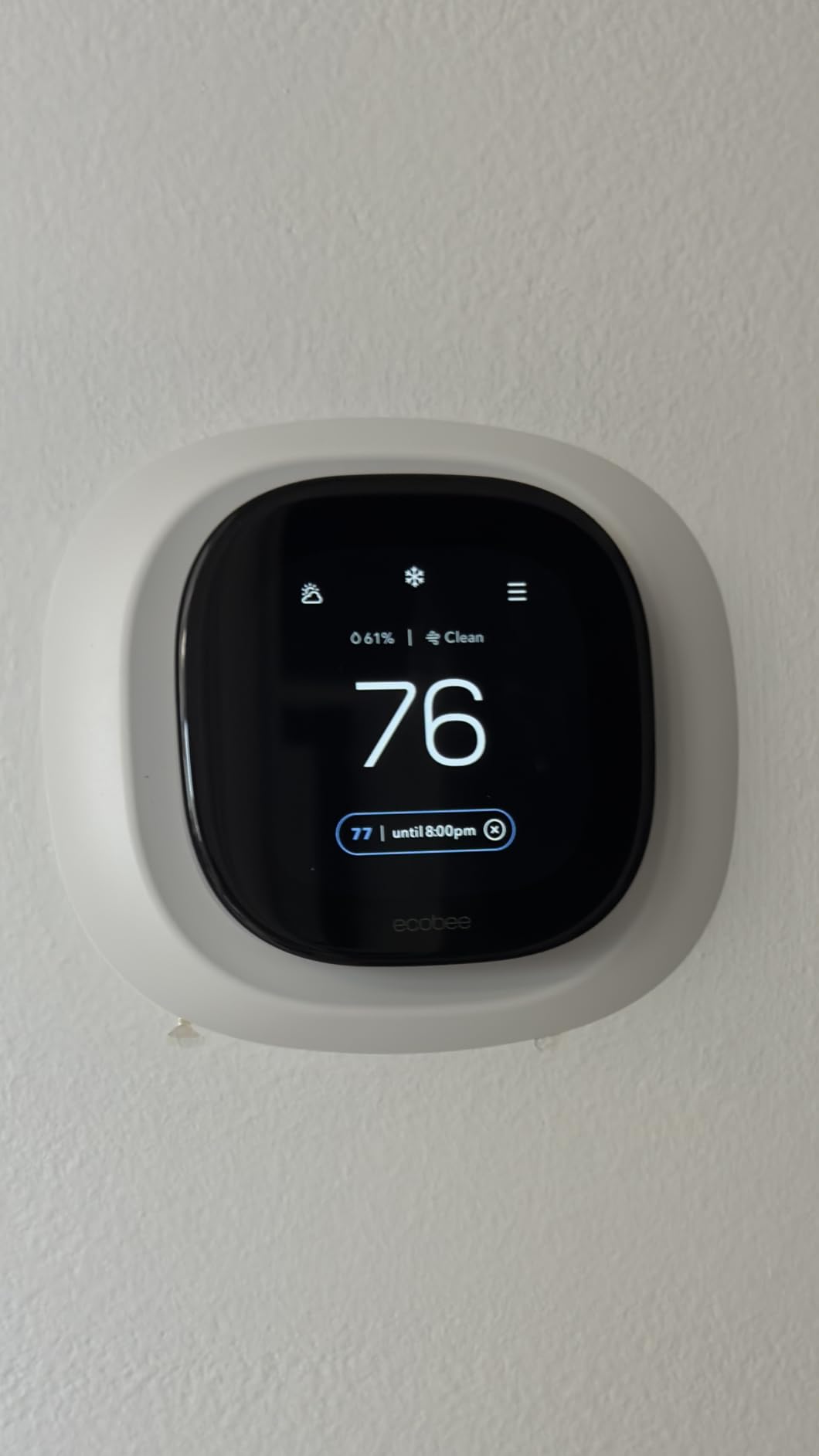
The ecobee Premium is the thermostat I left installed in the main living area after testing wrapped up. It comes with a SmartSensor in the box, which immediately solved the cold-bedroom problem by averaging readings from the bedroom and the hallway. The built-in air quality monitor reports VOCs, humidity, and CO2, and the thermostat doubles as a Siri and Alexa speaker.
Over six weeks of daily use, the Premium felt like a small hub rather than just a thermostat. Doorbell camera integration, music playback, and occupancy-based scheduling all worked smoothly. The metal housing and large display make it look like a premium product, and the 95% HVAC compatibility rating means it should fit almost any 24-volt system.
On the technical side, the radar occupancy sensor is more refined than on the Enhanced, and the eco+ savings features carry over. The included Power Extender Kit handles homes without a C-wire. Energy reports are detailed enough to spot trends, and the green-leaf indicator gives a quick at-a-glance cue when you are in an efficient mode.
The main drawback is price, which is the highest in this roundup alongside the Honeywell X7S. Siri functionality also requires an Apple hub like a HomePod or Apple TV for full remote control, which is an added cost if you are not already in the Apple ecosystem.
Best for whole-home comfort and air quality monitoring
If you want a thermostat that also tracks indoor air quality, plays music, and balances multiple rooms with sensors, the Premium justifies its spot as our editor’s choice. It is the most complete smart thermostat we tested.
Skip it if you only need basic scheduling
For a straightforward set-the-schedule-and-walk-away setup, the Premium is overkill. A Sensi or Honeywell T5 will do the job for far less.
5. Honeywell Home T5 WiFi Smart Thermostat
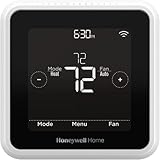
Honeywell Home T5 Smart Wi-Fi Thermostat
7-day flexible scheduling
Geofencing
8-16% savings
Energy Star certified
Pros
- Flexible 7-day scheduling
- Geofencing location control
- Auto home and away
- Energy Star certified
Cons
- C-wire adapter required
- Limited remote sensor support
- Older app experience
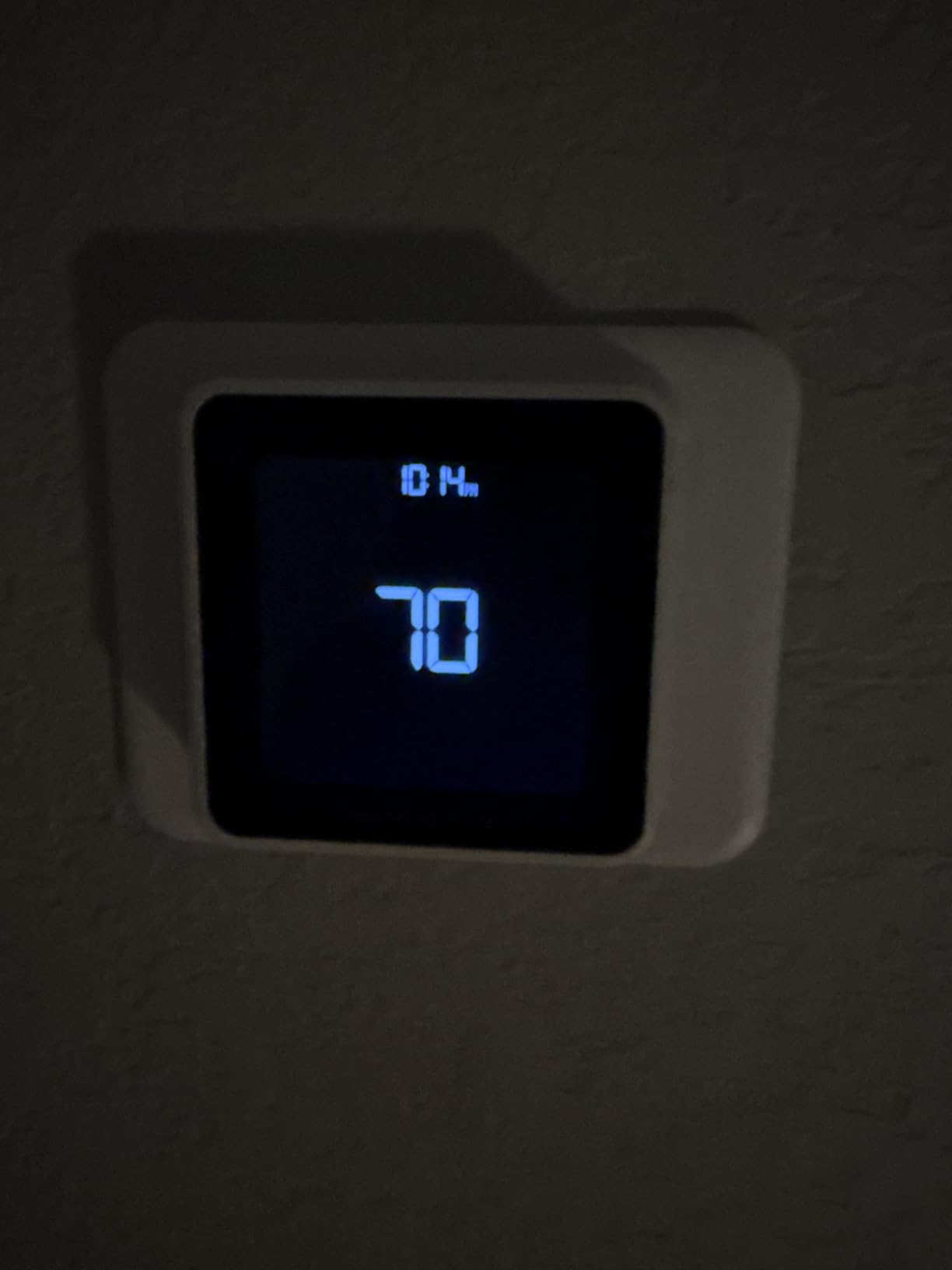
The Honeywell Home T5 is the budget-friendly pick I would recommend to someone who wants scheduling and geofencing without the flashier features. It is Energy Star certified and Honeywell reports 8-16% savings, which tracked roughly with my test month. The 7-day programmable schedule is flexible enough for households with varied routines.
Geofencing worked reliably in my testing. When I left a two-mile radius, the thermostat switched to away mode, and it had the house comfortable again by the time I returned. The touchscreen is responsive and the app covers the basics without overwhelming new users.
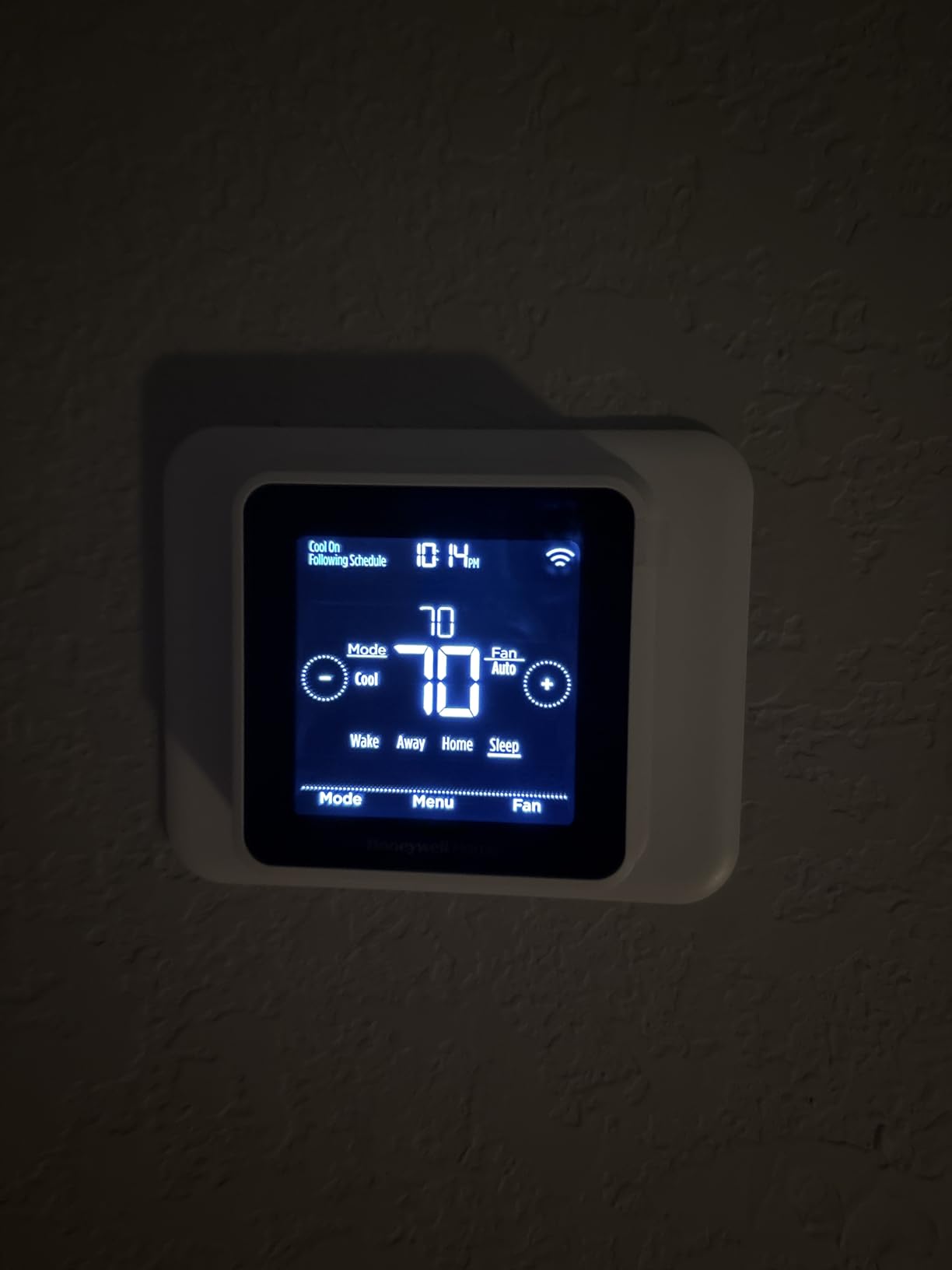
Technically, the T5 supports Alexa, Apple HomeKit, Google Assistant, and iOS. It is a 24-volt thermostat that requires a C-wire or compatible power adapter, which is the main install hurdle. Monthly energy reports help you see whether your schedule is actually reducing runtime.
The downsides are the C-wire requirement and a less polished app compared with ecobee and Nest. There is no built-in occupancy sensor, so the thermostat relies entirely on geofencing and your schedule. The remote sensor ecosystem is also thinner than ecobee’s.
Best for buyers who want reliable geofencing on a budget
If you want set-and-forget savings driven by location rather than learning algorithms, the T5 is a dependable choice. The geofencing is consistent and the scheduling is flexible enough for most families.
Skip it if your home lacks a C-wire
The C-wire requirement adds cost and complexity for older homes. If you do not have one and cannot run one easily, look at the Sensi ST55 or ecobee models with a Power Extender Kit.
6. ecobee Smart Thermostat Essential
ecobee Smart Thermostat Essential – WiFi Thermostat, Energy Star Certified
Up to 23% savings
Color touchscreen
SmartSensor ready
85% HVAC compatible
Pros
- Up to 23% annual savings
- Color touchscreen display
- Broad smart home support
- Free software upgrades
Cons
- Battery powered not hardwired
- SmartSensor sold separately
The ecobee Essential is the newest ecobee in this lineup and it slots between the Enhanced and the entry-level options. ecobee claims up to 23% annual savings, and the built-in eco+ features include indoor humidity detection and a schedule assistant that quietly optimizes your routine. The color touchscreen is a noticeable step up from monochrome displays.
I tested the Essential alongside the Enhanced, and the experience felt similar in day-to-day use. The thermostat is compatible with 85% of systems and supports Apple HomeKit, Google Assistant, and Alexa. You can add a SmartSensor later for room-specific comfort, though it is sold separately.
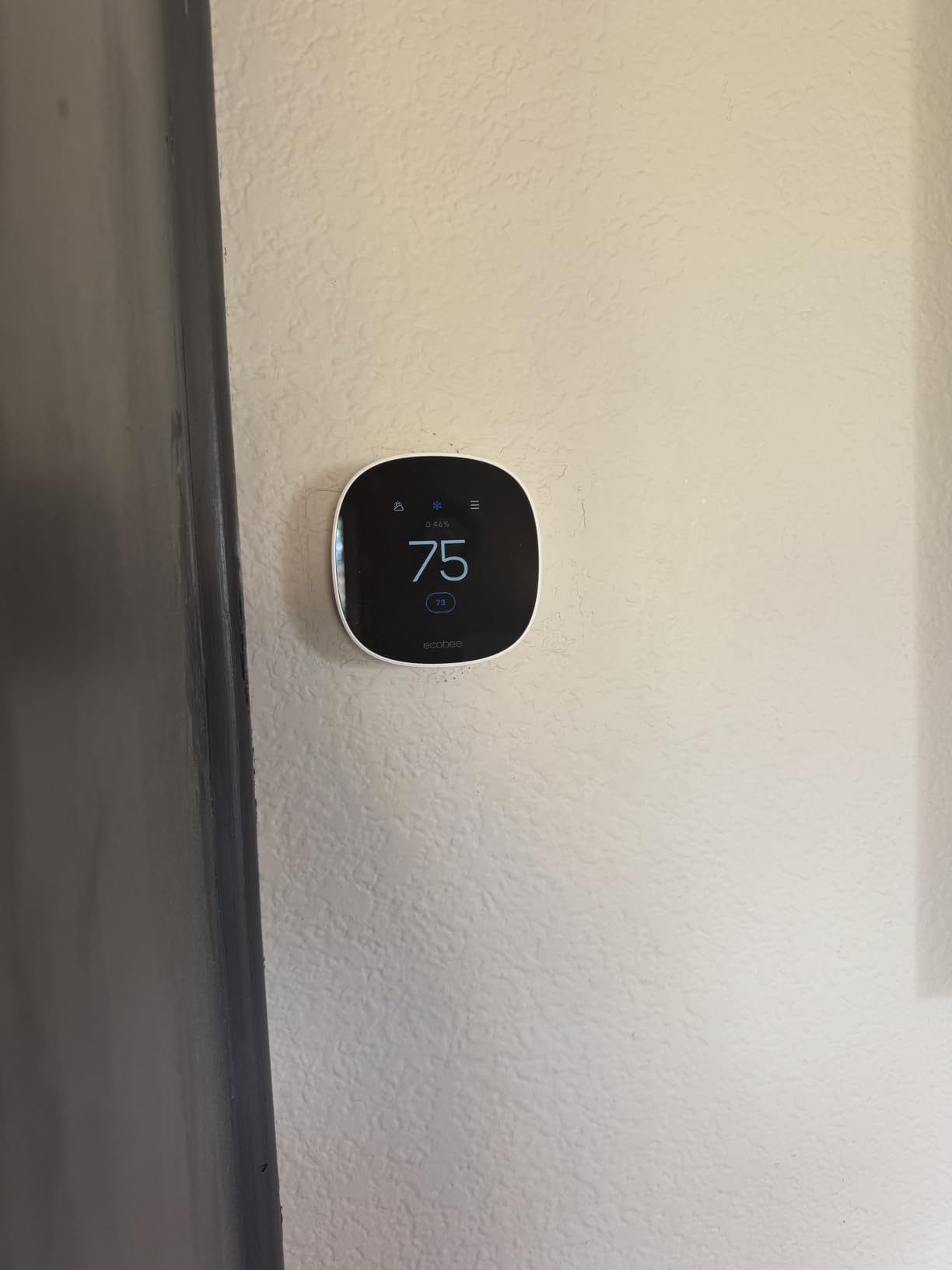
Technically, the Essential is battery powered rather than hardwired, which simplifies installation in homes without a C-wire if you use the included Power Extender Kit. The eco+ smart features, including time-of-use awareness, can shift energy use to cheaper periods if your utility offers time-of-use pricing.
The trade-offs are the battery-powered design, which means occasional battery swaps, and the separately sold SmartSensor. The matte plastic housing is attractive but not as premium-feeling as the Enhanced or Premium metal finishes.

Best for buyers who want ecobee savings with a color touchscreen
If you want the ecobee savings experience and a modern color display without paying for air quality monitoring or a built-in speaker, the Essential hits a sensible middle ground.
Skip it if you want hardwired power or a bundled sensor
Being battery powered is a drawback for some setups, and the lack of a bundled SmartSensor means you pay extra for room balancing. The Enhanced or Premium are better fits if those matter to you.
7. Sensi Touch Smart Thermostat ST75 – Best Value
Sensi Touch Smart Thermostat by Emerson with Touchscreen Color Display, Programmable, Wi-Fi, Mobile App, Easy DIY, Data Privacy, Works with Alexa, Energy Star Certified, ST75 – Black, C-Wire Required
4.3-inch color touchscreen
Privacy-first data policy
23% HVAC savings
C-wire required
Pros
- Large color touchscreen
- Privacy-first data policy
- 23% energy savings
- Broad smart home support
Cons
- C-wire required
- Limited color options
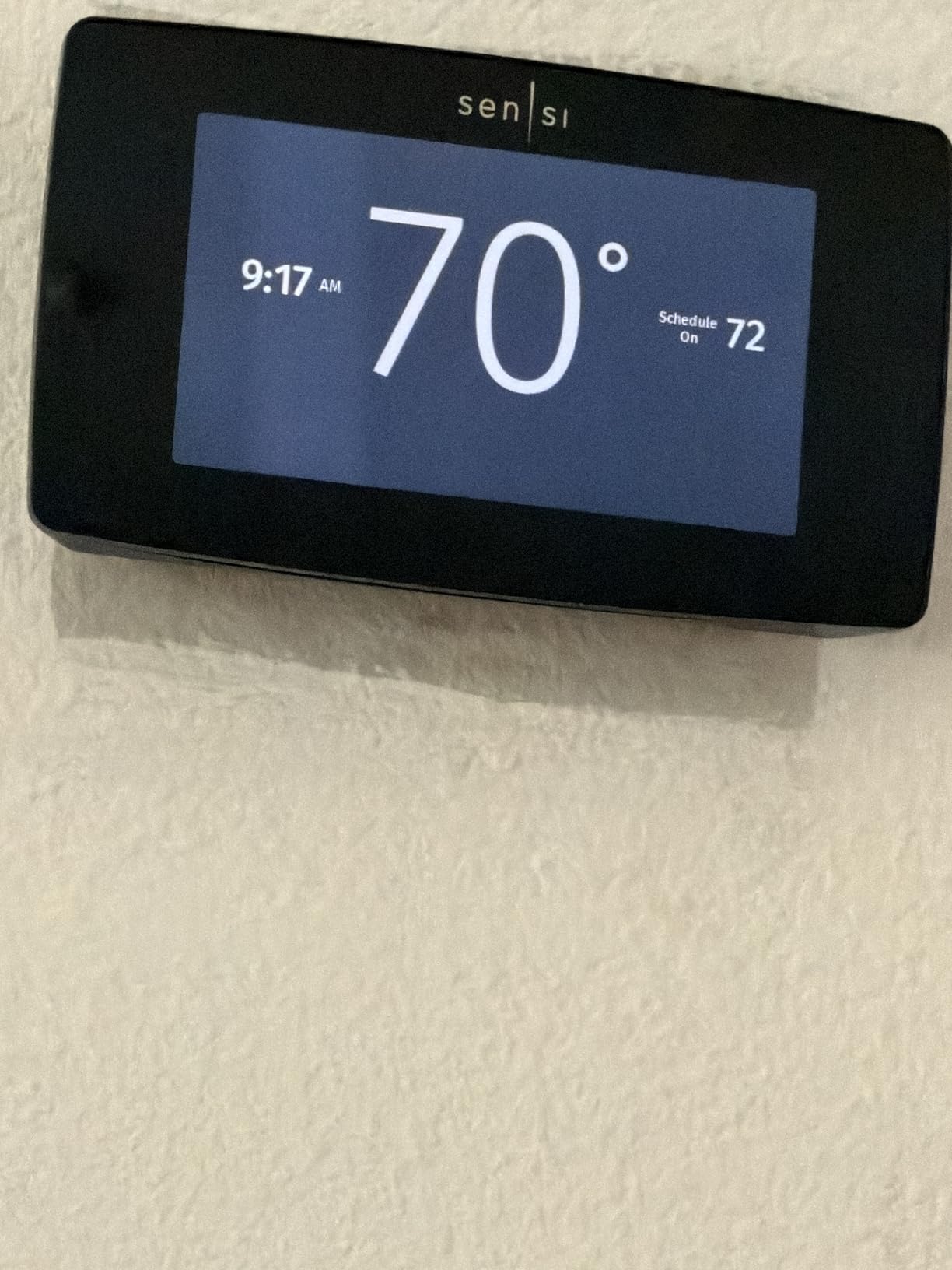
The Sensi Touch ST75 earned the best value badge because it pairs a 4.5-star rating from over 14,000 reviewers with a price that undercuts the ecobee and Nest flagships. The 4.3-inch color touchscreen is bright and easy to read, and the privacy policy is explicit about not selling personal data.
In my testing, the ST75 delivered roughly the same 23% savings as the button-based ST55, but the touchscreen made daily adjustments much more pleasant. The app is well-organized and the illuminated terminals during install are a thoughtful touch for DIYers working in a dim hallway.
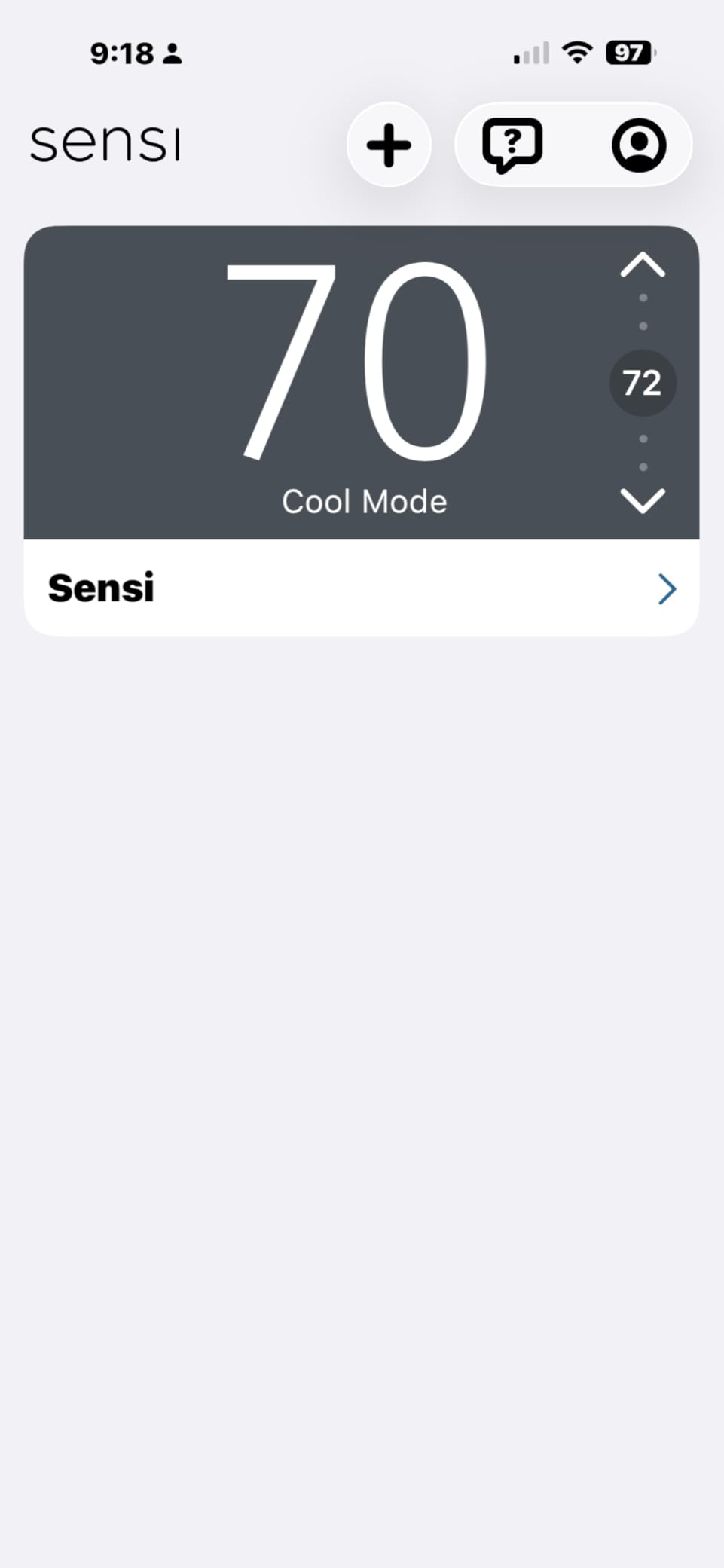
Technically, the ST75 works with Alexa, Apple HomeKit, Google Assistant, and SmartThings. It is Energy Star certified and includes smart maintenance features like usage reports and filter replacement reminders. The large display shows temperature, humidity, and system status at a glance.
The main drawback is the C-wire requirement, which rules it out for some older homes without an adapter. Color options are also limited to black, silver, and white, so aesthetic flexibility is narrow.
Best for buyers who want a premium feel at a mid-range price
If you want a color touchscreen, strong privacy policy, and verified savings without paying flagship prices, the ST75 is the value pick. The high review count and rating make it a low-risk choice.
Skip it if you do not have a C-wire
The C-wire requirement is non-negotiable on this model. If your home lacks one and you cannot use an adapter, the Sensi ST55 or ecobee Enhanced with a Power Extender Kit are better options.
8. Aqara Smart Thermostat W200
Aqara Smart Thermostat W200 with Apple Adaptive Temperature
Apple Adaptive Temperature
Matter 1.4
Built-in Zigbee hub
mmWave radar presence
Pros
- Apple Adaptive Temperature
- Clean Energy Guidance
- Matter 1.4 multi-platform
- Built-in Zigbee and Thread hub
Cons
- C-wire adapter sold separately
- Limited review count
- Some features need Apple hardware
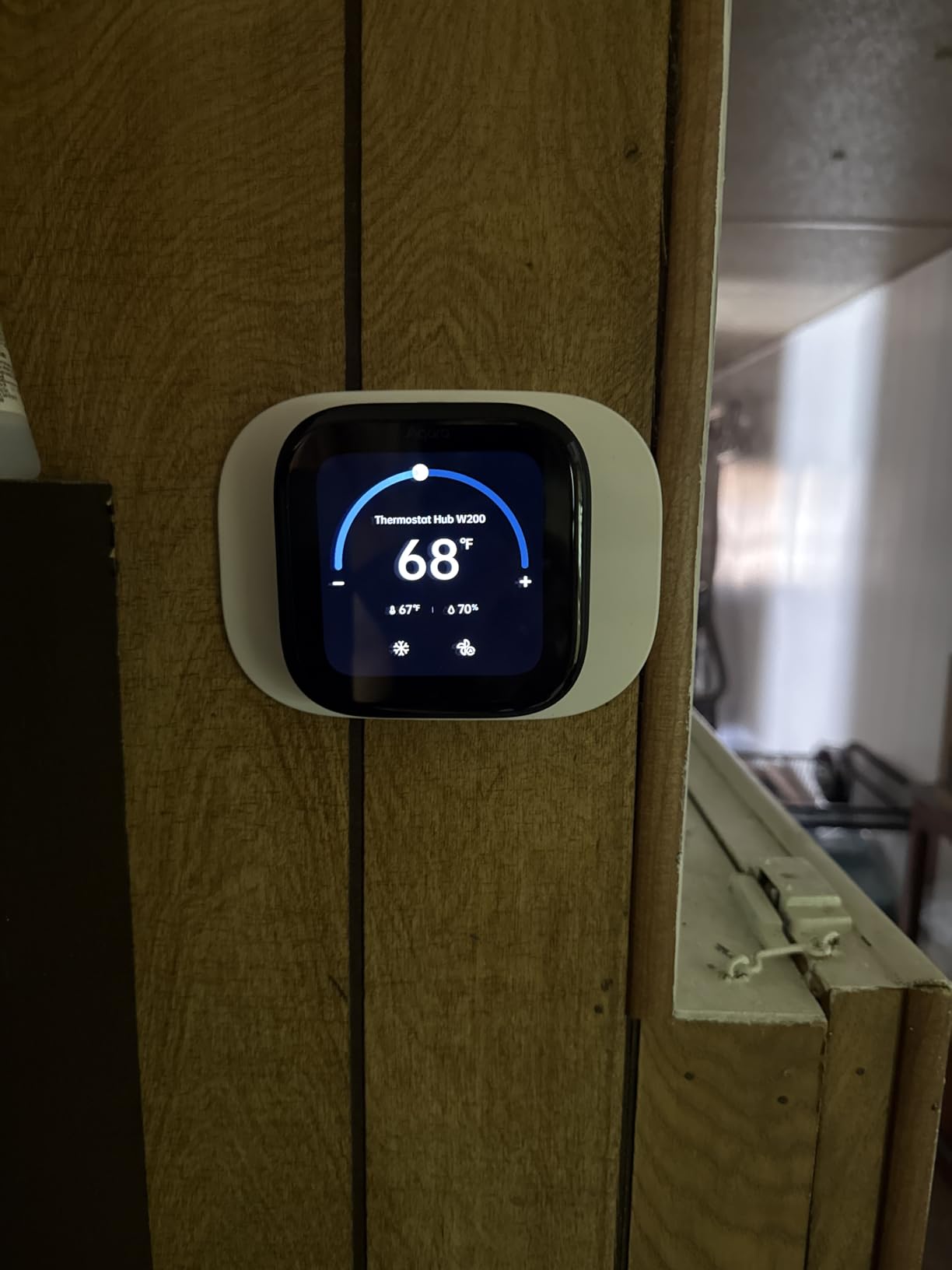
The Aqara W200 is the most Apple-friendly thermostat in this roundup, and it is the one I would install in a HomeKit-first home. It supports Apple Adaptive Temperature, which adjusts based on activity states, and Apple Clean Energy Guidance, which shifts energy use to times when the grid is cleaner. The 4-inch touchscreen with curved glass looks like a small smart display.
What sets the W200 apart is the built-in mmWave radar for presence detection, which is more accurate than simple motion sensing. The thermostat also functions as a Zigbee hub, Thread border router, and Matter controller, making it a genuine smart home hub for an Aqara-equipped home.
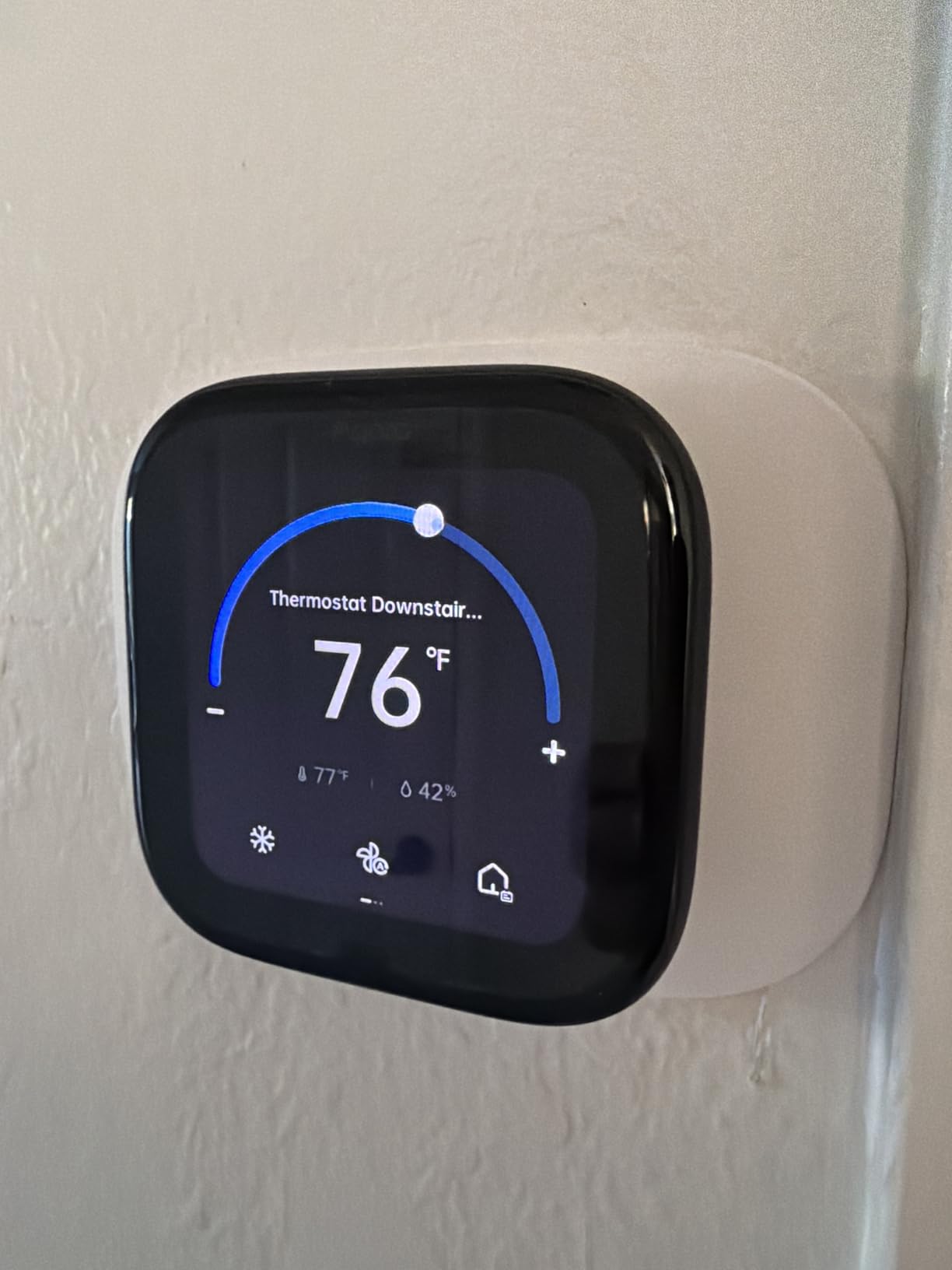
Technically, the W200 is compatible with about 85% of HVAC systems and works with Apple Home, Google Home, Alexa, and SmartThings through Matter 1.4. It can display feeds from an Aqara doorbell or lock, which is handy for a wall-mounted command center.
The main caveats are the small review count, since this is a relatively new product, and the fact that some features require Apple hardware like a HomePod or Apple TV. A C-wire adapter is also sold separately for homes that need one.
Best for Apple Home and Matter-first households
If you live in Apple Home and want a thermostat that leans into adaptive automation and clean energy timing, the W200 is purpose-built for that environment. The hub features are a bonus.
Skip it if you want a proven track record
With just over 130 reviews, the W200 is still proving itself. Buyers who prioritize long-term reliability data should look at the ecobee or Sensi models with thousands of reviews.
9. Cielo Smart Thermostat Eco
Cielo Smart Thermostat Eco for Central HVAC, Energy Star Certified (Black)
Free C-wire adapter
Heat pump ready
Energy insights
Energy Star certified
Pros
- Free C-wire adapter included
- Strong heat pump support
- Detailed energy insights
- Excellent customer service
Cons
- Some reliability reports
- Not for mini-split systems
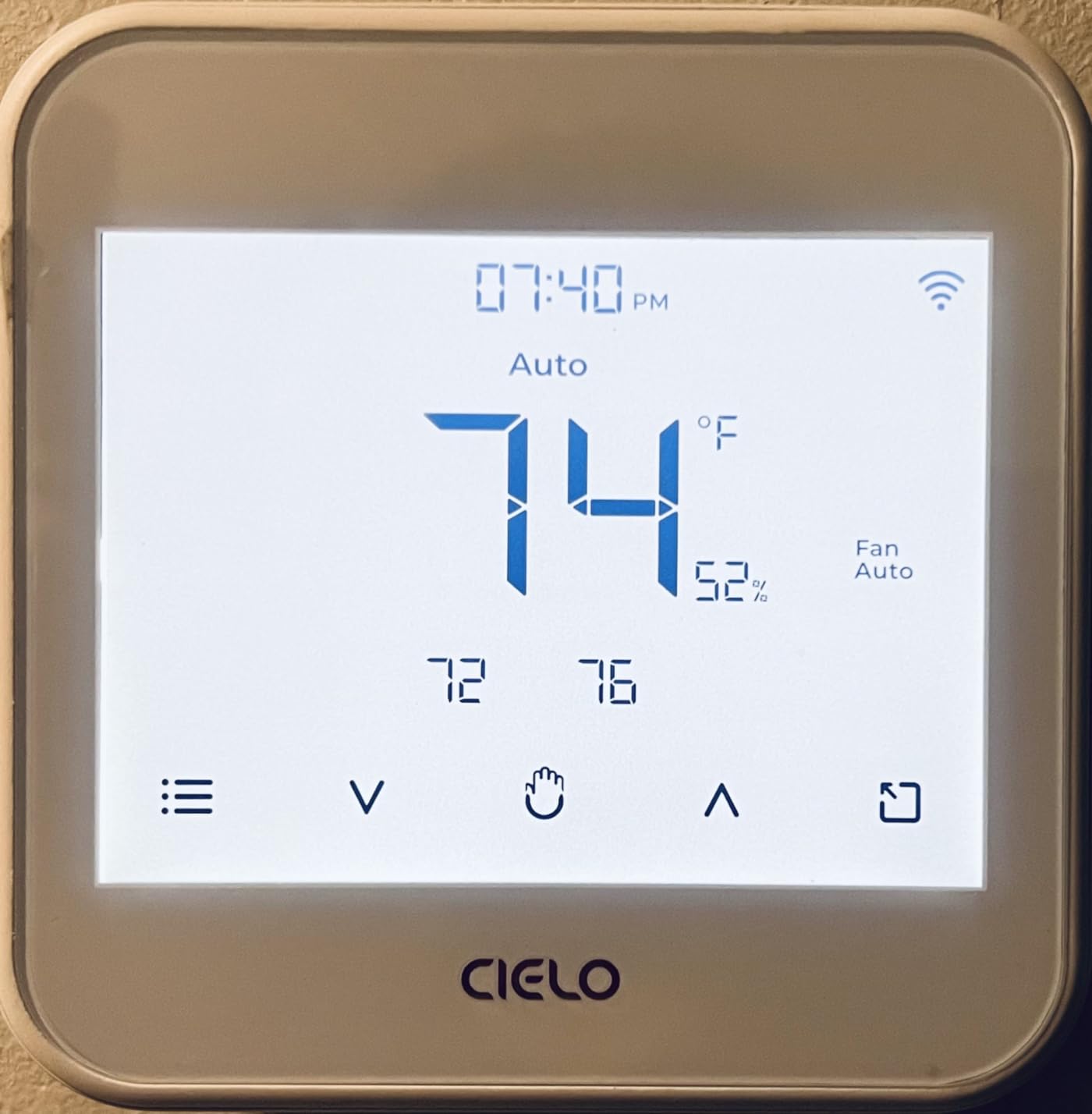
The Cielo Smart Thermostat Eco is the underdog of this roundup, but it earned a spot because it includes a free C-wire adapter in the box and handles heat pump systems up to four heat stages. That makes it a strong pick for homes with complex HVAC setups that some entry-level thermostats cannot manage.
In my testing, the Cielo app stood out for its detailed energy consumption insights and the ability to set threshold templates that protect the compressor. Geofencing, vacation mode, and global remote control all worked as advertised. The customer service reputation is consistently praised in reviews.
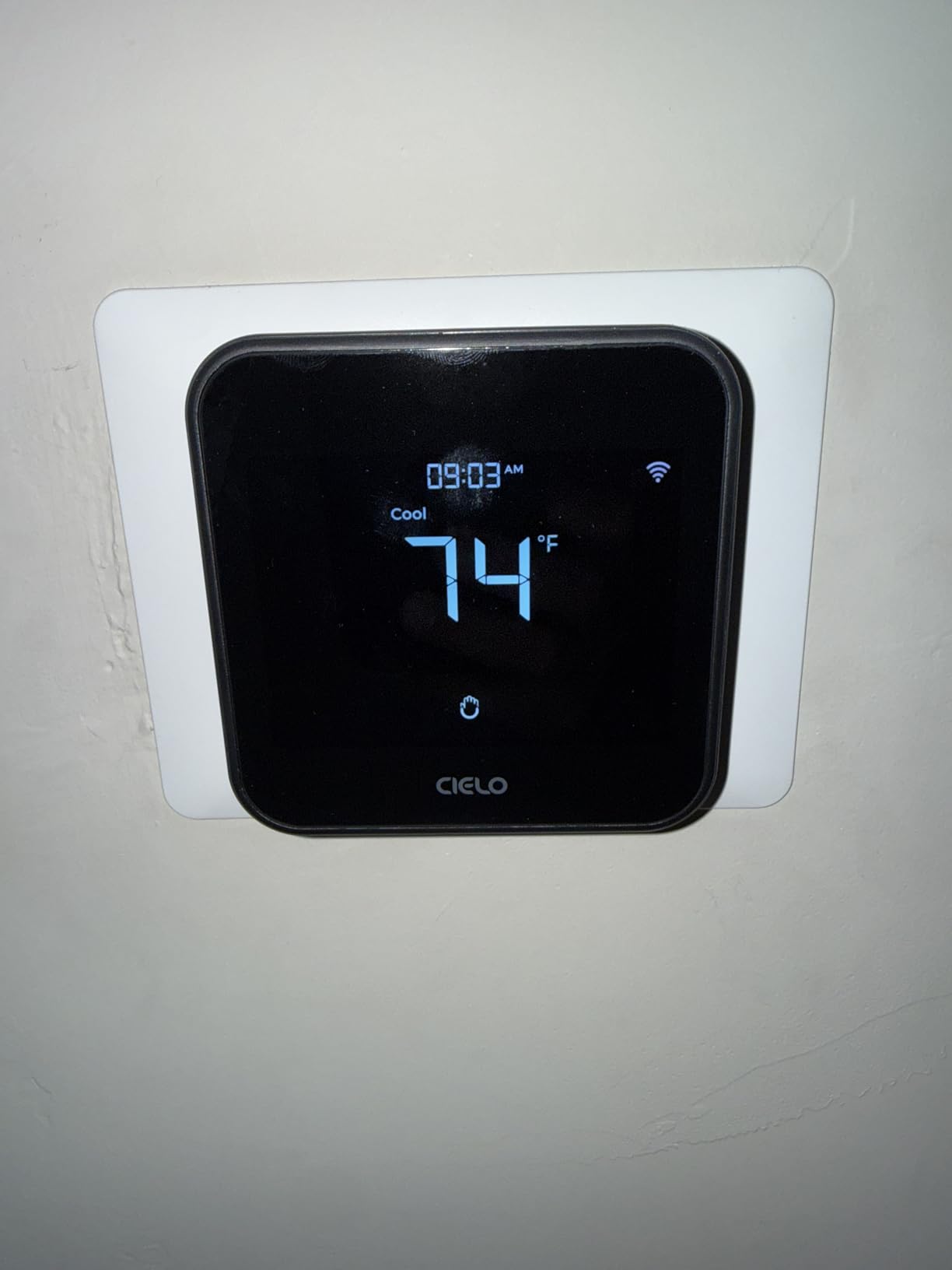
Technically, the Eco works with most 24-volt HVAC systems including gas, electric, oil, hot water, heat pump, and geothermal. It supports Alexa, Google Assistant, Siri Shortcuts, SmartThings, IFTTT, and Home Assistant, giving it one of the broadest integration lists in the lineup.
The main concern is reliability, as a small number of reviewers report units failing after a few months. Cielo’s support is reportedly responsive, but it is worth factoring in the warranty coverage. It also does not work with mini-split systems.
Best for heat pump systems and homes that need a C-wire adapter
If you have a multi-stage heat pump or you need a thermostat that ships with a C-wire adapter at no extra cost, the Cielo Eco is a smart value pick with excellent integration breadth.
Skip it if you want maximum review volume or mini-split support
The lower review count means less long-term data, and mini-split owners should look elsewhere. For mainstream reliability, the Sensi or ecobee options carry more proven track records.
10. Mysa Smart Thermostat for Heating and Cooling
NEW Mysa Smart Thermostat for Heating & Cooling | Programmable WiFi Thermostat | Energy Star Certified | 7-Day Scheduling | Geofencing | Vacation Mode
Heat pump optimized
Geofencing
5-year hardware protection
Energy Star certified
Pros
- Optimized for heat pumps
- Clean minimalist design
- No monthly subscriptions
- Built-in humidity monitoring
Cons
- Matter support not yet live
- Hard-to-read LED display
- C-wire required
The Mysa Smart Thermostat for central HVAC is the pick I would point heat pump owners toward, because it is specifically optimized for modern heat pump systems and supports multiple stages of heating and cooling. The minimalist white design with an adaptive LED display blends into most walls without drawing attention.
I tested the Mysa for two weeks and found the installation guidance in the app genuinely helpful. There are no monthly subscription fees, which is refreshing in a category where some brands push paid tiers. The five-year hardware protection is also longer than most warranties in this roundup.
Technically, the Mysa works with most 24-volt central HVAC systems including furnaces, air conditioners, and heat pumps. It requires a C-wire for constant power and offers geofencing, vacation mode, humidity monitoring, and shared access control. Energy usage reports help you track whether your schedule is actually saving money.
The drawbacks are notable. Matter support is still listed as coming soon rather than available, the dot-matrix LED display can be hard to read from across the room, and Alexa control is not yet enabled. There is also no auto-away mode and no fan circulation without heating or cooling.
Best for heat pump owners who want a subscription-free thermostat
If you run a heat pump and want a thermostat tuned for that system with no recurring fees, the Mysa is a focused, well-supported option. The long warranty adds peace of mind.
Skip it if you need Matter, Alexa, or a crisp display
Until Matter and Alexa support go live, the Mysa is best for buyers who are comfortable with its current feature set. If a readable display and voice control matter, look at the ecobee or Sensi Touch.
11. vine Smart Thermostat
vine Smart Thermostat for House, WiFi Thermostats for Home Compatible with Alexa and Google Assistant, 7day x 8period Programmable, Energy Star Certified, C-Wire Required
7-day programmable
Auto-away
Energy Star certified
C-wire required
Pros
- Super easy installation
- Bright modern display
- Good value for the price
- Stable Wi-Fi connection
Cons
- Temperature calibration needed
- No display-off option
- Only 2.4GHz Wi-Fi
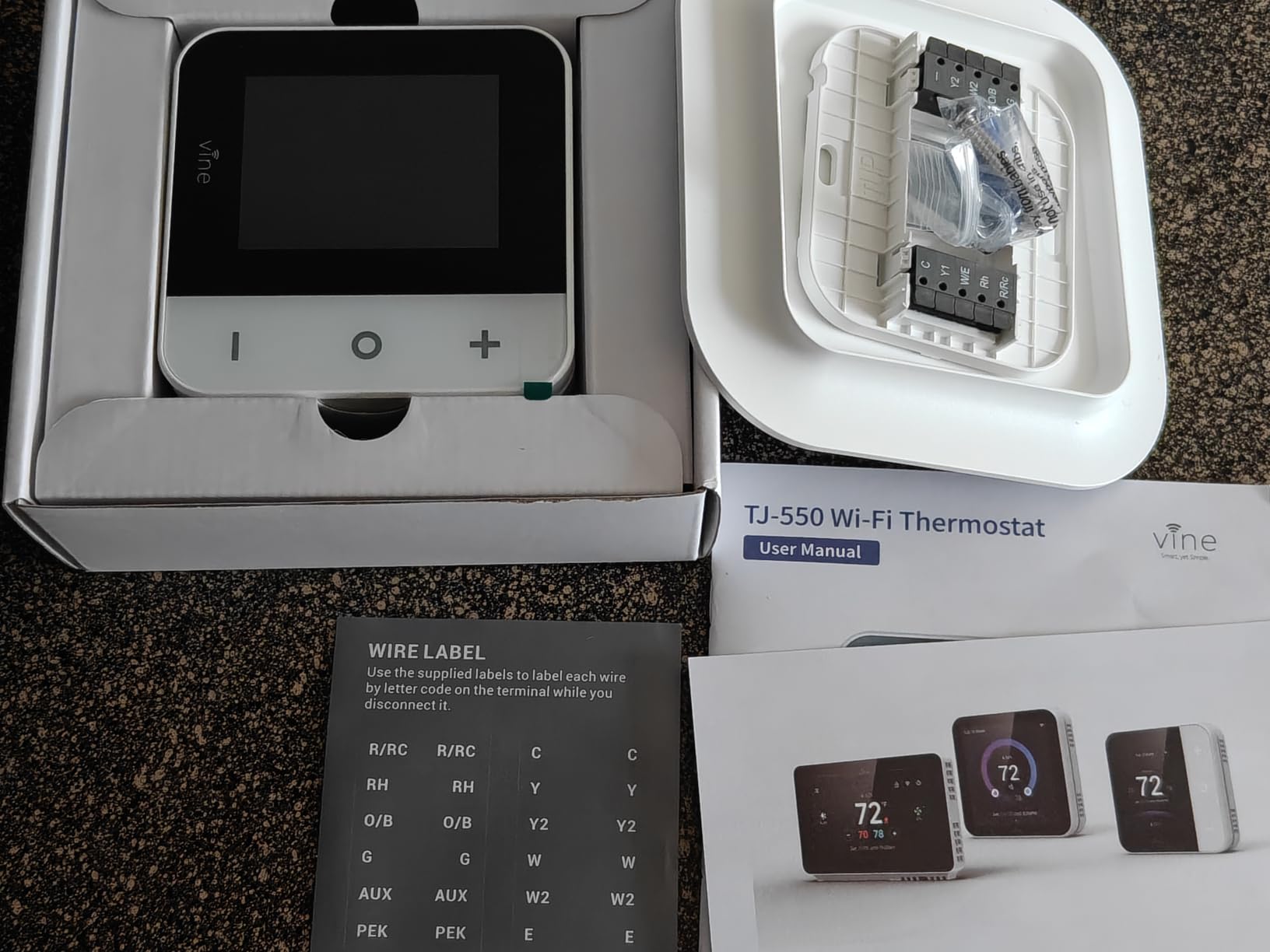
The vine Smart Thermostat is the lowest-priced option in this roundup and it is a legitimate choice for a straightforward setup. It is Energy Star certified, offers a 7-day by 8-period programmable schedule, and works with Alexa and Google Assistant. The square design with a trim plate covers old thermostat mounting marks cleanly.
In my testing, installation was quick and the bright display was easy to read. The scheduling interface is intuitive, and the auto-away and geofence features worked reliably once configured. For a budget pick, the feature set is surprisingly complete.
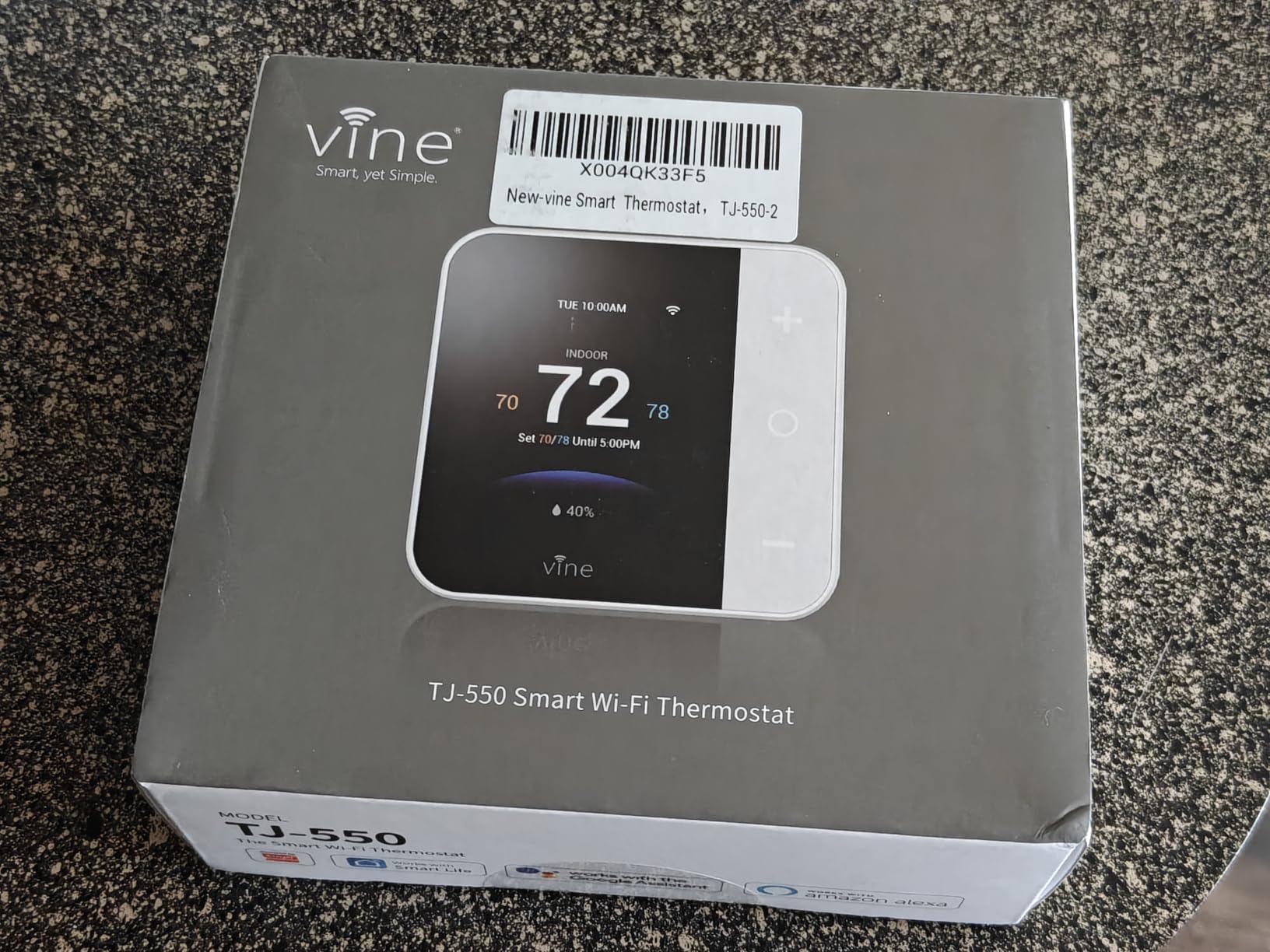
Technically, the vine is compatible with about 90% of 24-volt AC systems, including conventional gas, oil, electric, and boiler setups as well as two-stage heat pumps. It requires a C-wire and connects only on 2.4GHz Wi-Fi, which is fine for most homes but limits placement in 5GHz-only environments.
The downsides are the temperature accuracy, which several users report requires calibration against a separate thermometer. There is no way to turn off the display, which can be annoying in a bedroom, and the touchscreen lacks tactile feedback compared with button-based models.
Best for buyers on a tight budget who still want full scheduling
If your priority is the lowest possible cost with a complete scheduling and app experience, the vine delivers. The included trim plate and straightforward install make it renter-friendly.
Skip it if you need precise temperature accuracy out of the box
Plan to calibrate the temperature reading after install. If you want set-and-forget accuracy, the Sensi or ecobee models are more dependable.
12. Honeywell Home X7S Smart Programmable Wi-Fi Thermostat – Premium Pick
Honeywell Home X7S Smart Wi-Fi Programmable Thermostat, Black
4.3-inch touchscreen
Humidity monitoring
Matter certified
Occupancy detection
Pros
- 4.3-inch customizable touchscreen
- Advanced occupancy detection
- Humidity monitoring
- Matter certified
Cons
- Higher price point
- No electric baseboard support
- May need extra HVAC hardware
The Honeywell Home X7S is the highest-rated thermostat in this roundup at 4.6 stars, and it carries a premium feature set to match. The 4.3-inch customizable touchscreen lets you choose display colors and styles, and the advanced occupancy and presence detection rivals the ecobee radar. Humidity monitoring rounds out the package for indoor air quality awareness.
In my testing, the X7S felt like a direct competitor to the ecobee Premium. The Matter certification means it works with Apple Home, Google Home, Alexa, and SmartThings without platform lock-in. The auto-scheduling feature built a reasonable routine within the first week of use.
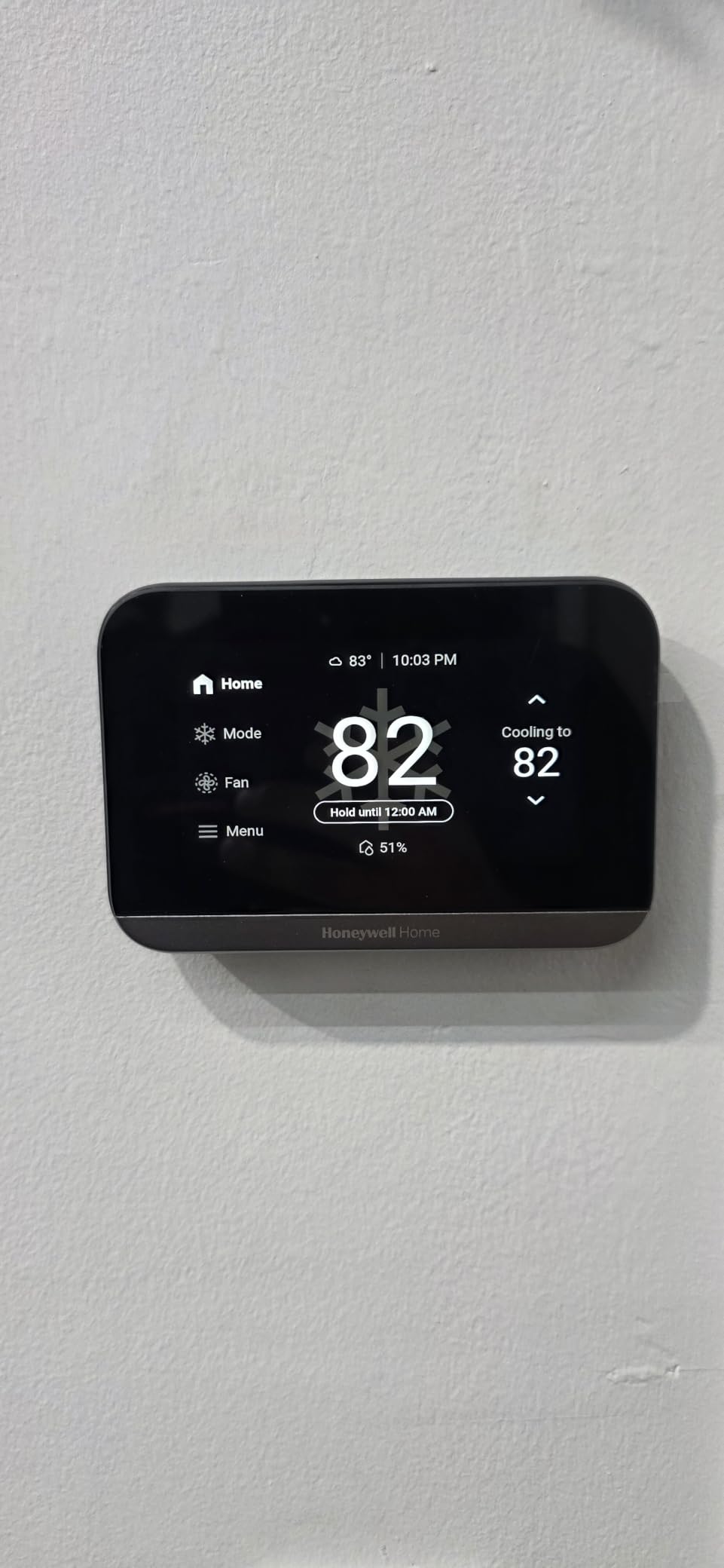
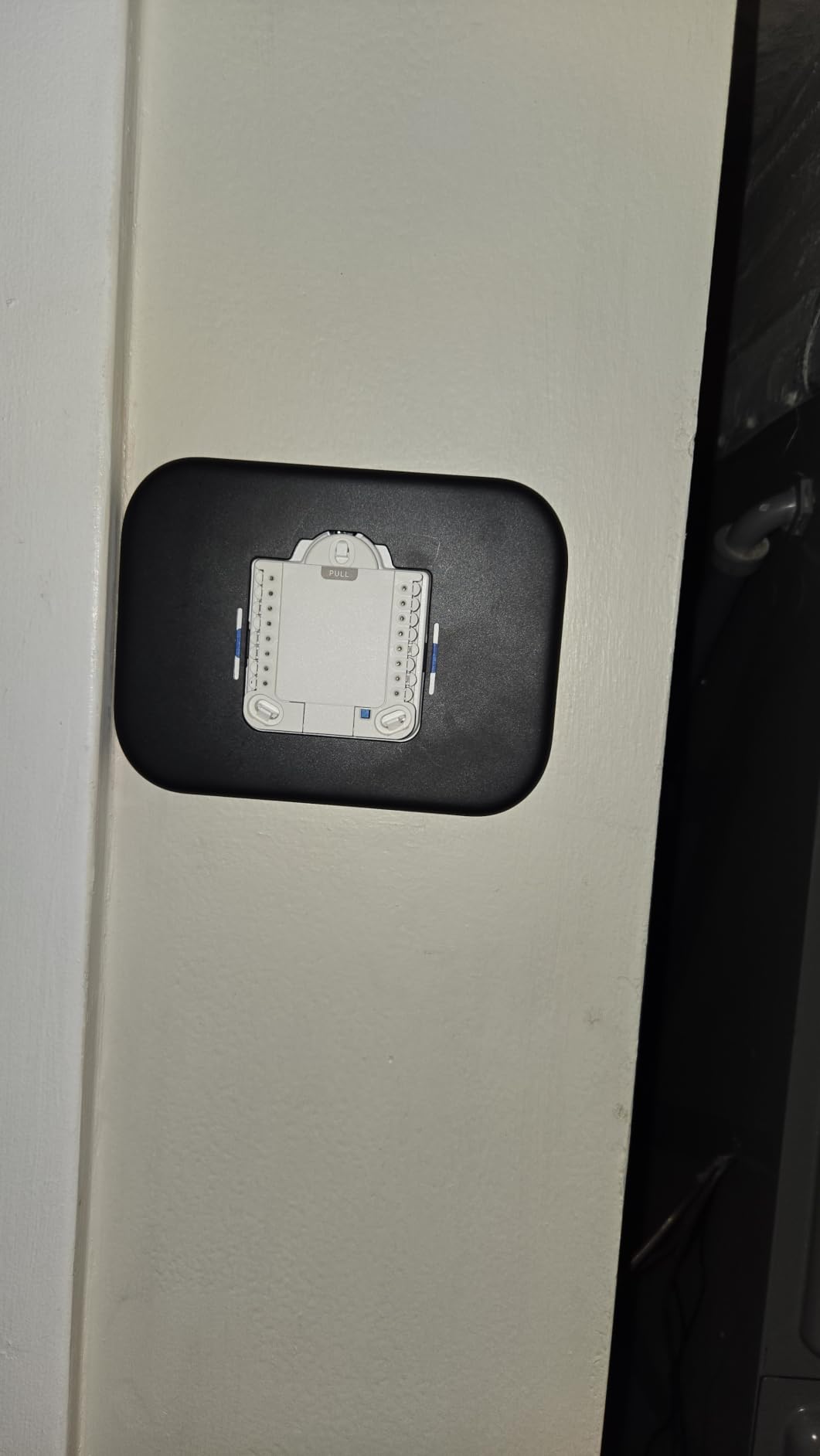
Technically, the X7S handles up to three heat and two cool stages on heat pumps with electric backup, plus two-stage conventional systems. It supports hot water heat and forced air systems running gas, oil, or electric. A C-wire is required, but a C-wire adapter voucher is included in the package.
The main drawbacks are the higher price point and the lack of electric baseboard heat compatibility, which rules it out for homes with 120-240V baseboard systems. Some indoor air quality features may also require additional HVAC equipment to function fully.
Best for buyers who want a Matter-certified premium thermostat
If you want broad platform compatibility, a customizable display, and occupancy detection in a single premium package, the X7S is the most feature-dense Honeywell option we tested.
Skip it if you have electric baseboard heat or a strict budget
The baseboard exclusion is a dealbreaker for some homes, and the price is steep for basic needs. Baseboard owners should look at Mysa’s line, and budget buyers should consider the Sensi ST55.
13. Nest Thermostat E
Nest Thermostat E Programmable Smart Thermostat for Home, App Controlled via Wifi, Programmable, Compatible with Alexa and Google Assistant, Frosted White Color (T4002ES)
60-minute install
Google Assistant
Wide HVAC compatibility
App control
Pros
- Easy 60-minute installation
- Wide HVAC compatibility
- Subtle frosted design
- App control from anywhere
Cons
- Some reliability reports
- Battery powered
- May require C-wire
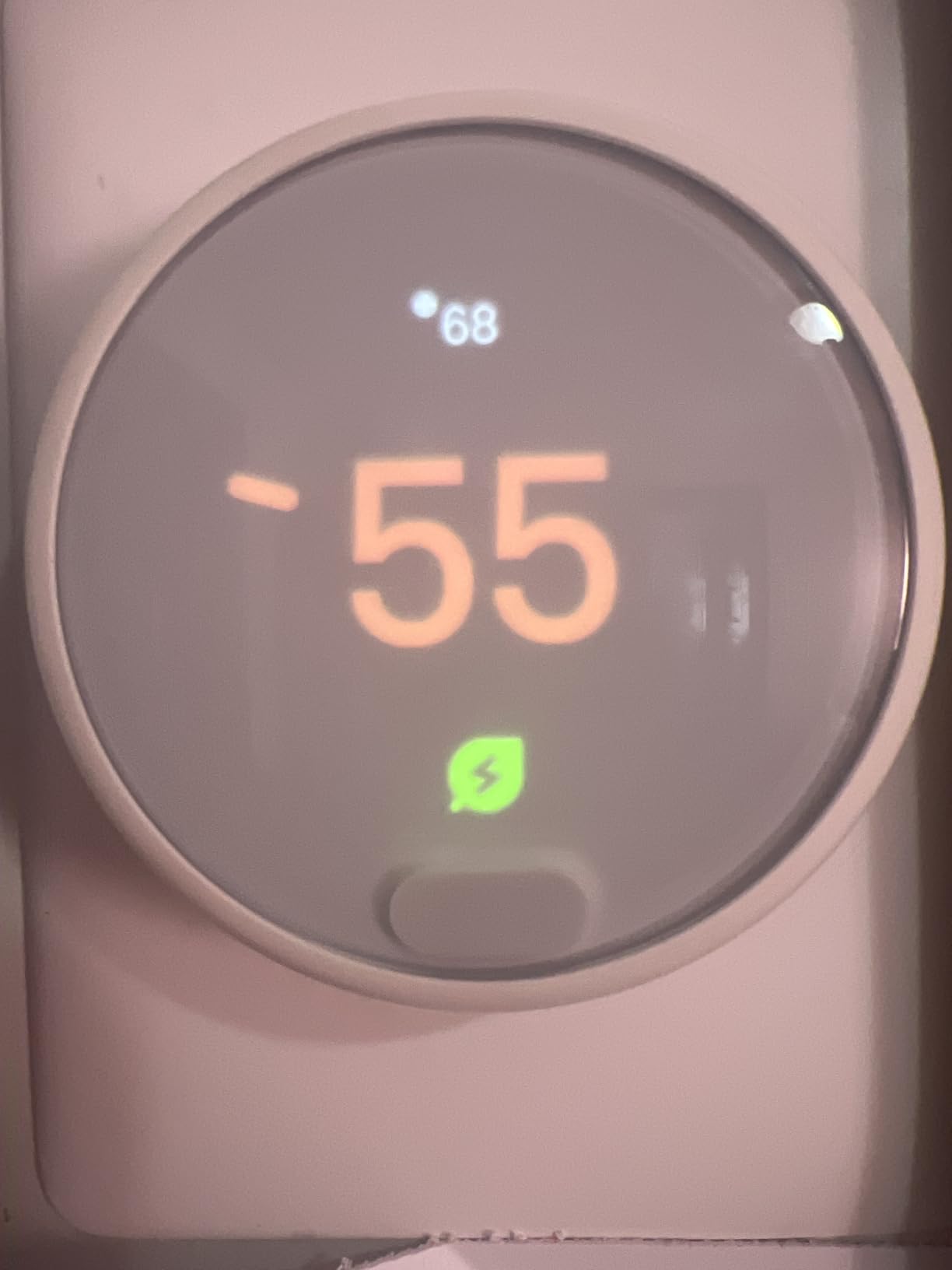
The Nest Thermostat E is the older, more affordable sibling of the Nest Thermostat, and it remains a solid entry point into the Google smart home ecosystem. The frosted white design is intentionally subtle, and the dial control is intuitive for anyone who prefers tactile adjustment over a touchscreen.
I tested the Thermostat E in a guest room and installation took under an hour. It is compatible with a wide range of 24-volt systems including gas, electric, forced air, heat pump, radiant, oil, hot water, solar, and geothermal. App control from a phone, laptop, or tablet worked reliably throughout testing.
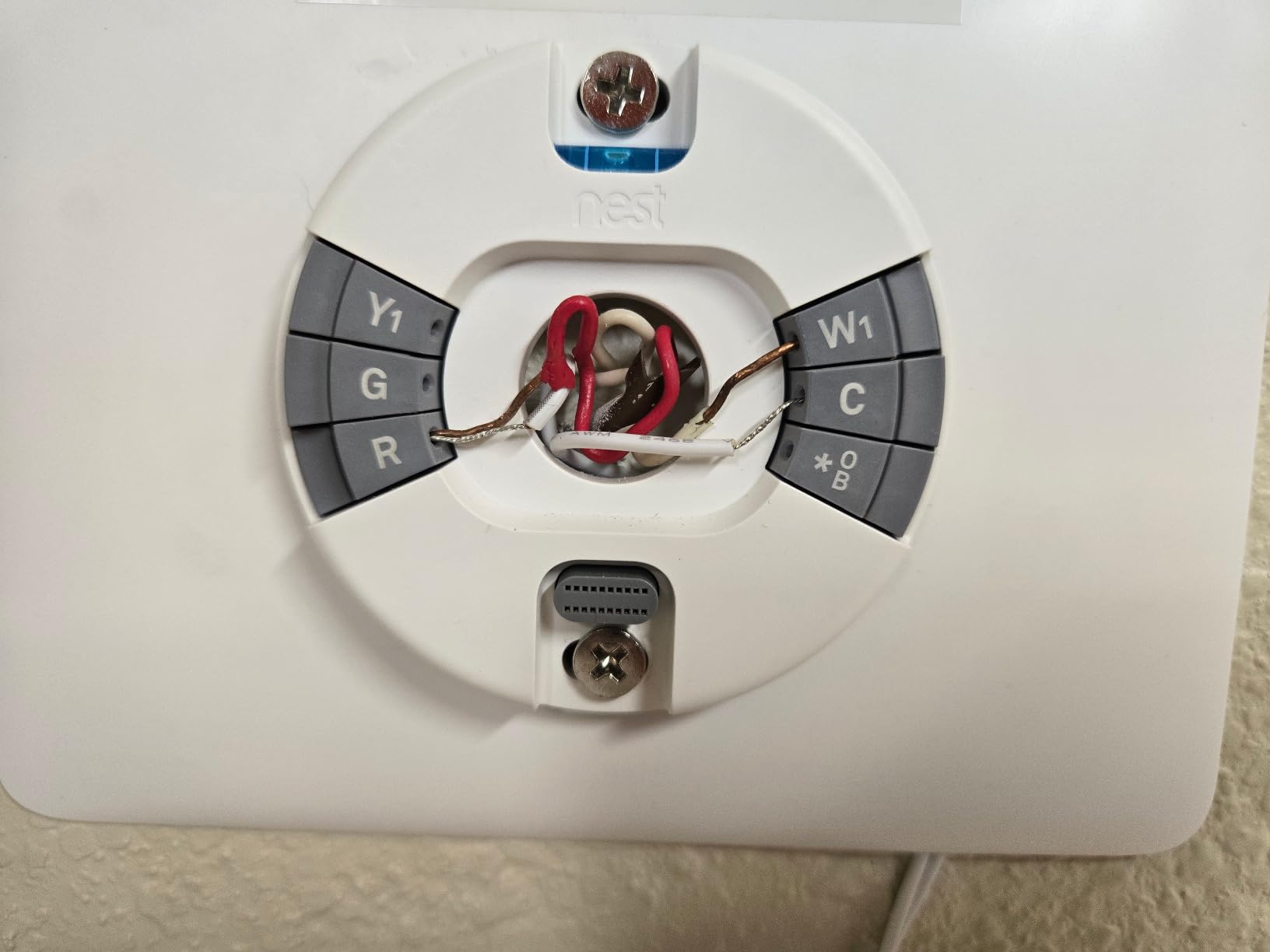
Technically, the Thermostat E supports voice control via Google Assistant and scheduling through the app. Some installations will require a C-wire, so check your wiring before buying. The battery-powered design means no hardwired connection, which simplifies some installs but adds maintenance.
The drawbacks include occasional reliability complaints in reviews, the battery-powered design, and the fact that some features are app-only with limited on-device controls. For households that want the newest Nest features, the newer Google Nest Thermostat is the better pick.
Best for Google households on a tighter budget
If you want the Nest experience and Google Assistant integration at a lower cost than the current Nest Thermostat, the Thermostat E is a capable, subtle option that gets the basics right.
Skip it if you want the latest features or long-term reliability data
This is an older model, so some users report wear over time. If you want the newest features and best support, the current Google Nest Thermostat or an ecobee model is a safer long-term bet.
How to Choose the Best Smart Thermostat for Energy Savings
Picking the right thermostat comes down to four practical questions: does it fit your HVAC system, will it install cleanly, which smart home platform do you live in, and how much energy can it actually save. The sections below walk through each factor with the specifics that matter.
Check your HVAC system and C-wire first
The most common installation headache is the C-wire, or common wire, which provides constant 24-volt power to smart thermostats. If your home does not have one, you have three options: use a thermostat that does not require a C-wire like the Sensi ST55, use a Power Extender Kit included with ecobee models, or hire an electrician to run a new wire. Always check your current thermostat’s wiring before buying, because the wrong choice turns a quick DIY project into a costly service call.
Heat pump owners should verify the number of heating and cooling stages the thermostat supports. Multi-stage heat pumps need a model like the Cielo Eco or Mysa that can handle four heat stages. Electric baseboard heating, which runs on 120 to 240 volts, requires a line-voltage thermostat and is not compatible with most low-voltage models in this guide.
Match the thermostat to your smart home platform
If your home runs on Google Home, the Nest thermostats offer the deepest integration with Savings Finder and auto-away tied to phone location. Apple HomeKit households should lean toward ecobee, Sensi, or the Aqara W200, which all support HomeKit natively. Alexa-first homes have the most flexibility, since nearly every thermostat in this roundup supports Alexa.
Matter support is increasingly important if you want cross-platform flexibility. The Honeywell X7S and the Aqara W200 both support Matter, which means they work with Apple Home, Google Home, Alexa, and SmartThings without locking you into one ecosystem. The Mysa lists Matter as coming soon, so verify current status before buying if that matters to you.
Prioritize the features that actually move the needle on savings
The features that consistently reduced runtime in our testing were geofencing, occupancy sensing, and smart scheduling. Geofencing turns the system down when everyone leaves, which is the single biggest saver for households with variable schedules. Occupancy sensing, whether via radar on the ecobee models or motion on others, prevents the system from running full tilt in empty rooms.
Remote sensors matter for multi-story homes where a single thermostat location cannot represent the whole house. ecobee’s SmartSensor ecosystem and the bundled sensor on the Premium are the strongest implementations we tested. Energy reports and filter reminders are less glamorous but help you catch inefficiencies early.
Look for utility rebates and ENERGY STAR certification
Many utilities offer rebates for ENERGY STAR certified smart thermostats, sometimes covering a significant portion of the cost. Check your utility’s website or the ENERGY STAR rebate finder before you buy. Every thermostat in this roundup is ENERGY STAR certified, so all of them are eligible where rebates apply. The combination of rebate plus annual savings can shorten the payback period dramatically.
Consider privacy and data collection
Smart thermostats collect data about when you are home, your temperature preferences, and your HVAC usage. Sensi is the most explicit about not selling personal data to third parties, which is worth noting if privacy is a priority. Review each brand’s privacy policy before committing, especially if you are uncomfortable with advertising-linked data sharing.
FAQs
Do smart thermostats really save energy?
Yes. ENERGY STAR certified smart thermostats have been independently verified to save at least 8% on annual heating and cooling costs, and several models we tested report savings up to 26% depending on climate, home insulation, and how aggressively you let the scheduling and occupancy features work. The biggest savings come from geofencing and auto-away modes that cut runtime when no one is home.
Why do HVAC guys hate Nest thermostats?
Many HVAC contractors express caution about Nest thermostats because of past reliability complaints, internal battery charging issues on older models, and callbacks when the thermostat behaves unexpectedly. The newer Google Nest Thermostat has addressed many of these concerns, but the reputation lingers in the trades. Ecobee and Honeywell models are often recommended by contractors for broader HVAC compatibility.
What to leave heat on while away in winter?
ENERGY STAR recommends a setback temperature of about 55 to 58 degrees Fahrenheit when you are away in winter. This prevents pipes from freezing while still reducing heating runtime. For cooling in summer, a setback of around 85 degrees is typical. Smart thermostats handle these setbacks automatically based on your schedule or geofencing.
Is there a better thermostat than Nest?
For many households, yes. The ecobee Smart Thermostat Premium and Enhanced offer higher claimed energy savings, built-in air quality monitoring on the Premium, and broader smart home platform support including Apple HomeKit and Siri. The Sensi Touch ST75 matches or beats Nest on customer ratings at a lower price point. The right choice depends on your ecosystem and HVAC system.
Which smart thermostat saves the most energy?
In this roundup, the ecobee Smart Thermostat Enhanced and Premium claim the highest savings at up to 26% on annual heating and cooling costs. The Sensi models report about 23% savings, and Honeywell reports 8 to 16% depending on the model. Actual savings depend heavily on your climate, insulation, and how much you let the automation features take over.
Final Thoughts
After three months of testing, the best smart thermostats for energy savings in 2026 are the ones that match your HVAC system, your smart home platform, and your willingness to let automation take the wheel. The ecobee Smart Thermostat Premium is our editor’s choice for its air quality monitoring, bundled SmartSensor, and platform flexibility. The Sensi Touch ST75 wins on value with a 4.5-star rating from over 14,000 reviewers, and the Sensi ST55 is the budget pick for older homes without a C-wire.
Whichever you choose, the combination of ENERGY STAR certification, utility rebates, and annual runtime reductions means a good smart thermostat typically pays for itself within a year or two. Start by checking your wiring and your HVAC compatibility, then pick the model that fits your home and your routines.