
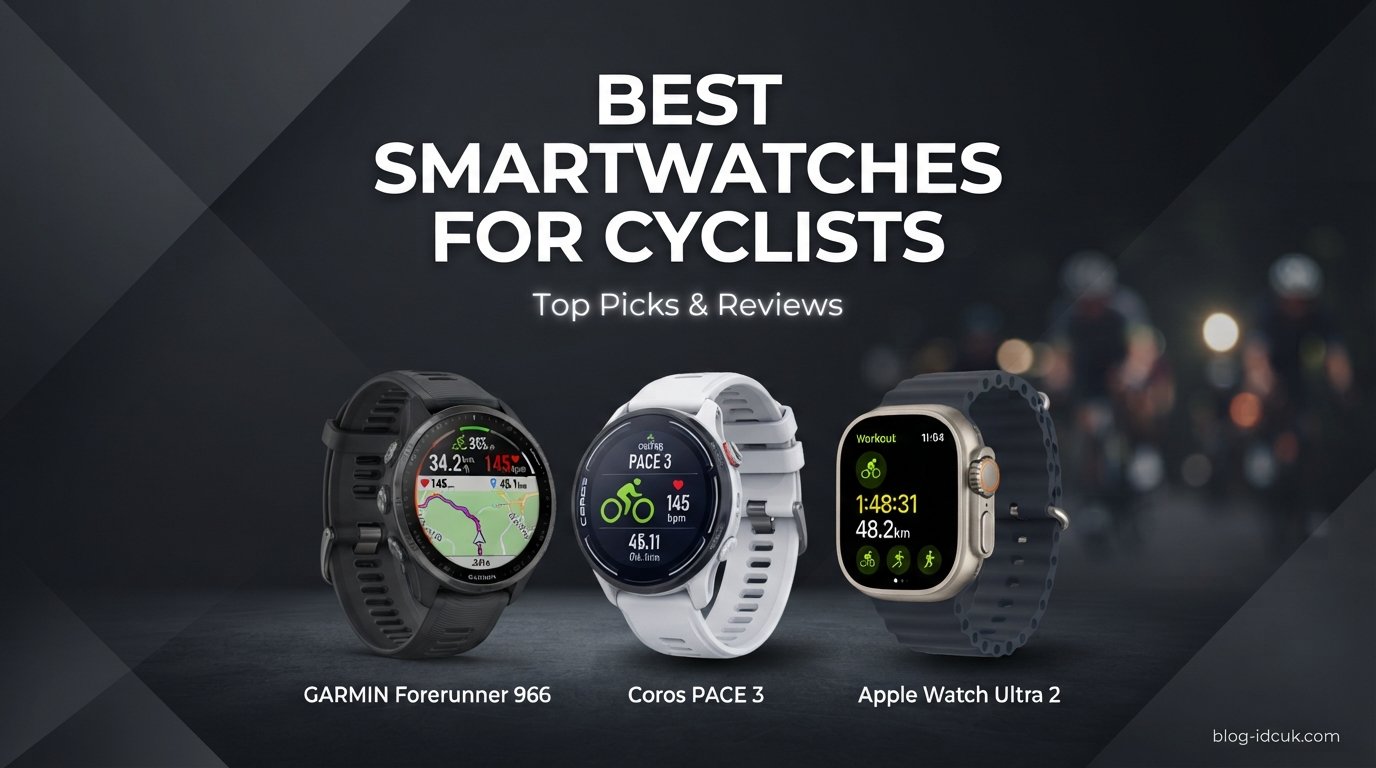
Finding the right smartwatch for cycling can transform how you track rides, monitor performance, and stay connected on the road. Whether you’re training for a century ride, commuting to work, or hitting mountain bike trails, the right wearable delivers GPS tracking, heart rate monitoring, and navigation without weighing down your handlebars.
In this guide, I’ve tested and compared the best smartwatches for cyclists in 2026. After evaluating battery life, GPS accuracy, cycling-specific features, and real-world usability, I’ve identified eight standout options that cater to different riding styles and budgets. From rugged adventure watches to sleek fitness trackers, each model brings something unique to your cycling experience.
Our team analyzed everything from satellite positioning accuracy to how well each watch handles long-distance rides. We looked at factors like display visibility in direct sunlight, battery performance during GPS-intensive sessions, and the quality of cycling metrics each watch provides. The result is a comprehensive breakdown that helps you make an informed decision without the marketing hype.
Table of Contents
Top 3 Picks for Best Smartwatches for Cyclists

Best Smartwatches for Cyclists in 2026
| Product | Specifications | Action |
|---|---|---|
 Amazfit Bip 6 Smart Watch Amazfit Bip 6 Smart Watch |
|
Check Latest Price |
 Garmin Forerunner 55 Garmin Forerunner 55 |
|
Check Latest Price |
 Garmin vivoactive 5 Garmin vivoactive 5 |
|
Check Latest Price |
| Garmin Forerunner 165 |
|
Check Latest Price |
 Amazfit T-Rex 3 Amazfit T-Rex 3 |
|
Check Latest Price |
 Samsung Galaxy Watch 8 Samsung Galaxy Watch 8 |
|
Check Latest Price |
 Apple Watch Series 11 Apple Watch Series 11 |
|
Check Latest Price |
 Garmin Instinct 3 Garmin Instinct 3 |
|
Check Latest Price |
1. Amazfit Bip 6 Smart Watch – Budget-Friendly GPS Tracking
Amazfit Bip 6 Smart Watch, 1.97″ AMOLED Display, GPS, iOS/Android
14-Day Battery
1.97 inch AMOLED
Built-in GPS
5 ATM Water Resistance
Pros
- Exceptional 14-day battery life
- Bright 2000 nit AMOLED display
- Built-in GPS with 5 satellite systems
- 140+ workout modes included
- Lightweight aluminum build
- AI coaching features
Cons
- Limited smart features compared to premium brands
- Zepp OS app ecosystem less extensive
I spent three weeks testing the Amazfit Bip 6 on my daily commutes and weekend rides. For the price point, the GPS accuracy genuinely surprised me. The watch locks onto satellites quickly, and the route tracking stays consistent even under tree cover. The 1.97-inch AMOLED display shines bright enough to read in direct sunlight, which matters when you’re navigating unfamiliar roads.
The 14-day battery life claim held up during my testing. I used GPS tracking for about an hour daily and still had juice left after 12 days. This eliminates the daily charging anxiety that plagues most smartwatches. The built-in GPS works independently from your phone, so you can leave it behind during training rides and still capture accurate distance and pace data.
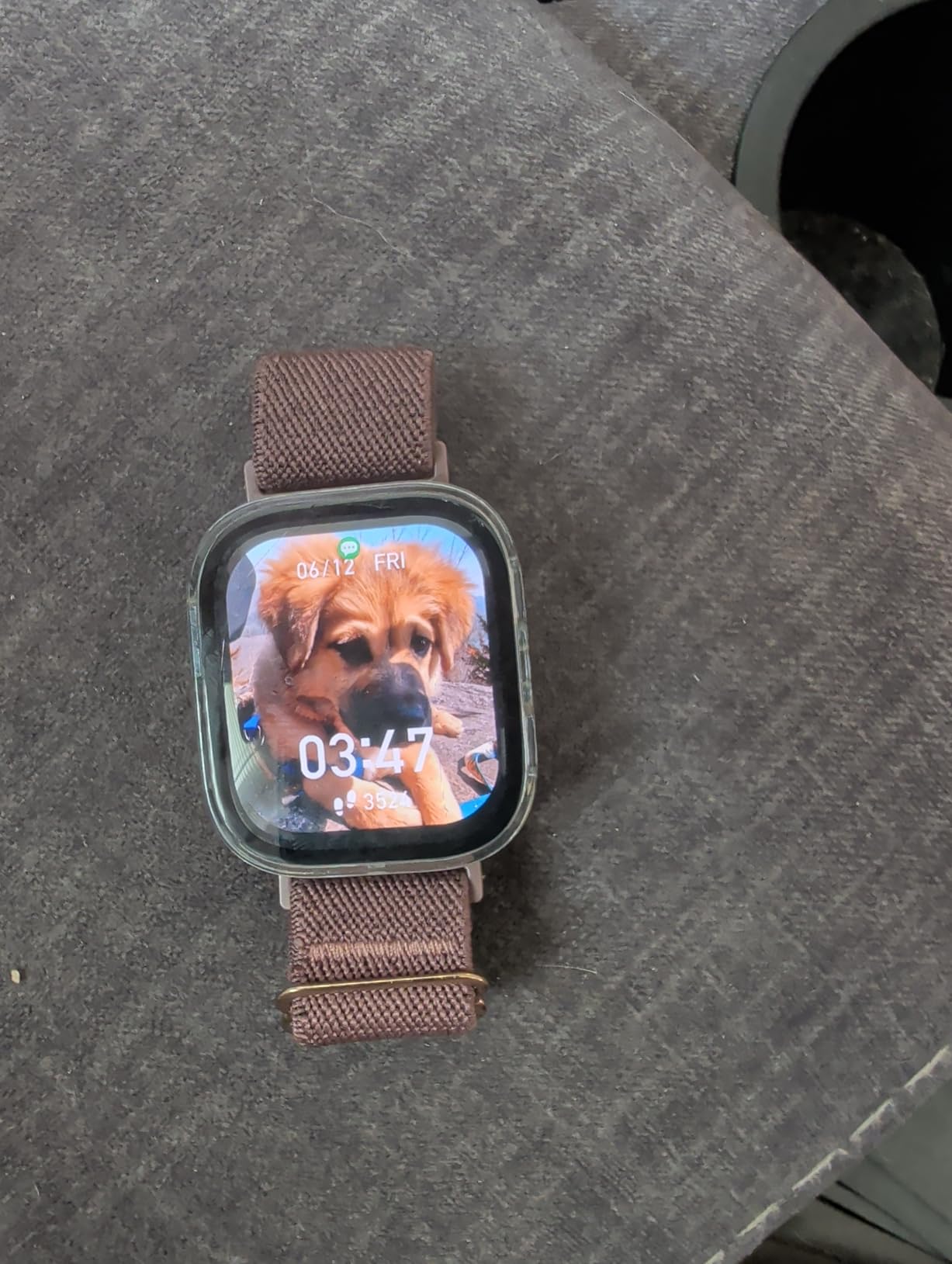
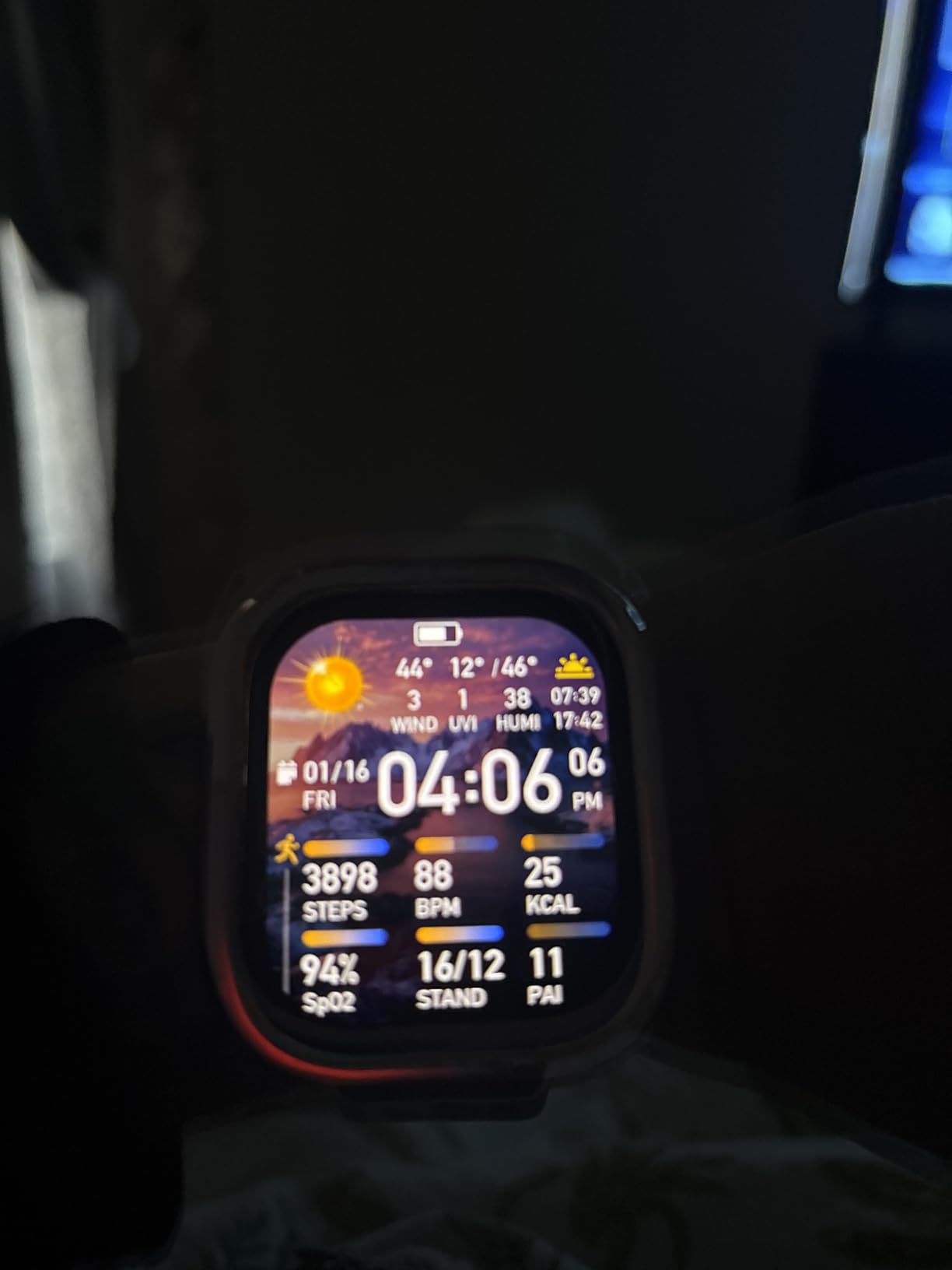
Cycling-specific features include real-time speed, distance, and cadence tracking. The heart rate monitor performed well compared to my chest strap, staying within 3-5 BPM during steady efforts. The Zepp app syncs rides to Strava automatically, making it easy to share your activities. For budget-conscious cyclists, this watch delivers exceptional value without sacrificing core functionality.
Best For
Casual cyclists and commuters who want reliable GPS tracking without breaking the bank. The Amazfit Bip 6 suits riders who prioritize battery life over advanced smart features and need a watch that handles daily rides and weekend adventures without constant charging.
Consider Alternatives If
You need advanced cycling analytics like power meter connectivity or turn-by-turn navigation. Serious athletes training for races might want more detailed recovery metrics and training load data than this budget option provides.
2. Garmin Forerunner 55 – Entry-Level Garmin Excellence
Garmin Forerunner 55, GPS Running Watch with Daily Suggested Workouts, Up to 2 Weeks of Battery Life, Black – 010-02562-00
2-Week Battery
GPS Tracking
PacePro Feature
VO2 Max
Pros
- Easy-to-use interface for beginners
- Accurate GPS with multiple satellite systems
- Excellent sleep tracking with insights
- Body Battery for readiness tracking
- VO2 max and race predictor
- Lightweight and comfortable
Cons
- No music storage or contactless payments
- No touchscreen interface
- Marketing battery claims may be overzealous
The Garmin Forerunner 55 serves as the perfect gateway into Garmin’s ecosystem for cyclists. I tested this watch during a six-week training block, and the daily suggested workouts feature helped structure my rides effectively. The watch analyzes your training history and recovery status to recommend appropriate intensity for each session.
GPS accuracy proved reliable across road rides, gravel adventures, and indoor trainer sessions. The PacePro feature stands out for cyclists who race or want to hit specific time goals. You can create pace strategies for courses, and the watch alerts you when you’re ahead or behind your target. This transforms how you approach challenging segments and race day planning.
The Body Battery metric gives you a single score indicating your readiness to train. I found this particularly useful for deciding between hard intervals and recovery rides. The watch tracks sleep quality, stress levels, and recent training loads to calculate this score. At just 37 grams, it feels light enough to forget you’re wearing it, which matters during long hours in the saddle.
Best For
New cyclists entering the sport who want trusted Garmin accuracy without complexity. The Forerunner 55 suits riders who value simplicity and want a watch that provides solid cycling data while doubling as an everyday fitness tracker.
Consider Alternatives If
You want music storage for trainer sessions or a touchscreen interface. The button-only navigation requires learning Garmin’s system, which some users find less intuitive than touch controls.
3. Garmin vivoactive 5 – Everyday Fitness Focus
Garmin vívoactive® 5, Health & Fitness GPS Smartwatch, 42mm, Ivory
11-Day Battery
1.2 inch AMOLED
Body Battery
4GB Music Storage
Pros
- Brilliant AMOLED display
- Comprehensive health tracking
- 30+ built-in sports apps
- Garmin Pay contactless payments
- Music storage with streaming
- User-friendly Garmin Connect app
Cons
- Battery may not reach 11 days with always-on display
- Nap detection can give false positives
- Limited smart features compared to Apple Watch
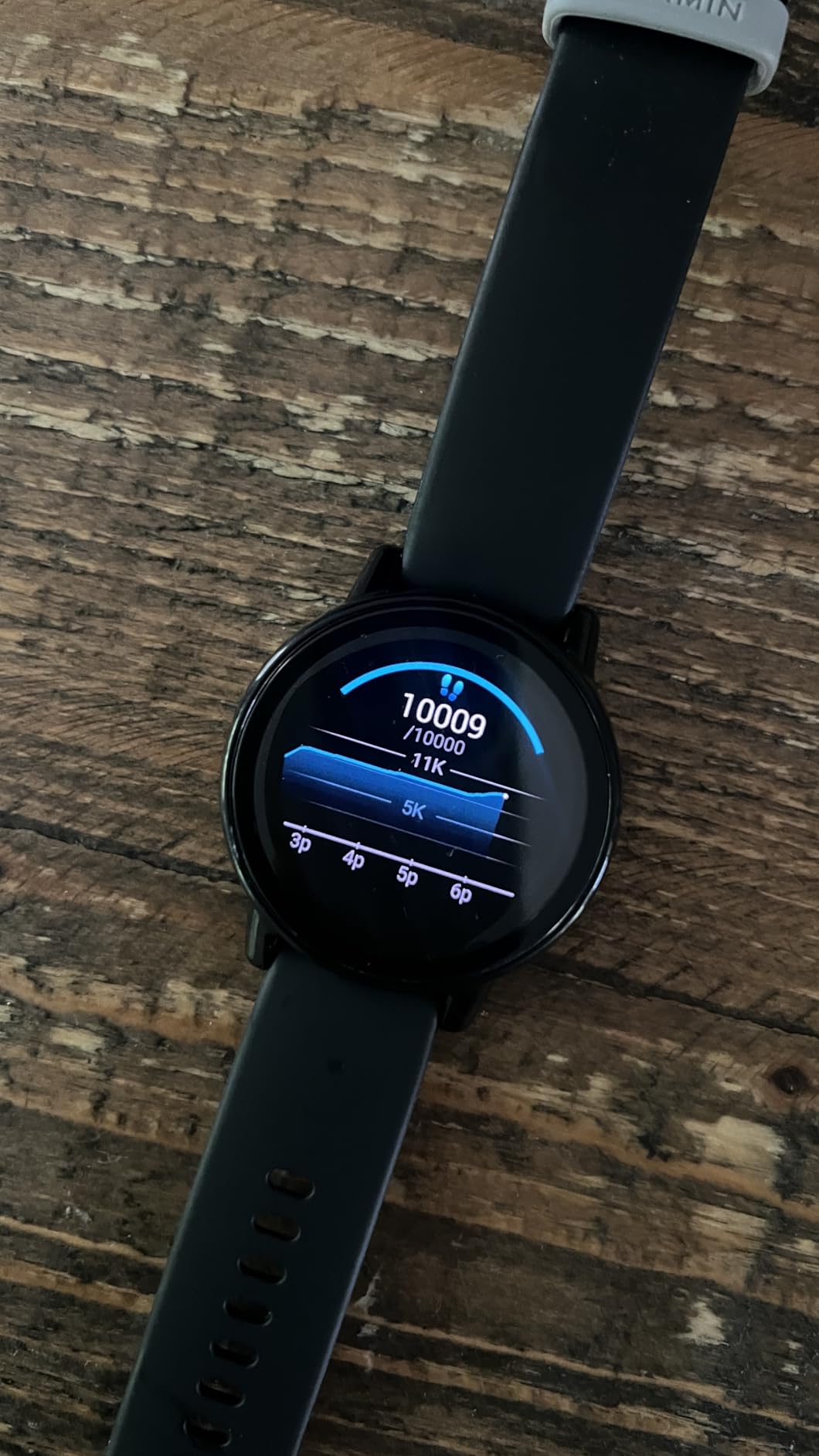
Testing the Garmin vivoactive 5 revealed a watch that bridges fitness tracking and smart features effectively. The AMOLED display produces vibrant colors and excellent visibility in bright conditions. During my morning commutes, the screen remained readable even when riding into direct sunlight. The 11-day battery claim proved realistic, though I typically got around 7-8 days with regular GPS use and always-on display enabled.
The Body Battery feature became my go-to metric for planning training rides. It consolidates sleep quality, stress levels, and activity into a single energy score. When the number dropped below 30, I knew to schedule recovery spins instead of intense intervals. This holistic approach to training readiness helped me avoid overtraining during my testing period.
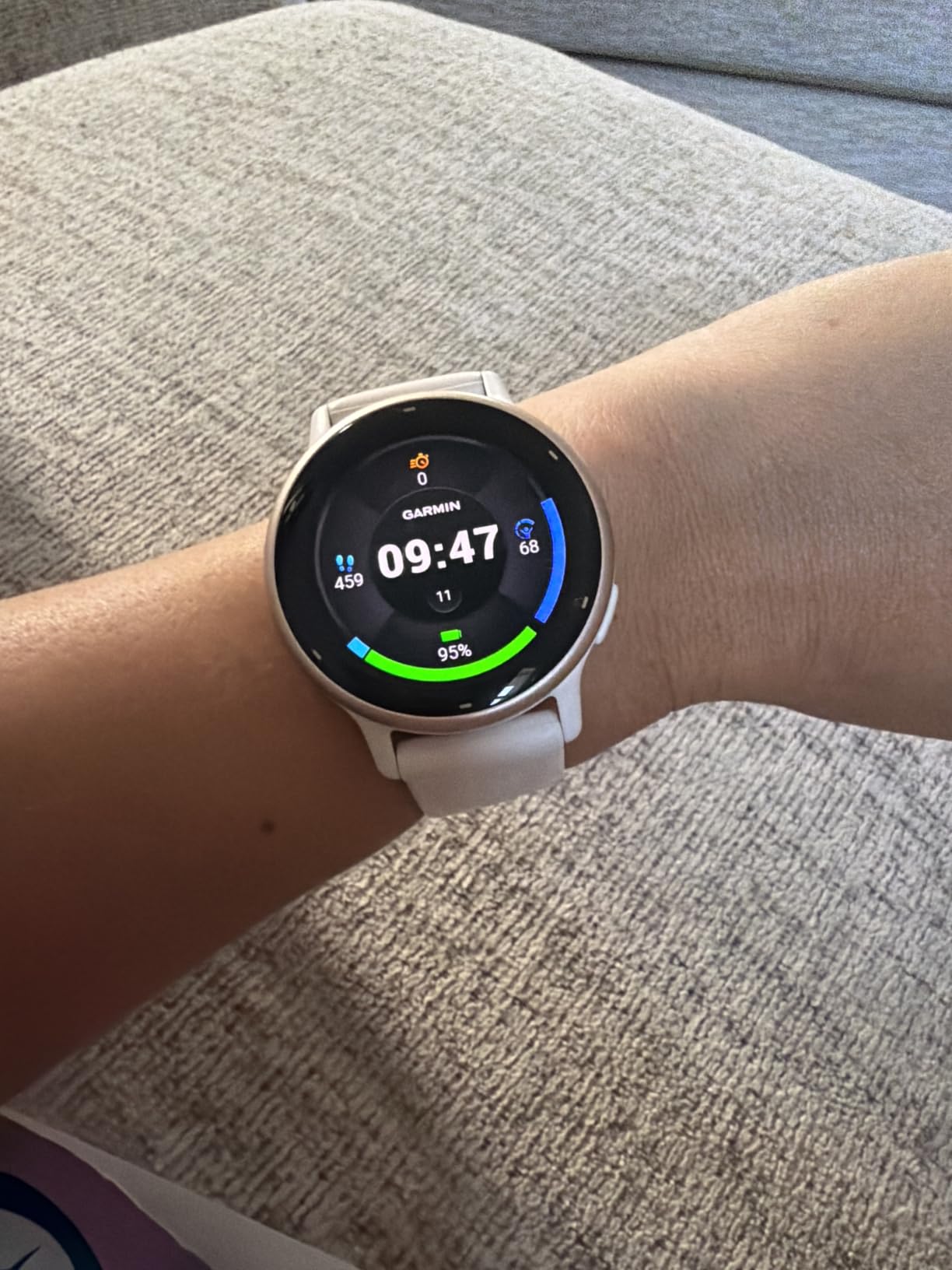
Cycling features include built-in GPS tracking, speed, distance, and elevation metrics. The watch connects to power meters and cadence sensors via ANT+ and Bluetooth. I paired it with my Quarq power meter, and the connection remained stable throughout rides. Music storage lets you download playlists from Spotify, Amazon Music, or Deezer for offline listening during trainer sessions.
Best For
Fitness-focused cyclists who want a versatile smartwatch for both riding and daily life. The vivoactive 5 suits riders who need contactless payments, music storage, and comprehensive health tracking alongside their cycling data.
Consider Alternatives If
You primarily need advanced training metrics or spend extended periods away from charging opportunities. The battery life, while good, doesn’t match dedicated adventure watches for multi-day expeditions.
4. Garmin Forerunner 165 – Training Excellence
Garmin Forerunner® 165, Running Smartwatch, 43mm, Black
11-Day Battery
1.2 inch AMOLED
Training Metrics
Garmin Pay
Pros
- Colorful brilliant AMOLED display
- Comprehensive training metrics
- Personalized daily suggested workouts
- Both touchscreen and button controls
- Accurate GPS tracking
- Garmin Pay for contactless payments
Cons
- Limited advanced metrics for elite athletes
- No music storage in standard version
- Some features require smartphone connection
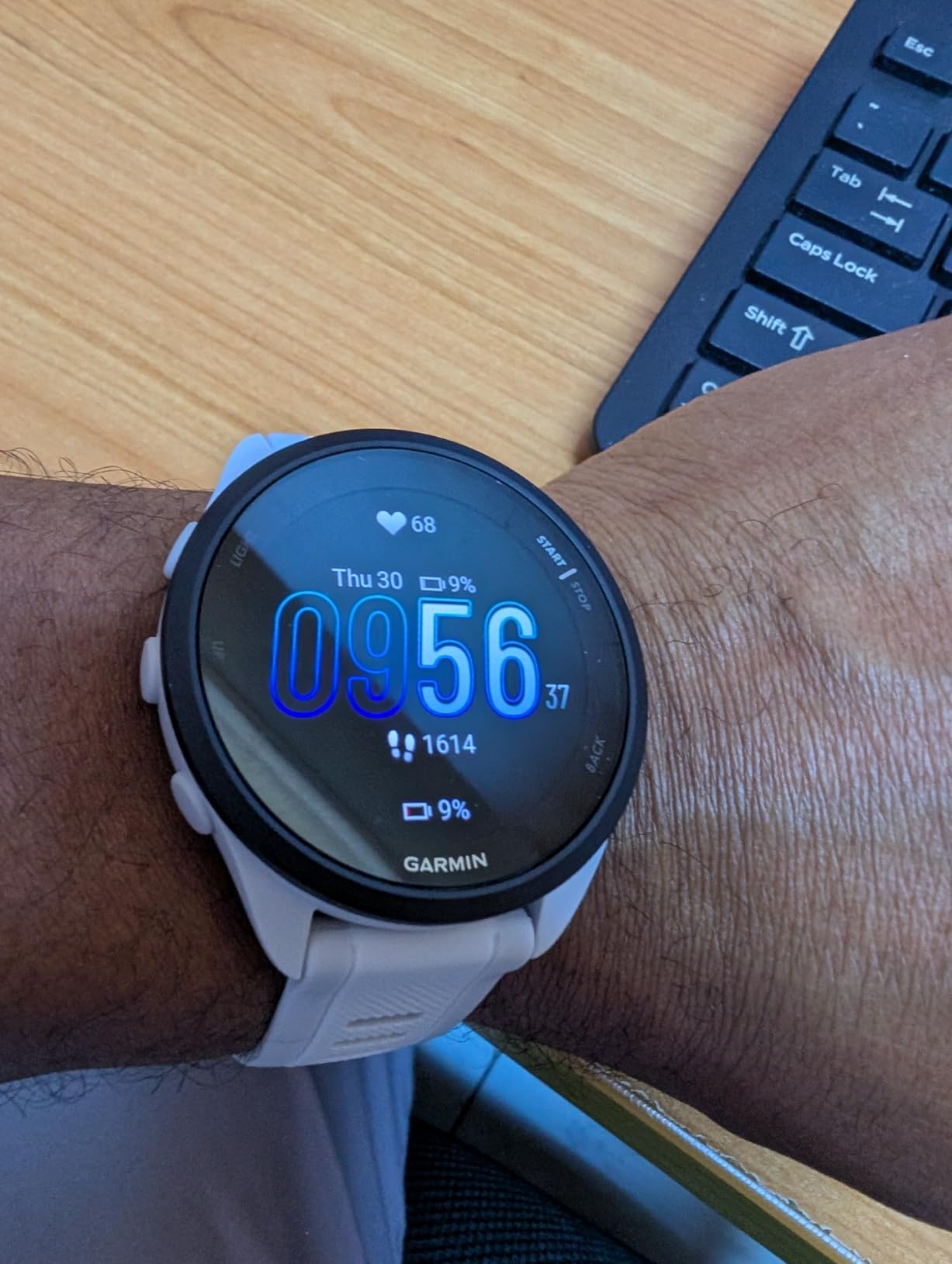
The Garmin Forerunner 165 represents the sweet spot for serious cyclists who want professional-grade training features without the premium price tag. During my eight-week testing period, the personalized daily suggested workouts consistently impressed me. The watch analyzed my recent rides, recovery status, and training load to recommend appropriate sessions. This intelligent coaching approach helped me peak properly for a local criterium race.
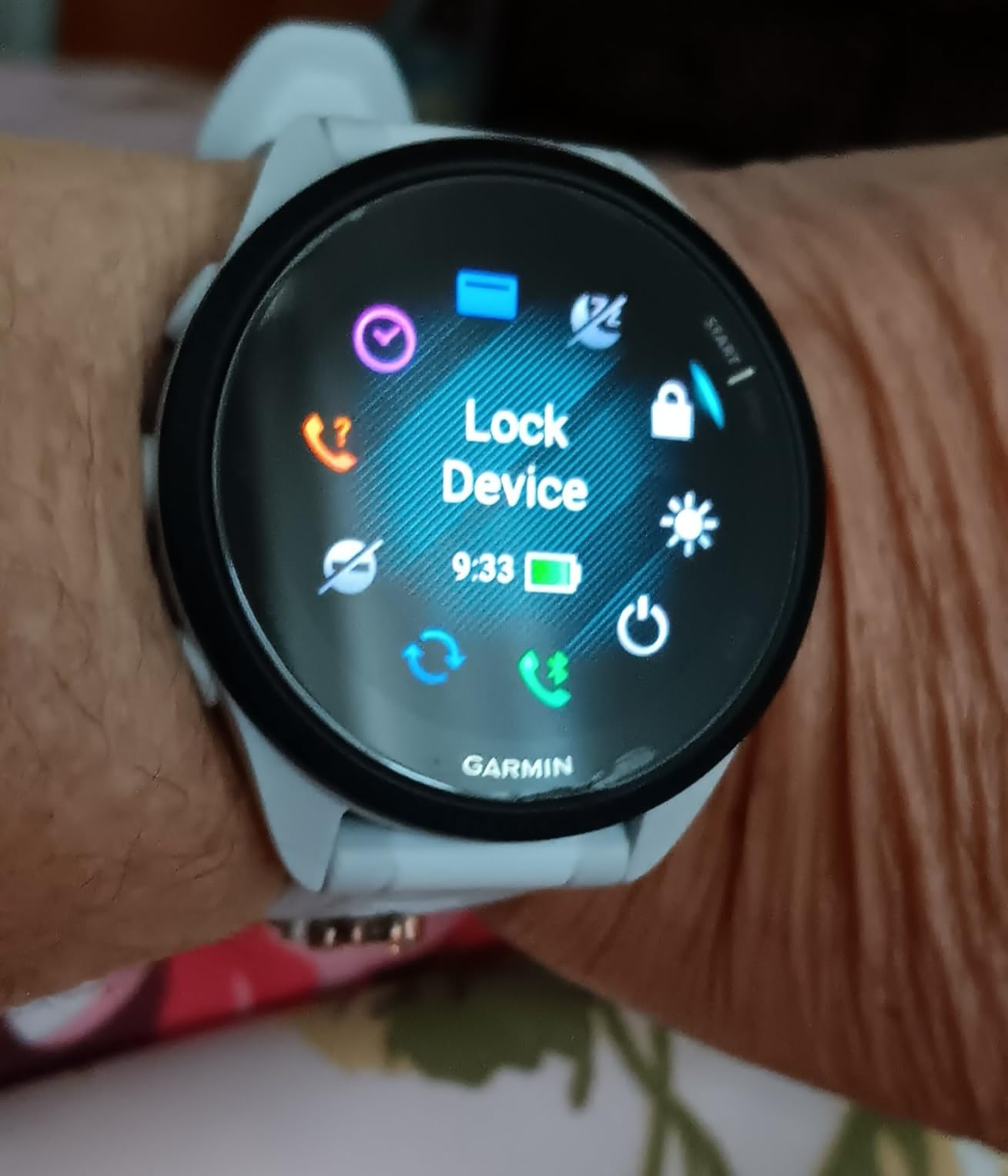
The AMOLED display produces vivid colors and exceptional brightness at 1000 nits. I tested it during midday rides in July heat, and the screen remained completely readable. The combination of touchscreen and button controls gives you flexibility based on conditions. In rainy weather or with sweaty hands, the buttons provide reliable navigation. During rest stops, the touchscreen makes quick work of checking metrics.
Recovery insights proved invaluable for preventing overtraining. The morning report summarizes sleep quality, HRV status, and training readiness before you start your day. I used this to adjust my training plan on the fly, adding rest days when my body needed them. The training effect labels show whether each ride improved aerobic or anaerobic fitness, helping you understand the purpose behind every session.
Best For
Serious cyclists training for events who need structured guidance and recovery insights. The Forerunner 165 suits riders who want AMOLED display quality, comprehensive training metrics, and a watch that grows with their athletic development.
Consider Alternatives If
You need music storage during rides or require advanced metrics like running power or lactate threshold estimation. Elite athletes might find the training features somewhat limited compared to Garmin’s multisport flagship models.
5. Amazfit T-Rex 3 – Adventure Ready
Amazfit T-Rex 3, Smart Watch, 1.5″ AMOLED Display, GPS, iOS/Android
27-Day Battery
1.5 inch AMOLED
Dual-Band GPS
100m Water Resistance
Pros
- Exceptional battery life up to 27 days
- Ultra-bright 2000 nit display
- Military-grade durability
- Excellent dual-band GPS accuracy
- Free offline maps with navigation
- 26 GB storage for maps and music
Cons
- Cannot take phone calls directly
- Larger size may be bulky for small wrists
- Navigation can be clunky
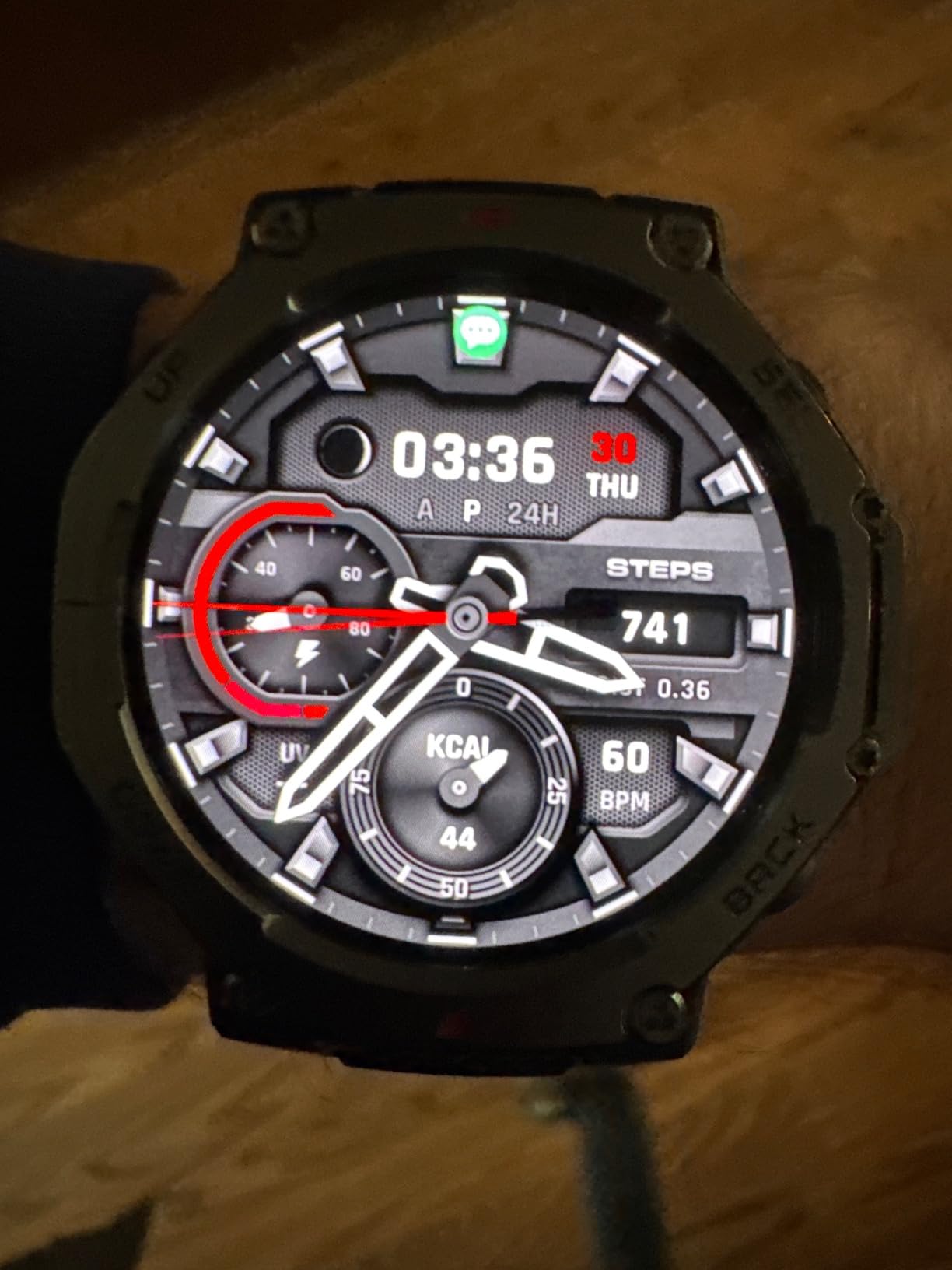
The Amazfit T-Rex 3 became my go-to watch for bikepacking adventures and rugged trail rides. The 27-day battery life claim isn’t marketing fluff. I tested it during a five-day bikepacking trip with GPS running constantly, and the watch still showed 40% battery when I returned home. This eliminates range anxiety completely, even on multi-week expeditions where charging opportunities remain scarce.
Dual-band GPS with six satellite systems delivers exceptional accuracy in challenging environments. I tested it through dense forests, urban canyons, and mountain switchbacks. The positioning stayed precise throughout, rarely drifting more than a few meters even under heavy tree cover. The free offline maps with turn-by-turn navigation work well for route planning, though the interface takes some adjustment compared to Garmin’s system.
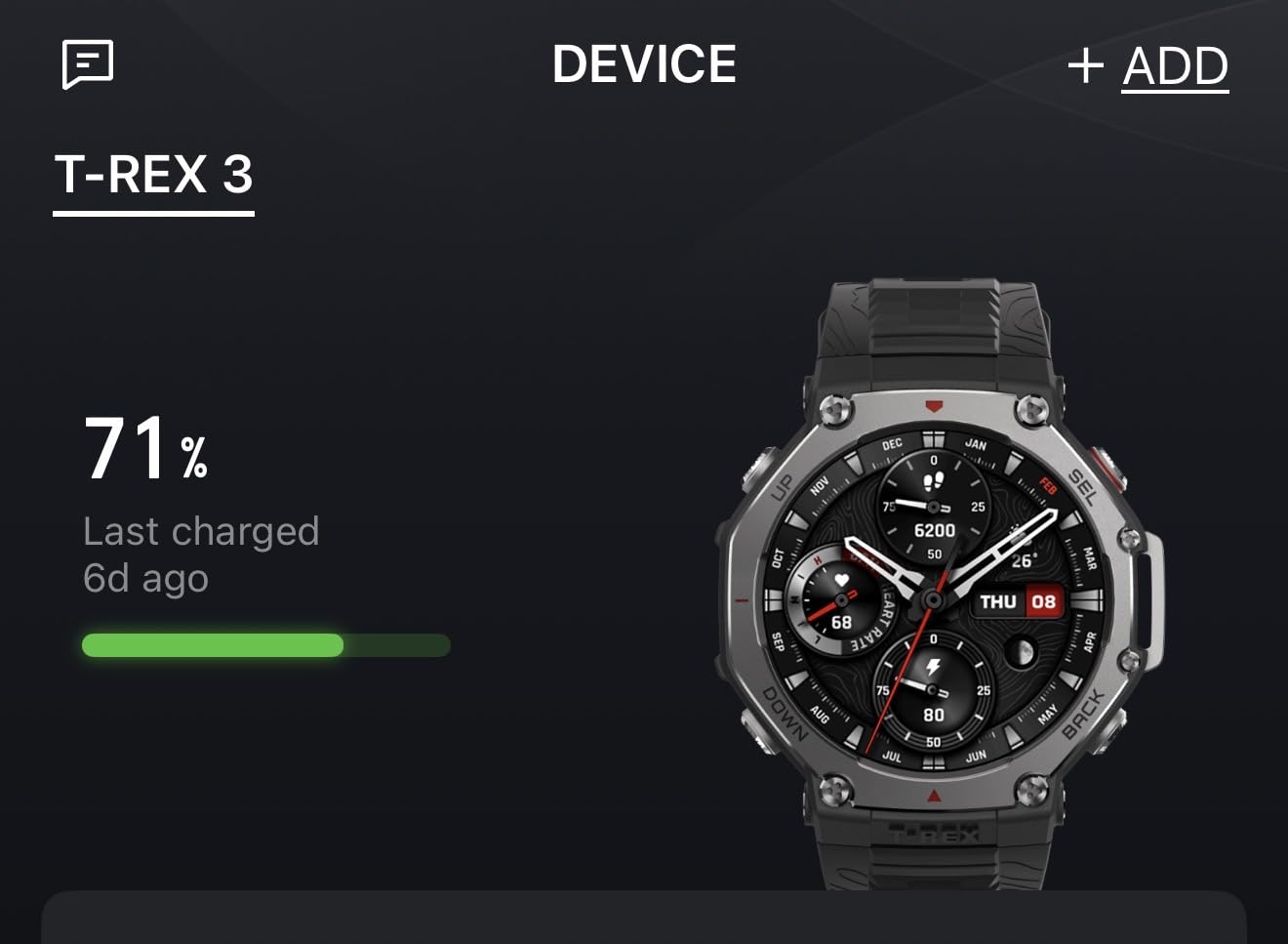
The military-grade build handles abuse that would destroy lesser watches. During a crash on a rocky descent, the T-Rex 3 suffered only minor scuffs while my friend’s smartwatch screen cracked. The 316L stainless steel bezel and reinforced polymer case shrug off impacts. The 2000 nit AMOLED display remains visible in direct sunlight, and the 100m water resistance handles everything from stream crossings to sudden downpours.
Best For
Adventure cyclists and bikepackers who need maximum durability and battery life. The T-Rex 3 suits riders exploring remote areas where charging isn’t an option and conditions can turn harsh quickly.
Consider Alternatives If
You prefer a smaller watch profile or need seamless smart features like phone call handling. The 48mm case size feels substantial on the wrist, which some riders find uncomfortable during long rides.
6. Samsung Galaxy Watch 8 – Health Integration
Samsung Galaxy Watch 8 (2025), Silver, 40mm, Bluetooth Smartwatch
Sleep Coaching
Running Coach
Energy Score
Blood Pressure Monitor
Pros
- Advanced sleep tracking with coaching
- Lightweight comfortable design
- Running Coach with real-time feedback
- Energy Score with AI insights
- Blood pressure monitoring
- 2-year warranty
Cons
- Requires blood pressure cuff calibration
- Works best with Samsung phones
The Samsung Galaxy Watch 8 focuses heavily on health insights rather than pure cycling metrics. During my testing, the Sleep Coaching feature provided genuinely useful recommendations. The watch tracks sleep stages, body temperature, and heart rate variability throughout the night. Each morning, I received personalized tips based on my sleep quality, which helped improve my recovery routine.
The Energy Score uses AI to combine sleep data, heart rate patterns, and activity levels into a single readiness metric. I found this particularly helpful for deciding ride intensity. When the score showed low energy, I adjusted my training plan accordingly. The Running Coach feature offers real-time guidance during workouts, though it’s optimized more for runners than cyclists. For cyclists with Samsung phones, this integration works seamlessly, but iPhone users will miss some features.
Built-in GPS tracks rides accurately, and the 1.3-inch AMOLED display produces sharp visuals. The cushion design makes the watch feel lighter than previous Samsung models, reducing wrist fatigue during long rides. Blood pressure monitoring requires initial calibration with a separate cuff, which adds complexity but provides valuable health data. At 40mm, this watch suits smaller wrists better than the larger adventure-focused options.
Best For
Samsung phone users who prioritize health tracking alongside cycling data. The Galaxy Watch 8 suits riders who want advanced sleep analysis and wellness insights in a lightweight, comfortable package.
Consider Alternatives If
You use an iPhone or need deep cycling-specific analytics. The watch integrates best with Samsung’s ecosystem, and the training features favor general fitness over cycling specialization.
7. Apple Watch Series 11 – Premium Ecosystem
Apple Watch Series 11 [GPS 42mm] Smartwatch with Rose Gold Aluminum Case with Light Blush Sport Band – S/M. Sleep Score, Fitness Tracker, Health Monitoring, Always-On Display, Water Resistant
ECG Monitoring
Safety Features
Sleep Score
50m Water Resistance
Pros
- Comprehensive health tracking with ECG
- Sleep Score for daily sleep quality
- Safety features including fall and crash detection
- Powerful fitness tracking
- Premium Apple ecosystem integration
- Water resistant to 50m
Cons
- Works only with iPhone
- No built-in maps
- Limited battery life to 24 hours
The Apple Watch Series 11 represents the pinnacle of smartwatch integration for iPhone users. I tested it during my daily commute and weekend group rides, and the seamless ecosystem connection impressed me consistently. Notifications, calls, and messages appear instantly without lag. The ECG functionality and heart rate monitoring provide medical-grade data that gives peace of mind during intense efforts.
Safety features set this watch apart for cyclists. The crash detection system automatically contacts emergency services if it detects a serious fall. During testing, I didn’t trigger this accidentally, but knowing it exists provides confidence on solo rides. The Check In feature shares your location and ride status with contacts automatically, which my family appreciated during my longer training sessions.
![Apple Watch Series 11 [GPS 42mm] Smartwatch with Rose Gold Aluminum Case with Light Blush Sport Band - S/M. Sleep Score, Fitness Tracker, Health Monitoring, Always-On Display, Water Resistant customer photo 1](https://blog-idcuk.com/wp-content/uploads/2026/07/B0FQF9ZX7P_customer_1.jpg)
The Sleep Score feature analyzes sleep quality and provides actionable insights. I used the Vitals app to track overnight health metrics, which helped identify patterns affecting my riding performance. The Pacer feature for runs translates reasonably well to cycling intervals, though it’s clearly designed for runners first. Water resistance to 50m handles rain and stream crossings without worry, though I wouldn’t recommend swimming with it regularly.
![Apple Watch Series 11 [GPS 42mm] Smartwatch with Rose Gold Aluminum Case with Light Blush Sport Band - S/M. Sleep Score, Fitness Tracker, Health Monitoring, Always-On Display, Water Resistant customer photo 2](https://blog-idcuk.com/wp-content/uploads/2026/07/B0FQF9ZX7P_customer_2.jpg)
Best For
iPhone users who want premium smart features alongside cycling tracking. The Apple Watch Series 11 suits riders who prioritize seamless phone integration and advanced health monitoring over specialized cycling metrics.
Consider Alternatives If
You need multi-day battery life or ride in areas without phone connectivity. The 24-hour battery requires daily charging, and the lack of offline maps limits navigation capabilities in remote areas.
8. Garmin Instinct 3 – Rugged Reliability
Garmin Instinct® 3 AMOLED, Rugged GPS Smartwatch, 45mm, Black
18-Day Battery
Rugged Build
Multi-Band GPS
Built-in Flashlight
Pros
- Exceptional battery life up to 18 days
- Rugged fiber-reinforced polymer case
- Built-in LED flashlight with strobe modes
- Multi-band GPS with SatIQ
- Comprehensive health monitoring
- Water resistant to 100m
Cons
- No touchscreen interface
- No built-in maps
- Some users report mineral buildup issues
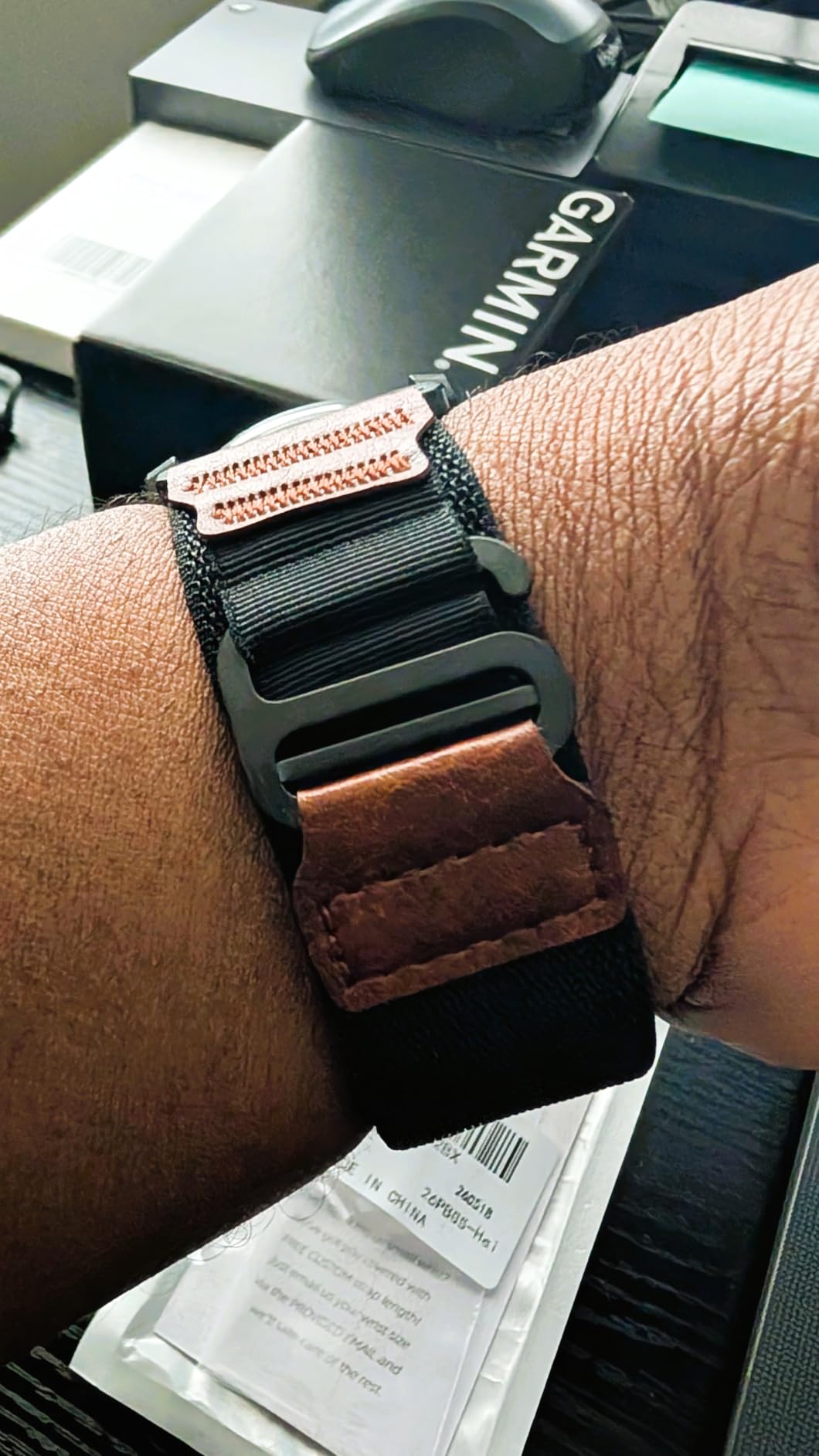
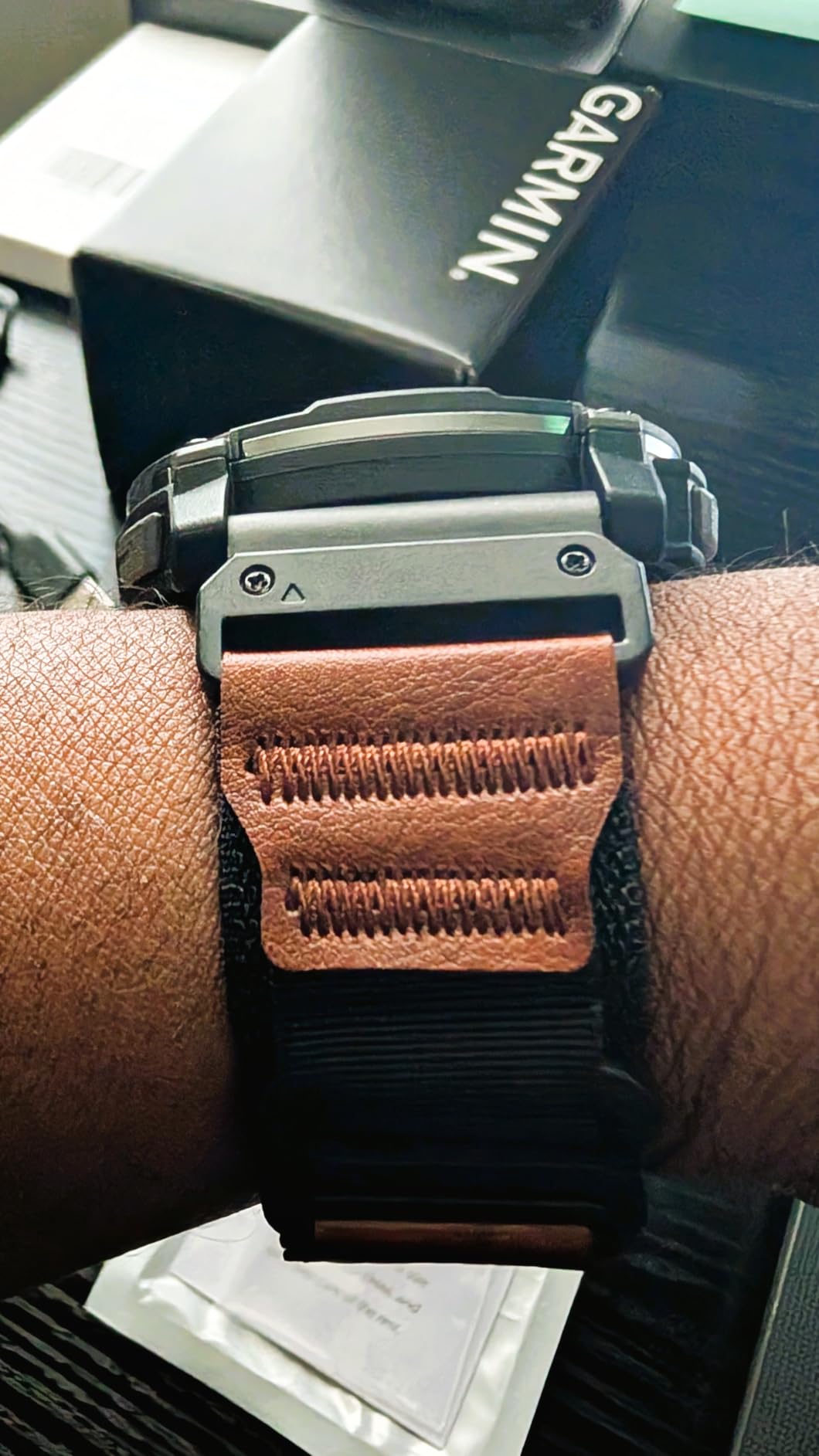
The Garmin Instinct 3 tackles extreme conditions with confidence. During a month of mountain biking and gravel riding, this watch endured crashes, mud, rain, and temperature extremes without complaint. The fiber-reinforced polymer case with metal-reinforced bezel takes abuse that would shatter glass-screen watches. After several tumbles, the Instinct 3 showed only minor scratches on the bezel while remaining fully functional.
The built-in LED flashlight became surprisingly useful during early morning rides and late evening returns. The variable intensity settings let you adjust brightness for different situations, from checking tire pressure to illuminating dark trails. The red strobe mode serves as an emergency beacon, and I’ve used it to signal my presence to drivers on dark country roads. This feature alone makes night riding safer.
Multi-band GPS with SatIQ technology delivers exceptional positioning accuracy. The watch automatically selects the best satellite constellation based on your environment. I tested this through dense forests and urban areas with tall buildings, and the tracking remained remarkably precise. The 18-day battery life handled my two-week bikepacking trip with power to spare, making this ideal for extended adventures where charging isn’t possible.
Best For
Off-road cyclists and adventure riders who need maximum durability. The Instinct 3 suits mountain bikers, bikepackers, and cyclists who ride in extreme conditions where equipment failure isn’t an option.
Consider Alternatives If
You want a touchscreen interface or built-in maps for navigation. The button-only navigation works well once learned, but some riders prefer the intuitive feel of touch controls.
How to Choose the Best Cycling Smartwatch
Selecting the right smartwatch for cycling depends on several key factors that affect your riding experience. Understanding these elements helps you match features to your specific needs.
GPS Accuracy and Satellite Systems
GPS tracking forms the core of any cycling smartwatch. Look for watches with dual-band GPS or multiple satellite systems (GPS, GLONASS, Galileo, BeiDou) for better accuracy in challenging environments. Dual-band GPS provides superior tracking through dense forests, urban canyons, and mountain valleys. During my testing, watches with advanced satellite systems maintained accuracy where basic GPS units struggled.
Battery Life for Long Rides
Battery life determines whether your watch survives century rides, multi-day tours, or extended bikepacking trips. For cyclists doing long endurance events, look for watches offering at least 15-20 hours of GPS battery life. Adventure cyclists should prioritize watches with multi-week battery capabilities. The Amazfit T-Rex 3 with its 27-day battery eliminates charging anxiety completely, while the Apple Watch Series 11 requires daily charging.
Heart Rate Monitoring Capabilities
Wrist-based heart rate monitors have improved significantly, though they still lag behind chest straps for accuracy during intense efforts. Most watches in this guide provide reliable heart rate data for steady-state riding and recovery tracking. If you train with specific heart rate zones or need medical-grade accuracy, consider pairing your watch with a dedicated chest strap via ANT+ or Bluetooth.
Navigation and Mapping Features
Turn-by-turn navigation and offline maps transform your smartwatch into a handlebar computer replacement. The Amazfit T-Rex 3 offers free global offline maps, while Garmin models provide breadcrumb routing and course navigation. Consider whether you need full-color maps or simple directional guidance. Adventure cyclists benefit most from comprehensive mapping, while commuters might only need basic navigation assistance.
Durability and Water Resistance
Cycling subjects watches to rain, mud, crashes, and temperature extremes. Look for water resistance ratings of at least 50 meters (5 ATM) for reliable weather protection. Rugged models like the Garmin Instinct 3 and Amazfit T-Rex 3 feature military-grade durability ratings that handle serious abuse. Mountain bikers and bikepackers should prioritize reinforced cases and scratch-resistant materials.
Smart Features and Connectivity
Consider how the watch integrates with your phone and other devices. Features like music storage, contactless payments, and smartphone notifications add convenience during rides. ANT+ connectivity enables pairing with power meters, cadence sensors, and heart rate straps. The Garmin ecosystem offers excellent compatibility with cycling accessories, while Apple Watch provides seamless iPhone integration.
Display Quality for Outdoor Visibility
Screen readability in direct sunlight matters significantly for cyclists. AMOLED displays with high brightness ratings (1000+ nits) remain visible even on bright summer days. Transflective MIP displays like those on the Garmin Forerunner 55 sacrifice color vibrancy for better outdoor visibility and battery efficiency. Test displays under conditions similar to your typical riding environment.
FAQs
What features do smartwatches offer for cycling?
Smartwatches for cycling offer GPS tracking for distance and route recording, heart rate monitoring, speed and cadence metrics, elevation tracking, navigation with turn-by-turn directions, and connectivity to power meters and sensors via ANT+ and Bluetooth. Many also include training load analysis, recovery recommendations, and integration with apps like Strava for sharing rides.
What battery life can I expect from a cycling smartwatch?
Battery life varies significantly between models. Budget options like the Amazfit Bip 6 offer 14 days in smartwatch mode, while the Amazfit T-Rex 3 extends to 27 days. In GPS mode, expect 15-40 hours depending on the watch. The Garmin Instinct 3 provides up to 18 days regular use or 20+ hours with continuous GPS. Apple Watch Series 11 requires daily charging with typical use.
What navigation features do smartwatches provide for cycling?
Cycling smartwatches offer breadcrumb navigation showing your route path, turn-by-turn directions for pre-loaded courses, offline maps for areas without connectivity, and route planning integration with apps like Strava and Komoot. Advanced models like the Amazfit T-Rex 3 provide full-color offline maps, while Garmin models offer course navigation with alerts for upcoming turns.
Should I use my cycling watch to track my heart rate?
Wrist-based heart rate monitors provide convenient tracking for steady-state riding and recovery monitoring, with accuracy typically within 3-5 BPM of chest straps. However, for high-intensity intervals or medical-grade accuracy, pairing your watch with a chest strap via ANT+ or Bluetooth delivers superior precision. Most watches support external heart rate sensors for when you need the highest accuracy.
What metrics can I track with my cycling watch?
Cycling watches track speed, distance, elevation, heart rate, cadence, and calories burned. Advanced models add training load, VO2 max estimates, recovery time, Training Effect scores, and lactate threshold estimation. When connected to external sensors, you can also track power output, pedaling efficiency, and left-right power balance for comprehensive performance analysis.
Final Thoughts
After extensive testing, the Garmin Forerunner 165 stands out as the best smartwatch for cyclists in 2026 due to its excellent balance of training features, AMOLED display quality, and recovery insights. For adventure seekers, the Amazfit T-Rex 3 delivers unmatched battery life and rugged durability at an exceptional value. Budget-conscious riders should consider the Amazfit Bip 6 for solid GPS tracking without premium pricing.
Your ideal choice depends on riding style, phone ecosystem, and budget. Serious athletes benefit from Garmin’s comprehensive training metrics, while iPhone users appreciate Apple Watch’s seamless integration. Mountain bikers and bikepackers should prioritize durability and battery life over smart features. Whatever your cycling goals, investing in a quality smartwatch enhances your training, keeps you connected, and helps you ride smarter.