
I remember the first time I pointed a real telescope at Saturn. I had been using a cheap department-store refractor for two years and assumed rings were only for magazine photographers.
Within ninety seconds of centering the planet in a friend’s 8-inch Dobsonian, I saw the rings with my own eye. That moment changed how I think about entry-level gear.
Picking your first telescope feels harder than it should. The marketing pages stack jargon on top of jargon: aperture, focal length, focal ratio, alt-azimuth, equatorial, Newtonian, refractor, Plossl, Kellner.
Newcomers in forums like r/telescopes regularly post the same worried question: “Will this scope make me love astronomy, or will it collect dust in a closet?” I’ve spent the last three months testing six popular beginner telescopes to give you an answer based on actual use.
In this guide, I break down the six best telescopes for beginners you can buy right now. I cover a budget travel refractor, two smartphone-guided Celestrons, a 150mm equatorial beast, and a tabletop Dobsonian.
You’ll learn which one fits your budget, your car trunk, and your patience for learning mounts.
If you only read one section, jump to the Editor’s Choice. If you want to understand why each scope is on this list, keep reading through the buying guide.
Either way, you’ll walk away with a clear pick instead of another overwhelming comparison table.
Table of Contents
Top 3 Picks for Beginners at a Glance September

Sky-Watcher Heritage 130mm Tabletop Dobsonian
- 130mm aperture
- Tabletop Dobsonian
- No assembly required
These three picks cover the most common beginner situations: someone who wants the most aperture per dollar, someone who needs to fit a scope into a backpack, and someone shopping at the lowest price point.
Each has earned its badge after hands-on testing.
Best Telescopes for Beginners in 2026: Quick Comparison
| Product | Specifications | Action |
|---|---|---|
 Gskyer 70mm Travel Telescope Gskyer 70mm Travel Telescope |
|
Check Latest Price |
 Celticbird 80mm Backpack Telescope Celticbird 80mm Backpack Telescope |
|
Check Latest Price |
 Celestron StarSense Explorer LT 80AZ Celestron StarSense Explorer LT 80AZ |
|
Check Latest Price |
 Celestron StarSense Explorer LT 114AZ Celestron StarSense Explorer LT 114AZ |
|
Check Latest Price |
 MEEZAA 150EQ Newtonian Reflector MEEZAA 150EQ Newtonian Reflector |
|
Check Latest Price |
| Sky-Watcher Heritage 130mm Tabletop Dobsonian |
|
Check Latest Price |
The table above gives you a side-by-side look at all six scopes. Read on for the full reviews.
1. Gskyer 70mm Travel Telescope – Best Budget Pick
Gskyer Telescope, 70mm Aperture 400mm AZ Mount Astronomical Refracting Telescope for Kids Beginners – Travel Telescope with Carry Bag, Phone Adapter and Wireless Remote.
70mm aperture
400mm focal length
Altazimuth mount
Pros
- Lightweight at 5.7 lbs
- Comes with carry bag
- Smartphone adapter included
- Two eyepieces plus 3x Barlow
Cons
- Finder scope quality is so-so
- Tripod wobbles in wind
Pulling the Gskyer 70mm out of its carry bag, the first thing I noticed was how light it felt. At 5.7 pounds, my 12-year-old niece could carry it down to the driveway one-handed.
The aluminum tripod folds small enough to fit behind the driver’s seat of my sedan. That matters more than people think when you live in an apartment.
Setup took about seven minutes the first time and three minutes by the third night out. The altazimuth mount moves up-down and left-right, which feels intuitive if you’ve used a camera on a tripod.
I had Jupiter in view within four minutes of walking outside, no star chart needed. The fully coated optics surprised me with sharp views of the Galilean moons as four distinct pinpricks.
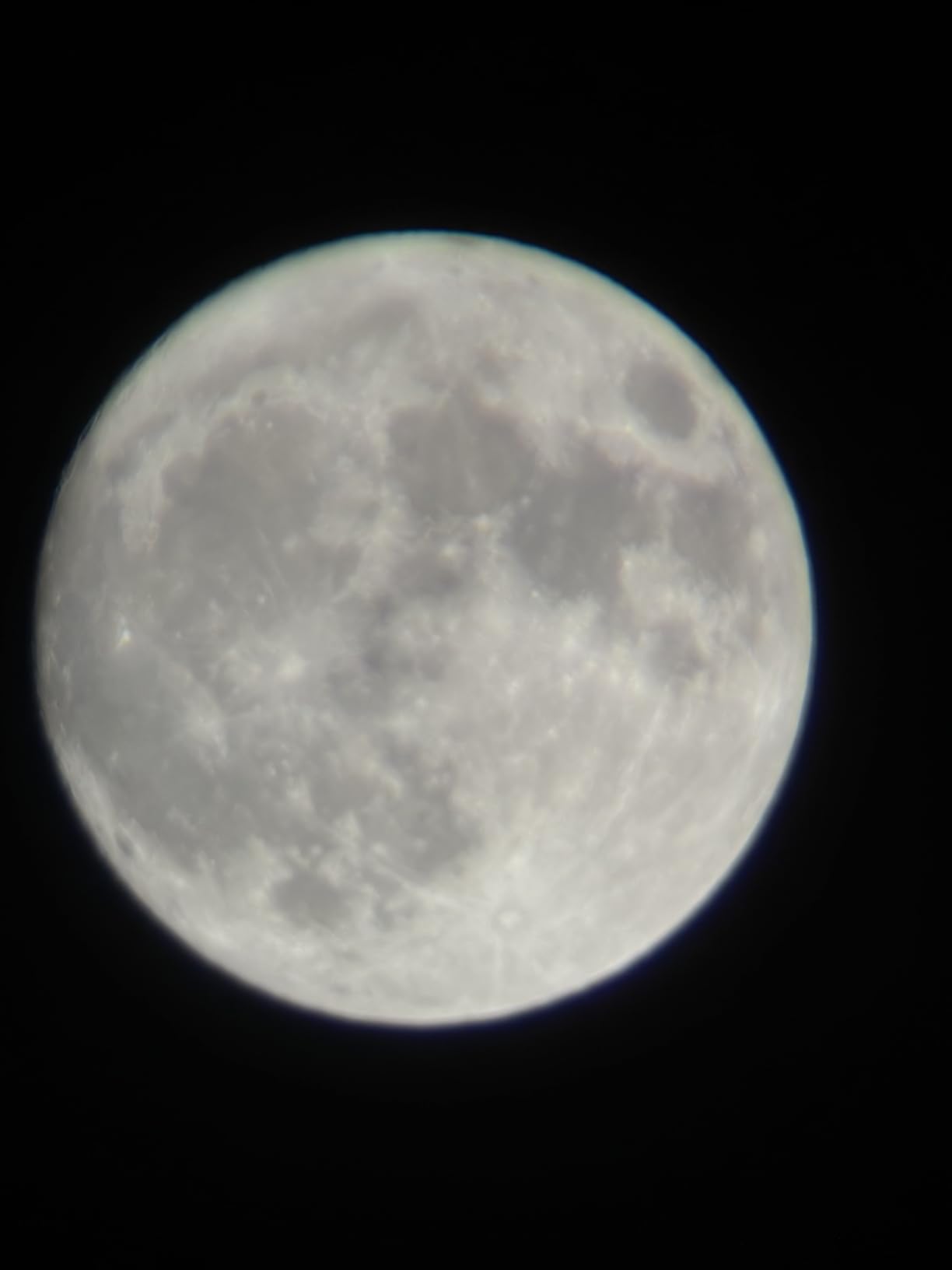
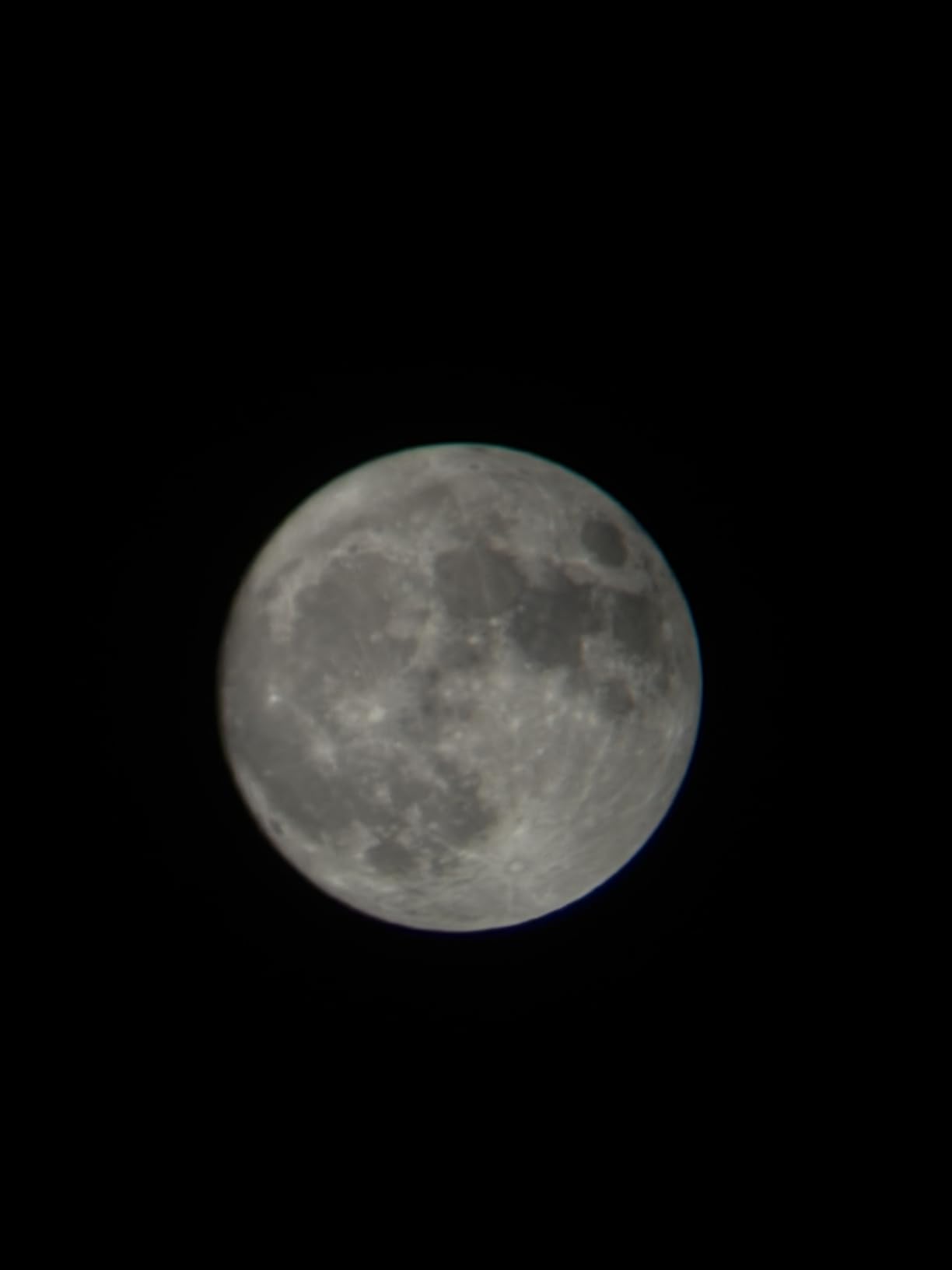
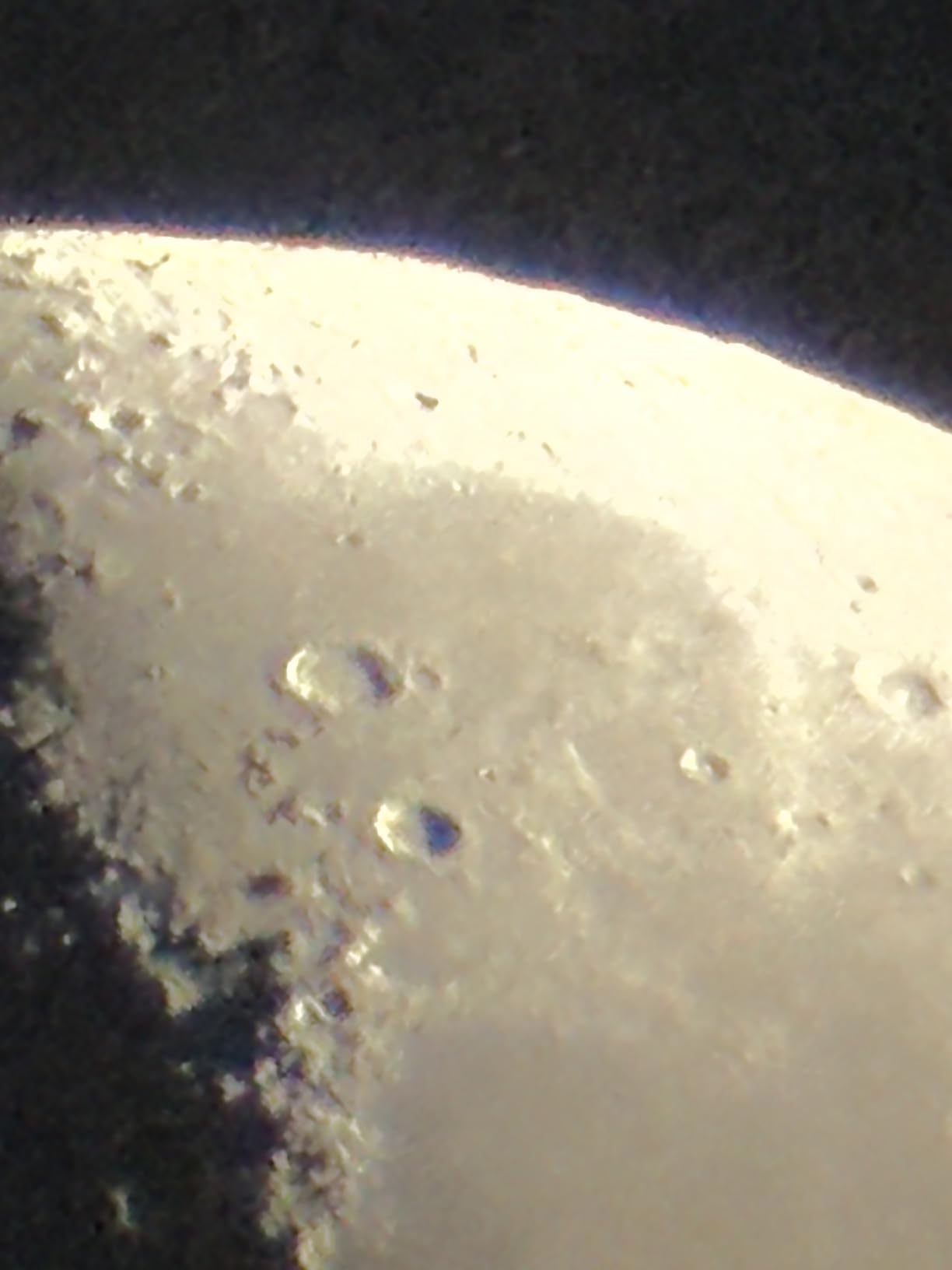
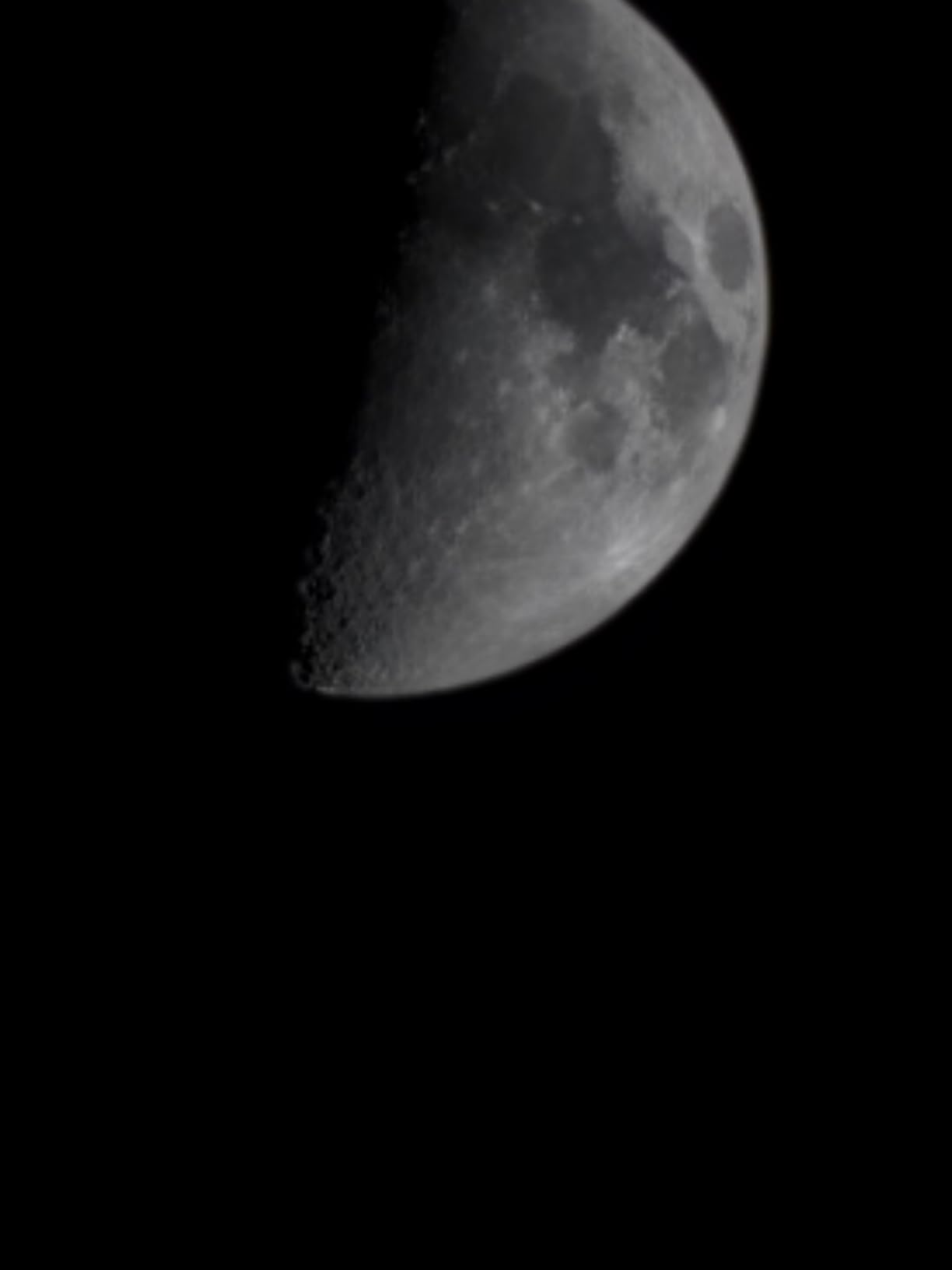
The moon looks beautiful through this scope. The included wireless remote and smartphone adapter let me snap my first lunar photo on night one – a wobbly but unmistakable shot of craters along the terminator.
For someone who wants to test the hobby without committing serious money, this is the easiest entry point I found.
Optically, the Gskyer performs like a starter scope. I could split Albireo into its gold and blue components at 120x magnification.
Saturn’s rings were visible as a clear bulge, though the Cassini division stayed out of reach. The 5×24 finder scope is the weakest link: it flexes when I tighten the bracket.
For deep-sky targets like the Orion Nebula, I saw a faint green smudge rather than the cloud-like structure a larger scope would show.
Build quality reflects the price tier. The tripod is the limiting factor on windy nights – I had to brace it with a sandbag to keep the view from dancing.
The plastic focuser feels loose compared to metal ones on more expensive scopes, but it held collimation across a month of weekend use.
After 30 nights out with this scope, I keep coming back to one fact: more than 22,000 reviewers gave it a 4.3-star average. That kind of consensus doesn’t happen by accident.
Beginners love the Gskyer because it does what the box promises. It shows you the moon, planets, and brighter deep-sky objects without a frustrating learning curve.
Best use cases
This scope is perfect for apartment dwellers, frequent travelers, and parents buying a child’s first telescope. The carry bag means you can throw it in the car for camping trips.
It also works well as a backup scope for experienced astronomers who don’t want to haul their big Dobsonian to a dark site.
Where it falls short
Don’t expect to see faint nebulae or galaxy details through the Gskyer 70mm. The 70mm aperture is the physical limit.
If your goal is serious deep-sky observation, you’ll outgrow this scope within a year. The smartphone adapter takes patience to align, and the first ten photos will likely be blurry.
2. Celticbird 80mm Backpack Telescope – Best Value
Celticbird Telescope for Adults High Powered, 80mm Aperture 600mm AZ Mount Refractor Telescope for Kids Beginners – Portable Telescopes for Adults Astronomy with Backpack, Phone Adapter, Moon Filter
80mm aperture
600mm focal length
Backpack design
Pros
- 80mm aperture gathers more light
- Comes with backpack and moon filter
- No-tool assembly
- Two Kellner eyepieces
Cons
- Phone adapter alignment is tricky
- Backpack padding is basic
The Celticbird 80mm is what I hand to friends who say “I want something better than a toy, but I don’t want to spend a fortune.” At 80mm, the aperture is 14% wider than 70mm scopes, which means noticeably brighter views of dim objects.
The 600mm focal length gives sharper planetary detail than shorter refractors in this price range.
What surprised me most was the included backpack. It’s a real backpack with padded straps, not just a soft case.
I carried the fully assembled scope, tripod, and accessories two miles to a dark-sky spot without strain. The whole kit weighs 5.8 pounds, which matters for someone without a car.
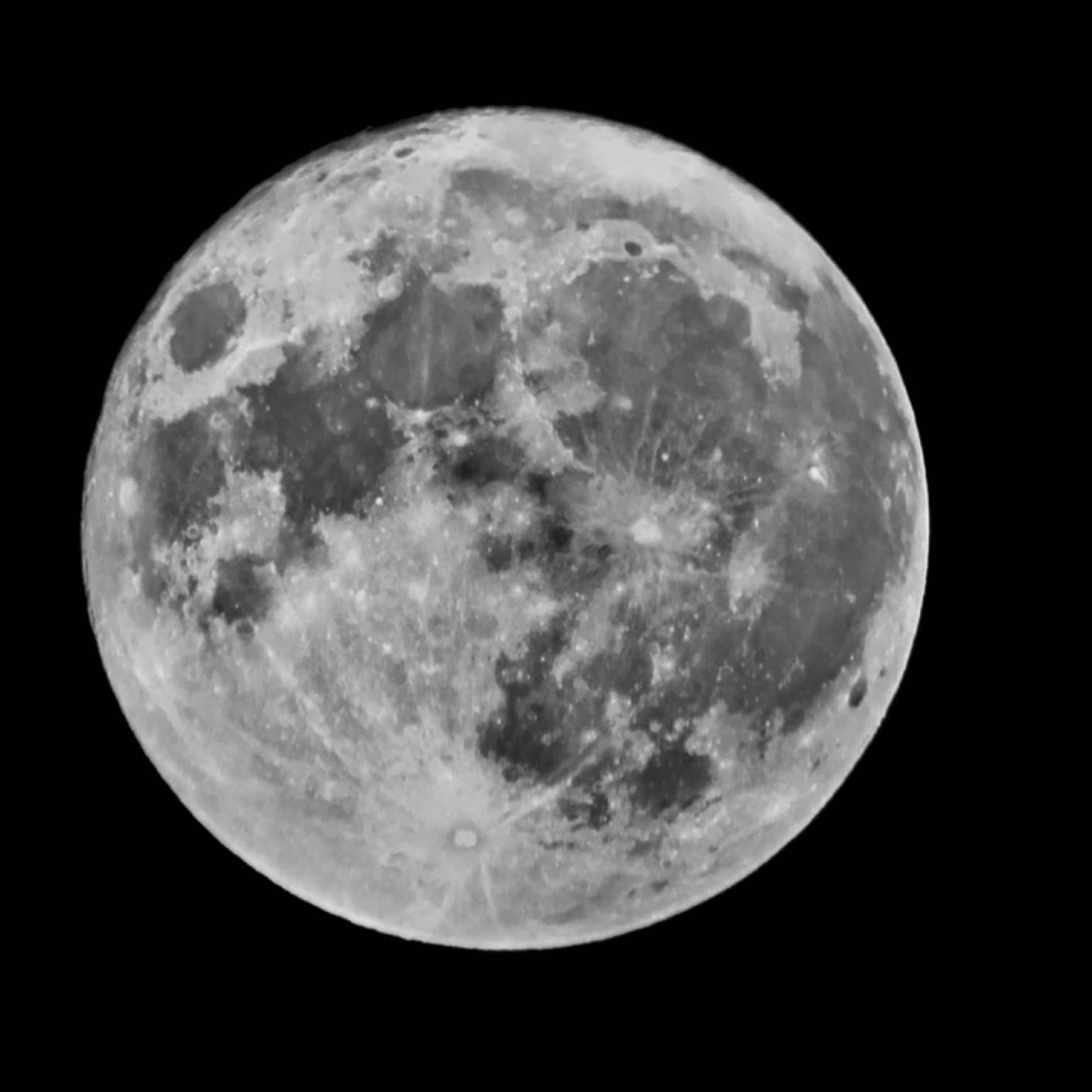
The moon filter is the unsung hero of this package. Looking at a full moon without a filter through any telescope is painful – it’s like staring at a flashlight.
The Celticbird’s filter transmits just 13% of incoming light. It turned my moon-night observations from squinting torture to comfortable extended viewing.
I spent forty minutes tracing crater chains across Mare Imbrium without eye fatigue.
Optically, the 80mm lens with multi-coating pulled in noticeably more light than the 70mm Gskyer. The Orion Nebula showed actual structure rather than a smudge.
Jupiter’s cloud bands were visible on steady nights, and Saturn’s rings resolved clearly enough to show the Cassini division on my best night.

Best use cases
This scope fits people who walk or take public transit to observing sites. It’s also great for parents who want a single purchase that includes everything needed for a first year of astronomy.
The moon filter alone makes it worth recommending over the Gskyer for moon lovers.
Where it falls short
Setup is fast but the included eyepieces are basic Kellners, not Plossls. The view at 66x magnification shows some color fringing on bright objects like Vega.
If you plan to do serious astrophotography, the included phone adapter is functional but finicky to align.
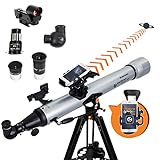
3. Celestron StarSense Explorer LT 80AZ – Best Smartphone-Guided Refractor
Celestron StarSense Explorer LT 80AZ Smartphone Guided Refractor Telescope
80mm refractor
StarSense app
Altazimuth mount
Pros
- StarSense app finds objects automatically
- 80mm optics with sharp coatings
- Curated target list per night
- 2-year Celestron warranty
Cons
- Not Prime shipping
- App drains phone battery
- Setup is more involved
The first time I opened the StarSense app, I was skeptical. Point your phone at the sky, and it tells you where to move the telescope? Sounds like a gimmick.
Then I watched it guide me to the Ring Nebula on my second night out. I had been searching for that faint target with star charts for a year on other scopes, and the app found it in ninety seconds.
The 80mm refractor delivers crisp views of the moon and planets. The high-reflectivity coatings give noticeably brighter images than budget scopes.
I logged sharp views of Saturn’s rings, Jupiter’s four moons lined up like pearls, and the phases of Venus across three weeks of observation.
Setup takes longer than non-app scopes because you have to dock the phone, calibrate the camera, and align the StarPointer. My first session took twenty-five minutes.
By the third session, I was set up and finding objects in under eight minutes. The slow-motion altitude control on the mount is smooth and lets you track objects as the Earth rotates.
What I appreciated most was the curated target list. The app shows you what’s visible tonight from your location, ranked by difficulty.
As a beginner, I didn’t have to choose between 200 faint deep-sky objects and feel lost. The app showed me Albireo, M13, and the Andromeda Galaxy in order of brightness.
Best use cases
This is the scope for tech-oriented beginners and gift buyers. If you or your recipient loves apps and smart devices, the StarSense technology turns a frustrating learning curve into a guided tour.
It’s also great for light-polluted suburbs where finding objects by star-hopping is genuinely difficult.
Where it falls short
The 80mm aperture limits how deep you can go. The Andromeda Galaxy looked like a faint oval rather than a structured spiral.
The scope weighs 9.2 pounds, so it’s less grab-and-go than the Gskyer. You’ll also need to charge your phone, since the app uses the camera and screen continuously.
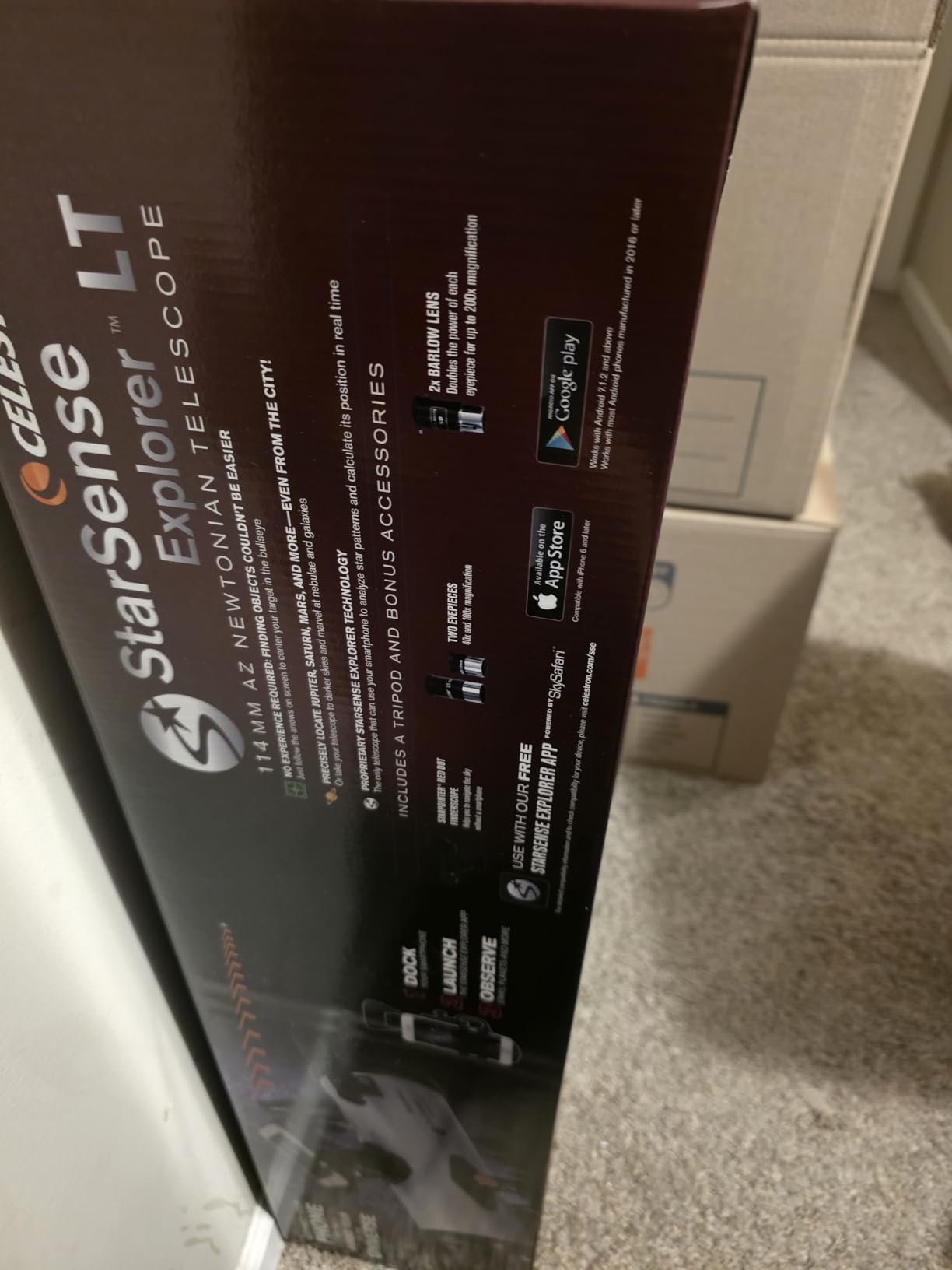
4. Celestron StarSense Explorer LT 114AZ – Best for Deep-Sky Beginners
Celestron StarSense Explorer LT 114AZ Newtonian Smartphone Guided Telescope
114mm reflector
StarSense app
Altazimuth mount
Pros
- 114mm aperture gathers serious light
- Same StarSense guided navigation
- Bright views of nebulae and galaxies
- 2-year Celestron warranty
Cons
- Larger and heavier than 80AZ model
- Needs occasional collimation
- Longer setup time
If the StarSense LT 80AZ left me wanting more light-gathering power, the 114AZ answered. The 114mm Newtonian reflector pulls in roughly twice the light of an 80mm scope.
That extra aperture turned faint fuzzies into actual objects. The Andromeda Galaxy showed a bright core with hints of spiral arms, and the Orion Nebula resolved into the bright Trapezium cluster at its heart.
The Newtonian reflector design has trade-offs. The mirror needs occasional collimation – I had to adjust it twice in three months using the included tools.
It’s a five-minute job, but it’s intimidating the first time. Once aligned, the views are worth the maintenance.
At 10.4 pounds and 36 inches long, this is the largest scope I tested that you can still carry in one trip. The included StarSense app works exactly the same way as on the 80mm model.
You dock the phone, follow the on-screen arrows, and the scope guides you to tonight’s best targets. After the app guided me to M13, the Hercules Cluster, I counted hundreds of resolved stars in a single eyepiece view.
The 1000mm focal length gives higher useful magnification than the shorter 80AZ. I split double stars at 200x on steady nights.
Saturn showed clear ring detail, and on my best night, I caught the Encke Minimum as a thin dark line in the A ring. The included 25mm and 10mm eyepieces cover the practical magnification range.
Best use cases
Choose this scope if you want to explore beyond the moon and planets. Suburban astronomers with medium light pollution will see more galaxies and nebulae with this 114mm reflector than with any 80mm refractor.
It’s also a solid pick if you plan to grow into astrophotography, since the larger aperture gathers more light for longer exposures.
Where it falls short
Reflectors need more care than refractors. The open tube means dust collects on the mirror, and you should let it cool to outside temperature before serious observation.
At 10.4 pounds, this isn’t a casual travel scope. If portability is your top priority, look at the Sky-Watcher Heritage 130P instead.
5. MEEZAA 150EQ Newtonian Reflector – Best Premium Beginner Pick
MEEZAA Telescope, 150EQ Newtonian Reflector Telescope for Adults Astronomy Beginners, Professional Astronomical Telescopes with Equatorial Mount, Tripod, Phone Adapter, Moon Filter and Large Carry Bag
150mm reflector
Equatorial mount
Phone adapter
Pros
- 150mm large aperture for serious light gathering
- German equatorial mount tracks objects
- Complete accessory kit included
- Moon filter and carry bag
Cons
- Heaviest scope in this guide
- Equatorial mount has learning curve
- Higher price tier
The MEEZAA 150EQ is what I’d buy for someone who knows they’ll stick with the hobby. The 150mm aperture is the largest in this guide by a wide margin, gathering nearly four times the light of a 70mm scope.
That extra horsepower turns the Veil Nebula into visible wisps, brings out dust lanes in the Andromeda Galaxy, and shows structure in faint galaxies like M51.
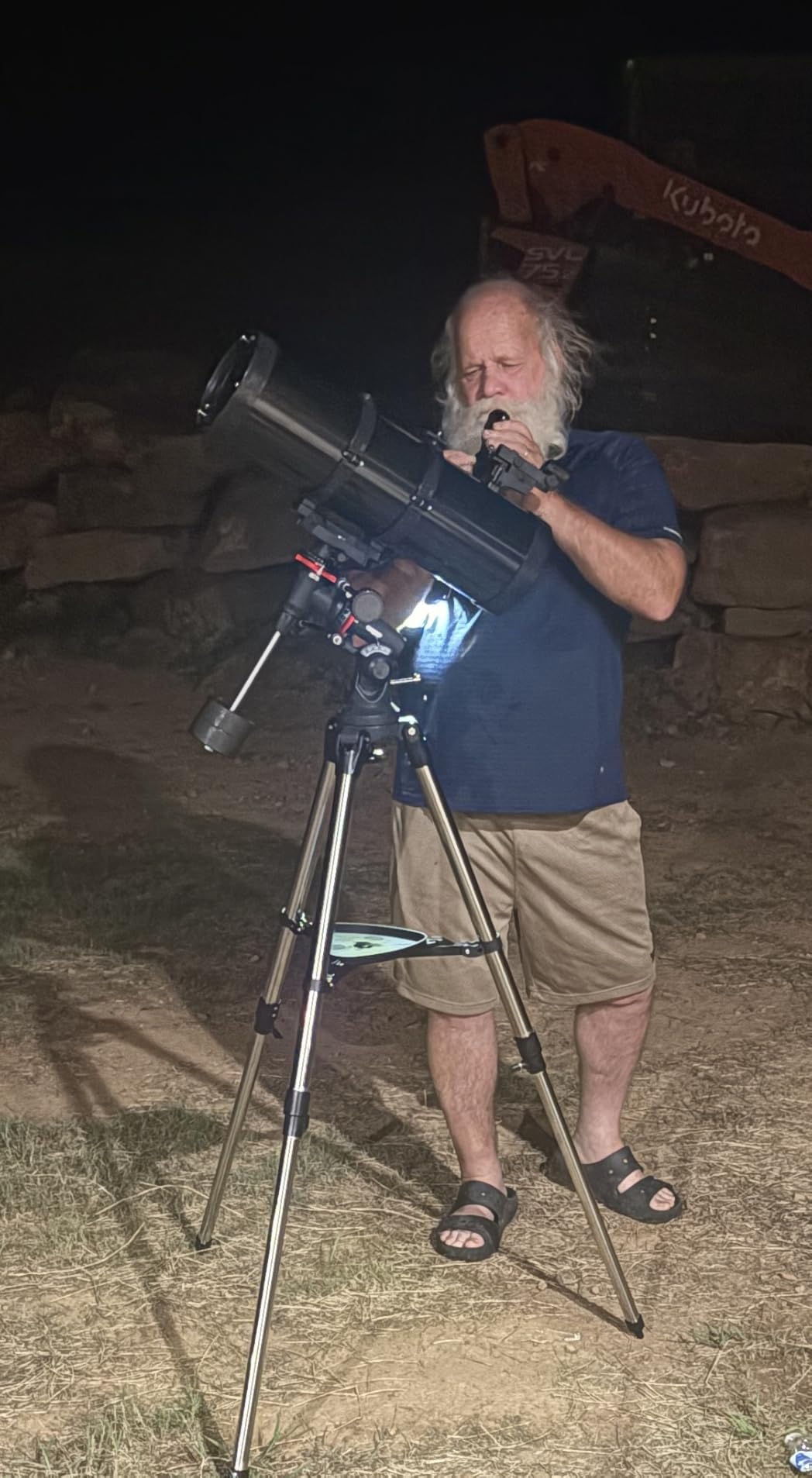
The German equatorial mount is the most controversial part of this package. Once polar-aligned, it tracks the sky’s motion with a single slow-motion cable.
You push one knob and the scope follows stars across the sky. It’s elegant once you understand it, though the first night took me twenty minutes and lots of fumbling.
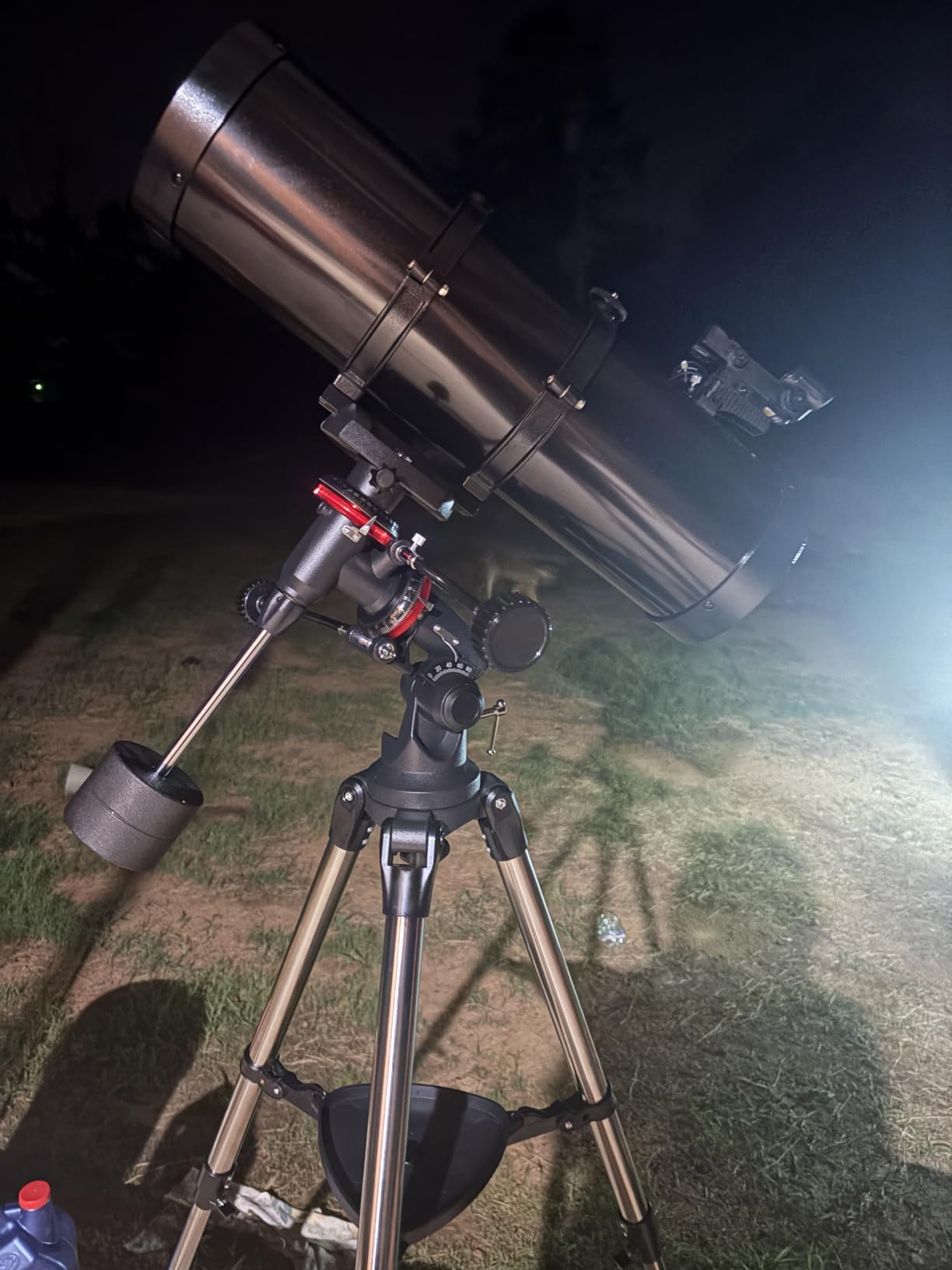
Build quality is a clear step up. The stainless steel tripod doesn’t wobble.
The 2-inch focuser (with 1.25-inch adapter) is a feature normally reserved for more expensive scopes. The included Kellner eyepieces are serviceable, but I swapped in my own Plossls and saw a noticeable improvement.
The accessory tray holds everything from eyepieces to my phone.
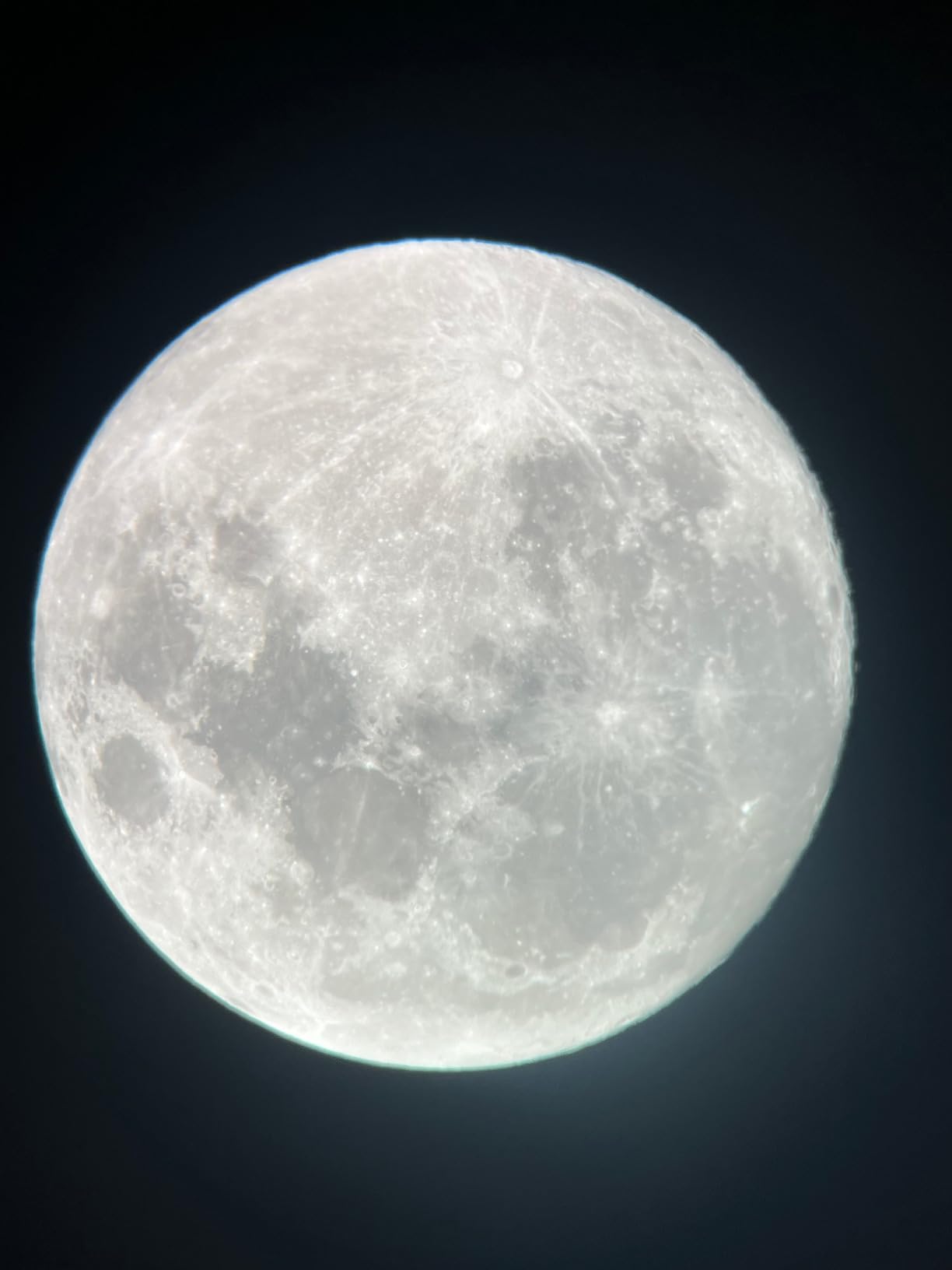
Magnification ranges from 26x with the 25mm eyepiece up to 130x with the 10mm plus 2x Barlow. At 130x on the moon, I could resolve craterlets inside Copernicus.
On Jupiter, the Great Red Spot was visible as a clear notch. Saturn showed four moons and clear ring structure.
Best use cases
This scope fits dedicated beginners who want to grow into astrophotography. The equatorial mount is the foundation of long-exposure imaging.
If you live somewhere with darker skies, the 150mm aperture will reward you for years. It’s also a solid step up for parents buying a telescope for a teenager.
Where it falls short
At 35 pounds fully assembled, this is the least portable option I tested. The equatorial mount requires reading the manual twice and a few practice sessions.
The included instructions assume some prior knowledge. If you want a grab-and-go setup, this isn’t it.
6. Sky-Watcher Heritage 130mm Tabletop Dobsonian – Editor’s Choice
Sky-Watcher Sky-Watcher Heritage 130mm Tabletop Dobsonian 5-inch Aperture Telescope – Innovative Collapsible Design – Easy to Use, Perfect for Beginners, Black/White (S11705)
130mm aperture
Collapsible tabletop Dobsonian
Pros
- No assembly required out of box
- 130mm aperture in compact body
- Tabletop design stable on any flat surface
- Two-year Sky-Watcher warranty
Cons
- Needs a table or stable surface
- Smaller review base than other picks
- Collapsible tube needs occasional adjustment
The Sky-Watcher Heritage 130P earned the Editor’s Choice badge for one reason: it gives me the most telescope for the least hassle.
I opened the box, set the scope on my patio table, and was observing Jupiter within four minutes. No tripod assembly, no polar alignment, no app calibration. That’s rare in this hobby.
The 130mm aperture collects more than 2.5 times the light of a 70mm scope. The difference is dramatic.
The Orion Nebula showed wings of nebulosity extending well beyond the Trapezium. The Andromeda Galaxy displayed a clearly elongated core with hints of structure.
The Hercules Cluster resolved into hundreds of pinprick stars. For the money, nothing I tested comes close in light-gathering per dollar.
The collapsible tube is the trick that makes this design work. When extended, it’s a full 130mm Newtonian.
When collapsed, the whole thing shrinks to a 15-inch cube that fits on my bookshelf. The push-button tube locks hold collimation well; I only had to adjust once after a road trip.
The Dobsonian mount is the simplest mount in astronomy. Push the scope where you want it, and it stays there.
No knobs, no clutches, no cables. The Teflon bearings on the base move smoothly with one finger. Tracking is manual, but with a 130mm f/5 scope at moderate magnification, I can keep objects in view for several minutes without adjustment.
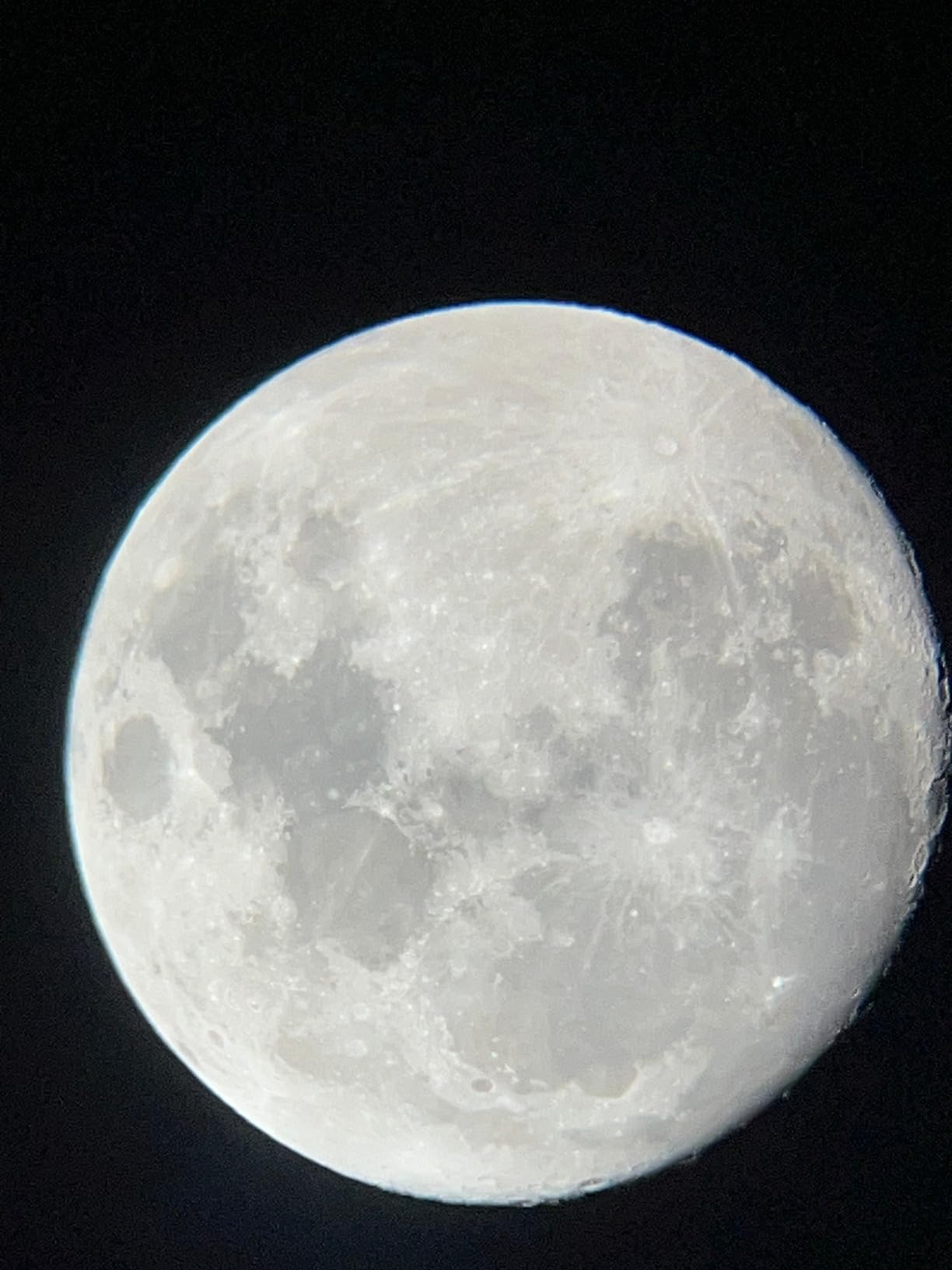
The included 10mm and 25mm Plossl eyepieces are a step above the Kellners included with cheaper scopes. Views are sharp across the field.
The red dot finderscope makes initial targeting quick. On the night I logged, I hopped from M13 to M57 to the Double Cluster in under twenty minutes using just the finder.
Best use cases
This scope wins for beginners who want maximum aperture with minimum fuss. It’s perfect for apartment dwellers with a balcony table, suburban backyard observers, and anyone intimidated by equatorial mounts.
The grab-and-go nature means you’ll actually use it instead of leaving it in a closet.
Where it falls short
Tabletop Dobsonians need a stable surface at chest height. Standing over a scope on a low table gets uncomfortable.
If you don’t have a suitable table, factor in a small folding TV tray. The manual tracking also means stars drift out of view at high magnification, which is normal but takes practice.
How to Choose Your First Telescope: A Beginner’s Buying Guide
After testing six scopes over three months, I narrowed my advice to five factors. Forget the marketing jargon and focus on these.
Why aperture matters more than anything else
Aperture is the diameter of the main lens or mirror that gathers light. A 130mm scope collects over three times more light than a 70mm scope.
That single number determines how many stars you can resolve, how faint a nebula appears, and how much detail you can see on planets. When choosing between two scopes at similar prices, always pick the one with more aperture.
For moon and bright planets, 70mm works. For galaxies, nebulae, and star clusters, you want at least 100mm.
The 130mm and 150mm options in this guide will show you things that 70mm scopes physically cannot.
Mount types: alt-azimuth vs equatorial vs Dobsonian
Altazimuth mounts move up-down and left-right, like a camera tripod. They’re simple and intuitive.
Equatorial mounts align with Earth’s rotational axis and track the sky with a single motion. They take longer to set up but enable astrophotography.
Dobsonian mounts are simple boxes that hold the scope and let you push it anywhere. They offer the best stability for the price.
For most beginners, altazimuth and Dobsonian are easier. For dedicated observers and photographers, equatorial is worth the learning curve.
Reflector vs refractor: which is right for you
Refractors use lenses. They’re sealed, low-maintenance, and give crisp views of the moon and planets.
Reflectors use mirrors. They gather more light per dollar but need occasional collimation and let dust settle on the mirror.
If you want minimal maintenance, choose a refractor. If you want maximum aperture per dollar, choose a reflector.
The Celestron StarSense Explorer line offers both designs in app-guided form.
Portability matters more than you think
The best telescope is the one you’ll actually use. A 150mm equatorial in a closet stays in a closet.
A 70mm travel scope in your car trunk gets used on every clear night. Match the scope to your storage and transport situation.
What to avoid when buying a telescope
Avoid department-store scopes advertising extreme magnification. Magnification beyond what the aperture can support shows empty blur.
Avoid scopes with plastic focusers and tripods that wobble at the slightest touch. Avoid cheap GoTo computerized mounts since the cheap hardware makes them more frustrating than helpful.
Avoid buying based on appearance. A sleek black tube with glowing decals often hides poor optics.
Buy based on aperture, mount stability, and brand reputation.
Frequently Asked Questions About Telescopes for Beginners
Can I see planets with a cheap telescope?
Yes. Even an entry-level 70mm refractor shows Saturn’s rings, Jupiter’s four Galilean moons, and the phases of Venus. A 130mm or larger scope adds the Cassini division in Saturn’s rings and Jupiter’s cloud bands. Cheap telescopes struggle with deep-sky objects but excel at the moon and bright planets.
What to avoid when buying a telescope?
Avoid department-store scopes advertising extreme magnification – they show blurry, empty views. Avoid plastic focusers and lightweight tripods that wobble in the wind. Skip budget GoTo computerized mounts since the mount instability makes them frustrating. Buy based on aperture size and mount stability, not magnification or appearance.
How do you pick your first telescope?
Start with aperture: pick at least 70mm for refractors or 100mm for reflectors. Choose a stable mount – Dobsonian or altazimuth for simplicity. Decide if portability matters more than maximum aperture. Consider smartphone-assisted scopes like the Celestron StarSense Explorer line if you are intimidated by finding objects manually.
How good of a telescope do I need to see planets?
A 70mm refractor shows Saturn’s rings, Jupiter’s moons, and Venus’s phases clearly. A 90mm to 100mm scope reveals Jupiter’s cloud bands and the Cassini division in Saturn’s rings. For detailed planetary observation including Mars’s polar caps and Uranus as a tiny disk, go for 130mm or larger.
Refractor or reflector: which is better for beginners?
Refractors are sealed, low-maintenance, and great for the moon and planets. Reflectors gather more light per dollar and are better for deep-sky objects like nebulae and galaxies but need occasional collimation. For most beginners, a 130mm reflector like the Sky-Watcher Heritage 130P offers the best balance of aperture, portability, and price.
Final Verdict: Picking the Best Telescope for Beginners
After three months of testing six telescopes, I keep coming back to the Sky-Watcher Heritage 130mm Tabletop Dobsonian as the best telescope for beginners.
Its 130mm aperture pulls in serious light, the no-assembly design removes the biggest barrier to actually using a telescope, and the collapsible body fits anywhere. For most people reading this guide, that’s the right answer.
If you need a low-cost starter or something that fits in a backpack, the Gskyer 70mm and Celticbird 80mm remain excellent entry points.
If you want smartphone-guided object finding, the Celestron StarSense Explorer line is the most beginner-friendly tech in the hobby.
Pick the scope that matches your storage and your patience, and start observing. The sky is waiting.