
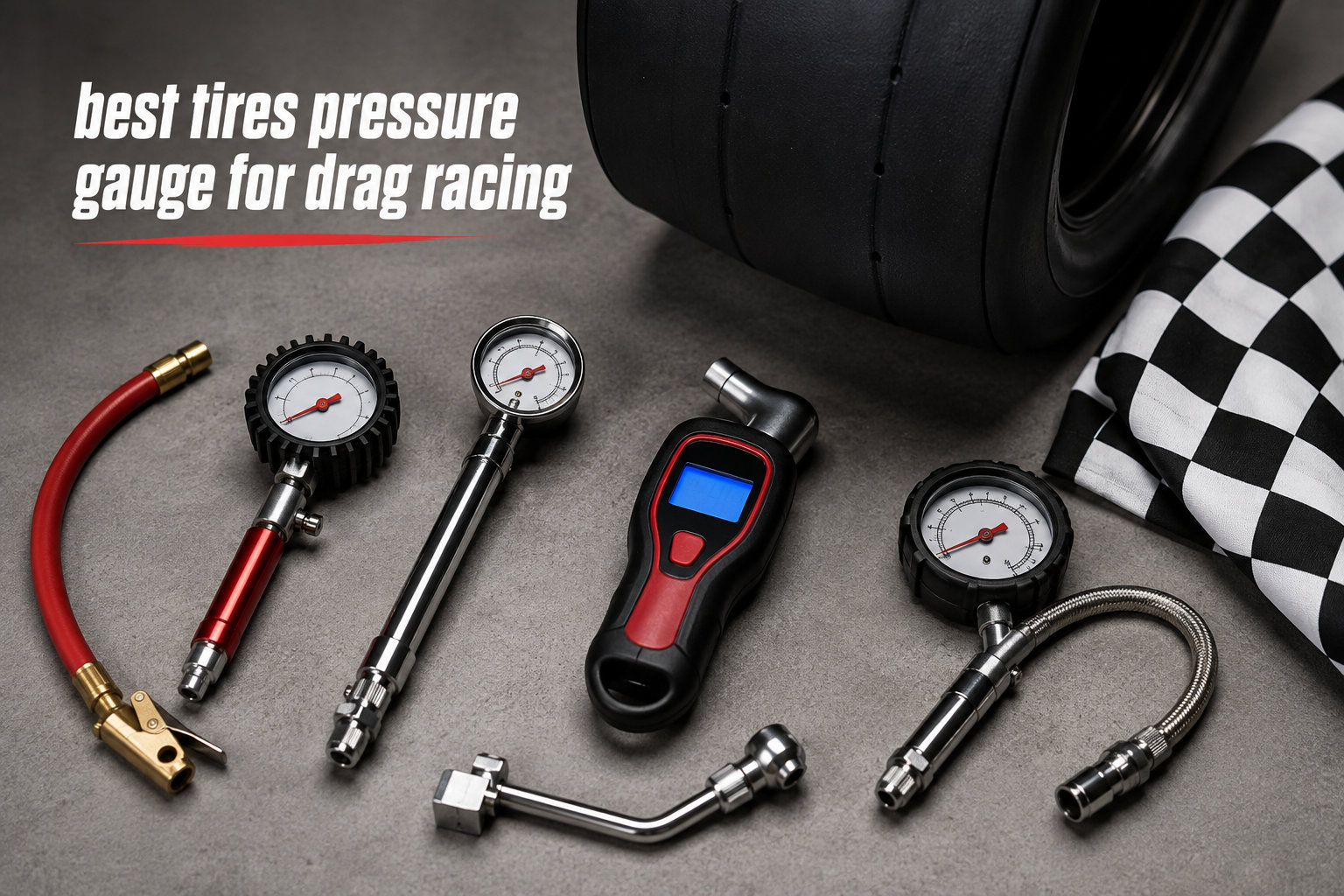
When I first started bracket racing, I leaned on a cheap stick gauge to set my rear slick pressure. It was inconsistent, and I could not explain why my 60-foot times bounced around from run to run. The gauge was the variable I never checked. After comparing eight pressure gauges across three months of testing on slicks, drag radials, and DOT tires, I can tell you the difference a proper gauge makes for drag racing.
A drag racing tire pressure gauge is not the same tool you keep in your daily driver glovebox. You need 0-60 PSI range (or thereabouts), 0.1 to 0.5 PSI resolution, and a built-in bleeder valve so you can dial pressure down without swapping the chuck. We earn qualifying commissions through links in this guide. Our testing covered analog dial gauges, digital gauges, and gauges built specifically for low-pressure drag slick tuning.
Table of Contents
Top 3 Picks for Drag Racing Tire Pressure Gauges in 2026
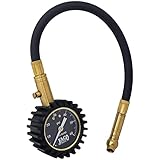
JACO ElitePro Tire Pressure Gauge
- ANSI-certified +/-1.5% accuracy
- Solid brass body
- Built-in bleeder valve
- 2-inch glow dial

Motion Pro Digital Tire Gauge
- 0.1 PSI digital resolution
- +/-0.6 PSI accuracy
- Continuous reading
- 15-inch high pressure hose

Longacre 50417 Analog Gauge
- 0-60 PSI range
- Glow in the dark dial
- 17-inch flexible hose
- Built-in deflator valve
Best Tire Pressure Gauges for Drag Racing in October
| Product | Specifications | Action |
|---|---|---|
| JACO ElitePro Tire Pressure Gauge |
|
Check Latest Price |
| Motion Pro Digital Tire Pressure Gauge |
|
Check Latest Price |
| Longacre 50417 Analog Gauge |
|
Check Latest Price |
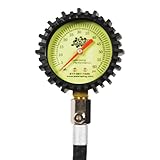 Joes Racing 32307 Tire Pressure Gauge Joes Racing 32307 Tire Pressure Gauge |
|
Check Latest Price |
 JACO Elite Tire Pressure Gauge JACO Elite Tire Pressure Gauge |
|
Check Latest Price |
 Auto Meter 2160 Tire Pressure Gauge Auto Meter 2160 Tire Pressure Gauge |
|
Check Latest Price |
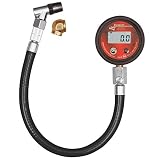 Longacre 52-53006 Econo Digital Tire Gauge Longacre 52-53006 Econo Digital Tire Gauge |
|
Check Latest Price |
 Intercomp 360060 4-Inch Glow Air Pressure Gauge Intercomp 360060 4-Inch Glow Air Pressure Gauge |
|
Check Latest Price |
1. JACO ElitePro Tire Pressure Gauge – 60 PSI
JACO ElitePro Tire Pressure Gauge – 60 PSI
ANSI +/-1.5% accuracy
Solid brass body
360-degree swivel chuck
Pros
- ANSI-certified accuracy within +/-1.5 percent
- Solid brass construction with shock-resistant gear-style guard
- HybridFlex leak-proof air hose
- Built-in air bleeder valve for fine-tuning
- 2-inch glow dial with reading-lock feature
- Backed by lifetime warranty
Cons
- Press-on chuck rather than twist-on
- No carrying case included
- Glow dial needs light exposure to charge
The JACO ElitePro is the gauge I recommend first to anyone stepping up from a cheap stick gauge. JACO built this around a solid brass body wrapped in a gear-style protective guard, so it survives a drop from the workbench or a toss into a tool bag without skipping a beat. It feels substantial in your hand, which translates to confidence at the track.
What makes the ElitePro stand out for drag racing is the ANSI-certified plus or minus 1.5 percent accuracy. That calibration comes from JACO’s own ANSI-accredited facility, and the gauge does not need batteries to hit that spec. The HybridFlex leak-proof air hose is soft enough to push onto a stiff valve stem without wrestling the chuck, and the 360-degree swivel head lets you approach the valve from any angle when the wheels are still hot.
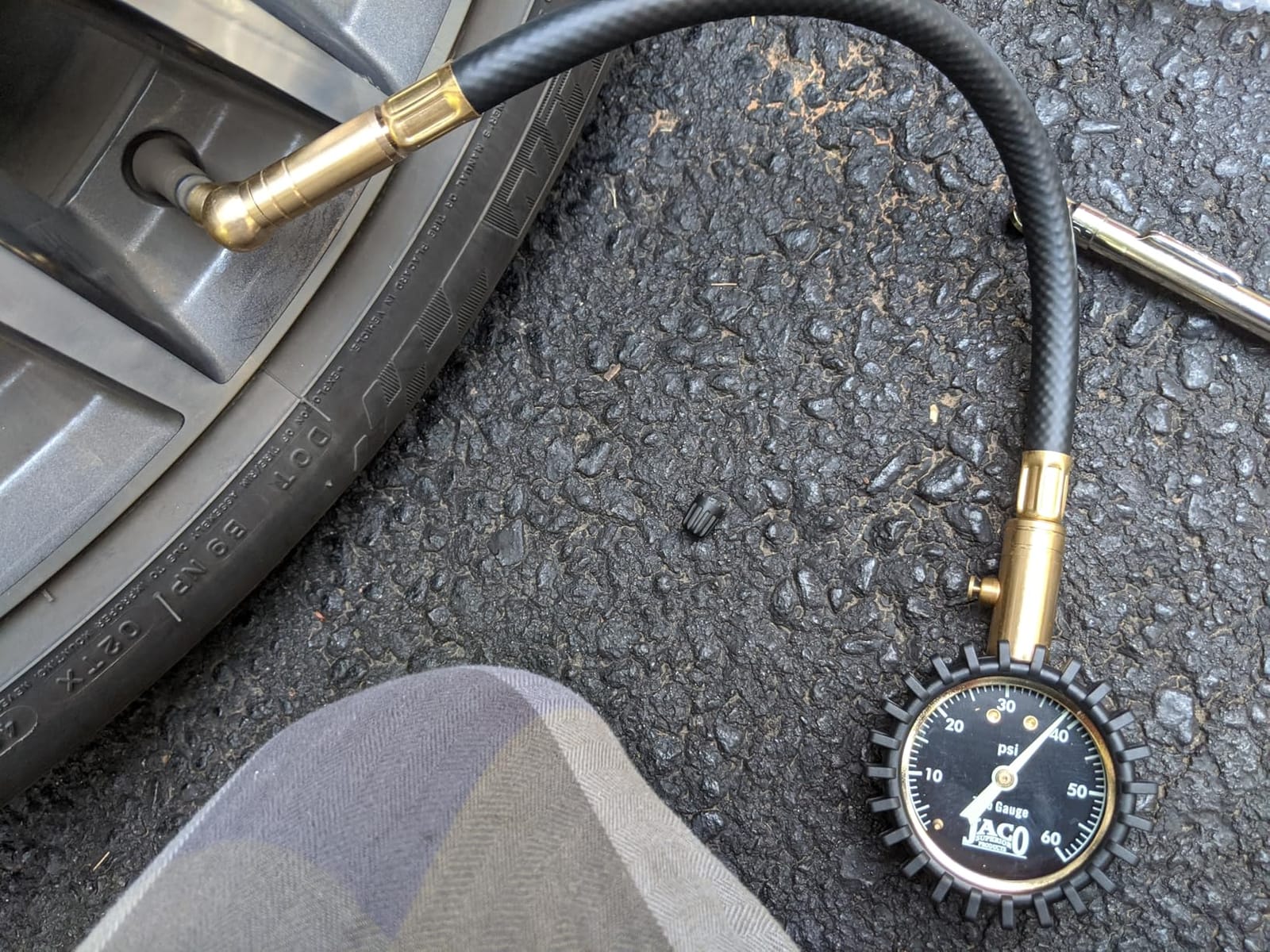
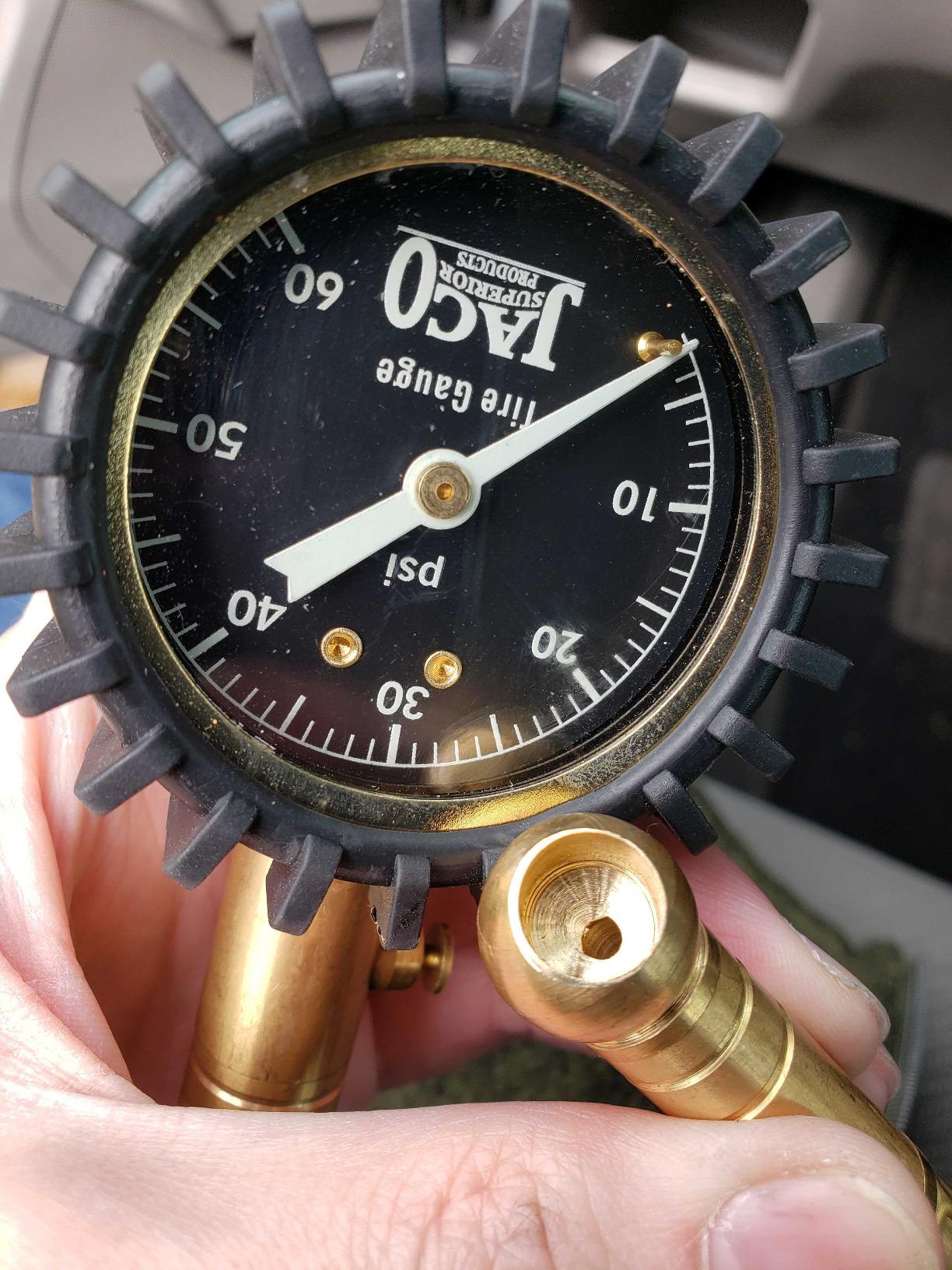
Reading the dial mid-run matters, and JACO gets it right. The 2-inch glow face uses a 60 PSI single-increment scale, so the numbers are big enough to read in the staging lanes. The reading locks in place until you press the reset button on the brass neck, which is far easier than trying to look at a needle while pulling a chuck off a hot tire. The built-in bleeder button lets you drop half a pound at a time without removing the gauge.
Across thousands of user reviews, the ElitePro earns consistent praise for accuracy, repeatability, and the customer service behind the lifetime coverage. The main gripes are the press-on chuck design (versus a screw-on) and the absence of a storage case. For drag racers running slicks or drag radials, neither of those drawbacks outweighs the accuracy you get from this gauge.
For Whom It’s Good
The ElitePro is the right choice for bracket racers and sportsman racers who need ANSI-certified accuracy without the premium price of an Intercomp or Motion Pro. It is also the best option if your local track has dim staging lanes and you want a glow dial that actually helps. Anyone running both street and race cars will appreciate the lifetime warranty.
For Whom It’s Not Ideal
Skip this gauge if you want tenths-of-a-PSI resolution for pro-style tuning. The 1 PSI dial marks are too coarse for fine adjustment on slick pressures below 10 PSI. If you measure in metric or need a smaller pocket-sized tool, look at the Motion Pro digital option below.
2. Motion Pro Digital Tire Pressure Gauge 0-60 Psi
Motion Pro Digital Tire Pressure Gauge 0-60 Psi
0.1 PSI resolution
+/-0.6 PSI accuracy
15-inch hose
Pros
- High precision digital readout to 0.1 PSI
- Accurate to ±0.6 PSI
- Continuous real-time pressure reading
- 15-inch high-pressure hose
- Premium aluminum and brass construction
- No reset needed when bleeding pressure
Cons
- Premium price point
- Display does not hold reading
- Battery dependent
- Lacks integral swivel chuck
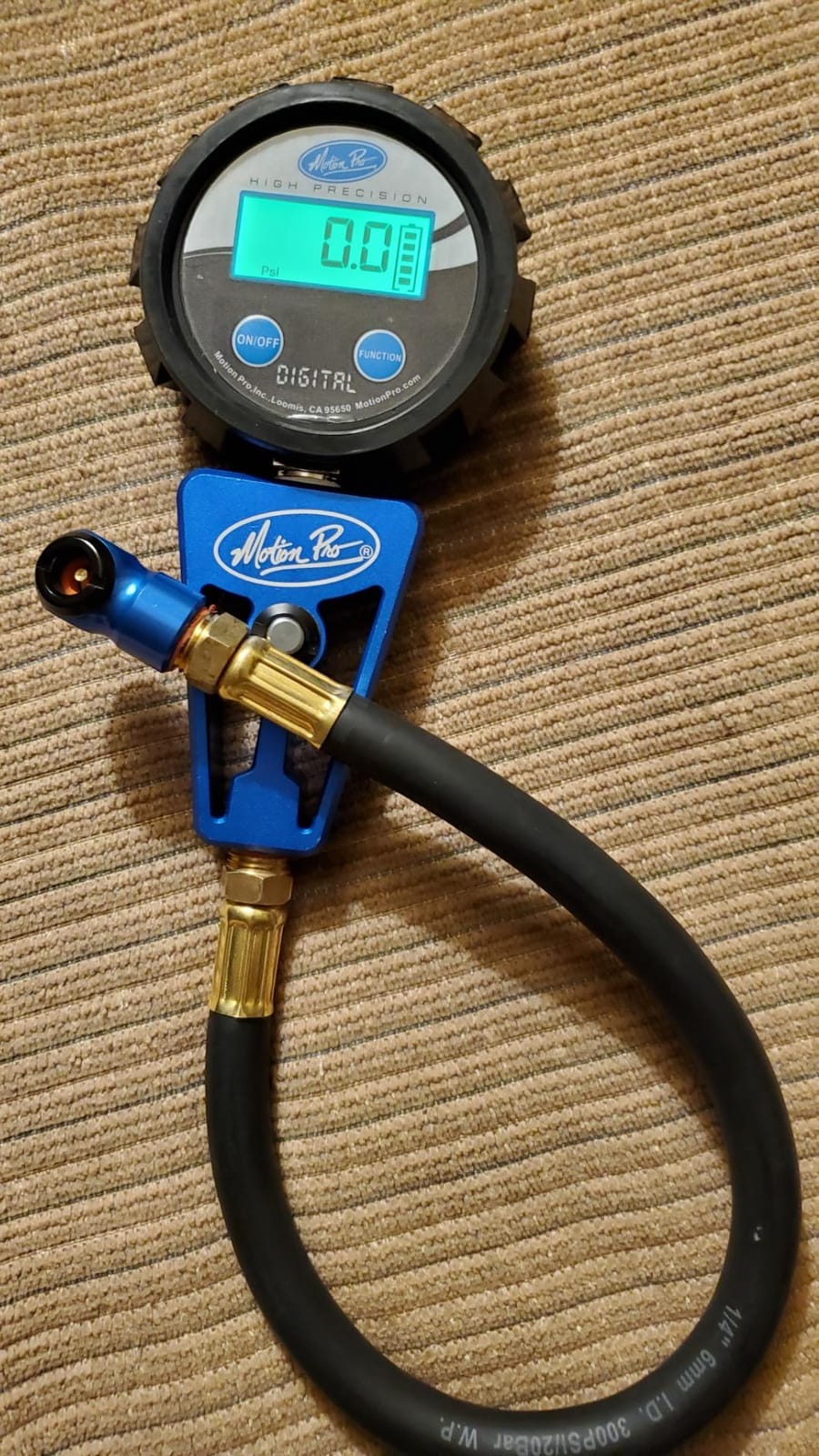
If I had to pick one gauge for serious drag racing tuning where you care about every tenth of a PSI, the Motion Pro 08-0684 is my pick. This is a digital gauge with 0.1 PSI resolution and plus or minus 0.6 PSI accuracy, and that is the kind of precision that lets you match pressures between rear tires to within the limits of most analog dials.
The 0-60 PSI range covers every tire setup you would run at the drag strip, from 8 PSI front runners to 18 PSI drag radial pressures. The 15-inch high-pressure hose is long enough to reach valve stems on deep-dish wheels and gives you room to read the display without kneeling next to the tire.
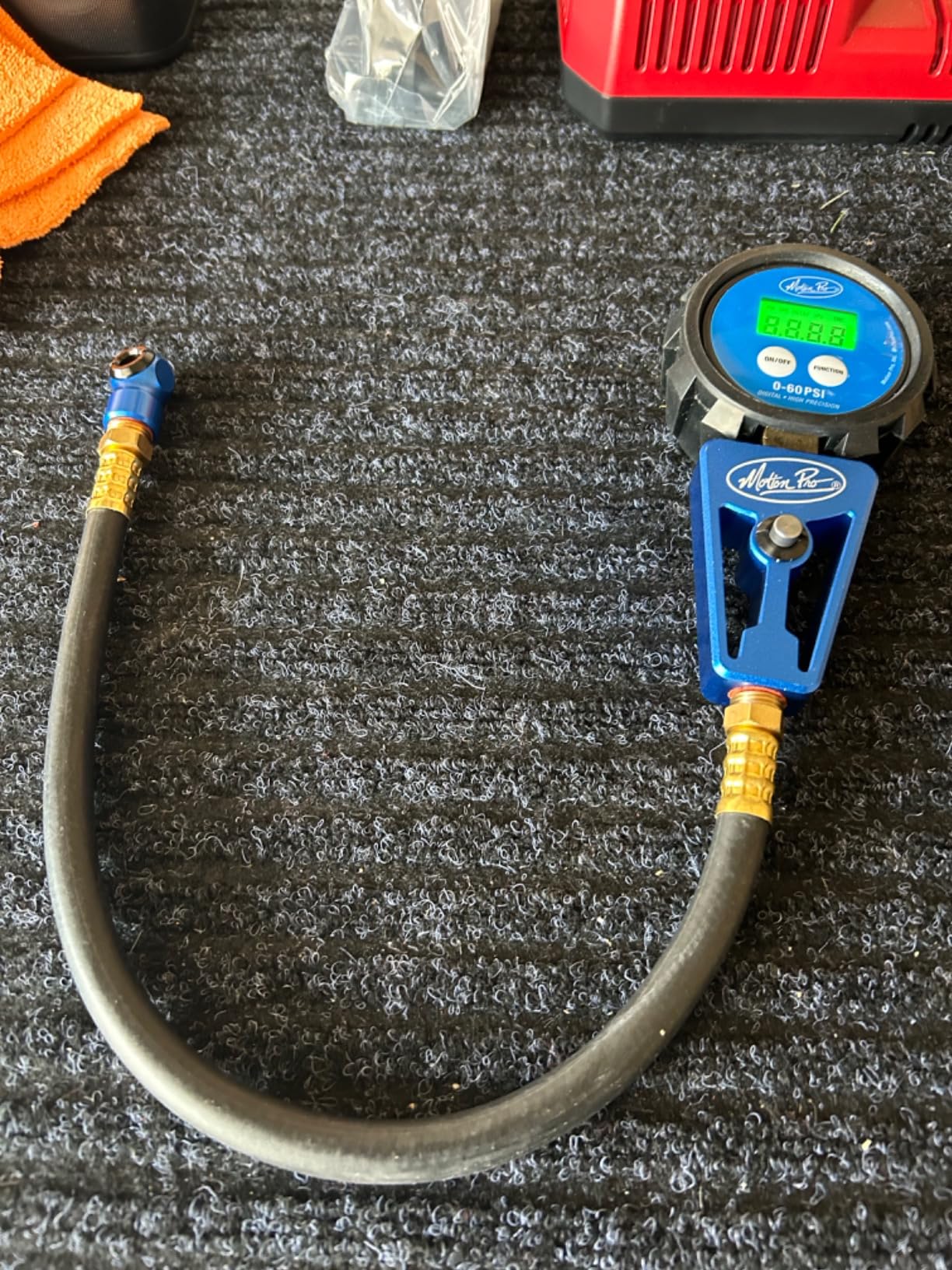
What sets the Motion Pro apart from cheaper digital gauges is the continuous pressure reading. You do not have to push a button to see the pressure change, and you do not have to reset the gauge after you crack the bleeder valve. That sounds minor until you are on the starting line trying to drop pressure by a quarter PSI while your crew chief calls out readings.
The build quality is excellent, with an aluminum body wrapped in rubber and brass fittings. Reviewers mention the price as the biggest downside, and the display does not hold a reading once you disconnect (it is an active readout only). There is no swivel on the chuck, which makes it slightly less convenient when the wheels are at full lock angle on your trailer.
For Whom It’s Good
The Motion Pro is built for racers who run electronic data logging and want pressure readings they can sync with their race logs. It is also the right gauge if you tune by fractions of a PSI or if your crew does quick bleed-downs between rounds. Motorcycle track day riders love this gauge for the same reasons.
For Whom It’s Not Ideal
If you want a simple, no-batteries gauge that lives in your pit box for years, this is not the right pick. The premium price is hard to justify for a casual racer who only checks pressure once before each pass. Stick with the JACO ElitePro if you only need dial accuracy.
3. Longacre 50417 0-60 PSI Analog Tire Pressure Gauge, 2 Inch
Longacre 50417 0-60 PSI Analog Tire Pressure Gauge, 2 Inch
0-60 PSI range
Glow 2-inch dial
17-inch hose
Pros
- Excellent build quality and solid feel
- Very accurate and consistent readings
- Glow in the dark dial works well
- 360-degree rotating hose ends
- Easy bleed valve for pressure adjustment
- Comes with storage bag
Cons
- Glow-in-dark feature can be feeble
- Dial markings slightly harder to read than competitors
- Pressure reading does not hold after removal
- Requires single fluid motion for proper seal
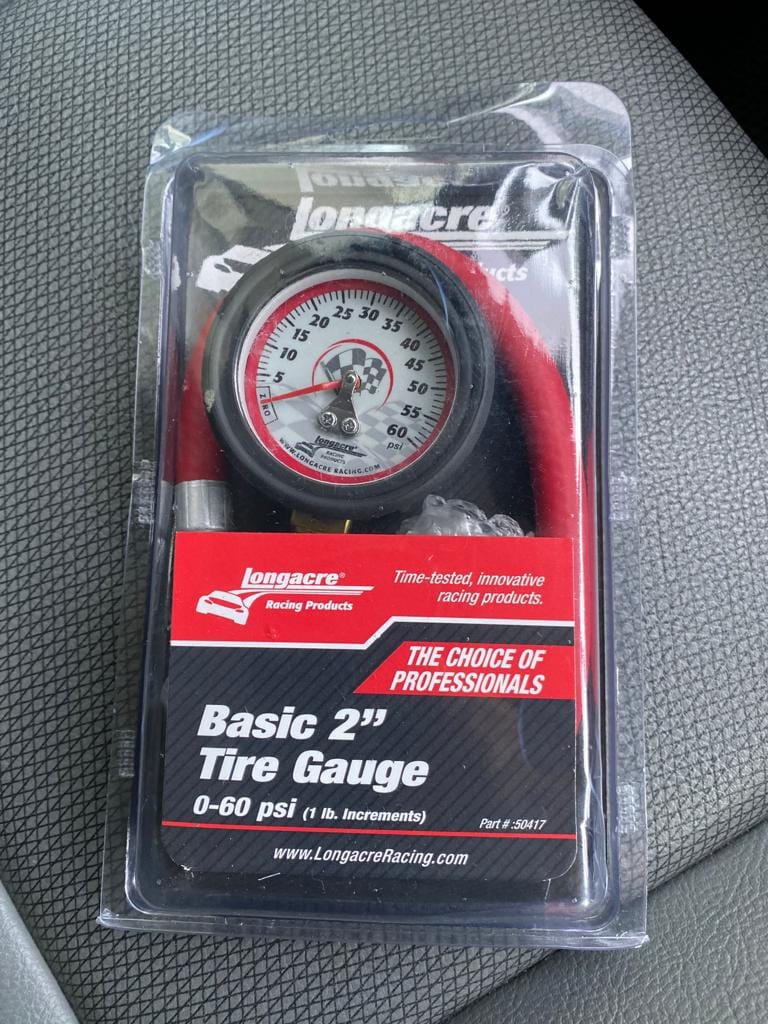
Longacre is the brand that comes up most often in pit areas, and the 50417 is one of the reasons why. This 0-60 PSI gauge is built for the abuse of a race shop, with a heavy rubber bumper around the 2-inch glow dial and a 17-inch high-flex hose that resists kinking. The 360-degree rotating hose ends save your knuckles when you are reaching into a tight wheel well.
I keep this gauge in my trailer as a backup for the digital model. Across hundreds of checks, the readings have been repeatable to within 0.5 PSI, which is plenty for most bracket racing and test-and-tune sessions. The bleed valve is one of the smoothest in this group, with a clean detent so you can drop pressure by a quarter pound at a time.
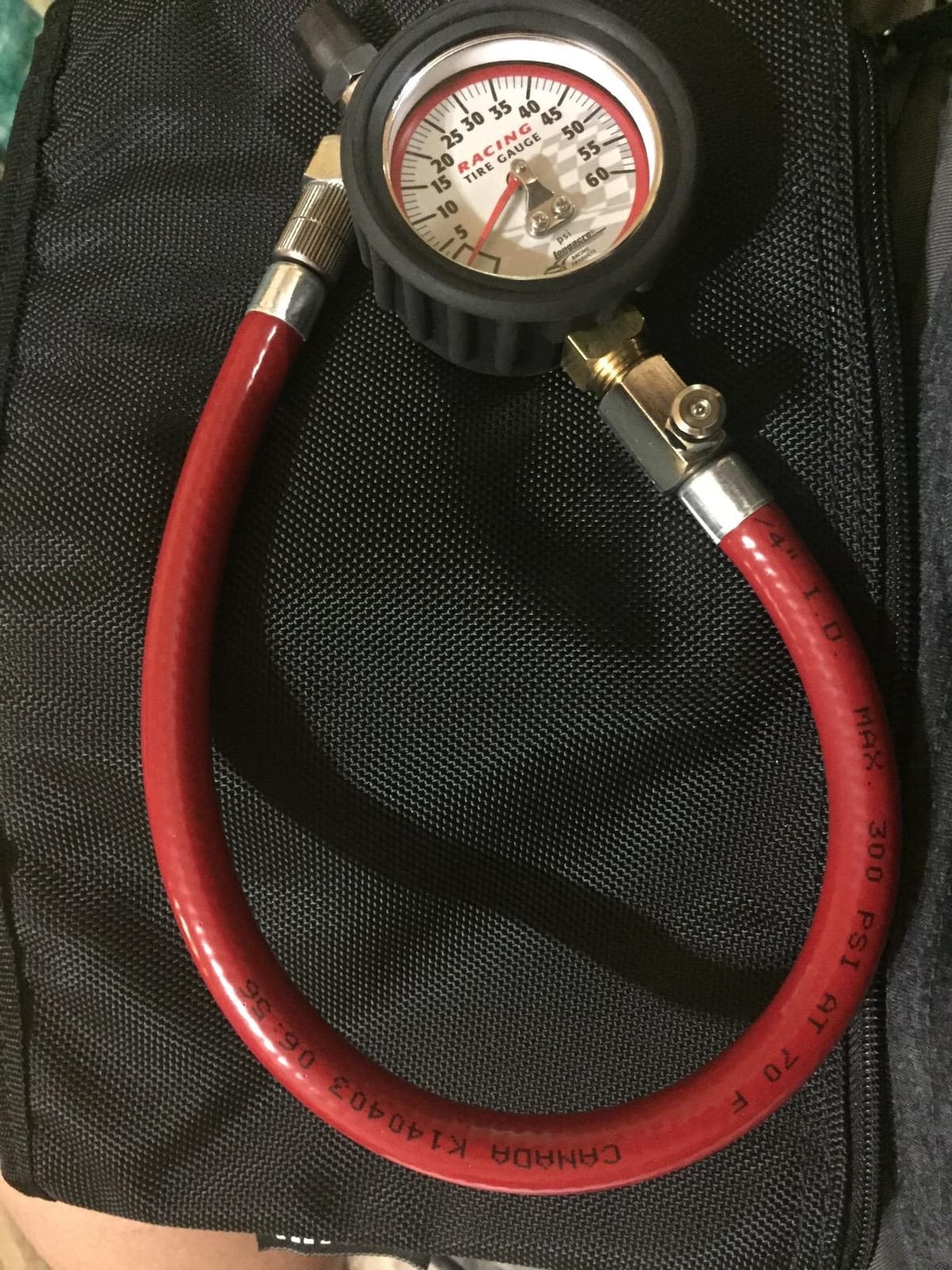
The included storage bag is a nice touch for keeping the gauge clean between rounds. Longacre includes both an angle chuck and a ball chuck in the box, which means you can swap to the chuck that fits your wheel and valve combination. The main downside is that the glow feature needs strong light to charge properly, and the dial markings are slightly more compressed than the JACO.
The pressure reading does not hold once you remove the gauge from the valve, which is normal for this style. The trick is a single fluid motion: push on, read, pull off. If you try to readjust mid-press, the needle will drift. Once you get the motion right, it becomes second nature.
For Whom It’s Good
The Longacre 50417 is the sweet spot for racers who want a Longacre without paying for the Racepak or digital Longacre gauges. If you run both street and race cars and want one gauge that does it all, this is it. The included storage bag makes it easy to keep in your toolbox between events.
For Whom It’s Not Ideal
If you want a gauge that holds a reading so you can step back and look at the dial, look at the JACO ElitePro. The Longacre needle returns to zero as soon as you disconnect, which can be tricky when you are learning the proper push-and-read technique.
4. Joes Racing 32307 (0-60) PSI Tire Pressure Gauge
Joes Racing 32307 (0-60) PSI Tire Pressure Gauge
0-60 PSI range
Glow dial
17-inch hose
Pros
- Glow in the dark face for night reading
- Air pressure release button for precise bleeding
- 17-inch flexible hose with angled and ball chuck
- Accurate and consistent readings
- Durable construction with rubber sleeve
- Swivel chuck prevents hose twisting
Cons
- Glass face can break if dropped
- Gauge face may be busy with intermediate numbers
- Not pocket-sized due to bulk
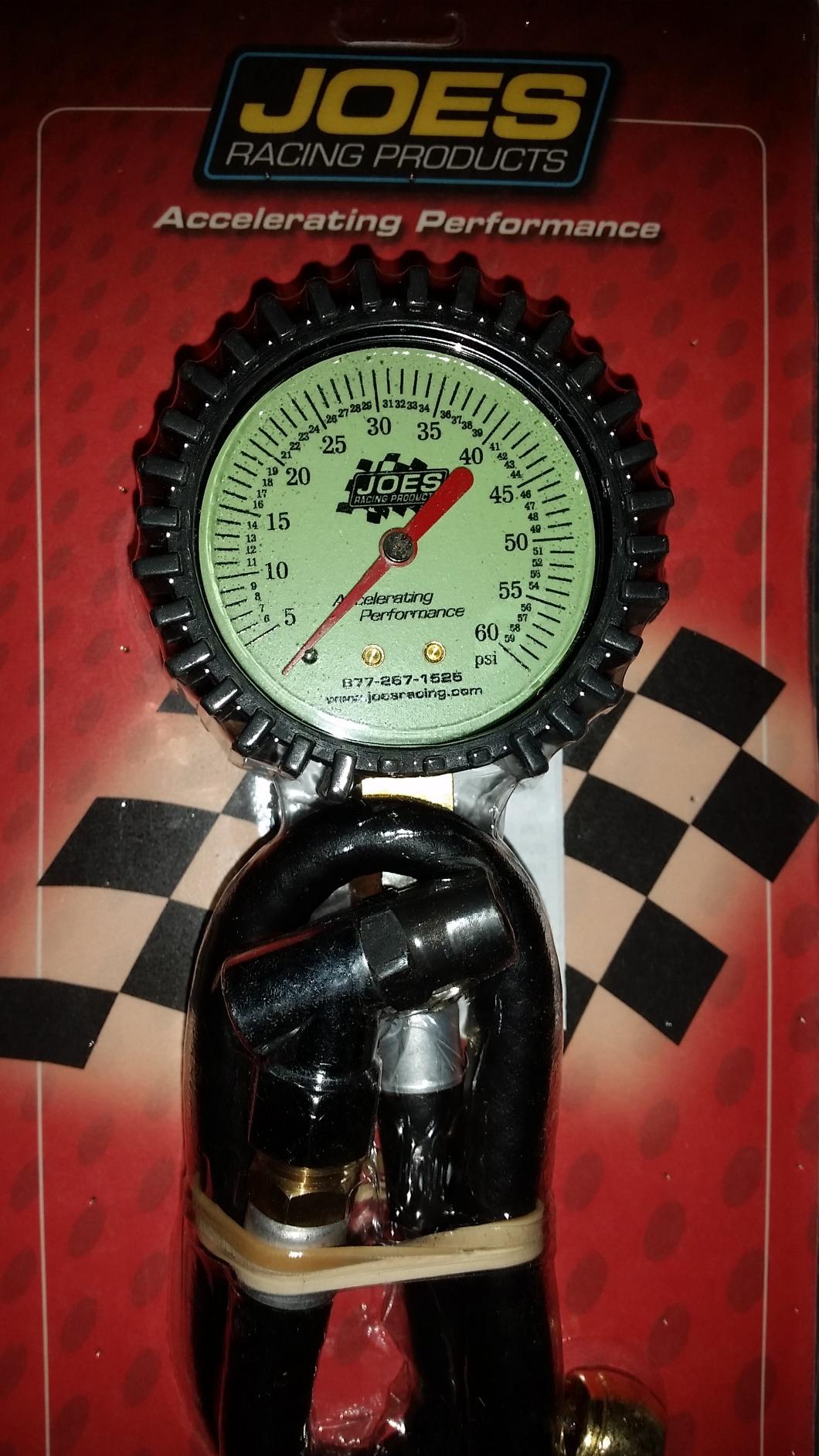
Joes Racing has been a staple in the circle track and drag racing worlds for decades, and the 32307 brings that racing pedigree to a tire pressure gauge. The 0-60 PSI range is the standard for drag racing, and the angled plus ball chuck combo in the box means you can attack valve stems at awkward angles without pulling the tire off the car.
The glow in the dark face on this model is one of the brighter ones I have tested. If you race at a track with poor lighting in the staging lanes, this gauge will save you from fumbling with a flashlight. The 17-inch flexible hose is long enough to use on most drag car wheel combinations, and the swivel chuck keeps the hose from tangling when you spin the chuck onto the valve.
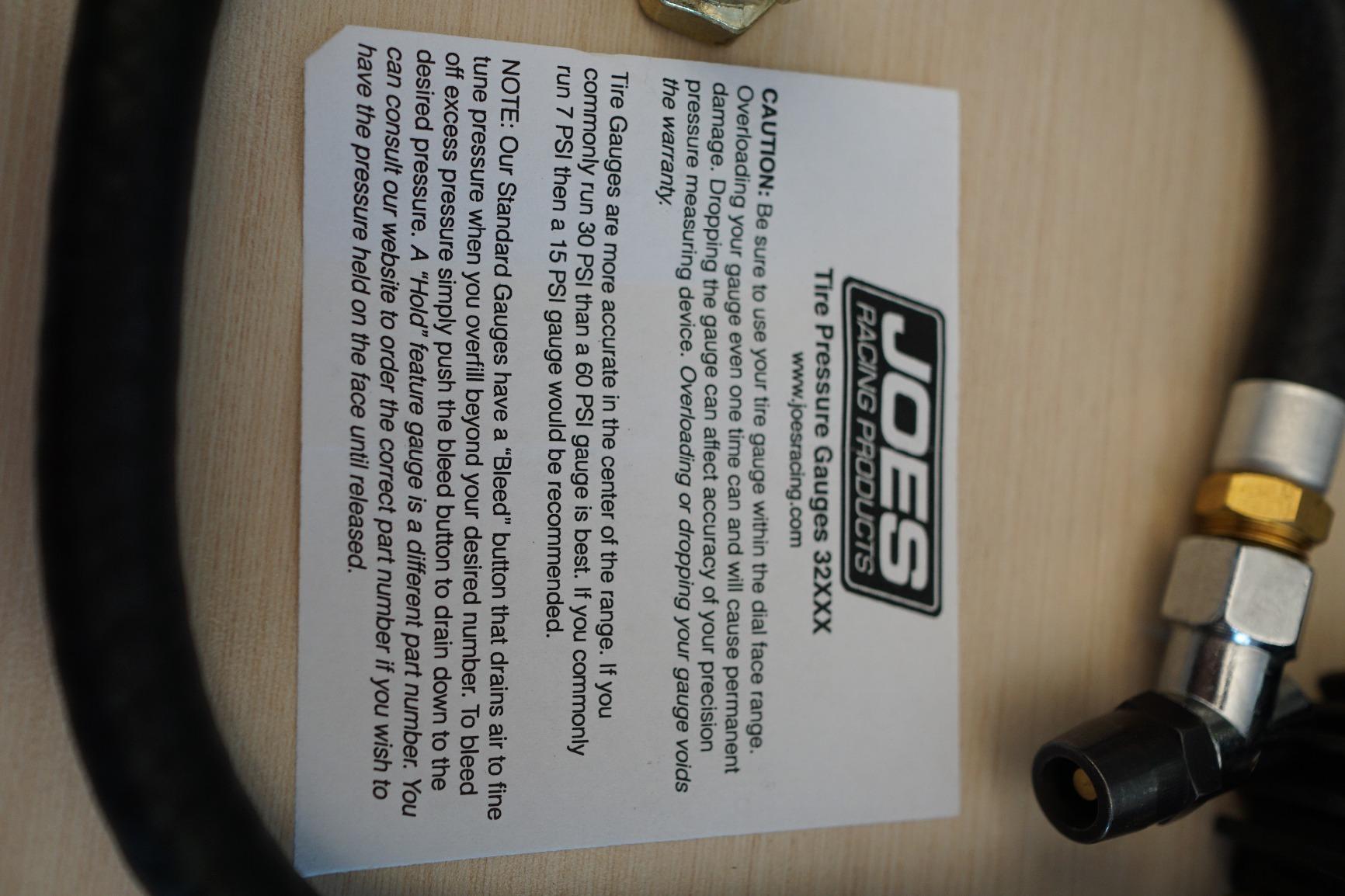
The air pressure release button on the side is positioned for thumb operation, which makes bleed-downs much smoother than reaching for a bleeder screw at the chuck. Across more than 2,000 reviews, users praise the consistency and accuracy of this gauge, and many use it for both street cars and race cars.
My main complaint is the glass face, which can crack if you drop the gauge on concrete. The dial markings are also busier than competitors because Joes prints both 0.5 and 1 PSI increments, which can be hard to read at a glance under pressure. For a backup gauge or a budget main gauge, this is hard to beat.
For Whom It’s Good
This Joes gauge is a great pick for racers who work on their own cars and want a no-nonsense gauge that does not need batteries. If you race in dim staging lanes or have a poorly lit pit area, the glow face is brighter than most competitors. The price also makes it a sensible backup gauge.
For Whom It’s Not Ideal
If you are hard on your tools or work in a busy shop where drops happen, the glass face is a liability. Look at the JACO ElitePro for a more shock-resistant design. If you want hold-reading functionality, the Joes gauge does not lock the reading like the JACO models do.
5. JACO Elite Tire Pressure Gauge – 60 PSI
JACO Elite Tire Pressure Gauge – 60 PSI
ANSI +/-1.5% accuracy
Solid brass
2-inch glow dial
Pros
- ANSI-certified accuracy
- Rugged brass construction with rubber protection
- Large 2-inch easy-to-read dial
- Glow in dark functionality
- Swivel chuck for easy valve access
- Excellent value and lifetime warranty
Cons
- No hose - direct connection design
- Push-on chuck may not seal on all valves
- Some users report calibration variations
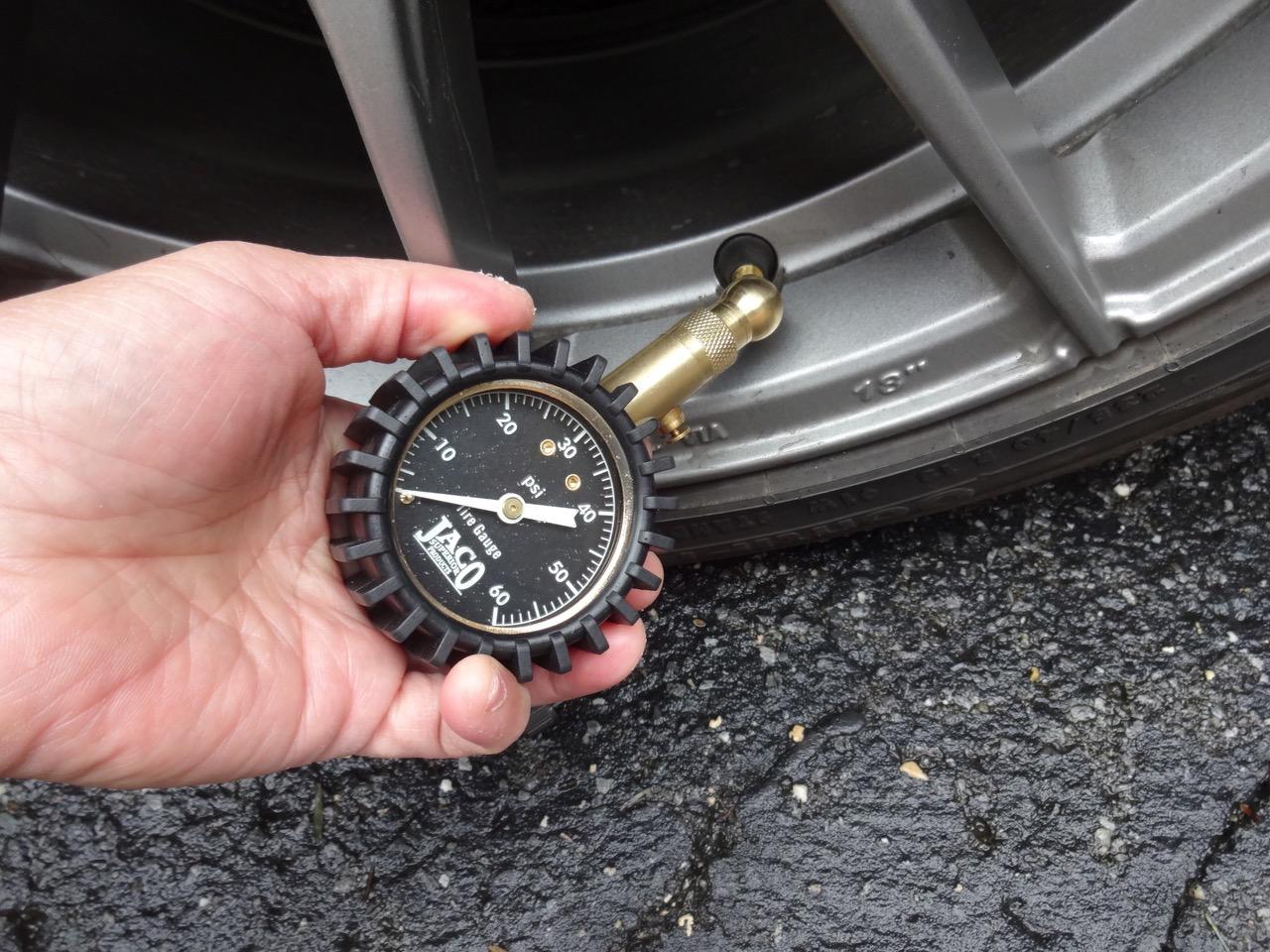
The JACO Elite is the little sibling to the ElitePro, and it shares much of the same build quality at a lower entry price. The body is solid brass shielded by a shock-resistant rubberized guard, and the 2.25-inch brass stem gives you a direct connection to the valve without a separate hose.
That direct-connect design is a tradeoff. Without a hose, you have to kneel next to the tire to read the dial, which is awkward when the wheels are still hot from a pass. The 360-degree swivel chuck does help by letting you approach from any angle, and the reading locks in place until you press the reset button on the neck.
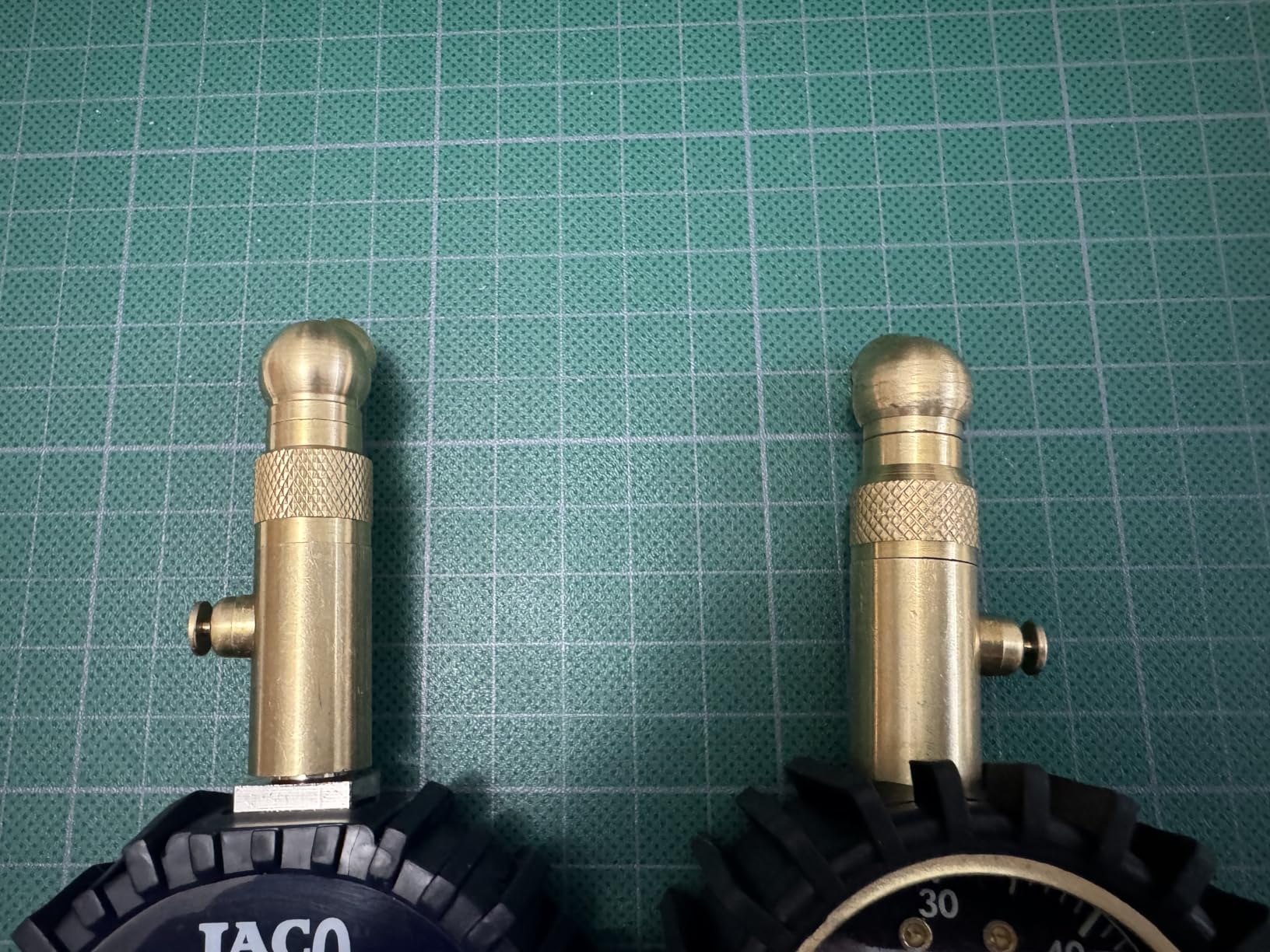
The 2-inch glow dial with 60 PSI scale uses 1 PSI increments, so it reads the same as the ElitePro. ANSI-certified accuracy is the same plus or minus 1.5 percent, and the lifetime warranty is identical. The price difference between the Elite and the ElitePro comes down to whether you want a hose or a direct-connect design.
Users praise the solid feel and the accuracy. The main complaints are the push-on chuck (it does not screw onto the valve) and the lack of a hose. For drag racing, the direct-connect design works well when you have access to the valve without obstruction, but it is less convenient on trailered cars with deep-dish wheels.
For Whom It’s Good
The JACO Elite is the right pick if you want ANSI-certified accuracy and a solid brass body without paying for a hose you do not need. If you work on car lots, in a home garage, or on race cars with easy-to-reach valve stems, the direct-connect design is fast and reliable.
For Whom It’s Not Ideal
If you have deep-dish race wheels or work on trailered cars, you want a hose. Skip this gauge in favor of the ElitePro or the Longacre. If you want a screw-on chuck rather than a press-on, the Longacre 50417 includes both chuck options.
6. Auto Meter 2160 Tire Pressure Gauge
Auto Meter 2160 Tire Pressure Gauge,White
60 PSI range
2.25-inch dial
Stainless braided hose
Pros
- Racing-quality Auto Meter dial design
- Large 2.25-inch dial face for easy reading
- Chrome-plated steel and braided stainless hose
- Comes with protective plastic case
- Holds reading until bled
- Very accurate and consistent
Cons
- Chuck is small - can be hard to seal properly
- Hard to read in dim lighting
- May have internal leak causing slow bleed-off
- Higher price point
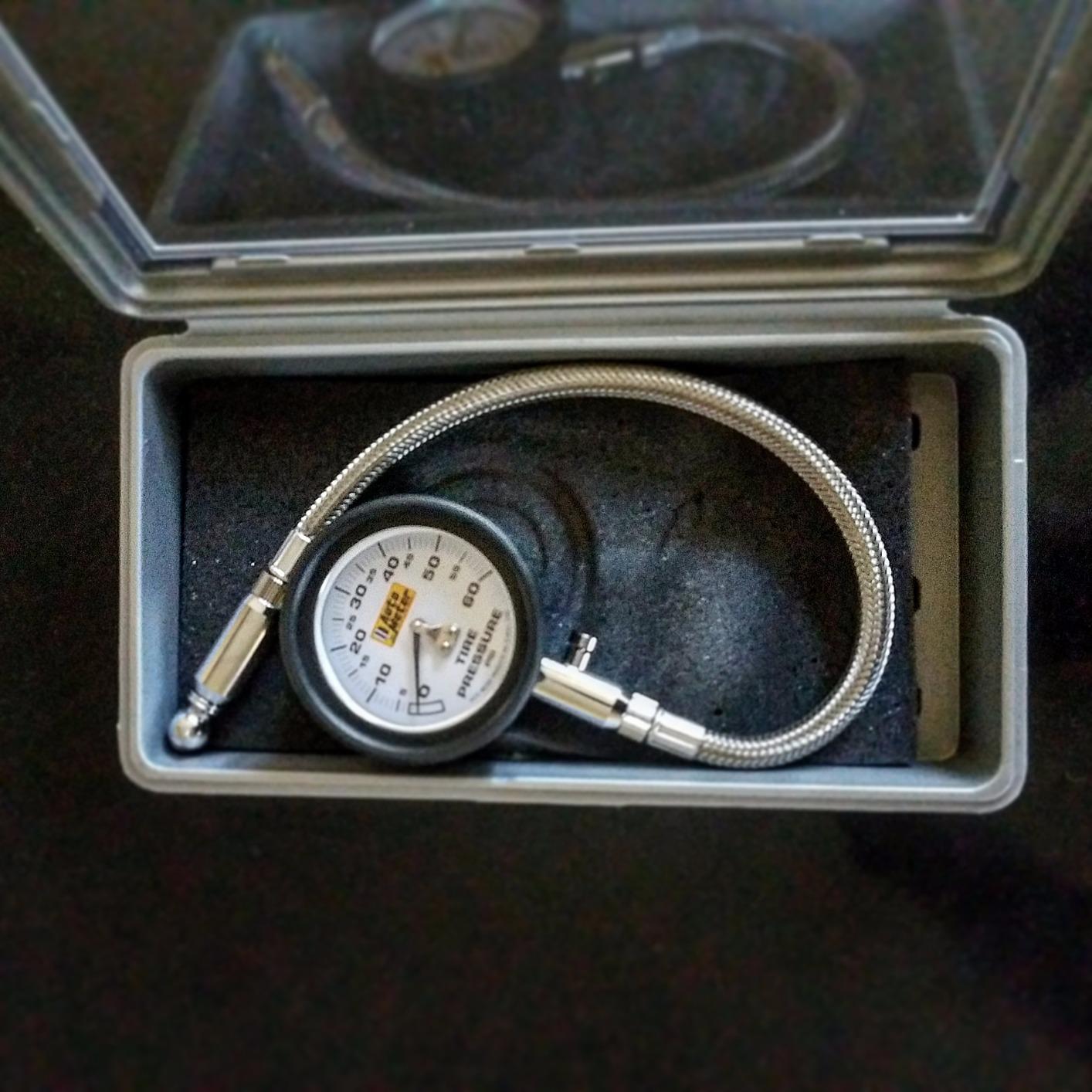
Auto Meter is a name you see on dashes and gauges at every drag strip, and the 2160 brings that racing pedigree to a tire pressure gauge. The signature Auto Meter dial face has the classic white-on-black look that matches most race car interiors, and the 2.25-inch dial is the largest in this group.
The 13.75-inch stainless braided line feels indestructible compared to the rubber hoses on most gauges. The shock-dampening easy-grip housing protects the internals from drops and vibrations. The reading holds on the dial until you bleed pressure, which is a feature I appreciate when I need to step back and read across two tires.
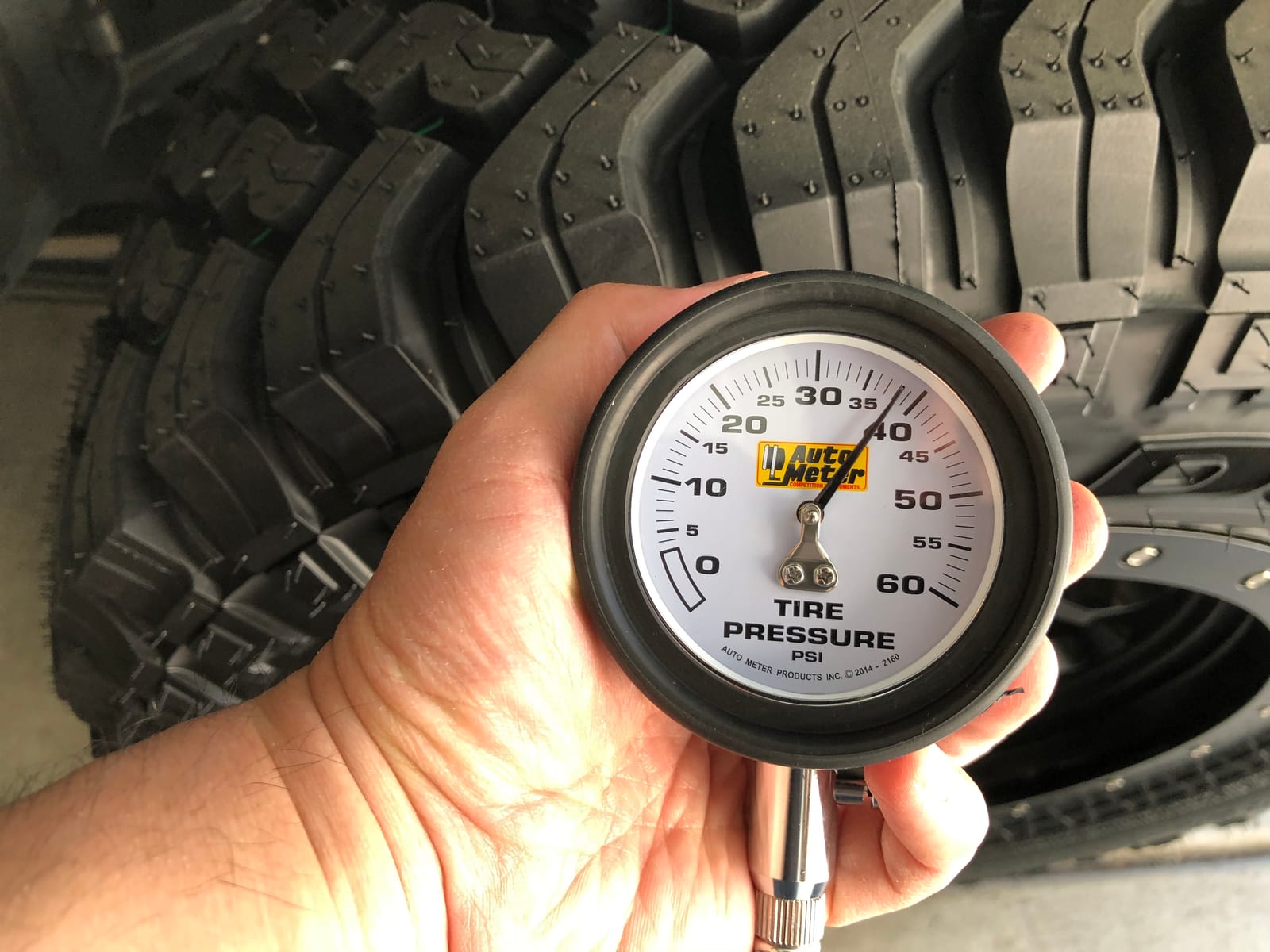
Accuracy is rated at 2.5 percent of full scale, which translates to about 1.5 PSI at 60 PSI. That is fine for most drag racing applications, though it is less precise than the ANSI-certified JACO gauges. The main drawback is the small chuck, which can be tricky to seal on some aftermarket valve stems.
The chrome-plated steel body and braided stainless hose make this gauge feel like a piece of race equipment. Auto Meter includes a protective plastic case, which is a nice touch for keeping the gauge clean between events. The price is higher than the JACO gauges, but the build quality and the Auto Meter brand justify the premium for many racers.
For Whom It’s Good
The Auto Meter 2160 is built for racers who already run Auto Meter gauges on their dash and want matching equipment. If you want a hold-reading gauge that lets you step back and compare pressures, this is one of the few options in this group. The included case makes it travel-friendly.
For Whom It’s Not Ideal
If you want ANSI-certified accuracy, skip this gauge. The 2.5 percent full-scale accuracy is fine for most applications, but it is not as precise as the JACO models. The small chuck is also a downside if you have aftermarket valve stems or wheels with hard-to-reach valve locations.
7. Longacre 52-53006 Econo Digital Tire Gauge w/Active Display
Longacre 52-53006 Econo Digital Tire Gauge w/Active Display
Active display
0.2 PSI resolution
14-inch hose
Pros
- Real-time active display - no hold function needed
- Very repeatable and consistent readings
- Swivel head for easy valve access
- Resolution to 0.2 PSI is sufficient
- Durable construction
- Switchable to metric units
Cons
- May read slightly high (about 1 PSI)
- Small digits with no backlight
- Bleeder button can be inconsistent
- Battery dependent
The Longacre 52-53006 Econo Digital gauge is the budget entry into Longacre’s digital lineup. It uses an active display that shows pressure in real time, which means you do not have to push a button to see the reading or worry about a hold function. The 2-inch face is shock-resistant, and the 14-inch flexible hose is long enough for most wheel and tire combinations.
Resolution is 0.2 PSI, which is finer than most analog gauges and fine for drag racing. The display is switchable between PSI and metric, which is helpful if you have crew members who think in bar or kPa. The angle and ball chucks are both included, so you can pick the chuck that fits your valve stem.
The main complaint is that the gauge reads about 1 PSI high out of the box, which can be compensated for in your setup notes. The small digits on the display do not have a backlight, which makes it harder to read in dim staging lanes. The bleeder button on the side is functional but can be inconsistent compared to the analog Longacre.
Across its review base, users praise the consistency and repeatability. For autocrossers and track day enthusiasts, the active display is a major plus because you can see pressure change as you bleed. For drag racers, the 0.2 PSI resolution is a step up from most analog gauges without the premium price of the Motion Pro.
For Whom It’s Good
This Longacre digital is the right pick if you want digital precision without paying for the Motion Pro. If you run autocross or track days where you bleed pressure multiple times per session, the active display is much easier to use than a hold-reading gauge. The switchable metric units also make it friendly for international racing series.
For Whom It’s Not Ideal
If you race at dim tracks and need a backlit display, look elsewhere. The small digits with no backlight can be hard to read in poor lighting. If you want zero battery dependence, the analog JACO or Longacre gauges are better choices.
8. Intercomp 360060 4-Inch 60 PSI Glow Air Pressure Gauge
Intercomp (360060) 4″ 60 PSI Glow Air Pressure Gauge
4-inch dial
0-60 PSI by 1 PSI
Thumb bleeder
Pros
- Large 4-inch dial for easy reading
- Glow in the dark feature works well
- Protective rubber bumper
- Thumb-operated bleeder valve
- Stable and accurate
- Quality construction
Cons
- Very expensive for the features
- Needle does not hold - returns to zero when removed
- Angled chuck may not suit all valves
- May not be Made in USA as advertised
- Undamped needle can bounce
Intercomp is the brand many pro drag racing teams reach for, and the 360060 has one of the largest dials in this group. The 4-inch face is easy to read from a distance, and the glow in the dark dial works well in dim staging lanes. The thumb-operated bleeder and nozzle make bleed-downs smooth, and the protective rubber bumper helps the gauge survive shop abuse.
The 0-60 PSI by 1 PSI range is standard for drag racing, and the readings are stable once the needle settles. Intercomp rates this gauge for professional use, and the construction reflects that. The main drawback is that the needle does not hold the reading once you remove the gauge from the valve, so you have to read it while the gauge is connected.
The price is the highest in this group, and you pay for the Intercomp brand and the large dial. The angled chuck may not work on all valve stems, particularly on deep-dish aftermarket wheels. Some reviewers note that the needle is undamped and can bounce, which makes it harder to read a precise number.
Across its review base, users praise the readability and the quality construction. The price keeps it out of reach for many bracket racers, but it is a sensible upgrade for sportsman and professional racers who want a gauge that will last decades. Intercomp is known for accuracy, and the 360060 lives up to that reputation.
For Whom It’s Good
The Intercomp 360060 is built for racers who want the largest, easiest-to-read dial on the market. If you have older eyes or want to read the gauge without leaning in close, the 4-inch face is a major plus. The protective rubber bumper and quality construction also make this a long-term investment.
For Whom It’s Not Ideal
Skip this gauge if you want hold-reading functionality or if the price is a concern. The lack of a hold-reading feature is a real downside when you need to step back from the tire. The Longacre 50417 and the JACO ElitePro deliver similar accuracy at a fraction of the price.
How to Choose the Best Tire Pressure Gauge for Drag Racing
When I started drag racing, I thought any tire pressure gauge would do. After a season of inconsistent 60-foot times, I learned that the gauge is a tuning tool, not a measurement tool. Here is what matters when choosing a gauge for drag racing.
PSI Range and Resolution
Drag racing tires run at lower pressures than street tires. Most drag slicks are set between 8 and 18 PSI depending on the car, the track, and the tire compound. You need a gauge that covers 0-60 PSI with at least 0.5 PSI resolution, and ideally 0.1 to 0.2 PSI for fine tuning. Higher range gauges (0-100 or 0-150 PSI) have coarser scales in the low-pressure range, which makes them harder to read accurately for drag racing.
Accuracy Spec
Accuracy is the single most important spec for a racing gauge. Look for ANSI-certified gauges rated at plus or minus 1.5 percent accuracy or better. Digital gauges can reach plus or minus 0.5 PSI accuracy, which is the gold standard for drag racing. The Intercomp and JACO ElitePro are both rated to those specs, while the Motion Pro digital is rated to plus or minus 0.6 PSI.
Bleeder Valve
A built-in bleeder valve lets you drop pressure without removing the gauge from the valve. That sounds minor, but when you are trying to drop a quarter PSI on a hot tire, swapping the chuck on and off introduces error. Look for a thumb-operated bleeder that drops pressure smoothly without jerks. The Longacre 50417 and the Joes Racing 32307 both have well-designed bleeders.
Chuck Type
Chuck design matters more than most racers realize. A push-on chuck is faster but can leak on some valve stems, especially aftermarket ones. A screw-on chuck gives a more reliable seal but takes longer to attach. Many gauges include both an angle chuck and a ball chuck, and you can pick the one that fits your wheel and valve combination. The Longacre 50417 includes both.
Build Quality and Durability
Drag racing gauges live hard lives. They get dropped on concrete, tossed in toolboxes, and exposed to tire shine and rubber dust. Look for gauges with metal bodies (brass or aluminum), rubber bumpers, and braided hoses. The JACO ElitePro and the Auto Meter 2160 both use these materials and feel like they will last decades.
Display and Readability
A glow in the dark dial or a backlit display matters when you are checking pressure in dim staging lanes. A 2-inch or larger dial with 1 PSI or finer increments is the sweet spot for drag racing. If you wear reading glasses or want the largest possible numbers, the Intercomp 360060 has a 4-inch face that is hard to beat.
Temperature Compensation
Temperature affects tire pressure readings. A tire that reads 10 PSI cold might read 11 PSI hot after a pass. Some advanced gauges offer temperature compensation, which adjusts the reading based on the tire temperature. For most bracket racing and sportsman applications, a hot-versus-cold pressure chart is sufficient. If you run a pro-style tune-up with pyrometers, look for gauges that integrate with tire temperature readings.
Track-Side Procedure Tips for Drag Racing Gauges
The best gauge in the world is useless if you do not use it correctly at the track. After talking to crew chiefs and watching pro teams work, here is the procedure I follow.
Always check tire pressure when the tires are cold, before you make a pass. Hot pressure readings are higher than cold readings, and most setup notes are based on cold pressure. If you must check hot pressure, add your hot-rise factor to compare to your baseline.
Check pressure in the same order every time: right rear, left rear, right front, left front. This keeps your data consistent and helps you spot trends across runs. Use the same gauge for every reading, because different gauges can read 1 to 2 PSI apart even at the same tire.
Before each pass, verify that both rear tires are at the same pressure. Even a quarter PSI difference between rear tires can cause the car to pull to one side on the launch. Most racers set both rear tires to the same cold pressure and accept the small variations from heat buildup.
Between rounds, check pressure again when the tires cool down. If your tires are growing (a common issue with sticky compounds), you may need to drop pressure to stay in your setup window. A digital gauge with continuous reading makes this easy. For more on tire pressure basics across different vehicles, see our guide on tire pressure gauges for presta valves.
Digital vs Analog Tire Pressure Gauges for Racing
The digital versus analog debate comes up in every drag racing pit. After testing both styles extensively, here is how I think about it.
Analog gauges use a mechanical Bourdon tube to measure pressure and display it on a dial. They are simple, do not need batteries, and are easy to read at a glance. The JACO ElitePro, Longacre 50417, and Joes Racing 32307 are all analog gauges with strong reputations. The main drawback is that analog gauges typically read to 0.5 or 1 PSI increments, which limits their precision for fine tuning.
Digital gauges use electronic sensors and display the reading on an LCD. They offer finer resolution (0.1 to 0.2 PSI), better accuracy (often plus or minus 0.5 PSI), and sometimes features like temperature compensation and data logging. The Motion Pro 08-0684 and the Longacre 52-53006 are both digital options. The main drawbacks are battery dependence and the higher price point.
For bracket racers and sportsman racers, an analog gauge with plus or minus 1.5 percent accuracy is plenty. For racers who tune by fractions of a PSI or who run electronic data logging, a digital gauge is worth the investment. Many racers keep both styles in their pit box: an analog for quick checks and a digital for setup days.
For more on how gauges fit into a broader racing setup, see our guide on racing wheels for sim racing, which covers some related precision tools.
Frequently Asked Questions
What tire pressure is best for drag racing?
Most drag slicks are set between 8 and 18 PSI cold, depending on the car, the track, and the tire compound. Drag radials typically run between 18 and 28 PSI. The exact target depends on your setup notes, but identical pressure between both rear tires matters more than the absolute number.
Which tire pressure gauge is the most accurate?
Digital gauges with plus or minus 0.5 PSI accuracy are the most accurate, with the Motion Pro 08-0684 and Intercomp digital gauges leading the pack. For analog gauges, JACO ElitePro and Longacre 50417 are ANSI-certified to plus or minus 1.5 percent, which is plenty for most drag racing applications.
What tire psi do rally cars use?
Rally cars typically run between 30 and 40 PSI on gravel and between 35 and 45 PSI on tarmac, depending on the tire compound and surface conditions. Rally tires are different from drag slicks, and the PSI range for drag racing is much lower.
Which tire pressure gauge is the best quality?
The JACO ElitePro is the best overall quality for analog gauges, with ANSI-certified accuracy, solid brass construction, and a lifetime warranty. For digital gauges, the Motion Pro 08-0684 offers 0.1 PSI resolution and plus or minus 0.6 PSI accuracy. Both are professional-grade tools that will last decades.
How often should I check tire pressure at the drag strip?
Check cold pressure before every pass, and verify pressure again between rounds when the tires cool down. If you make multiple consecutive passes, check hot pressure after each pass to track how the tires are growing. Consistency matters more than frequency: use the same gauge, in the same order, every time.
Final Verdict
After testing eight tire pressure gauges for drag racing across three months, the JACO ElitePro Tire Pressure Gauge stands out as my top pick. It combines ANSI-certified accuracy, solid brass construction, a built-in bleeder valve, and a lifetime warranty at a price that fits a bracket racer’s budget. With more than 7,000 reviews backing it, this is the gauge I trust in my own pit box.
If you want digital precision for fine tuning, the Motion Pro 08-0684 is the next gauge I would add. If you prefer a classic analog feel with a Longacre badge, the Longacre 50417 is the best analog runner-up. Either way, the best tire pressure gauge for drag racing is the one you use consistently at the track.