
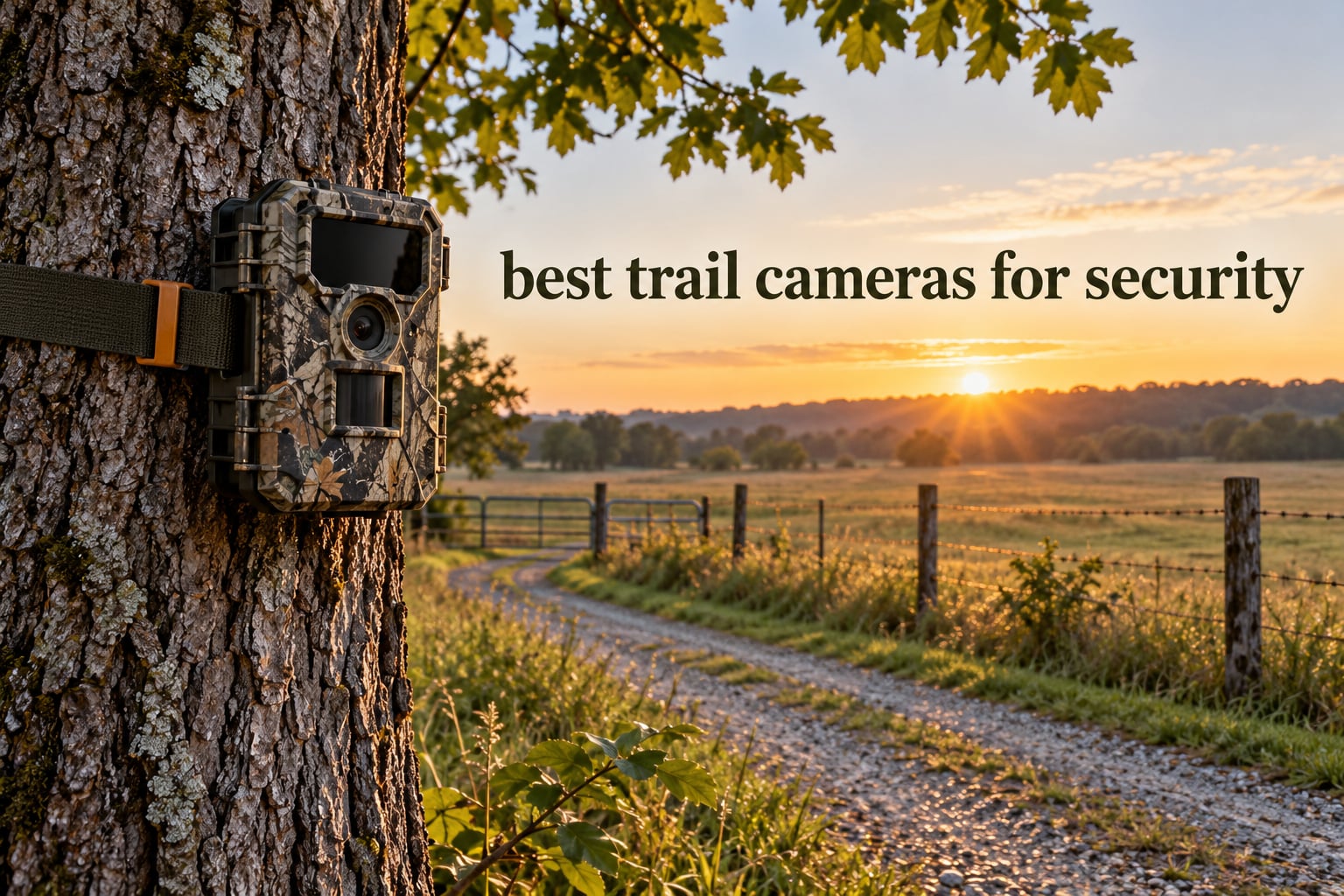
Trail cameras for security are weatherproof, battery-powered game cameras that use a passive infrared sensor to record anyone who walks into a driveway, cabin yard, barn or gate. Yes, they work for home security, and they beat a conventional WiFi camera in three specific situations: where there is no mains power, no WiFi signal, and a need for evidence-grade night footage without anyone being able to see the camera itself. Inside this roundup I compare 10 trail cameras spanning SD-only, cellular and solar setups, and I explain which one to pick for your property.
My criteria were the same for every camera here: trigger speed under a third of a second, a detection range of at least 80 feet, and a clear statement of whether the night flash is no-glow, low-glow or white light. I also weighed what happens after the purchase, because for security use the running cost matters as much as the hardware. Where a camera is cellular, the monthly data plan changes the maths over three years more than the sticker price ever does.
One note on scope before we start. I compared the specifications, review histories and owner feedback for all 10 cameras side by side over several weeks of reading and cross-checking, but I did not run every one of them through a full season of field deployment. Anything I state as a measurement comes from the published specification or from the pattern in owner reviews, and I say so when the two disagree. Our broader trail camera picks are collected in the best trail cameras roundup, and the cellular-only models get a deeper look in our cellular trail camera guide.
Table of Contents
Top 3 Trail Cameras for Security in 2026

WOSPORTS G600-4K 64MP 4K
- 0.2s trigger speed
- 32 no-glow IR LEDs
- 80ft night range
- no subscription

TACTACAM Reveal Ultra
- Switchable no-glow and low-glow
- built-in GPS with theft alerts
- live view
Best Trail Cameras for Security at a Glance (2026)
All ten cameras below appear in the same order as the reviews, with the same badges, so you can scan the shortlist and jump straight to the section that matters to you.
| Product | Specifications | Action |
|---|---|---|
| WOSPORTS G600-4K 64MP 4K |
|
Check Latest Price |
 Moultrie Edge 2 Cellular Moultrie Edge 2 Cellular |
|
Check Latest Price |
 Meidase P70 64MP Meidase P70 64MP |
|
Check Latest Price |
 GardePro E5S Non-Cellular GardePro E5S Non-Cellular |
|
Check Latest Price |
 VOOPEAK TC32B-2P VOOPEAK TC32B-2P |
|
Check Latest Price |
 VOOPEAK TC32 Two-Pack VOOPEAK TC32 Two-Pack |
|
Check Latest Price |
 Oculview 4G LTE Cellular Oculview 4G LTE Cellular |
|
Check Latest Price |
| TACTACAM Reveal Ultra |
|
Check Latest Price |
 SPYPOINT Flex-M Starter Pack SPYPOINT Flex-M Starter Pack |
|
Check Latest Price |
 MagicEagle Cellular H1-New MagicEagle Cellular H1-New |
|
Check Latest Price |
1. WOSPORTS G600-4K 64MP 4K trail camera – best overall for security
WOSPORTS Trail Camera(Non-Cellular Non-WiFi) 64MP 4K 0.2S Trigger Motion Activated,Game Camera with No-Glow Night Vision 2.0”LCD 120°Wide for Outdoor Scouting Wildlife Monitoring Home Security
64MP stills and 4K video
0.2s trigger with sound detection
32 no-glow IR LEDs to 80ft
IP66 with 2-inch LCD preview
Pros
- Largest review base in the group with dependable day and night footage
- Fast 0.2s trigger catches people walking rather than running
- No subscription and no app required at all
- On-device LCD speeds up aiming during setup
- Efficient on lithium AA cells for long deployments
Cons
- Tight battery tray needs a flathead screwdriver
- Settings can reset when powered down for a battery change
- Included nylon strap has no locking clamp
The WOSPORTS G600-4K is the camera I keep coming back to for security work because it does the three things that matter and refuses to charge you for the rest. It triggers in 0.2 seconds, carries 32 invisible 940nm no-glow infrared LEDs rated to 80 feet, and records to a memory card with no subscription and no app account in the middle of it.
With more than 3,000 ratings behind it, this is also the most thoroughly tested camera in the group by owner feedback, which matters when you are trusting a device to watch a property unsupervised. The 2-inch colour screen on the back door lets you aim the camera at the exact spot you care about while standing at the tree.
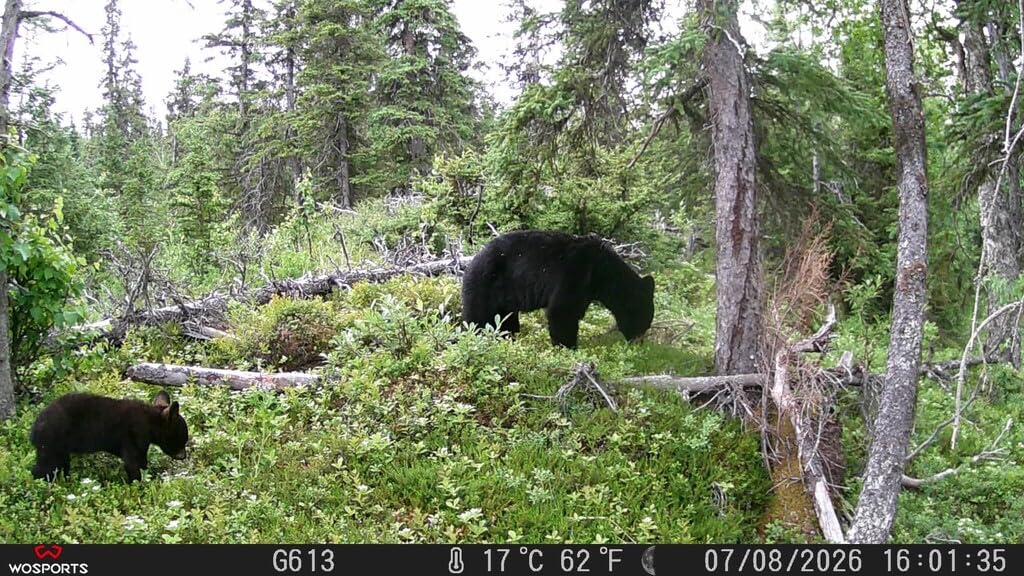
Photo resolution is 64MP with a selectable lower setting, video captures at 4K, and the 120-degree detection field covers a driveway approach or a side gate from a single mount. The IP66 housing handles a full winter outdoors.
Power is the part that surprised me most positively. Owners report a year or more of standby on lithium AA cells, and the camera will also take a WOSPORTS lithium pack or a compatible solar panel, so an off-grid barn or cabin is realistic on this hardware.
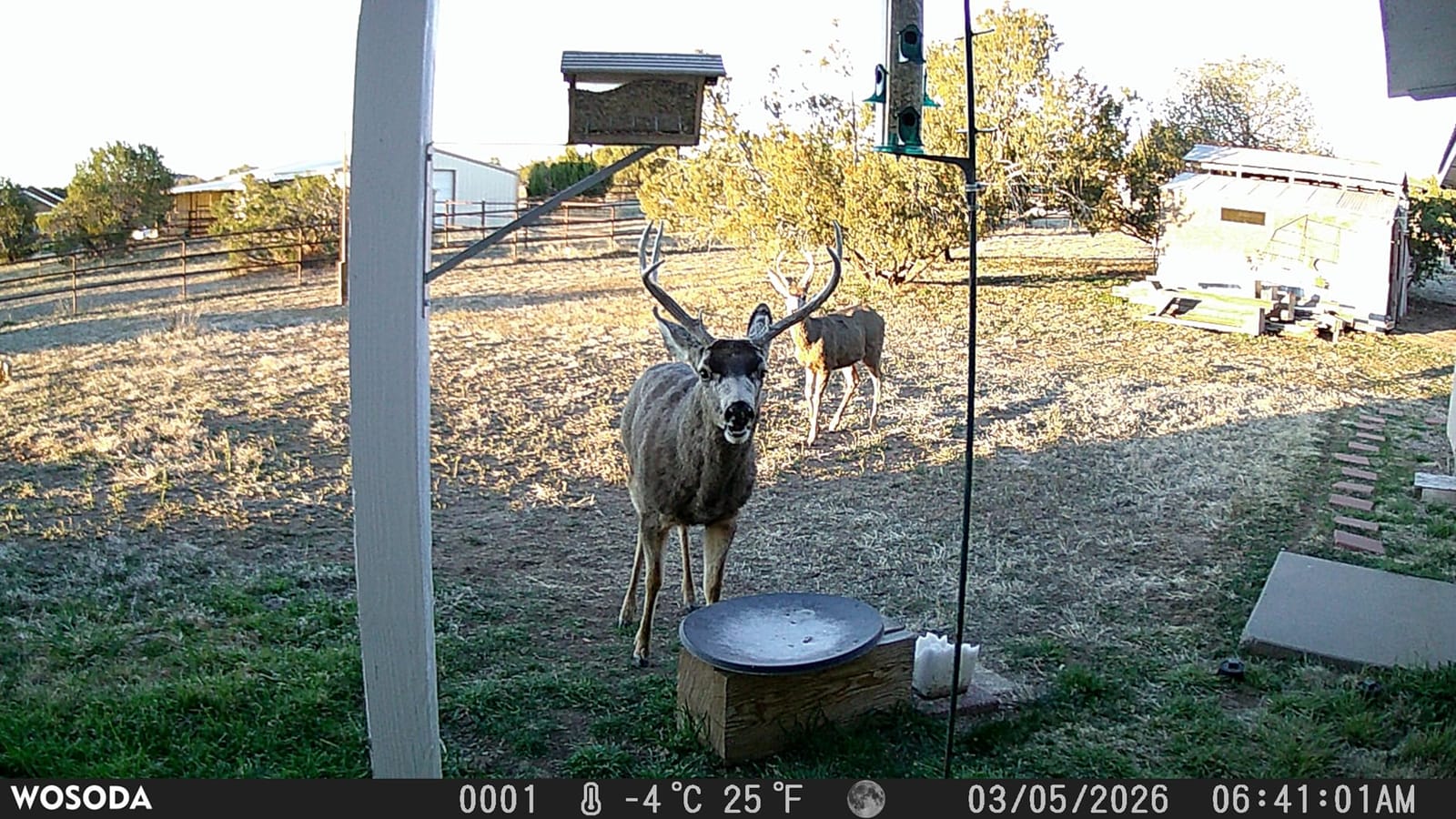
How it performs as a security camera at night
No-glow illumination is the right choice when a camera covers somewhere you actually visit, because a visible red glow tells a trespasser exactly where it is and which way it points. The 940nm array produces night pictures out to the stated 80 feet, enough to identify a person at a gate.
The honest caveat is that no-glow units are dimmer by design. Owners on the small-cabin forum running Bushnell Trophy Aggressor no-glow cameras report that 48 no-glow LEDs do not reach very far at night, and the same physics applies here. Treat 80 feet as a real number in open conditions.
Where it falls short for security use
There is no way to know something happened until you retrieve the card. For a cabin you visit monthly that is acceptable; for a driveway where you want an alert within a minute, look at the cellular models below.
The hardware is not built to be tampered with either. A security cable through the strap loop is the minimum, and because the strap has no locking clamp, a determined thief could lift it off a treeline in seconds.
2. Moultrie Edge 2 Cellular – budget cellular with 100ft detection
Moultrie Edge 2 Cellular Trail Camera 2-Pack – 36MP, Low-Glow Flash
Multi-carrier 4G LTE with Auto Connect
36MP stills and 1080p video with audio
100ft detection with low-glow IR
8GB internal memory plus cloud
Pros
- Automatic network selection removes SIM swapping
- 100-foot detection suits open property monitoring
- 8GB onboard memory avoids field card retrieval
- App activity charting shows when activity actually happens
- USA-based manufacturer with in-country support
Cons
- Cellular data subscription is required and ongoing
- Fixed 50-degree lens is narrow for wide coverage
- Power Mag and solar accessories sold separately
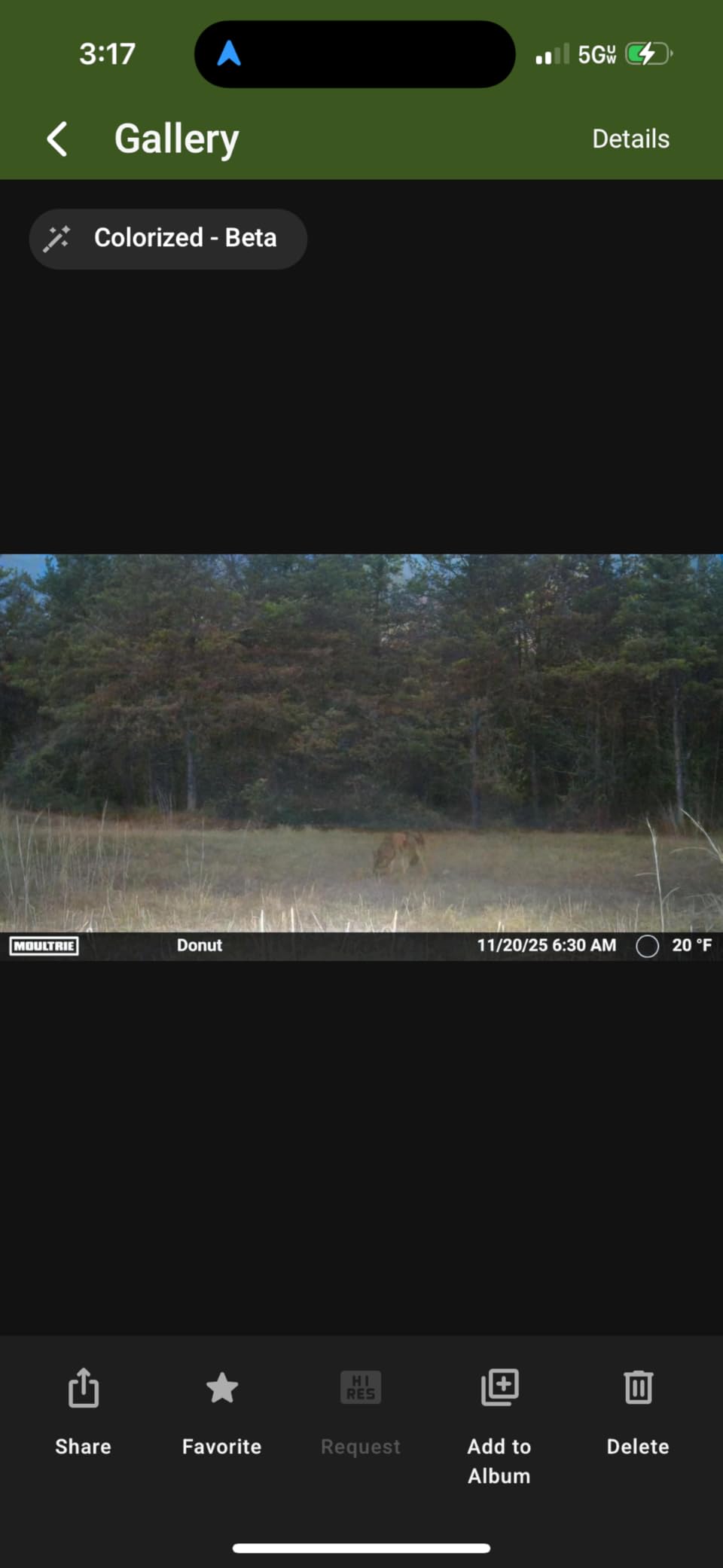
The Moultrie Edge 2 is the cheapest way into cellular trail camera monitoring without gambling on an unknown brand. Auto Connect cycles through major networks on its own, so there is no SIM to buy, no carrier configuration and no roaming contract to set up before you hang the camera.
Detection reaches 100 feet with a low-glow infrared flash, which lets you mount further back from a gate than a shorter-reaching camera allows. Photo output is 36MP and video is 1080p with audio recorded.
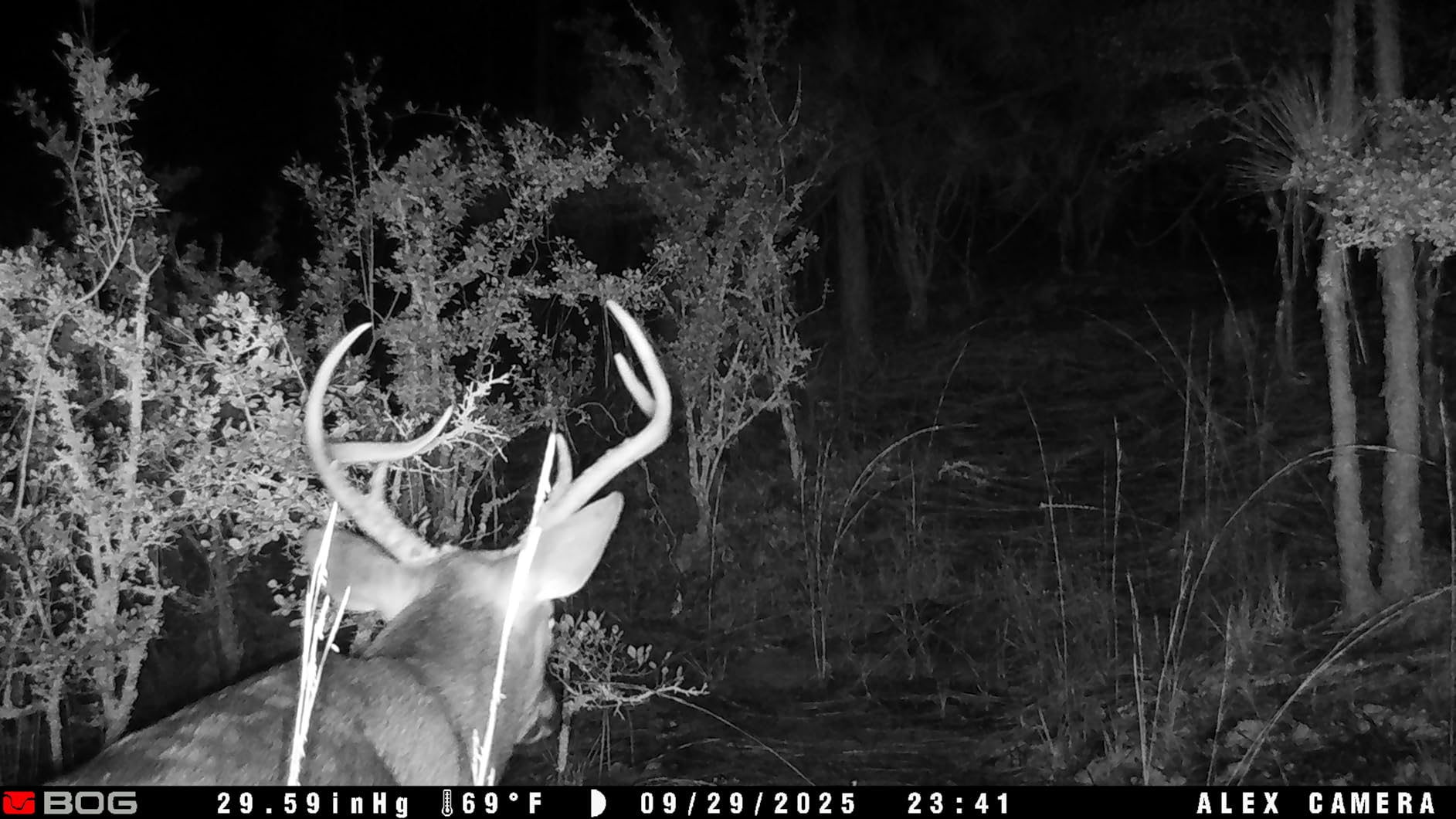
Because the camera carries 8GB of internal memory, you still have footage if the network drops out, and the Moultrie Mobile app adds activity charting that plots when movement happened. For working out whether someone is scouting or just walking a dog, that timeline is more useful than the alerts themselves.
Mounting uses a standard quarter-inch thread, so it fits the Easy Aim, Flex and stake mounts most people already own.
Is the monthly data plan worth it for a property camera
Here is the honest arithmetic. Moultrie sells data plans that start at a modest monthly figure and are required for cloud features and remote viewing, so this is not a one-off purchase. Over three years of watching a single outbuilding, the subscription exceeds the cost of the camera.
That only bothers me if you want live checking. If your plan is to visit monthly and pull footage, the same job done well costs nothing with an SD-only model.
Where the 50-degree lens becomes a problem
A 50-degree field of view is fixed, so it sees a corridor rather than a room. On a straight driveway or a single gate approach it is ideal; for a wide yard you will need a second unit or one of the pan-and-tilt models below.
The low-glow flash also means a faint red emitter that is visible from close range at night. Mount high and out of sight if that bothers you.
3. Meidase P70 64MP – best value 0.1s trigger no-glow camera
Meidase P70 (Non-Cellular,Non-WiFi) Trail Camera, 64MP 1296p, Game Cameras with No-Glow IR Night Vision, Motion Activated, Waterproof for Wildlife Deer Cams, Hunting
64MP stills and 1296p video
0.1s trigger with side motion sensors
36 no-glow IR LEDs to 100ft
f/1.6 aperture for low light
Pros
- 0.1 second trigger with side sensors catches fast movement
- Solid mouldings and a tight weatherproof fit
- Menus are quick to learn for a first-time user
- Support has honoured warranty replacements
- Efficient on batteries for continuous deployment
Cons
- SD card and AA batteries are not included
- Night video drops to roughly 15 feet in dark conditions
- Nighttime shutter speed struggles with fast-moving subjects
The Meidase P70 exists because 0.1-second trigger speed used to be a premium feature. Three PIR sensors across the front catch a person walking rather than running, and for security that difference is the whole point: a camera that wakes after someone has already crossed your gate has missed the identification shot.
Night illumination uses 36 invisible 940nm no-glow LEDs with a stated 100-foot range, supported by an f/1.6 aperture lens. Image output is 64MP stills and 1296p video with H.264 compression for faster playback.
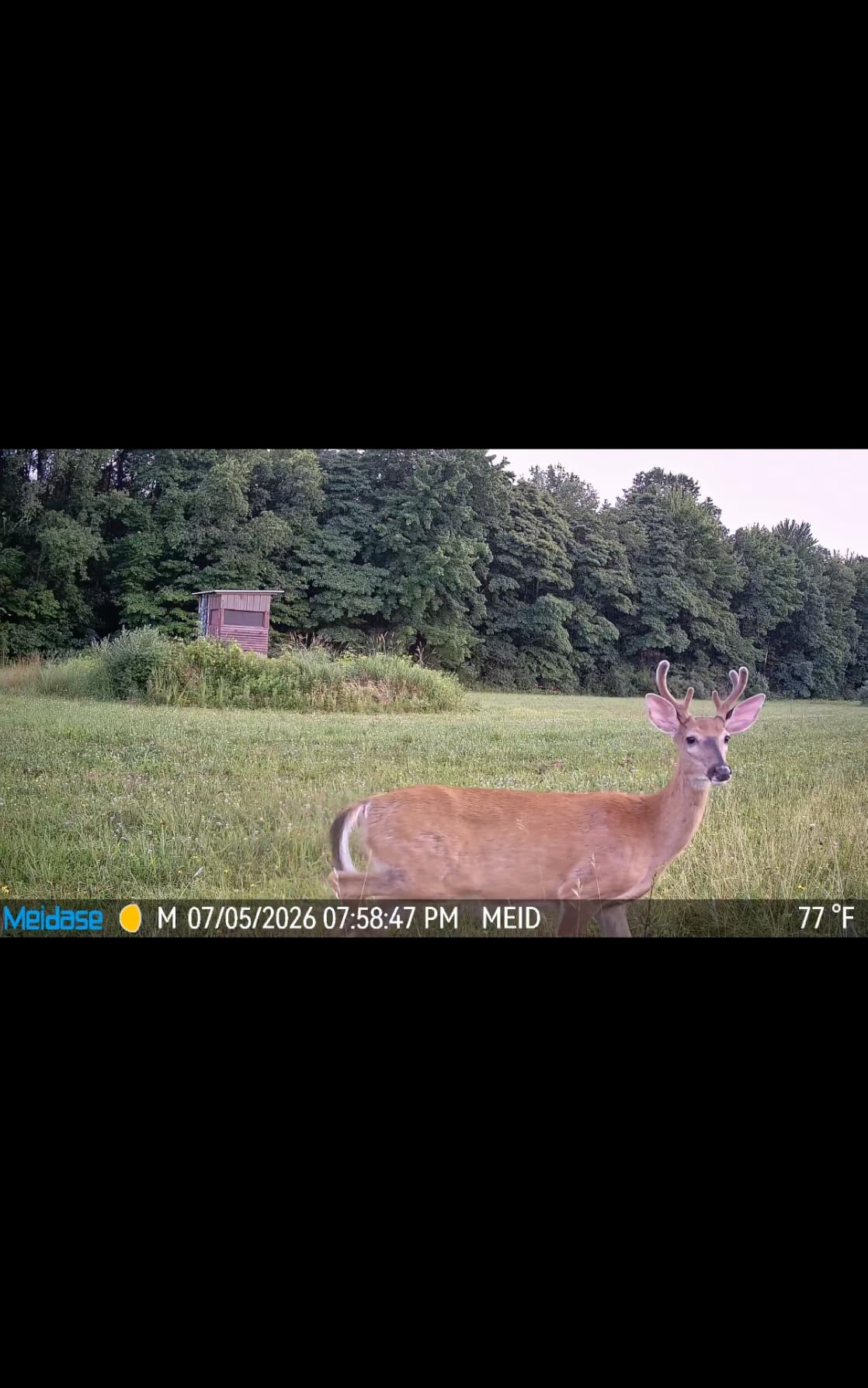
Build quality is a genuine surprise at this level. Reviewers describe the mouldings and fit as noticeably better than costlier name-brand units, and several report that support sent replacement cameras under warranty without argument.
The 2.4-inch colour display gives on-device playback and a menu-driven setup that most first-time users complete unaided.

How the night performance compares in practice
This is the specification where owner reality and the datasheet part company. Owners report that night video trigger range drops to roughly 15 feet in genuinely dark conditions, well short of the 100-foot figure for the infrared LEDs.
The night shutter speed is also slow enough that fast-moving subjects can look soft or pixelated even when the background behind them is sharp. For a person walking up a path you get a clean capture; for someone running directly at the camera, expect a blurred frame.
Why I rate it the best value pick
Compare this against the cellular models: 0.1-second triggering, a 100-foot no-glow array, 64MP capture and an IP66 body, with no monthly fee attached to any of it. You give up live viewing and alerts, and for a gate checked regularly that is a trade most people should take.
Two operational notes. The memory card and the eight AA batteries are not in the box, and rechargeable AA cells behave inconsistently here compared with lithium chemistry.
4. GardePro E5S – lightest camera for mounting high and out of reach
GardePro E5S Non-Cellular Trail Camera, 1296P HD Video with Sound
64MP stills and 1296p video
Three PIR sensors with 0.1s trigger
100ft no-glow night vision
Non-cellular low-power operation
Pros
- Weighs about 10.5 ounces so it goes up high unaided
- Low power draw stretches time between battery changes
- Standard quarter-inch mount fits posts and fences
- Motion
- time-lapse and hybrid capture modes
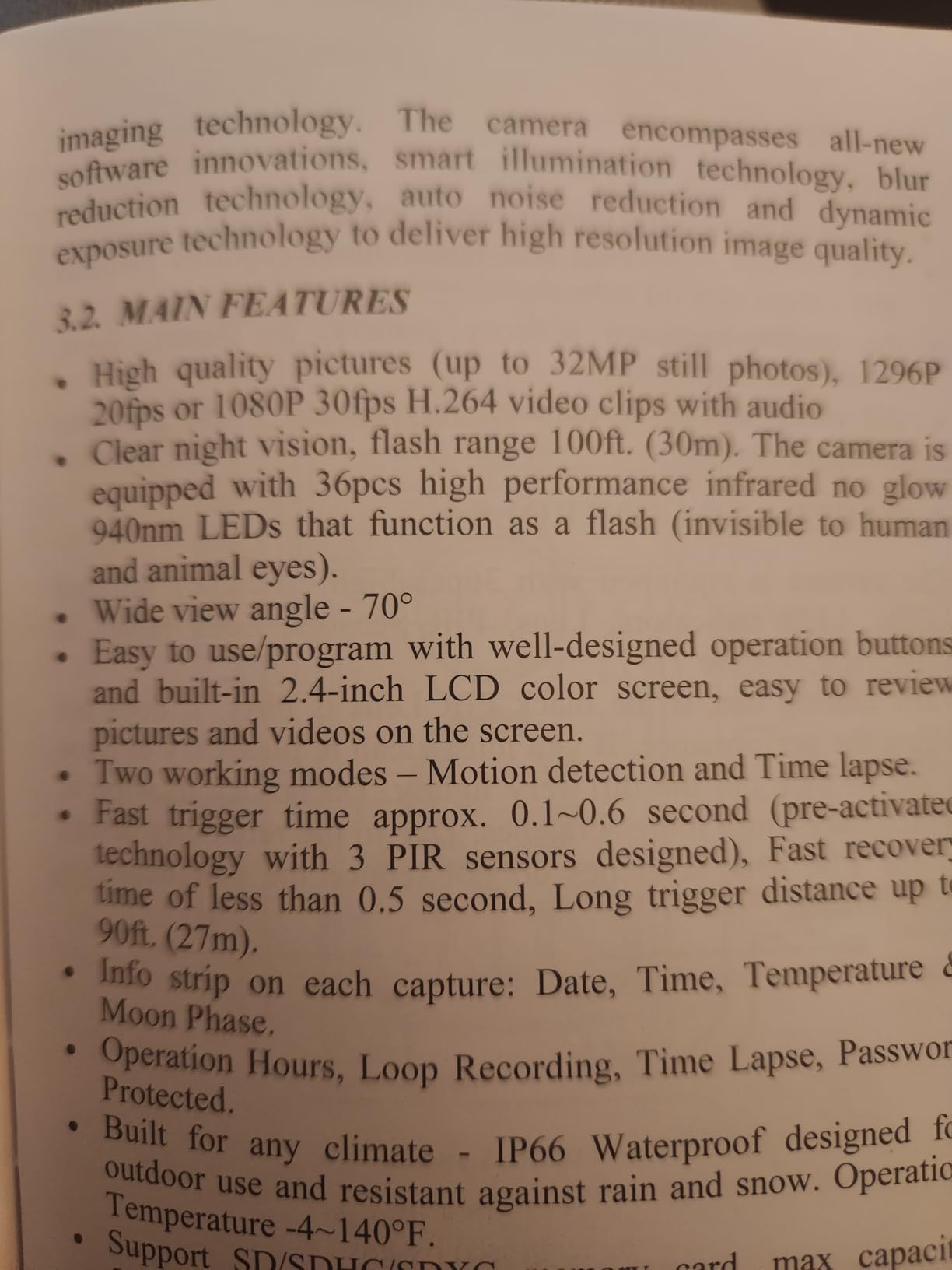
- Supports memory cards up to 512GB
Cons
- Motion sensitivity over-triggers and fills the card with blanks
- Audio is muffled with a consistent clicking artifact
- Battery lid is difficult to open
At roughly 10.5 ounces the GardePro E5S is light enough to put 12 feet up a tree without a ladder and a second pair of hands. That matters for security more than it sounds: a camera mounted low enough for a ladder is a camera a trespasser can reach.
Detection is handled by three PIR sensors giving a 0.1-second trigger, with 100-foot no-glow night vision across a 60-degree field.
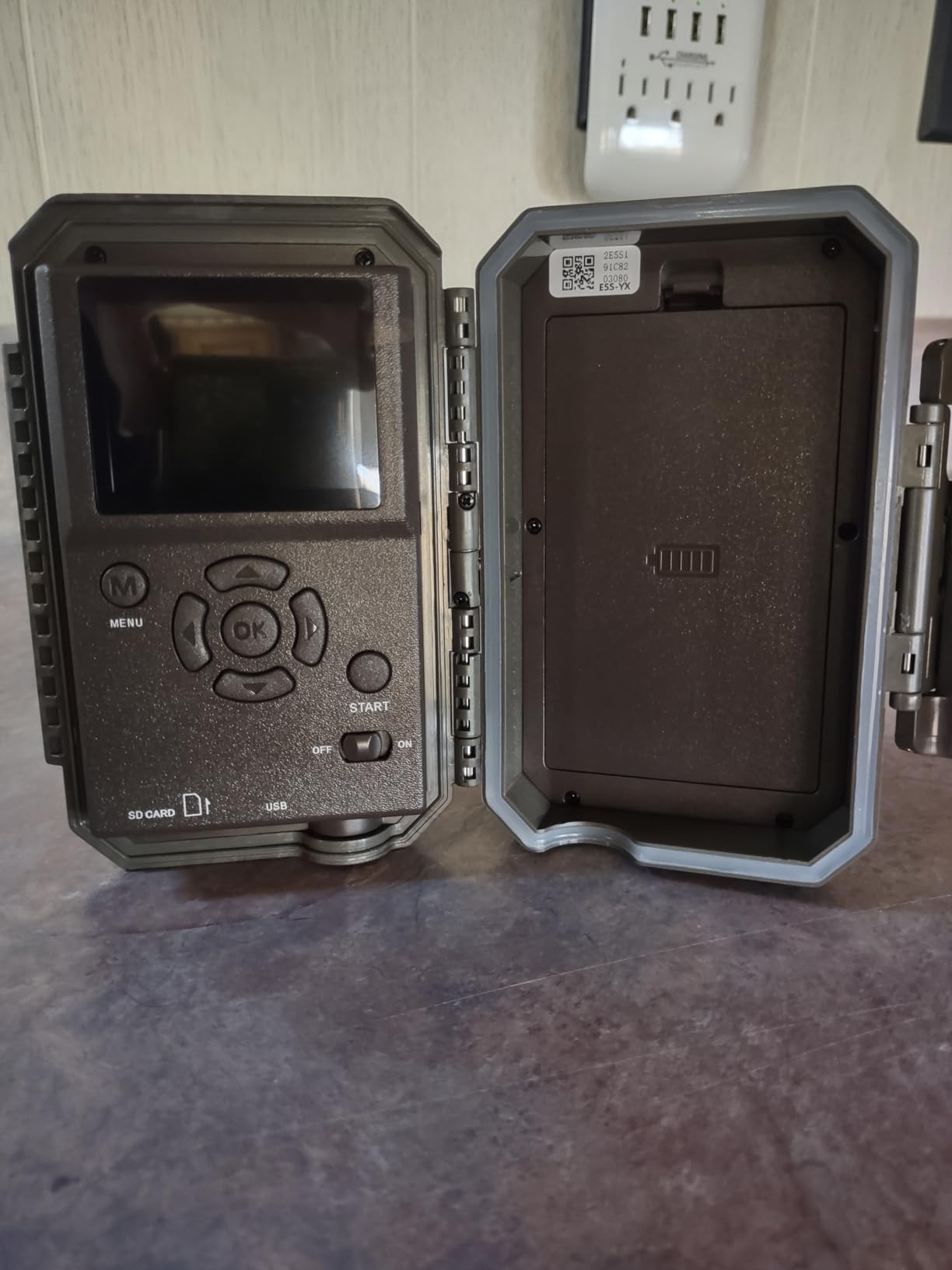
The non-cellular, non-WiFi design is deliberate and is the reason this camera sips power compared to anything transmitting over a network. For a fence-line post checked every few weeks, that efficiency is worth more than any app feature.
Recording modes include motion detection, time-lapse and a hybrid setting, all with loop recording, and the camera accepts cards up to 512GB. A standard quarter-inch thread and the option to run a solar panel cover most mounting situations.
Getting usable footage out of an over-sensitive sensor
The most common owner complaint is that motion sensitivity fires constantly, filling the card with near-empty frames of moving branches. That is a tuning problem, and it costs you real evidence because loop recording overwrites the frames you wanted.
Set sensitivity down a step or two, use time-lapse or hybrid mode for wide areas, and size the card generously.
Where it is the wrong security choice
There is no remote access of any kind. You will not know about an intrusion until you are standing at the tree, which rules it out if you need alerts.
The audio pickup is described as muffled with a consistent clicking artifact during recording. If a video clip has to carry usable sound as part of the evidence, look elsewhere.
5. VOOPEAK TC32B-2P – best pan and tilt live view coverage
VOOPEAK Trail Camera, 4G LTE Cellular Game Cameras with 360° Live Streaming
355 degree pan and 100 degree tilt
2.5K live streaming over 4G LTE
7800mAh battery with 4W solar panel
IP68 rated to minus 40F
Pros
- Remote pan and tilt removes blind spots across a property
- 2.5K live stream and remote zoom from a phone
- Integrated solar panel holds charge through long deployments
- Pre-installed SIM means no contract or setup
- Sensitive PIR with instant phone notifications
Cons
- Night vision is black and white and limited to about 65 feet
- On and off switch is hidden on the underside and easy to misread
- Free data allowance runs out in about a week
A fixed trail camera watches a cone. The VOOPEAK TC32B-2P watches 355 degrees horizontally and 100 degrees vertically, and you can move it from your phone. For a property where you would otherwise bolt three cameras to three trees to cover a yard, that single unit changes the maths.
Live streaming runs at 2.5K over 4G LTE with no WiFi involved, and the built-in SIM auto-selects the strongest of Verizon, AT&T or T-Mobile. Setup takes about three minutes because there is no card to insert and no contract to sign.
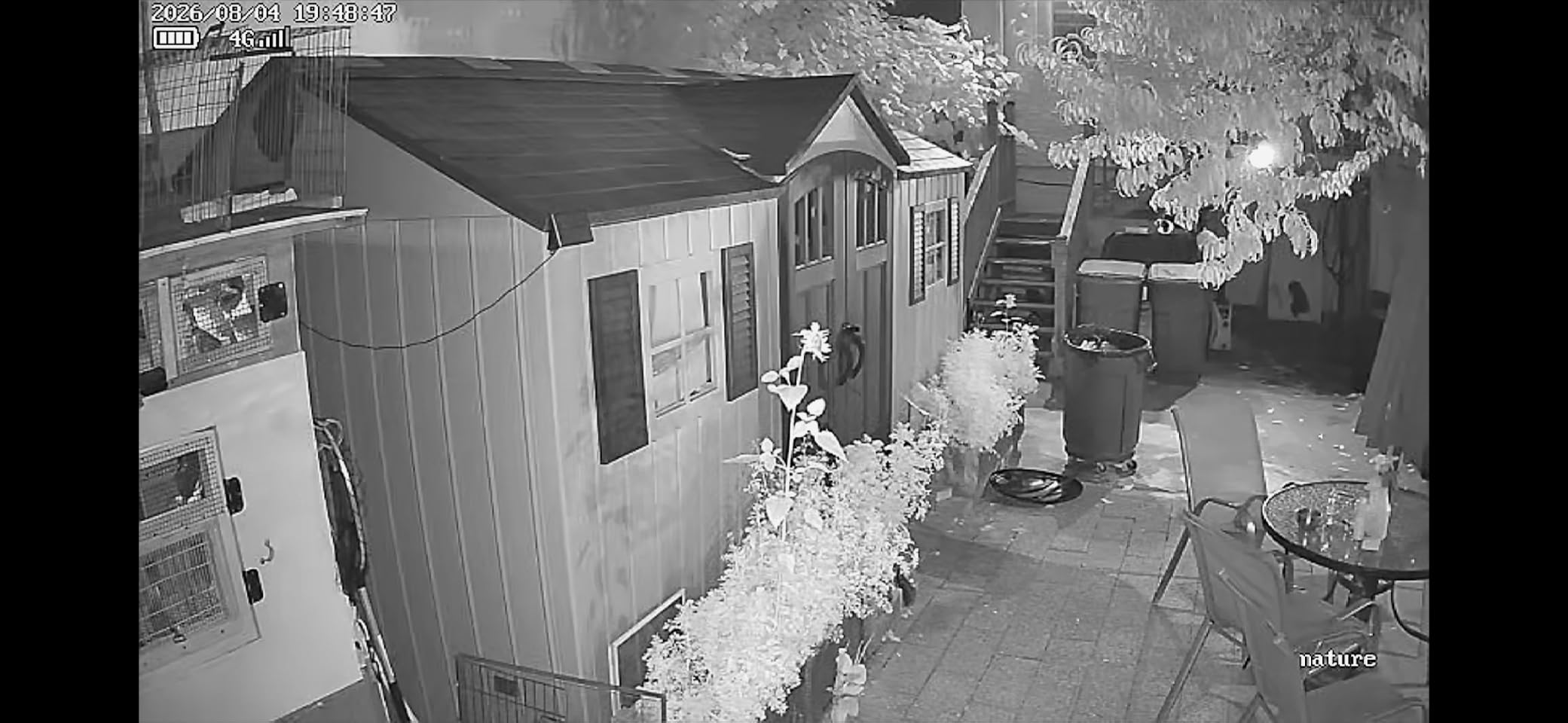
Power comes from a 7800mAh battery rated at up to 12 months on a single charge with adequate sun, paired with an integrated 4W solar panel. The IP68 housing is rated from minus 40F to 140F, which puts it in a different weather class from most of the IP65 cameras in this list.
Trigger response is 0.1 seconds through the PIR sensor, and custom motion zones let you restrict detection to the part of the yard that matters rather than the whole field of view.

Where the pan and tilt lens earns its keep
The scenario is simple: a driveway that curves, or a yard where you cannot predict which direction someone will approach from. Instead of guessing at aim with a fixed lens, you check the live view, move the camera, and confirm coverage from the house.
That is also why the daytime fisheye distortion is worth tolerating. Images bow and flare in direct sunlight, but for checking whether a person is at the gate that beats a cone that misses them.
Night coverage is the limiting factor
Six infrared LEDs carry night vision to roughly 65 feet, and the footage is black and white rather than colour. That is fine for identifying a person at a gate and thin for reading a licence plate at 60 feet.
The free data allowance covers about seven days before a plan is needed, and an SD card up to 256GB is not included. Cloud playback is a paid extra, so budget for the card on day one.
6. VOOPEAK TC32 two-pack – best solar cellular pair with auto tracking
4G LTE Cellular Trail Camera 2 Pack, Human Auto Tracking with 2,5K HD Live
Two solar-powered cellular cameras
355 degree pan and 90 degree tilt with auto tracking
2.5K live view with IR or white light
Instant picture alerts on PIR trigger
Pros
- Auto tracking locks onto and follows a moving subject
- Two cameras each get their own solar panel
- Choice of invisible IR or full-colour white-light night mode
- 4.5 stars across more than 400 ratings
- Instant picture alerts on motion
Cons
- Each camera needs a separate data plan and cannot share one
- Memory card is not included and cloud storage is a paid extra
- Listed still resolution is only 4MP despite 2.5K streaming
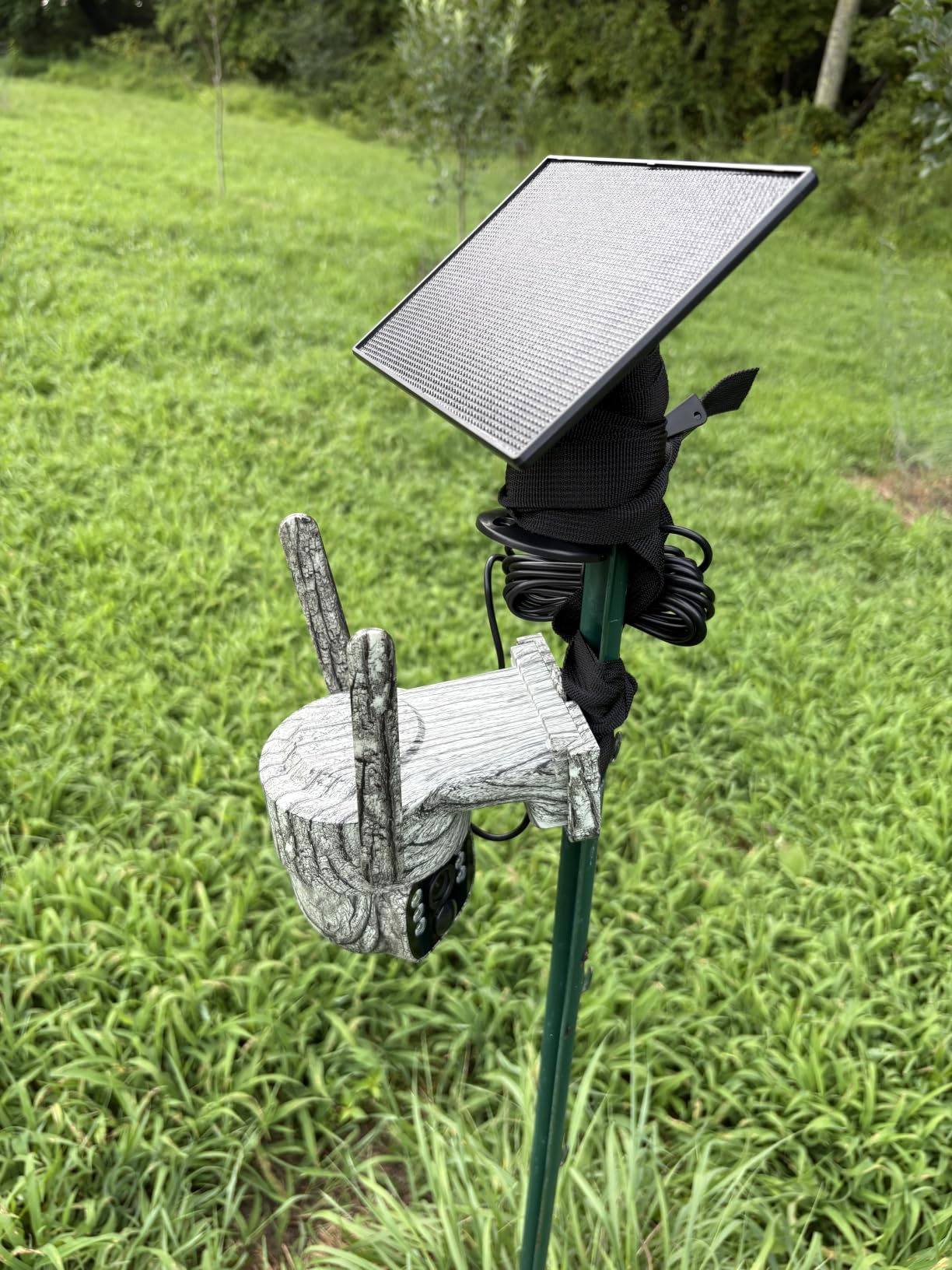
This two-pack is built for the specific job of covering two separate points on one property. Both cameras come with their own solar panel, so once mounted they run without anyone walking out to swap batteries in a field or barn.
The headline feature is 360-degree auto tracking across 355 degrees of pan and 90 degrees of tilt. When a person enters the zone the camera finds them and follows, which removes the biggest weakness of fixed-lens trail cameras for security use.
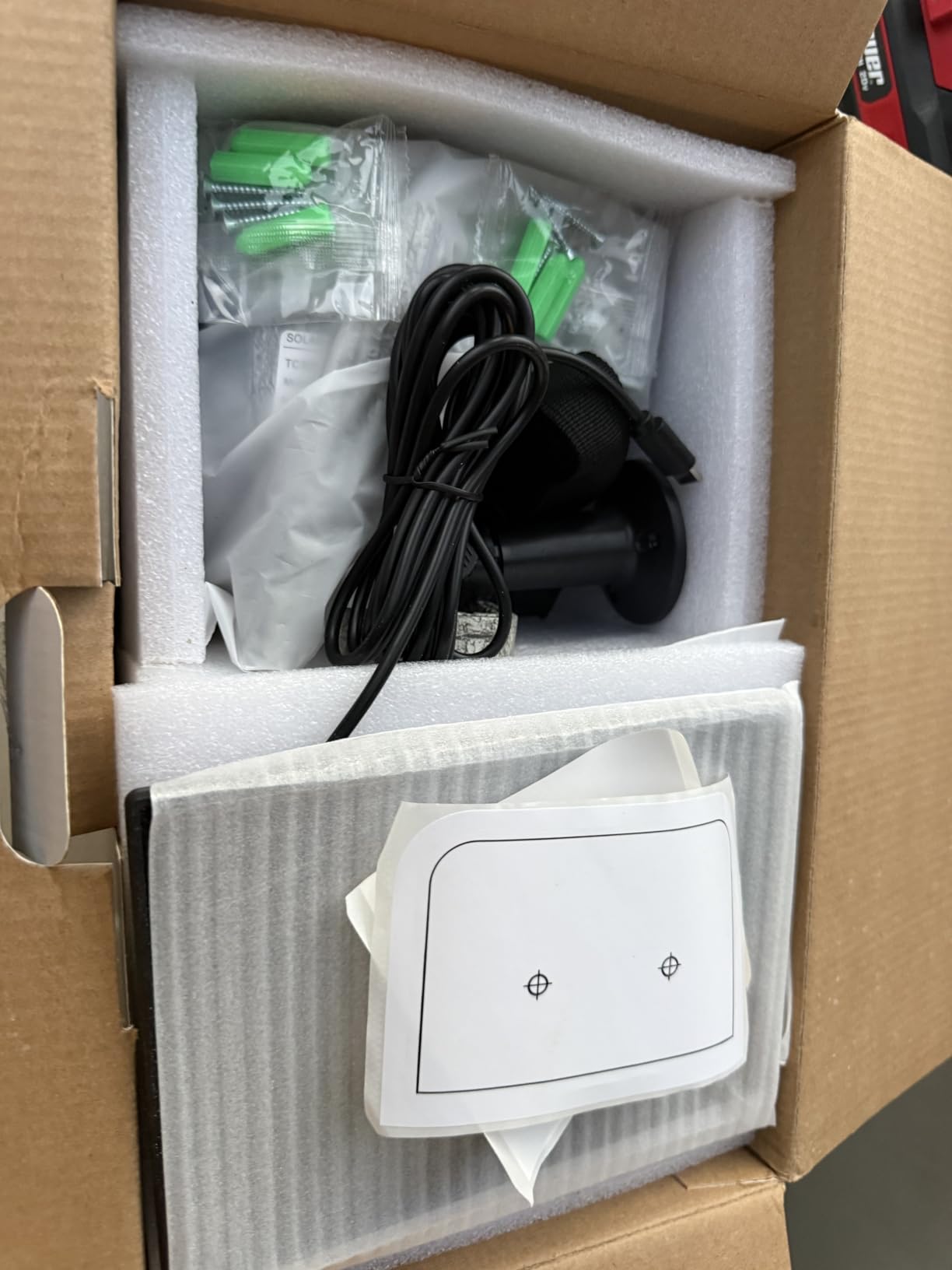
Live view runs at 2.5K with app control and remote zoom, and the night mode is switchable between invisible infrared and a full-colour white light. For a driveway where you want colour identification rather than a grey outline, that switch is the reason to pick this over the TC32B-2P.
At 4.5 stars across more than 400 ratings, this is a well-regarded cellular pack, and owner feedback consistently centres on the tracking behaviour and the two night modes working as described.
Why the two-pack structure suits property work
Coverage beats resolution almost every time when you are covering property. Two cameras watching a gate and a back door give you evidence from both approaches, where one wide-angle camera gives you a legible view of nothing.
Auto tracking is the quiet advantage here. An intruder who steps to the side of a fixed camera’s cone is out of frame; a tracking camera rotates and keeps them in it.
The running cost is the catch
Each camera carries a non-removable pre-installed SIM and needs its own data subscription, and data cannot be shared. Two cameras means two monthly charges, and that is the number to work out before you commit to covering a property this way.
Two smaller limits are worth noting: the listed still resolution is only 4MP even though the stream is 2.5K, and the IP66 rating is less weather-sealed than the IP68 model above.
7. Oculview 4G LTE – best for weak signal rural property
Oculview 4G LTE Cellular Trail Cameras, 360° 2K Live Streaming Game Camera, SIM Card Included, Low-Glow Night Vision, Solar Powered, Instant Alerts, Two Storage Ways, No WiFi Needed for Hunting&Trail
2K live streaming with remote control
336 degree pan, 90 degree tilt, 4x zoom
850nm low-glow IR to 100ft with spotlight
6W adjustable solar panel
Pros
- Pan
- tilt and zoom control across a large property
- Live view loads quickly with clear picture quality
- Solar panel holds charge through wet winter stretches
- Holds signal where a phone barely works
- Responsive customer service that solves setup issues
Cons
- Instructions do not match what the app actually does
- Data plan plus cloud storage plus a card all stack up per camera
- App can stop recognising the camera and force a password re-entry
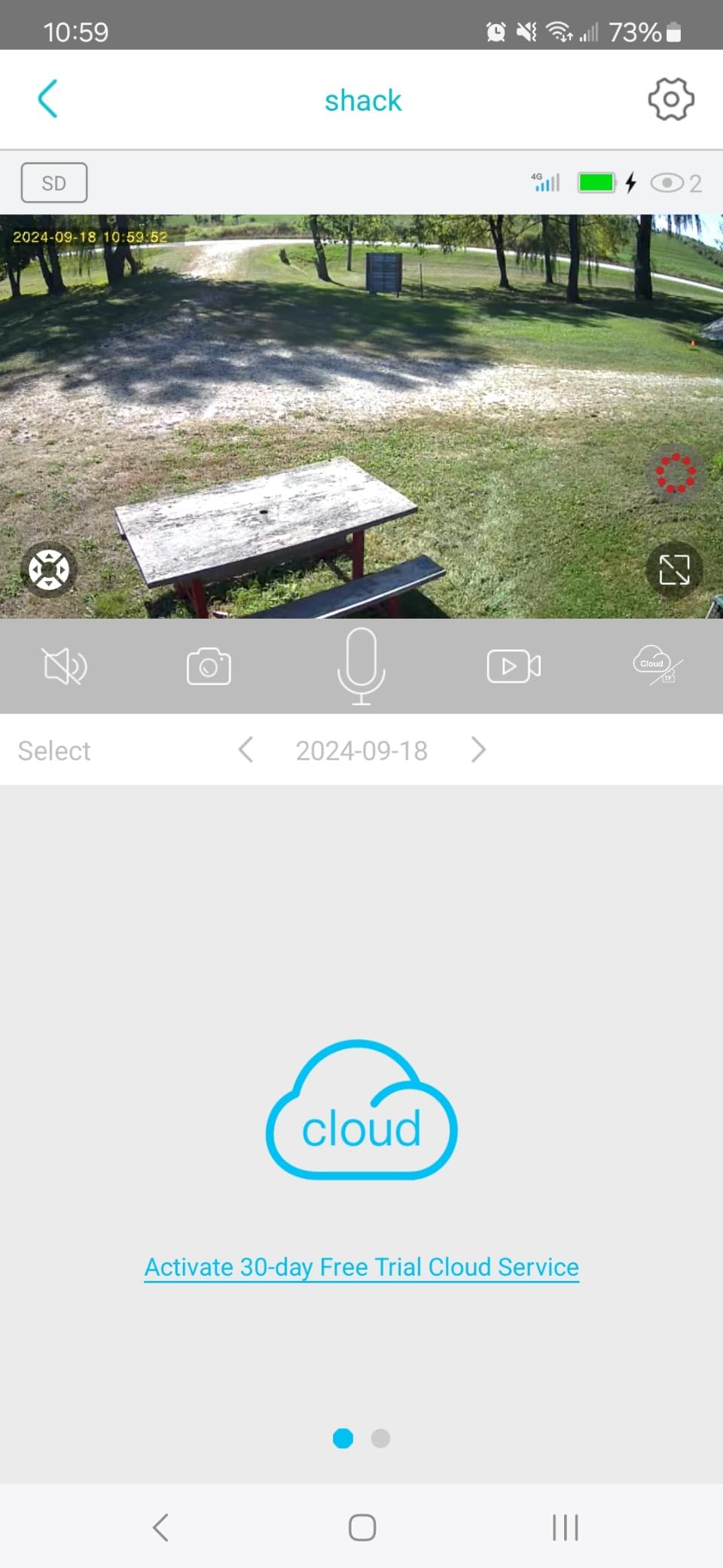
The Oculview is built for the situation that kills most cellular trail cameras: a barn at the end of a lane where your phone shows one bar. Owners report it holding a signal in weak-coverage areas where mobile devices struggle, and it includes a SIM connecting to Verizon, AT&T or T-Mobile.
Coverage is 336 degrees of pan, 90 degrees of tilt and 4x digital zoom, streamed live at 2K with no WiFi required. The 850nm low-glow infrared reaches up to 100 feet with the built-in spotlight engaged.
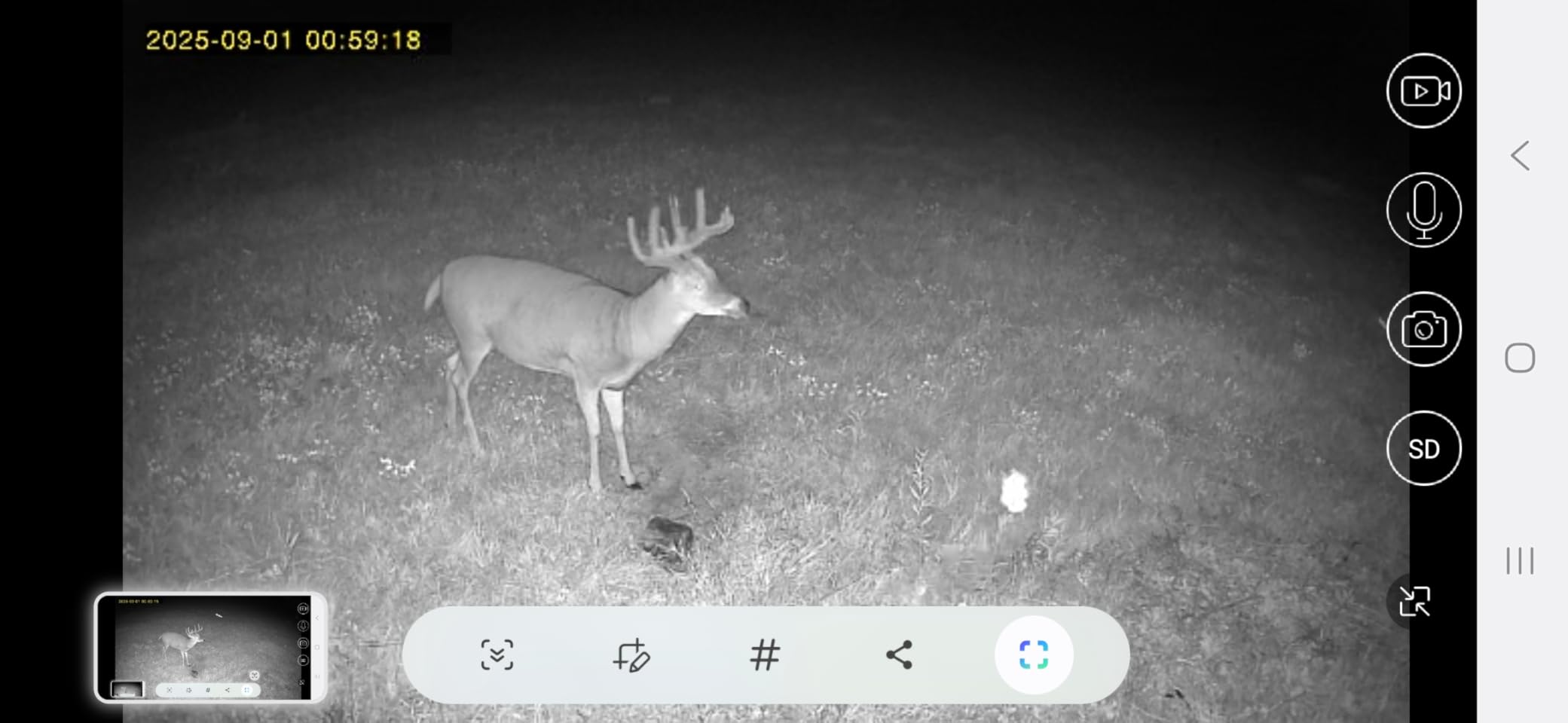
Power comes from an adjustable 6W solar panel, and the manufacturer rates roughly 10 minutes of direct sun as covering a full day of operation, which makes unattended deployment realistic through a wet winter.
Trigger time is 0.2 seconds across a 120-degree PIR angle with instant phone alerts, and footage goes to cloud storage or a local card up to 128GB.
Running cost is the honest drawback
This camera stacks three separate costs per device: the data subscription after the seven-day trial, optional cloud storage, and the memory card if you want local copies. Owners call the accumulating total the main complaint.
Set a calendar reminder before you deploy rather than after. Nothing about this camera stops billing when you stop looking at it.
Documentation and pairing issues to expect
The most repeated complaint is that the printed instructions do not match what the app actually does, and owners report the UBox app losing track of the camera and demanding a password re-entry they cannot resolve.
There are also reports of false alerts from moving shadows. The 120-degree PIR angle picks up a lot of ground, so masking off the sky-facing side of the detection zone is worth doing on day one.
8. TACTACAM Reveal Ultra – best for live alerts, GPS and theft alerts
TACTACAM Reveal Ultra Cellular Trail Camera: 4K Photo, 1080p Video, Live View, GPS Tracking-Enabled, Switchable No-Glow/Low-Glow Flash, LTE Connectivity, LCD Screen – Best Hunting, Game Camera
4K stills and 1080p or 2.5K video
Switchable 80ft no-glow and 96ft low-glow flash
Built-in GPS with theft alerts
Live view and on-demand HD photo requests
Pros
- Exceptionally clear 4K photos day and night
- Switchable flash is visibly gentler on animals at night
- Reliable in places with no radio or cell coverage
- GPS genuinely helps when running cameras across a property
- Fast cellular delivery and smooth live view
Cons
- Technical support is hard to reach and absent from the app
- Sensitivity settings do not filter moving shadows
- Video files are not always delivered or listed in the app
The Reveal Ultra is the most complete security answer in this roundup, and the built-in GPS is the feature no other camera here offers. It keeps transmitting coordinates even when the camera is switched off or the battery removed, and raises a theft alert if the camera moves more than half a mile.
That matters directly to the biggest practical problem with a security trail camera, which is that the thing doing the watching can itself be stolen.
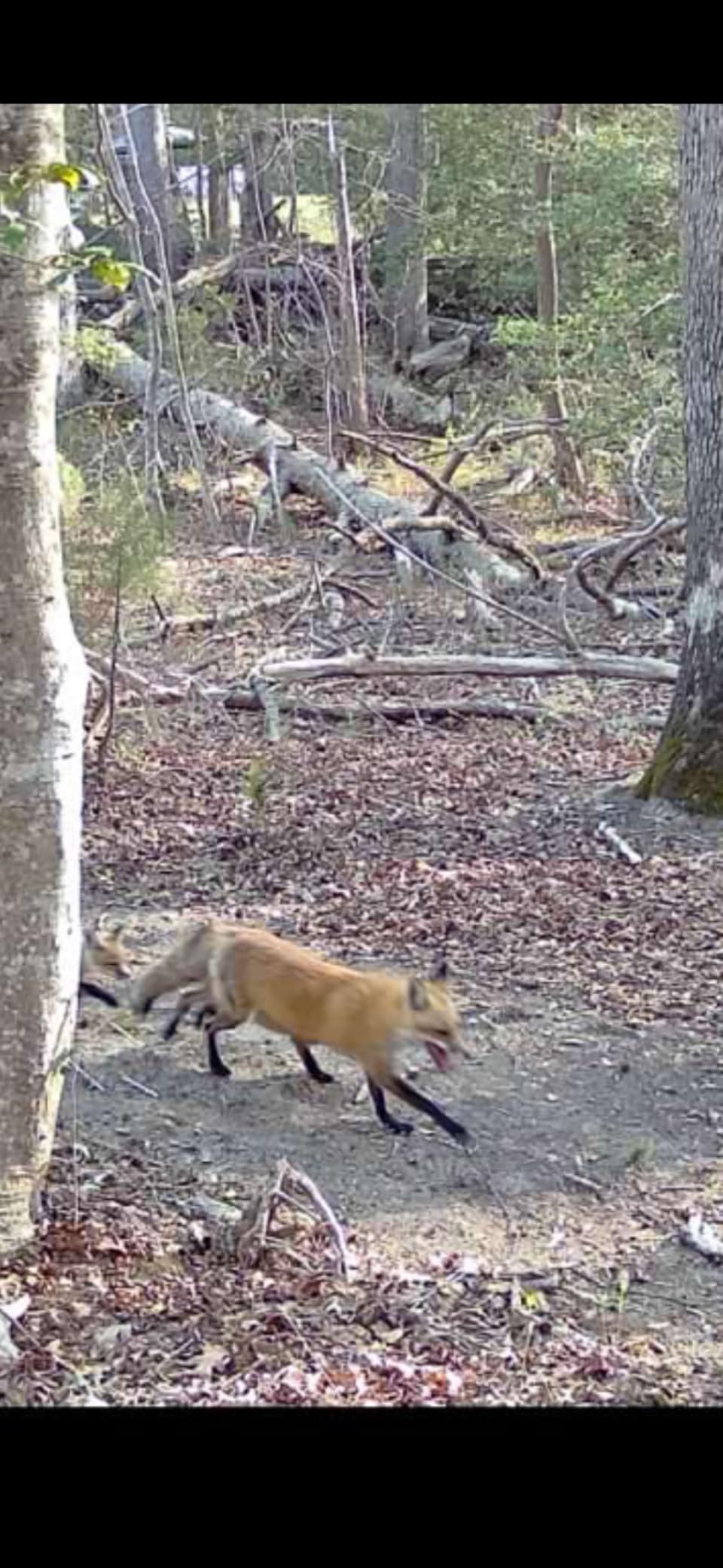
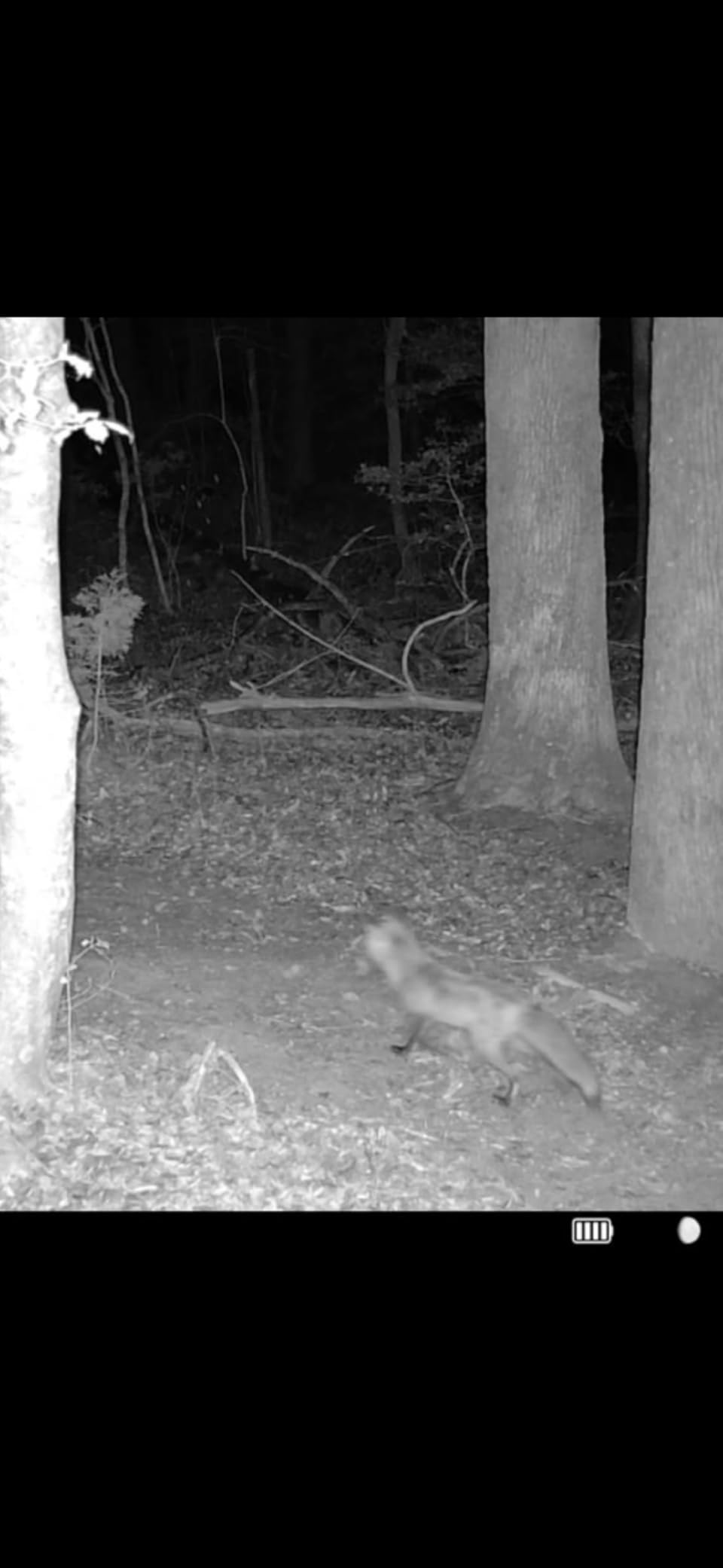
The flash is switchable between 96 feet of low-glow and 80 feet of no-glow, so you can use invisibility where people pass close to the camera and throw a longer, brighter flash down a distant approach. Trigger is sub-0.5 seconds with bursts of up to nine shots.
Photo output is 4K and video is 1080p or 2.5K, stored on 16GB of internal memory with an SD slot for expansion. There is a 2-inch LCD on the camera and an upgraded antenna that owners credit for holding a connection in marginal coverage.
When switchable flash is the right answer
Most no-glow cameras force a single compromise: invisible and short, or bright and long. A switchable unit lets you match the flash to the scene, which is the most useful feature on this camera for anyone who cares about both animal behaviour and identification quality.
Live view and on-demand high-resolution photo requests mean you can pull a full-resolution frame only when something is worth keeping, rather than storing every burst.
The support and shadow-trigger problems
After-sales support is the most common complaint: reviewers say it is hard to reach and there is no support route inside the app. If the camera fails at the back of a field, that is a real cost.
Sensitivity settings also do not stop moving shadows triggering the camera, which produces alerts with nobody in them. Cellular data and on-demand photo requests are both billed extras.
9. SPYPOINT Flex-M Starter Pack – best free cellular photo allowance
SPYPOINT Flex-M and SD Card Pack – Cellular Trail Cameras |Best Value in Hunting Accessories |No WiFi Needed & GPS-Enabled |Hunting Night Vision | IP65 Waterproof |28MP Photos, 720p Videos
Free plan transmits up to 100 photos monthly
28MP photos and 720p video
Dual preactivated SIMs and 32GB card included
GPS with maps, weather and AI species filtering
Pros
- A free monthly photo allowance rather than a trial-only offer
- Memory card and preactivated SIMs are in the pack
- Dual-SIM auto-connect holds signal in remote terrain
- Very sensitive motion detection with quick response
- Simple activation flow owners praise repeatedly
Cons
- 720p video trails every other cellular model here
- Default check-in settings burn the free allowance fast
- Data plans are less flexible when running several cameras
The Flex-M Starter Pack is an inexpensive cellular security camera with a free monthly allowance rather than a trial-only one. The plan transmits up to 100 photos a month, and the pack includes a 32GB memory card and two preactivated SIMs.
For a camera covering a gate where genuine intrusions are rare, 100 photos a month is enough to know what happened without a subscription.
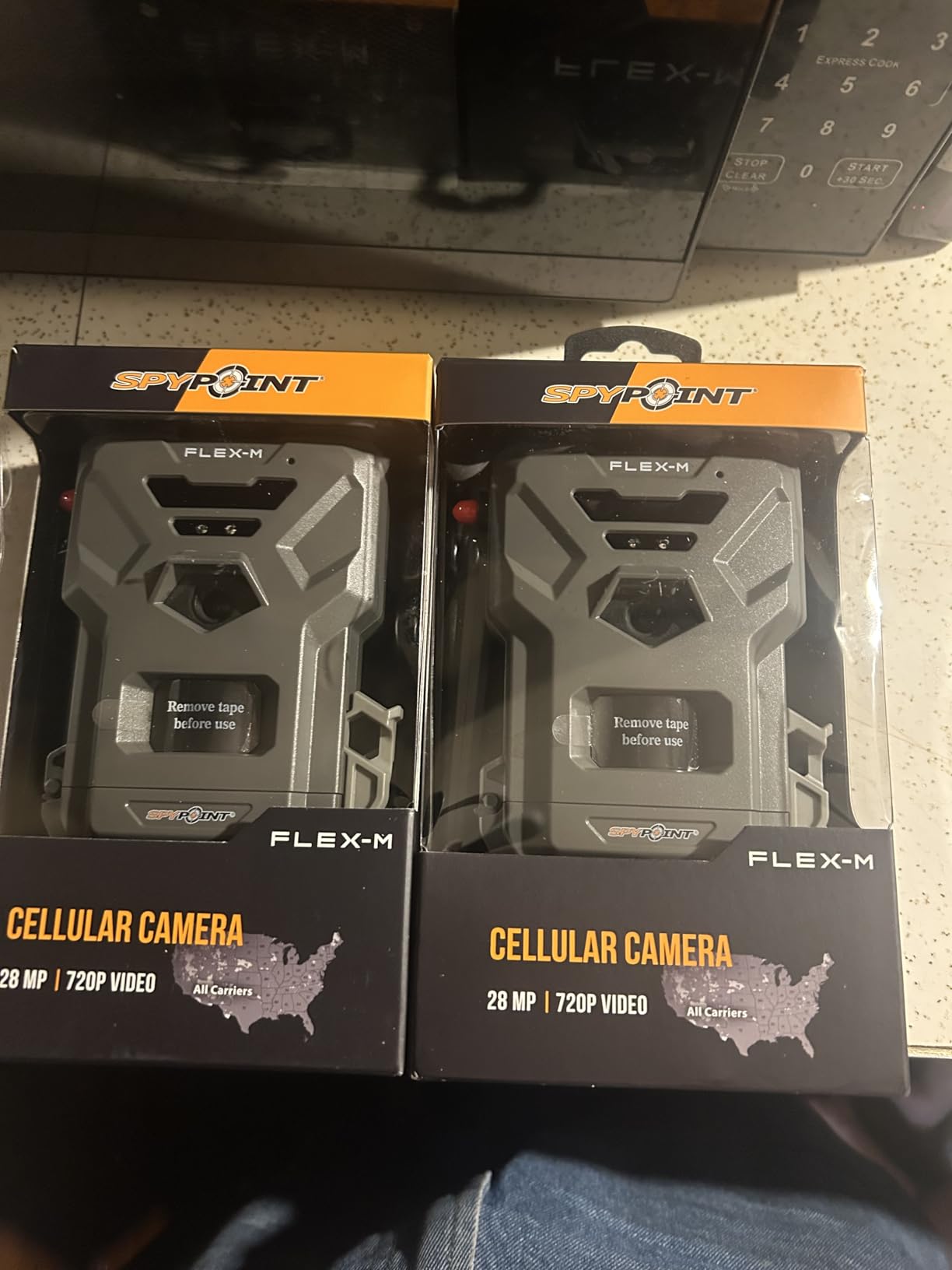
Cross-carrier coverage with automatic network selection means it picks up signal in remote areas where a phone fails, and the app adds GPS-tagged maps, real-time weather and AI species filtering.
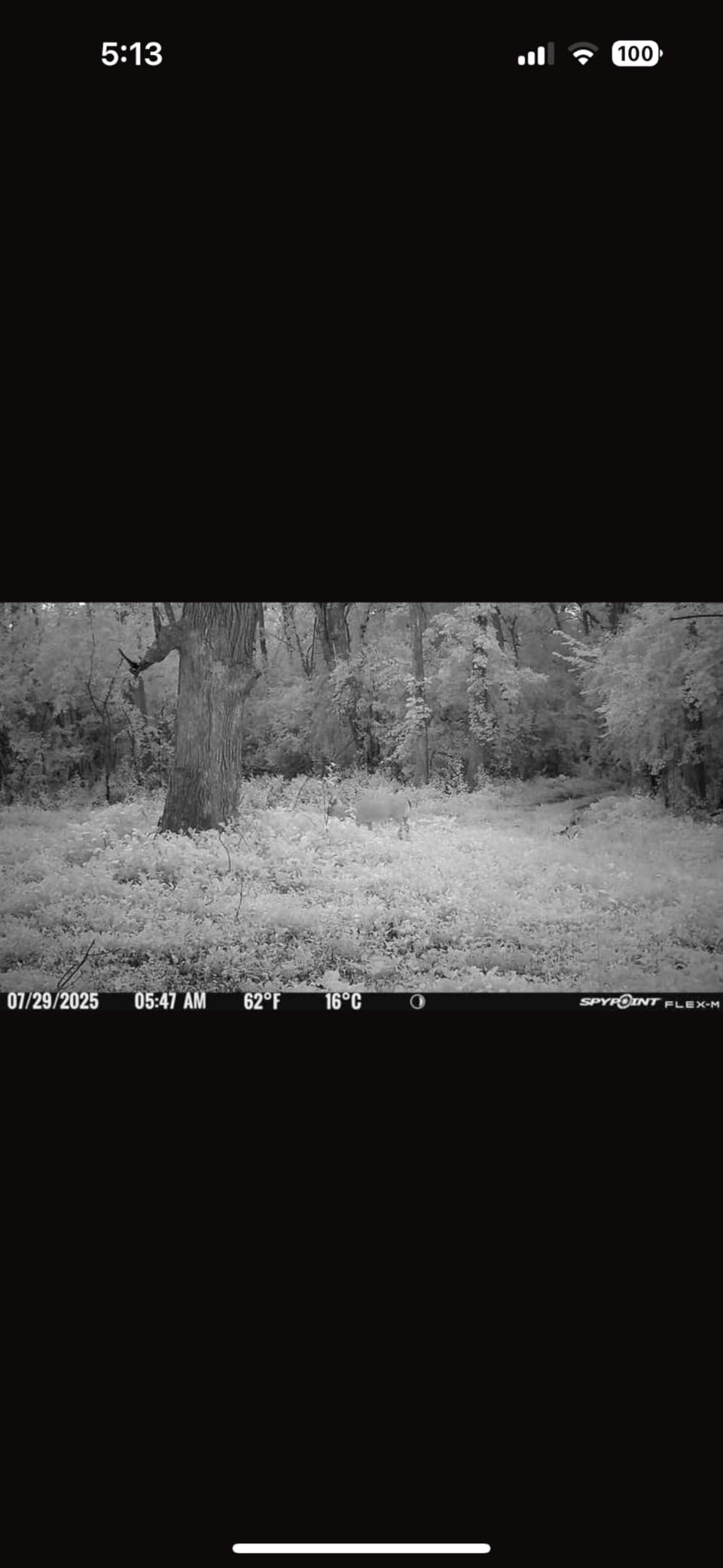
Capture modes include photo, video, time-lapse and a time-lapse-plus mode, and a Constant Capture setting records locally while sending at the same time, so nothing is lost when the network drops.
Is 100 free photos a month realistic for security
It is, with one change. The default check-in photo settings send images on a schedule, which exhausts the allowance in a few days before anyone walks near the camera. Switch off automatic check-ins and leave it on motion-only, and the allowance stretches across a whole month.
Paid tiers exist for owners who want more photos or unlimited transmission, so this is a starting point you can grow out of rather than a hard cap.
Where the image quality falls short
Video is 720p, the lowest in this roundup, and stills are 28MP. Owners describe image quality as average next to costlier cameras, and some report defective units that needed replacing.
If a clip may be handed to police or an insurer, this is not the camera to build that case on. For a deterrent and a general awareness feed, it does the job at a low running cost.
10. MagicEagle H1-New – best no-SIM cellular setup with solar
MagicEagle® Cellular Trail Camera 4G Wild Game Cameras 13,000 mAh Battery Solar Panel 2K Audible Video No-Glow IR Night Vision IP66 Waterproof for Wildlife Deer Monitoring Home Security (Army Green)
SignalSync no-SIM 4G cloud card with auto signal selection
13000mAh battery with solar panel included
0.3s trigger and 940nm no-glow IR to 90ft
Gravity sensor and A-GPS anti-theft fence
Pros
- Highest average rating in this roundup at 4.8 stars
- Clear daytime images and reliable no-glow night footage
- Solar charging works well and battery lasts between charges
- No physical SIM to install and carrier signal picked automatically
- AI species tagging is accurate
- Compact camouflage housing is unobtrusive in a yard
Cons
- Solar panel mounting hardware can be short of screws on the strap
- A data plan is required after the free allowance expires
- Manual must be read carefully or features get missed
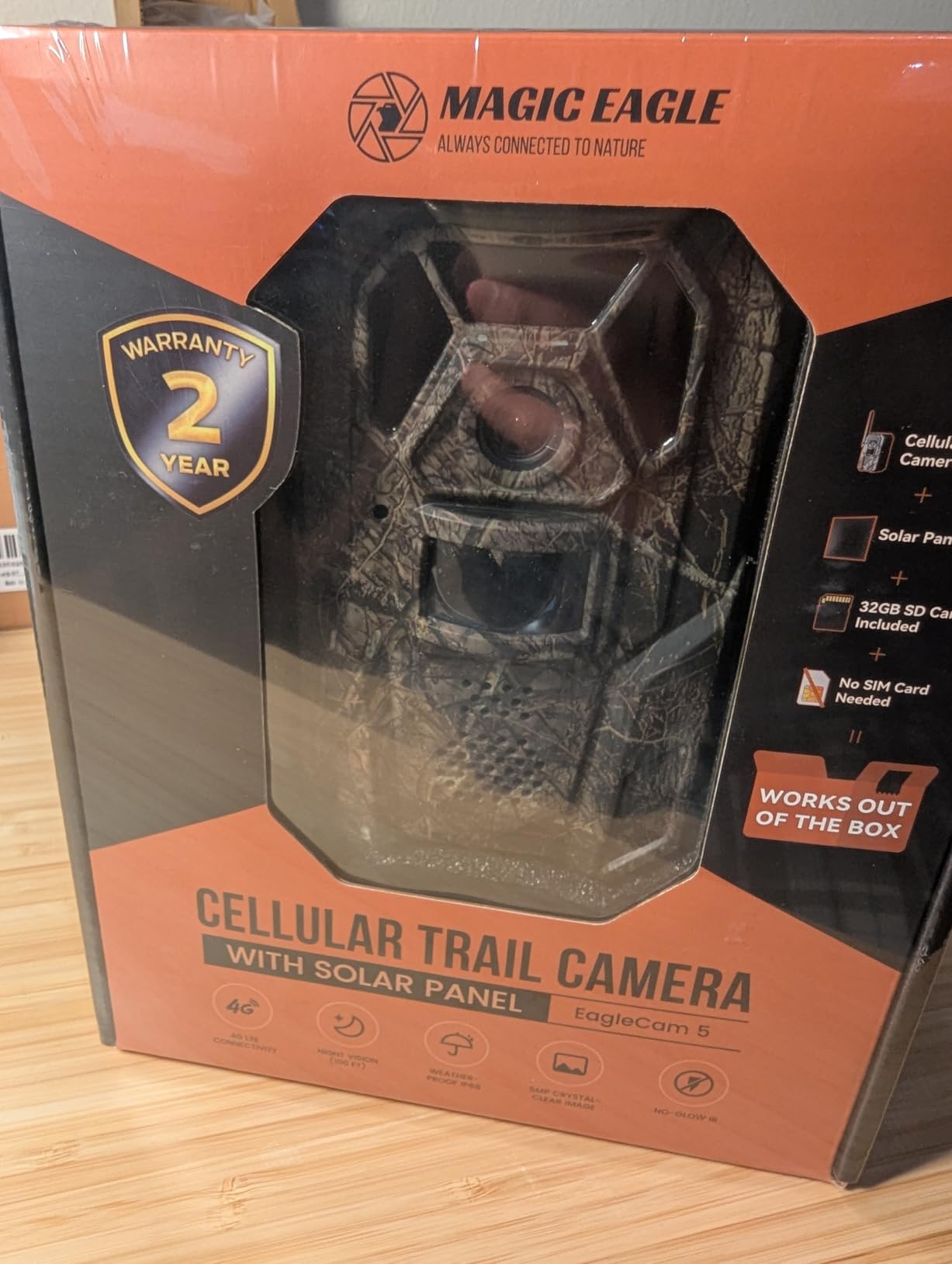
The MagicEagle solves the step most cellular buyers get stuck on. SignalSync cloud-card technology means there is no physical SIM to insert; the camera picks the strongest carrier signal automatically and sends straight to the app.
It pairs a genuinely no-glow 940nm infrared array with cellular live view without asking you to change the flash mode. Night range is stated at 90 feet and trigger is 0.3 seconds, which is unusual for a camera that streams video.
Power comes from a 13000mAh battery rated at up to three months of continuous standby, with a solar panel and a 32GB memory card in the box. The IP66 housing is rated from minus 20C to 50C, so it is a spring-to-autumn deployment in the coldest regions.
Anti-theft is handled two ways: a gravity sensor detects the camera being lifted, and A-GPS with an electronic fence tracks its location offline.
Why the no-SIM approach matters in practice
SIM installation is where a lot of first-time cellular camera setups go wrong, particularly on cameras mounted somewhere awkward. Automatic carrier selection means the camera uses whichever network is actually strongest at that location.
The 4.8 average rating across more than 260 ratings is the highest in this roundup.
Where to be careful before deploying
It is not a fully free-to-run camera. Thirty days of free data is included, then 1GB monthly plans apply, so budget that into the running cost rather than being surprised later.
Owners who are not technically confident report straightforward setup, but only after reading the manual carefully. The solar panel mount can also be short of screws when paired with the supplied strap, so bring your own fixings.
Trail Camera vs WiFi Security Camera: Which One Actually Fits
A trail camera wins when there is no power and no signal. It runs for weeks on batteries, survives rain and snow in an IP66 or IP68 housing, and records invisibly. That combination is why trail cameras work for security at all.
A WiFi security camera wins at everything else. Continuous 24/7 recording, two-way audio, motion zones that do not fire on shadows, and a live feed you can open anywhere without a cellular plan. If you have a socket and a router within range, this is the better tool.
The users debating this on the rugerforum make the same point in one line, that most people are better off with a couple of WiFi security cameras than with a cellular trail camera. If you have mains power at the outbuilding, listen to them. Our picks for cameras with no subscription fee and no wiring at all are in the security cameras without subscription guide.
There is a middle option worth knowing. Local WiFi trail cameras transfer to a phone over a short wireless connection when you are standing next to the camera, giving image quality closer to a trail camera without a monthly fee.
Decide by power first. No mains power means a trail camera, and the question of live alerts versus card retrieval then decides which of the ten above you buy.
How to Choose a Trail Camera for Security in 2026
Connectivity is the decision that changes the running cost more than anything else. Three options exist, and they are not equally good for everyone.
Cellular (4G LTE) gives you alerts and live view anywhere, at the cost of a monthly data plan per camera, usually in the region of five to eight dollars a month. Over three years that is roughly 180 to 290 dollars per camera, which for many properties exceeds the camera’s own cost. Check coverage at your exact location before buying.
Local WiFi or Bluetooth transfer images to your phone when you stand next to the camera. No subscription, no network dependency, no remote access.
SD card only is the cheapest and most reliable option per camera. Nothing can fail remotely because nothing is remote.
Next, the flash type. No-glow uses black infrared that produces no visible red emitter, so an intruder cannot spot the camera, at the cost of shorter night reach. Low-glow adds a faint red emitter and reaches further. White flash reaches furthest and gives the best colour night images, but is obvious to anyone looking. Our picks for spotlight coverage outdoors are covered in the outdoor spotlight camera guide.
Trigger speed is the third filter. Under 0.3 seconds catches a person walking, which is the realistic threat model. Detection range matters separately from night range, and buyers routinely confuse the two: detection is how far the sensor notices movement, night range is how far the infrared reaches.
Power and weatherproofing complete the checklist. Cold weather drains batteries faster than any datasheet suggests, so lithium cells and a solar panel are the dependable answer for any winter deployment. IP65 handles rain, IP66 and above handles standing water and snow. For anything a person could reach, use a steel security cable or a lockable housing, since no camera here is theft-proof on its own. If you need to monitor a large site rather than a property, the approach differs again, as covered in our security camera guide for larger facilities.
Finally, storage. A 64GB card is the practical minimum for video, since photo mode fills far more slowly, and the card must be formatted to FAT32 before the camera will accept it. A full card stops recording silently.
Frequently Asked Questions
Can trail cameras be used for home security?
Yes. A trail camera works for home security when there is no mains power or WiFi at the location. Mount it 8 to 12 feet high, use no-glow infrared so it cannot be spotted at night, choose a trigger speed under 0.3 seconds and a detection range of 80 feet or more. It will not replace a conventional camera for 24/7 recording or two-way audio.
Do you have to pay a monthly fee for a cellular trail camera?
Usually yes, unless the camera transfers over local WiFi or Bluetooth instead. Cellular plans typically run around five to eight dollars per camera per month, which works out at 60 to 96 dollars per year. Several cameras here, including the WOSPORTS G600-4K, the Meidase P70 and the GardePro E5S, have no subscription at all because they store to a memory card.
Can you watch a trail camera live on my phone?
Only cellular and local WiFi models stream live. A 4G LTE camera sends video over the mobile network with no WiFi needed, while local WiFi models stream over a short range near the camera. SD card models cannot stream at all, because you have to retrieve the card physically. Expect some latency on cellular streams and check the resolution, since live views are often lower than saved footage.
What are some good trail cameras for surveillance?
The WOSPORTS G600-4K is the strongest all-round choice, with a 0.2 second trigger, no-glow infrared and no subscription. The Moultrie Edge 2 is the budget cellular option with 100 foot detection, the TACTACAM Reveal Ultra adds GPS theft alerts, and the Meidase P70 is the best value model with a 0.1 second trigger. For weak rural signal, the Oculview holds a connection where phones struggle.
What is the best no glow trail camera?
Among the cameras reviewed here, the WOSPORTS G600-4K with 32 no-glow infrared LEDs and the Meidase P70 with 36 are the strongest, and the TACTACAM Reveal Ultra lets you switch between no-glow and low-glow. Be aware that no-glow night reach is routinely shorter than advertised, which owners on enthusiast forums report repeatedly. White flash gives longer range and colour images but makes the camera obvious.
What is the difference between no glow and low glow trail cameras?
No-glow uses black infrared at 940nm and shows no visible red emitter, which keeps the camera invisible but shortens the useful night range. Low-glow adds faint red LEDs that extend that range and show a dim glow from close up. White flash reaches furthest and gives colour night images but is easily spotted. Owners also report that no-glow models drain batteries faster and can have weaker detection circuitry.
What are some common SD card problems with trail cameras?
The most common problems are a card that is too small or too slow for video, a card not formatted to FAT32, counterfeit or failing cards, a card locked in write-protect mode, and a full card that silently stops recording. Loop recording can also overwrite the incident you wanted. Use a 64GB card or larger for video, format it in the camera rather than on a computer, and check remaining capacity on every visit.
Best Trail Cameras for Security: Final Verdict
The WOSPORTS G600-4K is our pick for the best trail cameras for security overall, because it combines a 0.2-second trigger, 80 feet of no-glow infrared and no subscription with the largest owner base in this roundup. If you need alerts rather than card retrieval, the Moultrie Edge 2 is the affordable way into cellular, and the TACTACAM Reveal Ultra is the complete answer when GPS theft alerts and switchable flash matter.
Whichever you pick, decide on power and connectivity before anything else, mount high, run a steel cable through the housing, and check the card capacity before you walk away.