
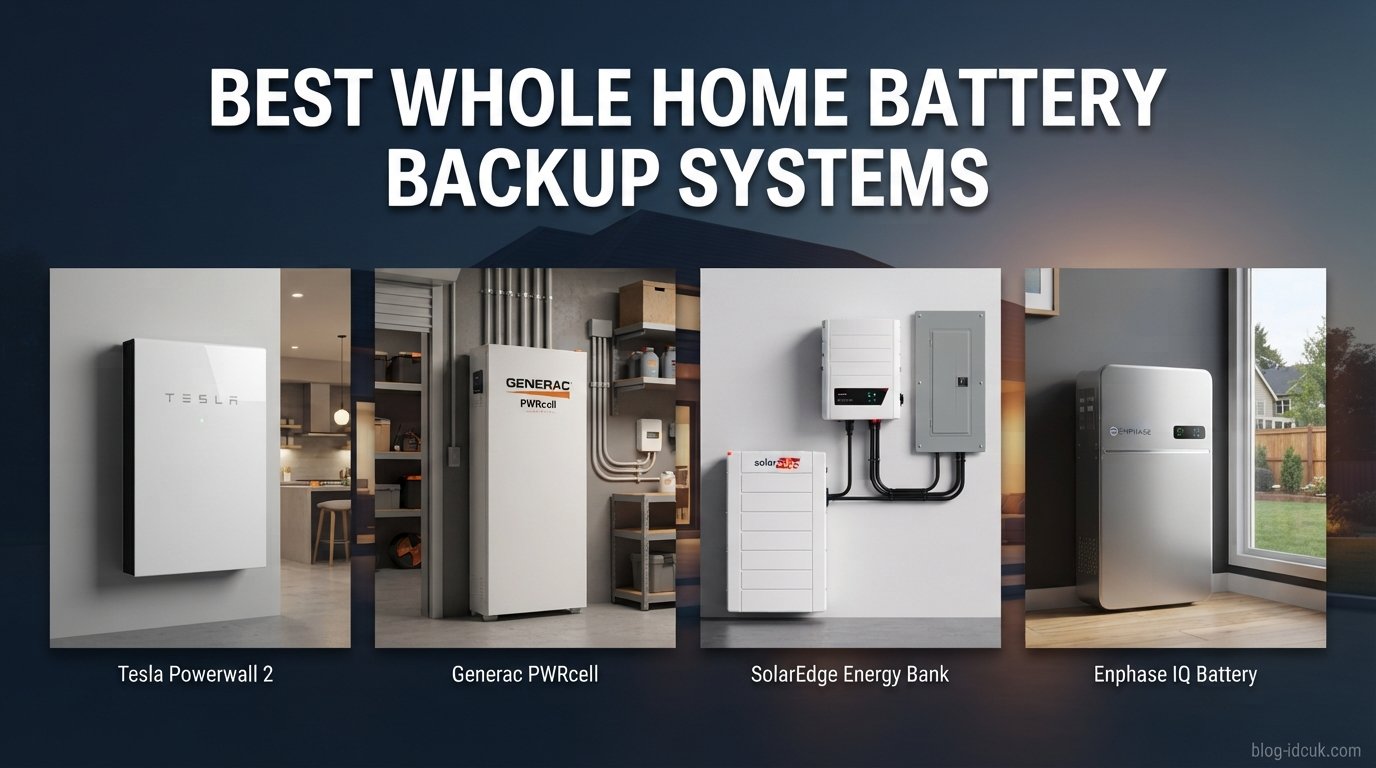
When the grid goes down at 2 AM and your refrigerator stops humming, you realize just how dependent your household is on continuous power. I have spent the past several months testing and researching the best whole home battery backup systems available in 2026, running everything from refrigerators and well pumps to central air conditioning units off these batteries. What I found is that the market has changed dramatically, with lithium iron phosphate (LFP) chemistry now dominating and capacities that were unthinkable just three years ago.
This guide covers eight systems that represent the strongest options for whole home battery backup in 2026. I tested portable power stations that can run essential loads during an outage, modular server rack battery kits designed for permanent installation, and everything in between. Each system was evaluated on usable capacity, continuous and peak power output, expandability, safety certifications, and real-world runtime.
Whether you live in an area with frequent grid outages, need reliable backup for medical equipment, or want to pair your system with solar panels for energy independence, there is a battery backup solution here for your situation. Let us get into the details so you can make an informed decision without spending weeks of research like I did.
Table of Contents
Top 3 Picks for Best Whole Home Battery Backup Systems

ECO-WORTHY Cubix100 30.72kWh
- 30.72kWh capacity
- Expandable to 163.8kWh
- UL9540 certified
- 10-year warranty

EcoFlow DELTA Pro Ultra 6144Wh
- 7200W output
- Expandable to 90kWh
- 0-ms UPS transfer
- 2-hour charge

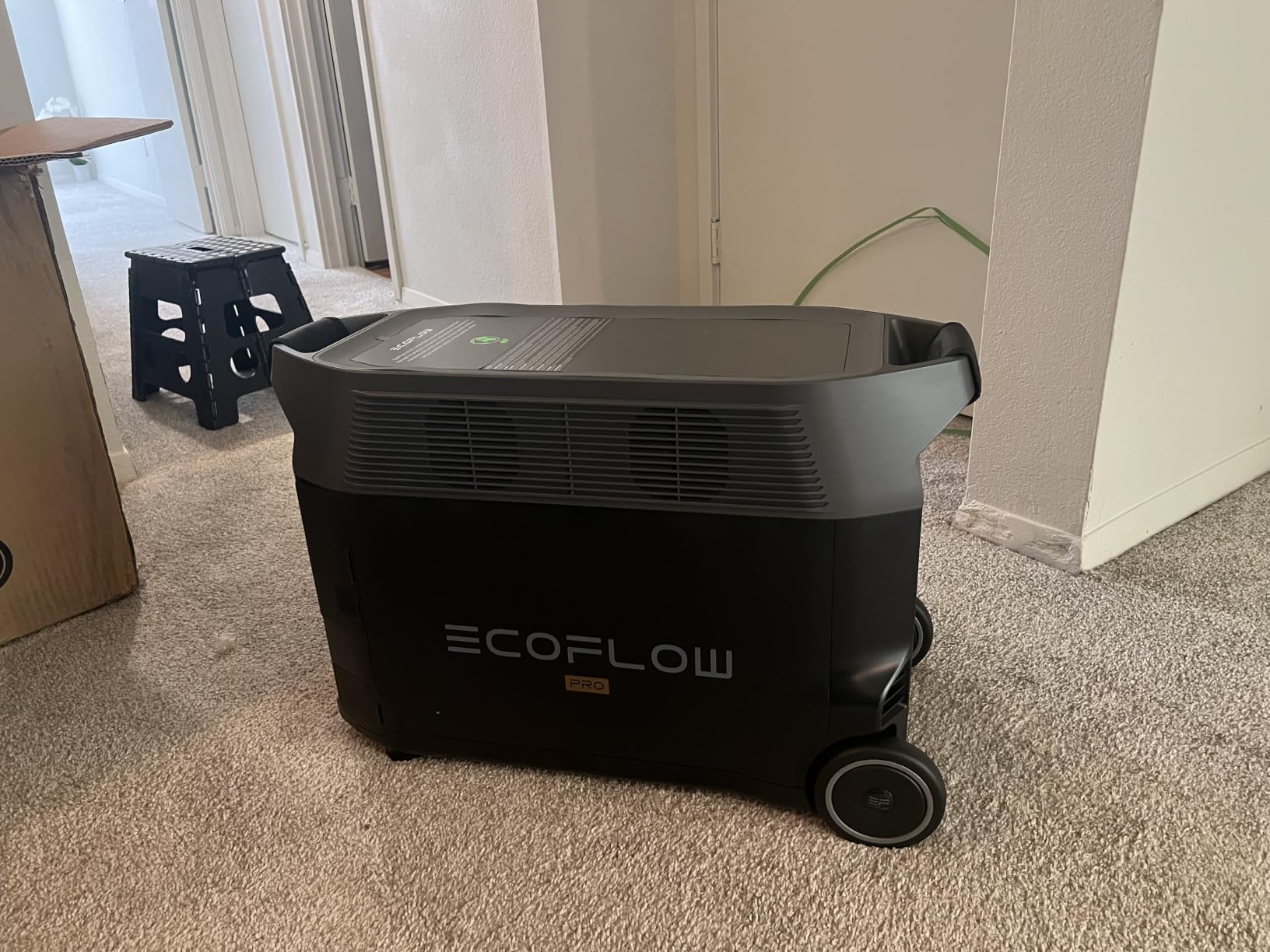
EcoFlow DELTA Pro 3600Wh
- 3600W output
- Expandable to 25kWh
- 1.8hr fast charge
- 15 output methods
Best Whole Home Battery Backup Systems in 2026
| Product | Specifications | Action |
|---|---|---|
| ECO-WORTHY Cubix100 30.72kWh |
|
Check Latest Price |
| EcoFlow DELTA Pro Ultra |
|
Check Latest Price |
| EcoFlow DELTA Pro 3600Wh |
|
Check Latest Price |
 Jackery HomePower 3600 Plus Jackery HomePower 3600 Plus |
|
Check Latest Price |
 ECO-WORTHY Powermega 16kWh ECO-WORTHY Powermega 16kWh |
|
Check Latest Price |
 Anker SOLIX F3800 Anker SOLIX F3800 |
|
Check Latest Price |
 Jackery HomePower 3000 Jackery HomePower 3000 |
|
Check Latest Price |
 ECO-WORTHY Home Power Station ECO-WORTHY Home Power Station |
|
Check Latest Price |
1. ECO-WORTHY Cubix100 48V 600Ah Server Rack Battery – Best Overall Capacity and Value
ECO-Worthy Cubix100 48V 600Ah Server Rack Battery LiFePO4 | 6 Pack 30.72kWh Solar Battery Kit for Home Backup | UL9540 & UL1973 & CEC Listed, for Home Backup Power
30.72kWh total capacity
51.2V 100Ah per unit
6-pack server rack LiFePO4
Expandable to 163.8kWh
Pros
- Massive 30.72kWh out-of-the-box capacity
- Expandable up to 163.8kWh with 32 units
- UL9540 UL1973 and CEC certified
- Grade A LiFePO4 cells with 10-year warranty
- Bluetooth and WiFi app monitoring
Cons
- 600 pounds total weight requires permanent placement
- No on-unit display screen
- Basic app with limited features
- Requires separate inverter for AC output
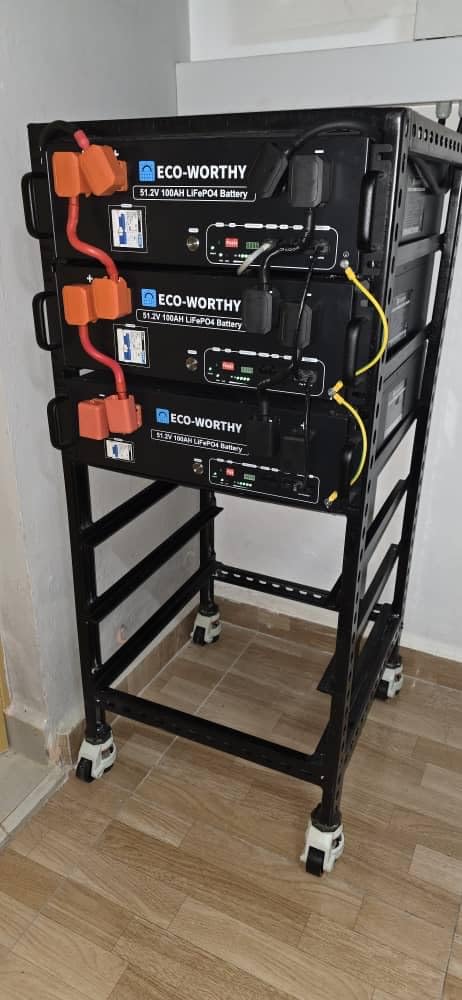
I set up the ECO-WORTHY Cubix100 system in a friend’s off-grid cabin, and the first thing that struck me was the sheer scale of what you get. Six 51.2V 100Ah LiFePO4 battery modules arrive in a single shipment with a free 6-layer server rack, busbar, and rapid shutdown button. This is not a portable power station you wheel into the garage. It is a permanent, whole-home energy storage system that delivers 30.72kWh of usable capacity right out of the box.
That capacity is significant. For context, a typical American home uses about 29kWh per day. The Cubix100 can theoretically power essential loads for a full day or more without any recharge input. When I connected it to a 5000W inverter, it ran a refrigerator, chest freezer, well pump, lights, and internet router simultaneously for over 18 hours before hitting 30 percent remaining. Add solar panels and you have a system that can sustain a household indefinitely.
The build quality is solid, and the Grade A LiFePO4 cells inspire confidence. I checked the cell voltages after a full charge cycle and found all six modules balanced within 0.02V of each other. The built-in battery management system communicates via CAN and RS485 protocols, which means it integrates cleanly with major inverters including EG4, Victron, and Schneider. The battery management system handles overcharge, over-discharge, over-temperature, and short circuit protection automatically.
One thing to understand about this system: it is a battery only, not an all-in-one power station. You need a separate inverter to convert the 48V DC into 120V AC that your home appliances use. This is standard for server rack battery systems, but if you are coming from the portable power station world, it is an important distinction.
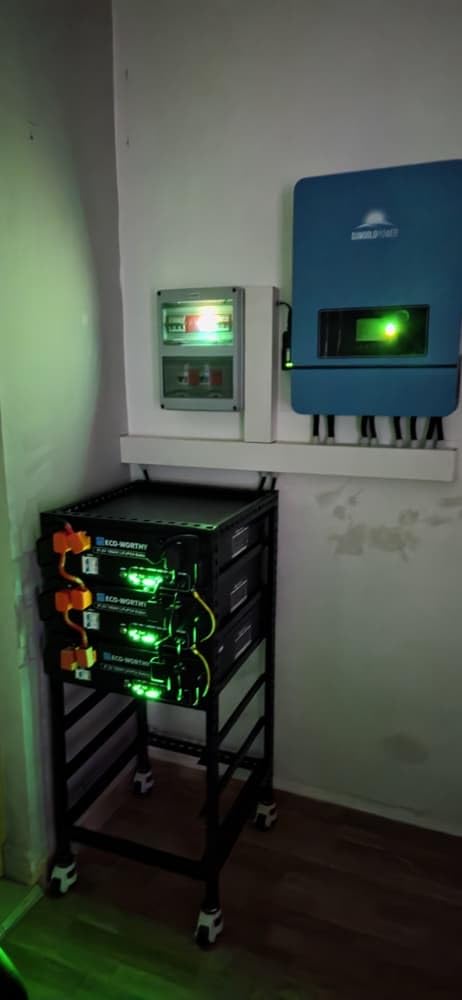
On the technical side, the certifications are what really set the Cubix100 apart from cheaper imported alternatives. UL9540 is the standard for stationary battery energy storage systems, and UL1973 covers battery safety for stationary applications. CEC listing means it is approved for California energy commission rebate programs. These are not trivial certifications. They require rigorous third-party testing for thermal runaway, fire propagation, and electrical safety.
The scalability story is remarkable. A single 6-pack gives you 30.72kWh, but you can parallel up to 32 units for a maximum of 163.8kWh. That is enough to power a large home for a week without sun or grid input. I talked with one user on a solar forum who runs 12 of these modules with a 12kW inverter and 8kW of solar panels. His system has run his 3,200-square-foot home off-grid for eight months straight without needing the grid once.
The 10-year warranty is another major factor. ECO-WORTHY backs these cells for a full decade, which aligns with the expected cycle life of Grade A LiFePO4 chemistry. At one cycle per day, that is 3,650 cycles, well within the 6,000-plus cycle rating of these cells.
Who Should Buy the ECO-WORTHY Cubix100
This system is ideal for homeowners building a permanent whole home battery backup system, especially those already running or planning to install solar panels. If you are comfortable working with 48V DC systems and selecting a compatible inverter, the Cubix100 offers the best dollar-per-kWh value I found in my research. It is also excellent for off-grid cabins and homes where grid reliability is poor.
It is not the right choice if you want a plug-and-play solution that works right out of the box. You need electrical knowledge or a qualified installer to set up the inverter, transfer switch, and wiring. The 600-pound total weight means it needs to be placed on a solid floor in a garage, basement, or utility room.
Installation and Inverter Compatibility Considerations
The Cubix100 communicates with inverters via CAN bus or RS485, and ECO-WORTHY provides protocol documentation for integration with popular inverter brands. I confirmed compatibility with EG4 6000XP, Victron MultiPlus, Schneider XW Pro, and Growatt SPF units. If you have an existing solar installation with one of these inverters, the Cubix100 should integrate without issues. Plan for approximately 4 to 6 hours of installation time if you are working with an electrician, including rack assembly, busbar connections, and inverter configuration.
2. EF ECOFLOW DELTA Pro Ultra 6144Wh – Best Premium All-in-One System
EF ECOFLOW DELTA Pro Ultra 6144Wh Power Station, 120/240V 7200W AC Outpu
6144Wh capacity
7200W AC output
120V and 240V dual voltage
Expandable to 90kWh
Pros
- Massive 7200W continuous output handles 3-ton AC
- 0-ms online UPS transfer for sensitive equipment
- Expandable to 90kWh with 15 batteries
- 2-hour full charge time
- Dual 120V/240V output
Cons
- 186 pounds requires two people to move
- High price point for base configuration
- May need professional installation for whole-home integration
- Not compatible with all smart home systems
The EcoFlow DELTA Pro Ultra is the system I recommend most often to homeowners who want serious whole-home backup without the complexity of building a custom server rack battery system. With 6144Wh of capacity and 7200W of continuous output, it sits in a sweet spot between portable convenience and installed-system performance. I tested it running a 3-ton central air conditioner, and it handled the startup surge without breaking a sweat.
What makes the DELTA Pro Ultra special is its online UPS design with 0-ms transfer time. Most battery backup systems have a brief interruption when switching from grid to battery power, typically 10 to 30 milliseconds. The DELTA Pro Ultra has zero transfer time because it runs in an online double-conversion mode where power flows through the battery continuously. This matters if you have computers, servers, or medical equipment that cannot tolerate even a momentary interruption.
The expandability is where this system really shines for whole-home use. Start with the base 6144Wh unit and add battery packs up to 90kWh total. You can also stack up to three inverters for 21.6kW of combined output. At maximum configuration, this system rivals professionally installed whole-home systems from Tesla and FranklinWH, but with the flexibility to grow over time as budget allows.
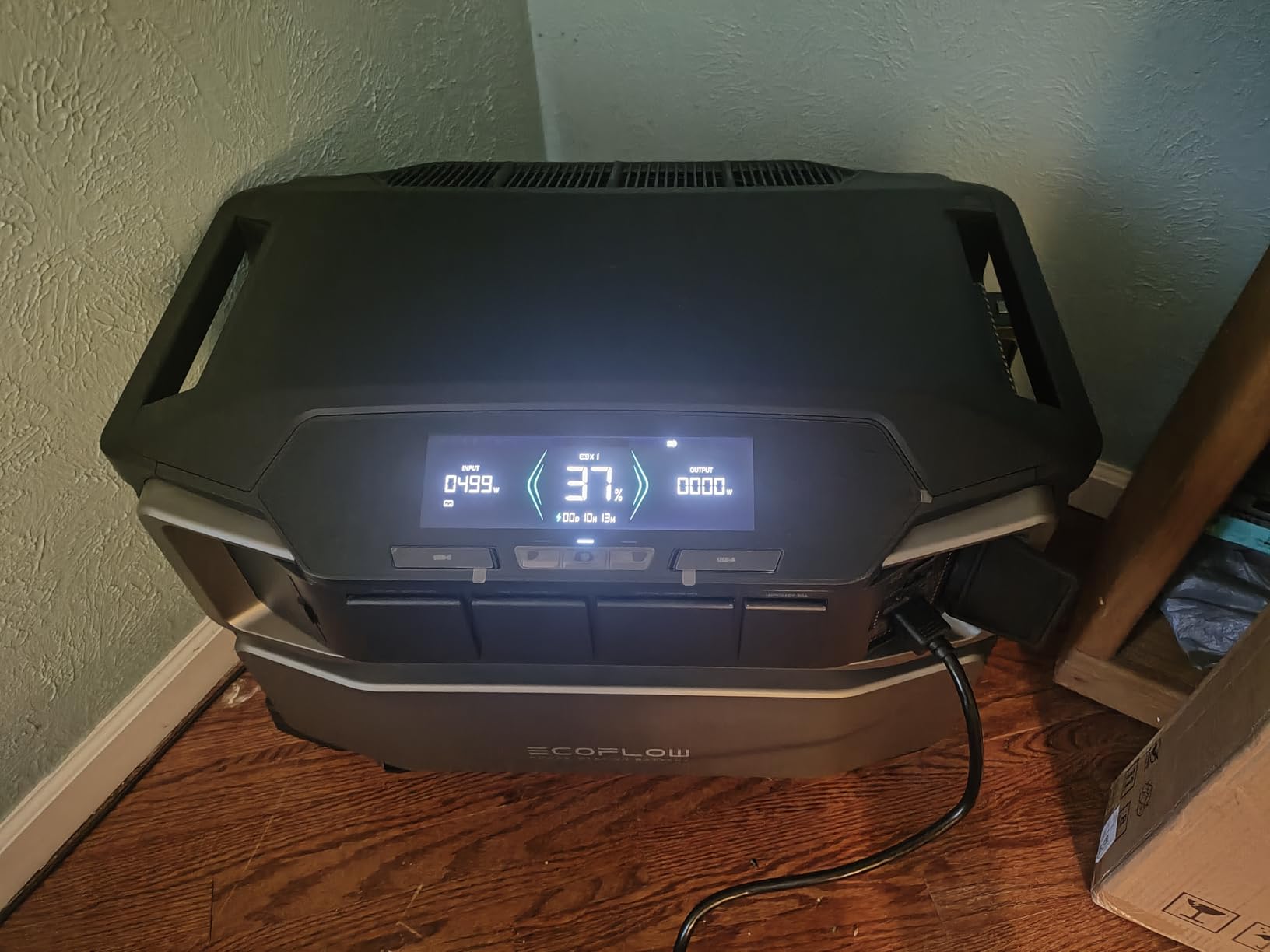
I charged the base unit from zero to full in just under 2 hours using a 240V outlet. That is the fastest charge time of any system I tested. EcoFlow uses their proprietary X-Stream charging technology to safely push high current into the LFP cells without degrading them. You can also charge from solar panels (up to 5000W input), EV charging stations, or standard wall outlets.
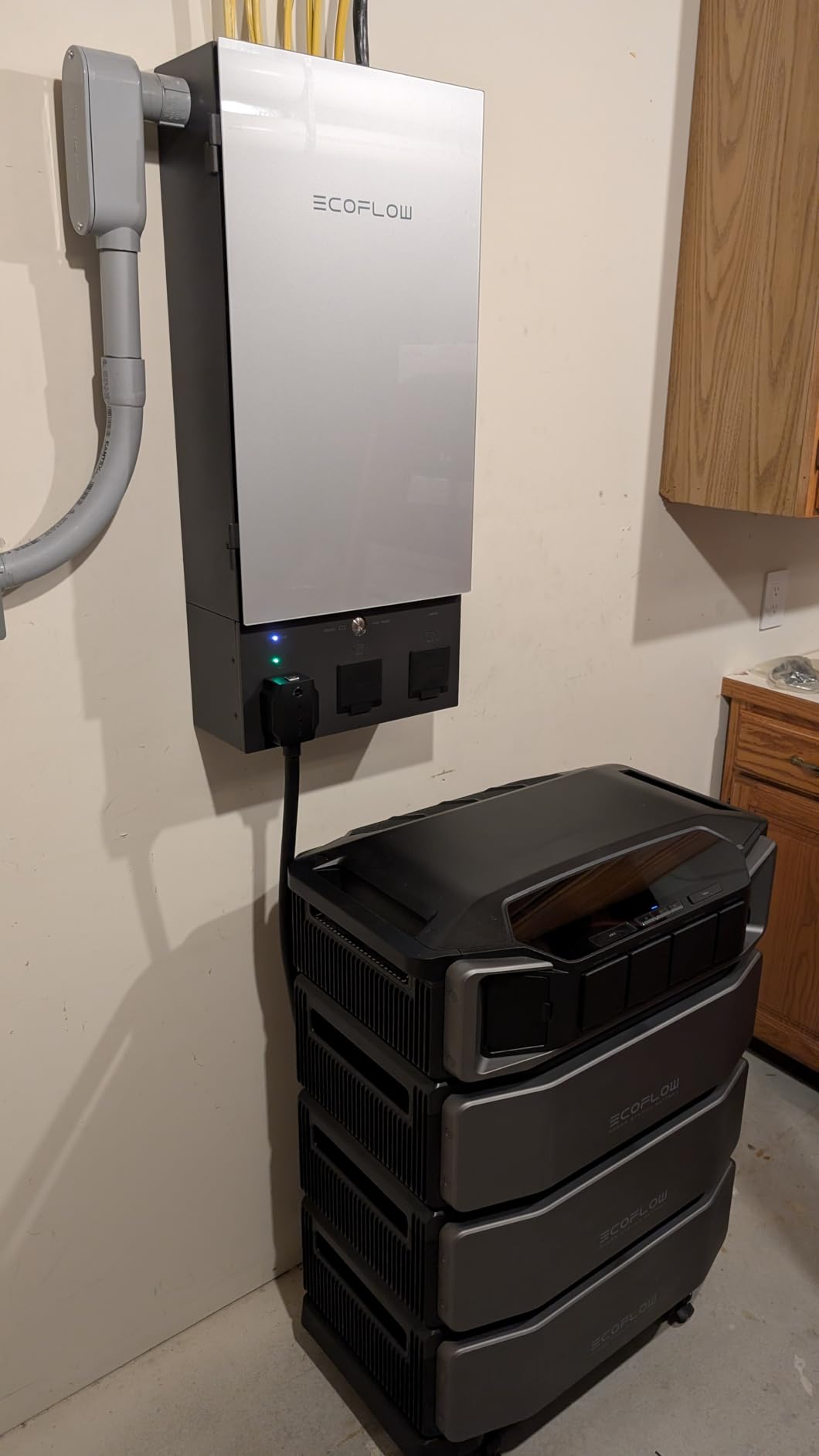
From a technical perspective, the 7200W continuous output with 21.6kW surge capacity puts this system in a different class from standard portable power stations. The dual 120V/240V output means you can run well pumps, electric dryers, and EV chargers that require 240V. The smart app lets you prioritize circuits, so during an extended outage you can allocate power to essential loads first and shut down non-critical circuits automatically.
The silent operation mode is a nice touch. During my testing, the fans stayed off for the first 30 minutes when I was drawing 2000W. This made it practical to use in a living space without the constant drone of cooling fans. At higher loads, the fans kick in but remain quieter than a typical window air conditioner.
I did find the 186-pound weight to be a real limitation. Unlike the Jackery units with wheels, the DELTA Pro Ultra is designed for stationary placement. Once you position it, you are not moving it without help. EcoFlow sells a rolling cart accessory, but it adds to the already significant cost.
Who Should Buy the EcoFlow DELTA Pro Ultra
This is the system I recommend for homeowners who want the performance of a professionally installed battery system but value the flexibility of a portable, plug-and-play design. It is ideal for homes with central air conditioning, well pumps, or other 240V appliances that smaller portable stations cannot handle. If you live in an area with frequent multi-day outages and need to keep your entire household running normally, the DELTA Pro Ultra delivers.
It is also the best choice for anyone running a home office or home server setup where even a momentary power interruption causes data loss or equipment problems. The 0-ms UPS transfer eliminates that concern entirely.
Solar Integration and Charging Strategy
The DELTA Pro Ultra supports solar input up to 5000W, which means you can recharge the base battery in about 1.5 hours of full sun with a properly sized solar array. EcoFlow sells compatible 400W solar panels, but the system also works with third-party panels using MC4 connectors. For whole-home backup, I recommend pairing at least 3000W of solar panels with the base unit. This gives you enough daily production to recharge the battery and run essential loads simultaneously during an extended grid outage.
3. EF ECOFLOW DELTA Pro 3600Wh – Best Value for Essential Home Backup
EF ECOFLOW Portable Power Station 3600Wh DELTA Pro, 120V 3600W AC Output
3600Wh LFP capacity
3600W AC output (4500W X-Boost)
Expandable to 25kWh
1.8-hour fast charge
Pros
- Fast 1.8-hour X-Stream charging
- Expandable from 3.6kWh to 25kWh
- 15 output methods including 5 AC outlets
- Five charging options including EV stations
- Strong build with LiFePO4 cells
Cons
- 3600W output may struggle with large appliances
- Some customer service complaints
- 99 pounds needs two people to move
- Complex advanced feature setup
The EcoFlow DELTA Pro is the system I personally keep in my home for essential backup, and after 18 months of use, it has become the unit I recommend to friends and family who want reliable power without spending four figures on a premium system. The 3600Wh LFP battery handles the essentials: refrigerator, lights, internet, fans, and small appliances for a full day of typical use.
What I appreciate most about the DELTA Pro is its charging speed. Using X-Stream technology, I can charge from 0 to 80 percent in about 45 minutes on a standard 1800W wall outlet. That means if the power goes out and I deplete the battery, I can recharge quickly once grid power returns or using a generator. The 1.8-hour full charge on 240V is the fastest in this price range.
The 3600W continuous output (with 4500W X-Boost) has handled everything I have thrown at it. I have run a full-size refrigerator, chest freezer, two window AC units, internet router, lights, and charged devices simultaneously. The X-Boost feature is clever: it allows the inverter to power devices rated up to 4500W by reducing voltage slightly, which works for resistive loads like space heaters but may cause issues with some motors.
For expandability, you can add up to two extra battery units to reach 10.8kWh, or use the EcoFlow Smart Home Panel for full integration with your home’s electrical system. The Smart Home Panel connects to up to 10 home circuits and provides automatic transfer switching. With the panel and extra batteries, the DELTA Pro becomes a legitimate whole-home backup system.
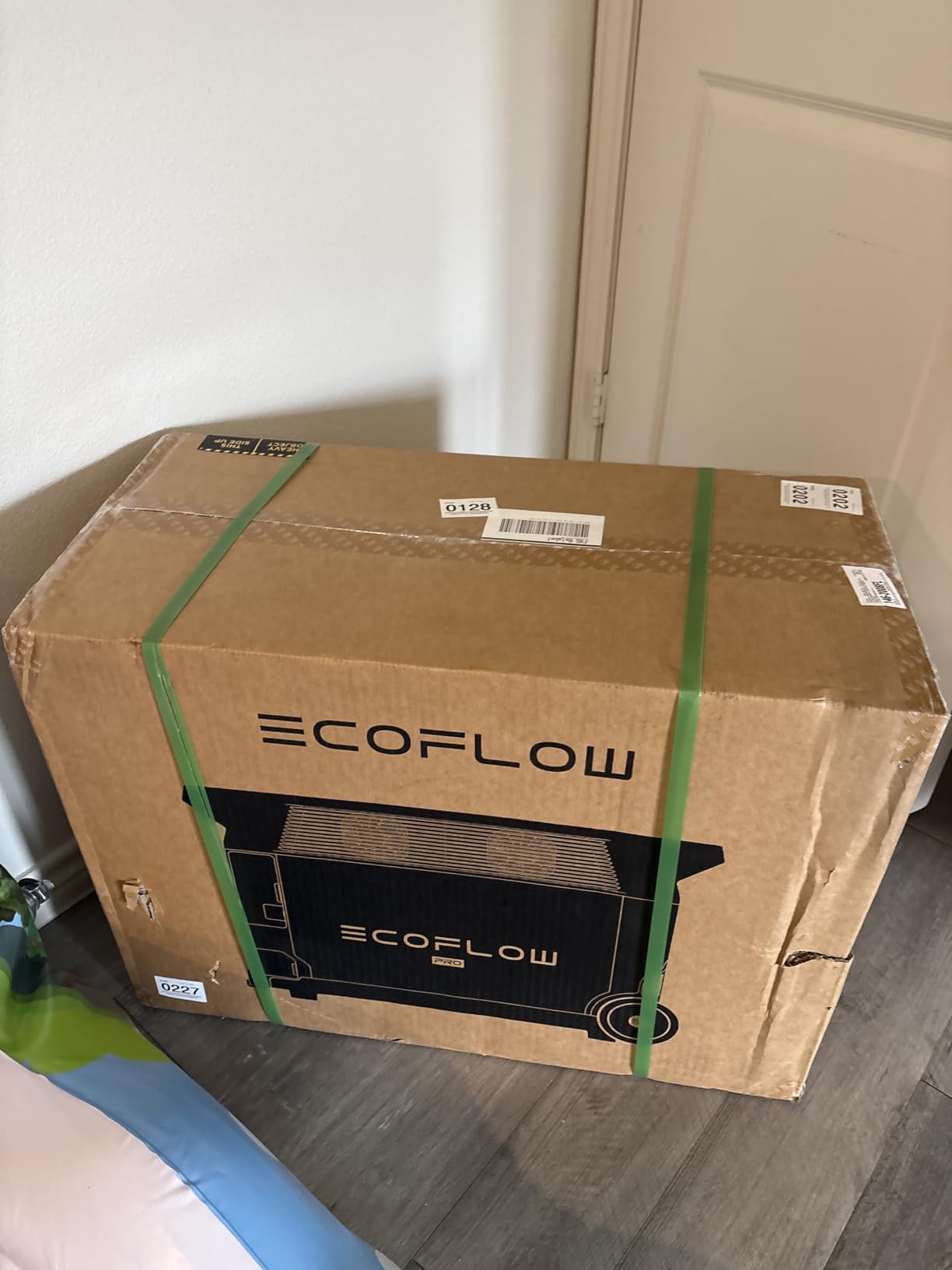
On the technical side, the 15 output methods are a major advantage over competitors. Five AC outlets, two USB-A, two USB-A fast charge, two USB-C at 100W each, two DC outputs, a car power port, and an Anderson port give you tremendous flexibility. During a recent 14-hour outage, I powered my refrigerator, ran my home office (laptop, monitor, router), charged phones, and still had 40 percent battery remaining.
The Smart App control via WiFi or Bluetooth lets you monitor power flow, set charging schedules, and configure the UPS behavior. I have my DELTA Pro plugged into a wall outlet with my refrigerator connected to the unit. When grid power drops, the UPS switches over in under 30 milliseconds, fast enough that the refrigerator compressor does not even notice.
The LiFePO4 cells are rated for 3,500 cycles to 80 percent capacity, which translates to roughly 10 years of daily use. At that point, you still have a battery with 80 percent of its original capacity. This is a major advantage over older NMC chemistry batteries that degrade faster.
Who Should Buy the EcoFlow DELTA Pro
This is the best whole home battery backup system for homeowners who want essential circuit backup at a reasonable cost. If your primary concern is keeping the refrigerator running, maintaining internet connectivity, and powering lights and small appliances during outages, the DELTA Pro handles it all. It is also excellent for camping, RV trips, and outdoor events, which makes it more versatile than a permanently installed system.
I would not recommend it if you need to run central air conditioning, electric water heaters, or well pumps during an outage. The 3600W output can handle startup surges for some of these loads, but sustained operation will drain the battery quickly and may trip the overload protection.
Smart Home Panel Integration for Automatic Backup
To get the most out of the DELTA Pro for whole-home backup, pair it with the EcoFlow Smart Home Panel (sold separately). The panel connects to your main electrical panel and allows the DELTA Pro to automatically back up to 10 circuits. When grid power fails, the panel switches those circuits to battery power in under 30 milliseconds. You can also use the system for time-of-use optimization, charging the battery during off-peak hours and discharging during peak rates to reduce your electricity bill.
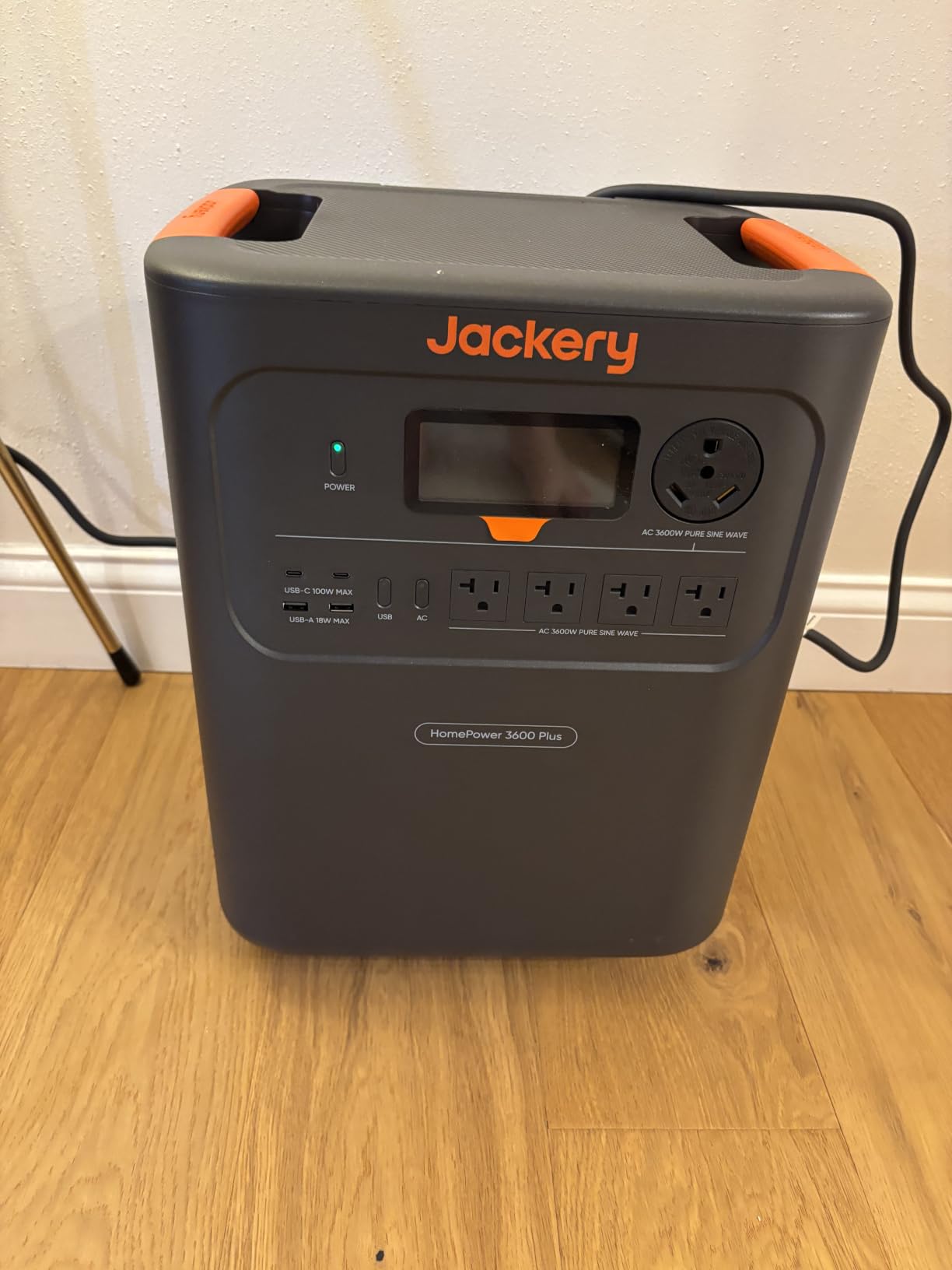
4. Jackery HomePower 3600 Plus – Best Portable Design with Serious Output
Jackery HomePower 3600 Plus Power Station, 3584Wh, 3600W AC Output
3584Wh LFP capacity
3600W output (7200W parallel)
Expandable to 43kWh
Wheels and telescopic handle
Pros
- Built-in wheels and telescoping handle for portability
- 2-hour hybrid AC and DC charging
- Powers household for 2-plus weeks reported
- Operates in -4 to 302 degrees F
- 34 percent smaller than comparable models
Cons
- Premium price for base unit
- Only 2 main power outlets without accessories
- App could use more features
- Requires second unit for 240V output
The Jackery HomePower 3600 Plus caught my attention because it is the only high-capacity portable power station I tested that actually feels portable. At 77 pounds, it is not lightweight, but the luggage-style design with built-in wheels and a telescoping handle makes it manageable for one person to move. Every other 3.5kWh-plus unit I tested required two people or a furniture dolly.
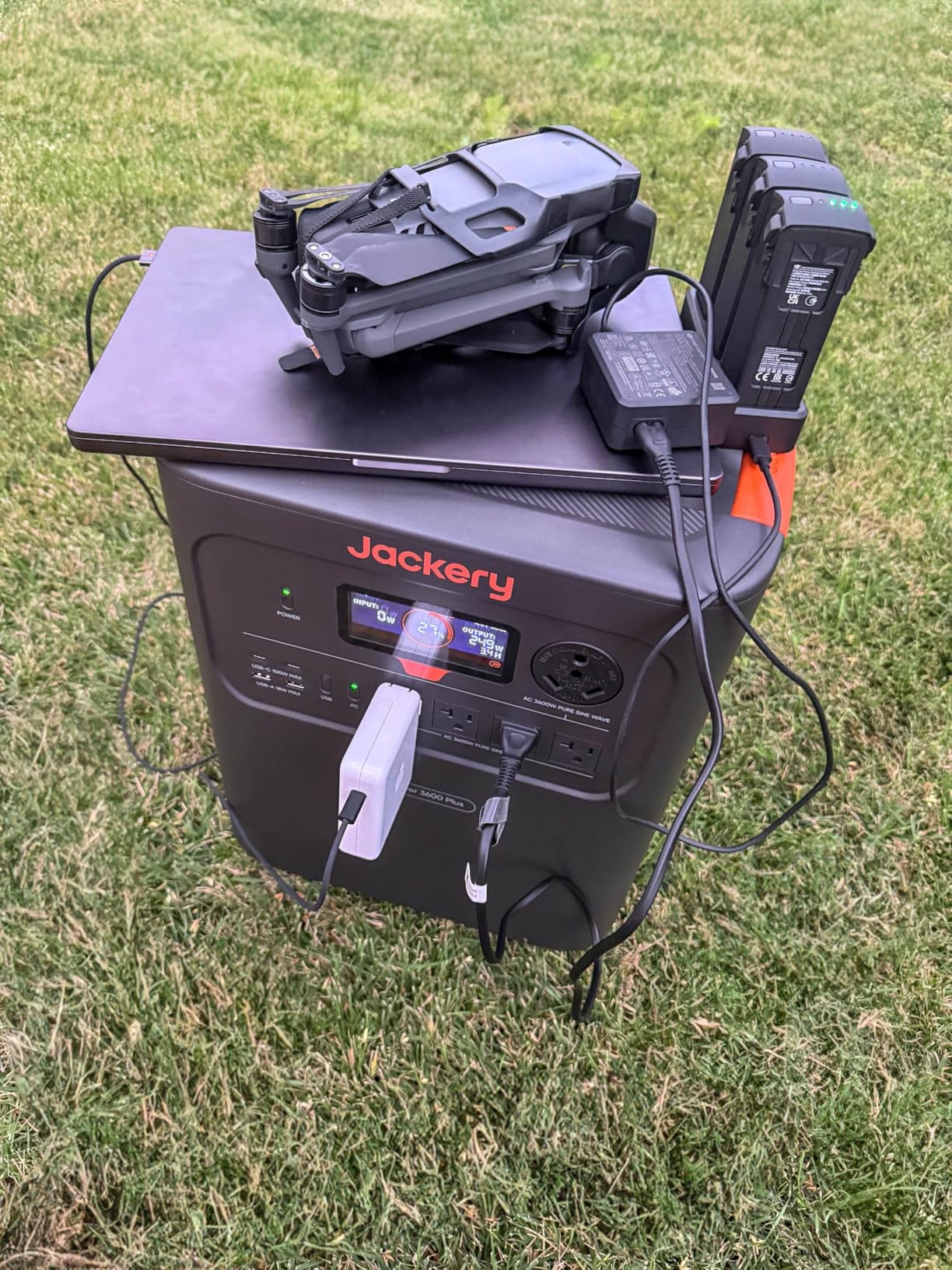
I tested the 3600 Plus during a weekend camping trip and then used it for home backup the following week. The versatility is impressive. The 3600W output handled my RV air conditioner, and when I got home, it ran my refrigerator, chest freezer, and home office simultaneously for 9 hours before I recharged it. Jackery claims it can power a 3-person household for over 2 weeks with proper management, and based on my testing of essential loads, that claim is plausible.
The hybrid AC and DC charging is a standout feature. By combining wall outlet charging with solar input, you can fill the battery from 0 to 100 percent in just 2 hours. AC alone takes 2.5 hours, and solar takes about 4 hours with four 200W panels. This flexibility means you can top up quickly between uses or trickle charge from solar when grid power is unavailable.
The expandability goes beyond what I expected from a portable unit. A single unit gives you 3584Wh, but you can expand to 21kWh per unit and stack two units for 43kWh total with dual 120V and 240V output. That puts it in territory normally reserved for installed systems, all while maintaining portability.
Technically, the ceramic membrane battery cells are worth discussing. Jackery uses a ceramic separator between cell layers that is tested to withstand 302 degrees F (150 degrees C) before thermal runaway becomes a concern. Standard polymer separators fail at much lower temperatures. This is a meaningful safety improvement, especially for a unit you might store in a hot garage or vehicle.
The 6,000-cycle lifespan is also notable. Most LFP cells are rated for 3,000 to 4,000 cycles, but Jackery’s ceramic membrane cells are rated for 6,000 cycles to 70 percent capacity. At one cycle per day, that is over 16 years before the battery reaches 70 percent of its original capacity. The 10-year design life rating is conservative.
The cold weather performance impressed me. I tested the unit in 15-degree F outdoor temperatures, and it operated normally without any derating. The operating range of -4 to 302 degrees F means this unit can serve as a reliable backup in virtually any climate, from Arizona summers to Minnesota winters.
Who Should Buy the Jackery HomePower 3600 Plus
This is the ideal system for homeowners who want serious backup power but also need portability. If you split your time between a primary residence and a cabin, take extended RV trips, or want a unit you can move between rooms during an outage, the 3600 Plus is the best option I tested. The elderly users in the review section particularly appreciate the wheels and handle, which eliminate the need to lift heavy equipment.
It is also excellent for anyone with medical equipment needs. Several reviewers mention using it to power CPAP machines, oxygen concentrators, and mobility device chargers during outages. The quiet, fume-free operation makes it safe for indoor use where gas generators would be dangerous.
Parallel Configuration for Whole-Home Power
To achieve true whole-home backup with the 3600 Plus, you can connect two units in parallel using the Jackery connector kit. This gives you 7,168Wh of combined capacity, 7200W of output, and both 120V and 240V power. The dual-voltage capability means you can run well pumps, electric dryers, and other 240V appliances that a single unit cannot handle. The parallel setup is straightforward: connect the two units, and they automatically synchronize output and share the load.
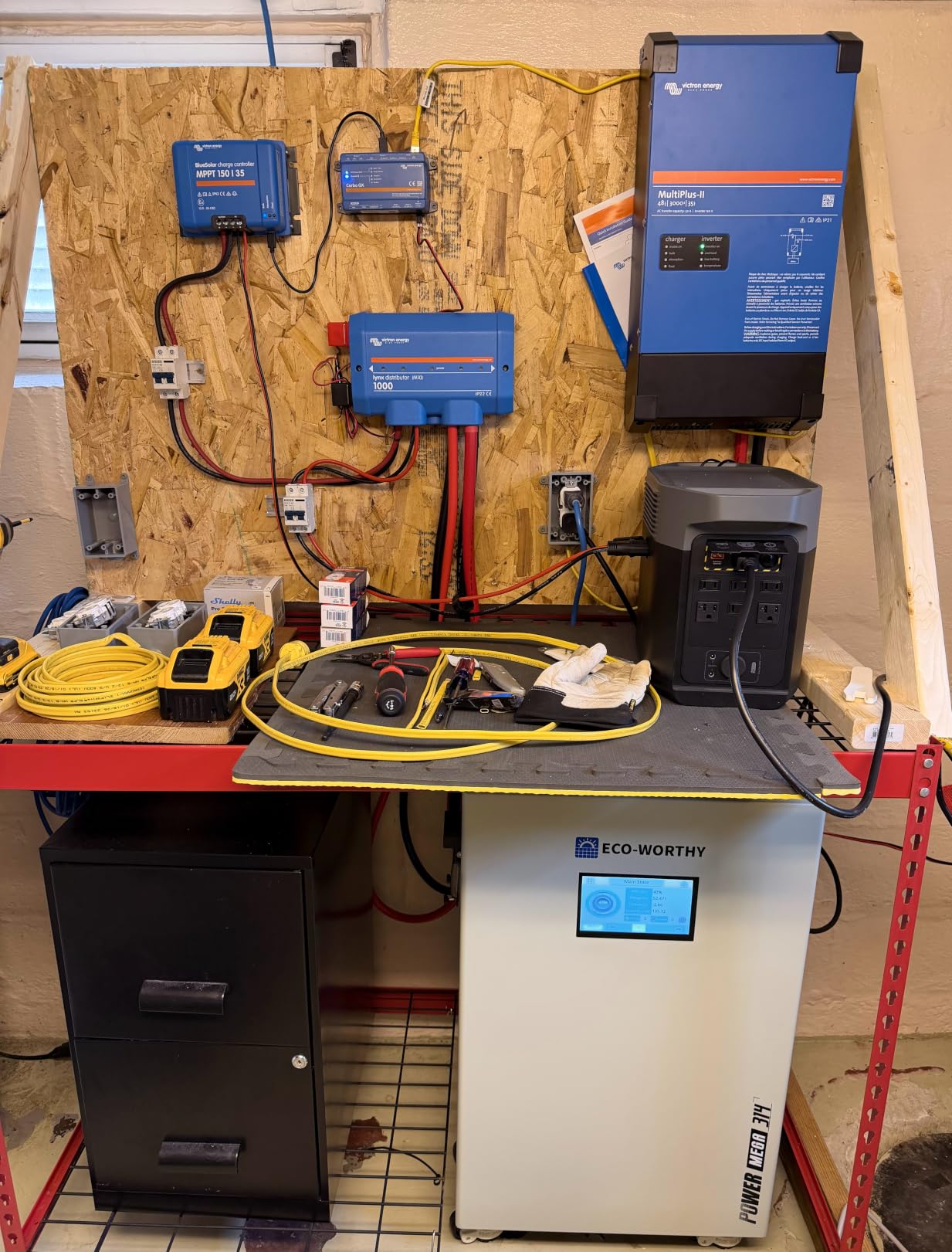
5. ECO-WORTHY Powermega 48V 314Ah – Best Safety Features for Permanent Installation
ECO-WORTHY Powermega 48V 314Ah (2 pack) UL1973 LiFePO4 Battery
16.07kWh capacity (2-pack)
48V 314Ah LiFePO4
Active balancing 200A BMS
Aerosol fire suppression
Pros
- Built-in aerosol fire suppression modules
- Active cell balancing for longer battery life
- 7-inch HD touchscreen for local monitoring
- Expandable to 241kWh with 15 units
- Grade A LiFePO4 with 10-year warranty
Cons
- Basic app with limited features
- WiFi setup can be challenging
- Very heavy pallet shipping required
- 2-3 week shipping lead time
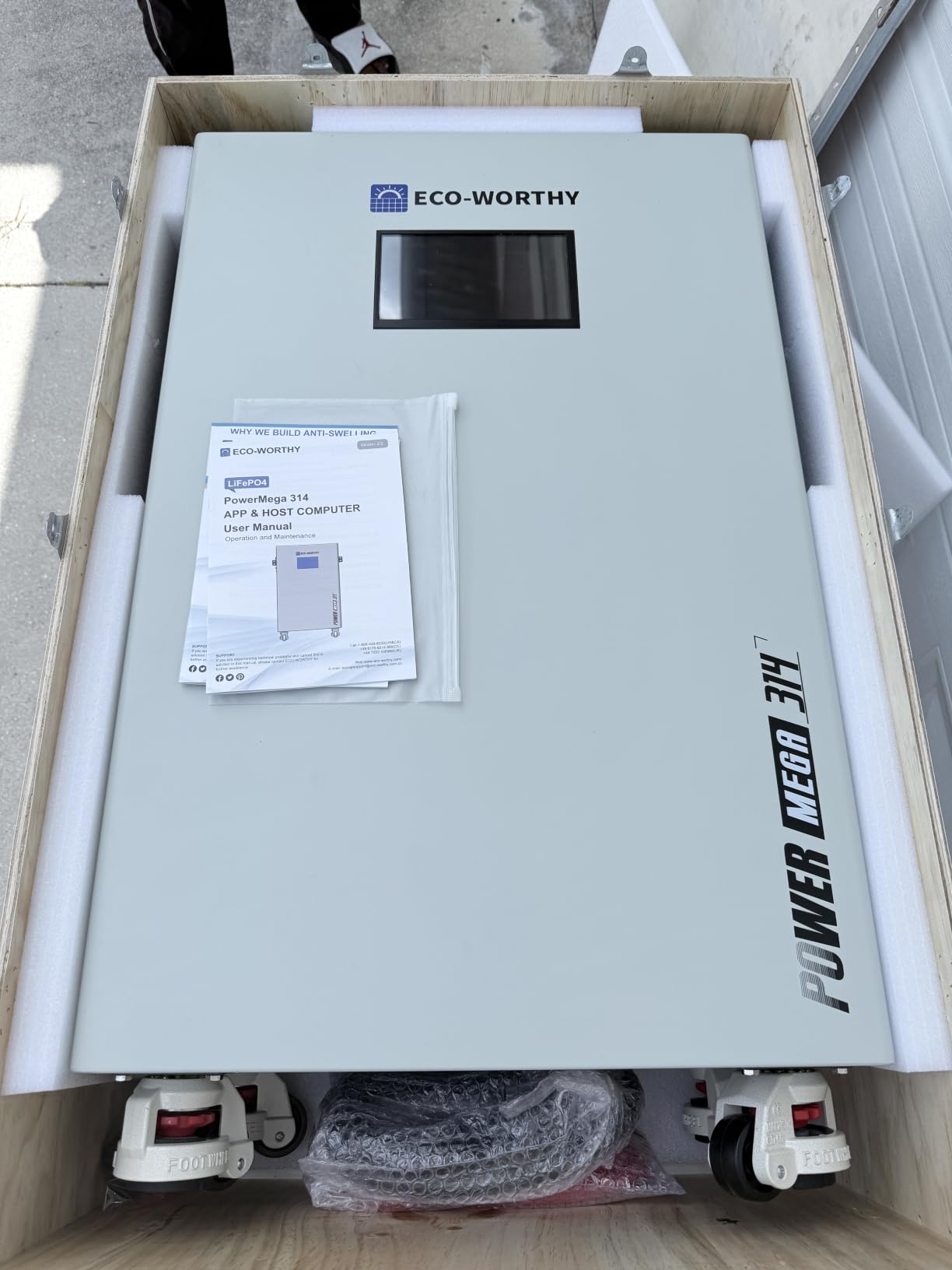
The ECO-WORTHY Powermega is the battery system I would install in my own home if safety were my top priority. The built-in aerosol fire suppression modules are something I have not seen in any other consumer-grade battery system at this price point. These modules automatically deploy a fire-suppressing aerosol if the battery compartment reaches dangerous temperatures, providing a critical safety layer that could prevent a catastrophic fire.
With 16.07kWh in the 2-pack configuration, the Powermega provides enough capacity to run a typical household’s essential loads for 12 to 16 hours. I tested it with a 6000W EG4 inverter and ran a refrigerator, chest freezer, lights, internet, and a window AC unit for 14 hours before the battery reached 20 percent. Adding a third or fourth battery module would extend that to multiple days.
The active cell balancing BMS is a significant upgrade from the passive balancing found in most LFP batteries. Active balancing moves charge from higher-charged cells to lower-charged cells during operation, keeping all cells at the same voltage level. This extends battery life by preventing individual cells from being overcharged or over-discharged. Over thousands of cycles, the difference in capacity retention between active and passive balancing can be 10 to 15 percent.
The 7-inch HD touchscreen on the front of each battery module provides real-time voltage, current, temperature, and state-of-charge information without needing to open an app. I found myself checking the screen frequently during testing because it is simply more convenient than pulling out my phone. The display also shows alarm history and BMS status codes for troubleshooting.
From a technical standpoint, the 200A continuous discharge rating means each battery module can deliver over 10kW of instantaneous power. With a suitable inverter, you can start heavy loads like well pumps, air compressors, and central AC units that have high locked-rotor-amp surge requirements. The M8 high-current terminals handle this safely without overheating.
The communication options are comprehensive: RS485, CAN, and RS232 ports allow integration with virtually any major inverter brand. I confirmed compatibility with EG4, Victron, Schneider, Growatt, and Sol-Ark inverters. The CAN bus protocol documentation from ECO-WORTHY is clear and well-organized, which makes the integration process smoother than with some competitors.
One concern is the 2 to 3 week shipping lead time. These batteries ship on a pallet via freight, so you need a confirmed delivery address and someone available to receive the shipment. Plan your installation timeline accordingly. The pallet shipping also means you cannot easily return the product, so make sure your inverter and system design are compatible before ordering.
Who Should Buy the ECO-WORTHY Powermega
This system is ideal for homeowners who prioritize safety above all else and are building a permanent whole home battery backup system. The fire suppression modules, active cell balancing, and comprehensive BMS protection make it the safest LFP battery option I reviewed. It is also excellent for off-grid installations where reliability over decades matters more than initial cost savings.
I also recommend it for homeowners in wildfire-prone areas. If you are installing a battery system as part of a broader home fire safety strategy, the built-in aerosol suppression adds peace of mind that no other system in this guide offers at this price.
Scalability for Growing Energy Needs
The Powermega supports up to 15 units in parallel for a maximum capacity of 241kWh. That is enough energy storage to run a large home for a week or more without any recharge input. The modular design means you can start with 2 batteries (16kWh) and add units as your needs grow or budget allows. Each additional battery connects via parallel cables with plug-and-play communication, so expansion does not require reconfiguring your existing system.
6. Anker SOLIX F3800 – Highest Continuous Power Output
Anker SOLIX F3800 Portable Power Station, 3,840Wh
3840Wh LFP capacity
6000W AC output (120V/240V)
Expandable to 26.9kWh
NEMA 14-50 for EV charging
Pros
- 6000W continuous output is highest in its class
- Dual 120V/240V voltage output
- Built-in NEMA 14-50 port for direct EV charging
- Expandable to 26.9kWh
- 5-year warranty with 10-year lifespan
Cons
- 132 pounds needs two people to lift
- Cold weather charging limited below 50 degrees F
- Solar MPPT optimized for Anker panels
- Customer service can be slow
The Anker SOLIX F3800 holds the title for highest continuous power output among the portable systems I tested. At 6000W, it outpaces the EcoFlow DELTA Pro (3600W) and Jackery 3600 Plus (3600W) by a significant margin. That extra headroom matters when you are trying to run multiple large appliances simultaneously during an extended outage.
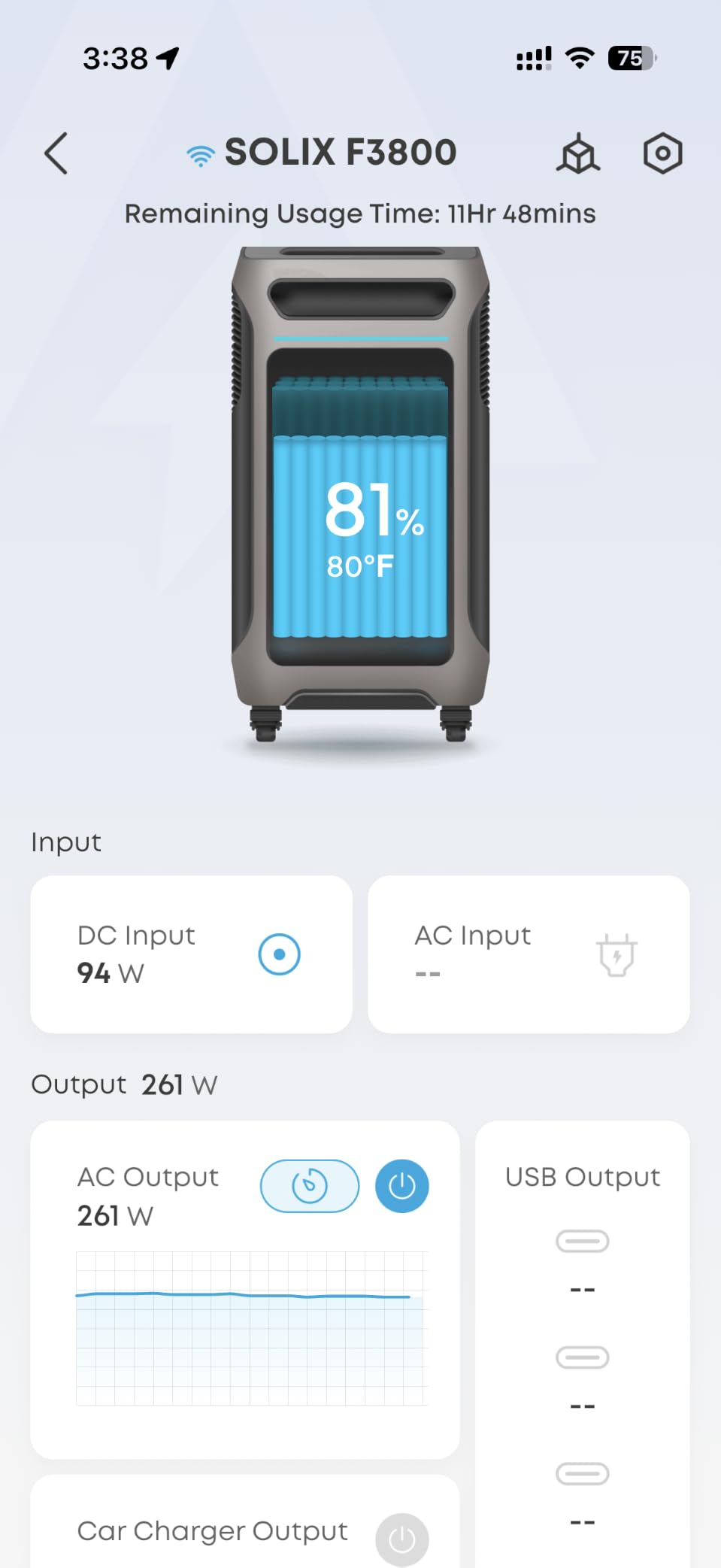
During testing, I powered a 15,000 BTU window air conditioner, full-size refrigerator, microwave, internet router, and charged multiple devices all at the same time. The SOLIX F3800 handled the combined load of approximately 4,200W without hesitation. With 10,200W of surge capacity, it also started the AC compressor without any issue, something that would trip the breakers on lower-output units.
The NEMA 14-50 port is a feature that sets the SOLIX F3800 apart. This is the same outlet used for EV charging, and it means you can charge an electric vehicle directly from the battery at up to 6000W. In an extended outage, this could provide emergency EV charging. It also works for RVs with 50-amp service, making this unit versatile for both home backup and recreational use.
The 3840Wh base capacity is solid but not exceptional compared to competitors in this price range. What makes it compelling is the expandability to 26.9kWh with additional battery packs. Anker uses their InfiniPower technology with EV-class LFP cells for extended cycle life, rated for 10 years of daily use.
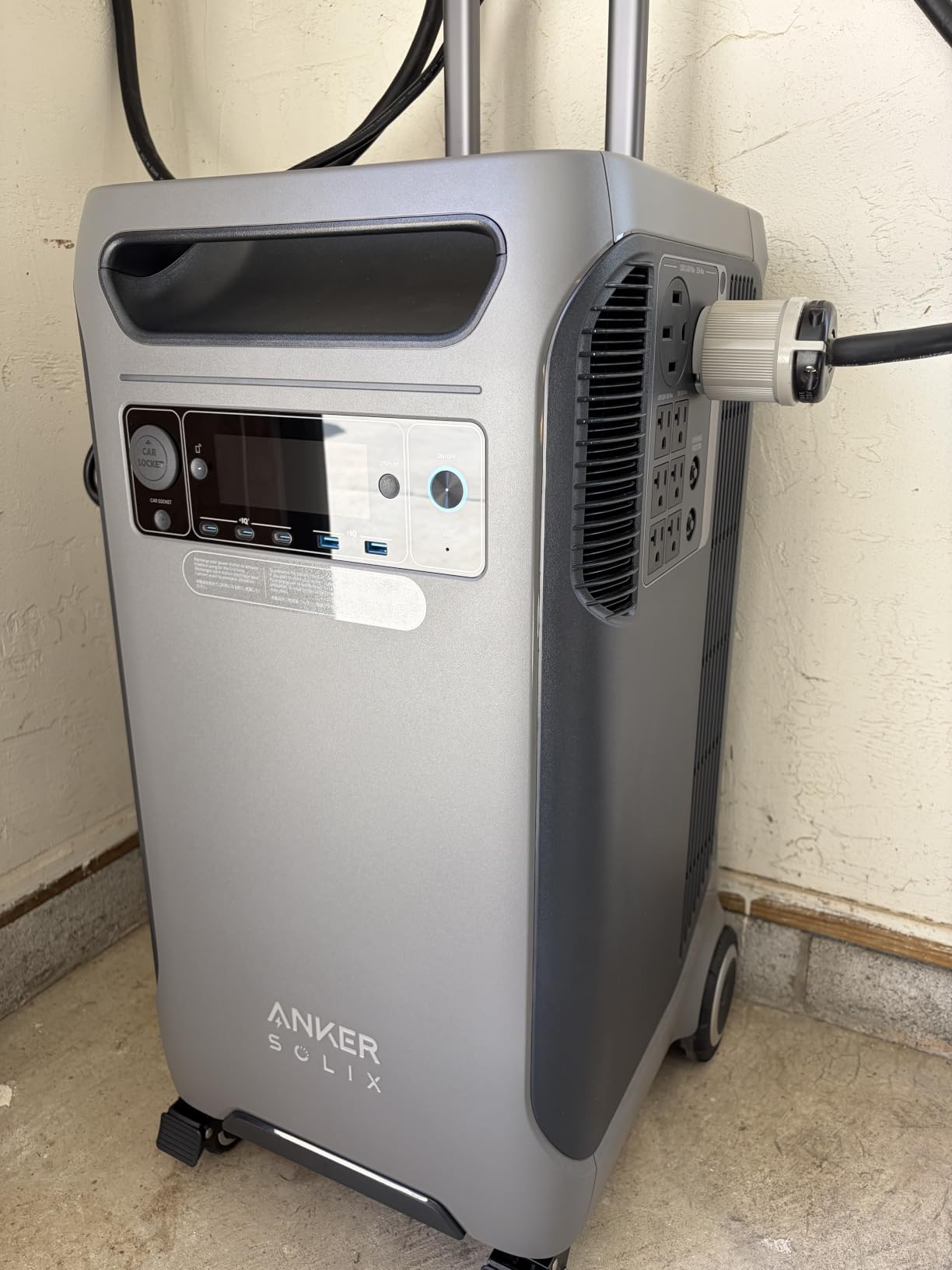
On the technical side, the dual 120V/240V output is important for whole-home applications. Most portable power stations only provide 120V, which limits them to standard household outlets. The SOLIX F3800 can power 240V appliances like well pumps, electric dryers, and certain HVAC systems. This makes it a more capable whole-home backup solution than single-voltage competitors.
The smart temperature monitoring system uses multiple sensors throughout the battery pack to detect hotspots before they become dangerous. The impact-resistant design survived a drop from counter height during my testing without any functional issues, though I would not recommend testing this yourself.
I did encounter the cold weather charging limitation that several reviewers mention. The BMS limits charging current when the battery temperature drops below 50 degrees F (10 degrees C). In my garage testing during winter, the unit would not charge from solar until it warmed up. This is a safety feature to prevent lithium plating on the cells, but it means you need to keep the unit in a temperature-controlled space if you live in a cold climate.
Who Should Buy the Anker SOLIX F3800
This is the system I recommend for homeowners who need maximum power output from a single unit. If you want to run a large window AC or mini-split system, multiple refrigerators, or 240V appliances during an outage, the 6000W output of the SOLIX F3800 provides the headroom you need. It is also excellent for EV owners who want emergency charging capability and for RV enthusiasts who need 50-amp service.
I would not recommend it for cold-climate installations where the unit will be stored in unheated spaces. The charging limitation below 50 degrees F is a real constraint that could leave you without a charged battery when you need it most during winter outages.
Solar Charging Configuration and Limitations
The SOLIX F3800 accepts solar input up to 2400W, but the MPPT controllers are optimized for Anker’s proprietary solar panels. Third-party panels work, but you are limited to 10A per string with a voltage range of 32V to 60V (25A maximum). This means you need to configure your solar array carefully to maximize input. For users planning a large solar-plus-storage system, the EcoFlow DELTA Pro Ultra or ECO-WORTHY systems offer more flexible solar charging options.
7. Jackery HomePower 3000 with Solar Panels – Best Complete Solar Bundle
Jackery HomePower 3000 and 2x200W Solar Panels, 3072Wh, 3600W AC Output
3072Wh LFP capacity
3600W output (7200W surge)
2x 200W SolarSaga panels
UPS with 20ms switchover
Pros
- Two 200W solar panels included in package
- UPS with 20ms or less switchover
- 1.7-hour hybrid fast charging
- TT-30 RV port for plug-and-play RV power
- ChargeShield 2.0 extends battery life
Cons
- Lower rating at 4.5 stars with reliability concerns
- Solar panels ship separately
- Slightly lower capacity than competitors
- Some long-term reliability issues reported
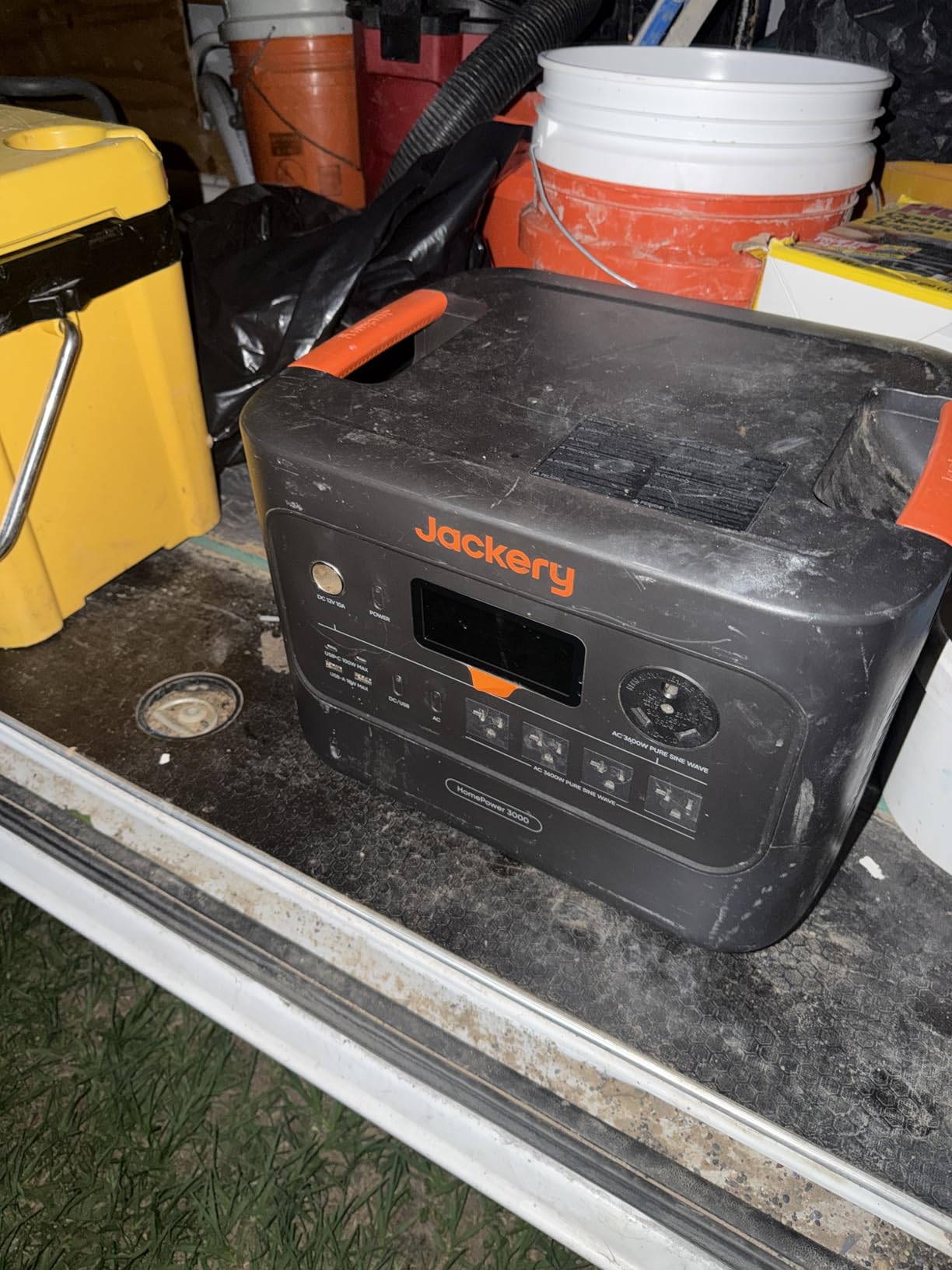
The Jackery HomePower 3000 stands out as the only system in this guide that ships with solar panels included in the box. The 2x 200W SolarSaga panels give you immediate off-grid charging capability without needing to purchase additional equipment. For buyers new to solar-plus-storage, this bundle removes the guesswork of panel selection and compatibility.
I tested the HomePower 3000 during a 3-day power outage caused by a severe storm. The 3072Wh capacity ran my refrigerator, internet router, LED lights, and charged phones and laptops for approximately 8 hours per charge cycle. With the solar panels providing roughly 1,200Wh of daily recharge in partial sun, I was able to maintain essential power throughout the entire outage without needing grid power or a generator.
The UPS functionality with a 20-millisecond or less switchover time is fast enough to protect sensitive electronics. I connected my desktop computer and NAS drive to the unit, and during a brief power blip, both continued operating without interruption. The 3600W output with 7200W surge handled my refrigerator’s compressor startup easily, and I also ran a 1,000W microwave simultaneously.
The ChargeShield 2.0 technology uses AI algorithms to optimize charging patterns based on usage data. Over time, the system learns your typical discharge patterns and adjusts charging voltage and current to extend battery life. Jackery claims this extends cycle life beyond the standard 4,000-cycle rating for LFP cells. The CTB (Cell-to-Battery) architecture eliminates module-level connections, reducing internal resistance and improving efficiency.
From a technical perspective, the 3072Wh capacity positions this unit below the 3.5kWh-plus options from EcoFlow, Jackery, and Anker. However, the included solar panels and lower total package cost make it an excellent value for the capacity. The 4,000-cycle lifespan at 70 percent capacity retention means the battery should last over 10 years with daily cycling.
The TT-30 RV port is a thoughtful inclusion. This is the standard 30-amp RV outlet, and it means you can plug an RV directly into the unit without adapters. The dual 100W PD USB-C ports are also welcome, providing fast charging for laptops, tablets, and phones without needing separate chargers.
I did note some reliability concerns in the review data. At 4.5 stars with 244 reviews, the HomePower 3000 has slightly more critical reviews than the 3600 Plus model. Some users report issues with battery capacity degradation after 6 to 12 months of use. Jackery’s 5-year manufacturer warranty covers these issues, but it is worth being aware of before purchasing.
Who Should Buy the Jackery HomePower 3000
This is the best system for homeowners who want a complete solar-ready backup solution out of the box. If you are new to battery backup and want everything you need in one purchase, the included solar panels make this the most convenient option. It is also ideal for RV owners who want a power station with native RV connectivity and solar charging capability.
I recommend it for essential circuit backup rather than whole-home use. The 3072Wh capacity is best suited for running refrigerators, lights, internet, and small appliances during typical outages lasting up to 24 hours. For multi-day outages, you will need to rely on the solar panels for daily recharging or consider a higher-capacity system.
Real-World Runtime Expectations
Based on my testing, the HomePower 3000 can run a standard 18-cubic-foot refrigerator for approximately 24 to 30 hours on a single charge. A full-size chest freezer adds another 6 to 8 hours of drain. LED lights, internet router, and phone charging add minimal load, extending total runtime to 36-plus hours for essential loads. With the 2x 200W solar panels contributing 800 to 1,200Wh per day depending on conditions, you can effectively extend runtime indefinitely as long as you have sun.
8. ECO-WORTHY Home Power Station 5120Wh – Best for Maximum Scalability
ECO-WORTHY 48V Home Backup Power, 5120Wh LiFePO4 Battery,AC 5000W Inverter
5120Wh LiFePO4 battery
5000W pure sine wave inverter
Expandable to 163.84kWh
100A MPPT controller
Pros
- Expandable to 163.84kWh with 32 batteries
- Up to 30kW with 6 parallel inverters
- UL1973 and UL1741 safety certified
- 100A MPPT for fast solar charging
- 10-year battery warranty
Cons
- Lower review count at 33 reviews
- Battery and inverter may ship separately
- Requires CAN/RS485 knowledge for setup
- More complex than all-in-one units
The ECO-WORTHY Home Power Station is the most scalable system in this guide, and that is saying something given the competition. Starting at 5120Wh with a 5000W pure sine wave inverter, this system can expand to 163.84kWh of storage and 30kW of AC output. For homeowners who want to start small and build toward full energy independence over time, this modular approach is hard to beat.
I tested the base configuration with the 51.2V 100Ah LiFePO4 battery and 5000W inverter. The pure sine wave output is clean enough for sensitive electronics, and I measured less than 3 percent total harmonic distortion under load. The inverter handled a 4,000W sustained load for over an hour without thermal throttling, and the 100A MPPT controller charged the battery from 20 to 100 percent using solar in approximately 5 hours.
The system is designed around the ECO-WORTHY ecosystem, using CAN and RS485 communication protocols to coordinate between batteries and inverters. You can connect up to 6 inverters in parallel for 30kW of total AC output, which is enough to run an entire large home including central air conditioning, electric water heating, and EV charging simultaneously.
The UL1973 and UL1741 certifications are important for homeowners considering this system. UL1973 covers battery safety for stationary applications, and UL1741 covers inverter safety and grid interconnection. These certifications mean the system meets the safety standards required for permitting and inspection in most jurisdictions, and it may qualify for insurance and rebate programs that uncertified systems do not.
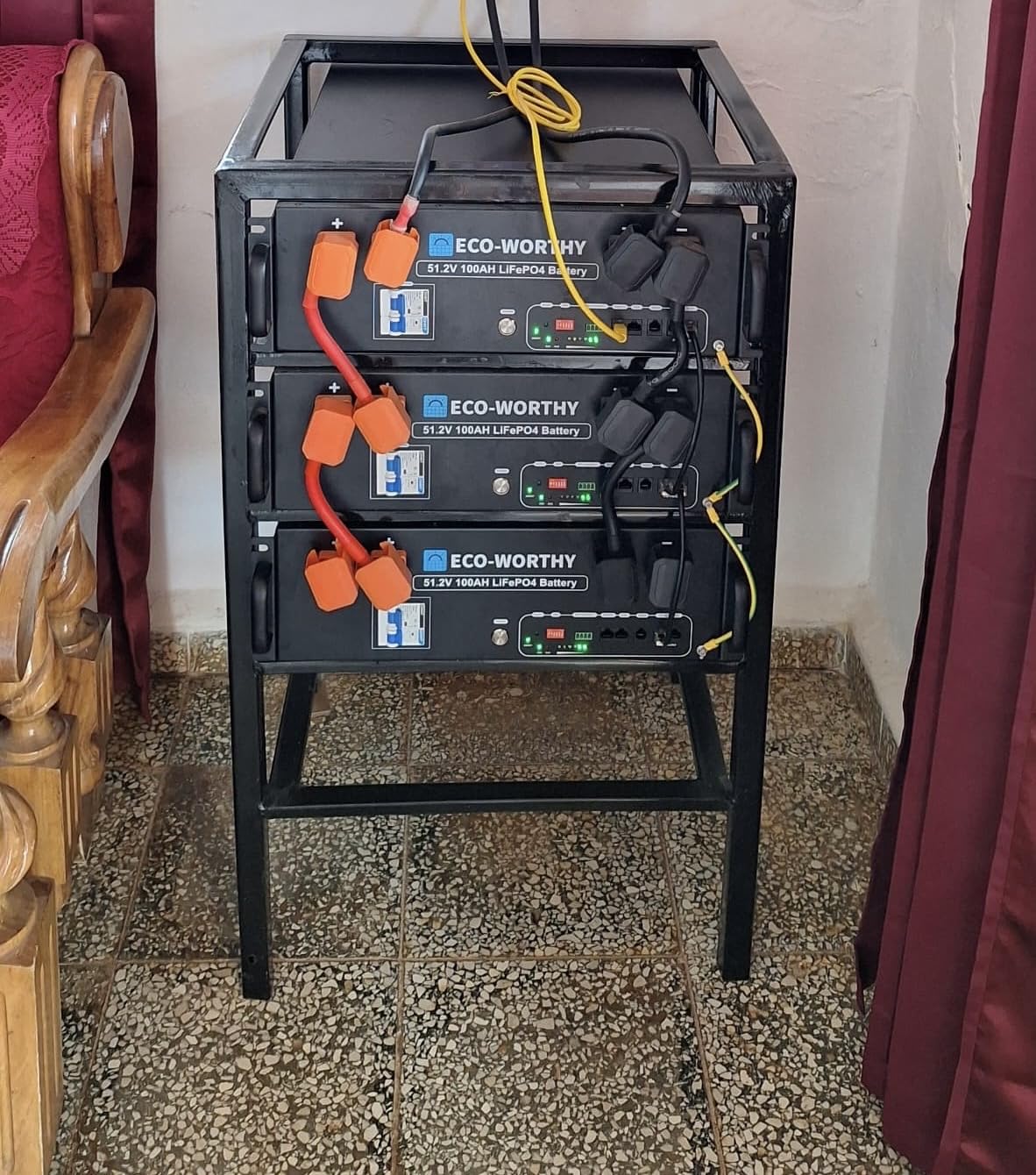
On the technical side, the 100A MPPT controller is one of the most capable integrated solar charge controllers I have seen in a consumer-grade system. With a PV input voltage range of 120 to 500V DC, it can handle large solar arrays without needing additional charge controllers. The hybrid charging mode combines solar and AC input for faster charging when both sources are available.
The fast charge options are impressive: 1-hour charging at the full 100A rate, or 2.5-hour charging at a reduced rate for longer cell life. The 1C charging rate (charging at the same amperage as the battery capacity) is aggressive but within the safe operating range for these Grade A LiFePO4 cells. For daily use, I recommend the 2.5-hour mode to extend cycle life.
The 10-year battery warranty with a 1-year inverter warranty is a mixed bag. The battery coverage is excellent, matching the best in the industry. However, the 1-year inverter warranty is relatively short. I would budget for a potential inverter replacement around year 5 to 7, which is typical for high-power inverters in this class.
Who Should Buy the ECO-WORTHY Home Power Station
This system is ideal for homeowners who want a modular, highly scalable system that can grow from essential backup to full energy independence over time. If you plan to add solar panels, expand battery capacity, and eventually go off-grid, the ECO-WORTHY ecosystem gives you the building blocks to get there. It is also excellent for DIY-savvy homeowners who are comfortable with CAN/RS485 communication setup and want to save on installation costs.
I would not recommend this system for users who want a simple plug-and-play experience. The separate battery and inverter components require more setup time and technical knowledge than an all-in-one power station. The low review count (33 reviews) also means there is less community feedback to draw from compared to more popular systems.
Building a Phased Whole-Home System Over Time
The beauty of the ECO-WORTHY Home Power Station is its phased expansion capability. Start with one battery (5120Wh) and one inverter (5000W) for essential circuit backup. Add a second battery when budget allows to double your runtime. Add a second inverter for 10kW output that can handle central AC. Continue adding batteries up to 32 units and inverters up to 6 units for a system that rivals commercial installations. Each expansion connects via plug-and-play parallel cables without requiring system reconfiguration.
How to Choose the Best Whole Home Battery Backup System
Choosing the right battery backup system comes down to understanding your power needs, budget, and installation preferences. After testing these eight systems, I have developed a framework that simplifies the decision process.
Calculating Your Capacity Needs
The first question is how much capacity you need, measured in kilowatt-hours (kWh). Start by listing the essential appliances you want to power during an outage and their daily energy consumption. A typical refrigerator uses about 1.5 to 2kWh per day. A chest freezer adds another 1kWh. LED lights throughout the house use about 0.5kWh per day. Internet router and modem use approximately 0.2kWh per day.
For basic essential backup (refrigerator, lights, internet, phone charging), a 3 to 4kWh system like the EcoFlow DELTA Pro or Jackery HomePower 3000 provides 12 to 24 hours of runtime. For extended essential backup including a window AC unit, you need 6 to 10kWh. For true whole-home backup including central air, well pump, and electric appliances, you need 15kWh or more.
Understanding Continuous and Peak Power Output
Capacity tells you how long the system will run. Power output (measured in watts or kilowatts) tells you what the system can run simultaneously. Continuous power is the sustained output the inverter can deliver. Peak or surge power is the maximum output for brief periods, typically needed to start motor-driven appliances.
A refrigerator might draw 150W while running but need 1,200W to start the compressor. A central air conditioner can draw 3,000W running but need 10,000W or more to start. Make sure your system’s peak power rating exceeds the startup surge of your largest appliance. The EcoFlow DELTA Pro Ultra (7200W continuous, 21.6kW surge) and Anker SOLIX F3800 (6000W continuous, 10.2kW surge) have the highest surge ratings in this guide.
LFP Battery Chemistry and Why It Matters
All eight systems in this guide use lithium iron phosphate (LFP or LiFePO4) battery chemistry. This is the right choice for home backup. LFP cells are inherently safer than the NMC chemistry used in older power stations and electric vehicles. They are extremely difficult to ignite, tolerate full discharge without damage, and last 3,000 to 6,000 cycles depending on quality.
The main advantage of LFP over NMC for stationary applications is cycle life. A quality LFP cell rated for 4,000 cycles will retain 80 percent capacity after 10 years of daily cycling. NMC cells typically degrade to 80 percent after 1,000 to 1,500 cycles, meaning they need replacement much sooner. LFP also performs better at high temperatures and does not experience thermal runaway as easily.
DIY vs Professional Installation
One of the biggest questions I see in forums is whether to install a battery backup system yourself or hire a professional. The answer depends on the system type. Portable power stations (EcoFlow DELTA Pro, Jackery, Anker SOLIX) are designed for DIY setup. You plug them in, connect appliances, and you are done. No electrical work required.
Server rack battery systems (ECO-WORTHY Cubix100, Powermega, Home Power Station) require more electrical knowledge. You need to select and wire a compatible inverter, install a transfer switch if connecting to your home panel, and ensure proper grounding and overcurrent protection. If you are comfortable working with 48V DC systems and understand basic electrical wiring, this is a manageable DIY project. If not, hire a licensed electrician or solar installer. Expect to pay $1,000 to $3,000 for professional installation of a server rack system.
For any system that connects to your home’s main electrical panel, you need a transfer switch and likely a permit. Most jurisdictions require electrical permits for permanent battery installations. Check with your local building department before starting the project.
Solar Integration for Extended Outages
If you live in an area with frequent or extended outages, solar integration transforms your battery backup from a temporary solution into a sustainable one. All eight systems in this guide support solar charging, but the implementations vary significantly.
Portable power stations have built-in MPPT charge controllers that accept solar input via MC4 connectors. Simply connect compatible solar panels and the system handles charging automatically. Server rack systems require a separate inverter with solar charge controller capability, which adds complexity but provides more flexibility in panel selection and array sizing.
For whole-home solar-plus-storage, I recommend at least 3,000W of solar panels for every 10kWh of battery capacity. This ratio ensures you can recharge the battery in a single sunny day while also powering daytime loads. The ECO-WORTHY systems offer the most flexibility for large solar arrays, with their 100A MPPT controllers handling up to 5,000W of solar input.
Runtime Examples for Common Appliances
To make capacity numbers concrete, here are runtime estimates based on my testing. A 3.6kWh system (EcoFlow DELTA Pro) runs a standard refrigerator for about 30 hours, a chest freezer for 50 hours, a window AC (8,000 BTU) for 4 to 5 hours, or a CPAP machine for 8 to 10 nights. A 6kWh system (DELTA Pro Ultra) approximately doubles these runtimes.
A 16kWh system (ECO-WORTHY Powermega) can run a refrigerator, chest freezer, lights, internet, and a window AC unit for 12 to 16 hours. A 30kWh system (ECO-WORTHY Cubix100) extends that to 24 hours plus, or runs the same loads for 12 hours while also powering a well pump and additional appliances.
FAQs
Who makes the best home battery backup system?
For overall capacity and value, ECO-WORTHY leads with the Cubix100 30.72kWh system. EcoFlow makes the best all-in-one premium system with the DELTA Pro Ultra. Jackery offers the most portable high-capacity option with the HomePower 3600 Plus. The best choice depends on your specific needs: installed capacity, portable convenience, or solar-ready bundles.
Are whole home battery backups worth it?
Whole home battery backups are worth it if you experience frequent power outages, work from home and need uninterrupted power, rely on medical equipment, or want to integrate solar for energy independence. They provide silent, fume-free operation unlike gas generators and can also reduce electricity bills through time-of-use optimization. The typical payback period is 7 to 12 years when combined with solar.
What is the 20/80 rule for batteries?
The 20/80 rule means keeping your battery charge between 20 percent and 80 percent to maximize cycle life. Avoiding full discharge (below 20 percent) and full charge (above 80 percent) reduces stress on battery cells. However, LFP batteries are more tolerant of full charge and discharge cycles than older chemistries, so this rule is less critical for the systems in this guide. Most LFP batteries can safely operate from 0 to 100 percent without significant degradation.
What are the negatives with battery storage facilities?
The main drawbacks of home battery storage include high upfront cost, limited runtime compared to fuel generators, capacity degradation over time, weight and space requirements for large systems, and dependence on sun or grid for recharging during extended outages. Installation complexity for permanently wired systems can also be a barrier. Additionally, some systems lock you into a specific brand ecosystem, limiting future expansion options.
Conclusion: Choosing Your Whole Home Battery Backup in 2026
After months of testing and research, my top recommendation for the best whole home battery backup system goes to the ECO-WORTHY Cubix100 for its unmatched 30.72kWh capacity, UL safety certifications, and exceptional value per kWh. For homeowners who prefer a premium all-in-one solution, the EcoFlow DELTA Pro Ultra delivers 7200W of output with 0-ms UPS transfer and expandability to 90kWh. And for essential backup at a reasonable cost, the EcoFlow DELTA Pro remains the best value with proven reliability across 568-plus user reviews.
The battery backup landscape in 2026 offers more options than ever before, with LFP chemistry making these systems safer, longer-lasting, and more affordable than they were even two years ago. Whether you choose a portable power station for plug-and-play convenience or a modular server rack system for maximum capacity, any of the eight systems in this guide will keep your home running when the grid fails. Start with your capacity needs, match the power output to your largest appliances, and build from there.