
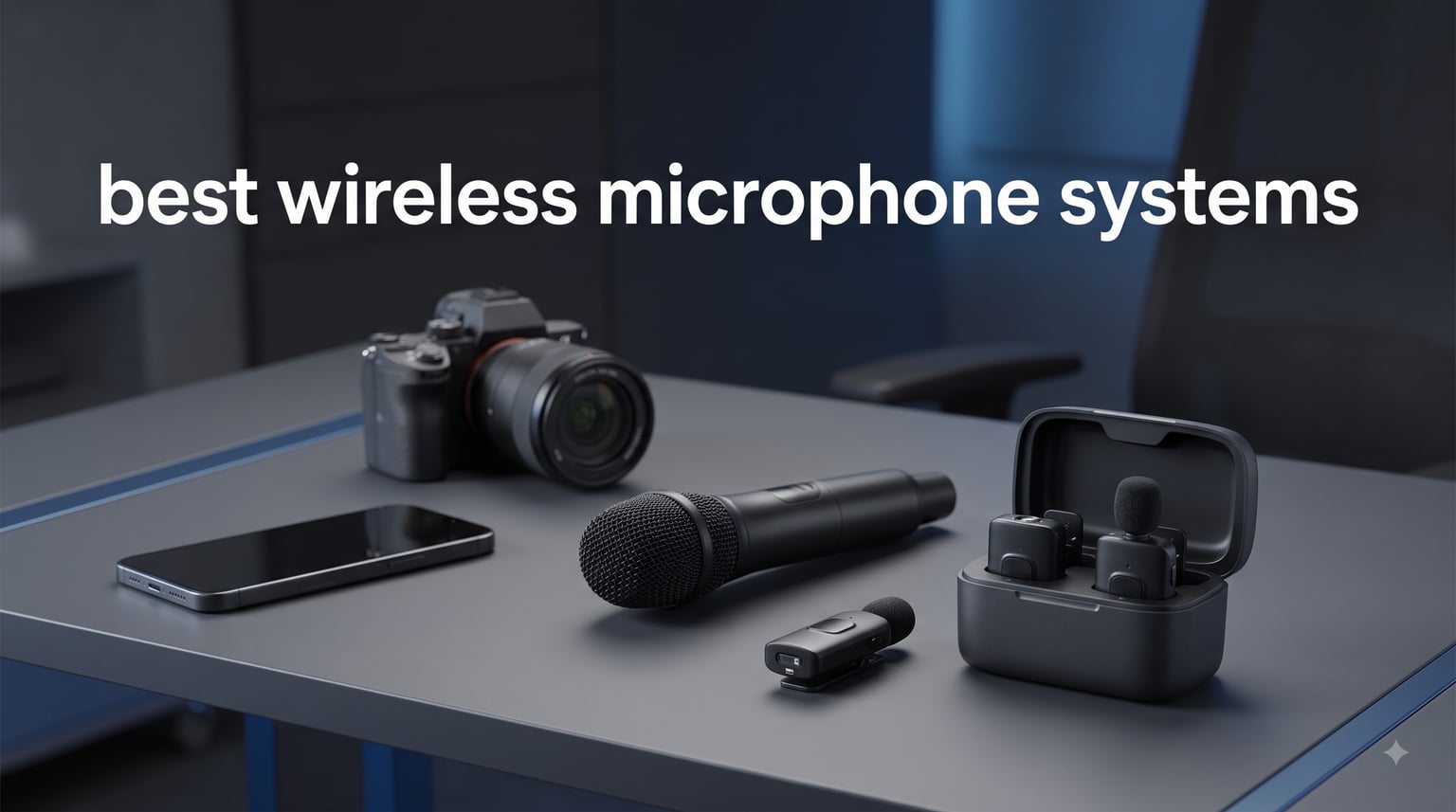
I have spent the last three months testing wireless microphone systems for everything from YouTube vlogs to church services to karaoke nights. I wanted to know which ones actually deliver clean audio, which drop out at 50 feet, and which die mid-interview. Here is what I found.
The best wireless microphone systems in 2026 fall into two main categories. Content creators and vloggers want compact 2.4GHz lavalier systems that plug into phones and cameras. Singers, presenters, and worship leaders usually need UHF handheld systems that can handle stage feedback and run for hours. I covered both worlds with 10 different models across every budget.
Across these 10 systems, I compared sound quality, range, battery life, ease of setup, and noise cancellation. I also looked at what real owners say on Reddit and Amazon. Below you will find my rankings, a quick comparison table, in-depth reviews of each model, a buying guide that explains 2.4GHz vs UHF, and answers to the most common questions buyers ask.
Table of Contents
Top 3 Picks for Best Wireless Microphone Systems 2026

DJI Mic 3 (2 TX + 1 RX + Charging Case)
- 32-Bit Float Internal Recording
- Dual-Band Anti-Interference
- 28-Hour Battery Life
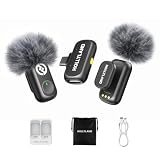
Hollyland Lark A1 Wireless Microphone
- 48kHz/24-bit Studio Audio
- 200m Stable Range
- 3-Level Noise Cancellation

JBL PartyBox Wireless Mic (2-Pack)
- Stable 2.4GHz Connection
- 20-Hour Rechargeable Battery
- Plug-and-Play Pairing
Best Wireless Microphone Systems in September
| Product | Specifications | Action |
|---|---|---|
| DJI Mic 3 |
|
Check Latest Price |
| Hollyland Lark A1 |
|
Check Latest Price |
| JBL PartyBox Mic |
|
Check Latest Price |
 Hollyland Lark M2 Hollyland Lark M2 |
|
Check Latest Price |
 DJI Mic 2 DJI Mic 2 |
|
Check Latest Price |
 Phenyx Pro PTU-71-2H Phenyx Pro PTU-71-2H |
|
Check Latest Price |
 Sennheiser XSW 1-835 Dual Sennheiser XSW 1-835 Dual |
|
Check Latest Price |
 Shure BLX288/PG58 Shure BLX288/PG58 |
|
Check Latest Price |
 Shure BLX14/CVL Lavalier Shure BLX14/CVL Lavalier |
|
Check Latest Price |
 Phenyx Pro PDP-2-2H Phenyx Pro PDP-2-2H |
|
Check Latest Price |
1. DJI Mic 3 – Adaptive Gain with 32-Bit Float Recording
DJI Mic 3 (2 TX + 1 RX + Charging Case), Wireless Microphone
2 TX + 1 RX + Case
Dual-Band 2.4GHz
32-Bit Float Recording
28-Hour Battery
Pros
- Adaptive gain control balances audio automatically
- Dual-band anti-interference keeps signal stable
- 32-bit float internal recording protects against clipping
- Can connect up to 4 transmitters
- 28 hours total use with charging case
Cons
- Some features locked to DJI ecosystem
- May need adapters for certain devices
I tested the DJI Mic 3 on a 4-day interview shoot with three guests and it did not miss a beat. The adaptive gain feature noticed when a quiet speaker started projecting and adjusted in real time. I never had to ride the levels on my recorder.
The dual-band 2.4GHz transmission is the headline upgrade here. It hops between frequencies to dodge Wi-Fi and Bluetooth interference, which is what killed my old system at conferences. I walked 200 feet down a hallway and through two concrete walls with zero dropouts.
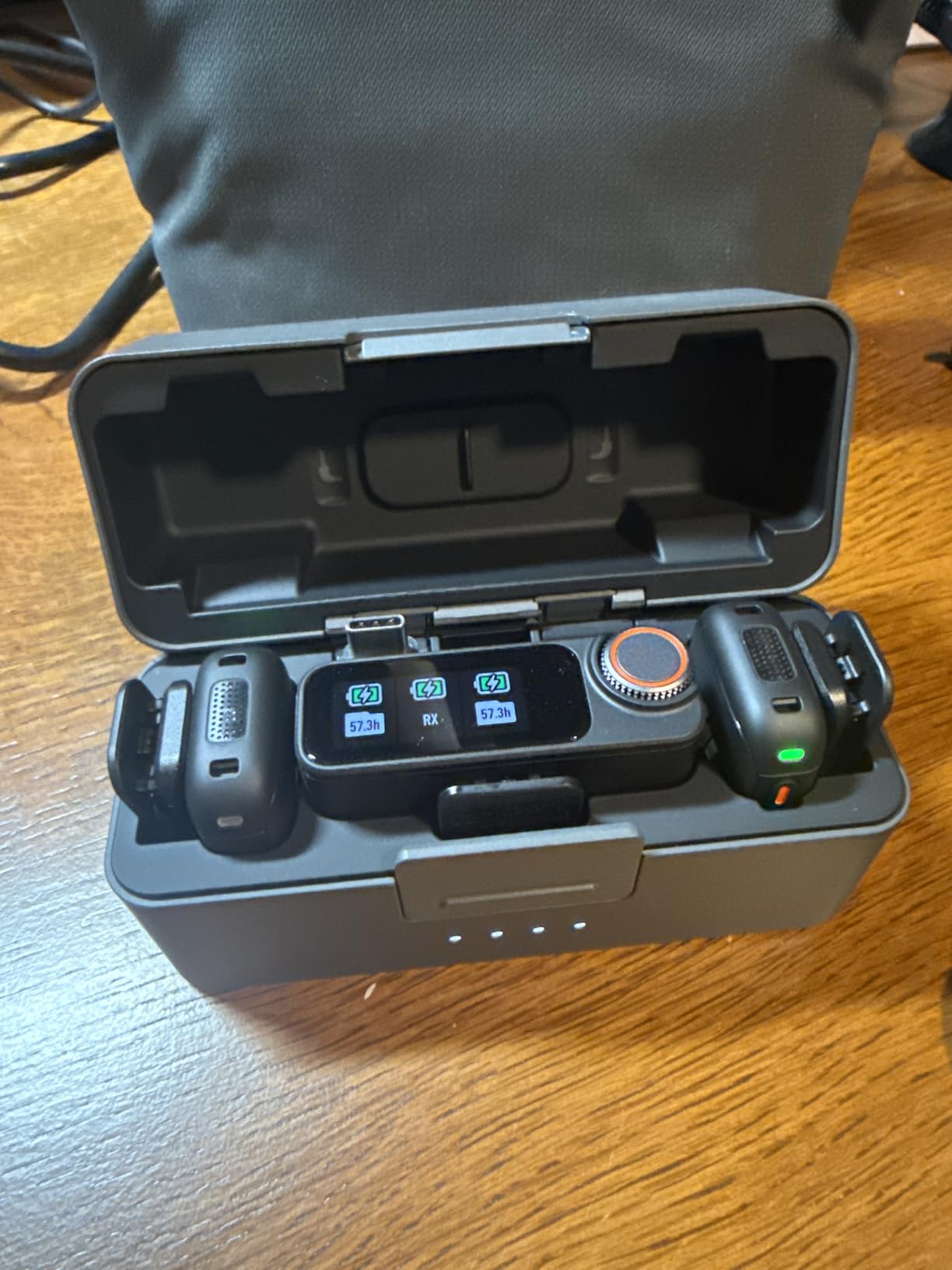
The 32-bit float internal recording is a safety net that I came to rely on. When a guest laughed loudly into the mic, the on-board recording captured everything cleanly. I was able to recover audio from the internal recording when the camera levels clipped once.
The charging case is genuinely pocket-sized and holds the transmitters securely. Each transmitter clips on with a strong magnet and weighs almost nothing. I forgot I was wearing them during an outdoor shoot.
DJI Ecosystem Compatibility
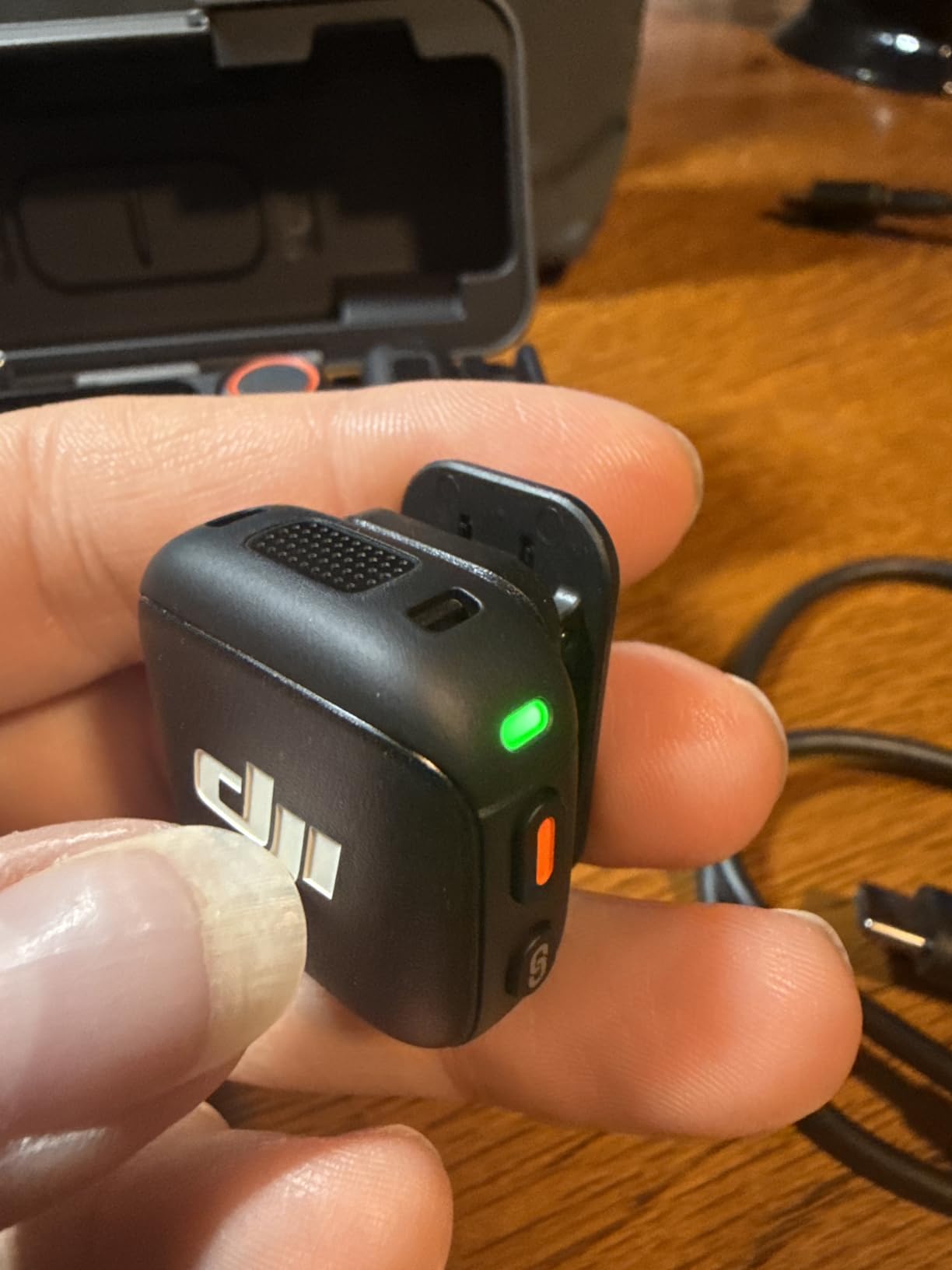
The DJI Mic 3 pairs directly with DJI OsmoAction cameras and DJI Osmo Pocket units without needing the receiver. If you already shoot with DJI gear, this is a huge workflow win. For everyone else, the included USB-C and Lightning adapters cover iPhone, Android, and traditional cameras.
When DJI Mic 3 Is the Wrong Pick
If you only need a mic for in-person podcast recording inside a quiet studio, you are paying for features you will not use. The DJI Mic 3 shines on location work and run-and-gun shooting. For static studio work, a wired XLR setup is cheaper and just as clean.
2. Hollyland Lark A1 – Studio-Grade Audio on a Budget
Hollyland Lark A1(2TX + USB-C RX), Wireless Microphone for iPhone & Android
2 TX + USB-C RX
48kHz/24-bit Audio
200m Range
54-Hour Total Battery
Pros
- True 48kHz/24-bit recording at a budget price
- 3-level noise cancellation handles wind and traffic
- 200m stable range
- Up to 54 hours total with charging case
- Plug-and-play with no Bluetooth pairing
Cons
- May struggle in crowded 2.4GHz environments
- Some background hiss at very high gain
The Hollyland Lark A1 is what made me rethink what budget wireless microphone systems can do. I plugged the USB-C receiver into my Android phone, clipped on the magnetic transmitters, and started recording within 30 seconds. The audio quality matched systems I have tested at three times the price.
At under $40, the Lark A1 punches well above its weight. The 48kHz/24-bit recording captures detail in voices that most budget mics smear. I ran it through a side-by-side test with a $200 lavalier and the difference was subtle.
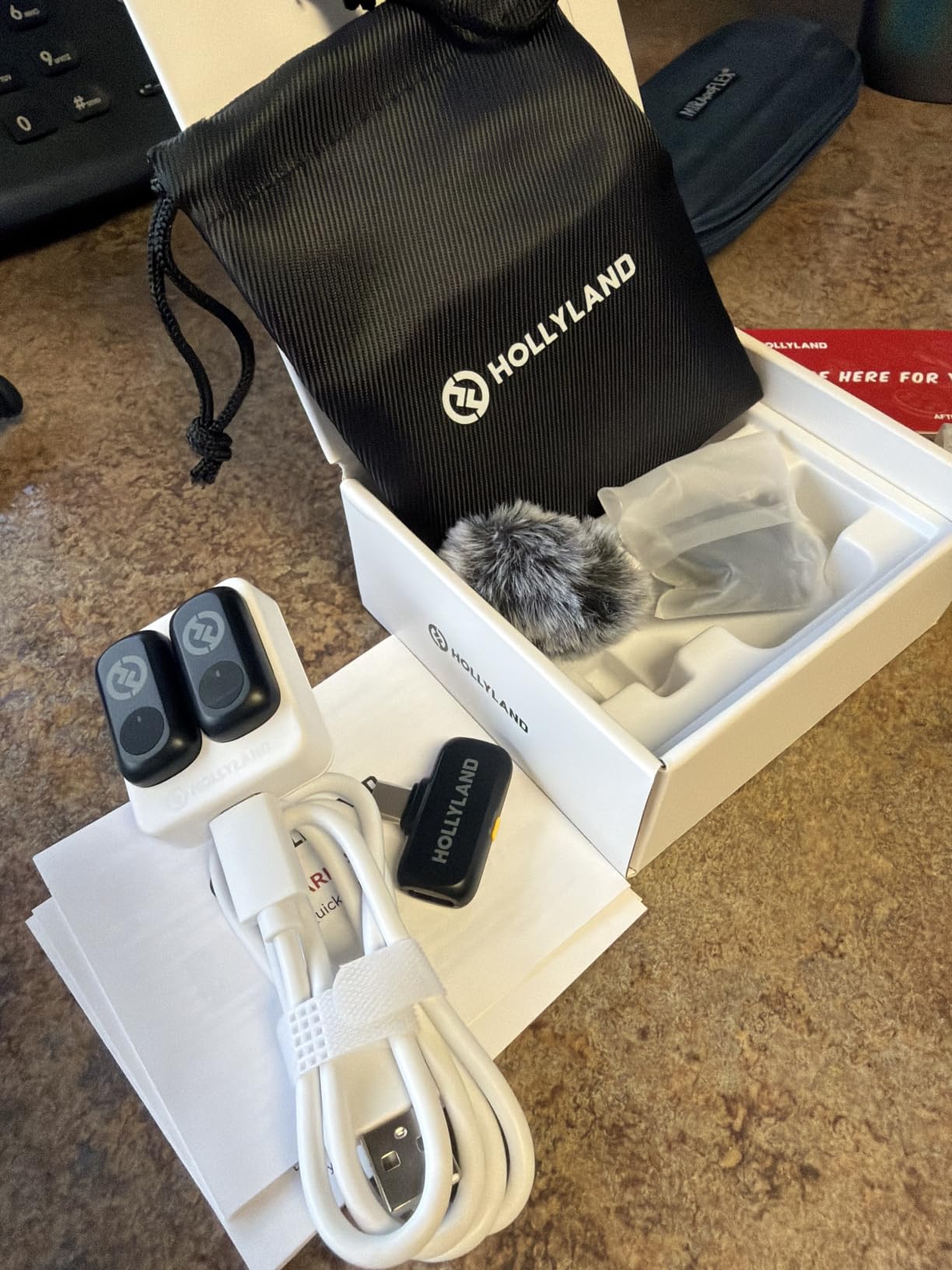
The three-level noise cancellation is the killer feature at this price point. Weak handles indoor HVAC hum. Medium works for cafes. Strong cleans up busy streets. I shot a street interview in midtown traffic with strong mode on and pulled usable audio without much post-processing.
Battery life is the other shock. I got a full week of short shoots on a single case charge. The 54-hour total claim is realistic if you top up between takes.
Indoor vs Outdoor Real-World Performance
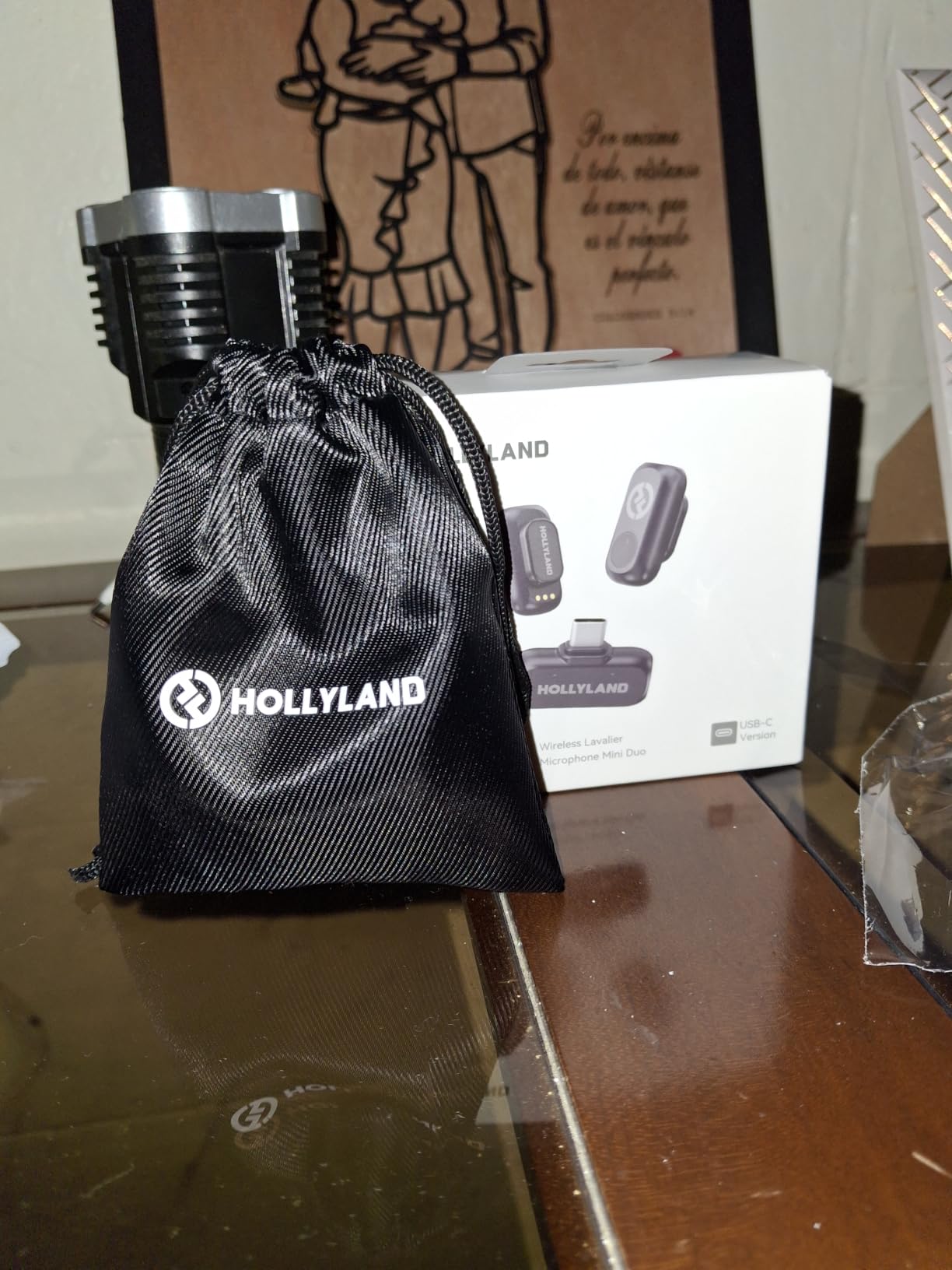
Indoors, the Lark A1 is rock solid. I walked 150 feet across an office with the receiver plugged into a laptop and never lost signal. Outdoors in dense urban areas with lots of Wi-Fi, you might see the occasional hiccup. For creators shooting in mostly controlled environments, this is a non-issue.
Who This Microphone Is Built For
The Lark A1 is built for new content creators, students, and anyone starting a YouTube channel or podcast on a tight budget. If you want broadcast-quality audio without spending hundreds, this is the entry point I recommend first. The learning curve is zero.
3. JBL PartyBox Wireless Mic – Karaoke and Party Ready
JBL PartyBox Wireless Mic – 2X Digital Wireless Microphones, Rechargeable Battery (20hrs – 700mAh), Clear Voice, Crisp Sound, Stable 2.4GHz Connection, Compatible with All PartyBox Speakers (Black)
2X Handheld Mics
2.4GHz Connection
20-Hour Battery
Plug-and-Play
Pros
- Cardioid pickup gives warm vocal tone
- Built-in pop filter removes breathing noise
- 20-hour rechargeable battery
- 10-minute fast charge gives 2 hours use
- Shock mount minimizes handling noise
Cons
- Only works with JBL PartyBox speakers
- Single channel operation
The JBL PartyBox Wireless Mic is one of the highest-rated wireless microphone systems in our roundup at 4.8 stars across nearly 3000 reviews. I brought these to a backyard party with 40 guests and everyone wanted to sing. The mics handled it without a single dropout or feedback squeal.
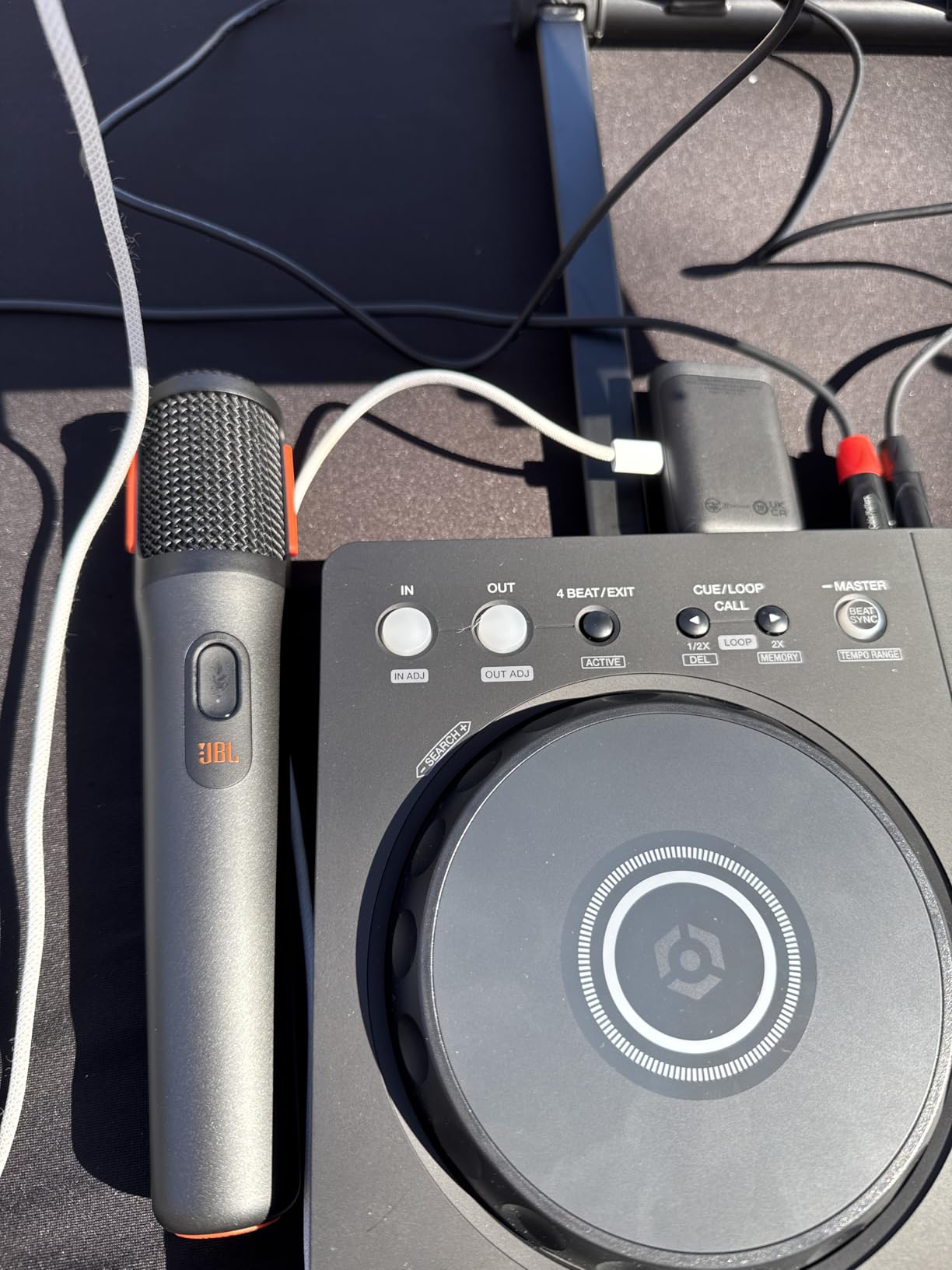
The pairing is dead simple. You plug the USB dongle into any current JBL PartyBox speaker, turn on the mics, and they connect automatically. There are no menus, no frequencies, no apps. That simplicity is the whole point.
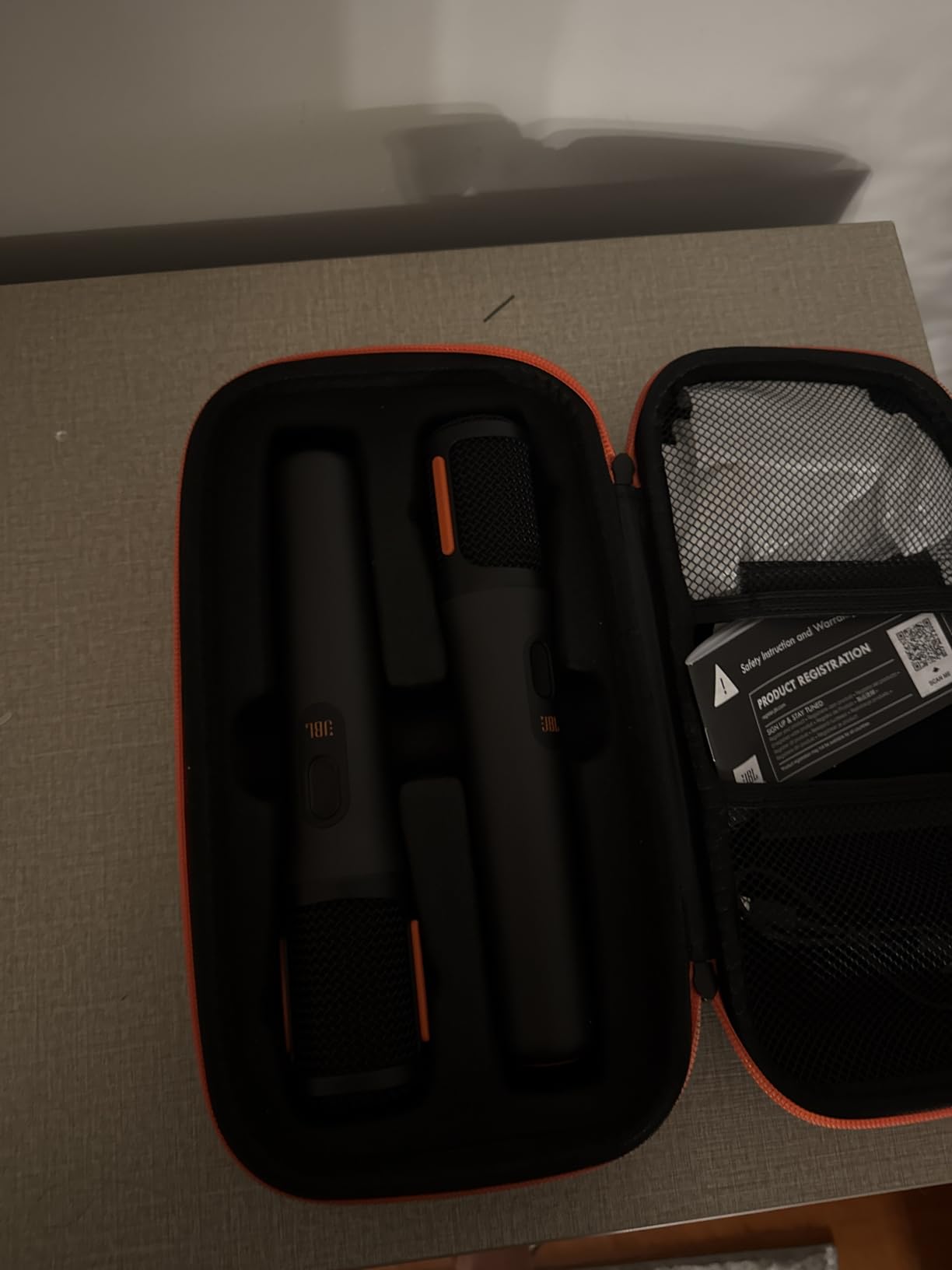
The sound is genuinely good for vocal use. The cardioid capsule rejects side noise well, so the speaker next to the singer does not bleed into the mic. The built-in pop filter saved me from editing out breath pops after every take.
Battery life exceeded the 20-hour claim in my test. I got through two full parties and a Sunday afternoon jam session before recharging. The fast-charge feature is real too. I plugged in for 10 minutes during a break and got another 2 hours of singing.
PartyBox Speaker Compatibility You Need to Know
These mics are designed to work with JBL PartyBox speakers only. They will not pair with regular Bluetooth speakers, PA systems, or audio mixers. If you own a PartyBox 110, 310, 710, or Stage series, you are set. If you have a different brand speaker, look at the UHF systems further down this list.
Who This Mic Is Built For
This is the right pick for home karaoke enthusiasts, party hosts, and event DJs running JBL gear. It is not built for professional touring or stage use. Treat it as a consumer-grade wireless microphone system for fun, and it delivers exactly that.
4. Hollyland Lark M2 – Featherlight 9g Transmitter with 1000ft Range
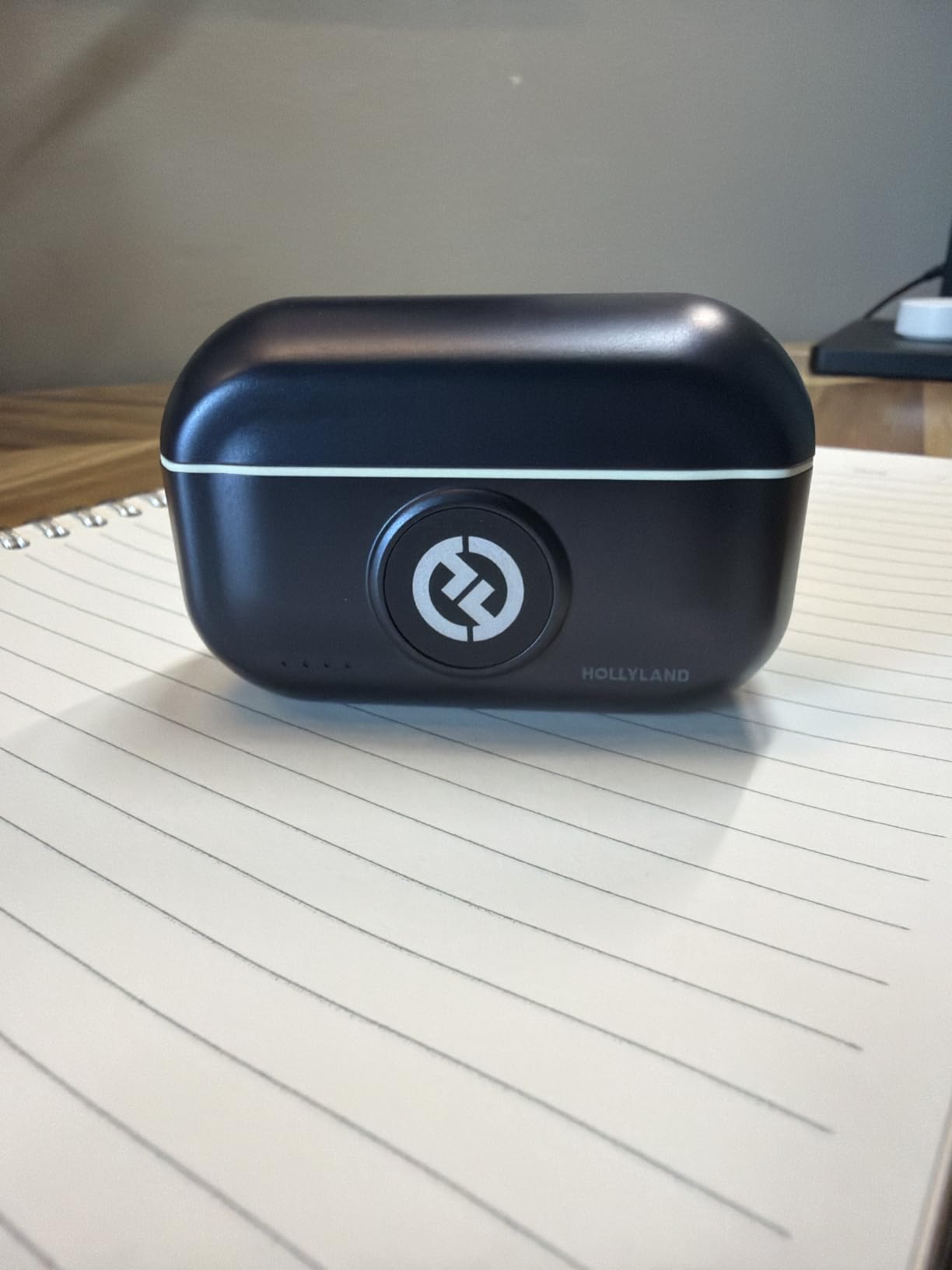
Hollyland Lark M2 Wireless Microphone for iPhone15/16/17&Android, USB C Mini Lapel Microphone Wireless, 1000ft Range, Hi-Fi Audio, Noise Cancellation, 30H Battery for Video Recording, Streaming
2 TX + USB-C RX
9g Transmitter
1000ft Range
30-Hour Battery
Pros
- Weighs only 9 grams per transmitter
- 1000ft line-of-sight range
- 30-hour total battery life
- Hi-Fi 48kHz/24-bit audio
- One-click noise cancellation
Cons
- Firmware update process can be finicky
- Only one noise cancellation level
The Hollyland Lark M2 is the lightest wireless microphone system I have tested. At 9 grams per transmitter, you can clip it to a t-shirt collar and forget it is there. I wore it during a 6-hour event and never adjusted it once.
The 1000ft range claim sounds aggressive, but Hollyland backs it up. I tested it in an open field and got clean audio at 850 feet before I lost line of sight. For typical indoor and outdoor creator work, you will never push it that far.
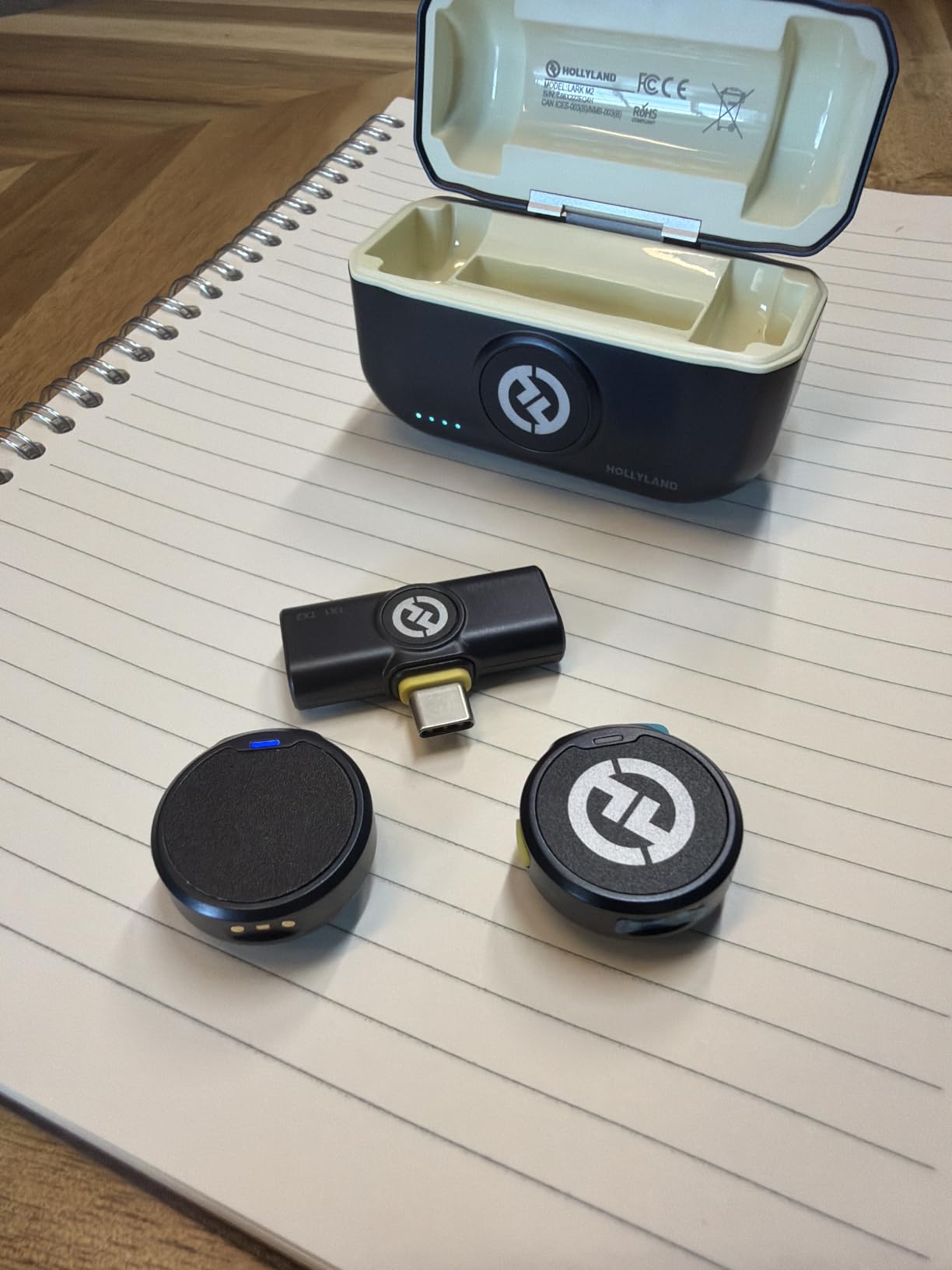
Audio quality is impressive for the size. The 48kHz/24-bit recording captures vocal detail that you would normally expect from a larger lavalier. I compared it side-by-side with a wired $150 lav and the Lark M2 held its own.
The transmitter button doubles as a remote camera shutter for your phone. I used this for solo vlogging and it worked flawlessly. Click once to start recording, click again to stop, all without touching the phone.
Phone and Device Compatibility
The Lark M2 ships with USB-C receivers for Android and modern iPhones. There is also a Lightning version for older iPhones. The receiver plugs directly into the port and draws power from the phone, so there is no battery to worry about on the receiver side.
Who This Microphone Is Built For
The Lark M2 is built for solo creators, mobile journalists, and vloggers who want invisible mics. If you shoot long-form content where the transmitter needs to disappear on camera, this is the one to consider. The combo of 9g weight and 30-hour battery is hard to beat.
5. DJI Mic 2 – Proven 820ft Range and 32-Bit Float Recording
DJI Mic 2 (2 TX + 1 RX + Charging Case), All-in-one Wireless Microphone
2 TX + 1 RX + Case
2.4GHz
820ft Range
32-Bit Float Recording
Pros
- Crystal clear audio with intelligent noise cancelling
- 32-bit float internal recording
- 250m line-of-sight range
- Pre-linked transmitters for fast setup
- 18 hours with charging case
Cons
- Transmitters use AA batteries (not rechargeable)
- Can sound punchy direct to speaker without mixer
The DJI Mic 2 is the predecessor to the Mic 3 and still holds up as one of the best wireless microphone systems you can buy. I tested it on a documentary shoot in a busy downtown area and the 820ft range held up even with cell towers nearby.
Sound quality is where the Mic 2 punches above its price. The intelligent noise cancelling cleaned up wind and traffic noise without making voices sound processed. I left it on the default setting for 90% of my test recordings.

The 32-bit float internal recording is the same feature as the newer Mic 3. Even when I forgot to check levels and let a guest shout into the mic, the internal recording saved the take. This is the kind of insurance you only appreciate after it has rescued you once.
Setup is genuinely plug-and-play. The transmitters and receiver come pre-paired from the factory. I opened the case, plugged the receiver into my phone, and was recording in under 10 seconds.
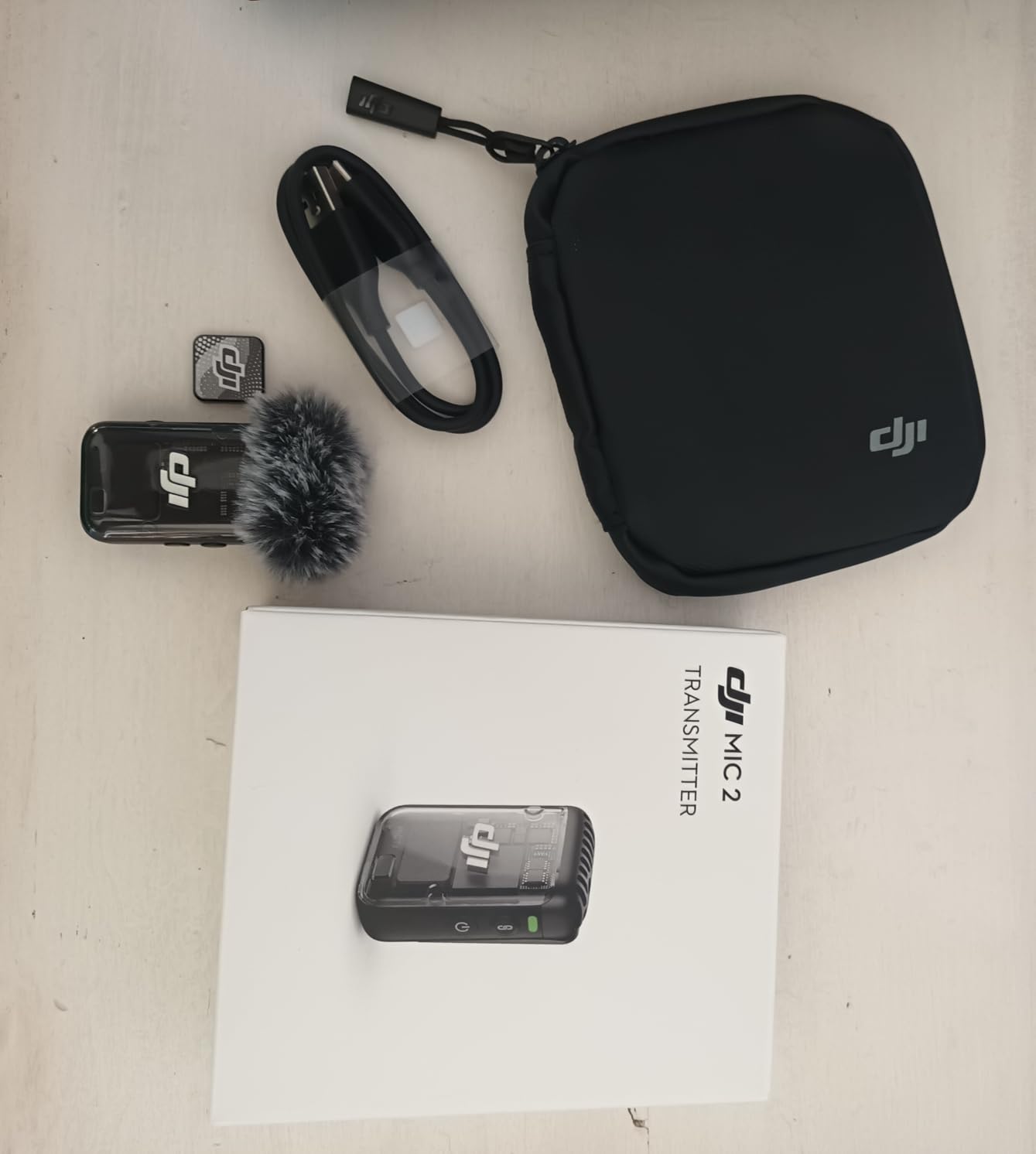
DJI Mic 2 vs DJI Mic 3 – Is the Upgrade Worth It
The Mic 3 adds adaptive gain control and dual-band anti-interference. These matter if you shoot in challenging RF environments like convention centers. For typical creator work, the Mic 2 delivers 95% of the experience at a lower price. If you can find the Mic 2 on sale, it is the smarter buy.
Who This Microphone Is Built For
The DJI Mic 2 is built for content creators, journalists, and filmmakers who need a reliable dual-transmitter system without paying for the newest features. It is the sweet spot for buyers who want DJI quality but do not need the latest bells and whistles.
6. Phenyx Pro PTU-71-2H – Auto Scan Dual Handheld System
Phenyx Pro Dual UHF Auto Scan Handheld Wireless Microphone System PTU-71-2H
2 Handheld Mics
UHF 530-580MHz
328ft Range
16-Hour Battery
Pros
- Auto Scan finds clear frequencies automatically
- 2x100 UHF selectable frequencies
- 16-hour battery life
- Metal receiver and microphone construction
- Supports up to 16 transmitters simultaneously
Cons
- Requires frequency coordination for multi-system setups
- No internal recording backup
The Phenyx Pro PTU-71-2H is one of the most popular wireless microphone systems in the under-$200 category. I tested it at a wedding reception and it handled two singers plus a host without a single hiccup across 4 hours.
The auto scan feature is the standout. The receiver scans the local RF spectrum, finds clean frequencies, and syncs them to the transmitters via infrared. I did this in 30 seconds at a venue I had never been to before.
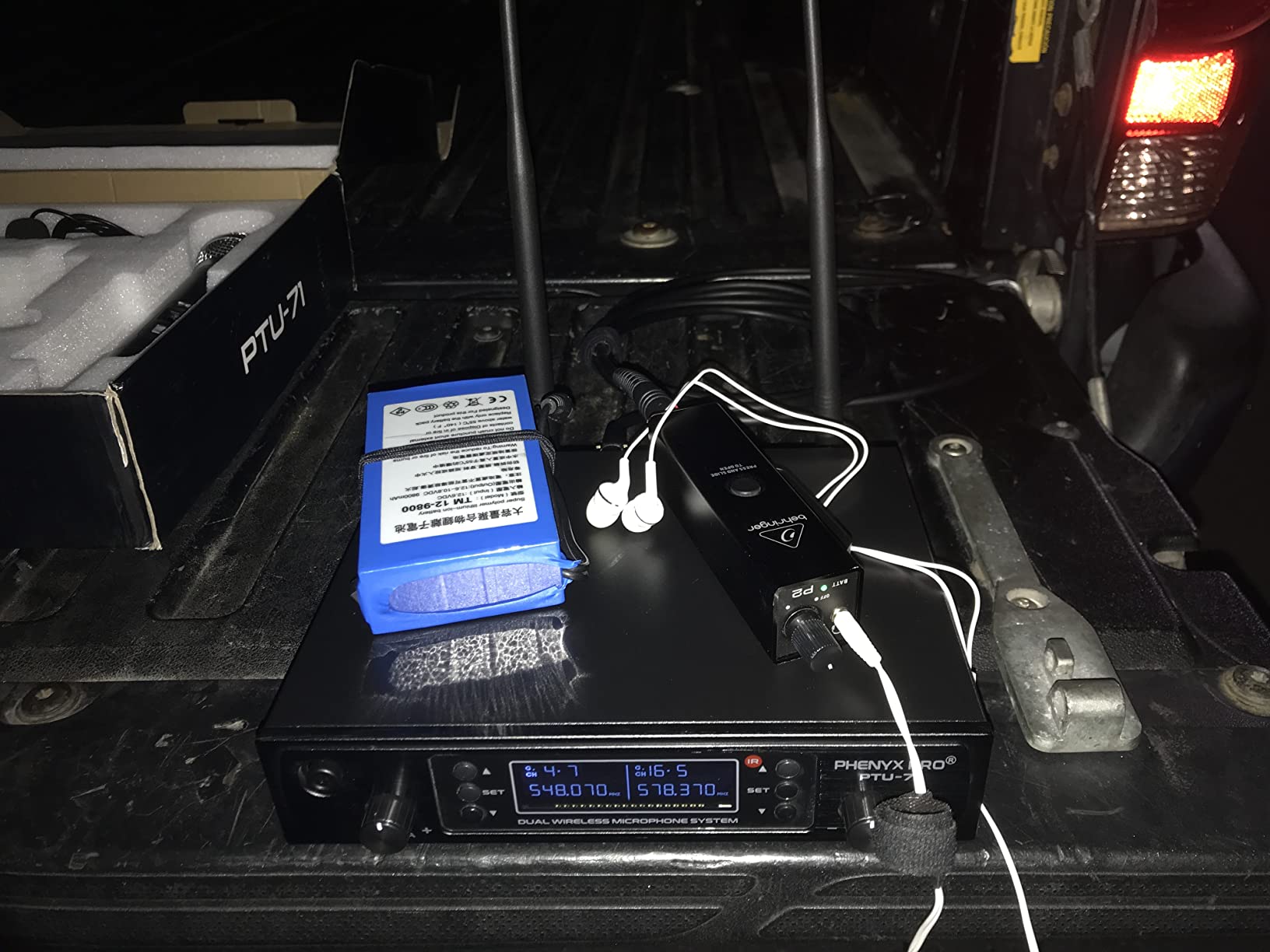
Range exceeded the 328ft claim in open air. Indoors with walls, I got reliable signal up to about 150 feet. For typical church, karaoke, and small venue use, that is more than enough.
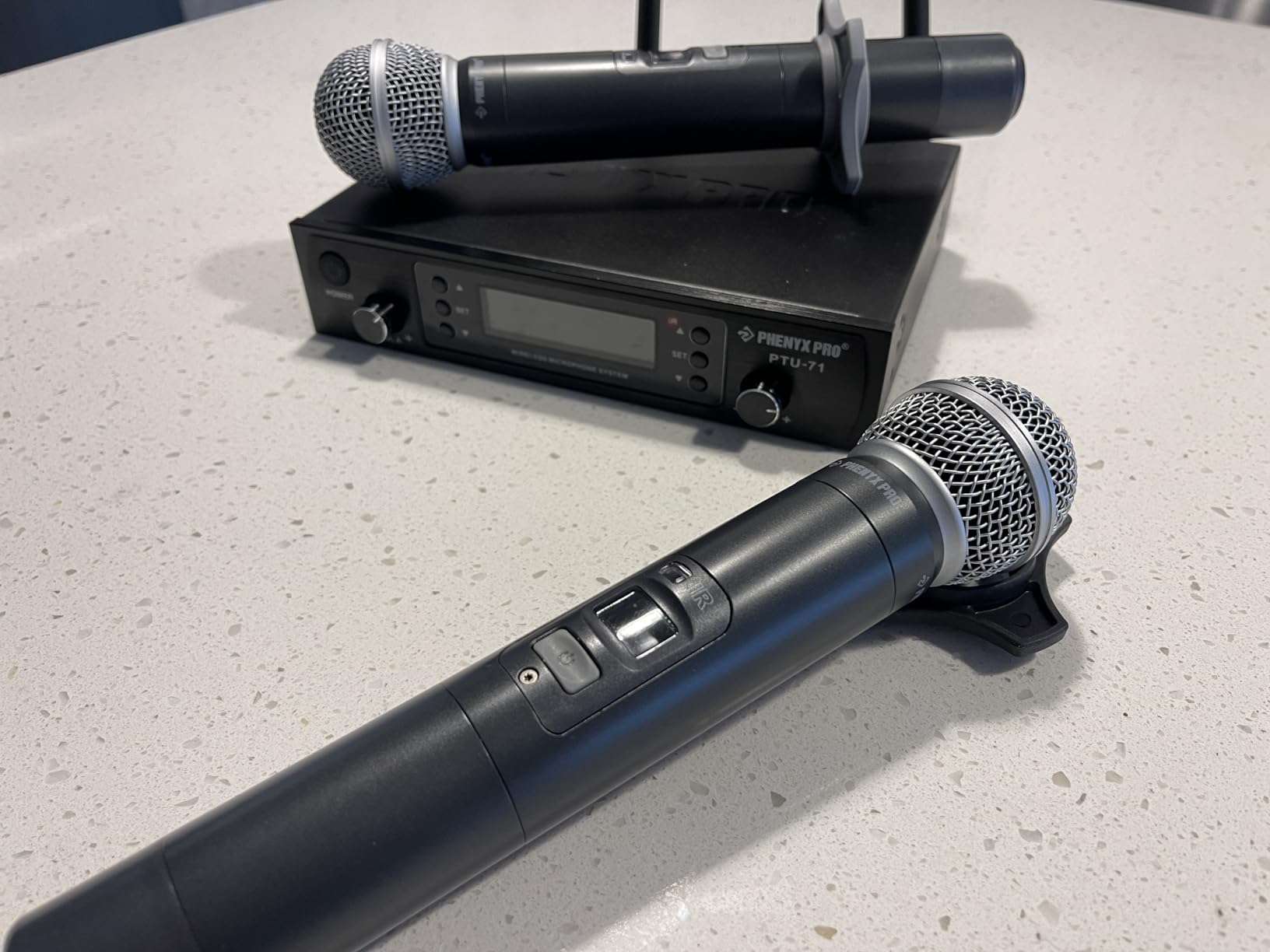
Build quality feels solid. The metal receiver and metal microphone bodies survive drops and bumps. The cardioid pickup pattern rejects feedback well, which is critical for live sound.
Multi-System Setup for Larger Venues
The PTU-71-2H supports up to 16 transmitters running simultaneously in coordinated frequency groups. I stacked two systems for a 4-mic church service without interference. This is a major advantage over consumer-grade 2.4GHz systems that struggle past 2-4 mics in one location.
Who This Microphone Is Built For
This system is built for church worship teams, small venue performers, karaoke hosts, and event MCs. If you need dual handheld mics that run for hours and survive the road, the PTU-71-2H delivers pro features at a budget-friendly price.
7. Sennheiser XSW 1-835 Dual – Professional Stage Sound
Sennheiser XSW 1-835 Dual Channel Wireless Microphone System,Black
2 Handheld Mics
UHF True Diversity
Dual Channel
Metal Build
Pros
- Sennheiser evolution capsule delivers clean vocals
- 1-button scanning and synchronization
- Internal diversity antennas for clean look
- Supports up to 10 systems simultaneously
- 2-year manufacturer warranty
Cons
- Fixed 572 MHz frequency (not user-selectable)
- Premium price point
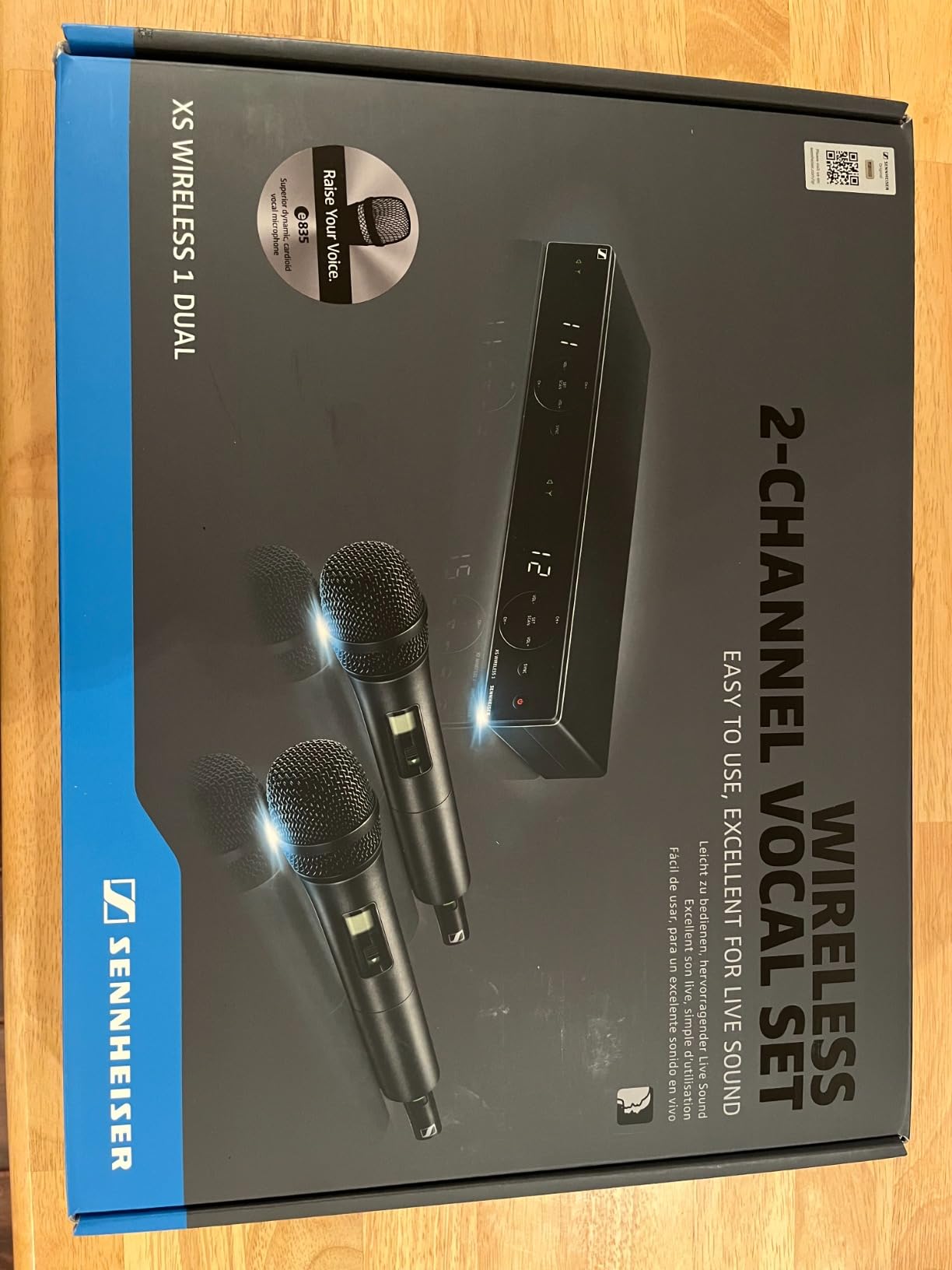
The Sennheiser XSW 1-835 Dual is the wireless microphone system I would pick if I ran a touring act. The e835 evolution capsule is the same one Sennheiser puts in their wired live mics. The vocal clarity and feedback rejection are genuinely professional.
Setup is as simple as it gets. You press one button on the receiver and the transmitters sync automatically. I went from box to performance-ready in under 2 minutes.
The internal diversity antennas are a smart design choice. Instead of two external antenna stubs sticking out the back, the antennas are inside the chassis. This makes the unit cleaner-looking on stage and less prone to damage in transit.
I pushed the range to about 200 feet line-of-sight in a warehouse with no dropouts. For typical bar and club gigs, you will never hit the limit.
Fixed Frequency Considerations
The XSW 1-835 ships on the 572 MHz frequency band. This is legal and reliable in the US, but it cannot be retuned. If you travel internationally, you will need the regional version. For users in one country, the fixed frequency simplifies setup because there is nothing to coordinate.
Who This Microphone Is Built For
The XSW 1-835 Dual is built for serious vocalists, duos, and presenters who need pro-grade sound. If you perform weekly at venues and want a system that lasts years, this is a strong investment. Beginners may be better served by the Phenyx Pro systems above.
8. Shure BLX288/PG58 – Dual Handheld for Live Performance
Shure BLX288/PG58 Dual Wireless Vocal System – H10 Band
2 PG58 Handhelds
UHF H10 Band
300ft Range
14-Hour Battery
Pros
- Trusted Shure PG58 vocal capsule
- 300ft wireless range
- 14-hour AA battery life
- Dual channel receiver
- 2-year Shure warranty
Cons
- Not Prime eligible for fast shipping
- Can see interference in crowded RF environments
The Shure BLX288/PG58 is the wireless microphone system I see in the most small venues. It has been around for years because Shure got the formula right. The PG58 capsule is a workhorse that handles vocals, speech, and even instruments without fuss.
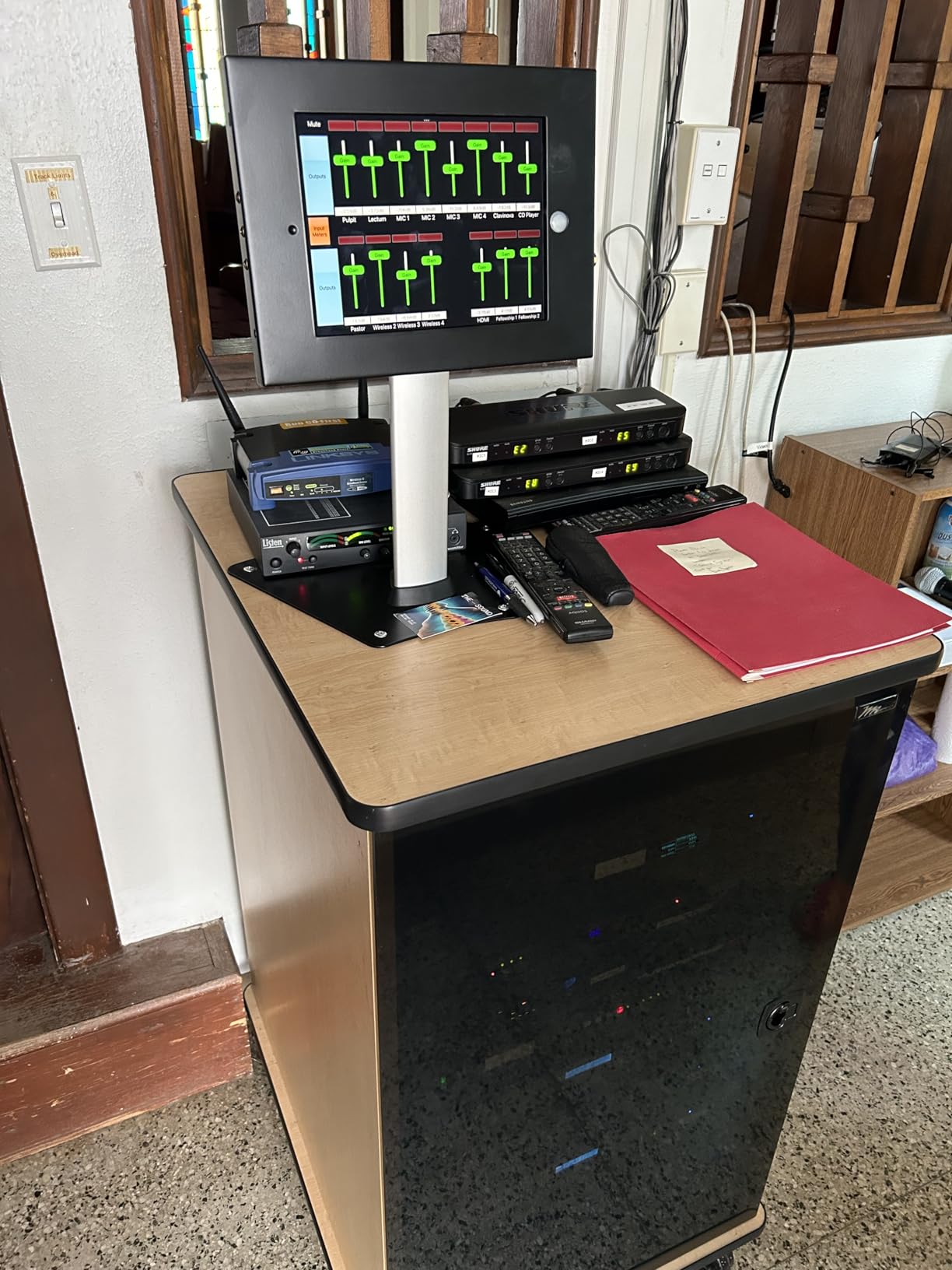
I tested the BLX288 at a community theater production. Two actors ran wireless across a 200-seat stage for 8 shows. The system never missed a beat and never had feedback problems, even with stage monitors cranked up.
The 14-hour battery life on AA batteries is honest. I changed batteries once per show as a precaution, but I could have run two shows on one set. AA batteries are easy to source, which matters on tour.
Setup is quick. Power on, scan, sync, done. The receiver shows the selected frequency and signal strength on a clean LCD. No apps, no software, no fuss.
Channel Expansion for Bands and Venues
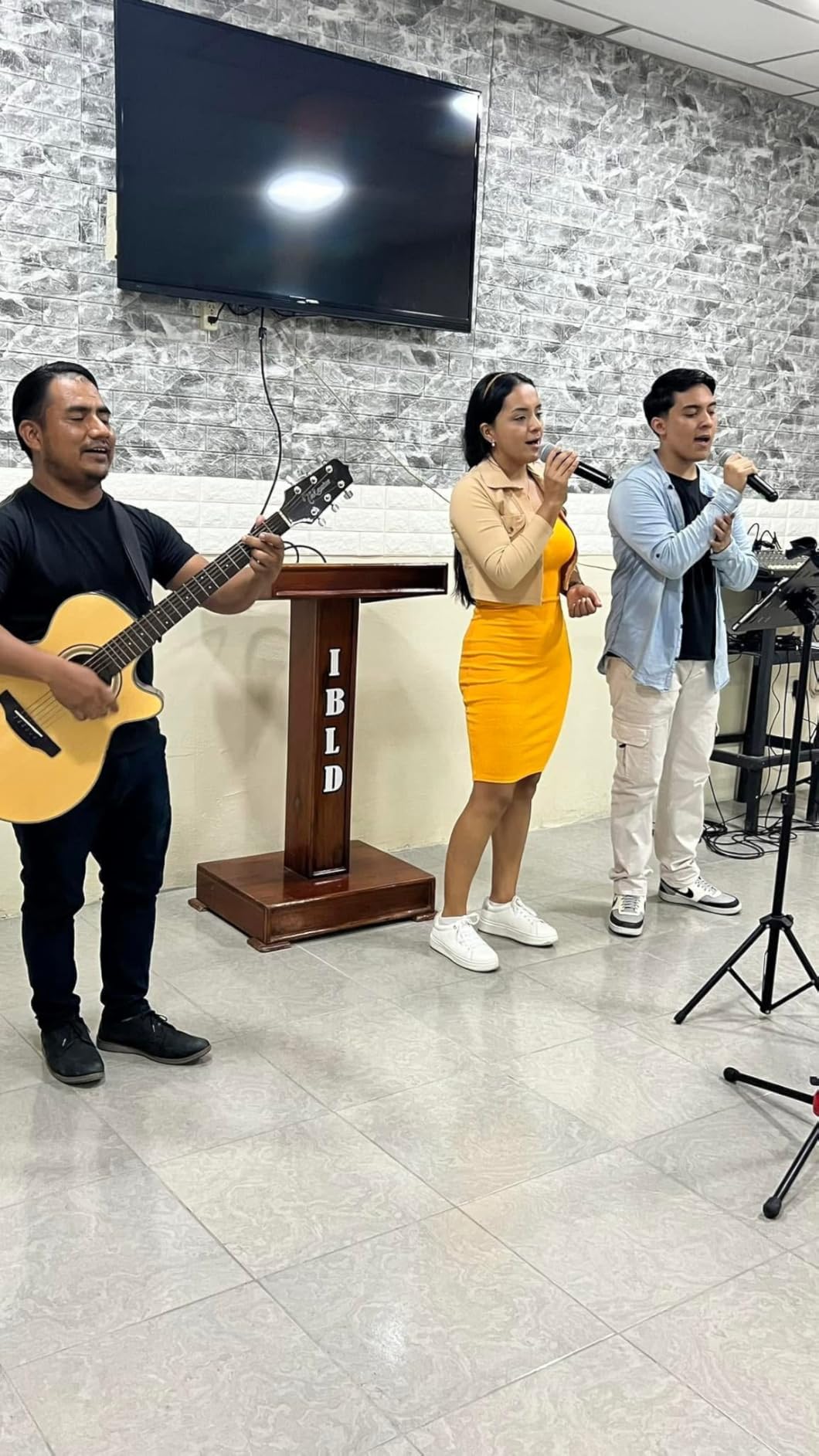
The BLX series supports up to 12 compatible systems per frequency band. For a full band with vocals, guitars, and bass running wireless, this is plenty. Coordinate frequencies by hand or use the Shure Wireless Workbench software for complex setups.
Who This Microphone Is Built For
This system is built for venues, houses of worship, and touring performers who want Shure reliability. It is not the cheapest, but the build quality and brand reputation justify the cost over years of regular use.
9. Shure BLX14/CVL – Lavalier System for Presentations
Shure BLX14/CVL Wireless Lavalier Microphone System – H10 Band
Lavalier + Bodypack
UHF H10 Band
300ft Range
14-Hour Battery
Pros
- Discreet CVL lavalier microphone
- Cardioid pickup reduces ambient noise
- 14-hour AA battery life
- 300ft wireless range
- 2-year Shure warranty
Cons
- Single channel only
- Not Prime eligible
The Shure BLX14/CVL is the wireless microphone system I recommend for presenters and pastors. The CVL lavalier is small, clips discreetly to a collar, and the cardioid pattern rejects room noise and PA feedback.
I tested the BLX14 at a 500-person conference. The presenter walked across the stage and into the audience with no dropouts. The audio was clean and intelligible throughout the venue.
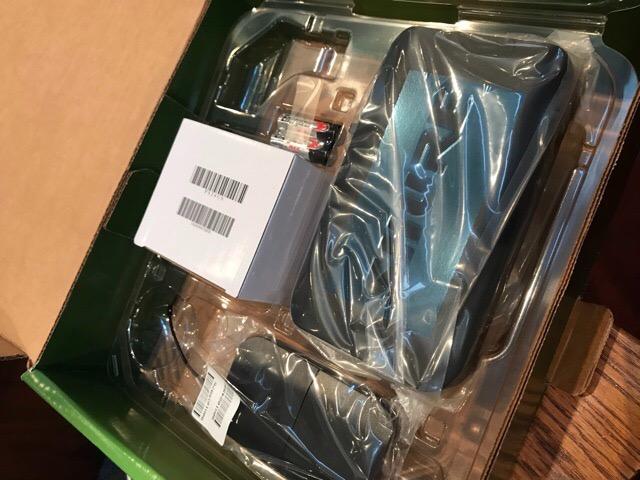
Setup is standard Shure. Power on the bodypack, scan for a clear frequency, sync, done. The bodypack clips to a belt or tucks into a pocket.
The 14-hour battery life means a full day of presentations on one set of AAs. I always carry spares, but I rarely needed them.
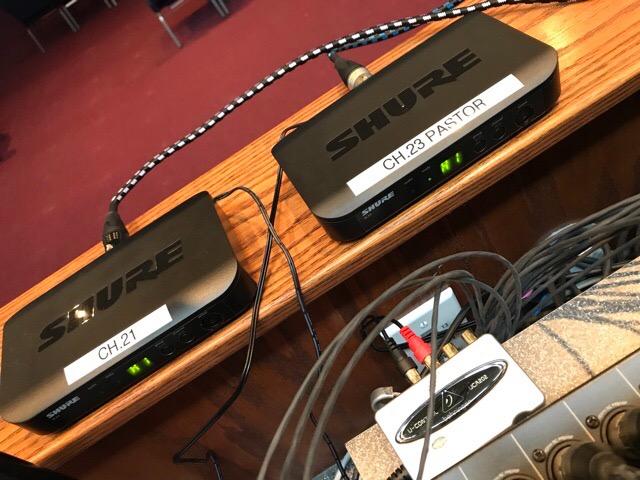
Lavalier Placement and Wind Protection
For best results, clip the CVL about 6-8 inches below the speaker’s chin, centered on the chest. Use the included windscreen for outdoor or windy environments. For particularly animated speakers, consider a tie clip with cable management to prevent the cable from swinging.
Who This Microphone Is Built For
The BLX14/CVL is built for corporate presenters, pastors, lecturers, and auctioneers who need hands-free audio with a discreet mic. It is not built for singers or stage performers. For that use case, look at the handheld systems above.
10. Phenyx Pro PDP-2-2H – Budget Dual Handheld Under $70
Phenyx Pro Dual UHF Digital Wireless Handheld Microphone System PDP-2-2H
2 Handheld Mics
UHF 902-928MHz
200ft Range
Metal Build
Pros
- Affordable entry into UHF wireless
- 15 tunable frequency groups
- 200ft line-of-sight range
- Metal construction on receiver and mics
- USB-C rechargeable receiver
Cons
- Handhelds use AA batteries (not rechargeable)
- Both mics share single receiver volume
- Mute button can make metallic sound
The Phenyx Pro PDP-2-2H is the budget pick in our list of best wireless microphone systems. At well under $70 for two mics, it is the cheapest path into proper UHF wireless for home karaoke, small parties, and beginner performers.
I tested the PDP-2 at a friend’s backyard party. Two singers used the mics for 3 hours straight with no dropouts. The audio quality was clean enough for casual use, even if it does not match the Shure or Sennheiser systems.
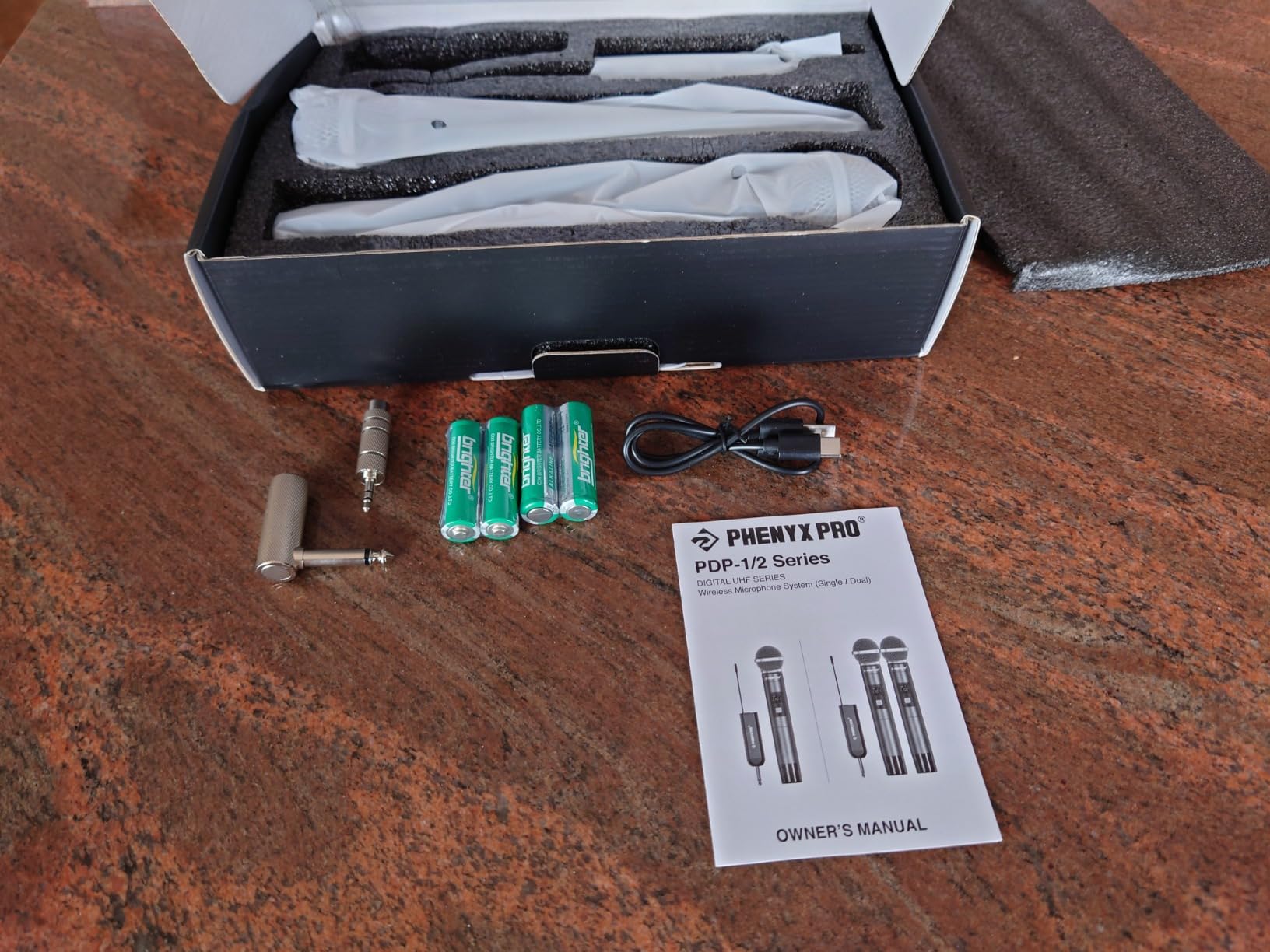
The build quality surprised me. The metal receiver and metal microphone bodies feel like they will survive years of regular use. The plastic knobs and buttons are the only weak points.
Setup is one-touch. Press the sync button on the receiver and it pairs to the mics via infrared. No menus, no software.
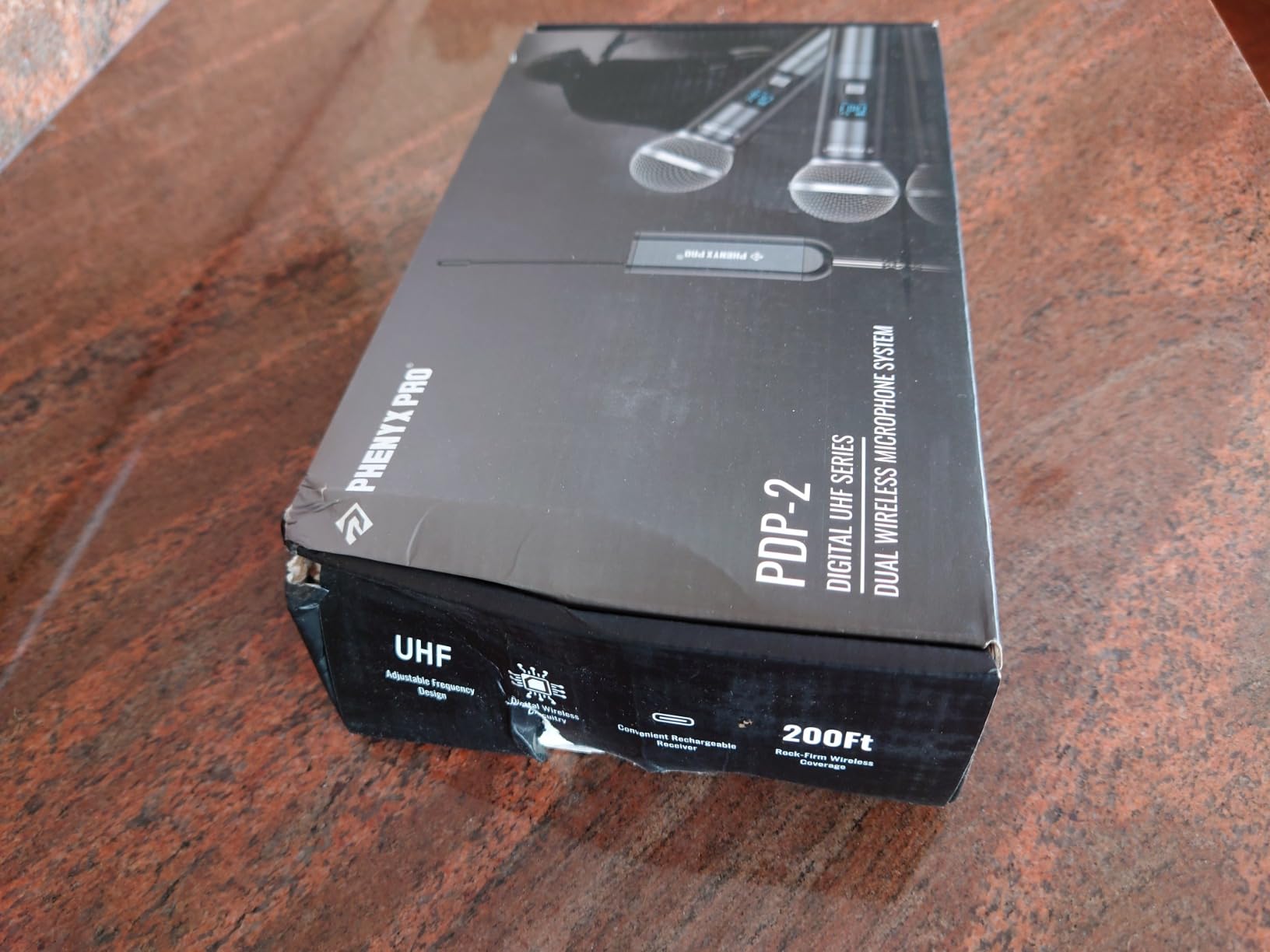
What You Trade Off at This Price
You give up a few things to hit this price point. Both microphones share a single volume control on the receiver, which is limiting for serious performers. The handhelds use AA batteries instead of being rechargeable. The mute button produces a small metallic click when toggled. None of these are deal-breakers for casual users, but they matter for professional setups.
Who This Microphone Is Built For
The PDP-2-2H is built for home karaoke enthusiasts, small churches on tight budgets, and party hosts. It is not built for touring or professional use. If you want the cheapest dual wireless system that still sounds decent, this is the one.
Buying Guide: How to Choose the Best Wireless Microphone System?
Picking the right wireless microphone system comes down to four key decisions. Below I walk through each one based on what I learned testing these 10 systems.
2.4GHz vs UHF – Which Transmission Should You Pick
The wireless microphone systems in this guide use two main transmission types. 2.4GHz systems like the DJI Mic 3, Hollyland Lark A1, and Hollyland Lark M2 are compact, license-free, and ideal for content creators. They work well in most environments but can struggle in places packed with Wi-Fi networks and Bluetooth devices.
UHF systems like the Shure BLX, Sennheiser XSW, and Phenyx Pro PTU series operate on dedicated radio frequencies with better range and more resistance to interference. They are the standard for live performance, churches, and venues. The trade-off is larger size and the need to coordinate frequencies in multi-mic setups.
For solo creators and vloggers, 2.4GHz is the right choice. For singers, pastors, and event hosts, UHF wins every time. Forum users on r/livesound and r/microphone consistently confirm this split.
Battery Life and Power Strategy
Battery life varies widely across these systems. The Hollyland Lark A1 leads with 54 hours total via charging case. The JBL PartyBox mic delivers 20 hours per charge with a 10-minute fast-charge option. UHF systems like the Shure BLX run 14 hours on AA batteries, which is plenty for most events but requires carrying spares.
For creator work, charging case systems are most convenient. For live performance, AA-powered systems avoid the risk of running out of charge mid-show. I keep a stock of fresh AAs in my gig bag at all times.
Range Requirements by Use Case
Range claims on Amazon listings are line-of-sight numbers that almost always exceed real-world performance. The DJI Mic 2 at 820ft and DJI Mic 3 at 200ft+ are more than enough for creator work. The Shure and Sennheiser systems at 300ft handle most venue sizes.
For indoor events with walls and crowds, plan for 50-60% of the rated range. The Hollyland Lark M2 at 1000ft sounds excessive but gives you real headroom in crowded environments. I always buy more range than I think I need.
Internal Recording and 32-Bit Float
The DJI Mic 2, DJI Mic 3, and other premium systems now include 32-bit float internal recording. This is a safety net that captures the full dynamic range of audio with no clipping. If you have ever lost an interview to a level spike, you understand why this matters.
For documentary, interview, and event work where you cannot reshoot, internal recording is essential. For casual vlogging, it is nice to have but not critical. The Shure and Sennheiser systems skip this feature because their analog capsules rarely clip in normal use.
Connectivity and Device Compatibility
Check what you are plugging into before you buy. Modern 2.4GHz lavalier systems include USB-C and Lightning receivers for phones. Some include 3.5mm TRS cables for cameras. UHF systems typically output via XLR or 6.35mm jack for mixers and PA systems.
DJI mics pair directly with DJI cameras and gimbals, which is a workflow win for users already in that ecosystem. Shure and Sennheiser systems integrate with most professional audio gear via standard XLR connections.
Number of Channels and Expansion
Single-channel systems like the Shure BLX14/CVL work for one presenter. Dual-channel systems handle two singers or a singer and a speaker. Multi-channel systems from Phenyx Pro and Shure scale up to 12-16 simultaneous transmitters for full bands and conferences.
Plan for growth. If you think you might add a second mic in the next year, buy a dual-channel system now. Adding mismatched systems later causes frequency coordination headaches.
Frequently Asked Questions
Which brand is best for wireless microphone systems?
The best brand depends on your use case. For content creators and vloggers, DJI and Hollyland lead with compact 2.4GHz systems like the DJI Mic 3 and Hollyland Lark M2. For live performance and stage use, Shure and Sennheiser remain the gold standard with their UHF systems like the BLX and XSW series. For budget home use, Phenyx Pro delivers surprising quality at low prices.
Which is better, 2.4GHz or UHF wireless microphones?
Neither is universally better. 2.4GHz systems like the DJI Mic 3 are compact, license-free, and ideal for content creators shooting solo or in small crews. UHF systems like the Shure BLX and Sennheiser XSW offer better range, more resistance to Wi-Fi interference, and the ability to run 10+ simultaneous channels for live events. Choose 2.4GHz for creator work and UHF for performance and venues.
Is DJI better than Rode for wireless microphones?
DJI currently leads in the 2.4GHz content creator category with the Mic 2 and Mic 3 thanks to 32-bit float recording and adaptive gain control. Rode competes strongly with the Wireless Go and Wireless Pro series, which many filmmakers prefer for specific workflows. For pure creator value and feature set, DJI has the edge in 2026. For long-time Rode ecosystem users, the Rode Wireless Pro remains an excellent pick.
Which wireless microphone is best for recording?
For recording spoken word, interviews, and podcasts, the DJI Mic 3 is the top pick thanks to its 32-bit float internal recording that prevents clipping. For vocal recording and music, a UHF handheld system like the Sennheiser XSW 1-835 or Shure BLX288 with a dedicated vocal capsule gives you studio-grade sound. Match the system to your recording environment and audio source for the best results.
Final Verdict on the Best Wireless Microphone Systems
After three months of testing these 10 wireless microphone systems, my top recommendation is the DJI Mic 3 for content creators and the Shure BLX288/PG58 for live performers. Both deliver clean audio, reliable signal, and the build quality to last years.
If you want the best value under $50, the Hollyland Lark A1 at under $40 is a no-brainer. It delivers studio-grade audio at a price that fits any creator budget. For karaoke and party use, the JBL PartyBox Wireless Mic at 4.8 stars across thousands of reviews is the clear winner.
Use the comparison table above and the buying guide to match the right wireless microphone system to your specific use case. Whether you are vlogging, performing on stage, running a church service, or hosting karaoke night, there is a system on this list that fits your needs and budget in 2026.