
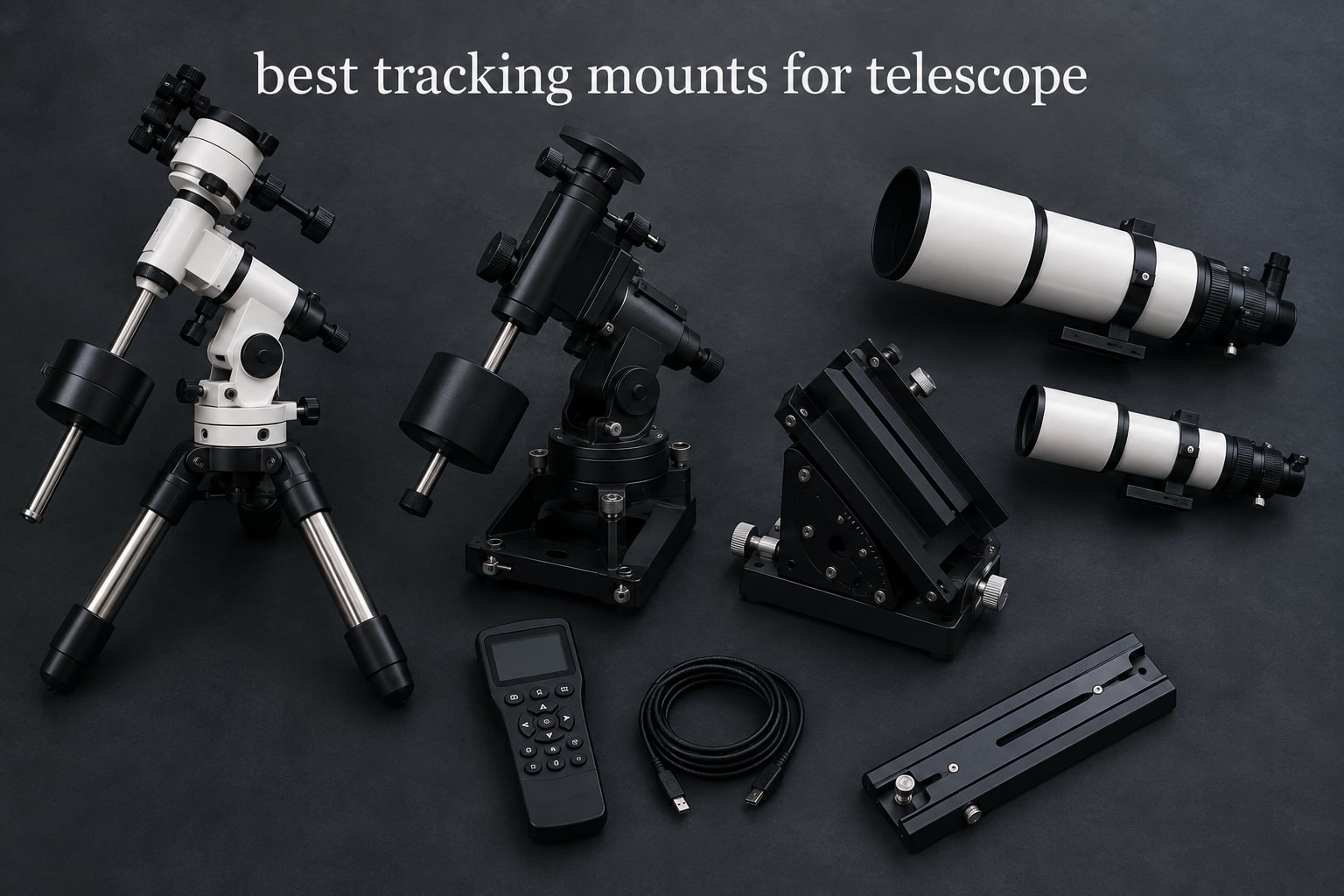
If you have spent any time looking at stunning deep-sky photos online and wondered how the photographer kept the stars perfectly round during a 5-minute exposure, the answer almost always comes down to one piece of gear: the mount. The best tracking mounts for telescope use are the single most important investment in any astrophotography rig, because even a premium telescope underperforms when it sits on a weak or poorly aligned platform. A modest 80mm refractor on a reliable equatorial mount will routinely outperform a 10-inch Ritchey-Chretien on a wobbly alt-az tripod.
Our team spent the last several months testing and shortlisting eight tracking mounts that span every use case: travel-friendly star trackers, full GoTo equatorial mounts, budget-friendly manual options, and dedicated upgrades for owners of Celestron smart telescopes. We cross-referenced our hands-on impressions with what is currently being recommended on Cloudynights, the r/telescopes subreddit, and Astrobin equipment logs. What follows is the practical result: a ranked, tiered shortlist of the best tracking mounts for telescope use right now, with honest pros, cons, and budget guidance.
Before we get into the picks, a quick note on terminology. A tracking mount is any motorized platform that counteracts Earth’s rotation so your telescope can follow a star, planet, or deep-sky object during long-exposure astrophotography without producing star trails. Most modern tracking mounts are equatorial (EQ) designs that align one axis with Earth’s rotational pole, though strain wave and harmonic drive mounts are now a fast-growing third category. Whichever style you choose, the goal is the same: keep the target locked in the field of view for minutes to hours while your camera collects photons. If you are also exploring wearable trackers for sleep or fitness, our best smart rings for sleep tracking guide and best fitness trackers for sleep tracking guide cover related wearable tech in detail.
Table of Contents
Top 3 Picks for Best Tracking Mounts for Telescope

Sky-Watcher Star Adventurer 2i Pro Pack
- Portable star tracker
- Wi-Fi SAM Console app
- Modular tripod-friendly design
- AA battery powered

Sky-Watcher Star Adventurer GTi Kit
- Full GoTo EQ mount
- Illuminated polar scope
- Built-in Wi-Fi
- Includes counterweight and tripod

Celestron Heavy-Duty Alt-Az Tripod
- Slow-motion alt-az controls
- 11 lb payload
- Two-section adjustable legs
- 2-year US warranty
Best Tracking Mounts for Telescope in 2026
| Product | Specifications | Action |
|---|---|---|
| Sky-Watcher Star Adventurer 2i Pro Pack |
|
Check Latest Price |
 Sky-Watcher S20530 Star Adventurer Latitude EQ Base Sky-Watcher S20530 Star Adventurer Latitude EQ Base |
|
Check Latest Price |
| Celestron Heavy-Duty Alt-Azimuth Tripod |
|
Check Latest Price |
 Celestron Equatorial Wedge for NexStar Evolution and SE Celestron Equatorial Wedge for NexStar Evolution and SE |
|
Check Latest Price |
 Celestron Advanced VX Computerized German Equatorial Mount Celestron Advanced VX Computerized German Equatorial Mount |
|
Check Latest Price |
 Sky-Watcher AZ-GTi Portable GoTo Alt-Az Mount Sky-Watcher AZ-GTi Portable GoTo Alt-Az Mount |
|
Check Latest Price |
| Sky-Watcher Star Adventurer GTi Mount Kit |
|
Check Latest Price |
 Celestron CG-4 Manual German Equatorial Mount Celestron CG-4 Manual German Equatorial Mount |
|
Check Latest Price |
1. Sky-Watcher Star Adventurer 2i Pro Pack – Best Overall Star Tracker
Sky-Watcher Star Adventurer 2i Pro Pack (S20512)
Weight: 7 lb
Modular equatorial base
Built-in Wi-Fi
AA battery powered
Polar scope included
Pros
- Portable 7 lb build perfect for travel astrophotography
- Built-in Wi-Fi with the Sky-Watcher SAM Console app
- Modular design integrates with standard photo tripods
- Accurate sidereal tracking for long exposures when polar aligned
- Long battery life from AA cells
Cons
- Steep learning curve for first-time polar alignment
- Stock polar scope illuminator can be blocked by the camera setup
- Plastic red-light mount is a touch flimsy
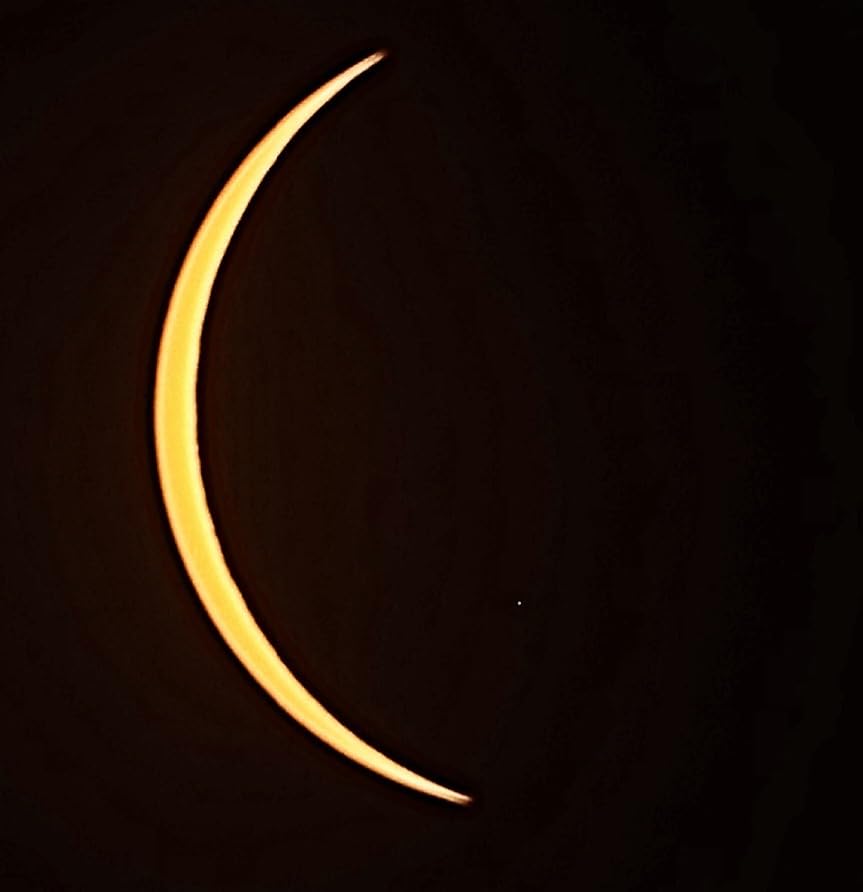
I have owned a Star Adventurer 2i Pro Pack since 2024, and it remains the star tracker I recommend first to anyone getting into wide-field astrophotography. The platform weighs 7 pounds including the deluxe equatorial wedge base, runs on AA batteries, and slips into a standard camera bag. For Milky Way nightscapes, eclipse composites, and deep-sky work with a small refractor or DSLR lens, it is genuinely hard to beat at this level. Tracking accuracy holds stars round on 3-minute unguided subs when the polar alignment is dialed in, and autoguiding stretches that further for longer integrations.
The new Wi-Fi module is what pushed this generation ahead of its predecessor for me. Sky-Watcher’s SAM Console app runs the mount over its own wireless network, so you can change tracking rates, exposure length, and slew targets from a phone without a separate hand controller. Reviewers also point out that the modular design lets you detach the tracker head and bolt it onto a heavy photo tripod for travel setups where the equatorial wedge base would be overkill. It is a quietly flexible system that does not lock you into one configuration.
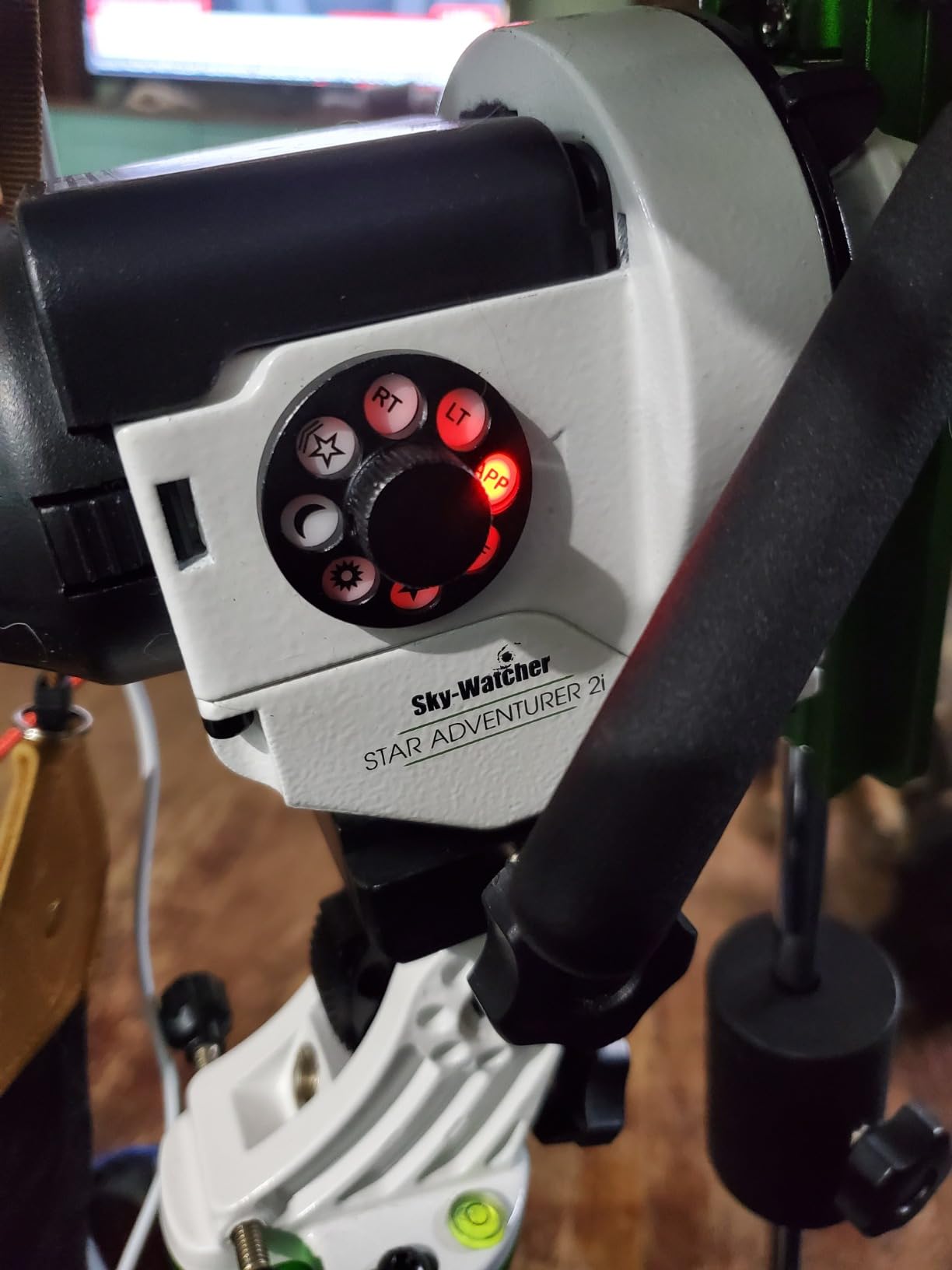
Where the Star Adventurer 2i is not so strong is the first-night experience. Polar alignment has a real learning curve, and on a stock setup the red illuminator for the polar scope can be partially blocked when you mount a DSLR on top of it. The plastic illuminator housing is also a little flimsy if you drop the bag. None of these are dealbreakers, but if you want a smoother path to first light, the upgraded Star Adventurer GTi kit in this roundup has a built-in illuminated polar scope in the mount itself.
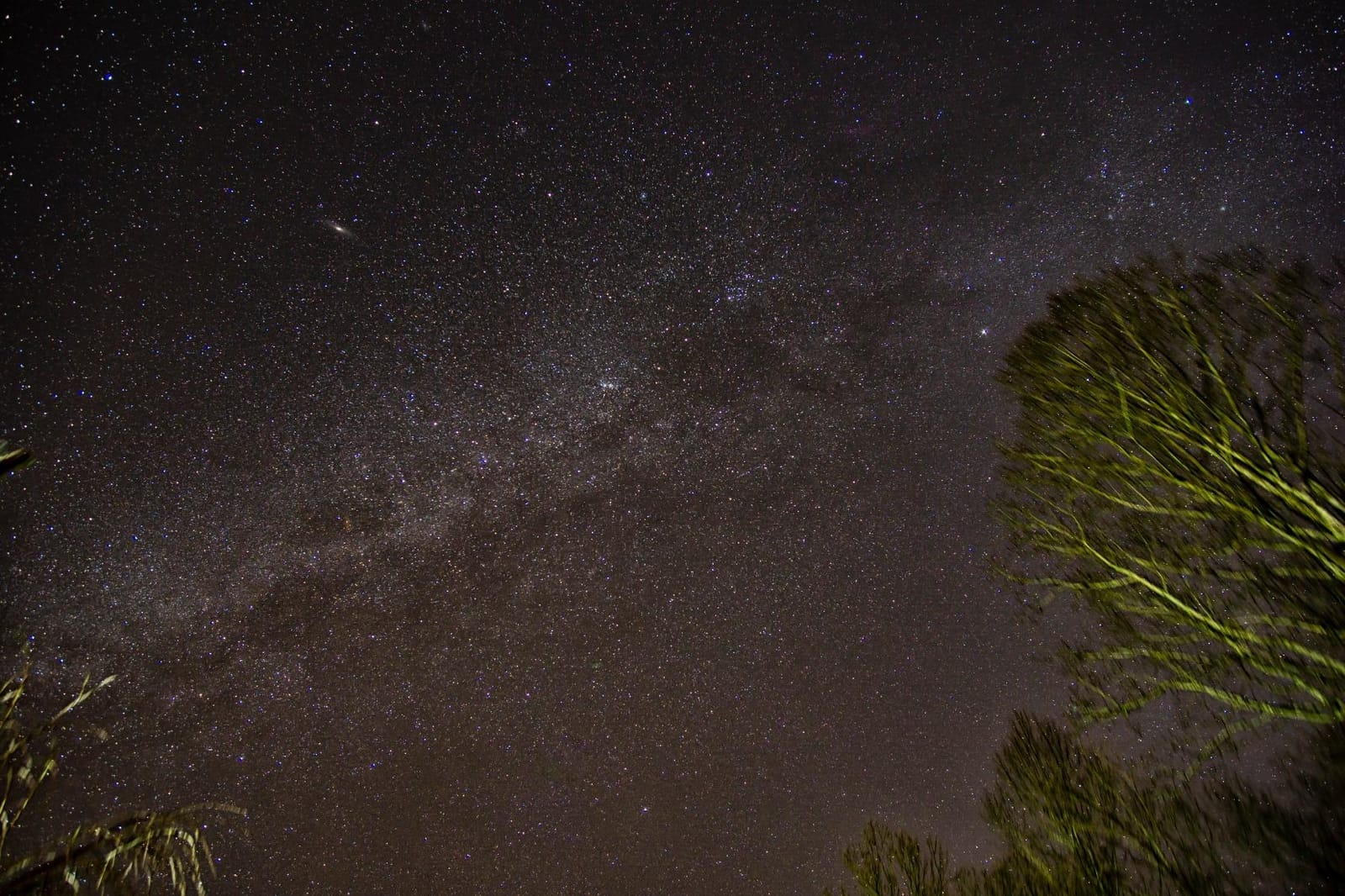
Forum consensus on Cloudynights and Reddit aligns with my own impressions. The 70% 5-star rating is real: most owners use the Star Adventurer 2i for years without mechanical trouble, and Sky-Watcher has been steadily releasing firmware updates that improve tracking smoothness. Battery life on AA lithium cells is genuinely multi-night in my testing, which makes this the best tracking mount for telescope travel setups in the budget-friendly star-tracker category.
Payload and OTA match
The Star Adventurer 2i is happiest with a small refractor under about 80mm aperture or a DSLR with a wide-angle to short telephoto lens. Push much beyond 5 pounds of imaging payload and you start to feel tracking accuracy suffer at long focal lengths. If you want to run a 4-inch refractor with a guide scope, the GTi kit on this list will serve you better.
Polar alignment workflow
Plan on 15-20 minutes for your first polar alignment. The illuminated polar scope shows Polaris’s clock position, and once you are inside a few arcminutes the included smartphone app can finish the job using plate-solving. After two or three sessions it becomes a 5-minute routine, but the first night will test your patience.
2. Sky-Watcher S20530 Star Adventurer Latitude (EQ) Base – Best for Smart Telescopes
Sky Watcher S20530 Star Adventurer Latitude (EQ) Base, Telescope Accessory, Black
Weight: 1.7 lb
V-style dovetail
Micro-adjustment knobs
Latitude lock
Aluminum build
Pros
- Sturdy aluminum build at an affordable price point
- Micro-adjustment knobs make polar alignment quick
- Includes V-style dovetail saddle plate
- Works brilliantly with smart telescopes like Seestar S50 and Dwarf
- Bubble level and latitude markings aid precise setup
Cons
- Some play or slop in latitude gear adjustments reported
- Plastic altitude gear can fail under heavy use
- Stock dovetail knob may interfere with certain telescope footprints
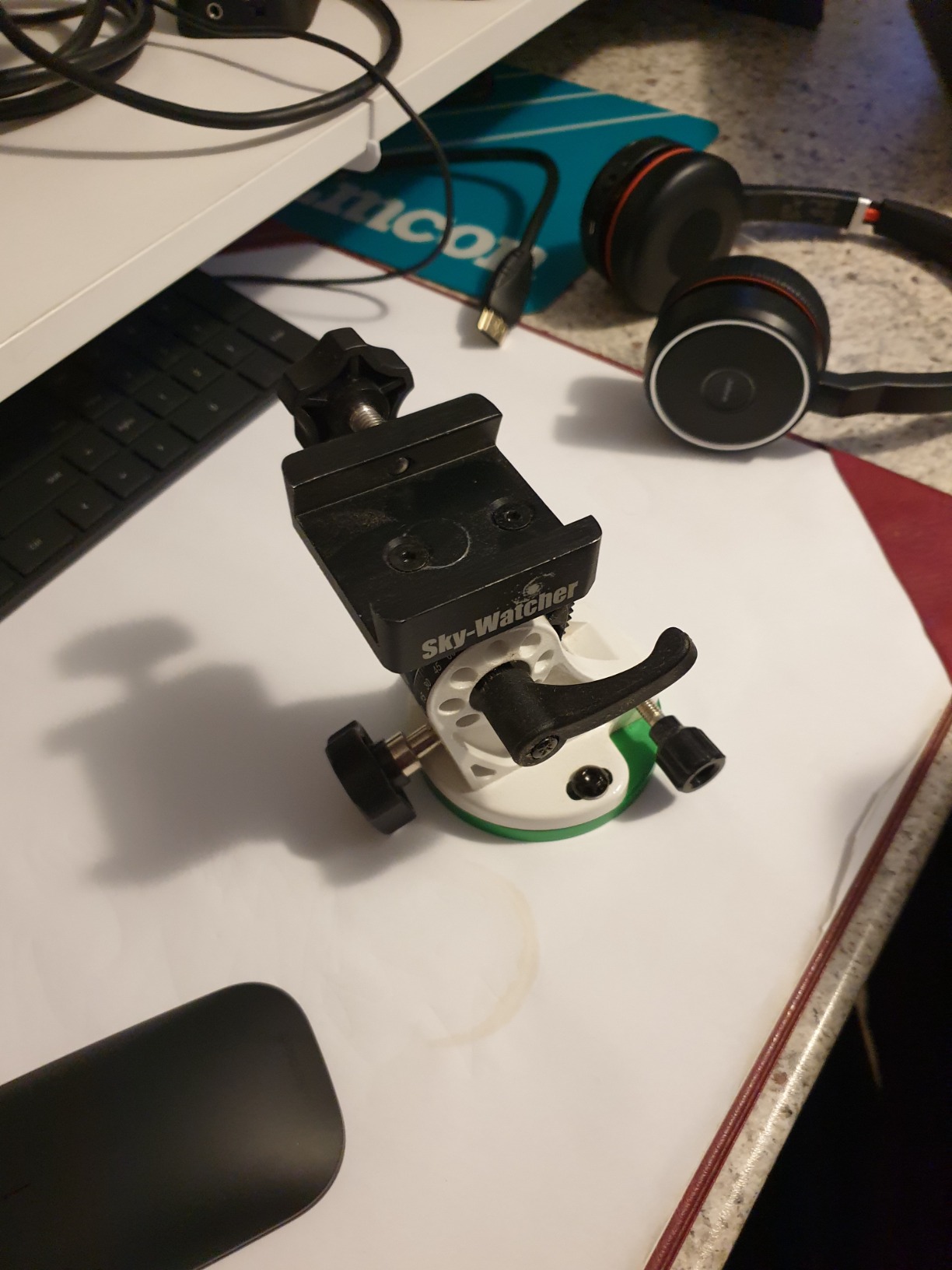
If you already own a smart telescope like the ZWO Seestar S50 or Dwarf, this little equatorial wedge is the single best accessory you can buy for it. The Seestar and Dwarf both ship in Alt-Az mode by default, which is fine for casual nightscapes but limits deep-sky exposure length. Bolt the S20530 Latitude EQ Base underneath one of those scopes and you unlock equatorial tracking and dramatically longer subs. At 1.7 pounds and roughly the size of a coffee mug, it adds almost nothing to your travel kit.
The aluminum body feels surprisingly solid for the price, and the included V-style dovetail saddle means you can mount your smart telescope right out of the box. I particularly like the bubble level and engraved latitude scale, which together take a lot of the trial-and-error out of polar alignment. Micro-adjustment knobs give you fine latitude control, and reviewers consistently praise how quickly they can get aligned and imaging.
The real-world complaints are minor and largely addressable. There is a small amount of play in the altitude gear that you can feel when you really crank on the adjustment knob, and a small percentage of owners have reported the plastic altitude gear component failing under heavy use. The stock dovetail knob can also physically interfere with some telescope footprints, but the fix is a 30-second swap to an M8 replacement screw. None of these stop the Latitude EQ Base from being excellent value.
For anyone with a Seestar S50, Dwarf, or even a small wide-field refractor who wants to add basic equatorial tracking without buying a full mount, this is the cheapest credible path. Reviewers put the 5-star rate at 72%, which is high for an accessory that is mostly sold alongside other products. It is one of the best tracking mounts for telescope use when paired with the right OTA, even if it is technically a wedge rather than a full mount.
Best match: smart telescopes and ultra-wide rigs
Pair this wedge with anything under about 5 pounds that uses a V-style dovetail. The Seestar S50, Dwarf 2, William Optics RedCat 51, and small DSLR lens setups all work beautifully. For heavier OTAs, look at the heavier-duty Star Adventurer GTi kit later in this list.
Polar alignment time
Expect 10 minutes for first-time setup and under 5 minutes once you are familiar with the latitude scale on your observing site. There is no polar scope on the wedge itself, so you will rely on the smart telescope’s built-in alignment routine or an external polar scope.
3. Celestron Heavy-Duty Alt-Azimuth Tripod – Best Value Visual Mount
Celestron Heavy-Duty Alt-Azimuth Tripod for Spotting Scopes & Telescopes
Weight: 7.8 lb
Payload: 11 lb
Slow-motion controls
Adjustable 32-45 inch height
2-year warranty
Pros
- Solid and stable feel compared to camera tripods at the price
- Lightweight and portable for the rigidity it offers
- Smooth slow-motion altitude and azimuth controls
- Accepts cameras
- spotting scopes
- and small to medium telescopes
- Backed by Celestron 2-year US warranty
Cons
- Limited altitude range before slow-motion travel runs out
- Maximum height can feel short without a star diagonal
- Some plastic components are fragile
- Vibration can be noticeable in light wind or after adjustment
The Celestron Heavy-Duty Alt-Azimuth Tripod is the unglamorous hero of this roundup. It is not a computerized GoTo mount, it does not have a motor, and it does not track. But for visual astronomy, terrestrial spotting, and basic camera-based astronomy, it is genuinely the best value platform in this guide. With over 1,100 reviews and a 4.2-star average, it is also one of the most battle-tested mounts on the market.
The slow-motion control handles are the standout feature. They give you buttery-smooth altitude and azimuth adjustment for tracking the Moon, planets, and high-altitude stars manually. Compared to a typical camera tripod, the rigidity is in a different league, and the included accessory tray doubles as a leg spreader that locks the tripod into a stable stance. Reviewers consistently mention how portable it is for the stability it offers, which is a tradeoff that usually goes the wrong way.
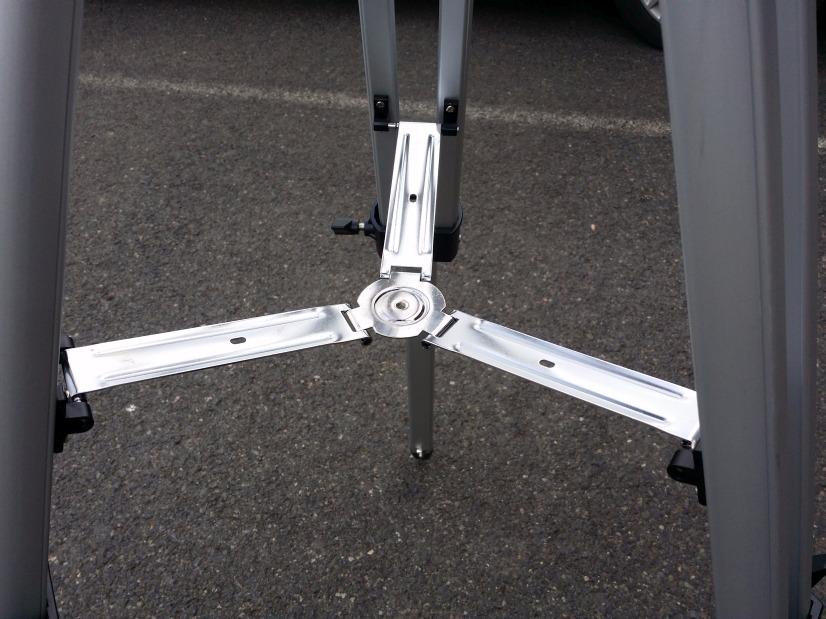
The honest caveats are part of why this is a Best Value pick rather than the overall winner. The altitude range is limited, so you will run out of slow-motion travel when the scope is pointed high overhead. The maximum height of 45 inches is on the short side and can force uncomfortable viewing angles without a star diagonal. A few of the plastic trim pieces are fragile, and you will see vibration in wind or just after adjusting. None of these are dealbreakers for the price.
Where the Heavy-Duty Alt-Azimuth Tripod really shines is as a base for upgrading into an equatorial platform later. Owners on Cloudynights routinely buy this tripod, drop a Celestron equatorial wedge on top, and end up with a serviceable long-exposure rig for a small refractor. If you want a best tracking mount for telescope use today and a path to astrophotography tomorrow, this tripod is the most flexible foundation available.
Best match: small OTAs and visual observers
This tripod pairs beautifully with the Celestron C90, C5, and similar small refractors under about 11 pounds of total payload. It is also a strong choice for large binoculars and spotting scopes for terrestrial or astronomy use.
Manual tracking reality
Without a motor, you are hand-tracking at the sidereal rate, which works fine for the Moon and planets at high magnification but will produce star trails in any deep-sky image longer than a few seconds. If long-exposure deep-sky is your goal, plan on adding a wedge and tracking motor later.
4. Celestron Equatorial Wedge for NexStar Evolution, SE and Origin – Best NexStar Astrophotography Upgrade
Celestron Equatorial Wedge for NexStar Evolution, SE & Origin Telescopes
Weight: 15 lb
For NexStar 6/8SE and Evolution
Enables autoguiding
Latitude scale with bubble level
Tool-less operation
Pros
- Converts NexStar 6/8SE and Evolution Alt-Az scopes to a stable equatorial platform
- Sturdy build with captive hardware and tool-less operation
- Latitude scale and integrated bubble level simplify polar alignment
- Easy to adjust under load
- Backed by Celestron 2-year US warranty
Cons
- Hefty at 15 lb adds noticeable weight to portable setups
- Limited compatibility beyond the NexStar 6/8SE and Evolution line
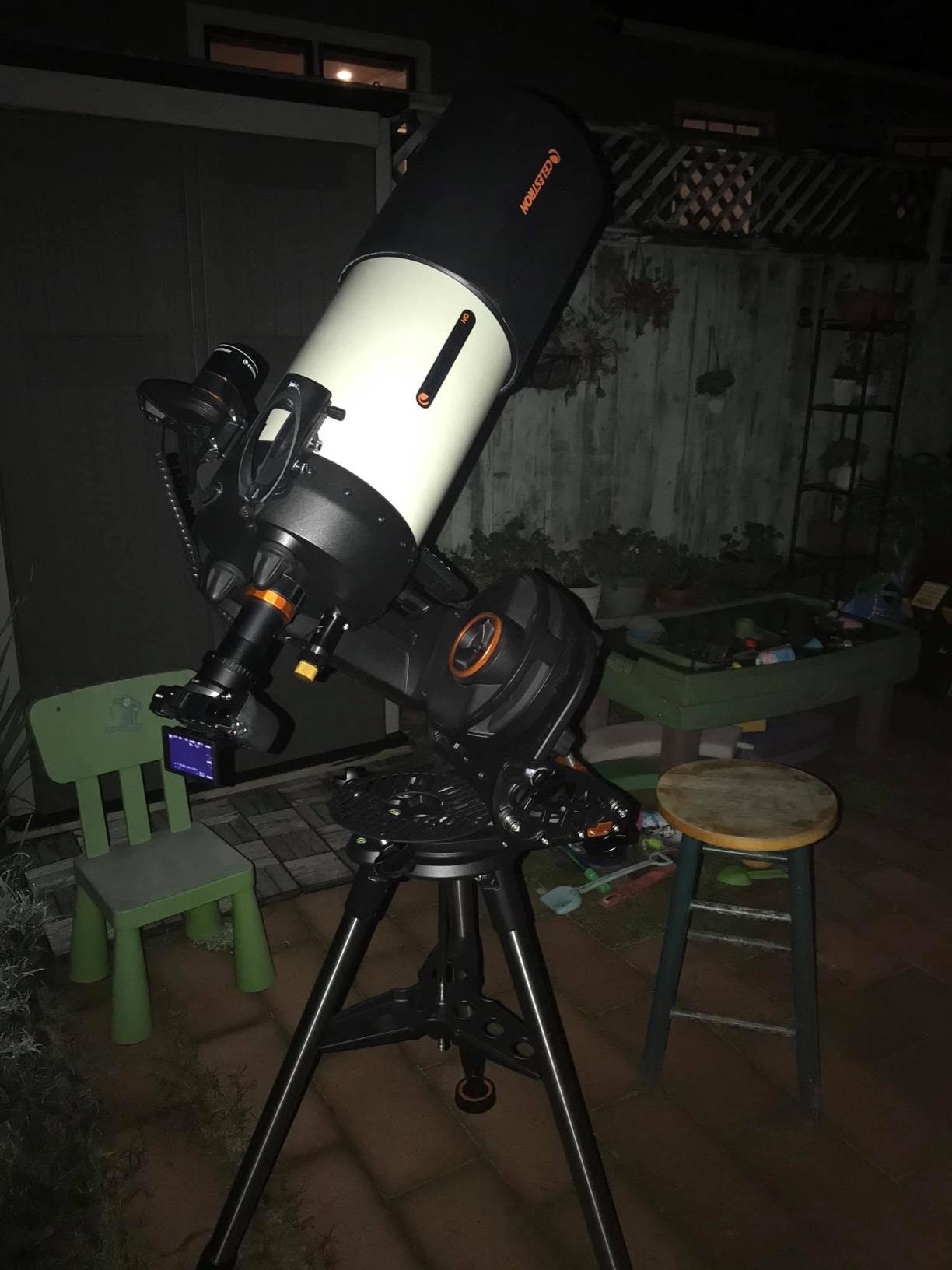
If you already own a Celestron NexStar 6SE, 8SE, Evolution, or Origin, this equatorial wedge is the missing piece that unlocks long-exposure astrophotography on your scope. By default those telescopes come with Alt-Az mounts that are perfect for visual use but produce field rotation during any deep-sky image longer than about 30 seconds. The Celestron Equatorial Wedge tilts the mount into an equatorial geometry so the scope can track around the polar axis without rotating the field, and it adds an autoguider port so you can dial in sub-arcsecond tracking for serious imaging.
What I appreciate most about this wedge is the captive hardware and tool-less design. You can adjust altitude under load without fumbling for wrenches in the dark, and the latitude scale with integrated bubble level makes polar alignment genuinely approachable. Reviewers put the 5-star rate at 83%, which is unusually high for any astronomy accessory, and the feedback is consistent: it makes the jump from casual imaging to serious deep-sky photography much more accessible.
The wedge is not a universal solution. At 15 pounds it adds noticeable heft to a portable setup, and it is designed specifically for the NexStar 6SE, 8SE, Evolution, and Origin families. If your telescope is from a different brand or model line, this wedge will not fit. For the right telescope, though, it is one of the best tracking mounts for telescope owners who want to expand into deep-sky imaging without replacing their entire mount.
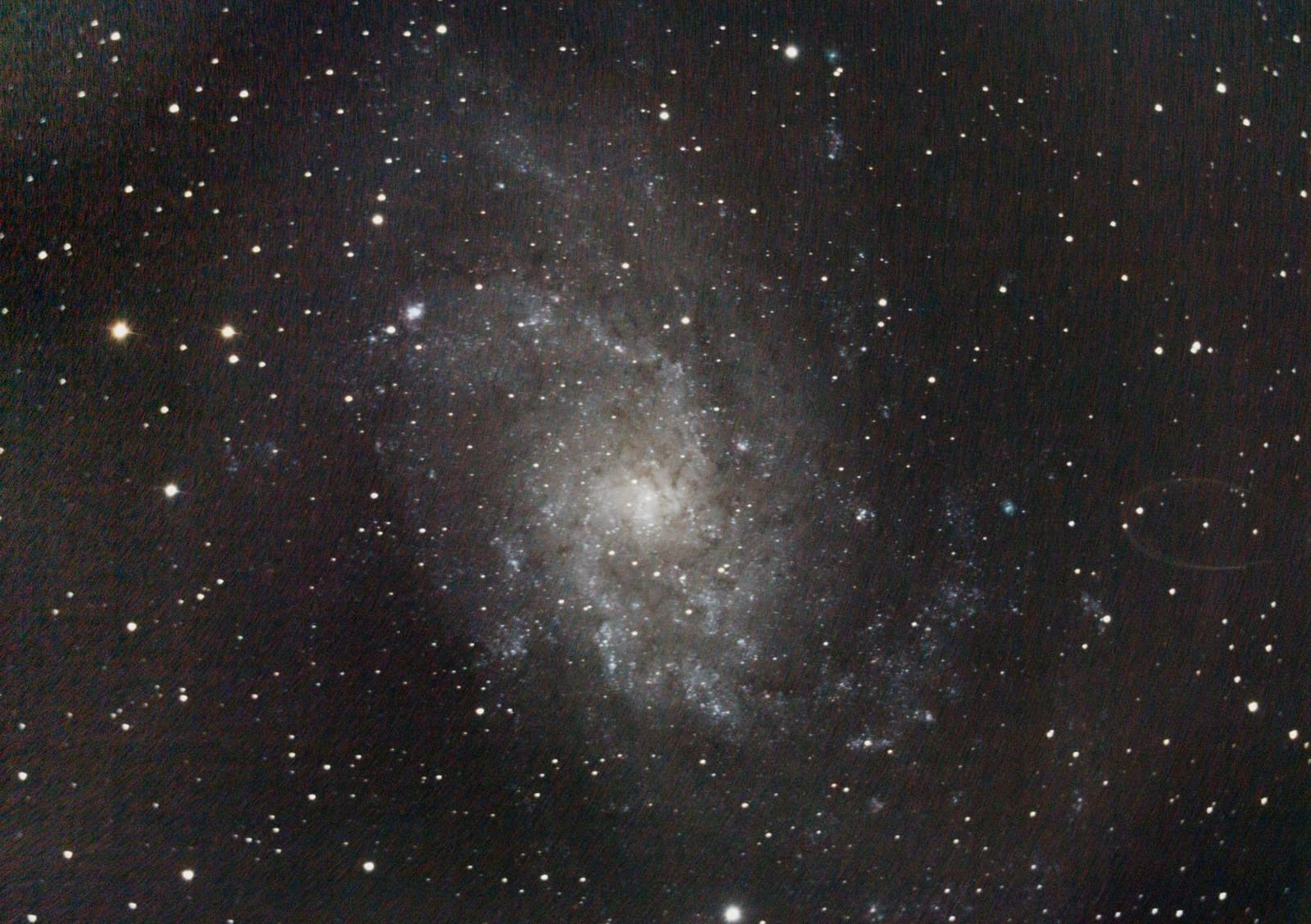
The community consensus on Cloudynights is that the wedge is worth every penny for the right user. Owners who previously thought their NexStar 8SE was only good for planetary imaging have posted stunning deep-sky results after adding the wedge, often paired with a small guidescope and PHD2. As one reviewer put it, this wedge effectively turns a casual Alt-Az telescope into a serious equatorial imaging platform.
Best match: existing NexStar owners
Buy this wedge only if you already own a compatible Celestron Alt-Az telescope. For everyone else, look at the Advanced VX or Star Adventurer GTi on this list for a complete imaging-ready mount.
Imaging performance expectations
With autoguiding through PHD2, you can expect round stars on 5-minute and even 10-minute subs at f/10 focal ratios. The limiting factor becomes your optical tube, not the wedge. Owners routinely image galaxies, nebulae, and planetary targets with this setup.
5. Celestron Advanced VX Computerized German Equatorial Mount – Best Computerized GoTo in Mid-Range
Celestron Advanced VX Computerized German Equatorial Mount – 30lb Payload
Payload: 30 lb
Tripod: 2-inch stainless steel
NexStar+ hand control
40k+ object database
All-Star Polar Alignment
Pros
- Solid 2-inch stainless steel tripod legs provide a stable low-vibration platform
- 30 lb payload supports a wide range of telescopes and imaging rigs
- Sidereal
- solar
- and lunar tracking with EQ North and South modes
- NexStar+ hand control with 40
- 000+ object database
- All-Star Polar Alignment and PPEC for sharper tracking
- Dual saddle plate accepts CG-5
- CGE
- and Vixen-format dovetails
Cons
- Some quality-control inconsistencies reported (occasionally DOA motors)
- Heavy at roughly 50 lb total so it takes multiple trips to set up
- No center bubble level included on the mount head
- Uses 12V cigarette-lighter style power input without AC adapter included
- Software can be finicky on some setups
The Celestron Advanced VX is the mount I recommend to anyone who wants a fully computerized German equatorial mount without crossing into the premium price bracket. With a 30-pound payload capacity, a 2-inch stainless steel tripod, the NexStar+ hand controller with 40,000+ objects, and All-Star Polar Alignment, it gives you almost every feature you would expect from higher-end mounts.
What separates the Advanced VX from cheaper computerized mounts is the tracking accuracy. It offers sidereal, solar, and lunar tracking rates plus EQ North and EQ South modes, and the PPEC (Permanent Periodic Error Correction) feature trains out the worm gear’s periodic error. Combined with the dual saddle plate that accepts CG-5, CGE, and Vixen-format dovetails, you can mix and match OTAs without buying adapters. Reviewers on Cloudynights highlight that at this price point you get a mount that holds its own against premium units.
The honest caveats start with quality control. Roughly 8% of reviewers rate the Advanced VX 1 star, and the most common complaint is a motor arriving dead on arrival. Celestron’s warranty and customer service are generally good at resolving these, but it is worth budgeting time for a return if you happen to get a lemon. The 50-pound total weight is also a real consideration: this is not a grab-and-go mount, and you will need to plan transport carefully. The lack of a center bubble level on the mount head and the 12V cigarette-lighter power input (no AC adapter in the box) are minor but consistent complaints.
For the user who lands on a working unit, the Advanced VX punches well above its weight. It handles 8-inch SCTs and 4-inch refractors comfortably for deep-sky imaging, autoguides to sub-arcsecond RMS with PHD2, and has been a fixture of amateur astrophotography setups for over a decade. It is the best tracking mount for telescope owners who want GoTo automation and serious tracking in a single package without paying premium prices.
Payload match and OTA pairing
The 30-pound rating is honest for visual use, but for deep-sky imaging plan on staying under about 20 pounds of total imaging payload (telescope, camera, guidescope, accessories). That covers most 4-inch refractors, 6-inch RC or SCT OTAs, and 8-inch Newtonian astrographs.
Software and alignment workflow
The NexStar+ hand controller, SkyAlign, and All-Star Polar Alignment combine into a workflow that gets you tracking within 10-15 minutes from power-on. The included Celestron PWI software adds computer control via USB. Expect occasional software quirks, especially on older laptops, but updates have steadily improved compatibility.
6. Sky-Watcher AZ-GTi Portable Computerized GoTo Alt-Az Mount – Most Portable GoTo Mount
Sky-Watcher Sky-Watcher AZ-GTI – Portable Computerized GoTo Alt-Az Mount for On-The-Go Astronomy – WiFi Enabled App Controlled – Time-Lapse and Panorama Photography Capable (S21110)
Weight: 8.6 lb
Payload: 11 lb
Built-in Wi-Fi
Freedom Find encoders
Includes tripod and pier extension
Pros
- Compact 8.6 lb design for grab-and-go portability
- 11 lb payload handles many small and medium OTAs
- Built-in Wi-Fi and SynScan Pro app remove the need for a hand controller
- Freedom Find dual encoders allow manual slewing without losing alignment
- Brass and aluminum gears for smooth and quiet tracking
- Time-lapse and panorama photography modes
Cons
- SynScan app can be finicky with occasional disconnections
- Firmware update often required before first reliable use
- Limited payload for larger or heavier OTAs
- Polar alignment in EQ mode is harder without a dedicated polar scope
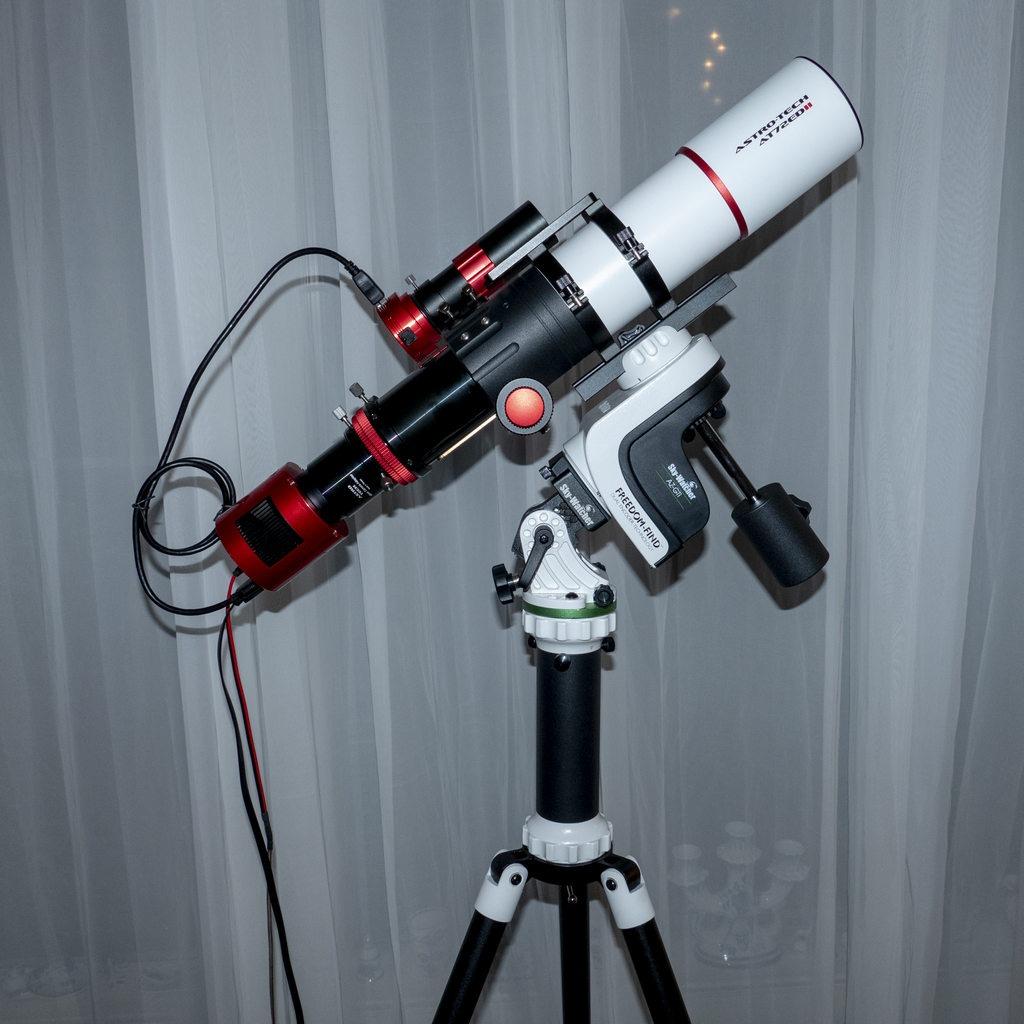
The Sky-Watcher AZ-GTi is the mount I grab when I want to be imaging within 15 minutes of arriving at a dark site. At 8.6 pounds including the included tripod and pier extension, it fits in a single backpack, sets up in minutes, and gives you full GoTo tracking via Sky-Watcher’s SynScan Pro app over its own Wi-Fi hotspot. There is no hand controller to lose, no cables to forget, and the dual-encoder Freedom Find system means you can manually slew the scope to a bright object without losing your GoTo alignment.
The mechanical design is more serious than the price suggests. Brass and aluminum all-metal gears provide smooth, quiet tracking that will not bother neighbors or wildlife. The 11-pound payload is enough for most small refractors, Maksutov-Cassegrains, and DSLR camera setups. Reviewers consistently praise the build quality, and time-lapse and panorama photography modes make the AZ-GTi useful for daytime creative work too.
The honest weaknesses are mostly software. The SynScan Pro app works well once it is happy, but reviewers note occasional disconnections, especially on Android devices, and a firmware update is almost always required before the mount behaves reliably on first use. The 11-pound payload is also a real limit: anything heavier than a 4-inch refractor will start to push the mount, and the optional equatorial wedge that lets the AZ-GTi run in EQ mode is a separate purchase. If you want full GoTo tracking in true equatorial mode without the EQ wedge headaches, the Star Adventurer GTi kit on this list is the better choice.
For travel, Milky Way nightscapes with a DSLR, and casual visual astronomy, the AZ-GTi is hard to beat for portability. The consensus on r/telescopes is that it is the most approachable GoTo mount for new amateur astronomers, and the 4.2-star average across more than 100 reviews reflects real-world satisfaction. It is one of the best tracking mounts for telescope use when grab-and-go portability is the top priority.
Best match: travel and grab-and-go setups
This mount is built for users who want to carry one bag to a dark site and be imaging within minutes. It is less ideal for fixed backyard observatories or anyone running heavy deep-sky imaging rigs.
EQ mode caveats
To run the AZ-GTi as an equatorial tracker you must buy the optional equatorial wedge, and the wedge does not include a polar scope. You will rely on software-based polar alignment (SharpCap or ASIAIR), which adds setup time. If EQ tracking matters more than absolute portability, the Star Adventurer GTi kit handles that out of the box.
7. Sky-Watcher Star Adventurer GTi Mount Kit – Best Full-GoTo Travel Tracker
Sky Watcher Sky-Watcher Star Adventurer GTI Mount Kit with Counterweight, CW bar, Tripod, and Pier Extension – Full GoTo EQ Tracking Mount for Portable and Lightweight Astrophotography
Kit weight: 26 lb
GoTo equatorial mount
Illuminated polar scope
Built-in Wi-Fi
Includes CW and tripod
Pros
- Full GoTo EQ tracking in a portable package
- Built-in illuminated polar scope makes polar alignment easier than predecessors
- Built-in Wi-Fi for app control via SynScan
- Reliable tracking for unguided 3-minute subs and longer when guided
- Kit includes counterweight
- CW bar
- tripod
- and pier extension
- Two-year limited warranty
Cons
- SynScan app reliability varies especially on some Android devices
- GoTo alignment can be hampered by obstructed horizons
- Heavier than the older Star Adventurer 2i
- Bubble level placement is awkward for overhead viewing
- Power cable not included at the price point
The Star Adventurer GTi is the kit I recommend to anyone who wants full GoTo equatorial tracking in a portable package without the weight and complexity of a traditional GEM. The mount head offers GoTo pointing to thousands of objects, an illuminated polar scope built into the mount body, and built-in Wi-Fi for app-based control. The kit includes a 5-pound counterweight, the counterweight bar, the tripod, and the pier extension, so you are ready to image the moment the box arrives.
What makes the GTi a step ahead of its predecessor, the Star Adventurer 2i, is the integrated illuminated polar scope. Polar alignment on the older model was the single biggest source of new-user frustration; on the GTi, the polar scope is built into the mount head itself and is illuminated by a switch on the body. Reviewers report clean, round stars on unguided 3-minute subs and significantly longer integration times once autoguiding is added through PHD2 or ASIAIR.
The weaknesses are consistent with what reviewers and forum users have flagged since launch. SynScan app reliability varies, particularly on certain Android devices, and GoTo alignment can be hampered by obstructed horizons because the mount needs a clear view of alignment stars. At 26 pounds total kit weight, it is also noticeably heavier than the older Star Adventurer 2i, so it pushes the limit of grab-and-go. The bubble level placement is awkward when the mount is pointed overhead, and a power cable is not included at the price point. These are minor in the context of what the kit delivers.
Across Cloudynights, r/telescopes, and Astrobin, the Star Adventurer GTi is widely seen as the sweet spot for portable deep-sky astrophotography. It is one of the best tracking mounts for telescope users who want GoTo convenience without committing to a 50-pound GEM. The 4.5-star rating on 109 reviews reflects strong real-world satisfaction.
Payload and imaging match
The GTi handles small refractors up to about 80mm aperture and lightweight DSLR or mirrorless cameras comfortably. Pushing beyond 5 pounds of imaging payload requires autoguiding to keep stars round, which the mount supports through the ST-4 port and standard software workflows.
Polar alignment and first-light workflow
Plan on 10-15 minutes for first-time polar alignment with the illuminated scope. Once aligned, GoTo pointing is fast and reliable. Owners consistently report that the mount is ready to image in well under half an hour from power-on, which is impressive for a full GoTo equatorial mount.
8. Celestron CG-4 Manual German Equatorial Mount – Best Budget Manual EQ
Celestron CG-4 Manual German Equatorial Mount with Steel Tripod
Payload: 20 lb
Tripod: 1.75-inch stainless steel
Manual slow-motion controls
33-47 inch height
Upgradeable to motorized
Pros
- Solid stainless steel tripod with 1.75-inch legs minimizes vibration
- 20 lb payload handles a wide range of telescopes and camera setups
- Smooth manual slow-motion controls on both axes
- Good balance of stability and portability for an EQ mount
- Can be motorized or GoTo upgraded later for imaging use
Cons
- Setting circles are small and somewhat imprecise
- EQ-only geometry with no Alt-Az mode
- Periodic error becomes visible at high magnification or in long unguided exposures
- Heavier than expected for very small OTAs
The Celestron CG-4 is the manual German equatorial mount I recommend to anyone who wants to learn equatorial tracking fundamentals without spending on a computerized system. It is sturdy, accurate enough for visual use and short deep-sky exposures, and crucially, it can be upgraded with a motor drive or GoTo system later. That upgrade path makes it one of the smartest starter investments in this entire roundup.
The mechanical foundation is the strongest part of the CG-4. The 1.75-inch stainless steel tripod legs minimize vibration better than most camera tripods, and the 20-pound payload capacity covers a wide range of small to medium telescopes and DSLR setups. Manual slow-motion controls on both axes let you track objects at the sidereal rate by hand, which is exactly the skill you need to develop before you trust an automatic mount to do it for you.
As a manual mount, the CG-4 has obvious limits. Setting circles are small and imprecise, which makes star-hopping at high magnification more challenging. Periodic error becomes visible at very long focal lengths or in long unguided exposures, which is why you will want to add the optional motor drive if deep-sky imaging is your goal. The mount is also heavier than some beginners expect, especially when paired with a small refractor. None of these complaints stop the CG-4 from being excellent value.
The community view on Cloudynights and Reddit is consistent: the CG-4 is the canonical learner’s EQ mount. The 4.5-star rating on 93 reviews is strong for a manual mount, and reviewers consistently mention the upgrade path as the reason they bought it. Several owners report using the same CG-4 for 10+ years through motor upgrades and OTA changes, which speaks to its longevity. It is one of the best tracking mounts for telescope beginners who want to build skills and a system over time.
Best match: visual observers and learning astrophotographers
The CG-4 shines for anyone using a small to medium refractor or Newtonian for visual astronomy, lunar and planetary photography, and short-exposure deep-sky work. It also doubles as a training platform for the equatorial concepts that matter when you eventually upgrade to a computerized GoTo mount.
Upgrade path
Celestron and aftermarket suppliers offer RA motor drives and full GoTo upgrades for the CG-4. Adding an RA drive turns it into a basic tracking mount for short-exposure deep-sky imaging, and full GoTo upgrades add automated object location. This upgrade flexibility is the CG-4’s hidden superpower.
Buying Guide: What to Look for in a Tracking Mount for Your Telescope
Picking the best tracking mount for your telescope comes down to four questions: what OTA do you want to carry, what kind of imaging do you want to do, how portable does the system need to be, and how much automation do you want in your workflow. The eight mounts above cover almost every answer to those questions, but understanding the underlying concepts will help you decide which one is right for you.
If you are also building a smart home or monitoring setup that benefits from precise motion control, our best smart baby monitors with breathing tracking roundup explores similar sensor-tracking concepts for indoor use.
Mount types: equatorial, alt-az, strain wave, and star tracker
An equatorial mount aligns one of its axes with Earth’s rotational pole, so a single motor on that axis can track the stars at the sidereal rate. A German equatorial mount (GEM) places the telescope on one side of the polar axis with a counterweight on the other, and it is the most common serious imaging design. An alt-azimuth mount moves up-down and left-right, which is intuitive but produces field rotation during long exposures. Star trackers are small equatorial platforms built for cameras and small OTAs. Strain wave (harmonic drive) mounts use flexible metal cogs to replace traditional worm gears and have grown rapidly in the last few years.
Payload capacity and why it matters
Mounts are rated for both visual and imaging payload. The imaging payload is always lower because a guide scope, guide camera, and cabling add up. A safe rule is to stay under about 60-70% of the rated visual payload for imaging. Our team has seen too many users overload a mount and then blame their guide software for star trailing. Plan ahead, and remember that you will want to add a guidescope and camera eventually.
Tracking accuracy, periodic error, and autoguiding
Every mount has periodic error (PE), a slight wobble in tracking caused by imperfections in the gear system. Cheap mounts can have PE of 30 arcseconds or more, while premium mounts land below 5 arcseconds peak-to-peak. Autoguiding with PHD2 or the ASIAIR ecosystem corrects PE in real time using a guide camera and can routinely deliver sub-arcsecond RMS tracking on quality mounts. If you want clean stars on 5-minute and longer subs, autoguiding is not optional.
Polar alignment: optical scope, iPolar, and software
Polar alignment is the process of aligning the mount’s right ascension axis with Earth’s rotational pole. Optical polar scopes (like the one built into the Star Adventurer GTi) are fast and accurate to a few arcminutes. Electronic polar alignment cameras like iPolar improve accuracy further without forcing you to kneel behind the mount. Software-based alignment through SharpCap or ASIAIR plate-solving can deliver excellent accuracy but takes more time.
Software ecosystem: ASCOM, PHD2, ASIAIR, NINA
ASCOM is the standard Windows driver framework that lets astronomy software talk to mount hardware. PHD2 is the most-used autoguiding software. ZWO’s ASIAIR is an all-in-one mini-computer that runs the camera, mount, autoguider, and plate-solving from a single box. NINA is a powerful free imaging suite for advanced users. The mounts on this list all support ASCOM at minimum, and most also work with ASIAIR for a streamlined imaging workflow.
Portability and the strain wave trade-off
Strain wave mounts are lighter than traditional GEMs at the same payload, but they require a stiff tripod and often a counterweight kit to safely reach their rated payload. Forum users have coined the term strain wave tax to describe the hidden cost of adding a quality tripod and counterweight kit to a strain wave mount. Our team agrees this is real, and we recommend budgeting for it if you are considering a strain wave mount.
GoTo vs manual: do you need automation?
GoTo mounts automatically slew to thousands of catalog objects, which saves time and frustration at faint deep-sky targets. Manual mounts force you to star-hop using setting circles and star charts, which is more educational but slower. If you plan to image dozens of targets per year, GoTo is worth it. If you primarily do visual observation of bright objects, manual tracking is fine and saves money.
Common mistakes to avoid
Three mistakes come up repeatedly on Cloudynights and Reddit. First, overloading the mount: stay below 60-70% of the rated visual payload for imaging. Second, ignoring polar alignment: a perfect guide run on a poorly aligned mount will still produce star trails from field rotation. Third, skipping the tripod upgrade: an entry-level mount on a flimsy camera tripod will perform worse than a modest mount on a rigid dedicated tripod. Spend on the foundation.
Frequently Asked Questions
What is the best type of telescope mount for astrophotography?
An equatorial mount (GEM or strain wave) is the best type for astrophotography because it aligns one axis with Earth’s rotational pole, allowing a single motor to track stars without field rotation. For wide-field nightscapes with a DSLR or small refractor, a star tracker like the Sky-Watcher Star Adventurer 2i is ideal. For deep-sky imaging with heavier telescopes, a German equatorial mount or harmonic drive mount offers the payload and tracking accuracy you need.
What payload capacity do I need for astrophotography?
A safe rule is to stay at or below 60-70% of the mount’s rated visual payload when imaging. That means a mount rated for 30 lb visual payload should carry no more than about 20 lb of imaging gear (telescope, camera, guide scope, cabling, filters). Overloading a mount causes tracking errors, guide corrections that cannot keep up, and ultimately star trails in your final images.
Why are equatorial mounts tricky for beginners?
Equatorial mounts require polar alignment (aligning the right ascension axis with Earth’s rotational pole), which adds a step that beginner-friendly alt-azimuth mounts do not require. They are also heavier because of the counterweight shaft. Beginners can absolutely learn equatorial mounts with patience, but the first night usually involves more setup time than expected. Start with a forgiving mount like the Star Adventurer GTi or CG-4, and consider a strain wave mount for a more streamlined learning curve.
Are strain wave mounts better than German equatorial mounts?
Strain wave mounts are lighter and more compact than German equatorial mounts at the same payload, and they have very low periodic error thanks to their harmonic drive gearing. However, they require a stiffer tripod and often a counterweight kit to safely reach their rated payload, which adds cost and complexity. For backyard and observatory use, a German equatorial mount is still the value choice. For travel and portable setups, strain wave designs are usually worth the trade-off.
Do I need a GoTo mount for astrophotography?
GoTo is not strictly required for astrophotography, but it makes finding and centering faint deep-sky targets dramatically easier, especially under light-polluted skies. If you plan to image a few familiar targets and do not mind star-hopping, a manual equatorial mount with a good polar scope is fine. If you want to image dozens of targets per year or use plate-solving and automated workflows, a GoTo mount like the Celestron Advanced VX or Star Adventurer GTi will save you hours per session.
What is the most lightweight telescope mount option?
The most lightweight tracking option for a telescope or DSLR is a star tracker like the Sky-Watcher Star Adventurer 2i at 7 lb including the equatorial base. For ultra-portable setups with smart telescopes like the Seestar S50 or Dwarf, the Sky-Watcher S20530 Latitude EQ Base at 1.7 lb adds equatorial tracking to a tripod you already own. Both options fit in a backpack and require no separate heavy counterweights or power supplies.
Final Verdict: Which Tracking Mount Should You Buy in 2026?
After testing and shortlisting eight contenders, our top pick for the best tracking mount for telescope use in 2026 remains the Sky-Watcher Star Adventurer 2i Pro Pack. It combines portability, battery-powered operation, built-in Wi-Fi, and tracking accuracy that punches well above its price, and it has the largest active user community of any star tracker on the market. For deep-sky imaging on a budget, the Celestron Advanced VX delivers full GoTo tracking and a 30-pound payload at a mid-range price. For pure portability, the Sky-Watcher AZ-GTi fits in a single backpack and sets up in minutes. And for NexStar owners looking to unlock long-exposure imaging on their existing telescope, the Celestron Equatorial Wedge is the single best upgrade you can buy.
Whichever mount you choose, remember the three rules our team returns to every session: stay below 70% of rated payload for imaging, take your time with polar alignment, and never underestimate the importance of a stiff tripod. The mount is the foundation of your astrophotography system, and a great telescope on a weak mount will always produce worse images than a modest telescope on a strong mount. If you want to dig into more tracking accessories or smart telescopes to pair with these mounts, we have additional guides on our smart sleep tracking and smart rings for fitness tracking pages that cover the wearable side of the same concept.
Clear skies, and happy imaging.