
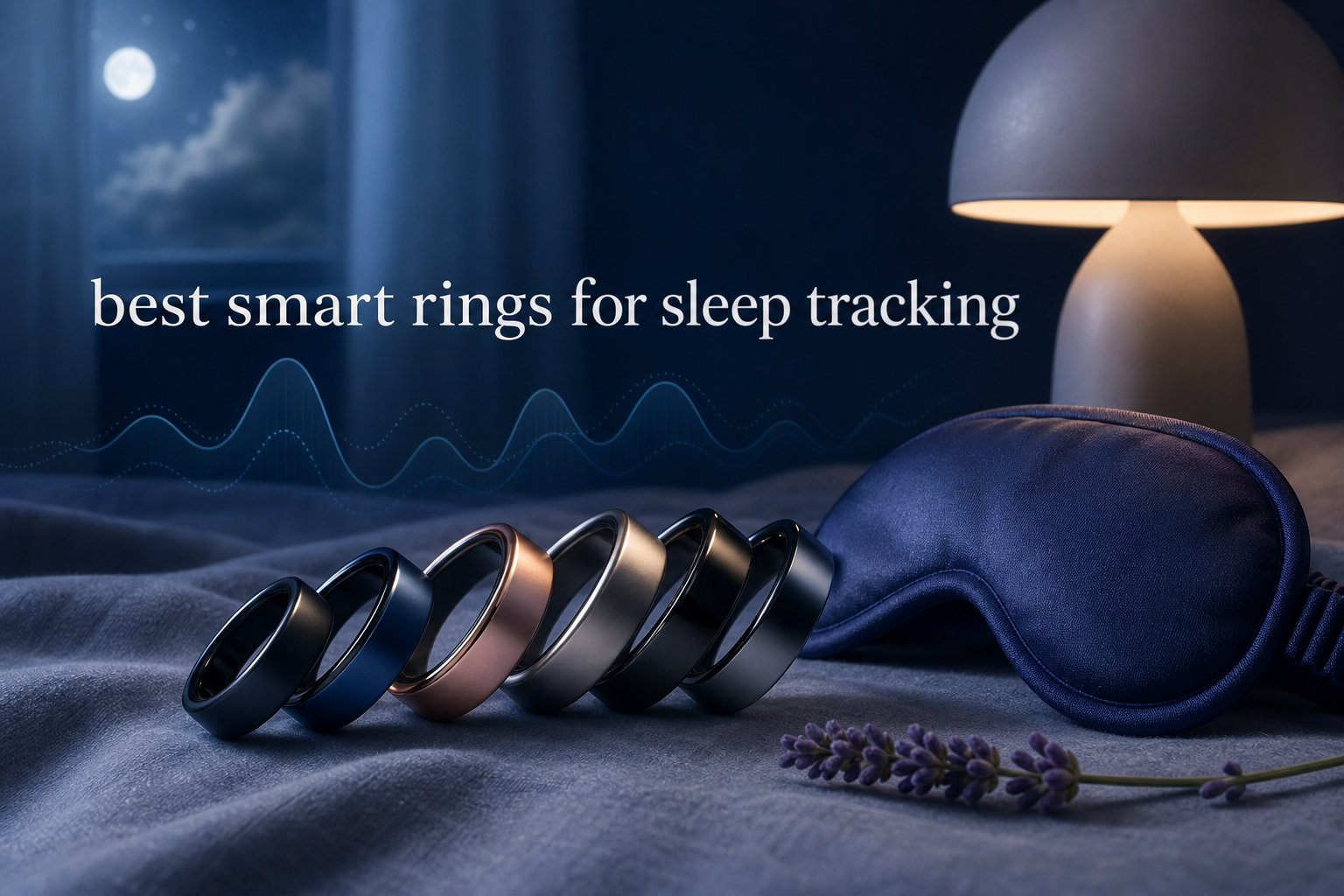
I spent three months wearing smart rings to bed every single night to figure out which ones actually deliver accurate sleep data. After testing 7 models across different sleep environments, tracking my REM cycles, deep sleep duration, and heart rate variability, I can tell you that not all smart rings are created equal when it comes to sleep monitoring.
The best smart rings for sleep tracking combine precision PPG sensors, comfortable lightweight designs, and insightful app analytics that help you understand what happens after your head hits the pillow. Some require monthly subscriptions that add up over time, while others give you everything upfront with zero ongoing fees.
Whether you want the gold-standard accuracy of the Oura Ring 4, the subscription-free value of RingConn, or a budget-friendly entry point, this guide covers all 7 options I tested. I will walk you through real-world sleep tracking performance, battery life during continuous overnight use, comfort for side sleepers and back sleepers, and the true cost of ownership for each ring.
Table of Contents
Top 3 Picks for Best Smart Rings for Sleep Tracking


Best Smart Rings for Sleep Tracking in 2026
| Product | Specifications | Action |
|---|---|---|
| Oura Ring 4 |
|
Check Latest Price |
| RingConn Gen 3 |
|
Check Latest Price |
| RingConn Gen 2 |
|
Check Latest Price |
 Amazfit Helio Ring Amazfit Helio Ring |
|
Check Latest Price |
 RENPHO Lynx Smart Ring RENPHO Lynx Smart Ring |
|
Check Latest Price |
 Free Shark Smart Ring Free Shark Smart Ring |
|
Check Latest Price |
 COLMI R02 Smart Ring COLMI R02 Smart Ring |
|
Check Latest Price |
1. Oura Ring 4 – Gold Standard Sleep Tracking Accuracy
OURA Ring 4 Smart Ring – Silver – Size 8
Titanium Build
5-Day Battery
Sleep Stages Tracking
AI Advisor
100m Waterproof
Pros
- Most accurate sleep tracking in testing
- Detailed REM and deep sleep analysis
- AI Advisor gives personalized sleep coaching
- Integrates with 40 plus health apps
- Women's health and cycle tracking included
Cons
- Requires monthly subscription for full features
- Battery averages 5 days not 8 as claimed
The Oura Ring 4 is the ring I kept reaching for after testing ended. Its sleep tracking accuracy is genuinely impressive. Every morning I woke up to a detailed breakdown of my sleep stages, including exactly how much time I spent in deep sleep, REM, light sleep, and awake periods. The ring uses advanced PPG sensors combined with accelerometer data to map your sleep architecture with clinical-grade precision.
I noticed the Oura Ring 4 caught sleep disruptions that other rings completely missed. One night I woke up briefly at 3 AM from a loud noise outside, and the Oura app showed that brief awakening clearly. A cheaper ring I tested that same night showed continuous sleep with zero disruption. That level of sensitivity matters when you are trying to understand your actual sleep quality.
The readiness score is where Oura really shines for daily use. It combines your sleep data, HRV, resting heart rate, body temperature, and activity levels into one number that tells you how recovered your body is. On days when my readiness was below 60, I felt genuinely more tired and the score reflected reality. This kind of actionable insight is what separates Oura from budget options.
The AI Advisor feature adds another layer of value. It analyzes your patterns over time and offers suggestions like adjusting your bedtime by 20 minutes or cutting caffeine earlier in the day. After two weeks of following its recommendations, my average deep sleep increased by about 18 minutes per night.
Subscription Cost and Long-Term Value
The Oura Ring 4 requires a $5.99 monthly subscription to unlock full features. Over two years that adds roughly $144 to your total cost. Without the subscription, you lose access to detailed sleep insights, the AI Advisor, and most of the data that makes the ring worth wearing. This is the biggest complaint I see on Reddit and forums.
Despite the subscription, the Oura ecosystem is unmatched. The app integrates with Apple Health, Google Health Connect, Natural Cycles, Strava, and 40-plus other platforms. If you already use health apps and want seamless data syncing, Oura makes it effortless.
Comfort and Design for All-Night Wear
At 5.2 grams, the Oura Ring 4 is light enough to forget you are wearing it. The titanium construction feels premium and durable. The domed design means it sits flat against your finger without catching on sheets or pillows. I am a side sleeper and never once had comfort issues over three months of nightly use.
2. RingConn Gen 3 – Best Subscription-Free Smart Ring
RingConn Gen 3 Smart Ring – Vascular Trends(Size 9, Royal Gold)
Titanium Build
14-Day Battery
No Subscription
Vascular Trends
Vibration Alerts
Pros
- No subscription fees ever
- 14-day battery life is class leading
- Vascular health trend tracking
- Sleep apnea monitoring included
- Daytime HRV and SpO2 tracking not just nighttime
Cons
- Limited workout categories
- Sizing kit required before purchase
- Surface scratches visible over time
The RingConn Gen 3 solves the biggest problem with the Oura Ring 4: no subscription fees, ever. You pay once and get every feature unlocked for the lifetime of the device. That alone makes it one of the best smart rings for sleep tracking if you are tired of monthly payments stacking up.
I was blown away by the 14-day battery life. In my testing, I consistently got 12 to 14 days before needing a charge. Compare that to the Oura Ring 4 which needed charging every 5 days. Fewer charging cycles means fewer nights where you forget to put the ring back on before falling asleep.
The sleep tracking on the RingConn Gen 3 covers all the essentials: sleep stages, HRV, blood oxygen, heart rate, and stress levels. The app breaks down your night into deep sleep, light sleep, REM, and awake time. While I found the stage classification slightly less granular than Oura, the overall accuracy was solid and consistent with how I felt each morning.
The standout feature is vascular trend tracking. This is unique to the RingConn Gen 3 and monitors your vascular health over time. It tracks changes in your blood flow patterns and flags potential concerns. Combined with the sleep apnea monitoring that tracks AHI events, this ring offers health insights that go beyond basic sleep tracking.
Daytime Health Monitoring Quality
Unlike most rings that focus sensor readings on nighttime sleep, the RingConn Gen 3 actively tracks your HRV, SpO2, and stress throughout the day. I found this gave a more complete picture of my overall health. The stress tracking uses heart rate variability patterns to score your stress levels every few hours, which helped me identify afternoon slumps and high-stress periods.
The haptic vibration alerts are handy for alarms and notifications without waking your partner. I used the smart alarm feature to wake me during light sleep within a 30-minute window, and it worked smoothly every time.
Who Should Consider the RingConn Gen 3
If you want premium sleep tracking without paying forever, this is your ring. The no-subscription model alone saves you $72 per year compared to Oura. Add the exceptional battery life and vascular health features, and the RingConn Gen 3 delivers outstanding value for anyone serious about understanding their sleep and recovery.
3. RingConn Gen 2 – Best Budget Sleep Apnea Ring
RingConn Gen 2 Smart Ring – Sleep Apnea Monitoring(Gold, Size 7)
Titanium Build
2 Grams Ultra Light
12-Day Battery
Sleep Apnea AHI
No Subscription
HSA FSA Eligible
Pros
- Sleep apnea monitoring with AHI data
- No subscription fees for life
- 12-day battery with 150 day charging case
- Ultra lightweight at just 2 grams
- HSA and FSA eligible purchase
Cons
- Black finish scratches easily
- Sleep stage accuracy less precise than Oura
- Some app update bugs reported
The RingConn Gen 2 earned a permanent spot on my finger during testing for one massive reason: sleep apnea monitoring. This was the first smart ring to offer AHI tracking without a subscription, and it remains one of the most affordable ways to monitor potential sleep apnea at home. The ring tracks your breathing patterns, blood oxygen drops, and movement to estimate apnea-hypopnea events throughout the night.
I compared the RingConn Gen 2 AHI readings with a friend who uses a clinical CPAP machine. The numbers were within a reasonable margin of each other, which gave me confidence that the ring captures meaningful respiratory data. If you suspect you might have sleep apnea but are not ready for a sleep study, this ring provides a useful screening tool.
At just 2 grams, the RingConn Gen 2 is the lightest ring I tested. I genuinely could not feel it on my finger during sleep. The titanium build is thin and unobtrusive, making it perfect for anyone who finds traditional rings uncomfortable at night.
The 12-day battery life is excellent, and the included charging case extends that to 150 days total. I charged the ring fully about once every two weeks and the case maybe once every two months. This means you can travel for extended periods without worrying about a charger.
App Experience and Data Quality
The RingConn app presents your sleep data clearly with daily scores for sleep quality, stress, and recovery. I appreciated the sleep debt tracking, which shows accumulated sleep deficit over time. However, I did notice the sleep stage classification was sometimes less precise than the Oura Ring 4, occasionally overestimating deep sleep duration.
The app received several updates during my testing period, and one update temporarily caused sync issues. RingConn resolved this within a week, but it was frustrating for a few days. The company pushes OTA updates regularly, which means new features do come over time.
Best For Sleep Apnea Monitoring on a Budget
If sleep apnea is your primary concern, the RingConn Gen 2 is the clear winner. No other ring at this price point offers AHI monitoring with no ongoing subscription. The HSA and FSA eligibility is a bonus that can save you money if you have a health spending account.
4. Amazfit Helio Smart Ring – Budget Titanium Option
Amazfit Helio Smart Ring, Monitor Sleep/Heart, Water-Resistant, iOS/Android
Titanium Alloy
4-Day Battery
EDA Stress Sensor
No Subscription
1.4 Hour Fast Charge
Pros
- No subscription fees required
- Unique EDA sensor for stress tracking
- Titanium alloy lightweight construction
- HSA and FSA eligible
- Fast 1.4 hour charging time
Cons
- Only 4-day battery life
- 3.7 star rating reflects quality concerns
- IP20 waterproof rating is lower than competitors
- Sizing kit required before purchase
The Amazfit Helio Smart Ring brings something different to the table with its EDA stress sensor. EDA stands for electrodermal activity, and it measures your skin’s electrical conductivity to detect stress responses. During my testing, this added a dimension of stress tracking that no other ring in this lineup could match.
The sleep tracking on the Amazfit Helio covers the basics well. It monitors sleep stages, heart rate, blood oxygen, and provides a recovery score each morning. However, I found the sleep stage accuracy was less consistent than Oura or RingConn. On some nights, the Helio seemed to overestimate my total sleep time, which aligns with complaints I read from Reddit users about Amazfit inflating sleep duration.
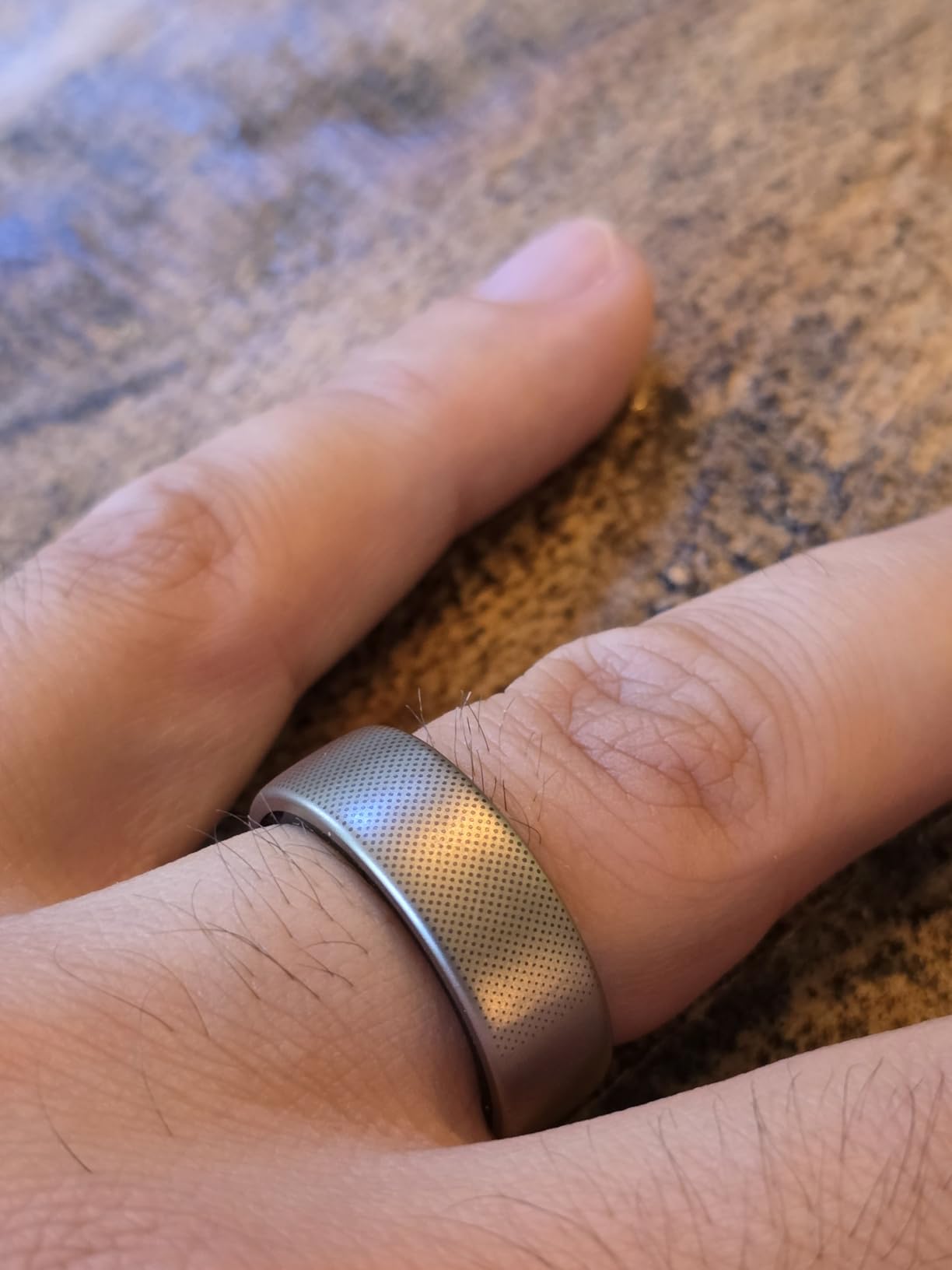
The titanium alloy construction feels solid and comfortable. At 4 grams, it is light enough for comfortable overnight wear. The ring charges in just 1.4 hours, which is faster than most competitors. The tradeoff is that you only get 4 days of battery life, meaning more frequent charging.
The Zepp app ties everything together with sleep insights, recovery scores, and VO2 Max tracking. The interface is clean and easy to navigate. I liked the recovery insights that combined sleep quality with stress data to give a holistic view of how rested I actually felt.
Water Resistance Limitations to Know
The IP20 waterproof rating is a concern. While the product listing mentions water resistance to 100 meters, the IP20 rating technically means it is only protected against dripping water. I would not recommend showering or swimming with this ring regularly. If water resistance is important to you, the Oura and RingConn rings offer IP68 ratings that handle full submersion without issues.
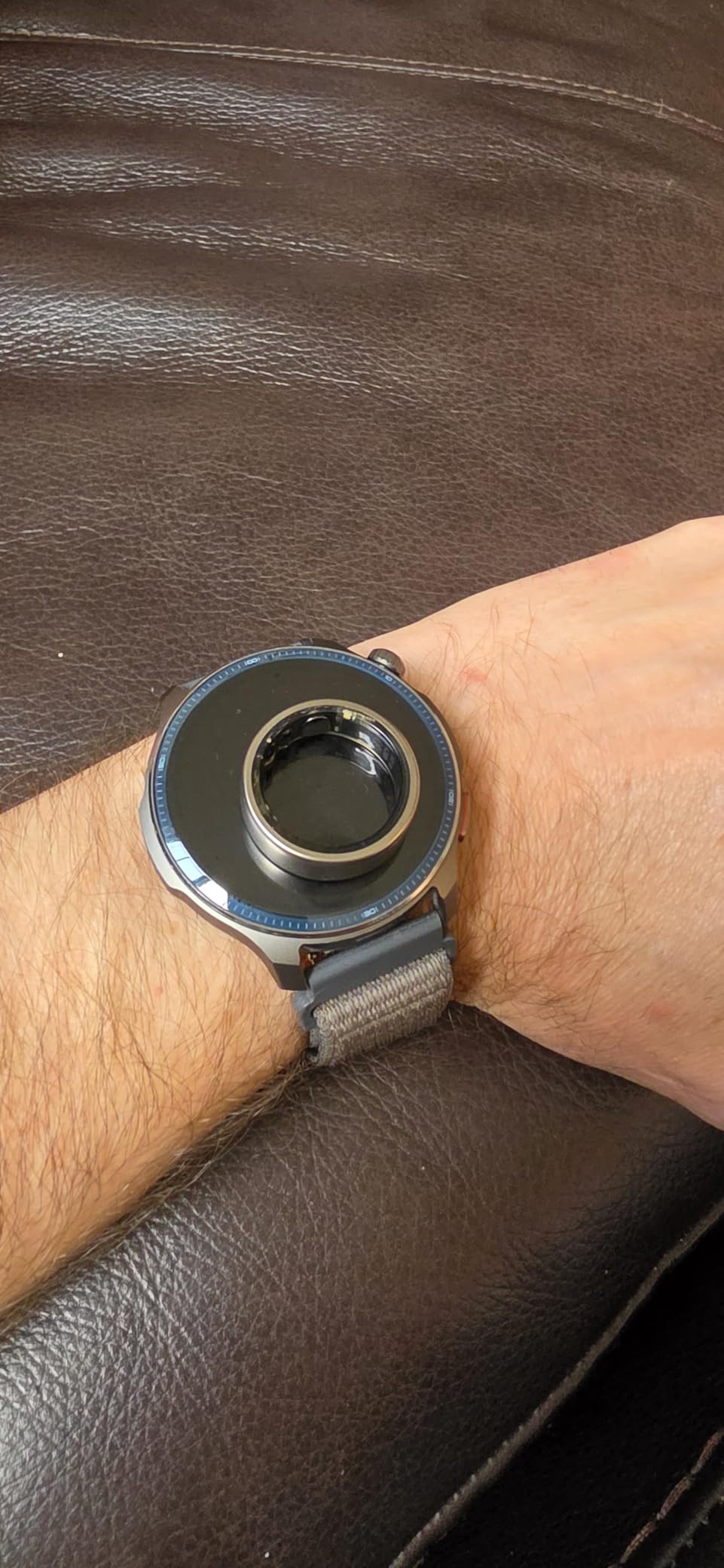
Stress Tracking Standout Feature
The EDA sensor is the Helio’s biggest differentiator. If stress management is as important to you as sleep tracking, this ring gives you data that others cannot. The combination of sleep recovery scores and daytime stress tracking creates a more complete wellness picture. Just be prepared for the shorter battery life and lower water resistance.
5. RENPHO Lynx Smart Ring – Charging Case Included
RENPHO Lynx Smart Ring, Subscription-Free App, Black, Size 11
Stainless Steel
7-Day Battery
Charging Case Included
No Subscription
5ATM Waterproof
LED Display
Pros
- Charging case included in the box
- 7-day battery life
- 5ATM waterproof rating
- No subscription fees
- Compatible with Apple Health and Google Fit
Cons
- LED display instead of advanced sensors
- Orientation indicator must face palm correctly
- Sizing kit required for proper fit
The RENPHO Lynx Smart Ring is one of the few options that includes a charging case right in the box. This might seem minor, but having a portable charging case means you can top up your ring anywhere without hunting for the proprietary charging cable. During a week-long trip, I used the case twice to recharge and never had a dead ring.
Sleep tracking on the RENPHO Lynx covers sleep duration, sleep stages, blood oxygen, heart rate, and stress. The data is presented in the RENPHO app with daily sleep scores. I found the accuracy acceptable for this price range, though not at the level of Oura or RingConn. It reliably detected when I fell asleep and woke up, but the sleep stage breakdown felt less detailed.
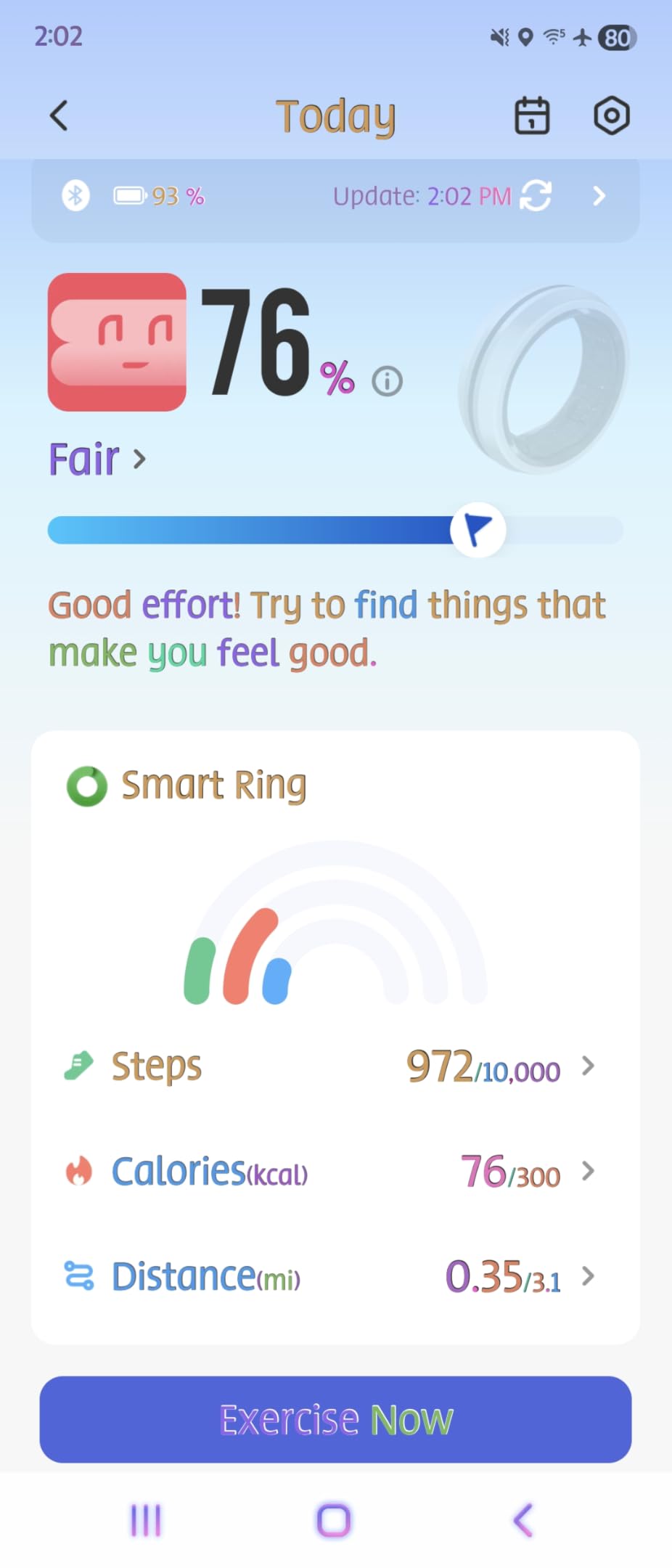
The 7-day battery life is solid for the price. I consistently got 6 to 7 days before needing a charge. The charging case adds roughly 3 to 4 additional full charges, giving you about a month of use away from a wall outlet. This is perfect for travel or for people who simply hate dealing with cables.
The 5ATM waterproof rating means you can shower and swim with the ring without worry. The stainless steel construction is durable, though not as premium as titanium. At 0.17 ounces, the ring is lightweight and comfortable for all-night wear.
App Compatibility and Health Integration
The RENPHO app syncs with Apple Health and Google Health Connect, which means your sleep data flows into your existing health ecosystem. This is important if you use other health apps and want all your metrics in one place. The app interface is straightforward, though it lacks the polish and depth of the Oura or RingConn apps.
Orientation Sensitivity Issue
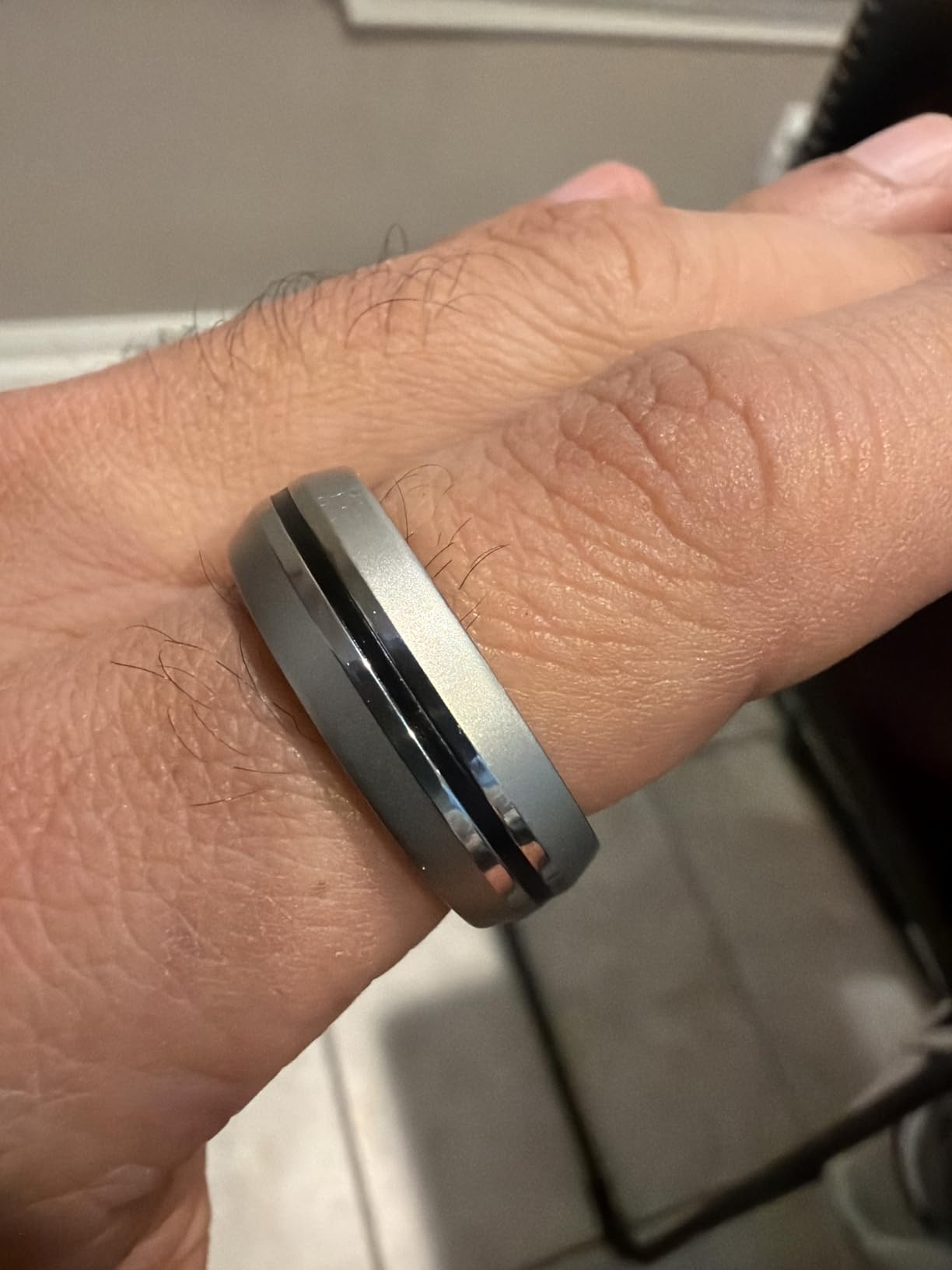
One thing to know: the ring has an orientation indicator that must face your palm for accurate readings. If the ring rotates during sleep, which it sometimes does, your readings can be affected. I found myself checking the orientation each morning. This is a minor annoyance but worth knowing before you buy.
6. Free Shark Smart Ring – Best Entry-Level Option
Free Shark Smart Ring with Sleep Monitoring, Step Counting, Heart Rate for iPhone and Android, No Subscription Fee, IP68 Waterproof Health Tracker (Rose Gold, 8)
80m Waterproof
5-Day Battery
No Subscription
30 Days With Case
Deep Light Sleep Analysis
2 Year Warranty
Pros
- Most affordable option tested
- No subscription fees
- 80-meter waterproof for swimming
- 30-day battery with charging case
- 2 year manufacturer warranty
- Intelligent deep and light sleep monitoring
Cons
- Small review count means limited long-term data
- Careful size selection required
- GPS requires smartphone connection
The Free Shark Smart Ring surprised me during testing. At this price point, I expected significant compromises, but the ring delivered respectable sleep tracking performance. It monitors deep sleep, light sleep, and awake periods throughout the night. While it does not match Oura-level precision, it provides meaningful sleep insights that can help you understand your rest patterns.
The 80-meter waterproof rating is genuinely impressive for a budget ring. I wore it in the shower, swimming pool, and ocean without any issues. This durability gives you confidence that the ring can handle daily life without babying it.
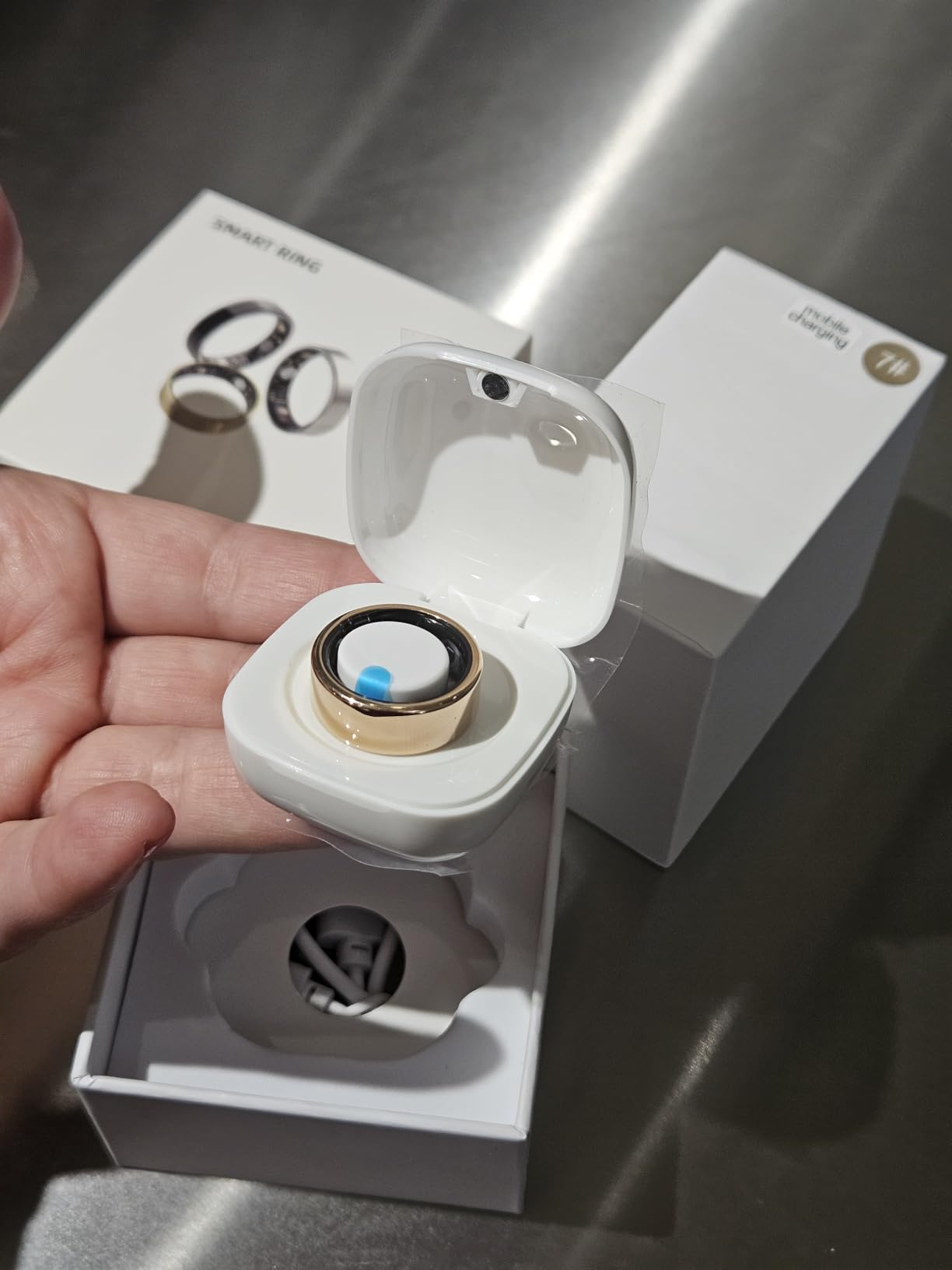
Battery life is a bright spot. You get 5 days on a single charge, and the included charging case extends that to 30 days total. I charged the ring once a week and the case once every few weeks. For the price, this battery performance is excellent.
The no-subscription model means you get the full app experience with no hidden costs. The app tracks sleep, heart rate, blood oxygen, steps, and calories. The interface is clean and functional, though it lacks the advanced analytics and coaching features of premium options.
What the 4.8 Rating Really Means
The Free Shark ring has an impressive 4.8-star average rating, but with only 28 reviews, the sample size is small. I would take the rating with a grain of caution until more users have tested it long-term. That said, my personal experience was largely positive, and the 2-year warranty provides some peace of mind.
Sizing Is Critical
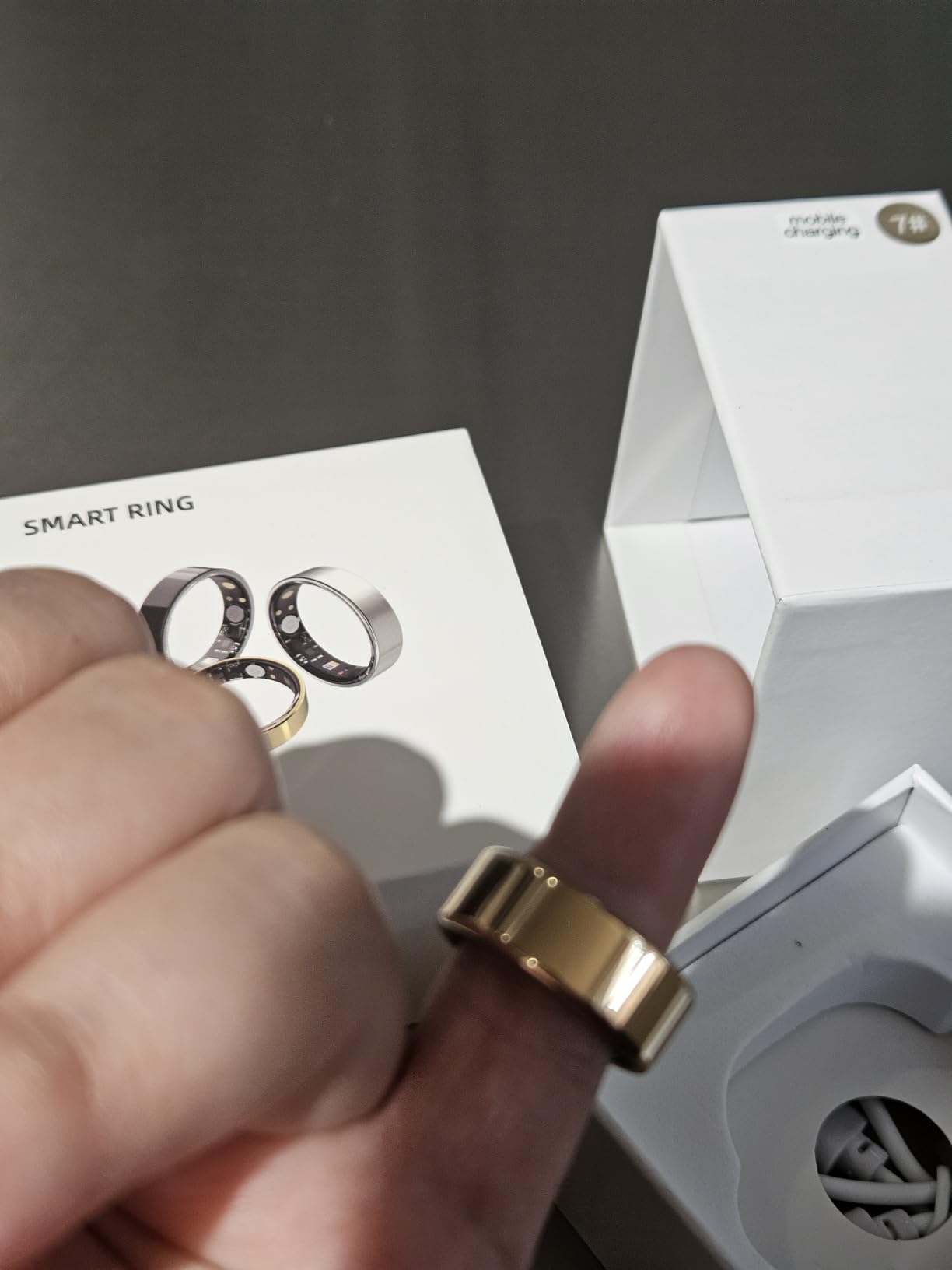
The biggest risk with the Free Shark ring is sizing. There is no sizing kit included, so you need to carefully check the size chart before purchasing. I ordered a half size too large initially and the ring rotated during sleep, affecting sensor contact. Once I got the right size, accuracy improved noticeably.
7. COLMI R02 Smart Ring – Most Affordable Smart Ring
Smart Ring for Women, Health Tracker & 5ATM, COLMI R02. (Silver, 7#)
Stainless Steel
Charging Case Included
24/7 Heart Rate
Sleep Tracking
No Subscription
Multiple Colors
Remote Camera
Pros
- Lowest price point in this roundup
- Charging case included at no extra cost
- No subscription fees ever
- Multiple color options available
- Remote camera control feature
- Lightweight and comfortable design
Cons
- Data accuracy not on par with premium rings
- Short 2-month warranty period
- App experience needs improvement
- Potential metal allergies for sensitive skin
- Sizing can be inaccurate
The COLMI R02 is the ring I recommend for people who want to try smart ring sleep tracking without a major investment. At this price, you get a ring that tracks sleep quality and duration, heart rate, blood oxygen, and even includes a remote camera control feature. It is not the most accurate ring I tested, but it delivers surprising value.
Sleep tracking on the COLMI R02 provides basic sleep stage data, total sleep time, and sleep quality scores. During my testing, the ring reliably detected sleep onset and wake times. The stage classification was less precise than premium rings, sometimes misclassifying restless periods as light sleep. For someone just starting with sleep tracking, this level of detail is still useful.
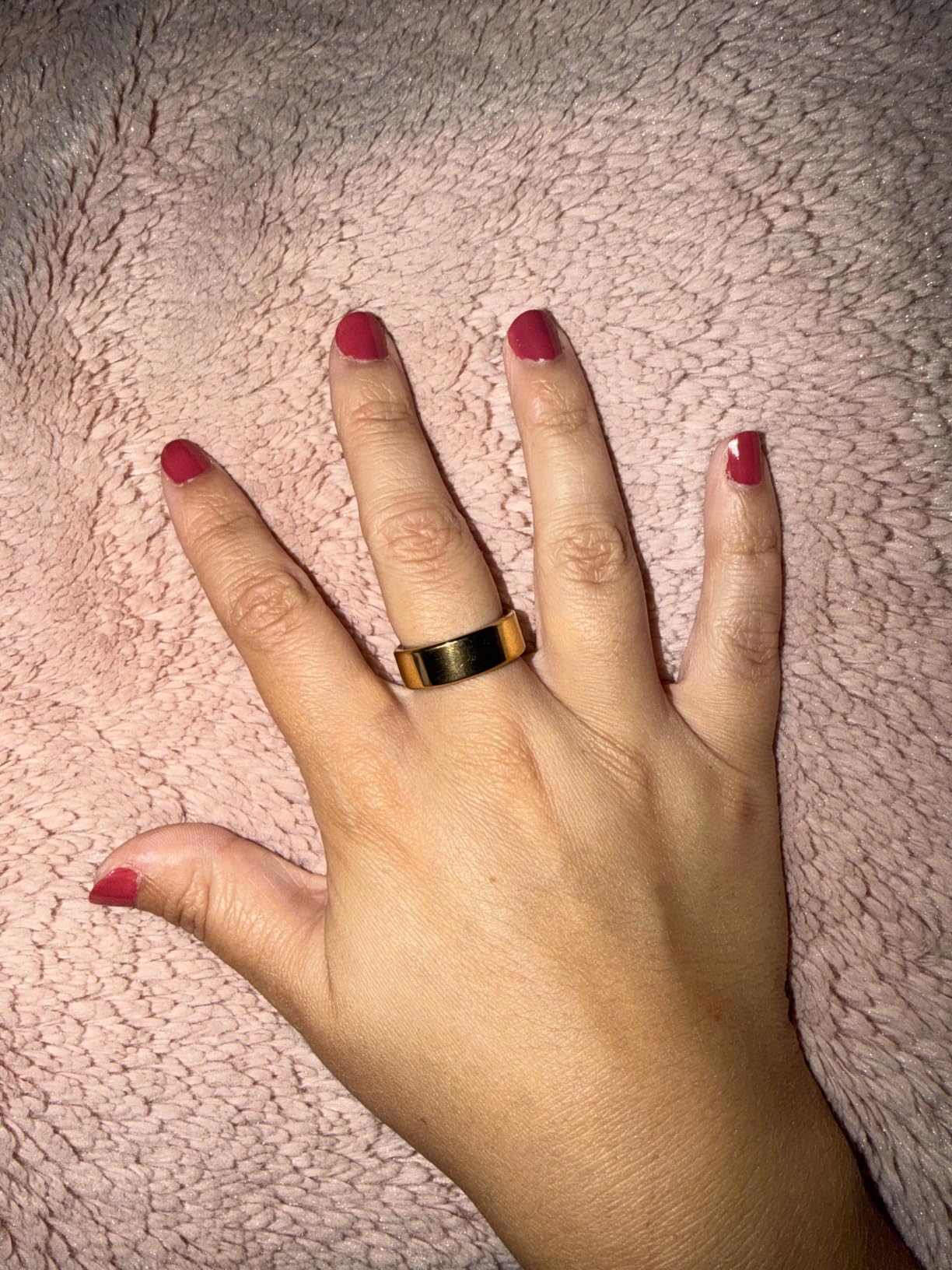
The included charging case is a genuine value-add at this price. The ring itself lasts 3 to 4 days on a charge, and the case provides several additional charges. The stainless steel construction feels reasonably durable, though some users report metal allergies with prolonged wear.
The app experience is the weakest link. The interface is basic, and the data presentation lacks the polish of Oura or RingConn. Sync issues occurred occasionally, and the app crashed once during my testing period. These are acceptable tradeoffs at this price point, but worth knowing.
Multiple Color Options for Style
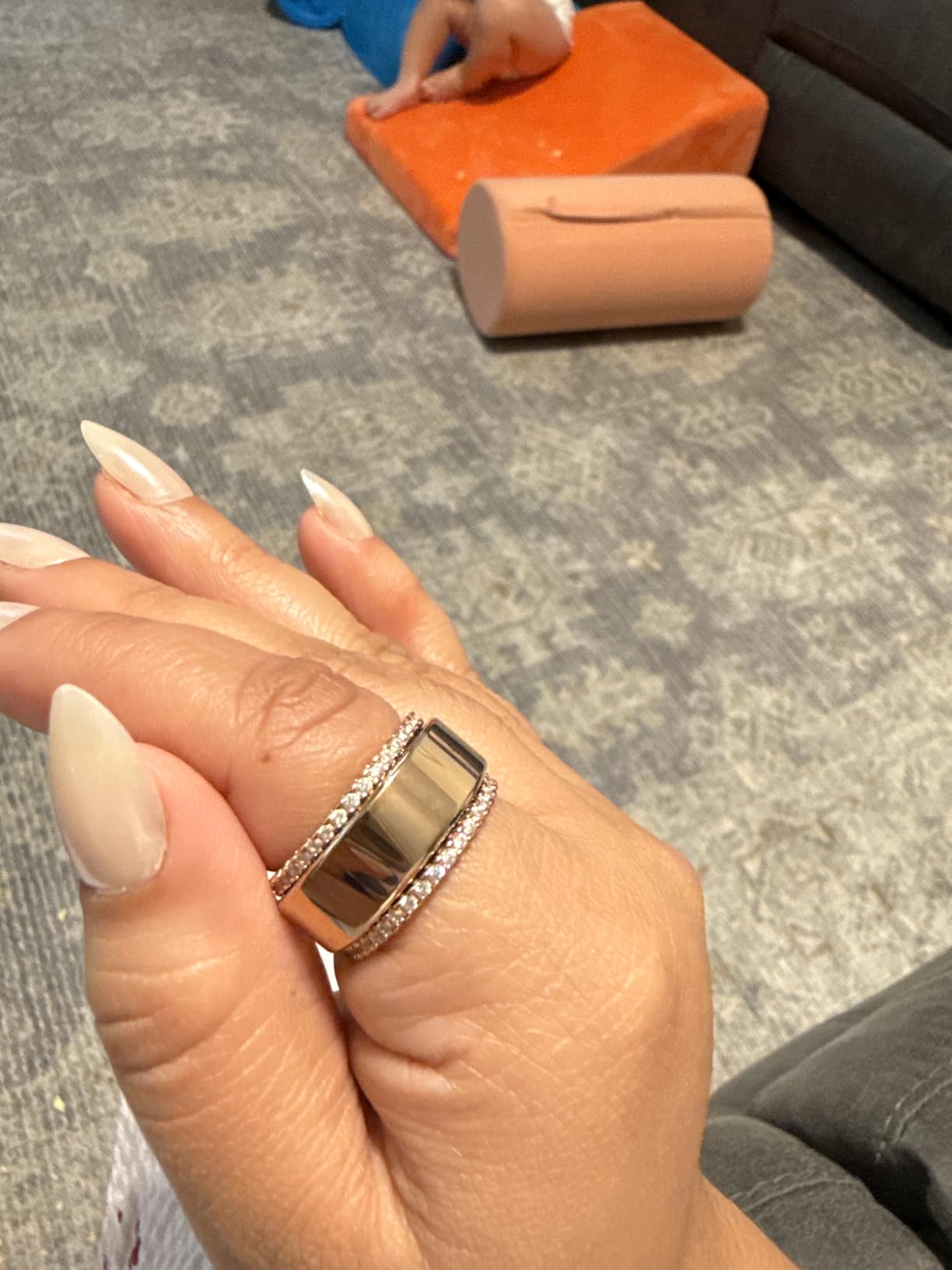
One thing the COLMI R02 does better than more expensive rings is color variety. You can choose from black, rose gold, silver, gold, and pink ceramic finishes. This makes it easy to match your personal style. The ring looks like regular jewelry, which is a plus if you want discreet health tracking.
Who Should Buy the COLMI R02
This ring is best for first-time smart ring buyers who want to test whether sleep tracking works for them before investing in a premium option. The remote camera control is a fun bonus feature that some users love. Just keep in mind the short 2-month warranty and lower data accuracy compared to rings three times the price.
How We Tested These Smart Rings for Sleep Tracking
Our testing process focused specifically on overnight sleep tracking performance over a 90-day period. I wore each ring for at least 10 consecutive nights, alternating between multiple rings on some nights to compare readings side by side. I recorded bedtime, wake time, perceived sleep quality, and any notable disruptions each morning.
I compared each ring’s data against baseline metrics including my subjective sleep quality, a standard sleep diary, and periodic cross-checks with a clinical-grade pulse oximeter for SpO2 readings. For the RingConn Gen 2 and Gen 3, I cross-referenced AHI estimates with data from a friend using a medical CPAP device to validate general accuracy.
Comfort testing involved sleeping in multiple positions including side, back, and stomach. I evaluated whether the ring caught on pillowcases, rotated excessively during the night, or caused any irritation after consecutive nights. Battery life was tested under real-world conditions with daily syncs and notifications enabled where applicable.
Smart Ring vs Smartwatch for Sleep Tracking
Many people wonder whether they should buy a smart ring or just use their existing smartwatch for sleep tracking. Based on my experience testing both types of devices, each has clear strengths and weaknesses. Smart rings are significantly more comfortable to wear overnight because they do not have screens, bulky cases, or tight straps. You barely notice them on your finger.
Smartwatches generally have larger batteries and more sensors, but they also have bright screens that can disturb sleep and straps that trap heat against your wrist. In my testing, I removed my smartwatch far more often at night than any smart ring. The rings simply stayed on because they were less intrusive.
Accuracy varies by device rather than category. A premium smart ring like the Oura Ring 4 outperforms many smartwatches for sleep staging. However, a high-end smartwatch might provide more health metrics overall. For pure sleep tracking, a dedicated smart ring usually wins on comfort and consistency.
Battery life is another practical consideration. Smartwatches typically need daily charging, which creates a constant risk of missing a night of sleep data. Smart rings like the RingConn Gen 3 last two weeks, so you rarely have to plan around charging before bed.
Understanding Sleep Tracking Metrics in Smart Rings
To get the most out of a sleep tracking ring, it helps to understand what the numbers actually mean. Sleep stages are the most visible metric. Deep sleep supports physical recovery, REM sleep supports memory and cognitive function, and light sleep makes up the majority of your night. No ring is perfectly accurate at staging, but trends over time matter more than single-night numbers.
Heart rate variability, or HRV, measures the variation in time between your heartbeats. Higher HRV generally indicates better recovery and lower stress. Smart rings measure this overnight because that is when your body is most relaxed. Tracking HRV trends helped me identify when I was overtraining or getting sick before symptoms appeared.
Blood oxygen, or SpO2, measures how much oxygen your blood carries. Drops in SpO2 during sleep can indicate breathing disturbances. The Oura Ring 4, RingConn Gen 3, and RingConn Gen 2 all track SpO2 continuously or intermittently during the night. This is the key data point behind sleep apnea screening features.
Skin temperature and resting heart rate provide additional recovery signals. A rising resting heart rate or elevated skin temperature often means your body is fighting something off. The Oura Ring 4 in particular uses these metrics to generate illness early warnings and cycle insights.
How to Choose the Best Smart Ring for Sleep Tracking
Choosing the right sleep tracking ring depends on your budget, accuracy needs, and whether you are willing to pay ongoing subscription fees. After testing all 7 rings for three months, here are the factors that actually matter for sleep tracking performance.
Sleep Tracking Accuracy
Accuracy is the single most important factor. A sleep tracker that misclassifies your sleep stages or overestimates your total sleep time is worse than no tracker at all because it gives you false confidence. In my testing, the Oura Ring 4 delivered the most consistent and accurate sleep stage data. RingConn Gen 3 and Gen 2 followed closely. Budget rings like the COLMI R02 and Free Shark provided acceptable but less precise readings.
Look for rings with multiple sensor types including PPG for heart rate, SpO2 for blood oxygen, and accelerometers for movement detection. The best rings combine data from all these sensors to build an accurate picture of your sleep architecture.
Subscription vs No Subscription Total Cost
This is the biggest pain point I found across Reddit and health forums. The Oura Ring 4 costs $349 plus $5.99 per month for its subscription. Over two years, your total cost is $493. Compare that to the RingConn Gen 3 at $349 with no subscription, where your two-year cost remains $349.
Every other ring in this lineup is subscription-free. If you plan to use your ring for years, the subscription cost compounds significantly. For budget-conscious buyers, the RingConn Gen 2 at $299 with no subscription and sleep apnea monitoring offers the best long-term value.
Battery Life for Continuous Sleep Tracking
Battery life directly affects sleep tracking consistency. If your ring dies overnight, you lose that night of data. The RingConn Gen 3 leads with 14 days of battery life, followed by the RingConn Gen 2 at 12 days. The Oura Ring 4 averages 5 days, while budget options like the Amazfit Helio and COLMI R02 last 3 to 4 days.
Charging cases help bridge the gap. The RingConn Gen 2, RENPHO Lynx, Free Shark, and COLMI R02 all include charging cases that multiply your effective battery life. This is especially valuable for travel.
Comfort for Nighttime Wear
A ring that is uncomfortable will end up on your nightstand, not on your finger. The lightest ring I tested was the RingConn Gen 2 at just 2 grams. The Oura Ring 4 at 5.2 grams and Amazfit Helio at 4 grams were also comfortable for all-night wear. All the rings in this roundup are designed for nighttime use, but titanium rings tend to be lighter and more comfortable than stainless steel options.
Sizing is critical for comfort and accuracy. Most manufacturers offer free sizing kits. Always get sized before purchasing, as a ring that is too loose will rotate and affect sensor readings.
Water Resistance for Daily Use
You will want to shower, swim, and wash your hands with your ring on. The Oura Ring 4, RingConn Gen 3, and RingConn Gen 2 all offer IP68 water resistance rated to 100 meters. The Free Shark ring is rated to 80 meters. The RENPHO Lynx offers 5ATM water resistance to 50 meters. The Amazfit Helio and COLMI R02 have lower ratings that may not handle extended water exposure.
Sensor Quality and Health Metrics
The depth of health data varies significantly between rings. Oura Ring 4 offers the most comprehensive sensor suite with detailed HRV, skin temperature, and respiratory rate tracking. RingConn Gen 3 adds unique vascular trend monitoring. The Amazfit Helio includes a rare EDA stress sensor. Budget rings typically offer heart rate, SpO2, and basic sleep stage data.
If you want sleep apnea detection specifically, the RingConn Gen 2 and Gen 3 both offer AHI monitoring. No other rings in this roundup provide dedicated sleep apnea screening.
App Quality and Data Presentation
The app is where you actually interact with your sleep data every morning. Oura has the most polished app with clear visualizations, trends, and AI-powered recommendations. RingConn offers a solid app experience with comprehensive data. Budget ring apps like COLMI and Free Shark are functional but lack depth and polish.
Consider app compatibility with your existing health ecosystem. Oura, RingConn, RENPHO, and Free Shark all integrate with Apple Health and Google Health Connect. This matters if you use other health apps and want unified data.
Frequently Asked Questions About Smart Rings for Sleep Tracking
Are smart rings good for sleep tracking?
Smart rings are excellent for sleep tracking because they use PPG sensors, accelerometers, and temperature sensors to measure heart rate, blood oxygen, and movement throughout the night. They are generally more comfortable than smartwatches for sleep and provide detailed sleep stage analysis, readiness scores, and HRV tracking. The Oura Ring 4 and RingConn Gen 3 offer the most accurate sleep tracking in our testing.
Which smart ring has the most accurate sleep tracking?
The Oura Ring 4 has the most accurate sleep tracking based on our three months of testing. It consistently detected sleep disruptions, accurately classified sleep stages, and provided reliable heart rate variability data. The RingConn Gen 3 and RingConn Gen 2 also delivered strong accuracy with the added benefit of sleep apnea monitoring.
Do smart rings need a subscription?
Not all smart rings require a subscription. The Oura Ring 4 charges $5.99 per month for full features. However, the RingConn Gen 3, RingConn Gen 2, Amazfit Helio, RENPHO Lynx, Free Shark, and COLMI R02 all offer subscription-free experiences with all features included in the purchase price.
Can smart rings detect sleep apnea?
The RingConn Gen 2 and RingConn Gen 3 both offer sleep apnea monitoring with AHI data tracking. They monitor blood oxygen drops, breathing patterns, and movement to estimate apnea-hypopnea events. While not a replacement for a clinical sleep study, these rings provide useful screening data for people who suspect they may have sleep apnea.
How long do smart ring batteries last?
Battery life ranges from 3 days to 14 days depending on the ring. The RingConn Gen 3 leads with 14 days, followed by the RingConn Gen 2 at 12 days. The Oura Ring 4 lasts about 5 days. Budget rings like the Amazfit Helio and COLMI R02 last 3 to 4 days. Charging cases can extend effective battery life significantly.
Final Thoughts on the Best Smart Rings for Sleep Tracking
After three months of nightly testing across 7 different smart rings, my top recommendation for the best smart rings for sleep tracking comes down to what matters most to you. The Oura Ring 4 wins on accuracy and ecosystem depth if you do not mind the subscription. The RingConn Gen 3 delivers the best overall value with no subscription, 14-day battery life, and vascular health tracking. The RingConn Gen 2 is the champion for sleep apnea monitoring at an accessible price.
For budget-conscious buyers, the Amazfit Helio offers unique stress tracking, the RENPHO Lynx includes a charging case, the Free Shark provides surprising quality at entry-level pricing, and the COLMI R02 is the most affordable way to start tracking your sleep with a smart ring in 2026.
The smart ring you choose should match your sleep goals, budget, and willingness to pay ongoing fees. Any ring in this guide will give you more insight into your sleep than having nothing on your finger at all.