
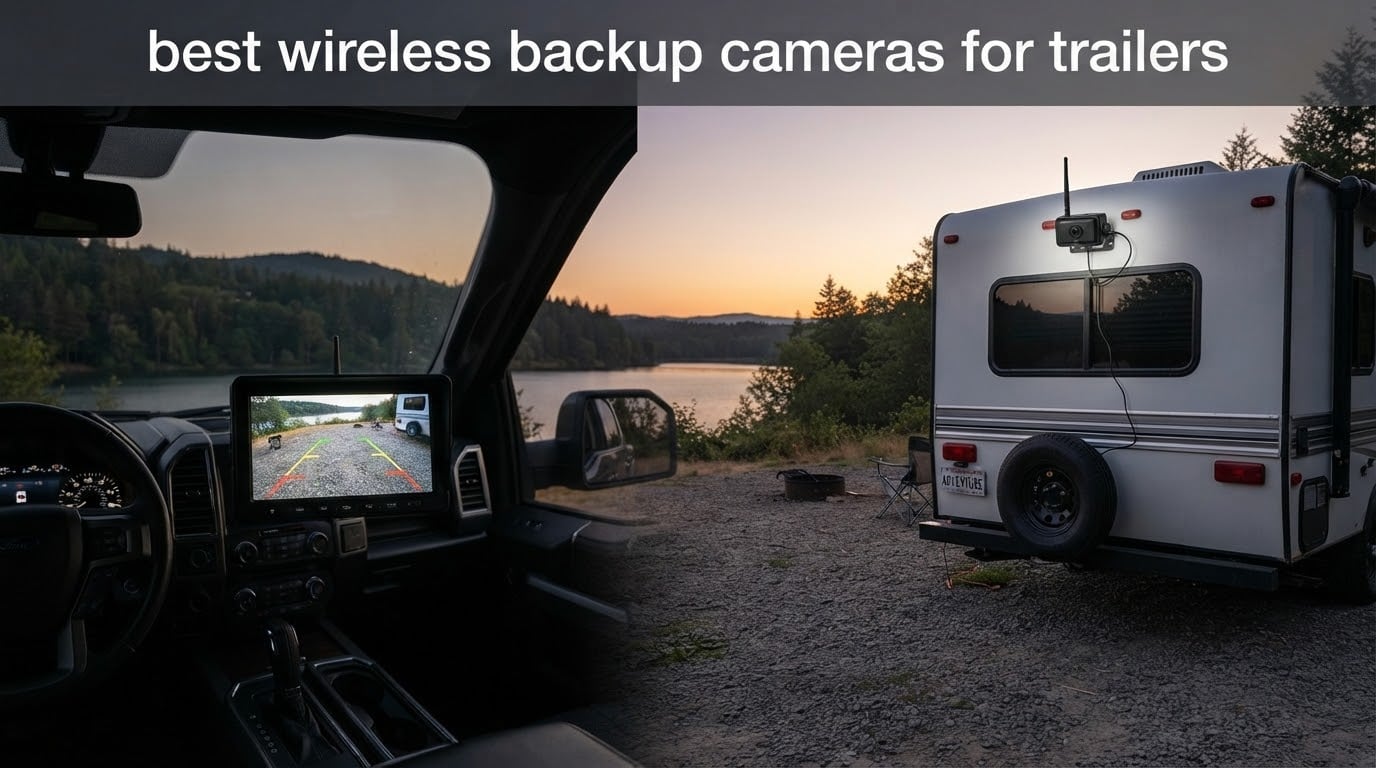
The best wireless backup camera for a trailer right now is the Yakry Y27, a 7-inch 1080p system that drops straight into the Furrion bracket most pre-wired RVs already have. If your trailer was never wired, the pemacom P16 solar magnetic kit installs in about a second with no drilling. Below I break down all ten systems, what each one is actually good at, and where they fall down.
A trailer is the hardest part of towing to see around. The back corner nearest the tow vehicle disappears the moment you start to turn, and a fifth wheel in a tight campground loop leaves you reversing blind well past the point where mirrors help. Owners on RV forums keep coming back to the same lesson: the camera is what lets you back up confidently at night or alone, and nothing else does it that cheaply.
We spent weeks reading thousands of owner reviews on the ten systems below, comparing lens width, signal claims against real trailer lengths, power options, night vision and recording behaviour. What follows is the short list first, then a full review of each, then the install and buying detail that decides whether a kit actually suits your rig.
If you also tow a boat, our guide to the best boat trailers covers the hitch and trailer hardware side. For the trailer itself, the best utility trailers and best teardrop camping trailers roundups cover the rigs these cameras end up on. If the tow vehicle itself is the part that needs seeing, our roundup of the best backup cameras for cars covers the passenger side of the equation.
One safety note before we start. A camera supplements your mirrors, your awareness and a spotter. It never replaces them. Owners across every RV forum we read repeat the same acronym without exception: GOAL, get out and look.
Table of Contents
Top 3 Trailer Backup Camera Picks in 2026
These three cover the three most common situations: a pre-wired trailer that needs a clean drop-in, an older trailer with no wiring at all, and a rig that needs the widest view of everything behind the bumper.

Yakry Y27
- 7 inch 1080P monitor
- 150 degree lens
- Plugs into Furrion bracket
- IP69K and 4 camera expansion

pemacom P16
- 15000mAh solar battery
- 7.1 inch monitor with sunshade
- One-second magnetic mount
- Works on pre-wired trailers
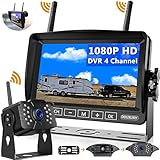
DOUXURY 170
- 170 degree field of view
- 4 channel split screen
- IP69 from -4F to 149F
- 1080P with 0.1 lux night vision
The Yakry Y27 wins the overall spot because it solves the single most common problem trailer owners have, which is replacing a factory camera without cutting a single wire. The pemacom P16 takes second because it needs no wiring at all and does not care what your trailer looks like underneath. The DOUXURY kit rounds out the top three for anyone whose real problem is how much they can actually see at once.
Best Wireless Backup Cameras for Trailers at a Glance (October 2026)
All ten systems below transmit video from a camera on the trailer to a screen in the tow vehicle. The differences come down to how wide the lens is, where the power comes from, how many cameras you can add later, and whether the system records. Here is the short version before the detail.
| Product | Specifications | Action |
|---|---|---|
| Yakry Y27 |
|
Check Latest Price |
| pemacom P16 |
|
Check Latest Price |
| DOUXURY 170 Degree Kit |
|
Check Latest Price |
 AMTIFO SZNZWX AMTIFO SZNZWX |
|
Check Latest Price |
 DoHonest R50 DoHonest R50 |
|
Check Latest Price |
 Haloview BT7 Haloview BT7 |
|
Check Latest Price |
 pemacom M1 Dual pemacom M1 Dual |
|
Check Latest Price |
 Rohent A70 Rohent A70 |
|
Check Latest Price |
 AUTO-VOX Campsync AUTO-VOX Campsync |
|
Check Latest Price |
 Thybro A8 Thybro A8 |
|
Check Latest Price |
Two numbers matter more than anything else on that list. Field of view decides how much of the campsite you can judge at a glance, and anything under 150 degrees leaves real blind spots close to the bumper. The second is power: kits that draw from the trailer’s running lights need no drilling but do need the lights switched on, while solar and battery kits mount anywhere with a magnet.
1. Yakry Y27 – Best Overall and the Easiest Furrion Drop-In
RV Backup Camera Wireless Plug and Play: Pre-Wired for Furrion Easy Install
7 inch 1080P monitor
150 degree lens and IP69K
Furrion bracket and pigtail included
Expandable to 4 cameras
Pros
- Drop-in Furrion bracket and pigtail give a 25-30 minute install
- Signal holds on 50-55 foot rigs at highway speeds
- Clear 1080P day image with 0.1 lux infrared night vision
- Expandable to four cameras with split-screen switching
- Doubles as a dash cam with loop recording to SD card
Cons
- 7 inch monitor is bulky and needs careful siting in a truck cab
- Camera needs the trailer running lights on to receive power
- SD card is not included and must be formatted in the monitor
This is the kit I would put in a pre-wired trailer without hesitating. If your rig came from the factory with a camera bracket above the rear window and a pigtail hanging below it, this is a direct replacement, and owners report finishing the swap in under half an hour with basic tools.
The number that convinced me is the signal. Reviewers running 50 and 55 foot trailers report a stable picture at highway speed and in heavy rain, which is well beyond what most owners need and well beyond the cheap hitch cameras people often buy instead.
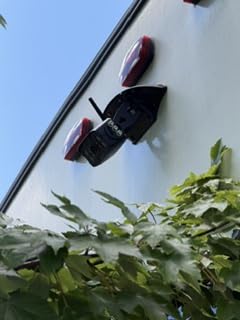
The dual antenna design is the reason, and the manufacturer claims up to 825 feet of open-area range and 320 feet of working range on a vehicle. Real-world reports cluster much closer to the working figure, which is still far more trailer than almost anyone tows.
It also does more than reverse view. Switch it to constant view and you can check a bike rack, a trailered car or a load behind you while moving slowly, and the recording function writes to an SD card if you want a dash cam on the same hardware. A test lead lets you confirm the camera works from the ground before you climb a ladder.
What you should know before buying
Because power comes from the trailer’s light circuit, the camera only wakes when the running lights are on. That is the arrangement the factory designed around, so it is rarely a problem, but it does mean the view is not live while the trailer sits parked in the dark.
The monitor is genuinely large at 7 inches. Owners who mount it low on the dash report needing a few attempts to find a position that does not fight the windshield pillar, and the supplied bracket is less weatherproof than the factory housing it replaces.
Who it suits and who should skip it
Buy this one if you own a pre-wired trailer and want the shortest possible install, or if you want the option of adding a second, third or fourth camera later for side views and tight approaches. Expandability is a genuine advantage on long fifth wheels.
Skip it if your trailer is older than the factory camera era, because there is nothing to plug into. In that case the solar magnetic kits below need no wiring at all. You will also need your own SD card if you plan to record, and reviewers note the card has to be formatted inside the monitor first.
2. pemacom P16 – Best Value Solar Magnetic Kit With No Wiring
RV Backup Camera with Solar Magnetic – 50 FT Long Distance No Signal Delay
7.1 inch monitor with sunshade
15000mAh battery plus 5W solar panel
150 degree lens with 9 IR lights
Two year warranty
Pros
- One-second magnetic install with no drilling or wiring
- Large 15000mAh battery and solar panel for long runtime
- Monitor sunshade keeps the screen readable in direct sun
- Works on Furrion and Voyager pre-wired rigs
- CCD chip and lens coating cut glare in low light
Cons
- Needs about 7 hours of charging to reach full capacity
- Requires a metal surface or an added bracket on composite bodies
- Camera sleeps after one minute when the monitor is off
This is the answer for an older camper that never had a factory camera. Nothing gets drilled, nothing gets wired, and you can move the whole system from trailer to trailer in the time it takes to open the tailgate. Owners consistently report that the install feels like a demonstration rather than a project.
Unlike the tiny hitch cameras that come with a 4-inch screen, this one pairs a 15000mAh battery with a 5W monocrystalline panel, which is enough to keep it going through a full trip without a USB cable. The stated runtime is 15 hours with night vision on and 24 hours with it off, and a full charge takes about seven hours.
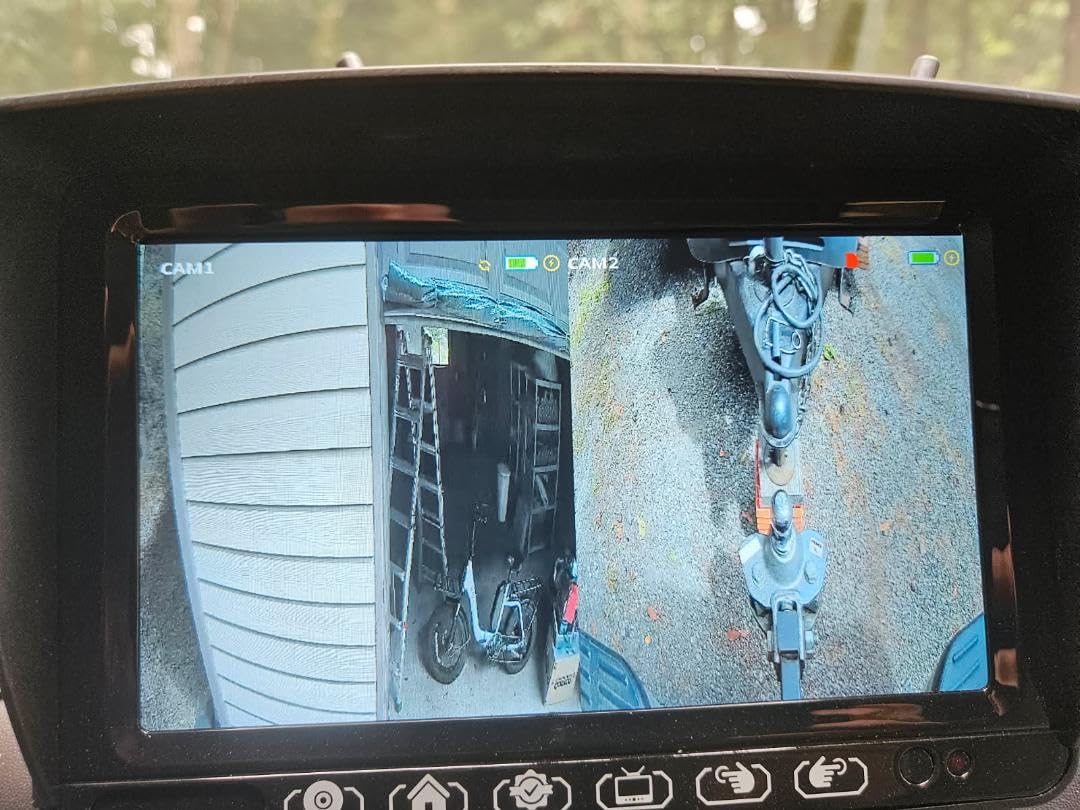
Daytime performance is strong for a magnetic unit. The 150 degree lens covers the ground right at the bumper as well as the lane behind you, and the included sunshade on the 7.1-inch display is a genuinely useful touch because most compact monitors wash out in direct sun.
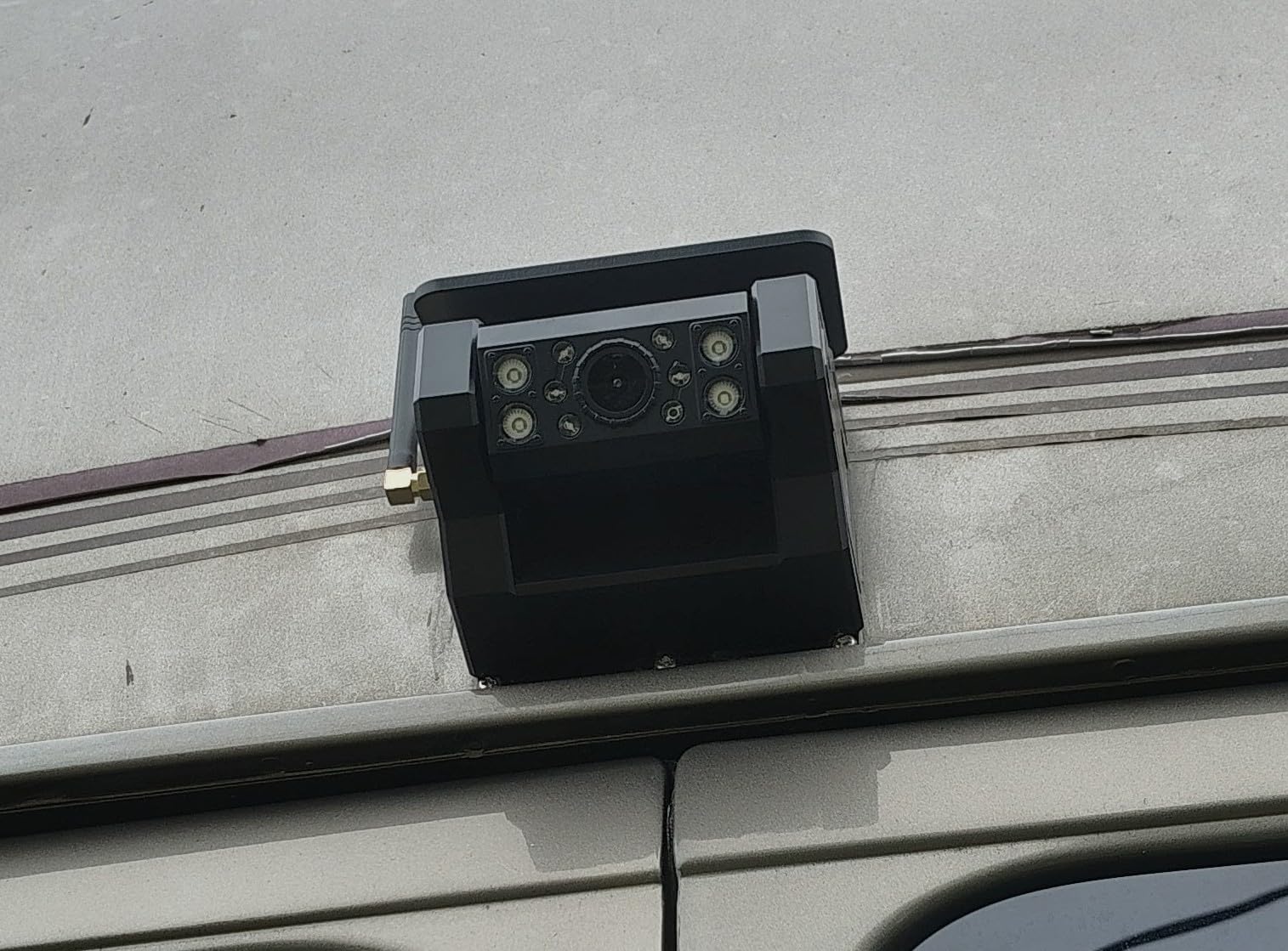
Low light is handled by nine auto-sensing infrared lights around a CCD chip, and reviewers single out the lens coating for reducing glare on a wet trailer wall. Digital frequency hopping keeps the link stable in areas with heavy radio congestion.
What you should know before buying
A magnet needs metal. Fiberglass and composite trailer bodies do not hold a magnet, so you need the optional metal bracket, which is an extra part and an extra step. Budget for that if your trailer has an aluminium skin you are unsure about.
The camera sleeps after about a minute when the monitor is switched off, so it will not hold a live view of a campsite while you are inside. Recording and parking line adjustment are both supported, which covers most of what owners want.
Who it suits and who should skip it
This is the pick for anyone who tows occasionally, rents storage, or owns a trailer old enough to have no back-up camera circuit. It also suits a family with more than one trailer, since you can move it between them in seconds.
Skip it if you want the view live while parked overnight, or if you expect to leave it outside through a northern winter plugged into nothing. Very low review counts on solar systems are worth keeping in mind as well: the technology is proven, but the long track record sits with wired kits.
3. DOUXURY 170 Degree Kit – Best Wide-Angle Coverage
RV Backup Camera Wireless DOUXURY IP69 Waterproof 170° Wide View Angle HD 1080P Rear View Camera + HD LCD 7″ Monitor, Digital Wireless Camera System for RV Truck 5th Wheel Trailer Pickup Camper Bus
170 degree field of view
7 inch 1080P monitor with 4 channels
IP69 sealed, minus 4F to 149F
Split screen for up to 4 cameras
Pros
- 170 degree lens shows ground at the bumper and far behind
- Wide angle on a budget system is genuinely unusual
- Signal holds through a metal-bodied trailer
- Monitor runs from minus 4F to 149F
- Several owners report four-plus years of continuous use
Cons
- Live feed runs about 15-20 fps and looks jerky in motion
- Loop recording stops and restarts and saves at 1280x720
- Some reports of moisture inside the camera after heavy rain
Field of view is the specification that matters most and the one most often quietly sacrificed. A 170 degree lens is a full 20 degrees wider than the kit above and 50 degrees wider than the premium DVR system further down, and on a trailer that difference is the ground beside the bumper instead of a black corner.
Owners using it behind a metal-bodied trailer report the signal holds even with the trailer fully between the camera and the monitor, which is the hardest test you can set. Dual antennas and digital signal processing do the work here, with a claimed 320 feet open-area range and 180 feet through vehicles.
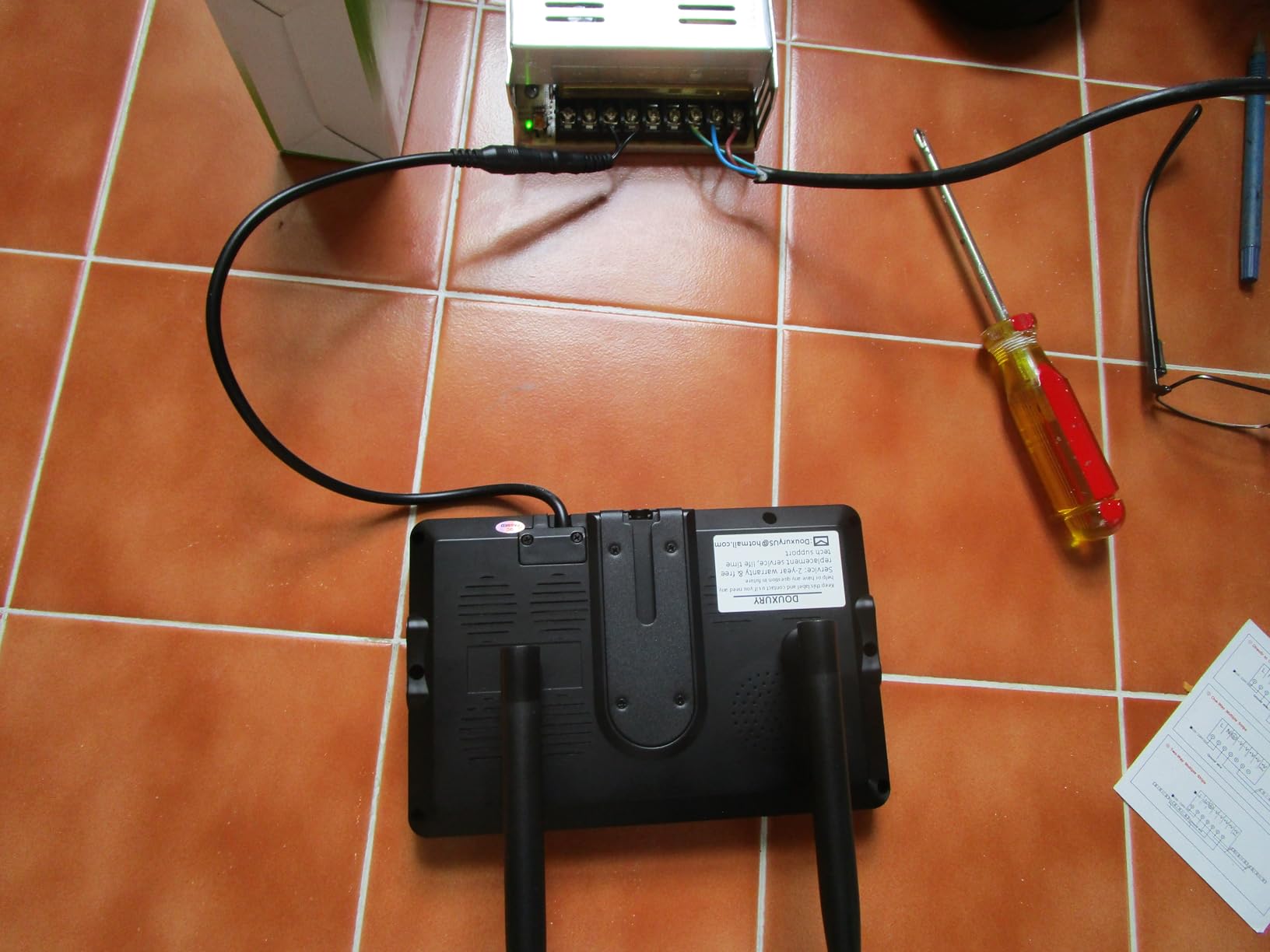
The monitor is a 7-inch 1080p LCD with a four-channel processor, so you can run up to four cameras and view them as a four-way split. Owners commonly add one camera inside a horse trailer or aimed at a towed vehicle, which the wide lens handles well.
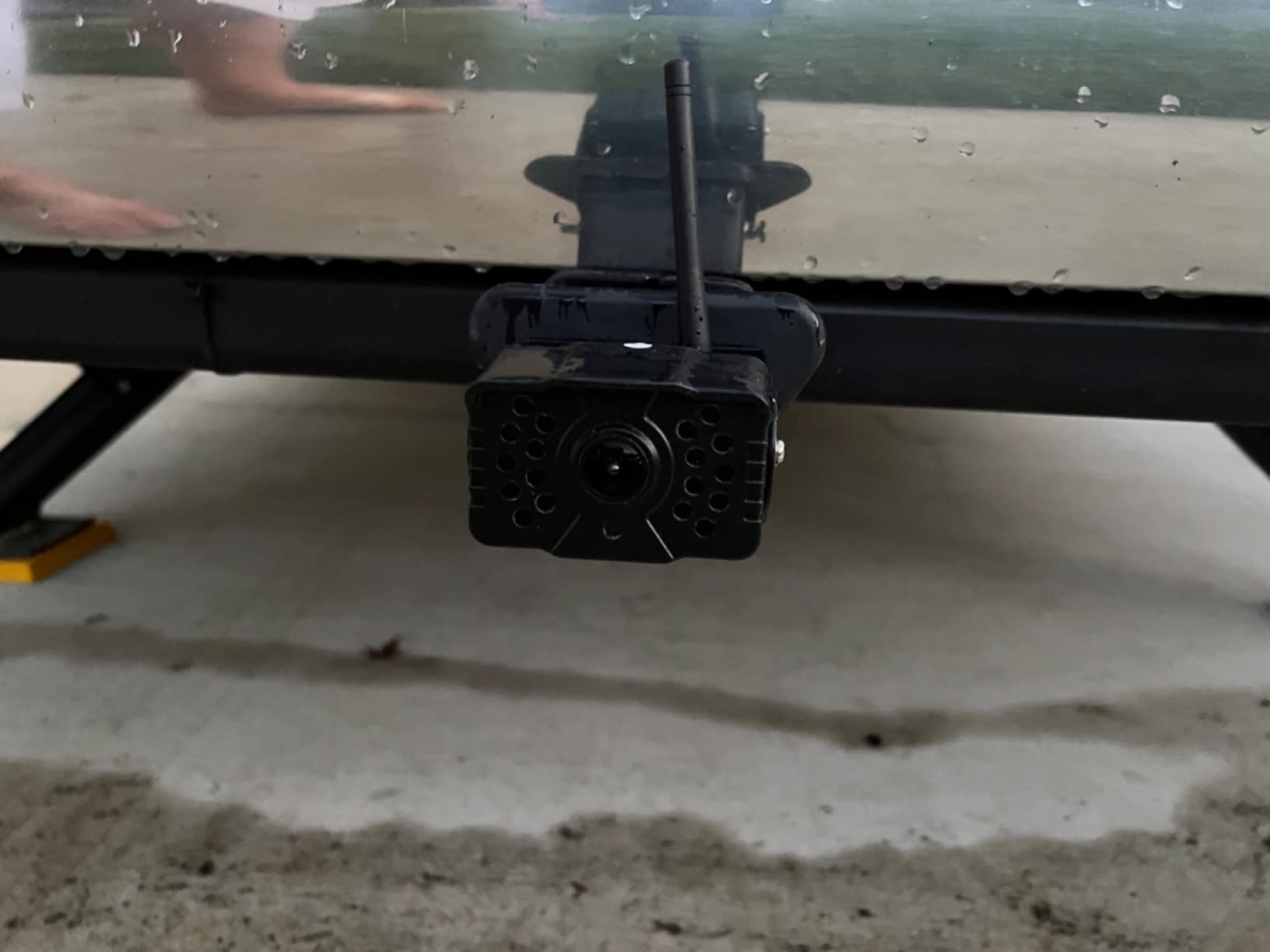
Temperature tolerance is unusually well specified for this class. The housing is sealed to IP69 and rated from minus 4F to 149F, which covers everything from a Minnesota January to a desert summer without a second thought.
What you should know before buying
The live picture runs at roughly 15 to 20 frames per second, so fast motion looks choppy. For reversing slowly into a campsite that is irrelevant. If you plan to use it as a full-time observation view at highway speed, expect a rougher picture than the premium DVR kits deliver.
Recording is the weak spot. Reviewers describe it as effectively unreliable, starting and stopping on its own, saving mirrored files at 1280×720 rather than 1080p. If you want dash cam quality, look elsewhere in this list.
Who it suits and who should skip it
Buy it for hitching, for tight back-in sites, and for anyone whose biggest complaint about their current setup is not seeing enough of what is beside the trailer. It is also a good second camera for a horse or cargo trailer.
Skip it if recording is a requirement or if you need a view that stays smooth while driving. A handful of buyers also report water inside the camera after sustained heavy rain despite the IP69 claim, so check the seal if you store the trailer outdoors in wet climates.
4. AMTIFO SZNZWX – Best Metal-Body Replacement for Pre-Wired Trailers
HD 1080P RV Backup Camera Wireless – Easy Install for Furrion Pre-Wired RVs
All-metal IP69 camera body
7 inch touch monitor with 4 channels
150 degree lens, 20ft infrared
2 year warranty
Pros
- Direct plug-and-play swap for a factory pre-wired camera
- All-metal body tolerates heat better than plastic kits
- Power IC upgraded from 35V to 60V for surge resilience
- Test cord lets you verify the camera before climbing up
- Two year warranty
Cons
- Needs running lights on for power on many pre-wired trailers
- SD card for the recording function is not included
- Touch menus feel less responsive than physical buttons
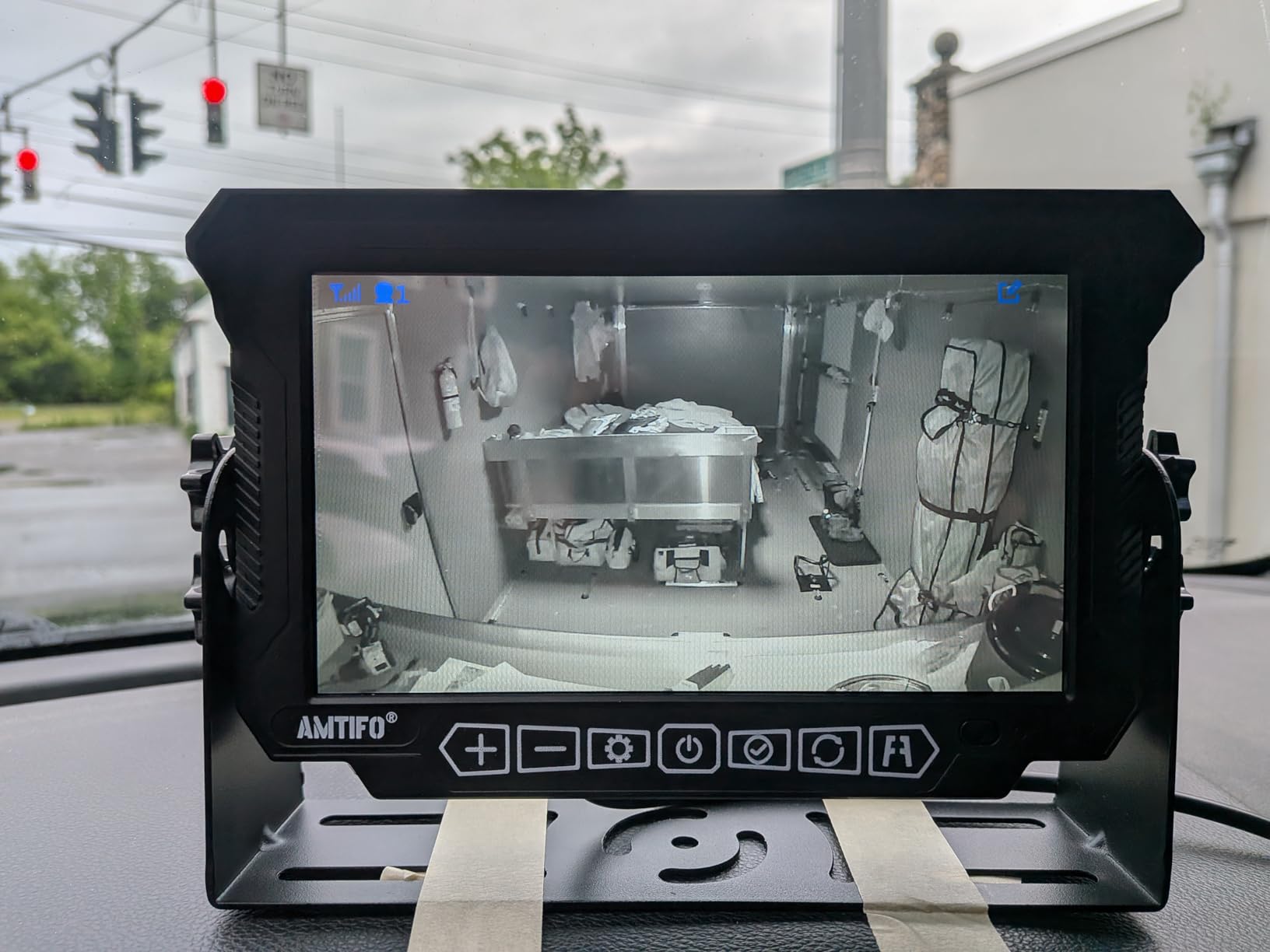
This is the second pre-wired drop-in in the list and it wins on build quality. Where most cameras in this price band use a plastic housing, the AMTIFO body is all metal, and on a trailer back door that bakes in summer sun the difference shows up over a few seasons.
The electrical design is the other stand-out. The power integrated circuit on the motherboard was upgraded from 35V to 60V, which matters because trailer wiring sees voltage spikes when a tow vehicle disconnects under load. Owners running older trailers with tired batteries report noticeably fewer brownouts.
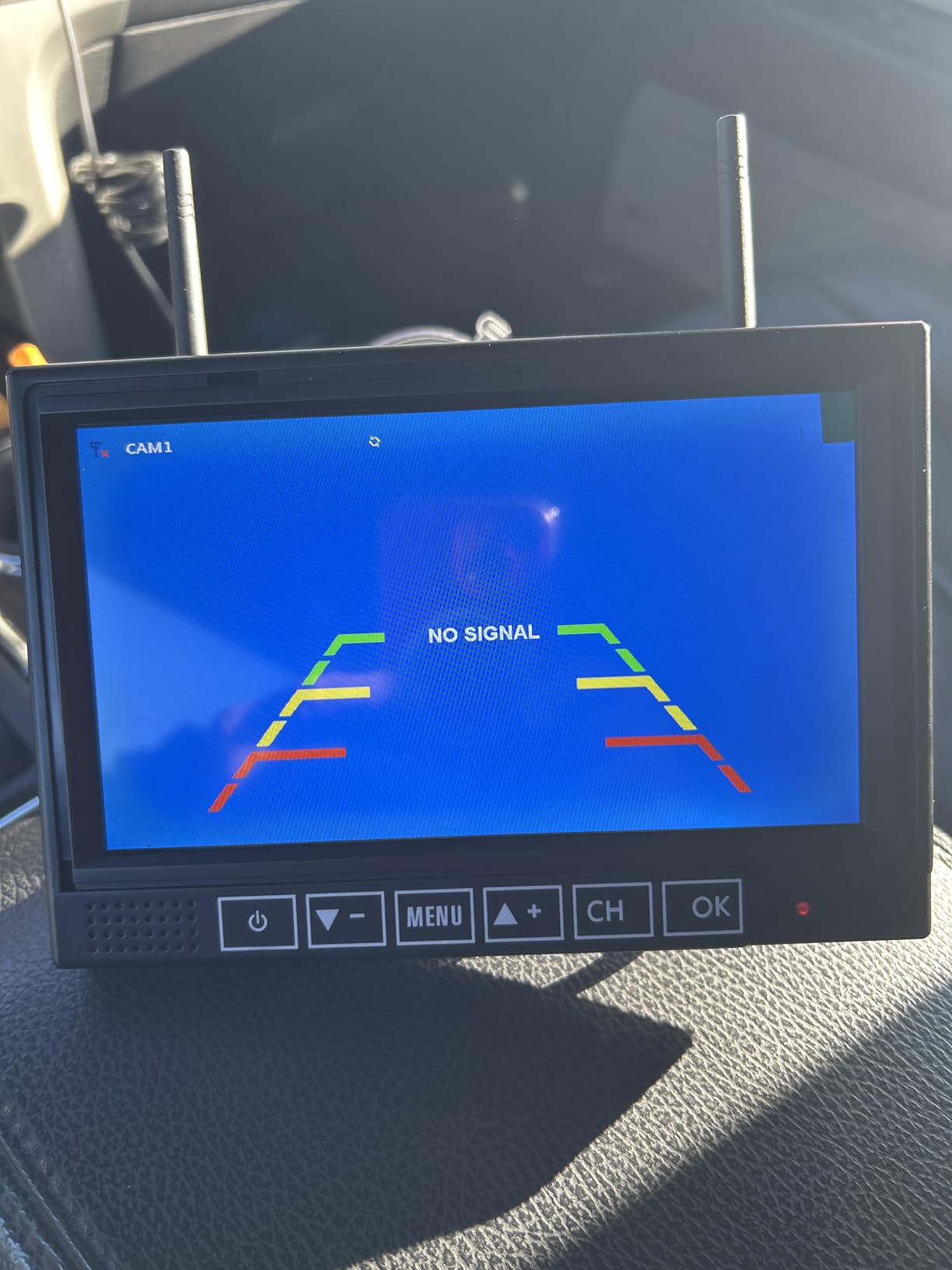
The 2.4GHz dual-antenna system with digital signal processing claims 825 feet open-area and 320 feet working range, matching the best in the group. The 150 degree lens shows the tow vehicle and roughly two lanes of traffic, which is the ideal framing for a campground loop.
A test cord is included so you can plug the camera in at ground level and confirm the picture before climbing onto the trailer roof. It is a small detail that anyone who has installed a camera on a 30-foot trailer will appreciate immediately.
What you should know before buying
Night vision reaches about 20 feet using infrared LEDs with automatic IR-cut filtering. That is enough for a campsite with streetlights or a moon, and not enough to back up in genuinely unlit woods, so bring a work light for those nights.
The seven-inch monitor is a touch display rather than a keypad, and some users find the menus slower to respond than physical buttons. The four-channel capacity means you can add side or front cameras later, which is where this kit earns its flexibility.
Who it suits and who should skip it
Pick this one for a pre-wired trailer in a hot climate, or for anyone who intends to add multiple cameras over time. The all-metal body and two-year warranty make it the more durable option of the two drop-ins here.
Skip it for an unwired trailer, since there is nothing to connect to. You will also need to buy an SD card yourself if the recording feature matters, and the running-light power dependency means no live picture when the trailer is parked and dark.
5. DoHonest R50 – Best for Small Vehicles and Frequent Quick Hitches
Wireless Backup Camera Solar Magnetic: Portable Cordless Scratch-Proof Truck Trailer Hitch Rear View Camera HD 1080P No Wiring No Drilling Rechargeable 5” Monitor Kit for Car RV Camper – DoHonest R50
5 inch IPS monitor
9600mAh solar battery, 24 hour runtime
150 degree lens with 16 IR LEDs
No drilling magnetic mount
Pros
- Cordless magnetic install in seconds with no paint damage
- Battery runs about 11 hours of continuous use per charge
- Signal often exceeds the stated 36ft range
- Compact 5-inch screen suits smaller tow vehicles
- One year warranty with lifetime tech support
Cons
- 5-inch screen shows less than 7-inch competitors
- Occasional brief dropouts that recover within seconds
- Split screen with two cameras compresses both pictures
This is the smallest and lightest system here, and on a quick hitch it is the most sensible one. Owners who tow a small trailer with a crossover or a compact pickup consistently report that the 5-inch IPS screen sits neatly on the dash without crowding the view out.
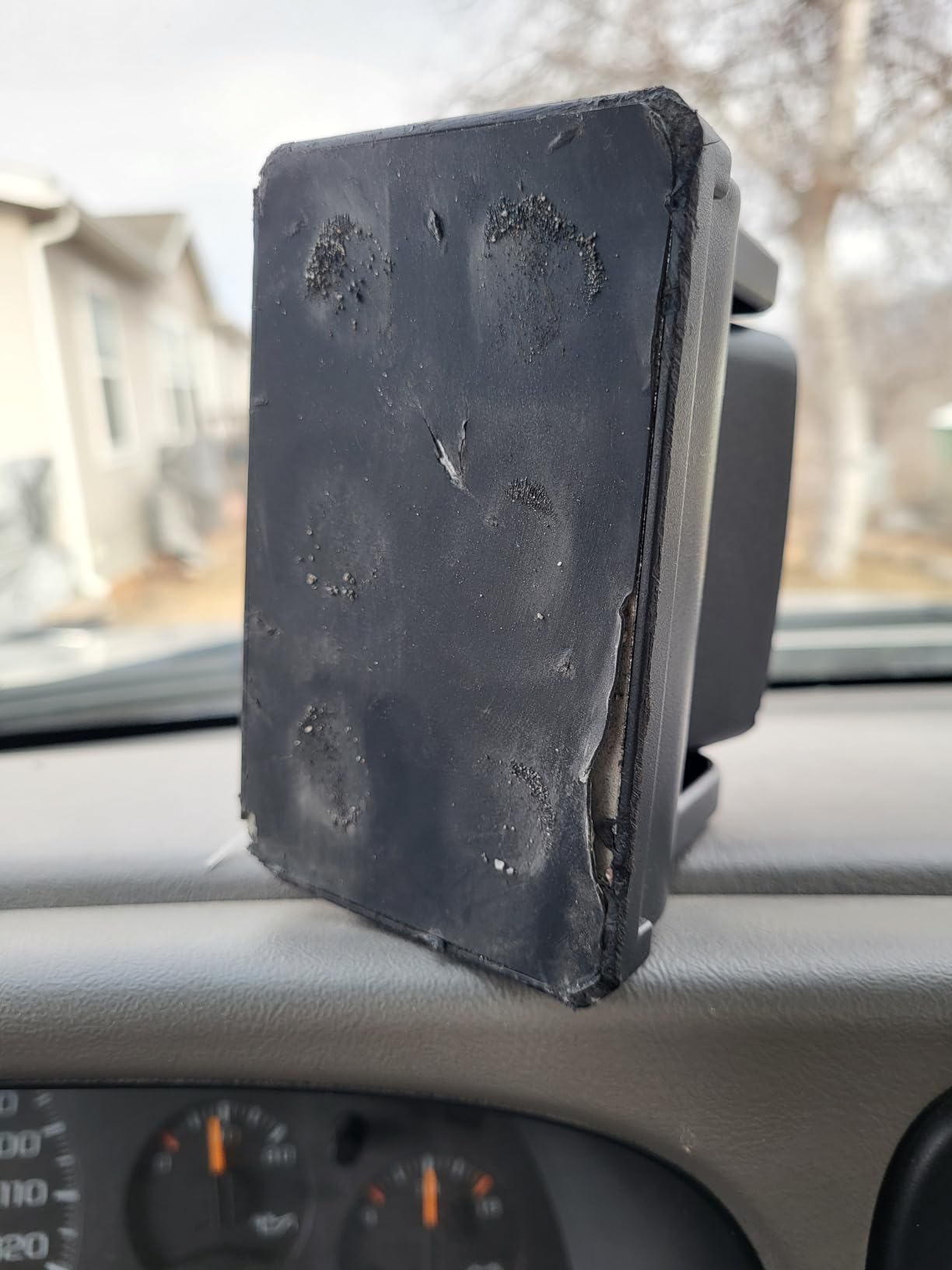
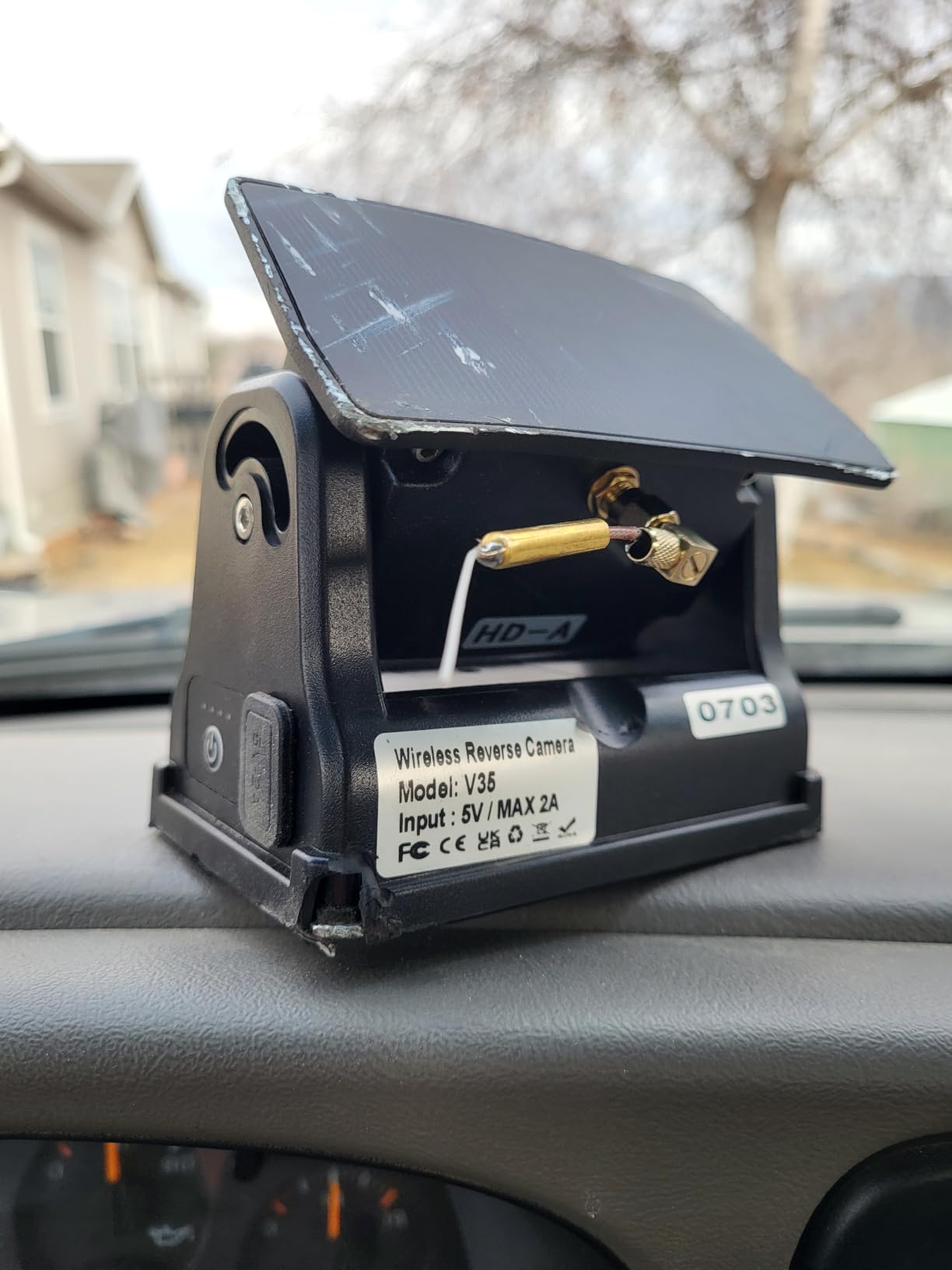
The durability stories are unusually good. One owner reported throwing a camera onto the pavement at 50 mph and it kept working, and reviewers describe the neodymium magnet as staying put over gravel, washboard roads and highway speed. For a device that lives outside on the back of a trailer, that matters more than the specification sheet.
Published range is 36 feet, which sounds short until you read the reviews. Multiple owners report holding a signal at 100 feet and beyond with the trailer disconnected, so treat that number as a floor rather than a ceiling.
Solar charging with a 9600mAh battery gives up to 24 hours of use per charge in good conditions, and reviewers measuring continuous use land nearer 11 hours in moderate weather. Sixteen infrared LEDs with automatic light sensing handle dusk and low light adequately for backing.
What you should know before buying
The 5-inch screen is the honest compromise in this kit. It is perfectly readable in daylight and fine for backing, but if you want to check a bike rack or a load behind you while moving, you are working with a smaller window than the 7-inch kits give you.
Brief connection drops do occur and they resolve within a few seconds, which is annoying rather than dangerous. Split-screen with two cameras compresses both images into a small area, so buy the second camera for a different job rather than expecting a usable two-view display.
Who it suits and who should skip it
This is the right kit for a pop-up, a small travel trailer, or a truck camper where the monitor needs to disappear when it is not in use. The magnetic mount also makes it easy to remove and take with you, which is why it suits occasional towing.
Skip it if you tow a long fifth wheel and want to judge the far side of the trailer. Also skip it if your trailer body is composite and you have no metal surface to magnet to, or if you want a recorded video file rather than a live view.
6. Haloview BT7 – Best Full-Color Night Vision and Genuine DVR Recording
Haloview BT7 RV Backup Camera Wireless FHD 1080P DVR 7″ Monitor System
7 inch LCD monitor with built-in DVR
1080P recording at 30fps
Full color dim-light night vision
984ft range, rated to 65ft vehicles
Pros
- Full color image in dim light instead of black and white
- 984ft line-of-sight range and rated for rigs up to 65ft
- DVR records reliably at 1080P and 30fps
- Low latency holds a stable picture at highway speed
- 10-32V input tolerates trailer voltage swings
Cons
- 120 degree lens is narrower than cheaper 150-170 degree kits
- One year warranty is shorter than rivals in the list
- Highest cost of the ten systems reviewed
The Haloview BT7 is the most refined system in this group, and the reason is night vision. Every other camera here switches to black and white infrared in low light, which reads well close up but flattens everything beyond a few yards. The BT7 holds full colour in dim conditions using remotely activated fill lights, so a person, a post and a post all stay distinguishable.
It also has the only recording in this list that owners describe as dependable. The built-in recorder writes 1080P at 30 frames per second and supports four-channel composite or single-channel AVI capture to an SD card. Owners running it as a dash cam report files that actually play back properly.
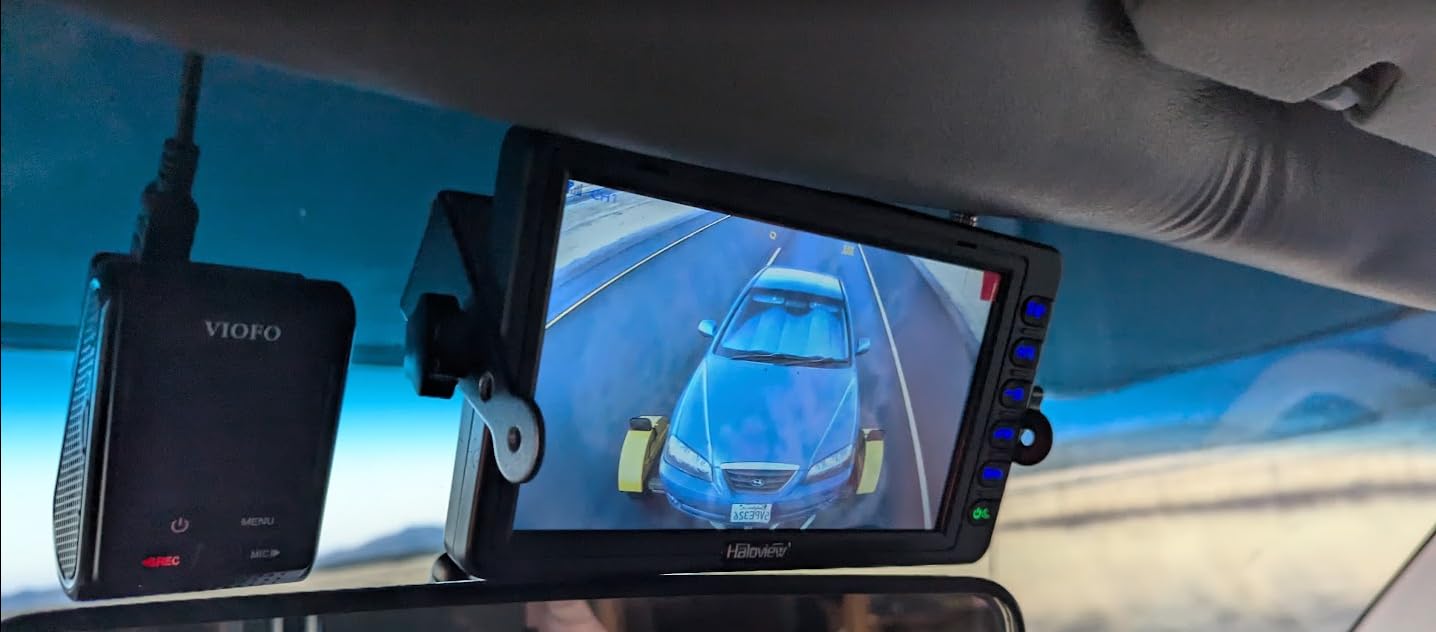
Range is the other strength. Line-of-sight reach is quoted at 984 feet and the system is rated for vehicles up to 65 feet, which covers the longest fifth wheels and toy haulers. The low-latency wireless link is designed for viewing while driving rather than only while reversing, and owners confirm a stable picture at highway speed.
On r/RVLiving, owners specifically recommend this system because it can tie into the trailer’s running-light power, which sidesteps the battery drain problem that plagues factory installations. The 10-32V input tolerance also protects it from the voltage swings common on older trailers.
What you should know before buying
The lens is 120 degrees, and that is a real trade-off in a list where others reach 170. You will see the trailer’s own bumper width clearly, which is what matters for a back-in, but you see less of the ground beside the corner. If your campsite demands a wide swing, look at a wider kit.
The warranty is one year, which is shorter than the two and three year terms offered by some competitors here, and the system costs the most of the ten. Owners of Furrion systems have separately complained that a one-year warranty leaves a replacement unit uncovered, so read the terms before you rely on it.
Who it suits and who should skip it
Buy it if you arrive at campgrounds after dark regularly, if you want a real dash cam recording, or if you tow a rig near the 65 foot limit and need the range. The full-colour night picture is the single feature you cannot replicate with a cheaper kit.
Skip it if your backing is mostly in daylight, if you need the widest possible field of view, or if the cost sits outside your budget. For most campers backing into a lit site, the premium buys night capability that goes unused.
7. pemacom M1 Dual Camera – Best Two-Camera Coverage for Multi-Day Trips
HD 1080P Dual Wireless Backup Camera: 15200mAh Battery Up to 3-Day Trip
Two cameras with 15200mAh batteries
7.2 inch split-screen monitor
170 degree lens with 30ft night view
3 year warranty
Pros
- Two cameras cover rear and side from one monitor
- Solar trickle charging carries a two to three day trip
- 170 degree lens makes hitch alignment much easier
- 450ft link stays stable at highway speed
- 3 year defect warranty with lifetime support
Cons
- Package is heavy at 6.2 pounds and bulky in a small cab
- Split screen reduces detail on both camera views
- Cameras need a metal surface or the supplied iron bracket
Two cameras in one box is unusual at this level, and it solves the most common follow-up request from owners of single-camera kits: where do I put the second angle. Mount one on the rear and one on the side of a fifth wheel and the blind spot beside the trailer disappears, which is exactly where tight approaches go wrong.
Each camera carries its own 15200mAh battery, giving up to 26 hours of continuous use per camera on a full charge. The solar panels trickle-charge during driving, and at six to eight hours of daily driving that is enough for a two or three day trip without finding a socket.
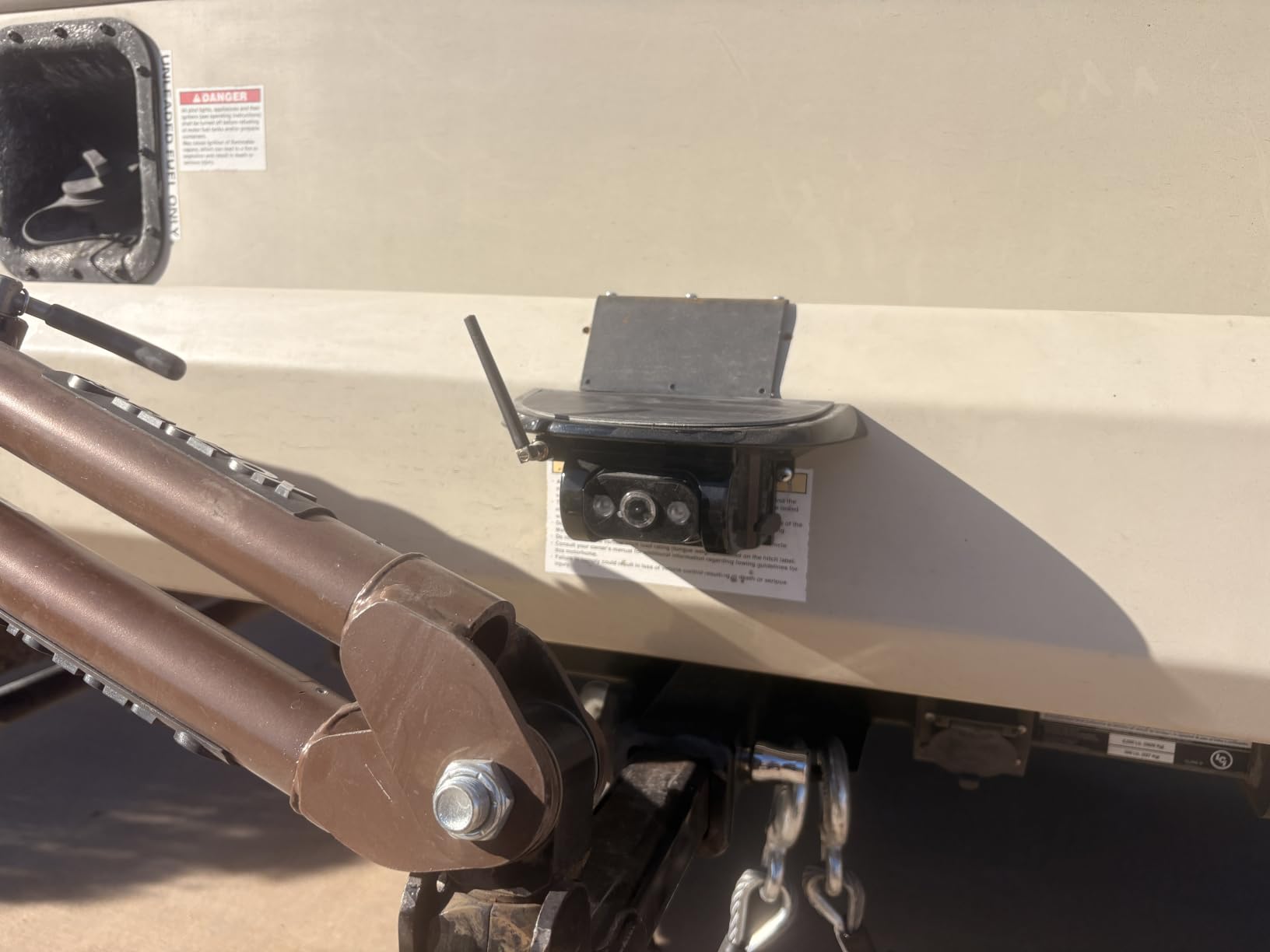
The 7.2-inch monitor is the largest of the portable kits here and it drives a split-screen view across both cameras. The 170 degree lens with an F1.6 glass lens and dual infrared LEDs gives roughly 30 feet of night visibility, which is enough for a lit campsite approach.
Signal is a 2.4GHz link quoted to 450 feet in open areas, and owners report it staying stable through highway driving, lane changes and campground manoeuvring. Loop recording captures campsite activity and any bumps while the rig is parked.
What you should know before buying
Weight is the real drawback. At 6.2 pounds for the whole package, this is not a system you will move between trailers casually, and the monitor is bulky for a small tow vehicle. Anyone backing a 25-foot trailer with a crossover will feel the difference.
Split screen divides the display, so each camera gets half the pixels. That is fine for a side camera giving you a reference angle, but it means neither view is as sharp as a single camera filling the screen. The cameras also need metal to mount to, with a supplied iron bracket for composite bodies.
Who it suits and who should skip it
This is the pick for a fifth wheel or a longer travel trailer where side coverage is the difference between a smooth arrival and a slow one, and for anyone who boondocks for days without a hookup. The three year warranty is also the longest in this roundup.
Skip it for a small trailer with a tight dash, if you need maximum screen detail from a single rear view, or if you plan to move the cameras between rigs often. For a single rear camera with side coverage added later, the four-channel kits are lighter and more flexible.
8. Rohent A70 – Best for Extreme Temperature Ranges and Motorhome Cabs
Wireless Solar Backup Camera for Trailer: Long-Range Signal Magnetic Backup Camera for Travel Trailer 7-Inch DVR Monitor 1080P HD Night Vision by Rohent – A70
7 inch monitor with built-in DVR
15000mAh battery with solar panel
120 degree lens, minus 22F to 176F
Magnetic mount with metal plate included
Pros
- Magnetic mount includes a metal plate for fiberglass and wood bodies
- Solar panel carried owners through a six-day camping trip
- Operates from minus 22F to 176F
- Signal held past 200 feet in one owner test
- Camera and monitor power down together at rest stops
Cons
- A small number failed to charge over USB or solar soon after purchase
- Video is occasionally jerky for a few seconds at a time
- 120 degree lens is narrower than 150-170 degree rivals
Owners who leave rigs outside through winter look for a temperature rating first, and this kit is specified from minus 22F to 176F with an IP69 impact-resistant housing. That is the widest range in this roundup and it is the reason this system earns its place for northern camping.
The mount is the detail that separates it from the other solar kits. A self-adhesive metal plate is included, so it will hold a magnet on a fiberglass, aluminium or wood body without drilling. One owner described sliding the camera off cleanly with two hands after six weeks on the road.
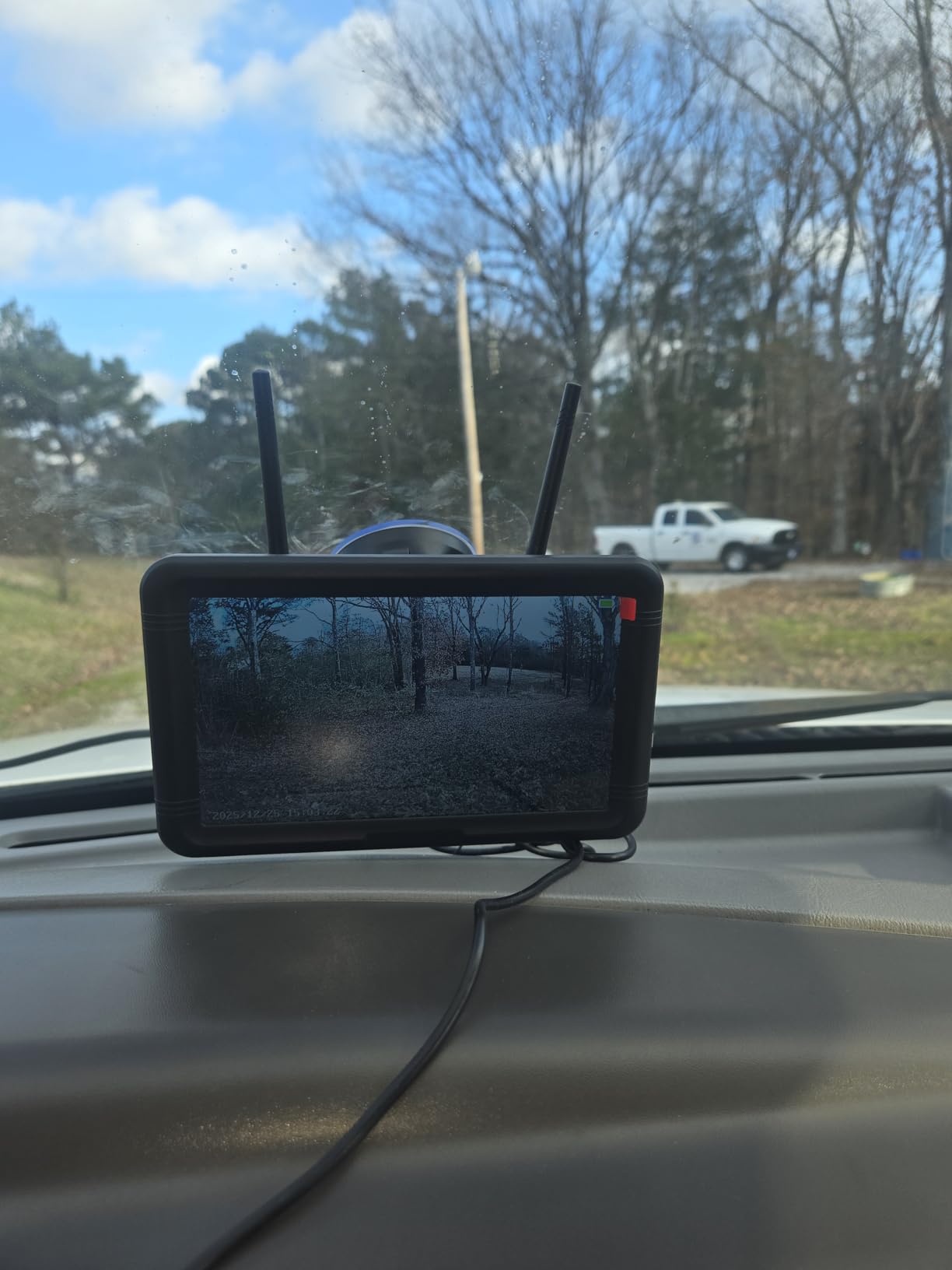
The 7-inch monitor includes a built-in DVR that records and plays back at 1080P, which is more than most kits at this level manage. Owners report a wide screen that stays readable from the driver’s seat of a Class C motorhome, and the ability to switch the camera and monitor off together at a rest stop to preserve battery.
Signal held past 200 feet in one owner’s test with the trailer fully disconnected, and the system expands to four cameras across four channels if you later want more angles.
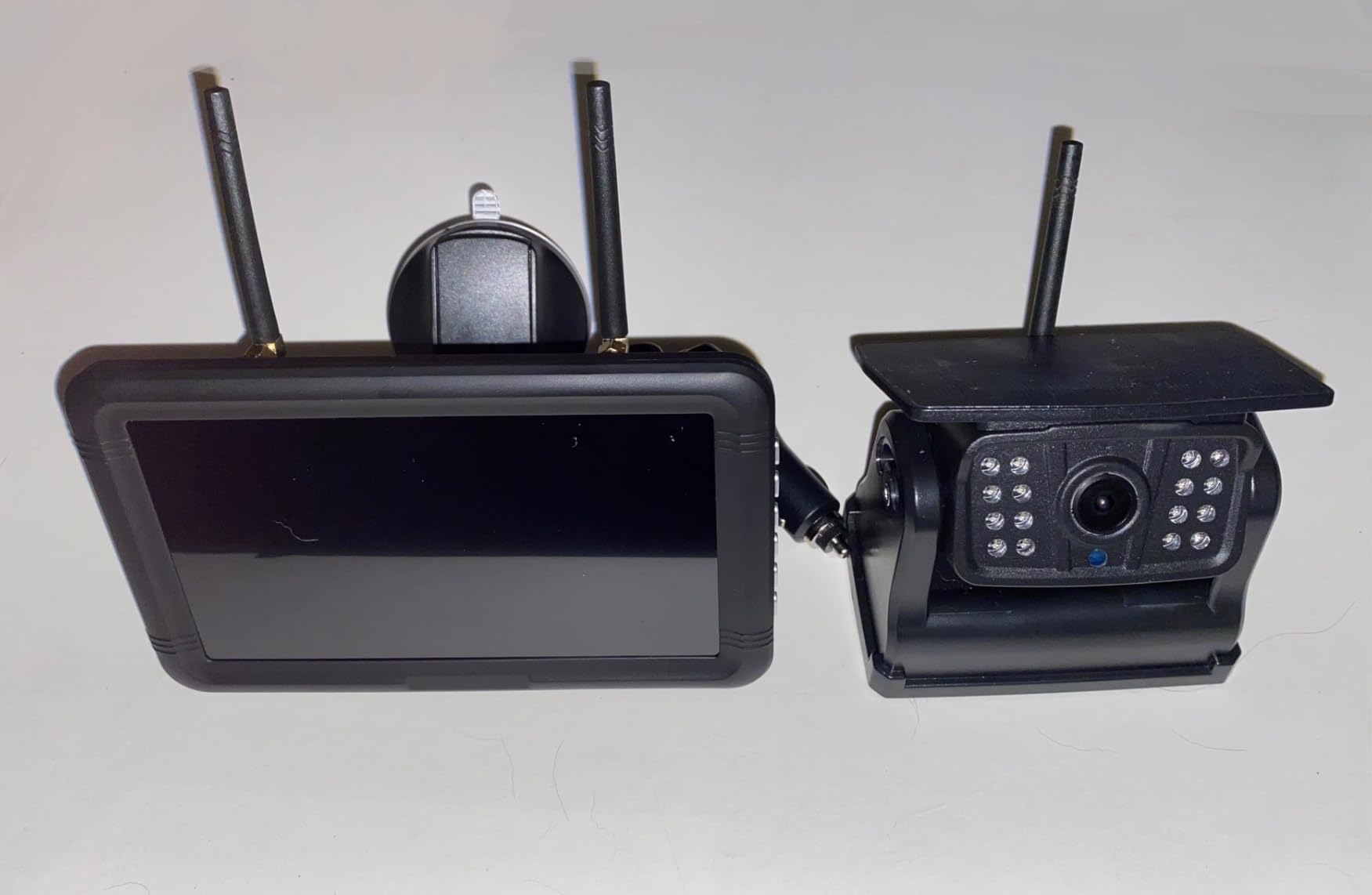
What you should know before buying
A small number of units failed to charge over USB or solar shortly after purchase and could not be replaced. The failure rate in reviews is low, but it is worth testing the charge cycle fully before you rely on the system for a trip, and worth checking the return policy first.
The 120 degree lens is narrow for the category, and the screen has no sunshade, so it can look dim against a bright windshield on a sunny day. Video is occasionally jerky for a few seconds at a time, which owners attribute to the wireless link rather than the sensor.
Who it suits and who should skip it
Choose this for a motorhome or a trailer that sits outdoors in freezing conditions, and for anyone who wants a DVR without a separate purchase. The included mounting plate makes it the easiest of the solar kits to fit to a composite body.
Skip it if your backing happens mostly in bright daylight, if you need to see the full width of a large site, or if you are uneasy about a small sample of early charging failures. For the widest possible view in a compact package, the 7-inch kit above it has the advantage.
9. AUTO-VOX Campsync – Best for Rear Plus Both Side Angles
AUTO-VOX Wireless RV Backup Camera System, Rear and Side Coverage
Rear plus both side angles on 7.2 inch screen
Dual antenna link tested to 500ft
32GB SD card included
1080P with infrared night vision
Pros
- Only kit here showing rear and both sides on one screen
- Dual antennas hold a stable 500ft link on long RV setups
- 32GB SD card included so the DVR works immediately
- Full-screen or split view for tight backing
- USB or 12V power with multiple cable lengths
Cons
- 105 degree lens is the narrowest in the group
- 9 percent one-star share is the highest here
- Fewer customer reviews than the competing systems
This is the only kit in the roundup that shows the rear and both sides at the same time. For a fifth wheel, a motorhome or anything wider than about 30 feet, the side angles cover exactly the zone that mirrors and a single rear camera both miss, and that is where scrapes happen.
The practical advantage over buying two separate cameras is the included 32GB SD card. The built-in DVR auto-records to it with loop overwriting, so the system is capturing video from the moment you switch it on. Every other kit here asks you to supply the card yourself.
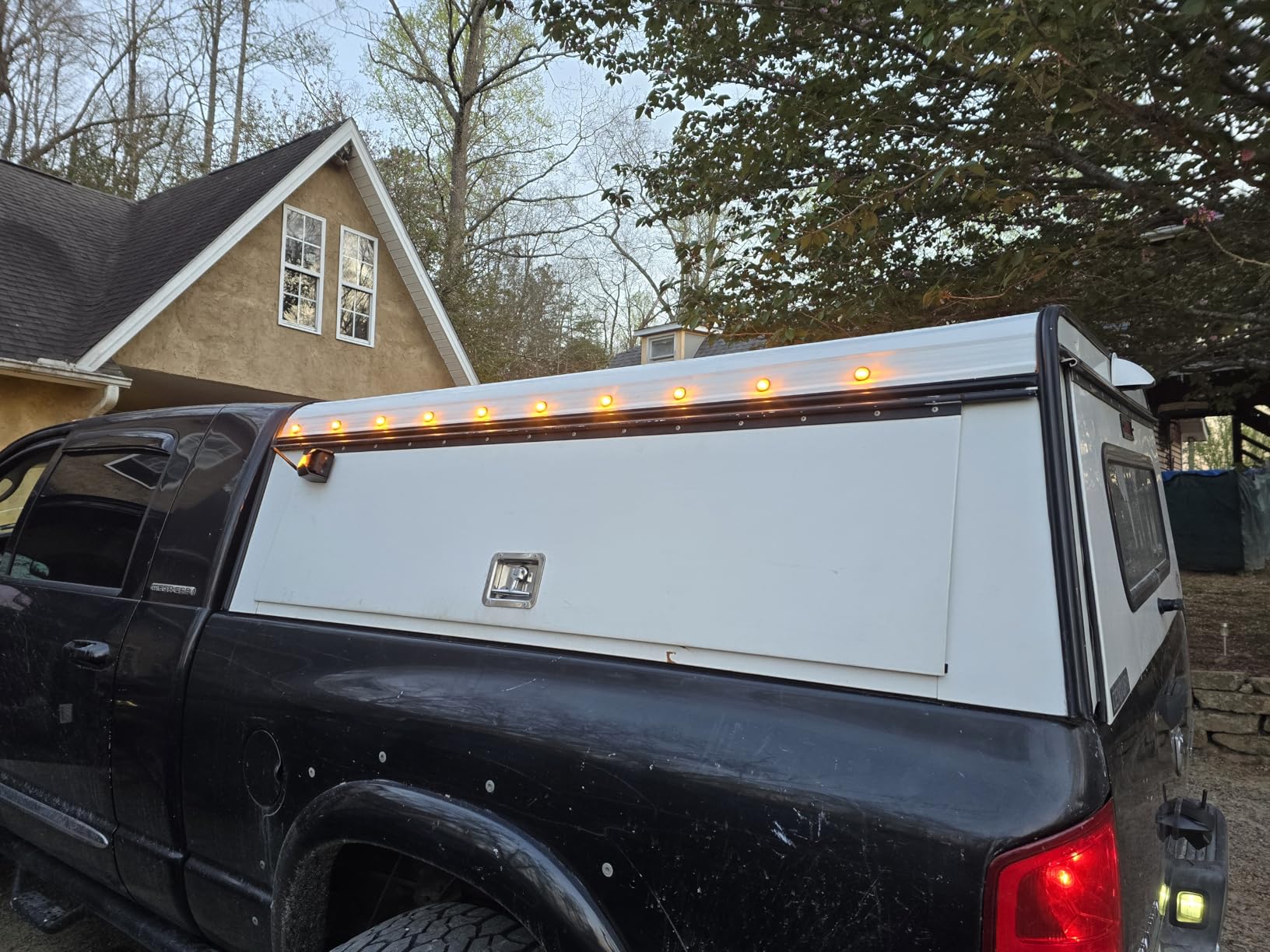
Signal is quoted at 500 feet across long RV setups with dual antennas, and owners report stability at highway speed. The 7.2-inch HD screen runs full-screen or split, so you can widen out for a tight site or commit to one camera when precision matters.
Power is flexible in a way most kits are not, running from USB or a 12V car charger with several cable lengths included, which keeps the dash tidy on a dash that has no room for it. The 1080p daytime image is clean and infrared covers late arrivals.
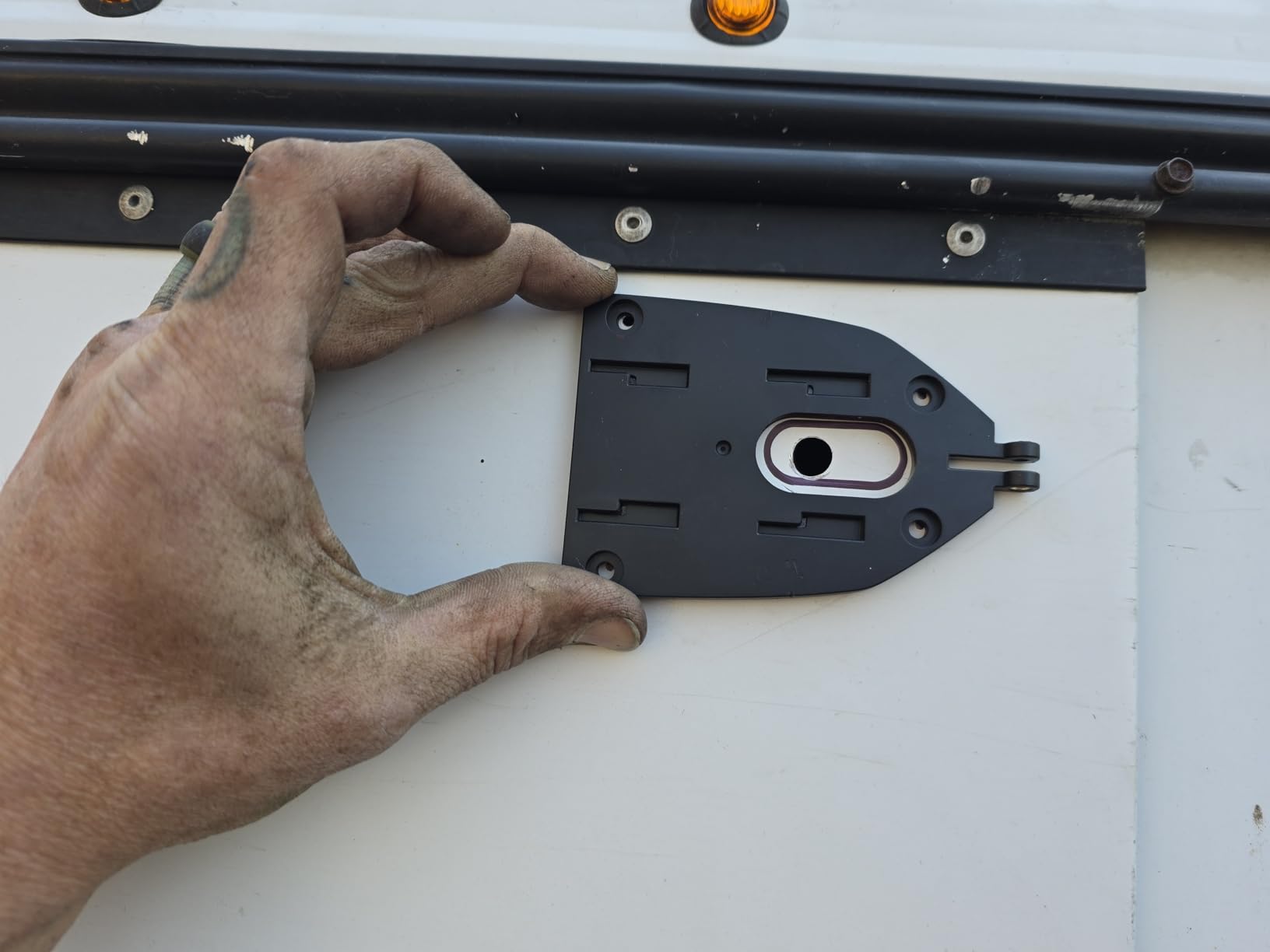
What you should know before buying
The 105 degree lens is the narrowest of the ten kits here, and that is a genuine conflict of interest in a product sold on coverage. You see the trailer’s full width and the lanes behind, but you see very little of the ground beside the corner during a tight back-in.
Customer ratings are the most mixed in the premium group, with 9 percent one-star and 21 percent four-star reviews against a 4.2 average, and the review base is the thinnest of the established systems. Support and pairing help is included, which matters more for a three-camera kit than for a single camera.
Who it suits and who should skip it
Buy it if you tow a wide fifth wheel or motorhome and want to stop guessing at both rear corners, or if you want recording that works the moment you open the box. The triple view is the reason to pay for it.
Skip it if you have a narrow travel trailer where side angles are wasted, if you need the widest possible rear view, or if you prefer a system with a longer owner track record. The single-camera kits above give you a better rear picture for less.
10. Thybro A8 – Fastest Install with a Wide Lens
HD 1080P Magnetic Wireless Backup Camera for RV – 1-Min Easy Install
Pre-paired 7 inch touch monitor
170 degree lens
50lb magnetic base with rubber
Solar plus USB-C charging
Pros
- Arrives pre-paired so it works with no pairing step
- 170 degree lens gives bumper-to-bumper coverage
- 50lb magnetic base holds over gravel and highway speed
- IP69K sealed for mud
- snow and pressure washing
- 24-month warranty with a 30-day money-back guarantee
Cons
- Smallest review base of the ten systems at 109 ratings
- 56ft stable link is shorter than rival range claims
- Needs a metal surface or the included iron sheet bracket
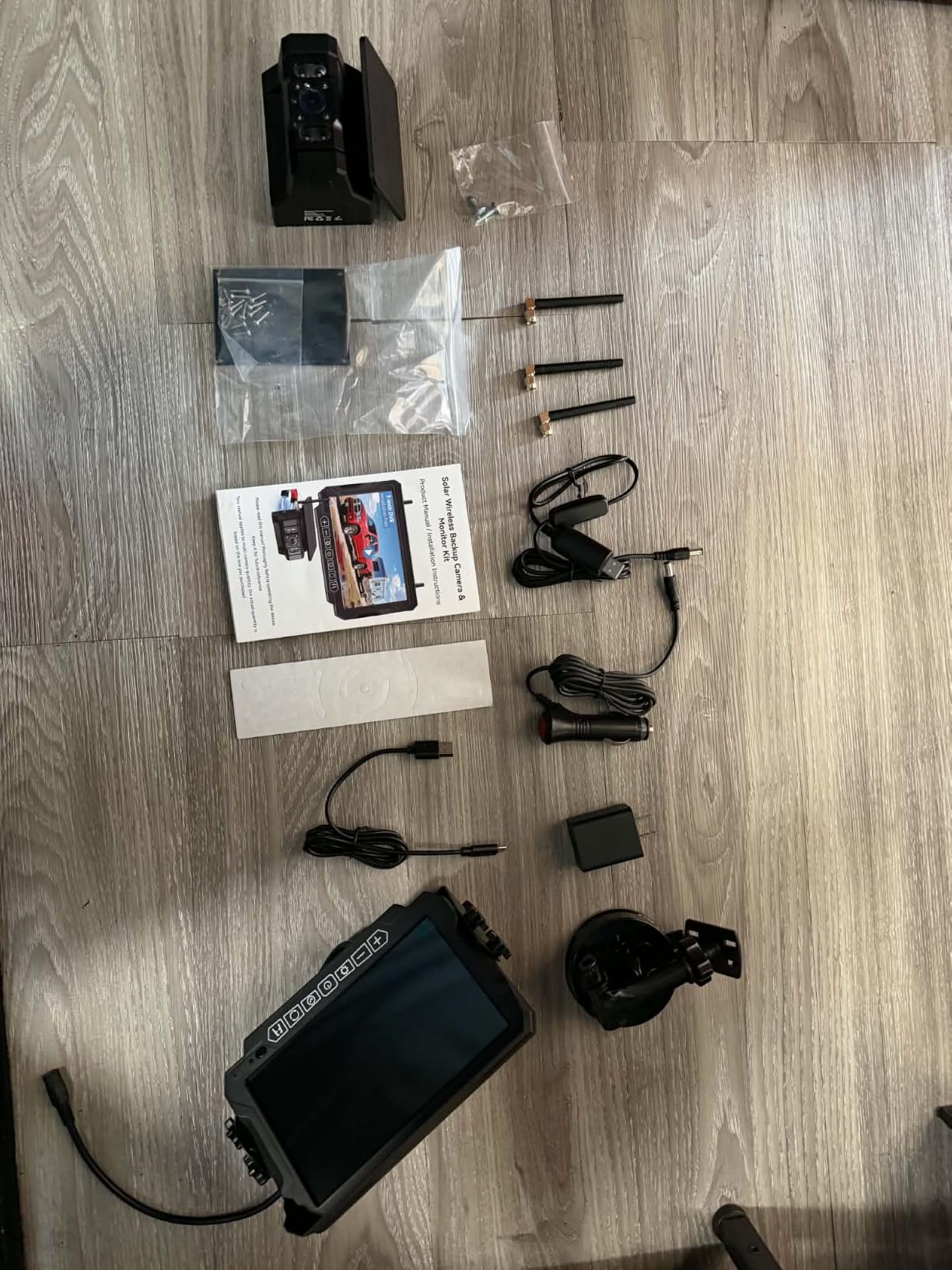
Everything ships pre-paired, which removes the one step that trips people up on other systems. You mount the camera, plug the monitor into the cigarette lighter, and the picture appears. For a first wireless camera or a trailer you want working in five minutes rather than an afternoon, that is worth a lot.
The 170 degree lens is the widest in this roundup and it is paired with a 50 pound magnetic pull on a scratch-resistant rubber base. Owners testing it over gravel and at highway speed report the camera does not shift, and the vibration testing shows in the design rather than only the marketing.
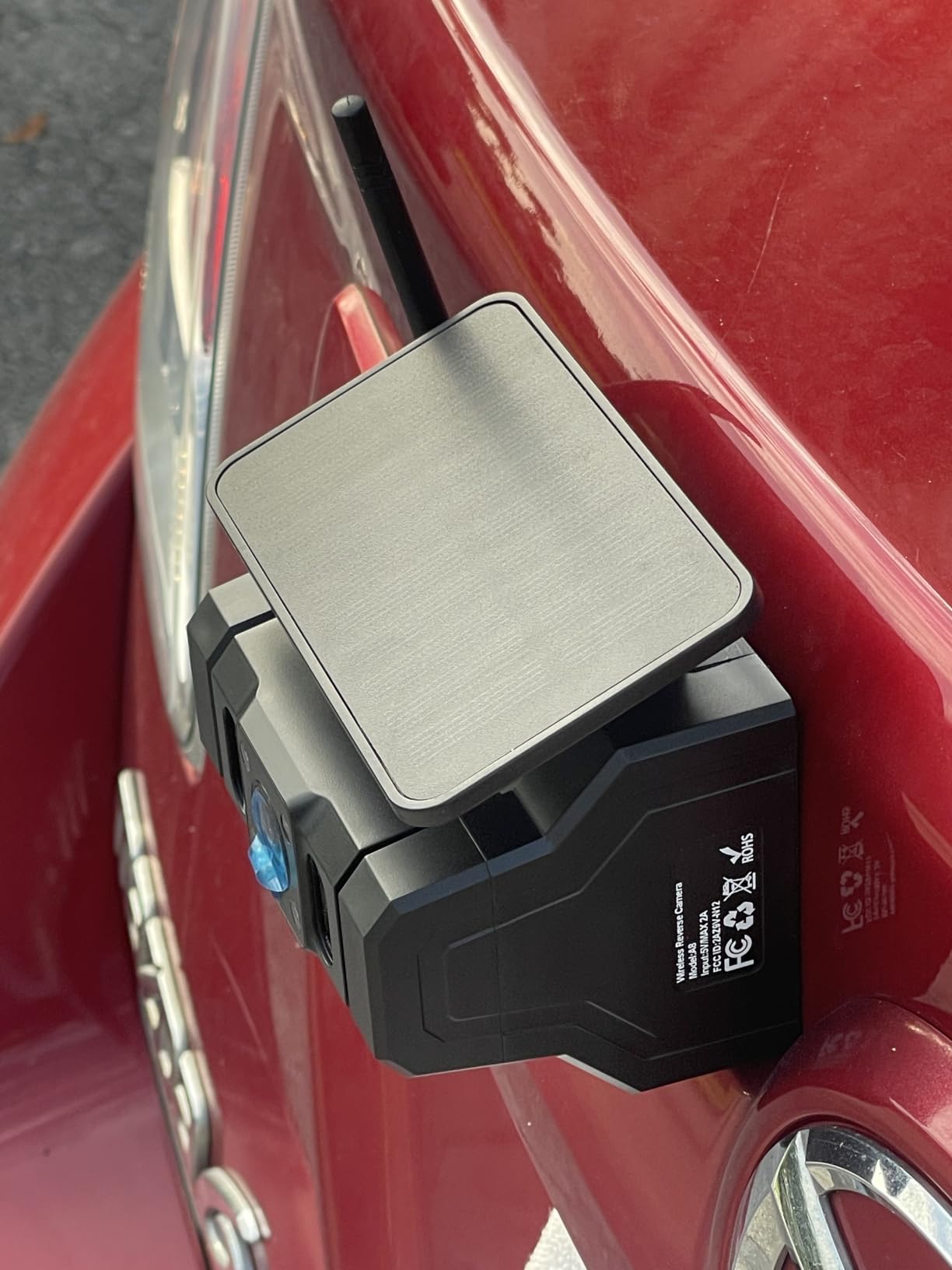
Power comes from a built-in solar panel with a USB-C port as backup for cloudy stretches, so the system keeps running when the weather does not. Infrared assistance covers low light behind the trailer, and the link is rated for 40 foot trailers at 70 mph.
An iron sheet bracket and a 3M sticker are included for composite bodies that will not hold a magnet on their own. The 24-month warranty is the second longest here, and it comes with a 30-day money-back window.
What you should know before buying
With 109 ratings, this is the smallest review base of the ten, which means the durability story is well liked but not yet proven over years. Every other kit in this list has a longer ownership record, and that matters for a device exposed to weather year round.
The stable link is quoted at 56 feet, well under the 320 to 984 feet claimed by rivals. That is a deliberate trade for a wide lens and a strong magnet, and it covers a standard travel trailer comfortably, but a 50 foot fifth wheel is beyond what the figure promises.
Who it suits and who should skip it
Pick this for a first wireless camera, for a trailer up to about 40 feet, and for anyone who wants the widest possible view with the least installation effort. The pre-pairing and one-minute claim are not marketing exaggerations.
Skip it for a very long rig where you want proven long-range performance, or if you want a recording system. For a long trailer with a long ownership history behind it, the Yakry kit at number one is the safer bet.
How to Choose a Wireless Backup Camera for a Trailer
The right kit depends almost entirely on one question: does your trailer already have a factory camera bracket and a pigtail? Everything else is preference. Answer that first and half the shortlist disappears.
Pre-wired trailer or bare trailer
If your trailer came with a camera, look for the plastic or metal bracket above the rear window and a two or three pin connector below it. A pre-wired trailer that has a Furrion bracket wants a Furrion-style plug-in kit, which is exactly what the Yakry Y27 and the AMTIFO SZNZWX are. Owners confirm this repeatedly on RV forums, and it is why swapping a factory system is a 30 minute job rather than a wiring project.
If there is no bracket and no pigtail, you are looking at a wired install or a solar and magnetic kit. A wired install gives you a permanent, always-powered camera with the best reliability. A magnetic kit gives you a camera you can move between trailers and remove when the rig is in storage. The forum consensus leans hard toward wired for anything used weekly.
Screen size, and why 4 inches is not enough
Buy the largest screen your dash will physically hold. Owners describe 4-inch monitors as effectively worthless for reading detail, because you end up squinting at exactly the moment you need confidence most. Seven inches is the practical floor and 7.1 to 7.2 inches is the sweet spot; the bulkier 7-inch boxes need careful siting so they do not fight the windshield pillar.
Screen brightness matters as much as size. A monitor with a sunshade or a hood reads far better in direct afternoon sun than a bare panel, and in a bright truck cab that difference decides whether you can use the camera at all.
Lens width and how many cameras
Field of view under 120 degrees leaves ground beside the bumper that you cannot see. 150 degrees is a good working minimum, 170 degrees is excellent, and anything below 110 degrees is a compromise you should only accept in exchange for multi-angle coverage.
On camera count, a single rear camera handles most travel trailers. A fifth wheel or a motorhome with a 32 foot or wider body benefits from side cameras, and that is where a four-channel monitor pays off. Expanding later costs more than buying a system that already takes four channels, so plan for it if you think you will add angles within a year.
Backup camera or observation camera
This distinction catches out more buyers than any other. A backup camera is designed to wake on reverse and show you the rear view. An observation camera stays live while you drive, which lets you check a bike rack, a trailered car or your blind spot before a lane change. Factory Furrion backup cameras generally do not work while driving, and owners regularly describe that as a disappointing surprise on delivery day. If you tow a passenger vehicle as well as a trailer, our best backup cameras for cars guide covers the smaller screen sizes and single-camera setups that suit that job.
Check the manual before you buy. Kits described as constant view or observation capable will show a live picture while moving; backup-only kits will not.
Night vision and low light
Almost every kit in this class uses infrared LEDs that switch the image to black and white in darkness. That is genuinely useful for reversing and works to somewhere around 20 to 30 feet. If you routinely arrive at unlit sites or want to recognise a person rather than an outline, look for a system that holds full colour in dim light with remotely activated fill lights, as the Haloview BT7 does.
Power source and battery drain
Trailer-wired kits draw power from the running or marker lights, which means the camera only wakes when the lights are on. Solar and battery kits use a large lithium cell charged by a panel, with runtime ranging from 11 to 26 hours per charge depending on the model. Solar trickle charging assumes you drive several hours a day; on a week of stationary camping you will want to top up over USB.
Recording and DVR
A DVR monitor writes video to an SD card, which turns the same hardware into a dash cam and a campsite monitor. It is a genuinely useful feature and most buyers do not know to look for it. Check two things carefully: whether the card is included, and whether the recording is reliable. Several kits in this roundup record intermittently, mirror the image, or drop to 720p, and only the premium DVR systems are consistently reported as producing clean files.
Signal range against trailer length
Published range figures are open-area maximums, not towing distances. The useful number is the working range on a vehicle, and it varies enormously between these kits, from 56 feet on the widest-lens magnetic system to claims of 180 to 320 feet on the dual-antenna kits and 984 feet line-of-sight on the premium DVR. For reference, a 40 foot fifth wheel puts roughly 45 feet between the trailer camera and the cab monitor, before any walls or furniture in between.
If you tow a long rig and hit trouble, transmitter placement is the first fix. Owners report that moving the camera to the front of the trailer cleared interference that no amount of money would have fixed, and that a stronger antenna helps where the trailer itself is the obstruction.
Installation, Wiring and Parasitic Battery Drain
Most installs fall into one of three categories, and the difficulty gap between them is enormous. A drop-in swap is minutes. A full wired install is an afternoon with basic tools. A magnetic install is seconds. Here is what each involves and the one problem that catches everybody out.
Swapping a factory pre-wired camera
Confirm the bracket and pigtail are present, then unplug the existing camera and connect the replacement. Mount the camera in the existing bracket, route the cable exactly as the factory did, and plug the monitor into a 12V source in the cab. A test lead on most of these kits lets you confirm the camera works from ground level before climbing anything, which is the single most useful accessory in the box.
If the monitor needs 12V and you do not want to drill the dash, owners mount it to the rearview mirror and power it from a mirror-fed socket or a cigarette lighter extension. That setup suits solo campers who want the screen out of sight when it is not in use.
Wiring a camera on a trailer that has no factory system
You need a camera, a transmitter, a monitor, and power from the trailer’s 12V system. The most common source is the running or marker light circuit, because it is already routed to the rear of the trailer and already switched. Run the camera lead into that circuit, secure the transmitter inside the trailer near the front to keep the radio path short, and mount the monitor in the cab.
Keep the transmitter away from the direct path between camera and monitor if the trailer has a metal skin, and mount it high rather than low where a tow vehicle can block the signal during a tight turn.
Parasitic drain and how to stop it
This is the most common complaint from owners of factory systems, and it is worth understanding before you copy the factory arrangement. A camera wired to the marker lights draws current continuously on many trailers, and that current comes out of the chassis battery through the truck. Owners report flat batteries after a few days parked with the trailer connected, and the problem is invisible until the truck will not start.
Two fixes solve it. First, power the camera from switched 12V rather than constant 12V, so it only draws when the ignition is on. Second, install an RF relay that cuts power to the camera when the trailer is unhooked. Both are cheap parts and a short job, and either one removes the drain entirely.
One more caution from owners: do not leave a camera powered outside through a hard freeze. Several forum reports describe units failing after a winter outdoors, and cold plus a dead battery is a combination the electronics do not enjoy.
When the signal drops
Work through these in order. First, move the transmitter toward the front of the trailer, which is the single most effective change and costs nothing. Second, check that the camera and monitor antennas are fully seated, since a loose antenna is a common cause of intermittent dropouts. Third, look for interference sources near a large metal structure, an industrial site or a dense electrical installation, and try a different channel.
If dropouts persist, the ground truth is that no wireless link is as reliable as a cable. Owners who care most about dependability end up running a wired camera, and that is a perfectly reasonable conclusion for anyone who tows weekly. A camera plus mirrors, a spotter when one is available, and the discipline to get out and look is the safe combination.
Frequently Asked Questions
What is the best wireless back-up camera for a travel trailer?
For most pre-wired travel trailers the Yakry Y27 is the best wireless backup camera, because it plugs directly into the factory Furrion bracket and pigtail and installs in under half an hour. It pairs a 7-inch 1080p monitor with a 150 degree lens, IP69K sealing and expansion to four cameras. If your trailer has no factory wiring, the pemacom P16 is the pick, since its magnetic solar mount needs no drilling at all.
Which backup camera is better, Furrion or Haloview?
It depends on what you need from it. Furrion is the factory standard on many pre-wired trailers, so a Furrion-style kit is the cheapest possible upgrade because the bracket and pigtail are already there. Haloview is a standalone premium system that does not need trailer wiring, holds full colour in dim light, records reliably at 1080P and 30fps, and is rated for rigs up to 65 feet. Choose Furrion-style for a drop-in, Haloview for night backing and recording.
What is the difference between Furrion Vision S and S+?
The two are separate generations, and the practical difference is in the harness and monitor rather than the image. Vision S is the older generation fitted to a wide range of pre-wired trailers, and its camera and monitor are what the plug-in kits in this roundup are built to replace. S+ is a newer generation with its own camera, monitor and wiring, so a Vision S plug-in will not connect to an S+ install. Check which generation your trailer was wired for before buying.
Are AUTO-VOX rear view cameras any good?
Yes, and the Campsync is the strongest argument for the brand in this category because it is the only kit here that shows the rear and both sides on one 7.2-inch screen, with a 32GB SD card included so the DVR works immediately. Its weaknesses are a 105 degree lens, the narrowest of the ten systems, and the most mixed customer ratings in the premium group. For wide-angle rear coverage, a 170 degree kit is a better buy.
Do wireless backup cameras really work?
They work well within their limits. Dual-antenna kits holding a 320 foot working range stay stable on 40 to 55 foot trailers at highway speed, and owners routinely report a clear picture in heavy rain. Range claims are open-area maximums, so judge a kit by its working range instead. Interference and dropouts usually trace back to transmitter placement, a loose antenna, or a metal trailer blocking the path, all of which are fixable.
Do wireless backup cameras work while driving?
Only if the system is designed for it. Backup cameras wake on reverse and stay dark while you move, and factory Furrion backup cameras in particular do not show a live picture while towing. Observation cameras and constant-view kits do, which lets you check a bike rack, a trailered car or your blind spot before a lane change. Check whether the manual describes constant view before buying, because this is the most common disappointment among new owners.
How do I install a wireless backup camera on my trailer?
On a pre-wired trailer, confirm the factory bracket and pigtail, unplug the old camera, mount the replacement, and plug the monitor into a 12V source in the cab. Use the included test lead to confirm the picture from the ground first. On an unwired trailer you either run power from the running or marker light circuit, keeping the transmitter near the front, or choose a solar magnetic kit and skip wiring entirely. Mount the transmitter high and forward for the most reliable signal.
Final Verdict
If your trailer came with a factory camera bracket, the Yakry Y27 is the best wireless backup camera for trailers and the easiest decision you will make this year. It drops into the existing wiring, holds a signal on long rigs, and expands to four cameras when you want side views.
If there is no bracket and no pigtail, start with the pemacom P16. It mounts in about a second, charges itself in the sun, and needs nothing drilled. Add the pemacom M1 dual camera if a fifth wheel means you need coverage out to both corners.
Pay up for the Haloview BT7 only if you back up after dark regularly or want a DVR that produces clean 1080p files. Its full-colour night picture and dependable recording are the two things no cheaper kit in this list reliably delivers.
Whatever you buy, check that the power is switched or fitted with an RF relay so you do not return to a flat chassis battery, and mount the transmitter near the front of the trailer before you blame the camera for a dropout. For a wider look at towing hardware, our guide to the best utility trailers and best enclosed cargo trailers covers the rigs these systems get mounted on.
And keep doing the thing owners repeat most often in every forum thread we read: get out and look. A camera is a second pair of eyes, not a substitute for your own.