
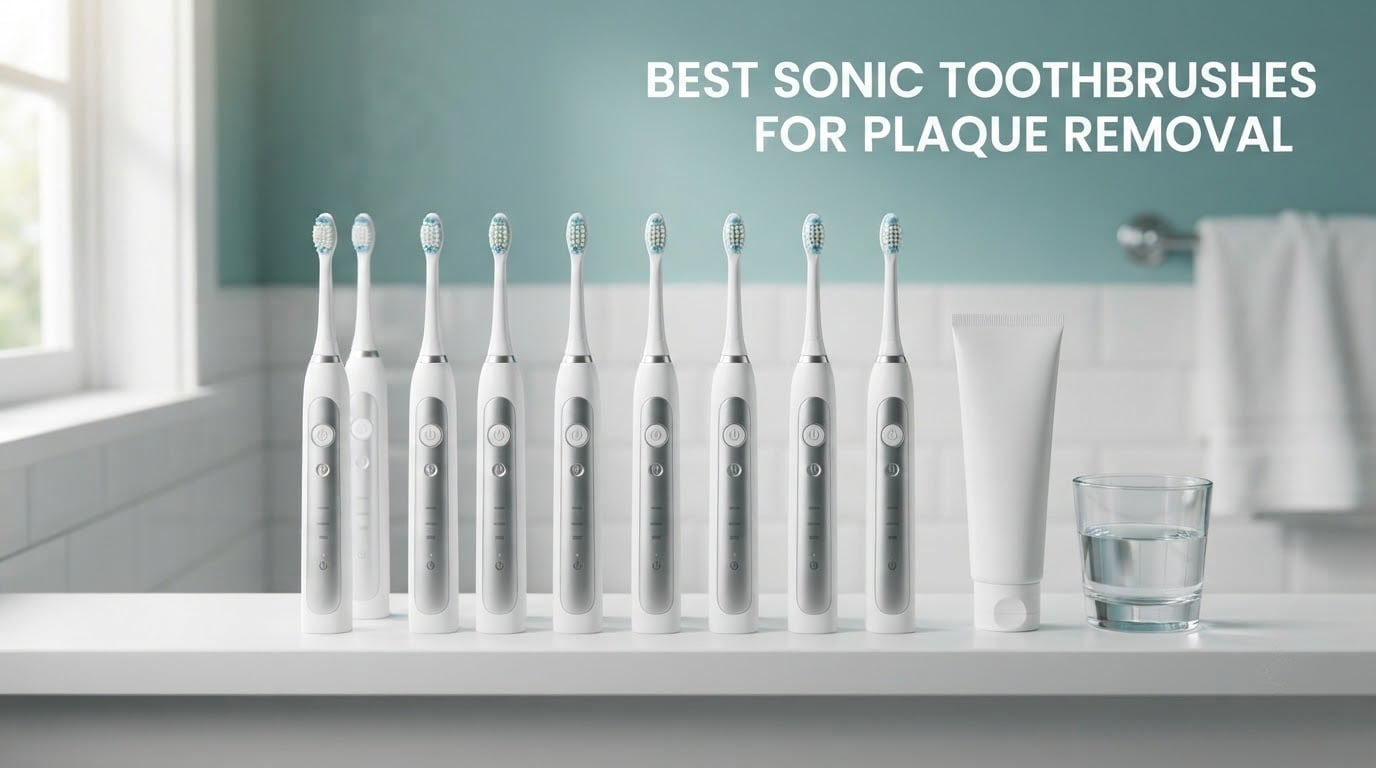
Yes, a sonic toothbrush can remove plaque, and it does it more consistently than a manual brush because the head vibrates at tens of thousands of movements per minute, flexing the bristles to break up the biofilm and driving fluid between the teeth. It cannot remove hardened tartar. That single distinction shapes every recommendation below.
We spent October 2026 going through the best sonic toothbrushes for plaque removal available right now, reading spec sheets, comparing verified review patterns, and checking what real owners say after months of daily use rather than the first week. Twelve brushes made the cut, from an aluminium-bodied premium brush with a UV sanitising case to budget handles that come with eight spare heads in the box.
What surprised us most is how little the head and the technique matter compared to the badge on the handle. Dental hygienists posting in r/DentalHygiene make that point repeatedly: the brush head design and how you hold it decide plaque outcomes far more than the model number does. Our picks are ordered by that logic, not by marketing claim.
This guide is current as of 2026 and was rewritten from scratch this October, which matters more than it sounds. One of the top-ranking lists on this topic still carries a year label several years out of date, which is a poor guide to what is on the market now. We have updated every price-linked feature, battery figure and head-supply count against current product pages.
Every brush below gets its own section, and every section answers the same three questions: how well does it strip plaque, who is it right for, and who should skip it. Internal links to our [pressure sensor roundup](https://blog-idcuk.com/best-sonic-toothbrushes-with-pressure-sensor/) and our [premium electric toothbrush guide](https://blog-idcuk.com/best-premium-electric-toothbrushes/) sit alongside the picks if you want to go narrower on either.
Table of Contents
Our Top 3 Best Sonic Brush Picks for Plaque Removal in 2026
The three below cover the three situations most people are actually in: you want the strongest all-round plaque removal with plenty of spare heads, you are focused on the gumline where plaque hides, or you want the most cleaning per pound spent.
All 12 Sonic Toothbrushes Compared Side by Side in 2026
This is the full lineup at a glance. The Key Features column tells you what each handle actually brings to the plaque fight, because that matters more than the model tier.
| Product | Specifications | Action |
|---|---|---|
 Aquasonic Black Series Aquasonic Black Series |
|
Check Latest Price |
| Philips Sonicare 5100 |
|
Check Latest Price |
 COSLUS C40 COSLUS C40 |
|
Check Latest Price |
 Burst Original Sonic Burst Original Sonic |
|
Check Latest Price |
 SURI Pro Sonic SURI Pro Sonic |
|
Check Latest Price |
 TEETHEORY Sonic TEETHEORY Sonic |
|
Check Latest Price |
 Philips Sonicare 6100 Philips Sonicare 6100 |
|
Check Latest Price |
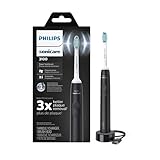 Sonicare ProtectiveClean Sonicare ProtectiveClean |
|
Check Latest Price |
 AURAGLOW Sonic AURAGLOW Sonic |
|
Check Latest Price |
 Philips Sonicare 1100 Philips Sonicare 1100 |
|
Check Latest Price |
 Made by Dentists PRO-X Made by Dentists PRO-X |
|
Check Latest Price |
 ORDO Sonic+ ORDO Sonic+ |
|
Check Latest Price |
1. Aquasonic Black Series – Our Best Sonic Toothbrush for Plaque Removal Overall
Aquasonic Black Series Ultra Whitening Toothbrush – ADA Accepted Electric Toothbrush- 8 Brush Heads & Travel Case – 40,000 VPM Electric Motor & Wireless Charging – 4 Modes w Smart Timer
40,000 VPM motor
8 DuPont brush heads
4 modes, smart timer
IPX7, wireless charging base
Pros
- ADA accepted for plaque removal and gingivitis reduction
- Eight brush heads cover about 2.5 years
- Wireless charging base suits travel
- Four modes including whitening and gum care
Cons
- Battery indicator is a small base light that is easy to miss
- No low-battery vibration alert at the end of a brush
- Small head needs adjusting if you prefer larger ones
- Occasional reports of motor failure after about a year
The Aquasonic Black Series is the one I keep coming back to after looking at every brush in this group. It runs a 40,000 VPM sonic motor, carries ADA Council on Scientific Affairs acceptance for plaque removal and gingivitis reduction, and comes with eight DuPont brush heads plus a hard-shell travel case. That head count alone works out to roughly two and a half years of replacements, which quietly solves the running-cost problem that trips up most electric brush buyers.
Four modes give real flexibility: clean, soft, whitening and massage. The smart vibrating timer handles the two-minute obligation for you, and the IPX7 waterproof rating means you do not have to think about it in a wet bathroom. It is the only brush in this lineup with a documented ADA acceptance, which is a credibility marker dental professionals consistently single out.
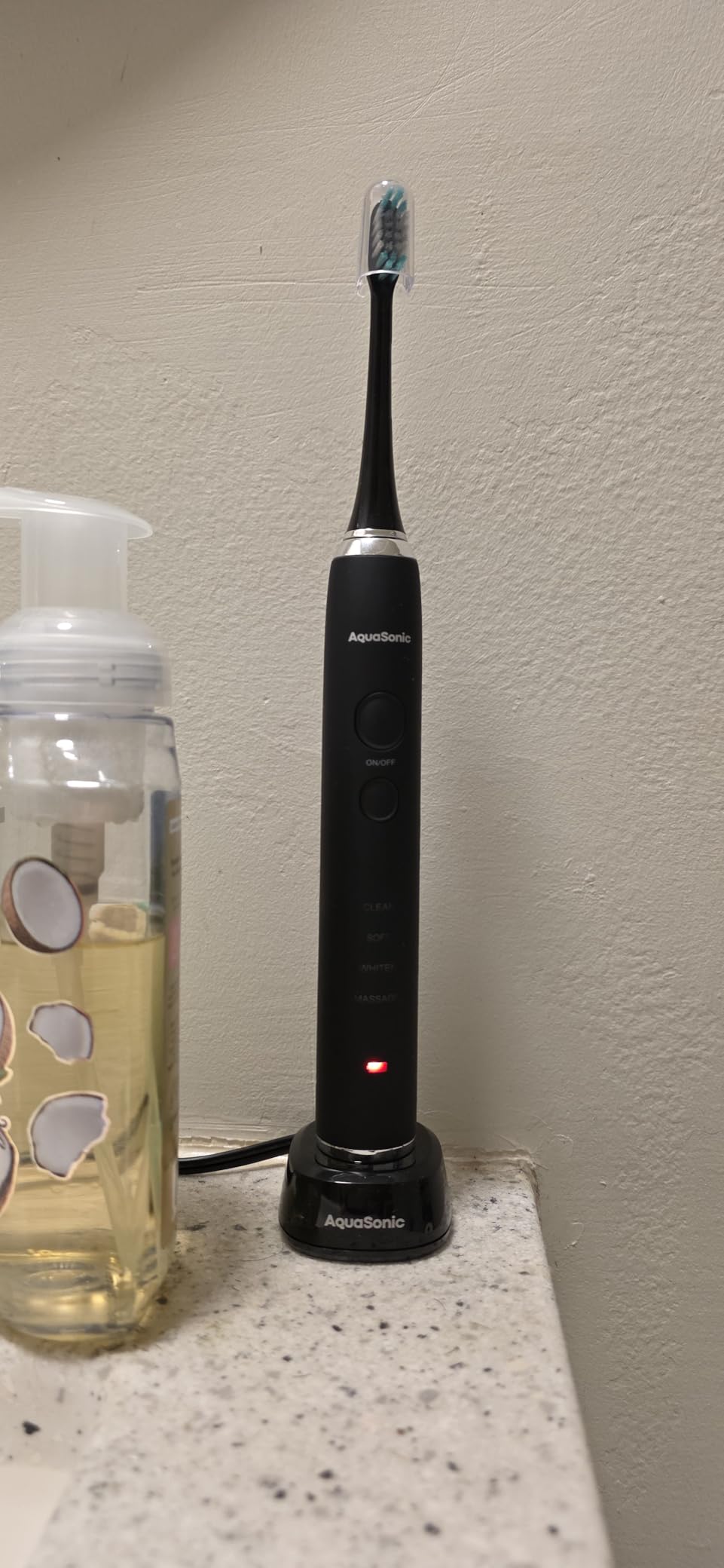
Verified ratings land at 4.5 stars across more than 138,000 reviews, the largest review base of any brush here, and that volume matters because it means the failure modes are well documented rather than hypothetical. The most common complaint is the battery indicator, which is a small light at the base that disappears inside a toothbrush holder.
There is also no vibration alert when the charge runs low, so you find out by turning it on and getting nothing. A small number of reviews report motor failure inside the first year. For a household that wants one brush that covers everyone and never runs out of heads, that trade is worth making.
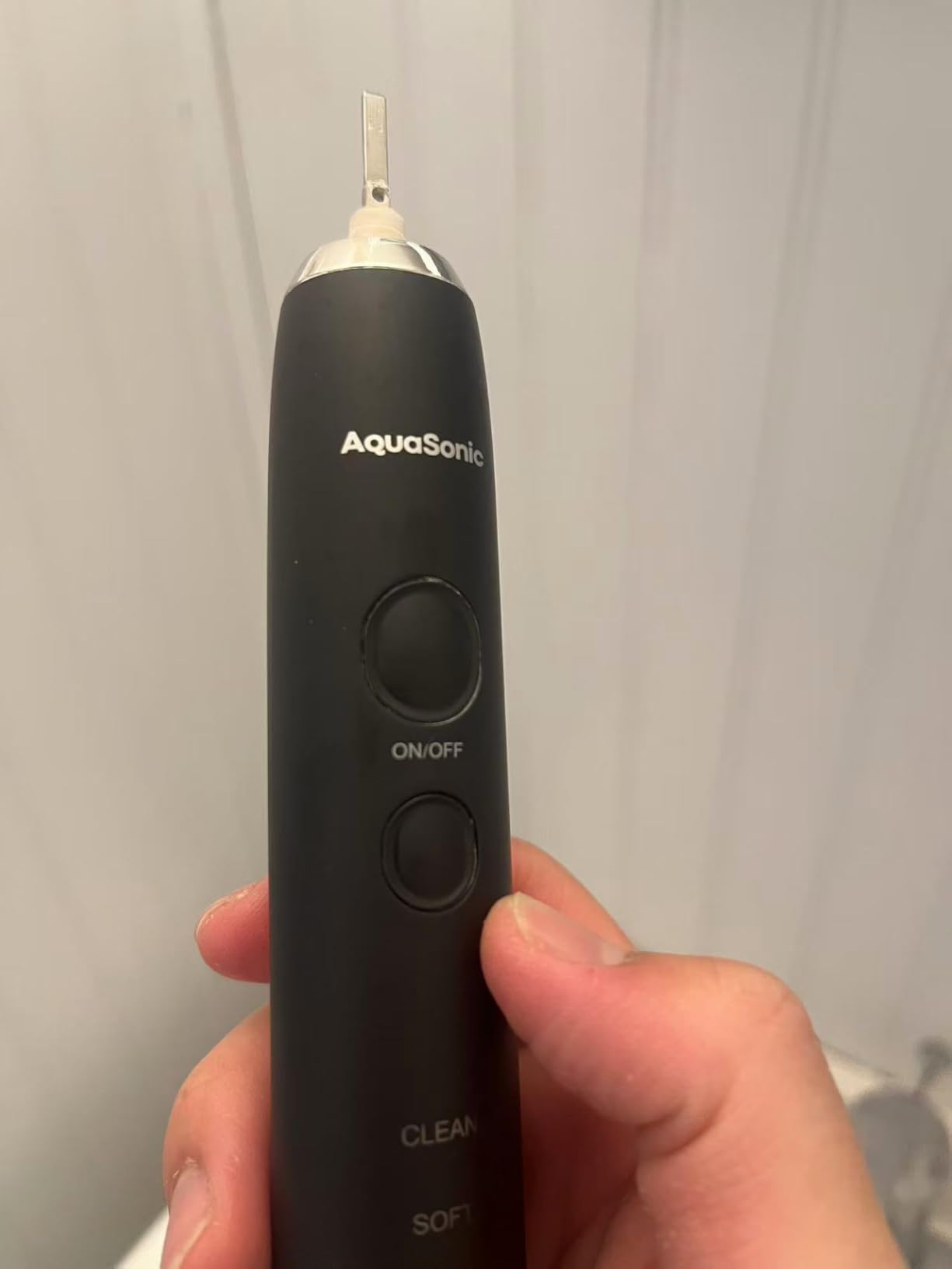
Who the Aquasonic Black Series suits
It suits households first, because eight heads means you can colour-code them per person without anyone buying a second handle. It also suits anyone who travels regularly, since the wireless charging base and included case keep the whole thing self-contained.
If you have been told you build up plaque quickly or you notice bleeding when you brush, the ADA acceptance for gingivitis reduction is the detail to look at. Reviewers report the whitening mode is good for coffee and tea staining on the front surfaces, which is a surface-stain job rather than a plaque job.
Who should skip the Aquasonic Black Series
Skip it if you press hard and need the handle to stop you. There is no pressure sensor here, so over-brushing protection depends entirely on your own restraint, and that is the exact habit that causes gum recession.
It is also the wrong pick if you want a quiet, premium-feeling object in a small bathroom, since the base light and the plastic handle are functional rather than refined. If your priority is a gentle gumline clean, the Sonicare 5100 one pick down is the stronger tool.
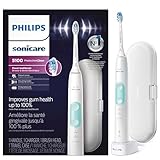
2. Philips Sonicare 5100 – Best for Plaque Along the Gumline
Philips Sonicare 5100 Rechargeable Electric Toothbrush, 1 Brush Head, White
Up to 62,000 movements per minute
Pressure sensor with vibration reduction
Gum Care mode and G2 head
14-day battery, compact charger
Pros
- 4.6-star average across roughly 28000 reviews
- Pressure sensor cuts vibration when you press too hard
- Gum Care mode and G2 head target the gumline
- 14-day battery with compact charging base
Cons
- Only one brush head included
- so replacements are a separate buy
- Fewer intensity levels than higher Sonicare models
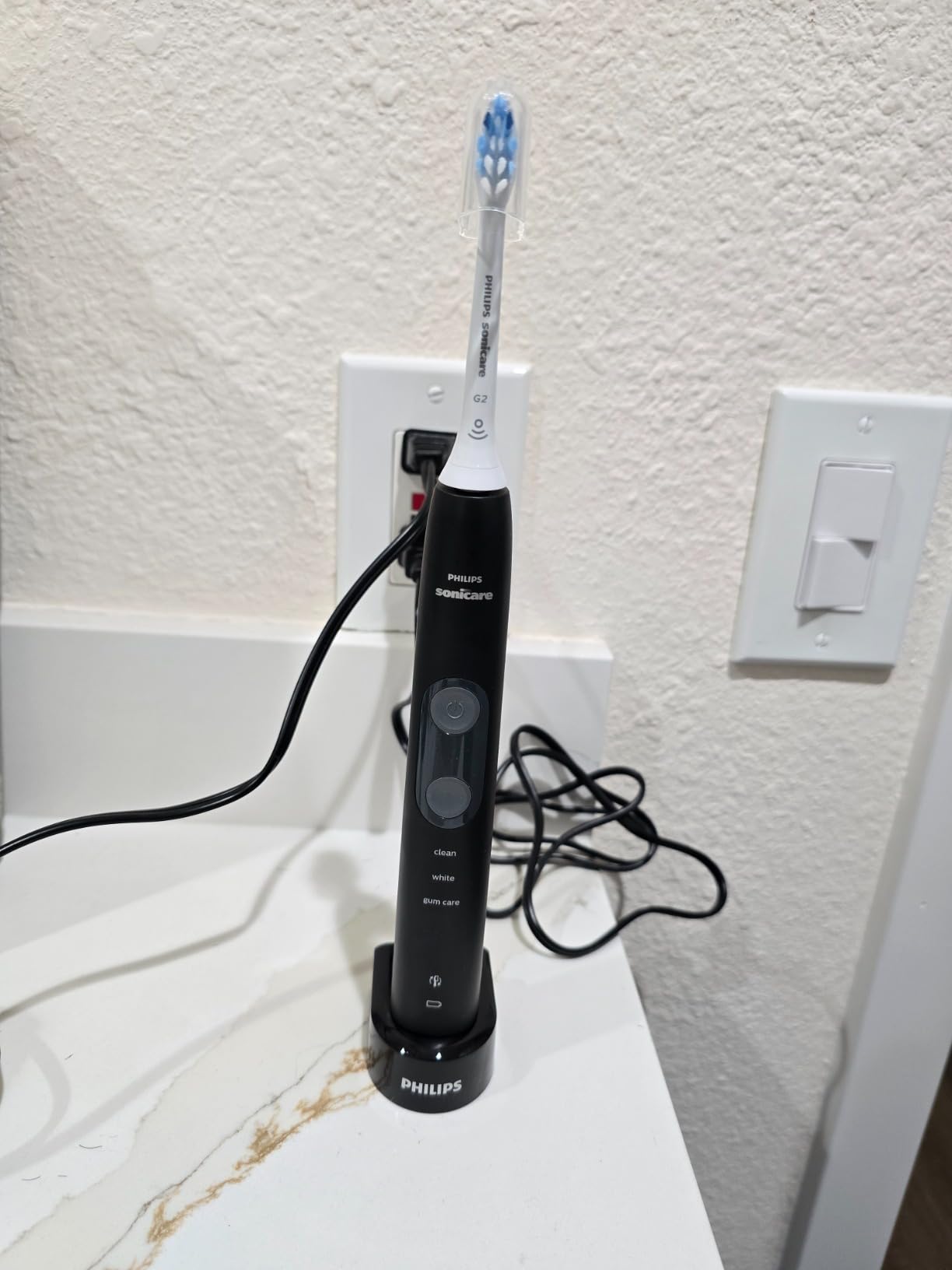
The Sonicare 5100 is the best sonic toothbrush for plaque removal where plaque actually causes trouble, which is the gumline. It delivers up to 62,000 brush movements per minute, the highest output figure in this group, and pairs that with a pressure sensor that automatically reduces vibration when you press too hard.
The G2 Optimal Gum Care head and the dedicated Gum Care mode are aimed straight at the margin where plaque calcifies into bleeding, inflamed gums. Philips claims up to 3x more plaque removal along the gumline than a manual brush and up to 100% better gum health in two weeks. Clean, White and Gum Care modes cover the other bases, and the 14-day battery means it charges about twice a month.
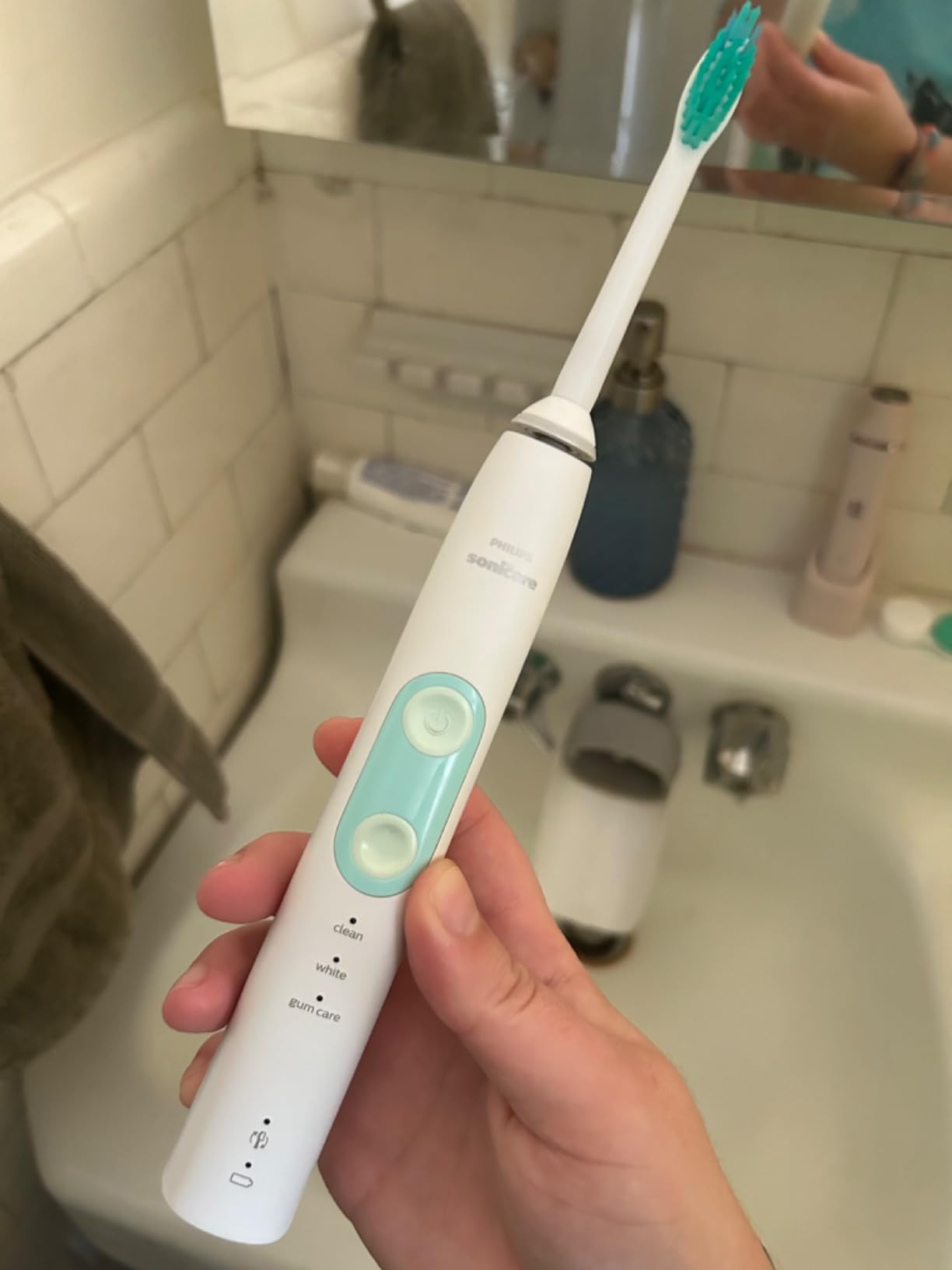
At 4.6 stars from more than 28,000 reviews, this is the highest-rated brush on the list alongside the newer PRO-X, and 80% of that feedback is five stars. Reviewers repeatedly single out gumline plaque removal and the pressure sensor as the reasons it works, which fits the pattern we saw in forum threads: people praise the pressure sensor more than almost any other feature after they have owned it a few months.
The limitation owners mention most is simple and annoying: one brush head in the box. Budget for that immediately, because head cost is the real ongoing expense in this category and it arrives sooner than most people expect.
Who the Sonicare 5100 suits
It suits anyone whose dentist has mentioned gingivitis, bleeding gums or plaque build-up at the gum margin. The pressure sensor also makes it the safest choice in this group for people who have been told they brush too hard, which is a very common conversation to have.
It suits first-time electric brush buyers who want a brand they can replace heads for easily in any high-street pharmacy. The G2 head is widely stocked, so you are never hunting for a compatible spare.
Who should skip the Sonicare 5100
Skip it if you want fine-grained control over intensity. This model has no intensity level settings, so you are choosing between modes rather than dialling strength, and that is a real loss if you alternate between a hard clean and a gum-soothing session.
It is also a poor fit for a family sharing one handle, since a single included head makes that impractical. For three intensity levels, step up to the Sonicare 6100 later in this list.
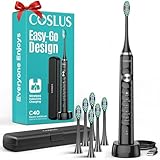
3. COSLUS C40 – Best Value for Plaque Removal
COSLUS C40 Sonic Electric Toothbrush for Adults & Family, Black, 1PC
47,000 VPM maglev motor
6 brush heads with colour-fade indicators
5 modes, ages 12+
IPX7, 2-minute timer
Pros
- Six brush heads cover about 18 months of replacements
- Five modes cover sensitive gums
- braces and family use
- Non-slip ergonomic body suits kids and seniors
- Wireless charging base and travel case included
Cons
- Only one unit is included
- so family use needs separate handles
- Small head needs adjusting if you prefer larger heads
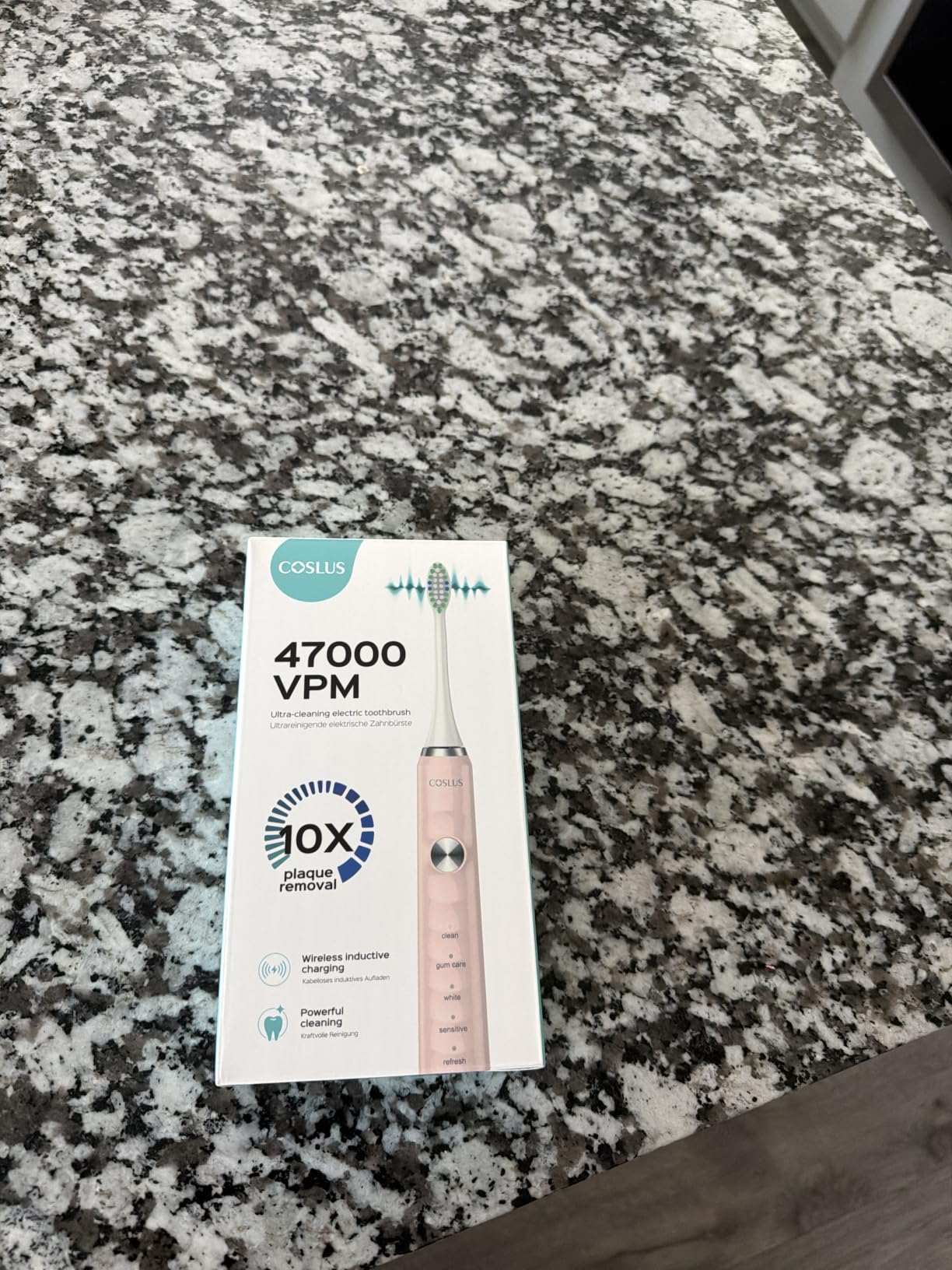
The COSLUS C40 delivers a 47,000 VPM maglev motor, which is the second-highest output figure in this group, at the entry tier. That combination is the whole argument. You are not paying for a logo here, you are paying for a brush head supply and a motor that punches well above its class.
Six W-shaped brush heads come in the box with colour-fade indicators, so you can see when each one needs changing rather than guessing. That is about 18 months of replacements. Five brushing modes cover ages 12 and up, including a sensitive setting, and the 2-minute smart timer pulses every 30 seconds to keep you honest.
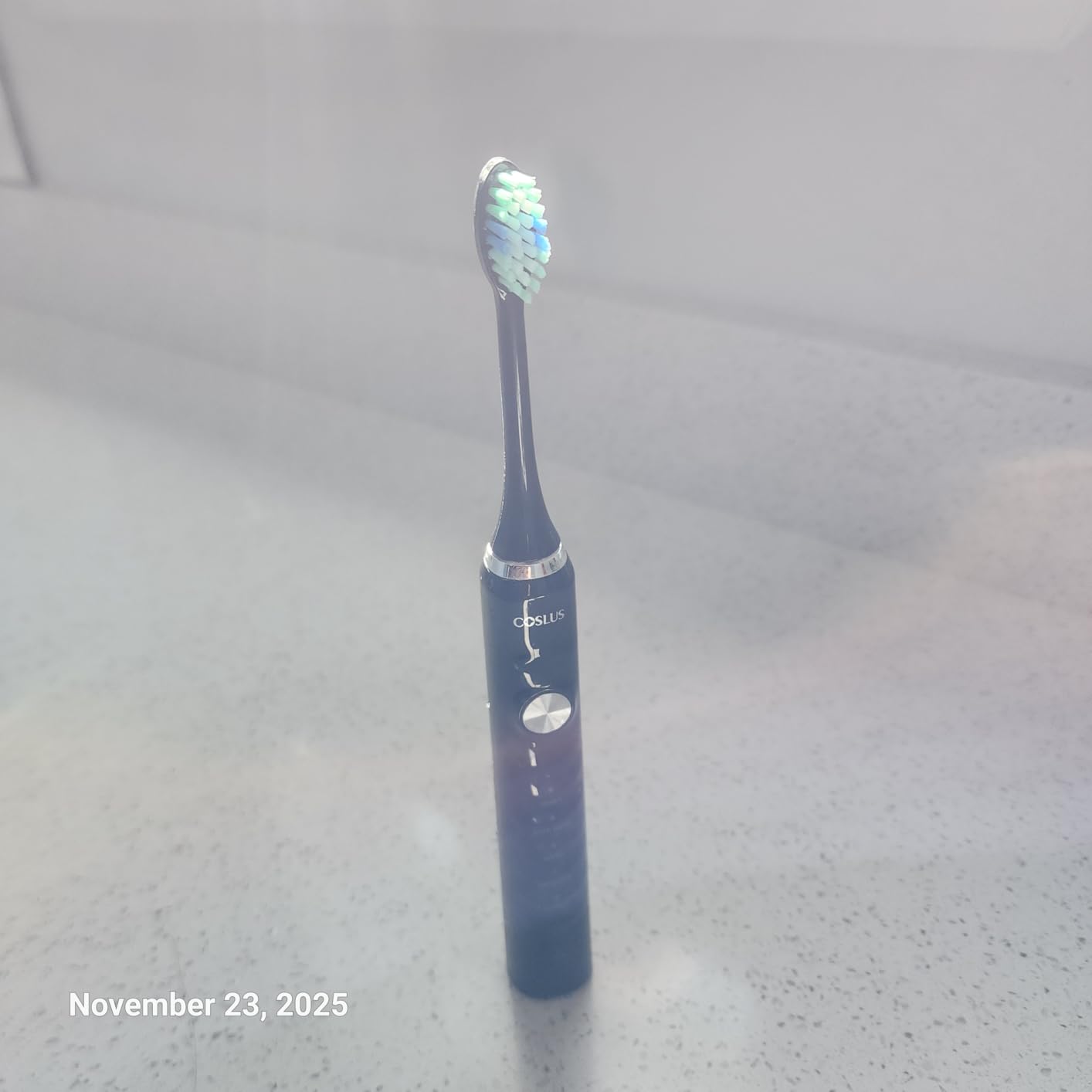
It holds 4.5 stars from just over 4,000 reviews, with 77% five-star feedback. Buyers point to the motor output and the head supply as the reasons it beats brushes costing several times more. The body is non-slip and slim at 6.69 inches, which is genuinely useful for smaller hands and for anyone with limited grip strength.
The catch is that the multi-user claims need separate handles. Two adults cannot share this one handle hygienically even with six heads, because heads swap but handles do not. Plan on one C40 per person if you want the family benefit.
Who the COSLUS C40 suits
It suits anyone who wants strong plaque removal without a premium price tag, and it is our pick for the very first electric brush. Maglev motors and a five-mode range usually appear far higher up, and the head supply means the first replacement is roughly a year and a half away.
It also suits families with older children, since the 12-and-up guidance and the non-slip grip handle the two groups that most often lose interest in brushing. IPX7 waterproofing means no bathroom anxiety.
Who should skip the COSLUS C40
Skip it if you press too hard. There is no pressure sensor, so nothing corrects a heavy hand, and that risk matters most for anyone with receding gums or exposed sensitivity.
It is also the wrong choice for anyone who wants a refillable or low-waste system, because the heads are proprietary. And if you want a proven clinical claim behind the plaque figure, this listing cites dental-team input rather than an independent plaque study.
4. Burst Original Sonic – Best for Plaque Between the Teeth
Burst Original Sonic Electric Toothbrush for Adults (Rose Gold)
33000 sonic vibrations per minute
Super soft interdental-cut PBT nylon bristles
3 modes, quad pacer
USB and wireless charging
Pros
- Interdental-cut bristles reach between teeth and below the gumline
- Clinically tested 10x plaque removal versus manual
- Super soft multi-length bristles are gentle on sensitive gums
- Up to four weeks of battery on one overnight charge
Cons
- Heavier handle than most in the group at 15.2 ounces
- Premium end of the price range
- Replacement heads need a separate purchase or subscription
Most sonic brushes clean the flat chewing surfaces well and the contact points between teeth badly. The Burst Original is built for the second problem. Its super soft multi-length PBT nylon bristles are interdental-cut, so the outer bristles stand taller and the inner ones are shorter, which is the geometry that gets into the gaps and just under the gum margin.
It runs 33,000 sonic vibrations per minute, the lowest output figure in this lineup, and that is deliberate rather than a shortfall. Softer, lower-speed action with a shaped head does more for interproximal plaque than raw frequency. The clinical claim on the box is up to 10x more plaque than a manual brush, and it is the most specific plaque figure attached to any head in this lineup.
Owners often describe the head shape, not the motor, as the reason their dental cleanings improved, and that matches what we heard from dental hygienists in forum discussions about head choice driving outcomes. Three modes cover whiten, sensitive and massage, with a 2-minute timer and 30-second quadrant pulses so you actually cover all four quadrants.
It charges over USB or wirelessly and runs up to four weeks per overnight charge. Note the 15.2-ounce weight, which is among the heavier handles we looked at and is noticeable if you have wrist or grip issues. The device carries a one-year warranty.
Who the Burst Original suits
It suits people whose dentist has flagged plaque between the teeth, or who have seen tartar appear in the front lower gaps despite regular brushing. It is also a comfortable choice for sensitive gums because the bristles are genuinely soft and the sensitive mode lowers the pace further.
It suits anyone already using a water flosser who wants the brushing half of the routine to do more of the interdental work. Pair it with flosser-style interdental cleaning and you cover both the gum margin and the contact points.
Who should skip the Burst Original
Skip it if you want the highest raw motor output, because 33,000 vibrations per minute is the lowest here and it will feel gentler than the Aquasonic or the C40. If you like a strong buzz, this is not that.
It is also a weak value pick for a household, since a single head at a premium price point makes the ongoing cost high over three years. The weight is worth weighing for anyone with hand strength concerns.
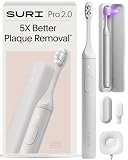
5. SURI Pro Sonic – Best for Travel and Hygiene-Conscious Users
SURI Pro Sonic Electric Toothbrush | Over 4+ Weeks Battery | UV Cleaning Travel Case | Pressure Sensor | Aluminium Body | 2-Minute Timer | Plant-Based Head | White
Aluminium body, plant-based head
Pressure sensor
USB-C fast charging, 4+ weeks
UV-C cleaning travel case 2.0
Pros
- UV-C travel case sanitises the head in one minute and doubles as a charger
- Aluminium body avoids the grime that builds on plastic bases
- Pressure sensor gives feedback when brushing too hard
- Recyclable plant-based brush heads
- Quiet motor and compact footprint
Cons
- Replacement heads are sold separately and are pricey
- Bristles are longer than some users like for gumline angling
- Vibration strength is moderate rather than powerful
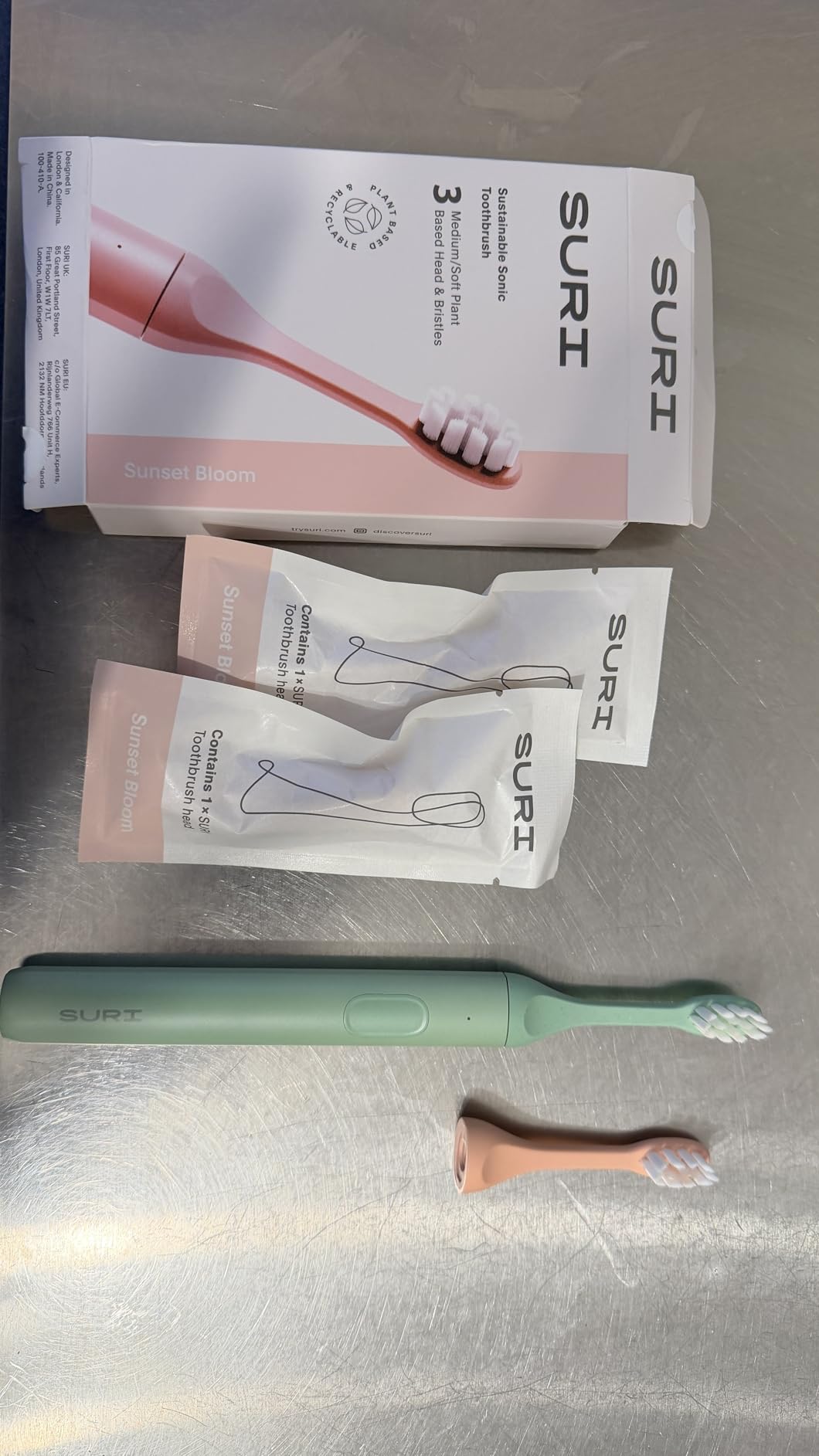
The SURI Pro is the only brush here built from aluminium, and you notice it in the hand and on the counter. The base does not go green and sticky the way plastic charging stands do, which is a small thing that matters in a bathroom you look at every morning.
Its real differentiator is the UV-C cleaning travel case 2.0, which sanitises the head in a one-minute cycle and doubles as the charger. USB-C fast charging and a 4+ week battery mean you travel for a fortnight without thinking about it. There is a pressure sensor for brushing force, and the 2-minute timer with 30-second quadrants keeps the pacing even.
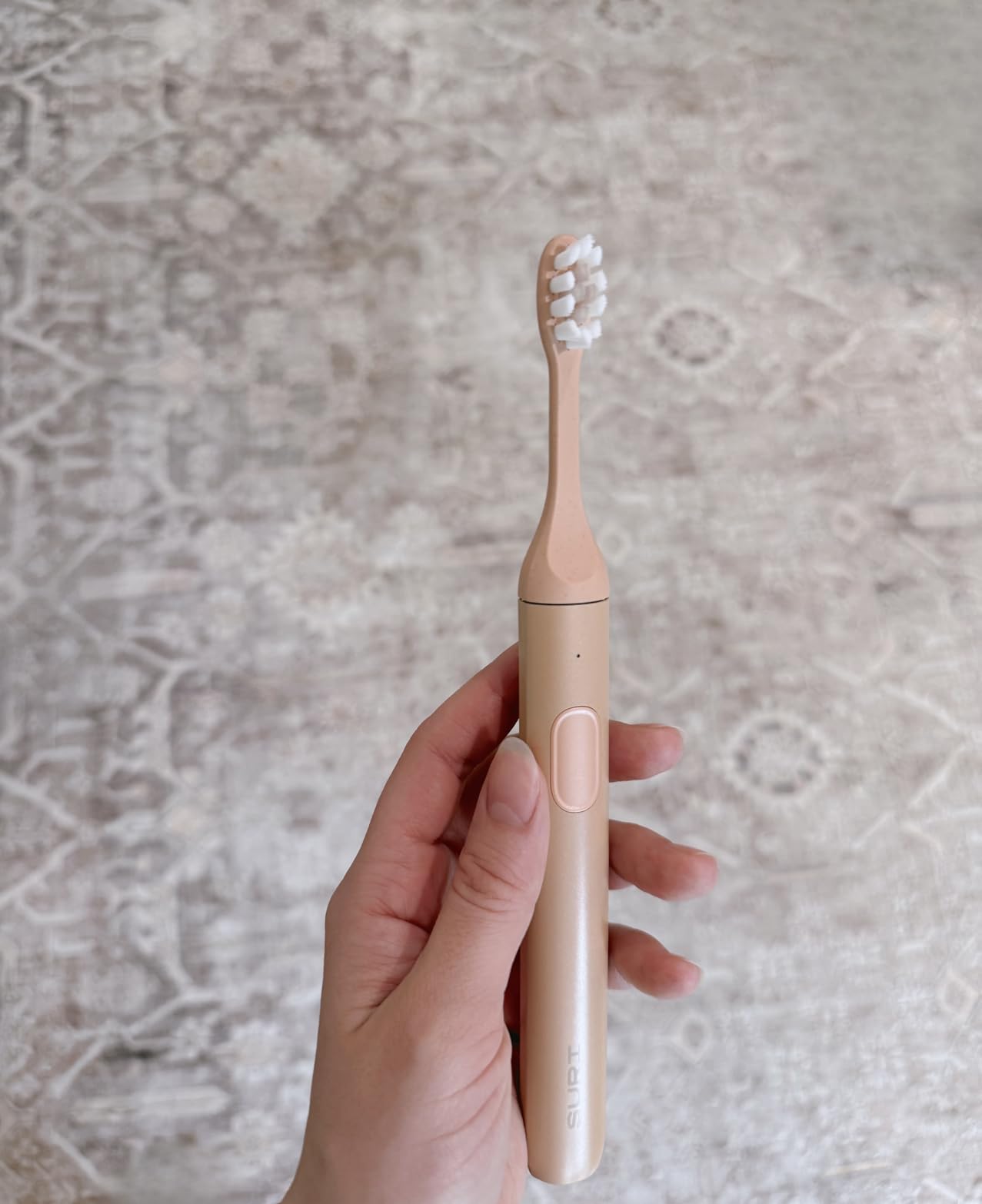
At 4.4 stars from roughly 2,100 reviews, reviewers consistently praise the build quality, the quiet motor and the case. The dentist-designed positioning comes with a claim of clinically tested gum inflammation reduction in 15 days, and up to 4x more effectiveness than a manual brush. The plant-based head uses cornstarch and castor-oil-derived bristles and is returnable for recycling.
The criticisms are consistent too: replacement heads cost more than most in this group and are sold separately, and the longer bristles are harder to angle precisely at the gumline for people with tight lower front teeth. Vibration is moderate, so it will not feel powerful.
Who the SURI Pro suits
It suits frequent travellers, since the case is both sanitiser and charger and removes the need for a separate cable. It also suits anyone who is fussy about cross-contamination between household brushes, because a UV-C cycle is a genuine answer to sharing a bathroom.
It suits people who care about the waste stream, because the aluminium body and recyclable heads are a different approach from plastic-heavy systems. The quiet motor matters too if you share a flat.
Who should skip the SURI Pro
Skip it if the brush head cost bothers you, because at four heads a year this is the most expensive ongoing commitment in the group. Buyers on tight replacement budgets get far more brushing from their money elsewhere.
Skip it if you want maximum vibration for stubborn plaque, since the power here is deliberately restrained. And for aggressive gumline work, the longer bristles are a genuine drawback rather than a preference.
6. TEETHEORY Sonic – The Lightest Handle in the Lineup
TEETHEORY Electric Toothbrush for Adults with 8 𝐁𝐫𝐮𝐬𝐡 𝐇𝐞𝐚𝐝𝐬, Sonic Electric Toothbrush with 40000 VPM Deep Clean 5 Modes, Rechargeable Toothbrushes Fast Charge 4 Hours Last 30 Days
40000 VPM motor, 55g body
30-day battery, 4-hour fast charge
5 modes, 30-second pause prompts
Includes tongue scraper and interdental brush
Pros
- Roughly 55g
- about half the weight of a typical Sonicare handle
- 30-day battery on a 4-hour fast charge
- Five modes including whitening
- sensitive and massage
- Includes tongue scraper
- interdental brush and bristle cover
Cons
- Listing advertises 8 heads but the box holds 6 standard heads plus extras
- Wide head neck makes tight spots harder to manoeuvre
- Proprietary round-pin USB-A cable rather than USB-C
- Vibration noise is on the louder side
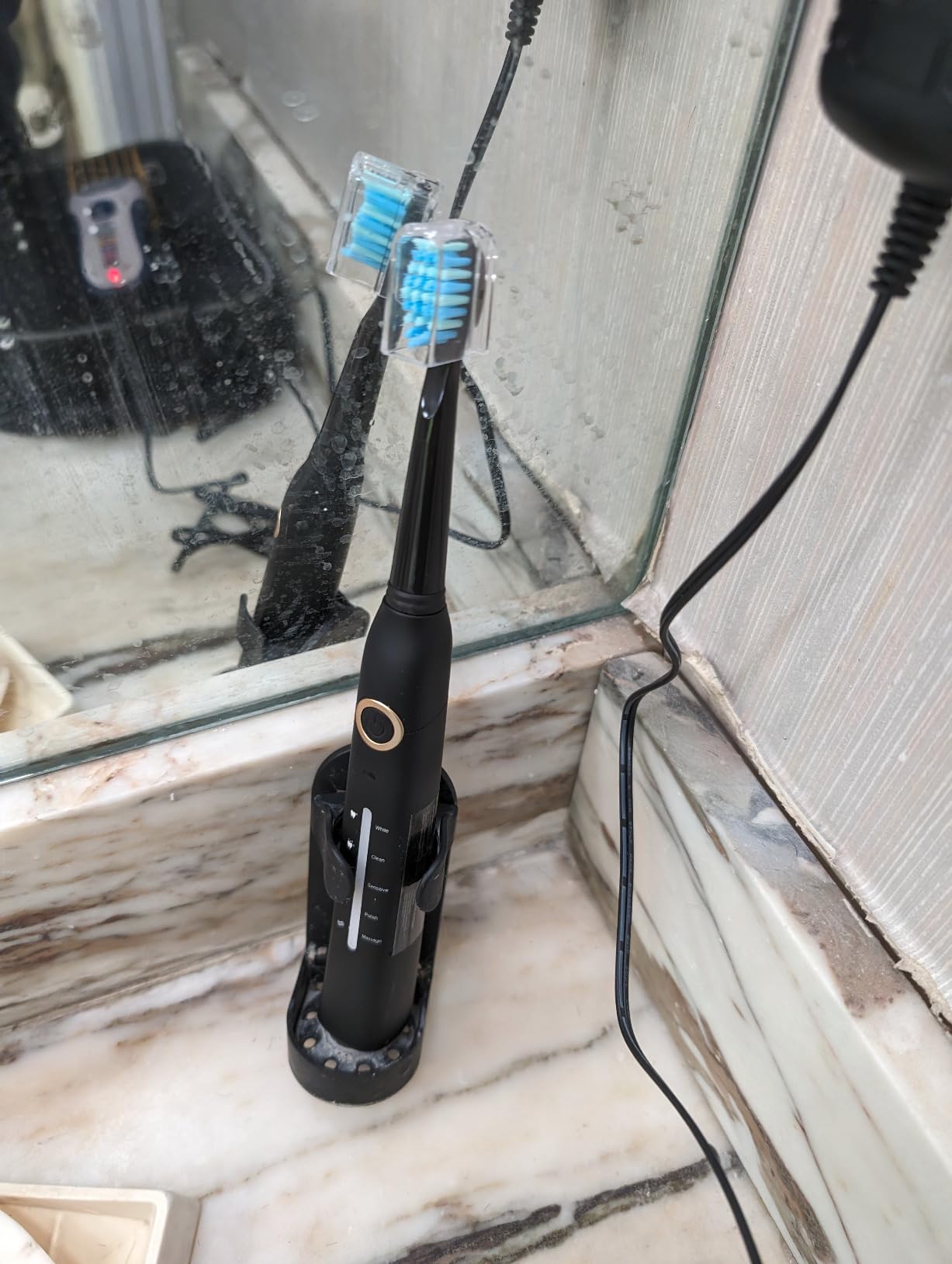
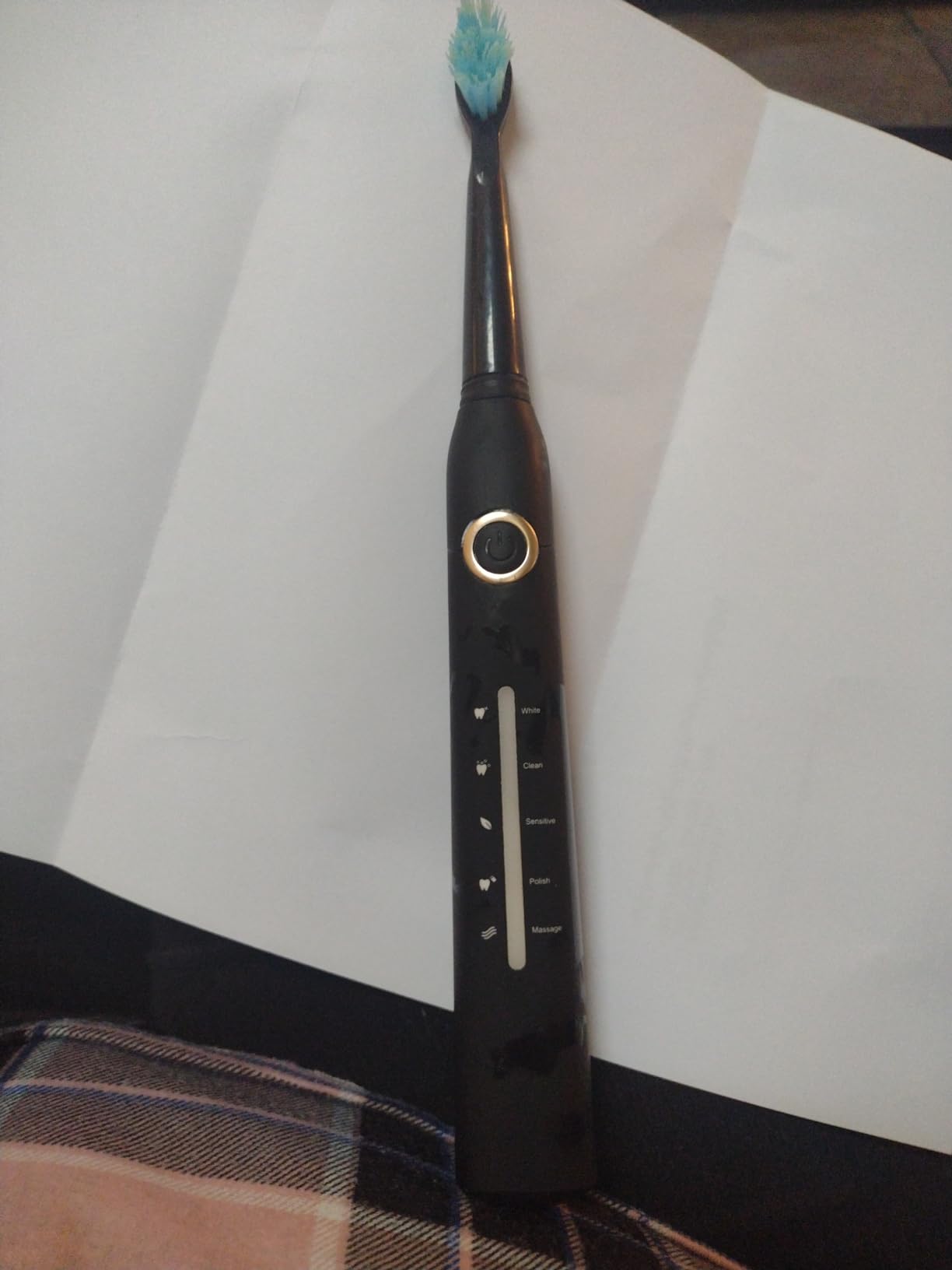
The TEETHEORY weighs about 55g, which is roughly half what a Philips Sonicare handle weighs, and for a two-minute routine twice a day that difference adds up. Combined with a 40,000 VPM motor, it is the rare budget brush that is not a compromise on the part that matters for plaque.
The 30-day battery on a 4-hour fast charge is the best charge-to-use ratio in this group. Five modes cover whitening, cleaning, sensitive, polishing and massage, and the smart vibrating timer pauses every 30 seconds. The box also includes a tongue scraper head, an interdental brush and a protective bristle cover, which is an unusually complete kit.
It sits at 4.4 stars from about 7,500 reviews with 72% five-star feedback. Colour-coded collars on the heads help you keep family members straight, and IPX7 waterproofing covers the bathroom risk. The recurring praise is for battery life, weight and mode range.
The most common complaint is a discrepancy worth flagging before you buy: the listing advertises eight heads, but the box contains six standard heads plus the tongue brush and interdental brush. Buyers also mention a wide head neck that makes the back teeth harder to reach, and a proprietary round-pin USB-A cable rather than USB-C.
Who the TEETHEORY suits
It suits anyone with hand strength problems, arthritis or tremor, where a 55g handle and a light touch are the difference between brushing properly and giving up. It is also a strong choice for a shared bathroom, since a month between charges means nobody is waiting for the brush.
It suits people who like extras, because the tongue scraper and interdental brush cover two jobs a normal kit does not. Travellers get a light, easy-to-pack handle with no charging anxiety.
Who should skip the TEETHEORY
Skip it if you have tight back molars or crowded teeth, because the wide head neck is a genuine manoeuvrability problem in exactly the places plaque hides. It is not the brush to fix crowded lower incisors.
Skip it if you travel with a modern charging setup, because a proprietary round-pin USB-A cable is an extra thing to lose. And if you are noise-sensitive in a shared flat, the louder vibration is worth checking first.
7. Philips Sonicare 6100 – Best for Customisable Plaque and Stain Control
Philips Sonicare 6100 Rechargeable Electric Toothbrush, Navy Blue
Up to 62,000 brush movements per minute
3 intensity levels
Pressure sensor with vibration reduction
W Diamond Clean head, 14-day battery
Pros
- Three intensity levels give more cleaning customisation than the 5100
- Pressure sensor protects gums during vigorous brushing
- White mode and W Diamond Clean head target surface stains
- Consistent 4.5-star rating across roughly 17000 reviews
Cons
- Premium pricing within the Sonicare lineup
- Only one brush head included with the set
The Sonicare 6100 is the 5100 with control added. It shares the up-to-62,000 brush movements per minute motor and the pressure sensor with vibration reduction, but adds three intensity levels on top of the Clean, White and Gum Care modes. That combination is what you want if one setting is never right for the whole day.
The W Diamond Clean head is a harder, more polished bristle profile, and paired with White mode it does more about coffee and tea staining on the front teeth than any other brush here. Philips claims improved gum health in as little as two weeks, which is a plausible figure given the sensor prevents the over-brushing that causes most gum irritation.
It holds 4.5 stars from about 17,000 reviews with 80% five-star feedback. Owners cite the three intensity settings, the pressure sensor and effective gum and whitening results as the standouts. The travel case and compact charging base are included, and the 14-day battery is the same as the 5100.
The drawbacks are the two everyone notes: it sits at the premium end of the Sonicare range, and only one head is included. Both are tolerable, but you should know the 5100 two picks above does the core job for less if intensity control is not essential to you.
Who the Sonicare 6100 suits
It suits people with a demanding routine who brush the same mouth at different intensities: a stronger evening clean and a softer morning pass for tender gums. Three levels is the smallest amount of control that feels genuinely useful.
It suits heavy coffee and tea drinkers, since the W Diamond Clean head plus White mode is the most targeted surface-stain setup in this group. Anyone wearing aligners or with dental work also benefits from being able to drop the intensity.
Who should skip the Sonicare 6100
Skip it if you are buying your first electric brush and the price gap over the 5100 feels unjustified. The core plaque performance is very similar, and most people never touch the extra intensity levels.
It is also a weak choice for a family on a budget, because a single head and a premium position in the range make it a poor value per household. Buy the 5100 or the Aquasonic and spend the difference on two years of heads.
8. Sonicare ProtectiveClean – Best Dedicated Plaque Head
Phillips Sonicare Sonicare ProtectiveClean Removes up to 7x More Plaque, Long lasting 4 day Battery Life Rechargeable Electric Toothbrush, White/Grey
2 Series handle with ProResults head
3 intensity settings
Up to 6x gumline plaque removal vs manual
110-220V charger included
Pros
- ProResults plaque control head is designed specifically for plaque removal
- Three intensity settings allow gentler gum-friendly sessions
- Up to 6x more plaque removal along the gumline versus manual
- Cheaper than the current Sonicare 5000-series models
Cons
- Older 2 Series design with fewer modes than newer models
- Wall-plug charging unit rather than a compact stand
This is the pick if you want one head optimised for plaque and nothing else. The ProResults plaque control head is the piece here worth paying for, and Philips attaches a specific claim to it: up to 6x more plaque removal along the gumline compared with a manual toothbrush, plus up to 100% better gum health.
The 2 Series handle underneath is older, with three intensity settings rather than a mode bank. In practice that is not a weakness for plaque work, because the intensity slider is the control that matters when you are chasing the gum margin. The 110-220V wall charger is included, so there is no adapter hunt.
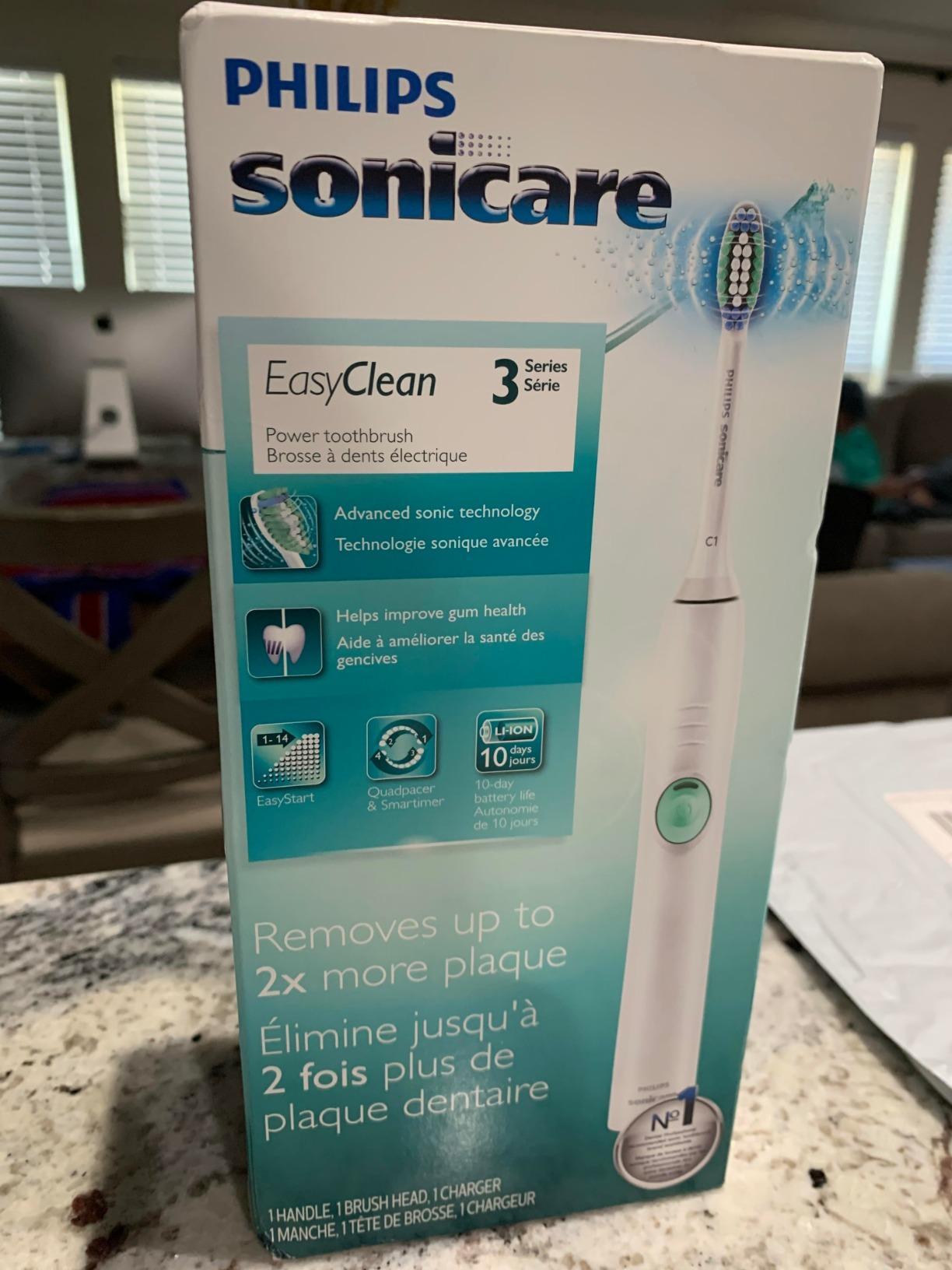
It sits at 4.5 stars from just over 3,200 reviews with 75% five-star feedback. Owners appreciate the plaque-focused head and the choice of intensity levels, and it costs less than the current Sonicare mid-range models, which is the reason it stays on this list despite its age.
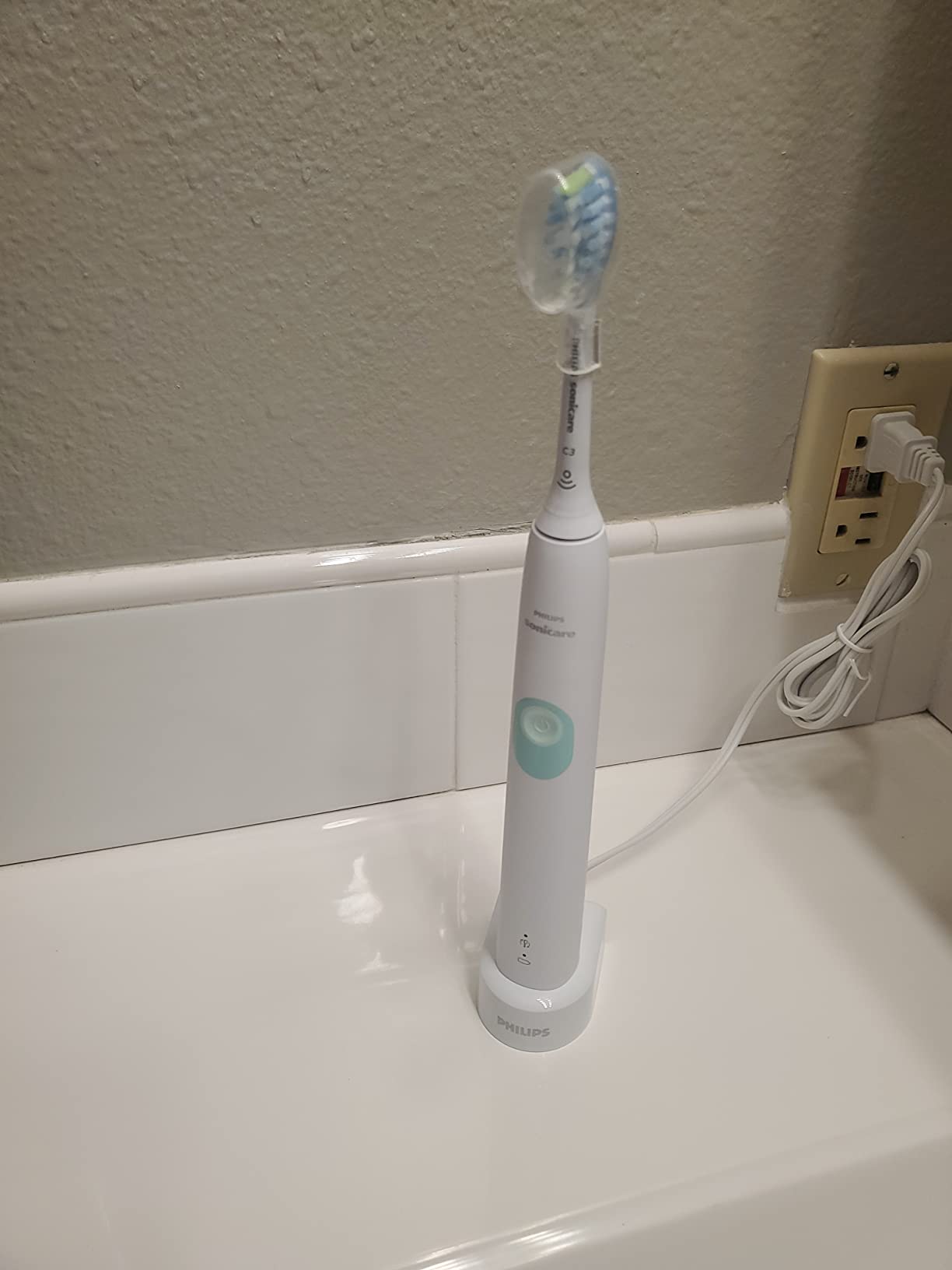
Its age does show. The 2 Series design has fewer modes than anything newer here, and the charging base is a wall-plug unit rather than a compact stand, so it is not the neatest option on a small counter. Head compatibility is also worth checking before you commit, since the 2 Series mount is not the same as the newer Sonicare handles.
Who the Sonicare ProtectiveClean suits
It suits people who have already identified plaque at the gum margin as their specific problem and want a head aimed at it rather than a general-purpose head. Three intensity levels let you start gentle on inflamed gums and work up.
It also suits anyone who brushes too firmly. Without a pressure sensor, the intensity slider becomes your substitute safeguard, letting you set a level you can hold consistently instead of squeezing harder on a fixed setting.
Who should skip the Sonicare ProtectiveClean
Skip it if you want modern conveniences, because the older design means no app, no quadrant pacing beyond the basic timer, and a bulkier charger. It is a tool, not an experience.
Skip it if you already own a recent Sonicare handle, since you can get the ProResults head and mount it on what you have. And if battery life between charges matters to you, this one needs far more frequent top-ups than the models above.
9. AURAGLOW Sonic – Best Mid-Range Plaque Power
AURAGLOW Electric Toothbrush for Adults, Strong Sonic Toothbrush, 40,000 VPM, Rechargeable, 5 Modes, Removes 10x More Plaque, IPX7, 30-Day Battery, 2 Brush Heads & Travel Case
40000 sonic vibrations per minute
5 modes, 2-minute timer with quadrant pulses
30-day battery, wireless charging pad
IPX7, travel case included
Pros
- Users report cleaning comparable to brushes costing several times more
- Five modes covering soft
- strong
- whitening and polishing
- Compact wireless charging pad keeps the counter clear
- Long charge hold
- often two weeks or more
- Two brush heads and a travel case included
Cons
- Two recent reviews report replacement heads that will not seat fully on the handle
- Plastic handle feels less premium in the hand
- Small review base of around 340 ratings
The AURAGLOW is the mid-range answer to the same question the Aquasonic answers at the top of the range. It runs 40,000 sonic vibrations per minute with a 10x plaque removal claim, and the two modes that matter for plaque work, Soft and Strong, let you switch between a gentle gum pass and a proper deep clean on the same handle.
Five modes in total cover Clean, Soft, Strong, White and Polish. The 2-minute smart timer pulses every 30 seconds, the battery holds roughly 30 days, and it charges on a true wireless pad that keeps the counter clear. IPX7 waterproofing and an included travel case round out a generous package for the tier.
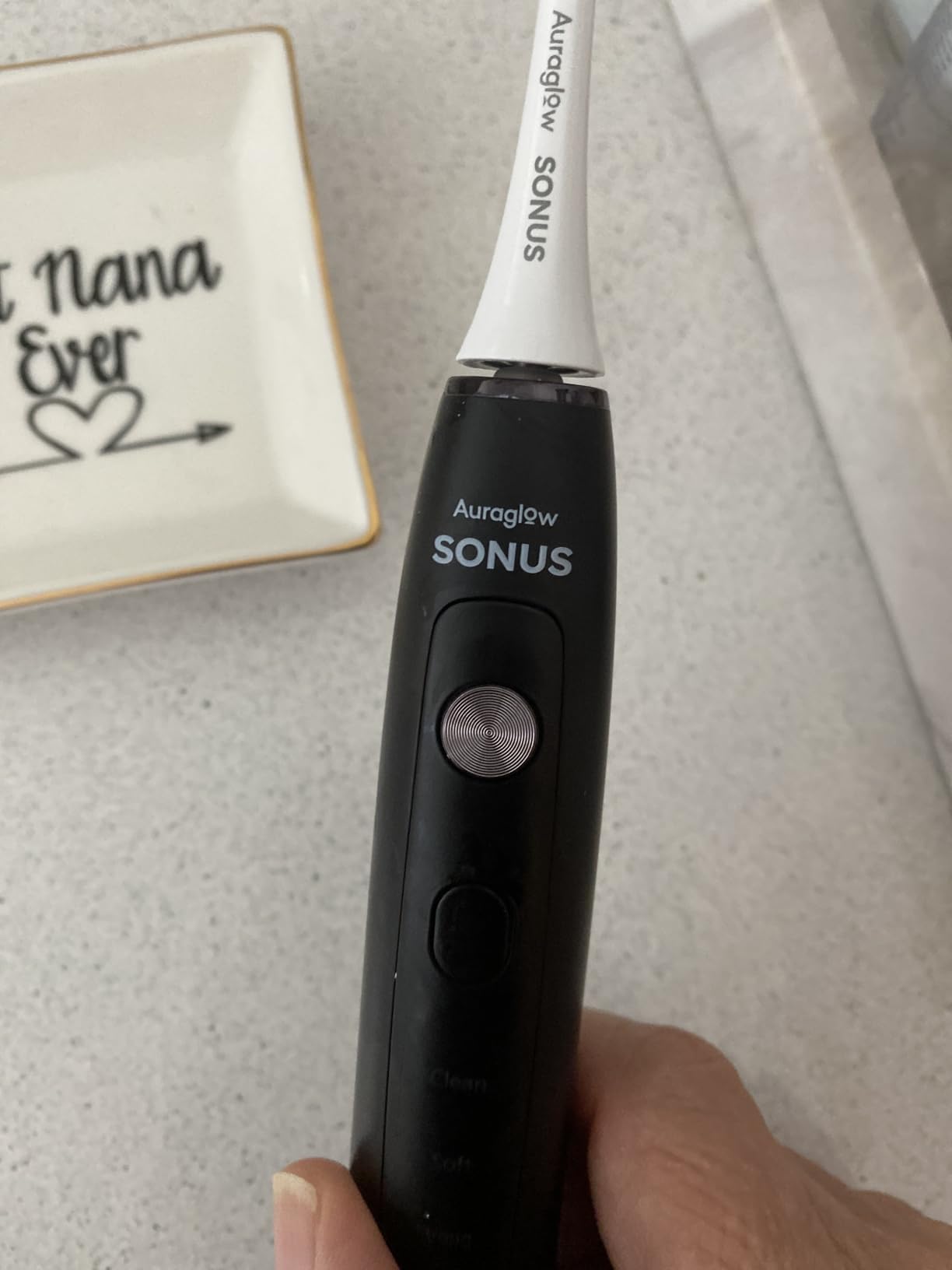
Owners frequently say it performs like a higher-priced brush, which is the consistent theme in its reviews. At 4.5 stars from about 340 ratings with 75% five-star feedback, the sentiment is clear but the sample is small, and you should weigh that accordingly.
Two recent one-star reviews report replacement heads that do not click securely onto the handle, which is the fault line to watch if you already own one. The plastic handle also feels less refined in the hand than the metal options, though nothing about that affects cleaning.
Who the AURAGLOW suits
It suits someone who wants a strong daily clean and a proper deep clean without paying for a brand premium. The Soft mode is a sensible landing spot for sore gums, and the Strong mode is there when plaque has been building up.
It suits people with a small bathroom, since the wireless pad takes up less space than a standing base. The 30-day battery also means it suits anyone who forgets chargers on trips.
Who should skip the AURAGLOW
Skip it if you want a long ownership history behind the design. With around 340 ratings there is not yet the years of failure data that the 138,000-review Aquasonic or the 28,000-review Sonicare 5100 have behind them, and that matters for a device you keep for a decade.
Skip it if you are sensitive to plastic build quality or to small-sample reviews, because there are more established options at a similar tier. Two seats-not-seating-head reports are worth remembering if you buy one.
10. Philips Sonicare 1100 – Best for First-Time Electric Brush Buyers
PHILIPS Sonicare 1100 Rechargeable Electric Toothbrush, 1 Brush Head, White
Advanced Sonic Technology pulses fluid between teeth
EasyStart gradual power increase
SmarTimer and QuadPacer
Up to 14 days per charge, C1 head
Pros
- Entry-level Sonicare with a 4.4-star average across nearly 10000 reviews
- EasyStart ramps power up gradually for new electric users
- SmarTimer and QuadPacer enforce a two-minute
- four-quadrant routine
- 14-day battery keeps the footprint compact
Cons
- Power adaptor is not included
- only a USB charger
- Only two modes and no pressure sensor
- Simplest head in the Philips lineup for plaque removal
The Sonicare 1100 is the model I would hand someone who has never used an electric brush and feels intimidated by the category. EasyStart ramps the power up gradually over the first few uses, which removes the exact reason many first-timers quit an electric brush in week one: it feels abrasive when you are used to a manual.
The SmarTimer and QuadPacer do the work of habit-building. You get a two-minute timer with 30-second quadrant prompts, so you end up covering the whole mouth evenly rather than doing one thorough quadrant and rushing the rest. The C1 Simply Clean head uses soft flexible bristles, and Advanced Sonic Technology pulses fluid between teeth and along the gumline.
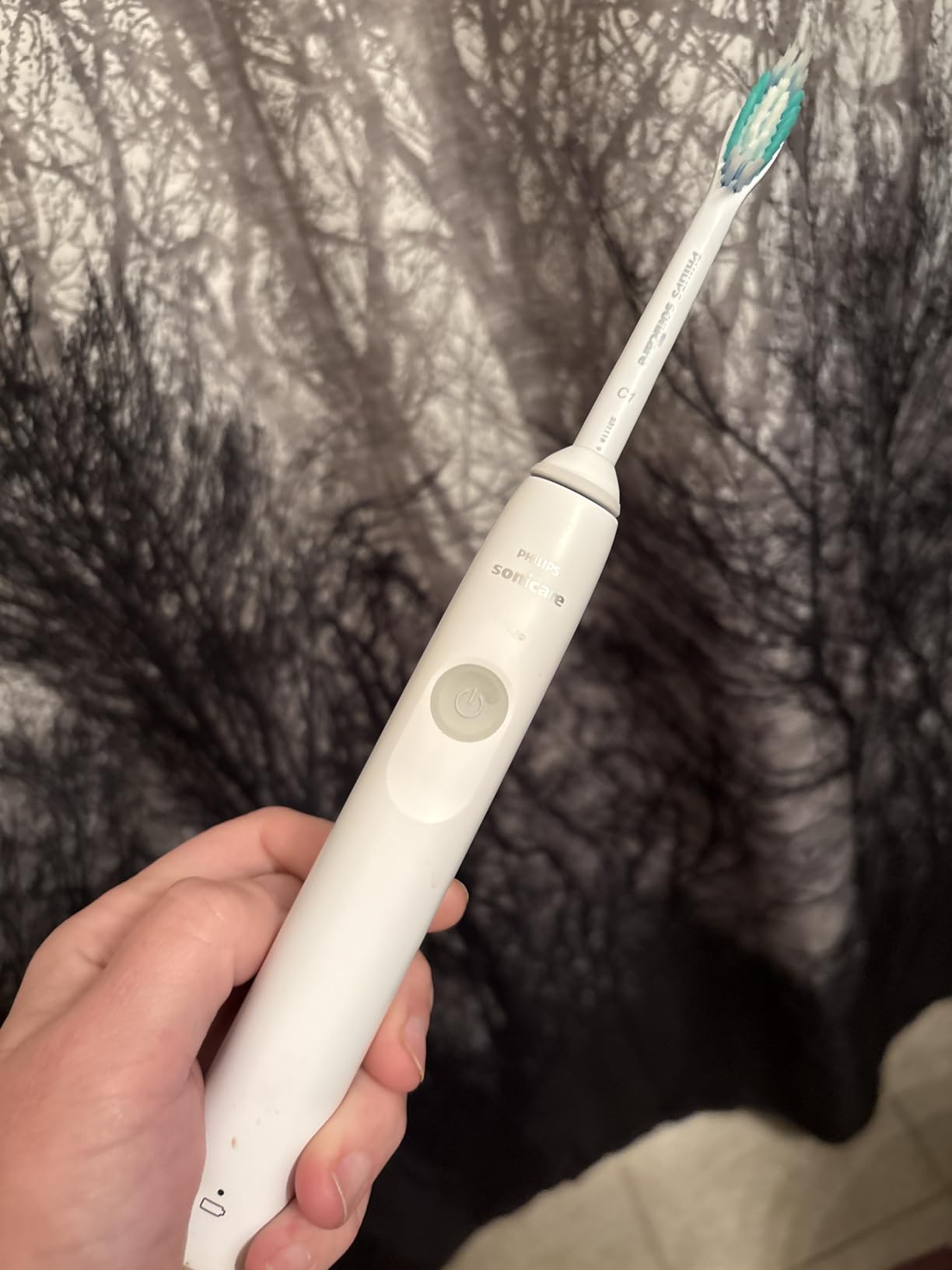
It holds 4.4 stars from about 9,700 reviews with 75% five-star feedback. Owners like the gentle guided start and the timer prompts, and the 14-day battery keeps the bathroom footprint compact at 8.66 inches long.
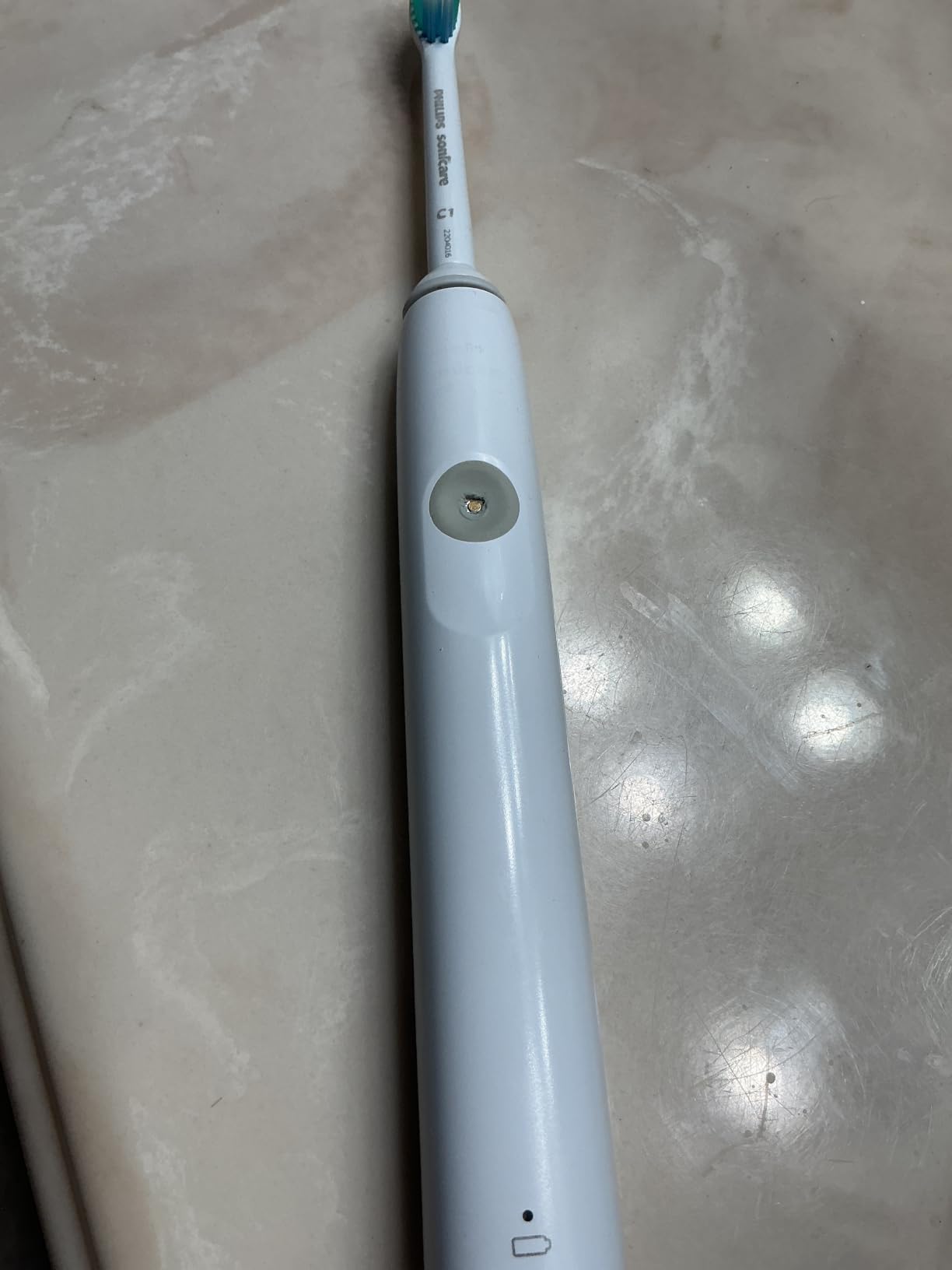
Two things to plan for. The power adaptor is not included, only a USB charger, so check you already have a wall plug. And it has just two modes with no pressure sensor, which means it will not stop a heavy hand, and the C1 head is the simplest in the Philips range for plaque work.
Who the Sonicare 1100 suits
It suits complete beginners, and it suits anyone whose gums bled when they started an electric brush. The gentle ramp plus soft bristles is the least abrasive entry point in this whole list, and the quadrant pacing is the best habit scaffold here.
It suits small bathrooms and short trips, where 14 days between charges is more than enough. If you later want more power, the same brand ecosystem means upgrading the head is easy.
Who should skip the Sonicare 1100
Skip it if you already brush for a full two minutes with control, because you are paying for a timer you no longer need and accepting the weakest head in the Philips line-up for plaque. The Aquasonic gives you more cleaning per pound at the other end.
Skip it if you have any history of over-brushing or gum recession, since there is no pressure sensor to intervene. And check your charger situation before ordering, because the missing adaptor is a real, if minor, stumbling block.
11. Made by Dentists PRO-X – Best for Battery Life and Gentle Gums
Made by Dentists PRO‑X Sonic Electric Toothbrush for Adults – 70‑Day Battery on One Charge, Dentist‑Designed Whitening Rechargeable Toothbrush, 3 Brush Heads & Travel Case, 3 Modes, White
Up to 70-day battery per charge
3 modes, 2-minute timer with quad pacer
Charging stand with wall plug
2-year warranty, 3 heads included
Pros
- Up to 70-day battery life
- the longest in this group
- Very light handle encourages a gentler touch on sensitive gums
- Wall-plug charging stand removes the need for a separate adapter
- Three replacement heads and a travel case included
- Backed by a 2-year warranty
Cons
- No pressure sensor or over-pressure warning
- Only three modes with no gum massage setting
- Small review base of under 250 ratings
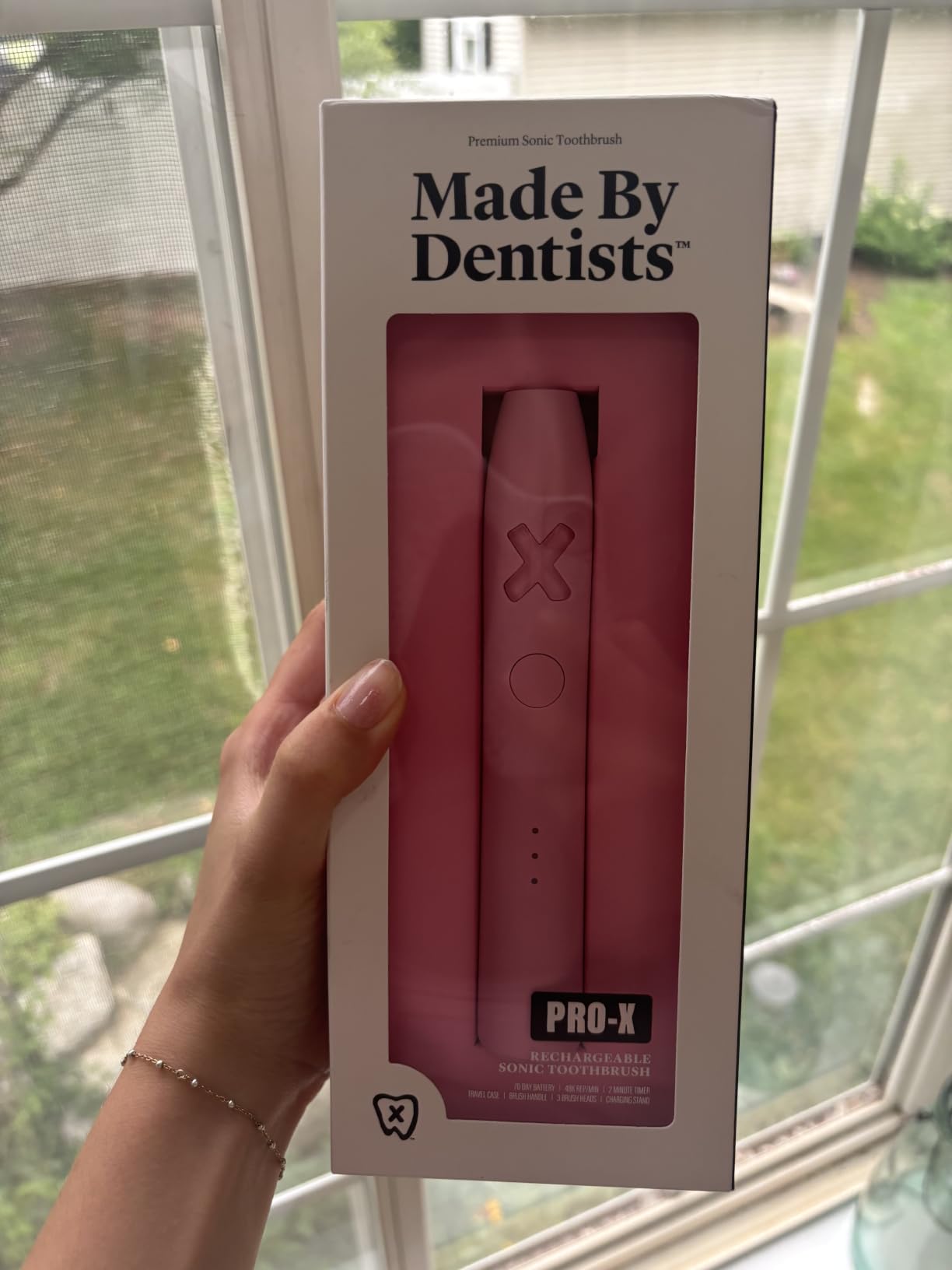
The PRO-X is the battery outlier in this lineup: up to 70 days per charge, roughly double the next best. If you travel constantly, live in a hotel most weeks, or simply forget chargers, nothing else here comes close.
It is designed by practising dentists and claims up to 5x more plaque removal than a manual brush. Three modes cover Sensitive, Clean and Whitening, and the 2-minute timer has 30-second quad pacer pulses. The handle is very light, which reviewers connect to a gentler touch on sore gums, and the wall-plug charging stand means no separate adapter is needed.
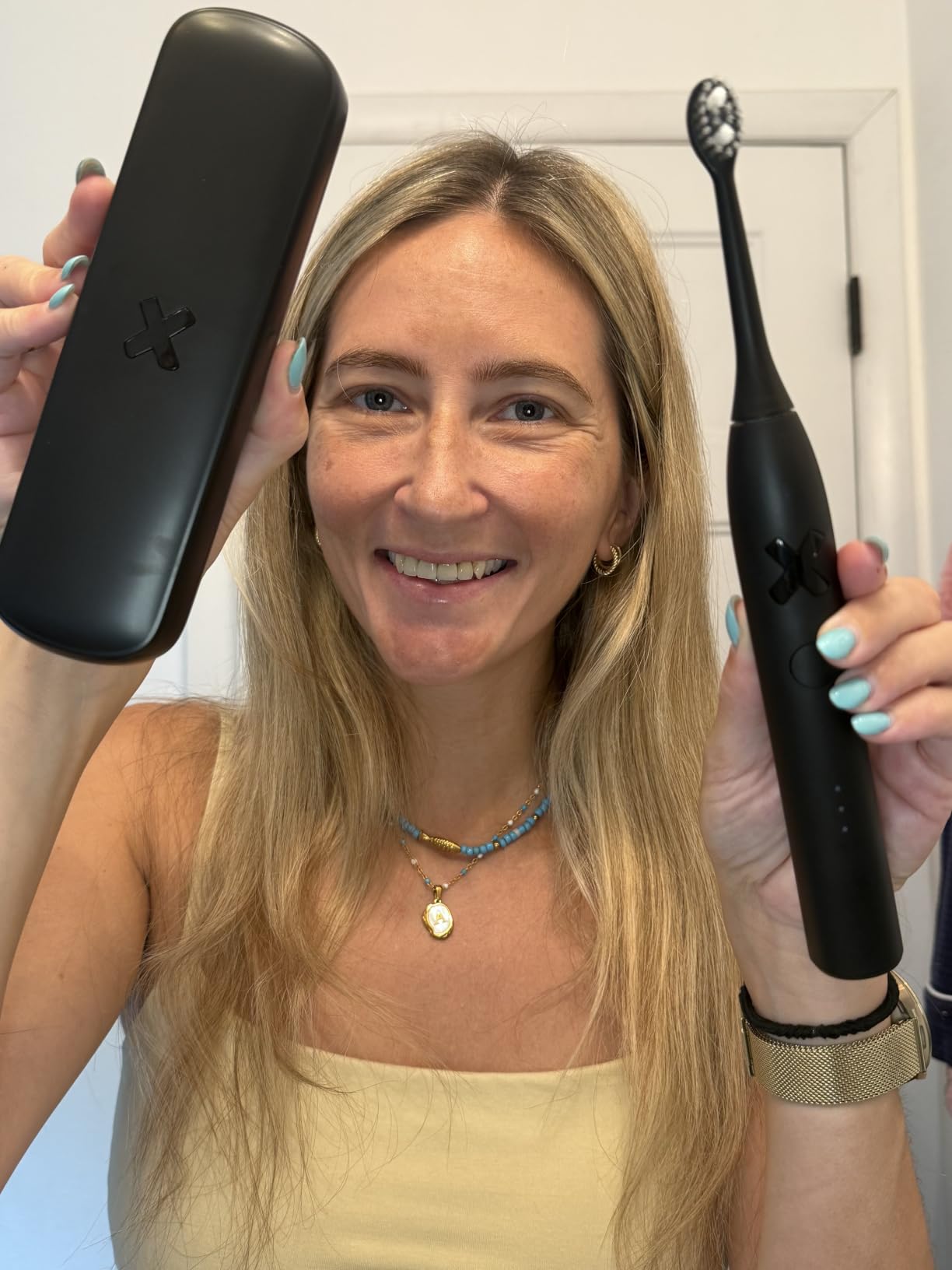
Despite a base of 238 ratings it holds a 4.6-star average with 78% five-star feedback, tied for the highest rating in this group. That is a genuinely new listing, first released earlier this year, so treat the score as promising rather than proven. Three replacement heads and a travel case are included, and there is a 2-year warranty.
The gap is the pressure sensor. There is no over-pressure warning at all, so a heavy hand is your own responsibility, and there are only three modes with no gum massage setting. For sensitive gums that is a real consideration rather than a minor one.
Who the Made by Dentists PRO-X suits
It suits constant travellers and anyone in a rental or office bathroom where charging is a hassle. Seventy days is the kind of battery that removes charging from your routine entirely.
It suits people with sore, sensitive or recently treated gums, because the light handle and the Sensitive mode reduce pressure without any electronic correction. The 2-year warranty is the longest explicit device warranty in this group.
Who should skip the Made by Dentists PRO-X
Skip it if you press too hard, because with no pressure sensor there is nothing between you and gum recession. Choose the Sonicare 5100 or the SURI Pro instead if that is a known habit.
Skip it if you want a long track record. With fewer than 250 ratings there is no multi-year reliability picture, and dental forums are full of owners reporting brushes that die after two or three years, so a two-year warranty is worth reading closely.
12. ORDO Sonic+ – Best for Small Bathrooms
ORDO Sonic+ Electric Toothbrush for Adults, 4 Modes, Charcoal Grey
40000 sonic pulses per minute
Oval head contoured to tooth shape
4 modes, quad pacer, 2-minute timer
Li-ion battery, 4+ weeks, IPX7
Pros
- Oval head shape traces tooth contours for even plaque coverage
- Four modes including Sensitive for post-dental-work gums
- Over four weeks of battery between charges
- Slim 11-inch body that is easy to hold in a wet hand
Cons
- Small review base of roughly 760 ratings
- Charging base is not a USB-C unit like newer competitors
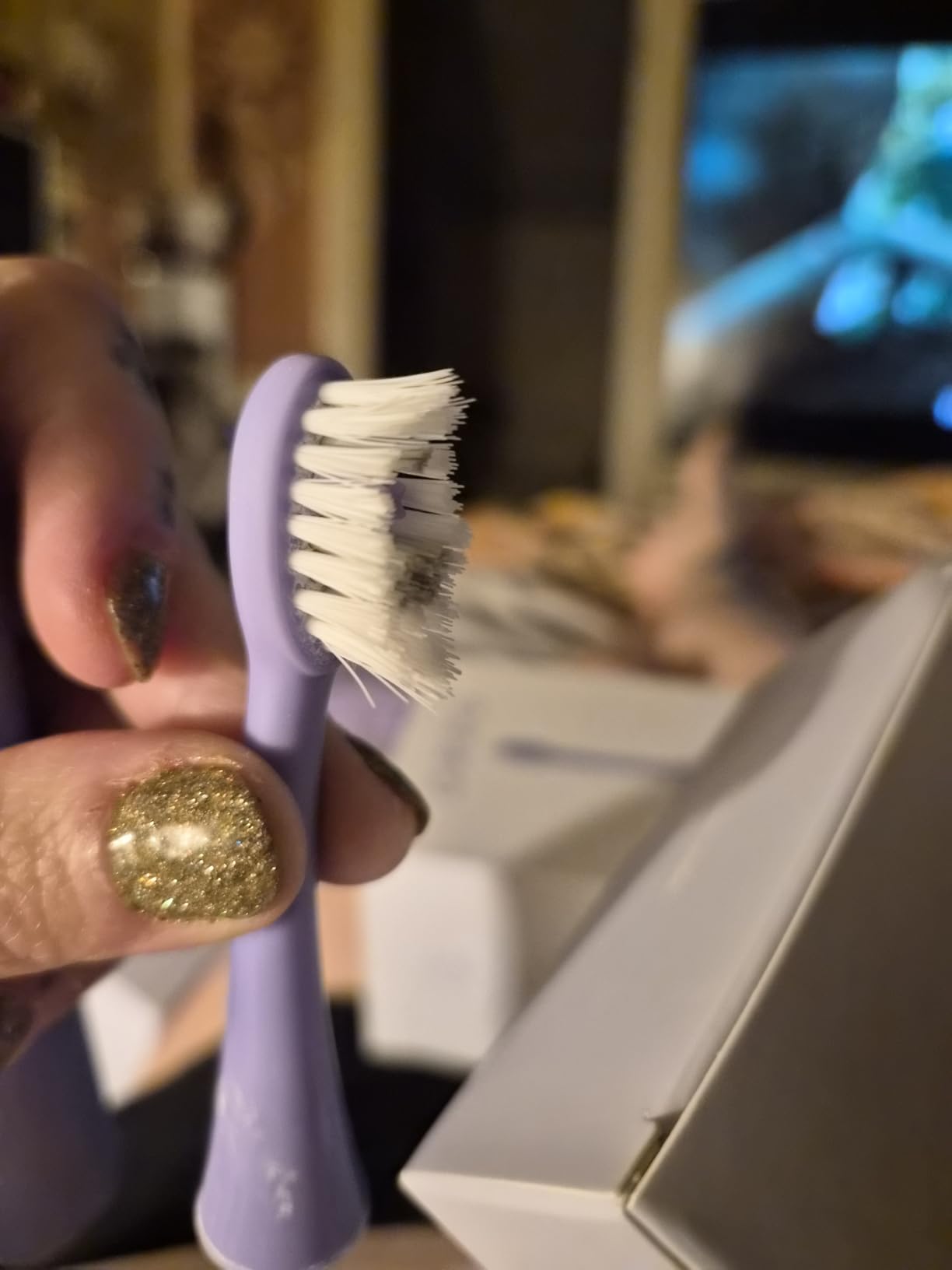
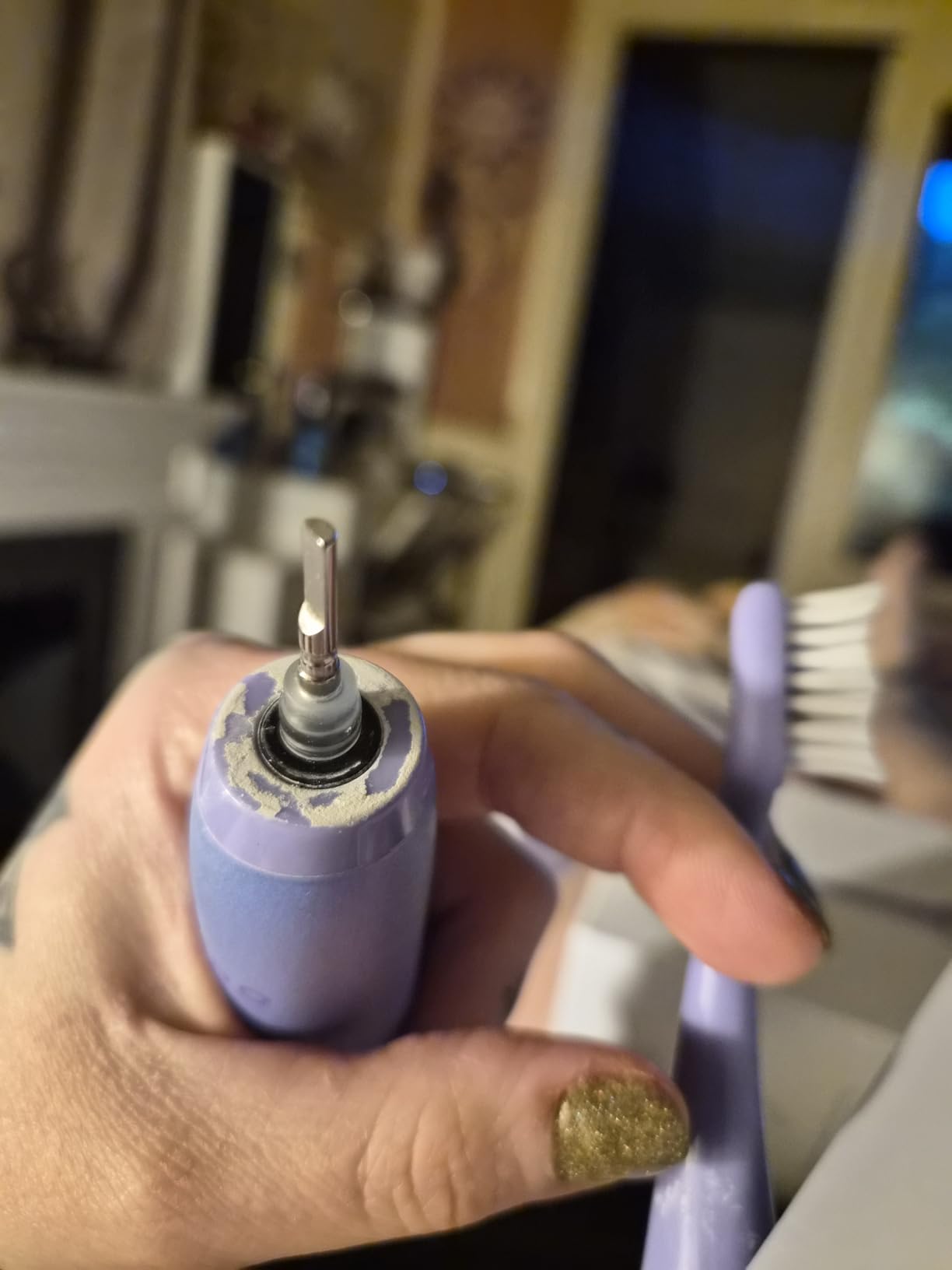
The ORDO Sonic+ is 2.17 inches wide and 11.02 inches tall, and that narrow oval body is the reason it earns its place. It is easy to hold in a wet hand, easy to grip with limited dexterity, and it takes up almost no counter space in a cloakroom bathroom.
Plaque coverage comes from the head shape. The oval head is contoured to tooth surfaces, so the bristles stay in contact as you sweep rather than lifting off at the edges, and 40,000 sonic pulses per minute do the breaking up. Four modes cover Sensitive, Clean, White and Massage, with a quad pacer and 2-minute timer for pacing.
The Li-ion battery gives 4+ weeks between charges with an LED charge indicator, and IPX7 waterproofing covers bathroom risk. It rates 4.4 stars from about 760 ratings with 70% five-star feedback, and the head contour plus the mode range are what buyers mention most.
Two honest caveats. The review base is small at roughly 760 ratings, so the long-term picture is still forming. And the charging base is not USB-C, which is a step backwards from newer competition and means one more proprietary cable in the drawer.
Who the ORDO Sonic+ suits
It suits anyone brushing in a small or awkward bathroom, and anyone with grip strength issues, because the slim 11-inch body is easy to control. The four-plus-week battery suits households where the brush lives in a shared cupboard and gets forgotten on the charger.
It suits people who want a Sensitive mode for recovery after dental work without moving up a tier. The oval head also appeals if you dislike the sensation of a round head rolling across your teeth.
Who should skip the ORDO Sonic+
Skip it if you want a pressure sensor, because there is none, and that is the feature most often praised by owners after a few months of use. It is also worth skipping if you travel with a USB-C charger only.
Skip it if you are risk-averse about newer brands with smaller review counts, since about 760 ratings tells you much less than the tens of thousands behind the top three picks.
What Strokes Per Minute Actually Means for Plaque Removal
Strokes per minute, or VPM, is the number brands lead with, and it is the most misunderstood spec in this category. It measures how fast the brush head oscillates side to side. The number itself does almost nothing for plaque; what matters is what the vibration does to the bristles and the fluid around them.
Two mechanisms are at work. First, the bristles flex. A fast side-to-side movement makes each bristle bend and spring back rather than press rigidly into enamel, and flexing is what gets underneath the biofilm edge. Second, the movement drives fluid between the teeth and along the gum margin, which carries water or toothpaste into places bristles physically cannot reach.
This is why the Burst Original at 33,000 vibrations per minute can outperform a faster brush on interdental plaque. Its head is cut to reach between teeth, and no amount of extra frequency compensates for bristles that are not in the gap. Head geometry sets the ceiling; motor speed fills the rest.
What VPM does not do is remove tartar. Plaque is a soft bacterial film you can brush away; once it mineralises it becomes calculus, which is chemically bonded to the tooth surface. That is the line this whole article keeps returning to, because a lot of product copy blurs it.
One more number worth discounting. Claims like 10x more plaque or 99.99% plaque removal are almost always measured against a manual brush used in a specific way, often with a worn brush head. They are useful for comparing a sonic brush with no brush, not for ranking one sonic brush against another.
Plaque vs Tartar: What a Sonic Brush Can and Cannot Remove
Plaque is a soft biofilm that forms on every tooth surface within hours of cleaning. It is removable at home, every day, with any competent brushing. This is the entire job of a sonic toothbrush and the entire basis of the rankings above.
Tartar, also called calculus, is plaque that has hardened through mineralisation from saliva. Once it has set, no toothbrush, sonic or oscillating, will shift it. Removing tartar requires a hygienist with scaling instruments. Any product page promising to remove tartar at home is describing something ultrasonic scrapers claim and dentists routinely push back on.
That boundary matters for expectations. A sonic brush can reduce how much tartar you form by clearing plaque thoroughly before it mineralises, which is the real long-term benefit. It cannot clear the tartar already there, and if you see hard yellow or brown deposits behind the lower front teeth, the answer is a cleaning appointment rather than a new handle.
If plaque removal is your main goal, the highest-return upgrade is rarely a more expensive brush. It is a better head, the full two minutes, and interdental cleaning. Brushes handle the tooth surfaces; a water flosser or interdental brushes handle the gaps and the gum margin between teeth, which is where a surprising amount of plaque survives.
How to Choose a Sonic Toothbrush for Plaque Removal in 2026
Most buyers lose money on the wrong tier. A useful pressure sensor and a head you actually like will beat a premium handle with a generic head every time, and the differences further up the range are largely cosmetic and app-driven.
Which brush head removes the most plaque
Head choice is the highest-leverage decision in this category, and it is where owner communities agree most strongly. Gum-line and gum-care heads, where the bristle profile is longer and angled toward the margin, do the best work on the hidden plaque that causes gingivitis. Plaque-control heads with a more structured bristle field do well on the flat chewing surfaces.
Interdental-cut heads with multi-length bristles are the choice for anyone whose plaque builds up between the front teeth. The G2 Optimal Gum Care head on the Sonicare 5100 and the ProResults head on the ProtectiveClean are both built for the gum margin specifically, and the W Diamond Clean head is the pick for surface stains rather than plaque.
Change heads every three months, or sooner if the bristles splay. A worn head reaches the same two minutes but removes noticeably less plaque, and it frays the gums at the same time. If you own several brushes, colour-code the collars so nobody defaults to the oldest head.
Sonic vs oscillating vs rotating movement
Sonic brushes vibrate side to side at 30,000 to 62,000 movements per minute and rely on fluid action to reach between teeth. Oscillating-rotating brushes use a small round head that rotates and oscillates, cleaning one tooth at a time. Round-head brushes tend to feel more thorough tooth by tooth and are easier to angle onto individual teeth.
Sonic brushes feel gentler and give a broader sweep, which some owners prefer because they irritate their gums less. Both types are supported by good clinical evidence, and the honest answer on which removes more plaque is that technique and duration matter more than the movement type. Pick the one you will actually use for two minutes twice a day.
Pressure sensors and over-brushing
A pressure sensor measures how hard you are pressing and either reduces the vibration, slows the motor, or flashes a light and pauses. It is the single feature owners praise most after the novelty of a new brush wears off, and it is worth paying a little more for if you have ever been told you brush too hard.
Over-brushing is not about frequency. It is about force. Repeated heavy pressure wears enamel at the gum margin and causes recession that does not grow back, and no amount of brushing time fixes it. If your gums look longer than they used to, or your teeth feel sensitive to cold at the neck, a pressure sensor is a better investment than a faster motor.
Three brushes in this list have a pressure sensor: the Sonicare 5100, the Sonicare 6100 and the SURI Pro. If you are buying a budget model, pair it with a genuine effort to go lighter rather than skipping the sensor entirely.
Battery life and charging
Battery life across this group runs from two weeks on the Sonicare models to 70 days on the PRO-X, a wider spread than the cleaning differences justify. Anything at 14 days or more is genuinely fine for home use. Thirty-day and above models suit travel, and the 70-day PRO-X removes charging from the conversation entirely.
Charging format matters more than people expect. Magnetic stands and wireless pads are tidy and reliable. A proprietary round-pin cable, as on the TEETHEORY, or a wall-plug unit, as on the ProtectiveClean, is one more adapter to lose on a trip. USB-C is the most portable choice and only the SURI Pro offers it in this group.
Replacement head cost over three years
Four heads a year is the standard replacement interval, so multiply any head price by twelve for a three-year figure. This is where the two ends of this list separate sharply. A brush that ships with eight or six heads has a large part of that cost already covered, which is the single most overlooked value factor in the category.
Proprietary heads from premium brands are consistently the most expensive ongoing cost, and owner frustration with that runs through every forum thread on the subject. If you are starting from scratch, a bundle with six or eight heads gives you eighteen months to two and a half years of cover before the first purchase, and budget brands with multi-head packs are often the most economical choice over a full ownership period.
A seven-step routine that maximises plaque removal
Wet the head and apply a pea-sized amount of paste. Most people use three times too much, and excess paste is what ends up in your stomach.
Angle the bristles at 45 degrees toward the gumline, not straight at the tooth. The bristle tips should reach just under the margin, which is where plaque becomes inflammation.
Start at the far back of one quadrant and work around the arch. Do not jump between quadrants, because the first one you started gets the most attention.
Use light pressure and let the motor do the work. If your arm is tense and your gums are blanching white under the head, you are pressing too hard.
Pace yourself in 30-second blocks. A quad pacer or SmarTimer will do this for you, and covering all four quadrants evenly beats spending 90 seconds on one.
Brush your tongue last. It harbours more biofilm than most people realise and it is the easiest plaque win left in the routine.
Spit, do not rinse. Rinsing washes fluoride and any loosened plaque straight back down your throat. Let the toothpaste stay on for a moment before you rinse lightly.
When to skip a sonic brush or see a dentist first
See a dentist before you upgrade if you have visible tartar, bleeding that does not settle within a week of better brushing, loose teeth, or pain. None of those are cleaning problems and no brush will resolve them.
A manual brush is enough if you are already brushing for a full two minutes twice a day with light pressure and cleaning between your teeth. The jump from manual to any brush in this list is meaningful; the jump from a mid-range brush to a premium one is much smaller than the price gap suggests, and owners upgrading from an inexpensive brush to an expensive one frequently report little change.
Skip a sonic brush entirely if you have severely receding gums, exposed root surfaces or a diagnosed grinding habit, and speak to your dentist about a brush with a pressure sensor and a soft head. It is a short list, but a costly mistake to ignore.
Frequently Asked Questions
Can a sonic toothbrush remove plaque?
Yes. A sonic toothbrush removes more plaque than a manual brush because its head vibrates at 30,000 to 62,000 movements per minute, flexing the bristles and driving fluid between teeth to break up the biofilm before sweeping it away. It cannot remove hardened tartar, which only a hygienist can scale off.
Which Sonicare toothbrush head is best for removing plaque?
For gumline plaque, the G2 Optimal Gum Care head is the strongest all-rounder, and the ProResults plaque control head is designed specifically for the gum margin. For surface stains, the W Diamond Clean head is better, but it is a stain job rather than a plaque job. Replace any head every three months or as soon as the bristles splay.
What type of toothbrush is most effective for removing plaque?
Any brush used correctly for a full two minutes twice a day beats a better brush used badly. Among powered options, oscillating-rotating round heads often feel more thorough tooth by tooth, while sonic side-to-side brushes give a gentler, broader sweep with fluid reaching between teeth. Head shape, pressure control and technique matter more than the movement type.
Which electric toothbrush is best for removing plaque and tartar?
The Aquasonic Black Series is the strongest all-round pick for plaque, with a 40,000 VPM motor, ADA acceptance and eight included heads, while the Philips Sonicare 5100 leads for gumline work with its pressure sensor and G2 head. No electric toothbrush removes tartar. Calculus is mineralised plaque bonded to the tooth and must be scaled by a dental hygienist.
How often should I replace my sonic toothbrush head?
Replace it every three months, or sooner if the bristles splay or fray. A worn head still runs for a full two minutes but removes noticeably less plaque, and frayed bristles are more likely to irritate the gums. Colour-code replacement heads if several people share a household so nobody defaults to the oldest one.
Does a pressure sensor help remove more plaque?
Indirectly, and it is worth having. A pressure sensor reduces vibration, slows the motor or flashes a warning when you press too hard, which prevents the enamel abrasion and gum recession that make people abandon electric brushing. Lighter pressure with full duration generally removes more plaque overall than heavy pressure with the motor set to maximum.
The Verdict: Which Sonic Toothbrush Removes the Most Plaque in 2026
The Aquasonic Black Series is the best sonic toothbrush for plaque removal overall, because it combines a 40,000 VPM motor, ADA acceptance and eight spare heads that cover roughly two and a half years. The Philips Sonicare 5100 takes the gumline specifically, with the highest output figure, a pressure sensor and a 4.6-star average from more than 28,000 reviews.
For sensitive or bleeding gums, the Sonicare 5100 and the SURI Pro both have the pressure sensor that stops a heavy hand. For interdental plaque, the Burst Original’s cut bristles are worth the premium. For the best balance of power and running cost, the COSLUS C40 is hard to argue with.
Whatever you pick, the head, the two-minute timer and light pressure do the plaque removal, and interdental cleaning handles what the brush cannot reach. None of them touch tartar, so if you see hard deposits, book the cleaning rather than the brush.