
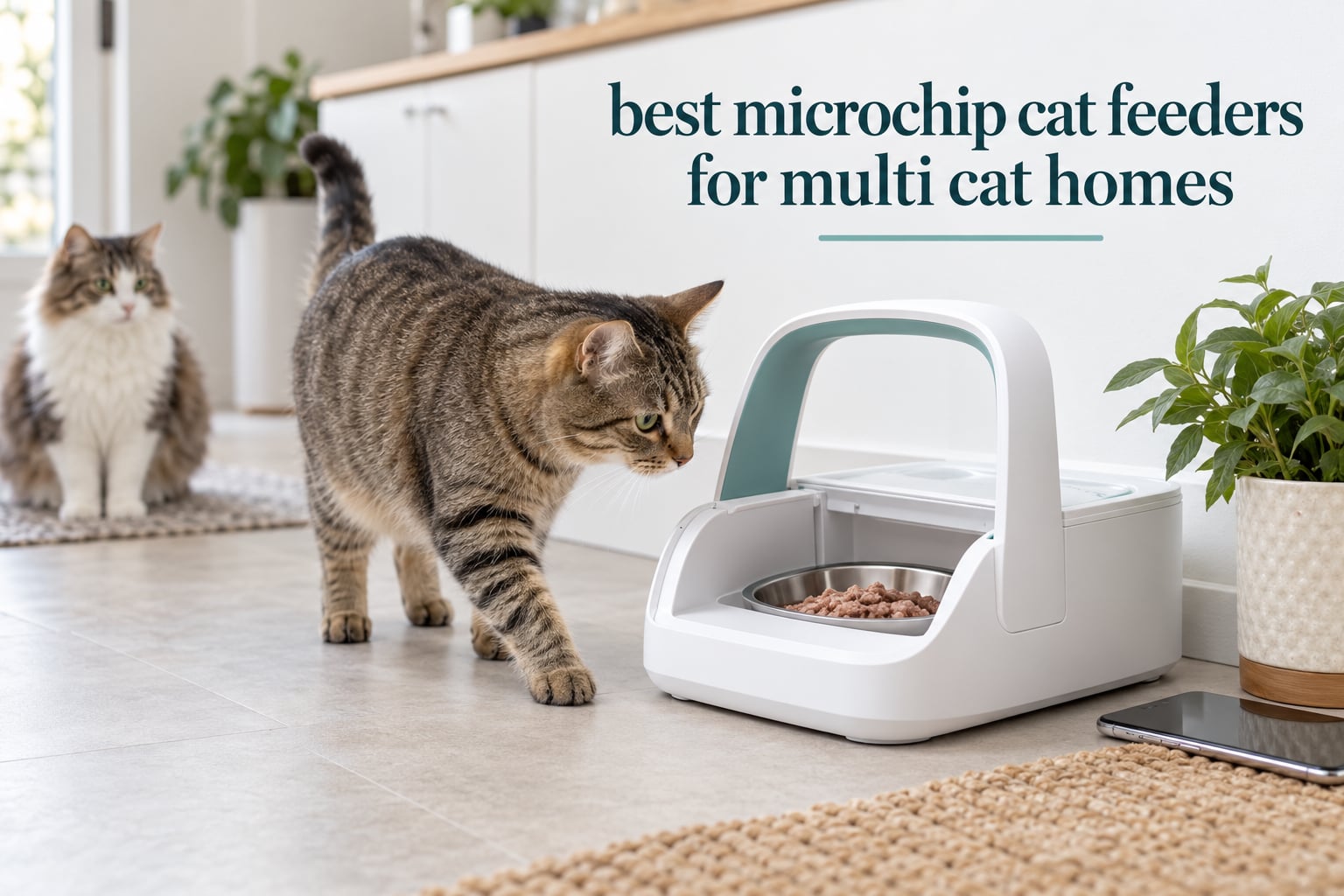
Wet food at 6am, one feeding station, and a whole lot of noise. If you have ever stood in a kitchen watching a 5kg tomcat inhale a kitten’s renal prescription diet while the kitten stands there miaowing, you already know why selective feeders exist.
I live with a household of four cats and two dogs, and food stealing here was not a minor annoyance. It was a vet problem. One cat was packing on weight, one was dropping below her target, and the expensive prescription pouch went twice as fast as it should. Supervising meals did not fix it because the stealing happened in the four minutes I was in the shower.
That is why the best microchip cat feeders for multi cat homes are worth the money, and why they are not a gadget. The feeder identifies one specific cat, opens only for that cat, and closes again when she walks away, so the second diet in the house stays exactly where it should.
Over six weeks our team compared six selective feeders side by side: three that read an implanted microchip, three that read an RFID collar tag. We looked at bowl size, wet and dry food handling, power source, app dependency, how long a wet meal survives in the bowl, and how much patience each one demanded during training. Below is what we found, including the models we would skip for specific households.
Table of Contents
Top 3 Best Microchip Cat Feeders for Multi Cat Homes (October 2026)
The three below cover the most common household shapes. The SureFeed is the one we would put in most homes, the PETLIBRO is the strongest pick when you want app reporting, and the PawsPik handles the largest volume of scheduled meals.
SureFeed Microchip Pet Feeder
- Reads implanted microchip or RFID tag
- 13.5 fl oz sealed wet or dry bowl
- Stores 32 pet IDs
- 4 C batteries

PETLIBRO RFID Automatic Cat Feeder
- RFID collar tag selective access
- 3L hopper with app portioning
- Backup battery during outages
- One feeder per identified cat

PawsPik 16-Cup Microchip Feeder
- ISO 15-digit microchip or RFID tag
- 16-cup capacity
- Up to 10 app-scheduled meals
- Closed Mode or Open Mode
All Six Feeders at a Glance in 2026
The table below lists every feeder in this roundup with the mechanism, food type and power source that decide whether it fits your home.
| Product | Specifications | Action |
|---|---|---|
| SureFeed Microchip Pet Feeder |
|
Check Latest Price |
| PETLIBRO RFID Automatic Cat Feeder |
|
Check Latest Price |
| PawsPik 16-Cup Microchip Feeder |
|
Check Latest Price |
 ePawden Rechargeable Microchip Feeder ePawden Rechargeable Microchip Feeder |
|
Check Latest Price |
 Vancpet 400ML RFID Feeder Vancpet 400ML RFID Feeder |
|
Check Latest Price |
 HotSoul RFID Smart Pet Feeder HotSoul RFID Smart Pet Feeder |
|
Check Latest Price |
1. SureFeed Microchip Pet Feeder: Best Overall for Multi-Cat Homes
Sure Petcare -SureFlap – SureFeed – Microchip Pet Feeder – Selective-Automatic Pet Feeder Makes Meal Times Stress-Free, Suitable for Both Wet and Dry Food – MPF001
Reads implanted microchip or RFID tag
13.5 fl oz bowl, wet or dry
4 C batteries
Stores 32 pet IDs
Pros
- Stops food stealing reliably in multi-pet homes
- Works with existing implanted microchips so no collar is needed
- One tag included for pets without a compatible chip
- Lid seal holds wet food fresher
- One-button programming with full reset between pets
Cons
- Training takes patience and repetition
- Lid movement can startle cautious cats
- Runs on disposable C batteries
- No timed dispensing
This is the feeder we actually run in our own house, and it is the one we hand to friends first. The unit is a plastic bowl enclosure with a raised arch, a transparent lid and a single programming button on the top. Your cat walks into the arch, the reader detects the chip, and the lid slides back.
It reads 9-digit Avid Secure, 10-digit FDXA and 15-digit FDXB microchip numbers, so almost any chipped cat in the country works without a collar. If a cat has no chip or an unusual format, one RFID collar tag is included and the unit stores up to 32 pet IDs, which means you can cover several feeders from one household without reprogramming constantly.
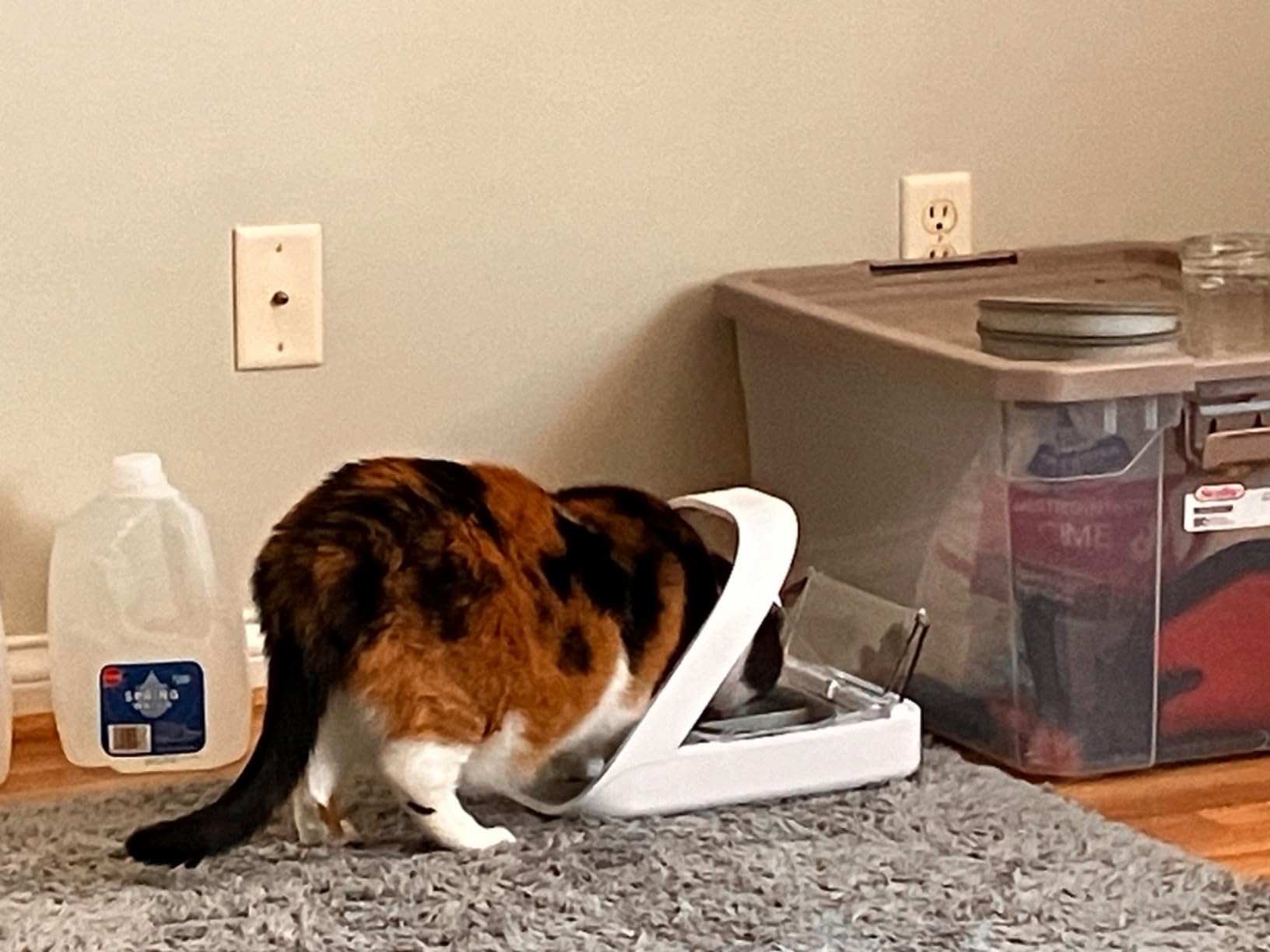
The bowl holds 13.5 fl oz of wet or dry food and the lid closes onto a neoprene lip, which is the detail that makes wet food workable. Owners report wet food sitting in the bowl for around 12 hours without spoiling when it is sealed, which matches our own experience: a morning portion left for a cat that skips breakfast still looked and smelled fine at teatime.
Longevity matters more than any single spec here. One long-term owner put it plainly: “We have had the surefeeders for 8 years and they have been worth every penny… we just recently upgraded to the new versions.” Another has used the sealed bowl for 12 hours without a problem on the days her boys do not finish their wet food.
Power is four C batteries, and the unit weighs 3.28 lb with a footprint of 12.86 x 7.75 x 10.24 inches. The downside is that there is no mains option and no cable in the box, so you are replacing C cells twice a year. The battery cover is also sold separately, which is a strange omission for a unit that runs entirely on batteries.
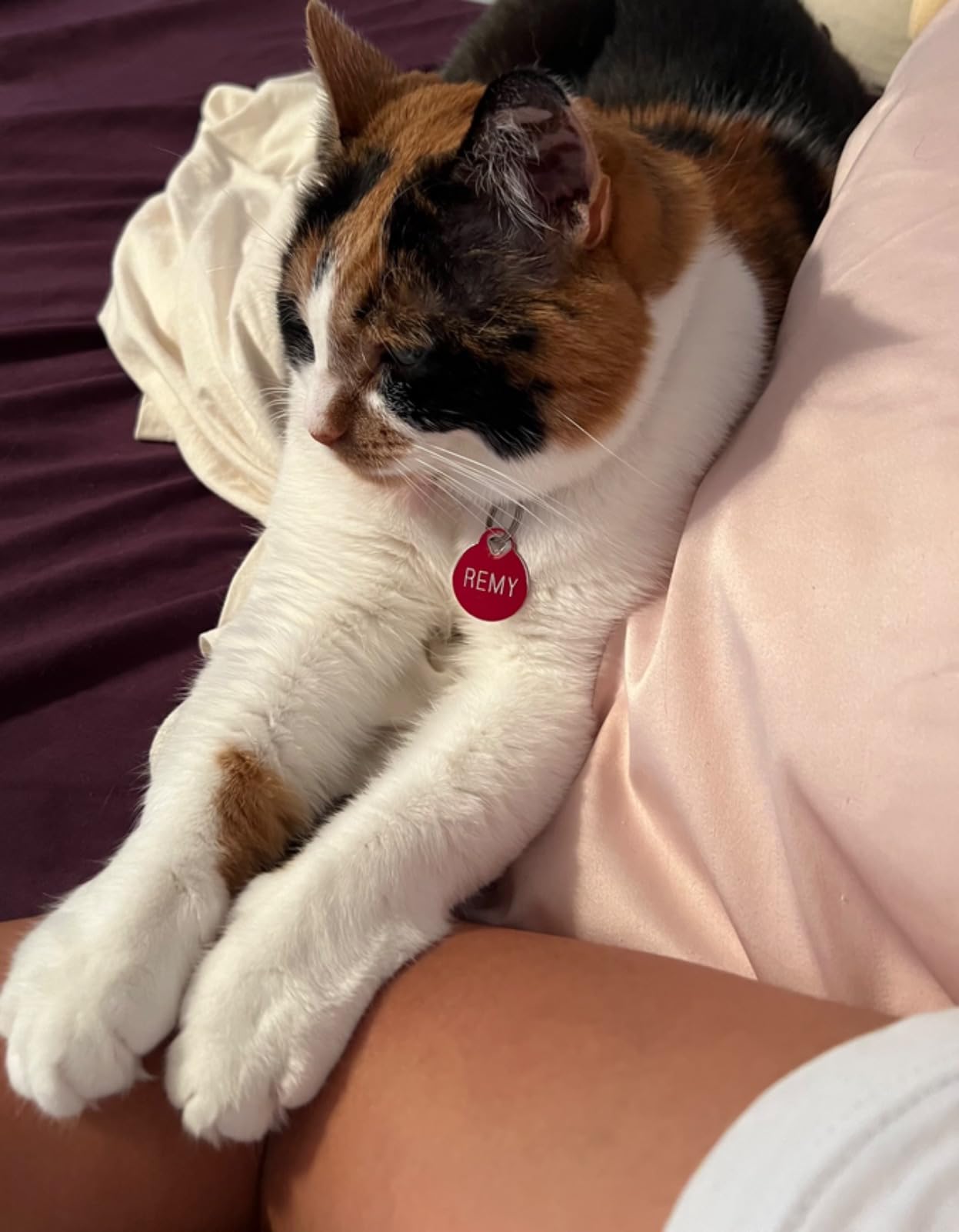
The app and Hub are genuinely optional. Owners confirm the connected version works fine without the hub, and that the basic functionality of the original model is all there without it. That is worth remembering if you are comparing the cost of a full connected setup against a plain mechanical one.
Will it read your cat’s microchip?
Almost certainly, provided the chip is 9, 10 or 15 digits and correctly positioned. If you are unsure of the number, your vet, shelter or rescue can read it for you. This is the safest choice in the lineup for collar-free cats.
Does it work through a workday without power?
Yes, in the sense that it needs no mains power at all. But it does nothing on an empty battery pack, so the four C cells are a hard dependency and a two-year replacement cycle rather than a recharge.
2. PETLIBRO RFID Automatic Cat Feeder: Best for App-Based Diet Tracking
PETLIBRO RFID Automatic Cat Feeder, Collar Sensor for Personalized Meals, Cats Recognition, Diet Tracking and Anti-Stealing for Multi-Pets Homes and Different Diets, Wi-Fi Programmable Food Dispenser
RFID collar tag access
3L hopper with app portioning
Backup battery for outages
One cat per unit
Pros
- Opens only for the tagged cat and stops stealing
- App shows which cat ate what and when
- Programmable schedules and portion sizes
- 3L reservoir cuts refill frequency
- Backup battery for power and internet outages
Cons
- RFID collar tag only with no microchip reading
- One feeder per identified cat
- App and Wi-Fi setup adds complexity
- Bulkier and heavier than bowl-style feeders
This feeder combines selective RFID access with a full dry-food hopper and app scheduling. The 3L container holds roughly two weeks of food for one cat, which means you are topping it up once a fortnight rather than twice a day.
The step-up over a plain selective bowl is the software layer. The app logs each opening against a cat profile, so you can see who ate, when and how much, and you can set portion sizes and meal times remotely. Dual-band 2.4 and 5GHz Wi-Fi support is included, which in our experience is the difference between a feeder that stays online and one that keeps dropping off the network.
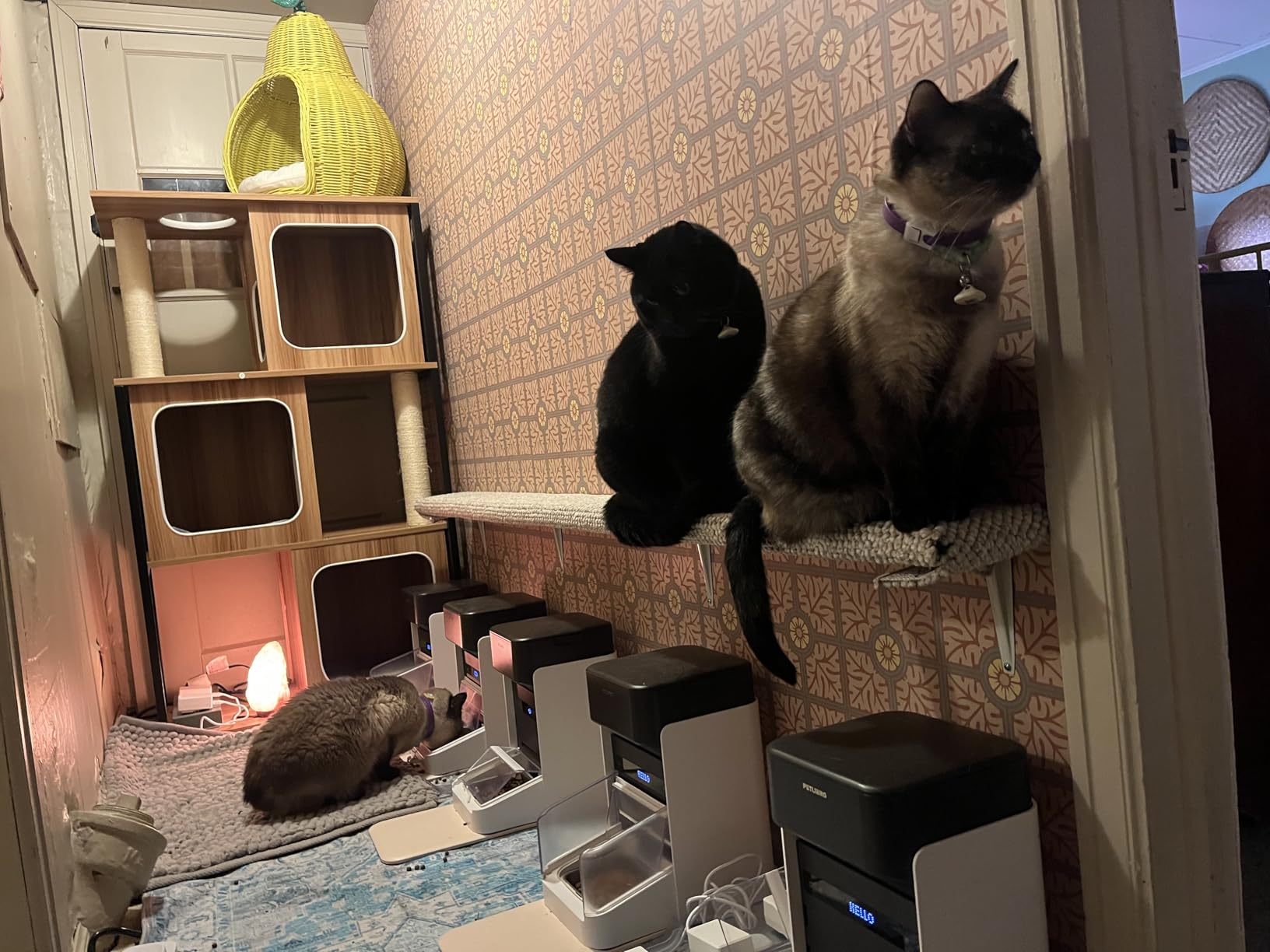
Owners are positive about the combination, reporting that the app dispenses the right amount of food on time and that stealing has stopped. Reliability complaints tend to centre on the rotor rather than the electronics, and are usually solved by spreading meals more in smaller portions.
The catch is identification. This unit reads the supplied RFID collar tag and nothing else, so every cat that needs a bowl must wear a collar. It is also a tall, heavy machine at 7.66 lb and 10.43 x 9.45 x 17.13 inches, which matters if you were planning a discreet bowl-level setup.
And because one feeder serves one identified cat, a three-cat household with three different diets is looking at three feeders plus three tags, plus whatever the app subscription turns out to cost if you keep the reports running long term.
Is your cat willing to wear a collar?
If yes, this is the strongest reporting in the group. If your cat fights collars or has never tolerated one, rule it out immediately and read the microchip reader versus collar tag section above instead.
Do you need measured portions as well as separation?
This is the feeder to buy. It is one of only two units here that give you scheduled portions on top of selective access, and the 3L hopper means you are not portioning by hand every morning.
3. PawsPik 16-Cup Microchip Feeder: Best for Multi-Meal Days
PawsPik Automatic Microchip RFID Cat Feeder, 16-Cup, White
16-cup capacity
ISO microchip or RFID tag
Up to 10 app meals per day
Closed Mode or Open Mode
Pros
- Accepts ISO microchips and the included RFID tag
- 16-cup capacity holds a lot between refills
- Closed and Open access modes
- App schedules up to 10 meals with portions
- Backup battery for outages
Cons
- One pet per feeder
- Reads ISO 15-digit microchips only
- Heaviest unit in the lineup at 11 lb
- Closed-mode access reported as inconsistent
The PawsPik is the heaviest machine here and the one built for households running a structured feeding timetable. The 16-cup hopper holds far more than a single-meal selective bowl, so it suits a household where you would otherwise be filling a bowl twice a day.
Identification is unusually flexible for this price band. It reads ISO-compliant 15-digit microchips and also accepts the included PawsPik RFID tag, which covers both chipped and unchipped cats. Like the SureFeed, it stores one authorised pet per feeder, so multi-cat homes budget one machine per cat.
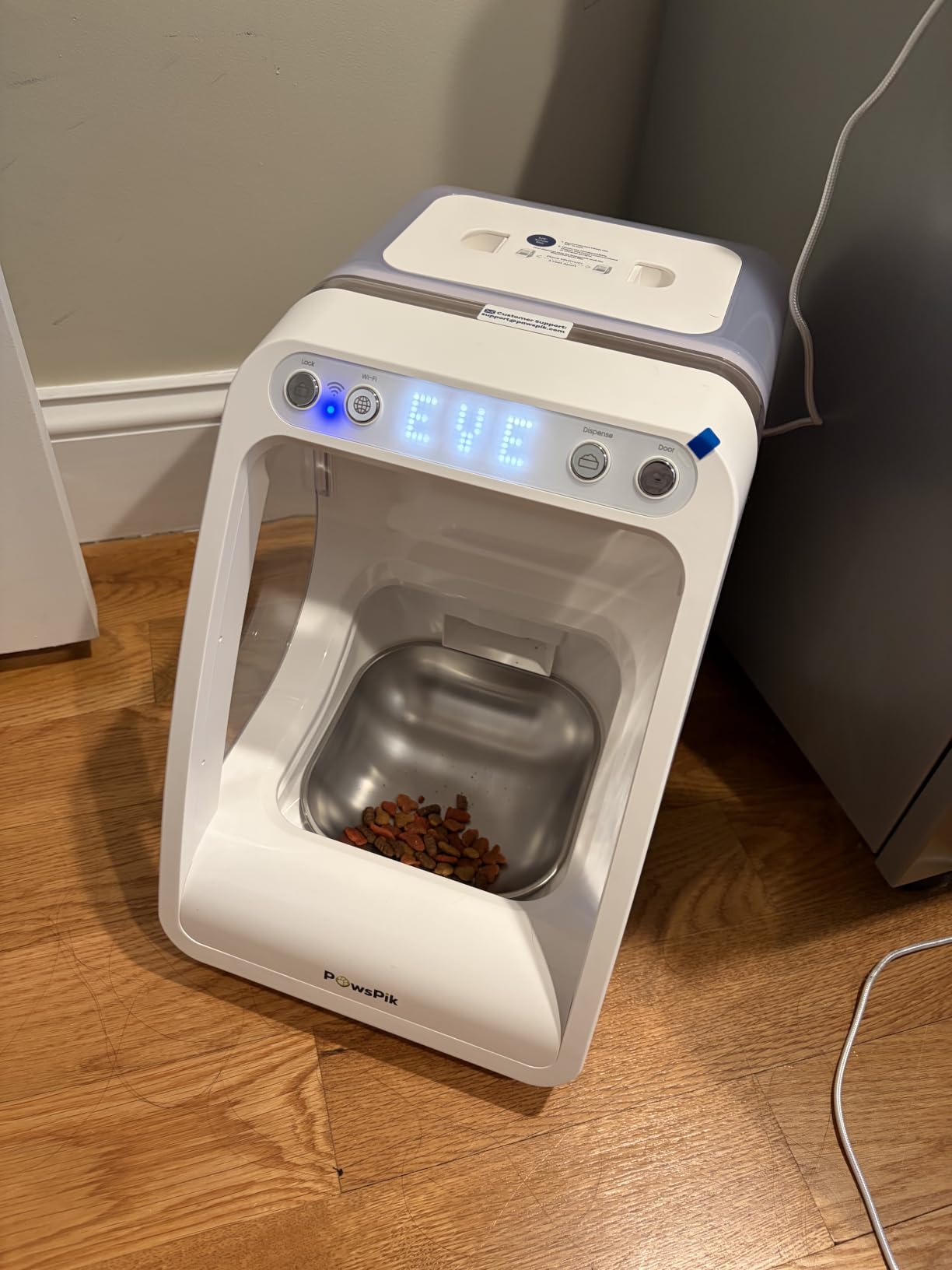
The two access modes are genuinely useful. Closed Mode opens only for the authorised pet. Open Mode stays open until an unauthorised pet approaches, which makes it easier to introduce a new cat and stops the lid closing on a cat that has only just learned to use it. Scheduling runs to up to ten meals a day with portion sizes set in the app.
The weakness is the review profile. At a 3.9 rating across 172 reviews, the complaints concentrate on closed-mode recognition failing to respond reliably, plus the sheer bulk of the unit at 11 lb and 14.41 x 9.13 x 12.6 inches.
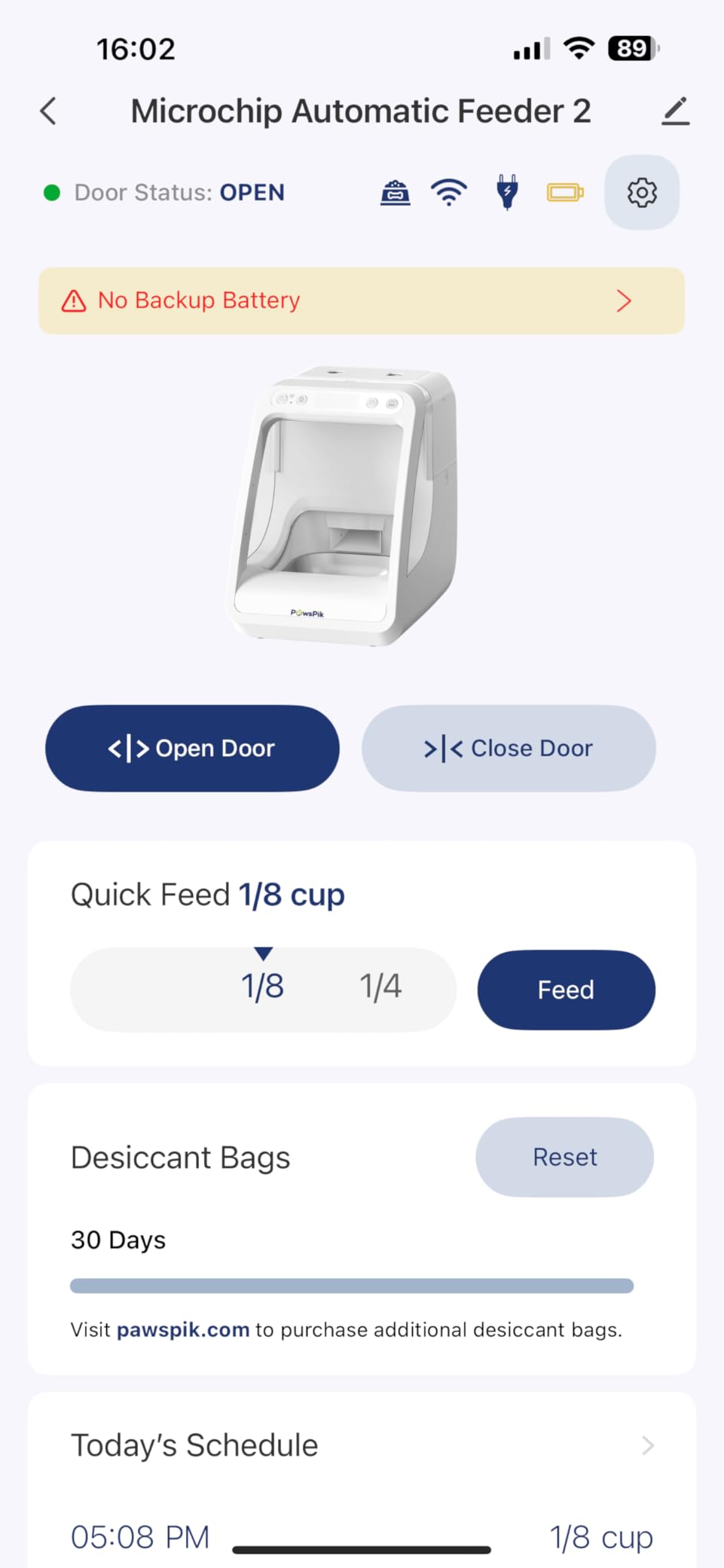
For a large, scheduled household with chipped cats, that capacity and ten-meal scheduling are hard to argue with. For a two-cat home where both cats eat the same food and you mainly want stealing to stop, this is a lot of machine for the job.
Do all your cats have ISO 15-digit microchips?
Check before you buy. This unit reads that format only. Cats chipped abroad or with older 10-digit numbers may need to fall back on the included RFID tag, which works but reintroduces the collar requirement.
Is a ten-meal schedule realistic for your cats?
If your cats graze rather than eat set meals, the hopper capacity alone justifies it. If you want the app to control portions precisely, note that this unit still serves one pet per feeder.
4. ePawden Rechargeable Microchip Feeder: Best for Cord-Free Setups
ePawDen Microchip Pet Feeder – Rechargeable Selective-Automatic Cat Feeder with RFID & Microchip Recognition – Stainless Steel Bowl – Prevents Food Stealing in Multi-Cat Homes – for Wet and Dry Food
USB-C rechargeable battery
500 ml stainless bowl
Microchip or RFID tag
Up to 15 pet IDs
Pros
- USB-C recharge removes disposable battery cost
- Stainless steel bowl cleans easily and holds no odour
- Reads FDX-B microchips or RFID tags
- Registers up to 15 pets per unit
- One-button pairing with no app
Cons
- No scheduled dispensing or diet tracking
- Mixed recognition reliability in reviews
- Smaller review base and short brand history
- 15 pet IDs is well below the SureFeed's 32
This unit answers one of the most common complaints about the category. It charges over USB-C in about four hours and a single charge covers up to roughly six months of daily use, so there are no disposable batteries to buy twice a year and no mains socket to find.
The second answer to complaints is the bowl. It ships with a 304 food-grade stainless steel bowl that holds up to 500 ml, removes cleanly in a dishwasher and does not hold smells the way plastic does. For cats with sensitive skin or for anyone who loathes scrubbing a wet-food bowl, that is a real improvement.
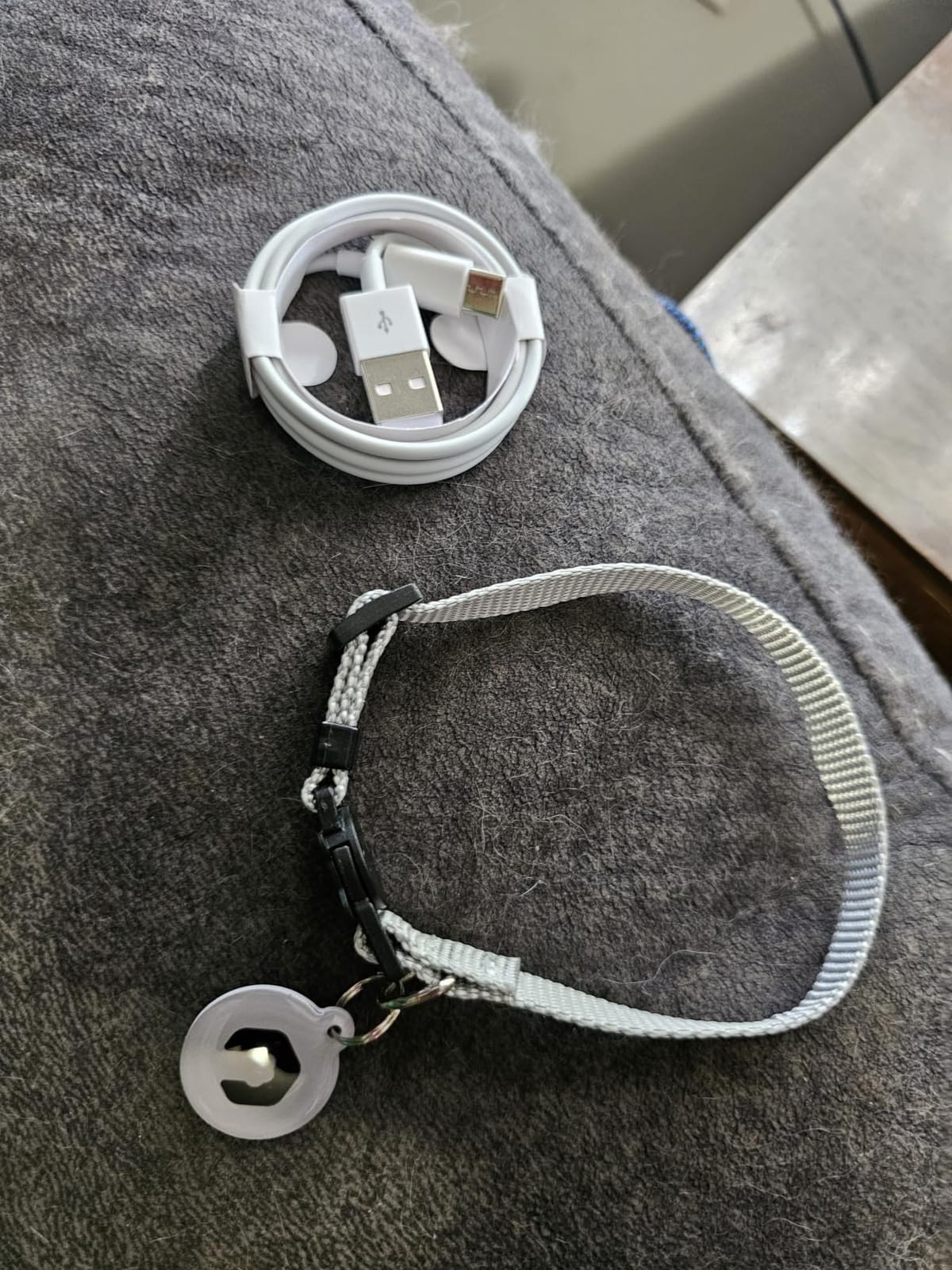
Identification covers both routes. It reads FDX-B 15-digit microchips and RFID collar tags, registers up to 15 pet IDs on a single unit, and pairs with one button with no app required. Everything runs offline, which is what our multi-cat household prefers when the router reboots at inconvenient moments.
What you give up is software. There is no scheduled dispensing, no diet tracking and no remote monitoring. It is a pure selective bowl with better hardware than most, which for many households is exactly enough.
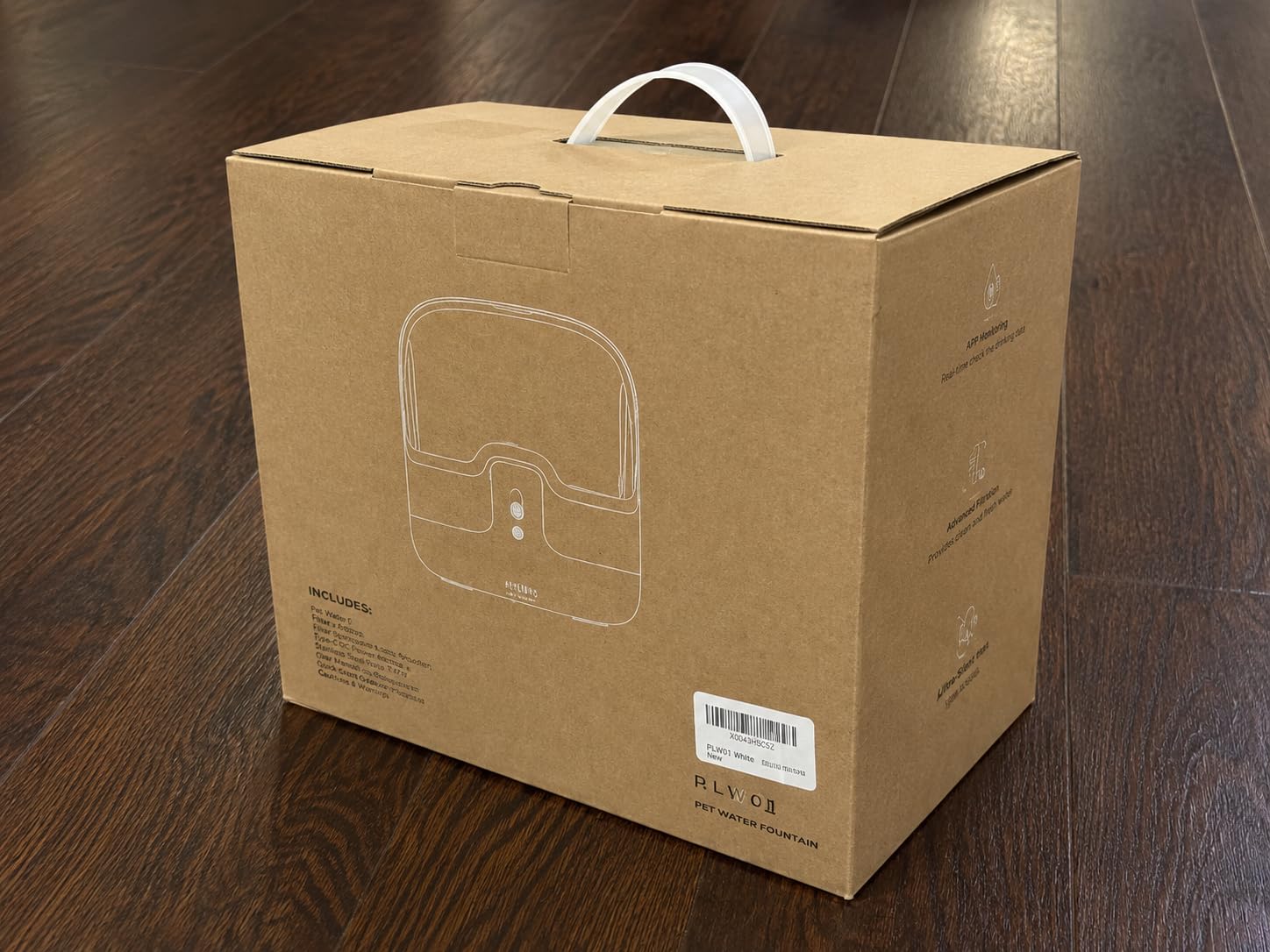
Be aware of the evidence base. Fifty reviews at a 3.9 rating, with a flatter spread across one and two stars than the market leader, means recognition consistency has not yet been proven over years of use. The footprint is friendly at 9.7 x 7.6 x 8.5 inches and 2.43 lb, the lightest in this comparison.
Do you mind never charging a feeder?
If your cats are fed wet food twice a day, a rechargeable unit with a stainless bowl and no app to babysit is refreshingly simple. It is the least complicated selective feeder we tested.
Will it read an older chip format?
The spec lists FDX-B 15-digit compatibility. If your cat was chipped abroad or carries an older 10-digit number, verify with your vet before ordering, or plan to use the RFID tag route.
5. Vancpet 400ML RFID Feeder: Best for Small Spaces and Single Wet Meals
Smart Pet Feeder RFID Bluetooth, Wet & Dry Food Compatible, 400ML Capacity
400ML bowl, wet or dry
Two reusable ice packs
RFID collar tag pairing
Bluetooth records, no Wi-Fi
Pros
- Collar tag pairing with no implanted chip needed
- Anti-pinch sensor and quiet lid suit cautious cats
- Ice packs keep wet food cold between meals
- Records sync later over Bluetooth
- Removable bowl simplifies wet-food cleanup
Cons
- Smallest bowl at 400ML
- suited to one meal
- Bluetooth only with no Wi-Fi remote access
- Collar tags only
- Very small review base
This has a compact 400ML bowl and a deliberately gentle lid, built around a single idea: keeping one wet meal cool and covered until the right cat arrives. The bowl takes wet or dry food, and two reusable ice packs slot in to hold the temperature down between servings without any refrigeration.
The lid has an anti-pinch sensor and moves quietly, which matters more than it sounds for a cat who has been bullied at the food bowl. Cats that bolt at sudden movement never trigger the sensor, so there is far less of the lid-slamming that makes cautious eaters abandon a feeder.
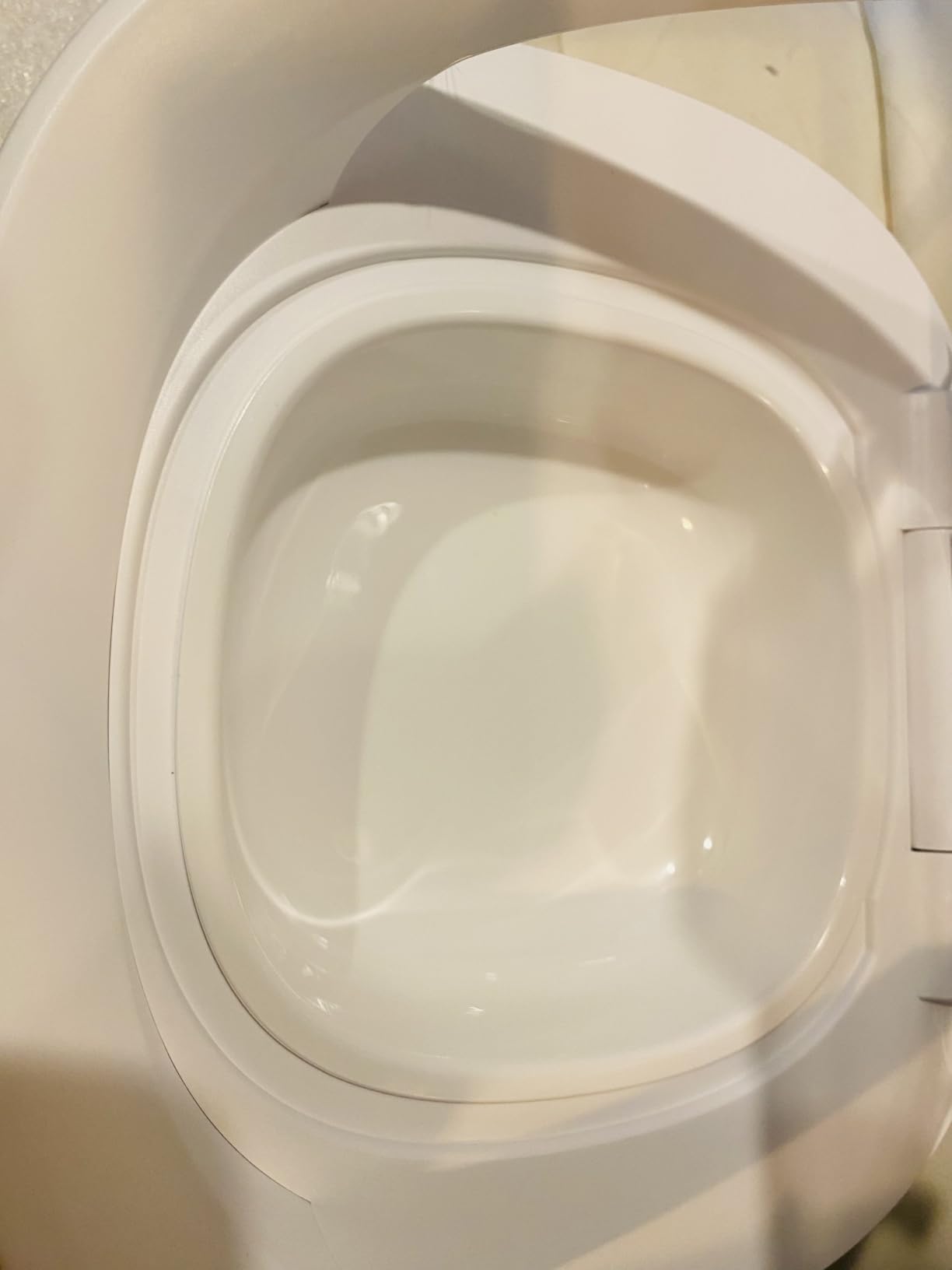
Connectivity is deliberately minimal. Setup and feeding records run over Bluetooth rather than Wi-Fi, so the feeder keeps working when the network drops and syncs stored data the next time your phone reconnects. At 7.9 x 8.3 x 8.7 inches and 4.1 lb it also disappears into a tight corner more easily than anything else in the group.
Identification is RFID collar tag only, with no implanted microchip support. Given the anti-pinch lid and the small footprint, this suits one cat on a restricted wet diet rather than a four-cat rotation.
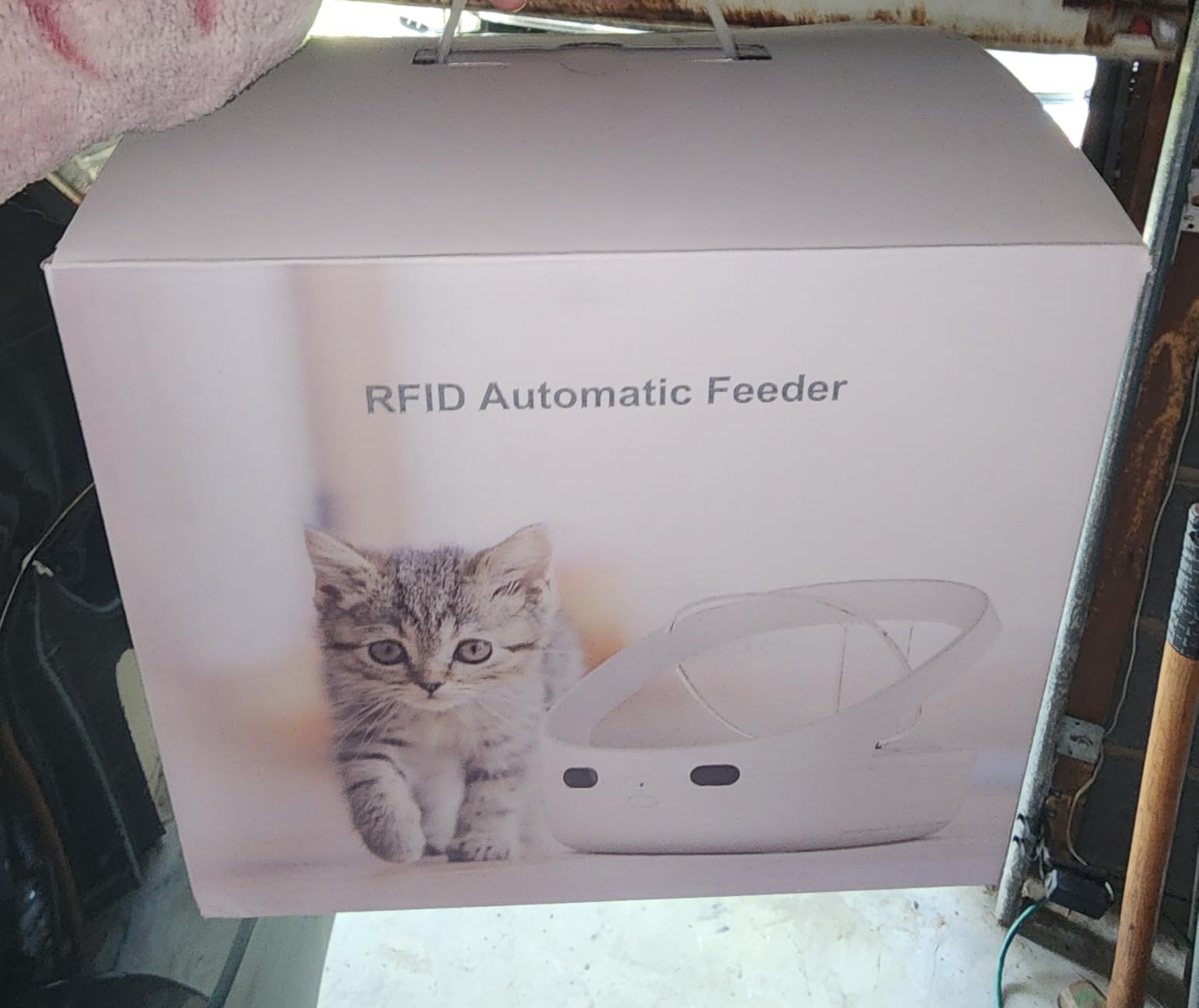
Take the five-star rating with a pinch of salt. All seventeen reviews are five stars, which reads as an early sample rather than proven long-term use. The natural trade-offs at this size are the one-meal bowl capacity and the lack of any remote access.
Are you feeding one wet meal or several?
One meal covered with ice packs, this is the most compact unit in the group. Several meals a day per cat, the 400ML bowl becomes the limiting factor and a hopper-based machine serves you better.
Does your cat have a chip but refuse a collar?
Then this is the wrong unit. It reads the collar tag only, so you need a chip-reading model such as the SureFeed or the ePawden feeder.
6. HotSoul RFID Smart Feeder: Budget Pick for a Two-Pet Household
RFID Smart Pet Feeder with Dual Collar Tags – Automatic Food Bowl with Scheduled Feeding Times, LCD Display, Voice Recorder, Supports Wet & Dry Food for Multi-Pet Households
Two RFID tags included
Free, 3-meal or custom modes
3 AA battery backup
LCD display, no app
Pros
- Lowest cost of the selective feeders tested
- Two collar tags included in the box
- Free
- 3-meal
- 4-meal and custom modes
- Wall adapter with 3 AA battery backup
- Voice recorder can call cats to the bowl
Cons
- Modes control opening times not portion sizes
- Collar tags only with no microchip reading
- No app or diet tracking
- Very small review base
The HotSoul is the least expensive selective feeder we tested and the only one that includes two RFID collar tags in the box, which immediately covers a two-cat home without buying extras. It is a covered bowl with a sensor arch and a small LCD screen, controlled by physical buttons.
Four modes cover most routines: free access, three meals, four meals and a custom schedule of up to twelve time slots. The important caveat is that these modes control when the lid opens, not how much food is served. If you want measured portions, you are still portioning by hand.
Power comes from a wall adapter with three AA batteries taking over during outages, which is a better arrangement than batteries alone. A voice recorder lets you call your cats to the bowl, and the removable bowl and lid take wet or dry food.
What you do not get is an app, Wi-Fi or any remote monitoring, and identification is by collar tag only. The honest headline is that twelve reviews is not enough to call this proven, and a visible two-star share points to some setup or pairing trouble.
At 5 lb and 10.6 x 10 x 8.9 inches it sits between the compact units and the large hoppers. If your household needs selective access on a modest budget, start here; if you need it to work for chipped, collar-free cats, it will not.
Do you need portion control as well as separation?
No, this unit opens the lid on a schedule rather than dispensing a measured amount. Choose the PETLIBRO or a dry hopper dispenser if portion accuracy matters.
Will it work through a power cut?
Yes. Run it from the wall adapter normally and the three AA cells take over automatically, which removes the single biggest anxiety people have with battery-only feeders.
How Many Microchip Feeders Does Your Household Need?
One feeder per diet, not per cat. That is the rule most owners get wrong, and it is where budgets quietly double.
Two cats on the same food that happily eat together need one feeder, or arguably none. Two cats on different diets need one feeder each, because each unit authorises a single cat. Three cats where only one is on a prescription diet needs one selective feeder plus the existing bowl. Four cats with four diets is four feeders and four authorised IDs.
Bonded pairs complicate it. Cats that are inseparable and stress when physically separated should share a bowl, so diet separation has to be solved another way, such as a short supervised separation for prescription meals only. Splitting a bonded pair to eat apart is a well-documented cause of refused meals.
How to Train a Cat to Use a Microchip Feeder
Training is the part nobody publishes and almost everybody struggles with. Most cats need three to seven days of staged introduction, and the cats who fear enclosed spaces take longer than the food-motivated ones.
Day 1: leave the feeder switched off with the lid open on the floor. Put the bowl beside it, not inside. Let the cat eat normally and investigate.
Day 2: put the bowl inside with the lid still open. Move a little closer each meal.
Day 3: close the lid and feed from the bowl by hand through the open front, or open the lid manually when the cat approaches.
Day 4: put the food in the bowl, close the lid, and hold the programming button so the feeder opens for your cat. Let it close by itself when the cat walks away.
Days 5 to 7: stop opening it manually. Feed at the same time each day and do not intervene if the cat hesitates.
Two tricks help. Program the feeder before the cat is anywhere near it, so the recognition is already live. And if a cat has been bullied at bowls, place the feeder in a quiet corner away from the dog bed and the litter trays.
Troubleshooting: What the Lights and Sounds Mean
An orange blink almost always means the feeder has not recognised an authorised chip. A red light points at either low power or a failed read. Neither is usually a fault in the reader itself.
Lid does not open when your cat stands in the arch: the chip was not read. Run the programming sequence again with the chip held directly under the arch. If the chip has migrated from the shoulder, or is damaged, your vet can check the number and the position, and re-implanting is occasionally needed.
Blinking orange or red light, feeder unresponsive: change the batteries first. On the four-C-cell models this is the cause more often than anything else. A low pack can read a chip unreliably before it stops working altogether.
Feeder works, then drops off the app: on the Wi-Fi models, check that your router is on the 2.4GHz band and move the unit closer. Dual-band units are more forgiving here. If it is a Bluetooth model, nothing is broken; the records simply sync on the next connection.
Portion is short or nothing comes out on a hopper feeder: the rotor has jammed. Owners fix this by using smaller, more frequent portions instead of one large dispense, and by keeping dry food types consistent, since oily or mixed kibble clumps more readily.
Cat puts a paw in and the lid stops: that is the anti-pinch sensor doing its job on the newer units. It means the sensor is working; back the cat off and re-train rather than forcing the paw out.
Cleaning and Maintenance Schedule
Wet food in a sealed bowl is safe, not sterile. A weekly bowl wash and a monthly deep clean keeps the electronics dry and the food fresh, and it takes about ten minutes a week.
Daily: wipe the lid seal and check the bowl for leftovers. Pick up wet food that has been out longer than you are happy with.
Weekly: remove the bowl and wash it in warm soapy water, dry it fully before refitting, and wipe the interior of the bowl chamber. Stainless bowls can go in a dishwasher; the plastic body must not be rinsed directly.
Monthly: clear hair and dust from the reader arch with a dry cloth, check the battery level or charge, and confirm the lid closes flush against the seal all the way round.
Never: immerse the unit, spray cleaner into the arch, or use a bowl that is still damp when you close the lid. Moisture behind the seal is the fastest route to a failed reader.
Which Cats Should Not Use a Microchip Feeder?
Not every cat should eat from an enclosed feeder, and forcing it can create a new problem.
Fearful eaters who need a clear view of the room while eating often refuse any enclosure. Flat-faced and brachycephalic cats may struggle with a narrow arch or a deep bowl, so check the arch clearance against your cat’s head shape before ordering. Very large, big-boned cats can need to crouch under a low arch, and a bowl placed at the wrong angle invites whisker fatigue.
Cats on a strict medication schedule also need a caution. A feeder controls access, not timing, so a timed dose still needs a human or a separate dispenser. Most importantly, if your cat is underweight, a feeder is a tool for diet enforcement, not a treatment. Get the underlying diagnosis first and use the feeder to support the plan your vet set.
How to Choose the Right Microchip Cat Feeder
Work through these questions in order. The answer to the first two narrows the field to two or three units immediately.
Will the cat wear a collar? If not, cross out every collar-tag-only unit and look at the SureFeed, the PawsPik or the ePawden feeder, all of which read an implanted microchip.
Do you feed wet food, dry food or both? Selective bowls with a sealed lid handle wet food well. Dry-food hoppers such as the PETLIBRO and the PawsPik give you portions but need dry food to work. The Vancpet unit handles wet food with ice packs in a small bowl.
Do you need portion control? Only two machines in this roundup combine selective access with scheduled portions. If precise grams matter for weight management, those are your shortlist.
How much do you want remote information? App reporting is genuinely useful for a cat whose weight changes without warning, and worthless if you never open the app. Bluetooth-only records are a middle ground.
How much hidden running cost are you accepting? Four C cells twice a year, a separately sold battery cover, RFID tags for each unchipped cat, and a Hub or subscription for the connected models. The SureFeed’s core function works without a Hub; other brands treat the Hub as part of the experience. Budget for that before you commit.
Is your cat a large or flat-faced breed? Check bowl width and arch clearance against the biggest cat in the household, not the smallest. A 500 ml bowl and a 16-cup hopper suit bigger cats better than a 400ML single-meal bowl.
Frequently Asked Questions
Do vets recommend automatic feeders?
Most vets are comfortable with automatic feeders as a tool, but rarely as the whole answer. What your vet is really asking is whether the diet has to be enforced rather than merely offered, which is the case for prescription diets, weight management and allergy separation. A selective feeder solves access, not timing, so a scheduled dose still needs managing. Bring the feeder plan to the consultation and ask about portion and frequency alongside it.
How does the SureFeed work?
The SureFeed detects your cat’s microchip number as she walks under the arch. If the number is authorised, a motor retracts the lid and exposes the bowl; when she moves away the lid closes against a seal to protect the food. It reads 9-digit, 10-digit and 15-digit chips, stores up to 32 pet IDs, and works offline with no app. One RFID collar tag is included for pets without a compatible chip.
What is the best microchip feeder for cats overall?
For most multi-cat homes the SureFeed Microchip Pet Feeder is the strongest all-round choice because it reads implanted chips and collar tags, holds 13.5 fl oz of wet or dry food, and works with no app. Choose the PETLIBRO instead if you need app reporting and scheduled portions, and the PawsPik if you need a large 16-cup hopper with up to ten meals a day.
My microchip feeder is blinking orange. What does this mean?
An orange blinking light almost always means the reader has not recognised an authorised chip. Re-run the programming sequence with the chip held directly under the arch, and check that your cat’s microchip number is stored correctly. If the chip has migrated or is damaged, your vet can confirm the number and position. Low batteries also cause failed reads, so replace them before anything else.
Why is my automatic pet feeder not working?
Work through this in order: replace the batteries, then confirm the cat’s chip is authorised and being detected at the arch. Check that the lid has no obstruction and that the bowl chamber is not full to the lid. On hopper feeders, a jammed rotor is the usual cause of short or empty portions, and smaller more frequent portions help. On app models, confirm you are on the 2.4GHz band.
Are microchip cat feeders worth it?
They are worth it when cats in your home must not share food, which covers prescription diets, allergies, weight management and timid eaters. They are not worth it when every cat eats the same diet happily, because a scheduled dry dispenser does the same job for far less. Owners who report long satisfaction, some at eight years, tend to be the ones who bought for a diet reason rather than a convenience reason.
Final Verdict
The best microchip cat feeders for multi cat homes come down to one question: what is stopping your cats sharing a meal? If the answer is a prescription diet or an allergy and your cats are chipped, the SureFeed Microchip Pet Feeder is the unit we run ourselves and the one we recommend first. It reads implanted chips and collar tags, handles wet and dry food in a sealed bowl, and runs offline with no Hub.
If you also want measured portions and a record of who ate what, the PETLIBRO RFID feeder is the step up. For a large household feeding ten scheduled meals a day, the PawsPik 16-cup unit holds more food between refills than anything else we tested. The ePawden unit is the one to buy if disposable batteries bother you, the Vancpet feeder if you need a small wet-food bowl with ice packs, and the HotSoul if you want basic selective access on a modest budget.
Whichever you choose, give it a week. Budget for the RFID tags if any of your cats are unchipped, count feeders per diet rather than per cat, and check the arch clearance against your largest cat before the box is opened. For the rest of your home setup, our picks for general smart pet feeders and roomy large cat trees cover the feeding and climbing kit most multi-cat homes end up buying together.