
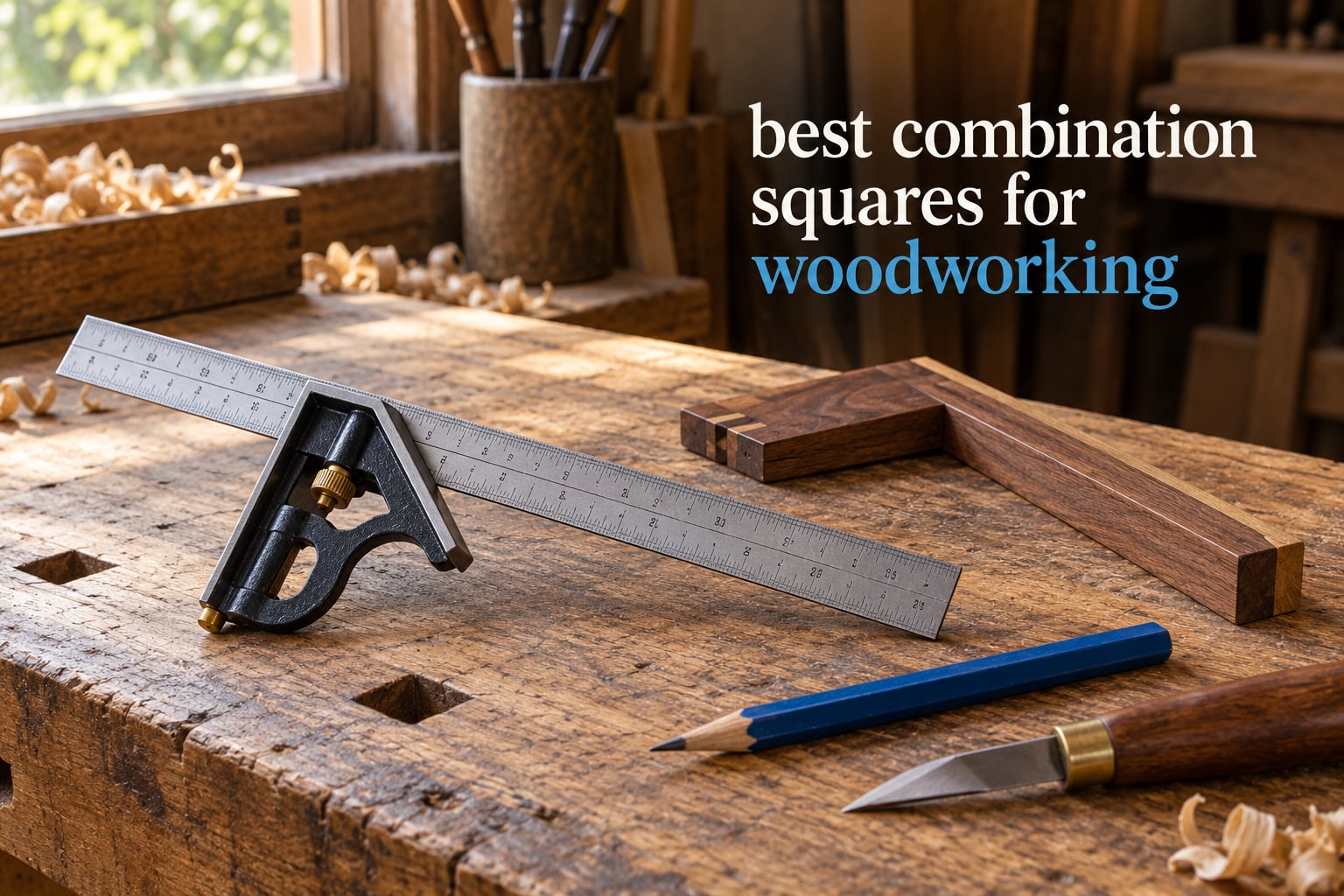
A 1/64 inch error in layout does not stay a 1/64 inch error. It shows up later as a gap in a mortise, a joint that rocks on the bench, a tabletop that is not flat. That is why the best combination squares for woodworking sit in a drawer that gets opened every single session, and why picking the wrong one quietly costs you time on every project that follows.
A combination square is one tool doing four jobs: a try square for checking 90 degrees, a mitre square for marking 45, a depth gauge for stepping shoulders and dadoes, and a graduated rule for layout and measurement transfer. The head slides along a steel blade and locks at the length you set.
Over the past six weeks our team worked through twelve of them side by side on the same bench, checking squareness against known references, marking with knives and pencils, and watching how each one behaved around sawdust. This roundup covers what actually matters: how the head is made, whether the graduations are etched or printed, whether the lock holds, and how the tool feels in the hand.
Table of Contents
Top 3 Picks for the Best Combination Squares for Woodworking


Swanson Speed Square Value Pack
- 7 inch speed square
- 6 inch combo square
- Blue Book
- Aluminum body
The IRWIN leads this list on evidence rather than hype: more owner reviews than anything else we tested, a weighted cast zinc head, and a limited lifetime warranty. The Swanson value pack takes the top spot on pure satisfaction numbers, and the TC132 gives you graduated 32nd inch scales with brass hardware at the same tier.
Best Combination Squares at a Glance in 2026
| Product | Specifications | Action |
|---|---|---|
| IRWIN 12 Inch Combination Square |
|
Check Latest Price |
 Swanson TC132 12 Inch Combo Square Swanson TC132 12 Inch Combo Square |
|
Check Latest Price |
 Mr. Pen 12 Inch Combination Square Mr. Pen 12 Inch Combination Square |
|
Check Latest Price |
 Johnson Level 400EM-S 12 Inch Johnson Level 400EM-S 12 Inch |
|
Check Latest Price |
 iGaging 6 and 12 Inch 4R Set iGaging 6 and 12 Inch 4R Set |
|
Check Latest Price |
 Swanson SVC133 Savage 12 Inch Swanson SVC133 Savage 12 Inch |
|
Check Latest Price |
 SHALL Rafter and Combo Square Kit SHALL Rafter and Combo Square Kit |
|
Check Latest Price |
 Accusize 12 Inch 4R Four Piece Set Accusize 12 Inch 4R Four Piece Set |
|
Check Latest Price |
 Arrow 12 Inch Combo Square Arrow 12 Inch Combo Square |
|
Check Latest Price |
 Klein Tools 935CSEL 12 Inch Klein Tools 935CSEL 12 Inch |
|
Check Latest Price |
 Crescent Lufkin L06CS 6 Inch Crescent Lufkin L06CS 6 Inch |
|
Check Latest Price |
| Swanson S0101CB Value Pack |
|
Check Latest Price |
1. IRWIN 12 Inch Combination Square for Everyday Shop Accuracy
IRWIN Combination Square, 12”, 45-90 Degree Marking, Stainless Steel (1794469)
12 inch stainless blade
Cast zinc body
Etched to 1/16 inch
Limited lifetime warranty
Pros
- Heaviest review count in this group at over 13k
- Weighted cast zinc head feels solid
- Etched black scales read well
- Rust proof stainless blade
Cons
- Graduations are 1/16 inch only
- Some buyers check squareness on arrival
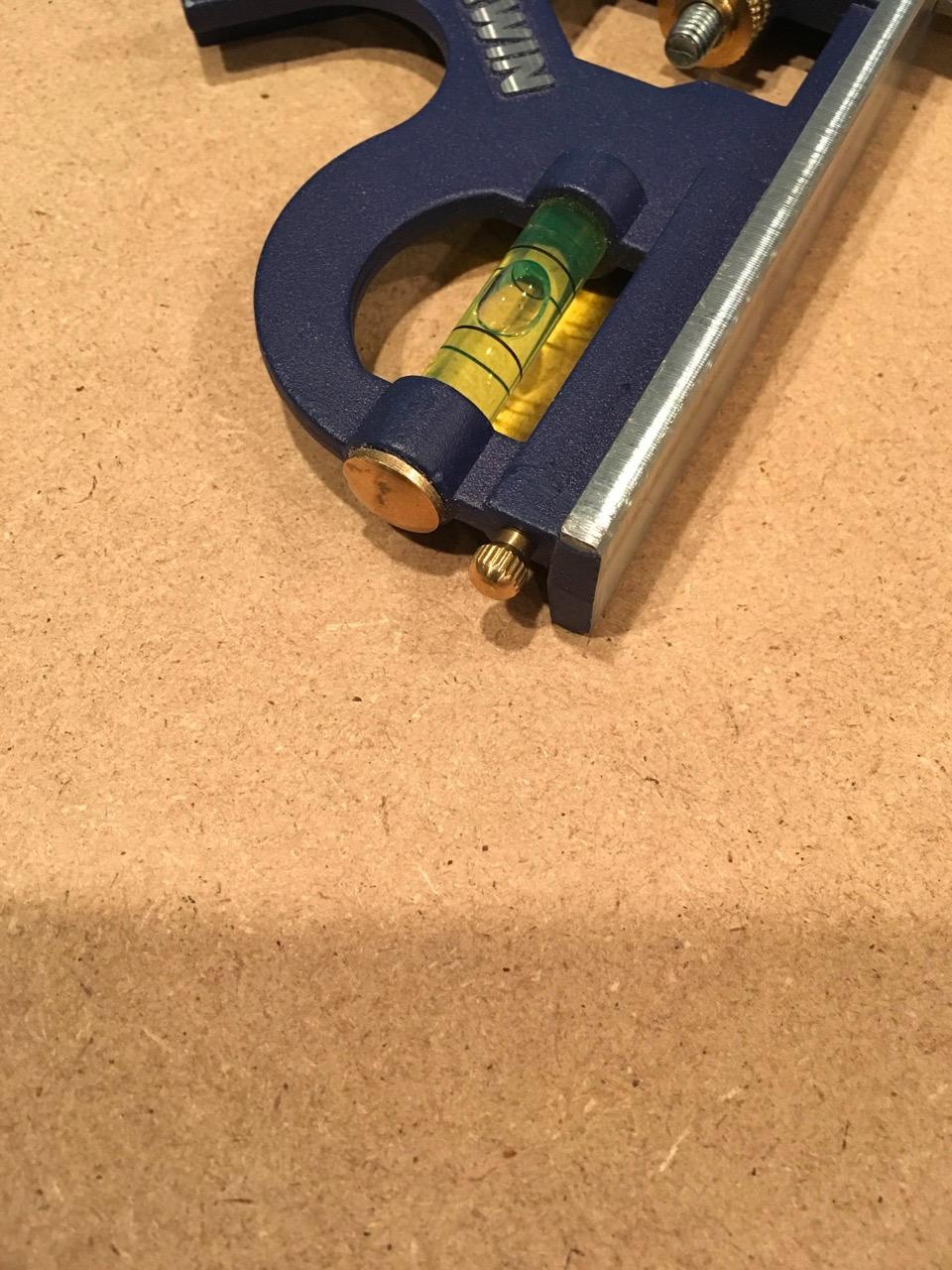
This is the square most shops actually own, and the reason is straightforward: it weighs 14.4 ounces and stays put on the bench when you lean on it. We reached for it constantly during this comparison because it does not need finesse to use. Loosen the nut, slide, tighten, mark.
It carries a 1/16 inch graduation, which is the one specification that gives us pause. Fine furniture layout often asks for 1/32 or finer, and the shallower scale does make pencil marks quicker than on a 4R blade.
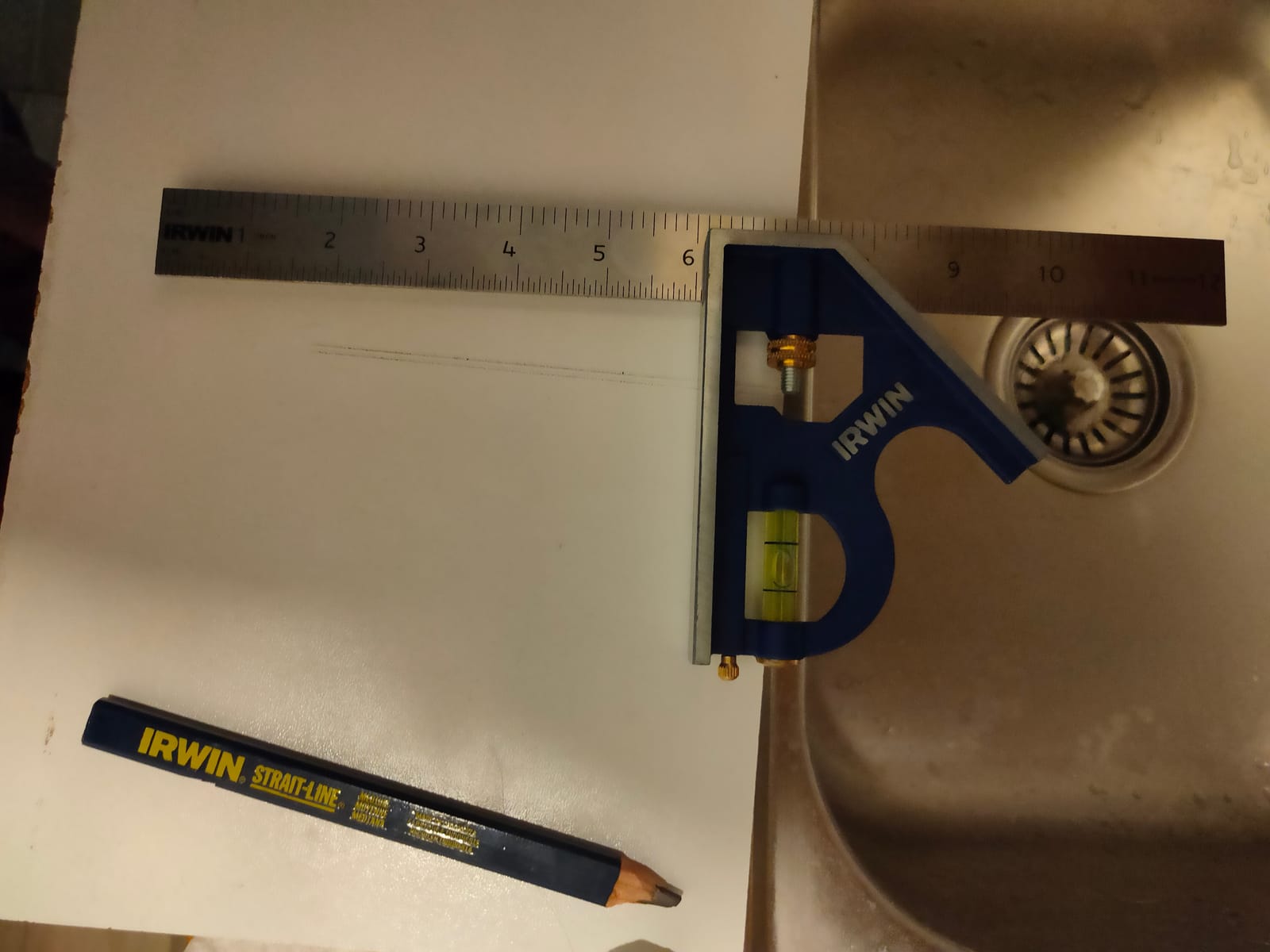
The blade itself is stainless, so sweat and damp shop air are not a worry, and the scales are black precision etching rather than printed ink, so they survive abrasive wiping and pencil drag in a way printed scales do not.
The cast zinc body is where this tool separates itself from hardware store squares that feel like stamped tin. A heavier head means the square does not skate when you push a chisel or gauge a shoulder. It also carries a limited lifetime warranty, which is a decent signal about how long the brand expects it to last.
Reviewers report needing to check squareness when it arrives, so treat the first session as a calibration session rather than a measuring session.
Best suited to
General shop work, machine setup, framing and cabinetry where you mark in sixteenths of an inch. If you build furniture at the bench and need finer layout, this is the square you will grow out of rather than the one you grow with.
The weight and the lifetime warranty also make it the safest first purchase for a beginner who drops tools, and the review volume means you will find replacement advice and setup tips easily if anything goes wrong.
Less suited to
Marking knife work and fine dovetail layout, where a 1/16 inch scale cannot resolve the increments you need. It is also not the tool to reach for when you need machinist level tolerances on the fence.
If your work is dominated by 1/32 or 1/64 inch layout, step up to a 4R square such as the iGaging set reviewed further down.
2. Swanson TC132 12 Inch Combo Square for the Most Versatile Budget Buy
Swanson 12-Inch Combo Square with Stainless Steel Rule, Zinc Body, TC132
Cast zinc head
Brass bolt and nut
Etched to 32nds with metric
Level vial and scriber
Pros
- Machined zinc head and brass hardware feel premium
- Etched 8ths 16ths 32nds plus cm and mm
- Integrated acrylic vial
- Stored steel scriber
Cons
- Some reviewers report rough blade edges needing deburring
- A minority doubt the stainless claim
The TC132 is the one we hand to friends who ask what to buy first. At 12.8 ounces it has real heft, and the hardware is solid brass bolt and nut rather than the plated steel hardware used on cheaper squares. That matters more than it sounds: brass does not gall, so the nut keeps a smooth feel for years.
Graduations run to 1/32 inch in eighths, sixteenths and thirty seconds, with centimeter and millimeter scales on the same blade. That makes it easy to read for anyone working in metric or cutting across both systems.
It doubles as try square, mitre square, depth gauge and straight edge, and the integrated acrylic vial lets you check level and plumb without another tool on the bench. The scriber stores in the head, so it does not vanish in the sawdust.
Owners report verifying it against Starrett and engineer squares with correct results, which matches what we saw when we set the fence against a known good reference. The head is machined rather than cast flat, and the edges are deburred clean.
A small number of reviewers report rough or sharp blade edges on arrival and question whether the blade is true stainless. Check the edge and wipe it with a light oil before the first mark.
Best suited to
Anyone who wants a single square that covers layout, metric work, depth gauging and a quick level check without carrying three tools. It is the pick if you work alone on furniture, cabinetry and general repairs.
The 12 inch length handles a framing stud as easily as a drawer side, so it covers most of what a bigger square would.
Less suited to
It is not a machinist square. The head is cast zinc, so a heavy rap can flex it, and the graduation stops at 1/32 inch rather than reaching the 1/64 inch and finer scales used by instrument makers.
If you are comparing it against the IRWIN above, the deciding factor is graduation: sixteenths for speed, thirty seconds for control.
3. Mr. Pen 12 Inch Combination Square for First Projects and Small Shops
Mr. Pen- Combination Square, 12″ Combo Square, Carpentry Tools
Stainless steel blade
Spring-loaded brass bolt
Inch and cm scales
Level and scriber included
Pros
- Low cost with accurate 90 degree markings
- Dual inch and metric scales
- Level and brass scriber in the box
- Smooth slide adjustment
Cons
- Lightweight build
- Factory edges can arrive burred
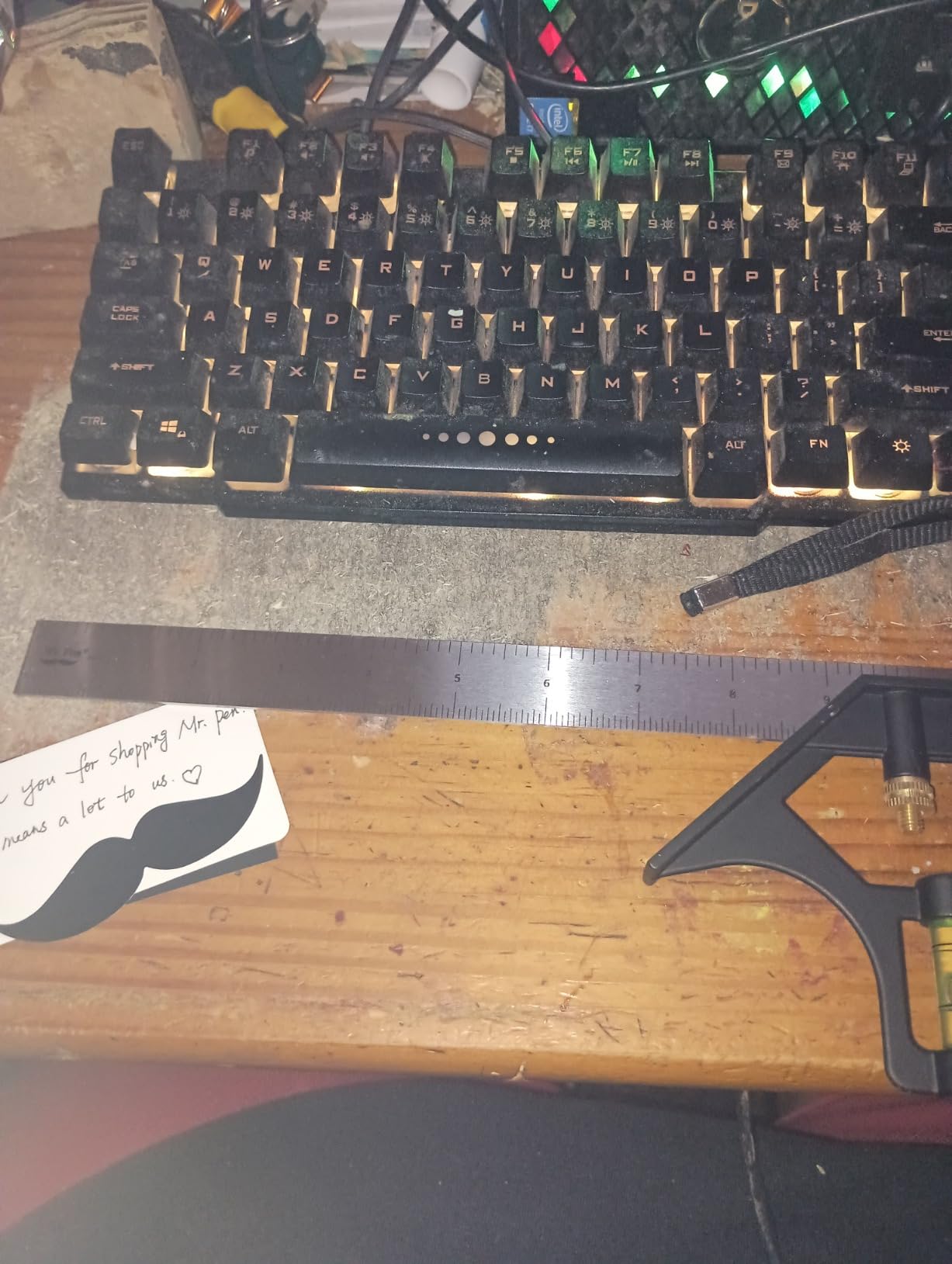
This is the sensible first combination square for someone building shelves, a workbench or a small table. It marks accurate 90 and 45 degree angles, which is the part beginners struggle with most when free-handing a pencil line.
The blade is stainless with inch and centimeter graduations to 1/32 inch, and the locking bolt is brass on a spring load, so it holds a set length without creeping when you lean on the head. A level and a brass scriber come in the box, which is unusual at this level of tool.
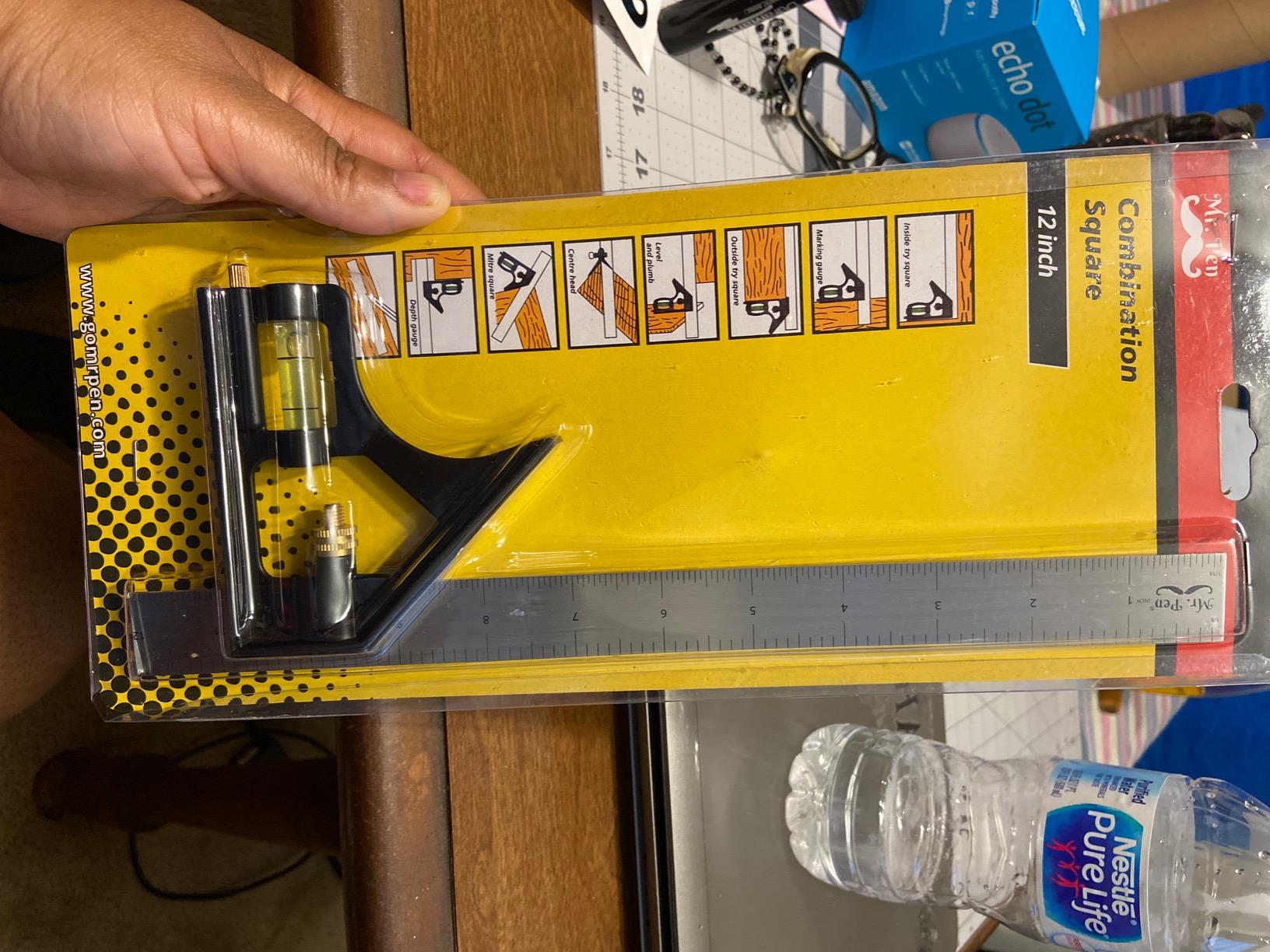
Where it falls short is mass. This is a light square, and on a large panel the head can tip if you push from the far end. For marking small parts, drawer parts and hardware, it stays true and stays put.
Reviewers describe it as suited to cabinetry and home projects rather than machinist grade work, which is a fair summary. Owners also report good customer service and replacement parts, useful if a scribe goes missing.
Check the factory edges before your first layout. A light pass with sandpaper on a burr is all it takes.
Best suited to
Students, first-time builders and anyone marking parts smaller than about a foot across. The included level and scriber mean a beginner gets a complete kit from one purchase.
It is also the easiest square here to keep in a tool tote for site and trim work.
Less suited to
Heavy shop abuse, leaning a square across a full sheet, or fine joinery where a light head feels nervous. Buyers who want a fence that stays rigid under pressure should look at the Swanson TC132 or the IRWIN instead.
4. Johnson Level 400EM-S for Metric and Dual Scale Layout
Johnson Level & Tool 400EM-S Heavy Duty Professional Inch/Metric Metal Combination Square, 12″, Silver, 1 Square
CNC machined head
Auto-Lock blade
Etched inch and metric
Built-in level vial
Pros
- CNC machined head for accuracy
- Permanently imprinted metric graduations
- Auto-Lock blade holds position
- Multi function as depth gauge and miter square
Cons
- Lighter in the hand than a heavy duty label suggests
- Zinc head and steel rule are less rigid than solid alloy
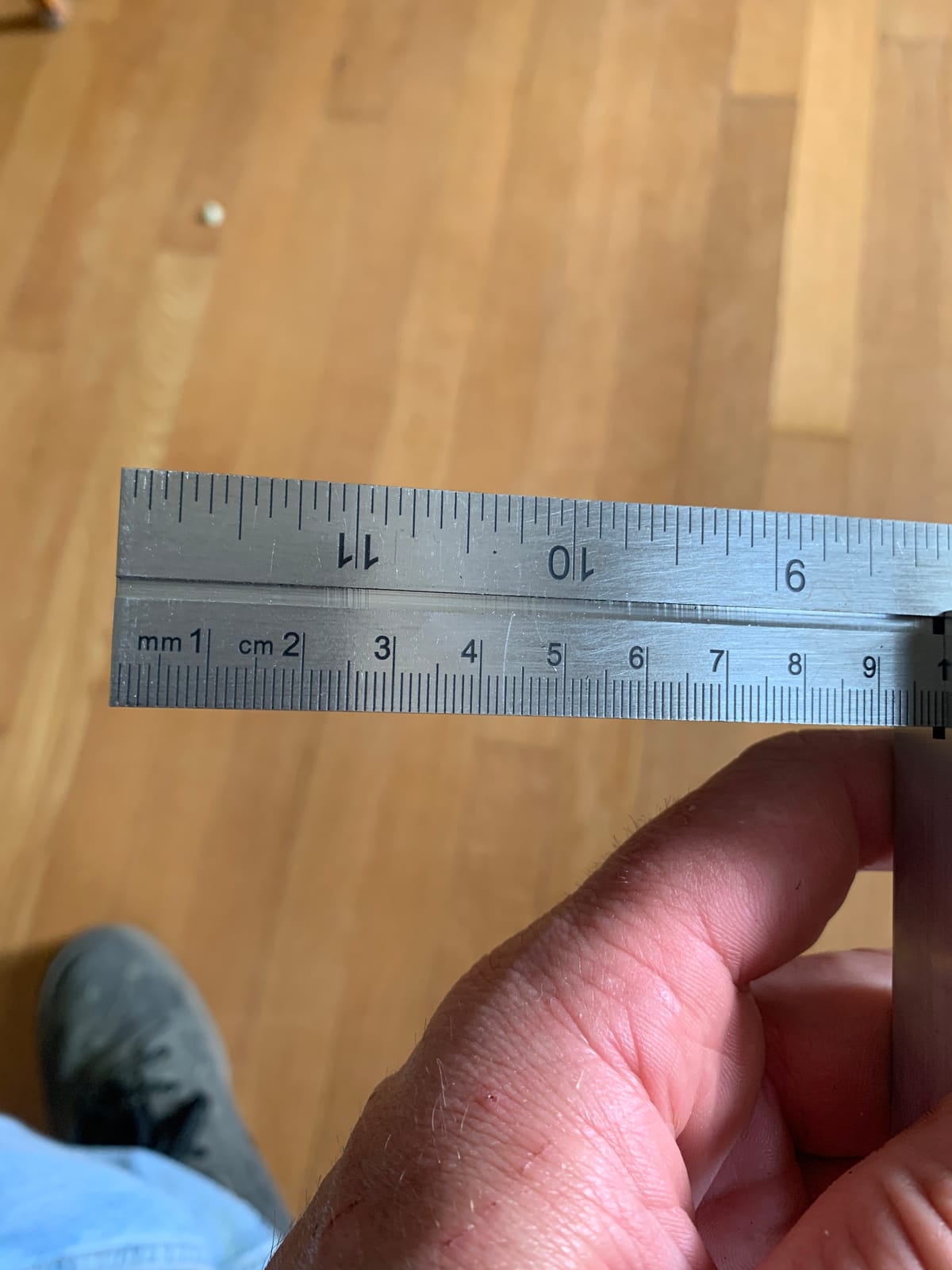
The Johnson is built for people who think in millimetres. Its blade carries etched eighths, sixteenths and thirty seconds on one side and permanent millimeter graduations that do not wear off like a printed scale. If you move between inch furniture and metric cabinetry, that is a real advantage.
The head is CNC machined, which is a step up from a cast and filed body, and the Auto-Lock blade assembly clamps the rule firmly at the set depth. Owners report the lock holding position well even when the square is leaned into a mark.
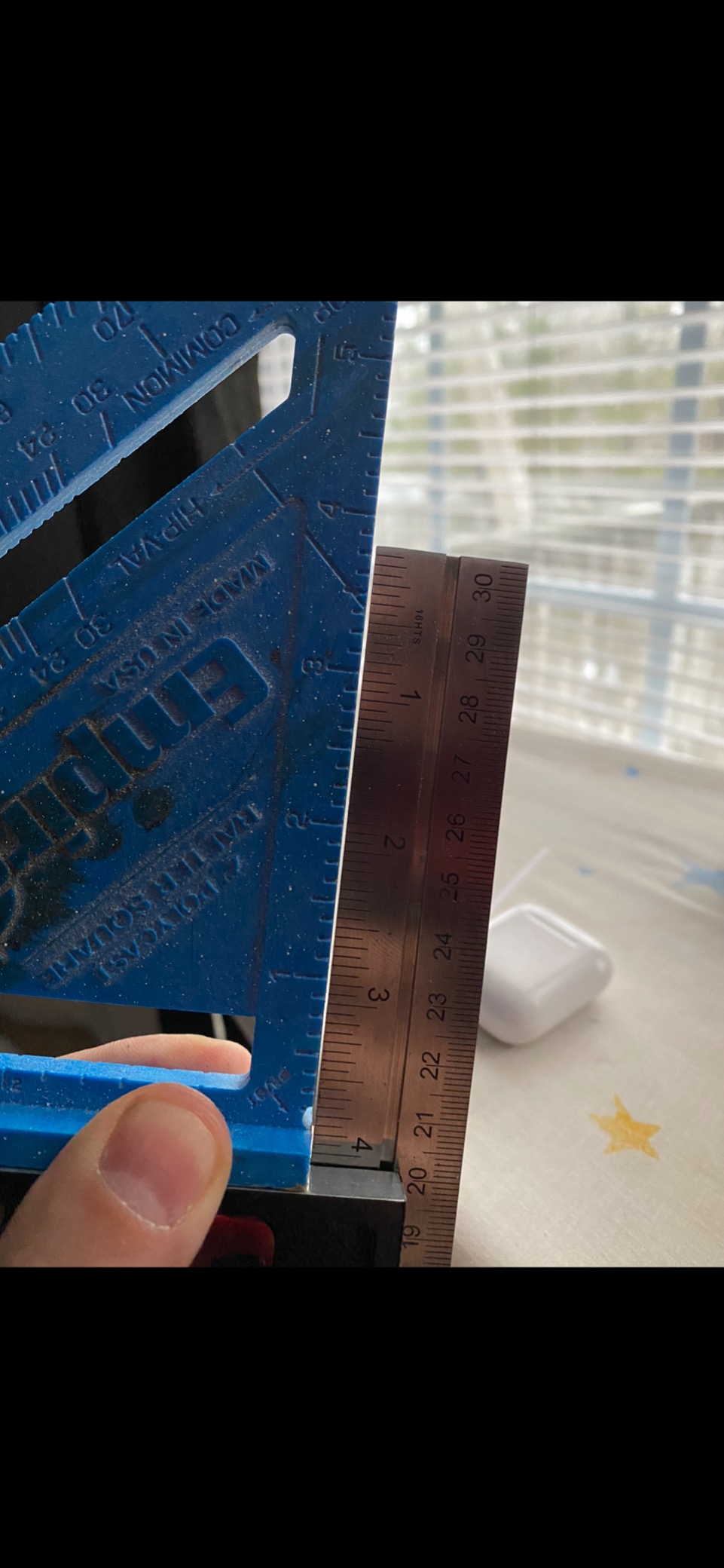
It doubles as a machinist square, straight edge, try square, mitre square, marking gauge and depth gauge, and the built-in vial covers level and plumb checks. That breadth makes it a genuine one-tool shop for a small workspace.
At 4.8 ounces it is one of the lightest squares here, and some users find that lighter than a heavy duty label suggests. The head is zinc and the rule steel, so the whole assembly is more flexible than a solid alloy square under load.
Owners generally describe it as a durable and accurate professional square with good metric support, which matches our read of it.
Best suited to
Mixed-system shops and anyone doing imported cabinetry, hardware layouts or work to a metric drawing. The vial is a genuine bonus for checking a leg or a frame on site.
It is also a good second square to keep near a machine for depth and shoulder setup.
Less suited to
Anyone who wants a fence heavy enough to absorb a hard knock, and layouts that need graduations finer than 1/32 inch. The Auto-Lock is a clamp rather than a fine-thread screw, so micro adjustments take more patience.
5. iGaging 6 and 12 Inch 4R Set for Fine Layout and Marking Knife Work
iGaging Combination Square Set 6″ & 12″ 4R Steel Blade High Precision
Two 4R squares
Hardened satin chrome blades
Laser etched to 1/64 inch
Foam lined case
Pros
- 4R graduations far easier to read than store scales
- Accuracy checked against machinist squares
- Heavier build than budget options
- Case with foam insert
Cons
- Alloy steel head needs oil in humid shops
- Locking nut can develop slop
- Cases with cracked hinges reported
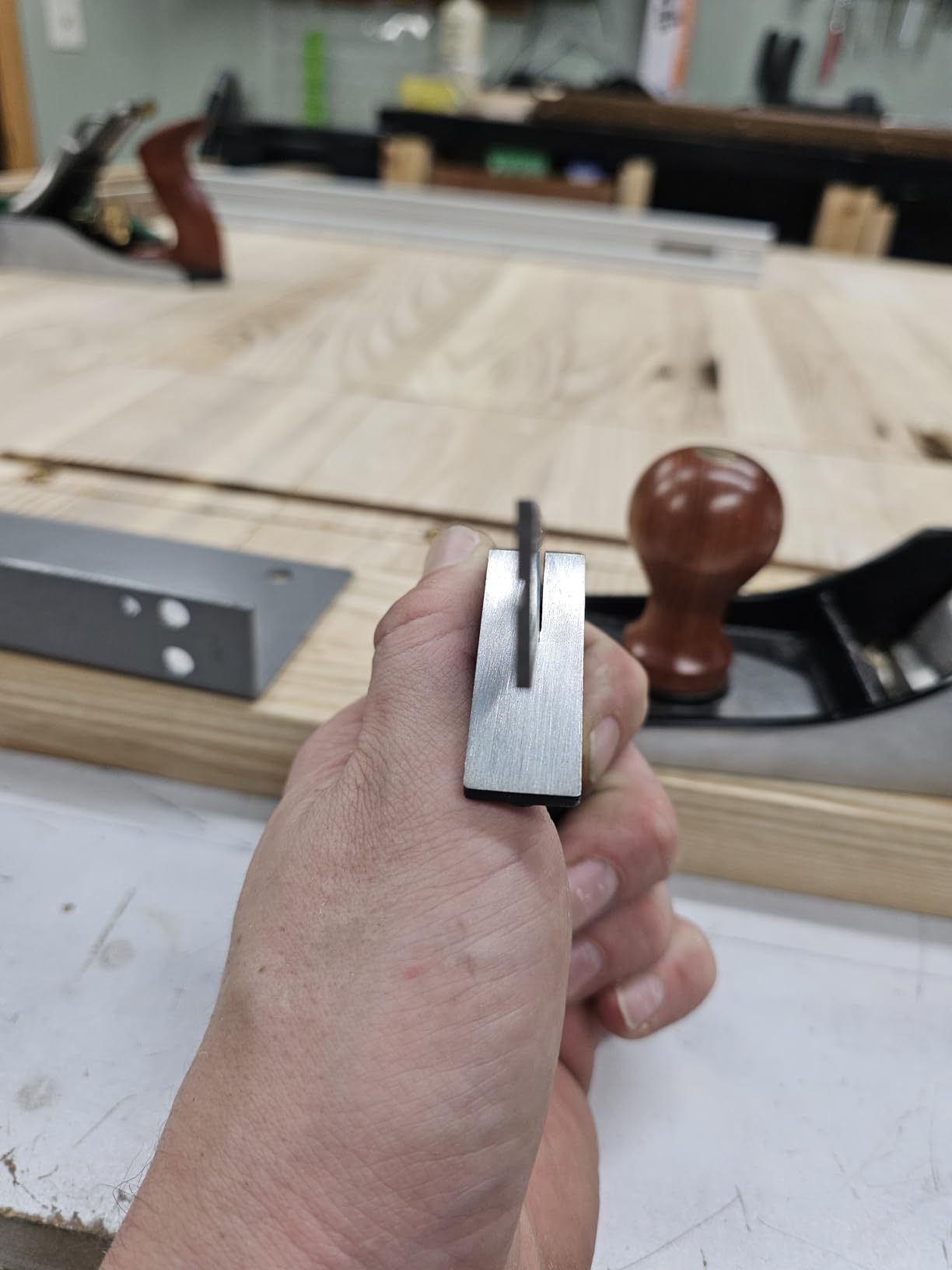
This is the set that changed how I mark. The 4R graduation means the blade carries eighths, sixteenths, thirty seconds and sixty fourths, so a marking knife or razor blade finds a real groove instead of skidding off a line that is only an inch division.
You get two squares, a 6 inch and a 12 inch, on hardened precision ground satin chrome blades with laser etched graduations. The satin finish also cuts glare under overhead lights, which matters more than it sounds when you are trying to read a 1/64 mark.
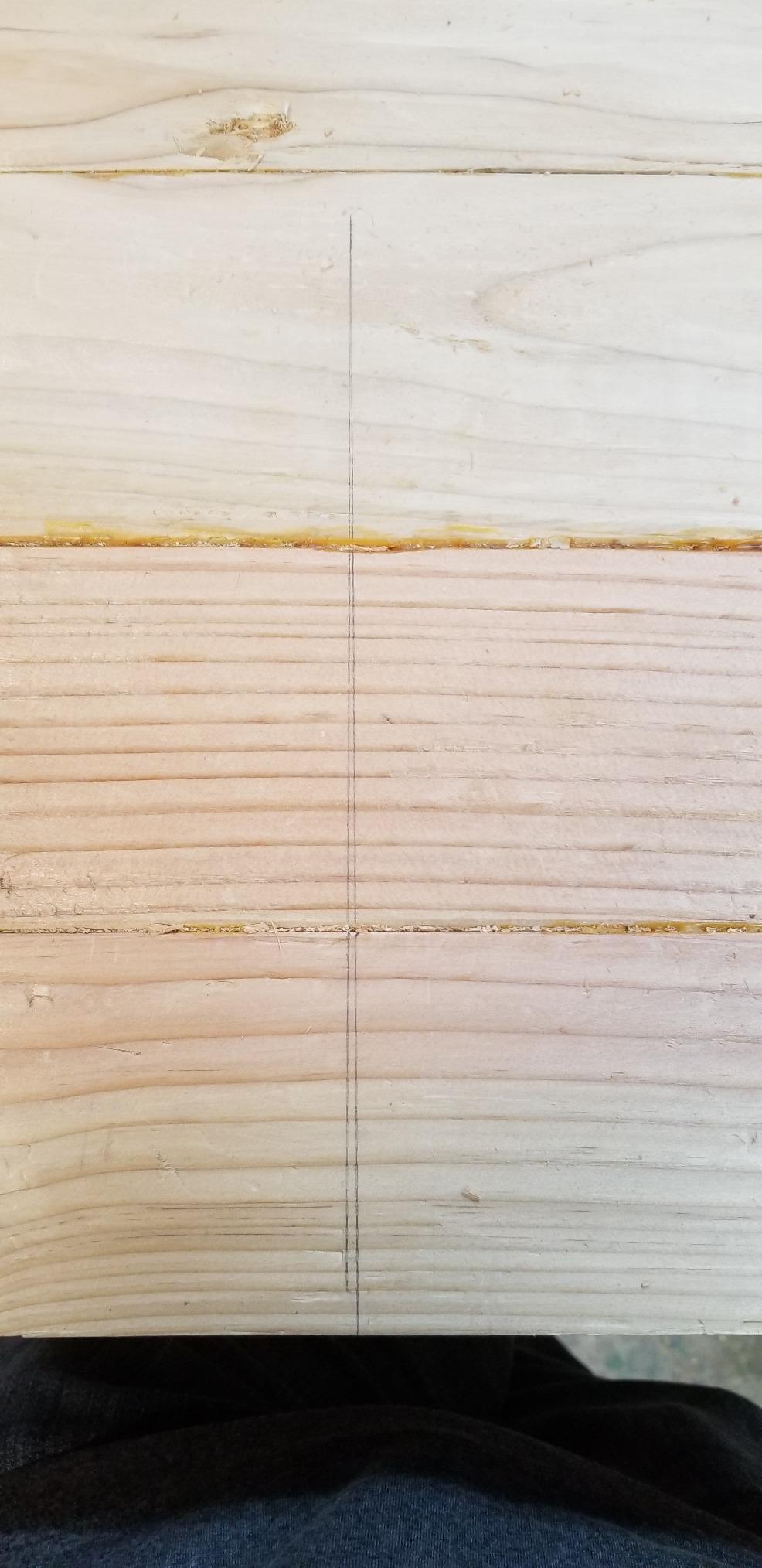
The 6 inch fits a marking knife gauge for joinery where the 12 inch is awkward, and both heads run on the same head and nut design, so one habit covers both. Owners report verifying accuracy against machinist squares and Starrett references, and our own check against a known good reference matched.
Two caveats worth knowing. The head is alloy steel, so it needs a wipe of oil in a humid shop or it will spot with rust. And the locking nut can loosen up or develop play over time, so check the head position before you trust a long layout line.
The foam case is a nice touch that keeps both squares from rattling in a truck, though a few buyers report cracked case hinges.
Best suited to
Hand cut dovetails, mortise and tenon layout, and anyone who marks with a knife rather than a pencil. Two sizes means you can stop using a 12 inch square for small parts.
It is also the step up for hobby machinists who want machinist level graduation without moving to instrument grade tools.
Less suited to
Shops with high humidity and no habit of oiling steel, and anyone who wants a tool that never needs attention. The nut and case are the two weak points to watch.
6. Swanson SVC133 Savage for Lightweight Handling and Machined Accuracy
Swanson SVC133 12-Inch Savage Combination Square
Aerospace aluminum frame
Etched stainless rule
Brass bolt and scribe
Acrylic vial
Pros
- Light but rigid aluminum frame
- Chemically etched graduations resist wear
- Includes brass bolt scribe awl and vial
- Machined edges hold squareness
Cons
- Aluminum is less rigid than solid steel squares
- Some users report the vial reads about a degree off
This is the square we reach for when we are moving around the shop rather than standing at the bench. The aerospace aluminum frame keeps the head light in the hand while holding squareness, and machined edges take a pencil line cleanly.
The rule is chemically etched rather than printed or laser marked, which is the most wear resistant option here and keeps the numbers readable year after year.
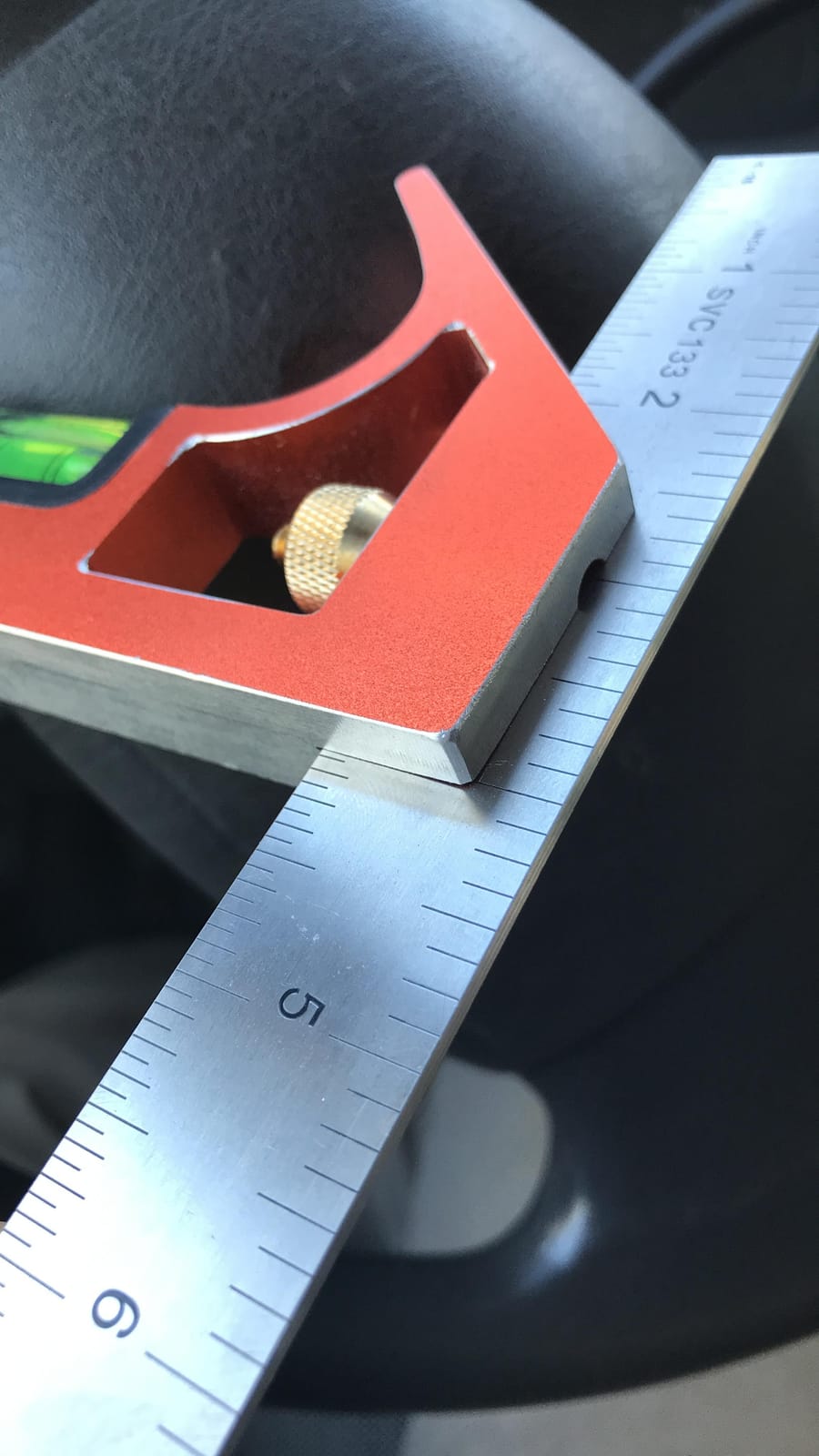
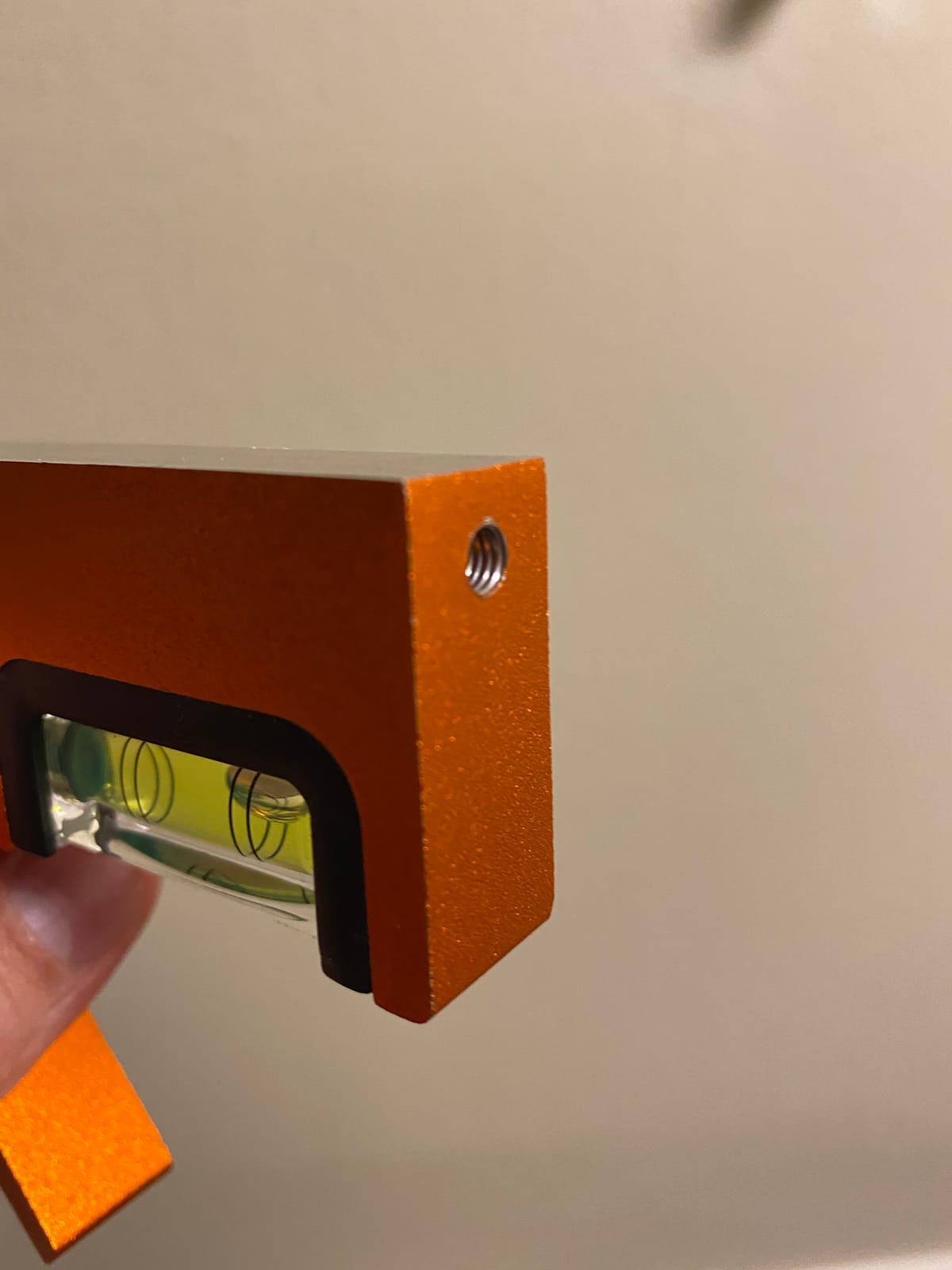
Brass tightening bolt and scribe awl are included, plus an acrylic block vial. That combination of scribe and vial in the head is what makes it a self-contained layout tool rather than a half solution.
The honest limitation is rigidity. Aluminum has less stiffness than the solid steel and cast iron used on premium squares, so if you routinely knock the fence or hang the tool off the edge of a board, this is not the one.
Owners also report the vial reading about a degree off on some examples. Treat it as a rough check and calibrate it against a known level before trusting it.
Best suited to
Woodworkers who move between the bench, the machine and the wall while laying out, and anyone who prefers a light tool to a heavy one. The etched rule and included scribe cover most marking without extra purchases.
It is a comfortable first upgrade from a stamped square.
Less suited to
Heavy fence work and jobs where a soft knock could cost you a layout line. If you already have a heavy square, this is best kept as a portable companion rather than the primary.
7. SHALL Rafter and Combo Square Kit for Framing and Site Work
SHALL Rafter Square & Combination Square Tool Set, 7 Inch Aluminium-Alloy Carpenter Square & 16 Inch Zinc-Alloy Woodworking Framing Combo w/Stainless Steel Ruler, 2 Carpentry Pencils, Scriber
7 inch rafter square
16 inch combo square
Square protractor and center finder heads
Scribe level and pencils
Pros
- Covers rafter layout and general marking in one kit
- Three interchangeable heads
- High contrast laser etched markings
- Includes scriber level and two pencils
Cons
- Protractor sticker about a degree off on some
- Fraction hash marks hard to read at an angle
- Rafter square markings are painted on
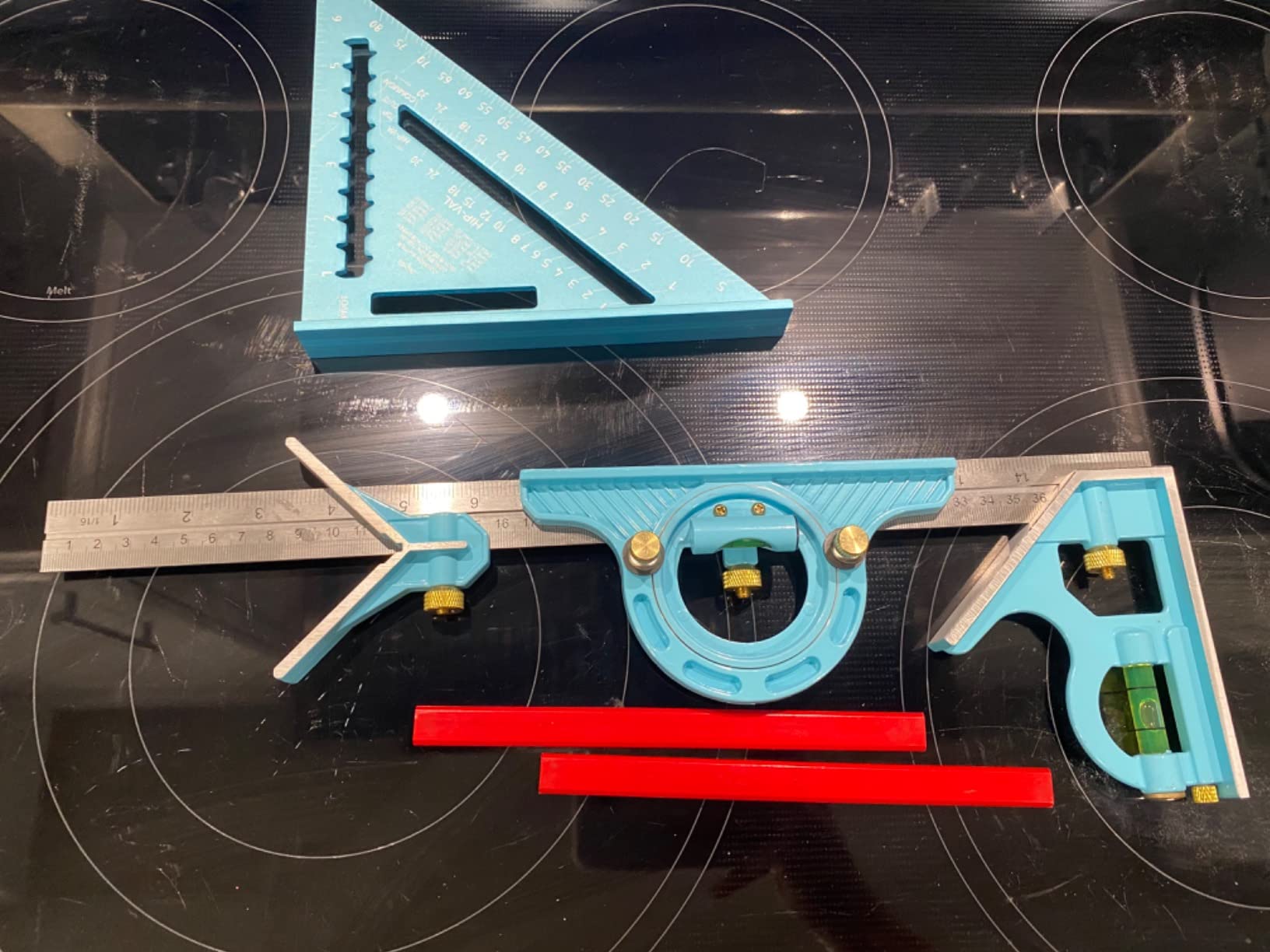
This kit answers a different question than the rest. Instead of one square, it gives you a 7 inch aluminum alloy rafter square and a 16 inch zinc alloy combination square with a stainless steel ruler, plus two carpenter pencils.
The rafter square carries pitch tables for common, hip, valley and jack rafters with etched degree scales, which turns roof layout into reading a line instead of doing trig. The 16 inch combo square covers the general marking you would normally reach for a speed square on.
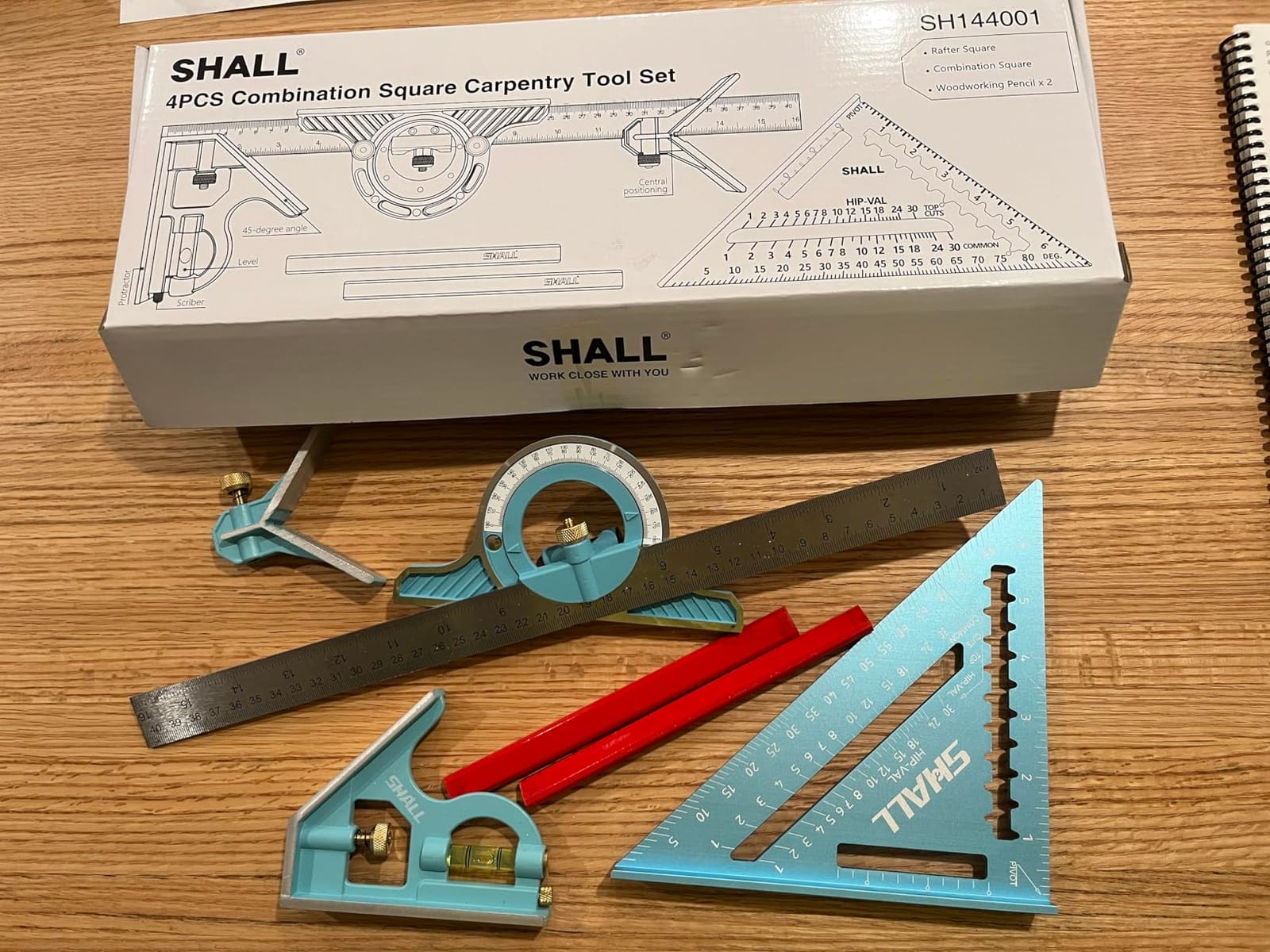
The combo rule takes three interchangeable heads: a square head, a protractor head and a center finder. Center finding is a genuine convenience for marking the middle of a dowel or rod without measuring twice, and the deep scribe slots plus broad lipped fence keep the tool steady during layout.
Graduations at 1/16 inch, 1/32 inch and 1 mm cover the range most framing and site work needs. A metal scriber and spirit level come along with the pencils.
Two quality notes. Some examples arrive with a protractor sticker about a degree out, so check it against a protractor before trusting angles. And the fraction hash marks on the rule are hard to read quickly when you are looking at an angle.
Best suited to
Framing, roofing, decks and general site work where rafter pitch and center finding come up constantly. The three heads mean one case replaces several small tools.
It is also a good gift for someone who is starting out and needs a rafter square as well as a combo square.
Less suited to
Fine furniture layout. The painted markings on the rafter square wear with heavy use, and the fraction readability on the rule slows down precision marking. Buy this alongside a machinist square, not instead of one.
8. Accusize 12 Inch 4R Set for Full 64ths Graduations
Accusize Industrial Tools 12” 4 Combination Square Ruler Set Protractor Satin, 4-R Graduation, 0000-8101
Four piece 4R set
Hardened tempered steel
Satin chrome micro fine graduations
4R to 64ths
Pros
- 4R graduations to sixty fourths are easy to read
- Hardened steel gives good rigidity
- Foam cut case keeps pieces organised
- Owners report dead on accuracy across heads
Cons
- Quality control varies and some arrive out of spec
- Locking tabs can leave side play in the rule
- Some rule edges reported rough
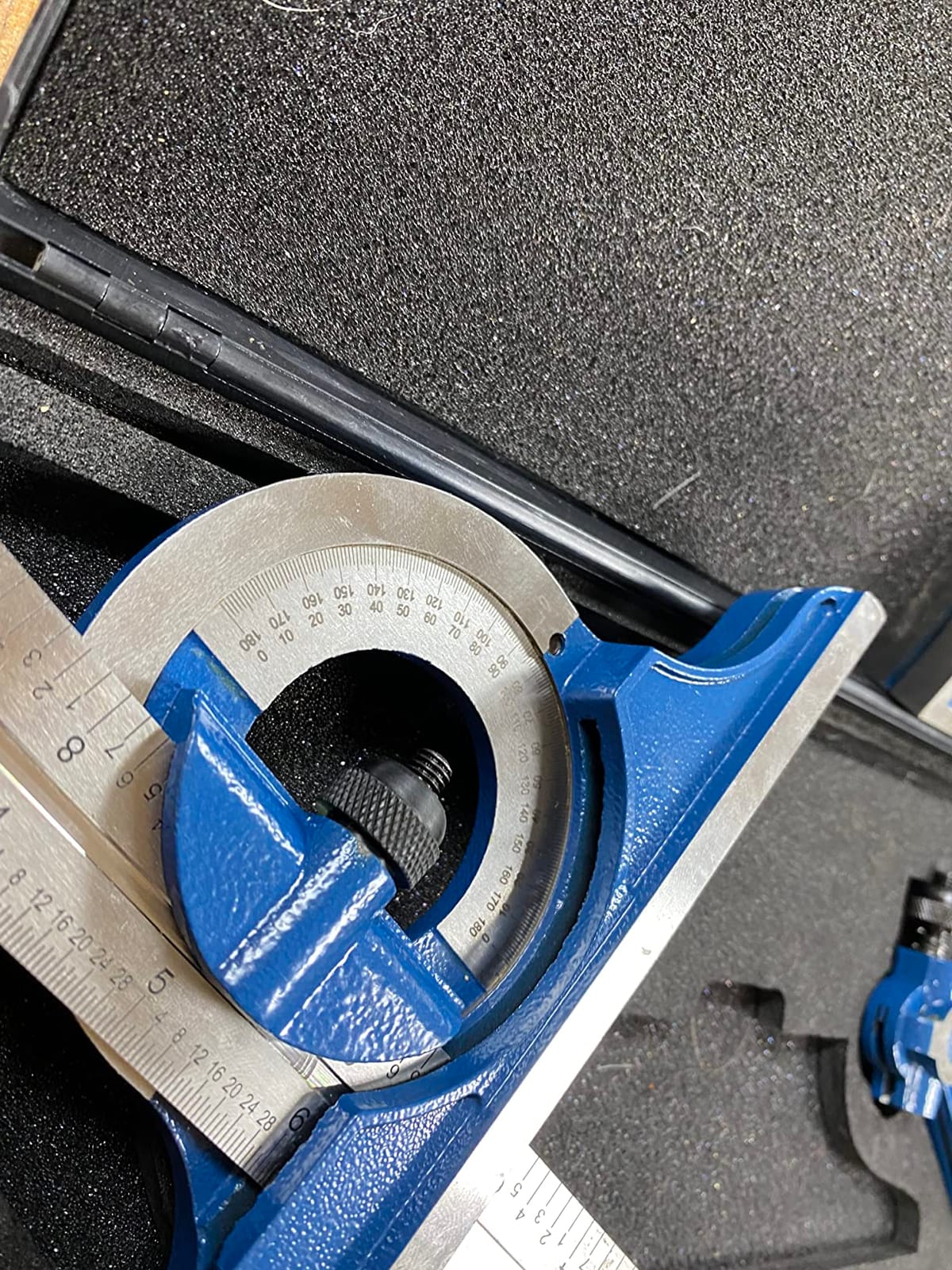
This is a four piece 12 inch set in full 4R graduation: eighths, sixteenths, thirty seconds and sixty fourths on satin chrome blades with micro fine graduations. The finishing on the scales is easy on the eye under shop lighting.
The blades are fully hardened and tempered, and the head is premium steel, so rigidity is genuinely good. Owners who receive a good unit report dead on accuracy across every head, which is what we want from an instrument grade set.
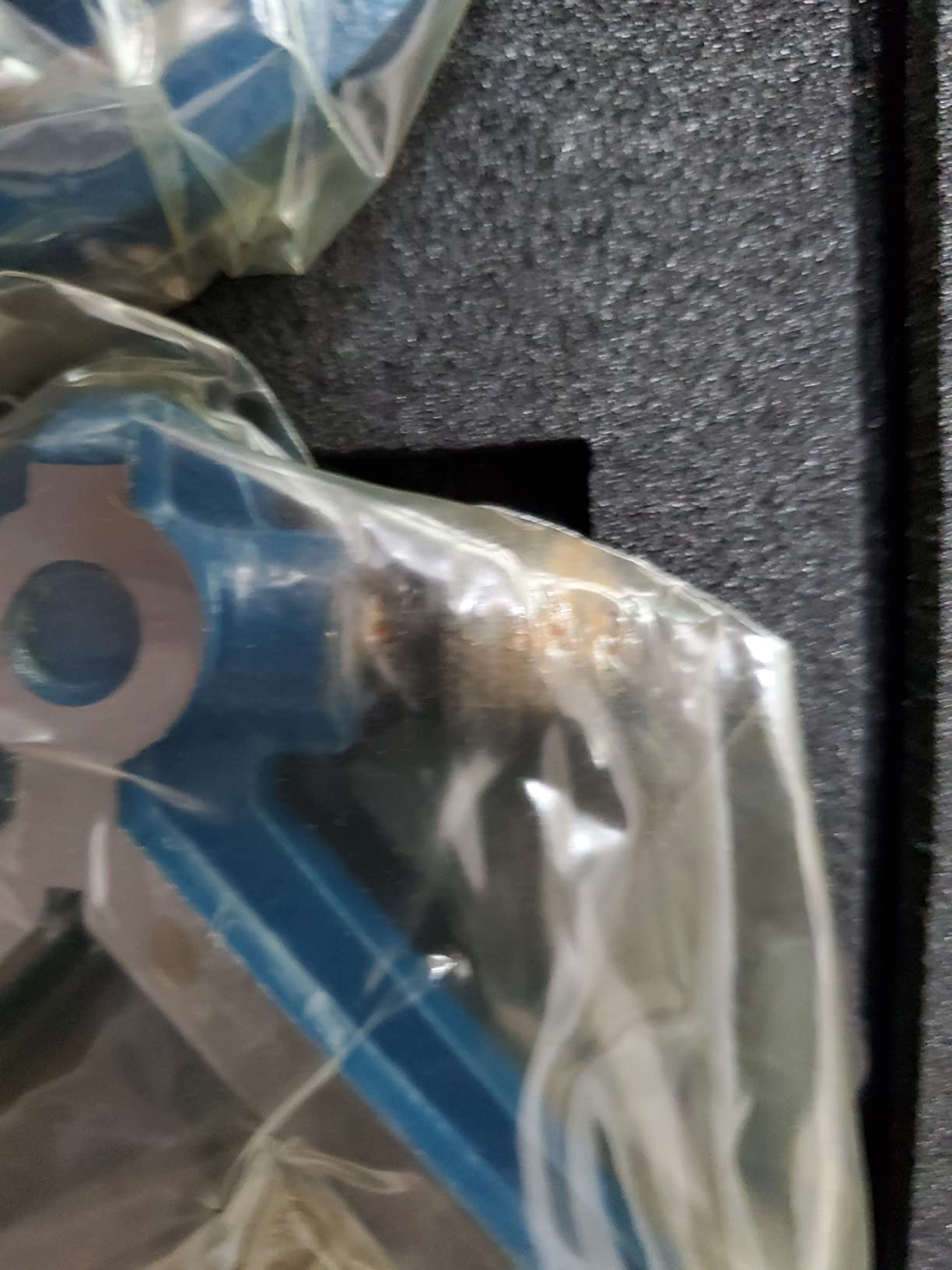
The foam cut case keeps all four pieces organised and stops them rattling together, which protects the graduations from scuffing in transit.
Quality control is the real story here. A notable minority report sets arriving out of specification on the 90 and 45 degree angles, plus locking tabs that grip so tightly the rule sits off axis and develops side play. Check both angles against a known good square before you rely on this one for layout.
Some owners also report rough or sharp rule edges, so deburr before marking. At 1.55 kg this is a heavy set, and weight is one more reason to inspect it on arrival.
Best suited to
Woodworkers who layout in sixty fourths, do shooting board work, or cut frames and mouldings where quarter inch accuracy decides the fit. It suits anyone who wants instrument grade graduation on a steel body.
Buyers who appreciate the hardened steel rigidity over lighter aluminum options will find it noticeably more solid in the hand.
Less suited to
Anyone unwilling to check the tool on arrival. With reported variation between examples, the first fifteen minutes with a reference square matter.
It is also more than most hobby shops need, so weigh it against the iGaging set for a simpler route to 4R graduation.
9. Arrow 12 Inch Combo Square for Level and Plumb Checks
Arrow Combination Square, 12-Inch Combo Square with Bubble Level
Stainless steel blade
Zinc alloy textured handle
Brass locking screw
Built-in bubble level
Pros
- Clear dual sided metric and SAE markings
- Well balanced feel for the size
- Useful bubble level for alignment
- Handle locks firmly at the set mark
Cons
- Adjustment stays stiff after loosening the screw
- Less rigid than machined steel squares
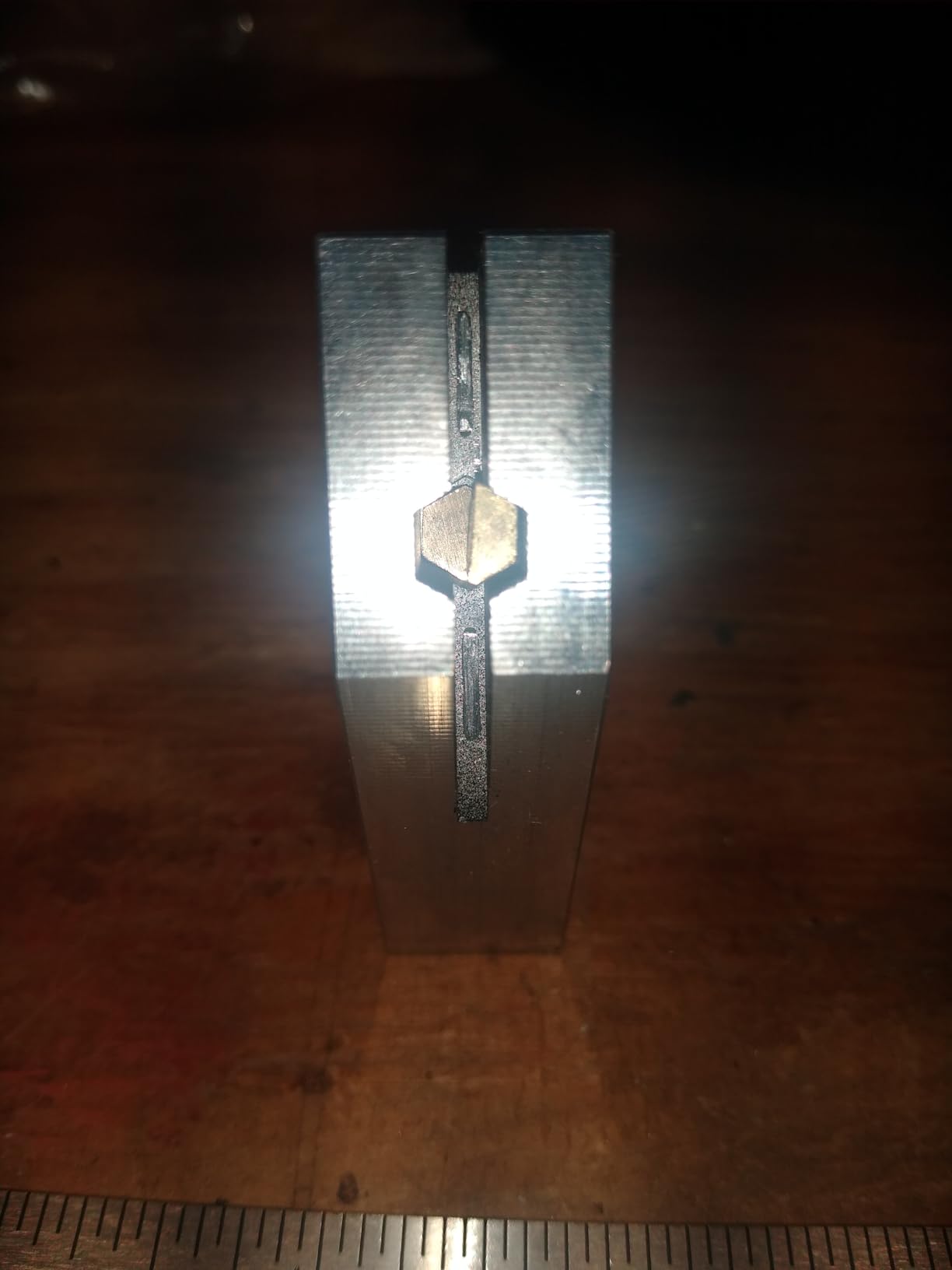
The Arrow draws strong owner ratings and it earns that on markings alone. The blade carries dual sided metric and SAE scales to 1/16 and 1/32 inch, etched on both faces so you can read them from either side of the stock.
The zinc alloy handle has a textured finish and a brass screw for the lock. The screw holds firmly at the set mark, which is the part that decides whether you can trust a line you marked ten minutes ago.
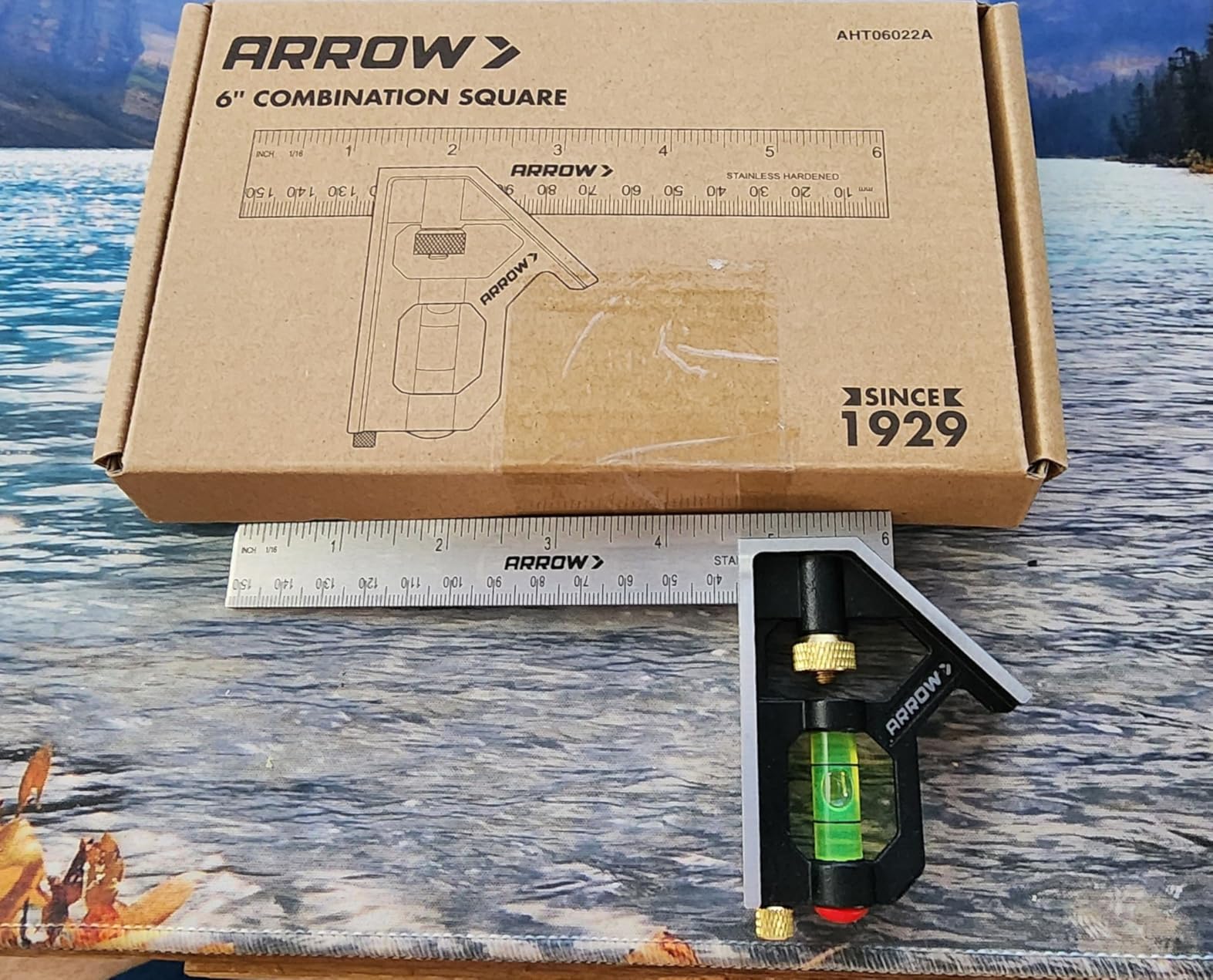
The built-in bubble is the feature that sets it apart for setup work. Checking level and plumb without setting down the square and picking up a small level is the kind of small time saving that adds up across a build.
What stood out most was the weight and balance for a 12 inch square. It feels planted rather than light, which is unusual in this class.
The reported drawback is that adjustment can stay a little stiff after loosening the thumb screw, so expect to work the head back and forth to get a fine setting. It is less rigid than machined steel premium squares under a heavy knock.
Best suited to
Shop assembly work where you repeatedly check level and plumb, and builders who want readable scales on both sides of the rule. The 12 inch format suits wall and cabinet work.
It is also a solid choice for anyone who wants a straightforward square with no moving parts beyond the lock.
Less suited to
Fine layout that needs sixty fourths, and users who prefer a fast, feather light slide when setting small measurements. For knife work, choose a 4R square.
10. Klein Tools 935CSEL for Magnetic Hold and Conduit Layout
Klein Tools 935CSEL Combination Square Ruler for Electricians and Carpenters, Stainless Steel Double Sided Ruler, Bubble Level, Magnetic
Rare-earth magnet hold
Machined 45 and 90 degree edges
Double sided stainless rule
EMT conduit template
Pros
- Magnet holds the rule firmly and speeds setup
- Machined angle edges set mitres accurately
- Deeply etched markings resist wear
- Large high visibility vial
Cons
- Graduations are only 1/8 and 1/16 inch
- Conduit layout features are not woodworking features
Most combination squares ask you to hold the head with one hand and mark with the other. The Klein uses rare-earth magnets in the head to grip the rule, so the head stays put while both hands are free. On conduit runs and on metalwork this is the feature you will use every time.
The body is lightweight aluminum with machined 45 and 90 degree edges, which means the angles are cut rather than cast, and owners report they set mitre and table saw angles accurately.
The double sided 12 inch stainless rule carries 1/8 and 1/16 inch on one side and a panel schedule with a conduit template on the other. The markings are deeply etched, so they resist rubbing off, and a stainless scriber is included.
Be realistic about who this is for. The conduit layout template and panel schedule are built for electricians, and for pure woodworking they are dead weight on one face of the rule. The graduation of 1/8 and 1/16 inch is also the coarsest among the higher rated squares here.
Woodworkers installing shop steel framing or hardware will get more from the magnet than from the template.
Best suited to
Electricians and remodelers who need fast, hands free layout at conduit and panel locations, and anyone marking repeatedly on metal where a magnet is the natural fix.
The machined edges and large vial make it a good all day carry for site work.
Less suited to
Fine furniture joinery and any layout needing graduations finer than 1/16 inch. If you do not work with metal or conduit, the magnet and template add little for a woodshop.
11. Crescent Lufkin L06CS 6 Inch for Pocket Sizes and Detail Work
Crescent Lufkin 6″ Combo Square – L06CS, Multi, One Size
6 inch format
Laser etched numbers
Integrated level
Stored brass scribe
Pros
- Compact format for small parts
- Laser etched numbers stay legible
- Level built into the head
- Brass scribe stored in the handle
Cons
- Too short for full size lumber layout
- Graduations stop at 1/8 inch
Six inches is not a compromise here, it is a different job. On small parts, drawer components, inlays and model scale work, a short square is easier to control than a 12 inch blade swinging past the workpiece.
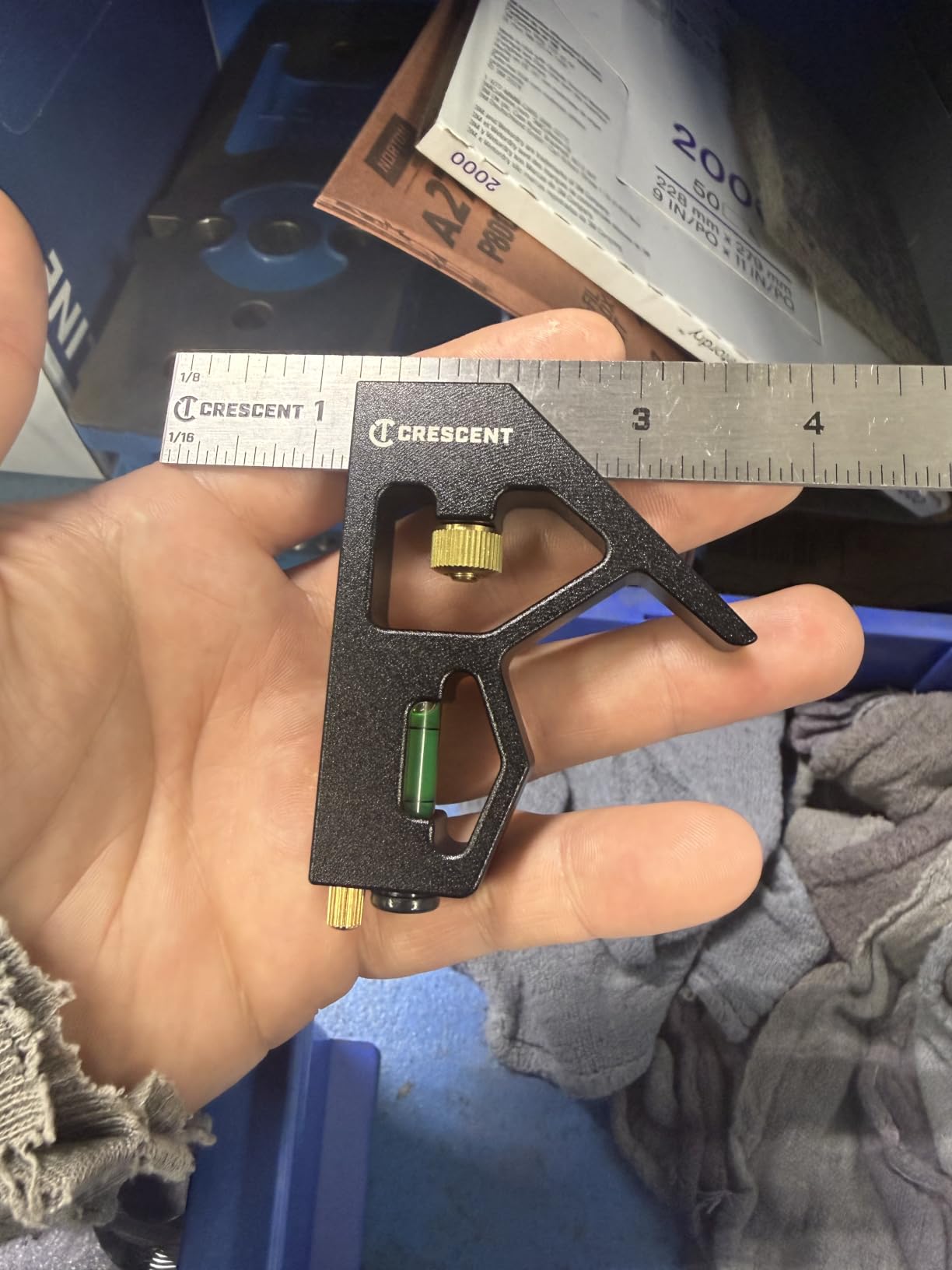
The extruded square head carries an integrated level and the handle stores a brass scribe, so the two tools you lose most often are both built in. Numbers are laser etched for legibility and wear resistance, and markings run in inches and centimeters.
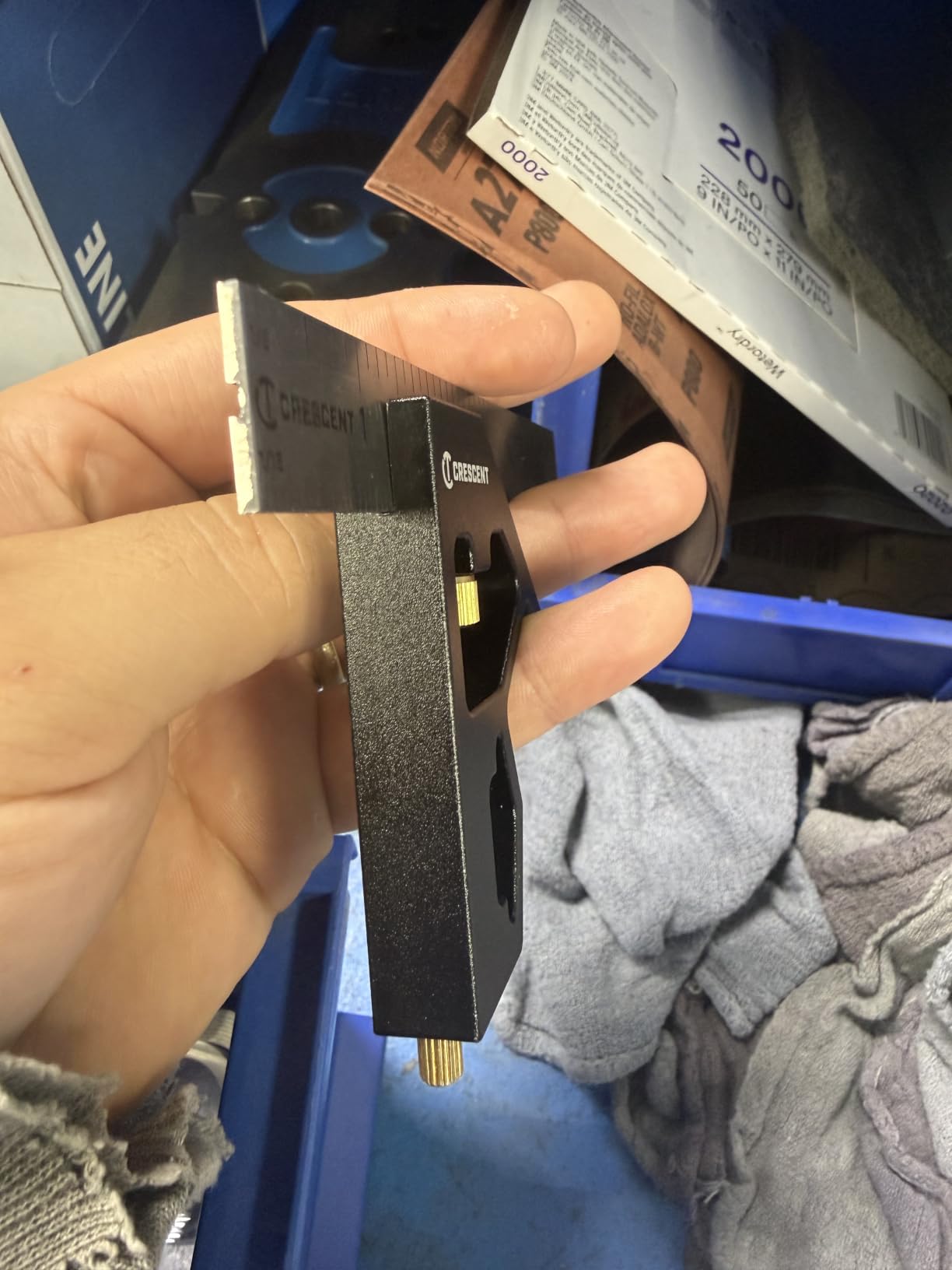
The self-adjusting knurl nut is the mechanism to watch. It lets you set the head with one hand, which is faster than hunting for a small threaded nut, and owners report it holds its position without creeping.
What you give up is reach and resolution. A 1/8 inch graduation will not help with fine joinery, and you cannot mark a full width board with it. Owners describe it as a portable, accurate small format layout tool, which is exactly right.
Owners of larger squares often buy this as the companion piece that lives in the apron rather than the drawer.
Best suited to
Small parts, inlay work, picture framing, models and doll sized joinery. It is also the natural square for a shop apron because it will not bang against your leg.
Anyone who marks in centimeters will find the dual scale useful at this size.
Less suited to
Framing, panel breakdown and any task needing a fence longer than the workpiece. The 1/8 inch graduation also rules it out for knife work and fine cabinetry.
12. Swanson S0101CB Speed Square and Combo Square Value Pack
SWANSON S0101CB Speed Square Layout Tool with Blue Book and Combination Square Value Pack
7 inch speed square and 6 inch combo square
Aluminum construction
60 page Blue Book
Etched 0 to 90 scales
Pros
- Highest average rating here at 4.8 across over 8k reviews
- Two layout tools plus instruction guide
- Speed square reads in low light and sun
- Sits flat without rocking
Cons
- Combo square may need truing on arrival
- Not machinist grade precision
- Combo square scales are inch only
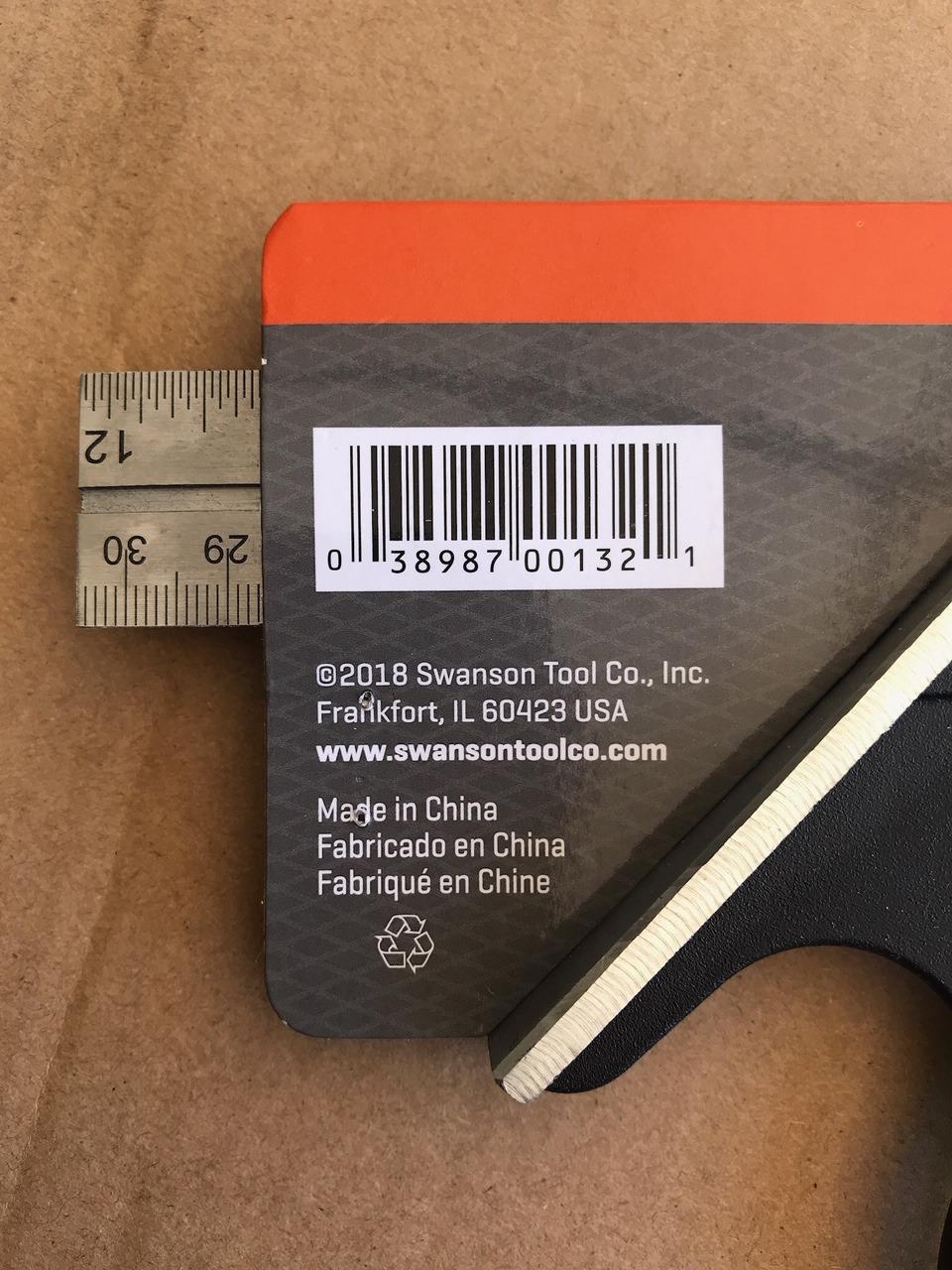
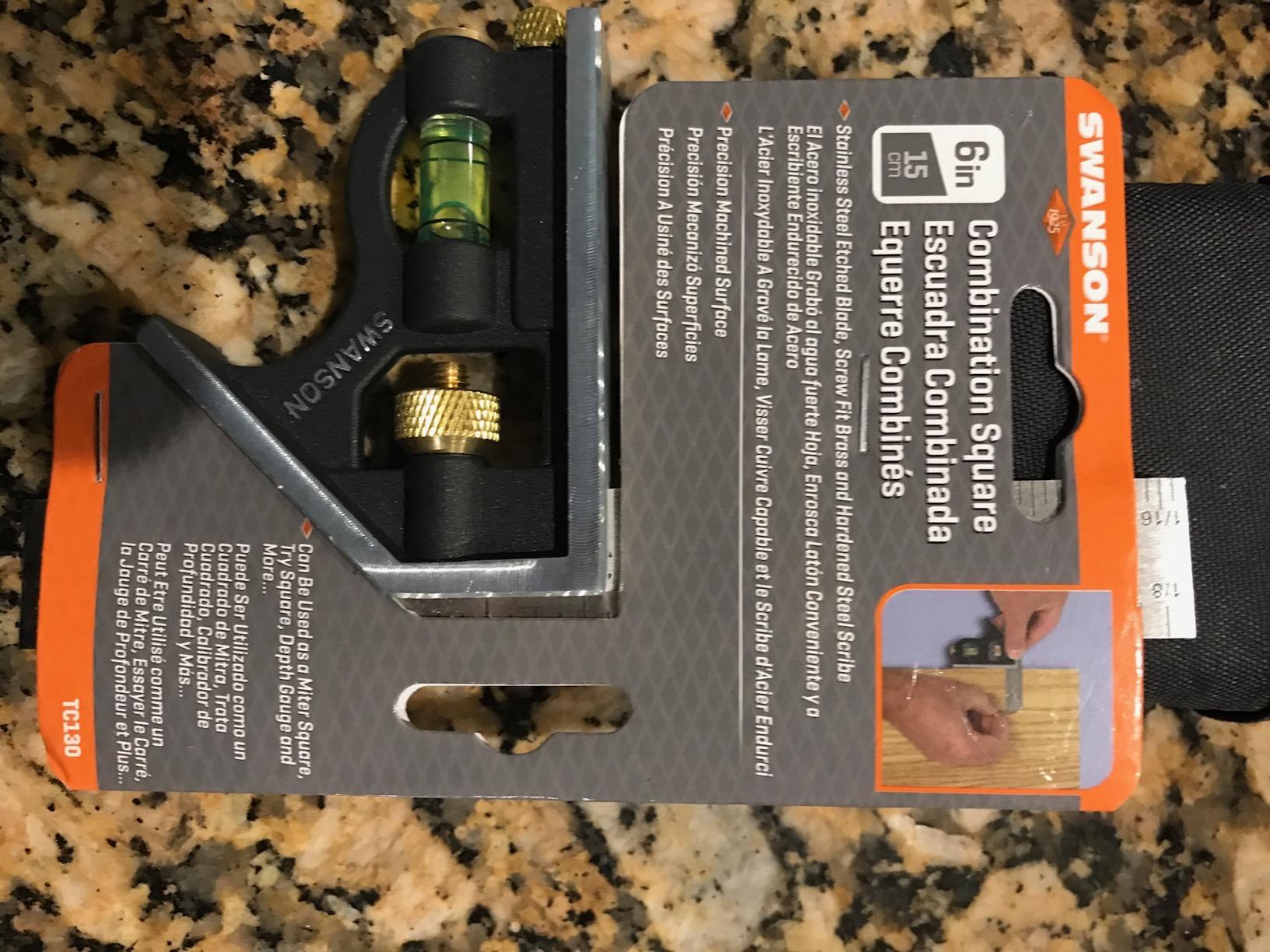
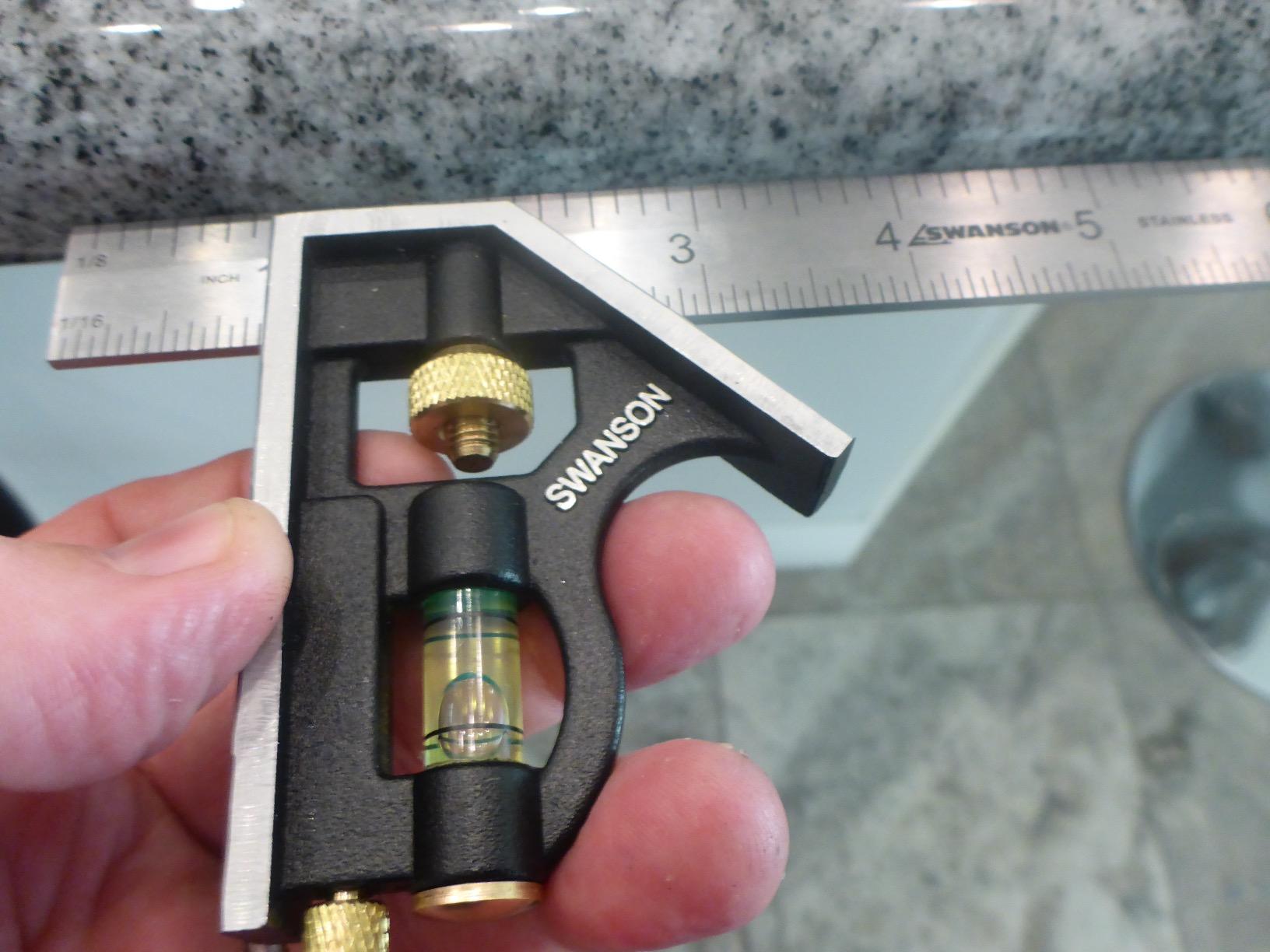
This is the highest rated product in our entire test group and it earns that partly because it ships two tools. You get a 7 inch aluminum speed square and a 6 inch combination square with a built-in vial and die cast zinc head, plus the 60 page Blue Book of Instruction.
The speed square does the work most woodworkers buy a combo square for. The thick lipped fence steadies a circular saw for crosscuts, notches hold a pencil for parallel lines, and the etched 0 to 90 degree scales handle rafters and slopes.
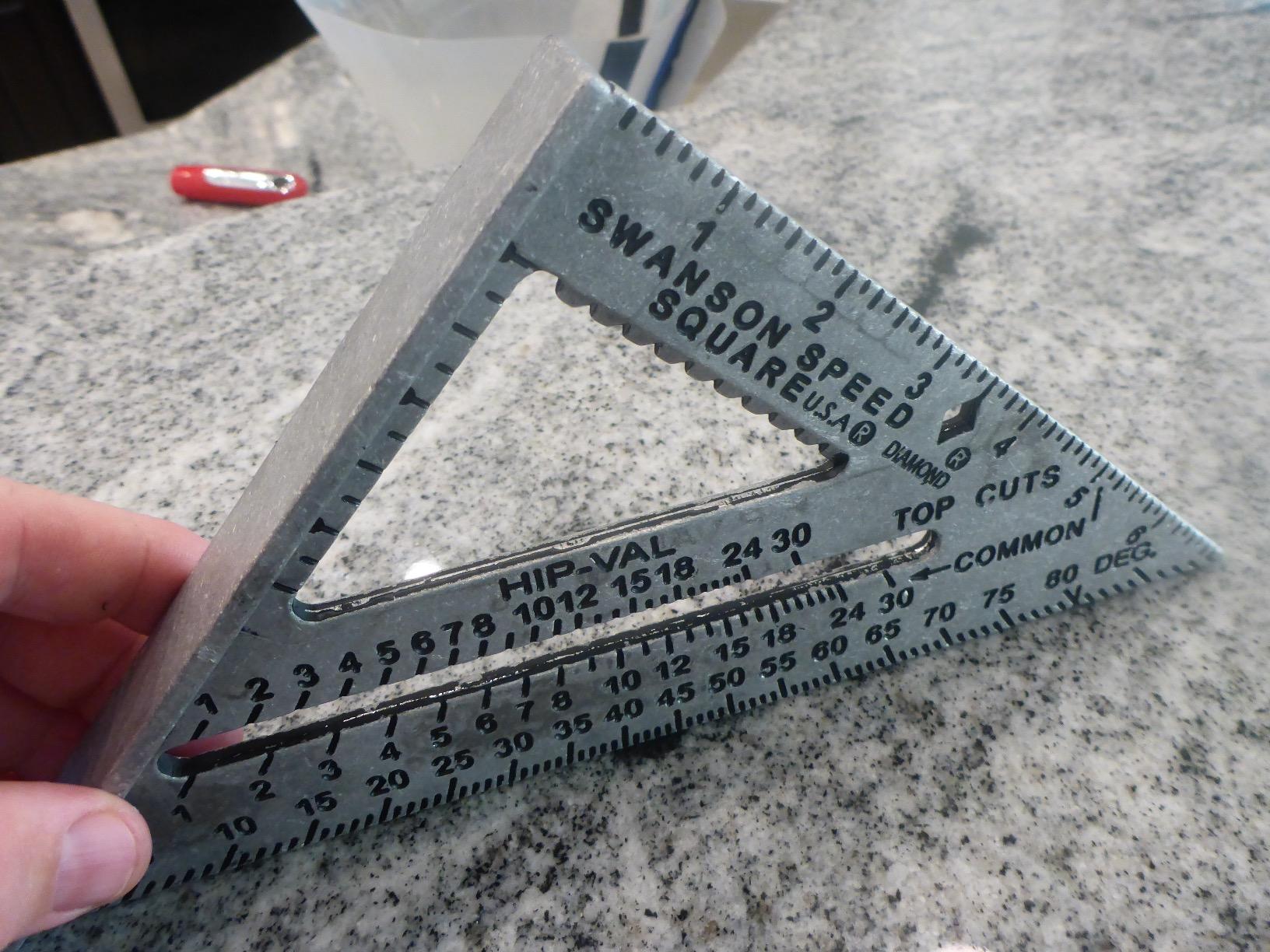
The etched scales read easily in low light and in direct sun, which is why so many owners single them out. The aluminum sits flat without rocking on a bench, and at 12.8 ounces for the set it is easy to carry.
The 6 inch combo square in the pack is the nice surprise. It handles small marking jobs with a vial and a proper zinc head, and it is the piece that will end up in the apron.
Owners report the combo square needing a small amount of truing on arrival, and it is inch only with no machinist grade precision. Check it against a reference before fine work.
Best suited to
Anyone who needs a speed square and a combo square in one purchase, from a first time builder to a framing contractor. The Blue Book rafter tables are a genuine teaching tool for newer users.
For crosscut and rafter work, the lipped fence and etched scales do the work of two tools.
Less suited to
Anyone who already owns a good speed square and wants only a combination square. The 6 inch combo is a capable small square, but it does not replace a 12 inch one for full width layout.
Fine joinery also needs a finer blade than inch scales provide.
How to Choose a Combination Square for Your Shop
Once you accept that every combination square does the same four jobs, the differences come down to materials, markings and the lock. Here is how we weigh them in the order they matter.
Head material decides how long the square lasts
Cast zinc is the sweet spot for most shops: heavy enough to stay planted, cheap enough to replace without regret. Forged or machined steel heads last longer and resist deflection, which is what you want if the square gets knocked around. Aluminum is light and rigid but flexes more under a hard lean, and it suits a portable square rather than a bench workhorse.
Head size matters more than most buyers expect. A large head spreads pressure and resists tipping when the square hangs off a board edge, but a bulky head is awkward in a small hand. Test the grip before you commit.
Etched graduations beat printed scales
Chemical etching, laser etching and permanent imprinting all survive years of pencil drag and shop wiping. Printed scales wear off, and once they do the square quietly starts lying to you. Every square in this roundup has etched or permanent markings.
Graduation depth is the next question. 1/16 inch suits general carpentry. 1/32 inch covers furniture and cabinetry. 4R graduation adds 1/64 inch and finer, which is the point at which a marking knife or razor blade finds a groove to ride in instead of skating.
Locking mechanism quality is the real test
A brass bolt and nut holds smooth and resists galling, which is why the Swanson squares feel better year after year than plated steel hardware. Thumb screws and knurl nuts are faster for rough work but need a firmer hand to set precisely. Before buying, set the head at a measurement, tap the square once, and check whether it moved.
Blade length and format
Twelve inches is the more versatile length for a shop because it covers a framing stud and a drawer side. Six inches wins for small parts, inlay work and an apron pocket. If you mark round pieces often, a center finder head is worth more to you than an extra inch of blade.
A task to feature matching matrix
Match the job to the feature rather than the brand. For machine setup such as tablesaw and bandsaw alignment, prioritize a heavy rigid head and a lock that will not creep. For layout and marking, prioritize graduation depth and whether the scales are etched. For knife work and joinery, prioritize 4R graduation and a satin finish that resists glare. For site and trim work, prioritize a compact length and a stored scribe. For metal and conduit work, prioritize a magnetic head and dual sided scales.
Care and shop environment
Whatever head material you choose, wipe the blade after use and add a light oil to steel heads in a humid shop. Sawdust in the sliding slot is the most common cause of a square that no longer reads true, so a soft brush in the slot takes seconds and protects accuracy. If you are still chasing dust, our guides to drum sanders for woodworking and dust collectors for woodworking cover the machines that generate most of it.
How to Test a New Square for Accuracy
Calibrate before you trust. It takes five minutes and it prevents a layout mistake that costs hours.
First, check squareness. Draw a true line on a scrap board, then draw a second line at 90 degrees using the square. Flip the square and repeat from the same corner. If the two lines part company, the head or blade is out of true and needs correction before use.
Second, check the depth gauge. Set the head to a known measurement, for example 3 inches, against a square edge, and confirm the shoulder it marks is 3 inches on a rule. Third, check graduations against a known good rule by setting the head to 1/4 inch, 1/2 inch and 1 inch and confirming the marks line up.
Fourth, check the lock. Set a measurement, tap the square lightly with a mallet, then re-read the setting. Repeat once more after ten minutes, because a nut that creeps slowly is the failure that costs the most time. Finally, check the vial or level against a known level, and note any offset rather than assuming it is zero.
Frequently Asked Questions
What brand combination square is best for woodworking?
Most shops are best served by a cast zinc head square with etched scales and a brass lock, such as the IRWIN 12 inch or the Swanson TC132. For fine layout and marking knife work, a 4R square such as the iGaging 6 and 12 inch set gives you eighths, sixteenths, thirty seconds and sixty fourths. Match the graduation to the work rather than the brand name.
What size combination square should I buy for woodworking?
A 12 inch blade is the most versatile length for a shop because it spans a framing stud and a drawer side with one tool. Six inches is better for small parts, inlay work, models and any square that lives in a tool apron. Many woodworkers end up owning both, using the short square for detail marking and the long one for machine setup and panel breakdown.
How do I test whether a combination square is accurate?
Draw a true line, then draw a second line at 90 degrees with the square, flip the square and draw again from the same corner. If the lines diverge, the tool is out of true. Then set the head to a known measurement and check the reading against a good rule, and tap the square to confirm the lock does not let the head creep.
What are the types of squares in carpentry?
The main families are the try square for 90 degree checking, the speed or roofing square for rafter pitch and guided cuts, the framing square for large layouts, the sliding bevel for angles other than 90, the engineer’s square for machinist tolerance, and the combination square. The combination square combines a rule, a try square, a mitre square and a depth gauge in one head that slides along a graduated blade.
Can a combination square replace a speed square?
Partly. A combination square handles 90 and 45 degree marking, depth gauging and graduated layout, but a speed square has a wide lipped fence and etched degree scales that guide a circular saw and read rafter pitch. For crosscut and roof work a speed square is faster, while for joinery layout and machine setup the combination square is the better tool.
Which Combination Square Should You Buy in 2026?
The IRWIN 12 inch remains our pick as the best combination square for woodworking in 2026, because its owner base is the largest we found and the cast zinc head stays planted under a marking hand. Buy the Swanson TC132 if you want finer graduations and brass hardware at the same tier, and buy the iGaging 4R set the moment knife cut joinery enters the picture.
Whichever you choose, check squareness on the day it arrives and again after the first month. A square that tells the truth is the cheapest accuracy tool in the shop.