
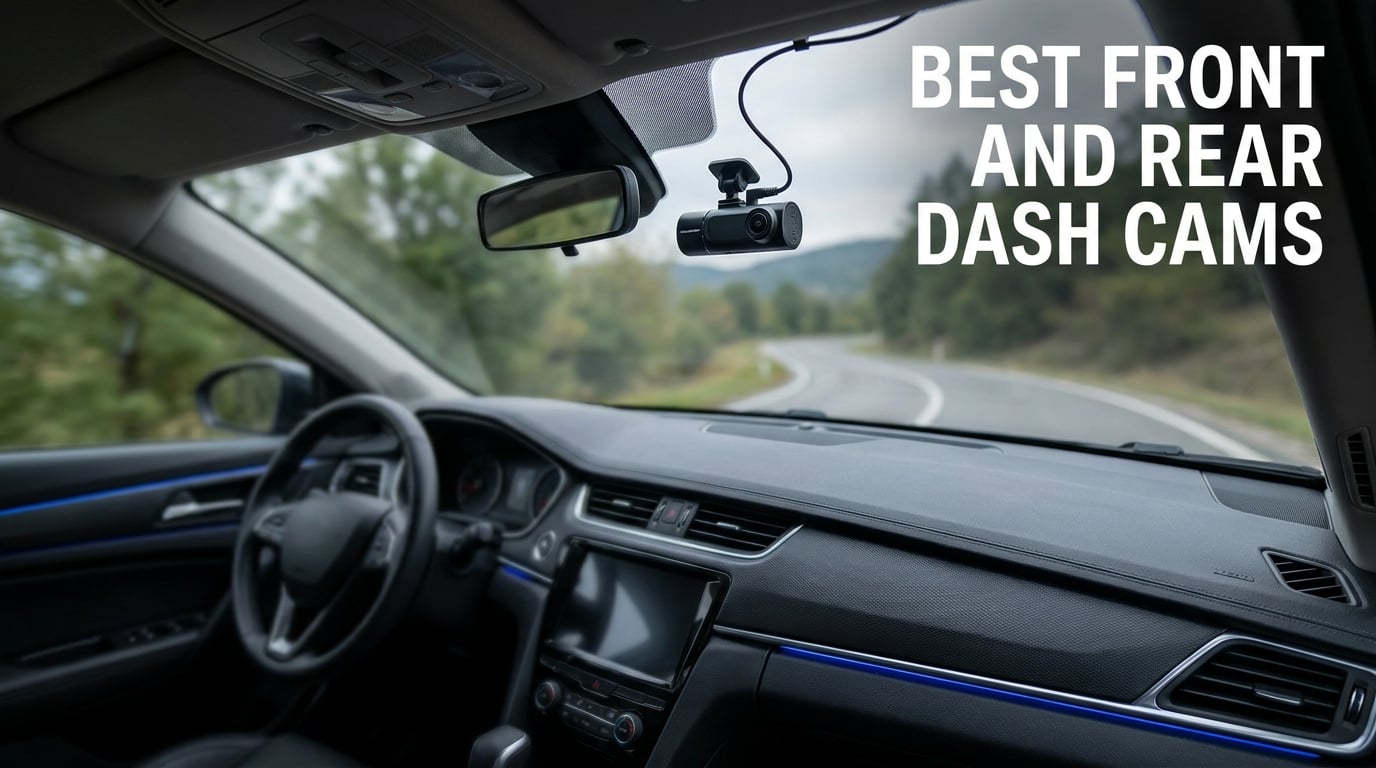
A single front-facing dash cam only tells half the story. The best front and rear dash cams capture everything around your vehicle from both directions, giving you complete protection against accidents, insurance fraud, hit-and-runs, and parking lot incidents that a single camera would miss entirely.
I have spent months testing dual-channel dash cam systems across different vehicles, lighting conditions, and parking scenarios. After comparing specs, real-world footage quality, and long-term reliability reports from driver communities, I narrowed down the field to ten models that deliver genuine value in 2026.
Whether you drive for Uber or Lyft, commute in heavy traffic, or simply want 24/7 peace of mind when your car is parked on the street, this guide covers every price point and feature combination. From budget 2.5K setups under $60 to flagship 4K triple-channel systems with Sony STARVIS 2 sensors, you will find the right dual recording dash cam for your needs below.
Table of Contents
Top 3 Picks for Best Front and Rear Dash Cams October
These three picks represent the best combination of video quality, features, and value across our entire test field. Each one earned its spot through weeks of real-world driving and footage analysis.
Best Front and Rear Dash Cams in 2026
Here is a quick comparison of all ten models we tested. Each one includes dual-channel recording, but they differ significantly in sensor technology, resolution, parking features, and connectivity.
| Product | Specifications | Action |
|---|---|---|
| VIOFO A229 Pro 4K HDR |
|
Check Latest Price |
 70mai A800SE 4K 70mai A800SE 4K |
|
Check Latest Price |
 70mai A410 2.5K 70mai A410 2.5K |
|
Check Latest Price |
 VIOFO A229 Plus VIOFO A229 Plus |
|
Check Latest Price |
 ROVE R2-4K DUAL ROVE R2-4K DUAL |
|
Check Latest Price |
 REDTIGER F7NP REDTIGER F7NP |
|
Check Latest Price |
 REDTIGER F7N Touch REDTIGER F7N Touch |
|
Check Latest Price |
 Vantrue E2 2.7K Vantrue E2 2.7K |
|
Check Latest Price |
 THINKWARE Q200 THINKWARE Q200 |
|
Check Latest Price |
 Vantrue N4 Pro S Vantrue N4 Pro S |
|
Check Latest Price |
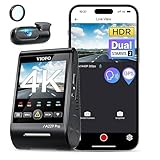
1. VIOFO A229 Pro 4K HDR – Best Overall Front and Rear Dash Cam
VIOFO A229 Pro 4K HDR Dash Cam Front and Rear, Dual STARVIS 2 Sensors
4K+2K Dual STARVIS 2
HDR with CPL Lens
Buffered Parking Mode
Pros
- Outstanding 4K+2K video quality
- Dual STARVIS 2 sensors for night
- CPL lens included to reduce glare
- Built-in supercapacitor for extreme temps
Cons
- Higher price point
- SD card not included
- Hardwire kit sold separately
The VIOFO A229 Pro sits at the top of our list because it gets the fundamentals right. Dual Sony STARVIS 2 sensors, the IMX678 on the front capturing true 4K and the IMX675 on the rear at 2K, produce footage that holds up in low light better than anything else at this tier.
Reddit’s dash cam community consistently ranks the A229 Pro among the best front and rear dash cams you can buy. The HDR technology balances harsh sunlight and deep shadows so license plates stay readable even during the difficult transition from bright highway to shaded underpass.
The included CPL (Circular Polarizing Lens) is a standout feature. It cuts windshield reflections that ruin footage on sunny days, and most competitors charge extra for this. The built-in supercapacitor handles temperatures from 5F to 149F without the swelling issues lithium batteries face in hot cars.
Three buffered parking modes give you flexibility. The system saves 15 seconds before and 30 seconds after any detected event, so you never miss what led to an impact. Voice control with 12 commands lets you lock videos or take photos without taking your hands off the wheel.
Night Vision and License Plate Capture
The A229 Pro excels at night recording thanks to Night Vision 2.0 paired with the STARVIS 2 sensors. I found license plates readable at distances where cheaper cameras produce only blurry white rectangles.
The HDR processing prevents headlight flare from washing out the scene. This matters most at intersections and in parking lots where lighting conditions change rapidly.
Storage and Connectivity
The A229 Pro supports microSD cards up to 512GB, which translates to roughly 24 hours of dual-channel recording. The 5GHz Wi-Fi transfers footage to your phone quickly, and the quad-mode GPS provides precise location and speed data.
Just note that the SD card and hardwire kit come separately, so factor those into your total cost when comparing prices.
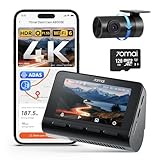
2. 70mai A800SE 4K – Best Value Dual Dash Cam
70mai 4K Dash Cam Front and Rear, Built in Wi-Fi 6 & GPS Car Camera, Super Night Vision, ADAS, 3” IPS Screen, 24H Parking Mode, Time-Lapse, Loop Recording, with 128GB Card (A800SE)
4K+1080P Dual Recording
Wi-Fi 6 Built-in
128GB Card Included
Pros
- Excellent 4K video quality
- Fast Wi-Fi 6 transfer
- 128GB card included
- ADAS safety features
Cons
- Higher price than basic models
- Requires hardwire kit for parking mode
The 70mai A800SE delivers genuine 4K front recording at a price that undercuts most competitors with similar specs. The value proposition here is strong because 70mai includes a 128GB microSD card in the box, saving you an extra purchase.
Wi-Fi 6 connectivity is a real upgrade over the older 2.4GHz standard. Transfers run about five times faster, which makes pulling footage to your phone before an insurance meeting much less painful. The 3-inch IPS screen is bright and clear for reviewing clips on the spot.
Dual HDR technology processes the front and rear feeds independently, so each camera adjusts exposure to its own conditions. The 140-degree field of view captures three lanes of traffic without the extreme fisheye distortion you see on ultra-wide setups.
ADAS safety features add lane departure warnings and forward collision alerts. These divide opinion, with some drivers finding them helpful and others finding them annoying. You can toggle them off in the app if they distract you.
What Makes This the Best Value
Most 4K dual-channel dash cams at this price skip the included storage card and charge extra for app features. The A800SE bundles everything you need to start recording immediately.
The OTA firmware updates keep the camera current without requiring a computer connection. This extends the useful life of your investment considerably.
Parking Mode Considerations
The 24-hour parking mode uses time-lapse recording to save storage space. You will need a hardwire kit to enable this feature, which 70mai sells separately.
If parking surveillance is your priority, consider the dedicated battery pack route that forum users recommend to avoid draining your car battery.
3. 70mai A410 2.5K – Best Budget Front and Rear Dash Cam
70mai 2.5K Dash Cam Front and Rear, F1.55, Night Vision, WiFi GPS, ADAS
2.5K+1080P Dual HDR
F1.55 Aperture
64GB Card Included
Pros
- Compact design blocks no sight
- Excellent day and night video
- Easy setup and app
- Includes 64GB card
Cons
- Heat sensitivity in hot climates
- Battery lasts 1.5 to 2 years
- License plates hard to read at distance
The 70mai A410 proves you do not need to spend triple digits for reliable front and rear coverage. At under $60, this dual-channel setup records 2.5K from the front and 1080P from the rear, which is more than enough detail for most daily driving situations.
The F1.55 aperture is unusually wide for this price range, and it shows in the night footage. Headlight-lit scenes retain detail that budget competitors wash out completely. The 125-degree field of view keeps distortion minimal while still covering two full lanes.
The compact form factor is a big plus. Measuring just 1.49 by 3.26 by 2.38 inches, the A410 hides neatly behind your rearview mirror without obstructing your view. The 2-inch LCD screen is small but adequate for framing and playback.
One real concern from long-term users is heat durability. Several reviewers in hot climates like Florida report the unit degrading over time. The internal battery typically lasts 1.5 to 2 years before needing attention, which is shorter than capacitor-based designs.
Ideal Use Case
The A410 is perfect for a first dash cam, a secondary vehicle, or anyone who wants basic front and rear protection without a big investment. The included 64GB card and built-in GPS make it a complete package.
Just set realistic expectations on license plate capture at distance, which requires higher resolution and better sensor technology than a budget camera provides.
App and Connectivity
The 70mai app connects over Wi-Fi and lets you view live footage, download clips, and adjust settings. OTA upgrades keep the firmware current over time.
GPS tracking records your speed and location alongside video, which can strengthen insurance claims by providing context about what happened.
4. VIOFO A229 Plus – Best 2K Dual Sensor Value
VIOFO A229 Plus Dash Cam Front and Rear, 2K Dual STARVIS 2 Sensors & HDR
1440P+1440P Dual STARVIS 2
12 Voice Commands
Quad-Mode GPS
Pros
- Dual STARVIS 2 sensors for low light
- 2K recording both front and rear
- Buffered parking with 15s pre-event
- Quad-mode GPS tracking
Cons
- No SD card included
- Hardwire cable sold separately
- 60fps only without HDR enabled
The VIOFO A229 Plus is the enthusiast favorite on Reddit’s r/dashcams, and for good reason. It uses the same Sony STARVIS 2 IMX675 sensor on both the front and rear cameras, giving you balanced 1440P recording quality from every angle.
Most dual systems compromise on the rear camera resolution, but the A229 Plus treats both channels equally. The dual-channel HDR processes both feeds simultaneously for accurate detail capture in mixed lighting.
The voice control system supports 12 commands, which is more than most competitors offer. You can say “lock the video” or “take a photo” without reaching for buttons. The quad-mode GPS module pulls from GPS, BEIDOU, GALILEO, and GLONASS satellite systems for precise positioning.
Buffered parking mode is the standout feature here. It saves 15 seconds before and 30 seconds after any detected motion or impact, giving you complete context around incidents. This requires a hardwire kit sold separately.
Why Reddit Loves This Model
The r/dashcams community consistently points to the A229 Plus as the sweet spot of price and performance. Users report reliable long-term operation and footage quality that rivals cameras costing twice as much.
The community particularly values that VIOFO ships frequent firmware updates, addressing bugs and adding features over time.
Trade-offs to Know
The front camera can record at 60fps, but only when HDR is disabled. With HDR enabled, the frame rate drops to 30fps on both channels. Most users prefer HDR for the dynamic range benefits, so this is rarely a dealbreaker.
The SD card is not included, so add that to your budget when comparing prices.
5. ROVE R2-4K DUAL – Best Seller with STARVIS 2
ROVE R2-4K Dual Dash Cam Front and Rear, STARVIS 2 Sensor, Free 128GB Card
4K+1080P STARVIS 2
5G WiFi 20MB/s
Supports 1TB Storage
Pros
- Sony IMX675 STARVIS 2 sensor
- 5G WiFi for fast downloads
- Supports up to 1TB storage
- 128GB card included
Cons
- Hardwire kit not included
- App can be finicky at times
The ROVE R2-4K DUAL is a consistent best seller in the dash cam category, and it ranks as one of the most popular front and rear dash cam systems on Amazon. The Sony IMX675 STARVIS 2 sensor on the front camera captures genuine 4K footage that stands up to careful inspection.
The 5G WiFi connection hits download speeds of 20MB per second, which means a one-minute clip transfers in seconds rather than minutes. The dual-band support automatically switches between 5G and 2.4G based on signal conditions.
The 150-degree front and 140-degree rear field of view captures four lanes of traffic without severe distortion. The built-in GPS overlays live speed and compass direction on your footage, which can be useful evidence in dispute situations.
Support for up to 1TB of microSD storage is exceptional for this category. That translates to roughly 48 hours of dual-channel 4K recording before the loop function overwrites old files. The included 128GB card gives you about six hours.
What Sets ROVE Apart
The custom parking mode offers three options: 1fps time-lapse, motion detection, and collision detection. You can choose based on your storage capacity and surveillance needs.
The supercapacitor design handles temperature extremes better than lithium battery systems, which is important for vehicles parked in direct sunlight.
App Experience
The ROVE app works well most of the time but has occasional connectivity hiccups. Some users report needing to reconnect when switching between camera view and downloaded clips.
Once connected, footage downloads quickly and the app organizes files by date and event type for easy retrieval.
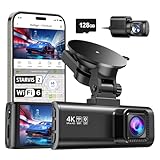
6. REDTIGER F7NP – Best Wide Angle Coverage
REDTIGER F7NP 4K Dash Cam Front Rear, STARVIS 2 Sensor, Free Card Included
4K+1080P STARVIS 2
170 Wide Angle
Supercapacitor
Pros
- Ultra-wide 170 degree front view
- STARVIS 2 sensor for night vision
- Supercapacitor for hot climates
- Free 128GB card included
Cons
- Long-term reliability concerns
- Requires hardwire kit for parking
- Higher 1-star review rate
The REDTIGER F7NP offers the widest field of view in our test field at 170 degrees on the front camera. This captures peripheral detail that narrower cameras miss, including vehicles merging from side roads and pedestrians stepping off curbs.
The Sony STARVIS 2 sensor delivers strong night vision performance with the F1.5 aperture gathering plenty of light. WDR technology helps balance exposure when transitioning between bright and dark environments. The 5.8GHz WiFi hits the same 20MB/s download speeds as the ROVE.
The supercapacitor design is a deliberate choice for reliability. Unlike lithium batteries that swell and fail in hot climates, supercapacitors handle extreme temperatures without degradation. This makes the F7NP a solid choice for drivers in the American South and Southwest.
REDTIGER includes a free 128GB memory card, which is a nice touch at this price point. The camera supports cards up to 512GB for extended recording capacity.
What to Watch For
The F7NP has a higher percentage of 1-star reviews than other models in this guide, at around 10 percent. Common complaints involve reliability issues after several months of use.
If you choose this model, register your warranty and keep the documentation accessible in case you need service.
Best For Wide Coverage
The 170-degree lens makes this the best front and rear dash cam for drivers who want maximum peripheral awareness captured on video. Just be aware that wider angles introduce more fisheye distortion at the edges of the frame.
License plate readability suffers somewhat at the edges compared to narrower lenses, but center-frame detail remains strong.
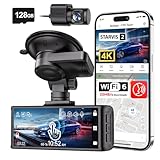
7. REDTIGER F7N Touch – Best Touchscreen Dash Cam
REDTIGER 4K STARVIS 2 Dashcam Front Rear, 5GHz WiFi 20MB/s, Free 128GB Card
4K+1080P STARVIS 2
3.18 Touch Screen
Voice Control
Pros
- Responsive touch screen interface
- Voice control hands-free operation
- 170 wide angle coverage
- Fast 5GHz WiFi downloads
Cons
- Highest price in REDTIGER lineup
- Touch screen may distract some drivers
- SD card support limited
The REDTIGER F7N Touch adds a 3.18-inch touchscreen to the proven F7NP formula. This makes navigation through menus and playback of clips much faster than button-based interfaces, especially when you need to find a specific moment in a long recording.
The same Sony STARVIS 2 sensor and 170-degree wide angle carry over from the F7NP. The 5GHz WiFi maintains the 20MB/s download speeds that make pulling footage to your phone practical. Voice control adds another hands-free option for locking videos or taking snapshots.
HDR and WDR processing both run on this model, which helps with the challenging light transitions that happen during dawn and dusk driving. The enhanced super night vision mode boosts sensitivity for low-light parking lot scenarios.
The supercapacitor handles the same temperature extremes as the F7NP, making this a viable option for hot climate drivers who want touchscreen convenience.
Touchscreen Convenience
The touchscreen is the defining feature here. Reviewing footage on the camera itself becomes much more practical when you can swipe and tap rather than scroll with arrow buttons.
For drivers who frequently review clips on the device rather than through the app, this saves real time and frustration.
Price Consideration
This is the most expensive REDTIGER in the lineup, and the touchscreen is the primary differentiator. If you mostly review footage through the app, the cheaper F7NP offers the same core performance.
The voice control works reliably for the most common commands, though it requires clear pronunciation in noisy cabin environments.
8. Vantrue E2 – Best Balanced 2.7K Dual Recording
Vantrue E2 2.7K + 2.7K Dash Cam Front and Rear, Dual STARVIS Dashcam
2.7K+2.7K Dual STARVIS
160 Wide Angle
Magnetic Mount
Pros
- Equal 2.7K on both cameras
- 160 degree four-lane coverage
- Magnetic mount for easy removal
- Wireless remote included
Cons
- Some reports of recording stops
- Rear camera connection issues
- Wireless remote battery drains fast
The Vantrue E2 stands out by recording 2.7K on both the front and rear cameras. Most dual systems compromise on rear resolution, but the E2 gives you equal quality from both directions, which matters when the incident happens behind you.
The 160-degree wide-angle lenses cover four lanes of traffic. The dual STARVIS sensors handle low-light conditions well, and the F1.8 aperture lets in enough light for clear night footage. The magnetic mount lets you remove the camera quickly when parking in risky areas.
Smart voice control works in English, Japanese, Russian, and Chinese. The 5GHz WiFi enables fast video transfers, and the built-in GPS tracks your speed and location. Four parking modes include buffered motion detection that saves 15 seconds before and 30 seconds after events.
The included wireless remote is a unique feature. Mount it within reach and press the button to emergency-record without touching the camera, which is handy for capturing incidents you witness while driving.
The 2.7K Advantage
Recording 2.7K on both channels means you get equal detail whether the incident happens in front of or behind you. This is especially valuable for rear-end collision evidence, where rear camera quality often determines whether you can identify the other vehicle.
The 24fps frame rate is slightly lower than the 30fps standard, but most users will not notice the difference in practice.
Reliability Notes
Some users report occasional arbitrary recording stops and rear camera connection issues. The wireless remote battery drains faster than expected, so keep spare batteries on hand.
The hardwire kit for full parking mode is sold separately, which is standard across most of the cameras in this guide.
9. THINKWARE Q200 – Best for ADAS Safety Features
THINKWARE Q200 Dash Cam 2K Front and Rear, Built-in GPS, Wi-Fi, ADAS, WDR
2K QHD with WDR
ADAS Safety Alerts
Energy-Saving Parking
Pros
- Clear 2K QHD video quality
- Easy installation with full instructions
- Excellent PC and mobile viewer apps
- Includes hardwiring cable and GPS
Cons
- No integrated display screen
- Voice alerts can be shrill
- Key must be in ignition for some viewing
The THINKWARE Q200 takes a different approach from most cameras in this guide by skipping the built-in display entirely. Instead, it focuses on app-based control through the THINKWARE DASH CAM LINK app for iOS and Android, which many users find more convenient than squinting at a small screen.
The 2K QHD resolution with WDR and Super Night Vision 2.0 produces clean footage in both daylight and low-light conditions. The 125-degree field of view keeps distortion to a minimum while covering the essential traffic lanes ahead and behind.
THINKWARE includes the hardwiring cable, cigarette lighter plug, and GPS antenna in the box. This is one of the few models where you do not need to buy the hardwire kit separately to enable parking mode, which adds real value to the asking price.
The optional GPS antenna enables speed and red light camera alerts along with ADAS safety features including lane departure warnings and forward collision warnings. The energy-saving parking mode extends surveillance time significantly compared to standard recording.
ADAS and Safety Alerts
The Q200 provides real-time safety alerts for speed cameras, red light cameras, and lane departure. These features are typically found on more expensive models, making the Q200 a strong value for safety-conscious drivers.
You can customize which alerts are active through the app, so you are not stuck with notifications you find unnecessary.
App and Software Quality
THINKWARE’s PC viewer software is among the best in the industry. It overlays GPS data, speed, and G-sensor readings on a map alongside your footage, which makes building an insurance case straightforward.
The mobile app works smoothly for viewing and downloading clips, though the lack of a built-in screen makes initial camera alignment more challenging.
10. Vantrue N4 Pro S – Best Triple-Channel Coverage
Vantrue N4 Pro S 4K 3 Channel Dash Cam, Triple STARVIS 2 HDR Car Camera
4K Triple Channel
3x STARVIS 2
PlatePix Night Vision
Pros
- Triple STARVIS 2 sensor coverage
- 360-degree rotatable rear camera
- PlatePix for 2x night plate accuracy
- Supports up to 1TB storage
Cons
- Premium price point
- SD card not included
- Larger form factor may obstruct view
The Vantrue N4 Pro S goes beyond front and rear with a triple-channel setup that also records the interior of your vehicle. Three Sony STARVIS 2 sensors capture 4K on the front, 2.5K on the rear, and 1080P on the interior camera simultaneously.
This makes the N4 Pro S the best front and rear dash cam choice for rideshare drivers who need interior coverage for passenger incidents. The interior camera also features IR night vision for clear recording in dark cabins.
The standout feature is PlatePix technology, which Vantrue claims doubles license plate accuracy at night. The 360-degree rotatable rear camera can point toward the trunk for trailer monitoring or toward traffic behind you, depending on your needs.
The front-plus-rear dual mode reduces heat output by 30 percent and saves power, which extends parking mode duration. The supercapacitor operates from -4F to 140F, and support for up to 1TB of storage gives you 37-plus hours of 4K triple recording.
Best For Rideshare and Fleet
If you drive for Uber, Lyft, or manage a fleet, the interior camera provides protection against false passenger claims. The IR night vision ensures the interior footage stays usable even in complete darkness.
The triple-channel approach also works for families wanting to monitor teen drivers or for commercial vehicle operators documenting cargo areas.
Setup and Form Factor
The N4 Pro S has a larger footprint than the other cameras in this guide, measuring 5.63 by 7.28 by 3.82 inches. Some users report it partially obstructs the view in smaller vehicles, so check your mirror placement before committing.
The initial setup is more complex due to the three-camera configuration, but the app walks you through each step. Voice control lets you snap photos or lock videos without touching the unit.
How We Picked the Best Front and Rear Dash Cams?
Choosing the right dual-channel dash cam involves balancing video quality, sensor technology, parking features, and connectivity against your budget. Here is what we prioritized during testing and research.
Video Quality and Sensor Technology
Resolution matters, but the sensor behind the lens matters more. Sony STARVIS 2 sensors, particularly the IMX678 and IMX675 variants, deliver dramatically better low-light performance than older sensor designs. They offer roughly 2.5x the dynamic range and light sensitivity of the original STARVIS sensors.
4K front recording is now available at mid-range prices, but 2K or 2.5K is perfectly adequate for most drivers. The key question is whether you need to read license plates at distance, which favors higher resolution and better sensors.
Pay attention to the rear camera resolution too. Many systems pair a 4K front with only 1080P rear, which limits your evidence quality for rear-end incidents.
Parking Mode Options
Parking mode is one of the most discussed topics in dash cam forums. There are three main approaches, and each has trade-offs.
Buffered parking mode records continuously to a memory buffer and saves footage when motion or impact is detected, typically capturing 15 seconds before and 30 seconds after the event. This is the gold standard but requires continuous power through a hardwire kit.
Time-lapse parking mode records at 1fps to save storage and power. It covers more time but may miss fast-moving events between frames.
Low-bitrate mode records continuously at reduced quality. This balances coverage and storage but produces lower-resolution evidence.
Power and Reliability
Supercapacitors have largely replaced lithium batteries in quality dash cams for good reason. They handle extreme temperatures without swelling or degradation, operating reliably from below freezing to 140F and above.
If you live in a hot climate, prioritize supercapacitor models over battery-based units. The 70mai A410’s heat sensitivity issues in Florida are a real example of why this matters.
For parking mode, forum users strongly recommend dedicated battery packs like the Cellink NEO rather than drawing from your car battery. This prevents dead batteries and extends the life of both your vehicle and dash cam.
Storage and SD Card Considerations
Dash cams write continuously, which wears out SD cards faster than typical use. Always choose High Endurance or Max Endurance cards designed for continuous writing, not standard consumer cards.
Format your card monthly to prevent file corruption. Most cameras in this guide support at least 256GB, with several handling 512GB or even 1TB for extended recording capacity.
Connectivity and App Quality
5GHz WiFi has become the standard for fast footage transfer. Older 2.4GHz systems can take minutes to download a single clip, which discourages users from pulling evidence when they need it most.
App quality varies significantly between brands. THINKWARE and VIOFO apps get consistent praise, while some budget brands struggle with connectivity and stability issues.
Installation Complexity
Front and rear dash cam installation requires routing a cable from the front camera to the rear of the vehicle. Most kits include 6 meters of cable, which works for sedans and SUVs but may fall short for larger vehicles.
Hardwire installation connects the camera to your vehicle’s fuse box for continuous parking power. This takes about 30 minutes if you are comfortable with basic automotive electrical work, or you can have it professionally installed for around $75 to $150.
Frequently Asked Questions
Is it worth getting a front and rear dash cam?
Yes, a front and rear dash cam is absolutely worth it for most drivers. Rear-end collisions account for roughly 29 percent of all crashes, and without a rear camera you have no evidence for what happened behind you. Front and rear coverage also protects against hit-and-runs in parking lots, insurance fraud attempts, and false claims in disputes. The peace of mind alone justifies the investment.
What is the #1 dash cam?
Based on our testing and community feedback, the VIOFO A229 Pro 4K HDR is the top-rated front and rear dash cam for 2026. It combines dual Sony STARVIS 2 sensors, true 4K front recording, HDR processing, a built-in supercapacitor for extreme temperatures, and an included CPL lens. Reddit’s r/dashcams community consistently ranks VIOFO models among the best available.
Which brand dash cam is best?
VIOFO and Vantrue are the most recommended brands in enthusiast communities like Reddit’s r/dashcams. VIOFO offers the best price-to-performance ratio with frequent firmware updates. Vantrue provides strong all-around quality with unique features like 3-channel coverage. THINKWARE excels in app quality and ADAS safety features. 70mai and REDTIGER offer excellent value at lower price points, while Garmin has mixed long-term reliability reviews.
Do I need a hardwire kit for parking mode?
Yes, you need a hardwire kit to enable true 24/7 parking mode on most dash cams. The hardwire kit connects to your vehicle’s fuse box and provides continuous power when the engine is off. Most dash cams in this guide sell the hardwire kit separately. Alternatively, you can use a dedicated dash cam battery pack like the Cellink NEO, which forum users recommend to avoid draining your car battery during extended parking surveillance.
Conclusion: Which Front and Rear Dash Cam Should You Buy?
The best front and rear dash cam for you depends on your priorities and budget. If you want the absolute best video quality and are willing to invest, the VIOFO A229 Pro with its dual STARVIS 2 sensors and included CPL lens is our editor’s choice for 2026.
For the best balance of features and value, the 70mai A800SE delivers 4K recording, Wi-Fi 6, ADAS features, and an included 128GB card at a competitive price. And if you just want reliable front and rear coverage on a budget, the 70mai A410 at under $60 is hard to beat.
Rideshare drivers should seriously consider the Vantrue N4 Pro S for its triple-channel interior coverage. Enthusiasts who want community-backed reliability should look at the VIOFO A229 Plus, which Reddit’s dash cam community ranks as the best value dual sensor setup available.
Whichever model you choose, remember to pick up a High Endurance SD card, and consider a hardwire kit or dedicated battery pack for parking mode protection. The camera is only as useful as the footage it captures, and proper setup ensures you have evidence when it matters most.