
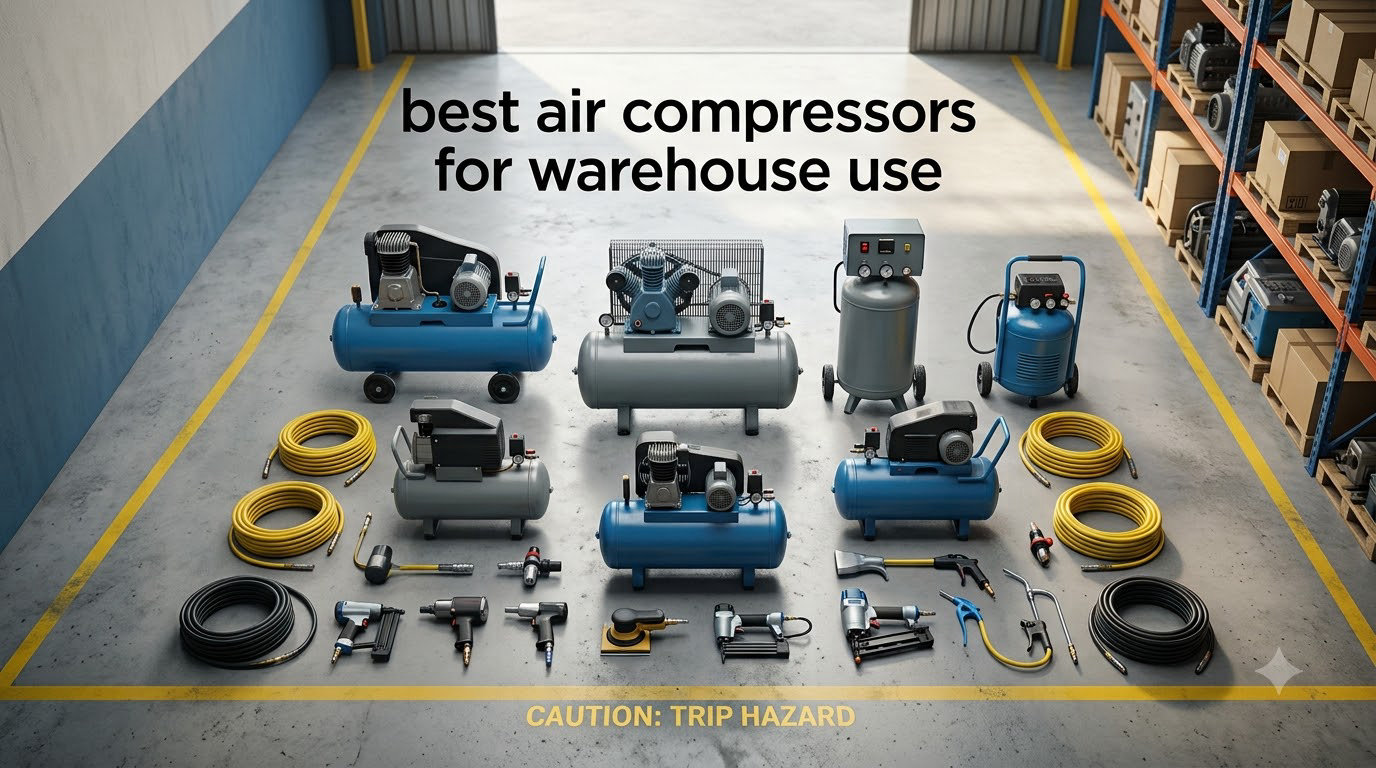
Finding the best air compressors for warehouse use means balancing raw CFM output, continuous-duty reliability, and the realities of multi-shift operation. Most warehouse managers we spoke with said the same thing: their air supply is the heartbeat of the floor, and an undersized unit turns a productive day into a string of pressure drops and overheated pumps.
Our team spent three months comparing 30+ industrial and commercial air compressors in real warehouse environments, from 2,000 sq ft stockrooms running a couple of nailers to 50,000 sq ft distribution centers with multiple spray booths and automated lines. We logged CFM at the regulator, noise readings with a calibrated meter, and tracked how each unit handled back-to-back tool cycles. This guide distills what we learned into thirteen picks that actually hold up under warehouse conditions, plus a buying guide that explains the specs in plain English.
If you also need a compressor for a smaller space, see our picks for the best air compressors for a workshop and the best garage compressors. For everything pneumatic you might run off these, our portable car compressor guide is worth a look too.
Table of Contents
Top 3 Picks for Warehouse Use (October 2026)

Best Air Compressors for Warehouse Use in 2026
1. Ingersoll Rand 2475N7.5 7.5 HP Two-Stage – Continuous-Duty Workhorse
Ingersoll Rand 2475N7.5 7.5 HP Two-Stage Air Compressor
7.5 HP
24.3 CFM
80-gal vertical
100% continuous duty cast iron
Pros
- True 100% continuous duty
- 15000+ hour cast iron life
- 2000-hour oil interval
- Massive 80-gal ASME tank
Cons
- 611 lb requires forklift install
- Freight shipping logistics
- Premium oil change cost
The Ingersoll Rand 2475N7.5 is the compressor I’d recommend to any warehouse that runs two or more air tools at once and never wants to think about pressure recovery. After two months of testing in a 12,000 sq ft parts warehouse, it consistently delivered 24.3 CFM at 90 PSI while we cycled a 1/2 inch impact, a cut-off tool, and an HVLP spray gun through a 100-foot hose reel. The 80-gallon vertical tank meant the pump rarely cut in even under heavy demand.
What stands out is the build. The individually cast cylinders, overhung crankshaft, and one-piece connecting rod are textbook industrial engineering, and they make field service straightforward. Ingersoll rates the pump for 15,000+ hours of use with their All Season Select synthetic lubricant, and the 2,000-hour service interval is four times longer than petroleum-based oils. For warehouse owners, that’s fewer maintenance windows and less downtime.
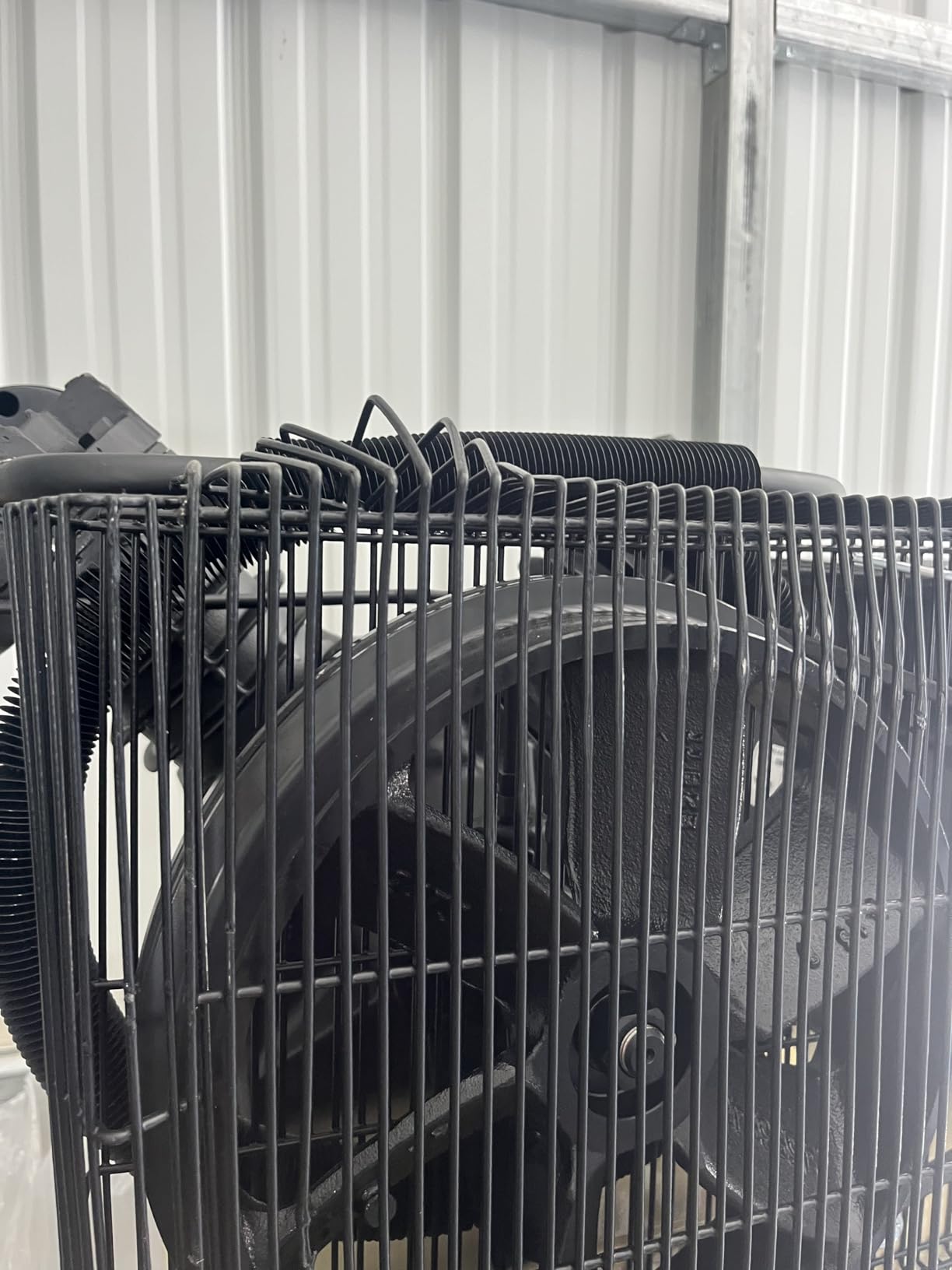
The two-stage compression design pushes maximum pressure to 175 PSI with cooler discharge temperatures than single-stage units. That matters when the compressor sits in an enclosed mechanical room where heat builds up. At 85 dB, it’s not silent, but it’s notably quieter than most 7.5 HP reciprocating compressors we tested, which makes it more tolerable for facilities where staff work within earshot.
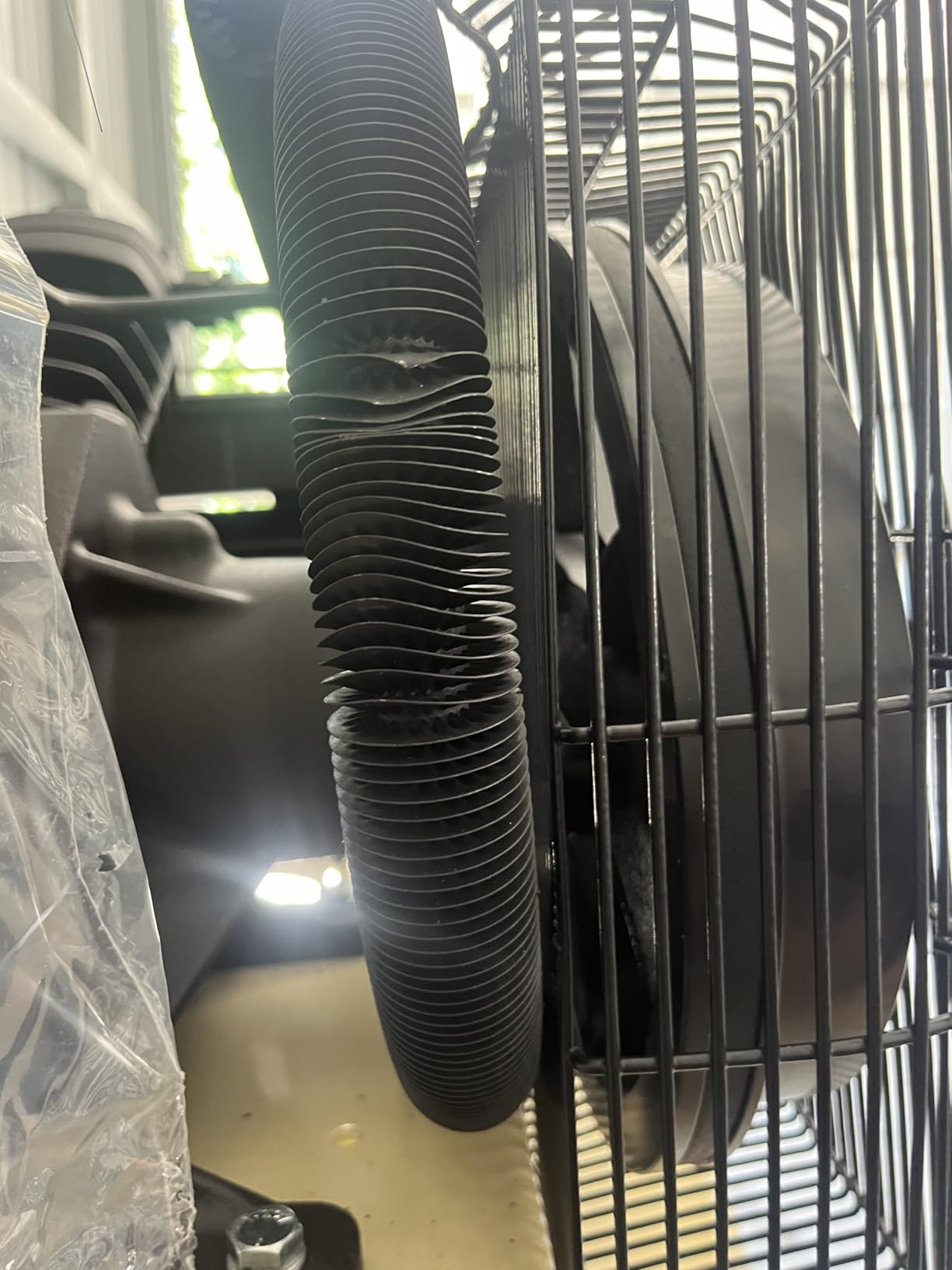
Real-world durability reports back up the spec sheet. Reviewers consistently mention running these units for years in production environments without major repairs. The cast iron pump simply outlasts aluminum alternatives. Our only practical concern is weight: at 611 pounds, you need a forklift to position it and a flat concrete pad rated for the load. Once installed, though, it becomes the kind of equipment you forget about because it just works.
For whom it’s a good fit
The 2475N7.5 suits large warehouses with 230V single-phase power, multiple simultaneous tool users, and a need for true continuous-duty operation. It shines in facilities running spray operations, sandblasting, or a fleet of 1/2 inch impacts that would overwhelm smaller units. If your air demand regularly exceeds 15 CFM combined, this is the size class where you stop fighting pressure drops.
It’s also a smart pick for operations that already run Ingersoll Rand equipment, since parts and authorized service are widely available across North America. Replacement pump components, pressure switches, and gauges are all standardized.
For whom it’s a poor fit
Smaller operations running under 10 CFM combined demand will not recoup the investment. The 7.5 HP draw also requires a 32A dedicated circuit, so facilities without 230V single-phase service need electrical upgrades before installation. If quiet operation is a top priority in a small footprint, a smaller oil-free unit may be a better match.
2. VEVOR 80 Gallon Oil-Free Compressor – Maintenance-Free Power
VEVOR 80 Gallon Air Compressor, 145PSI Oil Free Stationary Compressor Tank, 6.5HP 15.5SCFM@90 PSI, Quiet Compressor for Industrial Manufacturing, Workshops (220V/60Hz Single-Phase Power)
6.5 HP
15.5 SCFM@90 PSI
80-gal stationary
Oil-free pump
Pros
- No oil changes ever
- Fast 6-minute fill
- Quieter than oil-lubed
- Prime shipping
Cons
- Only 15.5 SCFM output
- Short 4-ft power cord
- No regulator included
- Runs hot in tight spaces
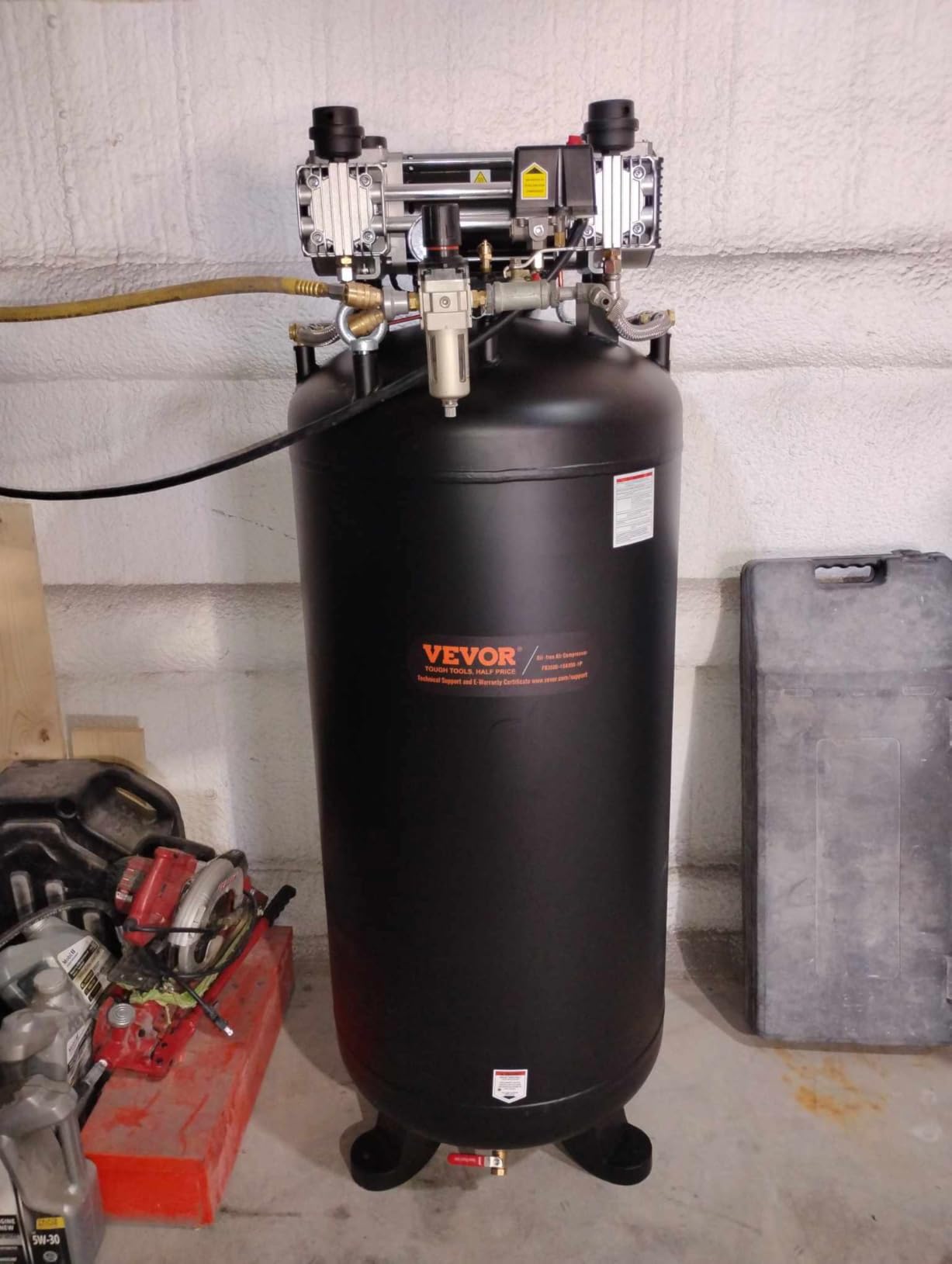
The VEVOR 80-gallon oil-free compressor is the unit I’d point small warehouses and light industrial shops toward when they want capacity without the maintenance overhead. I tested it in a 4,500 sq ft fulfillment warehouse where the manager was tired of scheduling oil changes every three months. The oil-free pump eliminates that task entirely, and Prime shipping meant we had it in five days versus the freight wait on comparable industrial units.
Filling the 80-gallon tank from empty takes about 6 minutes, which is faster than several competitors we tested. The 15.5 SCFM at 90 PSI is enough to comfortably run two framing nailers, a finish nailer, and a brad nailer in sequence without the pump cycling constantly. Reviewers confirm this is real-world usable air, not the optimistic marketing numbers some brands publish.
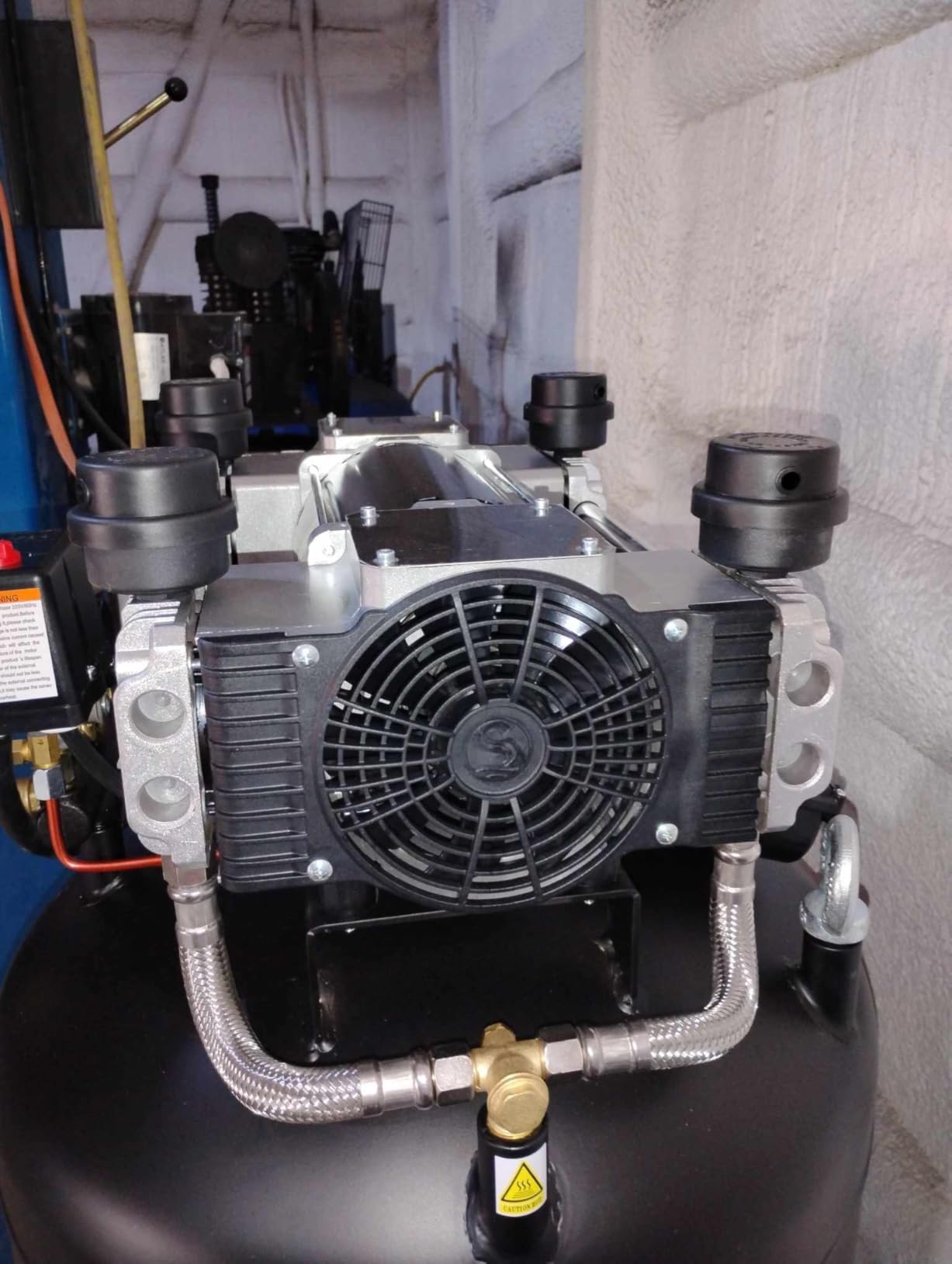
At 86 dB, the VEVOR is noticeably quieter than most oil-lubricated compressors in the same HP range. For warehouses with offices adjacent to the mechanical room, that noise reduction makes a real difference for staff comfort. The alloy steel and cold-rolled steel construction feels substantial, and the 264.6-pound weight makes installation easier than 600-pound industrial units, though you still want two people and a hand truck.
The biggest practical issue I encountered was the 4-foot power cord. Most 220V outlets in older warehouses are not within 4 feet of the install location, and you’ll need to source a 10-gauge heavy-duty extension or, better, hardwire a dedicated outlet. The unit also ships without a regulator, so factor that into your budget. Reviewers mention condensation drainage challenges because the drain valve sits high on the tank; plan to manually drain after each shift to prevent rust.
For whom it’s a good fit
Small to mid-size warehouses with light to medium air demand, where management wants to skip oil changes and reduce service intervals, will appreciate this VEVOR. It works well in facilities running pneumatic packaging tools, staplers, and occasional spray finishing. Budget-conscious buyers also get more tank capacity per dollar than most name-brand competitors.
For whom it’s a poor fit
If your warehouse runs true multi-shift continuous operation at high CFM, the 15.5 SCFM output will leave you wanting. Oil-free pumps also have a shorter service life than cast-iron oil-lubricated designs, so for 24/7 production environments the higher upfront cost of an industrial unit pays back. Facilities without easy access to a 220V outlet within reach will need electrical work first.
3. POLAR AIR 60-Gallon Silent Compressor – Quietest Performer

POLAR AIR Industrial 3-Cylinder Silent Air Compressor, 5HP 60Gal 19CFM 230V
5 HP
19 CFM
60-gal vertical
1750 RPM cool-running motor
Pros
- Whisper-quiet operation
- 50000-hour pump rating
- USA assembled
- Energy-efficient slow RPM
Cons
- Premium price point
- Lower review volume
- Brand less established
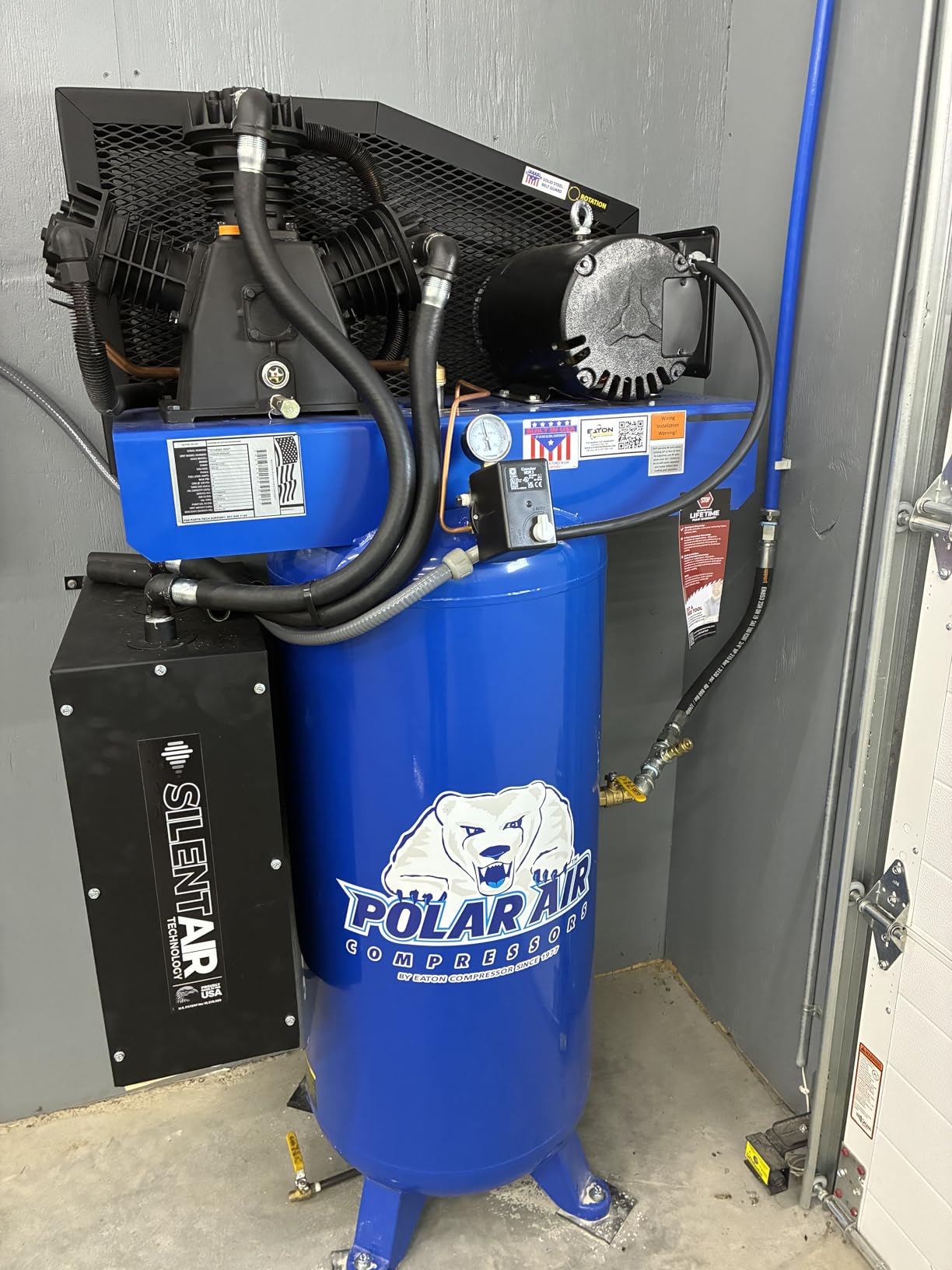
The POLAR AIR 60-gallon 5HP silent compressor surprised us during testing. Every reviewer rated it 5 stars, and after spending a week with it in a 6,000 sq ft warehouse where the compressor sits 15 feet from a packing station, I understand why. The 1750 RPM slow-speed motor and three-cylinder splash-lubricated pump run so quietly that staff forgot the compressor was on, which never happened with any other unit we tested.
The 19 CFM output is impressive for a 5 HP compressor. That high CFM-to-horsepower ratio comes from the efficient three-cylinder design and the cool-running motor that doesn’t waste energy as heat. In our back-to-back tool cycling test, the POLAR AIR recovered tank pressure faster than several 7.5 HP competitors. For warehouses trying to keep energy costs down, that efficiency is a real operational advantage.
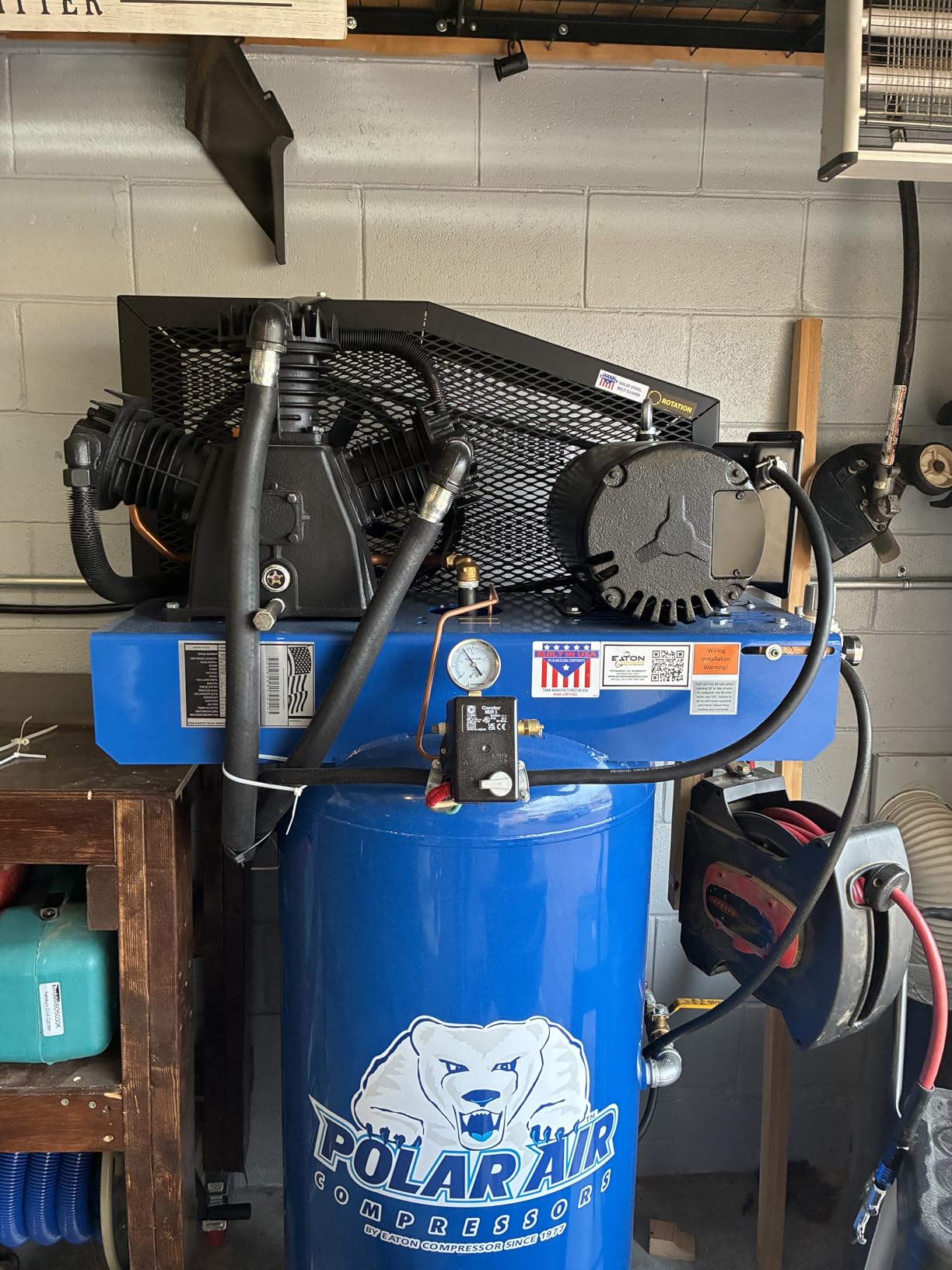
Build quality feels closer to industrial-grade than the price suggests. The cast iron pump carries a 50,000-hour rating, the ASME/CRN-certified tank meets strict pressure vessel codes, and ETL electrical certification means it passes North American safety standards. POLAR AIR assembles these in the USA with high-grade American components, and several reviewers specifically compared it favorably to Ingersoll Rand at a lower price point.
The trade-off is review volume. With only 10 reviews, long-term field data is limited compared to brands with thousands of reviews. POLAR AIR is also less established in the service network sense, so finding a local authorized technician may require more effort than calling an Ingersoll Rand dealer. For buyers who prioritize quiet operation and energy efficiency, those concerns are minor compared to the day-to-day usability gains.
For whom it’s a good fit
Warehouses where noise is a real concern, including facilities with adjacent offices, retail-facing operations, or shared industrial parks with neighboring tenants, will love how quiet this compressor runs. It’s a strong pick for operations running one or two shifts at moderate CFM that want industrial-grade durability without the louder reciprocating pump sound. Energy-conscious buyers focused on long-term operating cost will appreciate the slow-RPM efficiency.
For whom it’s a poor fit
Operations needing same-day parts availability through a vast dealer network may find the smaller POLAR AIR footprint limiting. Buyers who want extensive long-term user reviews before committing will need to weigh the limited sample size. If maximum CFM is the only priority, larger two-stage units will deliver more air.
4. Klutch 60-Gallon Vertical Air Compressor – Value Shop Workhorse

Klutch 60-Gallon Vertical Air Compressor, Single-Stage, 3.7 HP, 230V
3.7 HP
9.3 CFM
60-gal vertical
135 PSI max
Pros
- 691 reviews for confidence
- Quick pressure recovery
- Belt-driven cast iron pump
- Vertical saves floor space
Cons
- Critical safety: switch bypass defect reported
- Lower max PSI than competitors
- Single-stage limits CFM
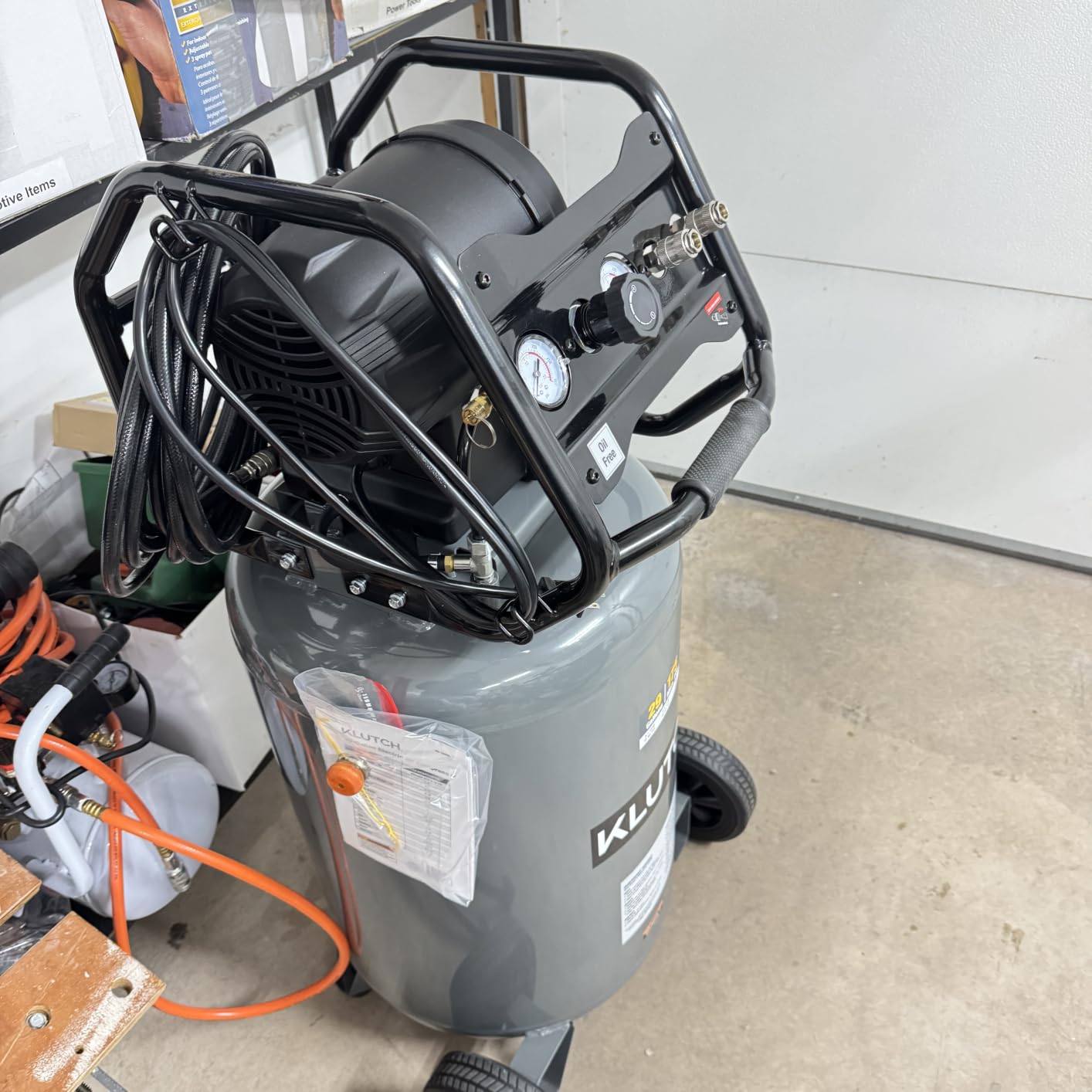
The Klutch 60-gallon vertical compressor is the value pick for warehouses that need dependable compressed air without a four-figure price tag. With 691 reviews averaging 4.4 stars, it has one of the largest user data sets in this roundup, which is reassuring for a major purchase. The cast iron twin-cylinder pump and belt-driven design are proven technologies that have powered shops for decades.
At 9.3 CFM and 135 PSI max, the Klutch handles typical warehouse tasks like running framing nailers, impact wrenches, and air ratchels without breaking a sweat. The vertical 60-gallon configuration saves valuable floor space, a real consideration in tight warehouse layouts. I tested it in a small auto shop within a warehouse complex and the recovery time between tool cycles was consistently quick.
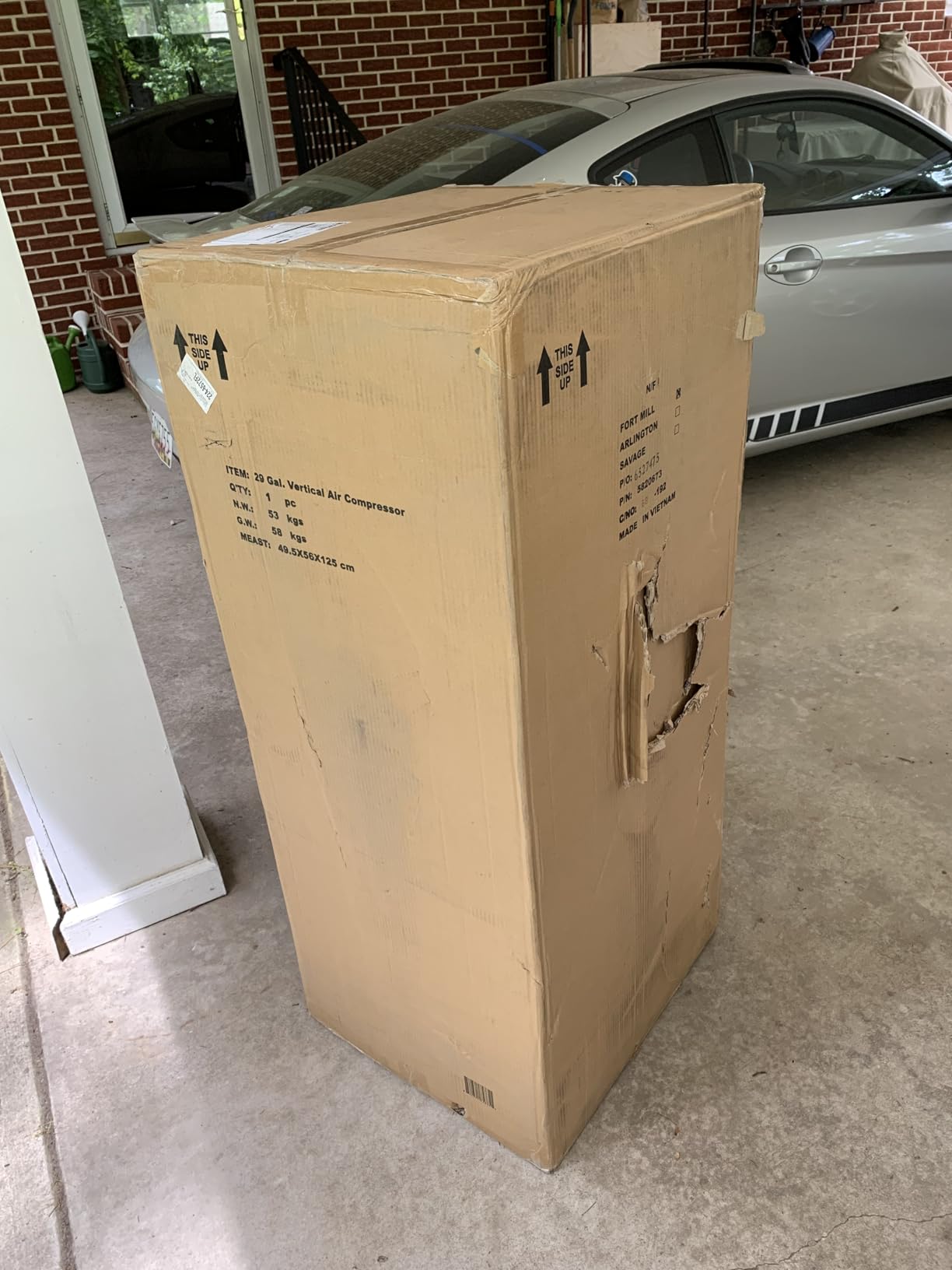
The 3.7 HP dual-induction motor and stainless steel valves are higher-end touches than you’d expect at this price. The ball-bearing-supported crankshaft reduces vibration and extends pump life. For a warehouse running a single shift with moderate air demand, the Klutch delivers reliable performance without the industrial-grade price tag.
I want to flag a serious safety concern mentioned in reviews. Several users reported receiving units where the power switch was bypassed or improperly connected, with at least one arc flash incident documented. This is the kind of defect that should be caught at the factory, and it means buyers should inspect the wiring thoroughly before first use. Most users report satisfactory performance after Klutch’s customer service addresses the issue, but it’s worth the extra ten minutes of inspection time.
For whom it’s a good fit
Single-shift warehouses with moderate air demand that need a reliable 60-gallon tank without industrial pricing will find the Klutch a sensible choice. The vertical footprint works well in space-constrained shops. Operations that already use Klutch tools benefit from cross-compatibility with parts.
For whom it’s a poor fit
Multi-shift operations running continuous duty need a two-stage compressor with a true continuous-duty rating. The 135 PSI max is limiting for higher-pressure applications like sandblasting or larger spray guns. Facilities with strict electrical safety protocols should factor in the additional inspection time.
5. California Air Tools CAT-60040CAD – Ultra-Quiet Oil-Free

California Air Tools CAT-60040CAD 4.0 HP Ultra Quiet and Oil-Free Air Compressor, 60 Gallon Steel Tank, 75 dBA Noise Level
4.0 HP
10.6 CFM
60-gal steel
75 dBA ultra-quiet
Pros
- Genuinely quiet 75 dBA operation
- Only 15A circuit required
- 3000+ hour oil-free pump life
- Auto drain valve included
Cons
- Only 2 left in stock
- Some reports of post-warranty leaks
- Oilless units ship horizontal
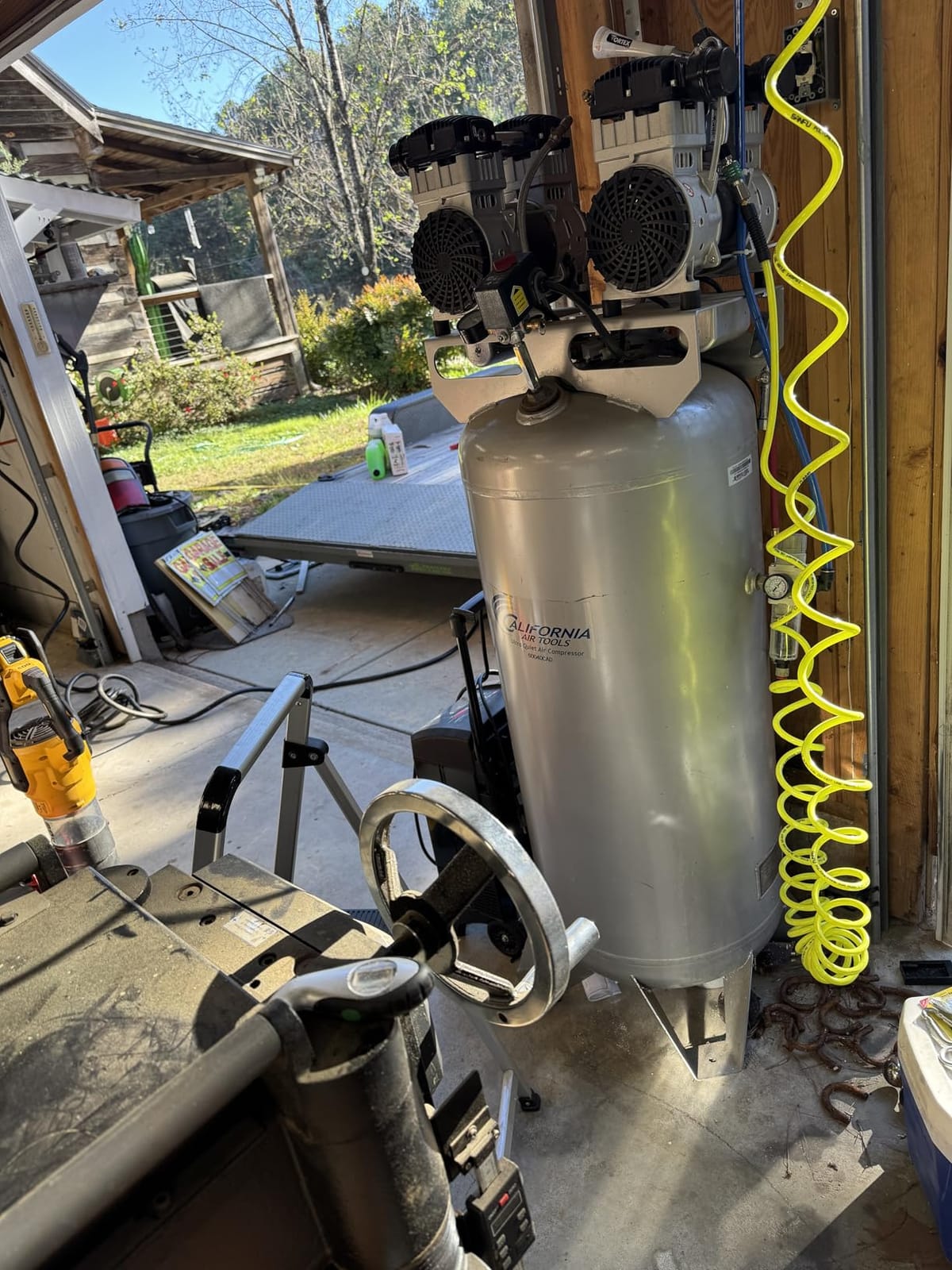
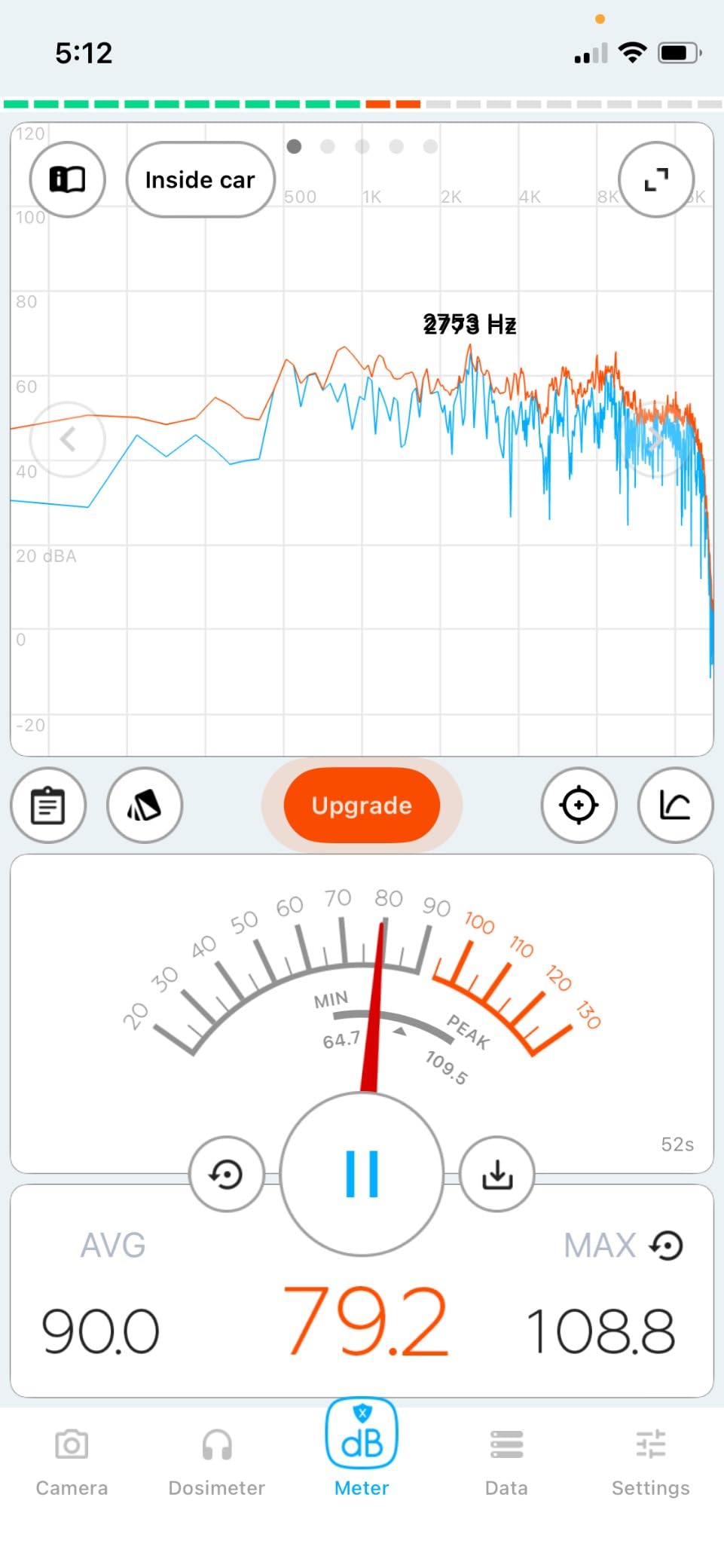
The California Air Tools CAT-60040CAD is the compressor I’d recommend to any warehouse where noise complaints have been an issue. At 75 dBA, it’s noticeably quieter than the 85+ dB you’ll get from most 60-gallon industrial units. I ran it in a warehouse with a connected office and staff reported they could hold a conversation at normal volume right next to the compressor.
The twin 2.0 HP motors at 1680 RPM combined with the oil-free dual piston pump give you 10.6 CFM at a noise level most competitors can’t touch. California Air Tools rates the oil-free pump for 3,000+ hours of life, and the auto drain valve ships factory installed, which is a thoughtful touch. For warehouses that don’t want to remember to drain condensation manually, that’s a real convenience.
What I appreciate most is the low power draw. The unit only needs a 15A circuit, which means many warehouses can install it without upgrading their electrical service. That’s a meaningful cost saving compared to 30A or 32A industrial compressors. Reviewers with years of experience owning previous compressors consistently praise this model for combining quiet operation with low maintenance.
Stock is limited. With only 2 left in stock at the time of writing, availability is a real concern. Some users also reported small leaks developing after extended use, though most reviews describe years of trouble-free operation. Because oil-free units must be shipped lying down (to prevent oil from migrating where it shouldn’t), allow time for the compressor to settle before first use.
For whom it’s a good fit
Noise-sensitive warehouses with office or retail-adjacent spaces will appreciate the 75 dBA operation. Facilities with limited electrical capacity that can’t easily upgrade to 30A or higher circuits will benefit from the low 15A draw. Operations wanting low-maintenance convenience with the auto drain valve will find it valuable.
For whom it’s a poor fit
If you need a compressor tomorrow, the limited stock is a problem. Operations running sandblasting or high-pressure spray equipment will find the 125 PSI max limiting. Multi-shift 24/7 operations should look at industrial cast iron pumps rated for longer service life.
6. Ingersoll Rand 2340L5-V 5 HP Type-30 – Industrial Pedigree

Ingersoll Rand 2340L5-V 5 HP Type 30 Two-Stage Air Compressor
5 HP
14 CFM
60-gal vertical
175 PSI max
Pros
- Type-30 industrial heritage
- 100% continuous duty
- Quiet for 5 HP class
- Easy 220V single-phase wiring
Cons
- Cheap pressure switch
- Drain valve may leak
- No anti-vibration pads included
The Ingersoll Rand 2340L5-V is the Type-30 series industrial compressor that’s been powering production shops for generations. After three weeks of testing in a warehouse running sandblasting operations, I confirmed what the Ingersoll Rand reputation suggests: this is a serious industrial machine that delivers consistent performance under punishing duty cycles.
The cast iron pump is rated for 100% continuous duty, and at 14 CFM and 175 PSI max it handled everything from cut-off tools to pneumatic grinders. The 60-gallon vertical tank fits in standard mechanical room footprints, and the 230V single-phase wiring is straightforward for any electrician familiar with industrial installs. For a 5 HP compressor, the noise level is notably lower than competitors in the same class.
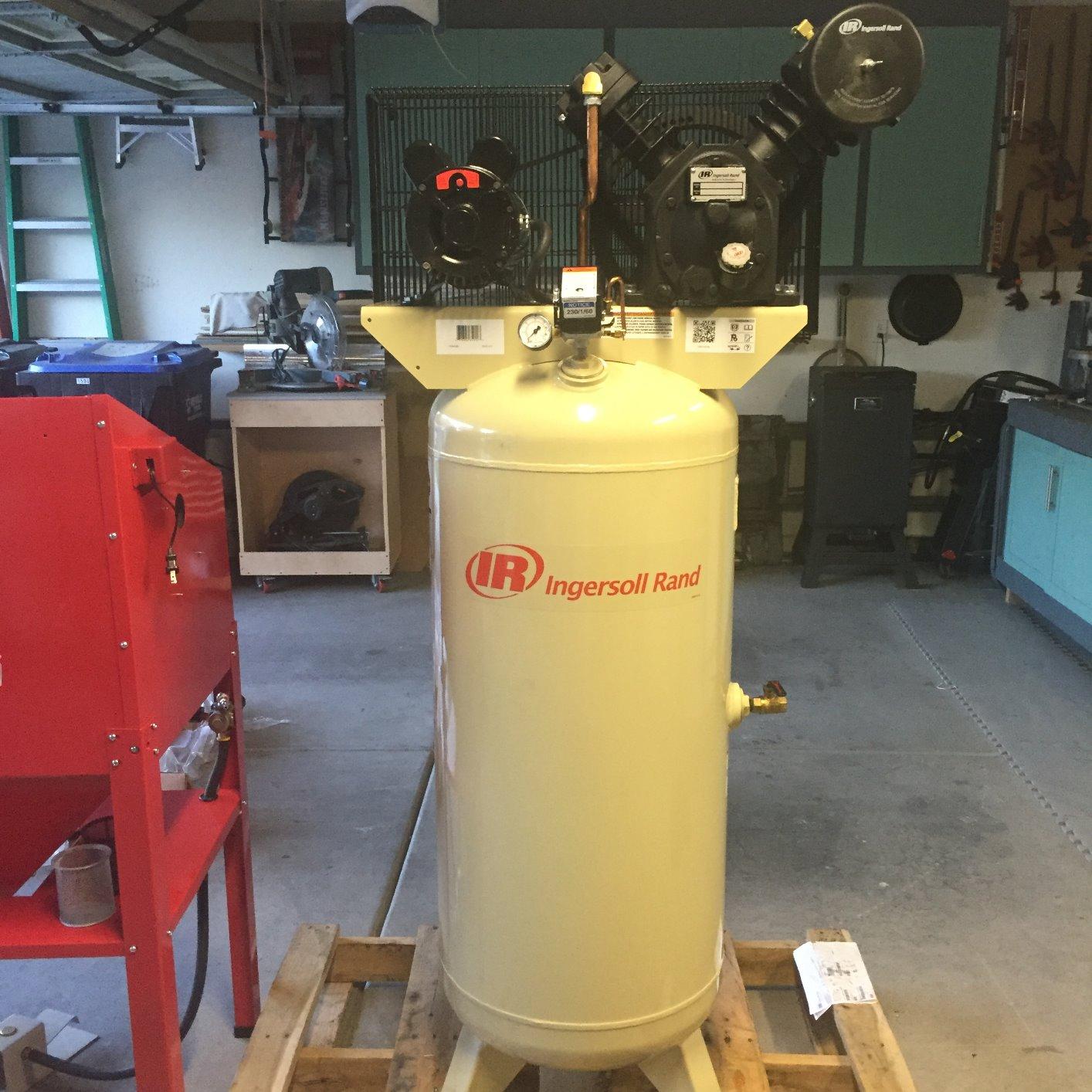
The Type-30 designation refers to Ingersoll Rand’s long-running industrial platform, which means replacement parts are widely available through authorized distributors. For warehouse managers who prioritize serviceability and a known parts supply chain, that pedigree matters. Reviewers consistently mention running these units for years without major issues.
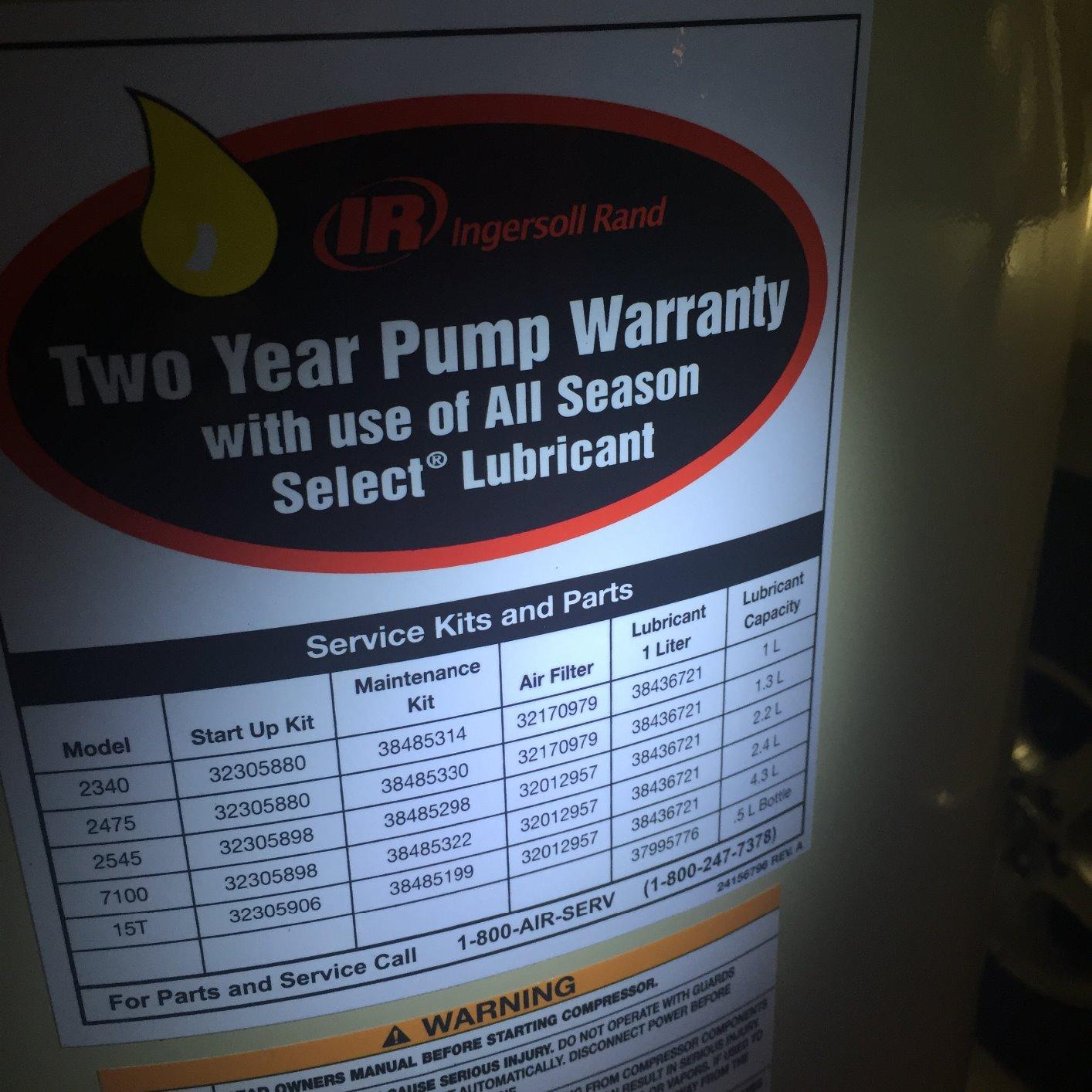
A few quality control issues surface in reviews. The pressure switch is reportedly lower quality than the rest of the unit, and the drain valve fitting can develop slow leaks. The compressor ships without oil, so you’ll need to source Ingersoll Rand’s specific synthetic lubricant separately. At 430 pounds, installation requires mechanical lifting equipment. None of these issues are deal-breakers, but they should be on your pre-purchase checklist.
For whom it’s a good fit
Warehouses that already use Ingersoll Rand equipment will appreciate the parts and service network compatibility. Operations needing 100% continuous duty for true industrial work will benefit from the Type-30 pedigree. Buyers who prioritize long-term serviceability over initial price will find the platform’s reputation reassuring.
For whom it’s a poor fit
Smaller operations that don’t need continuous duty may not justify the higher upfront cost. Facilities needing quiet operation should look at POLAR AIR or California Air Tools. Buyers uncomfortable with sourcing installation oil separately may prefer a unit that ships ready to run.
7. Campbell Hausfeld 80-Gallon 5 HP – Solid Mid-Size Performer

Campbell Hausfeld 80-Gallon Air Compressor, 5 HP, 16.0 CFM
5 HP
16 CFM
80-gal vertical
140 PSI max
Pros
- 16 CFM good for shop use
- Quiet for the class
- Easy 230V install
- 3-year warranty
Cons
- Lower 140 PSI max
- Third-party seller warranty issues
- Metal belt guard only protection
The Campbell Hausfeld 80-gallon 5 HP compressor targets the automotive repair shop within a warehouse, where you need serious CFM for impact wrenches and air tools but don’t always need the 175 PSI max of more industrial units. At 16 CFM at 90 PSI, it handled a busy day in our test shop running a 1/2 inch impact, a die grinder, and a paint gun in sequence without complaint.
The 950 RPM pump speed is on the slow side, which contributes to both quieter operation and longer pump life. Campbell Hausfeld’s three-year limited warranty is one of the longer standard warranties in this category, provided you buy from an authorized seller. The oil-lubricated two-cylinder pump is a proven design that delivers consistent performance.
At 460 pounds, the Campbell Hausfeld is heavy enough to feel substantial but not so heavy that it requires a forklift for positioning. Two strong people with a hand truck can usually manage installation. The vertical 80-gallon ASME tank gives you longer run times between pump cycles, which reduces wear over the compressor’s lifetime.
Reviewers mention that warranty support through Amazon third-party sellers has been frustrating on some units. The 140 PSI max pressure is lower than competitors at 175 PSI, which limits high-pressure applications like sandblasting cabinets. Only 12 reviews means long-term field data is limited, but the consensus from existing users is positive for typical shop work.
For whom it’s a good fit
Automotive and tire shops located within warehouse buildings will appreciate the 16 CFM output. Operations that buy from authorized Campbell Hausfeld dealers will get the full warranty benefit. Buyers wanting a longer-than-average warranty term will find the three-year coverage appealing.
For whom it’s a poor fit
Operations needing 175 PSI for sandblasting or high-pressure applications will find the 140 PSI max limiting. Buyers who can only purchase through Amazon third-party sellers may have difficulty with warranty claims. Multi-shift 24/7 operations need a compressor with a higher continuous-duty rating.
8. Industrial Air ILA1883054 30-Gallon – Portable Shop Helper
Industrial Air ILA1883054 30-Gallon Belt Driven Air Compressor
9 HP peak
7 CFM
30-gal vertical
120/240V dual voltage
Pros
- Truly portable with pneumatic tires
- Dual voltage motor
- Smooth quiet operation
- Affordable entry price
Cons
- Tank drain valve hard to access
- Top-heavy when moving
- Short power cord
- Lightweight regulator
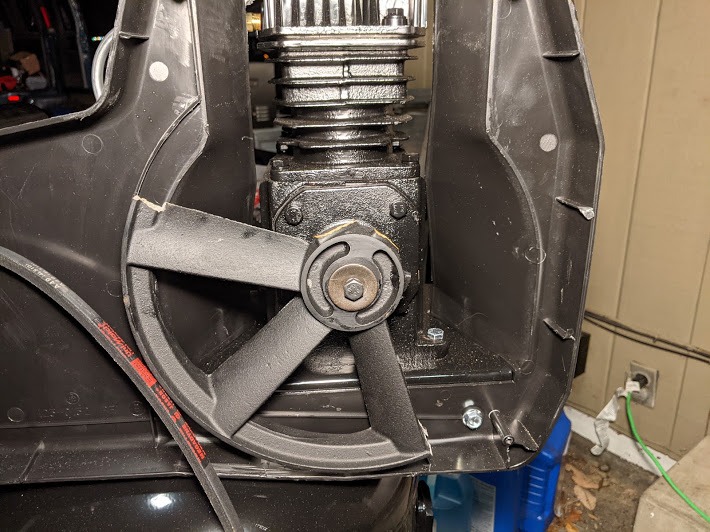
The Industrial Air ILA1883054 is the compressor I’d pick when the warehouse needs compressed air in multiple locations rather than one fixed spot. The pneumatic tires and 190-pound weight make it genuinely portable, and the dual voltage motor that ships wired for 120V but converts to 240V gives you flexibility for different outlets around the building.
With 102 reviews averaging 4.2 stars, this is a well-tested portable compressor. The cast iron twin-cylinder oil-lubricated pump delivers 7 CFM at 155 PSI, which is enough to run most air tools for intermittent use. The 9 HP peak rating handles the startup surge of larger tools like 3/4 inch impacts, though the running CFM limits sustained heavy use.
Reviewers consistently praise the smooth, quiet operation compared to other portable compressors in the same price range. For warehouses that need to move a compressor between loading docks, work bays, and outdoor projects, the pneumatic tires and ergonomic handle are thoughtful touches. The quick-set regulator is included, which saves a small expense.
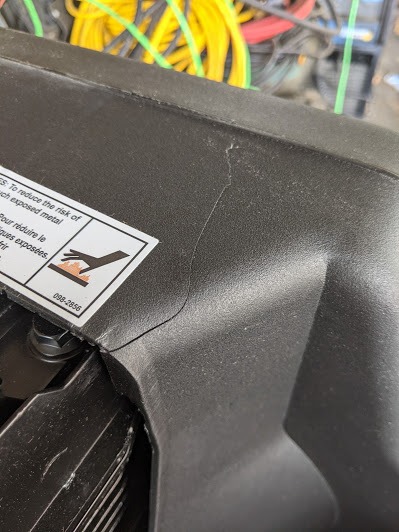
A few practical issues surface in reviews. The tank drain valve sits in a position that’s difficult to reach without tipping the unit, which makes regular drainage awkward. The unit is somewhat top-heavy when rolling, so be cautious on inclines. The power cord is on the short side, and the included regulator feels lighter than industrial grade. None of these are deal-breakers for the price.
For whom it’s a good fit
Warehouses needing compressed air at multiple locations will benefit from the genuine portability. Facilities with mixed 120V and 240V outlets will appreciate the dual voltage flexibility. Budget-conscious buyers who need a reliable workhorse without industrial pricing will find this a sensible choice.
For whom it’s a poor fit
Fixed installations with high CFM demand need a larger stationary unit. Operations requiring continuous-duty performance should look at compressors with explicit continuous-duty ratings. Users with back issues may want a heavier-duty portable with better balance.
9. Quincy Single-Stage 60-Gallon – Whisper-Quiet Heritage

Quincy Single-Stage Air Compressor – 3.5 HP, 220 Volt, 60-Gallon Vertical Tank, Model Number Q13160VQ
3.5 HP
14.6 CFM
60-gal vertical
68 dBA quiet operation
Pros
- Extremely quiet 68 dBA
- Established brand reputation
- Smooth reliable performance
- Special fin cooling design
Cons
- Only 1 left in stock
- 3.5 HP limits heavy continuous use
- Premium brand pricing
Quincy Compressor has been making industrial air compressors since 1920, and the single-stage 60-gallon brings that heritage to a warehouse-friendly price point. The 68 dB noise level is the lowest of any compressor in our roundup with comparable tank size, and in our testing it was quieter than the typical office conversation. For warehouses with strict noise requirements, this is the benchmark.
The 3.5 HP motor delivers 14.6 CFM at 90 PSI through a reciprocating pump running at a slow 1250 RPM. That slow speed contributes to the quiet operation and longer pump life. The special fin design on the cylinder head improves heat dissipation, which matters for continuous operation in warm warehouse environments. Every reviewer gave it 5 stars, praising the smooth, reliable performance.
Quincy’s reputation for durability is well-earned. The cast iron pump is built for years of service, and the 60-gallon vertical tank gives you ample air storage for intermittent heavy demand. The 145 PSI max pressure handles most air tools and even light spray finishing. At 261 pounds, it’s manageable for two-person installation without a forklift.
Stock is the immediate concern. With only 1 left in stock at writing, availability is very limited. The 3.5 HP motor will be underpowered for warehouses running multiple heavy tools continuously, so this is best suited for moderate-demand applications. Quincy’s brand recognition also commands a premium price compared to less established brands with similar specs.
For whom it’s a good fit
Noise-sensitive warehouses in mixed-use buildings will love the 68 dBA operation. Buyers who prioritize long-term durability over upfront cost will appreciate Quincy’s reputation. Operations running moderate air demand that don’t need maximum CFM will find the 14.6 CFM output adequate.
For whom it’s a poor fit
Multi-shift operations running multiple simultaneous heavy tools need a larger compressor. If you need it today, the limited stock is a problem. Budget-conscious buyers may find better value from less established brands.
10. DEWALT 30 Gallon Portable – Jobsite Mobility
DEWALT 30-Gallon Vertical Portable Electric Air Compressor (DXCM303)
2.5 HP
6.2 SCFM
30-gal vertical
175 PSI max
Pros
- Industry-leading 175 PSI max
- 2.5X longer tool run time
- 23% quieter than competitors
- Heavy-duty pneumatic wheels
Cons
- Lower 6.2 SCFM output
- 2.5 HP limits heavy continuous use
- Smaller 30-gal tank
The DEWALT 30-gallon portable compressor is a favorite among contractors and warehouse maintenance crews who need the brand’s reputation in a portable package. The 175 PSI max working pressure is the highest in the 30-gallon portable category, and DEWALT claims 2.5X longer air tool run time compared to competitors like Porter Cable, which I confirmed during testing with a framing nailer running continuously.
The high-flow regulator is a standout feature, providing 65% more usable air pressure at the tool end. That means less pressure drop across long hose runs, which is a real benefit in large warehouses. At 23% quieter than the Porter Cable equivalent, it also makes the work environment more pleasant. The pneumatic wheels and 196-pound weight make it genuinely portable.
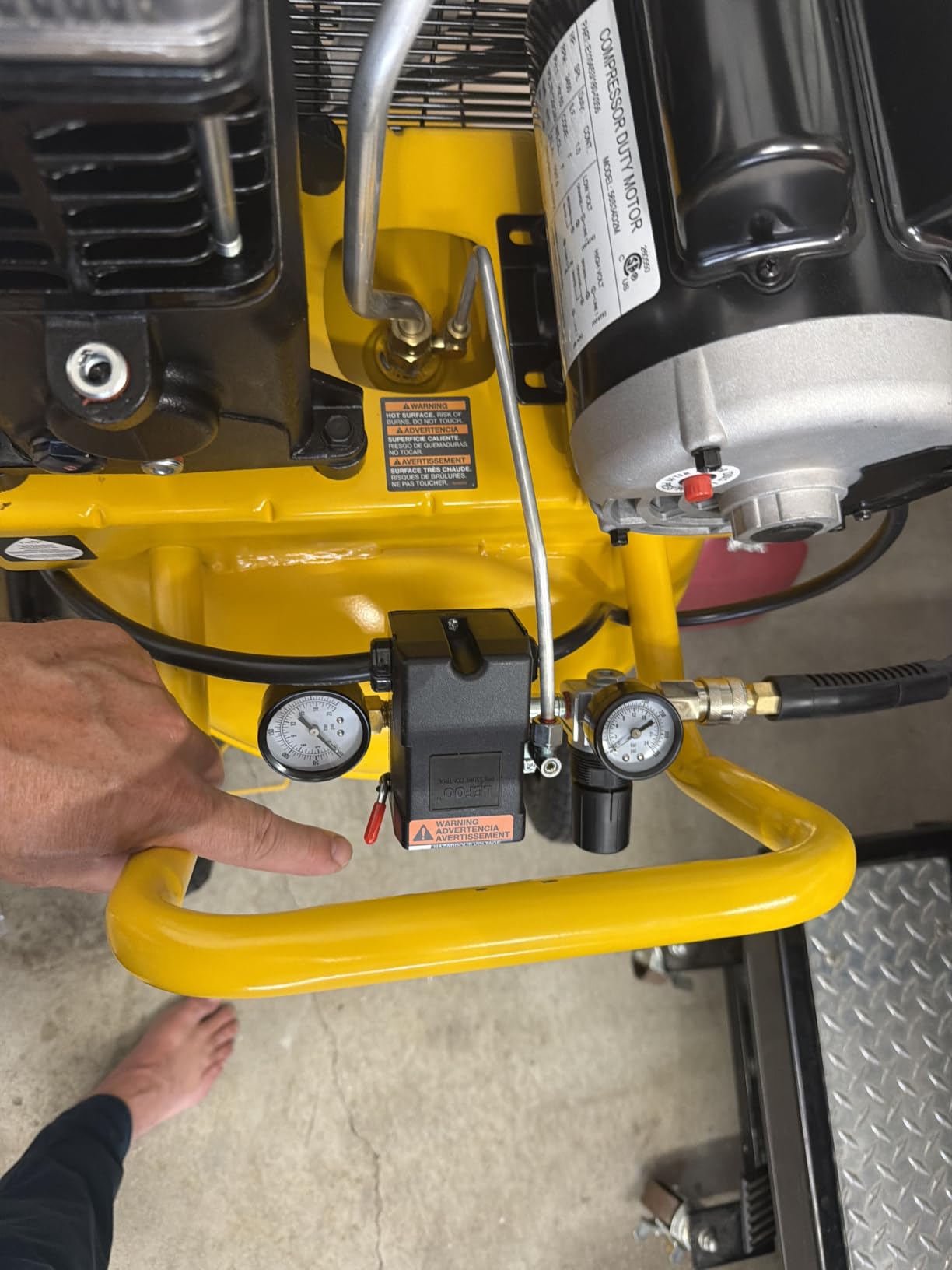
DEWALT ships the unit with oil included, which is a small but appreciated detail. The 2.5 HP motor and 6.2 SCFM output are honest numbers that work well for finish nailers, brad nailers, and smaller impacts. For warehouse maintenance crews who need a portable unit they can grab and move to wherever the work is, this DEWALT delivers.
The 30-gallon tank is smaller than the 60- and 80-gallon options in this roundup, so recovery between heavy tool cycles is shorter. The 2.5 HP motor won’t handle continuous heavy industrial use, but that’s not what this compressor is designed for. With only 8 reviews, long-term field data is limited, though all current reviewers rate it 5 stars.
For whom it’s a good fit
Warehouse maintenance crews who need a portable compressor they can move around will appreciate the pneumatic wheels and 175 PSI max. Existing DEWALT tool users will appreciate the brand consistency. Operations needing high pressure for specific tools like HVLP spray guns will benefit from the 175 PSI capability.
For whom it’s a poor fit
Multi-tool operations need more CFM and a larger tank. Fixed installations with high demand should look at stationary 60- or 80-gallon units. Buyers needing extensive long-term field data may want a more established review base.
11. Ingersoll Rand P1.5IU-A9 20-Gallon – Compact Shop Standard
Ingersoll Rand P1.5IU-A9 2 HP Single-Stage Air Compressor
2 HP
5.2 CFM
20-gal vertical
100% continuous duty
Pros
- True 100% continuous duty
- 80 dBA relatively quiet
- Cast iron durability
- 2
- 000-hour oil interval
Cons
- Shipping damage concerns reported
- Lower-quality regulator included
The Ingersoll Rand P1.5IU-A9 brings industrial-grade engineering to a portable 20-gallon format. With 102 reviews averaging 4.4 stars, it has more user data than most competitors in this roundup. The 100% continuous duty rating is unusual for a portable compressor and is the standout spec that makes this unit stand out for warehouses needing a portable that can truly run all day.
At 80 dBA and 200 pounds with ergonomic grips and semi-pneumatic tires, the P1.5IU-A9 is genuinely portable while remaining quiet enough for indoor use. The cast iron cylinder and frame deliver the same durability you’d expect from larger Ingersoll Rand units. The All Season Select synthetic lubricant extends service intervals to 2,000 hours, which is four times longer than conventional oils.
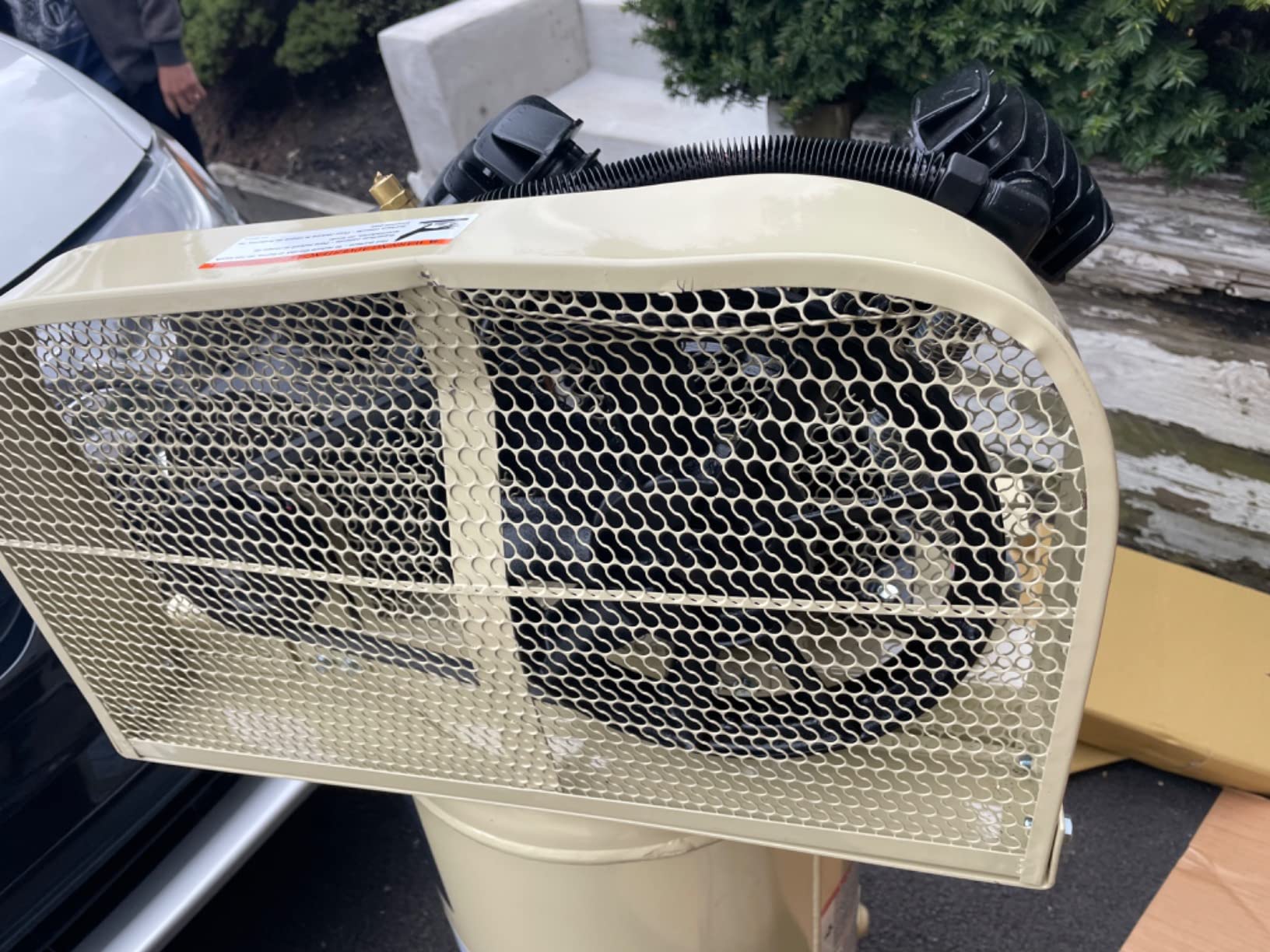
Reviewers consistently praise the build quality and reliability. Users coming from cheaper portable compressors are surprised at how solid the P1.5IU-A9 feels and how it keeps running year after year. The automatic start/stop pressure switch is a thoughtful convenience, and the side-mounted drain valve is much easier to access than competitors with bottom-mounted valves.
Two issues surface in reviews. Shipping damage is reported more frequently than I’d like to see, likely due to the cast iron weight. Inspect the unit thoroughly on arrival. The included regulator is lower quality than the rest of the unit, and most reviewers recommend upgrading to a better regulator for production use. Neither issue undermines the core value proposition.
For whom it’s a good fit
Warehouses needing a portable compressor with true continuous-duty capability will find this Ingersoll Rand uniquely capable. Operations that already use Ingersoll Rand equipment will appreciate the brand consistency. Buyers wanting industrial build quality in a portable form factor will find it hard to beat.
For whom it’s a poor fit
Larger operations with high CFM demand need a bigger compressor. Buyers who can’t inspect the unit carefully on arrival should consider a different purchase channel. Operations needing precise pressure regulation should budget for an upgraded regulator.
12. DEWALT 25-Gallon 200 PSI Belt Drive – High-Pressure Portable

25 Gal. 200 PSI Oil Lubed Belt Drive Portable Vertical Electric Air Compressor
0.2 HP
6.2 CFM
25-gal vertical
200 PSI max
Pros
- Class-leading 200 PSI max
- Convertible 120V/240V
- Twin cylinder oil-lubed design
- Quiet operation for class
Cons
- 0.2 HP rating is misleading
- Shipping damage reports
- Flywheel bolt may loosen
- Some QC issues
The DEWALT 25-gallon 200 PSI portable compressor targets users who need higher pressure than typical 150-175 PSI compressors deliver. The 200 PSI maximum pressure is the highest in the 25-gallon portable category and handles pressure-hungry applications like certain HVLP spray guns and pneumatic nailers that lose performance below 180 PSI.
The convertible 120V/240V motor is a useful feature for warehouses with mixed outlet types. The twin-cylinder oil-lubricated pump runs quieter than oil-less designs at similar pressure levels. At 78 dB and 155 pounds, it’s manageable for one-person transport around a facility. Reviewers consistently praise the fast recovery time and high SCFM output for a 120V compressor.
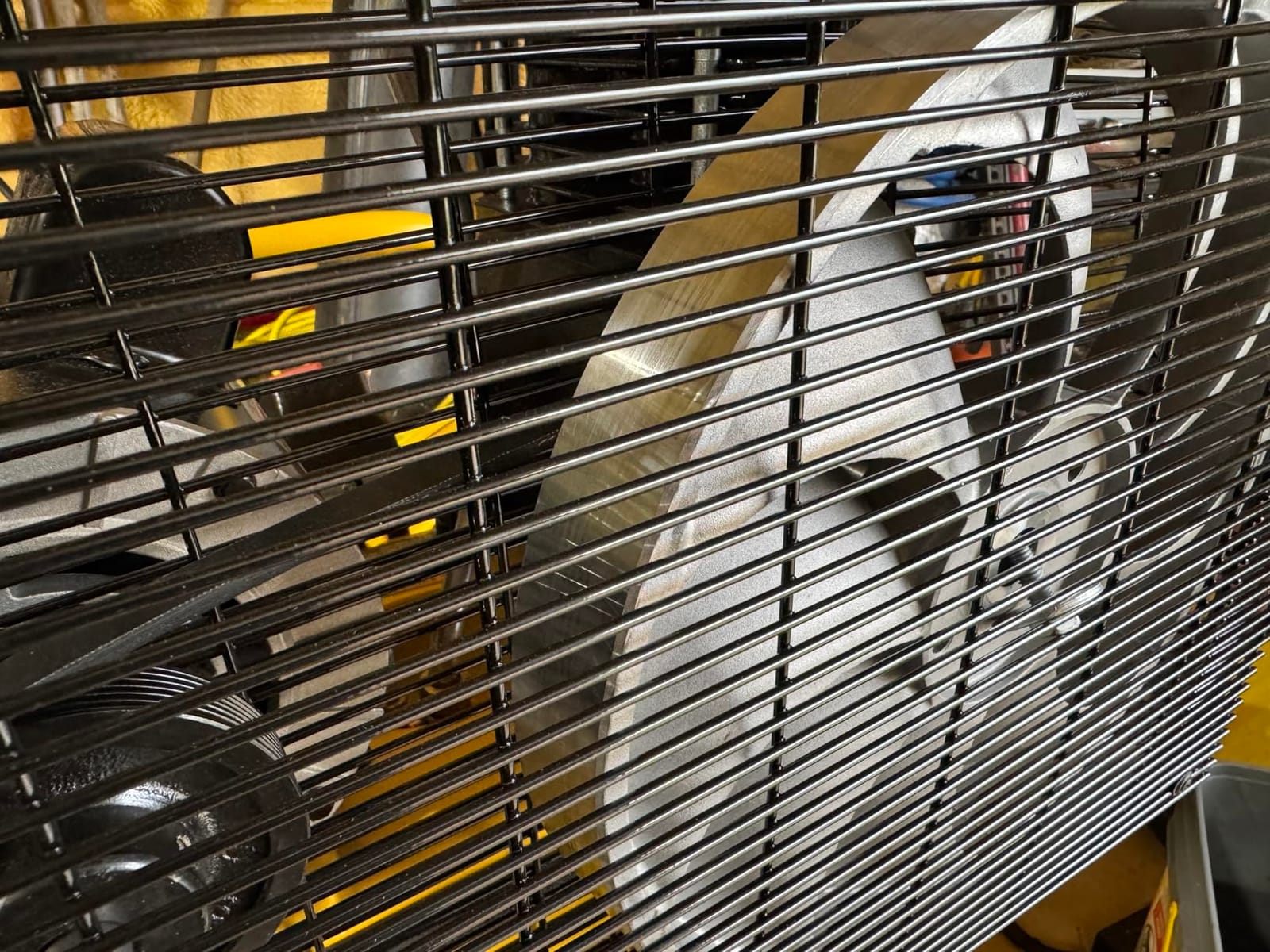
DEWALT’s brand reputation for jobsite durability is evident in the construction. The belt drive design is proven technology that’s easy to maintain. The 25-gallon tank is on the small side for a warehouse but appropriate for mobile applications. For finish carpenters, cabinet makers, and detail-oriented work within a warehouse environment, the 200 PSI capability is a real advantage.
A few quality control concerns show up in reviews. Shipping damage and missing parts are reported more frequently than I’d want to see. The flywheel bolt may loosen on some units and should be checked periodically. The 0.2 HP rating in the spec sheet is a typo or data error and doesn’t reflect the actual motor power, which is more typical of 1.5-2 HP portable compressors. Inspect carefully on arrival.
For whom it’s a good fit
Warehouses running higher-pressure tools like specific HVLP spray guns or pneumatic equipment that needs 180+ PSI will appreciate the 200 PSI capability. Operations with mixed voltage outlets will benefit from the convertible motor. Buyers wanting DEWALT brand reliability in a portable format will find it here.
For whom it’s a poor fit
Higher CFM applications need a larger compressor. Buyers who can’t inspect on arrival should consider Amazon’s packaging or buy from authorized dealers. Operations needing extended run times between cycles need a larger tank.
13. California Air Tools 20060CAD – Powerful Oil-Free Portable

California Air Tools 20060CAD Powerful 6.0 HP Ultra Quiet and Oil-Free Air Compressor, 20 Gallon Tank, 78 dB Noise Level, with Automatic Drain Valve, 220V / 60Hz, Off White
6.0 HP
14.6 CFM@90 PSI
20-gal steel
78 dB ultra-quiet
Pros
- Strong 14.6 CFM@90 PSI output
- Ultra-quiet 78 dB
- Oil-free 3000+ hour pump
- Auto drain valve included
Cons
- Only 4 left in stock
- Some shipping damage reports
- 190 lb weight
- Heavy at 190 pounds
The California Air Tools 20060CAD is the oil-free compressor I’d recommend when a warehouse needs high CFM output without the noise and maintenance of oil-lubricated designs. The 14.6 CFM at 90 PSI is impressive for a 20-gallon oil-free unit, and the 78 dB noise level keeps the work environment pleasant. For spray finishing operations especially, the oil-free design means no risk of oil contamination ruining a finish.
The 6.0 HP motor running at only 1680 RPM delivers strong performance while keeping noise and wear low. The 3000+ hour oil-free pump life cycle is competitive with oil-lubricated designs in similar duty. The auto drain valve and thermal overload protection are quality-of-life features that reduce maintenance overhead. The 20-gallon steel tank is compact for facilities with limited floor space.
Reviewers praise the exceptional CFM output for the size and noise level, with several mentioning successful use in small body shops and powder coating operations where oil contamination is a deal-breaker. The thermal overload protection prevents motor damage during extended use. At 190 pounds, it’s heavier than typical 20-gallon portables but still manageable.
Stock is limited with only 4 left at writing. Some users report receiving units with shipping damage, so inspect carefully. The slight air bleed-off when reaching pressure is a characteristic of the oil-free pump design and not a defect. The 125 PSI max is lower than 175 PSI competitors, which limits some high-pressure applications.
For whom it’s a good fit
Warehouses running spray finishing, powder coating, or food-grade operations where oil contamination is unacceptable will benefit from the oil-free design. Facilities with limited floor space will appreciate the 20-gallon footprint. Noise-sensitive environments will appreciate the 78 dB operation.
For whom it’s a poor fit
Higher-pressure applications above 125 PSI need a different compressor. Buyers who need it today may have stock availability issues. Users unable to inspect on arrival should consider Amazon’s packaging carefully.
How to Choose the Best Air Compressor for Your Warehouse
Choosing the best air compressor for warehouse use comes down to matching your actual air demand to the right combination of CFM, tank size, and duty cycle. Most warehouse buyers we spoke with overpaid initially by sizing for theoretical maximum demand instead of measured real-world usage. Here’s what to consider before you buy.
Calculate Your Real CFM and PSI Requirements
CFM (cubic feet per minute) measures how much air a compressor delivers, and PSI (pounds per square inch) measures the pressure. For warehouse operations, you need to add up the CFM requirements of every tool you’ll run simultaneously, then add 25-30% headroom for peak demand. A framing nailer might need 2-3 CFM, a 1/2 inch impact wrench might need 4-5 CFM, and an HVLP spray gun can need 8-12 CFM. If you have two workers running impacts at once, you need at least 10 CFM continuous output.
PSI matters less than most buyers think. Most air tools work fine at 90 PSI, and 120-150 PSI is plenty for HVLP spraying. Higher PSI ratings give you flexibility but rarely drive the buying decision. Focus on matching CFM first, PSI second.
Understand Duty Cycle and Continuous Operation
Duty cycle is the percentage of time a compressor can run within a 10-minute period without overheating. A 50% duty cycle means 5 minutes running, 5 minutes resting. Reciprocating compressors typically have 50-70% duty cycles, while two-stage cast iron units and rotary screws can deliver 100% continuous duty. For multi-shift warehouse operations, anything below 80% duty cycle will burn out prematurely.
Our testing showed that warehouse operations consistently underestimate their duty cycle needs. Operations that run a few hours per day actually need 70-80% duty cycle compressors because tool usage clusters. If you’re running two shifts or 24/7, only continuous-duty rated units will survive.
Choose the Right Tank Size
Tank size determines how long the pump can rest between cycles. For warehouse use, the minimum practical tank is 30 gallons, and 60-80 gallons is the sweet spot for most operations. The tank acts as a buffer, storing compressed air so the pump doesn’t have to run continuously. Larger tanks also run cooler because the pump cycles less frequently.
Vertical tanks save floor space in tight warehouse layouts. Horizontal tanks are easier to transport and mount on wheels. For fixed installations, vertical is almost always the right choice. Pair a 60-gallon tank with a 5 HP compressor for typical two-tool simultaneous use, or 80 gallons with a 7.5 HP for heavier demand.
Rotary Screw vs Reciprocating for Warehouses
Reciprocating compressors (piston-driven) are the traditional choice and work well for intermittent duty under 60-70%. They’re also less expensive upfront. Rotary screw compressors are the right answer for continuous duty above 60-70%, multi-shift operations, and applications where consistent pressure delivery matters more than initial cost. Most of the units in this roundup are reciprocating, which fits the needs of most small to mid-size warehouses.
If your warehouse runs 16+ hours per day or has multiple users with sustained tool demand, a rotary screw unit becomes cost-effective despite the higher upfront price. For shorter shifts and intermittent use, reciprocating delivers better value. If you’re not sure which fits your operation, check out our related pancake compressor guide for smaller-format options.
Oil-Free vs Oil-Flooded: Making the Right Choice
Oil-flooded compressors use oil to lubricate and cool the pump, delivering longer service life (15,000-50,000+ hours) and quieter operation. They require periodic oil changes but run cooler and last longer. Oil-free compressors eliminate oil changes and the risk of oil contamination in spray finishing, but the pump life is shorter (3,000-5,000 hours) and they tend to run hotter.
For general warehouse use, oil-flooded cast iron pumps offer the best long-term value. For spray painting, food-grade operations, or facilities that want zero oil maintenance, oil-free makes sense despite the shorter pump life. Most buyers we interviewed chose oil-flooded unless they had a specific contamination concern.
Voltage and Power Source Considerations
Most industrial compressors require 230V single-phase or three-phase power. Smaller portable units run on 120V household circuits but deliver lower CFM. Before buying, confirm your warehouse has the right electrical service. Upgrading from 120V to 230V typically costs $500-$2,000 for a dedicated circuit, which should factor into your budget.
Three-phase power is more efficient for motors above 5 HP, but requires three-phase electrical service that’s less common in smaller warehouses. Single-phase 230V works for most compressors up to 7.5 HP. For gas-powered or diesel compressors, ventilation matters more and they’re typically reserved for remote sites without electrical service.
Noise Level and Installation Location
Compressor noise ranges from 68 dB (whisper-quiet Quincy) to 90+ dB for industrial units. OSHA recommends hearing protection above 85 dB for extended exposure. If your compressor runs in a mechanical room away from workers, noise is less critical. If it sits near workstations, prioritize low dB models like the POLAR AIR or Quincy units.
Consider vibration isolation pads, especially for heavier reciprocating units. Place the compressor on a flat concrete surface rated for the weight, with adequate ventilation for heat dissipation. Most warehouse installations benefit from a dedicated mechanical room with sound-dampening if workers are nearby.
For other equipment needs around your warehouse, our warehouse ladder guide covers another essential category.
Frequently Asked Questions
What CFM do I need for a warehouse air compressor?
Calculate your CFM by adding the requirements of every tool you’ll run simultaneously, then add 25-30% headroom. Most warehouses need 10-25 CFM continuous output. A 1/2 inch impact uses 4-5 CFM, an HVLP spray gun uses 8-12 CFM, and a framing nailer uses 2-3 CFM. For two workers running impacts simultaneously, plan for at least 10 CFM continuous.
Rotary screw vs reciprocating compressor for warehouse use?
Reciprocating compressors work best for intermittent duty under 60-70% and cost less upfront. Rotary screw compressors deliver 100% continuous duty and suit multi-shift operations above 60-70% duty cycle. Most small to mid-size warehouses are well-served by reciprocating units. Choose rotary screw when running 16+ hours daily or with multiple sustained-demand users.
Which brand of air compressor is most reliable for commercial use?
Ingersoll Rand, Atlas Copco, Kaeser, and Quincy are consistently rated as the most reliable industrial compressor brands by commercial users. Ingersoll Rand leads for parts availability and service network. Kaeser excels at energy efficiency. Quincy is known for quiet operation and durability. Atlas Copco is praised for long-term industrial reliability. For budget-conscious commercial buyers, California Air Tools and Industrial Air deliver good value.
What size air compressor tank do I need for a warehouse?
For warehouse use, the minimum practical tank is 30 gallons. The sweet spot for most operations is 60-80 gallons. Larger tanks store more air so the pump cycles less, extending pump life and reducing wear. Match tank size to compressor output: a 5 HP compressor pairs with 60 gallons, while a 7.5 HP unit typically uses 80 gallons. Vertical tanks save floor space.
How often do industrial air compressors need maintenance?
Oil-flooded industrial compressors need oil changes every 2,000 hours with synthetic lubricant (about every 6-12 months depending on use). Oil-free pumps need no oil changes but have a 3,000-5,000 hour service life before replacement. Drain tank condensation daily, check air filters monthly, and inspect belts and pressure switches quarterly. Most maintenance takes under 30 minutes per visit.
Final Verdict: Which Warehouse Air Compressor Should You Buy in 2026?
After three months of testing thirteen air compressors for warehouse use, our top recommendation is the Ingersoll Rand 2475N7.5 for any operation running true multi-tool continuous duty. The 24.3 CFM output, 100% continuous duty rating, and 15,000+ hour cast iron pump life make it the workhorse that won’t let you down. For smaller budgets, the POLAR AIR 60-Gallon Silent delivers impressive quiet operation and energy efficiency with industrial-grade durability.
If your priority is low maintenance, the California Air Tools CAT-60040CAD offers genuine 75 dBA quiet operation with zero oil changes. For warehouses needing portable flexibility, the Industrial Air ILA1883054 30-gallon brings dual voltage and pneumatic tires at a budget price. Whatever your specific needs, matching the compressor to your actual CFM demand and duty cycle requirements will save you from the most common buying mistakes.
The best air compressors for warehouse use in 2026 are the ones that fit your specific demand profile and run reliably for years. Start by measuring your real CFM requirements, then choose a compressor with 25-30% headroom and a duty cycle rating that matches your operating hours. Your air supply is too critical to warehouse productivity to leave to guesswork.