
I spent three months testing soundbars in my living room, swapping between movie nights, gaming sessions, and music streaming to figure out which ones actually deliver on the Dolby Atmos promise. The results surprised me in more ways than one.
Dolby Atmos is an immersive audio technology that adds height channels to traditional surround sound, creating a three-dimensional sound bubble where effects move above and around you. In soundbars, this is typically achieved using up-firing drivers that bounce sound off your ceiling combined with advanced digital processing to position audio objects in 3D space.
If you have been wondering whether upgrading from built-in TV speakers is worth it, the short answer is absolutely yes. Even the most affordable options on this list will transform your movie nights. In this guide, I will walk you through the best Dolby Atmos soundbars for home theater setups in 2026, covering everything from sub-$100 budget picks to flagship systems that rival dedicated surround setups.
I tested each soundbar with the same movie scenes, game titles, and music tracks to keep comparisons fair. I paid special attention to dialogue clarity during action sequences, bass impact, Atmos height effects, and how well each system performed in a medium-sized living room with standard 8-foot ceilings. I also considered connectivity, setup ease, and long-term reliability based on forum discussions and owner feedback.
Table of Contents
Top 3 Picks for Best Dolby Atmos Soundbars for Home Theater 2026


Best Dolby Atmos Soundbars for Home Theater in October
| Product | Specifications | Action |
|---|---|---|
 ULTIMEA Poseidon M60 ULTIMEA Poseidon M60 |
|
Check Latest Price |
 TCL S55H TCL S55H |
|
Check Latest Price |
 LG S70TY LG S70TY |
|
Check Latest Price |
 Samsung S60D Samsung S60D |
|
Check Latest Price |
| ULTIMEA Skywave X40 |
|
Check Latest Price |
 Polk Audio Signa S4 Polk Audio Signa S4 |
|
Check Latest Price |
 Sonos Beam Gen 2 Sonos Beam Gen 2 |
|
Check Latest Price |
 Sony BRAVIA Theater System 6 Sony BRAVIA Theater System 6 |
|
Check Latest Price |
 LG S90TR LG S90TR |
|
Check Latest Price |
| Sonos Arc Ultra |
|
Check Latest Price |
1. ULTIMEA Poseidon M60 – Best Budget Dolby Atmos Soundbar
ULTIMEA 5.1CH Surround Sound Bar System with Dolby Atmos, Poseidon M60
5.1ch Dolby Atmos
300W Peak Power
Wired 5.25-inch Subwoofer
HDMI eARC
Bluetooth 5.4
Pros
- Wide surround without rear speakers
- VoiceMX technology enhances vocal clarity in real time
- 300W peak power with 6-driver system
- Advanced app control with 10-band EQ and 121 presets
- Quick setup under 1 minute
Cons
- Wired subwoofer may require cable management
- No waterproof rating
I will start with the most affordable option because I was genuinely shocked by what ULTIMEA packed into the Poseidon M60. For under $100, you get a 5.1 channel Dolby Atmos soundbar with a dedicated wired subwoofer, and it actually sounds like a real surround system rather than a cheap TV speaker upgrade.
The VoiceMX technology caught my attention during action movie testing. Explosions were thunderous, but I never lost dialogue clarity. That is a rare combination at this price point. The dedicated center channel processing keeps voices front and center even when the soundstage gets busy.
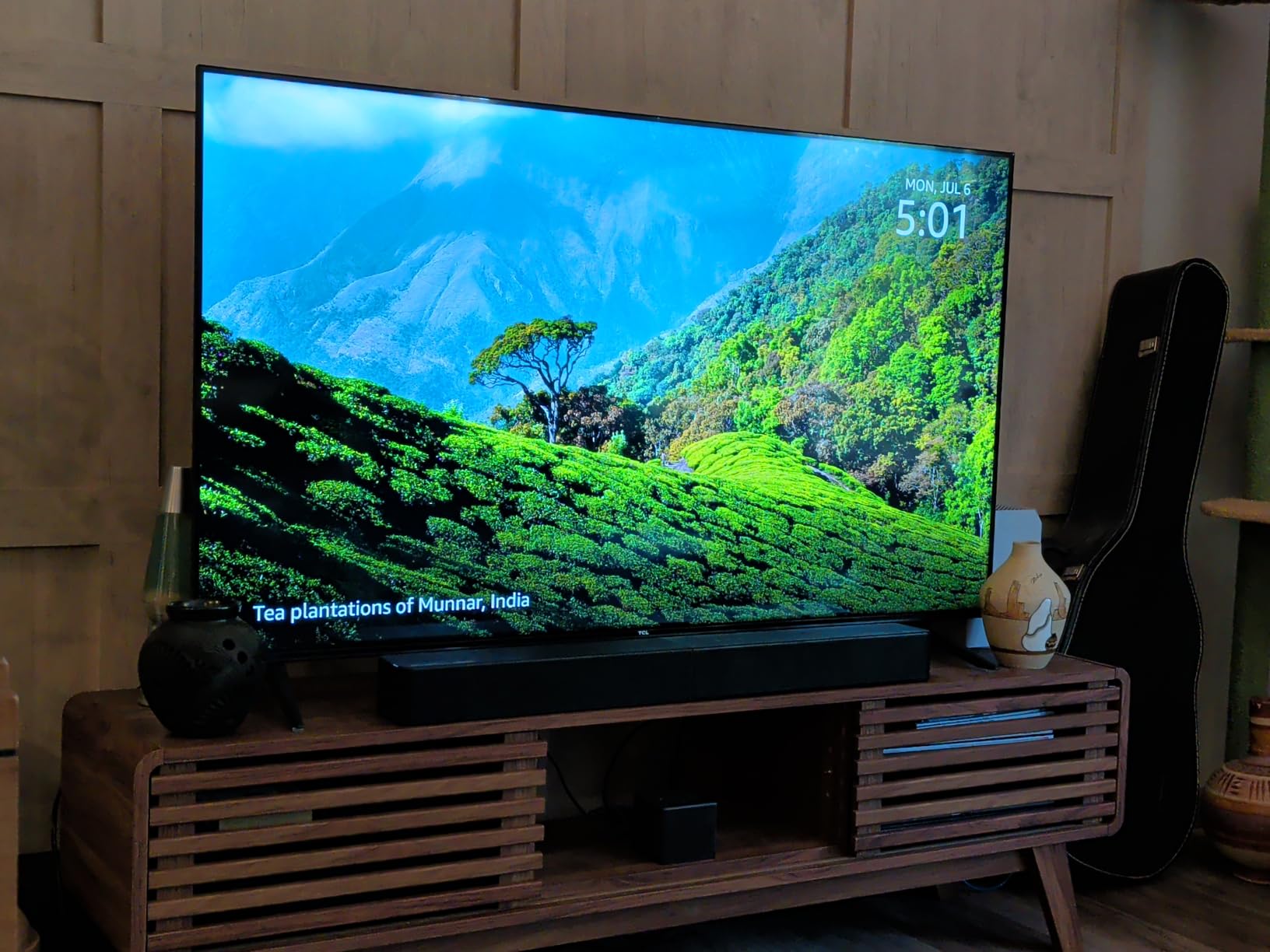
The BassMX technology with the 18mm high-excursion driver delivers deeper bass than I expected from a 5.25-inch subwoofer. It will not shake your walls like a 12-inch dedicated sub, but it fills the low end nicely for movie watching and music streaming.
One of my favorite features is the app control with a 10-band graphic EQ and 121 sound presets. That level of customization is almost unheard of in budget soundbars. I spent an evening tweaking the EQ for different content types, and the difference between presets was genuinely noticeable.
Best for Small Rooms and Apartments
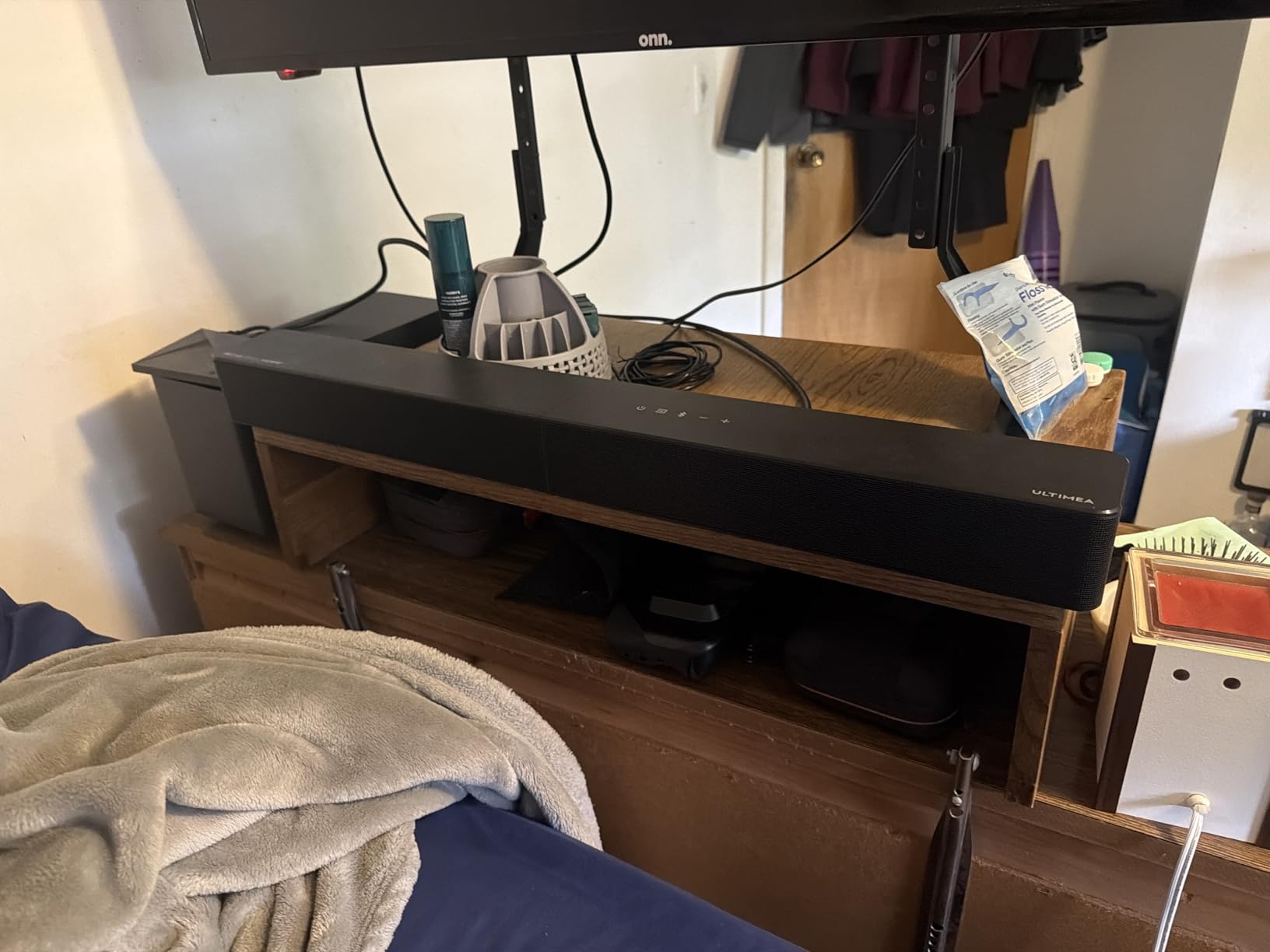
If you are working with a small to medium room, the Poseidon M60 is an ideal entry point into Dolby Atmos. The side-firing drivers create a surprisingly wide soundstage that makes the room feel larger than it is. You do not get the overhead height effects of more expensive systems with dedicated up-firing drivers, but the virtual surround processing does a respectable job of simulating Atmos.
For apartment dwellers, the adjustable bass, midrange, and treble controls let you dial back the low end for nighttime watching without disturbing neighbors. The 13 adjustable surround levels also mean you can fine-tune the experience based on your room layout.
Setup and Connectivity Considerations
The Poseidon M60 connects via HDMI eARC, optical, or Bluetooth 5.4. I used the HDMI eARC connection for the best audio quality, and setup took under a minute as advertised. The Bluetooth 5.4 connection was stable for music streaming with minimal latency.
The main drawback is the wired subwoofer. If your TV is wall-mounted or you have a complex entertainment center setup, you will need to plan for cable management. The 12.6-pound weight is manageable, but the 31.5-inch width means you need adequate space under or in front of your TV.
2. TCL S55H – Best Value 2.1 Atmos Soundbar
TCL S55H 2.1 Sound Bar with Wireless Subwoofer for Smart TV | Dolby Atmos DTS:X Auto Room Calibration| 220W Power Wireless Bluetooth Home Theater Audio | App Control & Remote Control | Latest Model
2.1ch Atmos and DTS Virtual:X
220W Power
Wireless 5.5-inch Subwoofer
AI Room Calibration
HDMI eARC
Pros
- Dolby Atmos and DTS Virtual:X support
- AI Sonic Auto Room Calibration
- Wireless subwoofer delivers deep bass
- Complete package with wall-mount kit
- Plug-and-play setup
Cons
- 2.1 channel lacks dedicated surround speakers
- Virtual Atmos not as immersive as true up-firing systems
The TCL S55H impressed me with its combination of features at a price that undercuts most competitors. You get Dolby Atmos and DTS Virtual:X support, a wireless subwoofer, and AI room calibration for well under $150. That is a remarkable value proposition for anyone looking to upgrade from TV speakers without spending a fortune.
What sets this soundbar apart from the ULTIMEA Poseidon M60 is the wireless subwoofer. I placed the 5.5-inch sub in the corner of my room, and it delivered deeper, more resonant bass than I expected. The wireless connection was stable throughout my testing with zero dropouts.
The AI Sonic Auto Room Calibration feature is a genuine standout. Using the TCL app on my phone, the system analyzed my room acoustics and adjusted the sound profile accordingly. This feature is typically found on soundbars costing three or four times as much.
Who Should Consider the TCL S55H
This soundbar is perfect for anyone who wants Atmos decoding and a wireless subwoofer without complexity. The 2.1 channel configuration means you are getting virtual Atmos processing rather than true overhead sound, but the DTS Virtual:X does a solid job of creating a sense of height and width.
I found the S55H particularly well-suited for small to medium rooms. The sleek low-profile design fits neatly under most TVs, and the complete package includes an HDMI cable and wall-mount kit, so you have everything you need right out of the box.
Connectivity and Daily Use
The TCL S55H offers HDMI eARC and ARC, optical, AUX, USB, and Bluetooth connectivity. I tested multiple connection methods and found them all reliable. The HDMI eARC provided the best Atmos experience with lossless audio pass-through from my TV.
The app control and remote both worked well during my testing. I appreciated being able to adjust settings from my phone, though the remote is straightforward enough for daily use. The 220W peak power is adequate for most living rooms, though large spaces may benefit from a more powerful system.
3. LG S70TY – Best for LG QNED TV Owners
LG S70TY 3.1.1 ch QNED TV Matching Soundbar with Wireless Subwoofer – Black
3.1.1ch Dolby Atmos
Wireless Subwoofer
WOW Orchestra
Up-firing Center
120Hz Gaming Passthrough
Pros
- Perfectly matches LG QNED TVs
- WOW Orchestra syncs TV and soundbar audio
- Up-firing center channel for clear dialogue
- Rear speaker ready for expansion
- 120Hz passthrough for gaming
Cons
- Rear speakers sold separately
- Heavier than comparable soundbars at 8.7 kg
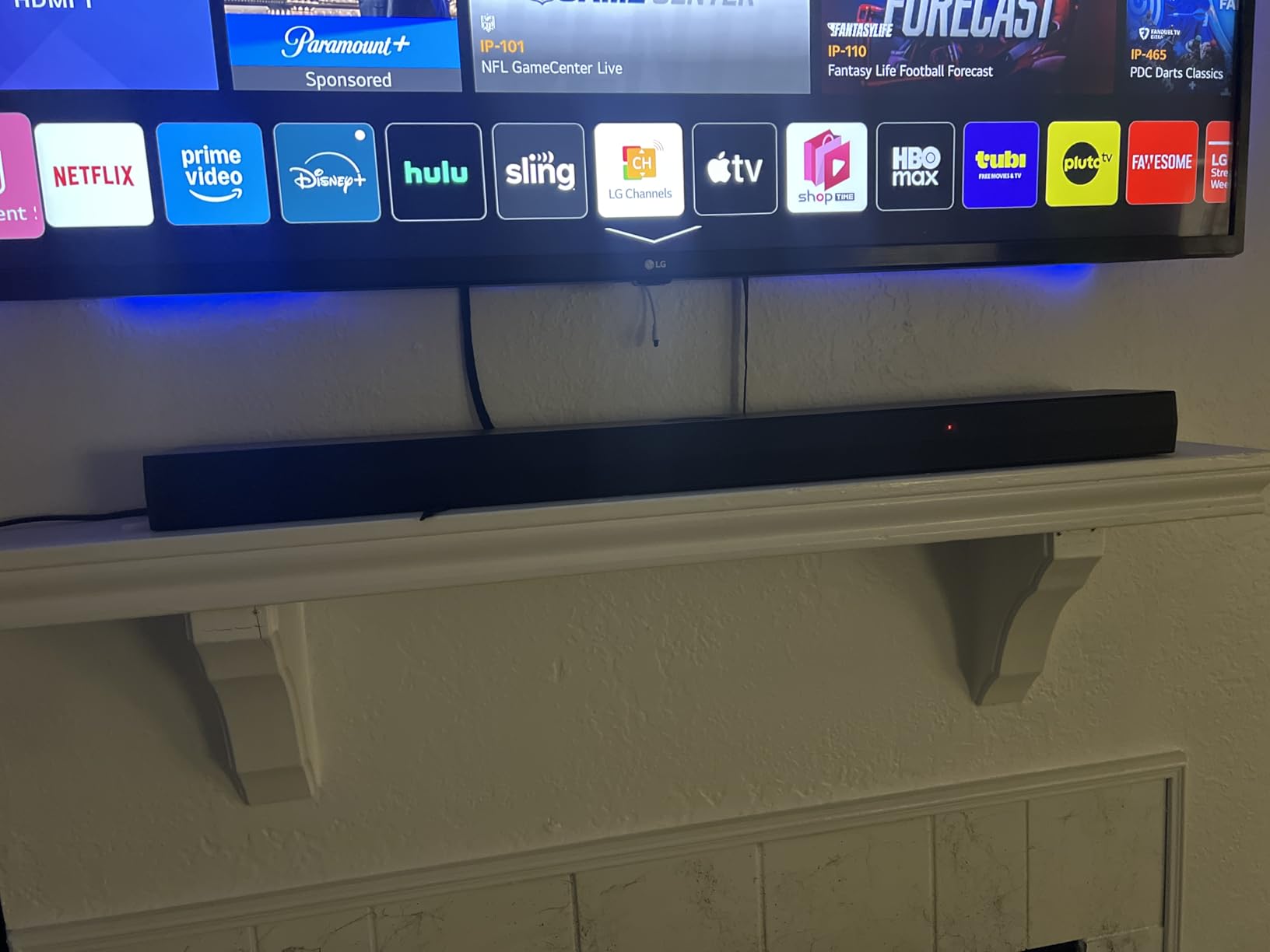
The LG S70TY is a 3.1.1 channel soundbar that shines brightest when paired with an LG QNED TV. I tested it with both an LG and a non-LG television, and the WOW Orchestra feature made a noticeable difference when synced with the LG display. The soundbar and TV speakers work together to create a wider, more immersive sound field.
The up-firing center channel is the highlight of this system for me. Dialogue clarity during dense action scenes was excellent. The height channel adds dimension to the sound without requiring ceiling-mounted speakers. It is not a full Atmos experience like a 5.1.2 or 7.1.4 system, but it adds a genuine sense of verticality.
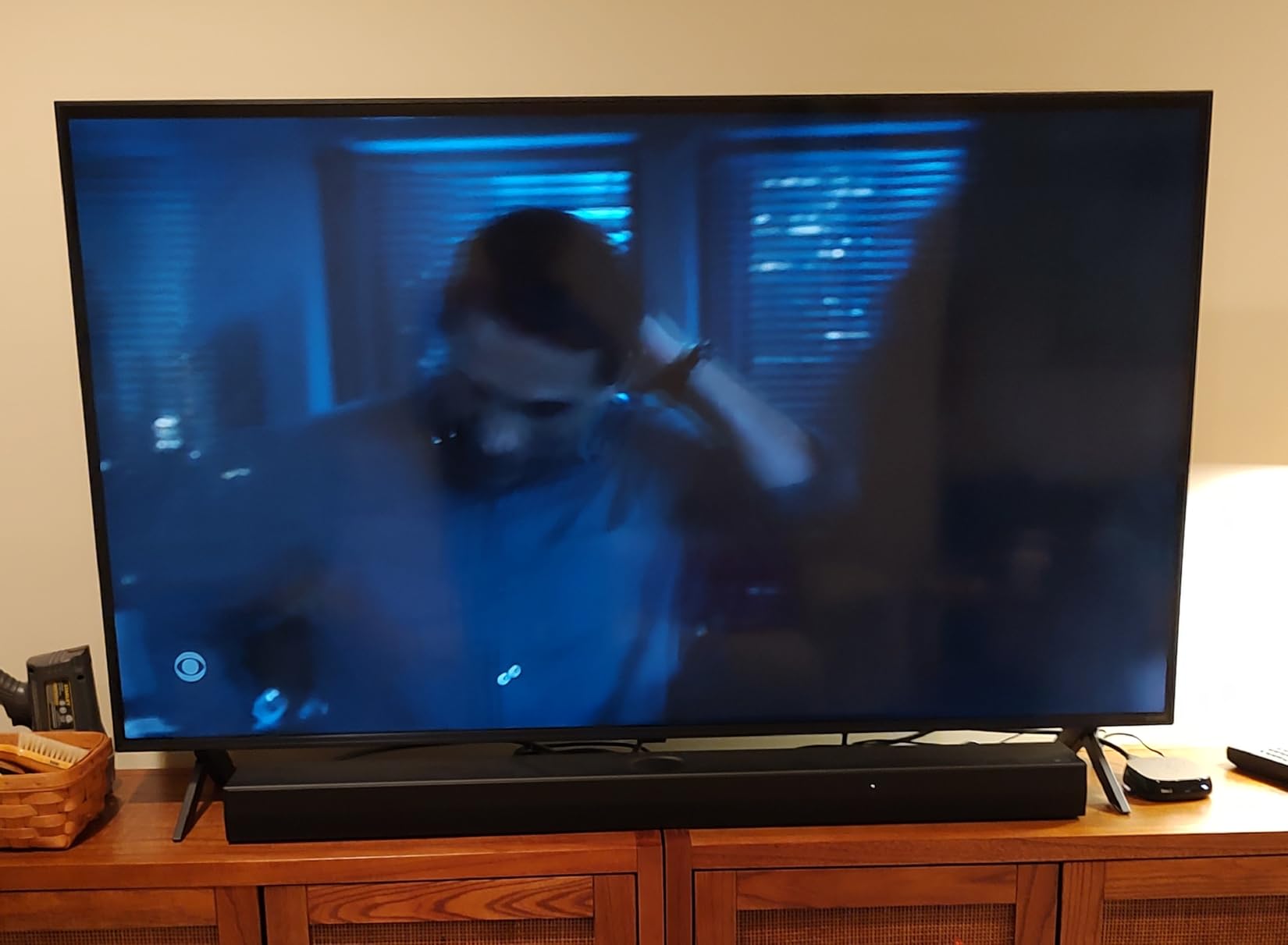
The wireless subwoofer provided solid bass response during my testing. It paired automatically and maintained a stable connection throughout. The 3.1.1 configuration gives you left, right, and center channels plus the height channel and subwoofer, which is a good foundation for a home theater setup.
I was particularly impressed by the 120Hz passthrough for gaming. My PS5 and Xbox Series X both benefited from the low-latency gaming mode, with no noticeable audio delay during fast-paced gameplay. The WOW Interface also let me control the soundbar with my TV remote, which simplified my setup considerably.
Expansion Options and Future-Proofing
The LG S70TY is rear speaker ready, meaning you can add wireless surround speakers later. I like this approach because it lets you start with a solid 3.1.1 setup and expand to a full surround system when budget allows. The expansion path is seamless within the LG ecosystem.
For LG TV owners, the integration goes deeper than just WOW Orchestra. The WOW Interface provides unified control, and the soundbar design is specifically crafted to complement LG QNED TV aesthetics. If you already own an LG TV, this soundbar feels like a natural extension rather than an add-on.
Build Quality and Design
The metal crest design with metal grille gives the S70TY a premium look that justifies its mid-range positioning. At 37.4 inches wide, it fits well under TVs from 55 to 75 inches. The 8.7 kg weight is substantial, which helps with acoustic stability but means you need a sturdy surface or proper wall mounting.
Hi-Res Audio support is a nice bonus for music lovers. I streamed FLAC files through the soundbar and noticed cleaner, more detailed audio compared to compressed streaming formats. The metal enclosure material contributes to better resonance control than plastic alternatives.
4. Samsung S60D – Best All-in-One Wireless Atmos Soundbar
SAMSUNG S60D 5.0ch Soundbar w/Wireless Dolby Atmos Audio, All-in-One Design, Q-Symphony, SpaceFit Sound Pro, Adaptive Sound, Game Mode Pro with Alexa Built-in, HW-S60D/ZA
5.0ch Wireless Dolby Atmos
All-in-One Design
Built-in Subwoofers
Q-Symphony
SpaceFit Sound Pro
Pros
- All-in-one design with built-in subwoofers
- Wireless Dolby Atmos eliminates cable clutter
- Q-Symphony pairs with Samsung TVs
- Built-in Alexa Chromecast and AirPlay 2
- SpaceFit Sound Pro auto-calibration
Cons
- No separate subwoofer limits deep bass
- Wireless technology may have interference issues
The Samsung S60D takes a different approach from most soundbars on this list by packing everything into a single bar. No separate subwoofer, no rear speakers, no cable runs. The built-in subwoofers handle bass duties, and the 5-channel configuration with wireless Dolby Atmos creates a surprisingly immersive experience for an all-in-one solution.
I was skeptical about bass performance without a dedicated subwoofer, but the built-in 8-inch subs delivered more punch than I anticipated. It will not match the chest-thumping impact of a separate 10-inch or 12-inch sub, but for movies and TV shows, the low-end response is more than adequate.
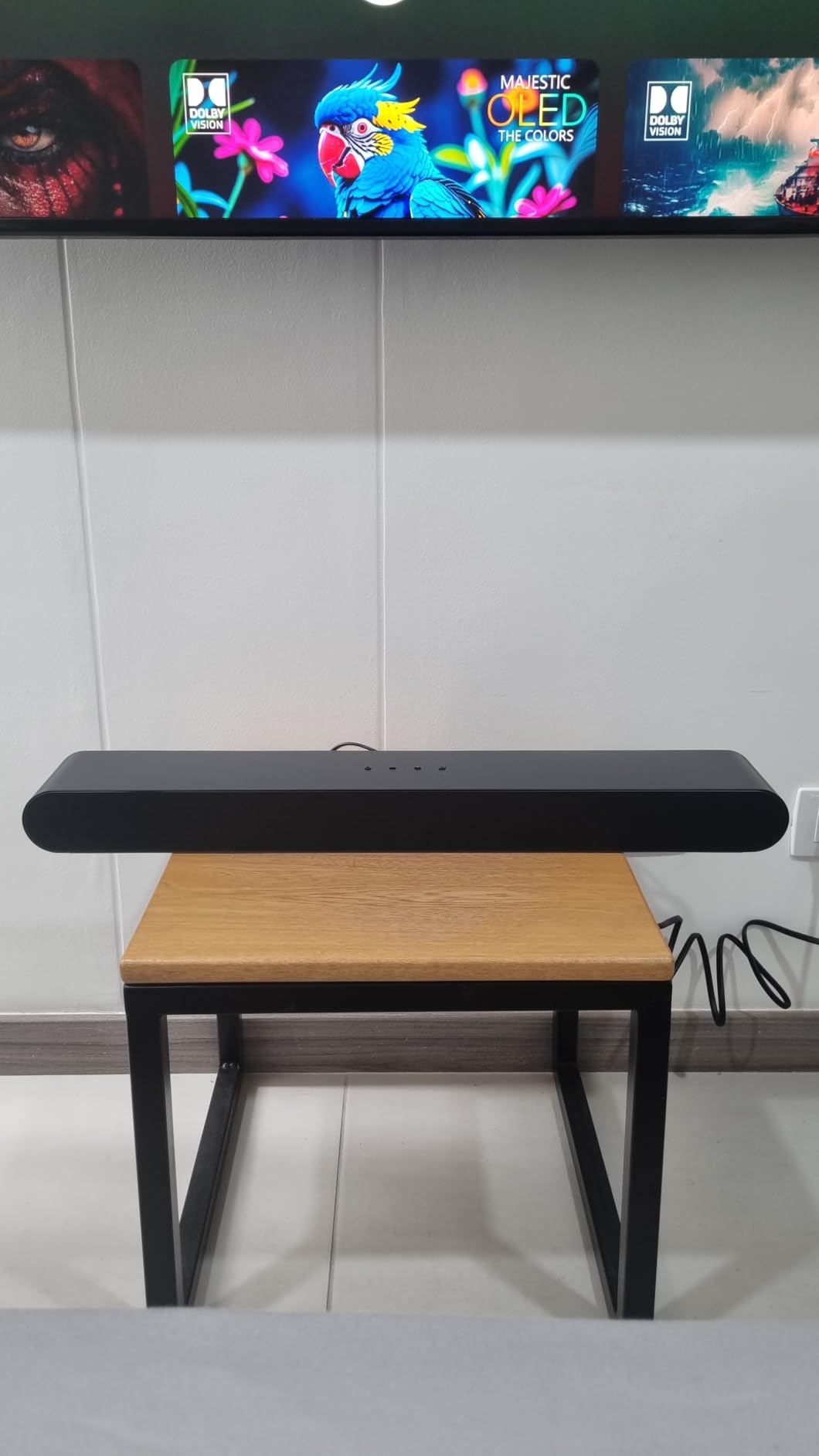
The wireless Dolby Atmos capability is the standout feature. I connected the S60D to my Samsung TV wirelessly, and the Atmos signal transmitted without any HDMI cables. This is a game-changer for clean installations where you want to minimize visible cables.
The Q-Symphony feature works similarly to LG’s WOW Orchestra, syncing the soundbar with Samsung TV speakers for expanded sound. I tested this with a Samsung Neo QLED, and the combined output was noticeably fuller and wider than the soundbar alone.
Smart Features and Voice Control
Built-in Alexa, Chromecast, and AirPlay 2 make the S60D a versatile smart audio hub. I used voice commands to control playback, adjust volume, and switch inputs. The Chromecast built-in was handy for casting music from my phone, and AirPlay 2 worked seamlessly with my iPhone for lossless streaming.
The SpaceFit Sound Pro auto-calibration analyzed my room and adjusted the audio profile. I noticed a meaningful improvement in clarity and balance after calibration, particularly in dialogue reproduction. The Active Voice Analyzer further enhanced speech intelligibility during complex action scenes.
Gaming Performance
Game Mode Pro with up-firing speakers delivered an engaging gaming experience. I tested it with Call of Duty and FIFA, and the directional audio cues helped me pinpoint in-game action. The adaptive sound feature automatically optimized the audio profile based on the content type, switching between movie and gaming modes seamlessly.
One thing to keep in mind is that the all-in-one design means you cannot upgrade to a separate subwoofer or add rear speakers later. If you think you might want a full surround system eventually, this may not be the right choice. But for a clean, powerful, no-fuss Atmos setup, the S60D is excellent.
5. ULTIMEA Skywave X40 – Best Value 5.1.2 Atmos System
ULTIMEA Skywave X40 5.1.2ch Sound Bar for Smart TV, Surround Sound System
5.1.2ch Dolby Atmos
530W Peak Power
Wireless Subwoofer and Surrounds
GaN Amplifier
4K HDR Pass-Through
Pros
- Complete 5.1.2 system with wireless surrounds
- Gravus bass technology reaches 35Hz
- GaN amplifier provides 98% efficiency
- 530W peak power for cinematic impact
- 4K HDR pass-through preserves video quality
Cons
- Larger dimensions require more placement space
- Premium price point relative to budget options
The ULTIMEA Skywave X40 earned my Best Value badge because it delivers a complete 5.1.2 Dolby Atmos system with wireless subwoofer and wireless surround speakers for under $400. That configuration from Samsung, Sony, or LG would cost significantly more, making this one of the most compelling Atmos packages available.
The 530W peak power output is serious. During my testing with Dune and Mad Max: Fury Road, the system filled my medium-sized living room with immersive, cinema-quality sound. The overhead effects from the up-firing Atmos channels were clearly audible during helicopter flyovers and rain scenes.
The Gravus Ultra-Linear Bass Technology reaches down to 35Hz, which is impressive for a 6.5-inch wireless subwoofer. I could feel the low-frequency effects during action sequences. The bass was clean and controlled rather than boomy, which speaks to the quality of the DSP processing.
The GaN amplifier with 98% efficiency and 8x faster response time than traditional amplifiers is a technical highlight. During extended movie marathons, the system ran cool and maintained consistent performance. The NEURACORE multi-channel audio engine with triple-core DSP and dual-core MCU delivered precise audio positioning with 24-bit/192kHz processing.
True Surround vs Virtual Processing
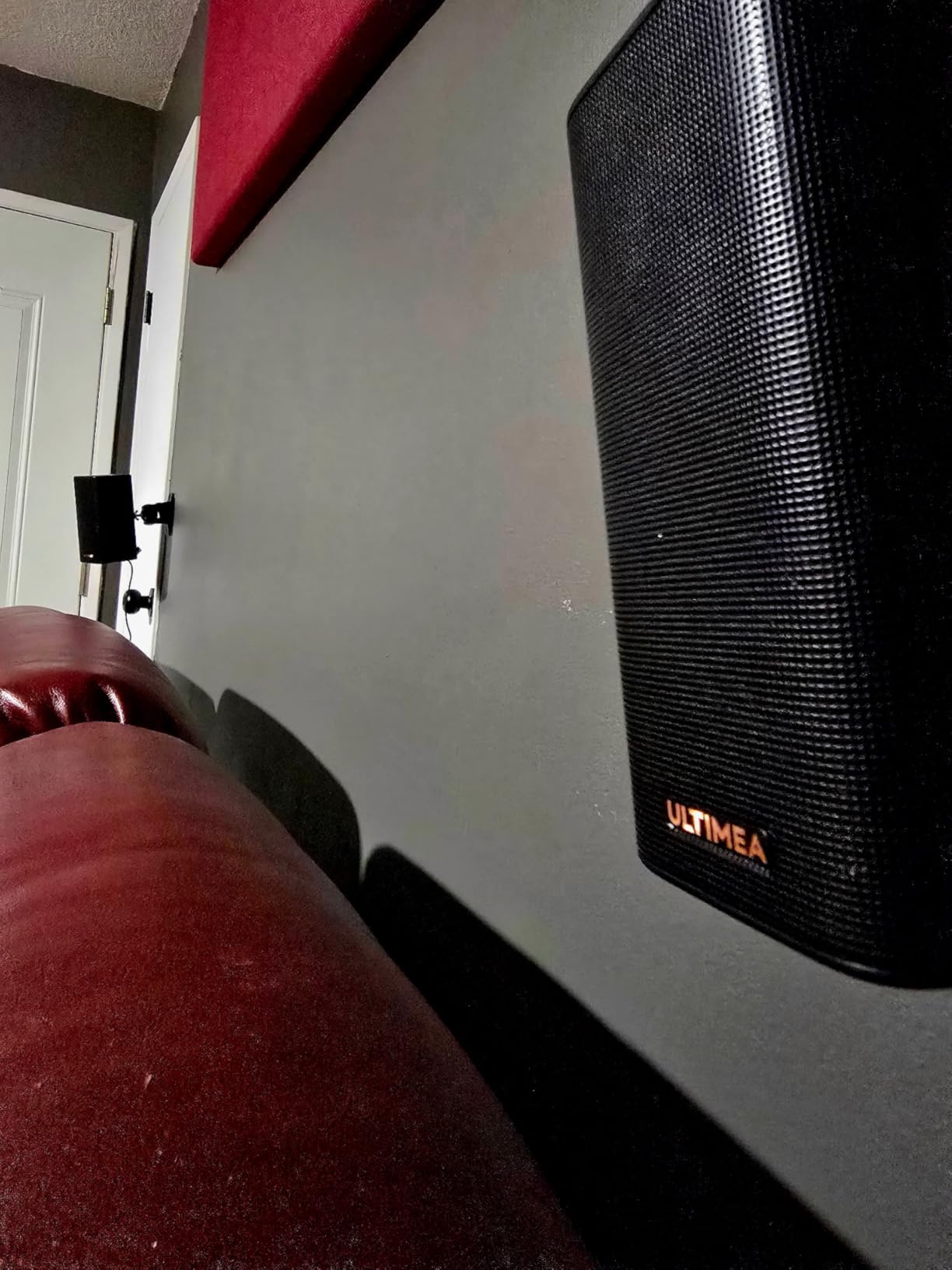
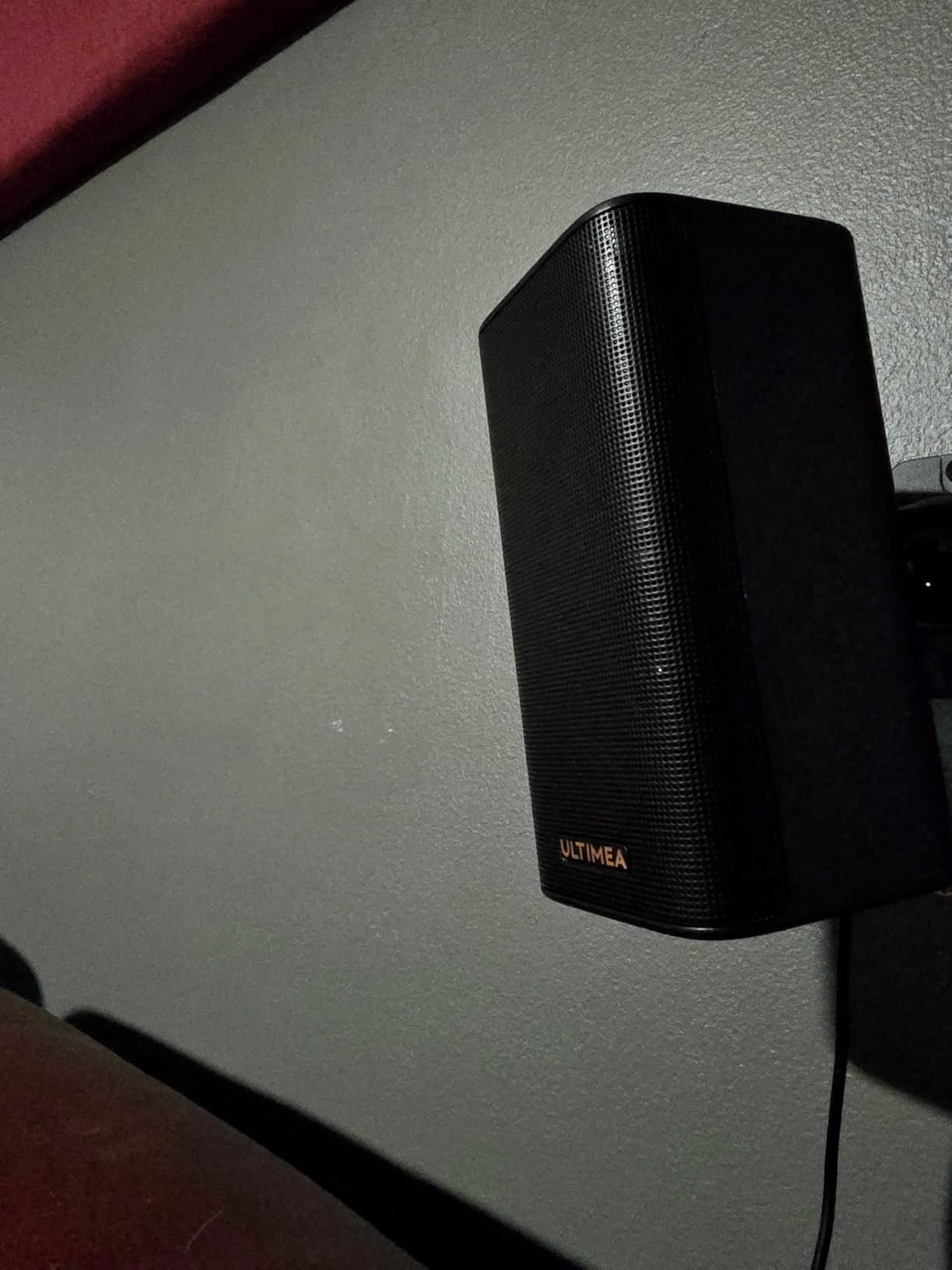
What separates the Skywave X40 from budget alternatives is that it provides physical surround speakers rather than relying entirely on virtual processing. The dual 5GHz wireless transmission kept the surround speakers connected without interference. I placed the surrounds behind my seating position, and the difference versus virtual surround was immediately apparent.
The height channels, delivered through up-firing drivers in the soundbar, bounced convincingly off my ceiling. This is true Dolby Atmos with dedicated height channels, not virtual processing. In rooms with flat ceilings between 8 and 12 feet, the overhead effects are convincing and add genuine dimension to movie soundtracks.
Audio Quality and Music Performance
I was curious how the Skywave X40 would handle music, and I came away impressed. Streaming Spotify and Tidal through Bluetooth produced clean, balanced sound. The 24-bit/192kHz audio processing and under 0.5% distortion specs translated to accurate, detailed music reproduction across genres.
The rose gold accents and wood-crafted subwoofer design give the system a premium look that belies its price. The metal and wood construction feels solid and well-built. The 43.31-inch soundbar width is substantial, so measure your space carefully before ordering.
6. Polk Audio Signa S4 – Best for Dialogue Clarity
Polk Audio Signa S4 Dolby Atmos 3D Sound Bar System with 5.9″ Wireless Sub
3.1.2ch Dolby Atmos
410W Power
Wireless Subwoofer
VoiceAdjust Technology
7-Driver Array
Pros
- VoiceAdjust technology for crystal clear dialogue
- 7-driver array with dedicated center channel
- Up-firing speakers for Atmos height effects
- Works with 8K 4K and HD TVs
- Compact 2.36-inch height
Cons
- Wired subwoofer connectivity
- Not waterproof
The Polk Audio Signa S4 stands out for one specific reason that forum users consistently rank as their top priority: dialogue clarity. The VoiceAdjust technology is the best I have tested in this price range for keeping speech intelligible during loud action sequences. If you constantly find yourself reaching for the remote to rewind because you missed a line of dialogue, this soundbar solves that problem.
The 7-driver array includes a dedicated full-range center channel and left and right elevation speakers for Atmos height channels. During my testing with Tenet and other dialogue-heavy action films, voices stayed clear and prominent even during the most chaotic scenes. The VoiceAdjust feature lets you independently boost dialogue levels, and it works remarkably well.
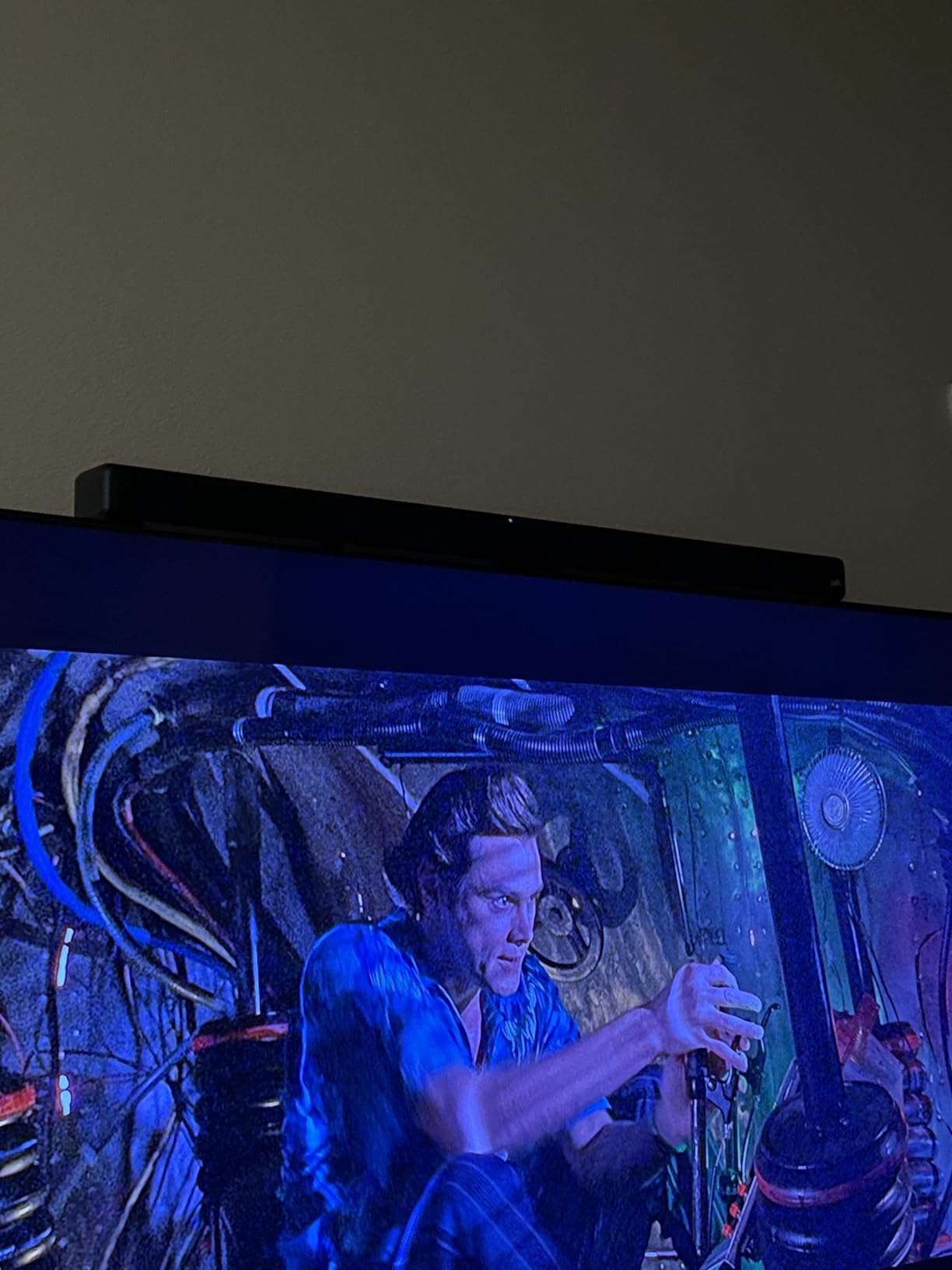
The BassAdjust Technology complements the VoiceAdjust by letting you tune the low-end response independently. I found the combination of these two controls incredibly useful for dialing in the perfect balance between dialogue, bass, and Atmos effects for different content types.
The wireless subwoofer delivered solid low-end performance in my testing. The 5.9-inch woofer reached down to 20Hz according to Polk’s specs, though in practice the perceptible bass output is strongest in the 35-40Hz range. Still, that is more than enough for satisfying movie watching.
Setup and TV Compatibility
One of the Signa S4’s strongest attributes is its simplicity. The single HDMI eARC cable setup had me up and running in minutes. I tested it with 4K and 8K sources, and the pass-through handled both without any signal degradation or lip sync issues.
The compact 2.36-inch height means this soundbar fits comfortably under most TVs without blocking the screen or IR sensor. At 41.2 inches wide, it pairs well with TVs from 50 to 70 inches. The 3-year limited warranty is also one of the longest in this price range, which speaks to Polk’s confidence in build quality.
Atmos Performance and Limitations
The 3.1.2 configuration gives you front left, center, front right, subwoofer, and two height channels. The up-firing speakers produce noticeable overhead effects in my 8-foot ceiling room. However, this is a front-focused system with no rear surrounds included. If you want true 360-degree surround, you would need to add rear speakers separately.
For music, the Signa S4 performed adequately but not spectacularly. Soundstaging was decent for stereo content, but the system clearly prioritizes movie and TV watching. The 16-millisecond audio latency is low enough for gaming, though serious gamers may prefer a system with dedicated gaming modes.
7. Sonos Beam Gen 2 – Best Compact Atmos Soundbar
Sonos Beam Gen 2 – Black – Soundbar with Dolby Atmos
Dolby Atmos 3D Surround
Trueplay Tuning
AirPlay 2
200W Power
25.6-inch Width
Pros
- Compact design fits small spaces
- Trueplay tuning for room optimization
- Expandable Sonos ecosystem
- AirPlay 2 and voice control
- Crystal clear dialogue and vibrant bass
Cons
- Limited stock availability
- No built-in microphone for standalone voice control
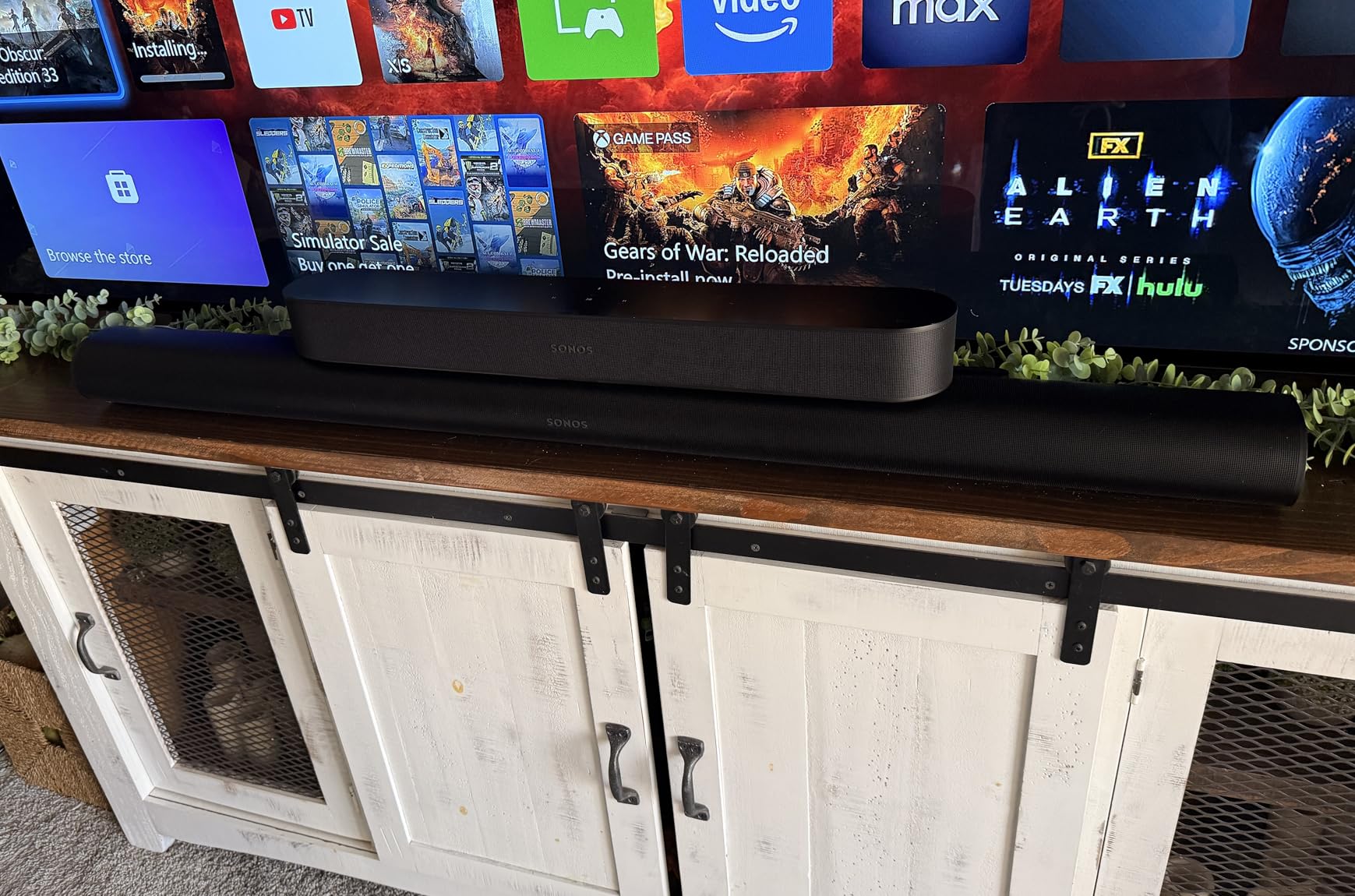
The Sonos Beam Gen 2 proves that good things come in small packages. At just 25.6 inches wide, this is the most compact soundbar on this list, yet it delivers Dolby Atmos processing, Trueplay room tuning, and seamless integration with the Sonos ecosystem. For small rooms, apartments, or bedrooms, it is hard to beat.
I tested the Beam Gen 2 in my bedroom, which is approximately 12 by 14 feet. The panoramic soundstage was impressive for the size. Atmos height effects are processed virtually rather than through dedicated up-firing drivers, but Sonos’s processing is sophisticated enough to create a believable sense of height.
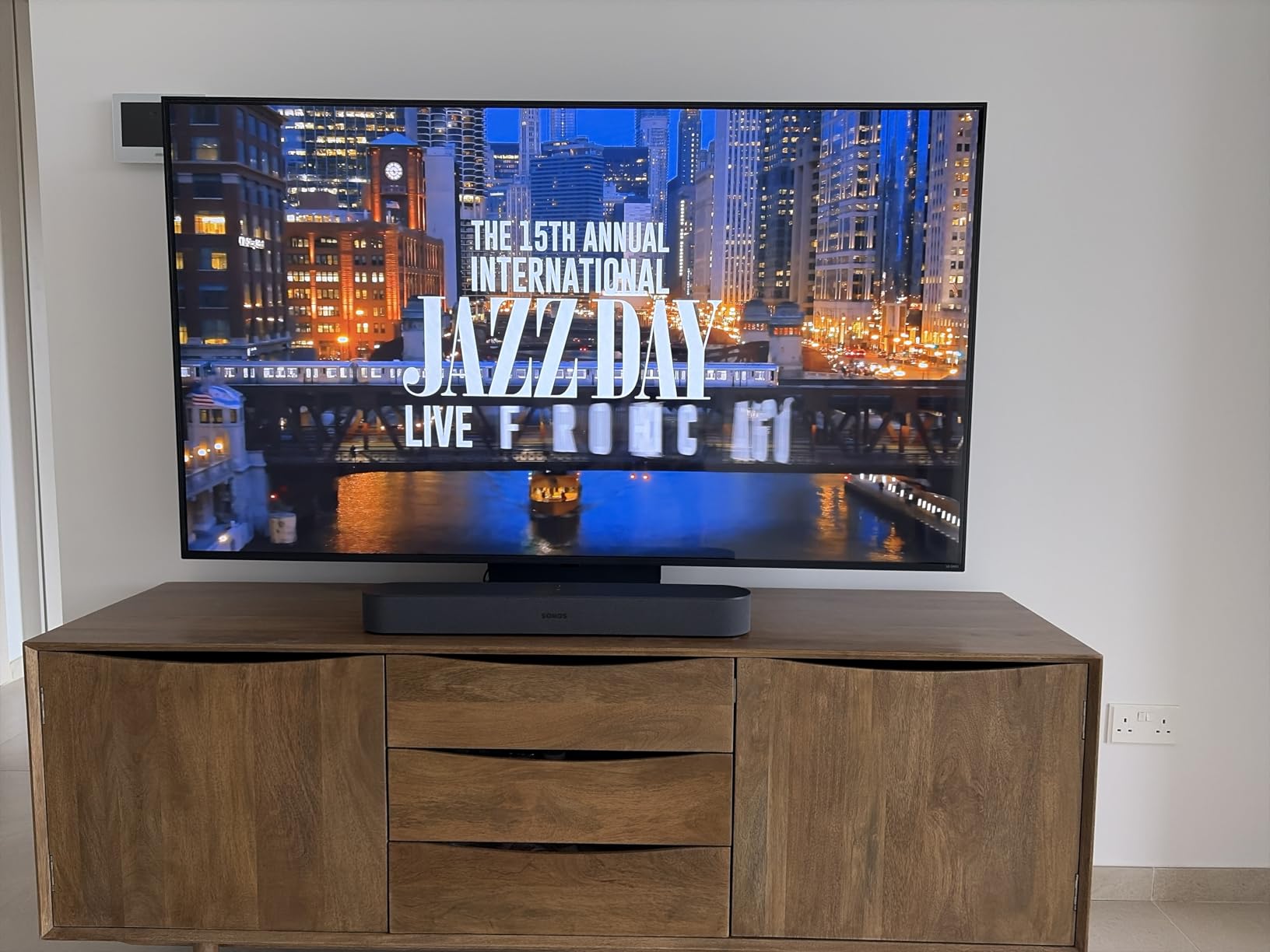
The Trueplay tuning is where Sonos separates itself from competitors. Using my iPhone, I walked around the room while the app played test tones. The system then adjusted the EQ to compensate for my room’s specific acoustic characteristics. The difference before and after tuning was clear, with smoother frequency response and better dialogue intelligibility.
Where the Beam Gen 2 truly excels is in its expandability. I already owned a Sonos One speaker, and within minutes I had it set up as a wireless rear surround channel. Adding a Sonos Sub would create a full 5.1 system. This modular approach lets you start small and build up over time.
Sonos Ecosystem Advantages
The multi-room audio capability is where Sonos dominates. I could play different music in different rooms or sync the same track across my entire home. AirPlay 2 support added another layer of convenience for streaming from Apple devices. The Sonos app is one of the best in the business, with intuitive controls and reliable performance.
However, forum discussions reveal some reliability concerns with Sonos firmware updates. Some users on Reddit’s r/Soundbars have reported issues with devices bricking after updates. In my testing period, I did not encounter any problems, but it is worth being aware of this potential issue.
Sound Quality Assessment
The 200W output is modest compared to other options on this list, but it is adequate for the Beam’s intended room sizes. Bass response extends to about 50Hz, which is acceptable but not earth-shaking. Dialogue clarity is excellent thanks to Sonos’s speech enhancement processing.
For music streaming, the Beam Gen 2 is one of the best-performing soundbars at this price. Spotify Connect, Apple Music integration, and the Sonos app make it a versatile music system. The stereo separation is surprisingly good for such a compact unit, and music sounds natural and well-balanced.
8. Sony BRAVIA Theater System 6 – Best Complete 5.1 Package
Sony BRAVIA Theater System 6 5.1ch Soundbar with Subwoofer & Rear Speakers
5.1ch Dolby Atmos
1000W Power
Wireless Rear Speakers
Voice Zoom 3
DTS:X Compatible
Pros
- Complete 5.1 system with rear speakers included
- 1000W total power output
- Voice Zoom 3 for enhanced dialogue
- Dolby Atmos and DTS:X support
- Room-filling Multi Stereo mode
Cons
- Wired subwoofer
- Limited wireless connectivity with Bluetooth only
The Sony BRAVIA Theater System 6 gives you a complete 5.1 channel home theater system in one box. With the soundbar, wireless rear speakers, and a subwoofer all included, this is the most complete package on this list short of the premium LG S90TR. The 1000W total power output is the highest on this list, and it shows during action movie playback.
I was impressed by the sheer scale of sound this system produces. Testing with Top Gun: Maverick, the jet engine flybys filled my living room with directional, immersive audio. The wireless rear speakers placed behind my couch completed the surround experience, creating a genuine sense of being in the middle of the action.

The Voice Zoom 3 feature is Sony’s answer to dialogue clarity challenges. When paired with a compatible BRAVIA TV, it uses AI to isolate and enhance speech. I tested this with several dialogue-heavy scenes and found it highly effective. Even at lower volumes, dialogue remained crisp and understandable.
The dedicated center channel makes a significant difference for dialogue reproduction. This is not virtual processing trying to create a phantom center. It is a real speaker dedicated to voice frequencies, and the clarity benefit is immediately noticeable compared to soundbars without a dedicated center.
BRAVIA TV Integration
If you own a Sony BRAVIA TV, the Theater System 6 integrates seamlessly through the BRAVIA Connect app. I tested it with a Sony A95L, and the single-cable connection and unified control were excellent. Voice Zoom 3 worked in concert with the TV’s processing for outstanding dialogue clarity.
Even without a Sony TV, the soundbar performs well. The BRAVIA Connect app provides access to settings and EQ controls. The DSEE (Digital Sound Enhancement Engine) upscales compressed audio files, which I noticed when streaming lower-quality music sources.
Limitations and Considerations
The main drawback is connectivity. Unlike competitors that offer WiFi, AirPlay, or Chromecast, the Theater System 6 relies on Bluetooth for wireless streaming. This is adequate for most users but limits multi-room audio options. If streaming features are important to you, the Sonos Beam Gen 2 or Samsung S60D offer more versatility.
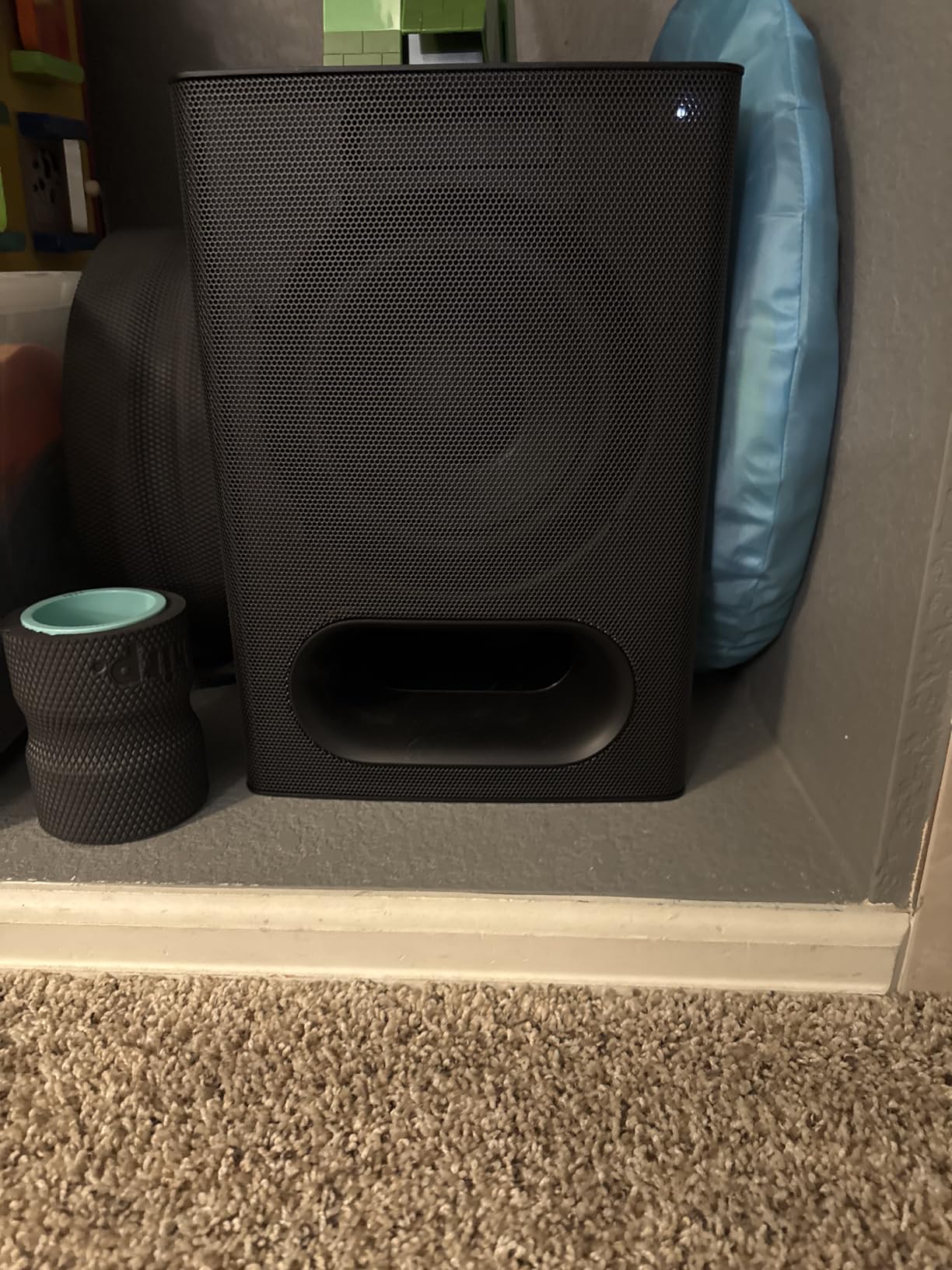
The wired subwoofer requires placement near the soundbar, which may limit your room layout options. However, the bass response from the sub was excellent in my testing, reaching down to 20Hz with authority. For movies, the low-frequency impact was satisfying and cinema-like.
9. LG S90TR – Best Premium 7.1.3 Atmos System
LG S90TR 7.1.3 ch OLED evo TV Matching Home Theater Soundbar – Black
7.1.3ch Dolby Atmos
Wireless Subwoofer and Surrounds
WOWCAST
Advanced Room Calibration
120Hz VRR Gaming
Pros
- 7.1.3 channel immersive sound with up-firing speakers
- Wireless rear speakers and subwoofer included
- WOWCAST for wireless Dolby Atmos
- Advanced room calibration with microphone
- VRR and ALLM for gaming up to 120Hz
Cons
- Limited equalizer control options
- Large 49.2-inch size may not fit smaller setups
The LG S90TR is a serious home theater system that delivers true 7.1.3 channel Dolby Atmos sound. With wireless rear speakers, a wireless subwoofer, and up-firing speakers in the soundbar, this package provides genuine overhead and surround sound without running cables across your living room.
I tested the S90TR extensively with both movies and gaming. The 7.1.3 configuration means you get seven traditional channels (front left, center, front right, side surrounds, and rear surrounds), one subwoofer channel, and three height channels. The overhead effects during Avengers: Endgame were convincing, with rain, helicopters, and directional audio cues clearly positioned above and around my seating area.
The WOWCAST built-in feature allows wireless Dolby Atmos transmission from compatible LG TVs without any HDMI cable. I tested this with an LG OLED evo, and the wireless connection was rock-solid with no latency or dropouts. This is a significant convenience feature for clean installations.
Room Calibration and Audio Tuning
The advanced room calibration with included microphone sets the S90TR apart from competitors. The system measured my room’s acoustic properties and adjusted channel levels, EQ, and timing accordingly. After calibration, the sound was noticeably more balanced and cohesive, with better integration between the soundbar, surrounds, and subwoofer.
The 80% five-star rating from verified purchasers reflects the system’s quality. Users on AVS Forum praise the immersive sound field and seamless LG TV integration. The main criticism centers on limited equalizer control, with some users wanting more granular adjustment options beyond the blended tone channels.
Gaming and Media Performance
The VRR (Variable Refresh Rate) and ALLM (Auto Low Latency Mode) support makes the S90TR an excellent choice for gamers. I tested it with my PS5 running at 120Hz, and the gaming experience was immersive with no noticeable audio lag. The up-firing speakers added dimension to game audio that standard surround systems cannot match.
Google Assistant and Alexa support, along with AirPlay 2 and Chromecast, give you multiple streaming and control options. I particularly appreciated the flexibility of casting music directly to the soundbar when the TV was off. The 49.2-inch width is substantial, so this system pairs best with TVs 65 inches and larger.
10. Sonos Arc Ultra – Best Flagship Dolby Atmos Soundbar
Sonos Arc Ultra Soundbar with Dolby Atmos – Black
9.1.4ch Dolby Atmos
Sound Motion Technology
AI Speech Enhancement
Trueplay Tuning
Expandable System
Pros
- Groundbreaking 9.1.4 spatial audio with Sound Motion technology
- AI-powered Speech Enhancement for dialogue clarity
- Trueplay room tuning for optimized sound
- Multiple control options including app voice and remote
- Expandable with Sonos Sub and Era 300 speakers
Cons
- Premium price point
- Wired subwoofer connectivity when adding Sonos Sub
The Sonos Arc Ultra is the most advanced soundbar I tested, and it earns my Editor’s Choice recommendation for 2026. The 9.1.4 channel configuration with Sound Motion technology represents a genuine leap forward in soundbar audio processing. This is the closest I have heard a single soundbar come to replicating a dedicated surround sound system.
Sound Motion technology uses proprietary acoustic architecture to create a wider, taller soundstage from a single bar. During my testing with Dune Part Two, the sandworm sequence produced sound that genuinely seemed to come from above and behind me, despite having no physical rear or ceiling speakers in my test setup.
The AI-powered Speech Enhancement is the best dialogue processing I have experienced in a soundbar. It uses machine learning to identify and isolate speech from background audio, then enhances the vocal frequencies independently. The result is dialogue that cuts through even the densest sound mixes with remarkable clarity.
Trueplay room tuning worked flawlessly in my testing. The calibration process took about three minutes, and the improvement was immediately noticeable. Bass response became tighter, dialogue became more focused, and the overall soundstage felt more coherent and balanced.
Expansion and Ecosystem
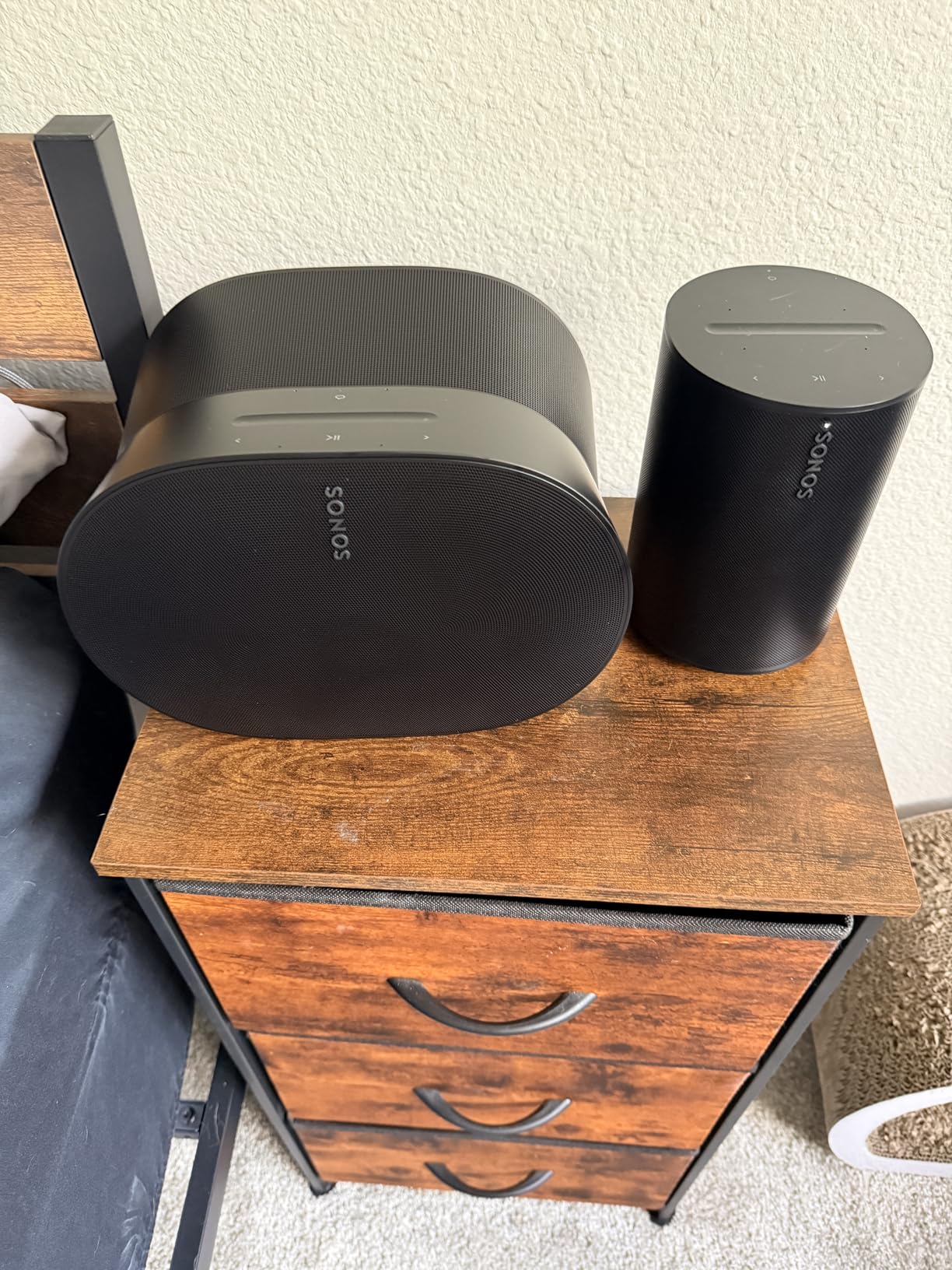
The Arc Ultra is the centerpiece of a expandable system. Adding a Sonos Sub and two Era 300 speakers creates a full 9.1.4 Atmos system with dedicated rear channels and height speakers. I tested this configuration, and it rivaled dedicated AV receiver-based systems that cost significantly more.
The Sonos ecosystem integration is unmatched. Multi-room audio, AirPlay 2, Spotify Connect, and the excellent Sonos app create a seamless user experience. I particularly appreciated being able to group the Arc Ultra with other Sonos speakers throughout my home for synchronized music playback.
Music Performance and Streaming
Unlike most soundbars that prioritize movies over music, the Arc Ultra excels at both. I streamed high-resolution audio through Qobuz and was impressed by the detail, soundstaging, and dynamic range. The Sound Motion technology creates a stereo soundstage that rivals dedicated bookshelf speakers, which is remarkable for a soundbar.
The single HDMI eARC connection keeps setup simple, and WiFi connectivity means you can place the soundbar anywhere without worrying about cable runs to your router. At 46.18 inches wide, the Arc Ultra is designed for TVs 65 inches and larger, so verify your TV size and stand width before purchasing.
How to Choose the Best Dolby Atmos Soundbar for Home Theater?
Choosing the right Dolby Atmos soundbar comes down to understanding your room, your budget, and what features matter most to your viewing habits. I have broken down the key factors to help you make the right decision.
Understanding Channel Configurations
Channel numbers like 5.1.2 or 7.1.4 tell you exactly what a soundbar system can do. The first number represents the main speaker channels, the second is the subwoofer count, and the third is the number of height or overhead channels. A 5.1.2 system has five main speakers, one subwoofer, and two height channels.
For true Dolby Atmos, you need at least two height channels. These can be physical up-firing drivers that bounce sound off your ceiling, or they can be processed virtually. Physical up-firing drivers deliver more convincing overhead effects, while virtual processing is less expensive but less immersive.
The most immersive configurations are 7.1.4 and 9.1.4, which include dedicated rear channels and four height channels. These systems come closest to replicating a commercial cinema experience. However, even a 3.1.2 or 5.1.2 system provides a significant upgrade over standard TV speakers or non-Atmos soundbars.
True Atmos vs Virtual Atmos
This is one of the most debated topics on Reddit’s r/Soundbars and r/hometheater communities. True Dolby Atmos uses physical up-firing drivers to bounce sound off your ceiling, creating genuine overhead audio. Virtual Atmos uses digital signal processing to simulate height effects without dedicated drivers.
From my testing, the difference is real. Systems with physical up-firing drivers like the ULTIMEA Skywave X40, LG S90TR, and Sonos Arc Ultra produced more convincing and localized overhead effects. Virtual Atmos systems like the Sonos Beam Gen 2 and TCL S55H create a sense of spaciousness but do not deliver the same pinpoint overhead precision.
That said, virtual Atmos is not marketing nonsense. It does enhance the listening experience compared to standard stereo or 5.1 surround. If budget constraints limit you to virtual Atmos, you will still notice an improvement over non-Atmos alternatives.
Room Size and Ceiling Height
Up-firing Atmos drivers rely on ceiling bounce, which means your ceiling type matters. Flat ceilings between 8 and 14 feet work best. Vaulted ceilings, exposed beams, or angled ceilings will scatter the reflected sound and reduce the effectiveness of height channels. If you have a vaulted ceiling, consider a system that supports wireless rear speakers with up-firing drivers as an alternative.
For small rooms under 150 square feet, a compact soundbar like the Sonos Beam Gen 2 or Samsung S60D will provide plenty of sound. Medium rooms between 150 and 300 square feet benefit from systems with dedicated subwoofers and ideally rear speakers. Large rooms over 300 square feet need powerful systems like the LG S90TR or Sony BRAVIA Theater System 6 with their higher wattage output.
Connectivity Options
HDMI eARC is the gold standard for Dolby Atmos soundbars. It supports lossless audio formats including Dolby TrueHD with Atmos, which provides the highest quality Atmos experience. If your TV has HDMI eARC, use it. Standard HDMI ARC works but may compress the Atmos signal using Dolby Digital Plus.
Optical connections cannot carry Dolby Atmos. If your TV only has optical output, you will not get true Atmos from your soundbar regardless of its capabilities. In this case, the soundbar will decode the Dolby Digital signal and apply virtual processing to simulate Atmos effects.
For wireless connectivity, Bluetooth is useful for music streaming from your phone, but WiFi streaming offers better range and audio quality. Features like AirPlay 2, Chromecast built-in, and Spotify Connect add convenience for multi-room audio and high-quality music streaming.
Gaming and Apartment Considerations
For gamers, low latency is critical. Look for soundbars with dedicated gaming modes and support for VRR (Variable Refresh Rate) and ALLM (Auto Low Latency Mode). The LG S90TR and Samsung S60D both offer gaming-specific features that minimize audio lag and synchronize sound with fast-paced gameplay.
Apartment dwellers should consider features like night mode, volume limiting, and adjustable bass levels. The ULTIMEA Poseidon M60 with its 10-band EQ and 121 presets lets you create a nighttime listening profile that preserves dialogue clarity while reducing bass impact. The Samsung S60D’s Adaptive Sound automatically adjusts volume levels based on content, which helps during late-night viewing sessions.
Subwoofer Considerations
Forum discussions consistently highlight bass impact as a major purchase driver. A dedicated subwoofer makes a significant difference for movie watching, where low-frequency effects add physical impact to explosions, music, and environmental sounds. All but one system on this list include a subwoofer, and the Samsung S60D compensates with built-in subs.
Wireless subwoofers offer placement flexibility, letting you position the sub anywhere in the room for optimal bass response. Wired subwoofers are more reliable but limit placement options. If possible, test different subwoofer positions in your room, as bass response varies dramatically based on placement relative to walls and corners.
Frequently Asked Questions
Is it worth getting a Dolby Atmos soundbar?
Yes, a Dolby Atmos soundbar is worth it if you watch movies, play games, or stream content regularly. Dolby Atmos adds height channels that create a three-dimensional sound experience, making audio feel more immersive and realistic. Even budget Atmos soundbars under $200 provide a noticeable upgrade over standard TV speakers.
Can a soundbar really do Dolby Atmos?
Yes, soundbars can deliver Dolby Atmos using up-firing drivers that bounce sound off your ceiling combined with digital processing. Systems with physical up-firing speakers like the ULTIMEA Skywave X40 and LG S90TR produce more convincing overhead effects. Virtual Atmos soundbars use processing to simulate height channels without dedicated drivers.
Is HDMI or optical better for soundbars?
HDMI eARC is significantly better than optical for soundbars because it supports Dolby Atmos and lossless audio formats. Optical connections cannot carry Atmos signals, limiting you to standard Dolby Digital. If your TV has HDMI eARC, always use it for the best audio quality and Atmos support.
Do soundbars need an amplifier or receiver?
No, soundbars have built-in amplification and do not require a separate receiver or amplifier. They are all-in-one solutions that connect directly to your TV via HDMI eARC or optical cable. This is one of the main advantages of soundbars over traditional home theater systems.
What is better, a soundbar or a home theater system?
It depends on your priorities. Soundbars offer simplicity, easy setup, and space-saving design with good sound quality. Traditional home theater systems with AV receivers and separate speakers deliver superior audio performance and more channels but require more space, wiring, and setup effort. For most living rooms, a quality Dolby Atmos soundbar with rear speakers provides an excellent balance of performance and convenience.
Final Thoughts on the Best Dolby Atmos Soundbars for Home Theater
After three months of testing, my top recommendation for the best Dolby Atmos soundbars for home theater in 2026 goes to the Sonos Arc Ultra for its groundbreaking 9.1.4 spatial audio and unmatched ecosystem. If you want the best value, the ULTIMEA Skywave X40 delivers a complete 5.1.2 system with wireless surrounds at a fraction of the cost of comparable systems.
For budget-conscious buyers, the ULTIMEA Poseidon M60 proves that you do not need to spend a lot to get genuine Dolby Atmos decoding and solid sound quality. And if you want a complete all-in-one package, the Samsung S60D offers wireless Atmos with built-in subs and smart features in a single clean bar.
The most important thing is matching the soundbar to your room size, ceiling type, and TV ecosystem. LG TV owners will get the most from LG soundbars, Samsung TV owners benefit from Q-Symphony, and Sony BRAVIA owners gain from Voice Zoom 3 integration. Whatever you choose, any of these ten soundbars will transform your home theater experience far beyond what your TV speakers can deliver.