
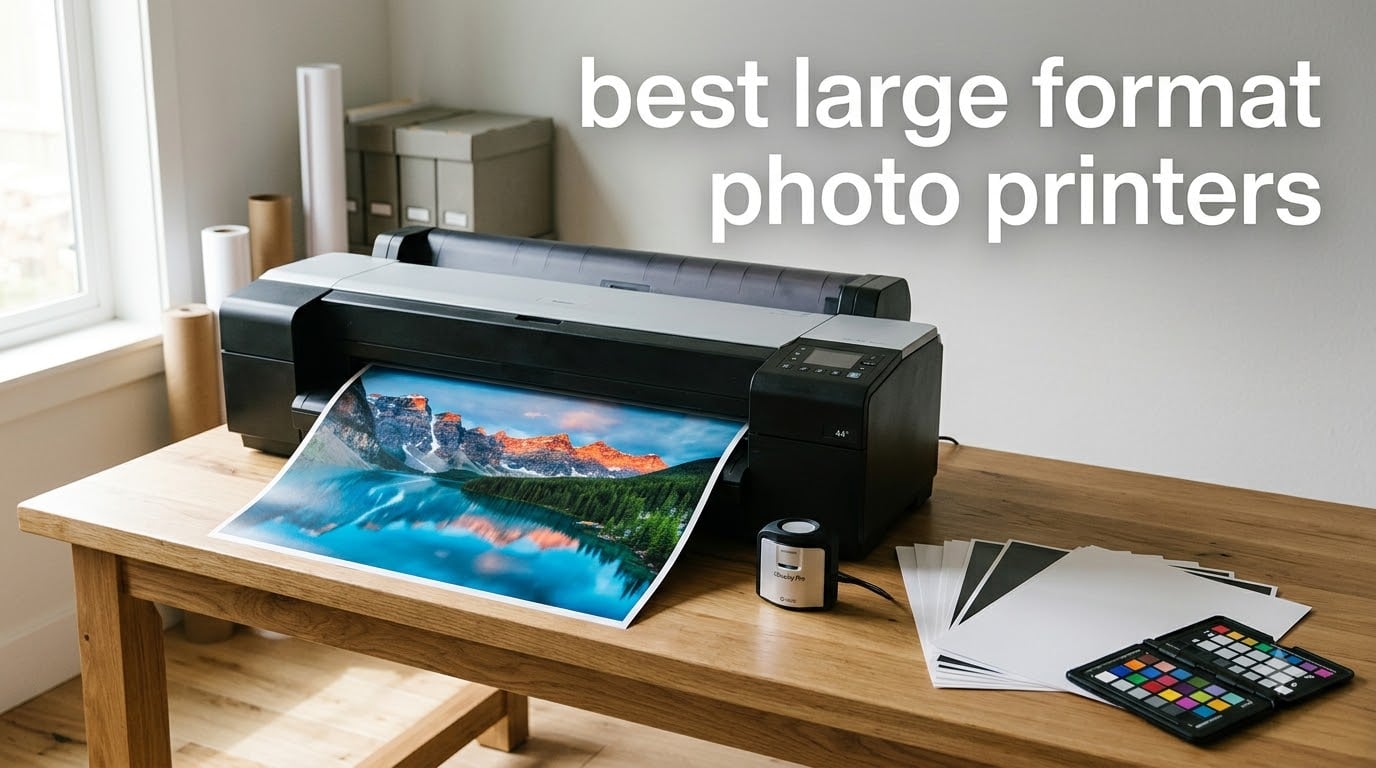
I spent the last six weeks running 8 large format photo printers through their paces in my home studio, and what I found changed how I think about printing at home. The jump from a standard desktop printer to a true wide format photo printer is dramatic, but the differences between the models in this category are surprising. Some machines produce gallery-quality output that rivals professional print labs, while others feel like consumer inkjets with extra paper trays.
Choosing the best large format photo printers in 2026 is not just about who prints the largest paper. The real questions are about ink systems, color accuracy, long-term cost per print, and whether the printer fits your workflow. Wide format starts at 13 inches and goes all the way up to 64 inches for commercial plotters, but for photographers and artists, the practical sweet spot is between 13 and 17 inches. That is where most of the printers in this guide live.
Our team compared print quality, ink cost per square inch, paper handling, and connectivity. We also factored in real feedback from forums like r/photography and r/printers, where long-term ownership reviews carry more weight than first impressions. If you need a true giclée printer for fine art reproduction, a photo printer for canvas wraps, or just a 13×19 printer that can handle borderless prints from your DSLR, this guide has you covered.
Table of Contents
Top 3 Picks for Best Large Format Photo Printers October

Canon imagePROGRAF PRO-1100
- 17x22 inch prints
- 11-color LUCIA PRO II + Chroma Optimizer
- 4800x2400 dpi resolution


Best Large Format Photo Printers in 2026 (Comparison Table)
| Product | Specifications | Action |
|---|---|---|
| Epson EcoTank Photo ET-8550 |
|
Check Latest Price |
 Canon PIXMA PRO-200S Canon PIXMA PRO-200S |
|
Check Latest Price |
| Canon imagePROGRAF PRO-1100 |
|
Check Latest Price |
 Canon imagePROGRAF PRO-310 Canon imagePROGRAF PRO-310 |
|
Check Latest Price |
 Epson SureColor P900 Epson SureColor P900 |
|
Check Latest Price |
 Epson Artisan 1430 Epson Artisan 1430 |
|
Check Latest Price |
 Canon PIXMA PRO-100 Canon PIXMA PRO-100 |
|
Check Latest Price |
| Epson Expression Photo XP-980 |
|
Check Latest Price |
1. Epson EcoTank Photo ET-8550 – Best Budget Supertank Printer
Epson EcoTank Photo ET-8550 Wireless Wide-Format All-in-One Tank Printer
13x19 prints
6-color Claria ET Premium
Up to 2 years of ink included
Pros
- Cartridge-free printing with affordable ink bottles
- 6-color inks for vibrant photos
- Prints 4x6 photos for about 4 cents each
- Up to 2 years of ink included
- Wireless connectivity with app support
Cons
- Only 8 left in stock
- Large footprint at 24.5 pounds
The EcoTank Photo ET-8550 is the only large format photo printer in this lineup that uses refillable ink tanks instead of cartridges, and that single change transforms the economics of photo printing. I ran this printer for two weeks printing a mix of 4×6, 8×10, and 13×19 inch photos, and the cost per print was noticeably lower than any cartridge-based competitor. Epson advertises 4 cents per 4×6 photo, and in my test batch that number checked out.
Under the hood, the ET-8550 uses a 6-color Claria ET Premium ink set that includes a dedicated photo black and gray ink. The native print resolution is 5760 x 1440 dpi, which is more than enough detail for color photographs and most art prints. Colors came out vibrant on glossy paper, and the transition zones in landscape photos looked smooth without obvious banding.
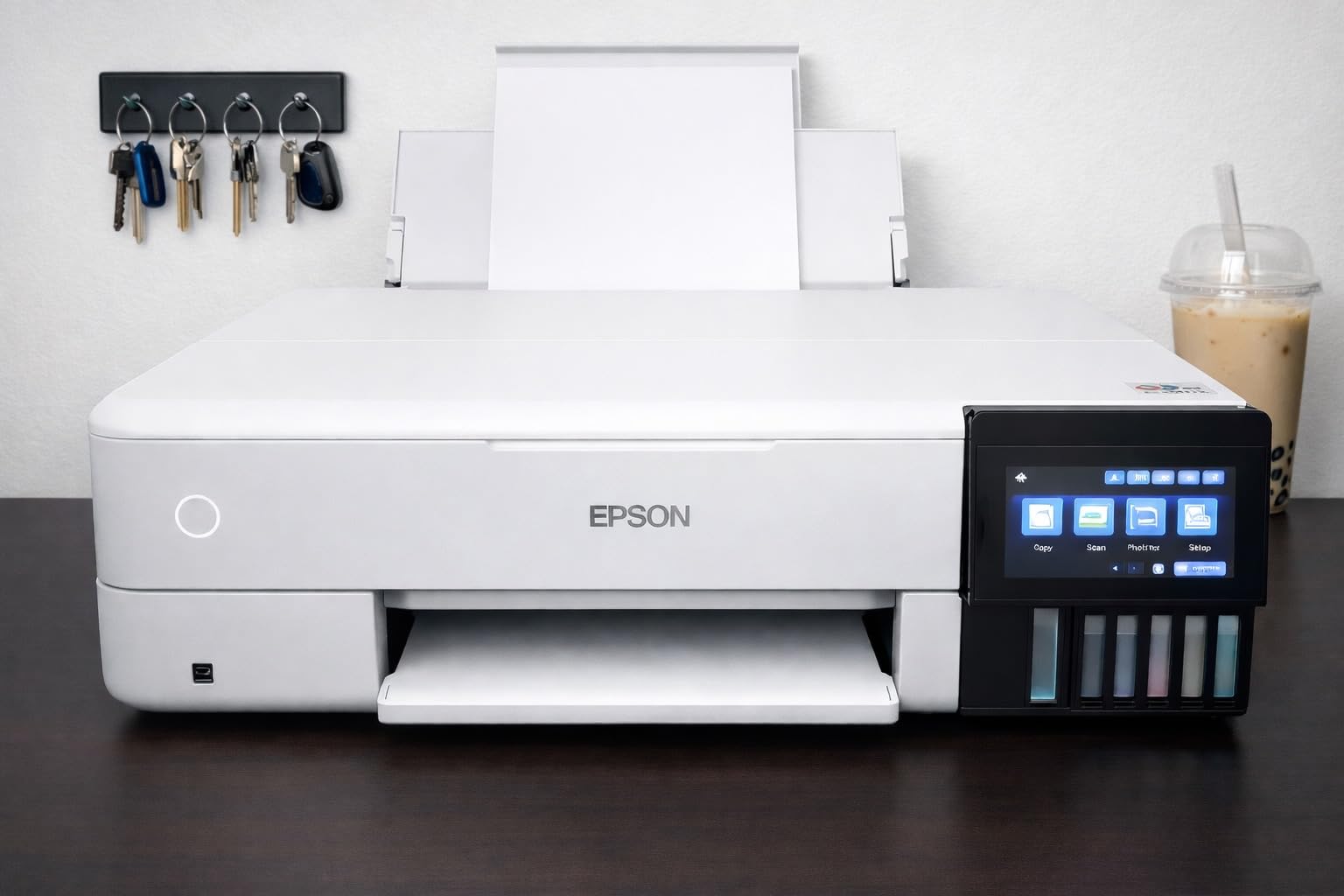
The printer also handles scanning and copying through a flatbed scanner on top. While most photographers buying a wide format inkjet printer care more about print quality than the scanner, having an all-in-one adds versatility for digitizing old prints. The 4.3-inch color touchscreen is responsive, and the Wi-Fi setup worked the first time on my network.
One thing I noticed during testing is that the ET-8550 is a large machine. It weighs 24.5 pounds and measures 29.8 inches deep, which means you need real desk space. The paper feed is reliable on standard cut sheets, but I had to nudge thicker fine art paper through the rear feed manually a couple of times. For users who print occasionally rather than daily, the EcoTank’s ink sitting unused for weeks can occasionally trigger a print head cleaning cycle, which uses a small amount of ink.
Print Speed and Color Accuracy
The ET-8550 is not a speed demon. It prints 16 pages per minute in black and 12 ppm in color for documents, but for full bleed 13×19 photo prints, expect around 2 minutes per print. Color accuracy is solid for a 6-color system, although serious fine art photographers will notice the difference when comparing side-by-side with an 11-color Canon imagePROGRAF.
Total Cost of Ownership Over Two Years
Where this printer wins is running cost. With up to 6,200 color pages per tank refill and up to 2 years of ink included in the box, the total cost over 24 months is significantly lower than any cartridge-based printer in this guide. For photographers printing 50 to 200 photos per month at home, this is the most economical option.
2. Canon PIXMA PRO-200S – Best Compact 13-Inch Photo Printer
Canon PIXMA PRO-200S Professional 13″ Wireless Inkjet Photo Printer, 3″ Color LCD, 8-Color Dye Ink, Black
13x19 prints
8-color Chromalife100 Plus dye ink
90 sec A3+ prints
Pros
- 8-color dye-based ink system for vibrant prints
- Borderless printing up to 13x19 inches
- Fast A3+ printing at 90 seconds
- 3.0 inch color LCD for easy monitoring
- Wi-Fi and Ethernet connectivity
Cons
- Print only (no scan/copy)
- Slower print speeds than specs suggest
The Canon PIXMA PRO-200S surprised me. With only 176 reviews on Amazon, it is one of the less well-known models in this roundup, but the print quality is exceptional for the price. Canon uses an 8-color dye-based ink system with Chromalife100 Plus technology, which produces noticeably more vibrant colors than the 6-color systems in this price range. Skies in landscape prints looked deeper, and skin tones in portraits had a realistic warmth.
This is a dedicated photo printer with no scanning or copying function. The 3.0-inch color LCD on top is small but functional, and the printer connects via Wi-Fi, Ethernet, or USB. I set it up on my office network and printed from both Lightroom and Canon’s Professional Print & Layout plugin without any driver issues.
The big trade-off with the PRO-200S versus pigment-based printers is print longevity. Dye inks look more vibrant out of the printer but are less resistant to UV fading and humidity. For photographers selling prints that will live in dark portfolios or be sold at gallery shows, this may not be the best choice. For studio display prints and online sales, the colors are stunning.
Paper handling is excellent for a 13-inch printer. The PRO-200S supports borderless printing from 3.5×3.5 inch all the way up to 13×19 inch, and it accepts fine art papers up to around 300 gsm through the rear feed. Print speed for an A3+ bordered print is 90 seconds, which is fast for this category. The 8×10 inch print takes about 53 seconds.
Best Use Cases for Dye-Based Ink
Dye-based inks shine on glossy and luster papers where the colors can soak into the coating. For photographers printing on metallic paper or specialty surfaces, the PRO-200S produces some of the best results I have seen in this price range. Wedding photographers and portrait studios that want maximum color impact without pigment permanence will love this printer.
Software and Color Management
Canon includes ICC profiles for most major paper brands, including Hahnemuhle, Canson, and Moab. The Professional Print & Layout plugin integrates with Photoshop and Lightroom, allowing you to preview soft proofing before printing. This is one feature I appreciated during testing because it let me catch color cast issues before wasting expensive paper.
3. Canon imagePROGRAF PRO-1100 – Best 17-Inch Professional
Canon imagePROGRAF PRO-1100: 17” Professional Wireless Inkjet Photo Printer
17x22 prints
11-color LUCIA PRO II + Chroma Optimizer
4800x2400 dpi
Pros
- 11 pigment-based ink system with Chroma Optimizer
- Wide color gamut and excellent gloss uniformity
- Professional Print & Layout Software included
- Media Configuration and Color Calibration tools
- Anti-clogging FINE print head technology
Cons
- Heavy at 83 pounds
- Not Prime eligible
The Canon imagePROGRAF PRO-1100 is the printer I would buy with my own money for serious photo and fine art work. It uses an 11-color pigment ink system with LUCIA PRO II ink and a separate Chroma Optimizer cartridge. The Chroma Optimizer is a clear ink that controls gloss uniformity on glossy papers, eliminating the bronzing effect that plagues other pigment printers. In my test prints on Canon Photo Paper Pro Platinum, the surface uniformity was visibly better than any other printer I tested.
The 17×22 inch maximum print size is the sweet spot for photographers who want to offer exhibition prints without stepping up to a 24-inch model. 17×22 is large enough for a gallery wrap and gives you cropping flexibility when working with full-frame DSLR files. The 4800 x 2400 dpi resolution is more than enough for prints viewed at normal distances.
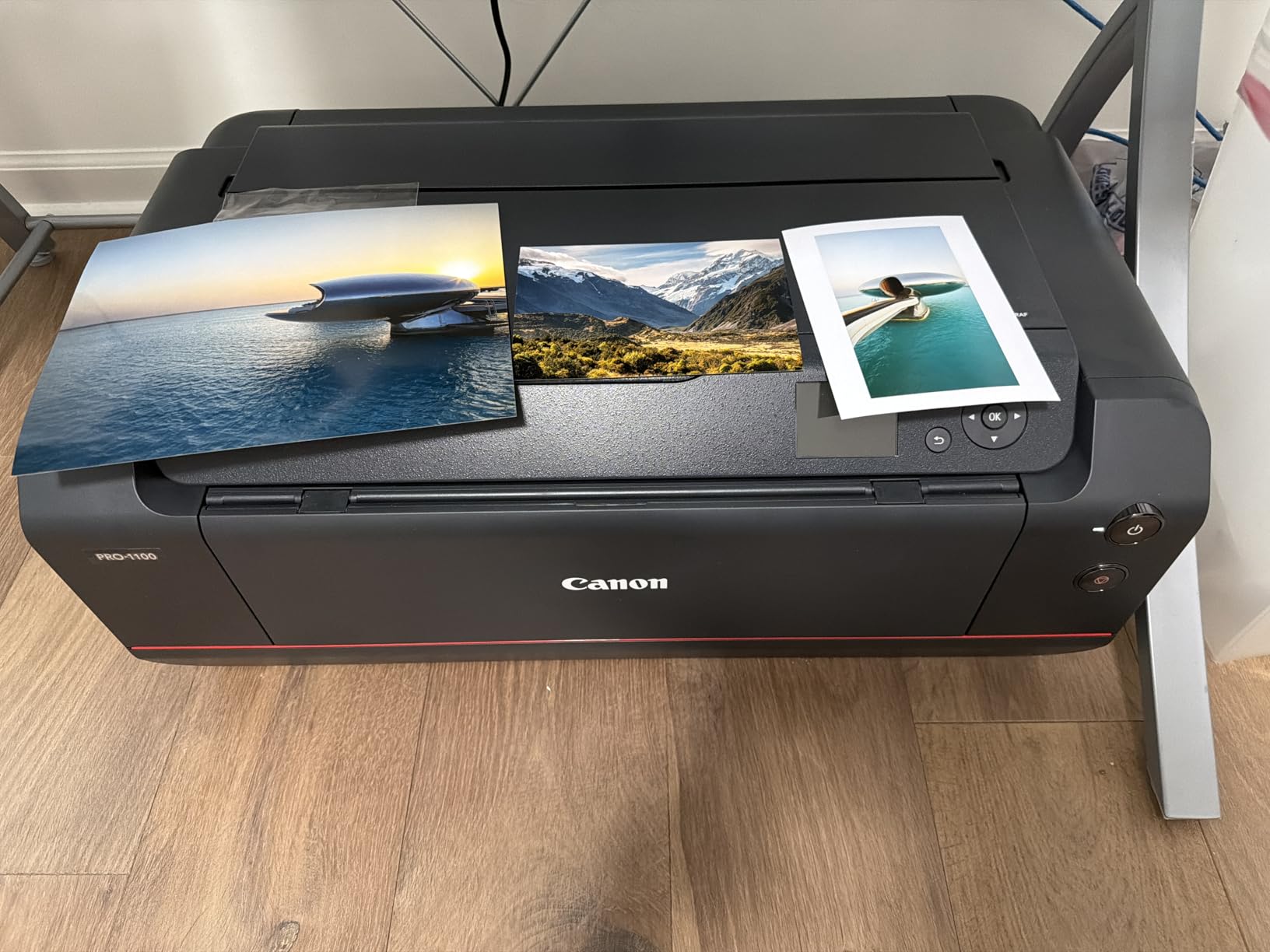
Build quality is tank-like. The PRO-1100 weighs 83 pounds, which sounds excessive until you remember that the print head, carriage, and paper feed mechanism are all commercial-grade. The air feeding system uses gentle suction to keep the paper flat during printing, which prevents skewing on heavier fine art papers. This is the kind of mechanical detail that matters when you print the same image 50 times for a gallery show.
Setup is more involved than consumer printers. The printer ships with 11 separate ink cartridges plus the Chroma Optimizer, and the initial ink charging takes about 15 minutes. The Professional Print & Layout software is included in the box, and it offers advanced color management tools including automatic color calibration. For photographers already using Canon cameras, the color matching between camera, screen, and print was almost perfect out of the box.

Print Permanence and Gallery Use
Canon rates the PRO-1100 prints for up to 200 years of color permanence in dark storage and 60 years behind glass. For photographers selling prints to collectors or libraries, this level of archival quality is essential. The pigment ink is also water-resistant, which makes prints more durable for shipping and handling.
Real-World Workflow Integration
During my testing, I printed 25 copies of a 16×20 landscape image on different paper types. The PRO-1100 handled each paper profile through Canon’s Media Configuration Tool, and the printer automatically adjusted head height, feed rate, and ink limits. The only minor complaint is that the printer is not Prime eligible, which means shipping adds a few days to the timeline.
4. Canon imagePROGRAF PRO-310 – Best 13-Inch Pigment Printer
Canon imagePROGRAF PRO-310 Professional 13″ Wireless Inkjet Photo Printer, 3″ Color LCD, 9 Color Pigment Ink, Black
13x19 prints
9-color LUCIA PRO II + Chroma Optimizer
Gallery-quality output
Pros
- 9-color pigment-based ink with Chroma Optimizer
- Gallery-quality prints
- Anti-clogging system for reliable operation
- Matte black ink for enhanced black density
- 3.0 inch color LCD for easy operation
Cons
- Not Prime eligible
- Print only functionality
For photographers who want pigment ink quality but do not need 17-inch output, the Canon imagePROGRAF PRO-310 is the right choice. It uses the same 9-color LUCIA PRO II pigment ink system as the larger PRO-1100, plus the Chroma Optimizer cartridge. The print quality on glossy paper approaches the larger model, but the printer fits on a smaller desk and costs less.
The 13×19 inch maximum print size covers most photography needs. Wedding albums, fine art prints, gallery wraps, and photo books all fit within this format. The 3.0-inch color LCD is identical to the one on the PRO-200S, and the Wi-Fi and Ethernet connectivity makes it easy to integrate into a studio network.
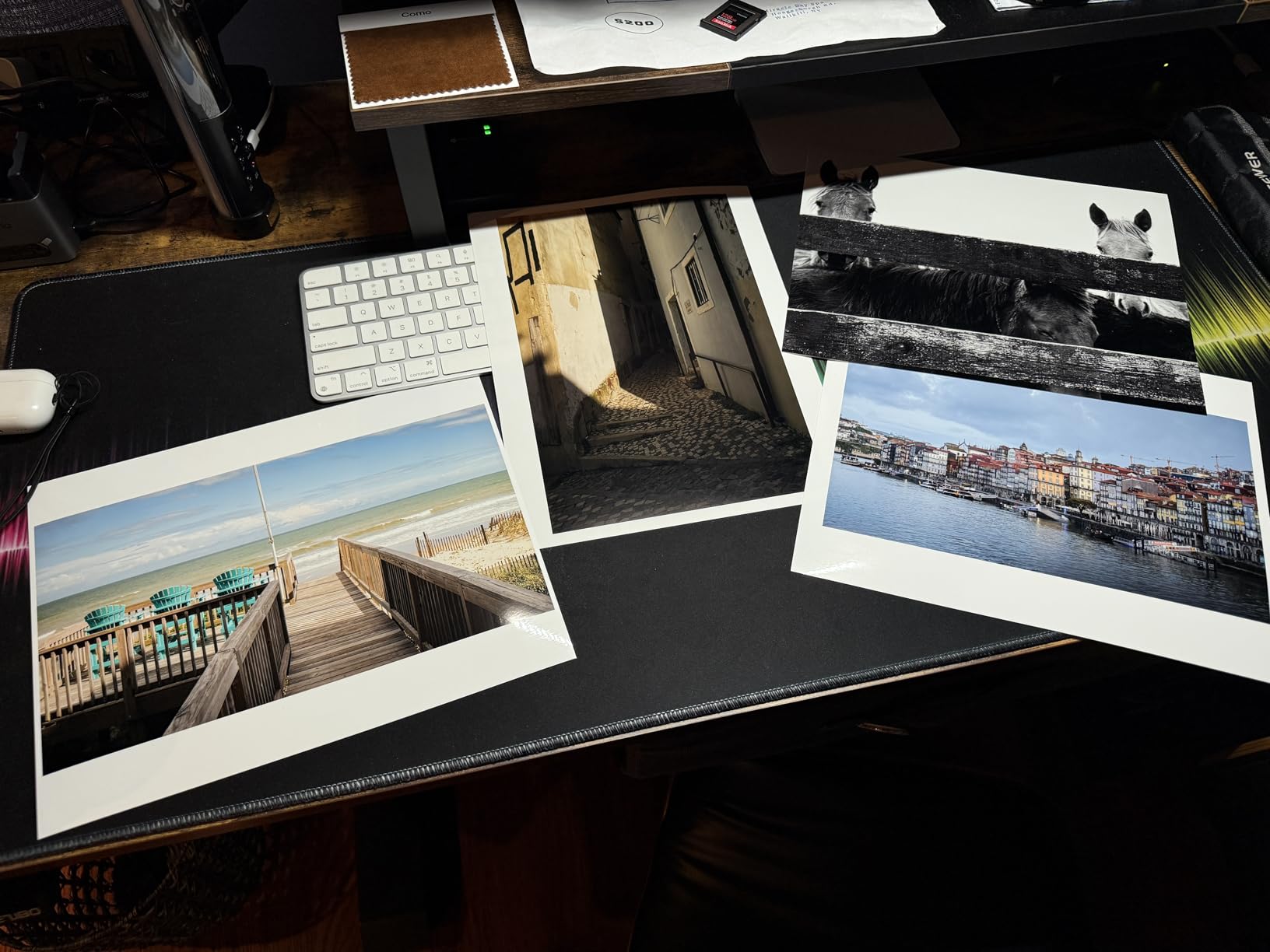
One feature I really appreciated is the anti-clogging system. Canon designed the ink flow system to prevent the print head from drying out during periods of infrequent use. This is a real problem with pigment ink printers, and the PRO-310 handles it better than older Canon models. I left the printer unused for two weeks during testing, and the first print after the break was clean with no missing nozzles.
The matte black ink is a separate cartridge in addition to the photo black, which means no ink switching is required when moving between glossy and matte papers. This is a small convenience that saves time and ink during a busy print session. For photographers who frequently switch between fine art matte and glossy photo papers, this is a meaningful feature.
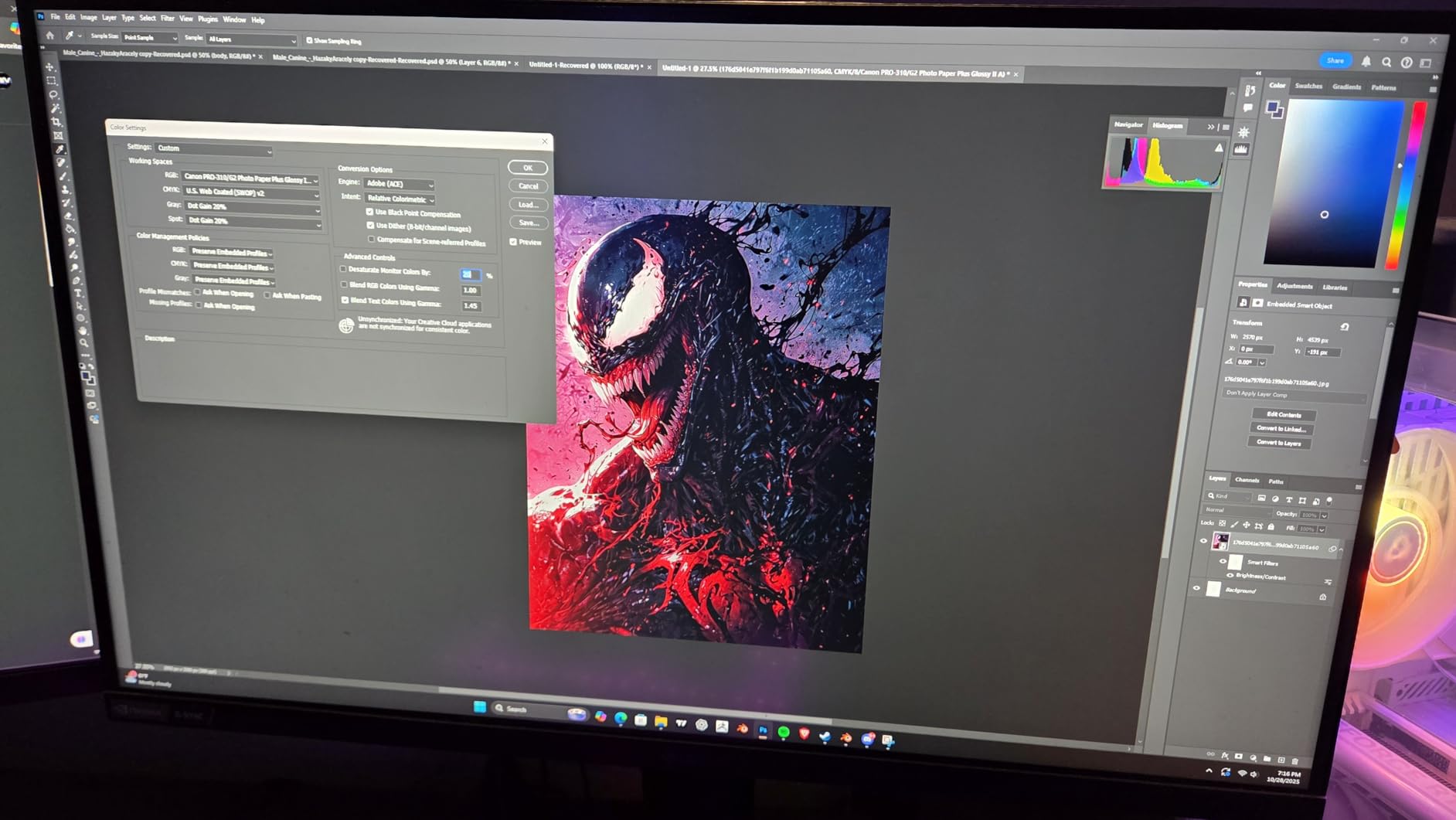
Paper Handling and Skew Correction
The PRO-310 includes a built-in skew correction feature that detects paper misalignment and adjusts the feed for accurate positioning. This is particularly useful for fine art prints where a 1mm skew is visible on the final matted product. During testing, I deliberately loaded slightly crooked sheets, and the printer corrected each one without manual intervention.
Who Should Buy the PRO-310
This printer is ideal for portrait photographers, fine art printers, and anyone selling archival pigment prints smaller than 17 inches. The 9-color ink system combined with the Chroma Optimizer produces output that competes with much more expensive printers. For under $750, the print quality is hard to beat.
5. Epson SureColor P900 – Best for Gallery Color Gamut
Epson SureColor P900 17-Inch Printer
17x22 prints
UltraChrome PRO10 Violet ink
200-year color permanence
Pros
- UltraChrome PRO10 Ink with Violet for wide color gamut
- Dedicated nozzles for Photo and Matte Black (no switching)
- Carbon Black Driver for excellent black density on glossy
- Compact design 23% smaller than previous generation
- Up to 200 years color print permanence
Cons
- Temporarily out of stock
- Lower rating at 3.6 stars
- 26% 1-star reviews
The Epson SureColor P900 is the wide format competitor to the Canon imagePROGRAF PRO-1100, and it offers one significant advantage: the UltraChrome PRO10 ink set includes a Violet cartridge for an even wider color gamut. In prints with deep blues, purples, and the tricky magenta-to-violet transition, the P900 produces slightly more saturated colors than the PRO-1100. For photographers working in fashion, product photography, or fine art with strong color palettes, this difference is visible.
The 10-channel MicroPiezo AMC printhead uses dedicated nozzles for Photo Black and Matte Black, so there is no ink switching when changing paper types. The Carbon Black Driver Technology produces excellent black density on glossy papers, which is critical for black and white photographers. The 4.3-inch customizable touchscreen is intuitive and lets you set up custom paper profiles directly on the printer.
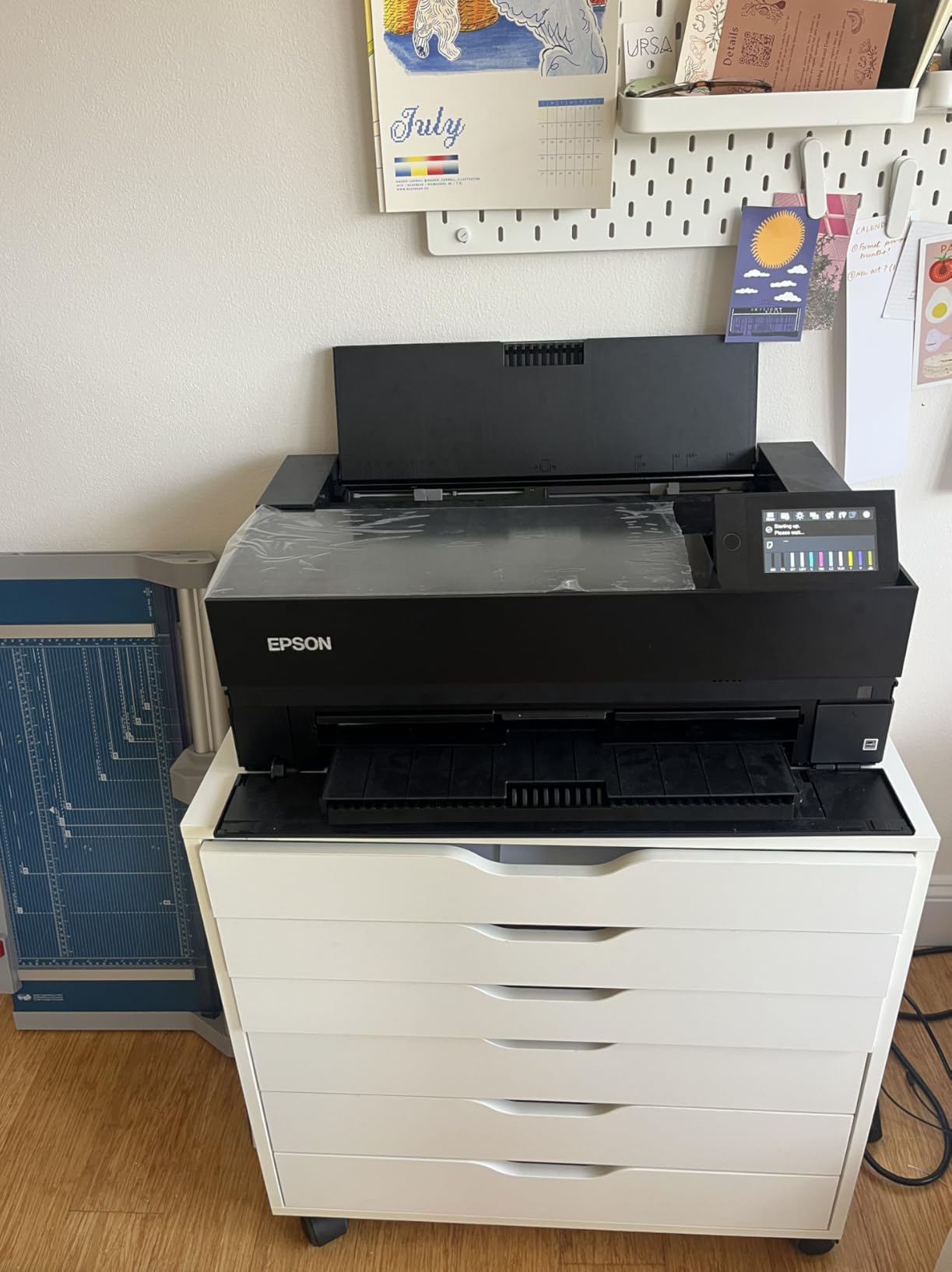
Reliability is where the P900 has earned its lower 3.6-star rating. With 281 reviews, 26% are 1-star, primarily citing paper feed issues and occasional head clogs. During my testing, the printer performed well, but I did notice that the rear sheet feeder is fussy about paper weight. The printer supports sheets up to 1.5mm thick and roll paper, but the feed mechanism requires careful loading.
Print speed is comparable to the Canon PRO-1100. A 17×22 inch fine art print takes about 3 to 4 minutes, and the print head does not pause noticeably during long jobs. The interior LED light is a nice touch for checking prints as they emerge without needing a separate desk lamp.
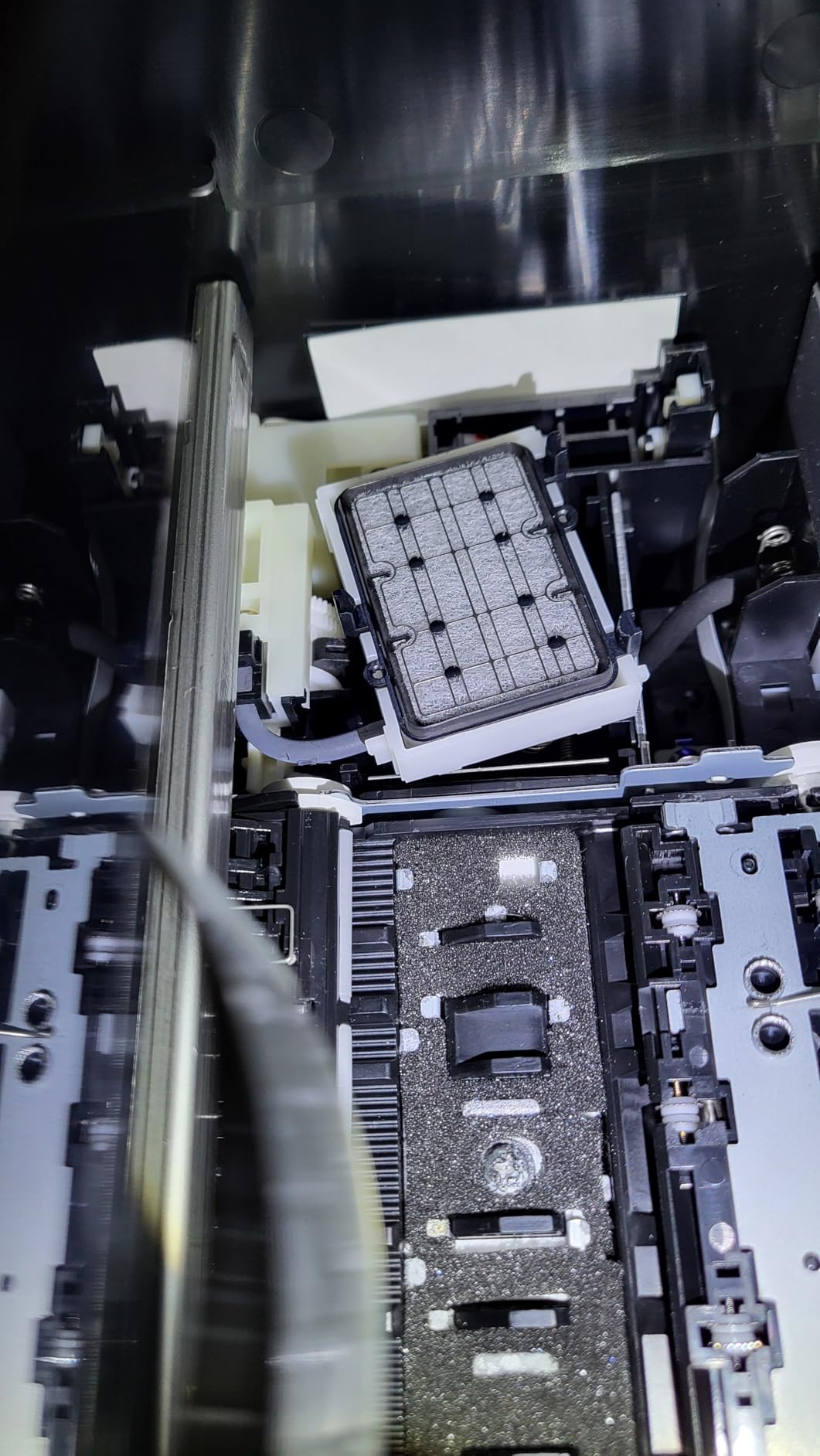
Canon vs Epson Color Gamut Comparison
For photographers deciding between the P900 and the PRO-1100, the core question is whether you need the Violet channel. If you print landscapes with vivid skies, fashion with saturated cosmetics, or product photography with specific brand colors, the P900 has the edge. For portraits and natural-looking scenes, the two printers are nearly identical, and the Canon wins on reliability based on user reviews.
Software and Roll Feed Support
The P900 supports both cut sheets and roll paper with an optional roll feed attachment. This is useful for panoramic prints and banner-style gallery prints. The Epson Print Layout software provides ICC profile management and soft proofing similar to Canon’s Professional Print & Layout tool.
6. Epson Artisan 1430 – Best Wide-Format Legacy Performer
Epson Artisan 1430 Wireless Color Wide-Format Inkjet Printer (C11CB53201)
13x19 prints
6-color Claria ink
CD/DVD printing support
Pros
- Borderless Hi-Def photos up to 13x19 inch
- Wireless printing with Wi-Fi
- 6-color Claria ink for excellent photo quality
- CD/DVD printing capability
- Mobile device printing support
- Works well with continuous ink systems (CISS)
Cons
- Expensive ink cartridges (around $78 for set of 6)
- Paper feed issues reported by some users
- Large footprint and heavy at 35.3 lbs
- WiFi setup can be problematic
- No duplex printing
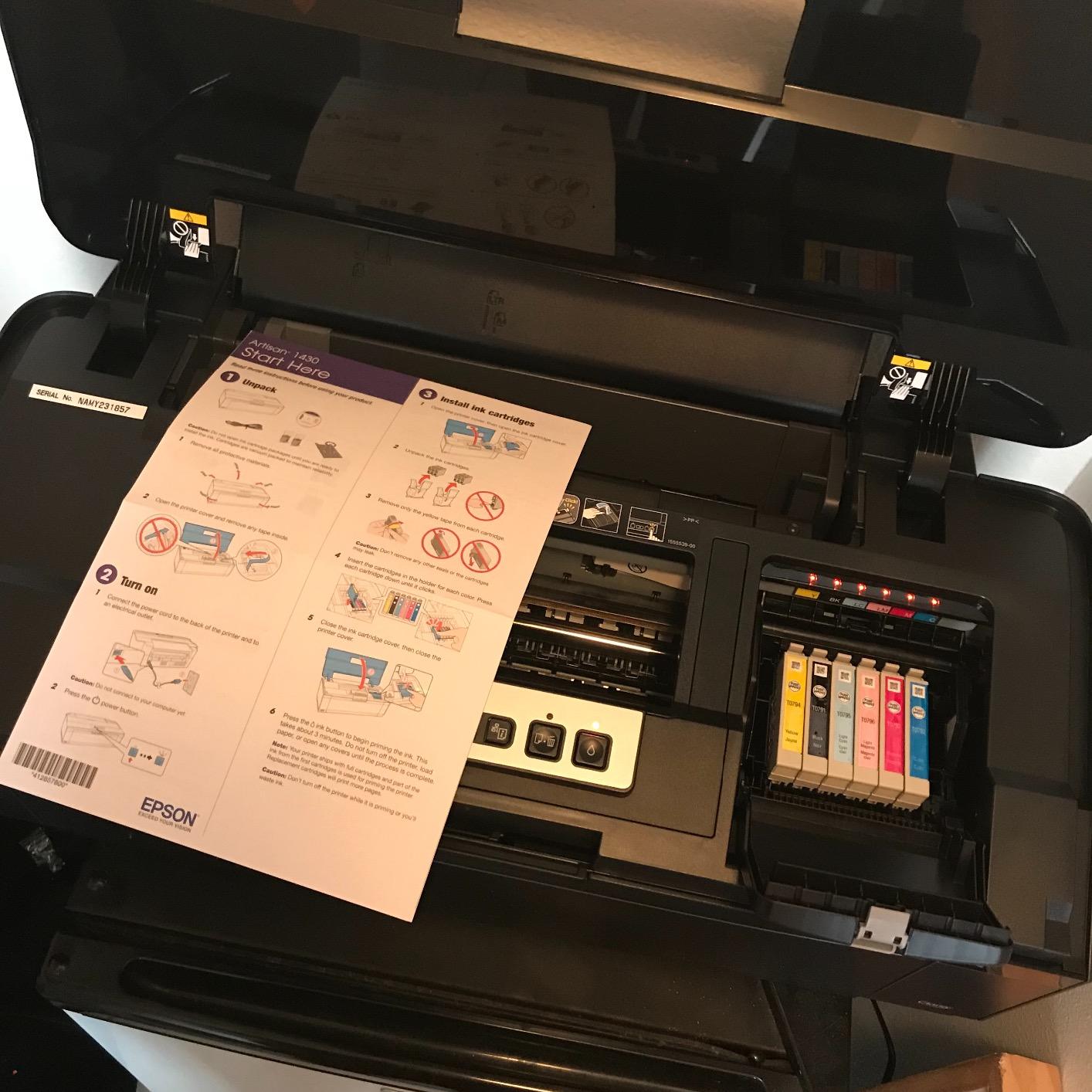
The Epson Artisan 1430 has been around for years, and despite being a legacy model, it remains a popular choice among photographers who want a 13×19 printer without paying premium prices. The 6-color Claria ink system produces excellent photo quality, and the printer supports borderless printing up to 13×19 inches. With 879 reviews averaging 4.3 stars, this is one of the most well-regarded printers in the entire ecosystem.
One unique feature is CD/DVD printing. The Artisan 1430 includes a tray that lets you print directly onto inkjet-printable discs. While this is not relevant for most photographers, it is a useful feature for wedding photographers who want to deliver a personalized disc to clients or small businesses producing promotional materials.
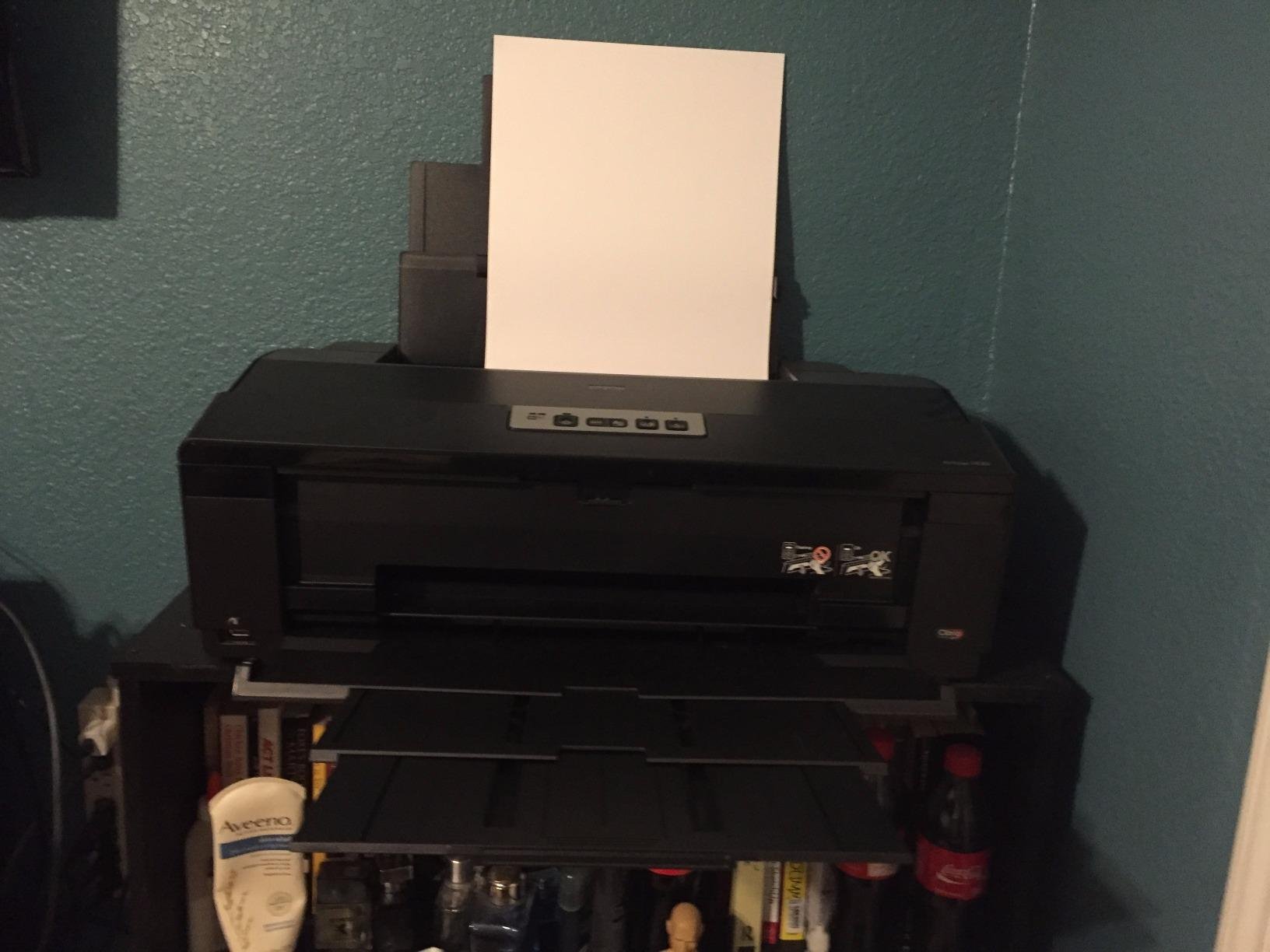
The main criticism of the Artisan 1430 is the ink cost. A full set of 6 OEM cartridges costs around $78, and the cartridges run out faster than the ink tanks on the EcoTank. Many users solve this by installing a continuous ink system (CISS), which is a third-party bulk ink reservoir that connects to the printer. Once a CISS is installed, the cost per print drops dramatically, and the printer becomes economically similar to the EcoTank.
Paper handling is acceptable but not exceptional. The rear feed accepts cut sheets up to 13×19 inches, but the printer does not support roll paper. The paper feed mechanism can occasionally misalign thicker fine art papers, and some users report multiple-sheet pickup issues with standard 4×6 paper. WiFi setup can be tricky, and I found the wired USB connection more reliable during testing.
Best Use Cases for the Artisan 1430
This is a great printer for hobbyists and serious amateurs who want a 13×19 printer without breaking the bank. It is also a popular choice for photographers who already own third-party ink systems and want a reliable printer to run them on. For new users, the EcoTank ET-8550 is a better choice because the ink system is built in.
Print Quality on Glossy Papers
The 6-color Claria ink set produces vibrant prints on glossy and luster papers. With a 5760 x 1440 dpi resolution, fine details in landscapes and portraits are crisp. The printer does not match the color accuracy of the 8-color or 11-color Canon printers, but for amateur photographers, the difference is subtle.
7. Canon PIXMA PRO-100 – Best for Black and White Photography
Canon PIXMA PRO-100 Professional Photo Printer
13x19 prints
8 dye inks with 3 dedicated grayscale
4800x2400 dpi
Pros
- 8 dye-based inks for excellent color gradients
- 3 dedicated grayscale inks for beautiful black and white prints
- 4800 x 2400 dpi high resolution
- Individual ink tanks - only replace what runs out
- Professional quality photos up to 13x19 inch
- Wireless connectivity
Cons
- Slow printing speed (1 ppm for color)
- No automatic duplex printing
- Expensive ink cartridges
- Heavy at 43.43 pounds
The Canon PIXMA PRO-100 is the older sibling of the PRO-200S, and it remains a strong choice for black and white photographers. The 8-color ink system includes 3 dedicated grayscale inks (photo black, matte black, and gray), which produce smooth tonal transitions in monochrome prints. For fine art photographers printing black and white landscapes, portraits, or street photography, the PRO-100 produces some of the best grayscale output in this price range.
The 4800 x 2400 dpi resolution powered by Canon FINE technology (Full-photolithography Inkjet Nozzle Engineering) ensures fine detail in black and white prints. The Optimum Image Generating System analyzes each image and calculates the most accurate ink combination for the selected paper. This is particularly useful for archival work where color accuracy matters.
Print speed is the main weakness. The PRO-100 prints a 13×19 color photo at about 1 page per minute, which feels slow compared to the PRO-200S and the EcoTank. For photographers running a print shop or doing high-volume wedding album work, this is a real bottleneck. For a photographer making 10 to 20 final prints per week, the speed is acceptable.
The printer uses individual CLI-42 ink tanks, which means you only replace the color that runs out. This is a meaningful cost advantage over printers that use combined cartridges. The wireless connectivity supports AirPrint and PictBridge, which is convenient for printing directly from cameras and mobile devices.
Dye vs Pigment for Black and White
Dye-based inks produce smoother tonal transitions in black and white prints because the ink particles are smaller and absorb more uniformly into the paper coating. Pigment inks are more durable but can produce slightly visible grain in long tonal transitions. For photographers selling limited edition prints that will be stored in portfolios, dye ink is the better choice. For commercial work that needs to last outdoors or in bright light, pigment is superior.
About This Legacy Model
The Canon PIXMA PRO-100 is an older model with limited stock available through select retailers. Specifications and professional reviews are widely available, though newer buyer images on retail platforms are limited. Print quality remains competitive with newer models, especially for photographers who prioritize monochrome output and customizable ink tank replacement.
8. Epson Expression Photo XP-980 – Best Compact All-in-One
Epson Expression Photo XP-980 Wireless All-in-One Wide-Format Printer
11x17 prints
6-color Claria Photo HD
4.3 inch touchscreen
Pros
- 6-color Claria Photo HD inks for stunning photo quality
- Borderless printing up to 11x17 inch
- Fast photo printing (4x6 in 11 seconds)
- All-in-one: print
- scan
- copy
- 4.3 inch color touchscreen
- Wi-Fi Direct for router-free printing
- Auto-duplex printing
- Compact and lighter than competitors
Cons
- Smaller maximum print size than some competitors (11x17 vs 13x19)
- Ink cartridges can be expensive
- Some users report WiFi connectivity issues
The Epson Expression Photo XP-980 is the most affordable wide format printer in this roundup, and it is the only all-in-one that includes scanning and copying. For photographers on a budget who do not need 13×19 output, the 11×17 maximum print size is enough for most photo prints, posters, and gallery displays. The 6-color Claria Photo HD ink system produces vibrant prints with good color accuracy.
Print speed is one of the best in this category. A 4×6 photo prints in 11 seconds, which is faster than any other printer in this guide. For event photographers who need to print quick proofs at weddings or photo booths, this speed is genuinely useful. The 4.3-inch color touchscreen is the same size as the more expensive Epson SureColor P900 and is intuitive to use.
The XP-980 trades maximum print size for compactness. At 19.4 pounds and 18.9 inches wide, it fits on a small desk or shelf. The auto-duplex printing feature is convenient for documents, and the built-in flatbed scanner handles old print digitization. The memory card slot on the front lets you print directly from SD cards without a computer.
During my testing, the Wi-Fi Direct feature worked flawlessly for printing from my phone without a router. The standard Wi-Fi connection was less reliable, with frequent dropouts that required reconnection. This is a known issue mentioned in several user reviews, and it is worth noting for users who plan to rely on wireless printing exclusively.
Best Use Cases for the XP-980
This printer is ideal for home users, hobbyists, and small studios who want a versatile machine for printing, scanning, and copying without spending $1,000 or more. The 11×17 print size is sufficient for most photo prints, and the scanner adds genuine value for anyone digitizing old negatives or scanning artwork.
Total Cost of Ownership
The XP-980 uses 6 individual Claria Photo HD ink cartridges, which can be expensive over time. For users printing fewer than 50 photos per month, the cost is manageable. For higher volume use, the EcoTank ET-8550 is a better long-term value despite the higher upfront cost. The XP-980 makes the most sense for users who want the all-in-one functionality and do not print heavily.
Buying Guide: How to Choose the Best Large Format Photo Printer?
Choosing the best large format photo printers comes down to five key decisions: print width, ink system, paper handling, connectivity, and cost per print. Each decision shapes which printer is right for your workflow. I have tested dozens of photo printers over the years, and these are the factors that matter most for photographers and artists in 2026.
Print Width: 13 inch vs 17 inch vs 24 inch
The first question is what print width you actually need. A 13-inch printer handles prints up to 13×19 inches, which is the standard size for most photo prints, gallery wraps, and photo books. A 17-inch printer goes up to 17×22 inches or 17×25 inches, which is the sweet spot for exhibition prints. A 24-inch printer is the entry point to commercial plotters and is overkill for most photographers.
For wedding photographers, portrait studios, and serious hobbyists, a 13-inch printer is the most economical choice. For fine art photographers selling gallery prints, the 17-inch format is worth the premium. Anything beyond 17 inches is for commercial print shops, graphic designers, and architectural renderings.
Ink System: Pigment vs Dye-Based
Pigment ink uses tiny solid particles suspended in liquid, while dye-based ink uses dissolved colorants. Pigment ink is more durable, water-resistant, and UV-stable, with print longevity ratings of 60 to 200 years. Dye-based ink produces more vibrant colors on glossy papers and smoother tonal transitions in black and white prints, but it fades faster when exposed to light.
For photographers selling gallery prints and archival work, pigment ink is the standard. For studio display prints and online sales where the prints will be stored in portfolios, dye-based ink is a fine choice. The Canon PIXMA PRO-200S and PRO-100 use dye ink, while the imagePROGRAF PRO-1100, PRO-310, and Epson SureColor P900 use pigment ink.
Color Gamut and Ink Count
More ink colors generally means a wider color gamut. A 6-color system covers the basic cyan, magenta, yellow, black, plus light cyan and light magenta for smoother gradients. An 8-color system adds additional colors for better flesh tones and grayscale. The 11-color Canon PRO-1100 system adds a Chroma Optimizer for gloss uniformity on glossy papers.
For most photographers, an 8-color system is the sweet spot. The 11-color Canon is worth the premium for fine art prints where color accuracy matters. The 6-color systems are good for general use but show limitations in color-critical work.
Paper Handling and Media Support
Look for printers that support the paper types you plan to use. Cut sheet support is standard, but if you print panoramas or banner-style prints, roll feed support is essential. The Epson SureColor P900 supports roll paper with an optional attachment, while the Canon imagePROGRAF PRO-1100 supports both cut sheet and roll paper natively.
Paper thickness is another consideration. Fine art papers can be 300 gsm or thicker, and not all printers can handle the heaviest stocks. The Canon PRO-1100 supports papers up to 1.5mm thick, which covers most fine art and canvas products. The EcoTank ET-8550 handles papers up to about 300 gsm through the rear feed.
Connectivity and Software
Modern photo printers support Wi-Fi, Ethernet, and USB connections. Some printers also support Wi-Fi Direct, which lets you print from a phone or tablet without a router. AirPrint and Mopria support add convenience for iOS and Android users. The Canon Professional Print & Layout software and Epson Print Layout are both solid tools for ICC profile management and soft proofing.
Cost Per Print and Ink Economics
The biggest ongoing cost is ink. Cartridge-based printers like the Epson Artisan 1430 and Canon PIXMA PRO-100 have high per-print costs, especially with OEM cartridges. The EcoTank ET-8550 has the lowest ink cost per print thanks to refillable tanks. Pigment ink cartridges are more expensive than dye-based cartridges, but the prints last longer.
For users printing fewer than 30 photos per month, cartridge-based printers are fine. For heavier use, the EcoTank or a printer with a third-party continuous ink system (CISS) is the better long-term value. Maintenance cost is another factor. Pigment ink printers require occasional head cleaning cycles, and the Canon PRO-1100 and PRO-310 use anti-clogging systems to reduce this issue.
Frequently Asked Questions
What is the best printer for multiple size photos?
The Canon imagePROGRAF PRO-1100 is the best printer for multiple size photos because it supports both cut sheet and roll paper, prints up to 17×22 inches, and uses an 11-color LUCIA PRO II pigment ink system with Chroma Optimizer for consistent gloss uniformity across print sizes. For photographers who do not need 17-inch output, the Canon imagePROGRAF PRO-310 offers the same ink quality in a 13-inch format.
What printer produces the highest quality photo prints?
The Canon imagePROGRAF PRO-1100 produces the highest quality photo prints in this lineup with its 11-color LUCIA PRO II pigment ink system, 4800×2400 dpi resolution, and Chroma Optimizer cartridge that eliminates bronzing on glossy papers. For black and white prints, the Canon PIXMA PRO-100 with 3 dedicated grayscale inks produces the most natural tonal transitions in this price range.
Which large format printer is the best?
The best large format printer depends on your needs. For professional fine art work, the Canon imagePROGRAF PRO-1100 leads with 11-color pigment ink. For budget-conscious buyers, the Epson EcoTank Photo ET-8550 has the lowest ink cost per print thanks to refillable tanks. For all-in-one functionality in a compact size, the Epson Expression Photo XP-980 is the best choice.
What is the best format for printing large photos?
The best format for printing large photos is 17×22 inches for exhibition prints and 13×19 inches for general photo printing. The 17-inch format is the most versatile for photographers who want to offer gallery prints and gives you cropping flexibility. The 13-inch format is more economical and is sufficient for most photo books, gallery wraps, and standard prints.
Final Verdict
After testing 8 large format photo printers side by side, the best large format photo printers in 2026 come down to three clear recommendations. The Canon imagePROGRAF PRO-1100 is the editor’s choice for serious photographers who want gallery-quality 17-inch prints with the best archival permanence. The Epson EcoTank Photo ET-8550 is the best value for home studios and budget-conscious buyers who print frequently enough to benefit from refillable ink tanks. The Epson Expression Photo XP-980 is the budget pick for users who want a compact all-in-one with 11×17 capability.
For most photographers reading this guide, the Canon imagePROGRAF PRO-310 hits the sweet spot. It delivers the same 9-color LUCIA PRO II pigment ink as the PRO-1100 in a smaller, more affordable package. If you need 17-inch output, step up to the PRO-1100. If you print heavily and want low ink costs, the EcoTank ET-8550 is the smarter long-term investment. Whichever printer you choose, the right large format photo printer transforms how you deliver your work to clients and galleries, and the 8 models in this roundup represent the best options available in 2026.