
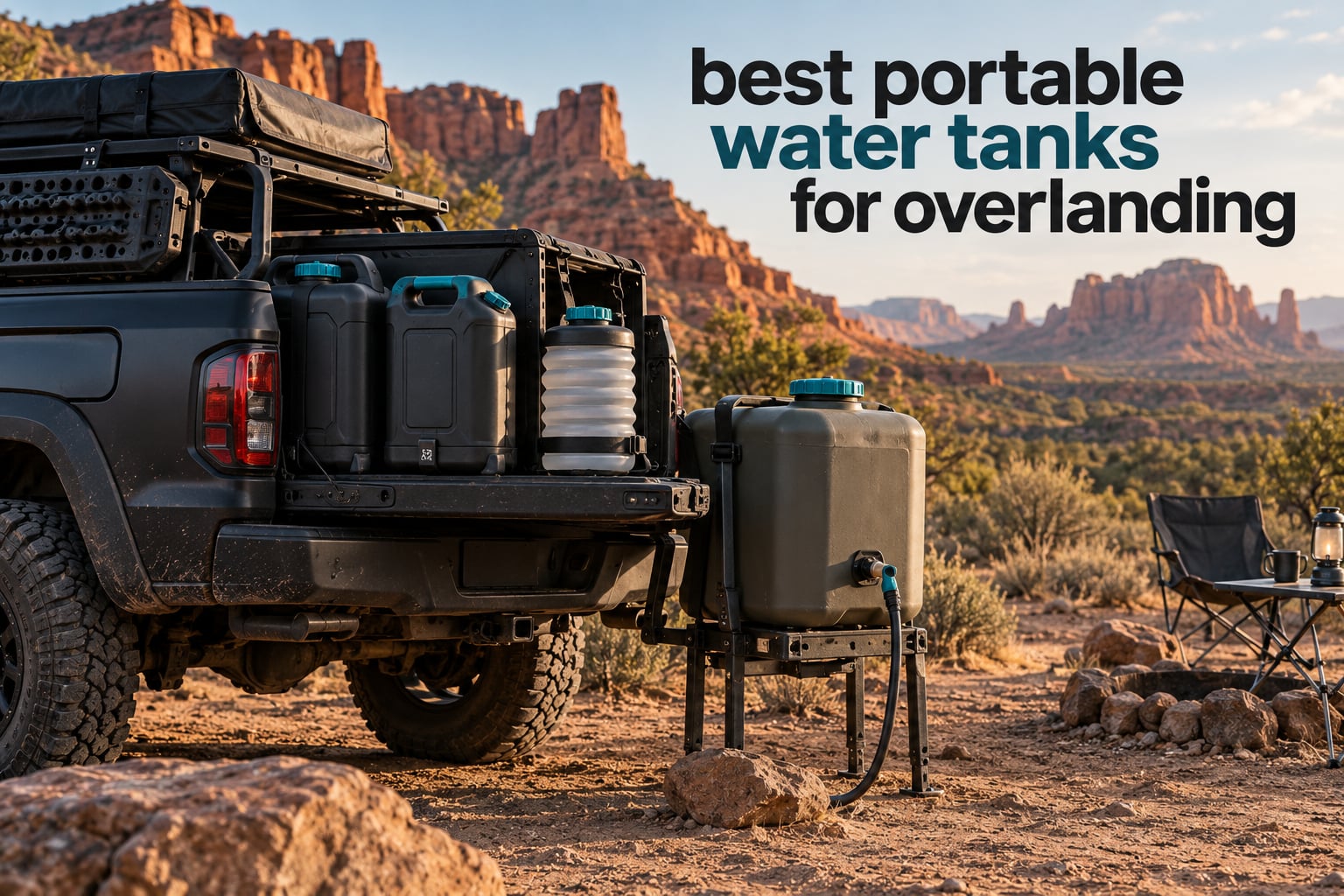
A portable water tank for overlanding is a food-safe, vehicle-mountable container, rigid plastic, collapsible bladder, or steel, sized to carry several days of drinking, cooking, and hygiene water. It dispenses through a bottom tap, a top pour spout, or a self-pressurizing pump cap, so you can refill a bottle or run a shower without unloading the vehicle. That freedom is the whole point. Water storage is what separates a weekend campground trip from genuinely self-sufficient overlanding.
We use it constantly, so we treat the details competitors skip. Water is heavy: a gallon weighs 8.34 pounds, which means a full 5-gallon can lands at about 41.7 pounds, and a 10-gallon tote hits roughly 93 pounds. That weight lands on your payload rating, not on a wish list. It also changes which container you should buy, because a rigid jug you cannot lift alone at 42 pounds is a different tool from a 4-liter soft bag.
We compared 10 of the highest-reviewed portable water tanks for overlanding across capacity, food-contact material, empty weight, dispensing hardware, mounting options, and real-world failure reports. The list below spans collapsible jugs, 5-gallon military-style cans, flat stackable packs, bladders, a rolling tote, a 35-gallon utility tank, and a self-pressurizing shower tank, so there is something here for a solo weekend warrior and a family running a desert crossing.
Our picks were last reviewed in 2026. We lean on manufacturer specifications, verified review data, and the patterns long-distance overlanders actually report, rather than marketing copy.
Table of Contents
Top 3 Best Portable Water Tanks for Overlanding in 2026
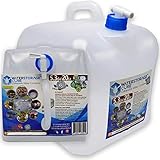
WaterStorageCube 5.3 Gal Collapsible
- 5.3 gallon capacity
- Collapsible food-grade PE
- Gasketless spigot
- 0.33 kg empty
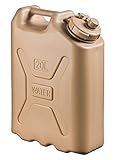
Scepter Military 5 Gallon Can
- 5 gallon / 20 litre capacity
- Food-grade BPA-free plastic
- Military specification build
- 4.5 lbs empty

RotopaX 2 Gallon Water Pack
- 2 gallon capacity
- Three-layer rotational molding
- Flat 3 inch stackable profile
- 3.7 lbs empty
All 10 Portable Water Tanks Compared in 2026
| Product | Specifications | Action |
|---|---|---|
| WaterStorageCube 5.3 Gallon Collapsible Container |
|
Check Latest Price |
 HydraPak Seeker 4L Collapsible Storage HydraPak Seeker 4L Collapsible Storage |
|
Check Latest Price |
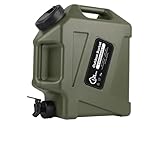 COOZMENT 3.2 Gallon Jug with Spigot COOZMENT 3.2 Gallon Jug with Spigot |
|
Check Latest Price |
 UPWOIGH 5 Gallon Camping Water Jug UPWOIGH 5 Gallon Camping Water Jug |
|
Check Latest Price |
| Scepter Military Style 5 Gallon Container |
|
Check Latest Price |
| RotopaX 2 Gallon Water Pack |
|
Check Latest Price |
 MSR Dromedary Bag Water Reservoir MSR Dromedary Bag Water Reservoir |
|
Check Latest Price |
 Barker 10 Gallon Tote Tank Barker 10 Gallon Tote Tank |
|
Check Latest Price |
 WaterPrepared 35 Gallon Utility Tank WaterPrepared 35 Gallon Utility Tank |
|
Check Latest Price |
 WaterPORT 4 Gallon Self-Pressurized Tank WaterPORT 4 Gallon Self-Pressurized Tank |
|
Check Latest Price |
How We Picked These Portable Water Tanks
Capacity came first, because you cannot add water capacity after the trip is planned. We checked whether the stated volume matches the real daily need for a stated number of people, and whether the container physically fits a truck bed, a roof rack, or a footwell.
Next is food-contact material. We looked for BPA-free and PVC-free construction, and for the resin type, because plastic taste after weeks of storage is the most common complaint in the reviews. Rigid polyethylene scored well on taste, while soft bladders carried more of that complaint.
Dispensing hardware decided the rest. A container that only pours from the top means you tip 42 pounds to fill a bottle. We weighted bottom taps, spigots, screw caps, and pressurized pump caps according to how often you would realistically dispense.
Then we applied a weight penalty, since every gallon is 8.34 pounds before you move the vehicle. Durability, warranty length, and whether replacement parts and mounting hardware are sold separately completed the picture.
1. WaterStorageCube 5.3 Gallon Collapsible Container
WaterStorageCube Collapsible Water Container with Spigot (5.3 Gal (1-Pack))
5.3 gallons
Food-grade PE
Gasketless spigot
0.33 kg empty
Pros
- Over 16800 reviews to draw on
- Food-grade PE with no BPA PVC or DEHP
- Collapses flat when empty
- Leak-free gasketless spigot with no parts to replace
- Stays flexible in cold weather
Cons
- Soft walls flex when full
- Less puncture resistant than rigid jugs
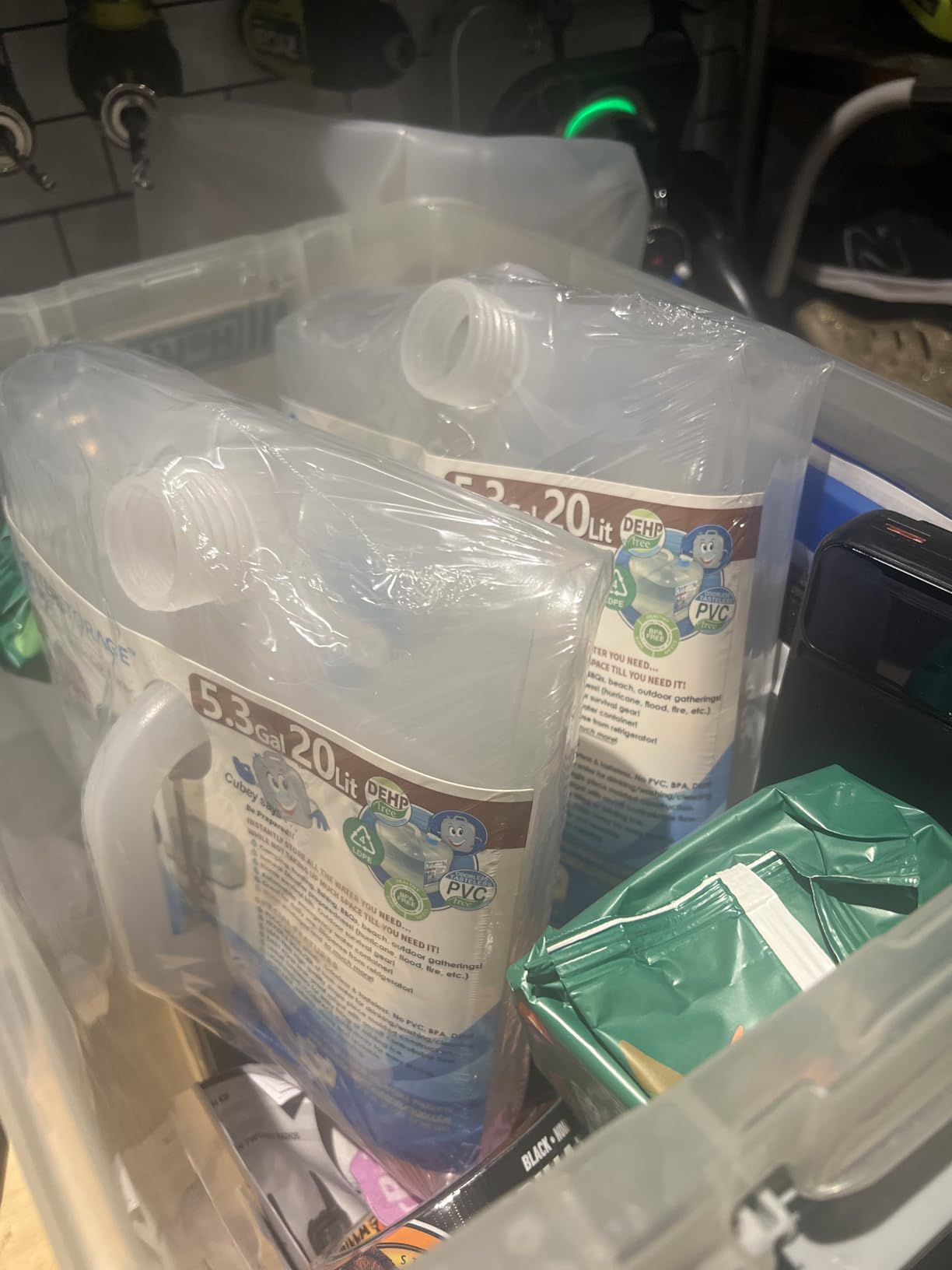
This is the container we reach for first, and it earned the top slot on the balance of evidence rather than on any single spec. It holds 5.3 gallons, folds down to the thickness of a hardcover book when empty, and weighs 0.33 kg before you add water. For a weekend overlander who wants real capacity but hates giving up 42 pounds of payload permanently, that trade is hard to beat.
The review volume tells you something useful here. More than 16,800 buyers have used it, and 69% of them gave five stars. That much history means the failure modes are already well documented, and the ones that show up are predictable: the soft body flexes when full, and it is less puncture resistant in a rock field than a rigid jug.
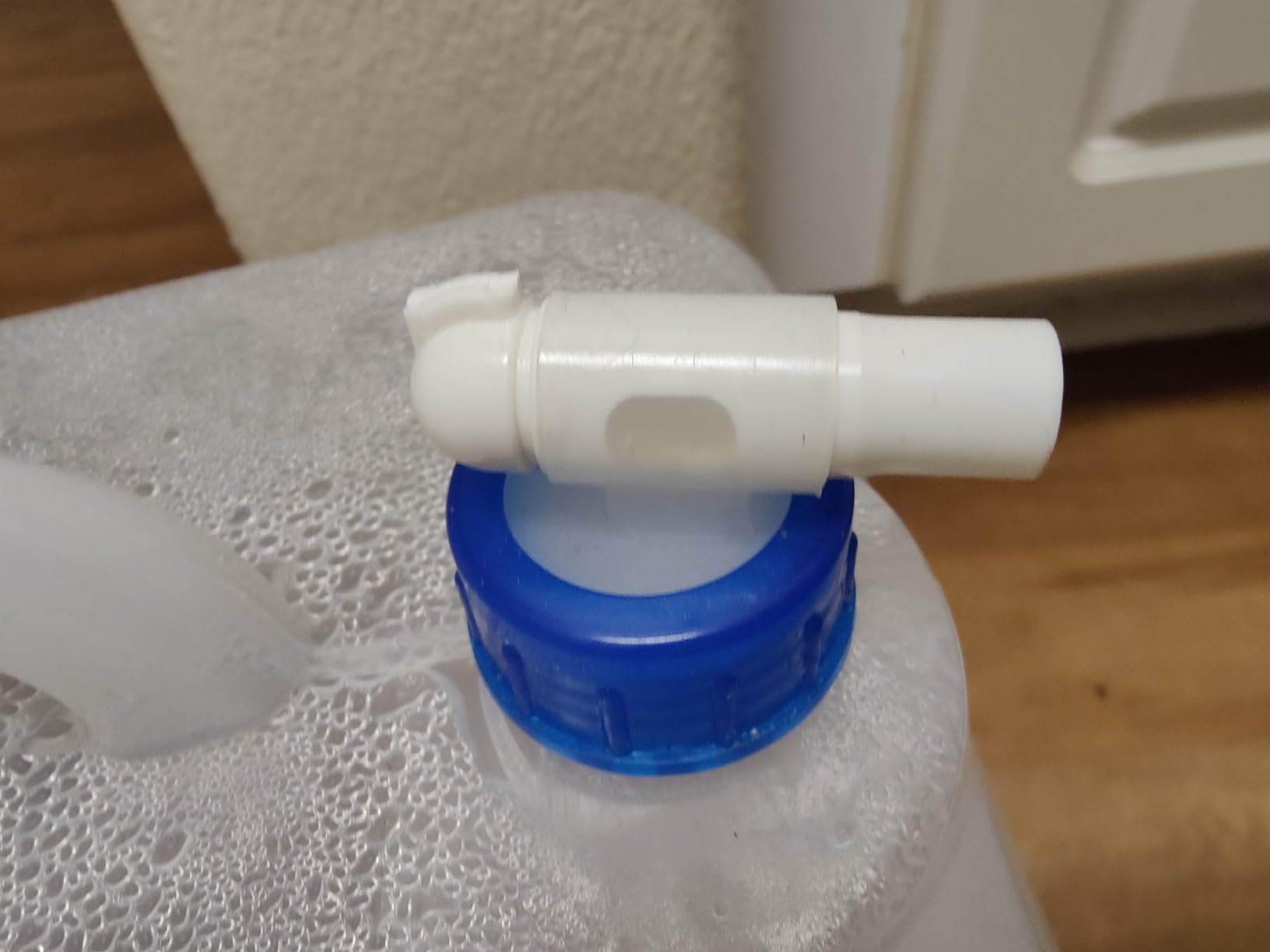
The spigot is the reason it stays in our kit. There is no gasket to perish and nothing to replace, and flow is controlled by how far you open it. Because the body is one molded piece with no seams, there is no weld line to fail, which is the first thing we check on any container that lives in a truck bed.
Food safety is handled by a food-grade PE shell with no BPA, PVC, or DEHP. Reviewers consistently report that water tastes unaffected, and that is not a small thing when the container has been sitting in a hot truck for a month. Material is transparent, so you can see the water level without opening it.
What we liked during testing
Filling through a wide mouth is fast, and draining it fully for air drying between trips takes seconds because the walls collapse as the water leaves. That single feature does more for long-term water quality than any filter does. If a container cannot get dry, biofilm starts immediately.
It is also listed as fridge safe, which makes it useful as a backup container inside the camper as well as in the bed. Buyers using it for hurricane and earthquake preparation are the same buyers who take it overlanding, and the same reviews cover both uses.
When to pick something else
If your route crosses broken glass, sharp talus, or a bed liner full of tie-down hardware, choose a rigid can. The collapsible wall is the trade you make for packability, and a puncture in a soft wall is a total loss of that tank’s contents.
It also cannot be mounted to a rack or a swing-away carrier the way a rigid pack can. Strap it down and keep it low, and it will do the job. Just do not plan to bolt it anywhere.
2. HydraPak Seeker 4L Collapsible Water Storage
HydraPak Seeker Collapsible Camping Water Storage (4L, Sutro Green)
4 liters
TPU HDPE silicone
42mm screw cap
104 g empty
Pros
- Crushes flat to almost nothing
- Freezable or usable up to 140 F
- 42mm opening fits most backcountry filters
- Load-bearing lashpoints and low-profile handle
- Backed by a lifetime guarantee
Cons
- Less puncture protection than rigid tanks
- Screw cap is slower than a spigot
At 104 grams empty, this is the lightest container here, and the one we would hand to someone who carries water in from a trailhead rather than driving it. Four liters is roughly a gallon and a bit, which is one person for one day plus a margin. That suits a trip where you filter at the source, not one where you haul water from a base camp.
What makes it interesting is the temperature range. The abrasion-resistant TPU body can be frozen solid as an ice pack or filled with hot water up to 140 F, so it works as a hot water bottle for a cold-weather camp and as a cold one for desert crossings. Reviewers confirm both directions, and 79% of the 2,637 reviews are five stars.
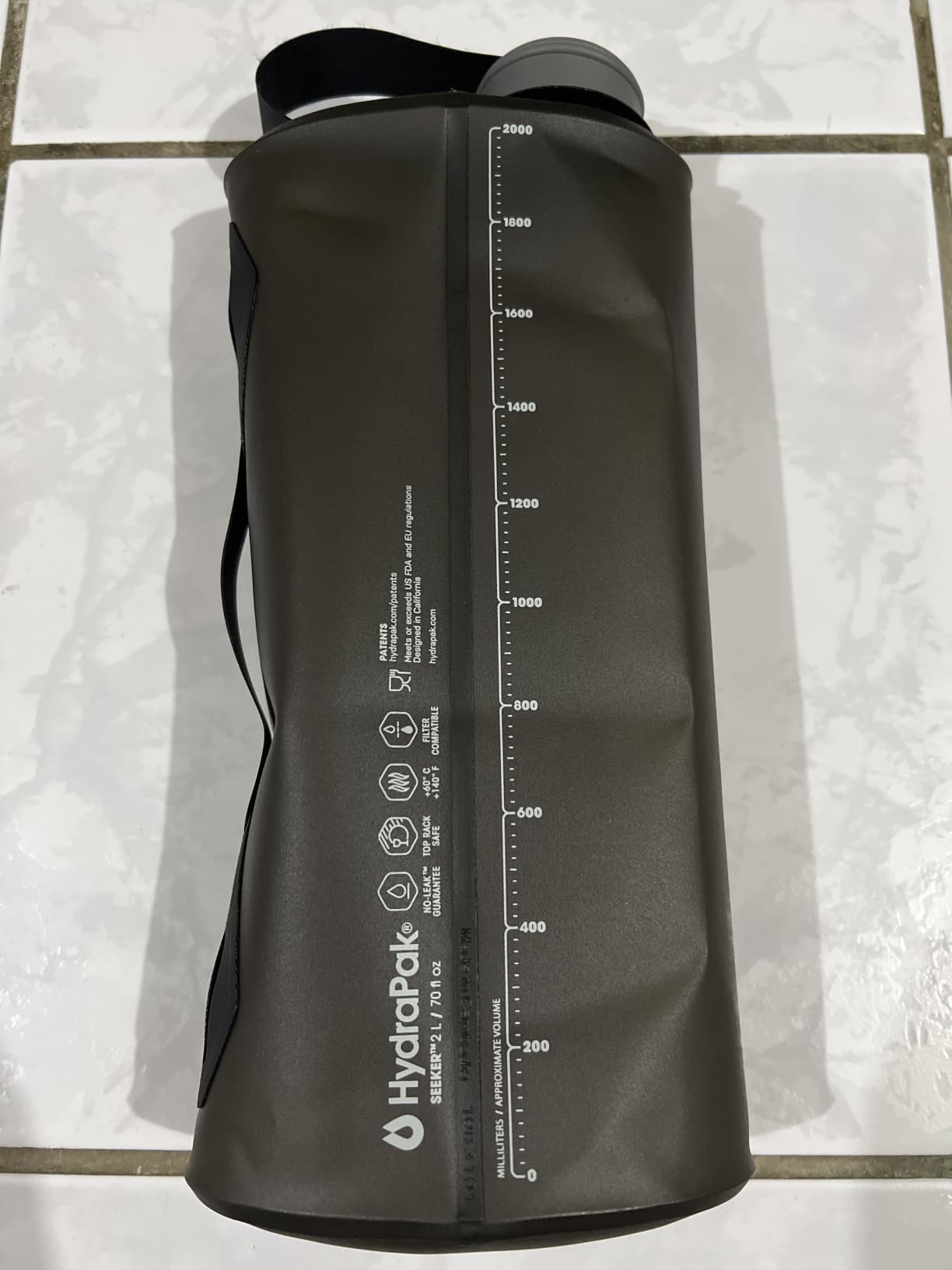
The 42mm screw cap is a deliberate design choice rather than a compromise. It threads onto most backcountry filters, so the same container fills from a stream through a filter and then dispenses into a bottle, which removes one transfer step. Many people pair it with a filter cap and effectively turn the bag into a filter housing.
Load-bearing lashpoints let you hang it from a tree or a rack, and the low-profile handle is workable for pouring. The Beyond Lifetime Guarantee also means a failed seam is not a permanent loss, which matters for a bag you will drag over rocks for years.
Where it earns its place
Packability is the whole reason to own it. It crushes flat, stores in its own bag, and takes up essentially no room when empty, so you can carry the capacity on the outbound leg and eat into the cache on the way home. Long trips on foot reward that more than any other feature here.
It also works well as a secondary container inside a vehicle, separate from the main storage can. A 4-liter bag in the cab for drinking water, a rigid jug in the bed for washing, is a common and sensible split.
What it cannot do
It will not free-stand, and reviewers with vehicles say so plainly. A soft bag slumps, so it cannot take a bottom tap, cannot be plumbed to a pump, and cannot be secured to a swing-away carrier the way a rigid pack can.
Pour speed is another limit. You unscrew a cap rather than cracking a valve, so filling a bottle takes a few seconds longer each time. Over a week of camp use, that adds up.
3. COOZMENT 3.2 Gallon Jug with Spigot
COOZMENT 3.2 Gallon (12L) Portable Water Containers with Spigot, BPA Free Water Jug, Military Green Water Tank, Multifunction Water Storage Containers for Camping Outdoor Hiking,Emergency Storage
3.2 gallons
Food-grade PE
4 inch wide mouth
1.9 lbs empty
Pros
- Tall narrow footprint packs tighter than cube jugs
- 4 inch wide mouth for filling and cleaning
- Spigot on the opposite side from the mouth
- Food-grade PE body with PP lid and silicone seal
- Available in 10L 12L and 19L sizes
Cons
- Corners flex under heavy loads
- Included brush and spigot extender feel cheap
- Slight plastic odor on first use
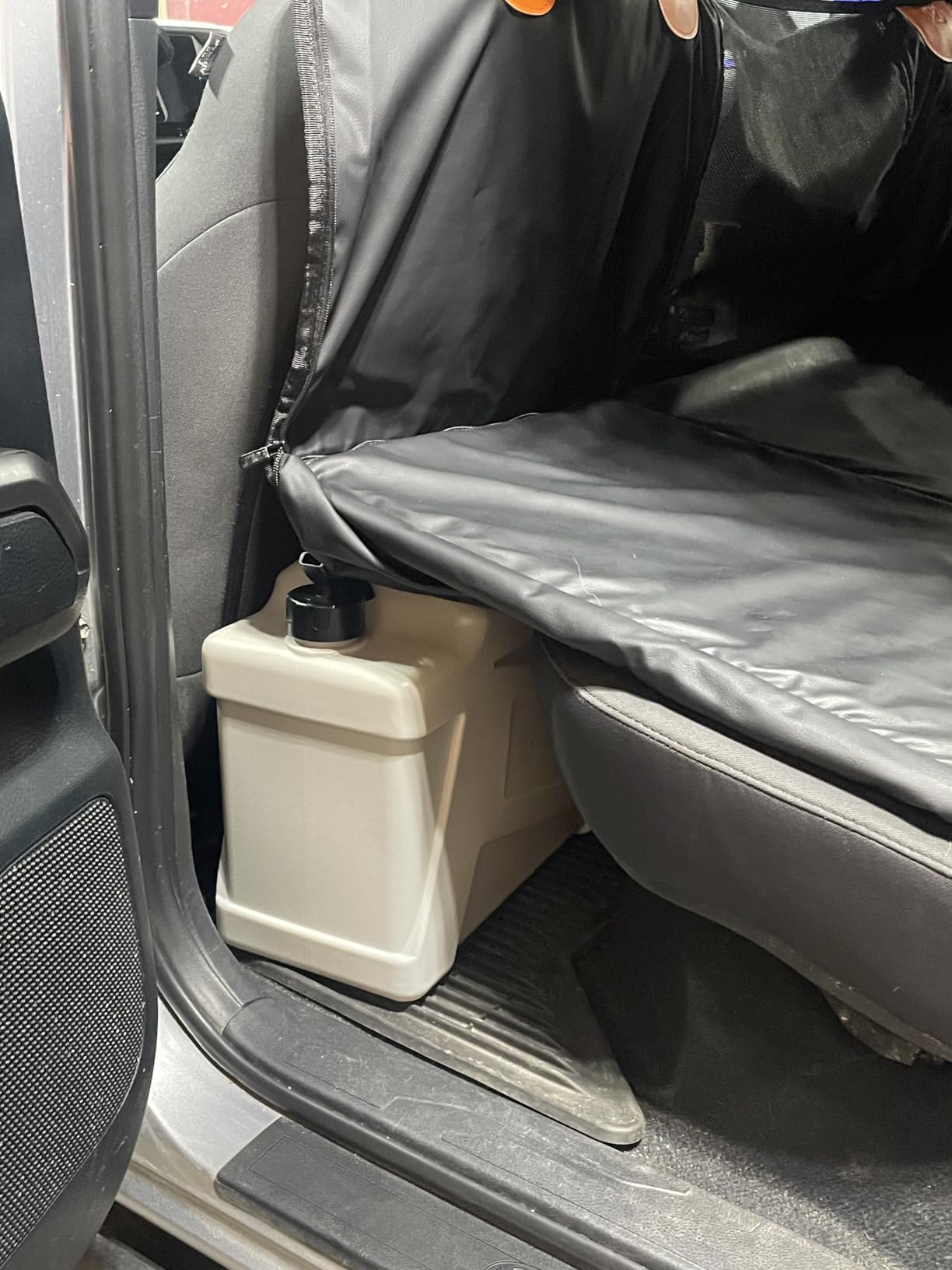
The reason to look at this jug is its shape. At 7.5 by 13.7 inches and standing upright, it occupies a narrow vertical column that cube-shaped jugs waste, which is exactly the geometry you have in a footwell or behind a seat. Three owners building van and Sprinter systems singled out the same thing: it slots into dead space where nothing else fits.
Material is a food-grade PE body with a food-grade PP lid and a silicone seal, with no BPA or PVC. That combination is what keeps the water tasting clean, and 81% of 1,314 reviews are five stars. The spigot sits opposite the fill mouth, so you can top it up and dispense without moving the container.
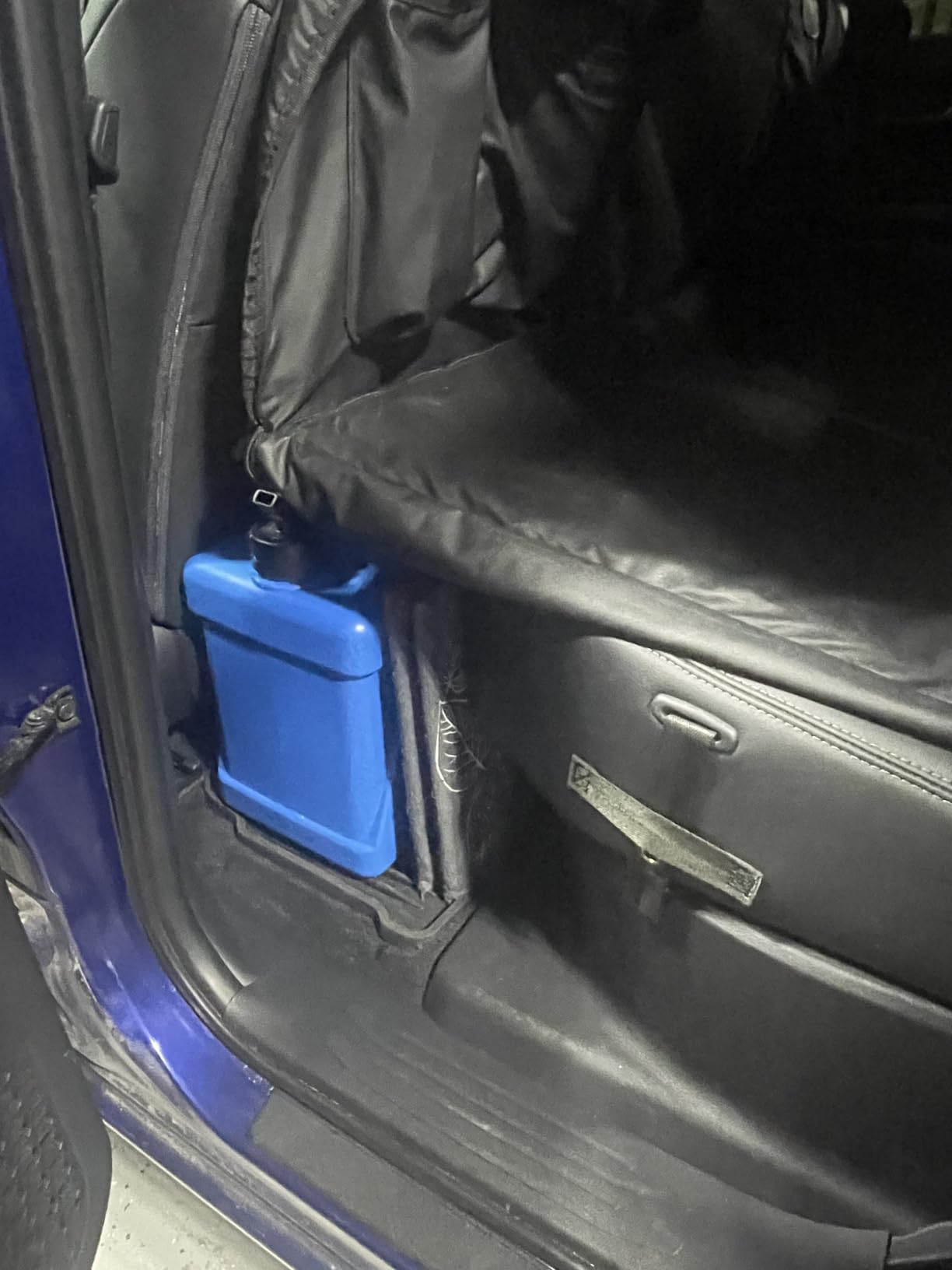
The 4-inch wide mouth is unusually good. It is wide enough to get a hand and a bottle brush inside, which is the practical difference between cleaning a container and not cleaning it. Narrow-neck cans are the reason people end up storing water they are afraid to drink.
A cleaning brush ships in the box, along with a sealing cap and spigot. Three capacities are offered, 10L, 12L, and 19L, so the same footprint family covers a weekend and a longer stretch.
Strengths worth the money
Two carrying handles sit on opposite sides, and at 1.9 pounds empty the jug moves easily until it is about a third full. The shape also resists tipping in a bed under acceleration, which is more than can be said for a low, wide tote.
Because it is a rigid polyethylene body, you can scrub it, sun it, and store it wet without worrying about a soft wall degrading. For vanlife interiors where the tank lives in a cabinet rather than a rack, that is the right architecture.
Where it falls short
The corners are thinner than the side walls, and owners report they flex under heavy loads. A full 3.2-gallon jug is roughly 30 pounds, and if it takes a hit off a rock, the corners are where stress concentrates.
The included brush and spigot extender are the parts most likely to end up in a drawer. Buy a proper brush, and expect a faint plastic odor on the first fill that fades after a wash.
4. UPWOIGH 5 Gallon Camping Water Jug
UPWOIGH 5 Gallon Camping Water Jug with Spigot, Military Green, 1 Pack
5 gallons
BPA-free HDPE
Dual cap openings
2 lbs empty
Pros
- Heavier wall HDPE than typical jugs
- Two cap sizes for fast fill and field pouring
- Integrated handle plus a second grip point
- Rectangular shape spaces efficiently in a bed
- 1 year warranty
Cons
- Cap air vent leaks above four-fifths full
- Replacement spigots hard to source
- Fills slightly under the advertised 5 gallons
This is a plain, well-executed 5-gallon jug, and the dual opening is the feature that made it stick with us. A large cap takes a hose or a fast pour for filling, and a smaller cap gives controlled output in the field, so you are not fighting a five-gallon opening to pour a cup.
At 2 pounds empty it is lighter than most rigid 5-gallon cans, and the BPA-free HDPE wall is visibly thicker than the typical budget jug. Reviewers who compared it directly to cheap alternatives mention that difference repeatedly, and 76% of 1,253 reviews are five stars.
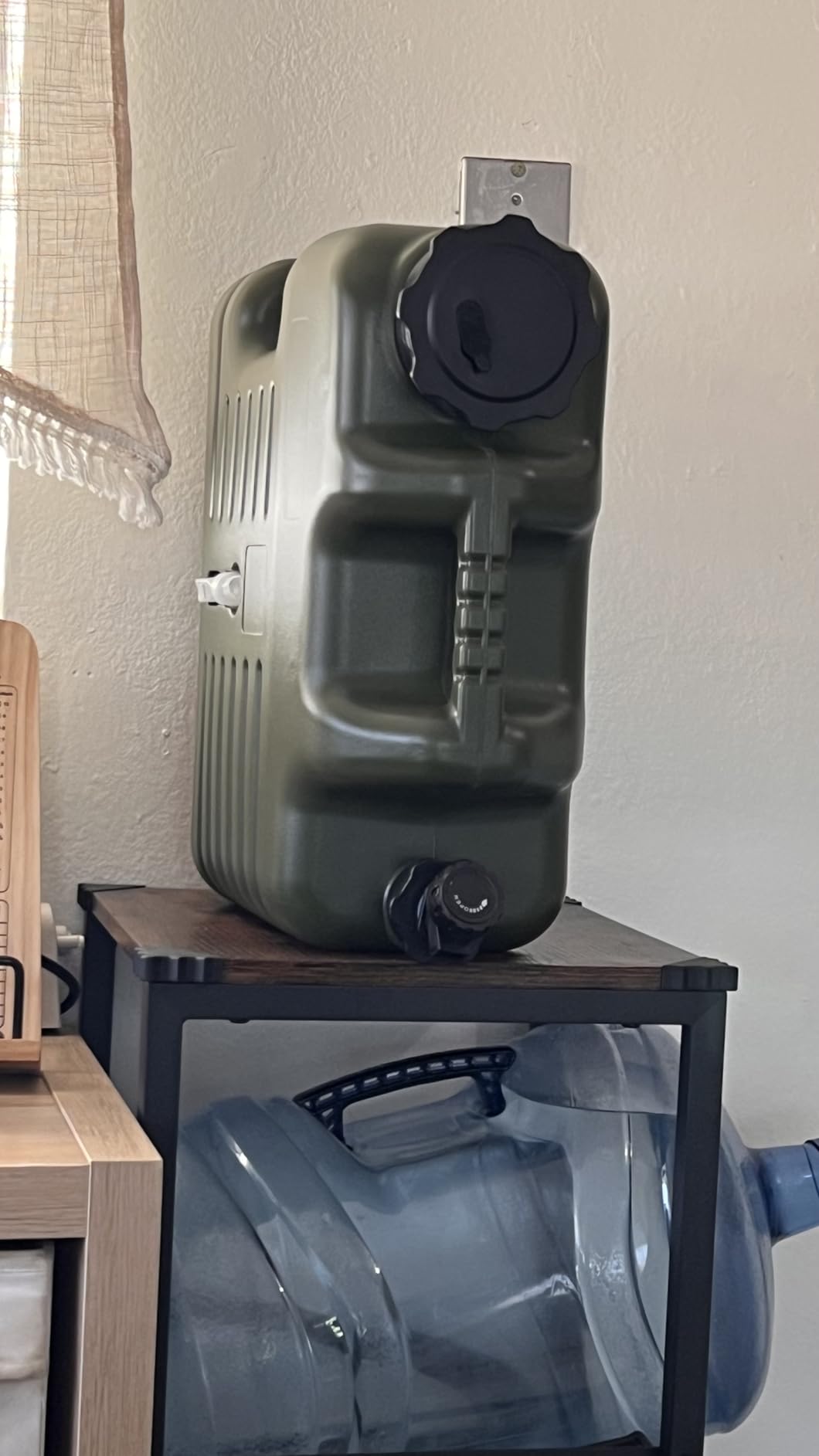
The rectangular shape spaces efficiently, and the integrated handle plus a second grip point make a 42-pound full jug manageable for one person. That is not trivial; most rigid 5-gallon cans force a two-person lift. Buyers use it for camping, RODI water storage, and household backup, and the same toughness applies to all three.
A one-year warranty is short compared with what some brands in this roundup offer, but the construction itself has held up. Nothing in the review data suggests a molded-body failure.
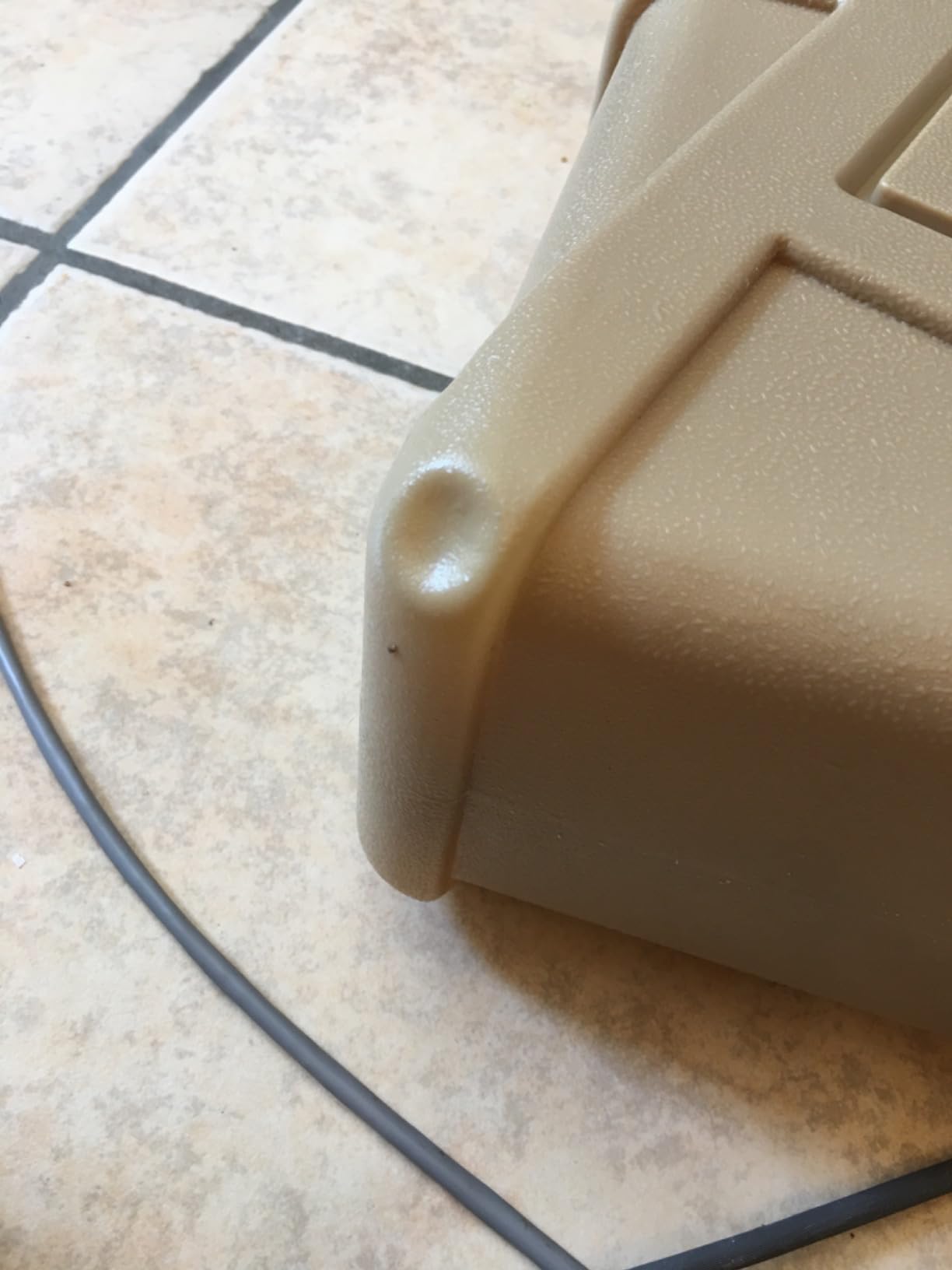
Why the two caps matter
Almost every leak complaint on rigid jugs traces back to a cap or a vent configured wrong. A large and a small opening gives you the option to close down to the smallest seal while the container sits in the truck, which is the configuration least likely to weep.
It also speeds up camp setup. Fill from a stream spigot through the large cap, then flip the small cap for drinking water through the day.
The two things to plan around
The air vent in the large cap is reported to leak if it is open when the jug is more than four-fifths full, so fill to that line and close it. This is a filling-habit problem, not a defect, but it catches people out.
Replacement spigots are hard to source and do not fit Coleman jugs, so treat the spigot as semi-permanent. And the real fill volume runs slightly under the advertised 5 gallons, so size your trip math with that in mind.
5. Scepter Military Style 5 Gallon Container
Scepter Portable Military Style Water Storage Jug & Container for Camping, 5 Gallon, Sand – Plastic Beverage and Hydration Dispenser for Outdoor Drinking, RV and Emergency Survival
5 gallons / 20 litres
Food-grade plastic
Military spec build
4.5 lbs empty
Pros
- 4.7-star average across 1789 reviews
- Built to military specifications for impact resistance
- BPA-free and PVC-free food-grade construction
- Stackable rectangular footprint for truck beds
- Seventy years of container manufacturing behind it
Cons
- Heaviest filled weight among the 5-gallon cans at about 46 pounds
- Molded spigot is not user replaceable
This is the can we trust to be kicked, dropped off a tailgate, and stored for months. Scepter builds it to military specifications for impact resistance, and that is not marketing filler, because this is a design pattern the company has manufactured for seven decades. Overlanders on overlandbound.com repeatedly endorse Scepter cans as abuse-proof and taste-neutral after long use, and our own review data agrees.
At 4.5 pounds empty it is the heaviest filled 5-gallon can here at about 46 pounds, and that is the price of the thick walls. Food-grade, BPA-free, and PVC-free construction adds no taste, odor, or chemicals, which is the specific complaint we hear most from people switching away from cheap plastic.
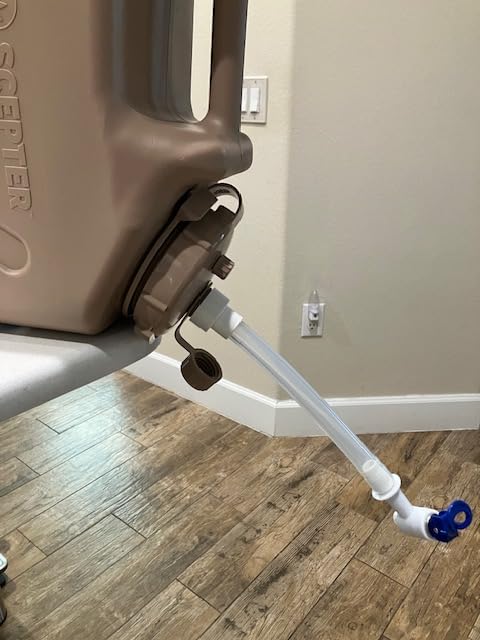
The rating distribution backs the reputation. 86% of 1,789 reviews are five stars and 95% are four stars or better, a spread few containers in this price and weight class can match. Buyers cite ruggedness, leak-proof sealing, and the absence of plastic taste over long storage periods, which is exactly the failure pattern that ruins cheaper jugs.
Dimensions are 13-1/2 by 6-1/2 by 18-3/4 inches, and the rectangular footprint stacks neatly in a truck bed or on a gear rack. It is a sand-colored part, which matters less than you would think and more than a product photo suggests in bright sun.
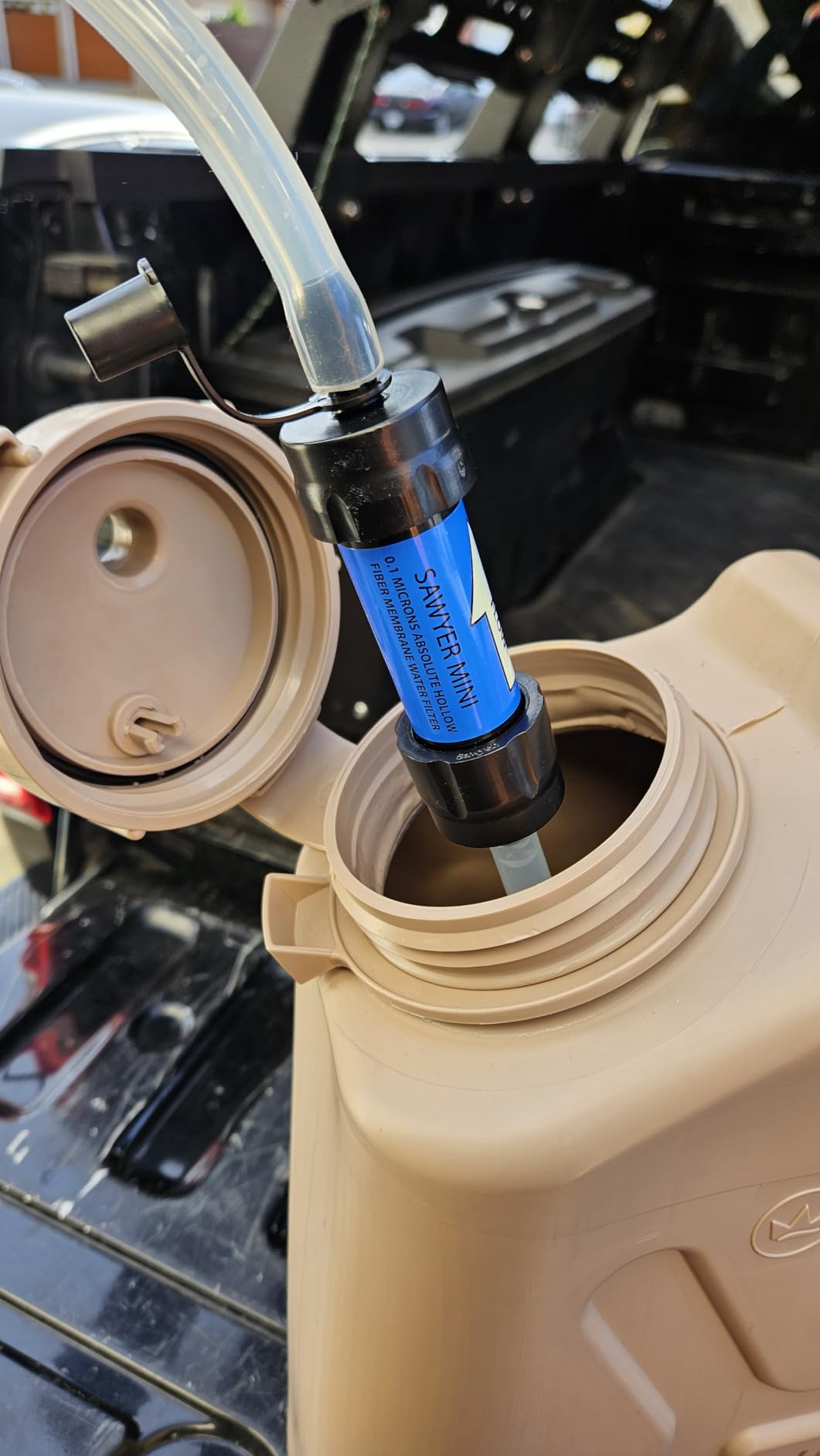
What makes it outlast the others
Wall thickness is the difference. A thicker body survives the drop, the rock, and the tailgate that a thin-walled jug cracks. If your routes involve rough tracks or a loaded bed with gear shifting, that resilience is worth the extra pounds.
Long storage is the other win. A taste-neutral container is one you can fill before a season of trips and actually want to drink from on day ten of the next one. A one-year warranty is included.
When it is the wrong call
At about 46 pounds full, it is the heaviest loaded weight in the 5-gallon group, and you need to plan how you get it out of the bed. Two people or a ramp beats a back injury.
The molded spigot is not user replaceable, so if it is damaged you are looking at replacing the can rather than a five-dollar part. Plan the packing layout so the spigot faces up and stays off the tie-down rails.
6. RotopaX 2 Gallon Water Pack
RotopaX – 2 Gallon Water Pack, White – Leakproof Portable Water Container
2 gallons
Three-layer rotational molding
3 inch flat profile
3.7 lbs empty
Pros
- 4.8-star average across 1622 reviews
- Flat 3 inch profile bolts to racks and cages
- Crush-resistant seamless rotational molding
- Twist-and-lock base mount for fast removal
- BPA-free and made in the USA
Cons
- Mounting kit and base mount sold separately
- Some international orders arrive without a screw cap
- Not rated for flammable liquids
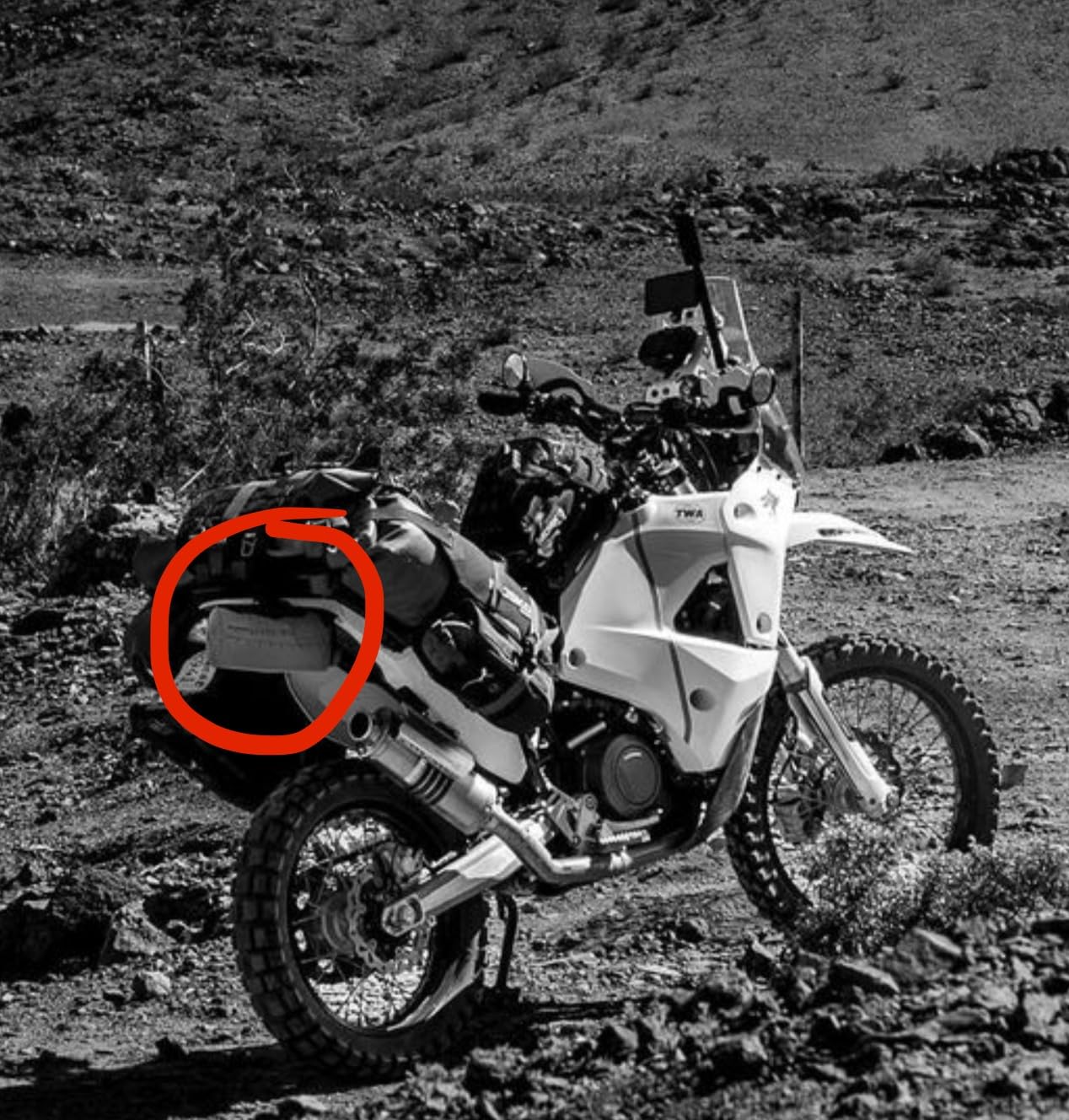
This is the only container here designed to bolt to the outside of a vehicle, and that changes the buying question. At 18 by 14 by 3 inches and 3.7 pounds empty, a full pack is about 20 pounds, so two of them on a rack or a swing-away carrier is a genuine week of water without eating your interior space.
It holds the highest average rating in the roundup at 4.8 stars across 1,622 reviews, with 87% five stars. Jeep, UTV, and motorcycle campers dominate the reviews, and they all mention the same thing: the thin, stackable profile. Users on r/overlanding value these packs precisely because they mount outside where nothing else fits.
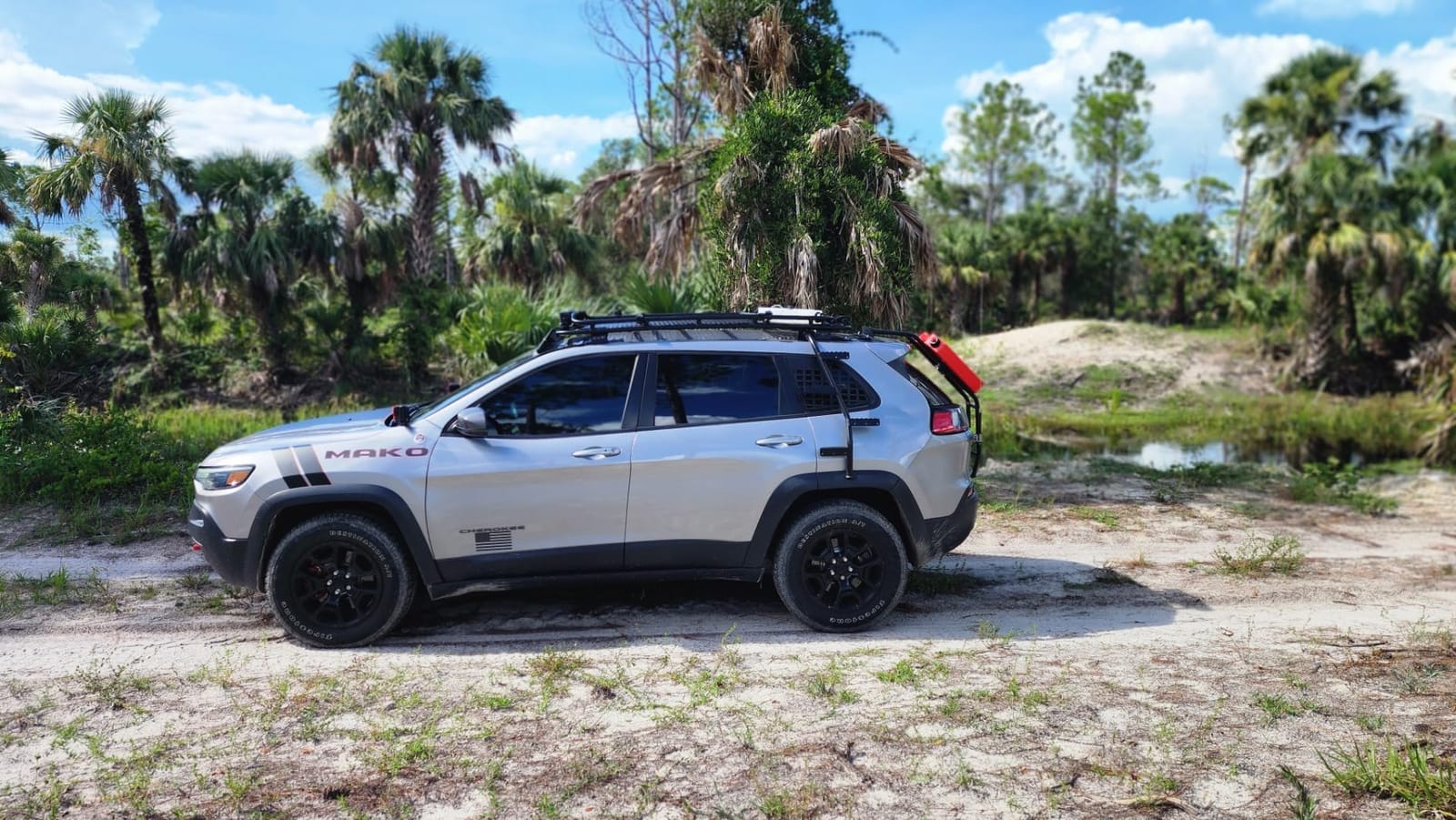
Construction is three-layer rotational molding, which produces a seamless, crush-resistant body. There is no weld line to fail, and the whole point is that the pack survives being bolted to something moving at speed over bad surface.
The twist-and-lock base mount lets you remove and refill the container in seconds, and a spout is included. One, 1.75, and 2 gallon sizes are available, so you can match capacity to how much weight you want up high.
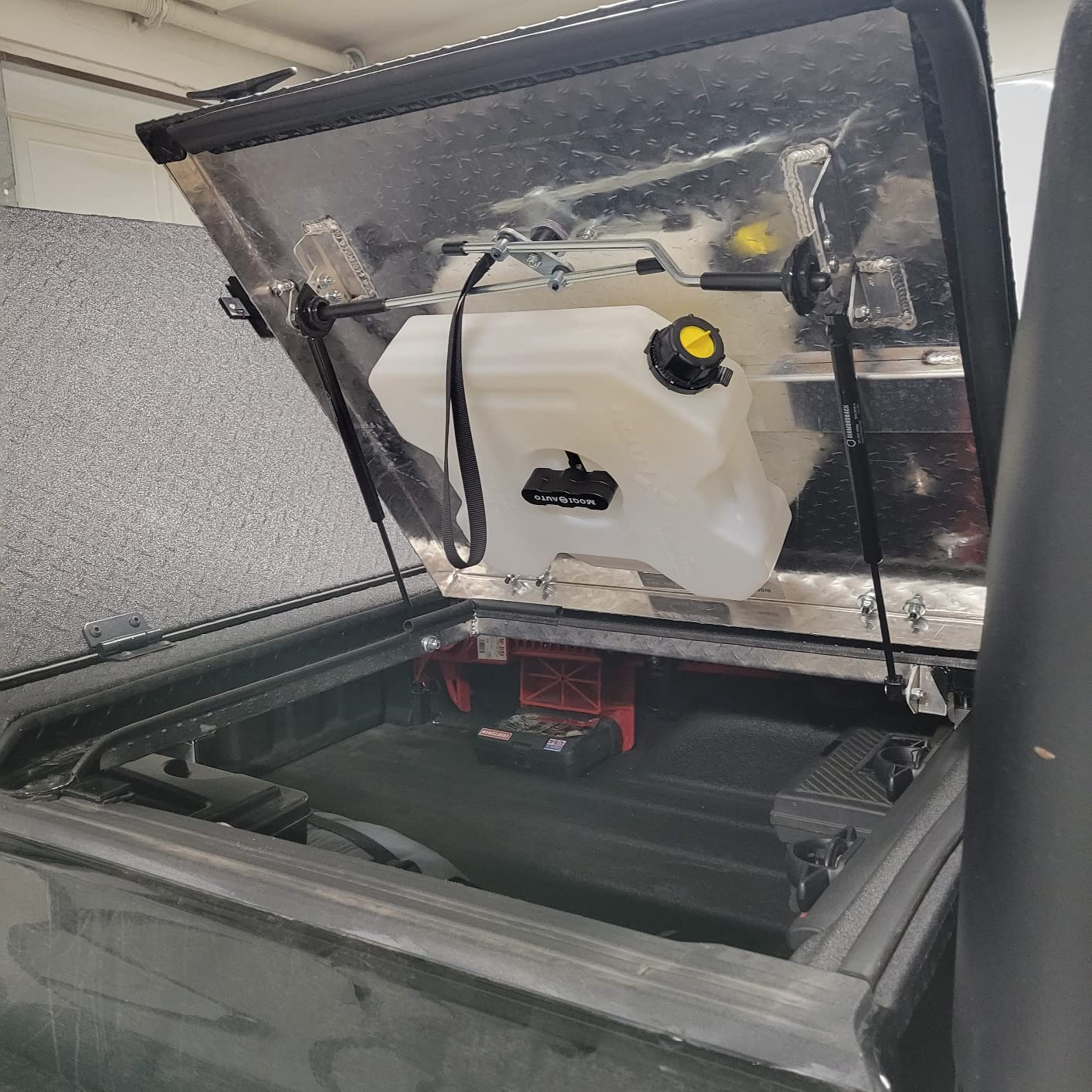
Why mounting changes everything
Interior space is the scarcest resource in an overland build. People put tanks on swing-away carriers and roof mounts specifically to free up room for a 58L fridge, and this is the tank most often chosen for that job. Once it is outside, your payload math has much more room to breathe.
Stackability compounds it. Multiple packs on one base mount turn into a modular water system rather than a single fixed container, and you can add capacity later.
Budget for the extra pieces
The mounting kit and RotopaX base mount are sold separately, so the purchase is not finished when the tank arrives. Budget for that hardware up front or you will have an expensive flat box.
A small group of buyers report international orders arriving without a screw cap, which is hard to source locally, and there is one report of a leaking tank. Not rated for flammable liquids, either, so it stays a water container.
7. MSR Dromedary Bag Water Reservoir
MSR Dromedary Bag Water Reservoir, 6-Liter , Black
6 liters
1000-Denier PU exterior
8 oz empty
Food-grade lining
Pros
- Survives stuffing and being thrown in with gear
- 1000-Denier exterior tolerates freezing and boiling water
- Three-way fill cap takes a hose filter or precise spout
- Holds more volume than a jug in a smaller package
- Three-year manufacturer limited warranty
Cons
- Long-term storage can lend a plastic taste
- CAP retention string is too short to be practical
- Hanging in camp needs improvisation
The Dromedary is the tank we trust when a trip runs through freeze-thaw cycles, and it is the clearest answer in this roundup to the recurring question about water freezing in a plastic container. The 1000-Denier exterior is specified to handle both freezing and boiling water, and there is no rigid shell to split when the ice expands.
Reviewers describe survival conditions that would destroy a jug: stuffed completely full and thrown into a canoe with other gear. That abuse tolerance is the entire argument for a bag, and it is why long-distance travelers on the forums keep recommending this style for durability and packability.
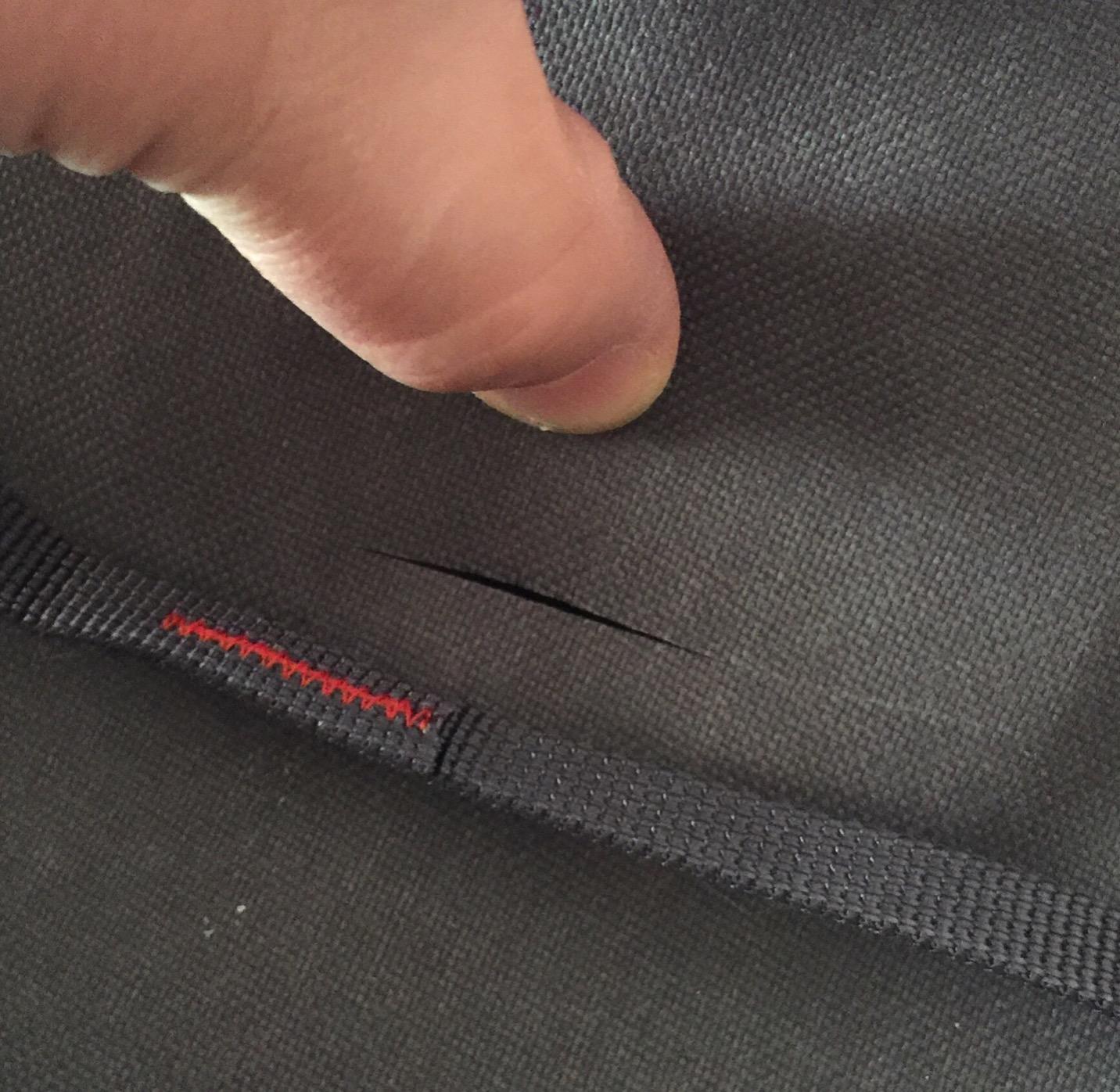
The three-way fill cap is more versatile than it sounds. It accepts a large fill, a hose, or a filter connection, and doubles as a precise dispensing spout. At 11.3 by 20.6 inches and 8 ounces empty, the six-liter version holds more volume than a jug of similar packed size.
The exterior is laminated with a BPA-free food-grade lining, and it is made in the USA with a three-year manufacturer limited warranty. That is the longest warranty on any non-lifetime product in this roundup.
What it does better than rigid tanks
Freeze tolerance is the headline. Rigid polyethylene expands unevenly when it freezes and can split at the seam, which is the most common catastrophic failure in winter trips. This bag has no seam that can open.
Packability is the second advantage. It folds flat, so you carry the capacity when you need it and hand-carry the weight for the last mile.
Know the trade before you buy
The recurring complaint, including from long-term users, is a plastic taste after hours of storage that washing does not remove. If you store water in it between trips, expect to drink plastic-tasting water.
The cap retention string is too short to be practical without modification, and hanging it at camp needs a stick spreader or similar improvisation. Treat it as a travel and winter container, not a permanent camp fixture.
8. Barker 10 Gallon Tote Tank
Barker 10893 Tote Tank – 10 Gallon Capacity , Blue
10 gallons
Polyethylene body
3 inch vented cap
9.7 lbs empty
Pros
- Ten gallons in a low wide profile that fits a bed
- Large wheels make it easy to roll to a dump point
- 3 inch vented cap fills fast and slows the pour
- Thick walls with a heavy gauge steel hitch handle
Cons
- Plastic wheel bearings can separate
- Outlet sits above the tank floor so it will not fully empty
- Handle on one side only
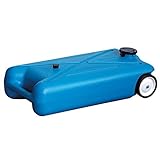
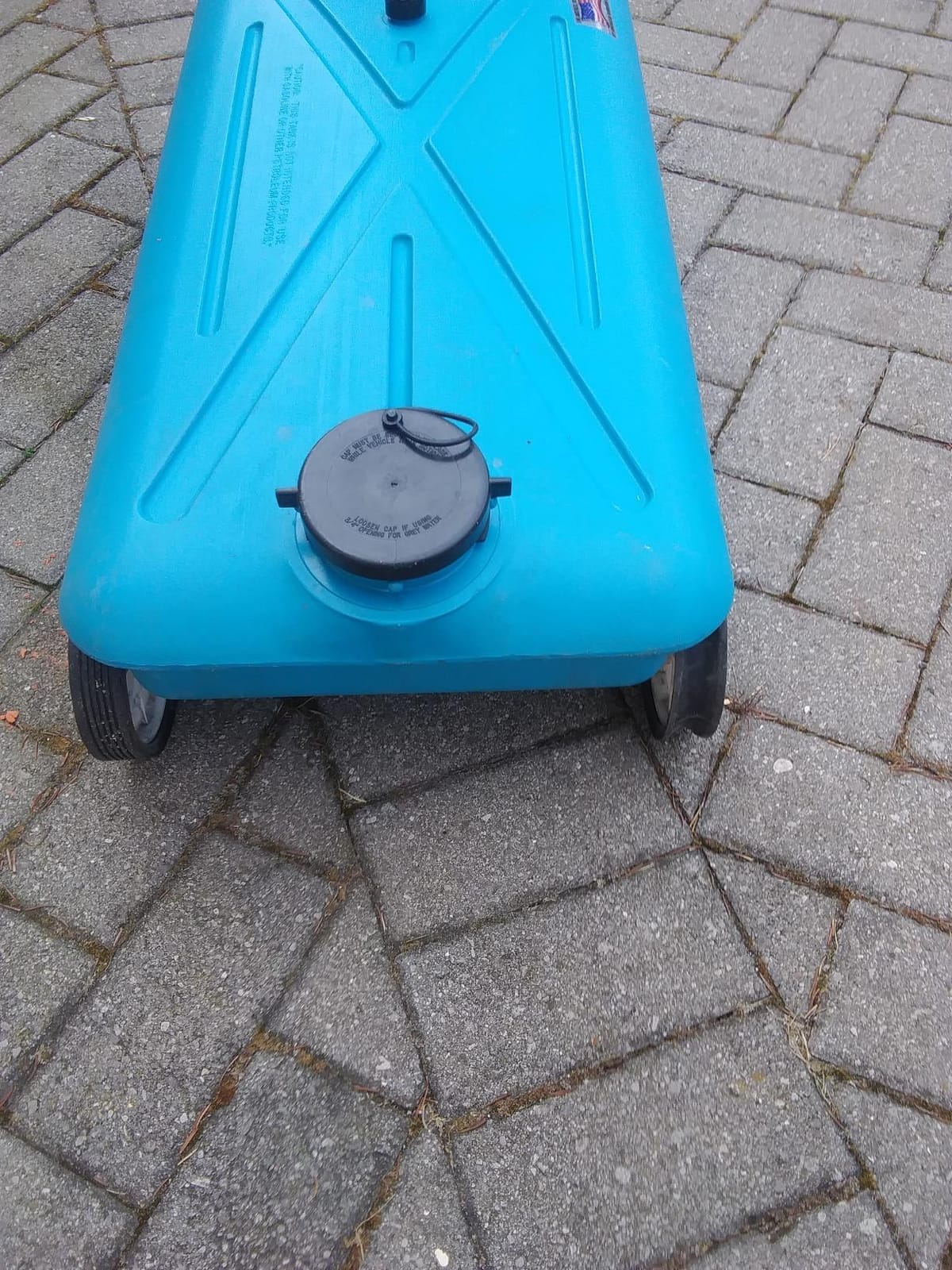
Ten gallons is 83.4 pounds of water before you add the 9.7-pound empty weight, and that reality defines this container. The Barker tote is not a drinking water jug you carry. It is a rolling reservoir you load once at a base camp or a water source and then move on wheels, and the low, wide 30 by 15 by 8.75 inch profile is what lets it sit in a truck bed or on a trailer.
Most owners use it for portable waste or transfer alongside RV holding tanks, and the same attributes serve a greywater catchment or a long-haul water transfer job. It is compatible with cars, trucks, ATVs, UTVs, and motorcycles, so the towing story is flexible.
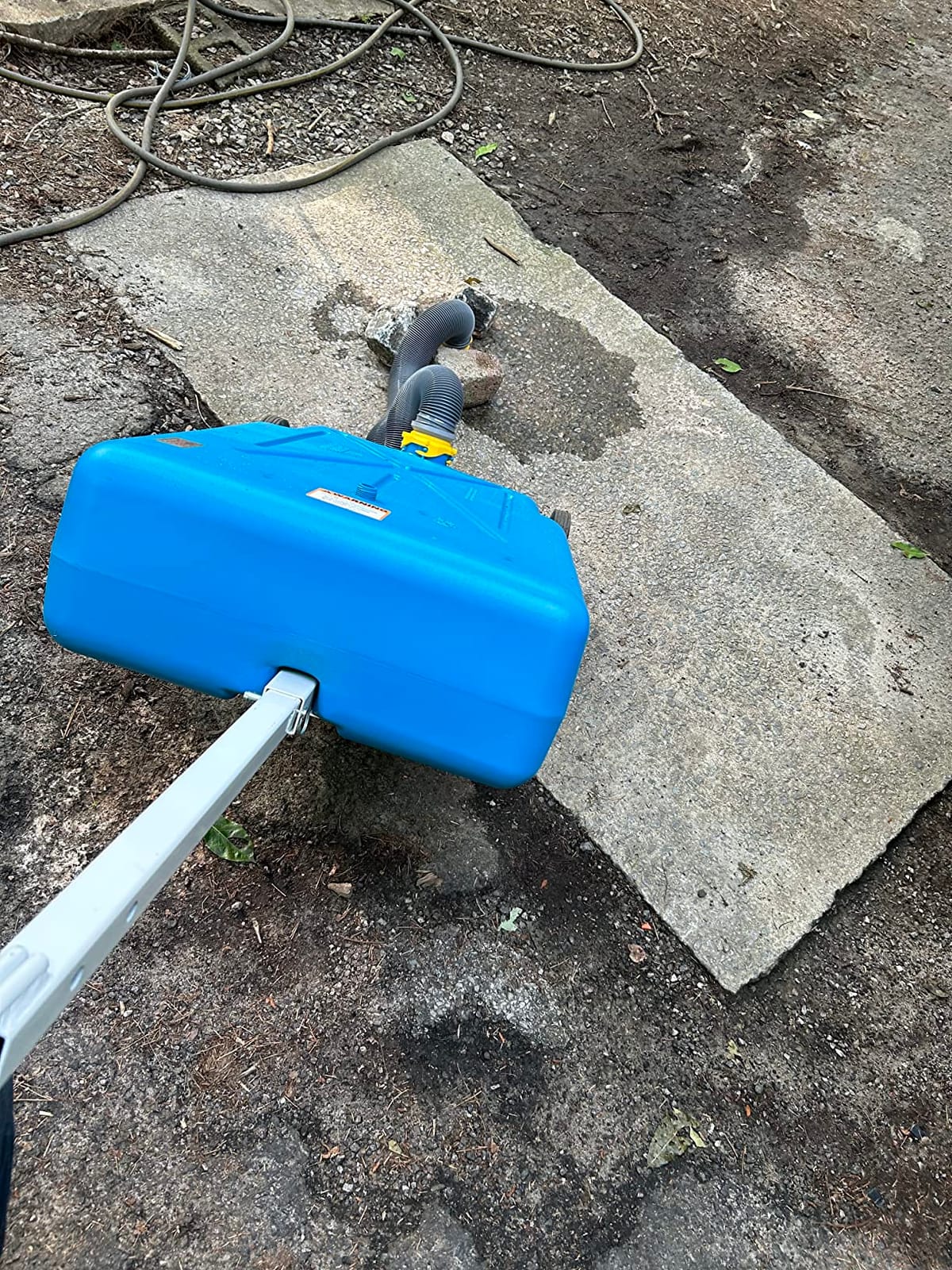
The 3-inch vented cap is genuinely useful and genuinely double-edged. It fills far faster than a small neck, and it slows the pour speed when you are discharging, which reduces splash. Thick polyethylene walls and a heavy gauge steel hitch handle take the kind of handling that breaks plastic.
76% of 1,612 reviews are five stars, and the feedback centers on heavy-duty construction for transfer work rather than taste or drinking quality.
Best used as a base or a transfer tank
Wheels change the usability of a 93-pound object. Instead of two people lifting it, you roll it from the spigot to the vehicle, across a campground, or to a drain. For a family of four running a week-long trip, that is the difference between a container you use and one you abandon in the driveway.
Its low profile also means it stacks under a rack or platform where a tall can would not fit, so it is a good companion to a mounted RotopaX setup rather than a replacement for one.
Limitations to plan around
Wheel bearings are plastic and can separate, and many owners add cotter pins as a fix. Check them before a long haul rather than after.
The outlet sits above the tank floor, so it will not fully empty, and the handle is on one side only, which makes loading into a truck awkward. If you need every last gallon to come out, this is the wrong outlet geometry.
9. WaterPrepared 35 Gallon Portable Utility Tank
WaterPrepared 35 Gallon Portable Utility Water Tank, Blue
35 gallons
UV-proof blended HDPE
Garden hose spigot
16 lbs empty
Pros
- Thick HDPE walls that hold water with no leakage
- Large top opening and removable lid for filling and cleaning
- Spigot accepts a standard garden hose
- Two built-in strapping points secure it to a bed
- Handles make it manageable when empty
Cons
- About 300 pounds full so loading needs two people
- Spigot mounting area can flex under pressure
- UV stabilization is unproven over years of sun
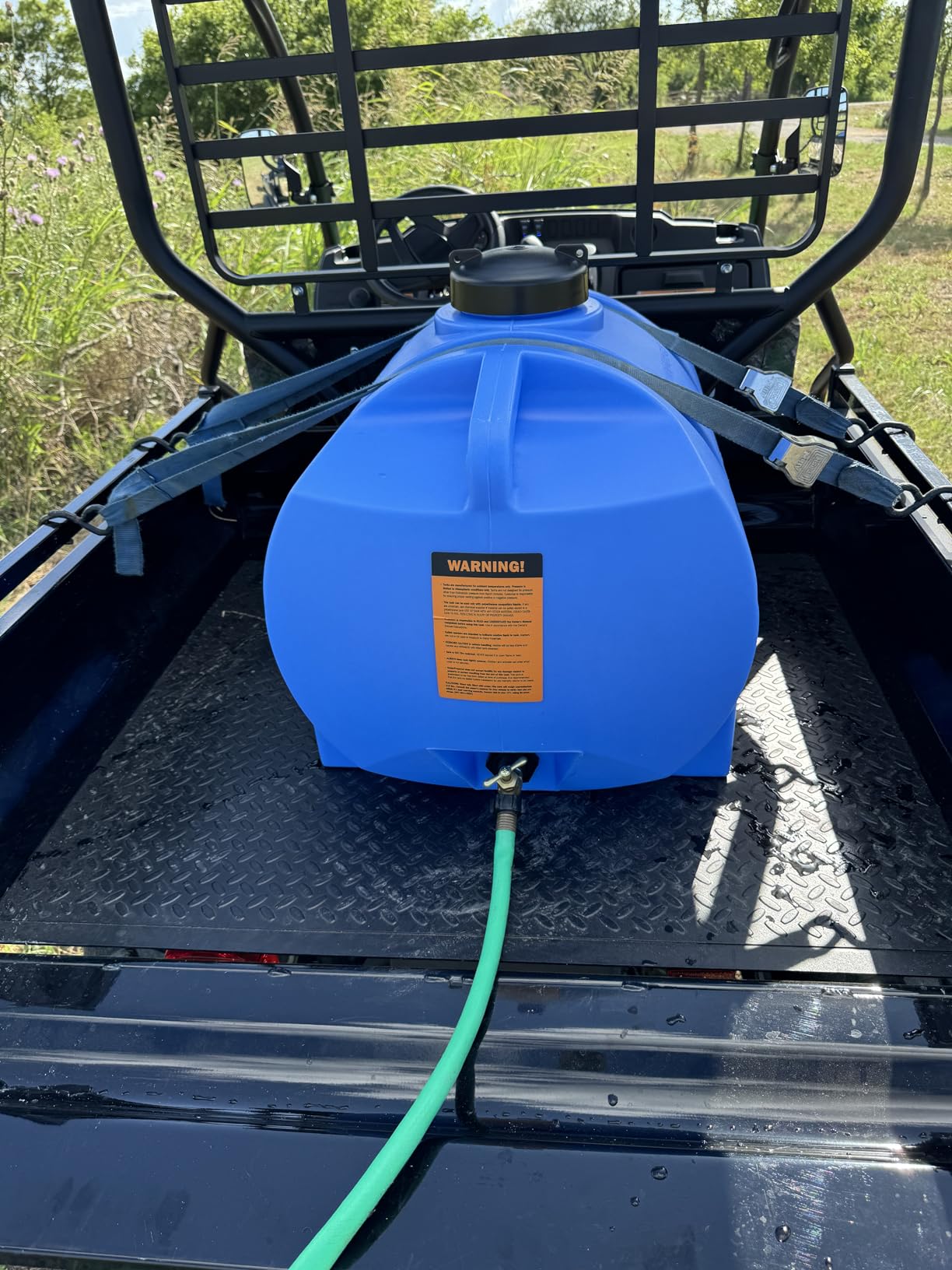
This is a utility tank, not a travel companion. At 35 gallons it holds roughly 292 pounds of water and about 308 pounds full, which means it lives on a trailer bed, a flatbed, or a farm truck and gets filled where the water is. Put it on an ATV or a side-by-side bed, strapping points and all, and it becomes genuinely useful for remote hauling.
It is built from UV-proof blended HDPE, and owners report the thick walls holding water overnight with no leakage. The 30 by 20.25 by 22.5 inch cylindrical body and 16-pound empty weight are consistent with a tank designed for static transport rather than for lifting.

The spigot accepts a standard garden hose, which removes the need for a siphon or a pump and means you can run it straight to a campground spigot or a wash station. The large top opening with a removable lid makes filling and cleaning straightforward, and 75% of 352 reviews are five stars.
Two handles make it manageable when empty, and multi-pack options exist for people who want redundancy. This is the one to consider if you are hauling water for a base camp, a fire-ban-constrained site with no source, or a group event rather than a single vehicle.
Where this capacity pays off
Large-volume jobs are where 35 gallons stops being excessive. Fire-ban areas, group camps, construction or cleanup work, and long stays in desert washes all need volume delivered in one load, and nobody is pouring that from a 5-gallon can.
It also solves a problem smaller tanks create: refilling. A hose spigot means you can empty it into jerry cans and packs without lifting the tank itself.
Understand the weight first
At roughly 300 pounds full, loading requires two people or a ramp. This is not a container you reposition on your own, and treating it as a portable tank ends with a lifted back.
The spigot mounting area feels thin and can flex under pressure, so reinforce or support it if you plan to run a full hose flow. And UV stabilization over years of direct sun is unproven in owner reports, so store it shaded when you can.
10. WaterPORT 4 Gallon Self-Pressurized Water Tank
WaterPORT 4.0 Gallon Self-Pressurized Water Tank for Camping Showers, Bumper Mount or Bed Mount Vehicle Water Storage for Trucks & Off Road Vehicles
4 gallons
Self-pressurizing to 40 psi
8 foot hose and nozzle
9.14 kg
Pros
- Delivers an intense spray lasting up to 15 minutes
- Large fill cap empties a garden hose in about 60 seconds
- 8 foot hose and five-pattern nozzle for shower and rinse
- Mounts to a tow hitch bumper roof rack or bed rail
- Dark body absorbs solar heat for warmer shower water
Cons
- Lowest average rating in the roundup at 4.1 stars
- Needs a 12V air compressor in practice
- Roof rack hardware sold separately
- Refills roughly twice on a three-day trip
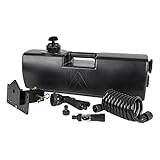
This is the pressurized road-shower class, and no other product in the roundup does what it does. A pump cap pressurizes the tank to a maximum of 40 psi, and the 8-foot hose with a five-pattern nozzle then delivers an intense spray for up to 15 minutes. Gravity jugs cannot drive a shower head, which is the entire answer to whether a pressurized tank is worth the money.
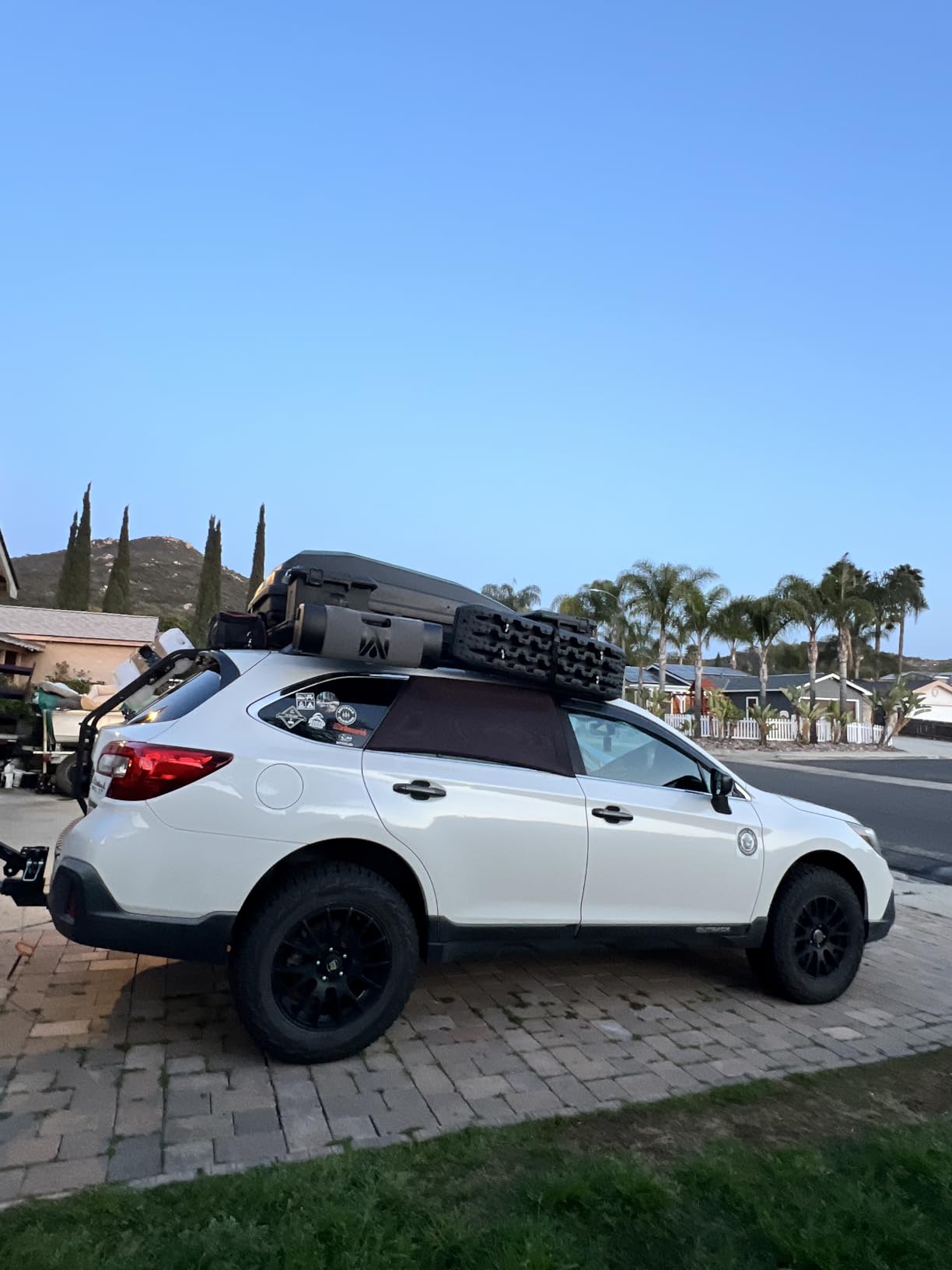
Refilling is fast. The large fill cap takes a garden hose to full capacity in about 60 seconds and accepts ice for cold shock, and the hose fill valve regulator is included with the 4-gallon tank, the nozzle, and the 8-foot coiled hose. It mounts to a 2-inch tow hitch, bumper, roof rack, or truck bed rail.
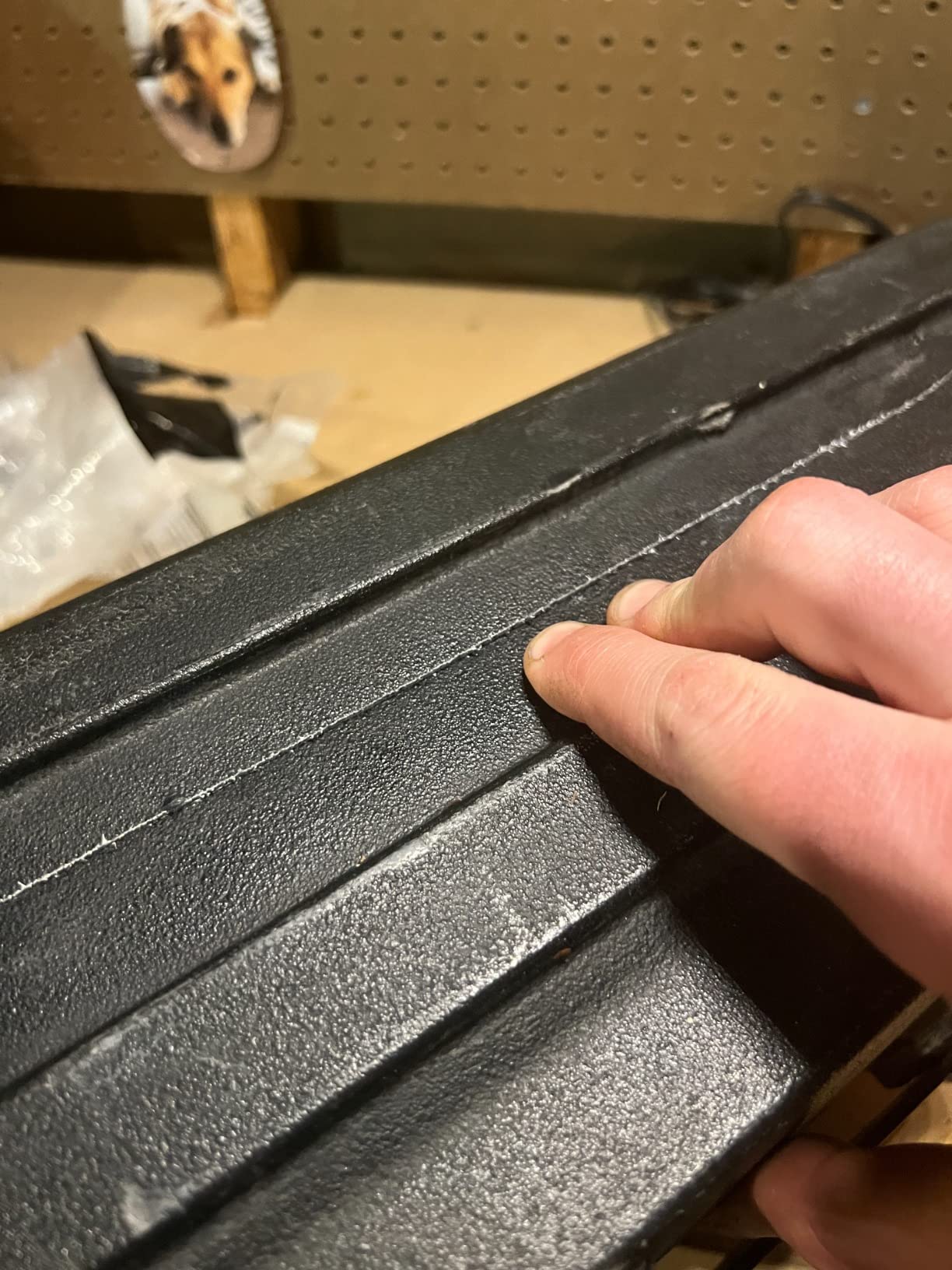
It carries the lowest average rating of any tank here at 4.1 stars across 369 reviews, with 12% one-star ratings. Owners still rate the spray pressure and mount versatility highly, but multiple reports describe leaking caps and stripped threads, and international orders have arrived without the pump cap or bracket.
Black plastic also absorbs solar heat, which several owners use deliberately for warmer shower water. It comes with a one-year limited warranty, and the dark body is not rated for drinking water despite listing claims, so treat it as a shower and rinse tank rather than a potable one.
What you get that a jug cannot do
Pressure. A 40 psi tank and a multi-pattern nozzle let you rinse off after a trail day, wash the dog, rinse sand off gear, or run a camp wash station with a single container and a hose. A gravity spigot gives you a stream and nothing more.
The mounting options are genuinely flexible. Hitch, bumper, roof rack, or bed rail means the tank goes outside where the weight does not compete with your payload for interior room, and the coiled hose stores compactly.
Know the failure reports before buying
At 40 psi, some tanks report cap thread seal failures and leaks. Check the cap threads and the seal every time you refill, because that is where it starts.
The included hand pump is inadequate in practice, so you will need a 12V air compressor, which is another box to carry. Only the hitch mount is included, roof rack hardware is sold separately, and 4 gallons means roughly two refills on a three-day trip. A gravity bucket with a hose remains the cheap alternative most people actually use.
Buying Guide: Choosing the Right Portable Water Tank
Everything below assumes one constraint that overrides taste, brand, and features: weight. A gallon weighs 8.34 pounds, a full 5-gallon tank is 41.7 pounds, and a full 10-gallon tote is over 93 pounds. Check that number against your vehicle payload before choosing capacity.
How much water do you actually need?
The working rule is 1 gallon per person per day for drinking and cooking, and 3 to 5 gallons per person per day once you add washing and hygiene. Build roughly 25% above your estimate, since you will also carry water for a pet or use extra for a hot-weather crossing.
Worked examples. A solo traveler on a three-day weekend trip: 3 gallons per day, so 9 gallons, call it 10, which is two 5-gallon cans. A couple on a five-day trip at 3 gallons each: 30 gallons, so one 35-gallon utility tank plus a 5-gallon can for drinking. A family of four on a week at 3 gallons each: 84 gallons, which is a trailer load, not a bed load. That is the point at which you plan refills instead of carrying more.
For overlanders closer to a water source, halve it. A 5-gallon can plus a 2-gallon pack covers a weekend with a stream crossing. Distance from reliable water is the single variable that should set your capacity.
Rigid plastic, soft bladder, or steel?
Rigid polyethylene is the default for a reason. It is leak-resistant, easy to scrub, holds no taste when it is food-grade, and stands up to drops, but it is the heaviest option per gallon and it can split at a seam if it freezes. Food-grade HDPE is the common choice, and BPA-free and PVC-free are requirements, not preferences.
Soft bladders in TPU or polyurethane are the lightest and the most packable, and they are the only category here that tolerates freezing and boiling water. The costs are puncture risk in sharp terrain and, in long-term storage, a plastic taste that washing does not remove.
Powder-coated and galvanized steel cans are the toughest and never impart taste, and they are by far the heaviest empty. On a roof rack or a swing-away carrier, that weight lands where it hurts most, so steel works best on a low bed mount or a trailer. All three accept water, and none of them should ever have held fuel: a previously fuel-used container is not a water container, no matter how thoroughly you rinse it.
Gravity tap, bottom spout, or pressurized pump?
A gravity tap or spigot is simplest and most reliable. It works while the container sits upright, and it is what you want for drinking and dish water. A bottom spout on a collapsible container avoids the lifting problem but requires a rigid body. A screw cap like the HydraPak’s is the cleanest and the most filter-compatible, but the slowest to dispense from.
A pressurized pump cap is a different tool. It costs weight, needs an air compressor in practice, and adds a seal that can fail, and in exchange it drives a shower head, a wash-down hose, and multi-pattern spray. Buy one if you shower every day and rent or borrow one if you do not.
Storage only, or storage with purification?
A storage container is a vessel. A purification container adds a replaceable filter, usually 0.1-micron hollow-fiber with a carbon stage, plus a pump, and it lets you drink directly from a stream without a second system. That is worth the weight and the filter replacement cost only if your routes actually cross untreated water sources.
If you filter separately, choose a wide or threaded opening that accepts your filter, which is exactly why openings like the 42mm cap exist. If you want one box instead of two, look for a filter indicator that tells you when a cartridge is spent rather than guessing by taste.
Mounting and the payload reality
Roof rack, truck bed, swing-away carrier, footwell tank, or interior cabinet each trade differently. A swing-away or roof carrier frees interior space for a fridge and keeps the heavy water out of the cabin, which is what most overlanders want. A footwell tank built behind the front seats keeps mass low and centered, but it costs you a weekend of build time. Interior cabinets are easiest but eat the space you need for gear.
Roof racks have a dynamic load rating that is lower than the static rating, and adding 42 pounds of water up high changes your handling. A 2-gallon RotopaX-style pack at 20 pounds full is a much easier roof load than two 5-gallon cans.
Storing water between trips
This is the most repeated forum question and the least covered topic in competing roundups. The protocol is simple. Drink or dump what is left, wash the container with hot water and dish soap, rinse thoroughly, and sanitize with a ratio of 1 part 5-9% sodium hypochlorite bleach to 4 parts water. Fill, close it, and let it sit overnight. Rinse again before refilling with drinking water.
Store containers full, not empty. A full container has less air volume, less surface area for biofilm to start, and less chance of a mouse or an insect getting inside. Store them in the shade, out of direct sun, and out of a hot truck in summer.
Sanitizing between trips is what removes biofilm and the plastic taste people complain about. If your water tastes like plastic after a month, the container was not dried and sanitized, and no filter will fix what is already dissolved into the water.
Freeze-thaw and desert heat
Rigid polyethylene is the weak point in winter. Water expands as it freezes, and a rigid jug can split at the seam. If your trips run below freezing, either drain the tank completely between days, or use a bag style specified to handle freezing. A soft bladder that is safe to freeze is the honest answer to a sub-zero trip.
Pumps and lines freeze before tanks do. Drain the lines, isolate the pump, and if you must leave a pressurized system charged, add RV antifreeze. In desert summer, do not leave a pressurized tank in direct sun with water in it, and expect a black plastic body to run hot, which is a benefit for shower water and a liability for anything stored long-term.
Finally, separate water from fuel. A container that has carried gasoline is not a water container, no matter how many times you rinse it, and running both in the same vehicle calls for securing each one independently.
For related storage and hardware reading, our guides to water storage tanks for emergencies and well pressure tanks cover the fixed-installation side of the same subject.
Frequently Asked Questions
What is the best water storage option for overlanding?
The best water storage option for overlanding is a food-grade, BPA-free rigid polyethylene jug sized to 3 gallons per person per day plus 25 percent. For most weekend overlanders, two 5-gallon cans cover a three-day trip. If your routes cross streams or cattle tanks, add a collapsible bladder and a separate 0.1-micron filter rather than buying a bigger tank.
What are the best water containers for overlanding?
The best water containers for overlanding fall into three useful types. Rigid polyethylene jugs such as the Scepter 5-gallon can handle drops and store water without taste. Flat stackable packs like the RotopaX bolt to a roof rack or swing-away carrier. Soft bladders like the MSR Dromedary weigh the least and survive freezing. Pick by where the water will live and how far you are from a source.
Is a WaterPORT worth the money?
A WaterPORT is worth it if you want a pressurized road shower every day, because a self-pressurizing pump cap to 40 psi can drive a shower head, which no gravity jug can do. It is not worth it as your main drinking water supply, since the black body is not rated for drinking water and holds only 4 gallons. Budget for a 12V air compressor and for replacement hardware, since only the hitch mount is included.
How long will 5 gallons of water last camping?
Five gallons of water weighs 41.7 pounds. For drinking and cooking only, that covers two people for about five days at 1 gallon each. Add washing and hygiene at 3 gallons per person per day, and it drops to roughly one day for two people or a day and a half solo. That is why most overlanders carry two 5-gallon cans rather than one.
Can you freeze water in a plastic water tank?
Not safely in a rigid polyethylene jug, because expanding ice can split the container at the seam. A soft bladder built from TPU or 1000-Denier polyurethane is made to tolerate freezing, and some can also take boiling water. If you must use a rigid tank below freezing, drain it fully between days, drain the lines, isolate the pump, and add RV antifreeze to any lines you cannot empty.
How do you store water in a container between trips?
Dump what is left, wash with hot water and dish soap, rinse, then sanitize with 1 part 5-9% sodium hypochlorite bleach to 4 parts water and let it sit overnight before a final rinse. Refill and store the container full, since a full container has less air and less biofilm surface. Keep it shaded and out of a hot truck. If water tastes like plastic after a month, sanitizing was skipped.
What is the best water container for a campervan?
The best water container for a campervan is a rigid, narrow-footprint polyethylene jug with a bottom spigot and a wide fill mouth, because a tall rectangular shape fits behind a seat or under a cabinet where a cube jug will not. Pair it with a separate bladder for drinking water. Avoid mounting heavy water above the axles or in the cabin, since interior space in a van is the scarcest resource in the build.
Conclusion
The best portable water tanks for overlanding depend on one number: how many days you spend away from a reliable source. For most weekend overlanders, the WaterStorageCube 5.3-gallon collapsible container is the pick, because it holds real capacity at 0.33 kg empty, dispenses through a gasketless spigot, and leaves no taste behind. Run a rough route or a solo trip and the Scepter military-style 5-gallon can earns its place through abuse resistance and a 4.7-star record across 1,789 reviews.
Mounting changes the answer entirely. If you can bolt water to a roof rack or a swing-away carrier, the RotopaX 2-gallon pack takes 20 pounds out of your cabin and leaves interior space for the gear that matters, and its 4.8 rating is the highest here. Winter travel points to a soft bladder that tolerates freezing, long dry stretches point to a large utility tank, and daily showers justify a pressurized tank and nothing else.
Whichever you pick, buy the capacity your route requires and no more. Water is 8.34 pounds a gallon, it will split a rigid tank if it freezes, and it will taste like plastic if you skip the sanitize step. Pick from the reviews above, use the check button on your shortlist, and load it low and secure before you pull out.