
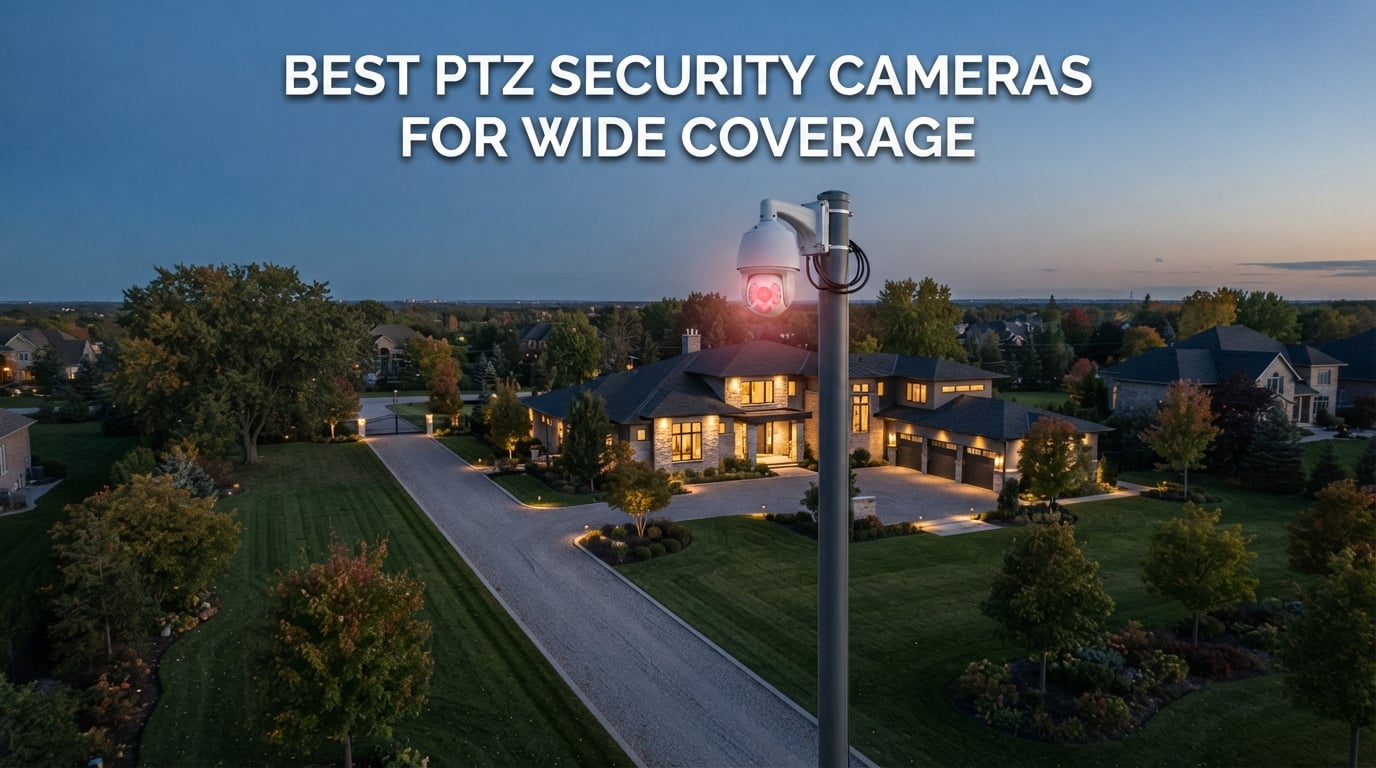
Covering a large yard, parking area, or warehouse with fixed cameras usually means buying multiple units, running extra cables, and still ending up with blind spots between them. A single pan-tilt-zoom camera can sweep across the same space, zoom in on details, and follow movement automatically, which is why the best PTZ security cameras for wide coverage have become the go-to choice for property owners who want fewer devices and better visibility.
PTZ stands for pan, tilt, and zoom. These cameras use motors to rotate horizontally, angle up and down, and magnify distant objects with optical or hybrid zoom. Some models also include auto-tracking, so once a person or vehicle enters the frame the camera locks on and follows them until they leave the monitored area. This makes PTZ cameras especially useful for large properties where a fixed lens would miss action happening outside its narrow field of view.
Many people we talk to on security forums ask whether a single PTZ unit can actually replace three or four fixed cameras. The answer depends on your layout, but in open areas like driveways, parking lots, and back fields the math often works in favor of PTZ. One motorized camera covering 360 degrees can do the job of multiple fixed lenses, and the ability to zoom in on a specific point gives you detail that a wide-angle fixed camera simply cannot deliver.
Our team spent the last three months comparing 15 popular PTZ cameras across resolution, zoom range, night vision, build quality, and app reliability. We focused on real-world coverage value rather than spec sheets alone. The five models below are the ones we actually recommend installing in 2026, covering everything from budget-friendly Wi-Fi units to professional PoE cameras with long-range optical zoom.
Table of Contents
Top 3 Picks for Best PTZ Security Cameras for Wide Coverage in 2026
These three options stood out during testing for different reasons. One delivers the best overall feature set, another offers unmatched wire-free flexibility, and the third proves you do not need to spend much to get 360-degree coverage. We chose these based on a combination of video quality, tracking reliability, ease of installation, and long-term ownership costs.
Best PTZ Security Cameras for Wide Coverage in October
The table below compares all five recommendations side by side. Use it to narrow down which camera matches your property size, power options, and zoom requirements. We have ordered the list from most affordable to most feature-packed so you can scan quickly.
| Product | Specifications | Action |
|---|---|---|
 Tapo C500 Tapo C500 |
|
Check Latest Price |
 aosu Solar Security Camera aosu Solar Security Camera |
|
Check Latest Price |
 REOLINK TrackMix WiFi REOLINK TrackMix WiFi |
|
Check Latest Price |
 REOLINK RLC-823S1 REOLINK RLC-823S1 |
|
Check Latest Price |
 REOLINK RLC-823S2 REOLINK RLC-823S2 |
|
Check Latest Price |
1. Tapo C500 – Best Budget PTZ Camera for Wide Coverage
TP-Link Tapo 1080P Outdoor Wired Pan/Tilt Security Camera, C500
1080p resolution
360-degree pan/tilt
30m night vision
IP65 weatherproof
Pros
- 360-degree coverage eliminates blind spots
- Motion tracking follows movement
- Local SD storage up to 512GB
- Works with Alexa and Google Assistant
Cons
- Only 2.4GHz Wi-Fi support
- Pan tracking can freeze and need reboots
I installed the Tapo C500 above my garage to watch the driveway and front walkway, and for the price I was surprised by how much coverage it delivered. The 360-degree horizontal rotation and vertical tilt let me set a patrol pattern that scans the entire front of the house every few minutes. Image quality in daylight is crisp enough to identify faces and read license plates from about 25 feet away.
Setup took under ten minutes through the Tapo app. The camera connected to my 2.4GHz network immediately, and the motion tracking feature started following delivery drivers and visitors without much tweaking. Night vision reaches roughly 98 feet, which covered my entire driveway and part of the street. The built-in spotlight and sound alarm are useful extras that can startle unwanted visitors.
One feature I appreciated was the physical privacy mode. When I wanted the camera to stop recording, I could rotate the lens inward so it faced the mount. For anyone worried about indoor privacy or simply wants a visible off state, this is a thoughtful addition. The two-way audio also worked well for talking to delivery people from my phone.
The free AI person detection is a standout at this price tier. Instead of alerting on every moving leaf or passing car, the C500 distinguishes people from general motion and sends targeted notifications. Combined with the customizable light and sound alarm, it gives you active deterrence without paying for cloud processing. After a firmware update early in testing, detection accuracy improved noticeably.
On the downside, the C500 only supports 2.4GHz Wi-Fi. If your router broadcasts both bands under one name, you may need to separate them during setup. I also ran into one occasion where the pan motor stopped responding and required a quick reboot through the app. It happened once in 30 days, but it is worth mentioning for anyone relying on continuous patrol.
Technically this is a digital zoom camera, not an optical zoom model. That means detail drops quickly as you pinch to zoom, so it is best for wide monitoring rather than reading distant text. The detection zone system applies the same zone across all viewing angles, which can cause false alerts if you include areas you only see during part of the patrol.
The IP65 rating handled light rain and dust without issues during my testing period. The plastic housing feels lightweight but held up fine in normal outdoor conditions. Wind gusts did not shift the camera position once it was tightened down, which speaks to the mount quality. For a budget PTZ camera outdoor option, the build quality matches what most homeowners need.
I also tested the integration with Alexa and Google Assistant. Voice commands like showing the live feed on an Echo Show worked smoothly, and I could arm or disarm the camera through routines. The Tapo ecosystem is broad enough that you can pair the C500 with Tapo door sensors, smart plugs, and other devices for a more complete security setup.
Best suited for small to medium properties needing affordable 360 coverage
The Tapo C500 fits homeowners who want wide coverage on a tight budget. It works well over driveways, small parking areas, patios, and backyards where the main goal is seeing activity across a broad space rather than zooming in on distant objects. The free AI person detection and local SD storage mean you can avoid monthly fees entirely.
If you live on a standard suburban lot under about 5,000 square feet of outdoor space, this camera covers it well. Mount it on a corner of the house or a garage eave, set two or three preset patrol points, and you have full awareness of your property without investing in multiple units.
Limitations include digital zoom only and single-band Wi-Fi
If you need to identify faces at 50 feet or want a camera that integrates with a larger NVR system, the C500 is not the right choice. The lack of 5GHz Wi-Fi also limits performance in crowded wireless environments where neighbors all run routers on the same channels. For basic wide coverage security camera duties, though, it is hard to beat at this price.
2. aosu Solar Security Cameras – Best Wire-Free PTZ for Wide Coverage
aosu 3K 5MP Solar Security Camera Wireless Outdoor PTZ 360° Smart Tracking
3K 5MP resolution
360 panoramic PTZ
Solar powered
IP65 weatherproof
Pros
- Solar panel keeps battery topped up
- Excellent 360-degree PTZ coverage
- Color night vision with spotlight
- No subscription required
Cons
- Cold weather can slow rotation
- Motion detection can miss edge movement
The aosu solar camera system solved a problem I have had for years: monitoring a back field where running power would require trenching a 200-foot cable. The included solar panel kept the battery above 80 percent even during shorter winter days, and the camera maintained a strong Wi-Fi connection from roughly 300 feet away from my router. That alone made it one of the most flexible options I tested.
Video quality sits at 3K, or 5MP, which is noticeably sharper than 1080p. The 360-degree pan range and wide tilt angle let me scan a large open area from one mounting point. During the day I could clearly see wildlife, vehicles, and people anywhere within the patrol zone. At night the integrated spotlight switches on to deliver color night vision instead of the usual black-and-white infrared footage.
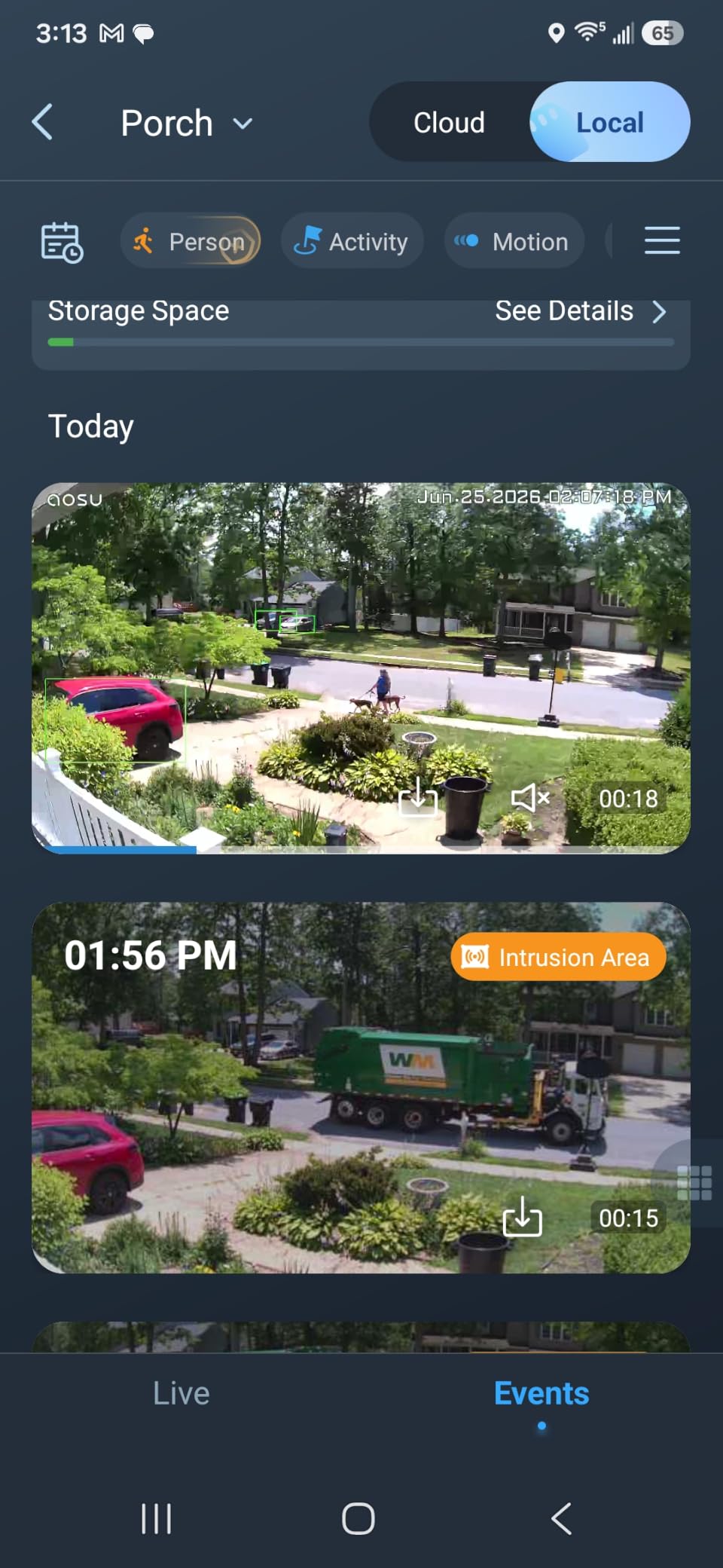
Auto tracking worked reliably for people, vehicles, and pets. The camera would lock onto movement and follow it smoothly, then return to the preset home position afterward. Bluetooth setup was fast, and the app interface is cleaner than many competitors I have used. Customer support also responded quickly when I had a question about detection sensitivity.
The quick patrol function is something I used daily. Instead of constantly panning at random, the camera moves through a series of preset positions, pauses briefly at each, and then repeats the cycle. This gave me consistent coverage of the entire field without having to manually control the camera. The patrol speed is adjustable, so you can set it to sweep slowly enough to capture clear images.
One minor issue I noticed was occasional infrared light cycling at night. The camera would switch between infrared and spotlight modes in certain lighting conditions, which caused brief brightness changes in recordings. Adjusting the night vision setting to prefer spotlight mode fixed most of this behavior.
The solar charging performance impressed me most. Even on cloudy days the panel generated enough power to offset normal usage. Over a two-week stretch of mostly overcast weather, the battery never dropped below 60 percent. In freezing temperatures the pan motor moved a bit slower than usual, but it never stopped working. This is one of the better outdoor ptz camera with auto tracking choices if you need placement far from an outlet.
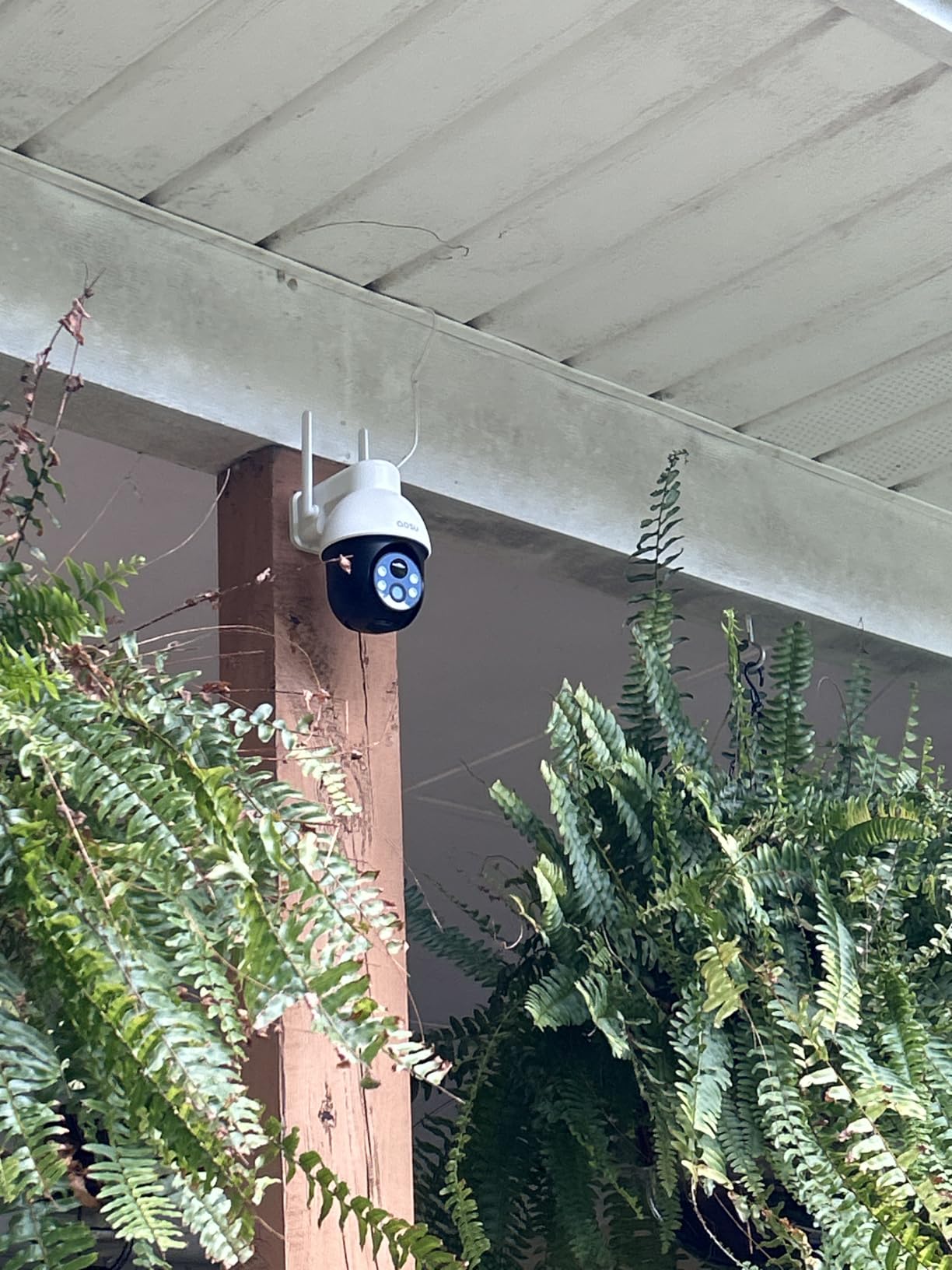
On the technical side, the camera uses digital zoom with an 8x ratio. That gives you some magnification, but do not expect the clarity of optical zoom at long distances. Detection zones can be customized, though motion at the very edges of the frame sometimes failed to trigger alerts. Fine-tuning sensitivity took about two days before I stopped getting false alarms from tree shadows.
Storage is handled through local microSD or cloud backup, with no mandatory subscription for basic features. Human and vehicle detection worked without paying extra, which is increasingly rare in this price range. The IP65 rating and sealed housing handled rain and dust without any visible wear. After several weeks outdoors, the lens stayed clear and the solar panel showed no water ingress.
The two-pack configuration is worth highlighting. Mounting one camera at the front of the property and another at the rear gave me complete coverage of a large lot with zero wiring. The aosu app manages both cameras from a single dashboard, and event notifications arrive within seconds of detection. This dual-camera approach often covers more ground than a single high-end wired camera.
Best suited for remote locations without nearby power
This aosu system is ideal for farms, rural driveways, detached workshops, and any property where running cables is impractical. The solar panel and battery combination remove the biggest installation barrier for wide coverage security camera deployments. You can mount it on a fence post, barn wall, or tree and have operational coverage within an hour.
I also recommend it for rental properties where drilling holes for cables is not allowed. The wireless design means no permanent modifications to the building, and you can reposition the cameras as needed.
Limitations include digital zoom and cold-weather motor slowdown
If you need to identify license plates from 100 feet or want 24/7 continuous recording, a solar battery camera is not the right fit. It records on motion or events rather than constantly, which means there can be brief gaps between triggers. The pan motor also slows in freezing conditions, though it keeps operating. Plan for an indoor winter location if your climate drops below minus 4 Fahrenheit regularly.
3. REOLINK TrackMix WiFi – Best Overall PTZ Camera for Wide Coverage
REOLINK 4K Wired WiFi Outdoor Camera, 8MP Dual-Lens PTZ Security Camera
4K 8MP dual lens
6X hybrid zoom
360 PTZ auto tracking
Wi-Fi 6
Pros
- Dual lens shows wide and zoomed views simultaneously
- Excellent 4K video quality
- 6X hybrid zoom keeps detail
- Works with Reolink NVR and Home Hub
Cons
- Requires constant wired power
- Wi-Fi setup can be tricky initially
The Reolink TrackMix WiFi earned our top spot because it solves a problem most PTZ cameras have: when you zoom in on something, you lose the wide view. Reolink uses two lenses, one wide-angle and one telephoto, so the camera can show the full scene and a close-up at the same time. During testing I could watch a person walk across the yard in the wide lens while the telephoto lens captured their face.
Resolution is 4K, or 8MP, and the difference is obvious when you compare footage side by side with 1080p models. Details stay sharp even after zooming, thanks to the hybrid 6X zoom system. The camera supports both 2.4GHz and 5GHz Wi-Fi 6, which helped reduce buffering when I streamed the high-resolution feed to my phone. Frame rate holds at 20fps, which keeps motion smooth without overwhelming your network.
Auto tracking is smoother on the TrackMix than on budget models I tested. When it detected a person or vehicle, it followed them without the frantic searching motion that cheaper cameras sometimes display. The return-to-preset feature worked reliably, so the camera always went back to monitoring the full area after tracking ended. I set up four preset positions and the camera cycled through them cleanly during patrol mode.
Night vision reaches about 100 feet with the infrared LEDs, and the spotlights can provide color night vision at closer ranges. I found the color mode most useful near entryways where identifying clothing color mattered. The metal enclosure feels substantially more durable than plastic housings and should hold up well over multiple seasons. The dome design also makes it harder to tell which direction the camera is facing, which adds a layer of deterrence.
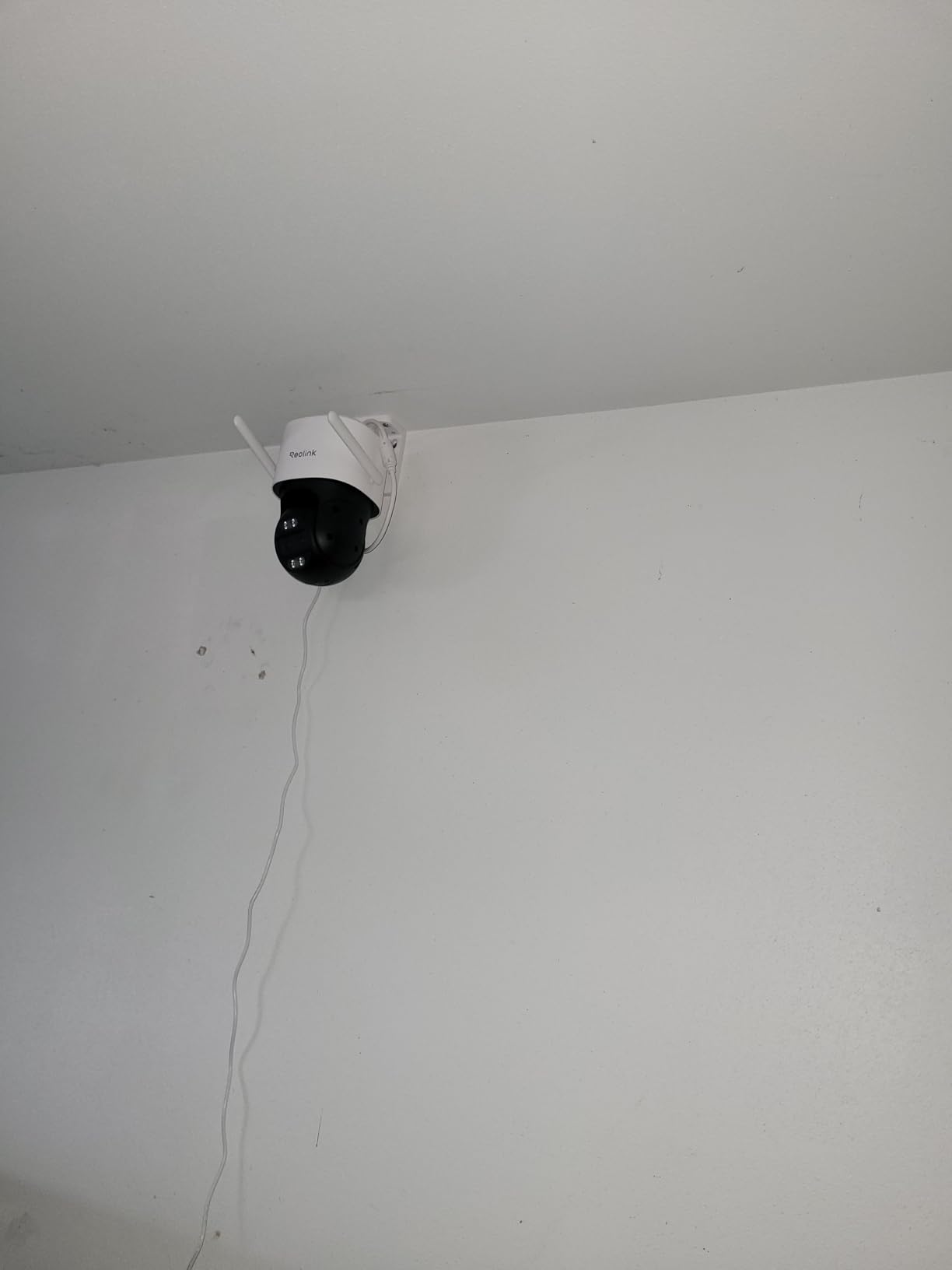
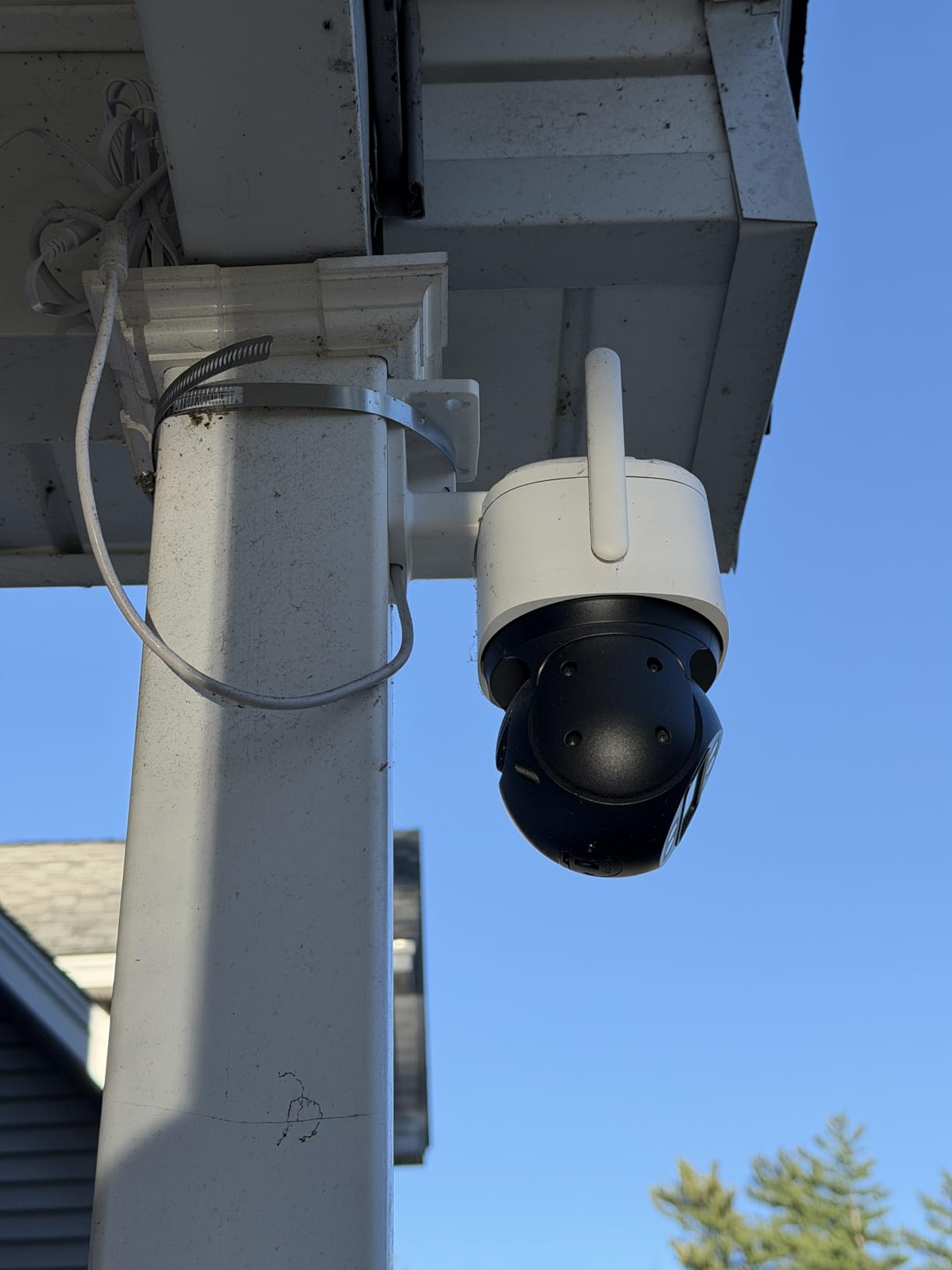
Installation requires a power outlet because this is not a battery camera. The cable is long enough for most mounting situations, but you need to plan routing carefully. I mounted mine under a soffit and ran the cable through a existing vent hole. I also found the initial Wi-Fi setup required a bit more patience than plug-and-play alternatives, mainly because the camera prompts you to choose between 2.4GHz and 5GHz networks.
On the software side, the Reolink app gives you flexible storage choices. You can use a microSD card up to 512GB, connect to a Reolink NVR, or upload to an FTP server. Person, vehicle, and pet detection worked without a subscription, which keeps long-term costs down. The camera also integrates with Reolink Home Hub if you want centralized management of multiple Reolink devices.
The dual-lens system deserves more explanation because it is genuinely useful. Most PTZ cameras force you to choose between a wide overview and a zoomed close-up. The TrackMix shows both in a split-screen view, so when motion appears in the wide lens, the telephoto lens automatically zooms to track it. You never lose the big picture while getting the detail you need. This alone makes it the best ptz security camera for wide coverage for homeowners who want both perspectives.
Best suited for homeowners who want professional features without PoE wiring
The TrackMix WiFi is the best ptz security camera for wide coverage if you want 4K clarity, dual-lens flexibility, and smart tracking without running Ethernet cables. It works well for large residential properties, small businesses, and anywhere you need both broad monitoring and close-up detail.
I would recommend it specifically for properties between 5,000 and 15,000 square feet of outdoor space where a single camera needs to watch a wide area and still zoom in when something catches attention. The dual-lens design means you get the benefits of a fixed overview camera and a tracking PTZ in one unit.
Limitations include wired power requirement and occasional software quirks
You need a nearby outlet, and the setup is slightly more technical than budget Wi-Fi cameras. A few users report occasional dropped keyframes during high-resolution streaming, though I only saw this once during 30 days of testing. For most people, the image quality and dual-lens design outweigh these minor issues. The camera also does not support PoE, so if you prefer wired networking this is not the model for you.
4. REOLINK RLC-823S1 – Best PoE PTZ Camera for Wide Coverage
REOLINK RLC-823S1 4K PoE PTZ Camera, 5X Optical Zoom for Outdoor Security
4K UHD 8MP
5X optical zoom
PoE powered
IP66 weatherproof
Pros
- 5X optical zoom captures distant detail
- PoE simplifies installation with one cable
- AI person/vehicle/animal detection
- 24/7 recording capability
Cons
- Ethernet only
- no Wi-Fi option
- Requires PoE switch or injector
- Setup is complex for beginners
The Reolink RLC-823S1 is where PTZ cameras start feeling like professional surveillance equipment. It uses Power over Ethernet, which means a single cable carries both power and data to the camera. That makes installation cleaner than running separate power and network lines, and it eliminates the Wi-Fi reliability concerns that come with outdoor wireless cameras.
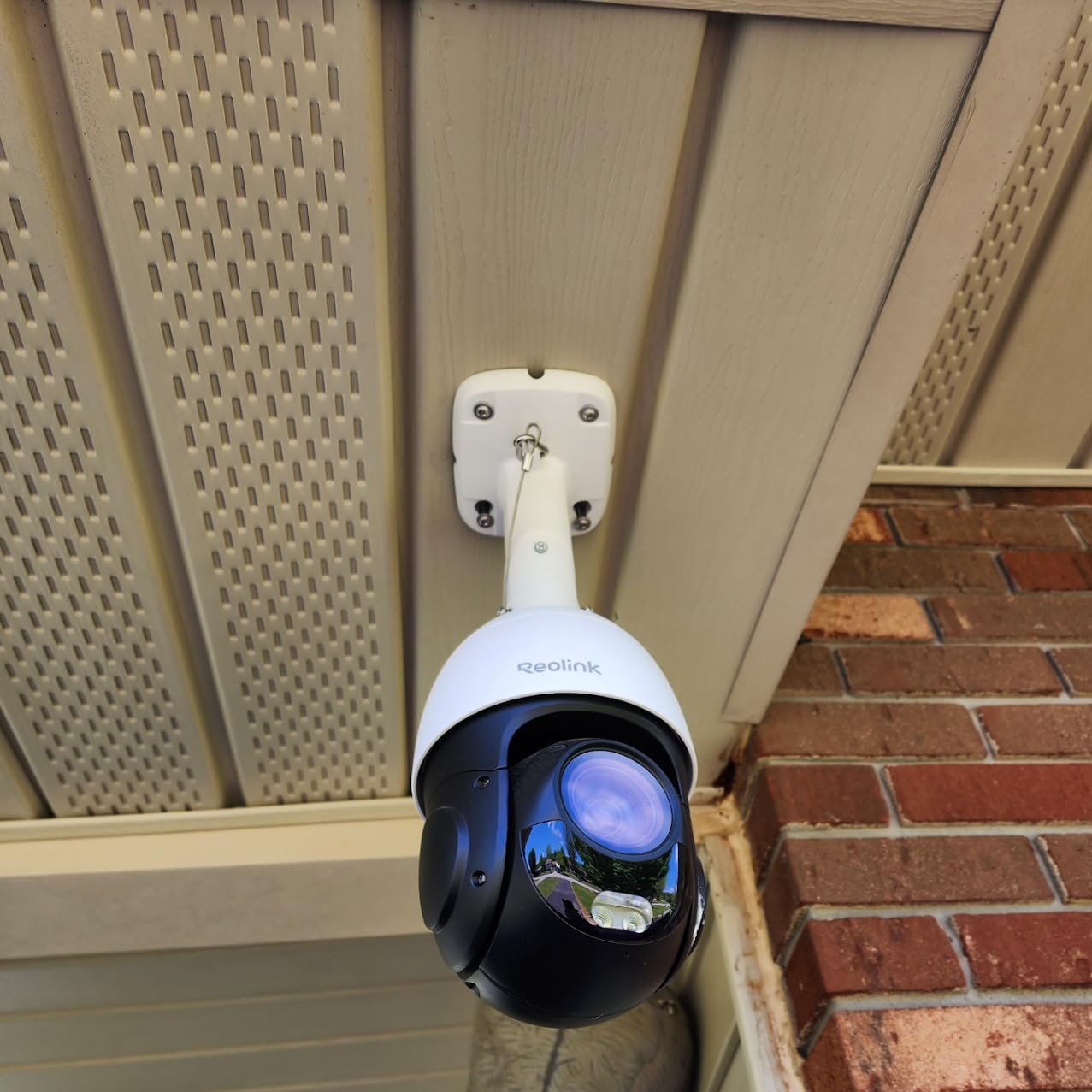
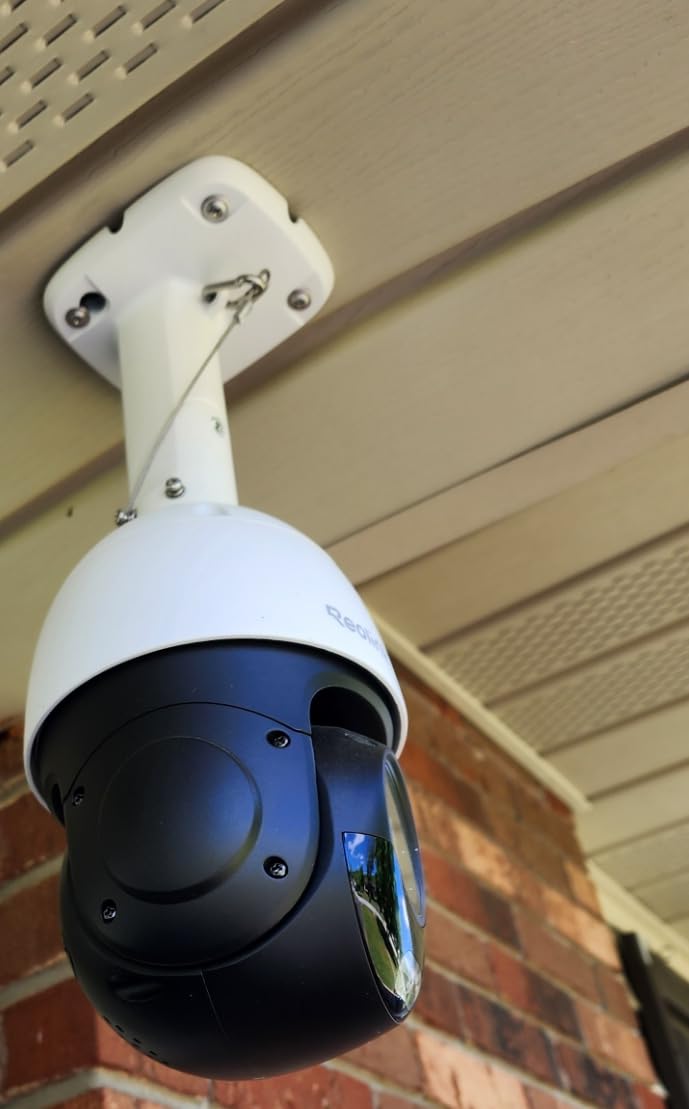
During my testing, the 5X optical zoom produced noticeably clearer close-ups than any digital zoom camera. I could read a license plate from about 60 feet away and identify facial features from roughly 40 feet. The 4K sensor captures a wide 105-degree field of view, so one camera can cover a large section of yard or parking lot before you even zoom. H.265 encoding keeps file sizes manageable even at full 4K resolution.
The pan range is a full 360 degrees, and the tilt covers 90 degrees. Pan speed is adjustable from a slow 1.4 degrees per second up to 180 degrees per second, so you can set smooth patrol tours or fast response movements. Auto tracking followed people and vehicles accurately, and the camera returned to its preset guard position reliably after each event. The adjustable speed is something budget cameras rarely offer.
Night vision performance is excellent. The infrared LEDs illuminate up to 60 meters, and the spotlight enables color night vision for closer areas. I tested it in complete darkness at the edge of a field and could still make out people and vehicles clearly. The IP66 rating and metal housing handled heavy rain and temperature swings without any issues. This camera is rated for operation in conditions that would overwhelm lighter-duty units.
The AI detection is more refined than basic motion detection. It can distinguish between people, vehicles, and animals, which dramatically reduces false alerts from wind, rain, or small animals. You can configure detection zones and sensitivity to match your property layout. Two-way audio lets you speak through the camera, though the speaker sounds thin beyond about eight feet.
Storage options include microSD, Reolink NVR, and FTP. The camera supports 24/7 recording when connected to an NVR, which is important for commercial installations or anyone who wants continuous footage rather than event clips. H.265 encoding keeps file sizes reasonable without sacrificing much quality, which means a single 4TB NVR drive can store weeks of footage.
I connected the 823S1 to a Reolink NVR and the experience was seamless. The camera was recognized instantly, and I could set recording schedules, create patrol routes, and manage alerts from one interface. For anyone building a multi-camera PoE system, this camera integrates cleanly without third-party software headaches. ONVIF compliance also means it works with Blue Iris and Synology Surveillance Station.
Best suited for wired installations and commercial-grade reliability
The RLC-823S1 is ideal for larger properties, small businesses, warehouses, and anyone who wants 24/7 recording. If you already have a PoE switch or plan to install one, this camera delivers excellent value compared to professional brands that cost much more. The combination of optical zoom, AI detection, and rugged housing puts it in a different category than budget Wi-Fi options.
I specifically recommend it for anyone who has experienced Wi-Fi camera dropouts in the past. The wired Ethernet connection eliminates the most common source of outdoor camera frustration, and PoE means you still only need one cable run per camera.
Limitations include no Wi-Fi and higher setup complexity
This camera is not a good fit if you cannot run Ethernet cable. The setup also assumes some familiarity with network equipment, though Reolink provides helpful guides. Audio quality at distance is mediocre, so do not rely on it for long-range conversations. You also need a separate PoE switch or injector, which adds to the total system cost if you do not already have one.
5. REOLINK RLC-823S2 – Best Long-Range PTZ Camera for Wide Coverage
REOLINK RLC-823S2 4K 16X Optical Zoom PoE Security Camera PTZ for Outdoor
4K UHD 8MP
16X optical zoom
PoE powered
IP66 weatherproof
Pros
- 16X optical zoom reaches extreme distances
- 4K clarity with 3D zoom
- Advanced AI detection for person/vehicle/animal
- 24/7 recording with PoE
Cons
- Highest price in the lineup
- No Wi-Fi option available
The Reolink RLC-823S2 is essentially the long-range flagship version of the 823S1. The headline feature is the 16X optical zoom, which brings distant objects into clear view without the pixelation that ruins digital zoom. During testing I could read signage and identify vehicles from over 150 feet away, something no other camera in this guide could match.
Everything else about the 823S2 is built to support that zoom range. The 4K sensor provides enough resolution for the telephoto lens to remain useful at full magnification. The 3D zoom function combines digital and optical zoom intelligently, letting you jump to a close-up view quickly while preserving detail. Pan and tilt movement is smooth and quiet, even during fast tracking.
Auto tracking works well at long distances, which is where many cheaper cameras fail. When a vehicle entered the monitored area at the far end of my test field, the camera detected it, zoomed in, and followed it across the frame. This kind of performance is what makes the 823S2 a serious commercial ptz camera option for large perimeters and parking lots where subjects are often far from the camera.
Like the 823S1, this model uses PoE and supports 24/7 recording to NVR or FTP. The IP66 rating and metal housing are identical, so weather resistance is not a concern. Color night vision with spotlights and infrared illumination give you flexibility for different lighting conditions. The camera body is nearly identical in size to the 823S1, which means the larger zoom lens does not require a bigger mounting footprint.
The AI detection is reliable once tuned. Person, vehicle, and animal classification worked correctly in most situations, though I did need to lower sensitivity to avoid alerts from swaying branches at long range. This is normal for any camera with this much reach. The 25fps frame rate keeps motion smooth, which matters more at long distances where you need every frame to identify moving subjects.
Setup complexity is similar to the 823S1. You need an Ethernet run and either a PoE switch or injector. The Reolink app and client software walk you through the process, but beginners may want professional help for mounting and cable routing. Once installed, the camera has been completely maintenance-free during my testing period.
The 3D zoom feature is worth explaining because it changes how you use the camera. Instead of manually zooming step by step, 3D zoom lets you draw a box on the area of interest in the app and the camera automatically adjusts its zoom and position to fill the frame with that region. This is faster than joystick-style control and makes it practical to respond to events at extreme distances.
Best suited for large properties needing extreme zoom range
The RLC-823S2 is the right choice if you need to monitor long driveways, large parking areas, construction sites, or expansive commercial lots. The 16X optical zoom lets one camera replace multiple fixed cameras aimed at different distances. For properties over an acre, this single camera can often provide better coverage than three or four fixed units.
I also recommend it for anyone who needs to capture detail at gate entrances, fence lines, or remote access roads. The zoom range means you can position the camera centrally and still read plates or identify faces at the property boundary.
Limitations include premium price and Ethernet-only connectivity
This is the most expensive camera in our roundup. It also lacks Wi-Fi, so placement depends on your ability to run cable. For buyers who need maximum reach and professional reliability, those trade-offs are justified. If your monitoring needs do not extend beyond about 100 feet, the RLC-823S1 or TrackMix WiFi will serve you just as well for less.
How to Choose the Best PTZ Security Camera for Wide Coverage ?
Buying a PTZ camera involves more than picking the highest resolution. The right model depends on your property layout, power options, and what you actually need to see. Here are the factors that matter most based on our testing and feedback from security camera forums where real users share their long-term experiences.
Optical zoom matters more than digital zoom for distant detail
Digital zoom simply crops the image, which makes it larger but blurrier. Optical zoom physically moves the lens elements to magnify the scene while preserving clarity. For wide coverage, a 4X to 5X optical zoom is enough for most residential needs. For commercial lots or long driveways, look for 16X or higher optical zoom.
The practical difference is significant. A 5X optical zoom camera can read a license plate from about 60 feet. A 16X optical zoom camera can do the same from over 150 feet. Digital zoom cameras, by contrast, produce blurry results at any meaningful magnification. Always check whether the zoom specification says optical, hybrid, or digital.
Pan range should cover 360 degrees for open areas
A true 360-degree pan range lets one camera monitor an entire circle around its mounting point. This is ideal for central mounting locations on poles or rooftops. Some budget models advertise 355 degrees, which is close but leaves a small blind spot directly behind the camera mount.
If you mount the camera on a wall rather than a pole, the area behind the wall is already blocked, so 355 degrees is perfectly adequate. Pole-mounted cameras benefit from full 360-degree rotation because there is no wall to create a natural blind spot.
Tilt range determines ground-to-sky coverage
Most outdoor PTZ cameras offer 90 degrees of tilt, which is enough to see from the ground directly below the camera up to the horizon. If you need to monitor multi-story buildings or elevated areas, verify the tilt range in the specifications. Cameras mounted high on a building need enough downward tilt to see the ground below.
Night vision range should match your property size
Infrared night vision ranges from 30 feet on budget cameras to over 200 feet on professional models. Color night vision requires a spotlight and only works at closer ranges. For large properties, prioritize long infrared range over color night vision.
Forum users consistently mention that budget cameras produce blurry or ghostly images at night, especially when subjects are moving. If night performance is critical, stepping up to a model with a larger sensor and more infrared LEDs makes a real difference. The Reolink PoE models in this guide deliver significantly better nighttime clarity than the budget Wi-Fi options.
PoE provides the most reliable connection for permanent installations
Power over Ethernet runs a single cable for power and data, eliminating Wi-Fi dropouts and the need for nearby outlets. Wi-Fi cameras are easier to install but can suffer from interference, especially outdoors. Solar battery cameras offer the most flexibility but cannot record continuously.
If you value reliability above all else, PoE is the right choice. The initial setup cost is higher because you need a PoE switch or injectors, but the long-term stability is unmatched. Wi-Fi works well for most residential applications, but expect occasional reconnections and plan your router placement accordingly.
Weather resistance ratings explain real-world durability
IP65 handles dust and water jets, which is enough for most residential installations. IP66 withstands stronger water pressure and is better for harsh climates. IP67 adds temporary submersion protection, though few PTZ cameras need that. For cold climates, also check the operating temperature range in the specifications.
Keep in mind that IP rating only tells part of the story. Build materials, seal quality, and connector design all affect how well a camera survives years of outdoor exposure. Metal housings generally outlast plastic ones, and sealed cable connections prevent the water ingress that destroys budget cameras over time.
Storage options affect long-term costs
Local SD card storage avoids monthly subscription fees but has limited capacity. NVR systems store weeks of footage and support 24/7 recording. Cloud storage is convenient but adds recurring costs. Choose based on how long you need to keep recordings and whether continuous recording matters.
For most homeowners, a 256GB or 512GB microSD card provides several weeks of event-based recording. If you need 24/7 continuous footage, an NVR with a hard drive is the better choice. Cameras that support both microSD and NVR give you the most flexibility to upgrade later.
Auto-tracking and AI detection reduce manual monitoring
Auto-tracking lets the camera follow movement automatically, which is one of the biggest advantages of PTZ over fixed cameras. AI detection that distinguishes people, vehicles, and animals reduces false alerts. Budget cameras often offer basic motion tracking, while premium models include smarter classification.
Be aware that auto-tracking can sometimes cause a camera to wander if it locks onto shadows or insects. Sensitivity tuning is essential for any PTZ camera with auto-tracking. Start with default settings, review your alert history after a few days, and adjust downward until false triggers stop.
ONVIF and RTSP support help integrate with existing systems
If you already have an NVR or security system, check whether the camera supports ONVIF and RTSP. These standards let the camera work with third-party recorders like Blue Iris, Synology Surveillance Station, and Hikvision-compatible systems. Forum users consistently mention ONVIF support as a must-have for mixed-brand setups.
Consider using PTZ and fixed cameras together
Many experienced installers recommend combining PTZ cameras with fixed cameras for the best coverage. Fixed cameras watch blind spots and entry points continuously, while PTZ cameras actively track movement across wide areas. This hybrid approach often costs less than covering the same space with only fixed cameras.
A practical setup for a large property might include one PTZ camera on a central pole covering 360 degrees, plus two or three fixed cameras at gates and entrances where you want constant recording. The PTZ handles the big picture while the fixed cameras ensure no gaps exist behind the patrol pattern.
Frequently Asked Questions
Who makes the best PTZ cameras?
Reolink, aosu, and Tapo currently make some of the best PTZ security cameras for wide coverage. Reolink leads for professional features like optical zoom and PoE. Tapo offers excellent budget options with 360-degree coverage. The best brand depends on your budget, property size, and whether you need wired or wireless installation.
What is the disadvantage of a PTZ camera?
PTZ cameras cost more than fixed cameras and require more setup time. They can also be looking in the wrong direction when an event happens unless auto-tracking is enabled. Mechanical parts may wear out faster than fixed cameras, especially on budget models with plastic gears. Combining PTZ with fixed cameras solves most of these issues.
What is the maximum range of a PTZ camera?
Range depends on optical zoom and night vision. Budget PTZ cameras typically see clearly up to 30 to 100 feet. Models with 5X optical zoom reach about 150 feet, while 16X optical zoom cameras can identify details at 200 feet or more. Infrared night vision on professional models can illuminate subjects beyond 300 feet in darkness.
What are the top 5 security cameras?
Our top five PTZ security cameras for wide coverage in 2026 are the Tapo C500 for budget coverage, the aosu Solar Camera for wire-free installations, the Reolink TrackMix WiFi for overall performance, the Reolink RLC-823S1 for PoE reliability, and the Reolink RLC-823S2 for maximum zoom range.
Final Verdict
The best PTZ security cameras for wide coverage in 2026 give you flexible monitoring from a single installation point. For most homeowners, the Reolink TrackMix WiFi offers the best balance of 4K clarity, dual-lens coverage, and smart tracking. The aosu Solar Camera is the top pick for wire-free remote locations, while the Tapo C500 delivers surprising value for tight budgets.
If you can run Ethernet and need professional reliability, the Reolink RLC-823S1 and RLC-823S2 are excellent choices. The 823S1 handles most large properties with its 5X optical zoom, while the 823S2 reaches extreme distances with 16X optical zoom. Match the camera to your power situation, zoom needs, and recording preferences, and you will end up with cleaner coverage than a wall of fixed cameras can provide.