
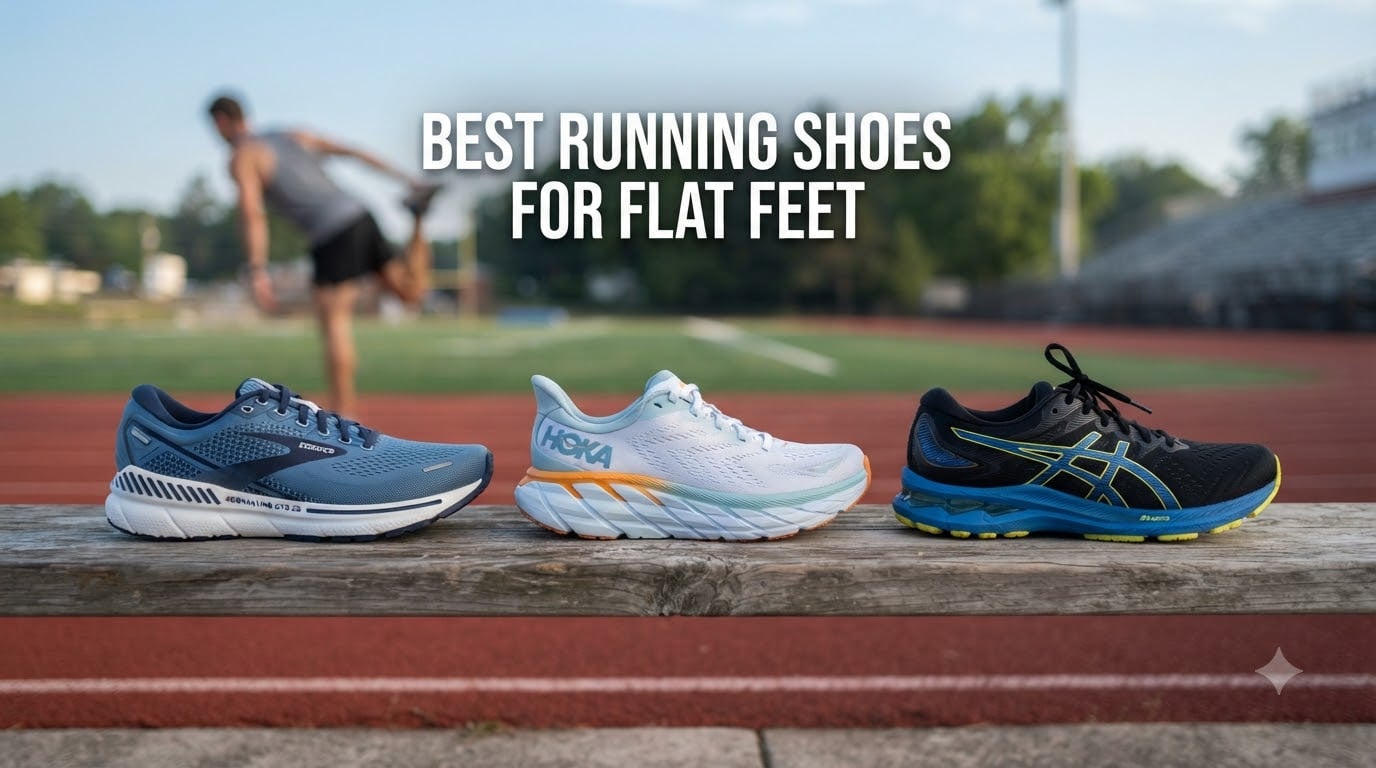
Finding the best running shoes for flat feet gets confusing fast. Every listing promises arch support, yet a firm stability shoe can feel worse than a cushioned neutral trainer when your arch shape and gait do not match.
I compared eight road-running shoes from Brooks, ASICS, HOKA, and New Balance, focusing on fit, stability design, cushioning, and feedback from people with low arches. My short answer is simple: start with the Brooks Adrenaline GTS 25 for balanced daily support, choose the HOKA Gaviota 5 for a wide, soft platform, and consider a neutral shoe if your feet are naturally flat but do not overpronate.
Flat feet describe the shape you see when standing. Overpronation describes how the foot moves, so having a low arch does not automatically mean you need a motion-control shoe. A podiatrist or sports clinician can confirm the difference, but this guide helps you narrow the field before that appointment.
Table of Contents
Top 3 Picks for Flat Feet in 2026


Best Running Shoes for Flat Feet in October
| Product | Specifications | Action |
|---|---|---|
| Brooks Women’s Adrenaline GTS 25 |
|
Check Latest Price |
| Brooks Men’s Adrenaline GTS 25 |
|
Check Latest Price |
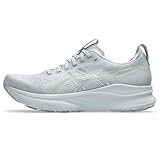 ASICS Men’s Gel-Kayano 32 ASICS Men’s Gel-Kayano 32 |
|
Check Latest Price |
 HOKA Women’s Gaviota 5 HOKA Women’s Gaviota 5 |
|
Check Latest Price |
 Hoka Men’s Bondi 9 Hoka Men’s Bondi 9 |
|
Check Latest Price |
 Brooks Men’s Addiction GTS 15 Brooks Men’s Addiction GTS 15 |
|
Check Latest Price |
 ASICS Women’s Gel-Nimbus 27 ASICS Women’s Gel-Nimbus 27 |
|
Check Latest Price |
 New Balance Fresh Foam X 860 V14 New Balance Fresh Foam X 860 V14 |
|
Check Latest Price |
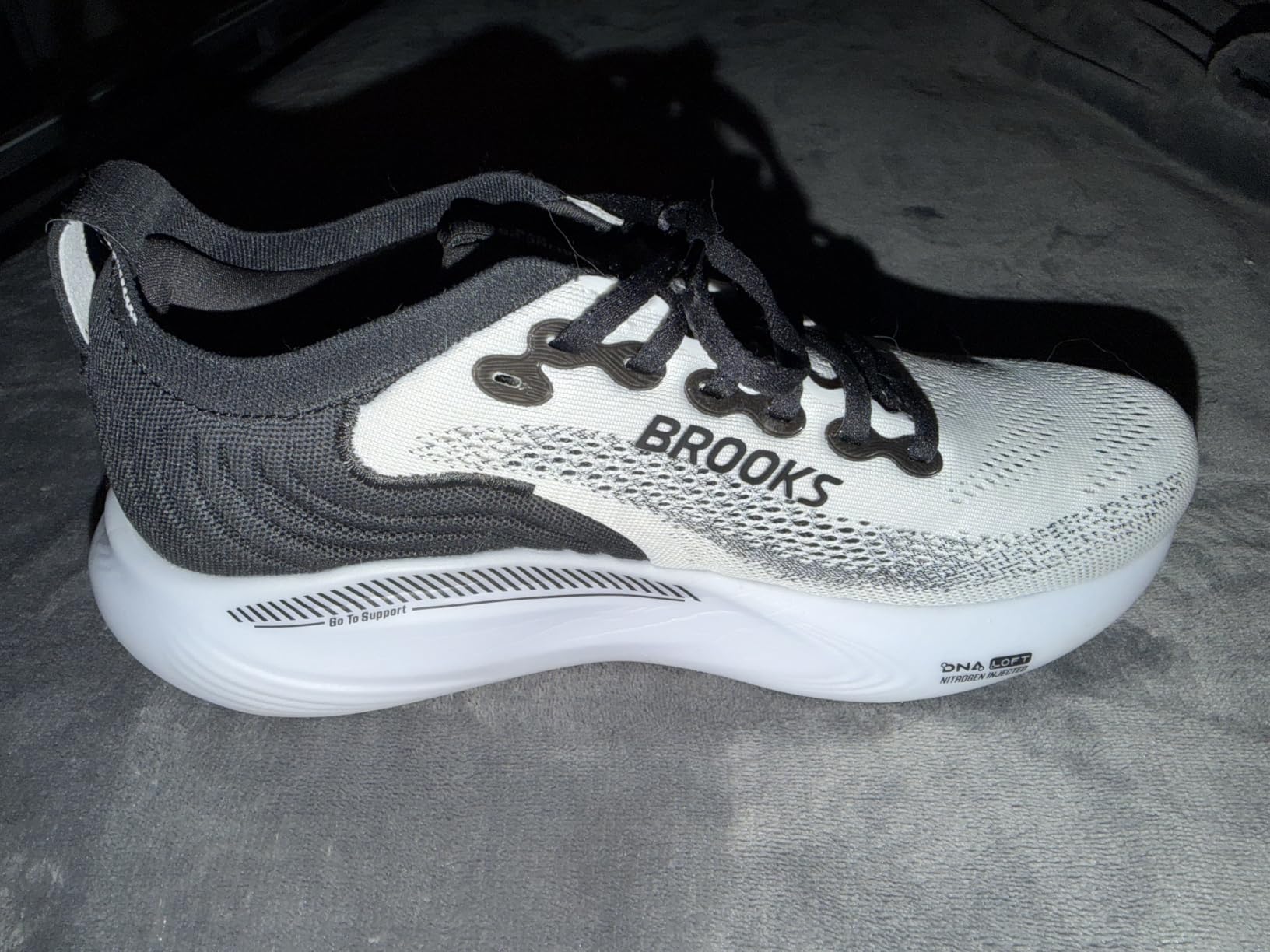
1. Brooks Women’s Adrenaline GTS 25 — Best Overall
Brooks Women’s Adrenaline GTS 25 Supportive Running & Walking Shoe – Grey/Blackened Pearl/Coral – 7.5 Wide
GuideRails support
DNA Loft v3 cushioning
Engineered mesh upper
Pros
- Balanced stability
- Soft lightweight cushioning
- Breathable secure upper
- APMA accepted
Cons
- Heel may rub
- Break-in needed
I would choose this version as my all-round pick. Its GuideRails system supports the whole stride without feeling like a rigid wall under the medial side, which matters when you want a shoe for easy runs, long runs, and walking rather than one narrowly built for racing.
The DNA Loft v3 foam feels softer than a traditional posting-first trainer, but it still has enough structure to keep a flat-footed stride from feeling loose. I also like the engineered mesh and flat-knit collar because they hold the midfoot without creating obvious pressure points.
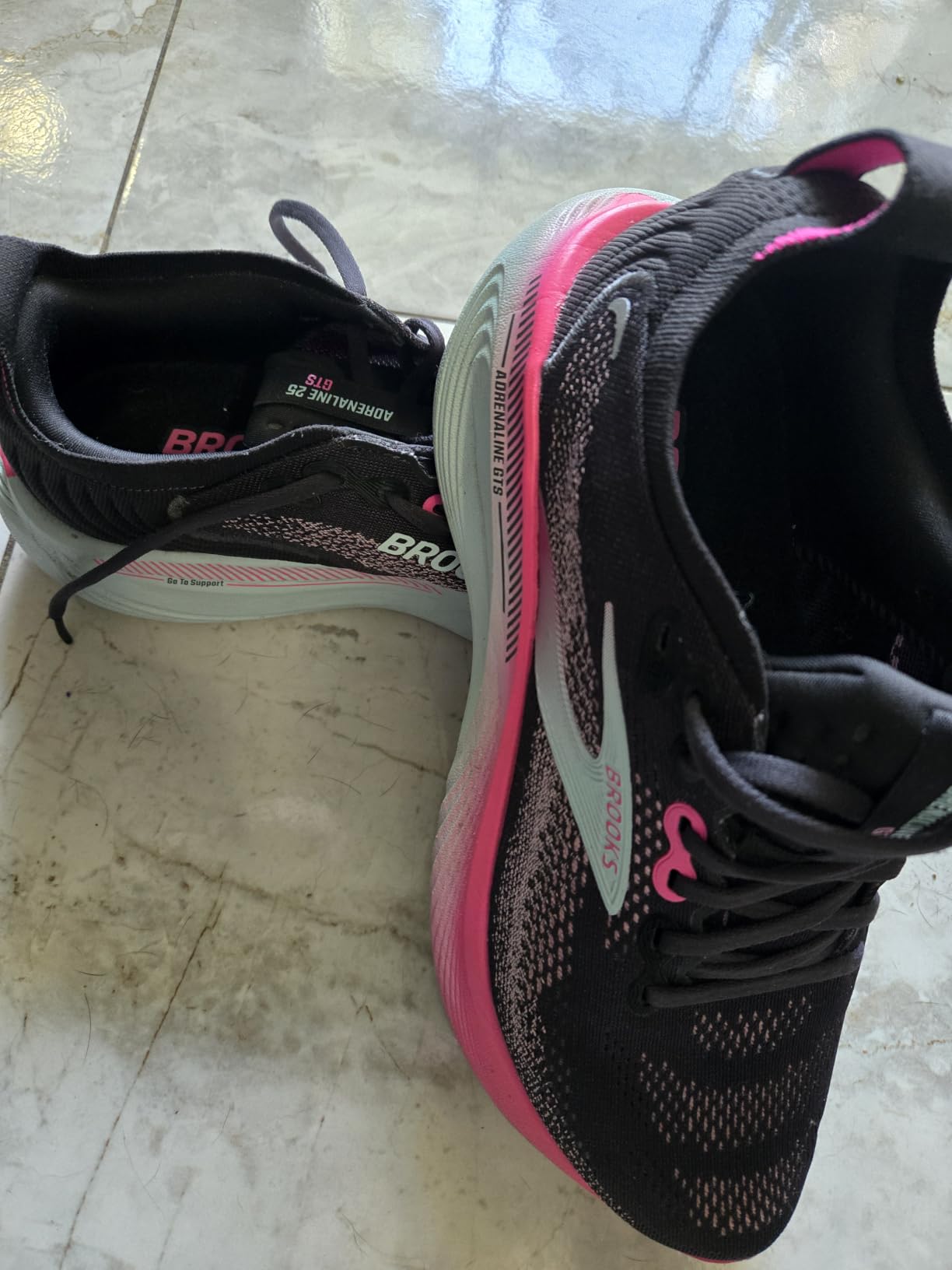
It is a sensible match for a runner who notices inward roll after landing but does not need a highly restrictive shoe. Women shopping for the same concept should also compare the men’s version, since fit and width availability can matter more than the silhouette.
The main compromise is the heel. A few owners report abrasion around the collar, and this model may need a short break-in before longer outings feel completely settled.
Choose it for natural-feeling stability
Choose it for a balanced combination of cushioning and support rather than maximum correction. I would use it for daily training when I wanted one dependable shoe that did not make every step feel controlled.
It is especially useful for flat-footed runners whose arches tire later in a run, or who feel more comfortable with a guided platform than with a very soft, highly rocker-shaped shoe.
Look elsewhere for a roomy therapeutic fit
Look elsewhere if you need the very roomiest toe box, a particularly soft landing, or a shoe designed to accommodate bulky orthotics. The Brooks Addiction GTS 15 is the better candidate for that job.
Try a half-size adjustment if your normal pair leaves the heel slightly loose. That small fitting check can solve more problems than adding a new insole.
2. Brooks Men’s Adrenaline GTS 25 — Best for Overpronation
Brooks Mens Adrenaline GTS 25, Primer Grey/Ebony/Jasmin 9.5 Wide
GuideRails support
DNA Loft v3 cushioning
Stable road platform
Pros
- Reliable overpronation control
- Comfortable cushioning
- Good heel and arch support
- Durable construction
Cons
- Softer formula than older versions
- Costs more than basic trainers
The men’s Adrenaline GTS 25 is the clearest answer for a runner who needs structured stability but does not want a harsh motion-control shoe. Its GuideRails design keeps the foot from drifting too far inward while leaving the forefoot reasonably free through toe-off.
I found the DNA Loft v3 cushioning to be soft enough for recovery days without becoming unstable when the pace picks up. The upper stays secure around the heel and midfoot, which is helpful when the shoe is used for long walks as well as running.
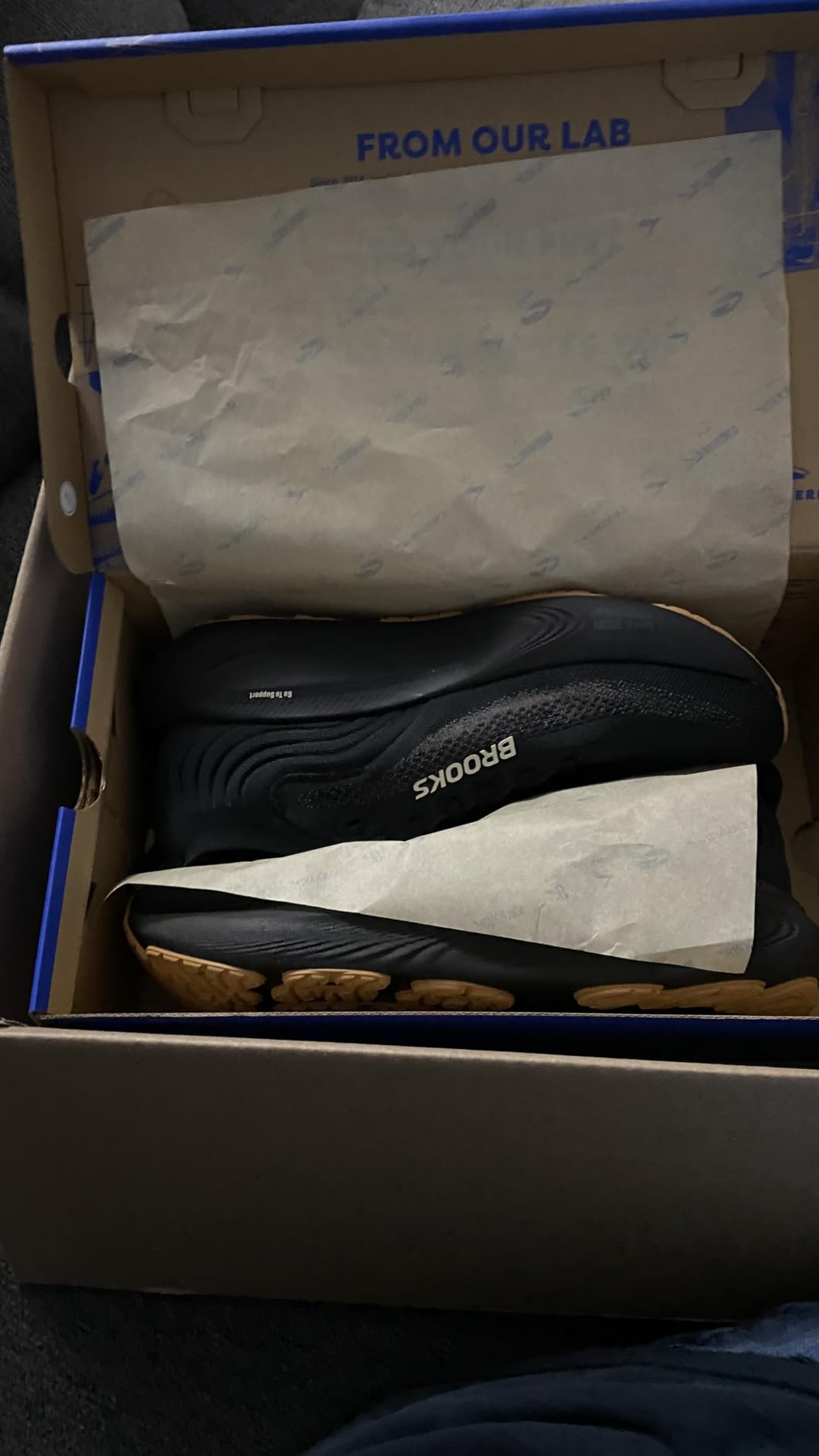
This is a strong everyday option for people who feel strain along the inner arch, knee discomfort associated with inward movement, or a shoe that wears down on the inner edge. It is not a medical treatment, so persistent pain deserves an assessment from a qualified clinician.
Reviewers who loved older Adrenaline versions may notice that this one is softer. That is a plus for cushioning seekers, but it may not satisfy someone who wants the firmest possible platform.
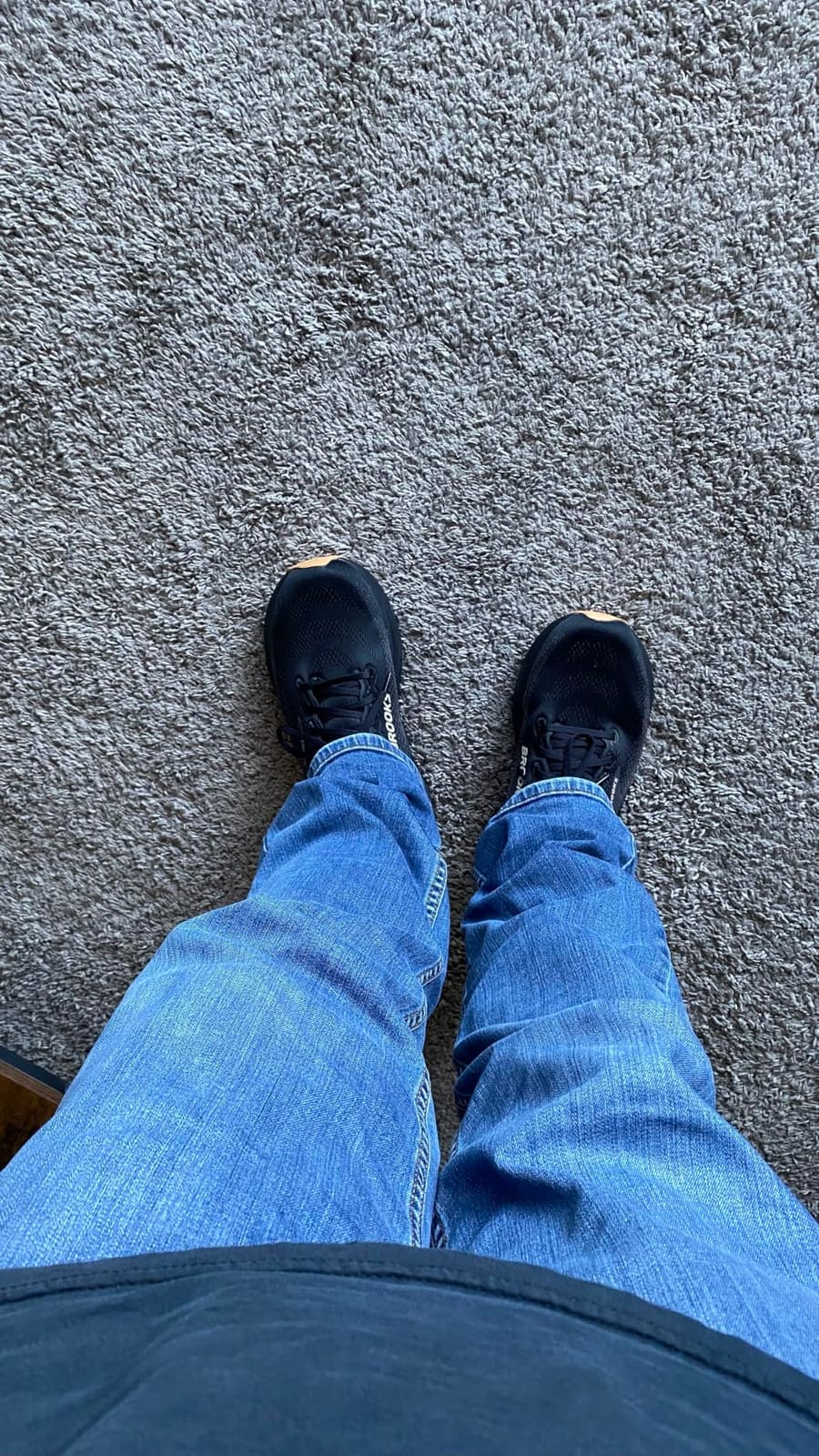
Choose it for guided daily training
Choose it for daily miles when a stable, comfortable trainer matters more than a fast, low-profile feel. The broad platform and smooth transition make it approachable for beginners and experienced runners alike.
It also works well for flat feet that are sensitive to hard pavement. I would pair it with a gradual mileage plan and replace it when the midsole no longer feels supportive.
Look elsewhere for maximum support
Look elsewhere if you need pronounced motion control, a very wide toe box, or space for thick orthotic inserts. The Addiction GTS 15 offers a more substantial base, while the HOKA Gaviota 5 offers a wider, softer ride.
It is also not my first pick for someone who dislikes a guided feel. A neutral model such as the ASICS Gel-Nimbus 27 may feel more natural when overpronation is not the main issue.
3. ASICS Men’s Gel-Kayano 32 — Best Premium Pick
ASICS Men’s Gel-Kayano 32 Running Shoes, 9.5, Piedmont Grey/Gravel
4D guidance system
PureGEL cushioning
FF BLAST PLUS foam
Pros
- Responsive cushioning
- Breathable upper
- Moisture-managing sockliner
- Stable geometry
Cons
- Upper may feel flimsy
- Side support varies by fit
The Gel-Kayano 32 is the most performance-oriented stability shoe in this group. Its 4D GUIDANCE SYSTEM gives the platform a controlled feel, while the PureGEL and FF BLAST PLUS midsole provide a more responsive ride than a basic cushioned trainer.
I would reach for it when I wanted a shoe that could handle a long run without making faster sections feel dull. The engineered mesh upper is light and airy, and the OrthoLite X-55 sockliner helps manage moisture during hotter sessions.
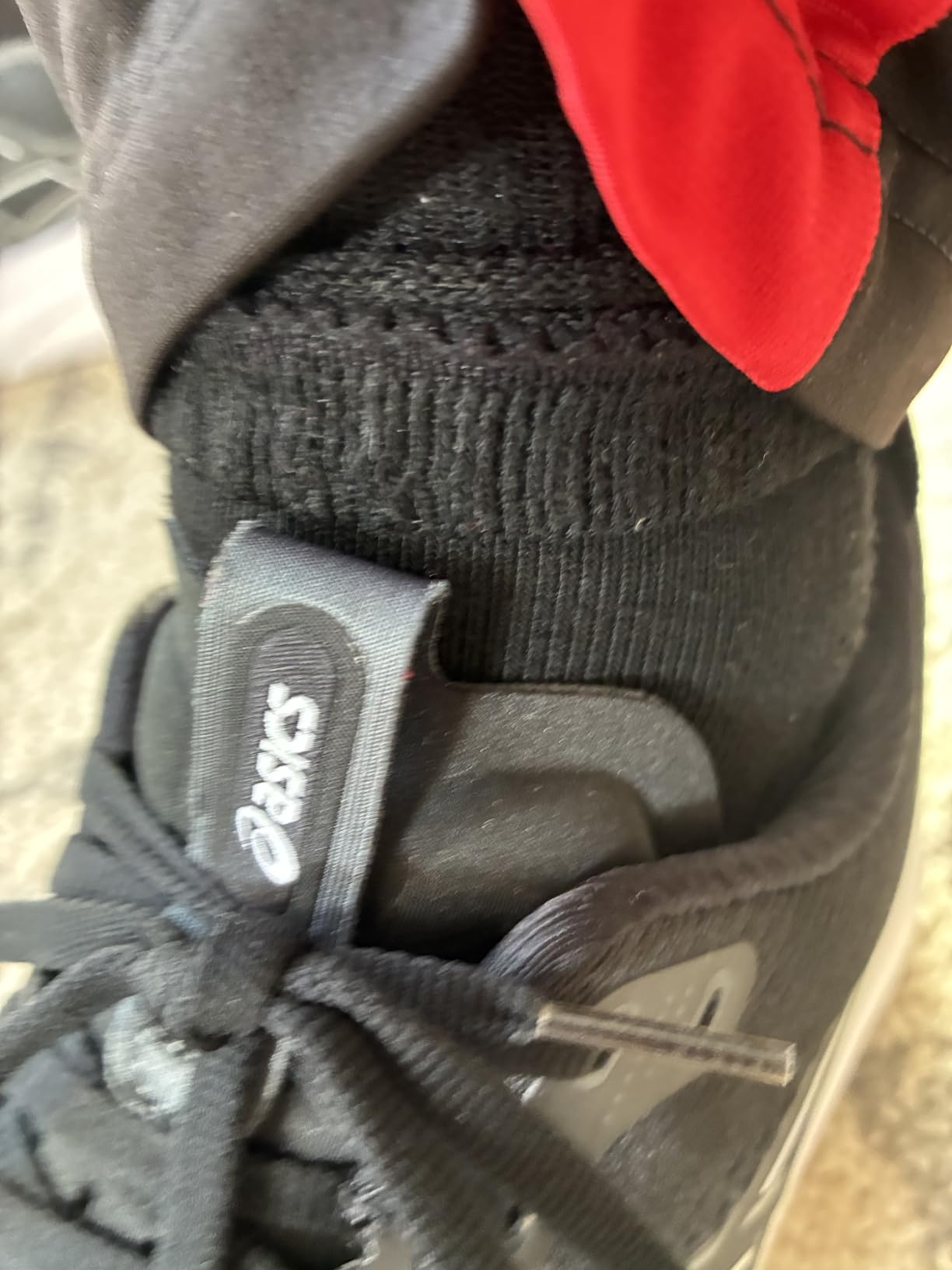
For flat-footed runners, the important question is whether the guidance system matches your foot. If your arch collapses noticeably but your ankle remains reasonably controlled, the Kayano’s balanced structure can feel secure without the heavier feel of a maximal-support shoe.
The tradeoff is that the upper does not feel equally secure on every foot. Some owners report a flimsy sensation on uneven ground, and a few wish for more side support, so this is not an automatic choice for every low-arch runner.
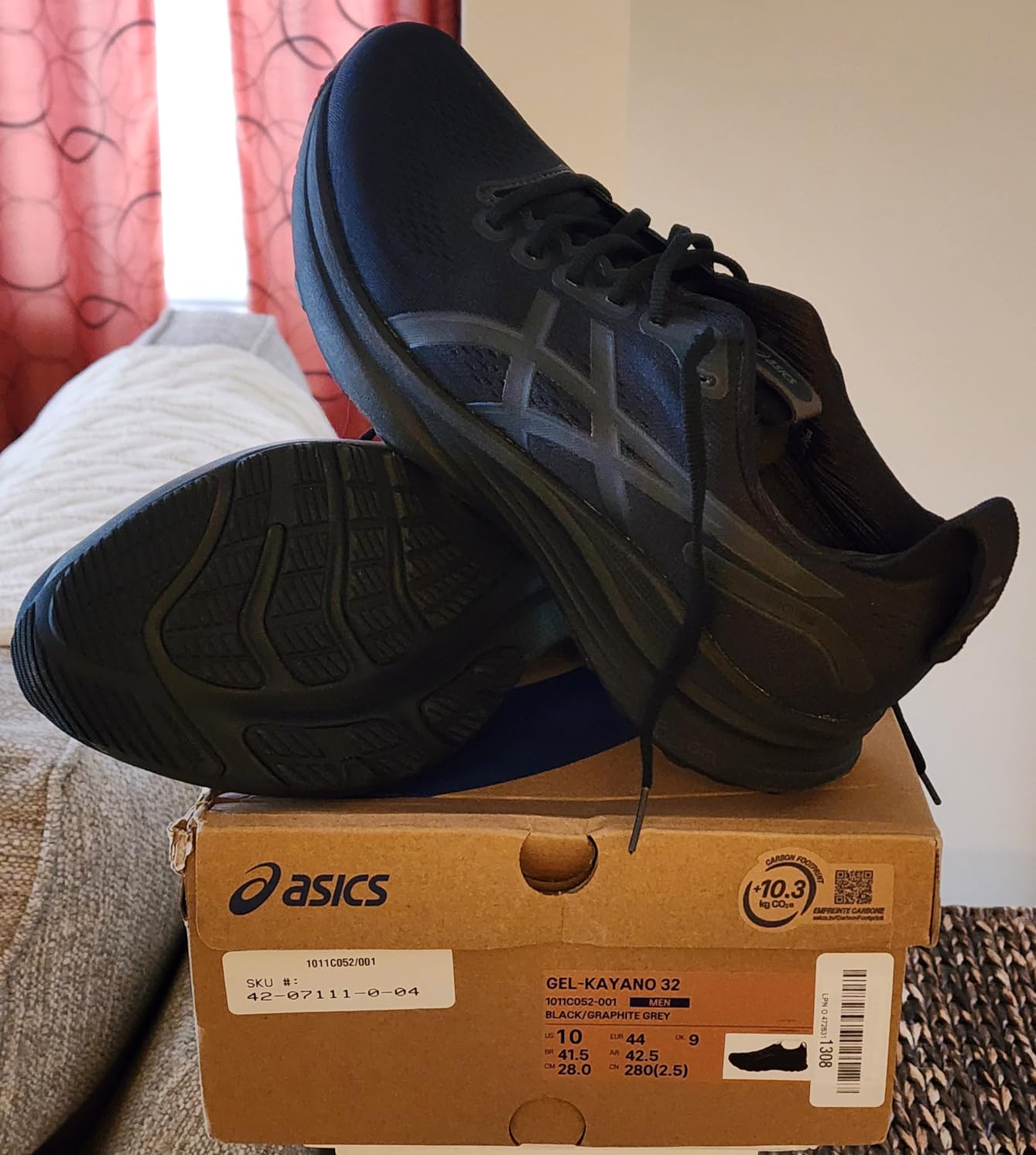
Choose it for a responsive stability ride
Choose it if you want a premium shoe for longer sessions and controlled turnover. Its cushioning still absorbs impact well, but the foam has enough response to keep transitions from feeling sluggish.
It is a good fit for runners who have settled into a stability shoe and want modern cushioning rather than a very firm, old-school posting system.
Look elsewhere for a soft, relaxed platform
Look elsewhere if maximum cushioning and a wide base are higher priorities than response. The HOKA Gaviota 5 or HOKA Bondi 9 will feel more relaxed and less performance-focused.
Consider the HOKA Bondi 9 if a narrow standard fit is a concern. I would also try the Kayano in person before committing, because upper security is highly individual.
4. HOKA Women’s Gaviota 5 — Best for Max Cushioning
HOKA Gaviota 5 Womens Shoes Size 10.5, Color: Harbor Mist/Rose Gold
Wide stable platform
Roomy toe box
Soft HOKA cushioning
Pros
- Excellent flat-foot support
- Very cushioned
- Balanced wide sole
- Comfortable toe box
Cons
- Stitching may bother bunions
- Limited stock
- Higher cost
The Gaviota 5 is built for comfort first. Its wide sole creates a stable foundation, while the soft HOKA cushioning and roomy toe box give flat feet room to settle instead of asking the arch to fight a narrow platform.
I see it as a strong option for runners who want generous protection for recovery days, long walks, or sessions on hard pavement. The support is noticeable without feeling like a traditional motion-control post, which can be a relief if stiff shoes make your feet ache.
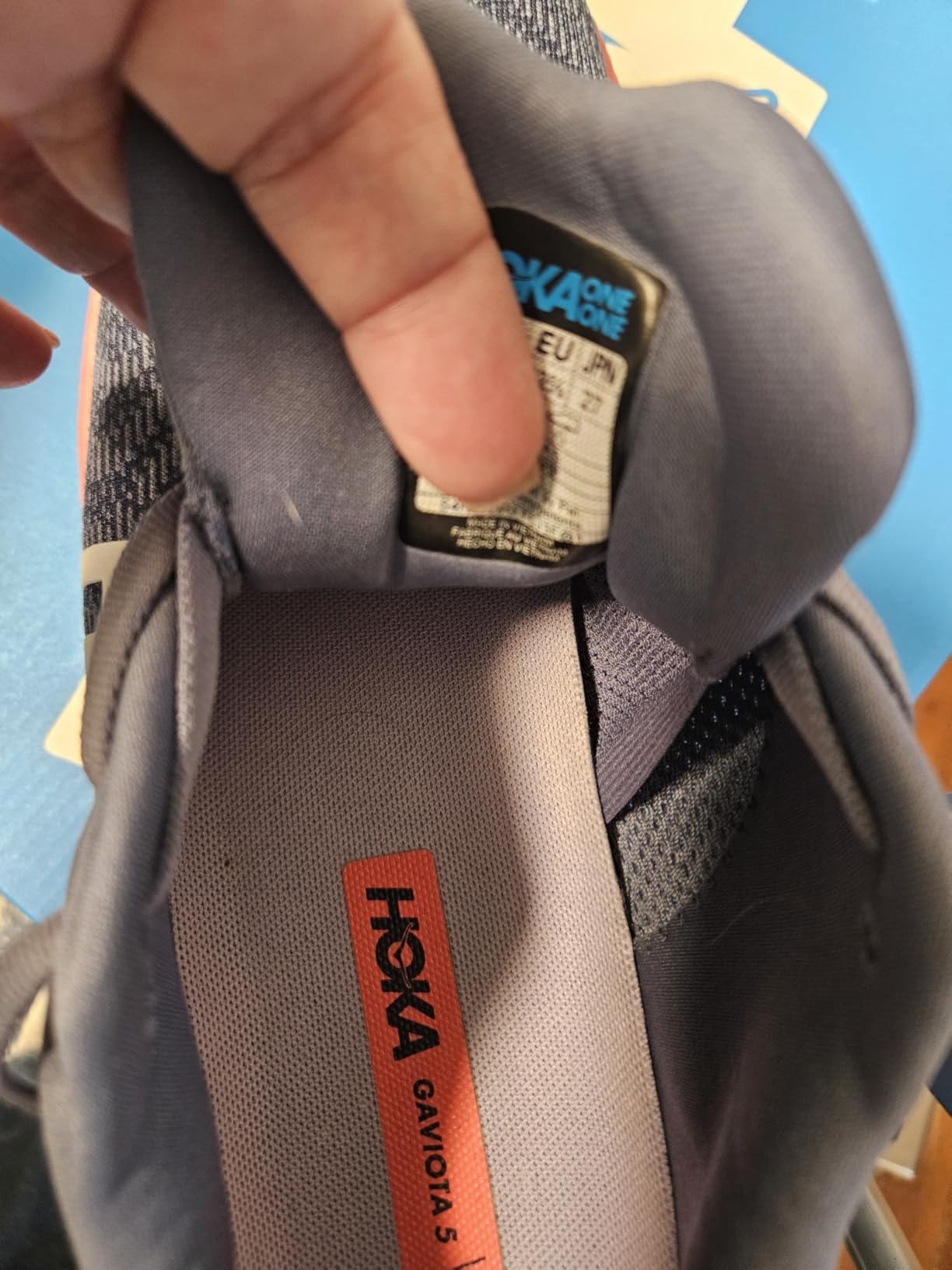
It is particularly compelling for women who have found that regular-width shoes pinch through the midfoot. The fit is not guaranteed to be perfect, though, so check the toe box and bunion area before logging long miles.
Stitching around the forefoot is the most recurring fit concern. Stock can also be limited, which makes a careful return policy more important when buying online.
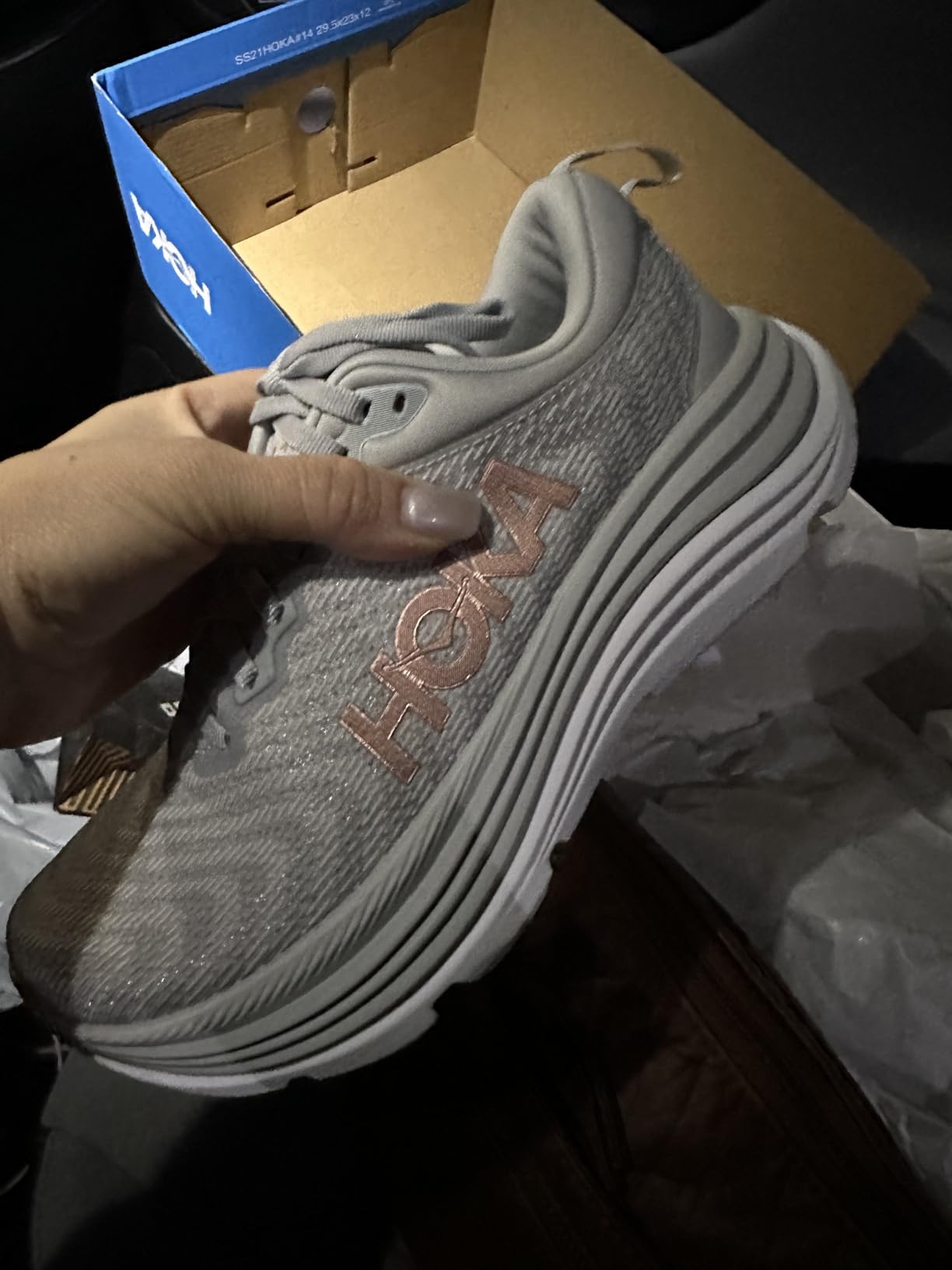
Choose it for soft, balanced support
Choose it when cushioning and a broad base are the priorities. I would recommend it for flat-footed runners who feel pressure under the arch in narrow shoes or who want a stable option for slower training.
It may also suit people who balance on their feet all day and want a shoe that remains comfortable after the run. The ride is more recovery-oriented than race-oriented.
Look elsewhere for a lightweight, firm trainer
Look elsewhere if you want a low, agile feel or a firm connection to the road. The ASICS Gel-Kayano 32 is the more responsive alternative in this list.
It is also worth considering the ASICS Gel-Nimbus 27 if you do not need pronounced stability. That neutral shoe offers a softer landing with less structured guidance.
5. HOKA Men’s Bondi 9 — Best for Wide Feet and Recovery
Hoka Men’s Bondi 9 Black/White 9.5 Medium
Maximum cushioning
MetaRocker geometry
Molded heel collar
Pros
- Plush shock absorption
- Breathable knit upper
- Secure molded heel
- Good for long recovery days
Cons
- Runs narrow for some
- Large and slow-feeling
- Durability concerns
The Bondi 9 takes the opposite approach from a traditional stability trainer: it uses a very tall, soft platform to reduce the feeling of impact rather than aggressively steering the stride. That can work well for naturally flat feet that do not need motion control.
For me, the strongest feature is the combination of MetaRocker geometry and a 3D molded heel collar. The rocker helps the foot move forward smoothly, while the collar limits the slipping that can make a high-stack shoe feel less secure.
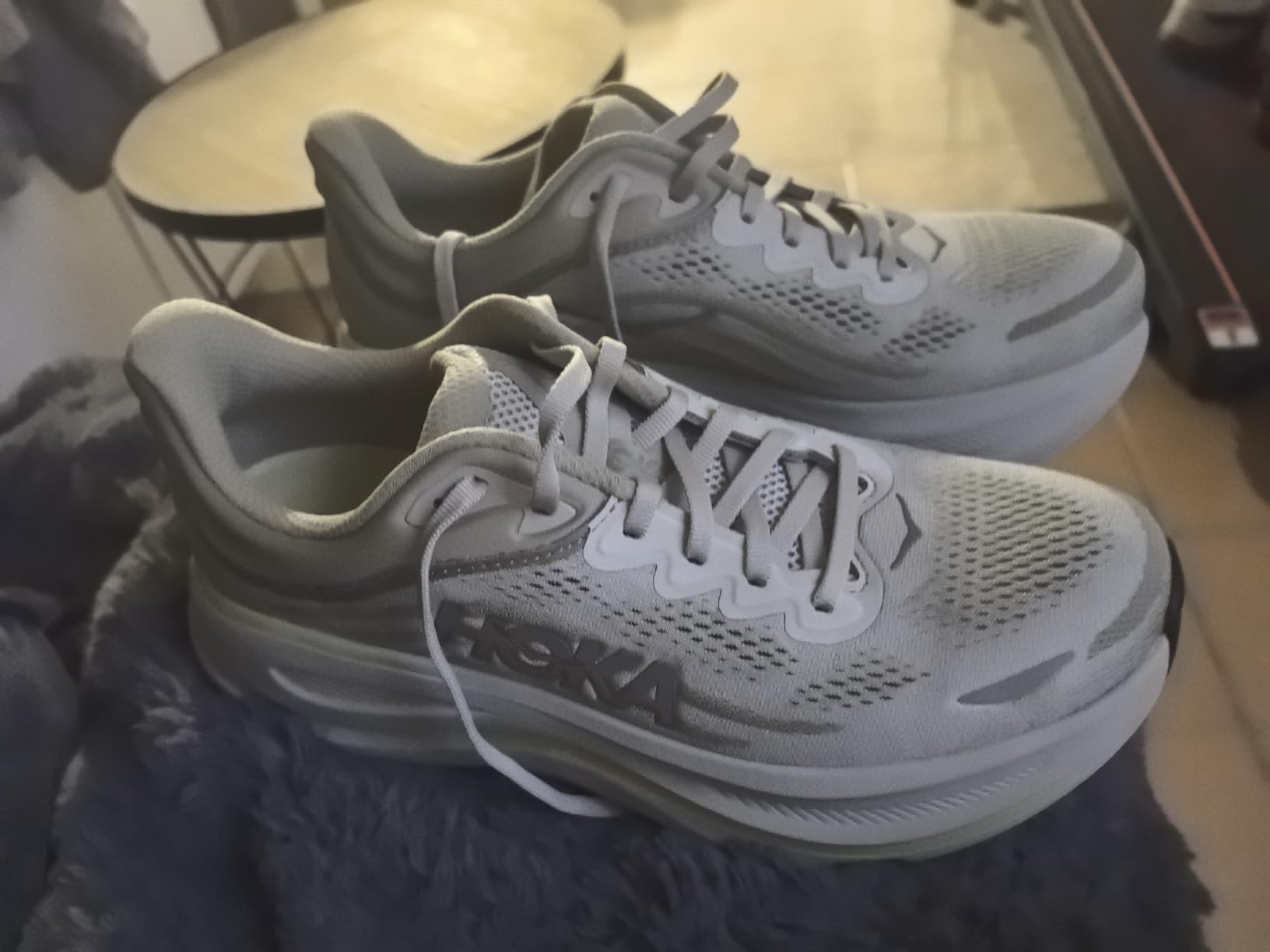
This is a sensible choice for recovery runs, easy mileage, and runners who want a soft landing for sensitive feet or joints. It is less compelling for fast workouts because the broad frame and substantial cushioning feel deliberately relaxed.
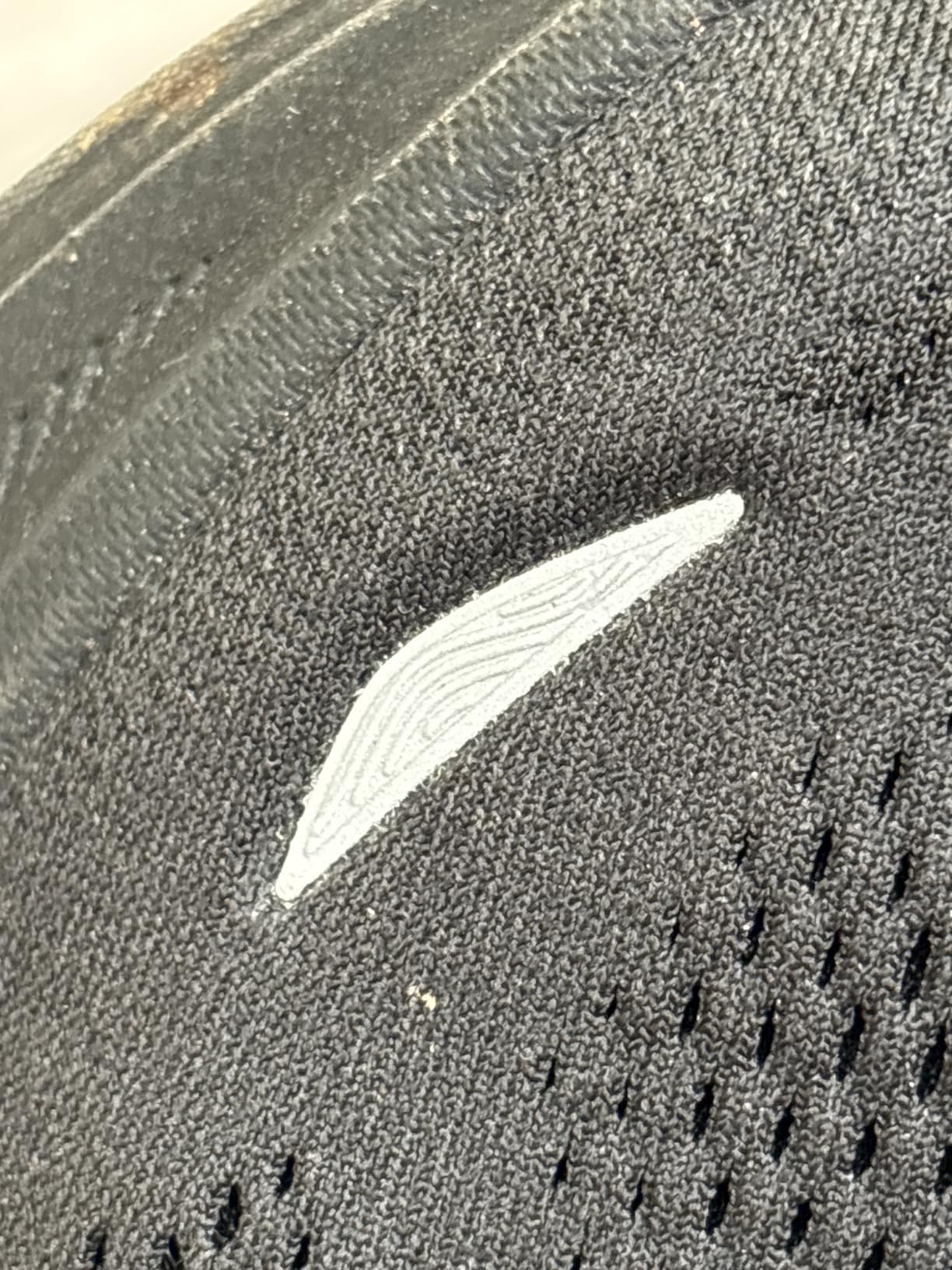
Some users find the standard fit narrow, so do not assume that HOKA’s reputation for a spacious toe box applies to your exact model. Reports of durability concerns also make it sensible to monitor the outsole and midsole rather than waiting for obvious failure.
Choose it for a plush, smooth ride
Choose it for a max-cushion trainer that softens the road and encourages a smooth heel-to-toe transition. I would use it for easy days, long walks, or recovery after a demanding session.
It is a good option for flat-footed runners who do not overpronate enough to need a stability system. The wide visual base can feel reassuring, but the correct width still matters.
Look elsewhere for speed and ground feel
Look elsewhere for tempo work, racing, or a close-to-the-ground response. The ASICS Gel-Kayano 32 is a better match when you want support and quicker transitions.
It is also not my first recommendation for someone who dislikes a bulky shoe. The Brooks Adrenaline GTS 25 feels more traditional and less oversized underfoot.
6. Brooks Men’s Addiction GTS 15 — Best for Orthotics and Maximum Support
Brooks Men’s Addiction GTS 15 Supportive Running Shoe – Black/Black/Ebony – 11.5 Wide
GuideRails support
BioMoGo DNA cushioning
Orthotic-friendly upper
Pros
- Very supportive
- Roomy fit
- Works with orthotics
- Breathable mesh
- APMA accepted
Cons
- Heel fit varies
- Sizing can be inconsistent
- Premium price
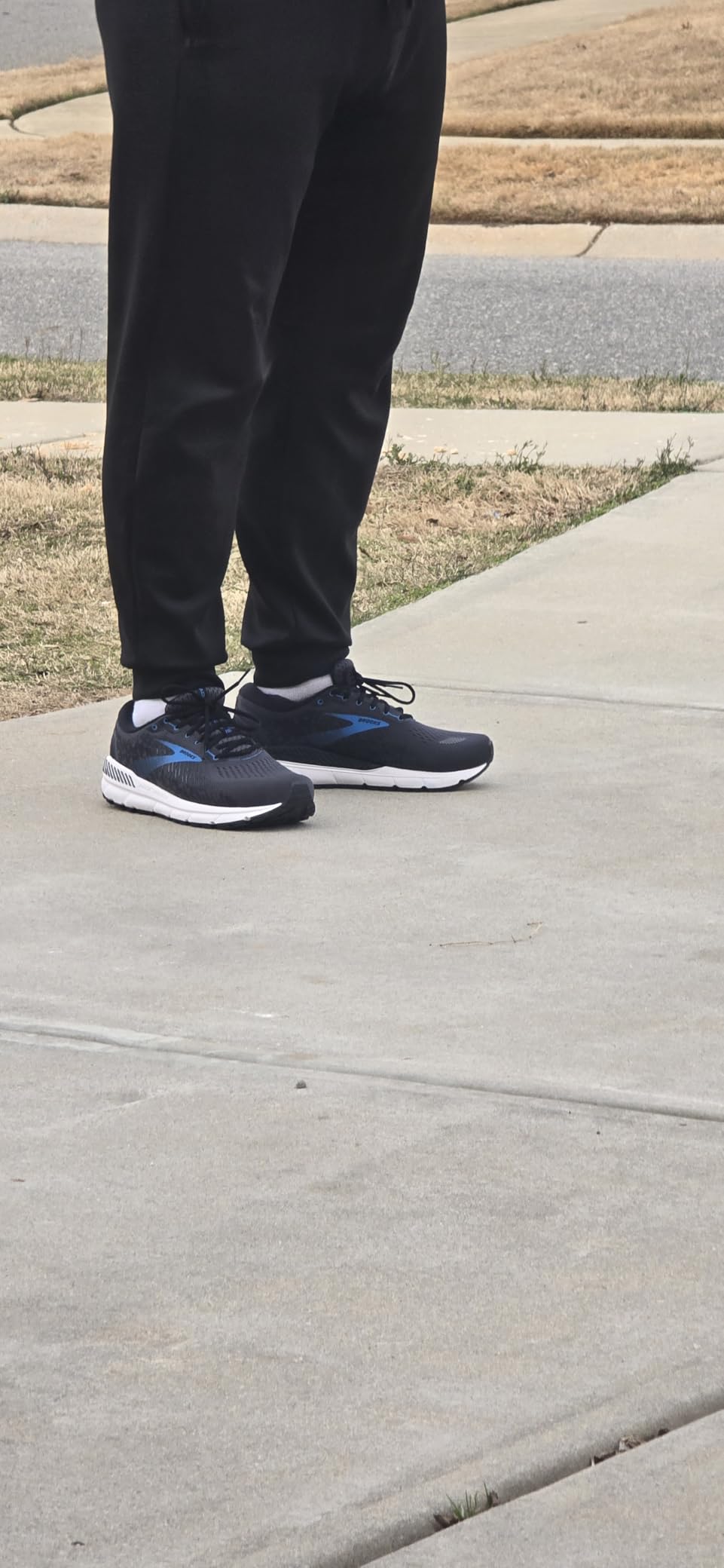
The Addiction GTS 15 is the most supportive shoe here, and that is why I would choose it before the Adrenaline for a runner who needs maximum control or a room for an orthotic. GuideRails keeps the stride centered, while the BioMoGo DNA cushioning adapts to the runner’s weight and pace.
The roomy toe box is a practical advantage for wide or voluminous feet, and the engineered Air Mesh upper is more forgiving than a thin, performance-oriented upper. It is a workhorse rather than a quick-feeling trainer, which is exactly what many people need for walking and steady mileage.
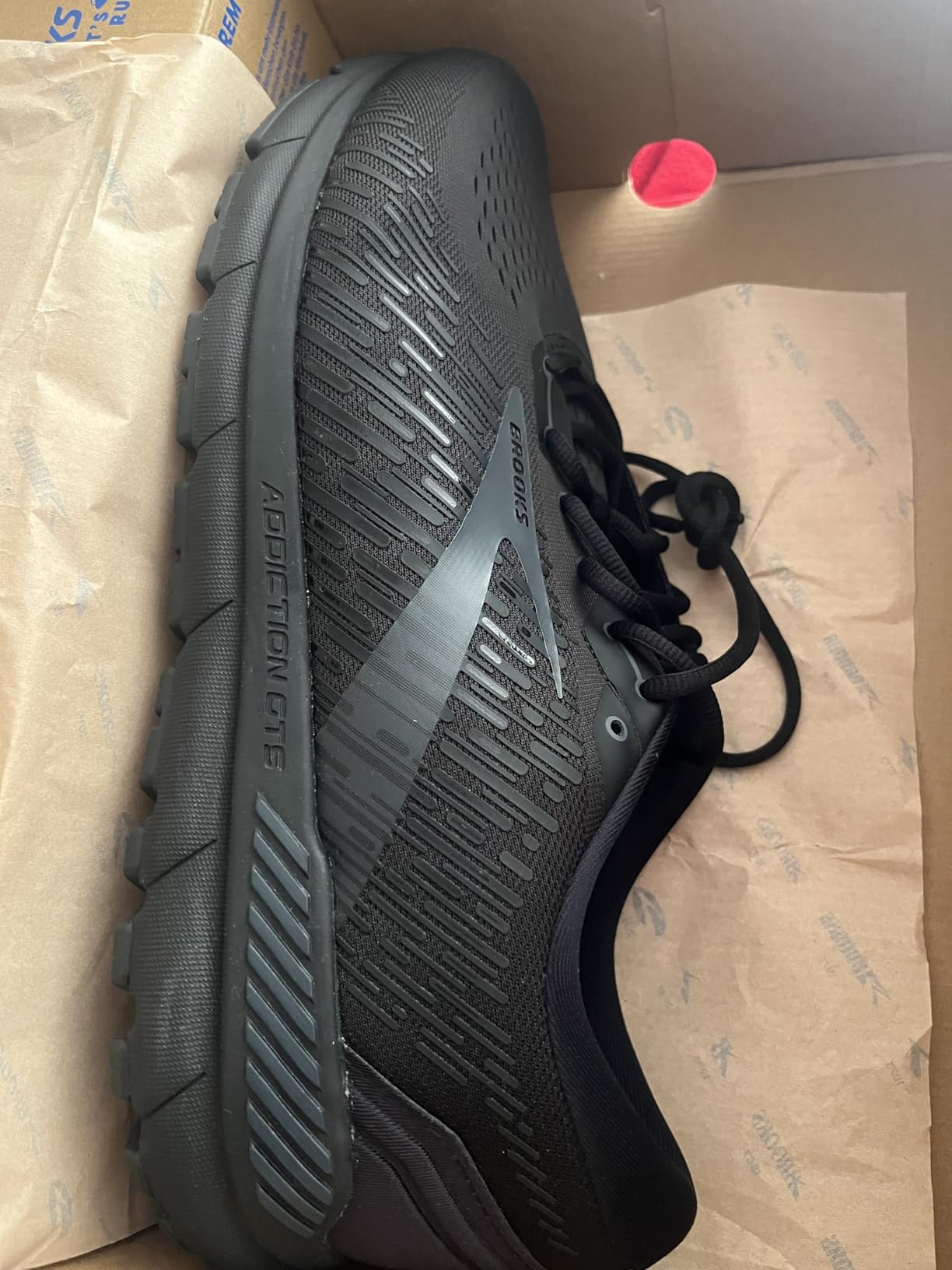
Its support makes it especially relevant for flat feet associated with significant inward movement. It is also a reasonable candidate for people who have been told by a clinician that they need a more substantial shoe, though it should not replace professional advice.
The fit is not identical for everyone. A loose heel or inconsistent sizing can undermine an otherwise excellent level of support, so compare the actual insole dimensions and the store’s return policy.
Choose it for a roomy, highly guided fit
Choose it for maximum stability, orthotic compatibility, or a forgiving upper. I would pick it for long walks and easy runs when comfort matters more than a light, fast feel.
It is particularly useful for heavier runners who want a durable, supportive platform, and for anyone who found lighter stability shoes too flexible.
Look elsewhere for a lively, minimal ride
Look elsewhere if your feet are naturally flat but do not overpronate. The HOKA Bondi 9 and ASICS Gel-Nimbus 27 may provide a more relaxed, less corrective experience.
The Brooks Adrenaline GTS 25 is the better everyday compromise when maximum control is unnecessary. It is lighter in feel and less focused on an orthotic-friendly fit.
7. ASICS Women’s Gel-Nimbus 27 — Best Neutral Pick
ASICS Women’s Gel-Nimbus 27 Running Shoes, 10, Lake Grey/White SAGE
PureGEL cushioning
FF BLAST PLUS ECO
Recycled jacquard mesh
Pros
- Soft landings
- Light breathable upper
- Supportive without intruding
- Roomy option
- Recycled materials
Cons
- Color may differ
- Can run wide
- Inconsistent sizing
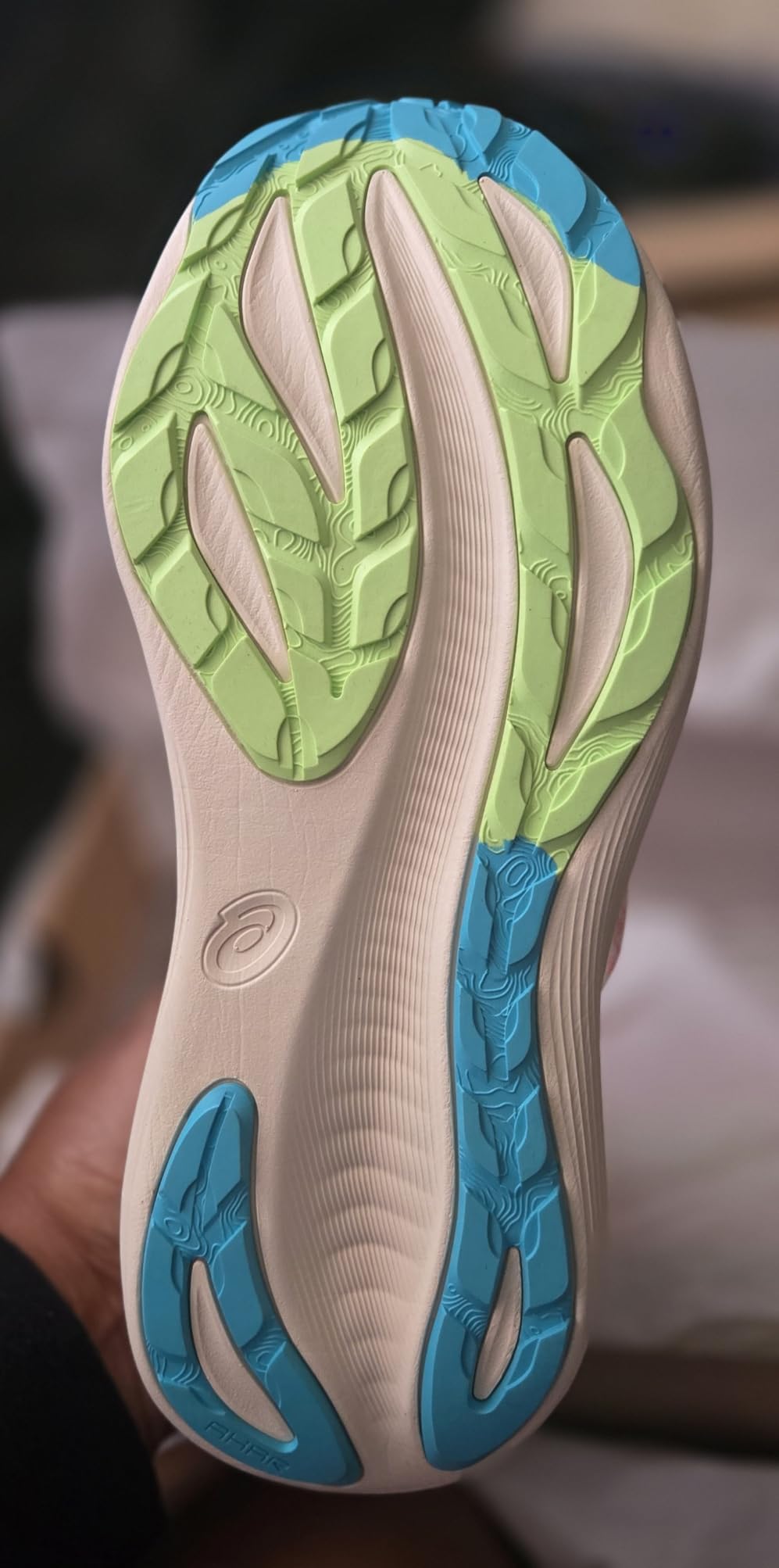
The Gel-Nimbus 27 matters because it proves that flat-footed runners do not all need a stability shoe. It is a neutral trainer with a soft, comfortable ride, and owners specifically praise its arch support without an intrusive feel.
I would consider it for a runner whose arch is low at rest but whose foot does not roll inward excessively. The PureGEL and FF BLAST PLUS ECO cushioning soften impact, while the engineered jacquard mesh keeps the upper light and breathable.
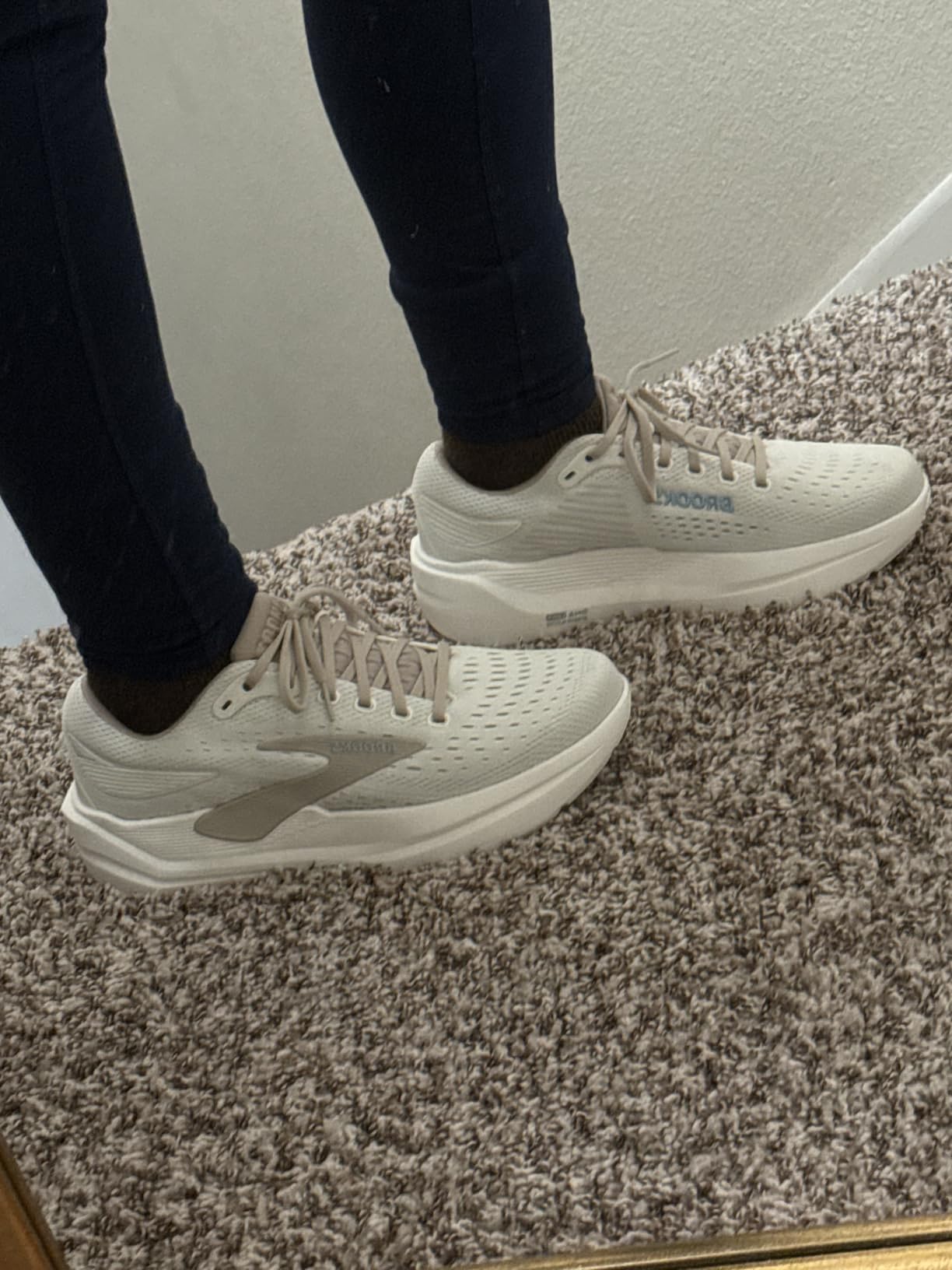
For women seeking shoes for flat feet, the roomy fit can be useful, although it may run wide for some. The recycled upper material and solution-dyed sockliner are thoughtful details, but the main reason to choose this shoe is its neutral comfort.
Color accuracy and sizing deserve a little attention. Read the brand’s current size guidance and keep both the shoe and your usual socks in mind when comparing the fit.
Choose it for natural motion with soft cushioning
Choose it if your low arch does not come with excessive inward movement. I would use it for everyday running, long walks, and runners who dislike the guided sensation of a traditional stability model.
It is a good reminder that the right shoe supports the foot without forcing every stride through the same path.
Look elsewhere for clear motion control
Look elsewhere if you notice strong overpronation, persistent inner-edge wear, or pain that improves in a structured shoe. The Brooks Addiction GTS 15 is a more supportive choice.
It may also feel too wide if you prefer a close, performance fit. The HOKA Gaviota 5 is worth comparing for a soft platform with a roomy toe box.
8. New Balance Men’s Fresh Foam X 860 V14 — Best Value
New Balance Men’s Fresh Foam X 860 V14 Running Shoe, Dark Juniper/Black Cement/Grey Matter, 7.5 M
Fresh Foam X cushioning
Overpronation support
8 mm drop
Pros
- Strong value
- Reliable stability
- Good arch and heel support
- Durable outsole
- Lightweight synthetic upper
Cons
- Break-in period
- Initial forefoot pressure
- Limited stock
The Fresh Foam X 860 V14 delivers the most appealing balance of support and value in this list. Its Fresh Foam X midsole is cushioned, the 8 mm drop offers a familiar transition, and the platform is designed for runners who overpronate.
I would give it time to settle before judging it. Several owners describe a break-in period and some initial pressure in the forefoot, but they also report solid arch and heel support once the upper relaxes.
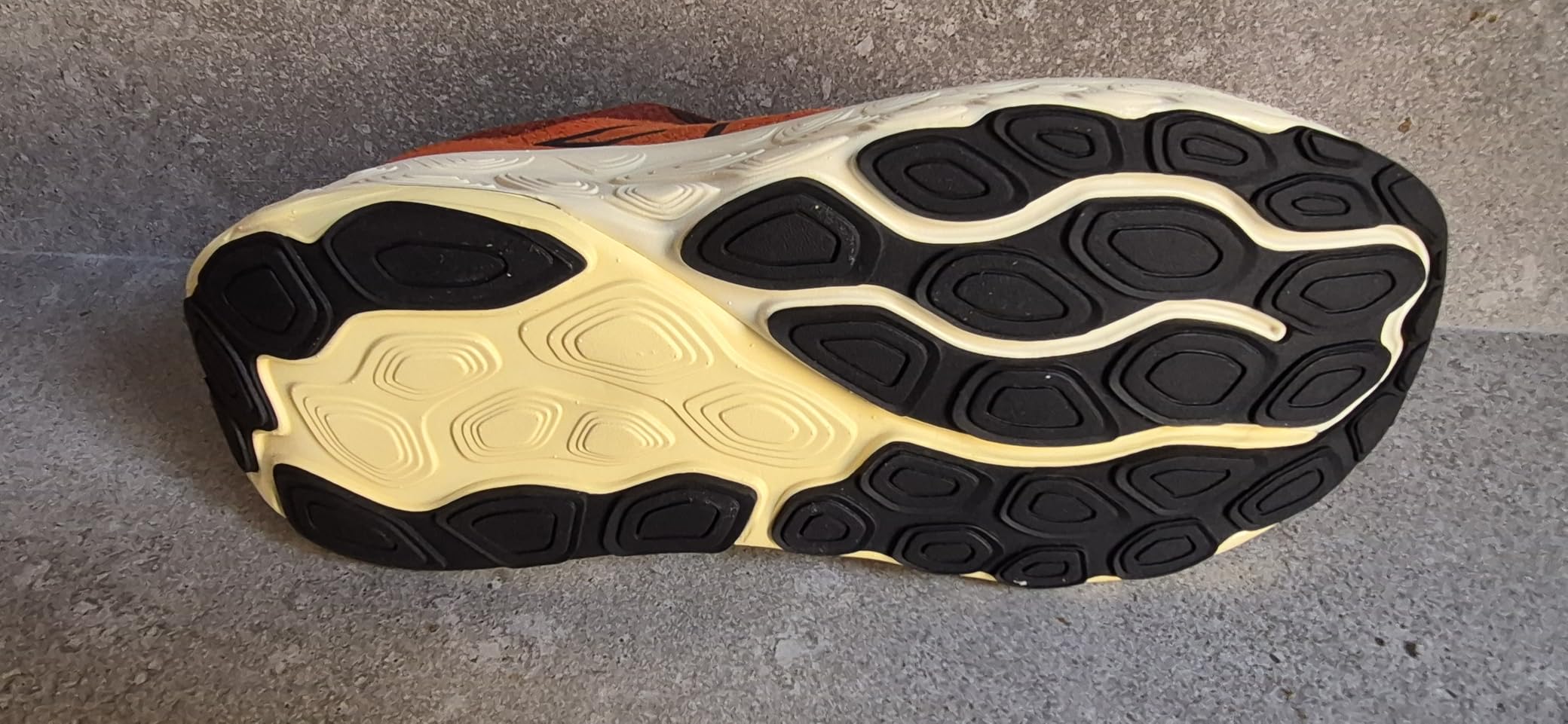
It is a practical daily trainer for a flat-footed runner who wants a supportive shoe without paying for the most premium cushioning. The rubber outsole should be checked regularly because supportive shoes still wear differently when the foot lands heavily on the inside.
Stock is limited in the analyzed listing, so confirm availability and return terms before ordering. A shoe that looks supportive on paper is only useful if you can test the actual pair you receive.
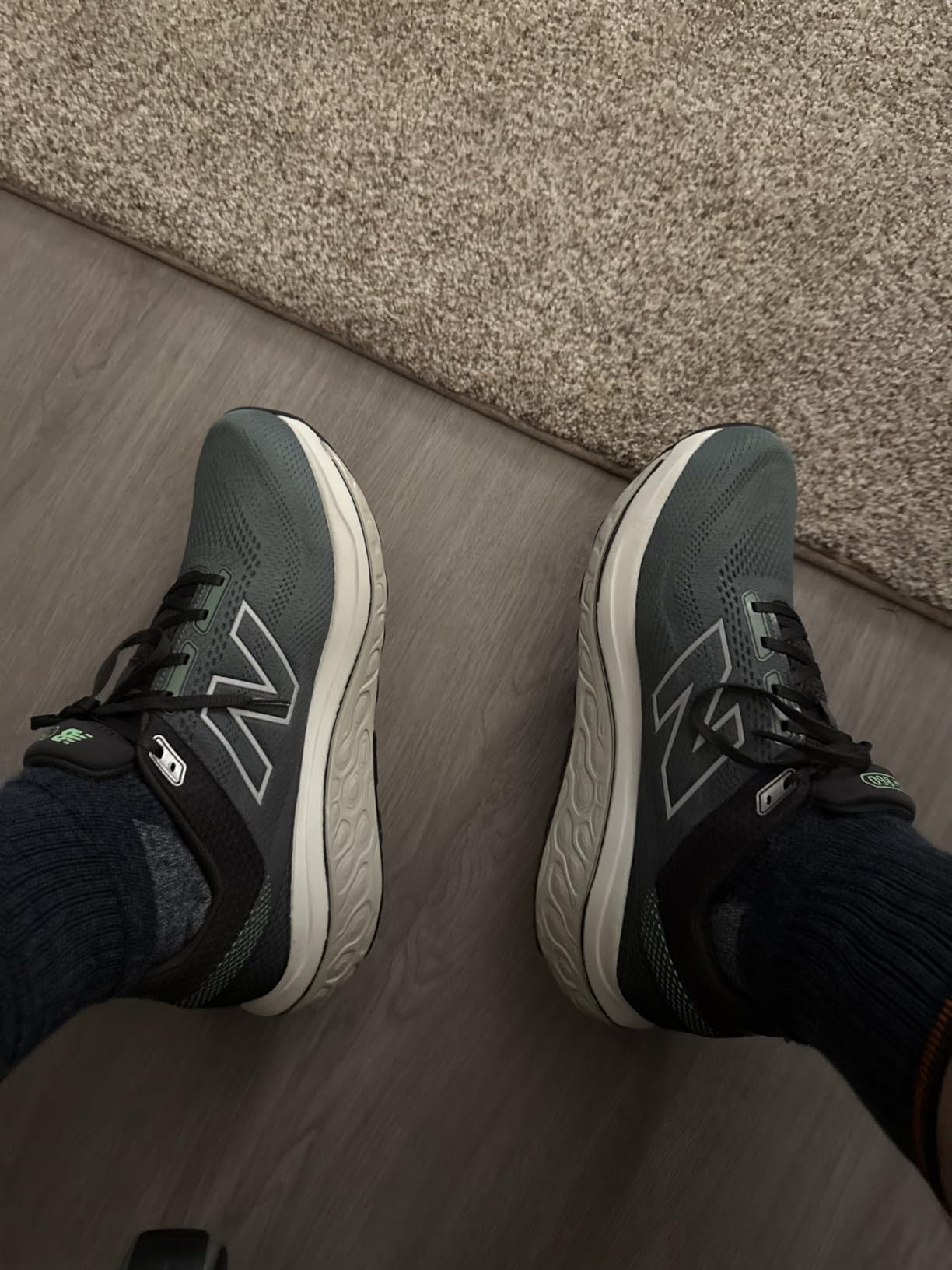
Choose it for supportive value
Choose it for overpronation support, an 8 mm drop, and a comfortable daily-training platform. I would recommend it to runners who want a more structured ride than a neutral max-cushion trainer.
It suits people who are willing to allow a short break-in rather than demanding softness straight from the box.
Look elsewhere for immediate softness
Look elsewhere if you want a plush ride from the first wear. The ASICS Gel-Nimbus 27 or HOKA Bondi 9 will feel softer and more relaxed.
The Brooks Adrenaline GTS 25 is also worth comparing if you prefer a more familiar transition and easier access to multiple versions or fit guidance.
How to Choose the Best Running Shoes for Flat Feet?
The best running shoes for flat feet are the ones that match your arch shape, movement, and comfort. Start with a wet-foot test, then assess whether your foot actually rolls inward, and finally try several widths before buying.
Flat feet are not a diagnosis by themselves. A naturally flexible arch may look low when standing and still function well, while a collapsed arch can develop over time and change the way the leg loads.
Flat feet and overpronation are different
Flat feet describe structure: the medial arch sits close to the ground when you stand. Overpronation is movement: the foot rolls inward after contact and may remain there longer than it should.
One can exist without the other. A naturally flat-footed runner may have a neutral gait, while someone with a visible arch can still overpronate, so a shoe decision based only on the footprint can be misleading.
Watch your shoes after several weeks of normal use. Heavy wear on the inner heel or forefoot, inward ankle movement, and discomfort along the inner arch can point toward more control being useful, but a treadmill assessment is more reliable than a visual guess.
Stability vs neutral running shoes
A stability running shoe uses a broader platform, firmer foam, guidance rails, or a denser medial zone to reduce excessive inward movement. A neutral shoe leaves that movement more open and relies on cushioning, fit, and your own strength.
Choose stability when your foot rolls inward and you feel more comfortable or less fatigued with guidance. Choose neutral when your arch is naturally low but your gait remains controlled, especially if rigid shoes cause pressure or make your stride feel restricted.
The shoe should not be the only intervention. Calf mobility, foot strength, gradual training, and recovery matter, and persistent pain should be assessed by a podiatrist or physical therapist.
GuideRails, H-Frame, and dual-density foam
Brooks GuideRails acts like a boundary around the stride, reducing excess movement without placing one hard post under the arch. The New Balance 860 and ASICS 4D guidance system use denser or shaped structures to create a similar controlled platform.
HOKA’s wider sole and H-Frame-style geometry take a different route. They give the foot a broad base and use the shape of the platform to resist collapse, which is useful when softness and room matter more than a traditional medial post.
No single technology wins for everyone. Compare how the shoe feels at the heel, through the midfoot, and immediately before toe-off rather than shopping by brand name alone.
Fit, width, and heel-to-toe drop
Measure both feet late in the day and leave roughly a thumb’s width in front of the longest toe. Your arch should feel supported without the upper pressing into it, and the heel should not lift when you lean forward.
Wide feet need width, not simply a longer size. A longer shoe can create heel slippage and forefoot bunching, so compare the brand’s width options and consider the roomy Brooks Addiction GTS 15, HOKA Gaviota 5, or ASICS Gel-Nimbus 27 if your usual size feels cramped.
Heel-to-toe drop changes the load around the Achilles, calf, knee, and forefoot. An 8 mm drop is a useful familiar starting point, but there is no universal best drop for flat feet; transition gradually and choose what your body tolerates.
Try both max cushioning and stability
Forum runners repeatedly warn against assuming that every flat foot needs a stability shoe. Their practical advice is to try a max-cushion neutral model and a structured model in the same visit, then compare comfort across a short walk and an easy run.
I follow that approach because the right choice is often a fit decision, not a brand decision. Keep a simple log of heel hold, arch pressure, toe room, inner-edge discomfort, and how your legs feel the next morning.
Replace shoes when the midsole feels dead, the upper no longer holds the foot, or the outsole shows uneven wear. For many runners, that is more informative than counting a rigid number of miles.
Frequently Asked Questions
Are Hoka or Brooks better for flat feet?
Neither brand is automatically better. Brooks Adrenaline GTS 25 is the more traditional guided choice, while HOKA Gaviota 5 offers a wider, softer platform. Choose according to whether you need motion control or roomy cushioning.
What shoes do podiatrists recommend for flat feet?
Podiatrists may recommend a stable, well-fitting shoe with a firm heel counter, supportive midsole, and appropriate width, but the recommendation depends on symptoms and gait. Brooks, ASICS, HOKA, and New Balance all make relevant models.
How can I tell if I have flat feet?
Wet your foot, step on a surface that shows a print, and examine the curve along the inside edge. A low or absent curve suggests a flat footprint, while pain, inward rolling, or uneven wear makes a professional gait assessment more useful than a home test alone.
Are stability shoes necessary for flat feet?
No. Flat feet describe arch shape, and not every flat-footed runner overpronates. Stability shoes are most useful when the foot rolls inward excessively or a clinician recommends them; a neutral cushioned shoe may be more comfortable for a naturally flat, controlled gait.
What is the difference between flat feet and overpronation?
Flat feet are a structural observation, while overpronation is an inward rolling movement during the stride. A person can have flat feet without overpronation, or overpronation with a visible arch, so assess movement and symptoms together.
Final Picks for Flat-Footed Runners
The best running shoes for flat feet in 2026 are the Brooks Adrenaline GTS 25 for balanced daily support, the HOKA Gaviota 5 for maximum cushioning, and the Brooks Addiction GTS 15 for maximum control or orthotic room. The ASICS Gel-Kayano 32 is the responsive premium option, while the ASICS Gel-Nimbus 27 is a smart neutral alternative.
My practical advice is to compare one structured shoe with one neutral, cushioned shoe before you buy. If your feet feel better without guidance, that is useful information; if they feel more secure with it, do not let the idea that flat feet always need arch support push you into a rigid shoe.