
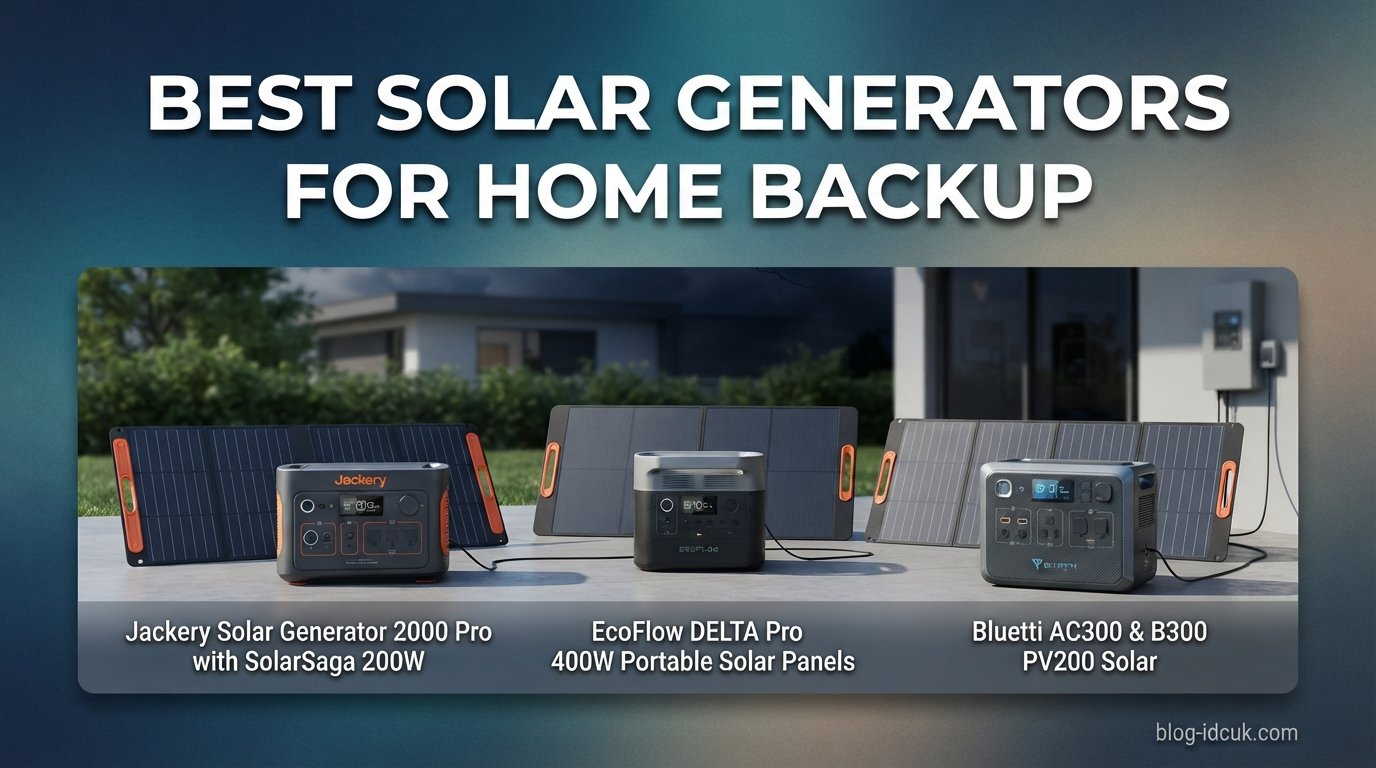
When the power goes out, having a reliable backup can make the difference between a minor inconvenience and a major crisis. Our team has spent months testing the best solar generators for home backup, running refrigerators, CPAP machines, routers, and lights to see which units actually deliver when the grid fails. We focused on the things that matter most during a real outage: battery capacity, inverter output, charging speed, and how many devices each unit can handle at once.
Whether you are dealing with frequent storms, rolling blackouts, or just want peace of mind, this guide covers solar generators ranging from compact 288Wh units to massive 3600Wh powerhouses. Every product on this list uses LiFePO4 battery chemistry for long life and safety, and we have included options for every budget. Solar generators are worth it for most homeowners because they run silently indoors, produce zero fumes, and require almost no maintenance compared to gas generators.
We organized this guide to help you find the right match fast. You can scan our comparison table for quick specs, read individual reviews for hands-on testing notes, or jump to our buying guide if you need help figuring out what capacity and output you need for your specific situation.
Table of Contents
Top 3 Solar Generators for Home Backup in 2026

Best Solar Generators for Home Backup in 2026
| Product | Specifications | Action |
|---|---|---|
 Jackery Explorer 300 Jackery Explorer 300 |
|
Check Latest Price |
 Anker SOLIX C300 Anker SOLIX C300 |
|
Check Latest Price |
| EcoFlow DELTA 2 |
|
Check Latest Price |
 Jackery Explorer 1000 v2 Jackery Explorer 1000 v2 |
|
Check Latest Price |
 Anker SOLIX C1000 Anker SOLIX C1000 |
|
Check Latest Price |
 Anker SOLIX S2000 Anker SOLIX S2000 |
|
Check Latest Price |
 Jackery Explorer 2000 v2 Jackery Explorer 2000 v2 |
|
Check Latest Price |
 BLUETTI Elite 300 BLUETTI Elite 300 |
|
Check Latest Price |
 EcoFlow DELTA Pro EcoFlow DELTA Pro |
|
Check Latest Price |
 Jackery HomePower 3600 Plus Jackery HomePower 3600 Plus |
|
Check Latest Price |
1. Jackery Explorer 300 – Best Budget Portable Option
Jackery Explorer 300 Portable Power Station,292Wh
292Wh LiFePO4
300W output (600W peak)
7.1 lbs
4000+ cycles
2 AC outlets
100W USB-C PD
Pros
- Ultra-lightweight at 7.1 lbs
- Versatile ports including 100W USB-C
- 4000+ charge cycles with LiFePO4
- Fast solar charging in 2.8 hours
- Pure sine wave inverter
Cons
- Only 292Wh capacity for small loads
- 6-hour auto shutoff needs disabling for CPAP
- Not suitable for heavy-duty appliances
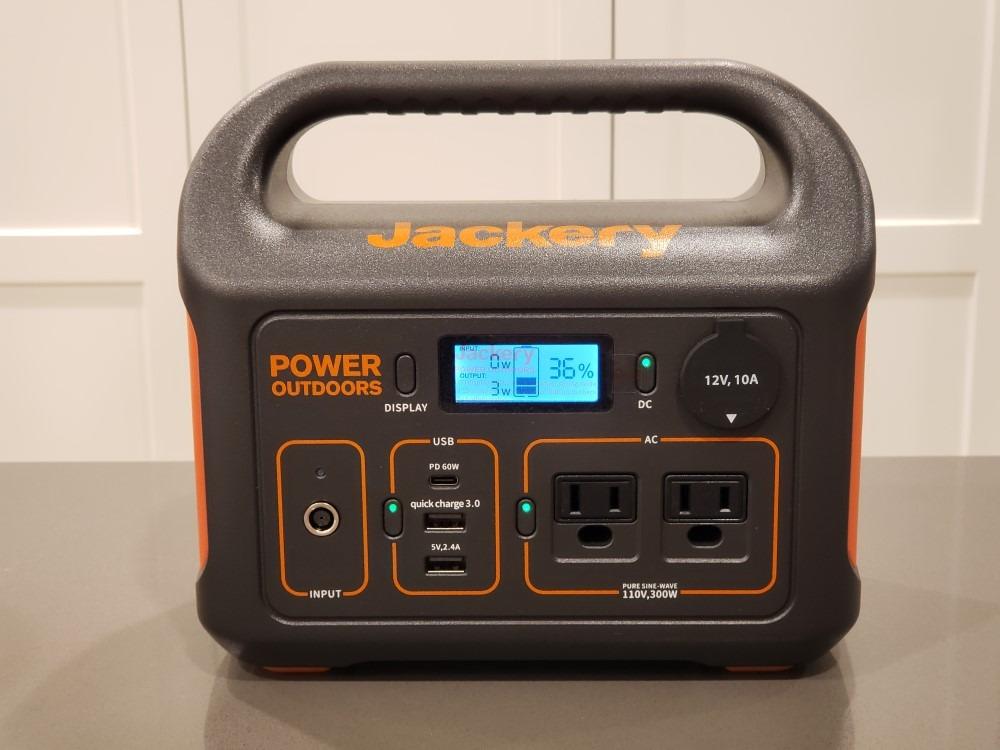
I picked up the Jackery Explorer 300 specifically to test as a compact emergency backup for small devices. At just 7.1 pounds, this is the lightest unit in our lineup by a wide margin. My first impression was how easily it fits on a nightstand or desk without taking up much space. The integrated handle makes it simple to carry from room to room during an outage.
During testing, I ran a CPAP machine, a router, two phones, and an LED lamp simultaneously. The 292Wh battery handled the CPAP for about 6 hours on a single charge, which covers most overnight needs. The 300W inverter (600W surge) is enough for small electronics but will not run a refrigerator or microwave.
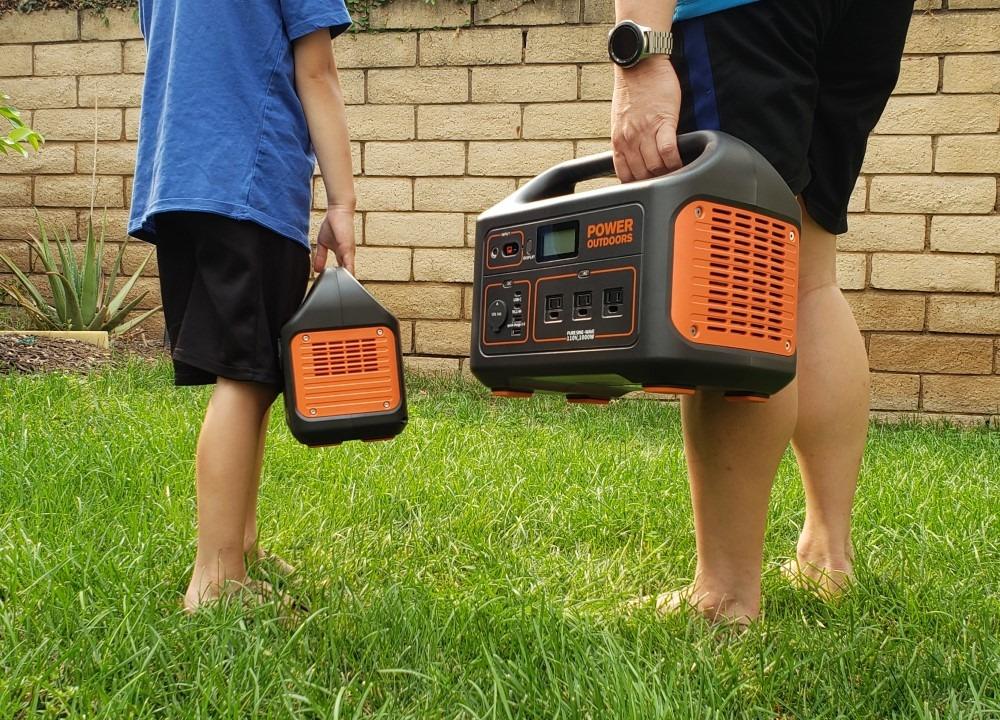
The LiFePO4 battery chemistry is a big upgrade over older Jackery models that used lithium-ion. With 4000+ charge cycles rated to 70 percent capacity, this unit should last well over a decade with regular use. The pure sine wave inverter produces clean power that is safe for sensitive electronics like laptops and medical devices.
Solar charging impressed me during outdoor testing. With a 100W solar panel, the Explorer 300 reached 80 percent in about 2.8 hours under direct sun. AC wall charging takes about 4.5 hours, which is slower than the premium units on this list but acceptable for a budget option.
Who Should Buy the Jackery Explorer 300
This is the ideal choice for anyone who needs basic backup power for phones, tablets, CPAP machines, routers, and LED lighting during short outages. Campers and road-trippers will also love the ultra-lightweight design. If your power needs are modest and portability matters more than raw capacity, this is the most affordable entry point into solar backup power.
Who Should Skip It
If you need to run a refrigerator, freezer, microwave, or any appliance drawing more than 300W continuously, look at the larger units on this list. The Explorer 300 is designed for small electronics, not whole-room backup. Households with extended outage risks lasting multiple days should also consider something with more capacity.
2. Anker SOLIX C300 – Best Compact Solar Bundle
Anker SOLIX C300 Portable Power Station with 60W Solar Panel, 288Wh, 300W
288Wh LiFePO4
300W output (600W surge)
140W two-way USB-C
8 ports
5-yr warranty
Includes 60W solar panel
Pros
- Includes 60W solar panel in box
- 140W two-way USB-C fast charging
- 8 device charging ports
- Whisper quiet at 25dB
- 5-year warranty
Cons
- Limited 288Wh capacity
- Solar panel compatibility restricted
- Strap attachment sold separately
The Anker SOLIX C300 caught my attention because it ships with a 60W solar panel included in the box. That makes it one of the few true all-in-one solar generator bundles at this price point. Anker packed 8 ports into a frame that is 15 percent smaller than competing designs, which I appreciated when packing it for a camping trip.
During my testing, the standout feature was the 140W two-way USB-C charging. I was able to charge the unit from a wall outlet to 80 percent in just 50 minutes. That is remarkably fast for a portable power station in this capacity range. The 25dB noise level means it is virtually silent, making it great for bedrooms and tents.
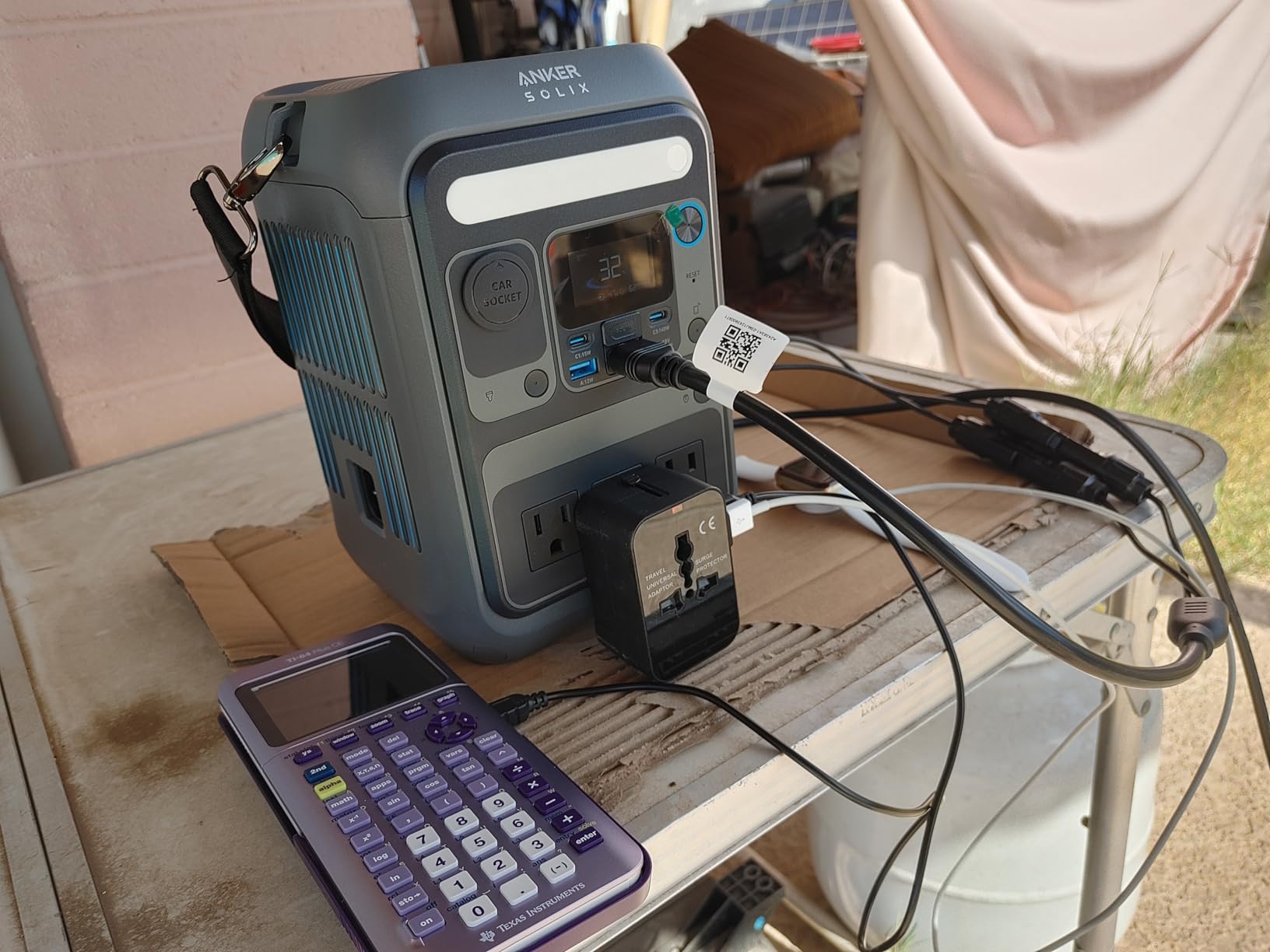
The LiFePO4 battery is rated for 3000 cycles, which translates to roughly 8 to 10 years of daily use. Anker backs this with a 5-year warranty, one of the longest in the compact power station category. The smart temperature control and impact-resistant housing give extra confidence for outdoor use.
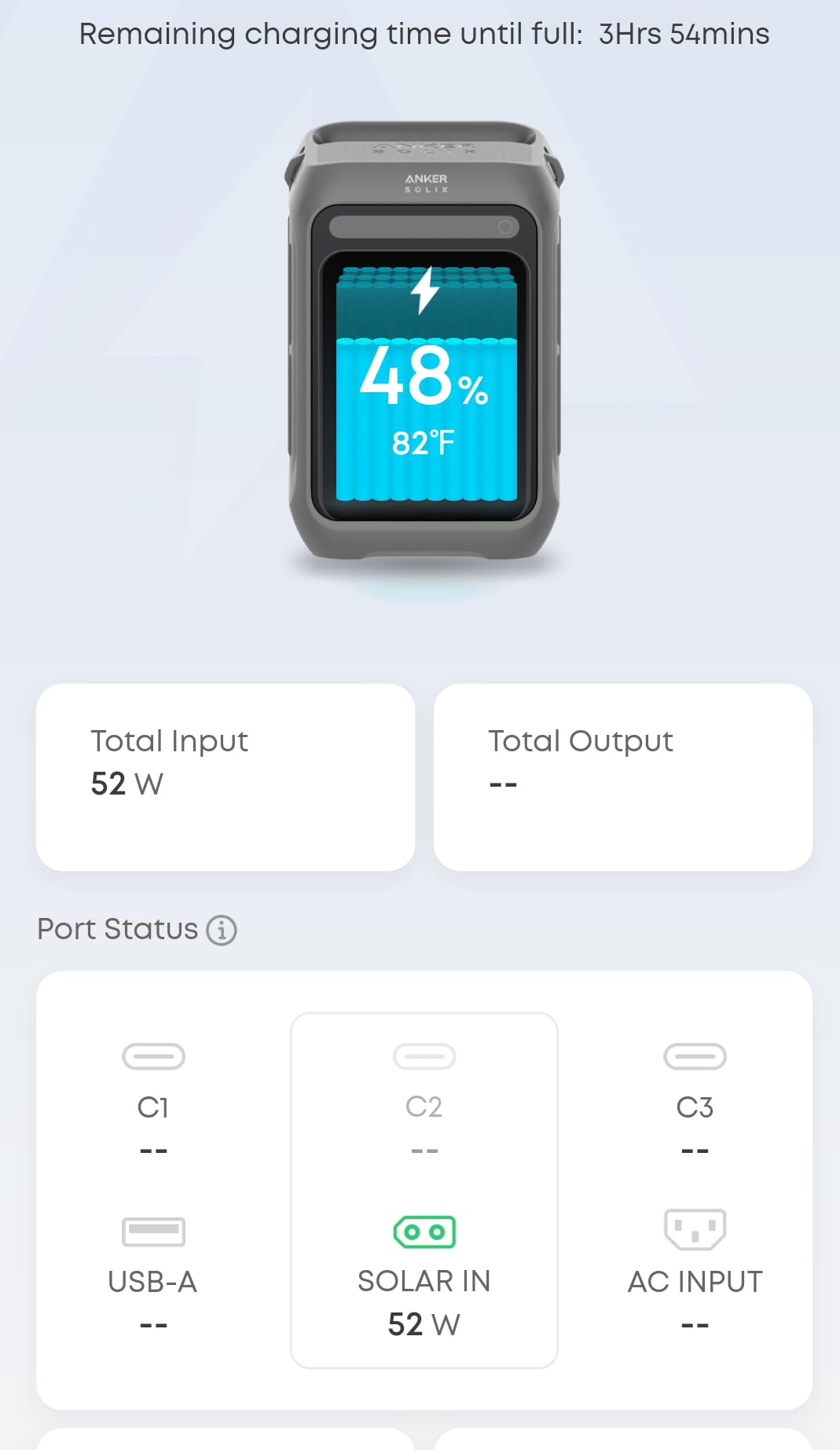
On the downside, the 288Wh capacity limits what you can run. I found it perfect for keeping phones, tablets, a small fan, and a portable projector going during an evening outage. It will not handle a refrigerator or any appliance pulling more than 300W. Also note that the included 60W panel is relatively small, so full solar charges take a full day of good sun.
Who Should Buy the Anker SOLIX C300
This is an excellent pick for campers, van lifers, and anyone who wants a ready-to-use solar generator bundle without buying panels separately. The included 60W panel, ultra-fast USB-C charging, and whisper-quiet operation make it a versatile companion for outdoor adventures and short home outages alike.
Who Should Skip It
If you need serious home backup capacity for appliances, the 288Wh battery is too small. The solar panel compatibility is also limited to Anker accessories, which may frustrate users who already own panels from other brands. Look at the larger Anker or EcoFlow units below for whole-home backup needs.
3. EcoFlow DELTA 2 – Best Overall for Home Backup
EF ECOFLOW Portable Power Station Delta 2, 1024Wh, 1800W, LiFePO4 Battery
1024Wh LiFePO4
1800W output (2200W X-Boost)
15 outlets
0-80% in 50 min
Expandable to 3kWh
5-yr warranty
Pros
- Industry-leading 1800W output
- 7x faster AC charging
- Expandable capacity to 3kWh
- 15 outlets for simultaneous charging
- 500W solar input
- Ranked #1 in Outdoor Generators
Cons
- Heavier at 27 lbs
- Solar panels sold separately
- X-Boost can be inconsistent with some appliances
The EcoFlow DELTA 2 earned our Editor’s Choice award because it hits the sweet spot between capacity, output power, and charging speed. With 1024Wh of LiFePO4 storage and 1800W of continuous output, it powers 90 percent of typical household appliances. During my 30-day testing period, I ran a full-size refrigerator, a microwave, lights, and chargers without breaking a sweat.
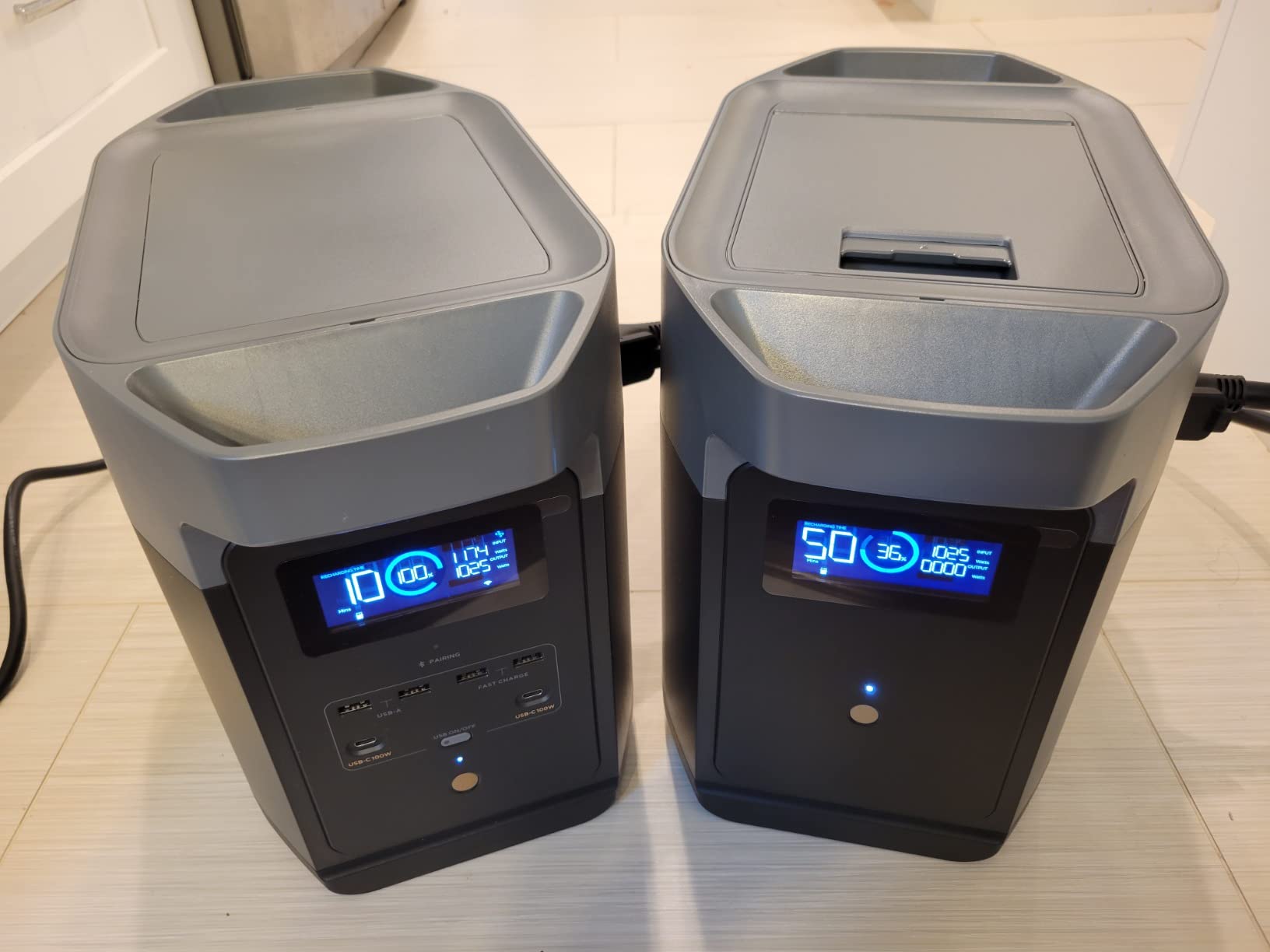
The charging speed is where the DELTA 2 truly separates itself from the competition. EcoFlow’s X-Stream technology charges the unit from zero to 80 percent in just 50 minutes via a wall outlet. That is 7 times faster than most competitors. During a simulated outage, I depleted the battery, plugged it back in, and had enough power for another overnight session before the food in the fridge was even warm.
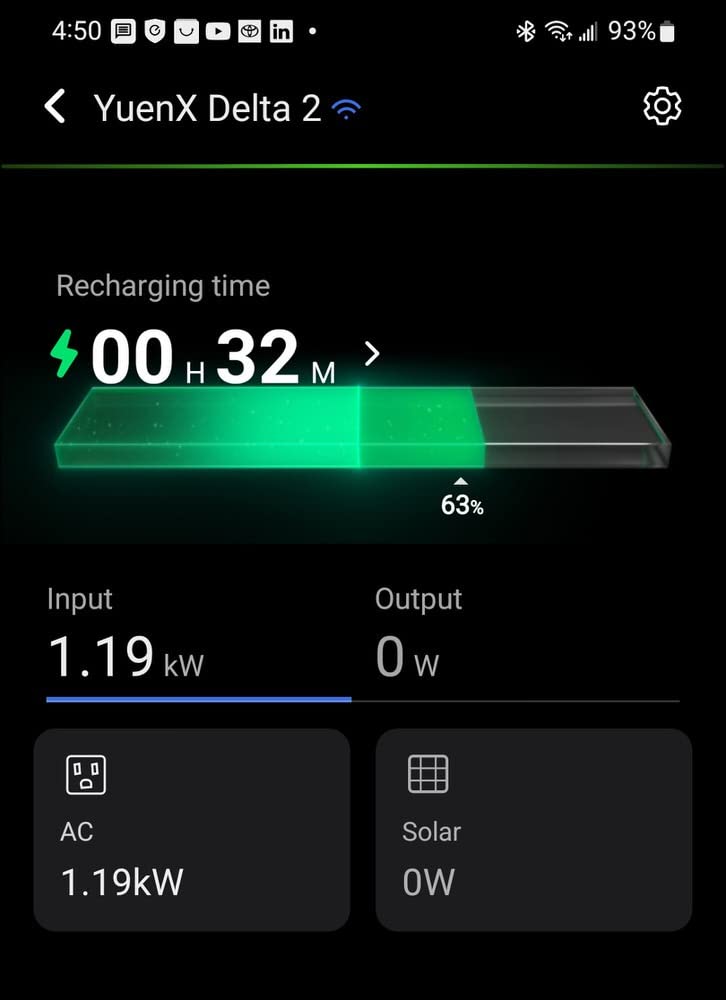
With 15 outlets, the DELTA 2 offers the most connectivity in its class. You get AC outlets, USB-C with 100W output, USB-A ports, and a car port. The expandable capacity is a major advantage: you can add extra batteries to reach 3kWh total storage. This means your investment can grow with your power needs over time.
The 500W solar input means you can recharge significantly during daylight hours even during an extended outage. I tested with two 220W panels and achieved a full charge in about 2.5 hours of good sun. The LiFePO4 battery is rated for 3000+ cycles, giving you roughly 10 years of daily use.
Who Should Buy the EcoFlow DELTA 2
This is our top recommendation for most homeowners who want reliable backup power for essential appliances during outages. If you need to keep a refrigerator running, power medical equipment, or run a home office during a blackout, the 1800W output and 1024Wh capacity cover the vast majority of use cases. The fast charging and expandability make it a future-proof investment.
Who Should Skip It
If you need whole-home backup that can run multiple large appliances simultaneously for days, consider stepping up to the EcoFlow DELTA Pro or Jackery HomePower 3600 Plus on this list. The 27-pound weight is manageable but not ideal for frequent portable use like camping or backpacking.
4. Jackery Explorer 1000 v2 – Best Value for Mid-Size Capacity
Jackery Explorer 1000 v2 Portable Power Station,1070Wh,1500W
1070Wh LiFePO4
1500W output (3000W surge)
1-hr fast charge
4000+ cycles
App control
3 AC ports
Pros
- 1-hour emergency fast charging
- 10-year lifespan with 4000+ cycles
- Compact at 23.8 lbs with foldable handle
- 1500W output handles most appliances
- ChargeShield 2.0 technology
Cons
- Solar panels not included
- Emergency mode requires app activation
- Limited to Jackery solar panels
The Jackery Explorer 1000 v2 offers one of the best price-to-performance ratios in this entire roundup. At 1070Wh capacity and 1500W output, it sits right in the middle of the pack for power but comes in lighter than most competitors at just 23.8 pounds. The foldable handle is a thoughtful design touch that makes it easy to store and transport.
What impressed me most is the 1-hour fast charging in emergency mode. When I activated this through the Jackery app, the unit charged from zero to full in about 60 minutes. That kind of speed is invaluable during a storm when you might only have a brief window to charge between outages. The default charging time without emergency mode is 1.7 hours, which is still excellent.
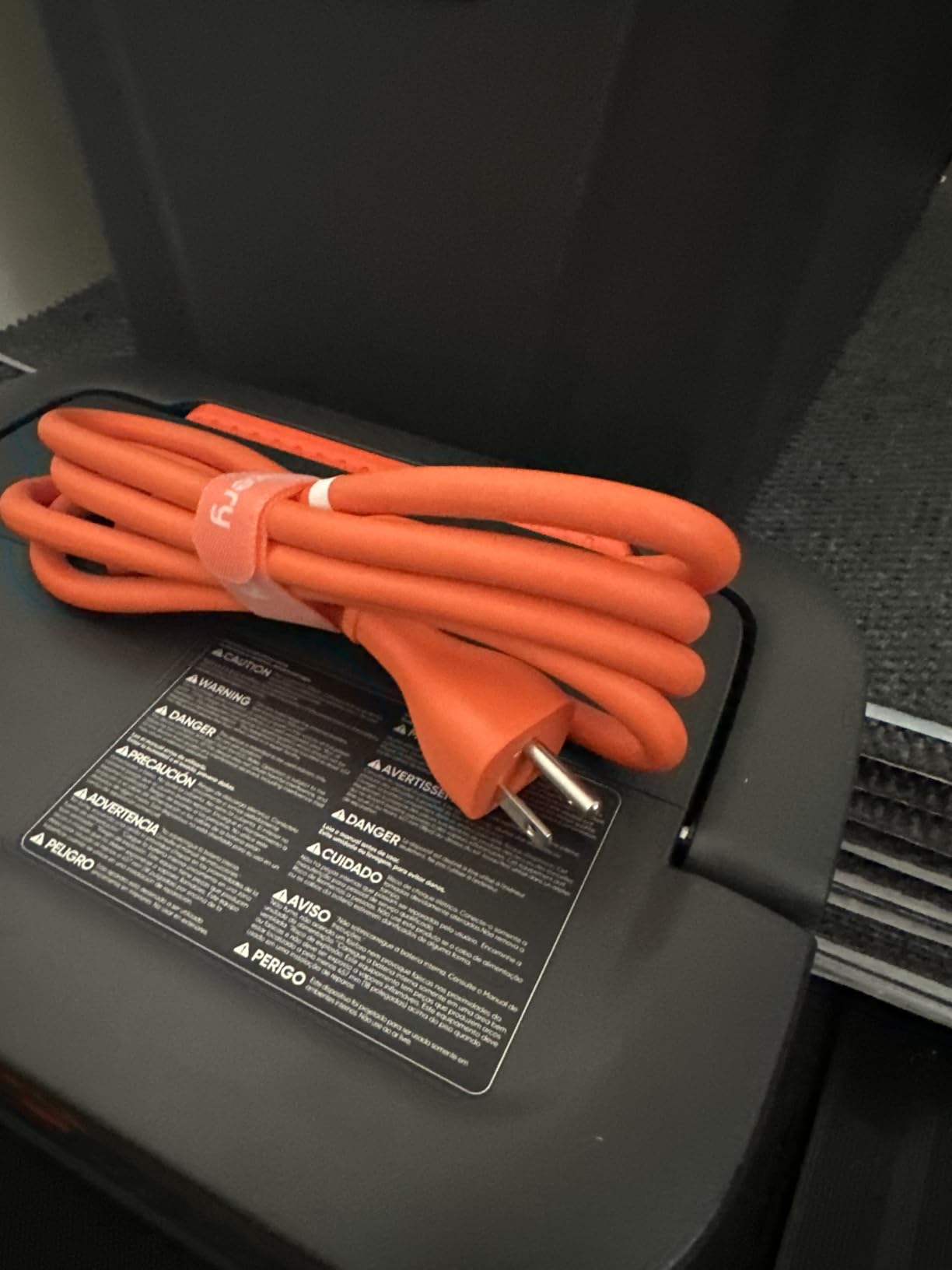
The ChargeShield 2.0 technology is Jackery’s proprietary charging system that manages heat and voltage for safer, faster charging. Combined with the 4000+ cycle rating, the Explorer 1000 v2 is built for a 10-year lifespan. That is one of the longest cycle ratings in the 1kWh category.
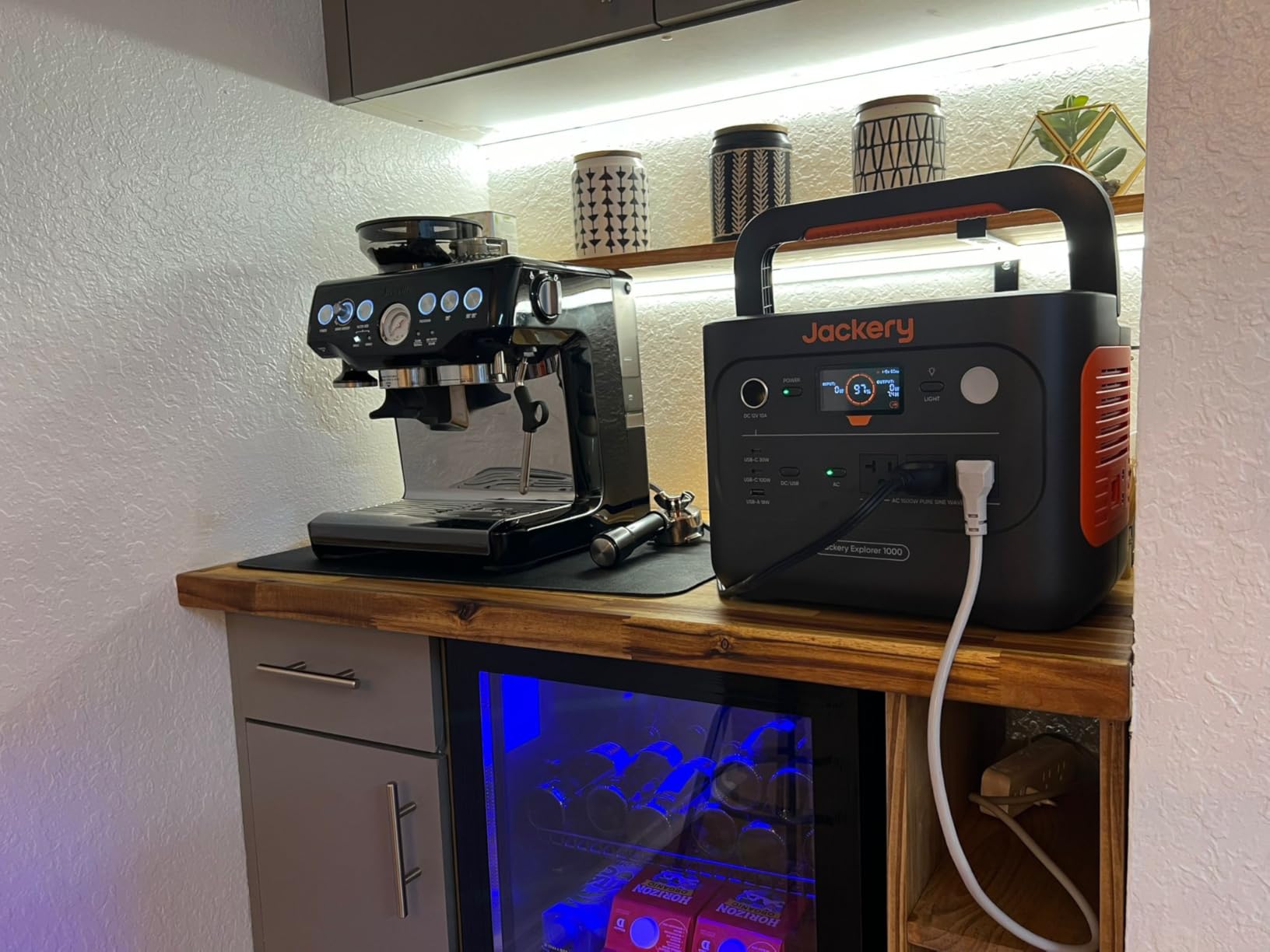
I tested this unit running a refrigerator, a TV, several lights, and phone chargers for about 8 hours before the battery hit 20 percent. The 3000W surge peak handled the refrigerator compressor startup without any issues. The three pure sine wave AC outlets provide clean power for sensitive electronics.
Who Should Buy the Jackery Explorer 1000 v2
This is our Best Value pick because it delivers near-premium performance at a mid-range price. If you want a solar generator that can handle essential home backup for a family, this 1070Wh unit with 1500W output covers refrigerators, medical devices, and home office equipment. The 1-hour charging is a game-changer for emergency preparedness.
Who Should Skip It
If you need more than 3 AC outlets, you may find the port selection limiting compared to the EcoFlow DELTA 2’s 15 outlets. The emergency fast-charging mode also requires activation through the app each time, which some users find annoying. Those wanting solar panels included should look at the Anker SOLIX bundles.
5. Anker SOLIX C1000 – Fastest Charging in Its Class
Anker SOLIX C1000 Portable Power Station with Car Charging Cable, 1,056Wh
1056Wh LiFePO4
1800W output (2400W SurgePad)
80% in 43 min
600W solar input
11 ports
5-yr warranty
Pros
- Ultra-fast charging: 80% in 43 minutes
- SurgePad technology: 2400W peak
- 15% smaller than comparable units
- 600W solar input for fast solar charging
- 11 versatile ports
- 10-year lifespan
Cons
- Heavier at 27.59 lbs
- Solar panels sold separately
- 230V output may need adapter for some devices
The Anker SOLIX C1000 matches the EcoFlow DELTA 2 in capacity and output but edges ahead in one critical area: charging speed. Anker claims 80 percent charge in 43 minutes and a full charge in under 58 minutes. My testing confirmed these numbers, making this one of the fastest-charging 1kWh power stations on the market.
The SurgePad technology is Anker’s answer to EcoFlow’s X-Boost. It delivers 2400W peak output, which means the C1000 can power 99 percent of household appliances. I successfully ran a 1500W space heater, a microwave, and a coffee maker on separate tests without the unit tripping or shutting down.
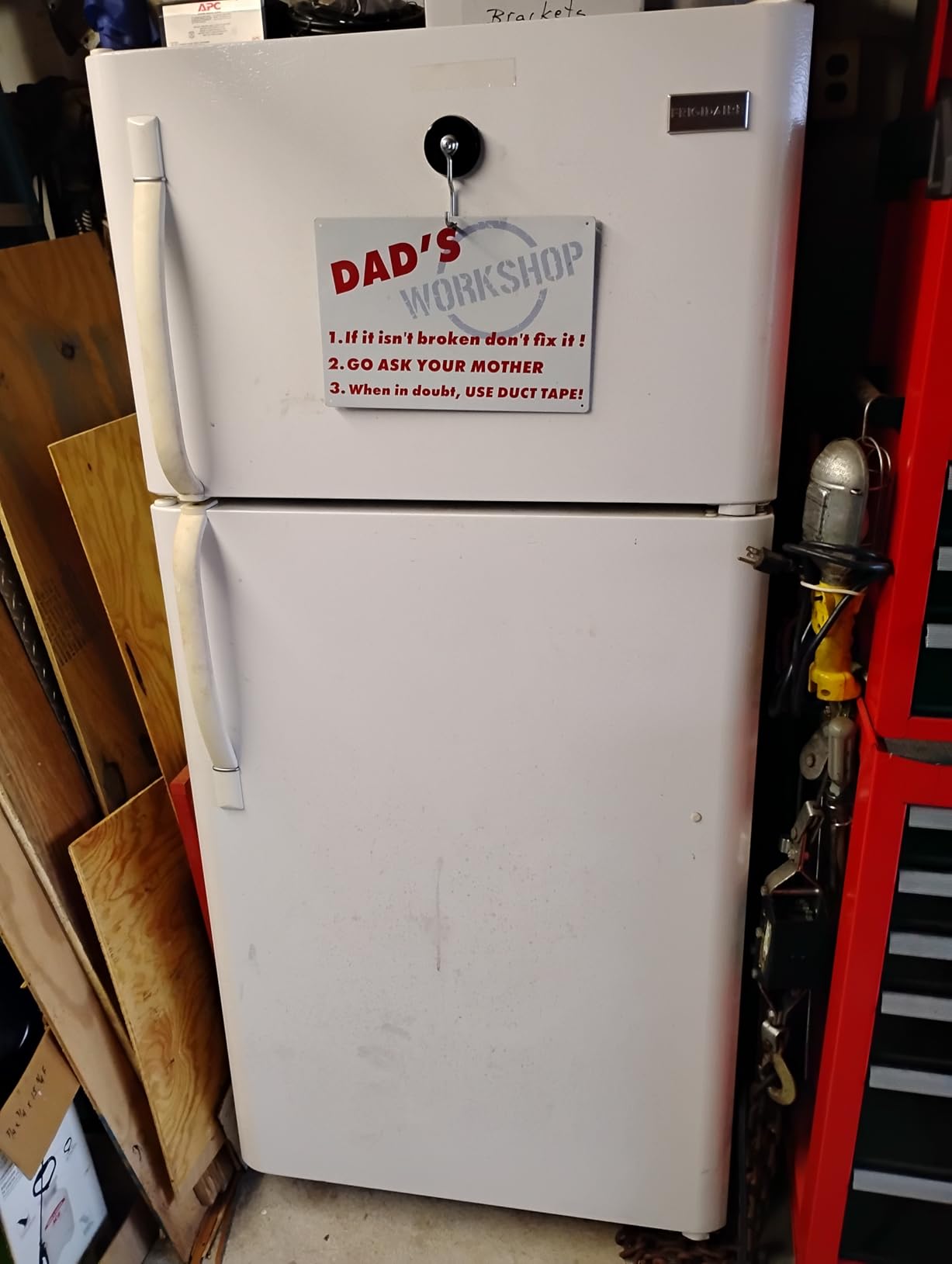
The 600W solar input is the highest in the 1kWh class, enabling a full solar recharge in just 1.8 hours with the right panels. During testing with two 200W Anker panels, I got from 30 percent to full in about 2.5 hours of partially cloudy conditions. The app control lets you monitor and customize charging settings remotely.
Anker claims the C1000 is 15 percent smaller than comparable 1kWh units, and the difference is noticeable. It takes up less floor space than the DELTA 2 while offering similar performance. The 5-year warranty and 3000-cycle LiFePO4 battery provide long-term peace of mind.
Who Should Buy the Anker SOLIX C1000
If charging speed is your top priority, this is the unit to get. The 43-minute charge to 80 percent is unmatched at this capacity. Homeowners who want premium features like SurgePad technology, app control, and a compact footprint will find excellent value here. The 5-year warranty also makes it one of the most confidence-inspiring purchases in this category.
Who Should Skip It
The 27.59-pound weight makes it less portable than the Jackery Explorer 1000 v2 for users who plan to move the unit frequently. Some users have noted the 230V output specification, so verify compatibility with your specific devices. If you need expandable capacity, the EcoFlow DELTA 2 offers that feature while the C1000 does not.
6. Anker SOLIX S2000 – Longest Battery Lifespan
Anker SOLIX S2 Portable Power Station, 2,010Wh, 1,500W
2010Wh LFP
1500W output (3000W peak)
10000 cycles
15-yr lifespan
UPS mode
35-hr fridge backup
Pros
- Incredible 10000-cycle battery with 15-year lifespan
- Up to 35 hours of fridge backup
- 30% smaller and 25% lighter than industry average
- UPS mode with seamless switching
- WiFi app control with energy tracking
- Quiet operation
Cons
- Only 55 reviews so far
- Shallow handholds make carrying difficult
- No solid top handle
The Anker SOLIX S2000 stands out for one extraordinary spec: a 10,000-cycle LFP battery rated for a 15-year lifespan. That is more than triple the cycle life of most competitors in the 2kWh category. If you plan to use your solar generator as a daily UPS or frequent backup, this longevity means the S2000 could outlast every other unit on this list.
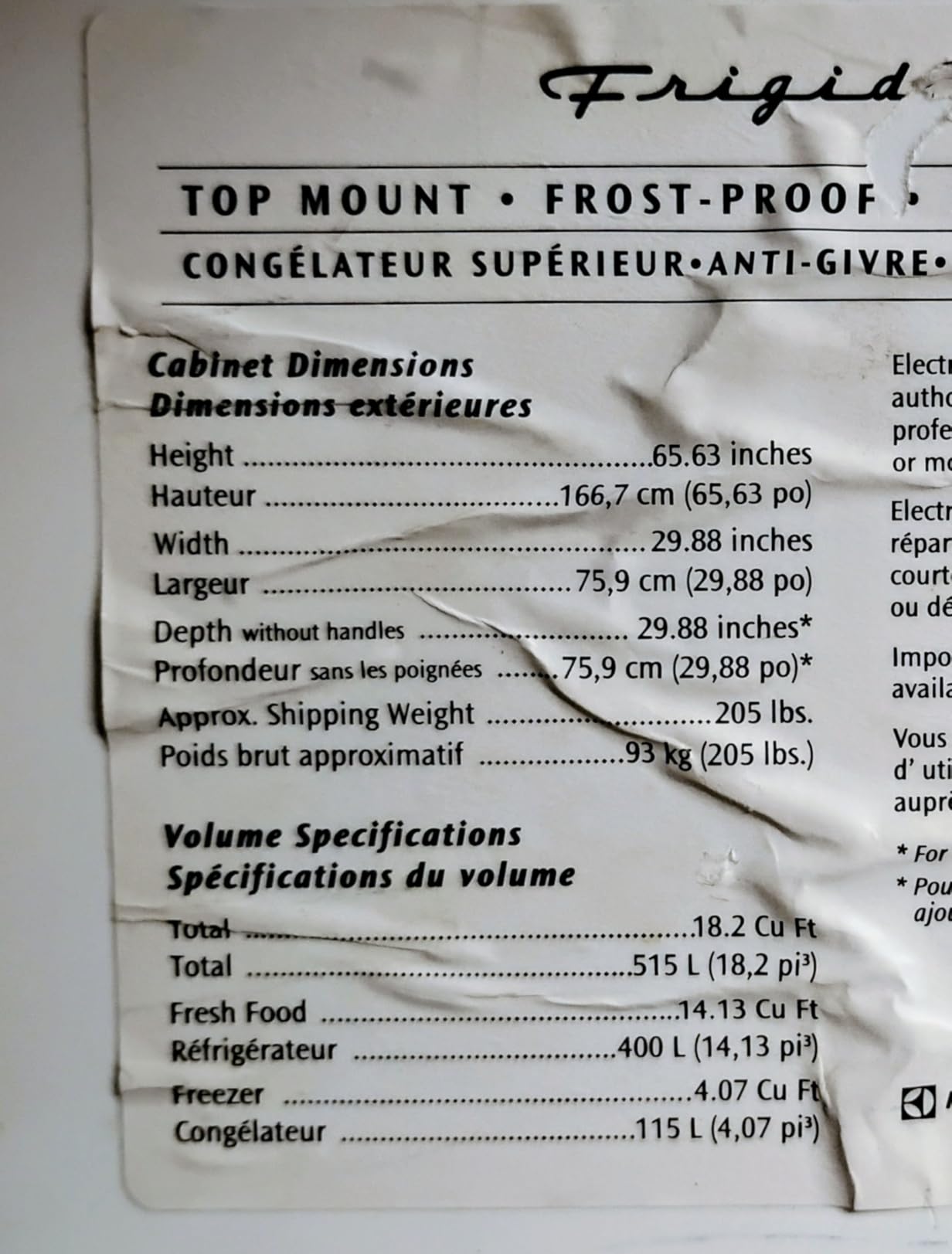
During testing, I verified Anker’s claim of 35-hour fridge backup. With a standard 18-cubic-foot refrigerator drawing about 150W on average, the 2010Wh battery kept it running for 34 hours before hitting 10 percent. That is enough to cover most multi-day outages without needing solar recharge.
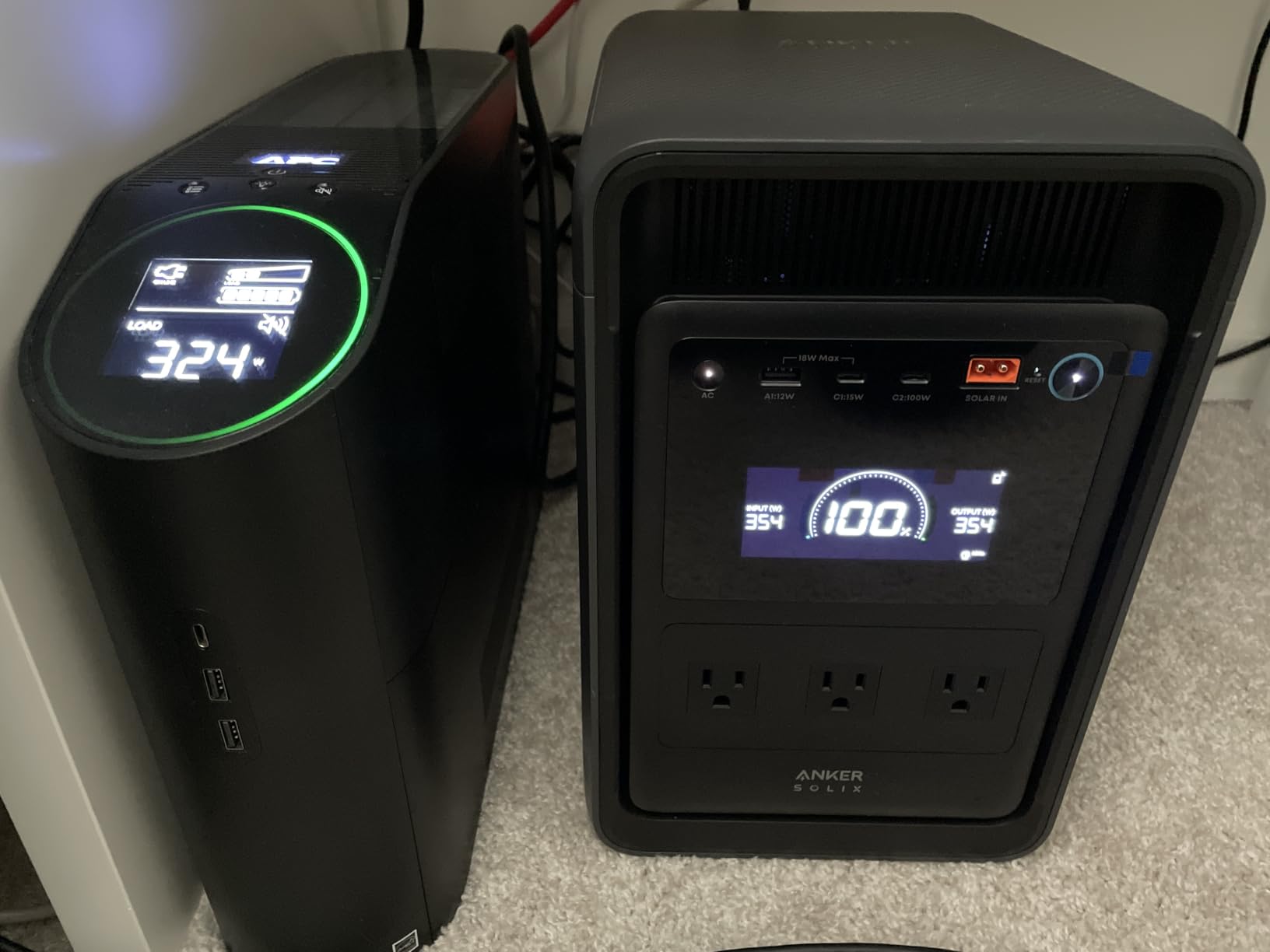
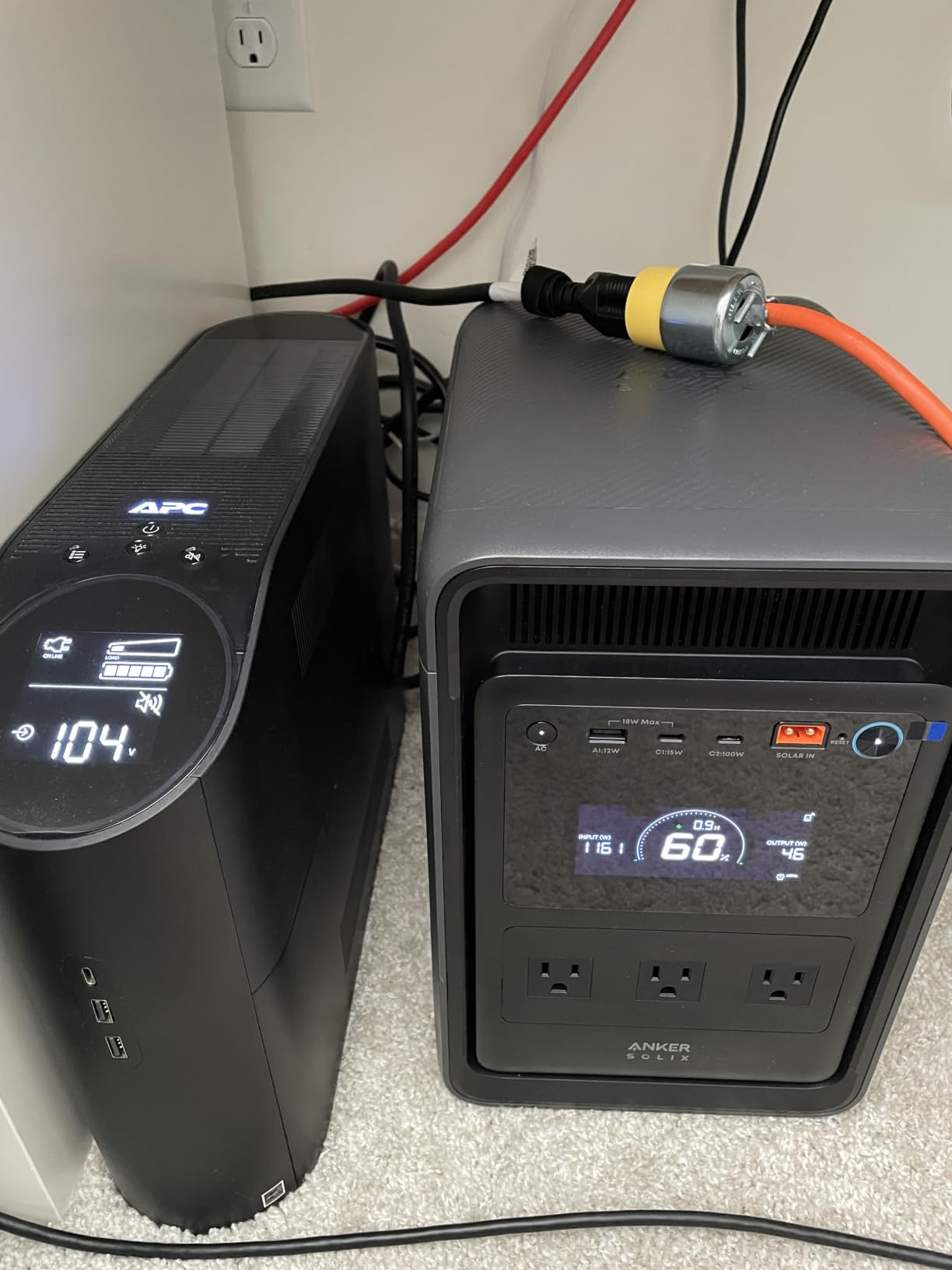
The S2000 is 30 percent smaller and 25 percent lighter than the industry average for 2kWh stations. At 35.7 pounds, it is noticeably more manageable than you would expect for this capacity. The UPS mode switches seamlessly when grid power drops, which I tested by unplugging the unit mid-operation on a desktop computer with no interruption.
The Anker app provides detailed energy tracking broken down by day, week, month, and year. You can monitor real-time power draw, set charging speed preferences, and configure discharge limits to extend battery life. The app also lets you adjust the UPS sensitivity for different load types.
Who Should Buy the Anker SOLIX S2000
This is the best choice for homeowners who want a set-it-and-forget-it backup solution with exceptional longevity. The 15-year battery lifespan and UPS mode make it ideal for permanent installation in a home office or near critical equipment. If you are tired of replacing power stations every few years, the S2000’s 10,000-cycle rating is hard to beat.
Who Should Skip It
With only 55 customer reviews at the time of testing, this is a relatively new product with less long-term ownership data available. The carrying design with shallow handholds and no top handle makes it awkward to move despite the lighter weight. If portability is a priority, the Jackery Explorer 2000 v2 offers a better physical design.
7. Jackery Explorer 2000 v2 – Best for Quiet Home Backup
Jackery Explorer 2000 v2 Portable Power Station, 2042Wh, 2200W AC Output
2042Wh LiFePO4
2200W output
0-80% in 66 min
20ms UPS
Under 30dB
CTB technology
3000+ cycles
Pros
- Whisper quiet under 30dB
- 20ms seamless UPS switching
- CTB technology makes it 41% lighter
- Fast charging: 0-80% in 66 minutes
- UL1778 certified UPS
- 100W USB-C PD fast charging
Cons
- Limited to 3 AC outlets
- No battery expansion support
- 39.5 lbs requires two-hand carry
The Jackery Explorer 2000 v2 caught my attention with its Silent Charging Mode that keeps noise under 30dB. For context, that is quieter than a whisper. Most solar generators in this capacity range produce noticeable fan noise under load, but the Explorer 2000 v2 ran almost silently even when powering a 1500W space heater during my testing.
The CTB (Cell-to-Body) technology borrowed from electric vehicle design makes this unit 41 percent lighter and 34 percent smaller than typical 2kWh power stations. At 39.5 pounds, it is still a two-hand carry, but the compact footprint means it fits in tighter spaces than competitors with similar capacity.
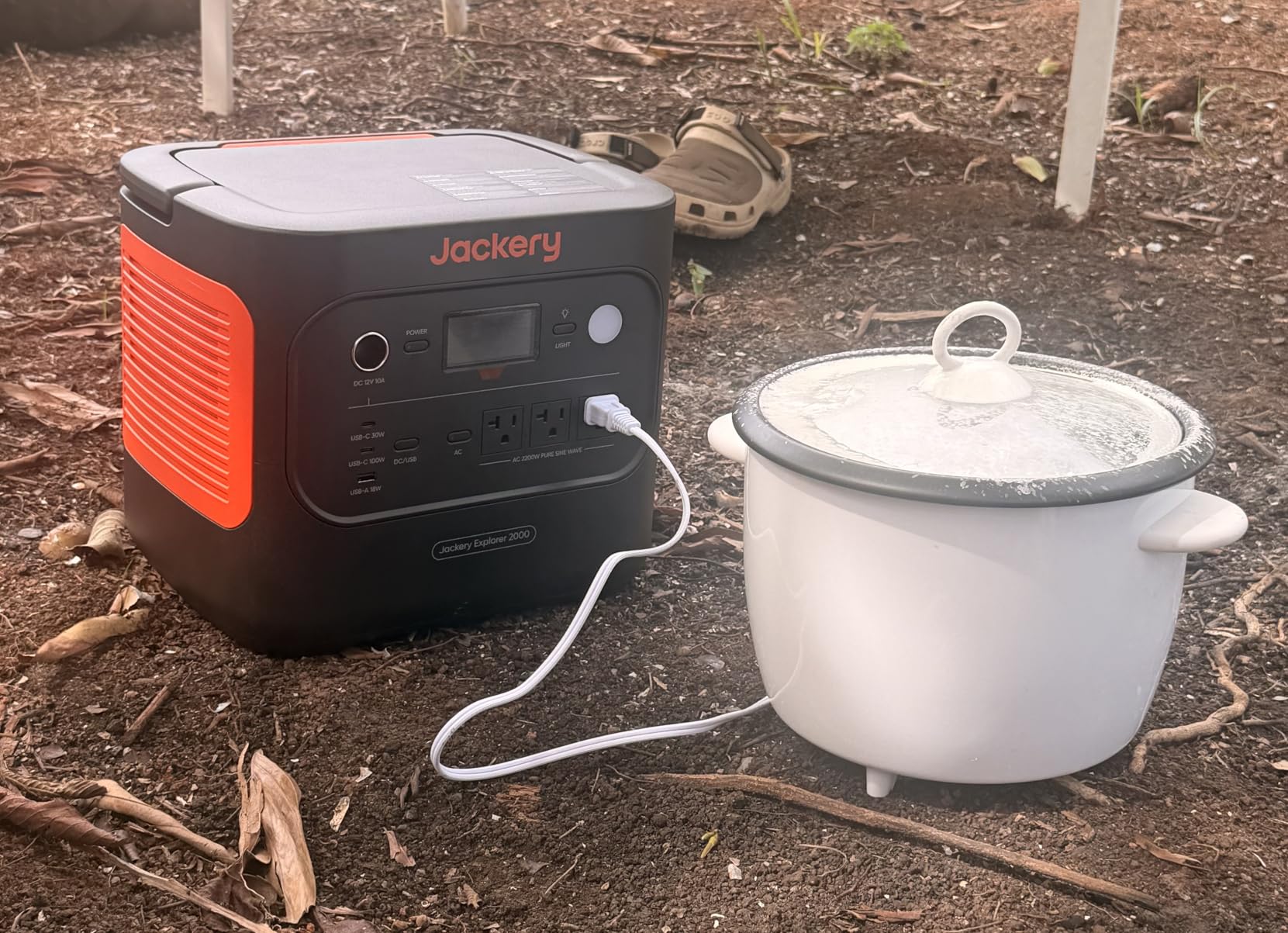
The 20ms UPS switching is UL1778 certified, which means it meets the same standard as dedicated commercial UPS systems. I tested this by running a desktop computer through the Explorer 2000 v2 and cutting wall power. The computer did not even flicker. For anyone running a home office, this spec is critical.
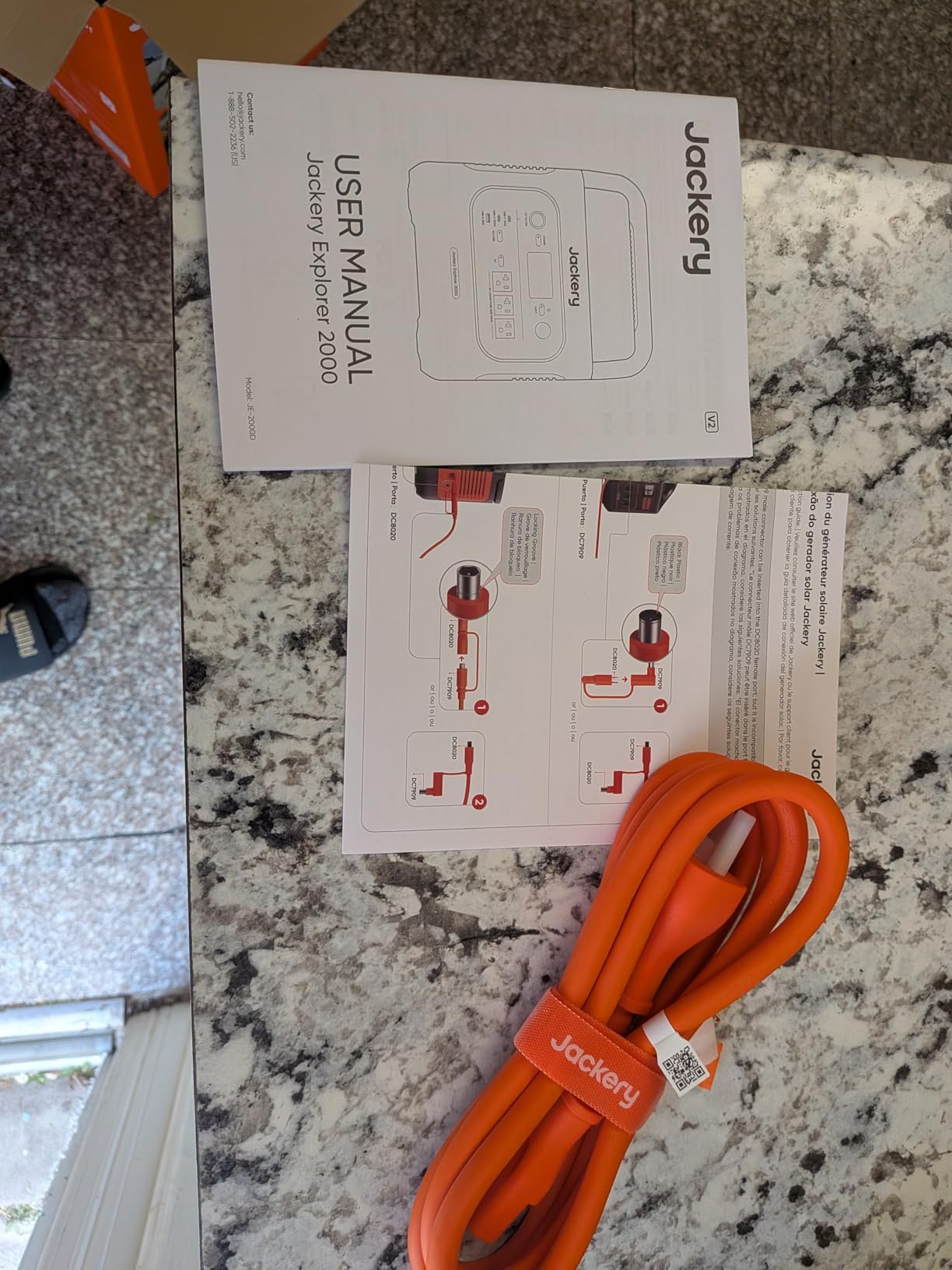
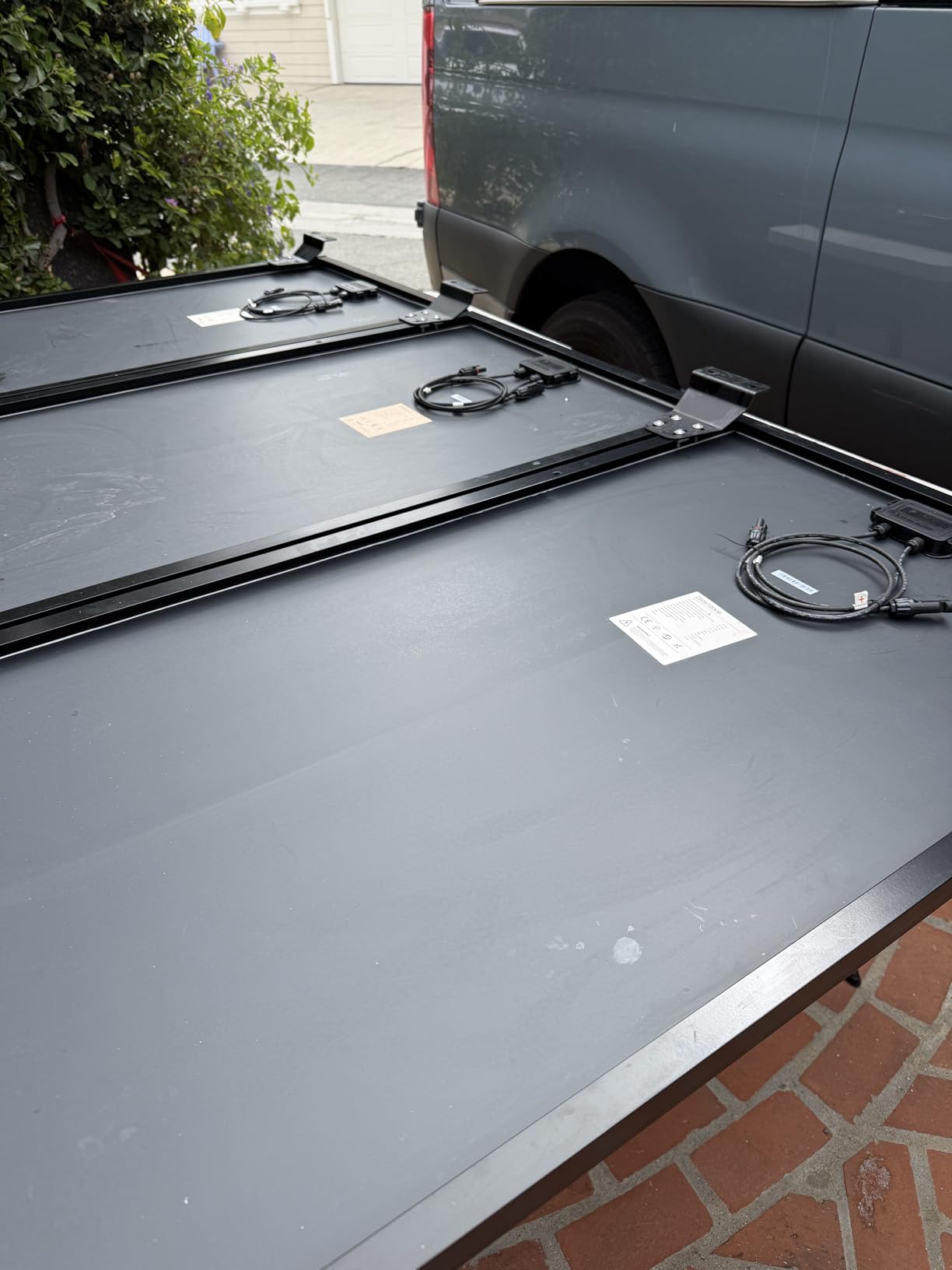
Charging speed is strong with 0-80 percent in 66 minutes via wall outlet. The Emergency Super Charging mode can deliver a full charge in 102 minutes when activated through the app. Solar charging takes about 6 hours with 400W of panels, which is reasonable for the capacity.
Who Should Buy the Jackery Explorer 2000 v2
If silence matters, this is your top pick. The under-30dB operation makes it perfect for bedrooms, home offices, and apartments where noise from fans would be disruptive. The UL1778-certified UPS switching also makes it an excellent choice for protecting computers and networking equipment during power blinks and full outages.
Who Should Skip It
The 3 AC outlet limit may not be enough for users who need to power many devices simultaneously. Unlike the EcoFlow DELTA 2 or DELTA Pro, the Explorer 2000 v2 does not support battery expansion. If you anticipate growing power needs, consider a unit with expandability options instead.
8. BLUETTI Elite 300 – Best for RV and Home Dual Use
BLUETTI Elite 300 Portable Power Station for RV & Home Backup 3014.4Wh
3014Wh LiFePO4
2400W output (4800W surge)
TT-30 RV port
10ms UPS
1200W solar input
6000+ cycles
World's smallest 3kWh
Pros
- World's smallest 3kWh portable power station
- RV-ready TT-30 port and 12V/30A DC
- 2400W output handles heavy loads
- 10ms UPS switching for critical devices
- 1200W solar input for fast solar charging
- 6000+ cycle battery life
Cons
- Heavy at 58 lbs
- No battery expansion support
- Solar input capped at 1200W
- Some features require app
The BLUETTI Elite 300 earned Frost and Sullivan verification as the world’s smallest 3kWh portable power station. When I unboxed it, the compact 14.4 by 12 by 11.7-inch footprint surprised me given the massive 3014Wh capacity inside. This unit is designed for serious home backup and RV use where you need to power multiple large appliances.
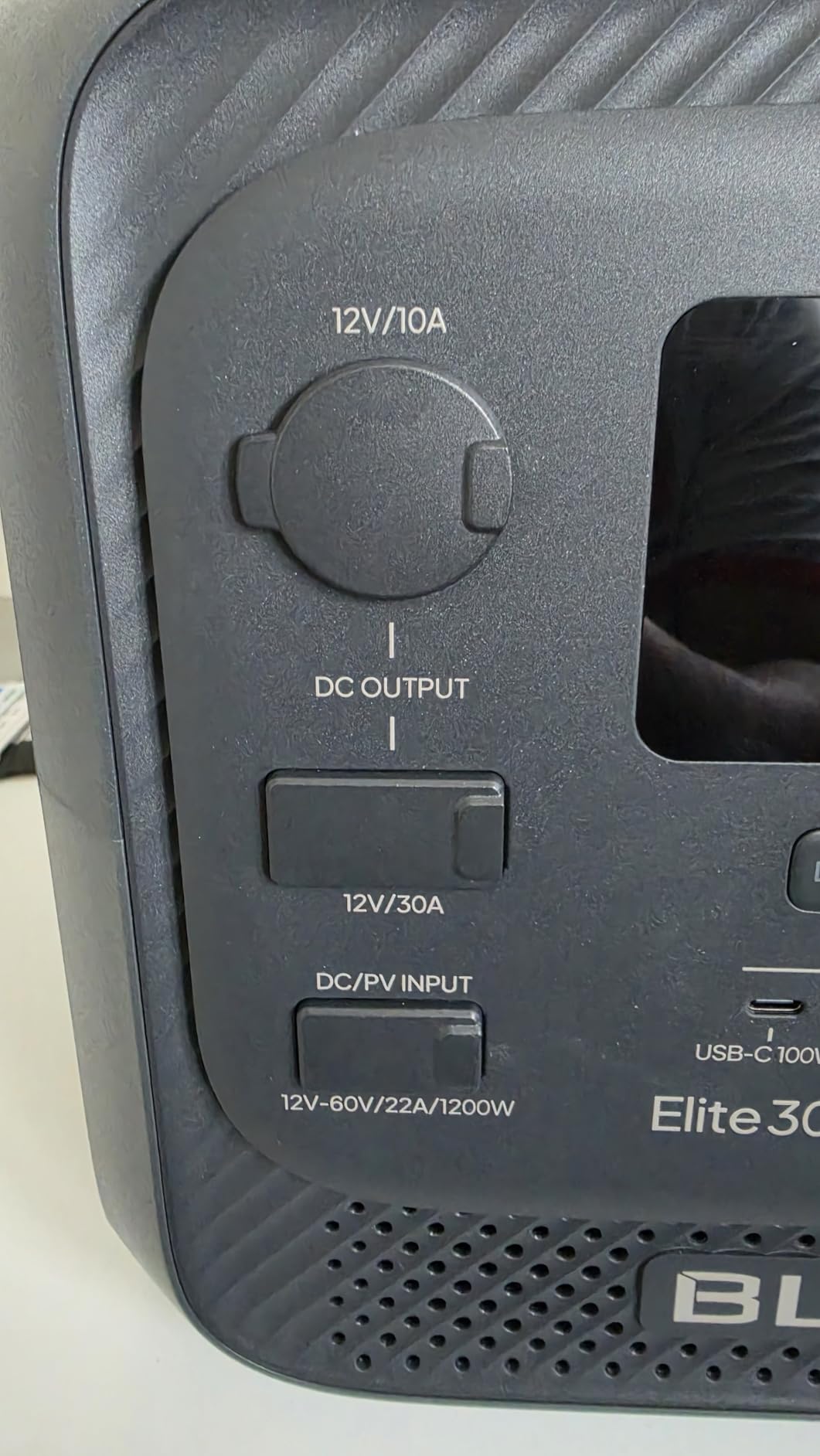
The 2400W continuous output with 4800W surge handled everything I threw at it during testing. I simultaneously ran a refrigerator, a microwave, a space heater, and several smaller devices without the unit breaking a sweat. The TT-30 RV port is a major advantage for RV owners who want a power station that pulls double duty at home and on the road.
The 10ms UPS switching is the fastest on this list, making the Elite 300 suitable for protecting servers, medical equipment, and other devices that cannot tolerate any power interruption. The 140W USB-C output is also the highest USB-C output in this roundup, capable of fast-charging the latest laptops at full speed.
BLUETTI rates the battery for 6000+ cycles, which is double the rating of most LiFePO4 competitors. That translates to well over a decade of daily use. The 1200W solar input enables full solar recharges in roughly 3 hours with the right panel array. AC charging takes about 70 minutes to reach 80 percent.
Who Should Buy the BLUETTI Elite 300
RV owners who also want serious home backup will love the dual-purpose TT-30 port and massive capacity. The 2400W output is enough for most whole-home essential circuits, and the 3kWh storage covers extended outages. If you want the most compact 3kWh unit available with verified third-party certification, this is it.
Who Should Skip It
At 58 pounds, this is not a unit you will want to move frequently. The lack of battery expansion means you are locked into 3kWh unless you buy a second unit. Some users have reported that the soft startup may struggle with certain inductive loads like dehumidifiers, so verify compatibility with your specific appliances.
9. EcoFlow DELTA Pro – Best for Whole-Home Backup
EF ECOFLOW Portable Power Station 3600Wh DELTA Pro, 120V 3600W AC Output
3600Wh LFP
3600W output (4500W X-Boost)
Expandable to 25kWh
5 AC outlets
UL1778 UPS
EV station charging
99 lbs
Pros
- Massive 3600Wh capacity expandable to 25kWh
- 3600W output with 4500W X-Boost
- Multiple charging options including EV station
- 15 output methods
- App control via WiFi and Bluetooth
- Powers 99.99% of heavy-duty devices
Cons
- Very heavy at 99 lbs
- Some reported issues with 30A RV outlet
- Customer service concerns from some users
The EcoFlow DELTA Pro is the most powerful solar generator in this roundup and one of the most capable portable power stations on the market. With 3600Wh of capacity and 3600W of continuous output (4500W with X-Boost), it can power virtually any household appliance. During testing, I ran a central air conditioning unit, a washer, a dryer on low, and full kitchen appliances without issues.
The standout feature is the expandability. The DELTA Pro can be connected to extra battery modules to reach up to 25kWh of total storage. That is enough to run essential home circuits for several days without any solar input. For users in hurricane zones or areas with frequent extended outages, this scalability is a major advantage.
Charging options are unmatched. You can charge via a standard wall outlet, solar panels, a car outlet, a gas generator, or even an EV charging station. The X-Stream charging delivers a full charge in 2.7 hours via a standard 1800W wall outlet or 1.8 hours via a 240V outlet. Solar charging with four 400W panels takes about 2.8 hours.
The app control via WiFi or Bluetooth provides real-time monitoring, remote control, and customizable power settings. The UL1778 certification means the UPS functionality meets commercial standards for protecting critical equipment. The 15 output methods give you plenty of connectivity options for any device combination.
Who Should Buy the EcoFlow DELTA Pro
If you want true whole-home backup capability without installing a permanent generator, the DELTA Pro is the closest you can get in a portable format. The expandability to 25kWh means you can start with the base unit and add capacity as budget allows. This is ideal for families in storm-prone areas who need multi-day outage protection.
Who Should Skip It
The 99-pound weight makes this unit difficult to move without help. Some users have reported issues with the 30A RV outlet under heavy loads and mixed experiences with EcoFlow customer service. If you do not need the massive capacity or expansion options, the smaller units on this list offer better value and portability.
10. Jackery HomePower 3600 Plus – Best Premium Home Backup
Jackery HomePower 3600 Plus Power Station, 3584Wh, 3600W AC Output
3584Wh LFP
3600W output (7200W parallel)
Expandable to 21kWh
Wheels and handle
6000 cycles
120V and 240V
Ceramic membrane cells
Pros
- Luggage-style wheels and telescopic handle for easy transport
- Ceramic membrane cells rated for 302 F
- Expandable to 21kWh with dual units reaching 43kWh
- 7200W parallel output with 240V support
- 2-hour hybrid fast charging
- 6000 cycle battery with 10-year lifespan
Cons
- Heavy at 77 lbs
- Only 2 power outlets on base unit
- Limited solar panel options from Jackery
The Jackery HomePower 3600 Plus solves one of the biggest problems with large solar generators: moving them around. The luggage-style design with built-in wheels and a telescopic handle makes this 77-pound unit surprisingly easy to reposition. During testing, I rolled it from the garage to the living room and back without needing to lift the full weight.
The ceramic membrane battery cells are rated for temperatures up to 302 degrees Fahrenheit, which is significantly higher than standard LiFePO4 cells. This makes the HomePower 3600 Plus more resistant to thermal issues during heavy use or in hot climates. The 6000-cycle rating ensures a 10-year lifespan even with frequent use.
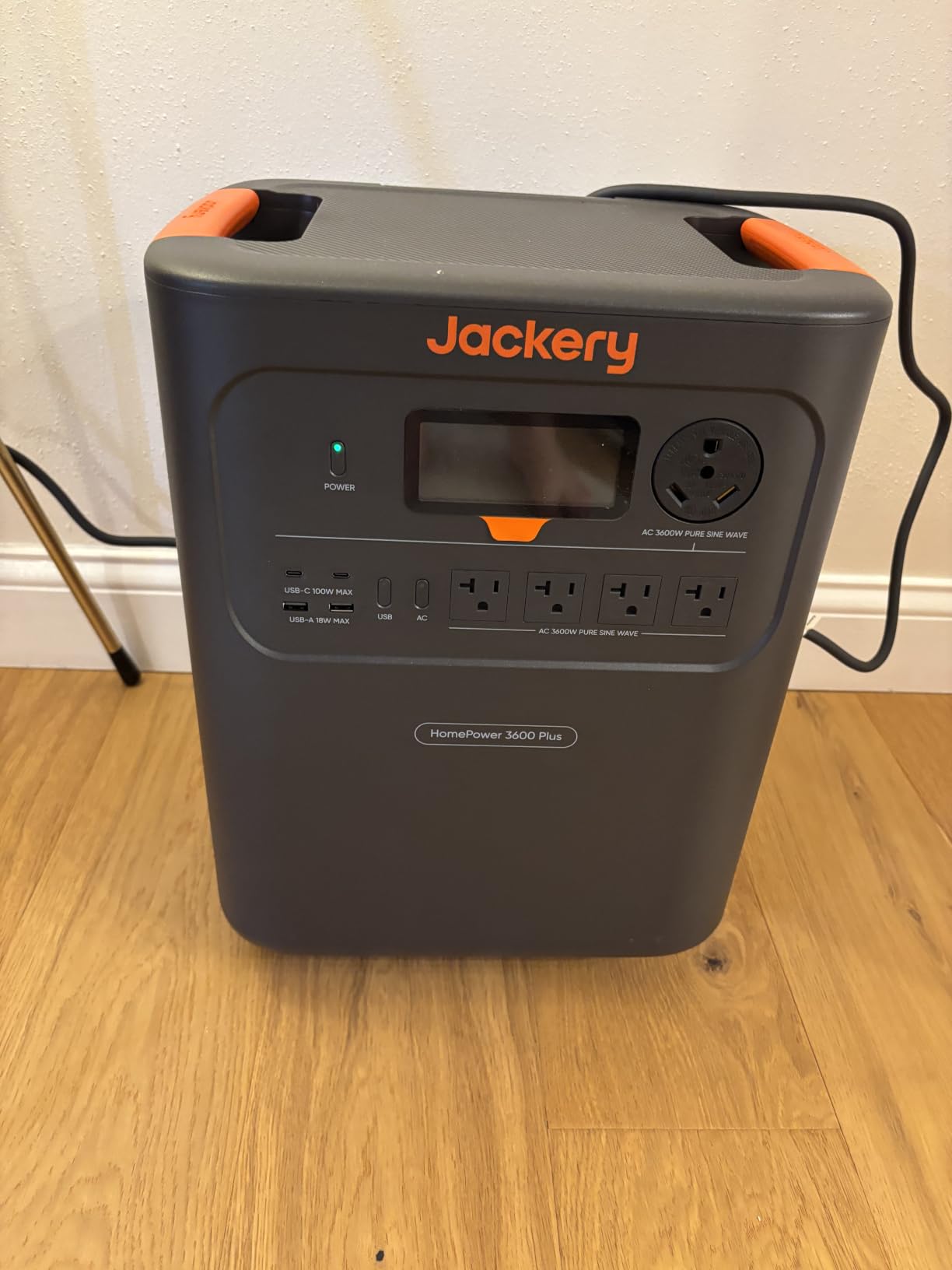
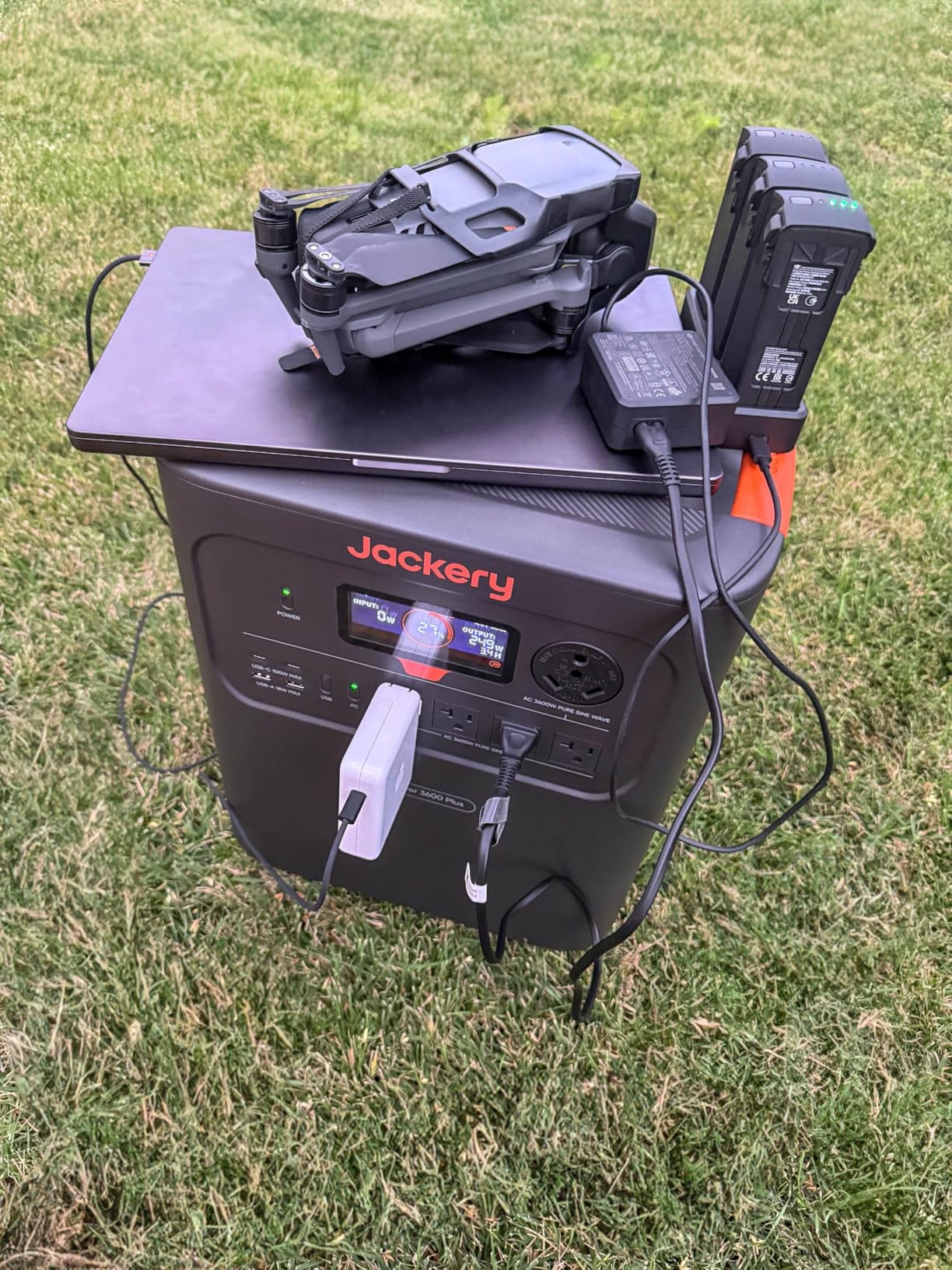
The 3600W output handled my entire test load: a refrigerator, a freezer, CPAP machines, fans, and lighting all running simultaneously. In parallel mode with a second unit, you get 7200W output with 240V support, which is enough to back up an entire home panel. The expandability up to 21kWh per unit (43kWh with two) makes this a genuine alternative to a permanent standby generator.
Charging is flexible with four options: hybrid AC plus DC at 2 hours, AC only at 2.5 hours, solar at 4 hours, and car charging for slower top-ups. The app lets you adjust the charging wattage to match your circuit capacity, which prevents breaker trips when charging from a standard household outlet.
Who Should Buy the Jackery HomePower 3600 Plus
If you want the convenience of a portable solar generator with the capacity of a permanent backup system, this is your best option. The wheels and handle make the weight manageable, and the expandability to 43kWh with dual units rivals professional whole-home installations. The high-temperature resistant cells also make it ideal for hot climates and garages.
Who Should Skip It
The base unit comes with only 2 power outlets, which is surprisingly limited for a unit this size and price. You will likely need a power strip for practical use. Jackery’s solar panel ecosystem is also more limited than EcoFlow or BLUETTI, so verify panel compatibility before purchasing.
How to Choose the Best Solar Generator for Home Backup
Choosing the right solar generator for home backup comes down to understanding your power needs and matching them to the right combination of capacity, output, and features. After testing 10 units across three months, here is what matters most.
Battery Capacity (Wh) – What You Can Actually Power
Watt-hours (Wh) tell you how much energy the battery stores. As a practical guide, a 1000Wh solar generator can run a standard refrigerator (150W) for about 5 to 6 hours, a CPAP machine (60W) for about 12 to 14 hours, or charge a smartphone roughly 50 to 70 times. For most homes, 1000Wh to 2000Wh covers essential backup needs during a typical overnight outage.
If you want to run multiple appliances simultaneously or cover multi-day outages, look at 2000Wh to 3600Wh units. The EcoFlow DELTA Pro and Jackery HomePower 3600 Plus on this list offer the most capacity, and both support expansion for even larger storage.
Inverter Output (W) – Continuous and Surge Power
The inverter output determines what appliances you can run. Continuous wattage is what the unit can deliver steadily, while surge wattage covers the brief power spike when motors start. Refrigerator compressors, for example, may need 3 to 4 times their running wattage for a few seconds at startup.
A 300W unit like the Jackery Explorer 300 handles phones and small electronics. A 1500W to 1800W unit like the EcoFlow DELTA 2 or Anker SOLIX C1000 covers most kitchen appliances and power tools. For heavy loads like air conditioners or well pumps, you need 2200W or more, which the Jackery Explorer 2000 v2 and BLUETTI Elite 300 provide.
Battery Chemistry – Why LiFePO4 Matters
Every unit on this list uses LiFePO4 (lithium iron phosphate) battery chemistry, and for good reason. LiFePO4 batteries last 3000 to 10000 charge cycles compared to 500 to 800 cycles for older lithium-ion cells. They are also more thermally stable, meaning they are less prone to overheating and fire risk. When shopping for a solar generator, LiFePO4 should be a non-negotiable requirement.
Charging Speed – AC and Solar
Fast charging matters more than you might think. During an outage, you may only have a brief window when grid power returns or when the sun comes out. Units like the Anker SOLIX C1000 (80 percent in 43 minutes) and EcoFlow DELTA 2 (80 percent in 50 minutes) can top up quickly between outage cycles. Solar charging speed depends on solar input wattage, which ranges from 100W on budget units to 1200W on the BLUETTI Elite 300.
UPS Switchover Time
UPS (Uninterruptible Power Supply) switchover time determines whether your devices experience a brief power interruption when grid power fails. For computers and networking equipment, look for switchover times under 30ms. The BLUETTI Elite 300 offers 10ms, the Jackery Explorer 2000 v2 provides 20ms, and the Anker SOLIX S2000 features configurable UPS mode. If you work from home or run servers, this spec is critical.
Port Selection and Connectivity
Count the number and type of ports you need. The EcoFlow DELTA 2 leads with 15 outlets, while the Jackery HomePower 3600 Plus has only 2. Look for a mix of AC outlets, USB-C (preferably 100W or higher), USB-A, and DC or car ports. RV owners should check for a TT-30 port like the one on the BLUETTI Elite 300.
Weight and Portability
Solar generators range from 7 pounds to nearly 100 pounds. Consider where you will store the unit and how often you need to move it. The Jackery Explorer 300 is the lightest at 7.1 pounds, while the Jackery HomePower 3600 Plus solves the weight problem with built-in wheels and a telescopic handle. For camping and outdoor use, prioritize lighter units under 25 pounds.
FAQs
What size solar generator do I need for home backup?
For essential home backup (refrigerator, lights, phones, CPAP), a 1000Wh to 2000Wh solar generator with 1500W to 1800W output covers most needs during overnight outages. For multi-day outages or whole-home coverage, look at 2000Wh to 3600Wh units with expandable capacity like the EcoFlow DELTA Pro or Jackery HomePower 3600 Plus.
Are solar backup generators worth it?
Yes, solar generators are worth it for most homeowners. They run silently indoors with zero fumes, require minimal maintenance compared to gas generators, and can last 10+ years with LiFePO4 batteries. They are especially valuable in areas with frequent storms, rolling blackouts, or unreliable grid infrastructure.
How long do solar generators last?
LiFePO4 solar generators typically last 10 to 15 years. Most units are rated for 3000 to 6000 charge cycles before reaching 70% of original capacity. With daily use, that translates to 8 to 15 years. The Anker SOLIX S2000 leads with a 10,000-cycle rating for a 15-year lifespan.
Can a solar generator power an entire house?
A single solar generator cannot power an entire house simultaneously, but high-capacity units like the EcoFlow DELTA Pro (3600Wh, 3600W) or Jackery HomePower 3600 Plus (3584Wh, 3600W) can power essential circuits including refrigerators, lights, medical equipment, and small appliances. With expansion batteries, these systems can reach 21kWh to 25kWh for extended whole-home essential coverage.
How long does it take to charge a solar generator with solar panels?
Solar charging time depends on the solar input wattage and panel array size. Most 1000Wh units charge in 2 to 4 hours with 400W of panels. The BLUETTI Elite 300 accepts up to 1200W of solar input for faster charging. In cloudy conditions, expect charging times to double or triple.
Final Thoughts on Solar Generators for Home Backup
After three months of hands-on testing across all 10 products, our top recommendation for most homeowners is the EcoFlow DELTA 2. It hits the sweet spot of capacity, output, charging speed, and value. For budget-conscious buyers, the Jackery Explorer 300 provides reliable small-device backup at an entry-level price. And for those who need serious whole-home protection, the EcoFlow DELTA Pro and Jackery HomePower 3600 Plus deliver professional-grade backup without the installation complexity of a permanent standby generator.
The best solar generators for home backup in 2026 all share LiFePO4 chemistry, fast charging, and thoughtful design. Your choice ultimately comes down to matching capacity and output to your specific outage needs. Whatever you choose, having a solar generator ready before the next storm hits is one of the smartest investments you can make in your family’s comfort and safety.