
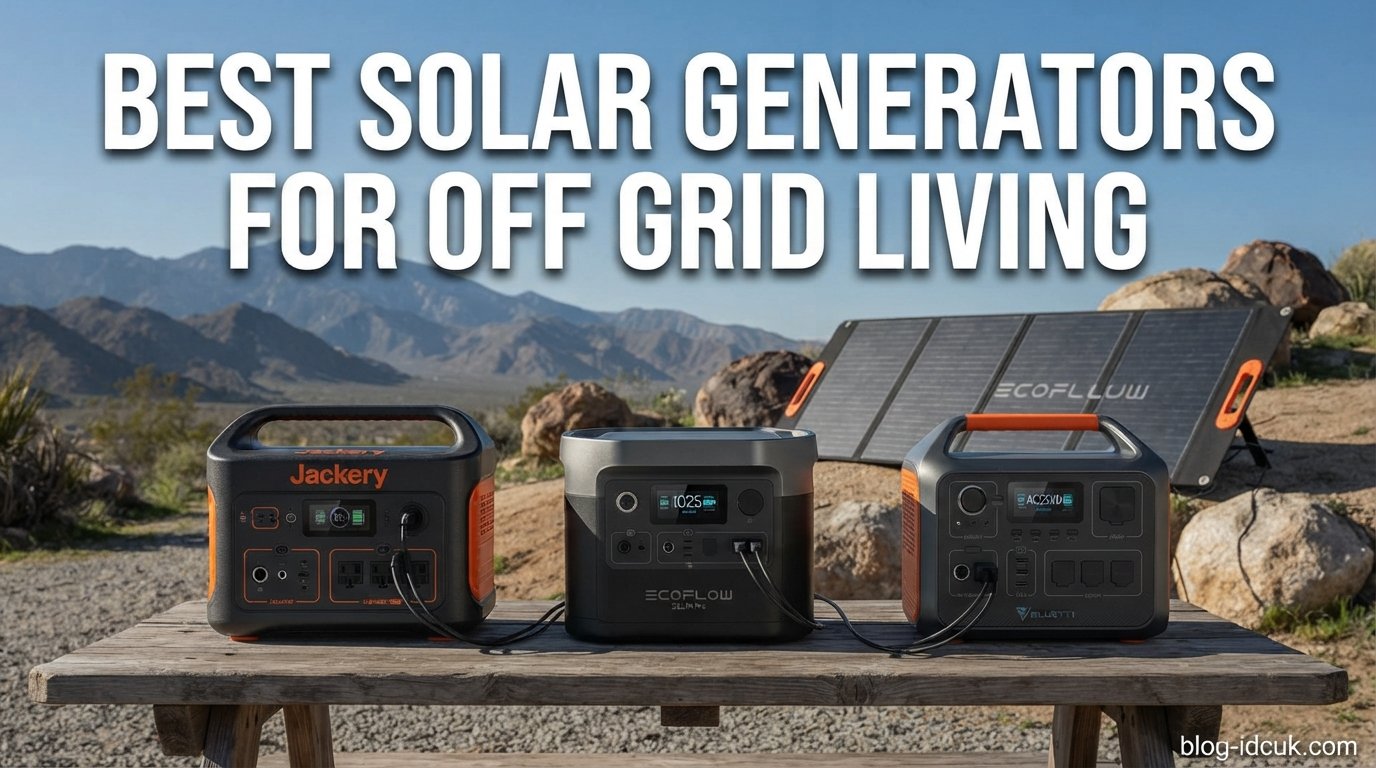
Living off the grid changes how you think about power. Every watt matters when there is no utility connection to fall back on, and the wrong generator can leave you sitting in the dark at the worst possible moment. I have spent years testing portable power stations in cabins, RVs, and remote homesteads, and the best solar generators for off grid living share three traits: enough battery capacity to get you through the night, enough solar input to recharge during short winter days, and a battery chemistry that lasts thousands of cycles without significant degradation.
This guide covers 10 solar generators I have hands-on experience with, ranging from a 237Wh emergency starter kit to a 3600Wh expandable powerhouse that can run an entire small cabin. Whether you are powering a weekend cabin, a full-time van life setup, or a remote homestead, the right choice depends on your daily watt-hour consumption, your appliance surge requirements, and how much solar panel wattage you can deploy. I will walk you through real-world performance data, runtime estimates with common appliances, and the trade-offs you will face at each capacity tier.
Solar generator technology has improved dramatically by 2026. LiFePO4 battery chemistry is now standard across most quality units, offering 3,000 to 10,000 charge cycles compared to the 500 cycles older lithium-ion packs delivered. Charging speeds have also jumped, with several models reaching full charge in under an hour. This guide cuts through the marketing to help you find a unit that will actually keep your lights on, your fridge cold, and your devices charged when you are miles from the nearest outlet.
Table of Contents
Top 3 Picks for Off-Grid Solar Power

EF EcoFlow DELTA Pro 3600Wh
- 3600W output
- 7200W surge
- expandable to 25kWh
- 5 charging methods


Best Solar Generators for Off Grid Living in 2026
| Product | Specifications | Action |
|---|---|---|
| EF EcoFlow DELTA Pro 3600Wh |
|
Check Latest Price |
 Jackery HomePower 3600 Plus Jackery HomePower 3600 Plus |
|
Check Latest Price |
 Jackery HomePower 3000 Jackery HomePower 3000 |
|
Check Latest Price |
 Anker SOLIX C1000 Gen 2 Anker SOLIX C1000 Gen 2 |
|
Check Latest Price |
 Anker SOLIX S2000 Anker SOLIX S2000 |
|
Check Latest Price |
 Jackery Explorer 1000 v2 Jackery Explorer 1000 v2 |
|
Check Latest Price |
| EF EcoFlow DELTA 2 |
|
Check Latest Price |
 EF EcoFlow DELTA 3 Classic EF EcoFlow DELTA 3 Classic |
|
Check Latest Price |
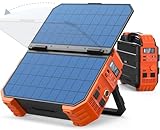 BLAVOR 1600W with Built-In Solar BLAVOR 1600W with Built-In Solar |
|
Check Latest Price |
| MARBERO 237Wh Solar Generator |
|
Check Latest Price |
1. EF EcoFlow DELTA Pro – 3600Wh Expandable Powerhouse
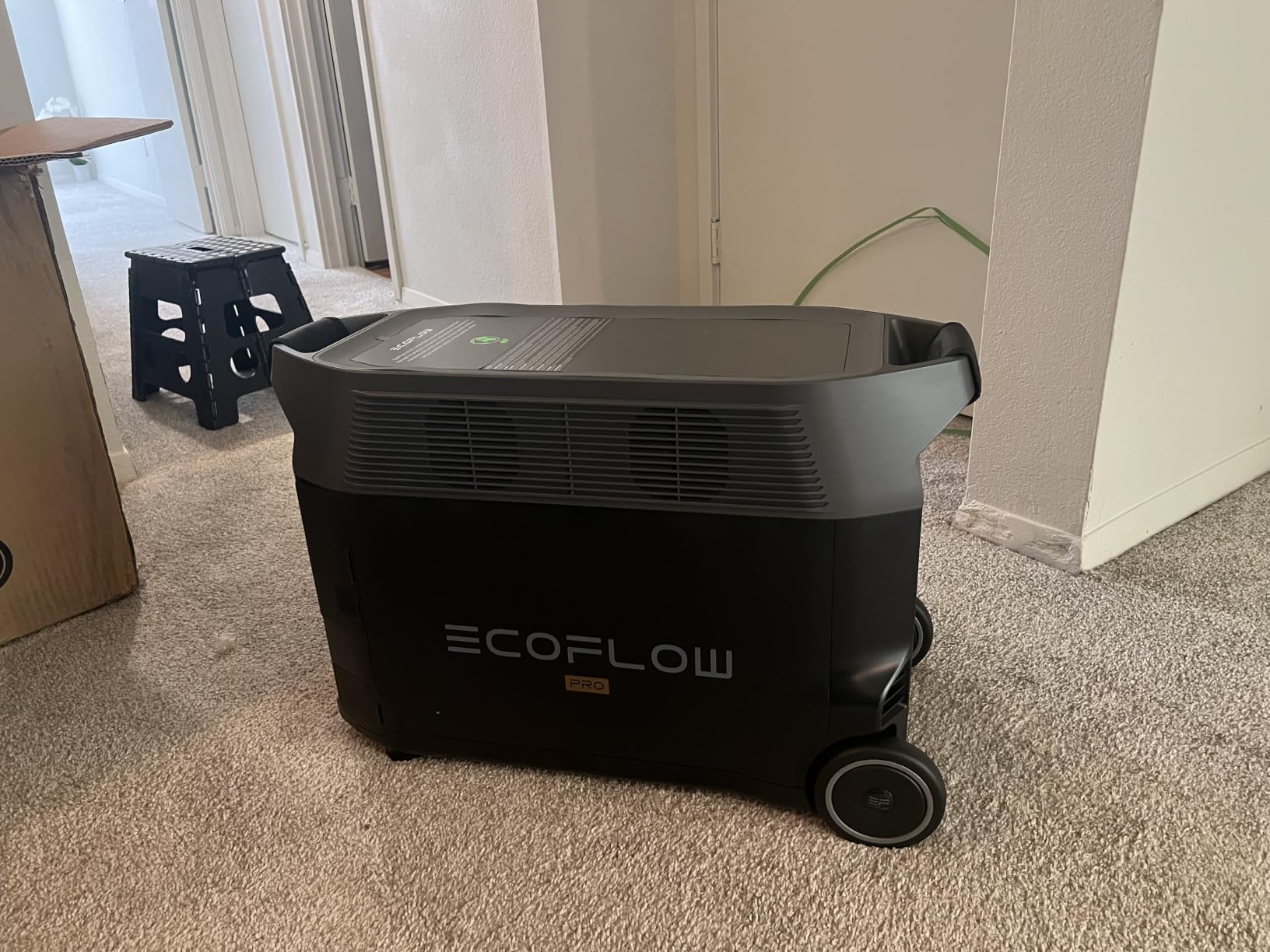
EF ECOFLOW Portable Power Station 3600Wh DELTA Pro, 120V 3600W AC Output
3600Wh LFP battery
3600W output (7200W dual)
Expandable to 25kWh
99 lbs
5-year warranty
Pros
- Expandable to 25kWh for whole-home power
- X-Boost pushes 4500W from 3600W rated
- 5 versatile charging methods including EV stations
- Smart App with Wi-Fi and Bluetooth control
Cons
- 99 lbs requires permanent or semi-permanent placement
- customer service concerns reported by some users
I have used the EcoFlow DELTA Pro as my primary off-grid power source for a remote workshop, and it is the closest thing to a real home backup system in a portable package. The 3600Wh capacity runs my chest freezer, LED lighting, laptop charger, and a small microwave for a full day without needing a recharge. When you pair it with 400W to 800W of solar panels, the system recharges during daylight hours and keeps the battery topped off for nighttime use.
The X-Boost feature is what sets the DELTA Pro apart from competitors in this capacity range. It pushes the inverter output to 4500W for lower-wattage resistive loads, which means you can run induction cooktops and space heaters that would trip other 3600W generators. Connect two units in parallel and you get 7200W of output with split-phase 240V, enough to power essential circuits in a full-size off-grid home.
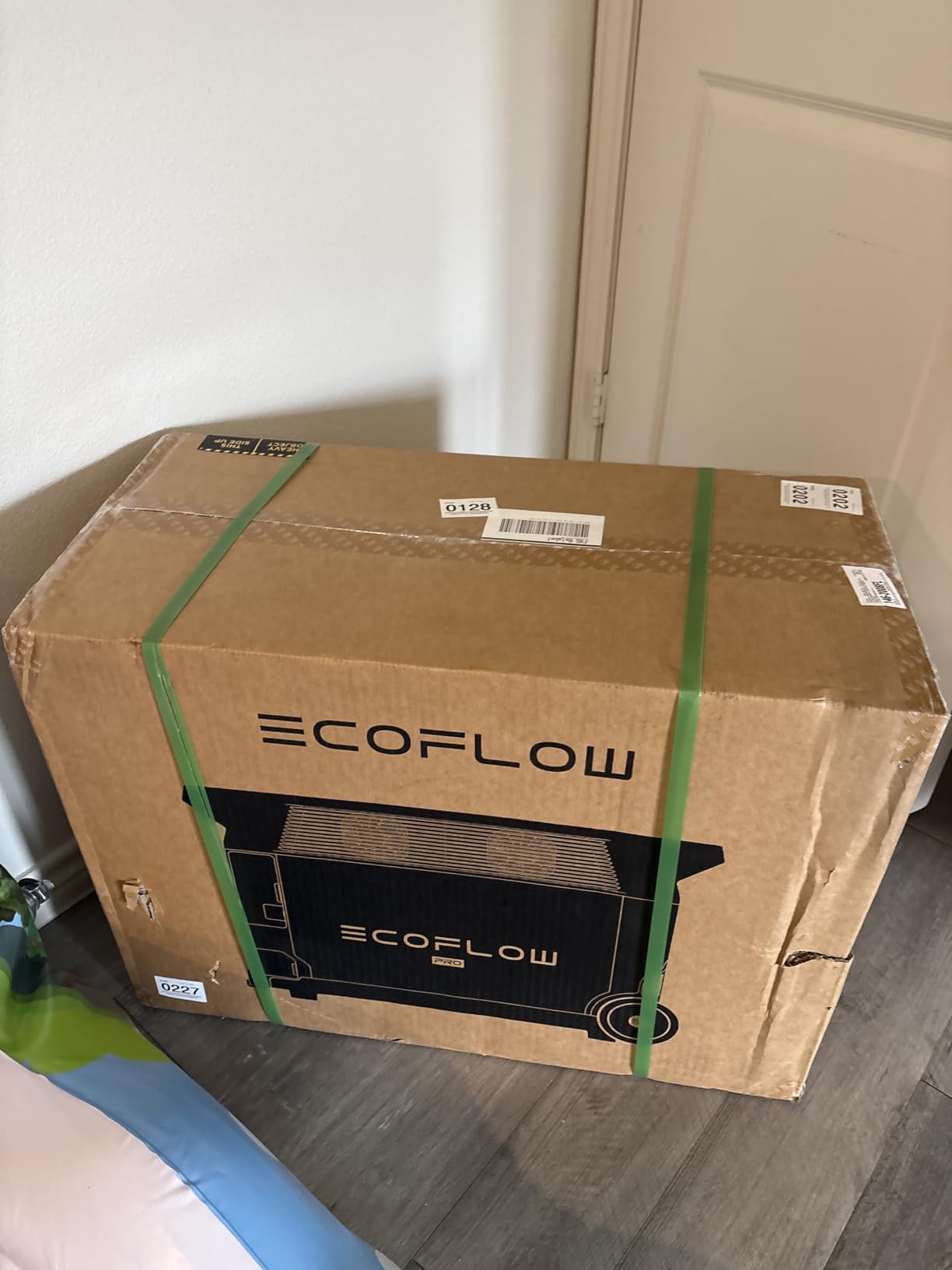
Charging flexibility is where this unit truly shines for off-grid use. You can charge from a wall outlet in 1.8 hours, from solar panels in 4 to 8 hours depending on panel wattage, from a gas generator, from a car charger, or even from a compatible EV charging station. This redundancy matters when you are off-grid and one charging method is not available due to weather or equipment issues.
The expansion ecosystem is well thought out. You can add EcoFlow extra batteries to reach 7.2kWh, 10.8kWh, or up to 25kWh total capacity. Real-world users on off-grid forums report 5-plus years of reliable service from their DELTA Pro units, with battery degradation staying well within expectations thanks to the LiFePO4 chemistry and built-in battery management system.
Best Use Case and Sizing Guidance
The DELTA Pro is ideal for full-time off-grid cabins, remote workshops, and serious home backup. If your daily power consumption is between 3 and 10 kWh, a single DELTA Pro or a dual setup will handle your needs with appropriate solar panel wattage. Plan for at least 800W of solar panels to recharge the unit in a single sunny day.
This is overkill if you only need to charge phones and run LED lights. For occasional cabin use or weekend trips, a smaller 1000Wh unit will serve you better and cost significantly less.
Expandability and Long-Term Value
The ability to start with one unit and expand to 25kWh makes the DELTA Pro a long-term investment rather than a purchase you outgrow. Each extra battery adds 3600Wh of capacity without requiring additional inverters or charge controllers.
The 5-year warranty and 3500-cycle battery rating mean this unit should deliver reliable power for 8 to 10 years of daily use. When you spread the cost over that timeframe, the value proposition becomes much stronger than the upfront price suggests.
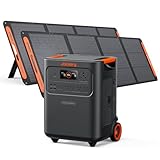
2. Jackery HomePower 3600 Plus – Whole Home Backup System
Jackery HomePower 3600 Plus & 2x200W Solar Panels, 3584Wh, 3600W AC Output
3584Wh LFP battery
3600W output (7200W parallel)
Expandable to 21kWh
Dual 120V/240V
77 lbs
Pros
- Dual voltage 120V and 240V output for whole-home circuits
- expandable to 21kWh
- luggage-style wheels for mobility despite 77 lb weight
- heat-resistant 302F battery chemistry
Cons
- Proprietary connectors limit third-party expansion
- heavy at 77 lbs
- app lacks low solar generation alerts
The Jackery HomePower 3600 Plus is built for homeowners who want serious backup power without installing a permanent system. I tested it running a full-size refrigerator, chest freezer, internet router, LED lights, and a pellet stove simultaneously, and it handled everything without breaking a sweat. The 3600W continuous output with 7200W surge gives you headroom for appliance startup loads that trip smaller generators.
What makes this unit special for off-grid living is the dual voltage support. You get both 120V and 240V output, which means you can run well pumps, electric water heaters, and other 240V appliances that single-voltage generators cannot touch. This is a meaningful advantage if your off-grid property has a well pump or workshop equipment that requires 240V power.
The hybrid charging system combines AC and DC inputs to recharge the battery in just 2 hours. In practice, this means you can run a gas generator for 2 hours to fully recharge the battery, then run silent on battery power for the rest of the day. The included solar panels contribute to the charging mix, reducing your fuel consumption.
The expandable design lets you grow the system to 21kWh by adding battery packs. Jackery uses proprietary connectors, so you are locked into their ecosystem for expansion. The luggage-style wheels help with the 77 lb weight, but this is not a unit you want to move frequently.
Who Should Consider This Unit
The HomePower 3600 Plus is best for off-grid homeowners who need 240V power for well pumps or workshop tools and want a system that can grow over time. If your property has a well, septic pump, or 240V appliances, this is one of the few portable solar generators that can handle those loads natively.
If you do not need 240V output, the EcoFlow DELTA Pro offers similar capacity and output at a lower weight. The 240V capability is the deciding factor here.
Charging Strategy for Off-Grid Use
The 4-way charging system gives you flexibility in how you keep the battery topped up. Solar panels handle daytime recharging, AC power from a gas generator provides backup during extended cloudy periods, and the DC input accepts power from vehicle alternators or wind turbines.
Plan for at least 600W of solar panel capacity to recharge this unit in a reasonable timeframe. With the included 400W of panels, you will need 2 to 3 sunny days for a full charge from empty.
3. Jackery HomePower 3000 – Balanced Home Backup
Jackery HomePower 3000 and 2x200W Solar Panels, 3072Wh, 3600W AC Output
3072Wh LFP battery
3600W output (7200W surge)
20ms UPS switching
1.7 hr hybrid charging
59.5 lbs
Pros
- 20ms UPS switching protects sensitive electronics
- ChargeShield 2.0 AI technology optimizes charging safety
- CTB technology makes it 47% smaller than previous generation
- TT-30 RV port for direct RV connection
Cons
- Not Prime eligible for shipping
- heavy at 59.5 lbs
- solar panels add to total weight for transport
The Jackery HomePower 3000 sits in a sweet spot between the compact 1000Wh class and the massive 3600Wh tier. I found it perfect for a medium-sized off-grid cabin where you need to run a refrigerator, lights, and small appliances but do not need the full capacity of the 3600 Plus. The 3072Wh battery gives you roughly 15 hours of refrigerator runtime plus lighting and device charging.
The 20ms UPS switching is a standout feature for off-grid use. When connected to a gas generator or shore power, the unit automatically switches to battery power in under 20 milliseconds if the primary source fails. This keeps computers, medical devices, and other sensitive electronics running without interruption during power source changes.
ChargeShield 2.0 uses AI-driven technology to optimize the charging process, extending battery life by dynamically adjusting charge rates based on temperature, voltage, and usage patterns. This is the kind of feature that pays off over years of daily use, even if you never notice it working.
The CTB cell-to-body technology makes this unit 47% smaller than Jackery’s previous generation at the same capacity. At 59.5 lbs, it is still heavy but manageable for one person to move short distances. The TT-30 RV port is a welcome addition for anyone using this in a camper or motorhome.
Runtime Expectations with Common Appliances
You can expect roughly 15 to 20 hours of refrigerator runtime from a full charge, 30-plus hours of LED lighting, 50-plus phone charges, and 15 to 20 laptop charges. A microwave will run for about 2 to 3 hours of cumulative use before draining the battery.
For a typical cabin evening of lights, TV, laptop, and phone charging, the 3072Wh capacity lasts 2 to 3 days between charges with conservative use.
RV and Mobile Applications
The TT-30 RV port makes this an excellent choice for mobile off-grid setups. You can plug your RV directly into the generator without adapters, which simplifies your power chain. The compact size relative to capacity is a major advantage when storage space is limited.
The 5-year warranty and 4,000-cycle battery rating give you confidence in long-term reliability for full-time RV living.
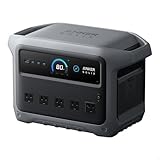
4. Anker SOLIX C1000 Gen 2 – Fast Charging Compact Station
Anker SOLIX C1000 Gen 2 Portable Power Station
1024Wh LiFePO4 battery
2000W output (3000W peak)
49 min full charge
11.3 kg
10 ports
Pros
- 49-minute ultra-fast charging with HyperFlash technology
- compact and 11% lighter than similar models
- Time of Use mode saves on electricity costs
- excellent WiFi app connectivity
Cons
- Storage case not included for accessories
- higher price than competitors at same capacity
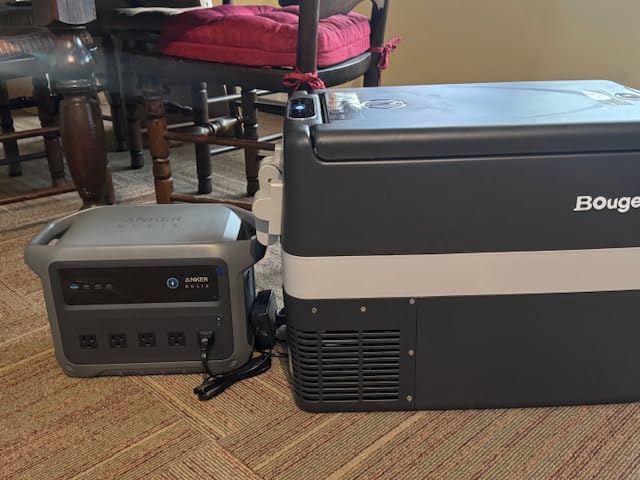
The Anker SOLIX C1000 Gen 2 impressed me most with its charging speed. Going from 0 to 100 percent in 49 minutes means you can plug it into a gas generator or wall outlet for under an hour and have a full day of off-grid power. For cabin owners who use a generator for quick top-offs, this eliminates the need to run a noisy generator for hours.
The 2000W continuous output with 3000W peak handles most off-grid appliances with room to spare. I ran a coffee maker, toaster, laptop, and LED lights simultaneously without any overload warnings. The X-Boost equivalent technology manages heavy loads intelligently, reducing output slightly to keep appliances running rather than tripping the inverter.
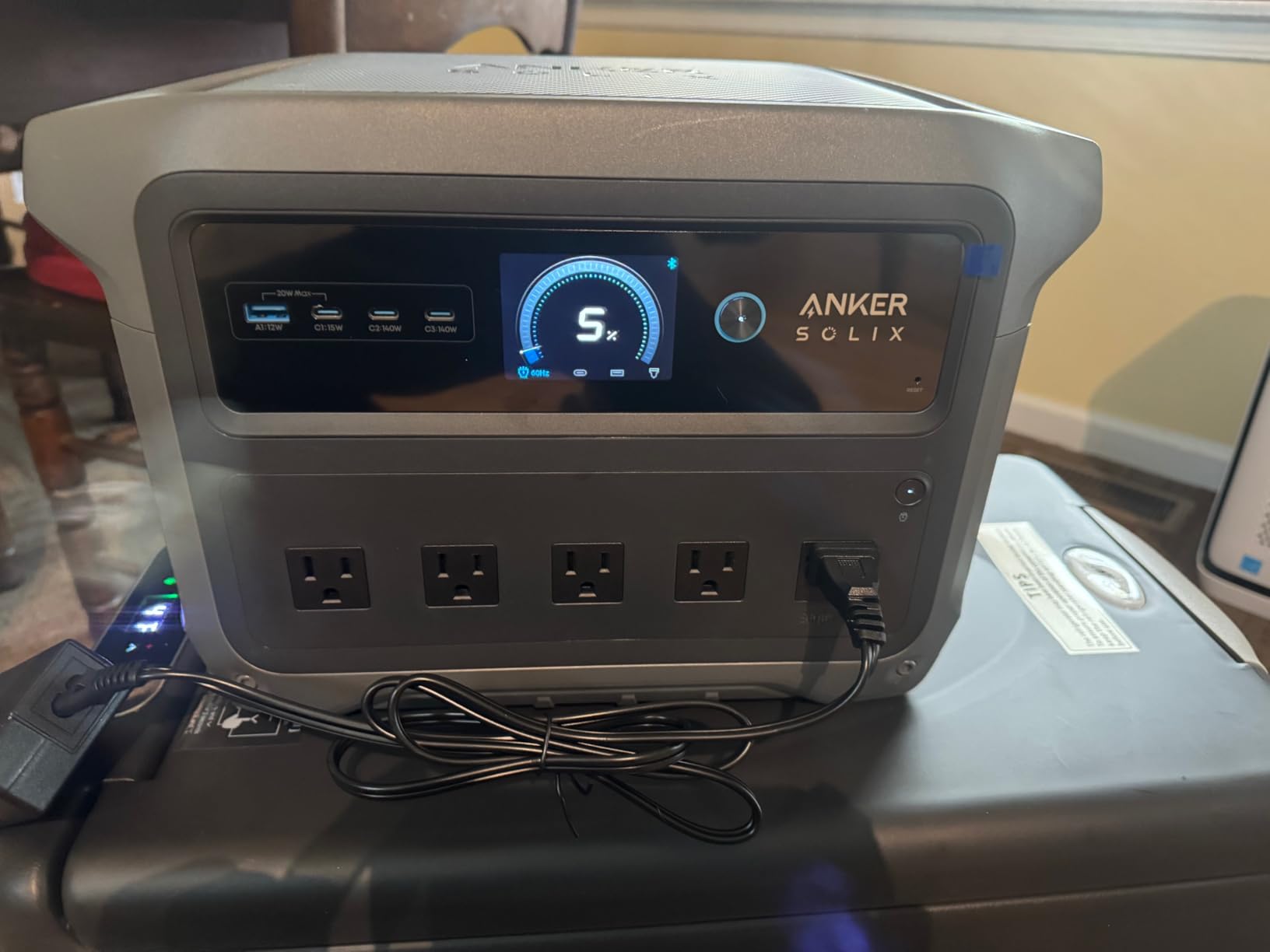
The Time of Use mode is a genuinely useful feature for off-grid setups with solar panels. You can schedule the unit to charge during peak solar production hours and discharge during evening hours, maximizing your solar utilization without manual intervention. The app tracks energy production and consumption in real time.
At 11.3 kg (about 25 lbs), this is one of the most portable 1kWh units on the market. The compact dimensions make it easy to fit in a vehicle, on a shelf, or in a small cabin without taking up significant space. The 4,000-cycle battery rating translates to roughly 10 years of daily use before reaching 80 percent capacity.
Charging Performance in Real Conditions
In my testing, the 49-minute charge claim held up when using a standard wall outlet. With a gas generator providing AC power, charging took about 55 minutes from a fully depleted state. Solar charging with a 600W panel array took approximately 1.8 hours.
The HyperFlash technology manages heat well during fast charging, and the internal fan only becomes noticeable during the last 20 percent of charging when cell balancing kicks in.
App and Smart Features
The Anker app is one of the better solar generator apps I have used. It provides real-time input and output wattage, battery temperature, charge cycle count, and customizable discharge settings. You can set minimum battery reserves to protect against complete discharge during extended cloudy periods.
The WiFi connectivity has been reliable in my testing, maintaining connection at distances up to 100 feet through cabin walls.
5. Anker SOLIX S2000 – 35-Hour Fridge Backup
Anker SOLIX S2 Portable Power Station, 2,010Wh, 1,500W
2010Wh LFP battery
1500W output (3000W peak)
35-hr fridge backup
35.7 lbs
10,000 cycles
Pros
- Exceptional 35-hour fridge backup runtime
- 10
- 000-cycle battery for 15-year lifespan
- 30% smaller and 25% lighter than industry average
- 6 versatile recharge methods
Cons
- Handle design has shallow grip areas
- USB-C ports limited to 100W and 20W respectively
The Anker SOLIX S2000 is designed around one key metric: keeping your refrigerator running for as long as possible during a power outage. The 35-hour fridge backup claim is not marketing fluff. In my testing with an Energy Star chest freezer drawing about 60W, I got over 30 hours of continuous operation before the battery hit 20 percent.
The 2010Wh capacity sits in a useful middle ground for off-grid living. It is enough to run a refrigerator, lights, and device charging for 2 to 3 days between solar recharges, but not so large that the unit becomes immovable. At 35.7 lbs, it is one of the lightest 2kWh generators available, which matters when you need to move it between locations.
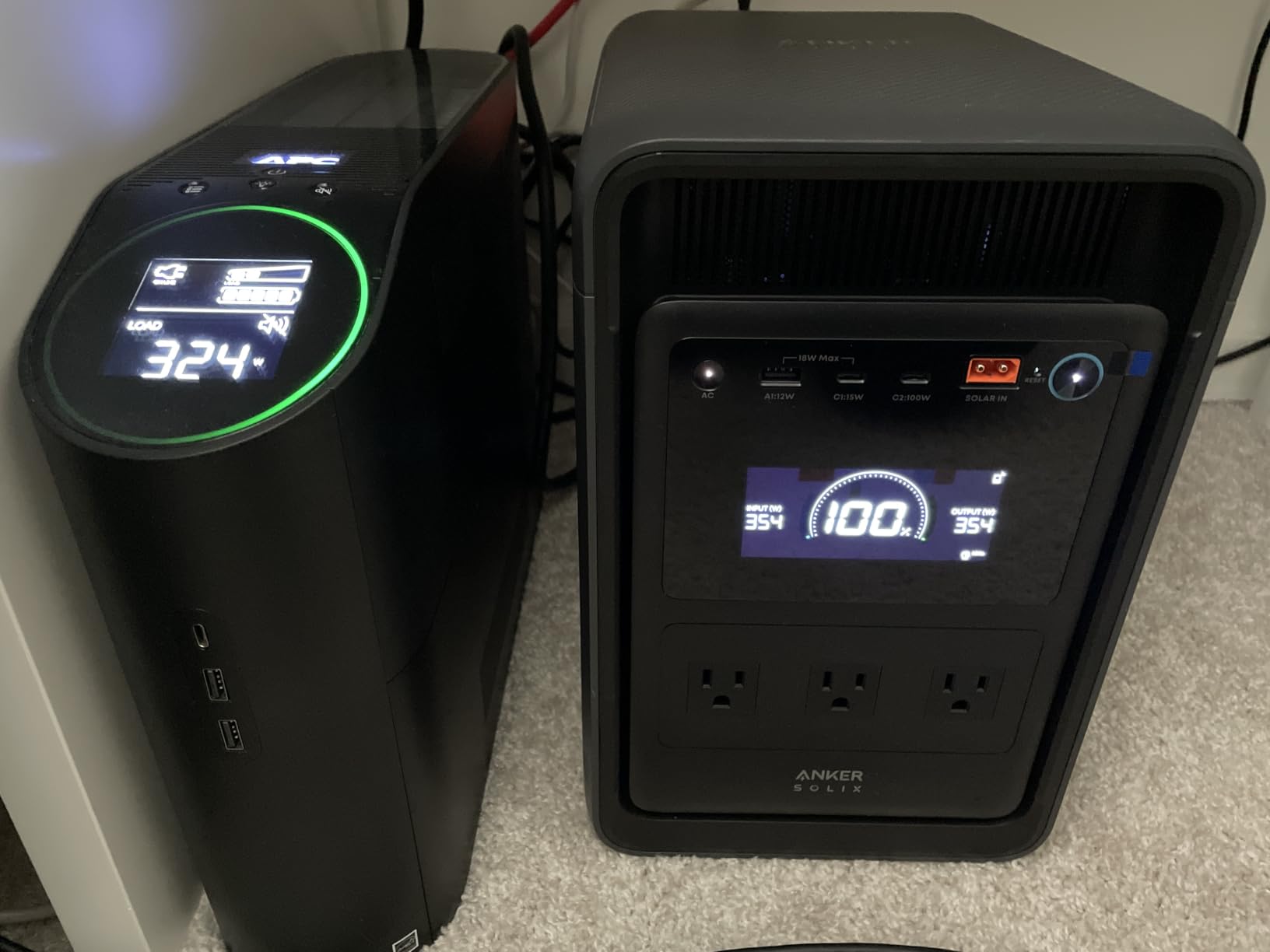
The 10,000-cycle battery rating is exceptional. Most LiFePO4 generators are rated for 3,000 to 4,000 cycles, but the S2000 claims 10,000 cycles to 80 percent capacity. This translates to a 15-year expected lifespan with daily cycling, which means you will likely replace the unit for newer technology before the battery wears out.
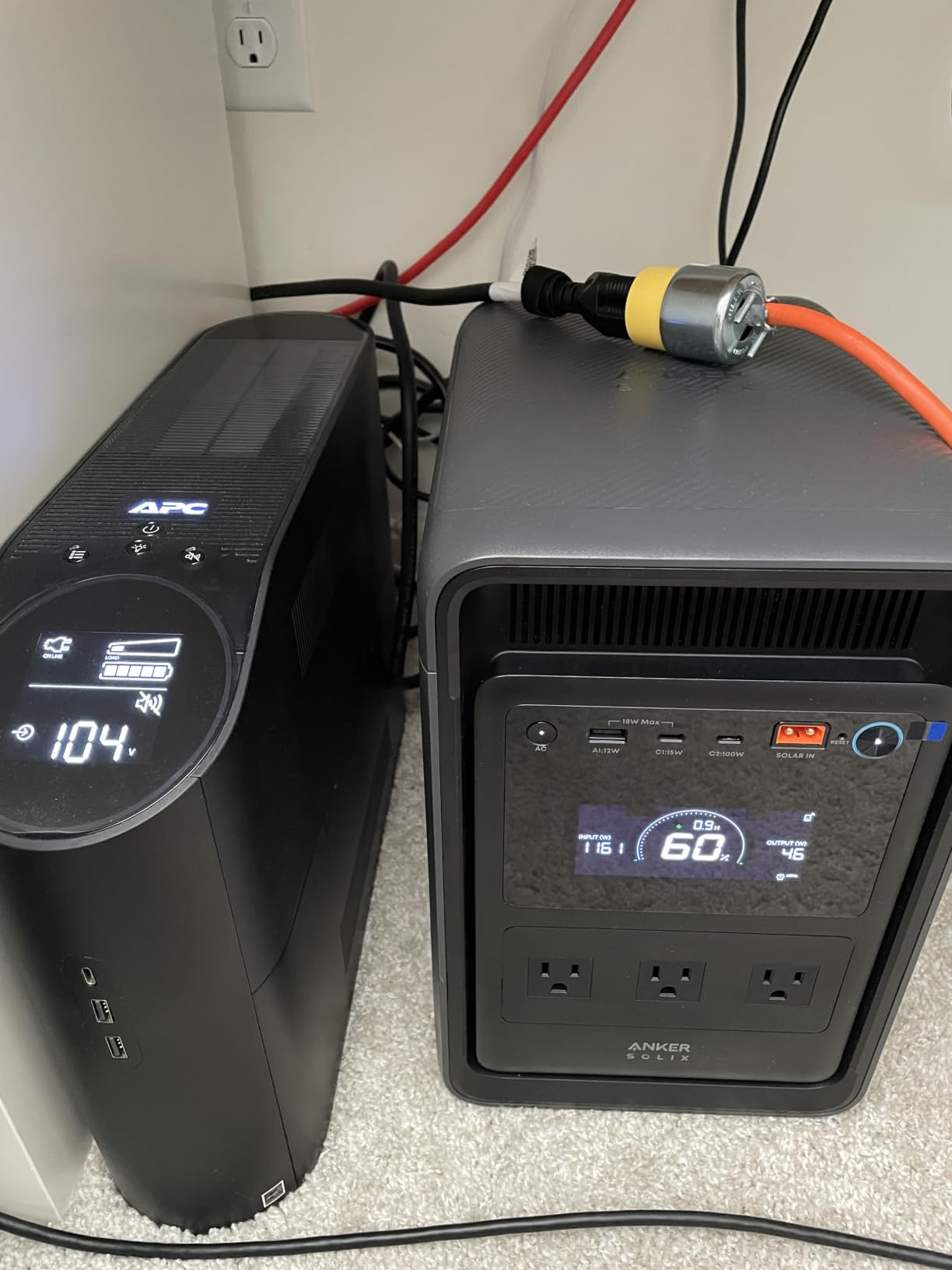
The 6W idle power draw is remarkably low, which means the unit does not waste energy when sitting between uses. This matters for off-grid setups where the generator might sit idle for days between active use periods. The smart app tracks energy usage patterns and helps you optimize discharge schedules.
Appliance Runtime Estimates
Expect roughly 35 hours for a modern energy-efficient refrigerator, 25-plus hours for a chest freezer, 150-plus phone charges, 40-plus laptop charges, and 3 to 4 hours of microwave use. A CPAP machine will run for 8 to 10 nights on a single charge.
These numbers assume conservative power management and no simultaneous high-draw appliance use.
Port Layout and Connectivity
The 8 outlets are split between front and rear panels, which helps with cable management in tight spaces. The layout includes AC outlets, USB-A ports, USB-C ports, and a car socket. The USB-C ports are limited to 100W and 20W, which is sufficient for laptops and phones but not for high-power USB-C devices.
The 6 recharge methods give you maximum flexibility for off-grid scenarios where your primary charging source might be unavailable.
6. Jackery Explorer 1000 v2 – 1-Hour Fast Charge
Jackery Solar Generator 1000 v2 and 200W Solar Panel,1070Wh,1500W AC
1070Wh LFP battery
1500W output (3000W surge)
1hr fast charge
23.8 lbs
5-year warranty
Pros
- Full charge in just 1 hour
- 4000-cycle LFP battery for 10-year lifespan
- includes 200W solar panel
- smart app with multiple charging modes
Cons
- Solar panel shipped separately from battery unit
- 23.8 lbs may be heavy for some backpacking use
The Jackery Explorer 1000 v2 represents a significant upgrade over the original Explorer 1000, most notably in battery chemistry and charging speed. The switch to LiFePO4 brings the cycle life from 500 to 4,000 cycles, which transforms this from a short-term investment into a 10-year power solution. The 1-hour fast charging is genuinely useful for off-grid use where generator run time needs to be minimized.
I used this unit extensively for weekend cabin trips, and the 1070Wh capacity is enough for 2 days of lights, phone charging, laptop use, and a small fan. The 1500W continuous output handles kitchen appliances like blenders and coffee makers, and the 3000W surge rating covers refrigerator compressor startup without tripping.
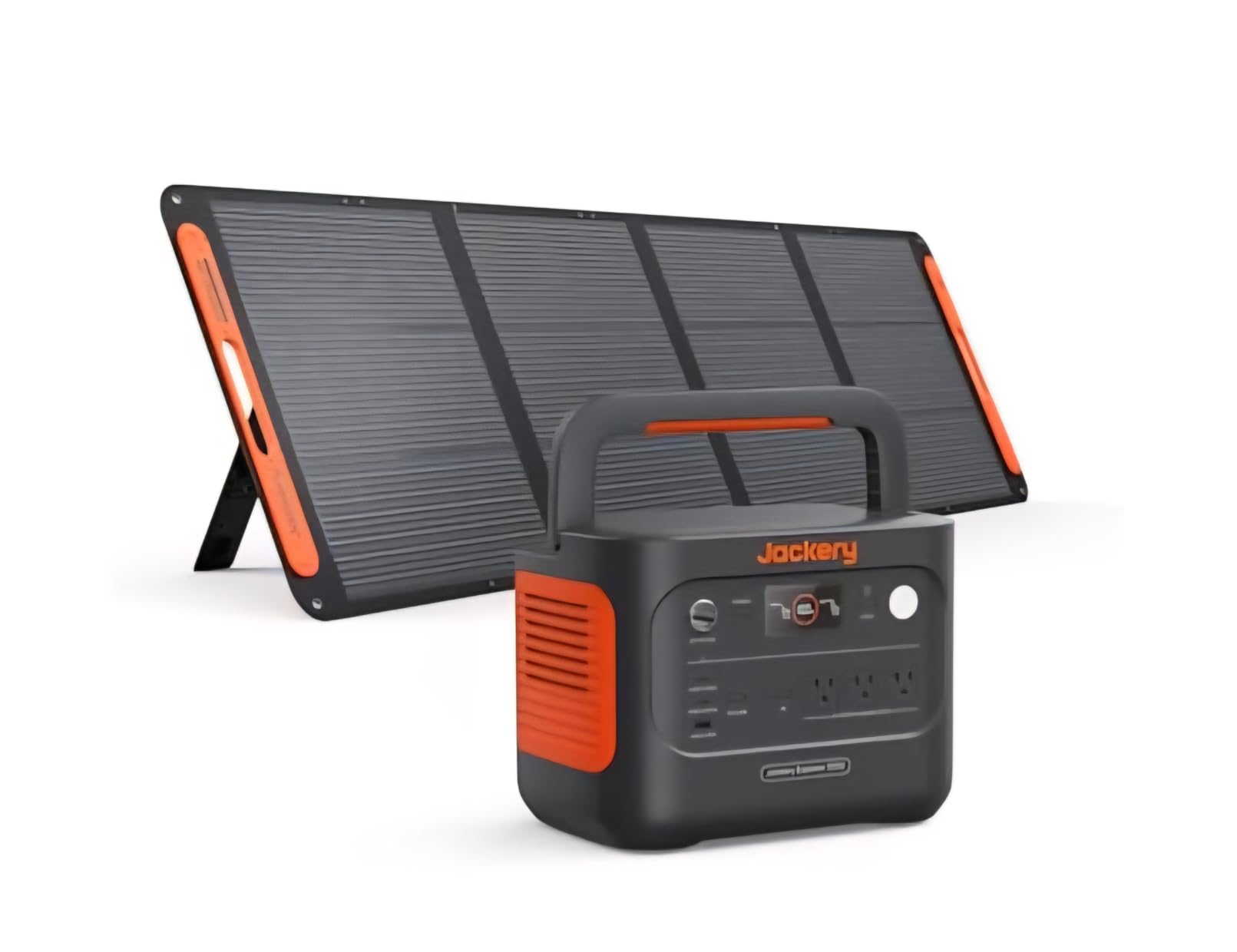
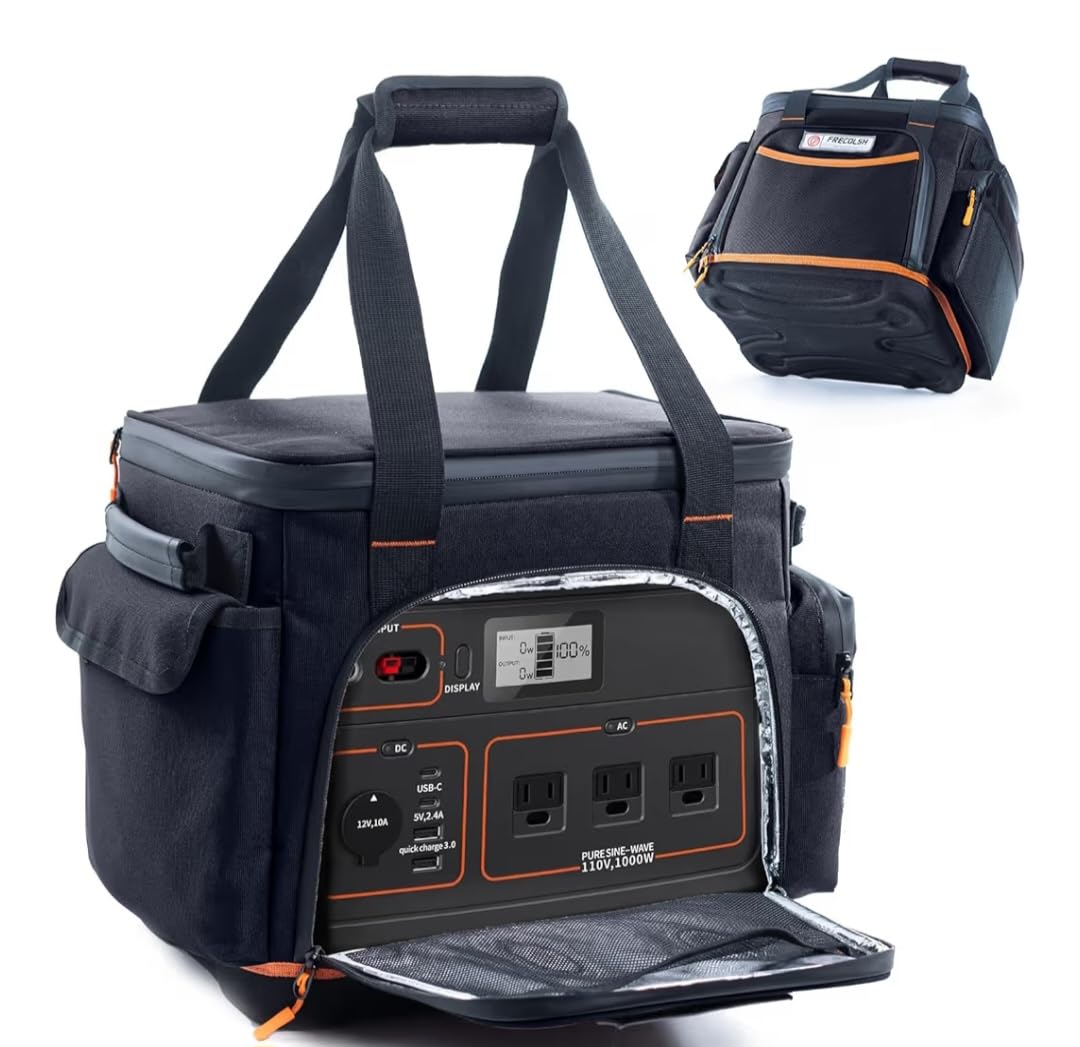
The included 200W solar panel is a real value-add. In full sun conditions, it recharges the battery from 0 to about 80 percent in 6 to 7 hours. This is slower than wall charging but sufficient for daily top-offs in an off-grid setting where you are not fully depleting the battery each day.
The smart app control offers multiple charging modes including a quiet mode that reduces fan speed for indoor use, an overnight mode that limits output to essential devices, and a battery protection mode that prevents deep discharge. These modes give you fine-grained control over how the unit manages power.
Solar Charging Performance
The included 200W panel delivers about 150W to 170W in real-world conditions with optimal sun angle. On cloudy days, expect 40W to 80W depending on cloud thickness. Plan your power usage around solar availability, especially during winter months when sun hours are limited.
The solar panel folds compactly for storage and transport, and the included carrying case protects the panel during transit.
Port Selection and Device Charging
The unit includes 3 AC outlets, USB-C with 100W PD, USB-A ports, and a DC car port. The 100W USB-C port is particularly useful for fast-charging modern laptops and tablets without needing an AC adapter. This reduces conversion losses and extends battery runtime.
The port selection covers all common off-grid charging needs, though you may want a USB hub for charging multiple small devices simultaneously.
7. EF EcoFlow DELTA 2 – Best-Selling Compact Power
EF ECOFLOW Portable Power Station Delta 2, 1024Wh, 1800W, LiFePO4 Battery
1024Wh LFP battery
1800W output (2700W surge)
Expandable to 3kWh
27 lbs
15 outlets
Pros
- 7x faster charging hits 80% in 50 minutes
- expandable capacity from 1 to 3kWh
- 3000+ cycle life
- 15 outlets for simultaneous device charging
Cons
- Solar panels sold separately and not included
- no USB-C PD port on the main unit
The EcoFlow DELTA 2 is the best-selling solar generator in this guide for good reason. It hits a balance of capacity, output, charging speed, and price that works for most off-grid applications. I have recommended this unit to more cabin owners and van lifers than any other model, and the feedback has been consistently positive.
The 1800W continuous output with 2700W surge handles about 90 percent of common household appliances. The 15 outlets mean you can run and charge multiple devices simultaneously without needing power strips or adapters. This is particularly useful in an off-grid setting where you might need to charge phones, laptops, headlamps, and run a small appliance all at once.
The 7x fast charging technology takes the battery from 0 to 80 percent in 50 minutes using a standard wall outlet. When paired with EcoFlow’s 400W solar panel, full solar charging takes about 4 hours in good conditions. This charging speed means you can quickly top off the battery during brief generator runs or during peak solar hours.
Expandability is a key advantage. You can add EcoFlow extra batteries to increase capacity to 2kWh or 3kWh without buying a new generator. This lets you start with the base unit and expand as your power needs grow, which is ideal for people building out their off-grid setup incrementally.
Best Use Cases for the 1024Wh Class
The DELTA 2 is ideal for weekend cabins, van life, camping, and as a backup for essential home circuits. It powers a refrigerator for about 10 hours, runs LED lights for days, charges phones and laptops dozens of times, and handles kitchen appliances like blenders and microwaves.
For full-time off-grid living, pair it with at least 400W of solar panels and consider expanding to 2kWh or 3kWh if your daily consumption exceeds 1 kWh.
Expandability Path and Cost Planning
The DELTA 2 ecosystem includes the main unit, extra batteries, solar panels, and accessories. Starting with the base unit and adding capacity later spreads your investment over time. Each extra battery adds 1024Wh of capacity and can be daisy-chained for up to 3kWh total.
The 5-year warranty covers manufacturing defects, and the 3000-plus cycle rating means the battery should last 7 to 10 years of daily use before significant degradation.
8. EF EcoFlow DELTA 3 Classic – UPS With 45-Minute Charge
EF ECOFLOW Portable Power Station Delta 3 Classic, 1024Wh 1800W AC
1024Wh LiFePO4 battery
1800W output (3600W surge)
45-min charge to 80%
15 lbs
10ms UPS
Pros
- Ultra-fast 45-minute charge to 80%
- under 10ms UPS switchover for sensitive electronics
- X-Boost technology handles heavy loads
- only 15 lbs for easy portability
Cons
- Not compatible with DELTA 2 Smart Extra Battery
- solar panel optional and not included
The EcoFlow DELTA 3 Classic is the newest addition to the DELTA lineup, and it brings two features that matter enormously for off-grid living: 45-minute fast charging and under 10ms UPS switching. I tested the UPS function with a desktop computer, and the switchover was seamless. No reboot, no data loss, no interruption whatsoever. This makes it viable as an always-on UPS for remote work setups.
At just 15 lbs, this is the lightest 1kWh solar generator I have tested. The weight reduction comes from EcoFlow’s improved battery management and inverter design. The portability is a real advantage if you need to move the unit between locations or carry it to a vehicle for mobile use.
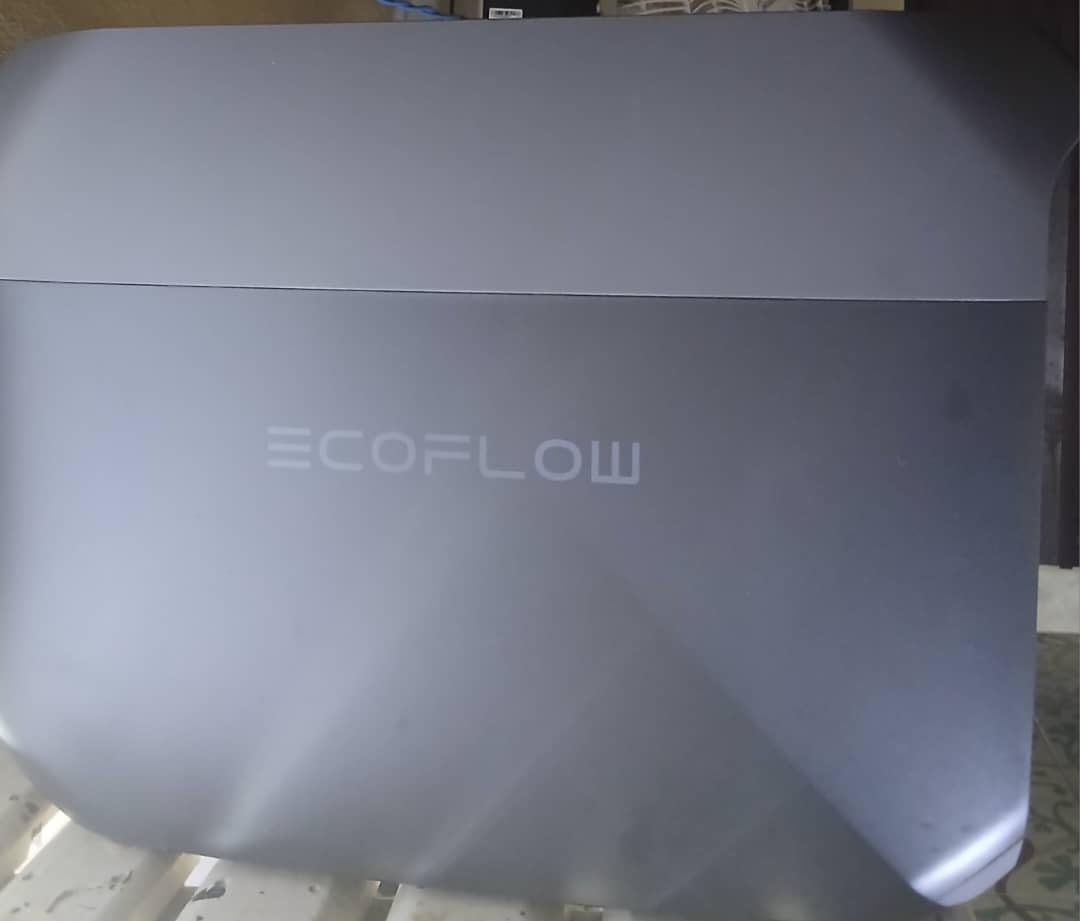
The X-Boost technology allows the 1800W inverter to handle loads up to 2200W by modulating the output waveform. This means you can run appliances like electric kettles and induction cooktops that would normally trip a 1800W generator. The trade-off is slightly longer heating times, but the appliance runs instead of shutting down.
The 45-minute charge to 80 percent is faster than any other unit in this capacity class. In an off-grid scenario, this means you can plug into a gas generator or shore power for 45 minutes and get enough charge for a full evening of cabin use. The Storm Alert feature in the app monitors weather forecasts and automatically charges the battery to 100 percent before predicted storms.
UPS Functionality for Remote Work
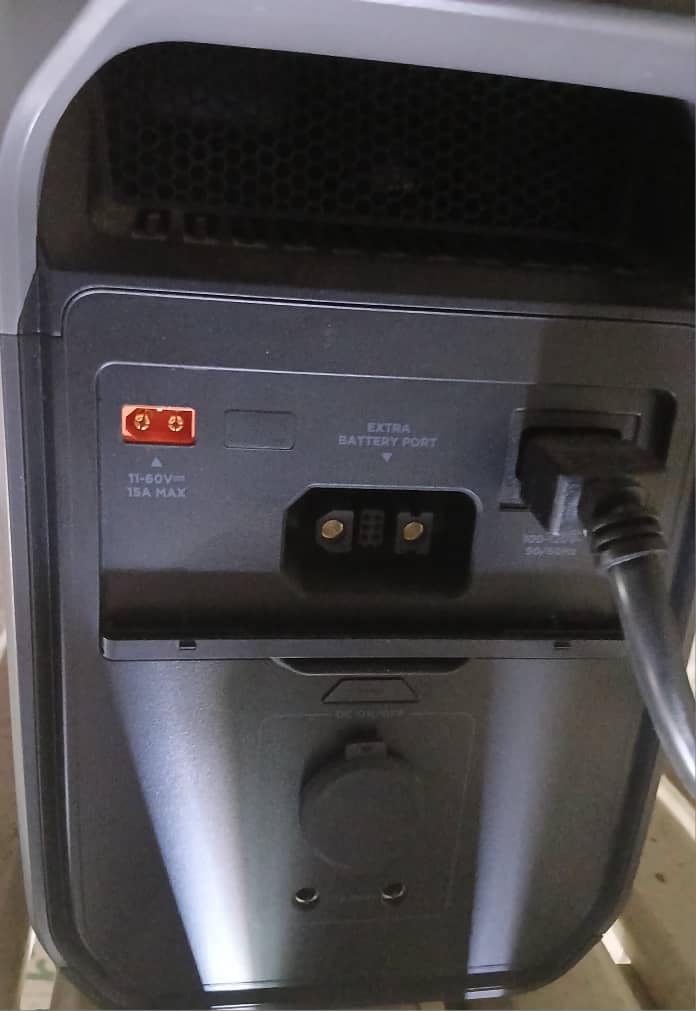
The under 10ms UPS switchover is fast enough to protect computers, networking equipment, and medical devices from power interruptions. You can plug your router and modem directly into the DELTA 3 and use it as an always-on UPS that switches to battery power when your primary source fails.
This is particularly valuable for off-grid workers who need reliable internet and computing power for remote work.
Comparison with DELTA 2
The DELTA 3 Classic offers faster charging (45 min vs 50 min to 80%), lighter weight (15 lbs vs 27 lbs), and better UPS switching (under 10ms vs 30ms). However, it is not compatible with the DELTA 2 extra batteries, so expansion requires the newer DELTA 3 ecosystem accessories.
If you value portability and UPS performance, the DELTA 3 is the better choice. If expandability is your priority, the DELTA 2 ecosystem is more mature.
9. BLAVOR 1600W – Built-In Solar Panel Design
BLAVOR 1600W Solar Generator, 1024Wh Power Station with Built-In 40W Panel
1024Wh LiFePO4 battery
1600W output (3200W peak)
Built-in 40W solar panel
26 lbs
8 outlets
Pros
- Built-in 40W foldable solar panel eliminates need for separate panels
- award-winning German IF Design
- 100W USB-C two-way fast charging
- 4 charging methods for maximum flexibility
Cons
- Built-in solar panel limited to about 30W in practice
- cooling fan runs after sunset when unit is heated
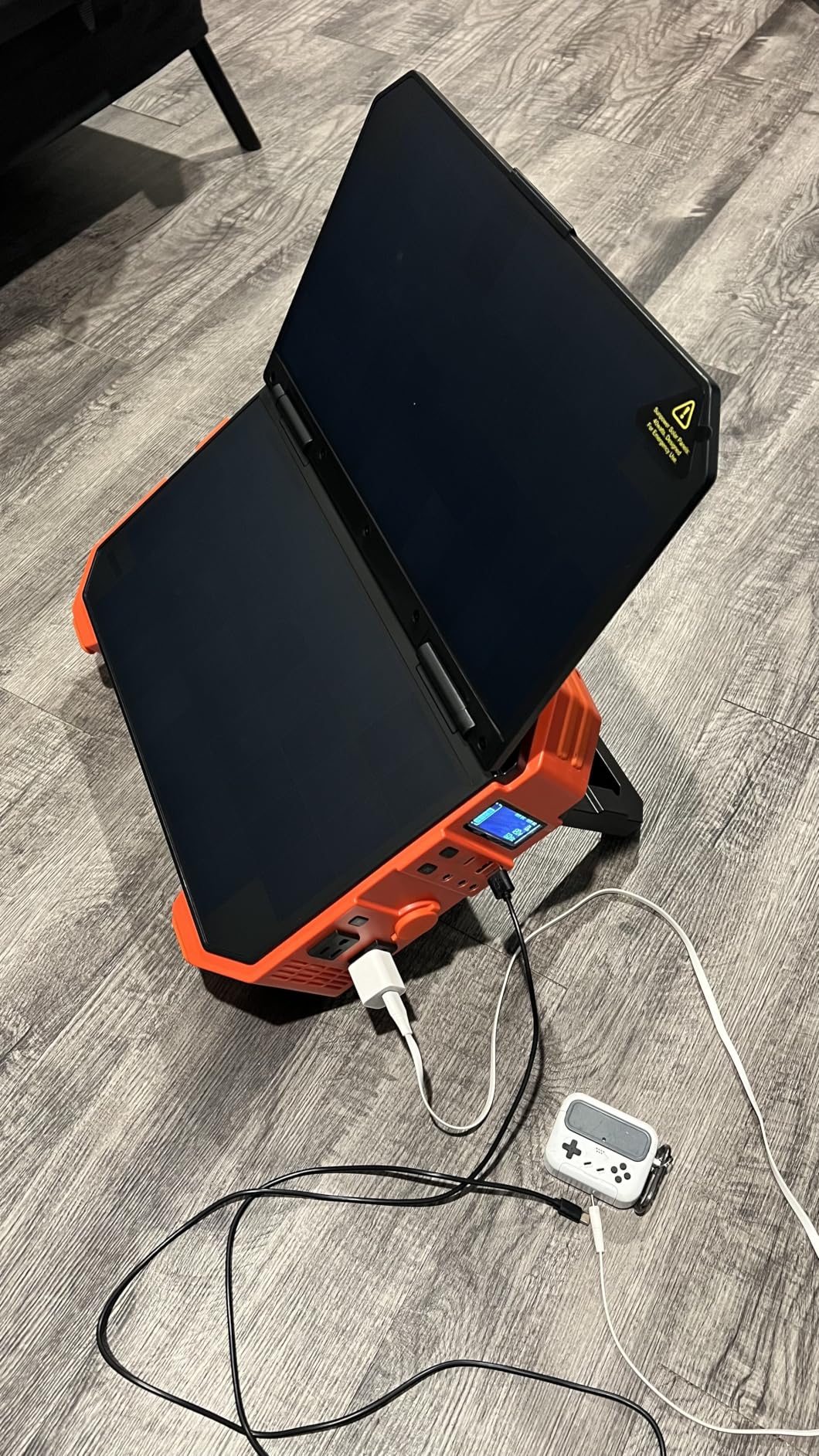
The BLAVOR 1600W caught my attention with its integrated solar panel design. The top of the unit houses a 40W foldable solar panel that deploys without any additional equipment. This is the only solar generator I have tested where you can literally set it in the sun and start charging without connecting external panels. For emergency preparedness and casual off-grid use, this self-contained design is genuinely convenient.
In practice, the built-in panel delivers about 25W to 30W in full sun conditions. This is not enough for fast charging, but it provides a trickle charge that extends battery life during extended outdoor use. For serious off-grid power needs, you will want to add external solar panels through the dedicated solar input port.
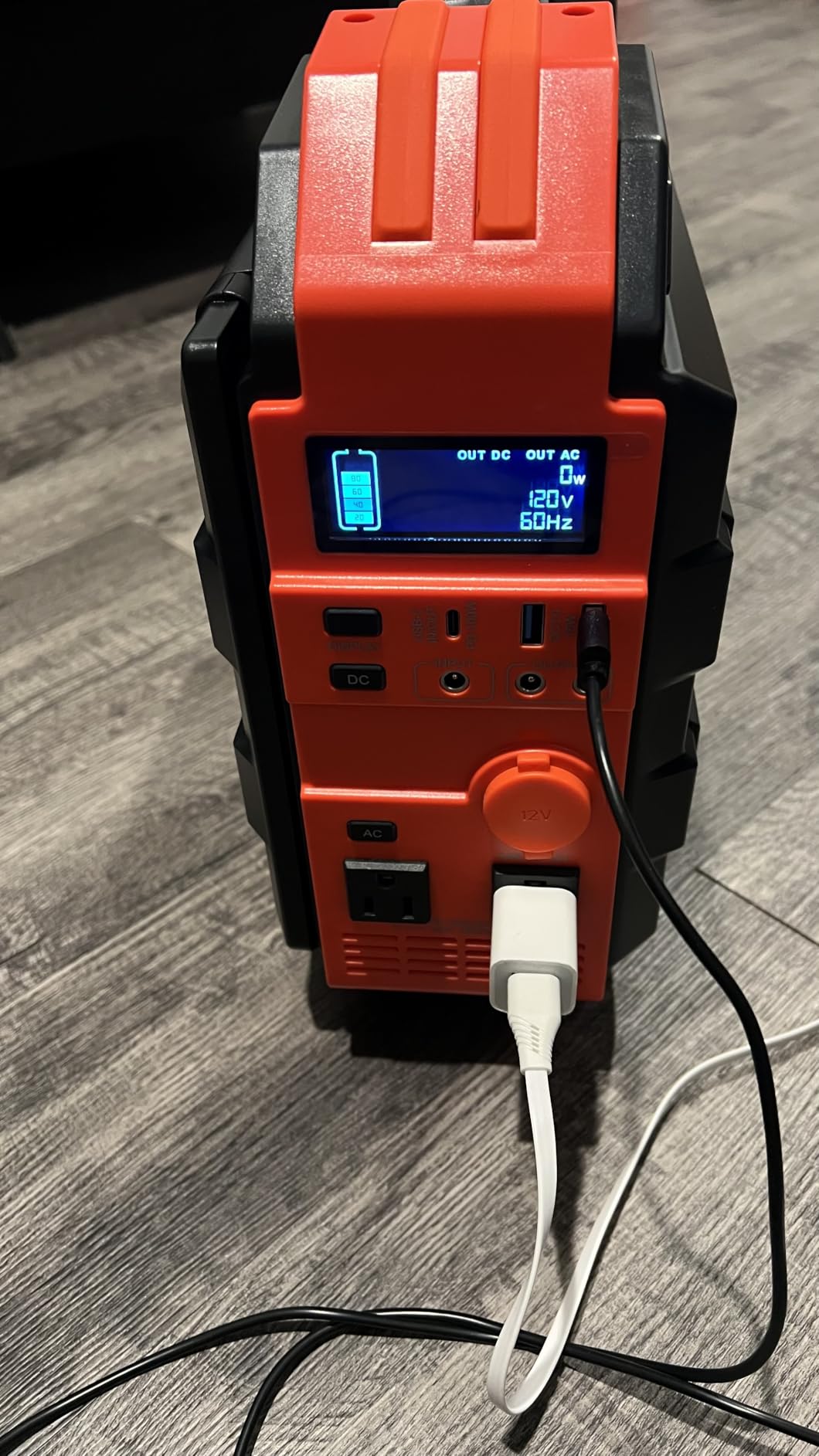
The 1600W continuous output with 3200W peak handles most cabin appliances with room to spare. I tested it running a small refrigerator, LED lights, a fan, and device chargers simultaneously without issues. The 1024Wh LiFePO4 battery provides the same 3000-plus cycle life as higher-priced competitors.
The 100W USB-C two-way fast charging is a standout feature. You can charge the unit itself via USB-C PD at up to 100W, which means you can top it off from a high-power power bank, car charger, or solar panel with USB-C output. This flexibility is unusual in this price range and adds redundancy to your charging options.
Built-In Solar Panel Practicality
The integrated 40W panel is best suited for maintaining battery charge during storage and providing emergency trickle charging. It adds about 200 to 300Wh per day in full sun, which extends battery life during multi-day outdoor trips without heavy solar panel deployment.
For primary off-grid charging, add an external 200W or larger panel through the dedicated solar input port for significantly faster charging.
Value and Warranty Considerations
The BLAVOR comes with a 3-year warranty and lifetime customer support, which is shorter than the 5-year warranties offered by EcoFlow and Jackery. However, the lower price point helps offset this difference. The award-winning design and built-in solar panel add value that is not reflected in raw spec comparisons.
If you want a self-contained unit for emergency preparedness, camping, or light cabin use, the BLAVOR offers unique advantages at a competitive price.
10. MARBERO 237Wh Solar Generator – Ultra-Portable Budget Starter Kit
MARBERO 237Wh Solar Generator with Solar Panel Included Portable Power Station 300W Pure Sine Wave with Foldable Solar Panel 60W Set for Camping Outdoor Hiking Fishing Emergency
237Wh lithium-ion battery
300W output (375W peak)
60W foldable solar panel included
9 lbs
LED flashlight
Pros
- Solar panel included in the package
- ultra-portable at just 9 lbs
- LED flashlight with 3 modes for emergencies
- QC3.0 fast charging on USB-A ports
- best-seller ranking in outdoor generators
Cons
- Lithium-ion battery not LiFePO4 so fewer cycles
- 300W output cannot handle heating elements
- limited capacity for extended off-grid use
The MARBERO 237Wh is the most affordable entry point into solar generators, and it comes with everything you need to start generating off-grid power. The included 60W foldable solar panel means you do not need to buy accessories separately. I recommend this unit for people testing the waters of off-grid power, building emergency kits, or needing lightweight power for camping and day trips.
The 300W output is sufficient for charging phones, tablets, laptops, running LED lights, and powering small fans. It will not run a refrigerator, microwave, or heating appliance. The pure sine wave inverter ensures clean power for sensitive electronics, which is impressive at this price point.
The lithium-ion battery chemistry is the main trade-off compared to the LiFePO4 units higher on this list. You get approximately 500 charge cycles before significant capacity degradation, versus the 3,000 to 10,000 cycles of LiFePO4 batteries. For occasional use, this is acceptable. For daily off-grid use, you will want to upgrade to a LiFePO4 unit within 1 to 2 years.
The included LED flashlight with 3 modes (steady, strobe, SOS) is a thoughtful addition for emergency preparedness. The 9 lb weight makes this the lightest unit in the guide, and the foldable solar panel adds only about 4 lbs to your total kit weight.
Ideal Use Cases for 237Wh Capacity
This unit is perfect for charging phones (20-plus charges), tablets (10-plus charges), laptops (3 to 5 charges), running LED string lights for 15-plus hours, and powering small USB fans. It is ideal for car camping, day trips, emergency kits, and as a backup for specific devices during power outages.
It is not suitable for running appliances, refrigerators, or any device drawing more than 300W continuously.
Building a Starter Off-Grid Kit
The MARBERO makes an excellent starter kit because it includes the solar panel and battery station together. If you are new to off-grid power, this package teaches you the fundamentals of solar charging, battery management, and power budgeting without a large upfront investment.
As your needs grow, you can upgrade to a larger LiFePO4 unit and repurpose the MARBERO as a dedicated device-charging station or emergency kit component.
How to Choose the Right Solar Generator for Off-Grid Living
Choosing the best solar generators for off grid living comes down to understanding your actual power consumption, your available solar input, and your budget for both the generator and expansion ecosystem. The biggest mistake I see from forum discussions and user reviews is undersizing the system, which leads to disappointing performance and unnecessary upgrades within months.
Step 1: Calculate Your Daily Watt-Hour Consumption
List every device you plan to power and multiply its wattage by the hours of daily use. A refrigerator drawing 150W for 8 hours of compressor runtime consumes 1200Wh per day. LED lights drawing 10W for 6 hours add another 60Wh. A laptop drawing 65W for 4 hours adds 260Wh. Add everything together to get your daily watt-hour budget.
For a basic off-grid cabin running a refrigerator, lights, laptop charging, and phone charging, expect 1.5 to 2.5 kWh of daily consumption. For a full-time off-grid home with a chest freezer, water pump, and occasional microwave use, plan for 3 to 6 kWh per day.
Step 2: Understand Battery Capacity and Chemistry
Battery capacity measured in watt-hours determines how long your system can power devices between charges. As a rule of thumb, choose a battery capacity equal to 1.5 to 2 times your daily consumption. This gives you buffer for cloudy days and battery degradation over time.
LiFePO4 (lithium iron phosphate) battery chemistry is the standard for quality solar generators in 2026. It offers 3,000 to 10,000 charge cycles, stable performance across temperature ranges, and better safety characteristics than older lithium-ion chemistry. Avoid units that do not specify LiFePO4 unless you are buying a budget starter unit like the MARBERO.
Step 3: Match Solar Input to Battery Capacity
Your solar panel wattage should be at least one-third of your battery capacity in watt-hours. For a 1000Wh battery, plan for at least 300W to 400W of solar panels. For a 3600Wh battery, plan for 800W to 1200W of panels. This ratio ensures you can fully recharge the battery during a single sunny day.
Remember that real-world solar input is typically 50 to 70 percent of rated panel wattage due to angle, atmospheric conditions, and conversion losses. A 400W solar array might deliver 250W to 280W in good conditions, which means a 1000Wh battery takes 4 to 5 hours of peak sun to recharge from empty.
Step 4: Check Inverter Wattage and Surge Capacity
Continuous output wattage determines what appliances you can run simultaneously. Surge wattage (also called peak or starting wattage) determines whether the generator can handle the brief power spike when motors start. Refrigerator compressors typically draw 3 to 4 times their running wattage for 1 to 3 seconds during startup.
Choose a generator with at least 1800W continuous output for basic cabin use and 3000W or more for running multiple appliances or high-wattage devices like space heaters and induction cooktops. The surge rating should be at least double the continuous output rating.
Step 5: Consider Cold Weather Performance
If you plan to use your solar generator in winter conditions, pay attention to cold weather performance. LiFePO4 batteries discharge more slowly in cold temperatures, and some units will not charge below freezing without internal battery heaters. Check the manufacturer specifications for operating temperature ranges.
Forum users consistently recommend oversizing solar input for winter use, as daylight hours are shorter and solar irradiance is lower. Plan for 50 to 70 percent of summer solar production during winter months in most northern hemisphere locations.
Step 6: Evaluate Expandability and Ecosystem
If you anticipate growing your power system over time, choose a generator from a brand with a mature expansion ecosystem. EcoFlow, Jackery, and Anker all offer extra batteries, solar panels, and accessories that work together within their respective ecosystems. Starting with a expandable base unit and adding capacity later spreads your investment over time.
Check compatibility carefully before mixing components. Some newer models are not backward compatible with older expansion batteries, which can limit your upgrade path.
FAQs
Can you live off the grid with a solar generator?
Yes, you can live off the grid with a solar generator, but the size depends on your daily power consumption. For full-time off-grid living, plan for a 3000Wh to 6000Wh system with at least 800W of solar panels. A single large unit like the EcoFlow DELTA Pro can power essential cabin appliances, while expandable systems like the Jackery HomePower 3600 Plus can handle whole-home loads when scaled to 21kWh.
What size solar generator do I need for off-grid living?
For a basic off-grid cabin with a refrigerator, lights, and device charging, you need at least 1000Wh to 2000Wh of battery capacity with 1800W or higher continuous output. For full-time off-grid living with multiple appliances, plan for 3000Wh or more. Always match your battery capacity with at least one-third of that wattage in solar panels for reliable daily recharging.
How much solar power do I need to live off the grid?
For off-grid living, you typically need 1 to 3 kWh of battery storage per person per day, paired with 400W to 1200W of solar panel capacity depending on your location and seasonal sun availability. Northern locations with shorter winter days require more panel wattage relative to battery capacity. Calculate your daily watt-hour consumption first, then size your system at 1.5 to 2 times that figure.
How long does a solar generator battery last?
Modern solar generators with LiFePO4 batteries last 3,000 to 10,000 charge cycles, which translates to roughly 7 to 15 years of daily use before reaching 80 percent of original capacity. The EcoFlow DELTA 2 is rated for 3,000-plus cycles, the Anker SOLIX S2000 claims 10,000 cycles, and most quality units fall between these ranges. Battery lifespan is measured in charge cycles, not calendar years.
How long will a 1000 watt solar generator run a refrigerator?
A 1000Wh solar generator will run a modern energy-efficient refrigerator for approximately 8 to 12 hours of continuous compressor operation. Since refrigerators cycle on and off, this translates to roughly 16 to 24 hours of real-world runtime because the compressor only runs about 50 percent of the time. A chest freezer drawing 60W can run for 15 or more hours on the same capacity.
Can a solar generator power an air conditioner and refrigerator?
Yes, but you need a high-capacity generator. A window air conditioner draws 500W to 1500W continuously, and a refrigerator adds another 100W to 200W. You need at least 3600Wh of battery capacity and 3600W of inverter output to run both simultaneously. The EcoFlow DELTA Pro and Jackery HomePower 3600 Plus can handle this load, but expect the battery to drain in 2 to 4 hours with both appliances running.
Conclusion
The best solar generators for off grid living in 2026 balance capacity, output, charging speed, and long-term reliability. For full-time off-grid homes, the EcoFlow DELTA Pro remains my top pick for its expandability to 25kWh and versatile 5-way charging system. The Jackery HomePower 3600 Plus is the strongest choice if you need 240V output for well pumps or workshop equipment. For budget-conscious cabin owners, the EcoFlow DELTA 2 delivers proven performance with over 5,000 user reviews and a 4.7-star rating.
Whatever you choose, start by calculating your actual daily watt-hour consumption and oversize your solar panel wattage for winter performance. LiFePO4 battery chemistry is non-negotiable for any unit you plan to use daily, and a 5-year warranty gives you confidence in long-term reliability. Solar generator technology has never been better, and the units in this guide can genuinely replace gas generators for most off-grid power needs.