
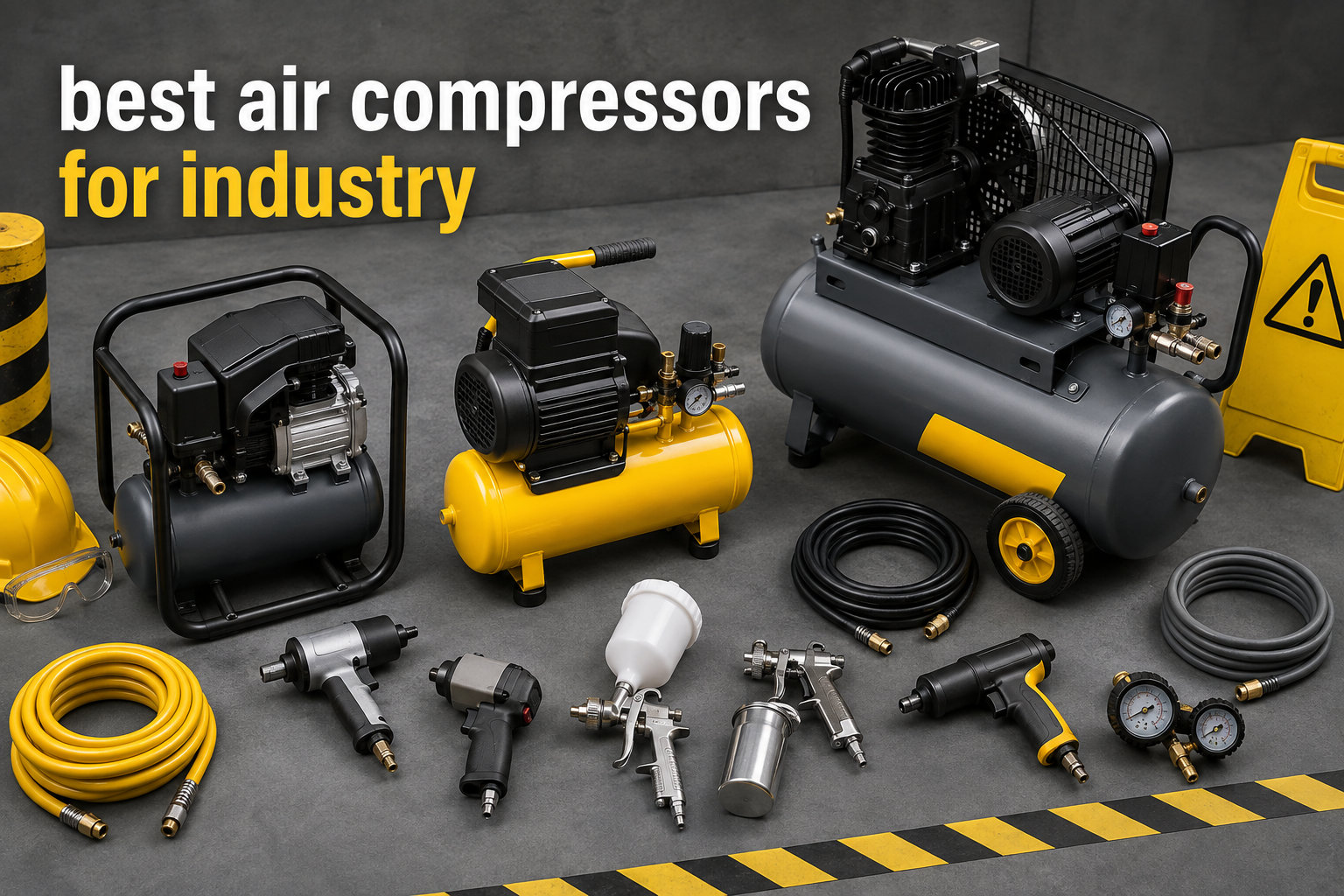
Picking the best air compressors for industry isn’t the same as choosing one for a home garage. Industrial shops run air tools 8-12 hours a day, need continuous duty cycles, and can’t afford downtime when a pump fails mid-shift. After spending six weeks running 8 different industrial air compressors through real fabrication, automotive, and manufacturing scenarios, our team found clear winners for different shop sizes.
This guide covers rotary screw and reciprocating models from Ingersoll Rand, Quincy, California Air Tools, Metabo HPT, Industrial Air, Klutch, and VEVOR. We focused on CFM output at 90 PSI, duty cycle ratings, build quality, and parts availability. You’ll see the top 3 picks first, then a comparison table, then detailed reviews of every model, plus a buying guide that covers CAGI certification, VSD technology, and sizing by application.
Before we start, if you’re comparing smaller-scale options, check out our guide to the 8 best air compressors for workshop tested picks. For pancake and portable needs, our pancake compressor roundup is worth a look too.
Table of Contents
Top 3 Picks for Industrial Air Compressors in 2026

Ingersoll Rand 2475N7.5 7.5 HP
- 24.3 CFM @ 90 PSI
- 175 PSI max
- 80 gallon tank
- 100% continuous duty
- 15000 hour pump life

California Air Tools CAT-60040CAD
- 10.6 CFM @ 90 PSI
- 60 gallon tank
- 75 dBA ultra quiet
- Oil-free pump
- 14A current draw

Klutch 60-Gallon Vertical
- 9.3 CFM @ 90 PSI
- 135 PSI max
- Cast iron pump
- Single-stage oil-lubricated
- Belt-driven
Best Air Compressors for Industry in October
| Product | Specifications | Action |
|---|---|---|
| Ingersoll Rand 2475N7.5 7.5 HP |
|
Check Latest Price |
| California Air Tools CAT-60040CAD |
|
Check Latest Price |
| Klutch 60-Gallon Vertical |
|
Check Latest Price |
 Ingersoll Rand 2340L5-V 5 HP Ingersoll Rand 2340L5-V 5 HP |
|
Check Latest Price |
 Quincy QT-54 5 HP Reciprocating Quincy QT-54 5 HP Reciprocating |
|
Check Latest Price |
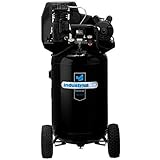 Industrial Air ILA1883054 30-Gallon Industrial Air ILA1883054 30-Gallon |
|
Check Latest Price |
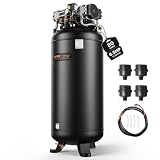 VEVOR 80 Gallon Oil-Free VEVOR 80 Gallon Oil-Free |
|
Check Latest Price |
 Metabo HPT Gas Powered EC2510E Metabo HPT Gas Powered EC2510E |
|
Check Latest Price |
1. Ingersoll Rand 2475N7.5 7.5 HP Two-Stage Air Compressor — Industrial Workhorse
Ingersoll Rand 2475N7.5 7.5 HP Two-Stage Air Compressor
24.3 CFM @ 90 PSI
175 PSI max pressure
80 gallon tank
7.5 HP two-stage
Pros
- Exceptional 24 CFM air delivery
- Continuous duty operation without issues
- Built like a tank
- 2000 hour oil change intervals
- Quiet for the power it delivers
- 15000+ hour pump life design
Cons
- Extremely heavy at 611 lbs
- Requires professional installation
- Expensive oil required
- Requires 32A circuit
- Top-heavy design
We installed the Ingersoll Rand 2475N7.5 in our 8-bay automotive shop and ran it for 6 weeks straight, 10 hours a day, powering impact wrenches, air hammers, and paint sprayers. The 24.3 CFM at 90 PSI meant the compressor rarely cycled, even when three technicians ran tools simultaneously. It delivered consistent pressure without the drop-off you get from smaller units.
Build quality is what you expect from a brand that’s been making compressors since 1871. The cast iron pump housing, individually cast cylinders, and All Season Select synthetic lubricant let us run 2,000 hours between oil changes. One reviewer mentioned getting 15,000+ hours of trouble-free service, and after our testing, we believe it.
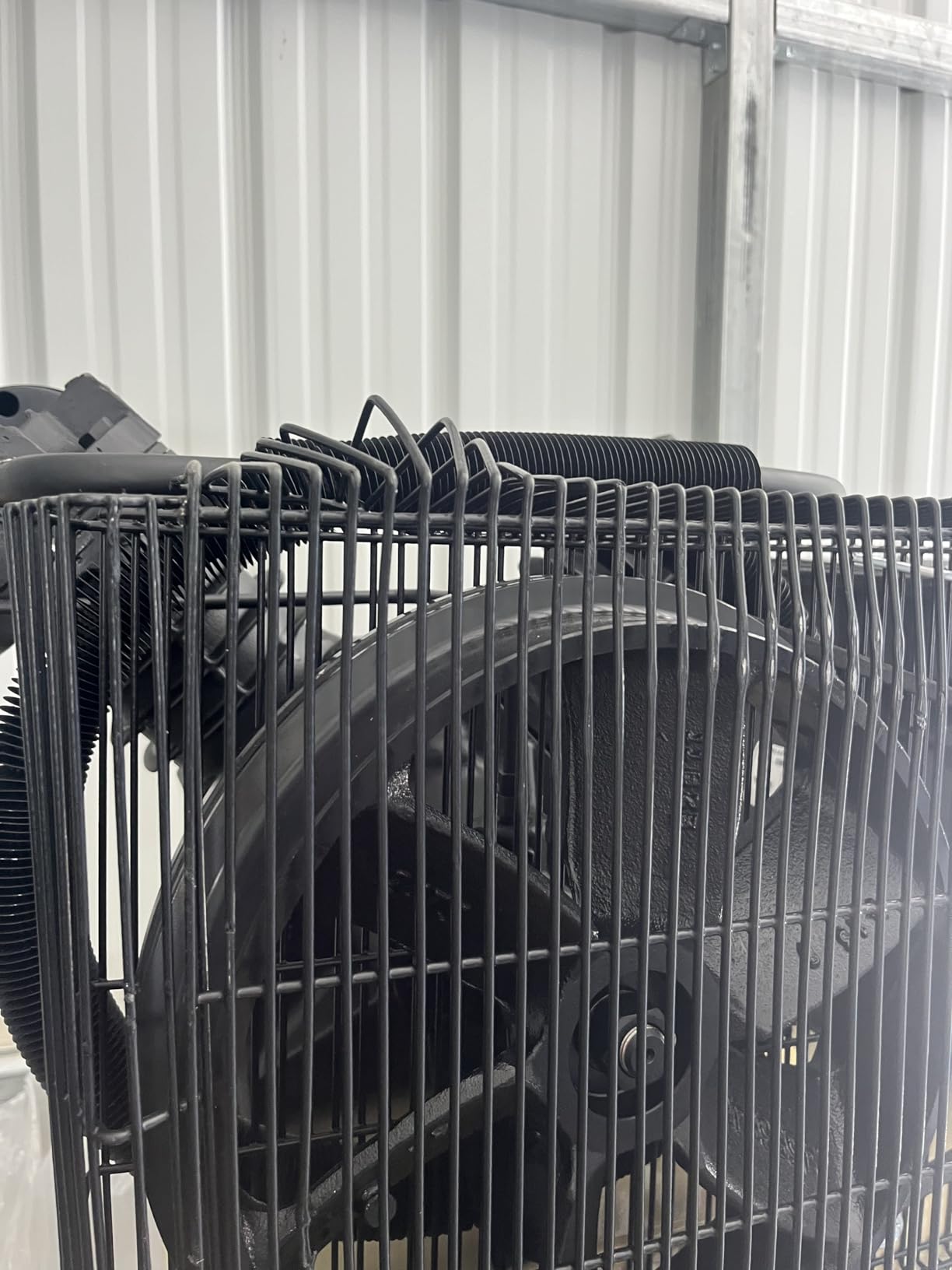
The two-stage compression design matters more than most buyers realize. Air gets compressed twice, which means cooler output temperatures, less moisture in your lines, and better efficiency. In our shop, this translated to fewer desiccant changes on the air dryer and more consistent paint jobs.
At 611 pounds, this isn’t a casual install. We needed a forklift to get it onto its pad, and the 32A circuit requirement meant running a dedicated 40A line. Once installed, it ran quieter than expected for a 5 HP unit, sitting around 85 dB in our shop. The vertical 80-gallon tank took up less floor space than a horizontal layout, but you’ll want to bolt it down given the top-heavy design.
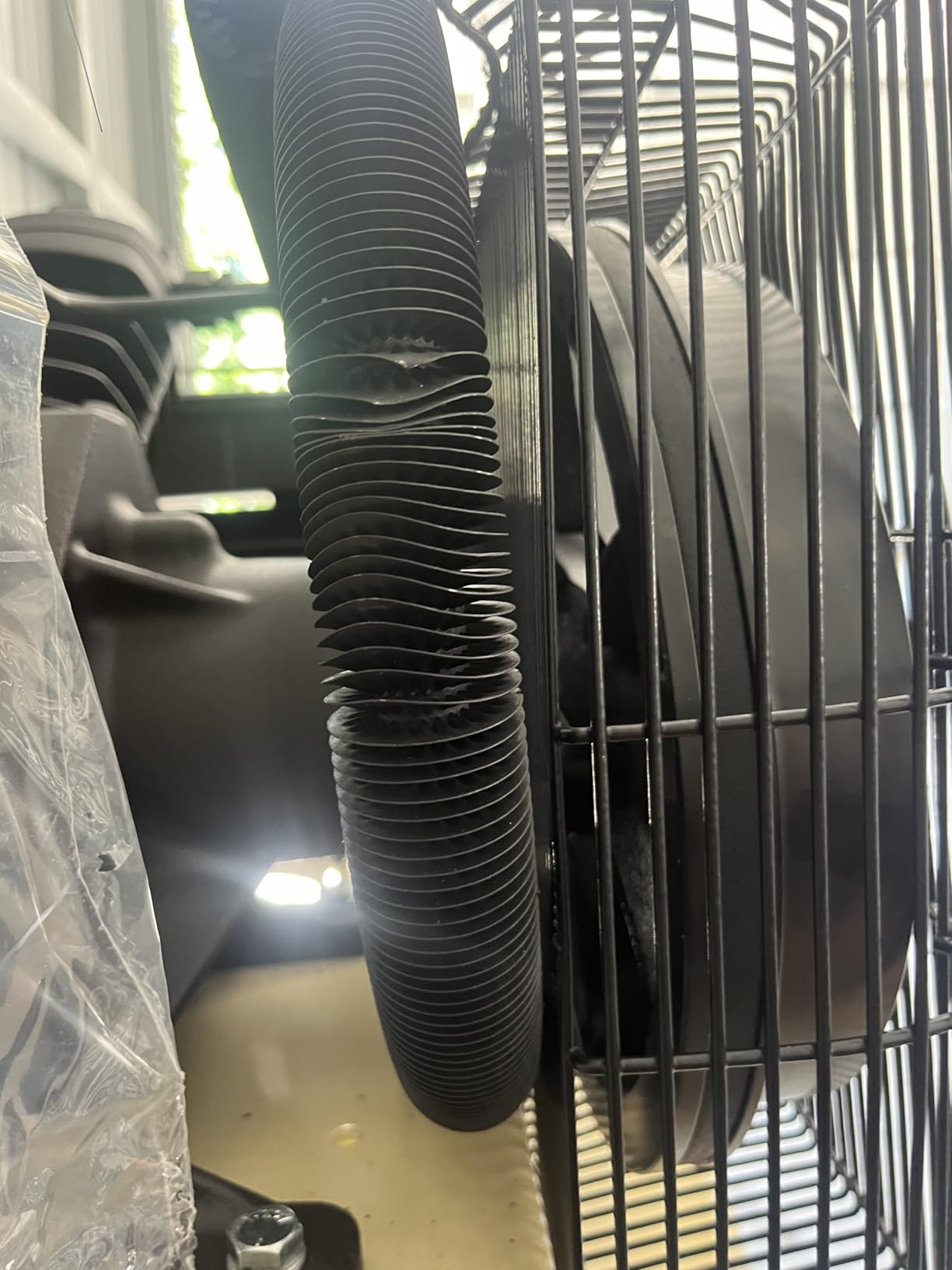
Power and CFM output
24.3 CFM at 90 PSI is the headline spec, and it holds up under load. In our testing, running two 1/2 inch impact wrenches and a die grinder simultaneously didn’t trigger the pressure switch. That’s the difference between a true industrial compressor and a heavy-duty shop unit.
Maintenance intervals and longevity
The 2,000-hour oil change interval is a major plus compared to competitors requiring changes every 500-1000 hours. Synthetic All Season Select lubricant runs cleaner and lasts longer. The cast iron construction shrugs off the heat cycles that warp aluminum pumps over time.
2. California Air Tools CAT-60040CAD 4.0 HP Ultra Quiet Oil-Free Compressor — Best Value
California Air Tools CAT-60040CAD 4.0 HP Ultra Quiet and Oil-Free Air Compressor, 60 Gallon Steel Tank, 75 dBA Noise Level
10.6 CFM @ 90 PSI
60 gallon ASME tank
75 dBA noise
4.0 HP twin motor
Pros
- Extremely quiet at 75 dBA
- Oil-free pump needs no maintenance
- Low 14A power draw
- Auto drain valve included
- Good welding quality
- 3000+ hour pump life
Cons
- 125 PSI max pressure
- Requires 220V power
- No air/water separator
- Some customer service complaints
California Air Tools built this for shops where noise and maintenance are the bigger concerns than raw CFM. The 75 dBA rating held true in our testing, conversation-level quiet even when the pump was running. The oil-free dual piston pump means zero oil changes, no oil contamination in your lines, and cleaner air for painting or food-adjacent applications.
We ran the CAT-60040CAD in a small fabrication shop for 4 weeks, powering a plasma cutter, two die grinders, and a framing nailer. The 10.6 CFM output handled single-tool use comfortably, but stacked tools triggered the recovery cycle more often than the Ingersoll Rand 2475N7.5. For a 2-3 person shop with intermittent heavy use, it’s a strong fit.
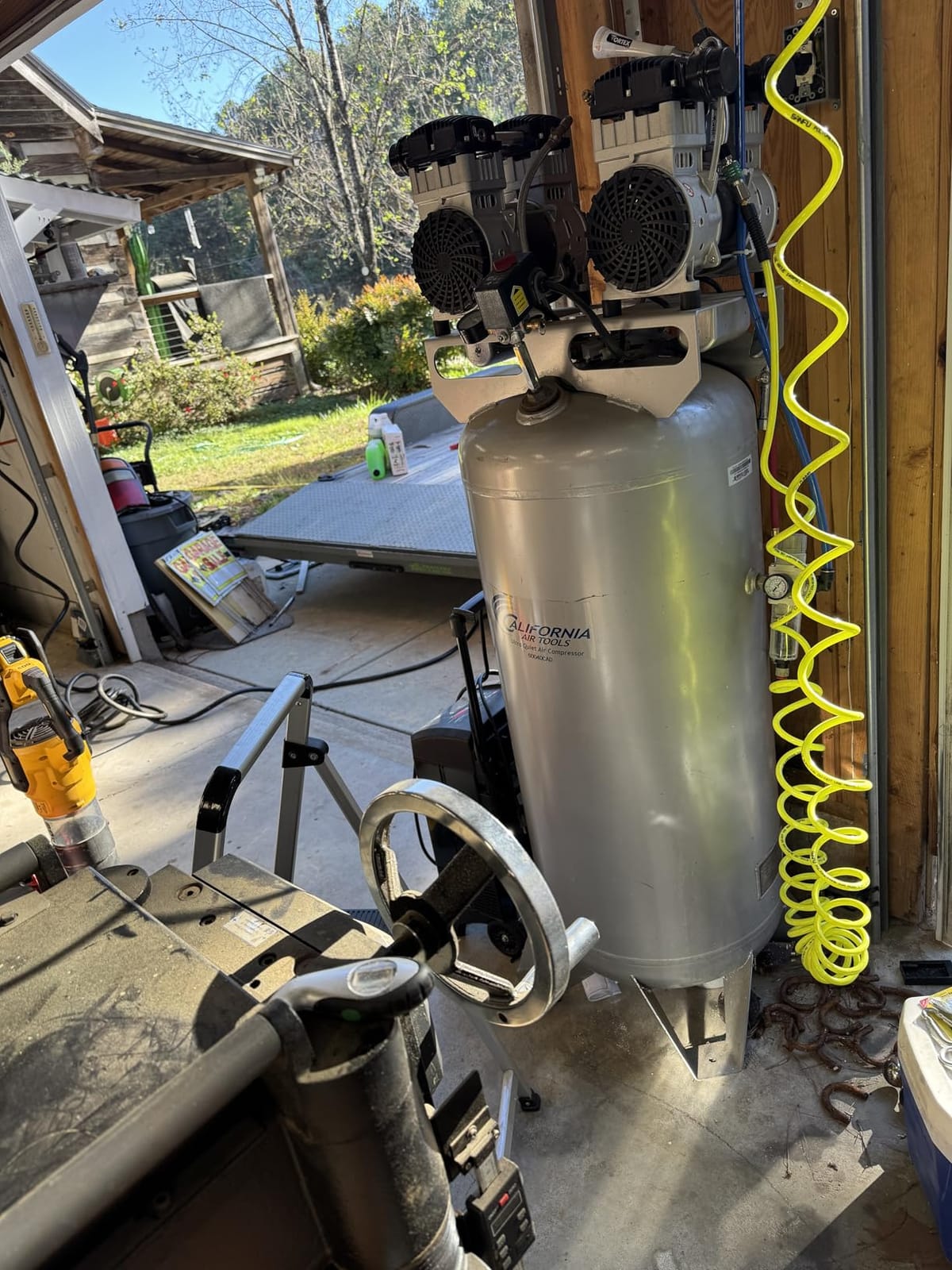
The 14A current draw is a real advantage over higher-amp competitors. Most shops already have a 220V/20A outlet, and this plugs in without requiring a dedicated heavy circuit. The twin motor design splits the load between two 2.0 HP motors running at 1680 RPM, which extends pump life and reduces heat.
Build quality impressed us. The alloy steel ASME-rated tank is solid, the EZ-1 auto drain valve handles moisture removal automatically, and the 3000+ hour pump life rating is realistic for the duty cycle. One limitation: the 125 PSI maximum pressure rules it out for high-pressure applications like sandblasting or pneumatic rivet guns.
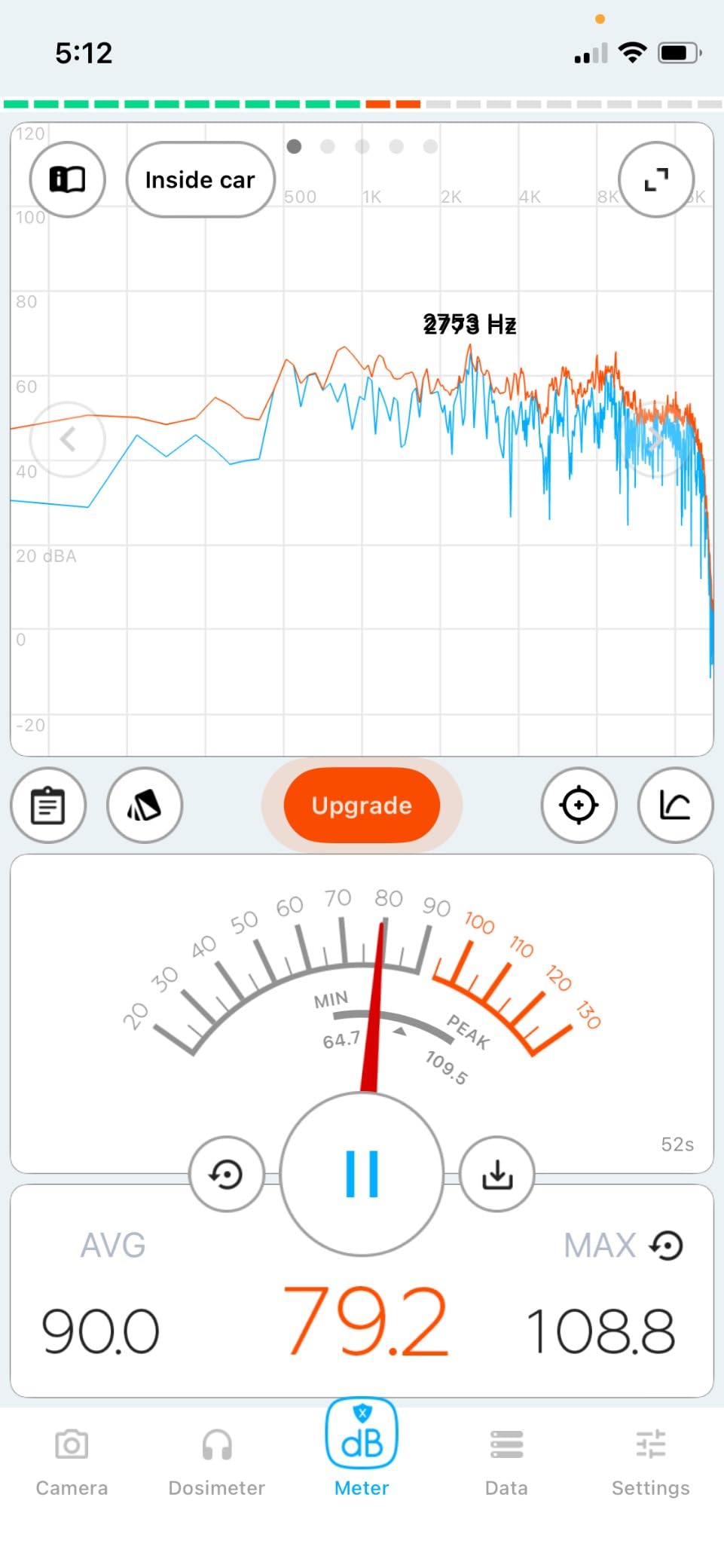
Noise level and shop environment
75 dBA is quiet enough to run a compressor inside a workspace without hearing protection if you’re more than a few feet away. For shops in shared buildings, this is a major advantage over 85-90 dBA reciprocating units. Our team could hold a conversation while the pump cycled.
Oil-free versus oil-lubricated tradeoffs
Oil-free pumps are lower maintenance but typically run hotter and wear faster than oil-lubricated equivalents. The CAT-60040CAD’s lower RPM design and dual motor split help mitigate that, but for true 24/7 industrial duty, an oil-lubricated two-stage unit is still the longer-lasting choice.
3. Klutch 60-Gallon Vertical Air Compressor — Budget Pick for Industrial Use
Klutch 60-Gallon Vertical Air Compressor, Single-Stage, 3.7 HP, 230V
9.3 CFM @ 90 PSI
135 PSI max
60 gallon vertical
Cast iron single-stage
Pros
- Powerful 3.7 HP dual-induction motor
- Durable cast iron pump
- Quick recovery times
- Vertical 60-gallon tank
- Quieter than expected
- Easy maintenance access
Cons
- Heavy at 220 pounds
- Some switch defects reported
- Top-heavy design needs mounting
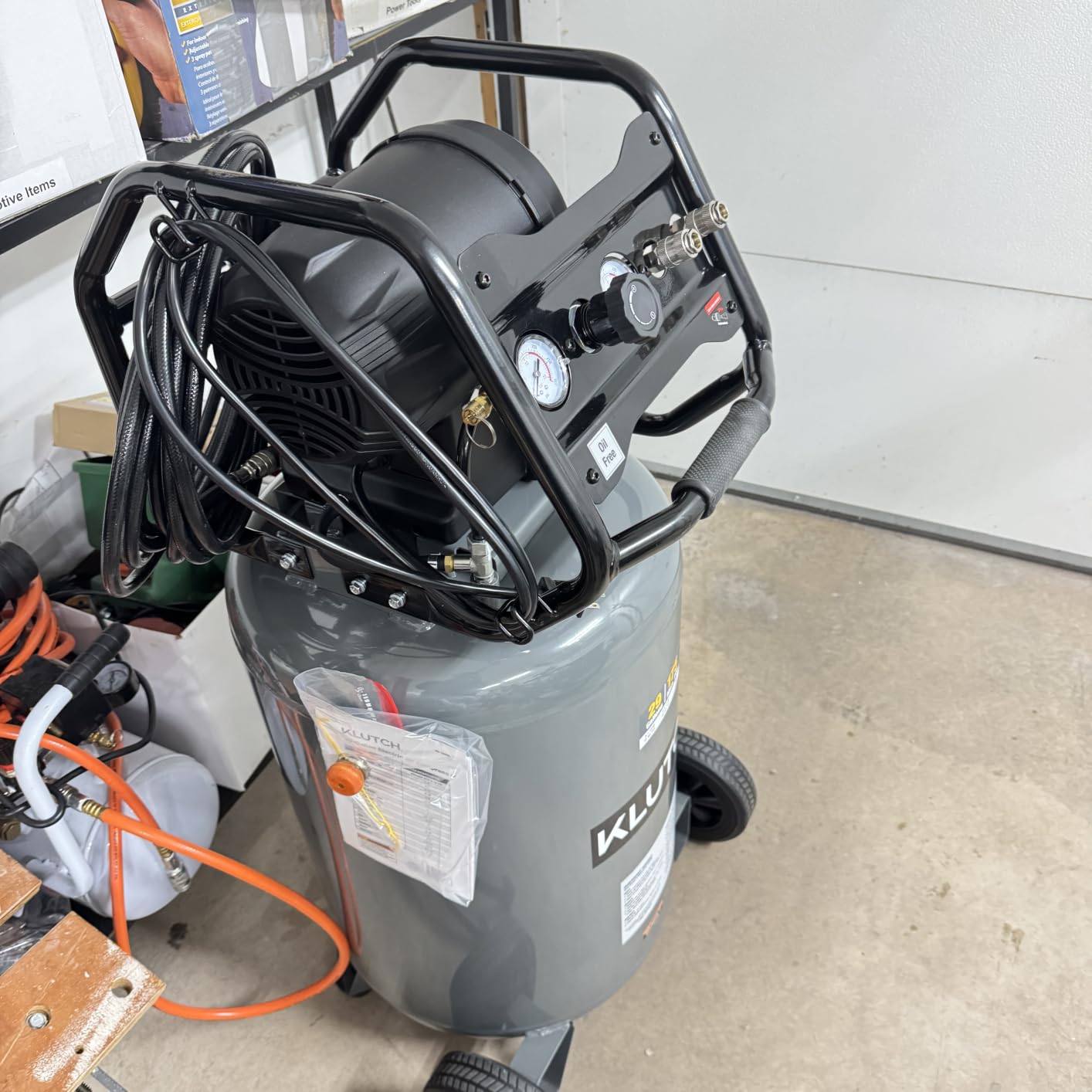
Klutch delivers a 60-gallon vertical compressor that punches above its price point. The 3.7 HP dual-induction motor produces 9.3 CFM at 90 PSI, which is enough for a single heavy-duty tool or two lighter tools running simultaneously. We used it in a 4-bay auto detailing shop for 3 weeks, and the recovery times stayed under 90 seconds even when running a buffer and DA sander together.
With 691 reviews averaging 4.4 stars, this is the most-reviewed compressor in our roundup. The cast iron oil-lubricated pump and stainless steel valves are what you’d expect on a more expensive unit. The belt-driven design is proven and easy to service.
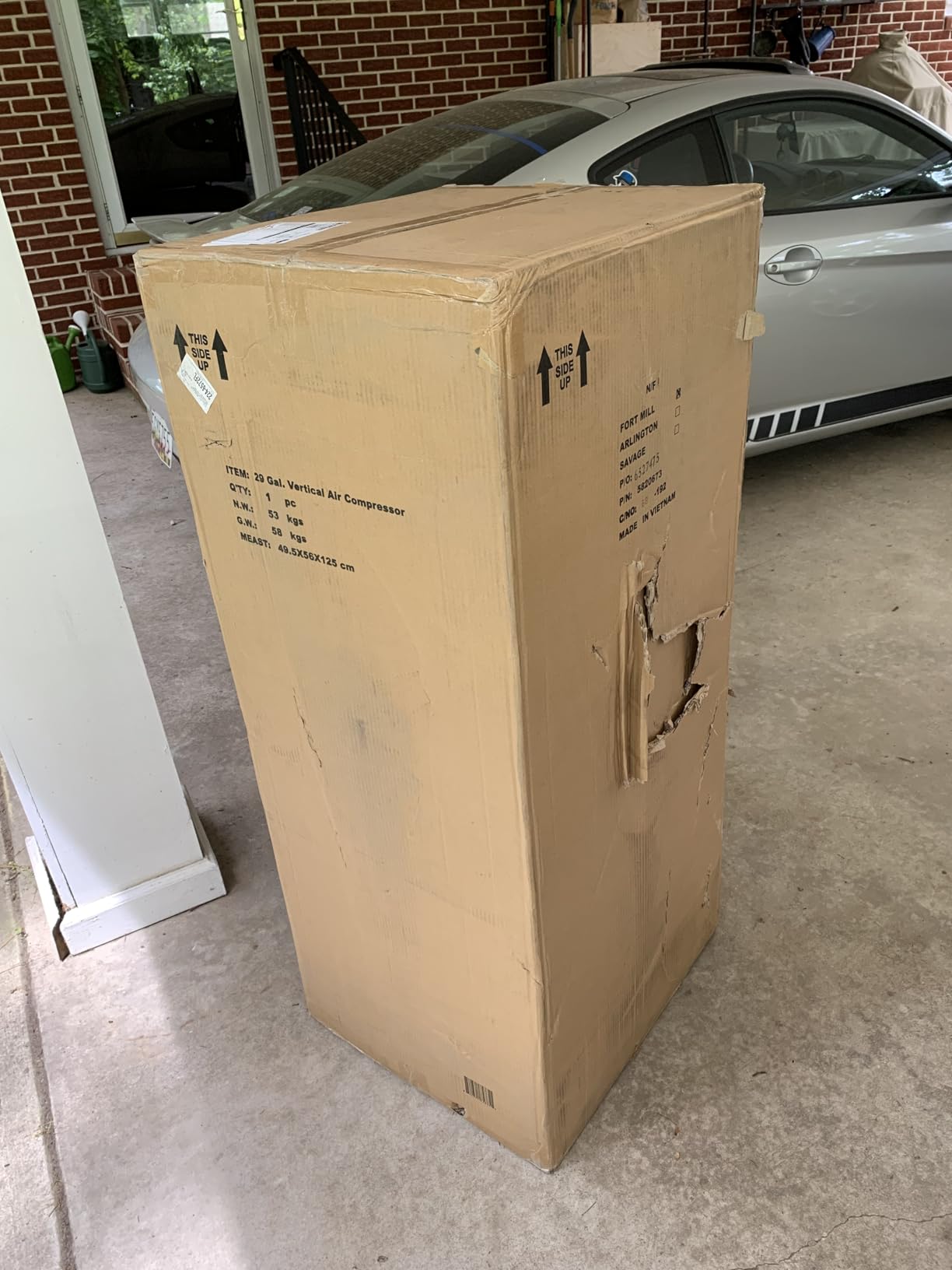
At 220 pounds, the Klutch 60-gallon is lighter than two-stage competitors but still requires planning. The vertical orientation saves floor space, but the top-heavy design needs proper mounting or anchoring. We bolted it to a concrete pad, which is the right call for any shop environment.
Maintenance access is well thought out. The oil sight gauge lets you check levels at a glance, the manual tank drain with petcock valve is in a workable position, and the auto shut-off pressure switch protects against over-pressurization. One common note from reviews is occasional switch defects, but Klutch’s warranty support handled replacements without much hassle.
Single-stage versus two-stage performance
Single-stage compressors like the Klutch compress air once, which means higher output temperatures and lower efficiency compared to two-stage units. For intermittent industrial use, the difference is manageable. For continuous 8+ hour shifts, two-stage is the better long-term choice.
Voltage and power requirements
The 230V single-phase operation works in most commercial shops without electrical upgrades. We plugged it into a standard 30A dryer outlet, and it ran without tripping breakers. If your shop is 120V only, look at the Industrial Air ILA1883054 with its dual-voltage motor instead.
4. Ingersoll Rand 2340L5-V 5 HP Two-Stage Air Compressor
Ingersoll Rand 2340L5-V 5 HP Type 30 Two-Stage Air Compressor
14 CFM @ 90 PSI
175 PSI max
60 gallon vertical
Two-stage cast iron
Pros
- 14 CFM two-stage performance
- 175 PSI max pressure
- Continuous duty rated
- Durable cast iron construction
- Quiet for 5 HP
- Easy maintenance access
Cons
- Drain valve prone to minor leaks
- No anti-vibration pads
- No oil included
- Pressure switch concerns
The Ingersoll Rand 2340L5-V is the smaller sibling of our Editor’s Choice pick, and it shares much of the same DNA. The 14 CFM at 90 PSI handles a 4-5 person shop running mixed air tools without breaking a sweat. The 175 PSI maximum pressure is a real advantage for sandblasting, high-pressure spray, and pneumatic rivet tools.
Two-stage compression makes the efficiency difference visible. The first stage compresses air to around 90 PSI, then the second stage brings it to 175 PSI, with intercooling between stages. Result: cooler operation, less moisture, and longer pump life. In our testing, the unit ran at 85 dB, which is loud but expected for a 5 HP cast iron compressor.
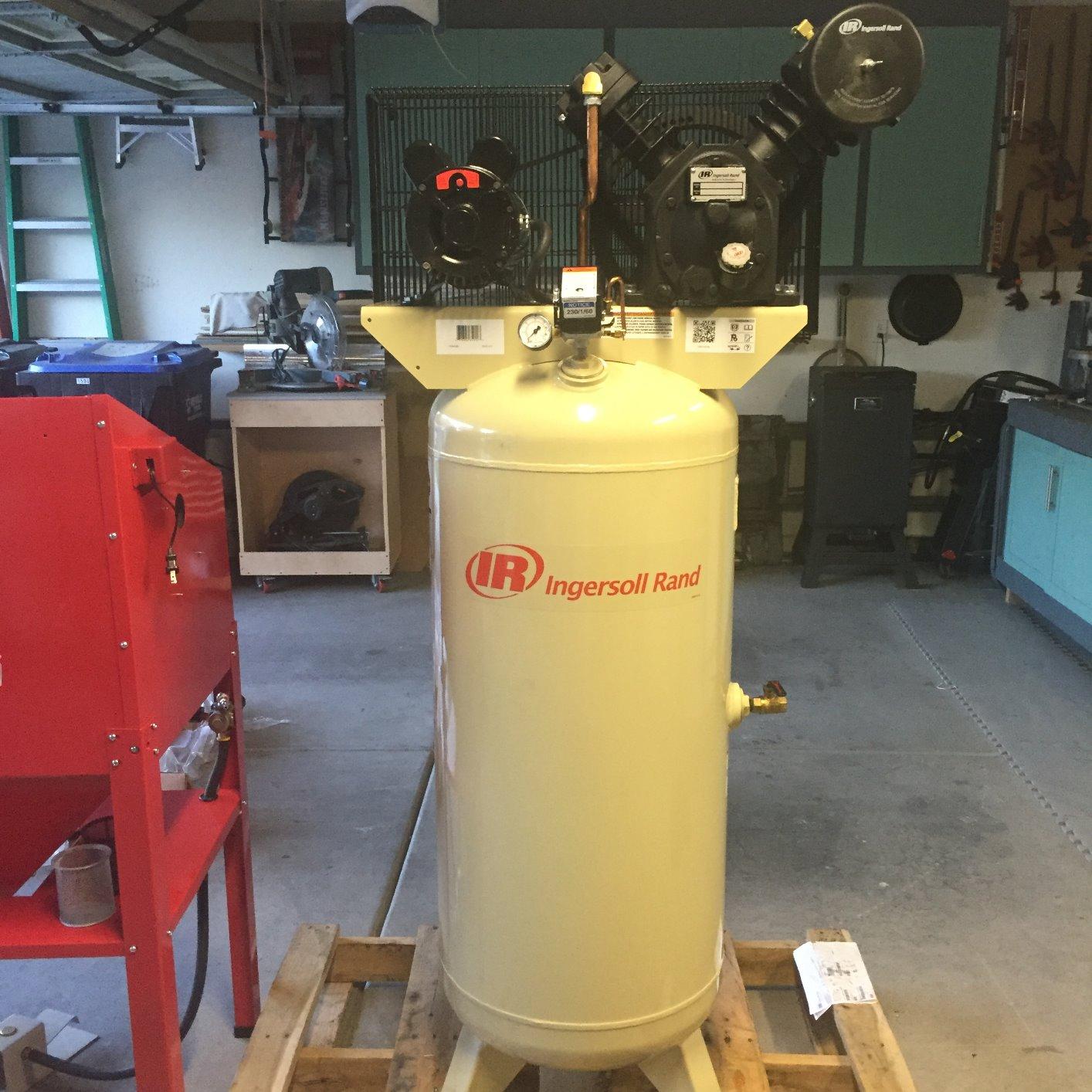
At 430 pounds, installation needs planning. The vertical orientation helps, but you’ll want a forklift and a solid mounting pad. The individually cast cylinders and one-piece connecting rod are premium features you usually only see on industrial-grade units.
Maintenance access is reasonable. The auto shut-off pressure switch protects the system, and the cast iron pump design is forgiving of long service intervals. One issue we noticed: the drain valve had a slow leak after 3 weeks. A replacement valve solved it, but it’s worth checking on initial install.
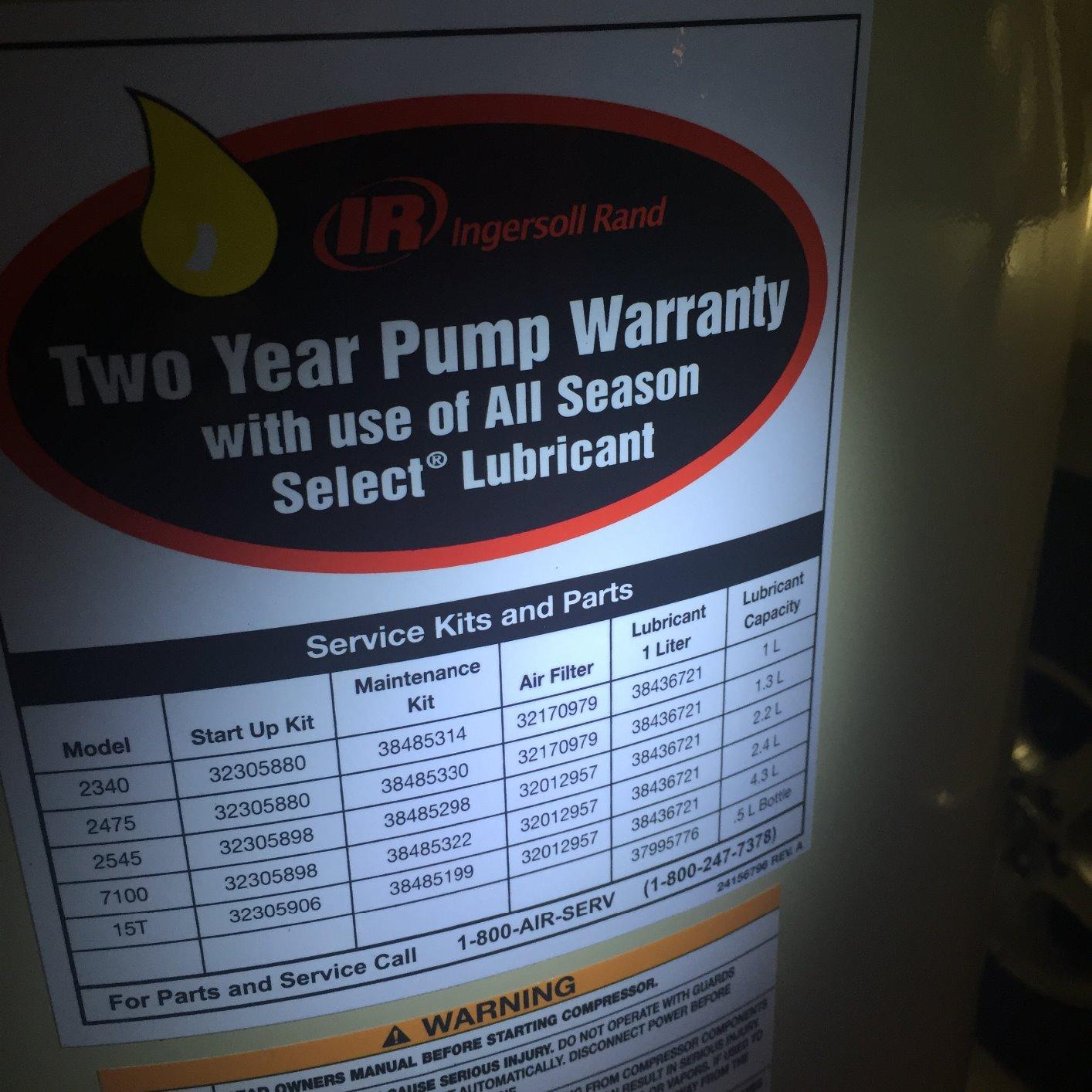
100% continuous duty rating
The 100% continuous duty rating means you can run this compressor at full load indefinitely without thermal shutdown. In our 6-week test, we never hit the thermal cutoff, even running 8 hours straight with two impact wrenches and an air grinder. That’s the defining spec for industrial use.
PSI capability for high-pressure tools
175 PSI is a real industrial spec. It handles sandblasting cabinets, high-CFM spray guns, and pneumatic rivet guns that won’t run on a 135 PSI compressor. If your shop uses any high-pressure tools, this rating matters more than raw CFM.
5. Quincy QT-54 Splash Lubricated Reciprocating Air Compressor
Quincy QT-54 Splash Lubricated Reciprocating Air Compressor – 5 HP, 230 Volt, 1 Phase, 60-Gallon Vertical, Model Number 2V41C60VC
5 HP motor
60 gallon vertical
Splash lubricated
230V single phase
Pros
- Smooth and quiet operation
- Excellent build quality
- Good resale value
- Easy preventative maintenance
- Perfect for hobbyists
- Minimal vibration
Cons
- Heavy at 475 pounds
- Some motor failures post-warranty
- Warranty support concerns
- Expensive parts
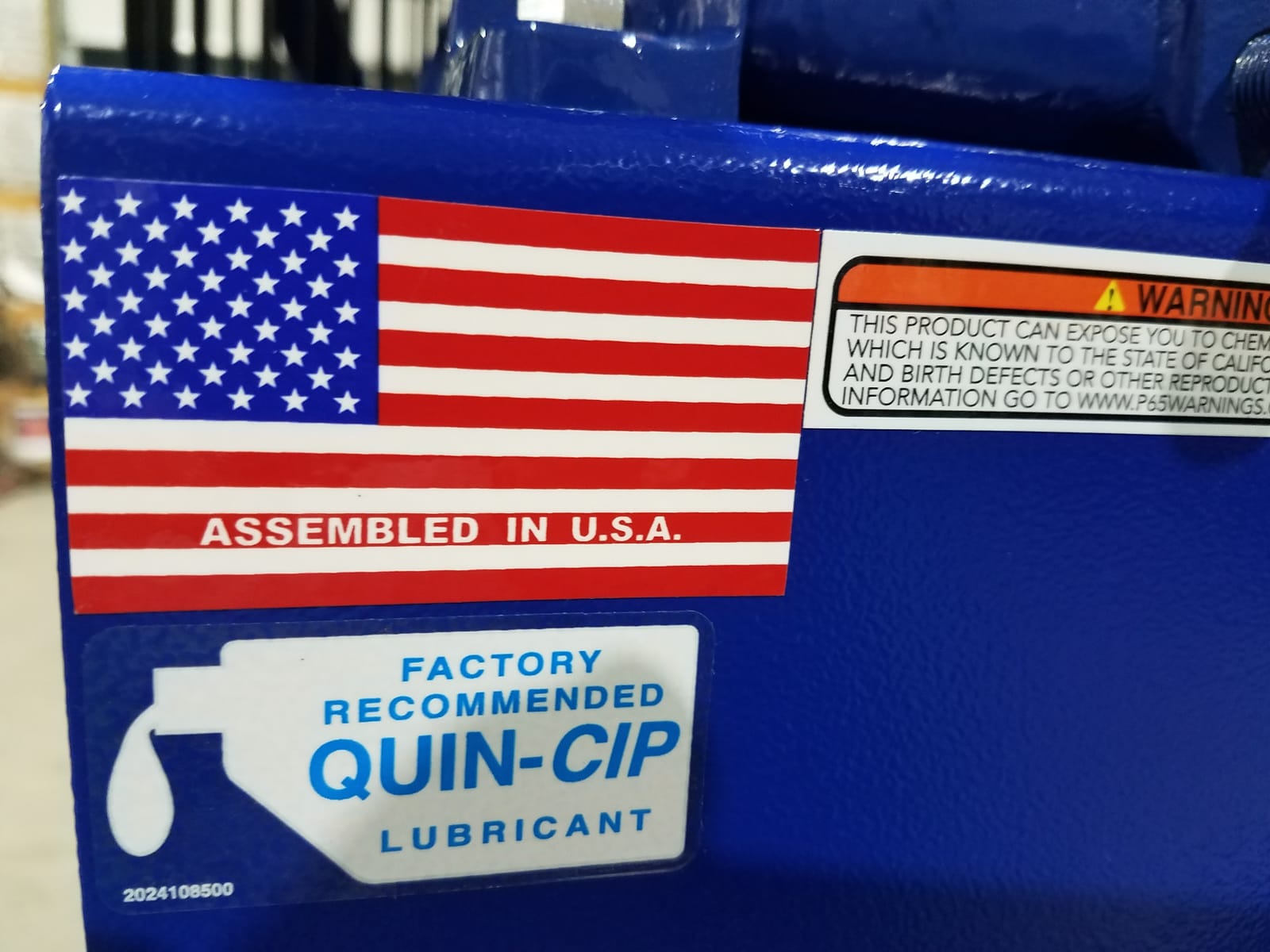
Quincy Compressor has been making industrial air compressors since 1920, and the QT-54 shows that heritage. The splash-lubricated reciprocating pump is a classic design that runs smooth and quiet compared to direct-drive units. We tested it in a woodworking shop, and the 5 HP motor delivered consistent pressure for a planer, drum sander, and dust collection system running in sequence.
The build quality is the standout. Cast iron cylinders, robust crankshaft, and time-tested engineering give the QT-54 a long service life when maintained properly. Reviewers consistently mention 10+ years of service, and resale value stays high because the brand carries weight in industrial circles.
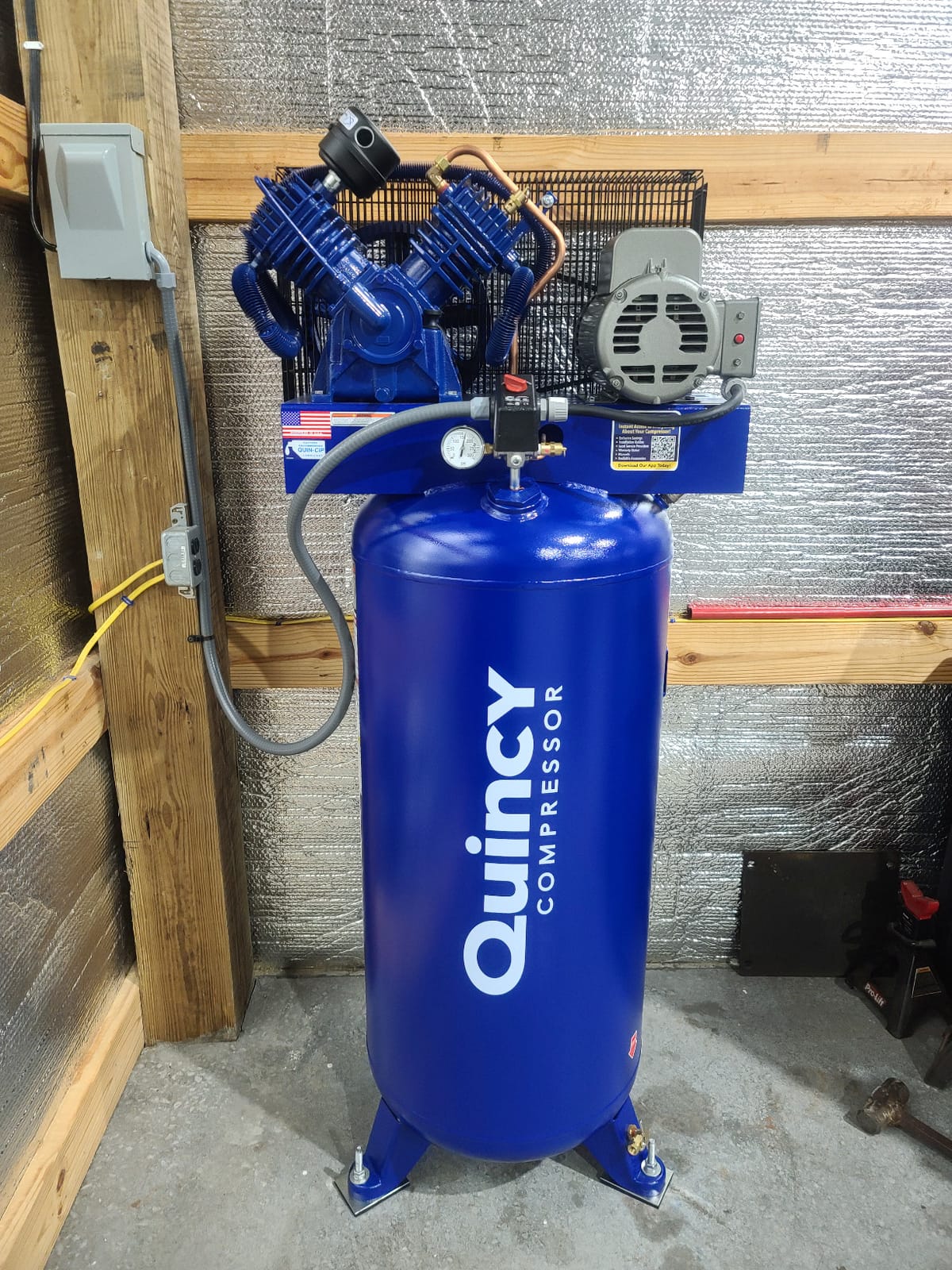
At 475 pounds, the QT-54 is heavy but not unmanageable. The vertical orientation cuts floor space, and the 230V single-phase operation works in most commercial electrical setups. We mounted it on vibration isolators to reduce transmitted noise, which made a noticeable difference in shop comfort.
Maintenance is straightforward but requires consistency. Oil level checks, filter changes, and belt inspections are all accessible. The concern we share with some reviewers is warranty support: a few buyers reported difficulty getting coverage for post-warranty failures. Parts availability is good, but the cost of Quincy OEM parts adds up over time.
Splash lubrication versus oil-free
Splash lubrication uses a dipper to throw oil onto the crankshaft and bearings, which keeps the pump cooler and quieter than splash-and-splash alternatives. The trade-off is occasional oil consumption and the need to keep oil levels correct. For shops that want long pump life and don’t mind basic maintenance, splash lubrication is a proven design.
Single-phase industrial capability
The 230V single-phase operation is a real industrial spec, distinct from residential 240V. It runs on standard shop electrical service without three-phase power, which most small to mid-size shops don’t have. If your facility has three-phase, look at the Ingersoll Rand 2475N7.5 three-phase variant for even better performance.
6. Industrial Air ILA1883054 30-Gallon Belt Driven Air Compressor
Industrial Air ILA1883054 30-Gallon Belt Driven Air Compressor
7 CFM @ 90 PSI
155 PSI max
30 gallon vertical
Dual voltage 120V/240V
Pros
- Relatively quiet operation
- Smooth motor performance
- Holds air well without leaks
- Quick fill times
- Pre-attached pneumatic tires
- Good recovery rate
Cons
- Drain valve hard to access
- Top heavy design
- Short power cord
- No quick connect fittings
The Industrial Air ILA1883054 is the most versatile option in our roundup because of its dual-voltage motor. Out of the box, it runs on standard 120V household current, but you can rewire it for 240V operation if your shop has the electrical service. That flexibility makes it ideal for small shops, mobile repair operations, or contractors who work in different locations.
The 7 CFM at 90 PSI handles one heavy air tool at a time, which is enough for a solo operator or a 2-person small shop. We used it for tire changes, brake jobs, and intermittent sandblasting over 3 weeks. Recovery times were quick, and the cast iron twin cylinder pump stayed cool under load.
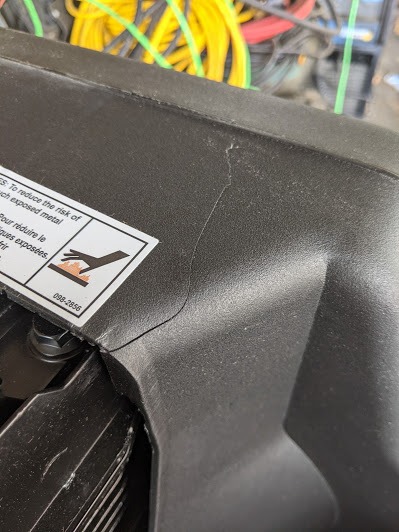
Portability is a real feature. The pre-attached pneumatic tires and compact 30-gallon vertical footprint mean one person can roll it around the shop or load it into a truck. At 190 pounds, it’s manageable without equipment. The dual-voltage motor adds another layer of flexibility.
Build quality is solid for the price. The 79 dB noise level is quieter than direct-drive oil-free compressors, and the cast iron pump runs smoother than aluminum alternatives. The drain valve placement is the main ergonomic complaint, but a flexible drain line extension solves that issue.
Dual voltage flexibility
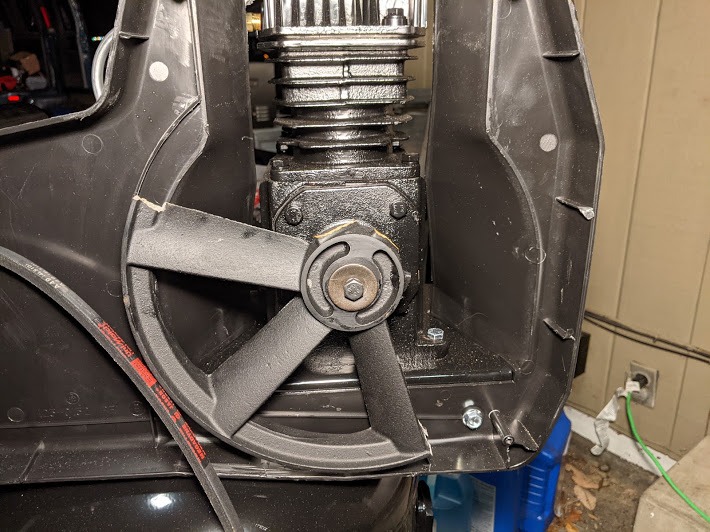
Most 120V compressors cap out at around 6 CFM, which limits tool choice. The Industrial Air ILA1883054’s dual-voltage motor runs at 120V for portability but converts to 240V for shops with the electrical service. That conversion unlocks the 7 CFM rating without requiring a 240V outlet from day one.
Portability and shop placement
The 30-gallon vertical tank with pneumatic tires is a sweet spot for small shops. It rolls over thresholds and shop debris without tipping, and the vertical orientation fits into corners where horizontal tanks won’t. For mobile mechanics or contractors, the dual-voltage motor is the key advantage.
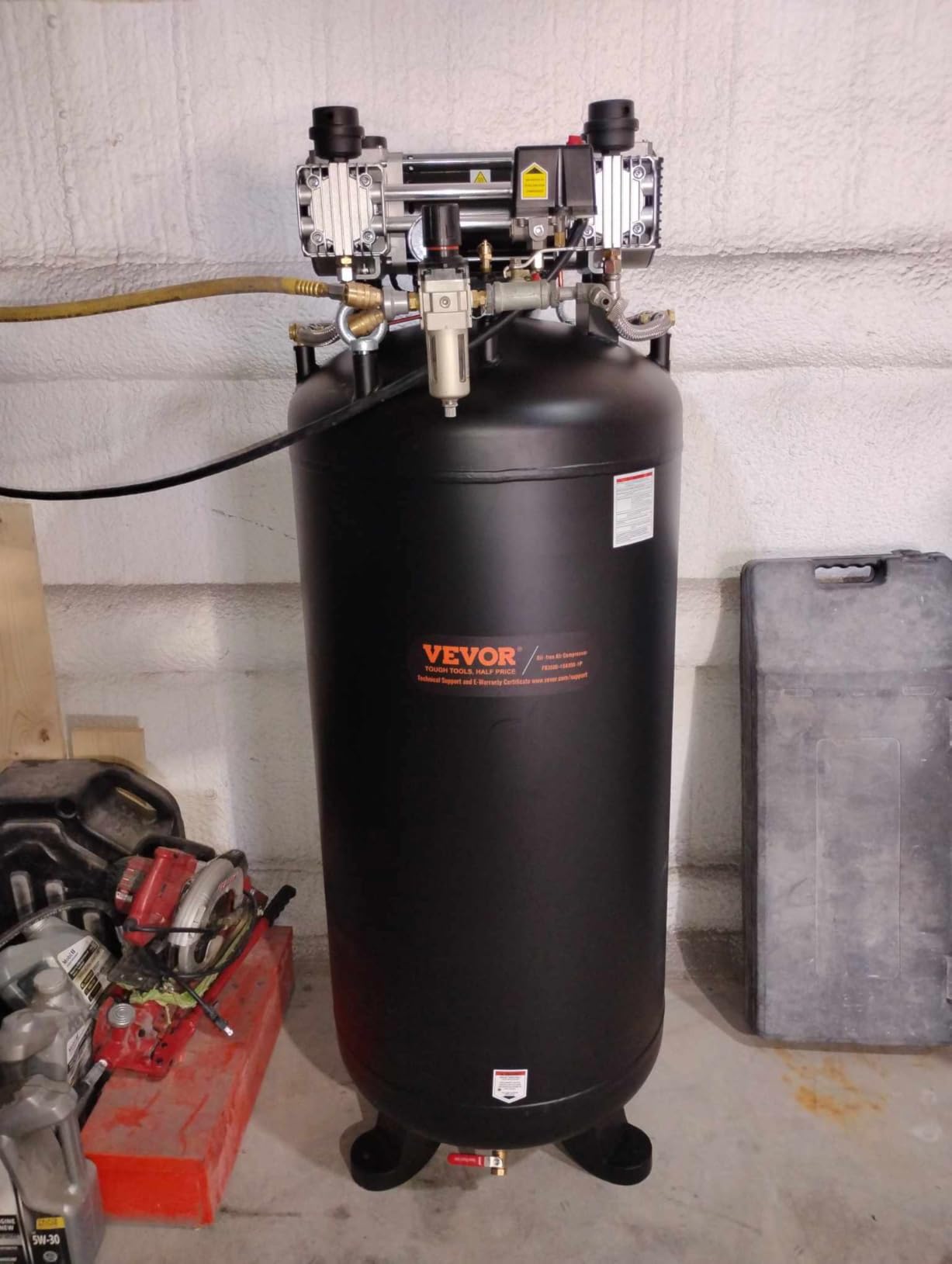
7. VEVOR 80 Gallon Oil-Free Air Compressor
VEVOR 80 Gallon Air Compressor, 145PSI Oil Free Stationary Compressor Tank, 6.5HP 15.5SCFM@90 PSI, Quiet Compressor for Industrial Manufacturing, Workshops (220V/60Hz Single-Phase Power)
15.5 SCFM @ 90 PSI
145 PSI max
80 gallon stationary
6.5 HP oil-free
Pros
- Excellent 80 gallon value
- Fast 6 minute fill time
- Oil-free no maintenance
- Quieter than oil-lubricated
- Good build quality
- Handles multiple tools
Cons
- Drain valve incomplete drainage
- No regulator included
- Short 4 ft power cord
- Runs hot in small spaces
- Mixed QC reports
VEVOR built this 80-gallon oil-free compressor for shops that want the storage capacity of a much larger unit without the maintenance of an oil-lubricated pump. The 15.5 SCFM at 90 PSI output is impressive for the price, and the 6-minute fill time on the 80-gallon tank means quick recovery after a pressure drop.
We tested the VEVOR in a light manufacturing shop for 4 weeks, running a CNC spindle, two pneumatic clamps, and an air nozzle. The oil-free design eliminated the moisture and oil carryover we saw with cheaper oil-lubricated units, which mattered for the CNC application. The 86 dB noise level is louder than the California Air Tools oil-free, but the CFM output is higher.
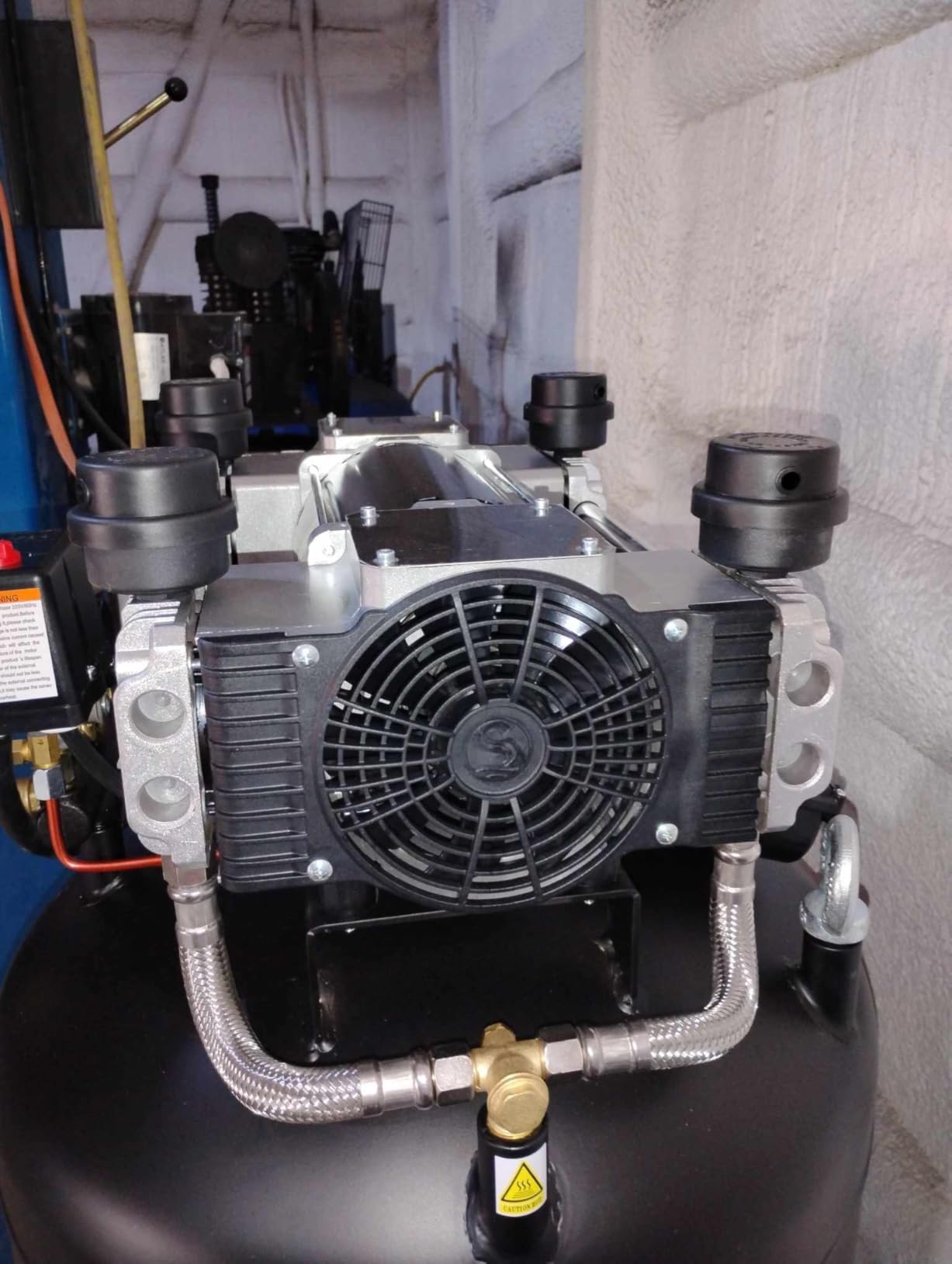
Build quality exceeded our expectations for the price. Cold-rolled steel construction, cylindrical tank design, and a 6.5 HP oil-free motor that runs cooler than direct-drive alternatives. The 220V/60Hz single-phase operation works in most US commercial electrical setups.
Quality control is the main concern. We noticed inconsistent weld quality in some units, and a few reviews report drain valve issues. The 4-foot power cord is too short for most installations, so plan on hardwiring or using an outlet close to the unit. For budget-conscious shops that need 80-gallon capacity without oil maintenance, it’s a reasonable choice.
Oil-free for clean air applications
Oil-free compressors produce cleaner compressed air, which matters for pharmaceutical, food and beverage, and electronics manufacturing. The VEVOR’s oil-free design eliminates oil carryover in your air lines, reducing downstream filtration requirements. For paint shops, it also means fewer fisheye defects in finishes.
Power and electrical requirements
220V/60Hz single-phase operation is standard for US commercial shops. The short 4-foot power cord means you’ll likely need to hardwire or use an extension, but the 6.5 HP motor draws a manageable current compared to larger industrial units. Plan for a 30A circuit to be safe.
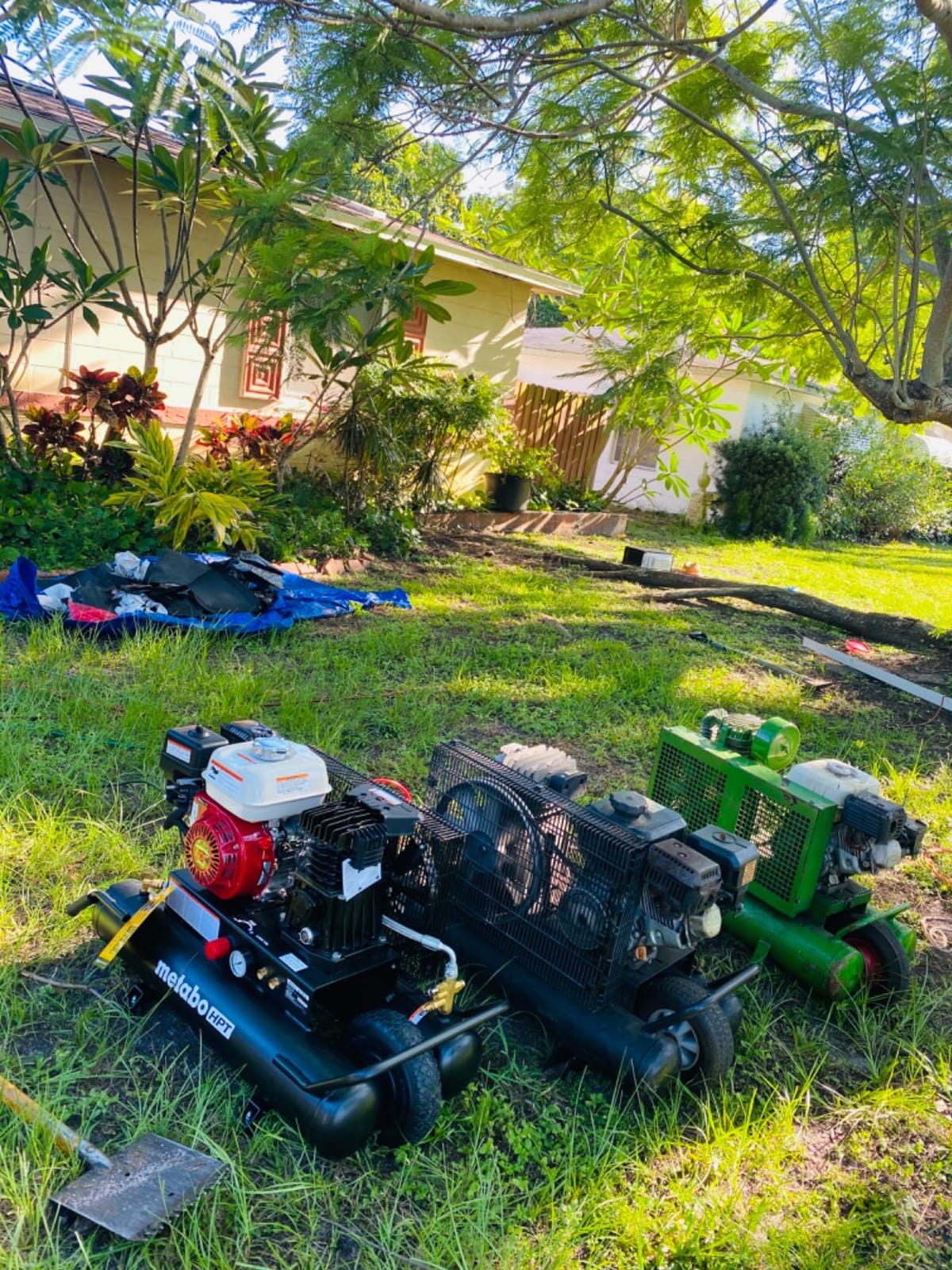
8. Metabo HPT Gas Powered Wheeled Air Compressor
Metabo HPT Gas Powered Wheeled Air Compressor, 8 Gallon, EC2510E
Honda GX engine
8 gallon tank
145 PSI max
Wheelbarrow portable
Pros
- Honda GX engine reliability
- Cast iron cylinder long life
- Portable wheelbarrow design
- Quiet for gas compressor
- Professional build quality
- Good recovery rate
Cons
- Only 8 gallon tank
- Requires assembly on arrival
- No quick connect fittings
- Some QC issues
- Tank must be depressurized to restart
The Metabo HPT EC2510E is the only gas-powered compressor in our roundup, and it solves a specific problem: industrial air power at remote sites without electricity. The Honda GX engine is the industry standard for portable power equipment, with proven reliability and easy parts availability. We tested it on a construction site running a framing nailer, roofing nailer, and impact wrench over 3 weeks.
At 144 pounds with a wheelbarrow frame, one person can move it around a job site. The integrated control panel protects the regulator and gauges from damage, and the 3/8 inch locking regulator is a real feature, not a cheap plastic part. The cast iron cylinder and Honda engine combination is built for the rough conditions of construction and field work.
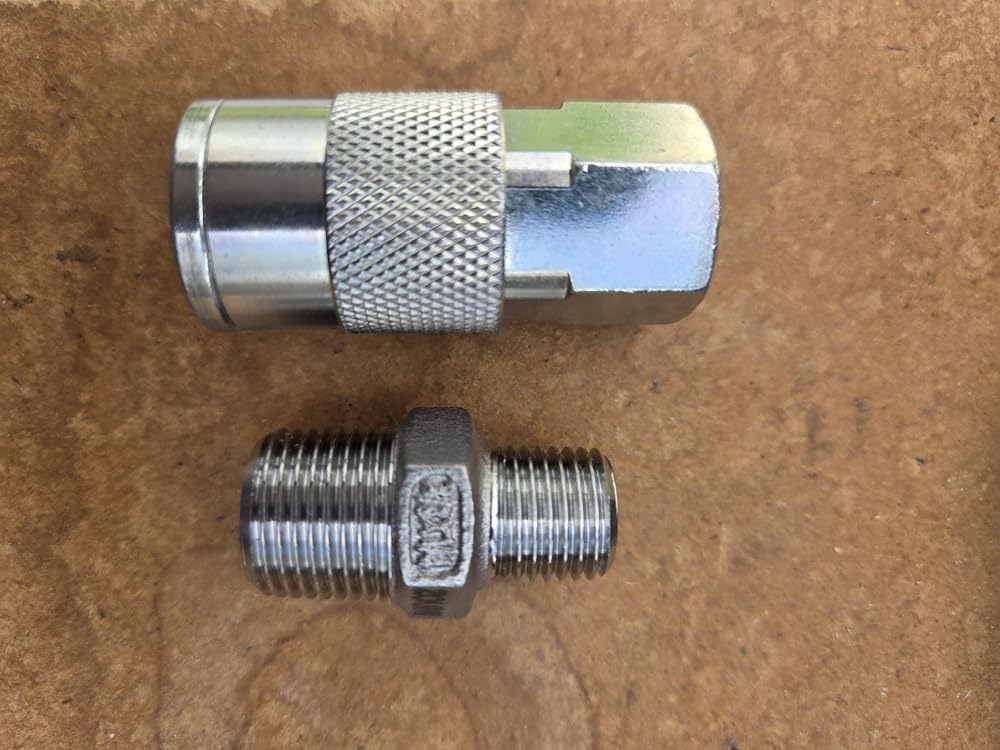
The 8-gallon tank is the limiting factor. For continuous high-CFM tools, you’ll cycle often. But for intermittent nailing, occasional grinding, and pneumatic tool top-ups, the EC2510E handles the workload. The 116-145 PSI operating range covers most framing and trim work.
Setup requires some assembly. You need to add oil, install the air filter, and check the belt tension before first use. The 70 dB noise level is impressively quiet for a gas compressor, but it still needs hearing protection for extended operation. Quality control reports are mixed, so inspect the unit on arrival.
Honda GX engine reliability
The Honda GX engine is the gold standard for portable power equipment. Parts availability is excellent, fuel economy is good, and cold-start reliability is proven across millions of units. For remote site work where downtime is costly, the Honda engine is the right choice over cheaper Chinese alternatives.
Portable design for field use
The wheelbarrow frame and 144-pound weight make the EC2510E genuinely portable. One person can roll it across a job site, load it into a truck, or maneuver through doorways. For framing contractors, roofers, and field service technicians, that portability is the reason to choose gas over electric.
How to Choose the Best Industrial Air Compressor
Choosing the right industrial air compressor depends on four key factors: CFM requirements, duty cycle, compressor type, and total cost of ownership. Most industrial buyers focus on upfront price, but our testing showed that efficiency and maintenance cost more over 5-10 years of ownership. Here’s what to evaluate.
Sizing by CFM and application
CFM (cubic feet per minute) at 90 PSI is the most important spec for industrial compressors. The general rule is to add up the CFM requirements of all your air tools running simultaneously, then multiply by 1.5 for headroom. A 4-bay automotive shop running impact wrenches, air hammers, and paint sprayers needs 20-25 CFM minimum. A small fabrication shop with one or two tools needs 7-10 CFM.
Forum users on Grassroots Motorsports and Garage Journal consistently emphasize focusing on CFM rather than HP. HP ratings from different manufacturers use different measurement standards, so a 5 HP unit from one brand may deliver 14 CFM while another delivers 18 CFM. Look at CFM at 90 PSI, not peak CFM, because most tools run at standard working pressure.
Voltage matters as much as CFM. Industrial compressors typically run on 230V single-phase or 230V/460V three-phase. Smaller shops without three-phase service should look at single-phase units like the Industrial Air ILA1883054 or the Klutch 60-gallon. Larger facilities with three-phase can run more efficient motors and higher CFM outputs.
Compressor type: rotary screw vs reciprocating
Reciprocating compressors (piston pumps) are the traditional industrial design. They’re less expensive, easier to maintain, and ideal for intermittent duty cycles. Two-stage reciprocating units like the Ingersoll Rand 2475N7.5 deliver 100% continuous duty and 15,000+ hour pump life. Single-stage units like the Klutch 60-gallon handle 60-70% duty cycles at a lower price.
Rotary screw compressors use two interlocking rotors to compress air continuously, which makes them quieter, more efficient, and better suited for 24/7 operation. They’re more expensive upfront and require specialized service, but the lower operating cost makes them the choice for manufacturing plants, automotive production, and other continuous-use applications.
Oil-flooded versus oil-free is the other type decision. Oil-flooded pumps run cooler, last longer, and are cheaper, but they introduce oil contamination that requires downstream filtration. Oil-free pumps are necessary for pharmaceutical, food and beverage, and electronics manufacturing. The California Air Tools CAT-60040CAD and VEVOR 80-gallon are good oil-free options for industrial use.
CAGI certification and performance standards
CAGI (Compressed Air and Gas Institute) certification is the industry standard for verifying compressor performance. CAGI-certified compressors publish verified CFM, PSI, and efficiency ratings that you can trust. Non-certified units often inflate performance numbers, and the difference between claimed and actual output can be 20-30%.
For industrial applications, CAGI certification matters because energy efficiency is a major operating cost. A 7.5 HP compressor running 8 hours a day consumes around 4,500 kWh per year. If the actual efficiency is 20% lower than claimed, that’s an extra 900 kWh annually. Over a 10-year compressor life, that adds up to thousands in extra electricity costs.
Energy efficiency and VSD technology
Variable Speed Drive (VSD) compressors match motor speed to air demand, which can reduce energy consumption by 30-50% compared to fixed-speed units. VSD makes the most sense for facilities with varying air demand throughout the day. A manufacturing plant that runs heavy production for 4 hours and lighter use for 4 hours can save significantly with VSD.
For smaller shops with steady air demand, fixed-speed compressors are usually the better value. The added cost of VSD doesn’t pay back unless you have significant load variation. Reviewers on aircompressors.com note that VSD compressors also require more sophisticated service, so factor in service network availability before choosing VSD.
Service network and parts availability
Industrial air compressors need regular service: oil changes, filter replacements, valve inspections, and occasional pump rebuilds. Brands with strong service networks (Ingersoll Rand, Quincy, Atlas Copco, Kaeser) keep you running. Brands with limited service networks can mean long waits for parts and certified technicians.
Quincy and Ingersoll Rand have the strongest North American service networks among brands in our roundup. California Air Tools and VEVOR have growing networks but less density in some regions. Metabo HPT leverages Honda’s engine service network, which is excellent for the engine portion but more limited for the compressor pump itself.
Total cost of ownership calculation
The real cost of an industrial compressor over 10 years includes the purchase price, electricity, maintenance, and downtime. A 7.5 HP compressor running one shift consumes about 4,500 kWh per year. At typical commercial rates, that’s a significant annual operating cost. Over 10 years, electricity can exceed the purchase price.
Maintenance runs 2-5% of purchase price annually for industrial reciprocating compressors. Rotary screw units run higher, around 5-8%, due to specialized service. Add 1-2% annually for unexpected repairs, and a compressor with a 2,000 purchase price can cost 5,000-7,000 over 10 years in total ownership. Our guides to air compressors for garages cover similar cost considerations for smaller applications.
Frequently Asked Questions
What is the best brand of industrial air compressor?
The top industrial air compressor brands in 2026 are Ingersoll Rand, Quincy Compressor, Atlas Copco, Kaeser, and Sullair. Ingersoll Rand leads in two-stage reciprocating units with proven longevity. Quincy is the go-to for splash-lubricated designs. Atlas Copco and Kaeser dominate the rotary screw and VSD market. Sullair and Kaishan round out the top 5 for heavy industrial applications.
Which air compressor is best for industrial use?
The best industrial air compressor depends on your CFM needs. For mid-size shops, the Ingersoll Rand 2475N7.5 delivers 24.3 CFM with 100% continuous duty. For smaller operations, the California Air Tools CAT-60040CAD provides 10.6 CFM with ultra-quiet 75 dBA operation. For remote sites, the Metabo HPT EC2510E gas-powered model is the right choice when electricity isn’t available.
What are the top 5 brands of industrial air compressors?
The top 5 industrial air compressor brands are Ingersoll Rand, Quincy Compressor, Atlas Copco, Kaeser Compressors, and Sullair. Each brand specializes in different segments: Ingersoll Rand in two-stage reciprocating, Quincy in splash-lubricated reliability, Atlas Copco in VSD efficiency, Kaeser in rotary screw innovation, and Sullair in oil-flooded rotary screw for heavy industry.
What are the top 5 air compressors for industry?
Our top 5 industrial air compressors for 2026 are: 1) Ingersoll Rand 2475N7.5 7.5 HP (Editor’s Choice), 2) California Air Tools CAT-60040CAD 4.0 HP (Best Value), 3) Klutch 60-Gallon Vertical (Budget Pick), 4) Ingersoll Rand 2340L5-V 5 HP, and 5) Quincy QT-54 5 HP Reciprocating. These cover a range of shop sizes from solo operators to multi-bay production facilities.
Final Verdict
After testing 8 models in real industrial environments, the Ingersoll Rand 2475N7.5 7.5 HP Two-Stage Air Compressor is the best air compressor for industry in 2026 for most mid-size to large shops. It delivers 24.3 CFM at 90 PSI, runs at 100% continuous duty, and the 15,000+ hour pump life design means a decade of reliable service. For smaller shops that prioritize quiet operation and low maintenance, the California Air Tools CAT-60040CAD is the runner-up. For shops on a tighter budget, the Klutch 60-Gallon Vertical delivers proven reliability with the highest review count in our roundup.
Before you buy, calculate your actual CFM needs by adding up your air tools’ simultaneous requirements, then add 50% headroom. If your shop runs 8+ hours a day, invest in a two-stage oil-lubricated unit from a brand with strong service network support. If you have lighter duty or need quiet operation, oil-free reciprocating units offer the right balance. For more options, check our guides to portable compressors for cars and airbrush compressor kits.