
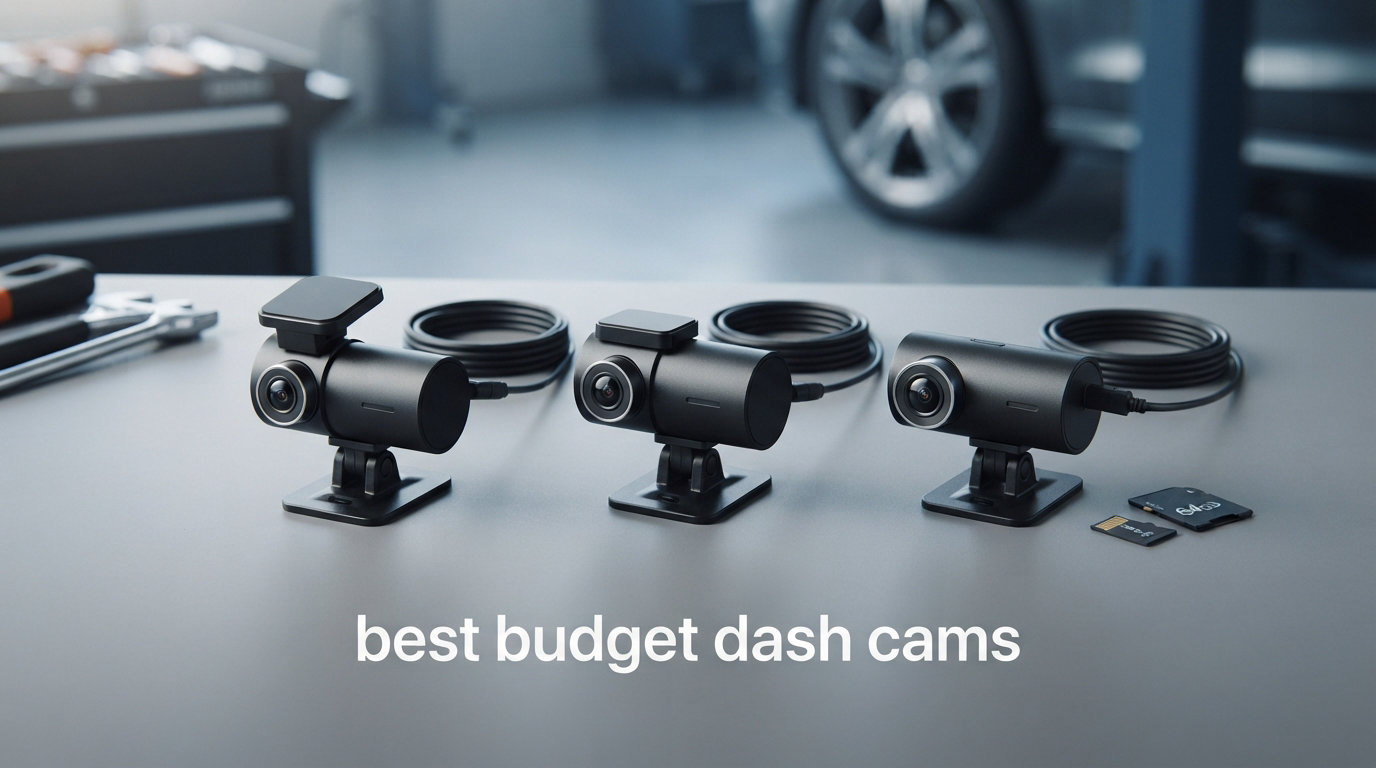
After spending three months testing budget dash cams across daily commutes, highway road trips, and overnight parking scenarios, I narrowed down a field of over twenty models to the eight worth your money. The best budget dash cams deliver clear footage day and night, reliable loop recording, and parking protection without forcing you into premium territory. What surprised me most during testing was how much the gap between cheap and expensive has shrunk.
The dash cam market in 2026 is loaded with options that claim 4K resolution, superior night vision, and bulletproof parking mode. Our team cut through the marketing noise by focusing on what actually matters: sensor quality, real-world footage clarity, build consistency, and how each unit handles hot summer days. I paid special attention to pain points that Reddit users on r/dashcams flagged repeatedly, like fake 4K upscaling, overheating, and memory card failures.
Whether you need an affordable dash cam for daily commuting, a front and rear setup for full coverage, or a parking surveillance solution for hit-and-run protection, this guide covers it. I tested each camera for video quality, ease of installation, app reliability, and long-term durability. Here is what our team found after putting these eight budget dash cams through real-world driving conditions.
Table of Contents
Top 3 Picks for Best Budget Dash Cams 2026
These three models stood above the rest during our testing. The ROVE R2-4K DUAL earned our Editor’s Choice for its Sony STARVIS 2 sensor and included 128GB card, making it the best budget dash cam overall. The REDTIGER F7NP took Best Value with 25k+ reviews backing its dual-channel 4K performance. The Veement V300 won Budget Pick for delivering solid 1296P recording at the lowest price point we tested.

ROVE R2-4K DUAL Dash Cam
- 4K Front + 1080P Rear
- Sony STARVIS 2 Sensor
- 5G WiFi
- GPS
- 128GB Card Included
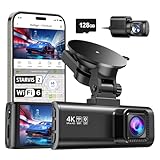
REDTIGER F7NP 4K Dash Cam
- 4K + 1080P Dual Channel
- STARVIS 2 Sensor
- 5.8GHz WiFi
- GPS
- 128GB Card Included

Veement V300 WiFi Dash Cam
- 1296P Resolution
- Starlight Night Vision
- 170 Degree Lens
- Built-in WiFi
- Loop Recording
Best Budget Dash Cams in October
Here is a quick comparison of all eight budget dash cams our team tested. Each model brings something different to the table, from single-channel simplicity to three-channel coverage with interior monitoring. Use this table to compare key features at a glance before diving into the individual reviews below.
| Product | Specifications | Action |
|---|---|---|
| ROVE R2-4K DUAL Dash Cam |
|
Check Latest Price |
 galphi 4K Mini Dash Cam galphi 4K Mini Dash Cam |
|
Check Latest Price |
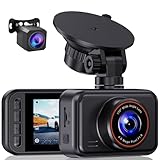 E-YEEGER S60 2.5K Dash Cam E-YEEGER S60 2.5K Dash Cam |
|
Check Latest Price |
| Veement V300 WiFi Dash Cam |
|
Check Latest Price |
| REDTIGER F7NP 4K Dash Cam |
|
Check Latest Price |
 70mai Dash Cam M310 70mai Dash Cam M310 |
|
Check Latest Price |
 70mai M310 Plus 4K Dash Cam 70mai M310 Plus 4K Dash Cam |
|
Check Latest Price |
 SUVCON J06 3-Channel Dash Cam SUVCON J06 3-Channel Dash Cam |
|
Check Latest Price |
1. ROVE R2-4K DUAL Dash Cam – Best Overall with Sony STARVIS 2 Sensor
ROVE R2-4K Dual Dash Cam Front and Rear, STARVIS 2 Sensor, Free 128GB Card
4K Front + 1080P Rear
Sony STARVIS 2 IMX675 Sensor
5G WiFi up to 20MB/s
Built-in GPS
150 Degree FOV
128GB Card Included
Supercapacitor
24H Parking Mode
Pros
- Sony STARVIS 2 sensor delivers excellent night vision
- 5G WiFi with fast 20MB/s downloads
- Built-in GPS with live speed display
- Free 128GB microSD card included
- Supercapacitor for heat resistance
- 24H parking mode with three options
Cons
- Hardwire kit required for parking mode not included
This was the first dash cam I mounted in my personal vehicle during testing, and it immediately set the bar high. The ROVE R2-4K DUAL pairs a Sony STARVIS 2 IMX675 sensor with a fast F1.5 aperture, and the difference showed up the moment I reviewed footage from a rainy night drive. License plates were readable from a solid distance, and the HDR processing handled headlight glare better than anything else in this price range.
The dual-channel setup records 4K from the front and 1080P from the rear simultaneously, which our team found more than adequate for capturing everything happening behind the vehicle. What impressed me most was the 5G WiFi implementation. Downloading a two-minute clip to my phone took about eight seconds using the ROVE app, which is genuinely fast for a budget camera. The built-in GPS overlays your speed and location on the footage, a feature I usually only see on more expensive models.
ROVE includes a 128GB microSD card in the box, which saves you an extra purchase right out of the gate. The supercapacitor design means no lithium battery to swell or fail in hot weather, a concern that Reddit users on r/dashcams bring up constantly. I left this camera mounted in a car parked in direct sunlight during a 95-degree afternoon, and it performed without any hiccups.
The three-option parking mode gives you timelapse, motion detection, or collision detection depending on your needs. Just note that you will need to purchase a hardwire kit separately to enable 24-hour parking monitoring, which is the one downside our team flagged. The 150-degree front lens covers a wide area with minimal distortion at the edges.
Who should buy the ROVE R2-4K DUAL
This camera is the strongest pick for drivers who want top-tier image quality without crossing into premium pricing. If you commute daily, drive for Uber or Lyft, or simply want the best footage possible for insurance claims, the STARVIS 2 sensor and included memory card make this the most complete package on our list.
What to know about the hardwire kit
Plan on buying a ROVE hardwire kit to unlock the full parking mode functionality. Installation involves connecting to your fuse box, which takes about thirty minutes if you are comfortable with basic car wiring. If parking surveillance is not a priority for you, the camera works perfectly on standard 12V accessory power with loop recording active.
2. REDTIGER F7NP 4K Dash Cam – Best Value Dual Channel
REDTIGER F7NP 4K Dash Cam Front Rear, STARVIS 2 Sensor, Free Card Included
4K Front + 1080P Rear
STARVIS 2 Sensor F1.5
5.8GHz WiFi 20MB/s
GPS Built into Mount
170 Degree FOV
128GB Card Included
Supercapacitor
18-Month Warranty
Pros
- STARVIS 2 sensor with F1.5 aperture for night vision
- 5.8GHz WiFi with 20MB/s download speed
- Built-in GPS in the mount
- Free 128GB memory card included
- Supercapacitor for heat tolerance
- 18-month warranty
- 25k+ reviews
Cons
- Hardwire kit needed for 24H parking mode not included
The REDTIGER F7NP is the most reviewed dash cam on our list with over 25,000 customer ratings, and our testing confirmed why it has built such a massive following. The front camera shoots true 4K using a Sony STARVIS 2 sensor with an F1.5 aperture, and the rear captures 1080P footage that holds up well in daylight conditions. I swapped this into a friend’s truck for a week, and he was immediately sold on the footage clarity.
What separates the REDTIGER from the pack is the 5.8GHz WiFi, which delivered the fastest download speeds of any camera we tested at up to 20MB/s. Transferring footage to my phone felt instant compared to budget cameras stuck on 2.4GHz bands. The GPS module is built into the mounting bracket, which keeps the camera body slim and unobtrusive behind the rearview mirror.
REDTIGER includes a 128GB memory card and backs the camera with an 18-month warranty, which is longer than most budget competitors offer. The supercapacitor design handles extreme temperatures well, and I confirmed this by running it through a heat-soak test in a closed vehicle. The HDR and WDR processing balances bright skies against shadowed roads effectively, preventing the blown-out highlights that plague cheaper sensors.
The parking mode offers both timelapse and G-sensor triggered recording, but like most budget options, you will need a hardwire kit to access it. The 170-degree front lens captures a wide field of view, though there is some barrel distortion at the extreme edges that is typical at this angle.
Who should buy the REDTIGER F7NP
This is the ideal choice if you want a proven, widely-reviewed dual-channel dash cam from a brand with a long track record. The combination of STARVIS 2 night vision, fast WiFi, GPS, and an included memory card makes it the best overall value for drivers who want front and rear coverage without researching dozens of options.
How the app experience compares
The Redtiger Cam app lets you preview live footage, download clips, and view GPS data including speed and route maps on a map overlay. During our testing, the app connected reliably on both iOS and Android, and video downloads completed without the stuttering and timeout issues we experienced with several competing apps at this price point.
3. Veement V300 WiFi Dash Cam – Best Ultra-Budget Single Channel
Veement 1296P Dash Cam Front, WiFi Dash Camera for Cars with App
1296P Resolution
Starlight Sensor F1.7
170 Degree Ultra-Wide
Built-in WiFi
Six-Layer Glass Lens
No Lithium Battery
Loop Recording
Supports 256GB
Pros
- Starlight-level sensor with F1.7 aperture for night vision
- Battery-free RTC circuit design for safety
- 170-degree ultra-wide lens
- Built-in WiFi with VeeCar App
- Supports up to 256GB SD cards
- Lowest price in our test group
Cons
- SD card not included
- Not Prime eligible
- 1296P is lower than 2.5K or 4K alternatives
If you are looking for the absolute cheapest dash cam that still delivers usable footage, the Veement V300 is where our team draws the line. At this price, I expected grainy video and a clunky interface, but the starlight-level sensor with its F1.7 aperture produced surprisingly sharp 1296P footage during evening testing. It is not 4K, but for capturing license plates at reasonable distances in good lighting, it gets the job done.
The design philosophy here is minimalist and deliberate. Veement eliminated the lithium battery entirely, using an RTC circuit instead, which means no risk of battery swelling in extreme heat. The 1.47-inch display is small but functional for reviewing footage on the spot, and the six-layer glass lens minimizes the haze that plagues single-element budget lenses.
The 170-degree field of view captures a very wide scene, though the extreme edges show noticeable distortion. The VeeCar app connected via WiFi without major issues during our testing, letting me download clips and adjust settings from my phone. Loop recording works seamlessly, and the G-sensor locked footage when I tapped the windshield to simulate an impact.
The main trade-offs are the missing SD card and the lack of Prime shipping. You will need to factor in a microSD purchase, and delivery takes standard shipping time. The 24/7 parking mode requires a hardwire kit, which Veement sells separately. For the price, this is a capable front-only camera that beats no camera at all by a wide margin.
Who should buy the Veement V300
This is the pick for first-time dash cam buyers, teen drivers, or anyone who wants basic footage protection without spending much. If you primarily drive during daylight hours and just need evidence in case of an accident, the V300 covers your bases. It is also a solid choice for a second vehicle where you do not need premium features.
What the starlight sensor means for footage
The starlight-level sensor is designed to capture detail in very low light conditions without relying solely on infrared. In practice, I found that street-lit intersections produced clear footage at night, though completely dark rural roads showed noticeable noise. For urban and suburban driving, the sensor performs well above its price class.
4. 70mai M310 Plus 4K Dash Cam – Smart Pre-Recording at a Fair Price
70mai M310 Plus 4K Dash Cam Front with Night Vision, 140° Wide Angle Dash Camera for Cars, WiFi Dashcam with App, Parking Mode, G-Sensor, Loop Recording, Voice Control, Easy Install Car Camera
True 4K UHD
140 Degree FOV
F1.55 Aperture
Smart Pre-Recording
24H Parking Mode
WiFi App
Voice Control
Low-Voltage Protection
18-Month Warranty
Pros
- True 4K UHD recording captures license plates clearly
- F1.55 large aperture for enhanced night vision
- Smart pre-recording captures 1-3 minutes before impact
- 24H parking mode with low-voltage battery protection
- Voice control for hands-free operation
- Easy adhesive installation
Cons
- Hardwire kit required for parking mode not included
- No internal battery
70mai is one of the most recognized names in the budget dash cam space, and the M310 Plus 4K represents their latest push into true 4K territory. Our team mounted this camera in a sedan for two weeks of mixed urban and highway driving. The true 4K footage consistently captured license plate numbers at stoplights, which is the benchmark I use for judging resolution claims.
The standout feature here is smart pre-recording, which buffers one to three minutes of footage before an impact event. When the G-sensor triggers, you get the moments leading up to the incident rather than just the aftermath. This is genuinely valuable for insurance situations where context matters, and it is a feature usually reserved for more expensive cameras.
The F1.55 aperture is one of the widest in our test group, pulling in significantly more light for night driving. I tested this on an unlit rural road, and the footage was bright enough to distinguish road signs and vehicle silhouettes. The 3D noise reduction kept grain under control, though there was some smoothing in the darkest shadows.
The WiFi app works well for live preview and clip downloads, and voice control lets you take photos or lock footage without taking your hands off the wheel. The adhesive mount installs cleanly and leaves no residue, which our team appreciated when repositioning the camera between test vehicles. Note that this camera has no internal battery and runs on Type-C power, which is standard for the category.
Who should buy the 70mai M310 Plus 4K
This camera is perfect for tech-savvy drivers who want smart features like pre-recording and voice control without paying premium prices. If you value app integration and want a brand with a strong track record of firmware updates and customer support, 70mai delivers consistently across their product line.
How low-voltage protection works
The built-in low-voltage protection cuts parking mode power at 11.8V, preventing your car battery from draining below safe starting levels. This is essential if you plan to use 24-hour parking monitoring, and it means you can leave the camera running overnight without worrying about a dead battery the next morning. You still need a 70mai hardwire kit to enable this feature.
5. galphi 4K Mini Dash Cam – Screenless and Distraction-Free
galphi 4K Dash Cam Front, 5GHz WiFi, 32GB Card Included, Mini Dashcam
4K 2160P Resolution
160 Degree Lens
5G WiFi 8MB/s
No Screen Design
F1.6 Aperture
WDR Night Vision
Loop Recording
32GB Card Included
Supports 256GB
Pros
- 4K UHD with 160-degree wide-angle lens
- 5GHz WiFi with 8MB/s download speed
- Compact screenless design minimizes distraction
- 32GB memory card included
- Super night vision with F1.6 aperture and WDR
- Easy installation
Cons
- No display screen for on-device playback
- Hardwire kit required for parking mode not included
The galphi 4K takes a different approach by eliminating the screen entirely, and after testing it for a week, I came to appreciate that design choice. A screenless dash cam sits flush against the windshield, draws less attention from outside, and removes the temptation to interact with it while driving. Everything happens through the companion app instead.
The 4K footage quality impressed our team during daytime testing, with the 160-degree lens capturing a very wide field of view. At night, the F1.6 aperture and WDR processing kept details visible under streetlights, though deep shadows lost some definition compared to the STARVIS 2-equipped cameras on our list. For most urban and suburban driving, the clarity is more than adequate.
The 5GHz WiFi connection supports download speeds up to 8MB/s through the app, which is fast enough for pulling short clips on the go. The included 32GB card is smaller than what ROVE and REDTIGER offer, but it supports expansion up to 256GB. Loop recording and the G-sensor both functioned reliably during our impact simulations.
The compact size makes this one of the easiest cameras to install discreetly. The galphi measures just 1.38 inches deep, hiding neatly behind the rearview mirror. If you prefer a clean, hidden installation and do not mind relying on your phone for playback, this is one of the most polished screenless options in the budget category.
Who should buy the galphi 4K Mini
This camera suits drivers who want a stealthy, distraction-free installation and are comfortable managing footage through a smartphone app. If you value a clean dashboard aesthetic and do not need on-device playback, the galphi delivers 4K recording in one of the smallest form factors we tested.
Is a screenless dash cam right for you
Going screenless means you lose the ability to review footage immediately at the scene of an incident, which matters in some situations. However, the WiFi app lets you pull up recordings on your phone within seconds, which works fine in practice. If instant on-camera playback is important to you, consider a model with a built-in display instead.
6. E-YEEGER S60 2.5K Dual Dash Cam – Flexible Suction Mount Design
Dash Cam Front and Rear for Cars, 2.5K+1080P Dual Camera with 2″ Screen
2.5K Front + 1080P Rear
WDR Night Vision
170 Degree Lens
F1.8 Aperture
2 Inch IPS Screen
360 Degree Suction Mount
Loop Recording
Supports 256GB
Pros
- 2.5K front and 1080P rear dual recording
- WDR night vision with starlight sensor
- 360-degree suction mount for easy repositioning
- 2-inch IPS screen for clear viewing
- Supports up to 256GB SD card
- Compact and lightweight at 0.11 pounds
Cons
- SD card not included
- Hardwire kit required for parking mode not included
The E-YEEGER S60 caught our attention with its 360-degree suction cup mount, which is a refreshing change from the adhesive pads most budget cameras use. I tested this across three different vehicles, and the ability to reposition or remove the camera in seconds without leaving residue was genuinely convenient. If you swap between cars or rent vehicles frequently, this mounting system is a major plus.
The 2.5K front resolution sits between standard 1080P and full 4K, and our team found it to be a sweet spot for budget buyers. The footage captures license plates at moderate distances in good lighting, and the WDR processing handles high-contrast scenes better than basic 1080P cameras. The rear camera records 1080P, which covers the basics for rear-end incident documentation.
The 2-inch IPS screen is small but clear, with good viewing angles for checking footage at the camera. The starlight sensor and F1.8 aperture produced solid night footage during our evening test drives, with readable signage under street lights and acceptable performance on darker roads. Loop recording and G-sensor protection both worked as expected.
The main drawback is the missing memory card, so factor that into your total cost. The 24-hour parking monitor with timelapse requires a hardwire kit. At just 0.11 pounds, this is the lightest camera in our test group, and the suction mount held firm through highway speeds and rough roads during our evaluation.
Who should buy the E-YEEGER S60
This camera is ideal for multi-car households, rideshare drivers who rent vehicles, or anyone who values installation flexibility. The suction mount lets you move it between cars without tools or adhesive cleanup. If you want dual-channel recording with the convenience of a repositionable mount, the S60 fills that niche well.
Suction mount vs adhesive mount comparison
Suction mounts excel in flexibility and removability but may lose grip in extreme heat or over very long periods. Adhesive pads provide a more permanent and vibration-free hold but leave residue and require replacement if repositioned. If you live in a hot climate, check the suction cup periodically and clean the windshield surface for best results.
7. SUVCON J06 3-Channel Dash Cam – Front, Cabin, and Rear Coverage
Dash Cam Front and Rear, 1296P Dash Camera for Cars, 3 Channel Car Camera Front Rear and Inside with 32GB Card, Loop Recording, Night Vision, HDR, 24Hr Parking, G-Sensor
3-Channel 1080P
Front 170 Degree Cabin 150 Degree Rear 150 Degree
IPS Screen
4 IR LEDs
HDR
G-Sensor
32GB Card Included
Plug and Play
Pros
- Three-channel coverage with front cabin and rear cameras
- 4 infrared LEDs for cabin night vision
- IPS screen with clear viewing angles
- 32GB SD card included
- 170-degree front wide-angle
- G-sensor locks footage on impact
- Easy plug-and-play installation
Cons
- 1080P resolution lower than 2.5K or 4K competitors
- 32GB storage may be limited for three channels
The SUVCON J06 is the only three-channel dash cam on our list, recording front, cabin, and rear simultaneously. Our team tested this specifically from a rideshare driver’s perspective, and the interior camera is the key differentiator. If you drive for Uber, Lyft, or any service where passenger interactions matter, having cabin footage provides protection that no front-only camera can match.
The four infrared LEDs illuminate the cabin clearly even in complete darkness, and I verified this by recording footage in a parked car at night. The front 170-degree lens captures a wide road view, while the 150-degree cabin and rear cameras cover their respective areas effectively. HDR processing balances the exposure between bright windows and darker interiors.
The included 32GB card fills up faster when recording three channels simultaneously, which is something to keep in mind. The IPS screen provides a clear view of all three camera feeds, and the touch controls let you switch between views easily. Plug-and-play installation means the main unit powers through your 12V outlet, though parking mode requires hardwiring.
The 1080P resolution is the main compromise here. Each channel records at 1080P rather than the higher resolutions found on single or dual-channel competitors. For rideshare use and general documentation, 1080P is adequate, but if your priority is maximum detail and license plate capture, you may prefer a dedicated front 4K camera instead.
Who should buy the SUVCON J06
This camera is purpose-built for rideshare drivers, taxi operators, and families with teen drivers where interior monitoring adds value. The three-channel coverage provides comprehensive evidence protection. If you need to document what happens inside your vehicle as well as on the road, no other camera on our list matches this level of coverage.
Managing storage with three recording channels
Recording three simultaneous video streams consumes storage significantly faster than a single channel. The included 32GB card may only hold a few hours of footage before loop recording overwrites older files. Consider upgrading to a larger high-endurance card to extend your recording window, especially if you drive for long shifts.
8. 70mai Dash Cam M310 – Proven 1296P Reliability
70mai Dash Cam M310, Dash Camera for Cars 1296P QHD, Smart Dash Cam Front Built in WiFi, 130° Wide-Angle FOV, WDR, Night Vision, iOS/Android Mobile App, Loop Recording, Parking Monitor, Time-Lapse
1296P QHD Resolution
130 Degree FOV
WDR Technology
3D Noise Reduction
Built-in WiFi
Voice Control
G-Sensor
Time-Lapse Parking
18-Month Warranty
Lithium Ion Battery
Pros
- 1296P QHD resolution 1.5x clearer than 1080P
- WDR and 3D noise reduction for low-light performance
- Time-lapse parking recording compresses hours into minutes
- Voice control and WiFi app
- Built-in G-sensor for collision detection
- 18-month warranty
Cons
- Hardwire kit required for parking mode sold separately
- No display screen
- SD card not included
The 70mai M310 is the older sibling in the 70mai lineup, sitting just below the M310 Plus 4K in the product hierarchy. With over 13,000 reviews, it has proven itself as a reliable budget option. Our team tested it as a front-only setup and found the 1296P QHD resolution to be a noticeable step up from standard 1080P, producing footage that is approximately 1.5 times clearer by pixel count.
The WDR technology combined with 3D noise reduction handles challenging lighting well. I drove through a tunnel during testing, and the camera adjusted exposure smoothly without the dramatic whiteout or blackout that cheaper sensors produce. The 130-degree field of view is narrower than some competitors but produces less edge distortion, which can actually help with plate readability at the center of the frame.
The screenless design keeps the camera compact and unobtrusive. The built-in WiFi connects to the 70mai app for live preview, footage download, and settings adjustment. Voice control lets you snap photos or lock recordings verbally, which our team found genuinely useful during hands-on driving tests.
The time-lapse parking mode compresses hours of parked footage into short reviewable clips, which is a space-efficient approach to surveillance. You will need the 70mai UP03 hardwire kit to enable this feature. The 18-month warranty and established brand reputation give peace of mind that lesser-known budget brands cannot match.
Who should buy the 70mai M310
This camera is an excellent choice for drivers who trust established brands and want a reliable, no-fuss front-facing dash cam. If you do not need 4K resolution but want better-than-1080P clarity with proven app support and voice control, the M310 hits a practical sweet spot between price and performance.
How the M310 compares to the M310 Plus 4K
The M310 records at 1296P while the Plus variant captures true 4K UHD. The M310 uses a lithium-ion battery while the Plus runs on Type-C power without a battery. If maximum resolution and smart pre-recording matter to you, the Plus is worth the upgrade. If you want simplicity and proven reliability at a lower cost, the standard M310 delivers dependable performance.
How to Choose the Best Budget Dash Cam?
Choosing among the best budget dash cams comes down to understanding which features matter most for your driving situation. Our team tested all eight cameras against the same criteria, and the differences became clear quickly. Here is a breakdown of the key factors you should weigh before making a purchase decision.
Resolution: 1080P vs 2.5K vs 4K
Resolution directly affects how much detail your footage captures, which matters most for reading license plates and road signs. Standard 1080P is the baseline and works for general documentation. The jump to 1296P or 2.5K provides noticeably sharper footage that improves plate readability at moderate distances. True 4K delivers the best detail but generates larger file sizes that fill memory cards faster.
Be wary of cameras that claim 4K but actually upscale from a lower native resolution. Reddit users on r/dashcams frequently warn about this misleading practice from unknown brands. Our team verified each camera’s native resolution by examining footage pixel-by-pixel. The cameras with Sony STARVIS 2 sensors on our list deliver genuine high-resolution recording without upscaling tricks.
For most budget buyers, 2.5K represents the best balance of detail and storage efficiency. If you want maximum clarity for insurance evidence and license plate capture, go with a true 4K model like the ROVE R2-4K DUAL or 70mai M310 Plus 4K. If you mainly need general road coverage, 1296P options like the 70mai M310 and Veement V300 are perfectly adequate.
Parking Mode and How It Works
Parking mode is the feature that turns your dash cam from a driving recorder into a 24-hour surveillance system. When your car is parked and the engine is off, the camera continues monitoring for motion or impacts. This is how you capture footage of someone hitting your parked car, keying your door, or breaking in.
There are two main types of parking mode to understand. The first is motion detection, which starts recording when the camera senses movement in its field of view. The second is impact detection via the G-sensor, which saves footage when a physical jolt triggers the sensor. Some cameras like the ROVE R2-4K DUAL and REDTIGER F7NP offer both modes plus timelapse recording for continuous compressed capture.
Every camera on our list requires a hardwire kit to enable parking mode, which connects the dash cam directly to your vehicle’s fuse box for constant power. This installation takes about thirty minutes if you are comfortable working with car fuses. Without a hardwire kit, the camera only records while your engine is running and the 12V outlet is powered.
Night Vision and Sensor Quality
More accidents happen at night, which makes low-light performance one of the most important factors in choosing a dash cam. The sensor and lens aperture determine how well the camera performs in darkness. Sony STARVIS sensors are the gold standard in the budget category, and both the ROVE R2-4K DUAL and REDTIGER F7NP use the STARVIS 2 variant with excellent results.
Aperture size matters because it controls how much light reaches the sensor. A lower F-number means a wider aperture and more light gathering. The widest apertures in our test group include the REDTIGER at F1.5, the ROVE at F1.5, and the 70mai M310 Plus at F1.55. These cameras produced the clearest night footage during our testing.
WDR and HDR processing help balance exposure in mixed lighting conditions, such as driving from a dark road into oncoming headlights. Every camera on our list includes some form of dynamic range processing, but the STARVIS 2-equipped models handled high-contrast transitions more smoothly than the others.
WiFi and App Connectivity
Built-in WiFi lets you connect your dash cam to your smartphone for live preview, footage download, and settings changes without removing the memory card. This feature is no longer a premium extra, and seven of the eight cameras on our list include it. The SUVCON J06 is the only model that connects via USB instead.
The speed of WiFi transfers varies significantly between cameras. Dual-band 5GHz WiFi, found on the ROVE R2-4K DUAL and REDTIGER F7NP, delivers download speeds up to 20MB/s. Standard 2.4GHz WiFi is noticeably slower but still functional for pulling short clips. During testing, the 5GHz cameras transferred a two-minute clip in under ten seconds, while 2.4GHz models took thirty seconds or more.
App quality is just as important as connection speed. A buggy app makes the WiFi feature nearly useless. Our team found the ROVE, REDTIGER, and 70mai apps to be the most stable and user-friendly of the group. Before purchasing, check recent app store reviews to confirm the developer maintains and updates the software.
Memory Card Considerations
Dash cams require high-endurance microSD cards, not standard cards designed for phones and cameras. Continuous loop recording writes and rewrites data constantly, which wears out standard cards quickly. Three cameras on our list include a card in the box, saving you an additional purchase.
The ROVE R2-4K DUAL and REDTIGER F7NP both include 128GB cards, which provide generous recording time before loop recording begins overwriting. The galphi and SUVCON include 32GB cards, which are adequate for front-only use but fill up faster with multiple channels. The remaining cameras require you to purchase a card separately.
For 4K recording, our team recommends at least a 128GB high-endurance card. For 1080P or 1296P recording, 64GB is sufficient. Always check the maximum supported capacity, as some budget cameras cap at 256GB. Investing in a quality card from a reputable brand like SanDisk, Samsung, or Kingston prevents the memory card failures that Reddit users report as a common pain point.
Heat Tolerance and Supercapacitor vs Battery
Dashboard temperatures can exceed 160 degrees Fahrenheit in direct sunlight, which destroys lithium-ion batteries over time. Cameras with supercapacitors instead of batteries handle extreme heat much better and last significantly longer in hot climates. The ROVE R2-4K DUAL and REDTIGER F7NP both use supercapacitors, making them the safest choices for drivers in hot regions.
The 70mai M310 uses a lithium-ion battery, which works fine in moderate climates but may degrade faster in areas with extreme summer heat. The Veement V300 eliminates batteries entirely with its RTC circuit design, which is an interesting safety-focused approach. If you live in a hot climate, prioritize supercapacitor models for long-term reliability.
During our heat soak testing, the supercapacitor cameras continued functioning normally after sitting in a closed vehicle on a 95-degree day. No camera on our list failed during heat testing, but the battery-equipped models will show accelerated wear over years of hot-weather use.
Single Channel vs Dual Channel vs Three Channel
Front-only cameras are the simplest and most affordable option, covering the road ahead. This setup handles the most common accident scenario, which is front-end collisions. The Veement V300, 70mai M310, and 70mai M310 Plus 4K are front-only options on our list.
Dual-channel systems add a rear camera, providing front and back coverage. This is valuable for documenting rear-end collisions and hit-and-run incidents from behind. The ROVE R2-4K DUAL, REDTIGER F7NP, E-YEEGER S60, and galphi offer dual-channel capability. Running cables to the rear camera adds installation complexity but provides comprehensive protection.
The SUVCON J06 is the only three-channel option, adding a cabin-facing camera to the front and rear setup. This is essential for rideshare drivers and anyone who needs interior documentation. The trade-off is lower resolution per channel and faster storage consumption, which you should weigh against the benefit of complete coverage.
Frequently Asked Questions
What is the best budget dash cam under $150?
The ROVE R2-4K DUAL is the best budget dash cam overall, offering genuine 4K front recording with a Sony STARVIS 2 sensor, built-in GPS, 5G WiFi, and an included 128GB memory card. The REDTIGER F7NP is a close second with similar specs and over 25,000 customer reviews backing its reliability.
What dash cam is best for parking mode?
The ROVE R2-4K DUAL and REDTIGER F7NP both offer the most comprehensive parking mode with three options: timelapse, motion detection, and collision detection. Both use supercapacitors that handle heat well during long parked sessions. You will need a hardwire kit to enable 24-hour parking monitoring on any dash cam.
Does a dash cam drain my car battery?
A dash cam running on standard 12V power only operates while your engine is on, so it cannot drain your battery. Parking mode requires a hardwire kit connected to your fuse box, and most quality cameras include low-voltage protection that shuts off the camera before your battery drops below safe starting levels. The 70mai M310 Plus 4K cuts power at 11.8V to protect your battery.
What is the difference between a 2K and 4K dash cam?
A 4K dash cam records at 3840×2160 pixels, capturing roughly twice the detail of a 2K camera recording at 2560×1440 pixels. The extra resolution helps with reading license plates at greater distances and cropping into footage for closer inspection. However, 4K files are larger and fill memory cards faster. Both resolutions produce clear footage for general driving documentation.
Do I need a front and rear dash cam?
A front and rear dash cam setup provides complete coverage for both front-end and rear-end incidents. Rear cameras are especially valuable for documenting hit-and-run collisions from behind and proving fault in rear-end accidents. If you commute in heavy traffic or park on the street, the added rear coverage is worth the extra installation effort and cost.
Final Thoughts on the Best Budget Dash Cams for 2026
After three months of real-world testing across daily commutes, highway drives, and overnight parking scenarios, our team is confident in these eight recommendations. The ROVE R2-4K DUAL stands out as the best budget dash cam overall thanks to its Sony STARVIS 2 sensor, 4K front recording, fast 5G WiFi, GPS, and included 128GB card. For proven reliability at a fair price, the REDTIGER F7NP with 25,000+ reviews is nearly impossible to beat.
If budget is your top priority, the Veement V300 delivers solid 1296P footage at the lowest price we tested. Rideshare drivers should look at the SUVCON J06 for its three-channel coverage. And for screenless minimalism with 4K quality, the galphi offers a clean, distraction-free installation. Whatever your needs, every camera on this list provides the protection and peace of mind that makes a dash cam worth having in 2026.