
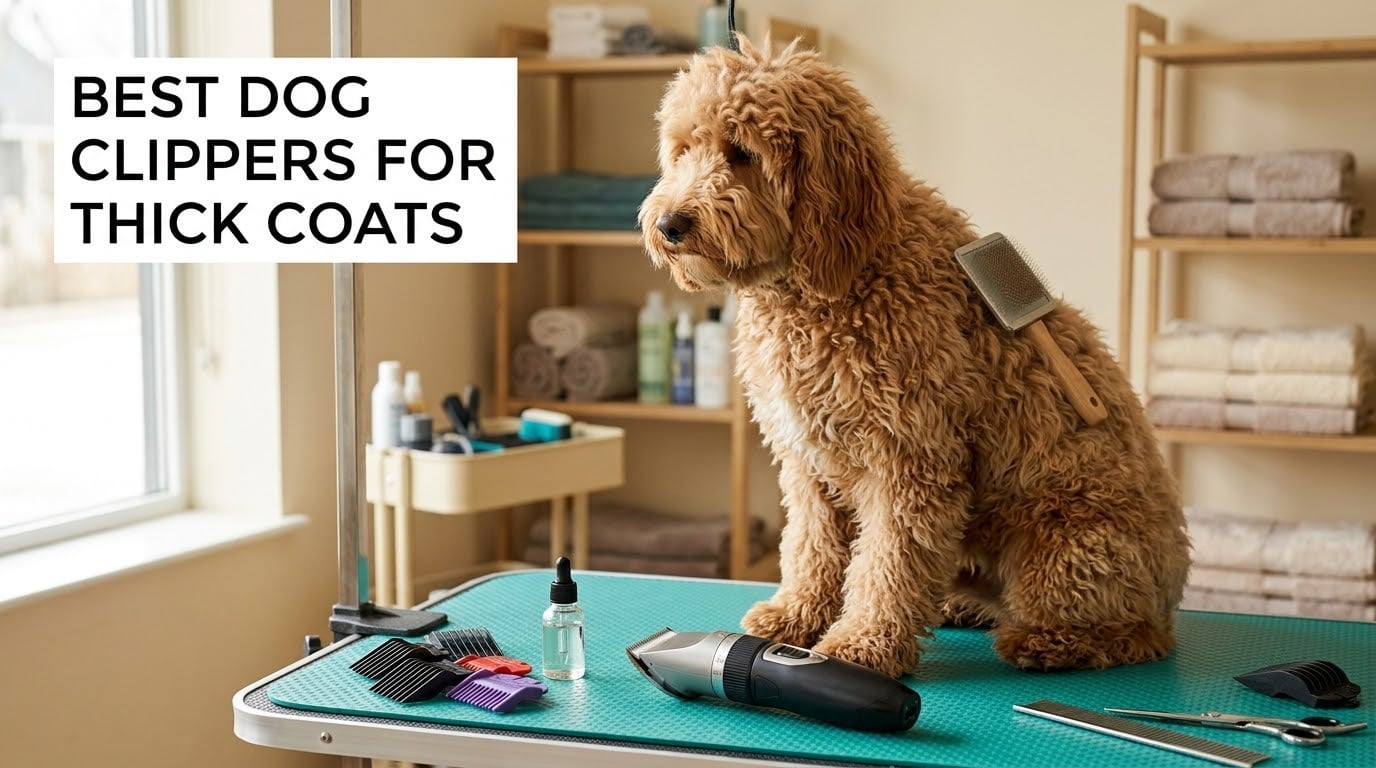
A Goldendoodle coat can jam a grocery-store trimmer in under a minute. Dense undercoat packs the hair into a mat right at the blade line, the motor bogs down, the blade heats up, and your dog walks away with an uneven trim and a sore patch of skin. That is the single most common complaint I have seen from owners of Poodles, Doodles, Aussies, Bernese Mountain Dogs, and Goldens who tried the clipper in the cupboard first.
So this roundup is built around the actual failure modes. Every model below was judged on whether it can shear through thick hair without pulling, whether it stays cool across a long session, whether the blades are replaceable, and how the dog reacted to the noise. I have put the twelve options side by side, ranked them, and explained which breed type each one genuinely suits.
Along the way I explain rotary versus pivot motors, decode the blade number system, and cover what the grooming community actually says about corded versus cordless. If you want the wider picture on general-purpose clippers, our dog grooming clippers guide covers the basics. This one is strictly for thick and heavy coats.
Table of Contents
Top 3 Best Dog Clippers for Thick Coats (October 2026)

HOLDOG 3-Speed Cordless Clipper
- 6500 RPM rotary motor
- 3-4 hour cordless runtime
- 50dB operation
All 12 Clippers Compared in 2026
| Product | Specifications | Action |
|---|---|---|
| HOLDOG 3-Speed Cordless Heavy Duty Clipper |
|
Check Latest Price |
 oneisall Clippers for Thick Heavy Coats oneisall Clippers for Thick Heavy Coats |
|
Check Latest Price |
 Wahl Bravura Lithium Ion Wahl Bravura Lithium Ion |
|
Check Latest Price |
 Wahl Lithium Ion Pro Series 9766 Wahl Lithium Ion Pro Series 9766 |
|
Check Latest Price |
 Wahl Deluxe Pro Series Cordless Kit Wahl Deluxe Pro Series Cordless Kit |
|
Check Latest Price |
 Oster Clipmaster Universal Rotary Oster Clipmaster Universal Rotary |
|
Check Latest Price |
 FuzzyFix Brushless Curly Coat Clipper FuzzyFix Brushless Curly Coat Clipper |
|
Check Latest Price |
 CGOLDENWALL Sheep Shears Clipper CGOLDENWALL Sheep Shears Clipper |
|
Check Latest Price |
 Andis UltraEdge 2-Speed Clipper Andis UltraEdge 2-Speed Clipper |
|
Check Latest Price |
 Sunifier Thick Coat Grooming Kit Sunifier Thick Coat Grooming Kit |
|
Check Latest Price |
 Petsaunter 4-Speed LCD Cordless Petsaunter 4-Speed LCD Cordless |
|
Check Latest Price |
 PETWORTHY Quiet Waterproof Cordless Kit PETWORTHY Quiet Waterproof Cordless Kit |
|
Check Latest Price |
1. HOLDOG 3-Speed Cordless Heavy Duty Clipper – Best Overall for Thick Coats
HOLDOG Dog Clippers Professional Heavy Duty Grooming Clipper 3-Speed Low Noise High Power Rechargeable Cordless Pet Tools for Small & Large Dogs Cats Pets with Thick Coats
6500 RPM rotary motor
3-4 hour cordless runtime
Titanium-ceramic blade
About 50dB
Pros
- Cuts through dense and matted coat without stalling
- Quiet enough for nervous dogs
- 3-4 hours of cordless runtime per charge
- Ten length options from five blade settings and six combs
- Lightweight at 8.1 ounces
Cons
- Blade warms during long uninterrupted sessions
- Some units arrive without a charger
- Combs are fiddly to snap on and off
This is the clipper I hand to friends with a thick-coated dog and no grooming history. The 3-speed rotary motor runs up to 6500 RPM, and that headroom is the whole reason it works where cheaper trimmers stall. On a double-coated dog the first pass at high speed takes the bulk of the length off, and the lower speeds handle the awkward areas behind the ears and at the tail base.
Roughly 50dB is the figure that matters most for the many Doodle owners I know who dread the sound more than the clipping itself. Owners of anxious rescues consistently report that their dog settles within the first minute rather than bolting from the room, and the low-vibration housing helps with that too.
The battery is the underrated part. A 2200mAh cell giving 3 to 4 hours of runtime means a full body clip on a large dog without a pause, which is the opposite of the mid-session battery death that sends people back to the grooming table. Charging is a standard lithium-ion setup, so a spare pack is a cheap insurance policy for very large breeds.
Blade care is where the budget tier usually gives up. This uses a detachable 33-tooth titanium-ceramic blade, which means you can clean hair out of the drive every few passes and swap in a second blade when the first one warms. That is the professional habit, and it is the reason the tool keeps cutting cleanly on dense coats.
What it handles well on a thick coat
Full-body work on Goldendoodles, Bernese Mountain Dogs, Aussies, and Goldens is where the motor speed and runtime combination really earns its place. The five trimmer settings from 0.8mm to 2.0mm cover sanitary areas and face detail, and the six combs from 3mm to 18mm take care of longer body work without you buying a second blade set.
Because the blade is detachable and the combs snap on, you can do a coarse pass with a long comb and then drop to the short setting for the face, feet, and sanitary trim on the same charge. Owners of double-coated breeds report that the cut stays even because the motor never drops out of speed partway through a pass.
Where it falls short
Long uninterrupted sessions on the densest mats do warm the blade, and the clipper is not built to be pressed hard and worked in one spot the way a corded rotary can be. If your dog is severely matted, work in sections and let the blade cool rather than grinding through a single dense patch.
Two smaller things: some units ship without the charging cable, so check the box before you unbox your dog. The combs also take a firm push to seat, which is a minor annoyance when you are switching lengths four times in a session.
2. oneisall Clippers for Thick Heavy Coats – Best Value
oneisall Dog Clippers for Grooming Thick Heavy Coats
6800 RPM motor for thick coats
IPX7 waterproof body
240 min runtime
Under 55dB
Pros
- Handles thick
- heavy
- and matted coats without stalling
- Waterproof body you can rinse after a dusty groom
- Ten metal combs from 3mm to 25mm
- Type-C and USB dual charging
Cons
- No storage case or blade oil in the kit
- Blade warms up on very long sessions
- Durability reports fade after six months
Budget clippers usually fall apart in two ways: the motor cannot hold speed through dense undercoat, and the blade dulls within a few months. This one addresses the first properly. The 6800 RPM motor and stainless steel detachable blade are a genuine step up, and the grooming community on Reddit repeatedly names oneisall as the best budget pick for thick-coated dogs for exactly that reason.
Users with Goldendoodles, Australian Shepherds, and double-coated breeds report that it moves through mats that stall lighter trimmers. Ten metal combs covering 3mm to 25mm mean you can do a full body length change without a second tool, and the color coding makes the length obvious at a glance.
The IPX7 waterproof rating is unusual at this level and genuinely useful. After a grooming session you can rinse loose hair out of the body instead of picking it out with a comb, which matters a lot on a dog who just came in from thick undercoat and outdoor debris. I would still avoid submerging the charging contacts.
Runtime lands around 240 minutes on the 2000mAh battery, and the locking function is a nice touch for nervous animals, since a running clipper on its own is a more manageable sound than one you have to shut off and restart repeatedly.
Why it suits a first thick-coat trim
For someone who has never clipped a dense coat, the combination of ten combs and a fast motor means fewer passes and fewer reasons to force the blade. Force is what causes pulling, and pulling is what makes the dog associate clipping with pain. Under 55dB keeps the whole thing calm enough to finish in one sitting.
It is also the sensible first tool for a medium or large dog you are not sure you can groom. If the dog tolerates a low-stakes trim with this clipper, upgrading later to a heavier corded model is an easy step rather than a necessary one.
What to watch out for
There is no storage case and no blade oil in the box, so budget for both. Oil is not optional, it is the difference between a cool blade and a hot one, and the case is what stops the combs scattering across the floor mid-groom.
A number of owners report performance fading after six months of heavy use, so treat it as a tool that will need fresh attention sooner than a rotary corded model. Keep a second blade on hand rather than assuming the original will last a full shed season.
3. Wahl Bravura Lithium Ion – Best Premium Detail Clipper
Wahl Professional Animal Bravura Lithium Ion Clipper, 41870-0438, Turquoise
5-in-1 blade from #9 to #40
90 min cordless runtime
Works corded or cordless
8.8 ounces
Pros
- Five blade lengths in one adjustable head
- Works as a corded or cordless tool
- Charge stand and soft case included
- Lightweight for extended detail work
Cons
- Ninety minutes of cordless runtime on the larger dogs
- Best suited to finishing work rather than bulk clipping
- Blade lever is stiff until it is broken in
The Bravura is the clipper professional groomers reach for when they move from the body to the head, the feet, and the sanitary areas. The 5-in-1 adjustable blade covers #9, #10, #15, #30, and #40 in a single head, which removes the fiddly business of swapping blades every few minutes in a crowded face area.
It works corded or cordless, which is more useful than it sounds. Run it cordless for the detail work where a trailing cable would be in the way, then plug it in for longer passes, and the 60 minute quick recharge means a short break between stages is enough to top it up.
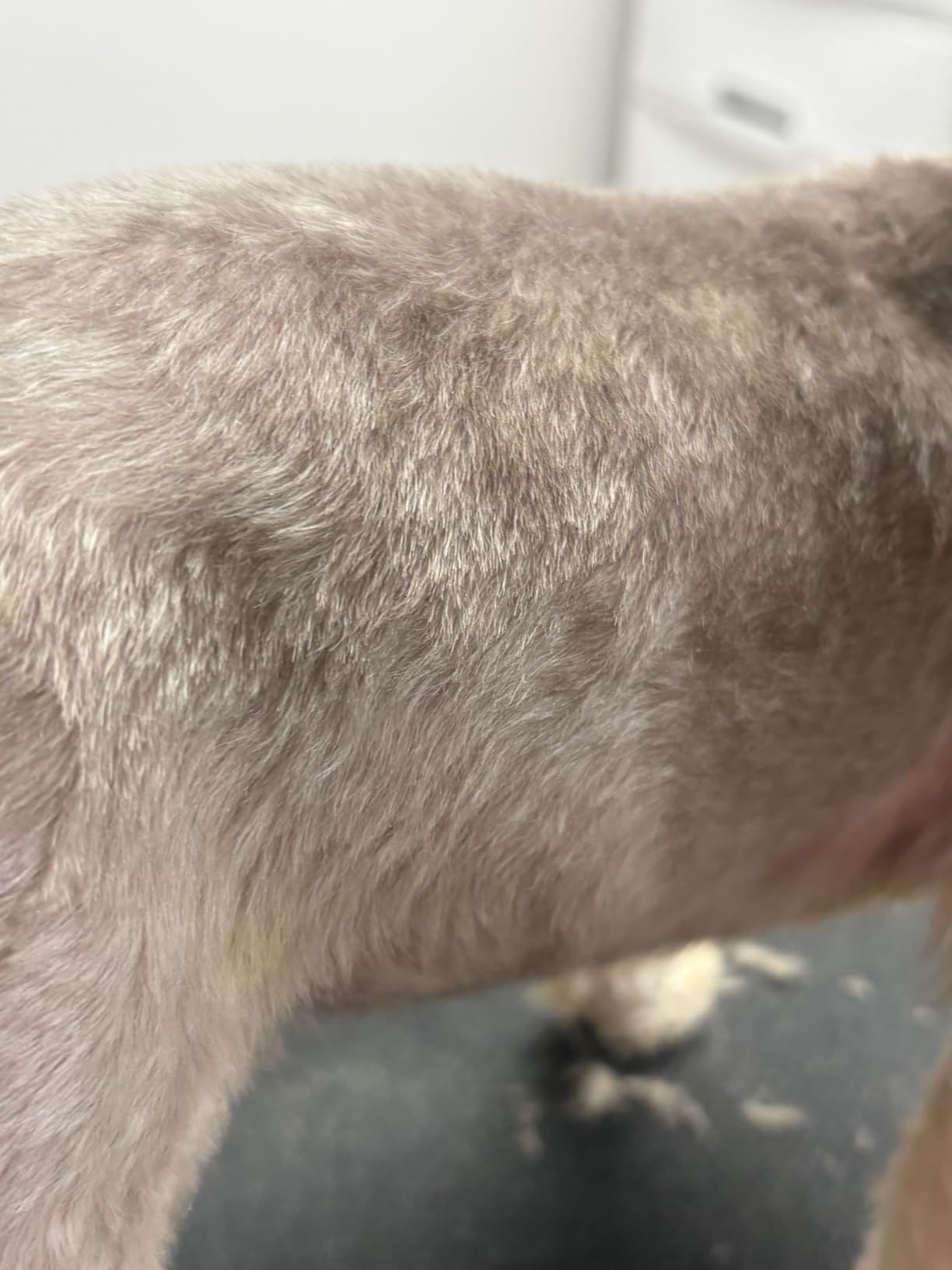
At 8.8 ounces it is one of the lighter professional-grade tools here, and that weight matters more than the specification suggests. Finishing a face and four feet on a thick-coated dog involves a lot of small, careful strokes, and a heavy tool causes wrist fatigue that shows up as an uneven trim.
The kit is complete out of the box: charge stand, six guide combs, and a soft storage case. That matters if you are splitting body work and detail work across two tools, which is what most owners of thick coats end up doing.
Where it is the right tool
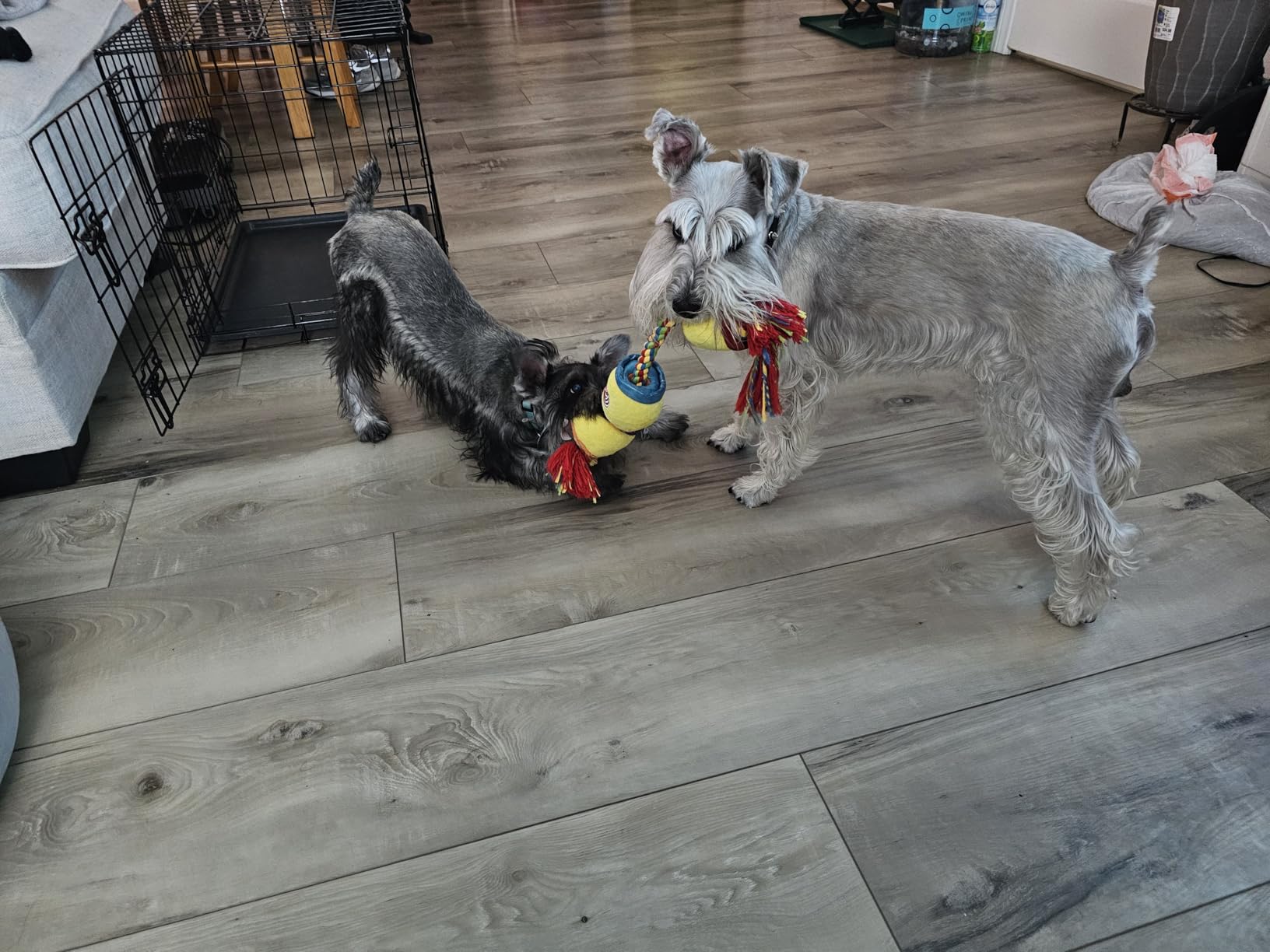
Reach for this on feet, faces, sanitary trims, and any breed where the coat is thick but the finish needs to be tidy. Poodles, Doodles, and Bichon-type coats are where the range of blade lengths does the most for you, since you can go from a short sanitary cut to a softer body line without changing heads.
It also works well as the second half of a two-clipper setup. Pair it with a heavy corded rotary for the bulk pass and you have a detail tool that is quiet, light, and precise. That pairing is the most common professional pattern and it translates directly to a home setup.
Where it is the wrong tool
Ninety minutes of cordless runtime is short for a full-body clip on a large thick-coated dog. You will be charging mid-session or switching to the cord. If the job is mostly bulk removal, a heavier high-torque corded machine is the better primary tool.
It is also a premium-priced purchase, and the 5-in-1 head is a compromise of sorts, since a full range of separate blades gives more lengths than this head offers. Buy it for precision, not for volume.
4. Wahl Lithium Ion Pro Series 9766 – Built for Large Double Coats
Wahl USA Lithium-Ion Pro Series Heavy Duty Cordless Animal Clippers
Self-sharpening high-carbon blades
2 hour lithium-ion runtime
15 minute quick charge
Pros
- Self-sharpening blades maintain their edge
- Two hours of runtime covers a large dog
- Colour-coded guide combs simplify lengths
- Made in USA with quality components
Cons
- Louder than the premium models in this list
- Integrated blade cannot be replaced
- Heat builds up in extended use
This is the model to look at if your dog is a large breed with a genuine double coat and you are clipping the whole body rather than tidying it up. The self-sharpening high-carbon blades hold an edge through dense hair, and the two hours of lithium-ion runtime is enough to finish a big dog in one pass on a single charge.
The 15 minute quick charge is genuinely useful in practice. You get enough runtime to do a flank while you decide whether the other side needs a shorter pass, which removes the mental arithmetic of planning a session around the battery.
Colour-coded guide combs make it simple to keep track of lengths across a long session, and the heavy-duty frame is built to take the knocks of a dog moving around on a table rather than sitting still for you.
It is worth being straight about the compromises. This clipper is louder than the models above it, and on a dog who is sensitive to sound that is a real consideration. It also runs warmer under sustained use, so plan cooling breaks on the densest areas.
Best fit for big double-coated dogs
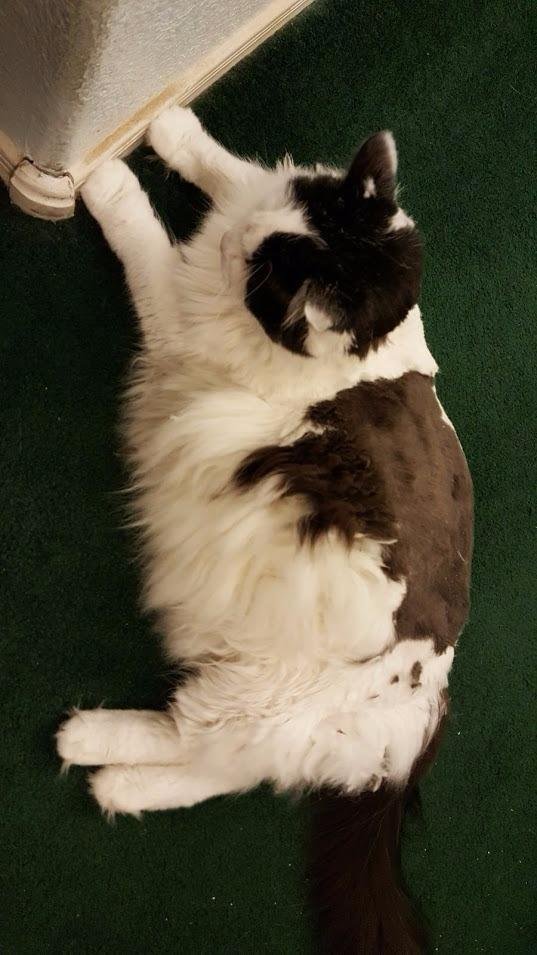
For Newfoundlands, Bernese Mountain Dogs, Great Pyrenees, Huskies, and Goldens, the combination of runtime and blade strength is the point. Colour-coded combs let you move between a shorter sanitary length and a longer body length quickly, which is what a full double-coat trim requires.
The self-sharpening blade removes a common failure point. On a double coat you are often working through several inches of hair in one direction, and a blade that keeps its own edge saves you from stopping mid-session to oil and swap.
Limitations worth knowing
The integrated blade design is the biggest one. If the blade dulls past what self-sharpening can fix, you are not swapping a head, you are replacing the tool. Owners planning several years of regular use should factor that in.
The volume is also noticeably higher than the cordless models here. On an anxious dog, start with short, low-pressure passes on an area they tolerate, or use this after your dog is already comfortable with the sound from another clipper.
5. Wahl Deluxe Pro Series Cordless Kit – Best All-in-One Starter Kit
Wahl USA Deluxe Pro Series Cordless Lithium Ion Clipper Kit for Dogs
2 hour runtime
10 minute quick charge
Includes guards, scissors, brush, oil, case
Pros
- Complete kit with combs
- scissors
- brush
- oil and case
- Self-sharpening precision blades
- Can be used corded if the battery dies
- Two hours of runtime
Cons
- Louder than expected
- Blades are not replaceable
- On/off button is hard to operate one-handed
Most people starting out on a thick coat buy a clipper and then discover they also need combs, scissors, a brush, oil, and somewhere to put it all. This kit arrives with #1 to #4 guards, scissors, a brush, oil, and a storage case already in the box, which removes the first grooming trip.
Underneath it is the same lithium-ion platform as the larger Wahl model, with a two hour runtime and a 10 minute quick charge. For a dog that needs a tidy every few weeks rather than a full strip, that is more than enough time to finish comfortably.
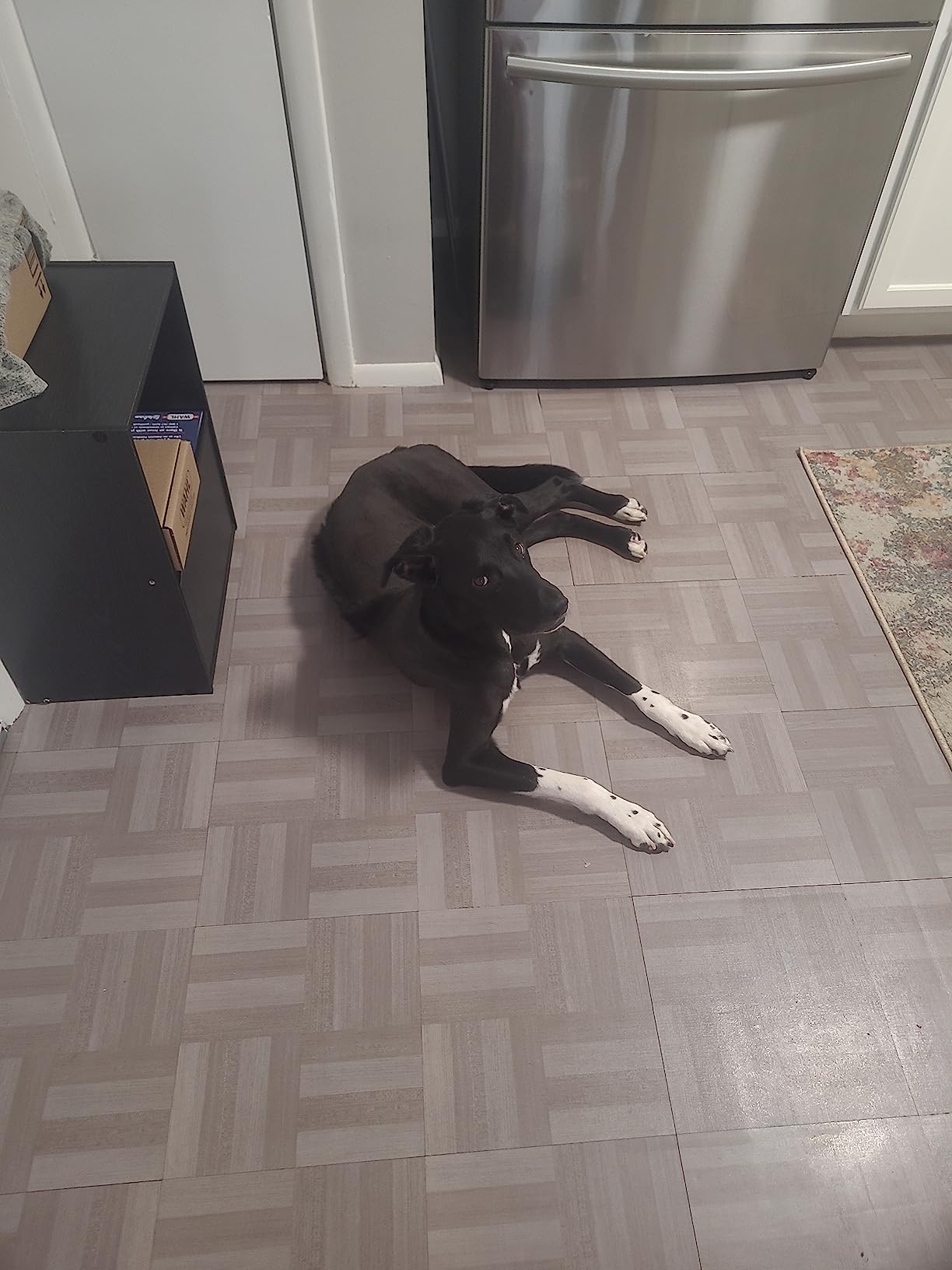
Self-sharpening precision blades do a competent job on double coats and cut through lighter matting without dragging. The ability to run it corded when the battery is down is a genuine safety net that a lot of first-time owners do not realise they need until they need it.
Owners consistently describe it as easy to pick up and simple to run, which is the right trait for a dog who is meeting clippers for the first time. Low-noise claims in the listing should be taken as relative, though, because feedback is not kind about the volume.
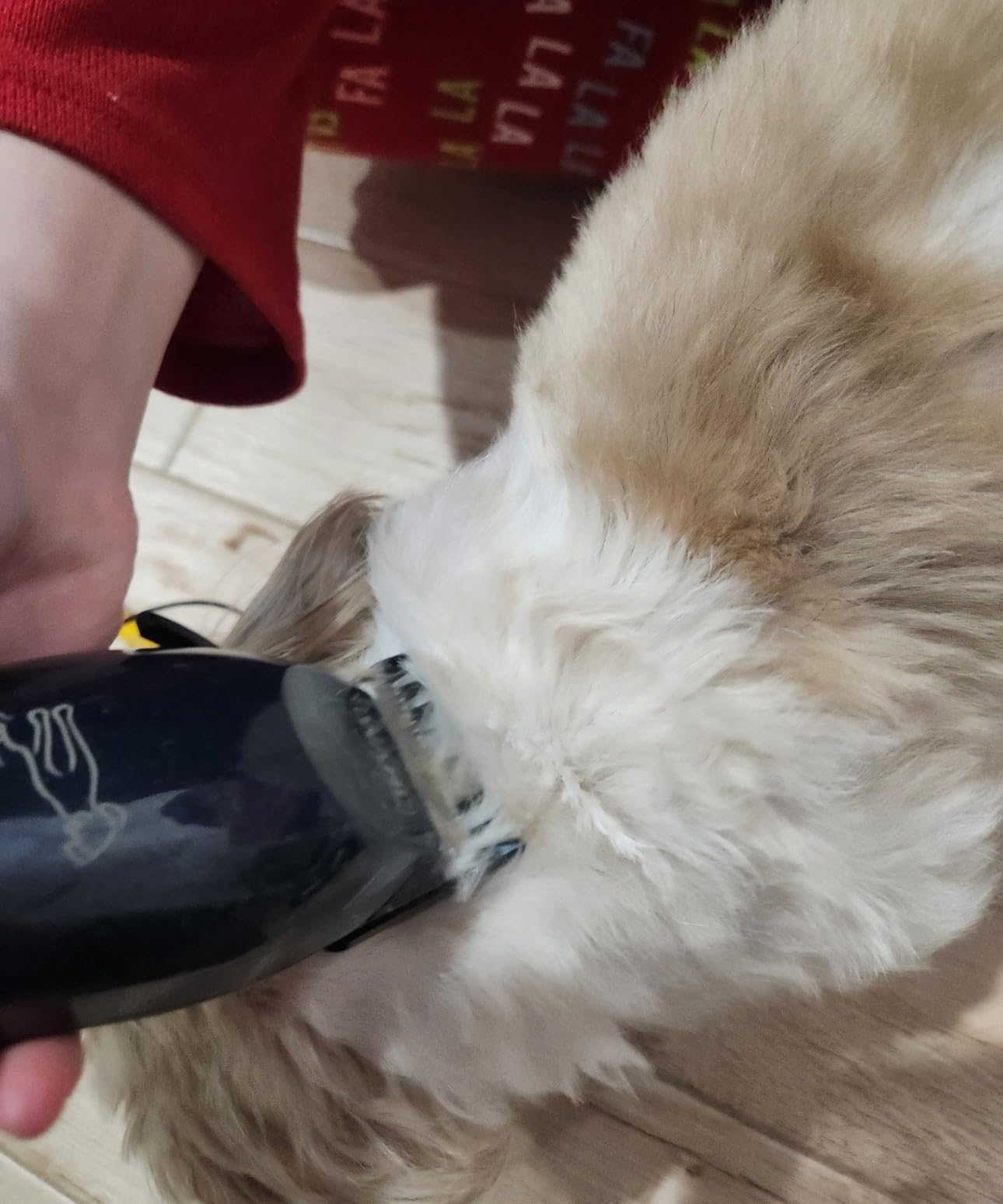
Where it makes sense as a first purchase
It suits owners of dogs with a thick coat that needs regular maintenance rather than a full groom, because everything needed to maintain it is in the case. Double-coated breeds that mat lightly around the ears, tail, and behind the legs are the classic use.
For anyone working out whether home grooming is realistic, the included oil and brush are a real part of the value. Oiling before and after a session is the habit that keeps a blade cool, and having the oil in the box is how you actually start the habit.
Where it disappoints
The volume gets described in reviews in terms that are hard to ignore, and the on/off button is awkward to hit with one hand, which is genuinely annoying when a dog is squirming. Budget for a few sessions of desensitisation before the first real clip.
Non-replaceable blades are the other limit. Once they are done, there is no head swap, so for a dog in heavy seasonal shedding you will replace the whole tool rather than one part.
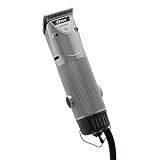
6. Oster Clipmaster Universal Rotary – Best for Bulk Clipping
Oster Clipmaster Hair Clippers for Large Dog, Cat, and Pet Grooming with Detachable Blade for Thick Coats, Gray
2100+ SPM rotary motor
45W corded power
Detachable A5 blade system
12 foot cord
Pros
- Rotary motor powers through mats where cordless models stall
- Universal A5 blade system works with a wide range of blades
- Chew-proof housing suits a moving dog
- Blades are replaceable and resharpenable
Cons
- Corded only with no battery option
- Heavy body that tires the wrist
- Block the vents with your hand and it runs warm
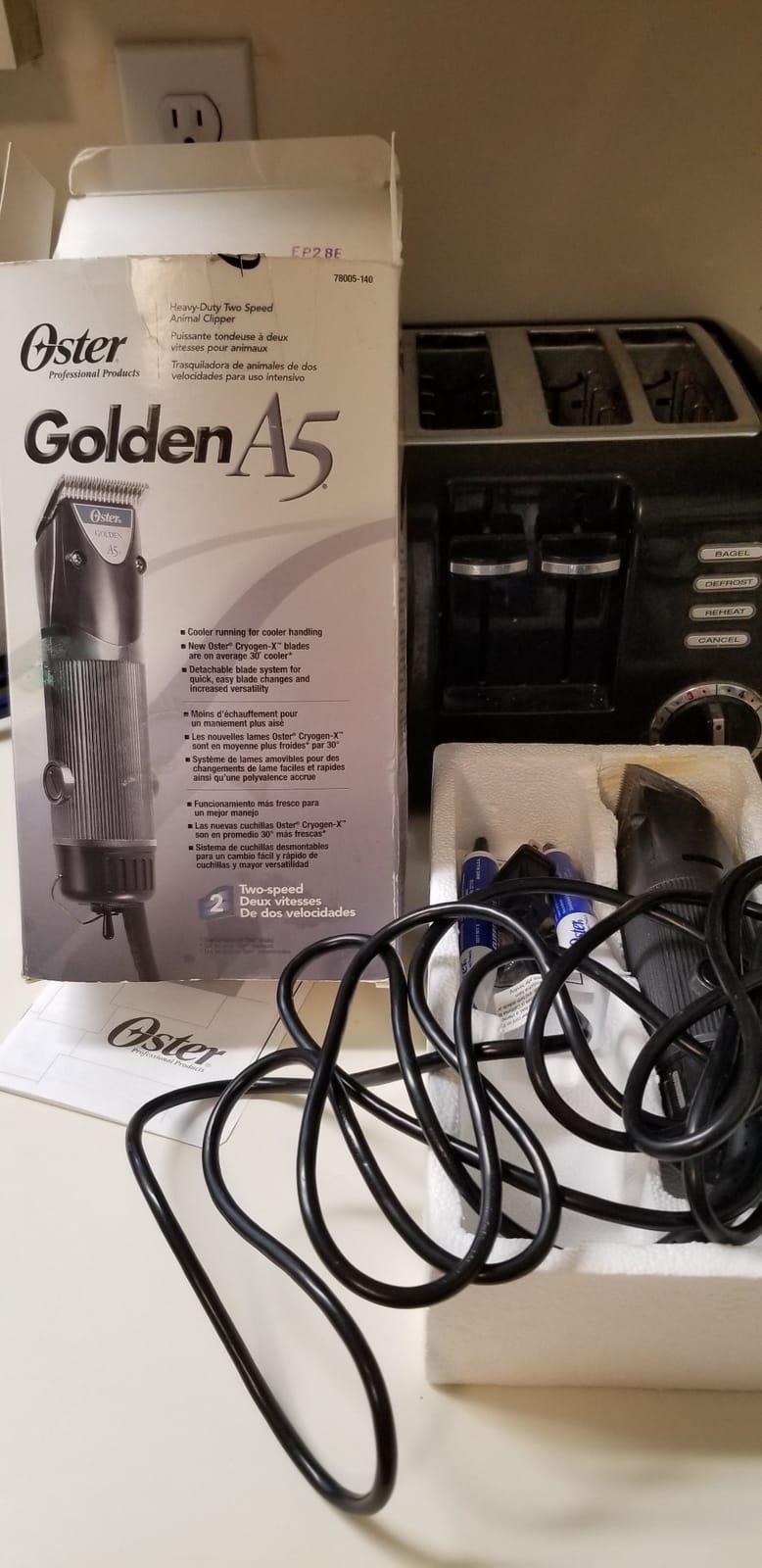
This is the tool for the part of the job that everyone else flinches at. A universal rotary motor delivering over 2100 strokes per minute and 45 watts of continuous power does not bog down when it meets packed undercoat, because there is no battery sag to lose torque the second the load rises. On a matted double coat that difference is not subtle.
The A5 detachable blade system is the other reason professionals keep this one for decades. It is a universal mount, so a wide range of replacement blades fit, and the standard detachable blades are resharpenable rather than consumable. Your blade cost over five years is dramatically lower than with fixed-blade tools.
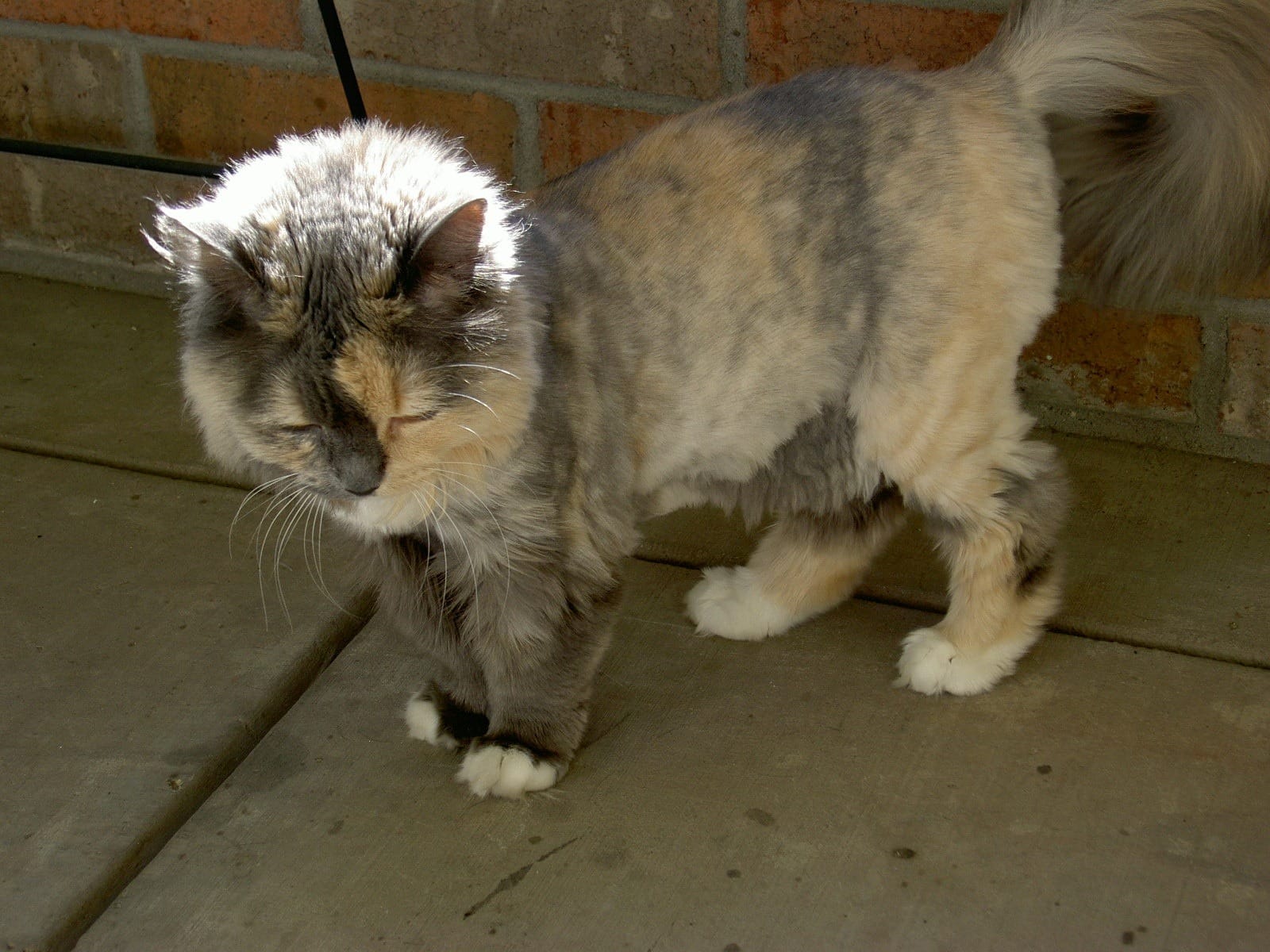
The included CryogenX #10 blade is cryogenically treated steel, which helps it stay sharp and cooler longer than a standard blade. Be aware it cuts very short, so most owners buy a longer body blade separately rather than working the whole dog at that length.
Twelve feet of cord is generous and gives real reach around a large dog on a table. The chew-proof housing is not a gimmick either, since a dog that is not enjoying the process will investigate the cable.
Why professionals still reach for it
Rotary motors are the standard choice for heavy coats because torque delivery is constant. On a thick Bernese or Newfoundland with a matting undercoat, a rotary will carry on at the same speed where a lighter cordless begins to slow and stall, and stalling is what causes pulling and heat.
The two-speed operation lets you drop to the lower setting for a nervous dog or for delicate areas, which matters when the same dog will need trimming again in a month. The A5 mount also means you can add a skip-tooth blade later for a curly Doodle coat without changing clipper.
Tradeoffs to plan around
It is corded, and at nearly 2 pounds it is among the heavier bodies in this list. On a large dog on a table that is a real load across a full session, and some owners find the weight harder to handle than the noise.
Watch your hand position. If your palm covers the vents the motor runs warm, which is the most common complaint about this model. Keep a clear path for air and it stays cool through a long clip.
7. FuzzyFix Brushless Curly Coat Clipper – Best for Nervous Dogs
FuzzyFix Professional Dog Clippers for Grooming Thick Curly Matted Coats
Brushless motor with noise cancelling
4 hour continuous runtime
Auto-adjusting cutting force
Pros
- Brushless motor runs quiet and handles thick hair
- Cuts severe matting cleanly
- Four hours of continuous runtime
- Metal combs stay secure during use
Cons
- Proprietary blades have to come from the manufacturer
- Battery warms while charging
- Newer brand with less long-term history
The brushless motor is the story here. Without the magnetic field of a conventional motor driving the armature, brushless designs tend to run quieter, smoother, and cooler, and on a dog that reacts badly to the sound that difference is often the deciding factor. Rescue organisations and nervous Doodle owners rate it highly for that reason.
Auto-adjusting cutting force is the second feature worth understanding. Rather than you managing feed pressure, the machine responds to the resistance of the coat, which on a dense mat means it keeps working steadily instead of stalling and leaving a half-cut patch.
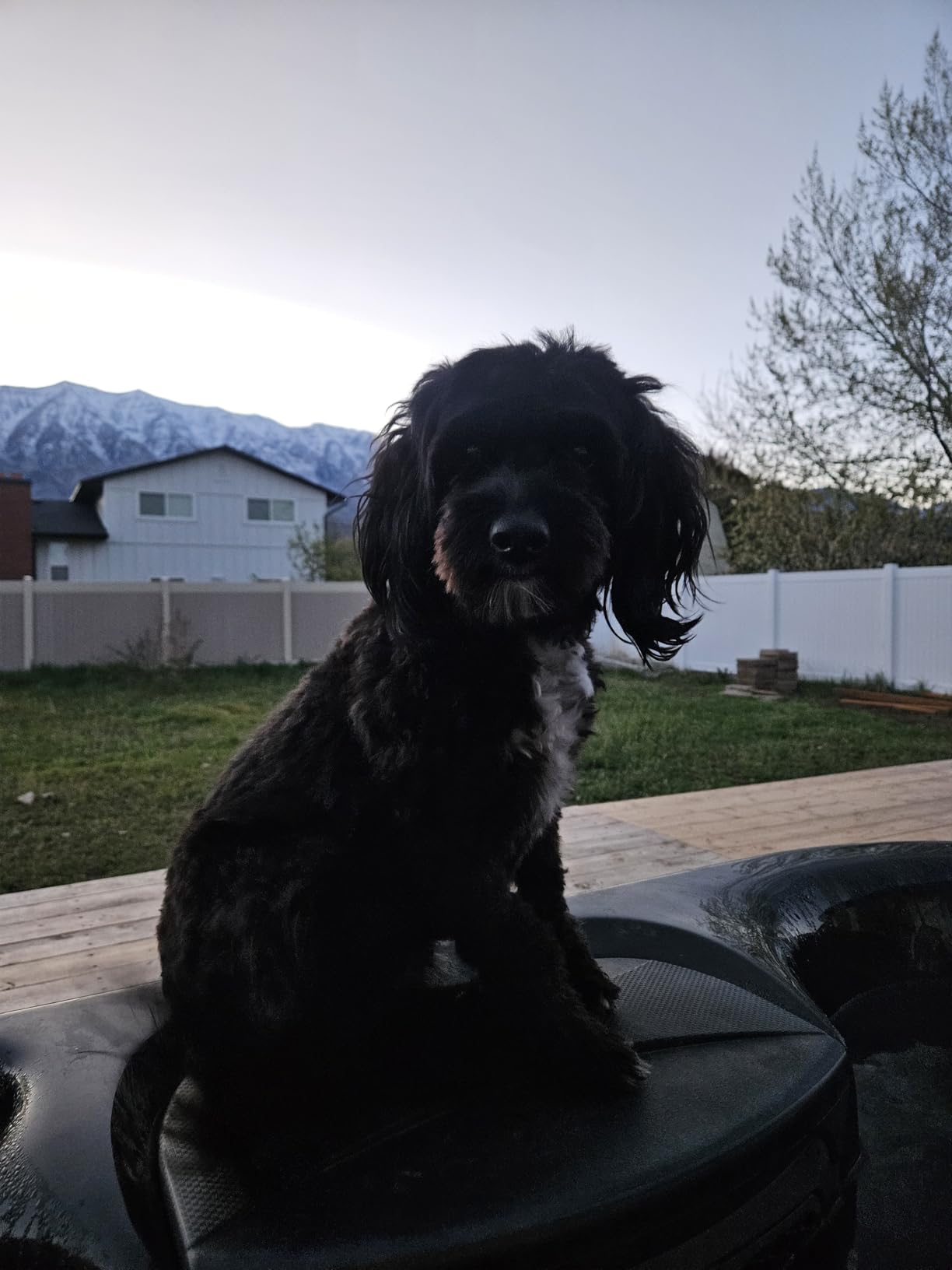
Four hours of continuous runtime per charge removes the mid-session anxiety of a dying battery on a large coat, and the 10,000 hour motor lifespan claim is a different order of magnitude from the small brush motors used in entry-level cordless clippers.
Two speed settings let you run low for a timid dog and high when you are trying to get through bulk hair efficiently. The stainless steel blades are removable and washable, and the R-shaped tooth edge is designed to lift hair cleanly rather than slicing the tip off.
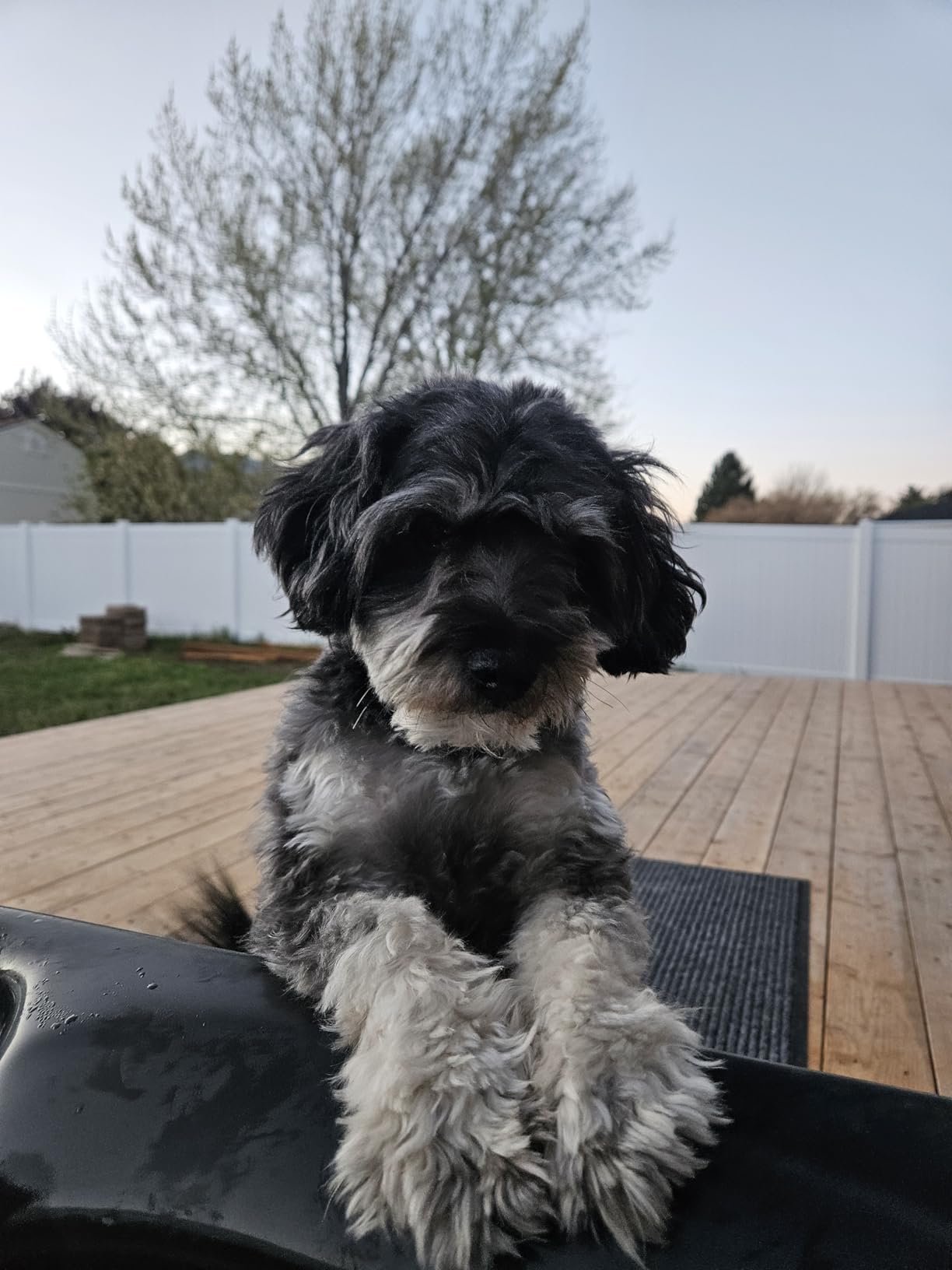
Best choice for a dog who is frightened of clippers
Noise is the barrier for most anxious dogs, and a brushless motor is one of the strongest answers available without changing your approach entirely. Two speed settings also let you start slow, prove the sound is uneventful, and then increase pace as the dog relaxes, which is a sound desensitisation strategy in itself.
The R-shaped blade and auto-adjusting force also help a sensitive dog, because the sensation of a clipper pulling is the thing most dogs object to even after they accept the noise. Owners of rescue dogs and Doodles with matting-prone coats give it strong marks for both.
Considerations before you commit
The blades are proprietary, which is the one real drawback. A replacement has to come from the manufacturer, and there is no equivalent of walking into a shop and buying a standard detachable head. Factor that into the long-term cost if you groom often.
It is also a newer release with less long-term durability history behind it than the established rotary brands, and the battery warms while charging, so keep it on a hard surface rather than carpet or bedding.
8. CGOLDENWALL Sheep Shears Clipper – Best for Severe Mats
Dog Shears Clippers for Grooming Sheep Shears for Dogs With Thick Hair
200W motor
2000-6000 RPM stepless control
Titanium and ceramic blade
2.6 pounds
Pros
- Sheep shear motor powers through severe matting
- Stepless speed control for any coat density
- Mahogany handle stays cool and comfortable
- Works on dogs
- rabbits and livestock
Cons
- Bulky transformer takes up floor space
- Heaviest unit here at 2.6 pounds
- Replacement blades are hard to source
This is built on livestock shearing heritage rather than pet grooming heritage, and that shows in the specification. A 200 watt motor with stepless control from 2000 to 6000 RPM has far more energy than a home clipper, and owners with Goldendoodles and Australian Shepherds report it glides through mats that jam other tools.
Stepless speed control is unusually good for thick coats. Instead of two or three fixed settings, you can dial the speed to exactly what a dense section needs, and adjust the blade clearance from 0.8mm to 2.0mm without swapping anything.
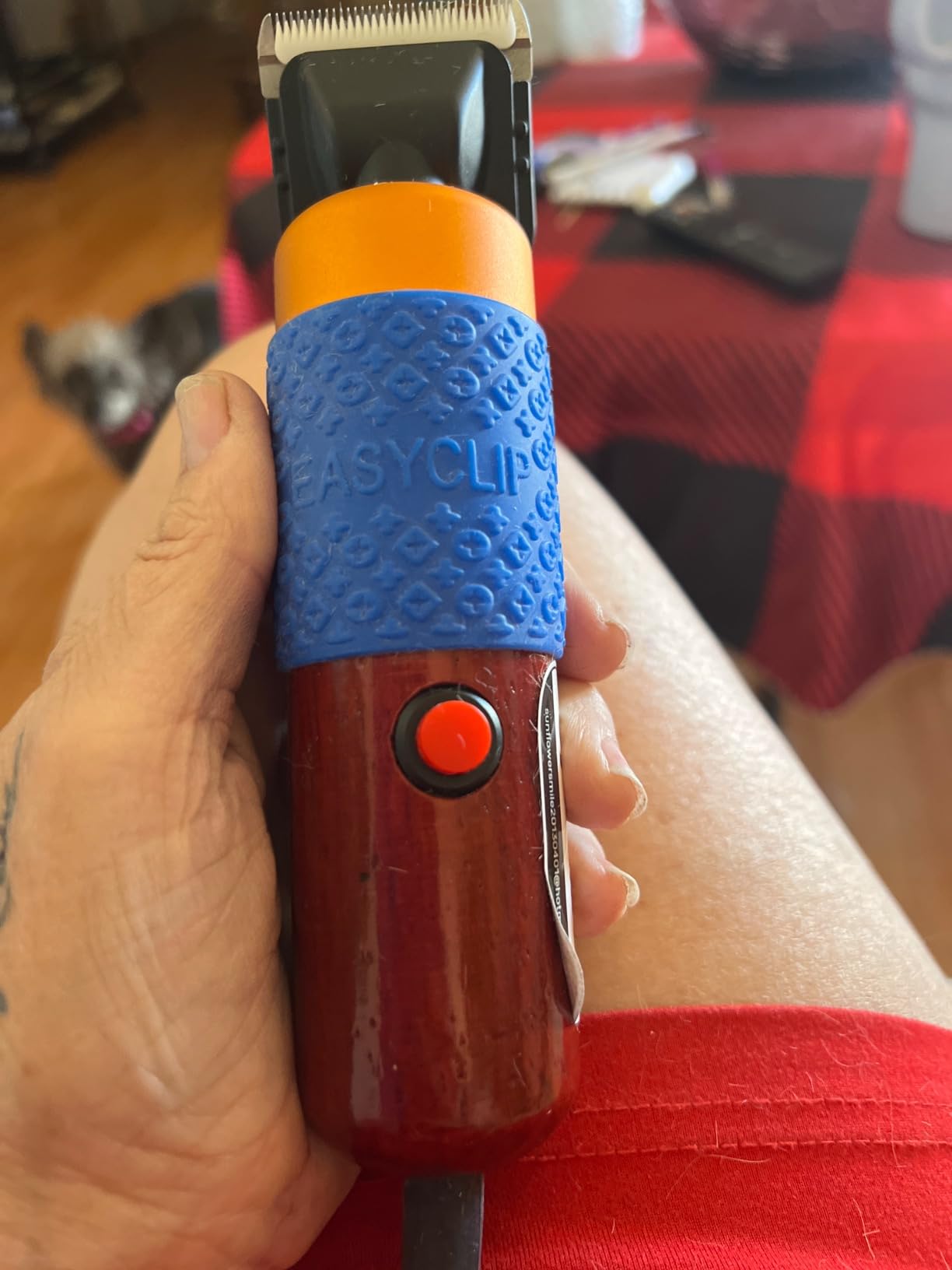
The blade pairs 35 titanium teeth with 30 zirconium ceramic teeth, so you can choose between them depending on the coat. Ceramic runs cooler, which matters on a long session through a dense double coat where heat is the main skin-safety risk.
The five-layer insulated mahogany handle is unusual and effective. It stays comfortable and cool through a long clip, which is a real consideration on a dog with a matting coat that takes a full hour to work through.

When you need real cutting force
This is the answer when other clippers have already failed. Mats that are tight, coat that is genuinely dense, and dogs that need a short body clip after months of neglect are all cases where the extra 200 watts is the difference between finishing the job and giving up halfway through.
It also handles animals most pet clippers cannot touch. If you also groom a rabbit with an Angora coat, or keep a small flock, the same tool does the work without a second purchase.
The cost of that power
It is the heaviest unit in this roundup at 2.6 pounds, and the transformer-based corded design means a bulky box on the floor as well as a cable to manage. Plan your grooming spot around both.
Replacement blades are also the weak point, since sourcing them is harder than with a standard A5 or detachable system. Oiling the blade during a long session is essential to keep that cutting power from turning into heat.
9. Andis UltraEdge 2-Speed Detachable Blade Clipper – Best for Finish Work
Andis 24675 UltraEdge 2-Speed Detachable Blade Clipper, 120V, Black
2-speed rotary motor
Detachable blade system
14 foot heavy-duty cord
120V
Pros
- Detachable blades are easy to clean and swap
- Handles thick doodle and Airedale coats
- Compatible with existing Andis blades and combs
- Blades can be sharpened rather than replaced
Cons
- Corded only
- Included blade release instructions are wrong
- Runs warm on extended work
- US 120V only
The Andis detachable blade system is the most practical thing about this clipper. You press the release and lift the head straight off, which makes cleaning hair out of the drive between passes genuinely fast, and every Andis UltraEdge and Edge blade and comb fits it. If you own other grooming tools, that compatibility is worth paying for.
The 2-speed rotary motor is more than adequate for thick doodle, Airedale, and poodle coats. It is quieter than most professional corded clippers of this class, which owners consistently note as a pleasant surprise given the size.
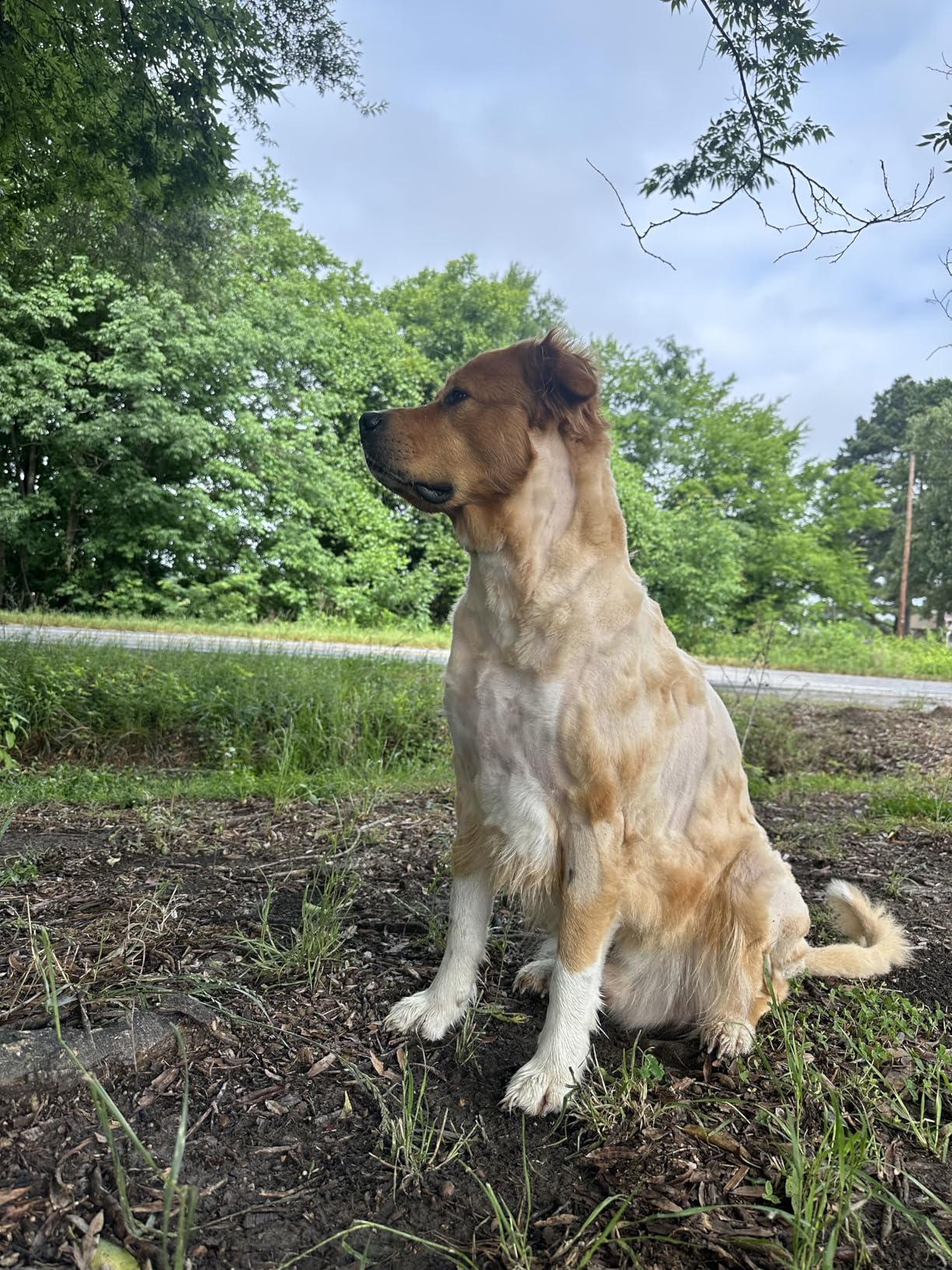
The 14 foot cord is longer than most and gives real freedom of movement around a large dog, and the metal blade release mechanism feels like the part it should be rather than a plastic tab that wears out.
There is one instruction problem worth knowing before you start. The included guidance for removing the blade is wrong, and following it risks catching your fingers in the drive. The correct method is to press the release and pull the blade up and off.
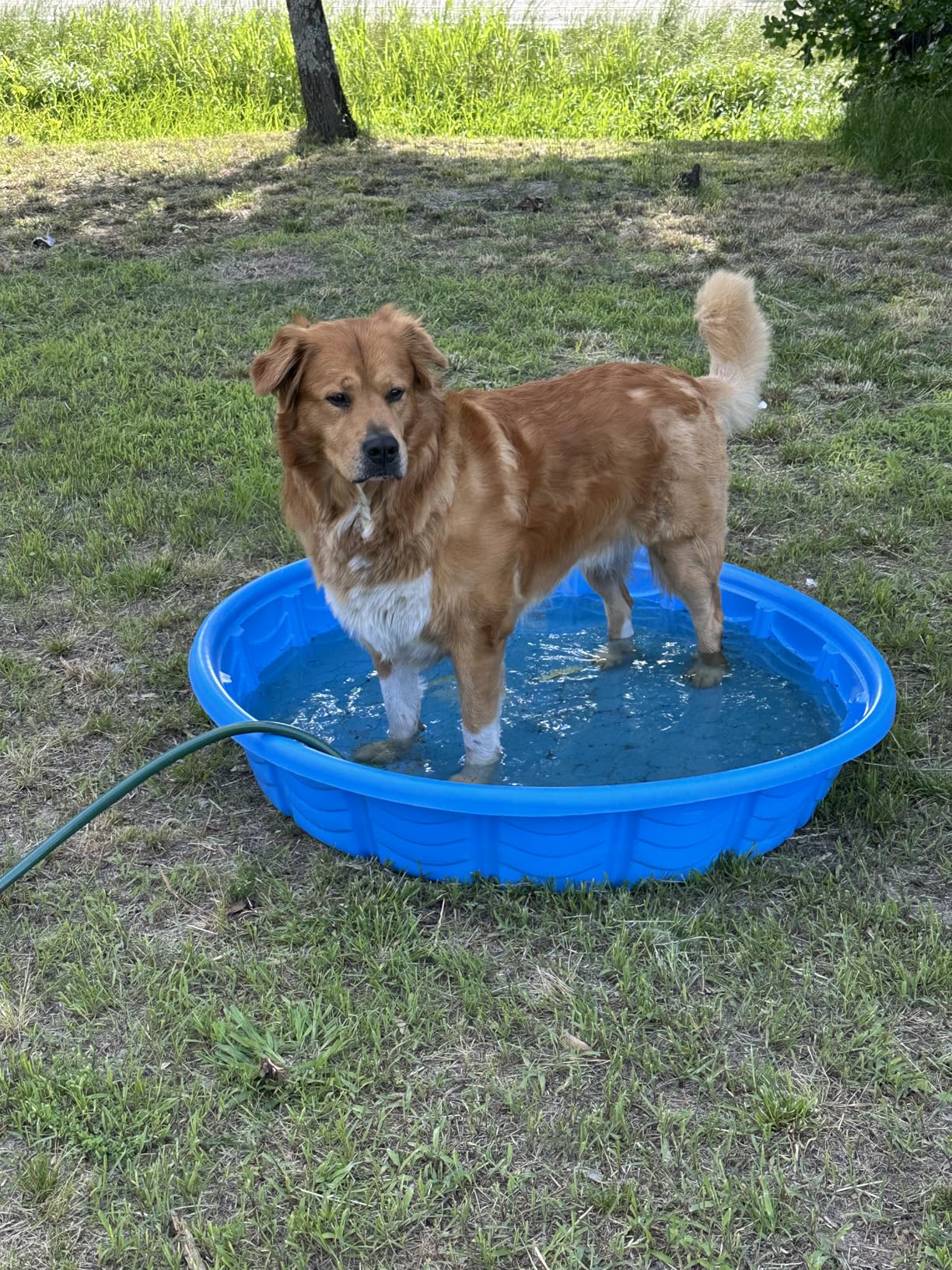
Where the Andis system earns its keep
It is the tool to reach for when you are doing a tidy every few weeks on a thick curly coat and want precise control. Because the blades come out, you can clean and oil between body sections rather than at the end, and that keeps the cut consistent across a long session.
Metal guide combs are strongly recommended over plastic ones with this model, and the included #10 blade is a good body starting point that you can resharpen rather than throw away once it dulls on a dense coat.
Watch out for these
It runs warm during extended use and needs cooling breaks, and the included #10 blade is reported to dull faster than expected on double coats. Build a second blade into your plan rather than expecting one head to last a whole season.
This is a 120V corded unit intended for US use, and there is no battery option at all, so plan your grooming area near an outlet.
10. Sunifier Thick Coat Grooming Kit – Most Versatile
Sunifier Professional Dog Grooming Clippers for Thick Coat – Dog Hair Trimmer for Grooming Kit- Sheep Shears for Thick Hair – Pet Grooming Clippers for Dogs, Cats, Sheeps, Horse (Black)
Aluminum alloy body
12V motor
5-level speed adjustment
10 foot cord
Pros
- Aluminum alloy body resists damage
- Strong cutting force on thick dense coats
- Low noise and low vibration for nervous pets
- Detachable titanium and ceramic blades
Cons
- Corded
- so you need to be near an outlet
- Adjustment levers are fiddly mid-groom
The Sunifier is unusual at this price because the body is aluminium alloy rather than plastic. That is a durability decision, and it is the reason this one tends to outlast cheaper cordless options in the same range once the internals are working properly.
The 12V motor delivers cutting force that owners with thick, dense coats say is more than adequate, and the 5-level speed adjustment from 0.8mm to 2.0mm covers everything from a sanitary trim to a short body cut without a blade change.
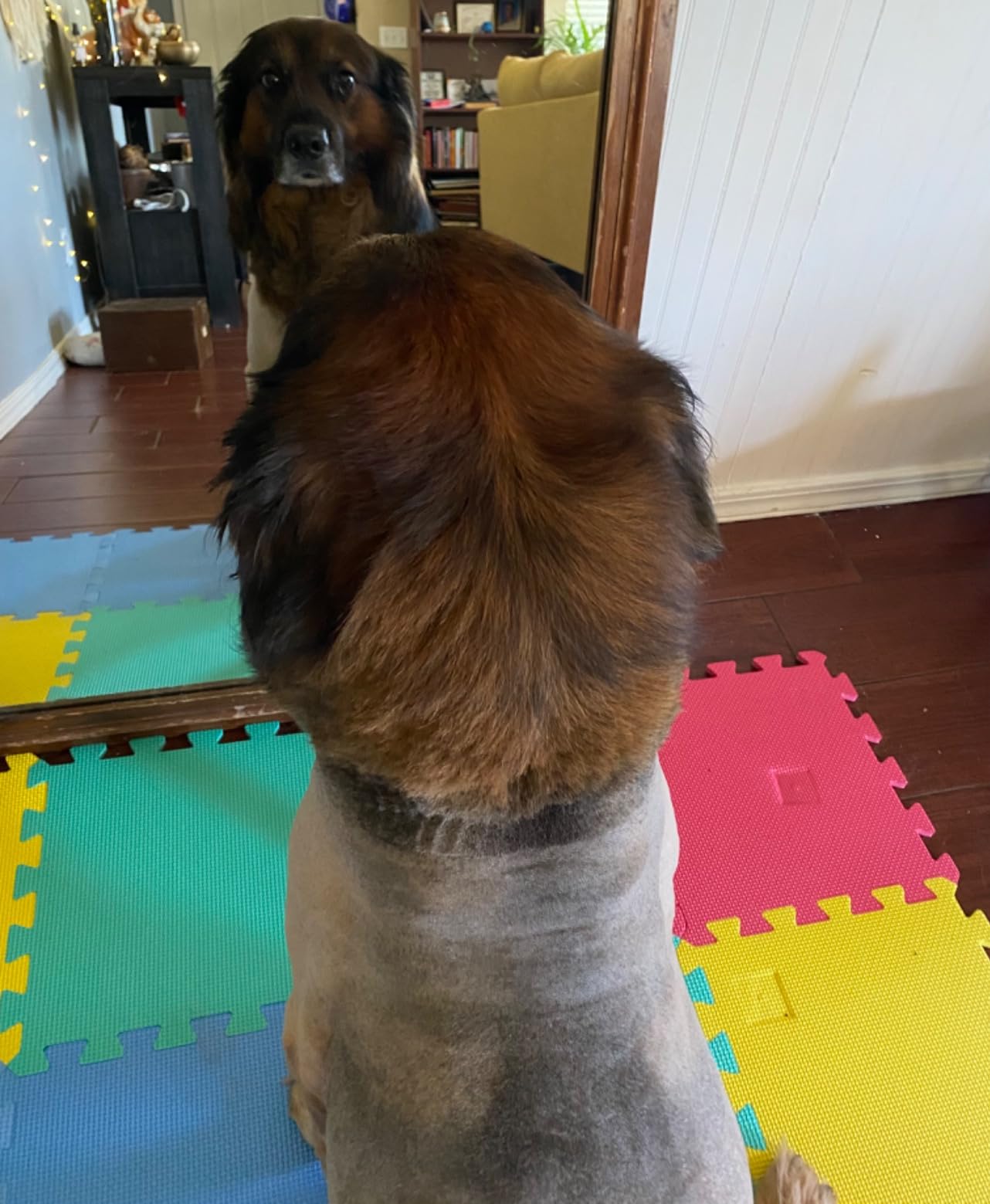
Two detachable blades ship with it, a 35-tooth titanium head and a ceramic movable blade, and both are simple to clean and replace. Four guard combs cover the longer lengths, and the 10 foot cord gives reasonable reach.
Low noise and low vibration come up repeatedly in owner feedback, and for a dog who is anxious about being clipped that is often the deciding factor. The same unit also handles cats, sheep, goats, horses, and alpacas if you keep more than dogs.
Who should buy this one
If you want a sturdy corded clipper that will sit in a shed or garage and be brought out a few times a month, this fits well. The alloy body tolerates being dropped on a concrete floor in a way plastic shells do not, and the detachable blades extend its useful life.
It is a sensible second tool as well. Many owners keep a lightweight cordless for touch-ups and this for the real work, and the low vibration profile helps with dogs who are still learning to accept the sound.
Where it falls behind
It is corded, and unlike the Wahl and Andis rotary models here, it has a smaller motor by design. On severely matted or very dense double coats, a higher-torque rotary is the better choice.
The adjustment levers are fiddly to operate with one hand while holding a dog, so set the speed before you start rather than changing it mid-groom.
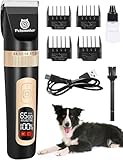
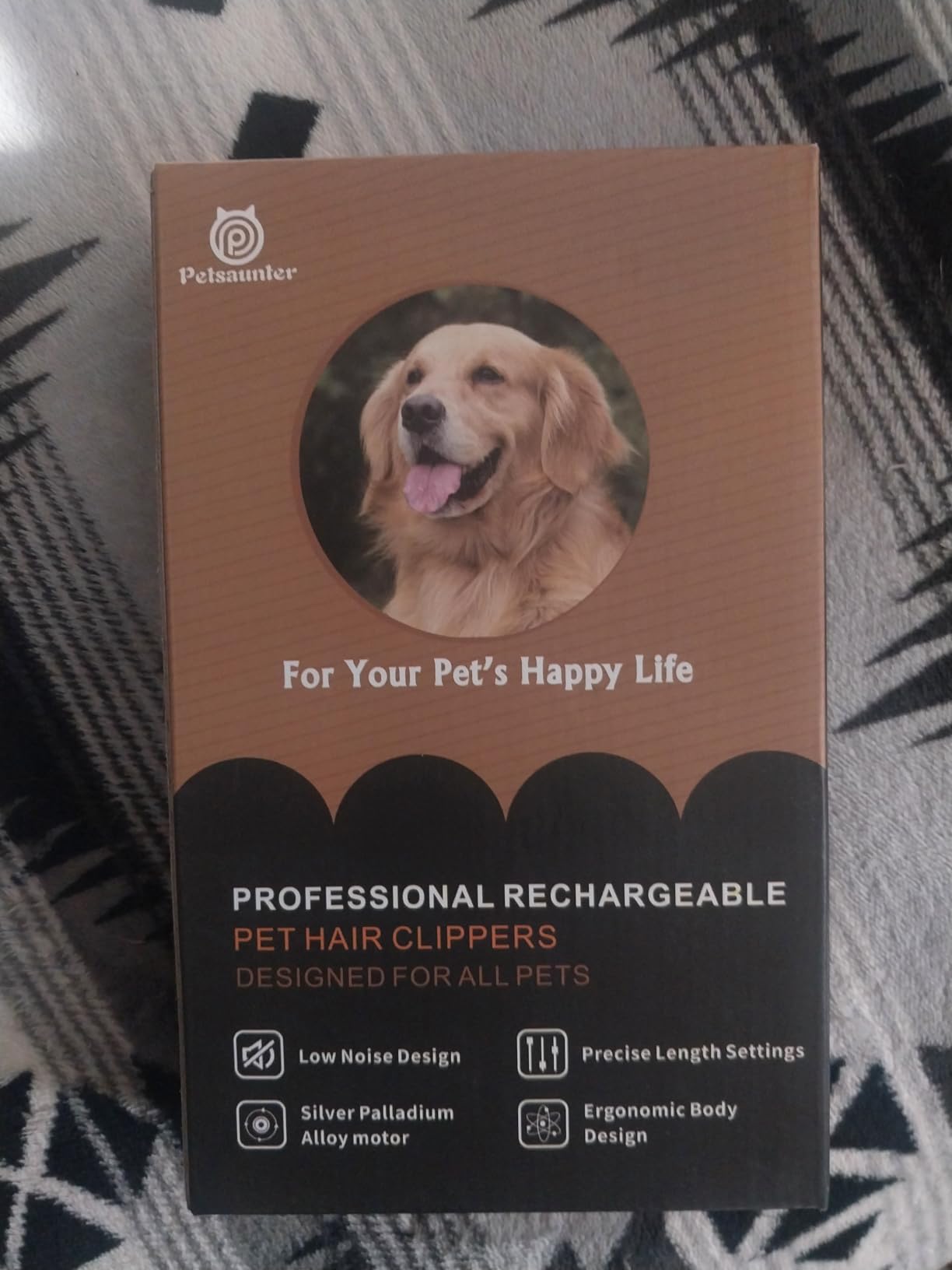
11. Petsaunter 4-Speed LCD Cordless Clipper – Best for First-Time Owners
Petsaunter Dog Clippers for Grooming, 4-Speed & LCD, Low Noise Electric Trimmer for Grooming, TypeC Rechargeable Dog Hair Clippers, Super Quiet for Dogs & Pets with Thick or Heavy Coats(C95)
Approximately 50dB
LCD power and RPM display
3-4 hour runtime
Type-C rechargeable
Pros
- Approximately 50dB suits timid pets
- 5 blade lengths plus 4 detachable combs
- Rechargeable Type-C with 3-4 hours of use
- Straightforward one-click start
Cons
- Can stall in very dense coats
- Lightweight build
- Not suited to very long full-body sessions on cordless
The LCD screen is the feature that sets this apart from other entry cordless clippers. It shows remaining power, motor RPM, a charging prompt, and a lubrication prompt, which means you can see the motor slowing down under a dense coat before it stalls rather than wondering why the cut suddenly started pulling.
That lubrication prompt in particular is good training for a first-time owner, because the single most common reason a clipper heats up is a dry blade. The clipper tells you when oil is needed instead of leaving you to guess.
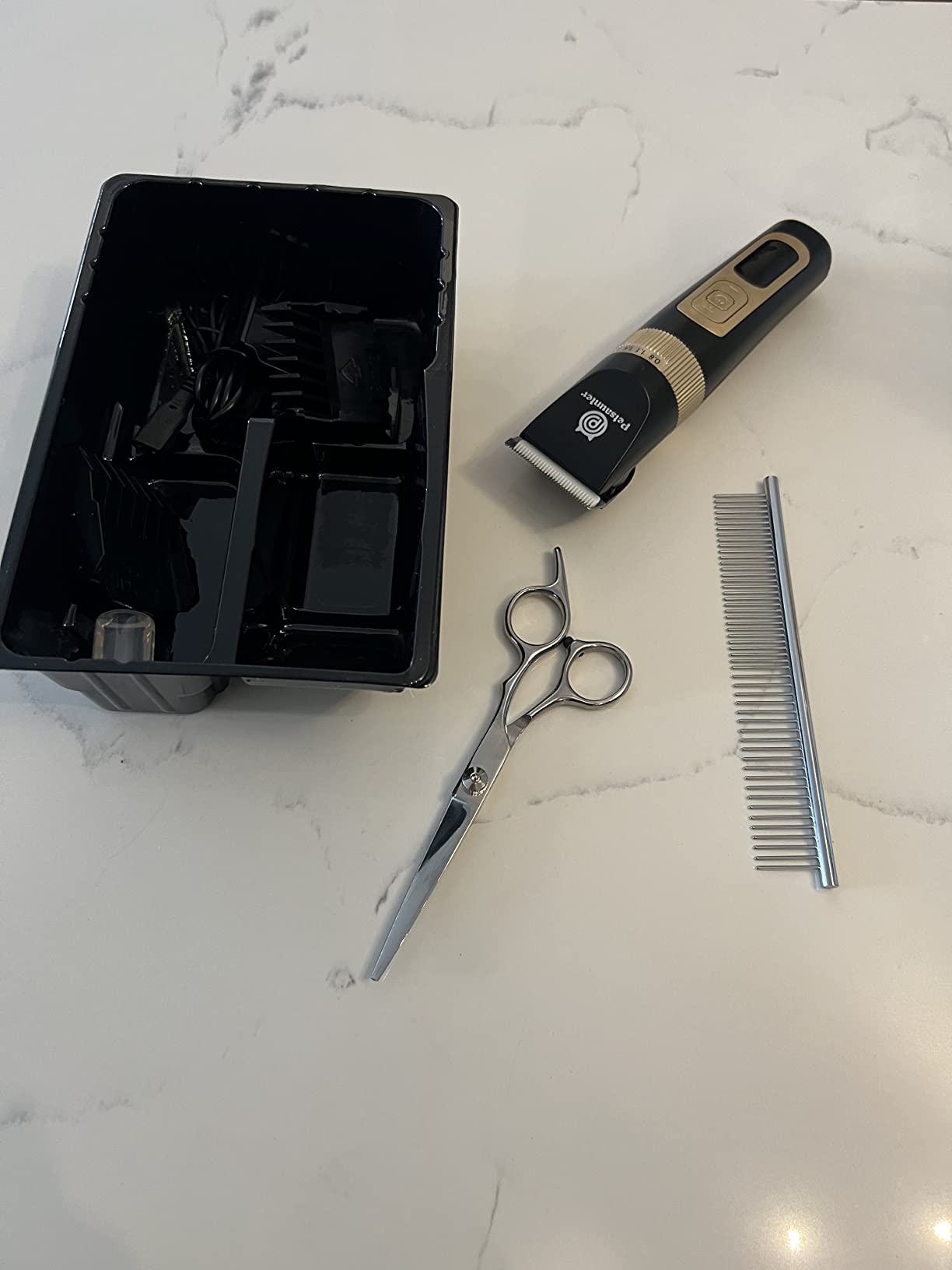
At approximately 50dB it is among the quietest here, and the titanium ceramic blade dissipates heat evenly enough that owners do not report the hot blade complaints common in cheaper units.
Five blade lengths from 0.8mm to 2.0mm and four detachable combs from 3mm to 12mm give a usable range, and a 3 to 4 hour runtime on a sub-three-hour charge is a good ratio. One-click start keeps the controls simple enough that you are not fumbling in front of a nervous dog.
What makes it easy to learn on
Everything is visible and self-explanatory, which is what a nervous owner and an anxious dog both need. No mode menus, no blade tool required to change length, and a clear warning when lubrication is due.
It is well suited to routine maintenance on a thick coat, the tidy every few weeks rather than a full strip. A Border Collie or similar heavy-coated dog getting regular trims is exactly the job this shape of tool is built for.
Where the limits are
Some reviews note it can stall in very dense coats, and the build is light, which tells you it is not a bulk-clipping machine. If your dog is severely matted, pick something with more torque.
Cordless runtime is never going to cover a very long full-body session on the largest breeds, and the blade range tops out at shorter lengths compared with the models that include long guide combs.
12. PETWORTHY Quiet Waterproof Cordless Kit – Best for Noise-Sensitive Dogs
PETWORTHY Quiet Dog Grooming Kit – 2000mAh Dog Clippers for Heavy Thick Hair Coats, Waterproof Rechargeable Cordless Clippers, Safe and Easy to Clean Pet Grooming
Motor with 20 percent less noise
2000mAh battery
Waterproof cordless
1.12 pounds
Pros
- Motor cuts noise and vibration by 20 percent
- Self-sharpening blades cut without tugging
- Complete accessory kit in the box
- Lightweight and comfortable to hold
Cons
- Blades cannot be sharpened once dull
- Recommended to do a full first charge
- A few reports of it failing to cut through
This is the quietest-focused option in the roundup, and quietness is a specification, not a preference, when you are grooming a dog who panics at the sound. The motor is built to reduce noise and vibration by 20 percent, and owners of Himalayans, Maltese, and Border Collies specifically single out how relaxed their dogs are during a session.
Self-sharpening blades that cut without tugging matter just as much as the volume. Pulling hair is painful, and a dog who has felt the blade drag once will fight the next session regardless of how quiet the motor is.
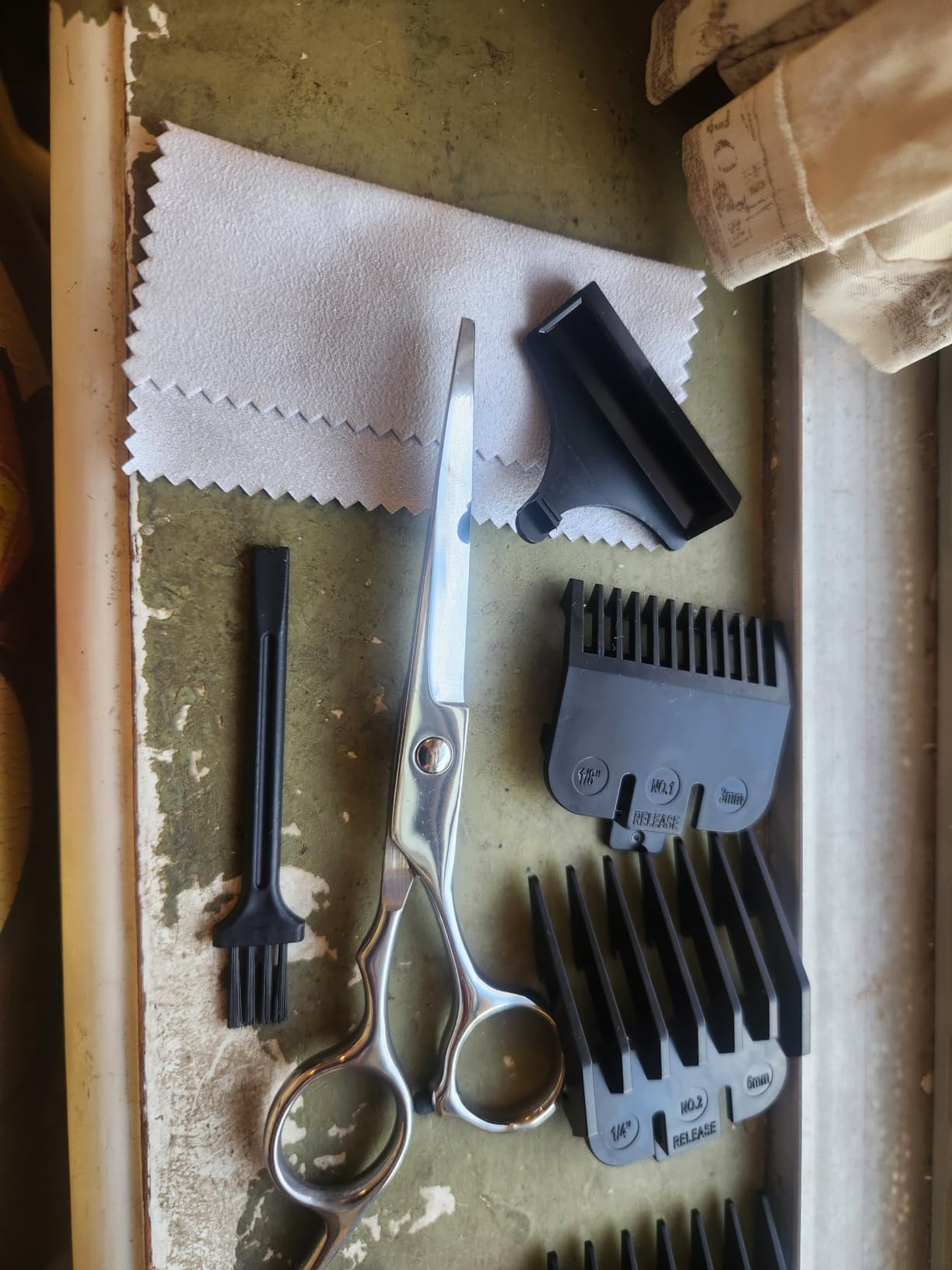
The accessory kit is unusually complete for the tier: four guide combs, stainless steel scissors, a comb, a cleaning brush, oil, and a charging cord. One-touch start-up in a second means no fumbling when your hands are full of dog.
At 1.12 pounds the whole unit is light in the hand, and the waterproof cordless design means you can rinse it after a dusty grooming session instead of picking hair out of the drive for ten minutes.
Best fit for a noise-sensitive dog
If your dog is a long-haired or heavy-coated breed that is frightened of clippers, the low noise and vibration reduction is the reason to choose this. It suits routine trims on thick coats, where the priority is a calm finish rather than maximum cutting speed.
The 2000mAh battery gives up to three hours of use after a one to two hour charge, and the four adjustable guide combs cover the length changes most owners need between sessions.
What could go wrong
Blades that cannot be sharpened are a real limitation. Owners report dulling within about a year on heavy coats, and once a blade is done, replacement is the only route. That matters more for you than it would for someone grooming a light-coated dog occasionally.
Give it a full first charge, since battery memory behaviour can make early runtimes short. A small number of reviews also report failures to cut through, so keep a backup plan for a full body clip on a very dense coat.
How to Choose Dog Clippers for Thick Coats
Most of the disappointment in this category comes from buying on price or on blade count. What actually decides whether a clipper survives a thick coat is torque, blade system, and heat handling. Here is how to weigh each one.
Rotary vs pivot vs magnetic motors
A rotary motor uses a spinning cone to drive the blade and delivers the highest torque of the three. That constant torque is what lets a rotary shear through packed undercoat without stalling, which is why the Oster Clipmaster and the Andis UltraEdge are the two tools professional groomers lean on for heavy coats. Expect more weight and a cord, in exchange for power that does not fade under load.
A pivot motor swings the blade back and forth, usually faster and lighter than a rotary. It suits shorter, thinner work and is common in mid-tier tools. A magnetic motor is the oldest design, still used in a few entry clippers; it is quiet but has less torque and wears faster than the other two.
Strokes per minute matters too, but torque matters more on thick hair. A motor can hit high SPM and still pull if it lacks the force to keep the blade moving through dense coat. Look for both, and prefer the tool that keeps its speed under load.
Corded vs cordless for thick coats
Corded models give you unlimited runtime and constant power, which matters on a large dog with a dense coat where a session can run over an hour. The trade-offs are the cable, the weight, and the fact that you need an outlet in your grooming spot. Most professionals we looked at still keep a corded rotary as their primary tool despite the cordless trend.
Cordless models are quieter, lighter, and far easier to control around a moving dog. The limitation is battery runtime and the small drop in torque under heavy load. For a small or medium thick-coated dog, 3 to 4 hours of runtime is more than sufficient, and the freedom is worth a lot.
The compromise many owners settle on is two tools: a heavy corded rotary for bulk removal, and a lighter cordless for face, feet, and touch-ups. That pattern shows up repeatedly in professional practice and it works just as well at home.
Blade sizes, numbers, and the F suffix
Blade numbers describe how close the cut is, not how long the coat is. A #30 leaves roughly half a millimetre, a #10 is about one and a half millimetres, a #7F is nine millimetres with a skip tooth, and a #5F is around thirteen millimetres. The F means finishing cut, with a toothed edge that leaves more length behind.
Skip-tooth blades like the #7F and #10F cut longer and blend better on curly Doodle and Poodle coats, because the teeth lift the hair instead of shaving it. Solid blades like the #30 and #40 handle sanitary trims, paw pads, and face detail where you want the shortest cut.
Guide combs sit over the blade and add length on top of the blade cut. Ten or more combs in different sizes is a good sign on a thick-coat kit, because it means you can move from a short sanitary length to a long body length without a second tool. Check whether the combs are metal, as metal combs hold their setting and do not flex.
Steel vs ceramic blades, and detachable vs adjustable
Steel blades are heavier, hold an edge well, take a knock, and are the right choice for thick and matted coats where you are pushing through dense hair. Ceramic blades run cooler and stay sharp longer, which protects skin on sensitive areas, but they are more brittle and cost more to replace.
Detachable blades are universal across grooming: they come off so you can clean the drive, and resharpenable steel heads can last years. Adjustable heads like the Wahl 5-in-1 cover several lengths in one head, which is convenient for detail work but gives you a narrower range than separate blades. Integrated, non-replaceable blades are the cheapest option and the one that ends a tool’s life first.
Matching the clipper to your breed
Curly and wavy coats, meaning Poodles, Goldendoodles, Labradoodles, and Sheepadoodles, need a skip-tooth blade and a comb system for blending. The coat hides length changes, so set a longer body length first and shorten toward the skin in stages rather than cutting straight to length.
Double coats, meaning Aussies, Bernese, Huskies, German Shepherds, and Shelties, need torque more than they need extreme shortness. A rotary motor and a wide comb range let you take the bulk off without stripping the coat, and you should never clip a healthy double coat all the way to the skin.
Very large and very dense breeds, meaning Newfoundlands, Great Pyrenees, and Saint Bernards, are a runtime problem as much as a power problem. Plan for two or three hours of work, keep a second blade ready to swap as the first warms, and expect to charge mid-session or run corded.
Managing blade heat on long sessions
Heat is the safety issue that thick coats create. Dense hair takes longer to cut, the motor works harder, friction builds, and a blade that is too hot to touch will irritate skin. Lift loose hair from the blade every few passes, check the temperature against your inner wrist, and swap to a second blade when it gets hot.
Oiling before the session and again during it is the single most effective heat control. Use clipper oil, not any oil you have at home, and put a drop on the blade teeth and the drive while the clipper is switched off. If you feel heat through the housing, stop and let it cool for ten minutes rather than working through it.
Never force a clipper through a tight mat. The blade will stall, drag, and heat, and you will end up with a sore patch. Work mats apart by hand first, in small sections, and use a dematting tool where the mat is too tight for fingers.
Clipper Maintenance and Blade Care
A clean clipper cuts better and stays cooler, and the routine takes about five minutes. After every session, switch the clipper off, detach the blade, and pull the loose hair out of the drive and off the teeth while you still have it in your hand rather than later when it is caked on.
Brush the teeth with the included cleaning brush, then wipe the housing. Rinse the body only if the model is waterproof, and never immerse a unit that is not, and keep water away from the charging contacts on any cordless model.
Oil the blade on the teeth and along the drive with clipper oil, run the clipper for a few seconds so the oil spreads, and wipe off the excess. Do this before and after every use, and the answer to how often you should oil dog clippers is simply every time you use them.
Sharpen a steel detachable blade when it starts to drag rather than replacing it. Blades that feel blunt, that pull hair, or that leave a ridged line instead of a smooth pass all point to the same fix. A dull blade is the leading cause of both pulling and overheating, which is why a sharp blade is the best heat management there is.
Replace rather than sharpen once the teeth are bent, chipped, or missing a corner, and once the blade is losing an edge even straight after sharpening. A ceramic blade that chips is finished.
Desensitizing a Dog That Hates Clippers
Noise is the barrier for most dogs, and the fix is repetition without consequence. Do not reach for the clipper the day your dog first notices it. The protocol below is the one grooming communities settle on after a lot of trial and error.
Days one and two: bring the clipper into the room and turn it on while giving treats. Do not touch the dog. The goal is that the sound alone stays uneventful. Days three and four: hold the clipper near the dog’s body for a few seconds, still with treats, still switched on. Days five and six: touch the coat with the switched-off clipper, then switch it on near the coat.
Day seven onward: one short real session of a minute or two, on an area the dog does not mind, with a high-value treat every few seconds. Stop while the dog is still relaxed, not when it starts struggling. Ending on a calm moment is what makes the next session easier.
Work in small sessions across several days rather than one long one, and pair every appearance of the clipper with something the dog loves. Owners on grooming forums report that choosing the quietest clipper available made a bigger difference to their anxious dogs than any amount of training, which is why noise figures appear throughout this roundup.
Frequently Asked Questions
What size clippers for dog grooming?
Choose by coat and size of the dog, not by the dog alone. A small or medium dog with a thick or curly coat needs a cordless clipper with a wide comb range and at least 3000 RPM. A large or very dense breed needs a high-torque corded rotary, because continuous power matters more than portability when a session runs over an hour.
How to groom a long haired dog with clippers?
Brush the coat out first, then clip in the direction of hair growth with long strokes and light pressure. Start with a longer blade or comb and shorten in stages rather than cutting straight to skin. Work body first, then legs, then feet, then face and sanitary areas, and never force the blade through a tight mat. Keep the blade clean and oiled between sections.
What is the longest dog grooming blade available?
Longer blades are usually identified by an F suffix, meaning finishing cut. Common long options are the #5F at around 13mm, the #7F at about 9mm, and the #8F. For very long hair, a #10F plus a guide comb gives even more length. These work best on curly and wavy coats where you want a blend rather than a short cut.
What are some professional cordless dog clippers?
Professional-style cordless options include the Wahl Bravura Lithium Ion with a 5-in-1 adjustable blade and 90 minutes of runtime, the FuzzyFix brushless model with a 4 hour runtime and noise-cancelling motor, and the oneisall and HOLDOG cordless clippers, which pack high-speed rotary motors and 3 to 4 hour runtimes at a far lower cost. All four handle thick coats, with the brushless and rotary designs best suited to nervous dogs.
Why do my dog clippers get hot?
Heat builds from friction, and thick dense coats create far more of it. Common causes include a dry or dull blade, working in one spot too long, pushing the clipper through a tight mat, and a blocked cooling vent. Oil the blade before and during the session, keep the vents clear, lift loose hair off the teeth every few passes, and swap to a second blade when the first one gets hot.
Can I use human clippers on my dog?
Technically yes, and it is common on small pets and finishing work, but human clippers generally lack the torque for thick coats and a pet blade fit, so the result is pulling and heat rather than a clean cut. Pet-specific models are built with detachable or adjustable blades, a lower noise floor, and a grip that suits a moving animal.
Final Verdict: The Best Dog Clippers for Thick Coats in 2026
After working through twelve options, the best dog clippers for thick coats come down to a short list. The HOLDOG 3-Speed Cordless is our pick as the overall choice, because a 6500 RPM rotary motor, 3 to 4 hours of runtime, with roughly 50dB cover the widest range of thick-coat situations without a second tool.
The oneisall is the value pick and comes close behind on pure cutting force, with the added bonus of a waterproof body. For bulk work on matted or very dense coats, the Oster Clipmaster and the Andis UltraEdge give you the constant torque that cordless tools cannot hold under load, and the CGOLDENWALL has more raw power than anything else here.
Whichever you choose, oil the blade, keep a second blade ready to swap, and never force a clipper through a tight mat. Those three habits matter more to how the session goes than any spec on the box. If you also want a broader look at clippers for thinner coats, our home haircut clippers guide covers that side of the market.