
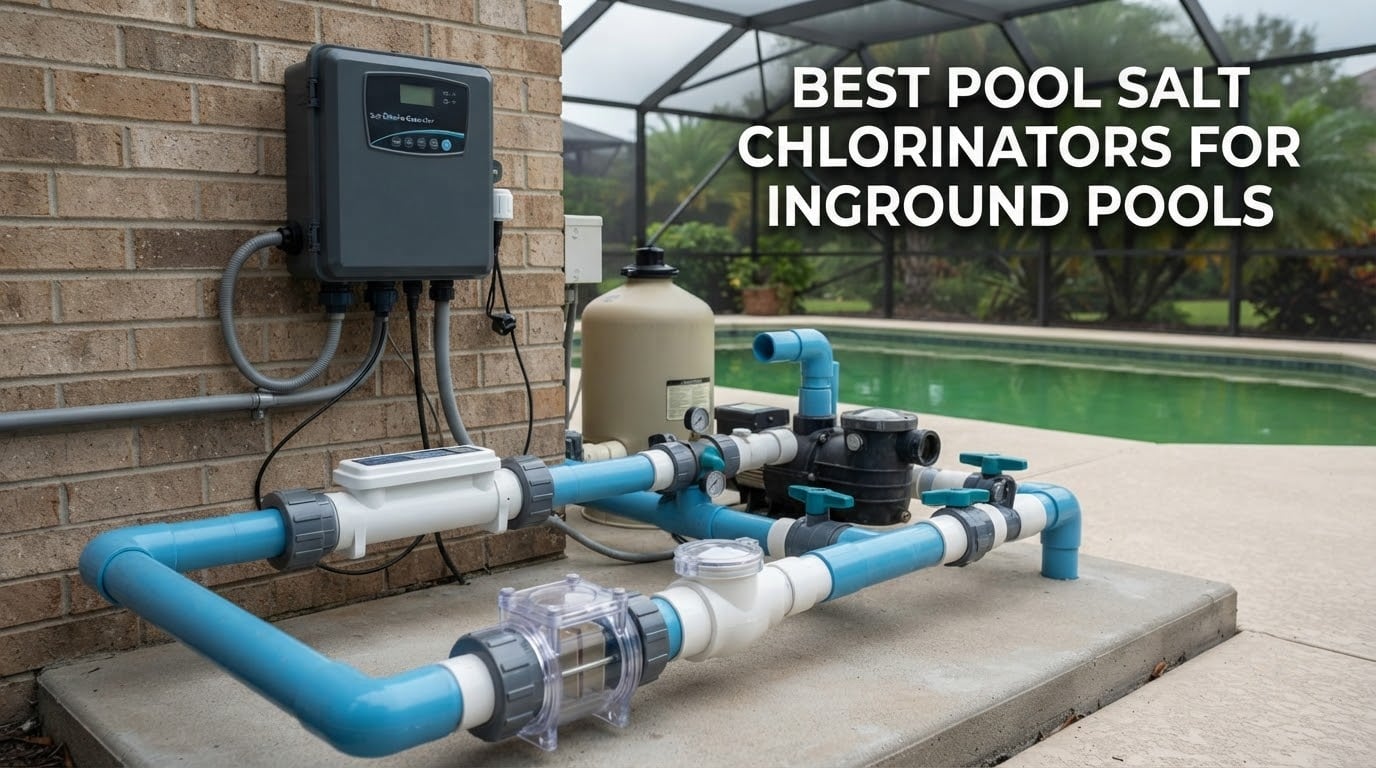
Most of the salt chlorinators listed for sale online are built for above-ground frames. They come with hose fittings, a plastic cell housing and a spec sheet that stops around 12,000 gallons, none of which belongs on a concrete equipment pad. We spent weeks reading owner reviews and comparing the systems that are actually designed for an inground pool, then narrowed the field to ten.
This guide covers the best pool salt chlorinators for inground pools only. Every system below has a stated gallon rating, a control box or integrated electronics, and cell placement that assumes return-line plumbing after the filter and heater. Above-ground-frame units get named once in the sizing section so you know why they are absent, then set aside.
Quick answer: the Hayward AquaRite is the best pool salt chlorinator for most inground pools, rated to 40,000 gallons with a large installed base. Buy a cell rated 1.5 times your pool volume so it runs at a lower output percentage and lasts longer, keep salt between 2,700 and 3,500 ppm, and expect the cell to need replacing in three to five years.
Two other systems earned a place on an inground pad. The APX Performance E-CHLOR is the simplest unit to install yourself, with two unions and a plug. The Bonvoisin LC-200A gives you fine output control and phone monitoring at a mid-range price point. We explain the rest of the field, including the units we would skip, below.
If you are still deciding between a salt system and liquid chlorine, our salt water pool chlorine systems overview covers the conversion side. And once the water is handled, an inground robotic pool cleaner takes over the part tablets never did.
Table of Contents
Top 3 Pool Salt Chlorinators for Inground Pools in 2026

Hayward AquaRite 40,000 Gallon
- Rated to 40000 gallons
- LED monitor with service alerts
- Retrofits existing pool plumbing
- 994 owner reviews

APX Performance E-CHLOR 32,000 gal
- Two unions and a plug to install
- Up to 15 percent more output
- Variable-speed pump friendly
- 3-year warranty

Bonvoisin LC-200A 25,000 gal
- Output adjustable 5 to 100 percent
- LED panel plus Wi-Fi app
- Self-cleaning titanium cell
- Fits 1.5 and 2 inch pipe
Best Pool Salt Chlorinators for Inground Pools (October 2026)
| Product | Specifications | Action |
|---|---|---|
| Hayward AquaRite 40,000 gal |
|
Check Latest Price |
 Fengind 26,500 gal App System Fengind 26,500 gal App System |
|
Check Latest Price |
| Bonvoisin LC-200A 25,000 gal |
|
Check Latest Price |
 WESTAHO 40,000 gal Inground System WESTAHO 40,000 gal Inground System |
|
Check Latest Price |
 EverCrystal 40,000 gal Clear Housing EverCrystal 40,000 gal Clear Housing |
|
Check Latest Price |
| APX Performance E-CHLOR 32,000 gal |
|
Check Latest Price |
 Bonvoisin ECPro20 22,400 gal Bonvoisin ECPro20 22,400 gal |
|
Check Latest Price |
 Rinoson 22,000 gal 100V to 240V Rinoson 22,000 gal 100V to 240V |
|
Check Latest Price |
 Pomeade 40,000 gal WiFi Kit Pomeade 40,000 gal WiFi Kit |
|
Check Latest Price |
 HOSOUTION 40,000 gal App System HOSOUTION 40,000 gal App System |
|
Check Latest Price |
1. Hayward AquaRite Salt Chlorine Generator for 40,000 Gallons: Best Overall
Hayward Aquarite Salt Chlorine Generator for Swimming Pools 40,000 Gallons
Capacity: pools up to 40,000 gallons
Technology: electrolysis of salt into chlorine
Control: LED monitor with service alerts
Weight: 24.3 pounds
Pros
- Largest review base of any system in this guide
- Straightforward swap for an existing Hayward installation
- Consistent chlorine output once salinity is dialed in
- LED service alerts simplify maintenance
Cons
- Owner's manual is written at a technical level
- Warranty service can be hard to get honored
- No main power cord or mounting hardware included
We kept coming back to this one because the evidence base is deeper than anything else here. At 994 owner reviews this is the deepest owner feedback base of any system in this guide, and the only one where long-term durability reports exist in quantity, with one of those owners replacing a 17-year-old Hayward with the same model. That is the kind of track record you cannot manufacture with marketing copy.
The W3AQR15 is rated to 40,000 gallons, which covers the large end of the residential inground market in one unit. It integrates into existing pool plumbing without extra plumbing work, which matters when your equipment pad is already crowded with a pump, filter and heater.
The trade-off is documentation. The manual is written for people who already read manuals, and several owners mention that salt readings from the LED monitor disagree noticeably with handheld meters. Test salt with your own meter before you change anything based on what the panel says.
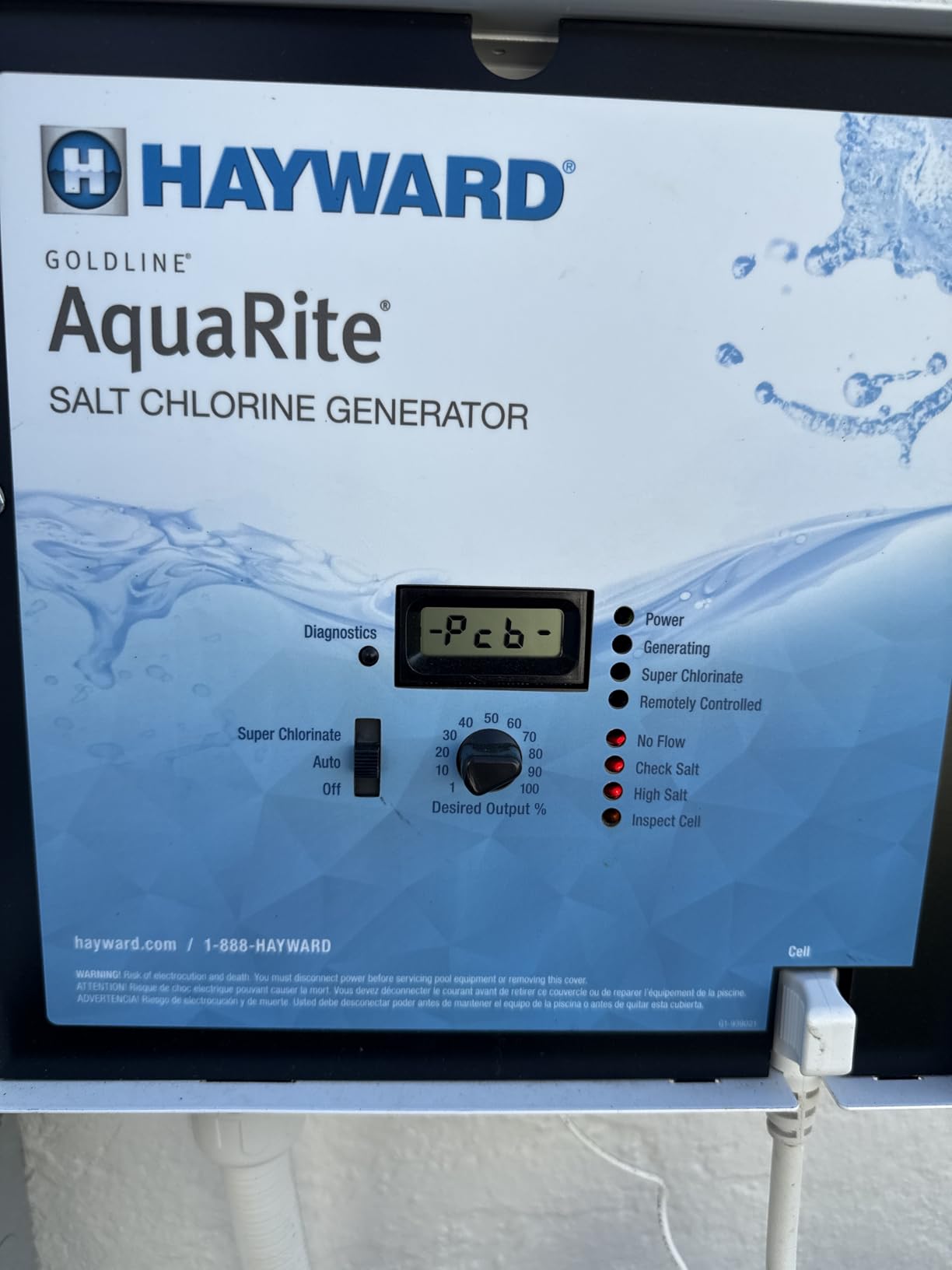
The other recurring complaint is support. A minority of owners report cell or control-board failures after a year or two, and their frustration is less about the failure and more about how hard warranty service was to get. Factor that into your decision if your nearest authorized servicer is far away.
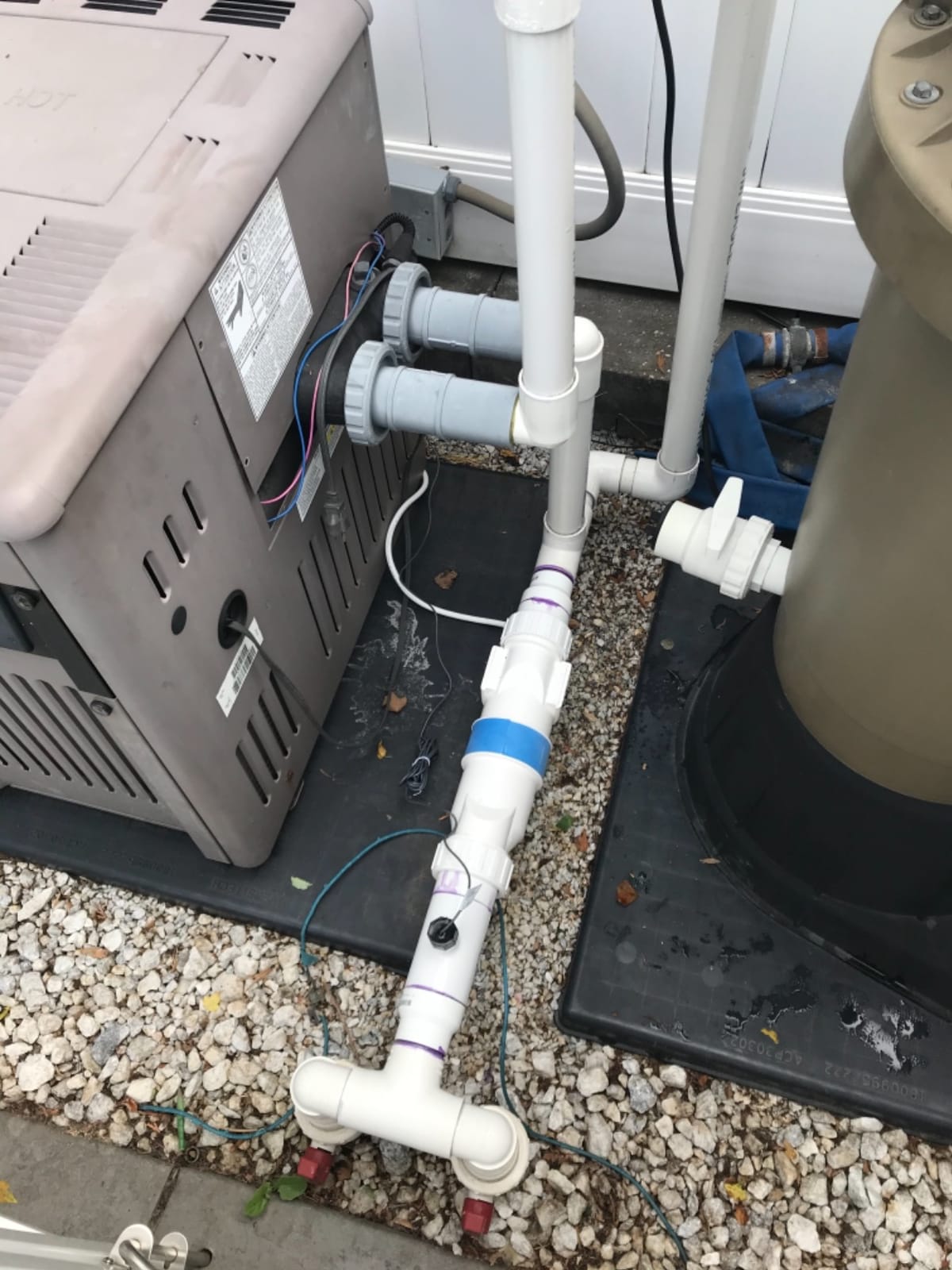
Installation is uneventful for anyone who has plumbed a heater or a salt cell before. The unit does not ship with a main power cord or mounting hardware, so plan for a 240V run and a proper mounting point rather than assuming the box contains everything.
Why this one works on an inground pad
Two things separate it from the generic 40,000-gallon boxes further down this list. First, the 40,000-gallon rating is stated for inground service, not an extrapolation from an above-ground frame. Second, the electronics and cell are a single unit sized for a pad, not a wall-mounted power supply paired with a small inline cell.
Owners converting an existing chlorine inground pool report a clean install into the same return line plumbing used by a heater. If your pad already has a salt system or a Hayward control box, this is the path of least resistance.
Who should pass on it
If your pool is under about 15,000 gallons you are paying for capacity you will not use, and a smaller cell will serve you better. If you want phone control and fine output steps, this panel is coarse by comparison with the app-driven systems below.
Buy a different system if you cannot get warranty service locally. A 994-review base does not help if the nearest servicer is three hours away and the cell is a sealed cartridge.
2. Fengind Salt Chlorine Generator with App Control: Best All-in-One Unit Under 26,500 Gallons
Salt Chlorine Generator for Pools up to 26,500 Gallons with App Control
Capacity: pools up to 26,500 gallons
Output: up to 1.1 lb per day
Cell: self-cleaning titanium plates
Protection: IPX5, 3-year service
Pros
- Control unit and cell combined into one body
- App control with output from 25 to 100 percent
- Automatic polarity reversal at 4 8 or 12 hours
- Low salt and low temperature auto-shutdown
Cons
- App needs phone location services switched on
- Fittings sized for above-ground pool plumbing
- Some buyers needed support to sort out first-time setup
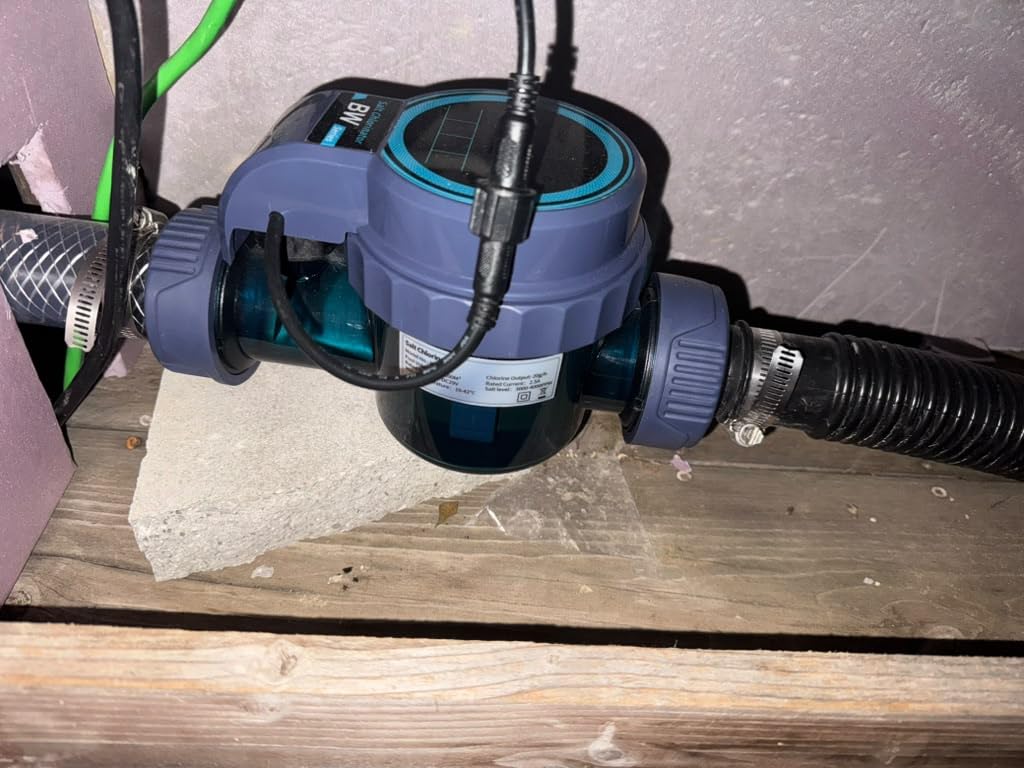
This is the most compact design in the group. Instead of a control box on the wall and a cell in the plumbing, the electronics and the cell are one sealed body, which removes a wiring job and shrinks the footprint on a tight pad. If your equipment pad has no free wall space, that is a real advantage.
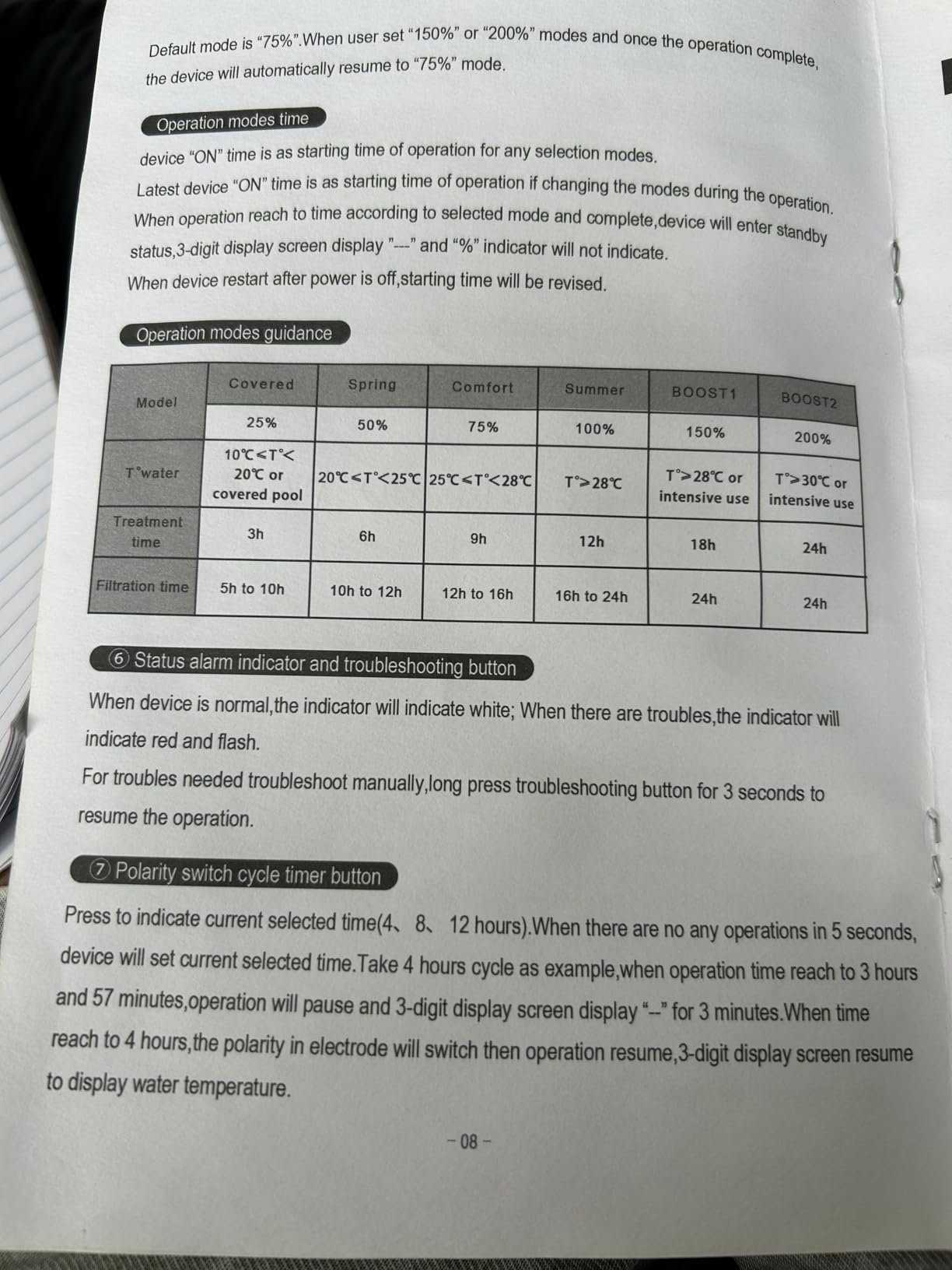
It produces up to 1.1 lb of chlorine per day across a 10C to 42C range, and the titanium plates reverse polarity automatically on a 4, 8 or 12 hour cycle to shed scale. Tri-sensor monitoring covers salinity, temperature and flow, with automatic shutdown below 10C and a child lock.
What gives us pause is the plumbing. The supplied dual-size fittings cover 1.5 inch and 1.25 to 1.5 inch pipe, which is what above-ground frames use, and the manufacturer listing describes it as an above-ground pool unit. For an inground pad you may need to source 2 inch adapters separately.
Owners like the app. Output adjusts from 25 to 100 percent, the memory function restores your settings after a power cut, and standard and boost modes cover normal weeks and a heavy bather weekend. The recurring complaint is connectivity rather than chemistry, with several buyers noting the app drops off the network.
Both the low salt alert and the low temperature cutoff are useful safeguards on a pool that sits through a cold shoulder season. That safety net is one reason we kept this system on a list that is otherwise filtered hard toward inground service.
What we liked during setup
Setup took one session for the owners we read about, largely because there is nothing to wire. The cell screws into the plumbing, the cell plugs into the same body, and the app walks through salinity calibration. That is a weekend job rather than a contractor job.
Voltage surge protection and the child lock are small touches that matter on a unit sitting outdoors next to a wet pad all season.
Where it falls short for an inground pool
The fitting situation is the honest drawback. If your return line runs 2 inch pipe, this needs an adapter you order separately, and a leak at a rubber connection on an inground return line is a much bigger problem than a leak above ground where you can see the puddle.
The app’s location-service requirement also bothers us. Remote access stops working if you disable location permissions on your phone, which is a setting many people switch off without thinking.
3. Bonvoisin Salt Water Pool Chlorinator System LC-200A: Best Value with App Control
Bonvoisin Salt Water Pool Chlorinator System Salt Chlorine Generator for Inground Pools Saltwater Pool System with Titanium Cell, LED/APP Control, Up to 25,000 Gallons Pool
Capacity: pools up to 25,000 gallons
Output: 5 to 100 percent in 5 percent steps
Size: 4.7 x 13 inches, 3.5 pounds
Mounting: horizontal or vertical
Pros
- Drop-in swap that replaced an older Jandy system in minutes
- Finest output granularity in the group
- Built-in LED panel plus app
- Cleaning reminder at 500 hours
Cons
- App connection does not always hold
- Location services must stay enabled
- One owner reported no chlorine after a few months
- Support response times inconsistent
At 25 reviews this is a thin evidence base, so we weighted the specification sheet and the installation reports heavily. On both counts the LC-200A holds up well, and its output control has finer granularity than any other unit listed here.
Chlorine output steps in 5 percent increments from 5 to 100 percent, finer than the 20 percent steps most competitors use. On a pool where you want to hold a steady free chlorine reading without overshooting, that granularity removes a lot of guesswork.
The cell reverses polarity every 4, 8 or 12 hours, and the system flags a cleaning point at 500 operating hours. Both 1.5 inch and 2 inch pipe adapters are included, which covers the two return-line sizes found on most inground builds. At 4.7 by 13 inches and 3.5 pounds it mounts horizontally or vertically in a tight space.
Owners replacing an older Jandy system report the swap took minutes. That is worth noting for anyone converting an existing inground pool, because the labor to re-plumb a cell can cost more than the unit itself.
What the app is actually good for
The 2.4 GHz app handles output level, production time, alarm viewing and troubleshooting prompts. Larger 25,000, 40,000 and 60,000 gallon variants share the same platform, so a buyer who outgrows this cell can step up without changing phones or accounts.
The built-in LED panel means you can run the system without the app at all. That matters more than it sounds, because a 2.4 GHz network will not be in every equipment shed and some owners simply prefer a dial.
Who should skip it
Wi-Fi stability is the repeated complaint. Buyers report the app dropping off the network, and one owner reports the unit stopped producing chlorine after a few months and began throwing E1 and E2 error codes. If your phone is your only interface to the system, that risk is concentrated.
Support response times are also inconsistent according to owners. For a component that lives in a wet plumbing line, a slow answer to a failure is a bigger deal than it would be for a household appliance.
4. WESTAHO Pool Salt System for Inground Pools up to 40,000 Gallons: Best Monitoring Panel
Salt Chlorine Generator, Westaho Pool Salt System for Inground Pools Up to 40,000 Gallons, 1.4 lb Chlorine Output, USA Titanium Cell with 10,000-Hour Lifespan, Built-in Power Supply
Capacity: pools up to 40,000 gallons
Output: 1.4 lb
Titanium cells rated to 10,000 hours
Enclosure: IP66 waterproof
Pros
- Built-in power supply removes a wall-mounted box
- Panel shows salt temperature cell usage voltage and current
- Magnetic flow switch
- Includes a 2 inch to 1.5 inch adapter
Cons
- One-star share of 21 percent against a 4.0 average
- Small review base of 30 for long-term confidence
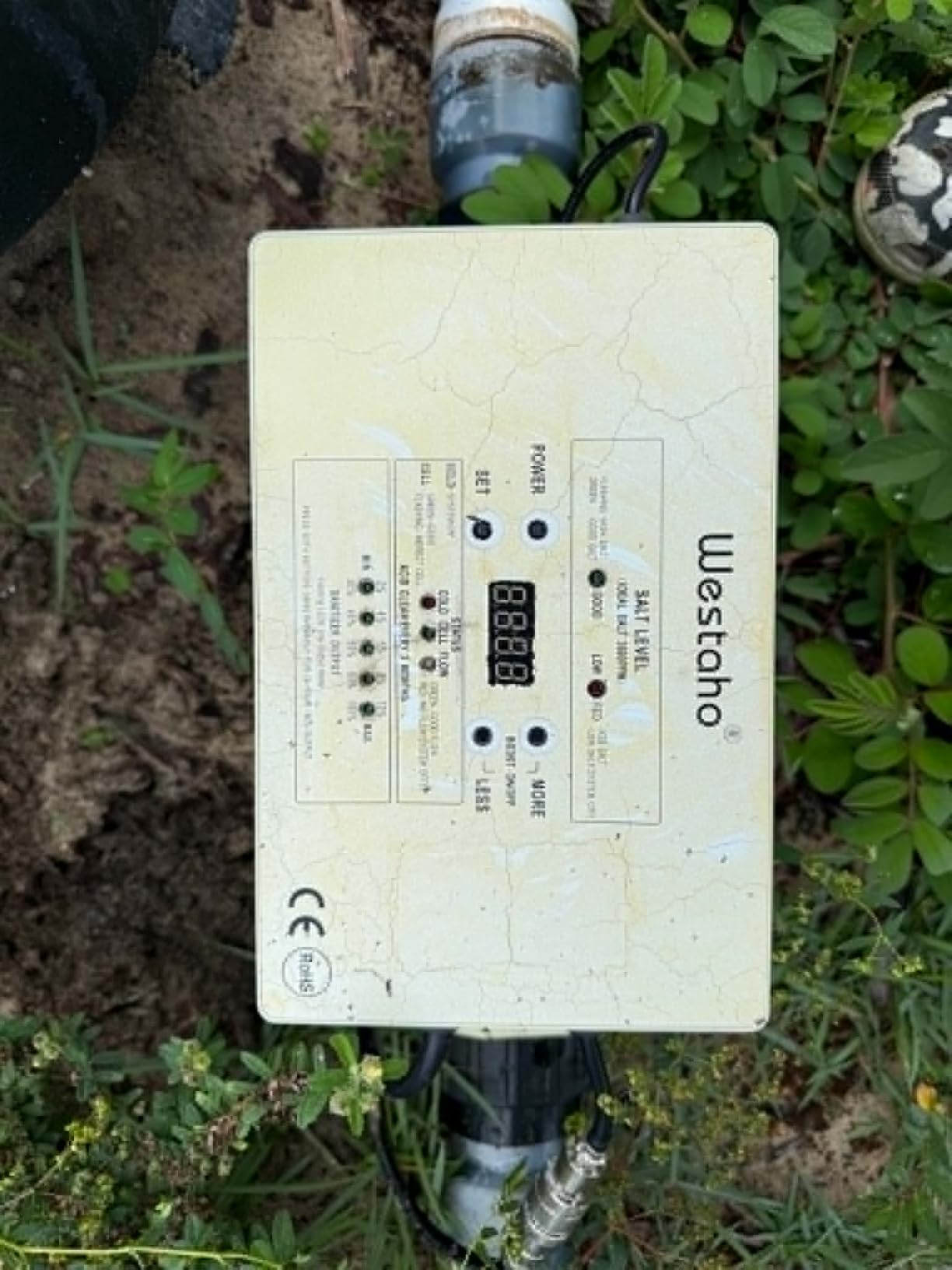
The most interesting thing about this system is the display. Most control panels give you a salt reading and a couple of indicator lights. This one shows real-time salt level, water temperature, cell usage hours, voltage and current, and that last pair is what turns a vague problem into a diagnosis.
If your cell stops producing chlorine, current draw tells you whether the plates are being fed at all. Salt reading tells you whether the fluid is right. Temperature tells you whether the controller has shut down for cold. Three numbers cover most of the troubleshooting tree on a pad visit.
The built-in power supply is the second practical win. There is no separate wall box to mount and wire, so the install is closer to plumbing work than electrical work. The magnetic flow switch is also a genuine step up from a mechanical switch that can stick on debris in a return line.
Cell longevity is the headline claim. Eleven US-made titanium plates rated to 10,000 hours is roughly seven years of operation at typical duty, which would put cell replacement well outside a normal ownership window.
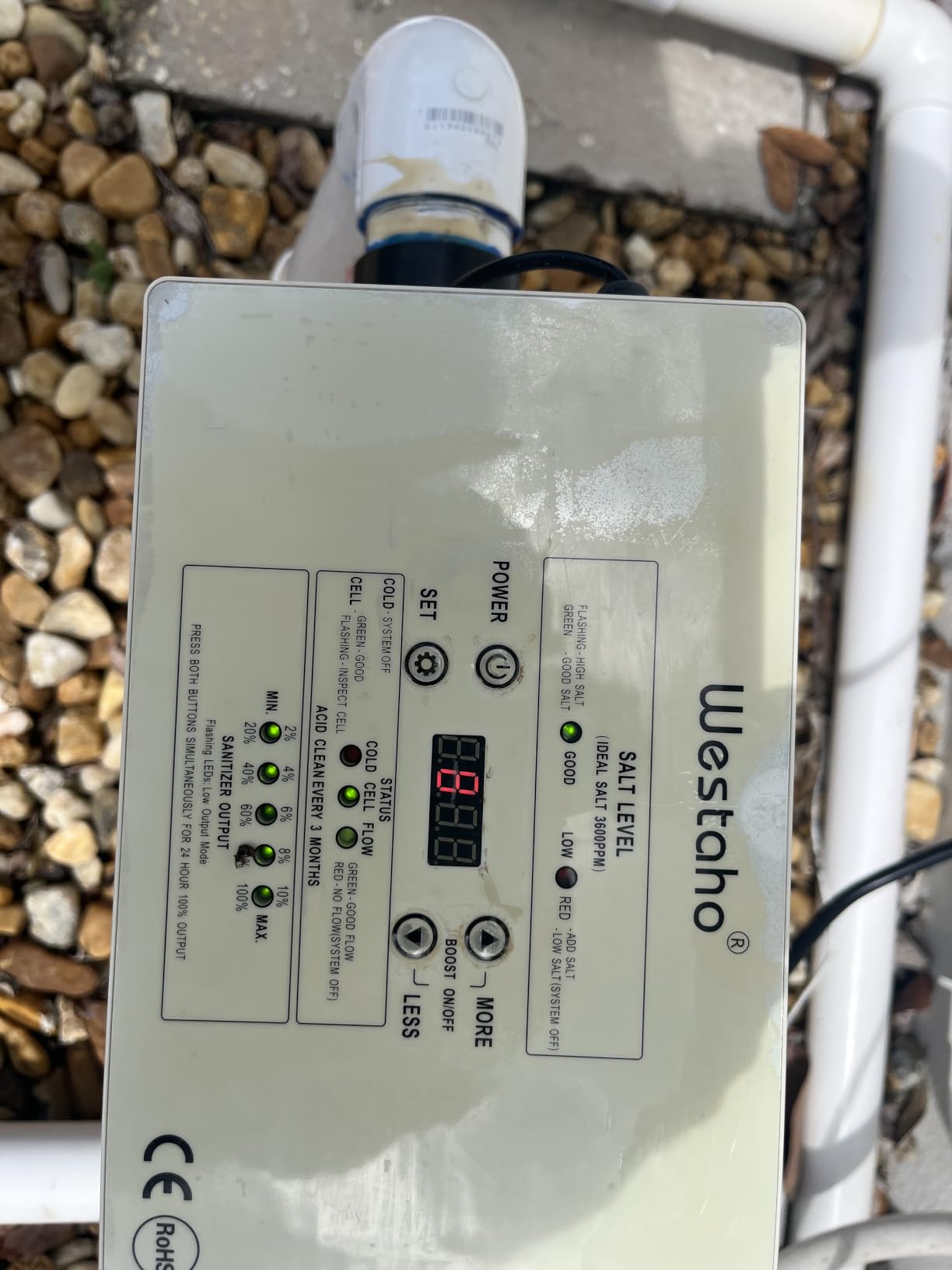
Low-temperature automatic shutdown below 52F and an IP66 enclosure cover the two conditions that kill outdoor electronics: cold weather and standing water. Compatibility with standard 2 inch pool pipe plus the included 2 inch to 1.5 inch adapter covers most inground return lines.
The honest problem is the review distribution. A 21 percent one-star share against a 4.0 average is among the highest we saw among the well-reviewed units here, which in our reading means a meaningful slice of buyers hit early failures or support problems. A 30-review base is too small to smooth that out.
Why the readout changes ownership
Owners with a high-flow inground circulation get the most from seeing current and voltage. A cell that has scaled up draws different current than a clean one, and that number is the earliest honest signal that a cell is dying.
It also makes conversations with a service company shorter. Instead of describing a light, you can read out the current draw and the salt level.
Who should pass on it
If you want a proven longevity record, this is not it. The 10,000-hour rating is a manufacturer figure, and 30 reviews cannot confirm a seven-year lifespan because most of these systems have not been in service that long.
Buyers who cannot tolerate any early-failure risk on a component with no local servicer should look at a system with an established service network instead.
5. EverCrystal Salt Water Pool Chlorinator for up to 40,000 Gallons: Clear Cell You Can See
EverCrystal Salt Water Pool Chlorinator System – Up to 40,000 Gallons
Capacity: pools up to 40,000 gallons
Housing: clear for visual monitoring
Cell: self-cleaning to reduce buildup
Support: 1 year after-sales
Pros
- Clear housing lets you confirm chlorine production visually
- Metal control box feels sturdier than plastic
- Plug-and-play setup with union fittings
- Works as a replacement for factory-supplied systems
Cons
- Only 1 year of after-sales support
- Manual reported missing or hard to find
- 18-review base leaves longevity unproven
The 4.8 average is among the strongest scores we saw here, and we want to be straight with you about the sample size. Eighteen reviews cannot tell you much about a seven-year lifespan, and the customer review content returned for this listing describes filter media balls rather than the chlorinator, which suggests the review stream is mixed.
What is genuinely interesting is the clear housing. You can look straight at the cell plates and see chlorine bubbling in the chamber. Every other system on this list gives you an LED and a number, and this one gives you direct visual confirmation that the electrolysis is happening.
For a first-time salt pool owner, that is a real teaching tool. When a system goes quiet, a glance into a clear chamber tells you in seconds whether the problem is a dead cell or a plumbing stoppage upstream.
The digital panel tracks salinity, voltage, current, temperature and cell operation, and the built-in salt calibration handles a plus or minus 800 ppm window. That calibration tolerance is wide, so verify salt with a proper test before you top up or drain.
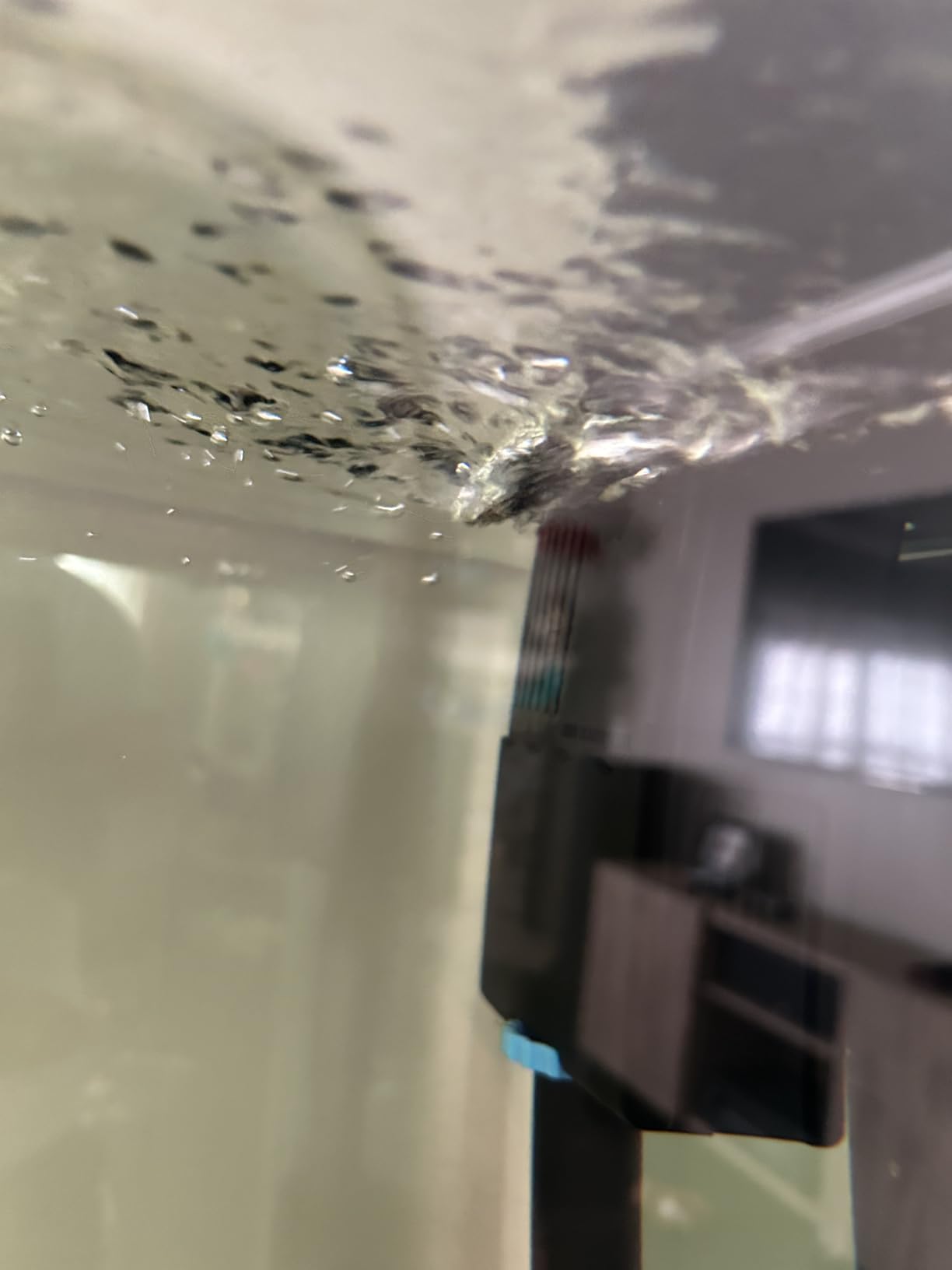
Construction is above the norm for this category. A heavy-duty metal control box resists the sun and the vibration that crack plastic housings, and the plug-and-play design with union fittings means you can drop it into existing plumbing without cutting anything new.
Owners using it to replace a factory-supplied pool system report exactly that, a direct swap into the existing arrangement. A 25,000 gallon variant covers smaller inground builds.
Who this suits
This is the right unit if you are new to salt systems and want visible proof that the thing is working. The metal box also suits a pad in full sun, which is where plastic housings fail first.
If you are replacing a failed cell in an existing inground pool, the union fittings and plug-and-play layout minimize the plumbing work. That is often the deciding factor in a retrofit.
Where the risks sit
One year of after-sales support is a short commitment for a device meant to last a decade, and owners report the operating manual was missing or hard to find along with support contacts. For a device with a digital panel, a salt calibration procedure and a cleaning cycle, missing documentation is a bigger gap than it sounds.
Eighteen reviews cannot tell you much about a seven-year lifespan. If you are committing to a 40,000-gallon inground pool for a decade, an established service network is worth more than a perfect score on a small sample.
6. APX Performance E-CHLOR Plug-in Salt Chlorine Generator: Easiest DIY Install
E-CHLOR Plug-in Salt Chlorine Generator | 32,000 gal Max | APX Performance
Capacity: pools up to 32,000 gallons
Design: plug-in with integrated power supply
Sensors: salt temperature scaling and cell life
Warranty: 3 years
Pros
- Two unions and a plug is the whole installation
- Accurate cut template for the plumbing
- Reported savings over a failed Pentair IC40
- Cleaning plug included
- Works with variable-speed pumps
Cons
- Short power cord may not reach a panel outlet
- Needs plumbing experience for a leak-free install
- Initial output runs high until chemistry settles
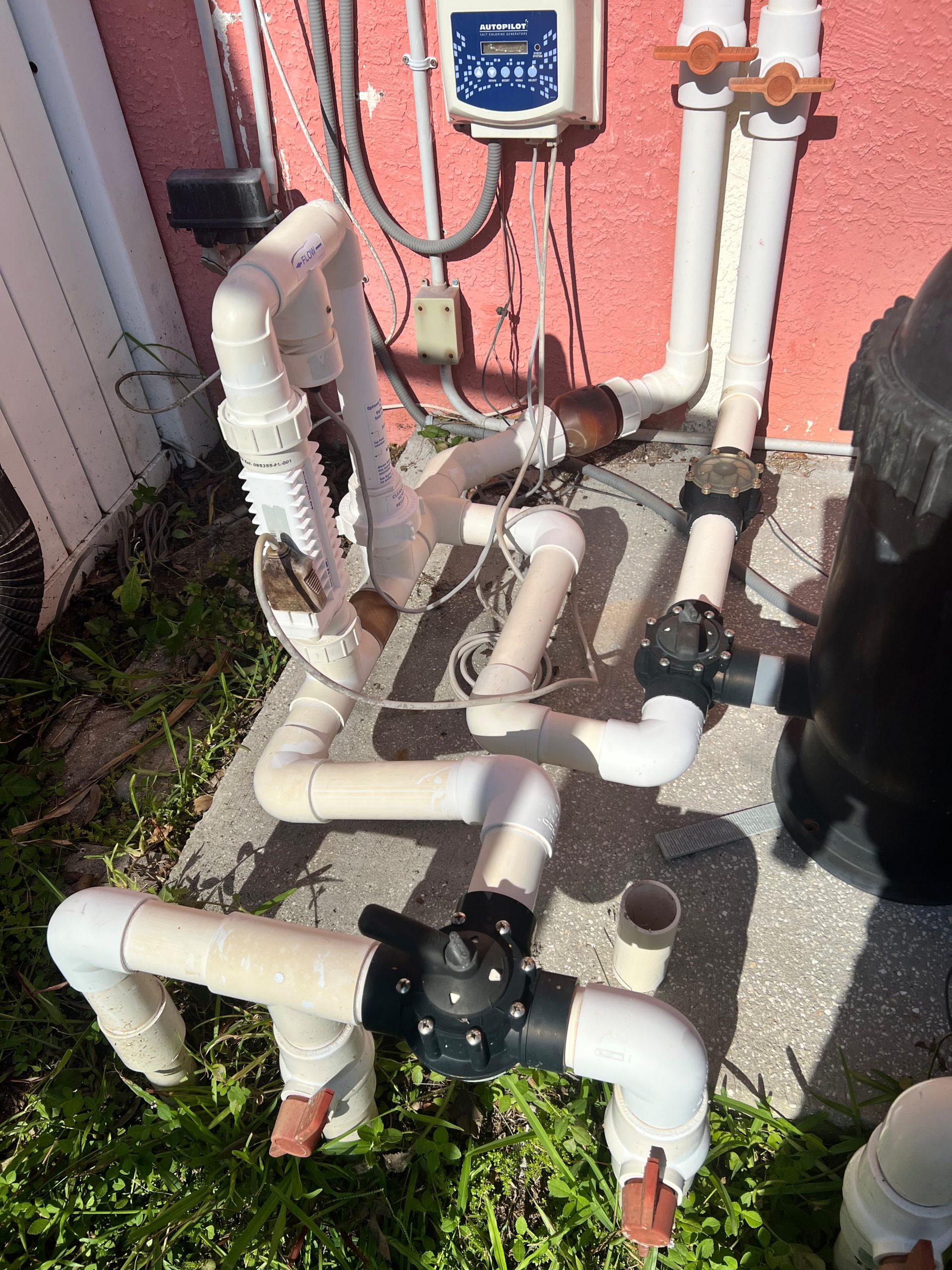
Most of the systems on this list are hardwired to a 240V supply. This one is not. The E-CHLOR is a compact body with an integrated power supply, two unions and a plug, which turns a two-day project involving an electrician into an afternoon project involving a pipe wrench.
That is why it earns a place on a list filtered to inground pools. The plumbing work is what makes inground installation expensive, and this system reduces the electrical scope to a normal outdoor outlet.
Output runs up to 15 percent higher than other compact generators of the same size, and owners report it holding a stable free chlorine reading at 50 percent output on pools from 9,000 to 20,000 gallons. Sensors independently track salt level, temperature, cell scaling and cell lifespan.
The alerts name the cause rather than flashing a bare code. Instead of E3 you get a line telling you the salt reading is out of range or the cell needs cleaning, which saves a troubleshooting trip.
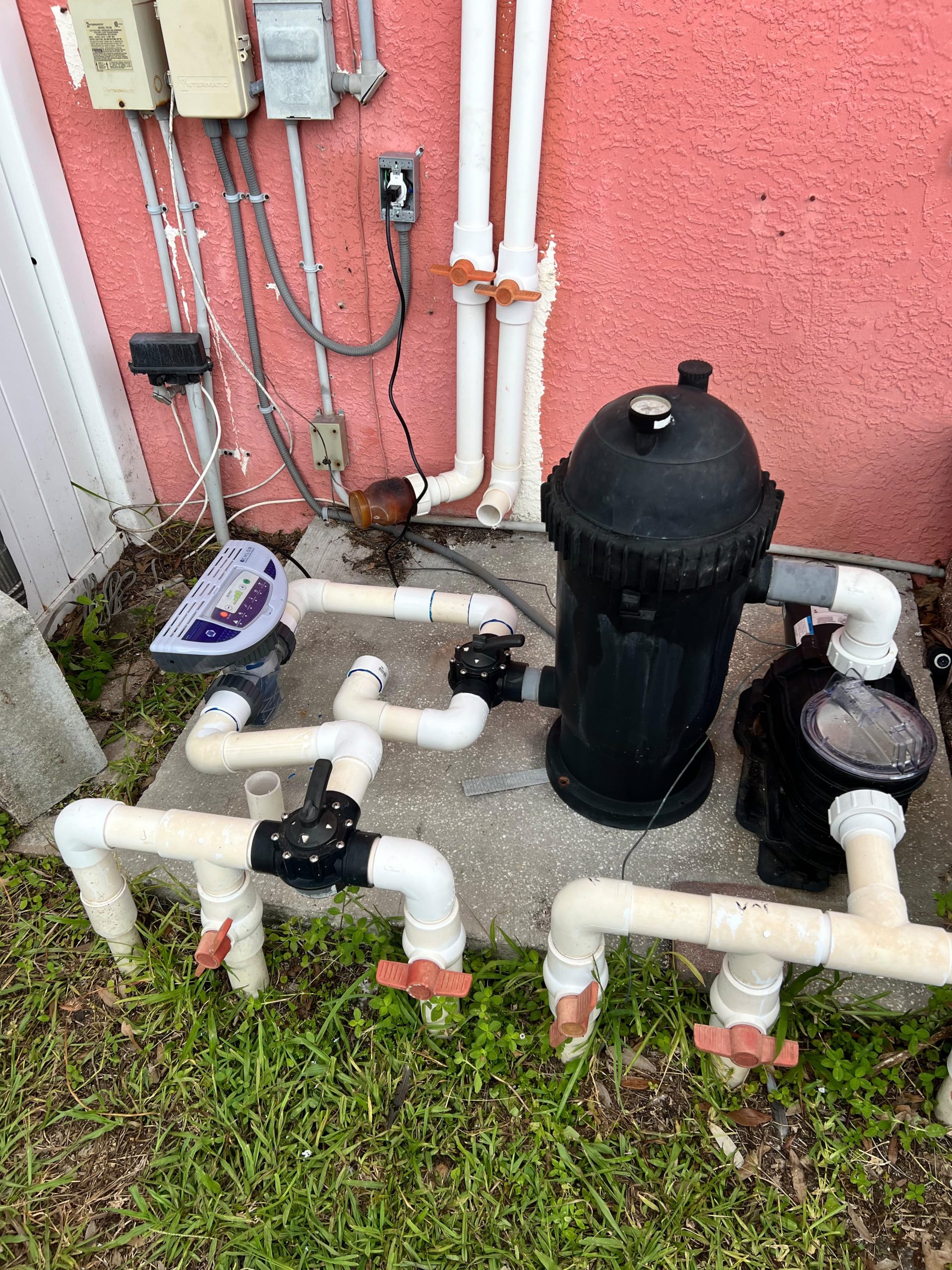
Several owners replacing a failed Pentair IC40 report large savings against the factory unit, which makes this a natural upgrade path for anyone already running Pentair equipment. The cut template is accurate, so the two unions land in the right places the first time.
Variable-speed pump compatibility is a genuine advantage on newer inground builds, where a low-flow return can starve a cell that expects steady circulation. Winter operation is also claimed, which matters in climates where the cell stays plumbed in.
Why the plug-in design matters for an inground pool
Equipment pads are hot in summer and cold in winter, and hardwired units need a GFCI-protected circuit sized for continuous draw. Using an existing approved outdoor outlet removes a permit, a panel slot and an electrician’s visit from the list.
The 3-year manufacturer warranty is among the longest we saw. Longer coverage matters on a component whose most common failure is a dead cell rather than a control board.
Who should skip it
The power cord is short, and owners on pads with distant outlets report it will not reach. Measure the run from your panel-mounted outlet to where the cell has to sit before you buy.
You also need real plumbing experience to get two unions into a live return line without a leak, and you will want an outlet timer if you plan to cut power to the unit seasonally. Initial output also runs high, so expect to dial it down once pH, CYA and calcium are balanced.
7. Bonvoisin ECPro20 Salt Water Pool Chlorinator for up to 22,400 Gallons: Best for Smaller Inground Pools
Bonvoisin Salt Water Pool Chlorinator System Salt Chlorine Generator for Inground Pools Saltwater Pool System with Titanium Cell, LED Control Panel, Self-Cleaning Function Up to 22,400 Gallons Pool
Capacity: pools up to 22,400 gallons
Output: 20 40 60 80 or 100 percent
Run time: 1 to 24 hours
Size: 11.76 x 15.2 inches, 3.5 pounds
Pros
- All-in-one unit with no separate wall box
- Chlorine held steady in the first weeks of use
- Remote output adjustment for owners who travel
- Costs less than the cells of many older systems
Cons
- Rubber joints and hose clamps instead of PVC fittings
- Two owners report loss of flow detection then total failure
- Instructions are thin
- Needs a 2.4 GHz network for app control
Most systems in this guide assume a large residential inground pool. For a 15,000 to 20,000 gallon build, this is the capacity that actually fits, and running a 40,000-gallon cell at 30 percent on a small pool is the classic sizing mistake.
The ECPro20 combines the control unit and the electrolytic cell into one housing that mounts horizontally or vertically, so it works in a shallow equipment vault as well as a full pad. Output steps through 20, 40, 60, 80 and 100 percent, and run time adjusts from 1 to 24 hours, which lets you match production to a pump schedule.
Self-cleaning polarity reversal on a 4, 8 or 12 hour cycle handles the scale that builds on titanium plates. The controller adds water temperature, salinity and water level alarms, which is a reasonable sensor set at this level.
Owners report chlorine holding steady through the first weeks, and for travelers the app lets you raise output remotely when guests arrive rather than dosing by hand.
Why the plumbing detail matters more than it looks
This unit uses rubber joints and hose clamps on a 1.5 inch connection rather than standard 1.5 inch or 2 inch PVC fittings. That is the single most important thing to know before you buy it, because an inground return line runs at full pump pressure with a leak that is not immediately visible.
One owner had a joint slip and spray water at full pump flow. A glued PVC union in the same position would have failed predictably and been repairable with a coupler, and that difference is worth factoring into a decision.
Who should look elsewhere
If you are comfortable with plumbing, this does the job and saves money. If you are not, two owners report the unit losing flow detection and dying entirely within days to months of purchase, and a 17-review base cannot tell you how common that is.
Also consider that the 2.4 GHz requirement will not be met by every router. Check your network before you commit to app control as the primary interface.
8. Rinoson Saltwater Pool Chlorinator System for up to 22,000 Gallons: Best 100V to 240V Flexibility
Rinoson Saltwater Pool Chlorinator System with Two Year Limited Warranty, App Remote Control & Titanium Plate Self-Cleaning Smart Salt Chlorine Generator for Pools up to 22,000 Gallons
Capacity: pools up to 22,000 gallons
Output: up to 0.7 oz per hour (20 g/h)
Cell: polarity reversal every 2 4 6 or 8 hours
Warranty: 2 years
Pros
- Built-in adapter accepts 100V and 240V input
- Low salt alert plus voltage and current monitoring
- Polarity reversal on four separate intervals
- All-in-one body avoids a wall-mounted box
Cons
- Lowest rated among units with meaningful volume at 3.6
- Listing says indoor use only which conflicts with pool use
- App limited to 2.4 GHz networks
- 20 g per hour output caps it at 22000 gallons
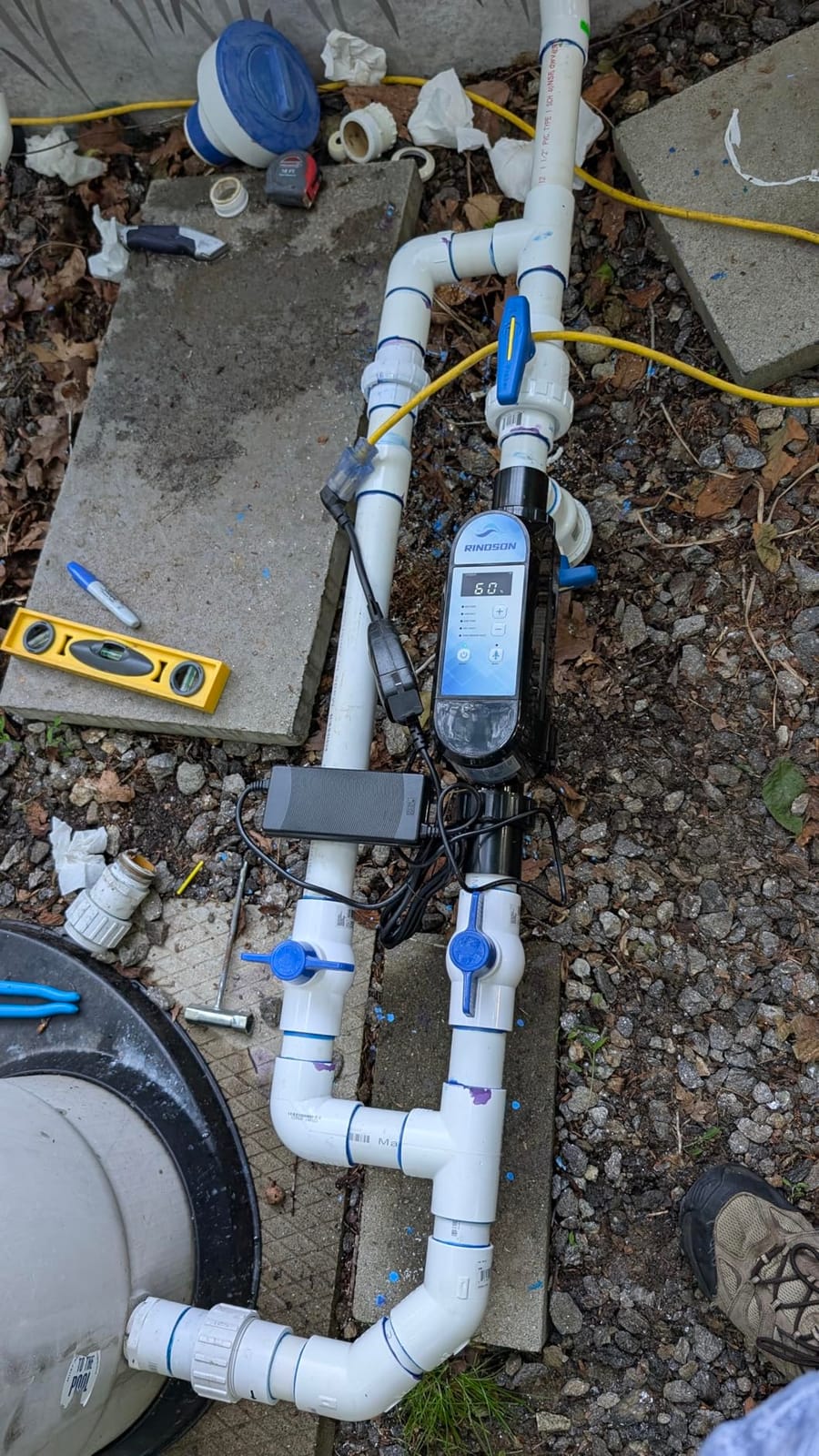
The built-in 100V to 240V adapter is the reason to look at this unit at all. If your pad has a standard household circuit rather than a chlorinator-rated 240V run, this is one of the few systems here that will connect without new wiring.
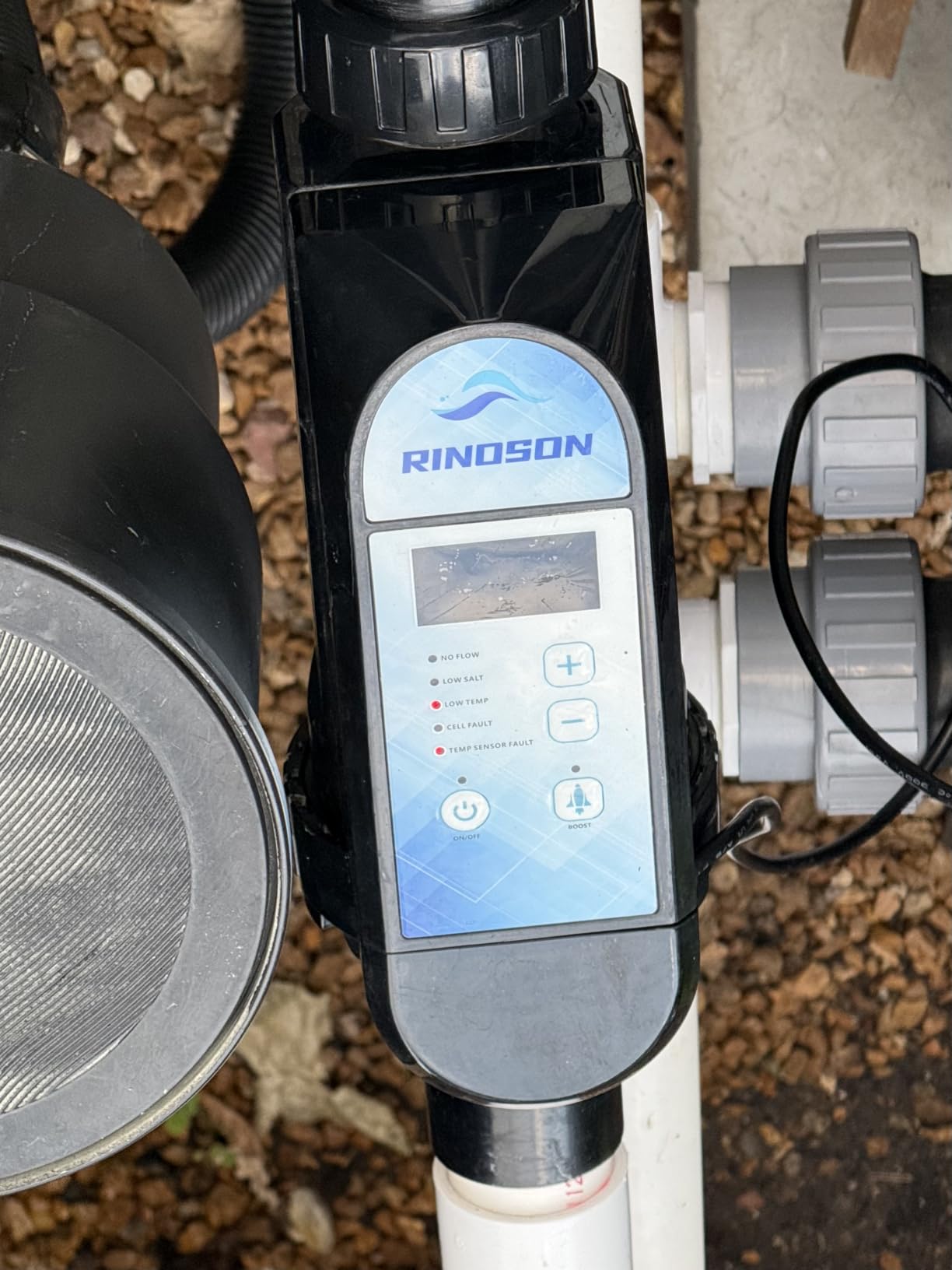
Monitoring is thorough for the category. Alongside the low salt alert it tracks voltage and current, which is the pair of numbers that tells you whether a cell is actually being driven.
Polarity reversal here runs on four intervals, 2, 4, 6 or 8 hours. The shorter intervals give the scale less time to set, which matters in hard water where calcium builds fast on the plates.
Output is the constraint. At up to 0.7 oz per hour, roughly 20 g/h, this is the lowest output figure among the systems here, and it caps the system at 22,000 gallons.
Variants at 13,000, 18,000, 27,000 and 35,000 gallons exist, so if you oversize for your own pool the higher-output models exist within the same line. The 22,000-gallon version is the one rated here.
The 2-year manufacturer limited warranty comes with 24/7 customer support, which is a reasonable support commitment for a component in this category.
What the ratings split tells you
A 3.6 average is among the weakest we saw in this guide, with a 23 percent one-star share and a 49 percent five-star share. That split is bimodal rather than mediocre. Buyers generally either get a unit that works and rate it highly, or hit a problem in the first season.
That pattern usually points to either an installation fit issue or a quality split in production. Either way, it argues for confirming the plumbing dimensions before you buy.
Who should pass on it
The listing states the item should be used indoors only, which directly conflicts with installing it on an outdoor equipment pad. Even if the seller means storage, the wording is a warning sign about how carefully the documentation was written.
We would also skip it if your pool is above 22,000 gallons, because the 20 g per hour output leaves no headroom. At that volume you want a 40,000-gallon rating so the cell can loaf instead of running at full output.
9. Pomeade 40,000 Gallon Salt Water Pool Chlorinator with WiFi App: Best Plumbing Compatibility
40,000 Gallons Salt Water Pool Chlorinator System with WiFi App Control, Upgraded Titanium Plates, High-Performance Salt Chlorine Generator
Capacity: pools up to 40,000 gallons
Connectivity: 2.4 GHz Wi-Fi app
Cell: titanium with reverse-flush cleaning
Operating range: 10C to 45C
Pros
- Fits standard US 1.5 inch and 2 inch PVC
- Complete kit with panel cell and connections
- App covers output timers and self-cleaning
- Low salt and temperature alerts included
Cons
- Lowest average rating in the guide at 3.4
- Only 35 percent of reviews at five stars
- App limited to 2.4 GHz networks
- Small review base limits long-term evidence
The plumbing specification is the reason this one earns a place. It fits standard US 1.5 inch and 2 inch PVC, which is the most convenient fit in this guide and removes the adapter guesswork that trips up several other systems on an inground return line.
The box includes the control panel, electrolytic cell and all connections, so there is no second order to place after delivery. That is worth more than it sounds when you are standing in a garage trying to finish a retrofit.
Output control runs through a 2.4 GHz app that handles on and off, output level, timers and the self-cleaning mode. The cell uses upgraded titanium plates with a reverse-flush cleaning cycle, and alerts cover both low salt and out-of-range temperature between 10C and 45C.
We are recommending this one with a caveat. A 3.4 average is among the weakest we saw in this guide, and only 35 percent of reviews reach five stars.
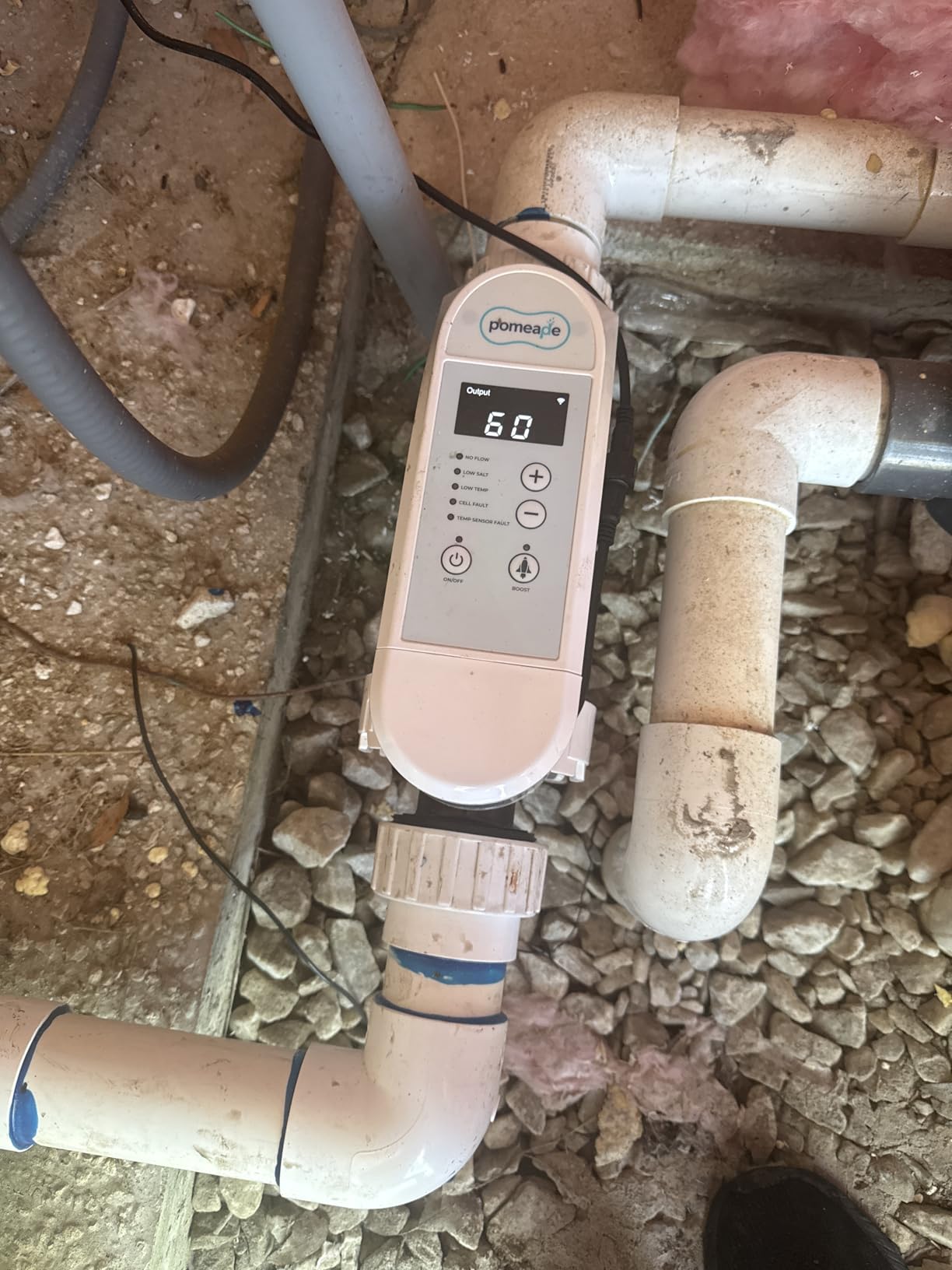
The distribution is flat rather than polarised, which reads to us as generally functional performance mixed with a steady stream of complaints about app reliability and results falling short of expectations. Nothing here suggests a dangerous product, but nothing suggests confidence either.
Variants at 6,000, 9,000 and 12,000 gallons exist in the same line, so the platform covers small builds if the 40,000-gallon version is more than you need.
Why the plumbing spec is worth so much
A cell that needs a non-standard adapter means a special trip to a pool store, a possible return, and a fitting that may not match the coupling already in your return line. Specifying standard 1.5 inch and 2 inch PVC removes all three problems, and it is why we filtered this list toward systems that state their pipe compatibility.
For a first-time salt install on an existing pool, that certainty is worth more to most owners than a longer warranty on a unit with unclear fittings.
Who should skip it
If you want a phone app as your only interface, the 3.4 average and the app complaints make this a hard sell. A 2.4 GHz-only network is also a limit in homes with dual-band or mesh setups that default to 5 GHz.
Anyone planning to keep this pool for a decade should weigh a system with a longer review history and a longer warranty, since cell replacement is the expected event in that timeline.
10. HOSOUTION Salt Water Pool Chlorinator System for up to 40,000 Gallons: Budget App-Controlled Option
HOUSOUTION Salt Water Pool Chlorinator System, Salt Chlorine Generator with Smart App Control, Saltwater Pool System, Chlorinator for Inground Pool, Salt Cell for Pool, Up to 40,000 Gallon Pool
Capacity: pools up to 40,000 gallons
Design: compact all-in-one unit
Output: 20 40 60 80 or 100 percent
Method: brine electrolysis
Pros
- Compact all-in-one body suits a tight pad
- App control covers output and self-cleaning mode
- Discrete 20 percent steps are easy to manage
- Positioned as an affordable 40000 gallon option
Cons
- Average rating of 3.5 with a 21 percent one-star share
- Pipe compatibility not stated in the listing
- Small review base limits evidence on cell longevity
This one pairs a 40,000-gallon rating with phone control at a modest price, and the design is the compact all-in-one type that suits a crowded pad. Control unit and electrolytic cell share one body, so the footprint is small and there is no wall box to mount.
Output steps through 20, 40, 60, 80 and 100 percent, which is coarse next to the Bonvoisin LC-200A but adequate for most pools. The app handles on and off, chlorine level adjustment and the electrode reversal self-cleaning mode, and chlorine is produced by brine electrolysis in the standard way.
Variants at 15,000 and 25,000 gallons cover smaller builds if the 40,000-gallon rating is oversized for your pool.
Here is what gives us pause about the HOSOUTION listing. The listing does not state pipe compatibility, and on an inground installation that is not a detail you can discover after the plumbing is committed. A 3.5 average with a 21 percent one-star share is also a weak signal.
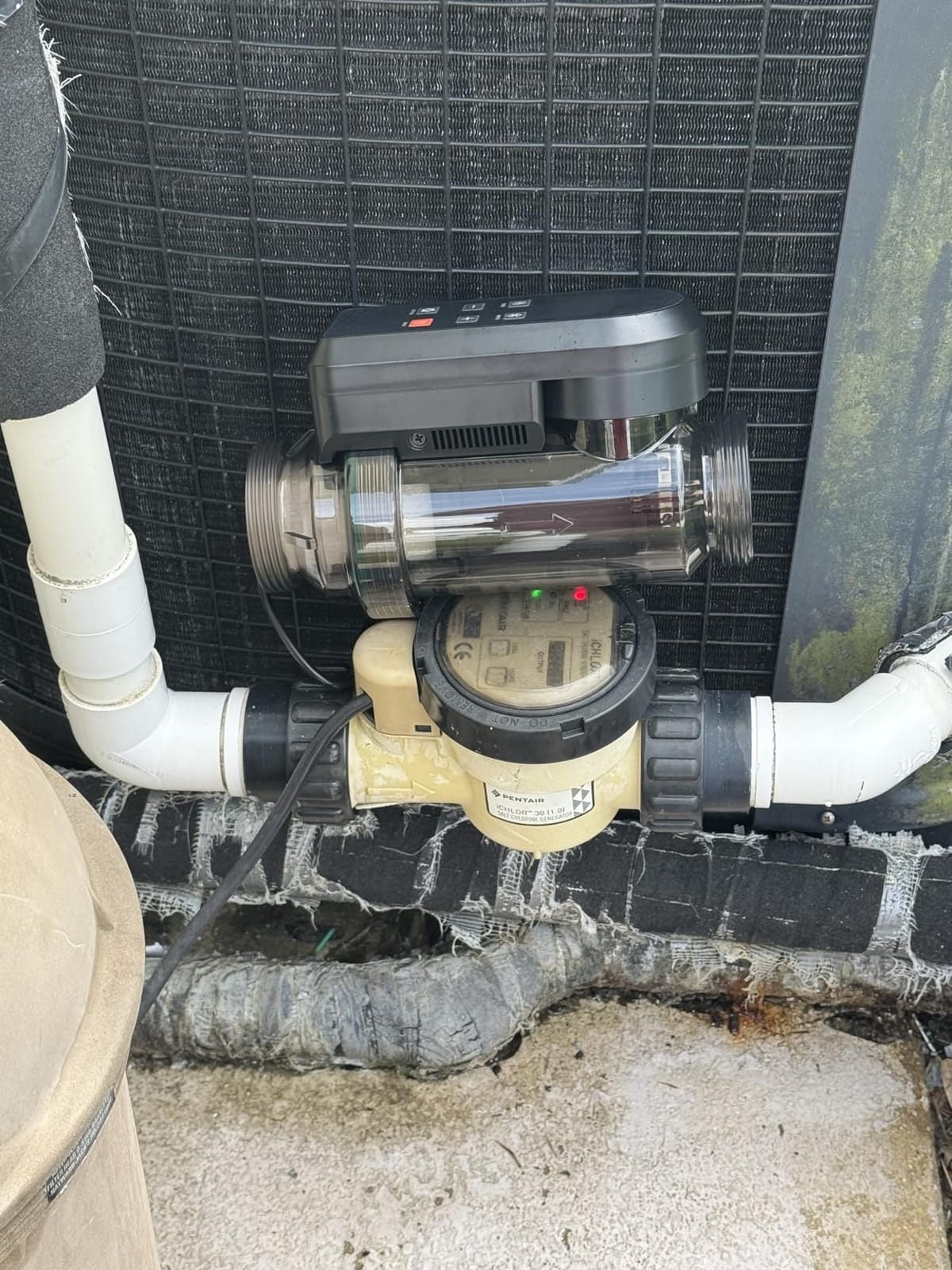
It also sits in the pool and spa replacement parts category rather than the chlorinator segment, which reflects how the seller positioned it. That is a small thing, but it suggests the listing was written for a different buyer than the one installing a new cell on a return line.
Where it makes sense
A tight equipment pad is the strongest case. If you have room for a cell but not for a wall-mounted control box, the all-in-one body solves a real spatial problem that some inground installations have.
The app also covers self-cleaning mode, which means you do not have to remember a polarity reversal schedule. For an owner who will not check a panel weekly, automation here has more value than a higher rating elsewhere.
Who should pass on it
If you are doing a new install, buy a system whose listing states its pipe size. Guessing at fitting compatibility on a return line is a needless risk when several options in this guide state it explicitly.
For a long-term conversion, the 26-review base and 3.5 average give you no basis for confidence in cell longevity, and the cell is the part you will replace in three to five years.
What Size Salt Chlorinator Does Your Inground Pool Need?
Size the cell to 1.5 times your pool volume. That single rule resolves almost every sizing question, and it is the answer most guides bury in a footnote.
Here is why. A cell rated exactly at your pool volume runs at or near full output every day to keep up with sun, swimmers and organic load. A cell with 50 percent headroom runs at a lower output percentage, the plates spend less time under load, and the cell lasts years longer.
Reviewers describe the end-of-life cell as loafing: it can produce enough chlorine on a hot day but not enough on a peak-load weekend, and output creeps down over years until it cannot keep pace. Oversizing is how you avoid that failure mode.
Calculate your volume before you shop. For a rectangular pool, multiply length by width by average depth by 7.5. A 20 by 40 foot pool with a 5 foot average depth holds 30,000 gallons, and that pool needs a 40,000-gallon rated cell.
15,000 gallon pool: choose a 20,000 to 25,000 gallon rated cell
20,000 gallon pool: choose a 25,000 to 32,000 gallon rated cell
25,000 gallon pool: choose a 32,000 to 40,000 gallon rated cell
30,000 gallon pool: choose a 40,000 gallon rated cell
40,000 gallon pool: choose the 40,000 gallon rating and accept full output duty
Hot and arid climates and high bather loads push you toward the upper end of each band. So does a long season with a covered pool that bakes all summer.
One group of products is deliberately excluded from all of that. Above-ground frame units, and the hose-fitting systems marketed for them, are sized around 12,000 gallons and are not appropriate for a concrete inground shell. The Fengind in this guide is a borderline case: its electronics and monitoring are excellent, but its supplied fittings are above-ground sizes, so budget for 2 inch adapters.
How a Salt Chlorinator Actually Works
A salt chlorinator is not a chlorine-free pool. It is a machine that manufactures chlorine from salt, which means your water chemistry job does not change, only the delivery method does.
Salt is dissolved into the pool water to roughly 3,200 ppm, a salinity most swimmers cannot taste.
Pool water flows through a titanium cell plumbed into the return line, usually after the filter and the heater.
A low voltage charge splits sodium chloride molecules into hypochlorous acid, the same active ingredient a chlorine tablet delivers once it dissolves.
Hypochlorous acid sanitizes the water, and the by-product recombines into salt rather than being consumed.
The cycle repeats continuously, and a flow switch shuts the cell down if circulation stops.
The titanium plates carry a ruthenium or iridium coating, and reverse-polarity cleaning periodically flips the charge so scale sheds off the plates instead of building up. That self-cleaning cycle is worth paying for, because a scaled cell quietly loses output.
Because the chemistry is standard chlorine chemistry, you still balance pH, keep cyanuric acid in range, and dose acid as needed. You just stop carrying tablets and liquid to the pool.
Check Cell and Low Salt Lights: What They Actually Mean
The most common confusion among salt pool owners is a warning light that says Check Cell or Low Salt when the salt is fine. This is the diagnostic path that reviewers pass to each other, and it works.
Start by testing salt independently with your own meter. Do not trust the control panel alone. Several products here have a salt reading that disagrees noticeably with handheld meters, and one unit has a built-in calibration tolerance of plus or minus 800 ppm.
If your meter reads normal, the low salt message is not about salt. It is usually scale on the cell plates fouling the sensor, or a faulty salinity sensor reading drift. Clean the cell and the reading often resolves.
When the Check Cell light appears and salt is genuinely low, add salt with the pump running so it dissolves evenly, then let the water circulate for several hours before the panel recalibrates. Dumping salt into a still pool creates a dense layer that the sensor can misread.
For zero chlorine output with no warning at all, work through this sequence:
Confirm the flow switch has closed. A stuck switch on a mechanical model is common on older units, and a magnetic switch is more reliable.
Confirm pump runtime. On a variable-speed pump set to a low speed, the cell may not see enough flow to produce.
Confirm the cell is actually powered by checking the breaker and the cell cable connection.
Check water temperature. Most systems shut down below about 50F to protect the cell.
Check output percentage. A unit dialled to 20 percent on a large pool will never keep up, and the fix is a larger cell, not more output.
If chlorine stays weak after a thorough cleaning, the cell is at end of life. Owners running an end-of-life cell often try to compensate by raising output, which accelerates the decline. Replace it instead.
On symptoms of too much salt: readings above 3,500 ppm and, on a metal-heavy pad, accelerated corrosion of ladders, light housings, heater parts and bonding hardware. Correct it by partial drain and refill, never by adding more salt.
Finally, on the question owners ask most: a Check Cell or Low Salt light means the sanitizer output is not what it should be, so treat the water as unchlorinated until it clears. Do not swim on a guess.
How to Choose a Salt Chlorinator for an Inground Pool
Four things decide whether a salt system suits an inground pool: gallon rating, output, warranty and cell availability, with controls as a fifth consideration.
Gallon rating is the first filter. Apply the 1.5 times rule and drop anything that leaves no headroom. On a 30,000 gallon pool, that removes every sub-30,000-gallon unit in this guide, which happens to be most of them.
Output and cell life go together. Chlorine output figures in pounds or grams per day tell you how hard the cell is working. A 1.4 lb per day system on a 40,000 gallon pool is doing a fraction of its capacity on an average day, which is exactly the condition that extends cell life.
Look for operating hours as well as years. Cells rated to 10,000 hours give you a number you can check against the panel readout later, which is more useful than a guarantee in years because duty cycles vary with climate and bather load.
Warranty length is a durability proxy. A three-year manufacturer warranty on a device that normally replaces its cell in three to five years is a meaningful signal, and a one-year term is a warning. Here the range runs from 1 year of support on the EverCrystal up to 3 years on the APX Performance, the 3-year service on the Fengind.
Cell availability decides year five. This is the factor the roundup pages usually skip. A sealed system with a proprietary cartridge and no local servicer is a liability in year five, and no amount of original quality changes that. Check that replacement cells for your unit are sold through more than one source.
On aftermarket cells: they cost meaningfully less than the manufacturer’s cartridge, which is the standard buying reality on the largest marketplace. The trade-off is warranty, since an aftermarket cell usually voids the system warranty, and cell life, which is harder to predict without a published hour rating. If you are on a three-year warranty, keep the OEM cell. If your system warranty has expired and you are comfortable monitoring output yourself, an aftermarket cell is reasonable.
Controls are the last decision. App control is convenient, not essential. The practical point is that every app-driven system here limits itself to 2.4 GHz networks, so verify your router before buying. The built-in LED panels on the Hayward, Bonvoisin ECPro20 and Bonvoisin LC-200A let you run the system with the phone in a drawer, which several owners prefer.
Two more inground-specific considerations. Variable-speed pumps on newer builds can run at flow rates that starve a cell, so confirm variable-speed compatibility if your pump is not fixed speed. And if your pad has metal components, natural stone coping or a copper heat exchanger, read our corrosion notes below before committing.
For context on the broader market, our salt water pool chlorine systems guide covers the major manufacturer lineups that price-and-availability data list.
Water Chemistry and Maintenance for a Salt Inground Pool
Salt pools need tighter chemistry control than chlorine pools, not looser. The electrolysis process raises pH steadily, which is the most common complaint among new salt pool owners, and most of them do not know it is expected behaviour.
pH: 7.2 to 7.6, tested weekly in season
Total alkalinity: 80 to 120 ppm, which is what holds pH in range
Cyanuric acid: 60 to 80 ppm, since a salt pool loses chlorine faster through sunlight
Calcium hardness: 200 to 400 ppm, protecting plaster and cell plates alike
Salt: 2,700 to 3,500 ppm, with about 3,200 as the common target
When pH climbs, dose muriatic acid more often rather than in larger doses. Owners who fight a rising-pH pool with infrequent heavy doses end up with cloudy water and damaged equipment.
Do not over-stabilize. CYA above 80 ppm blocks chlorine production, which makes the system look broken when it is simply over-stabilized. Salt splash-out and backwashing both pull salt down, and there is no good rule of thumb, so test on a schedule rather than adding salt on instinct.
Cleaning the cell when the panel says so, or roughly twice a season, keeps output steady. Turn the pump off, close the valves, remove the cell, soak the plates in a solution of roughly one part muriatic acid to four parts water, rinse thoroughly and reinstall. Never scrape the plates and never use anything abrasive.
On cell lifespan, expect three to five years in normal conditions. Hot climates and hard scale sit at the short end, which is why a cell with headroom and reverse-polarity cleaning lasts longer than one running flat out. Owners consistently report three to five years, and those in hot regions report the low end of that.
Finally, corrosion. Salt accelerates corrosion on metal ladders, light housings, heater components, bonding hardware and any natural stone or metal coping near the waterline, so inspect those parts annually.
Installation: What You Can DIY and What Needs an Electrician
Plumbing and electrical split cleanly here, and knowing where the line falls saves most people a bad afternoon.
Cutting into the return line, adding unions and plumbing the cell is normal pool plumbing work. Place the cell after the filter and after the heater, so water has been treated before it enters the cell and hot water is not generated inside it. That ordering is the most common install error on a retrofit.
Plumbing also covers the salt line if your system has one, the bypass valve for cleaning, and getting a leak-free union connection. Owners of rubber-jointed systems report a joint slipping at full pump flow, which is why glued PVC unions are worth the extra effort.
Electric wiring is where a licensed electrician belongs. Hardwired units need a 240V GFCI-protected circuit on the equipment pad and correct bonding and grounding, and an inspector will check both.
Plug-in units sidestep most of that. The APX Performance E-CHLOR runs from an approved outdoor outlet with two unions and a plug, which is why it suits a weekend installation. Check cord length against your outlet position first, since the cord is short.
Regardless of who does the work, bond and ground the equipment pad properly and keep metal components off direct contact with the water where you can. That is cheap insurance against the corrosion that salt systems accelerate.
If you want the water handled while you handle the pad, our above-ground robotic pool cleaner guide covers the smaller-frame side of pool upkeep.
Frequently Asked Questions
What is the best salt water chlorinator on the market?
For an inground pool, the Hayward AquaRite rated to 40,000 gallons is the strongest all-round choice, with the deepest owner review base of any system in our testing. The APX Performance E-CHLOR is the easiest to install yourself, and the Bonvoisin LC-200A gives the finest output control at a mid-range price.
What size salt chlorinator do I need for my pool?
Size the cell to about 1.5 times your pool volume. A 15,000 gallon pool needs a 20,000 to 25,000 gallon cell, a 20,000 gallon pool needs 25,000 to 32,000 gallons, and a 30,000 gallon pool needs a 40,000 gallon rated cell. Headroom keeps the cell from running at full output, which extends its life.
What is the typical lifespan of a salt water chlorinator?
Owners typically get three to five years from a salt cell, with hot climates and hard scale at the short end. Cells rated to 10,000 operating hours can reach the upper end, and oversizing the cell to 1.5 times your pool volume is the biggest factor in reaching it.
How do you know when a salt cell needs replacing?
Signs include a persistent Check Cell warning, chlorine output that will not hold even at full output setting, visible scale that does not clean off, and current draw that reads abnormally low on the control panel. If cleaning the plates does not restore output, the cell is at end of life and raising the output setting only accelerates the decline.
Why does my salt cell stop producing chlorine?
Common causes are a closed or stuck flow switch, insufficient pump runtime, a water temperature below the roughly 50F operating cutoff, a scaled cell, or a genuinely low salt reading. Test salt with an independent meter before adding more, since a scaled cell or a drifting sensor can trigger a low salt message when the water is fine.
What are the symptoms of too much salt in a pool?
A salt reading above 3,500 ppm, water that feels different, and faster-than-normal corrosion of ladders, light housings, heater components and bonding hardware. High salt also stresses the cell. Correct it by partially draining and refilling, never by adding more salt.
Can I install a salt chlorinator myself?
Plumbing the cell into the return line after the filter and heater is normal do-it-yourself pool work. A 240V hardwired circuit, bonding and grounding need a licensed electrician. Plug-in systems like the APX Performance E-CHLOR avoid the electrical scope entirely and are the easiest to fit on a weekend.
Is a salt water pool the same as a chlorine-free pool?
No. A salt chlorinator manufactures chlorine by electrolysis, so your water is still a chlorine pool and still needs pH, cyanuric acid and calcium control. What changes is delivery: instead of carrying tablets or liquid, the cell produces hypochlorous acid on site from dissolved salt.
Final Verdict: The Best Pool Salt Chlorinators for Inground Pools in 2026
The Hayward AquaRite is our pick for most inground pools. A 40,000-gallon rating, a 994-review base with real longevity reports behind it, and an installation that fits an existing return line make it the safest long-term choice on this list.
Install it yourself and you want the APX Performance E-CHLOR, where two unions and a plug are the whole job. Want the most control per dollar and a 25,000-gallon pool, the Bonvoisin LC-200A does the job with output steps no competitor in this group matches.
Whatever you choose, size the cell to 1.5 times your pool volume, keep salt between 2,700 and 3,500 ppm, and expect to replace the cell in three to five years. Those three habits decide whether a salt conversion works or becomes another piece of equipment to babysit.