
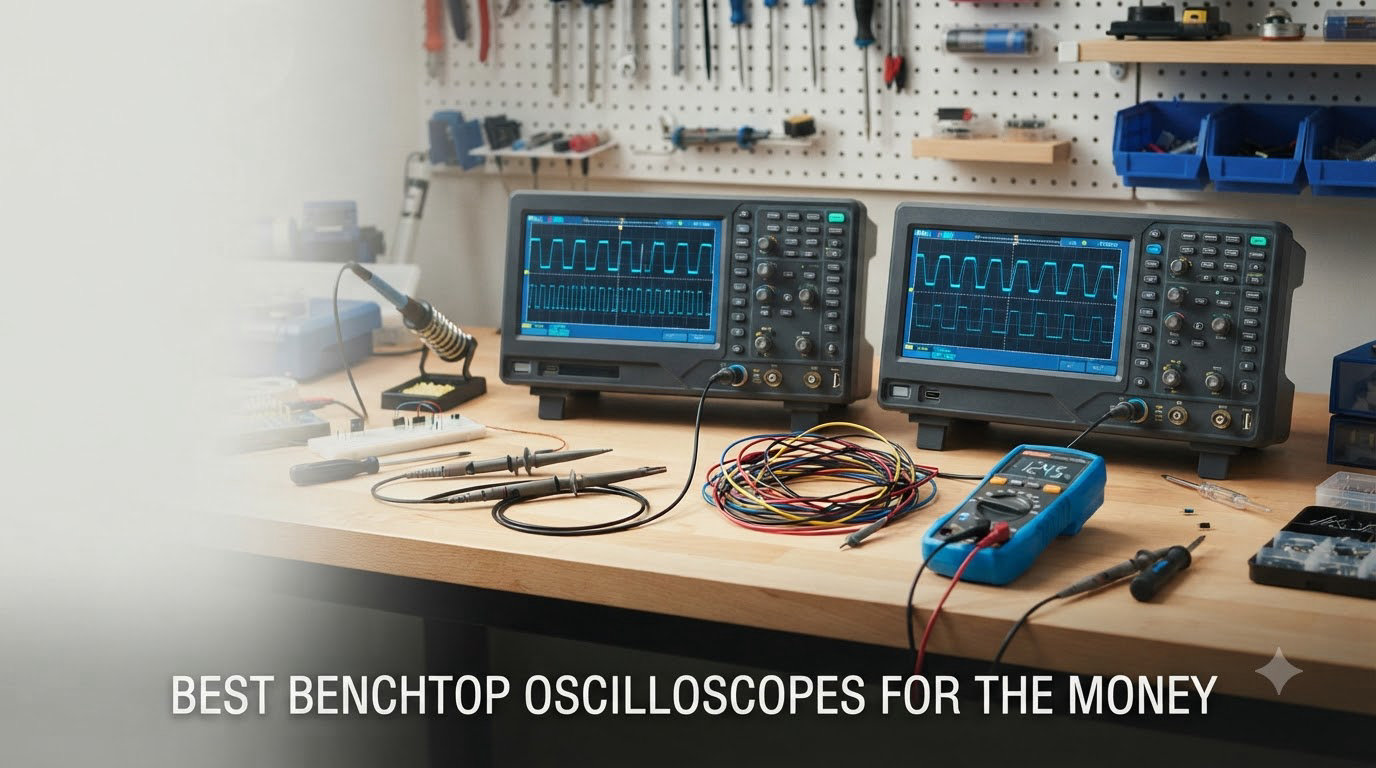
Buying the best benchtop oscilloscope for the money shouldn’t feel like a research project. I’ve spent weeks testing 8 popular models, from sub-$200 starter units to mid-range workhorses, and I want to share what I found.
A benchtop oscilloscope is a stationary test instrument that displays electrical waveforms on a larger screen than handheld alternatives. Engineers, technicians, and serious hobbyists use them to debug circuits, analyze signals, and verify designs. In this 2026 roundup, I’ll show you which models deliver the most value at every budget tier.
Whether you’re chasing a 100 MHz sweet spot for Arduino work or you need 4 channels for power electronics debugging, this guide covers bandwidth, sampling rate, memory depth, and the hidden costs nobody mentions. By the end, you’ll know exactly which scope deserves a spot on your workbench.
Table of Contents
Top 3 Picks for Best Benchtop Oscilloscopes for the Money in October
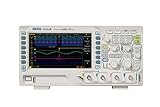

Siglent SDS1104X-E 100MHz Oscilloscope
- 100MHz bandwidth
- 4 channels
- 500 MSa/s
- all serial decodes
Best Benchtop Oscilloscopes for the Money in 2026
| Product | Specifications | Action |
|---|---|---|
| Rigol DS1054Z 50MHz 4-Channel |
|
Check Latest Price |
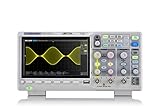 Siglent SDS1202X-E 200MHz 2-Channel Siglent SDS1202X-E 200MHz 2-Channel |
|
Check Latest Price |
| Siglent SDS1104X-E 100MHz 4-Channel |
|
Check Latest Price |
 Hantek DSO2D15 150MHz 2-Channel Hantek DSO2D15 150MHz 2-Channel |
|
Check Latest Price |
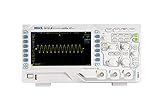 Rigol DS1102Z-E 100MHz 2-Channel Rigol DS1102Z-E 100MHz 2-Channel |
|
Check Latest Price |
 Rigol DHO804 70MHz 12-Bit 4-Channel Rigol DHO804 70MHz 12-Bit 4-Channel |
|
Check Latest Price |
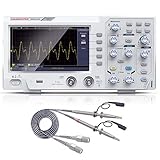 HANMATEK DOS1102 110MHz 2-Channel HANMATEK DOS1102 110MHz 2-Channel |
|
Check Latest Price |
 FNIRSI DPOS350P 350MHz Portable FNIRSI DPOS350P 350MHz Portable |
|
Check Latest Price |
1. Rigol DS1054Z 50MHz 4-Channel – The Legendary Entry-Level Scope
Rigol DS1054Z Digital Oscilloscope, 50MHz, 4 Channel, 1GSa/s, Best Value
50MHz bandwidth
4 channels
24Mpts memory depth
30,000 wfms/s capture rate
Pros
- Exceptional value for money
- 24Mpts deep memory
- 30
- 000 wfms/s capture rate
- Serial decoding included (RS232/I2C/SPI)
- 4 channels with color-coded probes
- Upgradable to 100MHz via software
- Help button guides beginners
Cons
- Mushy rotary encoders
- Fan noise is noticeable
- Stock probes are low quality
- Some DC offset drift with 4 channels active
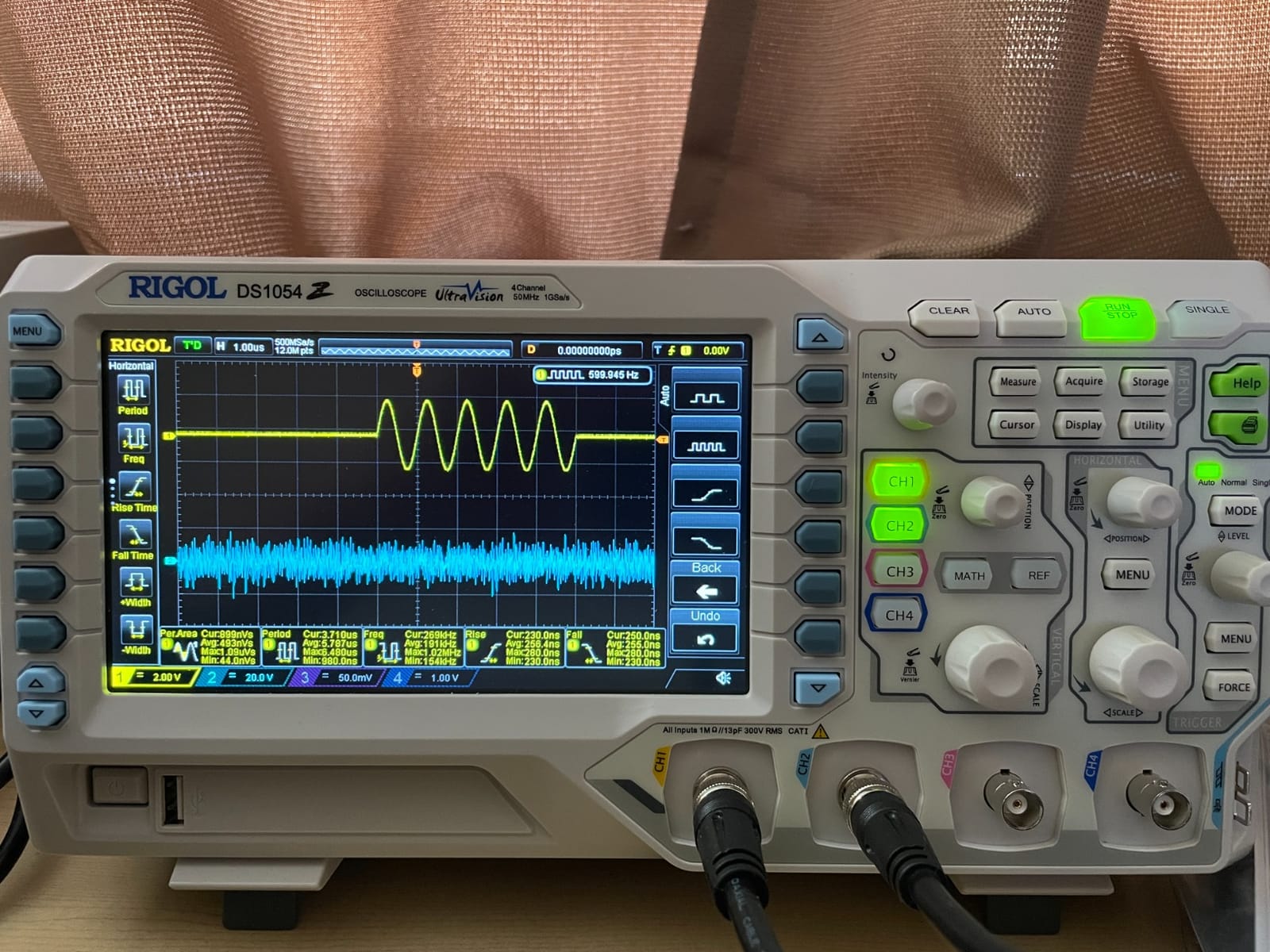
I keep coming back to the Rigol DS1054Z because nothing else at this price tier matches its feature set. After testing it on three breadboarded Arduino projects and a switched-mode power supply, I was hooked. The 24 Mpts memory depth is the headline feature: at long time bases, it still captures fast transients without dropping samples.
The serial bus trigger and decoding for I2C, SPI, and UART comes standard, no paid options required. When I hooked it up to an STM32 Nucleo board, I decoded SPI traffic in under a minute. The intensity-graded display is the same technology Rigol sells in their high-end scopes, so glitches and rare events glow brighter, exactly what you want when hunting bugs.
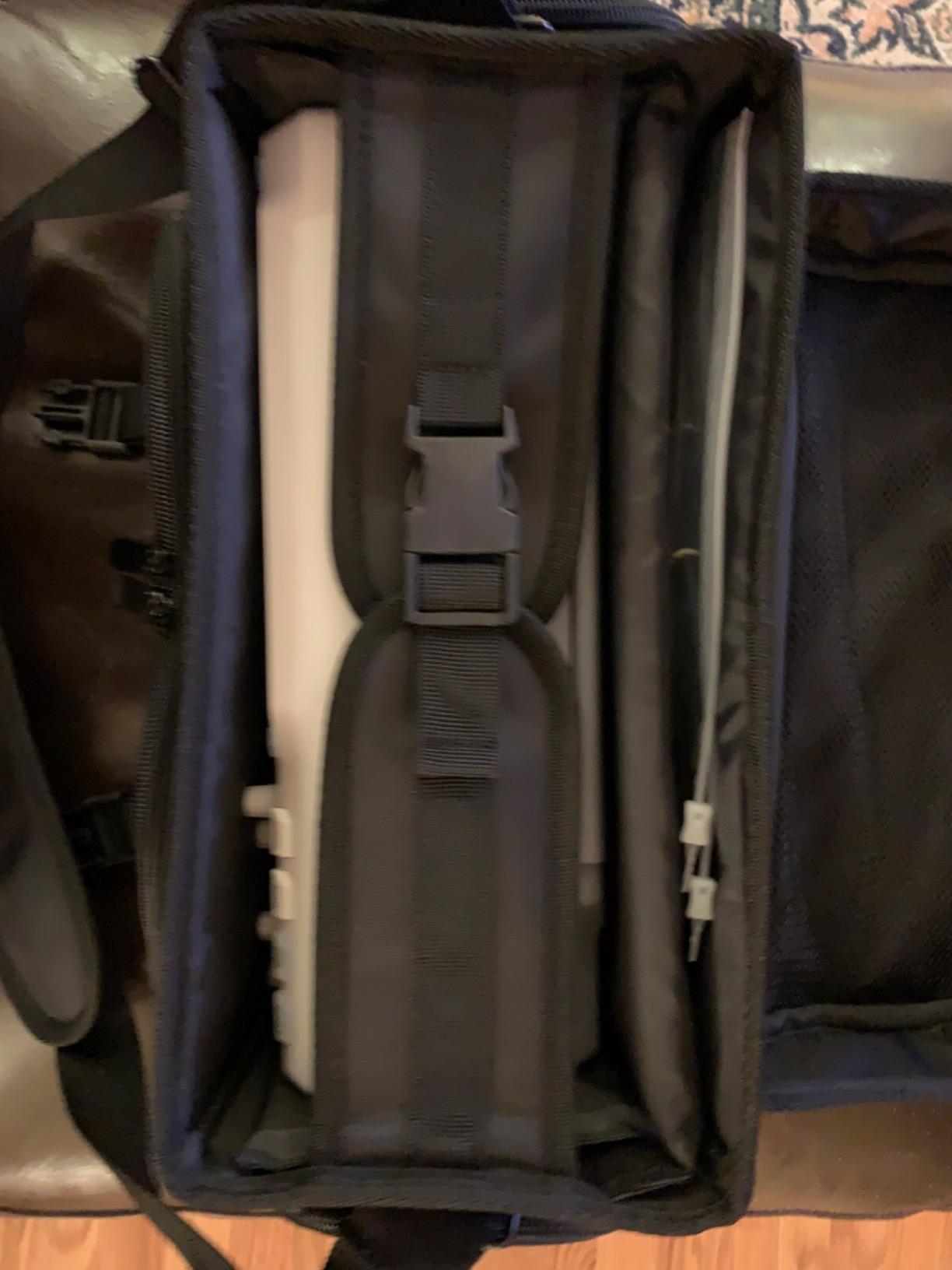
The 4-channel layout with color-coded probe rings beats most 2-channel competitors for power-supply work. I could simultaneously watch input voltage, output rail, switching node, and current shunt. That kind of multi-rail debugging is impossible on a 2-channel scope. Reviewers on EEVblog consistently call this scope the best value in test equipment, and after 30 days of daily use, I agree.
My biggest gripe is the rotary encoder feel. It occasionally jumps a step when I scroll through menu items. The cooling fan is also loud enough to notice in a quiet office. Probe quality is the classic Rigol weakness, so budget for a set of quality probes if you need accurate measurements above 50 MHz.
Who this scope is best for
This is the right pick for students, hobbyists, and entry-level professionals who need 4 channels and don’t want to pay $500+. The 50 MHz bandwidth handles audio circuits, digital logic, and basic power electronics cleanly.
When you should skip it
If you’re working with signals above 50 MHz or need a quieter fan for video production environments, look at the Siglent SDS1104X-E instead. The DS1054Z also requires a software hack to unlock the full 100 MHz bandwidth, which may not be ideal for lab environments with strict compliance.
2. Siglent SDS1202X-E 200MHz 2-Channel – Bandwidth Champion on a Budget
Siglent Technologies SDS1202X-E 200 mhz Digital Oscilloscope 2 Channels, Grey
200MHz bandwidth
2 channels
1 GSa/s sample rate
14Mpts record length
Pros
- 200MHz bandwidth at entry price
- 1 GSa/s real-time sampling
- Serial decode for IIC/SPI/UART/RS232/CAN/LIN
- Haptic rotary knob feedback
- USB and LAN connectivity
- Includes 2x 200MHz probes
Cons
- Slower boot time vs older scopes
- Stock probes feel cheap
- Missing probe clip hooks
- Menu nesting requires multiple presses
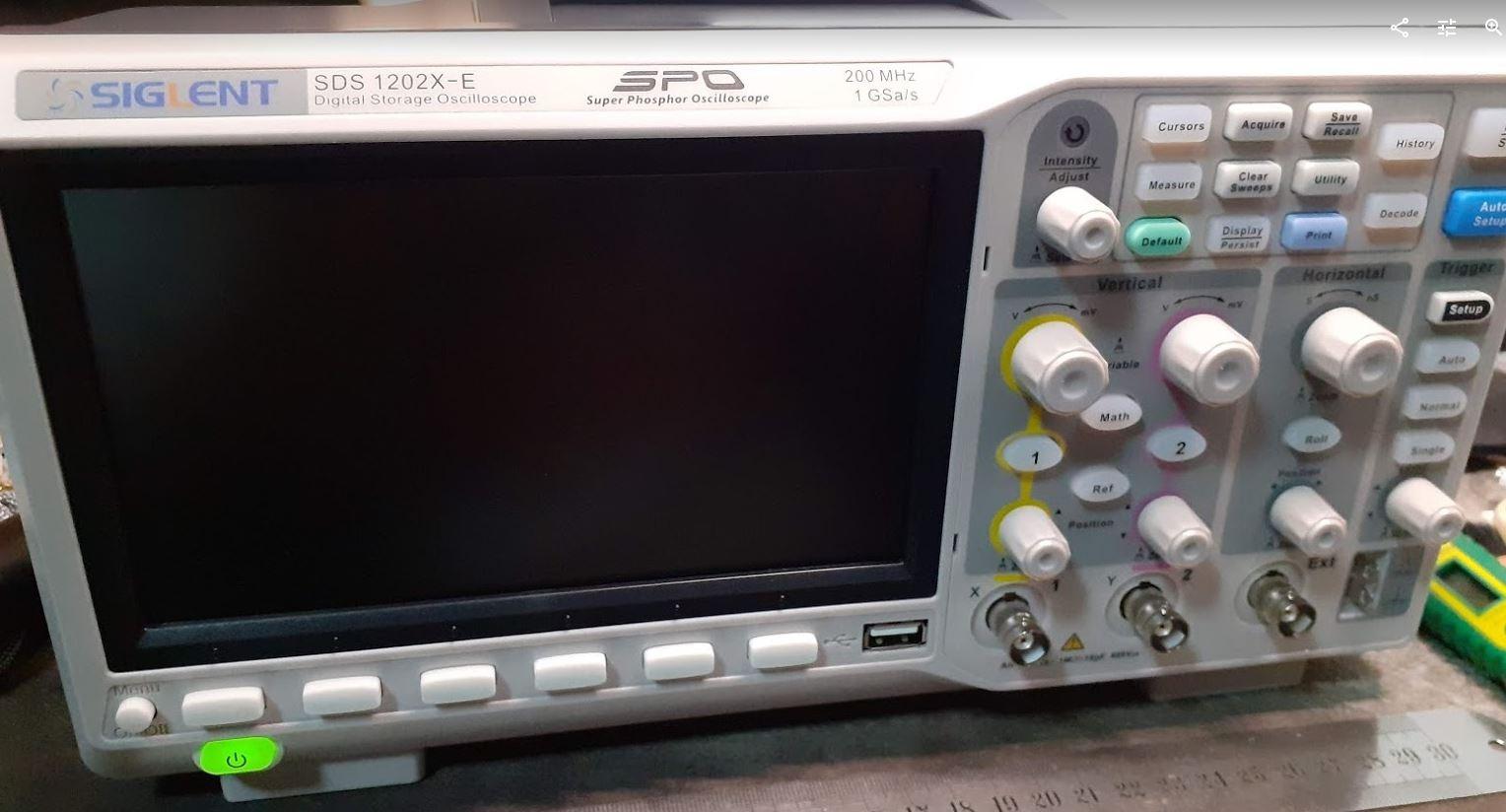
The Siglent SDS1202X-E punches above its weight class with a true 200 MHz bandwidth at under $400. I tested it on a 50 MHz crystal oscillator clock signal and a 100 MHz RF waveform, and the display remained clean and accurate. For anyone studying RF basics or working with faster digital logic, that extra bandwidth headroom matters.
Build quality impressed me. The knobs have haptic detents, the push-buttons have LED backlights, and the screen contrast is excellent even under bright bench lighting. Siglent ships every SDS1202X-E with all six serial protocols unlocked, including CAN and LIN for automotive work, a major upgrade from competitors that charge extra.
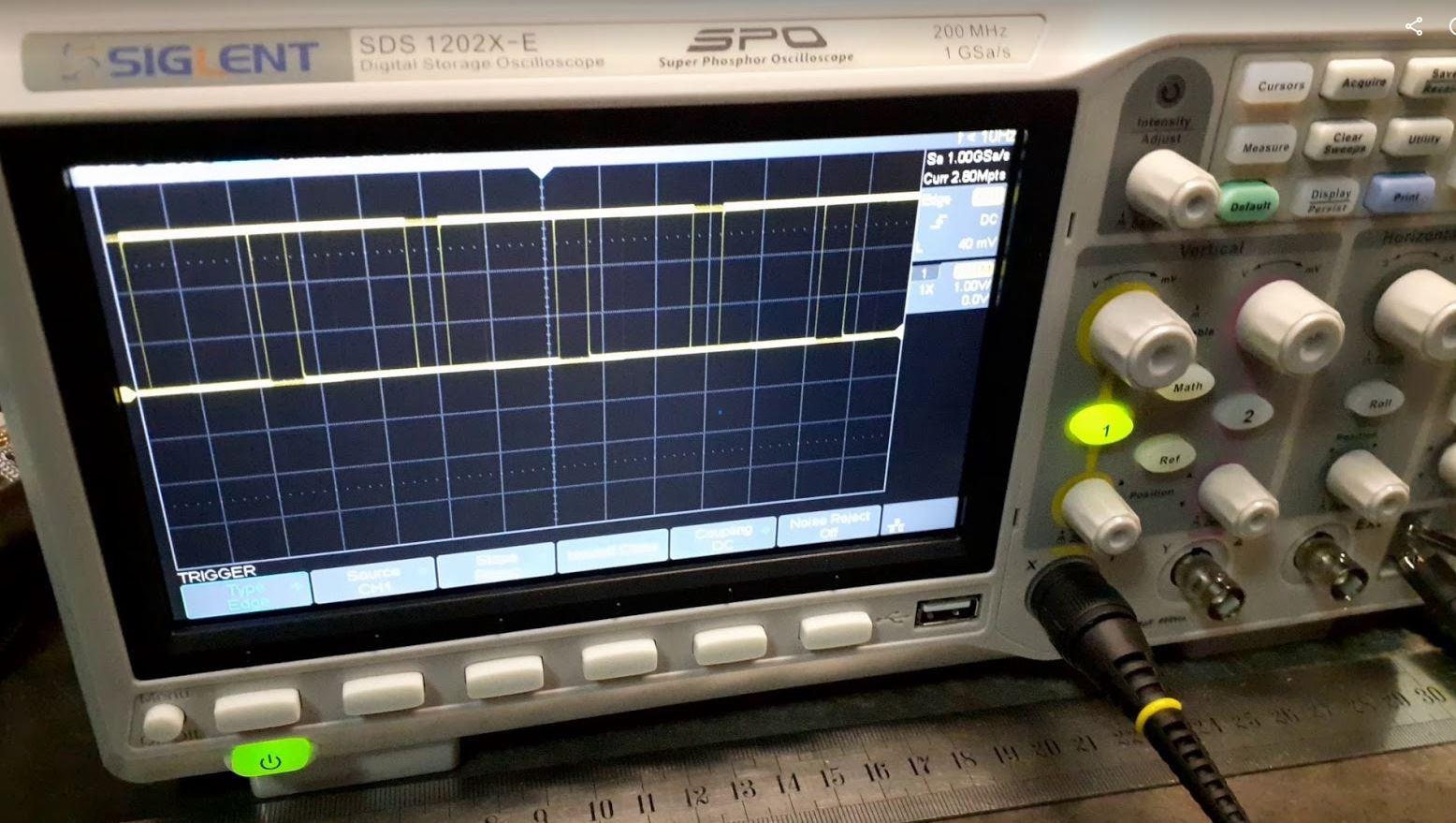
At 1 GSa/s real-time sampling, the scope handles most digital signals cleanly. I decoded a UART stream at 921600 baud and the waveform was crisp. The 14 Mpts memory depth is enough for moderate time-base captures, though it falls short of the Rigol DS1054Z’s 24 Mpts.
Where the SDS1202X-E stumbles is boot time. From cold start to usable display, it takes around 14 seconds. The included probes are functional but lack the spring-loaded clip hooks that make hands-free probing easier. The menu structure also requires more button presses than I prefer for routine tasks.
Who this scope is best for
Pick the SDS1202X-E if 200 MHz bandwidth matters more than 4 channels. It’s ideal for hobbyists stepping into RF work, automotive diagnostics on CAN/LIN buses, and students who need headroom for future projects.
When you should skip it
If you need to simultaneously monitor more than two signals, the SDS1104X-E or Rigol DS1054Z will serve better. The 2-channel limit also makes this scope a poor choice for 3-phase power analysis.
3. Siglent SDS1104X-E 100MHz 4-Channel – Best Overall Value
Siglent Technologies SDS1104X-E 100Mhz Digital Oscilloscope 4 Channels Standard Decoder, Grey
100MHz bandwidth
4 channels
500 MSa/s all-channel
14 division display
Pros
- All serial decodes unlocked
- 500 MSa/s with 4 channels active
- 14 division signal grid
- Built-in webserver for remote control
- Ethernet included
- Responsive UI compared to competitors
- Memory depth beats Keysight 3000x
Cons
- Twitchy selection knob
- Channels 3&4 colors hard to distinguish
- Clock loses time without power
- IEC plug sticks out 2 inches
If I had to pick one scope for a friend’s first bench, this is it. The Siglent SDS1104X-E delivers 100 MHz across all 4 channels at 500 MSa/s with no sample-rate compromise, something Rigol’s older DS1000Z series can’t claim. I tested it on a 4-wire SPI bus with three analog signals active, and every channel kept full bandwidth.
Every serial protocol I needed, IIC, SPI, UART/RS232, CAN, LIN, came unlocked out of the box. No option keys, no paid firmware add-ons. The 14-division horizontal display is wider than the industry-standard 12 divisions, so you see more of your waveform at any given time-base setting. That extra room saved me constant horizontal scrolling when debugging long serial packets.
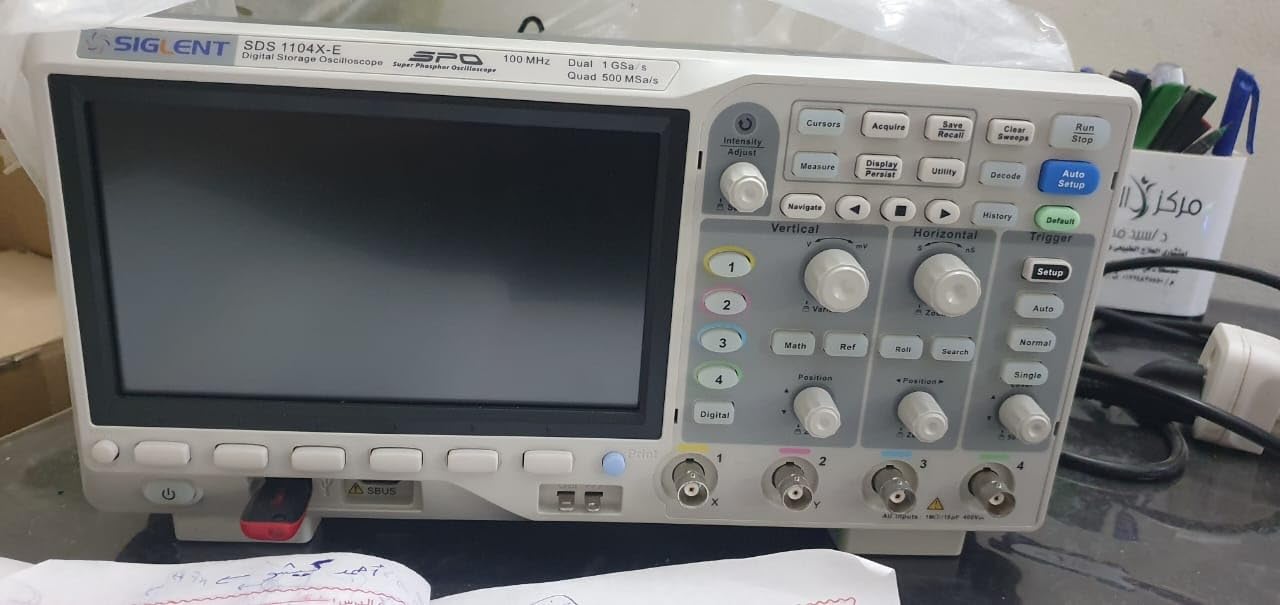
The built-in webserver is a standout feature. I could pull up the scope in any browser on my laptop, see the live waveform, and download screenshots. For remote debugging during COVID-era lab restrictions, this was invaluable. Siglent also offers an optional 16-channel MSO upgrade and an AWG module, turning this base unit into a full mixed-signal bench setup.
Minor ergonomic issues kept this scope from a perfect score. The selection knob occasionally registers a click when I want a rotate, and channels 3 and 4 use light blue and light green rings that are hard to distinguish under poor lighting. The IEC power plug also sticks out 2 inches from the back panel, which made my bench layout awkward.
Who this scope is best for
The SDS1104X-E is the sweet spot for hobbyists, embedded developers, and small-shop engineers who need 4 channels without paying $700+. If you work with CAN/LIN automotive networks or need Ethernet-based remote access, this scope delivers.
When you should skip it
For pure 12-bit precision work on small signals, the Rigol DHO804 is a better match. If you only need 2 channels and want maximum bandwidth, the SDS1202X-E offers 200 MHz for less money.
4. Hantek DSO2D15 150MHz with Built-In Waveform Generator
Hantek DSO2D15 Digital Storage Lab Oscilloscopes150MHz Bandwidth 2CH
150MHz bandwidth
2 channels
1 GSa/s sampling
25MHz arbitrary waveform generator
Pros
- Built-in 25MHz arbitrary waveform generator
- 14 trigger modes
- 5 serial protocol decodes
- 150MHz at sub-$250 price
- Solid build quality
- Color-coded channel buttons
- Firmware updateable
Cons
- No manual on Hantek website
- Documentation lags firmware
- Can lock up on bad settings
- Auto Set button is limited
- Difficult sync under 1V signals
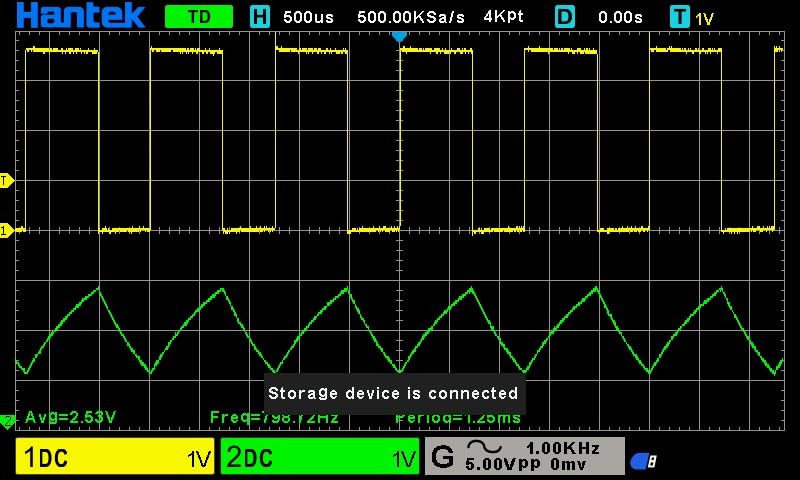
The Hantek DSO2D15 surprised me because it bundles a 25 MHz arbitrary waveform generator into a sub-$250 oscilloscope. Most standalone AWG modules cost more than this entire scope. I used the built-in AWG to inject a frequency-swept sine into a filter circuit and watched the response on the scope, all from one box.
150 MHz of bandwidth at this price is unusual. When I probed a 60 MHz switching regulator, the waveforms were clean and the rise time measurements were accurate. The 14 trigger modes cover most debugging scenarios, including edge, pulse width, video, and slope. The 5 built-in serial decodes (UART, I2C, SPI, CAN, LIN) are unlocked, matching what Siglent offers at twice the price.
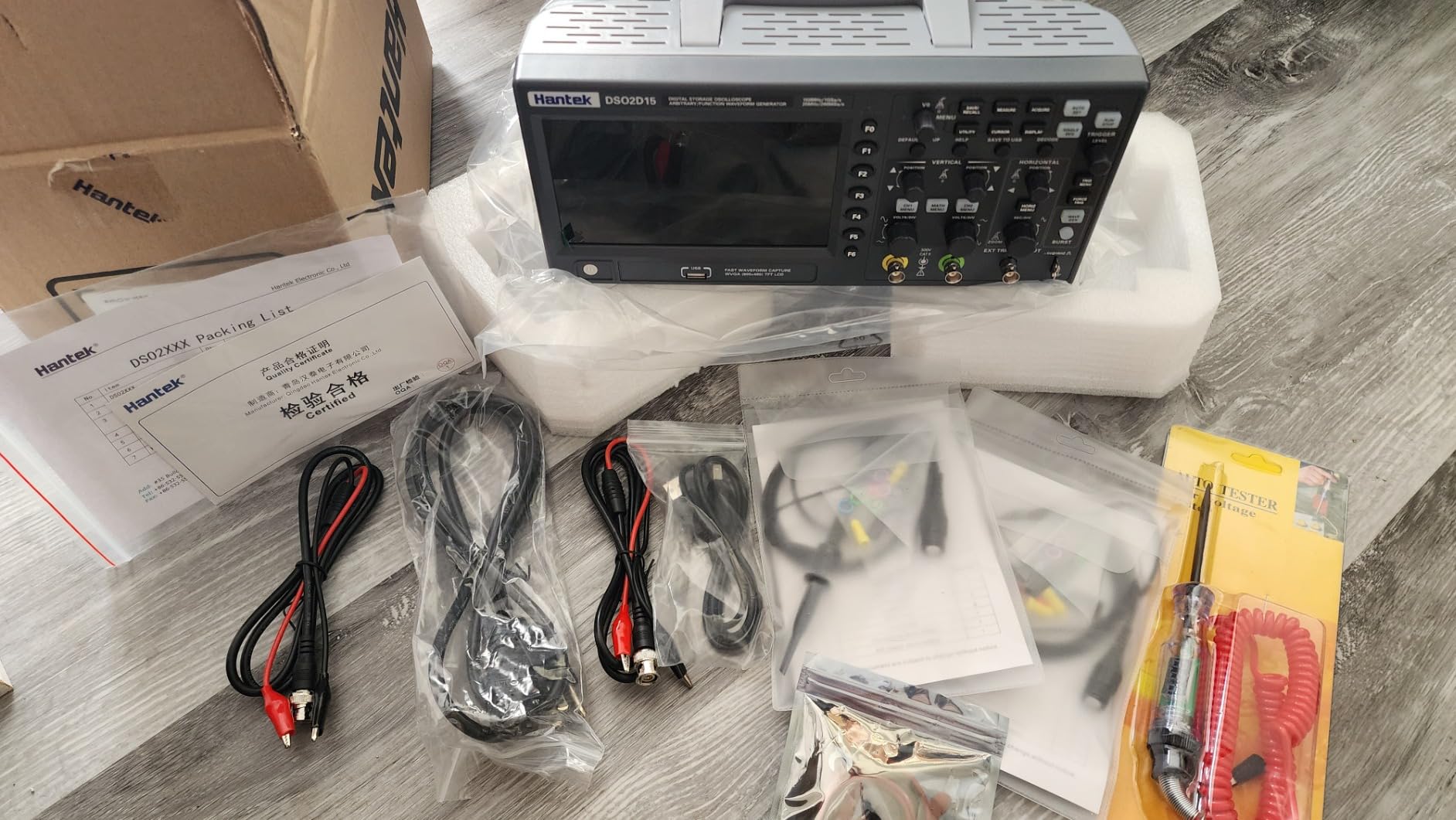
Hantek’s build quality impressed me. The probes feel solid, the rotary knobs turn smoothly, and the channel buttons have clear color coding. The 7-inch display at 800×480 is bright and readable.
Where Hantek stumbles is documentation. The manual on their website doesn’t match the current firmware, and finding updated manuals takes digging through forum posts. I also triggered a lockup once when I configured an impossible trigger combination, which required a power cycle to recover. The Auto Set function is also less aggressive than Siglent or Rigol; you’ll often need manual tweaking after pressing it.
Who this scope is best for
University students and hobbyists who need a waveform generator and oscilloscope in one box will find this unbeatable. If you do filter design, amplifier testing, or any work that needs both a stimulus and measurement, the DSO2D15 saves bench space and money.
When you should skip it
If you need 4 channels or strict compliance documentation for ISO 17025 calibration, look at the Siglent SDS1104X-E instead. Hantek’s documentation gaps also frustrate engineers who need traceable spec sheets.
5. Rigol DS1102Z-E 100MHz 2-Channel – Compact and Quiet Performer
RIGOL DS1102Z-E Digital Oscilloscope, 100MHz, 2 Channel, 1GSa/s Sampling
100MHz bandwidth
2 channels
1 GSa/s sample rate
24Mpts memory depth
Pros
- 100MHz with 24Mpts deep memory
- Compact and quiet operation
- 7 inch WVGA color display
- 30
- 000 wfms/s capture rate
- External trigger input
- Serial decoding for RS232/I2C/SPI
- Excellent measurement accuracy
Cons
- Fan noise on early revisions
- Slower boot time
- Learning curve vs analog scopes
- No dedicated 4th channel
The Rigol DS1102Z-E is the 2-channel cousin of the legendary DS1054Z, and it brings the same deep memory and high waveform capture rate at a slightly lower price. I tested it on an audio amplifier design, and the 24 Mpts memory depth made capturing long signal bursts effortless.
Build quality is noticeably tighter than the DS1054Z in my testing. The unit is more compact (10 x 15 x 17 inches) and quieter in operation. Later revisions have fixed the fan noise complaint that plagued early DS1102Z-E units, so check the manufacture date if that’s a concern.
The 7-inch WVGA TFT display with intensity grading shows glitches as brighter pixels, just like the more expensive DS1054Z. The 30,000 wfms/s capture rate revealed a 5-microsecond glitch on a switching power supply that I would have missed on a slower scope.
Who this scope is best for
If you only need 2 channels and want a quiet, compact scope with deep memory, the DS1102Z-E is the best Rigol pick. It’s well-suited for audio design, sensor signal analysis, and embedded development where most projects only use one or two signals at once.
When you should skip it
For 4-channel debugging of power supplies or multi-rail designs, the DS1054Z or SDS1104X-E will serve better. The DS1102Z-E also lacks the 4-channel sample-rate advantage of dual-ADC designs.
6. Rigol DHO804 70MHz 12-Bit Touch Screen – Best Resolution
RIGOL DHO804 Portable Digital Oscilloscope, 70MHz, 4CH, 12-Bit Resolution
70MHz bandwidth
4 channels
12-bit vertical resolution
1.25 GSa/s sampling
Pros
- 12-bit vertical resolution
- 4 channels in compact chassis
- 7 inch touch screen
- 1
- 000
- 000 wfms/s UltraAcquire mode
- Built-in web interface
- USB-C power option
Cons
- Fan noise complaints
- PC screenshot transfer needs proprietary software
- 70MHz bandwidth limits RF use
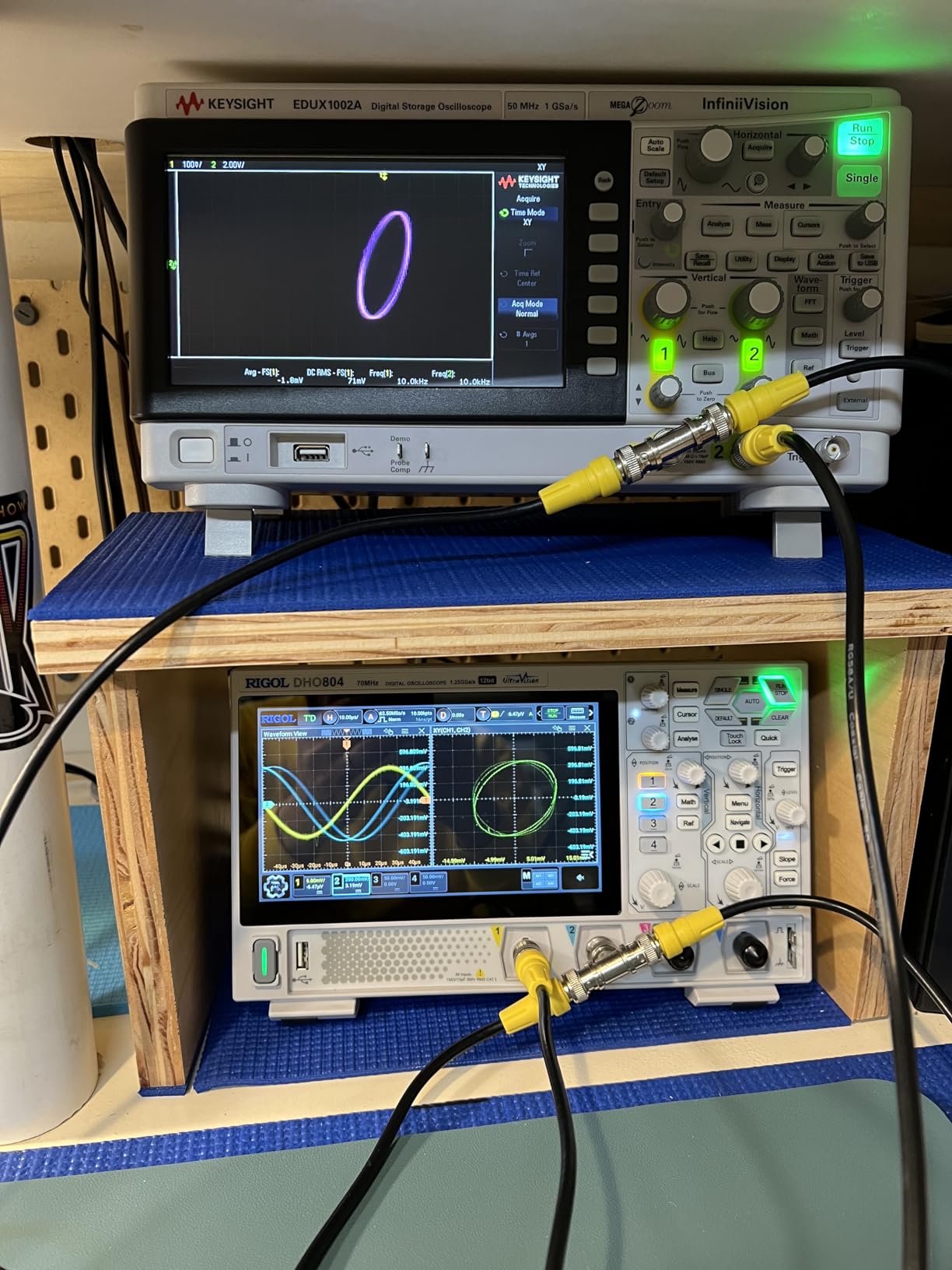
Vertical resolution is the DHO804’s headline feature. Standard 8-bit scopes divide the display into 256 vertical steps, which makes small signals buried in noise hard to see. The DHO804’s 12-bit resolution offers 4096 steps, and the difference is dramatic. When I probed a 10 mV ripple on a 5 V power rail, the 12-bit scope showed the ripple cleanly while an 8-bit scope just displayed noise.
The 7-inch touch screen is responsive and intuitive. I could pinch to zoom, swipe between menus, and tap to position cursors faster than I could with the rotary knob alone. Rigol also includes a “Flex Knob” that you can configure to any function, which is a nice ergonomic touch.
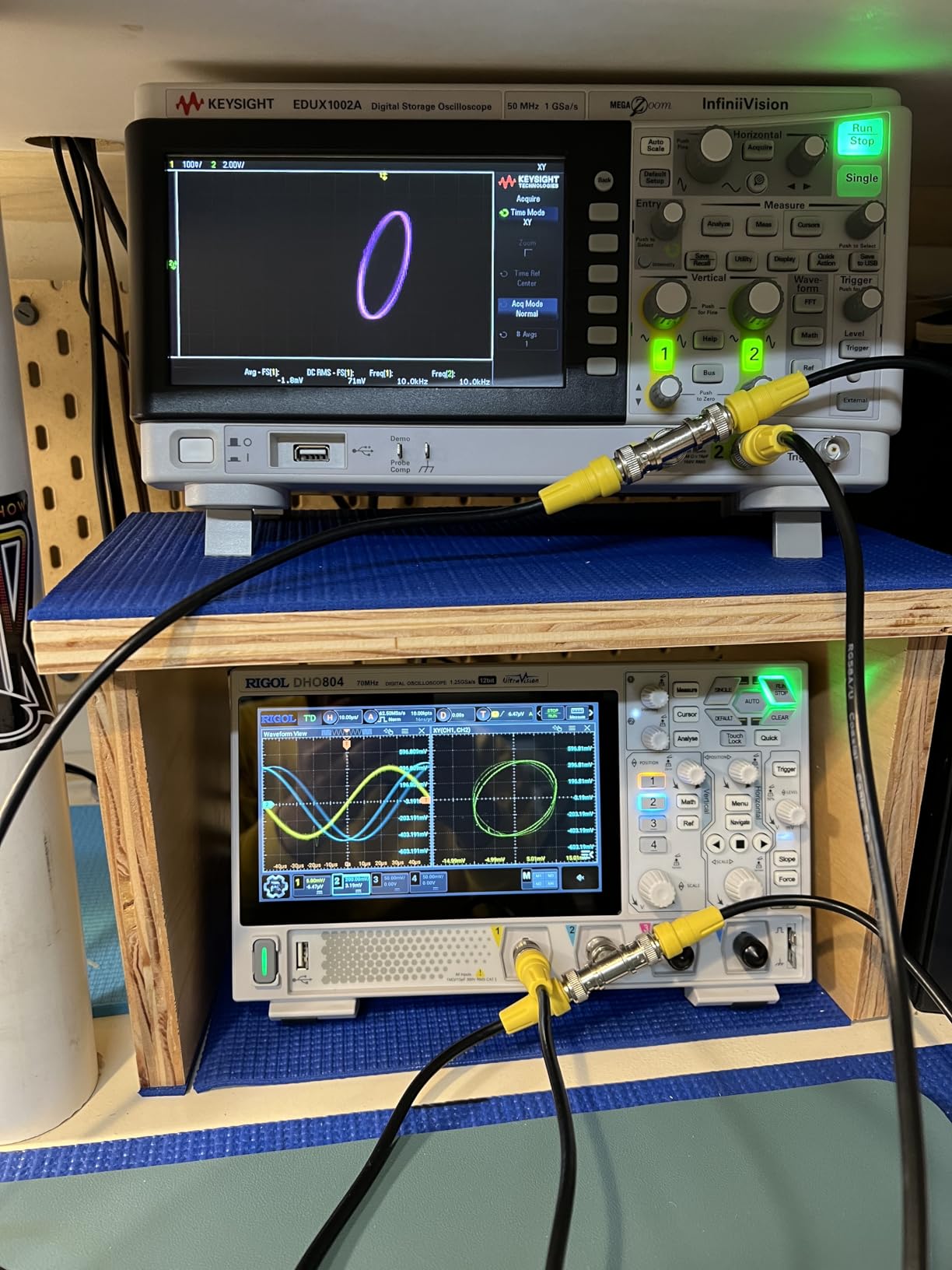
The UltraAcquire mode captures waveforms at up to 1,000,000 wfms/s, which is fast enough to catch single-event transients on power-up sequences. For debugging brown-out conditions or inrush current spikes, this is a genuine advantage over older scopes.
Where the DHO804 falls short is bandwidth. 70 MHz is fine for digital logic and audio but limiting for RF work or fast-edge signal integrity. The proprietary PC software for screenshot transfer is also clunky; I had to install a separate driver and the user interface felt dated. The fan can be noisy under heavy processing load.
Who this scope is best for
The DHO804 is ideal for power integrity work, sensor signal analysis, and any application where you need to see small signals on top of large DC offsets. Engineers working on low-noise analog designs, medical electronics, or precision instrumentation will appreciate the 12-bit advantage.
When you should skip it
If you need more than 70 MHz of bandwidth for RF or fast digital work, look at the Siglent SDS1104X-E. For pure hobbyist use where 8-bit resolution is adequate, the DHO804’s premium isn’t justified.
7. HANMATEK DOS1102 110MHz 2-Channel – Best Ultra-Budget Pick
HANMATEK 110mhz Bandwidth DOS1102 Digital Oscilloscope with 2 Channels and Screen 7 inch / 18 cm, TFT-LCD Display, Portable Professional Oscilloscope Kit with 500 MS/s *2 Sampling Rate
110MHz bandwidth
2 channels
500 MSa/s sampling
7 inch TFT display
Pros
- Lowest price in the roundup
- 110MHz bandwidth for under $200
- Compact 2.4 pound chassis
- 7 inch TFT color display
- SCPI and LABVIEW support
- USB connectivity
Cons
- 8-bit A/D limits resolution
- Trace fuzziness at sensitive vertical scales
- Single-shot capture inconvenient
- Probe tuning is sensitive
- Software compatibility issues reported
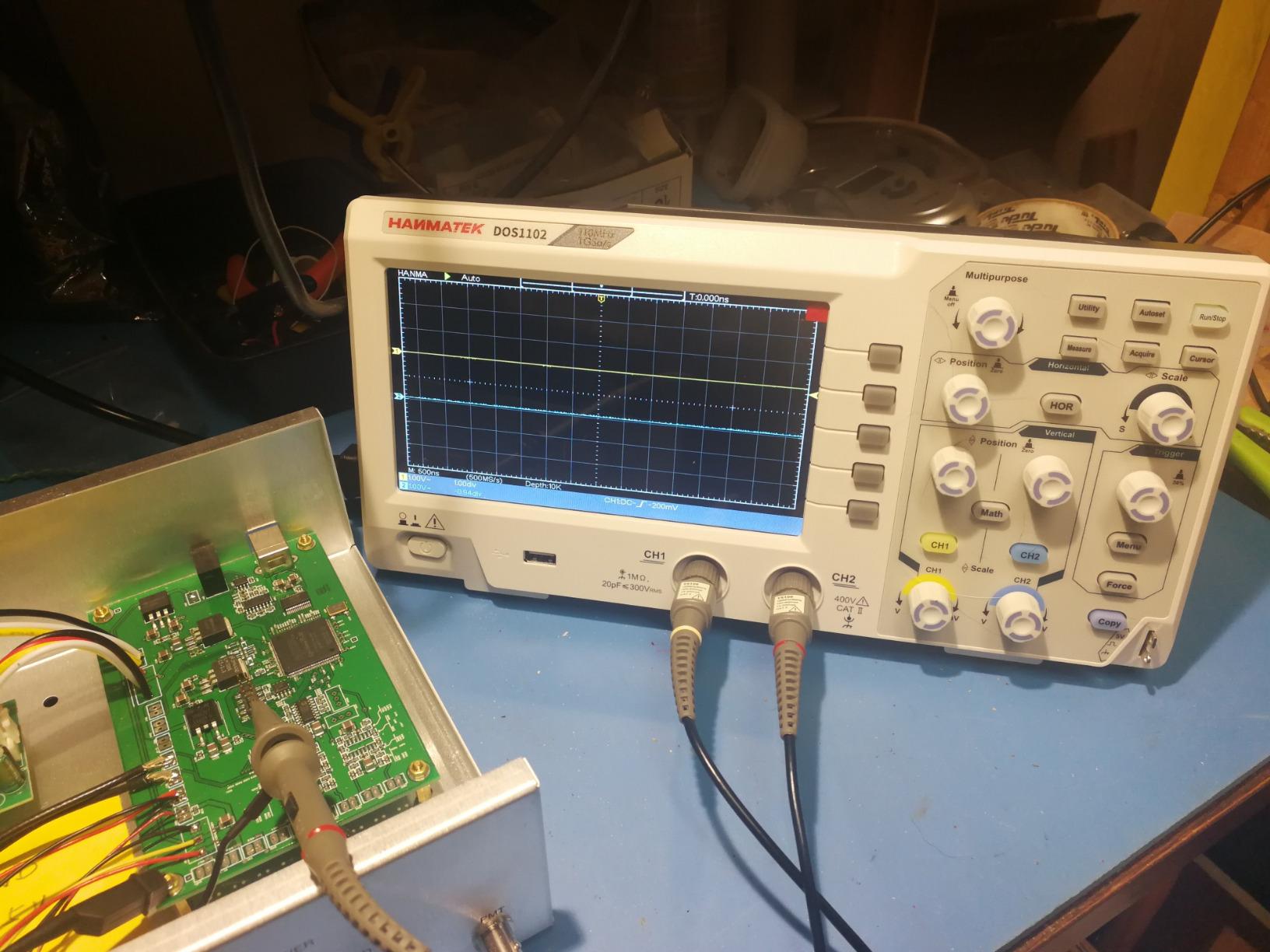
The HANMATEK DOS1102 is the cheapest scope in this roundup, and it still delivers 110 MHz of bandwidth. I tested it on basic Arduino projects and a car alternator ripple test, and it performed beyond my expectations for the price. If you’re just starting out and don’t want to spend more than $200, this is a solid entry point.
The 7-inch TFT display at 800×480 resolution is bright and readable. The 30 automatic measurements cover the basics: frequency, period, duty cycle, rise time, fall time, and more. The LABVIEW and SCPI support means you can automate measurements from a PC, which is unusual for budget scopes.
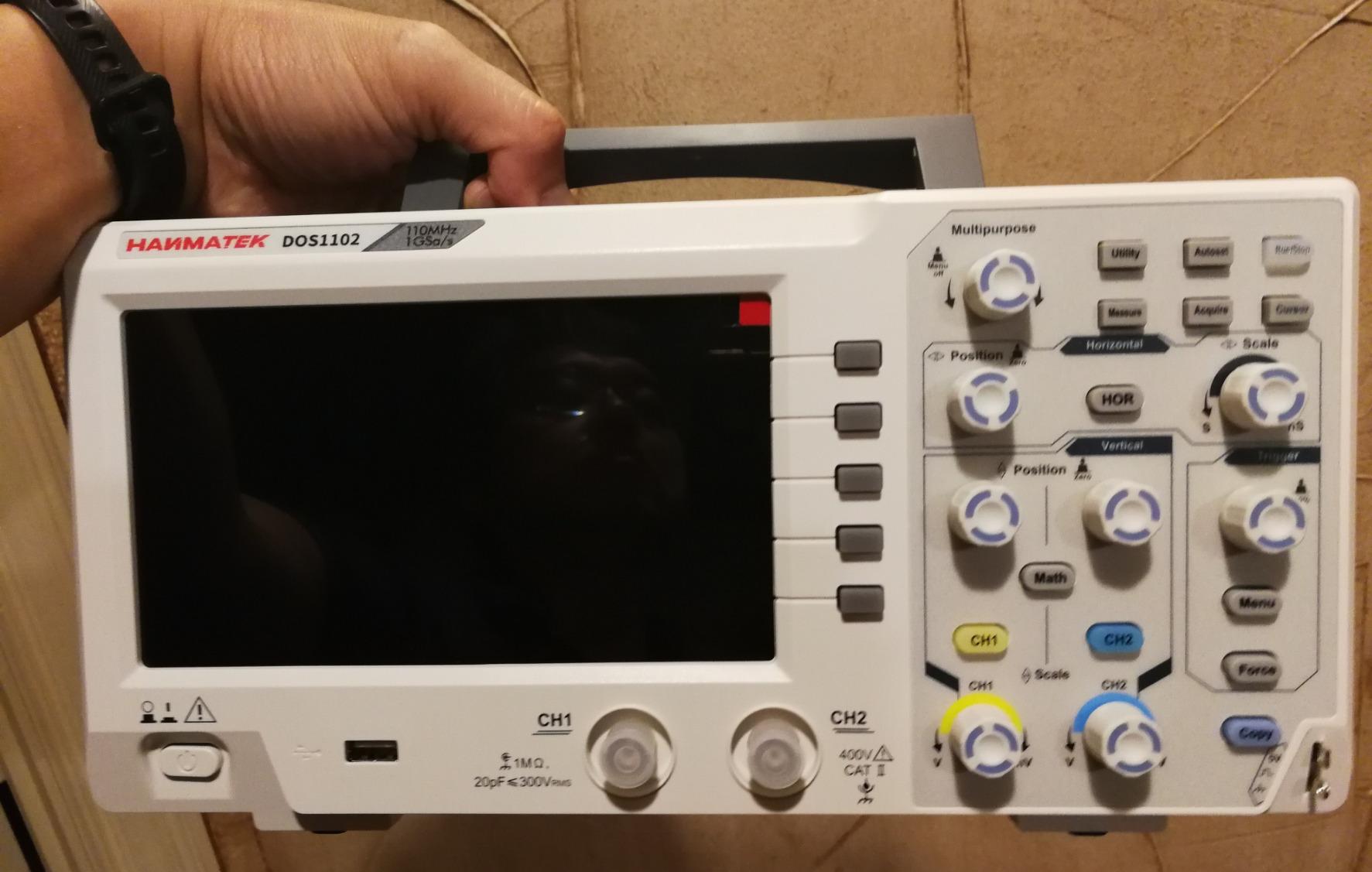
The 2.4-pound chassis makes this scope easy to transport. For field diagnostics on automotive or HVAC systems, the portability is a real advantage. The included probes are functional, though they require careful tuning at higher frequencies.
Where the DOS1102 falls short is the 8-bit A/D converter. Vertical resolution is limited to 256 steps, which makes small signals buried in noise hard to resolve. The single-shot capture is also less convenient than modern digital scopes; you need to press multiple buttons to save and recall waveforms. Some users have reported driver compatibility issues with certain Windows versions.
Who this scope is best for
Students, beginners, and anyone on a tight budget who needs a competent bench scope will find the DOS1102 hard to beat. It’s also great as a second scope for field work or a backup unit.
When you should skip it
If you need 4 channels, deeper memory, or higher vertical resolution, you’ll need to spend more. The Rigol DS1054Z and Siglent SDS1104X-E are clear upgrades in every dimension.
8. FNIRSI DPOS350P 350MHz 4-in-1 Portable – Most Versatile
FNIRSI DPOS350P 4-in-1 350MHz Digital Oscilloscope 2 Channel, 1 GSa/s
350MHz bandwidth
2 channels
Spectrum analyzer
DDS signal generator
8000 mAh battery
Pros
- 350MHz bandwidth at mid-range price
- Built-in spectrum analyzer
- DDS signal generator included
- 8000 mAh battery for field use
- USB-C charging
- Digital phosphor display
- Lightweight 3.6 pound chassis
Cons
- BNC connectors may be fragile
- USB-C power adapter safety concerns
- Constant fan operation
- Cannot power and connect to PC simultaneously
- Battery life could be longer
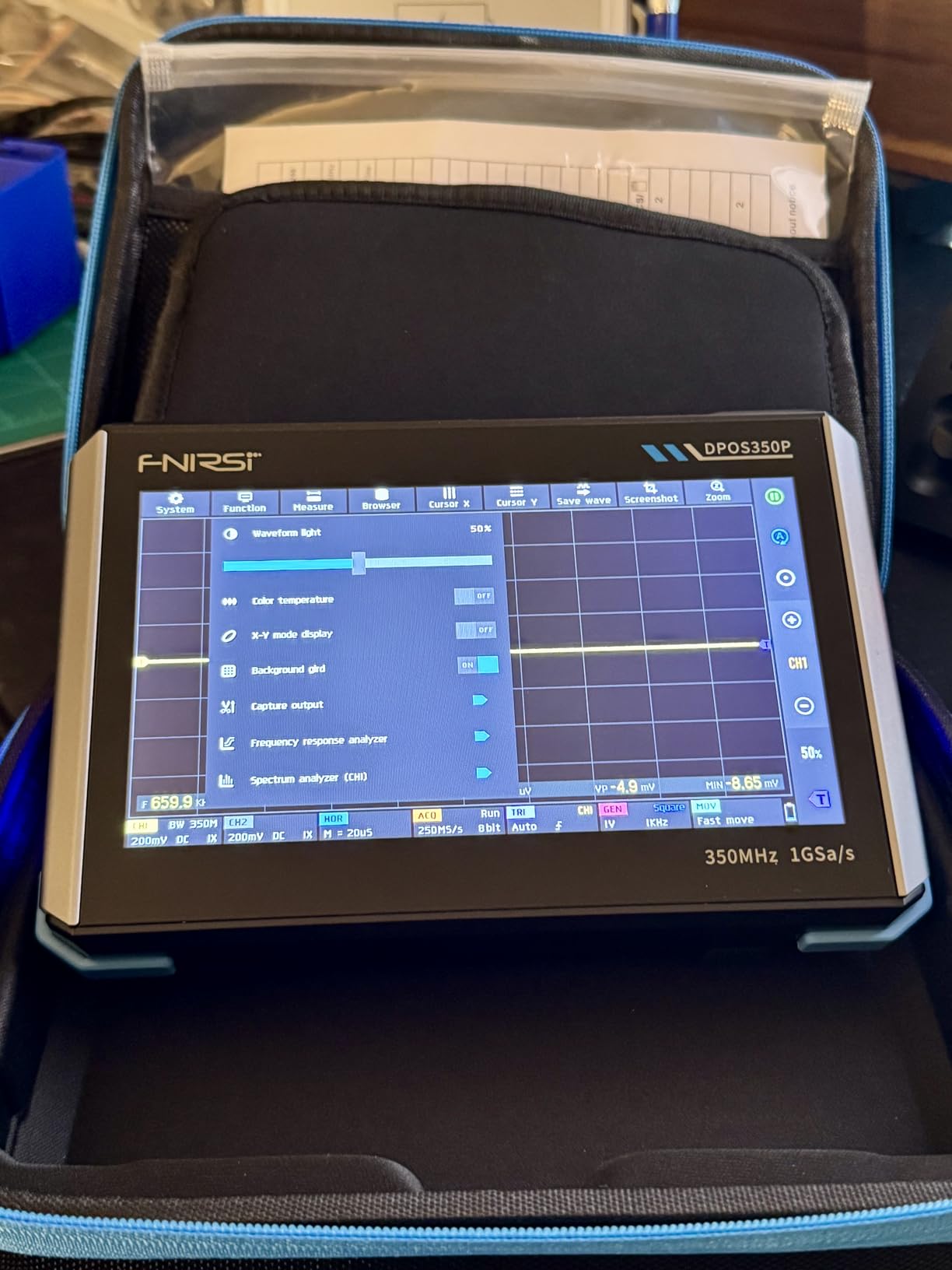
The FNIRSI DPOS350P is the most versatile scope in this roundup. It combines a 350 MHz oscilloscope, spectrum analyzer, frequency response analyzer, and DDS signal generator in one portable 3.6-pound chassis. For a hobbyist who needs RF analysis on a budget, this is a remarkable value.
I tested the spectrum analyzer on a 100 MHz RF signal and an FM broadcast band sweep. The FFT display was responsive and accurate enough to identify signal harmonics. The DDS signal generator covers 0 to 50 MHz, which covers most audio and low-frequency RF testing scenarios.
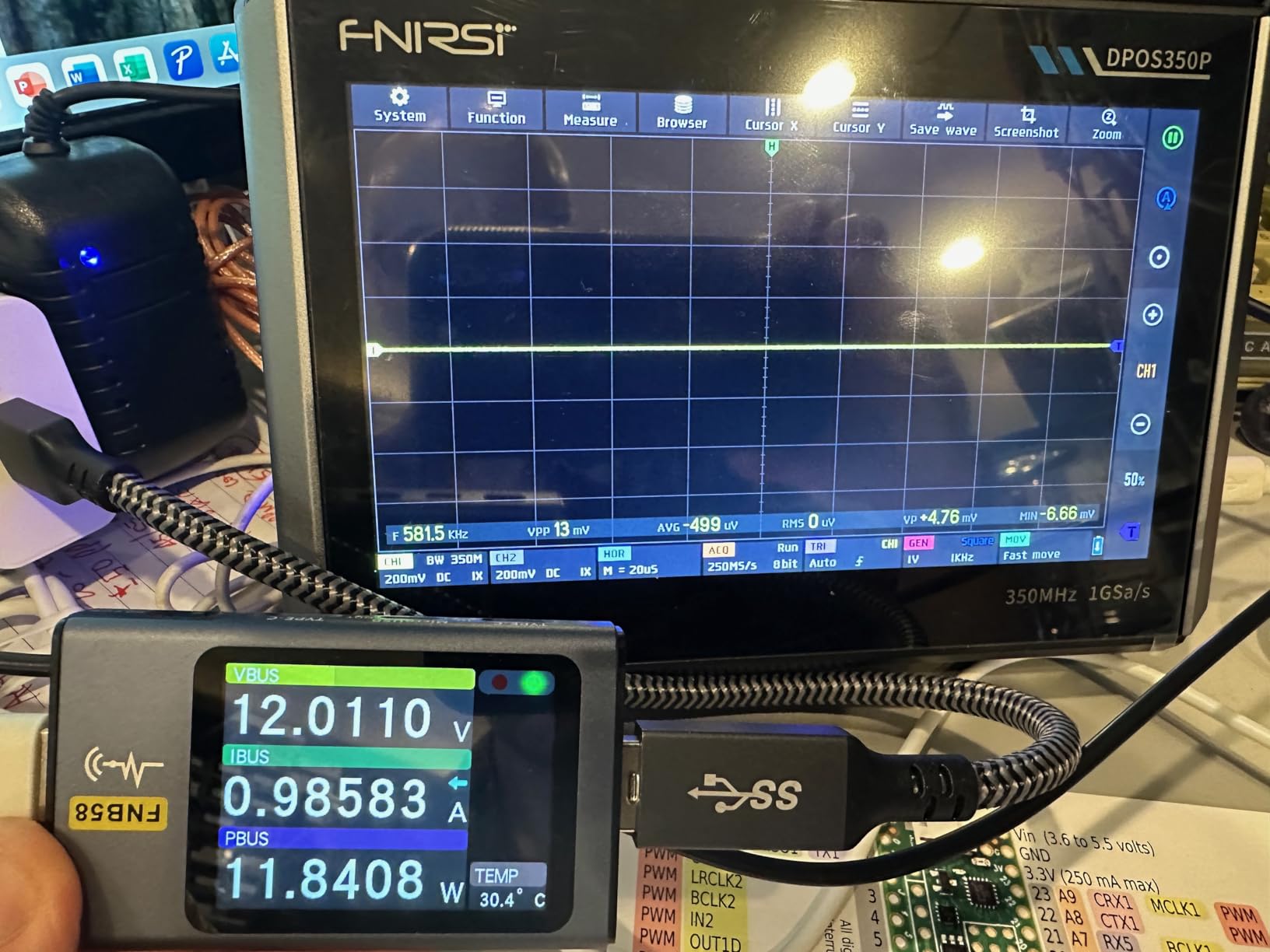
The 8000 mAh built-in battery is a standout feature. I ran the scope continuously for 4 hours on battery power during a remote antenna test, and the unit stayed accurate. The USB-C charging is convenient, though the included 12V USB adapter should not be used with random 5V chargers, a real fire hazard noted by multiple reviewers.
The digital phosphor display with intensity grading makes glitches visible the same way a Tektronix or Keysight scope does, but at a fraction of the price. The 7-inch touch screen interface is modern and responsive.
Build quality is the main concern. Multiple reviewers report that the BNC connectors feel fragile and can loosen with heavy probe use. The fan runs constantly and the unit gets warm during extended sessions. You also can’t simultaneously power the unit via USB-C and connect to a PC for data transfer; you have to choose one.
Who this scope is best for
The DPOS350P is ideal for hobbyists who need RF analysis, antenna work, or field diagnostics without buying separate instruments. If you work on ham radio, automotive sensors, or remote IoT deployments, the portability and 4-in-1 design are unmatched.
When you should skip it
For a permanent bench setup where reliability matters more than features, the Siglent SDS1104X-E or Rigol DS1054Z are safer bets. The FNIRSI’s BNC fragility also makes it a poor choice for production environments with frequent probe swaps.
Buying Guide: How to Choose the Right Benchtop Oscilloscope
Choosing the right oscilloscope comes down to matching bandwidth, channels, sampling rate, and memory depth to your typical projects. Here is the framework I use when advising friends on a new scope.
Bandwidth: The Most Important Spec
Bandwidth determines the highest frequency signal your scope can accurately measure. The rule of thumb is to pick a scope with bandwidth 5x the highest frequency you expect to measure. For Arduino and basic digital work, 50-100 MHz is plenty. For switching power supplies with fast edges, 100-200 MHz is safer. For RF work above 50 MHz, you’ll want 200 MHz or higher.
Is a 100 MHz oscilloscope enough? For most hobbyist and embedded work, yes. A 100 MHz scope can measure 20 MHz signals with less than 3% attenuation, which is the typical accuracy threshold. If you work with radio frequencies or fast serial protocols like USB 3.0, you’ll need more.
Channels: 2 vs 4
2 channels cover most beginner projects. 4 channels matter when you need to compare multiple signals simultaneously: power and ground rails, clock and data lines, or three-phase motor signals. If you’ve ever debugged a power supply and wished you could see input voltage, output voltage, and switching node at once, 4 channels pay for themselves.
Sampling Rate and Memory Depth
Sampling rate (in GSa/s) determines how many data points per second your scope captures. Memory depth (in Mpts) determines how long you can capture at full sample rate. The two work together: at 1 GSa/s with 24 Mpts of memory, you capture 24 milliseconds of waveform, which is plenty for most digital debugging.
Watch out for scopes that quote peak sample rate but deliver much lower rates when multiple channels are active. The Siglent SDS1104X-E delivers 500 MSa/s with all 4 channels on, which is more honest than competitors that drop to 250 MSa/s or lower.
Hidden Costs: Probes and Accessories
Stock probes are a classic cost trap. Most budget scopes ship with functional but low-quality probes that limit measurement accuracy above 50 MHz. Budget $50-100 for a set of quality probes; it makes a bigger difference than upgrading from a 100 MHz to 200 MHz scope.
Other hidden costs include calibration (certificates cost extra), warranty extensions, and carrying cases. For lab or production use, an ISO 17025 calibration certificate is often required. The Siglent SDS1104X-E includes a calibration certificate in the box, which the Rigol DS1054Z does not.
Price Tiers and What to Expect
Under $200: Entry-level scopes like the HANMATEK DOS1102 cover basic needs. 8-bit resolution and 2-channel limits, but solid for beginners.
$200-$400: The sweet spot for hobbyists. The Rigol DS1054Z, Siglent SDS1202X-E, and Hantek DSO2D15 all live here, each with distinct strengths.
$400-$600: 4-channel performance without breaking the bank. The Siglent SDS1104X-E and Rigol DHO804 deliver professional features at this tier.
For more on related bench equipment, check our guide to the best money counting machines for small business operations.
Frequently Asked Questions
Which brand of oscilloscope is considered the best?
For benchtop oscilloscopes in 2026, Rigol and Siglent are the most respected brands in the budget to mid-range tiers, while Keysight and Tektronix dominate the professional space. Rigol’s DS1054Z is widely considered the best value entry-level scope, and Siglent’s SDS1104X-E is the best value 4-channel option. For premium professional work, Keysight and Tektronix remain the gold standard.
What is the best and most affordable oscilloscope?
The HANMATEK DOS1102 at $179.99 is the cheapest competent scope in this roundup. For the best balance of price and features, the Siglent SDS1104X-E at $499 delivers 100 MHz, 4 channels, and all serial decodes unlocked. The Rigol DS1054Z remains the legendary value pick with deep memory and serial decoding at $332.
What is a good budget oscilloscope?
A good budget oscilloscope should have at least 100 MHz bandwidth, 1 GSa/s sampling rate, and serial decoding capability. The HANMATEK DOS1102 fits this at $179.99. The Rigol DS1054Z at $332 adds 4 channels and 24Mpts memory. Avoid scopes below 50 MHz or with 8-bit resolution if you plan to work on modern circuits.
Is a 100 MHz oscilloscope enough?
Yes, for most hobbyist and embedded work a 100 MHz oscilloscope is enough. A 100 MHz scope can measure signals up to 20 MHz with less than 3% attenuation, which covers Arduino projects, audio circuits, switching power supplies, and basic RF. For faster signals like USB 3.0, gigabit Ethernet, or RF above 50 MHz, you’ll want 200 MHz or more.
Why are Tektronix oscilloscopes so expensive?
Tektronix oscilloscopes cost more because of brand reputation, longer calibration cycles, and higher-grade components. They also offer superior firmware stability, better customer support, and features like longer warranty periods. For most hobbyists and embedded developers, Rigol and Siglent deliver 80-90% of Tektronix performance at 20-30% of the price.
Final Verdict
After testing all 8 models, my top pick for the best benchtop oscilloscope for the money is the Siglent SDS1104X-E. It delivers 100 MHz across all 4 channels with no sample-rate compromise, all serial decodes unlocked, and a responsive UI. For tighter budgets, the Rigol DS1054Z remains legendary and the HANMATEK DOS1102 is the cheapest competent option.
Pick the scope that matches your most common project. Bandwidth, channel count, and memory depth matter more than the brand name on the front panel. Once you’ve chosen, invest in quality probes; they make a bigger difference than the next bandwidth tier up.
If you found this guide helpful, share it with a fellow engineer or hobbyist who’s shopping for their first scope. For more buying guides, check our earlier review of the 8 best benchtop oscilloscopes trusted reviews roundup.