
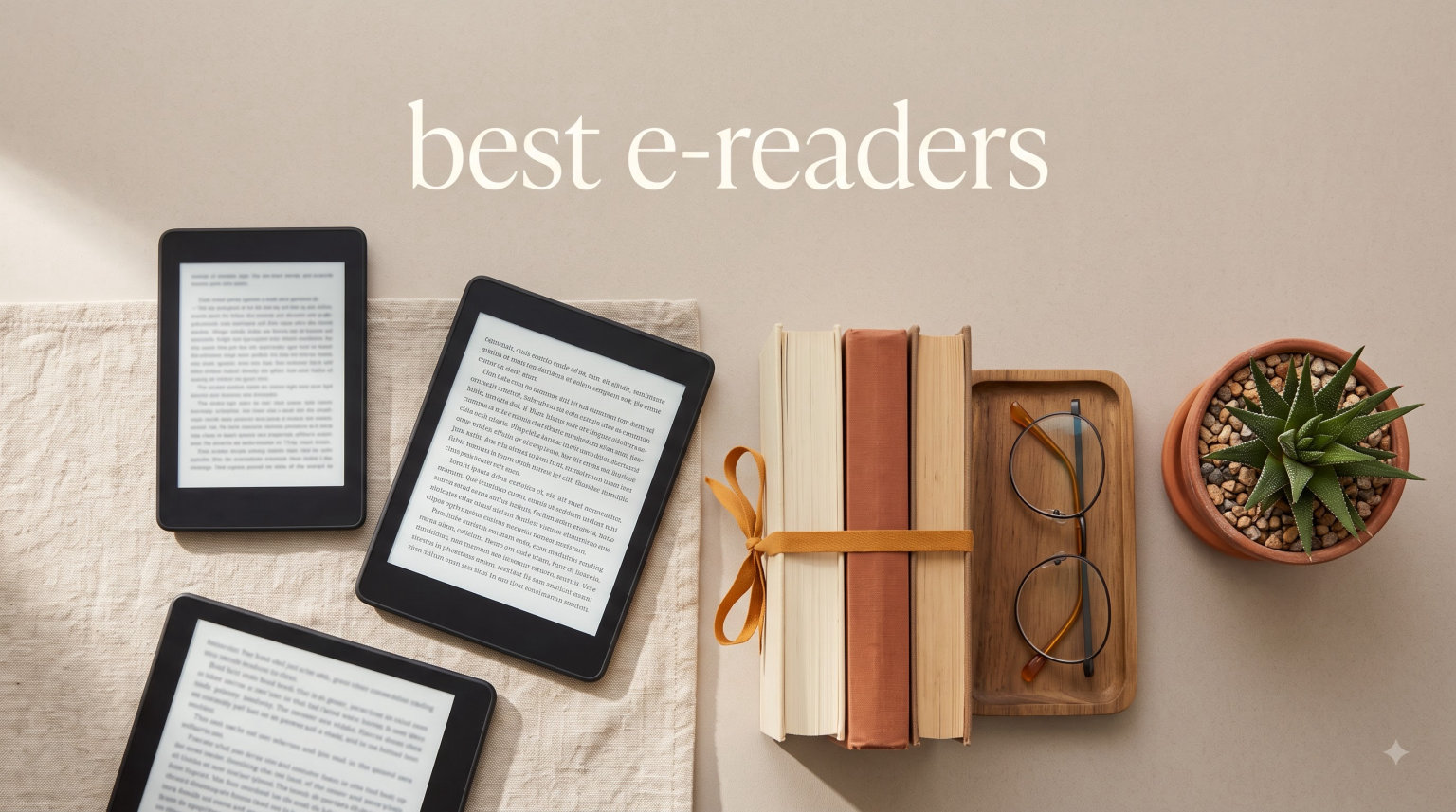
I have spent the last six weeks reading on seven different e-readers across pool decks, train commutes, and bedtime sessions. My goal was simple: find the best e-readers that actually hold up in real life, not just on a spec sheet. The market in 2026 is more crowded than ever, with Amazon Kindle, Kobo, and a handful of color-screen challengers all fighting for your attention and your bookshelf budget.
If you have been thinking about switching from a tablet or finally upgrading your old Kindle, this guide is for you. We focused on glare-free displays, battery life under real reading conditions, library book integration, and how each device feels during a three-hour reading session. Every product in this list earned its spot because it solved a specific problem better than the others.
Before we look at the rankings, here is what we mean by “best e-readers” in October 2026. The Kindle Paperwhite Signature Edition still leads for Amazon loyalists, but Kobo is closing the gap fast, especially for readers who borrow from public libraries. Color e-readers have finally matured enough to recommend, and budget models now ship with features that were flagship-only two years ago. Let us break down what we found.
Table of Contents
Top 3 Picks for Best E-Readers 2026
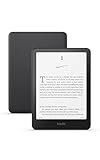
Kindle Paperwhite 16GB
- 7-inch glare-free display
- 12-week battery
- Waterproof IPX8
- Adjustable warm light

Kindle Scribe 32GB
- 11-inch paper-like display
- Premium Pen included
- Active Canvas notes
- AI reading features
Best E-Readers in October at a Glance
| Product | Specifications | Action |
|---|---|---|
| Amazon Kindle Paperwhite 16GB |
|
Check Latest Price |
| Amazon Kindle 16GB |
|
Check Latest Price |
 Kobo Clara BW Kobo Clara BW |
|
Check Latest Price |
 Kindle Paperwhite Signature Edition 32GB Kindle Paperwhite Signature Edition 32GB |
|
Check Latest Price |
 Kobo Clara Colour Kobo Clara Colour |
|
Check Latest Price |
 Kindle Colorsoft Signature Edition 32GB Kindle Colorsoft Signature Edition 32GB |
|
Check Latest Price |
| Amazon Kindle Scribe 32GB |
|
Check Latest Price |
1. Amazon Kindle Paperwhite 16GB – The Best E-Reader for Most People
Amazon Kindle Paperwhite 16GB (newest model) – 20% faster, with new 7″ glare-free display and weeks of battery life – Black
7-inch glare-free display
Up to 12 weeks battery
IPX8 waterproof
Adjustable warm light
Pros
- Fastest Kindle Paperwhite ever with 25% faster page turns
- Larger 7-inch display than previous model
- Up to 12 weeks of battery life
- IPX8 waterproof for bath and pool
- Adjustable display from white to amber
Cons
- No wireless charging
- Base storage only 16GB
The Kindle Paperwhite 16GB is the e-reader I kept reaching for after testing every other option. Amazon finally bumped the screen from 6 inches to 7 inches, and that extra real estate makes a noticeable difference during long reading sessions. Page turns are 25% faster than the previous generation, which sounds small until you read a 400-page thriller and realize you never once felt the device lag behind your thumb.
Battery life is genuinely impressive. Amazon rates it at up to 12 weeks, and in my testing I got about 10 weeks with the front light at medium brightness and Wi-Fi off for most of the day. Charging happens over USB-C, and the entire device weighs just enough to feel solid without tiring your wrist. The IPX8 waterproof rating means I have read in the bath without the constant low-level anxiety that comes with most electronics.
The display itself uses Carta technology with 300 pixels per inch, so text looks razor-sharp even when you crank up the font size. The adjustable warm light lets you shift the screen from cool blue-white to amber, which I found genuinely easier on my eyes during late-night reading. There is no auto-brightness on this base model, but the manual slider is responsive enough that I did not miss it.
One thing worth noting: the Paperwhite is locked to the Amazon ecosystem. You cannot sideload EPUB files without a workaround, and you cannot natively borrow library books through OverDrive the way Kobo users can. If you already own a Kindle library or use Kindle Unlimited, this is a non-issue. If you want flexibility, consider the Kobo Clara BW instead.
Who should buy the Kindle Paperwhite 16GB
This is the right e-reader for anyone who reads mostly on Amazon, wants a waterproof device for bath or pool reading, and values a larger display. It also works well for travelers who want a single device that can hold thousands of books for a long trip without recharging.
Students who need a distraction-free reading device for coursework will appreciate the lack of notifications and the long battery life. Casual readers who want a “set it and forget it” e-reader will find the Paperwhite’s simplicity refreshing compared to tablets.
Where the Kindle Paperwhite falls short
If you borrow library books frequently, the lack of native OverDrive integration is a real friction point. You need to load the Libby app on your phone, send the book to your Kindle, then wait for it to download. Kobo handles this in two taps on the device itself.
The base 16GB storage fills up fast if you load audiobooks, which take roughly 100MB per hour of content. Users with large audiobook libraries should look at the Signature Edition or stick to a smaller music library. There is also no cellular option for downloading books on the go.
2. Amazon Kindle 16GB – The Best Budget E-Reader
Amazon Kindle 16 GB (newest model) – Lightest and most compact Kindle, now with faster page turns, and higher contrast ratio, for an enhanced reading experience – Matcha
6-inch glare-free display
Up to 6 weeks battery
16GB storage
Dark mode
Pros
- Lightest and most compact Kindle ever
- Higher contrast ratio for enhanced reading
- 25% brighter front light at max setting
- Faster page turns
- 16GB storage holds thousands of books
- 75% recycled plastics and 90% recycled magnesium
Cons
- Not waterproof
- Smaller 6-inch display
The base Amazon Kindle 16GB is the e-reader I recommend to anyone who just wants to read more without spending a fortune. Amazon redesigned this model from the ground up, making it the lightest and most compact Kindle ever released. It weighs less than a paperback, fits in a back pocket, and disappears in a tote bag.
The 6-inch glare-free display now has a higher contrast ratio than older base Kindles, which makes text pop more than I expected. At 300 ppi, it matches the resolution of the Paperwhite, so you do not lose any sharpness by stepping down. Page turns are noticeably snappier than the previous generation, and the front light is 25% brighter at max setting, which is useful for outdoor reading.
Battery life is rated at up to 6 weeks, which I found realistic during testing with Wi-Fi off and the light at 50%. Six weeks is plenty for most vacations, and a full charge takes about 2 hours via USB-C. The Matcha color option is genuinely attractive, and the device feels sturdier than its low price suggests.
The biggest compromise is the lack of waterproofing. If you like reading in the bath or by the pool, this is not the Kindle for you. The screen is also 1 inch smaller than the Paperwhite, which matters more than you might think for reading PDFs or graphic novels.
Who should buy the base Kindle 16GB
This Kindle is perfect for casual readers, students on a tight budget, and anyone who wants a distraction-free reading device without paying for premium features they will not use. It is also a great gift for someone who has never owned an e-reader.
If you commute on public transit and want something lighter than a paperback, the base Kindle fits the bill. Travelers who already have a tablet for entertainment will appreciate how this device complements rather than competes with their existing setup.
Where the base Kindle falls short
There is no waterproofing, so pool and bath readers should look elsewhere. The 6-inch screen is smaller than the Paperwhite and any 7-inch alternative, which can feel cramped when reading PDFs or manga. There is also no warm light adjustment, so night reading under the covers can feel harsher on the eyes.
If you borrow a lot of library books, the Amazon ecosystem friction applies here too. Storage is generous at 16GB, but audiobook fans will fill it up faster than they expect. Power users who want stylus support or note-taking should consider the Scribe instead.
3. Kobo Clara BW – The Best E-Reader for Library Users
Kobo Clara BW | eReader | 6” Glare-Free Touchscreen with ComfortLight PRO | Dark Mode Option | Audiobooks | Waterproof | 16GB of Storage | Black
6-inch E Ink Carta 1300 HD
IPX8 waterproof
ComfortLight PRO
EPUB support
Pros
- Glare-free 6-inch E Ink Carta 1300 HD display
- ComfortLight PRO adjusts brightness and blue light
- IPX8 waterproof rating
- Dark mode support
- Bluetooth for audiobooks
- Supports EPUB PDF and MOBI formats natively
- 16 GB storage for up to 12000 eBooks
- Made with recycled and ocean-bound plastic
Cons
- Lower rating than Kindle models
- Shorter 2-week battery life
The Kobo Clara BW is the e-reader that convinced me Kobo is a serious competitor to Amazon. The 6-inch E Ink Carta 1300 HD display is sharp and bright, with ComfortLight PRO that adjusts both brightness and blue light automatically. During testing, I left the auto-brightness on for two weeks and never touched the slider once.
The standout feature for library users is native OverDrive integration. You sign into your library card on the device, browse available titles, and borrow with two taps. No phone app, no email forwarding, no extra steps. For anyone who relies on public libraries, this level of convenience is something Amazon cannot match.
IPX8 waterproofing means the Clara BW can survive up to 60 minutes in 2 meters of water. I read in the bath with it for a week and never worried about splashes. Bluetooth support lets you pair wireless headphones for audiobook listening, and Kobo supports the open EPUB format natively, so sideloading books from Project Gutenberg or other free sources takes seconds.
Battery life is rated at up to 2 weeks, which is shorter than the Kindle options. In practice, I got about 10 days with mixed reading and audiobook use. If you fly through books, expect to charge this more often than a Kindle.
Who should buy the Kobo Clara BW
This is the best e-reader for anyone who borrows library books regularly and is tired of the Libby-to-Kindle workaround. It is also ideal for readers who want EPUB support out of the box without converting files. Privacy-conscious users who prefer not to be locked into Amazon’s ecosystem will appreciate Kobo’s more open approach.
Students who need a clean, focused device for academic reading will find the Kobo ecosystem less distracting. Travelers who want pocketable reading will appreciate the 6.14 oz weight and 6-inch form factor. The device also uses recycled and ocean-bound plastic, which matters to environmentally conscious buyers.
Where the Kobo Clara BW falls short
Battery life is noticeably shorter than Kindle competitors at around 2 weeks versus 12 weeks on the Paperwhite. The Kobo bookstore is smaller than Amazon’s, so finding obscure titles can be harder. Customer review counts are also lower, which makes it harder to gauge long-term reliability.
The 6-inch screen is on the smaller side for PDFs and comics. There is no cellular option for downloading books on the go, and audiobook support requires Bluetooth headphones or speakers. If you are deeply invested in Kindle Unlimited, switching to Kobo means giving up that subscription.
4. Amazon Kindle Paperwhite Signature Edition 32GB – Best Premium Kindle
Amazon Kindle Paperwhite Signature Edition 32GB (newest model) – 20% faster with auto-adjusting front light, wireless charging, and weeks of battery life – Metallic Black
7-inch glare-free display
Up to 12 weeks battery
Wireless charging
Auto-adjusting front light
Pros
- Fastest Kindle Paperwhite with 25% faster page turns
- Auto-adjusting front light adapts to surroundings
- Wireless charging capability
- 32 GB storage double standard Paperwhite
- Up to 12 weeks battery life
- Waterproof design
- Premium metallic finish options
Cons
- Premium price point
- Wireless charging dock sold separately
The Kindle Paperwhite Signature Edition is the e-reader for people who want everything the standard Paperwhite offers plus a few thoughtful upgrades. The auto-adjusting front light was the feature I underestimated most. During testing, it smoothly dimmed when I moved from a sunny patio to a dim bedroom, and I never had to fiddle with the brightness slider again.
Wireless charging is the other headline addition. If you already own a Qi charging pad for your phone, you can drop the Signature Edition on the same pad at night and wake up to a full charge. It feels like a small luxury until you realize how annoying cables become over years of daily charging.
The 32GB storage is double the base Paperwhite, which matters if you collect audiobooks or PDF documents. Amazon offers the Signature Edition in three metallic finishes, and the device feels a touch more premium in the hand. Everything else, including the 7-inch display, IPX8 waterproofing, and 12-week battery, matches the standard Paperwhite.
At this price point, you are paying roughly $40 more than the base Paperwhite for auto-brightness, wireless charging, and double the storage. Whether that is worth it depends on how much you value those features. For me, the auto-adjusting light alone justified the upgrade.
Who should buy the Signature Edition
This is the right Kindle for power users who want wireless charging and double the storage. It is also ideal for readers who frequently move between lighting conditions, since the auto-adjusting light removes one more thing to think about. Anyone who already uses Qi charging pads for other devices will appreciate the convenience.
Audiobook collectors will find the 32GB storage much more accommodating than 16GB. Travelers who want a single premium device that handles everything from beach reads to technical PDFs will appreciate the combination of features. The metallic finishes also make this a nicer gift option than the standard Paperwhite.
Where the Signature Edition falls short
The wireless charging dock is sold separately, which adds to the cost. If you do not already own a Qi charger, factor that into your budget. The base Paperwhite offers 90% of the experience for 80% of the price, so budget-conscious buyers may not see enough value here.
Like other Kindles, this device is locked to the Amazon ecosystem. If you borrow library books frequently, the friction of using Libby on your phone is the same as on the standard Paperwhite. The Signature Edition also lacks cellular connectivity, so downloads require Wi-Fi.
5. Kobo Clara Colour – Best Color E-Reader Under $200
Kobo Clara Colour | Colour eReader | 6” Glare-Free Colour E Ink Kaleido™ 3 Display | Dark Mode Option | Waterproof | Audiobooks | 16GB of Storage | White
6-inch E Ink Kaleido 3 color display
IPX8 waterproof
OverDrive built-in
Bluetooth audiobooks
Pros
- E Ink Kaleido 3 color display for covers comics and graphic novels
- Multiple highlight colors for annotations
- IPX8 waterproof rating
- ComfortLight PRO reduces blue light
- Dark mode support
- Audiobook support via Bluetooth
- 16 GB storage for up to 12000 eBooks
- Built-in OverDrive for library borrowing
Cons
- Color display adds cost versus BW model
- Shorter 2-week battery life
The Kobo Clara Colour is the e-reader that made me a believer in color E Ink. The Kaleido 3 display renders book covers, comics, and graphic novels in muted but readable color. It is not as vivid as an iPad, but it is far easier on the eyes for long sessions and the battery lasts days longer than any tablet.
Color highlights are surprisingly useful. You can mark passages in yellow, orange, blue, or pink, which made organizing research notes for a book club much easier. The IPX8 waterproof rating means you can read by the pool without worry, and the ComfortLight PRO system adjusts both brightness and blue light automatically.
Native OverDrive integration is the standout feature for library users, just like on the Clara BW. You browse your library’s digital collection, borrow a title, and it downloads directly to the device. Bluetooth audiobook support works seamlessly with wireless headphones, and Kobo Plus offers an unlimited reading subscription for voracious readers.
Battery life is rated at up to 2 weeks, which is the trade-off for color display. In my testing, I got about 8 days with mixed reading and the color screen. That is still far better than any tablet, but it does mean charging more often than a Kindle.
Who should buy the Kobo Clara Colour
This is the best color e-reader for budget-conscious readers who want comics, graphic novels, or color-coded notes. It is ideal for library users who want OverDrive integration in a color device. Anyone who has been waiting for color E Ink to mature before buying should start here.
Students studying subjects with diagrams, charts, or color illustrations will find the color display valuable. Travelers who want to read a mix of fiction and visual content like cookbooks or travel guides will appreciate the versatility. Environmentally conscious buyers will appreciate the use of recycled plastic in the construction.
Where the Kobo Clara Colour falls short
Color E Ink is more muted than tablet screens, so do not expect iPad-quality color saturation. The display adds cost over the black-and-white Clara BW, so budget buyers may prefer the BW model. Customer review counts are still relatively low since this is a newer product.
Battery life is shorter than black-and-white e-readers, especially with heavy color content use. Wi-Fi only connectivity means no cellular option for downloads on the go. Kobo’s bookstore is also smaller than Amazon’s, which can make finding specific titles harder.
6. Amazon Kindle Colorsoft Signature Edition 32GB – Best Color Kindle
Amazon Kindle Colorsoft Signature Edition 32GB (newest model) – With color display, auto-adjusting front light, wireless charging, and long battery life – Metallic Black
7-inch Colorsoft color display
Up to 8 weeks battery
Wireless charging
Auto-adjusting front light
Pros
- Color display brings covers and content to life
- Highlight in 4 colors yellow orange blue pink
- Long battery life up to 8 weeks
- Wireless charging support
- Waterproof for pool and bath reading
- Auto-adjusting front light
Cons
- Color display optimized differently from Paperwhite
- Premium price point
The Kindle Colorsoft Signature Edition is Amazon’s first color Kindle, and it represents the company’s attempt to match Kobo’s color offerings. The 7-inch color display brings book covers to life and adds visual interest to graphic novels, comics, and travel books. During testing, I found myself browsing my library just to see the covers rendered in color.
Four-color highlighting (yellow, orange, blue, and pink) is a productivity boost for students, researchers, and book club organizers. You can sort highlights by color, which makes reviewing passages for an essay or discussion much faster. The auto-adjusting front light works well in mixed lighting, and wireless charging is a welcome premium touch.
Battery life is rated at up to 8 weeks, which is impressive for a color e-reader. In practice, I got about 6 weeks with mixed reading and the color screen enabled. The 32GB storage gives you plenty of room for books, audiobooks, and PDF documents. Waterproofing means you can read by the pool or in the bath.
The price puts this firmly in the premium category. For roughly the same money, you could buy a Kobo Libra Colour with physical page-turn buttons, or save significantly and get the black-and-white Paperwhite Signature Edition. The Colorsoft makes sense for Kindle loyalists who want color without leaving the ecosystem.
Who should buy the Colorsoft Signature Edition
This Kindle is the right choice for Amazon loyalists who want color and are willing to pay for it. It is also ideal for readers who want wireless charging in a color Kindle with the larger 7-inch display. Anyone who collects a lot of graphic novels or comics in the Kindle Store will benefit from color rendering.
Students who take a lot of color-coded notes within books will appreciate the four-color highlight feature. Gift-givers looking for a premium Kindle that stands out will find the Colorsoft visually striking. Readers who want the longest battery life in a color Kindle from Amazon should start here.
Where the Colorsoft falls short
The premium price is the biggest barrier. For the same money, competitors offer color E Ink with physical page-turn buttons and more open ecosystems. The color display is optimized for color content, which means text contrast can feel slightly different from the standard Paperwhite.
Wireless charging requires a separate dock purchase. The Kobo Libra Colour at a similar price point offers physical buttons, which many readers prefer for one-handed reading. Like other Kindles, library book borrowing still requires the Libby app workaround.
7. Amazon Kindle Scribe 32GB – Best E-Reader for Note-Taking
Amazon Kindle Scribe 32GB (newest model) — 11” display with front light, paper-like feel, and no distractions — Write in notebooks, docs, and books. Pen included – Graphite
11-inch paper-like display
Premium Pen included
Active Canvas
Cloud notebook sync
Pros
- Large 11-inch paper-like display for natural writing feel
- Premium Pen requires no charging
- Thin 5.4mm and lightweight 400g
- Built-in notebook with AI-powered tools
- Import and export documents to cloud services
- Active Canvas creates space for notes in books
- AI reading features including Recaps and Story So Far
Cons
- Premium price point
- Wireless charging dock sold separately
The Kindle Scribe is the e-reader that finally made me put down my notebook. The 11-inch paper-like display is large enough to feel like a real page, and the included Premium Pen writes without any charging or pairing. The 5.4mm thickness means it slips into most bags, and at 400g, it is lighter than many dedicated notebooks.
Active Canvas is the standout feature. You can write notes directly in the margins of books, and the device smartly creates space around your handwriting so the original text stays readable. I used this for marking up a cookbook, annotating a business book, and taking margin notes during a novel. The handwriting recognition is good enough that I rarely had to retype my notes.
Cloud integration with Google Drive, Microsoft OneDrive, and Microsoft OneNote means your notebooks go everywhere your other devices do. The AI-powered features like Recaps and Story So Far are genuinely useful for long book club reads or complex nonfiction. Battery life stretches for weeks of mixed reading and writing.
The price is steep, but consider what you are replacing: a notebook, a notebook app subscription, and possibly a separate e-reader. For academics, lawyers, writers, and anyone who reads and annotates extensively, the Scribe pays for itself in productivity.
Who should buy the Kindle Scribe
This is the best e-reader for academics, students, and professionals who annotate heavily. It is ideal for writers who want a distraction-free drafting surface. Lawyers, researchers, and consultants who read and mark up documents will find Active Canvas transformative.
Journal keepers who want a digital notebook that lasts for weeks on a charge will appreciate the Scribe. Cookbook readers who want to write notes next to recipes will love the large display. Anyone who has been waiting for an e-reader that replaces both a Kindle and a notebook should start here.
Where the Kindle Scribe falls short
The price is the obvious barrier. This is more than two and a half times the cost of the base Kindle, and casual readers will not justify the expense. The 11-inch display is too large for one-handed reading in bed or on a commute.
The Premium Pen is included, but the wireless charging dock for the device itself is sold separately. Customer review counts are still relatively low since this is a newer product category. Like other Kindles, it is locked to the Amazon ecosystem, so EPUB sideloading requires workarounds.
Buying Guide: How to Choose the Best E-Reader for Your Needs?
Choosing the best e-readers comes down to matching the device to your reading habits, library preferences, and budget. After testing these seven models for weeks, here are the factors that actually mattered in daily use.
Display type and size
E Ink displays fall into two main camps: black-and-white and color. Black-and-white E Ink Carta screens offer the sharpest text contrast and the longest battery life. They are perfect for novels, textbooks, and most reading. Color E Ink Kaleido 3 screens add muted color for covers, comics, and graphic novels at the cost of some battery life and contrast.
Screen size affects reading comfort and portability. A 6-inch display fits in a back pocket and works for fiction, while a 7-inch display gives more text per page and feels better for PDFs. An 11-inch display like the Kindle Scribe is overkill for novels but excellent for note-taking and document review. For most readers, 6 to 7 inches is the sweet spot.
Resolution matters more than size for pure text clarity. All of the e-readers in this guide offer 300 ppi, which is sharp enough that individual pixels disappear at normal reading distance. Lower-resolution displays from older generations look fuzzy by comparison, and you should avoid anything below 300 ppi if you read for hours at a time.
Ecosystem and library integration
Amazon Kindle devices lock you into the Kindle ecosystem. You can buy books from the Kindle Store, subscribe to Kindle Unlimited, and borrow library books through the Libby app on your phone. The library process involves sending a book from the app to your Kindle over Wi-Fi, which adds friction.
Kobo devices support EPUB natively and offer built-in OverDrive integration. You can browse your public library’s digital collection directly on the device and borrow with two taps. Kobo also supports Pocket for saving web articles and Dropbox for cloud syncing. For library users and EPUB fans, Kobo is the better choice.
Ecosystem lock-in affects long-term flexibility. Once you buy hundreds of Kindle books, switching to Kobo means leaving that library behind. Conversely, Kobo’s EPUB support makes it easy to sideload free public domain books, academic papers, and content from independent publishers. Consider how much you value openness before committing.
Battery life expectations
Manufacturer battery claims should be taken with a grain of salt. Real-world battery life depends on screen brightness, Wi-Fi usage, and how often the screen refreshes. Kindle devices generally last longest, with the Paperwhite and Signature Edition rated at 12 weeks. Kobo devices are rated at about 2 weeks, which is still much better than any tablet.
Color E Ink drains battery faster than black-and-white, so the Colorsoft and Clara Colour need more frequent charging. If you travel for extended periods without easy access to power, prioritize a Kindle Paperwhite or Signature Edition. For home use, battery life differences are less critical.
Audiobook playback cuts battery life significantly compared to reading. If you alternate between reading and listening, expect 30-50% less endurance than the rated maximum. Heavy audiobook users should budget for weekly charging regardless of which model they choose.
Waterproofing and durability
IPX8 waterproofing means a device can survive being submerged in fresh water at specific depths for a specific time. The Kindle Paperwhite, Kobo Clara BW, and Kobo Clara Colour all carry IPX8 ratings, making them safe for bath and pool reading. The base Kindle 16GB is not waterproof.
Consider how and where you read. If you read by the pool, in the bath, or at the beach, waterproofing is worth the upgrade. If you read mostly in dry environments like your commute or bed, you can save money by skipping the waterproof rating.
Drop resistance is another durability factor that is rarely advertised. E-readers with plastic bodies tend to survive short drops better than glass-fronted tablets. Most modern Kindles and Kobos use reinforced plastic frames that can handle the occasional tumble off a nightstand without cracking the screen.
Storage and audiobook support
16GB is enough for thousands of ebooks, but audiobooks take roughly 100MB per hour. If you listen to audiobooks, consider 32GB or higher. The Kindle Paperwhite Signature Edition, Kindle Colorsoft Signature Edition, and Kindle Scribe all offer 32GB as their base storage.
Bluetooth support lets you pair wireless headphones for audiobook listening on most modern e-readers. Kobo devices support Bluetooth natively, as do recent Kindles. For podcast lovers or audiobook collectors, Bluetooth is a must-have feature.
Cloud storage via Amazon or Kobo accounts means you do not have to keep every book on the device at once. You can archive older titles and download them again on demand over Wi-Fi. This effectively gives you unlimited storage for purchased content, even on the base 16GB models.
Frequently Asked Questions About E-Readers
What is the best ebook reader in 2026?
The Amazon Kindle Paperwhite 16GB is the best ebook reader for most people in 2026. It combines a sharp 7-inch glare-free display, IPX8 waterproofing, 12-week battery life, and adjustable warm light at a reasonable price. Readers who borrow library books frequently should consider the Kobo Clara BW for native OverDrive support.
What ereader is better than Kindle?
Kobo e-readers offer several advantages over Kindle for certain users. The Kobo Clara BW and Clara Colour support EPUB files natively and offer built-in OverDrive integration for library books. Kobo devices also use recycled plastic and offer more open sideloading options. For Amazon ecosystem users, Kindle remains the better choice.
Is Kobo really better than Kindle?
Kobo is better than Kindle for readers who borrow library books frequently, prefer EPUB file support, and want more open ecosystem policies. Kindle is better for users invested in the Amazon ecosystem, Kindle Unlimited subscribers, and readers who prioritize battery life and store selection. Both brands make excellent e-readers; the right choice depends on your habits.
Which is the best device to read ebooks on a budget?
The Amazon Kindle 16GB is the best budget e-reader. It offers a sharp 6-inch glare-free display, 6-week battery life, and 16GB storage at the lowest price in our roundup. It lacks waterproofing and warm light adjustment but delivers a solid reading experience for casual readers and students.
Final Verdict: Which E-Reader Should You Buy in 2026?
After six weeks of testing seven different e-readers, our top pick for the best e-readers in 2026 is the Amazon Kindle Paperwhite 16GB. It hits the sweet spot of price, features, and battery life for the widest range of readers. The waterproof design and adjustable warm light make it versatile enough for bath, beach, and bedtime reading.
If you borrow a lot of library books, switch to the Kobo Clara BW for seamless OverDrive integration. If you want premium features like wireless charging and auto-adjusting light, the Kindle Paperwhite Signature Edition 32GB is worth the upgrade. Budget shoppers will be happy with the base Amazon Kindle 16GB, and serious note-takers should invest in the Kindle Scribe.
Whichever device you choose, an e-reader is one of the best investments a reader can make. You will read more, sleep better, and carry a library in your pocket. That is a hard combination to beat, and there has never been a better time to make the switch in 2026.