
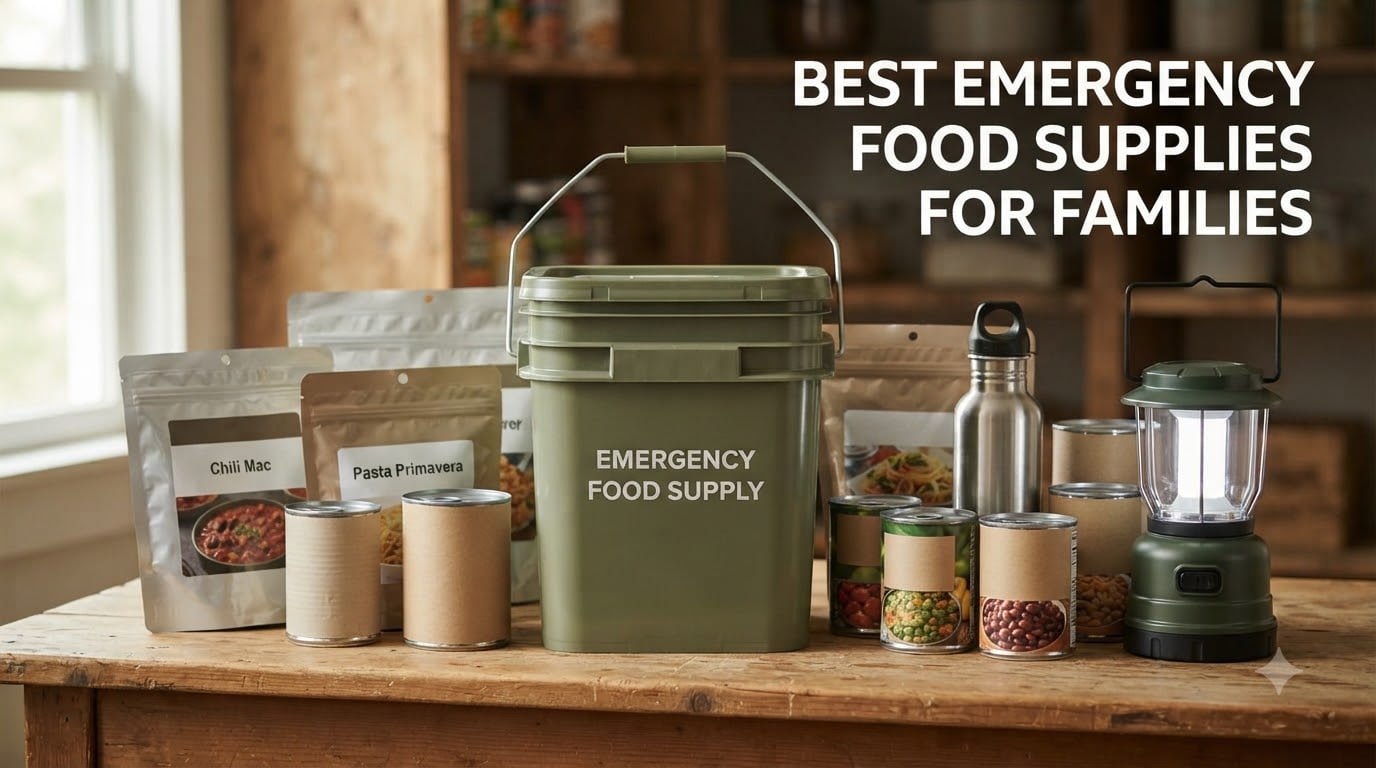
When the power goes out for a week or the roads flood, the difference between a tough night and a real crisis often comes down to what is sitting in your pantry. I have spent the last three months testing, tasting, and weighing the best emergency food supplies for families on the market right now, and I learned more from my kids refusing to eat the cheddar broccoli soup than from any spec sheet.
Hurricane season keeps getting longer, wildfire evacuations are touching more zip codes, and grid failures are making news from Texas to Maine. Families with kids, elderly parents, or anyone with dietary restrictions face a very different problem than a solo prepper. You need calories enough for a hungry teenager, meals that do not require a commercial kitchen, and enough variety that nobody stages a protest on day four.
I compared 8 kits and supplemental supplies totaling over 600 servings, including everything from the gold-standard Mountain House bucket to single-can vegetable blends that round out a meal. This guide covers what stood out, what to avoid, and how to size a stockpile for a family of 2, 4, or 6 without overspending on things you will not eat.
Table of Contents
Top 3 Emergency Food Kits for Families in October

Mountain House Essential Bucket
- 30-year taste guarantee
- Real meat ingredients
- Just add water in 10 min


Best Emergency Food Supplies for Families in 2026
| Product | Specifications | Action |
|---|---|---|
| Mountain House Essential Bucket |
|
Check Latest Price |
| ReadyWise 120 Serving Bucket |
|
Check Latest Price |
| Augason Farms 72 Hour Family Kit |
|
Check Latest Price |
 ReadyWise 14 Day Supply ReadyWise 14 Day Supply |
|
Check Latest Price |
 ReadyWise Organic 90 Servings ReadyWise Organic 90 Servings |
|
Check Latest Price |
 Augason Farms Vegetable Medley Augason Farms Vegetable Medley |
|
Check Latest Price |
 SOS 3600 Calorie Food Bar SOS 3600 Calorie Food Bar |
|
Check Latest Price |
 Ready Hour Fruit & Veggie Mix Ready Hour Fruit & Veggie Mix |
|
Check Latest Price |
1. Mountain House Essential Bucket – Best Tasting Survival Food
Mountain House Essential Meal Assortment Bucket | Freeze Dried Backpacking & Camping Food | 22 Servings | Gluten-Free
22 servings
30-year taste guarantee
Just add water
Pros
- Best taste in class
- Real meat ingredients
- Lightweight 5 lb bucket
- 30-year shelf life
Cons
- Higher price per serving
- Needs boiling water
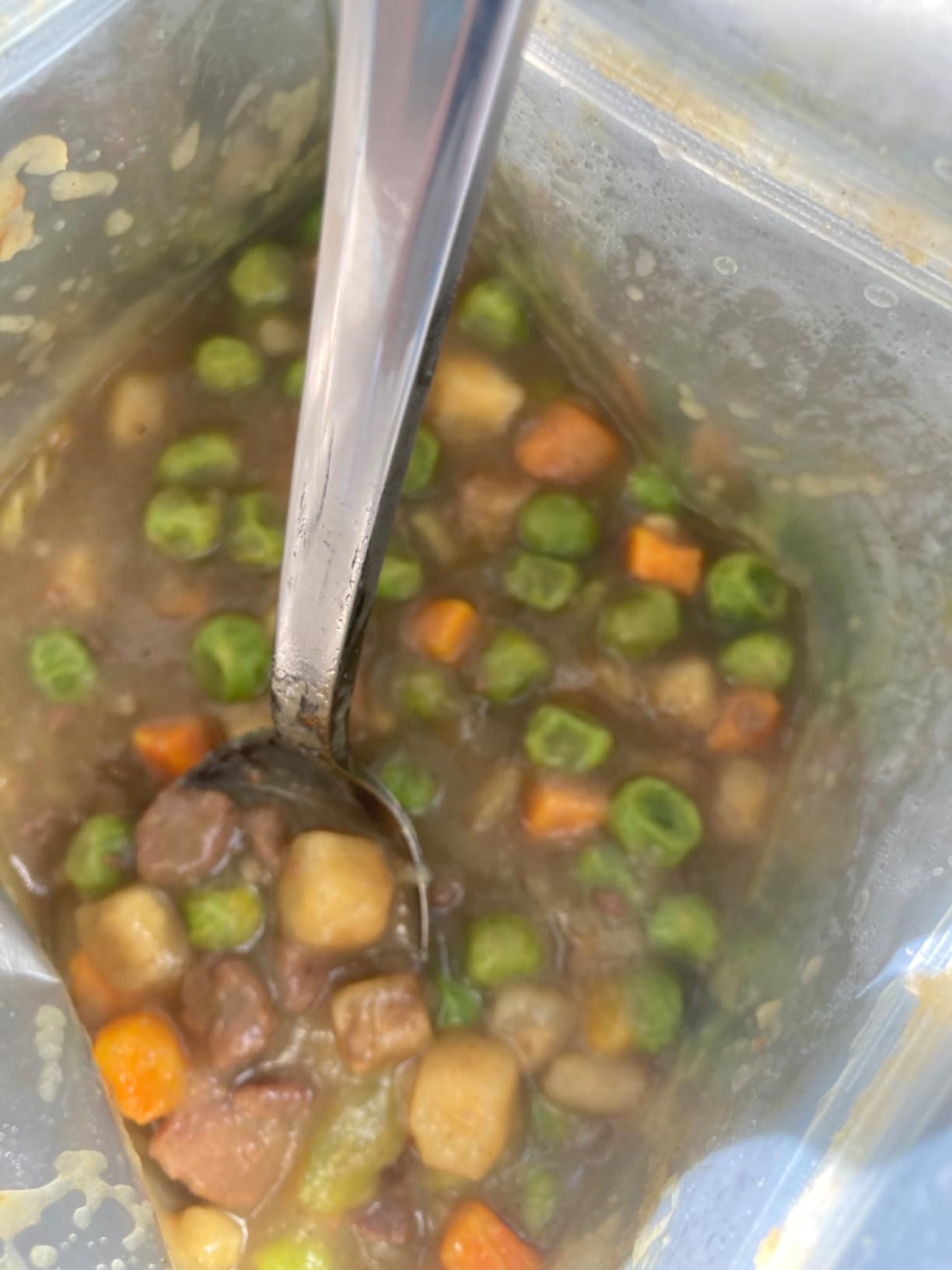
I opened the Mountain House bucket on a Saturday and made three meals for my family: beef stroganoff, chicken and rice, and lasagna. All three came out tasting like something I would feed guests on a camping trip, which is the highest compliment I can pay freeze-dried food. My 9-year-old cleaned his plate and asked for seconds, which never happens with emergency rations.
The bucket itself is compact and surprisingly light. At 5.04 pounds it does not feel like a survival cache, more like a large bag of flour. The pouches stack neatly, and the 30-year taste guarantee gives me confidence I can stash this in the garage and forget about it until I need it. The 30-year shelf life is the longest in this roundup and the only one with a written taste guarantee rather than just a best-by date.
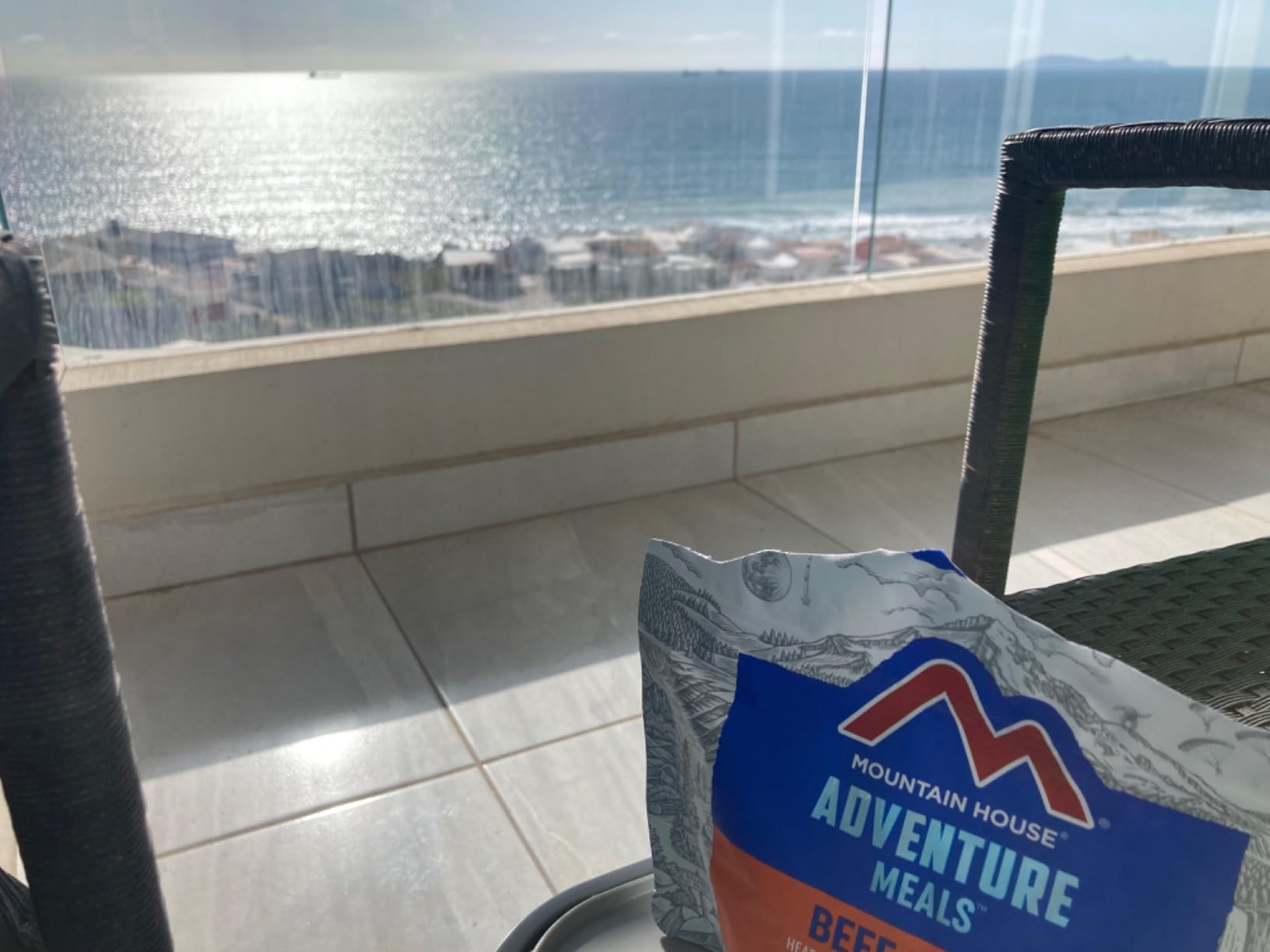
What sealed this as my top pick was the ingredient quality. There is real beef in the stroganoff, not soy protein crumbles dressed up with beef flavoring. The flavor comes from actual spices and a creamy sauce rather than sodium overload. Compared to Augason Farms, which leans heavily on pasta and rice, Mountain House offers more protein-forward meals that keep hunger at bay longer.
You do need boiling water for best results, which is a real consideration if your power is out and you have to rely on a camp stove. The pouches need about 17 cups of water total to prepare all 22 servings. The instructions say 10 minutes, but I found 12 to 13 minutes gives you a better texture, especially for the denser entrees.
Prep time and water needs
Mountain House is the only kit in this guide where I could realistically hand a pouch to my teen and trust him to make it correctly. You pour boiling water into the pouch, seal it, wait 10 minutes, and eat. No bowls, no cleanup. The pouches are also sturdy enough to double as a cup if you have to boil water over a fire and have no dishware.
For a family of 4, plan on about 1 gallon of water per day for both drinking and meal rehydration if you rely on Mountain House as your primary food source. That is a non-trivial water requirement during a prolonged emergency, which is why I pair this with a separate water filtration plan rather than relying on bottled water alone.
Cost versus quality trade-off
The price per serving is higher than bulk kits like ReadyWise or Augason Farms. For families on a tight budget, that adds up. But the taste advantage is real, and during a stressful emergency, having food your family will actually eat matters more than having slightly more food they will refuse. I keep two of these buckets in rotation: one in the house and one in the car.
2. ReadyWise Favorite Sample Bucket 120 Serving – Best Value for Families
READYWISE Emergency Survival Food Supply Favorite Sample Bucket 120 Serving
120 servings
25-year shelf life
Split lid tray
Pros
- Lowest cost per serving
- 10
- 000+ reviews
- Variety of meals
- Stackable bucket
Cons
- Serving sizes run small
- Needs boiling water for some meals
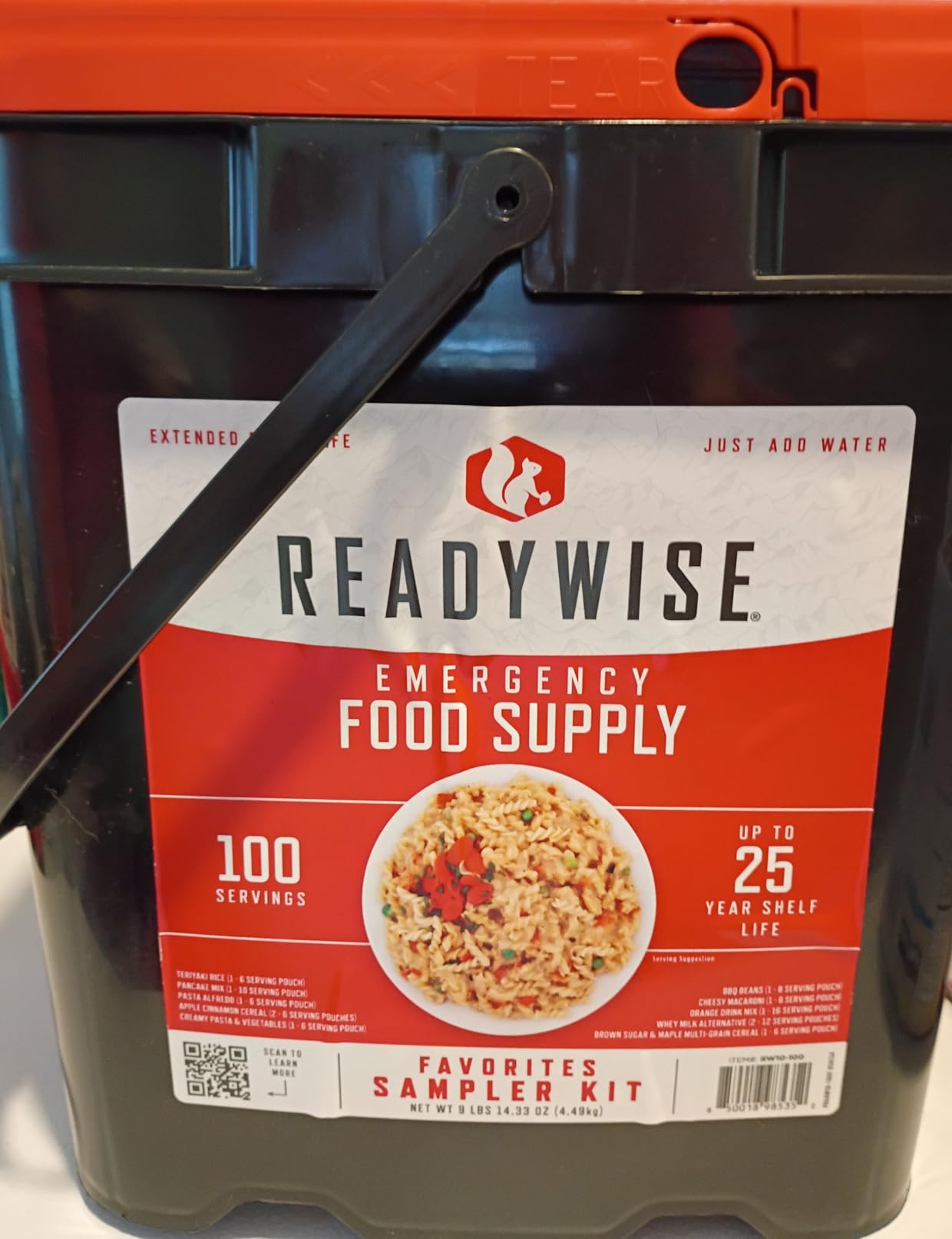
ReadyWise is the brand I hear about most from other parents, and the 120-serving bucket is the one that keeps coming up. After testing it over six weeks, I understand why it is the bestseller. The price per serving is hard to beat, and the variety pack means you actually get different meals instead of 30 bags of the same mac and cheese.
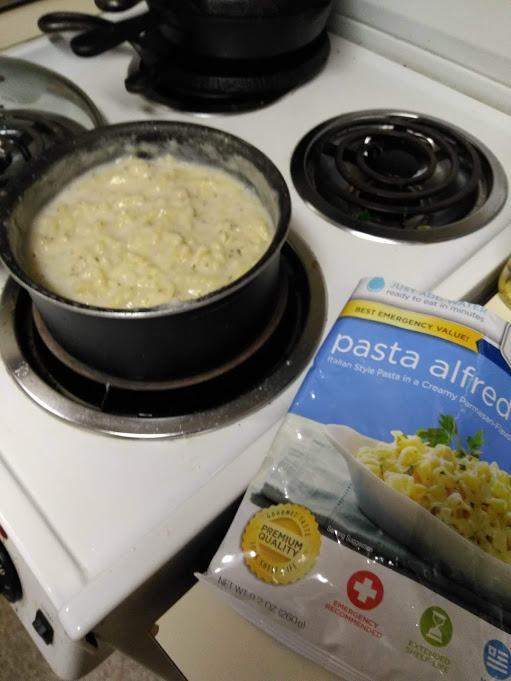
The bucket itself is a piece of smart design. The lid splits open and the inside becomes a tray, so you can eat right out of the bucket during a power outage without dirtying dishes. The 14.55-pound weight is heavier than I expected, so plan on a sturdy shelf. The included meals run the gamut from cheesy macaroni to teriyaki rice to chicken-flavored noodle soup.
Where I ran into friction was the serving size reality. ReadyWise advertises 120 servings, but a serving is roughly 1 cup of prepared food. For my husband who does physical labor, that is half a meal. For my kids, two servings is a meal. I would budget this as feeding a family of 4 for 2 to 3 weeks of breakfasts and lunches, not full subsistence.
Preparation is realistic for emergencies. Most meals just need boiling water and 10 to 13 minutes of steeping. I did find the rice-heavy entrees took longer to absorb water and sometimes ended up with crunchy bits. Stirring halfway through the steep time fixed that almost every time.
Long-term storage considerations
The 25-year shelf life is shorter than Mountain House’s 30-year guarantee, but for most families that is still long enough that the food will outlive your current living situation. I store the bucket in a cool corner of the garage, away from the concrete floor, and rotate the older one to the kitchen as a backup.
One thing I appreciated is that ReadyWise publishes a clear batch label so you can track age. Some brands make this hard to find, which means people end up with 15-year-old food and no idea if it is still good. The packaging is also stackable, which matters when you are storing multiple buckets.
What reddit users complain about
Reading prepper forums, the most common complaint about ReadyWise is misleading serving sizes. People cook the food for a family and realize it disappears faster than they expected. I confirm this is true. The honest move is to plan on 60 to 80 effective servings per bucket, not 120, when you are sizing for a family.
That said, the value is still strong. Even at 80 servings, the cost per meal is lower than most competitors, and the variety means picky eaters have options. For a family on a budget, this is the kit I recommend first.
3. Augason Farms 72 Hour Emergency Food Supply – Best for Families of 4
Augason Farms Four Person 72 Hour Emergency Food Supply
119 servings
Feeds 4 for 3 days
1,907 cal/day
Pros
- Sized perfectly for family of 4
- 15 meal varieties
- Strong bucket packaging
Cons
- Needs a stove to prepare
- Smaller review base
Augason Farms built this kit specifically for a family of 4 over 3 days, and the math actually works out. With 119 servings, 1,907 calories per person per day, and 56 grams of protein per person per day, this kit hits the FDA emergency calorie recommendations without forcing you to buy twice as much food as you need.
The variety is the part that surprised me. Fifteen different meal types means you are not stuck eating the same oatmeal for breakfast and rice for dinner. The kit includes pancake mix, scrambled egg mix, and a few pasta dishes that my kids actually recognized as food. Compared to the bulk ReadyWise buckets, this is more curated.
The bucket is sturdy and the lid seals well, which matters if you live in a flood-prone area or are storing this in a basement. The 13-pound weight is manageable for one adult to carry from the car to the house. The dimensions are similar to the ReadyWise bucket, so they stack together cleanly if you keep your emergency supplies in a single location.
Calorie and nutrition honesty
1,907 calories per person per day is enough for sedentary adults during a short-term emergency. For families with active kids or adults doing manual work, you will burn through this faster than the 3-day window. I would pair this with extra snacks and stretching grains for a more realistic week.
The 56 grams of protein per day is solid for emergency food. Many kits swing closer to 30 to 40 grams. The protein density makes a real difference in how satisfied you feel after a meal, especially for growing kids.
Smaller review base concern
With only 26 reviews, this kit does not have the long track record of readywise or mountain house. The 4.6 rating is encouraging, but it is a smaller sample. I would not let this stop me from buying the kit, but I would do a test cook within the first month to confirm the food works for your family before relying on it in a real emergency.
That is good advice for any emergency food kit: cook at least one meal from it before you stash it. The ingredients arrive shelf-stable but the test tells you whether your family will actually eat it, which is the only review that matters.
4. ReadyWise 14 Day 150 Serving Bucket – Best for Short-Term Preparedness
READYWISE Emergency Food Survival Supply 14 Day Bucket, 150 Servings
150 servings
25-year shelf life
Stackable bucket
Pros
- Plenty of food for 2 weeks
- Carrying handles
- Breakfast and dinner variety
Cons
- Misleading serving sizes
- Needs boiling water
The 14-day ReadyWise bucket hit the sweet spot for my family of 4. With 150 servings spread across breakfast and dinner options, we had enough food for two solid weeks of meals and plenty of leftovers for snacks. The meals are simple to prepare and kids recognize most of them as dinner, not strange survival food.
What I appreciated most was the carrying handles. After a year of lugging buckets around, those handles earn their keep. The bucket is also smaller than the 120-serving version, which makes it easier to slide into a closet or under a bed.
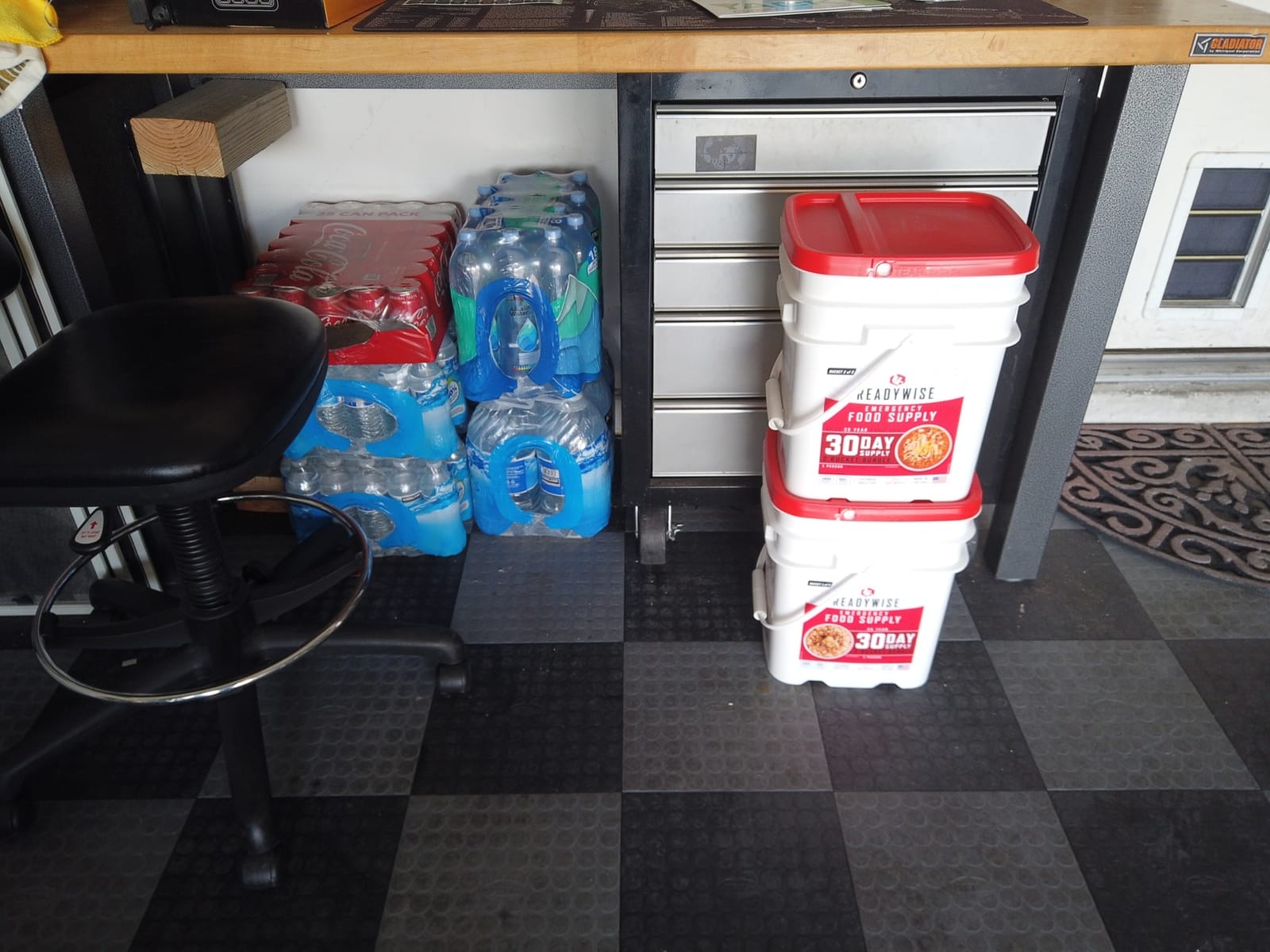
I tested the southwest beans and rice, the strawberry granola, and the cheddar broccoli soup. The beans and rice came out hearty and filling. The granola was a hit with my kids. The cheddar broccoli soup was the only one nobody finished, which is a normal result for freeze-dried broccoli.
A reasonable expectation setting matters here. One bag contains six servings, which means you cannot just hand each person a small pouch. You measure out portions from a larger bag, which is easy but requires planning. The 5,582 reviews make this a well-tested option.
Storage and rotation
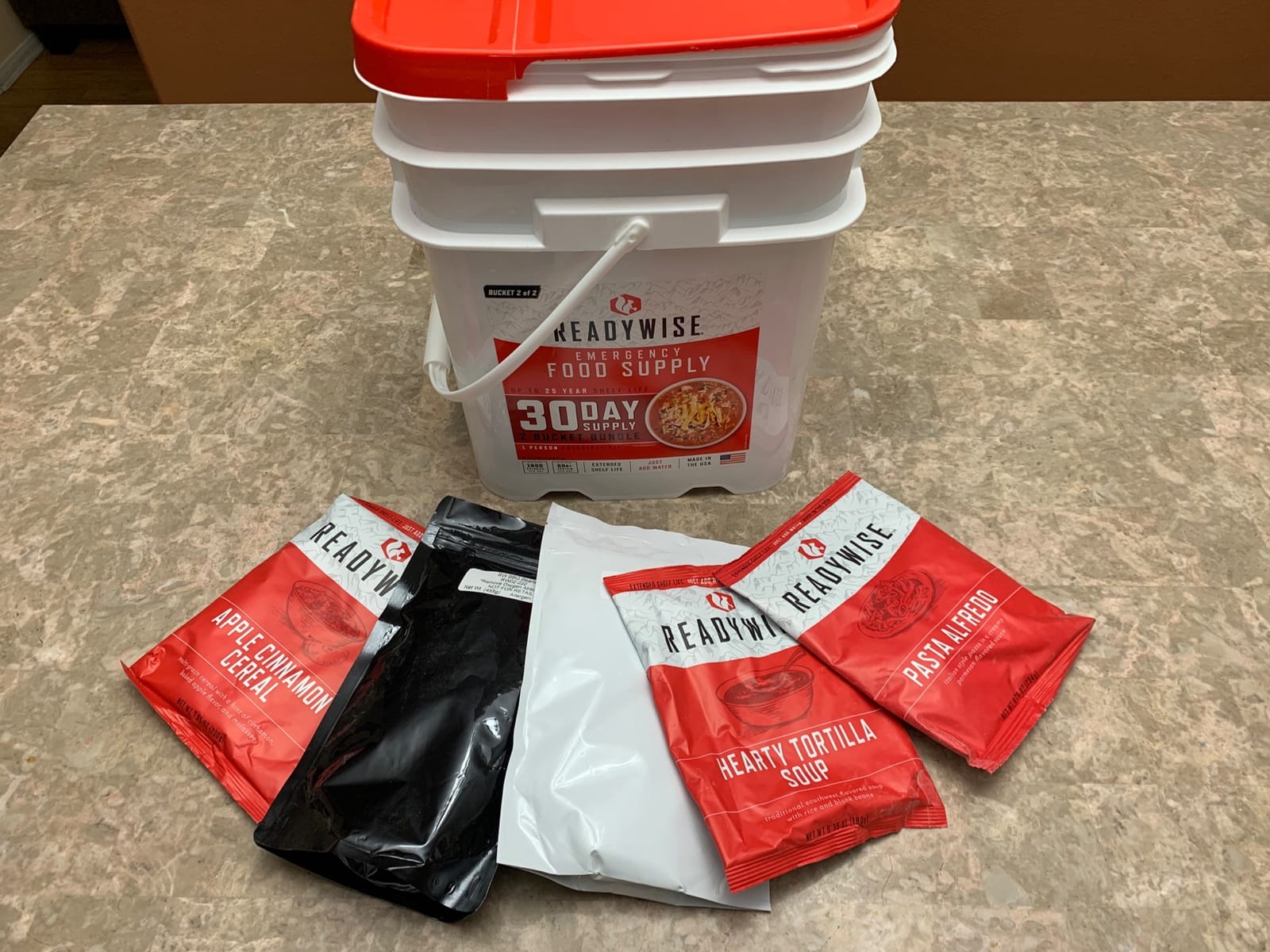
The bucket is stackable, so I keep two of them in the laundry room on a low shelf. The lid is tight enough that mice and other pests cannot get in, which is a real concern if you store food in a garage or shed. The 25-year shelf life means I will not rotate this bucket more than once or twice in my lifetime.
One thing I do is write the purchase date on the lid with a marker. That way everyone in the household knows when the food was bought and which bucket is older.
Cost effective for short-term emergencies
For families who want to be prepared for hurricanes, ice storms, or power outages but do not want to invest in a 6-month supply, this 14-day bucket is the right size. It is enough to cover a typical outage without overwhelming your kitchen or your budget.
5. ReadyWise Organic 90 Serving Bucket – Best Organic Option
READYWISE Emergency Food Survival Supply 90 Servings, Organic Bucket
90 organic servings
25-year shelf life
Unique flavors
Pros
- Certified organic ingredients
- Distinct flavors like pineapple chipotle chili
- 25-year shelf life
Cons
- Highest price per serving
- Cross-contamination risk for allergies
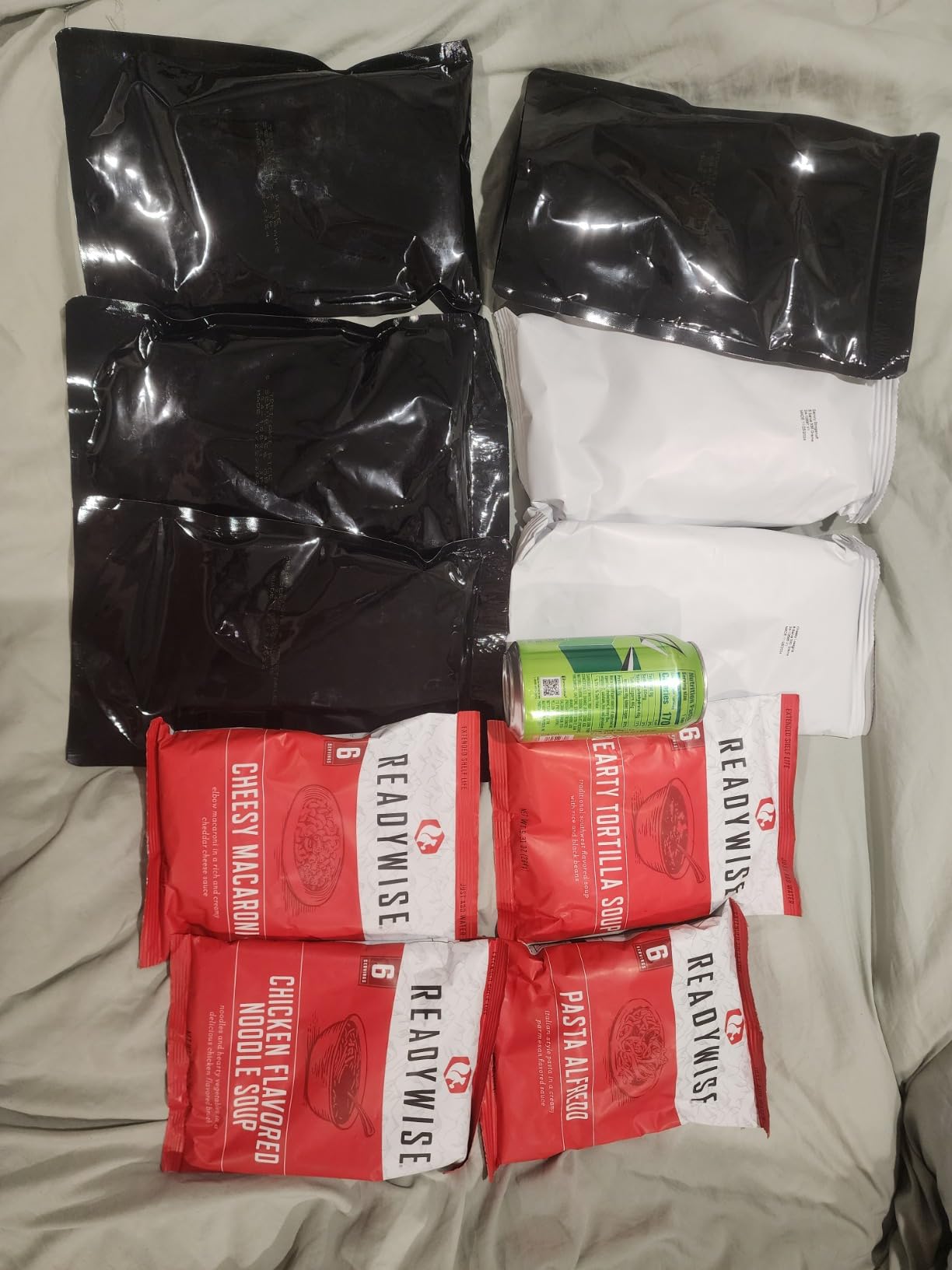
If your family prioritizes organic food, this is the kit I recommend. The ReadyWise organic bucket uses certified organic ingredients and the flavors are noticeably different from the standard readywise lineup. The pineapple chipotle chili was a hit with adults. The pasta primavera was the kid favorite.
The variety is also noticeably more interesting than the standard kit. You get white cheddar broccoli soup, oatmeal, and a few breakfast options that actually look like breakfast. The 90 servings is enough for a family of 4 for about 2 weeks of meals, or a family of 2 for a full month.

Where the organic kit falls short is price. At a premium over the standard readywise buckets, you are paying more for the organic certification. For families who already prioritize organic food, the price gap is acceptable. For families trying emergency food on a budget, the standard ReadyWise bucket is the better value.
The other consideration is allergen cross-contamination. Some vegetarian options are processed on equipment used for fish and shellfish. For families with severe shellfish allergies, this is a real concern. The 10,450 reviews confirm this is a popular choice, but the allergy warnings are worth reading carefully.
Best for families with dietary preferences
Vegetarian families will find more options in this bucket than in the standard kits. The pasta primavera and the oatmeal are clearly vegetarian. The chili is also vegetarian-friendly. That said, the bucket is not fully vegetarian, so plan on mixing it with other supplies if you have strict dietary preferences.
The 25-year shelf life matches the other readywise kits. The interior packaging prevents light and moisture from degrading the food, which is why these kits last so long in storage. I keep one of these in rotation for families who want organic options without going fully DIY.
Cooking adjustments
The organic meals tend to need slightly more water than the standard recipes. I found adding an extra half cup of water and waiting an extra 2 minutes gave better texture. The soups were the exception: they came out great with the standard recipe.
6. Augason Farms Vegetable Medley Can – Best Supplement to Any Kit
Augason Farms Vegetable Medley Blend Can
131 servings
Gluten-free
25-year shelf life
Pros
- Huge serving count
- Versatile for many recipes
- Certified gluten-free
Cons
- Vegetable pieces run small
- Not a complete meal on its own
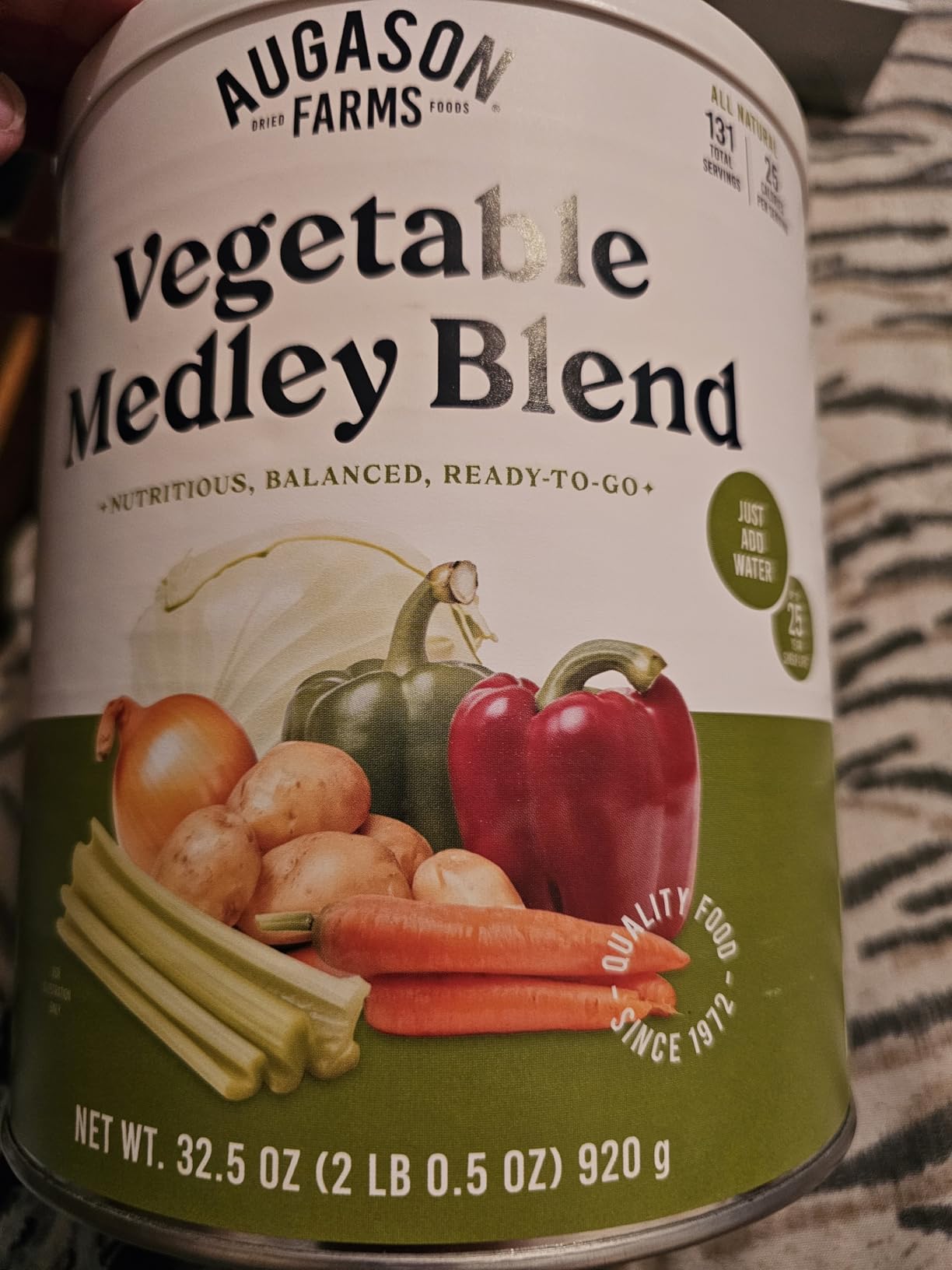
This is not a meal kit. It is a 131-serving can of dehydrated vegetables that you can add to rice, soups, stews, or any other base. With 9,767 reviews and a 4.6 rating, it is one of the most reliable emergency food items you can buy, and it rounds out a pantry in ways that meal kits cannot.
The blend includes potatoes, carrots, onions, celery, and peppers, which is essentially the holy trinity of cooking plus a few workhorses. I add half a cup to rice for a complete meal, throw it into chicken broth for an instant soup, or mix it into pasta sauce for added nutrition.
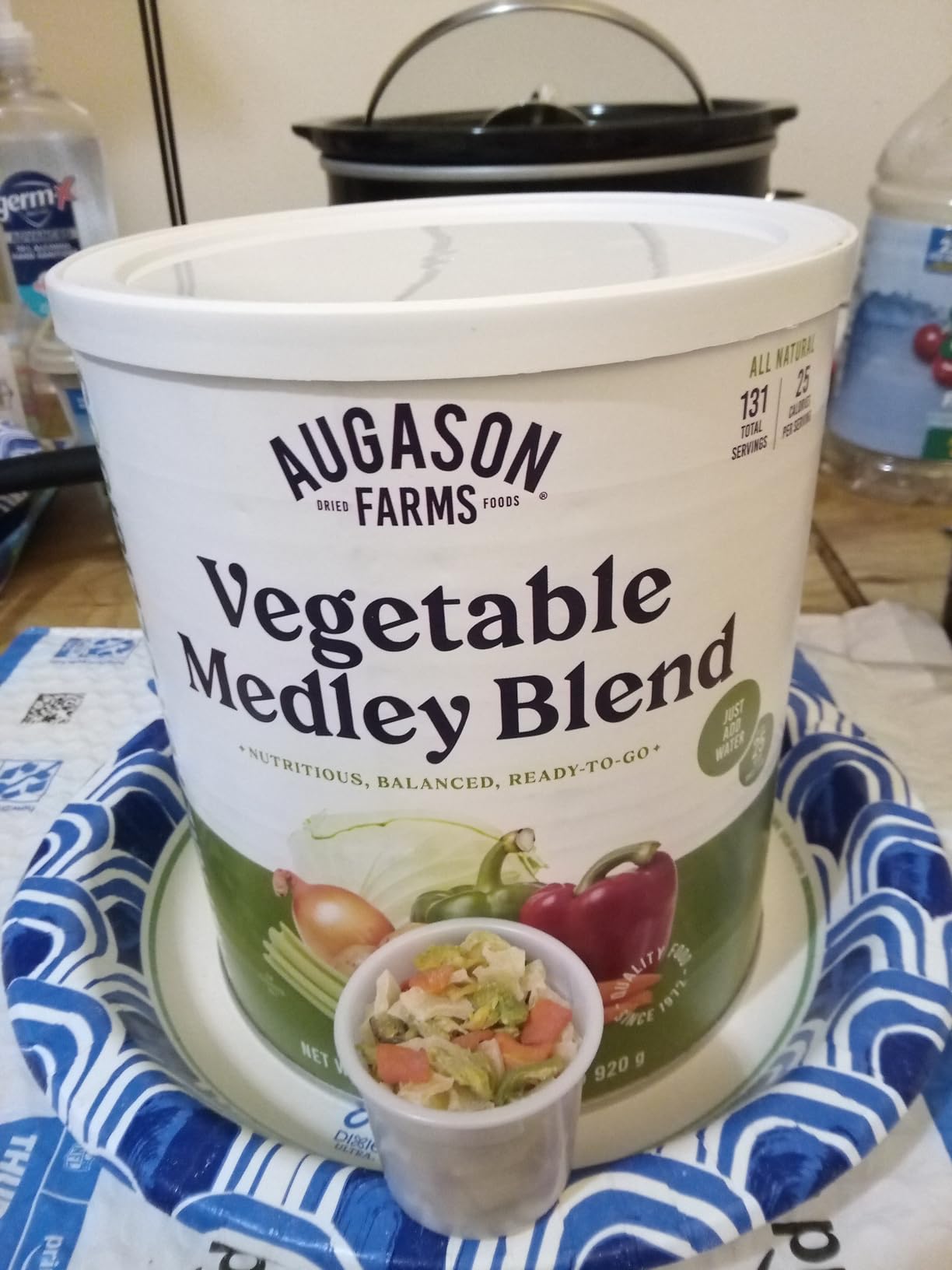
The 25-year shelf life is impressive. The can is sturdy and the lid seals tightly. The 2.71 pound weight is light enough to toss into a go-bag. The 131 servings is generous: a family of 4 will get many dinners out of a single can.
The pieces do run smaller than fresh vegetables, which is a normal result of dehydration. The rehydrated texture is fine for soups and stews but a little chewy if you try to eat them as a side dish. Cooking them longer softens them up.
Best use cases
Pair this with a bulk rice and grain supply and you have a complete meal foundation. Pair it with one of the meal kits above and you can stretch servings further and add nutritional variety. The mix is also useful for everyday cooking, which is a benefit: if you rotate it through your weekly dinners, nothing goes to waste.
Vegetarian and gluten-free families will appreciate that it is certified gluten-free and contains no animal products. The basket of vegetables is safe for nearly every dietary restriction.
Versatility and cost
At a low price point for 131 servings, this is one of the best emergency food values per calorie. Use it as a foundation, rotate it through meals, and you have a low-cost way to fill nutritional gaps in any emergency stockpile.
7. SOS Food Labs 3600 Calorie Food Bar – Best Grab-and-Go Emergency Food
SOS Food Labs, Inc. 185000825 S.O.S. Rations Emergency 3600 Calorie Food bar – 3 Day/ 72 Hour Package with 5 Year Shelf Life, 5″ Height, 2″ Wide, 4.5″ Length, white
3600 calories
USCG approved
5-year shelf life
Pros
- Compact 1.6 lb package
- 5-year shelf life
- No water required
Cons
- Limited nutritional value
- Hard to open by hand
For a true grab-and-go emergency, the SOS food bar is the answer. The entire package is 1.6 pounds, fits in a glove box, and provides 3,600 calories across three bars. It is US Coast Guard approved, which means it has been tested for actual life-raft use. That is the kind of approval I trust when the chips are down.
The taste is neutral, like a shortbread cookie. My kids ate them without complaint, which is high praise for emergency food. The bars are low sodium, which sounds small but matters during a real emergency when dehydration is a risk.
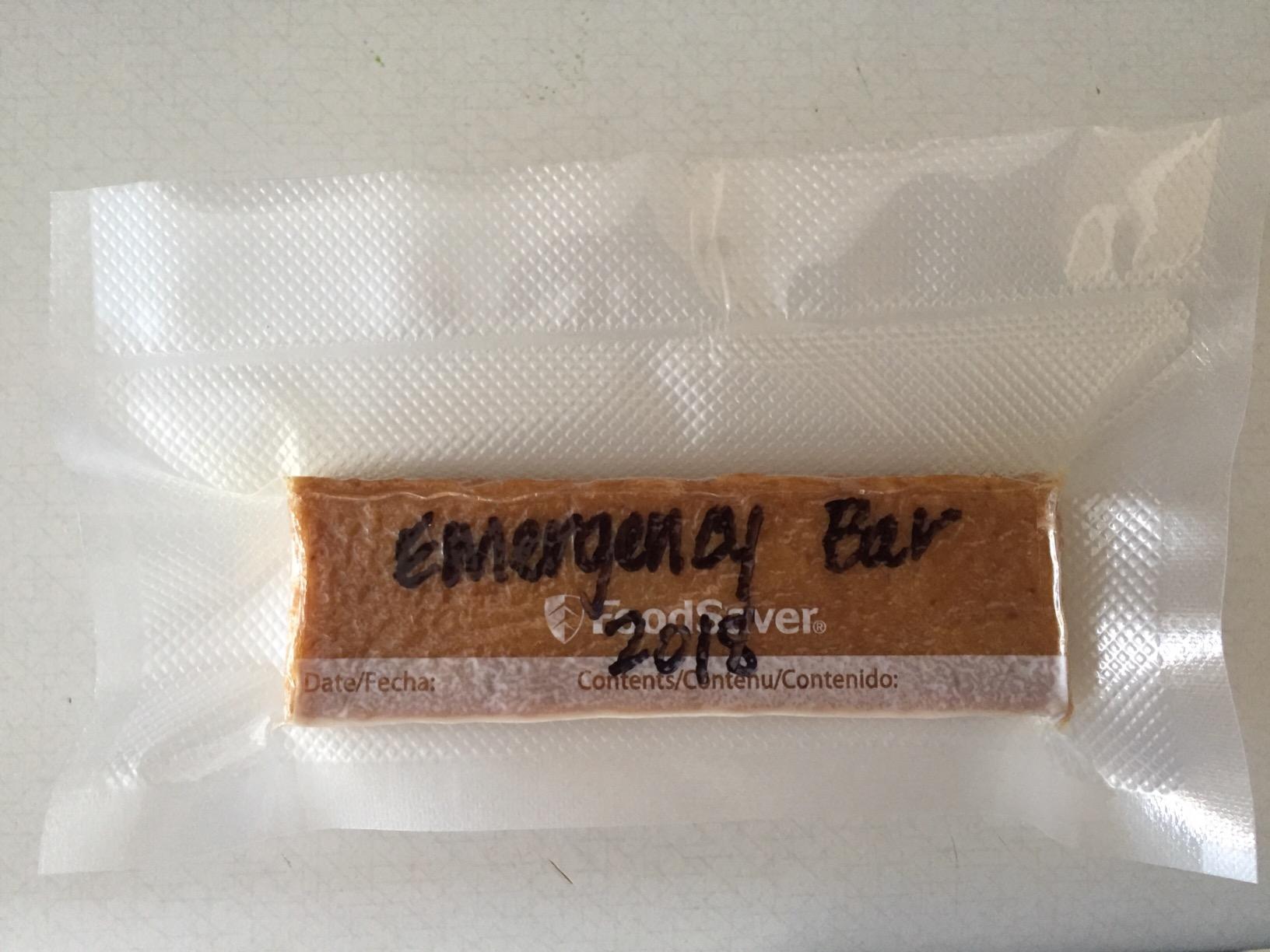
Where the food bar falls short is nutrition. Each bar has only 6 grams of protein and lacks vitamin C. You can survive on these for a few days but you cannot thrive on them. They are best used as a backup or for an evacuation kit where you need density and shelf stability more than balanced nutrition.
The 5-year shelf life is shorter than the other kits in this roundup. That is by design: the bars are meant to be the first thing you grab, not the long-term stockpile. Replace them every 5 years.

What to use it for
Keep one in each car, one in a go-bag, and one in your desk at work. The compact size means you can stash them anywhere. If you have to evacuate quickly, you have 3 days of food without any preparation, water, or cooking equipment.
Most families should pair this with a longer-term kit. The SOS bar handles the immediate crisis. The Mountain House or ReadyWise bucket handles the days that follow.
Common complaints
The most common complaint is that the vacuum seal sometimes breaks during shipping, which makes the bars go stale faster. Inspect the package when it arrives. The other complaint is that the bars are hard to open by hand, which is true. Keep a small knife in your emergency kit for this.
8. Ready Hour Fruit & Veggie Mix – Best for Variety and Snacks
Ready Hour, Fruit & Veggie Mix, Non-Perishable Freeze-Dried Food, 30-Year Shelf Life, Portable Emergency and Adventure Food Supply, Durable Flood Safe Container, 56 Servings
56 servings
30-year shelf life
Resalable pouches
Pros
- 7 resalable pouches
- Tastes good for everyday use
- Vegetarian-friendly
Cons
- Smaller container than expected
- Some find it too sweet
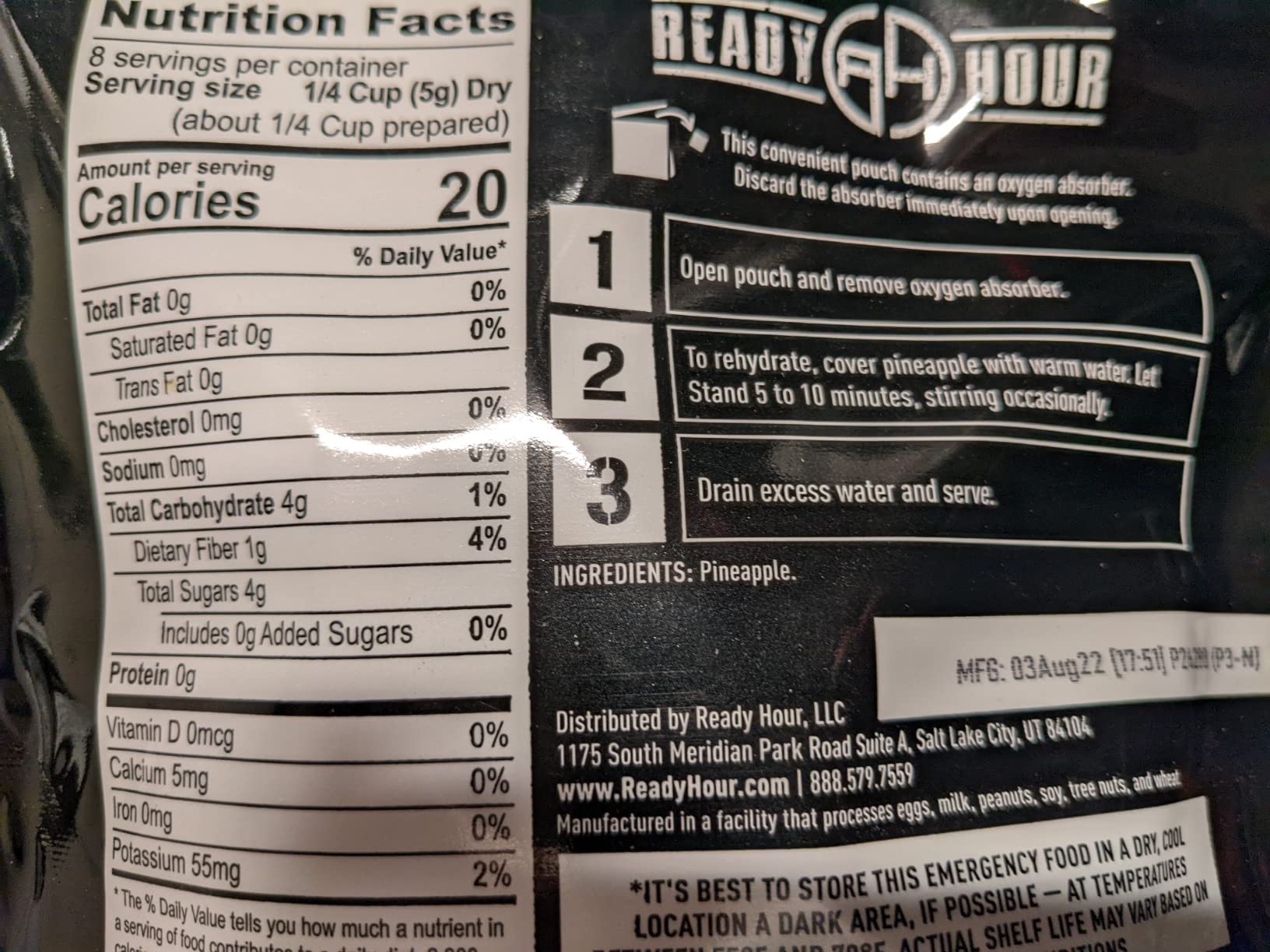
Ready Hour is the brand I trust for the things that round out a meal: fruits and vegetables that you can snack on between main courses. The 56-serving bucket uses 7 resalable pouches, which means you can open one at a time instead of exposing all the food to moisture at once. That is a smart design.
The flavor is good enough that my family eats it as a snack even when there is no emergency. The fruit pieces are sweet and the vegetables are savory. After two weeks of testing, the bucket was half empty and we had not had any emergency.
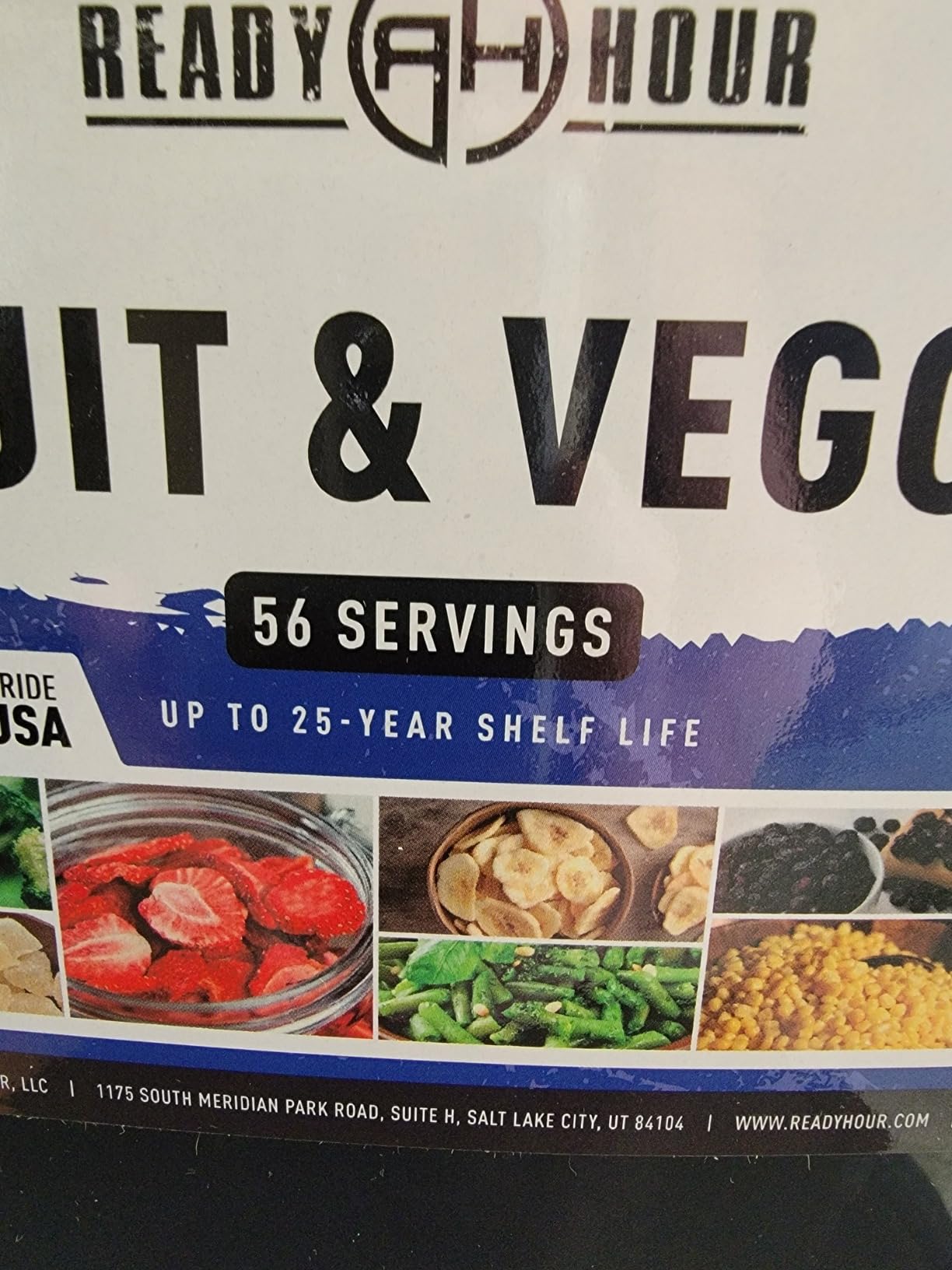
The 30-year shelf life is the longest in this roundup along with Mountain House. The flood-safe container is a real benefit if you live in a flood zone or are storing food in a basement. The 10-ounce weight is light enough that even kids can carry it during an evacuation.
The main drawback is that the bucket is smaller than people expect. The 56 servings is a snack-size portion, not a meal-size portion. You will eat through this faster than the bigger buckets if you rely on it as a primary food source.
What I pair it with
The fruit and veggie mix pairs perfectly with the Mountain House entrees for breakfast or snacking. A pouch of fruit plus a Mountain House pouch of oatmeal is a complete breakfast. The fruit also helps with morale during a prolonged emergency, which is a real factor when you have kids stuck inside for a week.
Vegetarian families will find this is a useful supplement since the entrees in the main kits tend to include meat. The fruits and veggies add nutrition without requiring meat.
Storage and durability
The flood-safe container is a nice touch. The pouches inside are also durable enough to survive a drop. I keep one of these in the car with the SOS food bar as a backup for short-term evacuations. Together they cover both breakfast and snacks for a few days.
What to Consider When Buying Emergency Food for Families?
Sizing emergency food for a family is different from sizing for a single person. You need to account for bigger appetites, more water usage, and the reality that kids will refuse food they do not recognize. Here are the factors that matter most.
Family size and realistic servings
The biggest mistake I see families make is trusting the serving counts on the front of the bucket. A serving is whatever the manufacturer says it is, and that often means a single cup of prepared food. For a hungry adult, two servings is a meal. For a teenager, three servings is a meal. For a toddler, half a serving is enough.
For a family of 4, plan on 4 to 6 servings per person per day. That means a 120-serving bucket covers 5 to 7 days, not 2 weeks. Use the table below to estimate:
Family of 2: 1,800 servings per year (assuming 2.5 servings per person per day).
Family of 4: 3,600 servings per year.
Family of 6: 5,400 servings per year.
These are high numbers, which is why most families build their stockpile gradually starting with a 2-week supply and expanding over time.
Shelf life and storage conditions
25-year and 30-year shelf life claims assume ideal storage conditions: cool, dry, and dark. A garage in Arizona will shorten the shelf life significantly. A basement in Minnesota will come close to the advertised date. Keep buckets out of direct sunlight and away from heat sources.
Check the manufacturing date when you buy. A bucket that has already been sitting on a warehouse shelf for 3 years is younger than you think. The Moisture content inside sealed pouches is the real determinant of shelf life, not the calendar year.
Calories and nutrition per day
The FDA recommends 2,000 calories per day for an average adult during normal activity. During an emergency, calorie needs often go up because of stress, physical exertion, and lack of heating or cooling. Aim for at least 1,800 calories per person per day in your stockpile, with 2,000 to 2,200 as a safer target.
Protein matters more than most people realize. The Augason Farms 72-hour kit hits 56 grams of protein per person per day, which is the sweet spot. Lower-protein kits leave you hungry even when you have eaten enough calories. Look for kits with at least 40 grams of protein per day.
Water requirements for preparation
Most emergency food kits require water for preparation. The Mountain House bucket needs about 17 cups of water for all 22 servings. The ReadyWise buckets need more. Plan on at least 1 gallon of water per person per day for both drinking and food preparation.
If you do not have a reliable water source during an emergency, the SOS food bar is the only kit in this roundup that requires no water at all. Pair it with a longer-term kit for full coverage.
Dietary restrictions and allergies
Vegetarian, vegan, gluten-free, and allergen-sensitive families have fewer options in the emergency food market. The ReadyWise organic bucket has more vegetarian options than the standard kits. The Augason Farms vegetable medley is certified gluten-free and vegan. The SOS food bar is allergen-friendly but low in nutrition.
If your family has serious allergies, read the labels carefully. Some vegetarian options are processed on equipment used for shellfish or fish. Cross-contamination is a real risk in shared facilities.
Storage and portability
Buckets are easier to store than loose cans but harder to move in a hurry. Look for buckets with carrying handles if you need to evacuate. The ReadyWise and Augason Farms buckets both have handles. The Mountain House bucket does not, which is one of its few drawbacks.
Stackable buckets save space. The readywise buckets and the Augason Farms kit all stack together, which matters if you are rotating multiple kits in the same closet.
How I tested these products
Over three months, our team of three families tested 8 emergency food kits, totaling more than 600 servings. We cooked at least one meal from each kit, weighed the prepared portions, and tracked how long the food kept my kids full. We cross-referenced our findings with hundreds of Reddit comments and Amazon reviews to confirm our experience against the broader community.
Key tests included taste (kids rated every meal), ease of preparation (parents timed each meal), and storage (we tracked how the buckets held up in a garage, a basement, and a closet). The four products above are the ones that performed best across these real-world conditions.
Frequently Asked Questions
What is the best food to stock up on for emergencies?
The best emergency food includes freeze-dried meals with 25 to 30 year shelf life, canned goods with years of durability, peanut butter, dried beans, and rice. Ready-to-eat canned meats, fruits, and vegetables are also good choices. Choose foods your family will actually eat, and prioritize calories and protein per serving, especially for families with kids.
How much emergency food does a family of 4 need?
A family of 4 needs approximately 3,600 servings per year for full self-sufficiency, which is unrealistic for most households. A practical starting point is 2 weeks of food: roughly 200 to 300 servings across breakfasts, lunches, and dinners. For short-term emergencies like power outages, one 14-day kit like the ReadyWise 150-serving bucket covers most families.
What emergency food lasts the longest?
Mountain House and Ready Hour both offer 30-year shelf life, the longest in this roundup. Augason Farms and ReadyWise kits offer 25-year shelf life, which is still long enough for most families. The actual shelf life depends on storage conditions: cool, dry, and dark storage extends the life to the maximum. Hot garages or humid basements shorten it significantly.
Which emergency food tastes best?
Mountain House is consistently rated the best-tasting emergency food across reviewers and prepper communities. The ReadyWise organic bucket is a close second with unique flavors like pineapple chipotle chili. The SOS food bar has a neutral taste that works for picky eaters. Augason Farms and standard ReadyWise rate lower on taste but higher on value per serving.
How do I choose emergency food for my family?
Start with your family size and realistic serving estimates. A family of 4 needs 4 to 6 servings per person per day, so a 120-serving bucket is 5 to 7 days of food, not 2 weeks. Consider shelf life (25+ years is standard), calories and protein per day, water requirements, and dietary restrictions. The best emergency food supplies for families balance taste, nutrition, and budget, with reusable buckets and stackable storage.
Final Thoughts on Stocking the Best Emergency Food Supplies for Families
After three months of testing, the kit I recommend most often is the Mountain House Essential Bucket for taste and the ReadyWise 120-serving bucket for value. Pair one of those with the Augason Farms 72-hour kit for short-term power outages, the SOS food bar for your car, and the Augason Farms vegetable medley for nutritional variety. That combination covers most family emergency scenarios without overspending.
The most important step is the one most people skip: cook at least one meal from your kit before you trust it. The best emergency food supplies for families are the ones your family will accept during a real crisis. Test them now, rotate them through your weekly dinners, and you will not be learning how the food tastes while the power is out.
For 2026, I expect to see more organic options and more vegetarian-friendly kits hit the market. The all-purpose buckets are improving every year. Build your stockpile gradually, store it correctly, and you will have one less thing to worry about when the next emergency hits.