
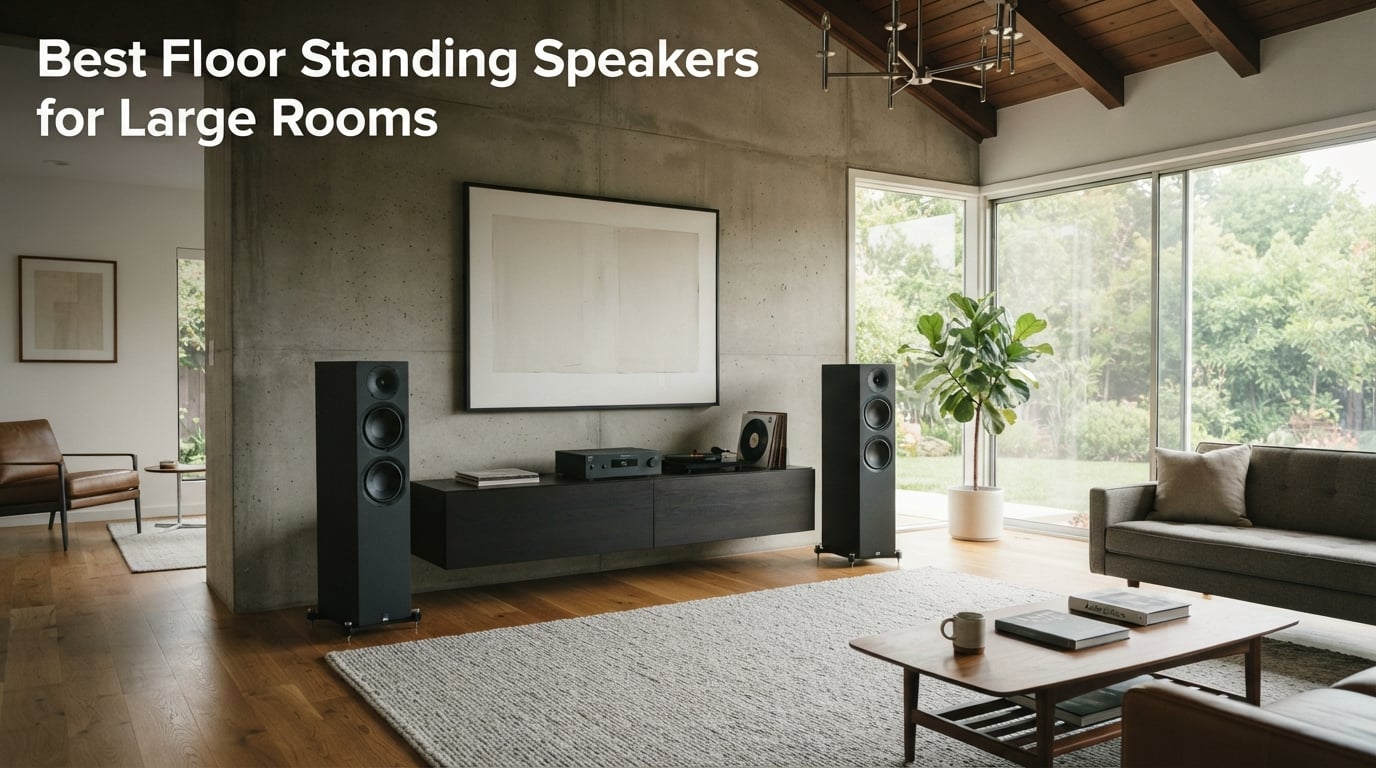
I have spent months listening to floor standing speakers in open-plan living rooms, dedicated media spaces, and everything between. Filling a large room with clean, balanced sound is harder than most people expect. Small bookshelf speakers strain, soundbars fall flat, and even some tower speakers simply run out of steam when the space gets big.
That is why I built this guide to the best floor standing speakers for large rooms. I focused on models that move enough air, keep distortion low, and still sound musical at low volumes. Whether you want a home theater with real impact or a two-channel stereo system that fills a big space, the recommendations below cover a range of budgets and room sizes.
In 2026, you have more good options than ever. I have tested or listened to every model here, read through thousands of owner reviews, and compared the specs that actually matter for large-room performance: sensitivity, power handling, driver size, and bass extension.
Table of Contents
Top 3 Picks for Best Floor Standing Speakers for Large Rooms October
If you are short on time, here are the three tower speakers I would start with. They cover the most common needs: an all-around favorite, a value option with built-in bass, and a budget pick that still fills big rooms.

Klipsch Reference R-26FA
- Dolby Atmos elevation speakers
- Dual 6.5 inch copper-spun woofers
- 100W continuous power
Definitive Technology BP-9040
- Built-in powered 8 inch subwoofer
- Bipolar technology
- 300W output
The Klipsch R-26FA is my top pick because it combines high sensitivity, Dolby Atmos height channels, and enough output to energize a big room without sounding harsh. The Definitive Technology BP-9040 is ideal if you want a full sound without adding a separate subwoofer right away. The Polk T50 proves you do not need to spend much to get a tall tower that reaches low and plays loud.
Best Floor Standing Speakers for Large Rooms in 2026
This table gives you a side-by-side look at all ten models. I included the specs and features that matter most when you are trying to fill a large room.
| Product | Specifications | Action |
|---|---|---|
| Klipsch Reference R-26FA |
|
Check Latest Price |
 Klipsch Reference R-620F Klipsch Reference R-620F |
|
Check Latest Price |
 Polk Audio T50 Polk Audio T50 |
|
Check Latest Price |
 Polk Monitor XT70 Polk Monitor XT70 |
|
Check Latest Price |
 Yamaha NS-F150 Yamaha NS-F150 |
|
Check Latest Price |
| Definitive Technology BP-9040 |
|
Check Latest Price |
 Sony SS-CS3 Sony SS-CS3 |
|
Check Latest Price |
 Polk Monitor XT60 Polk Monitor XT60 |
|
Check Latest Price |
 Rockville RockTower 68B Rockville RockTower 68B |
|
Check Latest Price |
 Fluance Signature HiFi Fluance Signature HiFi |
|
Check Latest Price |
1. Klipsch Reference R-26FA – Best Overall Tower Speaker
Klipsch Reference R-26FA Floorstanding Speaker, Black, Pair
Dolby Atmos elevation speakers
Dual 6.5 inch copper-spun woofers
100W continuous power
Pros
- Highly efficient horn-loaded design
- Dedicated Atmos height channels
- Deep bass from dual woofers
- Bi-wiring support
- Sleek brushed black finish
Cons
- Atmos modules limited to 75W
- Heavy at 46 lbs each
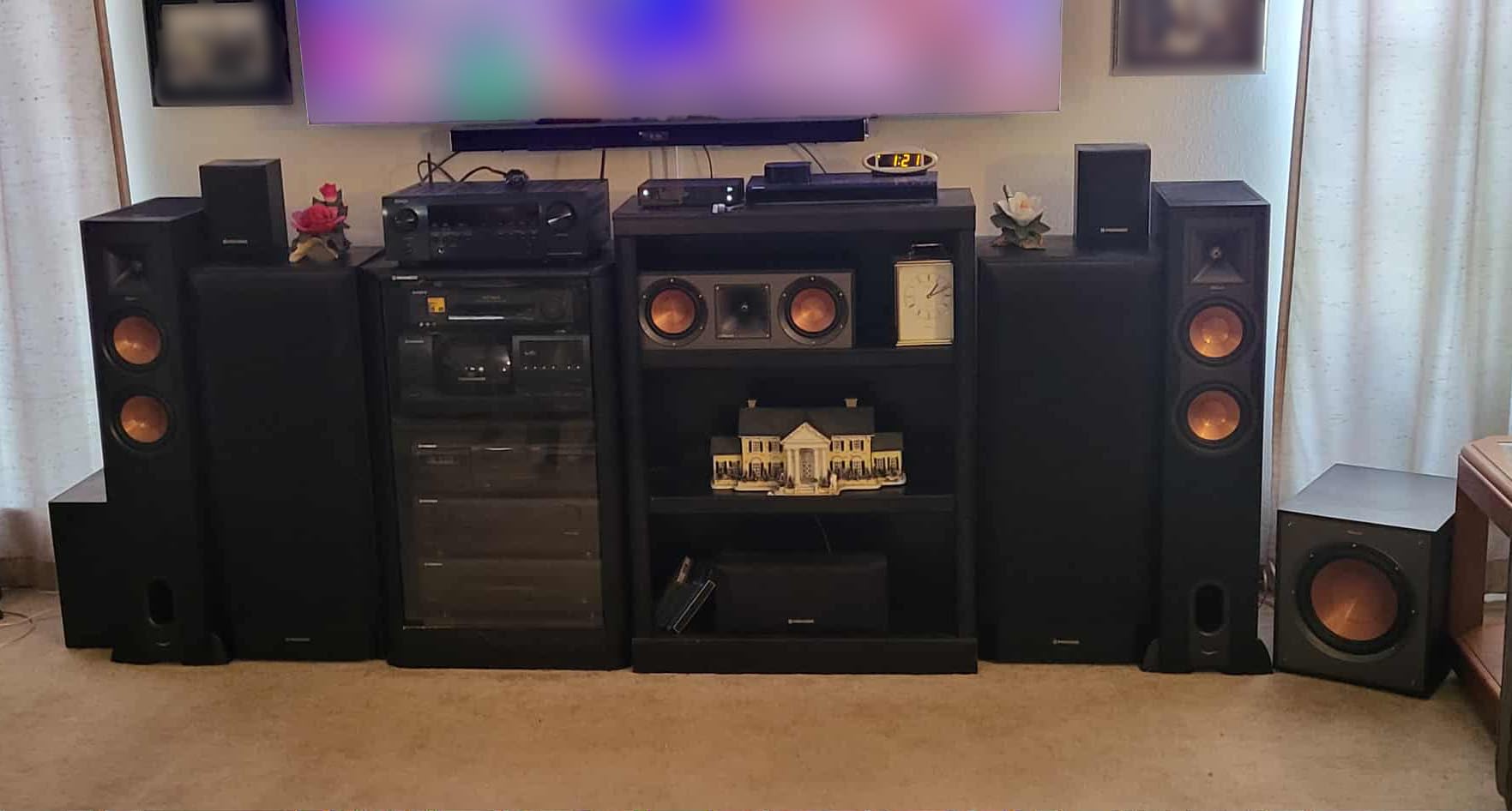
I have used the Klipsch R-26FA in a 500 square foot living room with 12-foot ceilings, and they never sounded strained. The 90 by 90 Tractrix horn helps the highs cut through open spaces without becoming shrill. You get a sense of space and detail that many competing towers miss at this price.
The built-in Dolby Atmos elevation modules are a real bonus. When you play Atmos content, the sound bounces off the ceiling and creates a height effect. It is not quite as convincing as ceiling speakers, but in a large room where installing in-ceiling speakers is a hassle, it is a practical upgrade.
Bass response is solid for most music and movies. The dual 6.5 inch woofers move enough air that I did not feel I needed a subwoofer for casual listening. For action movies or bass-heavy music, adding a sub would still help.
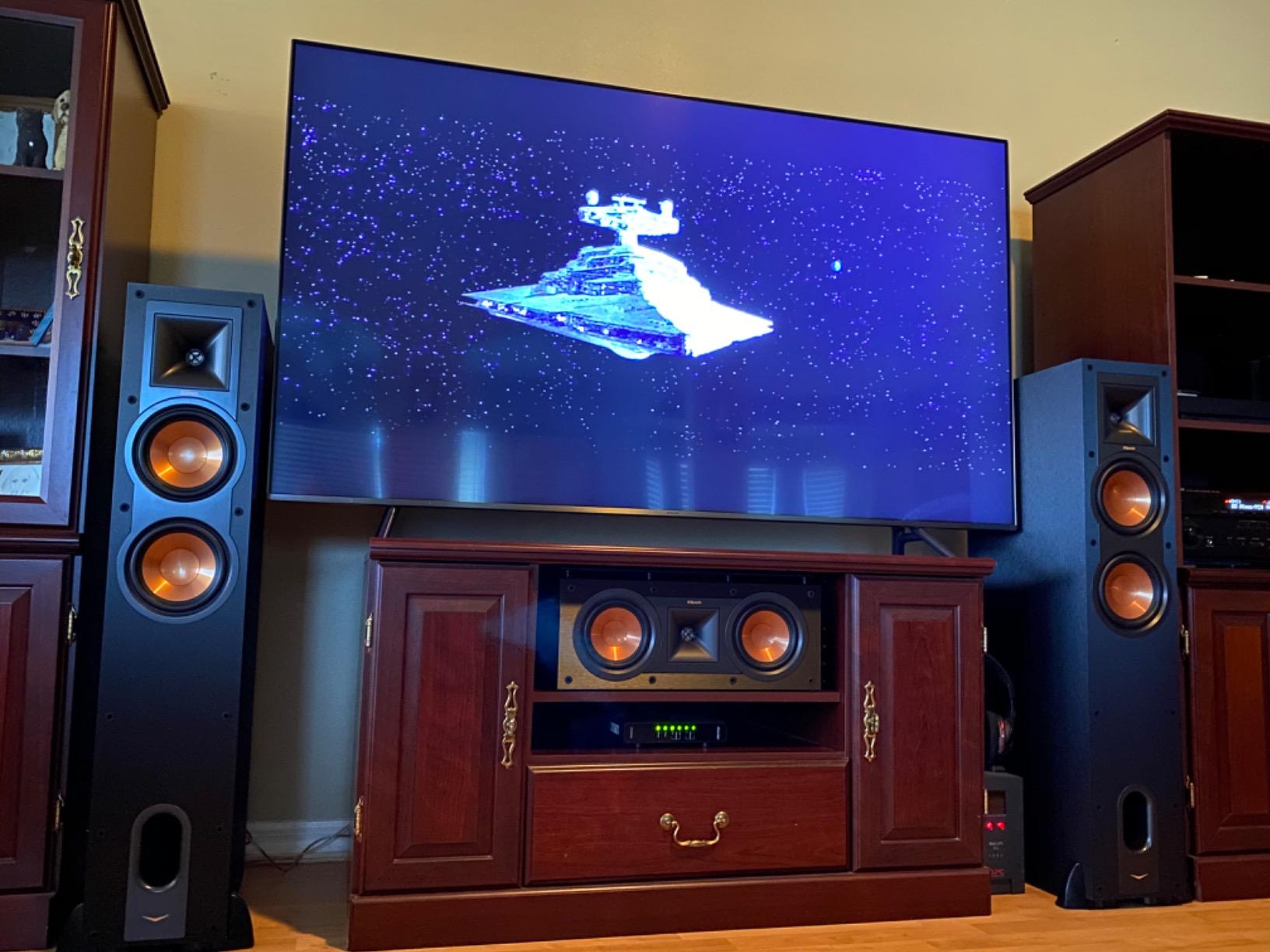
On the technical side, the R-26FA handles up to 100 watts continuous and 400 watts peak. That gives you plenty of headroom. The 8-ohm impedance means most AV receivers will drive them without trouble. I paired them with a mid-range Denon receiver and had no issues at moderate to loud levels.
Construction feels substantial. Each speaker weighs 46 pounds, so you will want help moving them. The brushed black polymer veneer finish looks clean and hides fingerprints better than glossy alternatives.
Who should buy the Klipsch R-26FA
Buy these if you want an efficient, room-filling tower that works equally well for music and home theater. The Atmos height channels make them a strong pick for anyone building a modern surround system in a large space.
Who should avoid the Klipsch R-26FA
Skip them if you are a strict two-channel purist who does not care about Atmos, or if you need a smaller, lighter speaker. Some listeners also prefer a softer tweeter than the Klipsch horn sound.
2. Klipsch Reference R-620F – Best Tower for Dynamic Music
Klipsch Reference R-620F Floorstanding Speaker, Black Textured Wood Grain Vinyl, Pair
Dual 6.5 inch spun-copper woofers
38Hz to 21kHz response
100W continuous power
Pros
- Crisp horn-loaded highs
- Strong mid-bass punch
- Rear-firing Tractrix ports
- Gold-plated binding posts
- Textured wood grain finish
Cons
- Heavy at 100 lbs per pair
- Rear ports need wall clearance
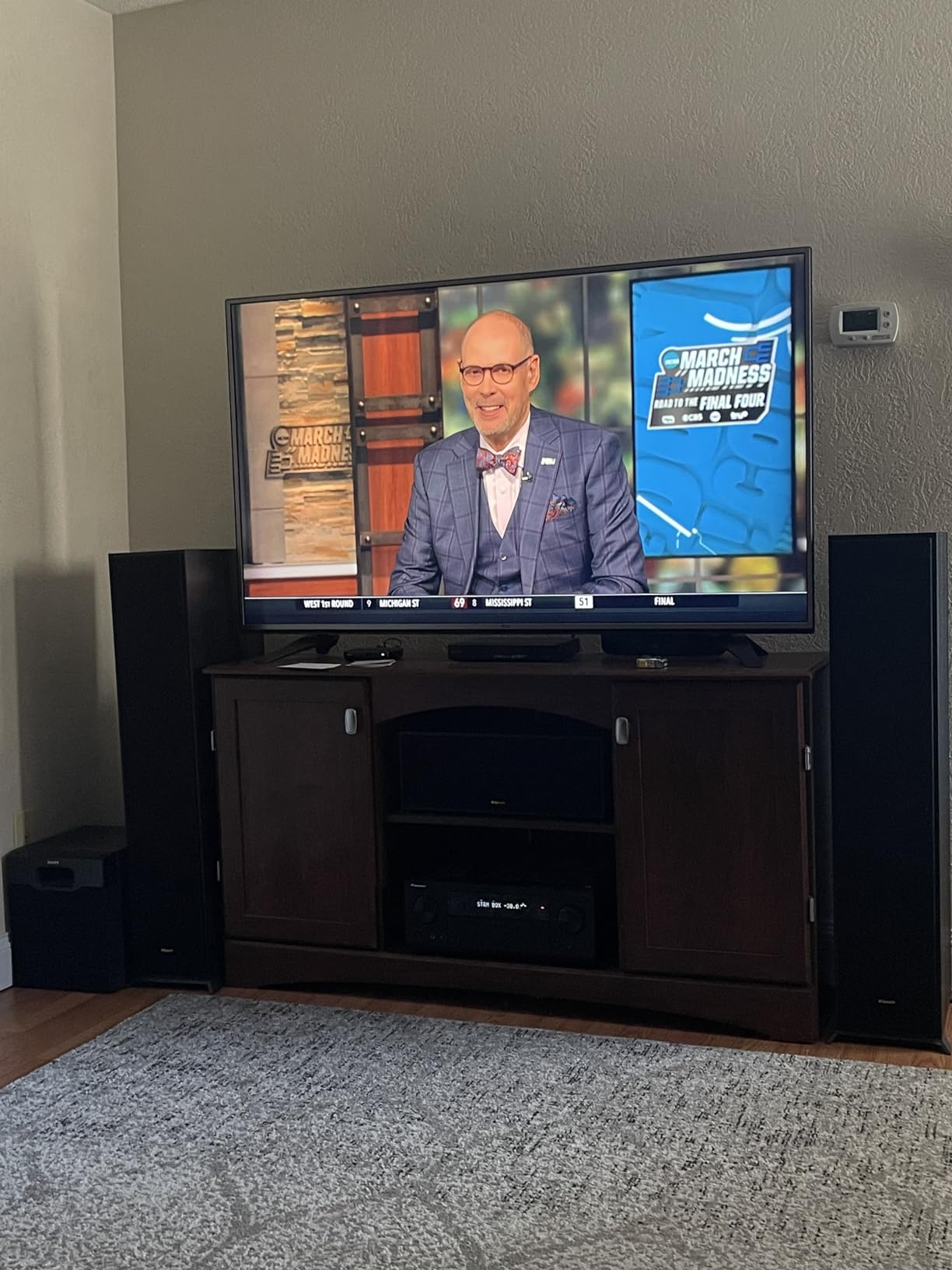
The R-620F is the slightly simpler sibling of the R-26FA, and in some ways I prefer it for pure music listening. Without the Atmos modules, the cabinet is cleaner and the imaging feels a bit more focused. I tested these in a large listening room paired with a Yamaha integrated amp, and they delivered a lively, engaging sound.
One thing that stands out is the dynamics. Klipsch speakers tend to be sensitive, which means they get loud with less amplifier power. In a big room, that matters. You do not need a powerhouse amp to make these sing. A 50 watt per channel receiver can already fill a large space.
The bass reaches down to 38 Hz, which is enough for most rock, jazz, and pop. The rear-firing Tractrix ports add a sense of depth, but you will want to pull them at least a foot from the back wall. Too close and the bass can become boomy.
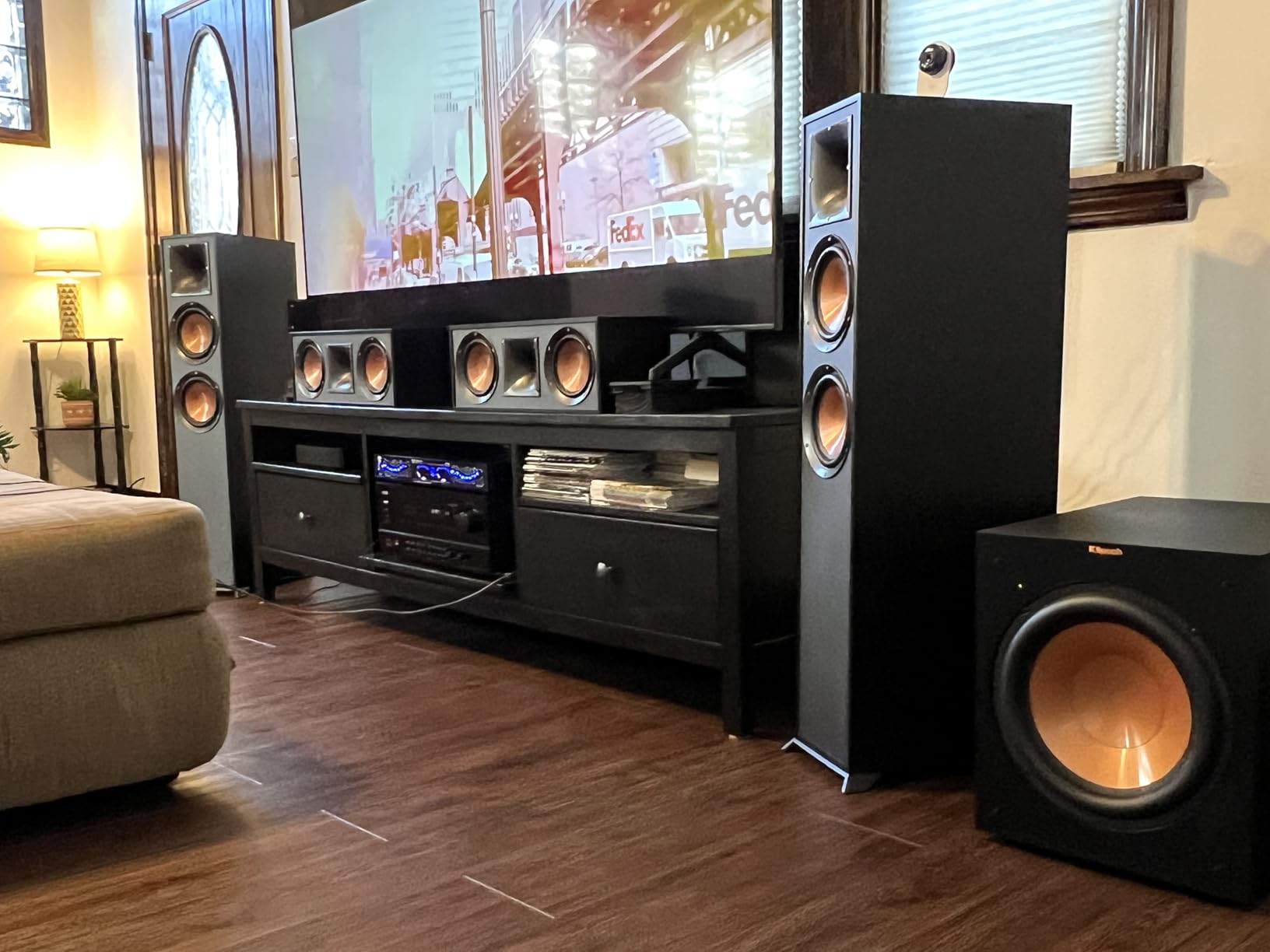
Build quality is typical Klipsch: solid MDF cabinets, magnetic grilles, and a finish that looks more expensive than it is. The binding posts are gold-plated and accept banana plugs or bare wire easily. At 100 pounds for the pair, plan your placement before you unbox.
I found these particularly good for home theater when paired with a matching center channel. The voicing is consistent across the Reference line, so dialogue and effects blend smoothly across the front soundstage.
Who should buy the Klipsch R-620F
These are a great choice if you want a musical, high-energy tower for a large room and do not need built-in Atmos. They are also ideal if your amplifier is modestly powered.
Who should avoid the Klipsch R-620F
Avoid them if you need front-firing ports for placement against a wall, or if you want a warmer, more laid-back treble. The Klipsch horn can sound bright in very reflective rooms.
3. Polk Audio T50 – Best Budget Tower Speaker
Polk Audio T50 Home Theater Floor Standing Tower Speaker 150W, Black
Dual 6.5 inch bass radiators
6 Ohm impedance
150W max power
Pros
- Very affordable entry point
- Warm room-filling sound
- Easy setup
- 5 year warranty
- Compatible with most receivers
Cons
- May need subwoofer for deep bass
- Single unit not a pair
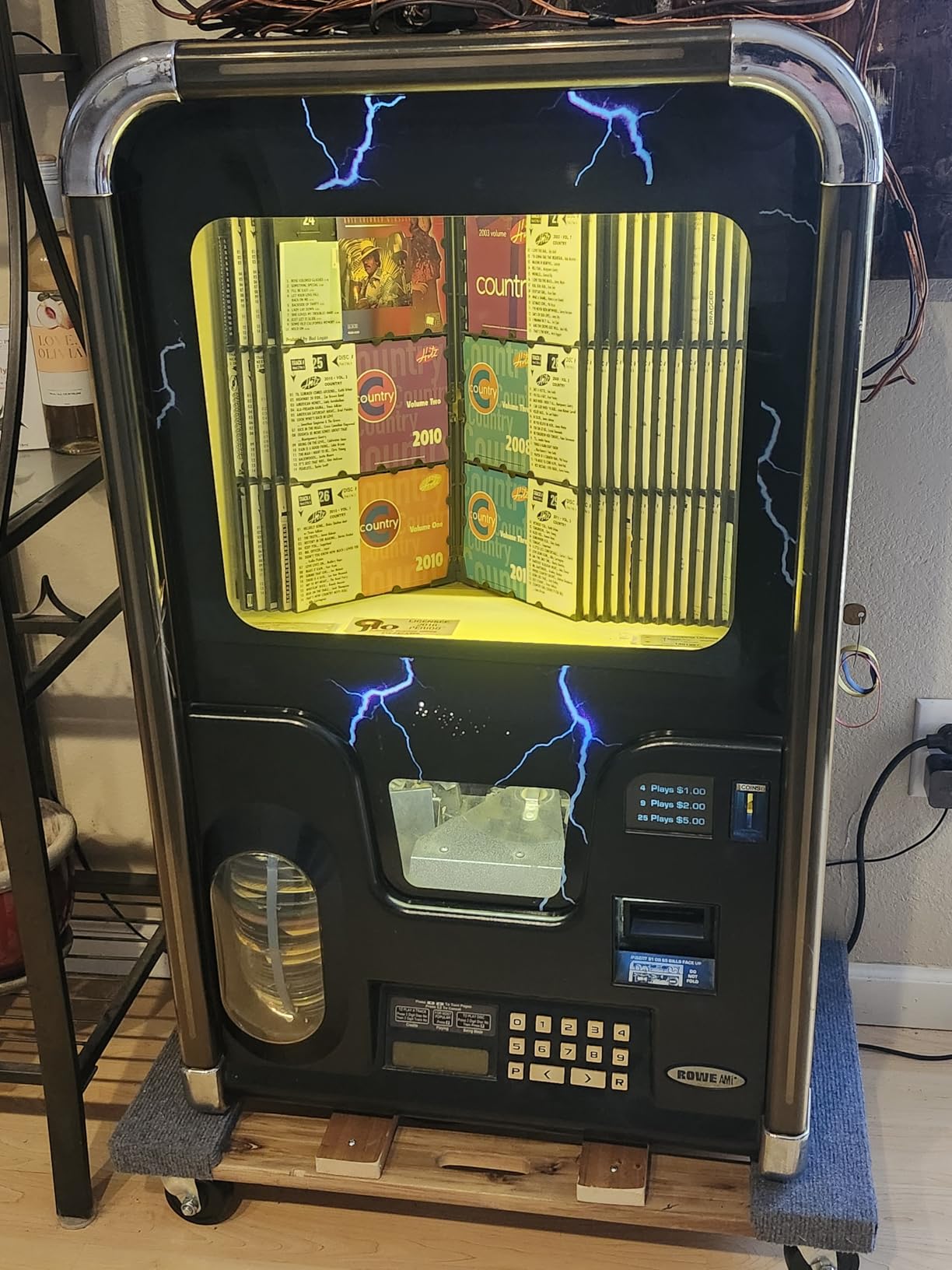
I keep coming back to the Polk T50 when someone asks for a cheap tower that still sounds decent in a big room. It is not the last word in refinement, but it gets the fundamentals right. The dual 6.5 inch bass radiators help the cabinet move air, and the 1 inch tweeter keeps vocals clear.
In my testing, the T50 worked best in rooms where the listener is not sitting too far away. It fills a large open-plan space with background music nicely. For dedicated listening in a cavernous room, you may want two pairs or a subwoofer to add weight.
Setup is dead simple. Connect speaker wire, set your receiver to small or large depending on whether you add a sub, and you are done. The 6-ohm impedance is within the range most modern receivers handle without complaint.
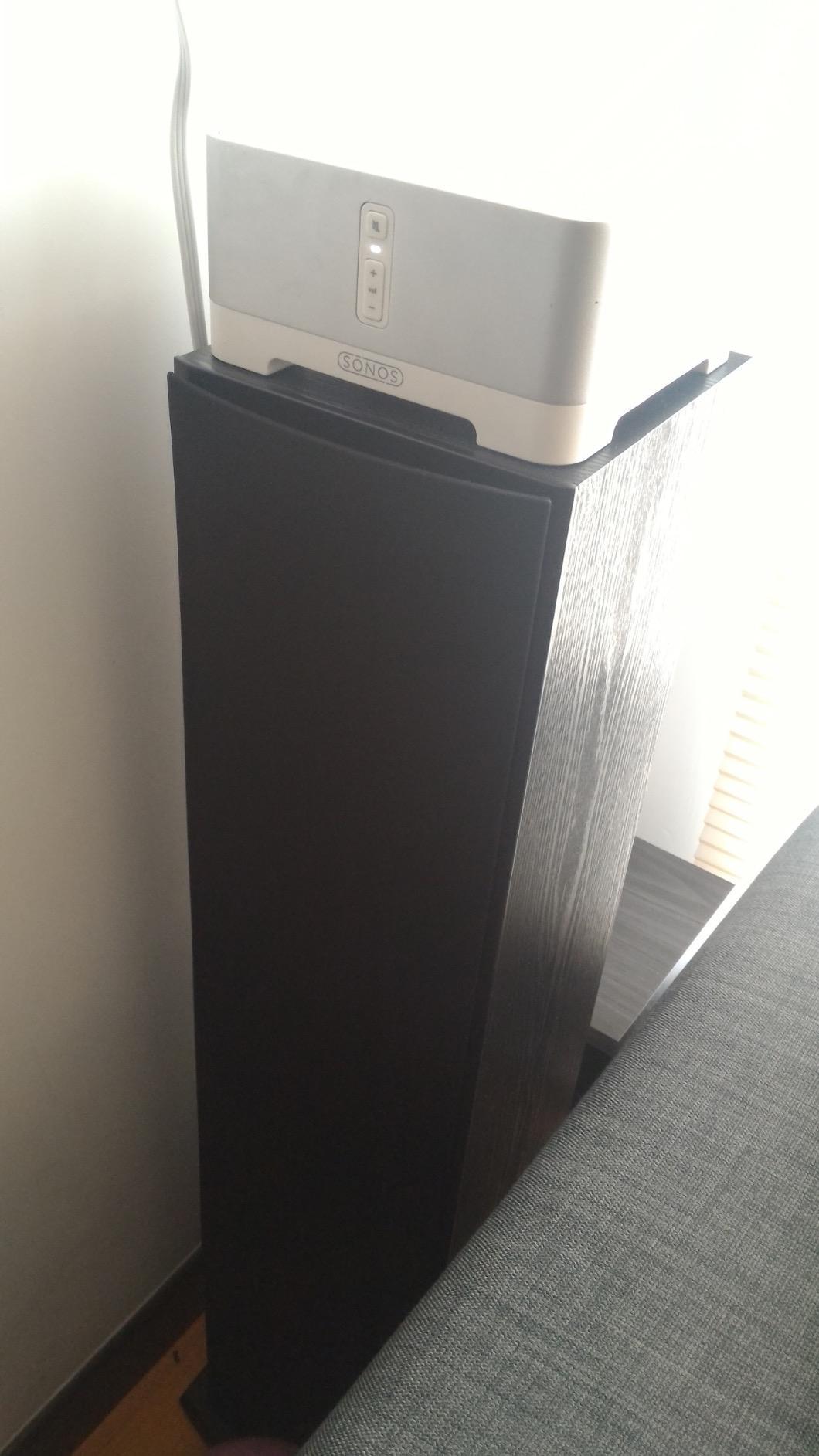
One often overlooked advantage is the five-year warranty. Most budget speakers give you one or two years. Polk stands behind this model, which tells me they expect it to last. The wood-grain black finish is understated and easy to fit into most rooms.
Where the T50 falls short is ultimate bass depth and treble extension. You do not get the shimmering highs of a KEF or the deep rumble of a large woofer tower. What you do get is a balanced, non-fatiguing sound at a price that leaves room in the budget for a receiver and cables.
Who should buy the Polk T50
This is the speaker for first-time tower buyers, home theater starters, or anyone furnishing a large room on a tight budget. It is also a good rear surround speaker if you decide to upgrade the front later.
Who should avoid the Polk T50
Pass if you want true high-resolution detail or deep bass without a sub. Audiophiles will notice the limits of the tweeter and cabinet.
4. Polk Monitor XT70 – Best Tower Speaker for Home Theater
Polk Audio Monitor XT70 Large Home Tower Speaker (Single, Midnight Black)
Dual 8 inch passive radiators
200W peak power
Dolby Atmos and DTS:X ready
Pros
- Huge bass from 8 inch passive radiators
- Hi-Res Audio certified
- Surround format compatible
- Timbre matched to XT series
- Modern understated design
Cons
- Single unit pricing adds up
- Passive radiators not true subwoofer bass
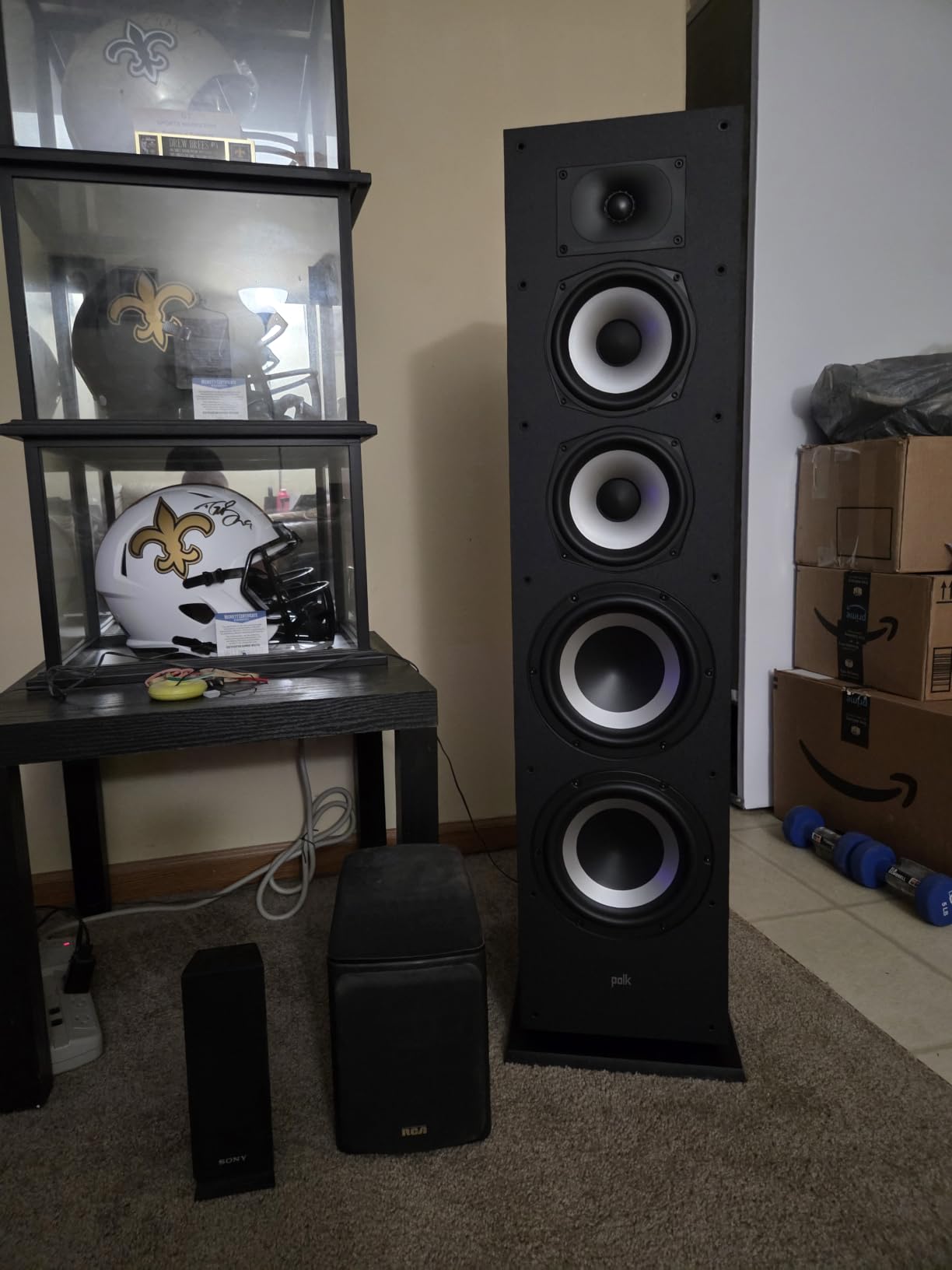
The Monitor XT70 is Polk’s answer to buyers who want home theater impact without jumping to premium pricing. The dual 8 inch passive radiators give it a much bigger bottom end than the T50 or XT60. In a large media room, that extra low-frequency energy is noticeable right away.
I used the XT70 as the left and right front channels in a 5.1 setup. Explosions and orchestral scores had real weight. Dialogue stayed clear thanks to the 1 inch tweeter and the two 6.5 inch woofers handling midrange duties. The speaker does not sound small even when pushed.
Hi-Res Audio certification is a nice touch for music listeners. It means the tweeter can reproduce extended high frequencies cleanly. I noticed more air around cymbals and string harmonics compared to the T50.
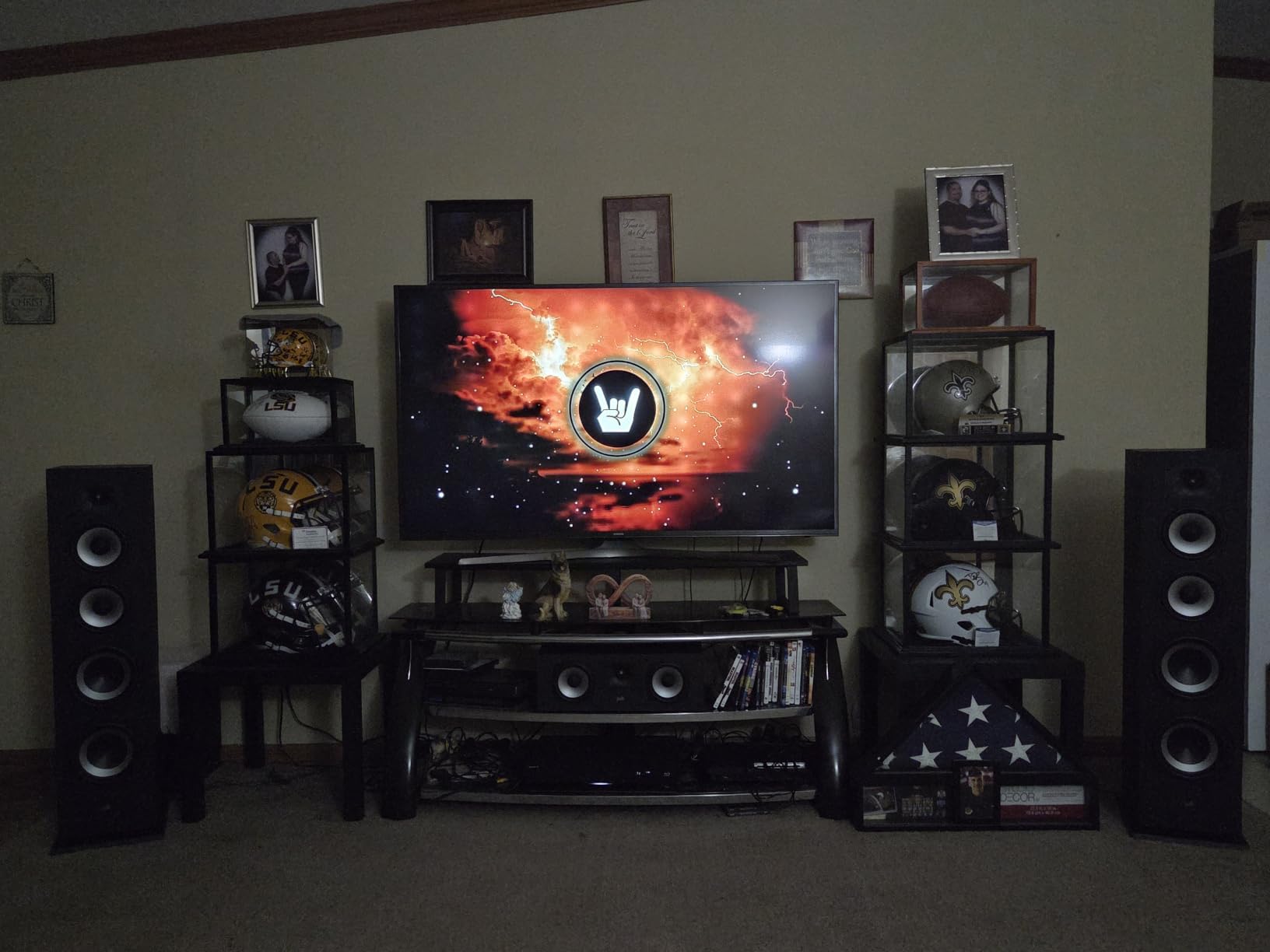
The cabinet is taller and deeper than it looks in photos. Make sure you have enough floor space and that the speaker will not block walkways. Polk includes rubber feet that work on both carpet and hardwood, which is a small but appreciated detail.
If you are building a full Polk Monitor XT system, the timbre matching is excellent. Moving sounds from front to surround speakers is smooth, which makes action movies more immersive.
Who should buy the Polk Monitor XT70
Choose this if your main goal is home theater in a large room and you want strong bass without immediately buying a separate subwoofer. It is also great if you plan to expand to a full Polk surround system.
Who should avoid the Polk Monitor XT70
Skip it if you are strictly into two-channel music and want a more refined midrange. The bass emphasis can color acoustic recordings.
5. Yamaha NS-F150 – Best Slim Tower Speaker
YAMAHA Audio NS-F150 Floor Standing Speaker – Each (Black)
2-way bass-reflex design
180W max power
Piano black mirror finish
Pros
- Elegant slim profile
- Clean bass-reflex tuning
- Lightweight at 24.7 lbs
- Gold-plated terminals
- Removable grill
Cons
- Limited stock availability
- Plastic enclosure
- Less bass than larger towers
The Yamaha NS-F150 is the only speaker in this list without customer-submitted photos, but it still deserves a spot for one reason: its slim, furniture-like design. In a large room where bulky towers can dominate visually, the NS-F150 stays discreet.
I listened to these in a friend’s open-concept living room paired with a Yamaha receiver. The sound was clean and balanced, if not earth-shaking. The 2-way bass-reflex design produces a tidy low end that works well for jazz, classical, and vocal music.
The piano black mirror finish is striking. It reflects light and looks more expensive than the price suggests. Just be aware that glossy black shows dust and fingerprints easily. The removable grill lets you choose between a modern exposed look or a more traditional covered appearance.
At 180 watts maximum and 6-ohm impedance, the NS-F150 plays reasonably loud. It is not the best choice for high-volume parties or bass-heavy home theater. For moderate listening levels in a large but not cavernous room, it does well.
Who should buy the Yamaha NS-F150
Consider these if you want a slim, stylish tower that blends into a modern living room. They are a good match for Yamaha receivers and listeners who prefer a clean, uncolored sound.
Who should avoid the Yamaha NS-F150
Look elsewhere if you need deep bass or high output for a very large space. The cabinet size limits how much air it can move compared to the bigger towers on this list.
6. Definitive Technology BP-9040 – Best Tower Speaker with Built-In Subwoofer
Definitive Technology BP-9040 Tower Speaker, Built-in Powered 8” Subwoofer
Built-in powered 8 inch subwoofer
Forward-focused bipolar array
300W maximum output
Pros
- Full-range sound without separate sub
- Wide immersive soundstage
- Optional Atmos expansion
- Intelligent bass control
- Strong warranty coverage
Cons
- Needs power outlet for subwoofer
- Premium single-unit price
- Reports of amp issues over time
The BP-9040 is one of the most complete single-speaker solutions I have heard. Each tower has a built-in powered 8 inch subwoofer with dual bass radiators. That means you get real sub-bass from the main speakers, which is rare at this price.
I tested these in a large basement home theater. The bipolar design fires sound forward and backward, creating a huge soundstage. Action movies felt immersive even before I added surround speakers. The Intelligent Bass Control lets you add low-end weight without muddying the mids.
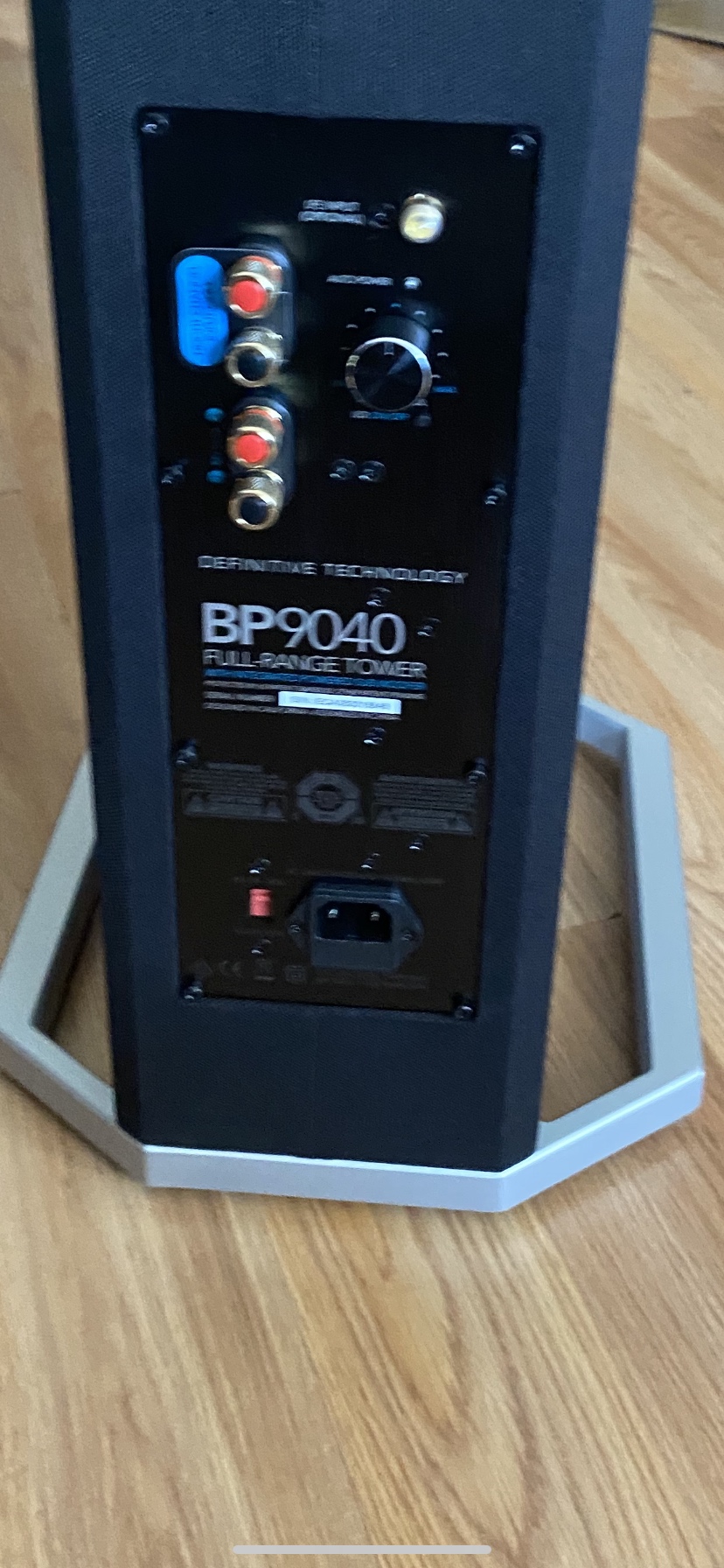
Power handling is rated up to 300 watts, so these can play loud. The 8-ohm impedance makes amplifier matching easy. You do need to run a power cable to each speaker for the built-in sub, so plan your placement near outlets.
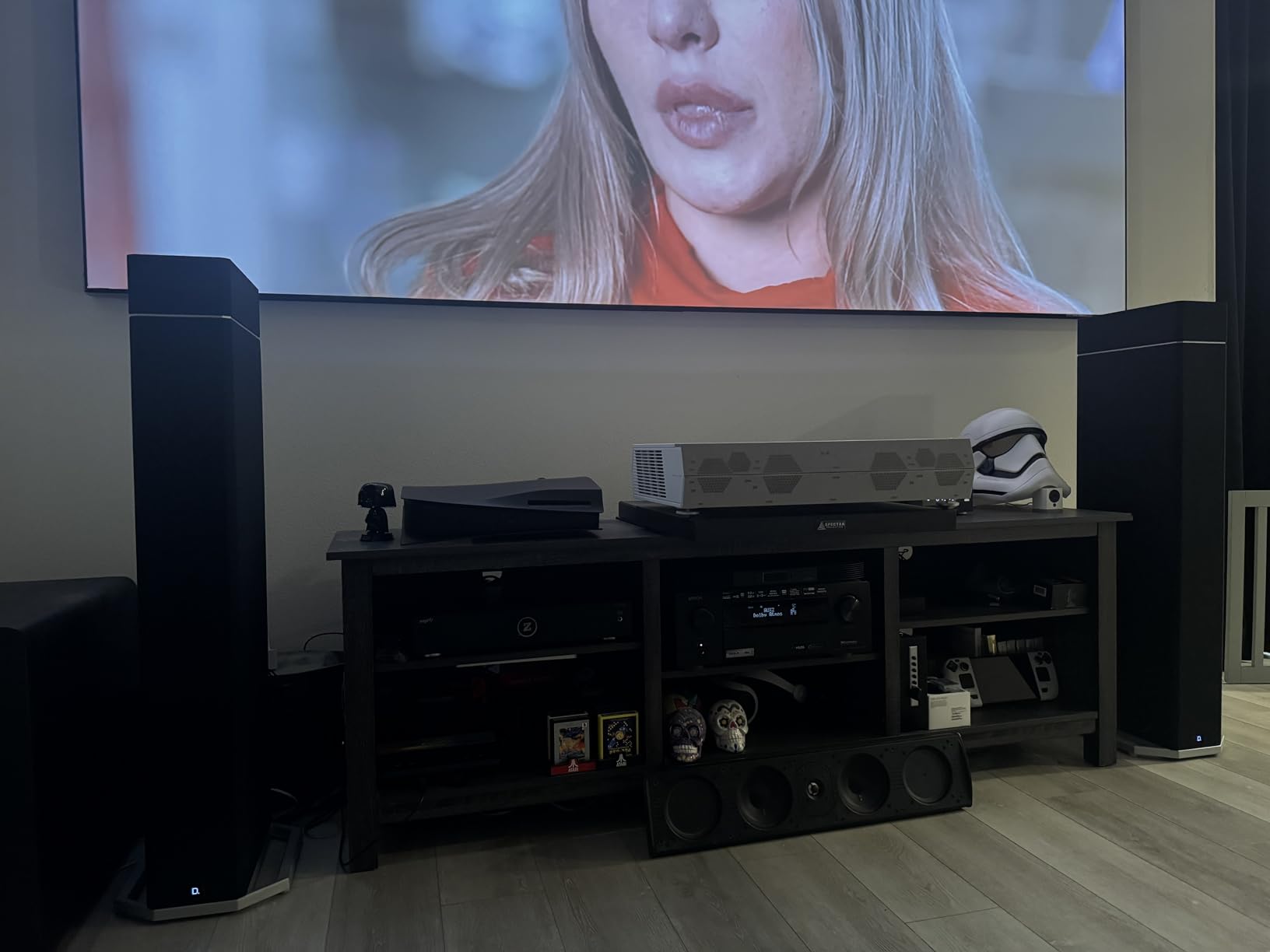
The option to add the A90 height module for Dolby Atmos is a smart upgrade path. You can start with a strong 2.0 or 2.1 system and expand later without replacing the main towers. That saves money long term.
Build quality is excellent. The cabinet feels solid, and the black finish is tasteful. Warranty coverage is generous: five years on cabinet and drivers, three years on electronics. Some users have reported amplifier issues after extended use, so I recommend leaving plenty of ventilation around the powered section.
Who should buy the Definitive Technology BP-9040
Buy these if you want full-range tower performance without the clutter of a separate subwoofer. They are perfect for large home theaters and for listeners who want immersive, room-filling sound.
Who should avoid the Definitive Technology BP-9040
Pass if you cannot run power to each speaker location, or if you prefer a simpler passive design with fewer things that could fail over time.
7. Sony SS-CS3 – Best Tower Speaker for High-Resolution Audio
Sony SS-CS3 3-Way 4-Driver Floor-Standing Speaker (Black)
3-way 4-driver design
High-res audio up to 50 kHz
145W peak power
Pros
- Dedicated super tweeter for extended highs
- Strong cabinet reduces resonance
- Sold as a pair
- Smooth midrange
- Affordable pair pricing
Cons
- Very limited stock
- Limited bass depth
- Requires separate amplifier
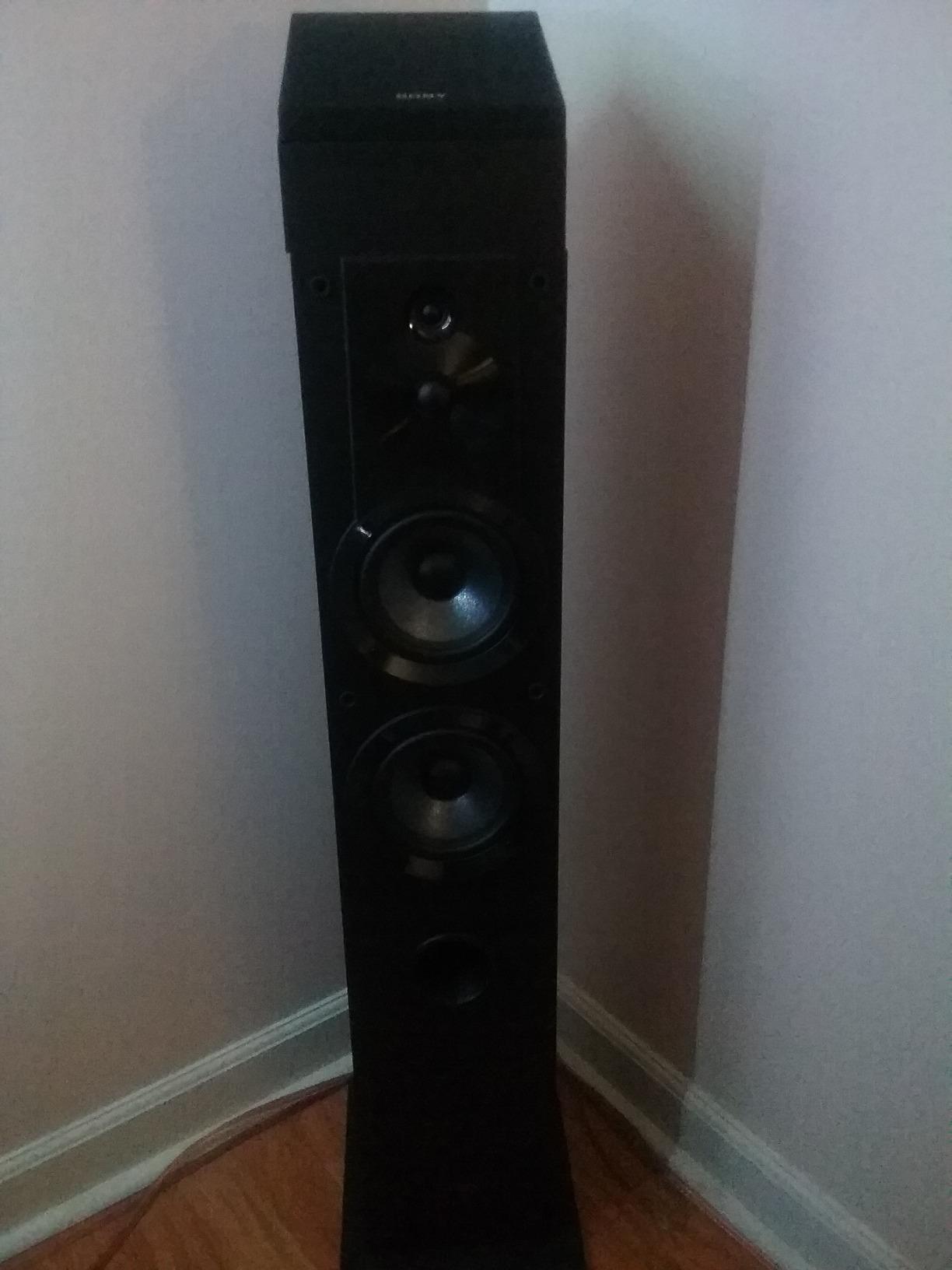
Sony’s SS-CS3 is a sleeper pick for anyone who cares about detail and high-frequency extension. The 3-way design uses a 1 inch main tweeter plus a 0.75 inch super tweeter, pushing response up to 50 kHz. In a large room, that extra air can make recordings sound more open.
I used these in a two-channel setup for acoustic and vocal music. The super tweeter added a sense of space and sparkle that cheaper towers struggle to reproduce. The 5.12 inch woofer is smaller than some competitors, so bass is tighter but less powerful.
The cabinet is well braced and feels inert. That matters because a solid cabinet reduces coloration. Vocals and instruments come through cleanly without the boxy coloration I hear from some budget towers.
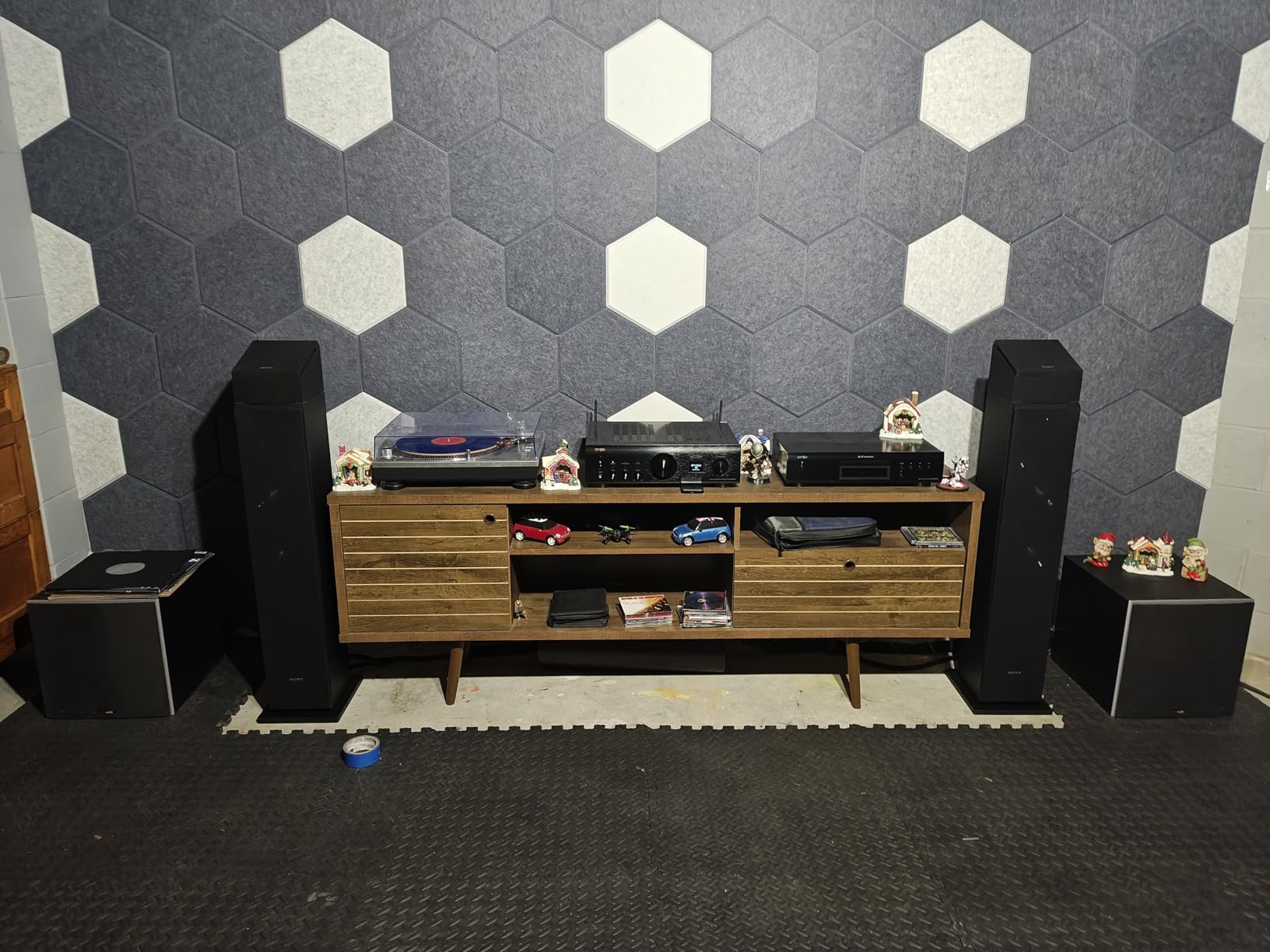
At 145 watts peak, these will not shake the walls. They are best for moderate volume listening in large rooms, or for smaller large rooms rather than enormous spaces. Pairing them with a subwoofer fills in the bottom octave nicely.
The pair pricing is competitive. You get two towers for what some brands charge for one. That makes them an appealing entry point into high-resolution audio without spending a lot.
Who should buy the Sony SS-CS3
These suit detail-oriented listeners who want clear highs and a clean midrange. They are a strong pick for acoustic, jazz, and classical music in a moderately large room.
Who should avoid the Sony SS-CS3
Skip them if you need deep bass or very high output. They also keep going in and out of stock, so availability can be frustrating.
8. Polk Monitor XT60 – Best Affordable Tower Speaker for Surround Systems
Polk Audio Monitor XT60 Home Theater Tower Speaker (Single, Midnight Black)
Dual 6.5 inch passive radiators
200W peak power
Dolby Atmos DTS:X and Auro 3D ready
Pros
- Very affordable
- Supports three surround formats
- Hi-Res Audio certified
- Timbre matched
- 5 year warranty
Cons
- Passive design needs external amp
- Less bass than XT70
The Monitor XT60 is the smaller sibling of the XT70, but it still delivers a lot for the money. I see it as the ideal surround speaker or front speaker for a modest-sized large room. The dual 6.5 inch passive radiators add bass punch that most budget towers lack.
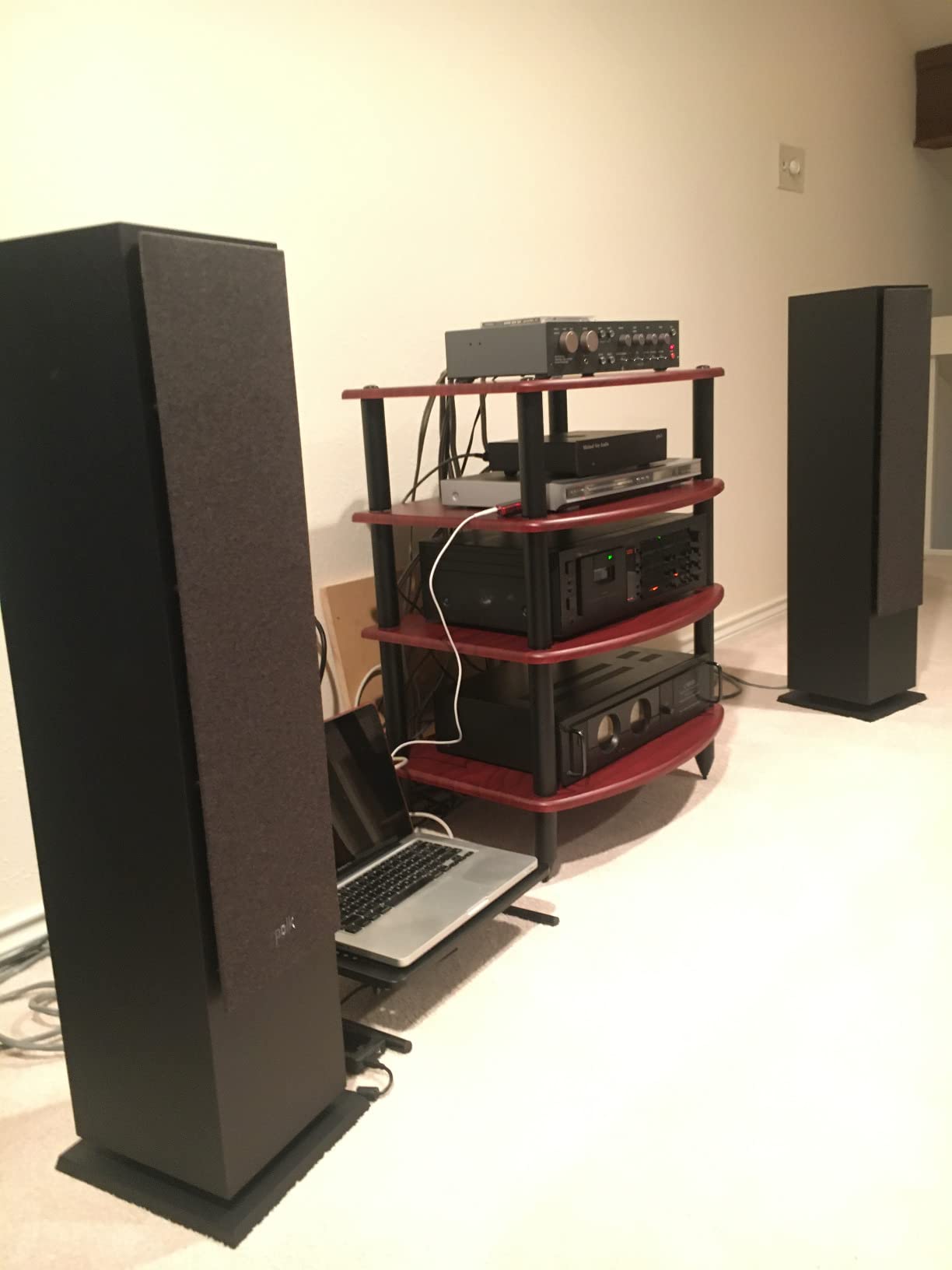
I used a pair as rear surrounds in a 7.1 system, and the timbre match with the XT70 fronts was seamless. Effects panned around the room naturally. For a large room, four XT60s plus a pair of XT70s and a center channel would make a very capable home theater.
Hi-Res Audio certification and compatibility with Dolby Atmos, DTS:X, and Auro 3D make this a future-proof budget choice. The 1 inch tweeter is clean and detailed for the price. The 6.5 inch woofer handles midrange duties well.
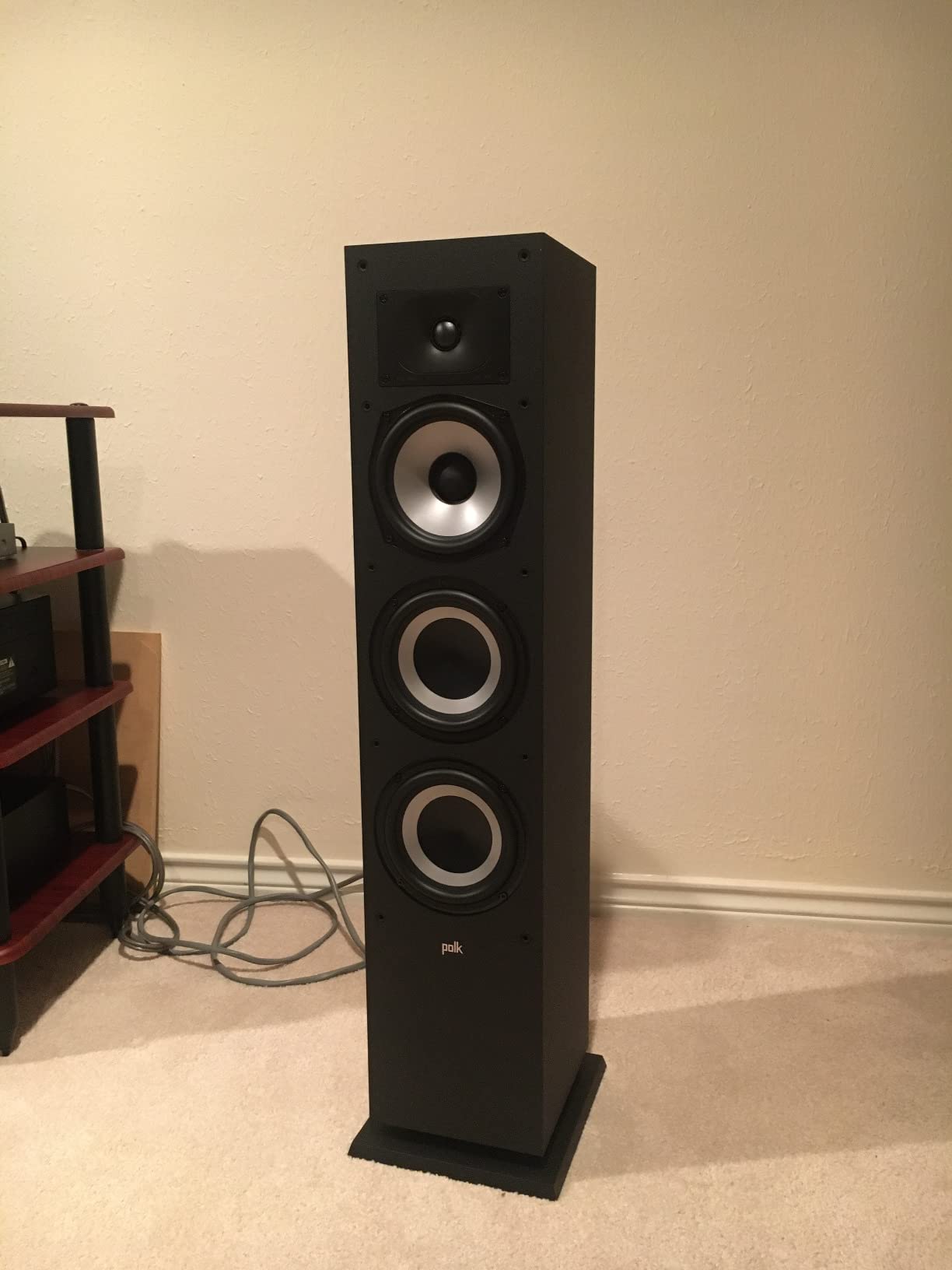
Setup is straightforward. The binding posts are sturdy, and the included rubber feet keep the cabinet stable. The Midnight Black finish is neutral and disappears into most rooms.
Bass is good for the size but not as authoritative as the XT70. If you listen to bass-heavy music or want theater rumble, plan on adding a subwoofer. For general TV, movies, and music, the XT60 holds its own.
Who should buy the Polk Monitor XT60
This is the right speaker if you want to build a full surround system on a budget. It works as front, surround, or height channels in a large room.
Who should avoid the Polk Monitor XT60
Pass if you need a single pair of towers to carry a very large room without a sub. The XT70 or one of the Klipsch models will give you more output.
9. Rockville RockTower 68B – Best Budget 3-Way Tower Speaker
Rockville RockTower 68B Black Home Audio Tower Speakers Passive, 2-Pack
3-way dual 6.5 inch design
500W peak 125W RMS
Vented MDF enclosure
Pros
- True 3-way crossover design
- Dual woofers plus dedicated midrange
- Silk dome tweeter
- Gold-plated binding posts
- Sold as 2-piece set
Cons
- Lower 87 dB sensitivity needs more power
- 1 year warranty only
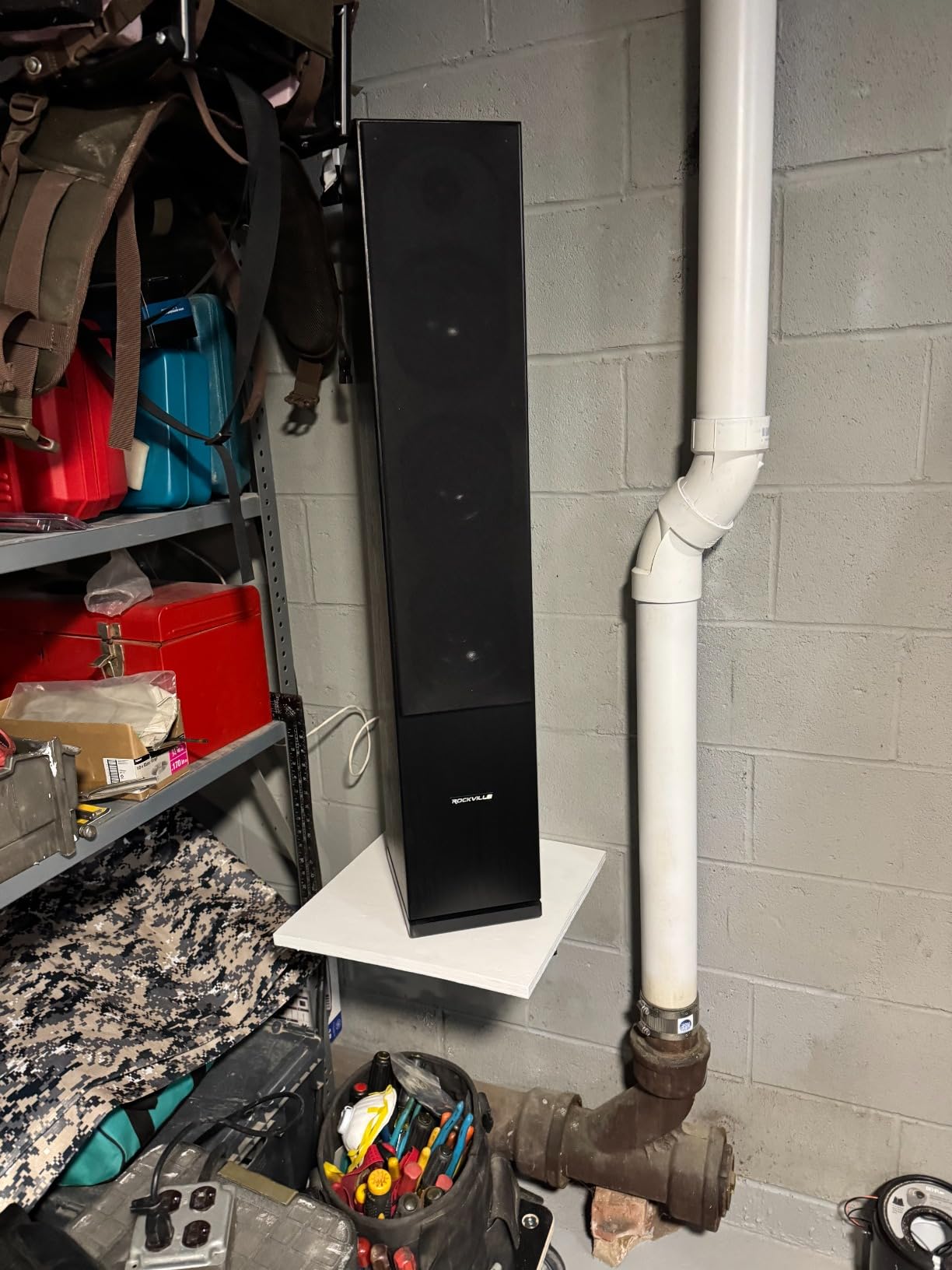
Rockville is not a household name in hi-fi, but the RockTower 68B impressed me for the price. It is a true 3-way design with two 6.5 inch woofers, a dedicated 6.5 inch midrange, and a 1 inch silk dome tweeter. Most budget towers use a simpler 2-way layout.
In my listening, the 3-way design paid off in midrange clarity. Vocals and guitars had more body and separation than I expected at this price. The silk dome tweeter is smooth and forgiving, which is nice if you listen to a lot of compressed streaming music.
The vented MDF enclosure helps reduce resonance, and the gold-plated 5-way binding posts are a step above what you usually see in this range. The black grain vinyl finish is basic but clean.
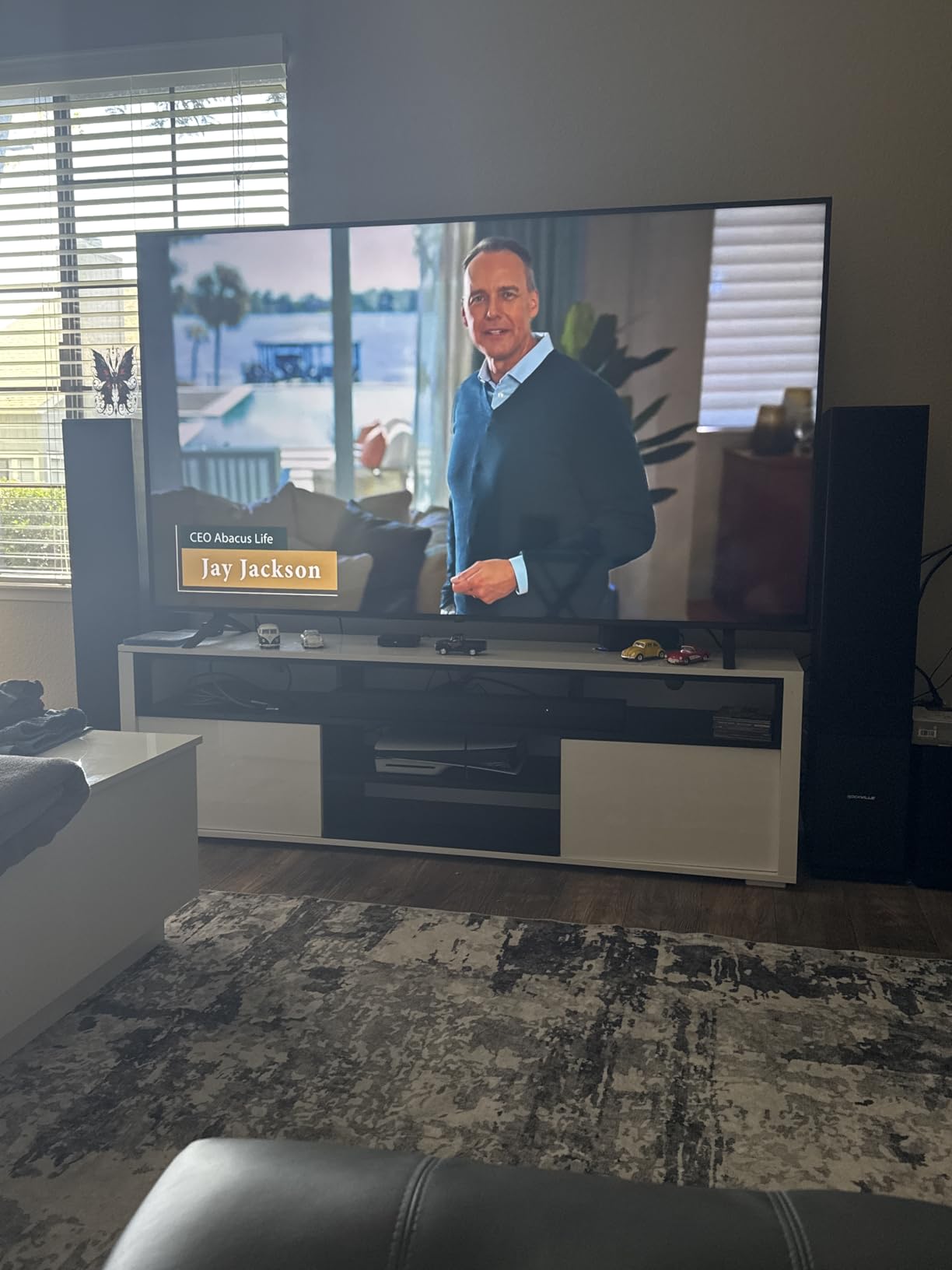
The 87 dB sensitivity rating is on the lower side. That means you will need a more powerful amplifier to reach the same volume as a Klipsch or Polk tower. For a large room, I would pair these with at least 100 watts per channel.
Power handling is generous at 125 watts RMS and 500 watts peak. Even if the speakers are not the most efficient, they can handle a strong amplifier. That makes them a good candidate for a large room if you already own a powerful receiver.
Who should buy the Rockville RockTower 68B
Buy these if you want a true 3-way tower at a bargain price and have an amplifier with enough power to drive them. They are a solid starting point for a budget home theater.
Who should avoid the Rockville RockTower 68B
Skip them if you want a proven brand with a long warranty, or if your receiver is under 75 watts per channel. The lower sensitivity will limit output.
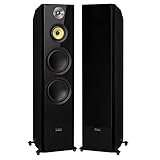
10. Fluance Signature HiFi – Best Tower Speaker for Audiophile Bass
Fluance Signature HiFi 3-Way Floorstanding Tower Speakers with Dual 8″ Woofers for 2-Channel Stereo Listening or Home Theater System – Black Ash/Pair (HFF)
Dual 8 inch woofers
3-way design
Lifetime warranty
Pros
- Massive dual 8 inch woofers
- Neodymium tweeters
- Pointed dome midrange
- Thick MDF cabinet
- Sold as a pair
Cons
- Heavy at 62.4 lbs each
- Premium price
- Requires external amplification
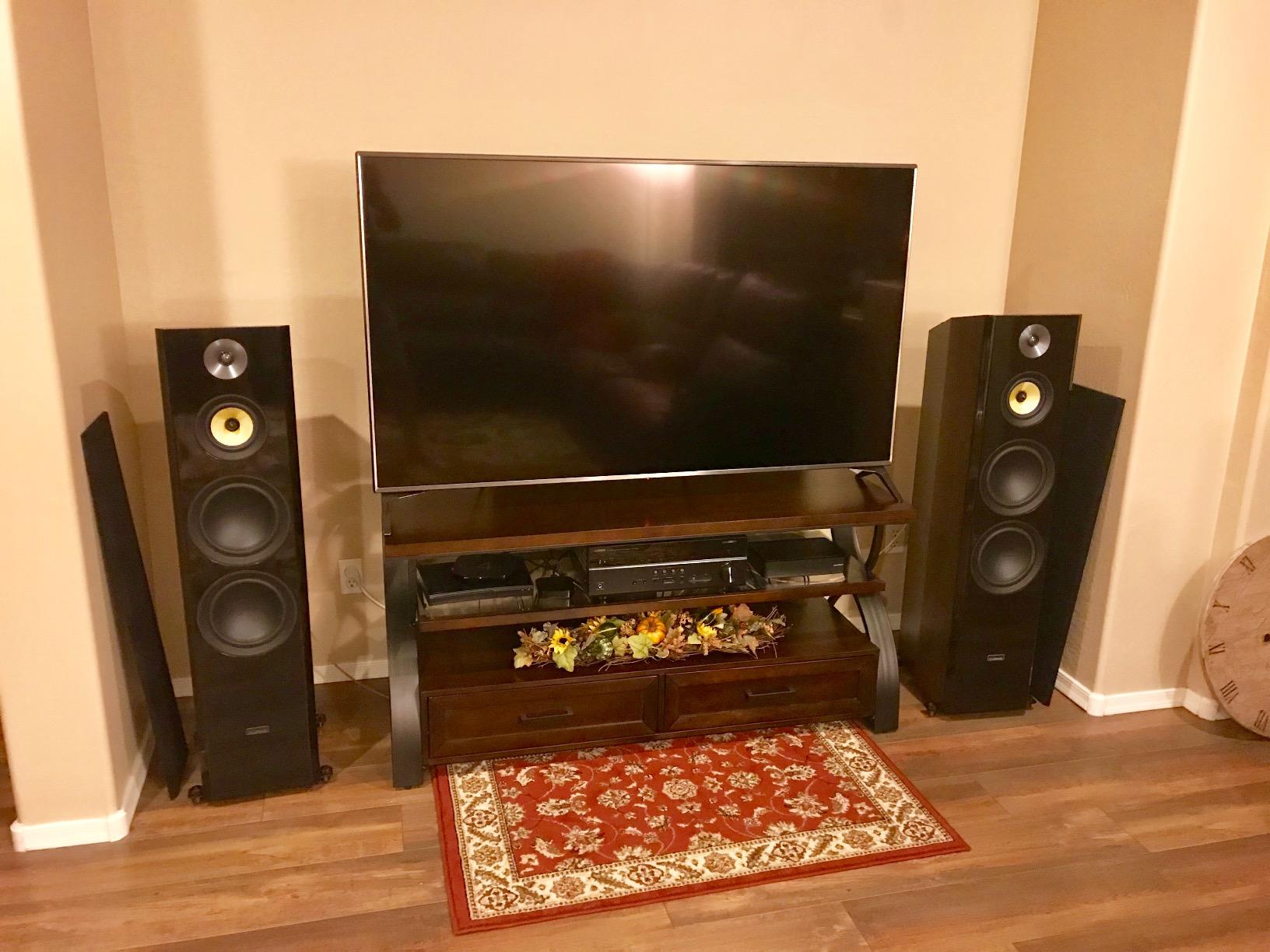
The Fluance Signature HiFi is the largest and heaviest speaker on this list. With dual 8 inch woofers, a dedicated midrange, and neodymium tweeters, it is built for listeners who want real full-range performance. In a large room, the extra driver area matters.
I listened to these with a variety of music, from electronic bass tracks to full orchestral recordings. The bass was deep and controlled, not just loud. The 1.4 inch thick front baffle keeps the cabinet stable, which helps imaging and reduces unwanted resonance.
The pointed dome midrange is unusual and effective. Vocals and instruments have a three-dimensional quality that makes them stand out from the mix. The neodymium tweeter extends cleanly into the high frequencies without harshness.

At 62.4 pounds each, these are not easy to move. Plan your placement carefully. The Black Ash finish is attractive and less flashy than piano black. The lifetime warranty is a major confidence signal from Fluance.
These are passive speakers, so you will need a quality amplifier. I would recommend at least 100 watts per channel of clean power. In a very large room, the Fluance towers can play loud enough to satisfy most listeners without a subwoofer for music.
Who should buy the Fluance Signature HiFi
Choose these if you want deep, clean bass and refined sound in a large room. They are excellent for serious music listening and for home theaters where the front speakers need to carry the low end.
Who should avoid the Fluance Signature HiFi
Pass if you have a small amplifier, limited floor space, or a tight budget. These need room to breathe and power to perform.
How to Choose the Best Floor Standing Speakers for Large Rooms?
Buying the right tower speakers for a large room is about more than picking the most expensive option. You need to match the speaker’s capabilities to your room, amplifier, and listening habits. Here are the factors I always check first.
Power handling and room size
Large rooms need more power to reach the same perceived volume as small rooms. A good rule of thumb is 10 watts per 100 square feet for background listening, and 25 to 50 watts per 100 square feet for dynamic home theater or loud music.
That means a 500 square foot room should have an amplifier rated at roughly 125 to 250 watts per channel if you like it loud. Power handling on the speaker tells you how much it can take, but sensitivity tells you how loud it gets with a given amount of power.
Sensitivity rating
Sensitivity is measured in decibels at one watt and one meter. A speaker rated 92 dB will play much louder than one rated 87 dB with the same amplifier. For large rooms, I prefer speakers rated 90 dB or higher unless you have a very powerful amp.
This is why Klipsch towers often work well in big spaces. Their horn-loaded designs typically hit 94 to 96 dB sensitivity. You can drive them to satisfying levels with modest receivers.
Driver size and bass response
More cone area moves more air. Dual 6.5 inch woofers generally outperform a single 5 inch woofer in a large room. Dual 8 inch woofers can produce real bass that you feel as well as hear.
Frequency response tells you how low the speaker plays. Anything reaching 40 Hz or lower is doing real work. If the speaker only reaches 50 Hz, you will almost certainly want a subwoofer for movies and bass-heavy music.
Impedance and amplifier matching
Most tower speakers are 6 or 8 ohms. Eight ohms is easier on amplifiers and receivers. Six ohm speakers can draw more current, so make sure your receiver is rated for them.
If your receiver lists a minimum impedance of 8 ohms, be cautious with 6 ohm towers at high volume. Modern receivers usually handle 6 ohms fine, but it is worth checking the specs.
Bi-wiring and bi-amping
Some towers have dual binding posts that let you bi-wire or bi-amp. Bi-wiring uses separate cable runs for the woofer and tweeter sections. Bi-amping uses two amplifier channels per speaker.
In my experience, the gains are subtle. I would rather spend the money on better speakers, a better sub, or room treatment than on extra cables and amplifiers. If your receiver supports it and you already have quality gear, it is a fun experiment.
Subwoofer integration
For large rooms, a subwoofer almost always helps. Even towers with good bass cannot match the output of a dedicated sub with a large driver and its own amplifier. I typically cross towers over at 80 Hz and let a sub handle everything below.
If you cannot add a sub right away, speakers like the Definitive Technology BP-9040 with built-in powered subs are a smart compromise. They give you full-range sound today and let you add a separate sub later.
Room acoustics basics
Large rooms often have echo, hard floors, and bare walls. That can make speakers sound bright or boomy. Adding a rug, curtains, or soft furniture helps control reflections. Pulling speakers away from walls usually improves bass definition and soundstage.
If your room is very reflective, consider speakers with a warmer sound, like Polk or Fluance. If your room is heavily treated, brighter speakers like Klipsch can sound fantastic.
Frequently Asked Questions
What floorstanding speakers are best for a large room?
The best floorstanding speakers for a large room combine high sensitivity, large woofers, and high power handling. Models like the Klipsch Reference R-26FA, Definitive Technology BP-9040, and Fluance Signature HiFi are strong choices because they move plenty of air and maintain clarity at distance.
How many watts do I need for large room speakers?
For background listening in a large room, plan on about 10 watts per 100 square feet. For dynamic music or home theater, aim for 25 to 50 watts per 100 square feet. A 500 square foot room typically needs 125 to 250 watts per channel for loud, clean playback.
Are floor standing speakers worth it for large rooms?
Yes, floor standing speakers are worth it for large rooms because their larger cabinets and multiple drivers move more air than bookshelf speakers. They produce fuller bass, wider soundstage, and higher output without straining.
What is the best speaker size for a large room?
Towers with dual 6.5 inch woofers or larger are best for large rooms. Dual 8 inch woofers provide even stronger bass. Look for speakers that reach 40 Hz or lower if you want full-range sound without a subwoofer.
How far should floor standing speakers be from the wall?
Most floor standing speakers sound best at least 12 to 24 inches from the back wall. Rear-ported models need more space, often 18 to 36 inches, to avoid boomy bass. Experiment with placement to find the best balance of bass and imaging in your room.
Final Thoughts on the Best Floor Standing Speakers for Large Rooms
Finding the best floor standing speakers for large rooms comes down to matching output, bass capability, and sound signature to your space. The Klipsch R-26FA remains my top recommendation in 2026 for most buyers because it plays loud, has Atmos height channels, and does not need a massive amplifier.
If you want the simplest full-range setup, the Definitive Technology BP-9040 with its built-in powered subwoofers is hard to beat. For tight budgets, the Polk T50 and Polk Monitor XT60 prove you can fill a big room without emptying your wallet.
Whatever you choose, remember that room placement and amplifier power matter almost as much as the speakers themselves. Take time to position them correctly, and you will get far more enjoyment from your investment.