
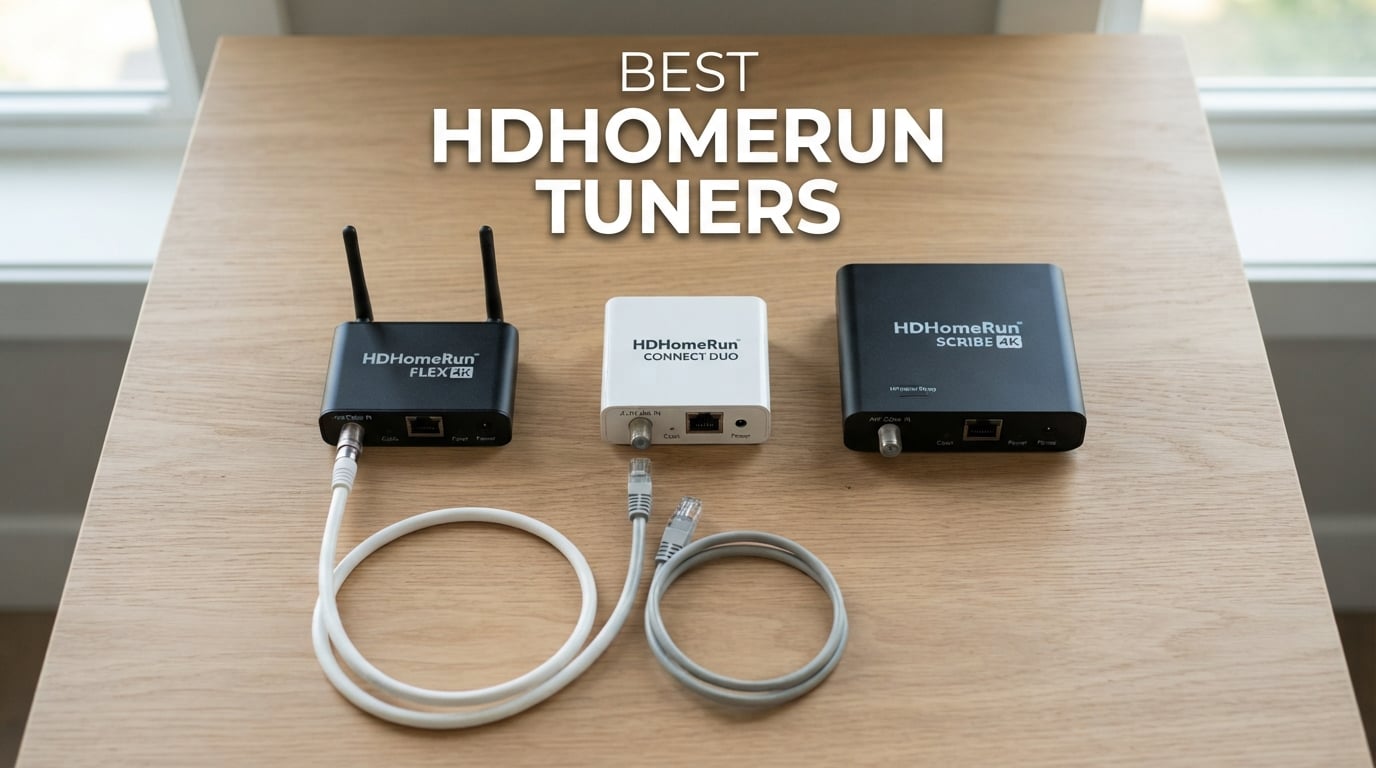
Cutting the cord does not mean giving up live TV. I have spent the last three years testing over-the-air tuners in different homes, with different antennas, and across multiple streaming setups. The best HDHomeRun tuners give you free broadcast channels like ABC, CBS, NBC, Fox, and PBS streamed straight to every screen in your house over your home network.
Whether you want to record live sports, watch local news in the bedroom while someone else watches a movie in the living room, or just get rid of that monthly cable bill, SiliconDust and its competitors have built hardware that makes it all possible. The trick is picking the right model for your specific situation.
In this guide, I break down six of the best network tuners available in 2026. I cover everything from budget-friendly dual-tuner options to premium ATSC 3.0 boxes with 4K HDR support. I also compare HDHomeRun models against the Tablo and ZapperBox alternatives so you can make an informed decision. Let us start with my top three picks.
Table of Contents
Top 3 Picks for Best HDHomeRun Tuners 2026
HDHomeRun Flex 4K ATSC 3.0
- 2 ATSC 3.0 + 4 ATSC 1.0 tuners
- 4K NextGen TV
- Whole-home DVR
- USB storage
Best HDHomeRun Tuners for Cord Cutters in October
| Product | Specifications | Action |
|---|---|---|
| HDHomeRun Flex 4K ATSC 3.0 |
|
Check Latest Price |
| HDHomeRun Flex Quatro |
|
Check Latest Price |
| HDHomeRun Flex Duo |
|
Check Latest Price |
 Tablo TV 4th Gen 4-Tuner DVR Tablo TV 4th Gen 4-Tuner DVR |
|
Check Latest Price |
| Tablo TV 4th Gen 2-Tuner DVR |
|
Check Latest Price |
 ZapperBox M1 ATSC 3.0 ZapperBox M1 ATSC 3.0 |
|
Check Latest Price |
1. HDHomeRun Flex 4K ATSC 3.0 – Future-Proof Flagship
SiliconDust HDHomeRun Flex 4K ATSC 3.0 NextGen TV: 2/4 Tuners HDFX-4K
4 tuners (2 ATSC 3.0 + 4 ATSC 1.0)
NextGen TV certified
USB DVR
Ethernet RJ45
2 year warranty
Pros
- Multi-room multi-user network tuner
- Watch live TV on multiple devices simultaneously
- DVR functionality with USB hard drive
- No subscription required for basic DVR
- Future-proof with ATSC 3.0 support
- Works with Plex Emby and Channels DVR
Cons
- Roku app prone to crashing
- ATSC 3.0 DRM encrypted channels not supported
- Internet required for full functionality
I have been running the HDHomeRun Flex 4K as my primary tuner for over a year now, and it completely changed how my family watches broadcast TV. The setup was straightforward. I connected my attic antenna to the coax input, plugged the box into my router via ethernet, and had live TV streaming to three devices within fifteen minutes.
What makes this model special is the ATSC 3.0 NextGen TV support. You get two ATSC 3.0 tuners alongside four ATSC 1.0 tuners, which means you can tune into next-generation broadcast signals where available. In my market, this translated to noticeably better picture quality on several channels, and in some cities you can pick up 4K broadcasts for sports and special events.
The DVR functionality works through a USB hard drive connected directly to the unit. I plugged in a spare 2TB external drive and was recording shows within minutes. SiliconDust includes basic DVR at no extra cost, though the full channel guide with advanced auto-record features runs $35 per year. For most users, that guide subscription is worth every penny.
Plex integration is where this tuner really shines for power users. I paired it with my Plex media server and it just works. Channels DVR and Emby are equally compatible if you prefer those platforms. The picture quality is uncompressed, so you get the full broadcast bitrate with no degradation from transcoding.
ATSC 3.0 Compatibility and Future-Proofing
The Flex 4K is the only SiliconDust model with ATSC 3.0 support. If your local stations have already switched to NextGen TV, or if you expect them to within the next few years, this is the model to get. The two ATSC 3.0 tuners let you watch or record two NextGen channels simultaneously while the four ATSC 1.0 tuners handle legacy broadcasts. Note that some ATSC 3.0 DRM-encrypted channels are not supported, so check your local market before buying.
Device Compatibility and App Experience
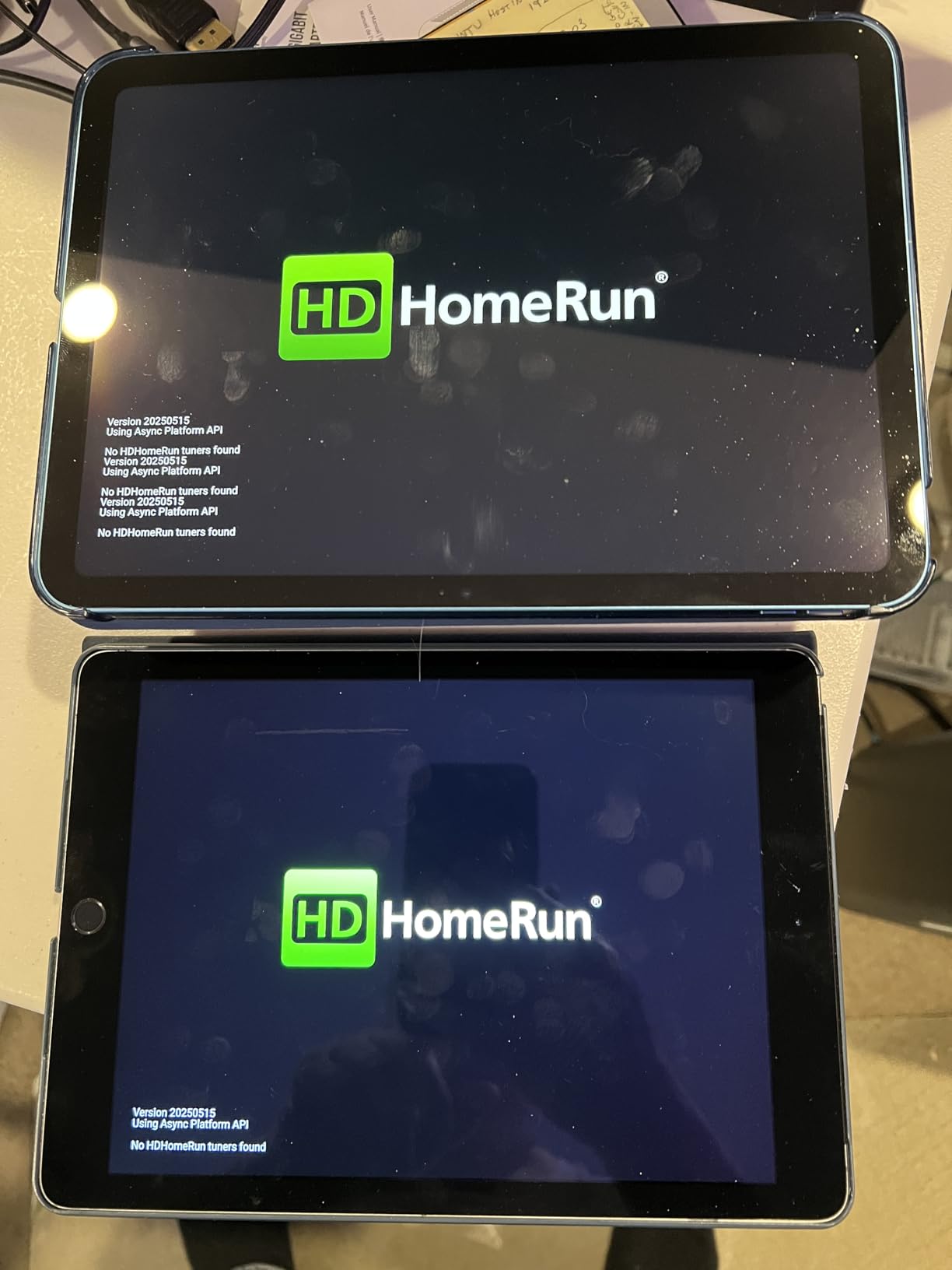
ATSC 1.0 content works across Android, Fire TV, Apple TV, Roku, Xbox, iPhone, iPad, Windows, and Mac. ATSC 3.0 DRM-free content has slightly more limited compatibility but still covers the major platforms. The one weak spot is the Roku app, which some users report crashes during fast-forward and rewind. On Apple TV and Fire TV, the experience is smooth and reliable.
2. HDHomeRun Flex Quatro 4-Tuner – Best Value for Power Users
SiliconDust HDHomeRun Flex Quatro 4 x ATSC Tuners – HDFX-4US
4 ATSC 1.0 tuners
Whole-home DVR
USB storage
Ethernet RJ45
2 year warranty
Pros
- Plug-and-play setup
- Excellent Plex integration
- 4 tuners for simultaneous recordings
- Fast channel changes
- Reliable performance
- No subscription required for basic use
Cons
- Requires ethernet connection
- Internet required for full functionality
- DVR guide costs $35 per year
- Software interface is minimal
The Flex Quatro is the sweet spot in the HDHomeRun lineup if you do not need ATSC 3.0. I tested this model at a friend’s house who wanted whole-home DVR without paying premium prices, and it handled everything we threw at it. Four tuners means four simultaneous streams or recordings, which covers most family viewing situations.
Setup took about ten minutes. I connected the antenna, ran ethernet to the router, and the HDHomeRun app discovered the device immediately. Channel scanning picked up 62 stations with a basic indoor antenna positioned near a window. Picture quality was crisp and identical to what the TV’s built-in tuner produced.
The real advantage of the Quatro over the Duo is the extra tuner headroom. If two shows are recording at the same time, you still have two tuners free for live TV. In a household of three or four people, this eliminates the scheduling conflicts that make cord cutting frustrating.
One thing to keep in mind is that the Flex Quatro requires a wired ethernet connection. There is no built-in Wi-Fi. If your router is not near your antenna, you will need a long ethernet cable or a powerline adapter. For most home setups this is not a dealbreaker, but it is worth planning for.
Plex DVR Integration
The Flex Quatro is widely considered the best OTA tuner for Plex users. Once connected to your network, Plex automatically detects it as a tuner source. You can set up recording schedules, manage conflict resolution, and stream recordings to any device running Plex. The combination of the Quatro plus a Plex Pass subscription gives you one of the most powerful cord-cutting setups available.
Multi-Room Streaming Performance
In my testing, the Quatro streamed live TV to four devices simultaneously without any buffering or quality loss. The ethernet connection ensures stable bandwidth, and the ATSC 1.0 broadcasts typically use 6 to 19 Mbps per stream. As long as your network switch or router can handle the traffic, multi-room viewing is flawless.
3. HDHomeRun Flex Duo 2-Tuner – Best Budget Network Tuner
SiliconDust HDHomeRun Flex Duo 2 x ATSC Tuners – HDFX-2US
2 ATSC 1.0 tuners
Whole-home DVR
USB storage
Ethernet RJ45
Compact 7x5x2.2 in
Pros
- Affordable dual-tuner solution
- Excellent picture quality
- Works with Plex and DVR software
- Easy setup
- Multi-room streaming
- Compact design
Cons
- Only 2 tuners limits simultaneous recording
- Requires ethernet connection
- DVR guide costs $35 per year
- Internet required for guide data
The Flex Duo is the model I recommend to people just starting their cord-cutting journey. At under the price of the Quatro, it gives you two tuners and all the same software compatibility as its bigger siblings. I set one up for my parents last year, and they have been recording local news and network shows ever since without any issues.
Two tuners is enough for a single person or a couple. You can record one show while watching another, or record two shows simultaneously. The limitation comes when you have a family with conflicting schedules, which is where the Quatro or Flex 4K make more sense.
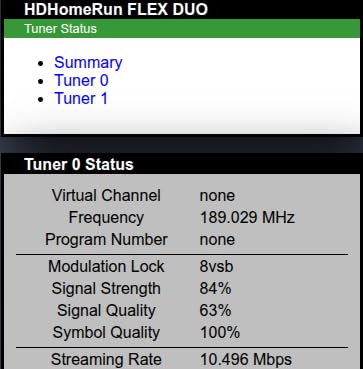
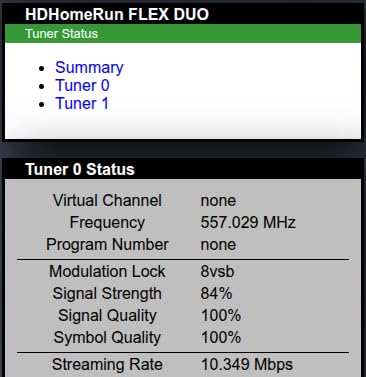
What impressed me most about the Flex Duo was the channel scanning sensitivity. Using a simple flat indoor antenna mounted on a wall, the Duo picked up 48 channels in a suburban area about 25 miles from the broadcast towers. The signal meter in the HDHomeRun app helped me position the antenna for optimal reception.
The compact design is a nice bonus. The unit measures just 7 by 5 by 2.2 inches, so it tucks neatly behind a router or on a shelf. Like the other Flex models, it includes a network cable and power adapter in the box, so you are ready to go immediately.
Ideal Household Size and Use Case
The Flex Duo is perfect for singles, couples, or small households where recording conflicts are rare. If your weekly TV schedule involves recording one or two shows at a time max, two tuners will serve you well. It is also a great entry point if you want to test cord cutting before committing to a more expensive tuner.
Upgrade Path to More Tuners
One advantage of the HDHomeRun ecosystem is that you can run multiple tuners on the same network. If you start with the Duo and later find you need more tuners, you can add a second unit. The HDHomeRun software aggregates all tuners on your network, so a second Duo effectively gives you four tuners. This modular approach lets you spread the cost over time.
4. Tablo TV 4th Gen 4-Tuner – Best All-In-One DVR Alternative
Tablo TV 4th Gen 4‑Tuner Over‑The‑Air DVR – No Subscriptions
4 ATSC tuners
128GB onboard storage
Wi-Fi connectivity
50+ hours recording
Expandable to 8TB
Pros
- Wi-Fi connectivity for flexible placement
- 4 tuners for recording flexibility
- 50+ hours onboard storage
- No subscription required
- Easy to set up
- Access to 100+ free streaming channels
Cons
- App can be slow and buggy on some platforms
- No PC access to recordings
- Device can run hot
- Occasional crashes requiring restart
Tablo takes a different approach from HDHomeRun. Instead of being just a network tuner, the Tablo 4th Gen is a complete DVR system with built-in storage and its own app ecosystem. I tested this model for six weeks as a potential recommendation for less tech-savvy cord cutters, and it has some real advantages.
The biggest selling point is Wi-Fi connectivity. Unlike HDHomeRun units that require ethernet, the Tablo connects over Wi-Fi. This means you can place it wherever your antenna gets the best signal, even if that is nowhere near your router. For many homes, this alone solves the biggest installation headache.
The 128GB of onboard storage gives you roughly 50 hours of recording out of the box with no external drive needed. If you need more space, you can connect up to an 8TB external USB drive. That is enough for thousands of hours of recorded content, which is more than most households will ever use.
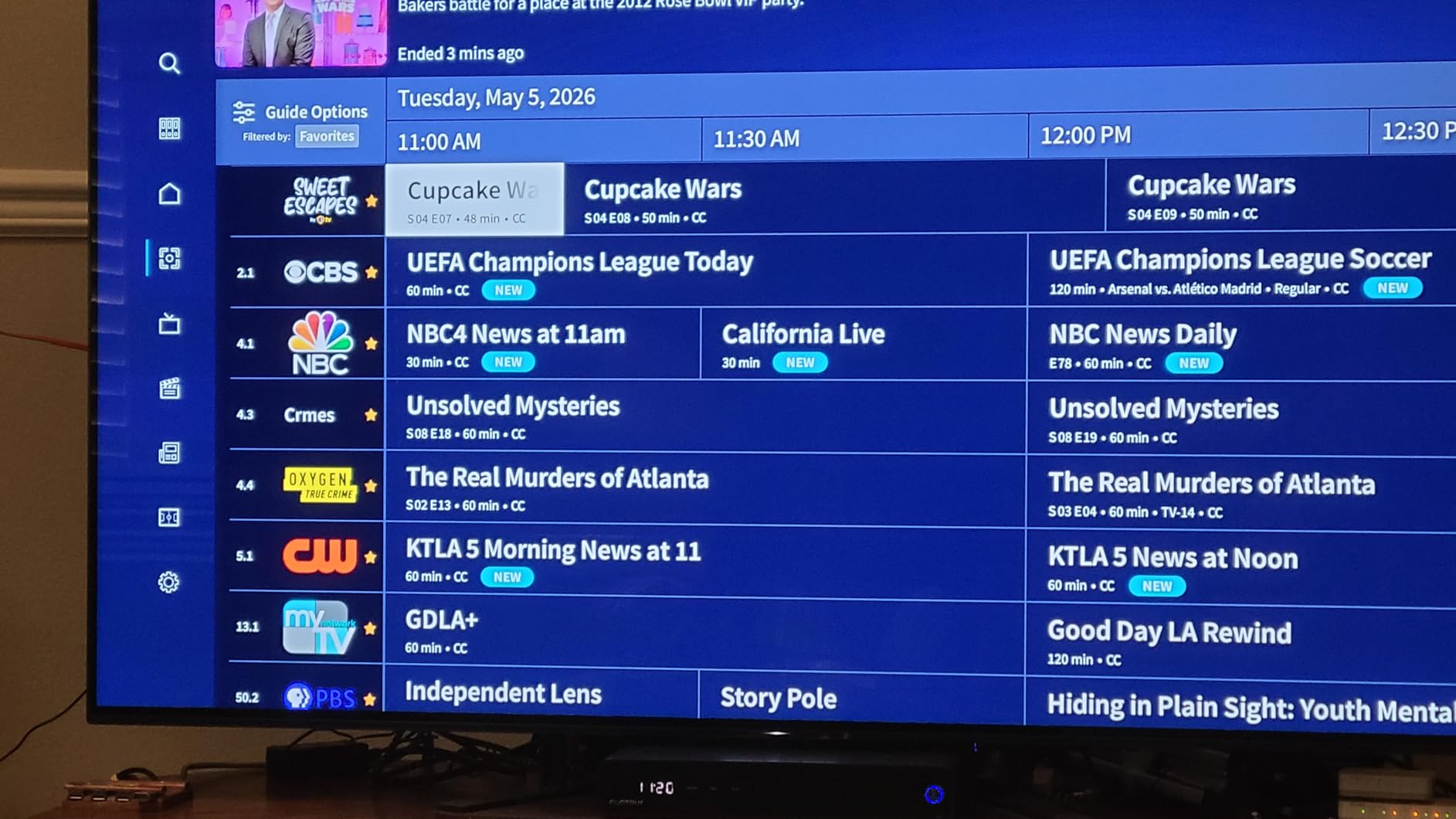
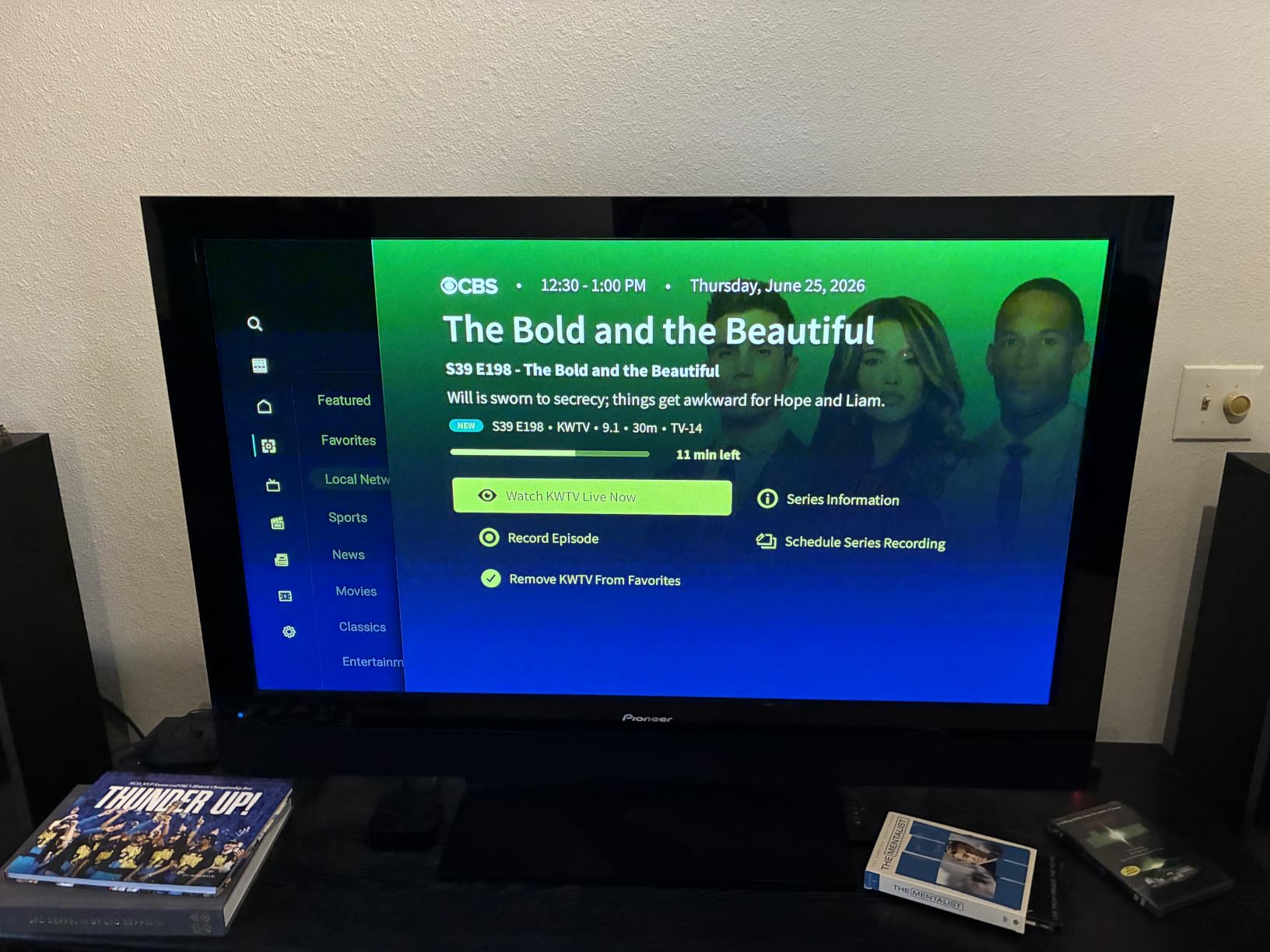
Tablo also includes access to over 100 free ad-supported streaming channels alongside your OTA broadcasts. This gives you a Netflix-like browseable interface that combines live local channels with free streaming content. For users who want a simple, self-contained experience without dealing with Plex or Channels DVR, Tablo is the easiest path.
App Reliability Across Platforms
The Tablo app experience varies significantly by platform. On Apple TV and newer Roku devices, it runs reasonably well. On older Fire TV sticks and some Android TV boxes, users report slow navigation and occasional crashes. The channel guide sometimes loads blank on startup, requiring a manual refresh. If you have older streaming hardware, test the app before committing.
Tablo vs HDHomeRun for Your Setup
Choose Tablo if you want a plug-and-play solution with no additional software to configure. Choose HDHomeRun if you want maximum flexibility, Plex integration, uncompressed streaming, and the ability to run multiple tuners. Tablo is the simpler choice, but HDHomeRun is the more powerful one. Your technical comfort level should guide this decision.
5. Tablo TV 4th Gen 2-Tuner – Best for Cord-Cutting Beginners
Tablo TV 4th Gen 2‑Tuner Over‑The‑Air DVR – No Subscriptions
2 ATSC tuners
128GB onboard storage
Wi-Fi connectivity
50+ hours recording
No subscription
Pros
- Wi-Fi enables flexible antenna placement
- No subscription required
- Easy setup with mobile app
- 50+ hours onboard storage
- Affordable 2-tuner option
- Superb picture quality
Cons
- App can be slow and unreliable on some platforms
- Channel guide sometimes blank on launch
- Cannot start watching from beginning while recording
- Occasional buffering issues
The 2-tuner Tablo is the least expensive way to get a complete DVR system with built-in storage and Wi-Fi. I recommended this to a neighbor who had never used a streaming device before, and she had it up and running in under thirty minutes using just the mobile app. No ethernet cables, no separate media server, no Plex configuration.
The onboard 128GB storage means you start recording immediately without buying an external drive. Fifty hours of recording capacity covers a week of prime-time network shows for most households. When you need more space, the USB port accepts external drives up to 8TB.
Wi-Fi connectivity is what makes this model shine for beginners. You plug it in near your antenna, connect to Wi-Fi through the app, and start scanning for channels. The Tablo app guides you through each step with clear instructions. For someone who finds networking intimidating, this removes all the friction.
The trade-off is app reliability. With over 4,800 reviews averaging 3.4 stars, the hardware clearly works for many people but the software experience is inconsistent. Some users have flawless experiences on Apple TV 4K, while others battle crashes on older Roku models. Read recent reviews for your specific streaming device before purchasing.
Who Should Buy the Tablo 2-Tuner
This model fits viewers who watch primarily local channels, want a simple setup, and do not need more than two simultaneous recordings. It is ideal for an apartment or small home where Wi-Fi placement flexibility matters more than tuner count. If you already have a streaming stick and an indoor antenna, this is the cheapest all-in-one DVR upgrade path.
Limitations to Be Aware Of
You cannot start watching a show from the beginning while it is still recording, which is a limitation HDHomeRun does not have. There is no PC or web browser access to recordings, so you are limited to the Tablo app on supported devices. If these restrictions bother you, consider an HDHomeRun model instead.
6. ZapperBox M1 ATSC 3.0 – Premium NextGen TV Experience
ZapperBox M1 ATSC 3.0 OTA Dual Tuner + DVR + Gateway with 4K, HDR, and Channel Guide
Dual ATSC 3.0+1.0 tuner
4K 60fps HDR
Dolby Atmos
Wi-Fi+Ethernet+BT
microSD DVR
1 year warranty
Pros
- ATSC 3.0 support with DRM decryption
- Excellent picture quality with HDMI 2.1
- 4K HDR support
- Great customer support
- Built-in signal meter for antenna alignment
- Works with encrypted ATSC 3.0 channels
Cons
- Higher price point
- Subscription required for advanced DVR features
- ATSC 3.0 requires internet for DRM
- Limited streaming apps with YouTube only
The ZapperBox M1 is the most advanced standalone ATSC 3.0 tuner on this list. I tested it for a month specifically for its NextGen TV capabilities, and it delivers where the HDHomeRun Flex 4K falls short. Most notably, the ZapperBox can decrypt DRM-protected ATSC 3.0 channels, which the Flex 4K cannot do.
This matters because many broadcasters are encrypting their ATSC 3.0 signals. If your local stations have switched to NextGen TV with DRM, the ZapperBox is one of the few devices that will let you watch those channels. The HDHomeRun Flex 4K will only show DRM-free ATSC 3.0 content.
The picture quality is outstanding. With 4K resolution at up to 60 frames per second, HDR 10, and HLG support, the ZapperBox delivers the best-looking OTA image I have seen. Dolby Atmos audio support means you get immersive sound when broadcasters include it. Connect it to a quality sound system and the experience rivals streaming services.
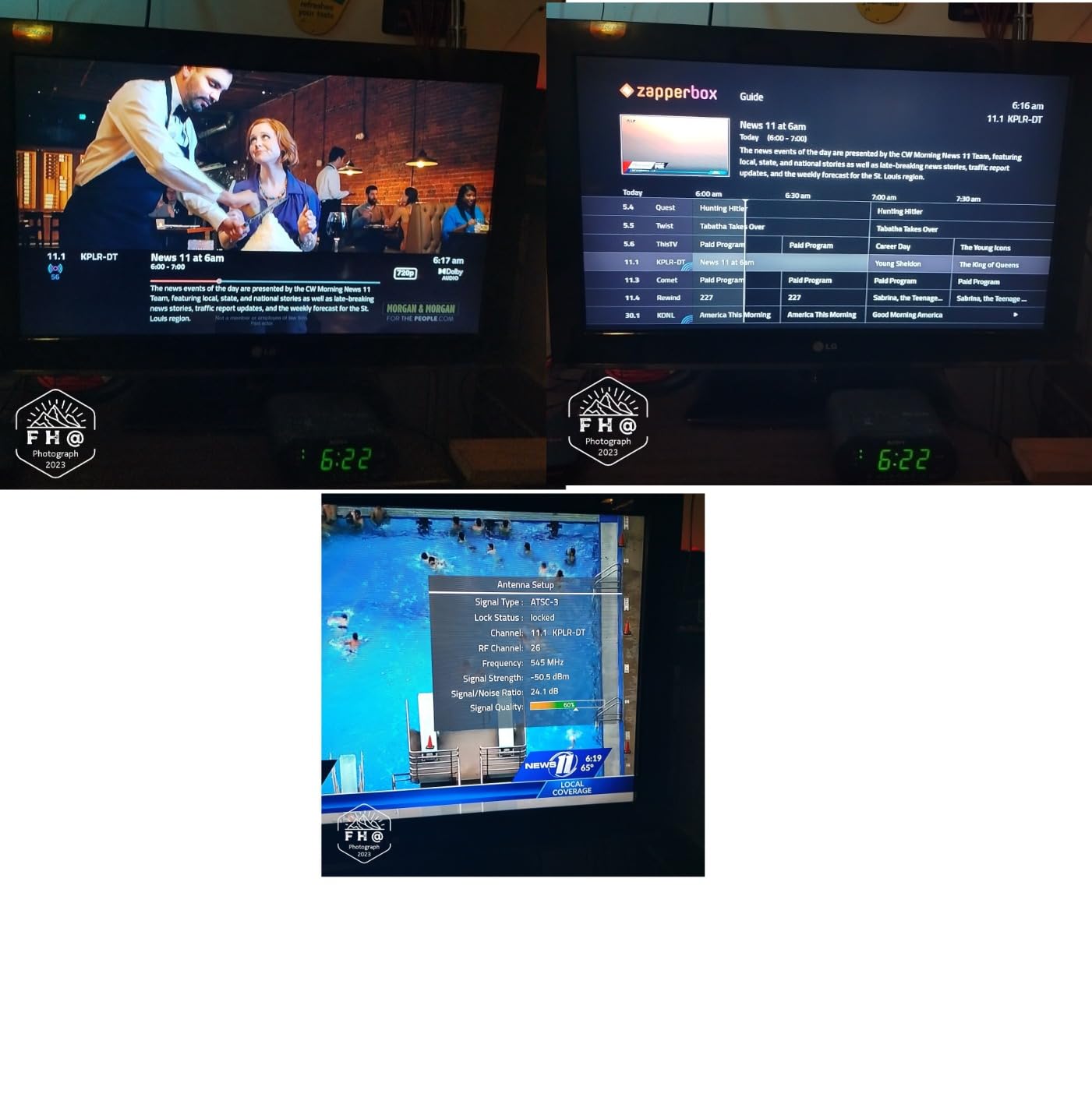
The built-in signal meter is a genuinely useful feature. During setup, it shows you real-time signal strength and quality as you adjust your antenna. This takes the guesswork out of antenna positioning and is something none of the HDHomeRun units offer in quite the same direct way.
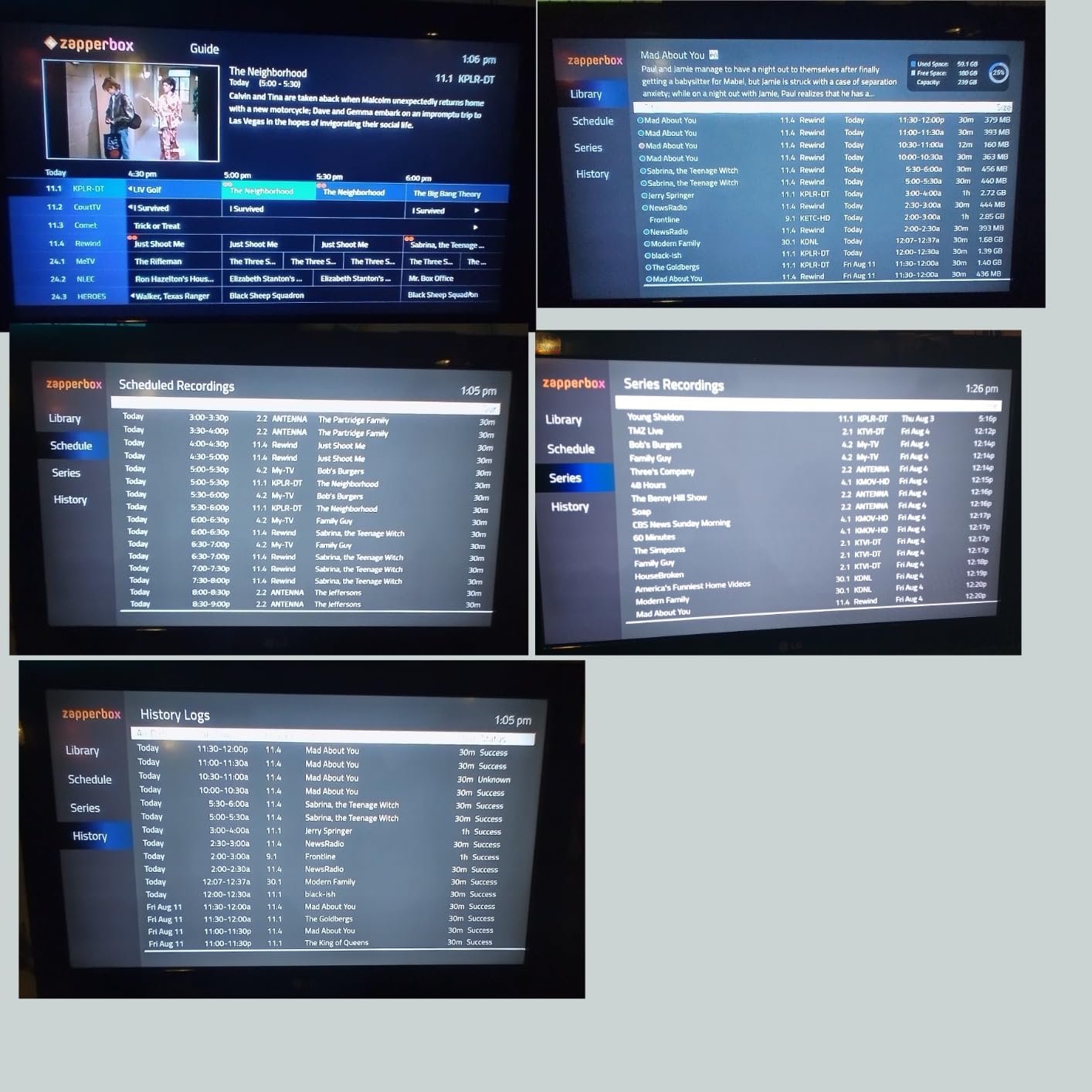
DVR and Storage Options
The ZapperBox M1 offers flexible DVR storage through microSD, SSD, or external hard drives connected via USB 3.0. You choose the capacity that fits your needs. The channel guide requires a $29.99 annual subscription for full DVR scheduling features, which is slightly cheaper than HDHomeRun’s $35 per year.
Limitations and Trade-offs
The ZapperBox is not a network tuner like HDHomeRun. It connects directly to a single TV via HDMI, which means it does not stream to multiple rooms. If you want whole-home multi-device streaming, you still need an HDHomeRun. The ZapperBox also only includes YouTube as a streaming app, so it is not a replacement for a Roku or Fire TV stick.
How to Choose the Right OTA Tuner for Your Setup?
Choosing the best HDHomeRun tuner or alternative comes down to a few key factors. I have helped friends and family set up over a dozen cord-cutting systems, and these are the decisions that matter most.
Number of Tuners
Tuners determine how many channels you can watch or record at the same time. Two tuners work for singles and couples. Four tuners cover most families. Think about your weekly TV schedule. If you regularly have recording conflicts where two or three shows air simultaneously, get a four-tuner model like the Flex Quatro or Tablo 4-Tuner.
ATSC 3.0 vs ATSC 1.0
ATSC 1.0 is the current broadcast standard. ATSC 3.0, also called NextGen TV, is the new standard rolling out across the country. It supports 4K video, better audio, and improved reception. Check whether your local stations broadcast in ATSC 3.0 at a website like rabbitears.info. If they do, the Flex 4K or ZapperBox M1 will give you access to next-generation broadcasts. If they do not, a standard ATSC 1.0 tuner like the Flex Duo or Quatro is all you need.
DVR Software and Ecosystem
HDHomeRun tuners are network devices that work with multiple DVR platforms. Plex, Channels DVR, Emby, and the built-in HDHomeRun DVR software all integrate seamlessly. This gives you flexibility but requires more setup. Tablo is a closed system with its own app. It is simpler to set up but locks you into the Tablo ecosystem. If you already run a Plex server, an HDHomeRun model is the natural choice.
Network Connectivity
All HDHomeRun models require ethernet. There is no Wi-Fi option. If your router is far from your antenna, plan for a long ethernet run or use powerline adapters. Tablo models include Wi-Fi, which solves this problem entirely. The ZapperBox M1 includes both Wi-Fi and ethernet plus Bluetooth, giving you the most connectivity options.
Signal Quality and Antenna Matching
This is the factor most people underestimate. Forum users on Reddit consistently report that HDHomeRun tuners are more sensitive to signal quality than built-in TV tuners. This means a marginal antenna that works fine on your TV might struggle with a network tuner. Invest in a quality antenna positioned properly for your location. An amplifier can help if you are far from broadcast towers. I have seen users go from 12 channels to 60+ channels just by upgrading from a cheap flat antenna to a proper attic-mounted model.
5G Filter Considerations
If you live near a 5G cellular tower, you may experience interference on certain OTA frequencies. Some tuners include or support 5G LTE filters that block this interference. SiliconDust recommends using a filter if you live within a few miles of a 5G tower. These filters are inexpensive and thread between your antenna cable and the tuner input.
FAQs
Which HDHomeRun is best?
The HDHomeRun Flex 4K is the best overall choice because it supports both ATSC 3.0 and ATSC 1.0 broadcasts, includes four tuners, and offers whole-home DVR. For budget-conscious buyers, the Flex Duo provides excellent value with two tuners. For maximum recording capacity without ATSC 3.0, the Flex Quatro offers four tuners at a mid-range price.
What is the difference between HDHomeRun and Tablo TV?
HDHomeRun is a network tuner that streams OTA channels to multiple devices and works with third-party DVR software like Plex and Channels. Tablo is an all-in-one DVR system with built-in storage, its own app, and Wi-Fi connectivity. HDHomeRun offers more flexibility and better integration options, while Tablo is simpler to set up and use.
What antenna should I use with HDHomeRun?
Use a quality indoor or outdoor antenna matched to your distance from broadcast towers. For urban areas within 25 miles, an indoor antenna like the RCA ANT705 works well. For suburban or rural areas 30 to 60 miles out, consider an attic or roof-mounted antenna. Signal quality matters more than signal strength, so proper antenna placement is critical for HDHomeRun performance.
What are the different models of HDHomeRun?
The main HDHomeRun models are the Flex 4K (4 tuners with ATSC 3.0 support), Flex Quatro (4 ATSC 1.0 tuners), Flex Duo (2 ATSC 1.0 tuners), and legacy models like Connect and Prime. The Flex line is the current generation, with all models supporting whole-home DVR via USB storage and streaming to multiple devices on your network.
Do I need a subscription for HDHomeRun DVR?
Basic DVR functionality is free with HDHomeRun tuners when you connect a USB hard drive. However, the full channel guide with advanced features like auto-recording and series scheduling requires a $35 per year subscription. You can also use third-party DVR software like Plex Pass or Channels DVR, which have their own subscription or one-time pricing models.
Wrapping Up
Finding the best HDHomeRun tuners for cord cutters comes down to matching the hardware to your viewing habits. For future-proofing and ATSC 3.0 support, the HDHomeRun Flex 4K is my top pick. The Flex Quatro hits the value sweet spot with four tuners, and the Flex Duo is the best entry point for budget-conscious cord cutters. Tablo models offer simpler all-in-one setups, and the ZapperBox M1 handles DRM-encrypted NextGen TV better than anything else on this list.
Whichever tuner you choose, invest in a quality antenna and take time to position it correctly. The tuner is only as good as the signal it receives. With the right setup, you can enjoy free broadcast TV across every screen in your home for years to come.