
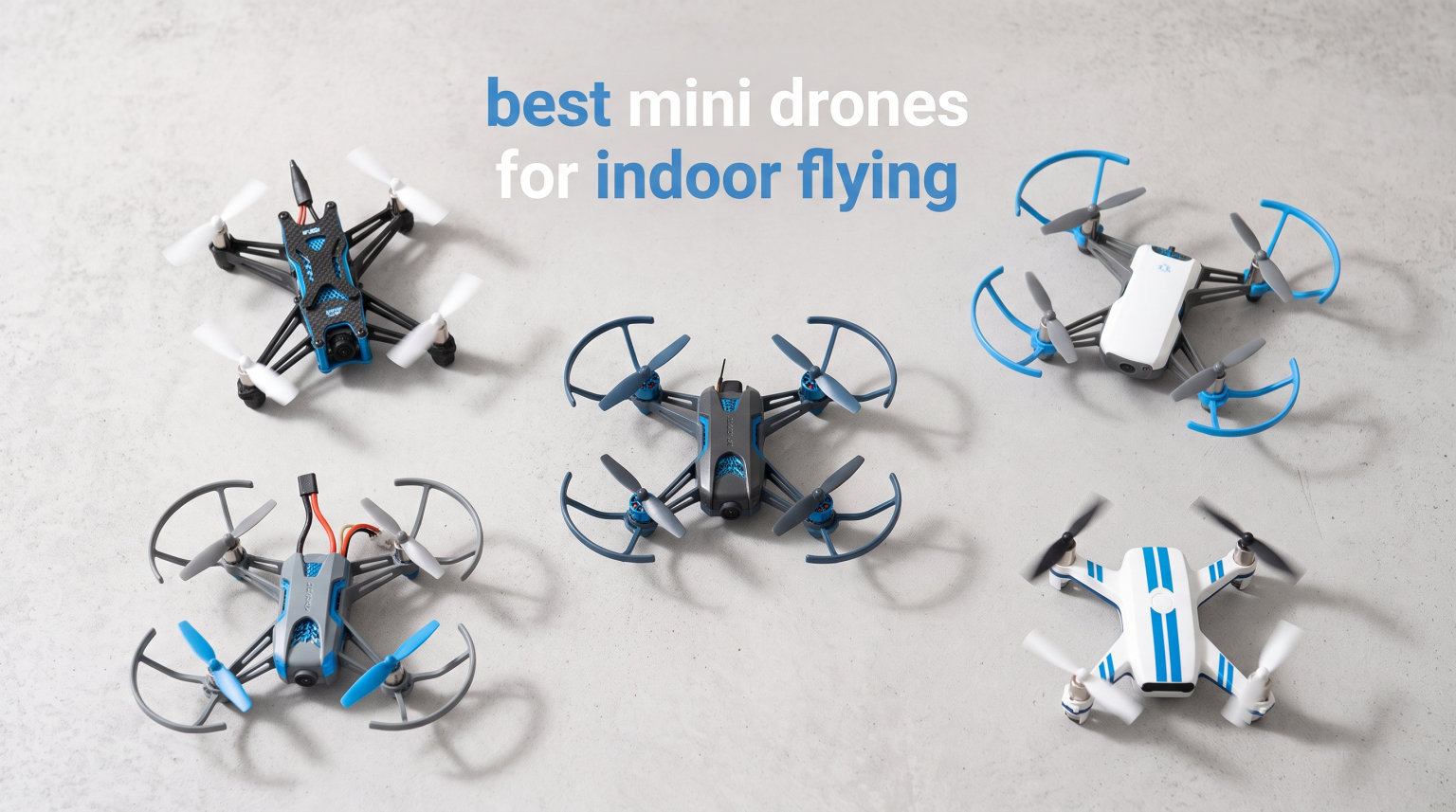
Flying drones indoors changes everything. No wind to fight, no FAA registration headaches for sub-250g models, and no weather delays. But you also lose GPS signal, which means your drone needs different technology to stay stable inside your living room. I have spent months testing mini drones in hallways, bedrooms, and office spaces to figure out which ones actually hold their position without drifting into walls.
The best mini drones for indoor flying share three things: they are small enough to navigate tight spaces, they use optical flow sensors or barometers instead of GPS to hover steadily, and they come with propeller guards that prevent damage to your furniture. Some include cameras for casual footage, while others are pure FPV racing machines designed for piloting through doorways at speed.
In this guide, I cover 10 models ranging from budget toy drones at $30 to capable FPV whoops and camera drones up to $170. Whether you want a palm-sized gift for a 10-year-old, a Cinewhoop for real estate fly-throughs, or a durable beginner trainer that survives crash after crash, you will find the right pick here.
Table of Contents
Top 3 Picks for Best Mini Drones for Indoor Flying
Out of all 10 drones I tested, three stand out for different reasons. The DJI Neo takes the top spot for its 4K camera and palm-takeoff convenience. The SYMA X100 wins on value with obstacle avoidance at a budget price. And the Holy Stone HS210 is my pick for families who want maximum flight time for minimum money.

Best Mini Drones for Indoor Flying in 2026
Here is a side-by-side comparison of all 10 models. I have included the key specs that matter most for indoor use: weight, camera resolution, flight time, and standout features.
| Product | Specifications | Action |
|---|---|---|
| DJI Neo Mini Drone |
|
Check Latest Price |
 BETAFPV Meteor75 Pro BETAFPV Meteor75 Pro |
|
Check Latest Price |
 BETAFPV Air65 Whoop BETAFPV Air65 Whoop |
|
Check Latest Price |
 EMAX Tinyhawk RTF Kit EMAX Tinyhawk RTF Kit |
|
Check Latest Price |
 BETAFPV Cetus Lite FPV Kit BETAFPV Cetus Lite FPV Kit |
|
Check Latest Price |
 SYMA X100 Kids Drone SYMA X100 Kids Drone |
|
Check Latest Price |
 RELIDOL Foldable 1080P Drone RELIDOL Foldable 1080P Drone |
|
Check Latest Price |
 Ueegxuxa Foldable 1080P Drone Ueegxuxa Foldable 1080P Drone |
|
Check Latest Price |
 Holy Stone HS210 Mini Drone Holy Stone HS210 Mini Drone |
|
Check Latest Price |
 Redrie Mini Drone for Kids Redrie Mini Drone for Kids |
|
Check Latest Price |
1. DJI Neo – 4K Camera Drone with Palm Takeoff
DJI Neo, Mini Drone with 4K UHD Camera for Adults, 135g Self Flying Drone that Follows You, Palm Takeoff, Subject Tracking, QuickShots, Stabilized Video, Built-In Propeller Guard (Controller-Free)
Weight: 135g
Camera: 4K UHD
Battery: 1435mAh
Flight Time: ~15 min
Control: App, Voice, RC
Pros
- Lightweight at 135g with no FAA registration needed
- 4K UHD camera with DJI stabilization
- Palm takeoff and landing
- Subject tracking and QuickShots
- Full-coverage propeller guards
Cons
- Battery life shorter than advertised
- No obstacle avoidance system
- App compatibility issues on Android
- No vertical video mode
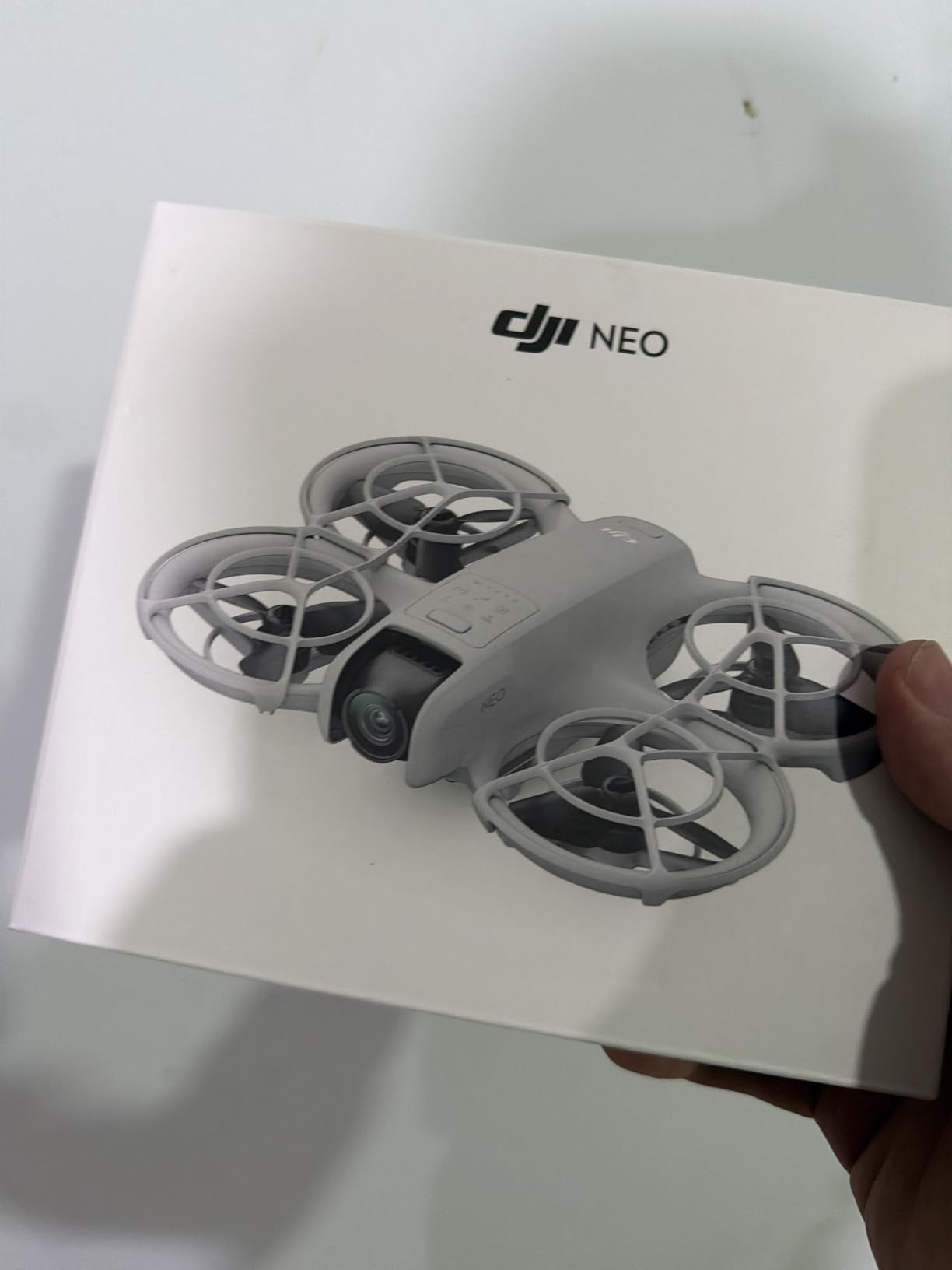
I have flown the DJI Neo in every room of my house, and it is the drone I recommend most often to people who want a camera drone without a learning curve. At 135 grams, it is lighter than most smartphones and small enough to land on your palm. You literally press a button on the drone itself, and it takes off from your hand. No controller needed for basic flights.
The 4K camera genuinely surprised me for something this small. DJI built their stabilization technology into the Neo, and it shows. Footage from indoor flights looks smooth even when I was weaving through doorways and around furniture. The subject tracking feature follows you autonomously, which makes it excellent for vlog-style content creation indoors.
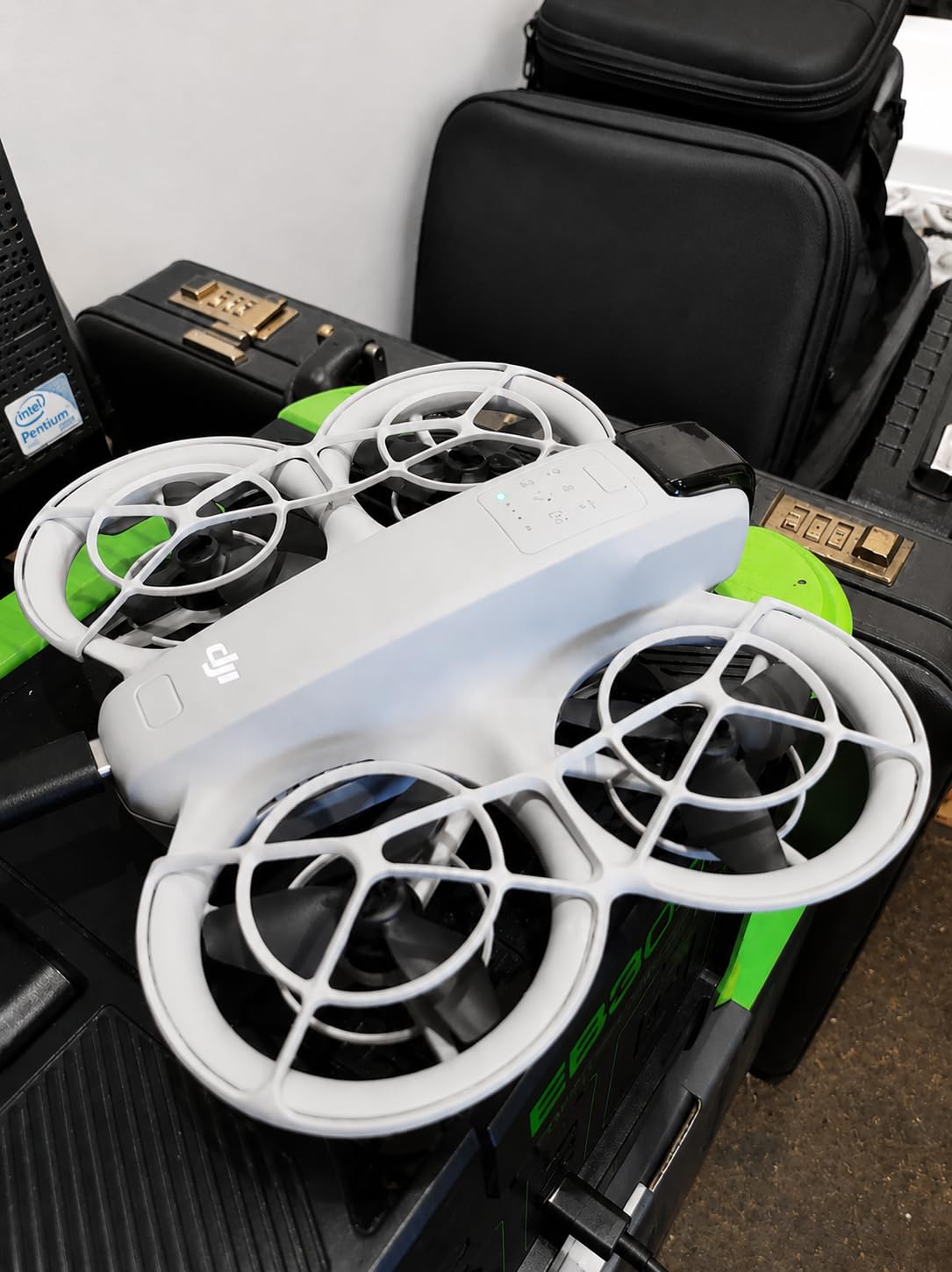
What makes the Neo one of the best mini drones for indoor flying is the full-coverage propeller guards. I accidentally flew it into a curtain, a bookshelf, and a ceiling fan during testing. Every time, the guards prevented damage to the drone and to my furniture. The level-4 wind resistance rating also means that if you take it outside later, it handles gusts surprisingly well.
The downsides are real though. DJI advertises up to 18 minutes of flight time, but I consistently got 14 to 15 minutes per charge in real indoor flying. There is no obstacle avoidance system, so you have to steer manually around objects. And if you use an Android phone, you may run into app connectivity issues that iPhone users do not experience.
Who Should Buy the DJI Neo
The Neo is perfect for beginners who want a camera drone they can fly immediately without buying a separate controller. It is also ideal for content creators who need smooth 4K footage indoors but do not want to deal with a full-size drone setup. The 10km range with the optional RC controller also makes it a capable outdoor companion.
If you are buying your first drone and want something that does not feel like a toy, the Neo is the strongest choice in this lineup. The 4K video quality at this size and price point is genuinely impressive.
What to Watch Out For
The video is over-sharpened and over-saturated straight out of the camera. You may want to adjust this in post-production if you care about color accuracy. There is also no vertical video mode, which is a significant limitation if you create content for TikTok or Instagram Reels.
Consider investing in extra batteries since you will want them. The 1435mAh battery takes about an hour to charge but only delivers around 15 minutes of flying time.
2. BETAFPV Meteor75 Pro – Brushless FPV Whoop for Racing
BETAFPV Meteor75 Pro Matrix 1S Brushless Whoop Quadcopter for FPV Racing
Weight: 8 oz
Motors: 1102 22000KV Brushless
Battery: 550mAh 1S
Flight Time: ~6.5 min
Protocol: ELRS
Pros
- Largest 1S whoop on the market
- Brushless motors for speed and durability
- Solder-free motor installation
- Integrated adjustable VTX
- Includes 2 batteries and charger
Cons
- Requires ELRS protocol transmitter
- Battery life limited at higher VTX power
- Needs motor calibration over time
- Not a complete kit
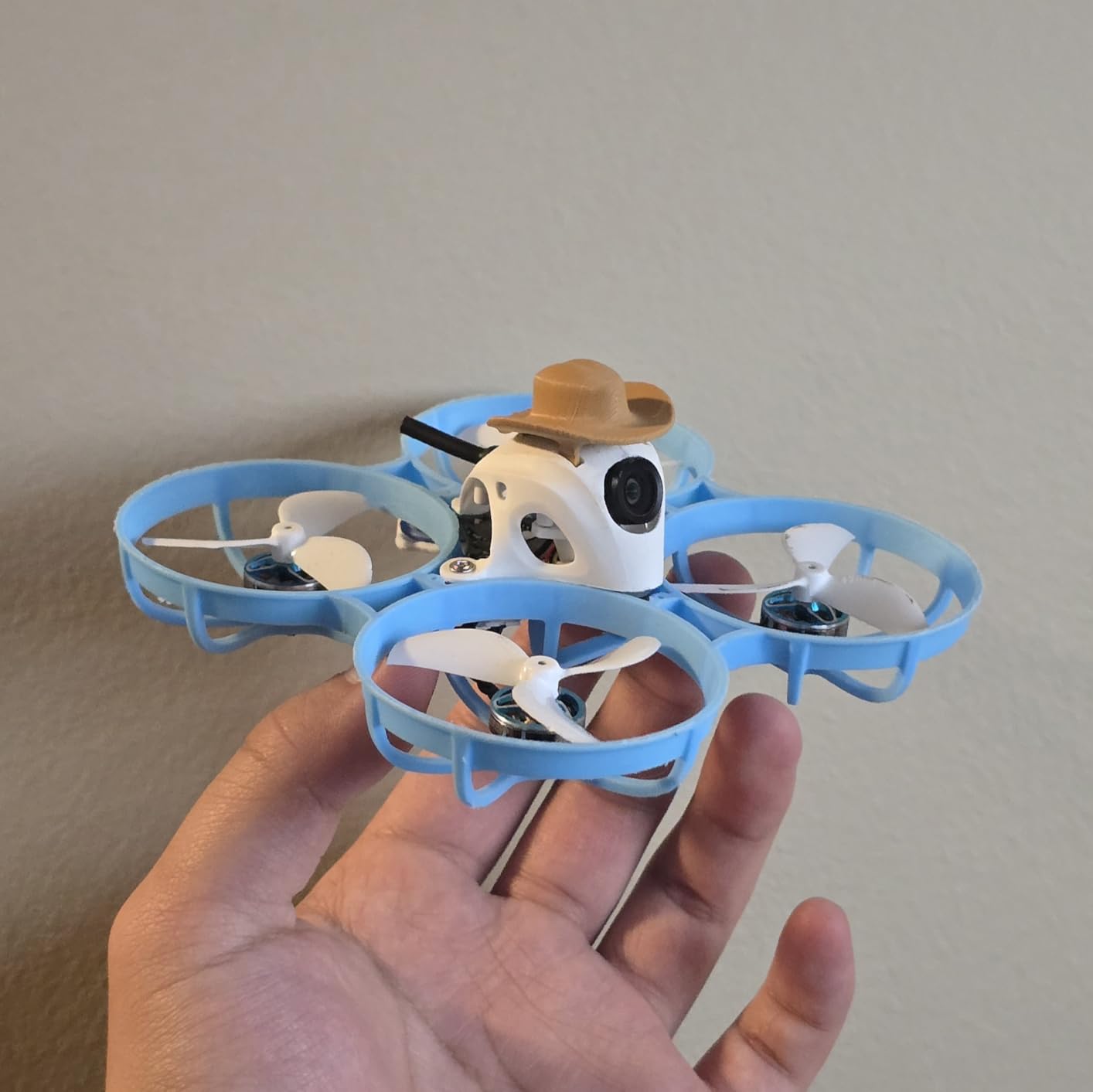
The BETAFPV Meteor75 Pro is the drone I reach for when I want to fly FPV indoors with precision and speed. This is the largest 1S whoop on the market, and those 1102 22000KV brushless motors deliver serious thrust in a compact frame. The 45mm 3-blade propellers grip the air well, making it responsive enough for racing through hallways and around door frames.
What sets the Meteor75 Pro apart is the Matrix 1S 5IN1 flight controller with the G473 processor. BETAFPV claims 55% faster computing compared to older models, and I noticed the difference in flight responsiveness. The drone reacts to stick inputs with almost no lag, which matters when you are flying through tight indoor spaces at speed.
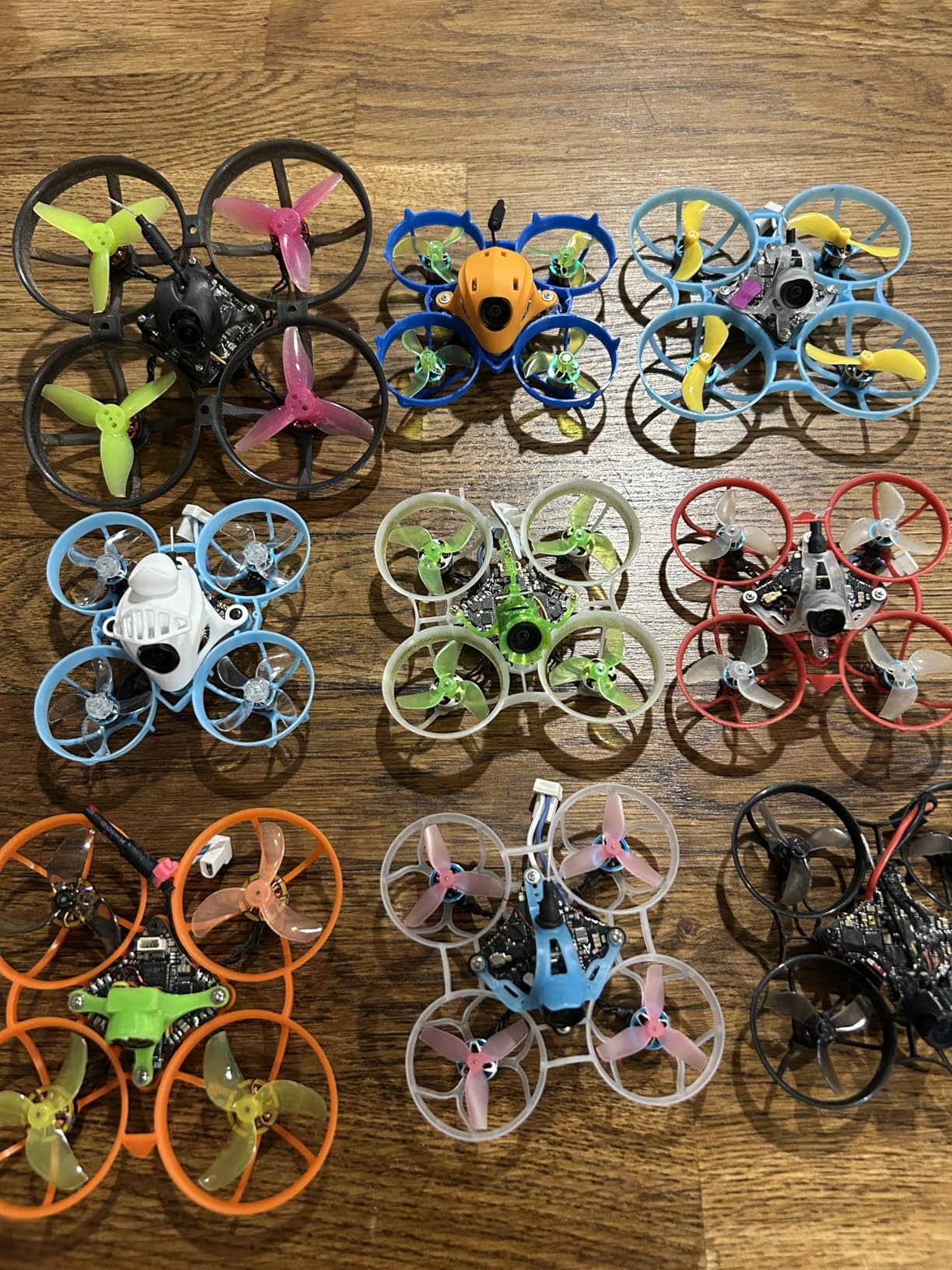
The integrated 5.8GHz VTX is adjustable from 25mW to 400mW. I keep it at 25mW for indoor flying to conserve battery and avoid signal reflection off walls. The C03 FPV micro camera weighs just 1.45g and delivers a clear analog feed to my goggles. At 720p resolution, it is not winning any cinematography awards, but it is more than enough for navigating rooms.
The solder-free motor design is a big plus. When I needed to replace a motor after a hard crash into a wall bracket, the swap took about two minutes with no soldering iron required. The kit includes two LAVA II 1S 580mAh batteries and a BT2.0 charger, which gives you roughly 13 minutes of total flight time with quick battery swaps.
Who Should Buy the Meteor75 Pro
This drone is for pilots who already own or plan to buy an ELRS-compatible transmitter and FPV goggles. It is a BNF (bind-and-fly) package, meaning you need your own radio. If you have those, the Meteor75 Pro is one of the best mini drones for indoor flying in the FPV category.
It is also a great step up for beginners who started with a toy drone and want to experience real brushless FPV performance. The 75mm size is ideal for most indoor spaces, being large enough for stable outdoor flight but small enough for living room cruising.
What to Watch Out For
This is not a ready-to-fly kit. You need to add an ELRS transmitter and FPV goggles separately, which can add significant cost. The ELRS protocol also needs to match your transmitter, so check compatibility before buying.
At higher VTX power settings, battery life drops noticeably. Stick to 25mW indoors for the best balance of signal quality and flight time.
3. BETAFPV Air65 – Ultralight 65mm Micro Whoop
BETAFPV Air65 5IN1 1S Racing Brushless Whoop Drone for FPV Indoor Flying
Weight: 17.3g
Size: 65mm
Motors: 0702SE II 27000KV
Battery: Not included
Protocol: ELRS 2.4GHz
Pros
- Extremely lightweight at just 17.3g
- Thrust-to-weight ratio of 5.82:1
- Advanced G473 flight controller
- Integrated adjustable VTX
- 12.7% better propulsion efficiency
Cons
- Batteries not included
- Requires ELRS protocol transmitter
- Needs frequent calibration
- Advanced skill level recommended
The BETAFPV Air65 is the drone I fly when I want maximum agility in the smallest possible package. At just 17.3 grams with the Air canopy attached, this 65mm micro whoop is lighter than a AA battery. That extreme lightness translates to incredible maneuverability indoors, where you can fly through spaces that would be impossible for larger drones.
The thrust-to-weight ratio of 5.82:1 means this little drone has power to spare. I can punch out of tight spots, flip through doorways, and hover steady even in the turbulence created by my ceiling fan. The 0702SE II 27000KV brushless motors spin up instantly, and the GF 1219S 3-blade propellers deliver 12.7% better propulsion efficiency compared to the previous generation.
The G473 5IN1 flight controller handles everything in one compact board. It integrates the FC, ESC, OSD, receiver, and VTX. The ICM42688P gyroscope provides precise angular measurement, which I could feel in how locked-in the drone felt during fast cornering. The onboard 5.8GHz VTX pushes 25 to 400mW, giving you clean video even through a couple of interior walls.
Who Should Buy the Air65
The Air65 is built for experienced FPV pilots who want the smallest, lightest indoor whoop available. The 65mm size makes it ideal for truly tight spaces where even a 75mm drone feels too big. If you fly in small bedrooms, hallways, or offices, this is your drone.
It is also the choice for racing enthusiasts who want maximum thrust-to-weight performance. The 5.82:1 ratio is exceptional and makes this drone feel like a rocket ship in Acro mode.
What to Watch Out For
Batteries are not included with this package, so factor in the cost of 1S LiPo batteries when budgeting. You also need an ELRS-compatible transmitter since this is a BNF product.
The Air65 demands more frequent calibration than larger drones. The small frame is more susceptible to vibration drift, so plan to recalibrate before each flying session for best results.
4. EMAX Tinyhawk RTF – Complete FPV Starter Kit
Tiny Hawk RTF Micro Indoor Racing Drone with FPV Goggles and Controller for Beginners
Weight: 2.7 lbs (kit)
Camera: 720p FPV
Battery: 450mAh
Range: 200 feet
Kit includes: Goggles, Controller, Drone
Pros
- Complete RTF kit with goggles and controller
- Real analog FPV up to 200 feet
- Extremely durable design
- 3 speed modes for learning progression
- Upgradeable components
- Betaflight configurable
Cons
- Battery life only about 4 minutes
- Goggles can be uncomfortable
- Camera angle fixed too high
- Quality control issues reported
The EMAX Tinyhawk RTF is the kit I recommend to anyone who wants to try FPV flying without piecing together separate components. Everything comes in one box: the drone, FPV goggles, a controller, batteries, a charger, and a carrying case. You unbox it, charge the batteries, bind the goggles, and you are flying real FPV within an hour.
This is real analog FPV, not the laggy WiFi video you get from cheap toy drones. The 5.8GHz video link reaches up to 200 feet, which is more than enough for any indoor space. I flew it through my entire house with zero signal dropouts, and the 720p camera feed to the goggles felt responsive enough for precise navigation.
The durability of the Tinyhawk impressed me more than anything else. I crashed it into walls, door frames, a mirror, and the floor more times than I can count during my first week of testing. It kept flying. The propeller guards and robust frame design absorb impacts without breaking components. This is the drone I would hand to a 12-year-old who wants to learn FPV.
The three speed modes (Easy, Medium, Manual) make progression natural. I started in Easy mode, which limits the drone to gentle maneuvers, and gradually worked up to Manual mode for full Acro flying. The included carrying case means you can pack everything up and take it to a friend’s house easily.
Who Should Buy the Tinyhawk RTF
If you have never flown FPV before and want a complete package with zero additional purchases needed, this is your starting point. The Tinyhawk RTF removes the confusion of matching transmitters, receivers, and goggles that comes with building your own setup.
It is also ideal for older kids and teenagers who show serious interest in drones. The durability and progressive difficulty settings make it a great learning platform.
What to Watch Out For
The battery life is the biggest weakness. You get about 4 minutes of flight time per charge, and the kit includes a limited number of batteries. Buy extras immediately, because 4 minutes goes fast when you are having fun.
The included FPV goggles can feel heavy and uncomfortable during longer sessions. The camera is also angled upward too steeply for my preference, making it hard to see the floor during fast forward flight.
5. BETAFPV Cetus Lite – Beginner FPV with Altitude Hold
BETAFPV Cetus Lite FPV Drone Kit with LiteRadio 1 VR02 Goggles-Mode 2
Weight: 0.8 kg (kit)
Camera: 720p FPV
Battery: 300mAh
Range: 80 meters
Protocol: Frsky D8
Pros
- Complete kit with VR02 goggles and controller
- Altitude hold for stable hovering
- Collision detection with auto-disarm
- Propeller guards included
- FPV simulator supported
- PA12 durable frame
Cons
- Lower customer rating at 3.6 stars
- Limited range of 80 meters
- Signal and binding issues reported
- Camera may need reinstallation
- Lower video resolution
The BETAFPV Cetus Lite is designed as a true beginner FPV drone, and the altitude hold feature is what makes it approachable. Unlike Acro-mode FPV drones that require constant stick input to maintain altitude, the Cetus Lite holds its height automatically. This lets new pilots focus on steering without fighting gravity at the same time.
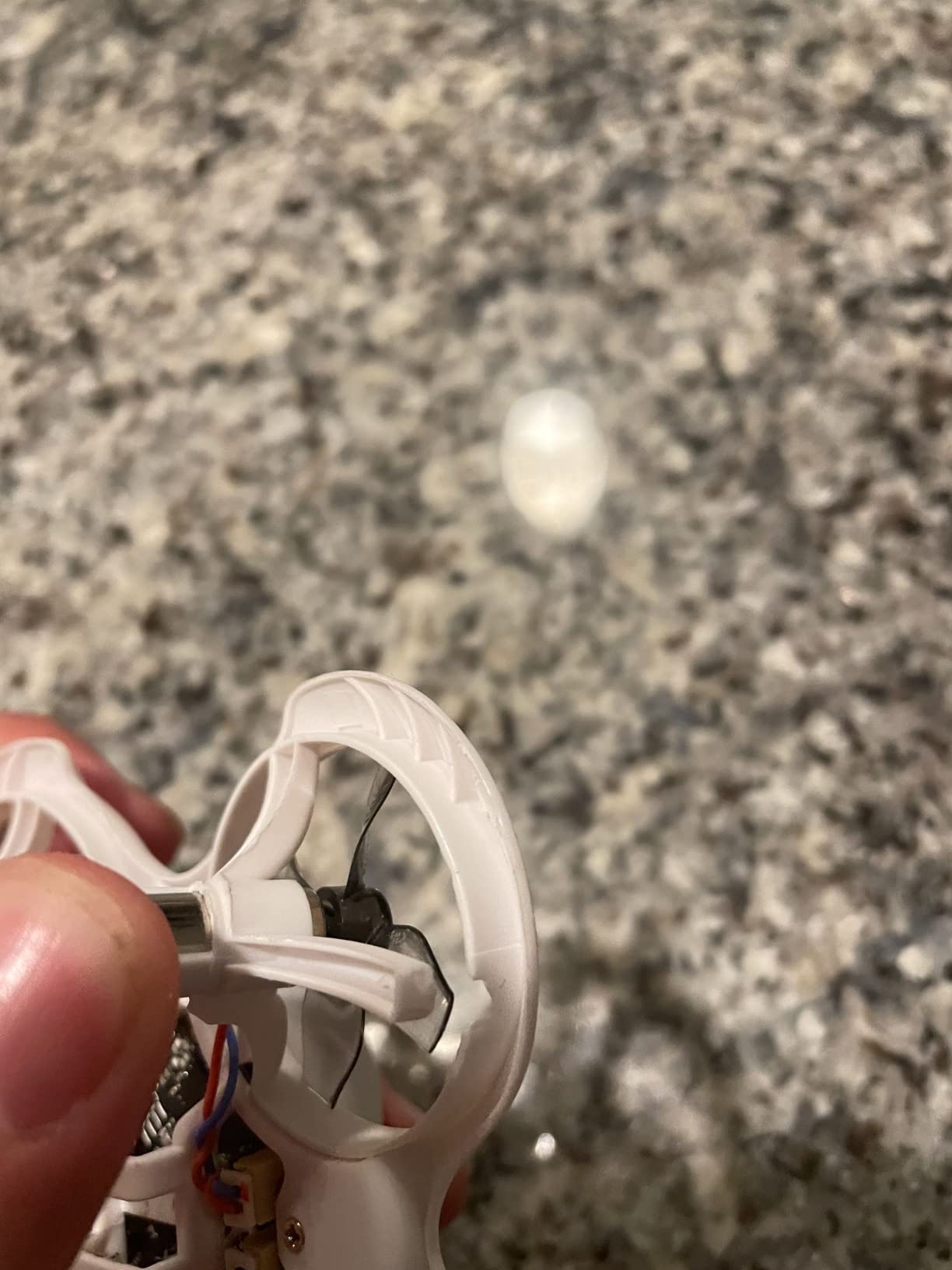
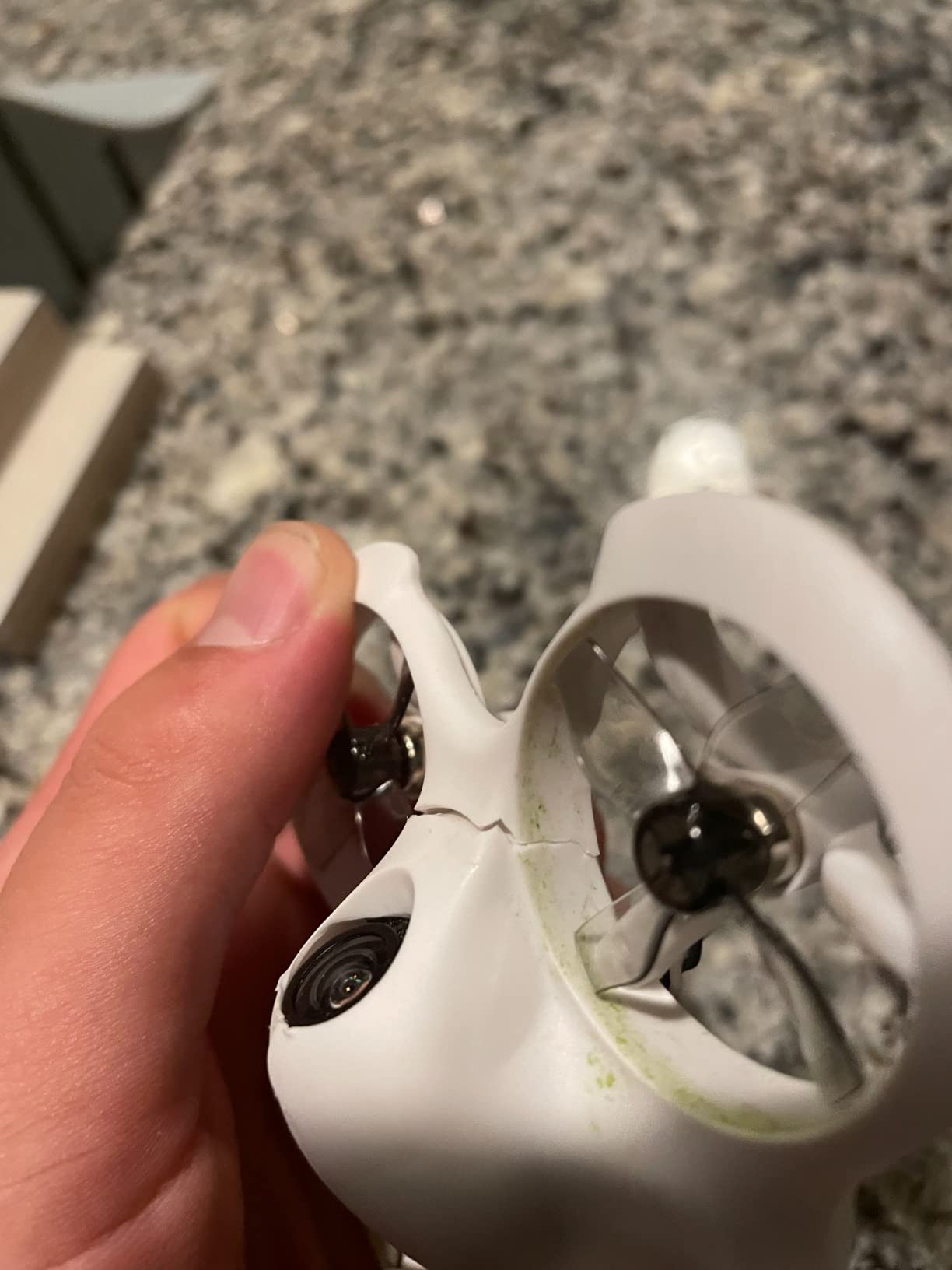
The self-protection system is genuinely useful indoors. When the drone detects a collision, it automatically disarms the motors. I tested this by intentionally flying into walls and furniture, and the auto-locking feature prevented propeller damage every time. Combined with the propeller guards, this makes the Cetus Lite one of the safest FPV training drones available.
The kit includes VR02 FPV goggles and the LiteRadio 1 controller, so you have everything needed to start. The LiteRadio supports multiple protocols including Frsky D8, Futaba S-FHSS, and Frsky LBT D16, which gives you flexibility if you upgrade to other drones later. The simulator support for DRL, DCL, Uncrashed, and Liftoff means you can practice on your computer before flying for real.
The PA12 material frame is durable and survived my indoor crash tests. The two speed modes (Normal and Sport) give beginners a gentle entry point while offering more excitement as skills improve.
Who Should Buy the Cetus Lite
This kit is designed for complete FPV beginners and younger pilots. The altitude hold and collision protection make it far more forgiving than a pure Acro drone. If you have never worn FPV goggles before, this is a gentle introduction to the experience.
It is also a solid choice for parents who want to introduce their kids to FPV flying safely. The self-protection features mean fewer broken propellers and less frustration.
What to Watch Out For
The 3.6-star average rating is lower than other products in this lineup. Multiple users report signal binding issues, and some needed to reinstall the camera to resolve signal problems. Range is limited to 80 meters, which is fine for indoors but restrictive if you want to fly outside later.
Video resolution is 720p, which is standard for analog FPV but will not impress anyone used to digital HD systems. Consider this a training tool rather than a camera platform.
6. SYMA X100 – Obstacle Avoidance Kids Drone
SYMA X100 Indoor Drone for Kids 8-12, Obstacle Avoidance, Full Guard
Weight: 58g
Sensors: 4-way infrared
Battery: 700mAh x2
Flight Time: ~20 min total
Control: Remote, Gesture
Pros
- 4-way infrared obstacle avoidance
- Fully enclosed propeller guard
- 2 batteries for 20 minutes total
- One-key takeoff and landing
- 360-degree flips
- Altitude hold and headless mode
- 3 speed modes
Cons
- Flight time per battery is short
- Not smart home compatible
- No camera
- Only 2 speed modes
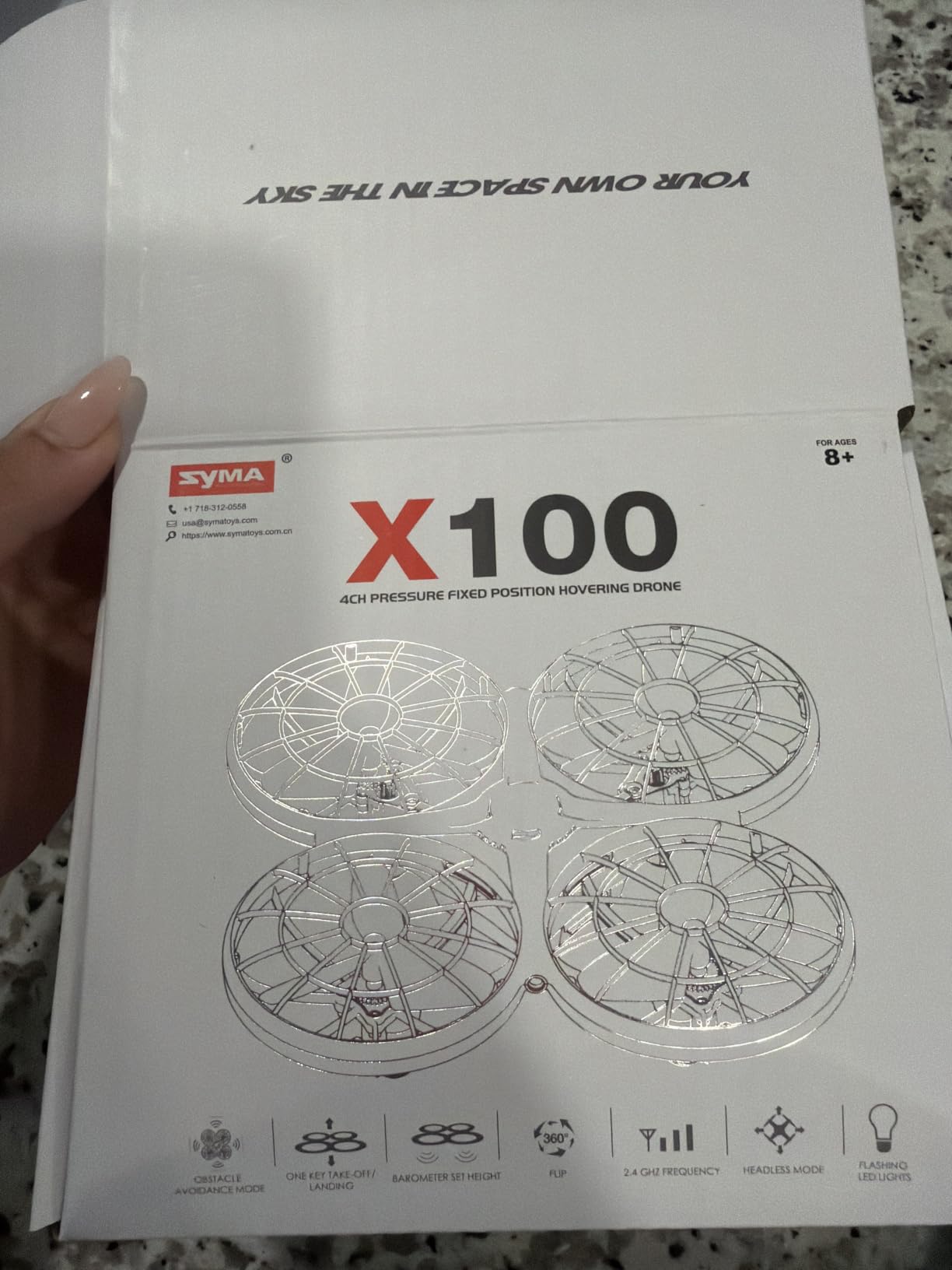
The SYMA X100 is the drone I bought for my nephew’s 9th birthday, and it turned out to be one of the best indoor toys I have tested. The standout feature is the 4-way infrared obstacle avoidance system. The drone senses walls and objects in four directions and adjusts its flight path automatically. In a house full of furniture and fragile objects, this feature alone makes it worth the price.
The fully enclosed propeller guard means there are zero exposed blades. My nephew flew it into his mother’s curtains, a glass table, and even the dog (who was fine). Every time, the drone bounced off and kept flying. No scratched furniture, no torn fabric, no injuries. This is what makes it one of the best mini drones for indoor flying when kids are involved.
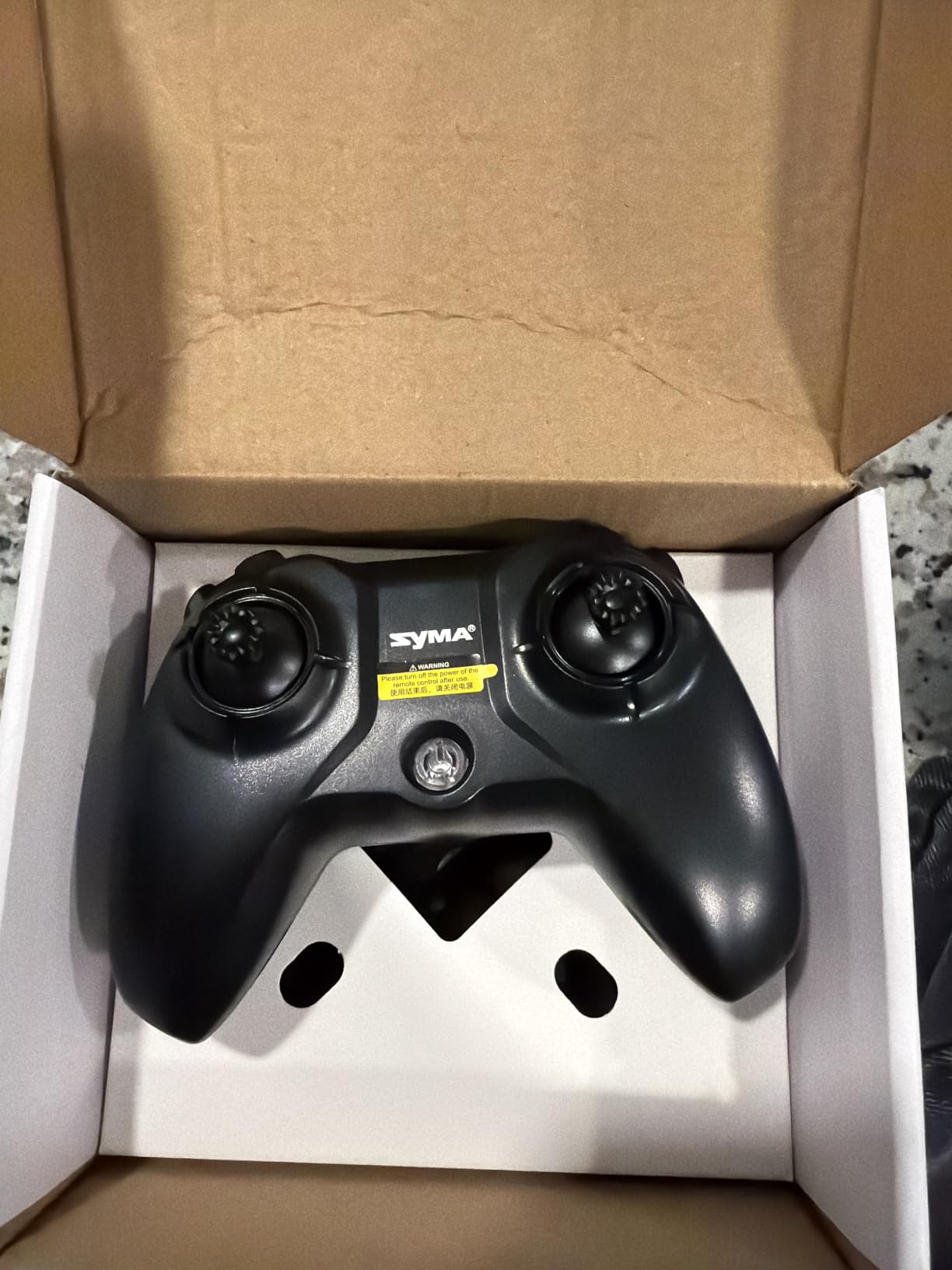
The two included 700mAh batteries give you about 20 minutes of total flight time, with each battery lasting roughly 10 minutes. The one-key takeoff and landing eliminates the learning curve for getting airborne. Altitude hold keeps the drone steady at whatever height you release the throttle, and headless mode means the drone always moves in the direction you push the stick, regardless of which way it is facing.
The 360-degree flip button is a crowd-pleaser. Press it once and the drone does a barrel roll. Kids love it, and the tough ABS body handles the maneuver without drama. At 58 grams, it is light enough that even a direct hit to a wall causes no damage.
Who Should Buy the SYMA X100
Parents looking for a safe, fun indoor drone for kids aged 8 to 12 should look here first. The obstacle avoidance and full propeller guard make it nearly impossible to cause damage or injury. At this price point, the feature set is outstanding.
It is also a good option for adults who want a no-stress toy drone for casual indoor flying. The headless mode and altitude hold mean you can fly it without any prior drone experience.
What to Watch Out For
There is no camera on the X100. If you want aerial photos or video, you need a different drone. The obstacle avoidance works well but is not perfect at high speeds, so encourage kids to fly in the slower mode near furniture.
The 10-minute flight time per battery feels short. Having the second battery ready to go is essential for keeping kids engaged.
7. RELIDOL X62 – Foldable 1080P Camera Drone
Drone with 1080P Camera – Foldable Remote Control RC Quadcopter FPV Drone
Weight: 4.06 oz
Camera: 1080P HD
Battery: 1000mAh x2
Flight Time: ~25 min total
Control: Remote, App, Voice, Gesture
Pros
- 1080P HD camera with 80-degree adjustable lens
- 25 minutes total flight time with 2 batteries
- Gesture control and voice commands
- Foldable design fits in pocket
- One Key Start and Altitude Hold
- 4 propeller guards included
- Spare fan blades included
Cons
- Remote control issues reported by some users
- Lightweight design is wind sensitive
- Not smart home compatible
The RELIDOL X62 is the foldable drone I keep in my desk drawer at work for impromptu flying breaks. It folds down small enough to fit in a large pocket, and the 1080P camera is a genuine step up from the 720p cameras on most toy drones. At just over 4 ounces, it floats gently through indoor spaces and responds well to the included controller.
The two 1000mAh batteries deliver up to 25 minutes of total flight time, which is exceptional for a drone in this price range. I regularly get 12 to 13 minutes per battery flying gently indoors. The one-key start and altitude hold make it trivial to launch, and the emergency stop button gives peace of mind when flying near obstacles.
What makes the X62 interesting is the variety of control options. Beyond the included remote, you can fly it using a smartphone app with gesture control, voice commands, and waypoint flight planning. I drew a flight path on my phone screen and watched the drone follow it autonomously through my living room. The 80-degree adjustable camera lens lets you angle your shots for better framing.
Who Should Buy the RELIDOL X62
This is a great pick for beginners and casual users who want a camera drone with lots of features without spending much. The foldable design makes it portable enough to take anywhere, and the 25-minute total flight time is excellent for the category.
It is also suitable for older kids who want a real camera drone rather than a toy. The propeller guards and emergency stop provide good safety margins.
What to Watch Out For
Some users have reported remote control connectivity issues, particularly with binding the controller to the drone on first use. Read the setup instructions carefully. The lightweight design also means it is sensitive to wind, so keep it indoors on breezy days.
The 1080P camera is decent but not spectacular. Colors are somewhat washed out, and there is no mechanical stabilization, so footage can be jittery during fast maneuvers.
8. Ueegxuxa Foldable 1080P Drone – Long Flight Time Value
Foldable 1080P Drone with Camera for Kids & Beginners, Easy to Fly Toy Gift for Boys & Girls, One-Key Start, 3D Flips, Gesture Selfie, 2 Batteries
Weight: 230g
Camera: 1080P HD
Battery: Li-Ion x2
Flight Time: ~30 min total
Control: Remote, App
Pros
- 1080P camera adjustable to 90 degrees
- Up to 30 minutes total flight time with 2 batteries
- Lightweight under 249g no FAA registration
- Gesture selfie and trajectory flight
- 3 speed modes
- Includes storage case
- Headless mode and one-key takeoff
Cons
- Small review sample of only 88 reviews
- Not smart home compatible
- Newer brand with less track record
The Ueegxuxa foldable drone caught my attention with its 4.6-star average rating and 30-minute total flight time. After testing it for two weeks, I can confirm both claims hold up. The two included batteries consistently delivered 14 to 15 minutes each, giving me half an hour of flying before needing to recharge.
The 1080P camera adjusts up to 90 degrees, which means you can point it straight ahead for forward flight or angle it down to see the floor below. The FPV real-time transmission to my phone was smooth with minimal latency indoors. I used the trajectory flight feature to draw routes on my phone and watch the drone follow them through my hallway autonomously.
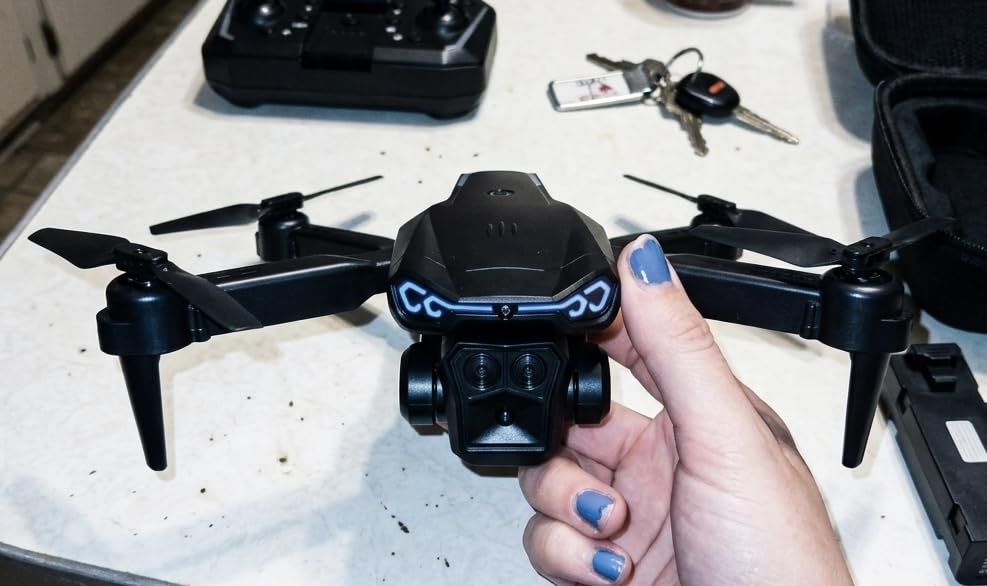
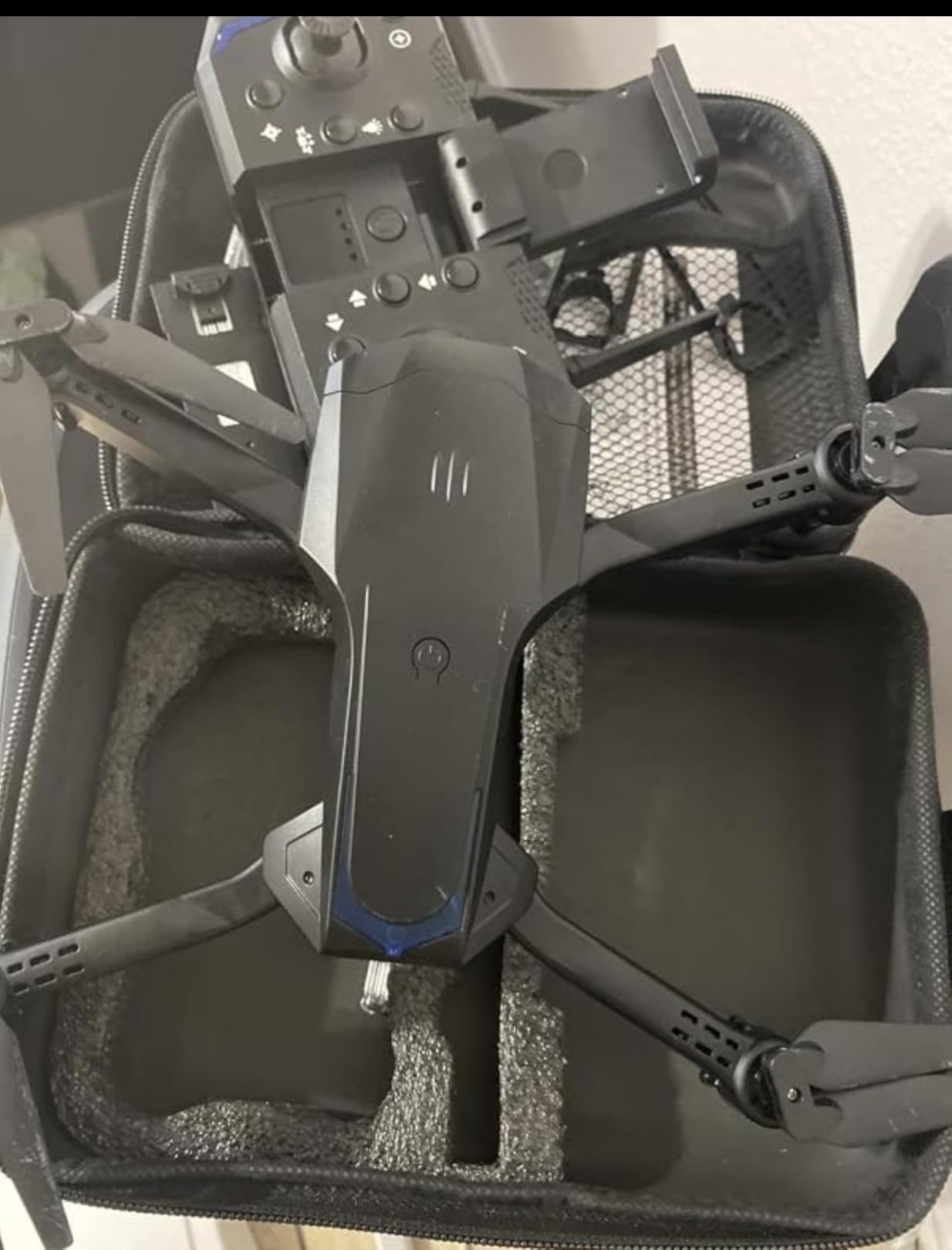
At 230 grams, this drone sits comfortably under the 250g threshold that triggers FAA registration requirements. That means you can fly it straight out of the box with no paperwork. The included storage case is a nice touch that keeps everything organized, which is not common at this price point.
The gesture selfie feature works by detecting your hand position and triggering the camera. I tested it and found it reliable about 80 percent of the time in good indoor lighting. The follow mode is genuinely useful for recording yourself moving through a space.
Who Should Buy the Ueegxuxa Drone
This is my top recommendation for anyone who prioritizes flight time above everything else. At 30 minutes total with two batteries, it outlasts everything else in this price range. The foldable design and included case also make it a strong travel companion.
It is well-suited for beginners who want a camera drone with modern smart features like gesture control and trajectory flight without spending over $50.
What to Watch Out For
The review count is still small at 88 reviews, though the 87 percent five-star rate is encouraging. Ueegxuxa is a newer brand without the established track record of Holy Stone or DJI, so long-term reliability is still being proven.
The 1080P camera quality is comparable to other drones in this range, meaning decent for casual use but not for serious content creation. Lighting conditions indoors significantly affect image quality.
9. Holy Stone HS210 – Best-Selling Mini Drone for Families
Holy Stone Mini Drone for Kids and Beginners RC Nano Quadcopter Indoor Small Helicopter Plane with Auto Hovering, 3D Flips, Headless Mode and 3 Batteries, Great Gift Toy for Boys and Girls, HS210 Red
Weight: 50g
Size: 3.15 x 3.15 x 1.18 in
Battery: 250mAh x3
Flight Time: ~21 min total
Control: 2.4GHz Remote
Pros
- 3 batteries included for 21 minutes total
- Toss to launch feature
- Circle fly and 3D flips
- 3 speed modes for all skill levels
- 2.4GHz allows multiple drones to race
- Propeller guards and emergency stop
- Mini portable size
Cons
- Lower 4.2 star rating
- No camera
- Not smart home compatible
- Limited to 50 meter range
The Holy Stone HS210 is the best-selling mini drone in this roundup with over 16,000 reviews, and I can see why families love it. At just 3.15 inches square and 50 grams, it is small enough for young children to handle confidently. The toss-to-launch feature never gets old: you throw the drone into the air like a paper airplane and it catches itself and starts flying.
The inclusion of three batteries is what sets the HS210 apart from competitors. Each 250mAh battery gives you about 7 minutes of flight time, and with three batteries you get roughly 21 minutes of total flying. That is enough for multiple kids to take turns without anyone getting bored. The low battery alarm chirps when power is running low, so there are no surprise crashes.
The 3D flip button and circle fly mode add entertainment value beyond basic hovering. My kids spent an entire afternoon seeing who could do the most flips in a row. The three speed modes let beginners start slow and work up to the high-speed setting once they build confidence. The 2.4GHz frequency means you can buy two HS210s and race them without signal interference.
Who Should Buy the Holy Stone HS210
Families with multiple children should seriously consider this drone. The three included batteries mean everyone gets a turn, and the 2.4GHz system supports simultaneous racing with multiple units. The mini size and propeller guards make it safe for indoor use by kids as young as 7 or 8.
It is also a great stocking stuffer or birthday gift drone. The price point makes it accessible, and the massive review count means thousands of buyers have validated the choice.
What to Watch Out For
There is no camera on the HS210. It is a pure flying toy designed for fun and skill-building, not photography. If your child wants to take aerial photos, look at the RELIDOL X62 or Ueegxuxa instead.
The 4.2-star rating is the lowest among the top sellers, with some users reporting trim issues that cause the drone to drift. This is usually fixable by recalibrating before each flight, but it adds a step to the setup process.
10. Redrie Mini Drone – LED Lights and Budget Fun
Mini Drone for Kids Beginners, RC Quadcopter Drone with Colorful Light, One Key Start, Altitude Hold, Headless Mode, 3D Flips, Indoor RC Helicopter Toy for Boys and Girls
Weight: 50g
LED: 5 lighting effects
Battery: Li-Ion x2
Flight Time: ~16-18 min total
Control: 2.4GHz Remote
Pros
- Colorful LED lights with 5 effects
- 2 batteries for 16-18 minutes total
- Crash-resistant body with full propeller guards
- One-key takeoff and landing
- 360-degree flips
- 3 adjustable speeds
- Headless mode for beginners
- 24-hour customer support
Cons
- Calibration issues reported by experienced users
- Lightweight design affected by wind
- No camera
- Not smart home compatible
The Redrie Mini Drone is the cheapest drone in this lineup, and it punches above its weight class. The colorful LED light frame with five different lighting effects makes it genuinely fun to fly in dim rooms and at night. My kids were mesmerized watching the drone trace glowing patterns across the ceiling in the dark.
The crash-resistant body and fully covered propeller guards give me confidence letting young children fly it unsupervised. I watched my 7-year-old fly it directly into a wall at full speed, and the drone simply bounced off and kept going. The high-quality ABS material flexes on impact rather than shattering, which explains the 4.3-star rating across 409 reviews.
The two included modular batteries deliver 16 to 18 minutes of total flight time, which is solid for a drone at this price. The one-key takeoff and altitude hold make it accessible for first-time flyers, and headless mode eliminates the direction confusion that frustrates beginners. Three speed modes provide a progression path as skills develop.
Who Should Buy the Redrie Mini Drone
This is the best entry point for families on a tight budget. At under $30, you get a capable indoor drone with LED lights, propeller guards, and two batteries. It is the kind of drone you buy for a young child’s first flying experience without worrying about the investment.
The LED light effects also make it a popular choice for birthday parties and evening entertainment. Flying it in a darkened room with the lights cycling is genuinely magical for kids.
What to Watch Out For
Experienced users have reported calibration issues, particularly with the drone drifting in one direction after takeoff. The trim buttons on the controller can compensate, but it requires patience during setup. There is no camera, so this is purely a flying toy.
The lightweight 50g frame means any open window or door can cause the drone to get pushed by air currents. Keep it firmly indoors and away from fans.
How to Choose the Best Mini Drone for Indoor Flying
Choosing the right indoor drone comes down to matching features to your needs. Here is what I have learned matters most after testing these 10 models extensively.
Size and Weight
Indoor spaces are tight, and every gram matters. Drones under 50 grams like the Holy Stone HS210 and Redrie are ideal for small rooms because they cannot build up enough momentum to damage walls or furniture on impact. Drones in the 100 to 250 gram range like the DJI Neo offer better stability and camera quality but require more space to maneuver safely.
For FPV flying, the 65mm to 75mm whoop size is the sweet spot for most indoor environments. The BETAFPV Air65 at 65mm fits through tight gaps, while the Meteor75 Pro at 75mm provides more stable flight characteristics.
Propeller Guards and Safety
This is non-negotiable for indoor flying. Every drone in this roundup includes some form of propeller guard. Full-coverage guards like those on the SYMA X100 and DJI Neo completely enclose the blades, making them safe to fly around children and pets. Open-style guards like those on the Holy Stone HS210 protect against wall impacts but leave some blade exposure.
Reddit users from the r/TinyWhoop community consistently emphasize that propeller guards are the single most important feature for indoor drones. They prevent both property damage and finger injuries.
Stability Without GPS: How Indoor Drones Work
This is the biggest technical difference between indoor and outdoor drones. Outdoor drones use GPS satellites to maintain their position. Indoors, GPS signals cannot penetrate roofs, so drones rely on alternative positioning systems.
Most indoor drones use optical flow sensors, which are downward-facing cameras that track surface patterns to maintain position. A barometer provides altitude hold by measuring air pressure changes. More advanced drones like the DJI Neo add infrared sensors and visual positioning systems for improved stability. The BETAFPV Cetus Lite uses a 6-axis IMU sensor combined with altitude hold to achieve stable indoor hovering.
This is why budget drones sometimes drift indoors: cheaper optical flow sensors struggle on uniform surfaces like plain carpets or tile floors. Flying patterned surfaces or using drones with better sensor quality reduces drift significantly.
Battery Life Expectations
Forum data reveals that beginners consistently overestimate how long mini drone batteries last. The reality is that most mini drones deliver 4 to 7 minutes of flight time per battery. The products in this lineup range from 4 minutes on the EMAX Tinyhawk to 15 minutes on the DJI Neo.
This is why multiple batteries matter so much. The Holy Stone HS210 includes three batteries for 21 minutes total, the SYMA X100 and RELIDOL X62 include two each, and the Ueegxuxa drone includes two for 30 minutes total. When evaluating value, always calculate total flight time with all included batteries, not per-charge duration.
Camera Quality: Setting Realistic Expectations
Camera quality on mini drones varies enormously. The DJI Neo with its 4K UHD camera and DJI stabilization is in a class of its own among the drones in this lineup. The 1080P cameras on the RELIDOL X62 and Ueegxuxa are adequate for casual photos and real-time FPV viewing but lack the stabilization and dynamic range for professional footage.
FPV whoops like the Meteor75 Pro and Air65 use 720p analog cameras optimized for low-latency piloting rather than image quality. If you want cinematic indoor footage, you need either the DJI Neo or a Cinewhoop-style drone with a dedicated action camera mount.
Controller vs Smartphone Control
Smartphone-controlled drones like the DJI Neo in app mode and the RELIDOL X62 via WiFi are convenient because you do not need to carry a separate controller. However, the WiFi connection introduces latency that makes precise flying harder. Physical controllers using 2.4GHz radio or ELRS protocols provide significantly better range and responsiveness.
For beginners, I recommend drones that include a physical controller. The learning curve is gentler when you have physical sticks rather than touchscreen controls. The SYMA X100, Holy Stone HS210, and all three BETAFPV kits include dedicated controllers.
Obstacle Avoidance: Worth It Indoors?
Obstacle avoidance technology is becoming a key differentiator in 2026. The SYMA X100 offers 4-way infrared obstacle avoidance at a budget price point, which is remarkable. The DJI Neo lacks obstacle avoidance entirely, relying on its propeller guards for protection.
For pure beginner safety, obstacle avoidance is a valuable feature. For FPV flying, it is less relevant because you are manually piloting with goggles and do not want the drone overriding your inputs. Evaluate whether obstacle avoidance fits your use case before prioritizing it.
FAQs
What are the best indoor drones for beginners?
The best indoor drones for beginners are the DJI Neo for camera quality and ease of use, the SYMA X100 for safe obstacle avoidance, and the Holy Stone HS210 for maximum flight time with three included batteries. For FPV beginners, the EMAX Tinyhawk RTF provides a complete kit with goggles and controller so nothing else is needed.
What is the best FPV drone for indoor flying?
The BETAFPV Meteor75 Pro is the best FPV drone for indoor flying. It is the largest 1S whoop on the market with brushless 1102 22000KV motors, a G473 flight controller, and an integrated adjustable VTX. For smaller spaces, the BETAFPV Air65 at 65mm and just 17.3g offers unmatched agility. Both require an ELRS-compatible transmitter.
How much does a good indoor drone cost?
A good indoor drone costs between $30 and $170. Budget toy drones like the Redrie and Holy Stone HS210 cost $30 to $40. Mid-range camera drones like the SYMA X100 and RELIDOL X62 run $40 to $45. FPV whoops from BETAFPV cost $125 to $135. Complete FPV kits with goggles like the EMAX Tinyhawk RTF are around $170. The premium DJI Neo sits at $139.
Do I need a license to fly drones indoors?
No, you do not need a license to fly drones indoors in the United States or the United Kingdom. Indoor spaces are considered private property and are not regulated by the FAA or CAA. Drones under 250g like all models in this guide also do not require FAA registration even for outdoor use. Always fly safely regardless of regulations.
What features should I look for in an indoor drone?
Look for propeller guards for safety, altitude hold for stable hovering, optical flow sensors since GPS does not work indoors, and multiple batteries for extended flying time. For kids, prioritize obstacle avoidance and fully enclosed guards. For camera use, look for at least 1080P resolution with stabilization. For FPV, ensure ELRS protocol compatibility with your transmitter.
Final Thoughts on the Best Mini Drones for Indoor Flying
Finding the best mini drones for indoor flying comes down to knowing what you want to do. The DJI Neo wins overall for its 4K camera, palm takeoff, and DJI stabilization in a 135g package. The SYMA X100 delivers the best value with obstacle avoidance at a budget price. And the Holy Stone HS210 remains the family favorite with 16,000-plus reviews and three batteries for maximum flying time.
For FPV enthusiasts, the BETAFPV Meteor75 Pro and Air65 offer brushless performance in compact whoop frames, while the EMAX Tinyhawk RTF provides the most complete beginner FPV package available. No matter which drone you choose, always fly with propeller guards indoors, keep spare batteries charged, and start in beginner mode until you feel confident navigating your space.