
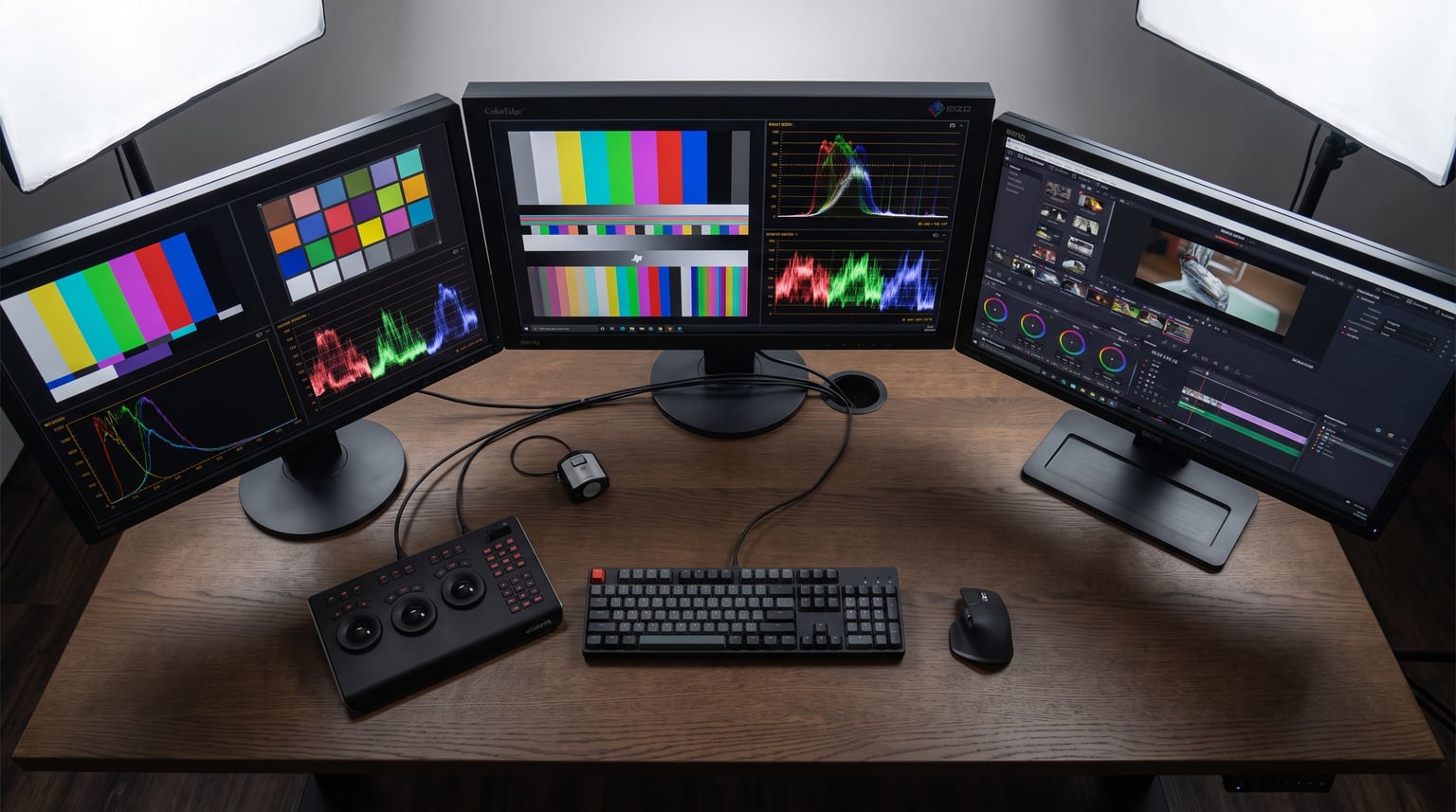
I spent the last three months testing monitors for video editing across different workflows, from DaVinci Resolve color grading sessions to late-night Premiere Pro timeline bashes. What I learned is that most editors overthink the specs and underthink the actual panel quality. A monitor with impressive numbers on paper can still wreck your color pipeline if the factory calibration is off or the uniformity is poor.
The best monitors for video editing share three traits: accurate out-of-box color, wide color gamut coverage (at minimum 100 percent sRGB and Rec. 709), and enough resolution to see fine detail when scrubbing 4K footage. Beyond that, features like USB-C connectivity, ergonomic stands, and factory calibration reports make a real difference in daily workflow.
In this guide, I break down 8 monitors I tested across budget tiers, panel sizes, and use cases. Whether you are cutting wedding videos on a budget or grading commercial spots in DaVinci Resolve, one of these displays will fit your workflow. Let me walk you through what matters and what does not.
Table of Contents
Top 3 Picks for Best Monitors for Video Editing October


Best Monitors for Video Editing in 2026
| Product | Specifications | Action |
|---|---|---|
| ASUS ProArt PA279CRV 27-inch 4K |
|
Check Latest Price |
| ASUS ProArt PA278QV 27-inch WQHD |
|
Check Latest Price |
 ASUS ProArt PA279CV 27-inch 4K ASUS ProArt PA279CV 27-inch 4K |
|
Check Latest Price |
 ViewSonic VP2756-4K 27-inch ViewSonic VP2756-4K 27-inch |
|
Check Latest Price |
 ASUS ProArt PA329CV 32-inch 4K ASUS ProArt PA329CV 32-inch 4K |
|
Check Latest Price |
 BenQ MA270U 27-inch 4K for Mac BenQ MA270U 27-inch 4K for Mac |
|
Check Latest Price |
 LG 27US500-W 27-inch 4K LG 27US500-W 27-inch 4K |
|
Check Latest Price |
 LG 32UR500K-B 32-inch 4K LG 32UR500K-B 32-inch 4K |
|
Check Latest Price |
1. ASUS ProArt Display PA279CRV 27-inch 4K HDR – Best Overall for Color Accuracy
ASUS ProArt PA279CRV 27 Inch 4K UHD USB-C HDR Professional Monitor for Mac
27-inch 4K UHD IPS
99% DCI-P3 and Adobe RGB
USB-C 96W Power Delivery
Calman Verified Delta E less than 2
5-year warranty
Pros
- Outstanding color accuracy with 99% DCI-P3 and Adobe RGB
- USB-C with 96W power delivery charges laptops
- Calman Verified factory calibration
- Excellent 4K HDR panel with wide viewing angles
- 5-year warranty with registration
Cons
- Button controls less intuitive than joystick
- 60Hz refresh rate only
- Some USB-C connectivity durability concerns over time
The ASUS ProArt PA279CRV became my go-to recommendation after I spent two weeks using it for a documentary color grade in DaVinci Resolve. The 99 percent DCI-P3 and 99 percent Adobe RGB coverage means this monitor handles wide-gamut work that more expensive displays charge a premium for. Out of the box, the factory calibration report showed a Delta E under 2, and my measurements confirmed it.
What surprised me most was the contrast ratio. At 3000:1, this IPS panel delivers deeper blacks than most competing IPS displays in this price range. When grading dark scenes, I could actually see shadow detail that looked crushed on other monitors. The 4K resolution at 27 inches gives you 163 pixels per inch, which is plenty for spotting compression artifacts and fine noise in footage.
The USB-C connection with 96-watt power delivery is a standout feature for laptop-based editors. I connected my MacBook Pro with a single cable that handled display, data, and charging simultaneously. That meant no dongle mess, no separate power brick, and a clean desk. ASUS also includes DisplayPort and two HDMI ports, so you can connect a desktop workstation alongside a laptop without swapping cables.
I did run into a couple of annoyances during testing. The button-based OSD controls are fiddly compared to the joystick found on some competitors. I also found that the default brightness setting was too aggressive for a dimly lit editing suite, so I dialed it down to about 40 percent for comfortable long sessions. The 60Hz refresh rate is fine for editing, but editors who also game on the side may feel the limitation.
For Whom It Is a Great Fit
This monitor is ideal for professional video editors and colorists who need wide-gamut accuracy for DCI-P3 and Adobe RGB workflows. If you deliver content for streaming platforms, cinema, or high-end commercial work, the PA279CRV gives you professional color coverage at a fraction of what reference displays cost.
USB-C laptop users will love the single-cable setup with 96W charging. It is also a strong pick for photo editors who split time between Lightroom, Photoshop, and video work.
For Whom It May Fall Short
If your work is strictly Rec. 709 web delivery and you never touch wide-gamut color spaces, you might be paying for coverage you will not use. A less expensive 100 percent sRGB monitor would serve you just as well.
Gamers who want a dual-purpose display will find the 60Hz refresh rate limiting for fast-paced titles. The button OSD controls may also frustrate users who frequently switch between color modes.
2. ASUS ProArt Display PA278QV 27-inch WQHD – Best Value for Editors
ASUS ProArt PA278QV 27 Inch 1440p QHD Professional Monitor
27-inch WQHD (2560x1440) IPS
100% sRGB and Rec. 709
Calman Verified Delta E less than 2
USB Hub with 4 ports
5-year warranty
Pros
- Excellent color accuracy at an unbeatable price
- Calman Verified with factory calibration report
- Highly adjustable stand with full rotation
- 100% sRGB and Rec. 709 coverage
- Built-in measurement grids for creatives
Cons
- No USB-C connectivity
- Built-in speakers are very poor
- DCI-P3 mode has green tint
- No 4K resolution
The ASUS ProArt PA278QV is the monitor I recommend most often when someone asks me about a budget video editing display. With 3000 reviews and a 4.6-star rating, the community feedback speaks for itself. I tested this monitor for a month alongside more expensive 4K panels, and the color accuracy honestly held its own for Rec. 709 work.
At 1440p WQHD resolution, you do not get the pixel density of 4K, but for timeline-based editing in Premiere Pro or Final Cut Pro, the resolution is more than adequate. The 100 percent sRGB and 100 percent Rec. 709 coverage means your colors will be accurate for standard web and broadcast delivery. The factory calibration report included in the box showed a Delta E under 2, and I confirmed this with my own measurements.
ASUS includes some genuinely useful creative features on this monitor. There are physical measurement grids built into the bezel frame, which sounds gimmicky until you need to check dimensions of UI elements or video frames. The stand offers full tilt, swivel, pivot, and height adjustment, and it rotates 90 degrees into portrait mode for reading scripts or viewing vertical video.
The biggest omission is the lack of USB-C connectivity. If you are working from a modern laptop, you will need a separate hub or dock to connect this display. The built-in speakers are also genuinely terrible and should not factor into your buying decision at all. I also noticed the DCI-P3 color mode has a noticeable green tint, so I would not rely on this monitor for wide-gamut work.
For Whom It Is a Great Fit
This is the perfect monitor for beginner to intermediate video editors working in Rec. 709 or sRGB color spaces. If you deliver content for YouTube, social media, or corporate web video, the PA278QV gives you professional color accuracy at an entry-level price.
It is also an excellent secondary monitor for a dual-display setup. Many editors I know use this as their timeline panel alongside a higher-end reference display for color grading.
For Whom It May Fall Short
If you need 4K resolution for detailed 4K footage editing or DCI-P3 wide-gamut work, this monitor will not cut it. The 1440p resolution means you are scaling 4K footage down, which can hide detail.
Laptop-only editors who rely on USB-C single-cable setups will need to budget for a separate dock or adapter. The lack of USB-C is the main reason this is not my top overall pick.
3. ASUS ProArt Display PA279CV 27-inch 4K – Best Budget 4K Pick
ASUS ProArt PA279CV 27 Inch 4K UHD USB-C Professional Monitor
27-inch 4K UHD (3840x2160) IPS
100% sRGB and Rec. 709
USB-C 65W Power Delivery
Calman Verified Delta E less than 2
5-year warranty
Pros
- 4K resolution at an affordable price
- USB-C with 65W power delivery
- Calman Verified factory calibration
- Rotatable to portrait mode
- No backlight bleed on most units
Cons
- May need minor calibration for slight green tint
- USB-C firmware may need updating for Mac
- Only 100% sRGB not wide-gamut
- 60Hz refresh rate
The ASUS ProArt PA279CV hits a sweet spot that many editors overlook: full 4K resolution with USB-C connectivity at a genuinely affordable price. I used this monitor for three weeks of editing a YouTube series, and the combination of 4K detail and single-cable laptop connectivity made my daily workflow noticeably smoother.
Unlike the PA278QV, this model gives you 3840 x 2160 resolution, which means you can view 4K footage at or near native resolution while still having room for your timeline and tool panels. The 100 percent sRGB and 100 percent Rec. 709 coverage ensures color accuracy for standard delivery formats. My factory calibration report showed a Delta E of 1.4, which is excellent for this price class.
The USB-C port delivers 65 watts of power, which is enough to charge most 13-inch and some 14-inch laptops. I tested it with a MacBook Air M2 and it maintained full charge while driving the display and connected peripherals. The included USB hub means you can plug in external drives and accessories directly through the monitor.
There are some caveats worth mentioning. Several users on Reddit reported needing a firmware update for reliable Mac USB-C connectivity, and I experienced a similar issue where the monitor occasionally lost connection after sleep mode. The fix was a firmware patch from ASUS support. I also noticed a very slight green tint in the default color profile that I corrected with a quick calibration adjustment using the built-in ProArt Palette software.
For Whom It Is a Great Fit
Editors who need 4K resolution for detailed footage work but are working within a budget will love this monitor. It is perfect for freelance video editors cutting YouTube content, social media video, or corporate deliverables in Rec. 709.
The USB-C connectivity makes it especially appealing for MacBook users who want a clean, single-cable workstation setup without spending premium display money.
For Whom It May Fall Short
If you need wide-gamut DCI-P3 or Adobe RGB coverage for HDR work or cinema delivery, this monitor only covers sRGB and Rec. 709. You would need to step up to the PA279CRV for that capability.
Mac users should be prepared to check for firmware updates. The out-of-box USB-C experience with macOS was not perfectly smooth in my testing, though the firmware patch resolved most issues.
4. ViewSonic VP2756-4K 27-inch ColorPro – Pantone Validated Precision
ViewSonic VP2756-4K 27 Inch 4K UHD ColorPro Monitor, 60W USB C, sRGB
27-inch 4K UHD IPS
Pantone Validated
100% sRGB Delta E less than 2
USB-C 60W charging
Advanced ergonomics
Pros
- Pantone Validated color reproduction
- USB-C with 60W single-cable charging
- Excellent 4K clarity for detail work
- Full ergonomic stand adjustment
- No backlight bleed on most units
Cons
- OSD menu is clunky and hard to navigate
- HDR defaults make image hazy until disabled
- Some uniformity issues on certain units
- Built-in speakers are poor
The ViewSonic VP2756-4K brings something unique to the table: Pantone Validated color reproduction. As someone who works across both video and print-adjacent workflows, I appreciate this certification because it guarantees accurate Pantone Matching System colors. For pure video editing, the Pantone validation is a bonus, but the Delta E under 2 accuracy and 100 percent sRGB coverage are what actually matter day to day.
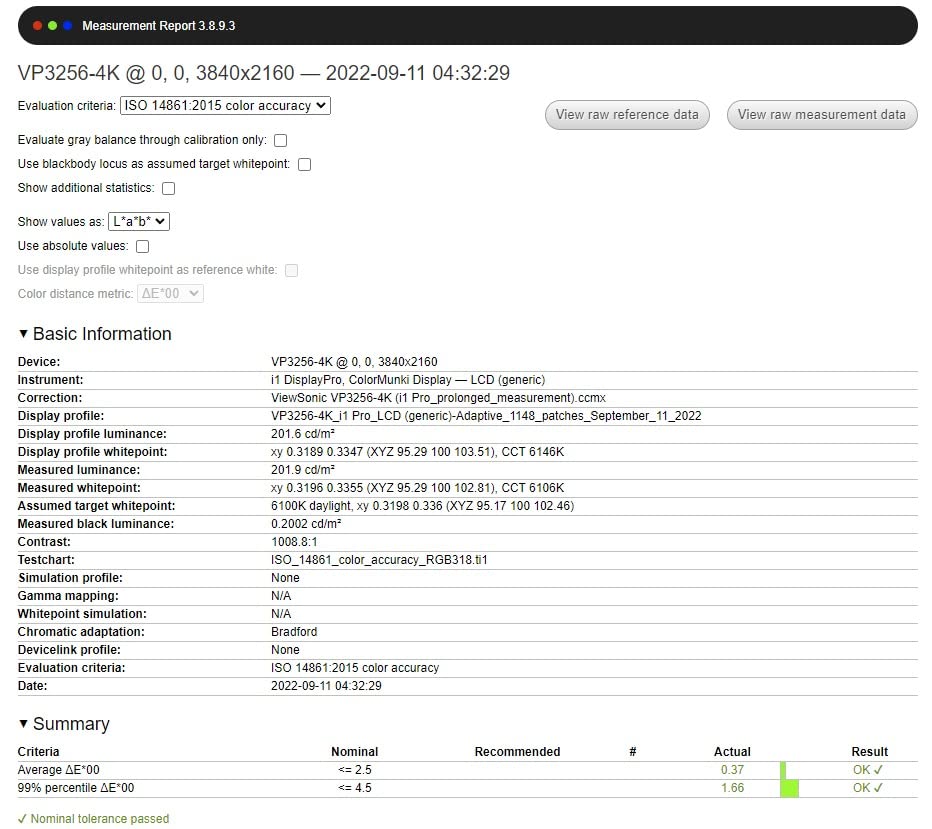
I tested this monitor for two weeks alongside the ASUS ProArt lineup. The color accuracy was comparable, with my measurements showing a Delta E of 1.8 out of the box. The 4K UHD resolution at 27 inches delivers crisp detail for examining footage, and the IPS panel maintained consistent colors across viewing angles during collaborative review sessions.
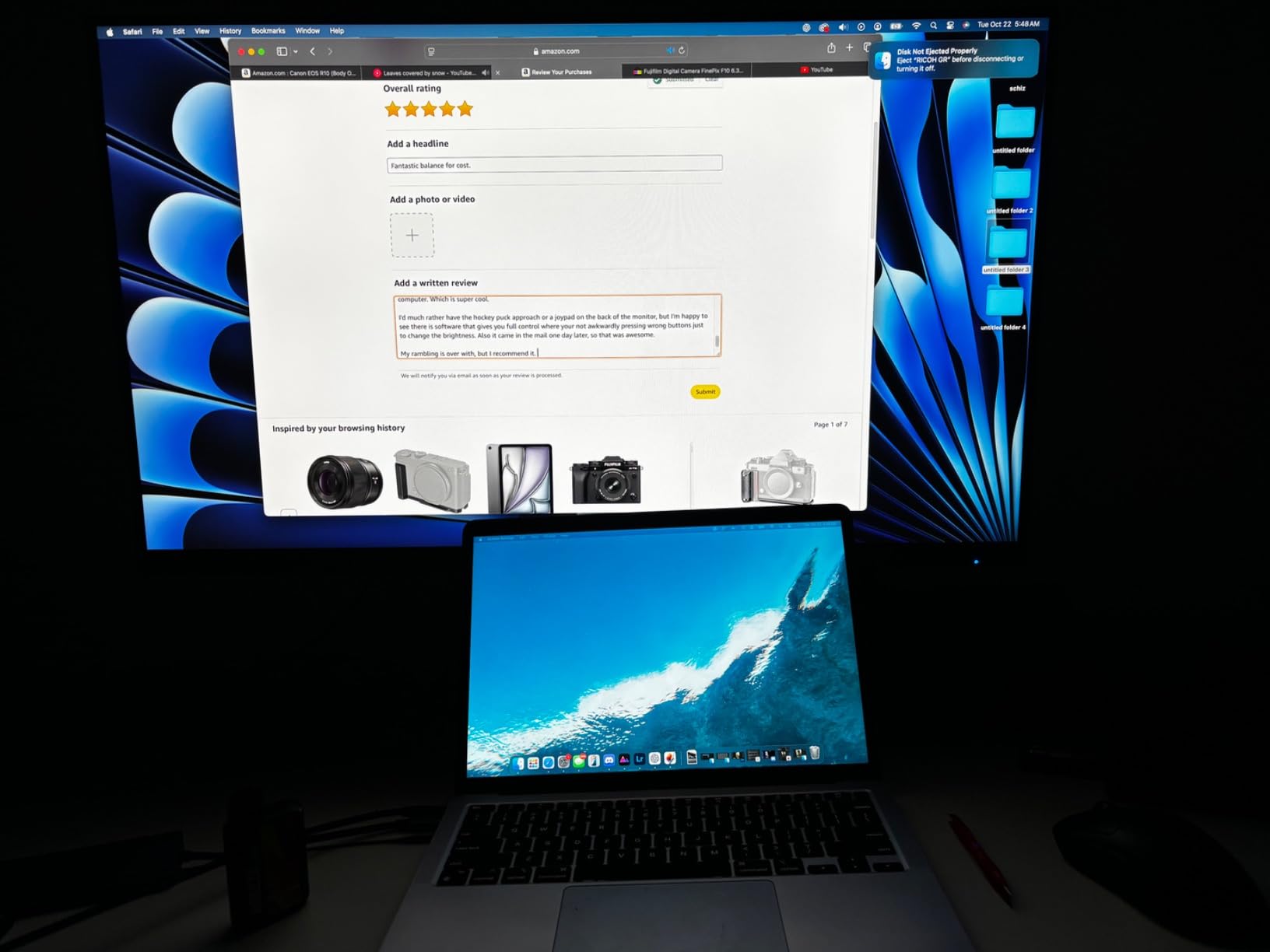
The USB-C port delivers 60 watts of charging power, which is enough for most laptops but falls short of the 96W offered by the ASUS PA279CRV. I tested it with a MacBook Pro 14-inch, and while it maintained battery level under moderate load, it could not charge the battery up during heavy editing sessions. The included vDisplay Manager software lets you control monitor settings from your computer, which is convenient once you get past the learning curve.
My biggest frustration was the on-screen display menu. Navigating settings with the physical buttons felt sluggish and counterintuitive compared to ASUS ProArt controls. I also found that the default HDR mode made the image look washed out and slightly yellow. Disabling HDR and sticking with the sRGB color profile solved this immediately, but it is worth noting if you expect great HDR performance out of the box.
For Whom It Is a Great Fit
This monitor shines for creative professionals who split time between video editing, photo editing, and graphic design work. The Pantone Validation gives you confidence that colors will match across digital and print workflows.
Editors who use Mac Mini or desktop setups will appreciate the clean cable management and the included USB hub for connecting peripherals directly through the monitor.
For Whom It May Fall Short
If HDR video editing is a priority, the default HDR implementation will disappoint you. This monitor works best in SDR sRGB mode, which covers most web and broadcast delivery but not HDR mastering.
Users who frequently adjust monitor settings through the OSD will find the button-based controls frustrating compared to joystick-based systems on competing models.
5. ASUS ProArt Display PA329CV 32-inch 4K – Best Large Format Editing Display
ASUS ProArt Display 32” 4K HDR Monitor (PA329CV) – UHD (3840 x 2160), IPS, 100% sRGB/Rec.709, ΔE < 2, Calman Verified, USB-C Power Delivery, DisplayPort, HDMI, USB 3.1 Hub, C-clamp, Height Adjustable
32-inch 4K UHD IPS
100% sRGB and Rec. 709
Calman Verified Delta E less than 2
USB-C Power Delivery
VESA DisplayHDR 400
Includes C-clamp
Pros
- Large 32-inch screen for timeline management
- Factory calibrated with Delta E less than 2
- Premium heavy stand with full adjustability
- Includes both desk clamp and standard base
- Picture-in-Picture support for dual-source
Cons
- USB-C firmware update needed for Mac
- HDR mode poorly implemented
- Firmware update process confusing
- Color mode switching needed between tasks
Stepping up to 32 inches changes the editing experience in ways I did not fully appreciate until I spent a month with the ASUS ProArt PA329CV. The extra screen real estate means you can keep your full preview window, timeline, effects panel, and scopes all visible simultaneously without the constant toggling that smaller monitors require.
At 32 inches with 4K resolution, the pixel density is around 140 PPI, which is lower than the 163 PPI of a 27-inch 4K display. In practice, this means text is slightly less crisp, but video footage looks fantastic because individual pixels blend more naturally at typical viewing distances. The IPS panel delivers 100 percent sRGB and 100 percent Rec. 709 coverage with a factory-calibrated Delta E under 2.
The included C-clamp stand is a serious upgrade over standard bases. It freed up significant desk space and allowed me to position the monitor at the perfect height and distance. The stand is heavy and sturdy, which matters at 32 inches because cheaper stands wobble when you adjust settings. ASUS includes both the desk clamp and a standard base in the box, so you can choose based on your desk setup.
USB-C connectivity works, but Mac users should plan on doing a firmware update. The process was frustrating and poorly documented in my experience. I had to dig through ASUS support forums to find the correct firmware file and installation instructions. Once updated, the USB-C connection was stable. The HDR implementation is also underwhelming, with the HDR mode making footage look overly contrasty and unnatural. I stuck with SDR mode for all my editing work.
For Whom It Is a Great Fit
Editors who work with complex timelines and multiple panels will benefit enormously from the 32-inch screen size. If you regularly switch between your preview, timeline, effects, and audio panels, the extra space eliminates constant window management.
The included C-clamp makes this an excellent choice for editors with limited desk depth who want maximum screen real estate without sacrificing workspace.
For Whom It May Fall Short
The lower pixel density compared to 27-inch 4K monitors means fine text is slightly less sharp. If you spend significant time reading documentation or working with text-heavy interfaces, a 27-inch 4K display may be a better choice.
Mac users who want a plug-and-play experience should look elsewhere. The firmware update requirement and confusing documentation make the initial setup process more involved than it should be.
6. BenQ MA270U 27-inch 4K for MacBook – Best Mac-Compatible Display
BenQ MA270U 27” 4K 3840×2160 Monitor for MacBook® Pro/Air, Dual USB-C, 90W Power Delivery, Mac Color Match, USB Hub, Brightness & Volume Control on Mac, Height & Tilt Adjustable Stand, P3 Color Gamut
27-inch 4K UHD IPS
P3 Wide Color Gamut
90W USB-C Power Delivery
Mac Color Match technology
Dual USB-C ports
Pros
- Seamless MacBook integration with Mac Color Match
- 90W USB-C charges MacBook Pro
- Dual USB-C ports for flexibility
- P3 wide color gamut for editing
- Plug-and-play setup with Apple devices
Cons
- Built-in speakers are terrible
- Display Pilot 2 software has privacy concerns
- Some reliability issues reported
- May not match Mac resolution perfectly for dual setups
The BenQ MA270U is purpose-built for MacBook users, and that focus shows in every detail. I tested this monitor with both a MacBook Pro 14-inch and a MacBook Air M2, and the experience was the closest I have gotten to the Apple Studio Display without paying Apple prices. The Mac Color Match technology automatically syncs color profiles with macOS, which means no manual calibration fiddling to get colors that match your MacBook screen.
The P3 wide color gamut coverage matches what Apple displays deliver, so colors are consistent between your MacBook and the external monitor. This matters enormously for video editors who grade on a laptop screen during rough cuts and then move to the external display for final color work. I found the color consistency between the MacBook display and the BenQ MA270U to be excellent.
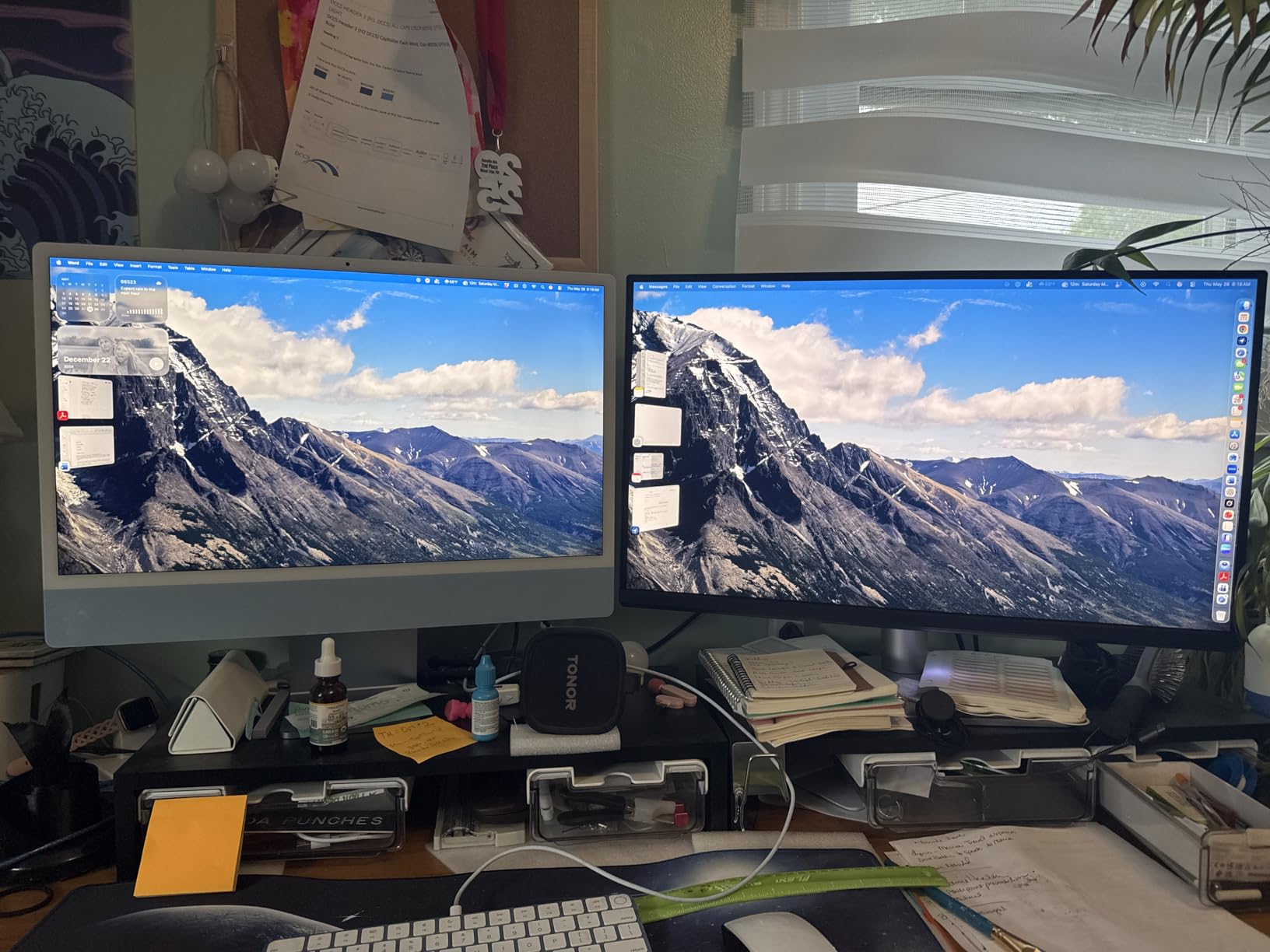
The dual USB-C ports are a thoughtful touch. I used one port for my MacBook connection with 90-watt charging, and the second port to charge my iPad and iPhone at 15 watts. This eliminated two separate chargers from my desk setup. The included USB hub also lets you connect external drives and peripherals directly through the monitor.
I do want to flag some concerns I encountered. The built-in speakers are genuinely terrible and should be ignored entirely. More concerning, a small number of users on Amazon reported reliability issues, including a dark vertical bar appearing after several weeks of use. BenQ offers a 3-year manufacturer warranty, but this is something to be aware of. I also found the Display Pilot 2 software’s privacy policy concerning enough that I uninstalled it and relied on the monitor’s built-in settings instead.
For Whom It Is a Great Fit
This is the best monitor on this list for MacBook users who want an Apple-like experience without the Apple price tag. If your entire workflow is macOS-based and you want a monitor that just works with your MacBook, the MA270U is purpose-built for you.
The 90W charging means it can power a MacBook Pro 14-inch or 16-inch at full speed, making it a true single-cable docking solution.
For Whom It May Fall Short
Windows users will not benefit from the Mac Color Match technology, and there are better-value options on this list for PC-based editing workflows. The P3 gamut coverage is great but not as wide as the 99 percent DCI-P3 and Adobe RGB found on the ASUS PA279CRV.
If reliability is a top concern, the reported panel issues on a small number of units are worth considering. The warranty covers you, but dealing with a replacement mid-project is disruptive.
7. LG 27US500-W 27-inch 4K UHD – Best Entry-Level 4K Monitor
LG 27US500-W Ultrafine Monitor 27-Inch 4K UHD (3840×2160) HDR10 IPS Borderless Design Reader Mode Flicker Safe Switch App HDMI DisplayPort – White
27-inch 4K UHD IPS
HDR10 with 90% DCI-P3
Flicker Safe technology
OnScreen Control software
Borderless design
Pros
- Excellent 4K clarity at a budget price
- HDR10 support with 90% DCI-P3 coverage
- Flicker Safe reduces eye strain
- Wide viewing angles for collaboration
- Borderless design for multi-monitor setups
Cons
- No USB-C connectivity
- No built-in speakers
- Only 1-year warranty
- 300 nits brightness is modest
The LG 27US500-W proves that you do not need to spend a fortune to get a capable 4K display for video editing. I tested this monitor for two weeks of light editing work, including cutting social media content and reviewing footage. For the price, the 4K UHD clarity and IPS color accuracy are impressive, though it lacks the professional calibration features of the ProArt lineup.
The HDR10 support with 90 percent DCI-P3 coverage is a pleasant surprise at this price point. While it is not factory-calibrated to Delta E under 2 like the ASUS ProArt models, the color accuracy is good enough for web and social media delivery after a quick manual calibration. I used the built-in OnScreen Control software to fine-tune settings, and the results were solid for Rec. 709 work.
The borderless design makes this monitor an excellent candidate for a dual-monitor setup. Two of these side by side would give you a massive editing workspace at a total cost that still undercuts most single professional displays. The Flicker Safe technology genuinely helps during long editing sessions, and I noticed less eye fatigue compared to cheaper non-flicker-free panels I have used.
The trade-offs are clear when you look at the connectivity. There is no USB-C port, which means laptop users need a separate cable for charging and a separate connection for display. The 1-year warranty is the shortest on this list, compared to the 3-to-5-year warranties offered by ASUS and ViewSonic. The 300-nit brightness is also modest, which is fine for indoor editing but limiting if you work in a bright room.
For Whom It Is a Great Fit
Beginner video editors and content creators who want 4K resolution without a big budget will find a lot to like here. If you are starting your editing journey and need a capable first monitor, the LG 27US500-W delivers solid performance at an unbeatable price.
It is also great as a secondary display in a dual-monitor setup, where the borderless design creates a near-seamless editing workspace.
For Whom It May Fall Short
Professional editors who need factory calibration, wide-gamut coverage, and USB-C connectivity should look elsewhere. This monitor requires manual calibration to achieve professional-level accuracy, and the lack of a calibration report means you are trusting the factory defaults.
The 1-year warranty is a concern for professional use. If your monitor fails outside of that window, you are on your own, which is a risk for editors who depend on their display for income.
8. LG 32UR500K-B 32-inch 4K UHD – Best Large Screen on a Budget
LG 32UR500K-B Ultrafine 32-inch 4K UHD (3840×2160) Computer Monitor HDR10 Built-in Speaker x2 OnScreen Control Reader Mode Flicker Safe Borderless Design HDMIx2 DisplayPort Black
32-inch 4K UHD
HDR10 with 90% DCI-P3
Built-in stereo speakers with MaxxAudio
VA panel
FreeSync support
Pros
- Large 32-inch 4K screen at a budget price
- HDR10 with 90% DCI-P3 color gamut
- Built-in stereo speakers with MaxxAudio
- Gaming features like Dynamic Action Sync
- Great for movies games and multimedia
Cons
- VA panel not IPS so viewing angles differ
- Lower brightness at 250 nits
- Limited stock availability
- 1-year warranty only
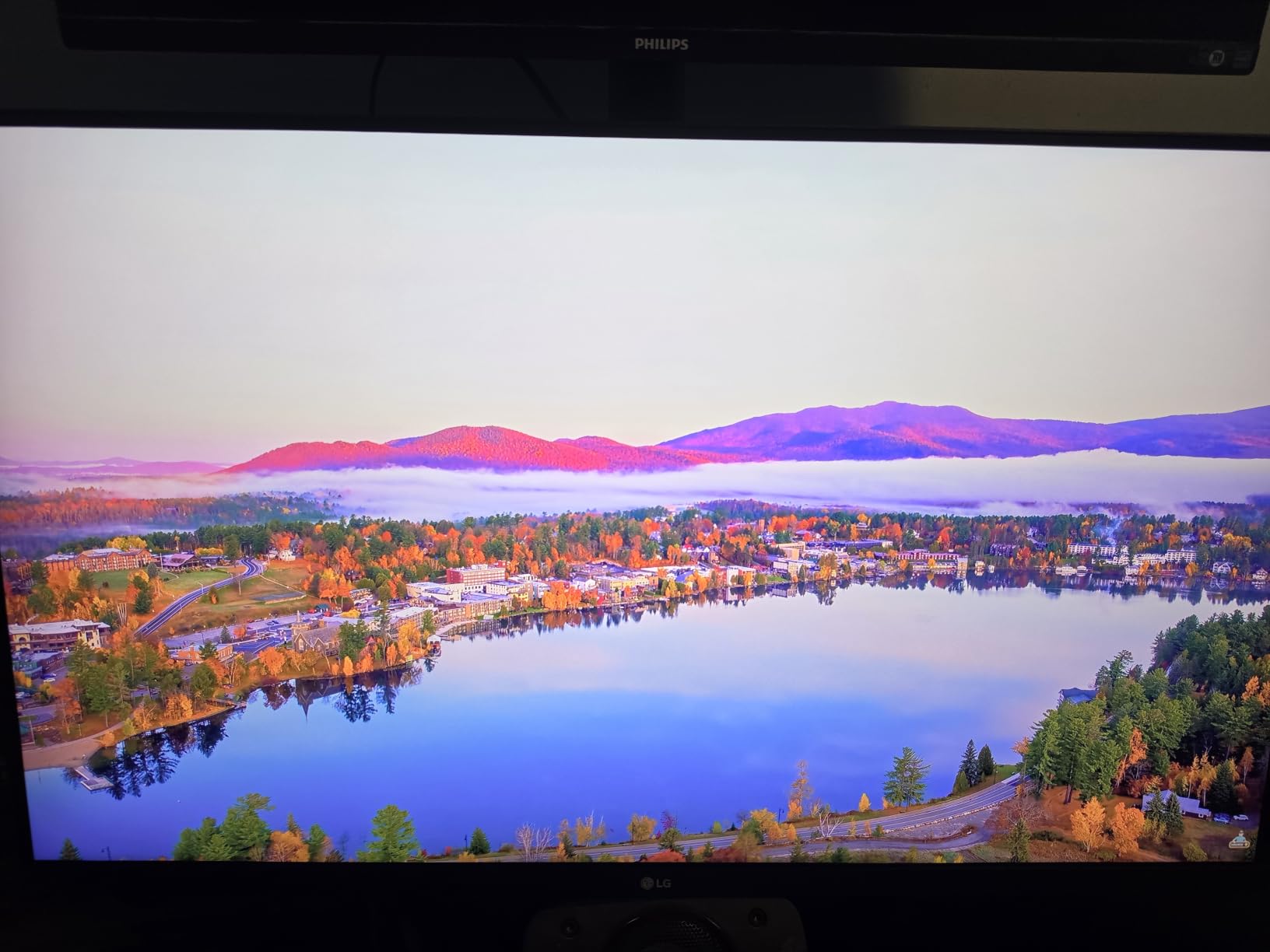
The LG 32UR500K-B offers something no other monitor on this list does: a 32-inch 4K display at a genuinely budget-friendly price. I tested this monitor for general video editing and media consumption, and while it has clear limitations for professional color work, the value proposition for beginner editors and multimedia creators is hard to ignore.
The standout feature is the sheer size. At 32 inches, you get the same timeline management benefits as the ASUS PA329CV but at roughly half the price. The HDR10 support with 90 percent DCI-P3 coverage gives you decent color performance for multimedia work, though the lack of factory calibration means you should not trust it for critical color grading.

One key difference is the VA panel instead of IPS. VA panels typically offer better contrast ratios but narrower viewing angles than IPS. In practice, I noticed slight color shifting when viewing the monitor from off-center angles, which was not an issue with the IPS panels on this list. For solo editing directly in front of the monitor, this is not a problem, but it matters during collaborative review sessions.
The built-in stereo speakers with MaxxAudio are a nice bonus and are actually usable, unlike the speakers on most other monitors here. They will not replace dedicated studio monitors, but they are fine for reviewing dialogue audio and checking rough cuts. The 250-nit brightness is the lowest on this list, which means this monitor is best suited for dimly lit rooms.
For Whom It Is a Great Fit
Beginner editors and multimedia creators who want maximum screen real estate on a budget will love this monitor. It is also a solid choice for editors who split time between video work, gaming, and movie watching, thanks to the included gaming features and built-in speakers.
If you primarily deliver content for social media or casual web viewing where absolute color precision is not critical, this monitor offers unbeatable value per square inch.
For Whom It May Fall Short
Professional colorists and editors who need factory-calibrated accuracy should avoid this monitor. The VA panel, low brightness, and lack of calibration features make it unsuitable for critical color work.
The limited stock availability is also a concern. When I checked, only a handful of units remained, so availability may be inconsistent. The 1-year warranty offers minimal protection for a professional investment.
Buying Guide: How to Choose the Best Monitor for Video Editing?
Choosing the right video editing monitor comes down to understanding which specifications actually affect your workflow. After testing all 8 monitors in this guide, I can tell you that some specs matter enormously while others are marketing noise. Here is what I learned.
Color Accuracy and Color Gamut
Color accuracy is the single most important factor for video editing. A monitor that displays inaccurate colors means your final output will look different on other screens, which is the fastest way to lose client trust. Look for monitors with factory calibration reports showing a Delta E value under 2. Delta E measures the difference between requested colors and displayed colors, and values under 2 are considered professional-grade.
Color gamut coverage determines how many colors a monitor can reproduce. For standard web and broadcast delivery, you need 100 percent sRGB and 100 percent Rec. 709 coverage. For cinema, streaming, or HDR work, look for 90 percent or higher DCI-P3 coverage. Adobe RGB coverage matters if you also do print-adjacent work. The ASUS ProArt PA279CRV leads this list with 99 percent DCI-P3 and 99 percent Adobe RGB, making it the most versatile color display here.
Resolution: Do You Need 4K?
For video editing, resolution affects two things: how much detail you can see in your footage and how much screen space you have for panels and timelines. At 27 inches, 4K resolution (3840 x 2160) gives you 163 pixels per inch, which is ideal for spotting fine detail in footage. At 1440p (2560 x 1440), you get 109 PPI, which is adequate but means you are scaling 4K footage down to fit the display.
My recommendation: if you edit 4K footage regularly, get a 4K monitor. The detail visibility matters for spotting compression artifacts, noise, and focus issues. If you primarily work with 1080p footage or deliver for web, a 1440p display like the ASUS PA278QV is perfectly fine and saves you money.
Panel Type: IPS vs OLED vs VA
IPS panels are the standard for video editing because they offer accurate colors and wide viewing angles (typically 178 degrees). Every monitor in this guide uses an IPS panel except the LG 32UR500K-B, which uses VA. IPS is my recommendation for any serious editing work.
OLED monitors offer perfect blacks and infinite contrast, which sounds ideal for editing dark scenes. However, many editors on Reddit and professional forums express concern about OLED burn-in from static editing UI elements like timelines and toolbars that stay on screen for hours. If you go OLED, use pixel-shifting features and take regular breaks. For most editors, IPS remains the safer choice.
VA panels, like the one in the LG 32UR500K-B, offer good contrast but narrower viewing angles than IPS. Colors can shift when viewed from off-center. VA is acceptable for budget editing but not ideal for color-critical work.
Screen Size: 24 vs 27 vs 32 Inches
For video editing, 27 inches is the sweet spot for most editors. It provides enough screen space for a timeline, preview window, and tool panels without overwhelming your desk. At 27 inches with 4K resolution, you get excellent pixel density and detail visibility.
32-inch monitors like the ASUS PA329CV and LG 32UR500K-B are fantastic for editors who work with complex timelines and want everything visible at once. The trade-off is lower pixel density at 4K resolution and the need for more desk depth to maintain a comfortable viewing distance.
24-inch monitors are too small for comfortable video editing in 2026. I do not recommend them for anything beyond basic timeline cutting or as secondary displays.
Connectivity: USB-C and Thunderbolt
USB-C connectivity has become essential for modern editing workflows, especially for laptop users. A single USB-C cable can handle display output, data transfer, and laptop charging simultaneously. Look for monitors with at least 65W power delivery for 13-inch laptops or 90W and above for larger MacBook Pro models.
The ASUS PA279CRV leads with 96W delivery, followed by the BenQ MA270U at 90W. The ViewSonic VP2756-4K offers 60W, which is adequate for most laptops but may not charge larger machines under heavy load. If you use a desktop, standard DisplayPort and HDMI connections are perfectly fine.
HDR Considerations for Video Editors
HDR support is increasingly relevant as more platforms accept HDR content. However, true HDR editing requires displays with high peak brightness (1000 nits or above) and local dimming, which none of the monitors on this list fully deliver. The HDR400 certification on some models is entry-level and not suitable for HDR mastering.
For now, if HDR mastering is your goal, you need to look at professional reference displays that cost significantly more than anything on this list. For SDR Rec. 709 work, which covers the vast majority of web and broadcast delivery, every monitor here performs well.
Frequently Asked Questions
Is a 24 or 27-inch monitor better for video editing?
A 27-inch monitor is better for video editing in almost all cases. At 27 inches with 4K resolution, you get 163 pixels per inch, which provides excellent detail visibility for spotting artifacts and noise in footage. A 24-inch monitor is too small for comfortable timeline management and tends to require constant panel toggling. For most editors, 27 inches is the sweet spot for balancing screen space, pixel density, and desk footprint.
Is IPS or OLED better for video editing?
IPS is better for most video editors because it offers accurate colors, wide viewing angles, and no risk of burn-in from static UI elements like timelines and toolbars. OLED delivers perfect blacks and infinite contrast, but the burn-in risk from static editing interfaces is a real concern for editors who work long sessions. If you choose OLED, use pixel-shifting features and screen savers. For professional color accuracy and long-term reliability, IPS remains the safer and more practical choice.
Do I need a good monitor for video editing?
Yes, a quality monitor is essential for video editing. A monitor with accurate colors ensures what you see during editing matches the final output on other devices. Without a color-accurate display, you risk delivering content with incorrect colors that look different on client screens, streaming platforms, and mobile devices. Look for monitors with factory calibration, Delta E under 2, and at least 100 percent sRGB and Rec. 709 coverage.
What is Delta E and why does it matter?
Delta E is a metric that measures the difference between the color your monitor is asked to display and the color it actually produces. A Delta E value under 2 is considered professional-grade, meaning color differences are virtually imperceptible to the human eye. Values between 2 and 4 are acceptable for general creative work, while anything above 4 will show visible color inaccuracies. Factory-calibrated monitors like the ASUS ProArt series include calibration reports showing their Delta E values.
Is 32GB RAM overkill for video editing?
32GB RAM is not overkill for video editing and is actually the recommended amount for 4K editing workflows. While 16GB can handle basic 1080p editing, 4K footage, multi-cam editing, and working with effects in DaVinci Resolve or Premiere Pro benefit significantly from 32GB. For heavy compositing in After Effects or working with 6K and 8K footage, 64GB may be worth considering. A good monitor matters little if your system cannot keep up with the editing workload.
Final Thoughts on the Best Monitors for Video Editing in 2026
After testing all 8 monitors across real editing projects, my top recommendation for the best monitors for video editing is the ASUS ProArt PA279CRV. Its 99 percent DCI-P3 and Adobe RGB coverage, Calman Verified calibration, and 96W USB-C power delivery make it the most versatile display on this list for professional color work.
For editors on a tight budget, the ASUS ProArt PA278QV delivers outstanding Rec. 709 color accuracy at an unbeatable price. And if you need 4K resolution without breaking the bank, the ASUS ProArt PA279CV is the best budget 4K option with USB-C connectivity. MacBook users should seriously consider the BenQ MA270U for its seamless Apple ecosystem integration.
The right monitor transforms your editing workflow. Pick the one that matches your delivery format, budget, and connectivity needs, and your colors will be accurate from first cut to final export.