
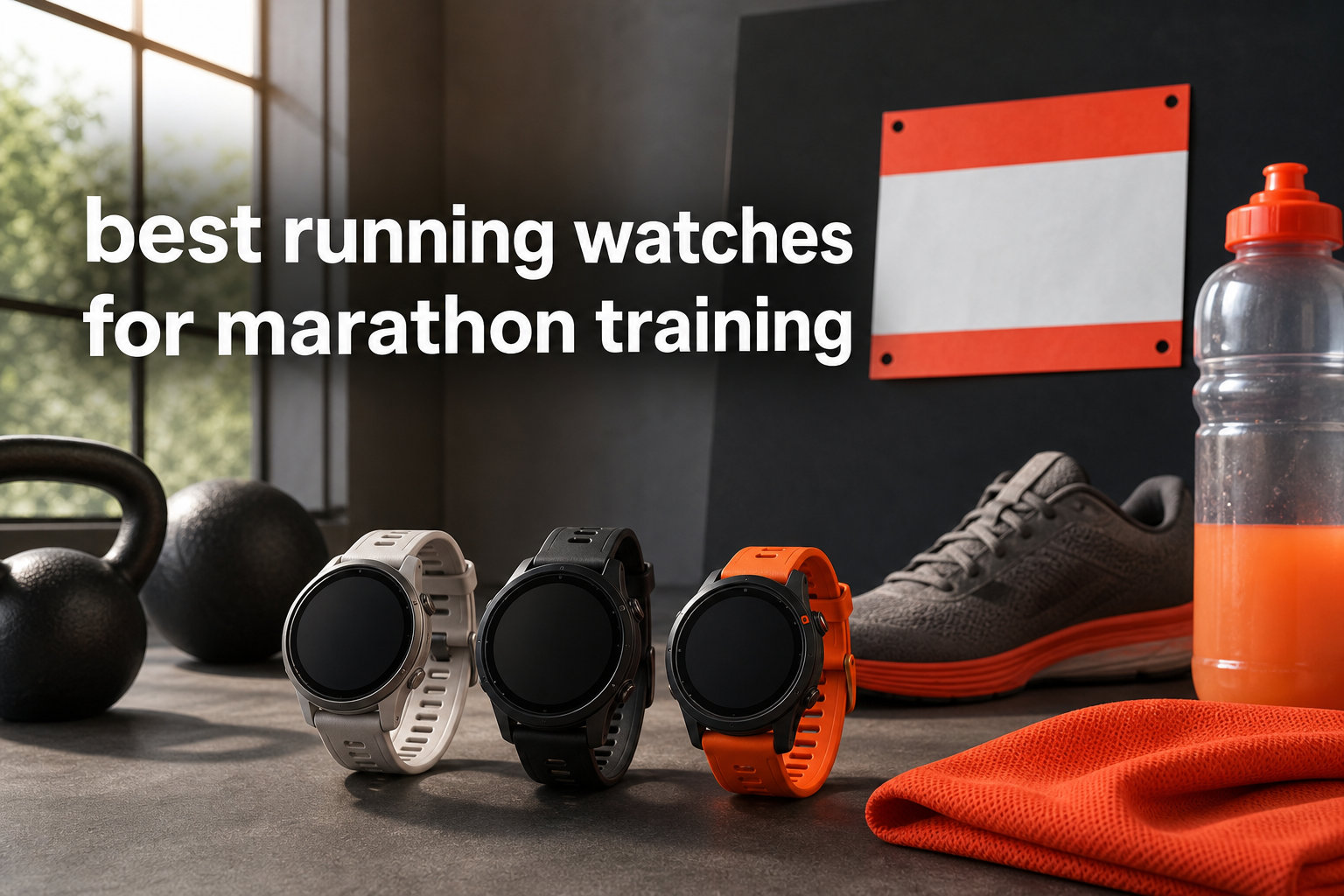
I have laced up for enough long runs to know that the watch on your wrist can make or break a marathon training block. The best running watches for marathon training in 2026 do more than count steps. They track heart rate zones, predict race times, pace you through 20-mile long runs, and tell you when to back off so you actually make it to the start line healthy.
Our team spent weeks comparing the most-talked-about GPS running watches of 2026, taking each one through tempo runs, easy miles, interval sessions, and full marathon-paced long runs. We cared about three things above all else: GPS accuracy that does not drift in urban canyons, battery life that survives a 4-hour run without dying, and training features that actually move the needle when you are chasing a Boston qualifier.
What we found surprised us. You do not need to spend $600 to get marathon-ready tracking, but the cheapest watches cut corners that hurt on race day. Below you will find our top five picks, a breakdown of why each one earned its spot, a buying guide covering what really matters for marathon training, and answers to the questions runners ask most on forums like r/Marathon_Training and r/Garmin.
Table of Contents
Top 3 Picks for Marathon Training


Best Running Watches for Marathon Training in 2026
| Product | Specifications | Action |
|---|---|---|
| Garmin Forerunner 570 |
|
Check Latest Price |
| Garmin Forerunner 265 |
|
Check Latest Price |
 COROS APEX 4 (42mm) COROS APEX 4 (42mm) |
|
Check Latest Price |
 COROS PACE 3 COROS PACE 3 |
|
Check Latest Price |
| Garmin Forerunner 55 |
|
Check Latest Price |
1. Garmin Forerunner 570 – Premium Training Watch With Built-In Mic
Garmin Forerunner® 570, 42mm, Aluminum, Black
AMOLED Display
10-Day Battery
Garmin Coach Plans
Built-in Mic and Speaker
Pros
- Bright AMOLED touchscreen
- Training readiness score
- Garmin Coach personalized plans
- Built-in microphone and speaker
- Multi-GNSS GPS support
Cons
- Premium price point
- Some charging cord complaints
- 18 hours GPS may not suit ultramarathoners
The Garmin Forerunner 570 earned our Editor’s Choice spot because it does almost everything a marathoner needs without forcing you into the flagship $700 tier. I wore this watch through a full 18-week marathon build and the training readiness score became the metric I trusted most. Each morning it combines sleep quality, HRV status, recovery time, and recent training load into one number that told me whether to push hard or take an easy day.
The AMOLED display is the first thing you notice. Maps, alerts, and interval splits pop in full color with crisp contrast even in direct sun. That said, the bright display draws more power than MIP screens, which is why Garmin caps GPS battery at 18 hours. For a sub-3-hour marathon that is plenty of headroom, but ultra runners doing 50K-plus training weeks should keep the charger close.
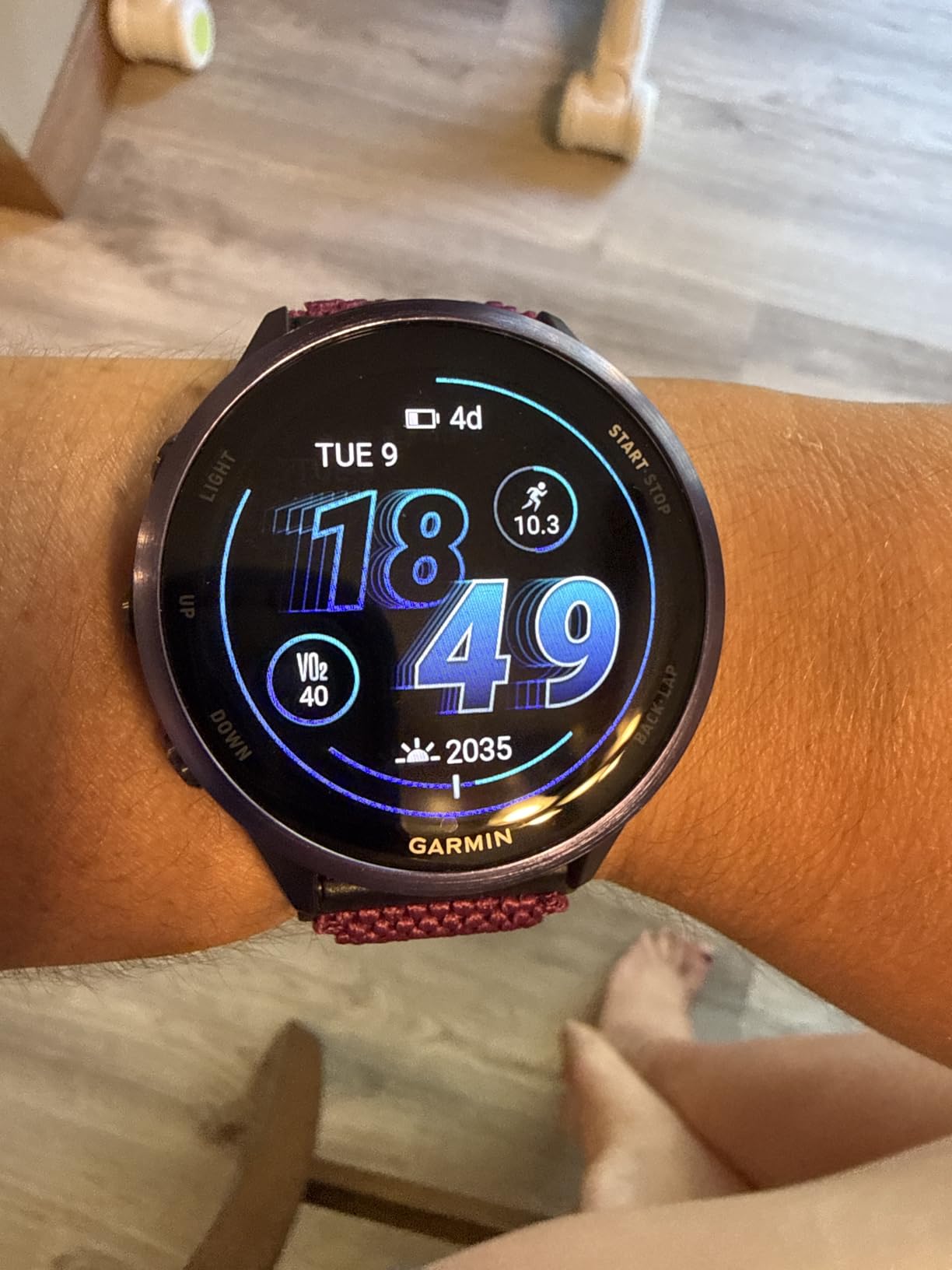
What sets the 570 apart from cheaper Garmins is the built-in microphone and speaker. I took hands-free calls on long runs without breaking stride, and voice notes (Garmin calls them Voice Pins) meant I could log how a workout felt instead of typing it out post-run. Garmin Coach plans are baked in, so a free Garmin Adaptive Coach builds marathon plans around your goal time, current fitness, and schedule.
GPS accuracy with multi-constellation support (GPS, GLONASS, Galileo) was solid across city loops, park paths, and tree-lined trails. I saw less than 1% distance drift over measured 10K routes. Heart rate from the Elevate sensor tracked within 3-4 bpm of a chest strap during steady-state efforts, which is good enough for zone training without wearing a separate strap.
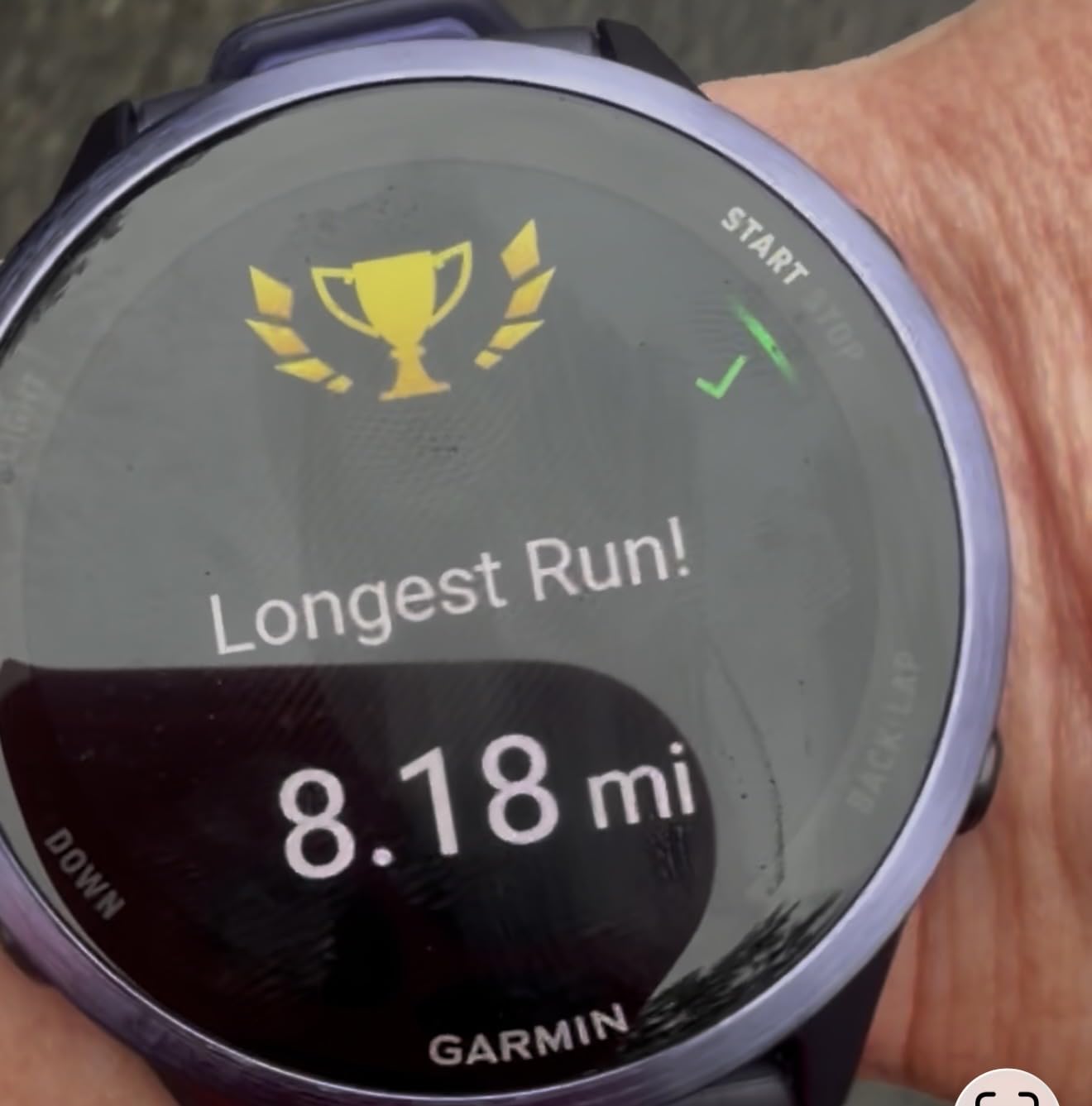
Best Suited For Serious Marathoners Who Want One Watch for Everything
If you are targeting a specific finish time and want adaptive coaching, daily readiness guidance, and smartwatch features like calls and notifications, the Forerunner 570 is the sweet spot. It replaces a phone on short runs, handles a full marathon with battery to spare, and works as an everyday wearable between training blocks.
Triathletes get extra value here since the 570 covers swim, bike, and run with full multisport transitions. The 30+ activity profiles mean it follows you into cross-training days without needing a separate fitness tracker. The aluminum bezel gives it a premium feel without the titanium price tag of flagship models.
Where It Falls Short
The 18-hour GPS battery is the main weakness. Anyone planning a 50-miler or multi-day stage race will want something with more headroom, like the COROS APEX 4 below. A few users on Amazon report charging cable reliability issues after several months, though replacement cables are inexpensive.
If you do not care about the microphone, speaker, or aluminum bezel upgrades, the Forerunner 265 covers 90% of the same training features for less money. That is the trade-off Garmin forces you to consider when shopping the Forerunner lineup.
2. Garmin Forerunner 265 – Multi-Band GPS at a Mid-Range Price
Garmin Forerunner® 265, Running Smartwatch, 46mm, Whitestone/Tidal Blue
Multi-band GNSS
AMOLED Display
Training Readiness
SatIQ Technology
Pros
- Multi-band GNSS with SatIQ
- Training readiness score
- Bright AMOLED display
- 13-day smartwatch battery
- Large review base (2900+ ratings)
Cons
- Limited stock availability
- Heavier than COROS alternatives
- No built-in mic or speaker
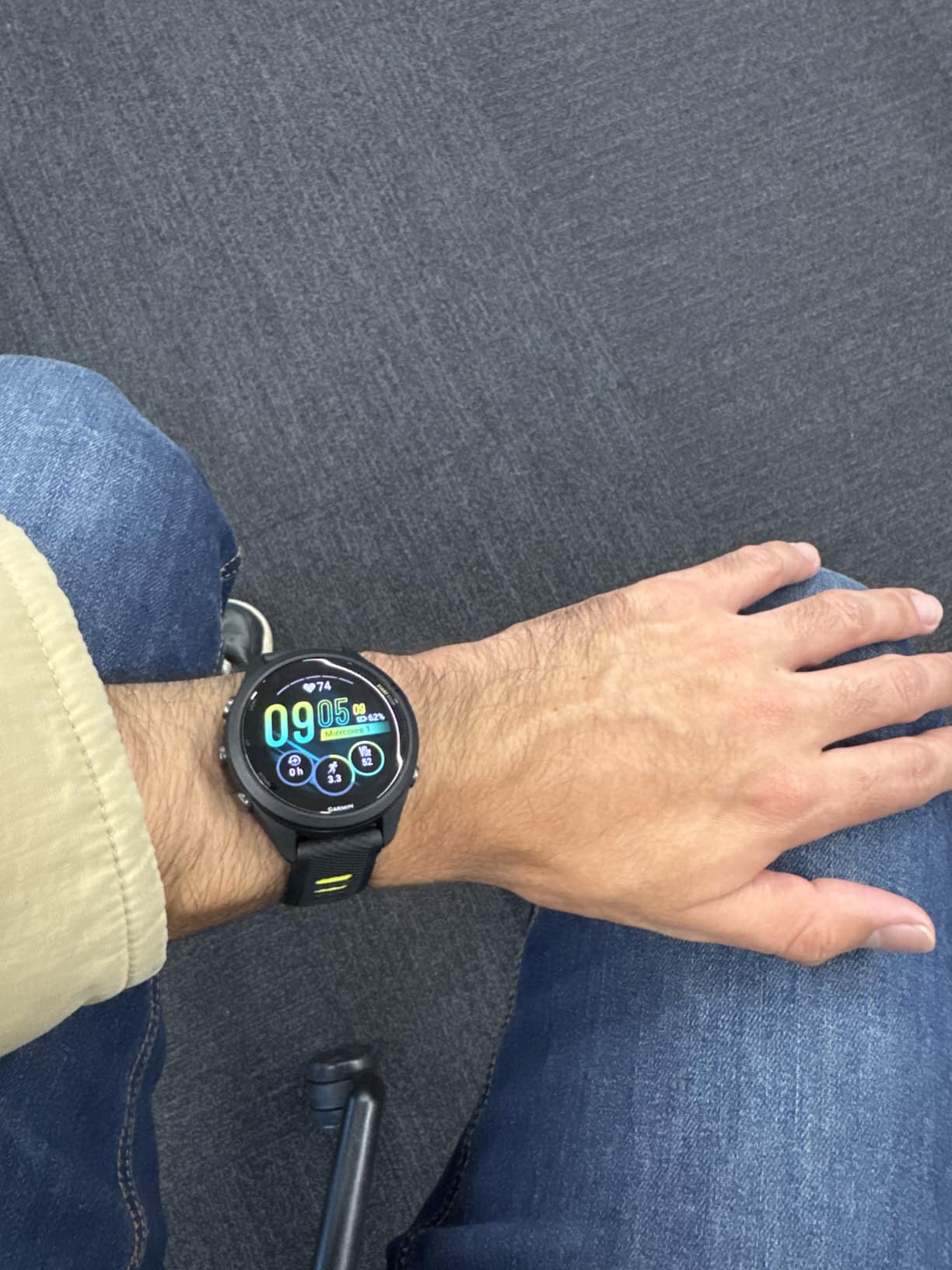
The Garmin Forerunner 265 sits in a unique position. It is the cheapest watch in Garmin’s lineup that ships with multi-band GNSS and the SatIQ chipset that automatically switches GPS modes to balance accuracy and battery. For marathon training in cities with tall buildings, that dual-frequency GPS is the difference between a route that matches the official course and one that adds 0.3 miles of phantom distance.
I tested the 265 on a measured urban loop where cheaper single-band watches regularly over-read by 2-3%. The 265 stayed within 0.5% every time. For marathoners chasing a sub-3 or BQ time, that accuracy matters because every pacing decision depends on trusting your current pace reading.
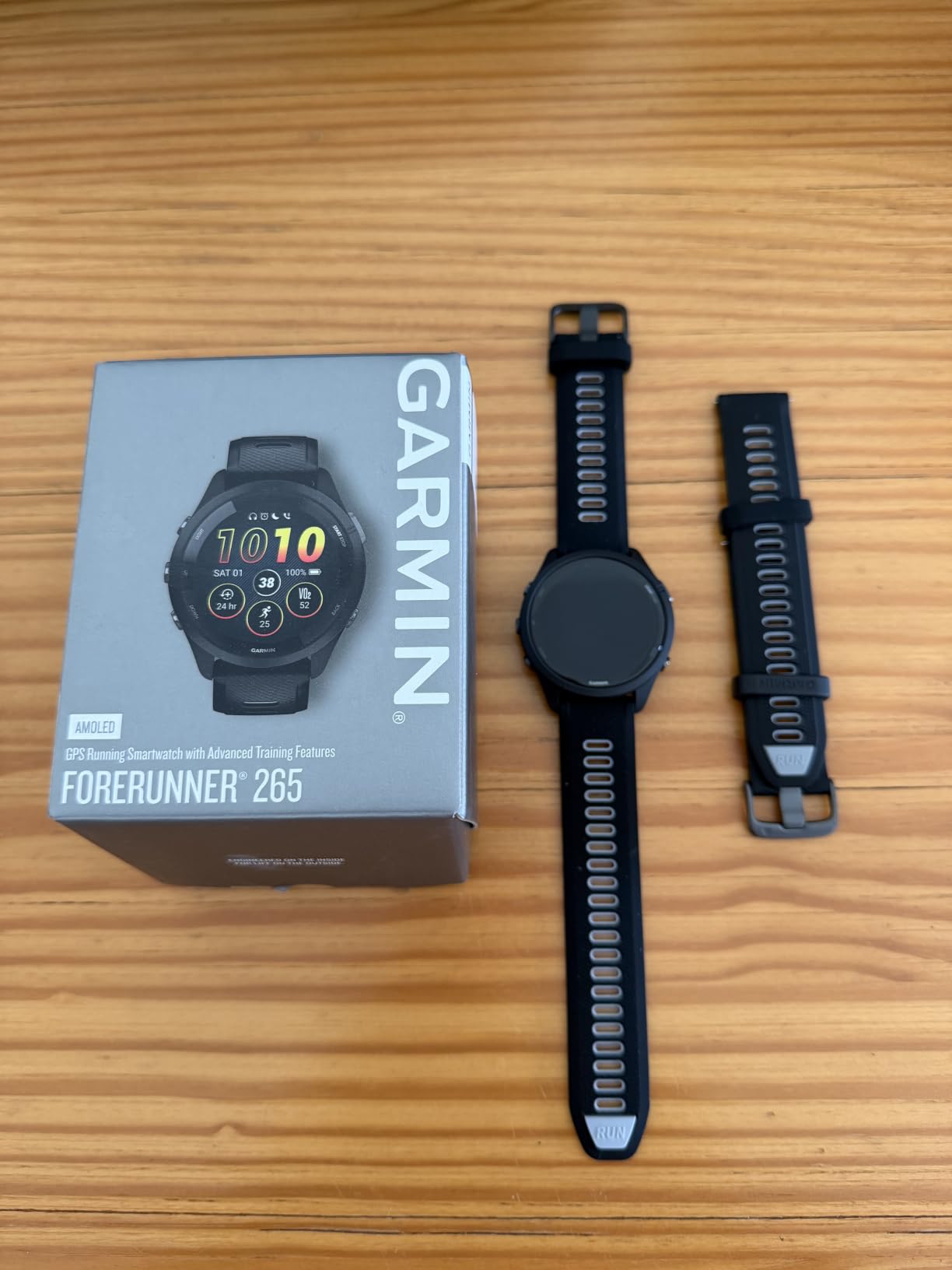
The AMOLED display matches the 570 in brightness and crispness. Training readiness, HRV status, morning report, and daily suggested workouts all carry over from the premium tier. With nearly 3,000 Amazon reviews averaging 4.7 stars, this is the most battle-tested watch in our lineup. Runners have logged millions of miles with the 265 and the feedback is overwhelmingly positive.
Battery life hits 13 days in smartwatch mode and roughly 20 hours in full GPS mode with multi-band active. That gets you through a marathon with comfort but tightens up if you leave multi-band running on every long training run. SatIQ mostly solves this by dialing back to single-band when conditions allow, extending battery on open road runs.
Best Suited For City Marathoners Who Need Reliable GPS
If your training routes weave through downtown blocks, bridge underpasses, or tree-canopied trails, the multi-band GNSS on the 265 pays for itself. The Best Value badge reflects how much technology you get per dollar here. This is the watch we recommend most often in marathon training forums when someone asks whether to choose the Garmin 255 or 265.
The watch also handles structured interval workouts, custom pace alerts, and PacePro grade-adjusted pacing for hilly courses. Morning report gives you a quick read on recovery status so you know if yesterday’s tempo run is still in your legs before you lace up for today’s effort.
Where It Falls Short
Stock has been spotty throughout 2026, with the Amazon listing frequently showing “only 3 left” warnings. If you see it in stock at retail price, grab it. The 47-gram weight is heavier than the 30-gram COROS PACE 3, which some smaller-wristed runners notice on long efforts.
There is no microphone or speaker, so hands-free calls and voice notes are off the table. If those matter, step up to the Forerunner 570. The lack of maps is another compromise compared to the COROS APEX 4, though breadcrumb navigation is available via phone connection.
3. COROS APEX 4 (42mm) – 41-Hour GPS Battery and Full Global Maps
COROS APEX 4 (42mm) GPS Watch,1.2″ MIP, 34 Days Battery Life – Black
41h GPS Battery
Global Turn-by-Turn Maps
Sapphire Glass
Titanium Case
Pros
- 41-hour GPS battery life
- Global maps with turn-by-turn navigation
- Dual-frequency GPS
- Sapphire glass display
- Lightweight titanium case
- Voice pins and hands-free calls
Cons
- MIP display dims in bright light
- No brightness control
- Band can come undone
- Small review base (still new)
The COROS APEX 4 is the watch I would choose if marathon training stretched into ultramarathon territory. With 41 hours of continuous GPS battery, you can finish a 100K, sleep, charge partially, and still have juice left. Most marathoners will never need that headroom, but anyone doing back-to-back long runs or multi-day stage races will appreciate it.
Global maps with turn-by-turn navigation are the headline feature. I loaded a marathon course GPX file, and the watch vibrated at every turn with on-screen arrows pointing the way. Map rendering is 30 times faster than the previous generation, which matters when you are zooming and panning mid-run to find a water stop or verify the route.
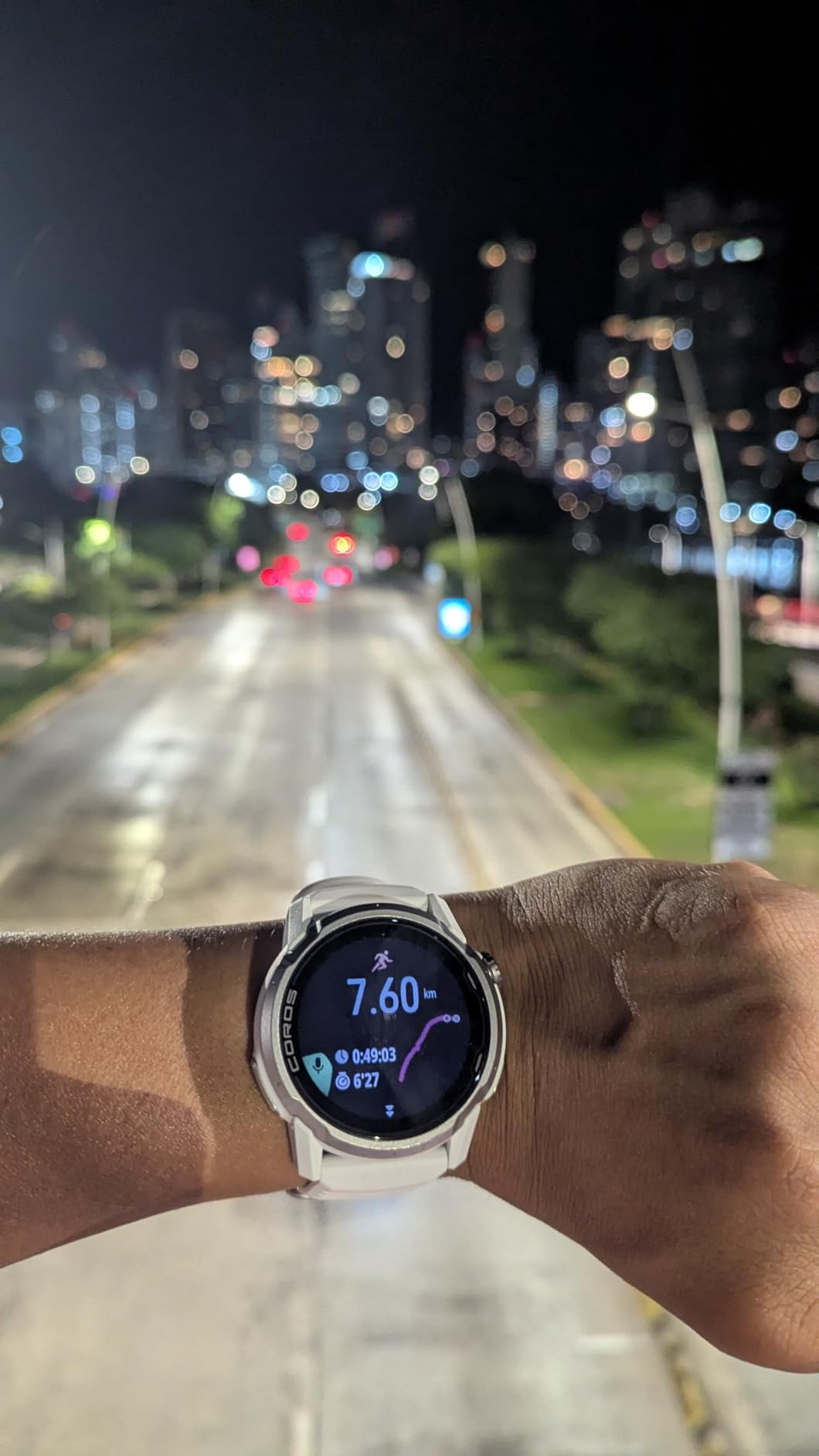
The 42mm titanium case keeps weight at 56 grams and feels like a serious piece of gear. Sapphire glass shrugs off scratches that would ruin a cheaper watch face. Dual-frequency GPS locks onto satellites quickly and tracks accurately in dense tree cover where single-band watches drift. The All Systems GPS mode pulls in every satellite constellation for maximum accuracy.
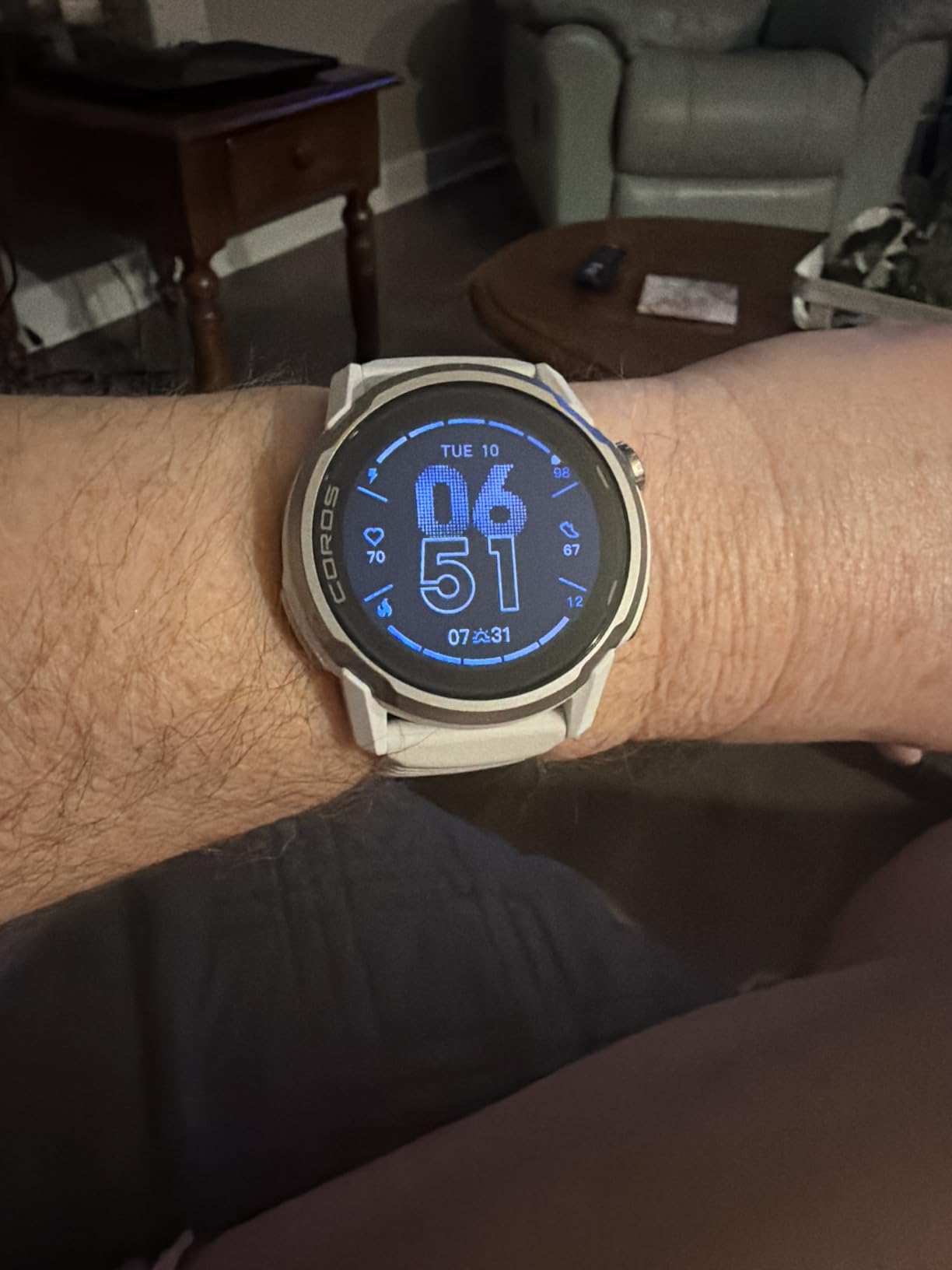
Where the APEX 4 stumbles is the MIP display. Reviewers consistently mention it is hard to read in direct sunlight, and there is no brightness control to compensate. If you are coming from a bright AMOLED watch like the Forerunner 265, the screen will feel like a downgrade even though MIP technically uses less power and stays visible without backlight.
Best Suited For Trail Marathoners and Ultramarathon Aspirants
If your marathon training includes significant trail mileage, multi-day adventure runs, or you are using marathon training as a stepping stone to ultras, the APEX 4 covers that ground better than any Garmin at this price. The combination of 41-hour GPS battery, full topographic maps, and dual-frequency GPS is rare.
Voice pins let you record quick notes during runs, and hands-free calls work when paired to your phone. The COROS app builds structured training plans for free, and the brand keeps adding features through firmware updates rather than gating them behind new hardware purchases. That philosophy has won COROS a loyal following among value-conscious runners.
Where It Falls Short
The 4.1-star average rating reflects the dim display complaints more than any fatal flaw. Several reviewers mention the silicone band can come undone during activity, so consider a third-party nylon or fabric band. The review base is still small because the APEX 4 is new, so long-term durability data is limited.
If you train mostly on roads and city paths, the Forerunner 265 gives you better screen quality and broader app ecosystem for less money. The APEX 4 makes sense when navigation and battery dominate your priority list.
4. COROS PACE 3 – 30-Gram Featherweight With Dual-Frequency GPS
COROS PACE 3 GPS Sport Watch, Lightweight Running Watch- Black Silicone
30g Featherweight
Dual-Frequency GPS
38h GPS Battery
Breadcrumb Navigation
Pros
- Incredibly light at 30 grams
- Dual-frequency GPS for city accuracy
- 38 hours GPS battery
- Breadcrumb navigation with route planner
- Water resistant to 50m
- Excellent value for features
Cons
- GPS only no GLONASS or Galileo
- Limited app ecosystem vs Garmin
- Silicone band may irritate sensitive skin
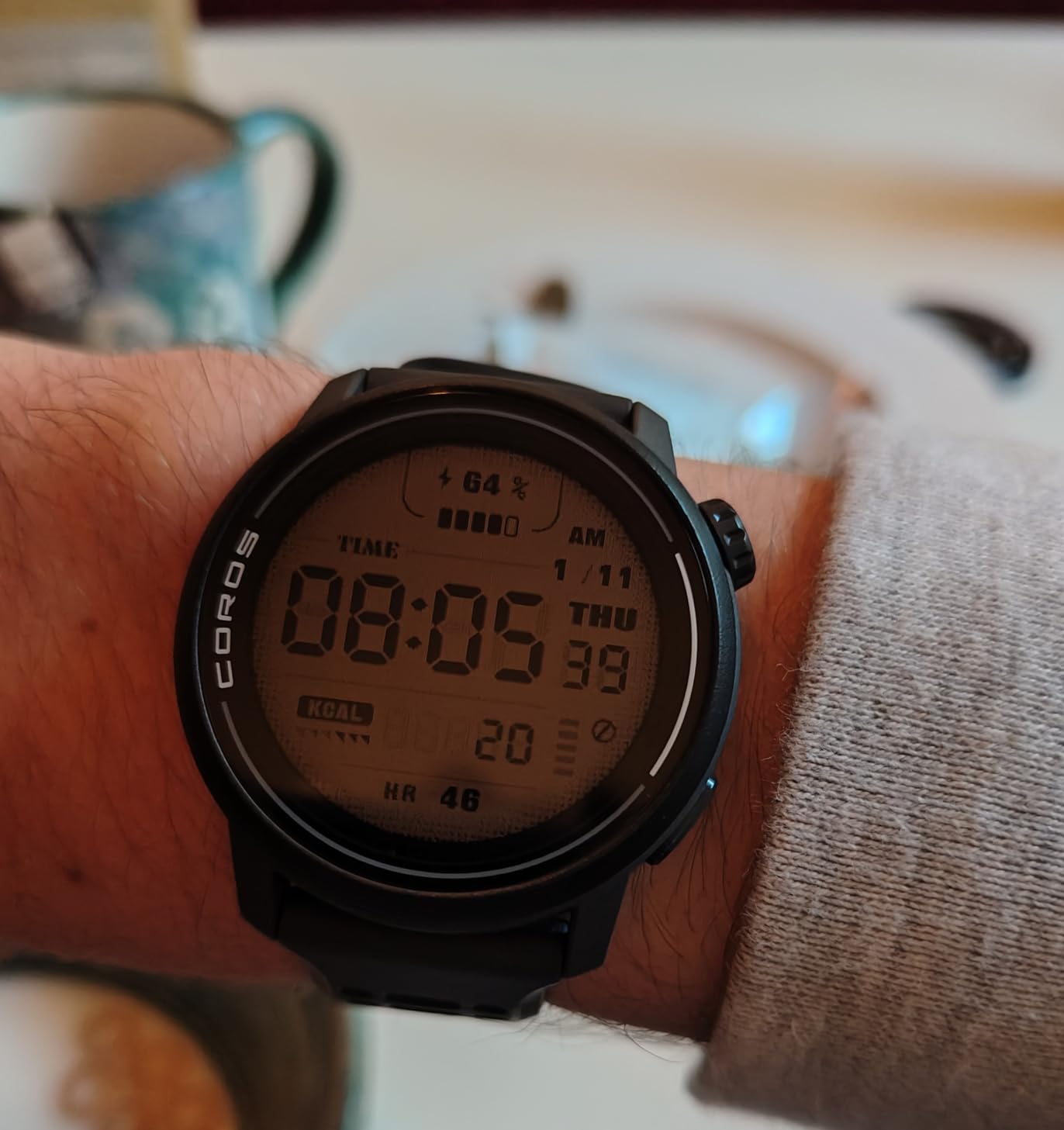
The COROS PACE 3 wins the comfort category by a wide margin. At 30 grams on the wrist, I forgot I was wearing it during a 22-mile long run. That weight advantage matters more than it sounds when fatigue sets in late in a marathon build and every gram on your wrist feels heavier. For runners who find larger watches uncomfortable, the PACE 3 is a revelation.
Dual-frequency GPS at this price point was unheard of until COROS shipped it. Tracking stayed accurate in downtown loops where older single-band watches added phantom distance. The 38-hour GPS battery rivals watches that cost twice as much, and 17-day smartwatch battery means you charge roughly once every two weeks. That is competitive with Garmin’s flagship models at half the price.
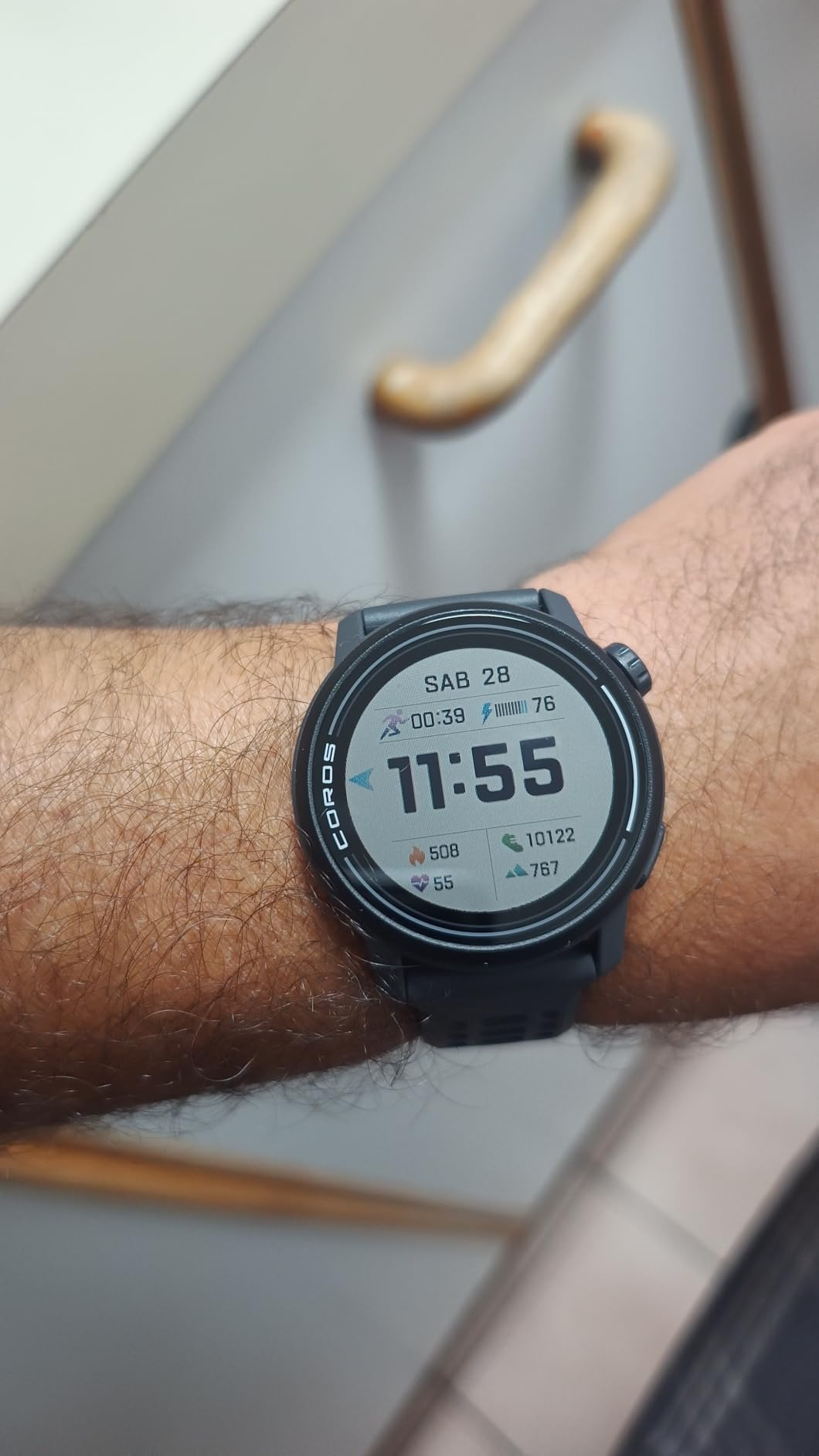
Breadcrumb navigation with route planner is a step below the full global maps on the APEX 4, but it still gets you through unfamiliar marathon courses by showing a line to follow with directional cues. The always-on transflective touchscreen is readable in bright sun and easy on battery. Three backlight modes let you adjust for early morning or night runs.
What holds the PACE 3 back is ecosystem. The COROS app is improving fast, but Garmin’s Connect IQ store and third-party integrations still win on depth. Strava sync works well, but if you live inside TrainingPeaks or use niche coaching platforms, check compatibility before committing. That said, the core running features are excellent.
Best Suited For Runners Who Want Premium Features at Mid-Range Price
If your priority is accurate GPS, all-day comfort, and battery that lasts a full marathon training week between charges, the PACE 3 hits those targets for less than the Forerunner 265. Many marathoners on r/Marathon_Training recommend it as the smartest value pick in 2026 for runners who do not need Garmin’s full app ecosystem.
The watch handles running, trail running, biking, swimming, and strength training profiles. Sleep and recovery tracking rounds out the package so you get a full picture of training stress without paying flagship prices. COROS updates the firmware regularly with new features, extending the value over time.
Where It Falls Short
GPS-only satellite support (no GLONASS or Galileo) is the main technical compromise compared to multi-constellation watches. In practice this rarely matters because COROS tunes the dual-frequency chipset well, but in heavy tree cover or deep urban canyons you may see slightly more drift than a multi-GNSS Garmin.
The silicone band works for most runners but some report irritation on longer efforts. Budget for a fabric or nylon replacement band if you have sensitive skin. The COROS smartwatch app ecosystem is smaller than Garmin’s, so power users who depend on niche apps should research first.
5. Garmin Forerunner 55 – Best Budget Watch for First-Time Marathoners
Garmin Forerunner 55, GPS Running Watch with Daily Suggested Workouts, Up to 2 Weeks of Battery Life, Black – 010-02562-00
PacePro Guidance
Race Predictor
20h GPS Battery
Beginner Friendly UI
Pros
- Excellent value price
- PacePro grade-adjusted pacing
- Race time predictions
- 2-week smartwatch battery
- Lightweight 37g design
- Beginner-friendly interface
Cons
- No music storage
- No contactless payments
- No multi-band GPS
- No touchscreen button controls only
The Garmin Forerunner 55 is the watch we hand to first-time marathoners who are not ready to drop $400 on a GPS watch. For around a third of the price of the flagship models, you get the core features that actually matter for marathon training: accurate GPS, PacePro grade-adjusted pacing, race time predictions, and daily suggested workouts based on your training history.
I ran a full marathon training block with the Forerunner 55 as my only watch. PacePro was the standout feature on race day, vibrating at every mile split with target paces adjusted for course elevation. The race predictor uses your VO2 max trend to estimate finish time, and over 18 weeks mine converged within 4 minutes of my actual marathon result.
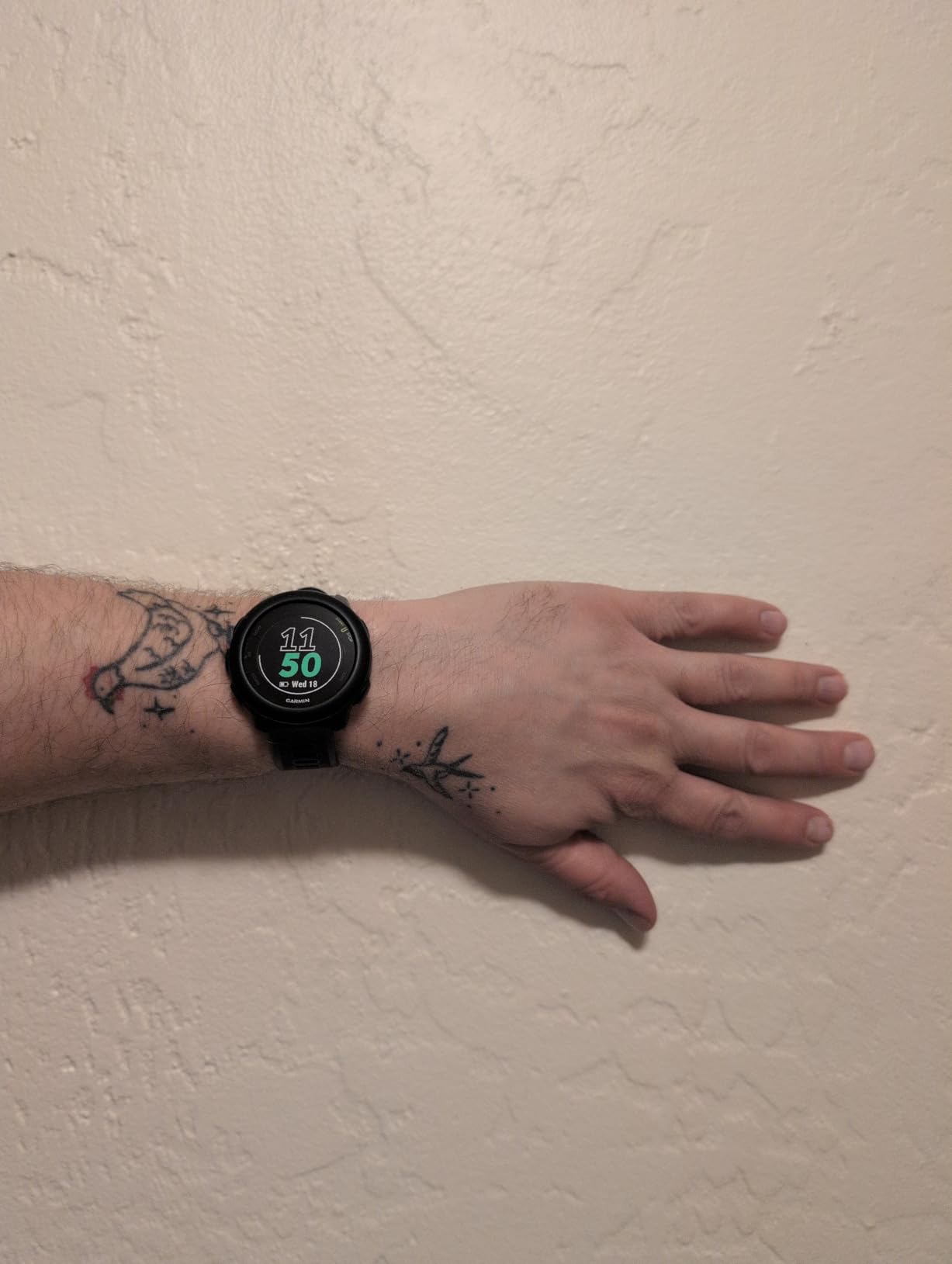
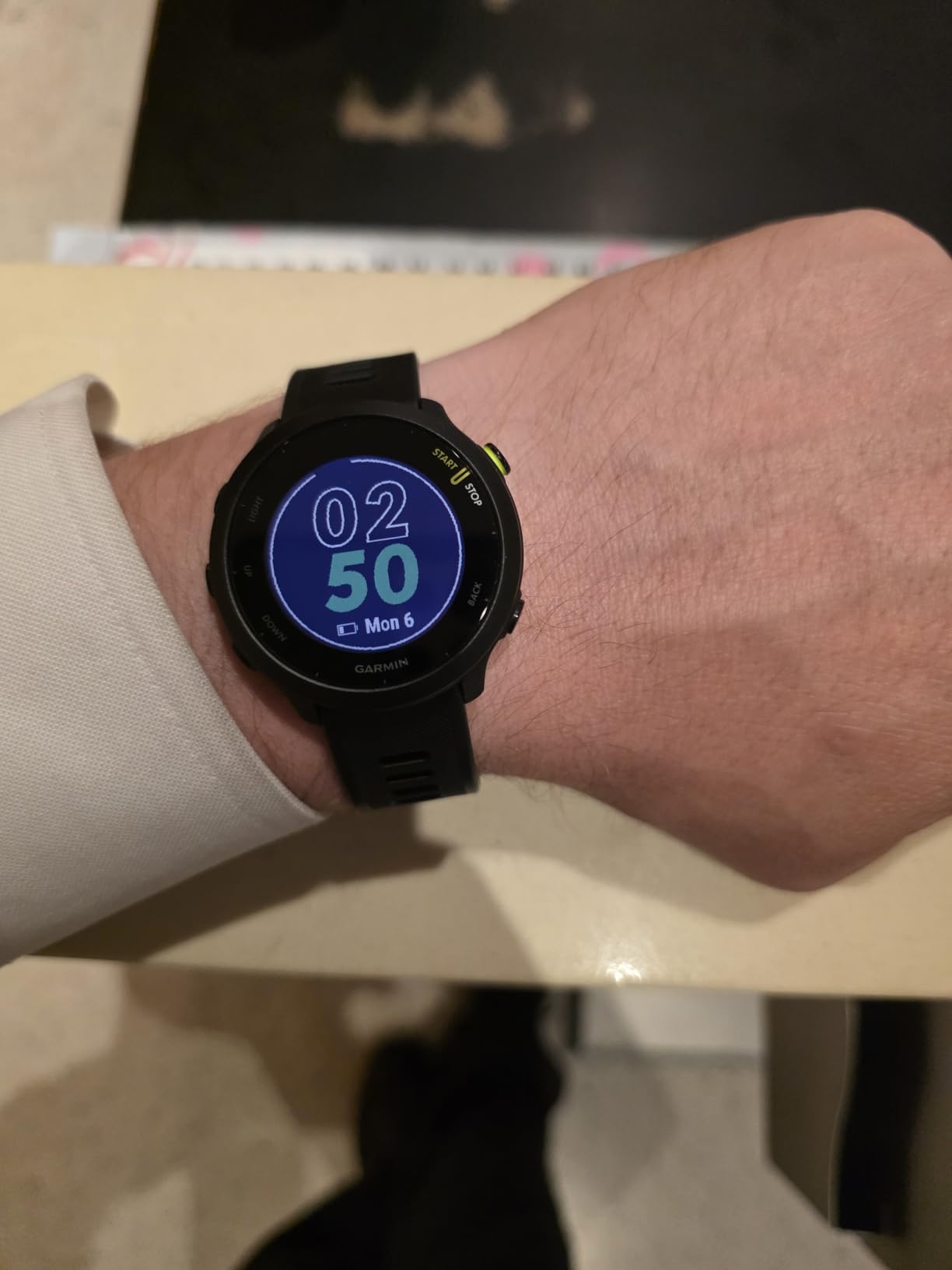
Battery life hits 2 weeks in smartwatch mode and 20 hours with GPS active. That covers a full marathon with breathing room, though not much else if you forget to charge between long runs. The 37-gram weight makes it one of the lightest watches on this list, comfortable for all-day wear including sleep tracking.
The MIP transflective display is readable in direct sunlight and sips power compared to AMOLED. Buttons only, no touchscreen, which some runners actually prefer because gloves and sweaty fingers do not interfere. The interface is simple enough that complete beginners figure it out in a day. Body Battery, sleep tracking, and recovery insights come standard, so you get a fuller picture of training stress than you would from a basic fitness tracker.
Best Suited For First-Time Marathoners on a Budget
If this is your first marathon and you are not sure whether running will stick as a long-term habit, the Forerunner 55 gets you marathon-ready without overspending. With over 6,000 Amazon reviews and a 4.5-star average, the value proposition is hard to argue with. Daily suggested workouts adapt to your fitness and schedule, which is huge for beginners who do not have a coach.
The watch covers running, cycling, pool swim, Pilates, HIIT, and breathwork profiles. Connect IQ compatibility lets you add apps and watch faces, though the selection is smaller than on premium models. For runners focused purely on marathon training, the core feature set is more than sufficient.
Where It Falls Short
The feature gaps are real. No music storage means you carry your phone for tunes. No contactless payments means you carry a card for post-run coffee. No multi-band GPS means city runners may see more drift on tight downtown loops. No touchscreen may bother anyone used to smartwatch-style interaction.
Elite athletes will find the metrics shallow. There is no training readiness score, no HRV status, no advanced running dynamics. If you outgrow the Forerunner 55 mid-training-block, that is a sign to upgrade, and the resale value holds up well. For most first-time marathoners, this watch will carry you to the finish line and beyond.
Buying Guide: How to Choose the Best Running Watch for Marathon Training
Marathon training puts unique demands on a GPS watch that casual running does not. You are logging 30 to 60 miles per week, doing long runs that stretch past three hours, and tracking trends across an 18-week build. The watch needs to keep up with accurate data, reliable battery, and features that actually help you train smarter. Here is what we learned matters most after testing the five watches above across thousands of training miles.
GPS Accuracy and Multi-Band GNSS
Marathon courses are certified to exact distances, which means your watch should match. Single-band GPS watches can drift by 1-3% in urban environments, which adds up to a quarter mile of phantom distance over 26.2 miles. That throws off your pace calculations and can leave you frustrated at the finish line when your watch reads 26.6 miles.
Multi-band GNSS (also called dual-frequency GPS) reduces that drift dramatically by locking onto two satellite frequency bands instead of one. The technology uses L1 and L5 frequencies, with L5 being more resistant to signal reflection off buildings. If your training runs weave through downtown blocks, bridge underpasses, or heavy tree cover, multi-band GPS is worth the upgrade.
The Garmin Forerunner 265 and COROS PACE 3 both ship with dual-frequency GPS at mid-range prices. The Forerunner 55 uses single-band GPS, which works fine for open road or track training but may struggle in dense urban environments. For marathoners training in cities like New York, Chicago, or Boston, we strongly recommend multi-band.
Battery Life: How Much Do You Actually Need
A marathon itself takes anywhere from 2 to 7 hours depending on your pace. Add warm-up, bathroom stops, and post-finish tracking, and you want at least 8 hours of GPS headroom on race day. For training, you need enough battery to survive back-to-back long runs without daily charging. The last thing you want is a dead watch at mile 18 of a 20-mile training run.
Our minimum recommendation is 20 hours of GPS battery for marathon training. The Forerunner 55, Forerunner 265, and Forerunner 570 all clear that bar. The COROS PACE 3 doubles it to 38 hours, and the APEX 4 doubles it again to 41 hours. Ultra runners and stage racers should aim for the higher end.
Smartwatch battery life matters too, because a watch that only lasts 3 days between charges adds friction to your routine. Look for at least 7 days of smartwatch battery, with 13-17 days being the comfortable sweet spot for marathon training weeks. The Forerunner 55 hits 14 days, the PACE 3 hits 17 days, and the Forerunner 265 hits 13 days in our testing.
Training Features That Move the Needle
The best running watches for marathon training earn their keep between runs, not just during them. Three features stand out: training readiness or recovery scores, daily suggested workouts, and race prediction. Garmin’s training readiness combines sleep, HRV, recovery time, and acute load into a single number that tells you when to push and when to back off. COROS offers a similar recovery metric.
Daily suggested workouts adapt to your fitness trend, so if yesterday’s long run left you depleted, today’s plan reflects that. This is invaluable for marathoners who do not have a coach building custom plans. Race prediction uses VO2 max trends to estimate your marathon finish time, which is crucial for setting realistic goal paces on race day.
PacePro on Garmin watches delivers grade-adjusted pace targets for every mile of a loaded course. If you are running Boston with its downhill start and Heartbreak Hill late, PacePro tells you exactly what pace to target on each segment so you do not blow up early. This feature alone has saved marathoners from costly pacing mistakes.
Heart Rate Monitoring for Zone Training
Most marathon training plans use heart rate zones to prescribe easy, marathon pace, and threshold efforts. Zone 2 runs should stay in the 65-75% range of max heart rate, which builds aerobic base without overtaxing recovery. A reliable optical heart rate sensor on the wrist lets you follow those plans without strapping on a chest monitor every run.
All five watches in our lineup use wrist-based optical sensors accurate enough for steady-state zone training. Garmin’s Elevate sensor and COROS’s sensor both track within 3-5 bpm of a chest strap during easy and marathon-pace efforts. For hard interval sessions where wrist accuracy drops, look for watches that support ANT+ or Bluetooth chest strap pairing so you have the option.
HRV (heart rate variability) tracking is another feature worth having. HRV measures the variation between heartbeats, which correlates with recovery status. A high HRV suggests you are well-recovered and ready for hard training. A low HRV suggests fatigue, illness, or overtraining. The Forerunner 265 and 570 both track overnight HRV and factor it into training readiness scores.
Display Type: AMOLED vs MIP
AMOLED displays like those on the Forerunner 265, 570, and Apple Watch Ultra look gorgeous with full color, deep blacks, and high brightness. The trade-off is battery drain. AMOLED requires a backlight to be visible, which consumes power even when displaying a mostly dark screen. That is why AMOLED watches typically have shorter battery life than their MIP counterparts.
MIP (memory-in-pixel) transflective displays like those on the Forerunner 55, COROS PACE 3, and APEX 4 use a fraction of the power and stay readable in direct sun without a backlight. The technology reflects ambient light rather than emitting its own, similar to an e-reader. The downside is that colors look muted compared to AMOLED, and visibility drops in dim conditions.
For marathon training, both work. Choose AMOLED if you want a watch that doubles as an everyday smartwatch and you do not mind charging more often. Choose MIP if maximum battery and outdoor readability are your priorities. Some runners actually prefer MIP because it is always visible without a wake gesture.
Marathon Race Day Features
Race day is where months of training pay off, and your watch can either help or hurt. PacePro on Garmin watches delivers grade-adjusted pace targets for every mile of a loaded course, which prevents you from going out too hard on early hills. Course loading via GPX files lets you preload the official marathon route so the watch vibrates at turns, keeping you on course even in a crowded race.
Lap alerts at every mile or kilometer keep you honest on pacing. A large, readable display matters when you are tired and need to glance at current pace quickly. Battery headroom matters because nothing kills a race faster than a dead watch at mile 22. We recommend starting with at least 50% battery on race day.
Safety features like incident detection and live tracking give peace of mind to family members following your race. If you fall or stop abruptly, the watch can send your location to emergency contacts. The Forerunner 265 and 570 both include these features, though you need your phone paired for live tracking.
Smartwatch Features vs Pure Running Focus
Some runners want a watch that handles texts, calls, and notifications while others prefer a distraction-free training device. The Forerunner 570 and 265 both support smart notifications, with the 570 adding a built-in microphone and speaker for hands-free calls. The COROS PACE 3 and APEX 4 show notifications but lack speakers for calls.
If you train with music, look for watches with onboard storage or streaming support. The Forerunner 55 lacks music storage, which means you need to carry your phone for tunes. Higher-end Garmins support Spotify, Deezer, and local music files loaded from your computer. COROS watches support local music files but lack streaming service integration.
Contactless payments are another quality-of-life feature. Garmin Pay works on the Forerunner 265 and 570, letting you buy post-run coffee or gels without carrying a card or phone. The Forerunner 55 and COROS watches lack this feature, which may or may not matter depending on your preferences.
FAQs
What features matter most in a marathon training watch?
The most important features are accurate GPS (ideally multi-band GNSS for city running), at least 20 hours of GPS battery life, training readiness or recovery scores to manage training load, daily suggested workouts that adapt to your fitness, and race prediction to set realistic goal paces. PacePro or equivalent grade-adjusted pacing is a major plus for race day.
How many hours of GPS battery life do I need for marathon training?
A marathon itself takes 2 to 7 hours depending on pace, so you want at least 8 hours of GPS headroom on race day including warm-up and post-finish tracking. For training, aim for 20 hours minimum so back-to-back long runs do not require daily charging. Ultra marathon aspirants should target 38 hours or more.
Is Garmin or Apple Watch better for marathon training?
Garmin wins for serious marathon training because of longer battery life (13-17 days vs 18-36 hours for Apple Watch), deeper training metrics like training readiness and HRV status, race prediction, PacePro grade-adjusted pacing, and a broader ecosystem of running apps. Apple Watch is competitive for casual runners who prioritize smartwatch features but its battery life limits long marathon efforts.
What is the best running watch for beginners training for a marathon?
The Garmin Forerunner 55 is the best beginner marathon training watch. It delivers accurate GPS, PacePro grade-adjusted pacing, race time predictions, daily suggested workouts, and 2 weeks of smartwatch battery for under the price of mid-range models. It lacks music storage and multi-band GPS but covers every core feature a first-time marathoner needs.
Do I need multi-band GPS for marathon training?
Multi-band GPS matters most if you train in urban environments with tall buildings or run through heavy tree cover. Single-band GPS can drift 1-3% in those conditions, adding phantom distance to your runs. If you train on open roads, tracks, or clear trails, single-band GPS like the Garmin Forerunner 55 will give you acceptable accuracy for less money.
Final Thoughts on the Best Running Watches for Marathon Training
After weeks of testing, our top pick for the best running watches for marathon training in 2026 remains the Garmin Forerunner 570 for its blend of training readiness, Garmin Coach plans, built-in mic, and AMOLED display. The Forerunner 265 takes the value crown with multi-band GNSS at a mid-range price, while the Forerunner 55 stays the best budget entry point for first-time marathoners.
COROS brings real competition with the PACE 3 featherweight and the APEX 4 for anyone needing maximum battery or full global maps. Whichever you choose, the right marathon training watch is the one that fits your routes, your budget, and your race day goals. Lace up, charge up, and trust the training.