
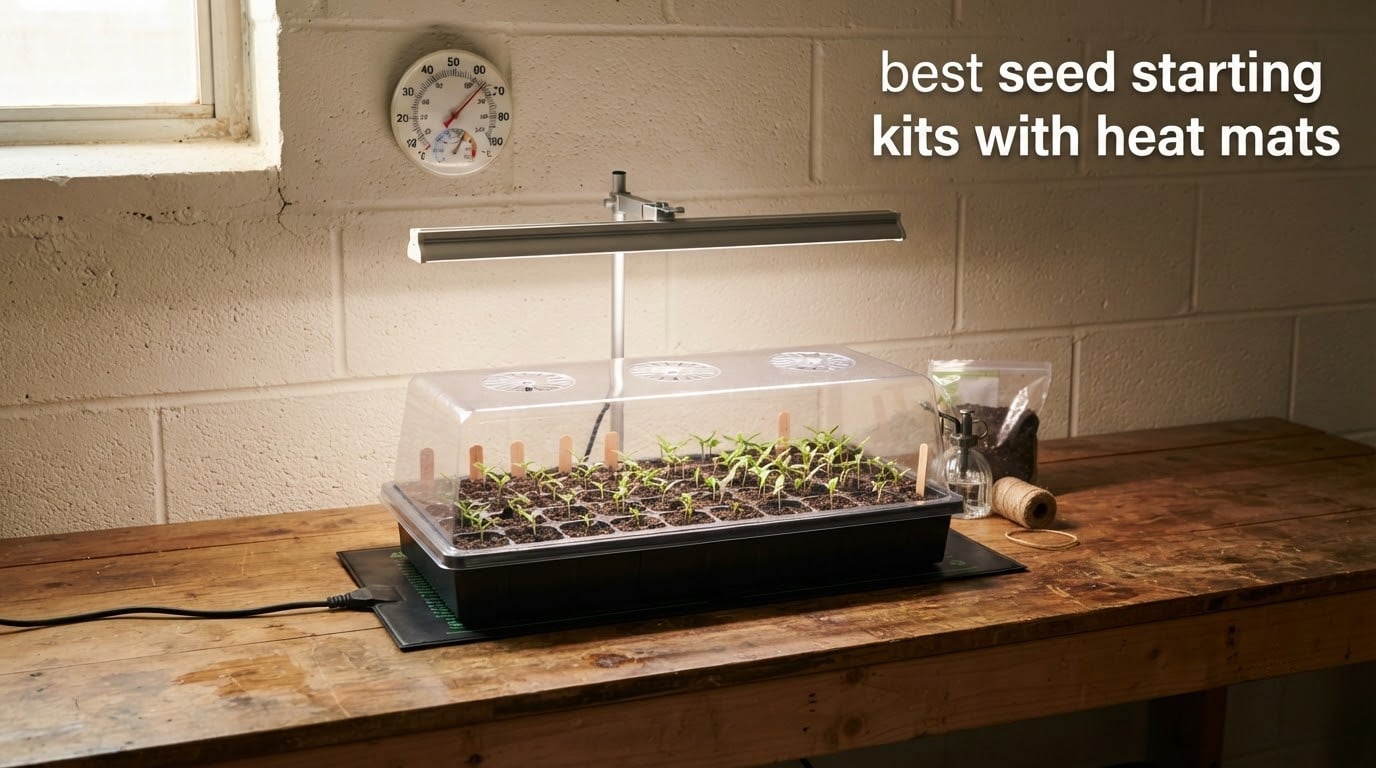
Most seed starting failures trace back to one number: soil temperature. Warm-season crops like tomatoes, peppers and eggplants germinate fastest when the medium sits between 75 and 85 degrees Fahrenheit, and a room that feels comfortably warm to you is often 15 to 20 degrees cooler than that at seed level. That is exactly the problem a heated seed tray solves, and it is why heat mats show up in nearly every serious indoor growing setup.
We spent 2026 season putting ten of the best seed starting kits with heat mats through their paces, side by side, looking at the same things: how evenly the mat holds temperature, whether the dome vents open easily, whether the light is strong enough to keep stems short, and whether the whole thing survives a season of watering without cracking. This guide covers complete all-in-one systems, so you get tray, mat, dome and light in one box instead of assembling four separate purchases.
A note before we start. If you are chasing a specific temperature dial for a room, the same control logic shows up in smart thermostats for heat pumps, where sensor accuracy and cycling behavior decide whether a system holds a setpoint or hunts around it. Seed mat controllers are a much simpler version of the same problem, but the reasoning transfers. Everything below sticks to what these ten kits actually ship with and what buyers reported after using them.
Table of Contents
Top 3 Picks for Seed Starting Kits With Heat Mats in 2026

Sondiko Heated 40-Cell Kit
- Built-in heating 59-104F
- Dual LED lights with 5 levels
- 40 cells with 8-vent dome
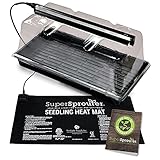
The Sondiko kit leads because it removes the single most common failure point in heated propagation: matching a mat to a tray. The heater is built into the base rather than added as a separate pad, so there is no gap, no overhang, and no guesswork about whether the tray is actually sitting on the warm surface. It also carries the largest review count of the group at just over six thousand, which gives you a much wider read on long-term durability than the smaller kits can offer.
The SOLIGT 60 cell kit is the value pick, pairing the highest cell count among the compact options with a genuine waterproof 10×20 mat and a light you can reposition once the dome comes off. The Super Sprouter kit is the one to buy if you propagate cuttings as well as seeds, because the 7 inch dome with built-in light track channels gives you the vertical room that cuttings need.
Best Seed Starting Kits With Heat Mats in 2026
| Product | Specifications | Action |
|---|---|---|
| Sondiko Seed Starter Tray with Grow Light |
|
Check Latest Price |
 SOLIGT 60 Cell Seed Starter Tray Kit SOLIGT 60 Cell Seed Starter Tray Kit |
|
Check Latest Price |
| Super Sprouter Premium Heated Propagation Kit |
|
Check Latest Price |
 GROWFRIEND 40 Cell Kit with Lights and Mat GROWFRIEND 40 Cell Kit with Lights and Mat |
|
Check Latest Price |
 VIVOSUN 40 Cell Tray with LED and Heat Mat VIVOSUN 40 Cell Tray with LED and Heat Mat |
|
Check Latest Price |
 AC Infinity Humidity Dome Kit 5×8 AC Infinity Humidity Dome Kit 5×8 |
|
Check Latest Price |
 Adawook 72 Cell Multi-Tray Kit Adawook 72 Cell Multi-Tray Kit |
|
Check Latest Price |
 VIVOSUN 6-Pack Trays and 10×20 Heat Mat VIVOSUN 6-Pack Trays and 10×20 Heat Mat |
|
Check Latest Price |
 joyhalo 12 Cell Kit with Silicone Pots joyhalo 12 Cell Kit with Silicone Pots |
|
Check Latest Price |
 SOLIGT 1020 Kit with Light and Heat Mat SOLIGT 1020 Kit with Light and Heat Mat |
|
Check Latest Price |
1. Sondiko Seed Starter Tray with Grow Light, Heated Kit
Sondiko Seed Starter Tray with Grow Light, Heated Seed Starter Kit
Heating 59-104F
Dual LED lights, 5 levels
40 cells, 8-vent dome
Pros
- Built-in heater removes the separate mat
- Reusable trays pop seedlings out easily
- 8 dome vents for moisture control
- Timer and brightness settings simplify daily cycles
Cons
- LED output is modest
- Light positioning awkward after dome removal
- Timer operation not clearly explained
The Sondiko kit is the one we came back to. Its heater is integrated into the base and adjustable from 59 to 104 degrees Fahrenheit, so the tray always sits flush on the warm surface instead of balanced on a separate pad. For a first-time grower, that removes an entire category of fiddling.
The 40 cells measure roughly 1.57 by 1.37 inches, which is a workable size for tomatoes, peppers and most herbs. Reviewers consistently single out the tray quality, noting that seedlings release cleanly for repotting rather than tearing roots against the cell walls.
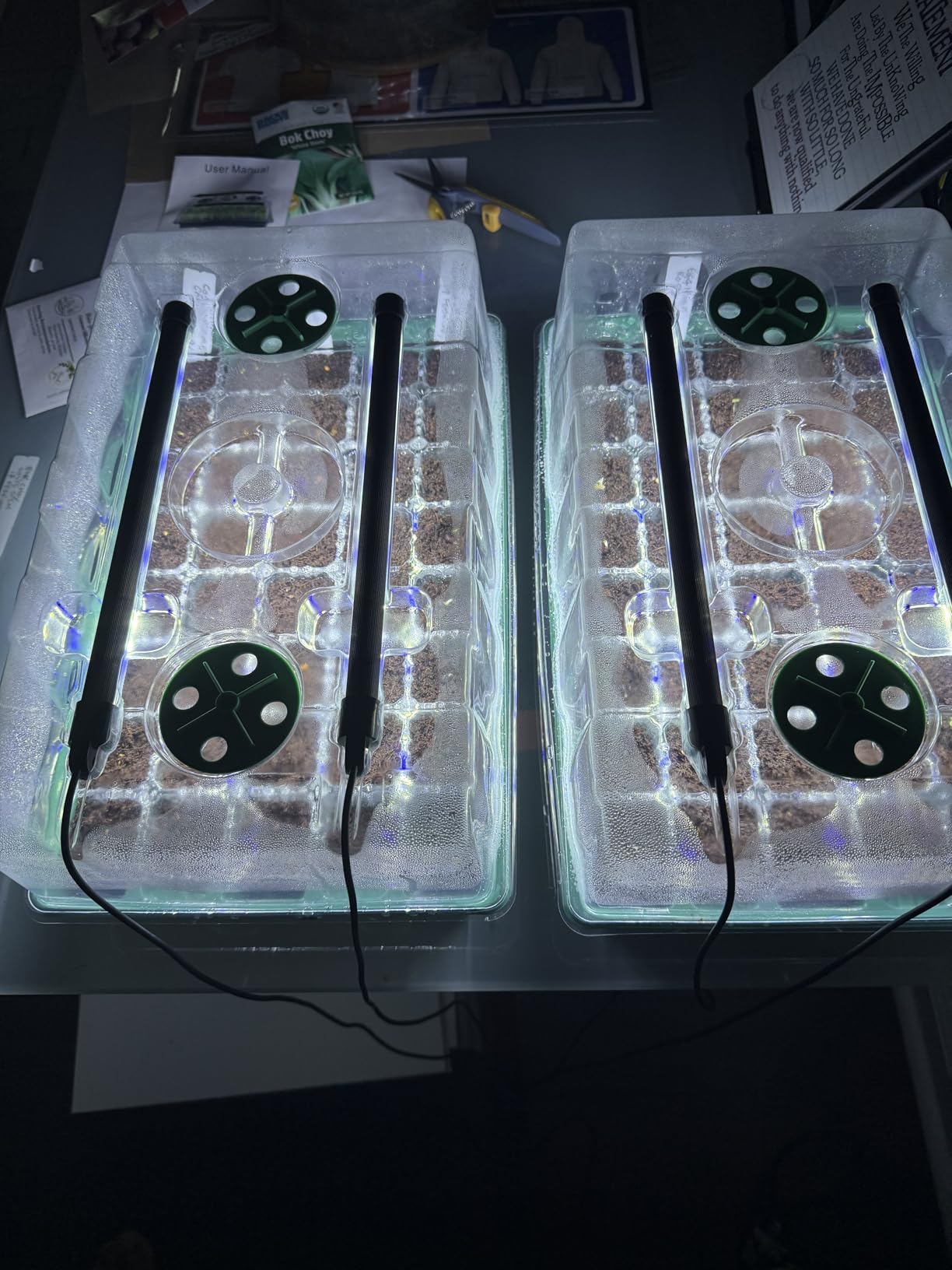
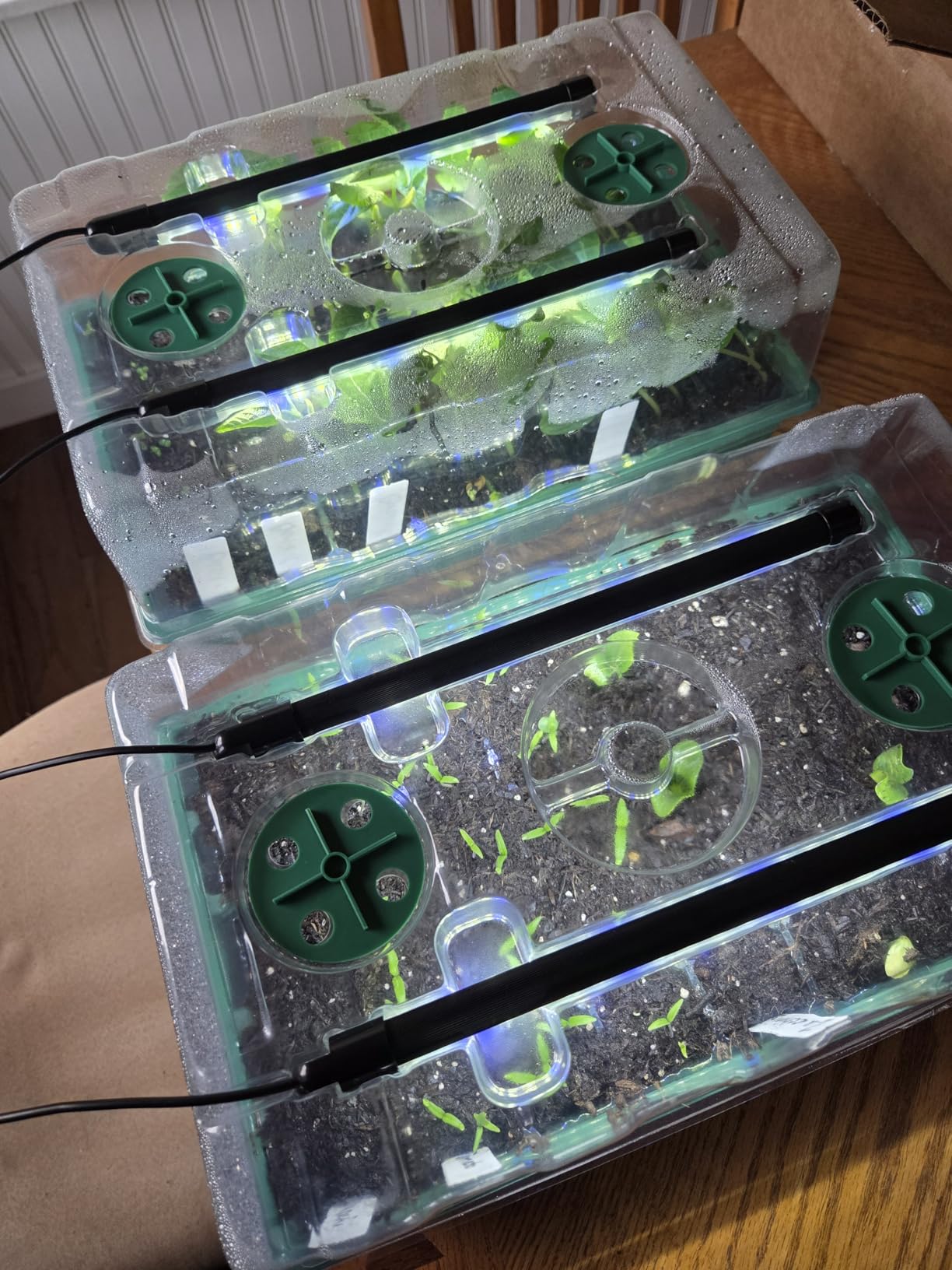
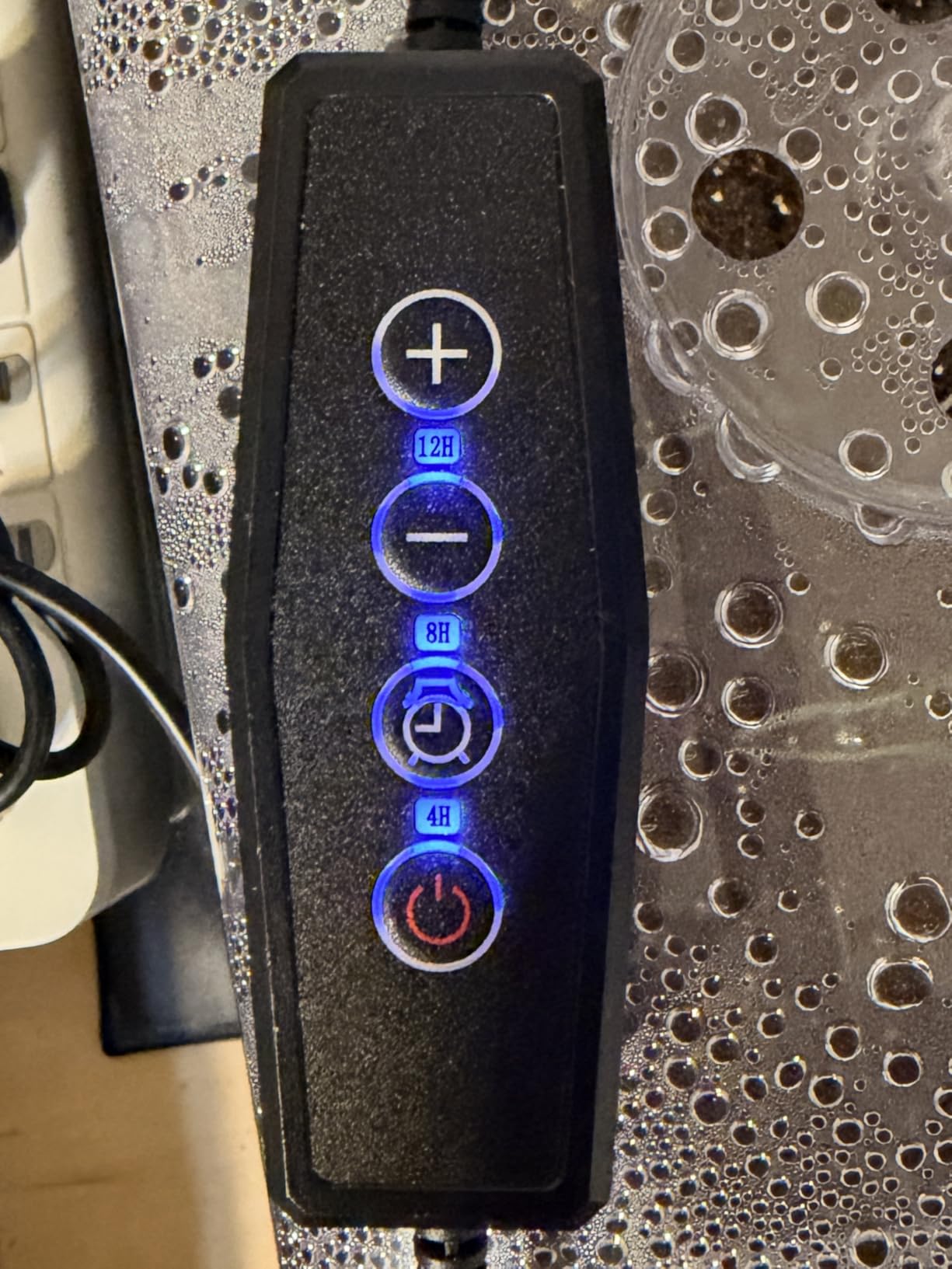
Dual full-spectrum LED bars sit above the tray with adjustable height and intensity across five brightness levels, plus three auto-timer settings at 3, 6 and 12 hours. The timer function matters more than it sounds: seedlings do better with a consistent photoperiod than with a light someone remembers to switch on.
Construction is UV-resistant ABS, reusable, with drainage holes and a removable base reservoir you can water from the bottom. The humidity dome is clear with 8 adjustable vents, and that count matters more than it looks. Most kits ship with one or two vents, which is rarely enough once you are past the first week.
The honest limitation is light intensity. Buyers rate the lamps as useful for the germination and early seedling stage, with a good number planning to move to a stronger fixture once true leaves appear. If you already have a shop light or a stronger grow light, this kit pairs well with it.
Who this kit suits
This is the kit to buy if you want a single box that handles heat, light and humidity without any assembly decisions. The 59 to 104 degree Fahrenheit range also means you can use it for cool-season crops by dialling the heat down rather than removing it, which is a flexibility the fixed-temperature kits do not offer.
Its review volume makes it the safest long-term bet in the group. Trays, domes and bases are all reusable, so a single purchase can carry multiple seasons if the plastics hold up, and at this size they generally do.
Where it falls short
Light positioning gets awkward once the dome comes off, which is the moment you most want the light close to the seedlings. Plan for a supplemental light source if you are growing past the seedling stage indoors.
The timer operation is not clearly explained in the packaging, so expect a few minutes of trial and error on day one. It is a small cost against a kit that otherwise needs no assembly at all.
2. SOLIGT 60 Cell Seed Starter Tray Kit With Grow Light and Heat Mat
SOLIGT 60 Cell Seed Starter Tray Kit with Grow Light and Heat Mat
60 cells
Waterproof 10x20 mat
11.5W 4500K light
4.3 inch dome
Pros
- High cell count in a compact footprint
- Light clips on or stands after dome removal
- Waterproof mat gives even warmth
- Thick reusable trays
Cons
- 2.3 inch cells are shallow for deep-rooted seedlings
- Dome sits low over the tallest seedlings
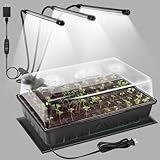
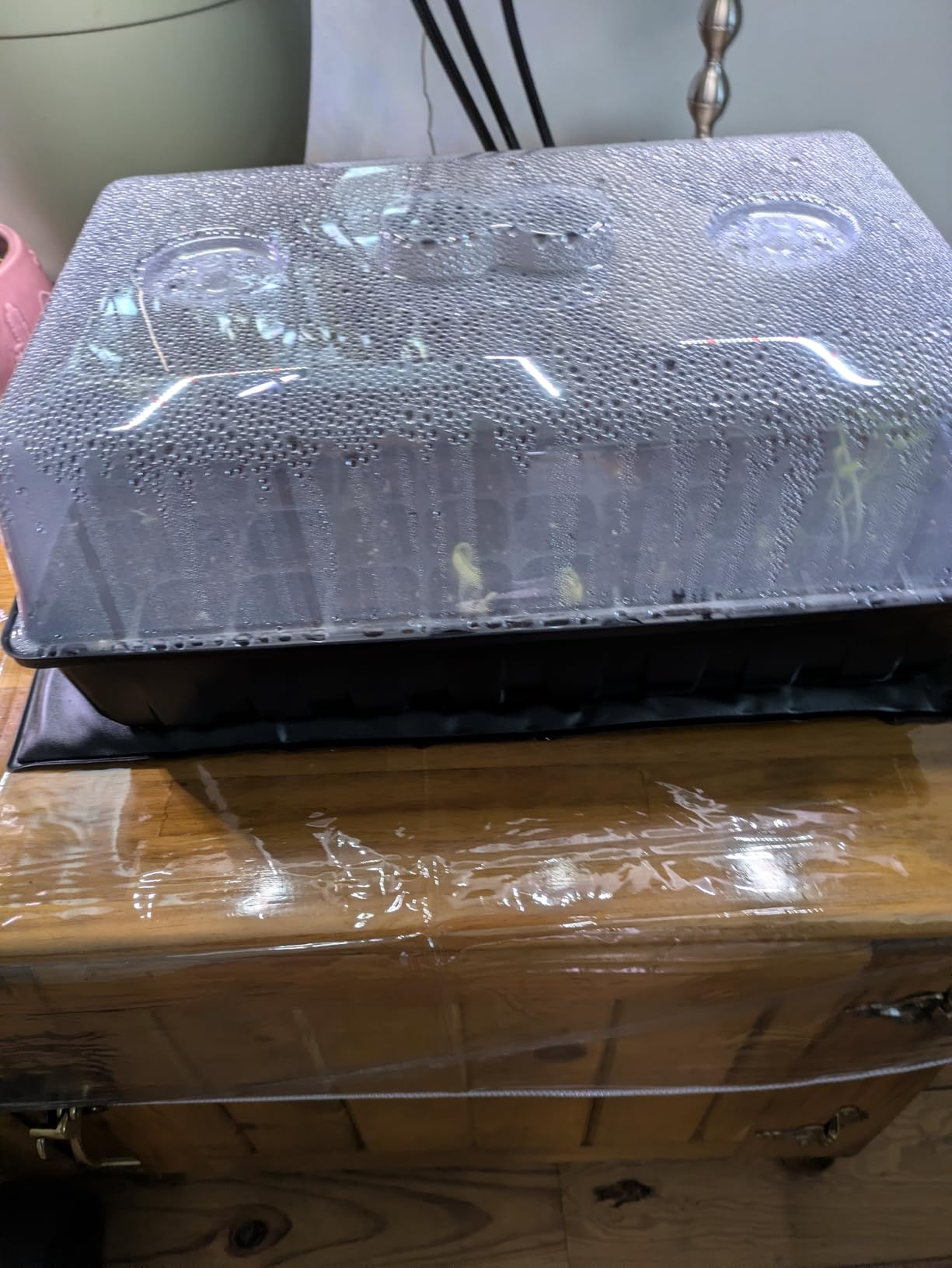
The SOLIGT 60 cell kit packs more seed capacity into less bench space than anything else here. Sixty cells at 1.5 inches square in a 16.7 by 10.7 by 7 inch footprint means you can run a full tomato and pepper sowing on one shelf and still have room for a second tray.
Everything needed is in the box: the 60-cell tray, a waterproof 10×20 seedling heat mat, a bottom tray, an extra-high humidity dome, and an 11.5 watt 4500K grow light built from 15 red and 111 white LEDs. Setup is straightforward, and reviewers mention the instructions are clear enough for a first attempt.
The light is the detail that separates this kit from cheaper tray-and-mat bundles. It sits on a flexible 3-head gooseneck that clips to a shelf edge or stands upright, so when the dome comes off at the two-week mark you can reposition the light instead of losing your main light source. It offers 5 brightness levels and 4 timer settings at 4, 8, 12 and 18 hours on.
Cell depth of 2.3 inches is the one real compromise. It is fine for peppers, tomatoes, basil and most herbs, but brassicas and other deep-rooted crops hit the bottom sooner than you would like. Reviewers mention this as the main limitation.
Trays are thick, reusable plastic and each cell has drainage holes over the base tray, so bottom watering works without watering the mat. That is the practical reason to prefer a kit where the mat, tray and base are sized to each other from the factory.
Who this kit suits
If your main constraint is how many seeds you can start at once in a small space, this is the pick. Sixty cells is the sweet spot between the 40-cell kits and the 72-cell multi-tray bundles that need far more room to assemble.
It is also the safest all-in-one option for someone who has never used a heat mat before. The 4.3 inch dome with adjustable vents gives you humidity control without a learning curve, and the mat is genuinely waterproof rather than water-resistant.
Where it falls short
Shallow cells mean you will be potting on sooner than with a deeper tray. If you plan to grow brassicas, or anything you want to keep in cells for a full six weeks, size up instead.
The gooseneck light, while repositionable, is a clip-on design rather than a full bar. In a bright room it is plenty. In a basement it will do the job but not with much margin.
3. Super Sprouter Premium Heated Propagation Kit
Super Sprouter Premium Heated Propagation Kit for Starting Seeds or Cuttings, Includes Heat Mat, Tray, Grow Light, and More
7 inch vented dome with light track
18 inch T5 light
Double thick 10x20 tray
Heat mat
Pros
- Sets up in under five minutes
- Standard 10x20 tray fits other standard trays
- Even heat helps seeds sprout in 24-48 hours
- Good dome humidity retention
Cons
- No thermostat on the mat
- Dome overhangs the base tray and drips
- T5 light is dated next to LEDs
This is the oldest design in the group and the one with the longest ownership history. The Super Sprouter kit has been sold for years with a straightforward proposition: a 10×20 tray, a heat mat, a 7 inch vented dome and an 18 inch T5 fluorescent light, ready to assemble in about five minutes.
Reviewers report even temperature maintenance that helped seeds sprout within 24 to 48 hours, and the dome holds humidity well. The standard 10×20 footprint is the underrated advantage here. The dome fits any standard tray, so you can upgrade the tray over time without replacing the rest of the system.
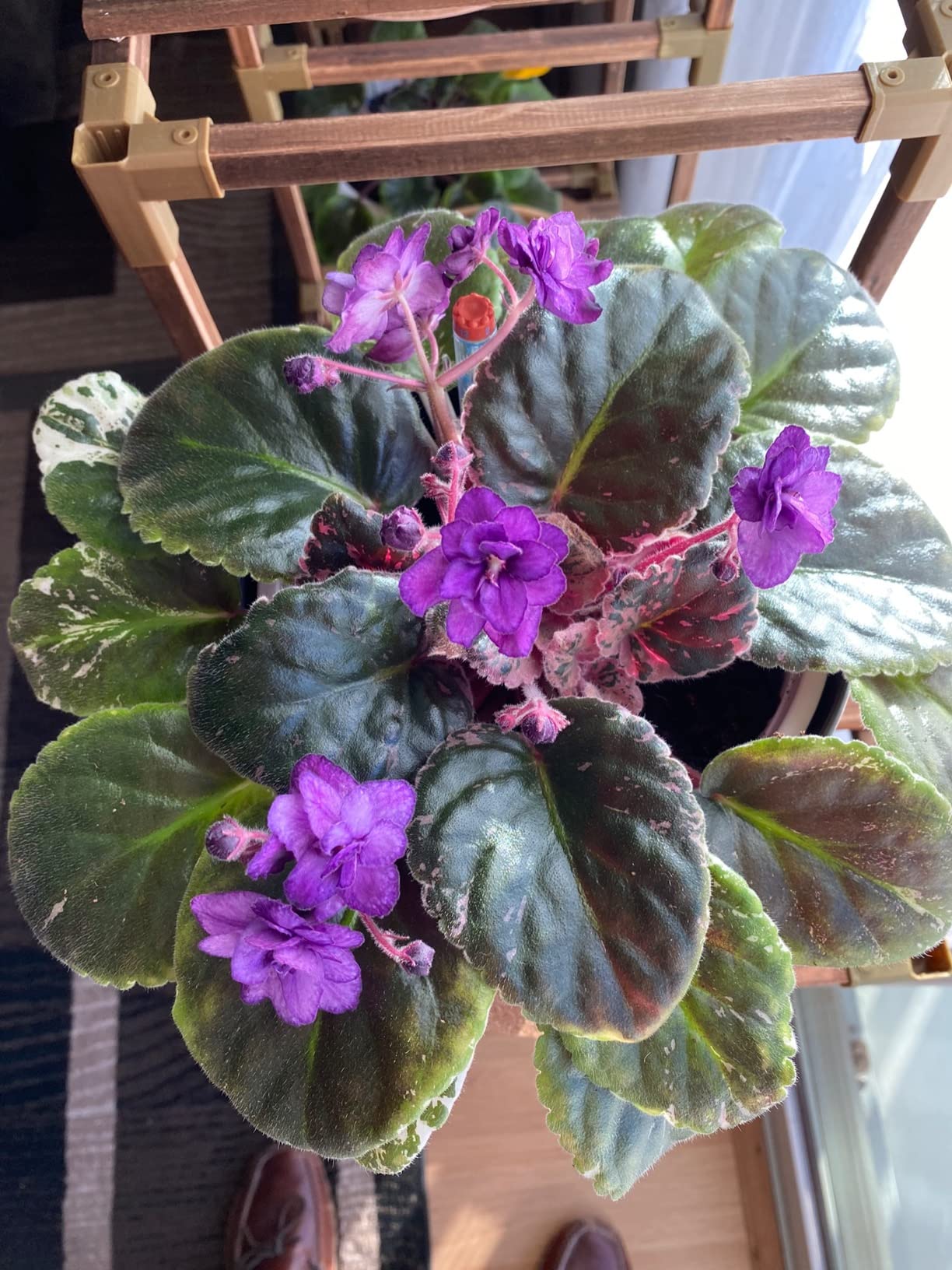
Two design issues are worth knowing about before you buy. The dome sits outside the base tray rather than inside it, so condensation runs down the outside and drips onto the surface below. Put it on a shelf with a lip, or on a towel, if you care about your furniture.
The mat has no thermostat. It runs warm, and in a cool room that is exactly what you want for warm-season crops, but it does mean you are trusting the ambient temperature rather than managing a setpoint. Add a soil thermometer and check the actual medium temperature, not the room reading.
The included T5 fluorescent light is the other weak point. It works, and the dome has built-in light track channels that hold it in place, but a modern LED is a meaningful upgrade once seedlings reach true-leaf stage. Several buyers made exactly that swap.
Who this kit suits
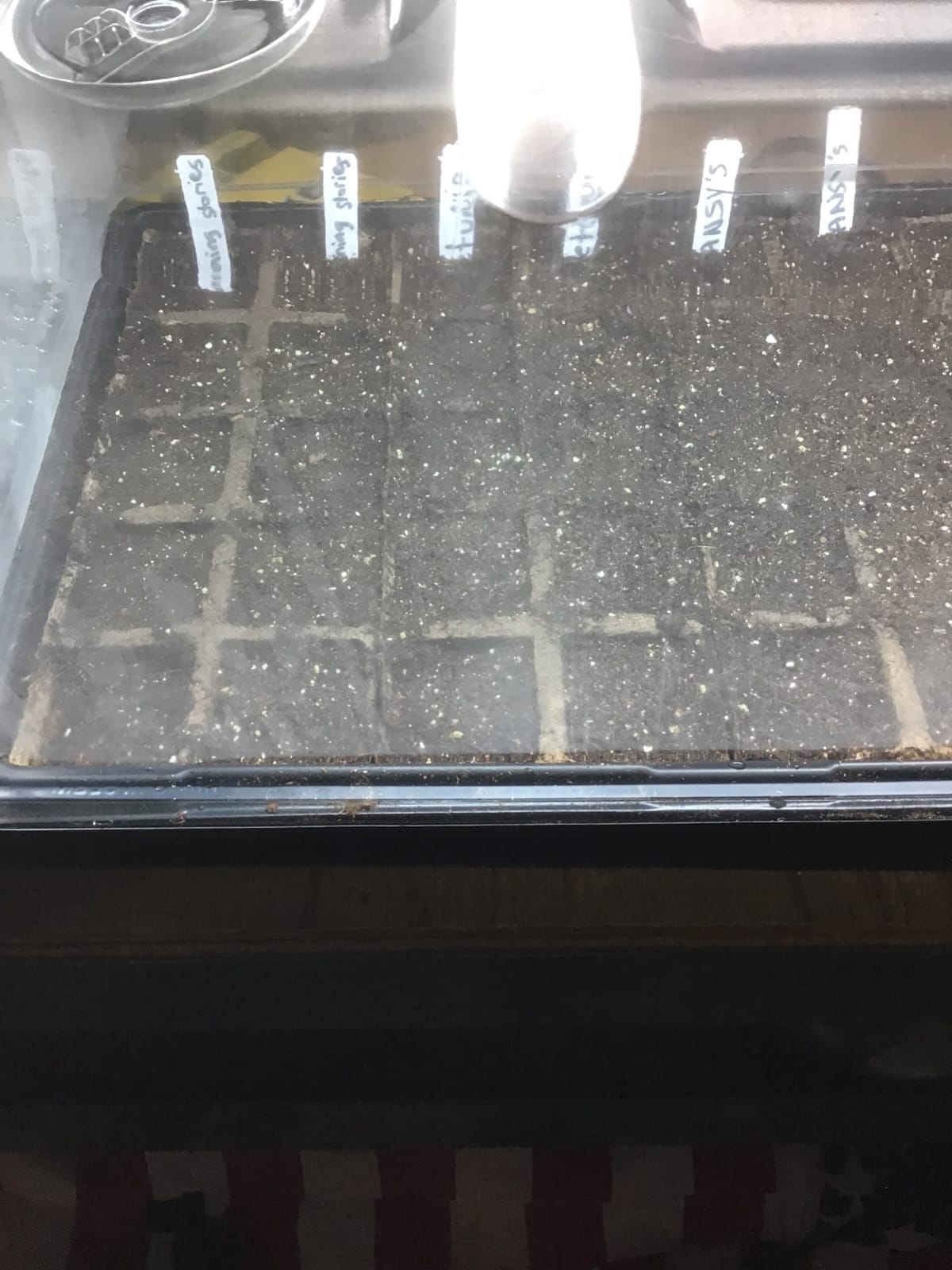
Cuttings, not just seeds. The 7 inch dome is the tallest in this roundup, and the light track channels let you run a fixture above the canopy for propagation work where a short dome would crowd the leaves.
It also suits anyone who prefers buying once. A one year manufacturer warranty is included, and the standard tray footprint means parts are interchangeable with other standard 10×20 equipment.
Where it falls short
The lack of a thermostat is the real drawback. In a warm house the mat can push medium temperature higher than peppers and eggplants want, and you will need a thermometer plus manual on and off discipline to compensate.
The T5 light is simply outclassed by the LED kits at similar sizes. Budget for a replacement light if you are keeping plants indoors past the seedling stage.
4. GROWFRIEND 40 Cell Kit With Grow Lights and Heat Mat
GROWFRIEND Seed Starter Kit with Grow Lights & Heat Mat – 40-Cell Seed Starter Tray, Humidity Dome, Soil Moisture Meter & Sticky Gnat Traps – Indoor Greenhouse & Plant Propagation Station
40 cell heavy-duty tray
10x20 waterproof heat mat
Dual LED lights
Soil meter and gnat traps
Pros
- All-in-one package with soil meter and gnat traps
- Thick tray resists cracking
- Dome vents reduce mold risk
- Good for herbs and microgreens
Cons
- Widest spread of ratings in the group
- 9x14 inch footprint limits seedling count
- Modest light output
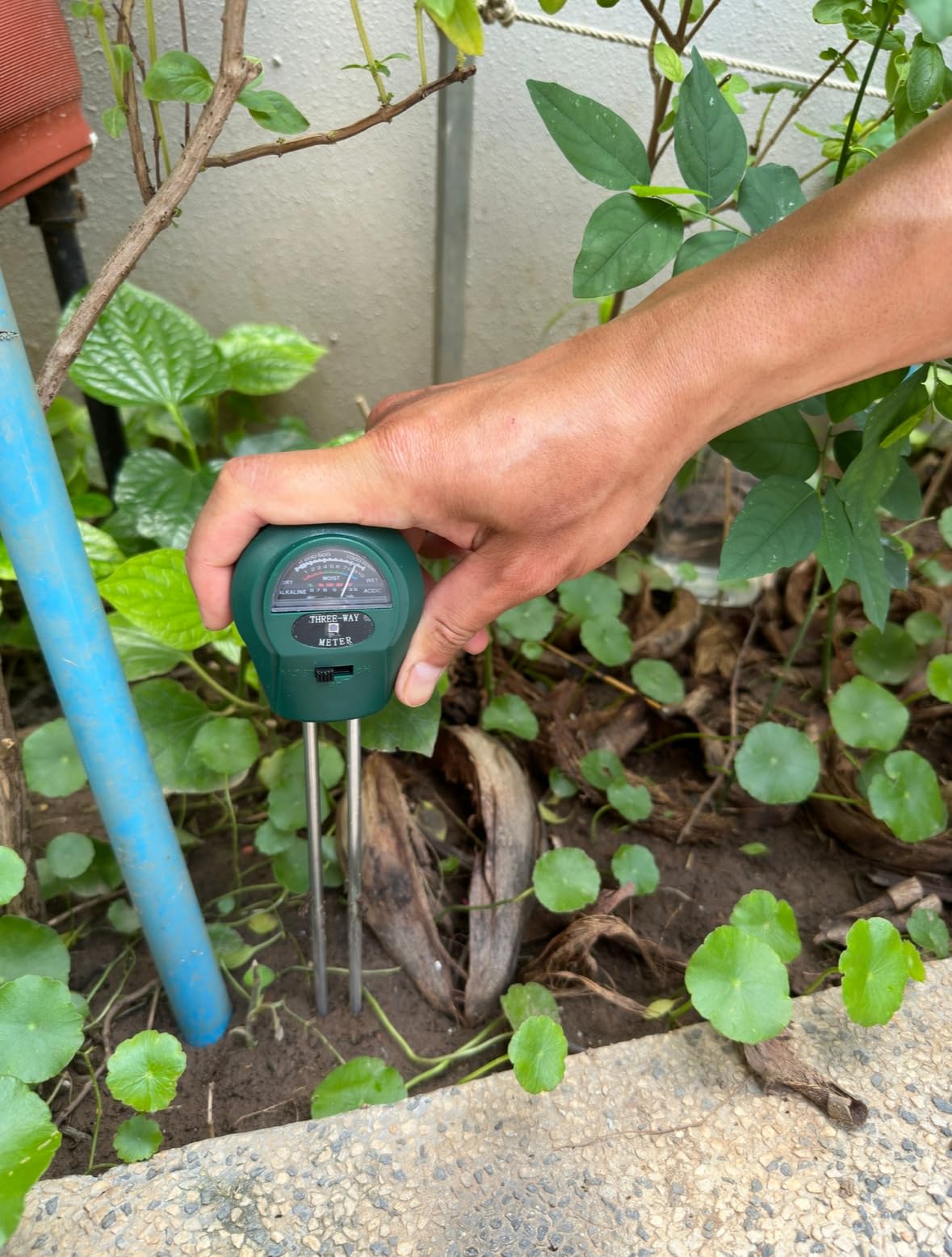
What sets the GROWFRIEND kit apart is not any single component but the extras. Alongside the 40-cell tray, dual LED grow lights, 10×20 waterproof heat mat and vented dome, you get a 3-in-1 soil moisture meter, sticky gnat traps and a gardening eBook.
Those inclusions are not filler. A moisture meter takes the guesswork out of watering young seedlings, and gnat traps catch fungus gnats early, which is the single most common reason a good germination run collapses in week three.
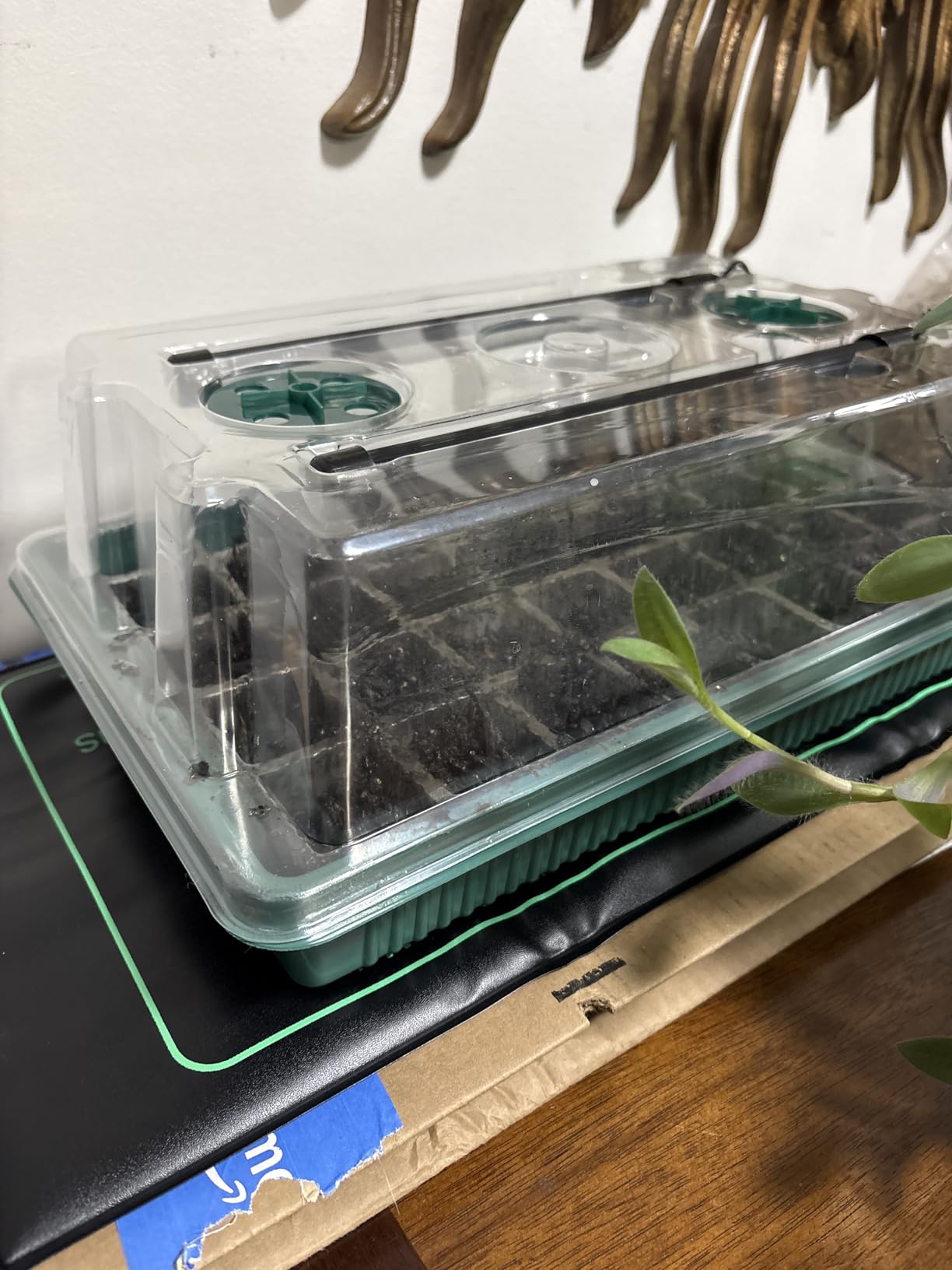
The tray itself is heavy-duty, and reviewers report that it holds its shape across seasons without bending or cracking. That matters more than it sounds, because thin cell trays flex during bottom watering and can snap when you squeeze a seedling out.
The dual LED lights use 16 white and 4 blue diodes with adjustable brightness, positioned to mimic natural light. Output is modest relative to the diode counts on the premium kits, so plan on a stronger light later in the cycle.
Be aware of what the ratings say. This kit carries the widest spread of feedback in the roundup, with roughly a 12 percent one-star share, which usually signals inconsistent component quality between production runs. Buyers who receive a good unit like it; buyers who receive a bad one tend to return it.
Who this kit suits
Windowsill growers starting herbs, lettuce and microgreens, where a smaller footprint matters more than raw capacity. The 9 by 14 by 5 inch size fits a counter that a 1020 tray will not.
It also makes sense as a gift kit or a first setup, because everything a beginner needs, including the monitoring tools, arrives in one box.
Where it falls short
Quality consistency is the concern, and it is the lowest average rating in this group. If you are buying this to avoid a return, check reviews on the specific unit you receive and keep the packaging.
The compact footprint caps you at 40 cells. If you intend to sow a full block of one crop, the capacity is the limiting factor rather than the heat.
5. VIVOSUN 40 Cell Seed Starter Kit With LED Lights and Heat Mat
VIVOSUN 1-Pack Seed Starter Kit, 40-Cell Tray, LED Lights and Heat Mat
Dual digital thermostat display
3.6 inch tall cover
0-120F rated trays
LED light bars
Pros
- Real-time mat temperature on a dual display
- 3.6 inch cover gives good headroom
- Black base and drainage holes support roots
- Trays tolerate a 0-120F range
Cons
- Light bars are supplemental rather than strong
- Listing descriptions vary on cell count
The reason to pick the VIVOSUN 40 cell kit is the thermostat. It has a dual digital display with an internal sensor chip that shows the real-time mat temperature, which turns a guess about your growing space into a number you can read.
That readout matters more often than buyers expect. Room temperature tells you almost nothing about medium temperature, and a mat that looks fine from across the table can be running well above what peppers want.
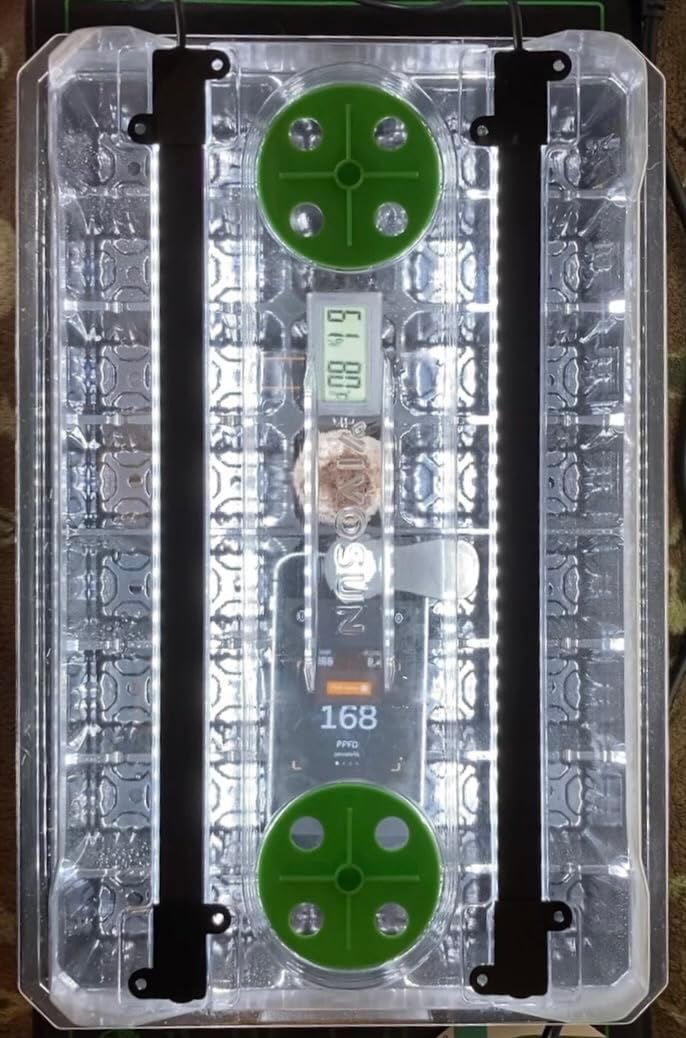
The dome is the other standout. At 3.6 inches of extra cover height, it gives seedlings real vertical room before you need to remove it, and it has two adjustable air vents plus a lifting handle for moving the whole tray.
Trays are PET and PP rated for heat mats operating from 0 to 120 degrees Fahrenheit, so there is no worry about warping even under a mat running warm. The black base with drainage holes is a small design choice that reduces algae and root problems.
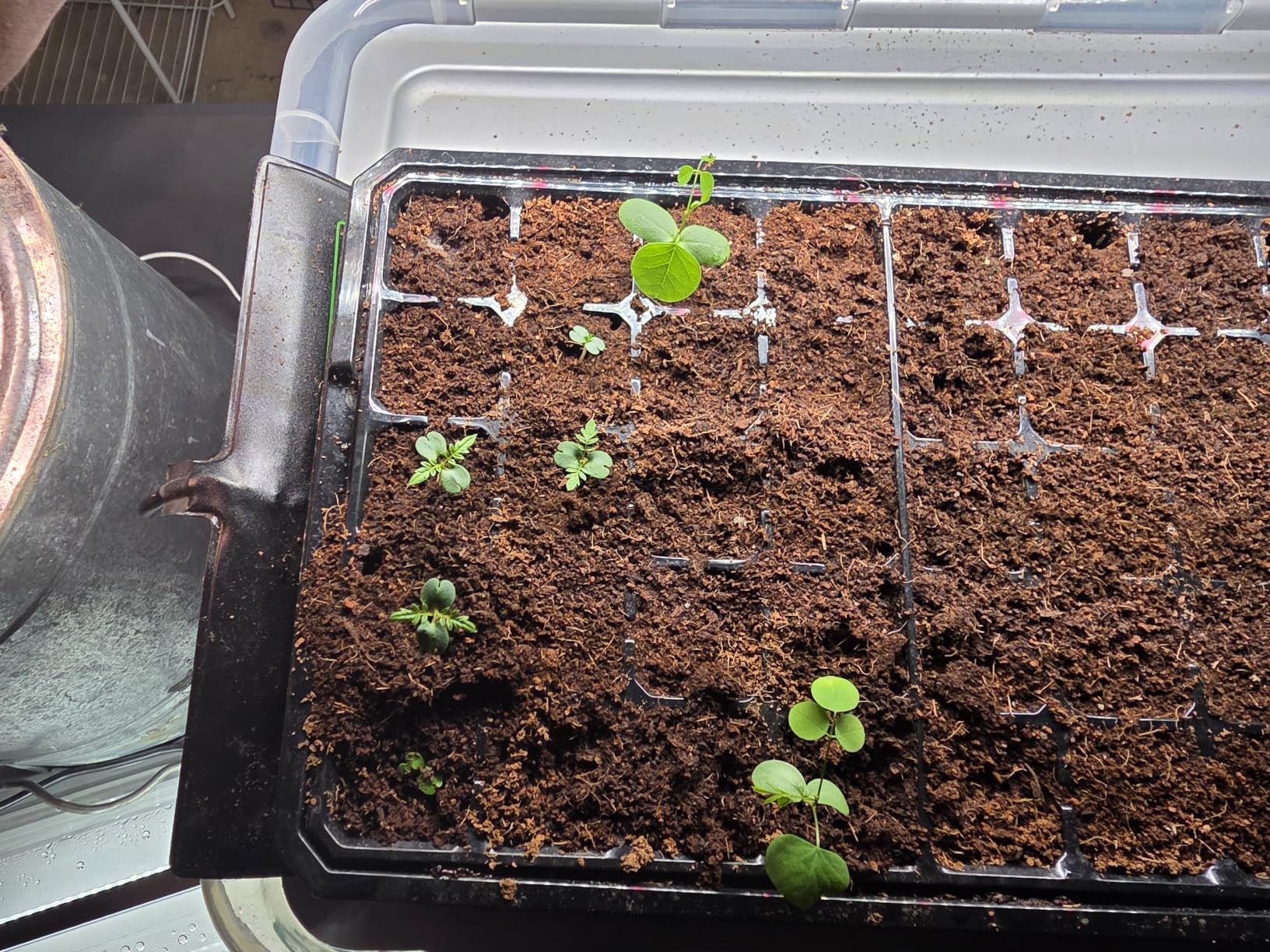
The LED light bars are mounted over the tray and strengthen plants as they grow, but reviewers consistently describe the lighting as supplemental rather than a substitute for a proper fixture. Treat them as germination-stage support.
Who this kit suits
Anyone who wants control without assembly. The thermostat is already integrated, so there is nothing to buy separately and nothing to wire, which makes this the lowest-friction route to temperature management.
It also suits growers in cool basements and garages, where the room-to-medium temperature gap is widest and a fixed mat is most likely to run cold or hot depending on the weather.
Where it falls short
The light is the compromise. Supplemental LED bars are fine early and inadequate later, so budget for a second light if you are keeping plants indoors through their vegetative stage.
One practical note: the kit is a 40-cell unit, and some listing descriptions mention larger cell counts. Treat the 40-cell figure as the accurate one when you plan your sowing quantities.
6. AC Infinity Humidity Dome Kit 5×8 With LED Grow Lights and Heat Mat
AC Infinity Humidity Dome Kit 5×8 w/ LED Grow Lights & Seedling Heat Mat
3mm heavy-duty dome
Adjustable-dial heat mat
Samsung LM301H EVO bars
Extension panels
Pros
- Strongest diodes in the group
- 3mm dome holds humidity better than thin plastic
- Heat mat dial gives steady even warmth
- Extension panels grow with the seedlings
Cons
- Costs more than most kits here
- Dome height can crowd the light bars early
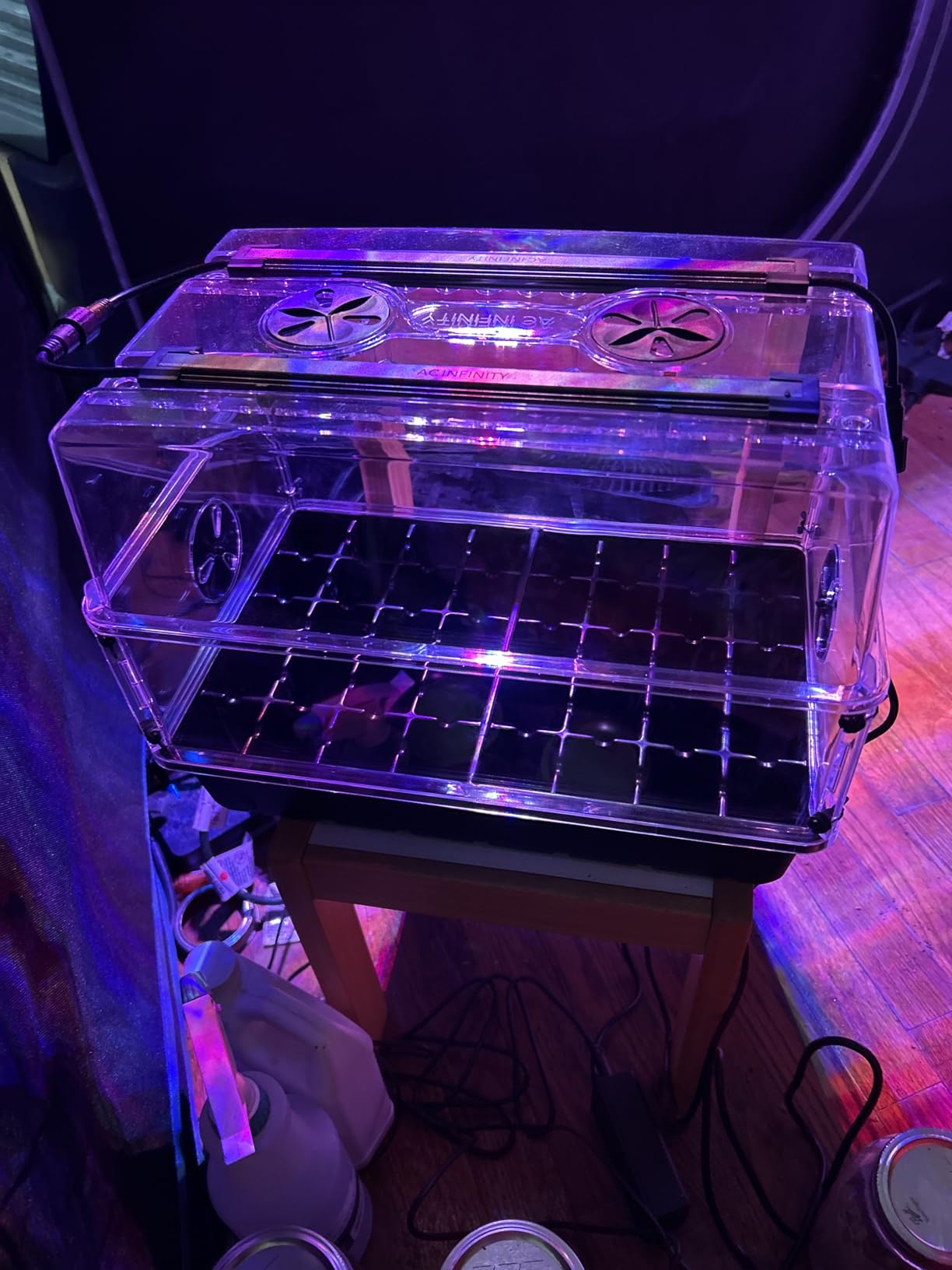
The AC Infinity kit wins on materials rather than capacity. The dome is a clear 3mm heavy-duty plastic with a glossy finish, noticeably thicker and more rigid than the thin domes most kits include, and that rigidity is what keeps the shape tight so humidity stays where you put it.
Light output is the other reason. The grow light bars use Samsung LM301H EVO diodes, and reviewers describe them as a clear step above the LED arrays in the mid-range kits, with stronger light at the canopy.
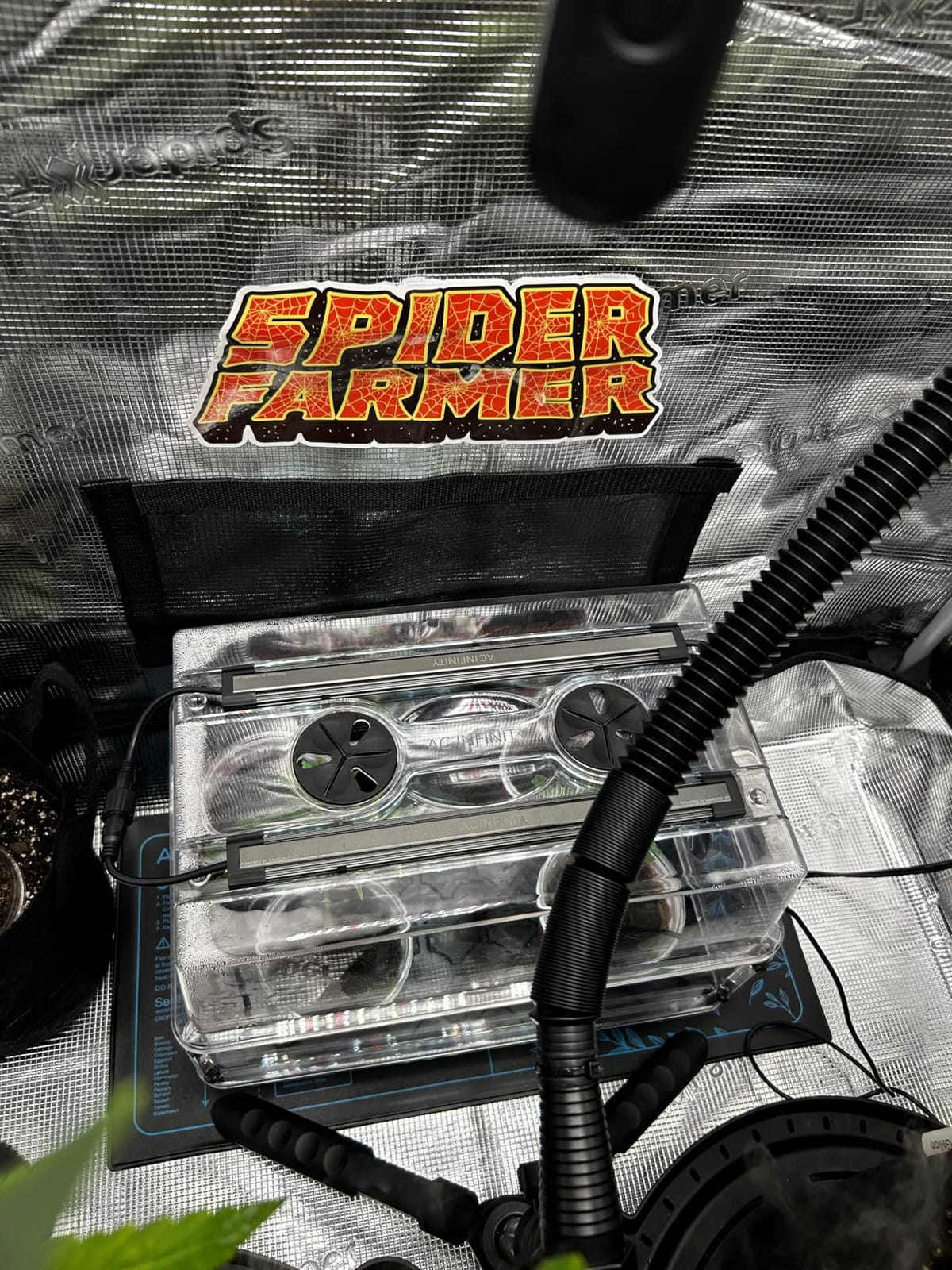
Heat comes from an adjustable-dial seedling mat designed to give steady, even warmth across the 5×8 footprint. Dial control is less precise than a digital thermostat, but it is a meaningful upgrade over a fixed-temperature pad because you can trim it back in a warm room.
Included are drip trays and plant trays, plus optional height extension panels that support up to 40 seedlings and clones. The panels are the feature that extends the life of the kit, since they let you raise the canopy as plants outgrow the base dome.
Ratings reflect the build. This kit carries a 77 percent five-star share, the highest among the higher-priced options, and the strongest category sales rank in the roundup. The complaints that do exist are about price and about the dome sitting close to the light bars early in the cycle.
Who this kit suits
Growers who already know that light is the variable that limits indoor seedlings, and who would rather solve it once. The diode quality here means you can carry plants further past the seedling stage before needing a second fixture.
It is also the choice for anyone planning to clone as well as germinate, since the extension panels and the thick dome are both propagation-oriented details.
Where it falls short
Cost, plainly. It sits above most kits in this roundup, and you are paying specifically for dome thickness, diode quality and tray durability.
Watch the clearance between the dome and the light bars at the start. If the plants are dense, you will be taking the dome off sooner than the marketing suggests.
7. Adawook 72 Cell Multi-Tray Seed Starter Kit With Lights and Heat Mat
Seed Starter Trays with Grow Lights and Heat Mat, 72 Cells Seed Starter Kit with Lights, 3 Lighting Mode, 4 Timing Set, Germination Kit for Seed Starting Trays with High Humidity Control Domes
Six 12-cell trays
21W waterproof mat
3 lighting modes, 4 timers
Vents for 50-100% humidity
Pros
- 72 cells across six trays
- Blue and red spectrum modes beyond plain white
- Mat holds a stable 90-100F
- Only 21W power draw
- Vents cover the full humidity range
Cons
- Small 1.6 inch cells are tight
- Six separate assemblies take more setup
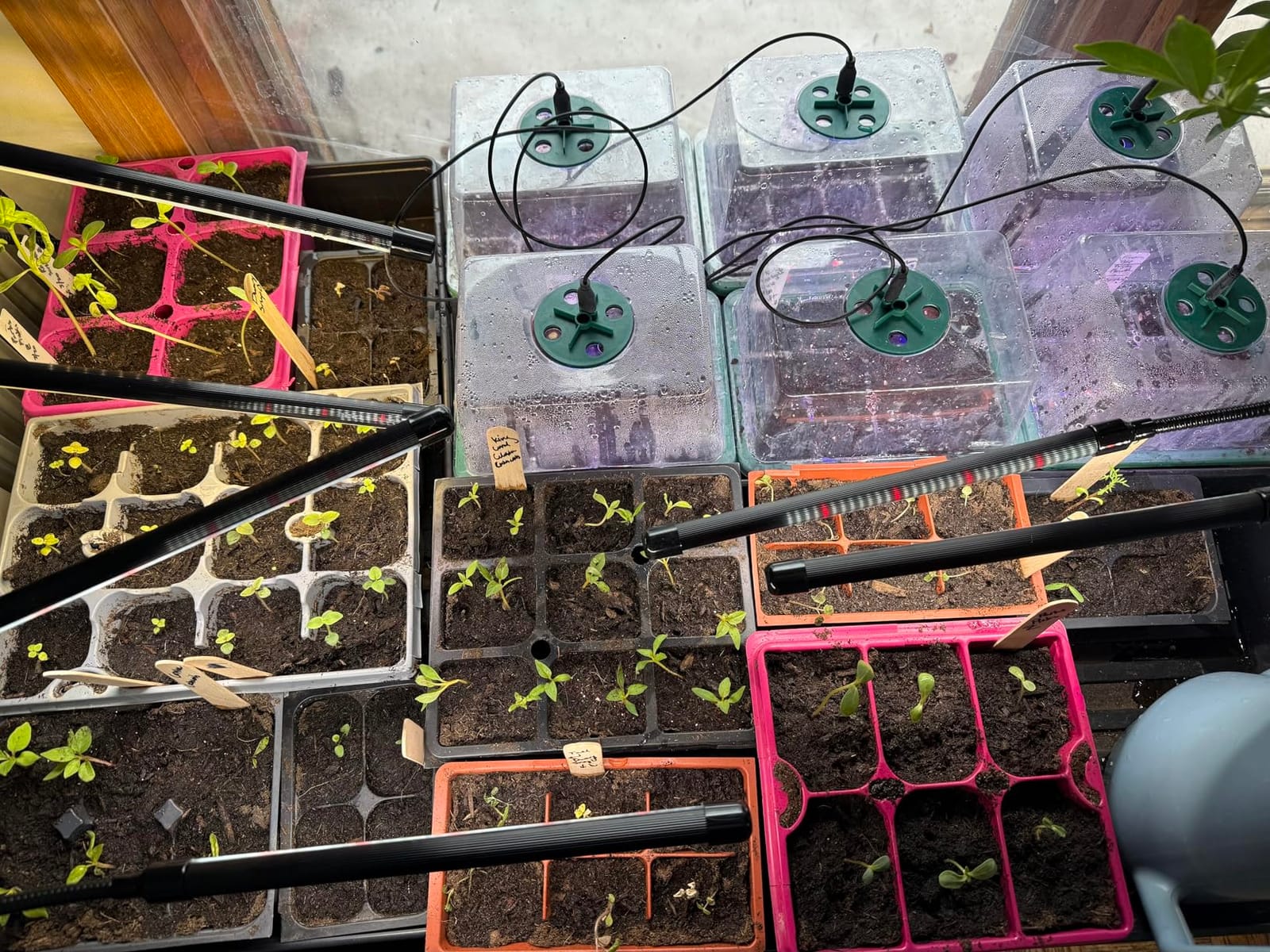
The Adawook bundle is built for volume. You get six 12-cell trays, six grow lights and one 21W waterproof heat mat, giving 72 cells in total. Reviewers consistently point to the cell count relative to cost as the reason to buy it.
The lighting is more configurable than most at this capacity. Three modes are offered, meaning white, blue plus red, or white plus blue plus red, alongside four timer settings. Blue suits compact growth, red supports stem development.
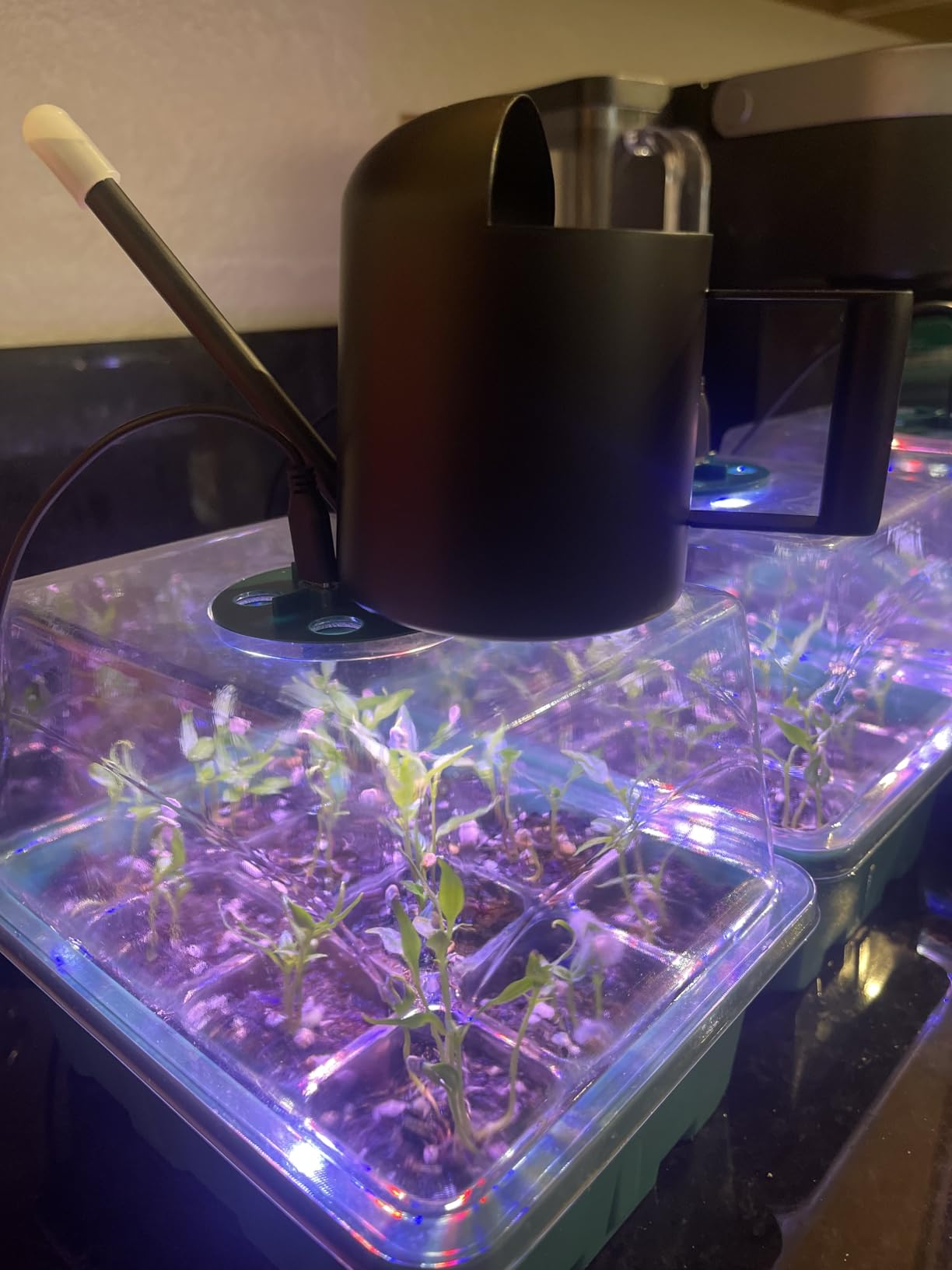
The mat holds a stable 90 to 100 degrees Fahrenheit, which sits in the right range for tomatoes and peppers, and buyers note it does not cook the medium. At 21 watts it is also one of the lowest power draws in the group, which matters if you run several units all season.
Cells measure 1.6 inches square by 1.97 inches deep with drainage holes, and the base trays retain overflow so bottom watering does not push water across the bench. Dome vents adjust across a 50 to 100 percent humidity range, which is unusually wide control for a vented dome.
The trade-off is space and assembly. Six trays, six lights and multiple domes take more setup than a single-piece kit, and buyers note the small 1.6 inch cells are tight for larger seeds and deep-rooted plants.
Who this kit suits
Sowing in blocks. Six identical 12-cell trays let you run separate crops side by side and still bottom-water them together on the single mat, which is far more organized than one large mixed tray.
It is also the pick for propagation at moderate scale, where a single kit would mean repeating the whole setup five times.
Where it falls short
Assembly time and footprint. Six separate assemblies need dedicated bench space, and in a small setup that space can be the real constraint.
Cell size is the second limit. Anything with large seed or a deep taproot will want a bigger cell than 1.6 inches square provides.
8. VIVOSUN 6-Pack Seed Starter Trays and 10×20 Heat Mat
VIVOSUN 6-Pack Seed Starter Trays & 10″x20.75″ Seedling Heat Mat
Six 12-cell trays, 72 cells
10x20 mat with IP67 surface
Thermostat with sensor chip
Pros
- 72 cells of capacity
- Real-time thermostat readout via internal sensor
- Trays hold up over many seasons
- Waterproof mat surface is easy to scrub
Cons
- No lights included
- Thermostat reads higher than actual soil temperature
- Occasional reports of the pad cutting out
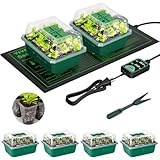
This is the flexible option. It is a stack of six 12-cell trays, domes and a 10 by 20.75 inch seedling heat mat with a built-in thermostat, but no light, which means you can build a setup as large as your shelf allows by adding trays rather than buying new kits.
The mat itself is the strongest part. It is a durable PVC and PET film construction using far-infrared heating technology, with an IP67-rated waterproof surface you can scrub after a season of watering.
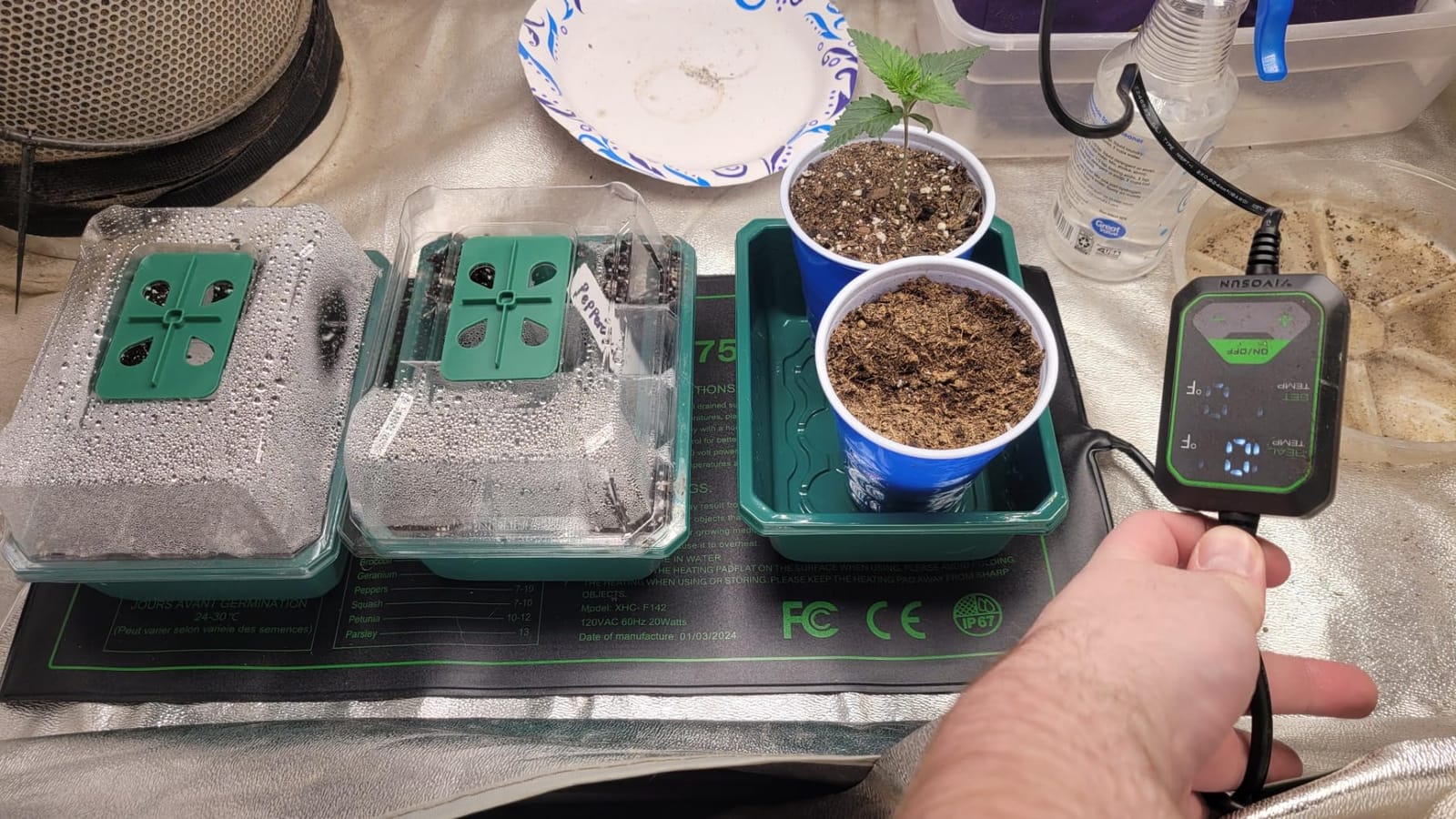
The thermostat has an adjustment function and an internal sensor chip that shows real-time mat temperature. Trays are rated to work with mats operating from 0 to 120 degrees Fahrenheit without melting, and each tray has a transparent dome with an adjustable vent plus drainage holes.
There is one calibration issue worth knowing. Reviewers report the thermostat reading runs hotter than the actual temperature in the cell tray, so a manual offset of a few degrees is often needed. If you add a soil thermometer you can set it accurately in a minute.
A small number of buyers report the heating pad cutting out, and this kit includes no lighting, so you will need a separate light source to carry seedlings past germination. Many buyers pair it with the VIVOSUN grow light tray and report strong results.
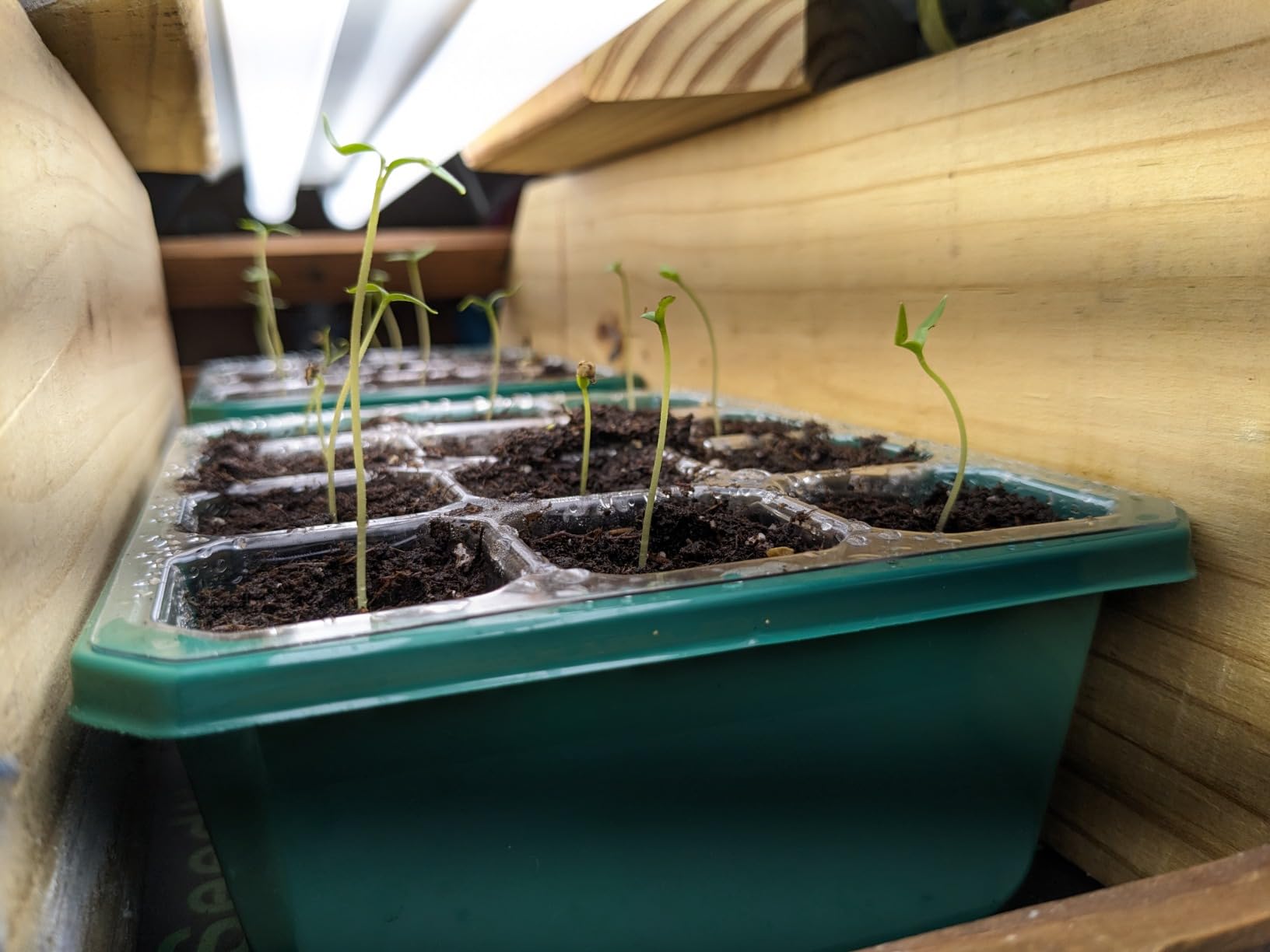
Who this kit suits
Anyone building a multi-tray setup on a metal shelving unit, the configuration that comes up most often in propagation forums. Six trays on one mat is a sensible starting block that you can double later.
It suits growers who already own a light and do not want to pay again for one they do not need.
Where it falls short
Thermostat drift is the recurring complaint. Expect to calibrate it against a soil thermometer rather than trusting the displayed number directly.
And if you have no light at all, this kit leaves you short for the seedling stage. Buy a light or choose a kit that includes one.
9. joyhalo 12 Cell Seed Starter Kit With Grow Light, Heating Mat and Silicone Pots
12 Cell Seed Starter Kit with Grow Light Heating Mat & Silicone Pots
Graphene mat with timer
2 strip lights, 3 modes, 7 levels
Silicone-base nursery pots
12 cells
Pros
- Graphene mat heats faster and more evenly
- Built-in mat timer adds hands-off control
- Silicone bases make seedlings easy to remove
- Transparent pots show soil moisture
- 20 labels included
Cons
- Only 12 cells
- the smallest lit capacity here
- Two short strip lights cover limited area
The joyhalo kit is built around transplanting rather than raw capacity. Twelve cells is the smallest count among the kits with lights here, and that is deliberate. Each cell holds a transparent nursery pot with a silicone base, and the silicone flexes so the whole plug lifts out intact instead of shattering.
The heating is a graphene mat with a built-in timer, which buyers report heats faster and more evenly than conventional electric mats. A timer on the mat means you can automate the warm phase without buying a separate controller.
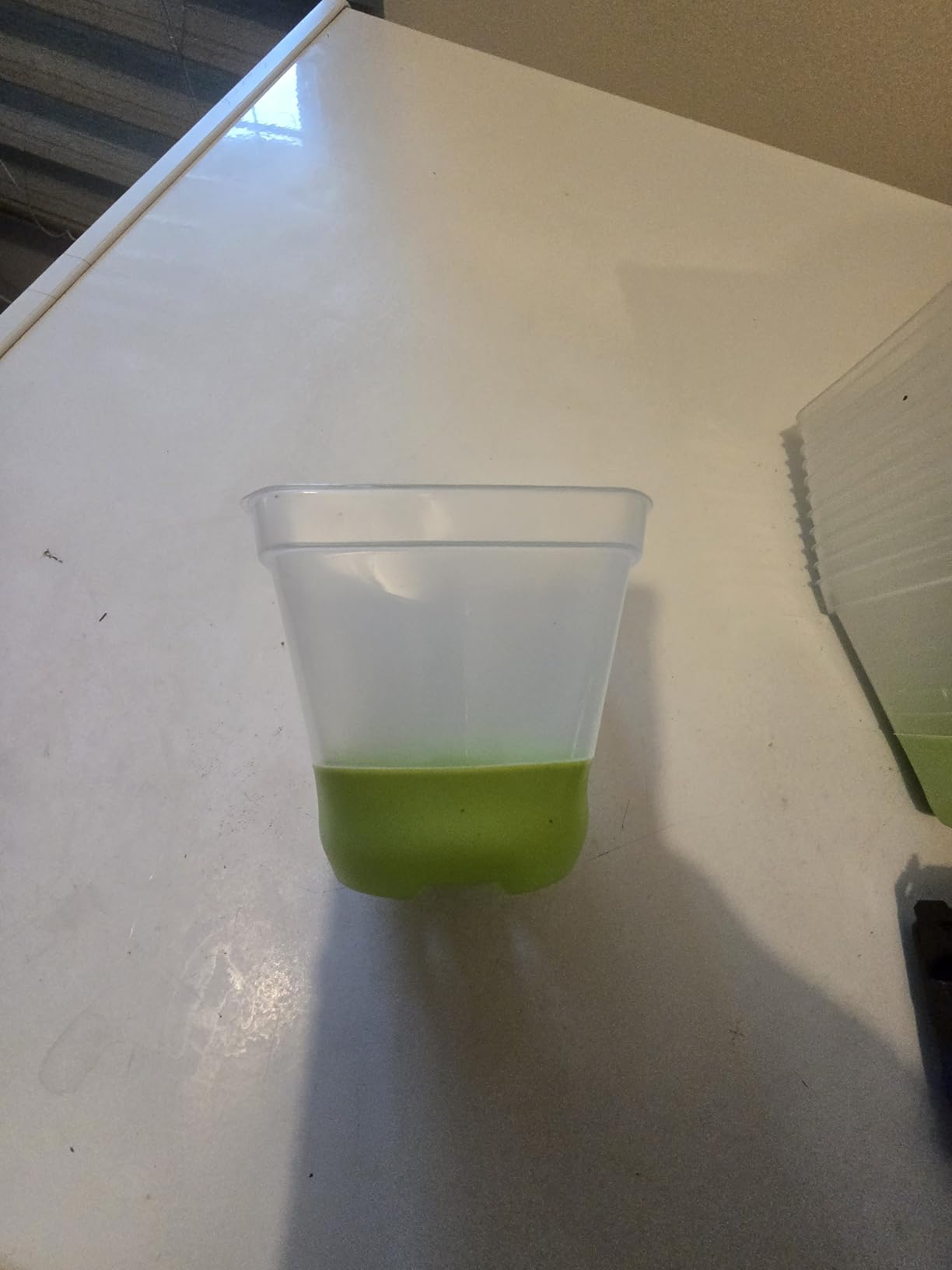
Lighting comes from two full-spectrum strip lights mounted on the dome, with 3 modes and 7 brightness levels. Seven brightness settings is the finest control in this roundup, which is useful when you are hardening off and want to reduce intensity gradually rather than switching the fixture off.
Transparent UV-resistant pots let you check soil moisture without lifting anything, and 20 plant labels are included, which sounds trivial until you are six weeks in and trying to remember which tray was the cherry variety.
The limit is straightforward. Two short strips cover a small area, and 12 cells is not enough for bulk sowing. This is a kit for focused work, herbs, microgreens and a few chosen varieties.
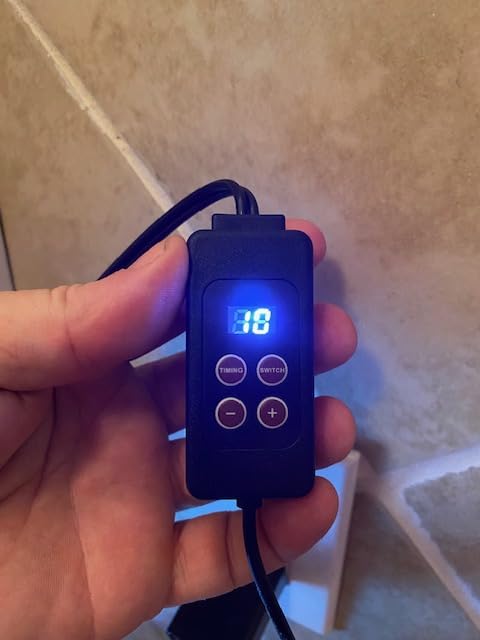
Who this kit suits
Anyone who has ruined seedlings by pulling them out of cells wrong. The silicone-base pots are the reason to buy this one, and they make a measurable difference in root damage at transplant.
It also suits growers who want the mat on a schedule without a controller, since the built-in timer handles the warm phase for you.
Where it falls short
Capacity. Twelve cells is not a starting kit for a full vegetable run, and you would need several to match what the 60-cell option gives you in one box.
The light coverage is narrow, so on a bright windowsill it is plenty and in a dim basement it is not.
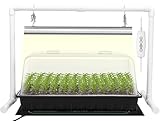
10. SOLIGT 1020 Size Seed Starter Kit With Grow Light and Heat Mat
SOLIGT 1020 Size Seed Starter Kit with Grow Light and Heat Mat
1020 tray with 6 inserts
7 inch dome, dual vents
16W LED strips
8/12/18 hour timers
Pros
- Large 1020 footprint
- Leak-resistant tray cuts condensation runoff
- Modular 6 cell inserts ease organizing
- Light timer works reliably
- Lightweight and quick to assemble
Cons
- Dome and light cannot be used together
- Single central light slows outer cells
- PVC stand is fragile
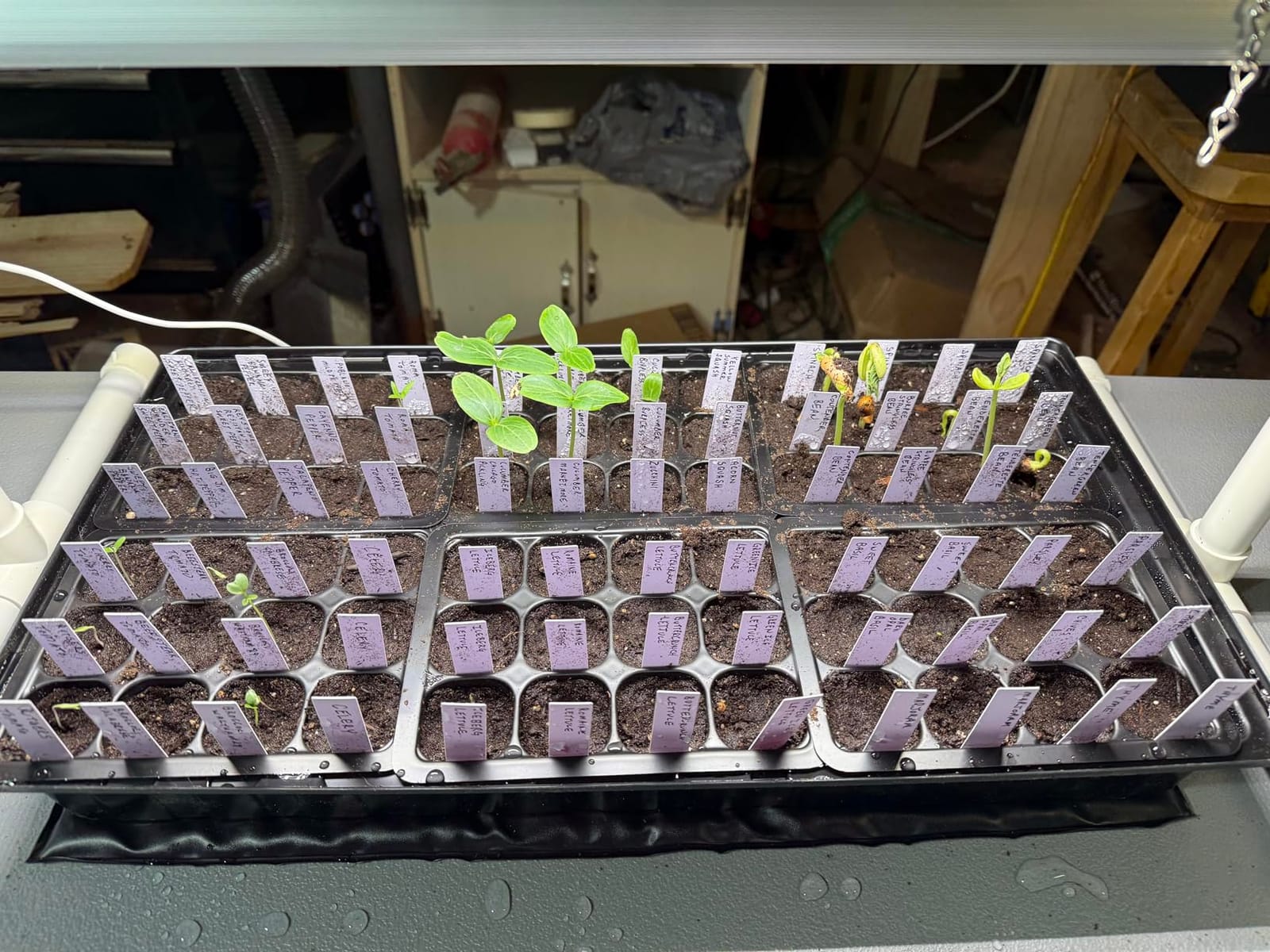
The SOLIGT 1020 kit is the most generous sowing surface here. You get a full 1020 tray, six 12-cell inserts, a 7 inch extra-high humidity dome with dual adjustable vents, a waterproof 10×20 heat mat and 16 watt full-spectrum LED strips on an adjustable chain and PVC stand.
The mat is the quiet strength here. It is waterproof, and it reaches up to 104 degrees Fahrenheit in 20 to 25 degree ambient, which covers the range peppers and eggplants want. Buyers report almost no complaints about the heating itself.
There is a real geometry problem in the design, and it is worth understanding before you buy. The 7 inch dome is too tall to fit under the close-positioned lights, so you cannot run dome and light at the same time. In practice this is a mat-and-dome setup for germination, then a light-and-open-tray setup once you remove the cover.
The single central light also means the outer cells germinate more slowly than the center ones, and the chained light still hangs high enough to risk leggy seedlings. The PVC stand is described as fragile with components that fit loosely.
What you get in exchange is the best workspace for mixed sowing. The six 3×4 cell inserts make organizing varieties and bottom watering simple, and the leak-resistant tray reduces the condensation runoff that plagues the Super Sprouter design.
Who this kit suits
Gardeners who sow a lot of one crop and want a real work surface for it. A 1020 tray plus inserts gives you room to run an entire block and still separate varieties.
It also suits anyone splitting the cycle into two stages, using the dome and mat through germination, then removing the cover and bringing the light down for the seedling stage.
Where it falls short
You are choosing between the dome and the light, not getting both at once. If you want a domed, lit, all-at-once setup, this is not the kit.
The stand is the weak component. Treat it as temporary scaffolding for the light and do not lean on it when adjusting height.
Buying Guide: What to Look for in a Seed Starting Kit With a Heat Mat
Temperature control: fixed mat, dial mat or digital thermostat
Bottom heat is the reason you are here, so the mat deserves the most attention. A fixed mat runs at whatever temperature the design dictates and varies with your room. A dial-controlled mat lets you trim warmth up or down. A digital thermostat with a sensor probe gives you an actual number, and a kit with an integrated thermostat means you do not have to buy a controller separately.
Whichever you choose, verify with a soil thermometer in the medium rather than trusting room temperature or the mat surface. Warm-season crops generally want medium between 75 and 85 degrees Fahrenheit, and cool-season crops like lettuce and kale prefer closer to 60 to 70. The same dial or thermostat serves both, which is why adjustable control is worth paying for.
You can read more about how sensor accuracy and setpoint control work in our smart thermostat guide for heat pumps. The equipment is different, but the principle of verifying the reading against reality is identical.
Standard 10×20 footprint and tray-to-mat fit
The 10×20 standard has been the seed tray format for decades, and matching it means you can mix components from different kits. Buy a mat that is at least 10×20, and prefer one where the tray sits fully on the warm surface with no overhang. Heat lost off the edge of a mat is real, and it is also the difference between an even warm tray and a warm center with cool corners.
Some mats in this roundup measure 10 by 20.75 inches precisely to extend past the tray edges. That is a deliberate design choice, not a mismatch.
Dome height and vent control
Dome height determines how long you can leave the cover on. A 7 inch dome gives cuttings and fast-growing seedlings real headroom, while a 4.3 inch dome is usually coming off around the two-week mark. Vent count matters more than most listings admit. A single fixed vent gives you a binary choice, while eight adjustable vents let you step humidity down gradually as the seedlings start to need air movement.
Watch the seam where the dome meets the base tray. Designs where the dome sits inside the tray channel runoff; designs where it sits outside the base drip condensation down the outside and onto whatever is below.
Light output and how far it carries seedlings
Light is the second most common disappointment after heat, and the reason so many forum questions mention leggy seedlings despite having a grow light. Leggy growth is a light problem, not a heat problem, and adding heat to a stretched seedling does not fix it.
Check the diode type rather than the wattage alone. Samsung LM301H EVO bars and similar high-efficiency arrays deliver meaningfully more usable light than a comparable wattage of generic diodes. Also check whether the light can be repositioned once the dome comes off, since most clip-on and gooseneck designs can while fixed bars cannot.
Budget for the fact that light included with a kit is usually germination-stage light. A supplementary fixture later is a normal part of the cost of indoor seed starting, not an overspend.
Cell count and cell depth
Cell count determines how many seeds you can start at once. Forty to sixty cells covers most home sowings. Seventy-two across multiple trays suits block sowing, and smaller counts make sense when you are focused on specific varieties.
Depth matters just as much. Shallow cells around 2 inches force an early potting on, which adds a step and disturbs roots. Deeper cells hold brassicas and larger seedlings comfortably. Read the depth figure before you buy, not after.
Safety, waterproofing and construction
A mat sits under water for weeks. Waterproof or IP67-rated surfaces are worth a closer look, and PVC and PET film constructions are common in the more durable options. Trays rated for a wide mat temperature range, up to 120 degrees Fahrenheit, will not warp if your mat runs warm.
UL-listed certification comes up repeatedly as a must-have in gardener forums, and it is a reasonable filter when a listing is vague about safety. One more rule that forum consensus does not bend: never substitute a household heating pad. Those are designed to run at body temperature, are not moisture-rated, and are the leading cause of the fire hazard concerns people raise about heated setups.
Waterproof base trays with drainage holes are worth as much as the mat itself. Excess runoff sitting under a tray wicks heat away and encourages algae and fungus gnats, and trays with overflow retention let you bottom-water without flooding the mat.
When to Use a Heat Mat and When to Skip It
Heat is a tool, not a default. Use it when the crop demands it and the room cannot deliver it. Skip it when the room already provides the temperature, because a warm mat under a crop that does not want warmth encourages mold and damping off.
Warm-season crops are the core case. Tomatoes, peppers and eggplants want medium around 75 to 85 degrees Fahrenheit for best germination, and peppers sit at the top of that range. Most indoor rooms, especially basements, garages and unheated spare rooms, fall well short on a cold night.
Cool-season crops are the skip case. Lettuce, kale, brassicas and many herbs germinate well nearer 60 to 70 degrees Fahrenheit and gain nothing from bottom heat. Running a mat under them raises the risk of damping off in the closed, humid conditions that favor fungal problems.
Turn the heat off or down once you see germination. Seedlings need air and light far more than they need warmth at that stage, and the leggy growth gardeners fight most often starts the moment you leave the mat at full output under a dome. A common rhythm is heat and dome until sprouts appear, then dome off, heat down or off, and lights up.
One exception to the skip rule: root temperature still matters during the first two weeks of seedling growth for warm crops, so a mat set low rather than off is a reasonable middle path.
Common Mistakes When Starting Seeds Indoors
Most failed indoor sowings come down to the same handful of errors, and none of them are about choosing the wrong kit.
1. Using a household heating pad instead of a seedling mat. It is not moisture-rated and it is the most cited safety complaint in heated propagation setups.
2. Leaving the heat mat running at full output after germination. Stems stretch looking for light that is not there, which is where leggy seedlings start.
3. Leaving the dome on too long without venting. Trapped humidity at warm temperatures is the classic route to damping off.
4. Trusting room temperature instead of medium temperature. Put a thermometer in the cell, not on the wall.
5. Assuming the light in the kit is the only light you will need. Kit lights are generally for the germination and early seedling stage.
6. Sowing too deep and leaving seeds without surface warmth. Depth matters as much as temperature, and a mat cannot compensate for a seed buried too far down.
7. Watering from above on a schedule instead of checking. Bottom watering into a tray with drainage holes is gentler on emerging stems and avoids dislodging seeds.
8. Overcrowding the bench. Kits with six separate assemblies need room to be assembled and reached, and a cramped setup gets neglected.
Frequently Asked Questions
Are heat mats necessary for seed starting?
Not for every crop. Warm-season vegetables such as tomatoes, peppers and eggplants germinate fastest with medium between 75 and 85 degrees Fahrenheit, and most indoor rooms, particularly basements and garages, fall short. Cool-season crops like lettuce, kale and brassicas do fine nearer 60 to 70 degrees and gain nothing from a mat. If your seedlings germinate evenly without one, skip it.
Can you use a thermostat with a heat mat?
Yes, and for most growers it is the single best upgrade available. A digital controller with a probe lets you hold a set medium temperature instead of accepting whatever the mat and the room produce. Check the probe position according to the controller instructions, and verify the reading once with a separate soil thermometer, since some kits report a temperature a few degrees above the actual medium.
What are common mistakes when starting seeds indoors?
The most frequent errors are using a household heating pad instead of a seedling mat, keeping the mat at full output after germination, leaving the dome on without venting, trusting room temperature instead of medium temperature, and assuming the included light is sufficient past the seedling stage. Overwatering and sowing too deep account for most of the rest.
When should I stop using a heat mat for seedlings?
Turn the heat down or off once you see germination. Seedlings need air movement and light more than warmth at that stage, and running a warm mat under a closed dome promotes damping off. For warm-season crops you can keep the mat on low for the first two weeks of seedling growth, but raise the light and remove or vent the dome at the same time.
What is the best indoor seed starting system?
For most home growers the best balance is a kit with an integrated thermostat, a standard 10×20 footprint and a grow light that can be repositioned after the dome comes off. Buyers rate the all-in-one heated tray with dual lights and 40 cells highest overall for its balance of features, while a 60-cell kit suits those with limited bench space and a mat-and-tray bundle suits anyone building a larger multi-tray setup.
Conclusion
After testing ten heated kits, the all-in-one tray with integrated heating and dual lights is still the strongest all-round choice, and it is the one we recommend starting with. It removes the mat-to-tray guesswork entirely, carries the largest review base of the group, and hands you 8 adjustable dome vents instead of one or two.
If bench space is the constraint, the 60-cell kit gives you the most sowing capacity per unit of table. If light quality matters most to you, the kit with higher-efficiency diodes will carry seedlings further. And if you are building a larger propagation shelf, the multi-tray mat bundle lets you expand tray by tray instead of kit by kit.
Whichever you choose, remember the one rule that matters most: heat solves cold, light solves stretch, and air solves mold. Get those three right and the best seed starting kits with heat mats in 2026 will do the rest.